AB 487: Parole hearings: notification of district attorneys.
- Session Year: 2015-2016
- House: Assembly
- Latest Version Date: 2015-08-31
Existing law provides that, one year prior to the minimum eligible parole release date of an inmate serving an indeterminate sentence, a panel of 2 or more commissioners or deputy commissioners of the Board of Parole Hearings shall meet with the inmate and set a parole release date, as specified. Existing law, as amended by Proposition 9, the Victims Bill of Rights Act of 2008: Marsys Law, at the November 4, 2008, statewide general election, establishes procedures at all hearings for the purpose of reviewing a prisoners parole suitability, or the setting, postponing, or rescinding of parole dates, and provides prisoners and victims specified rights at these hearings.
This bill would require notification of the district attorney of the county in which the offense was committed, or his or her designee, to receive notification of specified parole proceedings.
This bill would incorporate additional changes to Section 3041.5 of the Penal Code proposed by SB 230 that would become operative if this bill and SB 230 are both chaptered and this bill is chaptered last.
Existing law provides that, one year prior to the minimum eligible parole release date of an inmate serving an indeterminate sentence, a panel of 2 or more commissioners or deputy commissioners of the Board of Parole Hearings shall meet with the inmate and set a parole release date, as specified. Existing law, as amended by Proposition 9, the Victims Bill of Rights Act of 2008: Marsys Law, at the November 4, 2008, statewide general election, establishes procedures at all hearings for the purpose of reviewing a prisoners parole suitability, or the setting, postponing, or rescinding of parole dates, and provides prisoners and victims specified rights at these hearings.
This bill would require notification of the district attorney of the county in which the offense was committed, or his or her designee, to receive notification of specified parole proceedings and would require, if notice is not provided, any action on a hearing advancement to be postponed until notice is properly made. proceedings.
Existing law provides that, one year prior to the minimum eligible parole release date of an inmate serving an indeterminate sentence, a panel of 2 or more commissioners or deputy commissioners of the Board of Parole Hearings shall meet with the inmate and set a parole release date, as specified. Existing law, as amended by Proposition 9, the Victims Bill of Rights Act of 2008: Marsys Law, at the November 4, 2008, statewide general election, establishes procedures at all hearings for the purpose of reviewing a prisoners parole suitability, or the setting, postponing, or rescinding of parole dates, and provides prisoners and victims specified rights at these hearings.
This bill would require notification of the district attorney of the county in which the offense was committed, or his or her designee, to receive notification of specified parole proceedings and would require nullification of action taken on the hearing advancement if the district attorney of the county in which the offense was committed, or his or her designee, and the victim are not notified. require, if notice is not provided, any action on a hearing advancement to be postponed until notice is properly made.
Existing law provides that, one year prior to the minimum eligible parole release date of an inmate serving an indeterminate sentence, a panel of 2 or more commissioners or deputy commissioners of the Board of Parole Hearings shall meet with the inmate and set a parole release date, as specified. Existing law, as amended by Proposition 9, the Victims Bill of Rights Act of 2008: Marsys Law, at the November 4, 2008, statewide general election, establishes procedures at all hearings for the purpose of reviewing a prisoners parole suitability, or the setting, postponing, or rescinding of parole dates, and provides prisoners and victims specified rights at these hearings.
This bill would require notification of the district attorney of the county in which the offense was committed, or his or her designee, to receive notification of specified parole proceedings and would require nullification of action taken on the hearing advancement if the district attorney of the county in which the offense was committed, or his or her designee, and the victim are not notified.
(a)At all hearings for the purpose of reviewing a prisoners parole suitability, or the setting, postponing, or rescinding of parole dates, with the exception of en banc review of tie votes, the following shall apply:
(1)At least 10 days prior to a hearing by the Board of Parole Hearings, the prisoner shall be permitted to review his or her file that will be examined by the board and shall have the opportunity to enter a written response to any material contained in the file.
(2)The prisoner shall be permitted to be present, to ask and answer questions, and to speak on his or her own behalf. Neither the prisoner nor the attorney for the prisoner shall be entitled to ask questions of a person appearing at the hearing pursuant to subdivision (b) of Section 3043.
(3)Unless legal counsel is required by another law, a person designated by the Department of Corrections and Rehabilitation shall be present to ensure that all facts relevant to the decision are presented, including, if necessary, contradictory assertions as to matters of fact that have not been resolved by departmental or other procedures.
(4)The prisoner and a person described in subdivision (b) of Section 3043 shall be permitted to request and receive a stenographic record of all proceedings.
(5)If the hearing is for the purpose of postponing or rescinding of parole dates, the prisoner shall have the rights set forth in paragraphs (3) and (4) of subdivision (c) of Section 2932.
(6)The board shall set a date to reconsider whether an inmate should be released on parole that ensures a meaningful consideration of whether the inmate is suitable for release on parole.
(b)(1)Within 10 days following a meeting where a parole date has been set, the board shall send the prisoner a written statement setting forth his or her parole date, the conditions he or she must meet in order to be released on the date set, and the consequences of failure to meet those conditions.
(2)Within 20 days following a meeting where a parole date has not been set, the board shall send the prisoner a written statement setting forth the reason or reasons for refusal to set a parole date, and suggest activities in which he or she might participate that will benefit him or her while he or she is incarcerated.
(3)The board shall schedule the next hearing, after considering the views and interests of the victim, as follows:
(A)Fifteen years after a hearing at which parole is denied, unless the board finds by clear and convincing evidence that the criteria relevant to the setting of parole release dates enumerated in subdivision (a) of Section 3041 are such that consideration of the public and victims safety does not require a more lengthy period of incarceration for the prisoner than 10 additional years.
(B)Ten years after a hearing at which parole is denied, unless the board finds by clear and convincing evidence that the criteria relevant to the setting of parole release dates enumerated in subdivision (a) of Section 3041 are such that consideration of the public and victims safety does not require a more lengthy period of incarceration for the prisoner than seven additional years.
(C)Three years, five years, or seven years after a hearing at which parole is denied, because the criteria relevant to the setting of parole release dates enumerated in subdivision (a) of Section 3041 are such that consideration of the public and victims safety requires a more lengthy period of incarceration for the prisoner, but does not require a more lengthy period of incarceration for the prisoner than seven additional years.
(4)The board may, in its discretion, after considering the views and interests of the victim and the district attorney of the county in which the offense was committed, advance a hearing set pursuant to paragraph (3) to an earlier date, when a change in circumstances or new information establishes a reasonable likelihood that consideration of the public and victims safety does not require the additional period of incarceration of the prisoner provided for in paragraph (3).
(5)Within 10 days of a board action resulting in the postponement of a previously set parole date, the board shall send the prisoner a written statement setting forth a new date and the reason or reasons for that action and shall offer the prisoner an opportunity for review of that action.
(6)Within 10 days of a board action resulting in the rescinding of a previously set parole date, the board shall send the prisoner a written statement setting forth the reason or reasons for that action, and shall schedule the prisoners next hearing in accordance with paragraph (3).
(c)The board shall conduct a parole hearing pursuant to this section as a de novo hearing. Findings made and conclusions reached in a prior parole hearing shall be considered in, but shall not be deemed to be binding upon, subsequent parole hearings for an inmate, but shall be subject to reconsideration based upon changed facts and circumstances. When conducting a hearing, the board shall admit the prior recorded or memorialized testimony or statement of a victim or witness, upon request of the victim or if the victim or witness has died or become unavailable. At each hearing the board shall determine the appropriate action to be taken based on the criteria set forth in subdivision (b) of Section 3041.
(d)(1)An inmate may request that the board exercise its discretion to advance a hearing set pursuant to paragraph (3) of subdivision (b) to an earlier date, by submitting a written request to the board, which shall set forth the change in circumstances or new information that establishes a reasonable likelihood that consideration of the public safety does not require the additional period of incarceration of the inmate. The board shall provide notice of the request to the district attorney and the victim, if the victim has previously requested notification of all board actions, no less than 30 days before the board may grant the inmates request. Notice shall be satisfied by mailing copies of the inmates request to the office of the district attorney and, if applicable, to the last address provided by the victim to the Office of Victim and Survivor Rights and Services.
(2)The board shall have sole jurisdiction, after considering the views and interests of the district attorney of the county in which the offense was committed, or his or her representative, and the victim to determine whether to grant or deny a written request made pursuant to paragraph (1), and its decision shall be subject to review by a court or magistrate only for a manifest abuse of discretion by the board. The board shall have the power to summarily deny a request that does not comply with this subdivision or that does not set forth a change in circumstances or new information as required in paragraph (1) that in the judgment of the board is sufficient to justify the action described in paragraph (4)of subdivision (b).
(3)An inmate may make only one written request as provided in paragraph (1) during each three-year period. Following either a summary denial of a request made pursuant to paragraph (1), or the decision of the board after a hearing described in subdivision (a) to not set a parole date, the inmate shall not be entitled to submit another request for a hearing pursuant to subdivision (a) until a three-year period of time has elapsed from the summary denial or decision of the board.
SEC. 1.5.Section 3041.5 of the Penal Code is amended to read:3041.5.(a)At all hearings for the purpose of reviewing an inmates parole suitability, or the setting, postponing, or rescinding of parole, with the exception of en banc review of tie votes, the following shall apply:
(1)At least 10 days before a hearing by the Board of Parole Hearings, the inmate shall be permitted to review the file that will be examined by the board and shall have the opportunity to enter a written response to any material contained in the file.
(2)The inmate shall be permitted to be present, to ask and answer questions, and to speak on his or her own behalf. Neither the inmate nor the attorney for the inmate shall be entitled to ask questions of a person appearing at the hearing pursuant to subdivision (b) of Section 3043.
(3)Unless legal counsel is required by another law, a person designated by the Department of Corrections and Rehabilitation shall be present to ensure that all facts relevant to the decision are presented, including, if necessary, contradictory assertions as to matters of fact that have not been resolved by departmental or other procedures.
(4)The inmate and a person described in subdivision (b) of Section 3043 shall be permitted to request and receive a stenographic record of all proceedings.
(5)If the hearing is for the purpose of postponing or rescinding parole, the inmate shall have the rights set forth in paragraphs (3) and (4) of subdivision (c) of Section 2932.
(6)The board shall set a date to reconsider whether an inmate should be released on parole that ensures a meaningful consideration of whether the inmate is suitable for release on parole.
(b)(1)Within 10 days following a decision granting parole, the board shall send the inmate a written statement setting forth the reason or reasons for granting parole, the conditions he or she must meet in order to be released, and the consequences of failure to meet those conditions.
(2)Within 20 days following a decision denying parole, the board shall send the inmate a written statement setting forth the reason or reasons for denying parole, and suggest activities in which he or she might participate that will benefit him or her while he or she is incarcerated.
(3)The board shall schedule the next hearing, after considering the views and interests of the victim, as follows:
(A)Fifteen years after a hearing at which parole is denied, unless the board finds by clear and convincing evidence that the criteria relevant to the decision denying parole are such that consideration of the public and victims safety does not require a more lengthy period of incarceration for the inmate than 10 additional years.
(B)Ten years after a hearing at which parole is denied, unless the board finds by clear and convincing evidence that the criteria relevant to the decision denying parole are such that consideration of the public and victims safety does not require a more lengthy period of incarceration for the inmate than seven additional years.
(C)Three years, five years, or seven years after a hearing at which parole is denied, because the criteria relevant to the decision denying parole are such that consideration of the public and victims safety requires a more lengthy period of incarceration for the inmate, but does not require a more lengthy period of incarceration for the inmate than seven additional years.
(4)The board may, in its discretion, after considering the views and interests of the victim and the district attorney of the county in which the offense was committed, advance a hearing set pursuant to paragraph (3) to an earlier date, when a change in circumstances or new information establishes a reasonable likelihood that consideration of the public and victims safety does not require the additional period of incarceration of the prisoner provided for in paragraph (3).
(5)Within 10 days of a board action resulting in the rescinding of parole, the board shall send the inmate a written statement setting forth the reason or reasons for that action, and shall schedule the inmates next hearing in accordance with paragraph (3).
(c)The board shall conduct a parole hearing pursuant to this section as a de novo hearing. Findings made and conclusions reached in a prior parole hearing shall be considered in, but shall not be deemed to be binding upon, subsequent parole hearings for an inmate, but shall be subject to reconsideration based upon changed facts and circumstances. When conducting a hearing, the board shall admit the prior recorded or memorialized testimony or statement of a victim or witness, upon request of the victim or if the victim or witness has died or become unavailable. At each hearing the board shall determine the appropriate action to be taken based on the criteria set forth in subdivision (b) of Section 3041.
(d)(1)An inmate may request that the board exercise its discretion to advance a hearing set pursuant to paragraph (3) of subdivision (b) to an earlier date, by submitting a written request to the board, which shall set forth the change in circumstances or new information that establishes a reasonable likelihood that consideration of the public safety does not require the additional period of incarceration of the inmate. The board shall provide notice of the request to the district attorney and the victim, if the victim has previously requested notification of all board actions, no less than 30 days before the board may grant the inmates request. Notice shall be satisfied by mailing copies of the inmates request to the office of the district attorney and, if applicable, to the last address provided by the victim to the Office of Victim and Survivor Rights and Services.
(2)The board shall have sole jurisdiction, after considering the views and interests of the district attorney of the county in which the offense was committed, or his or her representative, and the victim to determine whether to grant or deny a written request made pursuant to paragraph (1), and its decision shall be subject to review by a court or magistrate only for a manifest abuse of discretion by the board. The board shall have the power to summarily deny a request that does not comply with this subdivision or that does not set forth a change in circumstances or new information as required in paragraph (1) that in the judgment of the board is sufficient to justify the action described in paragraph (4)of subdivision (b).
(3)An inmate may make only one written request as provided in paragraph (1) during each three-year period. Following either a summary denial of a request made pursuant to paragraph (1), or the decision of the board after a hearing described in subdivision (a) to deny parole, the inmate shall not be entitled to submit another request for a hearing pursuant to subdivision (a) until a three-year period of time has elapsed from the summary denial or decision of the board.
SEC. 2.Section 1.5 of this bill incorporates amendments to Section 3041.5 of the Penal Code proposed by both this bill and Senate Bill 230. It shall only become operative if (1) both bills are enacted and become effective on or before January 1, 2016, (2) each bill amends Section 3041.5 of the Penal Code, and (3) this bill is enacted after Senate Bill 230, in which case Section 1 of this bill shall not become operative.
(a)At all hearings for the purpose of reviewing a prisoners parole suitability, or the setting, postponing, or rescinding of parole dates, with the exception of en banc review of tie votes, the following shall apply:
(1)At least 10 days prior to any a hearing by the Board of Parole Hearings, the prisoner shall be permitted to review his or her file which that will be examined by the board and shall have the opportunity to enter a written response to any material contained in the file.
(2)The prisoner shall be permitted to be present, to ask and answer questions, and to speak on his or her own behalf. Neither the prisoner nor the attorney for the prisoner shall be entitled to ask questions of a person appearing at the hearing pursuant to subdivision (b) of Section 3043.
(3)Unless legal counsel is required by another law, a person designated by the Department of Corrections and Rehabilitation shall be present to ensure that all facts relevant to the decision are presented, including, if necessary, contradictory assertions as to matters of fact that have not been resolved by departmental or other procedures.
(4)The prisoner and a person described in subdivision (b) of Section 3043 shall be permitted to request and receive a stenographic record of all proceedings.
(5)If the hearing is for the purpose of postponing or rescinding of parole dates, the prisoner shall have the rights set forth in paragraphs (3) and (4) of subdivision (c) of Section 2932.
(6)The board shall set a date to reconsider whether an inmate should be released on parole that ensures a meaningful consideration of whether the inmate is suitable for release on parole.
(b)(1)Within 10 days following a meeting where a parole date has been set, the board shall send the prisoner a written statement setting forth his or her parole date, the conditions he or she must meet in order to be released on the date set, and the consequences of failure to meet those conditions.
(2)Within 20 days following a meeting where a parole date has not been set, the board shall send the prisoner a written statement setting forth the reason or reasons for refusal to set a parole date, and suggest activities in which he or she might participate that will benefit him or her while he or she is incarcerated.
(3)The board shall schedule the next hearing, after considering the views and interests of the victim, as follows:
(A)Fifteen years after a hearing at which parole is denied, unless the board finds by clear and convincing evidence that the criteria relevant to the setting of parole release dates enumerated in subdivision (a) of Section 3041 are such that consideration of the public and victims safety does not require a more lengthy period of incarceration for the prisoner than 10 additional years.
(B)Ten years after a hearing at which parole is denied, unless the board finds by clear and convincing evidence that the criteria relevant to the setting of parole release dates enumerated in subdivision (a) of Section 3041 are such that consideration of the public and victims safety does not require a more lengthy period of incarceration for the prisoner than seven additional years.
(C)Three years, five years, or seven years after a hearing at which parole is denied, because the criteria relevant to the setting of parole release dates enumerated in subdivision (a) of Section 3041 are such that consideration of the public and victims safety requires a more lengthy period of incarceration for the prisoner, but does not require a more lengthy period of incarceration for the prisoner than seven additional years.
(4)The board may, in its discretion, after considering the views and interests of the victim and the district attorney of the county in which the offense was committed, advance a hearing set pursuant to paragraph (3) to an earlier date, when a change in circumstances or new information establishes a reasonable likelihood that consideration of the public and victims safety does not require the additional period of incarceration of the prisoner provided for in paragraph (3).
(5)Within 10 days of a board action resulting in the postponement of a previously set parole date, the board shall send the prisoner a written statement setting forth a new date and the reason or reasons for that action and shall offer the prisoner an opportunity for review of that action.
(6)Within 10 days of a board action resulting in the rescinding of a previously set parole date, the board shall send the prisoner a written statement setting forth the reason or reasons for that action, and shall schedule the prisoners next hearing in accordance with paragraph (3).
(c)The board shall conduct a parole hearing pursuant to this section as a de novo hearing. Findings made and conclusions reached in a prior parole hearing shall be considered in, but shall not be deemed to be binding upon, subsequent parole hearings for an inmate, but shall be subject to reconsideration based upon changed facts and circumstances. When conducting a hearing, the board shall admit the prior recorded or memorialized testimony or statement of a victim or witness, upon request of the victim or if the victim or witness has died or become unavailable. At each hearing the board shall determine the appropriate action to be taken based on the criteria set forth in subdivision (b) of Section 3041.
(d)(1)An inmate may request that the board exercise its discretion to advance a hearing set pursuant to paragraph (3) of subdivision (b) to an earlier date, by submitting a written request to the board, which shall set forth the change in circumstances or new information that establishes a reasonable likelihood that consideration of the public safety does not require the additional period of incarceration of the inmate. The board shall provide notice of the request to the district attorney and the victim, if the victim has previously requested notification of all board actions, no less than 30 days before the board may grant the inmates request. Notice shall be satisfied by mailing copies of the inmates request to the office of the district attorney and, if applicable, to the last address provided by the victim to the Office of Victim and Survivor Rights and Services.
(2)The board shall have sole jurisdiction, after considering the views and interests of the district attorney of the county in which the offense was committed, or his or her representative, and the victim to determine whether to grant or deny a written request made pursuant to paragraph (1), and its decision shall be subject to review by a court or magistrate only for a manifest abuse of discretion by the board. The board shall have the power to summarily deny a request that does not comply with the provisions of this subdivision or that does not set forth a change in circumstances or new information as required in paragraph (1) that in the judgment of the board is sufficient to justify the action described in paragraph (4)of subdivision (b).
(3)An inmate may make only one written request as provided in paragraph (1) during each three-year period. Following either a summary denial of a request made pursuant to paragraph (1), or the decision of the board after a hearing described in subdivision (a) to not set a parole date, the inmate shall not be entitled to submit another request for a hearing pursuant to subdivision (a) until a three-year period of time has elapsed from the summary denial or decision of the board.
SEC. 1.5.Section 3041.5 of the Penal Code is amended to read:3041.5.(a)At all hearings for the purpose of reviewing a prisoners an inmates parole suitability, or the setting, postponing, or rescinding of parole dates, parole, with the exception of en banc review of tie votes, the following shall apply:
(1)At least 10 days prior to any before a hearing by the Board of Parole Hearings, the prisoner inmate shall be permitted to review his or her the file which that will be examined by the board and shall have the opportunity to enter a written response to any material contained in the file.
(2)The prisoner inmate shall be permitted to be present, to ask and answer questions, and to speak on his or her own behalf. Neither the prisoner inmate nor the attorney for the prisoner inmate shall be entitled to ask questions of any a person appearing at the hearing pursuant to subdivision (b) of Section 3043.
(3)Unless legal counsel is required by some other provision of another law, a person designated by the Department of Corrections and Rehabilitation shall be present to ensure that all facts relevant to the decision be are presented, including, if necessary, contradictory assertions as to matters of fact that have not been resolved by departmental or other procedures.
(4)The prisoner inmate and any a person described in subdivision (b) of Section 3043 shall be permitted to request and receive a stenographic record of all proceedings.
(5)If the hearing is for the purpose of postponing or rescinding of parole dates, the prisoner parole, the inmate shall have the rights set forth in paragraphs (3) and (4) of subdivision (c) of Section 2932.
(6)The board shall set a date to reconsider whether an inmate should be released on parole that ensures a meaningful consideration of whether the inmate is suitable for release on parole.
(b)(1)Within 10 days following any meeting where a parole date has been set, a decision granting parole, the board shall send the prisoner inmate a written statement setting forth his or her parole date, the reason or reasons for granting parole, the conditions he or she must meet in order to be released on the date set, released, and the consequences of failure to meet those conditions.
(2)Within 20 days following any meeting where a parole date has not been set, a decision denying parole, the board shall send the prisoner inmate a written statement setting forth the reason or reasons for refusal to set a parole date, denying parole, and suggest activities in which he or she might participate that will benefit him or her while he or she is incarcerated.
(3)The board shall schedule the next hearing, after considering the views and interests of the victim, as follows:
(A)Fifteen years after any a hearing at which parole is denied, unless the board finds by clear and convincing evidence that the criteria relevant to the setting of parole release dates enumerated in subdivision (a) of Section 3041 decision denying parole are such that consideration of the public and victims safety does not require a more lengthy period of incarceration for the prisoner inmate than 10 additional years.
(B)Ten years after any a hearing at which parole is denied, unless the board finds by clear and convincing evidence that the criteria relevant to the setting of parole release dates enumerated in subdivision (a) of Section 3041 decision denying parole are such that consideration of the public and victims safety does not require a more lengthy period of incarceration for the prisoner inmate than seven additional years.
(C)Three years, five years, or seven years after any a hearing at which parole is denied, because the criteria relevant to the setting of parole release dates enumerated in subdivision (a) of Section 3041 decision denying parole are such that consideration of the public and victims safety requires a more lengthy period of incarceration for the prisoner, inmate, but does not require a more lengthy period of incarceration for the prisoner inmate than seven additional years.
(4)The board may may, in its discretion, after considering the views and interests of the victim, victim and the district attorney of the county in which the offense was committed, advance a hearing set pursuant to paragraph (3) to an earlier date, when a change in circumstances or new information establishes a reasonable likelihood that consideration of the public and victims safety does not require the additional period of incarceration of the prisoner provided for in paragraph (3).
(5)Within 10 days of any board action resulting in the postponement of a previously set parole date, the board shall send the prisoner a written statement setting forth a new date and the reason or reasons for that action and shall offer the prisoner an opportunity for review of that action.
(6)
(5)Within 10 days of any a board action resulting in the rescinding of a previously set parole date, parole, the board shall send the prisoner inmate a written statement setting forth the reason or reasons for that action, and shall schedule the prisoners inmates next hearing in accordance with paragraph (3).
(c)The board shall conduct a parole hearing pursuant to this section as a de novo hearing. Findings made and conclusions reached in a prior parole hearing shall be considered in in, but shall not be deemed to be binding upon upon, subsequent parole hearings for an inmate, but shall be subject to reconsideration based upon changed facts and circumstances. When conducting a hearing, the board shall admit the prior recorded or memorialized testimony or statement of a victim or witness, upon request of the victim or if the victim or witness has died or become unavailable. At each hearing the board shall determine the appropriate action to be taken based on the criteria set forth in paragraph (3) of subdivision (a) subdivision (b) of Section 3041.
(d)(1)An inmate may request that the board exercise its discretion to advance a hearing set pursuant to paragraph (3) of subdivision (b) to an earlier date, by submitting a written request to the board, with notice, upon request, and a copy to the victim which shall set forth the change in circumstances or new information that establishes a reasonable likelihood that consideration of the public safety does not require the additional period of incarceration of the inmate. The board shall provide notice of the request to the district attorney and the victim, if the victim has previously requested notification of all board actions, no less than 30 days before the board may grant the inmates request. Notice shall be satisfied by mailing copies of the inmates request to the office of the district attorney and, if applicable, to the last address provided by the victim to the Office of Victim and Survivor Rights and Services.
(2)The board shall have sole jurisdiction, after considering the views and interests of the district attorney of the county in which the offense was committed, or his or her representative, and the victim to determine whether to grant or deny a written request made pursuant to paragraph (1), and its decision shall be subject to review by a court or magistrate only for a manifest abuse of discretion by the board. The board shall have the power to summarily deny a request that does not comply with the provisions of this subdivision or that does not set forth a change in circumstances or new information as required in paragraph (1) that in the judgment of the board is sufficient to justify the action described in paragraph (4)of subdivision (b).
(3)An inmate may make only one written request as provided in paragraph (1) during each three-year period. Following either a summary denial of a request made pursuant to paragraph (1), or the decision of the board after a hearing described in subdivision (a) to not set a parole date, deny parole, the inmate shall not be entitled to submit another request for a hearing pursuant to subdivision (a) until a three-year period of time has elapsed from the summary denial or decision of the board.
SEC. 2.Section 1.5 of this bill incorporates amendments to Section 3041.5 of the Penal Code proposed by both this bill and Senate Bill 230. It shall only become operative if (1) both bills are enacted and become effective on or before January 1, 2016, (2) each bill amends Section 3041.5 of the Penal Code, and (3) this bill is enacted after Senate Bill 230, in which case Section 1 of this bill shall not become operative.
(a)At all hearings for the purpose of reviewing a prisoners parole suitability, or the setting, postponing, or rescinding of parole dates, with the exception of en banc review of tie votes, the following shall apply:
(1)At least 10 days prior to any hearing by the Board of Parole Hearings, the prisoner shall be permitted to review his or her file which will be examined by the board and shall have the opportunity to enter a written response to any material contained in the file.
(2)The prisoner shall be permitted to be present, to ask and answer questions, and to speak on his or her own behalf. Neither the prisoner nor the attorney for the prisoner shall be entitled to ask questions of any a person appearing at the hearing pursuant to subdivision (b) of Section 3043.
(3)Unless legal counsel is required by some other provision of another law, a person designated by the Department of Corrections and Rehabilitation shall be present to ensure that all facts relevant to the decision are presented, including, if necessary, contradictory assertions as to matters of fact that have not been resolved by departmental or other procedures.
(4)The prisoner and any a person described in subdivision (b) of Section 3043 shall be permitted to request and receive a stenographic record of all proceedings.
(5)If the hearing is for the purpose of postponing or rescinding of parole dates, the prisoner shall have rights set forth in paragraphs (3) and (4) of subdivision (c) of Section 2932.
(6)The board shall set a date to reconsider whether an inmate should be released on parole that ensures a meaningful consideration of whether the inmate is suitable for release on parole.
(b)(1)Within 10 days following any a meeting where a parole date has been set, the board shall send the prisoner a written statement setting forth his or her parole date, the conditions he or she must meet in order to be released on the date set, and the consequences of failure to meet those conditions.
(2)Within 20 days following any a meeting where a parole date has not been set, the board shall send the prisoner a written statement setting forth the reason or reasons for refusal to set a parole date, and suggest activities in which he or she might participate that will benefit him or her while he or she is incarcerated.
(3)The board shall schedule the next hearing, after considering the views and interests of the victim, as follows:
(A)Fifteen years after any a hearing at which parole is denied, unless the board finds by clear and convincing evidence that the criteria relevant to the setting of parole release dates enumerated in subdivision (a) of Section 3041 are such that consideration of the public and victims safety does not require a more lengthy period of incarceration for the prisoner than 10 additional years.
(B)Ten years after any a hearing at which parole is denied, unless the board finds by clear and convincing evidence that the criteria relevant to the setting of parole release dates enumerated in subdivision (a) of Section 3041 are such that consideration of the public and victims safety does not require a more lengthy period of incarceration for the prisoner than seven additional years.
(C)Three years, five years, or seven years after any a hearing at which parole is denied, because the criteria relevant to the setting of parole release dates enumerated in subdivision (a) of Section 3041 are such that consideration of the public and victims safety requires a more lengthy period of incarceration for the prisoner, but does not require a more lengthy period of incarceration for the prisoner than seven additional years.
(4)The board may may, in its discretion, after considering the views and interests of the victim and the district attorney of the county in which the offense was committed, advance a hearing set pursuant to paragraph (3) to an earlier date, when a change in circumstances or new information establishes a reasonable likelihood that consideration of the public and victims safety does not require the additional period of incarceration of the prisoner provided for in paragraph (3).
(5)Within 10 days of any a board action resulting in the postponement of a previously set parole date, the board shall send the prisoner a written statement setting forth a new date and the reason or reasons for that action and shall offer the prisoner an opportunity for review of that action.
(6)Within 10 days of any a board action resulting in the rescinding of a previously set parole date, the board shall send the prisoner a written statement setting forth the reason or reasons for that action, and shall schedule the prisoners next hearing in accordance with paragraph (3).
(c)The board shall conduct a parole hearing pursuant to this section as a de novo hearing. Findings made and conclusions reached in a prior parole hearing shall be considered in, but shall not be deemed to be binding upon, subsequent parole hearings for an inmate, but shall be subject to reconsideration based upon changed facts and circumstances. When conducting a hearing, the board shall admit the prior recorded or memorialized testimony or statement of a victim or witness, upon request of the victim or if the victim or witness has died or become unavailable. At each hearing the board shall determine the appropriate action to be taken based on the criteria set forth in subdivision (b) of Section 3041.
(d)(1)An inmate may request that the board exercise its discretion to advance a hearing set pursuant to paragraph (3) of subdivision (b) to an earlier date, by submitting a written request to the board, which shall set forth the change in circumstances or new information that establishes a reasonable likelihood that consideration of the public safety does not require the additional period of incarceration of the inmate. The board shall provide notice of the request to the district attorney and the victim, if the victim has previously requested notification of all board actions, no less than 30 days before the board may grant the inmates request. Notice shall be satisfied by mailing copies of the inmates request to the office of the district attorney and, if applicable, to the last address provided by the victim to the Office of Victim and Survivor Rights and Services.
(2)The board shall have sole jurisdiction, after considering the views and interests of the district attorney of the county in which the offense was committed, or his or her representative, and the victim to determine whether to grant or deny a written request made pursuant to paragraph (1), and its decision shall be subject to review by a court or magistrate only for a manifest abuse of discretion by the board. The board shall have the power to summarily deny a request that does not comply with the provisions of this subdivision or that does not set forth a change in circumstances or new information as required in paragraph (1) that in the judgment of the board is sufficient to justify the action described in paragraph (4)of subdivision (b).
(3)An inmate may make only one written request as provided in paragraph (1) during each three-year period. Following either a summary denial of a request made pursuant to paragraph (1), or the decision of the board after a hearing described in subdivision (a) to not set a parole date, the inmate shall not be entitled to submit another request for a hearing pursuant to subdivision (a) until a three-year period of time has elapsed from the summary denial or decision of the board.
(4)Failure to provide notification as required in paragraph (1) shall postpone any action being taken on the hearing advancement until the notice is properly made.
(a)At all hearings for the purpose of reviewing a prisoners parole suitability, or the setting, postponing, or rescinding of parole dates, with the exception of en banc review of tie votes, the following shall apply:
(1)At least 10 days prior to any hearing by the Board of Parole Hearings, the prisoner shall be permitted to review his or her file which will be examined by the board and shall have the opportunity to enter a written response to any material contained in the file.
(2)The prisoner shall be permitted to be present, to ask and answer questions, and to speak on his or her own behalf. Neither the prisoner nor the attorney for the prisoner shall be entitled to ask questions of any person appearing at the hearing pursuant to subdivision (b) of Section 3043.
(3)Unless legal counsel is required by some other provision of law, a person designated by the Department of Corrections and Rehabilitation shall be present to ensure that all facts relevant to the decision be are presented, including, if necessary, contradictory assertions as to matters of fact that have not been resolved by departmental or other procedures.
(4)The prisoner and any person described in subdivision (b) of Section 3043 shall be permitted to request and receive a stenographic record of all proceedings.
(5)If the hearing is for the purpose of postponing or rescinding of parole dates, the prisoner shall have rights set forth in paragraphs (3) and (4) of subdivision (c) of Section 2932.
(6)The board shall set a date to reconsider whether an inmate should be released on parole that ensures a meaningful consideration of whether the inmate is suitable for release on parole.
(b)(1)Within 10 days following any meeting where a parole date has been set, the board shall send the prisoner a written statement setting forth his or her parole date, the conditions he or she must meet in order to be released on the date set, and the consequences of failure to meet those conditions.
(2)Within 20 days following any meeting where a parole date has not been set, the board shall send the prisoner a written statement setting forth the reason or reasons for refusal to set a parole date, and suggest activities in which he or she might participate that will benefit him or her while he or she is incarcerated.
(3)The board shall schedule the next hearing, after considering the views and interests of the victim, as follows:
(A)Fifteen years after any hearing at which parole is denied, unless the board finds by clear and convincing evidence that the criteria relevant to the setting of parole release dates enumerated in subdivision (a) of Section 3041 are such that consideration of the public and victims safety does not require a more lengthy period of incarceration for the prisoner than 10 additional years.
(B)Ten years after any hearing at which parole is denied, unless the board finds by clear and convincing evidence that the criteria relevant to the setting of parole release dates enumerated in subdivision (a) of Section 3041 are such that consideration of the public and victims safety does not require a more lengthy period of incarceration for the prisoner than seven additional years.
(C)Three years, five years, or seven years after any hearing at which parole is denied, because the criteria relevant to the setting of parole release dates enumerated in subdivision (a) of Section 3041 are such that consideration of the public and victims safety requires a more lengthy period of incarceration for the prisoner, but does not require a more lengthy period of incarceration for the prisoner than seven additional years.
(4)The board may in its discretion, after considering the views and interests of the victim and the district attorney of the county in which the offense was committed, advance a hearing set pursuant to paragraph (3) to an earlier date, when a change in circumstances or new information establishes a reasonable likelihood that consideration of the public and victims safety does not require the additional period of incarceration of the prisoner provided in paragraph (3).
(5)Within 10 days of any board action resulting in the postponement of a previously set parole date, the board shall send the prisoner a written statement setting forth a new date and the reason or reasons for that action and shall offer the prisoner an opportunity for review of that action.
(6)Within 10 days of any board action resulting in the rescinding of a previously set parole date, the board shall send the prisoner a written statement setting forth the reason or reasons for that action, and shall schedule the prisoners next hearing in accordance with paragraph (3).
(c)The board shall conduct a parole hearing pursuant to this section as a de novo hearing. Findings made and conclusions reached in a prior parole hearing shall be considered in in, but shall not be deemed to be binding upon upon, subsequent parole hearings for an inmate, but shall be subject to reconsideration based upon changed facts and circumstances. When conducting a hearing, the board shall admit the prior recorded or memorialized testimony or statement of a victim or witness, upon request of the victim or if the victim or witness has died or become unavailable. At each hearing the board shall determine the appropriate action to be taken based on the criteria set forth in subdivision (b) of Section 3041.
(d)(1)An inmate may request that the board exercise its discretion to advance a hearing set pursuant to paragraph (3) of subdivision (b) to an earlier date, by submitting a written request to the board, with notice, upon request, and a copy to the district attorney of the county in which the offense was committed, or his or her representative, and to the victim which shall set forth the change in circumstances or new information that establishes a reasonable likelihood that consideration of the public safety does not require the additional period of incarceration of the inmate. The notice shall be forwarded to the district attorney and the victim within 30 days of receipt of the inmates request. The board shall provide notice of the request to the district attorney and the victim, if the victim has previously requested notification of all board actions, no less than 30 days before the board may grant the inmates request. Notice shall be satisfied by mailing copies of the inmates request to the office of the district attorney and, if applicable, to the last address provided by the victim to the Office of Victim and Survivor Rights and Services.
(2)The board shall have sole jurisdiction, after considering the views and interests of the district attorney of the county in which the offense was committed, or his or her representative, and the victim to determine whether to grant or deny a written request made pursuant to paragraph (1), and its decision shall be subject to review by a court or magistrate only for a manifest abuse of discretion by the board. The board shall have the power to summarily deny a request that does not comply with the provisions of this subdivision or that does not set forth a change in circumstances or new information as required in paragraph (1) that in the judgment of the board is sufficient to justify the action described in paragraph (4)of subdivision (b).
(3)An inmate may make only one written request as provided in paragraph (1) during each three-year period. Following either a summary denial of a request made pursuant to paragraph (1), or the decision of the board after a hearing described in subdivision (a) to not set a parole date, the inmate shall not be entitled to submit another request for a hearing pursuant to subdivision (a) until a three-year period of time has elapsed from the summary denial or decision of the board.
(4)Failure to notify the district attorney of the county in which the offense was committed, or his or her representative, or the victim of a hearing advancement described in paragraph (4) of subdivision (b) or paragraph (1) of this subdivision shall post pone any action being taken on the hearing advancement until the notice is properly made. provide notification as required in paragraph (1) shall postpone any action being taken on the hearing advancement until the notice is properly made.
(a)At all hearings for the purpose of reviewing a prisoners parole suitability, or the setting, postponing, or rescinding of parole dates, with the exception of en banc review of tie votes, the following shall apply:
(1)At least 10 days prior to any hearing by the Board of Parole Hearings, the prisoner shall be permitted to review his or her file which will be examined by the board and shall have the opportunity to enter a written response to any material contained in the file.
(2)The prisoner shall be permitted to be present, to ask and answer questions, and to speak on his or her own behalf. Neither the prisoner nor the attorney for the prisoner shall be entitled to ask questions of any person appearing at the hearing pursuant to subdivision (b) of Section 3043.
(3)Unless legal counsel is required by some other provision of law, a person designated by the Department of Corrections and Rehabilitation shall be present to ensure that all facts relevant to the decision be presented, including, if necessary, contradictory assertions as to matters of fact that have not been resolved by departmental or other procedures.
(4)The prisoner and any person described in subdivision (b) of Section 3043 shall be permitted to request and receive a stenographic record of all proceedings.
(5)If the hearing is for the purpose of postponing or rescinding of parole dates, the prisoner shall have rights set forth in paragraphs (3) and (4) of subdivision (c) of Section 2932.
(6)The board shall set a date to reconsider whether an inmate should be released on parole that ensures a meaningful consideration of whether the inmate is suitable for release on parole.
(b)(1)Within 10 days following any meeting where a parole date has been set, the board shall send the prisoner a written statement setting forth his or her parole date, the conditions he or she must meet in order to be released on the date set, and the consequences of failure to meet those conditions.
(2)Within 20 days following any meeting where a parole date has not been set, the board shall send the prisoner a written statement setting forth the reason or reasons for refusal to set a parole date, and suggest activities in which he or she might participate that will benefit him or her while he or she is incarcerated.
(3)The board shall schedule the next hearing, after considering the views and interests of the victim, as follows:
(A)Fifteen years after any hearing at which parole is denied, unless the board finds by clear and convincing evidence that the criteria relevant to the setting of parole release dates enumerated in subdivision (a) of Section 3041 are such that consideration of the public and victims safety does not require a more lengthy period of incarceration for the prisoner than 10 additional years.
(B)Ten years after any hearing at which parole is denied, unless the board finds by clear and convincing evidence that the criteria relevant to the setting of parole release dates enumerated in subdivision (a) of Section 3041 are such that consideration of the public and victims safety does not require a more lengthy period of incarceration for the prisoner than seven additional years.
(C)Three years, five years, or seven years after any hearing at which parole is denied, because the criteria relevant to the setting of parole release dates enumerated in subdivision (a) of Section 3041 are such that consideration of the public and victims safety requires a more lengthy period of incarceration for the prisoner, but does not require a more lengthy period of incarceration for the prisoner than seven additional years.
(4)The board may in its discretion, after considering the views and interests of the victim and the district attorney of the county in which the offense was committed, advance a hearing set pursuant to paragraph (3) to an earlier date, when a change in circumstances or new information establishes a reasonable likelihood that consideration of the public and victims safety does not require the additional period of incarceration of the prisoner provided in paragraph (3).
(5)Within 10 days of any board action resulting in the postponement of a previously set parole date, the board shall send the prisoner a written statement setting forth a new date and the reason or reasons for that action and shall offer the prisoner an opportunity for review of that action.
(6)Within 10 days of any board action resulting in the rescinding of a previously set parole date, the board shall send the prisoner a written statement setting forth the reason or reasons for that action, and shall schedule the prisoners next hearing in accordance with paragraph (3).
(c)The board shall conduct a parole hearing pursuant to this section as a de novo hearing. Findings made and conclusions reached in a prior parole hearing shall be considered in but shall not be deemed to be binding upon subsequent parole hearings for an inmate, but shall be subject to reconsideration based upon changed facts and circumstances. When conducting a hearing, the board shall admit the prior recorded or memorialized testimony or statement of a victim or witness, upon request of the victim or if the victim or witness has died or become unavailable. At each hearing the board shall determine the appropriate action to be taken based on the criteria set forth in paragraph (3) of subdivision (a) (b) of Section 3041.
(d)(1)An inmate may request that the board exercise its discretion to advance a hearing set pursuant to paragraph (3) of subdivision (b) to an earlier date, by submitting a written request to the board, with notice, upon request, and a copy to the district attorney of the county in which the offense was committed, or his or her representative, and to the victim which shall set forth the change in circumstances or new information that establishes a reasonable likelihood that consideration of the public safety does not require the additional period of incarceration of the inmate. The notice shall be forwarded to the district attorney and the victim within 30 days of receipt of the inmates request.
(2)The board shall have sole jurisdiction, after considering the views and interests of the district attorney of the county in which the offense was committed, or his or her representative, and the victim to determine whether to grant or deny a written request made pursuant to paragraph (1), and its decision shall be subject to review by a court or magistrate only for a manifest abuse of discretion by the board. The board shall have the power to summarily deny a request that does not comply with the provisions of this subdivision or that does not set forth a change in circumstances or new information as required in paragraph (1) that in the judgment of the board is sufficient to justify the action described in paragraph (4)of subdivision (b).
(3)An inmate may make only one written request as provided in paragraph (1) during each three-year period. Following either a summary denial of a request made pursuant to paragraph (1), or the decision of the board after a hearing described in subdivision (a) to not set a parole date, the inmate shall not be entitled to submit another request for a hearing pursuant to subdivision (a) until a three-year period of time has elapsed from the summary denial or decision of the board.
(4)Failure to notify the district attorney of the county in which the offense was committed, or his or her representative, or the victim of a hearing advancement described in paragraph (4) of subdivision (b) or paragraph (1) of this subdivision shall post pone any action being taken on the hearing advancement until the notice is properly made.
|
Date
|
Status
|
|---|---|
| Jun 29, 2015 | From committee: Amend, and do pass as amended and re-refer to Com. on APPR. (Ayes 7. Noes 0.) (June 23). |
| Jan 15, 2016 | Consideration of Governor's veto stricken from file. |
| Oct 3, 2015 | Vetoed by Governor. |
| Sep 3, 2015 | Enrolled and presented to the Governor at 4 p.m. |
| Aug 27, 2015 | Senate amendments concurred in. To Engrossing and Enrolling. (Ayes 78. Noes 0.). |
| Aug 27, 2015 | Senate amendments concurred in. To Engrossing and Enrolling. (Ayes 78. Noes 0. Page 2608.). |
| Aug 25, 2015 | In Assembly. Concurrence in Senate amendments pending. May be considered on or after August 27 pursuant to Assembly Rule 77. |
| Aug 24, 2015 | Read third time. Passed. Ordered to the Assembly. (Ayes 40. Noes 0. Page 2152.). |
| Aug 24, 2015 | Read third time. Passed. Ordered to the Assembly. |
| Jul 16, 2015 | Read second time. Ordered to third reading. |
| Jul 15, 2015 | Read third time and amended. Ordered to second reading. |
| Jul 14, 2015 | Read second time. Ordered to third reading. |
| Jul 13, 2015 | From committee: Be placed on second reading file pursuant to Senate Rule 28.8. |
| Jun 30, 2015 | Read second time and amended. Re-referred to Com. on APPR. |
| Feb 23, 2015 | Read first time. To print. |
| May 14, 2015 | Referred to Com. on PUB. S. |
| May 4, 2015 | Read third time. Passed. Ordered to the Senate. (Ayes 77. Noes 0. Page 1258.) |
| May 4, 2015 | Read third time. Passed. Ordered to the Senate. |
| May 4, 2015 | In Senate. Read first time. To Com. on RLS. for assignment. |
| Apr 30, 2015 | Ordered to third reading. |
| Apr 30, 2015 | From Consent Calendar. |
| Apr 23, 2015 | Read second time. Ordered to Consent Calendar. |
| Apr 22, 2015 | From committee: Do pass. To Consent Calendar. (Ayes 17. Noes 0.) (April 22). |
| Apr 20, 2015 | Re-referred to Com. on APPR. |
| Apr 16, 2015 | Read second time and amended. |
| Apr 15, 2015 | From committee: Amend, and do pass as amended and re-refer to Com. on APPR. (Ayes 7. Noes 0.) (April 7). |
| Mar 5, 2015 | Referred to Com. on PUB. S. |
| Feb 24, 2015 | From printer. May be heard in committee March 26. |
|
Date
|
Description
|
Location
|
Votes
|
|
|---|---|---|---|---|
| Aug 27, 2015 | AB 487 GONZALEZ Concurrence in Senate Amendments | Assembly Floor |
Passed |
|
| Aug 24, 2015 | Assembly 3rd Reading AB487 Gonzalez By Hancock | Senate Floor |
Passed |
|
| Jun 23, 2015 | Do pass as amended, but first amend, and re-refer to the Committee on [Appropriations] | Senate Standing Committee on Public Safety |
Passed |
|
| May 4, 2015 | AB 487 GONZALEZ Assembly Third Reading | Assembly Floor |
Passed |
|
| Apr 22, 2015 | Do pass. To Consent Calendar. | Assembly Standing Committee on Appropriations |
Passed |
|
| Apr 7, 2015 | Do pass as amended and be re-referred to the Committee on [Appropriations] | Assembly Standing Committee on Public Safety |
Passed |
This list shows positions taken on this bill by organizations on the date displayed, which is linked to the original source.
Positions by individuals are not included.
|
Organization
|
Position
|
Date
|
|---|---|---|
| Association For Los Angeles Deputy Sheriffs | ** Support | Aug 24, 2015 |
| Association of Deputy District Attorneys | ** Support | Aug 24, 2015 |
| California College And University Police Chiefs Association | ** Support | Aug 24, 2015 |
| California Correctional Supervisors Organization, Inc. | ** Support | Aug 24, 2015 |
| California District Attorneys Association | ** Support | Aug 24, 2015 |
| California Narcotic Officers' Association | * Support | Jun 23, 2015 |
| California Public Defender Association | * Neutral | Jun 23, 2015 |
| California State Sheriffs' Association | ** Support | Aug 24, 2015 |
| Chief Probation Officers Of California | ** Support | Apr 7, 2015 |
| County Of San Diego | ** Support | Aug 24, 2015 |
| Crime Victims Action Alliance | * Support | Jun 23, 2015 |
| Crime Victims United Of California | ** Support | Aug 24, 2015 |
| Los Angeles Deputy Sheriffs Association | ** Support | Aug 24, 2015 |
| Los Angeles District Attorney's Office | * Support | Jun 23, 2015 |
| Los Angeles Police Protective League | ** Support | Aug 24, 2015 |
| Riverside Sheriffs' Association | * Support | Jun 23, 2015 |
| San Diego County District Attorney | ** Support | Aug 24, 2015 |
| Taxpayers for Improved Public Safety | * Against | Apr 7, 2015 |
| Taxpayers for Improving Public Safety | ** Against | Apr 7, 2015 |
GOVERNOR'S VETO
AB 487
(Gonzalez)
As Enrolled August 31, 2015
2/3 vote
ASSEMBLY: |
77-0 |
(May 4, 2015) |
SENATE: |
40-0 |
(August 24, 2015) |
ASSEMBLY: |
78-0 |
(August 27, 2015) |
|
|
|
Original Committee Reference: PUB. S.
SUMMARY: Requires that when an inmate requests to advance a parole hearing, notice be sent to the district attorney of the county in which the offense was committed, in addition to the victim.
The Senate amendments:
Remove a provision which would have required postponement of any action taken on advancement of a parole hearing until notice was made to the district attorney and victim, as specified.
Add double-joining language to avoid chaptering out issues with SB 230 (Hancock), Chapter 470, Statutes of 2015.
EXISTING LAW:
Provides guidelines for the Board of Parole Hearings to schedule parole hearings for prisoners in California Department of Corrections and Rehabilitation for whom they are appropriate.
Requires the board set a date to reconsider whether an inmate should be released on parole that ensures a meaningful consideration of whether the inmate is suitable for release on parole.
Requires that within 10 days following any meeting where a parole date has been set, the board shall send the prisoner a written statement setting forth his or her parole date, the conditions he or she must meet in order to be released on the date set, and the consequences of failure to meet those conditions.
Requires that within 20 days following any meeting where a parole date has not been set, the board shall send the prisoner a written statement setting forth the reason or reasons for refusal to set a parole date, and suggest activities in which he or she might participate that will benefit him or her while he or she is incarcerated.
Allows the Board of Parole Hearings discretion, after considering the views and interests of the victim, advance a parole hearing to an earlier date, when a change in circumstances or new information establishes a reasonable likelihood that consideration of the public and victim’s safety does not require the additional period of incarceration of the prisoner.
Allows an inmate to request that the board exercise its discretion to advance a hearing set pursuant to paragraph (3) of subdivision (b) to an earlier date, by submitting a written request to the board, with notice, upon request, and a copy to the victim which shall set forth the change in circumstances or new information that establishes a reasonable likelihood that consideration of the public safety does not require the additional period of incarceration of the inmate.
Mandates that the board shall have sole jurisdiction, after considering the views and interests of the victim to determine whether to grant or deny a written request to advance the hearing, and its decision shall be subject to review by a court or magistrate only for a manifest abuse of discretion by the board. The board shall have the power to summarily deny a request that does not comply with the provisions of this subdivision or that does not set forth a change in circumstances or new information as required.
Specifies an inmate may make only one written request to advance a hearing during each three-year period. Following either a summary denial of a request to advance a hearing, or the decision of the board after a hearing to not set a parole date, the inmate shall not be entitled to submit another request for a hearing pursuant to subdivision to set a parole date until a three-year period of time has elapsed from the summary denial or decision of the board.
Specifies that within 10 days of any board action resulting in the postponement of a previously set parole date, the board shall send the prisoner a written statement setting forth a new date and the reason or reasons for that action and shall offer the prisoner an opportunity for review of that action.
Requires that within 10 days of any board action resulting in the rescinding of a previously set parole date, the board shall send the prisoner a written statement setting forth the reason or reasons for that action, and shall schedule the prisoner's next hearing as specified.
Requires the board to conduct a parole hearing as a de novo hearing. Findings made and conclusions reached in a prior parole hearing shall be considered in but shall not be deemed to be binding upon subsequent parole hearings for an inmate, but shall be subject to reconsideration based upon changed facts and circumstances. When conducting a hearing, the board shall admit the prior recorded or memorialized testimony or statement of a victim or witness, upon request of the victim or if the victim or witness has died or become unavailable. At each hearing the board shall determine the appropriate action to be taken based on the criteria set forth in Penal Code Section 3041.
AS PASSED BY THE ASSEMBLY:
Required that when an inmate requests that the parole board advance a parole hearing to an earlier date, by submitting a written request to the board, notice be sent to the district attorney of the county in which the offense was committed and to the victim, if the victim requested notification.
Required notice of the inmate's request to advance the parole hearing to be forwarded by the parole board to the district attorney and the victim, if the victim requested notification, no less than 30 days before the board may grant the inmate's request.
Specified that a failure to notify the district attorney or the victim, if the victim requested notification, of a request to advance the hearing shall postpone any action being taken on the hearing advancement until the notice is properly made.
FISCAL EFFECT: According to the Senate Appropriations Committee, pursuant to Senate Rule 28.8, negligible state costs.
COMMENTS: According to the author, "AB 487 is a way to ensure that all victims are notified when an inmate files a petition to advance their parole date. By requiring that the Board of Parole Hearings also notify the District Attorney of the County in which the offense was committed, there will be no doubt that a representative advocating for the victim's interests will be available for comment in those situations that merit such involvement."
This bill would require the state parole board to notify the district attorney whenever an inmate makes a request to advance a parole hearing date and would allow district attorneys to offer their views on whether a date should in fact be advanced.
District attorneys have been participating in parole hearings at least since 1978. This is appropriate given the district attorney's unique perspective. The timing of hearings, however, is best left to the wise discretion of the parole board, as articulated in the unanimous 2013 California Supreme Court decision in In re Vicks (2013), 56 Cal.4th 274.
Analysis Prepared by: David Billingsley / PUB. S. / (916) 319-3744 FN: 0002459
AB 487
Page 3
CONCURRENCE IN SENATE AMENDMENTS
AB 487
(Gonzalez)
As Amended July 15, 2015
Majority vote
ASSEMBLY: |
77-0 |
(May 4, 2015) |
SENATE: |
40-0 |
(August 24, 2015) |
Original Committee Reference: PUB. S.
SUMMARY: Requires that when an inmate requests to advance a parole hearing, notice be sent to the district attorney of the county in which the offense was committed, in addition to the victim.
The Senate amendments:
Remove a provision which would have required postponement of any action taken on advancement of a parole hearing until notice was made to the district attorney and victim, as specified.
Add double joining language to avoid chaptering out issues with SB 230 (Hancock) of the current legislative session.
EXISTING LAW:
Provides guidelines for the Board of Parole Hearings to schedule parole hearings for prisoners in California Department of Corrections and Rehabilitation for whom they are appropriate.
Requires the board set a date to reconsider whether an inmate should be released on parole that ensures a meaningful consideration of whether the inmate is suitable for release on parole.
Requires that within 10 days following any meeting where a parole date has been set, the board shall send the prisoner a written statement setting forth his or her parole date, the conditions he or she must meet in order to be released on the date set, and the consequences of failure to meet those conditions.
Requires that within 20 days following any meeting where a parole date has not been set, the board shall send the prisoner a written statement setting forth the reason or reasons for refusal to set a parole date, and suggest activities in which he or she might participate that will benefit him or her while he or she is incarcerated.
Allows the Board of Parole Hearings discretion, after considering the views and interests of the victim, advance a parole hearing to an earlier date, when a change in circumstances or new information establishes a reasonable likelihood that consideration of the public and victim’s safety does not require the additional period of incarceration of the prisoner.
Allows an inmate to request that the board exercise its discretion to advance a hearing set pursuant to paragraph (3) of subdivision (b) to an earlier date, by submitting a written request to the board, with notice, upon request, and a copy to the victim which shall set forth the change in circumstances or new information that establishes a reasonable likelihood that consideration of the public safety does not require the additional period of incarceration of the inmate.
Mandates that the board shall have sole jurisdiction, after considering the views and interests of the victim to determine whether to grant or deny a written request to advance the hearing, and its decision shall be subject to review by a court or magistrate only for a manifest abuse of discretion by the board. The board shall have the power to summarily deny a request that does not comply with the provisions of this subdivision or that does not set forth a change in circumstances or new information as required.
Specifies an inmate may make only one written request to advance a hearing during each three-year period. Following either a summary denial of a request to advance a hearing, or the decision of the board after a hearing to not set a parole date, the inmate shall not be entitled to submit another request for a hearing pursuant to subdivision to set a parole date until a three-year period of time has elapsed from the summary denial or decision of the board.
Specifies that within 10 days of any board action resulting in the postponement of a previously set parole date, the board shall send the prisoner a written statement setting forth a new date and the reason or reasons for that action and shall offer the prisoner an opportunity for review of that action.
Requires that within 10 days of any board action resulting in the rescinding of a previously set parole date, the board shall send the prisoner a written statement setting forth the reason or reasons for that action, and shall schedule the prisoner’s next hearing as specified.
Requires the board to conduct a parole hearing as a de novo hearing. Findings made and conclusions reached in a prior parole hearing shall be considered in but shall not be deemed to be binding upon subsequent parole hearings for an inmate, but shall be subject to reconsideration based upon changed facts and circumstances. When conducting a hearing, the board shall admit the prior recorded or memorialized testimony or statement of a victim or witness, upon request of the victim or if the victim or witness has died or become unavailable. At each hearing the board shall determine the appropriate action to be taken based on the criteria set forth in Penal Code Section 3041.
AS PASSED BY THE ASSEMBLY:
Required that when an inmate requests that the parole board advance a parole hearing to an earlier date, by submitting a written request to the board, notice be sent to the district attorney of the county in which the offense was committed and to the victim, if the victim requested notification.
Required notice of the inmate's request to advance the parole hearing to be forwarded by the parole board to the district attorney and the victim, if the victim requested notification, no less than 30 days before the board may grant the inmate's request.
Specified that a failure to notify the district attorney or the victim, if the victim requested notification, of a request to advance the hearing shall postpone any action being taken on the hearing advancement until the notice is properly made.
FISCAL EFFECT: According to the Senate Appropriations Committee, pursuant to Senate Rule 28.8, negligible state costs.
COMMENTS: According to the author, "AB 487 is a way to ensure that all victims are notified when an inmate files a petition to advance their parole date. By requiring that the Board of Parole Hearings also notify the District Attorney of the County in which the offense was committed, there will be no doubt that a representative advocating for the victim's interests will be available for comment in those situations that merit such involvement."
Analysis Prepared by: David Billingsley / PUB. S. / (916) 319-3744 FN: 0001306
AB 487
Page 5
|
Office of Senate Floor Analyses (916) 651-1520 Fax: (916) 327-4478 |
THIRD READING
Bill No: AB 487
Amended: 7/15/15 in Senate
SENATE PUBLIC SAFETY COMMITTEE: 7-0, 6/23/15
AYES: Hancock, Anderson, Glazer, Leno, Liu, Monning, Stone
SENATE APPROPRIATIONS COMMITTEE: Senate Rule 28.8
ASSEMBLY FLOOR: 77-0, 5/4/15 - See last page for vote
SUBJECT: Parole hearings: notification of district attorneys
SOURCE: San Diego County District Attorney
DIGEST: This bill provides that when an inmate requests advancement in a parole hearing the Board of Parole Hearings must provide notice to the victim and to the district attorney 30 days prior to making a decision.
Senate Floor Amendments of 7/15/15 add double-jointing language to avoid chaptering problems between this bill and SB 230 (Hancock).
Existing law:
Provides guidelines for the Board of Parole Hearings (board) to schedule parole hearings for prisoners in California Department of Correction and Rehabilitation for whom they are appropriate. (Penal Code, § 3041.5.)
Requires that the board set a date to reconsider whether an inmate should be released on parole that ensures a meaningful consideration of whether the inmate is suitable for release on parole. (Penal Code, § 3041.5.)
Requires that within 10 days following any meeting where a parole date has been set, the board shall send the prisoner a written statement setting forth his or her parole date, the conditions he or she must meet in order to be released on the date set, and the consequences of failure to meet those conditions. (Penal Code, § 3041.5(b)(1).)
Requires that within 20 days following any meeting where a parole date has not been set, the board shall send the prisoner a written statement setting forth the reason or reasons for refusal to set a parole date, and suggest activities in which he or she might participate that will benefit him or her while he or she is incarcerated. (Penal Code, § 3041.5 (b)(2).)
Specifies that the board shall schedule the next hearing, after considering the views and interests of the victim, as specified. (Penal Code, § 3041.5 (b)(3)(c).)
Allows the board discretion, after considering the views and interests of the victim, advance a parole hearing to an earlier date, when a change in circumstances or new information establishes a reasonable likelihood that consideration of the public and victim’s safety does not require the additional period of incarceration of the prisoner. (Penal Code, § 3041.5 (b)(4).)
Allows an inmate to request that the board exercise its discretion to advance a hearing set pursuant to paragraph (3) of subdivision (b) to an earlier date, by submitting a written request to the board, with notice, upon request, and a copy to the victim which shall set forth the change in circumstances or new information that establishes a reasonable likelihood that consideration of the public safety does not require the additional period of incarceration of the inmate. (Penal Code, § 3041.5 (d)(1).)
Mandates that the board shall have sole jurisdiction, after considering the views and interests of the victim to determine whether to grant or deny a written request to advance the hearing, and its decision shall be subject to review by a court or magistrate only for a manifest abuse of discretion by the board. The board shall have the power to summarily deny a request that does not comply with the provisions of this subdivision or that does not set forth a change in circumstances or new information as required. (Penal Code, § 3041.5, sub. (d)(2).)
Specifies an inmate may make only one written request to advance a hearing during each three-year period. Following either a summary denial of a request to advance a hearing, or the decision of the board after a hearing to not set a parole date, the inmate shall not be entitled to submit another request for a hearing pursuant to subdivision to set a parole date until a three-year period of time has elapsed from the summary denial or decision of the board. (Penal Code, § 3041.5 (d)(3).)
Specifies that within 10 days of any board action resulting in the postponement of a previously set parole date, the board shall send the prisoner a written statement setting forth a new date and the reason or reasons for that action and shall offer the prisoner an opportunity for review of that action. (Penal Code, § 3041.5 (b)(5).)
Requires that within 10 days of any board action resulting in the rescinding of a previously set parole date, the board shall send the prisoner a written statement setting forth the reason or reasons for that action, and shall schedule the prisoner’s next hearing as specified. (Penal Code, § 3041.5 (b)(6).)
Requires the board conduct a parole hearing as a de novo hearing. Findings made and conclusions reached in a prior parole hearing shall be considered in but shall not be deemed to be binding upon subsequent parole hearings for an inmate, but shall be subject to reconsideration based upon changed facts and circumstances. When conducting a hearing, the board shall admit the prior recorded or memorialized testimony or statement of a victim or witness, upon request of the victim or if the victim or witness has died or become unavailable. At each hearing the board shall determine the appropriate action to be taken based on the criteria set forth in Penal Code Section 3041. (Penal Code, § 3041.5 (c).)
This bill:
Requires that when an inmate requests that the parole board advance a parole hearing to an earlier date, by submitting a written request to the board, notice be sent to the district attorney of the county in which the offense was committed and to the victim, if the victim requested notification.
Requires notice of the inmate’s request to advance the parole hearing to be forwarded by the parole board to the district attorney and the victim, if the victim requested notification, no less than 30 days before the board may grant the inmate’s request.
Background
Proposition 9 was passed by the voters of in 2008. Proposition 9 included a victims’ bill of rights. Among the protections in the victims’ bill of rights, was the right for victims to be noticed of criminal proceedings in which they were a victim. Proposition 9 also provided victims with the right to be heard at criminal proceedings. Victims can express their views personally, or through a representative. Criminal proceedings where victims have a right to notice and expression of views include parole hearings for inmates serving indeterminate life terms in the California Department of Corrections and Rehabilitation.
Proposition 9 set forth the time frames for which a future parole hearing shall be set following the denial of parole. The law also provides a procedure for a person to ask for a hearing date to be advanced because of a change in circumstances or new information that establishes a reasonable likelihood that consideration of the public safety does not require the additional period of incarceration of an inmate.
The law currently requires that a victim be notified when an inmate requests advancement in his or parole hearing date. This bill provides that at least 30 days before the board makes a decision on a request to advance a parole hearing, the board must notify the district attorney and the victim, if the victim has requested notification. This bill specifies that notice shall be satisfies by mailing copies of the inmate’s to the office of the district attorney and to the last address provided by the victim of the Office of Victim and Survivor Rights and Services.
FISCAL EFFECT: Appropriation: No Fiscal Com.: Yes Local: No
San Diego County District Attorney (source)
Association for Los Angeles Deputy Sheriffs
Association of Deputy District Attorneys
California College and University Police Chiefs Association
California Correctional Supervisors Organization
California District Attorneys Association
California Narcotic Officers Association
California Police Chiefs Association Inc.
California State Sheriffs’ Association
County of San Diego; Los Angeles Deputy Sheriffs Association
Crime Victims United of California
Los Angeles Police Protective League
Riverside Sheriffs Association
OPPOSITION: (Verified 7/15/15)
None received
ASSEMBLY FLOOR: 77-0, 5/4/15
AYES: Achadjian, Alejo, Travis Allen, Baker, Bigelow, Bloom, Bonilla, Bonta, Brough, Brown, Burke, Calderon, Chang, Chau, Chávez, Chiu, Chu, Cooley, Cooper, Dababneh, Daly, Dodd, Eggman, Frazier, Beth Gaines, Gallagher, Cristina Garcia, Eduardo Garcia, Gatto, Gipson, Gomez, Gonzalez, Gordon, Gray, Grove, Hadley, Harper, Roger Hernández, Holden, Irwin, Jones-Sawyer, Kim, Lackey, Levine, Linder, Lopez, Low, Maienschein, Mathis, Mayes, McCarty, Medina, Melendez, Mullin, Nazarian, Obernolte, O'Donnell, Olsen, Patterson, Perea, Quirk, Rendon, Ridley-Thomas, Rodriguez, Salas, Santiago, Steinorth, Mark Stone, Thurmond, Ting, Wagner, Waldron, Weber, Wilk, Williams, Wood, Atkins
NO VOTE RECORDED: Campos, Dahle, Jones
Prepared by: Mary Kennedy / PUB. S. /
8/13/15 13:20:33
**** END ****
AB 487
Page 5
|
Office of Senate Floor Analyses (916) 651-1520 Fax: (916) 327-4478 |
THIRD READING
Bill No: AB 487
Amended: 6/30/15 in Senate
SENATE PUBLIC SAFETY COMMITTEE: 7-0, 6/23/15
AYES: Hancock, Anderson, Glazer, Leno, Liu, Monning, Stone
SENATE APPROPRIATIONS COMMITTEE: Senate Rule 28.8
ASSEMBLY FLOOR: 77-0, 5/4/15 - See last page for vote
SUBJECT: Parole hearings: notification of district attorneys
SOURCE: San Diego County District Attorney
DIGEST: This bill provides that when an inmate requests advancement in a parole hearing the Board of Parole Hearings must provide notice to the victim and to the district attorney 30 days prior to making a decision.
Existing law:
Provides guidelines for the Board of Parole Hearings (Board) to schedule parole hearings for prisoners in California Department of Correction and Rehabilitation for whom they are appropriate. (Penal Code, § 3041.5.)
Requires that the Board set a date to reconsider whether an inmate should be released on parole that ensures a meaningful consideration of whether the inmate is suitable for release on parole. (Penal Code, § 3041.5.)
Requires that within 10 days following any meeting where a parole date has been set, the Board shall send the prisoner a written statement setting forth his or her parole date, the conditions he or she must meet in order to be released on the date set, and the consequences of failure to meet those conditions. (Penal Code, § 3041.5(b)(1).)
Requires that within 20 days following any meeting where a parole date has not been set, the Board shall send the prisoner a written statement setting forth the reason or reasons for refusal to set a parole date, and suggest activities in which he or she might participate that will benefit him or her while he or she is incarcerated. (Penal Code, § 3041.5 (b)(2).)
Specifies that the Board shall schedule the next hearing, after considering the views and interests of the victim, as specified. (Penal Code, § 3041.5 (b)(3)(c).)
Allows the Board discretion, after considering the views and interests of the victim, advance a parole hearing to an earlier date, when a change in circumstances or new information establishes a reasonable likelihood that consideration of the public and victim’s safety does not require the additional period of incarceration of the prisoner. (Penal Code, § 3041.5 (b)(4).)
Allows an inmate to request that the Board exercise its discretion to advance a hearing set pursuant to paragraph (3) of subdivision (b) to an earlier date, by submitting a written request to the Board, with notice, upon request, and a copy to the victim which shall set forth the change in circumstances or new information that establishes a reasonable likelihood that consideration of the public safety does not require the additional period of incarceration of the inmate. (Penal Code, § 3041.5 (d)(1).)
Mandates that the Board shall have sole jurisdiction, after considering the views and interests of the victim to determine whether to grant or deny a written request to advance the hearing, and its decision shall be subject to review by a court or magistrate only for a manifest abuse of discretion by the Board. The Board shall have the power to summarily deny a request that does not comply with the provisions of this subdivision or that does not set forth a change in circumstances or new information as required. (Penal Code, § 3041.5, sub. (d)(2).)
Specifies an inmate may make only one written request to advance a hearing during each three-year period. Following either a summary denial of a request to advance a hearing, or the decision of the Board after a hearing to not set a parole date, the inmate shall not be entitled to submit another request for a hearing pursuant to subdivision to set a parole date until a three-year period of time has elapsed from the summary denial or decision of the Board. (Penal Code, § 3041.5 (d)(3).)
Specifies that within 10 days of any Board action resulting in the postponement of a previously set parole date, the Board shall send the prisoner a written statement setting forth a new date and the reason or reasons for that action and shall offer the prisoner an opportunity for review of that action. (Penal Code § 3041.5 (b)(5).)
Requires that within 10 days of any Board action resulting in the rescinding of a previously set parole date, the Board shall send the prisoner a written statement setting forth the reason or reasons for that action, and shall schedule the prisoner’s next hearing as specified. (Penal Code, § 3041.5 (b)(6).)
Requires the Board conduct a parole hearing as a de novo hearing. Findings made and conclusions reached in a prior parole hearing shall be considered in but shall not be deemed to be binding upon subsequent parole hearings for an inmate, but shall be subject to reconsideration based upon changed facts and circumstances. When conducting a hearing, the Board shall admit the prior recorded or memorialized testimony or statement of a victim or witness, upon request of the victim or if the victim or witness has died or become unavailable. At each hearing the Board shall determine the appropriate action to be taken based on the criteria set forth in Penal Code Section 3041. (Penal Code, § 3041.5 (c).)
This bill:
Requires that when an inmate requests that the Board advance a parole hearing to an earlier date, by submitting a written request to the Board, notice be sent to the district attorney of the county in which the offense was committed and to the victim, if the victim requested notification.
Requires notice of the inmate’s request to advance the parole hearing to be forwarded by the Board to the district attorney and the victim, if the victim requested notification, no less than 30 days before the Board may grant the inmate’s request.
Background
Proposition 9 was passed by the voters of in 2008. Proposition 9 included a victims’ bill of rights. Among the protections in the victims’ bill of rights, was the right for victims to be noticed of criminal proceedings in which they were a victim. Proposition 9 also provided victims with the right to be heard at criminal proceedings. Victims can express their views personally, or through a representative. Criminal proceedings where victims have a right to notice and expression of views include parole hearings for inmates serving indeterminate life terms in the California Department of Corrections and Rehabilitation.
Proposition 9 set forth the time frames for which a future parole hearing shall be set following the denial of parole. The law also provides a procedure for a person to ask for a hearing date to be advanced because of a change in circumstances or new information that establishes a reasonable likelihood that consideration of the public safety does not require the additional period of incarceration of an inmate.
The law currently requires that a victim be notified when an inmate requests advancement in his or parole hearing date. This bill provides that at least 30 days before the Board makes a decision on a request to advance a parole hearing, the Board must notify the district attorney and the victim, if the victim has requested notification. This bill specifies that notice shall be satisfies by mailing copies of the inmate’s to the office of the district attorney and to the last address provided by the victim of the Office of Victim and Survivor Rights and Services.
FISCAL EFFECT: Appropriation: No Fiscal Com.: Yes Local: No
San Diego County District Attorney (source)
Association for Los Angeles Deputy Sheriffs
Association of Deputy District Attorneys
California College and University Police Chiefs Association
California Correctional Supervisors Organization
California District Attorneys Association
California Narcotic Officers Association
California Police Chiefs Association Inc.
California State Sheriffs’ Association
County of San Diego
Crime Victims United of California
Los Angeles Deputy Sheriffs Association
Los Angeles Police Protective League
Riverside Sheriffs Association
OPPOSITION: (Verified 7/15/15)
None received
ASSEMBLY FLOOR: 77-0, 5/4/15
AYES: Achadjian, Alejo, Travis Allen, Baker, Bigelow, Bloom, Bonilla, Bonta, Brough, Brown, Burke, Calderon, Chang, Chau, Chávez, Chiu, Chu, Cooley, Cooper, Dababneh, Daly, Dodd, Eggman, Frazier, Beth Gaines, Gallagher, Cristina Garcia, Eduardo Garcia, Gatto, Gipson, Gomez, Gonzalez, Gordon, Gray, Grove, Hadley, Harper, Roger Hernández, Holden, Irwin, Jones-Sawyer, Kim, Lackey, Levine, Linder, Lopez, Low, Maienschein, Mathis, Mayes, McCarty, Medina, Melendez, Mullin, Nazarian, Obernolte, O'Donnell, Olsen, Patterson, Perea, Quirk, Rendon, Ridley-Thomas, Rodriguez, Salas, Santiago, Steinorth, Mark Stone, Thurmond, Ting, Wagner, Waldron, Weber, Wilk, Williams, Wood, Atkins
NO VOTE RECORDED: Campos, Dahle, Jones
Prepared by: Mary Kennedy / PUB. S. /
7/15/15 15:31:49
**** END ****
AB 487 (Gonzalez ) Page 6 of 6
SENATE COMMITTEE ON PUBLIC SAFETY
Senator Loni Hancock, Chair
2015 - 2016 Regular
Bill No: AB 487 Hearing Date: June 23, 2015
Author: |
Gonzalez |
||
Version: |
April 16, 2015 |
||
Urgency: |
No |
Fiscal: |
Yes |
Consultant: |
MK |
||
Subject: Parole Hearings: Notification of District Attorneys
HISTORY
Source: San Diego County District Attorney
Prior Legislation: Proposition 9, Marsy’s Law (2008)
Support: Association for Los Angeles Deputy Sheriffs; Association of Deputy District Attorneys; California College and University Police Chiefs Association; California Correctional Supervisors Organization; California District Attorneys Association; California Police Chiefs Association Inc.; California Narcotic Officers Association; California State Sheriffs’ Association; Crime Victims United of California; County of San Diego; Los Angeles Deputy Sheriffs Association; Los Angeles Police Protective League; Riverside Sheriffs Association
Opposition: California Public Defenders Association
Assembly Floor Vote: 77 - 0
PURPOSE
The purpose of this bill is to provide that when an inmate requests advancement in a parole hearing the Board of Parole Hearings must provide notice to the victim and to the district attorney 30 days prior to making a decision.
Existing law provides guidelines for the Board of Parole Hearings to schedule parole hearings for prisoners in California Department of Correction and Rehabilitation for whom they are appropriate. (Penal Code, § 3041.5.)
Existing law requires the board set a date to reconsider whether an inmate should be released on parole that ensures a meaningful consideration of whether the inmate is suitable for release on parole. (Penal Code, § 3041.5.)
Existing law requires that within 10 days following any meeting where a parole date has been set, the board shall send the prisoner a written statement setting forth his or her parole date, the conditions he or she must meet in order to be released on the date set, and the consequences of failure to meet those conditions. (Penal Code, § 3041(b)(1).)
Existing law requires that within 20 days following any meeting where a parole date has not been set, the board shall send the prisoner a written statement setting forth the reason or reasons for refusal to set a parole date, and suggest activities in which he or she might participate that will benefit him or her while he or she is incarcerated. (Penal Code, § 3041.5 (b)(2).)
Existing law specifies that the board shall schedule the next hearing, after considering the views and interests of the victim, as follows:
Fifteen years after any hearing at which parole is denied, unless the board finds by clear and convincing evidence that the criteria relevant to the setting of parole release dates enumerated in subdivision (a) of Section 3041 are such that consideration of the public and victim’s safety does not require a more lengthy period of incarceration for the prisoner than 10 additional years. (Penal Code, § 3041.5 (b)(3)(A).)
Ten years after any hearing at which parole is denied, unless the board finds by clear and convincing evidence that the criteria relevant to the setting of parole release dates enumerated in subdivision (a) of Section 3041 are such that consideration of the public and victim’s safety does not require a more lengthy period of incarceration for the prisoner than seven additional years. (Penal Code, § 3041.5 (b)(3)(B).) Three years, five years, or seven years after any hearing at which parole is denied, because the criteria relevant to the setting of parole release dates enumerated in subdivision (a) of Section 3041 are such that consideration of the public and victim’s safety requires a more lengthy period of incarceration for the prisoner, but does not require a more lengthy period of incarceration for the prisoner than seven additional years. (Pen. Code, § 3041.5, subd. (b)(3)(c).)
Existing law allows the Board of Parole Hearings discretion, after considering the views and interests of the victim, advance a parole hearing to an earlier date, when a change in circumstances or new information establishes a reasonable likelihood that consideration of the public and victim’s safety does not require the additional period of incarceration of the prisoner. (Penal Code, § 3041.5 (b)(4).)
Existing law allows an inmate to request that the board exercise its discretion to advance a hearing set pursuant to paragraph (3) of subdivision (b) to an earlier date, by submitting a written request to the board, with notice, upon request, and a copy to the victim which shall set forth the change in circumstances or new information that establishes a reasonable likelihood that consideration of the public safety does not require the additional period of incarceration of the inmate. (Penal Code § 3041.5 (d)(1).)
Existing law mandates that the board shall have sole jurisdiction, after considering the views and interests of the victim to determine whether to grant or deny a written request to advance the hearing, and its decision shall be subject to review by a court or magistrate only for a manifest abuse of discretion by the board. The board shall have the power to summarily deny a request that does not comply with the provisions of this subdivision or that does not set forth a change in circumstances or new information as required. (Pen. Code, § 3041.5, sub. (d)(2).)
Existing law specifies an inmate may make only one written request to advance a hearing during each three-year period. Following either a summary denial of a request to advance a hearing, or the decision of the board after a hearing to not set a parole date, the inmate shall not be entitled to submit another request for a hearing pursuant to subdivision to set a parole date until a three-year period of time has elapsed from the summary denial or decision of the board. (Penal Code, § 3041.5 (d)(3).)
Existing law specifies that within 10 days of any board action resulting in the postponement of a previously set parole date, the board shall send the prisoner a written statement setting forth a new date and the reason or reasons for that action and shall offer the prisoner an opportunity for review of that action. (Penal Code § 3041.5 (b)(5).)
Existing law requires that within 10 days of any board action resulting in the rescinding of a previously set parole date, the board shall send the prisoner a written statement setting forth the reason or reasons for that action, and shall schedule the prisoner’s next hearing as specified. (Penal Code, § 3041.5 (b)(6).)
Existing law requires the board conduct a parole hearing as a de novo hearing. Findings made and conclusions reached in a prior parole hearing shall be considered in but shall not be deemed to be binding upon subsequent parole hearings for an inmate, but shall be subject to reconsideration based upon changed facts and circumstances. When conducting a hearing, the board shall admit the prior recorded or memorialized testimony or statement of a victim or witness, upon request of the victim or if the victim or witness has died or become unavailable. At each hearing the board shall determine the appropriate action to be taken based on the criteria set forth in Penal Code Section 3041. (Penal Code, § 3041.5 (c).)
This bill requires that when an inmate requests that the parole board advance a parole hearing to an earlier date, by submitting a written request to the board, notice be sent to the district attorney of the county in which the offense was committed and to the victim, if the victim requested notification.
This bill requires notice of the inmate’s request to advance the parole hearing to be forwarded by the parole board to the district attorney and the victim, if the victim requested notification, no less than 30 days before the board may grant the inmate’s request.
This bill specifies that a failure to notify the district attorney or the victim, if the victim requested notification, of a request to advance the hearing shall postpone any action being taken on the hearing advancement until the notice is properly made.
RECEIVERSHIP/OVERCROWDING CRISIS AGGRAVATION
For the past eight years, this Committee has scrutinized legislation referred to its jurisdiction for any potential impact on prison overcrowding. Mindful of the United States Supreme Court ruling and federal court orders relating to the state’s ability to provide a constitutional level of health care to its inmate population and the related issue of prison overcrowding, this Committee has applied its “ROCA” policy as a content-neutral, provisional measure necessary to ensure that the Legislature does not erode progress in reducing prison overcrowding.
On February 10, 2014, the federal court ordered California to reduce its in-state adult institution population to 137.5% of design capacity by February 28, 2016, as follows:
143% of design bed capacity by June 30, 2014;
141.5% of design bed capacity by February 28, 2015; and,
137.5% of design bed capacity by February 28, 2016.
In February of this year the administration reported that as “of February 11, 2015, 112,993 inmates were housed in the State’s 34 adult institutions, which amounts to 136.6% of design bed capacity, and 8,828 inmates were housed in out-of-state facilities. This current population is now below the court-ordered reduction to 137.5% of design bed capacity.”( Defendants’ February 2015 Status Report In Response To February 10, 2014 Order, 2:90-cv-00520 KJM DAD PC, 3-Judge Court, Coleman v. Brown, Plata v. Brown (fn. omitted).
While significant gains have been made in reducing the prison population, the state now must stabilize these advances and demonstrate to the federal court that California has in place the “durable solution” to prison overcrowding “consistently demanded” by the court. (Opinion Re: Order Granting in Part and Denying in Part Defendants’ Request For Extension of December 31, 2013 Deadline, NO. 2:90-cv-0520 LKK DAD (PC), 3-Judge Court, Coleman v. Brown, Plata v. Brown (2-10-14). The Committee’s consideration of bills that may impact the prison population therefore will be informed by the following questions:
Whether a proposal erodes a measure which has contributed to reducing the prison population;
Whether a proposal addresses a major area of public safety or criminal activity for which there is no other reasonable, appropriate remedy;
Whether a proposal addresses a crime which is directly dangerous to the physical safety of others for which there is no other reasonably appropriate sanction;
Whether a proposal corrects a constitutional problem or legislative drafting error; and
Whether a proposal proposes penalties which are proportionate, and cannot be achieved through any other reasonably appropriate remedy.
COMMENTS
1. Need for This Bill
According to the author:
In 2008, California voters passed the Victims’ Bill of Rights Act, better known as Marsy’s Law. This Amendment to the State’s Constitution and certain Penal Code sections protects and expands the legal rights of victims of crime to include 17 rights in the judicial process, including the right to legal standing, protection from the defendant, notification of all court proceedings, and restitution, as well as being noticed and to be heard at any proceeding.
Unfortunately, existing law only requires that the Board of Parole Hearings notify the victims or next of kin in an inmate files a petition to advance their parole date, omitting the District Attorney in the notification process.
According to the San Diego County District Attorney’s office, some victims are not getting notified in a timely fashion. AB 487 will ensure that when an inmate files such petitions, the District Attorney of the pertinent jurisdiction will also be notified. The bill will also postpone the requested petition if the Board of Parole fails to notify the victim and the DA, only until this requirement is met.
2. Marsy’s Law (Proposition 9, 2008)
Proposition 9 was passed by the voters of in 2008. Proposition 9 included a victims’ bill of rights. Among the protections in the victims’ bill of rights, was the right for victims to be noticed of criminal proceedings in which they were a victim. Proposition 9 also provided victims with the right to be heard at criminal proceedings. Victims can express their views personally, or through a representative. Criminal proceedings where victims have a right to notice and expression of views include parole hearings for inmates serving indeterminate life terms in the California Department of Corrections and Rehabilitation (CDCR).
Proposition 9 set forth the time frames for which a future parole hearing shall be set following the denial of parole. The law also provides a procedure for a person to ask for a hearing date to be advanced because of a change in circumstances or new information that establishes a reasonable likelihood that consideration of the public safety does not require the additional period of incarceration of an inmate.
3. Notice to the District Attorney
The law currently requires that a victim be notified when an inmate requests advancement in his or parole hearing date. This bill provides that at least 30 days before the Board of Parole Hearings makes a decision on a request to advance a parole hearing, the board must notify the district attorney and the victim, if the victim has requested notification. The bill specifies that notice shall be satisfies by mailing copies of the inmate’s to the office of the district attorney and to the last address provided by the victim of the Office of Victim and Survivor Rights and Services.
4. “Remedy For Failure to Provide Notification”
Under existing law there are other sections that require notice by the Board of Parole Hearings in specific time frames. For example, Penal Code Section 3042 requires that 30 days before the Board of Prison Terms meets to review or consider the parole suitability or setting of a parole date for any prisoner sentenced to life the board shall notify the judge, the defense attorney, the district attorney and the law enforcement agency of the county where the prisoner was involved in the conviction. Penal Code Section 3043 also has a number of notice requirements relating to victims’ statements and other people entitled to attend the hearing. In both of these sections no remedy is specified. If a violation of these sections is found at a hearing the Commissioners present have the ability to postpone the hearing or make any other accommodations they deem appropriate.
Unlike the sections above, or any other notice section governing the Board of Parole Hearings, this bill provides that failure to provide notification shall postpone any action being taken on the hearing advancement until the notice is properly made. This gives no ability for the commissioners to decide the appropriate remedy based on the situation at hand. What if there was technically failure to send the notice 30 days in advance but it was sent 29 days in advance and everyone showed up and wants to have the decision made that day? This bill would not allow the district attorney and the victims who may have traveled to the hearing to waive this provision and allow the action on the decision to be made. Is it appropriate to have the remedy in law or would it be better to allow the Board of Parole Hearings to fashion the appropriate remedy when notice has not been made as they do in every other situation where notice is required? The appropriate remedies could vary case by case. Was the notice sent but not received? Was the notice sent and received but mailed in less than 30 days? Did those who were supposed to be noticed appear or have time to make their position known, whether or not the notice was mailed 30 or more days prior to the date of the decision? Was the notice sent in a timely manner but the victim for other reasons could use more time? Any of these scenarios are foreseeable and continuing the hearing on advancement would not always be the best solution for any or all of them. Yet, even if the district attorney and victim make a trip to the hearing, this bill would require the hearing to be continued. Should the bill be silent on the remedy?
-- END –
AB 487
Page 3
ASSEMBLY THIRD READING
AB 487
(Gonzalez)
As Amended April 16, 2015
Majority vote
Committee |
Votes |
Ayes |
Noes |
Public Safety |
7-0 |
Quirk, Melendez, Gonzalez, Jones-Sawyer, Lackey, Low, Santiago |
|
Appropriations |
17-0 |
Gomez, Bigelow, Bloom, Bonta, Calderon, Chang, Daly, Eggman, Gallagher, Eduardo Garcia, Holden, Jones, Quirk, Rendon, Wagner, Weber, Wood |
|
SUMMARY:
Requires that when an inmate requests to advance a parole hearing, notice be sent to the district attorney of the county in which the offense was committed, in addition to the victim. Failure to notify the district attorney or victim of a request to advance the hearing shall postpone any action being taken on the hearing advancement until the notice is properly made. Specifically, this bill:
Requires that when an inmate requests that the parole board advance a parole hearing to an earlier date, by submitting a written request to the board, notice be sent to the district attorney of the county in which the offense was committed and to the victim, if the victim requested notification.
Requires notice of the inmate’s request to advance the parole hearing to be forwarded by the parole board to the district attorney and the victim, if the victim requested notification, no less than 30 days before the board may grant the inmate’s request.
Specifies that a failure to notify the district attorney or the victim, if the victim requested notification, of a request to advance the hearing shall postpone any action being taken on the hearing advancement until the notice is properly made.
EXISTING LAW:
Provides guidelines for the Board of Parole Hearings to schedule parole hearings for prisoners in California Department of Correction and Rehabilitation for whom they are appropriate.
Requires the board set a date to reconsider whether an inmate should be released on parole that ensures a meaningful consideration of whether the inmate is suitable for release on parole.
Requires that within 10 days following any meeting where a parole date has been set, the board shall send the prisoner a written statement setting forth his or her parole date, the conditions he or she must meet in order to be released on the date set, and the consequences of failure to meet those conditions.
Requires that within 20 days following any meeting where a parole date has not been set, the board shall send the prisoner a written statement setting forth the reason or reasons for refusal to set a parole date, and suggest activities in which he or she might participate that will benefit him or her while he or she is incarcerated.
Allows the Board of Parole Hearings discretion, after considering the views and interests of the victim, advance a parole hearing to an earlier date, when a change in circumstances or new information establishes a reasonable likelihood that consideration of the public and victim’s safety does not require the additional period of incarceration of the prisoner.
Allows an inmate to request that the board exercise its discretion to advance a hearing set pursuant to paragraph (3) of subdivision (b) to an earlier date, by submitting a written request to the board, with notice, upon request, and a copy to the victim which shall set forth the change in circumstances or new information that establishes a reasonable likelihood that consideration of the public safety does not require the additional period of incarceration of the inmate.
Mandates that the board shall have sole jurisdiction, after considering the views and interests of the victim to determine whether to grant or deny a written request to advance the hearing, and its decision shall be subject to review by a court or magistrate only for a manifest abuse of discretion by the board. The board shall have the power to summarily deny a request that does not comply with the provisions of this subdivision or that does not set forth a change in circumstances or new information as required.
Specifies an inmate may make only one written request to advance a hearing during each three-year period. Following either a summary denial of a request to advance a hearing, or the decision of the board after a hearing to not set a parole date, the inmate shall not be entitled to submit another request for a hearing pursuant to subdivision to set a parole date until a three-year period of time has elapsed from the summary denial or decision of the board.
Specifies that within 10 days of any board action resulting in the postponement of a previously set parole date, the board shall send the prisoner a written statement setting forth a new date and the reason or reasons for that action and shall offer the prisoner an opportunity for review of that action.
Requires that within 10 days of any board action resulting in the rescinding of a previously set parole date, the board shall send the prisoner a written statement setting forth the reason or reasons for that action, and shall schedule the prisoner’s next hearing as specified.
Requires the board to conduct a parole hearing as a de novo hearing. Findings made and conclusions reached in a prior parole hearing shall be considered in but shall not be deemed to be binding upon subsequent parole hearings for an inmate, but shall be subject to reconsideration based upon changed facts and circumstances. When conducting a hearing, the board shall admit the prior recorded or memorialized testimony or statement of a victim or witness, upon request of the victim or if the victim or witness has died or become unavailable. At each hearing the board shall determine the appropriate action to be taken based on the criteria set forth in Penal Code Section 3041.
FISCAL EFFECT:
According to the Assembly Appropriations Committee, minor absorbable costs (General Fund) for the Board of Parole to provide the required notification to the appropriate District Attorney's Office.
COMMENTS:
According to the author, "AB 487 is a way to ensure that all victims are notified when an inmate files a petition to advance their parole date. By requiring that the Board of Parole Hearings also notify the District Attorney of the County in which the offense was committed, there will be no doubt that a representative advocating for the victim’s interests will be available for comment in those situations that merit such involvement."
Analysis Prepared by: David Billingsley / PUB. S. / (916) 319-3744 FN: 0000232
AB 487
Page 2
Date of Hearing: April 22, 2015
ASSEMBLY COMMITTEE ON APPROPRIATIONS
Jimmy Gomez, Chair
AB 487
(Gonzalez) – As Amended April 16, 2015
Policy Committee: |
Public Safety |
Vote: |
7 - 0 |
|
|
|
|
|
|
|
|
Urgency: No State Mandated Local Program: No Reimbursable: No
SUMMARY:
This bill requires, when an inmate requests to advance a parole hearing, a notice be sent within 30 days to the district attorney of the county in which the offense was committed, in addition to the victim. Failure to notify the district attorney or victim of a request to advance the hearing shall postpone any action being taken on the hearing advancement until the notice is properly made.
FISCAL EFFECT:
Minor absorbable costs (GF) for the Board of Parole to provide the required notification to the appropriate District Attorney's Office.
COMMENTS:
Purpose. According to the author, “AB 487 is a way to ensure that all victims are notified when an inmate files a petition to advance their parole date. By requiring that the Board of Parole Hearings also notify the District Attorney of the County in which the offense was committed, there will be no doubt that a representative advocating for the victim’s interests will be available for comment in those situations that merit such involvement.
Background. Proposition 9 (Marsy’s Law), passed by the voters of in 2008, included a victims’ bill of rights. Among the protections in the victims’ bill of rights, was the right for victims to be noticed of criminal proceedings in which they were a victim. Proposition 9 also provided victims with the right to be heard at criminal proceedings. Victims can express their views personally, or through a representative. Criminal proceedings where victims have a right to notice and expression of views include parole hearings for inmates serving indeterminate life terms in the California Department of Corrections and Rehabilitation (CDCR).
CDCR has an Office of Victim and Survivor Rights and Services (OVSRS) that provides assistance to victims surrounding issues involving inmates in CDCR. OVSRS handles requests by victims for notification regarding inmates involved in their crime. OVSRS currently handles requests by victims for notification regarding parole hearing dates for offenders sentenced to life imprisonment.
Current law also provides guidelines and time frames for the Board of Parole Hearings (BPH) to schedule parole hearings for prisoners in CDCR. BPH, at its discretion, after considering the views and interests of the victim, may advance a parole hearing to an earlier date, when a change in circumstances or new information establishes a reasonable likelihood that consideration of the public and victim’s safety does not require the additional period of incarceration of the prisoner. Also, an inmate may request that the board exercise its discretion to advance a hearing to an earlier date, by submitting a written request to the board and a copy to the victim setting forth the change in circumstances or new information establishing a reasonable likelihood that consideration of the public safety does not require the additional period of incarceration of the inmate
Argument in Support: Supporters state, “Unfortunately, existing law only requires that the Board of Parole Hearings notify the victims or next of kin if an inmate files a petition to advance the their parole date, and omits the District Attorney in the notification process. Moreover, it has come to our attention that some victims are not getting notified in a timely fashion. Assembly Bill 487 would provide a safety net to ensure that when an inmate files such a petition, the district Attorney of jurisdiction will also be notified. Failure to notify the victim and the District Attorney of record will make void the requested petition and reinstate the original hearing date."
Argument in Opposition: According to The California Public Defenders Association, “This bill would require notification of the district attorney of the county in which the offense was committed, or his or her designee, to receive notification of specified parole proceedings and would require nullification of action taken on the hearing advancement if the district attorney of the county in which the offense was committed, or his or her designee, and the victim are not notified. “This bill simply adds a possible impediment to a timely hearing through no action of the inmate.”
Related Legislation: SB 230 (Hancock), pending in Senate Public Safety, prohibits an inmate from being released before reaching his or her minimum eligible parole release date unless the inmate is eligible for earlier release pursuant to his or her youth offender parole eligibility date.
Analysis Prepared by: Pedro R. Reyes / APPR. / (916) 319-2081
AB 487
Page 5
Date of Hearing: April 7, 2015
Counsel: David Billingsley
ASSEMBLY COMMITTEE ON PUBLIC SAFETY
Bill Quirk, Chair
AB 487
(Gonzalez) – As Introduced February 23, 2015
As Proposed to be Amended in Committee
SUMMARY:
Requires that when an inmate requests to advance a parole hearing, notice be sent to the district attorney of the county in which the offense was committed, in addition to the victim. Failure to notify the district attorney or victim of a request to advance the hearing shall postpone any action being taken on the hearing advancement until the notice is properly made. Specifically, this bill:
Requires that when an inmate requests that the parole board advance a parole hearing to an earlier date, by submitting a written request to the board, notice be sent to the district attorney of the county in which the offense was committed and to the victim, if the victim requested notification.
Requires notice of the inmate’s request to advance the parole hearing to be forwarded by the parole board to the district attorney and the victim, if the victim requested notification, no less than 30 days before the board may grant the inmate’s request.
Specifies that a failure to notify the district attorney or the victim, if the victim requested notification, of a request to advance the hearing shall postpone any action being taken on the hearing advancement until the notice is properly made.
EXISTING LAW:
Provides guidelines for the Board of Parole Hearings to schedule parole hearings for prisoners in California Department of Correction and Rehabilitation for whom they are appropriate. (Pen. Code, § 3041.5.)
Requires the board set a date to reconsider whether an inmate should be released on parole that ensures a meaningful consideration of whether the inmate is suitable for release on parole. (Pen. Code, § 3041.5.)
Requires that within 10 days following any meeting where a parole date has been set, the board shall send the prisoner a written statement setting forth his or her parole date, the conditions he or she must meet in order to be released on the date set, and the consequences of failure to meet those conditions. (Pen. Code, § 3041.5, subd. (b)(1).)
Requires that within 20 days following any meeting where a parole date has not been set, the board shall send the prisoner a written statement setting forth the reason or reasons for refusal to set a parole date, and suggest activities in which he or she might participate that will benefit him or her while he or she is incarcerated. (Pen. Code, § 3041.5, subd. (b)(2).)
Specifies that the board shall schedule the next hearing, after considering the views and interests of the victim, as follows:
Fifteen years after any hearing at which parole is denied, unless the board finds by clear and convincing evidence that the criteria relevant to the setting of parole release dates enumerated in subdivision (a) of Section 3041 are such that consideration of the public and victim’s safety does not require a more lengthy period of incarceration for the prisoner than 10 additional years. (Pen. Code, § 3041.5, subd. (b)(3)(A).)
Ten years after any hearing at which parole is denied, unless the board finds by clear and convincing evidence that the criteria relevant to the setting of parole release dates enumerated in subdivision (a) of Section 3041 are such that consideration of the public and victim’s safety does not require a more lengthy period of incarceration for the prisoner than seven additional years. (Pen. Code, § 3041.5, subd. (b)(3)(B).)
Three years, five years, or seven years after any hearing at which parole is denied, because the criteria relevant to the setting of parole release dates enumerated in subdivision (a) of Section 3041 are such that consideration of the public and victim’s safety requires a more lengthy period of incarceration for the prisoner, but does not require a more lengthy period of incarceration for the prisoner than seven additional years. (Pen. Code, § 3041.5, subd. (b)(3)(c).)
Allows the Board of Parole Hearings discretion, after considering the views and interests of the victim, advance a parole hearing to an earlier date, when a change in circumstances or new information establishes a reasonable likelihood that consideration of the public and victim’s safety does not require the additional period of incarceration of the prisoner. (Pen. Code, § 3041.5, sub. (b)(4).)
Allows an inmate to request that the board exercise its discretion to advance a hearing set pursuant to paragraph (3) of subdivision (b) to an earlier date, by submitting a written request to the board, with notice, upon request, and a copy to the victim which shall set forth the change in circumstances or new information that establishes a reasonable likelihood that consideration of the public safety does not require the additional period of incarceration of the inmate. (Pen. Code, § 3041.5, sub. (d)(1).)
Mandates that the board shall have sole jurisdiction, after considering the views and interests of the victim to determine whether to grant or deny a written request to advance the hearing, and its decision shall be subject to review by a court or magistrate only for a manifest abuse of discretion by the board. The board shall have the power to summarily deny a request that does not comply with the provisions of this subdivision or that does not set forth a change in circumstances or new information as required. (Pen. Code, § 3041.5, sub. (d)(2).)
Specifies an inmate may make only one written request to advance a hearing during each three-year period. Following either a summary denial of a request to advance a hearing, or the decision of the board after a hearing to not set a parole date, the inmate shall not be entitled to submit another request for a hearing pursuant to subdivision to set a parole date until a three-year period of time has elapsed from the summary denial or decision of the board. (Pen. Code, § 3041.5, sub. (d)(3).)
Specifies that within 10 days of any board action resulting in the postponement of a previously set parole date, the board shall send the prisoner a written statement setting forth a new date and the reason or reasons for that action and shall offer the prisoner an opportunity for review of that action. (Pen. Code, § 3041.5, sub. (b)(5).)
Requires that within 10 days of any board action resulting in the rescinding of a previously set parole date, the board shall send the prisoner a written statement setting forth the reason or reasons for that action, and shall schedule the prisoner’s next hearing as specified. (Pen. Code, § 3041.5, sub. (b)(6).)
Requires the board conduct a parole hearing as a de novo hearing. Findings made and conclusions reached in a prior parole hearing shall be considered in but shall not be deemed to be binding upon subsequent parole hearings for an inmate, but shall be subject to reconsideration based upon changed facts and circumstances. When conducting a hearing, the board shall admit the prior recorded or memorialized testimony or statement of a victim or witness, upon request of the victim or if the victim or witness has died or become unavailable. At each hearing the board shall determine the appropriate action to be taken based on the criteria set forth in Penal Code Section 3041. (Pen. Code, § 3041.5, sub. (c).)
FISCAL EFFECT:
Unknown
COMMENTS:
Author's Statement: According to the author, “AB 487 is a way to ensure that all victims are notified when an inmate files a petition to advance their parole date. By requiring that the Board of Parole Hearings also notify the District Attorney of the County in which the offense was committed, there will be no doubt that a representative advocating for the victim’s interests will be available for comment in those situations that merit such involvement.
Marsy’s Law (Proposition 9, 2008): Proposition 9 was passed by the voters of in 2008. Proposition 9 included a victims’ bill of rights. Among the protections in the victims’ bill of rights, was the right for victims to be noticed of criminal proceedings in which they were a victim. Proposition 9 also provided victims with the right to be heard at criminal proceedings. Victims can express their views personally, or through a representative. Criminal proceedings where victims have a right to notice and expression of views include parole hearings for inmates serving indeterminate life terms in the California Department of Corrections and Rehabilitation (CDCR).
California Department of Corrections and Rehabilitation has an Office of Victim and Survivor Rights and Services (OVSRS) that provides assistance to victims surrounding issues involving inmates in CDCR. OVSRS handles requests by victims for notification regarding inmates involved in their crime. OVSRS currently handles requests by victims for notification regarding parole hearing dates for offenders sentenced to life imprisonment.
Argument in Support: According to Bonnie Dumanis, San Diego County District Attorney, Notes that California voters passed the Victims’ Bill of Rights Act(Marsy’s Law) in 2008, which amend the state’s Constitution and certain Penal Code sections to protect and expand the legal rights of victims of crime to including (among 17 others) the right to be noticed and to be heard, upon request, at any proceeding, including post-conviction release decisions.
“Unfortunately, existing law only requires that the Board of Parole Hearings notify the victims or next of kin if an inmate files a petition to advance the their parole date, and omits the District Attorney in the notification process. Moreover, it has come to our attention that some victims are not getting notified in a timely fashion. Assembly Bill 487 would provide a safety net to ensure that when an inmate files such a petition, the district Attorney of jurisdiction will also be notified. Failure to notify the victim and the district Attorney of record will make void the requested petition and reinstate the original hearing date.
“Our office is a significant stakeholder in parole hearings, and our prosecutors appear at about 45 hearings each year and advocate the State’s position with respect to public safety, and sometime serve as the voice of crime victims and their next of kin. This bill would fix a large omission in the hearing advancement process, consisting of notice of potential hearing advancements, and an opportunity to be heard, after we have expended significant time and resources to convict this inmate.
“. . ., AB 487 would give the District Attorney the opportunity to immediately notify victim and extent of kin upon learning of a hearing advancement. Marsy’s Law advocated predictability and promised to eliminate endless and repeated parole hearings which re-traumatize crime victims and their families. Currently, victims are being re-traumatized and have no one to turn to, as the District Attorney is circumvented in the entire process. Ab 487 does not take away any power or authority from the Board of Parole Hearings, as it will still decide the matter of advancement as it see just and fit. There is no downside to simply providing significant stakeholders with an opportunity to weigh-in before that decision is made.”
Argument in Opposition: According to The California Public Defenders Association, “This bill would require notification of the district attorney of the county in which the offense was committed, or his or her designee, to receive notification of specified parole proceedings and would require nullification of action taken on the hearing advancement if the district attorney of the county in which the offense was committed, or his or her designee, and the victim are not notified.
“This bill requires prior notification of the committing county’s district attorney. It does not affect the rights of victims. Under current law, district attorneys are notified of parole hearings in cases where the inmate was convicted of an offense carrying a life term (So called “Lifer Hearings”). AB 487 expands this notification requirement to situations where an inmate is requesting an earlier parole date. A failure to so notify the District Attorney requires postponement of the hearing.
“This bill simply adds a possible impediment to a timely hearing
through no action of the inmate.”
Related Legislation: SB 230 (Hancock), of this legislative session, would specify that the purpose of the meeting between the Board of Parole Hearings and an inmate during the 6th year before the inmate’s minimum eligible parole date is to review and document the inmate’s activities and conduct pertinent to parole eligibility. The bill would require a panel of 2 or more commissioners or deputy commissioners to meet with each inmate one year before the inmate’s minimum eligible parole date in order to grant or deny parole, as specified. The bill would prohibit an inmate from being released before reaching his or her minimum eligible parole release date unless the inmate is eligible for earlier release pursuant to his or her youth offender parole eligibility date.
Existing law authorizes the Governor to request a review of a decision by the board to grant or deny parole to an inmate up to 90 days before the inmate’s scheduled release date.
The bill would authorize the Governor to request a review of a decision by the board to grant or deny parole at any time before the inmate’s scheduled release. The bill would make conforming changes.
REGISTERED SUPPORT / OPPOSITION:
Support
Association for Los Angeles Deputy Sheriffs
Association of Deputy District Attorneys
California College and University Police Chiefs Association
California Correctional Supervisors Organization
California District Attorneys Association
California Narcotic Officers Association
California State Sheriffs’ Association
Chief Probation Officers of California
County of San Diego
Crime Victims United of California
Los Angeles Police Protective League
Riverside Sheriffs Association
San Diego County District Attorney
Opposition
California Public Defenders Association
Taxpayers
for Improving Public Safety
Analysis Prepared by:
David Billingsley / PUB. S. / (916) 319-3744
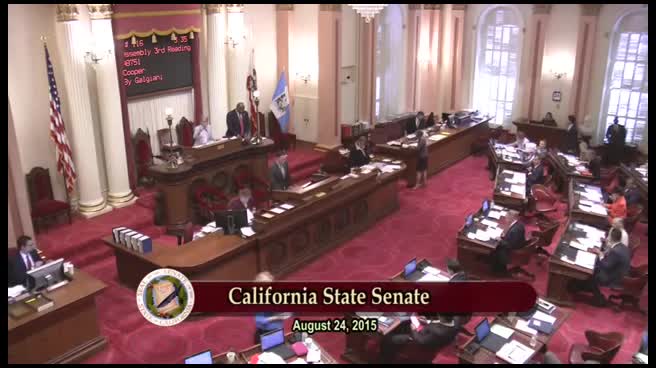
Bill Author

Bill Co-Author(s):
