AB 511: Workers’ compensation.
- Session Year: 2015-2016
- House: Assembly
- Latest Version Date: 2015-04-20
Existing law establishes a workers compensation system to compensate an employee for injuries arising out of, and in the course of, his or her employment. Existing law designates illnesses and conditions that constitute a compensable injury for various employees, such as California Highway Patrol members, firefighters, and certain peace officers. These injuries include, but are not limited to, hernia, pneumonia, heart trouble, cancer, meningitis, and exposure to a biochemical substance when the illness or condition develops or manifests itself during a period when the officer or employee is in service of his or her employer, as specified.
This bill would expand the coverage of the above provisions relating to compensable injury, to include other, full-time peace officers described pursuant to specified provisions of law. The bill would also expand the coverage of these provisions to include, upon the approval of an ordinance or resolution adopted by the governing body of the contracting public agency, or the adoption of language to this effect in a city or county charter, or pursuant to the terms and conditions of employment set forth in a collective bargaining agreement, include a custody assistant, correctional officer, security officer, or security assistant employed by a public agency, or a peace officer other than a peace officer to whom these provisions already apply. The bill would also make technical and clarifying changes.
Existing law establishes a workers compensation system to compensate an employee for injuries arising out of, and in the course of, his or her employment. Existing law designates illnesses and conditions that constitute a compensable injury for various employees, such as California Highway Patrol members, firefighters, and certain peace officers. These injuries include, but are not limited to, hernia, pneumonia, heart trouble, cancer, meningitis, and exposure to a biochemical substance when the illness or condition develops or manifests itself during a period when the officer or employee is in service of his or her employer, as specified.
This bill would expand the coverage of the above provisions relating to compensable injury, to include other, full-time peace officers described pursuant to specified provisions of law. The bill would also expand the coverage of these provisions to include, upon the approval of an ordinance or resolution adopted by the governing body of the contracting public agency, or the adoption of language to this effect in a city or county charter, or pursuant to the terms and conditions of employment set forth in a collective bargaining agreement, a custody assistant, correctional officer, security officer, or security assistant employed by a public agency, or a peace officer other than a peace officer to whom these provisions already apply. The bill would also make technical and clarifying changes.
(a)As used in this act, the term injury includes both of the following:
(1)With respect to the following members, a hernia, when any part of the hernia develops or manifests itself during a period while the member is in the service of the office, staff, division, department, or unit:
(A)Members of a sheriffs office or the California Highway Patrol, district attorneys staff of inspectors and investigators, or police or fire departments of cities, counties, cities and counties, districts, or other public or municipal corporations or political subdivisions, whether those members are volunteers, or are partly paid or fully paid.
(B)Active firefighting members of the Department of Forestry and Fire Protection whose duties require firefighting or of any county forestry or firefighting department or unit, whether those members are volunteers, or are partly paid or fully paid.
(C)Members of the warden service of the Wildlife Branch of the Department of Fish and Wildlife whose principal duties consist of active law enforcement service.
(D)Regular salaried county or city and county peace officers.
(E)Full-time peace officers, other than those described in subparagraph (A) or (D), as described in Chapter 4.5 (commencing with Section 830) of Title 3 of Part 2 of the Penal Code.
(F)Upon the approval of an ordinance or resolution adopted by the governing body of the contracting public agency, or the adoption of language to this effect in a city or county charter, or pursuant to the terms and conditions of employment set forth in a collective bargaining agreement, a A custody assistant, correctional officer, security officer, or security assistant employed by a public agency, or a peace officer other than a peace officer described in Chapter 4.5 (commencing with Section 830) of Title 3 of Part 2 of the Penal Code.
(2)With respect to the following members, pneumonia and heart trouble that develops or manifests itself during a period while the member is in the service of the department:
(A)Members of fire departments.
(B)Members of county forestry or firefighting departments.
(C)Active firefighting members of the Department of Forestry and Fire Protection whose duties require firefighting.
(D)Members of the warden service of the Wildlife Branch of the Department of Fish and Wildlife whose principal duties consist of active law enforcement service.
(E)Upon the approval of an ordinance or resolution adopted by the governing body of the contracting public agency, or the adoption of language to this effect in a city or county charter, or pursuant to the terms and conditions of employment set forth in a collective bargaining agreement, a A custody assistant, correctional officer, security officer, or security assistant employed by a public agency, or a peace officer other than a peace officer described in Chapter 4.5 (commencing with Section 830) of Title 3 of Part 2 of the Penal Code.
(b)The compensation that is awarded for the hernia, heart trouble, or pneumonia shall include full hospital, surgical, medical treatment, disability indemnity, and death benefits, as provided by the workers compensation laws of this state.
(c)Hernia, heart trouble, or pneumonia developing or manifesting as described in this section shall be presumed to arise out of and in the course of employment. This presumption is disputable and may be controverted by other evidence, but unless controverted by other evidence, the appeals board is bound to find in accordance with it. The presumption shall be extended to a member following termination of service for a period of three calendar months for each full year of the requisite service, but not to exceed 60 months in any circumstance, commencing with the last date actually worked in the specified capacity.
(d)Hernia, heart trouble, or pneumonia developing or manifesting as described in this section shall not be attributed to any disease existing prior to that development or manifestation.
(e)This section does not apply to persons whose principal duties are clerical or otherwise do not clearly fall within the scope of active law enforcement, including custody and corrections, firefighting, or emergency first aid response service, such as stenographers, receptionists, and other office workers.
SEC. 3.Section 3212.1 of the Labor Code is amended to read:3212.1.(a)This section applies to all of the following:
(1)Active firefighting members, whether those members are volunteers, or are partly paid or fully paid, of all of the following fire departments:
(A)A fire department of a city, county, city and county, district, or other public or municipal corporation or political subdivision.
(B)A fire department of the University of California and the California State University.
(C)The Department of Forestry and Fire Protection.
(D)A county forestry or firefighting department or unit.
(2)Active firefighting members of a fire department that serves a United States Department of Defense installation and who are certified by the Department of Defense as meeting its standards for firefighters.
(3)Active firefighting members of a fire department that serves a National Aeronautics and Space Administration installation and who adhere to training standards established in accordance with Article 4 (commencing with Section 13155) of Chapter 1 of Part 2 of Division 12 of the Health and Safety Code.
(4)Part-time peace officers, as defined in Section 830.1, subdivision (a) of Section 830.2, and subdivisions (a) and (b) of Section 830.37, of the Penal Code, who are primarily engaged in active law enforcement activities, and full-time peace officers described in Chapter 4.5 (commencing with Section 830) of Title 3 of Part 2 of the Penal Code.
(5)(A)Fire and rescue services coordinators who work for the Office of Emergency Services.
(B)For purposes of this paragraph, fire and rescue services coordinators means coordinators with any of the following job classifications: coordinator, senior coordinator, or chief coordinator.
(6)Upon the approval of an ordinance or resolution adopted by the governing body of the contracting public agency, or the adoption of language to this effect in a city or county charter, or pursuant to the terms and conditions of employment set forth in a collective bargaining agreement, a A custody assistant, correctional officer, security officer, or security assistant employed by a public agency, or a peace officer other than a peace officer described in Chapter 4.5 (commencing with Section 830) of Title 3 of Part 2 of the Penal Code.
(b)The term injury, as used in this division, includes cancer, including leukemia, that develops or manifests itself during a period in which any member described in subdivision (a) is in the service of the department or unit, if the member demonstrates that he or she was exposed, while in the service of the department or unit, to a known carcinogen as defined by the International Agency for Research on Cancer, or as defined by the director.
(c)The compensation that is awarded for cancer shall include full hospital, surgical, medical treatment, disability indemnity, and death benefits, as provided by this division.
(d)The cancer so developing or manifesting itself in these cases shall be presumed to arise out of and in the course of the employment. This presumption is disputable and may be controverted by evidence that the primary site of the cancer has been established and that the carcinogen to which the member has demonstrated exposure is not reasonably linked to the disabling cancer. Unless so controverted, the appeals board is bound to find in accordance with the presumption. This presumption shall be extended to a member following termination of service for a period of three calendar months for each full year of the requisite service, but not to exceed 120 months in any circumstance, commencing with the last date actually worked in the specified capacity.
(e)The amendments to this section enacted during the 1999 portion of the 19992000 Regular Session shall be applied to claims for benefits filed or pending on or after January 1, 1997, including, but not limited to, claims for benefits filed on or after that date that have previously been denied, or that are being appealed following denial.
(f)This section shall be known, and may be cited, as the William Dallas Jones Cancer Presumption Act of 2010.
SEC. 4.Section 3212.5 of the Labor Code is repealed.SEC. 5.Section 3212.5 is added to the Labor Code, to read:3212.5.(a)The term injury as used in this division includes heart trouble and pneumonia that develops or manifests itself during a period while a person described in this subdivision is in the service of the agency, department, or office as described in this subdivision, and the compensation that is awarded for heart trouble or pneumonia as described in this section shall include full hospital, surgical, medical treatment, disability indemnity, and death benefits as provided by the provisions of this division for the following persons when those persons are employed upon a regular, full-time salary:
(1)A peace officer described in Chapter 4.5 (commencing with Section 830) of Title 3 of Part 2 of the Penal Code who is employed on a regular, full-time salary.
(2)An inspector or investigator in a district attorneys office of a county who is employed on a regular, full-time salary.
(3)Upon the approval of an ordinance or resolution adopted by the governing body of the contracting public agency, or the adoption of language to this effect in a city or county charter, or pursuant to the terms and conditions of employment set forth in a collective bargaining agreement, a A custody assistant, correctional officer, security officer, or security assistant employed by a public agency, or a peace officer other than a peace officer described in Chapter 4.5 (commencing with Section 830) of Title 3 of Part 2 of the Penal Code.
(b)The heart trouble or pneumonia so developing or manifesting itself shall be presumed to arise out of and in the course of the employment; provided, however, that the person shall have served five years or more in that capacity before the presumption shall arise as to the compensability of heart trouble so developing or manifesting itself. This presumption is disputable and may be controverted by other evidence, but, unless so controverted, the appeals board is bound to find in accordance with it. This presumption shall be extended to a person following termination of service for a period of three calendar months for each full year of the requisite service, not to exceed 60 months in any circumstance, commencing with the last date actually worked in the specified capacity.
(c)The heart trouble or pneumonia so developing or manifesting itself in these cases shall in no case be attributed to any disease existing prior to its development or manifestation.
SEC. 6.Section 3212.6 of the Labor Code is repealed.SEC. 7.Section 3212.6 is added to the Labor Code, to read:3212.6.(a)(1)The term injury includes tuberculosis that develops or manifests itself during a period while a person described in this paragraph is in the service of the agency, department, or office as described in this paragraph and the compensation that is awarded for the tuberculosis shall include full hospital, surgical, medical treatment, disability indemnity, and death benefits as provided by the provisions of this division for the following persons:
(A)A peace officer described in Chapter 4.5 (commencing with Section 830) of Title 3 of Part 2 of the Penal Code if that person is employed upon a regular, full-time salary.
(B)An inspector or investigator in a district attorneys office of a county who is employed on a regular, full-time salary.
(C)A prison or jail guard or correctional officer who is employed by a public agency if that person is employed upon a regular, full-time salary.
(D)Upon the approval of an ordinance or resolution adopted by the governing body of the contracting public agency, or the adoption of language to this effect in a city or county charter, or pursuant to the terms and conditions of employment set forth in a collective bargaining agreement, a A custody assistant, correctional officer, security officer, or security assistant employed by a public agency, or a peace officer other than a peace officer described in Chapter 4.5 (commencing with Section 830) of Title 3 of Part 2 of the Penal Code, if that person is employed upon a regular, full-time salary.
(E)A member of a fire department of any city, county, or district, or other public or municipal corporations or political subdivisions, if that person is employed on a regular, fully paid basis.
(F)An active firefighting member of the Department of Forestry and Fire Protection whose duties require firefighting and first aid response services, or of a county forestry or firefighting department or unit, if that person is employed on a regular, fully paid basis.
(2)The tuberculosis developing or manifesting itself as described in paragraph (1) shall be presumed to arise out of and in the course of the employment. This presumption is disputable and may be controverted by other evidence, but unless so controverted, the appeals board is bound to find in accordance with it. This presumption shall be extended to a person described in paragraph (1) following termination of service for a period of three calendar months for each full year of the requisite service, but not to exceed 60 months in any circumstance, commencing with the last date actually worked in the specified capacity.
(b)A public entity may require applicants for employment in firefighting positions who would be entitled to the benefits granted by this section to be tested for infection for tuberculosis.
(c)This section does not apply to persons whose principal duties are clerical or otherwise do not clearly fall within the scope of active law enforcement, including custody and corrections, firefighting, or emergency first aid response service, such as stenographers, receptionists, and other office workers.
SEC. 8.Section 3212.85 of the Labor Code is repealed.SEC. 9.Section 3212.85 is added to the Labor Code, to read:3212.85.(a)The term injury, as used in this division, includes illness or resulting death due to exposure to a biochemical substance that develops or occurs during a period in which a person described in this subdivision is in the service of the agency, department, or unit as described in this subdivision:
(1)A part-time peace officer described in Sections 830.1 to 830.5, inclusive, of, or a full-time peace officer described in, Chapter 4.5 (commencing with Section 830) of Title 3 of Part 2 of the Penal Code.
(2)A member of a fire department.
(3)Upon the approval of an ordinance or resolution adopted by the governing body of the contracting public agency, or the adoption of language to this effect in a city or county charter, or pursuant to the terms and conditions of employment set forth in a collective bargaining agreement, a A custody assistant, correctional officer, security officer, or security assistant employed by a public agency, or a peace officer other than a peace officer described in Chapter 4.5 (commencing with Section 830) of Title 3 of Part 2 of the Penal Code.
(b)The compensation that is awarded for injury pursuant to this section shall include full hospital, surgical, medical treatment, disability indemnity, and death benefits, as provided by this division.
(c)The injury that develops or manifests itself in these cases shall be presumed to arise out of, and in the course of, the employment. This presumption is disputable and may be controverted by other evidence. Unless controverted, the appeals board is bound to find in accordance with the presumption. This presumption shall be extended to a person described in subdivision (a) following termination of service for a period of three calendar months for each full year of the requisite service, but not to exceed 60 months in any circumstance, commencing with the last date actually worked in the specified capacity.
(d)For purposes of this section, the following definitions apply:
(1)Biochemical substance means any biological or chemical agent that may be used as a weapon of mass destruction, including, but not limited to, any chemical warfare agent, weaponized biological agent, or nuclear or radiological agent, as these terms are defined in Section 11417 of the Penal Code.
(2)Member of a fire department includes, but is not limited to, an apprentice, volunteer, partly paid, or fully paid member of any of the following:
(A)A fire department of a city, county, city and county, district, or other public or municipal corporation or political subdivision.
(B)A fire department of the University of California and the California State University.
(C)The Department of Forestry and Fire Protection.
(D)A county forestry or firefighting department or unit.
SEC. 10.Section 3212.9 of the Labor Code is repealed.SEC. 11.Section 3212.9 is added to the Labor Code, to read:3212.9.(a)The term injury includes meningitis that develops or manifests itself when one of the following persons is in the service of the agency, department, or unit as described in this subdivision and the compensation that is awarded for meningitis shall include full hospital, surgical, medical treatment, disability indemnity, and death benefits as provided by this division:
(1)A peace officer described in Chapter 4.5 (commencing with Section 830) of Title 3 of Part 2 of the Penal Code who is employed on a regular, full-time salary.
(2)An inspector or investigator in a district attorneys office of a county whose principal duties consist of active law enforcement service and who is employed on a regular, full-time salary.
(3)A member of a fire department of any city, county, or district, or other public or municipal corporation or political subdivision, or a county forestry or firefighting department or unit, who is employed on a regular, full-time salary.
(4)Upon the approval of an ordinance or resolution adopted by the governing body of the contracting public agency, or the adoption of language to this effect in a city or county charter, or pursuant to the terms and conditions of employment set forth in a collective bargaining agreement, a A custody assistant, correctional officer, security officer, or security assistant employed by a public agency, or a peace officer other than a peace officer described in Chapter 4.5 (commencing with Section 830) of Title 3 of Part 2 of the Penal Code who is employed on a regular, full-time salary.
(b)For purposes of this section, meningitis shall be presumed to arise out of, and in the course of, the employment. This presumption is disputable and may be controverted by other evidence, but unless so controverted, the appeals board is bound to find in accordance with it. This presumption shall be extended to a person following termination of service for a period of three calendar months for each full year of the requisite service, but not to exceed 60 months in any circumstance, commencing with the last date actually worked in the specified capacity.
(c)This section does not apply to persons whose principal duties are clerical or otherwise do not clearly fall within the scope of active law enforcement, including custody and corrections, or firefighting, such as stenographers, receptionists, and other office workers.
In the case of members of a sheriffs office or the California Highway Patrol, district attorneys staff of inspectors and investigators or of police or fire departments of cities, counties, cities and counties, districts or other public or municipal corporations or political subdivisions, whether those members are volunteer, partly paid, or fully paid, and in the case of active firefighting members of the Department of Forestry and Fire Protection whose duties require firefighting or of any county forestry or firefighting department or unit, whether voluntary, fully paid, or partly paid, and in the case of members of the warden service of the Wildlife Protection Branch of the Department of Fish and Game whose principal duties consist of active law enforcement service, excepting those whose principal duties are clerical or otherwise do not clearly fall within the scope of active law enforcement service such as stenographers, telephone operators, and other officeworkers, the term injury as used in this act includes hernia when any part of the hernia develops or manifests itself during a period while the member is in the service in the office, staff, division, department, or unit, and in the case of members of fire departments, except those whose principal duties are clerical, such as stenographers, telephone operators, and other officeworkers, and in the case of county forestry or firefighting departments, except those whose principal duties are clerical, such as stenographers, telephone operators, and other officeworkers, and in the case of active firefighting members of the Department of Forestry and Fire Protection whose duties require firefighting, and in the case of members of the warden service of the Wildlife Protection Branch of the Department of Fish and Game whose principal duties consist of active law enforcement service, excepting those whose principal duties are clerical or otherwise do not clearly fall within the scope of active law enforcement service such as stenographers, telephone operators, and other officeworkers, the term injury includes pneumonia and heart trouble that develops or manifests itself during a period while the member is in the service of the office, staff, department, or unit. In the case of regular salaried county or city and county peace officers, the term injury also includes any hernia that manifests itself or develops during a period while the officer is in the service. The compensation that is awarded for the hernia, heart trouble, or pneumonia shall include full hospital, surgical, medical treatment, disability indemnity, and death benefits, as provided by the workers compensation laws of this state.
The hernia, heart trouble, or pneumonia so developing or manifesting itself in those cases shall be presumed to arise out of and in the course of the employment. This presumption is disputable and may be controverted by other evidence, but unless so controverted, the appeals board is bound to find in accordance with it. The presumption shall be extended to a member following termination of service for a period of three calendar months for each full year of the requisite service, but not to exceed 60 months in any circumstance, commencing with the last date actually worked in the specified capacity.
The hernia, heart trouble, or pneumonia so developing or manifesting itself in those cases shall in no case be attributed to any disease existing prior to that development or manifestation.
SEC. 2.Section 3212 is added to the Labor Code, to read:3212.(a)As used in this act, the term injury includes both of the following:
(1)With respect to the following members, a hernia, when any part of the hernia develops or manifests itself during a period while the member is in the service of the office, staff, division, department, or unit:
(A)Members of a sheriffs office or the California Highway Patrol, district attorneys staff of inspectors and investigators, or police or fire departments of cities, counties, cities and counties, districts, or other public or municipal corporations or political subdivisions, whether those members are volunteers, or are partly paid or fully paid.
(B)Active firefighting members of the Department of Forestry and Fire Protection whose duties require firefighting or of any county forestry or firefighting department or unit, whether those members are volunteers, or are partly paid or fully paid.
(C)Members of the warden service of the Wildlife Branch of the Department of Fish and Wildlife whose principal duties consist of active law enforcement service.
(D)Regular salaried county or city and county peace officers.
(E)Full-time peace officers, other than those described in subparagraph (A) or (D), as described in Chapter 4.5 (commencing with Section 830) of Title 3 of Part 2 of the Penal Code.
(F)Upon the approval of an ordinance or resolution adopted by the governing body of the contracting public agency, or the adoption of language to this effect in a city or county charter, or pursuant to the terms and conditions of employment set forth in a collective bargaining agreement, a custody assistant, correctional officer, security officer, or security assistant employed by a public agency, or a peace officer other than a peace officer described in Chapter 4.5 (commencing with Section 830) of Title 3 of Part 2 of the Penal Code.
(2)With respect to the following members, pneumonia and heart trouble that develops or manifests itself during a period while the member is in the service of the department:
(A)Members of fire departments.
(B)Members of county forestry or firefighting departments.
(C)Active firefighting members of the Department of Forestry and Fire Protection whose duties require firefighting.
(D)Members of the warden service of the Wildlife Branch of the Department of Fish and Wildlife whose principal duties consist of active law enforcement service.
(E)Upon the approval of an ordinance or resolution adopted by the governing body of the contracting public agency, or the adoption of language to this effect in a city or county charter, or pursuant to the terms and conditions of employment set forth in a collective bargaining agreement, a custody assistant, correctional officer, security officer, or security assistant employed by a public agency, or a peace officer other than a peace officer described in Chapter 4.5 (commencing with Section 830) of Title 3 of Part 2 of the Penal Code.
(b)The compensation that is awarded for the hernia, heart trouble, or pneumonia shall include full hospital, surgical, medical treatment, disability indemnity, and death benefits, as provided by the workers compensation laws of this state.
(c)Hernia, heart trouble, or pneumonia developing or manifesting as described in this section shall be presumed to arise out of and in the course of employment. This presumption is disputable and may be controverted by other evidence, but unless controverted by other evidence, the appeals board is bound to find in accordance with it. The presumption shall be extended to a member following termination of service for a period of three calendar months for each full year of the requisite service, but not to exceed 60 months in any circumstance, commencing with the last date actually worked in the specified capacity.
(d)Hernia, heart trouble, or pneumonia developing or manifesting as described in this section shall not be attributed to any disease existing prior to that development or manifestation.
(e)This section does not apply to persons whose principal duties are clerical or otherwise do not clearly fall within the scope of active law enforcement, including custody and corrections, firefighting, or emergency first aid response service, such as stenographers, receptionists, and other office workers.
SEC. 3.Section 3212.1 of the Labor Code is amended to read:3212.1.(a)This section applies to all of the following:
(1)Active firefighting members, whether those members are volunteers, or are partly paid, paid or fully paid, of all of the following fire departments:
(A)A fire department of a city, county, city and county, district, or other public or municipal corporation or political subdivision.
(B)A fire department of the University of California and the California State University.
(C)The Department of Forestry and Fire Protection.
(D)A county forestry or firefighting department or unit.
(2)Active firefighting members of a fire department that serves a United States Department of Defense installation and who are certified by the Department of Defense as meeting its standards for firefighters.
(3)Active firefighting members of a fire department that serves a National Aeronautics and Space Administration installation and who adhere to training standards established in accordance with Article 4 (commencing with Section 13155) of Chapter 1 of Part 2 of Division 12 of the Health and Safety Code.
(4)Peace Part-time peace officers, as defined in Section 830.1, subdivision (a) of Section 830.2, and subdivisions (a) and (b) of Section 830.37, of the Penal Code, who are primarily engaged in active law enforcement activities, and full-time peace officers described in Chapter 4.5 (commencing with Section 830) of Title 3 of Part 2 of the Penal Code.
(5)(A)Fire and rescue services coordinators who work for the Office of Emergency Services.
(B)For purposes of this paragraph, fire and rescue services coordinators means coordinators with any of the following job classifications: coordinator, senior coordinator, or chief coordinator.
(6)Upon the approval of an ordinance or resolution adopted by the governing body of the contracting public agency, or the adoption of language to this effect in a city or county charter, or pursuant to the terms and conditions of employment set forth in a collective bargaining agreement, a custody assistant, correctional officer, security officer, or security assistant employed by a public agency, or a peace officer other than a peace officer described in Chapter 4.5 (commencing with Section 830) of Title 3 of Part 2 of the Penal Code.
(b)The term injury, as used in this division, includes cancer, including leukemia, that develops or manifests itself during a period in which any member described in subdivision (a) is in the service of the department or unit, if the member demonstrates that he or she was exposed, while in the service of the department or unit, to a known carcinogen as defined by the International Agency for Research on Cancer, or as defined by the director.
(c)The compensation that is awarded for cancer shall include full hospital, surgical, medical treatment, disability indemnity, and death benefits, as provided by this division.
(d)The cancer so developing or manifesting itself in these cases shall be presumed to arise out of and in the course of the employment. This presumption is disputable and may be controverted by evidence that the primary site of the cancer has been established and that the carcinogen to which the member has demonstrated exposure is not reasonably linked to the disabling cancer. Unless so controverted, the appeals board is bound to find in accordance with the presumption. This presumption shall be extended to a member following termination of service for a period of three calendar months for each full year of the requisite service, but not to exceed 120 months in any circumstance, commencing with the last date actually worked in the specified capacity.
(e)The amendments to this section enacted during the 1999 portion of the 19992000 Regular Session shall be applied to claims for benefits filed or pending on or after January 1, 1997, including, but not limited to, claims for benefits filed on or after that date that have previously been denied, or that are being appealed following denial.
(f)This section shall be known, and may be cited, as the William Dallas Jones Cancer Presumption Act of 2010.
SEC. 4.Section 3212.5 of the Labor Code is repealed.3212.5.In the case of a member of a police department of a city or municipality, or a member of the State Highway Patrol, when any such member is employed upon a regular, full-time salary, and in the case of a sheriff or deputy sheriff, or an inspector or investigator in a district attorneys office of any county, employed upon a regular, full-time salary, the term injury as used in this division includes heart trouble and pneumonia which develops or manifests itself during a period while such member, sheriff, or deputy sheriff, inspector or investigator is in the service of the police department, the State Highway Patrol, the sheriffs office or the district attorneys office, as the case may be. The compensation which is awarded for such heart trouble or pneumonia shall include full hospital, surgical, medical treatment, disability indemnity, and death benefits as provided by the provisions of this division.
Such heart trouble or pneumonia so developing or manifesting itself shall be presumed to arise out of and in the course of the employment; provided, however, that the member of the police department, State Highway Patrol, the sheriff or deputy sheriff, or an inspector or investigator in a district attorneys office of any county shall have served five years or more in such capacity before the presumption shall arise as to the compensability of heart trouble so developing or manifesting itself. This presumption is disputable and may be controverted by other evidence, but unless so controverted, the appeals board is bound to find in accordance with it. This presumption shall be extended to a member following termination of service for a period of three calendar months for each full year of the requisite service, but not to exceed 60 months in any circumstance, commencing with the last date actually worked in the specified capacity.
Such heart trouble or pneumonia so developing or manifesting itself in such cases shall in no case be attributed to any disease existing prior to such development or manifestation.
The term members as used herein shall be limited to those employees of police departments, the California Highway Patrol and sheriffs departments and inspectors and investigators of a district attorneys office who are defined as peace officers in Section 830.1, 830.2, or 830.3 of the Penal Code.
SEC. 5.Section 3212.5 is added to the Labor Code, to read:3212.5.(a)The term injury as used in this division includes heart trouble and pneumonia that develops or manifests itself during a period while a person described in this subdivision is in the service of the agency, department, or office as described in this subdivision, and the compensation that is awarded for heart trouble or pneumonia as described in this section shall include full hospital, surgical, medical treatment, disability indemnity, and death benefits as provided by the provisions of this division for the following persons when those persons are employed upon a regular, full-time salary:
(1)A peace officer described in Chapter 4.5 (commencing with Section 830) of Title 3 of Part 2 of the Penal Code who is employed on a regular, full-time salary.
(2)An inspector or investigator in a district attorneys office of a county who is employed on a regular, full-time salary.
(3)Upon the approval of an ordinance or resolution adopted by the governing body of the contracting public agency, or the adoption of language to this effect in a city or county charter, or pursuant to the terms and conditions of employment set forth in a collective bargaining agreement, a custody assistant, correctional officer, security officer, or security assistant employed by a public agency, or a peace officer other than a peace officer described in Chapter 4.5 (commencing with Section 830) of Title 3 of Part 2 of the Penal Code.
(b)The heart trouble or pneumonia so developing or manifesting itself shall be presumed to arise out of and in the course of the employment; provided, however, that the person shall have served five years or more in that capacity before the presumption shall arise as to the compensability of heart trouble so developing or manifesting itself. This presumption is disputable and may be controverted by other evidence, but, unless so controverted, the appeals board is bound to find in accordance with it. This presumption shall be extended to a person following termination of service for a period of three calendar months for each full year of the requisite service, not to exceed 60 months in any circumstance, commencing with the last date actually worked in the specified capacity.
(c)The heart trouble or pneumonia so developing or manifesting itself in these cases shall in no case be attributed to any disease existing prior to its development or manifestation.
SEC. 6.Section 3212.6 of the Labor Code is repealed.3212.6.In the case of a member of a police department of a city or county, or a member of the sheriffs office of a county, or a member of the California Highway Patrol, or an inspector or investigator in a district attorneys office of any county whose principal duties consist of active law enforcement service, or a prison or jail guard or correctional officer who is employed by a public agency, when that person is employed upon a regular, full-time salary, or in the case of members of fire departments of any city, county, or district, or other public or municipal corporations or political subdivisions, when those members are employed on a regular fully paid basis, and in the case of active firefighting members of the Department of Forestry and Fire Protection whose duties require firefighting and first-aid response services, or of any county forestry or firefighting department or unit, where those members are employed on a regular fully paid basis, excepting those whose principal duties are clerical or otherwise do not clearly fall within the scope of active law enforcement, firefighting, or emergency first-aid response service such as stenographers, telephone operators, and other officeworkers, the term injury includes tuberculosis that develops or manifests itself during a period while that member is in the service of that department or office. The compensation that is awarded for the tuberculosis shall include full hospital, surgical, medical treatment, disability indemnity, and death benefits as provided by the provisions of this division.
The tuberculosis so developing or manifesting itself shall be presumed to arise out of and in the course of the employment. This presumption is disputable and may be controverted by other evidence, but unless so controverted, the appeals board is bound to find in accordance with it. This presumption shall be extended to a member following termination of service for a period of three calendar months for each full year of the requisite service, but not to exceed 60 months in any circumstance, commencing with the last date actually worked in the specified capacity.
A public entity may require applicants for employment in firefighting positions who would be entitled to the benefits granted by this section to be tested for infection for tuberculosis.
SEC. 7.Section 3212.6 is added to the Labor Code, to read:3212.6.(a)(1)The term injury includes tuberculosis that develops or manifests itself during a period while a person described in this paragraph is in the service of the agency, department, or office as described in this paragraph and the compensation that is awarded for the tuberculosis shall include full hospital, surgical, medical treatment, disability indemnity, and death benefits as provided by the provisions of this division for the following persons:
(A)A peace officer described in Chapter 4.5 (commencing with Section 830) of Title 3 of Part 2 of the Penal Code if that person is employed upon a regular, full-time salary.
(B)An inspector or investigator in a district attorneys office of a county who is employed on a regular, full-time salary.
(C)A prison or jail guard or correctional officer who is employed by a public agency if that person is employed upon a regular, full-time salary.
(D)Upon the approval of an ordinance or resolution adopted by the governing body of the contracting public agency, or the adoption of language to this effect in a city or county charter, or pursuant to the terms and conditions of employment set forth in a collective bargaining agreement, a custody assistant, correctional officer, security officer, or security assistant employed by a public agency, or a peace officer other than a peace officer described in Chapter 4.5 (commencing with Section 830) of Title 3 of Part 2 of the Penal Code, if that person is employed upon a regular, full-time salary.
(E)A member of a fire department of any city, county, or district, or other public or municipal corporations or political subdivisions, if that person is employed on a regular, fully paid basis.
(F)An active firefighting member of the Department of Forestry and Fire Protection whose duties require firefighting and first aid response services, or of a county forestry or firefighting department or unit, if that person is employed on a regular, fully paid basis.
(2)The tuberculosis developing or manifesting itself as described in paragraph (1) shall be presumed to arise out of and in the course of the employment. This presumption is disputable and may be controverted by other evidence, but unless so controverted, the appeals board is bound to find in accordance with it. This presumption shall be extended to a person described in paragraph (1) following termination of service for a period of three calendar months for each full year of the requisite service, but not to exceed 60 months in any circumstance, commencing with the last date actually worked in the specified capacity.
(b)A public entity may require applicants for employment in firefighting positions who would be entitled to the benefits granted by this section to be tested for infection for tuberculosis.
(c)This section does not apply to persons whose principal duties are clerical or otherwise do not clearly fall within the scope of active law enforcement, including custody and corrections, firefighting, or emergency first aid response service, such as stenographers, receptionists, and other office workers.
SEC. 8.Section 3212.85 of the Labor Code is repealed.3212.85.(a)This section applies to peace officers described in Sections 830.1 to 830.5, inclusive, of the Penal Code, and members of a fire department.
(b)The term injury, as used in this division, includes illness or resulting death due to exposure to a biochemical substance that develops or occurs during a period in which any member described in subdivision (a) is in the service of the department or unit.
(c)The compensation that is awarded for injury pursuant to this section shall include full hospital, surgical, medical treatment, disability indemnity, and death benefits, as provided by this division.
(d)The injury that develops or manifests itself in these cases shall be presumed to arise out of, and in the course of, the employment. This presumption is disputable and may be controverted by other evidence. Unless controverted, the appeals board is bound to find in accordance with the presumption. This presumption shall be extended to a member following termination of service for a period of three calendar months for each full year of the requisite service, but not to exceed 60 months in any circumstance, commencing with the last date actually worked in the specified capacity.
(e)For purposes of this section, the following definitions apply:
(1)Biochemical substance means any biological or chemical agent that may be used as a weapon of mass destruction, including, but not limited to, any chemical warfare agent, weaponized biological agent, or nuclear or radiological agent, as these terms are defined in Section 11417 of the Penal Code.
(2)Members of a fire department includes, but is not limited to, an apprentice, volunteer, partly paid, or fully paid member of any of the following:
(A)A fire department of a city, county, city and county, district, or other public or municipal corporation or political subdivision.
(B)A fire department of the University of California and the California State University.
(C)The Department of Forestry and Fire Protection.
(D)A county forestry or firefighting department or unit.
SEC. 9.Section 3212.85 is added to the Labor Code, to read:3212.85.(a)The term injury, as used in this division, includes illness or resulting death due to exposure to a biochemical substance that develops or occurs during a period in which a person described in this subdivision is in the service of the agency, department, or unit as described in this subdivision:
(1)A part-time peace officer described in Sections 830.1 to 830.5, inclusive, of, or a full-time peace officer described in, Chapter 4.5 (commencing with Section 830) of Title 3 of Part 2 of the Penal Code.
(2)A member of a fire department.
(3)Upon the approval of an ordinance or resolution adopted by the governing body of the contracting public agency, or the adoption of language to this effect in a city or county charter, or pursuant to the terms and conditions of employment set forth in a collective bargaining agreement, a custody assistant, correctional officer, security officer, or security assistant employed by a public agency, or a peace officer other than a peace officer described in Chapter 4.5 (commencing with Section 830) of Title 3 of Part 2 of the Penal Code.
(b)The compensation that is awarded for injury pursuant to this section shall include full hospital, surgical, medical treatment, disability indemnity, and death benefits, as provided by this division.
(c)The injury that develops or manifests itself in these cases shall be presumed to arise out of, and in the course of, the employment. This presumption is disputable and may be controverted by other evidence. Unless controverted, the appeals board is bound to find in accordance with the presumption. This presumption shall be extended to a person described in subdivision (a) following termination of service for a period of three calendar months for each full year of the requisite service, but not to exceed 60 months in any circumstance, commencing with the last date actually worked in the specified capacity.
(d)For purposes of this section, the following definitions apply:
(1)Biochemical substance means any biological or chemical agent that may be used as a weapon of mass destruction, including, but not limited to, any chemical warfare agent, weaponized biological agent, or nuclear or radiological agent, as these terms are defined in Section 11417 of the Penal Code.
(2)Member of a fire department includes, but is not limited to, an apprentice, volunteer, partly paid, or fully paid member of any of the following:
(A)A fire department of a city, county, city and county, district, or other public or municipal corporation or political subdivision.
(B)A fire department of the University of California and the California State University.
(C)The Department of Forestry and Fire Protection.
(D)A county forestry or firefighting department or unit.
SEC. 10.Section 3212.9 of the Labor Code is repealed.3212.9.In the case of a member of a police department of a city, county, or city and county, or a member of the sheriffs office of a county, or a member of the California Highway Patrol, or a county probation officer, or an inspector or investigator in a district attorneys office of any county whose principal duties consist of active law enforcement service, when that person is employed on a regular, full-time salary, or in the case of a member of a fire department of any city, county, or district, or other public or municipal corporation or political subdivision, or any county forestry or firefighting department or unit, when those members are employed on a regular full-time salary, excepting those whose principal duties are clerical or otherwise do not clearly fall within the scope of active law enforcement or firefighting, such as stenographers, telephone operators, and other officeworkers, the term injury includes meningitis that develops or manifests itself during a period while that person is in the service of that department, office, or unit. The compensation that is awarded for the meningitis shall include full hospital, surgical, medical treatment, disability indemnity, and death benefits as provided by the provisions of this division.
The meningitis so developing or manifesting itself shall be presumed to arise out of and in the course of the employment. This presumption is disputable and may be controverted by other evidence, but unless so controverted, the appeals board is bound to find in accordance with it. This presumption shall be extended to a person following termination of service for a period of three calendar months for each full year of the requisite service, but not to exceed 60 months in any circumstance, commencing with the last date actually worked in the specified capacity.
SEC. 11.Section 3212.9 is added to the Labor Code, to read:3212.9.(a)The term injury includes meningitis that develops or manifests itself when one of the following persons is in the service of the agency, department, or unit as described in this subdivision and the compensation that is awarded for meningitis shall include full hospital, surgical, medical treatment, disability indemnity, and death benefits as provided by this division:
(1)A peace officer described in Chapter 4.5 (commencing with Section 830) of Title 3 of Part 2 Penal Code who is employed on a regular, full-time salary.
(2)An inspector or investigator in a district attorneys office of a county whose principal duties consist of active law enforcement service and who is employed on a regular, full-time salary.
(3)A member of a fire department of any city, county, or district, or other public or municipal corporation or political subdivision, or a county forestry or firefighting department or unit, who is employed on a regular, full-time salary.
(4)Upon the approval of an ordinance or resolution adopted by the governing body of the contracting public agency, or the adoption of language to this effect in a city or county charter, or pursuant to the terms and conditions of employment set forth in a collective bargaining agreement, a custody assistant, correctional officer, security officer, or security assistant employed by a public agency, or a peace officer other than a peace officer described in Chapter 4.5 (commencing with Section 830) of Title 3 of Part 2 of the Penal Code who is employed on a regular, full-time salary.
(b)For purposes of this section, meningitis shall be presumed to arise out of, and in the course of, the employment. This presumption is disputable and may be controverted by other evidence, but unless so controverted, the appeals board is bound to find in accordance with it. This presumption shall be extended to a person following termination of service for a period of three calendar months for each full year of the requisite service, but not to exceed 60 months in any circumstance, commencing with the last date actually worked in the specified capacity.
(c)This section does not apply to persons whose principal duties are clerical or otherwise do not clearly fall within the scope of active law enforcement, including custody and corrections, or firefighting, such as stenographers, receptionists, and other office workers.
|
Date
|
Status
|
|---|---|
| Feb 23, 2015 | Read first time. To print. |
| Feb 24, 2015 | From printer. May be heard in committee March 26. |
| Mar 5, 2015 | Referred to Com. on INS. |
| Apr 20, 2015 | From committee chair, with author's amendments: Amend, and re-refer to Com. on INS. Read second time and amended. |
| Apr 21, 2015 | Re-referred to Com. on INS. |
| May 6, 2015 | From committee: Do pass and re-refer to Com. on APPR. (Ayes 9. Noes 4.) (May 6). Re-referred to Com. on APPR. |
| May 20, 2015 | In committee: Set, first hearing. Referred to suspense file. |
| May 20, 2015 | In committee: Set, first hearing. Referred to APPR. suspense file. |
| May 28, 2015 | In committee: Held under submission. |
| Jan 31, 2016 | Died pursuant to Article IV, Sec. 10(c) of the Constitution. |
| Feb 1, 2016 | From committee: Filed with the Chief Clerk pursuant to Joint Rule 56. |
|
Date
|
Description
|
Location
|
Votes
|
|
|---|---|---|---|---|
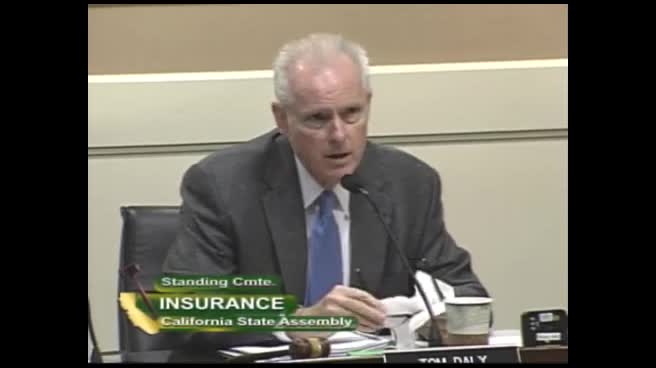
| May 6, 2015 | Do pass and be re-referred to the Committee on [Appropriations] | Assembly Standing Committee on Insurance |
Passed |
This list shows positions taken on this bill by organizations on the date displayed, which is linked to the original source.
Positions by individuals are not included.
|
Organization
|
Position
|
Date
|
|---|---|---|
| Aaron Reid and Associates | * Support | May 6, 2015 |
| Acclamation Insurance Management Services | ** Against | May 6, 2015 |
| Acclamation Insurance Management Services and Allied Managed Care | * Against | May 6, 2015 |
| Allied Managed Care | ** Against | May 6, 2015 |
| California Association Of Joint Powers Authorities | * Against | May 6, 2015 |
| California Coalition On Workers' Compensation (Formerly CAs For Compensation Reform) | * Against | May 6, 2015 |
| California Fraternal Order of Police | * Support | May 6, 2015 |
| Csac Excess Insurance Authority | * Against | May 6, 2015 |
| Long Beach Police Officers Association | * Support | May 6, 2015 |
| Los Angeles County Professional Peace Officers Association | * Support | May 6, 2015 |
| Riverside Sheriffs' Association | * Support | May 6, 2015 |
| Sacramento County Deputy Sheriffs' Association | * Support | May 6, 2015 |
| Santa Anna Police Officers Association | * Support | May 6, 2015 |
AB 511
Page 3
Date of Hearing: May 20, 2015
ASSEMBLY COMMITTEE ON APPROPRIATIONS
Jimmy Gomez, Chair
AB 511
(Gipson) – As Amended April 20, 2015
Policy Committee: |
Insurance |
Vote: |
9 - 4 |
|
|
|
|
|
|
|
|
Urgency: No State Mandated Local Program: No Reimbursable: No
SUMMARY:
This bill expands the categories of peace officers and other public employees to whom statutory "presumptions of compensability" apply. Specifically, this bill:
Replaces the listing of the peace officers who qualify for the various presumptions with a citation to Penal Code Sections 830, et seq, a series of statutes that define all of the various classes of peace officers, thereby qualifying all peace officers to receive the benefit of the presumptions.
Applies the same provisions to certain peace officers not defined in Penal Code Sections 830 et seq., are entitled to the benefit of the presumptions that certain diseases or conditions constitute compensable injuries.
Specifies that custody assistants, correctional officers, security officers, or security assistants employed by public agencies are entitled to the benefit of the presumptions that certain diseases or conditions constitute compensable injuries.
Specifies that certain part-time peace officers are entitled to the cancer presumption and to the presumptions relating to exposure to certain biochemical substances.
FISCAL EFFECT:
Annual increased workers compensation costs of at least several hundred thousand dollars, statewide across numerous departments employing peace officers (variety of GF/special fund/federal funds).
Annual increased workers compensation costs of at least $200,000 statewide to each the California State University (CSU) (GF/student fees) and $200,000 to the University of California (UC) system (GF/student fees/other funds).
Assuming the presumptions apply to at least 15,000 peace officers employed by local public agencies, annual increased workers compensation costs in the range of at least $6 million across counties statewide (local funds). The majority of local peace officers to which this bill applies are probation officers. Although the bill is keyed as a reimbursable mandate, local costs would likely not be reimbursed (see below for additional discussion).
A portion of the increased workers compensation costs will likely be offset by reduced costs for health care benefits programs provided through public agencies listed above, since peace officers will receive medical treatment through the workers' compensation system instead of through health care plans. Therefore, net costs to public agencies will likely be slightly lower than the total costs those referenced above.
COMMENTS:
Purpose. According to the author, this bill ensures equal treatment for all peace officers and similarly situated professionals with respect to presumptions for workers compensation. Proponents of this bill note that many classes of peace officer did not exist when the presumptions were first established. Rather than piecemeal additions to the statute, the author argues all peace officers should be treated the same. This bill is sponsored by the Los Angeles County Professional Peace Officers Association.
Background. Current law creates presumptions to reflect unique circumstances where injuries or illnesses appear to be logically work-related, but it is difficult for the safety officer to prove it is work-related. Presumptions are rebuttable, but given that many injuries for which presumptions exist can have a variety of causes, it is difficult to prove they are not work-related. Thus, it is rare that employers attempt to rebut presumptions. The absence of a presumption does not mean an employee does not qualify for workers' comp benefits, but that an employee must prove an injury is work-related in order to qualify.
Current law includes presumptions for cancer, lower back impairment, hernia, heart trouble, tuberculosis, pneumonia, meningitis, and biochemical exposures. These presumptions generally apply to a majority of peace officers employed by public agencies including firefighters, police and sheriffs, California Highway Patrol, and correctional officers. This bill would expand current presumptions to additional peace officers, including local probation officers, UC/CSU police officers, and a variety of state investigators.
Some conditions for which presumptions exist are fairly common in the general population, including cancer (2.8% of US population), lower back impairment (prevalence estimates range from 1.0% to 58.1% of adults), and heart disease (over 5% of California adults and over 20% of US adults over 65). Presumptions do not appear to have a strong evidence basis, due in part to the lack of research that can conclusively demonstrate whether certain job duties are associated with increased risk of certain conditions. Instead, presumptions are specified for certain classes based on the judgment that some of them are likely work-related, but that workers will generally not be able to meet the burden of proof, such as proving a cancer was directly linked to job-related exposure. Some work is ongoing to further explore job-related health risks.
State-Reimbursable Mandate? This bill is keyed as a potential reimbursable mandate. However, mandate claims are unlikely to be successful, as increased employee compensation costs mandated by state law that do not result in a higher level of service to the public are not generally considered reimbursable. According to a prior decision by the Commission on modifications to Labor Code section 4850, a statute that expanded the applicability of an existing workers’ compensation leave benefit to specified local safety officers,
"the California Appellate and Supreme Court have consistently held that additional costs for increased employee benefits, in the absence of some increase in the actual level or quality of governmental services provided to the public, do not constitute an “enhanced service to the public” and therefore do not impose a new program or higher level of service on local governments within the meaning of article XIII B, section 6 of the California Constitution.
"The workers’ compensation program is a state-administered program rather than a locally administered program, one that provides a statewide compulsory and exclusive scheme of employer liability, without fault, for injuries arising out of and in the course of employment. [Certain Labor Code provisions are] part of that comprehensive statutory scheme. Moreover, although the claimants may be faced with a higher cost of compensating their employees as a result of extending the workers’ compensation…benefits to additional employees, this does not equate to a higher cost of providing services to the public. Therefore, the Commission concluded that [the statute] does not constitute a reimbursable state-mandated program."
Opposition. Coalitions of local governments oppose this bill, as do third-party administrators for workers compensation, the California Coalition on Workers' Compensation, and the Los Angeles County Board of Supervisors. Opposition states this is a massive and costly expansion of presumptions, and that they are aware of no objective analysis substantiating the need for this bill.
Related Legislation. Last year, the Legislature passed AB 2052 (Gonzalez), which also proposed an expansion of the class of employees entitled to certain presumptions of compensability. AB 511 is broader than AB 2052, as it includes part-time peace officers, non-Section 830 peace officers, as well as certain classes of employee who are not considered peace officers. Despite being narrower than AB 511, the Governor vetoed AB 2052. The Governor's veto message stated opposition to expanding presumptions for entire classes of workers without evidence that these officers confront the hazards that gave rise to current presumptions, stating presumptions should be used "rarely and only when justified by clear and convincing scientific evidence." This bill does not appear to address the veto message.
Analysis Prepared by: Lisa Murawski / APPR. / (916) 319-2081
AB 511
Page 4
Date of Hearing: May 6, 2015
ASSEMBLY COMMITTEE ON INSURANCE
Tom Daly, Chair
AB 511
(Gipson) – As Amended April 20, 2015
SUBJECT: Workers’ compensation
SUMMARY: Expands the categories of peace officers to whom statutory "presumptions of compensability" apply. Specifically, this bill:
Repeals the listing of the specific categories of peace officers in six labor code sections that specify that certain diseases, conditions or injuries are presumed to be work related.
Specifies that full-time peace officers defined in Penal Code Sections 830 et seq., are entitled to the benefit of the presumptions that certain diseases or conditions constitute compensable injuries.
Specifies that certain peace officers not defined in Penal Code Sections 830 et seq., are entitled to the benefit of the presumptions that certain diseases or conditions constitute compensable injuries.
Specifies that custody assistants, correctional officers, security officers, or security assistants employed by public agencies are entitled to the benefit of the presumptions that certain diseases or conditions constitute compensable injuries.
Specifies that certain part-time peace officers are entitled to the cancer presumption and to the presumptions relating to exposure to certain biochemical substances.
EXISTING LAW:
Provides for a comprehensive system of workers' compensation benefits to be provided to workers whose injuries or conditions arise out of or in the course of employment.
Provides that the injured worker must establish that his or her injury or condition was work related.
Establishes exceptions for certain firefighter and peace officer employees to the requirement that the injured worker establish that the injury or condition was work related, and instead grants a presumption that the injury or condition is work related.
Provides that the injuries or conditions that are presumed to be work related for specified public safety officers include:
Cancer;
Heart trouble, pneumonia, or hernia;
Tuberculosis;
Exposure to a biochemical substance;
Meningitis.
Provides that the presumption of compensability in any of these circumstances is rebuttable.
Defines, in Penal Code sections 830 et seq., the classes of peace officers.
FISCAL EFFECT: Undetermined
COMMENTS:
Purpose. According to the author, when the initial presumption laws were enacted, they were intended to apply to all peace officers. Newer categories of officers, however, have not been included in the benefits of presumptions because they are not expressly listed in statute.
Background on presumptions. Presumptions have never been intended to create work related injuries when, in fact, the injuries in question are not work related. Rather, presumptions of compensability have been adopted, some many decades ago, to reflect unique circumstances where injuries or illnesses appear to logically be work related, but it is difficult for the safety officer to prove it is work related. There has clearly been some slippage over time from a rigorous application of this rationale, but it remains the underlying premise of presuming injuries or illnesses to be work related. This is why the presumption statutes have extensive lists of the peace officers who qualify – each category of peace officer has made the policy argument that they are similar to existing recipients of the presumption, and should similarly receive the benefit.
In this regard, the proponents of the bill note that many classes of peace officer – such as airport police, school district police, transit police, among others – simply did not exist when the presumptions were first established. Rather than piecemeal additions to the statute, all peace officers should be treated the same.
In addition, with very narrow exceptions for privately employed firefighters for public facilities, presumptions of compensability have been granted only to public safety officers – fire and peace officer employees. Thus, the costs of presumptions are borne only by state and local government employers.
Non-Peace Officers. The bill applies to several types of public employees who are not peace officers -- custody assistants, correctional officers, security officers, or security assistants. In some circumstances, some of these employees may perform functions similar to those performed by peace officers. However, it is unclear what employees are included within this class, particularly the "assistant" job descriptions, and what relationship those employment classes have to peace officer classifications. Proponents have not provided a more specific definition of who these non-peace officers might be, or why they should be afforded special peace officer benefits.
Non Section 830 Peace Officers. The bill specifically includes peace officers who are not defined in Penal Code Section 830, et seq. It is not clear who these peace officers might be, who they work for, what qualifies them as peace officers, or how a public employer would determine whether or not an employee is a "peace officer" even though not defined by the basic law that defines "peace officer."
Presumptions are rebuttable. As a matter of law, public employers have the opportunity to rebut the presumption, and establish that the injury or condition was not the result of employment. As a practical matter, however, presumptions are rarely rebutted. Opponents argue that the virtual impossibility of proving a negative – especially with respect to the most commonly presumed injuries such as heart trouble or cancer – renders the presumptions functionally conclusive.
Are all peace officers similarly situated? The premise of the bill is that all of the various presumptions are statutory benefits that are applicable to peace officers, and it makes no sense to grant these benefits to some, but not all, peace officers. However, not all peace officers are, in fact, the same. While the examples are too numerous to list, a few are illustrative of the argument. Welfare fraud investigators would be added to the list of peace officers who would be entitled to the full range of presumptions. Is it logical to presume that any cancer these officers contract must have been work related? Or is it logical to presume that a hernia must have been work related due to the heavy equipment that street police must carry, but that welfare fraud investigators do not? These and numerous other examples are the reason why, according to opponents, the law has been limited to those peace officers who have made the policy argument that their unique circumstances suggest that their injuries or conditions are likely to be work related, but should be granted the presumption due to the difficulty of proof in their specific cases.
Workers' compensation is not the only government-provided benefit for these employees. Opponents have suggested that the implication that these peace officers must be granted the benefit of presumptions, or they will be left out in the cold, is erroneous. First, the peace officer can always do what every other employee must do – prove the injury or illness is work related. Second, even if the peace officer cannot carry that burden of proof, they have health insurance and other employee benefits that assure their conditions can be treated.
Prior legislation. Last year, the Legislature passed AB 2052 (Gonzalez), which also proposed an expansion of the class of employees entitled to the benefit of presumptions of compensability. AB 511 is broader than AB 2052, as it includes part-time peace officers, non-Section 830 peace officers, as well as certain classes of employee who are not considered peace officers. Despite being narrower than AB 511, the Governor vetoed AB 2052. The Governor's veto message provided, in part:
"Current workers' compensation law provides coverage to certain
categories of peace officers and firefighters for presumed
compensable injuries. These presumptions, which include cancer, heart
disease, pneumonia, hernia, bio-chemical illness, tuberculosis, and
meningitis, were enacted in response to the types of hazards which
these workers face. Over the course of many decades, California
has expanded both the diseases and the kinds of safety employees
which these presumptions cover.
This measure seeks to
expand coverage to dozens of additional categories of officers
without real evidence that these officers confront the hazards that
gave rise to the presumptions codified in existing law. Presumptions
should be used rarely and only when justified by clear and convincing
scientific evidence."
It is not clear what clear and convincing scientific evidence has
been developed since the Governor's veto.
REGISTERED SUPPORT / OPPOSITION:
Support
Los Angeles County Professional Peace Officers Association
Opposition
Acclamation Insurance Management Services (AIMS)
Allied Managed Care (AMC)
Alpha Fund
Association of California Healthcare Districts (ACHD)
California Association of Joint Powers Authorities (CAJPA)
California Coalition on Workers' Compensation (CCWC)
California State Association of Counties (CSAC)
CSAC Excess Insurance Authority (CSAC-EIA)
League of California Cities (LCC)
Rural County Representatives of California (RCRC)
Analysis Prepared by: Mark Rakich / INS. / (916) 319-2086
Bill Author

Bill Co-Author(s):