AB 635: Medical interpretation services.
- Session Year: 2015-2016
- House: Assembly
- Latest Version Date: 2016-09-25
Existing law provides for the Medi-Cal program, which is administered by the State Department of Health Care Services, under which qualified low-income individuals receive health care services. The Medi-Cal program is, in part, governed and funded by federal Medicaid program provisions. Existing federal law provides for increased administrative funding for translation and interpretation services provided in connection with the enrollment, retention, and use of services under the Medicaid program.
This bill would require the department to work with stakeholders to conduct a study to identify current requirements for medical interpretation services as well as education, training, and licensure requirements, analyze other state Medicaid programs, make recommendations on strategies that may be employed regarding the provision of medical interpretation services for Medi-Cal beneficiaries who are limited English proficient, and establish a pilot project in up to 4 separate sites to evaluate a mechanism to provide and improve medical interpretation services for those individuals. The bill would authorize the department to expend specified funds for the support of activities relating to medical interpreters for a pilot project, study, or both. The bill also would require the department to seek any available federal funding for the purposes of the bill and would make expenditure of all of the described funds contingent on approval by the Department of Finance, as specified. The bill would require the department, commencing in 2017, to provide an annual update to the budget committees of the Legislature on the implementation of the bill, as specified. The provisions of the bill would become inoperative on July 1, 2020.
Existing law provides for the Medi-Cal program, which is administered by the State Department of Health Care Services, under which qualified low-income individuals receive health care services. The Medi-Cal program is, in part, governed and funded by federal Medicaid program provisions. Existing federal law provides for increased administrative funding for translation and interpretation services provided in connection with the enrollment, retention, and use of services under the Medicaid program.
This bill would require the department to work with stakeholders to conduct a study to identify current requirements for medical interpretation services as well as education, training, and licensure requirements, analyze other state Medicaid programs, make recommendations on strategies that may be employed regarding the provision of medical interpretation services for Medi-Cal beneficiaries who are limited English proficient, and establish a pilot project in up to 4 separate sites to evaluate a mechanism to provide and improve medical interpretation services for those individuals. The bill would authorize the department to expend specified funds for the support of activities relating to medical interpreters for a pilot project, study, or both. The bill also would require the department to seek any available federal funding for the purposes of the bill and would make expenditure of all of the described funds contingent on approval by the Department of Finance, as specified. The bill would require the department, commencing in 2017, to provide an annual update to the budget committees of the Legislature on the implementation of the bill, as specified. The provisions of the bill would become inoperative on July 1, 2020.
Existing law provides for the Medi-Cal program, which is administered by the State Department of Health Care Services, under which qualified low-income individuals receive health care services. The Medi-Cal program is, in part, governed and funded by federal Medicaid program provisions. Existing federal law provides for increased administrative funding for translation and interpretation services provided in connection with the enrollment, retention, and use of services under the Medicaid program.
This bill would require the department to seek federal funding to establish a program to provide and reimburse for certified medical interpretation services, except sign language interpretation services, to work with stakeholders to conduct a study to identify current requirements for medical interpretation services as well as education, training, and licensure requirements, analyze other state Medicaid programs, make recommendations on strategies that may be employed regarding the provision of medical interpretation services for Medi-Cal beneficiaries who are limited English proficient. The program would offer medical interpreter services to Medi-Cal providers serving beneficiaries on either a fee-for-service or managed care basis. This bill would specify the requirements for medical interpreter services contracts between the state and health care providers or entities. It would require the department to pursue all available sources of federal funding and federal approvals necessary to implement the bill. The bill also would require the department to create a community advisory committee to advise on the bills implementation. proficient, and establish a pilot project in up to 4 separate sites to evaluate a mechanism to provide and improve medical interpretation services for those individuals. The bill would authorize the department to expend specified funds for the support of activities relating to medical interpreters for a pilot project, study, or both. The bill also would require the department to seek any available federal funding for the purposes of the bill and would make expenditure of all of the described funds contingent on approval by the Department of Finance, as specified. The bill would require the department, commencing in 2017, to provide an annual update to the budget committees of the Legislature on the implementation of the bill, as specified. The provisions of the bill would become inoperative on July 1, 2020.
Existing law provides for the Medi-Cal program, which is administered by the State Department of Health Care Services, under which qualified low-income individuals receive health care services. The Medi-Cal program is, in part, governed and funded by federal Medicaid program provisions. Existing federal law provides for increased administrative funding for translation and interpretation services provided in connection with the enrollment, retention, and use of services under the Medicaid program.
This bill would require the department to seek federal funding to establish a program to provide and reimburse for certified medical interpretation services, except sign language interpretation services, to Medi-Cal beneficiaries who are limited English proficient. The program would offer medical interpreter services to Medi-Cal providers serving beneficiaries on either a fee-for-service or managed care basis. This bill would specify the requirements for medical interpreter services contracts between the state and health care providers or entities. It would require the department to pursue all available sources of federal funding and federal approvals necessary to implement the bill. The bill also would require the department to create a community advisory committee to advise on the bills implementation.
It is the intent of the Legislature to support activities related to a medical interpretation pilot project, study, or both, to be administered by the State Department of Health Care Services, in order to assess the process for delivering language interpretation services for limited English proficient (LEP) Medi-Cal beneficiaries and make recommendations regarding existing medical interpretation services and possible mechanisms to improve those services.
SEC. 2.Article 4.6 (commencing with Section 14146) is added to Chapter 7 of Part 3 of Division 9 of the Welfare and Institutions Code, to read:4.6.Medi-Cal Medical Interpretation Services14146.(a)The department shall work with identified stakeholders to conduct a study to identify current requirements for medical interpretation services as well as education, training, and licensure requirements, analyze other state Medicaid programs, and make recommendations on strategies that may be employed regarding the provision of medical interpretation services for Medi-Cal beneficiaries who are limited English proficient (LEP), in compliance with applicable state and federal requirements.
(b)The study also shall assess and make recommendations on pilot projects that would further the objectives of this article, including funding for those activities and the allowable use of federal funding.
(c)Based on the recommendations of the study related to pilot projects established under subdivision (b), and available funding pursuant to subdivision (f), the department shall work with identified stakeholders to establish a pilot project in up to four separate sites to evaluate a mechanism to provide and improve medical interpretation services for LEP Medi-Cal beneficiaries. In identifying sites, the department shall take into account both the need for those services and the recommendations from the study.
(d)The department may use or contract with an external vendor, vendors, or other contracted subject matter experts to implement the activities described in this section. The department shall consult with identified stakeholders regarding the draft initial scope of work that shall be used to seek and evaluate proposals pursuant to this section.
(e)(1)Each year, commencing in 2017, during the annual state budget process, the department shall provide an update to the budget committees of the Legislature on the implementation of this article.
(2)Any report submitted under this subdivision shall be submitted in compliance with Section 9795 of the Government Code.
(f)(1)For activities under this section, the department may expend up to three million dollars ($3,000,000) under Provision 14 of Item 4260-101-0001 of Section 2.00 of the Budget Act of 2016 (Chapter 23 of the Statutes of 2016) for the support of activities related to a medical interpreters pilot project, study, or both.
(2)The department may seek any available federal funding for support of activities relating to medical interpretation services as provided under this section.
(3)Expenditure or encumbrance of the funds described in this subdivision is contingent upon approval by the Department of Finance.
14146.5.This article shall become inoperative on July 1, 2020, and, as of January 1, 2021, is repealed, unless a later enacted statute, that becomes operative on or before January 1, 2021, deletes or extends the dates on which it becomes inoperative and is repealed.
It is the intent of the Legislature to support activities related to a medical interpretation pilot project, study, or both, to be administered by the State Department of Health Care Services, in order to assess the process for delivering language interpretation services for limited English proficient (LEP) Medi-Cal beneficiaries and make recommendations regarding existing medical interpretation services and possible mechanisms to improve those services.
SEC. 2.Article 4.6 (commencing with Section 14146) is added to Chapter 7 of Part 3 of Division 9 of the Welfare and Institutions Code, to read:4.6.Medi-Cal Medical Interpretation Services14146.(a)The department shall work with identified stakeholders to conduct a study to identify current requirements for medical interpretation services as well as education, training, and licensure requirements, analyze other state Medicaid programs, and make recommendations on strategies that may be employed regarding the provision of medical interpretation services for Medi-Cal beneficiaries who are limited English proficient (LEP), in compliance with applicable state and federal requirements.
(b)The study also shall assess and make recommendations on pilot projects that would further the objectives of this article, including funding for those activities and the allowable use of federal funding.
(c)Based on the recommendations of the study related to pilot projects established under subdivision (b), and available funding pursuant to subdivision (f), the department shall work with identified stakeholders to establish a pilot project in up to four separate sites to evaluate a mechanism to provide and improve medical interpretation services for LEP Medi-Cal beneficiaries. In identifying sites, the department shall take into account both the need for those services and the recommendations from the study.
(d)The department may use or contract with an external vendor, vendors, or other contracted subject matter experts to implement the activities described in this section. The department shall consult with identified stakeholders regarding the draft initial scope of work that shall be used to seek and evaluate proposals pursuant to this section.
(e)(1)Each year, commencing in 2017, during the annual state budget process, the department shall provide an update to the budget committees of the Legislature on the implementation of this article.
(2)Any report submitted under this subdivision shall be submitted in compliance with Section 9795 of the Government Code.
(f)(1)For activities under this section, the department may expend up to three million dollars ($3,000,000) under Provision 14 of Item 4260-101-0001 of Section 2.00 of the Budget Act of 2016 (Chapter 23 of the Statutes of 2016) for the support of activities related to a medical interpreters pilot project, study, or both.
(2)The department may seek any available federal funding for support of activities relating to medical interpretation services as provided under this section.
(3)Expenditure or encumbrance of the funds described in this subdivision is contingent upon approval by the Department of Finance.
14146.5.This article shall become inoperative on July 1, 2020, and, as of January 1, 2021, is repealed, unless a later enacted statute, that becomes operative on or before January 1, 2021, deletes or extends the dates on which it becomes inoperative and is repealed.
It is the intent of the Legislature to do all of the following: support activities related to a medical interpretation pilot project, study, or both, to be administered by the State Department of Health Care Services, in order to assess the process for delivering language interpretation services for limited English proficient (LEP) Medi-Cal beneficiaries and make recommendations regarding existing medical interpretation services and possible mechanisms to improve those services.
(a)Create a program to provide reliable access to language interpretation for Medi-Cal beneficiaries who are limited English proficient.
(b)Establish a mechanism for accessing federal Medicaid matching funds to provide a majority of the funding for the program.
(c)Enable trained interpreters to meet the demand for language services for a significant portion of Medi-Cal beneficiaries with limited English proficiency.
(d)Facilitate accurate and timely communication between limited-English-proficient patients and their health care providers, which will improve quality of care, reduce medical errors, increase patient understanding and compliance with health diagnoses and care plans, and reduce the cost of health care by eliminating unnecessary tests and other care.
SEC. 2.Article 4.6 (commencing with Section 14146) is added to Chapter 7 of Part 3 of Division 9 of the Welfare and Institutions Code, to read:4.6.Medi-Cal Medical Interpretation Services14146.(a)The department shall seek federal funding to establish a program to provide and reimburse for certified medical interpretation services to work with identified stakeholders to conduct a study to identify current requirements for medical interpretation services as well as education, training, and licensure requirements, analyze other state Medicaid programs, and make recommendations on strategies that may be employed regarding the provision of medical interpretation services for Medi-Cal beneficiaries who are limited English proficient. proficient (LEP), in compliance with applicable state and federal requirements.
(b)The program shall offer medical interpreter services to Medi-Cal providers serving beneficiaries on either a fee-for-service or managed care basis, pursuant to this chapter.
(c)A health care provider or entity entering into a Medi-Cal provider agreement or Medi-Cal managed care contract with the state, including Medi-Cal managed care organizations (MMCOs) and their subcontracting plans, and fee-for-service providers, may utilize the program to provide medical interpreter services to Medi-Cal beneficiaries.
(d)All contracts between MMCOs and their subcontractors, including health providers and other health plans, shall include provisions describing access to medical interpreter services under the program.
(e)The department shall pursue all available sources of federal funding to establish and administer the program and shall seek federal approvals necessary to implement this article.
(f)The department shall create a community advisory committee, consisting of stakeholders and health care providers, to advise on the implementation of this article.
(g)This article shall not apply to sign language interpretation services.
(b)The study also shall assess and make recommendations on pilot projects that would further the objectives of this article, including funding for those activities and the allowable use of federal funding.
(c)Based on the recommendations of the study related to pilot projects established under subdivision (b), and available funding pursuant to subdivision (f), the department shall work with identified stakeholders to establish a pilot project in up to four separate sites to evaluate a mechanism to provide and improve medical interpretation services for LEP Medi-Cal beneficiaries. In identifying sites, the department shall take into account both the need for those services and the recommendations from the study.
(d)The department may use or contract with an external vendor, vendors, or other contracted subject matter experts to implement the activities described in this section. The department shall consult with identified stakeholders regarding the draft initial scope of work that shall be used to seek and evaluate proposals pursuant to this section.
(e)(1)Each year, commencing in 2017, during the annual state budget process, the department shall provide an update to the budget committees of the Legislature on the implementation of this article.
(2)Any report submitted under this subdivision shall be submitted in compliance with Section 9795 of the Government Code.
(f)(1)For activities under this section, the department may expend up to three million dollars ($3,000,000) under Provision 14 of Item 4260-101-0001 of Section 2.00 of the Budget Act of 2016 (Chapter 23 of the Statutes of 2016) for the support of activities related to a medical interpreters pilot project, study, or both.
(2)The department may seek any available federal funding for support of activities relating to medical interpretation services as provided under this section.
(3)Expenditure or encumbrance of the funds described in this subdivision is contingent upon approval by the Department of Finance.
14146.5.This article shall become inoperative on July 1, 2020, and, as of January 1, 2021, is repealed, unless a later enacted statute, that becomes operative on or before January 1, 2021, deletes or extends the dates on which it becomes inoperative and is repealed.
It is the intent of the Legislature to do all of the following:
(a)Create a program to provide reliable access to language interpretation for Medi-Cal beneficiaries who are limited English proficient.
(b)Establish a mechanism for accessing federal Medicaid matching funds to provide a majority of the funding for the program.
(c)Enable trained interpreters to meet the demand for language services for a significant portion of Medi-Cal beneficiaries with limited English proficiency.
(d)Facilitate accurate and timely communication between limited-English-proficient patients and their health care providers, which will improve quality of care, reduce medical errors, increase patient understanding and compliance with health diagnoses and care plans, and reduce the cost of health care by eliminating unnecessary tests and other care.
SEC. 2.Article 4.6 (commencing with Section 14146) is added to Chapter 7 of Part 3 of Division 9 of the Welfare and Institutions Code, to read:4.6.Medi-Cal Medical Interpretation Services14146.(a)The department shall seek federal funding to establish a program to provide and reimburse for certified medical interpretation services to Medi-Cal beneficiaries who are limited English proficient.
(b)The program shall offer medical interpreter services to Medi-Cal providers serving beneficiaries on either a fee-for-service or managed care basis, pursuant to this chapter.
(c)A health care provider or entity entering into a Medi-Cal provider agreement or Medi-Cal managed care contract with the state, including Medi-Cal managed care organizations (MMCOs) and their subcontracting plans, and fee-for-service providers, may utilize the program to provide medical interpreter services to Medi-Cal beneficiaries.
(d)All contracts between MMCOs and their subcontractors, including health providers and other health plans, shall include provisions describing access to medical interpreter services under the program.
(e)The department shall pursue all available sources of federal funding to establish and administer the program and shall seek federal approvals necessary to implement this article.
(f)The department shall create a community advisory committee, consisting of stakeholders and health care providers, to advise on the implementation of this article.
(g)This article shall not apply to sign language interpretation services.
|
Date
|
Status
|
|---|---|
| Sep 4, 2015 | Ordered to inactive file at the request of Senator Lara. |
| Sep 8, 2016 | Enrolled and presented to the Governor at 4 p.m. |
| Aug 30, 2016 | Senate amendments concurred in. To Engrossing and Enrolling. (Ayes 69. Noes 5. Page 6466.). |
| Aug 30, 2016 | Senate amendments concurred in. To Engrossing and Enrolling. |
| Aug 29, 2016 | In Assembly. Concurrence in Senate amendments pending. |
| Aug 25, 2016 | Read third time. Passed. Ordered to the Assembly. (Ayes 31. Noes 7. Page 5421.). |
| Aug 25, 2016 | Read third time. Passed. Ordered to the Assembly. |
| Aug 24, 2016 | From committee: Return to Senate floor for consideration. (Ayes 7. Noes 0.) (August 24). |
| Aug 22, 2016 | Re-referred to Com. on RLS. pursuant to Senate Rule 29.10(b). |
| Aug 22, 2016 | From committee: Be re-referred to Com. on HEALTH pursuant to Senate Rule 29.10. Re-referred to Com. on HEALTH. |
| Aug 22, 2016 | From committee: Be re-referred to Com. on HEALTH pursuant to Senate Rule 29.10(b). (Ayes 5. Noes 0.) Re-referred to Com. on HEALTH. |
| Aug 19, 2016 | Read second time. Ordered to third reading. |
| Aug 18, 2016 | Read third time and amended. Ordered to second reading. |
| Aug 9, 2016 | Read second time. Ordered to third reading. |
| Aug 8, 2016 | Ordered to second reading. |
| Aug 8, 2016 | From inactive file. |
| Feb 24, 2015 | Read first time. To print. |
| Aug 31, 2015 | Read second time. Ordered to third reading. |
| Aug 27, 2015 | From committee: Do pass. (Ayes 5. Noes 2.) (August 27). |
| Jul 13, 2015 | In committee: Referred to suspense file. |
| Jun 25, 2015 | From committee: Do pass and re-refer to Com. on APPR. (Ayes 7. Noes 1.) (June 24). Re-referred to Com. on APPR. |
| Jun 11, 2015 | Referred to Com. on HEALTH. |
| Jun 2, 2015 | Read third time. Passed. Ordered to the Senate. (Ayes 72. Noes 2. Page 1777.) |
| Jun 2, 2015 | Read third time. Passed. Ordered to the Senate. |
| Jun 2, 2015 | In Senate. Read first time. To Com. on RLS. for assignment. |
| Jun 1, 2015 | Read second time. Ordered to third reading. |
| May 28, 2015 | From committee: Do pass. (Ayes 13. Noes 1.) (May 28). |
| Apr 22, 2015 | In committee: Set, first hearing. Referred to APPR. suspense file. |
| Apr 15, 2015 | From committee: Do pass and re-refer to Com. on APPR. (Ayes 16. Noes 0.) (April 14). Re-referred to Com. on APPR. |
| Mar 9, 2015 | Referred to Com. on HEALTH. |
| Feb 25, 2015 | From printer. May be heard in committee March 27. |
|
Date
|
Description
|
Location
|
Votes
|
|
|---|---|---|---|---|
| Aug 30, 2016 | AB 635 ATKINS Concurrence in Senate Amendments | Assembly Floor |
Passed |
|
| Aug 25, 2016 | Assembly 3rd Reading AB635 Atkins By Pan | Senate Floor |
Passed |
|
| Aug 24, 2016 | That the measure be returned to Senate Floor for consideration. Ordered to third reading. | Senate Standing Committee on Health |
Passed |
|
| Aug 27, 2015 | Do pass | Senate Standing Committee on Appropriations |
Passed |
|
| Jul 13, 2015 | Placed on suspense file | Senate Standing Committee on Appropriations |
Passed |
|
| Jun 24, 2015 | Do pass, but first be re-referred to the Committee on [Appropriations] | Senate Standing Committee on Health |
Passed |
|
| Jun 2, 2015 | AB 635 ATKINS Assembly Third Reading | Assembly Floor |
Passed |
|
| May 28, 2015 | Do pass. | Assembly Standing Committee on Appropriations |
Passed |
|
| Apr 14, 2015 | Do pass and be re-referred to the Committee on [Appropriations] | Assembly Standing Committee on Health |
Passed |
This list shows positions taken on this bill by organizations on the date displayed, which is linked to the original source.
Positions by individuals are not included.
|
Organization
|
Position
|
Date
|
|---|---|---|
| AARP | ** Support | Aug 24, 2016 |
| American Cancer Society Cancer Action Network Inc. | ** Support | Aug 24, 2016 |
| American Federation of State | * Support | Aug 24, 2016 |
| American Federation Of State, County And Municipal Employees, Afl-Cio | * Support | Aug 24, 2016 |
| California Academy Of Family Physicians | ** Support | Aug 24, 2016 |
| California Academy of Physician Assistants | ** Support | Aug 24, 2016 |
| California Black Health Network | ** Support | Aug 24, 2016 |
| California Equity Leaders Network | ** Support | Aug 24, 2016 |
| California Health Access | * Support | Aug 24, 2016 |
| California Immigrant Policy Center | ** Support | Aug 24, 2016 |
| California Pan-Ethnic Health Network | * Support | Aug 24, 2016 |
| Community Clinic Association of Los Angeles County | ** Support | Aug 24, 2016 |
| Congress of California Seniors | * Support | Apr 14, 2015 |
| County Welfare Directors Association of California | ** Support | Aug 24, 2016 |
| Department Of Finance | ** Against | Aug 24, 2016 |
| Department of Health Care Services | ** Against | Aug 24, 2016 |
| Fernwood Center on Law and Poverty | * Support | Aug 24, 2016 |
| Health Access | * Support | Aug 24, 2016 |
| Health Access California | * Support | Aug 24, 2016 |
| National Association of Social Workers of California | * Indeterminate | Jun 24, 2015 |
| National Association Of Social Workers, California Chapter | ** Support | Aug 24, 2016 |
| National association of workers | * Support | Aug 24, 2016 |
| Planned Parenthood Affiliates Of California | ** Support | Aug 24, 2016 |
| Racial and Ethnic Mental Health Disparities Coalition | * Indeterminate | Jun 24, 2015 |
| Union Of American Physicians And Dentists | * Support | Apr 14, 2015 |
| Western Center On Law And Poverty Inc. | ** Support | Aug 24, 2016 |
CONCURRENCE IN SENATE AMENDMENTS
CSA1 Bill Id:AB 635
Author:(Atkins)
As Amended Ver:August 18, 2016
Majority vote
ASSEMBLY: | 72-2 | (June 2, 2015) | SENATE: | 31-7 | (August 25, 2016) |
Original Committee Reference: HEALTH
SUMMARY: Requires the Department of Health Care Services (DHCS) to work with identified stakeholders to conduct a study to identify current requirements for medical interpretation services as well as education, training, and licensure requirements, analyze other state Medicaid programs, and make recommendations on strategies that may be employed regarding the provision of medical interpretation services for Medi-Cal beneficiaries who are limited English proficient (LEP), in compliance with applicable state and federal requirements. Specifically, this bill:
- Requires the study to assess and make recommendations on pilot projects that would further the objectives of this bill, including funding for those activities and the allowable use of federal funding.
- Requires DHCS to work with identified stakeholders to establish a pilot project in up to four separate sites to evaluate a mechanism to provide and improve medical interpretation services for LEP Medi-Cal beneficiaries, as specified. Requires DHCS to take into account both the need for those services, and the recommendations from the study.
- Authorizes DHCS to use or contract with an external vendor or other subject matter experts to implement this bill. Requires DHCS to consult with identified stakeholders regarding the draft initial scope of work that will be used to seek and evaluate proposals.
- Requires DHCS, commencing in 2017, during the annual state budget process, to provide an update to the Legislature regarding this bill's implementation.
- Authorizes DHCS to expend up to $3,000,000 under the Budget Act of 2016, for the support of activities related to a medical interpreters pilot project, study, or both.
- Authorizes DHCS to seek any available federal funding for support of this bill.
- Makes the expenditure or encumbrance of the funds under this bill contingent on approval by the Department of Finance.
- Sunsets this bill on July 1, 2020 and repeals its provisions on January 1, 2021.
The Senate amendments require DHCS to conduct a study relating to medical interpretation services.
FISCAL EFFECT: According to the Senate Appropriations Committee:
- One-time costs of $1.4 million to develop program guidelines, seek necessary federal approvals, and develop billing systems (50% General Fund (GF), 50% federal funds (FF)).
- Ongoing administrative costs of about $600,000 per year for oversight by the DHCS (GF/FF).
- Ongoing costs of about $30 million per year to provide translation services in fee-for-service Medi-Cal, based on estimates of the existing Medi-Cal fee-for-service population with limited English proficiency (GF/FF).
- Unknown costs in Medi-Cal managed care (GF/FF). Under current law, health plans are required to provide interpretation services, including managed care plans that contract with the DHCS. It is unclear whether the bill's requirement to provide "certified medical interpretation services" through the program would increase costs above the costs already being incurred.
- The federal financial participation rate for the costs above may vary. Generally, the federal government pays for 50% of Medi-Cal costs. However, the federal government pays an increased reimbursement rate the former Healthy Families population of 65%. Finally, for the Medi-Cal expansion population, the federal government pays 100% of the cost, declining to 90% by 2020. Federal law allows for a 75% match for certain costs of interpretation that are considered administrative costs. However, DHCS indicates that the provision of interpretation services under the bill would be considered Medi-Cal benefits and would be subject to the normal federal match.
COMMENTS: According to the author, California has an opportunity to draw down enhanced federal funding to develop a more comprehensive language assistance program for LEP beneficiaries. These critical services will help ensure better health outcomes for individuals by reducing language barriers that could lead to lack of or inappropriate preventive and primary care. More than 40% of Californians speak a language other than English at home and almost 7 million Californians are estimated to speak English "less than very well." As a result, language assistance in medical settings is often provided by untrained staff or, more frequently, in an informal manner by family members or friends. The author notes that research finds language barriers can contribute to inadequate patient evaluation and diagnosis; lack of appropriate and/or timely treatment; and/or other medical errors that can jeopardize patient safety and lead to unnecessary procedures and cost. The author concludes, as a recent University of California, Los Angeles report indicates, despite state regulations, health plan enrollees who are LEP still face communication barriers.
This bill implements a provision in SB 826 (Leno), Chapter 23, Statutes of 2016 or the Budget Act of 2016. Specifically, SB 826 provides under Provision 14 of Item 4260-101-0001 of Section 2.00 "[o]f the funds appropriated in Schedule (3), $3,000,000 is for the support of activities related to a medical interpreters pilot project, study, or both. Expenditure or encumbrance of these funds is contingent upon the chaptering of future legislation authorizing the medical interpreters pilot project, study, or both, and upon approval by the Department of Finance."
Analysis Prepared by: Rosielyn Pulmano / HEALTH / (916) 319-2097 FN: 0004724
Office of Senate Floor Analyses (916) 651-1520 Fax: (916) 327-4478 | AB |
THIRD READING
Bill No: AB 635
:
SENATE HEALTH COMMITTEE: 7-1, 6/24/15
AYES: Hernandez, Nguyen, Mitchell, Monning, Pan, Roth, Wolk
NOES: Nielsen
NO VOTE RECORDED: Hall
SENATE APPROPRIATIONS COMMITTEE: 5-2, 8/27/15
AYES: Lara, Beall, Hill, Leyva, Mendoza
NOES: Bates, Nielsen
SENATE HEALTH COMMITTEE: 7-0, 8/24/16 (pursuant to Senate Rule 29.10)
AYES: Hernandez, Nguyen, Mitchell, Monning, Pan, Roth, Wolk
NO VOTE RECORDED: Hall, Nielsen
ASSEMBLY FLOOR: 72-2, 6/2/15 - See last page for vote
DIGEST: This bill requires the Department of Health Care Services (DHCS) to conduct a study to identify current requirements for medical interpretation services, and requires DHCS to work with identified stakeholders to establish a pilot project in up to four separate sites to evaluate a mechanism to provide and improve medical interpretation services for limited-English proficient Medi-Cal beneficiaries based on the recommendations of the study related to pilot projects and available funding.
Senate Floor Amendments of 8/18/16 delete the existing provisions of this bill requiring DHCS to seek federal funding to establish a program to provide and reimburse for certified medical interpretation services and related legislative intent language.
Existing federal law:
- Provides increased federal matching funding for translation and interpretation services provided in connection with the enrollment, retention, and use of services under Medicaid (Medi-Cal in California) and the Children’s Health Insurance Program (CHIP was previously known as the Healthy Families Program in California; these children are now enrolled in Medi-Cal).
- Prohibits, under Title VI of the Civil Rights Act of 1964, a person in the United States, on the grounds of race, color, or national origin, from being excluded from participation in, denied the benefits of, or subjected to discrimination under any program or activity receiving federal financial assistance.
Existing state law:
- Establishes the Medi-Cal program, which is administered by DHCS, under which qualified low-income individuals receive health care services.
- Makes available, pursuant to budget bill language in the 2016 Budget Act, up to $3 million General Fund for the support of activities related to a medical interpreters pilot project, study, or both. The budget bill language made the expenditure or encumbrance of these funds contingent upon the chaptering of future legislation authorizing the medical interpreters pilot project, study, or both, and upon approval by the Department of Finance
This bill:
- States legislative intent that to support activities related to a medical interpretation pilot project, study, or both, to be administered by DHCS, in order to assess the process for delivering language interpretation services for limited English proficient (LEP) Medi-Cal beneficiaries and make recommendations regarding existing medical interpretation services and possible mechanisms to improve those services.
- Requires DHCS to work with identified stakeholders to conduct a study to identify current requirements for medical interpretation services as well as education, training, and licensure requirements, analyze other state Medicaid programs, and make recommendations on strategies that may be employed regarding the provision of medical interpretation services for Medi-Cal beneficiaries who are LEP.
- Requires the study to also assess and make recommendations on pilot projects that would further the objectives of this bill, including funding for those activities and the allowable use of federal funding.
- Requires DHCS to work with identified stakeholders to establish a pilot project in up to four separate sites to evaluate a mechanism to provide and improve medical interpretation services for LEP Medi-Cal beneficiaries based on the recommendations of the study and available funding.
- Requires DHCS, in identifying sites, to take into account both the need for those services and the recommendations from the study.
- Permits DHCS to use, or contract with, an external vendor, vendors, or other contracted subject matter experts to implement the activities described in this bill.
- Requires DHCS to consult with identified stakeholders regarding the draft initial scope of work that is to be used to seek and evaluate proposals pursuant to this bill.
- Requires DHCS, each year, commencing in 2017, during the annual state budget process, to provide an update to the legislative budget committees on implementation of this bill.
- Authorizes DHCS to expend up to $3 million under a specified provision in the Budget Act of 2016 for the support of activities related to a medical interpreters pilot project, study, or both.
- Permits DHCS to seek any available federal funding for support of activities relating to medical interpretation services as provided under this bill.
- Makes the expenditure or encumbrance of the funds described in this bill contingent upon approval by the Department of Finance.
- Sunsets the provisions of this bill on July 1, 2020, and repeals its provisions as of January 1, 2021.
Comments
- Author’s statement. According to the author, more than 40% of Californians speak a language other than English at home. Almost seven million Californians are estimated to speak English “less than very well.” Research finds that language barriers can contribute to inadequate patient evaluation and diagnosis, lack of appropriate and/or timely treatment, or other medical errors that can jeopardize patient safety and lead to unnecessary procedures and costs. Today, language assistance in medical settings is provided by trained or untrained staff, or in an informal manner by family members or friends. California has an opportunity to develop a more comprehensive language assistance program by seeking additional federal funding for medical interpreter services in the Medi-Cal program.
- 2016 Budget Act funding. (SB 826, Leno, Chapter 23, Statutes of 2016), the 2016 Budget Act, contained budget bill language in the DHCS Medi-Cal budget making available up to $3 million for the support of activities related to a medical interpreters pilot project, study, or both. The budget bill language made the expenditure or encumbrance of these funds contingent upon the chaptering of future legislation authorizing the medical interpreters pilot project, study, or both, and upon approval by the Department of Finance.
- Data on languages spoken in California. According to the US Census Bureau 2010 American Community Survey, 43.7% of Californians over the age of five speak a language other than English, and 19.9% of Californians over the age of five speak English “less than very well.” According to the California Health Interview Survey, of the 3.5 million adults in the Medi-Cal program, about 281,000 (8.1%) had difficulty understanding their doctor and/or needed another person to help them understand their doctor. Among the parents of 1.8 million children under age 12 in the Medi-Cal program, about 135,000 (7.4%) had difficulty understanding the child’s doctor and/or needed another person’s help to understand the doctor.
FISCAL EFFECT: Appropriation: Fiscal Com.: Local:
The current version of this bill has not been analyzed by a fiscal committee.
AARP
American Cancer Society Cancer Action Network
American Federation of State, County and Municipal Employees, AFL-CIO
California Academy of Family Physicians
California Academy of Physician Assistants
California Black Health Network
California Chapter of the National Association of Social Workers
California Immigrant Policy Center
California Pan-Ethnic Health Network
Community Clinic Association of Los Angeles County
County Welfare Directors Association of California
Health Access California
National Association of Social Workers, California Chapter
Planned Parenthood Affiliates of California
United Domestic Workers of America, AFSCME Local 3930, AFL-CIO
Western Center on Law and Poverty
OPPOSITION: (Verified 8/24/16)
None received
ARGUMENTS IN SUPPORT: The California Pan-Ethnic Health Network writes in support of the previous version of this bill that California's population is one of the most diverse in the country with over 100 different languages spoken and an estimated six to seven million Californians LEP. Barriers to communication in the health care setting can result in increased risk of misdiagnoses and misunderstandings, resulting in lower quality care and reduced adherence to medication. The American Federation of State, County and Municipal Employees writes in support of the previous version of this bill that communication is critical to quality of care and cultural competency in our state's Medicaid program. With the expansion of Medi-Cal and the exchange market under the Affordable Care Act, the state has a clear opportunity to create an interpreters program that will allow patients and providers to clearly communicate with each other.
ASSEMBLY FLOOR: 72-2, 6/2/15
AYES: Achadjian, Alejo, Travis Allen, Baker, Bigelow, Bloom, Bonilla, Bonta, Brown, Burke, Calderon, Campos, Chang, Chau, Chiu, Chu, Cooley, Cooper, Dababneh, Daly, Dodd, Eggman, Frazier, Gallagher, Cristina Garcia, Eduardo Garcia, Gatto, Gipson, Gomez, Gonzalez, Gordon, Gray, Grove, Hadley, Roger Hernández, Holden, Irwin, Jones-Sawyer, Kim, Lackey, Levine, Linder, Lopez, Low, Maienschein, Mathis, Mayes, McCarty, Medina, Mullin, Nazarian, O'Donnell, Olsen, Patterson, Perea, Quirk, Rendon, Ridley-Thomas, Rodriguez, Salas, Santiago, Steinorth, Mark Stone, Thurmond, Ting, Wagner, Waldron, Weber, Wilk, Williams, Wood, Atkins
NOES: Beth Gaines, Harper
NO VOTE RECORDED: Brough, Chávez, Dahle, Jones, Melendez, Obernolte
8/24/16 18:31:47
**** END ****
SENATE COMMITTEE ON HEALTH
Senator Ed Hernandez, O.D., Chair
BILL NO: AB 635
AUTHOR: | Atkins | ||
VERSION: | August 18, 2016 | ||
HEARING DATE: | August 24, 2016 | ||
CONSULTANT: | Scott Bain | ||
SUBJECT: Medical interpretation services
SUMMARY:
This bill requires the Department of Health Care Services (DHCS) to
conduct a study to identify current requirements for medical interpretation services, and requires DHCS to work with identified stakeholders to establish a pilot project in up to four separate sites to evaluate a mechanism to provide and improve medical interpretation services for limited-English proficient Medi-Cal beneficiaries based on the recommendations of the study related to pilot projects and available funding.
Existing law:
Existing federal law:
- Provides increased federal matching funding for translation and interpretation services provided in connection with the enrollment, retention, and use of services under Medicaid (Medi-Cal in California) and the Children’s Health Insurance Program (CHIP was previously known as the Healthy Families Program in California; these children are now enrolled in Medi-Cal).
- Prohibits, under Title VI of the Civil Rights Act of 1964, a person in the United States, on the grounds of race, color, or national origin, from being excluded from participation in, denied the benefits of, or subjected to discrimination under any program or activity receiving federal financial assistance.
Existing state law:
- Establishes the Medi-Cal program, which is administered by DHCS, under which qualified low-income individuals receive health care services.
- Makes available, pursuant to budget bill language in the 2016 Budget Act, up to $3 million General Fund for the support of activities related to a medical interpreters pilot project, study, or both. The budget bill language made the expenditure or encumbrance of these funds contingent upon the chaptering of future legislation authorizing the medical interpreters pilot project, study, or both, and upon approval by the Department of Finance.
This bill:
- States legislative intent that to support activities related to a medical interpretation pilot project, study, or both, to be administered by DHCS, in order to assess the process for delivering language interpretation services for limited English proficient (LEP) Medi-Cal beneficiaries and make recommendations regarding existing medical interpretation services and possible mechanisms to improve those services.
- Requires DHCS to work with identified stakeholders to conduct a study to identify current requirements for medical interpretation services as well as education, training, and licensure requirements, analyze other state Medicaid programs, and make recommendations on strategies that may be employed regarding the provision of medical interpretation services for Medi-Cal beneficiaries who are LEP.
- Requires the study to also assess and make recommendations on pilot projects that would further the objectives of this bill, including funding for those activities and the allowable use of federal funding.
- Requires DHCS to work with identified stakeholders to establish a pilot project in up to four separate sites to evaluate a mechanism to provide and improve medical interpretation services for LEP Medi-Cal beneficiaries based on the recommendations of the study and available funding.
- Requires DHCS, in identifying sites, to take into account both the need for those services and the recommendations from the study.
- Permits DHCS to use, or contract with, an external vendor, vendors, or other contracted subject matter experts to implement the activities described in this bill.
- Requires DHCS to consult with identified stakeholders regarding the draft initial scope of work that is to be used to seek and evaluate proposals pursuant to this bill.
- Requires DHCS, each year, commencing in 2017, during the annual state budget process, to provide an update to the legislative budget committees on implementation of this bill.
- Authorizes DHCS to expend up to $3 million under a specified provision in the Budget Act of 2016 for the support of activities related to a medical interpreters pilot project, study, or both.
- Permits DHCS to seek any available federal funding for support of activities relating to medical interpretation services as provided under this bill.
- Makes the expenditure or encumbrance of the funds described in this bill contingent upon approval by the Department of Finance.
- Sunsets the provisions of this bill on July 1, 2020, and repeals its provisions as of January 1, 2021.
FISCAL EFFECT: Unknown.
PRIOR VOTES:
Assembly Floor: | 72 - 2 |
Assembly Appropriations Committee: | 13 - 1 |
Assembly Health Committee: | 16 - 0 |
COMMENTS:
- Author’s statement. According to the author, more than 40% of Californians speak a language other than English at home. Almost seven million Californians are estimated to speak English “less than very well.” Research finds that language barriers can contribute to inadequate patient evaluation and diagnosis, lack of appropriate and/or timely treatment, or other medical errors that can jeopardize patient safety and lead to unnecessary procedures and costs. Today, language assistance in medical settings is provided by trained or untrained staff, or in an informal manner by family members or friends. California has an opportunity to develop a more comprehensive language assistance program by seeking additional federal funding for medical interpreter services in the Medi-Cal program.
- 2016 Budget Act funding. (SB 826, Leno, Chapter 23, Statutes of 2016), the 2016 Budget Act, contained budget bill language in the DHCS Medi-Cal budget making available up to $3 million for the support of activities related to a medical interpreters pilot project, study, or both. The budget bill language made the expenditure or encumbrance of these funds contingent upon the chaptering of future legislation authorizing the medical interpreters pilot project, study, or both, and upon approval by the Department of Finance.
- Data on languages spoken in California. According to the US Census Bureau 2010 American Community Survey, 43.7% of Californians over the age of five speak a language other than English, and 19.9% of Californians over the age of five speak English “less than very well.” According to the California Health Interview Survey, of the 3.5 million adults in the Medi-Cal program, about 281,000 (8.1%) had difficulty understanding their doctor and/or needed another person to help them understand their doctor. Among the parents of 1.8 million children under age 12 in the Medi-Cal program, about 135,000 (7.4%) had difficulty understanding the child’s doctor and/or needed another person’s help to understand the doctor.
- Support. The California Pan-Ethnic Health Network writes in support of the previous version of this bill that California's population is one of the most diverse in the country with over 100 different languages spoken and an estimated six to seven million Californians LEP. Barriers to communication in the health care setting can result in increased risk of misdiagnoses and misunderstandings, resulting in lower quality care and reduced adherence to medication. The American Federation of State, County and Municipal Employees writes in support of the previous version of this bill that communication is critical to quality of care and cultural competency in our state's Medicaid program. With the expansion of Medi-Cal and the exchange market under the Affordable Care Act, the state has a clear opportunity to create an interpreters program that will allow patients and providers to clearly communicate with each other.
- Amendments. The Senate floor amendments of August 18th delete the existing provisions of this bill requiring DHCS to seek federal funding to establish a program to provide and reimburse for certified medical interpretation services and related legislative intent language.
SUPPORT AND OPPOSITION:
Support: AARP
American Cancer Society Cancer Action Network
American Federation of State, County and Municipal Employees, AFL-CIO
California Academy of Family Physicians
California Academy of Physician Assistants
California Black Health Network
California Chapter of the National Association of Social Workers
California Immigrant Policy Center
California Pan-Ethnic Health Network
California Workers' Compensation Interpreter's Association
Community Clinic Association of Los Angeles County
County Welfare Directors Association of California
Health Access
National Association of Social Workers, California Chapter
Planned Parenthood Affiliates of California
United Domestic Workers of America, AFSCME Local 3930, AFL-CIO Western Center on Law and Poverty
Oppose: None received
-- END --
Office of Senate Floor Analyses (916) 651-1520 Fax: (916) 327-4478 | AB |
THIRD READING
Bill No: AB 635
: in Senate
SENATE HEALTH COMMITTEE: 7-1, 6/24/15
AYES: Hernandez, Nguyen, Mitchell, Monning, Pan, Roth, Wolk
NOES: Nielsen
NO VOTE RECORDED: Hall
SENATE APPROPRIATIONS COMMITTEE: 5-2, 8/27/15
AYES: Lara, Beall, Hill, Leyva, Mendoza
NOES: Bates, Nielsen
ASSEMBLY FLOOR: 72-2, 6/2/15 - See last page for vote
DIGEST: This bill requires the Department of Health Care Services (DHCS) to conduct a study to identify current requirements for medical interpretation services, and requires DHCS to work with identified stakeholders to establish a pilot project in up to four separate sites to evaluate a mechanism to provide and improve medical interpretation services for limited-English proficient (LEP) Medi-Cal beneficiaries based on the recommendations of the study related to pilot projects and available funding.
Senate Floor Amendments of 8/18/16 delete the existing provisions of this bill requiring DHCS to seek federal funding to establish a program to provide and reimburse for certified medical interpretation services and related legislative intent language.
Existing federal law:
- Provides increased federal matching funding for translation and interpretation services provided in connection with the enrollment, retention, and use of services under Medicaid (Medi-Cal in California) and the Children’s Health Insurance Program (CHIP was previously known as the Healthy Families Program in California; these children are now enrolled in Medi-Cal).
- Prohibits, under Title VI of the Civil Rights Act of 1964, a person in the United States, on the grounds of race, color, or national origin, from being excluded from participation in, denied the benefits of, or subjected to discrimination under any program or activity receiving federal financial assistance.
Existing state law:
- Establishes the Medi-Cal program, which is administered by DHCS, under which qualified low-income individuals receive health care services.
- Makes available, pursuant to budget bill language in the 2016 Budget Act, up to $3 million General Fund for the support of activities related to a medical interpreters pilot project, study, or both. The budget bill language made the expenditure or encumbrance of these funds contingent upon the chaptering of future legislation authorizing the medical interpreters pilot project, study, or both, and upon approval by the Department of Finance.
This bill:
- States legislative intent that to support activities related to a medical interpretation pilot project, study, or both, to be administered by DHCS, in order to assess the process for delivering language interpretation services for LEP Medi-Cal beneficiaries and make recommendations regarding existing medical interpretation services and possible mechanisms to improve those services.
- Requires DHCS to work with identified stakeholders to conduct a study to identify current requirements for medical interpretation services as well as education, training, and licensure requirements, analyze other state Medicaid programs, and make recommendations on strategies that may be employed regarding the provision of medical interpretation services for Medi-Cal beneficiaries who are LEP.
- Requires the study to also assess and make recommendations on pilot projects that would further the objectives of this bill, including funding for those activities and the allowable use of federal funding.
- Requires DHCS to work with identified stakeholders to establish a pilot project in up to four separate sites to evaluate a mechanism to provide and improve medical interpretation services for LEP Medi-Cal beneficiaries based on the recommendations of the study and available funding.
- Requires DHCS, in identifying sites, to take into account both the need for those services and the recommendations from the study.
- Permits DHCS to use, or contract with, an external vendor, vendors, or other contracted subject matter experts to implement the activities described in this bill.
- Requires DHCS to consult with identified stakeholders regarding the draft initial scope of work that shall be used to seek and evaluate proposals pursuant to this bill.
- Requires DHCS, each year, commencing in 2017, during the annual state budget process, to provide an update to the legislative budget committees on implementation of this bill.
- Authorizes DHCS to expend up to $3 million under a specified provision in the Budget Act of 2016 for the support of activities related to a medical interpreters pilot project, study, or both.
- Permits DHCS to seek any available federal funding for support of activities relating to medical interpretation services as provided under this bill.
- Makes the expenditure or encumbrance of the funds described in this bill contingent upon approval by the Department of Finance.
- Sunsets the provisions of this bill on July 1, 2020, and repeals its provisions as of January 1, 2021.
Comments
- Author’s statement. According to the author, more than 40% of Californians speak a language other than English at home. Almost seven million Californians are estimated to speak English “less than very well.” Research finds that language barriers can contribute to inadequate patient evaluation and diagnosis, lack of appropriate and/or timely treatment, or other medical errors that can jeopardize patient safety and lead to unnecessary procedures and costs. Today, language assistance in medical settings is provided by trained or untrained staff, or in an informal manner by family members or friends. California has an opportunity to develop a more comprehensive language assistance program by seeking additional federal funding for medical interpreter services in the Medi-Cal program.
- 2016 Budget Act funding. (SB 826, Leno, Chapter 23, Statutes of 2016), the 2016 Budget Act, contained budget bill language in the DHCS Medi-Cal budget making available up to $3 million for the support of activities related to a medical interpreters pilot project, study, or both. The budget bill language made the expenditure or encumbrance of these funds contingent upon the chaptering of future legislation authorizing the medical interpreters pilot project, study, or both, and upon approval by the Department of Finance.
- Data on languages spoken in California. According to the US Census Bureau 2010 American Community Survey, 43.7% of Californians over the age of five speak a language other than English, and 19.9% of Californians over the age of five speak English “less than very well.” According to the California Health Interview Survey, of the 3.5 million adults in the Medi-Cal program, about 281,000 (8.1%) had difficulty understanding their doctor and/or needed another person to help them understand their doctor. Among the parents of 1.8 million children under age 12 in the Medi-Cal program, about 135,000 (7.4%) had difficulty understanding the child’s doctor and/or needed another person’s help to understand the doctor.
FISCAL EFFECT: Appropriation: Fiscal Com.: Local:
Unknown with recent amendments.
AARP
American Cancer Society Cancer Action Network
American Federation of State, County and Municipal Employees, AFL-CIO
California Academy of Family Physicians
California Academy of Physician Assistants
California Black Health Network
California Chapter of the National Association of Social Workers
California Equity Leaders Network
California Immigrant Policy Center
California Pan-Ethnic Health Network
California Workers' Compensation Interpreter's Association
Community Clinic Association of Los Angeles County
County Welfare Directors Association of California
Health Access California
Planned Parenthood Affiliates of California
United Domestic Workers of America, AFSCME Local 3930, AFL-CIO
Western Center on Law and Poverty
OPPOSITION: (Verified 8/18/16)
None received
ARGUMENTS IN SUPPORT: The California Pan-Ethnic Health Network writes in support of the previous version of this bill that California's population is one of the most diverse in the country with over 100 different languages spoken and an estimated six to seven million Californians LEP. Barriers to communication in the health care setting can result in increased risk of misdiagnoses and misunderstandings, resulting in lower quality care and reduced adherence to medication. The American Federation of State, County and Municipal Employees writes in support of the previous version of this bill that communication is critical to quality of care and cultural competency in our state's Medicaid program. With the expansion of Medi-Cal and the exchange market under the Affordable Care Act, the state has a clear opportunity to create an interpreters program that will allow patients and providers to clearly communicate with each other.
ASSEMBLY FLOOR: 72-2, 6/2/15
AYES: Achadjian, Alejo, Travis Allen, Baker, Bigelow, Bloom, Bonilla, Bonta, Brown, Burke, Calderon, Campos, Chang, Chau, Chiu, Chu, Cooley, Cooper, Dababneh, Daly, Dodd, Eggman, Frazier, Gallagher, Cristina Garcia, Eduardo Garcia, Gatto, Gipson, Gomez, Gonzalez, Gordon, Gray, Grove, Hadley, Roger Hernández, Holden, Irwin, Jones-Sawyer, Kim, Lackey, Levine, Linder, Lopez, Low, Maienschein, Mathis, Mayes, McCarty, Medina, Mullin, Nazarian, O'Donnell, Olsen, Patterson, Perea, Quirk, Rendon, Ridley-Thomas, Rodriguez, Salas, Santiago, Steinorth, Mark Stone, Thurmond, Ting, Wagner, Waldron, Weber, Wilk, Williams, Wood, Atkins
NOES: Beth Gaines, Harper
NO VOTE RECORDED: Brough, Chávez, Dahle, Jones, Melendez, Obernolte
8/19/16 18:49:12
**** END ****
AB 635
Page 7
|
Office of Senate Floor Analyses (916) 651-1520 Fax: (916) 327-4478 |
THIRD READING
Bill No: AB 635
Introduced: 2/24/15
SENATE HEALTH COMMITTEE: 7-1, 6/24/15
AYES: Hernandez, Nguyen, Mitchell, Monning, Pan, Roth, Wolk
NOES: Nielsen
NO VOTE RECORDED: Hall
SENATE APPROPRIATIONS COMMITTEE: 5-2, 8/27/15
AYES: Lara, Beall, Hill, Leyva, Mendoza
NOES: Bates, Nielsen
ASSEMBLY FLOOR: 72-2, 6/2/15 - See last page for vote
SUBJECT: Medical interpretation services
DIGEST: This bill requires the Department of Health Care Services to seek federal funding to establish a program to provide and reimburse for certified medical interpretation services for Medi-Cal beneficiaries who are limited English proficient. This bill requires the program to offer medical interpreter services to Medi-Cal providers serving beneficiaries on either a fee-for-service or managed care basis.
Existing federal law:
Provides increased federal matching funding for translation and interpretation services provided in connection with the enrollment, retention, and use of services under Medicaid (Medi-Cal in California) and the Children’s Health Insurance Program (CHIP was previously known as the Healthy Families Program in California; these children are now enrolled in Medi-Cal).
Prohibits, under Title VI of the Civil Rights Act of 1964, a person in the United States, on the grounds of race, color, or national origin, from being excluded from participation in, denied the benefits of, or subjected to discrimination under any program or activity receiving federal financial assistance.
Existing state law:
Establishes the Medi-Cal program, which is administered by the Department of Health Care Services (DHCS), under which qualified low-income individuals receive health care services.
Requires commercial health plans to assess their members’ language preference and provide interpretation and translation services in threshold languages.
Requires hospitals to provide language services, interpreters, or bilingual staff, under specified circumstances, and to identify and record patients' primary languages in hospital records.
Requires state and local agencies providing services to a substantial number of non-English speaking people to provide bilingual services.
This bill:
Requires DHCS to seek federal funding to establish a program to provide and reimburse for certified medical interpretation services to Medi-Cal beneficiaries who are limited English proficient.
Requires the program to offer medical interpreter services to Medi-Cal providers serving beneficiaries on either a fee-for-service or managed care basis.
Permits a health care provider or entity entering into a Medi-Cal provider agreement or Medi-Cal managed care contract with the state, including Medi-Cal managed care organizations (MMCOs) and their subcontracting plans, and fee-for-service providers, to utilize the program to provide medical interpreter services to Medi-Cal beneficiaries.
Requires all contracts between MMCOs and their subcontractors, including health providers and other health plans, to include provisions describing access to medical interpreter services under the program.
Requires DHCS to pursue all available sources of federal funding to establish and administer the program and to seek federal approvals necessary to implement this article.
Requires DHCS to create a community advisory committee, consisting of stakeholders and health care providers, to advise on the implementation of this bill.
Exempts from this bill sign language interpretation services.
Comments
Author’s statement. According to the author, more than 40% of Californians speak a language other than English at home. Almost seven million Californians are estimated to speak English “less than very well.” Research finds that language barriers can contribute to inadequate patient evaluation and diagnosis, lack of appropriate and/or timely treatment, or other medical errors that can jeopardize patient safety and lead to unnecessary procedures and costs. Today language assistance in medical settings is provided by trained or untrained staff, or in an informal manner by family members or friends. California has an opportunity to develop a more comprehensive language assistance program by seeking additional federal funding for medical interpreter services in the Medi-Cal program.
Federal anti-discrimination law. Title VI of the Civil Rights Act of 1964 and its implementing regulations provide that no person shall be subject to discrimination on the basis of race, color, or national origin under any program or activity that receives federal financial assistance. Each federal department has a civil rights office that is charged with ensuring that its programs are free of discrimination. The federal Department of Health and Human Services (HHS) Office for Civil Rights (OCR) responsibilities include enforcing the Civil Rights Act, the Americans with Disabilities Act, and the Age Discrimination Act. Any organization or individual who receives monies through HHS—health departments, health plans, social service agencies, non-profits, hospitals, clinics, and physicians—is subject to OCR oversight. The OCR has the authority to investigate complaints related to linguistic barriers, to initiate its own reviews, and to withhold federal funds for noncompliance.
OCR policy guidance. The Centers for Medicare and Medicaid Services (CMS) issued a State Medicaid Director letter on August 31, 2000, that informed states of the policy guidance that the OCR had issued on the prohibition against national origin discrimination as it affects persons with limited English proficient (LEP), pursuant to Title VI of the Civil Rights Act of 1964.
OCR Policy Guidance requires recipients of federal assistance to take reasonable steps to ensure meaningful access to their programs and activities by LEP persons. The Guidance explains that the obligation to provide meaningful access is fact-dependent and starts with an individualized assessment that balances four factors:
The number or proportion of LEP persons eligible to be served or likely to be encountered by the program or grantee;
The frequency with which LEP individuals come into contact with the program;
The nature and importance of the program, activity or service provided by the grantee/recipient to its beneficiaries; and,
The resources available to the grantee/recipient and the costs of interpretation/ translation services.
CMS states there is no "one size fits all" solution for
Title VI compliance with respect to LEP persons, and what constitutes
"reasonable steps" for large providers may not be
reasonable where small providers are concerned.
Current DHCS health plan contractual requirements. DHCS’ model contract with Medi-Cal managed care plans requires plans to ensure equal access to health care services for its members without regards to a member’s proficiency in the English language. This includes ensuring that all monolingual, non-English-speaking or LEP Medi-Cal beneficiaries receive 24-hour oral interpreter services at all key points of contact. Key points of contact include medical care settings (telephone, advice and urgent care transactions, and outpatient encounters with health care providers including pharmacists) and non-medical care setting (member services, orientations, and appointment scheduling). A June 2015 Bureau of State Audits audit entitled “Department of Health Care Services: Improved Monitoring of Medi-Cal Managed Care Health Plans Is Necessary to Better Ensure Access to Care” found DHCS did not review plan’s language assistance programs.
Data on language in California. According to the US Census Bureau 2010 American Community Survey, 43.7% of Californians over the age of five speak a language other than English, and 19.9% of Californians over the age of five speak English “less than very well.” According to the California Health Interview Survey, of the 3.5 million adults in the Medi-Cal program, about 281,000 (8.1%) had difficulty understanding their doctor and/or needed another person to help them understand their doctor. Among the parents of 1.8 million children under age 12 in the Medi-Cal program, about 135,000 (7.4%) had difficulty understanding the child’s doctor and/or needed another person’s help to understand the doctor.
FISCAL EFFECT: Appropriation: No Fiscal Com.: Yes Local: No
According to the Senate Appropriations Committee:
One-time costs of $1.4 million to develop program guidelines, seek necessary federal approvals, and develop billing systems (50% General Fund, 50% federal funds).
Ongoing administrative costs of about $600,000 per year for oversight by DHCS (General Fund and federal funds).
Ongoing costs of about $30 million per year to provide translation services in fee-for-service Medi-Cal, based on estimates of the existing Medi-Cal fee-for-service population with limited English proficiency (General Fund and federal funds).
Unknown costs in Medi-Cal managed care (General Fund and federal funds). Under existing law, health plans are required to provide interpretation services, including managed care plans that contract with DHCS. It is unclear whether this bill’s requirement to provide “certified medical interpretation services” through the program would increase costs above the costs already being incurred.
The federal financial participation rate for the costs above may vary. Generally, the federal government pays for 50% of Medi-Cal costs. However, the federal government pays an increased reimbursement rate the former Healthy Families population of 65%. Finally, for the Medi-Cal expansion population, the federal government pays 100% of the cost, declining to 90% by 2020. Federal law allows for a 75% match for certain costs of interpretation that are considered administrative costs. However, DHCS indicates that the provision of interpretation services under this bill will be considered Medi-Cal benefits and would be subject to the normal federal match.
AARP
American Cancer Society Cancer Action Network
American Federation of State, County and Municipal Employees, AFL-CIO
California Academy of Family Physicians
California Academy of Physician Assistants
California Black Health Network
California Chapter of the National Association of Social Workers
California Equity Leaders Network
California Immigrant Policy Center
California Pan-Ethnic Health Network
California Workers' Compensation Interpreter's Association
Community Clinic Association of Los Angeles County
County Welfare Directors Association of California
Health Access California
Planned Parenthood Affiliates of California
United Domestic Workers of America, AFSCME Local 3930, AFL-CIO
Western Center on Law and Poverty
OPPOSITION: (Verified 8/28/15)
Department of Finance
Department of Health Care Services
ARGUMENTS IN SUPPORT: The California Pan-Ethnic Health Network writes that California's population is one of the most diverse in the country with over 100 different languages spoken and an estimated six to seven million Californians LEP. Barriers to communication in the health care setting can result in increased risk of misdiagnoses and misunderstandings, resulting in lower quality care and reduced adherence to medication. The American Federation of State, County and Municipal Employees argue that communication is critical to quality of care and cultural competency in our state's Medicaid program. With the expansion of Medi-Cal and the exchange market under the Affordable Care Act, the state has a clear opportunity to create an interpreters program that will allow patients and providers to clearly communicate with each other.
ARGUMENTS IN OPPOSITION: DHCS writes this bill is unnecessary as LEP Medi-Cal beneficiaries currently have reliable access to language interpretation services, and this bill creates an administratively costly system for the provision of medical interpreter services that would duplicate services currently available and could not be absorbed with existing staff and resources.
ASSEMBLY FLOOR: 72-2, 6/2/15
AYES: Achadjian, Alejo, Travis Allen, Baker, Bigelow, Bloom, Bonilla, Bonta, Brown, Burke, Calderon, Campos, Chang, Chau, Chiu, Chu, Cooley, Cooper, Dababneh, Daly, Dodd, Eggman, Frazier, Gallagher, Cristina Garcia, Eduardo Garcia, Gatto, Gipson, Gomez, Gonzalez, Gordon, Gray, Grove, Hadley, Roger Hernández, Holden, Irwin, Jones-Sawyer, Kim, Lackey, Levine, Linder, Lopez, Low, Maienschein, Mathis, Mayes, McCarty, Medina, Mullin, Nazarian, O'Donnell, Olsen, Patterson, Perea, Quirk, Rendon, Ridley-Thomas, Rodriguez, Salas, Santiago, Steinorth, Mark Stone, Thurmond, Ting, Wagner, Waldron, Weber, Wilk, Williams, Wood, Atkins
NOES: Beth Gaines, Harper
NO VOTE RECORDED: Brough, Chávez, Dahle, Jones, Melendez, Obernolte
Prepared by: Scott Bain / HEALTH /
8/30/15 19:42:19
**** END ****
AB 635 (Atkins) Page 3 of 3
SENATE COMMITTEE ON APPROPRIATIONS
Senator Ricardo Lara, Chair
2015 - 2016 Regular Session
AB 635 (Atkins) - Medical interpretation services
|
|
Version: February 24, 2015 |
Policy Vote: HEALTH 7 - 1 |
Urgency: No |
Mandate: No |
Hearing Date: July 13, 2015 |
Consultant: Brendan McCarthy |
This bill meets the criteria for referral to the Suspense File.
Bill Summary:
AB 635 would require the Department of Health Care Services to establish a program to provide certified medical interpretation services in the Medi-Cal program.
Fiscal Impact:
One-time costs of $1.4 million to develop program guidelines, seek necessary federal approvals, and develop billing systems (50% General Fund, 50% federal funds).
Ongoing administrative costs of about $600,000 per year for oversight by the Department of Health Care Services (General Fund and federal funds).
Ongoing costs of about $30 million per year to provide translation services in fee-for-service Medi-Cal, based on estimates of the existing Medi-Cal fee-for-service population with limited English proficiency (General Fund and federal funds).
Unknown costs in Medi-Cal managed care (General Fund and federal funds). Under current law, health plans are required to provide interpretation services, including managed care plans that contract with the Department of Health Care Services. It is unclear whether the bill’s requirement to provide “certified medical interpretation services” through the program would increase costs above the costs already being incurred.
The federal financial participation rate for the costs above may vary. Generally, the federal government pays for 50% of Medi-Cal costs. However, the federal government pays an increased reimbursement rate the former Healthy Families population of 65%. Finally, for the Medi-Cal expansion population, the federal government pays 100% of the cost, declining to 90% by 2020. Federal law allows for a 75% match for certain costs of interpretation that are considered administrative costs. However, the Department indicates that the provision of interpretation services under the bill would be considered Medi-Cal benefits and would be subject to the normal federal match.
Background:
Under state and federal law, the Department of Health Care Services operates the Medi-Cal program, which provides health care coverage to pregnant women, children and their parents with low incomes, as well as blind, disabled, and certain other populations. Pursuant to the federal Affordable Care Act, California has opted to expand eligibility for Medi-Cal up to 138 percent of the federal poverty level and to include childless adults.
With the exception of certain populations (for example, individuals eligible for limited scope Medi-Cal benefits or individuals dually eligible for Medi-Cal and Medicare in most counties), managed care is the primary system for providing Medi-Cal benefits. The Department estimates that in 2014-15, 7.5 million Medi-Cal beneficiaries (73% of total enrollment) will receive care through the managed care system.
The federal Civil Rights Act of 1964 and implementing regulations prohibit the discrimination against any person based on race, color, or national origin by entities that receive federal assistance. The federal Office for Civil Rights enforces these requirements and has indicated through guidance that entities receiving federal funding may be required to provide access to translation services for limited English-speaking program beneficiaries.
Current state law requires all licensed managed care plans to provide interpretation services to enrollees who are limited English proficient. Current law also requires all licensed managed care plans to provide translation services based on the concentration of non-English speaking enrollees. These requirement apply to most Medi-Cal managed care plans, but allow the regulatory agencies to deem Medi-Cal managed care plans in compliance if they meet more stringent requirements through contractual requirements.
Despite these requirements in law, there are indications that not all Medi-Cal beneficiaries are receiving care in a linguistically appropriate manner. According to the California Health Interview Survey, about 8% of adults in Medi-Cal had difficulty understanding their doctor or required another person to help them understand their doctor. Similarly, about 7% of the parents of children enrolled in Medi-Cal had difficulty understanding their doctor or needed another person to help them understand their doctor.
Proposed Law:
AB 635 would require the Department of Health Care Services to establish a program to provide certified medical interpretation services in the Medi-Cal program.
Specific provisions of the bill would:
Require the Department of Health Care Services to seek federal funding to establish a program to provide and reimburse for certified medical translation services to Medi-Cal beneficiaries who are limited English proficient;
Require the services to be available through Medi-Cal managed care and the Medi-Cal fee-for-service program;
Authorize all managed care plans and providers to utilize the program to provide certified interpretation services;
Require all contracts between managed care plans, subcontractors, and providers to include provisions describing access to the program;
Require the Department to create a community advisory committee;
Specify that the bill’s provisions do not apply to sign language interpretation services.
Related Legislation:
AB 2325 (J. Perez, 2014), AB 1263 (J. Perez , 2013) and AB 2392 (J. Perez, 2012) all would have created a certified medical interpretation program within the Medi-Cal program. Each of those bills also addressed the collective bargaining rights of the interpreters who would provide services in the program. AB 2325 and AB 1263 were vetoed by Governor Brown and AB 2392 was moved to the Assembly Inactive File on concurrence in Senate amendments.
Staff Comments:
The availability of enhanced federal financial participation for translation services indicates that there may be opportunities to improve access to care for non-English proficient Medi-Cal beneficiaries at a reduced cost to the state. On the other hand, it is not clear whether the program to provide certified translation services, as required under the bill, would be a more economical method of providing translation services than the current methods used by health care providers. If a centralized system managed by the Department is more costly than the methods currently in use, cost savings may be minimal.
Improving translation services for people with limited English proficiency would likely have mixed impacts on Medi-Cal costs. By improving enrollees’ ability to communicate with providers, the bill is likely to enable enrollees to more easily access care, increasing utilization and costs. On the other hand, better communication between a patient and a provider may improve the patient and the provider’s ability to manage the patient’s health, potentially reducing long-term costs.
-- END --
AB 635 (Atkins) Page 6 of 6
SENATE COMMITTEE ON HEALTH
Senator Ed Hernandez, O.D., Chair
BILL NO: AB 635
AUTHOR: |
Atkins |
||
VERSION: |
February 24, 2015 |
||
HEARING DATE: |
June 24, 2015 |
|
|
CONSULTANT: |
Scott Bain |
||
SUBJECT: Medical interpretation services.
SUMMARY:
Requires the Department of Health Care Services to seek federal funding to establish a program to provide and reimburse for certified medical interpretation services for Medi-Cal beneficiaries who are limited English proficient. Requires the program to offer medical interpreter services to Medi-Cal providers serving beneficiaries on either a fee-for-service or managed care basis.
Existing state law:
Establishes the Medi-Cal program, which is administered by the Department of Health Care Services (DHCS), under which qualified low-income individuals receive health care services.
Requires commercial health plans to assess their members’ language preference and provide interpretation and translation services in threshold languages.
Requires hospitals to provide language services, interpreters, or bilingual staff, under specified circumstances, and to identify and record patients' primary languages in hospital records.
Requires state and local agencies providing services to a substantial number of non-English speaking people to provide bilingual services.
Existing
federal law:
Provides increased federal matching funding for translation and interpretation services provided in connection with the enrollment, retention, and use of services under Medicaid (Medi-Cal in California) and the Children’s Health Insurance Program (CHIP was previously known as the Healthy Families Program in California; these children are now enrolled in Medi-Cal).
Prohibits, under Title VI of the Civil Rights Act of 1964, a person in the United States, on the grounds of race, color, or national origin, from being excluded from participation in, denied the benefits of, or subjected to discrimination under any program or activity receiving federal financial assistance.
This bill:
Requires DHCS to seek federal funding to establish a program to provide and reimburse for certified medical interpretation services to Medi-Cal beneficiaries who are limited English proficient.
Requires the program to offer medical interpreter services to Medi-Cal providers serving beneficiaries on either a fee-for-service or managed care basis.
Permits a health care provider or entity entering into a Medi-Cal provider agreement or Medi-Cal managed care contract with the state, including Medi-Cal managed care organizations (MMCOs) and their subcontracting plans, and fee-for-service providers, to utilize the program to provide medical interpreter services to Medi-Cal beneficiaries.
Requires all contracts between MMCOs and their subcontractors, including health providers and other health plans, to include provisions describing access to medical interpreter services under the program.
Requires DHCS to pursue all available sources of federal funding to establish and administer the program and to seek federal approvals necessary to implement this article.
Requires DHCS to create a community advisory committee, consisting of stakeholders and health care providers, to advise on the implementation of this bill.
Exempts from this bill sign language interpretation services.
FISCAL EFFECT:
According to the Assembly Appropriations Committee:
One-time administrative costs in the range of $1 million (General Fund (GF)/federal) to DHCS to seek federal approvals, create system protocols, develop an information technology infrastructure, design communications and guidance, promulgate regulations, and other initial program development activities.
Assuming 2 million LEP individuals receive one additional office visit annually with interpretive services provided through this program at a cost of $20 per visit, additional costs would be about $40 million annually.
Medi-Cal costs would be at a 50% GF, 50% federal funds matching rate, except for costs for individuals at higher matching rates.
Improved access to high-quality interpretive services is likely to improve access to care and increase overall medical costs to the Medi-Cal program for LEP beneficiaries. It would also likely result in some offsetting cost savings associated with the provision of higher-quality care and fewer medical errors. The magnitude of savings as compared to costs is unknown, but evidence suggests that, on balance, the Medi-Cal program would experience increased medical costs if centralized, high-quality interpretive services were available.
PRIOR VOTES:
Assembly Floor: |
72 - 2 |
Assembly Appropriations Committee: |
13 - 1 |
Assembly Health Committee: |
16 - 0 |
COMMENTS:
Author’s statement. According to the author, more than 40% of Californians speak a language other than English at home. Almost seven million Californians are estimated to speak English “less than very well.” Research finds that language barriers can contribute to inadequate patient evaluation and diagnosis, lack of appropriate and/or timely treatment, or other medical errors that can jeopardize patient safety and lead to unnecessary procedures and costs. Today language assistance in medical settings is provided by trained or untrained staff, or in an informal manner by family members or friends. California has an opportunity to develop a more comprehensive language assistance program by seeking additional federal funding for medical interpreter services in the Medi-Cal program.
Enhanced federal matching funds for translation and interpretation services. The Children’s Health Insurance Program Reauthorization Act (CHIPRA), Public Law 111-3, enacted on February 4, 2009, contains provisions that affect both CHIP and Medicaid. In July 2010, the Centers for Medicare and Medicaid Services (CMS) provided guidance on the implementation of Section 201(b) of CHIPRA, which provides increased administrative funding for translation or interpretation services provided under CHIP and Medicaid. Under Medicaid, increased federal funding for translation and interpretation services available under CHIPRA is limited to children and family members of those children. Under CHIP, increased federal funding for translation and interpretation services is not just limited to children, and includes pregnant women receiving CHIP coverage.
Prior to CHIPRA, states could claim federal matching funds for translation or interpretation costs as either an administration expense or as a medical assistance-related expense, and were reimbursed at the standard Federal Medical Assistance Percentage (regular FMAP) rate (which is typically 50% in California for Medi-Cal and 65% for the Healthy Families Program).
CHIPRA provides increased federal matching funding for translation or interpretation services provided to eligible individuals for whom English is not their primary language. The increased federal match for translation or interpretation services differs for Medicaid and CHIP. For Medicaid, the increased match is 75% of allowable expenditures. For CHIP, the increased match is 75%, or the state’s enhanced FMAP plus 5%, whichever is higher (in California, it would be 75%). However, the increased federal match is only available for eligible expenditures claimed for administration of the Medicaid or CHIP plan, and not expenditures claimed for benefits (which are matched at the state’s usual FMAP rate of 50% for Medi-Cal and 65% for CHIP). In addition, the expenditures that qualify for the increased match under CHIP are subject to the 10% cap on administrative expenditures.
Federal anti-discrimination law. Title VI of the Civil Rights Act of 1964 and its implementing regulations provide that no person shall be subject to discrimination on the basis of race, color, or national origin under any program or activity that receives federal financial assistance. Each federal department has a civil rights office that is charged with ensuring that its programs are free of discrimination. The federal Department of Health and Human Services (HHS) Office for Civil Rights (OCR) responsibilities include enforcing the Civil Rights Act, the Americans with Disabilities Act, and the Age Discrimination Act. Any organization or individual who receives monies through HHS—health departments, health plans, social service agencies, non-profits, hospitals, clinics, and physicians—is subject to OCR oversight. The OCR has the authority to investigate complaints related to linguistic barriers, to initiate its own reviews, and to withhold federal funds for noncompliance.
OCR policy guidance. CMS issued a State Medicaid Director letter on August 31, 2000, that informed states of the policy guidance that the OCR had issued on the prohibition against national origin discrimination as it affects persons with LEP, pursuant to Title VI of the Civil Rights Act of 1964.
OCR Policy Guidance requires recipients of federal assistance to take reasonable steps to ensure meaningful access to their programs and activities by LEP persons. The Guidance explains that the obligation to provide meaningful access is fact-dependent and starts with an individualized assessment that balances four factors:
The number or proportion of LEP persons eligible to be served or likely to be encountered by the program or grantee;
The frequency with which LEP individuals come into contact with the program;
The nature and importance of the program, activity or service provided by the grantee/recipient to its beneficiaries; and,
The resources available to the grantee/recipient and the costs of interpretation/ translation services.
CMS states there is no "one
size fits all" solution for Title VI compliance with respect to
LEP persons, and what constitutes "reasonable steps" for
large providers may not be reasonable where small providers are
concerned.
Current DHCS health plan contractual requirements. DHCS’ model contract with Medi-Cal managed care plans requires plans to ensure equal access to health care services for its members without regards to a member’s proficiency in the English language. This includes ensuring that all monolingual, non-English-speaking or LEP Medi-Cal beneficiaries receive 24-hour oral interpreter services at all key points of contact. Key points of contact include medical care settings (telephone, advice and urgent care transactions, and outpatient encounters with health care providers including pharmacists) and non-medical care setting (member services, orientations, and appointment scheduling). A June 2015 Bureau of State Audits audit entitled “Department of Health Care Services: Improved Monitoring of Medi-Cal Managed Care Health Plans Is Necessary to Better Ensure Access to Care” found DHCS did not review plan’s language assistance programs.
Data on language in California. According to the US Census Bureau 2010 American Community Survey, 43.7% of Californians over the age of 5 speak a language other than English, and 19.9% of Californians over the age of 5 speak English “less than very well.” According to the California Health Interview Survey, of the 3.5 million adults in the Medi-Cal program, about 281,000 (8.1%) had difficulty understanding their doctor and/or needed another person to help them understand their doctor. Among the parents of 1.8 million children under age 12 in the Medi-Cal program, about 135,000 (7.4%) had difficulty understanding the child’s doctor and/or needed another person’s help to understand the doctor.
Prior legislation. AB 2325 (John A. Pérez, 2014) would have established the Medi-Cal Patient Centered Communication (CommuniCal) program at DHCS to provide and reimburse for certified medical interpretation services to LEP Medi-Cal enrollees. AB 23235 would have established a certification process and registry of CommuniCal certified medical interpreters (CCMI) at DHCS and granted CCMI collective bargaining rights. AB 2325 was vetoed by Governor Brown who cited the increased costs to the Medi-Cal program and the extent of the collective bargaining rights afforded to interpreters under the program.
AB 1263 (Pérez, 2013) was similar to AB 2325. AB 1263 was vetoed by Governor Brown. In his veto message, Governor Brown stated California has embarked on an unprecedented expansion to add more than a million people to our Medi-Cal program. Given the challenges and the many unknowns the state faces in this endeavor, I don't believe it would be wise to introduce yet another complex element.
AB 2392 (Pérez, 2012), would
have required DHCS to establish the CommuniCal program to provide and
reimburse for certified medical interpretation services provided to
Medi-Cal beneficiaries who are LEP. AB 2392 would have established
the State Personnel Board (SPB) as the certifying body for the
CommuniCal certified medical interpreter (CCMI), and would have
required CommuniCal to be administered by a patient-centered
communication broker that is a third-party administrator. AB
2392 was moved to the Assembly inactive file on concurrence.
SB
442 (Calderon, 2011), would have required general acute care hospital
policies for the provision of language assistance to patients with
language or communication barriers to include procedures for
discussing with the patient any cultural, religious, or spiritual
beliefs or practices that may influence care, and to increase the
ability of hospital staff to understand and respond to the cultural
needs of patients. SB 442 would have required hospitals’ policies
on language assistance services to include criteria on proficiency
similar to those that apply to health plans. SB
442 was vetoed by the Governor.
SB 1405 (Soto, 2006), would have required the Department of Health Services (now DHCS) to create the Task Force on Reimbursement for Language Services, as specified, to develop a mechanism for seeking federal matching funds from CMS to pay for language assistance services, as specified. SB 1405 was placed on the inactive file.
AB 800 (Yee, Chapter 313, Statutes of 2005), requires all health facilities (hospitals, skilled nursing facilities, intermediate care facilities, correctional treatment centers) and all primary care clinics to include a patient's principal spoken language on the patient's health records.
SB 853 (Escutia, Chapter 713,
Statutes of 2003), requires the Department of Managed Health Care and
the California Department of Insurance to adopt regulations to ensure
enrollees have access to language assistance in obtaining health care
services.
Support. The California Pan-Ethnic Health Network writes that California's population is one of the most diverse in the country with over 100 different languages spoken and an estimated six to seven million Californians LEP. Barriers to communication in the health care setting can result in increased risk of misdiagnoses and misunderstandings, resulting in lower quality care and reduced adherence to medication. The American Federation of State, County and Municipal Employees argue that communication is critical to quality of care and cultural competency in our state's Medicaid program. With the expansion of Medi-Cal and the exchange market under the Affordable Care Act, the state has a clear opportunity to create an interpreters program that will allow patients and providers to clearly communicate with each other.
SUPPORT AND OPPOSITION:
Support: AARP
American Cancer Society Cancer Action Network
American Federation of State, County and Municipal Employees, AFL-CIO
California Academy of Family Physicians
California Academy of Physician Assistants
California Black Health Network
California Chapter of the National Association of Social Workers
California Immigrant Policy Center
California Pan-Ethnic Health Network
California Workers' Compensation Interpreter's Association
Community Clinic Association of Los Angeles County
County Welfare Directors Association of California
Health Access
Planned Parenthood Affiliates of California
United Domestic Workers of
America, AFSCME Local 3930, AFL-CIO Western Center on Law and
Poverty
Oppose: None received
-- END --
AB 635
Page 3
ASSEMBLY THIRD READING
AB 635
(Atkins)
As Introduced February 24, 2015
Majority vote
Committee |
Votes |
Ayes |
Noes |
Health |
16-0 |
Bonta, Maienschein, Bonilla, Burke, Chávez, Chiu, Gomez, Gonzalez, Lackey, Nazarian, Ridley-Thomas, Rodriguez, Santiago, Thurmond, Waldron, Wood |
|
Appropriations |
13-1 |
Gomez, Bonta, Calderon, Chang, Daly, Eggman, Eduardo Garcia, Gordon, Holden, Quirk, Rendon, Weber, Wood |
Bigelow |
SUMMARY: Establishes the Medi-Cal Medical Interpretation services program at the Department of Health Care Services (DHCS) to provide and reimburse for certified medical interpretation (CMI) services to limited English proficient (LEP) Medi-Cal enrollees. Specifically, this bill:
Requires DHCS to seek federal funding to establish a program to provide CMI services to Medi-Cal beneficiaries who are limited in their English proficiency.
Requires the program to be available in both Medi-Cal fee-for-service (FFS) and Medi-Cal managed care.
Authorizes Medi-Cal providers and any providers contracting with Medi-Cal managed care organizations to use the programs.
EXISTING FEDERAL LAW:
Prohibits, a person in the United States, on the grounds of race, color, or national origin, from being excluded from participation in, denied the benefits of, or subjected to discrimination under any program or activity receiving federal financial assistance.
Requires federal agencies to ensure meaningful access to services for LEP persons through regulations.
EXISTING STATE LAW:
Prohibits discrimination based on ancestry, age, color, disability, genetic information, gender, gender identity, and gender expression, marital status, medical condition, national origin (includes language use restrictions), race, religion, sex, sexual orientation in any program or activity operated or administered by a state agency.
Requires state and local agencies to provide services to a substantial number of non-English speaking people to provide interpretation services.
Requires hospitals to provide language services, interpreters, or bilingual staff under specified circumstances and to identify and record patients’ primary languages in hospital records.
Requires commercial health plans to assess their members language preference and provide interpretation and translation services in threshold languages.
FISCAL EFFECT: According to the Assembly Appropriations Committee:
One-time administrative costs in the range of $1 million (General Fund (GF)/federal) to DHCS to seek federal approvals, create system protocols, develop an information technology infrastructure, design communications and guidance, promulgate regulations, and other initial program development activities.
Assuming 2 million LEP individuals receive one additional office visit annually with interpretive services provided through this program at a cost of $20 per visit, additional costs would be about $40 million annually.
Medi-Cal costs would be at a 50% GF, 50% federal funds matching rate, except for costs for individuals at higher matching rates.
Improved access to high-quality interpretive services is likely to improve access to care and increase overall medical costs to the Medi-Cal program for LEP beneficiaries. It would also likely result in some offsetting cost savings associated with the provision of higher-quality care and fewer medical errors. The magnitude of savings as compared to costs is unknown, but evidence suggests that, on balance, the Medi-Cal program would experience increased medical costs if centralized, high-quality interpretive services were available.
COMMENTS: According to the author, California has an opportunity to draw down enhanced federal funding to develop a more comprehensive language assistance program for LEP beneficiaries. These critical services will help ensure better health outcomes for individuals by reducing language barriers that could lead to lack of or inappropriate preventive and primary care. More than 40% of Californians speak a language other than English at home and almost 7 million Californians are estimated to speak English "less than very well." As a result, language assistance in medical settings is often provided by untrained staff or, more frequently, in an informal manner by family members or friends.
The author notes that research finds language barriers can contribute to inadequate patient evaluation and diagnosis; lack of appropriate and/or timely treatment; and/or other medical errors that can jeopardize patient safety and lead to unnecessary procedures and cost. The author concludes, as a recent University of California, Los Angeles report indicates, despite state regulations, health plan enrollees who are LEP still face communication barriers.
In 2006 various stakeholders created a task force charged with developing recommendations for a system to provide language services for Medi-Cal enrollees, which evolved into the Medi-Cal Language Access Services (MCLAS) Taskforce. According to the 2009 MCLAS Report, "Providing Language Services for Limited English Proficient Patients in California,” more than 25 languages are recorded as Medi-Cal beneficiaries’ preferred language. Almost half (45.2%) speak a language other than English.
Each federal department has a civil rights office that is charged with ensuring that its programs are free of discrimination. The responsibilities of the federal Department of Health and Human Services (HHS) Office for Civil Rights (OCR) include enforcing the Civil Rights Act, the Americans with Disabilities Act, and the Age Discrimination Act. Any organization or individual who receives monies through HHS – health departments, health plans, social service agencies, nonprofits, hospitals, clinics, and physicians – is subject to OCR oversight. The Centers for Medicare and Medicaid Services issued a State Medicaid Director letter on August 31, 2000, that informed states of the policy guidance the OCR had issued on the prohibition against national origin discrimination as it affects persons with LEP, pursuant to Title VI the Civil Rights Act. The OCR Policy Guidance requires recipients of federal assistance to take reasonable steps to ensure meaningful access to their programs and activities by LEP persons.
Supporters, including the Western Center on Law and Poverty, Health Access California and the American Federation of State, County and Municipal Employees support this bill citing the critical need for providing and reimbursing trained medical interpreters. They state that California's population is incredibly diverse and that almost 44% of Californians speak another language at home, and the Medi-Cal population is even more diverse. They argue that when these Californians go to their doctor it is imperative that they can effectively communicate with their doctor. They conclude it is critical to have a system, particularly for FFS Medi-Cal of medical interpreters. The California Pan-Ethnic Health Network supports this bill because it will assist the state in meeting their legal obligations under Title VI of the Civil Rights Act of 1964. The support sees this bill as improving the quality of health care services for California’s diverse populations. They also argue the bill will help lower health care costs by ensuring the state is able to access federal funds to help pay for the language assistance services it is already required to provide, a view shared by other supporters such as the Homecare Providers Union.
Analysis Prepared by: Roger Dunstan / HEALTH / (916) 319-2097 FN: 0000645
AB 635
Page 4
Date of Hearing: April 22, 2015
ASSEMBLY COMMITTEE ON APPROPRIATIONS
Jimmy Gomez, Chair
AB 635
(Atkins) – As Introduced February 24, 2015
Policy Committee: |
Health |
Vote: |
16 - 0 |
|
|
|
|
|
|
|
|
Urgency: No State Mandated Local Program: No Reimbursable: No
SUMMARY:
This bill establishes a medical interpretation services program at the Department of Health Care Services (DHCS) to provide and reimburse for certified medical interpretation (CMI) services to limited English proficient (LEP) Medi-Cal enrollees in both the fee-for service and managed care. Additionally, this bill:
Authorizes Medi-Cal providers and any providers contracting with Medi-Cal managed care organizations (MCOs) to use the program.
Requires all contracts between MCOs and their subcontractors to include provisions describing access to CMI services under the program.
Requires DHCS to create a community advisory committee consisting of stakeholders and health care providers to advise DHCS on the program’s implementation.
FISCAL EFFECT:
One-time administrative costs in the range of $1 million (GF/federal) to DHCS to seek federal approvals, create system protocols, develop an IT infrastructure, design communications and guidance, promulgate regulations, and other initial program development activities.
An exact estimate of the cost of language services is difficult given a lack of accurate projections about how, by whom, and with what frequency a centralized system would be used. Assuming 2 million LEP individuals receive one additional office visit annually with interpretive services provided through this program at a cost of $20 per visit, additional costs would be about $40 million annually. This overall cost increase would be experienced as direct costs in the case of fee-for-service Medi-Cal, and cost pressure on rates in the case of Medi-Cal managed care. The majority of enrollees are now in managed care plans.
Medi-Cal costs would be at a 50% GF, 50% federal funds matching rate, except for the following:
Costs associated with individuals found newly eligible for Medi-Cal pursuant to the expansion related to the Patient Protection and Affordable Care Act and subsequent 2013 state legislation, which expanded Medi-Cal to childless adults. Costs for these individuals are funded at a rate of 100% federal funds until 2017, after which the federal matching rate gradually decreases to 90% for 2020 and beyond.
Costs associated with services provided to CHIP- and Medi-Cal eligible children. CHIP provides federal reimbursement for health care for low-income children up to 250% of the federal poverty level. A 75% federal funds matching rate is available for language services for CHIP- and Medi-Cal eligible children, pursuant to the Children's Health Insurance Program Reauthorization Act of 2010 (CHIPRA), and a two-year funding extension until federal fiscal year 2017 signed into law April 16, 2015. The law authorizing the higher matching rate does not expire, but in practical terms the availability of enhanced match is contingent on CHIP funding.
Improved access to high-quality interpretive services is likely to improve access to care and increase overall medical costs to the Medi-Cal program for LEP beneficiaries. It would also likely result in some offsetting cost savings associated with the provision of higher-quality care and fewer medical errors. The magnitude of savings as compared to costs is unknown, but evidence suggests that, on balance, the Medi-Cal program would experience increased medical costs if centralized, high-quality interpretive services were available.
COMMENTS:
Purpose. Various federal and state laws require health providers and health plans receiving federal funding to provide interpreter services to patients. Despite these requirements in law, there are indications not all Medi-Cal beneficiaries receive care in a linguistically appropriate manner. The author notes, "Language barriers can contribute to inadequate patient evaluation and diagnosis, lack of appropriate and/or timely treatment or other medical errors than can jeopardize patient safety." Enhanced federal funding opportunities allow California to develop a more comprehensive language assistance program.
Background. It is well-documented that limited proficiency in English is a risk factor for reduced access to health services, decreased satisfaction with care, poor understanding of instructions, longer hospital stays, and increased risk of medical errors and misdiagnoses. A recent study found LEP hospital patients are more likely than their English-speaking counterparts to experience adverse events that result in harm, and the severity of that harm is often greater.
Title VI of the federal Civil Rights Act of 1964 requires health care providers accepting federal funds to provide linguistically accessible services to all patients. Linguistic accessibility standards have been upheld and further clarified through a number of related court decisions, regulations, guidance, and executive orders. However, these standards appear flexible and do not appear adequate to ensure high-quality services are available everywhere. For example, the Federal Health and Human Services Agency (HHS) guidance indicates smaller recipients of federal funds with more limited budgets are not expected to provide the same level of language services as larger recipients with larger budgets. The provision of language services in current practice appears to be highly variable across the state, varying based on the proportion of LEP persons served, health care provider/facility priorities, and available resources.
This bill intends to establish medical interpreter services as a separate program that would be made uniformly available to all LEP Medi-Cal beneficiaries.
Prior legislation.
AB 2325 (John A. Pérez) of 2014, AB 1263 (John A. Pérez) of 2013, and AB 2392 (John A. Pérez) of 2012, were similar to this bill in the creation of a medical interpreter program, but also included registration and certification provisions for interpreters, as well as collective bargaining provisions.
AB 2392 passed both houses of the legislature but was not taken up for concurrence in the Assembly.
AB 1263 was vetoed by the governor, citing his concern about introducing yet another complex element as the state embarks on an unprecedented expansion of Medi-Cal.
AB 2325 was vetoed by the Governor, citing ongoing challenges in Medi-Cal and concerns about the scope of collective bargaining allowed under the bill. The veto message indicated a willingness to "work together on appropriate cost-effective initiatives to help patients in need, to the extent that interpretation services under Medi-Cal are insufficient."
AB 505 (Nazarian), Chapter 788, Statutes of 2014, codified existing Medi-Cal MCO requirements to provide language assistance, translation, and interpretation services when populations reach specified thresholds.
SB 853 (Escutia), Chapter 713, Statutes of 2003, requires the Department of Managed Health Care and the California Department of Insurance to adopt regulations to ensure enrollees have access to language assistance in obtaining health care services.
Staff Comments.
Potential Cost Shift. The program envisioned in this bill may increase the availability and improve the quality of language services to Medi-Cal enrollees, but it also would encourage a significant cost shift from private providers, who are currently required to provide these services under federal law and/or managed care plan contracts. In addition, some of the providers that do offer quality interpretive services already receive indirect reimbursement for these services. For example, public hospitals have well-established interpretive networks. These hospitals have unique funding arrangements whereby they do not receive direct reimbursement from the state, but instead certify their own expenditures for language services as eligible for federal matching dollars. Many federally qualified health centers (FQHCs) also provide interpretive services, and receive reimbursement for these services as part of an all-inclusive per-visit rate that is based on the FQHC's total costs.
Increased Access = More Medical Costs. Increasing access to high-quality language services in the Medi-Cal program would likely reduce health disparities, improve LEP patient satisfaction, improve the quality of care provided to LEP patients, and increase the use of preventative care. However, it is also likely to increase total medical expenditures for LEP patients.
Analysis Prepared by: Lisa Murawski / APPR. / (916) 319-2081
AB 635
Page 5
Date of Hearing: April 14, 2015
ASSEMBLY COMMITTEE ON HEALTH
Rob Bonta, Chair
AB 635
(Toni G. Atkins) – As Introduced February 24, 2015
SUBJECT: Medical interpretation services.
SUMMARY: Establishes the Medi-Cal Medical Interpretation services program at the Department of Health Care Services (DHCS) to provide and reimburse for certified medical interpretation (CMI) services to limited English proficient (LEP) Medi-Cal enrollees. Specifically, this bill:
Requires DHCS to seek federal funding to establish a program to provide CMI services to Medi-Cal beneficiaries who are limited in their English proficiency.
Requires the program to be available in both Medi-Cal fee-for-service (FFS) and Medi-Cal managed care.
Authorizes Medi-Cal providers and any providers contracting with Medi-Cal managed care organizations (MCOs) to use the programs.
Requires all contracts between MCOs and their subcontractors shall include provisions describing access to CMI services under the program.
Requires DHCS to create a community advisory committee consisting of stakeholders and health care providers to advise DHCS on the program’s implementation.
Provides that the program does not apply to sign language interpretive services.
EXISTING FEDERAL LAW:
Prohibits, a person in the United States, on the grounds of race, color, or national origin, from being excluded from participation in, denied the benefits of, or subjected to discrimination under any program or activity receiving federal financial assistance.
Requires federal agencies to ensure meaningful access to services for LEP persons through regulations.
Provides increased federal matching funding for translation and interpretation services provided in connection with the enrollment, retention, and use of services under Medicaid (Medi-Cal in California) and the Children’s Health Insurance Program (CHIP) known as the Healthy Families Program (HFP) in California.
EXISTING STATE LAW:
Prohibits discrimination based on ancestry, age, color, disability, genetic information, gender, gender identity, and gender expression, marital status, medical condition, national origin (includes language use restrictions), race, religion, sex, sexual orientation in any program or activity operated or administered by a state agency.
Requires state and local agencies to provide services to a substantial number of non-English speaking people to provide interpretation services.
Requires hospitals to provide language services, interpreters, or bilingual staff under specified circumstances and to identify and record patients’ primary languages in hospital records.
Requires commercial health plans to assess their members language preference and provide interpretation and translation services in threshold languages.
Establishes the Medi-Cal program in state law, administered by DHCS, under which qualified low-income individuals receive health care services.
FISCAL EFFECT: This bill has not been analyzed by a fiscal committee.
COMMENTS:
PURPOSE OF THIS BILL. According to the author, California has an opportunity to draw down enhanced federal funding to develop a more comprehensive language assistance program for LEP beneficiaries. These critical services will help ensure better health outcomes for individuals by reducing language barriers that could lead to lack of or inappropriate preventive and primary care. More than 40% of Californians speak a language other than English at home and almost 7 million Californians are estimated to speak English “less than very well.” As a result, language assistance in medical settings is often provided by untrained staff or, more frequently, in an informal manner by family members or friends.
The author notes that research finds language barriers can contribute to inadequate patient evaluation and diagnosis; lack of appropriate and/or timely treatment; and/or other medical errors that can jeopardize patient safety and lead to unnecessary procedures and cost. The author concludes, as a recent University of California, Los Angeles report indicates, despite state regulations, health plan enrollees who are LEP still face communication barriers.BACKGROUND. In 2006 various stakeholders created a task force charged with developing recommendations for a system to provide language services for Medi-Cal enrollees, which evolved into the Medi-Cal Language Access Services (MCLAS) Taskforce. The ultimate vision of this effort was to design a system that could accommodate large numbers of persons whose primary language was other than English and to generate additional federal financial participation (FFP) for reimbursement of State expenditures.
According to the 2009 MCLAS Report, “Providing Language Services for Limited English Proficient Patients in California,” more than 25 languages are recorded as Medi-Cal beneficiaries’ preferred language. Almost half (45.2%) speak a language other than English. The top five non-English languages in Medi-Cal are Spanish (36.9%), Vietnamese (1.9%), Cantonese (1.2%), Armenian (0.9%), and Russian (0.6%).
The MCLAS Report included a recommendation to DHCS described as a hybrid Brokerage/Direct Provider Reimbursement model to finance the provision of language services within the Medi-Cal FFS program. This recommendation was based on a review of four reimbursement models that 13 states and the District of Columbia utilize: a) telephonic interpreter reimbursement; b) direct interpreter reimbursement model; c) direct provider reimbursement model; and, d) language services agency/broker reimbursement model. The MCLAS Taskforce analyzed the positive aspects and the challenges of each model generally and also specifically in light of California’s Medi-Cal program.
The MCLAS Taskforce proposed a two-year pilot project in 10 counties to sufficiently test the model. However, at the time of the MCLAS Taskforce analysis, more than half of the Medi-Cal population was receiving benefits through FFS. Since then, DHCS has implemented mandatory enrollment of seniors and people with disabilities and is in the process of transferring low-income children from HFP to MCO. Currently less than 35% of Medi-Cal enrollees receive services on a FFS basis. Additional initiatives may result in an even smaller FFS population. The approach taken by this bill does not limit the model and does include providers who contract with Medi-Cal MCPs as well as those who provide services on a FFS basis.FEDERAL POLICY GUIDANCE. Each federal department has a civil rights office that is charged with ensuring that its programs are free of discrimination. The responsibilities of the federal Department of Health and Human Services (HHS) Office for Civil Rights (OCR) include enforcing the Civil Rights Act, the Americans with Disabilities Act, and the Age Discrimination Act. Any organization or individual who receives monies through HHS—health departments, health plans, social service agencies, nonprofits, hospitals, clinics, and physicians—is subject to OCR oversight.
The OCR has the authority to investigate complaints related to linguistic barriers, to initiate its own reviews, and to withhold federal funds for noncompliance. The Centers for Medicare and Medicaid Services (CMS) issued a State Medicaid Director letter on August 31, 2000, that informed states of the policy guidance the OCR had issued on the prohibition against national origin discrimination as it affects persons with LEP, pursuant to Title VI the Civil Rights Act. The OCR Policy Guidance requires recipients of federal assistance to take reasonable steps to ensure meaningful access to their programs and activities by LEP persons.
The Guidance explains that the obligation to provide meaningful access is fact-dependent and starts with an individualized assessment that balances four factors: a) the number or proportion of LEP persons eligible to be served or likely to be encountered by the program or grantee; b) the frequency with which LEP individuals come into contact with the program; c) the nature and importance of the program, activity, or service provided by the grantee/recipient to its beneficiaries; and, d) the resources available to the grantee/recipient and the costs of interpretation/ translation services. CMS states there is no "one size fits all" solution for Civil Rights Act Title VI compliance with respect to LEP persons, and what constitutes reasonable steps for large providers may not be reasonable where small providers are concerned.
ENHANCED FEDERAL MATCHING FUNDS. The Children’s Health Insurance Program Reauthorization Act (CHIPRA) of 2009 contains provisions that affect both CHIP and Medicaid. In July 2010, CMS provided guidance on the implementation of the provisions of CHIPRA relating to increased administrative funding for translation or interpretation services provided under CHIP and Medicaid. For Medicaid, increased federal funding for translation and interpretation services available under CHIPRA is limited to children and family members of those children. For CHIP, increased federal funding for translation and interpretation services is not just limited to children, and includes pregnant women receiving CHIP coverage.
Prior to CHIPRA, states could claim federal matching funds for translation or interpretation costs as either an administration expense or as a medical assistance-related expense, and were reimbursed at the standard Federal Medical Assistance Percentage (regular FMAP rate which in California is typically 50% for Medi-Cal and 65% for the CHIP-funded beneficiaries enrolled in Medi-Cal. CHIPRA is in the process of being reauthorized at the federal level. As such it is too early to say what has or has not changed but the efforts to date appear to eliminate the enhanced FMAP for translation services, and return to the regular FMAP for both Medi-Cal and CHIP-funded Medi-Cal.SUPPORT. Supporters, including the Western Center on Law and Poverty, Health Access California and the American Federation of State, County and Municipal Employees support this bill citing the critical need for providing and reimbursing trained medical interpreters. They state that California’s population is incredibly diverse and that almost 44% of Californians speak another language at home, and the Medi-Cal population is even more diverse. They argue that when these Californians go to their doctor it is imperative that they can effectively communicate with their doctor. They conclude it is critical to have a system, particularly for fee-for-service Medi-Cal of medical interpreters. The California Pan-Ethnic Health Network supports this bill because it will assist the state in meeting their legal obligations under Title VI of the Civil Rights Act of 1964. The support sees this bill as improving the quality of health care services for California’s diverse populations. They also argue the bill will help lower health care costs by ensuring the state is able to access federal funds to help pay for the language assistance services it is already required to provide, a view shared by other supporters such as the Homecare Providers Union.
PREVIOUS LEGISLATION.
AB 2325 (John A. Pérez) of 2014 would have establishes the Medi-Cal Patient Centered Communication (CommuniCal) program at DHCS to provide and reimburse for certified medical interpretation services to LEP Medi-Cal enrollees. Would have established a certification process and registry of CommuniCal certified medical interpreters (CCMI) at DHCS and grant CCMI collective bargaining rights with the state. AB 2325 was vetoed by Governor Brown who cited the increased costs to the Medi-Cal program and the extent of the collective bargaining rights afford to interpreters under the program.
AB 1263 (John A. Pérez) of 2013 was substantially similar to AB 2325 but directed the State Personnel Board to administer the CCMI registry. AB 1263 was vetoed by Governor Brown who cited his concerns about adding more responsibilities to DHCS.
AB 2392 (John A. Pérez) of 2012, was substantially similar to AB 1235. AB 2392 passed both the Assembly and Senate but was never taken up for concurrence in Senate amendments and died on the Assembly inactive file.
SB 442 (Calderon) of 2011 would have required general acute care hospital policies for the provision of language assistance to patients with language or communication barriers to include procedures for discussing with the patient any cultural, religious, or spiritual beliefs or practices that may influence care, and to increase the ability of hospital staff to understand and respond to the cultural needs of patients. Would have required hospitals’ policies on language assistance services to include criteria on proficiency similar to those that apply to health plans. SB 442 was vetoed by the Governor.
SB 1405 (Soto) of 2006 would have required the Department of Health Services (now DHCS) to create the Task Force on Reimbursement for Language Services, as specified, to develop a mechanism for seeking federal matching funds from CMS to pay for language assistance services, as specified. SB 1405 was placed on the inactive file.
REGISTERED SUPPORT / OPPOSITION:
Support
AARP
American Federation of State, County and Municipal Employees, AFL-CIO
California Academy of Family Physicians
California Pan-Ethnic Health Network
California Workers’ Compensation Interpreter's Association
Health Access California
United Domestic Workers of America, AFSCME Local 3930, AFL-CIO
Western Center on Law and Poverty
Opposition
None on file.
Analysis Prepared by: Roger Dunstan / HEALTH / (916) 319-2097
Discussed in Hearing
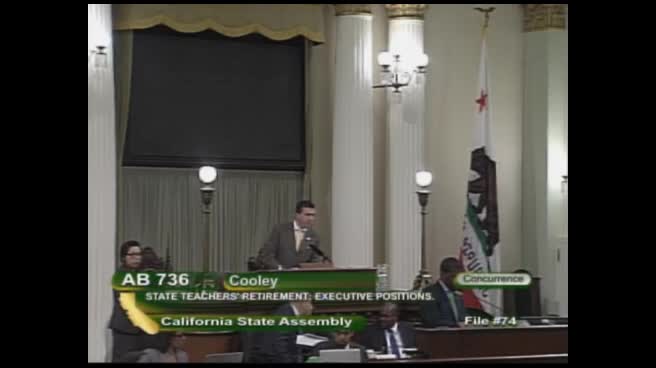 2MIN
Assembly Floor
 2MIN
Senate Floor
 16MIN
Senate Standing Committee on Health
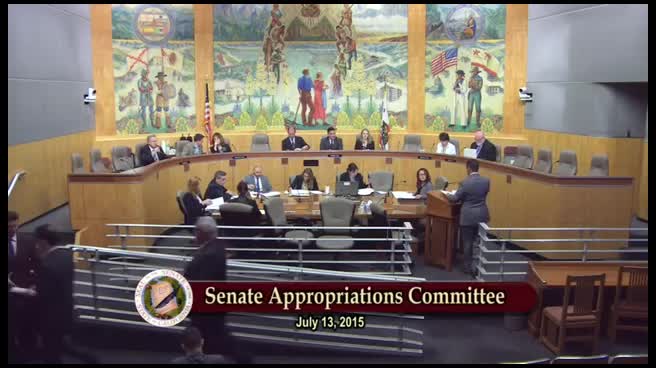 51SEC
Senate Standing Committee on Appropriations
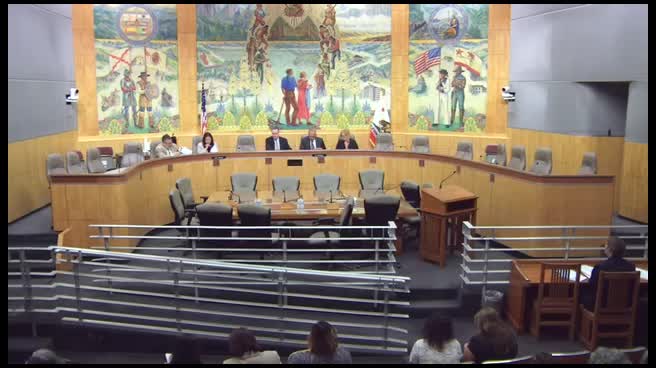 5MIN
Senate Standing Committee on Health
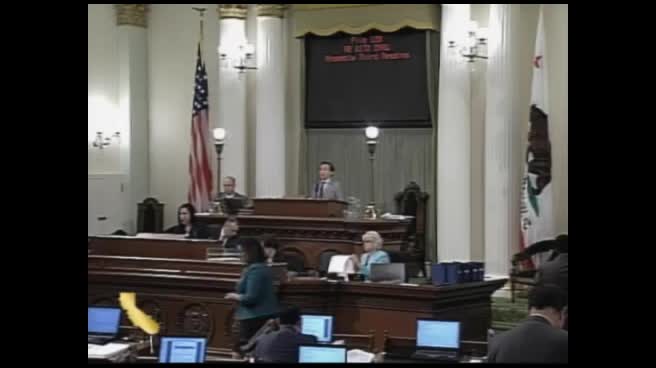 1MIN
Assembly Floor
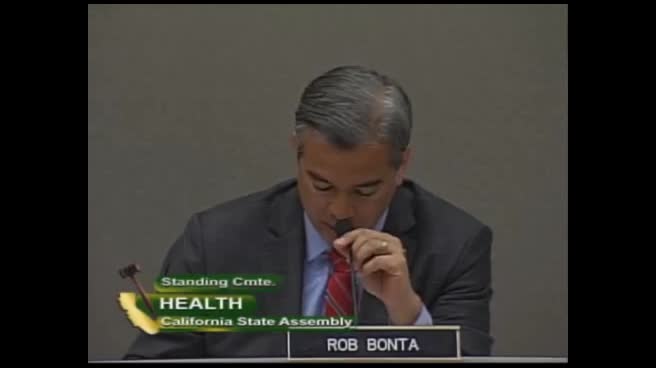 7MIN
Assembly Standing Committee on Health
Bill Author
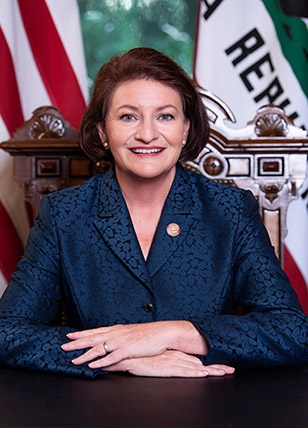
Bill Co-Author(s):