AB 696: Defendants: arraignment.
- Session Year: 2015-2016
- House: Assembly
- Latest Version Date: 2015-09-10
Existing law requires, when the defendant is in custody at the time he or she appears before the magistrate for arraignment and the public offense is a misdemeanor to which the defendant has pleaded not guilty, the magistrate, on motion of counsel for the defendant or the defendant, to determine whether there is probable cause to believe that a public offense has been committed and that the defendant is guilty of that offense. Existing law requires the determination of probable cause to be made immediately, unless the court grants a continuance not to exceed 3 court days, for good cause.
This bill would require, when the defendant is not in custody at the time he or she appears before the magistrate for arraignment and the public offense is a misdemeanor to which the defendant has pleaded not guilty, the magistrate, on motion of counsel for the defendant or the defendant, to determine whether there is probable cause to believe that a public offense has been committed and that the defendant is guilty of that offense.
Existing law requires, when the defendant is in custody at the time he or she appears before the magistrate for arraignment and the public offense is a misdemeanor to which the defendant has pleaded not guilty, the magistrate, on motion of counsel for the defendant or the defendant, to determine whether there is probable cause to believe that a public offense has been committed and that the defendant is guilty of that offense. Existing law requires the determination of probable cause to be made immediately, unless the court grants a continuance not to exceed 3 court days, for good cause.
This bill would require, when the defendant is not in custody at the time he or she appears before the magistrate for arraignment and the public offense is a misdemeanor to which the defendant has pleaded not guilty, the magistrate, on motion of counsel for the defendant or the defendant, to determine whether there is probable cause to believe that a public offense has been committed and that the defendant is guilty of that offense. The bill would require that determination to be made 30 days before the date calendared for trial at the arraignment unless a later date is requested by the defense in order to allow the prosecution to comply with specified disclosure requirements.
Existing law requires the magistrate, requires, when the defendant is in custody at the time he or she appears before the magistrate for arraignment and the public offense is a misdemeanor to which the defendant has pleaded not guilty, the magistrate, on motion of counsel for the defendant or the defendant, to determine whether there is probable cause to believe that a public offense has been committed and that the defendant is guilty of that offense. Existing law requires the determination of probable cause to be made immediately, unless the court grants a continuance not to exceed 3 court days, for good cause.
This bill would require the magistrate, require, when the defendant is not in custody at the time he or she appears before the magistrate for arraignment and the public offense is a misdemeanor to which the defendant has pleaded not guilty, the magistrate, on motion of counsel for the defendant or the defendant, to determine whether there is probable cause to believe that a public offense has been committed and that the defendant is guilty of that offense, unless the counsel for the defendant or the defendant waives that determination. offense. The bill would require that determination to be made 30 days before the date calendared for trial at the arraignment unless a later date is requested by the defense in order to allow the prosecution to comply with specified disclosure requirements.
Existing law requires the magistrate, when the defendant is in custody at the time he or she appears before the magistrate for arraignment and the public offense is a misdemeanor to which the defendant has pleaded not guilty, to determine whether there is probable cause to believe that a public offense has been committed and that the defendant is guilty of that offense. Existing law requires the determination of probable cause to be made immediately, unless the court grants a continuance not to exceed 3 court days, for good cause.
This bill would require the magistrate, when the defendant is not in custody at the time he or she appears for arraignment and the public offense is a misdemeanor to which the defendant has pleaded not guilty, to determine whether there is probable cause to believe that a public offense has been committed and that the defendant is guilty of that offense, unless the counsel for the defendant or the defendant waives that determination. The bill would require that determination to be made 30 days before the date calendared for trial at the arraignment unless a later date is requested by the defense in order to allow the prosecution to comply with specified disclosure requirements.
(a)When the defendant is in custody at the time he or she appears before the magistrate for arraignment and the public offense is a misdemeanor to which the defendant has pleaded not guilty, the magistrate, on motion of counsel for the defendant or the defendant, shall determine whether there is probable cause to believe that a public offense has been committed and that the defendant is guilty thereof.
(b)The determination of probable cause shall be made immediately unless the court grants a continuance for good cause not to exceed three court days.
(c)When the defendant is not in custody at the time he or she appears before the magistrate for arraignment and the public offense is a misdemeanor to which the defendant has pleaded not guilty, the magistrate, on motion of counsel for the defendant or the defendant, shall determine whether there is probable cause to believe that a public offense has been committed and that the defendant is guilty thereof.
(d)In determining the existence of probable cause, the magistrate shall consider any warrant of arrest with supporting affidavits, and the sworn complaint together with any documents or reports incorporated by reference thereto, which, if based on information and belief, state the basis for that information, or any other documents of similar reliability.
(e)If, after examining these documents, the court determines that there exists probable cause to believe that the defendant has committed the offense charged in the complaint, it shall set the matter for trial, in the case of a defendant who is in custody, or maintain the trial date already calendered, in the case of a defendant who is not in custody.
(f)If the court determines that no probable cause exists, it shall dismiss the complaint and discharge the defendant.
(g)The prosecution may refile the complaint within 15 days of the dismissal of a complaint pursuant to this section.
(h)A second dismissal pursuant to this section is a bar to any other prosecution for the same offense.
(a)When the defendant is in custody at the time he or she appears before the magistrate for arraignment and the public offense is a misdemeanor to which the defendant has pleaded not guilty, the magistrate, on motion of counsel for the defendant or the defendant, shall determine whether there is probable cause to believe that a public offense has been committed and that the defendant is guilty thereof.
(b)The determination of probable cause shall be made immediately unless the court grants a continuance for good cause not to exceed three court days.
(c)When the defendant is not in custody at the time he or she appears before the magistrate for arraignment and the public offense is a misdemeanor to which the defendant has pleaded not guilty, the magistrate, on motion of counsel for the defendant or the defendant, shall determine whether there is probable cause to believe that a public offense has been committed and that the defendant is guilty thereof. The determination shall be made 30 days before the date calendared for trial at the arraignment, unless a later date is requested by the defense in order to allow the prosecution to supplement the materials described in subdivision (d) with the discovery that it is required to provide pursuant to Sections 1054.1 and 1054.7.
(d)In determining the existence of probable cause, the magistrate shall consider any warrant of arrest with supporting affidavits, and the sworn complaint together with any documents or reports incorporated by reference thereto, which, if based on information and belief, state the basis for that information, or any other documents of similar reliability.
(e)If, after examining these documents, the court determines that there exists probable cause to believe that the defendant has committed the offense charged in the complaint, it shall set the matter for trial, in the case of a defendant who is in custody, or maintain the trial date already calendered, in the case of a defendant who is not in custody.
(f)If the court determines that no probable cause exists, it shall dismiss the complaint and discharge the defendant.
(g)The prosecution may refile the complaint within 15 days of the dismissal of a complaint pursuant to this section.
(h)A second dismissal pursuant to this section is a bar to any other prosecution for the same offense.
(a)When the defendant is in custody at the time he or she appears before the magistrate for arraignment and the public offense is a misdemeanor to which the defendant has pleaded not guilty, the magistrate, on motion of counsel for the defendant or the defendant, shall determine whether there is probable cause to believe that a public offense has been committed and that the defendant is guilty thereof.
(b)The determination of probable cause shall be made immediately unless the court grants a continuance for good cause not to exceed three court days.
(c)When the defendant is not in custody at the time he or she appears before the magistrate for arraignment and the public offense is a misdemeanor to which the defendant has pleaded not guilty, the magistrate magistrate, on motion of counsel for the defendant or the defendant, shall determine whether there is probable cause to believe that a public offense has been committed and that the defendant is guilty thereof, unless the counsel for the defendant or the defendant waives that determination. thereof. The determination shall be made 30 days before the date calendared for trial at the arraignment, unless a later date is requested by the defense in order to allow the prosecution to supplement the materials described in subdivision (d) with the discovery that it is required to provide pursuant to Sections 1054.1 and 1054.7.
(d)In determining the existence of probable cause, the magistrate shall consider any warrant of arrest with supporting affidavits, and the sworn complaint together with any documents or reports incorporated by reference thereto, which, if based on information and belief, state the basis for that information, or any other documents of similar reliability.
(e)If, after examining these documents, the court determines that there exists probable cause to believe that the defendant has committed the offense charged in the complaint, it shall set the matter for trial, in the case of a defendant who is in custody, or maintain the trial date already calendered, in the case of a defendant who is not in custody.
(f)If the court determines that no probable cause exists, it shall dismiss the complaint and discharge the defendant.
(g)The prosecution may refile the complaint within 15 days of the dismissal of a complaint pursuant to this section.
(h)A second dismissal pursuant to this section is a bar to any other prosecution for the same offense.
(a)If When the defendant is in custody at the time he or she appears before the magistrate for arraignment and, if the public offense is a misdemeanor to which the defendant has pleaded not guilty, the magistrate, on motion of counsel for the defendant or the defendant, shall determine whether there is probable cause to believe that a public offense has been committed and that the defendant is guilty thereof.
(b)The determination of probable cause shall be made immediately unless the court grants a continuance for good cause not to exceed three court days.
(c)When the defendant is not in custody at the time he or she appears for arraignment and the public offense is a misdemeanor to which the defendant has pleaded not guilty, the magistrate shall determine whether there is probable cause to believe that a public offense has been committed and that the defendant is guilty thereof, unless the counsel for the defendant or the defendant waives that determination. The determination shall be made 30 days before the date calendared for trial at the arraignment, unless a later date is requested by the defense in order to allow the prosecution to supplement the materials described in subdivision (d) with the discovery that it is required to provide pursuant to Sections 1054.1 and 1054.7.
(c)
(d)In determining the existence of probable cause, the magistrate shall consider any warrant of arrest with supporting affidavits, and the sworn complaint together with any documents or reports incorporated by reference thereto, which, if based on information and belief, state the basis for such that information, or any other documents of similar reliability.
(d)
(e)If, after examining these documents, the court determines that there exists probable cause to believe that the defendant has committed the offense charged in the complaint, it shall set the matter for trial, in the case of a defendant who is in custody, or maintain the trial date already calendered, in the case of a defendant who is not in custody.
If
(f)If the court determines that no such probable cause exists, it shall dismiss the complaint and discharge the defendant.
(e) Within 15 days of the dismissal of a complaint pursuant to this section the
(g)The prosecution may refile the complaint within 15 days of the dismissal of a complaint pursuant to this section.
A
(h)A second dismissal pursuant to this section is a bar to any other prosecution for the same offense.
|
Date
|
Status
|
|---|---|
| Jul 6, 2015 | In committee: Referred to APPR. suspense file. |
| Jan 15, 2016 | Consideration of Governor's veto stricken from file. |
| Oct 8, 2015 | Vetoed by Governor. |
| Sep 17, 2015 | Enrolled and presented to the Governor at 11:30 a.m. |
| Sep 8, 2015 | Senate amendments concurred in. To Engrossing and Enrolling. (Ayes 61. Noes 17.). |
| Sep 8, 2015 | Senate amendments concurred in. To Engrossing and Enrolling. (Ayes 61. Noes 17. Page 2945.). |
| Sep 8, 2015 | Senate amendments concurred in. To Engrossing and Enrolling. |
| Sep 3, 2015 | Read third time. Passed. Ordered to the Assembly. (Ayes 23. Noes 13. Page 2480.). |
| Sep 3, 2015 | Read third time. Passed. Ordered to the Assembly. |
| Sep 3, 2015 | In Assembly. Concurrence in Senate amendments pending. May be considered on or after September 5 pursuant to Assembly Rule 77. |
| Aug 31, 2015 | Read second time and amended. Ordered to third reading. |
| Aug 27, 2015 | From committee: Amend, and do pass as amended. (Ayes 5. Noes 2.) (August 27). |
| Feb 25, 2015 | Read first time. To print. |
| Jun 18, 2015 | Re-referred to Com. on APPR. |
| Jun 16, 2015 | From committee: Do pass and re-refer to Com. on RLS. (Ayes 4. Noes 3.) (June 16). Re-referred to Com. on RLS. |
| May 18, 2015 | From committee chair, with author's amendments: Amend, and re-refer to committee. Read second time, amended, and re-referred to Com. on PUB. S. |
| May 7, 2015 | Referred to Com. on PUB. S. |
| Apr 16, 2015 | Read third time. Passed. Ordered to the Senate. (Ayes 60. Noes 16. Page 969.) |
| Apr 16, 2015 | Read third time. Passed. Ordered to the Senate. |
| Apr 16, 2015 | In Senate. Read first time. To Com. on RLS. for assignment. |
| Apr 9, 2015 | Read second time. Ordered to third reading. |
| Apr 8, 2015 | From committee: Do pass. (Ayes 6. Noes 0.) (April 7). |
| Mar 9, 2015 | Referred to Com. on PUB. S. |
| Feb 26, 2015 | From printer. May be heard in committee March 28. |
|
Date
|
Description
|
Location
|
Votes
|
|
|---|---|---|---|---|
| Sep 8, 2015 | AB 696 JONES-SAWYER Concurrence in Senate Amendments | Assembly Floor |
Passed |
|
| Sep 3, 2015 | Assembly 3rd Reading AB696 Jones-Sawyer By Hertzberg | Senate Floor |
Passed |
|
| Aug 27, 2015 | Do pass as amended | Senate Standing Committee on Appropriations |
Passed |
|
| Jul 6, 2015 | Placed on suspense file | Senate Standing Committee on Appropriations |
Passed |
|
| Jun 16, 2015 | Do pass, but first be re-referred to the Committee on [Rules] | Senate Standing Committee on Public Safety |
Passed |
|
| Apr 16, 2015 | AB 696 JONES-SAWYER Assembly Third Reading | Assembly Floor |
Passed |
|
| Apr 7, 2015 | Do pass. | Assembly Standing Committee on Public Safety |
Passed |
This list shows positions taken on this bill by organizations on the date displayed, which is linked to the original source.
Positions by individuals are not included.
|
Organization
|
Position
|
Date
|
|---|---|---|
| American Civil Liberties Union of California | * Support | Jun 16, 2015 |
| Analysis Prepared | ** Against | Apr 7, 2015 |
| California District Attorneys Association | ** Against | Sep 3, 2015 |
| California Public Defenders Association | ** Support | Sep 3, 2015 |
| Judicial Council of California | ** Against | Sep 3, 2015 |
| Legal Services for Prisoners with Children | ** Support | Sep 3, 2015 |
| Public Interest Advocacy | * Support | Jun 16, 2015 |
GOVERNOR'S VETO
AB 696
(Jones-Sawyer)
As Enrolled September 10, 2015
2/3 vote
ASSEMBLY: |
60-16 |
(April 16, 2015) |
SENATE: |
23-13 |
(September 3, 2015) |
ASSEMBLY: |
61-17 |
(September 8, 2015) |
|
|
|
Original Committee Reference: PUB. S.
SUMMARY: Requires the judge to make a finding of probable cause that a crime has been committed when an out of custody defendant is facing a misdemeanor charge, on motion by defense counsel.
The Senate amendments:
Require defense counsel to bring motion to trigger probable cause determination by the judicial officer.
Delete the requirement that the determination of probable cause be made 30 days before the date for trial.
EXISTING LAW:
Requires that if the defendant is in custody at the time they appear before the magistrate for arraignment and, if the public offense is a misdemeanor to which the defendant has pleaded not guilty, the magistrate, on motion of counsel for the defendant or the defendant, shall determine whether there is probable cause to believe that a public offense has been committed and that the defendant is guilty thereof
Requires the determination of probable cause to be made immediately unless the court grants a continuance for good cause not to exceed three court days.
States that in determining the existence of probable cause, the magistrate shall consider any warrant of arrest with supporting affidavits, and the sworn complaint together with any documents or reports incorporated by reference thereto, which, if based on information and belief, state the basis for such information, or any other documents of similar reliability.
Provides that if, after examining these documents, the court determines that there exists probable cause to believe that the defendant has committed the offense charged in the complaint, it shall set the matter for trial.
Requires the court dismiss the complaint and discharge the defendant if it determines that no probable cause exists.
Allows the prosecution to refile the complaint within 15 days of the dismissal of a complaint pursuant to Penal Code Section 991.
States that a second dismissal pursuant to this section is a bar to any other prosecution for the same offense.
Requires that when a defendant is arrested, they are to be taken before the magistrate without unnecessary delay, and, in any event, within 48-hour, excluding Sundays and holidays.
Prescribes that the 48-hour limitation for arraignment be extended when:
The 48 hours expire at a time when the court in which the magistrate is sitting is not in session, that time shall be extended to include the duration of the next court session on the judicial day immediately following.
The 48-hour period expires at a time when the court in which the magistrate is sitting is in session, the arraignment may take place at any time during that session. However, when the defendant's arrest occurs on a Wednesday after the conclusion of the day's court session, and if the Wednesday is not a court holiday, the defendant shall be taken before the magistrate not later than the following Friday, if the Friday is not a court holiday.
Allows after the arrest, any attorney at law entitled to practice in the courts of record of California, at the request of the prisoner or any relative of the prisoner, visit the prisoner. Any officer having charge of the prisoner who willfully refuses or neglects to allow that attorney to visit a prisoner is guilty of a misdemeanor. Any officer having a prisoner in charge, who refuses to allow the attorney to visit the prisoner when proper application is made, shall forfeit and pay to the party aggrieved the sum of $500, to be recovered by action in any court of competent jurisdiction.
Requires the time specified in the notice to appear be at least 10 days after arrest when a person has been released by the officer after arrest and issued a citation.
AS PASSED BY THE ASSEMBLY, this bill:
Required that when the defendant is not in custody at the time he or she appears for arraignment and the offense is a misdemeanor to which the defendant has pleaded not guilty, the judge shall determine whether there is probable cause to believe that a crime has been committed by the defendant, unless the counsel for the defendant, or the defendant, waives that determination.
Stated that the probable cause determination be made 30 days before the date calendared for trial at the arraignment, unless a later date is requested by the defense in order to allow the prosecution to supplement the materials described, with the discovery that the prosecution is legally required to provide.
FISCAL EFFECT: According to the Senate Appropriations Committee, the effect of this bill would be ongoing increase in court workload and costs, potentially in the millions of dollars (General Fund), for new probable cause determinations for non-custodial misdemeanor defendants. For every 10% of non-custodial defendants charged with a misdemeanor who request such a determination of probable cause, annual costs are estimated at $2.5 million.
COMMENTS: According to the author, "Current law is replete with various means to weed out weak, baseless, or insufficiently supported lawsuits, whether criminal or civil. Such means are designed to prevent unnecessary stress, oppression, and expense for civil and criminal defendants, and also to prevent unnecessary consumption of court time and resources. By identifying meritless cases at an early stage before complex and expensive proceedings, including a jury trial, such costs are prevented.
"Federal constitutional law requires a probable cause determination by an impartial magistrate within 48 hours of arrest for those in custody on criminal charges. The US [United States] Constitution, State Constitution, and statutory law require probable cause determination for accused felons, whether in custody or not, by way of a grand jury indictment or a felony preliminary hearing.
"After a felony preliminary hearing, a defendant can seek a review of the preliminary hearing judge’s ruling by way of a Penal Code Section 995 motion. If a misdemeanor defendant is in custody he can seek a probable cause determination from the judge presiding at his arraignment by way of a Penal Code [Section] 991 motion. What is missing from this otherwise comprehensive scheme is any vehicle for measuring the merit of misdemeanor charges for a defendant who is not in custody. He is not entitled to an initial probable cause determination or a 991 motion because he is not in custody, and he is not entitled to a preliminary hearing or a 995 motion because he is not charged with a felony.
"Preparation for a misdemeanor trial requires investigation, subpoenaing of witnesses, extensive discovery of the opposing party's evidence, and often the filing of legal motions and the analysis of physical evidence and the employment of expert witnesses. The time and expense required for this preparation could be obviated if there was a convenient means for washing out the weak and baseless cases at an early stage.
"In the wake of Proposition 47 [2014], it has been projected that misdemeanor trial courts statewide will be inundated with thousands and perhaps tens of thousands of what were formerly low level felonies. These courts and defendants will be without the means to weed out the weakest of those charges. Without additional authority to evaluate those cases, the courts may very well find themselves overwhelmed with pending misdemeanor trials.
"AB 696 will provide that authority. It will amend Penal Code 991 [PC 991] to allow courts to make a probable cause determination for out-of-custody misdemeanors as well as custody misdemeanors. Unlike custody PC 991 motions, however, it will not require the determination to be made at arraignment. It will allow the prosecutor time to gather more evidence and supporting documentation. Under Penal Code [Section] 1054, both parties must provide discovery of their evidence to the other side 30 days before trial. This bill would provide that the probable cause determination be made at the point that the prosecution should have provided all of its evidence to the defense. The determination will be based on all of that evidence, as long as it meets the minimum test of reliability.
"Though hundreds of thousands of misdemeanors are filed in this state each year and tens of thousands of misdemeanants are in custody at arraignment, experience has shown, since PC 991 was enacted in 1980, that only a small fraction of those defendants will bring a PC 991 motion. When they do bring the motion, it normally takes the judge only a few minutes to read the documents, listen to arguments, and make his ruling. When defendants are not in custody, and their liberty is consequently not at stake, it is even less likely that they will bring a motion unless they legitimately believe there is insufficient probable cause to support the charges. The legal calculus dictates that far less time will be consumed by hearing a few additional PC 991 motions for out-of-custody misdemeanants than will be saved from having to conduct meritless misdemeanor trials that could otherwise be identified and eliminated at an early stage. This bill would additionally benefit the prosecution by allowing it more time to gather and present evidence to support its claim of probable cause. As such, this authority for expanded probable cause determination should also place little or no additional burden on the courts.
"AB 696 provides an inexpensive and streamlined mechanism in identifying meritless cases and should pay dividends in saved time, stress, and resources for all involved."
This bill would allow an out-of-custody misdemeanor defendant to ask the court at arraignment rather than at trial to determine whether or not probable cause exists.
I understand the potential benefits to a defendant in having the court make this determination earlier in the process. However, the impact on the courts is unclear and could well be significant. I would welcome a small, carefully crafted pilot to assess the impact of this proposal.
Analysis Prepared by: David Billingsley / PUB. S. / (916) 319-3744 FN: 0002477
AB 696
Page 4
CONCURRENCE IN SENATE AMENDMENTS
AB 696
(Jones-Sawyer)
As Amended August 31, 2015
Majority vote
ASSEMBLY: |
60-16 |
(April 16, 2015) |
SENATE: |
23-13 |
(September 3, 2015) |
Original Committee Reference: PUB. S.
SUMMARY: Requires the judge to make a finding of probable cause that a crime has been committed when an out of custody defendant is facing a misdemeanor charge, on motion by defense counsel.
The Senate amendments:
Require defense counsel to bring motion to trigger probable cause determination by the judicial officer.
Delete the requirement that the determination of probable cause be made 30 days before the date for trial.
EXISTING LAW:
Requires that if the defendant is in custody at the time they appear before the magistrate for arraignment and, if the public offense is a misdemeanor to which the defendant has pleaded not guilty, the magistrate, on motion of counsel for the defendant or the defendant, shall determine whether there is probable cause to believe that a public offense has been committed and that the defendant is guilty thereof
Requires the determination of probable cause to be made immediately unless the court grants a continuance for good cause not to exceed three court days.
States that in determining the existence of probable cause, the magistrate shall consider any warrant of arrest with supporting affidavits, and the sworn complaint together with any documents or reports incorporated by reference thereto, which, if based on information and belief, state the basis for such information, or any other documents of similar reliability.
Provides that if, after examining these documents, the court determines that there exists probable cause to believe that the defendant has committed the offense charged in the complaint, it shall set the matter for trial.
Requires the court dismiss the complaint and discharge the defendant if it determines that no probable cause exists.
Allows the prosecution to refile the complaint within 15 days of the dismissal of a complaint pursuant to Penal Code Section 991.
States that a second dismissal pursuant to this section is a bar to any other prosecution for the same offense.
Requires that when a defendant is arrested, they are to be taken before the magistrate without unnecessary delay, and, in any event, within 48-hour, excluding Sundays and holidays.
Prescribes that the 48-hour limitation for arraignment be extended when:
The 48 hours expire at a time when the court in which the magistrate is sitting is not in session, that time shall be extended to include the duration of the next court session on the judicial day immediately following.
The 48-hour period expires at a time when the court in which the magistrate is sitting is in session, the arraignment may take place at any time during that session. However, when the defendant's arrest occurs on a Wednesday after the conclusion of the day's court session, and if the Wednesday is not a court holiday, the defendant shall be taken before the magistrate not later than the following Friday, if the Friday is not a court holiday.
Allows after the arrest, any attorney at law entitled to practice in the courts of record of California, at the request of the prisoner or any relative of the prisoner, visit the prisoner. Any officer having charge of the prisoner who willfully refuses or neglects to allow that attorney to visit a prisoner is guilty of a misdemeanor. Any officer having a prisoner in charge, who refuses to allow the attorney to visit the prisoner when proper application is made, shall forfeit and pay to the party aggrieved the sum of $500, to be recovered by action in any court of competent jurisdiction.
Requires the time specified in the notice to appear be at least 10 days after arrest when a person has been released by the officer after arrest and issued a citation.
AS PASSED BY THE ASSEMBLY, this bill:
Required that when the defendant is not in custody at the time he or she appears for arraignment and the offense is a misdemeanor to which the defendant has pleaded not guilty, the judge shall determine whether there is probable cause to believe that a crime has been committed by the defendant, unless the counsel for the defendant, or the defendant, waives that determination.
Stated that the probable cause determination be made 30 days before the date calendared for trial at the arraignment, unless a later date is requested by the defense in order to allow the prosecution to supplement the materials described, with the discovery that the prosecution is legally required to provide.
FISCAL EFFECT: According to the Senate Appropriations Committee, the effect of this bill would be ongoing increase in court workload and costs, potentially in the millions of dollars (General Fund), for new probable cause determinations for non-custodial misdemeanor defendants. For every 10% of non-custodial defendants charged with a misdemeanor who request such a determination of probable cause, annual costs are estimated at $2.5 million.
COMMENTS: According to the author, "Current law is replete with various means to weed out weak, baseless, or insufficiently supported lawsuits, whether criminal or civil. Such means are designed to prevent unnecessary stress, oppression, and expense for civil and criminal defendants, and also to prevent unnecessary consumption of court time and resources. By identifying meritless cases at an early stage before complex and expensive proceedings, including a jury trial, such costs are prevented.
"Federal constitutional law requires a probable cause determination by an impartial magistrate within 48 hours of arrest for those in custody on criminal charges. The US [United States] Constitution, State Constitution, and statutory law require probable cause determination for accused felons, whether in custody or not, by way of a grand jury indictment or a felony preliminary hearing.
"After a felony preliminary hearing, a defendant can seek a review of the preliminary hearing judge’s ruling by way of a Penal Code Section 995 motion. If a misdemeanor defendant is in custody he can seek a probable cause determination from the judge presiding at his arraignment by way of a Penal Code [Section] 991 motion. What is missing from this otherwise comprehensive scheme is any vehicle for measuring the merit of misdemeanor charges for a defendant who is not in custody. He is not entitled to an initial probable cause determination or a 991 motion because he is not in custody, and he is not entitled to a preliminary hearing or a 995 motion because he is not charged with a felony.
"Preparation for a misdemeanor trial requires investigation, subpoenaing of witnesses, extensive discovery of the opposing party's evidence, and often the filing of legal motions and the analysis of physical evidence and the employment of expert witnesses. The time and expense required for this preparation could be obviated if there was a convenient means for washing out the weak and baseless cases at an early stage.
"In the wake of Proposition 47 [2014], it has been projected that misdemeanor trial courts statewide will be inundated with thousands and perhaps tens of thousands of what were formerly low level felonies. These courts and defendants will be without the means to weed out the weakest of those charges. Without additional authority to evaluate those cases, the courts may very well find themselves overwhelmed with pending misdemeanor trials.
"AB 696 will provide that authority. It will amend Penal Code 991 [PC 991] to allow courts to make a probable cause determination for out-of-custody misdemeanors as well as custody misdemeanors. Unlike custody PC 991 motions, however, it will not require the determination to be made at arraignment. It will allow the prosecutor time to gather more evidence and supporting documentation. Under Penal Code [Section] 1054, both parties must provide discovery of their evidence to the other side 30 days before trial. This bill would provide that the probable cause determination be made at the point that the prosecution should have provided all of its evidence to the defense. The determination will be based on all of that evidence, as long as it meets the minimum test of reliability.
"Though hundreds of thousands of misdemeanors are filed in this state each year and tens of thousands of misdemeanants are in custody at arraignment, experience has shown, since PC 991 was enacted in 1980, that only a small fraction of those defendants will bring a PC 991 motion. When they do bring the motion, it normally takes the judge only a few minutes to read the documents, listen to arguments, and make his ruling. When defendants are not in custody, and their liberty is consequently not at stake, it is even less likely that they will bring a motion unless they legitimately believe there is insufficient probable cause to support the charges. The legal calculus dictates that far less time will be consumed by hearing a few additional PC 991 motions for out-of-custody misdemeanants than will be saved from having to conduct meritless misdemeanor trials that could otherwise be identified and eliminated at an early stage. This bill would additionally benefit the prosecution by allowing it more time to gather and present evidence to support its claim of probable cause. As such, this authority for expanded probable cause determination should also place little or no additional burden on the courts.
"AB 696 provides an inexpensive and streamlined mechanism in identifying meritless cases and should pay dividends in saved time, stress, and resources for all involved."
Analysis Prepared by: David Billingsley / PUB. S. / (916) 319-3744 FN: 0001807
AB 696
Page 4
|
Office of Senate Floor Analyses (916) 651-1520 Fax: (916) 327-4478 |
THIRD READING
Bill No: AB 696
Amended: 8/31/15 in Senate
SENATE PUBLIC SAFETY COMMITTEE: 4-3, 6/16/15
AYES: Hancock, Leno, Liu, Monning
NOES: Anderson, Glazer, Stone
SENATE APPROPRIATIONS COMMITTEE: 5-2, 8/27/15
AYES: Lara, Beall, Hill, Leyva, Mendoza
NOES: Bates, Nielsen
ASSEMBLY FLOOR: 60-16, 4/16/15 - See last page for vote
SUBJECT: Defendants: arraignment
SOURCE: California Public Defenders Association
DIGEST: This bill requires the judge to make a finding of probable cause that a crime has been committed when an out of custody defendant is facing a misdemeanor charge.
Existing law:
Requires that if the defendant is in custody at the time they appear before the magistrate for arraignment and, if the public offense is a misdemeanor to which the defendant has pleaded not guilty, the magistrate, on motion of counsel for the defendant or the defendant, shall determine whether there is probable cause to believe that a public offense has been committed and that the defendant is guilty thereof. (Penal Code, § 991 (a).)
Requires the determination of probable cause to be made immediately unless the court grants a continuance for good cause not to exceed three court days. (Penal Code, § 991(b).)
Provides that in determining the existence of probable cause, the magistrate shall consider any warrant of arrest with supporting affidavits, and the sworn complaint together with any documents or reports incorporated by reference thereto, which, if based on information and belief, state the basis for such information, or any other documents of similar reliability. (Penal Code § 991 (d).)
Provides that if, after examining these documents, the court determines that there exists probable cause to believe that the defendant has committed the offense charged in the complaint, it shall set the matter for trial. (Penal Code § 991(e).)
Requires the court dismiss the complaint and discharge the defendant if it determines that no probable cause exists. (Penal Code, § 991 (f).)
Allows the prosecution to refile the complaint within 15 days of the dismissal of a complaint pursuant to Penal Code section 991. (Penal Code, § 991 (g).)
States that a second dismissal pursuant to this section is a bar to any other prosecution for the same offense. (Penal Code, § 991 (h).)
Requires that when a defendant is arrested, they are to be taken before the magistrate without unnecessary delay, and, in any event, within 48 hour, excluding Sundays and holidays. (Penal Code § 825 (a)(1).)
Requires that the 48 hour limitation for arraignment be extended when:
The 48 hours expire at a time when the court in which the magistrate is sitting is not in session, that time shall be extended to include the duration of the next court session on the judicial day immediately following.
The 48-hour period expires at a time when the court in which the magistrate is sitting is in session, the arraignment may take place at any time during that session. However, when the defendant's arrest occurs on a Wednesday after the conclusion of the day's court session, and if the Wednesday is not a court holiday, the defendant shall be taken before the magistrate not later than the following Friday, if the Friday is not a court holiday. (Penal Code, § 825 (a)(2).)
Allows after the arrest, any attorney at law entitled to practice in the courts of record of California, at the request of the prisoner or any relative of the prisoner, visit the prisoner. Any officer having charge of the prisoner who willfully refuses or neglects to allow that attorney to visit a prisoner is guilty of a misdemeanor. Any officer having a prisoner in charge, who refuses to allow the attorney to visit the prisoner when proper application is made, shall forfeit and pay to the party aggrieved the sum of five hundred dollars ($500), to be recovered by action in any court of competent jurisdiction. (Penal Code § 825 (b).)
Requires the time specified in the notice to appear be at least 10 days after arrest when a person has been released by the officer after arrest and issued a citation. (Penal Code, § 853.6(b).)
This bill provides that that when the defendant is not in custody at the time he or she appears for arraignment and the offense is a misdemeanor to which the defendant has pleaded not guilty, the magistrate on motion of counsel for the defendant or the defendant shall determine whether there is probable cause to believe that a crime has been committed by the defendant.
Comments
Existing law provides that upon motion by an in custody defendant charged with a misdemeanor, the court shall determine whether there is probable cause to believe that a public offense was committed by the defendant. This bill extends the same right to such a finding to an out of custody defendant. In addition to giving a defendant the ability to not have to live with a potential misdemeanor hanging over his or her head, it could save a County Public Defender’s Office time and money investigating a case and talking to expert witnesses if a case where there is not probable cause is dismissed early on.
FISCAL EFFECT: Appropriation: No Fiscal Com.: No Local: No
According to the Senate Appropriations Committee, ongoing increase in court workload and costs, potentially in the millions of dollars (General Fund*), for new probable cause determinations for non-custodial misdemeanor defendants. For every 10 percent of non-custodial defendants charged with a misdemeanor who request such a determination of probable cause, annual costs are estimated at $2.5 million.
*Trial Court Trust Fund
California Public Defenders Association (source)
Legal Services for Prisoners with Children
OPPOSITION: (Verified 8/15/15)
California District Attorneys Association
Judicial Council of California
ASSEMBLY FLOOR: 60-16, 4/16/15
AYES: Achadjian, Alejo, Bloom, Bonilla, Bonta, Brown, Burke, Calderon, Campos, Chang, Chau, Chiu, Chu, Cooley, Cooper, Dababneh, Daly, Dodd, Eggman, Frazier, Cristina Garcia, Eduardo Garcia, Gipson, Gomez, Gonzalez, Gordon, Gray, Hadley, Roger Hernández, Holden, Jones-Sawyer, Lackey, Levine, Linder, Lopez, Low, Maienschein, McCarty, Medina, Melendez, Mullin, Nazarian, Obernolte, O'Donnell, Olsen, Perea, Rendon, Ridley-Thomas, Rodriguez, Salas, Santiago, Mark Stone, Thurmond, Ting, Waldron, Weber, Wilk, Williams, Wood, Atkins
NOES: Travis Allen, Baker, Bigelow, Brough, Chávez, Beth Gaines, Gallagher, Gatto, Harper, Irwin, Kim, Mathis, Mayes, Patterson, Steinorth, Wagner
NO VOTE RECORDED: Dahle, Grove, Jones, Quirk
Prepared by: Mary Kennedy / PUB. S. /
8/30/15 19:10:20
**** END ****
AB 696 (Jones-Sawyer) Page 0 of 1
SENATE COMMITTEE ON APPROPRIATIONS
Senator Ricardo Lara, Chair
2015 - 2016 Regular Session
AB 696 (Jones-Sawyer) - Defendants: arraignment
|
|
Version: May 18, 2015 |
Policy Vote: PUB. S. 4 - 3 |
Urgency: No |
Mandate: No |
Hearing Date: August 27, 2015 |
Consultant: Jolie Onodera |
*********** ANALYSIS ADDENDUM – SUSPENSE FILE ***********
The following information is revised to reflect amendments
adopted by the committee on August 27, 2015
Bill Summary:
AB 696 would require probable cause determinations for misdemeanor defendants not in custody to be made 30 days before the date calendared for trial at the arraignment unless a later date is requested by the defense, as specified.
Fiscal Impact:
Ongoing increase in court workload and costs, potentially in the millions of dollars (General Fund*), for new probable cause determinations for non-custodial misdemeanor defendants. For every 10 percent of non-custodial defendants charged with a misdemeanor who request such a determination of probable cause, annual costs are estimated at $2.5 million.
*Trial Court Trust Fund
Committee Amendments:
Remove the provision allowing the prosecution to provide supplemental materials with the discovery that it is required to provide (page 2, lines 21-25).
-- END --
AB 696 (Jones-Sawyer) Page 3 of 3
SENATE COMMITTEE ON APPROPRIATIONS
Senator Ricardo Lara, Chair
2015 - 2016 Regular Session
AB 696 (Jones-Sawyer) - Defendants: arraignment
|
|
Version: May 18, 2015 |
Policy Vote: PUB. S. 4 - 3 |
Urgency: No |
Mandate: No |
Hearing Date: July 6, 2015 |
Consultant: Jolie Onodera |
This bill meets the criteria for referral to the Suspense File.
Bill Summary:
AB 696 would require probable cause determinations for misdemeanor defendants not in custody to be made 30 days before the date calendared for trial at the arraignment unless a later date is requested by the defense, as specified.
Fiscal Impact:
Ongoing increase in court workload and costs, potentially in the millions of dollars (General Fund*), for new probable cause determinations for non-custodial misdemeanor defendants. For every 10 percent of non-custodial defendants charged with a misdemeanor who request such a determination of probable cause, annual costs are estimated at $2.5 million.
*Trial Court Trust Fund
Background:
Existing law provides that upon motion by an in custody defendant at the time he or she appears before a magistrate for arraignment and the offense is a misdemeanor to which the defendant has pleaded not guilty, the magistrate is required to determine whether there is probable cause to believe that a public offense has been committed and that the defendant is guilty thereof. (Penal Code (PC) § 991(a).)
Under existing law, the determination of probable cause is required to be made immediately unless the court grants a continuance for good cause not to exceed three court days. In determining the existence of probable cause, the magistrate is required to consider any warrant of arrest with supporting affidavits, and the sworn complaint together with any documents or reports incorporated by reference which, if based on information and belief, state the basis for that information, or any other documents of similar reliability. If, after examining these documents, the court determines that there exists probable cause to believe that the defendant has committed the offense charged in the complaint, it shall set the matter for trial. If the court determines that no such probable cause exists, it shall dismiss the complaint and discharge the defendant. (PC § 991(b)-(d).)
According to the Appellate Division of the Superior Court for the State of California, County of Los Angeles decision in People v. McGowan (filed 3/27/15 BR 051696; Airport Trial Court No. 4WA22795):
It was for good reason that the Legislature implemented a procedure to ensure a confined misdemeanant is held for trial only if there is probable cause to believe he or she committed a crime charged in the complaint. The constitutional right to a judicial determination of probable cause following arrest has its roots in Gerstein v. Pugh (1975) 420 U.S. 103. In that case, the United States Supreme Court held the Fourth Amendment vests an in-custody defendant with the right to have a prompt postarrest determination of whether there is probable cause to believe he or she committed “a crime.” (Id. at pp. 114, 119-120.) The California Supreme Court ultimately applied the Gerstein rule to California misdemeanants held in custody. (In re Walters (1975) 15 Cal.3d 738, 747 (Walters).) Section 991 did not exist at the time Walters was decided. Thus, “California procedures governing the pretrial detention of those charged with misdemeanors . . . [did] not . . . comport with . . . constitutional requirements . . . since the defendant [was] not afforded a post-arrest judicial determination that probable cause exist[ed] for his continued detention.” (Id. at p. 747.) This led to Walters’ holding that, “unless waived, a judicial determination of probable cause is required in every case where a defendant charged with a misdemeanor is detained awaiting trial.” (Ibid.) In response to the requirements of Walters, section 991 was enacted “to be a safeguard against the hardship suffered by a misdemeanant who is detained in custody, by providing that a probable cause hearing will be held immediately, at the time of arraignment, . . .” (People v. Ward (1986) 188 Cal.App.3d Supp. 11, 15, 17.)
Proposed Law:
This bill would provide that when a defendant is not in custody at the time he or she appears before the magistrate for arraignment and the public offense is a misdemeanor to which the defendant has pleaded not guilty, the magistrate, on motion of counsel for the defendant or the defendant, shall determine whether there is probable cause to believe that a public offense has been committed and that the defendant is guilty thereof.
This bill requires the determination to be made 30 days before the date calendared for trial at the arraignment, unless a later date is requested by the defense in order to allow the prosecution to supplement specified materials with the discovery that it is required to provide.
Related Legislation:
None applicable.
Staff Comments:
The Judicial Council has indicated a potentially significant increase in workload for courts should the provisions of this bill become law. By requiring courts to provide in-court probable cause determinations for up to 90 percent of a county’s charged misdemeanants (as it is estimated 10 percent are held in custody), statewide costs could potentially exceed several million dollars annually, based on an estimate of three minutes of court time per defendant to complete an uncontested probable cause determination . For every 10 percent of non-custodial defendants charged with a misdemeanor who request such a determination of probable cause, annual costs are estimated at $2.5 million.
Specifically, the Judicial Council has indicated the following:
“The implementation of probable cause determinations for non-custodial misdemeanants would add significant time to already impacted court calendars, and the expenditure of court resources (most significantly court personnel costs). It is reasonable to assume that a simple, uncontested probable cause determination requires about three minutes of court time. In Fresno, a court serving a county of under one million people, there are 800 misdemeanor arraignments in a week. Subtracting 10 percent (representing the in-custody population) leaves 720 out-of-custody misdemeanor defendants each week entitled to a probable cause determination should AB 696 be signed into law. At three minutes per defendant, 36 additional hours would be required to process the same number of defendants, without, according to the court in McGowan, the advancement or protection of any constitutional right or protection. In dollars, 36 hours of court time is $21,600 per week. Extrapolated to a 50-week year (due to budget cuts, Fresno is closed over the course of a year by about two full weeks), the cost is $1,080,000. According to the most recent filings data, there were 926,169 misdemeanors filed in California. (Fresno accounted for 38,431 of those filings, representing 4.1% of statewide total.) Using the same ratio of in-custody to not-in-custody misdemeanants (10% to 90%), the total number of probable cause determinations that would be required in California per the terms of AB 696 would be 833,553. The cost to California’s courts would be an estimated $25 million every year. It is also worth noting that Prop. 47 will add thousands of misdemeanants to the courts’ calendars, which may result in even greater costs to the courts should AB 696 be enacted. This calculation represents revenues that courts currently spend on access to justice, for example self-help centers, counter clerks, clerks to answer telephones, filing clerks, research staff, and other court operations. Diverting this funding from court operations for probable cause determinations for misdemeanor defendants would have significant impacts on court operations.”
-- END --
AB 696 (Jones-Sawyer ) Page 5 of 5
SENATE COMMITTEE ON PUBLIC SAFETY
Senator Loni Hancock, Chair
2015 - 2016 Regular
Bill No: AB 696 Hearing Date: June 16, 2015
Author: |
Jones-Sawyer |
||
Version: |
May 18, 2015 |
||
Urgency: |
No |
Fiscal: |
No |
Consultant: |
MK |
||
Subject: Defendants: Arraignment
HISTORY
Source: California Public Defenders Association
Prior Legislation: Unknown
Support: Legal Services for Prisoners with Children
Opposition: California District Attorneys Association; Judicial Council of California
Assembly Floor Vote: 60 - 16
PURPOSE
The purpose of this bill is to require the judge to make a finding of probable cause that a crime has been committed when an out of custody defendant is facing a misdemeanor charge.
Existing law requires that if the defendant is in custody at the time they appear before the magistrate for arraignment and, if the public offense is a misdemeanor to which the defendant has pleaded not guilty, the magistrate, on motion of counsel for the defendant or the defendant, shall determine whether there is probable cause to believe that a public offense has been committed and that the defendant is guilty thereof. (Penal Code, § 991 (a).)
Existing law requires the determination of probable cause to be made immediately unless the court grants a continuance for good cause not to exceed three court days. (Penal Code, § 991(b).)
Existing law provides that in determining the existence of probable cause, the magistrate shall consider any warrant of arrest with supporting affidavits, and the sworn complaint together with any documents or reports incorporated by reference thereto, which, if based on information and belief, state the basis for such information, or any other documents of similar reliability. (Penal Code § 991 (d).)
Existing law provides that if, after examining these documents, the court determines that there exists probable cause to believe that the defendant has committed the offense charged in the complaint, it shall set the matter for trial. (Penal Code § 991(e).)
Existing law requires the court dismiss the complaint and discharge the defendant if it determines that no probable cause exists. (Penal Code, § 991 (f).)
Existing law allows the prosecution to refile the complaint within 15 days of the dismissal of a complaint pursuant to Penal Code section 991. (Penal Code, § 991 (g).)
Existing law states that a second dismissal pursuant to this section is a bar to any other prosecution for the same offense. (Penal Code, § 991 (h).)
Existing law requires that when a defendant is arrested, they are to be taken before the magistrate without unnecessary delay, and, in any event, within 48 hour, excluding Sundays and holidays. (Penal Code § 825 (a)(1).)
Existing law requires that the 48 hour limitation for arraignment be extended when:
The 48 hours expire at a time when the court in which the magistrate is sitting is not in session, that time shall be extended to include the duration of the next court session on the judicial day immediately following.
The 48-hour period expires at a time when the court in which the magistrate is sitting is in session, the arraignment may take place at any time during that session. However, when the defendant's arrest occurs on a Wednesday after the conclusion of the day's court session, and if the Wednesday is not a court holiday, the defendant shall be taken before the magistrate not later than the following Friday, if the Friday is not a court holiday. (Penal Code, § 825 (a)(2).)
Existing law allows after the arrest, any attorney at law entitled to practice in the courts of record of California, at the request of the prisoner or any relative of the prisoner, visit the prisoner. Any officer having charge of the prisoner who willfully refuses or neglects to allow that attorney to visit a prisoner is guilty of a misdemeanor. Any officer having a prisoner in charge, who refuses to allow the attorney to visit the prisoner when proper application is made, shall forfeit and pay to the party aggrieved the sum of five hundred dollars ($500), to be recovered by action in any court of competent jurisdiction. (Penal Code § 825 (b).)
Existing law requires the time specified in the notice to appear be at least 10 days after arrest when a person has been released by the officer after arrest and issued a citation. (Penal Code, § 853.6(b).)
This bill requires that when the defendant is not in custody at the time he or she appears for arraignment and the offense is a misdemeanor to which the defendant has pleaded not guilty, the magistrate on motion of counsel for the defendant or the defendant shall determine whether there is probable cause to believe that a crime has been committed by the defendant.
This bill states that the probable cause determination be made 30 days before the date calendared for trial at the arraignment, unless a later date is requested by the defense in order to allow the prosecution to supplement the materials described, with the discovery that the prosecution is legally required to provide.
RECEIVERSHIP/OVERCROWDING CRISIS AGGRAVATION
For the past eight years, this Committee has scrutinized legislation referred to its jurisdiction for any potential impact on prison overcrowding. Mindful of the United States Supreme Court ruling and federal court orders relating to the state’s ability to provide a constitutional level of health care to its inmate population and the related issue of prison overcrowding, this Committee has applied its “ROCA” policy as a content-neutral, provisional measure necessary to ensure that the Legislature does not erode progress in reducing prison overcrowding.
On February 10, 2014, the federal court ordered California to reduce its in-state adult institution population to 137.5% of design capacity by February 28, 2016, as follows:
143% of design bed capacity by June 30, 2014;
141.5% of design bed capacity by February 28, 2015; and,
137.5% of design bed capacity by February 28, 2016.
In February of this year the administration reported that as “of February 11, 2015, 112,993 inmates were housed in the State’s 34 adult institutions, which amounts to 136.6% of design bed capacity, and 8,828 inmates were housed in out-of-state facilities. This current population is now below the court-ordered reduction to 137.5% of design bed capacity.”( Defendants’ February 2015 Status Report In Response To February 10, 2014 Order, 2:90-cv-00520 KJM DAD PC, 3-Judge Court, Coleman v. Brown, Plata v. Brown (fn. omitted).
While significant gains have been made in reducing the prison population, the state now must stabilize these advances and demonstrate to the federal court that California has in place the “durable solution” to prison overcrowding “consistently demanded” by the court. (Opinion Re: Order Granting in Part and Denying in Part Defendants’ Request For Extension of December 31, 2013 Deadline, NO. 2:90-cv-0520 LKK DAD (PC), 3-Judge Court, Coleman v. Brown, Plata v. Brown (2-10-14). The Committee’s consideration of bills that may impact the prison population therefore will be informed by the following questions:
Whether a proposal erodes a measure which has contributed to reducing the prison population;
Whether a proposal addresses a major area of public safety or criminal activity for which there is no other reasonable, appropriate remedy;
Whether a proposal addresses a crime which is directly dangerous to the physical safety of others for which there is no other reasonably appropriate sanction;
Whether a proposal corrects a constitutional problem or legislative drafting error; and
Whether a proposal proposes penalties which are proportionate, and cannot be achieved through any other reasonably appropriate remedy.
COMMENTS
1. Need for This Bill
According to the author:
In 1975, the United States Supreme Court decided, in Gerstein v. Pugh 420 U.S 103, that the 5th amendment right to due process required that a person arrested without a warrant receive a “prompt” probable cause determination from an impartial magistrate. That same year, the California Supreme Court decided, in the case of In re Walters 15 Cal3d 738, that Gerstein was binding on California and applied to misdemeanors as well as felonies. The U.S Supreme Court refined its Gerstein v. Pugh decision by holding, in County of Riverside v. McLaughlin, that “prompt” means within 48 hours, with no exception for weekends or holidays.
In 1980, after Gerstein and Walters, but before McLaughlin, this case law was codified as to misdemeanants in custody, in Penal Code § 991. This does not cover misdemeanants at liberty. Misdemeanor defendants who are out of custody are in a uniquely disadvantageous position in the judicial system because they have no means of challenging “groundless or unsupported charges” by way of a “prompt probable cause determination” before an “impartial magistrate.” Being that they are not in custody, they cannot ask for a probable cause hearing under Gerstein-Walters-McLaughlin or under PC § 991. Being that they are not charged with a felony, they are not entitled to a preliminary hearing or a PC § 995 motion. Being that they are not a civil litigant, they cannot bring a motion for summary judgment or a nonsuit.
Such a person must live under the cloud of such charges for a prolonged period, expending time and resources to prepare a defense. Only after they proceed to trial, and after the prosecution completes its case, can they ask the judge to dismiss the case for insufficient evidence under Penal Code § 1118 and § 1118.1. By then, not only has the defendant expended almost all of the necessary time and resources for mounting a defense, but the court also has expended its time and resources, including the time, attention, and personal sacrifice of jurors who put their lives on hold to attend the trial.
2. Probable Cause Finding For Out of Custody Misdemeanor Defendant at Arraignment
As noted in the author’s statement, existing law provides that upon motion by an in custody defendant charged with a misdemeanor, the court shall determine whether there is probable cause to believe that a public offense was committed by the defendant. This bill extends the same right to such a finding to an out of custody defendant. In addition to giving a defendant the ability to not have to live with a potential misdemeanor hanging over his or her head, the sponsor of the bill, the California Public Defenders Association notes that:
AB 696 would save money and time for county governments who fund prosecutors’ and public defense for indigents. Preparation for a misdemeanor trial requires investigation, subpoenaing of witnesses, extensive discovery of the opposing party’s evidence and often the filing of legal motions and analysis of physical evidence and the employment of expert witnesses. The time and expense for this preparation could be obviated if the court could make a probable cause determination washing out weak and baseless cases at an early stage.
3. Support
According to Legal Services for Prisoners with Children:
This bill will increase Californians’ Due Process Rights and also improve judicial efficiency by giving all defendants a review of the charges before trial and dismissing charges that are not supported by probable cause. It will further improve judicial efficiency and protect people from prosecutorial harassment by limiting prosecutors from refiling more than once when there is no probable cause to support the charge(s) filed. “Even when a person is found not-guilty at trial, the many court appearances he must make can often harm him. For instance, a person may need to miss work or school or get child care in order to go to court. Dismissing charges that are not supported makes good sense for the defendant and the overburdened California court system. This will decrease the number of times a person may have to go to court and improve his and others’ judicial outcomes.
4. Opposition
According to the California District Attorneys Association:
In Gerstein v. Pugh (1975) 420 U.S. 103, the United States Supreme Court held that the Fourth Amendment provides in-custody defendants with the right to a prompt post-arrest determination of whether there is probable cause to believe that he or she has committed a crime.
Following Gerstein, Penal Code section 991 was enacted “to be a safeguard against the hardship suffered by a misdemeanant who is detained in custody, by providing that a probable cause hearing will be held immediately, at the time of arraignment . . .: (People v. Ward (1986) 188 Cal.App.3d Supp. 11, 15, 17.) This is evident from the plain language of PC 991 which begins with “If the defendant is in custody . . .” The deprivation of liberty for a confined defendant is the hardship that PC 991 exists to protect against. For an out-of-custody defendant, there is no such hardship.
To expand PC 991 to apply to out-of-custody defendants is to misunderstand the entire purpose of PC 991, and would result in additional trial court resources being spent to remedy a hardship that arguably does not exist.
-- END –
AB 696
Page 3
ASSEMBLY THIRD READING
AB 696
(Jones-Sawyer)
As Introduced February 25, 2015
Majority vote
Committee |
Votes |
Ayes |
Noes |
Public Safety |
6-0 |
Quirk, Gonzalez, Jones-Sawyer, Lackey, Low, Santiago |
|
SUMMARY:
Requires the judge to make a finding of probable cause that a crime has been committed when an out of custody defendant is facing a misdemeanor charge. Specifically, this bill:
Requires that when the defendant is not in custody at the time he or she appears for arraignment and the offense is a misdemeanor to which the defendant has pleaded not guilty, the judge shall determine whether there is probable cause to believe that a crime has been committed by the defendant, unless the counsel for the defendant, or the defendant, waives that determination.
States that the probable cause determination be made 30 days before the date calendared for trial at the arraignment, unless a later date is requested by the defense in order to allow the prosecution to supplement the materials described, with the discovery that the prosecution is legally required to provide.
EXISTING LAW:
Requires that if the defendant is in custody at the time they appear before the magistrate for arraignment and, if the public offense is a misdemeanor to which the defendant has pleaded not guilty, the magistrate, on motion of counsel for the defendant or the defendant, shall determine whether there is probable cause to believe that a public offense has been committed and that the defendant is guilty thereof
Requires the determination of probable cause to be made immediately unless the court grants a continuance for good cause not to exceed three court days.
States that in determining the existence of probable cause, the magistrate shall consider any warrant of arrest with supporting affidavits, and the sworn complaint together with any documents or reports incorporated by reference thereto, which, if based on information and belief, state the basis for such information, or any other documents of similar reliability.
Provides that if, after examining these documents, the court determines that there exists probable cause to believe that the defendant has committed the offense charged in the complaint, it shall set the matter for trial.
Requires the court dismiss the complaint and discharge the defendant if it determines that no probable cause exists.
Allows the prosecution to refile the complaint within 15 days of the dismissal of a complaint pursuant to Penal Code Section 991.
States that a second dismissal pursuant to this section is a bar to any other prosecution for the same offense.
Requires that when a defendant is arrested, they are to be taken before the magistrate without unnecessary delay, and, in any event, within 48 hour, excluding Sundays and holidays.
Prescribes that the 48 hour limitation for arraignment be extended when:
The 48 hours expire at a time when the court in which the magistrate is sitting is not in session, that time shall be extended to include the duration of the next court session on the judicial day immediately following.
The 48-hour period expires at a time when the court in which the magistrate is sitting is in session, the arraignment may take place at any time during that session. However, when the defendant's arrest occurs on a Wednesday after the conclusion of the day's court session, and if the Wednesday is not a court holiday, the defendant shall be taken before the magistrate not later than the following Friday, if the Friday is not a court holiday.
Allows after the arrest, any attorney at law entitled to practice in the courts of record of California, at the request of the prisoner or any relative of the prisoner, visit the prisoner. Any officer having charge of the prisoner who willfully refuses or neglects to allow that attorney to visit a prisoner is guilty of a misdemeanor. Any officer having a prisoner in charge, who refuses to allow the attorney to visit the prisoner when proper application is made, shall forfeit and pay to the party aggrieved the sum of $500, to be recovered by action in any court of competent jurisdiction.
Requires the time specified in the notice to appear be at least 10 days after arrest when a person has been released by the officer after arrest and issued a citation.
FISCAL EFFECT:
Unknown. This bill is keyed non-fiscal by the Legislative Counsel.
COMMENTS:
According to the author, "Current law is replete with various means to weed out weak, baseless, or insufficiently supported lawsuits, whether criminal or civil. Such means are designed to prevent unnecessary stress, oppression, and expense for civil and criminal defendants, and also to prevent unnecessary consumption of court time and resources. By identifying meritless cases at an early stage before complex and expensive proceedings, including a jury trial, such costs are prevented.
"Federal constitutional law requires a probable cause determination by an impartial magistrate within 48 hours of arrest for those in custody on criminal charges. The US Constitution, State Constitution, and statutory law require probable cause determination for accused felons, whether in custody or not, by way of a grand jury indictment or a felony preliminary hearing.
"After a felony preliminary hearing, a defendant can seek a review of the preliminary hearing judge’s ruling by way of a Penal Code Section 995 motion. If a misdemeanor defendant is in custody he can seek a probable cause determination from the judge presiding at his arraignment by way of a Penal Code [Section] 991 motion. What is missing from this otherwise comprehensive scheme is any vehicle for measuring the merit of misdemeanor charges for a defendant who is not in custody. He is not entitled to an initial probable cause determination or a 991 motion because he is not in custody, and he is not entitled to a preliminary hearing or a 995 motion because he is not charged with a felony.
"Preparation for a misdemeanor trial requires investigation, subpoenaing of witnesses, extensive discovery of the opposing party’s evidence, and often the filing of legal motions and the analysis of physical evidence and the employment of expert witnesses. The time and expense required for this preparation could be obviated if there was a convenient means for washing out the weak and baseless cases at an early stage.
"In the wake of Proposition 47, it has been projected that misdemeanor trial courts statewide will be inundated with thousands and perhaps tens of thousands of what were formerly low level felonies. These courts and defendants will be without the means to weed out the weakest of those charges. Without additional authority to evaluate those cases, the courts may very well find themselves overwhelmed with pending misdemeanor trials.
"AB 696 will provide that authority. It will amend Penal Code 991 [PC 991] to allow courts to make a probable cause determination for out-of-custody misdemeanors as well as custody misdemeanors. Unlike custody PC 991 motions, however, it will not require the determination to be made at arraignment. It will allow the prosecutor time to gather more evidence and supporting documentation. Under Penal Code [Section] 1054, both parties must provide discovery of their evidence to the other side 30 days before trial. This bill would provide that the probable cause determination be made at the point that the prosecution should have provided all of its evidence to the defense. The determination will be based on all of that evidence, as long as it meets the minimum test of reliability.
"Though hundreds of thousands of misdemeanors are filed in this state each year and tens of thousands of misdemeanants are in custody at arraignment, experience has shown, since PC 991 was enacted in 1980, that only a small fraction of those defendants will bring a PC 991 motion. When they do bring the motion, it normally takes the judge only a few minutes to read the documents, listen to arguments, and make his ruling. When defendants are not in custody, and their liberty is consequently not at stake, it is even less likely that they will bring a motion unless they legitimately believe there is insufficient probable cause to support the charges. The legal calculus dictates that far less time will be consumed by hearing a few additional PC 991 motions for out-of-custody misdemeanants than will be saved from having to conduct meritless misdemeanor trials that could otherwise be identified and eliminated at an early stage. This bill would additionally benefit the prosecution by allowing it more time to gather and present evidence to support its claim of probable cause. As such, this authority for expanded probable cause determination should also place little or no additional burden on the courts.
"AB 696 provides an inexpensive and streamlined mechanism in identifying meritless cases and should pay dividends in saved time, stress, and resources for all involved."
Analysis Prepared by: David Billingsley / PUB. S. / (916) 319-3744 FN: 0000096
AB 696
Page 5
Date of Hearing: April 7, 2015
Counsel: David Billingsley
ASSEMBLY COMMITTEE ON PUBLIC SAFETY
Bill Quirk, Chair
AB 696
(Jones-Sawyer) – As Introduced February 25, 2015
SUMMARY:
Requires the judge to make a finding of probable cause that a crime has been committed when an out of custody defendant is facing a misdemeanor charge. Specifically, this bill:
Requires that when the defendant is not in custody at the time he or she appears for arraignment and the offense is a misdemeanor to which the defendant has pleaded not guilty, the judge shall determine whether there is probable cause to believe that a crime has been committed by the defendant, unless the counsel for the defendant, or the defendant, waives that determination.
States that the probable cause determination be made 30 days before the date calendared for trial at the arraignment, unless a later date is requested by the defense in order to allow the prosecution to supplement the materials described, with the discovery that the prosecution is legally required to provide.
EXISTING LAW:
Requires that if the defendant is in custody at the time they appear before the magistrate for arraignment and, if the public offense is a misdemeanor to which the defendant has pleaded not guilty, the magistrate, on motion of counsel for the defendant or the defendant, shall determine whether there is probable cause to believe that a public offense has been committed and that the defendant is guilty thereof (Pen. Code, § 991, subd. (a).)
Requires the determination of probable cause to be made immediately unless the court grants a continuance for good cause not to exceed three court days. (Pen. Code, § 991, subd. (b).)
States that in determining the existence of probable cause, the magistrate shall consider any warrant of arrest with supporting affidavits, and the sworn complaint together with any documents or reports incorporated by reference thereto, which, if based on information and belief, state the basis for such information, or any other documents of similar reliability. (Pen. Code, § 991, subd. (d).)
Provides that if, after examining these documents, the court determines that there exists probable cause to believe that the defendant has committed the offense charged in the complaint, it shall set the matter for trial. (Pen. Code, § 991, subd. (e).)
Requires the court dismiss the complaint and discharge the defendant if it determines that no probable cause exists. (Pen. Code, § 991, subd. (f).)
Allows the prosecution to refile the complaint within 15 days of the dismissal of a complaint pursuant to Penal Code section 991. (Pen. Code, § 991, subd. (g).)
States that a second dismissal pursuant to this section is a bar to any other prosecution for the same offense. (Pen. Code, § 991, subd. (h).)
Requires that when a defendant is arrested, they are to be taken before the magistrate without unnecessary delay, and, in any event, within 48 hour, excluding Sundays and holidays. (Pen. Code, § 825, subd. (a)(1).)
Prescribes that the 48 hour limitation for arraignment be extended when:
The 48 hours expire at a time when the court in which the magistrate is sitting is not in session, that time shall be extended to include the duration of the next court session on the judicial day immediately following. (Pen. Code, § 825, subd. (a)(2).)
The 48-hour period expires at a time when the court in which the magistrate is sitting is in session, the arraignment may take place at any time during that session. However, when the defendant's arrest occurs on a Wednesday after the conclusion of the day's court session, and if the Wednesday is not a court holiday, the defendant shall be taken before the magistrate not later than the following Friday, if the Friday is not a court holiday. (Pen. Code, § 825, subd. (a)(2).)
Allows after the arrest, any attorney at law entitled to practice in the courts of record of California, at the request of the prisoner or any relative of the prisoner, visit the prisoner. Any officer having charge of the prisoner who willfully refuses or neglects to allow that attorney to visit a prisoner is guilty of a misdemeanor. Any officer having a prisoner in charge, who refuses to allow the attorney to visit the prisoner when proper application is made, shall forfeit and pay to the party aggrieved the sum of five hundred dollars ($500), to be recovered by action in any court of competent jurisdiction. (Pen. Code, § 825, subd. (b).)
Requires the time specified in the notice to appear be at least 10 days after arrest when a person has been released by the officer after arrest and issued a citation. (Pen. Code, § 853.6(b).)
FISCAL EFFECT:
Unknown
COMMENTS:
Author's Statement: According to the author, "Current law is replete with various means to weed out weak, baseless, or insufficiently supported lawsuits, whether criminal or civil. Such means are designed to prevent unnecessary stress, oppression, and expense for civil and criminal defendants, and also to prevent unnecessary consumption of court time and resources. By identifying meritless cases at an early stage before complex and expensive proceedings, including a jury trial, such costs are prevented.
“Federal constitutional law requires a probable cause determination by an impartial magistrate within 48 hours of arrest for those in custody on criminal charges. The US Constitution, State Constitution, and statutory law require probable cause determination for accused felons, whether in custody or not, by way of a grand jury indictment or a felony preliminary hearing.
“After a felony preliminary hearing, a defendant can seek a review of the preliminary hearing judge’s ruling by way of a Penal Code section 995 motion. If a misdemeanor defendant is in custody he can seek a probable cause determination from the judge presiding at his arraignment by way of a Penal Code 991 motion. What is missing from this otherwise comprehensive scheme is any vehicle for measuring the merit of misdemeanor charges for a defendant who is not in custody. He is not entitled to an initial probable cause determination or a 991 motion because he is not in custody, and he is not entitled to a preliminary hearing or a 995 motion because he is not charged with a felony.
“Preparation for a misdemeanor trial requires investigation, subpoenaing of witnesses, extensive discovery of the opposing party’s evidence, and often the filing of legal motions and the analysis of physical evidence and the employment of expert witnesses. The time and expense required for this preparation could be obviated if there was a convenient means for washing out the weak and baseless cases at an early stage.
“In the wake of Proposition 47, it has been projected that misdemeanor trial courts statewide will be inundated with thousands and perhaps tens of thousands of what were formerly low level felonies. These courts and defendants will be without the means to weed out the weakest of those charges. Without additional authority to evaluate those cases, the courts may very well find themselves overwhelmed with pending misdemeanor trials.
“AB 696 will provide that authority. It will amend Penal Code § 991 to allow courts to make a probable cause determination for out-of-custody misdemeanors as well as custody misdemeanors. Unlike custody PC § 991 motions, however, it will not require the determination to be made at arraignment. It will allow the prosecutor time to gather more evidence and supporting documentation. Under Penal Code § 1054, both parties must provide discovery of their evidence to the other side 30 days before trial. This bill would provide that the probable cause determination be made at the point that the prosecution should have provided all of its evidence to the defense. The determination will be based on all of that evidence, as long as it meets the minimum test of reliability.
“Though hundreds of thousands of misdemeanors are filed in this state each year and tens of thousands of misdemeanants are in custody at arraignment, experience has shown, since PC § 991 was enacted in 1980, that only a small fraction of those defendants will bring a PC § 991 motion. When they do bring the motion, it normally takes the judge only a few minutes to read the documents, listen to arguments, and make his ruling. When defendants are not in custody, and their liberty is consequently not at stake, it is even less likely that they will bring a motion unless they legitimately believe there is insufficient probable cause to support the charges. PPThe legal calculus dictates that far less time will be consumed by hearing a few additional PC § 991 motions for out-of-custody misdemeanants than will be saved from having to conduct meritless misdemeanor trials that could otherwise be identified and eliminated at an early stage. This bill would additionally benefit the prosecution by allowing it more time to gather and present evidence to support its claim of probable cause. As such, this authority for expanded probable cause determination should also place little or no additional burden on the courts.
“AB 696 provides an inexpensive and streamlined mechanism in identifying meritless cases and should pay dividends in saved time, stress, and resources for all involved.”
Argument in Support: According to Legal Services for Prisoners with Children, “This bill will increase Californians’ Due Process Rights and also improve judicial efficiency by giving all defendants a review of the charges before trial and dismissing charges that are not supported by probable cause. It will further improve judicial efficiency and protect people from prosecutorial harassment by limiting prosecutors from refiling more than once when there is no probable cause to support the charge(s) filed.
“Even when a person is found not-guilty at trial, the many court appearances he must make can often harm him. For instance, a person may need to miss work or school or get child care in order to go to court. Dismissing charges that are not supported makes good sense for the defendant and the overburdened California court system. This will decrease the number of times a person may have to go to court and improve his and others’ judicial outcomes.”
Argument in Opposition: According to the California District Attorneys Association, “In Gerstein v. Pugh (1975) 420 U.S. 103, the United States Supreme Court held that the Fourth Amendment provides in-custody defendants with the right to a prompt post-arrest determination of whether there is probable cause to believe that he or she has committed a crime.
“Following Gerstein, Penal Code section 991 was enacted “to be a safeguard against the hardship suffered by a misdemeanant who is detained in custody, by providing that a probable cause hearing will be held immediately, at the time of arraignment . . .: (People v. Ward (1986) 188 Cal.App.3d Supp. 11, 15, 17.) This is evident from the plain language of PC 991 which begins with “If the defendant is in custody . . .” The deprivation of liberty for a confined defendant is the hardship that PC 991 exists to protect against. For an out-of-custody defendant, there is no such hardship.
“To expand PC 991 to apply to out-of-custody defendants is to misunderstand the entire purpose of PC 991, and would result in additional trial court resources being spent to remedy a hardship that arguably does not exist.
“Further, AB 696 seeks to create a more onerous procedure, with additional timelines, than that which currently exists for in-custody misdemeanants. If PC 991 is to be expanded to include out-of-custody misdemeanants, it follows that the process should be the same, regardless of custodial status.”
REGISTERED SUPPORT / OPPOSITION:
Support
California Public Defenders Association
Legal Services for Prisoners with Children
Opposition
California District Attorneys Association
Analysis Prepared by:
David Billingsley / PUB. S. / (916) 319-3744
Discussed in Hearing
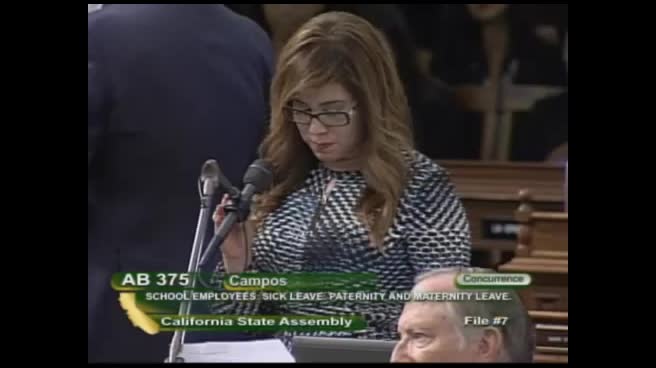 46SEC
Assembly Floor
 4MIN
Senate Floor
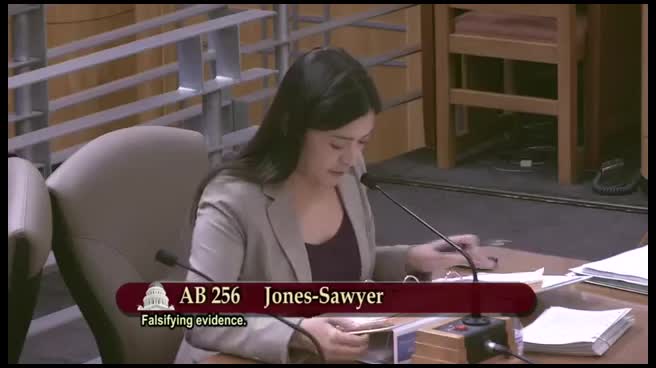 3MIN
Senate Standing Committee on Appropriations
 20MIN
Senate Standing Committee on Public Safety
 1MIN
Assembly Floor
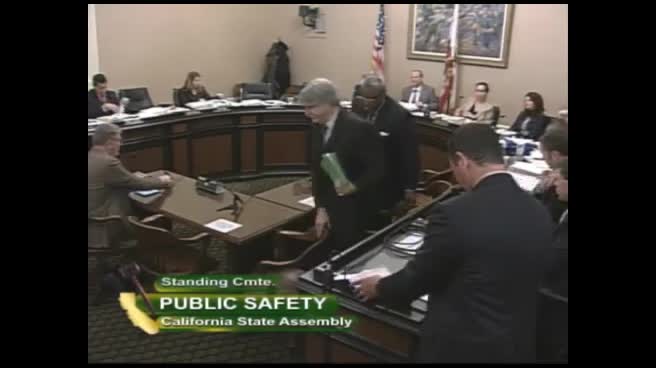 12MIN
Assembly Standing Committee on Public Safety
Bill Author

Bill Co-Author(s):