AB 87: Jurors: peremptory challenge.
- Session Year: 2015-2016
- House: Assembly
- Latest Version Date: 2015-07-16
Existing law prohibits a party from using a peremptory challenge to remove a prospective juror on the basis of an assumption that the prospective juror is biased merely because of his or her race, color, religion, sex, national origin, sexual orientation, or similar grounds.
This bill would also prohibit a party from using a peremptory challenge to remove a prospective juror on the basis of ethnic group identification, age, genetic information, or disability.
A party shall not use a peremptory challenge to remove a prospective juror on the basis of an assumption that the prospective juror is biased merely because of a characteristic listed or defined in Section 11135 of the Government Code, or similar grounds.
A party shall not use a peremptory challenge to remove a prospective juror on the basis of an assumption that the prospective juror is biased merely because of a characteristic listed or defined in Section 11135 of the Government Code, or similar grounds.
A party shall not use a peremptory challenge to remove a prospective juror on the basis of an assumption that the prospective juror is biased merely because of a characteristic listed or defined in subdivision (a) of Section 11135 of the Government Code, or similar grounds.
A party may shall not use a peremptory challenge to remove a prospective juror on the basis of an assumption that the prospective juror is biased merely because of his or her race, color, religion, sex, national origin, sexual orientation a characteristic listed or defined in subdivision (a) of Section 11135 of the Government Code, or similar grounds.
|
Date
|
Status
|
|---|---|
| Jun 10, 2015 | From committee: Do pass. (Ayes 6. Noes 1.) (June 9). |
| Jul 16, 2015 | Chaptered by Secretary of State - Chapter 115, Statutes of 2015. |
| Jul 16, 2015 | Approved by the Governor. |
| Jul 9, 2015 | Enrolled and presented to the Governor at 2 p.m. |
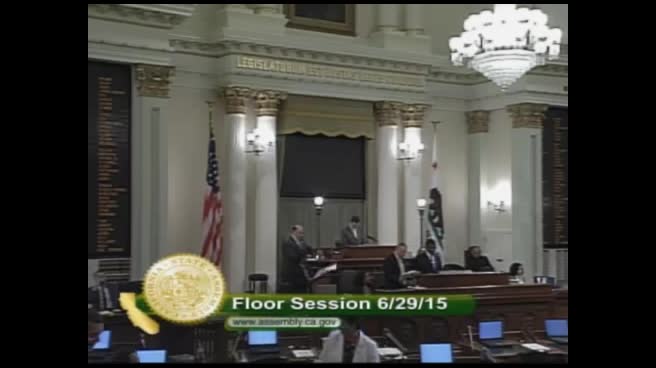
| Jun 29, 2015 | Senate amendments concurred in. To Engrossing and Enrolling. (Ayes 67. Noes 4. Page 2168.). |
| Jun 29, 2015 | Senate amendments concurred in. To Engrossing and Enrolling. |
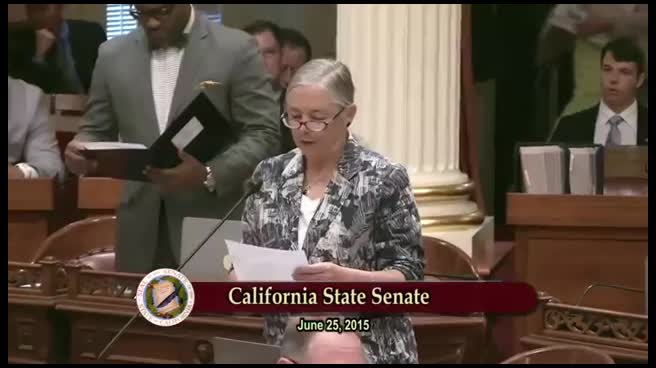
| Jun 25, 2015 | Read third time. Passed. Ordered to the Assembly. (Ayes 32. Noes 5. Page 1612.). |
| Jun 25, 2015 | Read third time. Passed. Ordered to the Assembly. |
| Jun 25, 2015 | In Assembly. Concurrence in Senate amendments pending. May be considered on or after June 27 pursuant to Assembly Rule 77. |
| Jun 11, 2015 | Read second time. Ordered to third reading. |
| Jan 7, 2015 | Read first time. To print. |
| Jun 1, 2015 | From committee chair, with author's amendments: Amend, and re-refer to committee. Read second time, amended, and re-referred to Com. on JUD. |
| Mar 25, 2015 | Referred to Com. on JUD. |
| Mar 19, 2015 | Read third time. Passed. Ordered to the Senate. (Ayes 68. Noes 2. Page 616.) |
| Mar 19, 2015 | In Senate. Read first time. To Com. on RLS. for assignment. |
| Mar 18, 2015 | Read second time. Ordered to third reading. |
| Mar 17, 2015 | From committee: Do pass. (Ayes 9. Noes 1.) (March 17). |
| Jan 26, 2015 | Referred to Com. on JUD. |
| Jan 8, 2015 | From printer. May be heard in committee February 7. |
|
Date
|
Description
|
Location
|
Votes
|
|
|---|---|---|---|---|
| Jun 29, 2015 | AB 87 STONE Concurrence in Senate Amendments | Assembly Floor |
Passed |
|
| Jun 25, 2015 | Assembly 3rd Reading AB87 Mark Stone By Leno | Senate Floor |
Passed |
|
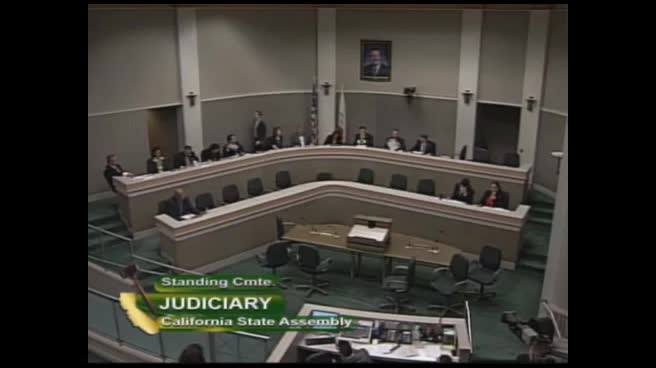
| Jun 9, 2015 | Do pass | Senate Standing Committee on Judiciary |
Passed |
|
| Mar 19, 2015 | AB 87 STONE Assembly Third Reading | Assembly Floor |
Passed |
|
| Mar 17, 2015 | Do pass. | Assembly Standing Committee on Judiciary |
Passed |
This list shows positions taken on this bill by organizations on the date displayed, which is linked to the original source.
Positions by individuals are not included.
|
Organization
|
Position
|
Date
|
|---|---|---|
| American Civil Liberties Union of California | ** Support | Jun 25, 2015 |
| American Federation Of State, County And Municipal Employees, Afl-Cio | ** Support | Jun 25, 2015 |
| California Communities United Institute | ** Support | Jun 25, 2015 |
| California Public Defenders Association | ** Support | Jun 25, 2015 |
| Consumer Attorneys Of California | ** Support | Jun 25, 2015 |
| Equality California | ** Support | Jun 25, 2015 |
| National Center for Lesbian Rights | ** Support | Jun 25, 2015 |
| Transgender Law Center | ** Support | Jun 25, 2015 |
AB 87
Page 2
CONCURRENCE IN SENATE AMENDMENTS
AB 87
(Mark Stone)
As Amended June 1, 2015
Majority vote
ASSEMBLY: |
68-2 |
(March 19, 2015) |
SENATE: |
32-5 |
(June 25, 2015) |
Original Committee Reference: JUD.
SUMMARY: Clarifies the prohibition against discrimination in the exercise of peremptory challenges to prospective jurors. Specifically, this bill aligns existing non-discrimination law with jury selection law by defining discriminatory peremptory challenges as those categories listed within Government Code Section 11135 subdivision (a), including race, national origin, ethnic group identification, religion, age, sex, sexual orientation, color, genetic information or disability.
The Senate amendments make a minor technical change and add a co-author.
EXISTING LAW:
Provides that no eligible person shall be exempt from service as a trial juror by reason of occupation, economic status, or any characteristic listed or defined in Government Code Section 11135 (as set out in 3) below), or for any other reason.
Provides that a party may not use a peremptory challenge to remove a prospective juror on the basis of an assumption that the prospective juror is biased merely because of his or her race, color, religion, sex, national origin, sexual orientation, or similar grounds.
Prohibits discrimination by the state and state-funded entities in all programs or activities with respect to race, national origin, ethnic group identification, religion, age, sex, sexual orientation, color, genetic information, or disability, as defined.
FISCAL EFFECT: None
COMMENTS: The author explains the reason for the bill as follows:
The jury system provides the foundation for the California justice system. We rely upon an impartial jury to yield fair and just results. The jury, by law, should be a cross section of the population in a community. Without specific protection from peremptory challenges that are based on the assumption of bias, because of gender identity, gender expression and other innate characteristics, it is possible for many community members to be excluded from prospective jury service.
Under existing law, there is no specific protection from peremptory challenges based on the assumption of bias as a result of gender identity, gender expression, ethnicity, age, genetic information, and disability. This bill aims to protect against discrimination and ensure all aforementioned parties are treated equally under the law with regard to jury service and trial by a jury of their peers.
This bill updates the peremptory challenge statute to make clear that it may not be used to discriminate against prospective jurors on grounds otherwise prohibited. Existing law sets forth a list of characteristics on which peremptory challenges to prospective jurors may not be based. That list has not been updated to reflect changes in the state's general non-discrimination statute, Government Code Section 11135, which arguably already governs peremptory challenges by generally prohibiting discrimination on the basis of race, national origin, ethnic group identification, religion, age, sex, sexual orientation, color, genetic information, or disability in any program or activity that is conducted, operated or administered by the state or any state agency, funded directly by the state, or receives any financial assistance from the state.
While the existing catch-all provision prohibiting discrimination on "similar grounds" might be interpreted to cover all characteristics within Government Code Section 11135, this bill would make the point explicit and therefore give potentially helpful guidance to courts, parties and their counsel.
Analysis Prepared by: Khadijah Hargett / JUD. / (916) 319-2334 FN: 0000939
AB 87
Page 6
|
Office of Senate Floor Analyses (916) 651-1520 Fax: (916) 327-4478 |
THIRD READING
Bill No: AB 87
Amended: 6/1/15 in Senate
SENATE JUDICIARY COMMITTEE: 6-1, 6/9/15
AYES: Jackson, Moorlach, Hertzberg, Leno, Monning, Wieckowski
NOES: Anderson
ASSEMBLY FLOOR: 68-2, 3/19/15 - See last page for vote
SUBJECT: Jurors: peremptory challenge
DIGEST: This bill extends the existing protection against the use of a peremptory challenge to remove a prospective juror on the basis of an assumption that the prospective juror is biased merely because of certain characteristics (race, color, religion, sex, national origin, sexual orientation, or similar grounds) to all characteristics listed or defined in a specified anti-discrimination statute under the Government Code (i.e. race, national origin, ethnic group identification, religion, age, sex, sexual orientation, color, genetic information, or disability), or similar grounds.
Existing law:
Provides, pursuant to Government Code Section 11135, that no person in the State of California shall, on the basis of race, national origin, ethnic group identification, religion, age, sex, sexual orientation, color, genetic information, or disability, be unlawfully denied full and equal access to the benefits of, or be unlawfully subjected to discrimination under, any program or activity that is conducted, operated, or administered by the state or by any state agency, is funded directly by the state, or receives any financial assistance from the state.
Defines “sex” for the above purposes to include, but not be limited to, a person’s gender, pregnancy or medical conditions related to pregnancy, childbirth or medical conditions related to childbirth, as well as breastfeeding or medical conditions related to breastfeeding. Defines “gender” to mean sex, and include a person’s gender identity and gender expression, and defines “gender expression” to mean a person’s gender-related appearance and behavior whether or not stereotypically associated with the person’s assigned sex at birth.
Defines “sexual orientation” for the above purposes to mean heterosexuality, homosexuality, and bisexuality.
Prohibits the exemption of any eligible person from service as a trial juror by reason of occupation, economic status, or any characteristic listed or defined in the Government Code Section above (i.e. race, national origin, ethnic group identification, religion, age, sex, sexual orientation, color, genetic information, or disability), or for any other reason. Provides that an eligible person may be excused from jury service only for undue hardship, upon themselves or upon the public, as defined by the Judicial Council.
Specifies procedures governing the selection of a fair and impartial jury in civil trials, including that counsel for each party shall have the right to examine any of the prospective jurors, as specified, in order to enable counsel to intelligently exercise both peremptory challenges and challenges for cause.
Specifies procedures governing the selection of a jury in criminal trials, including that counsel for each party shall have the right to examine any or all of the prospective jurors, as specified, in aid of the exercise of challenges for cause.
Provides that a challenge is an objection made to the trial jurors that may be taken by any party to the action, and is of specified classes and types, including (a) a challenge to the trial jury panel for cause, as specified, and (b) a challenge to a prospective juror by either:
A challenge for cause, for one of the following reasons:
General disqualification—that the juror is disqualified from serving in the action on trial;
Implied bias—as, when the existence of the facts as ascertained, in judgment of law disqualifies the juror; or
Actual bias—the existence of a state of mind on the part of the juror in reference to the case, or to any of the parties, which will prevent the juror from acting with entire impartiality, and without prejudice to the substantial rights of any party.
A peremptory challenge to a prospective juror.
Enumerates the sole statutory challenges for cause on grounds of general disqualification or implied bias, as specified.
Provides that after any jurors have been removed from the panel for cause, the parties may remove a specified number of jurors peremptorily (without giving any reason), and provides a specified number of peremptory challenges to which each party is entitled depending on the number of parties in the litigation and whether the case is criminal or civil in nature.
Provides, under Rubio v. Superior Court (1979) 24 Cal.3d 93, 97-98, that a defendant’s right to trial by a jury drawn from a representative cross section of the community, as guaranteed by the Sixth Amendment of the federal Constitution and article I, section 16, of the California Constitution, is violated when a “cognizable group” within that community is excluded from jury venire. In order for a group to be considered cognizable, two requirements must be met: (a) the group’s members must share a common perspective arising from their life experience in the group; and (b) it must be shown by the party seeking to prove a violation of the representative cross section rule that no other members of the community are capable of adequately representing the perspective of the group assertedly excluded.
Provides that a party may not use a peremptory challenge to remove a prospective juror on the basis of an assumption that the prospective juror is biased merely because of his or her race, color, religion, sex, national origin, sexual orientation, or similar grounds.
This bill aligns the list of protected classifications for purposes of non-discriminatory peremptory challenges with the list of classifications protected under Government Code Section 11135, above, thereby prohibiting the use of a peremptory challenge to remove a prospective juror on the basis of an assumption that the prospective juror is biased merely because of his or her ethnic group identification, age, genetic information, or disability, in addition to race, color, religion, sex, national origin, sexual orientation, or similar grounds, as provided under existing law.
Background
In 1978, the California Supreme Court declared, “the use of peremptory challenges to remove prospective jurors on the sole ground of group bias denies plaintiffs the right to trial by a jury drawn from a representative cross-section of the community under article I, section 16, of the California Constitution.” (People v. Wheeler (1978) 22 Cal.3d 258.) This concept was later adopted by the U.S. Supreme Court in Batson v. Kentucky (1986) 476 U.S. 79, which held that the Equal Protection Clause of the United States Constitution prohibits jury selection based upon racial stereotyping. Eight years later, the Court decided J. E. B. v. Alabama ex rel. T. B. (1994) 511 U.S. 127, extending the rationale of Batson to gender discrimination.
Additionally, in Rubio v. Superior Court, (1979) 24 Cal.3d 93, the California Supreme Court held that a defendant’s right to trial by a jury drawn from a representative cross section of the community is violated when any “cognizable group” within that community is excluded from jury venire. Then, in People v. Garcia (2000) 77 Cal.App.4th 1269, the appellate court determined that lesbians and gay men met the two requirements in Rubio and, thus, constitute a “cognizable group.”
Subsequently, in 2000, AB 2418 (Migden, Chapter 43, Statutes of 2000) codified those cases as Section 231.5 of the Code of Civil Procedure. The resulting section prohibits the use of a peremptory challenge to remove a prospective juror on the basis of an assumption that the prospective juror is biased merely because of his or her race, color, religion, sex, national origin, sexual orientation, or similar grounds.
This bill now seeks to expand this protection by prohibiting the use of a peremptory challenge to remove a prospective juror on the basis of any characteristic for which a state agency may not discriminate (i.e. race, national origin, ethnic group identification, religion, age, sex, sexual orientation, color, genetic information, or disability), or similar ground.
Comments
As stated by the author:
This bill seeks to update current law to ensure that peremptory challenges may not be used to discriminate against prospective jurors based on gender identity, gender expression, ethnic group identification, genetic information or disability.
The jury system provides the foundation for the California justice system. We rely upon an impartial jury to yield fair and just results. The jury, by law, should be a cross section of the population in a community. Without specific protection from peremptory challenges made on the assumption of bias because of gender identity, gender expression, ethnicity, age, genetic information, and disability, it is possible for many community members to be excluded from prospective jury service. If certain members of a community are denied from the prospect of jury service, it is possible to deny victims and defendants the right to a truly fair trial.
The need for fair trials is especially important in the transgender and gender non-conforming community, because a disproportionate amount of these individuals come into contact with the criminal justice system. At least 16 [percent] of transgender individuals have been incarcerated at some point in their lives, with the percentage of transgender women even higher at 21 [percent.] (The National Transgender Discrimination Survey Report: http://endtransdiscrimination.org/report.html).
Furthermore, by aligning the jury code with the government’s non-discrimination laws, California can continue to be a leader in ensuring that transgender people and others are protected from discrimination and are treated equally under law.
FISCAL EFFECT: Appropriation: No Fiscal Com.: No Local: No
Equality California (source)
American Civil Liberties Union of California
American Federation of State, County and Municipal Employees, AFL-CIO
California Communities United Institute
California Public Defenders Association
Consumer Attorneys of California
National Center for Lesbian Rights
Transgender Law Center
OPPOSITION: (Verified 6/11/15)
None received
ASSEMBLY FLOOR: 68-2, 3/19/15
AYES: Achadjian, Alejo, Baker, Bloom, Bonilla, Bonta, Brough, Brown, Burke, Calderon, Campos, Chang, Chau, Chávez, Chiu, Chu, Cooley, Dababneh, Dahle, Daly, Dodd, Eggman, Frazier, Cristina Garcia, Eduardo Garcia, Gatto, Gipson, Gomez, Gonzalez, Gordon, Gray, Grove, Holden, Irwin, Jones-Sawyer, Kim, Lackey, Levine, Linder, Lopez, Low, Maienschein, Mathis, Mayes, McCarty, Medina, Mullin, Nazarian, Obernolte, O'Donnell, Olsen, Perea, Quirk, Rendon, Ridley-Thomas, Rodriguez, Salas, Santiago, Steinorth, Mark Stone, Thurmond, Ting, Wagner, Waldron, Wilk, Williams, Wood, Atkins
NOES: Gallagher, Harper
NO VOTE RECORDED: Travis Allen, Bigelow, Cooper, Beth Gaines, Hadley, Roger Hernández, Jones, Melendez, Patterson, Weber
Prepared by: Ronak Daylami / JUD. / (916) 651-4113
6/11/15 12:45:58
**** END ****
AB 87 (Mark Stone)
Page 8 of 8
Senator Hannah-Beth Jackson, Chair
2015-2016 Regular Session
AB 87 (Mark Stone)
Version: June 1, 2015
Hearing Date: June 9, 2015
Fiscal: No
Urgency: No
RD
SUBJECT
Jurors: peremptory challenge
DESCRIPTION
Existing law prohibits the use of a peremptory challenge to remove a prospective juror on the basis of an assumption that the prospective juror is biased merely because of his or her race, color, religion, sex, national origin, sexual orientation, or similar grounds. This bill would expand that protection against discrimination by, instead, prohibiting the use of a peremptory challenge to remove a prospective juror on the basis of an assumption that the prospective juror is biased merely because of a characteristic listed or defined in a specified anti-discrimination statute under the Government Code (i.e. race, national origin, ethnic group identification, religion, age, sex, sexual orientation, color, genetic information, or disability), or similar grounds.
BACKGROUND
In 1978, the California Supreme Court declared, “the use of peremptory challenges to remove prospective jurors on the sole ground of group bias denies plaintiffs the right to trial by a jury drawn from a representative cross-section of the community under article I, section 16, of the California Constitution.” (People v. Wheeler (1978) 22 Cal.3d 258.) This concept was later adopted by the U.S. Supreme Court in Batson v. Kentucky (1986) 476 U.S. 79, which held that the Equal Protection Clause of the United States Constitution prohibits jury selection based upon racial stereotyping. Eight years later, the Court decided J. E. B. v. Alabama ex rel. T. B. (1994) 511 U.S. 127, extending the rationale of Batson to gender discrimination.
Additionally, in Rubio v. Superior Court, (1979) 24 Cal.3d 93, the California Supreme Court held that a defendant’s right to trial by a jury drawn from a representative cross section of the community is violated when any “cognizable group” within that community is excluded from jury venire. Then, in People v. Garcia (2000) 77 Cal.App.4th 1269, the appellate court determined that lesbians and gay men met the two requirements in Rubio and, thus, constitute a “cognizable group.”
Subsequently, in 2000, AB 2418 (Migden, Ch. 43, Stats. 2000) codified those cases as Section 231.5 of the Code of Civil Procedure. The resulting section prohibits the use of a peremptory challenge to remove a prospective juror on the basis of an assumption that the prospective juror is biased merely because of his or her race, color, religion, sex, national origin, sexual orientation, or similar grounds.
This bill now seeks to expand this protection by prohibiting the use of a peremptory challenge to remove a prospective juror on the basis of any characteristic for which a state agency may not discriminate (i.e. race, national origin, ethnic group identification, religion, age, sex, sexual orientation, color, genetic information, or disability), or similar ground.
CHANGES TO EXISTING LAW
Existing law provides that no person in the State of California shall, on the basis of race, national origin, ethnic group identification, religion, age, sex, sexual orientation, color, genetic information, or disability, be unlawfully denied full and equal access to the benefits of, or be unlawfully subjected to discrimination under, any program or activity that is conducted, operated, or administered by the state or by any state agency, is funded directly by the state, or receives any financial assistance from the state. (Gov. Code Sec. 11135(a).)
Existing law defines “sex” for the above purposes to include, but not be limited to, a person’s gender, pregnancy or medical conditions related to pregnancy, childbirth or medical conditions related to childbirth, as well as breastfeeding or medical conditions related to breastfeeding. Existing law defines “gender” to mean sex, and include a person’s gender identity and gender expression, and defines “gender expression” to mean a person’s gender-related appearance and behavior whether or not stereotypically associated with the person’s assigned sex at birth. (Gov. Code Secs. 11135, 12926(r).)
Existing law defines “sexual orientation” for the above purposes to mean heterosexuality, homosexuality, and bisexuality. (Gov. Code Secs. 11135, 12926(s).)
Existing law prohibits the exemption of any eligible person from service as a trial juror by reason of occupation, economic status, or any characteristic listed or defined in the Government Code Section above (i.e. race, national origin, ethnic group identification, religion, age, sex, sexual orientation, color, genetic information, or disability), or for any other reason. Existing law provides that an eligible person may be excused from jury service only for undue hardship, upon themselves or upon the public, as defined by the Judicial Council. (Code Civ. Proc. Sec. 204.)
Existing law specifies procedures governing the selection of a fair and impartial jury in civil trials, including that counsel for each party shall have the right to examine any of the prospective jurors, as specified, in order to enable counsel to intelligently exercise both peremptory challenges and challenges for cause. (Code Civ. Proc. Sec. 222.5.)
Existing law specifies procedures governing the selection of a jury in criminal trials, including that counsel for each party shall have the right to examine any or all of the prospective jurors, as specified, in aid of the exercise of challenges for cause. (Code Civ. Proc. Sec. 223.)
Existing law provides that a challenge is an objection made to the trial jurors that may be taken by any party to the action, and is of specified classes and types, including (1) a challenge to the trial jury panel for cause, as specified, and (2) a challenge to a prospective juror by either:
a challenge for cause, for one of the following reasons:
general disqualification—that the juror is disqualified from serving in the action on trial;
implied bias—as, when the existence of the facts as ascertained, in judgment of law disqualifies the juror; or
actual bias—the existence of a state of mind on the part of the juror in reference to the case, or to any of the parties, which will prevent the juror from acting with entire impartiality, and without prejudice to the substantial rights of any party; or
a peremptory challenge to a prospective juror. (Code Civ. Proc. Sec. 225(b).)
Existing law enumerates the sole statutory challenges for cause on grounds of general disqualification or implied bias, as specified. (Code Civ. Proc. Secs. 228, 229.)
Existing law provides that after any jurors have been removed from the panel for cause, the parties may remove a specified number of jurors peremptorily (without giving any reason), and provides a specified number of peremptory challenges to which each party is entitled depending on the number of parties in the litigation and whether the case is criminal or civil in nature. (Code Civ. Proc. Sec. 231.)
Existing case law provides that a defendant’s right to trial by a jury drawn from a representative cross section of the community, as guaranteed by the Sixth Amendment of the federal Constitution and article I, section 16, of the California Constitution, is violated when a “cognizable group” within that community is excluded from jury venire. In order for a group to be considered cognizable, two requirements must be met: (1) the group’s members must share a common perspective arising from their life experience in the group; and (2) it must be shown by the party seeking to prove a violation of the representative cross section rule that no other members of the community are capable of adequately representing the perspective of the group assertedly excluded. (Rubio v. Superior Court, (1979) 24 Cal.3d 93, 97-98, citing People v. Wheeler (1978) 22 Cal.3d 258, 272; see also People v. Garcia (2000) 77 Cal.App.4th 1269, 1274.)
Existing law provides that a party may not use a peremptory challenge to remove a prospective juror on the basis of an assumption that the prospective juror is biased merely because of his or her race, color, religion, sex, national origin, sexual orientation, or similar grounds. (Code Civ. Proc. Sec. 231.5.)
This bill would align the list of protected classifications for purposes of non-discriminatory peremptory challenges with the list of classifications protected under Government Code Section 11135, above, thereby prohibiting the use of a peremptory challenge to remove a prospective juror on the basis of an assumption that the prospective juror is biased merely because of his or her ethnic group identification, age, genetic information, or disability, in addition to race, color, religion, sex, national origin, sexual orientation, or similar grounds, as provided under existing law.
COMMENT
1. Stated need for the bill
According to the author:
This bill seeks to update current law to ensure that peremptory challenges may not be used to discriminate against prospective jurors based on gender identity, gender expression, ethnic group identification, genetic information or disability.
The jury system provides the foundation for the California justice system. We rely upon an impartial jury to yield fair and just results. The jury, by law, should be a cross section of the population in a community. Without specific protection from peremptory challenges made on the assumption of bias because of gender identity, gender expression, ethnicity, age, genetic information, and disability, it is possible for many community members to be excluded from prospective jury service. If certain members of a community are denied from the prospect of jury service, it is possible to deny victims and defendants the right to a truly fair trial.
The need for fair trials is especially important in the transgender and gender non-conforming community, because a disproportionate amount of these individuals come into contact with the criminal justice system. At least 16 [percent] of transgender individuals have been incarcerated at some point in their lives, with the percentage of transgender women even higher at 21 [percent.] (The National Transgender Discrimination Survey Report: http://endtransdiscrimination.org/report.html).
Furthermore, by aligning the jury code with the government’s non-discrimination laws, California can continue to be a leader in ensuring that transgender people and others are protected from discrimination and are treated equally under law.
The National Center for Lesbian Rights and the Transgender Law Center write in support that “[a] jury, by law, must represent a cross section of the population in a community in order to ensure that a defendant is tried by his or her peers. This philosophy underpins the foundation of California’s jury system, and we rely upon it to conform the selection of an impartial jury that will yield fair and just results. Without specific protection from peremptory challenges made on the assumption of bias because of gender identity, gender expression, ethnicity, age, genetic information, and disability, it is possible for many community members to be excluded from prospective jury service. If these individuals are denied from the prospect of jury service, then it is possible to deny victims and defendants the right to a truly fair trial.”
The American Civil Liberties Union notes in support that:
Section 204 of the Code of Civil Procedure currently provides that no eligible person shall be exempt from jury service by reason of any characteristic listed or defined in Section 11135 of the Government Code—the statute that prohibits discrimination in state programs and activities on the basis of enumerated characteristics. Similarly, the peremptory challenge statute, CCP section 231.5, currently provides that an individual may not be removed from jury service based on an assumption that the prospective juror is biased merely because of his or her race, color, religion,, sex, national origin, sexual orientation, or “similar grounds.” Unfortunately, the list of expressly protected characteristics has not bene updated to reflect changes in the state’s non-discrimination policies, including Section 11135 of the Government Code, which arguably governs peremptory challenges. While the existing catch-all provision prohibiting discrimination in the exercise of peremptory challenges on “similar grounds” might be interpreted to cover all characteristics within section 11135 this bill would make the point explicitly and therefore give helpful guidance to courts, parties and their counsel.
2. The voir dire process
Under California law, every citizen over 18 years of age is eligible and qualified to be a prospective juror unless they fail to meet certain minimal requirements. For example, they must be a resident of the jurisdiction they are summoned to serve, be possessed of sufficient knowledge of the English language, and not be subject to a conservatorship. Aside from these threshold qualification requirements that must be met for a person to be eligible to serve on a jury, California law prohibits any person from being excluded from eligibility for jury service. While otherwise eligible persons may be excused by the courts on a case-by-case basis for hardship, be challenged for cause (such as for express or implied bias), or otherwise be subject to a peremptory challenge, California law prohibits the exemption of any eligible person from service by reason of occupation, economic status, or any characteristic listed or defined under Government Code Section 11135 (i.e. race, national origin, ethnic group identification, religion, age, sex, sexual orientation, color, genetic information, or disability), or for any other reason. (See Code Civ. Proc. Sec. 204.)
Existing law allows the parties in criminal and civil cases to remove jurors from the panel by exercising challenges for cause and peremptory challenges. Challenges are made during the voir dire process during which the court, with the assistance of the attorneys, inquires of the prospective jurors to determine the suitability of individuals to render a fair judgment about the facts of the case.
Challenges for cause are statutory and include: incapacity; consanguinity or affinity; fiduciary, domestic or business relationship; serving as a juror or witness in previous trial involving parties; interest in the action; opinion on the merits; bias or prejudice; or being a party to another action. (Code Civ. Proc. Sec. 129; see also 7 Witkin Cal. Proc. Trial Sec. 130.) In contrast, peremptory challenges are made without need to state a cause. “The purpose of the peremptory challenge is to insure an impartial jury by allowing a specific number of jurors to be excused even though no statutory challenge for cause can be made; e.g., where a juror is believed to be biased but the bias cannot be proved.” (7 Witkin Cal. Proc. Trial Sec. 125.) That being said, while peremptory challenges are permitted without initially stating a reason, “it has long been made clear in criminal cases that those challenges may not be made for the purpose of excluding a cognizable group. [ . . . ] More recently this principle, grounded on the guaranties of equal protection and trial by a jury drawn by a fair cross-section of the community, has been applied in civil cases as well.” (7 Witkin Cal. Proc. Trial Sec. 127.) In that light, the Code of Civil Procedure expressly prohibits the exercise of a peremptory challenge “on the basis of an assumption that the prospective juror is biased merely because of his or her race, color, religion, sex, national origin, sexual orientation, or similar grounds.” (Code Civ. Proc. Sec. 231.5.)
This bill would now align the list of classifications protected against discriminatory peremptory challenges with Section 11135 of the Government Code, which additionally protects against discrimination on the basis of ethnic group identification, age, genetic information, or disability, as well as race, color, religion, sex, national origin, and sexual orientation. By incorporating not just the list, but also the definitions of the Government Code’s non-discrimination statute, this bill would protect against the use of peremptory challenges to remove a prospective juror on the basis of an assumption that the prospective juror is biased merely because of the person’s race, national origin, ethnic group identification, religion, age, sex, sexual orientation, color, genetic information, disability, or similar grounds, as well as the use of a peremptory challenge on the basis of an assumption that the prospective juror is biased merely because of his or her gender (including a person’s gender identity and gender expression, as defined), or the person’s heterosexuality, homosexuality, or bisexuality, among other things.
As a matter of public policy, given that the existing section prohibiting the use of discriminatory peremptory challenges has not been updated since its enactment over 15 years ago, and other anti-discrimination statutes under California law have been updated over the years to protect additional cognizable groups such as age or disability from discrimination for various purposes, the statute should arguably be made consistent and harmonized with those more recently updated statutes. Furthermore, by incorporating the classifications listed and defined by Government Code Section 11135 (i.e. race, national origin, ethnic group identification, religion, age, sex, sexual orientation, color, genetic information, or disability), this bill would conform this section to existing jury selection law, which prohibits the exemption of any eligible person from service by reason of a characteristic listed or defined in that same section. (See Code Civ. Proc. Sec. 204.)
Support: American Civil Liberties Union of California; American Federation of State, County and Municipal Employees, AFL-CIO; California Communities United Institute;
California Public Defenders Association; Consumer Attorneys of California; National Center for Lesbian Rights; Transgender Law Center
Opposition: None Known
HISTORY
Source: Equality California
Related Pending Legislation: SB 213 (Block, 2015) would reduce the number of peremptory challenges in misdemeanor trials and includes a January 1, 2021, sunset. The bill is currently in the Assembly Public Safety Committee.
Prior Legislation:
AB 2646 (Ting, Ch. 912, Stats. 2014) was identical to this bill in its introduced form but subsequently gutted and amended in the Senate into a different topic.
AB 2418 (Migden, Ch. 43, Stats. 2000) was enacted to, among other things, provide that a party may not use a peremptory challenge to remove a prospective juror on the basis of an assumption that the prospective juror is biased merely because he or she is a member of an identifiable group distinguished on racial, religious, ethnic, sexual orientation, gender, or similar grounds.
Prior Vote:
Assembly Floor (Ayes 68, Noes 2)
Assembly Judiciary Committee (Ayes 9, Noes 1)
**************
AB 87
Page 2
ASSEMBLY THIRD READING
AB 87
(Mark Stone)
As Introduced January 7, 2015
Majority vote
Committee |
Votes |
Ayes |
Noes |
Judiciary |
9-1 |
Mark Stone, Wagner, Alejo, Chau, Chiu, Cristina Garcia, Holden, Maienschein, O'Donnell |
Gallagher
|
SUMMARY: Clarifies the prohibition against discrimination in the exercise of peremptory challenges to prospective jurors. Specifically, this bill aligns existing non-discrimination law with jury selection law by defining discriminatory peremptory challenges as those categories listed within Government Code Section 11135 subdivision (a), including race, national origin, ethnic group identification, religion, age, sex, sexual orientation, color, genetic information or disability.
EXISTING LAW:
Provides that no eligible person shall be exempt from service as a trial juror by reason of occupation, economic status, or any characteristic listed or defined in Government Code Section 11135 (as set out in 3) below), or for any other reason.
Provides that a party may not use a peremptory challenge to remove a prospective juror on the basis of an assumption that the prospective juror is biased merely because of his or her race, color, religion, sex, national origin, sexual orientation, or similar grounds.
Prohibits discrimination by the state and state-funded entities in all programs or activities with respect to race, national origin, ethnic group identification, religion, age, sex, sexual orientation, color, genetic information, or disability, as defined.
FISCAL EFFECT: None
COMMENTS: The author explains the reason for the bill as follows:
The jury system provides the foundation for the California justice system. We rely upon an impartial jury to yield fair and just results. The jury, by law, should be a cross section of the population in a community. Without specific protection from peremptory challenges that are based on the assumption of bias, because of gender identity, gender expression and other innate characteristics, it is possible for many community members to be excluded from prospective jury service.
Under existing law, there is no specific protection from peremptory challenges based on the assumption of bias as a result of gender identity, gender expression, ethnicity, age, genetic information, and disability. This bill aims to protect against discrimination and ensure all aforementioned parties are treated equally under the law with regard to jury service and trial by a jury of their peers.
This bill updates the peremptory challenge statute to make clear that it may not be used to discriminate against prospective jurors on grounds otherwise prohibited. Existing law sets forth a list of characteristics on which peremptory challenges to prospective jurors may not be based. That list has not been updated to reflect changes in the state’s general non-discrimination statute, Government Code Section 11135, which arguably already governs peremptory challenges by generally prohibiting discrimination on the basis of race, national origin, ethnic group identification, religion, age, sex, sexual orientation, color, genetic information, or disability in any program or activity that is conducted, operated or administered by the state or any state agency, funded directly by the state, or receives any financial assistance from the state.
While the existing catch-all provision prohibiting discrimination on “similar grounds” might be interpreted to cover all characteristics within Government Code Section 11135, this bill would make the point explicit and therefore give potentially helpful guidance to courts, parties and their counsel.
Analysis Prepared by: Khadijah Hargett / JUD. / (916) 319-2334 FN: 0000055
AB 87
Page 3
Date of Hearing: March 17, 2015
ASSEMBLY COMMITTEE ON JUDICIARY
Mark Stone, Chair
AB 87
(Mark Stone) – As Introduced January 7, 2015
SUBJECT: JURORS: PEREMPTORY CHALLENGES
KEY ISSUE: SHOULD EXISTING LAW PROHIBITING DISCRIMINATION IN THE EXERCISE OF PEREMPTORY CHALLENGES BE CLARIFIED?
SYNOPSIS
This non-controversial bill would update the statute that prohibits discrimination in the exercise of peremptory challenges to prospective jurors to clarify that the grounds prohibited by other laws regarding discrimination by the state and state-funded entities also apply to the exercise of peremptory challenges to prospective jurors.
This bill is identical to a bill introduced in 2014 by Assembly Member Ting (AB 2646) that passed this Committee and the Assembly, but was changed to another subject in the Senate.
SUMMARY: Clarifies the prohibition against discrimination in the exercise of peremptory challenges to prospective jurors. Specifically, this bill aligns existing non-discrimination law with jury selection law by defining discriminatory peremptory challenges as those categories listed within subdivision (a) of Section 11135 of the Government Code, including race, national origin, ethnic group identification, religion, age, sex, sexual orientation, color, genetic information or disability.
EXISTING LAW:
Provides that no eligible person shall be exempt from service as a trial juror by reason of occupation, economic status, or any characteristic listed or defined in Section 11135 of the Government Code (as set out in item #3 below), or for any other reason. (Code of Civil Procedure section 204.)
Provides that a party may not use a peremptory challenge to remove a prospective juror on the basis of an assumption that the prospective juror is biased merely because of his or her race, color, religion, sex, national origin, sexual orientation, or similar grounds. (Code of Civil Procedure section 231.5.)
Prohibits discrimination by the state and state-funded entities in all programs or activities with respect to race, national origin, ethnic group identification, religion, age, sex, sexual orientation, color, genetic information, or disability, as defined. (Government Code section 11135.)
FISCAL EFFECT: As currently in print this bill is keyed non-fiscal.
COMMENTS: The author explains the reason for the bill as follows:
The jury system provides the foundation for the California justice system. We rely upon an impartial jury to yield fair and just results. The jury, by law, should be a cross section of the population in a community. Without specific protection from peremptory challenges that are based on the assumption of bias, because of gender identity, gender expression and other innate characteristics, it is possible for many community members to be excluded from prospective jury service.
Under existing law, there is no specific protection from peremptory challenges based on the assumption of bias as a result of gender identity, gender expression, ethnicity, age, genetic information, and disability. This bill aims to protect against discrimination and ensure all aforementioned parties are treated equally under the law with regard to jury service and trial by a jury of their peers.
This Bill Updates The Peremptory Challenge Statute To Make Clear That It May Not Be Used To Discriminate Against Prospective Jurors On Grounds Otherwise Prohibited. Existing law sets forth a list of characteristics on which peremptory challenges to prospective jurors may not be based. That list has not been updated to reflect changes in the state’s general non-discrimination statute, section 11135 of the Government Code, which arguably already governs peremptory challenges by generally prohibiting discrimination on the basis of race, national origin, ethnic group identification, religion, age, sex, sexual orientation, color, genetic information, or disability in any program or activity that is conducted, operated or administered by the state or any state agency, funded directly by the state, or receives any financial assistance from the state.
While the existing catch-all provision prohibiting discrimination on “similar grounds” might be interpreted to cover all characteristics within section 11135 of the Government Code, this bill would make the point explicit and therefore give potentially helpful guidance to courts, parties and their counsel.
Prior Related Legislation: AB 2646 (Ting) of 2014 was identical to this bill; it passed this Committee and the Assembly, but was changed to another subject in the Senate.
REGISTERED SUPPORT / OPPOSITION:
Support
American Civil Liberties Union of California
AFSCME
California Communities United Institute
California Public Defenders Association
National Center for Lesbian Rights
Transgender Law Center
28 Individuals
Opposition
None on file
Analysis Prepared by:
Khadijah Hargett/JUD./(916) 319-2334
Bill Author

Bill Co-Author(s):
