SB 1001: Employment: unfair practices.
- Session Year: 2015-2016
- House: Senate
- Latest Version Date: 2016-09-28
Existing law prohibits an employer or any other person from engaging in, or directing another person to engage in, an unfair immigration-related practice against a person for the purpose of or intent to retaliate against any person for exercising a protected right, as specified. Existing law defines requesting more or different documents than are required under federal law, or refusing to honor documents tendered that on their face reasonably appear to be genuine, as an unfair immigration-related practice.
This bill would make it unlawful for an employer to request more or different documents than are required under federal law, to refuse to honor documents tendered that on their face reasonably appear to be genuine, to refuse to honor documents or work authorization based upon the specific status or term of status that accompanies the authorization to work, or to reinvestigate or reverify an incumbent employees authorization to work, as specified. The bill would authorize an applicant for employment or an employee who is subject to an unlawful act that is prohibited by these provisions, or a representative of that applicant for employment or employee, to file a complaint with the Division of Labor Standards Enforcement. The bill would specify that any person who violates these provisions shall be subject to a penalty imposed by the Labor Commissioner not exceeding $10,000, and be liable for equitable relief.
Existing law prohibits an employer or any other person from engaging in, or directing another person to engage in, an unfair immigration-related practice against a person for the purpose of or intent to retaliate against any person for exercising a protected right, as specified. Existing law defines requesting more or different documents than are required under federal law, or refusing to honor documents tendered that on their face reasonably appear to be genuine, as an unfair immigration-related practice.
This bill would make it unlawful for an employer or any other person or entity to engage in, or to direct another person or entity to engage in, an unfair immigration-related practice against either an applicant for employment or an employee. The bill would prohibit an employer or any other person or entity from attempting to request more or different documents than are required under federal law, to refuse to honor documents tendered that on their face reasonably appear to be genuine, to refuse to honor documents or work authorization based upon the specific status or term of status that accompanies the authorization to work, or to reinvestigate or reverify an incumbent employees authorization to work using an unfair immigration-related practice, and prohibit an employer or any other person or entity from discriminating or directing another person to discriminate, against an applicant for employment or an employee with authorization to work based upon the specific status, or term of status, that accompanies the authorization to work. work, as specified. The bill would authorize an applicant for employment or an employee who is subject to an unfair immigration-related practice to bring a civil action for equitable relief and any applicable damages or penalties, and provide that, if he or she prevails in that action, he or she shall recover reasonable attorneys fees and costs, including any expert witness costs. unlawful act that is prohibited by these provisions, or a representative of that applicant for employment or employee, to file a complaint with the Division of Labor Standards Enforcement. The bill would specify that any person who violates these provisions shall be subject to a penalty imposed by the Labor Commissioner not exceeding $10,000, and be liable for equitable relief.
Existing provisions of the California Fair Employment and Housing Act define and prohibit various discriminatory employment practices to protect and safeguard the right and opportunity of all persons to seek, obtain, and hold employment without discrimination, abridgment, or harassment on account of race, religious creed, color, national origin, ancestry, physical disability, mental disability, medical condition, genetic information, marital status, sex, gender, gender identity, gender expression, age, sexual orientation, or military and veteran status.
Existing law prohibits an employer or any other person from engaging in, or directing another person to engage in, an unfair immigration-related practice against a person for the purpose of or intent to retaliate against any person for exercising a protected right, as specified. Existing law defines requesting more or different documents than are required under federal law, or refusing to honor documents tendered that on their face reasonably appear to be genuine, as an unfair immigration-related practice.
This bill would make it an unlawful employment practice unlawful for an employer to request more or different documents than are required under federal law relating to verification that an individual is not an unauthorized alien, or to refuse to honor documents tendered that on their face reasonably appear to be genuine, or to discriminate against an immigrant with authorization to work based upon the specific status or term of status that accompanies the authorization to work, or to attempt to reinvestigate or reverify an incumbent employees authorization to work unless required to do so by federal law or authority. or any other person or entity to engage in, or to direct another person or entity to engage in, an unfair immigration-related practice against either an applicant for employment or an employee. The bill would prohibit an employer or any other person or entity from attempting to reinvestigate or reverify an incumbent employees authorization to work using an unfair immigration-related practice, and prohibit an employer or any other person or entity from discriminating or directing another person to discriminate, against an applicant for employment or an employee with authorization to work based upon the specific status, or term of status, that accompanies the authorization to work. The bill would authorize an applicant for employment or an employee who is subject to an unfair immigration-related practice to bring a civil action for equitable relief and any applicable damages or penalties, and provide that, if he or she prevails in that action, he or she shall recover reasonable attorneys fees and costs, including any expert witness costs.
Existing provisions of the California Fair Employment and Housing Act define and prohibit various discriminatory employment practices to protect and safeguard the right and opportunity of all persons to seek, obtain, and hold employment without discrimination, abridgment, or harassment on account of race, religious creed, color, national origin, ancestry, physical disability, mental disability, medical condition, genetic information, marital status, sex, gender, gender identity, gender expression, age, sexual orientation, or military and veteran status.
Existing law prohibits an employer or any other person from engaging in, or directing another person to engage in, an unfair immigration-related practice against a person for the purpose of or intent to retaliate against any person for exercising a protected right, as specified.
This bill would make it an unlawful employment practice for an employer to request more or different documents than are required under federal law relating to verification that an individual is not an unauthorized alien, or to refuse to honor documents tendered that on their face reasonably appear to be genuine, or to discriminate against an immigrant with authorization to work based upon the specific status or term of status that accompanies the authorization to work, or to attempt to reinvestigate or reverify an incumbent employees authorization to work unless required to do so by federal law or authority.
(a)It is unlawful for an employer, in the course of satisfying the requirements of Section 1324a(b) of Title 8 of the United States Code, to do any of the following:
(1)Request more or different documents than are required under Section 1324a(b) of Title 8 of the United States Code.
(2)Refuse to honor documents tendered that on their face reasonably appear to be genuine.
(3)Refuse to honor documents or work authorization based upon the specific status or term of status that accompanies the authorization to work.
(4)Attempt to reinvestigate or reverify an incumbent employees authorization to work using an unfair immigration-related practice.
(b)(1)Any person who violates this section shall be subject to a penalty imposed by the Labor Commissioner and liability for equitable relief.
(2)An applicant for employment or an employee who is subject to an unlawful act that is prohibited by this section, or a representative of that applicant for employment or employee, may file a complaint with the Division of Labor Standards Enforcement pursuant to Section 98.7.
(3)The penalty recoverable by the applicant or employee, or by the Labor Commissioner, for a violation of this section shall not exceed ten thousand dollars ($10,000) per violation.
(a)It is unlawful for an employer or any other person or entity to engage in, or to direct another person or entity to engage in, an unfair immigration-related practice against an applicant for employment or an employee. employer, in the course of satisfying the requirements of Section 1324a(b) of Title 8 of the United States Code, to do any of the following:
(b)It is unlawful for an employer or any other person or entity to attempt, or to direct another person or entity to attempt,
(1)Request more or different documents than are required under Section 1324a(b) of Title 8 of the United States Code.
(2)Refuse to honor documents tendered that on their face reasonably appear to be genuine.
(3)Refuse to honor documents or work authorization based upon the specific status or term of status that accompanies the authorization to work.
(4)Attempt to reinvestigate or reverify an incumbent employees authorization to work using an unfair immigration-related practice.
(c)It is unlawful and an unfair immigration-related practice for an employer or any other person or entity to, or to direct another person to, discriminate against an applicant for employment or an employee with authorization to work based upon the specific status, or term of status, that accompanies the authorization to work.
(d)(1)An applicant for employment or an employee who is subject to an unfair immigration-related practice that is prohibited by this section, or a representative of that applicant for employment or employee, may bring a civil action for equitable relief and any applicable damages or penalties.
(2)An applicant for employment or an employee who is subject to any unfair immigration-related practice that is prohibited by this section, and who prevails in an action authorized by this section, shall recover his or her reasonable attorneys fees and costs, including any expert witness costs.
(b)(1)Any person who violates this section shall be subject to a penalty imposed by the Labor Commissioner and liability for equitable relief.
(2)An applicant for employment or an employee who is subject to an unlawful act that is prohibited by this section, or a representative of that applicant for employment or employee, may file a complaint with the Division of Labor Standards Enforcement pursuant to Section 98.7.
(3)The penalty recoverable by the applicant or employee, or by the Labor Commissioner, for a violation of this section shall not exceed ten thousand dollars ($10,000) per violation.
(a)It is unlawful for an employer or any other person or entity to engage in, or to direct another person or entity to engage in, an unfair immigration-related practice against an applicant for employment or an employee.
(b)It is unlawful for an employer or any other person or entity to attempt, or to direct another person or entity to attempt, to reinvestigate or reverify an incumbent employees authorization to work using an unfair immigration-related practice.
(c)It is unlawful and an unfair immigration-related practice for an employer or any other person or entity to, or to direct another person to, discriminate against an applicant for employment or an employee with authorization to work based upon the specific status, or term of status, that accompanies the authorization to work.
(d)(1)An applicant for employment or an employee who is subject to an unfair immigration-related practice that is prohibited by this section, or a representative of that applicant for employment or employee, may bring a civil action for equitable relief and any applicable damages or penalties.
(2)An applicant for employment or an employee who is subject to any unfair immigration-related practice that is prohibited by this section, and who prevails in an action authorized by this section, shall recover his or her reasonable attorneys fees and costs, including any expert witness costs.
SECTION 1.Section 12952 is added to the Government Code, to read:12952.It is an unlawful employment practice for an employer to request more or different documents than are required under Section 1324a(b) of Title 8 of the United States Code, or to refuse to honor documents tendered that on their face reasonably appear to be genuine, or to discriminate against an immigrant with authorization to work based upon the specific status or term of status that accompanies the authorization to work, or to attempt to reinvestigate or reverify an incumbent employees authorization to work unless required to do so by federal law or authority.
It is an unlawful employment practice for an employer to request more or different documents than are required under Section 1324a(b) of Title 8 of the United States Code, or to refuse to honor documents tendered that on their face reasonably appear to be genuine, or to discriminate against an immigrant with authorization to work based upon the specific status or term of status that accompanies the authorization to work, or to attempt to reinvestigate or reverify an incumbent employees authorization to work unless required to do so by federal law or authority.
|
Date
|
Status
|
|---|---|
| Aug 15, 2016 | Read second time. Ordered to third reading. |
| May 31, 2016 | Read third time. Passed. (Ayes 29. Noes 10. Page 4040.) Ordered to the Assembly. |
| May 31, 2016 | Read third time. Passed. (Ayes 29. Noes 10.) Ordered to the Assembly. |
| Jun 1, 2016 | In Assembly. Read first time. Held at Desk. |
| Jun 6, 2016 | Referred to Coms. on L. & E. and JUD. |
| Jun 23, 2016 | From committee: Do pass and re-refer to Com. on JUD. (Ayes 6. Noes 1.) (June 22). Re-referred to Com. on JUD. |
| Jun 28, 2016 | From committee: Do pass and re-refer to Com. on APPR. (Ayes 8. Noes 2.) (June 28). Re-referred to Com. on APPR. |
| Aug 3, 2016 | August 3 set for first hearing. Placed on APPR. suspense file. |
| Aug 12, 2016 | From committee: Do pass. (Ayes 15. Noes 5.) (August 11). |
| May 27, 2016 | Read second time. Ordered to third reading. |
| Aug 18, 2016 | Ordered to third reading. |
| Aug 18, 2016 | Read third time and amended. |
| Aug 24, 2016 | Read third time. Passed. Ordered to the Senate. |
| Aug 25, 2016 | In Senate. Concurrence in Assembly amendments pending. |
| Aug 26, 2016 | Assembly amendments concurred in. (Ayes 28. Noes 10. Page 5450.) Ordered to engrossing and enrolling. |
| Aug 26, 2016 | Assembly amendments concurred in. (Ayes 28. Noes 10.) Ordered to engrossing and enrolling. |
| Sep 1, 2016 | Enrolled and presented to the Governor at 5 p.m. |
| Feb 10, 2016 | Introduced. Read first time. To Com. on RLS. for assignment. To print. |
| May 27, 2016 | From committee: Do pass. (Ayes 5. Noes 2.) (May 27). |
| May 27, 2016 | From committee: Do pass. (Ayes 5. Noes 2. Page 4001.) (May 27). |
| May 20, 2016 | Set for hearing May 27. |
| Apr 25, 2016 | April 25 hearing: Placed on APPR. suspense file. |
| Apr 15, 2016 | Set for hearing April 25. |
| Apr 13, 2016 | From committee: Do pass and re-refer to Com. on APPR. (Ayes 4. Noes 1.) (April 13). Re-referred to Com. on APPR. |
| Apr 13, 2016 | From committee: Do pass and re-refer to Com. on APPR. (Ayes 4. Noes 1. Page 3520.) (April 13). Re-referred to Com. on APPR. |
| Apr 11, 2016 | Re-referred to Com. on L. & I.R. |
| Apr 8, 2016 | Set for hearing April 13 in L. & I.R. pending receipt. |
| Apr 5, 2016 | From committee: Do pass and re-refer to Com. on RLS. (Ayes 5. Noes 1.) (April 5). Re-referred to Com. on RLS. |
| Apr 5, 2016 | From committee: Do pass and re-refer to Com. on RLS. (Ayes 5. Noes 1. Page 3394.) (April 5). Re-referred to Com. on RLS. |
| Mar 28, 2016 | From committee with author's amendments. Read second time and amended. Re-referred to Com. on JUD. |
| Mar 24, 2016 | Set for hearing April 5. |
| Feb 18, 2016 | Referred to Com. on JUD. |
| Feb 11, 2016 | From printer. May be acted upon on or after March 12. |
|
Date
|
Description
|
Location
|
Votes
|
|
|---|---|---|---|---|
| Aug 26, 2016 | Unfinished Business SB1001 Mitchell Concurrence | Senate Floor |
Passed |
|
| Aug 24, 2016 | SB 1001 Mitchell Senate Third Reading By CHIU | Assembly Floor |
Passed |
|
| Aug 11, 2016 | Do pass. | Assembly Standing Committee on Appropriations |
Passed |
|
| Jun 28, 2016 | Do pass and be re-referred to the Committee on [Appropriations] | Assembly Standing Committee on Judiciary |
Passed |
|
| Jun 22, 2016 | Do pass and be re-referred to the Committee on [Judiciary] | Assembly Standing Committee on Labor and Employment |
Passed |
|
| May 31, 2016 | Senate 3rd Reading SB1001 Mitchell | Senate Floor |
Passed |
|
| May 27, 2016 | Do pass | Senate Standing Committee on Appropriations |
Passed |
|
| Apr 25, 2016 | Placed on suspense file | Senate Standing Committee on Appropriations |
Passed |
|
| Apr 13, 2016 | Do pass, but first be re-referred to the Committee on [Appropriations] | Senate Standing Committee on Labor and Industrial Relations |
Passed |
|
| Apr 5, 2016 | Do pass, but first be re-referred to the Committee on [Rules] | Senate Standing Committee on Judiciary |
Passed |
This list shows positions taken on this bill by organizations on the date displayed, which is linked to the original source.
Positions by individuals are not included.
|
Organization
|
Position
|
Date
|
|---|---|---|
| American Civil Liberties Union of California | ** Support | Aug 26, 2016 |
| American Federation Of State, County & Municipal Employees | ** Support | Aug 18, 2016 |
| Asian Americans Advancing Justice - California | ** Support | Aug 26, 2016 |
| Asian Americans Advancing Justice - Los Angeles | ** Support | Aug 26, 2016 |
| Asian Law Alliance | ** Support | Aug 26, 2016 |
| California Council of Churches Impact | ** Support | Aug 26, 2016 |
| California Employment Lawyers Association | ** Support | Aug 26, 2016 |
| California Immigrant Policy Center | ** Support | Aug 26, 2016 |
| California Immigrant Youth Justice Alliance | ** Support | Aug 26, 2016 |
| California Labor Federation, Afl-Cio | ** Support | Aug 26, 2016 |
| California Rural Legal Assistance Foundation, Inc. | ** Support | Aug 26, 2016 |
| California Teachers Association | ** Support | Aug 18, 2016 |
| California Teamsters Public Affairs Council | ** Support | Aug 26, 2016 |
| Central American Resource Center-Los Angeles | ** Support | Aug 26, 2016 |
| Coalition for Humane Immigrant Rights of Los Angeles | ** Support | Aug 18, 2016 |
| Communication Workers Of America Local 9400 | * Support | Apr 13, 2016 |
| Consumer Attorneys Of California | ** Support | Aug 26, 2016 |
| East Bay Alliance for a Sustainable Economy | ** Support | Aug 18, 2016 |
| Garment Worker Center | ** Support | Aug 26, 2016 |
| Immigrant Legal Resource Center | ** Support | Aug 18, 2016 |
| Inland Coalition for Immigrant Justice | ** Support | Aug 18, 2016 |
| Instituto de Educacion Popular del Sur de California | ** Support | Aug 26, 2016 |
| Latino Coalition for a Healthy California | ** Support | Aug 26, 2016 |
| Mexican American Legal Defense and Education Fund | ** Support | Aug 26, 2016 |
| Mujeres Unidas Y Activas | ** Support | Aug 26, 2016 |
| National Association of Social Workers, CA Chapter | ** Support | Aug 18, 2016 |
| National Immigration Law Center | ** Support | Aug 18, 2016 |
| National Network for Immigrant and Refugee Rights | ** Support | Aug 26, 2016 |
| One individual | ** Support | Aug 26, 2016 |
| Our Family Coalition | ** Support | Aug 26, 2016 |
| Pomona Economic Opportunity Center | ** Support | Aug 26, 2016 |
| Santa Clara County Board of Supervisors | ** Support | Aug 18, 2016 |
| Service Employees International Union California | ** Support | Aug 26, 2016 |
| Services, Immigrant Rights, & Education Network | ** Support | Aug 26, 2016 |
| Southeast Asia Resource Action Center | ** Support | Aug 26, 2016 |
| Technet | * Against Unless Amend | Jun 26, 2018 |
| Worksafe | ** Support | Aug 26, 2016 |
Office of Senate Floor Analyses (916) 651-1520 Fax: (916) 327-4478 | SB |
UNFINISHED BUSINESS
Bill No: SB 1001
:
SENATE JUDICIARY COMMITTEE: 5-1, 4/5/16
AYES: Jackson, Hertzberg, Leno, Monning, Wieckowski
NOES: Anderson
NO VOTE RECORDED: Moorlach
SENATE LABOR & IND. REL. COMMITTEE: 4-1, 4/13/16
AYES: Mendoza, Jackson, Leno, Mitchell
NOES: Stone
SENATE APPROPRIATIONS COMMITTEE: 5-2, 5/27/16
AYES: Lara, Beall, Hill, McGuire, Mendoza
NOES: Bates, Nielsen
SENATE FLOOR: 29-10, 5/31/16
AYES: Allen, Beall, Block, Cannella, De León, Galgiani, Glazer, Hall, Hancock, Hernandez, Hertzberg, Hill, Hueso, Jackson, Lara, Leno, Leyva, Liu, McGuire, Mendoza, Mitchell, Monning, Nguyen, Pan, Pavley, Roth, Vidak, Wieckowski, Wolk
NOES: Anderson, Bates, Berryhill, Fuller, Gaines, Huff, Moorlach, Morrell, Nielsen, Stone
NO VOTE RECORDED: Runner
ASSEMBLY FLOOR: 67-12, 8/24/16 - See last page for vote
SOURCE: California Immigrant Policy Center
Mexican American Legal Defense and Education Fund
DIGEST: This bill prohibits an employer from requesting more or different employment authorization documents than are required under federal law, refusing to honor documents tendered, refusing to honor documents or work authorization based upon the specific status or the term of status accompanying the authorization, or reinvestigating or reverifying an incumbent employee’s authorization to work. Violation of these provisions could result in a civil penalty of not more than $10,000 imposed by the Labor Commissioner.
Assembly Amendments revise and rephrase the provisions of the bill as well as remove the right to a civil action by an aggrieved applicant to instead give the applicant, or his/her representative, a right to file a complaint with the Division of Labor Standards Enforcement. Amendments also add a penalty assessment for a violation of these provisions.
Existing law:
- Requires an employer to verify, through examination of specified documents, that an individual is not unauthorized to work in the United States. (8 U.S.C. Sec. 1324a(b).) Existing law provides that a person or entity has complied with this requirement with respect to examination of a document if the document reasonably appears on its face to be genuine. (8 U.S.C. Sec. 1324a(b)(1)(A).) If an individual provides a document or combination of documents that reasonably appears on its face to be genuine and that is sufficient to meet the requirements, then federal law does not require the person or entity to solicit the production of any other document or require the individual to produce another document. (Id.)
- Makes it an unfair immigration-related employment practice for a person or other entity to discriminate against any individual (other than an unauthorized immigrant, as specified) with respect to the hiring, or recruitment or referral for a fee, of the individual for employment or the discharging of the individual from employment. (8 U.S.C. Sec. 1324b(a)(1).) Existing law makes it an unfair immigration-related employment practice for a person or other entity to request more or different documents than are required or refusing to honor documents tendered that on their face reasonably appear to be genuine if made for the purpose or with the intent of discriminating against an individual. (8 U.S.C. Sec. 1324b(a)(6).)
- Provides that all protections, rights, and remedies available under state law, except any reinstatement remedy prohibited by federal law, are available to all individuals regardless of immigration status who have applied for employment, or who are or who have been employed, in this state. For purposes of enforcing state labor and employment laws, existing law provides that a person’s immigration status is irrelevant to the issue of liability, and in proceedings or discovery undertaken to enforce those state laws, no inquiry shall be permitted into a person’s immigration status except where the person seeking to make this inquiry has shown by clear and convincing evidence that the inquiry is necessary in order to comply with federal immigration law.
- Prohibits discrimination against an employee or job applicant who has engaged in prescribed protected conduct relating to the enforcement of the employee’s or applicant’s rights, including initiating an action or testifying in any proceeding thereto, delineated under the Labor Code.
- Makes it unlawful for an employer or any other person or entity to engage in, or to direct another person or entity to engage in, unfair immigration-related practices, as specified, against any person for the purpose of, or with the intent of, retaliating against any person for exercising any right protected, including:
- Filing a complaint or informing any person of an employer’s or other party’s alleged violation of Labor Code or local ordinance, so long as the complaint or disclosure is made in good faith;
- Seeking information regarding whether an employer or other party is in compliance with the Labor Code or local ordinance; and
- Informing a person of his or her potential rights and remedies under the Labor Code or local ordinance, and assisting him or her in asserting those rights.
- Provides that, other than conduct undertaken at the express and specific direction or request of the federal government, an “unfair immigration-related practice” means any of the following practices, when undertaken for retaliatory purposes:
- Requesting more or different documents than are required under federal law, or a refusal to honor documents tendered pursuant to federal law that on their face reasonably appear to be genuine;
- Using the federal E-Verify system to check the employment authorization status of a person at a time or in a manner not required under federal law, or not authorized under any memorandum of understanding governing the use of the federal E-Verify system;
- Threatening to file or the filing of a false police report, or a false report or complaint with any state or federal agency; and
- Threatening to contact or contacting immigration authorities.
- Provides that engaging in an unfair immigration-related practice against a person within 90 days of the person’s exercise of rights protected under the Labor Code or local ordinance applicable to employees raises a rebuttable presumption of having done so in retaliation for the exercise of those rights.
- Authorizes an employee or other person who is the subject of an unfair immigration-related practice, or a representative of that employee or person, to bring a civil action for equitable relief and any applicable damages or penalties, and, upon finding a violation, authorizes a court to do the following:
- For a first violation, order the appropriate government agencies to suspend all licenses that are held by the violating party for a period of up to 14 days;
- For a second violation, order the appropriate government agencies to suspend all licenses that are held by the violating party for a period of up to 30 days;
- For a third or subsequent violation, order the appropriate government agencies to suspend for a period of up to 90 days all licenses that are held by the violating party; and
- On receipt of the court’s order and notwithstanding any other law, the appropriate agencies are required to suspend the licenses according to the court’s order.
- Provides, in determining whether a suspension of all licenses is appropriate, the court to consider whether the employer knowingly committed an unfair immigration-related practice, the good faith efforts of the employer to resolve any alleged unfair immigration-related practice after receiving notice of the violations, as well as the harm other employees of the employer, or employees of other employers on a multiemployer job site, will suffer as a result of the suspension of all licenses.
- Authorizes a prevailing employee or other person who is the subject of an unfair immigration-related practice to recover his or her reasonable attorney’s fees and costs, including any expert witness costs.
- Defines “license” to mean any agency permit, certificate, approval, registration, or charter that is required by law and that is issued by any agency for the purposes of operating a business in this state and that is specific to the business location or locations where the unfair immigration-related practice occurred, but “license” does not include a professional license.
- Defines “violation” to mean each incident when an unfair immigration-related practice was committed, without reference to the number of employees involved in the incident.
This bill:
- Provides that it is unlawful for an employer, in the course of satisfying specified work authorization requirements of federal law, to:
- Request more or different work authorization documents than are required under specified federal law.
- Refuse to honor documents tendered that in their face reasonably appear to be genuine.
- Refuse to honor documents or work authorization based upon the specific status or term of status that accompanies the authorization to work.
- Attempt to reinvestigate or reverify an incumbent employee's authorization to work using an unfair immigration-related practice.
- Provides that any person who violates this bill shall be subject to a penalty imposed by the Labor Commissioner and liability for equitable relief.
- Provides than an applicant for employment or an employee, who is subject to an unlawful practice that is prohibited by this bill, or their representative, may file a complaint with the Labor Commissioner.
- Provides that the penalty recoverable by the applicant or employee, or by the Labor Commissioner, for a violation of these provisions shall not exceed $10,000 per violation.
Background
Immigrant workers, both documented and undocumented have a significant impact in California’s workplace and economy. According to a National Employment Law Project (NELP) report, in 2010, 23.1 million foreign-born persons participated in the civilian labor force. Of these workers, 5.2 percent (about eight million) form part of the U.S. undocumented labor force. An estimated 2.6 million undocumented immigrants reside in California— approximately seven percent of the state’s total population and one-fourth of the population of undocumented immigrants nationwide. The NELP report found that employers and their agents have far too frequently shown that they will use immigration status as a tool against worker exercising their employment rights. (“Workers’ Rights on ICE: How Immigration Reform Can Stop Retaliation and Advance Labor Rights,” NELP, February 2013)
Unfair Immigration-Related Practices. It is illegal for a person or other entity to “knowingly” hire, recruit, or refer for employment any individual without complying with specified employment verification procedures. Among other things, the law requires employers to verify that every new hire is either a U.S. citizen or authorized to work in the United States. All employers are required to have new employees complete form I-9, Employment Eligibility Verification, upon hire and within three days, a new employee must show their employers documentation establishing identity and eligibility to work in the U.S. The I-9 form contains a list of acceptable documents to meet this requirement and includes, among others, a U.S. passport, permanent resident card, employment authorization document, or social security card.
Existing law provides protections, rights, and remedies available under state law to all individuals, regardless of immigration status, who have applied for employment, or who are or who have been employed, in this state. Further, California’s labor laws provide anti-retaliation protection for employees who make claims against their employers for violations of labor laws. Over the last couple of years, several measures have been passed and signed by the Governor reinforcing these rights and protections for all workers. (NOTE: Please see the Senate Labor and Industrial Relations Committee analysis for more information.)
Need for this bill? Although existing law has been amended over the last several years to emphasize the state’s policy that “all protections, rights, and remedies available under state law, except any reinstatement remedy prohibited by federal law, are available to all individuals regardless of immigration status,” fear and threats of job loss appear to be constant challenges for workers. According to the author, while existing law prohibits document abuse if it is retaliatory in nature, there is no protection against document abuse at the initial point of an individual’s application for employment. Additionally, the federal law that provides protection against document abuse must be enforced through an overly cumbersome process which makes it extremely difficult for potential workers to avail themselves of this remedy.
Examples of document abuse include an employer asking to reverify a worker’s authorization to work even after presenting a valid permanent resident card at the time of hire; a prospective employer asks for an employment authorization card even though the worker has already provided the allowed state identification card and an unrestricted social security card; a prospective employer refuses to accept an employment authorization document because it has a future expiration date.
FISCAL EFFECT: Appropriation: Fiscal Com.: Local:
According to the Assembly Appropriations Committee, this bill would result in administrative costs to the Division of Labor Standards Enforcement in the range of $147,000 to $437,000.
California Immigrant Policy Center (co-source)
Mexican American Legal Defense and Education Fund (co-source)
American Civil Liberties Union of California
Asian Americans Advancing Justice – California
Asian Americans Advancing Justice – Los Angeles
Asian Law Alliance
California Council of Churches IMPACT
California Employment Lawyers Association
California Immigrant Youth Justice Alliance
California Labor Federation, AFL-CIO
California Rural Legal Assistance Foundation
California Teamsters Public Affairs Council
Central American Resource Center-Los Angeles
Clergy and Laity United for Economic Justice
Consumer Attorneys of California
Garment Worker Center
Instituto de Educacion Popular del Sur de California
Interfaith Center for Worker Justice of San Diego County
Latino Coalition for a Healthy California
Mujeres Unidas y Activas
National Network for Immigrant and Refugee Rights
Our Family Coalition
Pomona Economic Opportunity Center
Service Employees International Union California
Services, Immigrant Rights, & Education Network
Southeast Asia Resource Action Center
Worksafe
One individual
OPPOSITION: (Verified 8/24/16)
None received
ARGUMENTS IN SUPPORT: According to the author and proponents, California must ensure that our immigrant workforce has in-state protections and a clear mechanism to seek justice against discriminatory practices. The California Immigrant Policy Center, co-sponsor, writes: “In 2013, Governor Brown signed into law …various protections against retaliation …. [this bill] would fortify those protections and strengthen enforcement against the continued and prevalent practice of document abuse by providing a state remedy for workers who are victims of this unlawful discriminatory practice outside of the retaliation context, and more specifically at the point of hire.” Proponents believe that this bill will protect immigrant workers and uphold responsible business practices by fortifying existing protections and strengthening enforcement against the prevalent practice of document abuse.
ASSEMBLY FLOOR: 67-12, 8/24/16
AYES: Achadjian, Alejo, Arambula, Atkins, Baker, Bloom, Bonilla, Bonta, Brown, Burke, Calderon, Campos, Chang, Chau, Chávez, Chiu, Chu, Cooley, Cooper, Dababneh, Daly, Dodd, Eggman, Frazier, Cristina Garcia, Eduardo Garcia, Gatto, Gipson, Gomez, Gonzalez, Gordon, Gray, Grove, Hadley, Roger Hernández, Holden, Irwin, Jones-Sawyer, Kim, Lackey, Levine, Linder, Lopez, Low, Maienschein, McCarty, Medina, Mullin, Nazarian, O'Donnell, Olsen, Patterson, Quirk, Ridley-Thomas, Rodriguez, Salas, Santiago, Steinorth, Mark Stone, Thurmond, Ting, Waldron, Weber, Wilk, Williams, Wood, Rendon
NOES: Travis Allen, Bigelow, Brough, Dahle, Beth Gaines, Gallagher, Harper, Jones, Mathis, Melendez, Obernolte, Wagner
NO VOTE RECORDED: Mayes
8/25/16 17:54:17
**** END ****
SENATE THIRD READING
STR Bill Id:SB 1001
Author:(Mitchell)
As Amended Ver:March 28, 2016
Majority vote
SENATE VOTE: 29-10
Committee | Votes | Ayes | Noes |
Labor | 6-1 | Roger Hernández, Chu, Linder, McCarty, O'Donnell, Thurmond | Patterson |
Judiciary | 8-2 | Mark Stone, Alejo, Chau, Chiu, Cristina Garcia, Holden, Maienschein, Ting | Wagner, Gallagher |
Appropriations | 15-5 | Gonzalez, Bloom, Bonilla, Bonta, Calderon, Chang, Daly, Eggman, Eduardo Garcia, Holden, Quirk, Santiago, Weber, Wood, McCarty | Bigelow, Gallagher, Jones, Obernolte, Wagner |
SUMMARY: Enacts specifies provisions of law related to "unfair immigration-related practices." Specifically, this bill:
- Makes it unlawful for an employer or any other person or entity to engage in, or to direct another person or entity to engage in, an "unfair immigration-related practice" against an applicant for employment or an employee.
- Makes it unlawful for an employer or any other person or entity to attempt, or to direct another person or entity to attempt, to reinvestigate or reverify an incumbent employee's authorization to work using an "unfair immigration-related practice."
- Provides that it is unlawful and an "unfair immigration-related practice" for an employer or any other person or entity to, or to direct another person to, discriminate against an applicant for employment or an employee with authorization to work based upon the specific status, or term of status, that accompanies the authorization to work.
- Provides that an applicant for employment or an employee, who is subject to an unfair immigration-related practice that is prohibited by this bill, or their representative, may bring a civil action for equitable relief and any applicable damages or penalties. An applicant or employee who prevails shall recover reasonable attorney's fees and costs.
EXISTING LAW:
- Makes it unlawful for an employer or any other person or entity to engage in, or to direct another person or entity to engage in, "unfair immigration-related practices," as specified, against any person for the purpose of, or with the intent of, retaliating against any person for exercising any right protected, including:
- Filing a complaint or informing any person of an employer's or other party's alleged violation of Labor Code or local ordinance, so long as the complaint or disclosure is made in good faith.
- Seeking information regarding whether an employer or other party is in compliance with the Labor Code or local ordinance.
- Informing a person of his or her potential rights and remedies under the Labor Code or local ordinance, and assisting him or her in asserting those rights.
- Provides that, other than conduct undertaken at the express and specific direction or request of the federal government, an "unfair immigration-related practice" means any of the following practices, when undertaken for retaliatory purposes:
- Requesting more or different documents than are required under federal law, or a refusal to honor documents tendered pursuant to federal law that on their face reasonably appear to be genuine.
- Using the federal E-Verify system to check the employment authorization status of a person at a time or in a manner not required under federal law, or not authorized under any memorandum of understanding governing the use of the federal E-Verify system.
- Threatening to file or the filing of a false police report, or a false report or complaint with any state or federal agency.
- Threatening to contact or contacting immigration authorities.
- Prohibits an employer or any other person or entity from using the E-Verify system at a time or in a manner not required by a specified federal law or not authorized by a federal agency memorandum of understanding to check the employment authorization status of an existing employee or an applicant who has not received an offer of employment, except as required by federal law or as a condition of receiving federal funds.
- Requires an employer that uses the E-Verify system to provide to the affected employee any notification issued by the Social Security Administration or the United States Department of Homeland Security containing information specific to the employee's E-Verify case or any tentative nonconfirmation notice.
FISCAL EFFECT: According to the Assembly Appropriation Committee, this bill would result in administrative costs to the Division of Labor Standards Enforcement (DLSE) in the range of $147,000 to $437,000.
COMMENTS: Current state law protects undocumented workers from retaliation against the individual through unfair immigration-related employment practices. This bill would extend those protections under state law to protect an applicant or employee from document abuse when an employer or other entity requests more or different documents than those required under federal law.
Specifically, this bill would prohibit an employer or any other person or entity from discriminating against or engaging in unfair immigration-related practices, as defined, against an applicant or employee or from reinvestigating or reverifying an incumbent employee's authorization to work unless required to do so by federal law or authority.
The author argues that while state law prohibits document abuse if it is retaliatory in nature, there is no protection against document abuse at the initial point of an individual's application for employment. Further, the author argues that although federal law provides protection against document abuse, these protections must be enforced through an overly cumbersome process making it extremely difficult for potential workers to avail themselves of this remedy.
The California Immigrant Policy Center, co-sponsor, writes: "In 2013, Governor Brown signed into law …various protections against retaliation … [this bill] would fortify those protections and strengthen enforcement against the continued and prevalent practice of document abuse by providing a state remedy for workers who are victims of this unlawful discriminatory practice outside of the retaliation context, and more specifically at the point of hire."
Analysis Prepared by: Ben Ebbink / L. & E. / (916) 319-2091 FN: 0003983
SENATE THIRD READING
STR Bill Id:SB 1001
Author:(Mitchell)
As Amended Ver:August 18, 2016
Majority vote
SENATE VOTE: 29-10
Committee | Votes | Ayes | Noes |
Labor | 6-1 | Roger Hernández, Chu, Linder, McCarty, O'Donnell, Thurmond | Patterson |
Judiciary | 8-2 | Mark Stone, Alejo, Chau, Chiu, Cristina Garcia, Holden, Maienschein, Ting | Wagner, Gallagher |
Appropriations | 15-5 | Gonzalez, Bloom, Bonilla, Bonta, Calderon, Chang, Daly, Eggman, Eduardo Garcia, Holden, Quirk, Santiago, Weber, Wood, McCarty | Bigelow, Gallagher, Jones, Obernolte, Wagner |
SUMMARY: Enacts provisions of law related to unlawful employment practices, as specified. Specifically, this bill:
- Provides that it is unlawful for an employer, in the course of satisfying specified work authorization requirements of federal law, to:
- Request more or different work authorization documents than are required under specified federal law.
- Refuse to honor documents tendered that in their face reasonably appear to be genuine.
- Refuse to honor documents or work authorization based upon the specific status or term of status that accompanies the authorization to work.
- Attempt to reinvestigate or reverify an incumbent employee's authorization to work using an unfair immigration-related practice.
- Provides that any person who violates this bill shall be subject to a penalty imposed by the Labor Commissioner and liability for equitable relief.
- Provides than an applicant for employment or an employee, who is subject to an unlawful practice that is prohibited by this bill, or their representative, may file a complaint with the Labor Commissioner.
- Provides that the penalty recoverable by the applicant or employee, or by the Labor Commissioner, shall not exceed $10,000 per violation.
EXISTING LAW:
- Makes it unlawful for an employer or any other person or entity to engage in, or to direct another person or entity to engage in, "unfair immigration-related practices," as specified, against any person for the purpose of, or with the intent of, retaliating against any person for exercising any right protected, including:
- Filing a complaint or informing any person of an employer's or other party's alleged violation of Labor Code or local ordinance, so long as the complaint or disclosure is made in good faith.
- Seeking information regarding whether an employer or other party is in compliance with the Labor Code or local ordinance.
- Informing a person of his or her potential rights and remedies under the Labor Code or local ordinance, and assisting him or her in asserting those rights.
- Provides that, other than conduct undertaken at the express and specific direction or request of the federal government, an "unfair immigration-related practice" means any of the following practices, when undertaken for retaliatory purposes:
- Requesting more or different documents than are required under federal law, or a refusal to honor documents tendered pursuant to federal law that on their face reasonably appear to be genuine.
- Using the federal E-Verify system to check the employment authorization status of a person at a time or in a manner not required under federal law, or not authorized under any memorandum of understanding governing the use of the federal E-Verify system.
- Threatening to file or the filing of a false police report, or a false report or complaint with any state or federal agency.
- Threatening to contact or contacting immigration authorities.
- Prohibits an employer or any other person or entity from using the E-Verify system at a time or in a manner not required by a specified federal law or not authorized by a federal agency memorandum of understanding to check the employment authorization status of an existing employee or an applicant who has not received an offer of employment, except as required by federal law or as a condition of receiving federal funds.
- Requires an employer that uses the E-Verify system to provide to the affected employee any notification issued by the Social Security Administration or the United States Department of Homeland Security containing information specific to the employee's E-Verify case or any tentative nonconfirmation notice.
FISCAL EFFECT: According to the Assembly Appropriation Committee, this bill would result in administrative costs to the Division of Labor Standards Enforcement (DLSE) in the range of $147,000 to $437,000.
COMMENTS: Current state law protects undocumented workers from retaliation against the individual through unfair immigration-related employment practices. This bill would extend those protections under state law to protect an applicant or employee from document abuse when an employer or other entity requests more or different documents than those required under federal law.
Specifically, this bill would prohibit an employer from discriminating against or engaging in unlawful practices against an applicant or employee or from reinvestigating or reverifying an incumbent employee's authorization to work using an unfair immigration-related practice.
The author argues that while state law prohibits document abuse if it is retaliatory in nature, there is no protection against document abuse at the initial point of an individual's application for employment. Further, the author argues that although federal law provides protection against document abuse, these protections must be enforced through an overly cumbersome process making it extremely difficult for potential workers to avail themselves of this remedy.
The California Immigrant Policy Center, co-sponsor, writes: "In 2013, Governor Brown signed into law …various protections against retaliation … [this bill] would fortify those protections and strengthen enforcement against the continued and prevalent practice of document abuse by providing a state remedy for workers who are victims of this unlawful discriminatory practice outside of the retaliation context, and more specifically at the point of hire."
Analysis Prepared by: Ben Ebbink / L. & E. / (916) 319-2091 FN: 0004487
Date of Hearing: August 3, 2016
ASSEMBLY COMMITTEE ON APPROPRIATIONS
Lorena Gonzalez, Chair
SBPCA Bill Id:SB 1001
Author:(Mitchell) – As Amended Ver:March 28, 2016
Policy Committee: | Labor and Employment | Vote: | 6 - 1 |
Judiciary | 8 - 2 | ||
|
|
Urgency: No State Mandated Local Program: No Reimbursable: No
SUMMARY:
This bill prohibits an employer, or any other person or entity, from discriminating against or engaging in unfair immigration-related practices against an applicant or employee. The bill also prohibits reinvestigation or reverification of an incumbent employee's authorization, unless required by federal law. Specifically, this bill:
- States it is unlawful and an unfair immigration-related practice for an employer or any other person or entity to, or to direct another person to, discriminate against an applicant for employment or an employee with authorization to work based upon the specific status, or term of status, that accompanies the authorization to work.
- Authorizes an applicant for employment or an employee, who is subject to an unfair immigration-related practice that is prohibited by this bill, to bring a civil action for equitable relief and any applicable damages or penalties, including reasonable attorney's fees and costs.
FISCAL EFFECT:
Administrative costs to the Department of Industrial Relations (DIR) Division of Labor Standards Enforcement (DLSE) in the range of $147,000 to $437,000 (Labor Enforcement Compliance Fund). This bill mirrors protections created by AB 263 (Hernández), Chapter 732, Statutes of 2013, which made threats against immigration status, and reverification of work authorization, an unlawful immigration related practice. Extending those protections to applicants would significantly widen the pool of potential claimants however; DIR is unable to predict how many claimants would seek this protection.
COMMENTS:
- Purpose. Under the Immigration Reform and Control Act (IRCA) of 1986, all workers are required to show proof of identity and work authorization at the time of hire through the I-9 form. However, according to the California Immigrant Policy Center (CIPC), employers are asking employees for additional documents to show proof of identity and/or work authorization or are not accepting legally acceptable documents, especially from immigrant workers. Some examples of this document abuse include employers asking their employees for a copy of their U.S. passport, a copy of their green card, or not accepting an Employment Authorization Document because it has a future expiration date.
CIPC and the Mexican American Legal Defense and Education Fund are co-sponsoring this bill to protect immigrant workers by prohibiting employers from requesting specific documentation not required by the I-9 form or refusing to accept legally acceptable documents at the time of hiring.
- Background. AB 263 (Hernández), Chapter 732, Statutes of 2013, provided various protections against retaliation, including the unlawful practice of document abuse, only when employed as a retaliation tool against workers who exercise their workplace rights.
AB 2751 (Hernández), Chapter 79, Statutes of 2014, further clarified the award of a civil penalty of up to $10,000 against an employer who discriminates, retaliates, or takes any adverse action against an employee or applicant for employment, who exercises a right protected under local and state labor and employment laws, including employers who unlawfully engage in retaliatory immigration-related employment practices.
Last year, AB 622 (Hernández) was enacted to prohibit an employer or any other person or entity from using the E-Verify system at a time or in a manner not required by federal law or not authorized by a federal agency memorandum of understanding to check the employment authorization status of an existing employee or an applicant who has not received an offer of employment, as specified. The bill provided for a civil penalty of $10,000 for each violation of its provisions.
According to the author of this bill, while state law prohibits document abuse if it is retaliatory in nature, there is no protection against document abuse at the initial point of an individual’s application for employment. Further, supporters of this bill state that although federal law provides protection against document abuse, the enforcement of such protections involves a cumbersome administrative process through the Office of the Special Counsel for Immigration-Related Unfair Employment Practices, followed by the review by an administrative judge, and potential review by the Court of Appeals. This is a complex and often inaccessible option, particularly for low wage workers.
Analysis Prepared by: Misty Feusahrens / APPR. / (916) 319-2081
Date of Hearing: June 28, 2016
ASSEMBLY COMMITTEE ON JUDICIARY
Mark Stone, Chair
SBPCA Bill Id:SB 1001
Author:(Mitchell) – As Amended Ver:March 28, 2016
SENATE VOTE: 29-10
SUBJECT: Employment: unfair practices
KEY ISSUE: should existing statutory rights and remedies that protect immigrant workers from certain unfair practices be extended to applicants for employment, and should incumbent employees have a state law remedy against unlawful attempts to make them Re-Verify their work authorization status?
SYNOPSIS
This bill strengthens and reinforces existing federal and state laws that prohibit an employer from engaging in "unfair immigration-related practices," including requiring more documentation than is necessary to establish an immigrant's work authorization under federal law, threatening to report an employee to immigration or other authorities, or retaliating against a worker for exercising any right afforded to him or her under state or local laws. This bill enhances these existing protections in three important ways. First, this bill extends existing protections to "applicants" for employment as well as employees. Second, this bill would prohibit an employer from attempting to reinvestigate or reverify the work status of an incumbent employee unless requested or directed to do so by the federal government. Third, the bill would permit an applicant or employee subjected to an unfair immigration practice to bring a civil action for equitable relief or damages, if any, and entitles a prevailing applicant or employee to recover reasonable attorney's fees. Existing state law also permits a victim of the unfair practice to bring a civil action, but that remedy only applies where the "unfair immigration-related practice" was done for retaliatory purposes. This bill is co-sponsored by MALDEF and the California Immigrant Policy Center. There is no opposition to this sensible and logical enhancement of existing law.
SUMMARY: Prohibits an employer from engaging in an unfair immigration-related practice against an applicant or employee, or attempting to reinvestigate or reverify an incumbent employee's authorization, and permits a person subject to an unfair immigration-related practice to a civil remedy. Specifically, this bill:
- Prohibits an employer or any other person from engaging in, or directing others to engage in, an unfair immigration-related practice against either an applicant for employment or an employee. Defines "unfair immigration-related practice," in accord with existing state law, to mean any of the following:
- Requesting more or different documents than are required by federal law or refusing to honor required documents that on their face appear to be genuine.
- Using the federal E-Verify system to check the employment authorization status of a person at a time or in a manner not required or authorized by federal law.
- Threatening to file or filing a false police report, threatening to file or filing a false report or complaint with any state or federal agency, or threatening to contact or contacting immigration authorities.
- Prohibits an employer or any other person from attempting, or directing another person to attempt, to reinvestigate or reverify an incumbent employee's authorization to work.
- Prohibits an employer or any other person from discriminating, or direct another person to, discriminate, against an applicant for employment or an employee with authorization to work based upon the specific status that accompanies the authorization to work.
- Permits an applicant or employee who is subject to an unfair immigration-related practice, or a representative of that applicant or employee, to bring a civil action for equitable relief and any applicable damages or penalties, and specifies that an applicant or employee who prevails shall recover his or her reasonable attorney's fees.
EXISTING LAW:
- Requires an employer to verify, through examination of specified documents, whether or not an individual is authorized to work in the United States. Specifies that if the document is presented and reasonably appears on its face to be genuine, then the employer has complied with this requirement and is not required to solicit or demand any other document. (8 USC Section 1324a (b).)
- Makes it an unfair immigration-related employment practice for any person or entity to do any of the following:
- Discriminate against any individual, except as provided, with respect to the hiring, recruitment, or referral of the individual for employment or the discharging of the individual from employment.
- Request, with the intent of discriminating against an individual, more or different documents than are required under law or refuse to honor documents tendered which, on their face, reasonably appear to be genuine. (8 USC Section 1342a (a)(1)-(6).)
- Prohibits an employer or any other person or entity from engaging in, or directing another person or entity to engage in, an unfair immigration-related practice against any person for the purpose of retaliating against that person for exercising his or her rights under state or local labor law. These protected rights include the following:
- Filing a complaint or informing any person of an employer’s or other party’s alleged violation of a state or local labor law, so long as the complaint or disclosure is made in good faith.
- Seeking information regarding whether an employer or other party is in compliance with state or local labor law.
- Informing a person of his or her potential rights and remedies under state or local labor law, or assisting him or her in asserting those rights. (Labor Code Section 1019 (a).)
- Defines "unfair immigration-related practice," for purposes of state law, to mean any of the following practices when undertaken for retaliatory purposes, and not at the direction or request of the federal government:
- Requesting more or different documents than are required by federal law or refusing to honor required documents that on their face appear to be genuine.
- Using the federal E-Verify system to check the employment authorization status of a person at a time or in a manner not required or authorized by federal law.
- Threatening to file or filing of a false police report, threatening to file or filing a false report or complaint with any state or federal agency, or threatening to contact or contacting immigration authorities. (Labor Code Section 1019 (b).)
- Specifies that engaging in an unfair immigration-related practice against a person within 90 days of the person’s exercise of a protected right shall raise a rebuttable presumption of having done so in retaliation for the exercise of those rights. (Labor Code Section 1019 (c).)
- Permits an employee or any other person who is subject to an unfair immigration-related practice, where the unfair practice is retaliatory in nature, to bring a civil action for equitable relief and any applicable damages or penalties, and specifies that an employee or other person who prevails shall recover his or her reasonable attorney's fees. (Labor Code Section 1019 (d) (1).)
- Permits a court, upon finding a violation of any of the above state law provisions, to take specified actions, including suspending any licenses of the violating party for a specified period of time depending upon the number of past offenses of the violating party. (Labor Code Section 1019 (d) (2).)
FISCAL EFFECT: As currently in print this bill is keyed fiscal.
COMMENTS: This bill would provide important protections and legal remedies to the immigrant employees who make up a critical and growing proportion of the California workforce. Specifically, this bill strengthens and reinforces existing federal and state laws that prohibit an employer from engaging in "unfair immigration-related practices," including requiring more documentation than is required to establish an immigrant's authorization (i.e. "document abuse"); threatening to report an employee to immigration or other authorities; or retaliating against a worker for exercising any right afforded to him or her under state or local laws. SB 1001 will enhance these existing protections in three important ways. First, the bill expands existing protections to "applicants for employment," as well as employees. Second, the bill would prohibit an employer from attempting to reinvestigate or reverify the status of an incumbent employee unless requested or directed to do so by the federal government. Third, the bill would permit a person, whether an applicant or employee, who is subjected to an unfair immigration practice to bring a civil action for equitable relief, damages, and, if the applicant or employee prevails, reasonable attorney's fees.
Existing Federal and State Law: The federal Immigration Reform and Control Act (IRCA) of 1986 required, among other things, that an employer verify, through the inspection of specified documents, whether or not an individual is authorized to work in the United States upon hiring that individual. So long as the document or documents appear genuine on their face, the employer may presume that the individual is authorized to work and need not take any further action. Indeed, subsequent amendments to IRCA made it an "unfair immigrant-related employment practice" to discriminate against an individual applicant or employee by requiring more or different documents than is required by law. It is also deemed an unfair practice under IRCA to refuse to honor documents that, on their face, appear to be genuine and valid. Federal immigration form I-9 sets forth lists of acceptable documents – some of which establish identity, some of which establish work authorization, and some of which establish both identity and work authorization. Form I-9 makes it clear that it is up to the employee to choose which of the acceptable documents to present, so long as the document or combination of documents presented establishes both identity and work authorization. For example, if an employee elects to present one of the several acceptable documents to establish identify (e.g. a driver's license) the employer cannot insist that the employee present one of other acceptable documents from the list (e.g. a voter registration card of U.S. Military identification). In short, employers are required to demand documentary evidence that establishes a person's identity and work authorization; but the employer cannot go beyond that by demanding more than is required or refusing to honor documents that meet the requirement, so long as the documents reasonably appear to be what they purport to be. (8 USC Sections 1324b (a)-(b); see also Department of Homeland Security. U.S. Citizenship and Immigration Service. "Instructions for Employment Eligibility Verification (Form I-9).)
California law supplements federal law in various ways. Most generally, California's major civil rights statutes – the Unruh Civil Rights Act and the Fair Employment and Housing Act (FEHA) – prohibit employment discrimination on the grounds of a person's immigrant status, so long as the person is otherwise authorized to work in the United States under federal law. California law also protects immigrant employees from "document abuse" and other "unfair immigrant-related practices" in ways that closely track federal law. For example, California deems it an unfair immigrant-related practice to retaliate against an employee who has exercised his or her rights under law by doing any of the following: requesting more or different documents than are required by federal law or refusing to honor required documents that on their face appear to be genuine; using the federal E-Verify system to check the employment authorization status of a person at a time or in a manner not required or authorized by federal law; or threatening to file false reports or complaints to law enforcement authorities or threatening to contact immigration authorities. Existing law also makes it an unfair immigration-related practice to retaliate against an employee for exercising his or her rights under state or local labor laws. Any person who is subjected to an unfair immigration-related practice may bring an action against an employer or other person for injunctive relief, damages, and attorney's fees, but only where the unfair practice was engaged in for a retaliatory purpose.
Limitation of Existing Law and Remedies: According to the author and sponsors of this bill, existing federal and state law remedies are inadequate in a number of ways. In particular, the right to bring a civil action is effectively limited to current employees and requires that the employer engaged in the unfair practice for retaliatory purposes. Moreover, existing law defines "retaliatory" and "retaliation" only in terms of an adverse action against an employee who has attempted to exercise a right afforded by state statute or local ordinance. Not only does proving that an action was retaliatory in nature present a high bar, the existing remedy completely ignores discrimination against applicants and employees that might not have sought to exercise a protected right. This bill would address these deficiencies in a number of ways. First, the bill would extend existing protections against "document abuse" to include applicants for employment, as well as incumbent employees. Second, this bill would make it an unfair practice for the employer to reinvestigate an incumbent employee's work authorization status or require an employee to reverify his or her status, unless the employer was required or directed to do so by the federal government. Finally, this bill would allow an individual that is subject to any an unfair immigration-related practice to bring a civil action, but without the requirement in existing law that the unfair practice was retaliatory in nature. Existing law, that is, provides no remedy for an applicant for employment or for an existing employee who has not taken some action to exercise a protected right. This bill will correct that significant limitation.
Extent of the Problem: According to the co-sponsors, immigrant workers make up about one-third of the California labor force; yet there are many documented cases of immigrants being subjected to unfair labor practices without enjoying any adequate state law remedy for relief. For example, the co-sponsors have provided the Committee with several examples of "document abuse" in California based on settlement agreements reached by the Office of Special Counsel (OSC) for Immigration-Related Unfair Employment Practices, the office within the United States Department of Justice that is charged with enforcing federal law in this area. (8 USC Section 1324b.) However, these cases represent only the tip of the iceberg. Presumably, for every instance of abuse that results in a complaint filed with the federal OSC and results in a recorded settlement, it seems likely that many, many, more are never filed. As proponents of this bill point out, the process of initiating and carrying a complaint through this federal process can be cumbersome and difficult to navigate. While state law provides a less cumbersome civil remedy, that remedy only applies when the unfair practices are used as a tool of retaliation against an employee who has exercised a right, and as such provides no protection for an applicant for employment or an employee who has never taken a formal action to exercise his or her rights. Because document inspection almost by definition takes place just prior to or at the point of hire, the lack of protection for applicants is particularly noteworthy.
ARGUMENTS IN SUPPORT: According to California Immigration Policy Center (CIPC), one of the co-sponsors of SB 1001, this measure will "protect immigrant workers by prohibiting employers from requesting specific documentation not required by the I-9 form or refusing to accept legally acceptable documents at the time of hiring – a discriminatory practice known as 'document abuse.'" In its work with the state's immigrants and their families, CIPC has found that "a large number of employers are asking employees for extraneous documents to show proof of identity and/or work authorization or are not accepting legally acceptable documents, especially for immigrant workers." CIPC notes that while employees are protected from document abuse by federal law, "the enforcement of such protections involves a cumbersome administrative process through the Office of the Special Counsel for Immigration-Related Unfair Employment Practices, followed by the review by an administrative judge, and potential review by the Court of Appeals. This is a complex and often inaccessible option, particular for low wage workers." CIPC also notes that existing state law (enacted by AB 263 in 2013) offered important protections, but only when the unfair practices were used "as a retaliation tool against workers who exercise their workplace rights." CIPC believes that SB 1001 will "fortify those protections and strengthen enforcement . . . by providing a state remedy for workers who are victims of this unlawful discriminatory practice outside of the retaliation context, and more specifically at the point of hire." Finally, CIPC notes that immigrants make up more than one-third of the California workforce, and therefore California "must ensure that California's immigrant workforce has in-state protections and clear mechanism to seek justice against this discriminatory practice." With this bill "California will further protect immigrant workers and uphold responsible business practices."
Several other civil rights, labor, and immigrant rights organizations support this bill for substantially the same reasons as those articulated by CIPC.
REGISTERED SUPPORT / OPPOSITION:
Support
California Immigrant Policy Center (co-sponsor)
Mexican American Legal Defense and Education Fund (co-sponsor)
American Civil Liberties Union of California
American Federation of State, County & Municipal Employees
Asian Americans Advancing Justice – California
Asian Americans Advancing Justice – Los Angeles
Asian Law Alliance
California Council of Churches IMPACT
California Employment Lawyers Association
California Immigrant Youth Justice Alliance
California Labor Federation, AFL-CIO
California Rural Legal Assistance Foundation
California Teachers Association
California Teamsters Public Affairs Council
Central American Resource Center-Los Angeles
Clergy and Laity United for Economic Justice
Coalition for Humane Immigrant Rights of Los Angeles
Consumer Attorneys of California
East Bay Alliance for a Sustainable Economy
Garment Worker Center
Immigrant Legal Resource Center
Inland Coalition for Immigrant Justice
Instituto de Educacion Popular del Sur de California
Interfaith Center for Worker Justice of San Diego County
Latino Coalition for a Healthy California
Mujeres Unidas y Activas
National Association of Social Workers, CA Chapter
National Immigration Law Center
National Network for Immigrant and Refugee Rights
One individual
Our Family Coalition
Pomona Economic Opportunity Center
Santa Clara County Board of Supervisors
Service Employees International Union California
Services, Immigrant Rights, & Education Network
Southeast Asia Resource Action Center
Worksafe
Opposition
None on file
Analysis Prepared by: Thomas Clark / JUD. / (916) 319-2334
Date of Hearing: June 22, 2016
ASSEMBLY COMMITTEE ON LABOR AND EMPLOYMENT
Roger Hernández, Chair
SBPCA Bill Id:SB 1001
Author:(Mitchell) – As Amended Ver:March 28, 2016
SENATE VOTE: 29-10
SUBJECT: Employment: unfair practices
SUMMARY: Enacts specifies provisions of law related to "unfair immigration-related practices." Specifically, this bill:
- Makes it unlawful for an employer or any other person or entity to engage in, or to direct another person or entity to engage in, an "unfair immigration-related practice" against an applicant for employment or an employee.
- Makes it unlawful for an employer or any other person or entity to attempt, or to direct another person or entity to attempt, to reinvestigate or reverify an incumbent employee’s authorization to work using an "unfair immigration-related practice."
- Provides that it is unlawful and an "unfair immigration-related practice" for an employer or any other person or entity to, or to direct another person to, discriminate against an applicant for employment or an employee with authorization to work based upon the specific status, or term of status, that accompanies the authorization to work.
- Provides that an applicant for employment or an employee, who is subject to an unfair immigration-related practice that is prohibited by this bill, or their representative, may bring a civil action for equitable relief and any applicable damages or penalties. An applicant or employee who prevails shall recover reasonable attorney's fees and costs.
EXISTING LAW:
- Makes it unlawful for an employer or any other person or entity to engage in, or to direct another person or entity to engage in, "unfair immigration-related practices," as specified, against any person for the purpose of, or with the intent of, retaliating against any person for exercising any right protected, including:
- Filing a complaint or informing any person of an employer’s or other party’s alleged violation of Labor Code or local ordinance, so long as the complaint or disclosure is made in good faith.
- Seeking information regarding whether an employer or other party is in compliance with the Labor Code or local ordinance.
- Informing a person of his or her potential rights and remedies under the Labor Code or local ordinance, and assisting him or her in asserting those rights.
- Provides that, other than conduct undertaken at the express and specific direction or request of the federal government, an “unfair immigration-related practice” means any of the following practices, when undertaken for retaliatory purposes:
- Requesting more or different documents than are required under federal law, or a refusal to honor documents tendered pursuant to federal law that on their face reasonably appear to be genuine.
- Using the federal E-Verify system to check the employment authorization status of a person at a time or in a manner not required under federal law, or not authorized under any memorandum of understanding governing the use of the federal E-Verify system.
- Threatening to file or the filing of a false police report, or a false report or complaint with any state or federal agency.
- Threatening to contact or contacting immigration authorities.
- Prohibits an employer or any other person or entity from using the E-Verify system at a time or in a manner not required by a specified federal law or not authorized by a federal agency memorandum of understanding to check the employment authorization status of an existing employee or an applicant who has not received an offer of employment, except as required by federal law or as a condition of receiving federal funds.
- Requires an employer that uses the E-Verify system to provide to the affected employee any notification issued by the Social Security Administration or the United States Department of Homeland Security containing information specific to the employee’s E-Verify case or any tentative nonconfirmation notice.
FISCAL EFFECT: According to the Senate Appropriation Committee, the Department of Industrial Relations indicates that it would incur costs of up to $473,000 annually (special funds) to implement the provisions of this bill.
COMMENTS:
Brief Background on Recent Legislation
Existing law provides protections, rights, and remedies available under state law to all individuals, regardless of immigration status, who have applied for employment, or who are or who have been employed, in this state. Further, California’s labor laws provide anti-retaliation protection for employees who make claims against their employers for violations of labor laws.
To provide protection for undocumented workers laying claims against their employers for wage and hour violations, AB 263 (Roger Hernández) of 2013 prohibited an employer or any other person or entity from engaging in unfair immigration-related practices, as defined, for the purpose of retaliation against any person who exercises any rights under the Labor Code.
The following year, in 2014, AB 2751 (Roger Hernández) clarified the award of a civil penalty of up to $10,000 against an employer who discriminates, retaliates, or takes any adverse action against an employee or applicant for employment, who exercises a right protected under local and state labor and employment laws, including employers who unlawfully engage in unfair-immigration-related employment practices in retaliation against an employee exercising his or her rights under the Labor Code.
Last year, AB 622 (Roger Hernández) was enacted to prohibit an employer or any other person or entity from using the E-Verify system at a time or in a manner not required by federal law or not authorized by a federal agency memorandum of understanding to check the employment authorization status of an existing employee or an applicant who has not received an offer of employment, as specified. The bill provided for a civil penalty of $10,000 for each violation of its provisions.
Provisions of This Bill
As discussed above, state law protects undocumented workers from retaliation against the individual through unfair immigration-related employment practices. (Lab. Code Sec. 1019.) This bill would extend those protections under state law to protect an applicant or employee from document abuse when an employer or other entity requests more or different documents than those required under federal law.
Specifically, this bill would prohibit an employer or any other person or entity from discriminating against or engaging in unfair immigration-related practices, as defined, against an applicant or employee or from reinvestigating or reverifying an incumbent employee’s authorization to work unless required to do so by federal law or authority.
The author argues that while state law prohibits document abuse if it is retaliatory in nature, there is no protection against document abuse at the initial point of an individual’s application for employment. Further, the author argues that although federal law provides protection against document abuse, these protections must be enforced through an overly cumbersome process making it extremely difficult for potential workers to avail themselves of this remedy.
The author provides the following examples of document abuse:
- A prospective employer demands to see a worker’s U.S. passport.
- A prospective employer asks for an Employment Authorization Document although the worker has already shown a state identification card and an “unrestricted” Social Security card.
- A prospective employer refuses to accept an Employment Authorization Document because it has a future expiration date.
- An employer asks to re-verify the work documents of a worker who had presented a Green Card at the time of hire.
- An employer demands to see a worker’s renewed driver’s license because the license that the worker originally used for the I-9 has expired.
Arguments in Support
According to the author:
"Currently, federal law provides protection against document abuse, but these protections must be enforced through an overly cumbersome process which makes it extremely difficult for potential workers to avail themselves of this remedy. This bill would create a state remedy for this unfair labor practice and would provide protections for workers who have obtained work authorization under new programs created by the President.
In November 2014, President Barack Obama announced an expansion of the existing Deferred Action for Childhood Arrivals (DACA) by removing the age cap as well as creating a new program called the Deferred Action for Parents of Americans (DAPA). Individuals who came to the United States as children and meet DACA-eligibility guidelines may qualify for deferred action, and may also obtain work authorization.
Additionally, under the newly created DAPA program, parents of American citizens and lawful permanent residents may be provided administrative relief. While this program provides deportation relief and the legal right to work for thousands of families in California, some employers may use this newfound status to discourage or create challenges for potential job applicants.
[This bill] would address the unlawful practice of document abuse. Document abuse occurs when an employer does not permit a worker to use any documents that are legally acceptable but, instead, specifies which documents s/he must use, or requires more documents than are legally required by the Form I-9.
Therefore, if an employer refuses to accept legally acceptable documents that appear genuine on their face from a work-authorized immigrant worker with the intent that the worker be prevented from working until s/he has complied, the employer has committed document abuse. [This bill] also states that it is an unlawful employment practice to deny documents that appear to be genuine, or attempt to re-verify or re-investigate an employee’s authorization to work."
The California Immigrant Policy Center, co-sponsor, writes: “In 2013, Governor Brown signed into law …various protections against retaliation …. [this bill] would fortify those protections and strengthen enforcement against the continued and prevalent practice of document abuse by providing a state remedy for workers who are victims of this unlawful discriminatory practice outside of the retaliation context, and more specifically at the point of hire.”
Prior Legislation
Last year, AB 1065 (Chiu) was introduced to provide protection under the Fair Employment and Housing Act against employers who refuse to honor documents or discriminate against an immigrant with authorization to work based upon the specific statutes or term of status that accompanies the authorization to work. The introduced version of this bill was substantially similar to AB 1065, which was held on suspense in the Assembly Appropriations Committee.
REGISTERED SUPPORT / OPPOSITION:
Support
American Civil Liberties Union of California
American Federation of State, County & Municipal Employees
Asian Americans Advancing Justice – California
Asian Americans Advancing Justice – Los Angeles
Asian Law Alliance
California Council of Churches IMPACT
California Employment Lawyers Association
California Immigrant Policy Center (co-sponsor)
California Immigrant Youth Justice Alliance
California Labor Federation, AFL-CIO
California Rural Legal Assistance Foundation
California Teachers Association
California Teamsters Public Affairs Council
Central American Resource Center-Los Angeles
Clergy and Laity United for Economic Justice
Coalition for Humane Immigrant Rights of Los Angeles
Consumer Attorneys of California
East Bay Alliance for a Sustainable Economy
Garment Worker Center
Immigrant Legal Resource Center
Inland Coalition for Immigrant Justice
Instituto de Educacion Popular del Sur de California
Interfaith Center for Worker Justice of San Diego County
Latino Coalition for a Healthy California
Mexican American Legal Defense and Education Fund (co-sponsor)
Mujeres Unidas y Activas
National Association of Social Workers, CA Chapter
National Immigration Law Center
National Network for Immigrant and Refugee Rights
One individual
Our Family Coalition
Pomona Economic Opportunity Center
Santa Clara County Board of Supervisors
Service Employees International Union California
Services, Immigrant Rights, & Education Network
Southeast Asia Resource Action Center
Worksafe
Opposition
None on file.
Analysis Prepared by: Ben Ebbink / L. & E. / (916) 319-2091
Office of Senate Floor Analyses (916) 651-1520 Fax: (916) 327-4478 | SB 1001 |
THIRD READING
Bill No: SB 1001
Amended: 3/28/16
SENATE JUDICIARY COMMITTEE: 5-1, 4/5/16
AYES: Jackson, Hertzberg, Leno, Monning, Wieckowski
NOES: Anderson
NO VOTE RECORDED: Moorlach
SENATE LABOR & IND. REL. COMMITTEE: 4-1, 4/13/16
AYES: Mendoza, Jackson, Leno, Mitchell
NOES: Stone
SENATE APPROPRIATIONS COMMITTEE: 5-2, 5/27/16
AYES: Lara, Beall, Hill, McGuire, Mendoza
NOES: Bates, Nielsen
SUBJECT: Employment: unfair practices
SOURCE: California Immigrant Policy Center
Mexican American Legal Defense and Education Fund
DIGEST: This bill prohibits an employer or any other person or entity from discriminating against or engaging in unfair immigration-related practices, as defined, against an applicant or employee or from reinvestigating or reverifying an incumbent employee’s authorization to work unless required to do so by federal law.
Existing law:
- Requires an employer to verify, through examination of specified documents, that an individual is not unauthorized to work in the United States. (8 U.S.C. Sec. 1324a(b).) Existing law provides that a person or entity has complied with this requirement with respect to examination of a document if the document reasonably appears on its face to be genuine. (8 U.S.C. Sec. 1324a(b)(1)(A).) If an individual provides a document or combination of documents that reasonably appears on its face to be genuine and that is sufficient to meet the requirements, then federal law does not require the person or entity to solicit the production of any other document or require the individual to produce another document. (Id.)
- Makes it an unfair immigration-related employment practice for a person or other entity to discriminate against any individual (other than an unauthorized immigrant, as specified) with respect to the hiring, or recruitment or referral for a fee, of the individual for employment or the discharging of the individual from employment. (8 U.S.C. Sec. 1324b(a)(1).) Existing law makes it an unfair immigration-related employment practice for a person or other entity to request more or different documents than are required or refusing to honor documents tendered that on their face reasonably appear to be genuine if made for the purpose or with the intent of discriminating against an individual. (8 U.S.C. Sec. 1324b(a)(6).)
- Provides that all protections, rights, and remedies available under state law, except any reinstatement remedy prohibited by federal law, are available to all individuals regardless of immigration status who have applied for employment, or who are or who have been employed, in this state. For purposes of enforcing state labor and employment laws, existing law provides that a person’s immigration status is irrelevant to the issue of liability, and in proceedings or discovery undertaken to enforce those state laws, no inquiry shall be permitted into a person’s immigration status except where the person seeking to make this inquiry has shown by clear and convincing evidence that the inquiry is necessary in order to comply with federal immigration law.
- Prohibits discrimination against an employee or job applicant who has engaged in prescribed protected conduct relating to the enforcement of the employee’s or applicant’s rights, including initiating an action or testifying in any proceeding thereto, delineated under the Labor Code.
- Makes it unlawful for an employer or any other person or entity to engage in, or to direct another person or entity to engage in, unfair immigration-related practices, as specified, against any person for the purpose of, or with the intent of, retaliating against any person for exercising any right protected, including:
- Filing a complaint or informing any person of an employer’s or other party’s alleged violation of Labor Code or local ordinance, so long as the complaint or disclosure is made in good faith;
- Seeking information regarding whether an employer or other party is in compliance with the Labor Code or local ordinance; and
- Informing a person of his or her potential rights and remedies under the Labor Code or local ordinance, and assisting him or her in asserting those rights.
- Provides that, other than conduct undertaken at the express and specific direction or request of the federal government, an “unfair immigration-related practice” means any of the following practices, when undertaken for retaliatory purposes:
- Requesting more or different documents than are required under federal law, or a refusal to honor documents tendered pursuant to federal law that on their face reasonably appear to be genuine;
- Using the federal E-Verify system to check the employment authorization status of a person at a time or in a manner not required under federal law, or not authorized under any memorandum of understanding governing the use of the federal E-Verify system;
- Threatening to file or the filing of a false police report, or a false report or complaint with any state or federal agency; and
- Threatening to contact or contacting immigration authorities.
- Provides that engaging in an unfair immigration-related practice against a person within 90 days of the person’s exercise of rights protected under the Labor Code or local ordinance applicable to employees raises a rebuttable presumption of having done so in retaliation for the exercise of those rights.
- Authorizes an employee or other person who is the subject of an unfair immigration-related practice, or a representative of that employee or person, to bring a civil action for equitable relief and any applicable damages or penalties, and, upon finding a violation, authorizes a court to do the following:
- For a first violation, order the appropriate government agencies to suspend all licenses that are held by the violating party for a period of up to 14 days;
- For a second violation, order the appropriate government agencies to suspend all licenses that are held by the violating party for a period of up to 30 days;
- For a third or subsequent violation, order the appropriate government agencies to suspend for a period of up to 90 days all licenses that are held by the violating party; and
- On receipt of the court’s order and notwithstanding any other law, the appropriate agencies are required to suspend the licenses according to the court’s order.
- Provides, in determining whether a suspension of all licenses is appropriate, the court to consider whether the employer knowingly committed an unfair immigration-related practice, the good faith efforts of the employer to resolve any alleged unfair immigration-related practice after receiving notice of the violations, as well as the harm other employees of the employer, or employees of other employers on a multiemployer job site, will suffer as a result of the suspension of all licenses.
- Authorizes a prevailing employee or other person who is the subject of an unfair immigration-related practice to recover his or her reasonable attorney’s fees and costs, including any expert witness costs.
- Defines “license” to mean any agency permit, certificate, approval, registration, or charter that is required by law and that is issued by any agency for the purposes of operating a business in this state and that is specific to the business location or locations where the unfair immigration-related practice occurred, but “license” does not include a professional license.
- Defines “violation” to mean each incident when an unfair immigration-related practice was committed, without reference to the number of employees involved in the incident.
This bill:
- Makes it unlawful and an unfair immigration-related practice for an employer or any other person or entity to request, or to direct another person or entity to request, that an applicant for employment, or an employee, provide more or different documents than are required under the Immigration and Nationality Act.
- Makes it unlawful and an unfair immigration-related practice for an employer or any other person or entity to attempt, or to direct another person or entity to:
- Attempt, to reinvestigate or reverify an incumbent employee’s authorization to work unless required to do so by federal law or authority; or
- Discriminate against an applicant for employment or employee with authorization to work based upon the specific status or term of status that accompanies the authorization to work.
- Authorizes an applicant for employment, employee, or other person who is the subject of an unfair immigration-related practice, or a representative of that employee or person, to bring a civil action for equitable relief and any applicable damages or penalties.
- Authorizes an applicant for employment or employee who is the subject of an unfair immigration-related practice, and who prevails in that action, to recover his or her reasonable attorney’s fees and costs, including any expert witness costs.
Background
There are approximately 2.6 million undocumented Californians. (Cho and Smith, Workers’ Rights on ICE: How Immigration Reform Can Stop Retaliation and Advance Labor Rights, National Employment Law Project (Feb. 2013) <http://www.nelp.org/page/-/Justice/2013/Workers-Rights-on-ICE-Retaliation-Report-California.pdf?nocdn=1 [as of Mar. 18, 2016], p. 2.) The study also noted that “[m]ost undocumented immigrants work in traditionally low-wage occupations such as agriculture, construction, manufacturing, and service industries, where workers face the greatest risk for exploitation. Undocumented workers are far more likely to experience violations of wage and hour laws.” (Ibid.) Many undocumented workers do not file claims against their employers out of fear of “getting in trouble’ or being fired.” (Ibid.) The study also found that “[w]hile threats of job loss have an especially serious consequence in this job market, an employer’s threat to alert immigration or local law enforcement of an undocumented immigrant worker’s status carries added force. Such action is at least as frequent as other forms of retaliation.” (Id. at pp. 2-3.)
In 2012, the Department of Homeland Security issued a directive referred to as the Deferred Action for Childhood Arrivals (DACA), which provides certain undocumented individuals relief from removal from the United States or from entering into removal proceedings for a period of up to two years, subject to renewal, and eligibility to apply for work authorization. Yet, deportations have reached a record level of two million, rising to an annual average of 400,000 since 2009. (Lopez, As Deportations Rise to Record Levels, Most Latinos Oppose Obama’s Policy (Dec. 28, 2011) <http://www.pewhispanic.org/ 2011/12/28/as-deportations-rise-to-record-levels-most-latinos-oppose-obamas-policy/ [as of June 4, 2014].) According to the National Immigration Law Center, more than 1,000 immigrants are separated from their families and communities each day.
On November 20, 2014, the President announced a series of executive actions that included an initiative that allows parents of U.S. citizens and lawful permanent residents to request deferred action and employment authorization for three years in a new Deferred Action for Parents of Americans and Lawful Permanent Residents program (DAPA). The executive action also included an expansion of the DAPA. Those initiatives were challenged and are currently being contemplated by the Supreme Court.
Existing law provides protections, rights, and remedies available under state law to all individuals, regardless of immigration status, who have applied for employment, or who are or who have been employed, in this state. Further, California’s labor laws provide anti-retaliation protection for employees who make claims against their employers for violations of labor laws.
To provide protection for undocumented workers laying claims against their employers for wage and hour violations, AB 263 (Hernández, Chapter 732, Statutes of 2013) prohibited an employer or any other person or entity from engaging in unfair immigration-related practices, as defined, for the purpose of retaliation against any person who exercises any rights under the Labor Code. That same year, SB 666 (Steinberg, Chapter 577, Statutes of 2013), among other things, specified that an individual is not required to exhaust administrative remedies or procedures in order to bring a civil action under the Labor Code, unless expressly required to do so, and prohibited an employer from reporting or threatening to report a job applicant’s, employee’s, or former employee’s, or family member’s, as specified, suspected citizenship or immigration status because the person exercised a right under state law.
The next year, AB 2751 (Hernández, Chapter 79, Statutes of 2014) clarified the award of a civil penalty of up to $10,000 against an employer who discriminates, retaliates, or takes any adverse action against an employee or applicant for employment, who exercises a right protected under local and state labor and employment laws, including employers who unlawfully engage in unfair-immigration-related employment practices in retaliation against an employee exercising his or her rights under the Labor Code.
Last year, AB 1065 (Chiu, 2015) was introduced to provide protection under the Fair Employment and Housing Act against employers who refuse to honor documents or discriminate against an immigrant with authorization to work based upon the specific statutes or term of status that accompanies the authorization to work. The introduced version of this bill was substantially similar to AB 1065, which was held on suspense in the Assembly Appropriations Committee.
This bill, prohibits, under the Labor Code, an employer or any other person or entity from discriminating against or engaging in unfair immigration-related practices, as defined, against an applicant or employee or from reinvestigating or reverifying an incumbent employee’s authorization to work unless required to do so by federal law or authority.
Comments
As stated by the author:
Currently, federal law provides protection against document abuse, but these protections must be enforced through an overly cumbersome process which makes it extremely difficult for potential workers to avail themselves of this remedy. This bill would create a state remedy for this unfair labor practice and would provide protections for workers who have obtained work authorization under new programs created by the President.
In November 2014, President Barack Obama announced an expansion of the existing Deferred Action for Childhood Arrivals (DACA) by removing the age cap as well as creating a new program called the Deferred Action for Parents of Americans (DAPA). Individuals who came to the United States as children and meet DACA-eligibility guidelines may qualify for deferred action, and may also obtain work authorization.
Additionally, under the newly created DAPA program, parents of American citizens and lawful permanent residents may be provided administrative relief. While this program provides deportation relief and the legal right to work for thousands of families in California, some employers may use this newfound status to discourage or create challenges for potential job applicants.
SB 1001 would address the unlawful practice of document abuse. Document abuse occurs when an employer does not permit a worker to use any documents that are legally acceptable but, instead, specifies which documents s/he must use, or requires more documents than are legally required by the Form I-9.
Therefore, if an employer refuses to accept legally acceptable documents that appear genuine on their face from a work-authorized immigrant worker with the intent that the worker be prevented from working until s/he has complied, the employer has committed document abuse. SB 1001 also states that it is an unlawful employment practice to deny documents that appear to be genuine, or attempt to re-verify or re-investigate an employee’s authorization to work.
FISCAL EFFECT: Appropriation: No Fiscal Com.: Yes Local: No
According to the Senate Appropriation Committee, the Department of Industrial Relations indicates that it would incur costs of up to $473,000 annually (special funds) to implement the provisions of this bill.
California Immigrant Policy Center (co-source)
Mexican American Legal Defense and Education Fund (co-source)
American Civil Liberties Union of California
Asian Americans Advancing Justice – California
Asian Americans Advancing Justice – Los Angeles
Asian Law Alliance
California Council of Churches IMPACT
California Employment Lawyers Association
California Immigrant Youth Justice Alliance
California Labor Federation, AFL-CIO
California Rural Legal Assistance Foundation
California Teamsters Public Affairs Council
Central American Resource Center-Los Angeles
Clergy and Laity United for Economic Justice
Consumer Attorneys of California
Garment Worker Center
Instituto de Educacion Popular del Sur de California
Interfaith Center for Worker Justice of San Diego County
Latino Coalition for a Healthy California
Mujeres Unidas y Activas
National Network for Immigrant and Refugee Rights
Our Family Coalition
Pomona Economic Opportunity Center
Service Employees International Union California
Services, Immigrant Rights, & Education Network
Southeast Asia Resource Action Center
Worksafe
One individual
OPPOSITION: (Verified 5/27/16)
None received
ARGUMENTS IN SUPPORT: The California Immigrant Policy Center, co-sponsor, writes: “In 2013, Governor Brown signed into law …various protections against retaliation …. SB 1001 would fortify those protections and strengthen enforcement against the continued and prevalent practice of document abuse by providing a state remedy for workers who are victims of this unlawful discriminatory practice outside of the retaliation context, and more specifically at the point of hire.”
Prepared by: Margie Estrada / JUD. / (916) 651-4113, Tara Welch / JUD. / (916) 651-4113
5/28/16 16:50:10
**** END ****
SENATE COMMITTEE ON
Senator , Chair
Session
() -
Version: | Policy Vote: |
Urgency: | Mandate: |
Hearing Date: | Consultant: |
This bill meets the criteria for referral to the Suspense File.
Bill Summary:
SB 1001 would prohibit an employer or any other person or entity from discriminating against or engaging in unfair immigration-related practices, as defined, against an applicant or employee or from reinvestigating or reverifying an incumbent employee’s authorization to work unless required to do so by federal law.
Fiscal Impact:
The Department of Industrial Relations (DIR) indicates that it would incur costs of up to $473,000 annually (special funds) to implement the provisions of the bill.
Background:
Current law provides protections, rights, and remedies available under state law to all individuals, regardless of immigration status, who have applied for employment, or who are or who have been employed, in this state. Further, California’s labor laws provide anti-retaliation protection for employees who make claims against their employers for violations of labor laws.
To provide protection for undocumented workers laying claims against their employers for wage and hour violations, AB 263 (Hernández, Chapter 732, Statutes of 2013) prohibited an employer or any other person or entity from engaging in unfair immigration-related practices, as defined, for the purpose of retaliation against any person who exercises any rights under the Labor Code. That same year, SB 666 (Steinberg, Chapter 577, Statutes of 2013), among other things, specified that an individual is not required to exhaust administrative remedies or procedures in order to bring a civil action under the Labor Code, unless expressly required to do so, and prohibited an employer from reporting or threatening to report a job applicant’s, employee’s, or former employee’s, or family member’s, as specified, suspected citizenship or immigration status because the person exercised a right under state law.
The following year, AB 2751 (Hernández, Chapter 79, Statutes of 2014) clarified the award of a civil penalty of up to $10,000 against an employer who discriminates, retaliates, or takes any adverse action against an employee or applicant for employment, who exercises a right protected under local and state labor and employment laws, including employers who unlawfully engage in unfair-immigration-related employment practices in retaliation against an employee exercising his or her rights under the Labor Code.
Last year, AB 1065 (Chiu, 2015) was introduced to provide protection under the Fair Employment and Housing Act against employers who refuse to honor documents or discriminate against an immigrant with authorization to work based upon the specific statutes or term of status that accompanies the authorization to work. The introduced version of this bill was substantially similar to AB 1065, which was held on suspense in the Assembly Appropriations Committee.
Proposed Law:
This bill would prohibit an employer or any other person or entity from engaging in unfair immigration-related practices, as defined, against an applicant for employment or employee. Additionally, the bill would prohibit (1) an employer from reinvestigating or reverifying an incumbent employee’s authorization to work unless required to do so by federal law or authority, and (2) discrimination against an applicant or employee with authorization to work based upon the specific status or term of status that accompanies the authorization to work. Finally, the bill would authorize a private right of action for equitable relief, damages, and penalties by an applicant or employee against an employer or any other person or entity who engages in unfair immigration-related practices.
Staff Comments:
This bill closely mirrors protections created by AB 263 (Statutes of 2013) which made threats against immigration status, and reverification of work authorization, an unlawful immigration related practice. SB 1001 would extend those protections to applicants as well. This would significantly widen the pool of potential claimants; however, the number of claimants would actually avail themselves of such a protection is unknown. Consequently, DIR estimates needing between $145,000 to $473,000 annually to accommodate the potential increased workload.
-- END --
SENATE COMMITTEE ON LABOR AND INDUSTRIAL RELATIONS
Senator Tony Mendoza, Chair
2015 - 2016 Regular
Bill No: SB 1001 Hearing Date: April 13, 2016
Author: | Mitchell | ||
Version: | March 28, 2016 | ||
Urgency: | No | Fiscal: | Yes |
Consultant: | Alma Perez-Schwab | ||
Subject: Employment: unfair practices
KEY ISSUES
Should the legislature prohibit an employer from requesting employment verification documents that are different than those required under federal immigration law?
Should the legislature prohibit an employer from discriminating against an employee by attempting to reinvestigate or reverify work authorization unless required by federal law?
Should an applicant or incumbent employee who is the subject of an unfair immigration-related practice be authorized to bring a civil action for equitable relief against the employer?
ANALYSIS
Existing federal law:
- Under the Immigration and Nationality Act, existing federal law requires employers to verify, through examination of specified documents, that every new hire is either a U.S. citizen or legally authorized to work in the United States.
- Provides that a person or entity has complied with this verification requirement if the document or combination of documents reasonably appears on its face to be genuine and that meet the federal requirements, then the law does not require the person or entity to solicit the production of any other document or require the applicant to produce other documents. [8 U.S.C. Sec. 1324a(b)(1)(A)]
- Makes it an unfair immigration-related employment practice for a person or other entity to discriminate against any individual with respect to the hiring, or recruitment or referral for a fee, of the individual or the discharging of the individual from employment.
- Existing federal law makes it an unfair immigration-related employment practice for a person or other entity to request more or different documents than are required or refusing to honor documents tendered that on their face reasonably appear to be genuine if made for the purpose or with the intent of discriminating against an individual. (8 U.S.C. Sec. 1324b(a)(6).)
Existing state law:
- Provides that all protections, rights, and remedies available under state law, except any reinstatement remedy prohibited by federal law, are available to all individuals regardless of immigration status who have applied for employment, or who are or who have been employed, in this state. For purposes of enforcing state labor and employment laws, existing law provides that a person’s immigration status is irrelevant to the issue of liability, and in proceedings or discovery undertaken to enforce those state laws, no inquiry shall be permitted into a person’s immigration status except where the person seeking to make this inquiry has shown by clear and convincing evidence that the inquiry is necessary in order to comply with federal immigration law. (Lab. Code Sec. 1171.5; Civ. Code Sec. 3339; Gov. Code Sec. 7285; Health & Saf. Code Sec. 24000.)
- Makes it unlawful for an employer or any other person or entity to engage in, or to direct another person or entity to engage in, unfair immigration-related practices, as specified, against any person for the purpose of, or with the intent of, retaliating against any person for exercising any protected right, including filing of complains or seeking information regarding employer compliance with state law (Labor Code §1019).
- Provides that, other than conduct undertaken at the express and specific direction or request of the federal government, an “unfair immigration-related practice” means any of the following, when undertaken for retaliatory purposes:
- requesting more or different documents than are required under federal law, or a refusal to honor documents tendered pursuant to federal law that on their face reasonably appear to be genuine;
- using the federal E-Verify system to check the employment authorization status of a person at a time or in a manner not required under federal law, or not authorized under any memorandum of understanding governing its use;
- threatening to file or the filing of a false police report, or a false report or complaint with any state or federal agency; and
- threatening to contact or contacting immigration authorities.
- Provides that engaging in an unfair immigration-related practice against a person within 90 days of the person’s exercise of rights protected under the Labor Code or local ordinance applicable to employees raises a rebuttable presumption of having done so in retaliation for the exercise of those rights. (Labor Code §1019)
- Authorizes an employee or other person who is the subject of an unfair immigration-related practice, or a representative of that employee or person, to bring a civil action for equitable relief and any applicable damages or penalties, and, upon finding a violation, authorizes a court to do the following:
- first violation, order the appropriate government agencies to suspend all licenses that are held by the violating party for a period of up to 14 days;
- second violation, order the appropriate government agencies to suspend all licenses that are held by the violating party for a period of up to 30 days; and
- third or subsequent violation, order the appropriate government agencies to suspend for up to 90 days all licenses that are held by the violating party; and
- on receipt of the court’s order and notwithstanding any other law, the appropriate agencies are required to suspend the licenses according to the court’s order.
This Bill would expand on what constitutes an unfair immigration-related practice by making it unlawful for an employer or any other person or entity to do, or direct another person or entity to do, the following:
- Request that an employee or applicant for employment provide more or different work authorization documents than are required under federal law.
- Attempt to reinvestigate or reverify an incumbent employee’s authorization to work unless required to do so by federal law
- Discriminate against an applicant for employment or incumbent employee with authorization to work based upon the specific status, or term of status, that accompanies the work authorization.
This Bill would authorize an applicant or employee, or his or her representative, who is the subject of an unfair immigration-related practice to bring a civil action for equitable relief and any applicable damages or penalties in addition to recovering his or her reasonable attorney’s fees and costs, including any expert witness costs if he or she prevails in the action.
COMMENTS
1. Background on California’s Immigrant Workforce:
Immigrant workers, both documented and undocumented have a significant impact in California’s workplace and economy. According to a National Employment Law Project (NELP) report, in 2010, 23.1 million foreign-born persons participated in the civilian labor force. Of these workers, 5.2 percent (about eight million) form part of the U.S. undocumented labor force. An estimated 2.6 million undocumented immigrants reside in California— approximately seven percent of the State’s total population and one-fourth of the population of undocumented immigrants nationwide. (“Workers’ Rights on ICE: How Immigration Reform Can Stop Retaliation and Advance Labor Rights,” NELP, February 2013)
Most undocumented immigrants work in traditionally low-wage occupations such as agriculture, construction, manufacturing, and service industries, where workers face the greatest risk for exploitation and are more likely to experience violations of wage and hour laws. A landmark study of low-wage workers in Los Angeles (“Wage Theft and Workplace Violations in LA: The Failure of Employment and Labor Law for Low-Wage Workers,” UCLA 2010) found that almost 76 percent of undocumented workers had worked off-the-clock without pay and over 85 percent had not received overtime pay. The study also found that undocumented workers experienced these violations at rates higher than their native-born counterparts. Moreover, immigrant workers are more likely to be injured or killed on the job.
The NELP report found that employers and their agents have far too frequently shown that they will use immigration status as a tool against worker exercising their employment rights.
On November 20, 2014, President Obama announced a series of executive actions that he stated were intended to crack down on illegal immigration at the border, prioritize deporting felons rather than families, and require certain undocumented immigrants to pass a criminal background check and pay taxes in order to temporarily stay in the U.S. without fear of deportation. The executive action had two key components:
- It would offer a legal reprieve to the undocumented parents, Deferred Action for Parents of Americans (DAPA) of U.S. citizens and permanent residents who have resided in the country for at least five years removing the constant threat of deportation. Many could also receive work permits.
- It would expand the 2012 Deferred Action for Childhood Arrivals (DACA) program that allowed young immigrants who arrived as children to apply for a deportation deferral and obtain work authorization.
Obama’s executive actions have been challenged by more than two dozen states, claiming an abuse of executive authority, and are currently pending before the United States Supreme Court with a decision expected sometime in the summer of 2016.
2. Background on Unfair Immigration-Related Practices:
Under existing law, it is illegal for a person or other entity to “knowingly” hire, recruit, or refer for employment any individual without complying with specified employment verification procedures. Among other things, the law requires employers to verify that every new hire is either a U.S. citizen or authorized to work in the United States. All employers are required to have new employees complete form I-9, Employment Eligibility Verification, upon hire and within three days, a new employee must show their employers documentation establishing identity and eligibility to work in the U.S. The I-9 form contains a list of acceptable documents to meet this requirement and includes, among others, a U.S. passport, permanent resident card, employment authorization document, or social security card.
Existing law provides protections, rights, and remedies available under state law to all individuals, regardless of immigration status, who have applied for employment, or who are or who have been employed, in this state. Further, California’s labor laws provide anti-retaliation protection for employees who make claims against their employers for violations of labor laws. Over the last couple of years, several measures have been passed and signed by the Governor reinforcing these rights and protections for all workers.
In 2013, AB 263 (Hernandez, Chapter 732) was passed in order to protect undocumented workers with claims for wage and hour violations against their employer by prohibiting an employer or any other person or entity from engaging in unfair immigration-related practices, as defined, for the purpose of retaliation against any person who exercises any rights under the Labor Code. That same year, SB 666 (Steinberg, Chapter 577), among other things, specified that an individual is not required to exhaust administrative remedies or procedures in order to bring a civil action under the Labor Code and prohibited an employer from reporting or threatening to report a job applicant’s, employee’s, or former employee’s, or family member’s, as specified, suspected citizenship or immigration status because the person exercised a right under state law.
The following year, AB 2751 (Hernández, Chapter 79) extended the award of a civil penalty of up to $10,000 against an employer who discriminates, retaliates, or takes any adverse action against an employee or applicant for employment, who exercises a right protected under local and state labor and employment laws, including employers who unlawfully engage in unfair-immigration-related employment practices in retaliation against an employee exercising his or her rights under the Labor Code. Last year, AB 1065 (Chiu) was introduced to provide protection under the Fair Employment and Housing Act against employers who refuse to honor documents or discriminate against an immigrant with authorization to work based upon the specific statutes or term of status that accompanies the authorization. AB 1065 was held on suspense in the Assembly Appropriations Committee.
3. Need for this bill?
Although existing law has been amended over the last several years to emphasize the state’s policy that “all protections, rights, and remedies available under state law, except any reinstatement remedy prohibited by federal law, are available to all individuals regardless of immigration status,” fear and threats of job loss appear to be constant challenges for workers. According to the author, while existing law prohibits document abuse if it is retaliatory in nature, there is no protection against document abuse at the initial point of an individual’s application for employment. Additionally, the author states that the federal law that provides protection against document abuse must be enforced through an overly cumbersome process which makes it extremely difficult for potential workers to avail themselves of this remedy.
Examples of document abuse include an employer asking to reverify a worker’s authorization to work even after presenting a valid permanent resident card at the time of hire; a prospective employer asks for an employment authorization card even though the worker has already provided the allowed state identification card and an unrestricted social security card; a prospective employer refuses to accept an employment authorization document because it has a future expiration date. Immigrant workers who have been granted a temporary legal status under the President’s executive orders (DAPA and DACA programs) are eligible to apply for work authorization for a specified number of years; the work authorization document would include an expiration date.
This bill amends the Labor Code to explicitly state that it is an unlawful employment practice to request more or different documents than required by federal law as a prerequisite for employment. This bill would mirror existing provisions related to unfair immigration-related practices and would provide judicial enforcement for an applicant for employment or employee if an employer refuses to accept legally acceptable documents or attempts to re-verify or re-investigate an employee’s authorization to work, unless required by federal law.
4. Double Referral:
This bill was double referred and was previously heard by the Senate Judiciary Committee where it passed on a 5-1 vote.
5. Proponent Arguments:
According to the author and proponents, immigrant workers make up more than one-third of our labor force, and California must ensure that our immigrant workforce has in-state protections and a clear mechanism to seek justice against discriminatory practices. The author notes that individuals applying for work or currently working under the DACA or DAPA programs need protection against employers who discourage or create unlawful challenges through document abuse. According to proponents, it has been found that a large number of employers are asking employees for extraneous documents to show proof of identity and/or work authorization or are not accepting legally acceptable documents, especially for immigrant workers. Accordingly, proponents believe that this bill would protect immigrant workers and uphold responsible business practices by fortifying existing protections and strengthening enforcement against the prevalent practice of document abuse.
6. Opponent Arguments:
None received.
7. Prior Legislation:
AB 622(Hernandez) of 2015, Chaptered: this bill expanded the definition of an unlawful employment practice to prohibit the use of the E-Verify system at a time or in a manner not required by federal law to check the employment authorization status of an existing employee or an applicant for employment.
AB 1065(Chiu) of 2015: described above.
AB 2751(Hernandez) of 2014, Chaptered: described above.
SB 666(Steinberg) of 2013, Chaptered: described above.
AB 263(Hernandez) of 2013, Chaptered: described above.
SUPPORT
California Immigrant Policy Center (Sponsor)
Coalition for Humane Immigrant Rights of Los Angeles
OPPOSITION
None received
-- END --
Senator Hannah-Beth Jackson, Chair
2015-2016 Regular Session
Bill No: SB 1001 (Author:Mitchell)
Version: March 28, 2016
Hearing Date: April 5, 2016
Fiscal: Yes
Urgency: No
Consultant: TMW
SUBJECT
Employment: unfair practices
DESCRIPTION
This bill would prohibit an employer or any other person or entity from engaging in unfair immigration-related practices, as defined, against an applicant for employment or employee. This bill would also prohibit an employer from reinvestigating or reverifying an incumbent employee’s authorization to work unless required to do so by federal law or authority, and prohibit discrimination against an applicant or employee with authorization to work based upon the specific status or term of status that accompanies the authorization to work. This bill would authorize a private right of action for equitable relief, damages, and penalties by an applicant or employee against an employer or any other person or entity who engages in unfair immigration-related practices.
BACKGROUND
A recent study noted that there are approximately 2.6 million undocumented individuals in California. (Cho and Smith, Workers’ Rights on ICE: How Immigration Reform Can Stop Retaliation and Advance Labor Rights, National Employment Law Project (Feb. 2013) <http://www.nelp.org/page/-/Justice/2013/Workers-Rights-on-ICE-Retaliation-Report-California.pdf?nocdn=1> [as of Mar. 18, 2016], p. 2.) The study also noted that “[m]ost undocumented immigrants work in traditionally low-wage occupations such as agriculture, construction, manufacturing, and service industries, where workers face the greatest risk for exploitation. Undocumented workers are far more likely to experience violations of wage and hour laws.” (Ibid.) The study states that many undocumented workers do not file claims against their employers out of fear of “’getting in trouble’ or being fired.” (Ibid.) The study also found that “[w]hile threats of job loss have an especially serious consequence in this job market, an employer’s threat to alert immigration or local law enforcement of an undocumented immigrant worker’s status carries added force. Such action is at least as frequent as other forms of retaliation.” (Id. at pp. 2-3.)
According to a 2011 research project, California has by far the largest unauthorized-immigrant population (2.55 million), which accounts for 6.8 percent of the state’s population, and is among the states where unauthorized immigrants constitute the largest shares of the overall populations. (Passel and Cohn, Unauthorized Immigrant Population: National and State Trends, 2010 (Feb. 1, 2011) <http://www.pewhispanic. org/2011/02/01/iv-state-settlement-patterns/> [as of Mar. 23, 2016].) Further, unauthorized workers constitute roughly 10 percent of California’s labor force and are especially likely to hold low-skilled jobs. (See Pew Hispanic Center, A Portrait of Unauthorized Immigrants in the United States (Apr. 14, 2009) <http://www.pewhispanic. org/2009/04/14/a-portrait-of-unauthorized-immigrants-in-the-united-states/> [as of Mar. 23, 2016].)
In 2012, the Department of Homeland Security issued a directive referred to as the Deferred Action for Childhood Arrivals (DACA), which provides certain undocumented individuals relief from removal from the United States or from entering into removal proceedings for a period of up to two years, subject to renewal, and eligibility to apply for work authorization. Yet, deportations have reached a record level of 2 million, rising to an annual average of 400,000 since 2009. (Lopez, As Deportations Rise to Record Levels, Most Latinos Oppose Obama’s Policy (Dec. 28, 2011) <http://www.pewhispanic.org/ 2011/12/28/as-deportations-rise-to-record-levels-most-latinos-oppose-obamas-policy/> [as of June 4, 2014].) According to the National Immigration Law Center, more than 1,000 immigrants are separated from their families and communities each day.
On November 20, 2014, the President announced a series of executive actions that he stated were intended to crack down on illegal immigration at the border, prioritize deporting felons rather than families, and require certain undocumented immigrants to pass a criminal background check and pay taxes in order to temporarily stay in the U.S. without fear of deportation. One of the initiatives in that series allowed parents of U.S. citizens and lawful permanent residents to request deferred action and employment authorization for three years in a new Deferred Action for Parents of Americans and Lawful Permanent Residents program (DAPA), provided they have lived in the United States continuously since January 1, 2010, and pass required background checks.
Existing law provides protections, rights, and remedies available under state law to all individuals, regardless of immigration status, who have applied for employment, or who are or who have been employed, in this state. Further, California’s labor laws provide anti-retaliation protection for employees who make claims against their employers for violations of labor laws.
To provide protection for undocumented workers laying claims against their employers for wage and hour violations, AB 263 (Hernández, Chapter 732, Statutes of 2013) prohibited an employer or any other person or entity from engaging in unfair immigration-related practices, as defined, for the purpose of retaliation against any person who exercises any rights under the Labor Code. That same year, SB 666 (Steinberg, Chapter 577, Statutes of 2013), among other things, specified that an individual is not required to exhaust administrative remedies or procedures in order to bring a civil action under the Labor Code, unless expressly required to do so, and prohibited an employer from reporting or threatening to report a job applicant’s, employee’s, or former employee’s, or family member’s, as specified, suspected citizenship or immigration status because the person exercised a right under state law.
The next year, AB 2751 (Hernández, Chapter 79, Statutes of 2014) clarified the award of a civil penalty of up to $10,000 against an employer who discriminates, retaliates, or takes any adverse action against an employee or applicant for employment, who exercises a right protected under local and state labor and employment laws, including employers who unlawfully engage in unfair-immigration-related employment practices in retaliation against an employee exercising his or her rights under the Labor Code.
Last year, AB 1065 (Chiu, 2015) was introduced to provide protection under the Fair Employment and Housing Act against employers who refuse to honor documents or discriminate against an immigrant with authorization to work based upon the specific statutes or term of status that accompanies the authorization to work. The introduced version of this bill was substantially similar to AB 1065, which was held on suspense in the Assembly Appropriations Committee.
This bill, as recently amended, would prohibit, under the Labor Code, an employer or any other person or entity from discriminating against or engaging in unfair immigration-related practices, as defined, against an applicant or employee or from reinvestigating or reverifying an incumbent employee’s authorization to work unless required to do so by federal law or authority.
CHANGES TO EXISTING LAW
Existing federal law, the Immigration and Nationality Act (INA), requires an employer to verify, through examination of specified documents, that an individual is not unauthorized to work in the United States. (8 U.S.C. Sec. 1324a(b).) Existing federal law provides that a person or entity has complied with this requirement with respect to examination of a document if the document reasonably appears on its face to be genuine. (8 U.S.C. Sec. 1324a(b)(1)(A).) If an individual provides a document or combination of documents that reasonably appears on its face to be genuine and that is sufficient to meet the requirements, then federal law does not require the person or entity to solicit the production of any other document or require the individual to produce another document. (Id.)
Existing federal law makes it an unfair immigration-related employment practice for a person or other entity to discriminate against any individual (other than an unauthorized immigrant, as specified) with respect to the hiring, or recruitment or referral for a fee, of the individual for employment or the discharging of the individual from employment. (8 U.S.C. Sec. 1324b(a)(1).) Existing federal law makes it an unfair immigration-related employment practice for a person or other entity to request more or different documents than are required or refusing to honor documents tendered that on their face reasonably appear to be genuine if made for the purpose or with the intent of discriminating against an individual. (8 U.S.C. Sec. 1324b(a)(6).)
Existing law provides that all protections, rights, and remedies available under state law, except any reinstatement remedy prohibited by federal law, are available to all individuals regardless of immigration status who have applied for employment, or who are or who have been employed, in this state. For purposes of enforcing state labor and employment laws, existing law provides that a person’s immigration status is irrelevant to the issue of liability, and in proceedings or discovery undertaken to enforce those state laws, no inquiry shall be permitted into a person’s immigration status except where the person seeking to make this inquiry has shown by clear and convincing evidence that the inquiry is necessary in order to comply with federal immigration law. (Lab. Code Sec. 1171.5; Civ. Code Sec. 3339; Gov. Code Sec. 7285; Health & Saf. Code Sec. 24000.)
Existing law prohibits discrimination against an employee or job applicant who has engaged in prescribed protected conduct relating to the enforcement of the employee’s or applicant’s rights, including initiating an action or testifying in any proceeding thereto, delineated under the Labor Code. (Lab. Code Sec. 98.6.)
Existing law makes it unlawful for an employer or any other person or entity to engage in, or to direct another person or entity to engage in, unfair immigration-related practices, as specified, against any person for the purpose of, or with the intent of, retaliating against any person for exercising any right protected, including:
- filing a complaint or informing any person of an employer’s or other party’s alleged violation of this code or local ordinance, so long as the complaint or disclosure is made in good faith;
- seeking information regarding whether an employer or other party is in compliance with the Labor Code or local ordinance; and
- informing a person of his or her potential rights and remedies under the Labor Code or local ordinance, and assisting him or her in asserting those rights. (Lab. Code Sec. 1019(a).)
Existing law provides that, other than conduct undertaken at the express and specific direction or request of the federal government, an “unfair immigration-related practice” means any of the following practices, when undertaken for retaliatory purposes:
- requesting more or different documents than are required under federal law, or a refusal to honor documents tendered pursuant to federal law that on their face reasonably appear to be genuine;
- using the federal E-Verify system to check the employment authorization status of a person at a time or in a manner not required under federal law, or not authorized under any memorandum of understanding governing the use of the federal E-Verify system;
- threatening to file or the filing of a false police report, or a false report or complaint with any state or federal agency; and
- threatening to contact or contacting immigration authorities. (Lab. Code Sec. 1019(c).)
Existing law provides that engaging in an unfair immigration-related practice against a person within 90 days of the person’s exercise of rights protected under the Labor Code or local ordinance applicable to employees raises a rebuttable presumption of having done so in retaliation for the exercise of those rights. (Lab. Code Sec. 1019(c).)
Existing law authorizes an employee or other person who is the subject of an unfair immigration-related practice, or a representative of that employee or person, to bring a civil action for equitable relief and any applicable damages or penalties, and, upon finding a violation, authorizes a court to do the following:
- for a first violation, order the appropriate government agencies to suspend all licenses that are held by the violating party for a period of up to 14 days;
- for a second violation, order the appropriate government agencies to suspend all licenses that are held by the violating party for a period of up to 30 days; and
- for a third or subsequent violation, order the appropriate government agencies to suspend for a period of up to 90 days all licenses that are held by the violating party; and
- on receipt of the court’s order and notwithstanding any other law, the appropriate agencies are required to suspend the licenses according to the court’s order. (Lab. Code Sec. 1019(d)(1)-(2).)
Existing law, in determining whether a suspension of all licenses is appropriate, requires the court to consider whether the employer knowingly committed an unfair immigration-related practice, the good faith efforts of the employer to resolve any alleged unfair immigration-related practice after receiving notice of the violations, as well as the harm other employees of the employer, or employees of other employers on a multiemployer job site, will suffer as a result of the suspension of all licenses. (Lab. Code Sec. 1019(d)(3).)
Existing law authorizes a prevailing employee or other person who is the subject of an unfair immigration-related practice to recover his or her reasonable attorney’s fees and costs, including any expert witness costs. (Lab. Code Sec. 1019(d)(4).)
Existing law defines “license” to mean any agency permit, certificate, approval, registration, or charter that is required by law and that is issued by any agency for the purposes of operating a business in this state and that is specific to the business location or locations where the unfair immigration-related practice occurred, but “license” does not include a professional license. (Lab. Code Sec. 1019(e)(1).)
Existing law defines “violation” to mean each incident when an unfair immigration-related practice was committed, without reference to the number of employees involved in the incident. (Lab Code Sec. 1019(e)(2).)
This bill would make it unlawful and an unfair immigration-related practice for an employer or any other person or entity to request, or to direct another person or entity to request, that an applicant for employment, or an employee, provide more or different documents than are required under the INA.
This bill would make it unlawful and an unfair immigration-related practice for an employer or any other person or entity to attempt, or to direct another person or entity to attempt, to reinvestigate or reverify an incumbent employee’s authorization to work unless required to do so by federal law or authority.
This bill would make it unlawful and an unfair immigration-related practice for an employer or any other person or entity, or to direct another person, to discriminate against an applicant for employment or employee with authorization to work based upon the specific status or term of status that accompanies the authorization to work.
This bill would authorize an applicant for employment, employee, or other person who is the subject of an unfair immigration-related practice, or a representative of that employee or person, to bring a civil action for equitable relief and any applicable damages or penalties.
This bill would authorize an applicant for employment or employee who is the subject of an unfair immigration-related practice, and who prevails in that action, to recover his or her reasonable attorney’s fees and costs, including any expert witness costs.
COMMENT
1. Stated need for the bill
The author writes:
Currently, federal law provides protection against document abuse, but these protections must be enforced through an overly cumbersome process which makes it extremely difficult for potential workers to avail themselves of this remedy. This bill would create a state remedy for this unfair labor practice and would provide protections for workers who have obtained work authorization under new programs created by the President.
In November 2014, President Barack Obama announced an expansion of the existing Deferred Action for Childhood Arrivals (DACA) by removing the age cap as well as creating a new program called the Deferred Action for Parents of Americans (DAPA). Individuals who came to the United States as children and meet DACA-eligibility guidelines may qualify for deferred action, and may also obtain work authorization.
Additionally, under the newly created DAPA program, parents of American citizens and lawful permanent residents may be provided administrative relief. While this program provides deportation relief and the legal right to work for thousands of families in California, some employers may use this newfound status to discourage or create challenges for potential job applicants.
SB 1001 would address the unlawful practice of document abuse. Document abuse occurs when an employer does not permit a worker to use any documents that are legally acceptable but, instead, specifies which documents s/he must use, or requires more documents than are legally required by the Form I-9.
Therefore, if an employer refuses to accept legally acceptable documents that appear genuine on their face from a work-authorized immigrant worker with the intent that the worker be prevented from working until s/he has complied, the employer has committed document abuse. SB 1001 also states that it is an unlawful employment practice to deny documents that appear to be genuine, or attempt to re-verify or re-investigate an employee’s authorization to work.
The California Immigrant Policy Center (CIPC), co-sponsor, writes: “In 2013, Governor Brown signed into law AB 263 (Hernandez) that provides various protections against retaliation including the unlawful practice of document abuse, only when employed as a retaliation tool against workers who exercise their workplace rights. SB 1001 would fortify those protections and strengthen enforcement against the continued and prevalent practice of document abuse by providing a state remedy for workers who are victims of this unlawful discriminatory practice outside of the retaliation context, and more specifically at the point of hire.”
2. Extending protections against unlawful and unfair immigration-related practices
Federal law, the Immigration and Nationality Act (INA), requires all employers to verify both the identity and employment eligibility of all regular, temporary employees, temporary agency personnel, and student employees hired after November 6, 1986, and complete and retain a one-page form (INS Form I-9) documenting this verification. (8 U.S.C. Sec. 1324a.) The INA also protects undocumented workers against unfair immigration-related employment practices by which an employer or other entity requests more or different documents than are required or refusing to honor documents tendered that on their face reasonably appear to be genuine if made for the purpose or with the intent of discriminating against an individual. (8 U.S.C. Sec. 1324b(a)(6).) State law protects undocumented workers from retaliation against the individual through unfair immigration-related employment practices. (Lab. Code Sec. 1019.) This bill would extend those protections under state law to protect an applicant or employee from document abuse when an employer or other entity requests more or different documents than those required under the INA.
The author argues that while state law prohibits document abuse if it is retaliatory in nature, there is no protection against document abuse at the initial point of an individual’s application for employment. Further, the author argues that although federal law provides protection against document abuse, these protections must be enforced through an overly cumbersome process making it extremely difficult for potential workers to avail themselves of this remedy.
The author provides the following examples of document abuse:
- A prospective employer demands to see a worker’s U.S. passport.
- A prospective employer asks for an Employment Authorization Document although the worker has already shown a state identification card and an “unrestricted” Social Security card.
- A prospective employer refuses to accept an Employment Authorization Document because it has a future expiration date.
- An employer asks to re-verify the work documents of a worker who had presented a Green Card at the time of hire.
- An employer demands to see a worker’s renewed driver’s license because the license that the worker originally used for the I-9 has expired.
CIPC argues that immigrant workers make up more than one-third of our labor force, and California must ensure that California’s immigrant workforce has in-state protections and a clear mechanism to seek justice against discriminatory practices such as document abuse. CIPC states that this bill will further protect immigrant workers and uphold responsible business practices.
The author notes that individuals applying for work or currently working under the DACA or DAPA programs need protection against employers who discourage or create unlawful challenges through document abuse. Accordingly, this bill seeks to protect immigrant workers such as those authorized under the DACA and DAPA programs from discrimination by employers through the use of document abuse.
3. Private right of action and remedies relating to unfair immigration-related practices
Existing law provides that an employee who is the subject of an unfair immigration-related practice and is retaliated against for exercising his or her rights under the Labor Code or any local ordinance may bring a civil action for equitable relief and any damages or penalties, and, upon prevailing, recover reasonable attorney’s fees and costs, including any expert witness costs. (Lab. Code Sec. 1019.) This bill would mirror these provisions and provide judicial enforcement for an applicant for employment or employee if an employer refuses to accept legally acceptable documents that appear genuine on their face or attempts to re-verify or re-investigate an employee’s authorization to work.
Further, this bill would require the court to award reasonable attorney’s fees to the prevailing applicant or employee, which would encourage attorneys to take on cases for individuals who could not otherwise afford an attorney, thus, facilitating the enforcement of these Labor Code violations.
4. If approved, this bill should be sent back to the Senate Rules Committee
The Senate Rules Committee has requested that, should this bill be approved by this Committee, it should be sent back to the Rules Committee for consideration of a request by the Senate Labor Committee to hear the bill.
Support: American Civil Liberties Union of California; Asian Americans Advancing Justice – California; Asian Americans Advancing Justice – Los Angeles; California Council of Churches IMPACT; California Employment Lawyers Association; California Immigrant Youth Justice Alliance; California Labor Federation, AFL-CIO; California Rural Legal Assistance Foundation; California Teamsters Public Affairs Council; Consumer Attorneys of California; Instituto de Educacion Popular del Sur de California; Pomona Economic Opportunity Center; Southeast Asia Resource Action Center; One Individual
Opposition: None Known
HISTORY
Source: California Immigrant Policy Center; Mexican American Legal Defense and Education Fund
Related Pending Legislation: None Known
Prior Legislation:
AB 1065 (Chiu, 2015) See Background.
AB 731 (Gallagher, Chapter 303, Statutes of 2015), the Maintenance of the Codes bill, made technical corrections to the statute enacted by AB 263.
AB 2751 (Hernández, Chapter 79, Statutes of 2014) See Background.
SB 666 (Steinberg, Chapter 577, Statutes of 2013) See Background.
AB 263 (Hernández, Chapter 732, Statutes of 2013) See Background.
**************
Discussed in Hearing
 10MIN
Assembly Standing Committee on Arts, Entertainment, Sports, Tourism, and Internet Media
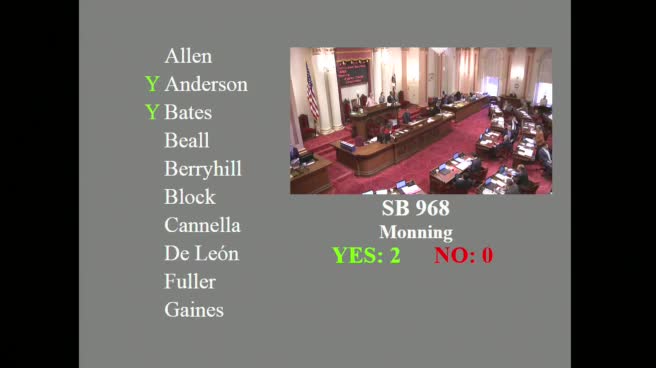 2MIN
Senate Floor
 1MIN
Assembly Floor
 50SEC
Assembly Floor
 3MIN
Senate Floor
 5MIN
Senate Standing Committee on Appropriations
 8MIN
Senate Standing Committee on Labor and Industrial Relations
 16MIN
Senate Standing Committee on Judiciary
Bill Author




