SB 1002: End of Life Option Act: telephone number.
- Session Year: 2015-2016
- House: Senate
- Latest Version Date: 2016-04-05
The End of Life Option Act, as enacted in the 2015-16 Second 201516 2nd Extraordinary Session of the Legislature, authorizes, until January 1, 2026, an adult who meets certain qualifications, and who has been determined by his or her attending physician to be suffering from a terminal disease, as defined, to make a request for a drug prescribed pursuant to the act for the purpose of ending his or her life through self-administration of the drug. The act establishes certain procedures for making a request, prohibits certain agreements or policies from being conditioned upon or affected by a request, and provides immunity from civil or criminal liability, with exceptions, to persons present when the qualified individual self-administers the drug or to persons preparing the drug. The act provides that action taken in accordance with the act shall not constitute, among other things, suicide or homicide.
The act requires physicians to submit specified forms and information to the State Department of Public Health after writing a prescription for an aid-in-dying drug and after the death of an individual who requested an aid-in-dying drug. The act authorizes the Medical Board of California to update those forms. The act requires the State Department of Public Health to publish the forms on its Internet Web site, collect and review certain information, annually create a statistical report of the information collected, as specified, and post that report on its Internet Web site.
This bill would require the department to establish and maintain a toll-free telephone number for the purpose of receiving and responding to inquiries regarding the End of Life Option Act, and post the telephone number on the departments Internet Web site. This bill would require the telephone number to operate during the regular business hours of the department and be available to the public. department, on or before January 1, 2017, to post a toll-free telephone number on its Internet Web site for the purpose of receiving and responding to inquiries in multiple languages regarding the End of Life Option Act, as specified.
The End of Life Option Act, as enacted in the 2015-16 Second Extraordinary Session of the Legislature, authorizes, until January 1, 2026, an adult who meets certain qualifications, and who has been determined by his or her attending physician to be suffering from a terminal disease, as defined, to make a request for a drug prescribed pursuant to the act for the purpose of ending his or her life through self-administration of the drug. The act establishes certain procedures for making a request, prohibits certain agreements or policies from being conditioned upon or affected by a request, and provides immunity from civil or criminal liability, with exceptions, to persons present when the qualified individual self-administers the drug or to persons preparing the drug. The act provides that action taken in accordance with the act shall not constitute, among other things, suicide or homicide.
The act requires physicians to submit specified forms and information to the State Department of Public Health after writing a prescription for an aid-in-dying drug and after the death of an individual who requested an aid-in-dying drug. The act authorizes the Medical Board of California to update those forms. The act requires the State Department of Public Health to publish the forms on its Internet Web site, collect and review certain information, annually create a statistical report of the information collected, as specified, and post that report on its Internet Web site.
This bill would require the department to establish and maintain a toll-free telephone number for the purpose of receiving and responding to inquiries regarding the End of Life Option Act, and post the telephone number on the departments Internet Web site. This bill would require the telephone number to operate during the regular business hours of the department and be available to the public.
(a)The State Department of Public Health shall collect and review the information submitted pursuant to Section 443.9. The information collected shall be confidential and shall be collected in a manner that protects the privacy of the patient, the patients family, and any medical provider or pharmacist involved with the patient under the provisions of this part. The information shall not be disclosed, discoverable, or compelled to be produced in any civil, criminal, administrative, or other proceeding.
(b)On or before July 1, 2017, and each year thereafter, based on the information collected in the previous year, the department shall create a report with the information collected from the attending physician followup form and post that report to its Internet Web site. The report shall include, but not be limited to, all of the following based on the information that is provided to the department and on the departments access to vital statistics:
(1)The number of people for whom an aid-in-dying prescription was written.
(2)The number of known individuals who died each year for whom aid-in-dying prescriptions were written, and the cause of death of those individuals.
(3)For the period commencing January 1, 2016, to and including the previous year, cumulatively, the total number of aid-in-dying prescriptions written, the number of people who died due to use of aid-in-dying drugs, and the number of those people who died who were enrolled in hospice or other palliative care programs at the time of death.
(4)The number of known deaths in California from using aid-in-dying drugs per 10,000 deaths in California.
(5)The number of physicians who wrote prescriptions for aid-in-dying drugs.
(6)Of people who died due to using an aid-in-dying drug, demographic percentages organized by the following characteristics:
(A)Age at death.
(B)Education level.
(C)Race.
(D)Sex.
(E)Type of insurance, including whether or not they had insurance.
(F)Underlying illness.
(c)The State Department of Public Health shall make available the attending physician checklist and compliance form, the consulting physician compliance form, and the attending physician followup form, as described in Section 443.22, by posting them on its Internet Web site.
(d)The State Department of Public Health shall establish and maintain a toll-free telephone number for the purpose of receiving and responding to inquiries regarding the End of Life Option Act. The department shall post the telephone number on its Internet Web site. The telephone number shall operate during the regular business hours of the department and be available to the public.
(d)On or before January 1, 2017, the State Department of Public Health shall post a toll-free telephone number on its Internet Web site for the purpose of receiving and responding to inquiries in multiple languages regarding the End of Life Option Act. The toll-free telephone number may be an existing telephone number staffed by the department or an existing telephone number of another department with an existing consumer assistance telephone line. The telephone line shall have a protocol for responding to callers in crisis.
(a)The State Department of Public Health shall collect and review the information submitted pursuant to Section 443.9. The information collected shall be confidential and shall be collected in a manner that protects the privacy of the patient, the patients family, and any medical provider or pharmacist involved with the patient under the provisions of this part. The information shall not be disclosed, discoverable, or compelled to be produced in any civil, criminal, administrative, or other proceeding.
(b)On or before July 1, 2017, and each year thereafter, based on the information collected in the previous year, the department shall create a report with the information collected from the attending physician followup form and post that report to its Internet Web site. The report shall include, but not be limited to, all of the following based on the information that is provided to the department and on the departments access to vital statistics:
(1)The number of people for whom an aid-in-dying prescription was written.
(2)The number of known individuals who died each year for whom aid-in-dying prescriptions were written, and the cause of death of those individuals.
(3)For the period commencing January 1, 2016, to and including the previous year, cumulatively, the total number of aid-in-dying prescriptions written, the number of people who died due to use of aid-in-dying drugs, and the number of those people who died who were enrolled in hospice or other palliative care programs at the time of death.
(4)The number of known deaths in California from using aid-in-dying drugs per 10,000 deaths in California.
(5)The number of physicians who wrote prescriptions for aid-in-dying drugs.
(6)Of people who died due to using an aid-in-dying drug, demographic percentages organized by the following characteristics:
(A)Age at death.
(B)Education level.
(C)Race.
(D)Sex.
(E)Type of insurance, including whether or not they had insurance.
(F)Underlying illness.
(c)The State Department of Public Health shall make available the attending physician checklist and compliance form, the consulting physician compliance form, and the attending physician followup form, as described in Section 443.22, by posting them on its Internet Web site.
(d)The State Department of Public Health shall establish and maintain a toll-free telephone number for the purpose of receiving and responding to inquiries regarding the End of Life Option Act. The department shall post the telephone number on its Internet Web site. The telephone number shall operate during the regular business hours of the department and be available to the public.
|
Date
|
Status
|
|---|---|
| Feb 10, 2016 | Introduced. Read first time. To Com. on RLS. for assignment. To print. |
| Feb 11, 2016 | From printer. May be acted upon on or after March 12. |
| Feb 18, 2016 | Referred to Com. on HEALTH. |
| Mar 15, 2016 | Set for hearing March 30. |
| Apr 4, 2016 | From committee: Do pass as amended and re-refer to Com. on APPR. (Ayes 7. Noes 2. Page 3335.) (March 30). |
| Apr 4, 2016 | From committee: Do pass as amended and re-refer to Com. on APPR. (Ayes 7. Noes 2.) (March 30). |
| Apr 5, 2016 | Read second time and amended. Re-referred to Com. on APPR. |
| Apr 15, 2016 | Set for hearing April 25. |
| Apr 25, 2016 | April 25 hearing: Placed on APPR. suspense file. |
| May 20, 2016 | Set for hearing May 27. |
| May 27, 2016 | May 27 hearing: Held in committee and under submission. |
|
Date
|
Description
|
Location
|
Votes
|
|
|---|---|---|---|---|
| Apr 25, 2016 | Placed on suspense file | Senate Standing Committee on Appropriations |
Passed |
|
| Mar 30, 2016 | Do pass as amended, but first amend, and re-refer to the Committee on [Appropriations] | Senate Standing Committee on Health |
Passed |
This list shows positions taken on this bill by organizations on the date displayed, which is linked to the original source.
Positions by individuals are not included.
|
Organization
|
Position
|
Date
|
|---|---|---|
| Alliance Of Catholic Health Care Inc. | ** Against | Mar 30, 2016 |
| California Catholic Conference | * Against | Mar 30, 2016 |
| California Commission on Aging | ** Support | Mar 30, 2016 |
| California Nurses for Ethical Standards | ** Against | Mar 30, 2016 |
| California Primary Care Association | ** Support | Mar 30, 2016 |
| California Right to Life Committee, Inc. | ** Against | Mar 30, 2016 |
| Compassion and Choices | * Support | Mar 30, 2016 |
| Crusade for Life, Inc. | ** Against | Mar 30, 2016 |
| Death with Dignity | * Support | Mar 30, 2016 |
| Death with Dignity National Center | ** Support | Mar 30, 2016 |
| Disability Rights Education & Defense Fund | * Against | Mar 30, 2016 |
| Disability Rights Education And Defense Fund (Dredf) | * Against | Mar 30, 2016 |
| Hemlock Society of San Diego | ** Support | Mar 30, 2016 |
| Life Legal Defense Foundation | ** Against | Mar 30, 2016 |
| National Association of Social Workers, CA Chapter | ** Support | Mar 30, 2016 |
| Silicon Valley Independent Living Center | * Against | Mar 30, 2016 |
| West Hollywood United Church of Christ | ** Support | Mar 30, 2016 |
SENATE COMMITTEE ON
Senator Ricardo Lara, Chair
2015 - 2016 Regular Session
SB 1002 (Monning) - End of Life Option Act: telephone number
Version: | Policy Vote: |
Urgency: | Mandate: |
Hearing Date: | Consultant: |
This bill meets the criteria for referral to the Suspense File.
Bill Summary:
SB 1002 would require the Department of Public Health to establish a toll-free telephone line to respond to inquiries regarding the End of Life Option Act.
Fiscal Impact:
- Unknown costs to operate a call center or contract for call center services by the Department of Public Health (General Fund). As discussed below, there are not likely to be a very large number of calls from individuals who would qualify for a prescription under the End of Life Option Act. However, it is possible that the Department (or its call center agent) may receive a significant number of calls from individuals who are suicidal. The extent of that impact is unknown.
Background:
Under the End of Life Option Act (AB X2 15, Eggman, Statues of 2015), competent adults are allowed to receive a prescription for an aid-in-dying drug if specified conditions are met. The End of Life Option Act does not require physicians or pharmacists to participate in the dispensing or prescribing of aid-in-dying drugs nor does the Act require health plans or health insurers to provide coverage for aid-in-dying drugs. Under the Act, the Department of Public Health is required to collect information on activity under the Act and report publicly on use of the Act.
Proposed Law:
SB 1002 would require the Department of Public Health to establish a toll-free telephone line to respond to inquiries regarding the End of Life Option Act.
The Department would be required to respond to inquiries in multiple languages. The Department is required to ensure that the telephone line has a protocol for responding to callers in crisis.
Staff Comments:
Overall participation under the End of Life Option Act is not expected to be large. Based on a very similar program in Oregon, and extrapolating for California’s population size, fewer than 1,000 people per year are likely to seek aid-in-dying drugs under the bill. The number of calls to the required toll-free line from terminally ill individuals seeking information about access to aid-in-dying drugs or health care coverage for related physician visits or prescriptions is not likely to be very high.
However, it is possible that the toll-free line could receive a significant number of calls from individuals who are not terminally ill, but who may be suicidal. Call center staff would need to assess such individuals and refer them to an appropriate suicide prevention hotline or other mental health services, if needed. There are about 3,500 suicides per year in the state. A far larger number of individuals consider suicide and some fraction of that population may end up calling the toll-free line required in the bill. Staff assigned to answer calls on the toll-free hotline will need to be adequately trained to handle such calls and to make the appropriate connection to other services.
-- END --
SENATE COMMITTEE ON HEALTH
Senator Ed Hernandez, O.D., Chair
BILL NO: SB 1002
AUTHOR: | Monning | ||
VERSION: | February 10, 2016 | ||
HEARING DATE: | March 30, 2016 | ||
CONSULTANT: | Teri Boughton | ||
SUBJECT: End of Life Option Act: telephone number
SUMMARY:
Requires the Department of Public Health to establish and maintain a toll-free telephone number for the purpose of receiving and responding to inquiries regarding the End of Life Option Act.
Existing law:
- Permits, under the End of Life Option Act, a competent, qualified individual who is an adult with a terminal disease to receive a prescription for an aid-in-dying drug if certain conditions are met, such as two oral requests, a minimum of 15 days apart, and a written request signed by two witnesses, is provided to his or her attending physician, the attending physician refers the patient to a consulting physician to confirm diagnosis and capacity to make medical decisions, and the attending physician refers the patient to a mental health specialist, if indicated.
- Requires within 30 calendar days of writing a prescription for aid-in-dying drug, the attending physician to submit to the Department of Public Health (DPH) a copy of the qualifying patient’s written request, the attending physician checklist and compliance form, and the consulting physician compliance form. Requires within 30 calendar days following the qualified individual’s death from ingestion of the aid-in-dying drug, or any cause, the attending physician to submit the attending physician follow-up form to DPH.
- Requires DPH to collect and review the information described in 2) above and to be collected in a manner that protects the privacy of the patient, the patient’s family, and any medical provider or pharmacist involved with the patient under the End of Life Option Act.
- Requires a report beginning on or before July 1, 2017, to be annually posted on DPH’s website that includes, but is not limited to, the number of people for whom an aid-in-dying prescription was written, and, the number of known people who died each year for whom an aid-in-dying prescription was written, and the cause of death of those individuals.
- Prohibits an insurance carrier from providing any information in communications made about the availability of aid-in-dying drug absent a request by the individual or the individual’s attending physician at his or her behest. Prohibits any communication from including both the denial of treatment and information as to the availability of aid-in-dying drug coverage.
- Requires participation in activities authorized pursuant to the End of Life Option Act to be voluntary, and states that notwithstanding existing law, a person or entity that elects, for reasons of conscience, morality, or ethics, not to engage in activities authorized pursuant to the End of Life Option Act, is not required to take any action in support of an individual’s decision under the Act.
- Sunsets these provisions on January 1, 2026.
- Permits the Medical Board of California to update the attending physician checklist and compliance form, the consulting physician compliance form, and the attending physician follow-up form, as specified, and requires, upon completion, DPH to publish the updated forms on its Internet Web site.
- Requires, under existing law that is not the End of Life Option Act, a health care provider when making a diagnosis that a patient has a terminal illness, to notify the patient of his or her right, or, when applicable, the right of another person authorized to make health care decisions for the patient, to comprehensive information and counseling regarding legal end-of-life options, and upon request, provide the patient or other authorized person with comprehensive information and counseling regarding legal end-of-life care options, as specified.
- Requires, if a health care provider does not wish to provide information on end-of-life options, the health care provider to refer or transfer a patient to another health care provider that will provide the requested information, and provide information on procedures to transfer to another health care provider that shall provide the requested information.
This bill:
- Requires DPH to establish and maintain a toll-free telephone number for the purpose of receiving and responding to inquiries regarding the End of Life Option Act.
- Requires DPH to post the telephone number on its Internet Web site.
- Requires the telephone number to operate during DPH’s regular business hours and be available to the public.
FISCAL EFFECT:
This bill has not been analyzed yet by a fiscal committee.
COMMENTS:
- Author’s statement. According to the author, since the provisions included in the End of Life Option Act that was signed into law in 2015 made participation in the Act completely voluntary, including the sharing of information about the Act, it is necessary to have a central location for individuals in California to seek information about the law when they have inquiries.
- Other Toll Free Information Lines for Consumers. The Office of the Patient Advocate (OPA) maintains a list of toll free telephone lines for people to use who need help with health care problems. OPA indicates that patients should contact the government agency that oversees the specific program for fastest assistance. If the program information is not known, OPA recommends contacting the California Consumer Assistance Program which is maintained by the Department of Managed Health Care. There are multiple existing toll-free information lines to assist consumers with issues and respond to inquiries specific to certain agencies and programs such as at the Department of Insurance, U.S. Department of Labor, CalMediConnect, Covered California, Medi-Cal Managed Care, Medi-Cal Mental Health, Medi-Cal Access Program, Medicare, Major Risk Medical Insurance Program, U.S. Department of Veterans Affairs, and the Medical Board of California. DPH has a toll-free consumer assistance line associated with its licensing and certification program, which licenses, regulates and inspects certain health care facilities. DPH also has toll-free consumer assistance telephone lines at 15 regional offices.
- Pending Budget Requests.
- DPH. According to the Senate Budget Subcommittee analysis of the Governor’s 2016-17 proposed budget, DPH is requesting $323,000 from the Health Statistics Special Fund in 2016-17, $245,000 in 2017-18 and annually thereafter, and two permanent positions to meet the new mandate to establish the End of Life Option Act program as specified in AB X2 15 (Eggman), Chapter 1, Statutes of 2015. This funding will enable DPH to create a secure database to implement and administer the program and provide staffing for the required confidential program management and reporting duties. DPH requests two permanent positions to perform confidential program and reporting duties, including (1) collect forms and data, enter reports received, and track program utilization and associated deaths; (2) follow-up with providers regarding incomplete or missing forms; (3) perform data analysis, crosscheck decedent deaths with the list of prescribed participants, and draft various statistical reports; (4) prepare the annual report mandated by the bill; (5) maintain program information on the public website and respond to inquiries regarding program policy; and (6) update the website as needed, and make reporting forms available for download from the site. Although the number of aid-in-dying cases is projected to be small, special protections for the data will be required because of the sensitivity of this information. One-time development costs for the secure database are estimated to be approximately $88,000, and ongoing yearly maintenance costs are expected to be $10,000.
- DMHC. According to the Senate Budget Subcommittee analysis of the Governor’s 2016-17 proposed budget, DMHC is requesting two-year limited-term expenditure authority of $244,000 for 2016-17 and 2017-18 to meet DMHC’s operational needs in order to address the short-term workload resulting from the implementation of the End of Life Option Act. AB X2 15 does not specify whether health plans are required to cover aid-in-dying medication or how a health plan may decline to cover aid-in-dying medication. Due to the sensitive and controversial nature of aid-in-dying medication, DMHC expects a high level of public interest which, over the next two years, will result in its Office of Legal Service (OLS) conducting legal research, producing legal opinions, and promulgating one regulation package to clarify the issue of coverage. To address this new workload, OLS requests limited-term expenditure authority so OLS may hire temporary help to perform short-term workload from July 1, 2016 through June 30, 2018. An Attorney I to review and process legal questions related to AB X2 15. The review of legal questions encompasses all tasks necessary to compose the final determination and present to impacted or requesting divisions. In addition, this position will be responsible for the promulgation of regulations pertaining to AB X2 15, which includes conducting stakeholder meetings, researching and analyzing policy concerns, drafting regulations, holding public hearings, and drafting the final rulemaking documents. A Staff Services Analyst will provide support and assist the Attorney I with tasks associated with AB X2 15, such as promulgation of regulations and the drafting/filing of legal memoranda.
- DPH. According to the Senate Budget Subcommittee analysis of the Governor’s 2016-17 proposed budget, DPH is requesting $323,000 from the Health Statistics Special Fund in 2016-17, $245,000 in 2017-18 and annually thereafter, and two permanent positions to meet the new mandate to establish the End of Life Option Act program as specified in AB X2 15 (Eggman), Chapter 1, Statutes of 2015. This funding will enable DPH to create a secure database to implement and administer the program and provide staffing for the required confidential program management and reporting duties. DPH requests two permanent positions to perform confidential program and reporting duties, including (1) collect forms and data, enter reports received, and track program utilization and associated deaths; (2) follow-up with providers regarding incomplete or missing forms; (3) perform data analysis, crosscheck decedent deaths with the list of prescribed participants, and draft various statistical reports; (4) prepare the annual report mandated by the bill; (5) maintain program information on the public website and respond to inquiries regarding program policy; and (6) update the website as needed, and make reporting forms available for download from the site. Although the number of aid-in-dying cases is projected to be small, special protections for the data will be required because of the sensitivity of this information. One-time development costs for the secure database are estimated to be approximately $88,000, and ongoing yearly maintenance costs are expected to be $10,000.
- Related legislation. SB 128 (Wolk and Monning) is similar to ABX2 15. SB 128 is pending in the Assembly Health Committee.
- Prior legislation. ABX2 15 (Eggman), Chapter 1, Statutes of 2015, Second Extraordinary Session, established the End of Life Option Act, which will take effect on June 9, 2016.
- Support. Proponents write that people at the end of their lives may have difficulty negotiating the various steps of the law. A hotline at DPH for terminally ill patients and others to access information about the law would be helpful. Since participation by physicians and health care facilities is voluntary, some proponents request that the information include access to information where a person could receive compassionate care. Proponents also indicate that people have many questions about the law and it is important that people have clear, accessible, and accurate information about the law.
- Opposition. Opponents write that this bill would create a “how to” number for elder abuse and coercion. Any interested party, including impatient heirs, could inquire about obtaining, preparing and aiding another person in using the deadly prescription. SB 1002 presents a confused double-minded government policy that would accept both anti-suicide and pro-suicide hot lines. Opponents believe this bill is an expansion of the assisted suicide law that was supposed to be a private matter solely between doctor and patient. Now the state would play a role in the law’s promotion. Opponents raise concerns that there is no way to limit callers to people who are terminally ill and that anyone could call, including people who are depressed, and people eager to end the life of a family member. Opponents ask if the state will refer callers to organizations who will assist these callers, including suicide hotlines.
- Amendments. The author requests amendments be adopted by the Committee to allow for the toll-free line to be available in multiple languages.
SUPPORT AND OPPOSITION:
Support: California Commission on Aging
California Primary Care Association
Death with Dignity National Center
Hemlock Society of San Diego
National Association of Social Workers, CA Chapter
West Hollywood United Church of Christ
100+ Individuals
Oppose: Alliance of Catholic Health Care
California Catholic Conference, Inc.
California Nurses for Ethical Standards
California Right to Life committee, Inc.
Crusade for Life, Inc.
Disability Rights Education & Defense Fund
Life Legal Defense Foundation
Silicon Valley Independent Living Center
100+ Individuals
-- END --
Discussed in Hearing
 4MIN
Senate Standing Committee on Appropriations
 26MIN
Senate Standing Committee on Health
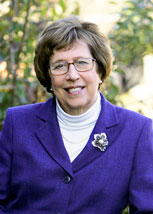
Bill Author