SB 1098: Medi-Cal: dental services: utilization rate: report.
- Session Year: 2015-2016
- House: Senate
- Latest Version Date: 2016-09-25
Existing law establishes the Medi-Cal program, administered by the State Department of Health Care Services, under which basic health care services are provided to qualified low-income persons. The Medi-Cal program is, in part, governed and funded by federal Medicaid provisions. Existing law provides coverage for certain dental services, as specified, to Medi-Cal beneficiaries 17 years of age and under through the Denti-Cal program.
This bill would require the department to report to the Legislature, by October 1, 2017, on progress towards the goal of raising the Denti-Cal utilization rate among eligible child beneficiaries to 60% or greater and identify a date by which the department projects this utilization goal will be met. The bill would authorize the department to include in the report recommendations for legislative consideration that would assist the department to meet the goal by the specified date, as prescribed. The bills provisions would be repealed on January 1, 2021, pursuant to specified law.
Existing law establishes the Medi-Cal program, administered by the State Department of Health Care Services, under which basic health care services are provided to qualified low-income persons. The Medi-Cal program is, in part, governed and funded by federal Medicaid provisions. Existing law provides coverage for certain dental services, as specified, to Medi-Cal beneficiaries 17 years of age and under through the Denti-Cal program.
This bill would, until January 1, 2022, establish the Denti-Cal Advisory Group in the department, as specified, for the purpose of studying the policies and priorities of Denti-Cal with the goal of raising the Denti-Cal utilization rate among children, providing assistance and advice to the department, the Governor, and the Legislature to ensure that proposed decisions relating to the Denti-Cal program are based on the best available evidence, and studying and evaluating how Denti-Cal program policies align with and support the implementation of the state oral health plan. The bill would prohibit the advisory group from taking a position on legislation. The bill would make related legislative findings and declarations. would require the department to report to the Legislature, by October 1, 2017, on progress towards the goal of raising the Denti-Cal utilization rate among eligible child beneficiaries to 60% or greater and identify a date by which the department projects this utilization goal will be met. The bill would authorize the department to include in the report recommendations for legislative consideration that would assist the department to meet the goal by the specified date, as prescribed. The bills provisions would be repealed on January 1, 2021, pursuant to specified law.
Existing law establishes the Medi-Cal program, administered by the State Department of Health Care Services, under which basic health care services are provided to qualified low-income persons. The Medi-Cal program is, in part, governed and funded by federal Medicaid provisions. Existing law provides coverage for certain dental services, as specified, to Medi-Cal beneficiaries 17 years of age and under through the Denti-Cal program.
This bill would would, until January 1, 2022, establish the Denti-Cal Advisory Group in the department, as specified, for the purpose of studying the policies and priorities of Denti-Cal with the goal of raising the Denti-Cal utilization rate among children and children, providing assistance and advice to the department, the Governor, and the Legislature to ensure that proposed decisions relating to the Denti-Cal program are based on the best available evidence. evidence, and studying and evaluating how Denti-Cal program policies align with and support the implementation of the state oral health plan. The bill would prohibit the advisory group from taking a position on legislation. The bill would make related legislative findings and declarations.
Existing law establishes the Medi-Cal program, administered by the State Department of Health Care Services, under which basic health care services are provided to qualified low-income persons. The Medi-Cal program is, in part, governed and funded by federal Medicaid provisions. Existing law provides coverage for certain dental services, as specified, to Medi-Cal beneficiaries 17 years of age and under through the Denti-Cal program.
This bill would establish the Denti-Cal Advisory Group in the department, as specified, for the purpose of studying and overseeing the policies and priorities of Denti-Cal with the goal of raising the Denti-Cal utilization rate among children and providing assistance and advice to the department, the Governor, and the Legislature to ensure that proposed decisions relating to the Denti-Cal program are based on the best available evidence. The bill would make related legislative findings and declarations.
Existing law establishes the Medi-Cal program, administered by the State Department of Health Care Services, under which basic health care services are provided to qualified low-income persons. The Medi-Cal program is, in part, governed and funded by federal Medicaid provisions. Existing law authorizes the department to provide health care services to beneficiaries through various models of managed care, including through a comprehensive program of managed health care plan services for Medi-Cal recipients residing in clearly defined geographical areas. Existing law specifies guidelines the department is required to follow in selecting and entering into contracts with managed care plans. Existing law requires the department to give an eligible beneficiary specified notices for the purpose of assisting the beneficiary in choosing a managed care plan, and imposes requirements on the beneficiary and the department regarding choice of, and enrollment in, a managed care plan. provides coverage for certain dental services, as specified, to Medi-Cal beneficiaries 17 years of age and under through the Denti-Cal program.
This bill would make technical, nonsubstantive changes to those provisions. establish the Denti-Cal Advisory Group in the department, as specified, for the purpose of studying and overseeing the policies and priorities of Denti-Cal with the goal of raising the Denti-Cal utilization rate among children and providing assistance and advice to the department, the Governor, and the Legislature to ensure that proposed decisions relating to the Denti-Cal program are based on the best available evidence. The bill would make related legislative findings and declarations.
Existing law establishes the Medi-Cal program, administered by the State Department of Health Care Services, under which basic health care services are provided to qualified low-income persons. The Medi-Cal program is, in part, governed and funded by federal Medicaid provisions. Existing law authorizes the department to provide health care services to beneficiaries through various models of managed care, including through a comprehensive program of managed health care plan services for Medi-Cal recipients residing in clearly defined geographical areas. Existing law specifies guidelines the department is required to follow in selecting and entering into contracts with managed care plans. Existing law requires the department to give an eligible beneficiary specified notices for the purpose of assisting the beneficiary in choosing a managed care plan, and imposes requirements on the beneficiary and the department regarding choice of, and enrollment in, a managed care plan.
This bill would make technical, nonsubstantive changes to those provisions.
(a)By October 1, 2017, the department shall report to the Legislature on progress towards the goal of raising the Denti-Cal utilization rate among eligible child beneficiaries to 60 percent or greater and identify a date by which the department projects this utilization goal will be met. The department may include in the report any recommendations for legislative consideration that would assist the department in meeting the goal by the specified date, and, if applicable, shall engage relevant stakeholders in the development of those recommendations.
(b)(1)A report submitted pursuant to this section shall be submitted in compliance with Section 9795 of the Government Code.
(2)Pursuant to Section 10231.5 of the Government Code, this section is repealed on January 1, 2021.
(a)The Legislature finds and declares all of the following:
(1)Denti-Cal is the Medi-Cal dental health care component program that was established soon after the 1966 creation of the Medi-Cal program.
(2)According to an audit conducted by the State Auditor in 2014, only 43.9 percent of children enrolled in the Denti-Cal program had seen a dentist in the previous yeara utilization rate that was the 12th worst among states that submitted data to the federal Centers for Medicare and Medicaid Services. Eleven California counties had no Denti-Cal providers or no providers willing to accept new child patients covered by Denti-Cal.
(3)Denti-Cals 13 million or more beneficiaries need the State Department of Health Care Services and dental care providers to improve their relationships.
(4)In any sector, public or private, good relationships are built on a foundation of good customer service.
(b)Therefore, the Legislature establishes pursuant to this act an evidence-based advisory group to guide Denti-Cal priorities, to study policy decisions, and to increase annual Denti-Cal utilization rates among children in the state to 60 percent or greater, as is the case in approximately 20 percent of states.
SEC. 2.SECTION 1.Section 14005.276 is added to the Welfare and Institutions Code, to read:14005.276.(a)There is hereby established in the department the Denti-Cal Advisory Group. The duties of the advisory group shall include all of the following:
(1)Studying the policies and priorities of Denti-Cal, the state Medi-Cal dental services program, with the
14005.276.(a)By October 1, 2017, the department shall report to the Legislature on progress towards the goal of raising the Denti-Cal utilization rate among eligible child beneficiaries to 60 percent or greater. greater and identify a date by which the department projects this utilization goal will be met. The department may include in the report any recommendations for legislative consideration that would assist the department in meeting the goal by the specified date, and, if applicable, shall engage relevant stakeholders in the development of those recommendations.
(b)(1)A report submitted pursuant to this section shall be submitted in compliance with Section 9795 of the Government Code.
(2)Pursuant to Section 10231.5 of the Government Code, this section is repealed on January, 1, 2021.
(2)Providing assistance and advice to the department, the Legislature, and the Governor regarding proposed decisions relating to the Denti-Cal program to ensure that those decisions are based on the best available evidence.
(3)Studying and evaluating how Denti-Cal program policies align with and support the implementation of the state oral health plan.
(b)The advisory group shall consist of the following members:
(1)The state dental director.
(2)Seven members appointed by the Governor that shall include the following:
(A)A representative from the California Dental Association.
(B)A representative from the California Dental Hygienists Association.
(C)A representative of a philanthropic health care foundation.
(D)A representative of the California Society of Pediatric Dentistry.
(E)Two university professors or educators who are experts in dental practice or the dental services field.
(F)A representative of a Denti-Cal health plan organization.
(3)A maternal and child health advocate, appointed by the Senate Committee on Rules, with experience in the link between a mothers access to oral health care during pregnancy and postpartum and the childs improved access to oral health care.
(4)A consumer advocate, appointed by the Speaker of the Assembly, with experience in adult dental health.
(c)Before entering upon the discharge of his or her official duties, each member of the advisory group appointed pursuant to this section shall take and file an oath pursuant to Sections 1360 and 1363 of the Government Code.
(d)A member of the advisory group shall serve for a term of three years. There shall be no limit on the number of terms a member may serve. The terms of members may be staggered so that the terms of all members will not expire at the same time.
(e)A member of the advisory group shall not be compensated for his or her services, except that he or she shall be paid reasonable per diem and reimbursement of reasonable expenses for attending meetings and discharging other official responsibilities as authorized by the department and this section.
(f)The advisory group shall not take a position on legislation.
(g)The advisory group may report any of its findings to the Legislature.
(h)This section shall remain in effect only until January 1, 2022, and as of that date is repealed, unless a later enacted statute, that is enacted before January 1, 2022, deletes or extends that date.
(a)The Legislature finds and declares all of the following:
(1)Denti-Cal is the Medi-Cal dental health care component program that was established soon after the 1966 creation of the Medi-Cal program.
(2)According to an audit conducted by the State Auditor in 2014, only 43.9 percent of children enrolled in the Denti-Cal program had seen a dentist in the previous yeara utilization rate that was the 12th worst among states that submitted data to the federal Centers for Medicare and Medicaid Services. Eleven California counties had no Denti-Cal providers or no providers willing to accept new child patients covered by Denti-Cal.
(3)Denti-Cals 13 million or more beneficiaries need the State Department of Health Care Services and dental care providers to improve their relationships.
(4)In any sector, public or private, good relationships are built on a foundation of good customer service.
(b)Therefore, the Legislature establishes pursuant to this act an evidence-based advisory group to guide Denti-Cal priorities, to study policy decisions, and to increase annual Denti-Cal utilization rates among children in the state to 60 percent or greater, as is the case in approximately 20 percent of states.
SEC. 2.Section 14005.273 14005.276 is added to the Welfare and Institutions Code, to read:14005.273.14005.276.(a)There is hereby established in the department the Denti-Cal Advisory Group. The duties of the advisory group shall include all of the following:
(1)Studying the policies and priorities of Denti-Cal, the state Medi-Cal dental services program, with the goal of raising the Denti-Cal utilization rate among eligible child beneficiaries to 60 percent or greater.
(2)Providing assistance and advice to the department, the Legislature, and the Governor regarding proposed decisions relating to the Denti-Cal program to ensure that those decisions are based on the best available evidence.
(3)Studying and evaluating how Denti-Cal program policies align with and support the implementation of the state oral health plan.
(b)The advisory group shall consist of the following members:
(1)The state dental director.
(2)Ten Seven members appointed by the Governor that shall include the following:
(A)A representative from the California Dental Association.
(B)A representative from the California Dental Hygienists Association.
(C)A licensed social worker.
(D)
(C)A representative of a philanthropic health care foundation.
(E)
(D)A licensed pediatrician who is qualified to assess impacts on the overall health of children. representative of the California Society of Pediatric Dentistry.
(F)An expert on practices in the dental insurance or health insurance markets.
(G)
(E)Two university professors or educators who are experts in dental practice or the dental services field.
(H)
(F)A representative of a Denti-Cal health plan organization.
(I)A consumer advocate with experience in childrens oral health.
(3)Two members A maternal and child health advocate, appointed by the Senate Committee on Rules that shall include the following: Rules, with experience in the link between a mothers access to oral health care during pregnancy and postpartum and the childs improved access to oral health care.
(A)A licensed dentist.
(B)A licensed dental hygienist.
(4)Two members A consumer advocate, appointed by the Speaker of the Assembly that shall include the following: Assembly, with experience in adult dental health.
(A)A licensed dentist.
(B)A licensed dental hygienist.
(c)Before entering upon the discharge of his or her official duties, each member of the advisory group appointed pursuant to this section shall take and file an oath pursuant to Sections 1360 and 1363 of the Government Code.
(d)A member of the commission advisory group shall serve for a term of three years. There shall be no limit on the number of terms a member may serve. The terms of members may be staggered so that the terms of all members will not expire at the same time.
(e)A member of the advisory group shall not be compensated for his or her services, except that he or she shall be paid reasonable per diem and reimbursement of reasonable expenses for attending meetings and discharging other official responsibilities as authorized by the department and this section.
(f)The advisory group shall not take a position on legislation.
(g)The advisory group may report any of its findings to the Legislature.
(h)This section shall remain in effect only until January 1, 2022, and as of that date is repealed, unless a later enacted statute, that is enacted before January 1, 2022, deletes or extends that date.
(a)The Legislature finds and declares all of the following:
(1)Denti-Cal is the Medi-Cal dental health care component program that was established soon after the 1966 creation of the Medi-Cal program.
(2)According to an audit conducted by the State Auditor in 2014, only 43.9 percent of children enrolled in the Denti-Cal program had seen a dentist in the previous yeara utilization rate that was the 12th worst among states that submitted data to the federal Centers for Medicare and Medicaid Services. Eleven California counties had no Denti-Cal providers or no providers willing to accept new child patients covered by Denti-Cal.
(3)Denti-Cals 13 million or more beneficiaries need the State Department of Health Care Services and dental care providers to improve their relationships.
(4)In any sector, public or private, good relationships are built on a foundation of good customer service.
(b)Therefore, the Legislature establishes pursuant to this act an evidence-based advisory group to guide Denti-Cal priorities, to oversee study policy decisions, and to increase annual Denti-Cal utilization rates among children in the state to 60 percent or greater, as is the case in approximately 20 percent of states.
SEC. 2.Section 14005.273 is added to the Welfare and Institutions Code, to read:14005.273.(a)There is hereby established in the department the Denti-Cal Advisory Group. The duties of the advisory group shall include, but not be limited to, include all of the following:
(1)Studying and overseeing the policies and priorities of Denti-Cal, the state Medi-Cal dental services program, with the goal of raising the Denti-Cal utilization rate among eligible child beneficiaries to 60 percent or greater.
(2)Providing assistance and advice to the department, the Legislature, and the Governor regarding proposed decisions relating to the Denti-Cal program to ensure that those decisions are based on the best available evidence.
(b)The advisory group shall consist of the following members:
(1)The state dental director.
(2)Ten members appointed by the Governor that shall include the following:
(A)A representative from the California Dental Association.
(B)A representative from the California Dental Hygienists Association.
(C)A licensed social worker.
(D)A representative of a health care foundation.
(E)A licensed pediatrician who is qualified to assess impacts on the overall health of children.
(F)An expert on practices in the dental insurance or health insurance markets.
(G)Two university professors who are experts in dental practice or the dental services field.
(H)A representative of a Denti-Cal health plan organization.
(I)A consumer advocate with experience in childrens oral health.
(3)Two members appointed by the Senate Committee on Rules that shall include the following:
(A)A licensed dentist.
(B)A licensed dental hygienist.
(4)Two members appointed by the Speaker of the Assembly that shall include the following:
(A)A licensed dentist.
(B)A licensed dental hygienist.
(c)Before entering upon the discharge of his or her official duties, each member of the advisory group appointed pursuant to this section shall take and file an oath pursuant to Sections 1360 and 1363 of the Government Code.
(d)A member of the commission shall serve for a term of three years. There shall be no limit on the number of terms a member may serve. The terms of members may be staggered so that the terms of all members will not expire at the same time.
(e)A member of the advisory group shall not be compensated for his or her services, except that he or she shall be paid reasonable per diem and reimbursement of reasonable expenses for attending meetings and discharging other official responsibilities as authorized by the department and this section.
(a)The Legislature finds and declares all of the following:
(1)Denti-Cal is the Medi-Cal dental health care component program that was established soon after the 1966 creation of the Medi-Cal program.
(2)According to an audit conducted by the State Auditor in 2014, only 43.9 percent of children enrolled in the Denti-Cal program had seen a dentist in the previous yeara utilization rate that was the 12th worst among states that submitted data to the federal Centers for Medicare and Medicaid Services. Eleven California counties had no Denti-Cal providers or no providers willing to accept new child patients covered by Denti-Cal.
(3)Denti-Cals 13 million or more beneficiaries need the State Department of Health Care Services and dental care providers to improve their relationships.
(4)In any sector, public or private, good relationships are built on a foundation of good customer service.
(b)Therefore, the Legislature establishes pursuant to this act an evidence-based advisory group to guide Denti-Cal priorities, to oversee policy decisions, and to increase annual Denti-Cal utilization rates among children in the state to 60 percent or greater, as is the case in approximately 20 percent of states.
SEC. 2.Section 14005.273 is added to the Welfare and Institutions Code, to read:14005.273.(a)There is hereby established in the department the Denti-Cal Advisory Group. The duties of the advisory group shall include, but not be limited to, all of the following:
(1)Studying and overseeing the policies and priorities of Denti-Cal, the state Medi-Cal dental services program, with the goal of raising the Denti-Cal utilization rate among eligible child beneficiaries to 60 percent or greater.
(2)Providing assistance and advice to the department, the Legislature, and the Governor regarding proposed decisions relating to the Denti-Cal program to ensure that those decisions are based on the best available evidence.
(b)The advisory group shall consist of the following members:
(1)The state dental director, who shall serve as its chair. director.
(2)Eight Ten members appointed by the Governor that shall include the following:
(A)A representative from the California Dental Association.
(B)A representative from the California Dental Hygienists Association.
(C)A licensed social worker.
(D)A representative of a health care foundation.
(E)A licensed pediatrician who is qualified to assess impacts on the overall health of children.
(F)An expert on practices in the dental insurance or health insurance markets.
(G)Two university professors who are experts in dental practice or the dental services field.
(H)A representative of a Denti-Cal health plan organization.
(I)A consumer advocate with experience in childrens oral health.
(3)Two members appointed by the Senate Committee on Rules that shall include the following:
(A)A licensed dentist.
(B)A licensed dental hygienist.
(4)Two members appointed by the Speaker of the Assembly that shall include the following:
(A)A licensed dentist.
(B)A licensed dental hygienist.
(c)Before entering upon the discharge of his or her official duties, each member of the advisory group appointed pursuant to this section shall take and file an oath pursuant to Sections 1360 and 1363 of the Government Code.
(d)A member of the commission shall serve for a term of three years. There shall be no limit on the number of terms a member may serve. The terms of members may be staggered so that the terms of all members will not expire at the same time.
(e)A member of the advisory group shall not be compensated for his or her services, except that he or she shall be paid reasonable per diem and reimbursement of reasonable expenses for attending meetings and discharging other official responsibilities as authorized by the department and this section.
(a)The Legislature finds and declares all of the following:
(1)Denti-Cal is the Medi-Cal dental health care component program that was established soon after the 1966 creation of the Medi-Cal program.
(2)According to an audit conducted by the State Auditor in 2014, only 43.9 percent of children enrolled in the Denti-Cal program had seen a dentist in the previous yeara utilization rate that was the 12th worst among states that submitted data to the federal Centers for Medicare and Medicaid Services. Eleven California counties had no Denti-Cal providers or no providers willing to accept new child patients covered by Denti-Cal.
(3)Denti-Cals 13 million or more beneficiaries need the State Department of Health Care Services and dental care providers to improve their relationships.
(4)In any sector, public or private, good relationships are built on a foundation of good customer service.
(b)Therefore, the Legislature establishes pursuant to this act an evidence-based advisory group to guide Denti-Cal priorities, to oversee policy decisions, and to increase annual Denti-Cal utilization rates among children in the state to 60 percent or greater, as is the case in approximately 20 percent of states.
SEC. 2.Section 14005.273 is added to the Welfare and Institutions Code, to read:14005.273.(a)There is hereby established in the department the Denti-Cal Advisory Group. The duties of the advisory group shall include, but not be limited to, all of the following:
(1)Studying and overseeing the policies and priorities of Denti-Cal, the state Medi-Cal dental services program, with the goal of raising the Denti-Cal utilization rate among eligible child beneficiaries to 60 percent or greater.
(2)Providing assistance and advice to the department, the Legislature, and the Governor regarding proposed decisions relating to the Denti-Cal program to ensure that those decisions are based on the best available evidence.
(b)The advisory group shall consist of the following members:
(1)The state dental director, who shall serve as its chair.
(2)Eight members appointed by the Governor that shall include the following:
(A)A representative from the California Dental Association.
(B)A representative from the California Dental Hygienists Association.
(C)A licensed social worker.
(D)A representative of a health care foundation.
(E)A licensed pediatrician who is qualified to assess impacts on the overall health of children.
(F)An expert on practices in the dental insurance or health insurance markets.
(G)Two university professors who are experts in dental practice or the dental services field.
(3)Two members appointed by the Senate Committee on Rules that shall include the following:
(A)A licensed dentist.
(B)A licensed dental hygienist.
(4)Two members appointed by the Speaker of the Assembly that shall include the following:
(A)A licensed dentist.
(B)A licensed dental hygienist.
(c)Before entering upon the discharge of his or her official duties, each member of the advisory group appointed pursuant to this section shall take and file an oath pursuant to Sections 1360 and 1363 of the Government Code.
(d)A member of the commission shall serve for a term of three years. There shall be no limit on the number of terms a member may serve. The terms of members may be staggered so that the terms of all members will not expire at the same time.
(e)A member of the advisory group shall not be compensated for his or her services, except that he or she shall be paid reasonable per diem and reimbursement of reasonable expenses for attending meetings and discharging other official responsibilities as authorized by the department and this section.
SECTION 1.Section 14089 of the Welfare and Institutions Code is amended to read:14089.(a)The purpose of this article is to provide a comprehensive program of managed health care plan services to Medi-Cal recipients residing in clearly defined geographical areas. It is further the purpose of this article to create maximum accessibility to health care services by permitting Medi-Cal recipients the option of choosing from among two or more managed health care plans or fee-for-service managed case arrangements, including, but not limited to, health maintenance organizations, prepaid health plans, and primary care case management plans. Independent practice associations, health insurance carriers, private foundations, and university medical centers systems, not-for-profit clinics, and other primary care providers, may be offered as choices to Medi-Cal recipients under this article if they are organized and operated as managed care plans, for the provision of preventive managed health care plan services.
(b)The department may seek proposals and then shall enter into contracts based on relative costs, extent of coverage offered, quality of health services to be provided, financial stability of the health care plan or carrier, recipient access to services, cost-containment strategies, peer and community participation in quality control, emphasis on preventive and managed health care services and the ability of the health plan to meet all requirements for both of the following:
(1)Certification, where legally required, by the Director of the Department of Managed Health Care and the Insurance Commissioner.
(2)Compliance with all of the following:
(A)The health plan shall satisfy applicable state and federal legal requirements for participation as a Medi-Cal managed care contractor.
(B)The health plan shall meet standards established by the department for the implementation of this article.
(C)The health plan receives the approval of the department to participate in the pilot project under this article.
(c)(1)(A)The proposals shall be for the provision of preventive and managed health care services to specified eligible populations on a capitated, prepaid, or postpayment basis.
(B)Enrollment in a Medi-Cal managed health care plan under this article shall be voluntary for beneficiaries eligible for the federal Supplemental Security Income for the Aged, Blind, and Disabled Program (Subchapter 16 (commencing with Section 1381) of Chapter 7 of Title 42 of the United States Code).
(2)The cost of each program established under this section shall not exceed the total amount that the department estimates it would pay for all services and requirements within the same geographic area under the fee-for-service Medi-Cal program.
(d)(1)An eligible beneficiary shall be entitled to enroll in any health care plan contracted for pursuant to this article that is in effect for the geographic area in which he or she resides. The department shall make available to recipients information summarizing the benefits and limitations of each health care plan available pursuant to this section in the geographic area in which the recipient resides. A Medi-Cal or CalWORKs applicant or beneficiary shall be informed of the health care options available regarding methods of receiving Medi-Cal benefits. The county shall ensure that each beneficiary is informed of these options and informed that a health care options presentation is available.
(2)No later than 30 days following the date a Medi-Cal or CalWORKs recipient is informed of the health care options described in paragraph (1), the recipient shall indicate his or her choice, in writing, of one of the available health care plans and his or her choice of primary care provider or clinic contracting with the selected health care plan. Notwithstanding the 30-day deadline set forth in this paragraph, if a beneficiary requests a directory for the entire service area within 30 days of the date of receiving an enrollment form, the deadline for choosing a plan shall be extended an additional 30 days from the date of that request.
(3)The health care options information described in this subdivision shall include the following elements:
(A)Each beneficiary or eligible applicant shall be provided, at a minimum, with the name, address, telephone number, and specialty, if any, of each primary care provider, by specialty or clinic participating in each managed health care plan option through a personalized provider directory for that beneficiary or applicant. This information shall be presented under the geographic area designations by the name of the primary care provider and clinic, and shall be updated based on information electronically provided monthly by the health care plans to the department, setting forth changes in the health care plan provider network. The geographic areas shall be based on the applicants residence address, the minor applicants school address, the applicants work address, or any other factor deemed appropriate by the department, in consultation with health plan representatives, legislative staff, and consumer stakeholders. In addition, directories of the entire service area, including, but not limited to, the name, address, and telephone number of each primary care provider and hospital, of all Geographic Managed Care health plan provider networks shall be made available to beneficiaries or applicants who request them from the health care options contractor. Each personalized provider directory shall include information regarding the availability of a directory of the entire service area, provide telephone numbers for the beneficiary to request a directory of the entire service area, and include a postage-paid mail card to send for a directory of the entire service area. The personalized provider directory shall be implemented as a pilot project in Sacramento County pursuant to this article, and in Los Angeles County (Two-Plan Model) pursuant to Article 2.7 (commencing with Section 14087.3). The content, form, and geographic areas used shall be determined by the department in consultation with a workgroup to include health plan representatives, legislative staff, and consumer stakeholders, with an emphasis on the inclusion of stakeholders from Los Angeles and Sacramento Counties. The personalized provider directories may include a section for each health plan. Prior to implementation of the pilot project, the department, in consultation with consumer stakeholders, legislative staff, and health plans, shall determine the parameters, methodology, and evaluation process of the pilot project. The pilot project shall thereafter be in effect for a minimum of two years. Following two years of operation as a pilot project in two counties, the department, in consultation with consumer stakeholders, legislative staff, and health plans, shall determine whether to implement personalized provider directories as a permanent program statewide. If necessary, the pilot project shall continue beyond the initial two-year period until this determination is made. This pilot project shall only be implemented to the extent that it is budget neutral to the department.
(B)Each beneficiary or eligible applicant shall be informed that he or she may choose to continue an established patient-provider relationship in a managed care option, if his or her treating provider is a primary care provider or clinic contracting with any of the health plans available and has the available capacity and agrees to continue to treat that beneficiary or eligible applicant.
(C)Each beneficiary or eligible applicant shall be informed that if he or she fails to make a choice, he or she shall be assigned to, and enrolled in, a health care plan.
(4)At the time the beneficiary or eligible applicant selects a health care plan, the department shall, when applicable, encourage the beneficiary or eligible applicant to also indicate, in writing, his or her choice of primary care provider or clinic contracting with the selected health care plan.
(5)Commencing with the implementation of a geographic managed care project in a designated county, a Medi-Cal or CalWORKs beneficiary who does not make a choice of health care plans in accordance with paragraph (2), shall be assigned to and enrolled in an appropriate health care plan providing service within the area in which the beneficiary resides.
(6)If a beneficiary or eligible applicant does not choose a primary care provider or clinic, or does not select a primary care provider who is available, the health care plan selected by or assigned to the beneficiary shall ensure that the beneficiary selects a primary care provider or clinic within 30 days after enrollment or is assigned to a primary care provider within 40 days after enrollment.
(7)A Medi-Cal or CalWORKs beneficiary dissatisfied with the primary care provider or health care plan shall be allowed to select or be assigned to another primary care provider within the same health care plan. In addition, the beneficiary shall be allowed to select or be assigned to another health care plan contracted for pursuant to this article that is in effect for the geographic area in which he or she resides in accordance with Section 1903(m)(2)(F)(ii) of the Social Security Act.
(8)The department or its contractor shall notify a health care plan when it has been selected by or assigned to a beneficiary. The health care plan that has been selected or assigned by a beneficiary shall notify the primary care provider that has been selected or assigned. The health care plan shall also notify the beneficiary of the health care plan and primary care provider selected or assigned.
(9)This section shall be implemented in a manner consistent with any federal waiver that is required to be obtained by the department to implement this section.
(e)A participating county may include within the plan or plans providing coverage pursuant to this section, employees of county government, and others who reside in the geographic area and who depend upon county funds for all or part of their health care costs.
(f)Funds may be provided to prospective contractors to assist in the design, development, and installation of appropriate programs. The award of these funds shall be based on criteria established by the department.
(g)In implementing this article, the department may enter into contracts for the provision of essential administrative and other services. Contracts entered into under this subdivision may be on a noncompetitive bid basis and shall be exempt from Chapter 2 (commencing with Section 10290) of Part 2 of Division 2 of the Public Contract Code.
(h)Notwithstanding any other law, on and after the effective date of the act adding this subdivision, the department shall have exclusive authority to set the rates, terms, and conditions of geographic managed care contracts and contract amendments under this article. As of that date, all references to this article to the negotiator or to the California Medical Assistance Commission shall be deemed to mean the department.
(i)Notwithstanding subdivision (q) of Section 6254 of the Government Code, a contract or contract amendments executed by both parties after the effective date of the act adding this subdivision shall be considered a public record for purposes of the California Public Records Act (Chapter 3.5 (commencing with Section 6250) of Division 7 of Title 1 of the Government Code) and shall be disclosed upon request. This subdivision includes contracts that reveal the departments rates of payment for health care services, the rates themselves, and rate manuals.
(a)The purpose of this article is to provide a comprehensive program of managed health care plan services to Medi-Cal recipients residing in clearly defined geographical areas. It is, further, is further the purpose of this article to create maximum accessibility to health care services by permitting Medi-Cal recipients the option of choosing from among two or more managed health care plans or fee-for-service managed case arrangements, including, but not limited to, health maintenance organizations, prepaid health plans, and primary care case management plans. Independent practice associations, health insurance carriers, private foundations, and university medical centers systems, not-for-profit clinics, and other primary care providers, may be offered as choices to Medi-Cal recipients under this article if they are organized and operated as managed care plans, for the provision of preventive managed health care plan services.
(b)The department may seek proposals and then shall enter into contracts based on relative costs, extent of coverage offered, quality of health services to be provided, financial stability of the health care plan or carrier, recipient access to services, cost-containment strategies, peer and community participation in quality control, emphasis on preventive and managed health care services and the ability of the health plan to meet all requirements for both of the following:
(1)Certification, where legally required, by the Director of the Department of Managed Health Care and the Insurance Commissioner.
(2)Compliance with all of the following:
(A)The health plan shall satisfy all applicable state and federal legal requirements for participation as a Medi-Cal managed care contractor.
(B)The health plan shall meet any standards established by the department for the implementation of this article.
(C)The health plan receives the approval of the department to participate in the pilot project under this article.
(c)(1)(A)The proposals shall be for the provision of preventive and managed health care services to specified eligible populations on a capitated, prepaid, or postpayment basis.
(B)Enrollment in a Medi-Cal managed health care plan under this article shall be voluntary for beneficiaries eligible for the federal Supplemental Security Income for the Aged, Blind, and Disabled Program (Subchapter 16 (commencing with Section 1381) of Chapter 7 of Title 42 of the United States Code).
(2)The cost of each program established under this section shall not exceed the total amount that the department estimates it would pay for all services and requirements within the same geographic area under the fee-for-service Medi-Cal program.
(d)(1)An eligible beneficiary shall be entitled to enroll in any health care plan contracted for pursuant to this article that is in effect for the geographic area in which he or she resides. The department shall make available to recipients information summarizing the benefits and limitations of each health care plan available pursuant to this section in the geographic area in which the recipient resides. A Medi-Cal or CalWORKs applicant or beneficiary shall be informed of the health care options available regarding methods of receiving Medi-Cal benefits. The county shall ensure that each beneficiary is informed of these options and informed that a health care options presentation is available.
(2)No later than 30 days following the date a Medi-Cal or CalWORKs recipient is informed of the health care options described in paragraph (1), the recipient shall indicate his or her choice, in writing, of one of the available health care plans and his or her choice of primary care provider or clinic contracting with the selected health care plan. Notwithstanding the 30-day deadline set forth in this paragraph, if a beneficiary requests a directory for the entire service area within 30 days of the date of receiving an enrollment form, the deadline for choosing a plan shall be extended an additional 30 days from the date of that request.
(3)The health care options information described in this subdivision shall include the following elements:
(A)Each beneficiary or eligible applicant shall be provided, at a minimum, with the name, address, telephone number, and specialty, if any, of each primary care provider, by specialty or clinic participating in each managed health care plan option through a personalized provider directory for that beneficiary or applicant. This information shall be presented under the geographic area designations by the name of the primary care provider and clinic, and shall be updated based on information electronically provided monthly by the health care plans to the department, setting forth changes in the health care plan provider network. The geographic areas shall be based on the applicants residence address, the minor applicants school address, the applicants work address, or any other factor deemed appropriate by the department, in consultation with health plan representatives, legislative staff, and consumer stakeholders. In addition, directories of the entire service area, including, but not limited to, the name, address, and telephone number of each primary care provider and hospital, of all Geographic Managed Care health plan provider networks shall be made available to beneficiaries or applicants who request them from the health care options contractor. Each personalized provider directory shall include information regarding the availability of a directory of the entire service area, provide telephone numbers for the beneficiary to request a directory of the entire service area, and include a postage-paid mail card to send for a directory of the entire service area. The personalized provider directory shall be implemented as a pilot project in Sacramento County pursuant to this article, and in Los Angeles County (Two-Plan Model) pursuant to Article 2.7 (commencing with Section 14087.305). 14087.3). The content, form, and geographic areas used shall be determined by the department in consultation with a workgroup to include health plan representatives, legislative staff, and consumer stakeholders, with an emphasis on the inclusion of stakeholders from Los Angeles and Sacramento Counties. The personalized provider directories may include a section for each health plan. Prior to implementation of the pilot project, the department, in consultation with consumer stakeholders, legislative staff, and health plans, shall determine the parameters, methodology, and evaluation process of the pilot project. The pilot project shall thereafter be in effect for a minimum of two years. Following two years of operation as a pilot project in two counties, the department, in consultation with consumer stakeholders, legislative staff, and health plans, shall determine whether to implement personalized provider directories as a permanent program statewide. If necessary, the pilot project shall continue beyond the initial two-year period until this determination is made. This pilot project shall only be implemented to the extent that it is budget neutral to the department.
(B)Each beneficiary or eligible applicant shall be informed that he or she may choose to continue an established patient-provider relationship in a managed care option, if his or her treating provider is a primary care provider or clinic contracting with any of the health plans available and has the available capacity and agrees to continue to treat that beneficiary or eligible applicant.
(C)Each beneficiary or eligible applicant shall be informed that if he or she fails to make a choice, he or she shall be assigned to, and enrolled in, a health care plan.
(4)At the time the beneficiary or eligible applicant selects a health care plan, the department shall, when applicable, encourage the beneficiary or eligible applicant to also indicate, in writing, his or her choice of primary care provider or clinic contracting with the selected health care plan.
(5)Commencing with the implementation of a geographic managed care project in a designated county, a Medi-Cal or CalWORKs beneficiary who does not make a choice of health care plans in accordance with paragraph (2), shall be assigned to and enrolled in an appropriate health care plan providing service within the area in which the beneficiary resides.
(6)If a beneficiary or eligible applicant does not choose a primary care provider or clinic, or does not select a primary care provider who is available, the health care plan selected by or assigned to the beneficiary shall ensure that the beneficiary selects a primary care provider or clinic within 30 days after enrollment or is assigned to a primary care provider within 40 days after enrollment.
(7)A Medi-Cal or CalWORKs beneficiary dissatisfied with the primary care provider or health care plan shall be allowed to select or be assigned to another primary care provider within the same health care plan. In addition, the beneficiary shall be allowed to select or be assigned to another health care plan contracted for pursuant to this article that is in effect for the geographic area in which he or she resides in accordance with Section 1903(m)(2)(F)(ii) of the Social Security Act.
(8)The department or its contractor shall notify a health care plan when it has been selected by or assigned to a beneficiary. The health care plan that has been selected or assigned by a beneficiary shall notify the primary care provider that has been selected or assigned. The health care plan shall also notify the beneficiary of the health care plan and primary care provider selected or assigned.
(9)This section shall be implemented in a manner consistent with any federal waiver that is required to be obtained by the department to implement this section.
(e)A participating county may include within the plan or plans providing coverage pursuant to this section, employees of county government, and others who reside in the geographic area and who depend upon county funds for all or part of their health care costs.
(f)Funds may be provided to prospective contractors to assist in the design, development, and installation of appropriate programs. The award of these funds shall be based on criteria established by the department.
(g)In implementing this article, the department may enter into contracts for the provision of essential administrative and other services. Contracts entered into under this subdivision may be on a noncompetitive bid basis and shall be exempt from Chapter 2 (commencing with Section 10290) of Part 2 of Division 2 of the Public Contract Code.
(h)Notwithstanding any other provision of law, on and after the effective date of the act adding this subdivision, the department shall have exclusive authority to set the rates, terms, and conditions of geographic managed care contracts and contract amendments under this article. As of that date, all references to this article to the negotiator or to the California Medical Assistance Commission shall be deemed to mean the department.
(i)Notwithstanding subdivision (q) of Section 6254 of the Government Code, a contract or contract amendments executed by both parties after the effective date of the act adding this subdivision shall be considered a public record for purposes of the California Public Records Act (Chapter 3.5 (commencing with Section 6250) of Division 7 of Title 1 of the Government Code) and shall be disclosed upon request. This subdivision includes contracts that reveal the departments rates of payment for health care services, the rates themselves, and rate manuals.
|
Date
|
Status
|
|---|---|
| Jun 2, 2016 | In Assembly. Read first time. Held at Desk. |
| Sep 1, 2016 | Enrolled and presented to the Governor at 5 p.m. |
| Aug 26, 2016 | Assembly amendments concurred in. (Ayes 39. Noes 0.) Ordered to engrossing and enrolling. |
| Aug 26, 2016 | Assembly amendments concurred in. (Ayes 39. Noes 0. Page 5449.) Ordered to engrossing and enrolling. |
| Aug 25, 2016 | In Senate. Concurrence in Assembly amendments pending. |
| Aug 24, 2016 | Read third time. Passed. Ordered to the Senate. |
| Aug 16, 2016 | Read second time. Ordered to third reading. |
| Aug 15, 2016 | Read second time and amended. Ordered to second reading. |
| Aug 12, 2016 | From committee: Do pass as amended. (Ayes 20. Noes 0.) (August 11). |
| Aug 3, 2016 | August 3 set for first hearing. Placed on APPR. suspense file. |
| Jun 30, 2016 | Read second time and amended. Re-referred to Com. on APPR. |
| Jun 29, 2016 | From committee: Do pass as amended and re-refer to Com. on APPR. (Ayes 18. Noes 0.) (June 28). |
| Jun 21, 2016 | June 21 set for first hearing canceled at the request of author. |
| Jun 13, 2016 | Referred to Com. on HEALTH. |
| Jun 2, 2016 | Read third time. Passed. (Ayes 38. Noes 0.) Ordered to the Assembly. |
| Jun 2, 2016 | Read third time. Passed. (Ayes 38. Noes 0. Page 4140.) Ordered to the Assembly. |
| Feb 17, 2016 | Introduced. Read first time. To Com. on RLS. for assignment. To print. |
| Jun 1, 2016 | Read second time and amended. Ordered to third reading. |
| May 31, 2016 | From committee: Do pass as amended. (Ayes 7. Noes 0.) (May 27). |
| May 31, 2016 | From committee: Do pass as amended. (Ayes 7. Noes 0. Page 4003.) (May 27). |
| May 20, 2016 | Set for hearing May 27. |
| May 9, 2016 | May 9 hearing: Placed on APPR. suspense file. |
| Apr 29, 2016 | Set for hearing May 9. |
| Apr 27, 2016 | Withdrawn from committee. |
| Apr 27, 2016 | Re-referred to Com. on APPR. |
| Apr 21, 2016 | From committee with author's amendments. Read second time and amended. Re-referred to Com. on HEALTH. |
| Apr 15, 2016 | Set for hearing April 20. |
| Apr 14, 2016 | Re-referred to Com. on HEALTH. |
| Apr 11, 2016 | From committee with author's amendments. Read second time and amended. Re-referred to Com. on RLS. |
| Feb 25, 2016 | Referred to Com. on RLS. |
| Feb 18, 2016 | From printer. May be acted upon on or after March 19. |
|
Date
|
Description
|
Location
|
Votes
|
|
|---|---|---|---|---|
| Aug 26, 2016 | Unfinished Business SB1098 Cannella Concurrence | Senate Floor |
Passed |
|
| Aug 24, 2016 | SB 1098 Cannella Senate Third Reading By WOOD | Assembly Floor |
Passed |
|
| Aug 11, 2016 | Do pass as amended. | Assembly Standing Committee on Appropriations |
Passed |
|
| Jun 28, 2016 | Do pass as amended and be re-referred to the Committee on [Appropriations] | Assembly Standing Committee on Health |
Passed |
|
| Jun 2, 2016 | Senate 3rd Reading SB1098 Cannella | Senate Floor |
Passed |
|
| May 27, 2016 | Do pass as amended | Senate Standing Committee on Appropriations |
Passed |
|
| May 9, 2016 | Placed on suspense file | Senate Standing Committee on Appropriations |
Passed |
|
| Apr 20, 2016 | Do pass as amended, but first amend, and re-refer to the Committee on [Appropriations] | Senate Standing Committee on Health |
Passed |
This list shows positions taken on this bill by organizations on the date displayed, which is linked to the original source.
Positions by individuals are not included.
|
Organization
|
Position
|
Date
|
|---|---|---|
| Aaron Read and Associates | * Support | Jun 28, 2016 |
| California Dental Association | ** Support | Aug 26, 2016 |
| California Dental Hygienists Association | * Support | Jun 28, 2016 |
| California Department of Health Care Services | ** Against | Jun 28, 2016 |
| California Health + Advocates | ** Support | Aug 26, 2016 |
| California Pan-Ethnic Health Network | ** Support | Aug 26, 2016 |
| Little Hoover Commission | ** Support | Aug 26, 2016 |
Office of Senate Floor Analyses (916) 651-1520 Fax: (916) 327-4478 | SB |
UNFINISHED BUSINESS
Bill No: SB 1098
: 8
SENATE HEALTH COMMITTEE: 9-0, 4/20/16
AYES: Hernandez, Nguyen, Hall, Mitchell, Monning, Nielsen, Pan, Roth, Wolk
SENATE APPROPRIATIONS COMMITTEE: 7-0, 5/27/16
AYES: Lara, Bates, Beall, Hill, McGuire, Mendoza, Nielsen
SENATE FLOOR: 38-0, 6/2/16
AYES: Allen, Anderson, Bates, Beall, Berryhill, Block, Cannella, De León, Fuller, Gaines, Galgiani, Glazer, Hall, Hancock, Hernandez, Hertzberg, Hill, Hueso, Huff, Jackson, Lara, Leno, Leyva, McGuire, Mendoza, Mitchell, Monning, Moorlach, Morrell, Nguyen, Nielsen, Pan, Pavley, Roth, Stone, Vidak, Wieckowski, Wolk
NO VOTE RECORDED: Liu, Runner
ASSEMBLY FLOOR: 79-0, 8/24/16 - See last page for vote
DIGEST: This bill requires the Department of Health Care Services (DHCS) to report to the Legislature on progress towards the goal of raising the Denti-Cal utilization rate among eligible child beneficiaries to 60% or greater and to identify a date by which DHCS projects this utilization goal will be met. Sunsets the provisions of this bill on January, 1, 2021.
Assembly Amendments delete provisions establishing in DHCS the 13-member Denti-Cal Advisory Group (Advisory Group), and specifying the duties of the Advisory Group, and instead insert the above-described reporting requirement.
Existing law:
- Establishes the Medi-Cal program, which is administered by the DHCS, under which qualified low-income individuals receive health care services, including certain dental services, as specified.
- Requires the Department of Public Health (DPH) to maintain a dental program including, but not limited to, the following:
- Development of comprehensive dental health plans within the framework of the State Plan for Health to maximize utilization of all resources;
- Provide the consultation necessary to coordinate federal, state, county, and city agency programs concerned with dental health;
- Encourage, support, and augment the efforts of city and county health departments in the implementation of a dental health component in their program plans;
- Provide evaluation of these programs in terms of preventive services; and,
- Provide consultation and program information to the health professions, health professional educational institutions, and volunteer agencies.
- Requires the director of DPH to appoint a California-licensed dentist to administer the dental program in 2) above.
This bill:
- Requires DHCS, by October 1, 2017, to report to the Legislature on progress towards the goal of raising the Denti-Cal utilization rate among eligible child beneficiaries to 60 percent or greater and identify a date by which DHCS projects this utilization goal will be met.
- Permits DHCS to include in the report any recommendations for legislative consideration that would assist DHCS in meeting the goal by the specified date, and, if applicable, requires DHCS to engage relevant stakeholders in the development of those recommendations.
- Sunsets the provisions of this bill on January 1, 2021.
Comments
- Author’s statement. According to the author, in a state audit of DHCS’ Denti-Cal Program released in 2014, the auditor concluded that “DHCS’ information shortcomings and ineffective actions are putting children enrolled in Medi-Cal at higher risk of dental disease.” It is unacceptable that a program established to provide the most vulnerable population of children with oral health services is placing those children at risk of dental disease. The same report also highlights the program’s low children utilization rates. The “program’s statewide utilization rates for child beneficiaries was 41.4% in 2013 accounting for fee for service, managed care delivery models, and from centers and clinics. In a report entitled “Fixing Denti-Cal,” released in April 2016, the Little Hoover Commission recommends that the Legislature set a utilization target rate. This bill sets a target rate of 60% or greater, as is the case in approximately 20 percent of U.S. states. DHCS must also identify a date by which it projects this utilization goal will be met, and it would be authorized to include in the report recommendations for legislative consideration that would assist DHCS to meet the goal by the specified date.
- Medi-Cal has two different models for delivering dental services. The Medi-Cal Program is administered by DHCS and covers dental services for children under age 21 and a more limited benefit for adults. Adult dental coverage was eliminated in 2009 in AB 5 (Committee on Budget, Chapter 20, Statutes of 2009), which also eliminated other optional benefits for adults that had been covered under Medi-Cal. A more limited adult dental benefit was restored in AB 82 (Budget Committee, Chapter 23, Statutes of 2013), the 2013-14 budget health trailer bill. Medi-Cal uses two different models for delivering dental services to children: fee-for-service (FFS) and Dental Managed Care in two counties.
- Denti-Cal utilization. Denti-Cal utilization is low with different estimates for different time frames. According to the Little Hoover Commission report, only 26% of eligible California adults with fee-for-service Denti-Cal coverage saw a dentist in 2014, according to February 2016 DHCS data. DHCS stated that 51.8% of children 20 and under with Denti-Cal fee-for-service coverage had a dental visit from October 2014 through September 2015. In December 2015, the Centers for Medicare and Medicaid Services (CMS), in approving the California Medi-Cal 2020 waiver, cited a figure of 37.8% of children 20 and under making a dental visit during the calendar year 2014. In December 2014, the California State Auditor cited CMS data to report that only 44% of California’s 5.1 million Denti-Cal-eligible children aged 20 and under saw a dentist from October 2012 through September 2013.
DHCS currently has a small workgroup effort regarding implementation of the Dental Transformation Initiative under the Medi-Cal 2020 Waiver. The purpose of this workgroup is to collaborate with DHCS on the planning and implementation efforts that are needed to ensure the success of the dental component of the waiver.
FISCAL EFFECT: Appropriation: Fiscal Com.: Local:
According to the Assembly Appropriations Committee:
According to the Assembly Appropriations Committee, to the extent this bill results in additional utilization of dental services based on the specific utilization goal of 60%, unknown, potentially significant costs to the Denti-Cal program, as well as potential cost avoidance through prevention of more severe dental problems by improving access to dental preventive care (General Fund/federal). The net effect is unknown.
California Dental Association
California Dental Hygienists’ Association
California Health + Advocates
California Pan-Ethnic Health Network
Little Hoover Commission
OPPOSITION: (Verified 8/24/16)
None received
ARGUMENTS IN SUPPORT: California Health+ Advocates (CH+A) writes in support that California’s community clinics and health centers (CCHC), provide approximately one-third of Medi-Cal dental care to adults and children in California, and thus understand the value of oral health. CH+A states that the Little Hoover Commission’s report, “Fixing Denti-Cal,” made clear the need for immediate action to improve Denti-Cal policies and priorities with the aim of increasing timely access to quality oral health services. CH+A states that it supports efforts to document improvements to access and continue legislative engagement on Denti-Cal.
ASSEMBLY FLOOR: 79-0, 8/24/16
AYES: Achadjian, Alejo, Travis Allen, Arambula, Atkins, Baker, Bigelow, Bloom, Bonilla, Bonta, Brough, Brown, Burke, Calderon, Campos, Chang, Chau, Chávez, Chiu, Chu, Cooley, Cooper, Dababneh, Dahle, Dodd, Eggman, Frazier, Beth Gaines, Gallagher, Cristina Garcia, Eduardo Garcia, Gatto, Gipson, Gomez, Gonzalez, Gordon, Gray, Grove, Hadley, Harper, Roger Hernández, Holden, Irwin, Jones, Jones-Sawyer, Kim, Lackey, Levine, Linder, Lopez, Low, Maienschein, Mathis, Mayes, McCarty, Medina, Melendez, Mullin, Nazarian, Obernolte, O'Donnell, Olsen, Patterson, Quirk, Ridley-Thomas, Rodriguez, Salas, Santiago, Steinorth, Mark Stone, Thurmond, Ting, Wagner, Waldron, Weber, Wilk, Williams, Wood, Rendon
NO VOTE RECORDED: Daly
8/26/16 8:51:16
**** END ****
SENATE THIRD READING
STR Bill Id:SB 1098
Author:(Cannella)
As Amended Ver:August 15, 2016
Majority vote
SENATE VOTE: 38-0
Committee | Votes | Ayes | Noes |
Health | 18-0 | Wood, Maienschein, Bonilla, Burke, Campos, Chiu, Gomez, Roger Hernández, Lackey, Nazarian, Olsen, Patterson, Ridley-Thomas, Rodriguez, Santiago, Steinorth, McCarty, Waldron | |
Appropriations | 20-0 | Gonzalez, Bigelow, Bloom, Bonilla, Bonta, Calderon, Chang, Daly, Eggman, Gallagher, Eduardo Garcia, Holden, Jones, Obernolte, Quirk, Santiago, Wagner, Weber, Wood, McCarty |
|
SUMMARY: Requires the Department of Health Care Services (DHCS) by October 1, 2017, to report to the Legislature on progress towards the goal of raising the Denti-Cal utilization rate among eligible child beneficiaries to 60% or greater and identify a date by which DHCS projects this utilization goal will be met. Authorizes DHCS to include in the report any recommendations for legislative consideration that would assist the department in meeting the goal by the specified date, and if applicable, to engage relevant stakeholders in the development of those recommendations. Repeals the provisions of this bill on January 1, 2021.
FISCAL EFFECT: According to the Assembly Appropriations Committee, to the extent this bill results in additional utilization of dental services based on the specific utilization goal of 60%, unknown, potentially significant costs to the Denti-Cal program, as well as potential cost avoidance through prevention of more severe dental problems by improving access to dental preventive care (General Fund/federal). The net effect is unknown.
COMMENTS: According to the author, in a state audit of DHCS' Denti-Cal Program released in 2014, the auditor concluded that "DHCS' information shortcomings and ineffective actions are putting children enrolled in Medi-Cal at higher risk of dental disease." It is unacceptable that a program established to provide the most vulnerable population of children with oral health services is placing those children at risk of dental disease.
Analysis Prepared by: Rosielyn Pulmano / HEALTH / (916) 319-2097 FN: 0004104
Date of Hearing: August 3, 2016
ASSEMBLY COMMITTEE ON APPROPRIATIONS
Lorena Gonzalez, Chair
SBPCA Bill Id:SB 1098
Author:(Cannella) – As Amended Ver:June 30, 2016
Policy Committee: | Health | Vote: | 18 - 0 |
Urgency: No State Mandated Local Program: No Reimbursable: No
SUMMARY:
This bill, until January 1, 2022, establishes the Denti-Cal Advisory Group (advisory group) to study the policies and priorities of the Denti-Cal program, and to assist and advise the Legislature and the administration on the Denti-Cal program.
It also includes, among the duties of the advisory group, a requirement that the group study the policies and priorities of Denti-Cal, with the goal of raising the Denti-Cal utilization rate among eligible children to 60% or higher.
FISCAL EFFECT:
- Costs in the range of $200,000 (GF/federal) ongoing annually to Department of Health Care Services (DHCS), including costs to staff the advisory group, contract costs to provide consultant and meeting facilitative services, and other miscellaneous and travel costs.
- To the extent this bill results in additional utilization of dental services based on the specific utilization goal of 60%, unknown, potentially significant costs to the Denti-Cal program, as well as potential cost avoidance through prevention of more severe dental problems by improving access to dental preventive care (GF/federal). The net effect is unknown.
COMMENTS:
- Purpose. This bill implements a recommendation made by the Little Hoover Commission (LHC) to improve care in the Denti-Cal program.
- Background. Problems such as low provider participation and low utilization among eligible children have consistently plagued the Denti-Cal program, the dental services component of the Medi-Cal program. Recent reports have highlighted the program's underperformance. Specifically, a 2014 State Auditor's Report noted low utilization and poor program monitoring. A 2016 LHC report noted the program's dysfunction, inability to meet demand for services, underfunding, and outdated bureaucratic processes that have alienated dental professionals. The LHC report called for a more coordinated, comprehensive system of preventative care. The most significant DHCS response to the criticism of Denti-Cal was the prioritization of Denti-Cal improvements through a recently approved federal waiver. The waiver includes $740 million in funding over five years for the "Dental Transformation Initiative," which seeks to increase the use of preventive dental services for children, prevent and treat more early childhood caries, and increase continuity of care for children. On a related note, the California Department of Public Health is undertaking a broader dental health initiative by creating a State Oral Health Plan under the auspices of a newly appointed State Dental Director.
- Support. The Little Hoover Commission, the California Dental Hygienists Association, and the California Pan-Ethnic Health Network support this bill, citing the need for evidence-based recommendations to improve the program.
- Opposition. DHCS opposes this bill, noting improvements to Denti-Cal are underway and the intended goals of this legislation are being addressed through other venues that allow for public and expert input.
Analysis Prepared by: Lisa Murawski / APPR. / (916) 319-2081
Date of Hearing: June 28, 2016
ASSEMBLY COMMITTEE ON HEALTH
Jim Wood, Chair
SBPCA Bill Id:SB 1098
Author:(Cannella) – As Amended Ver:June 1, 2016
SENATE VOTE: 38-0
SUBJECT: Medi-Cal: dental services: advisory group.
SUMMARY: Establishes within the Department of Health Care Services (DHCS) the Denti-Cal Advisory Group (Advisory Group) to study the policies and priorities of the Denti-Cal program and to assist and advice DHCS, the Legislature and the Governor on the Denti-Cal program. Specifically, this bill:
- Establishes the Advisory Group to do the following:
- Study the policies and priorities of Denti-Cal, the state Medi-Cal dental services program, with the goal of raising the Denti-Cal utilization rate among eligible child beneficiaries to 60% or greater; and,
- Provide assistance and advice to DHCS, the Legislature, and the Governor regarding proposed decisions relating to the Denti-Cal program to ensure that those decisions are based on the best available evidence.
- Specifies the following composition of the Advisory Group:
- The state dental director;
- Ten members appointed by the Governor to include the following:
- A representative from the California Dental Association;
- A representative from the California Dental Hygienists’ Association;
- A licensed social worker;
- A representative of a health care foundation;
- A licensed pediatrician who is qualified to assess impacts on the overall health of children;
- An expert on practices in the dental insurance or health insurance markets;
- Two university professors who are experts in dental practice or the dental services field;
- A representative of a Denti-Cal health plan organization; and,
- A consumer advocate with experience in children’s oral health.
- Two members appointed by the Senate Committee on Rules that shall include the following:
- A licensed dentist; and,
- A licensed dental hygienist.
- Two members appointed by the Speaker of the Assembly that shall include the following:
- A licensed dentist; and,
- A licensed dental hygienist.
- Requires Advisory Group members, before entering upon the discharge of their official duties, to take and file an oath required under existing law and the state Constitution.
- Requires a member of the commission to serve for a term of three years. Prohibits limits on the number of terms a member may serve. Allows the terms of advisory group members to be staggered so that the terms of all members will not expire at the same time.
- Prohibits compensation for a member of the Advisory Group, except to be paid per diem and to be reimbursed for reasonable expenses for attending meetings and discharging official responsibilities, as specified.
- Makes finding and declarations relating to the Denti-Cal program and the need to increase utilization rates among children.
EXISTING LAW:
- Establishes the Medi-Cal Program, which is administered by DHCS under which qualified low income individuals receive health care services, including certain dental services.
- Requires the Department of Public Health (DPH) to maintain a dental program including but not limited to the following:
- Development of comprehensive dental health plans within the framework of the State Plan for Health to maximize utilization of all resources;
- Provide the consultation necessary to coordinate federal, state, county, and city agency programs concerned with dental health;
- Encourage, support, and augment the efforts of city and county health departments in the implementation of a dental health component in their program plans;
- Provide evaluation of these programs in terms of preventive services; and,
- Provide consultation and program information to the health professions, health professional educational institutions, and volunteer agencies.
FISCAL EFFECT: According to the Senate Appropriations Committee:
- Ongoing costs, likely between $50,000 and $150,000 per year to provide staff support to the Advisory Group (General Fund and federal funds). It is likely that the Advisory Group will need staff support from DHCS to assist it with gathering information, interpreting data and program requirements, and formulating recommendations.
- Unknown additional costs to provide Denti-Cal benefits to children, to the extent that the Advisory Group is successful in improving the utilization of Denti-Cal services (General Fund and federal funds). Currently, the state spends about $1.2 billion per year on Denti-Cal for adults and children. Estimates of the utilization rate for children vary, but are all well below the goal set in the bill of 60% annual utilization. On its own, the Advisory Group would not have the authority to raise reimbursement rates or streamline program requirements. However, to the extent that the Advisory Group is able to work with DHCS to take actions that improve access to services, there will be increased utilization costs. For every 5% increase in annual utilization by children, the cost would be about $35 million per year.
- Unknown potential cost-savings due to increased use of preventative dental services (General Fund and federal funds). Regular dental care for children is likely to prevent dental conditions, such as cavities, from becoming more serious health problems that require more costly interventions later. To the extent that the bill results in increased utilization of preventative dental services by children in Medi-Cal, there are likely to be reduced costs for more serious dental services. Whether those avoided costs are greater than the cost of providing greater access to preventative services is unknown
COMMENTS:
- PURPOSE OF THIS BILL. According to the author, in a state audit of DHCS’ Denti-Cal Program released in 2014, the auditor concluded that “DHCS’ information shortcomings and ineffective actions are putting children enrolled in Medi-Cal at higher risk of dental disease.” It is unacceptable that a program established to provide the most vulnerable population of children with oral health services is placing those children at risk of dental disease. In a report entitled “Fixing Denti-Cal,” released in April 2016, the Little Hoover Commission (LHC) recommends that the Legislature create an evidence-based Advisory Group to study and oversee Denti-Cal policies and priorities to increase oversight and make sure that Denti-Cal priorities and proposed policies are based on best available evidence, to the benefit of its most vulnerable beneficiaries. This bill creates such an Advisory Group with the specific purpose of studying Denti-Cal policies and priorities to raise annual Denti-Cal utilization rates among children to the 60% range, and providing assistance and advice to DHCS, the Legislature, and the Governor on proposed decisions.
- BACKGROUND. DHCS administers the Denti-Cal Program which provides dental services for children under age 21 and a more limited benefit to adults. In 2007, Denti-Cal provided comprehensive oral health care to more than 8 million people. However, from July 2009 to May 2014, California eliminated funding for most adult non-emergency Denti-Cal benefits, effectively eliminating California’s oral health safety-net. A partial restoration of benefits, primarily diagnostic and preventative services, was enacted in the 2013 Budget Act and became effective May 1, 2014.
Denti-Cal has two separate models of delivery services to children: fee-for-service (FFS) and Dental Managed Care (DMC). In FFS, beneficiaries may receive dental service from any provider who accepts Medi-Cal payments and agrees to treat them. Dental providers receive a payment for each service provided to the beneficiary. FFS Denti-Cal expenditures are projected to be $1.1 billion total funds in 2016-17. Under the DMC program, Medi-Cal pays dental plans a capitation rate for each beneficiary enrolled in the plan. The monthly per person rate is between $5.81 and $12.95 (monthly capitation rates for adults and children and refugees are different) for every Medi-Cal beneficiary enrolled in a DMC plan. Sacramento and Los Angeles counties have the two DMC plans. In Sacramento, almost all children and adults are mandatorily enrolled in a DMC plan. If a beneficiary does not choose a DMC plan, the beneficiary will be automatically assigned to one. In Los Angeles County, beneficiaries may voluntarily enroll in a DMC plan. If a beneficiary in Los Angeles County does not choose to enroll in a DMC plan, they are automatically enrolled in FFS. Denti-Cal managed care expenditures are projected to be $147.4 million total funds ($58.2 million GF).- Legislative Hearings. A series of legislative hearings in 2012 found a lack of oversight of the DMC programs in Sacramento and Los Angeles counties by DHCS, resulting in significant underutilization by pediatric beneficiaries. On March 8, 2012, the Assembly Select Committee on Workforce and Access to Care convened a meeting to examine the state of the dental safety net, followed by a Senate Budget Hearing on March 22, 2012, that directly examined the Sacramento geographic managed care (GMC) dental program. As a result, the 2012 budget trailer bill provided for the beneficiary dental exemption process, which allows beneficiaries who are not receiving adequate or timely access to care to opt out of the GMC dental program, requires DHCS to establish performance measures and benchmarks for dental health plans, requires DHCS to utilize dental health plan performance data for contracting purposes, and requires the establishment of contract incentives and disincentives, along with enacting other oversight mechanisms.
- Office of the Inspector General Report. In January 2016, the federal Department of Health and Human Services Office of the Inspector General (OIG) published a report titled “Most Children with Medicaid in Four States are Not Receiving Required Dental Services.” The study focused on four states: California, Indiana, Louisiana, and Maryland and analyzed Medicaid dental (Denti-Cal in California) claims with service dates in 2011 and 2012, beneficiary enrollment files, and conducted structured interviews with state officials. The OIG report found that three out of four children did not receive all required dental services, with one in four children failing to see a dentist at all. All four states reported that they do not routinely track whether children are receiving all the required services. In addition, two of the four states had policies that do not allow payment for particular services in accordance with their periodicity schedules. All states reviewed reported facing shortages of participating dental providers and challenges in educating families about the importance of regular dental care.
- State Auditor's Report. On December 11, 2014, the California State Auditor issued a report titled “California Department of Health Care Services: Weaknesses in Its Denti-Cal Limit Children's Access to Dental Care." The report stated that insufficient numbers of dental providers willing to participate in Medi-Cal, low reimbursement rates and a failure to adequately monitor the program, led to limited access to care and low utilization rates for Medi-Cal beneficiaries across the state. The audit found that 16 counties either have no active providers or do not have providers willing to accept new Medi-Cal patients, and 16 other counties have an insufficient number of providers. Recent changes in federal and state laws that have expanded Medi-Cal coverage could increase the number of children and adults who can receive additional covered dental services from 2.7 million to as many as 6.4 million, bringing into question the state's ability to provide timely and adequate care to beneficiaries.
- LHC Report. On April 1, 2016, the LHC published a report titled “Fixing Denti-Cal." The LHC initiated an examination of the state’s Denti-Cal program after receiving formal requests for a review from Legislators in April of 2015, and following the findings of the 2014 State Auditor’s Report. Lawmakers requested that the LHC “undertake a review of the Denti-Cal program and identify the necessary steps to assure this vital program meets its purpose to provide access to dental care for many of the most vulnerable Californians including children.” The LHC Report highlighted the lack of providers in the Denti-Cal program, inadequate and low provider reimbursement rates, and enrollment, billing, and administrative challenges. The LHC provided 11 recommendations on how to improve the Denti-Cal program, as follows:
- The Legislature should set a target of 66% of children with Denti-Cal coverage making annual dental visits;
- DHCS should simplify the Denti-cal provider enrollment forms and put them online in 2017;
- DHCS should overhaul the process of treatment authorization requests;
- DHCS should implement a customer focused program to improve relationships with its providers;
- DHCS should purge outdated regulations;
- The Legislature and Governor should enact and sign legislation in 2016 to create an evidence-based Advisory Group for the Denti-Cal program;
- The Legislature and Governor should fund a statewide expansion of teledentistry and the virtual dental home;
- State government, funders, and non-profits should lead a sustained statewide “game changer” to reorient the oral health care system for Denti-Cal beneficiaries toward preventative care;
- The Legislature and DHCS should expand the concepts of Washington State’s Access to Baby and Child Dentistry program and Alameda County’s Healthy Kids, Healthy Teeth program to more regions of California;
- DHCS and California counties should steer more Denti-Cal eligible patients into Federally Qualified Health Centers with capacity to see them; and,
- Medical societies and non-profit organizations should recruit more pediatricians to provide preventative dental checkups during well-child visits.
- Medi-Cal 2020 Waiver. The new Medi-Cal 20-20 Waiver includes provisions to implement the "Dental Transformation Initiative" (DTI), which aims to improve dental health for Medi-Cal children by focusing on high-value care, improved access, and utilization of performance measures to drive delivery system reform. The DTI provides incentive payments to Medi-Cal dental providers who meet certain requirements and benchmarks. The DTI provides $148 million annually in funding for five years for a maximum of $740 million. More specifically, DTI will include three domains: preventive service, caries risk assessment and management, and continuity of care. Specific incentive payments within each domain will be available to qualified providers, along with messaging and education to providers and beneficiaries about programs and efforts in their local communities.
- SUPPORT. The LHC indicates that Denti-Cal should be guided by an evidence-based Advisory Group that can weigh in on proposed decisions and make sure they are based on the best evidence and science and not merely on cost. This would be especially helpful to minimize the continual strife, confusion, and even alleged harm to beneficiaries, including special needs populations. The California Dental Hygienists’ Association points out that this bill brings together providers practicing in the field and would benefit both Denti-Cal patients and providers.
- SUPPORT IF AMENDED. The Maternal and Child Health Access requests amendments to address dental health care needs during pregnancy and include membership on the advisory committee for OB/GYNs, midwives, and maternal and child health advocates. To address this concern, the author is proposing to include a maternal and child health advocate on the Advisory Group.
The California Dental Association (CDA) suggests expanding the Advisory Group’s duties to include studying and evaluating how Denti-Cal policies align with and support the implementation of the State Oral Health Plan. The State Oral Health Plan was established in 2014 and serves as a roadmap to identify priorities, short term, intermediate, and long term goals and objectives along with recommendations to address the burden of disease, increase access to oral health services for high risk populations, and to increase the oral health status of all Californians. To address this concern, the author is proposing to amend this bill to include this function. Additionally, CDA suggests requiring the Director of DHCS rather than the Governor and Legislature to make the appointments to provide more flexibility and functionality to the group; add a pediatric dentist and require a report to the Legislature on the findings and recommendations of the group. - OPPOSITION. The Department of Health Care Services indicates that efforts are underway to remediate the shortfalls of the Denti-Cal Program as identified by the BSA Audit and the LHC. DHCS points out that it “provides and participates in ongoing opportunities for stakeholder engagement and advisory committees, including policy discussions on dental issues, across the state which include, but are not limited to: the DHCS Stakeholder Advisory Committee and the Medi-Cal Children's Health Advisory Panel, which are DHCS convened advisory meetings which include dental representation; and the California Department of Public Health's Oral Health Advisory Committee. In addition, there are advisory committee meetings held in the two counties with dental managed care: the Medi-Cal Dental Advisory Committee held monthly in Sacramento County and the Los Angeles Dental Stakeholder Meeting held every other month in Los Angeles County. In all of these forums, DHCS seeks input, feedback, advice, and recommendations from participants, particularly as it relates to barriers to access to care. The participants in these groups are inclusive of clinicians, advocacy groups, legislative and congressional staff members, beneficiaries, and other state agency staff. The creation of a Denti-Cal Advisory Group dedicated to the same efforts would be duplicative.” Additionally, DHCS points out that in collaboration with a diverse workgroup comprised of children’s advocates, dental managed care plans, the state dental association, the State Dental Director, and representative dental providers and academia, it is leading the implementation of the DTI. DHCS concludes that all these efforts will result in achieving similar outcomes to those identified in this bill.
- RELATED LEGISLATION.
- AB 648 (Low) establishes the Virtual Dental Home program to expand the virtual dental home model of community-based delivery of dental care and directs the California Health Facilities Financing Authority to administer the grant program. AB 648 is on the Senate Inactive File.
- AB 1568 (Bonta and Atkins) implements the provisions of the Medi-Cal 2020 waiver and specifically include the provisions relating to the DTI. AB 1568 is pending in the Assembly for concurrence in Senate amendments.
- AB 2108 (Waldron) requires DHCS, on or before January 1, 2018, to submit a report to the Legislature on the cost and feasibility of restoring full adult dental services as a covered benefit under the Medi-Cal Program and sunsets those provisions on January 1, 2019. AB 2108 is pending in this Committee.
- AB 2207 (Wood) makes changes to the Denti-Cal provider enrollment and disenrollment process, increases access and utilization oversight responsibility of DHCS over Denti-Cal contracts, and aligns Denti-Cal FFS and DMC annual and quarterly data reporting requirements. AB 2207 is pending in Senate Health Committee.
- PREVIOUS LEGISLATION.
- SB 694 (Padilla of 2011-12) would have established the Statewide Office of Oral Health (Office) within DPH and authorized the Office to conduct a study to assess the safety, quality, cost-effectiveness, and patient satisfaction of expanded dental procedures performed by specified dental health care providers. SB 694 was held on the Assembly Appropriations Committee suspense file.
- AB 82 (Committee on Budget), Chapter 23, Statutes of 2013, restored partial adult optional dental benefits, including full mouth dentures, effective May 1, 2014. The fiscal impact of the restoration is $189 million for 2015-16 and $352 million for 2016-17.
- SB 75 (Committee on Budget and Fiscal Review), Chapter 18, Statutes of 2015, the health budget trailer bill of 2015, exempted FFS and DMC dental services and applicable ancillary services for dates of service on or after July 1, 2015, or the effective date of any necessary federal approvals, whichever is later, from the 10% Denti-Cal rate reduction. The total funds cost for this change is $105 million.
- POLICY CONCERNS.
- Functions of the Advisory Group. In addition to assisting and advising on the Denti-Cal program, the Committee may wish to amend this bill to also require the Advisory Group to study and evaluate how Denti-Cal policies align with and support the implementation of the State Oral Health Plan. Additionally, the Committee may wish to clarify that the Advisory Group cannot take positions on legislation.
- Report to the Legislature. The Committee may wish to recommend that the Advisory Group report any findings to the Legislature.
- Sunset. To assess the continued utility of the Advisory Group, the Committee may wish to sunset this bill on January 1, 2022.
- Membership of the Advisory Group. Under this bill, the Advisory Group will be made up of 15 members, but some of the appointments are overlapping. For example, one member must be an expert on practices in the dental insurance or health insurance markets and there must be a representative of a Denti-Cal health plan organization. Additionally, the Senate Rules Committee and Speaker of the Assembly each appoint a dental hygienist and dentist in addition to a representative from the California Dental Association and the Dental Hygienists’ Association to be appointed by the Governor. To eliminate duplication, the Committee may wish to revise the membership of the Advisory Group as follows:
The Advisory Group shall consist of the following members:
(1) The state dental director.
(2) Ten Seven members appointed by the Governor that shall include the following:
(A) A representative from the California Dental Association.
(B) A representative from the California Dental Hygienists’ Association.
(C) A licensed social worker
(D) A representative of a philanthropic health care foundation.
(E) A licensed pediatrician who is qualified to assess impacts on the overall health of children. representative of the California Society of Pediatric DentistryF) An expert on practices in the dental insurance or health insurance markets.
(G) Two university professors and/or educators who are experts in dental practice or the dental services field.
(H) A representative of a Denti-Cal health plan organization.
(I) A consumer advocate with experience in children’s oral health
(3) A maternal and child health advocate with experience in the link between the mother’s access to oral health care during pregnancy and postpartum and the child’s improved access to oral health care to be appointed by the Senate Committee on Rules. Two members appointed by the Senate Committee on Rules that shall include the following:
(A) A licensed dentist.
(B) A licensed dental hygienist.
(4) A consumer advocate with experience in adult dental health to be appointed by the Speaker of the Assembly
Two members appointed by the Speaker of the Assembly that shall include the following:
(A) A licensed dentist.
(B) A licensed dental hygienist.
- Technical Amendments. On page 3 line 31, strikeout “commission” and insert “advisory group.”
REGISTERED SUPPORT / OPPOSITION:
Support
California Dental Hygienists’ Association
California Pan-Ethnic Health Network
Little Hoover Commission
Opposition
California Department of Health Care Services
Analysis Prepared by: Rosielyn Pulmano / HEALTH / (916) 319-2097
Office of Senate Floor Analyses (916) 651-1520 Fax: (916) 327-4478 | SB |
THIRD READING
Bill No: SB 1098
: 6
SENATE HEALTH COMMITTEE: 9-0, 4/20/16
AYES: Hernandez, Nguyen, Hall, Mitchell, Monning, Nielsen, Pan, Roth, Wolk
SENATE APPROPRIATIONS COMMITTEE: 7-0, 5/27/16
AYES: Lara, Bates, Beall, Hill, McGuire, Mendoza, Nielsen
DIGEST: This bill establishes in the Department of Health Care Services (DHCS) the 13-member Denti-Cal Advisory Group (Advisory Group), and specifies the duties of the Advisory Group to include studying the policies and priorities of Denti-Cal with the goal of raising the Denti-Cal utilization rate among eligible child beneficiaries to 60% or greater and providing assistance and advice to DHCS, the Legislature, and the Governor regarding proposed decisions relating to the Denti-Cal program to ensure that those decisions are based on the best available evidence.
Existing law:
- Establishes the Medi-Cal program, which is administered by the DHCS, under which qualified low-income individuals receive health care services, including certain dental services, as specified.
- Requires the Department of Public Health (DPH) to maintain a dental program including, but not limited to, the following:
- Development of comprehensive dental health plans within the framework of the State Plan for Health to maximize utilization of all resources;
- Provide the consultation necessary to coordinate federal, state, county, and city agency programs concerned with dental health;
- Encourage, support, and augment the efforts of city and county health departments in the implementation of a dental health component in their program plans;
- Provide evaluation of these programs in terms of preventive services; and,
- Provide consultation and program information to the health professions, health professional educational institutions, and volunteer agencies.
- Requires the director of DPH to appoint a California-licensed dentist to administer the dental program in 2) above.
This bill:
- Establishes in DHCS the 13 member Advisory Group, specifies the duties of the advisory group to include all of the following:
- Studying the policies and priorities of Denti-Cal, the state Medi-Cal dental services program, with the goal of raising the Denti-Cal utilization rate among eligible child beneficiaries to 60% or greater; and,
- Providing assistance and advice to DHCS, the Legislature, and the Governor regarding proposed decisions relating to the Denti-Cal program to ensure that those decisions are based on the best available evidence.
- Requires the Advisory Group to consist of ten members appointed by the Governor, including the following:
- A representative from the California Dental Association (CDA);
- A representative from the California Dental Hygienists’ Association (CDHA);
- A licensed social worker;
- A representative of a health care foundation;
- A licensed pediatrician who is qualified to assess impacts on the overall health of children;
- An expert on practices in the dental insurance or health insurance markets;
- Two university professors who are experts in dental practice or the dental services field;
- A representative of a Denti-Cal health plan organization; and,
- A consumer advocate with experience in children’s oral health.
- Requires two members to be appointed by the Senate Committee on Rules, to include the following:
- A licensed dentist; and,
- A licensed dental hygienist.
- Requires two members appointed by the Assembly Speaker, to include the following:
- A licensed dentist; and,
- A licensed dental hygienist.
- Requires Advisory Group members, before entering upon the discharge of his or her official duties, to take and file an oath required under existing law and the state Constitution.
- Requires a member of the commission to serve for a term of three years, prohibits a limit on the number of terms a member may serve, and permits the terms of members to be staggered so that the terms of all members will not expire at the same time.
- Prohibits a member of the Advisory Group from being compensated for his or her services, except requires a member to be paid reasonable per diem and reimbursement of reasonable expenses for attending meetings and discharging other official responsibilities as authorized by DHCS.
- Makes legislative findings and declarations regarding the Denti-Cal program, the State Auditor audit in 2014 finding that only 43.9 % of children enrolled in the Denti-Cal program had seen a dentist in the previous year and that eleven California counties had no Denti-Cal providers or no providers willing to accept new child patients covered by Denti-Cal, the need for an improved relationship between DHCS and dental care providers, and the purpose of the evidence-based advisory group is to guide Denti-Cal priorities, to oversee policy decisions, and to increase annual Denti-Cal utilization rates among children in the state to 60% or greater.
Comments
- Author’s statement. According to the author, in a state audit of DHCS’ Denti-Cal Program released in 2014, the auditor concluded that “DHCS’ information shortcomings and ineffective actions are putting children enrolled in Medi-Cal at higher risk of dental disease.” It is unacceptable that a program established to provide the most vulnerable population of children with oral health services is placing those children at risk of dental disease. In a report entitled “Fixing Denti-Cal,” released in April 2016, the Little Hoover Commission recommends that the Legislature create an evidence-based advisory group to study and oversee Denti-Cal policies and priorities to increase oversight and make sure that Denti-Cal priorities and proposed policies are based on best available evidence, to the benefit of its most vulnerable beneficiaries. This bill creates such an advisory group with the specific purpose of studying and overseeing Denti-Cal policies and priorities to raise annual Denti-Cal utilization rates among children to the 60% range, and providing assistance and advice to DHCS, the Legislature, and the Governor on proposed decisions.
- Medi-Cal has two different models for delivering dental services. The Medi-Cal Program is administered by DHCS and covers dental services for children under age 21 and a more limited benefit for adults. Adult dental coverage was eliminated in 2009 in AB 5 (Committee on Budget, Chapter 20, Statutes of 2009), which also eliminated other optional benefits for adults that had been covered under Medi-Cal. A more limited adult dental benefit was restored in AB 82 (Budget Committee, Chapter 23, Statutes of 2013), the 2013-14 budget health trailer bill. Medi-Cal uses two different models for delivering dental services to children: fee-for-service (FFS) and Dental Managed Care in two counties.
- Denti-Cal utilization. Denti-Cal utilization is low with different estimates for different time frames. According to the Little Hoover Commission report, only 26% of eligible California adults with fee-for-service Denti-Cal coverage saw a dentist in 2014, according to February 2016 DHCS data. DHCS stated that 51.8% of children 20 and under with Denti-Cal fee-for-service coverage had a dental visit from October 2014 through September 2015. In December 2015, the Centers for Medicare and Medicaid Services (CMS), in approving the California Medi-Cal 2020 waiver, cited a figure of 37.8% of children 20 and under making a dental visit during the calendar year 2014. In December 2014, the California State Auditor cited CMS data to report that only 44% of California’s 5.1 million Denti-Cal-eligible children aged 20 and under saw a dentist from October 2012 through September 2013.
DHCS currently has a small workgroup effort regarding implementation of the Dental Transformation Initiative under the Medi-Cal 2020 Waiver. The purpose of this workgroup is to collaborate with DHCS on the planning and implementation efforts that are needed to ensure the success of the dental component of the waiver.
- Denti-Cal rates. On July 1, 2016, DHCS released its statutorily required “Medi-Cal Dental Services Rate Review” in which it compared the reimbursement rates of Denti-Cal FFS’ 25 most utilized procedures to the same 25 procedure codes from other states’ Medicaid dental fee schedules. These 25 procedures made up approximately 85% of billed procedures in FY 2012-13 and FY 2013-14. California’s Denti-Cal FFS pays an average of 86.1% of Florida’s Medicaid Program’s dental fee schedule, 65.5% of Texas’, 75.4% of New York’s, and 129.2% of Illinois’ Medicaid Program’s dental fee index. The report found that Denti-Cal pays on average 27.6% to 28.3% of commercial rates in the Pacific Area. These rates did not include the repeal of the 10% Denti-Cal rate reduction required by the 2015 health budget trailer bill.
- Little Hoover Commission report on Denti-Cal. In April 2016, the Little Hoover Commission released a report entitled “Fixing Denti-Cal” that stated that DHCS essentially runs a program that is unable to attract enough dentists, unable to provide most beneficiaries access to care and seemingly, unable to change its ways. The report contains eleven recommendations. Relevant to this bill are the following two recommendations:
- The Legislature should set a target of 66% of children with Denti-Cal coverage making annual dental visits. Additionally, the Legislature should conduct oversight hearings to assess progress or lack of movement on all initiatives designed to reach this target, and particularly on implementation of the five-year $740 million Denti-Cal targeted incentive plan to increase children’s preventative dental visits, and ensure the state dental director has adequate authority to see that the Denti-Cal targeted incentive program aligns with the 2016 oral health plan; and,
- The Legislature and the Governor should enact and sign legislation in 2016 to create an evidence-based advisory group for the Denti-Cal program. DHCS has much work to do retool its Denti-Cal program to win over more providers and provide greater access to dental care statewide. Denti-Cal should be guided by an evidence-based advisory group, which consists of the state dental director and expert specialists who can weigh in on proposed decisions and make sure they are based on the best evidence and science and not merely on cost. This would be especially helpful to minimize the continual strife, confusion and even alleged harm to beneficiaries, including special needs populations that the Commission heard about repeatedly in public comment during its two hearings.
- Support if amended. Maternal and Child Health Access (MCHA) requests amendments to expand the focus of the Denti-Cal Advisory Committee on improving utilization rates to all Denti-Cal beneficiaries, including pregnant women, and to include an obstetrician/ gynecologist or other prenatal care provider and maternal and child health advocates on the Advisory Committee. MCHA writes that dental health problems for pregnant women are linked to poor birth outcomes, and on top of all the other access barriers, pregnant women also face prenatal care providers who often do not make the connection to dental, or dentists who do not know it is safe to provide dental care during pregnancy. MCHA states CDA and the American College of Obstetricians and Gynecologists recently came out with joint practice guidelines during pregnancy, and it would be important to have this crossover issue represented on the Dental Advisory Committee.
FISCAL EFFECT: Appropriation: Fiscal Com.: Local:
According to the Senate Appropriations Committee:
- Ongoing costs, likely between $50,000 and $150,000 per year to provide staff support to the Advisory Group (General Fund and federal funds). It is likely that the Advisory Group will need staff support from DHCS to assist it with gathering information, interpreting data and program requirements, and formulating recommendations.
- Unknown additional costs to provide Denti-Cal benefits to children, to the extent that the Advisory Group is successful in improving the utilization of Denti-Cal services (General Fund and federal funds). Currently, the state spends about $1.2 billion per year on Denti-Cal for adults and children. Estimates of the utilization rate for children vary, but are all well below the goal set in the bill of 60% annual utilization. On its own, the Advisory Group would not have the authority to raise reimbursement rates or streamline program requirements. However, to the extent that the Advisory Group is able to work with DHCS to take actions that improve access to services, there will be increased utilization costs. For every 5% increase in annual utilization by children, the cost would be about $35 million per year.
- Unknown potential cost-savings due to increased use of preventative dental services (General Fund and federal funds). Regular dental care for children is likely to prevent dental conditions, such as cavities, from becoming more serious health problems that require more costly interventions later. To the extent that the bill results in increased utilization of preventative dental services by children in Medi-Cal, there are likely to be reduced costs for more serious dental services. Whether those avoided costs are greater than the cost of providing greater access to preventative services is unknown.
California Dental Hygienists’ Association
Little Hoover Commission
OPPOSITION: (Verified 5/26/16)
None received
ARGUMENTS IN SUPPORT: The California Dental Hygienists’ Association (CDHA) writes in support that examinations by both the State Auditor and the Little Hoover Commission have brought to light concerns that both patients and providers have expressed for years. Specifically, providers do not participate in the Denti-Cal program due to the excessive administrative burdens, low reimbursement rates, DHCS’ poor communication with providers and DHCS’ lack of understanding of how their Denti-Cal policy decisions will impact both providers and patients in the field. CDHA writes that this bill, if passed and implemented correctly, should address those fundamental issues faced by the Denti-Cal program and will go a long way to restoring DHCS’ relationship with providers and to create sound policies for this vital program.
6/1/16 18:41:33
**** END ****
SENATE COMMITTEE ON APPROPRIATIONS
Senator Ricardo Lara, Chair
2015 - 2016 Regular Session
SB 1098 (Cannella) - Medi-Cal: dental services: advisory group
Version: April 21, 2016 | Policy Vote: HEALTH 9 - 0 |
Urgency: No | Mandate: No |
Hearing Date: May 27, 2016 | Consultant: Brendan McCarthy |
Bill Summary:
SB 1098 would establish a Denti-Cal Advisory Group within the Department of Health Care Services to study and oversee the policies and priorities of the Denti-Cal program and to provide assistance and advice to the Department, the Legislature, and the Governor.
*********** ANALYSIS ADDENDUM – SUSPENSE FILE ***********
The following information is revised to reflect amendments
adopted by the committee on May 27, 2016
Fiscal Impact:
- Ongoing costs, likely between $50,000 and $150,000 per year to provide staff support to the Advisory Group (General Fund and federal funds). It is likely that the Advisory Group will need staff support to assist it with gathering information, interpreting data and program requirements, and formulating recommendations.
- Unknown additional costs to provide Denti-Cal benefits to children, to the extent that the Advisory Group is successful in improving the utilization of Denti-Cal services (General Fund and federal funds). Currently, the state spends about $1.2 billion per year on Denti-Cal for adults and children. Estimates of the utilization rate for children vary, but are all well below the goal set in the bill of 60% annual utilization. On its own, the Advisory Group would not have the authority to raise reimbursement rates or streamline program requirements. However, to the extent that the Advisory Group is able to work with the Department to take actions that improve access to services, there will be increased utilization costs. For every 5% increase in annual utilization by children, the cost would be about $35 million per year.
- Unknown potential cost-savings due to increased use of preventative dental services (General Fund and federal funds). Regular dental care for children is likely to prevent dental conditions, such as cavities, from becoming more serious health problems that require more costly interventions later. To the extent that the bill results in increased utilization of preventative dental services by children in Medi-Cal, there are likely to be reduced costs for more serious dental services. Whether those avoided costs are greater than the cost of providing greater access to preventative services is unknown.
Committee Amendments:
Clarify that the Advisory Group does not have oversight authority over Department actions.
-- END --
SENATE COMMITTEE ON
Senator Ricardo Lara, Chair
2015 - 2016 Regular Session
SB 1098 (Cannella) - Medi-Cal: dental services: advisory group
Version: | Policy Vote: |
Urgency: | Mandate: |
Hearing Date: | Consultant: |
This bill meets the criteria for referral to the Suspense File.
Bill Summary:
SB 1098 would establish a Denti-Cal Advisory Group within the Department of Health Care Services to study and oversee the policies and priorities of the Denti-Cal program and to provide assistance and advice to the Department, the Legislature, and the Governor.
Fiscal Impact:
- Ongoing costs, likely between $50,000 and $150,000 per year to provide staff support to the Advisory Group (General Fund and federal funds). It is likely that the Advisory Group will need staff support from the Department to assist it with gathering information, interpreting data and program requirements, and formulating recommendations.
- Unknown additional costs to provide Denti-Cal benefits to children, to the extent that the Advisory Group is successful in improving the utilization of Denti-Cal services (General Fund and federal funds). Currently, the state spends about $1.2 billion per year on Denti-Cal for adults and children. Estimates of the utilization rate for children vary, but are all well below the goal set in the bill of 60% annual utilization. On its own, the Advisory Group would not have the authority to raise reimbursement rates or streamline program requirements. However, to the extent that the Advisory Group is able to work with the Department to take actions that improve access to services, there will be increased utilization costs. For every 5% increase in annual utilization by children, the cost would be about $35 million per year.
- Unknown potential cost-savings due to increased use of preventative dental services (General Fund and federal funds). Regular dental care for children is likely to prevent dental conditions, such as cavities, from becoming more serious health problems that require more costly interventions later. To the extent that the bill results in increased utilization of preventative dental services by children in Medi-Cal, there are likely to be reduced costs for more serious dental services. Whether those avoided costs are greater than the cost of providing greater access to preventative services is unknown.
Background:
Under state and federal law, the Department of Health Care Services operates the Medi-Cal program, which provides health care coverage to low income individuals, families, and children. Medi-Cal provides coverage to childless adults and parents with household incomes up to 138% of the federal poverty level and to children with household incomes up to 266% of the federal poverty level. The federal government provides matching funds that vary from 50% to 90% of expenditures depending on the category of beneficiary. Medi-Cal coverage includes full dental coverage for children and limited dental coverage for adults. (Adult coverage had been eliminated from the program in 2009 but was partially restored in 2013.) Dental services in Medi-Cal, referred to as Denti-Cal, are provided through the fee-for-service system in most of the state. Denti-Cal services are provided through dental managed care in Sacramento and Los Angeles Counties (enrollment in dental managed care is mandatory in Sacramento but not in Los Angeles).
Recent analyses of the Denti-Cal program by the Bureau of State Audits and the Little Hoover Commission have found low levels of utilization (particularly by children), low provider reimbursement rates, and a complicated system for providers to navigate. Estimates of the annual usage vary. According to the Little Hoover Commission, in 2014 only 26% of eligible adults saw a dentist. According to the Department, in 52% of eligible children saw a dentist in 2015. According to the federal government, 38% of eligible children saw a dentist in 2014.
Proposed Law:
SB 1098 would establish a Denti-Cal Advisory Group within the Department of Health Care Services to study and oversee the policies and priorities of the Denti-Cal program and to provide assistance and advice to the Department, the Legislature and the Governor.
Specific provisions of the bill would:
- Establish a Dental Advisory Group within the Department;
- Establish the duties of the Advisory Group to include studying and overseeing the policies and priorities of Denti-Cal with the goal of raising the utilization rate for eligible children to 60% or greater and to provide assistance and advice to the Department, the Legislature, and the Governor regarding the program;
- Establish the membership of the Advisory Group;
- Prohibit compensation to the members of the Advisory Group, except for per diems and reimbursement for expenses.
Related Legislation:
AB 2207 (Wood) would require the Department of Health Care Services to undertake specified activities to improve the Denti-Cal program. That bill is pending in the Assembly Appropriations Committee.
Staff Comments:
There have been several actions taken recently to improve the provision of dental services in Medi-Cal. In 2015, the state eliminated the 10% rate reduction for dental services that was enacted in 2009 (at a cost of $60 million per year). In addition, the recently approved Medi-Cal 2020 waiver includes $750 million over five years for incentive payments to increase Denti-Cal utilization and improve outcomes for children.
-- END --
SENATE COMMITTEE ON HEALTH
Senator Ed Hernandez, O.D., Chair
BILL NO: SB 1098
AUTHOR: | Cannella | ||
VERSION: | April 11, 2016 | ||
HEARING DATE: | April 20, 2016 | ||
CONSULTANT: | Scott Bain | ||
SUBJECT: Medi-Cal: dental services: advisory group
SUMMARY:
Establishes in the Department of Health Care Services the 13-member Denti-Cal Advisory Group (Advisory Group), requires the state dental director to serve as its chair, and specifies the duties of the advisory group to include studying and overseeing the policies and priorities of Denti-Cal with the goal of raising the Denti-Cal utilization rate among eligible child beneficiaries to 60% or greater and providing assistance and advice to DHCS, the Legislature, and the Governor regarding proposed decisions relating to the Denti-Cal program to ensure that those decisions are based on the best available evidence.
Existing law:
- Establishes the Medi-Cal program, which is administered by the Department of Health Care Services (DHCS), under which qualified low-income individuals receive health care services, including certain dental services, as specified.
- Requires the Department of Public Health (DPH) to maintain a dental program including, but not limited to, the following:
- Development of comprehensive dental health plans within the framework of the State Plan for Health to maximize utilization of all resources;
- Provide the consultation necessary to coordinate federal, state, county, and city agency programs concerned with dental health;
- Encourage, support, and augment the efforts of city and county health departments in the implementation of a dental health component in their program plans;
- Provide evaluation of these programs in terms of preventive services; and,
- Provide consultation and program information to the health professions, health
professional educational institutions, and volunteer agencies.
- Requires the director of DPH to appoint a California-licensed dentist to administer the dental program in 2) above.
This bill:
- Establishes in DHCS the 13 member Denti-Cal Advisory Group (Advisory Group), requires the state dental director, to serve as its chair, and specifies the duties of the advisory group to include, but not be limited to, all of the following:
- Studying and overseeing the policies and priorities of Denti-Cal, the state Medi-Cal dental services program, with the goal of raising the Denti-Cal utilization rate among eligible child beneficiaries to 60% or greater; and,
- Providing assistance and advice to DHCS, the Legislature, and the Governor regarding proposed decisions relating to the Denti-Cal program to ensure that those decisions are based on the best available evidence.
- Requires the advisory group to consist of eight members appointed by the Governor, including the following:
- A representative from the California Dental Association (CDA);
- A representative from the California Dental Hygienists’ Association (CDHA);
- A licensed social worker;
- A representative of a health care foundation;
- A licensed pediatrician who is qualified to assess impacts on the overall health of children;
- An expert on practices in the dental insurance or health insurance markets; and,
- Two university professors who are experts in dental practice or the dental services field.
- Requires two members to be appointed by the Senate Committee on Rules, to include the following:
- A licensed dentist; and,
- A licensed dental hygienist.
- Requires two members appointed by the Assembly Speaker, to include the following:
- A licensed dentist; and,
- A licensed dental hygienist.
- Requires advisory group members, before entering upon the discharge of his or her official duties, to take and file an oath required under existing law and the state Constitution.
- Requires a member of the commission to serve for a term of three years, prohibits a limit on the number of terms a member may serve, and permits the terms of members to be staggered so that the terms of all members will not expire at the same time.
- Prohibits a member of the advisory group from being compensated for his or her services, except requires a member to be paid reasonable per diem and reimbursement of reasonable expenses for attending meetings and discharging other official responsibilities as authorized by DHCS.
- Makes legislative findings and declarations regarding the Denti-Cal program, the State Auditor audit in 2014 finding that only 43.9 % of children enrolled in the Denti-Cal program had seen a dentist in the previous year and that eleven California counties had no Denti-Cal providers or no providers willing to accept new child patients covered by Denti-Cal, the need for an improved relationship between DHCS and dental care providers, and the purpose of the evidence-based advisory group is to guide Denti-Cal priorities, to oversee policy decisions, and to increase annual Denti-Cal utilization rates among children in the state to 60% or greater.
FISCAL EFFECT:
This bill has not been analyzed by a fiscal committee.
COMMENTS:
- Author’s statement. According to the author, in a state audit of DHCS’ Denti-Cal Program released in 2014, the auditor concluded that “DHCS’ information shortcomings and ineffective actions are putting children enrolled in Medi-Cal at higher risk of dental disease.” It is unacceptable that a program established to provide the most vulnerable population of children with oral health services is placing those children at risk of dental disease. In a report entitled “Fixing Denti-Cal,” released in April 2016, the Little Hoover Commission recommends that the Legislature create an evidence-based advisory group to study and oversee Denti-Cal policies and priorities to increase oversight and make sure that Denti-Cal priorities and proposed policies are based on best available evidence, to the benefit of its most vulnerable beneficiaries. This bill creates such an advisory group with the specific purpose of studying and overseeing Denti-Cal policies and priorities to raise annual Denti-Cal utilization rates among children to the 60% range, and providing assistance and advice to DHCS, the Legislature, and the Governor on proposed decisions.
- Medi-Cal has two different models for delivering dental services. The Medi-Cal Program is administered by DHCS and covers dental services for children under age 21 and a more limited benefit for adults. Adult dental coverage was eliminated in 2009 in AB 5 (Committee on Budget, Chapter 20, Statutes of 2009), which also eliminated other optional benefits for adults that had been covered under Medi-Cal. A more limited adult dental benefit was restored in AB 82 (Budget Committee, Chapter 23, Statutes of 2013), the 2013-14 budget health trailer bill.
Medi-Cal uses two different models for delivering dental services to children: fee-for-service (FFS) and Dental Managed Care:
- FFS. In the FFS dental model, beneficiaries may receive dental services from any provider who accepts Medi-Cal payments and agrees to see them. Dental providers receive a payment for each service provided to the Medi-Cal beneficiary. FFS Denti-Cal expenditures are projected to be $1.1 billion total funds ($399.9 million GF) in 2016-17; and,
- Denti-Cal managed care. In the dental managed care model, Medi-Cal pays dental plans a set amount per member per month (also known as a capitation rate) to provide dental care to beneficiaries enrolled in the plan. The monthly per person rate is between $5.81 and $12.95 (monthly capitation rates are different for adults and children and refugees) for every Medi-Cal beneficiary enrolled in their plan. Generally, enrollees may only receive services from providers that are within the plan’s provider network.
Only two counties have dental managed care. In Sacramento, almost all children and adults are mandatorily enrolled in a DMC plan. If a beneficiary does choose a dental managed care plan, the beneficiary will be automatically assigned to one. In Los Angeles County, beneficiaries may voluntarily enroll in a DMC plan. If a beneficiary in Los Angeles County does not choose to enroll in a DMC plan, they are automatically enrolled in FFS. Denti-Cal managed care expenditures are projected to be $147.4 million total funds ($58.2 million GF).
Denti-Cal utilization is low with different estimates for different time frames. According to the Little Hoover Commission report, only 26% of eligible California adults with fee-for-service Denti-Cal coverage saw a dentist in 2014, according to February 2016 DHCS data. DHCS stated that 51.8% of children 20 and under with Denti-Cal fee-for-service coverage had a dental visit from October 2014 through September 2015. In December 2015, the Centers for Medicare and Medicaid Services (CMS), in approving the California Medi-Cal 2020 waiver, cited a figure of 37.8% of children 20 and under making a dental visit during the calendar year 2014. In December 2014, the California State Auditor cited CMS data to report that only 44% of California’s 5.1 million Denti-Cal-eligible children aged 20 and under saw a dentist from October 2012 through September 2013.
DHCS currently has a small workgroup effort regarding implementation of the Dental Transformation Initiative under the Medi-Cal 2020 Waiver. The purpose of this workgroup is to collaborate with DHCS on the planning and implementation efforts that are needed to ensure the success of the dental component of the waiver.
- Denti-Cal rates. On July 1, 2016, DHCS released its statutorily required “Medi-Cal Dental Services Rate Review” in which it compared the reimbursement rates of Denti-Cal FFS’ 25 most utilized procedures to the same 25 procedure codes from other states’ Medicaid dental fee schedules. These 25 procedures made up approximately 85% of billed procedures in FY 2012-13 and FY 2013-14. California’s Denti-Cal FFS pays an average of 86.1% of Florida’s Medicaid Program’s dental fee schedule, 65.5% of Texas’, 75.4% of New York’s, and 129.2% of Illinois’ Medicaid Program’s dental fee index. The report found that Denti-Cal pays on average 27.6% to 28.3% of commercial rates in the Pacific Area. These rates did not include the repeal of the 10% Denti-Cal rate reduction required by the 2015 health budget trailer bill.
- Little Hoover Commission report on Denti-Cal. In April 2016, the Little Hoover Commission released a report entitled “Fixing Denti-Cal” that stated that DHCS essentially runs a program that is unable to attract enough dentists, unable to provide most beneficiaries access to care and seemingly, unable to change its ways. The report contains eleven recommendations. Relevant to this bill are the following two recommendations:
- The Legislature should set a target of 66% of children with Denti-Cal coverage making annual dental visits. Additionally, the Legislature should conduct oversight hearings to assess progress or lack of movement on all initiatives designed to reach this target, and particularly on implementation of the five-year $740 million Denti-Cal targeted incentive plan to increase children’s preventative dental visits, and ensure the state dental director has adequate authority to see that the Denti-Cal targeted incentive program aligns with the 2016 oral health plan; and,
- The Legislature and the Governor should enact and sign legislation in 2016 to create an evidence-based advisory group for the Denti-Cal program. DHCS has much work to do retool its Denti-Cal program to win over more providers and provide greater access to dental care statewide. Denti-Cal should be guided by an evidence-based advisory group, which consists of the state dental director and expert specialists who can weigh in on proposed decisions and make sure they are based on the best evidence and science and not merely on cost. This would be especially helpful to minimize the continual strife, confusion and even alleged harm to beneficiaries, including special needs populations that the Commission heard about repeatedly in public comment during its two hearings.
- Related legislation.
- AB 2207 (Wood) requires DHCS to undertake specified activities for the purpose of improving the Denti-Cal program, such as expediting provider enrollment, and monitoring dental service access and utilization, requiring Medi-Cal managed care health plan to provide dental health screenings for eligible beneficiaries and refer them to appropriate Medi-Cal dental providers. AB 2207 is pending in Assembly Health Committee.
- SB 815 (Hernandez and De Leon) and AB 1568 (Bonta and Atkins) are identical measures to implement the provisions of the Medi-Cal 2020 Section 1115 waiver, including the Dental Transformation Initiative (DTI). The DTI consists of four domain areas as follows: (a) Increase Preventive Services Utilization for Children (b) Caries Risk Assessment and Disease Management; (c) Increase Continuity of Care; (d) Local Dental Pilot Programs. Additional federal funds available for the DTI over the five years of the waiver is $375 million.
- Prior legislation.
- SB 694 (Padilla of 2011-12) would have established the Statewide Office of Oral Health (Office) within DPH and authorized the Office to conduct a study to assess the safety, quality, cost-effectiveness, and patient satisfaction of expanded dental procedures performed by specified dental health care providers. SB 694 was held on the Assembly Appropriations Committee suspense file.
- AB 82 (Committee on Budget, Chapter 23, Statutes of 2013) restored partial adult optional dental benefits, including full mouth dentures, effective May 1, 2014. The impact of the restoration is $189 million for 2015-16 and $352 million for 2016-17.
- SB 75 (Committee on Budget and Fiscal Review, Chapter 18, Statutes of 2015), the health budget trailer bill of 2015, exempted FFS and dental managed care dental services and applicable ancillary services for dates of service on or after July 1, 2015, or the effective date of any necessary federal approvals, whichever is later from the 10% Denti-Cal rate reduction. The total funds cost for this change is $105 million.
- Support. The California Dental Hygienists’ Association (CDHA) writes in support that examinations by both the State Auditor and the Little Hoover Commission have brought to light concerns that both patients and providers have expressed for years. Specifically, providers do not participate in the Denti-Cal program due to the excessive administrative burdens, low reimbursement rates, DHCS’ poor communication with providers and DHCS’ lack of understanding of how their Denti-Cal policy decisions will impact both providers and patients in the field. CDHA writes that this bill, if passed and implemented correctly, should address those fundamental issues faced by the Denti-Cal program and will go a long way to restoring DHCS’ relationship with providers and to create sound policies for this vital program.
- Support if amended. Maternal and Child Health Access (MCHA) requests amendments to expand the focus of the Denti-Cal Advisory Committee on improving utilization rates to all Denti-Cal beneficiaries, including pregnant women, and to include an obstetrician/ gynecologist or other prenatal care provider and maternal and child health advocates on the Denti-Cal Advisory Committee. MCHA writes that dental health problems for pregnant women are linked to poor birth outcomes, and on top of all the other access barriers, pregnant women also face prenatal care providers who often do not make the connection to dental, or dentists who do not know it is safe to provide dental care during pregnancy. MCHA states CDA and the American College of Obstetricians and Gynecologists recently came out with joint practice guidelines during pregnancy, and it would be important to have this crossover issue represented on the Dental Advisory Committee.
- Proposed author’s amendments. The author is proposing amendments to delete the requirement that the state dental director serve as the chair of the Denti-Cal Advisory Group, and to add two gubernatorial appointments to the group consisting of a representative of a Denti-Cal health plan organization and a representative of a consumer advocacy organization.
SUPPORT AND OPPOSITION:
Support: California Dental Hygienists’ Association
Oppose: None received
-- END --
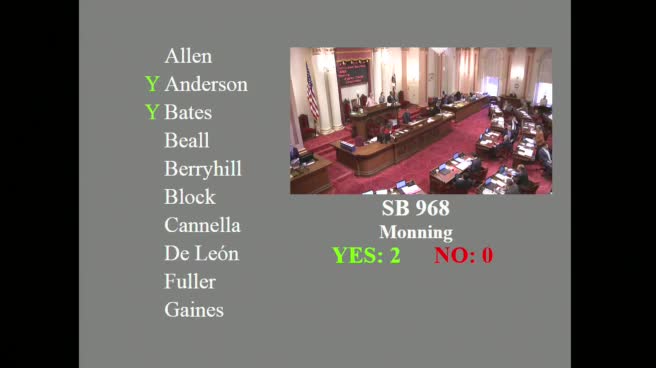
Bill Author