SB 191: School transportation: apportionments.
- Session Year: 2015-2016
- House: Senate
- Latest Version Date: 2015-06-02
Existing law authorizes school districts and county superintendents of schools to provide transportation services to pupils. Existing law, among other things, requires each school district or county office of education that provides transportation to receive the same home-to-school and special education transportation allowances that it received in the prior fiscal year and prohibits the transportation allowances from exceeding the prior years approved transportation costs, increased by the amount provided in the annual Budget Act.
This bill would, notwithstanding any other law, require the Superintendent of Public Instruction, for the 201516 fiscal year to the 202122 fiscal year, inclusive, to apportion to each school district, county office of education, entity providing services under a school transportation joint powers agreement, or a regional occupational center or program that provides pupil transportation services, an amount equal to a specified annually increasing percentage of its approved transportation costs for the prior fiscal year or 100% of its school transportation apportionment for the 201415 fiscal year, annually adjusted as specified, whichever is greater. The bill would provide that implementation of its provisions is subject to an appropriation being made for purposes of those provisions in the annual Budget Act or another statute.
Existing law authorizes school districts and county superintendents of schools to provide transportation services to pupils. Existing law, among other things, requires each school district or county office of education that provides transportation to receive the same home-to-school and special education transportation allowances that it received in the prior fiscal year and prohibits the transportation allowances from exceeding the prior years approved transportation costs, increased by the amount provided in the annual Budget Act.
This bill would, notwithstanding any other law, require the Superintendent of Public Instruction, for the 201516 fiscal year to the 202122 fiscal year, inclusive, to apportion to each school district, county office of education, entity providing services under a school transportation joint powers agreement, or a regional occupational center or program that provides pupil transportation services, an amount equal to a specified annually increasing percentage of its approved transportation costs for the prior fiscal year or 100% of its school transportation apportionment for the 201415 fiscal year, annually adjusted as specified, whichever is greater.
(a)Notwithstanding any other law, for the 201516 fiscal year to the 202122 fiscal year, inclusive, the Superintendent shall apportion to each school district, county office of education, entity providing services under a school transportation joint powers agreement, or regional occupational center or program that provides pupil transportation services, either 100 percent of its school transportation apportionment for the 201415 fiscal year, as adjusted by subdivision (b), or the following amount, whichever is greater:
(1)For the 201516 fiscal year, 41 percent of its approved transportation costs for the prior fiscal year.
(2)For the 201617 fiscal year, 42.5 percent of its approved transportation costs for the prior fiscal year.
(3)For the 201718 fiscal year, 44 percent of its approved transportation costs for the prior fiscal year.
(4)For the 201819 fiscal year, 45.5 percent of its approved transportation costs for the prior fiscal year.
(5)For the 201920 fiscal year, 47 percent of its approved transportation costs for the prior fiscal year.
(6)For the 202021 fiscal year, 48.5 percent of its approved transportation costs for the prior fiscal year.
(7)For the 202122 fiscal year, 50 percent of its approved transportation costs for the prior fiscal year.
(b)The 201415 fiscal year school transportation apportionment amount described in subdivision (a) shall be adjusted annually from the 201516 fiscal year to the 202122 fiscal year, inclusive, by the percentage change in the annual average value of the Implicit Price Deflator for State and Local Government Purchases of Goods and Services for the United States, as published by the United States Department of Commerce, for the 12-month period ending in the third quarter of the prior fiscal year. This percentage change shall be determined using the latest data available as of May 10 of the preceding fiscal year compared with the annual average value of the same deflator for the 12-month period ending in the third quarter of the second preceding fiscal year, using the latest data available as of May 10 of the preceding fiscal year, as reported by the Department of Finance.
(c)The implementation of this section is subject to an appropriation being made for purposes of this section in the annual Budget Act or another statute.
(a)Notwithstanding any other law, for the 201516 fiscal year to the 202122 fiscal year, inclusive, the Superintendent shall apportion to each school district, county office of education, entity providing services under a school transportation joint powers agreement, or regional occupational center or program that provides pupil transportation services, either 100 percent of its school transportation apportionment for the 201415 fiscal year, as adjusted by subdivision (b), or the following amount, whichever is greater:
(1)For the 201516 fiscal year, 41 percent of its approved transportation costs for the prior fiscal year.
(2)For the 201617 fiscal year, 42.5 percent of its approved transportation costs for the prior fiscal year.
(3)For the 201718 fiscal year, 44 percent of its approved transportation costs for the prior fiscal year.
(4)For the 201819 fiscal year, 45.5 percent of its approved transportation costs for the prior fiscal year.
(5)For the 201920 fiscal year, 47 percent of its approved transportation costs for the prior fiscal year.
(6)For the 202021 fiscal year, 48.5 percent of its approved transportation costs for the prior fiscal year.
(7)For the 202122 fiscal year, 50 percent of its approved transportation costs for the prior fiscal year.
(b)The 201415 fiscal year school transportation apportionment amount described in subdivision (a) shall be adjusted annually from the 201516 fiscal year to the 202122 fiscal year, inclusive, by the percentage change in the annual average value of the Implicit Price Deflator for State and Local Government Purchases of Goods and Services for the United States, as published by the United States Department of Commerce, for the 12-month period ending in the third quarter of the prior fiscal year. This percentage change shall be determined using the latest data available as of May 10 of the preceding fiscal year compared with the annual average value of the same deflator for the 12-month period ending in the third quarter of the second preceding fiscal year, using the latest data available as of May 10 of the preceding fiscal year, as reported by the Department of Finance.
|
Date
|
Status
|
|---|---|
| May 23, 2015 | Set for hearing May 28. |
| Jul 1, 2015 | July 1 set for first hearing canceled at the request of author. |
| Jun 11, 2015 | Referred to Com. on ED. |
| Jun 4, 2015 | In Assembly. Read first time. Held at Desk. |
| Jun 3, 2015 | Read third time. Passed. (Ayes 40. Noes 0.) Ordered to the Assembly. |
| Jun 3, 2015 | Read third time. Passed. (Ayes 40. Noes 0. Page 1294.) Ordered to the Assembly. |
| Jun 2, 2015 | Read second time and amended. Ordered to third reading. |
| Jun 1, 2015 | From committee: Do pass as amended. (Ayes 7. Noes 0.) (May 28). |
| Jun 1, 2015 | From committee: Do pass as amended. (Ayes 7. Noes 0. Page 1149.) (May 28). |
| Feb 10, 2015 | Introduced. Read first time. To Com. on RLS. for assignment. To print. |
| Apr 27, 2015 | April 27 hearing: Placed on APPR. suspense file. |
| Apr 17, 2015 | Set for hearing April 27. |
| Apr 16, 2015 | April 20 hearing postponed by committee. |
| Apr 14, 2015 | Set for hearing April 20. |
| Mar 18, 2015 | From committee: Do pass and re-refer to Com. on APPR. (Ayes 8. Noes 0. Page 349.) (March 18). Re-referred to Com. on APPR. |
| Mar 6, 2015 | Set for hearing March 18. |
| Feb 19, 2015 | Referred to Com. on ED. |
| Feb 11, 2015 | From printer. May be acted upon on or after March 13. |
|
Date
|
Description
|
Location
|
Votes
|
|
|---|---|---|---|---|
| Jun 3, 2015 | Senate 3rd Reading SB191 Block | Senate Floor |
Passed |
|
| May 28, 2015 | Do pass as amended | Senate Standing Committee on Appropriations |
Passed |
|
| Apr 27, 2015 | Placed on suspense file | Senate Standing Committee on Appropriations |
Passed |
|
| Mar 18, 2015 | Do pass, but first be re-referred to the Committee on [Appropriations] | Senate Standing Committee on Education |
Passed |
This list shows positions taken on this bill by organizations on the date displayed, which is linked to the original source.
Positions by individuals are not included.
|
Organization
|
Position
|
Date
|
|---|---|---|
| American Federation of State, County, and Municipal Employees | ** Support | Jun 3, 2015 |
| Antelope Valley Schools Transportation Agency | ** Support | Jun 3, 2015 |
| California Association Of School Business Officials | ** Support | Jun 3, 2015 |
| California Association Of Suburban School Districts | ** Support | Jun 3, 2015 |
| California Charter Schools Association | ** Against | Jun 3, 2015 |
| California School Boards Association | ** Support | Jun 3, 2015 |
| California School Employees Association | ** Support | Jun 3, 2015 |
| California Teachers Association | ** Support | Jun 3, 2015 |
| Campbell Union School District | * Support | Mar 18, 2015 |
| Central Valley Education Coalition | ** Support | Jun 3, 2015 |
| Elk Grove Unified School District | ** Support | Jun 3, 2015 |
| Forestville Union School District | ** Support | Jun 3, 2015 |
| Kern County Superintendent of Schools Office | * Support | Mar 18, 2015 |
| Lemoore Union High School District | ** Support | Jun 3, 2015 |
| Marin County Office of Education | ** Support | Jun 3, 2015 |
| Merced Union High School District | ** Support | Jun 3, 2015 |
| Mid-Placer Public Schools Transportation Agency | ** Support | Jun 3, 2015 |
| Pajaro Valley Unified School District | ** Support | Jun 3, 2015 |
| Riverdale Joint Unified School District | ** Support | Jun 3, 2015 |
| Riverside County Office Of Education | * Support | Mar 18, 2015 |
| Riverside County Schools | * Support | Apr 27, 2015 |
| Riverside County Schools Advocacy Association | * Support | Mar 18, 2015 |
| Rural County Representatives of California | ** Support | Jun 3, 2015 |
| San Jose Unified School District | ** Support | Jun 3, 2015 |
| School Transportation Coalition | ** Support | Jun 3, 2015 |
| Southwest Transportation Agency | ** Support | Jun 3, 2015 |
| Tulare County Office of Education | ** Support | Jun 3, 2015 |
| Tulare Joint Union High School District | ** Support | Jun 3, 2015 |
| West County Transportation | ** Support | Jun 3, 2015 |
| West County Transportation Agency | * Support | Apr 27, 2015 |
| Wilsona School District | ** Support | Jun 3, 2015 |
SB 191
Page 6
|
Office of Senate Floor Analyses (916) 651-1520 Fax: (916) 327-4478 |
THIRD READING
Bill No: SB 191
Author: Block (D) and Vidak (R), et al.
Amended: 6/2/15
SENATE EDUCATION COMMITTEE: 8-0, 3/18/15
AYES: Liu, Huff, Block, Hancock, Leyva, Mendoza, Pan, Vidak
SENATE APPROPRIATIONS COMMITTEE: 7-0, 5/28/15
AYES: Lara, Bates, Beall, Hill, Leyva, Mendoza, Nielsen
SUBJECT: School transportation: apportionments
SOURCE: California School Boards Association
DIGEST: This bill provides for school districts to be funded at a minimum of 50% of approved transportation costs by the 2021-22 fiscal year, thereby providing equalization funding for these school districts. In addition, this bill requires that school transportation funding receive an annual cost-of-living adjustment from the 2015-16 fiscal year through the 2021-22 fiscal year.
ANALYSIS: Existing federal law requires local educational agencies to transport the following three groups of students:
Students with disabilities;
Students attending federally sanctioned schools; and
Homeless students.
Existing state law:
Authorizes school districts and county offices of education to provide transportation services to regular education students attending their schools at the discretion of their governing board.
Requires school districts to provide transportation services for special education students whose individualized education programs require such services.
This bill:
Requires the Superintendent of Public Instruction, for the 2015-16 through 2021-22 fiscal years, to apportion to each school district, county office of education, entity providing services under a joint powers agreement, or regional occupational center or program that provides pupil transportation services either 100% of its school transportation apportionment for the 2014-15 fiscal year, as adjusted for a cost-of-living-adjustment; or the following amount, whichever is greater:
For the 2015–16 fiscal year, 41% of its approved transportation costs for the prior fiscal year.
For the 2016–17 fiscal year, 42.5% of its approved transportation costs for the prior fiscal year.
For the 2017–18 fiscal year, 44% of its approved transportation costs for the prior fiscal year.
For the 2018–19 fiscal year, 45.5% of its approved transportation costs for the prior fiscal year.
For the 2019–20 fiscal year, 47% of its approved transportation costs for the prior fiscal year.
For the 2020–21 fiscal year, 48.5% of its approved transportation costs for the prior fiscal year.
For the 2021–22 fiscal year, 50% of its approved transportation costs for the prior fiscal year.
Requires for the 2013–14 fiscal year that the school transportation apportionment amount described above shall be adjusted by the percentage change in the annual average value of the Implicit Price Deflator for State and Local Government Purchases of Goods and Services for the United States, as published by the United States Department of Commerce for the 12-month period ending in the third quarter of the prior fiscal year. This percentage change shall be determined using the latest data available as of May 10 of the preceding fiscal year compared with the annual average value of the same deflator for the 12-month period ending in the third quarter of the second preceding fiscal year, using the latest data available as of May 10 of the preceding fiscal year, as reported by the Department of Finance.
Provides that implementation of its provisions is subject to an appropriation made for these purposes in the annual Budget Act or another statute.
Background
In 2013, the Local Control Funding Formula (LCFF) was enacted. The LCFF replaces almost all sources of state funding, including most categorical programs. The LCFF establishes a per-pupil funding target that is adjusted for differences in grade level, but otherwise is uniform across the state. The LCFF also provides supplemental funding for districts that serve students who are low-income, English language learners, or foster youth. However, one categorical program not rolled into the LCFF is the Home-to-School Transportation (HTST) program. This program retained its separate funding stream; such that any district that received HTST funding in 2012-13 continues to receive that same amount of funding in addition to its LCFF allocation each year. However, the HTST, unlike in prior years, would not be eligible for future cost-of-living adjustments. State law also continues to require that districts spend HTST funding on pupil transportation.
Comments
Need for the bill. According to the author’s office, the HTST program has long been inequitable and in need of improvement where the current statewide average reimbursement rate is 35% of approved costs. The funding distribution is so uneven that some school districts see less than 10% reimbursement, while others receive over 80% of their approved costs. Based on data from the Legislative Analyst’s Office (LAO) report on the HTST program in 2014, school districts spent over $1.4 billion transporting students but received less than $492 million from the state to pay these costs resulting in encroachment on general purpose revenues that would otherwise go into instructional programs. This funding deficit is an unequal burden that hits rural and growing school districts much harder than more densely populated and flat enrollment school districts.
LAO report. In 2013, the LAO was requested to consider new approaches that could address historical inequities and include incentives for efficient and effective pupil transportation services. The report was issued February 2014 and included a description and assessment of three options:
Funding pupil transportation services within the new LCFF,
Creating a new, targeted program to help districts facing extraordinarily high transportation costs, and
Creating a broad-based program whereby the state pays a share of each district’s transportation costs.
To assist the Legislature’s deliberations, the LAO identified three options for funding pupil transportation moving forward. The options primarily differ in the degree to which they account for transportation costs separately from the other costs districts face. These three options are to:
Fund transportation costs within the LCFF;
Fund only extraordinary transportation costs; or
Fund a share of all transportation costs.
Although the basic approach for each option differs, all contain some key advantages. Most notably, all three options provide a means to phase out the use of allocations linked to historical factors and apply the same funding rules to all local education agencies, addressing key problems with the state’s existing approach. In addition, all of the options would encourage efficiency by requiring local budgets to cover a notable share of total costs. Finally, all three options would be relatively simple to implement and easy for districts and the public to understand.
Bureau of State Audits report. The Bureau of State Audits released a report on the HTST program in 2007, acknowledging many problems with the existing program funding formula. Some of the findings include:
The current funding mechanism prevents some school districts that did not receive HTST program funds in the immediately preceding fiscal year from receiving these funds because of the basis of allocation.
Allocation increases are not always consistent with student population growth. Some school districts have experienced dramatic increases in student population over the years; however, their allocations have not always increased at the same rate.
Most school districts had to use other funding sources to pay for some transportation costs and many reported it had varying levels of fiscal impact on other programs.
FISCAL EFFECT: Appropriation: No Fiscal Com.: Yes Local: No
According to the Senate Appropriations Committee, creating a state minimum “share of cost” approach for school transportation funding, while holding harmless, and providing a cost-of-living adjustment for, districts that receive allocations above the minimum, will substantially increase annual state General Fund contributions to school transportation. Additionally, the estimated General Fund cost increases would be in the range of $150 - $160 million in 2015-16. These annual costs would increase each year to approximately $250 - $270 million by 2021-22. Actual costs are unknown, and would depend upon cost-of-living adjustment rates and the amount that school districts spend on transportation costs each year.
California School Boards Association (source)
American Federation of State, County, and Municipal Employees
Antelope Valley Schools Transportation Agency
California Association of School Business Officials
California Association of School Transportation Officials
California Association of Suburban School Districts
California School Employees Association
California Teachers Association
Central Valley Education Coalition
Elk Grove Unified School District
Forestville Union School District
Kern County Superintendent of Schools
Lemoore Union High School District
Marin County Office of Education
Merced Union High School District
Mid-Placer Public Schools Transportation Agency
Pajaro Valley Unified School District
Riverdale Joint Unified School District
Rural County Representatives of California
San Jose Unified School District
School Transportation Coalition
Small School Districts’ Association
Southwest Transportation Agency
Tulare County Office of Education
Tulare Joint Union High School District
West County Transportation
Wilsona School District
California Charter Schools Association
Prepared by: Lenin Del Castillo / ED. / (916) 651-4105
6/2/15 11:01:30
**** END ****
SB 191 (Block) Page 4 of 4
SENATE COMMITTEE ON APPROPRIATIONS
Senator Ricardo Lara, Chair
2015 - 2016 Regular Session
SB 191 (Block) - School transportation: apportionments
|
|
Version: February 10, 2015 |
Policy Vote: ED. 8 - 0 |
Urgency: No |
Mandate: No |
Hearing Date: May 28, 2015 |
Consultant: Mark McKenzie/Jillian Kissee |
SUSPENSE FILE. AS AMENDED.
Bill Summary:
SB 191 would increase state allocations for school transportation funding over a seven year period from the 2015-16 through the 2021-22 fiscal years. The bill provides that school districts would receive the greater of either their actual apportionments or a minimum of 41 percent of their “approved transportation costs” from the previous year in 2015-16, and the minimum percentage would increase annually to 50 percent by 2021-22. Districts that receive school transportation funding apportionments above this minimum would receive an annual cost-of-living adjustment (COLA), as specified.
Fiscal Impact (as approved on May 28, 2015): Creating a state minimum “share of cost” approach for school transportation funding, while holding harmless, and providing a COLA for, districts that receive allocations above the minimum, would substantially increase annual state General Fund contributions to school transportation.
This bill creates a General Fund cost pressure in the range of $150 - $160 million in 2015-16. Cost pressures in out years would be approximately $250 - $270 million by 2021-22. Actual costs are unknown, and would depend upon COLA rates and the amount that school districts spend on transportation costs each year.
Background:
Existing law authorizes school districts and county offices of education (COEs) to provide transportation services to regular education students attending their schools at the discretion of their governing boards. School districts are required to provide transportation services for special education students whose individualized education programs require such services.
School districts have generally used a combination of state categorical funding and general purpose revenues to pay for school transportation. The Home-to-School Transportation (HTST) program, which is intended to help school districts provide transportation services to special education and regular education students, is the categorical program that provides significant state funding to school districts for transportation purposes.
In 2013, the Local Control Funding Formula (LCFF) was enacted. The LCFF replaces almost all sources of state funding, including most categorical programs. However, the HTST program funding was not incorporated into the LCFF, and instead remained as a separate funding stream as an “add-on” to LCFF allocations. State law also continues to require that districts spend HTST funding on pupil transportation. Any district that received HTST funding in 2012-13 continues to receive that same amount of funding in addition to its LCFF allocation each year. However, the HTST funding is not currently eligible for future COLAs. Approximately $491 million in HTST funding was allocated to school districts in 2013-14. Total statewide expenditures on school transportation was approximately $1.4 billion in that year.
The state HTST program was established in 1947, initially reimbursing school districts for a share of their transportation expenditures. In the early 1980s, as part of the state’s larger response to the passage of Proposition 13, funding allocations for school districts were frozen at the prior year’s level. Since that time, there have been no adjustments for changes in costs, enrollment, or other factors, except for occasional COLA adjustments. As a result of changing demographics and district needs over the past three decades, there are significant disparities in the amounts that school districts receive through the program as a percentage of their actual costs. According to the Legislative Analyst’s Office (LAO), the percentage of approved costs that get reimbursed by state aid ranges from 0% (for districts that did not have a transportation program in the base year) to 97%. The statewide average in 2013-14 was 35%.
Proposed Law:
SB 191 would increase school transportation fund allocations to school districts. Specifically, this bill would require the Superintendent of Public Instruction (SPI), for the 2015-16 through 2021-22 fiscal years, to apportion to each school district, county office of education, entity providing services under a joint powers agreement, or regional occupational center or program that provides pupil transportation services, either 100 percent of its school transportation apportionment for the 2014-15 fiscal year, as adjusted for a COLA; or the following amount, whichever is greater:
2015-16: 41% of its approved transportation costs for the prior fiscal year.
2016-17: 42.5% of its approved transportation costs for the prior fiscal year.
2017-18: 44% of its approved transportation costs for the prior fiscal year.
2018-19: 45.5% of its approved transportation costs for the prior fiscal year.
2019-20: 47% of its approved transportation costs for the prior fiscal year.
2020-21: 48.5% of its approved transportation costs for the prior fiscal year.
2021–22: 50% of its approved transportation costs for the prior fiscal year.
COLA provisions: This bill requires that, beginning in 2015-16, the 2014-15 fiscal year school transportation apportionment amount described above shall be adjusted by the percentage change in the annual average value of the Implicit Price Deflator for State and Local Government Purchases of Goods and Services for the United States, as published by the United States Department of Commerce for the 12-month period ending in the third quarter of the prior fiscal year. This percentage change shall be determined using the latest data available as of May 10 of the preceding fiscal year compared with the annual average value of the same deflator for the 12-month period ending in the third quarter of the second preceding fiscal year, using the latest data available as of May 10 of the preceding fiscal year, as reported by the Department of Finance.
Related Legislation:
SB 1137 (Torres), which was held on the Assembly Appropriations Committee Suspense File in 2014, was nearly identical to this bill, but also included provisions requiring the SPI to provide startup school transportation apportionments to districts that did not provide pupil transportation services in 2014-15. SB 1137 also included language that made the provisions of the bill operative only to the extent that funding was provided by the Legislature.
SB 1166 (Vidak), which failed passage in the Senate Education Committee in 2014, would have entitled school districts to receive state reimbursement for the full cost of the home-to-school transportation of pupils.
Staff Comments:
This bill responds to the problem of equalization presented by current school transportation allocations. In response to a 2013 request by the Legislature, the LAO issued a report on this topic with three recommendations to improve the state’s approach to funding school transportation. SB 191 is based upon one of those recommendations to reimburse schools for a share of transportation costs. The LAO indicated that this “share of cost” approach is most viable if the state’s share is set between 35 and 50 percent. This bill would phase-in the state’s share to 50 percent over a seven year period, and provide more funds to schools that receive a share above the minimum threshold through an annual COLA. The LAO estimates that COLA amounts would increase annually from 2.11 percent in 2016-17 to 2.9 percent by 2019-20.
This bill would substantially increase state funding allocations for school transportation. Exact costs are unknown and will be determined by actual funding spent by school districts on transportation each year, and will increase with future COLAs. Based upon data provided by the LAO and the author’s office, estimated costs would be in the range of $150 million to $160 million in 2015-16, increasing annually to approximately $250 million to $270 million by 2021-22.
Costs may rise further, to the extent that schools decide to provide more transportation. For school districts that currently receive HTST allocations that cover less than 50% of their costs, this bill will increase their allocations over time, based on actual costs for prior fiscal year. As such, the more they spend in a given year, the more they would receive in a subsequent year (up to the percentage cap specified in the bill).
Recommended Amendments:
The bill may require amendments to clarify the author’s intent. For example, the bill should be amended to:
Clarify the definition of “approved transportation costs;”
Clarify that the LCFF add-on funding provided to school districts as HTST funding since 2013-14 count towards a “transportation funding apportionment for the 2014-15 fiscal year,” as specified in the bill. Technically, apportionments haven’t been made since the enactment of the LCFF. The estimates provided in this analysis assume that the add-on funding counts towards the minimum funding requirements specified in the bill.
Committee amendments (as adopted on May 28, 2015): Amendments make the implementation of this bill subject to an appropriation in the budget or another statute.
-- END --
SB 191 (Block) Page 4 of 4
SENATE COMMITTEE ON APPROPRIATIONS
Senator Ricardo Lara, Chair
2015 - 2016 Regular Session
SB 191 (Block) - School transportation: apportionments
|
|
Version: February 10, 2015 |
Policy Vote: ED. 8 - 0 |
Urgency: No |
Mandate: No |
Hearing Date: April 27, 2015 |
Consultant: Mark McKenzie |
This bill meets the criteria for referral to the Suspense File.
Bill Summary:
SB 191 would increase state allocations for school transportation funding over a seven year period from the 2015-16 through the 2021-22 fiscal years. The bill provides that school districts would receive the greater of either their actual apportionments or a minimum of 41 percent of their “approved transportation costs” from the previous year in 2015-16, and the minimum percentage would increase annually to 50 percent by 2021-22. Districts that receive school transportation funding apportionments above this minimum would receive an annual cost-of-living adjustment (COLA), as specified.
Fiscal Impact:
Creating a state minimum “share of cost” approach for school transportation funding, while holding harmless, and providing a COLA for, districts that receive allocations above the minimum, would substantially increase annual state General Fund contributions to school transportation.
Estimated General Fund cost increases in the range of $150 - $160 million in 2015-16. These annual costs would increase each year to approximately $250 - $270 million by 2021-22. Actual costs are unknown, and would depend upon COLA rates and the amount that school districts spend on transportation costs each year.
Background:
Existing law authorizes school districts and county offices of education (COEs) to provide transportation services to regular education students attending their schools at the discretion of their governing boards. School districts are required to provide transportation services for special education students whose individualized education programs require such services.
School districts have generally used a combination of state categorical funding and general purpose revenues to pay for school transportation. The Home-to-School Transportation (HTST) program, which is intended to help school districts provide transportation services to special education and regular education students, is the categorical program that provides significant state funding to school districts for transportation purposes.
In 2013, the Local Control Funding Formula (LCFF) was enacted. The LCFF replaces almost all sources of state funding, including most categorical programs. However, the HTST program funding was not incorporated into the LCFF, and instead remained as a separate funding stream as an “add-on” to LCFF allocations. State law also continues to require that districts spend HTST funding on pupil transportation. Any district that received HTST funding in 2012-13 continues to receive that same amount of funding in addition to its LCFF allocation each year. However, the HTST funding is not currently eligible for future COLAs. Approximately $491 million in HTST funding was allocated to school districts in 2013-14. Total statewide expenditures on school transportation was approximately $1.4 billion in that year.
The state HTST program was established in 1947, initially reimbursing school districts for a share of their transportation expenditures. In the early 1980s, as part of the state’s larger response to the passage of Proposition 13, funding allocations for school districts were frozen at the prior year’s level. Since that time, there have been no adjustments for changes in costs, enrollment, or other factors, except for occasional COLA adjustments. As a result of changing demographics and district needs over the past three decades, there are significant disparities in the amounts that school districts receive through the program as a percentage of their actual costs. According to the Legislative Analyst’s Office (LAO), the percentage of approved costs that get reimbursed by state aid ranges from 0% (for districts that did not have a transportation program in the base year) to 97%. The statewide average in 2013-14 was 35%.
Proposed Law:
SB 191 would increase school transportation fund allocations to school districts. Specifically, this bill would require the Superintendent of Public Instruction (SPI), for the 2015-16 through 2021-22 fiscal years, to apportion to each school district, county office of education, entity providing services under a joint powers agreement, or regional occupational center or program that provides pupil transportation services, either 100 percent of its school transportation apportionment for the 2014-15 fiscal year, as adjusted for a COLA; or the following amount, whichever is greater:
2015-16: 41% of its approved transportation costs for the prior fiscal year.
2016-17: 42.5% of its approved transportation costs for the prior fiscal year.
2017-18: 44% of its approved transportation costs for the prior fiscal year.
2018-19: 45.5% of its approved transportation costs for the prior fiscal year.
2019-20: 47% of its approved transportation costs for the prior fiscal year.
2020-21: 48.5% of its approved transportation costs for the prior fiscal year.
2021–22: 50% of its approved transportation costs for the prior fiscal year.
COLA provisions: This bill requires that, beginning in 2015-16, the 2014-15 fiscal year school transportation apportionment amount described above shall be adjusted by the percentage change in the annual average value of the Implicit Price Deflator for State and Local Government Purchases of Goods and Services for the United States, as published by the United States Department of Commerce for the 12-month period ending in the third quarter of the prior fiscal year. This percentage change shall be determined using the latest data available as of May 10 of the preceding fiscal year compared with the annual average value of the same deflator for the 12-month period ending in the third quarter of the second preceding fiscal year, using the latest data available as of May 10 of the preceding fiscal year, as reported by the Department of Finance.
Related Legislation:
SB 1137 (Torres), which was held on the Assembly Appropriations Committee Suspense File in 2014, was nearly identical to this bill, but also included provisions requiring the SPI to provide startup school transportation apportionments to districts that did not provide pupil transportation services in 2014-15. SB 1137 also included language that made the provisions of the bill operative only to the extent that funding was provided by the Legislature.
SB 1166 (Vidak), which failed passage in the Senate Education Committee in 2014, would have entitled school districts to receive state reimbursement for the full cost of the home-to-school transportation of pupils.
Staff Comments:
This bill responds to the problem of equalization presented by current school transportation allocations. In response to a 2013 request by the Legislature, the LAO issued a report on this topic with three recommendations to improve the state’s approach to funding school transportation. SB 191 is based upon one of those recommendations to reimburse schools for a share of transportation costs. The LAO indicated that this “share of cost” approach is most viable if the state’s share is set between 35 and 50 percent. This bill would phase-in the state’s share to 50 percent over a seven year period, and provide more funds to schools that receive a share above the minimum threshold through an annual COLA. The LAO estimates that COLA amounts would increase annually from 2.11 percent in 2016-17 to 2.9 percent by 2019-20.
This bill would substantially increase state funding allocations for school transportation. Exact costs are unknown and will be determined by actual funding spent by school districts on transportation each year, and will increase with future COLAs. Based upon data provided by the LAO and the author’s office, estimated costs would be in the range of $150 million to $160 million in 2015-16, increasing annually to approximately $250 million to $270 million by 2021-22.
Costs may rise further, to the extent that schools decide to provide more transportation. For school districts that currently receive HTST allocations that cover less than 50% of their costs, this bill will increase their allocations over time, based on actual costs for prior fiscal year. As such, the more they spend in a given year, the more they would receive in a subsequent year (up to the percentage cap specified in the bill).
Recommended Amendments:
The bill may require amendments to clarify the author’s intent. For example, the bill should be amended to:
Clarify the definition of “approved transportation costs;”
Clarify that the LCFF add-on funding provided to school districts as HTST funding since 2013-14 count towards a “transportation funding apportionment for the 2014-15 fiscal year,” as specified in the bill. Technically, apportionments haven’t been made since the enactment of the LCFF. The estimates provided in this analysis assume that the add-on funding counts towards the minimum funding requirements specified in the bill.
-- END --
SB 191 (Block) Page 5 of 5
SENATE COMMITTEE ON EDUCATION
Senator Liu, Chair
2015 - 2016 Regular
Bill No: SB 191
Author: |
Block |
||
Version: |
February 10, 2015 |
Hearing Date: |
March 18, 2015 |
Urgency: |
No |
Fiscal: |
Yes |
Consultant: |
Lenin Del Castillo |
||
Subject: School transportation: apportionments
SUMMARY
This bill would provide for school districts to be funded at a minimum of 50 percent of approved transportation costs by the 2021-22 fiscal year, thereby providing equalization funding for school districts that are reimbursed at less than 50 percent. The equalization adjustments would occur over a seven-year period beginning in 2015-16. In addition, this bill provides that school transportation funding receive an annual cost-of-living adjustment (COLA) from the 2015-16 fiscal year through the 2021-22 fiscal year.
BACKGROUND
Current law authorizes school districts and county offices of education to provide transportation services to regular education students attending their schools at the discretion of their governing board. Additionally, current law requires school districts to provide transportation services for special education students whose individualized education programs require such services.
(Education Code § 39800 and § 41850 et. seq.)
Federal law requires local educational agencies to transport the following three groups of students: (a) students with disabilities; (b) students attending federally sanctioned schools; and (c) homeless students. School districts generally use one of two types of funding for pupil transportation: general purpose or categorical funds. General purpose funds can be spent on anything from teacher salaries to utility bills. Categorical funds must be spent on specific purposes, e.g., the Home-to-School Transportation (HTST) program in which school districts utilize the funds received to provide transportation services to special education and regular education students.
In 2013, the Local Control Funding Formula (LCFF) was enacted. The LCFF replaces almost all sources of state funding, including most categorical programs. The LCFF establishes a per-pupil funding target that is adjusted for differences in grade level, but otherwise is uniform across the state. The LCFF also provides supplemental funding for districts that serve students who are low-income, English language learners, or foster youth. However, one categorical program not rolled into the LCFF is the HTST program. This program retained its separate funding stream; such that any district that received HTST funding in 2012-13 continues to receive that same amount of funding in addition to its LCFF allocation each year. However, the HTST, unlike in prior years, would not be eligible for future cost-of-living adjustments (COLAs). And state law continues to require that districts spend HTST funding on pupil transportation.
ANALYSIS
This bill:
Requires the Superintendent of Public Instruction, for the 2015-16 through 2021-22 fiscal years, to apportion to each school district, county office of education, entity providing services under a joint powers agreement, or regional occupational center or program that provides pupil transportation services either 100 percent of its school transportation apportionment for the 2014-15 fiscal year, as adjusted for a cost-of-living-adjustment (COLA); or the following amount, whichever is greater:
For the 2015–16 fiscal year, 41 percent of its approved
transportation costs for the prior fiscal year.
For the 2016–17 fiscal year, 42.5 percent of its approved
transportation costs for the prior fiscal year.
For the 2017–18 fiscal year, 44 percent of its approved
transportation costs for the prior fiscal year.
For the 2018–19 fiscal year, 45.5 percent of its approved
transportation costs for the prior fiscal year.
For the 2019–20 fiscal year, 47 percent of its approved
transportation costs for the prior fiscal year.
For the 2020–21 fiscal year, 48.5 percent of its approved
transportation costs for the prior fiscal year.
For the 2021–22 fiscal year, 50 percent of its approved
transportation costs for the prior fiscal year.
Requires for the 2013–14 fiscal year school transportation apportionment amount described above shall be adjusted by the percentage change in the annual average value of the Implicit Price Deflator for State and Local Government Purchases of Goods and Services for the United States, as published by the United States Department of Commerce for the 12-month period ending in the third quarter of the prior fiscal year. This percentage change shall be determined using the latest data available as of May 10 of the preceding fiscal year compared with the annual average value of the same deflator for the 12-month period ending in the third quarter of the second preceding fiscal year, using the latest data available as of May 10 of the preceding fiscal year, as reported by the Department of Finance.
STAFF COMMENTS
Need for the bill. According to the author’s office, the Home-to-School Transportation (HTST) program has long been inequitable and in need of improvement where the current statewide average reimbursement rate is 35 percent of approved costs. The funding distribution is so uneven that some school districts see less than 10 percent reimbursement, while others receive over 80 percent of their approved costs. Based on data from the Legislative Analyst’s Office (LAO) report on the Home-to-School Transportation (HTST) program in 2014, school districts spent over $1.4 billion transporting students but received less than $492 million from the state to pay these costs resulting in encroachment on general purpose revenues that would otherwise go into instructional programs. This funding deficit is an unequal burden that hits rural and growing school districts much harder than more densely populated and flat enrollment school districts.
This bill would bring severely underfunded districts up to a 50 percent reimbursement rate; while also providing for a cost-of-living-adjustment (COLA) for transportation funds for all school districts. The author’s office also indicates that applying a COLA can ensure districts will not be negatively impacted as costs of service rise.
2014 Budget Act. The 2014 Budget Act provides approximately $496 million in Proposition 98 General Fund for the HTST program, which includes both allocations for home-to-school transportation and allocations for some pupils with disabilities, specifically “severely disabled and orthopedically impaired” pupils.
Legislative Analyst Office Report. In 2013, the LAO was requested to consider new approaches that could address historical inequities and include incentives for efficient and effective pupil transportation services. The report was issued February 2014 and included a description and assessment of three options: (1) funding pupil transportation services within the new Local Control Funding Formula (LCFF), (2) creating a new, targeted program to help districts facing extraordinarily high transportation costs, and (3) creating a broad-based program whereby the state pays a share of each district’s transportation costs.
To assist the Legislature’s deliberations, the LAO identified three options for funding pupil transportation moving forward. The options primarily differ in the degree to which they account for transportation costs separately from the other costs districts face. These three options are to (1) fund transportation costs within the LCFF; (2) fund only extraordinary transportation costs; or (3) fund a share of all transportation costs. Although the basic approach for each option differs, all contain some key advantages. Most notably, all three options provide a means to phase out the use of allocations linked to historical factors and apply the same funding rules to all local education agencies, addressing key problems with the state’s existing approach. In addition, all of the options would encourage efficiency by requiring local budgets to cover a notable share of total costs. Finally, all three options would be relatively simple to implement and easy for districts and the public to understand.
Problems with the existing program are not new. The Bureau of State Audits (BSA) released a report on the HTST program in 2007, acknowledging many problems with the existing program funding formula. Some of the findings include:
The current funding mechanism prevents some school districts that did not receive Home-to-School Transportation (HTST) program funds in the immediately preceding fiscal year from receiving these funds because of the basis of allocation.
Allocation increases are not always consistent with student population growth. Some school districts have experienced dramatic increases in student population over the years; however, their allocations have not always increased at the same rate.
Most school districts had to use other funding sources to pay for some transportation costs and many reported it had varying levels of fiscal impact on other programs.
How much funding exposure would this bill create? According to information provided by the author, the total amount of funding to implement this measure is approximately $249 million over the seven year implementation period, or an average increase per year of approximately $35.6 million.
California has long provided state funding to school districts for student transportation. Before 1984, a law formally prescribed allocations for transportation to elementary and high school districts. Legislation passed in 1983 required that Education allocate the HTST program funds based on the same amount as the school district’s prior year’s allocation, increased by the amount provided in the Budget Act, if its approved cost for that year was at least 95 percent of its Home-to-School program allocation for the same year. Otherwise, this legislation required an amount equal to the school district’s certified percentage of the prior year’s transportation costs plus 5 percent, the sum increased by the amount provided in the Budget Act. Legislation enacted in 1991 amended previous laws and created the current funding formula. This legislation required that, beginning with fiscal year 1993–94, each school district receive a student transportation allowance equal to the lesser of its prior year Home-to-School program allocation or actual approved transportation expenditures from that year, increased by the growth in average daily attendance rate and cost-of-living adjustments as specified in the Budget Act.
Related and prior legislation
SB 1137 (Torres, 2014), nearly identical to this measure, would have provided for school districts to be funded at a minimum of 50 percent of approved transportation costs by the 2020-21 fiscal year, thereby providing equalization funding for school districts that are reimbursed at less than 50 percent. SB 1137 passed this Committee on April 9, 2014 but failed passage in the Assembly Appropriations Committee.
SB 1166 (Vidak, 2014), required school districts to receive state reimbursement for the full cost of home-to-school transportation of pupils. Commencing with the 2014-15 fiscal year, these costs shall be reimbursed through an appropriation in the annual Budget Act. SB 1166 failed passage in this Committee on April 9, 2014.
SUPPORT
Antelope Valley Schools Transportation Agency
California Association of School Business Officials
California Association of School Transportation Officials
California Association of Suburban School Districts
California School Boards Association (sponsor)
California School Employees Association
Central Valley Education Coalition
Elk Grove Unified School District
Kern County Superintendent of Schools
Mid-Placer Public Schools Transportation Agency
Pajaro Valley Unified School District
Riverdale Joint Unified School District
Rural County Representatives of California
San Jose Unified School District
School Transportation Coalition
Small School Districts’ Association
Southwest Transportation Agency
West County Transportation
Wilsona School District
OPPOSITION
California Charter Schools Association
-- END --
Discussed in Hearing
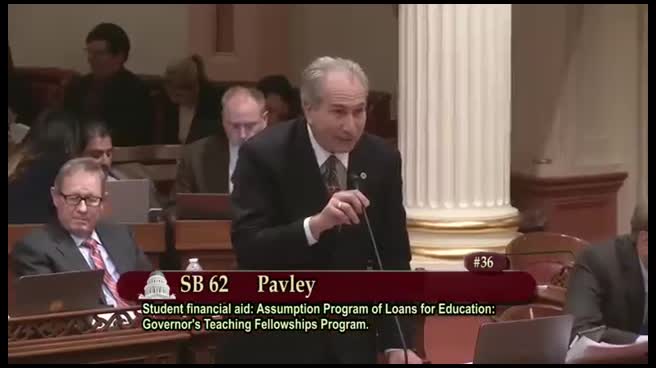 2MIN
Senate Floor
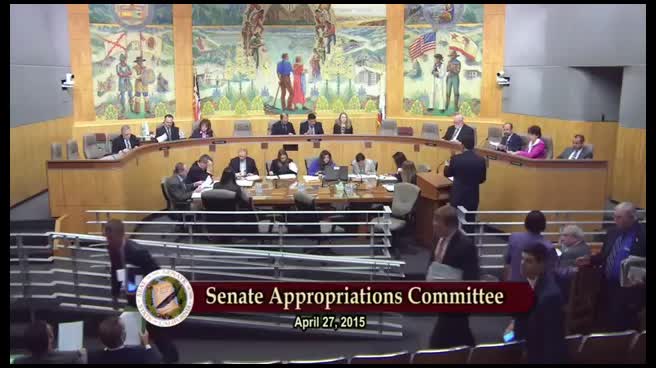 9MIN
Senate Standing Committee on Appropriations
 12MIN