SB 402: Pupil health: vision examinations.
- Session Year: 2015-2016
- House: Senate
- Latest Version Date: 2015-05-04
Existing law requires a pupils vision to be appraised by a school nurse or other authorized person in the pupils kindergarten year or upon first enrollment in elementary school, and in grades 2, 5, and 8, unless the appraisal is waived by the pupils parents upon presentation of a certificate from a physician and surgeon, a physician assistant, or an optometrist. Existing law requires the State Department of Education to adopt guidelines to implement those provisions.
This bill would require a pupils vision to be appraised in accordance with the above specified provisions only if the pupils parent or guardian fails to provide the results of a vision examination conducted by a physician, optometrist, or ophthalmologist in accordance with specified provisions. The bill would prohibit a school from denying admission to, or taking adverse action against, a pupil if his or her parent or guardian fails to provide the results of the vision examination. The bill would require the department to adopt regulations, rather than guidelines, to implement these provisions.
Existing law requires a pupils vision to be appraised by a school nurse or other authorized person in the pupils kindergarten year or upon first enrollment in elementary school, and in grades 2, 5, and 8. Existing law requires color vision to be appraised only once, only on male pupils, and authorizes the color vision to be conducted after the male pupil has reached first grade. Existing law specifies that a pupils vision may be appraised by using an eye chart or other scientifically validated photoscreening test, as specified. Existing law authorizes vision assessments to be 8, unless the appraisal is waived by the pupils parents upon presentation of a certificate from a physician and surgeon, a physician assistant, or an optometrist. Existing law requires the State Department of Education to adopt guidelines to implement those provisions.
This bill would instead require a pupils vision to be examined by a physician, optometrist, or ophthalmologist at least every 2nd year after the pupils kindergarten year or first enrollment, and would require the examination to be consistent with the most current standard, policy, or guideline adopted by the American Academy of Pediatrics, the American Academy of Ophthalmology, or the American Optometric Association. The bill would delete the provision specifying that a pupils vision may be appraised using an eye chart or other scientifically validated photoscreening test, and instead would require a vision examination to include tests for visual acuity, binocular function, as well as refraction and eye health evaluations. The bill would delete the provision providing for a waiver of the vision appraisal, and would also delete the provision requiring color vision to be only for male pupils after the pupil has reached first grade, and would instead require color vision to be examined once at enrollment. The bill would require the department to adopt regulations to implement the above-specified requirements relating to vision examinations, as specified. require a pupils vision to be appraised in accordance with the above specified provisions only if the pupils parent or guardian fails to provide the results of a vision examination conducted by a physician, optometrist, or ophthalmologist in accordance with specified provisions. The bill would prohibit a school from denying admission to, or taking adverse action against, a pupil if his or her parent or guardian fails to provide the results of the vision examination. The bill would require the department to adopt regulations, rather than guidelines, to implement these provisions.
Existing law requires a pupils vision to be appraised by a school nurse or other authorized person in the pupils kindergarten year or upon first enrollment in elementary school, and in grades 2, 5, and 8. Existing law requires color vision to be appraised only once, only on male pupils, and authorizes the color vision to be conducted after the male pupil has reached first grade. Existing law specifies that a pupils vision may be appraised by using an eye chart or other scientifically validated photoscreening test, as specified. Existing law authorizes vision assessments to be waived by the pupils parents upon presentation of a certificate from a physician and surgeon, a physician assistant, or an optometrist. Existing law requires the State Department of Education to adopt guidelines to implement those provisions.
This bill would instead require a pupils vision to be examined by a physician, optometrist, or ophthalmologist at least every 2nd year after the pupils kindergarten year or first enrollment, and would require the examination to be consistent with the most current standard, policy, or guideline adopted by the American Academy of Pediatrics, the American Academy of Ophthalmology, or the American Optometric Association. The bill would delete the provision specifying that a pupils vision may be appraised using an eye chart or other scientifically validated photoscreening test, and instead would require a vision examination to include tests for visual acuity, binocular function, as well as refraction and eye health evaluations. The bill would delete the provision providing for a waiver of the vision appraisal, and would also delete the provision requiring color vision to be only for male pupils after the pupil has reached first grade, and would instead require color vision to be examined once at enrollment. The bill would require the department to adopt regulations to implement the above-specified requirements relating to vision examinations, as specified.
(a)During the kindergarten year or upon first enrollment or entry in a California school district of a pupil at an elementary school, and at least every second year thereafter until the pupil has completed grade 8, the pupils vision shall be examined by a physician, optometrist, or ophthalmologist. This examination shall include tests for visual acuity, binocular function, as well as refraction distance and near visual acuity, eye tracking, binocular vision skills, including both eye teaming and convergence, accommodation, color vision, depth perception, intraocular pressure, pupil evaluation, objective and subjective refraction, and eye health evaluations. The parent or guardian of the pupil shall provide results of the vision examination to the school.
(b)A school shall not deny admission to a pupil or take any other adverse action against a pupil if his or her parent or guardian fails to provide the results of the vision examination to the school.
(c)(1)If the results of the vision examination are not provided to the school, then during the kindergarten year or upon first enrollment or entry, and in grades 2, 5, and 8, the pupils vision shall be appraised by the school nurse or other person authorized under Section 49452.
(2)A pupil whose first enrollment or entry occurs in grade 4 or 7 shall not be required to be appraised in the year immediately following the pupils first enrollment or entry.
(3)The appraisal shall include tests for visual acuity, including near vision and color vision. However, color vision shall be appraised once and only on male pupils, and the results of the appraisal shall be entered in the health record of the pupil. Color vision appraisal need not begin until the male pupil has reached grade 1.
(4)A pupils vision may be appraised by using an eye chart or any other scientifically validated photoscreening test. Photoscreening tests shall be performed under an agreement with, or the supervision of, an optometrist or ophthalmologist, by the school nurse, or by a trained individual who meets requirements established by the department.
(d)Continual and regular observation of the pupils eyes, appearance, behavior, visual performance, and perception that may indicate vision difficulties shall be done by the school nurse and the classroom teacher.
(e)This section shall not apply to a pupil whose parents or guardian file with the principal of the school in which the pupil is enrolling, a statement in writing that they adhere to the faith or teachings of any well-recognized religious sect, denomination, or organization and in accordance with its creed, tenets, or principles depend for healing upon prayer in the practice of their religion.
(f)The department shall adopt regulations to implement this section, including training requirements requirements, and shall provide participation data.
(a)During the kindergarten year or upon first enrollment or entry in a California school district of a pupil at an elementary school, and at least every second year thereafter until the pupil has completed grade 8, the pupils vision shall be examined by a physician, optometrist, or ophthalmologist. This examination shall be consistent with the most current standard, policy, or guideline adopted by the American Academy of Pediatrics, the American Academy of Ophthalmology, or the American Optometric Association. This examination shall include tests for visual acuity, binocular function, as well as refraction and eye health evaluations. The parent or guardian of the pupil shall provide results of the examination to the school.
(b)The examination shall include tests for visual acuity, including near vision, and color vision; however, color vision shall be examined once at enrollment, and the results of the examination shall be entered in the health record of the pupil.
(b)A school shall not deny admission to a pupil or take any other adverse action against a pupil if his or her parent or guardian fails to provide the results of the vision examination to the school.
(c)(1)If the results of the vision examination are not provided to the school, then during the kindergarten year or upon first enrollment or entry, and in grades 2, 5, and 8, the pupils vision shall be appraised by the school nurse or other person authorized under Section 49452.
(2)A pupil whose first enrollment or entry occurs in grade 4 or 7 shall not be required to be appraised in the year immediately following the pupils first enrollment or entry.
(3)The appraisal shall include tests for visual acuity, including near vision and color vision. However, color vision shall be appraised once and only on male pupils, and the results of the appraisal shall be entered in the health record of the pupil. Color vision appraisal need not begin until the male pupil has reached grade 1.
(4)A pupils vision may be appraised by using an eye chart or any other scientifically validated photoscreening test. Photoscreening tests shall be performed under an agreement with, or the supervision of, an optometrist or ophthalmologist, by the school nurse, or by a trained individual who meets requirements established by the department.
(c)
(d)Continual and regular observation of the pupils eyes, appearance, behavior, visual performance, and perception that may indicate vision difficulties shall be done by the school nurse and the classroom teacher.
(d)
(e)This section shall not apply to a pupil whose parents or guardian file with the principal of the school in which the pupil is enrolling, a statement in writing that they adhere to the faith or teachings of any well-recognized religious sect, denomination, or organization and in accordance with its creed, tenets, or principles depend for healing upon prayer in the practice of their religion.
(e)
(f)The department shall adopt regulations to implement this section, including training requirements and shall provide participation data.
(a)(1)During the kindergarten year or upon first enrollment or entry in a California school district of a pupil at an elementary school, and in grades 2, 5, and 8, the pupils vision shall be appraised by the school nurse or other authorized person under Section 49452. at least every second year thereafter until the pupil has completed grade 8, the pupils vision shall be examined by a physician, optometrist, or ophthalmologist. This examination shall be consistent with the most current standard, policy, or guideline adopted by the American Academy of Pediatrics, the American Academy of Ophthalmology, or the American Optometric Association. This examination shall include tests for visual acuity, binocular function, as well as refraction and eye health evaluations. The parent or guardian of the pupil shall provide results of the examination to the school.
(2)A pupil whose first enrollment or entry occurs in grade 4 or 7 shall not be required to be appraised in the year immediately following the pupils first enrollment or entry.
(b)The appraisal examination shall include tests for visual acuity, including near vision, and color vision; however, color vision shall be appraised examined once and only on male pupils, at enrollment, and the results of the appraisal examination shall be entered in the health record of the pupil. Color vision appraisal need not begin until the male pupil has reached the first grade.
(c)The appraisal may be waived, if the pupils parents so desire, by their presenting of a certificate from a physician and surgeon, a physician assistant practicing in compliance with Chapter 7.7 (commencing with Section 3500) of Division 2 of the Business and Professions Code, or an optometrist setting out the results of a determination of the pupils vision, including visual acuity and color vision.
(d)A pupils vision may be appraised by using an eye chart or any other scientifically validated photoscreening test. Photoscreening tests shall be performed, under an agreement with, or the supervision of, an optometrist or ophthalmologist, by the school nurse or a trained individual who meets requirements established by the department.
(e)
(c)Continual and regular observation of the pupils eyes, appearance, behavior, visual performance, and perception that may indicate vision difficulties shall be done by the school nurse and the classroom teacher.
(f)
(d)This section shall not apply to a pupil whose parents or guardian file with the principal of the school in which the pupil is enrolling, a statement in writing that they adhere to the faith or teachings of any well-recognized religious sect, denomination, or organization and in accordance with its creed, tenets, or principles depend for healing upon prayer in the practice of their religion.
(g)
(e)The department shall adopt guidelines regulations to implement this section, including training requirements and a method of testing for near vision. shall provide participation data.
|
Date
|
Status
|
|---|---|
| Apr 22, 2015 | Read second time and amended. Re-referred to Com. on HEALTH. |
| Feb 1, 2016 | Returned to Secretary of Senate pursuant to Joint Rule 56. |
| May 28, 2015 | May 28 hearing: Held in committee and under submission. |
| May 23, 2015 | Set for hearing May 28. |
| May 18, 2015 | May 18 hearing: Placed on APPR. suspense file. |
| May 8, 2015 | Set for hearing May 18. |
| May 4, 2015 | Read second time and amended. Re-referred to Com. on APPR. |
| Apr 30, 2015 | From committee: Do pass as amended and re-refer to Com. on APPR. (Ayes 8. Noes 0.) (April 29). |
| Apr 30, 2015 | From committee: Do pass as amended and re-refer to Com. on APPR. (Ayes 8. Noes 0. Page 861.) (April 29). |
| Feb 25, 2015 | Introduced. Read first time. To Com. on RLS. for assignment. To print. |
| Apr 21, 2015 | From committee: Do pass as amended and re-refer to Com. on HEALTH. (Ayes 7. Noes 0. Page 647.) (April 15). |
| Apr 17, 2015 | Set for hearing April 29. |
| Apr 17, 2015 | Set for hearing April 29 in HEALTH pending receipt. |
| Apr 2, 2015 | Set for hearing April 15. |
| Mar 26, 2015 | April 8 set for first hearing canceled at the request of author. |
| Mar 20, 2015 | Set for hearing April 8. |
| Mar 5, 2015 | Referred to Coms. on ED. and HEALTH. |
| Feb 26, 2015 | From printer. May be acted upon on or after March 28. |
|
Date
|
Description
|
Location
|
Votes
|
|
|---|---|---|---|---|
| May 18, 2015 | Placed on suspense file | Senate Standing Committee on Appropriations |
Passed |
|
| Apr 29, 2015 | Do pass as amended, but first amend, and re-refer to the Committee on [Appropriations] | Senate Standing Committee on Health |
Passed |
|
| Apr 15, 2015 | Do pass as amended, but first amend, and re-refer to the Committee on [Health] | Senate Standing Committee on Education |
Passed |
This list shows positions taken on this bill by organizations on the date displayed, which is linked to the original source.
Positions by individuals are not included.
|
Organization
|
Position
|
Date
|
|---|---|---|
| American Academy of Pediatrics | ** Against | Apr 29, 2015 |
| American Federation Of State, County And Municipal Employees, Afl-Cio | ** Support | Apr 29, 2015 |
| California Academy of Eye Physicians and Surgeons | ** Against | Apr 29, 2015 |
| California Academy Of Family Physicians | * Against | Apr 29, 2015 |
| California Black Health Network | * Support | Apr 29, 2015 |
| California Federation Of Teachers | * Support | Apr 29, 2015 |
| California Optometric Association | * Indeterminate | May 18, 2015 |
| California Pan-Ethnic Health Network | * Support | Apr 29, 2015 |
| California School Nurse Organizations | * Against | Apr 29, 2015 |
| California School Nurses Organization | * Against | Apr 29, 2015 |
| California State Board of Optometry | ** Support | Apr 29, 2015 |
| Disability Rights California | ** Support | Apr 29, 2015 |
| Kaiser Foundation Health Plan Inc. | * Against | Apr 29, 2015 |
| Kaiser Permanente | * Against | Apr 29, 2015 |
| u American Academy of Pediatrics | ** Against | Apr 29, 2015 |
| Western University of Health Sciences College of Optometry | * Support | Apr 29, 2015 |
SB 402 (Mitchell) Page 3 of 3
SENATE COMMITTEE ON APPROPRIATIONS
Senator Ricardo Lara, Chair
2015 - 2016 Regular Session
SB 402 (Mitchell) - Pupil health: vision examinations.
|
|
Version: May 4, 2015 |
Policy Vote: ED. 7 - 0, HEALTH 8 - 0 |
Urgency: No |
Mandate: No |
Hearing Date: May 18, 2015 |
Consultant: Jillian Kissee |
This bill meets the criteria for referral to the Suspense File.
Bill Summary:
Requires a pupil’s vision to be examined by a physician, optometrist, or ophthalmologist, as specified, and requires the pupil’s parent or guardian to provide the results of the examination to the pupil’s school. This bill prohibits a school from denying admission to a pupil or taking any other adverse action against a pupil if his or her parent or guardian fails to provide the results of the examination. If the results of the examination are not provided to the school, this bill requires a pupil’s vision to instead be appraised pursuant to existing law, as specified.
Fiscal Impact:
Increased costs to Medi-Cal: To the extent students shift from having their vision appraised by a school nurse or other person, as authorized in current law, to having a more expansive examination conducted by a physician, optometrist, or ophthalmologist as a result of this bill, it could potentially drive significant costs to the state through the Medi-Cal program. See staff comments.
Administrative costs: The CDE indicates that this bill will result in costs in the low tens of thousands General Fund. Of this, $25,000 is one-time to adopt regulations governing the requirements included in this bill. About $6,000 will be necessary to provide participation data.
Mandate: The bill will likely result in a reimbursable state mandate for activities imposed on schools such as: tracking students that have taken a comprehensive exam and those that need to be screened at the school site and staff training on the bill’s new requirements.
Background:
Current law:
Requires, during kindergarten or upon first enrollment in an elementary school, and in grades 2, 5, and 8, the vision of students to be appraised by the school nurse or other authorized person. The appraisal must include tests for visual acuity and color vision, however, color vision is to be appraised once and only on male students. Continual and regular observation of students’ eyes, appearance, behavior, visual performance and perception are to be done by the school nurse and the classroom teacher. The appraisal may be waived if the parents present a certificate from a physician and surgeon, a physician assistant or an optometrist, and parents may opt-out based on religious beliefs. (Education Code § 49455)
Requires a report to be made to the parent when a visual or other defect has been noted by the supervisor of health or his/her assistant. (EC § 49456)
Requires school districts to provide for the testing of the sight and hearing of each student enrolled in the district. The test is to be given only by specified personnel.
Provides that:
An employee of a school district or of a county superintendent of schools to be authorized to give vision tests and be designated a “duly qualified supervisor of health” if the employee is a physician and surgeon or osteopath, a school nurse, or an optometrist.
Non-medical certificated employees of a school district or county office of education may be authorized to give vision tests if the employee has specified documentation. (California Code of Regulations, Title 5, § 591)
Proposed Law:
This bill makes changes to the vision examination required under existing law. It requires that upon first enrollment in a California school district at an elementary school and at least every second year thereafter (instead of grades 2, 5, and 8) until the student completed grade 8, the student’s vision must be examined by a physician, optometrist, or ophthalmologist. The parent or guardian of the student must provide results of the vision examination to the school.
The
examination is required test for the following:
Distance and near visual acuity
Eye tracking
Binocular vision skills, including both eye teaming and convergence, accommodation, color vision, depth perception, intraocular pressure, pupil evaluation, objective and subjective refraction, and eye health evaluations.
This bill prohibits a school from denying admission to a student or taking any other action against a student if the student’s parent or guardian fails to provide the results of the vision examination to the school. The school nurse or other person, as specified, must appraise the student’s vision in kindergarten or upon first enrollment or entry, and in grades 2, 5, and 8.
This bill requires the CDE to adopt regulations governing these provisions, including training requirements, and must provide participation data.
Related
Legislation:
AB 1840 (Campos), Chapter 803, Statutes of 2014, authorized a child’s vision to be appraised by using an eye chart or any scientifically validated photo screening test, among other things.
SB
430 (Wright, 2013) would have deleted the existing requirement for
appraisal upon first enrollment in an elementary school by the school
nurse or other authorized person, and replaced it with a requirement
that a pupil receive a vision examination from a physician,
optometrist, or ophthalmologist, as specified. SB 430 failed in the
Assembly Health Committee without being heard.
Staff Comments:
This bill requires that students’ vision be examined by a physician, optometrist, or ophthalmologist every other year until grade 8 and requires the student’s parent or guardian to provide results of the vision examination to the school. If the results of the examination are not provided to the school, this bill requires that the student’s vision, instead, be appraised pursuant to existing law. Because this bill does not require a school district to take any adverse action, such as denying the student admission for failure to provide the school with examination results, the rate at which students will receive this examination is unknown. To the extent they do, and are eligible for Medi-Cal benefits, this bill could drive significant increases in costs to the state. The Affordable Care Act requires health plans to cover essential health benefits such as pediatric services which include vision care.
In 2013-14, there were approximately 2.4 million students enrolled in kindergarten and grades 2, 4, 6, and 8. Assuming 10 percent of these students get the vision examination as prescribed in this bill, and roughly one-half of the children in the state are covered by Medi-Cal, this bill could increase costs to the Medi-Cal program of about $6 million in a mix of federal and General Fund (assuming a Medi-Cal rate of $50 per exam).
Though not a state-level cost driver, those families that are not eligible for Medi-Cal would likely incur out-of-pocket costs such as co-pays for their child to receive the examination required by this bill.
-- END --
SB 402 (Mitchell) Page 6 of 6
SENATE COMMITTEE ON HEALTH
Senator Ed Hernandez, O.D., Chair
BILL NO: SB 402
AUTHOR: |
Mitchell |
||
VERSION: |
April 22, 2015 |
||
HEARING DATE: |
April 29, 2015 |
|
|
CONSULTANT: |
Reyes Diaz |
||
SUBJECT: Pupil health: vision examinations.
SUMMARY:
Requires a pupil’s vision to be examined by a physician, optometrist, or ophthalmologist, as specified, and requires the pupil’s parent or guardian to provide the results of the examination to the pupil’s school. Prohibits a school from denying admission to a pupil or take any other adverse action against a pupil if his or her parent or guardian fails to provide the results of the examination. If the results of the examination are not provided to the school, requires a pupil’s vision, instead, to be appraised pursuant to existing law, as specified.
Existing law:
Requires a pupil’s vision to be appraised, during the kindergarten year or upon first enrollment or entry in a school district of a pupil at an elementary school, and in grades two, five, and eight, by the school nurse or other authorized person, including duly qualified supervisors of health employed by the district; certificated employees of the district or of the county superintendent of schools who possess the qualifications prescribed by the Commission for Teacher Preparation and Licensing; by contract with an agency duly authorized to perform those services by the county superintendent of schools of the county in which the district is located, under guidelines established by the State Board of Education; or accredited schools or colleges of optometry, osteopathic medicine, or medicine.
Prohibits a pupil’s vision from being required to be appraised in the year immediately following the pupil’s first enrollment or entry if it occurs in grades four or seven.
Requires the vision appraisal to include tests for visual acuity, including near vision, and color vision. Requires color vision appraisal to be performed once on male pupils only with the results to be entered in the pupil’s health record, and specifies that appraisal need not begin until the male pupil has reached the first grade.
Allows the vision appraisal to be waived by the pupil’s parents if they present a certificate from a physician and surgeon, a physician assistant, or an optometrist setting out the results of a determination of a pupil’s vision, including visual acuity and color vision.
Allows a pupil’s vision to be appraised using an eye chart or any other scientifically validated photo screening test. Requires photo screening tests to be performed, under an agreement with or the supervision of an optometrist or ophthalmologist, by the school nurse or a trained individual who meets requirements established by the California Department of Education (CDE).
Requires continual and regular observation of the pupil’s eyes, appearance, behavior, visual performance, and perception that may indicate vision difficulties to be done by the school nurse and the classroom teacher.
Provides for an exemption of vision appraisal to a pupil whose parent or guardian files with the principal of the school, in which the pupil is enrolling, a statement in writing that they adhere to the faith or teachings of any well-recognized religious sect, denomination, or organization and in accordance with its creed, tenets, or principals depend for healing upon prayer in the practice of their religion.
Requires CDE to adopt guidelines to implement the vision appraisal requirements, including training requirements and a method of testing for near vision.
This bill:
Expands current law by requiring a pupil’s vision to be examined during the kindergarten year or upon first enrollment or entry in a school district of a pupil at an elementary school, and at least every second year thereafter until the pupil has completed grade 8, by a physician, optometrist or ophthalmologist.
Expands current law by requiring the examination to include tests for visual acuity, binocular function, and refraction and eye health evaluations, in addition to current screening tests. Requires the pupil’s parent or guardian to provide results of the examination to the school.
Prohibits a school from denying admission to a pupil or taking any other adverse action against a pupil if his or her parent or guardian fails to provide the results of the vision examination to the school.
If results of the vision examination required in this bill are not provided to the school by a parent or guardian, requires a pupil’s vision to be appraised pursuant to existing law, using existing vision screening methods at required grade levels, by the school nurse or other qualified person pursuant to existing law.
Requires CDE to adopt regulations, instead of guidelines, to implement the provisions of this bill, including training requirements. Requires CDE to provide participation data.
FISCAL EFFECT:
This bill has not been analyzed by a fiscal committee.
COMMENTS:
Author’s statement. According to the author, this bill clarifies that comprehensive vision exams should include critical evaluations that can catch serious eye problems in pupils.
Studies show that impaired vision in children can affect cognitive, emotional, neurological, and physical development. Students with impaired vision experience developmental delays, lower educational attainment, and a greater need for special education, as well as vocational and social services.
In 2011, almost 40 percent of students tested at Los Angeles Unified School District experienced significant discomfort while reading or trying to study. In the author’s district, 56 percent of students at Bradley Elementary School in Leimert Park experienced binocular eye health problems. These eye problems in children directly correlate with low reading fluency. Under existing law, in-school vision screenings only test school children for near- and farsightedness, color blindness, and any noticeable abnormalities. This bill will ensure that children are tested for 11 more conditions that can limit a student’s ability to learn in the classroom, such as astigmatism, convergence problems, binocular vision, accommodation issues, and other serious eye diseases. Detecting vision problems early through more comprehensive exams will ensure that every child has the same opportunity and potential to learn.
Current vision screening in schools vs. requirements in this bill. Current law requires vision appraisals for pupils by school nurses and other authorized persons. Current vision appraisals test for visual acuity, including near vision and color vision (for male pupils only, and only once). Appraisals can be performed using an eye chart or any scientifically validated photo screening test (under agreement with or supervision of an optometrist or ophthalmologist). Also, continual and regular observation of the pupil’s eyes, appearance, behavior, visual performance, and perception that may indicate vision difficulties are required to be done by the school nurse and the classroom teacher.
This bill would instead require a pupil to receive an eye examination by a physician, optometrist, or ophthalmologist. The eye examination would include current required tests (visual acuity and color vision) and tests for binocular function, as well as refraction and eye health evaluations. A pupil’s parent or guardian is required to submit results of this examination to the school. However, if a parent or guardian does not submit the results of the examination, a pupil’s vision would be appraised according to current law. This bill prohibits a school from denying a pupil entry if the results of examination required in this bill are not submitted.
National Commission on Vision and Health (NCVH). A report by the NCVH, Vision Exams for Children Prior to Entering School, stated that one in four school-age children suffers from vision problems that could have been treated if the child had been properly screened upon entering school. Studies show that there is an increasing need for eye care among children: 25 percent of children aged five to 17 have a vision problem; 79 percent have not visited an eye care provider in the past year; 35 percent have never seen an eye care professional; and 40 percent who fail initial vision screenings do not receive the appropriate follow-up care. Younger children entering school are even less likely than teenagers to receive vision services. Only one out of 13 children under the age of six visited an eye care provider, compared with about one third of adolescents aged 12-17. Only 22 percent of preschool children received some vision screening, and only 15 percent received an eye exam.
NCVH states there are three primary methods for vision assessment: school-based vision screening programs; community-based or office-based screening programs; and comprehensive eye exams conducted by an eye care professional. In addition, studies have found that physicians do not consistently conduct vision screenings on children. According to the NCVH, the public, and most importantly parents and teachers, believe that vision screenings can accurately identify those children who need a comprehensive eye exam. A vast majority of children’s vision screenings have high rates of false negatives, failing to adequately detect signs of significant vision problems in children chronically burdened by these difficulties, according to NCVH. The NCVH recommended that children have timely access to comprehensive eye exams and stated that if comprehensive exams by an optometrist or ophthalmologist are not possible, science-based vision screening with high sensitivity and specificity and controlled follow-up for treatment is an acceptable, though not preferred, method to providing vision care for children.
Vision problems in children. According to the National Association of School Nurses (NASN), vision problems are the fourth most prevalent class of disability in the United States and one of the most prevalent conditions in childhood. NASN maintains that this is an extremely important statistic considering that 80 percent of what children learn comes through their visual processing of information. According to the Centers for Disease Control and Prevention (CDC), impaired vision can affect a child’s cognitive, emotional, neurologic and physical development by potentially limiting the range of experiences and kinds of information to which the child is exposed. Despite the importance of appropriate vision testing, the CDC reports that nearly two in three children enter school without ever having had a vision screening.
Binocular vision. According to the Optometrists Network’s Web site, binocular vision is wherein both eyes aim simultaneously at the same visual target and both eyes work together (simultaneously, equally, and accurately) as a coordinated team. Healthy binocular vision produces important visual perceptual skills, which are part of normal human vision: binocular depth perception and stereopsis. Binocular vision impairment is any visual condition wherein binocular visual skills are inadequately developed, and often result in partial or total loss of stereoscopic vision and binocular depth perception. Conditions where the eye is obviously turned or crossed are commonly referred to with terms like “cross-eyed,” “wall-eyes,” or “wandering eyes.” These binocular vision impairments are easily detected by others as all the observer needs to do is notice that both eyes do not aim in the same direction at all times. Binocular vision impairments are more common than thought. Just one type of binocular impairment, amblyopia (lazy eye), affects approximately three percent of the population. At least 12 percent of the population has some type of problem with binocular vision.
Refraction. According to the National Institutes of Health, the refraction test is an eye exam that measures a person's prescription for eyeglasses or contact lenses. This test is performed by an ophthalmologist or optometrist. This test can be done as part of a routine eye exam. The purpose is to determine whether a person has a refractive error (a need for glasses or contact lenses). If a person’s final vision is less than 20/20, even with lenses, there is probably another, non-optical problem with the eye. The vision level one achieves during the refraction test is called the best-corrected visual acuity. Abnormal results may be due to: astigmatism, farsightedness, nearsightedness, or presbyopia (inability to focus on near objects that develops with age). People with a refractive error should have an eye examination every one to two years, or whenever their vision changes.
Double referral. This bill was heard in the Senate Education Committee on April 15, 2015, and passed with a vote of 7-0.
Prior legislation. SB 1172 (Steinberg), Chapter 925, Statutes of 2014, required a pupil’s vision to be appraised by the school nurse or other authorized person during kindergarten or upon first enrollment or entry in a California school district of a pupil at an elementary school, and in grades two, five, and eight, except as provided; revised the functions to be performed by the school nurse and the classroom teacher in observing a pupil’s eyes, appearance, and other factors that may indicate vision difficulties; required the Department of Education to adopt guidelines to implement those provisions, including training requirements and a method of testing for near vision.
AB 1840 (Campos), Chapter 803, Statutes of 2014, authorized a child’s vision to be appraised by using an eye chart or any scientifically validated photo screening test. Required photo screening tests to be performed, under an agreement with or the supervision of an optometrist or ophthalmologist, by the school nurse or a trained individual who meets requirements established by the Department of Education.
SB 430 (Wright), of 2013, would have deleted the existing requirement for appraisal upon first enrollment in an elementary school by the school nurse or other authorized person, and replaced it with a requirement that a pupil receive a vision examination from a physician, optometrist, or ophthalmologist and required that screening to include a test for binocular function, refraction, and eye health. SB 430 failed in the Assembly Health Committee without being heard.
SB 606 (Vasconcellos), of 2001, would have required the student eye examination to include screening for binocular function, ocular alignment, ocular motility, and near visual acuity. SB 606 was held on suspense in the Assembly Appropriations Committee.
AB 1095 (Wright), of 2001, would have required every student, within 90 days of entering grade 1, to undergo a comprehensive eye exam that includes, in addition to ocular health and distance and near visual acuity, additional evaluations of visual skills such as eye teaming, focusing and tracking that may impact a child’s ability to read. AB 1095 was held on suspense in the Senate Appropriations Committee.
AB 1096 (Wright), of 2001, would have established a pilot program for schools scoring in the bottom 20 percent on state achievement tests to administer to poor readers a comprehensive eye screening and remedial vision training. AB 1096 died on the Senate Floor’s inactive file.
Support. The sponsor of this bill (State Board of Optometry) and supporters, which include consumer advocates, labor groups, and optometrists, argue that current vision testing in schools is limited to using the eye chart for acuity one eye at a time, from 20 feet away, which does not address how well the two eyes work together while reading. Supporters argue that emerging data and practice in the field of vision show that reading speed and fluency are impacted by poor eye coordination, which can lead to problems like declined reading speed, poor hand-eye coordination, headaches, eye strains, and frustration, which has often been misdiagnosed as attention, behavioral, or emotional disorders. The California Pan-Ethnic Health Network and the California Black Health Network cite health disparities that disproportionately affect Latino, African-American, and American Indian/Alaska Native populations, who have scored lower than white students as proficient or advanced on the third-grade state language arts exam. They state that reading exams can serve as a tool to identify vision problems early in life to help reduce educational disparities.
Opposition. Kaiser Permanente and the American Academy of Pediatrics argue that the requirements in this bill mandate procedures that are not necessary or recommended by eye health professionals and bring very little clinical value at a possible cost and inconvenience to parents. They state that this bill could fragment care for children who can be screened in the medical home by their pediatrician or other health care provider, and also state that there is no data to support that a visit with an optometrist or ophthalmologist is an effective screening system or justifies the associated costs. They argue that expanded screening requirements increase cost and the complexity of accomplishing the screens without evidence that it would produce better outcomes for children and that this bill will result in school absenteeism for children and work absenteeism for parents for having to take children to unnecessary extra provider visits.
Other opponents shared similar concerns in a previous version of this bill. They expressed concerns about the need for expanding the current vision screenings and the costs associated with the new requirements.
Technical amendment. The author has indicated that an amendment to clarify what should be included in a comprehensive exam will be proposed to be taken in this committee.
SUPPORT AND OPPOSITION:
Support: California State Board of Optometry (sponsor)
American Federation of State, County and Municipal Employees, AFL-CIO
California Black Health Network
California Chapter of the National Association of Social Workers
California Federation of Teachers
California Optometric Association
California Pan-Ethnic Health Network
Disability Rights California
Hundreds of individuals
Oppose: American Academy of Pediatrics
California Academy of Family Physicians (previous version)
California School Nurses Organization (previous version)
Kaiser Permanente
-- END --
SB 402 (Mitchell) Page 6 of 6
SENATE COMMITTEE ON EDUCATION
Senator Carol Liu, Chair
2015 - 2016 Regular
Bill No: SB 402
Author: |
Mitchell |
||
Version: |
February 25, 2015 Hearing Date: April 15, 2015 |
||
Urgency: |
No |
Fiscal: |
Yes |
Consultant: |
Olgalilia Ramirez |
||
Subject: Pupil health: vision examinations
NOTE: This bill has been referred to the Committees on Education and Health. A "do ………... pass" motion should include referral to the Committee on Health.
SUMMARY
This bill deletes the requirement that students’ vision be appraised by a school nurse, and instead requires that students’ vision be examined by a physician, optometrist, or ophthalmologist.
BACKGROUND
Current law:
Requires, during kindergarten or upon first enrollment in an elementary school, and in grades 2, 5, and 8, the vision of students to be appraised by the school nurse or other authorized person. The appraisal must include tests for visual acuity and color vision, however, color vision is to be appraised once and only on male students. Continual and regular observation of students’ eyes, appearance, behavior, visual performance and perception are to be done by the school nurse and the classroom teacher. The appraisal may be waived if the parents present a certificate from a physician and surgeon, a physician assistant or an optometrist, and parents may opt-out based on religious beliefs. (Education Code § 49455)
Requires a report to be made to the parent when a visual or other defect has been noted by the supervisor of health or his/her assistant. (EC § 49456)
Requires school districts to provide for the testing of the sight and hearing of each student enrolled in the district. The test is to be given only by:
Duly qualified supervisors of health employed by the district.
Certificated employees of the district or county office of education who possess the qualifications prescribed by the Commission on Teacher Credentialing.
Contract with an agency duly authorized to perform those services by the county superintendent of schools, under guidelines established by the State Board of Education.
Accredited schools or colleges or optometry, osteopathic medicine, or medicine. (Education Code § 49452)
Provides that:
An employee of a school district or of a county superintendent of schools to be authorized to give vision tests and be designated a “duly qualified supervisor of health” if the employee is a physician and surgeon or osteopath, a school nurse, or an optometrist.
Non-medical certificated employees of a school district or county office of education may be authorized to give vision tests if the employee has specified documentation. (California Code of Regulations, Title 5, § 591)
ANALYSIS
This bill deletes the requirement that students’ vision be appraised by a school nurse or other authorized person, and instead requires that students’ vision be examined by a physician, optometrist, or ophthalmologist. Specifically, this bill:
Adds binocular function, refraction, and eye health evaluation to the list of required vision examinations.
Requires the parent or guardian to provide test results to the school and eliminates vision appraisal waivers.
Requires examinations to be aligned with the most current standards, policy or guidelines adopted by the American Academy of Pediatrics, the American Academy Ophthalmology or the American Optometric Association.
Requires students’ vision to be examined every two years until the student completes grade 8.
Deletes the following provisions:
Clarifying if first enrollment occurs in grade 4 or 7 the student’s vision need not be appraised in the year immediately following.
Requiring color vision to be only for male students after the student has reached first grade instead specifies that student’s color vision be examined once at enrollment.
Specifying that a student’s vision may be appraised using an eye chart or other scientifically validated photoscreening test.
Requires the department to adopt regulations to implement this section as well as provide participation data in lieu of adopting guidelines, as specified.
STAFF COMMENTS
Need for the bill. According to the author, vision testing in California schools is limited to screening for visual acuity and while current practices are important for identifying children who may need glasses, it does not address how well the two eyes work together while reading which may impact academic performance. The author asserts that although there are optional procedures for assessing vision in public schools that could uncover eye coordination problems, these are rarely used. This bill requires students entering elementary school to receive a comprehensive eye exam by a physician, optometrist, or ophthalmologist for the purposes of identifying visual defects like eye coordination problems that may be missed by existing testing methods.
Comprehensive eye exam. According to the California Optometric Association comprehensive eye exams evaluate three primary areas: vision, binocularity and eye health. “A subjective and/or an objective refraction are performed to detect myopia (nearsightedness), astigmatism (irregularity of the cornea) or hyperopia (farsightedness).” Additionally, focusing ability is evaluated and near visual acuity as well as color vision is tested. There is a binocular assessment, which checks depth perception, eye alignment, teaming tracking, and convergence important skills for reading and learning. Overall, a thorough evaluation is performed to ensure good eye health. This bill adds binocular function, refraction, and eye health evaluation to the list of required vision examinations and requires the parent or guardian to provide test results to the school.
Frequency of appraisal. Current law requires, upon first enrollment in an elementary school, and at least every third year thereafter until the child has completed grade 8, the vision of students to be appraised, including tests for visual acuity and color vision. The evaluation of color vision is to be appraised once and only on male students, and need not begin until the male student has reached grade 1. This bill instead, provides that examinations including binocular function as well as refraction and eye health examinations are given to students every two years until the student completes grade 8.
Vision screening in California's schools. The Guide for Vision Testing in California Public Schools developed by California Department of Education (CDE) provides districts and school health personnel with guidelines for a vision testing program. The guidelines facilitate the planning and implementation of programs for assessment of vision for all students in California public schools. Among its recommendations, the publication provides that those authorized to conduct vision appraisals include the following:
Medical practitioners, including a nurse, physician, ophthalmologist, or optometrist who holds both a license from the appropriate California board or agency, and a health and development credential, a standard designated service credential with a specialization in health, a health services credential as a school nurse, or a school nurse services credential;
Certificated school district or county employees who hold a teaching credential and are qualified by training, including satisfactory completion of six hours of vision testing, or an accredited college or university course in vision testing of at least one semester unit; or,
Contracting agents who have met the training requirements specified above and who have been authorized by the county superintendent of schools in which the district is located to perform the tests.
Current law requires CDE to adopt guidelines to implement this section and provides CDE with flexibility to consult with the appropriate entities. Rather than require the implementation of standards from non-governmental entities staff recommends striking on page 2 line 9 “This examination shall be consistent with the most current standard, policy or guideline adopted by the American Academy of Pediatrics, the American Academy Ophthalmology or the American Optometric Association.”
Current law provides students’ vision to be appraised by a school nurse. This bill deletes this option and provides no alternative for parents. Staff recommends the bill be amended to reinstate the following provisions:
A. A school shall not deny admission to a pupil or take another adverse
action against a pupil if his or her parent or guardian fails to provide the
results of the examination to the school.
B. If the results of the eye examination are not provided to the school,
then during the kindergarten year or upon first enrollment or entry, and in
grades 2, 5, and 8, the pupil’s vision shall be appraised by the school
nurse or other person authorized under Section 49452.
C. A pupil whose first enrollment or entry occurs in grade 4 or 7 shall not
be required to be appraised in the year immediately following the pupil’s
first enrollment or entry.
D. The appraisal shall include tests for visual acuity, including near vision
and color vision. However, color vision shall be appraised once and only
on male pupils, and the results of the appraisal shall be entered in the
health record of the pupil. Color vision appraisal need not begin until the
male pupil has reached the first grade.
E. A pupil’s vision may be appraised by using an eye chart or any other
scientifically validated photoscreening test. Photoscreening tests shall be
performed under an agreement with, or the supervision of an optometrist
or ophthalmologist, by the school nurse, or a trained individual who meets
requirements established by the department.
Prior legislation.
AB 1840 (Campos, CH. 803, 2014) authorized a child’s vision to be
appraised by using an eye chart or any scientifically validated
photoscreening test and requires photoscreening tests to be
performed, under an agreement with, or the supervision of an
optometrist or ophthalmologist, by the school nurse or by a trained
individual who meets specified requirements as determined by the
California Department of Education (CDE). AB 402 would substantially
delete the provisions most recently enacted by AB 1840 (Campus 2014)
and SB 1172 (Steinberg 2014) regarding vision appraisals. The
amendments outlined in staff comment #4 reinstate the deleted
provisions only in the event that results of an exam cannot be
provided by a parent.
SB 1172 (Steinberg, CH. 925, 2014)
requires
school vision appraisals to include tests for near vision, and
expands current requirements for school nurses and teachers to
observe student’s eyes to also include observation of the
appearance and behavior of student’s eyes, and requires observation
to be continual and regular.
SB 430
(Wright, 2013) would have required a pupil to receive a vision
examination from a physician, optometrist, or ophthalmologist and
required that screening to include a test for binocular function,
refraction, and eye health.
SB 430 died in the Assembly Health Committee.
AB 1095 (Wright, 2001) would have required every student, within 90 days of entering grade 1, to undergo a comprehensive eye exam that included, in addition to ocular health and distance and near visual acuity, additional evaluations of visual skills such as eye teaming, focusing and tracking that may impact a child’s ability to read. AB 1095 was held in the Senate Appropriations Committee’s suspense file.
AB 1096 (Wright, 2001) would have established a pilot program for schools scoring in the bottom 20% on state achievement tests, to administer to poor readers a comprehensive eye screening and remedial vision training. AB 1096 died on the Senate Floor’s inactive file.
SUPPORT
California Black Health Network
California Federation of Teachers
California Federation of Teachers
California Optometric Association
California Pan-Ethnic Health Network
California State Board of Optometry
Numerous individuals
OPPOSITION
American Academy of Pediatrics
California Academy of Eye Physicians and Surgeons
California Academy of Family Physicians
California School Nurse Organizations
Kaiser Permanente
-- END --
Discussed in Hearing
 7MIN
Senate Standing Committee on Appropriations
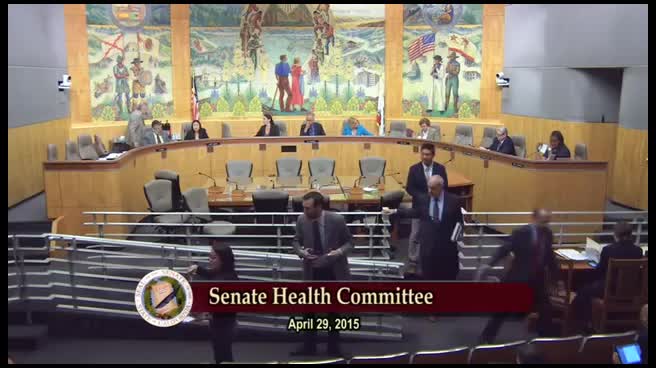 15MIN
Senate Standing Committee on Health
Bill Author

Bill Co-Author(s):