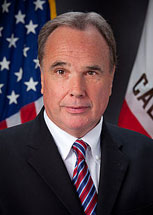
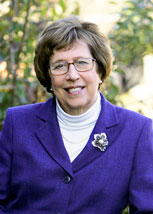
SB 407: Comprehensive Perinatal Services Program: licensed midwives.
- Session Year: 2015-2016
- House: Senate
- Latest Version Date: 2015-09-21
Existing law provides for the Medi-Cal program, which is administered by the State Department of Health Care Services, under which qualified low-income individuals receive health care services, including comprehensive perinatal services. The Medi-Cal program is, in part, governed and funded by federal Medicaid program provisions. Existing law, to the extent that federal financial participation is available, requires that midwifery services provided by a licensed midwife be covered under the Medi-Cal program.
Existing law, the Licensed Midwifery Practice Act of 1993, provides for the licensure of midwives by the Medical Board of California. Existing law authorizes a licensed midwife to assist a woman only in normal pregnancy and childbirth, which is defined as meeting specified conditions, including, among others, a pregnancy in which there is an absence of any preexisting maternal disease or condition likely to affect the pregnancy and of significant disease arising from the pregnancy. Existing law requires the board to adopt regulations further specifying those conditions.
Existing law establishes the Comprehensive Perinatal Services Program, administered by the State Department of Public Health, to maintain, to the extent resources are available, a permanent statewide community-based comprehensive perinatal system to provide care and services to low-income pregnant women and their infants who are considered underserved in terms of comprehensive perinatal care. Existing law generally authorizes a health care provider to employ or contract specified practitioners, including physicians and certified nurse midwives, for the purpose of providing comprehensive perinatal services.
This bill would additionally authorize a health care provider to employ or contract licensed midwives for the purpose of providing comprehensive perinatal services. The bill would provide that, on the effective date of the regulations adopted by the board pursuant to the provisions described above, a licensed midwife shall be eligible to serve as a comprehensive perinatal provider, as defined. The bill would declare that its provisions shall not be construed to revise or expand the scope of practice, as defined, of licensed midwives. The bill would require the State Department of Health Care Services to commence, no later than March 1, 2016, the revision of existing regulations as it determines are necessary for the implementation of this bill.
Existing law provides for the Medi-Cal program, which is administered by the State Department of Health Care Services, under which qualified low-income individuals receive health care services, including comprehensive perinatal services. The Medi-Cal program is, in part, governed and funded by federal Medicaid Program provisions. Existing law, to the extent that federal financial participation is available, requires that midwifery services provided by a licensed midwife be covered under the Medi-Cal program. Existing
Existing law, the Licensed Midwifery Practice Act of 1993, provides for the licensure of midwives by the Medical Board of California. Existing law authorizes a licensed midwife to assist a woman only in normal pregnancy and childbirth, which is defined as meeting specified conditions, including, among others, a pregnancy in which there is an absence of any preexisting maternal disease or condition likely to affect the pregnancy and of significant disease arising from the pregnancy. Existing law requires the board to adopt regulations further specifying those conditions.
Existing law establishes the Comprehensive Perinatal Services Program, administered by the State Department of Public Health, to maintain, to the extent resources are available, a permanent statewide community-based comprehensive perinatal system to provide care and services to low-income pregnant women and their infants who are considered underserved in terms of comprehensive perinatal care. Existing law generally authorizes a health care provider to employ or contract specified practitioners, including physicians and certified nurse midwives, for the purpose of providing comprehensive perinatal services.
This bill would additionally authorize a health care provider to employ or contract licensed midwives for the purpose of providing comprehensive perinatal services. The bill would expand the definition of comprehensive perinatal provider as used in these provisions to include would provide that, on the effective date of the regulations adopted by the board pursuant to the provisions described above, a licensed midwife. midwife shall be eligible to serve as a comprehensive perinatal provider, as defined. The bill would declare that its provisions shall not be construed to revise or expand the scope of practice, as defined, of licensed midwives. The bill would require the State Department of Health Care Services to commence, no later than March 1, 2016, the revision of existing regulations as it determines are necessary for the implementation of this bill.
Existing law provides for the Medi-Cal program, which is administered by the State Department of Health Care Services, under which qualified low-income individuals receive health care services, including comprehensive perinatal services. The Medi-Cal program is, in part, governed and funded by federal Medicaid Program provisions. Existing law, to the extent that federal financial participation is available, requires that midwifery services provided by a licensed midwife be covered under the Medi-Cal program. Existing law establishes the Comprehensive Perinatal Services Program, administered by the State Department of Public Health, to maintain, to the extent resources are available, a permanent statewide community-based comprehensive perinatal system to provide care and services to low-income pregnant women and their infants who are considered underserved in terms of comprehensive perinatal care. Existing law generally authorizes a health care provider to employ or contract specified practitioners, including physicians and certified nurse midwives, for the purpose of providing comprehensive perinatal services.
This bill would additionally authorize a health care provider to employ or contract licensed midwives for the purpose of providing comprehensive perinatal services. The bill would expand the definition of comprehensive perinatal provider as used in these provisions to include a licensed midwife. The bill would declare that its provisions shall not be construed to revise or expand the scope of practice, as defined, of licensed midwives. The bill would require the State Department of Health Care Services to commence, no later than March 1, 2016, the revision of existing regulations as it determines are necessary for the implementation of this bill.
Existing law provides for the Medi-Cal program, which is administered by the State Department of Health Care Services, under which qualified low-income individuals receive health care services, including comprehensive perinatal services. The Medi-Cal program is, in part, governed and funded by federal Medicaid program Program provisions. Existing law, to the extent that federal financial participation is available, requires that midwifery services provided by a licensed midwife be covered under the Medi-Cal program. Existing law establishes the Comprehensive Perinatal Services Program, administered by the State Department of Public Health, to maintain, to the extent resources are available, a permanent statewide community-based comprehensive perinatal system to provide care and services to low-income pregnant women and their infants who are considered underserved in terms of comprehensive perinatal care. Existing law generally authorizes a health care provider to employ or contract specified practitioners, including physicians and certified nurse midwives, for the purpose of providing comprehensive perinatal services.
This bill would additionally authorize a health care provider to employ or contract licensed midwives for the purpose of providing comprehensive perinatal services. The bill would expand the definition of comprehensive perinatal provider as used in these provisions to include a licensed midwife. The bill would declare that its provisions shall not be construed to revise or expand the scope of practice, as defined, of licensed midwives. The bill would require the State Department of Health Care Services to commence, no later than March 1, 2016, the revision of existing regulations as it determines are necessary for the implementation of this bill.
Existing law provides for the Medi-Cal program, which is administered by the State Department of Health Care Services, under which qualified low-income individuals receive health care services, including comprehensive perinatal services. The Medi-Cal program is, in part, governed and funded by federal Medicaid program provisions. Existing law, to the extent that federal financial participation is available, requires that midwifery services provided by a licensed midwife be covered under the Medi-Cal program. Existing law establishes the Comprehensive Perinatal Services Program, administered by the State Department of Public Health, to maintain, to the extent resources are available, a permanent statewide community-based comprehensive perinatal system to provide care and services to low-income pregnant women and their infants who are considered underserved in terms of comprehensive perinatal care. Existing law generally authorizes a health care provider to employ or contract specified practitioners, including physicians and certified nurse midwives, for the purpose of providing comprehensive perinatal services.
This bill would additionally authorize a health care provider to employ or contract licensed midwives for the purpose of providing comprehensive perinatal services. The bill would expand the definition of comprehensive perinatal provider as used in these provisions to include a licensed midwife. The bill would require the State Department of Health Care Services to commence, no later than March 1, 2016, the revision of existing regulations as it determines are necessary for the implementation of this bill.
All of the following provisions apply to the provision of services pursuant to subdivision (u) of Section 14132:
(a)Comprehensive perinatal provider means any general practice physician, family practice physician, obstetrician-gynecologist, pediatrician, certified nurse midwife, a group, any of whose members is one of the above-named providers, or any preferred provider organization or clinic enrolled in the Medi-Cal program and certified pursuant to the standards of this section.
(b)Perinatal means the period from the establishment of pregnancy to one month following delivery.
(c)Comprehensive perinatal services shall include, but not be limited to, the provision of the combination of services developed through the former Department of Health Services Obstetrical Access Pilot Program provided or coordinated by a comprehensive perinatal provider.
(d)The comprehensive perinatal provider shall schedule visits with appropriate providers and shall track the patient to verify whether services have been received. As part of the reimbursement for coordinating these services, the comprehensive perinatal provider shall ensure the provision of the following services either through the providers own service or through subcontracts or referrals to other providers:
(1)A psychosocial assessment and when appropriate referrals to counseling.
(2)Nutrition assessments and when appropriate referral to counseling on food supplement programs, vitamins, and breastfeeding.
(3)Health, childbirth, and parenting education.
(e)(1)Except where existing law prohibits the employment of physicians, a health care provider may employ or contract with all of the following medical and other practitioners for the purpose of providing the comprehensive services delineated in this section:
(A)Physicians, including a general practitioner, a family practice physician, a pediatrician, or an obstetrician-gynecologist.
(B)Certified nurse midwives.
(C)Licensed midwives.
(D)Nurses.
(E)Nurse practitioners.
(F)Physician assistants.
(G)Social workers.
(H)Health and childbirth educators.
(I)Registered dietitians.
(2)The department shall adopt regulations that define the qualifications of any of these practitioners who are not currently included under the regulations adopted pursuant to this chapter. Providers shall, as feasible, utilize staffing patterns that reflect the linguistic and cultural features of the populations they serve.
(f)The California Medical Assistance Program and the Maternal and Child Health Branch of the State Department of Public Health in consultation with the California Conference of Local Health Officers shall establish standards for health care providers and for services rendered pursuant to this subdivision.
(g)The department shall assist local health departments to establish a community perinatal program whose responsibilities may include certifying and monitoring providers of comprehensive perinatal services. The department shall provide the local health departments with technical assistance for the purpose of implementing the community perinatal program. The department shall, to the extent feasible, and to the extent funding for administrative costs is available, utilize local health departments in the administration of the perinatal program. If these funds are not available, the department shall use alternative means to implement the community perinatal program.
(h)(1)It is the intent of the Legislature that the department shall establish a method for reimbursement of comprehensive perinatal providers that shall include a fee for coordinating services and shall be sufficient to cover reasonable costs for the provision of comprehensive perinatal services. The department may utilize fees for service, capitated fees, or global fees to reimburse providers. However, if capitated or global fees are established, the department shall set minimum standards for the provision of services including, but not limited to, the number of prenatal visits and the amount and type of psychosocial, nutritional, and educational services patients shall receive.
(2)Notwithstanding the type of reimbursement system, the comprehensive perinatal provider shall not be financially at risk for the provision of inpatient services. The provision of inpatient services that are not related to perinatal care shall not be subject to the provisions of this section. Inpatient services related to services pursuant to this subdivision shall be reimbursed, in accordance with Section 14081, 14086, 14087, or 14087.2, whichever is applicable.
(i)The department shall develop systems for the monitoring and oversight of the comprehensive perinatal services provided in this section. The monitoring shall include, but shall not be limited to, the collection of information using the perinatal data form.
(j)Participation for services provided pursuant to this section shall be voluntary. The department shall adopt patient rights safeguards for recipients of the comprehensive perinatal services.
(k)The amendments made to this section by the act that added this subdivision shall not be construed to revise or expand the scope of practice of licensed midwives, as defined in Article 24 (commencing with Section 2505) of Chapter 5 of Division 2 of the Business and Professions Code.
(l)Notwithstanding subdivision (a), on the effective date of the regulations adopted by the Medical Board of California pursuant to Section 2507 of the Business and Professions Code, a licensed midwife shall be eligible to serve as a comprehensive perinatal provider.
SEC. 2.The State Department of Health Care Services shall commence, no later than March 1, 2016, the revision of existing regulations as it determines are necessary for the implementation of the amendments made to Section 14134.5 of the Welfare and Institutions Code by this act, in accordance with the Administrative Procedure Act (Chapter 3.5 (commencing with Section 11340) of Part 1 of Division 3 of Title 2 of the Government Code).
All of the following provisions apply to the provision of services pursuant to subdivision (u) of Section 14132:
(a)Comprehensive perinatal provider means any general practice physician, family practice physician, obstetrician-gynecologist, pediatrician, certified nurse midwife, licensed midwife, a group, any of whose members is one of the above-named providers, or any preferred provider organization or clinic enrolled in the Medi-Cal program and certified pursuant to the standards of this section.
(b)Perinatal means the period from the establishment of pregnancy to one month following delivery.
(c)Comprehensive perinatal services shall include, but not be limited to, the provision of the combination of services developed through the former Department of Health Services Obstetrical Access Pilot Program provided or coordinated by a comprehensive perinatal provider.
(d)The comprehensive perinatal provider shall schedule visits with appropriate providers and shall track the patient to verify whether services have been received. As part of the reimbursement for coordinating these services, the comprehensive perinatal provider shall ensure the provision of the following services either through the providers own service or through subcontracts or referrals to other providers:
(1)A psychosocial assessment and when appropriate referrals to counseling.
(2)Nutrition assessments and when appropriate referral to counseling on food supplement programs, vitamins, and breastfeeding.
(3)Health, childbirth, and parenting education.
(e)(1)Except where existing law prohibits the employment of physicians, a health care provider may employ or contract with all of the following medical and other practitioners for the purpose of providing the comprehensive services delineated in this section:
(1)
(A)Physicians, including a general practitioner, a family practice physician, a pediatrician, or an obstetrician-gynecologist.
(2)
(B)Certified nurse midwives.
(3)
(C)Licensed midwives.
(4)
(D)Nurses.
(5)
(E)Nurse practitioners.
(6)
(F)Physician assistants.
(7)
(G)Social workers.
(8)
(H)Health and childbirth educators.
(9)
(I)Registered dietitians.
The
(2)The department shall adopt regulations that define the qualifications of any of these practitioners who are not currently included under the regulations adopted pursuant to this chapter. Providers shall, as feasible, utilize staffing patterns that reflect the linguistic and cultural features of the populations they serve.
(f)The California Medical Assistance Program and the Maternal and Child Health Branch of the State Department of Public Health in consultation with the California Conference of Local Health Officers shall establish standards for health care providers and for services rendered pursuant to this subdivision.
(g)The department shall assist local health departments to establish a community perinatal program whose responsibilities may include certifying and monitoring providers of comprehensive perinatal services. The department shall provide the local health departments with technical assistance for the purpose of implementing the community perinatal program. The department shall, to the extent feasible, and to the extent funding for administrative costs is available, utilize local health departments in the administration of the perinatal program. If these funds are not available, the department shall use alternative means to implement the community perinatal program.
(h)(1)It is the intent of the Legislature that the department shall establish a method for reimbursement of comprehensive perinatal providers that shall include a fee for coordinating services and shall be sufficient to cover reasonable costs for the provision of comprehensive perinatal services. The department may utilize fees for service, capitated fees, or global fees to reimburse providers. However, if capitated or global fees are established, the department shall set minimum standards for the provision of services including, but not limited to, the number of prenatal visits and the amount and type of psychosocial, nutritional, and educational services patients shall receive.
Notwithstanding
(2)Notwithstanding the type of reimbursement system, the comprehensive perinatal provider shall not be financially at risk for the provision of inpatient services. The provision of inpatient services that are not related to perinatal care shall not be subject to the provisions of this section. Inpatient services related to services pursuant to this subdivision shall be reimbursed, in accordance with Section 14081, 14086, 14087, or 14087.2, whichever is applicable.
(i)The department shall develop systems for the monitoring and oversight of the comprehensive perinatal services provided in this section. The monitoring shall include, but shall not be limited to, the collection of information using the perinatal data form.
(j)Participation for services provided pursuant to this section shall be voluntary. The department shall adopt patient rights safeguards for recipients of the comprehensive perinatal services.
(k)The amendments made to this section by the act that added this subdivision shall not be construed to revise or expand the scope of practice of licensed midwives, as defined in Article 24 (commencing with Section 2505) of Chapter 5 of Division 2 of the Business and Professions Code.
(l)Notwithstanding subdivision (a), on the effective date of the regulations adopted by the Medical Board of California pursuant to Section 2507 of the Business and Professions Code, a licensed midwife shall be eligible to serve as a comprehensive perinatal provider.
SEC. 2.The State Department of Health Care Services shall commence, no later than March 1, 2016, the revision of existing regulations as it determines are necessary for the implementation of the amendments made to Section 14134.5 of the Welfare and Institutions Code by this act, in accordance with the Administrative Procedure Act (Chapter 3.5 (commencing with Section 11340) of Part 1 of Division 3 of Title 2 of the Government Code).
All of the following provisions apply to the provision of services pursuant to subdivision (u) of Section 14132:
(a)Comprehensive perinatal provider means any general practice physician, family practice physician, obstetrician-gynecologist, pediatrician, certified nurse midwife, licensed midwife, a group, any of whose members is one of the above-named providers, or any preferred provider organization or clinic enrolled in the Medi-Cal program and certified pursuant to the standards of this section.
(b)Perinatal means the period from the establishment of pregnancy to one month following delivery.
(c)Comprehensive perinatal services shall include, but not be limited to, the provision of the combination of services developed through the former Department of Health Services Obstetrical Access Pilot Program provided or coordinated by a comprehensive perinatal provider.
(d)The comprehensive perinatal provider shall schedule visits with appropriate providers and shall track the patient to verify whether services have been received. As part of the reimbursement for coordinating these services, the comprehensive perinatal provider shall ensure the provision of the following services either through the providers own service or through subcontracts or referrals to other providers:
(1)A psychosocial assessment and when appropriate referrals to counseling.
(2)Nutrition assessments and when appropriate referral to counseling on food supplement programs, vitamins, and breastfeeding.
(3)Health, childbirth, and parenting education.
(e)Except where existing law prohibits the employment of physicians, a health care provider may employ or contract with all of the following medical and other practitioners for the purpose of providing the comprehensive services delineated in this section:
(1)Physicians, including a general practitioner, a family practice physician, a pediatrician, or an obstetrician-gynecologist.
(2)Certified nurse midwives.
(3)Licensed midwives.
(4)Nurses.
(5)Nurse practitioners.
(6)Physician assistants.
(7)Social workers.
(8)Health and childbirth educators.
(9)Registered dietitians.
The department shall adopt regulations that define the qualifications of any of these practitioners who are not currently included under the regulations adopted pursuant to this chapter. Providers shall, as feasible, utilize staffing patterns that reflect the linguistic and cultural features of the populations they serve.
(f)The California Medical Assistance Program and the Maternal and Child Health Branch of the State Department of Public Health in consultation with the California Conference of Local Health Officers shall establish standards for health care providers and for services rendered pursuant to this subdivision.
(g)The department shall assist local health departments to establish a community perinatal program whose responsibilities may include certifying and monitoring providers of comprehensive perinatal services. The department shall provide the local health departments with technical assistance for the purpose of implementing the community perinatal program. The department shall, to the extent feasible, and to the extent funding for administrative costs is available, utilize local health departments in the administration of the perinatal program. If these funds are not available, the department shall use alternative means to implement the community perinatal program.
(h)It is the intent of the Legislature that the department shall establish a method for reimbursement of comprehensive perinatal providers that shall include a fee for coordinating services and shall be sufficient to cover reasonable costs for the provision of comprehensive perinatal services. The department may utilize fees for service, capitated fees, or global fees to reimburse providers. However, if capitated or global fees are established, the department shall set minimum standards for the provision of services including, but not limited to, the number of prenatal visits and the amount and type of psychosocial, nutritional, and educational services patients shall receive.
Notwithstanding the type of reimbursement system, the comprehensive perinatal provider shall not be financially at risk for the provision of inpatient services. The provision of inpatient services that are not related to perinatal care shall not be subject to the provisions of this section. Inpatient services related to services pursuant to this subdivision shall be reimbursed, in accordance with Section 14081, 14086, 14087, or 14087.2, whichever is applicable.
(i)The department shall develop systems for the monitoring and oversight of the comprehensive perinatal services provided in this section. The monitoring shall include, but shall not be limited to, the collection of information using the perinatal data form.
(j)Participation for services provided pursuant to this section shall be voluntary. The department shall adopt patient rights safeguards for recipients of the comprehensive perinatal services.
(k)The amendments made to this section by the act that added this subdivision shall not be construed to revise or expand the scope of practice of licensed midwives, as defined in Article 24 (commencing with Section 2505) of Chapter 5 of Division 2 of the Business and Professions Code.
SEC. 2.The State Department of Health Care Services shall commence, no later than March 1, 2016, the revision of existing regulations as it determines are necessary for the implementation of the amendments made to Section 14134.5 of the Welfare and Institutions Code by this act, in accordance with the Administrative Procedure Act (Chapter 3.5 (commencing with Section 11340) of Part 1 of Division 3 of Title 2 of the Government Code).
All of the following provisions apply to the provision of services pursuant to subdivision (u) of Section 14132:
(a)Comprehensive perinatal provider means any general practice physician, family practice physician, obstetrician-gynecologist, pediatrician, certified nurse midwife, licensed midwife, a group, any of whose members is one of the above-named providers, or any preferred provider organization or clinic enrolled in the Medi-Cal program and certified pursuant to the standards of this section.
(b)Perinatal means the period from the establishment of pregnancy to one month following delivery.
(c)Comprehensive perinatal services shall include, but not be limited to, the provision of the combination of services developed through the former Department of Health Services Obstetrical Access Pilot Program provided or coordinated by a comprehensive perinatal provider.
(d)The comprehensive perinatal provider shall schedule visits with appropriate providers and shall track the patient to verify whether services have been received. As part of the reimbursement for coordinating these services, the comprehensive perinatal provider shall ensure the provision of the following services either through the providers own service or through subcontracts or referrals to other providers:
(1)A psychosocial assessment and when appropriate referrals to counseling.
(2)Nutrition assessments and when appropriate referral to counseling on food supplement programs, vitamins vitamins, and breast-feeding. breastfeeding.
(3)Health, childbirth, and parenting education.
(e)Except where existing law prohibits the employment of physicians, a health care provider may employ or contract with all of the following medical and other practitioners for the purpose of providing the comprehensive services delineated in this section:
(1)Physicians, including a general practitioner, a family practice physician, a pediatrician, or an obstetrician-gynecologist.
(2)Certified nurse midwives.
(3)Licensed midwives.
(4)Nurses.
(5)Nurse practitioners.
(6)Physician assistants.
(7)Social workers.
(8)Health and childbirth educators.
(9)Registered dietitians.
The department shall adopt regulations that define the qualifications of any of these practitioners who are not currently included under the regulations adopted pursuant to this chapter. Providers shall, as feasible, utilize staffing patterns that reflect the linguistic and cultural features of the populations they serve.
(f)The California Medical Assistance Program and the Maternal and Child Health Branch of the State Department of Public Health in consultation with the California Conference of Local Health Officers shall establish standards for health care providers and for services rendered pursuant to this subdivision.
(g)The department shall assist local health departments to establish a community perinatal program whose responsibilities may include certifying and monitoring providers of comprehensive perinatal services. The department shall provide the local health departments with technical assistance for the purpose of implementing the community perinatal program. The department shall, to the extent feasible, and to the extent funding for administrative costs is available, utilize local health departments in the administration of the perinatal program. If these funds are not available, the department shall use alternative means to implement the community perinatal program.
(h)It is the intent of the Legislature that the department shall establish a method for reimbursement of comprehensive perinatal providers that shall include a fee for coordinating services and shall be sufficient to cover reasonable costs for the provision of comprehensive perinatal services. The department may utilize fees for service, capitated fees, or global fees to reimburse providers. However, if capitated or global fees are established, the department shall set minimum standards for the provision of services including, but not limited to, the number of prenatal visits and the amount and type of psychosocial, nutritional, and educational services patients shall receive.
Notwithstanding the type of reimbursement system, the comprehensive perinatal provider shall not be financially at risk for the provision of inpatient services. The provision of inpatient services that are not related to perinatal care shall not be subject to the provisions of this section. Inpatient services related to services pursuant to this subdivision shall be reimbursed, in accordance with Section 14081, 14086, 14087, or 14087.2, whichever is applicable.
(i)The department shall develop systems for monitoring and oversight of the comprehensive perinatal services provided in this section. The monitoring shall include, but shall not be limited to, collection of information using the perinatal data form.
(j)Participation for services provided pursuant to this section shall be voluntary. The department shall adopt patient rights safeguards for recipients of the comprehensive perinatal services.
(k)The amendments made to this section by the act that added this subdivision shall not be construed to revise or expand the scope of practice of licensed midwives, as defined in Article 24 (commencing with Section 2505) of Chapter 5 of Division 2 of the Business and Professions Code.
SEC. 2.The State Department of Health Care Services shall commence, no later than March 1, 2016, the revision of existing regulations as it determines are necessary for the implementation of the amendments made to Section 14134.5 of the Welfare and Institutions Code by this act, in accordance with the Administrative Procedure Act (Chapter 3.5 (commencing with Section 11340) of Part 1 of Division 3 of Title 2 of the Government Code).
All of the following provisions apply to the provision of services pursuant to subdivision (u) of Section 14132:
(a)Comprehensive perinatal provider means any general practice physician, family practice physician, obstetrician-gynecologist, pediatrician, certified nurse midwife, licensed midwife, a group, any of whose members is one of the above-named physicians providers, or any preferred provider organization or clinic enrolled in the Medi-Cal program and certified pursuant to the standards of this section.
(b)Perinatal means the period from the establishment of pregnancy to one month following delivery.
(c)Comprehensive perinatal services shall include, but not be limited to, the provision of the combination of services developed through the former Department of Health Services Obstetrical Access Pilot Program. Program provided or coordinated by a comprehensive perinatal provider.
(d)The comprehensive perinatal provider shall schedule visits with appropriate providers and shall track the patient to verify whether services have been received. As part of the reimbursement for coordinating these services, the comprehensive perinatal provider shall ensure the provision of the following services either through the providers own service or through subcontracts or referrals to other providers:
(1)A psychosocial assessment and when appropriate referrals to counseling.
(2)Nutrition assessments and when appropriate referral to counseling on food supplement programs, vitamins and breast-feeding.
(3)Health, childbirth, and parenting education.
(e)Except where existing law prohibits the employment of physicians, a health care provider may employ or contract with all of the following medical and other practitioners for the purpose of providing the comprehensive services delineated in this section:
(1)Physicians, including a general practitioner, a family practice physician, a pediatrician, or an obstetrician-gynecologist.
(2)Certified nurse midwives.
(3)Licensed midwives.
(3)
(4)Nurses.
(4)
(5)Nurse practitioners.
(5)
(6)Physician assistants.
(6)
(7)Social workers.
(7)
(8)Health and childbirth educators.
(8)
(9)Registered dietitians.
The department shall adopt regulations which that define the qualifications of any of these practitioners who are not currently included under the regulations adopted pursuant to this chapter. Providers shall, as feasible, utilize staffing patterns which that reflect the linguistic and cultural features of the populations they serve.
(f)The California Medical Assistance Program and the Maternal and Child Health Branch of the State Department of Public Health Services in consultation with the California Conference of Local Health Officers shall establish standards for health care providers and for services rendered pursuant to this subdivision.
(g)The department shall assist local health departments to establish a community perinatal program whose responsibilities may include certifying and monitoring providers of comprehensive perinatal services. The department shall provide the local health departments with technical assistance for the purpose of implementing the community perinatal program. The department shall, to the extent feasible, and to the extent funding for administrative costs is available, utilize local health departments in the administration of the perinatal program. If these funds are not available, the department shall use alternative means to implement the community perinatal program.
(h)It is the intent of the Legislature that the department shall establish a method for reimbursement of comprehensive perinatal providers which that shall include a fee for coordinating services and which shall be sufficient to cover reasonable costs for the provision of comprehensive perinatal services. The department may utilize fees for service, capitated fees, or global fees to reimburse providers. However, if capitated or global fees are established, the department shall set minimum standards for the provision of services including, but not limited to, the number of prenatal visits and the amount and type of psychosocial, nutritional, and educational services patients shall receive.
Notwithstanding the type of reimbursement system, the comprehensive perinatal provider shall not be financially at risk for the provision of inpatient services. The provision of inpatient services which that are not related to perinatal care shall not be subject to the provisions of this section. Inpatient services related to services pursuant to this subdivision shall be reimbursed, in accordance with Section 14081, 14086, 14087, or 14087.2, whichever is applicable.
(i)The department shall develop systems for monitoring and oversight of the comprehensive perinatal services provided in this section. The monitoring shall include, but shall not be limited to, collection of information using the perinatal data form.
(j)Participation for services provided pursuant to this section shall be voluntary. The department shall adopt patient rights safeguards for recipients of the comprehensive perinatal services.
SEC. 2.The State Department of Health Care Services shall commence, no later than March 1, 2016, the revision of existing regulations as it determines are necessary for the implementation of the amendments made to Section 14134.5 of the Welfare and Institutions Code by this act, in accordance with the Administrative Procedure Act (Chapter 3.5 (commencing with Section 11340) of Part 1 of Division 3 of Title 2 of the Government Code).
|
Date
|
Status
|
|---|---|
| May 28, 2015 | Referred to Coms. on HEALTH and B. & P. |
| Sep 21, 2015 | Chaptered by Secretary of State. Chapter 313, Statutes of 2015. |
| Sep 21, 2015 | Approved by the Governor. |
| Sep 3, 2015 | Enrolled and presented to the Governor at 10 a.m. |
| Sep 1, 2015 | Assembly amendments concurred in. (Ayes 40. Noes 0.) Ordered to engrossing and enrolling. |
| Sep 1, 2015 | Assembly amendments concurred in. (Ayes 40. Noes 0. Page 2376.) Ordered to engrossing and enrolling. |
| Aug 31, 2015 | Ordered to special consent calendar. |
| Aug 27, 2015 | Read third time. Passed. (Ayes 78. Noes 0. Page 2637.) Ordered to the Senate. |
| Aug 27, 2015 | Read third time. Passed. Ordered to the Senate. |
| Aug 27, 2015 | In Senate. Concurrence in Assembly amendments pending. |
| Aug 20, 2015 | Read second time. Ordered to consent calendar. |
| Aug 19, 2015 | From committee: Do pass. Ordered to consent calendar. (Ayes 17. Noes 0.) (August 19). |
| Jul 7, 2015 | Read second time and amended. Re-referred to Com. on APPR. |
| Jul 6, 2015 | From committee: Do pass as amended and re-refer to Com. on APPR. (Ayes 14. Noes 0.) (June 30). |
| Jun 24, 2015 | From committee: Do pass and re-refer to Com. on B. & P. (Ayes 17. Noes 0.) (June 23). Re-referred to Com. on B. & P. |
| Jun 17, 2015 | From committee with author's amendments. Read second time and amended. Re-referred to Com. on HEALTH. |
| Feb 25, 2015 | Introduced. Read first time. To Com. on RLS. for assignment. To print. |
| May 18, 2015 | Read third time. Passed. (Ayes 36. Noes 0.) Ordered to the Assembly. |
| May 18, 2015 | Read third time. Passed. (Ayes 36. Noes 0. Page 1030.) Ordered to the Assembly. |
| May 18, 2015 | In Assembly. Read first time. Held at Desk. |
| May 13, 2015 | Ordered to special consent calendar. |
| May 12, 2015 | Read second time. Ordered to third reading. |
| May 11, 2015 | From committee: Do pass. (Ayes 7. Noes 0.) (May 11). |
| May 11, 2015 | From committee: Do pass. (Ayes 7. Noes 0. Page 960.) (May 11). |
| May 1, 2015 | Set for hearing May 11. |
| Apr 30, 2015 | May 4 hearing postponed by committee. |
| Apr 24, 2015 | Set for hearing May 4. |
| Apr 21, 2015 | Read second time and amended. Re-referred to Com. on APPR. |
| Apr 20, 2015 | From committee: Do pass as amended and re-refer to Com. on APPR. (Ayes 9. Noes 0. Page 651.) (April 15). |
| Mar 24, 2015 | Set for hearing April 15. |
| Mar 5, 2015 | Referred to Com. on HEALTH. |
| Feb 26, 2015 | From printer. May be acted upon on or after March 28. |
|
Date
|
Description
|
Location
|
Votes
|
|
|---|---|---|---|---|
| Sep 1, 2015 | Special Consent #9 SB407 Morrell | Senate Floor |
Passed |
|
| Aug 27, 2015 | SB 407 Morrell Consent Calendar Second Day Regular Session | Assembly Floor |
Passed |
|
| Aug 19, 2015 | Do pass. To Consent Calendar. | Assembly Standing Committee on Appropriations |
Passed |
|
| Jun 30, 2015 | Do pass as amended and be re-referred to the Committee on [Appropriations] | Assembly Standing Committee on Business and Professions |
Passed |
|
| Jun 23, 2015 | Do pass and be re-referred to the Committee on [Business and Professions] | Assembly Standing Committee on Health |
Passed |
|
| May 18, 2015 | Special Consent #1 SB407 Morrell | Senate Floor |
Passed |
|
| May 11, 2015 | Do pass | Senate Standing Committee on Appropriations |
Passed |
|
| Apr 15, 2015 | Do pass as amended, but first amend, and re-refer to the Committee on [Appropriations] | Senate Standing Committee on Health |
Passed |
This list shows positions taken on this bill by organizations on the date displayed, which is linked to the original source.
Positions by individuals are not included.
|
Organization
|
Position
|
Date
|
|---|---|---|
| American College of Obstetricians and Gynecologists Region IV | * Against | Jun 23, 2015 |
| American Congress of Obstetricians and Gynecologists | * Against | Jun 23, 2015 |
| American Congress of Obstetricians and Gynecologists | * Against Unless Amend | Jun 23, 2015 |
| American Nurses Association California | ** Support | Jun 23, 2015 |
| Association of California Healthcare Districts | ** Support | Jun 23, 2015 |
| Association Of California Healthcare Districts (Achd) | * Support | Jun 30, 2015 |
| California Association of Midwives | * Support | Jun 30, 2015 |
| California Black Health Network | * Support | Jun 30, 2015 |
| California Families for Access to Midwifes | * Support | Jun 23, 2015 |
| California Families for Access to Midwives | * Support | Jun 30, 2015 |
| California Nurse-Midwives Association | ** Support | Jun 23, 2015 |
| Capital OB | ** Support | Jun 23, 2015 |
| Central California Alliance For Health | ** Support | Jun 23, 2015 |
| GYN, Inc. | ** Support | Jun 23, 2015 |
| HEALTH | ** Against | Jun 23, 2015 |
| Improving Birth, Inc. | ** Support | Jun 23, 2015 |
| Medical Board of California | * Neutral | Jun 30, 2015 |
| Monterey County Board of Supervisors | ** Support | Jun 23, 2015 |
| Planned Parenthood Affiliates Of California | ** Support | Jun 23, 2015 |
| Sacramento Midwifery Services | * Support | Jun 30, 2015 |
| Santa Cruz County | ** Support | Jun 23, 2015 |
| Wellspace Health | ** Support | Jun 23, 2015 |
SB 407
Page 6
|
Office of Senate Floor Analyses (916) 651-1520 Fax: (916) 327-4478 |
UNFINISHED BUSINESS
Bill No: SB 407
Amended: 7/7/15
SENATE HEALTH COMMITTEE: 9-0, 4/15/15
AYES: Hernandez, Nguyen, Hall, Mitchell, Monning, Nielsen, Pan, Roth, Wolk
SENATE APPROPRIATIONS COMMITTEE: 7-0, 5/11/15
AYES: Lara, Bates, Beall, Hill, Leyva, Mendoza, Nielsen
SENATE FLOOR: 36-0, 5/18/15 (Consent)
AYES: Allen, Anderson, Bates, Beall, Block, Cannella, De León, Fuller, Gaines, Galgiani, Hancock, Hernandez, Hertzberg, Hill, Hueso, Huff, Jackson, Lara, Leno, Leyva, Liu, McGuire, Mendoza, Mitchell, Monning, Moorlach, Morrell, Nguyen, Nielsen, Pan, Roth, Runner, Stone, Vidak, Wieckowski, Wolk
NO VOTE RECORDED: Berryhill, Hall, Pavley
ASSEMBLY FLOOR: 78-0, 8/27/15 (Consent) - See last page for vote
SUBJECT: Comprehensive Perinatal Services Program: licensed midwives
SOURCE: California Association of Midwives
DIGEST: This bill makes licensed midwives eligible to be “comprehensive perinatal provider” as used in the Comprehensive Perinatal Services Program (CPSP) when regulations have been adopted by the Medical Board of California (MBC). Authorizes a health care provider to employ or contract with licensed midwives for the purpose of providing comprehensive perinatal services in the CPSP.
Assembly Amendments make licensed midwives eligible to be comprehensive perinatal providers in CPSP when regulations have been adopted by the MBC, and remove the opposition of the American College of Obstetricians and Gynecologists, District IX California.
Existing law:
Establishes the Medi-Cal program, which is administered by the Department of Health Care Services (DHCS), under which qualified low-income individuals receive health care services, including comprehensive perinatal services. Comprehensive perinatal services are a Medi-Cal benefit, as provided through an agreement with a CPSP designated health care provider meeting the standards developed by the Department of Public Health (DPH), and subject to utilization controls.
Establishes the CPSP, administered by DPH, to maintain, to the extent resources are available, a permanent, statewide community-based comprehensive perinatal system to provide care and services to low-income pregnant women and their infants who are considered underserved in terms of comprehensive perinatal care.
Defines, for purposes of the CPSP, a “comprehensive perinatal provider” to mean any general practice physician, family practice physician, obstetrician-gynecologist, pediatrician, certified nurse midwife, a group, any of whose members is one of the above-named physicians, or any preferred provider organization or clinic enrolled in the Medi-Cal program and CPSP certified.
Defines, for purposes of the CPSP, “comprehensive perinatal services” to include, but not be limited to, the provision of the combination of services developed through the Department of Health Services Obstetrical Access Pilot Program.
Authorizes, for the purpose of providing comprehensive perinatal services, a health care provider to employ or contract specified practitioners, including physicians, certified nurse midwives, nurses, nurse practitioners, physician assistants, social workers, health and childbirth educations and registered dieticians.
Allows a licensed midwife to attend cases of normal pregnancy and childbirth. Requires the MBC to adopt regulations specifying the conditions that fall outside a normal pregnancy and childbirth (where there is an absence of any preexisting maternal disease or condition likely to affect the pregnancy or a significant disease arising from the pregnancy or a significant disease arising from the pregnancy).
This bill:
Allows licensed midwifes to be eligible to serve as a comprehensive perinatal providers in CSPS on the effective date of the regulations adopted by the MBC.
Authorizes a health care provider to employ or contract with licensed midwives for the purpose of providing comprehensive perinatal services in the CPSP.
Clarifies that “comprehensive perinatal services” in CPSP are services provided or coordinated by a comprehensive perinatal provider.
Prohibits this bill from being construed to revise or expand the scope of practice of licensed midwives.
Requires DHCS to commence, no later than March 1, 2016, the revision of existing regulations, in accordance with the Administrative Procedure Act, as it determines necessary for the implementation of this bill.
Comments
Author’s statement. According to the author, licensed midwives provide comprehensive childbirth, prenatal health, and breastfeeding education to their patients. Studies have shown that women who receive these services during pregnancy have healthier pregnancies and less complicated births. This bill expands health care access by adding licensed midwives to the list of Medi-Cal-eligible comprehensive perinatal services providers. Expectant mothers of all income levels should have options when it comes to deciding where and how they bring their children into the world. The current non-inclusion of licensed midwives from the list of eligible Medi-Cal providers limits these choices for low-income individuals. This bill would expand the choices available to low-income, pregnant women. Increasing the number of comprehensive perinatal Medi-Cal providers alleviates wait times and access issues within the overall perinatal health delivery system, allowing women to receive timely and personalized care. Authorizing licensed midwives as Medi-Cal providers of comprehensive perinatal services will help all low-income women, even if they do not choose a licensed midwife as their provider. Lastly, authorizing licensed midwives as comprehensive perinatal services providers will save the state resources. A home birth or “birth center” birth with a licensed midwife can save the state up to 80 percent when compared to the cost of a hospital birth. Increasing access to licensed midwives drives down the cost in the state health care system while also ensuring safe, quality care for pregnancy and childbirth.
CPSP. Under CPSP, Medi-Cal-eligible women receive comprehensive services, including prenatal care, health education, nutrition services, and psychosocial support for up to 60 days after delivery of their infants. Local health department staff offer technical assistance and consultation to potential and approved providers in the implementation of CPSP program standards. The Maternal Child and Adolescent Health Program in DPH develops standards and policies, provides technical assistance and consultation to the local health perinatal services coordinators, and maintains an ongoing program of training for all CPSP practitioners throughout the state.
CPSP provides reimbursement for some services that Medi-Cal does not provide reimbursement for, including early entry into care, vitamins, case coordination, a 10th antepartum visit, and support services. The goals of the CPSP program are to decrease and maintain the decreased level of perinatal, maternal and infant mortality and morbidity and to support methods of providing comprehensive prenatal care that prevent prematurity and the incidence of low birth weight infants.
Licensed midwives. Licensed midwives are licensed by the Medical Board of California and practice under the Midwifery Practice Act, which specifies the requirements for licensure and the scope of practice for a licensed midwife. There are 332 licensed midwives in California as of December 31, 2014. Existing law defines the practice of midwifery as the furthering or undertaking by any licensed midwife to assist a woman in childbirth as long as progress meets criteria accepted as normal. AB 1308 (Bonilla, Chapter 665, Statutes of 2013) made significant amendments to various Business and Professions Code sections governing the practice of midwifery in California.
Licensed midwives can practice without physician supervision, and their scope of practice allows them to attend cases of normal pregnancy and childbirth (as defined), and provide prenatal, intrapartum, and postpartum care, including family-planning care, for the mother, and immediate care for the newborn. A licensed midwife is authorized to directly obtain supplies and devices, obtain and administer drugs and diagnostic tests, order testing, and receive reports that are necessary to his or her practice of midwifery and consistent with his or her scope of practice. The scope of practice of midwifery does not include the assisting of childbirth by any artificial, forcible, or mechanical means, and licensed midwives are not authorized to practice medicine, perform surgery or perform abortions.
FISCAL EFFECT: Appropriation: No Fiscal Com.: Yes Local: No
According to the Assembly Appropriations Committee, negligible state fiscal effect. DHCS is already in the process of making the necessary changes to the California Medicaid State Plan to include licensed midwives on the list of medical professionals who are legally authorized to provide services.
American Nurses Association California
Association of California Healthcare Districts
California Association of Midwives
California Black Health Network
California Families for Access to Midwives
California Nurse-Midwives Association
Capital OB/GYN, Inc.
Central California Alliance for Health
Improving Birth, Inc.
Monterey County Board of Supervisors
Santa Cruz County Board of Supervisors
Wellspace Health
OPPOSITION: (Verified 8/27/15)
None received
ARGUMENTS
IN SUPPORT: The California
Association of Midwives (CAW) writes that licensed
midwives work in various health care settings and have specialized
training in attending
births in out-of-hospital settings, such as California's licensed
alternative birth centers.
CAW argues the passage of this bill will
allow more California mothers to receive care in these safe,
specialized settings as there is
increasing consumer demand for prenatal care with midwives in birth
centers. CAW states this bill will
allow LMs to help fill the shortage of maternity care providers who
take Medi-Cal and CPSP as
many rural and medically underserved communities have no health care
provider who accepts CPSP, while licensed midwives are waiting to
fill that gap. CAW concludes that pregnant
women who receive prenatal care with licensed midwives have reduced
rates of costly pregnancy
complications such as prematurity and cesarean section, which could
lead to significant cost
savings for the state.
The California Nurse-Midwives Association writes in support that this bill will increase the number of maternity care providers who accept Medi-Cal. According to a recent report, California ranks second lowest in percentage of physicians currently accepting new Medi-Cal patients, at a rate of 54 percent. California’s underserved deserve better health care access. Increasing CPSP providers will make it easier for women to receive quality prenatal care early in their pregnancy resulting in better health outcomes for themselves and their babies, at a lower cost to the taxpayers.
ASSEMBLY FLOOR: 78-0, 8/27/15
AYES: Achadjian, Alejo, Travis Allen, Baker, Bigelow, Bloom, Bonilla, Bonta, Brough, Brown, Burke, Calderon, Campos, Chang, Chau, Chávez, Chiu, Chu, Cooley, Cooper, Dababneh, Dahle, Daly, Dodd, Eggman, Beth Gaines, Gallagher, Cristina Garcia, Eduardo Garcia, Gatto, Gipson, Gomez, Gonzalez, Gordon, Gray, Grove, Hadley, Harper, Roger Hernández, Holden, Irwin, Jones, Jones-Sawyer, Kim, Lackey, Levine, Linder, Lopez, Low, Maienschein, Mathis, Mayes, McCarty, Medina, Melendez, Mullin, Nazarian, Obernolte, O'Donnell, Olsen, Patterson, Perea, Quirk, Rendon, Ridley-Thomas, Rodriguez, Salas, Santiago, Steinorth, Mark Stone, Thurmond, Ting, Wagner, Waldron, Weber, Wilk, Wood, Atkins
NO VOTE RECORDED: Frazier, Williams
Prepared by: Scott Bain / HEALTH /
8/28/15 17:13:55
**** END ****
Date of Hearing: August 19, 2015
ASSEMBLY COMMITTEE ON APPROPRIATIONS
Jimmy Gomez, Chair
SB 407
(Morrell) – As Amended July 7, 2015
Policy Committee: |
Health |
Vote: |
17 - 0 |
|
Business and Professions |
|
14 - 0 |
|
|
|
|
Urgency: No State Mandated Local Program: No Reimbursable: No
SUMMARY:
This bill authorizes licensed midwives to provide services under the Comprehensive Perinatal Services Program (CPSP).
FISCAL EFFECT:
Negligible state fiscal effect. DHCS is already in the process of making the necessary changes to the California Medicaid State Plan to include licensed midwives on the list of medical professionals who are legally authorized to provide services.
COMMENTS:
Purpose. The author indicates existing law limits choices for low-income individuals by the exclusion of licensed midwives on the list of eligible Medi-Cal providers for CPSP services.
CPSP. The CPSP, under the direction of DPH, provides enhanced services to pregnant Medi-Cal beneficiaries, from conception through 60 days postpartum. Beneficiaries receive enhanced nutrition, psychosocial, and health education services, in addition to standard obstetric services under the program, to improve maternal and child health. According to DPH, there are over 1,500 Medi-Cal providers approved to for the CPSP, in both FFS and MCMC. The CPSP is administered by the Maternal, Child, and Adolescent Health program. Licensed midwives, who are regulated by the Medical Board of California, are authorized to attend to normal pregnancies and childbirths, and are currently not authorized as providers. This bill authorizes them to be employed to provide services on the effective date of the bill, and as "lead" CPSP providers on the effective date of regulations adopted by the MBC related to the removal of physician supervision over licensed midwives.
Analysis Prepared by: Lisa Murawski / APPR. / (916) 319-2081
SB 407
Page 7
Date of Hearing: June 30, 2015
ASSEMBLY COMMITTEE ON BUSINESS AND PROFESSIONS
Susan Bonilla, Chair
SB 407
(Morrell) – As Amended June 17, 2015
SENATE VOTE: 36-0
NOTE: This bill is double-referred, having been previously heard by the Assembly Health Committee on June 23, 2015, and approved by a 17-0 vote.
SUBJECT: Comprehensive Perinatal Services Program: licensed midwives.
SUMMARY: Authorizes licensed midwives to provide services under the Comprehensive Perinatal Services Program.
EXISTING LAW:
Establishes the Licensed Midwifery Practice Act of 1993 (Act), which provides for the licensure of midwives by the Medical Board of California (MBC). (Business and Professions Code (BPC) Section 2505 et seq.)
Provides that the license to practice midwifery authorizes the holder to attend cases of normal pregnancy and childbirth and to provide prenatal, intrapartum, and postpartum care, including family-planning care, for the mother, and immediate care for the newborn. (BPC Section 2507(a))
Defines the practice of midwifery as the furthering or undertaking by any licensed midwife to assist a woman in childbirth as long as progress meets criteria accepted as normal, as specified. (BPC Section 2507(b))
Establishes the Medi-Cal program, which is administered by the Department of Health Care Services (DHCS), under which qualified low-income individuals receive health care services, including comprehensive perinatal services. Comprehensive perinatal services are a Medi-Cal benefit, as provided through an agreement with a CPSP designated health care provider meeting the standards developed by the State Department of Public Health (DPH), and subject to utilization controls. (Welfare and Institutions Code (WIC) Section 14000 et seq., 14132(u))
Requires, to the extent that federal financial participation is available, and, subject to utilization controls, that midwifery services provided by a licensed midwife are covered under the Medi-Cal program. (WIC Section 14132.39)
Establishes the CPSP, administered by DPH, to maintain, to the extent resources are available, a permanent, statewide community-based comprehensive perinatal system to provide care and services to low-income pregnant women and their infants who are considered underserved in terms of comprehensive perinatal care.
Defines, for purposes of the CPSP, a “comprehensive perinatal provider” to mean any general practice physician, family practice physician, obstetrician-gynecologist, pediatrician, certified nurse midwife, a group, any of whose members is one of the above-named physicians, or any preferred provider organization or clinic enrolled in the Medi-Cal program and CPSP certified.
Authorizes, for the purpose of providing comprehensive perinatal services, a health care provider to employ or contract specified practitioners, including physicians, certified nurse midwives, nurses, nurse practitioners, physician assistants, social workers, health and childbirth educations and registered dieticians.
THIS BILL:
Expands the definition of “comprehensive perinatal provider” as used in the CPSP to include a licensed midwife.
Authorizes a health care provider to employ or contract with licensed midwives for the purpose of providing comprehensive perinatal services in the CPSP.
Provides that its provisions shall not be construed to revise or expand the scope of practice of licensed midwives, as specified.
Requires the Department of Health Care Services to commence, no later than March 1, 2016, the revision of existing regulations, in accordance with the Administrative Procedure Act, as it determines necessary for the implementation of this bill.
Makes conforming changes.
FISCAL EFFECT: According to the Senate Appropriations Committee Analysis dated May 11, 2015:
One-time costs, less than $50,000, to revise existing regulations and develop a state plan amendment to allow licensed midwives to provide services in the Comprehensive Perinatal Services Program, under Medi-Cal (General Fund and federal funds).
No significant impact to the utilization of services in the Medi-Cal managed care program is anticipated. Under current law and practice, the services that are authorized under the Comprehensive Perinatal Services Program are required benefits for Medi-Cal managed care beneficiaries. Because those beneficiaries already have access to those services through managed care, it is not likely that adding an additional authorized provider will increased the utilization of those services. (For example, if a licensed midwife who is seeing a pregnant woman in Medi-Cal managed care wished to order a covered service, that midwife could simply work with another eligible practitioner to order the services.)
Unknown potential increase in costs to provide services in the fee-for-service Medi-Cal system (local funds and federal funds). Under current practice, Medi-Cal beneficiaries in fee-for-service can receive Comprehensive Perinatal Services Program services from their health care provider. In the fee-for-service system, those costs are paid for with local funds and federal matching funds. The state does not provide General Fund support for those costs. It is possible that there could be an increase in the utilization of services under this bill, to the extent that Medi-Cal beneficiaries are being provided care by a licensed midwife and it is not easy for that provider to get another authorized provider to order the specified services. The extent to which the fact that licensed midwives are not eligible to provide the specified services is actually a barrier to women getting those services in not known, so it is difficult to estimate whether there would actually be an increase is service utilization. The bill does not create a new program or mandate a higher level of service (the legal test for whether a state mandate is reimbursable). Therefore, it is not likely that the state would be required to reimburse counties for any increased costs under the bill, even if utilization of services does increase.
COMMENTS:
Purpose.
This bill is sponsored by the California Association of Midwives.
According to the author, "Licensed midwives provide
comprehensive childbirth, prenatal health, and breastfeeding
education to their clients. Studies have shown that women who
receive these services during pregnancy have healthier pregnancies
and less complicated births. [This bill] expands health care access
by adding licensed midwives to the list of Medi-Cal eligible
comprehensive perinatal services providers. Expectant mothers of all
income levels should have options when it comes to deciding where and
how they bring their children into the world. The current
non-inclusion of licensed midwives….limits these choices for
low-income individuals. This bill would expand the choices available
to low-income, pregnant women.
Increasing the number of
comprehensive perinatal Medi-Cal providers alleviates wait times and
access issues within the overall perinatal health delivery system,
allowing women to receive timely and personalized care. Authorizing
licensed midwives as Medi-Cal providers of comprehensive perinatal
services will help all low-income women, even if they do not choose a
licensed midwife as their provider. Lastly, authorizing licensed
midwives as comprehensive perinatal services providers will save the
state resources. A home birth or "birth center" birth with
a licensed midwife can save the state up to 80% when compared to the
cost of a hospital birth. Increasing access to licensed midwives
drives down the cost in the state health care system while also
ensuring safe, quality care for pregnancy and childbirth."
Comprehensive Perinatal Services Program (CPSP). According to the DPH, the CPSP provides a wide range of culturally competent services to Medi-Cal pregnant women, from conception through 60 days postpartum. In addition to standard obstetric services, women receive enhanced services in the areas of nutrition, psychosocial and health education. The Legislature enacted CPSP in 1984 in response to findings from the OB Access Project, which found that a comprehensive approach reduced both low birth weight rates and health care costs in women and infants. CPSP became a Medi-Cal benefit in 1987. Medi-Cal providers who provide services to pregnant women may apply to become a CPSP provider. Medi-Cal Managed Health Care Plans are required to provide access to CPSP-comparable services for pregnant Medi-Cal eligible recipients. The goals of the CPSP are to decrease perinatal, maternal and infant mortality and morbidity and support methods of providing comprehensive prenatal care that prevent prematurity and the incidence of low birth weight infants. According to DPH, being a CPSP provider leads to better patient outcomes and offers higher reimbursement because it covers support services that Medi-Cal does not cover, and more staffing flexibility.
Under CPSP, the provider is required to ensure the provision of the following services either through the provider's own service or through subcontracts or referrals to other providers: 1) a psychosocial assessment and when appropriate, referrals to counseling; 2) nutrition assessments and when appropriate, referral to counseling on food supplement programs, vitamins, and breast-feeding; and 3) health, childbirth, and parenting education. For example, some of the reimbursable services include: early entry into care, vitamins, case coordination, a 10th antepartum visit, and support services.
Currently, the following health care practitioners can become a CPSP provider if they have an active National Provider Identifier Number and are an active Medi-Cal provider in good standing with Medi-Cal and their licensing board: 1) physicians and surgeons, including general practitioners, family practice physicians, pediatricians, or obstetrician-gynecologists; 2) Certified Nurse Midwives (CNMs); 3) physician medical groups; 4) clinics; and 5) preferred provider organizations. All CPSP providers and the following CPSP practitioners may deliver CPSP services under the supervision of a physician and surgeon and as permitted by the scope of practice, if licensed: 1) registered nurses; 2) nurse practitioners; 3) physician assistants; 4) social workers; 5) health and childbirth educators; and 7) registered dieticians.
According to the DPH, over 1,500 Medi-Cal providers are approved as CPSP providers, in both the fee-for-service and managed care systems. Local health department staff offer technical assistance and consultation to potential and approved providers in the implementation of CPSP program standards. The Maternal, Child & Adolescent Health Program develops standards and policies; provides technical assistance and consultation to the local health perinatal services coordinators; and, maintains an ongoing training program for CPSP practitioners.
Licensing Midwives. A "licensed midwife" is an individual who has been issued a license to practice midwifery by the MBC. The practice of midwifery authorizes the licensee to attend cases of normal pregnancy and childbirth, and to provide prenatal, intrapartum, and postpartum care, including family-planning care, for the mother, and immediate care for the newborn without physician supervision. AB 1308 (Bonilla), Chapter 665, Statutes of 2013, made numerous changes to the Act, and removed the statutory requirement for a licensed midwife to practice under the supervision of a physician and surgeon and instead specified that a midwife may assist in normal pregnancy and birth. A licensed midwife is also authorized to directly obtain supplies and devices, obtain and administer drugs and diagnostic tests, order testing, and receive reports that are necessary to his or her practice of midwifery and consistent with his or her scope of practice.
Licensed midwives, who have achieved the required educational and clinical experience in midwifery (including completing a three-year postsecondary education program in an accredited midwifery school approved by the MBC) or met the challenge requirements (obtaining credit by examination for previous education and clinical experience –this option is no longer available as of January 1, 2015), must pass the North American Registry of Midwives' (NARM) comprehensive examination. After successful completion of this examination, prospective applicants are designated as a "certified professional midwife" and are eligible to submit an application for California midwifery licensure.
The profession of midwifery also has another designation, that of "certified nurse-midwife" (CNM). CNMs are licensed by the Board of Registered Nursing and are registered nurses who acquired additional training in the field of obstetrics and are certified by the American College of Nurse Midwives (ACNM). CNMs usually work in hospitals and birthing centers that also are licensed by the state. The nurse-midwifery certificate authorizes the CNM to provide prenatal, intrapartum, and postpartum care, including interconception care and family planning, under physician supervision – however, physical presence is not required. The nurse-midwifery certificate also authorizes the CNM to attend cases of normal childbirth on his or her own responsibility, as well as immediate care for the newborn.
Prior Related Legislation. AB 1308 (Bonilla) Chapter 665, Statutes of 2013, removed the statutory requirement for a licensed midwife to practice under the supervision of a physician and surgeon who has current practice or training in obstetrics, and instead specified that a midwife may assist in normal pregnancy and birth, and for pregnancies that are not considered normal, the midwife must refer the client to a physician and surgeon for an examination. AB 1308 also authorized a midwife to directly obtain supplies and devices, obtain and administer drugs and diagnostic tests, order testing and receive reports that are necessary to his or her practice of midwifery and consistent with his or her scope of practice, and expanded the disclosures required to be made by a midwife to a prospective client to include the specific procedures that warrant consultation with a physician and surgeon.
SB 1638 (Figueroa), Chapter 536, Statutes of 2006,required the MBC to create and appoint the Midwifery Advisory Council, and required licensed midwives to make annual reports to the Office of Statewide Health Planning and Development containing specified information regarding the births the midwife assisted in delivering during the prior year.
SB 1950 (Figueroa), Chapter 1085, Statutes of 2002, required the MBC to adopt regulations by July 1, 2003, defining the appropriate standard of care and level of supervision required for the practice of midwifery.
ARGUMENTS IN SUPPORT:
According to the Association of California Health Care Districts, "Studies have shown that women who receive care from those practicing midwifery have healthier pregnancies and less complicated births. Allowing licensed midwives to offer comprehensive perinatal services makes quality prenatal healthcare possible for a larger portion of the state's low-income pregnant women and their infants…This approach to expanding Medi-Cal eligible service providers will also aid in decreasing health care costs. Offering the option for pregnant women to receive care from a midwife in a home birth or birth center environment will save the state the comparatively high hospital birth costs. Increasing access to quality licensed midwives is beneficial not only for families who choose a midwife, but also for the state health care system as a whole."
According to the Santa Cruz County Board of Supervisors,"[This bill] will increase the number of maternity care providers who accept Medi-Cal. This is especially important in rural communities where families on Medi-Cal have limited options for maternity care. Increasing CPSP providers will make it easier for women to receive quality prenatal care early in their pregnancy, resulting in better health outcomes for themselves and their babies at a lower cost to taxpayers."
ARGUMENTS IN OPPOSITION:
According to the American Congress of Obstetricians and Gynecologists, District IX, "We do not believe the Licensed Midwives have the qualifications to be the lead CPSP Providers….Education and training of Licensed Midwives has been inconsistent through the years and until AB 1308, that inconsistency included apprentice trained midwives. The apprentice trained already licensed midwives were grandmothered in. Their backgrounds are very different from Certified Nurse Midwives. In the future that may change but historically the training and education has varied widely. If the problem they are trying to address is to be able to have licensed LM-owned birth centers, we do believe their problem could be remedied by adding them as practitioners….Under Alternative Birth Center licensing law…, all that is required is that they are a provider of comprehensive services.…We have no opposition to adding Licensed Midwives as a provider of services…versus the coordinator of all levels of services as a CPSP Provider…."
POLICY ISSUE
AB 1308 (Bonilla), Chapter 665, Statutes of 2013, made numerous changes to the Act, and removed the statutory requirement for a licensed midwife to practice under the supervision of a physician and surgeon who has current practice or training in obstetrics, and instead specified that a midwife may assist in normal pregnancy and birth. For pregnancies that are not considered normal, the midwife must refer the client to a physician and surgeon for an examination. Under existing law, a pregnancy is not normal if there is: 1) any "preexisting maternal disease or condition likely to affect the pregnancy"; or 2) if there is "significant disease arising from the pregnancy." AB 1308 directed the MBC to adopt regulations further specifying those conditions, and those regulations are still pending. Because these regulations have not yet been finalized, it may be beneficial to delay the operative date of the provision that would authorize a licensed midwife to serve as a CPSP provider, rather than a practitioner, until those regulations have been adopted.
AMENDMENTS
On
page 2, line 8, strike the following: licensed midwife
On page 4, add subdivision (l) as follows: (l) Notwithstanding subdivision (a), on the effective date of the regulations adopted by the Medical Board of California pursuant to Section 2507 of the Business and Professions Code, a licensed midwife shall be eligible to serve as a comprehensive perinatal provider.
REGISTERED SUPPORT:
California Association of Midwives (sponsor)
Association of California Healthcare Districts
California Black Health Network
Central California Alliance for Health
California Nurse-Midwives Association
Monterey County Board of Supervisors
Santa Cruz County Board of Supervisors
Wellspace Health
Associate Professor of Department of Obstetrics & Gynecology, UC Davis School of Medicine
President, Capitol OB/GYN, Inc.
REGISTERED OPPOSITION:
American Congress of Obstetricians and Gynecologists, District IX
Analysis Prepared by: Eunie Linden / B. & P. / (916) 319-3301
SB 407
Page 4
Date of Hearing: June 23, 2015
ASSEMBLY COMMITTEE ON HEALTH
Rob Bonta, Chair
SB 407
(Morrell) – As Amended June 17, 2015
SENATE VOTE: 36-0
SUBJECT: Comprehensive Perinatal Services Program: licensed midwives.
SUMMARY:
Expands the definition of a comprehensive perinatal provider, as used
in the Comprehensive Perinatal Services Program (CPSP) for the
purposes of reimbursement for Medi-Cal services, to include a
licensed midwife, and authorizes a health care provider to employ or
contract with a licensed midwife, as specified. Clarifies that this
bill is not intended to expand or revise the scope of practice of
licensed midwives.
EXISTING LAW:
Establishes the Medi-Cal Program under the direction of the Department of Health Care Services (DHCS) to provide qualifying individuals health care and a uniform schedule of benefits, including comprehensive perinatal services.
Requires midwifery services provided by a licensed midwife to be covered under the Medi-Cal program, to the extent that federal financial participation is available.
Establishes the CPSP under the direction of the Department of Public Health (DPH).
For the purposes of reimbursement for Medi-Cal services, defines a comprehensive perinatal provider as any general practice physician, family practice physician, obstetrician-gynecologist, pediatrician, certified nurse midwife (CNM), a physician group, as specified, or any preferred provider organization or clinic enrolled in the Medi-Cal program and certified pursuant to the standards of existing law.
Requires comprehensive perinatal providers to schedule visits with appropriate providers and ensure the provision of specified services.
Authorizes a health care provider to employ or contract with specified medical practitioners for the purpose of providing comprehensive perinatal services, including physicians, CNMs, nurses, nurse practitioners, physician assistants, social workers, health and childbirth educators, and registered dietiticians.
FISCAL EFFECT:
According to the Senate Appropriations Committee, one-time costs,
less than $50,000, to revise existing regulations and develop a state
plan amendment to allow licensed midwives to provide services in the
CPSP, under Medi-Cal (General Fund (GF) and federal funds).
No significant
impact to the utilization of services in Medi-Cal managed care (MCMC)
is anticipated. Under current law and practice, the services that
are authorized under the CPSP are required benefits for Medi-Cal
managed care beneficiaries. Because those beneficiaries already have
access to those services through managed care, it is not likely that
adding an additional authorized provider will increase the
utilization of those services. (For example, if a licensed midwife
who is seeing a pregnant woman in MCMC wished to order a covered
service, that midwife could simply work with another eligible
practitioner to order the services.)
Unknown potential
increase in costs to provide services in fee-for-service (FFS)
Medi-Cal (local funds and federal funds). Under current practice,
Medi-Cal beneficiaries in FFS can receive CPSP services from their
healthcare provider. In FFS, those costs are paid for with local
funds and federal matching funds. The state does not provide GF
support for those costs. It is possible that there could be an
increase in the utilization of services under this bill, to the
extent that Medi-Cal beneficiaries are being provided care by a
licensed midwife and it is not easy for that provider to get another
authorized provider to order the specified services. The extent to
which the fact that licensed midwives are not eligible to provide the
specified services is actually a barrier to women getting those
services in not known, so it is difficult to estimate whether there
would actually be an increase is service utilization. This bill does
not create a new program or mandate a higher level of service (the
legal test for whether a state mandate is reimbursable). Therefore,
it is not likely that the state would be required to reimburse
counties for any increased costs under the bill, even if utilization
of services does increase.
COMMENTS:
PURPOSE OF THIS BILL. According to the author, studies have shown that women who receive comprehensive childbirth, pre-natal health, and breastfeeding education services during pregnancy have healthier pregnancies and less complicated births. The author contends that expectant mothers of all income levels should have options when deciding where and how their child is brought into the world, however existing law limits these choices for low-income individuals by the exclusion of licensed midwives on the list of eligible Medi-Cal providers for these services. The author states that increasing the number of comprehensive perinatal Medi-Cal providers alleviates wait times and access issues within the overall perinatal health delivery system, allowing women to receive timely and personalized care. The author also contends that the authorization of licensed midwives as comprehensive perinatal service providers will save the state financial resources. The author maintains births at home or at birth centers with licensed midwives can save the state up to 80% when compared to the cost of a birth in a hospital. The author concludes that this bill will expand health care access and choices to low-income, pregnant women, and drive down the cost in the state health care system, while also ensuring safe, quality care for pregnancy and childbirth.
BACKGROUND.
CPSP. The CPSP, under the direction of DPH, provides a wide range of services to pregnant Medi-Cal beneficiaries, from conception through 60 days postpartum. Beneficiaries receive enhanced nutrition, psychosocial, and health education services, in addition to standard obstetric services under the program. The goals of the CPSP are to: decrease the incidence of premature births; improve pregnancy outcomes; give every baby a health start in life; and, lower health care costs by preventing catastrophic illness in infants and children. According to DPH, there are over 1,500 Medi-Cal providers approved to for the CPSP, in both FFS and MCMC. The CPSP is administered by Federal Title V Maternal and Child Health block grant funds, Federal Title XIX Medicaid funds, and the Maternal, Child, and Adolescent Health program.
Midwifery. Existing law defines the practice of midwifery as the furthering or undertaking by any licensed midwife to assist a woman in childbirth, as long as progress of the birth meets criteria accepted as normal. Licensed midwives are authorized to attend cases of normal pregnancy and childbirth, as defined by existing law, and provide prenatal, intrapartum, and postpartum care, including family-planning care, for the mother, and immediate care for the newborn. Midwives are not authorized to practice medicine or perform surgery, and are not authorized to assist childbirths by any artificial, forcible, or mechanical means. Licensed midwives are authorized to directly obtain supplies and devices, obtain and administer drugs and diagnostic tests, order testing, and receive reports that are necessary to the practice of midwifery and consistent with his or her scope of practice. As of December 31, 2014, there were 332 licensed midwives in California.
CNMs
are a different designation of the midwifery profession, licensed by
the California Board of Registered Nursing. CNMs are registered
nurses who acquired additional training in the field of obstetrics
and are certified by the American College of Nurse Midwives. These
professionals commonly work in hospitals and birthing centers that
are licensed by the state. CNMs have an independent scope of
practice and work in collaboration and consultation with physicians,
depending on the medical needs of the individual woman or infant and
the practice setting. Existing law requires nurse-midwifery care to
be performed under the supervision of a licensed physician and
surgeon, but supervision does not require physical presence of the
physician. All complications are referred to a physician immediately
and CNMs provide emergency care until physician assistance can be
obtained. As of March 1, 2015, there were 1,136 CNMs in California.
SUPPORT. The California Association of Midwives, the sponsor of this bill, states there is an increasing demand for prenatal care with midwives in birth centers, and that this bill will allow more California mothers to receive care in safe, specialized settings. The sponsor contends many rural and medically underserved communities have no health care providers who accept CPSP, and licensed midwives are ready to fill this gap.
Supporters of this bill state allowing licensed midwives to offer comprehensive perinatal services lowers state health care costs, and makes quality prenatal health care possible for a larger portion of the state’s low-income pregnant women and their infants. Supporters also contend that by increasing the number of maternity care providers who accept Medi-Cal, this bill will help rural communities, where families on Medi-Cal have limited options for maternity care. Supporters state this bill will make it easier for women to receive quality prenatal care early in their pregnancy, resulting in better health outcomes for themselves and their babies, at a lower cost to state taxpayers.
OPPOSITION. The American Congress of Obstetricians and Gynecologists, District IX (California) is opposed unless amended to a prior version of this bill, stating that licensed midwives do not have the qualifications to be a lead CPSP; however the organization has no opposition to adding licensed midwives as a provider of comprehensive perinatal services. The opposition writes it would remove its opposition if the language only added licensed midwives as a provider of services in subsection (e) of this bill’s provisions, and deleted the right to lead from subsection (a).
RELATED LEGISLATION.
AB 1306 (Burke) removes the physician supervision requirement for CNMs allowing them to manage a full range of primary health services, perform peripartum care, provide emergency care when a physician is not present and perform and repair episiotomies in all practice settings. AB 1306 is currently pending referral at the Senate Desk.
SB 408 (Morrell) establishes minimum training requirements and duties that may be performed by a midwife assistant. SB 408 is currently in the Assembly Business and Professions Committee.
PREVIOUS LEGISLATION.
AB 1308 (Bonilla), Chapter 665, Statutes of 2013, authorizes a midwife to directly obtain supplies and devices, obtain and administer drugs and diagnostic tests, order testing and receive reports that are necessary to his/her practice of midwifery and consistent with his/her scope of practice; expands the disclosures required to be made by a midwife to a prospective client to include the specific procedures that warrant consultation with a physician and surgeon; and, makes other correcting and conforming changes.
SB 614 (Figueroa), Chapter 614, Statutes of 2005, expands the scope of practice for CNMs to include furnishing or ordering Schedule II controlled substances outside a hospital, as specified.
DOUBLE REFFERAL. This bill has been doubled referred. Upon successful passage of this Committee, this bill will be referred to the Assembly Business and Professions Committee.
REGISTERED SUPPORT / OPPOSITION:
Support
California Association of Midwives (sponsor)
Association of
California Healthcare Districts
California Black Health
Network
California Families for Access to Midwives
Capital
OB/GYN, Inc. (prior version)
Central California Alliance for
Health (prior version)
Monterey County Board of Supervisors
(prior version)
Planned Parenthood Affiliates of
California
Santa Cruz County
WellSpace Health (prior
version)
Two individuals
Opposition
American Congress of Obstetricians and Gynecologists (prior version)
Analysis Prepared by: An-Chi Tsou / HEALTH / (916) 319-2097
SB 407
Page 7
|
Office of Senate Floor Analyses (916) 651-1520 Fax: (916) 327-4478 |
THIRD READING
Bill No: SB 407
Amended: 4/21/15
SENATE HEALTH COMMITTEE: 9-0, 4/15/15
AYES: Hernandez, Nguyen, Hall, Mitchell, Monning, Nielsen, Pan, Roth, Wolk
SENATE APPROPRIATIONS COMMITTEE: 7-0, 5/11/15
AYES: Lara, Bates, Beall, Hill, Leyva, Mendoza, Nielsen
SUBJECT: Comprehensive Perinatal Services Program: licensed midwives
DIGEST: This bill expands the definition of “comprehensive perinatal provider” as used in the Comprehensive Perinatal Services Program (CPSP) to include a licensed midwife. Authorizes a health care provider to employ or contract with licensed midwives for the purpose of providing comprehensive perinatal services in the CPSP.
Existing law:
Establishes the Medi-Cal program, which is administered by the Department of Health Care Services (DHCS), under which qualified low-income individuals receive health care services, including comprehensive perinatal services. Comprehensive perinatal services are a Medi-Cal benefit, as provided through an agreement with a CPSP designated health care provider meeting the standards developed by the Department of Public Health (DPH), and subject to utilization controls.
Requires, to the extent that federal financial participation is available, that midwifery services provided by a licensed midwife are covered under the Medi-Cal program.
Establishes the CPSP, administered by DPH, to maintain, to the extent resources are available, a permanent, statewide community-based comprehensive perinatal system to provide care and services to low-income pregnant women and their infants who are considered underserved in terms of comprehensive perinatal care.
Defines, for purposes of the CPSP, a “comprehensive perinatal provider” to mean any general practice physician, family practice physician, obstetrician-gynecologist, pediatrician, certified nurse midwife, a group, any of whose members is one of the above-named physicians, or any preferred provider organization or clinic enrolled in the Medi-Cal program and CPSP certified.
Authorizes, for the purpose of providing comprehensive perinatal services, a health care provider to employ or contract specified practitioners, including physicians, certified nurse midwives, nurses, nurse practitioners, physician assistants, social workers, health and childbirth educations and registered dieticians.
This bill:
Expands the definition of “comprehensive perinatal provider” as used in the CPSP to include a licensed midwife, thereby allowing a licensed midwife to receive reimbursement for CPSP services.
Authorizes a health care provider to employ or contract with licensed midwives for the purpose of providing comprehensive perinatal services in the CPSP.
Prohibits this bill from being construed to revise or expand the scope of practice of licensed midwives.
Requires DHCS to commence, no later than March 1, 2016, the revision of existing regulations, in accordance with the Administrative Procedure Act, as it determines necessary for the implementation of this bill.
Comments:
Author’s statement. According to the author, licensed midwives provide comprehensive childbirth, prenatal health, and breastfeeding education to their patients. Studies have shown that women who receive these services during pregnancy have healthier pregnancies and less complicated births. This bill expands health care access by adding licensed midwives to the list of Medi-Cal-eligible comprehensive perinatal services providers. Expectant mothers of all income levels should have options when it comes to deciding where and how they bring their children into the world. The current non-inclusion of licensed midwives from the list of eligible Medi-Cal providers limits these choices for low-income individuals. This bill would expand the choices available to low-income, pregnant women. Increasing the number of comprehensive perinatal Medi-Cal providers alleviates wait times and access issues within the overall perinatal health delivery system, allowing women to receive timely and personalized care. Authorizing licensed midwives as Medi-Cal providers of comprehensive perinatal services will help all low-income women, even if they do not choose a licensed midwife as their provider. Lastly, authorizing licensed midwives as comprehensive perinatal services providers will save the state resources. A home birth or “birth center” birth with a licensed midwife can save the state up to 80 percent when compared to the cost of a hospital birth. Increasing access to licensed midwives drives down the cost in the state health care system while also ensuring safe, quality care for pregnancy and childbirth.
CPSP. Under CPSP, Medi-Cal-eligible women receive comprehensive services, including prenatal care, health education, nutrition services, and psychosocial support for up to 60 days after delivery of their infants. Local health department staff offer technical assistance and consultation to potential and approved providers in the implementation of CPSP program standards. The Maternal Child and Adolescent Health Program in DPH develops standards and policies, provides technical assistance and consultation to the local health perinatal services coordinators, and maintains an ongoing program of training for all CPSP practitioners throughout the state.
CPSP provides reimbursement for some services that Medi-Cal does not provide reimbursement for, including early entry into care, vitamins, case coordination, a 10th antepartum visit, and support services. The goals of the CPSP program are to decrease and maintain the decreased level of perinatal, maternal and infant mortality and morbidity and to support methods of providing comprehensive prenatal care that prevent prematurity and the incidence of low birth weight infants.
Licensed midwives. Licensed midwives are licensed by the Medical Board of California and practice under the Midwifery Practice Act, which specifies the requirements for licensure and the scope of practice for a licensed midwife. There are 332 licensed midwives in California as of December 31, 2014. Existing law defines the practice of midwifery as the furthering or undertaking by any licensed midwife to assist a woman in childbirth as long as progress meets criteria accepted as normal. AB 1308 (Bonilla, Chapter 665, Statutes of 2013) made significant amendments to various Business and Professions Code sections governing the practice of midwifery in California.
Licensed midwives can practice without physician supervision, and their scope of practice allows them to attend cases of normal pregnancy and childbirth (as defined), and provide prenatal, intrapartum, and postpartum care, including family-planning care, for the mother, and immediate care for the newborn. A licensed midwife is authorized to directly obtain supplies and devices, obtain and administer drugs and diagnostic tests, order testing, and receive reports that are necessary to his or her practice of midwifery and consistent with his or her scope of practice. The scope of practice of midwifery does not include the assisting of childbirth by any artificial, forcible, or mechanical means, and licensed midwives are not authorized to practice medicine, perform surgery or perform abortions.
Licensed midwives are a different licensure category than certified nurse midwives (certified nurse midwives are included as CPSP providers under current law). Certified nurse midwives are licensed and regulated by the Board of Registered Nursing and practice under physician supervision. A certified nurse-midwife, under the supervision of a physician, is allowed to attend cases of normal childbirth and to provide prenatal, intrapartum, and postpartum care, including family-planning care, for the mother, and immediate care for the newborn. As of March 1, 2015, there were 1,316 certified nurse midwives in California.
FISCAL EFFECT: Appropriation: No Fiscal Com.: Yes Local: No
According to the Senate Appropriations Committee, one-time costs, less than $50,000, to revise existing regulations and develop a state plan amendment to allow licensed midwives to provide services in the CPSP, under Medi-Cal (General Fund and federal funds).
According to the Senate Appropriations Committee, no significant impact to the utilization of services in the Medi-Cal managed care program is anticipated. Under current law and practice, the services that are authorized under the Comprehensive Perinatal Services Program are required benefits for Medi-Cal managed care beneficiaries. Because those beneficiaries already have access to those services through managed care, it is not likely that adding an additional authorized provider will increased the utilization of those services. (For example, if a licensed midwife who is seeing a pregnant woman in Medi-Cal managed care wished to order a covered service, that midwife could simply work with another eligible practitioner to order the services.)
According to the Senate Appropriations Committee, unknown potential increase in costs to provide services in the fee-for-service Medi-Cal system (local funds and federal funds). Under current practice, Medi-Cal beneficiaries in fee-for-service can receive Comprehensive Perinatal Services Program services from their health care provider. In the fee-for-service system, those costs are paid for with local funds and federal matching funds. The state does not provide General Fund support for those costs. It is possible that there could be an increase in the utilization of services under this bill, to the extent that Medi-Cal beneficiaries are being provided care by a licensed midwife and it is not easy for that provider to get another authorized provider to order the specified services. The extent to which the fact that licensed midwives are not eligible to provide the specified services is actually a barrier to women getting those services in not known, so it is difficult to estimate whether there would actually be an increase is service utilization. The bill does not create a new program or mandate a higher level of service (the legal test for whether a state mandate is reimbursable). Therefore, it is not likely that the state would be required to reimburse counties for any increased costs under the bill, even if utilization of services does increase.
American Nurses Association California
California Association of Midwives
California Black Health Network
California Families for Access to Midwives
California Nurse-Midwives Association
Capital OB/GYN, Inc.
Central California Alliance for Health
Improving Birth, Inc.
Monterey County Board of Supervisors
Wellspace Health
Two
individuals
OPPOSITION: (Verified 5/12/15)
American College of Obstetricians and Gynecologists Region IV
ARGUMENTS
IN SUPPORT: The California
Association of Midwives (CAW) writes that licensed
midwives work in various health care settings and have specialized
training in attending
births in out-of-hospital settings, such as California's licensed
alternative birth centers.
CAW argues the passage of this bill will
allow more California mothers to receive care in these safe,
specialized settings as there is
increasing consumer demand for prenatal care with midwives in birth
centers. CAW states this bill will
allow LMs to help fill the shortage of maternity care providers who
take Medi-Cal and CPSP as
many rural and medically underserved communities have no health care
provider who accepts CPSP, while licensed midwives are waiting to
fill that gap. CAW concludes that pregnant
women who receive prenatal care with licensed midwives have reduced
rates of costly pregnancy
complications such as prematurity and cesarean section, which could
lead to significant cost
savings for the state.
The
California Nurse-Midwives Association writes in support that this
bill will increase the number of maternity care providers who accept
Medi-Cal. According to a recent report, California ranks second
lowest in percentage of physicians currently accepting new Medi-Cal
patients, at a rate of 54 percent. California’s underserved deserve
better health care access. Increasing CPSP providers will make it
easier for women to receive quality prenatal care early in their
pregnancy resulting in better health outcomes for themselves and
their babies, at a lower cost to the taxpayers.
ARGUMENTS IN OPPOSITION: The American College of Obstetricians and Gynecologists Region IV (ACOG) writes it is opposed unless amended to this bill, arguing they do not believe the licensed midwives have the qualifications to be the lead “comprehensive perinatal provider” under CPSP. ACOG writes that it recognize the licensed midwives have a barrier to providing care through licensed midwife-owned alternative birth centers, that of the requirement to be a CPSP provider. ACOG writes they believe licensed midwives’ problem with regard to the alternative birth centers could be remedied by adding them as practitioners (which this bill does) as the alternative birth center licensing law requires that licensed midwives be a provider of comprehensive services, but not the lead comprehensive perinatal provider. ACOG indicates it would remove its opposition to deleting licensed midwives from the definition of a “comprehensive perinatal provider.”
Prepared by: Jonas Austin / SFA / (916) 651-1520
5/13/15 19:07:58
**** END ****
SB 407 (Morrell) Page 2 of 2
SENATE COMMITTEE ON APPROPRIATIONS
Senator Ricardo Lara, Chair
2015 - 2016 Regular Session
SB 407 (Morrell) - Comprehensive Perinatal Services Program: licensed midwives
|
|
Version: April 21, 2015 |
Policy Vote: HEALTH 9 - 0 |
Urgency: No |
Mandate: No |
Hearing Date: May 11, 2015 |
Consultant: Brendan McCarthy |
This bill does not meet the criteria for referral to the Suspense File.
Bill Summary:
SB 407 would add licensed midwives to the list of health care providers who are authorized to provide services in the Comprehensive Perinatal Services Program.
Fiscal Impact:
One-time costs, less than $50,000, to revise existing regulations and develop a state plan amendment to allow licensed midwives to provide services in the Comprehensive Perinatal Services Program, under Medi-Cal (General Fund and federal funds).
No significant impact to the utilization of services in the Medi-Cal managed care program is anticipated. Under current law and practice, the services that are authorized under the Comprehensive Perinatal Services Program are required benefits for Medi-Cal managed care beneficiaries. Because those beneficiaries already have access to those services through managed care, it is not likely that adding an additional authorized provider will increased the utilization of those services. (For example, if a licensed midwife who is seeing a pregnant woman in Medi-Cal managed care wished to order a covered service, that midwife could simply work with another eligible practitioner to order the services.)
Unknown potential increase in costs to provide services in the fee-for-service Medi-Cal system (local funds and federal funds). Under current practice, Medi-Cal beneficiaries in fee-for-service can receive Comprehensive Perinatal Services Program services from their health care provider. In the fee-for-service system, those costs are paid for with local funds and federal matching funds. The state does not provide General Fund support for those costs. It is possible that there could be an increase in the utilization of services under this bill, to the extent that Medi-Cal beneficiaries are being provided care by a licensed midwife and it is not easy for that provider to get another authorized provider to order the specified services. The extent to which the fact that licensed midwives are not eligible to provide the specified services is actually a barrier to women getting those services in not known, so it is difficult to estimate whether there would actually be an increase is service utilization. The bill does not create a new program or mandate a higher level of service (the legal test for whether a state mandate is reimbursable). Therefore, it is not likely that the state would be required to reimburse counties for any increased costs under the bill, even if utilization of services does increase.
Background:
Under state and federal law, the Department of Health Care Services operates the Medi-Cal program, which provides health care coverage to low income individuals, families, and children. Medi-Cal provides coverage to childless adults and parents with household incomes up to 138 percent of the federal poverty level and to children with household incomes up to 266 percent of the federal poverty level. The federal government provides matching funds that vary from 50 percent to 90 percent of expenditures depending on the category of beneficiary.
The Comprehensive Perinatal Services Program is an additional benefit provided through the Medi-Cal program. Under the Comprehensive Perinatal Services Program, pregnant and post-partum women are eligible for additional services, such as early entry into prenatal care, vitamins, case coordination, an additional post-partum visit, and other supportive services. All of those additional benefits are required to be provided, when appropriate, by Medi-Cal managed care plans.
As noted above, Comprehensive Perinatal Services Program benefits in the Medi-Cal fee-for-service program are paid for using local funds and federal matching funds.
Proposed Law:
SB 407 would add licensed midwives to the list of health care providers who are authorized to provide services in the Comprehensive Perinatal Services Program.
The bill would require the Department of Health Care Services to revise any existing regulations, as needed, beginning by March 1, 2016.
-- END --
SB 407 (Morrell) Page 4 of 4
SENATE COMMITTEE ON HEALTH
Senator Ed Hernandez, O.D., Chair
BILL NO: SB 407
AUTHOR: |
Morrell |
||
VERSION: |
February 25, 2015 |
||
HEARING DATE: |
April 15, 2015 |
|
|
CONSULTANT: |
Scott Bain |
||
SUBJECT: Comprehensive Perinatal Services Program: licensed midwives
SUMMARY:
Expands the definition of “comprehensive perinatal provider” as used in the Comprehensive Perinatal Services Program (CPSP) to include a licensed midwife. Authorizes a health care provider to employ or contract with licensed midwives for the purpose of providing comprehensive perinatal services in the CPSP.
Existing law:
Establishes the Medi-Cal program, which is administered by the Department of Health Care Services (DHCS), under which qualified low-income individuals receive health care services, including comprehensive perinatal services. Comprehensive perinatal services are a Medi-Cal benefit, as provided through an agreement with a CPSP designated health care provider meeting the standards developed by the Department of Public Health (DPH), and subject to utilization controls.
Requires, to the extent that federal financial participation is available, that midwifery services provided by a licensed midwife are covered under the Medi-Cal program.
Establishes the CPSP, administered by DPH, to maintain, to the extent resources are available, a permanent, statewide community-based comprehensive perinatal system to provide care and services to low-income pregnant women and their infants who are considered underserved in terms of comprehensive perinatal care.
Defines, for purposes of the CPSP, a “comprehensive perinatal provider” to mean any general practice physician, family practice physician, obstetrician-gynecologist, pediatrician, certified nurse midwife, a group, any of whose members is one of the above-named physicians, or any preferred provider organization or clinic enrolled in the Medi-Cal program and CPSP certified.
Authorizes, for the purpose of providing comprehensive perinatal services, a health care provider to employ or contract specified practitioners, including physicians, certified nurse midwives, nurses, nurse practitioners, physician assistants, social workers, health and childbirth educations and registered dieticians.
This bill:
Expands the definition of “comprehensive perinatal provider” as used in the CPSP to include a licensed midwife, thereby allowing a licensed midwife to receive reimbursement for CPSP services.
Authorizes a health care provider to employ or contract with licensed midwives for the purpose of providing comprehensive perinatal services in the CPSP.
Requires DHCS to commence, no later than March 1, 2016, the revision of existing regulations, in accordance with the Administrative Procedure Act, as it determines necessary for the implementation of this bill.
FISCAL EFFECT:
This bill has not been analyzed by a fiscal committee.
COMMENTS:
Author’s statement. According to the author, licensed midwives provide comprehensive childbirth, prenatal health, and breastfeeding education to their patients. Studies have shown that women who receive these services during pregnancy have healthier pregnancies and less complicated births. This bill expands health care access by adding licensed midwives to the list of Medi-Cal-eligible comprehensive perinatal services providers. Expectant mothers of all income levels should have options when it comes to deciding where and how they bring their children into the world. The current non-inclusion of licensed midwives from the list of eligible Medi-Cal providers limits these choices for low-income individuals. This bill would expand the choices available to low-income, pregnant women. Increasing the number of comprehensive perinatal Medi-Cal providers alleviates wait times and access issues within the overall perinatal health delivery system, allowing women to receive timely and personalized care. Authorizing licensed midwives as Medi-Cal providers of comprehensive perinatal services will help all low-income women, even if they do not choose a licensed midwife as their provider. Lastly, authorizing licensed midwives as comprehensive perinatal services providers will save the state resources. A home birth or “birth center” birth with a licensed midwife can save the state up to 80 percent when compared to the cost of a hospital birth. Increasing access to licensed midwives drives down the cost in the state health care system while also ensuring safe, quality care for pregnancy and childbirth.
CPSP. Under CPSP, Medi-Cal-eligible women receive comprehensive services, including prenatal care, health education, nutrition services, and psychosocial support for up to 60 days after delivery of their infants. Local health department staff offer technical assistance and consultation to potential and approved providers in the implementation of CPSP program standards. The Maternal Child and Adolescent Health Program in DPH develops standards and policies, provides technical assistance and consultation to the local health perinatal services coordinators, and maintains an ongoing program of training for all CPSP practitioners throughout the state.
CPSP provides reimbursement for some services that Medi-Cal does not provide reimbursement for, including early entry into care, vitamins, case coordination, a 10th antepartum visit, and support services. The goals of the CPSP program are to decrease and maintain the decreased level of perinatal, maternal and infant mortality and morbidity and to support methods of providing comprehensive prenatal care that prevent prematurity and the incidence of low birth weight infants.
Licensed Midwives. Licensed midwives are licensed by the Medical Board of California and practice under the Midwifery Practice Act, which specifies the requirements for licensure and the scope of practice for a licensed midwife. There are 332 licensed midwives in California as of December 31, 2014. Existing law defines the practice of midwifery as the furthering or undertaking by any licensed midwife to assist a woman in childbirth as long as progress meets criteria accepted as normal. AB 1308 (Bonilla) Chapter 665, Statutes of 2013, made significant amendments to various Business and Professions Code sections governing the practice of midwifery in California.
Licensed midwives can practice without physician supervision, and their scope of practice allows them to attend cases of normal pregnancy and childbirth (as defined), and provide prenatal, intrapartum, and postpartum care, including family-planning care, for the mother, and immediate care for the newborn. A licensed midwife is authorized to directly obtain supplies and devices, obtain and administer drugs and diagnostic tests, order testing, and receive reports that are necessary to his or her practice of midwifery and consistent with his or her scope of practice. The scope of practice of midwifery does not include the assisting of childbirth by any artificial, forcible, or mechanical means, and licensed midwives are not authorized to practice medicine, perform surgery or perform abortions.
Licensed midwives are a different licensure category than certified nurse midwives (certified nurse midwives are included as CPSP providers under current law.) Certified nurse midwives are licensed and regulated by the Board of Registered Nursing and practice under physician supervision. A certified nurse-midwife, under the supervision of a physician, is allowed to attend cases of normal childbirth and to provide prenatal, intrapartum, and postpartum care, including family-planning care, for the mother, and immediate care for the newborn. As of March 1, 2015, there were 1,316 certified nurse midwives in California.
Support. The California Association of Midwives (CAW) writes that licensed midwives work in various health care settings and have specialized training in attending births in out-of-hospital settings, such as California's licensed alternative birth centers. CAW argues the passage of this bill will allow more California mothers to receive care in these safe, specialized settings as there is increasing consumer demand for prenatal care with midwives in birth centers. CAW states this bill will allow LMs to help fill the shortage of maternity care providers who take Medi-Cal and CPSP as many rural and medically underserved communities have no health care provider who accepts CPSP, while licensed midwives are waiting to fill that gap. CAW concludes that pregnant women who receive prenatal care with licensed midwives have reduced rates of costly pregnancy complications such as prematurity and cesarean section, which could lead to significant cost savings for the state.
The California Nurse-Midwives
Association writes in support that this bill will increase the number
of maternity care providers who accept Medi-Cal. According to a
recent report, California ranks second lowest in percentage of
physicians currently accepting new Medi-Cal patients, at a rate of 54
percent. California’s underserved deserve better health care
access. Increasing CPSP providers will make it easier for women to
receive quality prenatal care early in their pregnancy resulting in
better health outcomes for themselves and their babies, at a lower
cost to the taxpayers.
Opposition. The California Right to Life Committee (CRLC) writes it is concerned about the expansion of the scope of practice for licensed midwives into a very medically sensitive area. CRLC writes that midwives have specific training to serve pregnant women and do well in assisting at births, but there are some services that only doctors with years of education and
practice can provide. CRLC argues
midwives cannot replace doctors, even if additional training would be
required.
Oppose Unless Amended. The American College of Obstetricians and Gynecologists Region IV (ACOG) writes it is opposed unless amended to this bill, arguing they do not believe the licensed midwives have the qualifications to be the lead “comprehensive perinatal provider” under CPSP. ACOG writes that it recognize the licensed midwives have a barrier to providing care through licensed midwife-owned alternative birth centers, that of the requirement to be a CPSP provider. ACOG writes they believe licensed midwives’ problem with regard to the alternative birth centers could be remedied by adding them as practitioners (which this bill does) as the alternative birth center licensing law requires that licensed midwives be a provider of comprehensive services, but not the lead comprehensive perinatal provider. ACOG indicates it would remove its opposition to deleting licensed midwives from the definition of a “comprehensive perinatal provider.”
SUPPORT AND OPPOSITION:
Support: California Association of Midwives
California Nurse-Midwives Association
Capital OB/GYN, Inc.
Monterey County Board of Supervisors
Wellspace Health
Two individuals
Oppose: American Congress of Obstetricians and Gynecologists District IX (unless amended)
California Right to Life Committee
-- END --
Discussed in Hearing
 8MIN
Assembly Standing Committee on Business and Professions
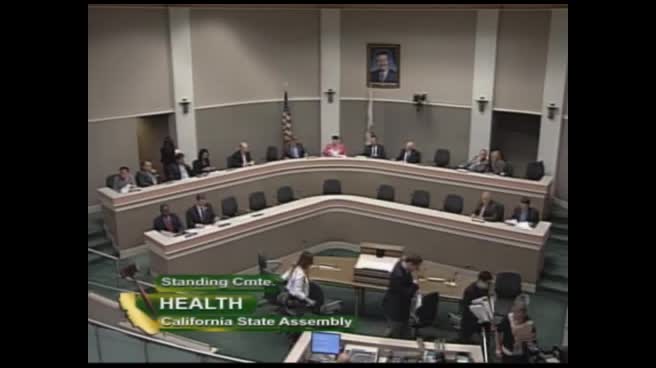 9MIN
Assembly Standing Committee on Health
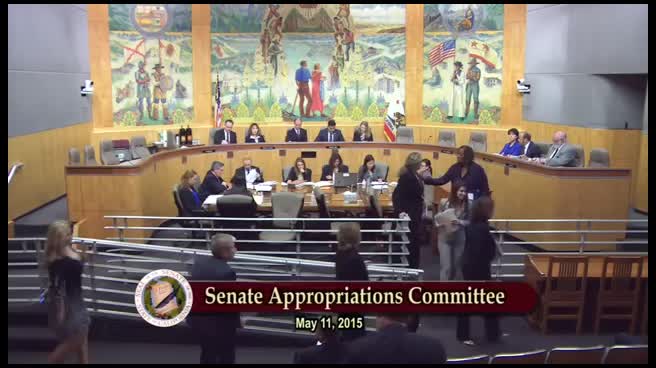 2MIN
Senate Standing Committee on Appropriations
 17MIN
Senate Standing Committee on Health
Bill Author