SB 438: Earthquake safety: statewide earthquake early warning program and system.
- Session Year: 2015-2016
- House: Senate
- Latest Version Date: 2016-09-29
(1)The California Emergency Services Act requires the Office of Emergency Services, among other things, to develop in collaboration with specified entities a comprehensive statewide earthquake early warning system in California through a public-private partnership, as specified. The act requires the office to identify funding for the system through single or multiple sources of revenue, and requires those sources to exclude the General Fund and to be limited to federal funds, funds from revenue bonds, local funds, and funds from private sources. Under the act, the requirement that the office develop the system is not operative until funding is identified, and is repealed if funding is not identified by July 1, 2016. The act establishes the California Earthquake Safety Fund in the State Treasury to be used, upon appropriation by the Legislature, for seismic safety and earthquake-related programs, including the statewide earthquake early warning system.
This bill would discontinue the requirement that the funding sources for the system exclude the General Fund and be limited to federal funds, funds from revenue bonds, local funds, and funds from private sources. The bill would delete the provisions providing for the repeal and the contingent operation of the requirement that the office develop the system.
This bill would establish, within the office, the California Earthquake Early Warning Program and the California Earthquake Early Warning Advisory Board to support the development of the statewide earthquake early warning system, as specified. The bill would require the board to include 7 voting members, as specified, and the Chancellor of the California State University, or his or her designee, who would serve as a nonvoting member. The bill would authorize the President of the University of California, or his or her designee, to serve as an additional nonvoting member of the board. The bill would require all members to serve without compensation, but would require reimbursement for actual and reasonable travel and meal expenses to attend board meetings. The bill would require the board to comply with existing state open meeting and public record disclosure laws and would prohibit the disclosure of any information in a public record that is a trade secret, as defined, of a private entity cooperating with the board or participating in the statewide earthquake early warning system or the program. The bill would make legislative findings in support of its provisions.
(2)Existing constitutional provisions require that a statute that limits the right of access to the meetings of public bodies or the writings of public officials and agencies be adopted with findings demonstrating the interest protected by the limitation and the need for protecting that interest.
This bill would make legislative findings to that effect.
(1)The California Emergency Services Act requires the Office of Emergency Services, among other things, to develop in collaboration with specified entities a comprehensive statewide earthquake early warning system in California through a public-private partnership, as specified. Existing law The act requires the office to identify funding for the system through single or multiple sources of revenue, and requires those sources to exclude the General Fund and to be limited to federal funds, funds from revenue bonds, local funds, and funds from private sources. Under the act, the requirement that the office develop the system is not operative until funding is identified, and is repealed if funding is not identified by July 1, 2016. The act establishes the California Earthquake Safety Fund in the State Treasury to be used, upon appropriation by the Legislature, for seismic safety and earthquake-related programs, including the statewide earthquake early warning system.
This bill would discontinue the requirement that the funding sources for the system exclude the General Fund and be limited to federal funds, funds from revenue bonds, local funds, and funds from private sources. The bill would delete the provisions providing for the repeal and the contingent operation of the requirement that the office develop the system.
This bill would establish, within the office, the California Earthquake Early Warning Program and the California Earthquake Early Warning Advisory Board to support the development of the statewide earthquake early warning system, as specified. The bill would require the board to include 7 voting members, as specified, and the Chancellor of the California State University, or his or her designee, who would serve as a nonvoting member. The bill would authorize the President of the University of California, or his or her designee, to serve as an additional nonvoting member of the board. The bill would require all members to serve without compensation, but would require reimbursement for actual and reasonable travel and meal expenses to attend board meetings. The bill would require the board to comply with existing state open meeting and public record disclosure laws and would prohibit the disclosure of any information in a public record that is a trade secret, as defined, of a private entity cooperating with the board or participating in the statewide earthquake early warning system or the program. The bill would make legislative findings in support of its provisions.
(2)Existing constitutional provisions require that a statute that limits the right of access to the meetings of public bodies or the writings of public officials and agencies be adopted with findings demonstrating the interest protected by the limitation and the need for protecting that interest.
This bill would make legislative findings to that effect.
(1)The California Emergency Services Act requires the Office of Emergency Services, among other things, to develop in collaboration with specified entities a comprehensive statewide earthquake early warning system in California through a public-private partnership, as specified. Existing law requires the office to identify funding for the system through single or multiple sources of revenue, and requires those sources to exclude the General Fund and to be limited to federal funds, funds from revenue bonds, local funds, and funds from private sources. Under the act, the requirement that the office develop the system is not operative until funding is identified, and is repealed if funding is not identified by July 1, 2016. The act establishes the California Earthquake Safety Fund in the State Treasury to be used, upon appropriation by the Legislature, for seismic safety and earthquake-related programs, including the statewide earthquake early warning system.
This bill would discontinue the requirement that the funding sources for the system exclude the General Fund and be limited to federal funds, funds from revenue bonds, local funds, and funds from private sources. The bill would delete the provisions providing for the repeal and the contingent operation of the requirement that the office develop the system. The bill would appropriate $23,100,000 from the General Fund to the office for the purpose of implementing the system, thereby making an appropriation.
This bill would establish, within the office, the California Earthquake Early Warning Program and the California Earthquake Early Warning Advisory Board to support the development of the statewide earthquake early warning system, as specified. The bill would require the board to include 7 voting members, as specified, and the Chancellor of the California State University, or his or her designee, who would serve as a nonvoting member. The bill would authorize the President of the University of California, or his or her designee, to serve as an additional nonvoting member of the board. The bill would require all members to serve without compensation, but would require reimbursement for actual and reasonable travel and meal expenses to attend board meetings. The bill would require the board to comply with existing state open meeting and public record disclosure laws and would prohibit the disclosure of any information in a public record that is a trade secret, as defined, of a private entity cooperating with the board or participating in the statewide earthquake early warning system or the program. The bill would make legislative findings in support of its provisions.
(2)Existing constitutional provisions require that a statute that limits the right of access to the meetings of public bodies or the writings of public officials and agencies be adopted with findings demonstrating the interest protected by the limitation and the need for protecting that interest.
This bill would make legislative findings to that effect.
Existing law
(1)The California Emergency Services Act requires the Office of Emergency Services, in collaboration with specified entities, among other things, to develop in collaboration with specified entities a comprehensive statewide earthquake early warning system in California through a public-private partnership, as specified. Existing law requires the office to identify funding for the system through single or multiple sources of revenue, and requires those sources to exclude the General Fund and to be limited to federal funds, funds from revenue bonds, local funds, and funds from private sources. Under existing law, the act, the requirement that the office develop the system is not operative until funding is identified, and is repealed if funding is not identified by July 1, 2016. The act establishes the California Earthquake Safety Fund in the State Treasury to be used, upon appropriation by the Legislature, for seismic safety and earthquake-related programs, including the statewide earthquake early warning system.
This bill would discontinue the requirement that the funding sources for the system exclude the General Fund and be limited to federal funds, funds from revenue bonds, local funds, and funds from private sources. The bill would delete the provisions providing for the repeal and the contingent operation of the requirement that the office develop the system. The bill would appropriate $23,100,000 from the General Fund to the office for the purpose of implementing the system. system, thereby making an appropriation.
This bill would establish, within the office, the California Earthquake Early Warning Program and the California Earthquake Early Warning Advisory Board to support the development of the statewide earthquake early warning system, as specified. The bill would require the board to include 7 voting members, as specified, and the Chancellor of the California State University, or his or her designee, who would serve as a nonvoting member. The bill would authorize the President of the University of California, or his or her designee, to serve as an additional nonvoting member of the board. The bill would require all members to serve without compensation, but would require reimbursement for actual and reasonable travel and meal expenses to attend board meetings. The bill would require the board to comply with existing state open meeting and public record disclosure laws and would prohibit the disclosure of any information in a public record that is a trade secret, as defined, of a private entity cooperating with the board or participating in the statewide earthquake early warning system or the program. The bill would make legislative findings in support of its provisions.
(2)Existing constitutional provisions require that a statute that limits the right of access to the meetings of public bodies or the writings of public officials and agencies be adopted with findings demonstrating the interest protected by the limitation and the need for protecting that interest.
This bill would make legislative findings to that effect.
(1)Existing law creates, as an independent unit within the Business, Consumer Services, and Housing Agency, the Alfred E. Alquist Seismic Safety Commission, and provides that the commission is responsible for certain duties related to earthquake hazard mitigation, including, among others, helping to coordinate the earthquake safety activities of government at all levels.
This bill would declare the intent of the Legislature to work with the Administration through the fall 2015 recess in order to establish a California Earthquake Safety Board by July 1, 2016.
(2)Existing
Existing law requires the Office of Emergency Services, in collaboration with the commission and other specified entities, to develop a comprehensive statewide earthquake early warning system in California through a public-private partnership, as specified. Existing law requires the office to identify funding for the system through single or multiple sources of revenue, and requires those sources to exclude the General Fund and to be limited to federal funds, funds from revenue bonds, local funds, and funds from private sources. Under existing law, the requirement that the office develop the system is not operative until funding is identified, and is repealed if funding is not identified by July 1, 2016.
This bill would discontinue the requirement that the funding sources for the system exclude the General Fund and be limited to federal funds, funds from revenue bonds, local funds, and funds from private sources. The bill would delete the provisions providing for the repeal and the contingent operation of the requirement that the office develop the system. The bill would appropriate $23,100,000 from the General Fund to the office for the purpose of implementing the system.
Existing
(1)Existing law creates, as an independent unit within the Business, Consumer Services, and Housing Agency, the Alfred E. Alquist Seismic Safety Commission, and provides that the commission is responsible for certain duties related to earthquake hazard mitigation, including, among others, helping to coordinate the earthquake safety activities of government at all levels.
This bill would declare the intent of the Legislature to work with the Administration through the fall 2015 recess in order to establish a California Earthquake Safety Board by July 1, 2016.
(2)Existing law requires the Office of Emergency Services, in collaboration with the commission and other specified entities, to develop a comprehensive statewide earthquake early warning system in California through a public-private partnership, as specified. Existing law requires the office to identify funding for the system through single or multiple sources of revenue, and requires those sources to exclude the General Fund and to be limited to federal funds, funds from revenue bonds, local funds, and funds from private sources. Under existing law, the requirement that the office develop the system is not operative until funding is identified, and is repealed if funding is not identified by July 1, 2016.
This bill would discontinue the requirement that the funding sources for the system exclude the General Fund and be limited to federal funds, funds from revenue bonds, local funds, and funds from private sources. The bill would delete the provisions providing for the repeal and the contingent operation of the requirement that the office develop the system. The bill would appropriate $23,100,000 from the General Fund to the office for the purpose of implementing the system.
Existing law creates, as an independent unit within the Business, Consumer Services, and Housing Agency, the Alfred E. Alquist Seismic Safety Commission, and provides that the commission is responsible for certain duties related to earthquake hazard mitigation, including, among others, helping to coordinate the earthquake safety activities of government at all levels.
This bill would declare the intent of the Legislature to work with the Administration through the fall 2015 recess in order to establish a California Earthquake Safety Board by July 1, 2016.
Existing law, to the extent not preempted by federal law, makes it unlawful for a person to sell or otherwise furnish electronic cigarettes to a person under 18 years of age.
This bill would require all cartridges for electronic cigarettes and solutions for filling and refilling an electronic cigarette to be in child-resistant packaging, as defined.
Existing law requires the driver of every motor vehicle who is involved in an accident that results in damage to the property of any one person in excess of $750, or in bodily injury, or in the death of a person, to report the accident to the Department of Motor Vehicles within 10 days after the accident, as specified. Under existing law that threshold amount of damages also serves as a condition, among others, for (1) the suspension of a judgment debtors driving privileges, as an aid in the enforcement of small claims or civil money judgments arising out of those accidents; and (2) the suspension or revocation of specified endorsements or certificates.
This bill would, beginning January 1, 2017, increase the minimum property damage that is required to be reported to $1,000. This bill would make conforming changes to those related provisions described above.
Existing law requires the driver of every motor vehicle who is involved in an accident that results in damage to the property of any one person in excess of $750, or in bodily injury, or in the death of a person, to report the accident to the Department of Motor Vehicles within 10 days after the accident, as specified. Under existing law that threshold amount of damages also serves as a condition, among others, for (1) the suspension of a judgment debtors driving privileges, as an aid in the enforcement of small claims or civil money judgments arising out of those accidents; and (2) the suspension or revocation of specified endorsements or certificates.
This bill would would, beginning January 1, 2017, increase the minimum property damage that is required to be reported to $1,000. This bill would make conforming changes to those related provisions described above.
Existing law requires the driver of every motor vehicle who is involved in an accident that results in damage to the property of any one person in excess of $750, or in bodily injury, or in the death of a person, to report the accident to the Department of Motor Vehicles within 10 days after the accident, as specified. Under existing law that threshold amount of damages also serves as a condition, among others, for (1) the suspension of a judgment debtors driving privileges, as an aid in the enforcement of small claims or civil money judgments arising out of those accidents; and (2) the suspension or revocation of specified endorsements or certificates.
This bill would increase the minimum property damage that is required to be reported to $1,000. This bill would make conforming changes to those related provisions described above.
The Legislature finds and declares all of the following:
(a)Effective and sustainable implementation of a statewide earthquake early warning system, as funded through the California Earthquake Safety Fund, requires a governance structure that coordinates the multiple entities involved in establishing and operating the different functional areas of the system, including, but not limited to, system operations, research and development, finance and investment, and training and education.
(b)Each of the functional areas necessary for a statewide earthquake early warning system consists of designated working groups that include subject matter experts and stakeholders in the public and private sectors.
(c)The California Earthquake Early Warning Advisory Board is intended to advise the Director of Emergency Services on implementation of the earthquake early warning program.
SEC. 2.Section 8587.8 of the Government Code is amended to read:8587.8.(a)The Office of Emergency Services, in collaboration with the California Institute of Technology (Caltech), the California Geological Survey, the University of California, the United States Geological Survey, the Alfred E. Alquist Seismic Safety Commission, and other stakeholders, shall develop a comprehensive statewide earthquake early warning system in California through a public-private partnership, which shall include, but not be limited to, the following features:
(1)Installation of field sensors.
(2)Improvement of field telemetry.
(3)Construction and testing of central processing and notification centers.
(4)Establishment of warning notification distribution paths to the public.
(5)Integration of earthquake early warning education with general earthquake preparedness efforts.
(b)In consultation with stakeholders, the Office of Emergency Services shall develop an approval mechanism to review compliance with earthquake early warning standards as they are developed. The development of the approval mechanism shall include input from a broad representation of earthquake early warning stakeholders. The approval mechanism shall accomplish all of the following:
(1)Ensure the standards are appropriate.
(2)Determine the degree to which the standards apply to providers and components of the system.
(3)Determine methods to ensure compliance with the standards.
(4)Determine requirements for participation in the system.
(c)The Office of Emergency Services shall identify funding for the system described in subdivision (a) through single or multiple sources of revenue.
SEC. 3.Section 8587.11 is added to the Government Code, to read:8587.11.(a)There is in state government, within the office, both of the following:
(1)The California Earthquake Early Warning Program.
(2)The California Earthquake Early Warning Advisory Board.
(b)The following definitions apply to this section and Section 8587.12:
(1)Board means the California Earthquake Early Warning Advisory Board.
(2)Program means the California Earthquake Early Warning Program.
(3)System means the statewide earthquake early warning system.
(c)(1)The board shall be composed of the following eight members:
(A)Seven voting members, as follows:
(i)The Secretary of the Natural Resources Agency, or his or her designee.
(ii)The Secretary of California Health and Human Services, or his or her designee.
(iii)The Secretary of Transportation, or his or her designee.
(iv)The Secretary of Business, Consumer Services, and Housing, or his or her designee.
(v)One member who is appointed by, and serves at the pleasure of, the Speaker of the Assembly and represents the interests of private businesses.
(vi)One member who is appointed by, and serves at the pleasure of, the Governor and represents the utilities industry.
(vii)One member who is appointed by, and serves at the pleasure of, the Senate Committee on Rules and represents county government.
(B)The Chancellor of the California State University, or his or her designee, shall serve as a nonvoting member of the board.
(2)The President of the University of California, or his or her designee, may serve as a nonvoting member of the board.
(3)The members of the board shall serve without compensation, but shall be reimbursed for actual and reasonable travel and meal expenses to attend board meetings.
(d)(1)The board shall convene periodically and advise the director on all aspects of the program, including, but not limited to, the following functional areas of the program:
(A)System operations.
(B)Research and development.
(C)Finance and investment.
(D)Training and education.
(2)The board shall utilize committees, groups, and organizations, including, but not limited to, the California Institute of Technology, the California Geological Survey, the University of California, the United States Geological Survey, and entities participating in the critical infrastructure sectors to fulfill the objectives of the program by supporting the functional areas of the system.
(3)The board shall inform the public regarding, and provide the public with the opportunity to engage the board on, the development and implementation of the system.
(4)The board shall consult with program participants, state agencies, departments, boards and commissions, private businesses, postsecondary educational institutions, and subject matter experts, as necessary, to advise the board on the development, implementation, and maintenance of the system.
(e)(1)Except as otherwise provided by law, the California Integrated Seismic Network shall be responsible for the generation of an earthquake early warning alert and related system operations.
(2)The board shall, in conjunction with the director, determine the appropriate methods to provide the public with an earthquake early warning alert.
(f)(1)The board shall comply with the Bagley-Keene Open Meeting Act (Article 9 (commencing with Section 11120) of Chapter 1 of Part 1 of Division 3) and the California Public Records Act (Chapter 3.5 (commencing with Section 6250) of Division 7 of Title 1).
(2)Notwithstanding any law, including, but not limited to, the California Public Records Act (Chapter 3.5 (commencing with Section 6250) of Division 7 of Title 1), any information in a public record that is a trade secret, as that term is defined in Section 3426.1 of the Civil Code, of a private entity cooperating with the board or participating in the system or with the program is confidential and shall not be disclosed.
SEC. 4.Section 8587.12 is added to the Government Code, to read:8587.12.(a)On or before February 1, 2018, the office, in consultation with the board, shall develop and submit a business plan for the program to the Senate Committee on Governmental Organization, the Assembly Committee on Governmental Organization, the Senate Committee on Budget and Fiscal Review, the Assembly Committee on Budget, and the Legislative Analysts Office. The business plan shall include, but not be limited to, all of the following elements:
(1)The funding plan for the program and the estimated costs associated with the program. The funding plan shall include, but not be limited to, all of the following:
(A)Specific cost estimates for each component of the program, including, but not limited to, education and outreach costs, staff costs, and the capital costs, operation costs, and maintenance costs of the system.
(B)Identification of specific sources of funding, including, but not limited to, federal funds, funds from revenue bonds, local funds, general funds, special funds, funds from private sources, and funding from any written agreements with public or private entities to fund components of the program.
(2)The expected roles and responsibilities of various program participants, including, but not limited to, private sector partners and local emergency personnel.
(3)The expected time schedule for completing the system and when it can start to provide alerts.
(4)A discussion of all reasonably foreseeable risks the program may encounter, including, but not limited to, risks associated with the programs finances, the reliability of the system, access to land for sensor placement, and changes in technology. The plan shall describe the offices strategies, processes, or other actions it intends to utilize to manage those risks.
(b)On or before February 1, 2019, and annually thereafter, the office shall report to the Legislature any changes to the business plan from the prior year and shall provide a general report on progress of the program and the implementation of the system. The report shall include, but not be limited to, all of the following:
(1)The overall progress of the implementation of the system.
(2)An update on funding acquired and expended.
(3)An update on contracts and requests for proposals.
(4)A summary of recommendations made by the board to the office.
SEC. 5.The Legislature finds and declares that Section 3 of this act, which adds Section 8587.11 to the Government Code, imposes a limitation on the publics right of access to the meetings of public bodies or the writings of public officials and agencies within the meaning of Section 3 of Article I of the California Constitution. Pursuant to that constitutional provision, the Legislature makes the following findings to demonstrate the interest protected by this limitation and the need for protecting that interest:
The development and implementation of the California Earthquake Early Warning System will help mitigate the loss of lives and property due to an earthquake. The need to protect the proprietary rights of owners of trade secrets relating to systems or products that may be incorporated into the California Earthquake Early Warning System and used within the California Earthquake Early Warning Program and the need to encourage the participation of those owners in the development and implementation of that system and program outweigh publicly disclosing those trade secrets.
The Legislature finds and declares all of the following:
(a)Effective and sustainable implementation of a statewide earthquake early warning system, as funded through the California Earthquake Safety Fund, requires a governance structure that coordinates the multiple entities involved in establishing and operating the different functional areas of the system, including, but not limited to, system operations, research and development, finance and investment, and training and education.
(b)Each of the functional areas necessary for a statewide earthquake early warning system consists of designated working groups that include subject matter experts and stakeholders in the public and private sectors.
(c)The California Earthquake Early Warning Advisory Board is intended to advise the Director of Emergency Services on implementation of the earthquake early warning program.
SEC. 2.Section 8587.8 of the Government Code is amended to read:8587.8.(a)The Office of Emergency Services, in collaboration with the California Institute of Technology (Caltech), the California Geological Survey, the University of California, the United States Geological Survey, the Alfred E. Alquist Seismic Safety Commission, and other stakeholders, shall develop a comprehensive statewide earthquake early warning system in California through a public-private partnership, which shall include, but not be limited to, the following features:
(1)Installation of field sensors.
(2)Improvement of field telemetry.
(3)Construction and testing of central processing and notification centers.
(4)Establishment of warning notification distribution paths to the public.
(5)Integration of earthquake early warning education with general earthquake preparedness efforts.
(b)In consultation with stakeholders, the Office of Emergency Services shall develop an approval mechanism to review compliance with earthquake early warning standards as they are developed. The development of the approval mechanism shall include input from a broad representation of earthquake early warning stakeholders. The approval mechanism shall accomplish all of the following:
(1)Ensure the standards are appropriate.
(2)Determine the degree to which the standards apply to providers and components of the system.
(3)Determine methods to ensure compliance with the standards.
(4)Determine requirements for participation in the system.
(c)The Office of Emergency Services shall identify funding for the system described in subdivision (a) through single or multiple sources of revenue.
SEC. 3.Section 8587.11 is added to the Government Code, to read:8587.11.(a)There is in state government, within the office, both of the following:
(1)The California Earthquake Early Warning Program.
(2)The California Earthquake Early Warning Advisory Board.
(b)The following definitions apply to this section and Section 8587.12:
(1)Board means the California Earthquake Early Warning Advisory Board.
(2)Program means the California Earthquake Early Warning Program.
(3)System means the statewide earthquake early warning system.
(c)(1)The board shall be composed of the following eight members:
(A)Seven voting members, as follows:
(i)The Secretary of the Natural Resources Agency, or his or her designee.
(ii)The Secretary of California Health and Human Services, or his or her designee.
(iii)The Secretary of Transportation, or his or her designee.
(iv)The Secretary of Business, Consumer Services, and Housing, or his or her designee.
(v)One member who is appointed by, and serves at the pleasure of, the Speaker of the Assembly and represents the interests of private businesses.
(vi)One member who is appointed by, and serves at the pleasure of, the Governor and represents the utilities industry.
(vii)One member who is appointed by, and serves at the pleasure of, the Senate Committee on Rules and represents county government.
(B)The Chancellor of the California State University, or his or her designee, shall serve as a nonvoting member of the board.
(2)The President of the University of California, or his or her designee, may serve as a nonvoting member of the board.
(3)The members of the board shall serve without compensation, but shall be reimbursed for actual and reasonable travel and meal expenses to attend board meetings.
(d)(1)The board shall convene periodically and advise the director on all aspects of the program, including, but not limited to, the following functional areas of the program:
(A)System operations.
(B)Research and development.
(C)Finance and investment.
(D)Training and education.
(2)The board shall utilize committees, groups, and organizations, including, but not limited to, the California Institute of Technology, the California Geological Survey, the University of California, the United States Geological Survey, and entities participating in the critical infrastructure sectors to fulfill the objectives of the program by supporting the functional areas of the system.
(3)The board shall inform the public regarding, and provide the public with the opportunity to engage the board on, the development and implementation of the system.
(4)The board shall consult with program participants, state agencies, departments, boards and commissions, private businesses, postsecondary educational institutions, and subject matter experts, as necessary, to advise the board on the development, implementation, and maintenance of the system.
(e)(1)Except as otherwise provided by law, the California Integrated Seismic Network shall be responsible for the generation of an earthquake early warning alert and related system operations.
(2)The board shall, in conjunction with the director, determine the appropriate methods to provide the public with an earthquake early warning alert.
(f)(1)The board shall comply with the Bagley-Keene Open Meeting Act (Article 9 (commencing with Section 11120) of Chapter 1 of Part 1 of Division 3) and the California Public Records Act (Chapter 3.5 (commencing with Section 6250) of Division 7 of Title 1).
(2)Notwithstanding any law, including, but not limited to, the California Public Records Act (Chapter 3.5 (commencing with Section 6250) of Division 7 of Title 1), any information in a public record that is a trade secret, as that term is defined in Section 3426.1 of the Civil Code, of a private entity cooperating with the board or participating in the system or with the program is confidential and shall not be disclosed.
SEC. 4.Section 8587.12 is added to the Government Code, to read:8587.12.(a)On or before February 1, 2018, the office, in consultation with the board, shall develop and submit a business plan for the program to the Senate Committee on Governmental Organization, the Assembly Committee on Governmental Organization, the Senate Committee on Budget and Fiscal Review Committee, Review, the Assembly Committee on Budget, and the Legislative Analysts Office. The business plan shall include, but not be limited to, all of the following elements:
(1)The funding plan for the program and the estimated costs associated with the program. The funding plan shall include, but not be limited to, all of the following:
(A)Specific cost estimates for each component of the program, including, but not limited to, education and outreach costs, staff costs, and the capital costs, operation costs, and maintenance costs of the system.
(B)Identification of specific sources of funding, including, but not limited to, federal funds, funds from revenue bonds, local funds, general funds, special funds, funds from private sources, and funding from any written agreements with public or private entities to fund components of the program.
(2)The expected roles and responsibilities of various program participants, including, but not limited to, private sector partners and local emergency personnel.
(3)The expected time schedule for completing the system and when it can start to provide alerts.
(4)A discussion of all reasonably foreseeable risks the program may encounter, including, but not limited to, risks associated with the programs finances, the reliability of the system, access to land for sensor placement, and changes in technology, technology. The plan shall describe the offices strategies, processes, or other actions it intends to utilize to manage those risks.
(b)On or before February 1, 2019, and annually thereafter, the office shall report to the Legislature any changes to the business plan from the prior year and shall provide a general report on progress of the program and the implementation of the system. The report shall include, but not be limited to, all of the following:
(1)Overall The overall progress of the implementation of the system.
(2)Update An update on funding acquired and expended.
(3)Update An update on contracts and requests for proposals.
(4)A summary of recommendations made by the board to the office.
SEC. 5.The Legislature finds and declares that Section 3 of this act, which adds Section 8587.11 to the Government Code, imposes a limitation on the publics right of access to the meetings of public bodies or the writings of public officials and agencies within the meaning of Section 3 of Article I of the California Constitution. Pursuant to that constitutional provision, the Legislature makes the following findings to demonstrate the interest protected by this limitation and the need for protecting that interest:
The development and implementation of the California Earthquake Early Warning System will help mitigate the loss of lives and property due to an earthquake. The need to protect the proprietary rights of owners of trade secrets relating to systems or products that may be incorporated into the California Earthquake Early Warning System and used within the California Earthquake Early Warning Program and the need to encourage the participation of those owners in the development and implementation of that system and program outweigh publicly disclosing those trade secrets.
The Legislature finds and declares all of the following:
(a)Effective and sustainable implementation of a statewide earthquake early warning system, as funded through the California Earthquake Safety Fund, requires a governance structure that coordinates the multiple entities involved in establishing and operating the different functional areas of the system, including, but not limited to, system operations, research and development, finance and investment, and training and education.
(b)Each of the functional areas necessary for a statewide earthquake early warning system consists of designated working groups that include subject matter experts and stakeholders in the public and private sectors.
(c)The California Earthquake Early Warning Advisory Board is intended to advise the Director of Emergency Services on implementation of the earthquake early warning program.
SEC. 2.Section 8587.8 of the Government Code is amended to read:8587.8.(a)The Office of Emergency Services, in collaboration with the California Institute of Technology (Caltech), the California Geological Survey, the University of California, the United States Geological Survey, the Alfred E. Alquist Seismic Safety Commission, and other stakeholders, shall develop a comprehensive statewide earthquake early warning system in California through a public-private partnership, which shall include, but not be limited to, the following features:
(1)Installation of field sensors.
(2)Improvement of field telemetry.
(3)Construction and testing of central processing and notification centers.
(4)Establishment of warning notification distribution paths to the public.
(5)Integration of earthquake early warning education with general earthquake preparedness efforts.
(b)In consultation with stakeholders, the Office of Emergency Services shall develop an approval mechanism to review compliance with earthquake early warning standards as they are developed. The development of the approval mechanism shall include input from a broad representation of earthquake early warning stakeholders. The approval mechanism shall accomplish all of the following:
(1)Ensure the standards are appropriate.
(2)Determine the degree to which the standards apply to providers and components of the system.
(3)Determine methods to ensure compliance with the standards.
(4)Determine requirements for participation in the system.
(c)The Office of Emergency Services shall identify funding for the system described in subdivision (a) through single or multiple sources of revenue.
SEC. 3.Section 8587.11 is added to the Government Code, to read:8587.11.(a)There is in state government, within the office, both of the following:
(1)The California Earthquake Early Warning Program.
(2)The California Earthquake Early Warning Advisory Board.
(b)The following definitions apply to this section and Section 8587.12:
(1)Board means the California Earthquake Early Warning Advisory Board.
(2)Program means the California Earthquake Early Warning Program.
(3)System means the statewide earthquake early warning system.
(c)(1)The board shall be composed of the following eight members:
(A)Seven voting members, as follows:
(i)The Secretary of the Natural Resources Agency, or his or her designee.
(ii)The Secretary of California Health and Human Services, or his or her designee.
(iii)The Secretary of Transportation, or his or her designee.
(iv)The Secretary of Business, Consumer Services, and Housing, or his or her designee.
(v)One member who is appointed by, and serves at the pleasure of, the Speaker of the Assembly and represents the interests of private businesses.
(vi)One member who is appointed by, and serves at the pleasure of, the Governor and represents the utilities industry.
(vii)One member appointed by who is appointed by, and serves at the pleasure of, the Senate Committee on Rules representing county government whose term of office shall be four years to run with the officer or incumbent. The Senate Committee on Rules shall appoint, on an alternating basis, a member who resides in northern or southern California. and represents county government.
(B)The Chancellor of the California State University, or his or her designee, shall serve as a nonvoting member of the board.
(2)The President of the University of California, or his or her designee, may serve as a nonvoting member of the board.
(3)The members of the board shall serve without compensation, but shall be reimbursed for actual and reasonable travel and meal expenses to attend board meetings.
(d)(1)The board shall convene periodically and advise the director on all aspects of the program, including, but not limited to, the following functional areas of the program:
(A)System operations.
(B)Research and development.
(C)Finance and investment.
(D)Training and education.
(2)The board shall utilize committees, groups, and organizations, including, but not limited to, the California Institute of Technology, the California Geological Survey, the University of California, the United States Geological Survey, and entities participating in the critical infrastructure sectors to fulfill the objectives of the program by supporting the functional areas of the system.
(3)The board shall inform the public regarding, and provide the public with the opportunity to engage the board on, the development and implementation of the system.
(4)The board shall consult with program participants, state agencies, departments, boards and commissions, private businesses, postsecondary educational institutions, and subject matter experts, as necessary, to advise the board on the development, implementation, and maintenance of the system.
(e)(1)Except as otherwise provided by law, the California Integrated Seismic Network shall be responsible for the generation of an earthquake early warning alert and related system operations.
(2)The board shall, in conjunction with the director, determine the appropriate methods to provide the public with an earthquake early warning alert.
(f)(1)The board shall comply with the Bagley-Keene Open Meeting Act (Article 9 (commencing with Section 11120) of Chapter 1 of Part 1 of Division 3) and the California Public Records Act (Chapter 3.5 (commencing with Section 6250) of Division 7 of Title 1).
(2)Notwithstanding any law, including, but not limited to, the California Public Records Act (Chapter 3.5 (commencing with Section 6250) of Division 7 of Title 1), any information in a public record that is a trade secret, as that term is defined in Section 3426.1 of the Civil Code, of a private entity cooperating with the board or participating in the system or with the program is confidential and shall not be disclosed.
SEC. 4.Section 8587.12 is added to the Government Code, to read:8587.12.(a)On or before February 1, 2018, the office, in consultation with the board, shall develop and submit a business plan for the program to the Senate Committee on Governmental Organization, the Assembly Committee on Governmental Organization, the Senate Budget and Fiscal Review Committee, the Assembly Committee on Budget, and the Legislative Analysts Office. The business plan shall include, but not be limited to, all of the following elements:
(1)The funding plan for the program and the estimated costs associated with the program. The funding plan shall include, but not be limited to, all of the following:
(A)Specific cost estimates for each component of the program, including, but not limited to, education and outreach costs, staff costs, and the capital costs, operation costs, and maintenance costs of the system.
(B)Identification of specific sources of funding, including, but not limited to, federal funds, funds from revenue bonds, local funds, general funds, special funds, funds from private sources, and funding from any written agreements with public or private entities to fund components of the program.
(2)The expected roles and responsibilities of various program participants, including, but not limited to, private sector partners and local emergency personnel.
(3)The expected time schedule for completing the system and when it can start to provide alerts.
(4)A discussion of all reasonably foreseeable risks the program may encounter, including, but not limited to, risks associated with the programs finances, the reliability of the system, access to land for sensor placement, and changes in technology, The plan shall describe the offices strategies, processes, or other actions it intends to utilize to manage those risks.
(b)On or before February 1, 2019, and annually thereafter, the office shall report to the Legislature any changes to the business plan from the prior year and shall provide a general report on progress of the program and the implementation of the system. The report shall include, but not be limited to, all of the following:
(1)Overall progress of the implementation of the system.
(2)Update on funding acquired and expended.
(3)Update on contracts and requests for proposals.
(4)A summary of recommendations made by the board to the office.
SEC. 5.The Legislature finds and declares that Section 3 of this act, which adds Section 8587.11 to the Government Code, imposes a limitation on the publics right of access to the meetings of public bodies or the writings of public officials and agencies within the meaning of Section 3 of Article I of the California Constitution. Pursuant to that constitutional provision, the Legislature makes the following findings to demonstrate the interest protected by this limitation and the need for protecting that interest:
The development and implementation of the California Earthquake Early Warning System will help mitigate the loss of lives and property due to an earthquake. The need to protect the proprietary rights of owners of trade secrets relating to systems or products that may be incorporated into the California Earthquake Early Warning System and used within the California Earthquake Early Warning Program and the need to encourage the participation of those owners in the development and implementation of that system and program outweigh publicly disclosing those trade secrets.
SEC. 6.The sum of twenty-three million one hundred thousand dollars ($23,100,000) is hereby appropriated from the General Fund to the Office of Emergency Services for the purpose of implementing a comprehensive statewide earthquake early warning system pursuant to Section 8587.8 of the Government Code.
The Legislature finds and declares all of the following:
(a)Effective and sustainable implementation of a statewide earthquake early warning system, as funded through the California Earthquake Safety Fund, requires a governance structure that coordinates the multiple entities involved in establishing and operating the different functional areas of the system, including, but not limited to, system operations, research and development, finance and investment, and training and education.
(b)Each of the functional areas necessary for a statewide earthquake early warning system consists of designated working groups that include subject matter experts and stakeholders in the public and private sectors.
(c)The California Earthquake Early Warning Advisory Board is intended to advise the Director of Emergency Services on implementation of the earthquake early warning program.
SECTION 1.SEC. 2.Section 8587.8 of the Government Code is amended to read:8587.8.(a)The Office of Emergency Services, in collaboration with the California Institute of Technology (Caltech), the California Geological Survey, the University of California, the United States Geological Survey, the Alfred E. Alquist Seismic Safety Commission, and other stakeholders, shall develop a comprehensive statewide earthquake early warning system in California through a public-private partnership, which shall include, but not be limited to, the following features:
(1)Installation of field sensors.
(2)Improvement of field telemetry.
(3)Construction and testing of central processing and notification centers.
(4)Establishment of warning notification distribution paths to the public.
(5)Integration of earthquake early warning education with general earthquake preparedness efforts.
(b)In consultation with stakeholders, the Office of Emergency Services shall develop an approval mechanism to review compliance with earthquake early warning standards as they are developed. The development of the approval mechanism shall include input from a broad representation of earthquake early warning stakeholders. The approval mechanism shall accomplish all of the following:
(1)Ensure the standards are appropriate.
(2)Determine the degree to which the standards apply to providers and components of the system.
(3)Determine methods to ensure compliance with the standards.
(4)Determine requirements for participation in the system.
(c)The Office of Emergency Services shall identify funding for the system described in subdivision (a) through single or multiple sources of revenue.
SEC. 3.Section 8587.11 is added to the Government Code, to read:8587.11.(a)There is in state government, within the office, both of the following:
(1)The California Earthquake Early Warning Program.
(2)The California Earthquake Early Warning Advisory Board.
(b)The following definitions apply to this section and Section 8587.12:
(1)Board means the California Earthquake Early Warning Advisory Board.
(2)Program means the California Earthquake Early Warning Program.
(3)System means the statewide earthquake early warning system.
(c)(1)The board shall be composed of the following eight members:
(A)Seven voting members, as follows:
(i)The Secretary of the Natural Resources Agency, or his or her designee.
(ii)The Secretary of California Health and Human Services, or his or her designee.
(iii)The Secretary of Transportation, or his or her designee.
(iv)The Secretary of Business, Consumer Services, and Housing, or his or her designee.
(v)One member who is appointed by, and serves at the pleasure of, the Speaker of the Assembly and represents the interests of private businesses.
(vi)One member who is appointed by, and serves at the pleasure of, the Governor and represents the utilities industry.
(vii)One member appointed by the Senate Committee on Rules representing county government whose term of office shall be four years to run with the officer or incumbent. The Senate Committee on Rules shall appoint, on an alternating basis, a member who resides in northern or southern California.
(B)The Chancellor of the California State University, or his or her designee, shall serve as a nonvoting member of the board.
(2)The President of the University of California, or his or her designee, may serve as a nonvoting member of the board.
(3)The members of the board shall serve without compensation, but shall be reimbursed for actual and reasonable travel and meal expenses to attend board meetings.
(d)(1)The board shall convene periodically and advise the director on all aspects of the program, including, but not limited to, the following functional areas of the program:
(A)System operations.
(B)Research and development.
(C)Finance and investment.
(D)Training and education.
(2)The board shall utilize committees, groups, and organizations, including, but not limited to, the California Institute of Technology, the California Geological Survey, the University of California, the United States Geological Survey, and entities participating in the critical infrastructure sectors to fulfill the objectives of the program by supporting the functional areas of the system.
(3)The board shall inform the public regarding, and provide the public with the opportunity to engage the board on, the development and implementation of the system.
(4)The board shall consult with program participants, state agencies, departments, boards and commissions, private businesses, postsecondary educational institutions, and subject matter experts, as necessary, to advise the board on the development, implementation, and maintenance of the system.
(e)(1)Except as otherwise provided by law, the California Integrated Seismic Network shall be responsible for the generation of an earthquake early warning alert and related system operations.
(2)The board shall, in conjunction with the director, determine the appropriate methods to provide the public with an earthquake early warning alert.
(f)(1)The board shall comply with the Bagley-Keene Open Meeting Act (Article 9 (commencing with Section 11120) of Chapter 1 of Part 1 of Division 3) and the California Public Records Act (Chapter 3.5 (commencing with Section 6250) of Division 7 of Title 1).
(2)Notwithstanding any law, including, but not limited to, the California Public Records Act (Chapter 3.5 (commencing with Section 6250) of Division 7 of Title 1), any information in a public record that is a trade secret, as that term is defined in Section 3426.1 of the Civil Code, of a private entity cooperating with the board or participating in the system or with the program is confidential and shall not be disclosed.
SEC. 4.Section 8587.12 is added to the Government Code, to read:8587.12.(a)On or before February 1, 2018, the office, in consultation with the board, shall develop and submit a business plan for the program to the Senate Committee on Governmental Organization, the Assembly Committee on Governmental Organization, the Senate Budget and Fiscal Review Committee, the Assembly Committee on Budget, and the Legislative Analysts Office. The business plan shall include, but not be limited to, all of the following elements:
(1)The funding plan for the program and the estimated costs associated with the program. The funding plan shall include, but not be limited to, all of the following:
(A)Specific cost estimates for each component of the program, including, but not limited to, education and outreach costs, staff costs, and the capital costs, operation costs, and maintenance costs of the system.
(B)Identification of specific sources of funding, including, but not limited to, federal funds, funds from revenue bonds, local funds, general funds, special funds, funds from private sources, and funding from any written agreements with public or private entities to fund components of the program.
(2)The expected roles and responsibilities of various program participants, including, but not limited to, private sector partners and local emergency personnel.
(3)The expected time schedule for completing the system and when it can start to provide alerts.
(4)A discussion of all reasonably foreseeable risks the program may encounter, including, but not limited to, risks associated with the programs finances, the reliability of the system, access to land for sensor placement, and changes in technology, The plan shall describe the offices strategies, processes, or other actions it intends to utilize to manage those risks.
(b)On or before February 1, 2019, and annually thereafter, the office shall report to the Legislature any changes to the business plan from the prior year and shall provide a general report on progress of the program and the implementation of the system. The report shall include, but not be limited to, all of the following:
(1)Overall progress of the implementation of the system.
(2)Update on funding acquired and expended.
(3)Update on contracts and requests for proposals.
(4)A summary of recommendations made by the board to the office.
SEC. 5.The Legislature finds and declares that Section 3 of this act, which adds Section 8587.11 to the Government Code, imposes a limitation on the publics right of access to the meetings of public bodies or the writings of public officials and agencies within the meaning of Section 3 of Article I of the California Constitution. Pursuant to that constitutional provision, the Legislature makes the following findings to demonstrate the interest protected by this limitation and the need for protecting that interest:
The development and implementation of the California Earthquake Early Warning System will help mitigate the loss of lives and property due to an earthquake. The need to protect the proprietary rights of owners of trade secrets relating to systems or products that may be incorporated into the California Earthquake Early Warning System and used within the California Earthquake Early Warning Program and the need to encourage the participation of those owners in the development and implementation of that system and program outweigh publicly disclosing those trade secrets.
SEC. 2.SEC. 6.The sum of twenty-three million one hundred thousand dollars ($23,100,000) is hereby appropriated from the General Fund to the Office of Emergency Services for the purpose of implementing a comprehensive statewide earthquake early warning system pursuant to Section 8587.8 of the Government Code.
The Legislature finds and declares that mitigation against earthquake damage must be addressed in the immediate term and that it intends to work with the Administration through the fall 2015 recess in order to establish a California Earthquake Safety Board by July 1, 2016.
SEC. 2.SECTION 1.Section 8587.8 of the Government Code is amended to read:8587.8.(a)The Office of Emergency Services, in collaboration with the California Institute of Technology (Caltech), the California Geological Survey, the University of California, the United States Geological Survey, the Alfred E. Alquist Seismic Safety Commission, and other stakeholders, shall develop a comprehensive statewide earthquake early warning system in California through a public-private partnership, which shall include, but not be limited to, the following features:
(1)Installation of field sensors.
(2)Improvement of field telemetry.
(3)Construction and testing of central processing and notification centers.
(4)Establishment of warning notification distribution paths to the public.
(5)Integration of earthquake early warning education with general earthquake preparedness efforts.
(b)In consultation with stakeholders, the Office of Emergency Services shall develop an approval mechanism to review compliance with earthquake early warning standards as they are developed. The development of the approval mechanism shall include input from a broad representation of earthquake early warning stakeholders. The approval mechanism shall accomplish all of the following:
(1)Ensure the standards are appropriate.
(2)Determine the degree to which the standards apply to providers and components of the system.
(3)Determine methods to ensure compliance with the standards.
(4)Determine requirements for participation in the system.
(c)The Office of Emergency Services shall identify funding for the system described in subdivision (a) through single or multiple sources of revenue.
SEC. 3.SEC. 2.The sum of twenty-three million one hundred thousand dollars ($23,100,000) is hereby appropriated from the General Fund to the Office of Emergency Services for the purpose of implementing a comprehensive statewide earthquake early warning system pursuant to Section 8587.8 of the Government Code.
The Legislature finds and declares that mitigation against earthquake damage must be addressed in the immediate term and that it intends to work with the Administration through the fall 2015 recess in order to establish a California Earthquake Safety Board by July 1, 2016.
SEC. 2.Section 8587.8 of the Government Code is amended to read:8587.8.(a)The Office of Emergency Services, in collaboration with the California Institute of Technology (Caltech), the California Geological Survey, the University of California, the United States Geological Survey, the Alfred E. Alquist Seismic Safety Commission, and other stakeholders, shall develop a comprehensive statewide earthquake early warning system in California through a public-private partnership, which shall include, but not be limited to, the following features:
(1)Installation of field sensors.
(2)Improvement of field telemetry.
(3)Construction and testing of central processing and notification centers.
(4)Establishment of warning notification distribution paths to the public.
(5)Integration of earthquake early warning education with general earthquake preparedness efforts.
(b)In consultation with stakeholders, the Office of Emergency Services shall develop an approval mechanism to review compliance with earthquake early warning standards as they are developed. The development of the approval mechanism shall include input from a broad representation of earthquake early warning stakeholders. The approval mechanism shall accomplish all of the following:
(1)Ensure the standards are appropriate.
(2)Determine the degree to which the standards apply to providers and components of the system.
(3)Determine methods to ensure compliance with the standards.
(4)Determine requirements for participation in the system.
(c)The Office of Emergency Services shall identify funding for the system described in subdivision (a) through single or multiple sources of revenue that shall be limited to federal funds, funds from revenue bonds, local funds, and funds from private sources. The Office of Emergency Services shall not identify the General Fund as a funding source for the purpose of establishing the system described in subdivision (a), beyond the components or programs that are currently funded. revenue.
(d)Subdivisions (a) and (b) shall not become operative until the Office of Emergency Services identifies funding pursuant to subdivision (c).
(e)(1)If funding is not identified pursuant to subdivision (c) by July 1, 2016, this section is repealed unless a later enacted statute, that is enacted before January 1, 2017, deletes or extends that date.
(2)The Office of Emergency Services shall file with the Secretary of State its determination that funding was not identified pursuant to subdivision (c) by July 1, 2016.
SEC. 3.The sum of twenty-three million one hundred thousand dollars ($23,100,000) is hereby appropriated from the General Fund to the Office of Emergency Services for the purpose of implementing a comprehensive statewide earthquake early warning system pursuant to Section 8587.8 of the Government Code.
The Legislature finds and declares that mitigation against earthquake damage must be addressed in the immediate term and that it intends to work with the Administration through the fall 2015 recess in order to establish a California Earthquake Safety Board by July 1, 2016.
SECTION 1.Section 119406 is added to the Health and Safety Code, to read:119406.(a)All cartridges for electronic cigarettes and solutions for filling or refilling an electronic cigarette shall be in child-resistant packaging.
(b)Child-resistant packaging means packaging that is consistent with federal standards adopted by the federal Consumer Product Safety Commission (Part 1700 of Title 16 of the Code of Federal Regulations).
(a)All cartridges for electronic cigarettes and solutions for filling or refilling an electronic cigarette shall be in child-resistant packaging.
(b)Child-resistant packaging means packaging that is consistent with federal standards adopted by the federal Consumer Product Safety Commission (Part 1700 of Title 16 of the Code of Federal Regulations).
SECTION 1.Section 116.870 of the Code of Civil Procedure is amended to read:116.870.(a)Sections 16250 to 16381, inclusive, of the Vehicle Code, regarding the suspension of the judgment debtors privilege to operate a motor vehicle for failing to satisfy a judgment, apply if the judgment (1) was for damage to property in excess of seven hundred fifty dollars ($750) or for bodily injury to, or death of, a person in any amount, and (2) resulted from the operation of a motor vehicle upon a California highway by the defendant, or by any other person for whose conduct the defendant was liable, unless the liability resulted from the defendants signing the application of a minor for a drivers license.
(b)This section shall remain in effect only until January 1, 2017, and as of that date is repealed, unless a later enacted statute, that is enacted before January 1, 2017, deletes or extends that date.
SEC. 2.Section 116.870 is added to the Code of Civil Procedure, to read:116.870.(a)Sections 16250 to 16381, inclusive, of the Vehicle Code, regarding the suspension of the judgment debtors privilege to operate a motor vehicle for failing to satisfy a judgment, apply if the judgment (1) was for damage to property in excess of one thousand dollars ($1,000) or for bodily injury to, or death of, a person in any amount, and (2) resulted from the operation of a motor vehicle upon a California highway by the defendant, or by any other person for whose conduct the defendant was liable, unless the liability resulted from the defendants signing the application of a minor for a drivers license.
(b)This section shall become operative on January 1, 2017.
SEC. 3.Section 116.880 of the Code of Civil Procedure is amended to read:116.880.(a)If the judgment (1) was for seven hundred fifty dollars ($750) or less, (2) resulted from a motor vehicle accident occurring on a California highway caused by the defendants operation of a motor vehicle, and (3) has remained unsatisfied for more than 90 days after the judgment became final, the judgment creditor may file with the Department of Motor Vehicles a notice requesting a suspension of the judgment debtors privilege to operate a motor vehicle.
(b)The notice shall state that the judgment has not been satisfied, and shall be accompanied by (1) a fee set by the department, (2) the judgment of the court determining that the judgment resulted from a motor vehicle accident occurring on a California highway caused by the judgment debtors operation of a motor vehicle, and (3) a declaration that the judgment has not been satisfied. The fee shall be used by the department to finance the costs of administering this section and shall not exceed the departments actual costs.
(c)Upon receipt of a notice, the department shall attempt to notify the judgment debtor by telephone, if possible, otherwise by certified mail, that the judgment debtors privilege to operate a motor vehicle will be suspended for a period of 90 days, beginning 20 days after receipt of notice by the department from the judgment creditor, unless satisfactory proof, as provided in subdivision (e), is provided to the department before that date.
(d)At the time the notice is filed, the department shall give the judgment creditor a copy of the notice that indicates the filing fee paid by the judgment creditor, and includes a space to be signed by the judgment creditor acknowledging payment of the judgment by the judgment debtor. The judgment creditor shall mail or deliver a signed copy of the acknowledgment to the judgment debtor once the judgment is satisfied.
(e)The department shall terminate the suspension, or the suspension proceedings, upon the occurrence of one or more of the following:
(1)Receipt of proof that the judgment has been satisfied, either (A) by a copy of the notice required by this section signed by the judgment creditor acknowledging satisfaction of the judgment, or (B) by a declaration of the judgment debtor stating that the judgment has been satisfied.
(2)Receipt of proof that the judgment debtor is complying with a court-ordered payment schedule.
(3)Proof that the judgment debtor had insurance covering the accident sufficient to satisfy the judgment.
(4)A deposit with the department of the amount of the unsatisfied judgment, if the judgment debtor presents proof, satisfactory to the department, of inability to locate the judgment creditor.
(5)At the end of 90 days.
(f)If the suspension has been terminated under subdivision (e), the action is final and shall not be reinstituted. If the suspension is terminated, Section 14904 of the Vehicle Code shall apply. Money deposited with the department under this section shall be handled in the same manner as money deposited under paragraph (4) of subdivision (a) of Section 16377 of the Vehicle Code.
(g)A public agency is not liable for an injury caused by the suspension, termination of suspension, or the failure to suspend a persons privilege to operate a motor vehicle as authorized by this section.
(h)This section shall remain in effect only until January 1, 2017, and as of that date is repealed, unless a later enacted statute, that is enacted before January 1, 2017, deletes or extends that date.
SEC. 4.Section 116.880 is added to the Code of Civil Procedure, to read:116.880.(a)If the judgment (1) was for one thousand dollars ($1,000) or less, (2) resulted from a motor vehicle accident occurring on a California highway caused by the defendants operation of a motor vehicle, and (3) has remained unsatisfied for more than 90 days after the judgment became final, the judgment creditor may file with the Department of Motor Vehicles a notice requesting a suspension of the judgment debtors privilege to operate a motor vehicle.
(b)The notice shall state that the judgment has not been satisfied, and shall be accompanied by (1) a fee set by the department, (2) the judgment of the court determining that the judgment resulted from a motor vehicle accident occurring on a California highway caused by the judgment debtors operation of a motor vehicle, and (3) a declaration that the judgment has not been satisfied. The fee shall be used by the department to finance the costs of administering this section and shall not exceed the departments actual costs.
(c)Upon receipt of a notice, the department shall attempt to notify the judgment debtor by telephone, if possible, otherwise by certified mail, that the judgment debtors privilege to operate a motor vehicle will be suspended for a period of 90 days, beginning 20 days after receipt of notice by the department from the judgment creditor, unless satisfactory proof, as provided in subdivision (e), is provided to the department before that date.
(d)At the time the notice is filed, the department shall give the judgment creditor a copy of the notice that indicates the filing fee paid by the judgment creditor, and includes a space to be signed by the judgment creditor acknowledging payment of the judgment by the judgment debtor. The judgment creditor shall mail or deliver a signed copy of the acknowledgment to the judgment debtor once the judgment is satisfied.
(e)The department shall terminate the suspension, or the suspension proceedings, upon the occurrence of one or more of the following:
(1)Receipt of proof that the judgment has been satisfied, either (A) by a copy of the notice required by this section signed by the judgment creditor acknowledging satisfaction of the judgment, or (B) by a declaration of the judgment debtor stating that the judgment has been satisfied.
(2)Receipt of proof that the judgment debtor is complying with a court-ordered payment schedule.
(3)Proof that the judgment debtor had insurance covering the accident sufficient to satisfy the judgment.
(4)A deposit with the department of the amount of the unsatisfied judgment, if the judgment debtor presents proof, satisfactory to the department, of inability to locate the judgment creditor.
(5)At the end of 90 days.
(f)If the suspension has been terminated under subdivision (e), the action is final and shall not be reinstituted. If the suspension is terminated, Section 14904 of the Vehicle Code shall apply. Money deposited with the department under this section shall be handled in the same manner as money deposited under paragraph (4) of subdivision (a) of Section 16377 of the Vehicle Code.
(g)A public agency is not liable for an injury caused by the suspension, termination of suspension, or the failure to suspend a persons privilege to operate a motor vehicle as authorized by this section.
(h)This section shall become operative on January 1, 2017.
SEC. 5.Section 1656.2 of the Vehicle Code is amended to read:1656.2.(a)The department shall prepare and publish a printed summary describing the penalties for noncompliance with Sections 16000 and 16028, which shall be included with each motor vehicle registration, registration renewal, and transfer of registration and with each drivers license and license renewal. The printed summary may contain, but is not limited to, the following wording:
IMPORTANT FACTS ABOUT ENFORCEMENT OF CALIFORNIAS COMPULSORY FINANCIAL RESPONSIBILITY LAW
California law requires every driver to carry written evidence of valid automobile liability insurance, a $35,000 bond, a $35,000 cash deposit, or a certificate of self-insurance that has been issued by the Department of Motor Vehicles.
You must provide evidence of financial responsibility when you renew the registration of a motor vehicle, and after you are cited by a peace officer for a traffic violation or are involved in any traffic accident. The law requires that you provide the officer with the name and address of your insurer and the policy identification number. Your insurer will provide written evidence of this number. Failure to provide evidence of your financial responsibility can result in fines of up to $500 and loss of your drivers license. Falsification of evidence can result in fines of up to $750 or 30 days in jail, or both, in addition to a one-year suspension of driving privileges.
Under existing California law, if you are involved in an accident that results in damages of over $750 to the property of any person or in any injury or fatality, you must file a report of the accident with the Department of Motor Vehicles within 10 days of the accident. If you fail to file a report or fail to provide evidence of financial responsibility on the report, your driving privilege will be suspended for up to four years. Your suspension notice will notify you of the departments action and of your right to a hearing. Your suspension notice will also inform you that if you request a hearing, it must be conducted within 30 days of your written request, and that a decision is to be rendered within 15 days of the conclusion of the hearing.
(b)This section shall remain in effect only until January 1, 2017, and as of that date is repealed, unless a later enacted statute, that is enacted before January 1, 2017, deletes or extends that date.
SEC. 6.Section 1656.2 is added to the Vehicle Code, to read:1656.2.(a)The department shall prepare and publish a printed summary describing the penalties for noncompliance with Sections 16000 and 16028, which shall be included with each motor vehicle registration, registration renewal, and transfer of registration and with each drivers license and license renewal. The printed summary may contain, but is not limited to, the following wording:
IMPORTANT FACTS ABOUT ENFORCEMENT OF CALIFORNIAS COMPULSORY FINANCIAL RESPONSIBILITY LAW
California law requires every driver to carry written evidence of valid automobile liability insurance, a $35,000 bond, a $35,000 cash deposit, or a certificate of self-insurance that has been issued by the Department of Motor Vehicles.
You must provide evidence of financial responsibility when you renew the registration of a motor vehicle, and after you are cited by a peace officer for a traffic violation or are involved in any traffic accident. The law requires that you provide the officer with the name and address of your insurer and the policy identification number. Your insurer will provide written evidence of this number. Failure to provide evidence of your financial responsibility can result in fines of up to $500 and loss of your drivers license. Falsification of evidence can result in fines of up to $750 or 30 days in jail, or both, in addition to a one-year suspension of driving privileges.
Under existing California law, if you are involved in an accident that results in damages of over $1,000 to the property of any person or in any injury or fatality, you must file a report of the accident with the Department of Motor Vehicles within 10 days of the accident. If you fail to file a report or fail to provide evidence of financial responsibility on the report, your driving privilege will be suspended for up to four years. Your suspension notice will notify you of the departments action and of your right to a hearing. Your suspension notice will also inform you that if you request a hearing, it must be conducted within 30 days of your written request, and that a decision is to be rendered within 15 days of the conclusion of the hearing.
(b)This section shall become operative on January 1, 2017.
SEC. 7.Section 12517.1 of the Vehicle Code is amended to read:12517.1.(a)A schoolbus accident means any of the following:
(1)A motor vehicle accident resulting in property damage in excess of seven hundred fifty dollars ($750) or personal injury, on public or private property, and involving a schoolbus, youth bus, school pupil activity bus, or general public paratransit vehicle transporting a pupil.
(2)A collision between a vehicle and a pupil or a schoolbus driver while the pupil or driver is crossing the highway when the schoolbus flashing red signal lamps are required to be operated pursuant to Section 22112 or when the schoolbus is stopped for the purpose of loading or unloading pupils.
(3)Injury of a pupil inside a vehicle described in paragraph (1) as a result of acceleration, deceleration, or other movement of the vehicle.
(b)The Department of the California Highway Patrol shall investigate all schoolbus accidents, except that accidents involving only property damage and occurring entirely on private property shall be investigated only if they involve a violation of this code.
(c)This section shall remain in effect only until January 1, 2017, and as of that date is repealed, unless a later enacted statute, that is enacted before January 1, 2017, deletes or extends that date.
SEC. 8.Section 12517.1 is added to the Vehicle Code, to read:12517.1.(a)A schoolbus accident means any of the following:
(1)A motor vehicle accident resulting in property damage in excess of one thousand dollars ($1,000), or personal injury, on public or private property, and involving a schoolbus, youth bus, school pupil activity bus, or general public paratransit vehicle transporting a pupil.
(2)A collision between a vehicle and a pupil or a schoolbus driver while the pupil or driver is crossing the highway when the schoolbus flashing red signal lamps are required to be operated pursuant to Section 22112 or when the schoolbus is stopped for the purpose of loading or unloading pupils.
(3)Injury of a pupil inside a vehicle described in paragraph (1) as a result of acceleration, deceleration, or other movement of the vehicle.
(b)The Department of the California Highway Patrol shall investigate all schoolbus accidents, except that accidents involving only property damage and occurring entirely on private property shall be investigated only if they involve a violation of this code.
(c)This section shall become operative on January 1, 2017.
SEC. 9.Section 13369 of the Vehicle Code is amended to read:13369.(a)This section applies to the following endorsements and certificates:
(1)Passenger transportation vehicle.
(2)Hazardous materials.
(3)Schoolbus.
(4)School pupil activity bus.
(5)Youth bus.
(6)General public paratransit vehicle.
(7)Farm labor vehicle.
(8)Vehicle used for the transportation of developmentally disabled persons.
(b)The department shall refuse to issue or renew, or shall revoke, the certificate or endorsement of a person who meets the following conditions:
(1)Within three years, has committed any violation that results in a conviction assigned a violation point count of two or more, as defined in Sections 12810 and 12810.5. The department shall not refuse to issue or renew, nor may it revoke, a persons hazardous materials or passenger transportation vehicle endorsement if the violation leading to the conviction occurred in the persons private vehicle and not in a commercial motor vehicle, as defined in Section 15210.
(2)Within three years, has had his or her driving privilege suspended, revoked, or on probation for any reason involving unsafe operation of a motor vehicle. The department shall not refuse to issue or renew, nor may it revoke, a persons passenger transportation vehicle endorsement if the persons driving privilege has, within three years, been placed on probation only for a reason involving unsafe operation of a motor vehicle.
(3)Notwithstanding paragraphs (1) and (2), does not meet the qualifications for issuance of a hazardous materials endorsement set forth in Parts 383, 384, and 1572 of Title 49 of the Code of Federal Regulations.
(c)The department may refuse to issue or renew, or may suspend or revoke, the certificate or endorsement of a person who meets any of the following conditions:
(1)Within 12 months, has been involved as a driver in three accidents in which the driver caused or contributed to the causes of the accidents.
(2)Within 24 months, as a driver, caused or contributed to the cause of an accident resulting in a fatality or serious injury or serious property damage in excess of seven hundred fifty dollars ($750).
(3)Has violated any provision of this code, or any rule or regulation pertaining to the safe operation of a vehicle for which the certificate or endorsement was issued.
(4)Has violated any restriction of the certificate, endorsement, or commercial drivers license.
(5)Has knowingly made a false statement or failed to disclose a material fact on an application for a certificate or endorsement.
(6)Has been determined by the department to be a negligent or incompetent operator.
(7)Has demonstrated irrational behavior to the extent that a reasonable and prudent person would have reasonable cause to believe that the applicants ability to perform the duties of a driver may be impaired.
(8)Excessively or habitually uses, or is addicted to, alcoholic beverages, narcotics, or dangerous drugs.
(9)Does not meet the minimum medical standards established or approved by the department.
(d)The department may cancel the certificate or endorsement of any driver who meets any of the following conditions:
(1)Does not have a valid drivers license of the appropriate class.
(2)Has requested cancellation of the certificate or endorsement.
(3)Has failed to meet any of the requirements for issuance or retention of the certificate or endorsement, including, but not limited to, payment of the proper fee, submission of an acceptable medical report and fingerprint cards, and compliance with prescribed training requirements.
(4)Has had his or her driving privilege suspended or revoked for a cause involving other than the safe operation of a motor vehicle.
(e)(1)The department shall refuse to issue or renew, or shall suspend or revoke, the passenger vehicle endorsement of a person who violates subdivision (b) of Section 5387 of the Public Utilities Code.
(2)A person found to be in violation of subdivision (b) of Section 5387 of the Public Utilities Code shall be ineligible for a passenger vehicle endorsement that would permit him or her to drive a bus of any kind, including, but not limited to, a bus, schoolbus, youth bus, school pupil activity bus, trailer bus, or a transit bus, with passengers, for a period of five years.
(f)(1)Reapplication following refusal or revocation under subdivision (b) or (c) may be made after a period of not less than one year from the effective date of denial or revocation, except in cases where a longer period of suspension or revocation is required by law.
(2)Reapplication following cancellation under subdivision (d) may be made at any time without prejudice.
(g)This section shall remain in effect only until January 1, 2017, and as of that date is repealed, unless a later enacted statute, that is enacted before January 1, 2017, deletes or extends that date.
SEC. 10.Section 13369 is added to the Vehicle Code, to read:13369.(a)This section applies to the following endorsements and certificates:
(1)Passenger transportation vehicle.
(2)Hazardous materials.
(3)Schoolbus.
(4)School pupil activity bus.
(5)Youth bus.
(6)General public paratransit vehicle.
(7)Farm labor vehicle.
(8)Vehicle used for the transportation of developmentally disabled persons.
(b)The department shall refuse to issue or renew, or shall revoke, the certificate or endorsement of a person who meets the following conditions:
(1)Within three years, has committed any violation that results in a conviction assigned a violation point count of two or more, as defined in Sections 12810 and 12810.5. The department shall not refuse to issue or renew, nor may it revoke, a persons hazardous materials or passenger transportation vehicle endorsement if the violation leading to the conviction occurred in the persons private vehicle and not in a commercial motor vehicle, as defined in Section 15210.
(2)Within three years, has had his or her driving privilege suspended, revoked, or on probation for any reason involving unsafe operation of a motor vehicle. The department shall not refuse to issue or renew, nor may it revoke, a persons passenger transportation vehicle endorsement if the persons driving privilege has, within three years, been placed on probation only for a reason involving unsafe operation of a motor vehicle.
(3)Notwithstanding paragraphs (1) and (2), does not meet the qualifications for issuance of a hazardous materials endorsement set forth in Parts 383, 384, and 1572 of Title 49 of the Code of Federal Regulations.
(c)The department may refuse to issue or renew, or may suspend or revoke, the certificate or endorsement of a person who meets any of the following conditions:
(1)Within 12 months, has been involved as a driver in three accidents in which the driver caused or contributed to the causes of the accidents.
(2)Within 24 months, as a driver, caused or contributed to the cause of an accident resulting in a fatality or serious injury or serious property damage in excess of one thousand dollars ($1,000).
(3)Has violated any provision of this code, or any rule or regulation pertaining to the safe operation of a vehicle for which the certificate or endorsement was issued.
(4)Has violated any restriction of the certificate, endorsement, or commercial drivers license.
(5)Has knowingly made a false statement or failed to disclose a material fact on an application for a certificate or endorsement.
(6)Has been determined by the department to be a negligent or incompetent operator.
(7)Has demonstrated irrational behavior to the extent that a reasonable and prudent person would have reasonable cause to believe that the applicants ability to perform the duties of a driver may be impaired.
(8)Excessively or habitually uses, or is addicted to, alcoholic beverages, narcotics, or dangerous drugs.
(9)Does not meet the minimum medical standards established or approved by the department.
(d)The department may cancel the certificate or endorsement of any driver who meets any of the following conditions:
(1)Does not have a valid drivers license of the appropriate class.
(2)Has requested cancellation of the certificate or endorsement.
(3)Has failed to meet any of the requirements for issuance or retention of the certificate or endorsement, including, but not limited to, payment of the proper fee, submission of an acceptable medical report and fingerprint cards, and compliance with prescribed training requirements.
(4)Has had his or her driving privilege suspended or revoked for a cause involving other than the safe operation of a motor vehicle.
(e)(1)The department shall refuse to issue or renew, or shall suspend or revoke, the passenger vehicle endorsement of a person who violates subdivision (b) of Section 5387 of the Public Utilities Code.
(2)A person found to be in violation of subdivision (b) of Section 5387 of the Public Utilities Code shall be ineligible for a passenger vehicle endorsement that would permit him or her to drive a bus of any kind, including, but not limited to, a bus, schoolbus, youth bus, school pupil activity bus, trailer bus, or a transit bus, with passengers, for a period of five years.
(f)(1)Reapplication following refusal or revocation under subdivision (b) or (c) may be made after a period of not less than one year from the effective date of denial or revocation, except in cases where a longer period of suspension or revocation is required by law.
(2)Reapplication following cancellation under subdivision (d) may be made at any time without prejudice.
(g)This section shall become operative on January 1, 2017.
SEC. 11.Section 16000 of the Vehicle Code is amended to read:16000.(a)The driver of a motor vehicle who is in any manner involved in an accident originating from the operation of the motor vehicle on a street or highway, or is involved in a reportable off-highway accident, as defined in Section 16000.1, that has resulted in damage to the property of any one person in excess of seven hundred fifty dollars ($750), or in bodily injury, or in the death of any person shall report the accident, within 10 days after the accident, either personally or through an insurance agent, broker, or legal representative, on a form approved by the department, to the office of the department at Sacramento, subject to this chapter. The driver shall identify on the form, by name and current residence address, if available, any person involved in the accident complaining of bodily injury.
(b)A report is not required under subdivision (a) if the motor vehicle involved in the accident was owned or leased by, or under the direction of, the United States, this state, another state, or a local agency.
(c)If none of the parties involved in an accident has reported the accident to the department under this section within one year following the date of the accident, the department is not required to file a report on the accident and the drivers license suspension requirements of Section 16004 or 16070 do not apply.
(d)This section shall remain in effect only until January 1, 2017, and as of that date is repealed, unless a later enacted statute, that is enacted before January 1, 2017, deletes or extends that date.
SEC. 12.Section 16000 is added to the Vehicle Code, to read:16000.(a)The driver of a motor vehicle who is in any manner involved in an accident originating from the operation of the motor vehicle on a street or highway, or is involved in a reportable off-highway accident, as defined in Section 16000.1, that has resulted in damage to the property of any one person in excess of one thousand dollars ($1,000), or in bodily injury, or in the death of any person shall report the accident, within 10 days after the accident, either personally or through an insurance agent, broker, or legal representative, on a form approved by the department, to the office of the department at Sacramento, subject to this chapter. The driver shall identify on the form, by name and current residence address, if available, any person involved in the accident complaining of bodily injury.
(b)A report is not required under subdivision (a) if the motor vehicle involved in the accident was owned or leased by, or under the direction of, the United States, this state, another state, or a local agency.
(c)If none of the parties involved in an accident has reported the accident to the department under this section within one year following the date of the accident, the department is not required to file a report on the accident and the drivers license suspension requirements of Section 16004 or 16070 do not apply.
(d)This section shall become operative on January 1, 2017.
SEC. 13.Section 16000.1 of the Vehicle Code is amended to read:16000.1.(a)For purposes of this division, a reportable off-highway accident means an accident that includes all of the following:
(1)Occurs off the street or highway.
(2)Involves a vehicle that is subject to registration under this code.
(3)Results in damages to the property of any one person in excess of seven hundred fifty dollars ($750) or in bodily injury or in the death of any person.
(b)A reportable off-highway accident does not include any accident that occurs off-highway in which damage occurs only to the property of the driver or owner of the motor vehicle and no bodily injury or death of a person occurs.
(c)This section shall remain in effect only until January 1, 2017, and as of that date is repealed, unless a later enacted statute, that is enacted before January 1, 2017, deletes or extends that date.
SEC. 14.Section 16000.1 is added to the Vehicle Code, to read:16000.1.(a)For purposes of this division, a reportable off-highway accident means an accident that includes all of the following:
(1)Occurs off the street or highway.
(2)Involves a vehicle that is subject to registration under this code.
(3)Results in damages to the property of any one person in excess of one thousand dollars ($1,000) or in bodily injury or in the death of any person.
(b)A reportable off-highway accident does not include any accident that occurs off-highway in which damage occurs only to the property of the driver or owner of the motor vehicle and no bodily injury or death of a person occurs.
(c)This section shall become operative on January 1, 2017.
SEC. 15.Section 16075 of the Vehicle Code is amended to read:16075.(a)The suspension provisions of this article shall not apply to a driver or owner until 30 days after the department sends to the driver or owner notice of its intent to suspend his or her driving privilege, pursuant to subdivision (b) of Section 16070, and advises the driver or owner of his or her right to a hearing as provided in this section.
(b)If the driver or owner receiving the notice of intent to suspend wishes to have a hearing, the request for a hearing shall be made in writing to the department within 10 days of the receipt of the notice. Failure to respond to a notice of intent within 10 days of receipt of the notice is a waiver of the persons right to a hearing.
(c)If the driver or owner makes a timely request for a hearing, the department shall hold the hearing before the effective date of the suspension to determine the applicability of this chapter to the driver or owner, including a determination of whether:
(1)The accident has resulted in property damage in excess of seven hundred fifty dollars ($750), or bodily injury, or death.
(2)The driver or owner has established evidence of financial responsibility, as provided in Article 3 (commencing with Section 16050), that was in effect at the time of the accident.
(d)A request for a hearing does not stay the suspension of a persons driving privilege. However, if the department does not conduct a hearing and make a determination pursuant thereto within the time limit provided in subdivision (b) of Section 16070, the department shall stay the effective date of the order of suspension pending a determination.
(e)The hearing provided for by this section shall be held in the county of residence of the person requesting the hearing. The hearing shall be conducted pursuant to Article 3 (commencing with Section 14100) of Chapter 3 of Division 6.
(f)The department shall render its decision within 15 days after conclusion of the hearing.
(g)This section shall remain in effect only until January 1, 2017, and as of that date is repealed, unless a later enacted statute, that is enacted before January 1, 2017, deletes or extends that date.
SEC. 16.Section 16075 is added to the Vehicle Code, to read:16075.(a)The suspension provisions of this article shall not apply to a driver or owner until 30 days after the department sends to the driver or owner notice of its intent to suspend his or her driving privilege, pursuant to subdivision (b) of Section 16070, and advises the driver or owner of his or her right to a hearing as provided in this section.
(b)If the driver or owner receiving the notice of intent to suspend wishes to have a hearing, the request for a hearing shall be made in writing to the department within 10 days of the receipt of the notice. Failure to respond to a notice of intent within 10 days of receipt of the notice is a waiver of the persons right to a hearing.
(c)If the driver or owner makes a timely request for a hearing, the department shall hold the hearing before the effective date of the suspension to determine the applicability of this chapter to the driver or owner, including a determination of whether:
(1)The accident has resulted in property damage in excess of one thousand dollars ($1,000), or bodily injury, or death.
(2)The driver or owner has established evidence of financial responsibility, as provided in Article 3 (commencing with Section 16050), that was in effect at the time of the accident.
(d)A request for a hearing does not stay the suspension of a persons driving privilege. However, if the department does not conduct a hearing and make a determination pursuant thereto within the time limit provided in subdivision (b) of Section 16070, the department shall stay the effective date of the order of suspension pending a determination.
(e)The hearing provided for by this section shall be held in the county of residence of the person requesting the hearing. The hearing shall be conducted pursuant to Article 3 (commencing with Section 14100) of Chapter 3 of Division 6.
(f)The department shall render its decision within 15 days after conclusion of the hearing.
(g)This section shall become operative on January 1, 2017.
SEC. 17.Section 16251 of the Vehicle Code is amended to read:16251.(a)As used in this chapter and Chapter 3 (commencing with Section 16430), cause of action means any cause of action for damage to property in excess of seven hundred fifty dollars ($750) or for damage in any amount on account of bodily injury to or death of any person resulting from the operation by the defendant or any other person of any motor vehicle upon a highway in this state, except a cause of action based upon statutory liability by reason of signing the application of a minor for a drivers license.
(b)This section shall remain in effect only until January 1, 2017, and as of that date is repealed, unless a later enacted statute, that is enacted before January 1, 2017, deletes or extends that date.
SEC. 18.Section 16251 is added to the Vehicle Code, to read:16251.(a)As used in this chapter and Chapter 3 (commencing with Section 16430), cause of action means any cause of action for damage to property in excess of one thousand dollars ($1,000) or for damage in any amount on account of bodily injury to or death of any person resulting from the operation by the defendant or any other person of any motor vehicle upon a highway in this state, except a cause of action based upon statutory liability by reason of signing the application of a minor for a drivers license.
(b)This section shall become operative on January 1, 2017.
SEC. 19.Section 16377 of the Vehicle Code is amended to read:16377.(a)For the purposes of this chapter, every judgment shall be deemed satisfied if any of the following apply:
(1)Fifteen thousand dollars ($15,000) has been credited, upon any judgment in excess of that amount, or upon all judgments, collectively, which together total in excess of that amount, for personal injury to or death of one person as a result of any one accident.
(2)Subject to the limit of fifteen thousand dollars ($15,000) as to one person, the sum of thirty thousand dollars ($30,000) has been credited, upon any judgment in excess of that amount, or upon all judgments, collectively, which together total in excess of that amount, for personal injury to or death of more than one person as a result of any one accident.
(3)Five thousand dollars ($5,000) has been credited, upon any judgment in excess of that amount, or upon all judgments, collectively, each of which is in excess of seven hundred fifty dollars ($750), and which together total in excess of five thousand dollars ($5,000), for damage to property of others as a result of any one accident.
(4)The judgment debtor or a person designated by him or her has deposited with the department a sum equal to the amount of the unsatisfied judgment for which the suspension action was taken and presents proof, satisfactory to the department, of inability to locate the judgment creditor.
(b)This section shall remain in effect only until January 1, 2017, and as of that date is repealed, unless a later enacted statute, that is enacted before January 1, 2017, deletes or extends that date.
SEC. 20.Section 16377 is added to the Vehicle Code, to read:16377.(a)For the purposes of this chapter, every judgment shall be deemed satisfied if any of the following apply:
(1)Fifteen thousand dollars ($15,000) has been credited, upon any judgment in excess of that amount, or upon all judgments, collectively, which together total in excess of that amount, for personal injury to or death of one person as a result of any one accident.
(2)Subject to the limit of fifteen thousand dollars ($15,000) as to one person, the sum of thirty thousand dollars ($30,000) has been credited, upon any judgment in excess of that amount, or upon all judgments, collectively, which together total in excess of that amount, for personal injury to or death of more than one person as a result of any one accident.
(3)Five thousand dollars ($5,000) has been credited, upon any judgment in excess of that amount, or upon all judgments, collectively, each of which is in excess of one thousand dollars ($1,000), and which together total in excess of five thousand dollars ($5,000), for damage to property of others as a result of any one accident.
(4)The judgment debtor or a person designated by him or her has deposited with the department a sum equal to the amount of the unsatisfied judgment for which the suspension action was taken and presents proof, satisfactory to the department, of inability to locate the judgment creditor.
(b)This section shall become operative on January 1, 2017.
SEC. 21.Section 16378 of the Vehicle Code is amended to read:16378.(a)Money deposited pursuant to subdivision (d) of Section 16377 shall be:
(1)Deposited by the department in the special deposit fund with the Treasurer.
(2)Payable to the judgment creditor upon presentation of a valid claim establishing that he or she is the judgment creditor for which the deposit was made and that the judgment remains unsatisfied.
(3)Refunded to the person making the deposit or to a person designated by himself or herself if the deposit remains unclaimed by the judgment creditor for a period of two years following the date of the deposit.
(4)The Controller shall draw his or her warrant on the Treasurer for any payment ordered pursuant to this section as ordered by the department.
(b)This section shall remain in effect only until January 1, 2017, and as of that date is repealed, unless a later enacted statute, that is enacted before January 1, 2017, deletes or extends that date.
SEC. 22.Section 16378 is added to the Vehicle Code, to read:16378.(a)Money deposited pursuant to paragraph (4) of subdivision (a) of Section 16377 shall be:
(1)Deposited by the department in the special deposit fund with the Treasurer.
(2)Payable to the judgment creditor upon presentation of a valid claim establishing that he or she is the judgment creditor for which the deposit was made and that the judgment remains unsatisfied.
(3)Refunded to the person making the deposit or to a person designated by himself or herself if the deposit remains unclaimed by the judgment creditor for a period of two years following the date of the deposit.
(4)The Controller shall draw his or her warrant on the Treasurer for any payment ordered pursuant to this section as ordered by the department.
(b)This section shall become operative on January 1, 2017.
SEC. 23.Section 16430 of the Vehicle Code is amended to read:16430.(a)proof of financial responsibility when required by this code, means proof of financial responsibility resulting from the ownership or operation of a motor vehicle and arising by reason of personal injury to, or death of, any one person, of at least fifteen thousand dollars ($15,000), and, subject to the limit of fifteen thousand dollars ($15,000) for each person injured or killed, of at least thirty thousand dollars ($30,000) for the injury to, or the death of, two or more persons in any one accident, and for damages to property in excess of seven hundred fifty dollars ($750), of at least five thousand dollars ($5,000) resulting from any one accident. Proof of financial responsibility may be given in any manner authorized in this chapter.
(b)This section shall remain in effect only until January 1, 2017, and as of that date is repealed, unless a later enacted statute, that is enacted before January 1, 2017, deletes or extends that date.
SEC. 24.Section 16430 is added to the Vehicle Code, to read:16430.(a)Proof of financial responsibility, when required by this code, means proof of financial responsibility resulting from the ownership or operation of a motor vehicle and arising by reason of personal injury to, or death of, any one person, of at least fifteen thousand dollars ($15,000), and, subject to the limit of fifteen thousand dollars ($15,000) for each person injured or killed, of at least thirty thousand dollars ($30,000) for the injury to, or the death of, two or more persons in any one accident, and for damages to property in excess of one thousand dollars ($1,000), of at least five thousand dollars ($5,000) resulting from any one accident. Proof of financial responsibility may be given in any manner authorized in this chapter.
(b)This section shall become operative on January 1, 2017.
SEC. 25.Section 16434 of the Vehicle Code is amended to read:16434.(a)Proof of financial responsibility may be given by a bond. The bond shall be conditioned for the payment of the amount specified in Section 16430, and shall provide for the entry of judgment on motion of the state in favor of any holder of any final judgment on account of damages to property over seven hundred fifty dollars ($750) in amount, or injury to any person caused by the operation of the persons motor vehicle.
(b)This section shall remain in effect only until January 1, 2017, and as of that date is repealed, unless a later enacted statute, that is enacted before January 1, 2017, deletes or extends that date.
SEC. 26.Section 16434 is added to the Vehicle Code, to read:16434.(a)Proof of financial responsibility may be given by a bond. The bond shall be conditioned for the payment of the amount specified in Section 16430, and shall provide for the entry of judgment on motion of the state in favor of any holder of any final judgment on account of damages to property over one thousand dollars ($1,000) in amount, or injury to any person caused by the operation of the persons motor vehicle.
(b)This section shall become operative on January 1, 2017.
(a)Sections 16250 to 16381, inclusive, of the Vehicle Code, regarding the suspension of the judgment debtors privilege to operate a motor vehicle for failing to satisfy a judgment, apply if the judgment (1) was for damage to property in excess of seven hundred fifty dollars ($750) or for bodily injury to, or death of, a person in any amount, and (2) resulted from the operation of a motor vehicle upon a California highway by the defendant, or by any other person for whose conduct the defendant was liable, unless the liability resulted from the defendants signing the application of a minor for a drivers license.
(b)This section shall remain in effect only until January 1, 2017, and as of that date is repealed, unless a later enacted statute, that is enacted before January 1, 2017, deletes or extends that date.
SEC. 2.Section 116.870 is added to the Code of Civil Procedure, to read:116.870.(a)Sections 16250 to 16381, inclusive, of the Vehicle Code, regarding the suspension of the judgment debtors privilege to operate a motor vehicle for failing to satisfy a judgment, apply if the judgment (1) was for damage to property in excess of one thousand dollars ($1,000) or for bodily injury to, or death of, a person in any amount, and (2) resulted from the operation of a motor vehicle upon a California highway by the defendant, or by any other person for whose conduct the defendant was liable, unless the liability resulted from the defendants signing the application of a minor for a drivers license.
(b)This section shall become operative on January 1, 2017.
SEC. 3.Section 116.880 of the Code of Civil Procedure is amended to read:116.880.(a)If the judgment (1) was for seven hundred fifty dollars ($750) or less, (2) resulted from a motor vehicle accident occurring on a California highway caused by the defendants operation of a motor vehicle, and (3) has remained unsatisfied for more than 90 days after the judgment became final, the judgment creditor may file with the Department of Motor Vehicles a notice requesting a suspension of the judgment debtors privilege to operate a motor vehicle.
(b)The notice shall state that the judgment has not been satisfied, and shall be accompanied by (1) a fee set by the department, (2) the judgment of the court determining that the judgment resulted from a motor vehicle accident occurring on a California highway caused by the judgment debtors operation of a motor vehicle, and (3) a declaration that the judgment has not been satisfied. The fee shall be used by the department to finance the costs of administering this section and may shall not exceed the departments actual costs.
(c)Upon receipt of a notice, the department shall attempt to notify the judgment debtor by telephone, if possible, otherwise by certified mail, that the judgment debtors privilege to operate a motor vehicle will be suspended for a period of 90 days, beginning 20 days after receipt of notice by the department from the judgment creditor, unless satisfactory proof, as provided in subdivision (e), is provided to the department before that date.
(d)At the time the notice is filed, the department shall give the judgment creditor a copy of the notice that shall indicate indicates the filing fee paid by the judgment creditor, and shall include includes a space to be signed by the judgment creditor acknowledging payment of the judgment by the judgment debtor. The judgment creditor shall mail or deliver a signed copy of the acknowledgment to the judgment debtor once the judgment is satisfied.
(e)The department shall terminate the suspension, or the suspension proceedings, upon the occurrence of one or more of the following:
(1)Receipt of proof that the judgment has been satisfied, either (A) by a copy of the notice required by this section signed by the judgment creditor acknowledging satisfaction of the judgment, or (B) by a declaration of the judgment debtor stating that the judgment has been satisfied.
(2)Receipt of proof that the judgment debtor is complying with a court-ordered payment schedule.
(3)Proof that the judgment debtor had insurance covering the accident sufficient to satisfy the judgment.
(4)A deposit with the department of the amount of the unsatisfied judgment, if the judgment debtor presents proof, satisfactory to the department, of inability to locate the judgment creditor.
(5)At the end of 90 days.
(f)When If the suspension has been terminated under subdivision (e), the action is final and may shall not be reinstituted. Whenever If the suspension is terminated, Section 14904 of the Vehicle Code shall apply. Money deposited with the department under this section shall be handled in the same manner as money deposited under subdivision (d) paragraph (4) of subdivision (a) of Section 16377 of the Vehicle Code.
(g)A public agency is not liable for an injury caused by the suspension, termination of suspension, or the failure to suspend a persons privilege to operate a motor vehicle as authorized by this section.
(h)This section shall remain in effect only until January 1, 2017, and as of that date is repealed, unless a later enacted statute, that is enacted before January 1, 2017, deletes or extends that date.
SEC. 4.Section 116.880 is added to the Code of Civil Procedure, to read:116.880.(a)If the judgment (1) was for one thousand dollars ($1,000) or less, (2) resulted from a motor vehicle accident occurring on a California highway caused by the defendants operation of a motor vehicle, and (3) has remained unsatisfied for more than 90 days after the judgment became final, the judgment creditor may file with the Department of Motor Vehicles a notice requesting a suspension of the judgment debtors privilege to operate a motor vehicle.
(b)The notice shall state that the judgment has not been satisfied, and shall be accompanied by (1) a fee set by the department, (2) the judgment of the court determining that the judgment resulted from a motor vehicle accident occurring on a California highway caused by the judgment debtors operation of a motor vehicle, and (3) a declaration that the judgment has not been satisfied. The fee shall be used by the department to finance the costs of administering this section and shall not exceed the departments actual costs.
(c)Upon receipt of a notice, the department shall attempt to notify the judgment debtor by telephone, if possible, otherwise by certified mail, that the judgment debtors privilege to operate a motor vehicle will be suspended for a period of 90 days, beginning 20 days after receipt of notice by the department from the judgment creditor, unless satisfactory proof, as provided in subdivision (e), is provided to the department before that date.
(d)At the time the notice is filed, the department shall give the judgment creditor a copy of the notice that indicates the filing fee paid by the judgment creditor, and includes a space to be signed by the judgment creditor acknowledging payment of the judgment by the judgment debtor. The judgment creditor shall mail or deliver a signed copy of the acknowledgment to the judgment debtor once the judgment is satisfied.
(e)The department shall terminate the suspension, or the suspension proceedings, upon the occurrence of one or more of the following:
(1)Receipt of proof that the judgment has been satisfied, either (A) by a copy of the notice required by this section signed by the judgment creditor acknowledging satisfaction of the judgment, or (B) by a declaration of the judgment debtor stating that the judgment has been satisfied.
(2)Receipt of proof that the judgment debtor is complying with a court-ordered payment schedule.
(3)Proof that the judgment debtor had insurance covering the accident sufficient to satisfy the judgment.
(4)A deposit with the department of the amount of the unsatisfied judgment, if the judgment debtor presents proof, satisfactory to the department, of inability to locate the judgment creditor.
(5)At the end of 90 days.
(f)If the suspension has been terminated under subdivision (e), the action is final and shall not be reinstituted. If the suspension is terminated, Section 14904 of the Vehicle Code shall apply. Money deposited with the department under this section shall be handled in the same manner as money deposited under paragraph (4) of subdivision (a) of Section 16377 of the Vehicle Code.
(g)A public agency is not liable for an injury caused by the suspension, termination of suspension, or the failure to suspend a persons privilege to operate a motor vehicle as authorized by this section.
(h)This section shall become operative on January 1, 2017.
SEC. 5.Section 1656.2 of the Vehicle Code is amended to read:1656.2.(a)The department shall prepare and publish a printed summary describing the penalties for noncompliance with Sections 16000 and 16028, which shall be included with each motor vehicle registration, registration renewal, and transfer of registration and with each drivers license and license renewal. The printed summary may contain, but is not limited to, the following wording:
IMPORTANT FACTS ABOUT ENFORCEMENT OF CALIFORNIAS COMPULSORY FINANCIAL RESPONSIBILITY LAW
California law requires every driver to carry written evidence of valid automobile liability insurance, a thirty-five thousand dollar ($35,000) bond, a thirty-five thousand dollar ($35,000) a $35,000 bond, a $35,000 cash deposit, or a certificate of self-insurance that has been issued by the Department of Motor Vehicles.
You must provide evidence of financial responsibility when you renew the registration of a motor vehicle, and after you are cited by a peace officer for a traffic violation or are involved in any traffic accident. The law requires that you provide the officer with the name and address of your insurer and the policy identification number. Your insurer will provide written evidence of this number. Failure to provide evidence of your financial responsibility can result in fines of up to five hundred dollars ($500) $500 and loss of your drivers license. Falsification of evidence can result in fines of up to seven hundred fifty dollars ($750) $750 or 30 days in jail, or both, in addition to a one-year suspension of driving privileges.
Under existing California law, if you are involved in an accident that results in damages of over seven hundred fifty dollars ($750) $750 to the property of any person or in any injury or fatality, you must file a report of the accident with the Department of Motor Vehicles within 10 days of the accident. If you fail to file a report or fail to provide evidence of financial responsibility on the report, your driving privilege will be suspended for up to four years. Your suspension notice will notify you of the departments action and of your right to a hearing. Your suspension notice will also inform you that if you request a hearing, it must be conducted within 30 days of your written request, and that a decision is to be rendered within 15 days of the conclusion of the hearing.
(b)This section shall remain in effect only until January 1, 2017, and as of that date is repealed, unless a later enacted statute, that is enacted before January 1, 2017, deletes or extends that date.
SEC. 6.Section 1656.2 is added to the Vehicle Code, to read:1656.2.(a)The department shall prepare and publish a printed summary describing the penalties for noncompliance with Sections 16000 and 16028, which shall be included with each motor vehicle registration, registration renewal, and transfer of registration and with each drivers license and license renewal. The printed summary may contain, but is not limited to, the following wording:
IMPORTANT FACTS ABOUT ENFORCEMENT OF CALIFORNIAS COMPULSORY FINANCIAL RESPONSIBILITY LAW
California law requires every driver to carry written evidence of valid automobile liability insurance, a $35,000 bond, a $35,000 cash deposit, or a certificate of self-insurance that has been issued by the Department of Motor Vehicles.
You must provide evidence of financial responsibility when you renew the registration of a motor vehicle, and after you are cited by a peace officer for a traffic violation or are involved in any traffic accident. The law requires that you provide the officer with the name and address of your insurer and the policy identification number. Your insurer will provide written evidence of this number. Failure to provide evidence of your financial responsibility can result in fines of up to $500 and loss of your drivers license. Falsification of evidence can result in fines of up to $750 or 30 days in jail, or both, in addition to a one-year suspension of driving privileges.
Under existing California law, if you are involved in an accident that results in damages of over $1,000 to the property of any person or in any injury or fatality, you must file a report of the accident with the Department of Motor Vehicles within 10 days of the accident. If you fail to file a report or fail to provide evidence of financial responsibility on the report, your driving privilege will be suspended for up to four years. Your suspension notice will notify you of the departments action and of your right to a hearing. Your suspension notice will also inform you that if you request a hearing, it must be conducted within 30 days of your written request, and that a decision is to be rendered within 15 days of the conclusion of the hearing.
(b)This section shall become operative on January 1, 2017.
SEC. 7.Section 12517.1 of the Vehicle Code is amended to read:12517.1.(a)A schoolbus accident means any of the following:
(1)A motor vehicle accident resulting in property damage in excess of seven hundred fifty dollars ($750) or personal injury, on public or private property, and involving a schoolbus, youth bus, school pupil activity bus, or general public paratransit vehicle transporting a pupil.
(2)A collision between a vehicle and a pupil or a schoolbus driver while the pupil or driver is crossing the highway when the schoolbus flashing red signal lamps are required to be operated pursuant to Section 22112 or when the schoolbus is stopped for the purpose of loading or unloading pupils.
(3)Injury of a pupil inside a vehicle described in paragraph (1) as a result of acceleration, deceleration, or other movement of the vehicle.
(b)The Department of the California Highway Patrol shall investigate all schoolbus accidents, except that accidents involving only property damage and occurring entirely on private property shall be investigated only if they involve a violation of this code.
(c)This section shall remain in effect only until January 1, 2017, and as of that date is repealed, unless a later enacted statute, that is enacted before January 1, 2017, deletes or extends that date.
SEC. 8.Section 12517.1 is added to the Vehicle Code, to read:12517.1.(a)A schoolbus accident means any of the following:
(1)A motor vehicle accident resulting in property damage in excess of one thousand dollars ($1,000), or personal injury, on public or private property, and involving a schoolbus, youth bus, school pupil activity bus, or general public paratransit vehicle transporting a pupil.
(2)A collision between a vehicle and a pupil or a schoolbus driver while the pupil or driver is crossing the highway when the schoolbus flashing red signal lamps are required to be operated pursuant to Section 22112 or when the schoolbus is stopped for the purpose of loading or unloading pupils.
(3)Injury of a pupil inside a vehicle described in paragraph (1) as a result of acceleration, deceleration, or other movement of the vehicle.
(b)The Department of the California Highway Patrol shall investigate all schoolbus accidents, except that accidents involving only property damage and occurring entirely on private property shall be investigated only if they involve a violation of this code.
(c)This section shall become operative on January 1, 2017.
SEC. 9.Section 13369 of the Vehicle Code is amended to read:13369.(a)This section applies to the following endorsements and certificates:
(1)Passenger transportation vehicle.
(2)Hazardous materials.
(3)Schoolbus.
(4)School pupil activity bus.
(5)Youth bus.
(6)General public paratransit vehicle.
(7)Farm labor vehicle.
(8)Vehicle used for the transportation of developmentally disabled persons.
(b)The department shall refuse to issue or renew, or shall revoke, the certificate or endorsement of any a person who meets the following conditions:
(1)Within three years, has committed any violation that results in a conviction assigned a violation point count of two or more, as defined in Sections 12810 and 12810.5. The department may shall not refuse to issue or renew, nor may it revoke, a persons hazardous materials or passenger transportation vehicle endorsement if the violation leading to the conviction occurred in the persons private vehicle and not in a commercial motor vehicle, as defined in Section 15210.
(2)Within three years, has had his or her driving privilege suspended, revoked, or on probation for any reason involving unsafe operation of a motor vehicle. The department may shall not refuse to issue or renew, nor may it revoke, a persons passenger transportation vehicle endorsement if the persons driving privilege has, within three years, been placed on probation only for any a reason involving unsafe operation of a motor vehicle.
(3)Notwithstanding paragraphs (1) and (2), does not meet the qualifications for issuance of a hazardous materials endorsement set forth in Parts 383, 384, and 1572 of Title 49 of the Code of Federal Regulations.
(c)The department may refuse to issue or renew, or may suspend or revoke, the certificate or endorsement of any a person who meets any of the following conditions:
(1)Within 12 months, has been involved as a driver in three accidents in which the driver caused or contributed to the causes of the accidents.
(2)Within 24 months, as a driver, caused or contributed to the cause of an accident resulting in a fatality or serious injury or serious property damage in excess of seven hundred fifty dollars ($750).
(3)Has violated any provision of this code, or any rule or regulation pertaining to the safe operation of a vehicle for which the certificate or endorsement was issued.
(4)Has violated any restriction of the certificate, endorsement, or commercial drivers license.
(5)Has knowingly made a false statement or failed to disclose a material fact on an application for a certificate or endorsement.
(6)Has been determined by the department to be a negligent or incompetent operator.
(7)Has demonstrated irrational behavior to the extent that a reasonable and prudent person would have reasonable cause to believe that the applicants ability to perform the duties of a driver may be impaired.
(8)Excessively or habitually uses, or is addicted to, alcoholic beverages, narcotics, or dangerous drugs.
(9)Does not meet the minimum medical standards established or approved by the department.
(d)The department may cancel the certificate or endorsement of any driver who meets any of the following conditions:
(1)Does not have a valid drivers license of the appropriate class.
(2)Has requested cancellation of the certificate or endorsement.
(3)Has failed to meet any of the requirements for issuance or retention of the certificate or endorsement, including, but not limited to, payment of the proper fee, submission of an acceptable medical report and fingerprint cards, and compliance with prescribed training requirements.
(4)Has had his or her driving privilege suspended or revoked for a cause involving other than the safe operation of a motor vehicle.
(e)(1)The department shall refuse to issue or renew, or shall suspend or revoke, the passenger vehicle endorsement of a person who violates subdivision (b) of Section 5387 of the Public Utilities Code.
(2)A person found to be in violation of subdivision (b) of Section 5387 of the Public Utilities Code shall be ineligible for a passenger vehicle endorsement that would permit him or her to drive a bus of any kind, including, but not limited to, a bus, schoolbus, youth bus, school pupil activity bus, trailer bus, or a transit bus, with passengers, for a period of five years.
(f)(1)Reapplication following refusal or revocation under subdivision (b) or (c) may be made after a period of not less than one year from the effective date of denial or revocation, except in cases where a longer period of suspension or revocation is required by law.
(2)Reapplication following cancellation under subdivision (d) may be made at any time without prejudice.
(g)This section shall remain in effect only until January 1, 2017, and as of that date is repealed, unless a later enacted statute, that is enacted before January 1, 2017, deletes or extends that date.
SEC. 10.Section 13369 is added to the Vehicle Code, to read:13369.(a)This section applies to the following endorsements and certificates:
(1)Passenger transportation vehicle.
(2)Hazardous materials.
(3)Schoolbus.
(4)School pupil activity bus.
(5)Youth bus.
(6)General public paratransit vehicle.
(7)Farm labor vehicle.
(8)Vehicle used for the transportation of developmentally disabled persons.
(b)The department shall refuse to issue or renew, or shall revoke, the certificate or endorsement of a person who meets the following conditions:
(1)Within three years, has committed any violation that results in a conviction assigned a violation point count of two or more, as defined in Sections 12810 and 12810.5. The department shall not refuse to issue or renew, nor may it revoke, a persons hazardous materials or passenger transportation vehicle endorsement if the violation leading to the conviction occurred in the persons private vehicle and not in a commercial motor vehicle, as defined in Section 15210.
(2)Within three years, has had his or her driving privilege suspended, revoked, or on probation for any reason involving unsafe operation of a motor vehicle. The department shall not refuse to issue or renew, nor may it revoke, a persons passenger transportation vehicle endorsement if the persons driving privilege has, within three years, been placed on probation only for a reason involving unsafe operation of a motor vehicle.
(3)Notwithstanding paragraphs (1) and (2), does not meet the qualifications for issuance of a hazardous materials endorsement set forth in Parts 383, 384, and 1572 of Title 49 of the Code of Federal Regulations.
(c)The department may refuse to issue or renew, or may suspend or revoke, the certificate or endorsement of a person who meets any of the following conditions:
(1)Within 12 months, has been involved as a driver in three accidents in which the driver caused or contributed to the causes of the accidents.
(2)Within 24 months, as a driver, caused or contributed to the cause of an accident resulting in a fatality or serious injury or serious property damage in excess of one thousand dollars ($1,000).
(3)Has violated any provision of this code, or any rule or regulation pertaining to the safe operation of a vehicle for which the certificate or endorsement was issued.
(4)Has violated any restriction of the certificate, endorsement, or commercial drivers license.
(5)Has knowingly made a false statement or failed to disclose a material fact on an application for a certificate or endorsement.
(6)Has been determined by the department to be a negligent or incompetent operator.
(7)Has demonstrated irrational behavior to the extent that a reasonable and prudent person would have reasonable cause to believe that the applicants ability to perform the duties of a driver may be impaired.
(8)Excessively or habitually uses, or is addicted to, alcoholic beverages, narcotics, or dangerous drugs.
(9)Does not meet the minimum medical standards established or approved by the department.
(d)The department may cancel the certificate or endorsement of any driver who meets any of the following conditions:
(1)Does not have a valid drivers license of the appropriate class.
(2)Has requested cancellation of the certificate or endorsement.
(3)Has failed to meet any of the requirements for issuance or retention of the certificate or endorsement, including, but not limited to, payment of the proper fee, submission of an acceptable medical report and fingerprint cards, and compliance with prescribed training requirements.
(4)Has had his or her driving privilege suspended or revoked for a cause involving other than the safe operation of a motor vehicle.
(e)(1)The department shall refuse to issue or renew, or shall suspend or revoke, the passenger vehicle endorsement of a person who violates subdivision (b) of Section 5387 of the Public Utilities Code.
(2)A person found to be in violation of subdivision (b) of Section 5387 of the Public Utilities Code shall be ineligible for a passenger vehicle endorsement that would permit him or her to drive a bus of any kind, including, but not limited to, a bus, schoolbus, youth bus, school pupil activity bus, trailer bus, or a transit bus, with passengers, for a period of five years.
(f)(1)Reapplication following refusal or revocation under subdivision (b) or (c) may be made after a period of not less than one year from the effective date of denial or revocation, except in cases where a longer period of suspension or revocation is required by law.
(2)Reapplication following cancellation under subdivision (d) may be made at any time without prejudice.
(g)This section shall become operative on January 1, 2017.
SEC. 11.Section 16000 of the Vehicle Code is amended to read:16000.(a)The driver of a motor vehicle who is in any manner involved in an accident originating from the operation of the motor vehicle on a street or highway, or is involved in a reportable off-highway accident, as defined in Section 16000.1, that has resulted in damage to the property of any one person in excess of seven hundred fifty dollars ($750), or in bodily injury, or in the death of any person shall report the accident, within 10 days after the accident, either personally or through an insurance agent, broker, or legal representative, on a form approved by the department, to the office of the department at Sacramento, subject to this chapter. The driver shall identify on the form, by name and current residence address, if available, any person involved in the accident complaining of bodily injury.
(b)A report is not required under subdivision (a) if the motor vehicle involved in the accident was owned or leased by, or under the direction of, the United States, this state, another state, or a local agency.
(c)If none of the parties involved in an accident has reported the accident to the department under this section within one year following the date of the accident, the department is not required to file a report on the accident and the drivers license suspension requirements of Section 16004 or 16070 do not apply.
(d)This section shall remain in effect only until January 1, 2017, and as of that date is repealed, unless a later enacted statute, that is enacted before January 1, 2017, deletes or extends that date.
SEC. 12.Section 16000 is added to the Vehicle Code, to read:16000.(a)The driver of a motor vehicle who is in any manner involved in an accident originating from the operation of the motor vehicle on a street or highway, or is involved in a reportable off-highway accident, as defined in Section 16000.1, that has resulted in damage to the property of any one person in excess of one thousand dollars ($1,000), or in bodily injury, or in the death of any person shall report the accident, within 10 days after the accident, either personally or through an insurance agent, broker, or legal representative, on a form approved by the department, to the office of the department at Sacramento, subject to this chapter. The driver shall identify on the form, by name and current residence address, if available, any person involved in the accident complaining of bodily injury.
(b)A report is not required under subdivision (a) if the motor vehicle involved in the accident was owned or leased by, or under the direction of, the United States, this state, another state, or a local agency.
(c)If none of the parties involved in an accident has reported the accident to the department under this section within one year following the date of the accident, the department is not required to file a report on the accident and the drivers license suspension requirements of Section 16004 or 16070 do not apply.
(d)This section shall become operative on January 1, 2017.
SEC. 13.Section 16000.1 of the Vehicle Code is amended to read:16000.1.(a)For purposes of this division, a reportable off-highway accident means an accident which that includes all of the following:
(1)Occurs off the street or highway.
(2)Involves a vehicle that is subject to registration under this code.
(3)Results in damages to the property of any one person in excess of seven hundred fifty dollars ($750) or in bodily injury or in the death of any person.
(b)A reportable off-highway accident does not include any accident which that occurs off-highway in which damage occurs only to the property of the driver or owner of the motor vehicle and no bodily injury or death of a person occurs.
(c)This section shall remain in effect only until January 1, 2017, and as of that date is repealed, unless a later enacted statute, that is enacted before January 1, 2017, deletes or extends that date.
SEC. 14.Section 16000.1 is added to the Vehicle Code, to read:16000.1.(a)For purposes of this division, a reportable off-highway accident means an accident that includes all of the following:
(1)Occurs off the street or highway.
(2)Involves a vehicle that is subject to registration under this code.
(3)Results in damages to the property of any one person in excess of one thousand dollars ($1,000) or in bodily injury or in the death of any person.
(b)A reportable off-highway accident does not include any accident that occurs off-highway in which damage occurs only to the property of the driver or owner of the motor vehicle and no bodily injury or death of a person occurs.
(c)This section shall become operative on January 1, 2017.
SEC. 15.Section 16075 of the Vehicle Code is amended to read:16075.(a)The suspension provisions of this article shall not apply to a driver or owner until 30 days after the department sends to the driver or owner notice of its intent to suspend his or her driving privilege, pursuant to subdivision (b) of Section 16070, and advises the driver or owner of his or her right to a hearing as hereinafter provided. provided in this section.
(b)If the driver or owner receiving the notice of intent to suspend wishes to have a hearing, the request for a hearing shall be made in writing to the department within 10 days of the receipt of the notice. Failure to respond to a notice of intent within 10 days of receipt of the notice is a waiver of the persons right to a hearing.
(c)If the driver or owner makes a timely request for a hearing, the department shall hold the hearing before the effective date of the suspension to determine the applicability of this chapter to the driver or owner, including a determination of whether:
(1)The accident has resulted in property damage in excess of seven hundred fifty dollars ($750), or bodily injury, or death.
(2)The driver or owner has established evidence of financial responsibility, as provided in Article 3 (commencing with Section 16050), that was in effect at the time of the accident.
(d)A request for a hearing does not stay the suspension of a persons driving privilege. However, if the department does not conduct a hearing and make a determination pursuant thereto within the time limit provided in subdivision (b) of Section 16070, the department shall stay the effective date of the order of suspension pending a determination.
(e)The hearing provided for by this section shall be held in the county of residence of the person requesting the hearing. The hearing shall be conducted pursuant to Article 3 (commencing with Section 14100) of Chapter 3 of Division 6.
(f)The department shall render its decision within 15 days after conclusion of the hearing.
(g)This section shall remain in effect only until January 1, 2017, and as of that date is repealed, unless a later enacted statute, that is enacted before January 1, 2017, deletes or extends that date.
SEC. 16.Section 16075 is added to the Vehicle Code, to read:16075.(a)The suspension provisions of this article shall not apply to a driver or owner until 30 days after the department sends to the driver or owner notice of its intent to suspend his or her driving privilege, pursuant to subdivision (b) of Section 16070, and advises the driver or owner of his or her right to a hearing as provided in this section.
(b)If the driver or owner receiving the notice of intent to suspend wishes to have a hearing, the request for a hearing shall be made in writing to the department within 10 days of the receipt of the notice. Failure to respond to a notice of intent within 10 days of receipt of the notice is a waiver of the persons right to a hearing.
(c)If the driver or owner makes a timely request for a hearing, the department shall hold the hearing before the effective date of the suspension to determine the applicability of this chapter to the driver or owner, including a determination of whether:
(1)The accident has resulted in property damage in excess of one thousand dollars ($1,000), or bodily injury, or death.
(2)The driver or owner has established evidence of financial responsibility, as provided in Article 3 (commencing with Section 16050), that was in effect at the time of the accident.
(d)A request for a hearing does not stay the suspension of a persons driving privilege. However, if the department does not conduct a hearing and make a determination pursuant thereto within the time limit provided in subdivision (b) of Section 16070, the department shall stay the effective date of the order of suspension pending a determination.
(e)The hearing provided for by this section shall be held in the county of residence of the person requesting the hearing. The hearing shall be conducted pursuant to Article 3 (commencing with Section 14100) of Chapter 3 of Division 6.
(f)The department shall render its decision within 15 days after conclusion of the hearing.
(g)This section shall become operative on January 1, 2017.
SEC. 17.Section 16251 of the Vehicle Code is amended to read:16251.(a)As used in this chapter and Chapter 3 (commencing with Section 16430), cause of action means any cause of action for damage to property in excess of seven hundred fifty dollars ($750) or for damage in any amount on account of bodily injury to or death of any person resulting from the operation by the defendant or any other person of any motor vehicle upon a highway in this state, except a cause of action based upon statutory liability by reason of signing the application of a minor for a drivers license.
(b)This section shall remain in effect only until January 1, 2017, and as of that date is repealed, unless a later enacted statute, that is enacted before January 1, 2017, deletes or extends that date.
SEC. 18.Section 16251 is added to the Vehicle Code, to read:16251.(a)As used in this chapter and Chapter 3 (commencing with Section 16430), cause of action means any cause of action for damage to property in excess of one thousand dollars ($1,000) or for damage in any amount on account of bodily injury to or death of any person resulting from the operation by the defendant or any other person of any motor vehicle upon a highway in this state, except a cause of action based upon statutory liability by reason of signing the application of a minor for a drivers license.
(b)This section shall become operative on January 1, 2017.
SEC. 19.Section 16377 of the Vehicle Code is amended to read:16377.Every judgment shall for (a)For the purposes of this chapter be deemed satisfied: chapter, every judgment shall be deemed satisfied if any of the following apply:
(a)When fifteen
(1)Fifteen thousand dollars ($15,000) has been credited, upon any judgment in excess of that amount, or upon all judgments, collectively, which together total in excess of that amount, for personal injury to or death of one person as a result of any one accident.
(b)When, subject
(2)Subject to the limit of fifteen thousand dollars ($15,000) as to one person, the sum of thirty thousand dollars ($30,000) has been credited, upon any judgment in excess of that amount, or upon all judgments, collectively, which together total in excess of that amount, for personal injury to or death of more than one person as a result of any one accident.
(c)When five
(3)Five thousand dollars ($5,000) has been credited, upon any judgment in excess of that amount, or upon all judgments, collectively, each of which is in excess of seven hundred fifty dollars ($750), and which together total in excess of five thousand dollars ($5,000), for damage to property of others as a result of any one accident.
(d)When the
(4)The judgment debtor or a person designated by him or her has deposited with the department a sum equal to the amount of the unsatisfied judgment for which the suspension action was taken and presents proof, satisfactory to the department, of inability to locate the judgment creditor.
(b)This section shall remain in effect only until January 1, 2017, and as of that date is repealed, unless a later enacted statute, that is enacted before January 1, 2017, deletes or extends that date.
SEC. 20.Section 16377 is added to the Vehicle Code, to read:16377.(a)For the purposes of this chapter, every judgment shall be deemed satisfied if any of the following apply:
(1)Fifteen thousand dollars ($15,000) has been credited, upon any judgment in excess of that amount, or upon all judgments, collectively, which together total in excess of that amount, for personal injury to or death of one person as a result of any one accident.
(2)Subject to the limit of fifteen thousand dollars ($15,000) as to one person, the sum of thirty thousand dollars ($30,000) has been credited, upon any judgment in excess of that amount, or upon all judgments, collectively, which together total in excess of that amount, for personal injury to or death of more than one person as a result of any one accident.
(3)Five thousand dollars ($5,000) has been credited, upon any judgment in excess of that amount, or upon all judgments, collectively, each of which is in excess of one thousand dollars ($1,000), and which together total in excess of five thousand dollars ($5,000), for damage to property of others as a result of any one accident.
(4)The judgment debtor or a person designated by him or her has deposited with the department a sum equal to the amount of the unsatisfied judgment for which the suspension action was taken and presents proof, satisfactory to the department, of inability to locate the judgment creditor.
(b)This section shall become operative on January 1, 2017.
SEC. 21.Section 16378 of the Vehicle Code is amended to read:16378.(a)Money deposited pursuant to subdivision (d) of Section 16377 shall be:
(a)
(1)Deposited by the department in the special deposit fund with the State Treasurer.
(b)
(2)Payable to the judgment creditor upon presentation of a valid claim establishing that he or she is the judgment creditor for which the deposit was made and that the judgment remains unsatisfied.
(c)
(3)Refunded to the person making the deposit or to a person designated by him himself or herself if the deposit remains unclaimed by the judgment creditor for a period of two years following the date of the deposit.
(d)
(4)The State Controller shall draw his or her warrant on the State Treasurer for any payment ordered pursuant to this section as ordered by the department.
(b)This section shall remain in effect only until January 1, 2017, and as of that date is repealed, unless a later enacted statute, that is enacted before January 1, 2017, deletes or extends that date.
SEC. 22.Section 16378 is added to the Vehicle Code, to read:16378.(a)Money deposited pursuant to paragraph (4) of subdivision (a) of Section 16377 shall be:
(1)Deposited by the department in the special deposit fund with the Treasurer.
(2)Payable to the judgment creditor upon presentation of a valid claim establishing that he or she is the judgment creditor for which the deposit was made and that the judgment remains unsatisfied.
(3)Refunded to the person making the deposit or to a person designated by himself or herself if the deposit remains unclaimed by the judgment creditor for a period of two years following the date of the deposit.
(4)The Controller shall draw his or her warrant on the Treasurer for any payment ordered pursuant to this section as ordered by the department.
(b)This section shall become operative on January 1, 2017.
SEC. 23.Section 16430 of the Vehicle Code is amended to read:16430.Proof of financial responsibility when required by this code (a)proof of financial responsibility when required by this code, means proof of financial responsibility resulting from the ownership or operation of a motor vehicle and arising by reason of personal injury to, or death of, any one person, of at least fifteen thousand dollars ($15,000), and, subject to the limit of fifteen thousand dollars ($15,000) for each person injured or killed, of at least thirty thousand dollars ($30,000) for the injury to, or the death of, two or more persons in any one accident, and for damages to property (in in excess of seven hundred fifty dollars ($750)), ($750), of at least five thousand dollars ($5,000) resulting from any one accident. Proof of financial responsibility may be given in any manner authorized in this chapter.
(b)This section shall remain in effect only until January 1, 2017, and as of that date is repealed, unless a later enacted statute, that is enacted before January 1, 2017, deletes or extends that date.
SEC. 24.Section 16430 is added to the Vehicle Code, to read:16430.(a)Proof of financial responsibility, when required by this code, means proof of financial responsibility resulting from the ownership or operation of a motor vehicle and arising by reason of personal injury to, or death of, any one person, of at least fifteen thousand dollars ($15,000), and, subject to the limit of fifteen thousand dollars ($15,000) for each person injured or killed, of at least thirty thousand dollars ($30,000) for the injury to, or the death of, two or more persons in any one accident, and for damages to property in excess of one thousand dollars ($1,000), of at least five thousand dollars ($5,000) resulting from any one accident. Proof of financial responsibility may be given in any manner authorized in this chapter.
(b)This section shall become operative on January 1, 2017.
SEC. 25.Section 16434 of the Vehicle Code is amended to read:16434.(a)Proof of financial responsibility may be given by a bond. The bond shall be conditioned for the payment of the amount specified in Section 16430, and shall provide for the entry of judgment on motion of the state in favor of any holder of any final judgment on account of damages to property over seven hundred fifty dollars ($750) in amount, or injury to any person caused by the operation of the persons motor vehicle.
(b)This section shall remain in effect only until January 1, 2017, and as of that date is repealed, unless a later enacted statute, that is enacted before January 1, 2017, deletes or extends that date.
SEC. 26.Section 16434 is added to the Vehicle Code, to read:16434.(a)Proof of financial responsibility may be given by a bond. The bond shall be conditioned for the payment of the amount specified in Section 16430, and shall provide for the entry of judgment on motion of the state in favor of any holder of any final judgment on account of damages to property over one thousand dollars ($1,000) in amount, or injury to any person caused by the operation of the persons motor vehicle.
(b)This section shall become operative on January 1, 2017.
SECTION 1.Section 116.870 of the Code of Civil Procedure is amended to read:116.870.Sections 16250 to 16381, inclusive, of the Vehicle Code, regarding the suspension of the judgment debtors privilege to operate a motor vehicle for failing to satisfy a judgment, apply if the judgment (1) was for damage to property in excess of one thousand dollars ($1,000), or for bodily injury to, or death of, a person in any amount, and (2) resulted from the operation of a motor vehicle upon a California highway by the defendant, or by any other person for whose conduct the defendant was liable, unless the liability resulted from the defendants signing the application of a minor for a drivers license.
SEC. 2.Section 116.880 of the Code of Civil Procedure is amended to read:116.880.(a)If the judgment (1) was for one thousand dollars ($1,000) or less, (2) resulted from a motor vehicle accident occurring on a California highway caused by the defendants operation of a motor vehicle, and (3) has remained unsatisfied for more than 90 days after the judgment became final, the judgment creditor may file with the Department of Motor Vehicles a notice requesting a suspension of the judgment debtors privilege to operate a motor vehicle.
(b)The notice shall state that the judgment has not been satisfied, and shall be accompanied by (1) a fee set by the department, (2) the judgment of the court determining that the judgment resulted from a motor vehicle accident occurring on a California highway caused by the judgment debtors operation of a motor vehicle, and (3) a declaration that the judgment has not been satisfied. The fee shall be used by the department to finance the costs of administering this section and shall not exceed the departments actual costs.
(c)Upon receipt of a notice, the department shall attempt to notify the judgment debtor by telephone, if possible, otherwise by certified mail, that the judgment debtors privilege to operate a motor vehicle will be suspended for a period of 90 days, beginning 20 days after receipt of notice by the department from the judgment creditor, unless satisfactory proof, as provided in subdivision (e), is provided to the department before that date.
(d)At the time the notice is filed, the department shall give the judgment creditor a copy of the notice that indicates the filing fee paid by the judgment creditor, and includes a space to be signed by the judgment creditor acknowledging payment of the judgment by the judgment debtor. The judgment creditor shall mail or deliver a signed copy of the acknowledgment to the judgment debtor once the judgment is satisfied.
(e)The department shall terminate the suspension, or the suspension proceedings, upon the occurrence of one or more of the following:
(1)Receipt of proof that the judgment has been satisfied, either (A) by a copy of the notice required by this section signed by the judgment creditor acknowledging satisfaction of the judgment, or (B) by a declaration of the judgment debtor stating that the judgment has been satisfied.
(2)Receipt of proof that the judgment debtor is complying with a court-ordered payment schedule.
(3)Proof that the judgment debtor had insurance covering the accident sufficient to satisfy the judgment.
(4)A deposit with the department of the amount of the unsatisfied judgment, if the judgment debtor presents proof, satisfactory to the department, of inability to locate the judgment creditor.
(5)At the end of 90 days.
(f)If the suspension has been terminated under subdivision (e), the action is final and shall not be reinstituted. If the suspension is terminated, Section 14904 of the Vehicle Code shall apply. Money deposited with the department under this section shall be handled in the same manner as money deposited under subdivision (d) of Section 16377 of the Vehicle Code.
(g)A public agency is not liable for an injury caused by the suspension, termination of suspension, or the failure to suspend a persons privilege to operate a motor vehicle as authorized by this section.
SEC. 3.Section 1656.2 of the Vehicle Code is amended to read:1656.2.The department shall prepare and publish a printed summary describing the penalties for noncompliance with Sections 16000 and 16028, which shall be included with each motor vehicle registration, registration renewal, and transfer of registration and with each drivers license and license renewal. The printed summary may contain, but is not limited to, the following wording:
IMPORTANT FACTS ABOUT ENFORCEMENT OF CALIFORNIAS COMPULSORY FINANCIAL RESPONSIBILITY LAW
California law requires every driver to carry written evidence of valid automobile liability insurance, a $35,000 bond, a $35,000 cash deposit, or a certificate of self-insurance that has been issued by the Department of Motor Vehicles.
You must provide evidence of financial responsibility when you renew the registration of a motor vehicle, and after you are cited by a peace officer for a traffic violation or are involved in any traffic accident. The law requires that you provide the officer with the name and address of your insurer and the policy identification number. Your insurer will provide written evidence of this number. Failure to provide evidence of your financial responsibility can result in fines of up to $500 and loss of your drivers license. Falsification of evidence can result in fines of up to $750 or 30 days in jail, or both, in addition to a one-year suspension of driving privileges.
Under existing California law, if you are involved in an accident that results in damages of over $1,000 to the property of any person or in any injury or fatality, you must file a report of the accident with the Department of Motor Vehicles within 10 days of the accident. If you fail to file a report or fail to provide evidence of financial responsibility on the report, your driving privilege will be suspended for up to four years. Your suspension notice will notify you of the departments action and of your right to a hearing. Your suspension notice will also inform you that if you request a hearing, it must be conducted within 30 days of your written request, and that a decision is to be rendered within 15 days of the conclusion of the hearing.
SEC. 4.Section 12517.1 of the Vehicle Code is amended to read:12517.1.
(a)A schoolbus accident means any of the following:
(1)A motor vehicle accident resulting in property damage in excess of one thousand dollars ($1,000), or personal injury, on public or private property, and involving a schoolbus, youth bus, school pupil activity bus, or general public paratransit vehicle transporting a pupil.
(2)A collision between a vehicle and a pupil or a schoolbus driver while the pupil or driver is crossing the highway when the schoolbus flashing red signal lamps are required to be operated pursuant to Section 22112 or when the schoolbus is stopped for the purpose of loading or unloading pupils.
(3)Injury of a pupil inside a vehicle described in paragraph (1) as a result of acceleration, deceleration, or other movement of the vehicle.
(b)The Department of the California Highway Patrol shall investigate all schoolbus accidents, except that accidents involving only property damage and occurring entirely on private property shall be investigated only if they involve a violation of this code.
SEC. 5.Section 13369 of the Vehicle Code is amended to read:13369.(a)This section applies to the following endorsements and certificates:
(1)Passenger transportation vehicle.
(2)Hazardous materials.
(3)Schoolbus.
(4)School pupil activity bus.
(5)Youth bus.
(6)General public paratransit vehicle.
(7)Farm labor vehicle.
(8)Vehicle used for the transportation of developmentally disabled persons.
(b)The department shall refuse to issue or renew, or shall revoke, the certificate or endorsement of a person who meets the following conditions:
(1)Within three years, has committed any violation that results in a conviction assigned a violation point count of two or more, as defined in Sections 12810 and 12810.5. The department shall not refuse to issue or renew, nor may it revoke, a persons hazardous materials or passenger transportation vehicle endorsement if the violation leading to the conviction occurred in the persons private vehicle and not in a commercial motor vehicle, as defined in Section 15210.
(2)Within three years, has had his or her driving privilege suspended, revoked, or on probation for any reason involving unsafe operation of a motor vehicle. The department shall not refuse to issue or renew, nor may it revoke, a persons passenger transportation vehicle endorsement if the persons driving privilege has, within three years, been placed on probation only for a reason involving unsafe operation of a motor vehicle.
(3)Notwithstanding paragraphs (1) and (2), does not meet the qualifications for issuance of a hazardous materials endorsement set forth in Parts 383, 384, and 1572 of Title 49 of the Code of Federal Regulations.
(c)The department may refuse to issue or renew, or may suspend or revoke, the certificate or endorsement of a person who meets any of the following conditions:
(1)Within 12 months, has been involved as a driver in three accidents in which the driver caused or contributed to the causes of the accidents.
(2)Within 24 months, as a driver, caused or contributed to the cause of an accident resulting in a fatality or serious injury or serious property damage in excess of one thousand dollars ($1,000).
(3)Has violated any provision of this code, or any rule or regulation pertaining to the safe operation of a vehicle for which the certificate or endorsement was issued.
(4)Has violated any restriction of the certificate, endorsement, or commercial drivers license.
(5)Has knowingly made a false statement or failed to disclose a material fact on an application for a certificate or endorsement.
(6)Has been determined by the department to be a negligent or incompetent operator.
(7)Has demonstrated irrational behavior to the extent that a reasonable and prudent person would have reasonable cause to believe that the applicants ability to perform the duties of a driver may be impaired.
(8)Excessively or habitually uses, or is addicted to, alcoholic beverages, narcotics, or dangerous drugs.
(9)Does not meet the minimum medical standards established or approved by the department.
(d)The department may cancel the certificate or endorsement of any driver who meets any of the following conditions:
(1)Does not have a valid drivers license of the appropriate class.
(2)Has requested cancellation of the certificate or endorsement.
(3)Has failed to meet any of the requirements for issuance or retention of the certificate or endorsement, including, but not limited to, payment of the proper fee, submission of an acceptable medical report and fingerprint cards, and compliance with prescribed training requirements.
(4)Has had his or her driving privilege suspended or revoked for a cause involving other than the safe operation of a motor vehicle.
(e)(1)The department shall refuse to issue or renew, or shall suspend or revoke, the passenger vehicle endorsement of a person who violates subdivision (b) of Section 5387 of the Public Utilities Code.
(2)A person found to be in violation of subdivision (b) of Section 5387 of the Public Utilities Code shall be ineligible for a passenger vehicle endorsement that would permit him or her to drive a bus of any kind, including, but not limited to, a bus, schoolbus, youth bus, school pupil activity bus, trailer bus, or a transit bus, with passengers, for a period of five years.
(f)(1)Reapplication following refusal or revocation under subdivision (b) or (c) may be made after a period of not less than one year from the effective date of denial or revocation, except in cases where a longer period of suspension or revocation is required by law.
(2)Reapplication following cancellation under subdivision (d) may be made at any time without prejudice.
SEC. 6.Section 16000 of the Vehicle Code is amended to read:16000.(a)The driver of a motor vehicle who is in any manner involved in an accident originating from the operation of the motor vehicle on a street or highway, or is involved in a reportable off-highway accident, as defined in Section 16000.1, that has resulted in damage to the property of any one person in excess of one thousand dollars ($1,000), or in bodily injury, or in the death of any person shall report the accident, within 10 days after the accident, either personally or through an insurance agent, broker, or legal representative, on a form approved by the department, to the office of the department at Sacramento, subject to this chapter. The driver shall identify on the form, by name and current residence address, if available, any person involved in the accident complaining of bodily injury.
(b)A report is not required under subdivision (a) if the motor vehicle involved in the accident was owned or leased by, or under the direction of, the United States, this state, another state, or a local agency.
(c)If none of the parties involved in an accident has reported the accident to the department under this section within one year following the date of the accident, the department is not required to file a report on the accident and the drivers license suspension requirements of Section 16004 or 16070 do not apply.
SEC. 7.Section 16000.1 of the Vehicle Code is amended to read:16000.1.(a)For purposes of this division, a reportable off-highway accident means an accident that includes all of the following:
(1)Occurs off the street or highway.
(2)Involves a vehicle that is subject to registration under this code.
(3)Results in damages to the property of any one person in excess of one thousand dollars ($1,000), or in bodily injury or in the death of any person.
(b)A reportable off-highway accident does not include any accident that occurs off-highway in which damage occurs only to the property of the driver or owner of the motor vehicle and no bodily injury or death of a person occurs.
SEC. 8.Section 16075 of the Vehicle Code is amended to read:16075.(a)The suspension provisions of this article shall not apply to a driver or owner until 30 days after the department sends to the driver or owner notice of its intent to suspend his or her driving privilege, pursuant to subdivision (b) of Section 16070, and advises the driver or owner of his or her right to a hearing as provided in this section.
(b)If the driver or owner receiving the notice of intent to suspend wishes to have a hearing, the request for a hearing shall be made in writing to the department within 10 days of the receipt of the notice. Failure to respond to a notice of intent within 10 days of receipt of the notice is a waiver of the persons right to a hearing.
(c)If the driver or owner makes a timely request for a hearing, the department shall hold the hearing before the effective date of the suspension to determine the applicability of this chapter to the driver or owner, including a determination of whether:
(1)The accident has resulted in property damage in excess of one thousand dollars ($1,000), or bodily injury, or death.
(2)The driver or owner has established evidence of financial responsibility, as provided in Article 3 (commencing with Section 16050), that was in effect at the time of the accident.
(d)A request for a hearing does not stay the suspension of a persons driving privilege. However, if the department does not conduct a hearing and make a determination pursuant thereto within the time limit provided in subdivision (b) of Section 16070, the department shall stay the effective date of the order of suspension pending a determination.
(e)The hearing provided for by this section shall be held in the county of residence of the person requesting the hearing. The hearing shall be conducted pursuant to Article 3 (commencing with Section 14100) of Chapter 3 of Division 6.
(f)The department shall render its decision within 15 days after conclusion of the hearing.
SEC. 9.Section 16251 of the Vehicle Code is amended to read:16251.As used in this chapter and Chapter 3 (commencing with Section 16430), cause of action means any cause of action for damage to property in excess of one thousand dollars ($1,000), or for damage in any amount on account of bodily injury to or death of any person resulting from the operation by the defendant or any other person of any motor vehicle upon a highway in this state, except a cause of action based upon statutory liability by reason of signing the application of a minor for a drivers license.
SEC. 10.Section 16377 of the Vehicle Code is amended to read:16377.For the purposes of this chapter, every judgment shall be deemed satisfied if any of the following apply:
(a)Fifteen thousand dollars ($15,000) has been credited, upon any judgment in excess of that amount, or upon all judgments, collectively, which together total in excess of that amount, for personal injury to or death of one person as a result of any one accident.
(b)Subject to the limit of fifteen thousand dollars ($15,000) as to one person, the sum of thirty thousand dollars ($30,000) has been credited, upon any judgment in excess of that amount, or upon all judgments, collectively, which together total in excess of that amount, for personal injury to or death of more than one person as a result of any one accident.
(c)Five thousand dollars ($5,000) has been credited, upon any judgment in excess of that amount, or upon all judgments, collectively, each of which is in excess of one thousand dollars ($1,000), and which together total in excess of five thousand dollars ($5,000), for damage to property of others as a result of any one accident.
(d)The judgment debtor or a person designated by him or her has deposited with the department a sum equal to the amount of the unsatisfied judgment for which the suspension action was taken and presents proof, satisfactory to the department, of inability to locate the judgment creditor.
SEC. 11.Section 16430 of the Vehicle Code is amended to read:16430.Proof of financial responsibility, when required by this code, means proof of financial responsibility resulting from the ownership or operation of a motor vehicle and arising by reason of personal injury to, or death of, any one person, of at least fifteen thousand dollars ($15,000), and, subject to the limit of fifteen thousand dollars ($15,000) for each person injured or killed, of at least thirty thousand dollars ($30,000) for the injury to, or the death of, two or more persons in any one accident, and for damages to property (in excess of one thousand dollars ($1,000)), of at least five thousand dollars ($5,000) resulting from any one accident. Proof of financial responsibility may be given in any manner authorized in this chapter.
SEC. 12.Section 16434 of the Vehicle Code is amended to read:16434.Proof of financial responsibility may be given by a bond. The bond shall be conditioned for the payment of the amount specified in Section 16430, and shall provide for the entry of judgment on motion of the state in favor of any holder of any final judgment on account of damages to property over one thousand dollars ($1,000) in amount, or injury to any person caused by the operation of the persons motor vehicle.
Sections 16250 to 16381, inclusive, of the Vehicle Code, regarding the suspension of the judgment debtors privilege to operate a motor vehicle for failing to satisfy a judgment, apply if the judgment (1) was for damage to property in excess of one thousand dollars ($1,000), or for bodily injury to, or death of, a person in any amount, and (2) resulted from the operation of a motor vehicle upon a California highway by the defendant, or by any other person for whose conduct the defendant was liable, unless the liability resulted from the defendants signing the application of a minor for a drivers license.
SEC. 2.Section 116.880 of the Code of Civil Procedure is amended to read:116.880.(a)If the judgment (1) was for one thousand dollars ($1,000) or less, (2) resulted from a motor vehicle accident occurring on a California highway caused by the defendants operation of a motor vehicle, and (3) has remained unsatisfied for more than 90 days after the judgment became final, the judgment creditor may file with the Department of Motor Vehicles a notice requesting a suspension of the judgment debtors privilege to operate a motor vehicle.
(b)The notice shall state that the judgment has not been satisfied, and shall be accompanied by (1) a fee set by the department, (2) the judgment of the court determining that the judgment resulted from a motor vehicle accident occurring on a California highway caused by the judgment debtors operation of a motor vehicle, and (3) a declaration that the judgment has not been satisfied. The fee shall be used by the department to finance the costs of administering this section and shall not exceed the departments actual costs.
(c)Upon receipt of a notice, the department shall attempt to notify the judgment debtor by telephone, if possible, otherwise by certified mail, that the judgment debtors privilege to operate a motor vehicle will be suspended for a period of 90 days, beginning 20 days after receipt of notice by the department from the judgment creditor, unless satisfactory proof, as provided in subdivision (e), is provided to the department before that date.
(d)At the time the notice is filed, the department shall give the judgment creditor a copy of the notice that indicates the filing fee paid by the judgment creditor, and includes a space to be signed by the judgment creditor acknowledging payment of the judgment by the judgment debtor. The judgment creditor shall mail or deliver a signed copy of the acknowledgment to the judgment debtor once the judgment is satisfied.
(e)The department shall terminate the suspension, or the suspension proceedings, upon the occurrence of one or more of the following:
(1)Receipt of proof that the judgment has been satisfied, either (A) by a copy of the notice required by this section signed by the judgment creditor acknowledging satisfaction of the judgment, or (B) by a declaration of the judgment debtor stating that the judgment has been satisfied.
(2)Receipt of proof that the judgment debtor is complying with a court-ordered payment schedule.
(3)Proof that the judgment debtor had insurance covering the accident sufficient to satisfy the judgment.
(4)A deposit with the department of the amount of the unsatisfied judgment, if the judgment debtor presents proof, satisfactory to the department, of inability to locate the judgment creditor.
(5)At the end of 90 days.
(f)If the suspension has been terminated under subdivision (e), the action is final and shall not be reinstituted. If the suspension is terminated, Section 14904 of the Vehicle Code shall apply. Money deposited with the department under this section shall be handled in the same manner as money deposited under subdivision (d) of Section 16377 of the Vehicle Code.
(g)A public agency is not liable for an injury caused by the suspension, termination of suspension, or the failure to suspend a persons privilege to operate a motor vehicle as authorized by this section.
SEC. 3.Section 1656.2 of the Vehicle Code is amended to read:1656.2.The department shall prepare and publish a printed summary describing the penalties for noncompliance with Sections 16000 and 16028, which shall be included with each motor vehicle registration, registration renewal, and transfer of registration and with each drivers license and license renewal. The printed summary may contain, but is not limited to, the following wording:
IMPORTANT FACTS ABOUT ENFORCEMENT OF CALIFORNIAS COMPULSORY FINANCIAL RESPONSIBILITY LAW
California
California law requires every driver to carry written evidence of valid automobile liability insurance, a $35,000 bond, a $35,000 cash deposit, or a certificate of self-insurance that has been issued by the Department of Motor Vehicles.
You
You must provide evidence of financial responsibility when you renew the registration of a motor vehicle, and after you are cited by a peace officer for a traffic violation or are involved in any traffic accident. The law requires that you provide the officer with the name and address of your insurer and the policy identification number. Your insurer will provide written evidence of this number. Failure to provide evidence of your financial responsibility can result in fines of up to $500 and loss of your drivers license. Falsification of evidence can result in fines of up to $750 or 30 days in jail, or both, in addition to a one-year suspension of driving privileges.
Under
Under existing California law, if you are involved in an accident that results in damages of over $1,000 to the property of any person or in any injury or fatality, you must file a report of the accident with the Department of Motor Vehicles within 10 days of the accident. If you fail to file a report or fail to provide evidence of financial responsibility on the report, your driving privilege will be suspended for up to four years. Your suspension notice will notify you of the departments action and of your right to a hearing. Your suspension notice will also inform you that if you request a hearing, it must be conducted within 30 days of your written request, and that a decision is to be rendered within 15 days of the conclusion of the hearing.
SEC. 4.Section 12517.1 of the Vehicle Code is amended to read:12517.1.
(a)A schoolbus accident means any of the following:
(1)A motor vehicle accident resulting in property damage in excess of one thousand dollars ($1,000), or personal injury, on public or private property, and involving a schoolbus, youth bus, school pupil activity bus, or general public paratransit vehicle transporting a pupil.
(2)A collision between a vehicle and a pupil or a schoolbus driver while the pupil or driver is crossing the highway when the schoolbus flashing red signal lamps are required to be operated pursuant to Section 22112 or when the schoolbus is stopped for the purpose of loading or unloading pupils.
(3)Injury of a pupil inside a vehicle described in paragraph (1) as a result of acceleration, deceleration, or other movement of the vehicle.
(b)The Department of the California Highway Patrol shall investigate all schoolbus accidents, except that accidents involving only property damage and occurring entirely on private property shall be investigated only if they involve a violation of this code.
SEC. 5.Section 13369 of the Vehicle Code is amended to read:13369.(a)This section applies to the following endorsements and certificates:
(1)Passenger transportation vehicle.
(2)Hazardous materials.
(3)Schoolbus.
(4)School pupil activity bus.
(5)Youth bus.
(6)General public paratransit vehicle.
(7)Farm labor vehicle.
(8)Vehicle used for the transportation of developmentally disabled persons.
(b)The department shall refuse to issue or renew, or shall revoke, the certificate or endorsement of a person who meets the following conditions:
(1)Within three years, has committed any violation that results in a conviction assigned a violation point count of two or more, as defined in Sections 12810 and 12810.5. The department shall not refuse to issue or renew, nor may it revoke, a persons hazardous materials or passenger transportation vehicle endorsement if the violation leading to the conviction occurred in the persons private vehicle and not in a commercial motor vehicle, as defined in Section 15210.
(2)Within three years, has had his or her driving privilege suspended, revoked, or on probation for any reason involving unsafe operation of a motor vehicle. The department shall not refuse to issue or renew, nor may it revoke, a persons passenger transportation vehicle endorsement if the persons driving privilege has, within three years, been placed on probation only for a reason involving unsafe operation of a motor vehicle.
(3)Notwithstanding paragraphs (1) and (2), does not meet the qualifications for issuance of a hazardous materials endorsement set forth in Parts 383, 384, and 1572 of Title 49 of the Code of Federal Regulations.
(c)The department may refuse to issue or renew, or may suspend or revoke, the certificate or endorsement of a person who meets any of the following conditions:
(1)Within 12 months, has been involved as a driver in three accidents in which the driver caused or contributed to the causes of the accidents.
(2)Within 24 months, as a driver, caused or contributed to the cause of an accident resulting in a fatality or serious injury or serious property damage in excess of one thousand dollars ($1,000).
(3)Has violated any provision of this code, or any rule or regulation pertaining to the safe operation of a vehicle for which the certificate or endorsement was issued.
(4)Has violated any restriction of the certificate, endorsement, or commercial drivers license.
(5)Has knowingly made a false statement or failed to disclose a material fact on an application for a certificate or endorsement.
(6)Has been determined by the department to be a negligent or incompetent operator.
(7)Has demonstrated irrational behavior to the extent that a reasonable and prudent person would have reasonable cause to believe that the applicants ability to perform the duties of a driver may be impaired.
(8)Excessively or habitually uses, or is addicted to, alcoholic beverages, narcotics, or dangerous drugs.
(9)Does not meet the minimum medical standards established or approved by the department.
(d)The department may cancel the certificate or endorsement of any driver who meets any of the following conditions:
(1)Does not have a valid drivers license of the appropriate class.
(2)Has requested cancellation of the certificate or endorsement.
(3)Has failed to meet any of the requirements for issuance or retention of the certificate or endorsement, including, but not limited to, payment of the proper fee, submission of an acceptable medical report and fingerprint cards, and compliance with prescribed training requirements.
(4)Has had his or her driving privilege suspended or revoked for a cause involving other than the safe operation of a motor vehicle.
(e)(1)The department shall refuse to issue or renew, or shall suspend or revoke, the passenger vehicle endorsement of a person who violates subdivision (b) of Section 5387 of the Public Utilities Code.
(2)A person found to be in violation of subdivision (b) of Section 5387 of the Public Utilities Code shall be ineligible for a passenger vehicle endorsement that would permit him or her to drive a bus of any kind, including, but not limited to, a bus, schoolbus, youth bus, school pupil activity bus, trailer bus, or a transit bus, with passengers, for a period of five years.
(f)(1)Reapplication following refusal or revocation under subdivision (b) or (c) may be made after a period of not less than one year from the effective date of denial or revocation, except in cases where a longer period of suspension or revocation is required by law.
(2)Reapplication following cancellation under subdivision (d) may be made at any time without prejudice.
SEC. 6.Section 16000 of the Vehicle Code is amended to read:16000.(a)The driver of a motor vehicle who is in any manner involved in an accident originating from the operation of the motor vehicle on a street or highway, or is involved in a reportable off-highway accident, as defined in Section 16000.1, that has resulted in damage to the property of any one person in excess of one thousand dollars ($1,000), or in bodily injury, or in the death of any person shall report the accident, within 10 days after the accident, either personally or through an insurance agent, broker, or legal representative, on a form approved by the department, to the office of the department at Sacramento, subject to this chapter. The driver shall identify on the form, by name and current residence address, if available, any person involved in the accident complaining of bodily injury.
(b)A report is not required under subdivision (a) if the motor vehicle involved in the accident was owned or leased by, or under the direction of, the United States, this state, another state, or a local agency.
(c)If none of the parties involved in an accident has reported the accident to the department under this section within one year following the date of the accident, the department is not required to file a report on the accident and the drivers license suspension requirements of Section 16004 or 16070 do not apply.
SEC. 7.Section 16000.1 of the Vehicle Code is amended to read:16000.1.(a)For purposes of this division, a reportable off-highway accident means an accident that includes all of the following:
(1)Occurs off the street or highway.
(2)Involves a vehicle that is subject to registration under this code.
(3)Results in damages to the property of any one person in excess of one thousand dollars ($1,000), or in bodily injury or in the death of any person.
(b)A reportable off-highway accident does not include any accident that occurs off-highway in which damage occurs only to the property of the driver or owner of the motor vehicle and no bodily injury or death of a person occurs.
SEC. 8.Section 16075 of the Vehicle Code is amended to read:16075.(a)The suspension provisions of this article shall not apply to a driver or owner until 30 days after the department sends to the driver or owner notice of its intent to suspend his or her driving privilege, pursuant to subdivision (b) of Section 16070, and advises the driver or owner of his or her right to a hearing as provided in this section.
(b)If the driver or owner receiving the notice of intent to suspend wishes to have a hearing, the request for a hearing shall be made in writing to the department within 10 days of the receipt of the notice. Failure to respond to a notice of intent within 10 days of receipt of the notice is a waiver of the persons right to a hearing.
(c)If the driver or owner makes a timely request for a hearing, the department shall hold the hearing before the effective date of the suspension to determine the applicability of this chapter to the driver or owner, including a determination of whether:
(1)The accident has resulted in property damage in excess of one thousand dollars ($1,000), or bodily injury, or death.
(2)The driver or owner has established evidence of financial responsibility, as provided in Article 3 (commencing with Section 16050), that was in effect at the time of the accident.
(d)A request for a hearing does not stay the suspension of a persons driving privilege. However, if the department does not conduct a hearing and make a determination pursuant thereto within the time limit provided in subdivision (b) of Section 16070, the department shall stay the effective date of the order of suspension pending a determination.
(e)The hearing provided for by this section shall be held in the county of residence of the person requesting the hearing. The hearing shall be conducted pursuant to Article 3 (commencing with Section 14100) of Chapter 3 of Division 6.
(f)The department shall render its decision within 15 days after conclusion of the hearing.
SEC. 9.Section 16251 of the Vehicle Code is amended to read:16251.As used in this chapter and Chapter 3 (commencing with Section 16430), cause of action means any cause of action for damage to property in excess of one thousand dollars ($1,000), or for damage in any amount on account of bodily injury to or death of any person resulting from the operation by the defendant or any other person of any motor vehicle upon a highway in this state, except a cause of action based upon statutory liability by reason of signing the application of a minor for a drivers license.
SEC. 10.Section 16377 of the Vehicle Code is amended to read:16377.For the purposes of his this chapter, every judgment shall be deemed satisfied if any of the following apply:
(a)Fifteen thousand dollars ($15,000) has been credited, upon any judgment in excess of that amount, or upon all judgments, collectively, which together total in excess of that amount, for personal injury to or death of one person as a result of any one accident.
(b)Subject to the limit of fifteen thousand dollars ($15,000) as to one person, the sum of thirty thousand dollars ($30,000) has been credited, upon any judgment in excess of that amount, or upon all judgments, collectively, which together total in excess of that amount, for personal injury to or death of more than one person as a result of any one accident.
(c)Five thousand dollars ($5,000) has been credited, upon any judgment in excess of that amount, or upon all judgments, collectively, each of which is in excess of one thousand dollars ($1,000), and which together total in excess of five thousand dollars ($5,000), for damage to property of others as a result of any one accident.
(d)The judgment debtor or a person designated by him or her has deposited with the department a sum equal to the amount of the unsatisfied judgment for which the suspension action was taken and presents proof, satisfactory to the department, of inability to locate the judgment creditor.
SEC. 11.Section 16430 of the Vehicle Code is amended to read:16430.Proof of financial responsibility, when required by this code, means proof of financial responsibility resulting from the ownership or operation of a motor vehicle and arising by reason of personal injury to, or death of, any one person, of at least fifteen thousand dollars ($15,000), and, subject to the limit of fifteen thousand dollars ($15,000) for each person injured or killed, of at least thirty thousand dollars ($30,000) for the injury to, or the death of, two or more persons in any one accident, and for damages to property (in excess of one thousand dollars ($1,000)), of at least five thousand dollars ($5,000) resulting from any one accident. Proof of financial responsibility may be given in any manner authorized in this chapter.
SEC. 12.Section 16434 of the Vehicle Code is amended to read:16434.Proof of financial responsibility may be given by a bond. The bond shall be conditioned for the payment of the amount specified in Section 16430, and shall provide for the entry of judgment on motion of the state in favor of any holder of any final judgment on account of damages to property over one thousand dollars ($1,000) in amount, or injury to any person caused by the operation of the persons motor vehicle.
Sections 16250 to 16381, inclusive, of the Vehicle Code, regarding the suspension of the judgment debtors privilege to operate a motor vehicle for failing to satisfy a judgment, apply if the judgment (1) was for damage to property in excess of seven hundred fifty dollars ($750) one thousand dollars ($1,000), or for bodily injury to, or death of, a person in any amount, and (2) resulted from the operation of a motor vehicle upon a California highway by the defendant, or by any other person for whose conduct the defendant was liable, unless the liability resulted from the defendants signing the application of a minor for a drivers license.
SEC. 2.Section 116.880 of the Code of Civil Procedure is amended to read:116.880.(a)If the judgment (1) was for seven hundred fifty dollars ($750) one thousand dollars ($1,000) or less, (2) resulted from a motor vehicle accident occurring on a California highway caused by the defendants operation of a motor vehicle, and (3) has remained unsatisfied for more than 90 days after the judgment became final, the judgment creditor may file with the Department of Motor Vehicles a notice requesting a suspension of the judgment debtors privilege to operate a motor vehicle.
(b)The notice shall state that the judgment has not been satisfied, and shall be accompanied by (1) a fee set by the department, (2) the judgment of the court determining that the judgment resulted from a motor vehicle accident occurring on a California highway caused by the judgment debtors operation of a motor vehicle, and (3) a declaration that the judgment has not been satisfied. The fee shall be used by the department to finance the costs of administering this section and may shall not exceed the departments actual costs.
(c)Upon receipt of a notice, the department shall attempt to notify the judgment debtor by telephone, if possible, otherwise by certified mail, that the judgment debtors privilege to operate a motor vehicle will be suspended for a period of 90 days, beginning 20 days after receipt of notice by the department from the judgment creditor, unless satisfactory proof, as provided in subdivision (e), is provided to the department before that date.
(d)At the time the notice is filed, the department shall give the judgment creditor a copy of the notice that shall indicate indicates the filing fee paid by the judgment creditor, and shall include includes a space to be signed by the judgment creditor acknowledging payment of the judgment by the judgment debtor. The judgment creditor shall mail or deliver a signed copy of the acknowledgment to the judgment debtor once the judgment is satisfied.
(e)The department shall terminate the suspension, or the suspension proceedings, upon the occurrence of one or more of the following:
(1)Receipt of proof that the judgment has been satisfied, either (A) by a copy of the notice required by this section signed by the judgment creditor acknowledging satisfaction of the judgment, or (B) by a declaration of the judgment debtor stating that the judgment has been satisfied.
(2)Receipt of proof that the judgment debtor is complying with a court-ordered payment schedule.
(3)Proof that the judgment debtor had insurance covering the accident sufficient to satisfy the judgment.
(4)A deposit with the department of the amount of the unsatisfied judgment, if the judgment debtor presents proof, satisfactory to the department, of inability to locate the judgment creditor.
(5)At the end of 90 days.
(f)When If the suspension has been terminated under subdivision (e), the action is final and may shall not be reinstituted. Whenever If the suspension is terminated, Section 14904 of the Vehicle Code shall apply. Money deposited with the department under this section shall be handled in the same manner as money deposited under subdivision (d) of Section 16377 of the Vehicle Code.
(g)A public agency is not liable for an injury caused by the suspension, termination of suspension, or the failure to suspend a persons privilege to operate a motor vehicle as authorized by this section.
SEC. 3.Section 1656.2 of the Vehicle Code is amended to read:1656.2.The department shall prepare and publish a printed summary describing the penalties for noncompliance with Sections 16000 and 16028, which shall be included with each motor vehicle registration, registration renewal, and transfer of registration and with each drivers license and license renewal. The printed summary may contain, but is not limited to, the following wording:
IMPORTANT FACTS ABOUT ENFORCEMENT OF CALIFORNIAS COMPULSORY FINANCIAL RESPONSIBILITY LAW
California law requires every driver to carry written evidence of valid automobile liability insurance, a thirty-five thousand dollar ($35,000) $35,000 bond, a thirty-five thousand dollar ($35,000) $35,000 cash deposit, or a certificate of self-insurance that has been issued by the Department of Motor Vehicles.
You must provide evidence of financial responsibility when you renew the registration of a motor vehicle, and after you are cited by a peace officer for a traffic violation or are involved in any traffic accident. The law requires that you provide the officer with the name and address of your insurer and the policy identification number. Your insurer will provide written evidence of this number. Failure to provide evidence of your financial responsibility can result in fines of up to five hundred dollars ($500) $500 and loss of your drivers license. Falsification of evidence can result in fines of up to seven hundred fifty dollars ($750) $750 or 30 days in jail, or both, in addition to a one-year suspension of driving privileges.
Under existing California law, if you are involved in an accident that results in damages of over seven hundred fifty dollars ($750) $1,000 to the property of any person or in any injury or fatality, you must file a report of the accident with the Department of Motor Vehicles within 10 days of the accident. If you fail to file a report or fail to provide evidence of financial responsibility on the report, your driving privilege will be suspended for up to four years. Your suspension notice will notify you of the departments action and of your right to a hearing. Your suspension notice will also inform you that if you request a hearing, it must be conducted within 30 days of your written request, and that a decision is to be rendered within 15 days of the conclusion of the hearing.
SEC. 4.Section 12517.1 of the Vehicle Code is amended to read:12517.1.(a)A schoolbus accident means any of the following:
(1)A motor vehicle accident resulting in property damage in excess of seven hundred fifty dollars ($750) one thousand dollars ($1,000), or personal injury, on public or private property, and involving a schoolbus, youth bus, school pupil activity bus, or general public paratransit vehicle transporting a pupil.
(2)A collision between a vehicle and a pupil or a schoolbus driver while the pupil or driver is crossing the highway when the schoolbus flashing red signal lamps are required to be operated pursuant to Section 22112 or when the schoolbus is stopped for the purpose of loading or unloading pupils.
(3)Injury of a pupil inside a vehicle described in paragraph (1) as a result of acceleration, deceleration, or other movement of the vehicle.
(b)The Department of the California Highway Patrol shall investigate all schoolbus accidents, except that accidents involving only property damage and occurring entirely on private property shall be investigated only if they involve a violation of this code.
SEC. 5.Section 13369 of the Vehicle Code is amended to read:13369.(a)This section applies to the following endorsements and certificates:
(1)Passenger transportation vehicle.
(2)Hazardous materials.
(3)Schoolbus.
(4)School pupil activity bus.
(5)Youth bus.
(6)General public paratransit vehicle.
(7)Farm labor vehicle.
(8)Vehicle used for the transportation of developmentally disabled persons.
(b)The department shall refuse to issue or renew, or shall revoke, the certificate or endorsement of any a person who meets the following conditions:
(1)Within three years, has committed any violation that results in a conviction assigned a violation point count of two or more, as defined in Sections 12810 and 12810.5. The department may shall not refuse to issue or renew, nor may it revoke, a persons hazardous materials or passenger transportation vehicle endorsement if the violation leading to the conviction occurred in the persons private vehicle and not in a commercial motor vehicle, as defined in Section 15210.
(2)Within three years, has had his or her driving privilege suspended, revoked, or on probation for any reason involving unsafe operation of a motor vehicle. The department may shall not refuse to issue or renew, nor may it revoke, a persons passenger transportation vehicle endorsement if the persons driving privilege has, within three years, been placed on probation only for any a reason involving unsafe operation of a motor vehicle.
(3)Notwithstanding paragraphs (1) and (2), does not meet the qualifications for issuance of a hazardous materials endorsement set forth in Parts 383, 384, and 1572 of Title 49 of the Code of Federal Regulations.
(c)The department may refuse to issue or renew, or may suspend or revoke, the certificate or endorsement of any a person who meets any of the following conditions:
(1)Within 12 months, has been involved as a driver in three accidents in which the driver caused or contributed to the causes of the accidents.
(2)Within 24 months, as a driver, caused or contributed to the cause of an accident resulting in a fatality or serious injury or serious property damage in excess of seven hundred fifty dollars ($750) one thousand dollars ($1,000).
(3)Has violated any provision of this code, or any rule or regulation pertaining to the safe operation of a vehicle for which the certificate or endorsement was issued.
(4)Has violated any restriction of the certificate, endorsement, or commercial drivers license.
(5)Has knowingly made a false statement or failed to disclose a material fact on an application for a certificate or endorsement.
(6)Has been determined by the department to be a negligent or incompetent operator.
(7)Has demonstrated irrational behavior to the extent that a reasonable and prudent person would have reasonable cause to believe that the applicants ability to perform the duties of a driver may be impaired.
(8)Excessively or habitually uses, or is addicted to, alcoholic beverages, narcotics, or dangerous drugs.
(9)Does not meet the minimum medical standards established or approved by the department.
(d)The department may cancel the certificate or endorsement of any driver who meets any of the following conditions:
(1)Does not have a valid drivers license of the appropriate class.
(2)Has requested cancellation of the certificate or endorsement.
(3)Has failed to meet any of the requirements for issuance or retention of the certificate or endorsement, including, but not limited to, payment of the proper fee, submission of an acceptable medical report and fingerprint cards, and compliance with prescribed training requirements.
(4)Has had his or her driving privilege suspended or revoked for a cause involving other than the safe operation of a motor vehicle.
(e)(1)The department shall refuse to issue or renew, or shall suspend or revoke, the passenger vehicle endorsement of a person who violates subdivision (b) of Section 5387 of the Public Utilities Code.
(2)A person found to be in violation of subdivision (b) of Section 5387 of the Public Utilities Code shall be ineligible for a passenger vehicle endorsement that would permit him or her to drive a bus of any kind, including, but not limited to, a bus, schoolbus, youth bus, school pupil activity bus, trailer bus, or a transit bus, with passengers, for a period of five years.
(f)(1)Reapplication following refusal or revocation under subdivision (b) or (c) may be made after a period of not less than one year from the effective date of denial or revocation, except in cases where a longer period of suspension or revocation is required by law.
(2)Reapplication following cancellation under subdivision (d) may be made at any time without prejudice.
SEC. 6.Section 16000 of the Vehicle Code is amended to read:16000.(a)The driver of a motor vehicle who is in any manner involved in an accident originating from the operation of the motor vehicle on a street or highway, or is involved in a reportable off-highway accident, as defined in Section 16000.1, that has resulted in damage to the property of any one person in excess of seven hundred fifty dollars ($750) one thousand dollars ($1,000), or in bodily injury, or in the death of any person shall report the accident, within 10 days after the accident, either personally or through an insurance agent, broker, or legal representative, on a form approved by the department, to the office of the department at Sacramento, subject to this chapter. The driver shall identify on the form, by name and current residence address, if available, any person involved in the accident complaining of bodily injury.
(b)A report is not required under subdivision (a) if the motor vehicle involved in the accident was owned or leased by, or under the direction of, the United States, this state, another state, or a local agency.
(c)If none of the parties involved in an accident has reported the accident to the department under this section within one year following the date of the accident, the department is not required to file a report on the accident and the drivers license suspension requirements of Section 16004 or 16070 do not apply.
SEC. 7.Section 16000.1 of the Vehicle Code is amended to read:16000.1.(a)For purposes of this division, a reportable off-highway accident means an accident which that includes all of the following:
(1)Occurs off the street or highway.
(2)Involves a vehicle that is subject to registration under this code.
(3)Results in damages to the property of any one person in excess of seven hundred fifty dollars ($750) one thousand dollars ($1,000), or in bodily injury or in the death of any person.
(b)A reportable off-highway accident does not include any accident which that occurs off-highway in which damage occurs only to the property of the driver or owner of the motor vehicle and no bodily injury or death of a person occurs.
SEC. 8.Section 16075 of the Vehicle Code is amended to read:16075.(a)The suspension provisions of this article shall not apply to a driver or owner until 30 days after the department sends to the driver or owner notice of its intent to suspend his or her driving privilege, pursuant to subdivision (b) of Section 16070, and advises the driver or owner of his or her right to a hearing as hereinafter provided in this section.
(b)If the driver or owner receiving the notice of intent to suspend wishes to have a hearing, the request for a hearing shall be made in writing to the department within 10 days of the receipt of the notice. Failure to respond to a notice of intent within 10 days of receipt of the notice is a waiver of the persons right to a hearing.
(c)If the driver or owner makes a timely request for a hearing, the department shall hold the hearing before the effective date of the suspension to determine the applicability of this chapter to the driver or owner, including a determination of whether:
(1)The accident has resulted in property damage in excess of seven hundred fifty dollars ($750) one thousand dollars ($1,000), or bodily injury, or death.
(2)The driver or owner has established financial responsibility, as provided in Article 3 (commencing with Section 16050), was in effect at the time of the accident.
(d)A request for a hearing does not stay the suspension of a persons driving privilege. However, if the department does not conduct a hearing and make a determination pursuant thereto within the time limit provided in subdivision (b) of Section 16070, the department shall stay the effective date of the order of suspension pending a determination.
(e)The hearing provided for by this section shall be held in the county of residence of the person requesting the hearing. The hearing shall be conducted pursuant to Article 3 (commencing with Section 14100) of Chapter 3 of Division 6.
(f)The department shall render its decision within 15 days after conclusion of the hearing.
SEC. 9.Section 16251 of the Vehicle Code is amended to read:16251.As used in this chapter and Chapter 3 (commencing with Section 16430), cause of action means any cause of action for damage to property in excess of seven hundred fifty dollars ($750) one thousand dollars ($1,000), or for damage in any amount on account of bodily injury to or death of any person resulting from the operation by the defendant or any other person of any motor vehicle upon a highway in this state, except a cause of action based upon statutory liability by reason of signing the application of a minor for a drivers license.
SEC. 10.Section 16377 of the Vehicle Code is amended to read:16377.Every For the purposes of his chapter, every judgment shall for the purposes of this chapter be deemed satisfied: be deemed satisfied if any of the following apply:
(a)When fifteen Fifteen thousand dollars ($15,000) has been credited, upon any judgment in excess of that amount, or upon all judgments, collectively, which together total in excess of that amount, for personal injury to or death of one person as a result of any one accident.
(b)When, subject Subject to the limit of fifteen thousand dollars ($15,000) as to one person, the sum of thirty thousand dollars ($30,000) has been credited, upon any judgment in excess of that amount, or upon all judgments, collectively, which together total in excess of that amount, for personal injury to or death of more than one person as a result of any one accident.
(c)When five Five thousand dollars ($5,000) has been credited, upon any judgment in excess of that amount, or upon all judgments, collectively, each of which is in excess of seven hundred fifty dollars ($750) one thousand dollars ($1,000), and which together total in excess of five thousand dollars ($5,000), for damage to property of others as a result of any one accident.
(d)When the The judgment debtor or a person designated by him or her has deposited with the department a sum equal to the amount of the unsatisfied judgment for which the suspension action was taken and presents proof, satisfactory to the department, of inability to locate the judgment creditor.
SEC. 11.Section 16430 of the Vehicle Code is amended to read:16430.Proof Proof of financial responsibility responsibility, when required by this code, means proof of financial responsibility resulting from the ownership or operation of a motor vehicle and arising by reason of personal injury to, or death of, any one person, of at least fifteen thousand dollars ($15,000), and, subject to the limit of fifteen thousand dollars ($15,000) for each person injured or killed, of at least thirty thousand dollars ($30,000) for the injury to, or the death of, two or more persons in any one accident, and for damages to property (in excess of seven hundred fifty dollars ($750)) one thousand dollars ($1,000)), of at least five thousand dollars ($5,000) resulting from any one accident. Proof of financial responsibility may be given in any manner authorized in this chapter.
SEC. 12.Section 16434 of the Vehicle Code is amended to read:16434.Proof of financial responsibility may be given by a bond. The bond shall be conditioned for the payment of the amount specified in Section 16430, and shall provide for the entry of judgment on motion of the state in favor of any holder of any final judgment on account of damages to property over seven hundred fifty dollars ($750) one thousand dollars ($1,000) in amount, or injury to any person caused by the operation of the persons motor vehicle.
|
Date
|
Status
|
|---|---|
| Aug 22, 2016 | Read third time. Passed. Ordered to the Senate. |
| Feb 22, 2016 | From committee with author's amendments. Read second time and amended. Re-referred to Com. on G.O. |
| Mar 2, 2016 | From committee with author's amendments. Read second time and amended. Re-referred to Com. on G.O. |
| Jun 14, 2016 | From committee with author's amendments. Read second time and amended. Re-referred to Com. on G.O. |
| Jun 22, 2016 | June 22 hearing postponed by committee. |
| Jun 30, 2016 | From committee with author's amendments. Read second time and amended. Re-referred to Com. on APPR. |
| Jun 30, 2016 | From committee: Do pass and re-refer to Com. on APPR. (Ayes 20. Noes 0.) (June 30). Re-referred to Com. on APPR. |
| Aug 1, 2016 | From committee with author's amendments. Read second time and amended. Re-referred to Com. on APPR. |
| Aug 3, 2016 | From committee: Do pass. (Ayes 20. Noes 0.) (August 3). |
| Aug 4, 2016 | Read second time. Ordered to third reading. |
| Aug 22, 2016 | In Senate. Concurrence in Assembly amendments pending. |
| Sep 3, 2015 | From committee with author's amendments. Read second time and amended. Re-referred to Com. on G.O. |
| Aug 22, 2016 | Read third time. Passed. (Ayes 77. Noes 0. Page 6014.) Ordered to the Senate. |
| Aug 24, 2016 | From committee: Be re-referred to Com. on APPR. pursuant to Senate Rule 29.10(d). (Ayes 5. Noes 0.) Re-referred to Com. on APPR. |
| Aug 24, 2016 | Re-referred to Com. on RLS. pursuant to Senate Rule 29.10(d). |
| Aug 25, 2016 | From committee: That the Assembly amendments be concurred in. (Ayes 7. Noes 0. Page 5436.) |
| Aug 25, 2016 | From committee: That the Assembly amendments be concurred in. (Ayes 7. Noes 0.) |
| Aug 25, 2016 | Set for hearing August 25. |
| Aug 29, 2016 | Assembly amendments concurred in. (Ayes 38. Noes 0.) Ordered to engrossing and enrolling. |
| Aug 29, 2016 | Assembly amendments concurred in. (Ayes 39. Noes 0. Page 5474.) Ordered to engrossing and enrolling. |
| Sep 8, 2016 | Enrolled and presented to the Governor at 5 p.m. |
| May 7, 2015 | In Assembly. Read first time. Held at Desk. |
| Feb 26, 2015 | From printer. May be acted upon on or after March 28. |
| Mar 5, 2015 | Referred to Coms. on T. & H. and JUD. |
| Mar 10, 2015 | Set for hearing April 7. |
| Apr 6, 2015 | From committee with author's amendments. Read second time and amended. Re-referred to Com. on T. & H. |
| Apr 8, 2015 | From committee: Do pass and re-refer to Com. on JUD. (Ayes 11. Noes 0. Page 526.) (April 7). Re-referred to Com. on JUD. |
| Apr 10, 2015 | Set for hearing April 21. |
| Apr 22, 2015 | From committee: Do pass and re-refer to Com. on APPR. with recommendation: To consent calendar. (Ayes 7. Noes 0. Page 728.) (April 21). Re-referred to Com. on APPR. |
| Apr 24, 2015 | Set for hearing May 4. |
| May 4, 2015 | From committee: Be ordered to second reading pursuant to Senate Rule 28.8. |
| May 5, 2015 | Read second time. Ordered to third reading. |
| Feb 25, 2015 | Introduced. Read first time. To Com. on RLS. for assignment. To print. |
| May 7, 2015 | Read third time. Passed. (Ayes 37. Noes 0. Page 929.) Ordered to the Assembly. |
| May 7, 2015 | Read third time. Passed. (Ayes 37. Noes 0.) Ordered to the Assembly. |
| May 22, 2015 | Referred to Coms. on TRANS. and JUD. |
| Jun 3, 2015 | From committee with author's amendments. Read second time and amended. Re-referred to Com. on TRANS. |
| Jun 17, 2015 | June 22 set for first hearing canceled at the request of author. |
| Jun 29, 2015 | From committee with author's amendments. Read second time and amended. Re-referred to Com. on TRANS. |
| Jul 2, 2015 | Re-referred to Com. on RLS. pursuant to Assembly Rule 96. |
| Jul 6, 2015 | From committee: Be re-referred to Com. on G.O. (Ayes 11. Noes 0.) (July 6). Re-referred to Com. on G.O. |
| Jul 15, 2015 | July 15 set for first hearing canceled at the request of author. |
|
Date
|
Description
|
Location
|
Votes
|
|
|---|---|---|---|---|
| Aug 29, 2016 | Unfinished Business SB438 Hill Concurrence | Senate Floor |
Passed |
|
| Aug 25, 2016 | That the Assembly amendments be concurred in | Senate Standing Committee on Appropriations |
Passed |
|
| Aug 22, 2016 | SB 438 Hill Senate Third Reading By GRAY | Assembly Floor |
Passed |
|
| Aug 3, 2016 | Do pass. | Assembly Standing Committee on Appropriations |
Passed |
|
| Jun 30, 2016 | Do pass and be re-referred to the Committee on [Appropriations] | Assembly Standing Committee on Governmental Organization |
Passed |
|
| Jul 6, 2015 | Be re-referred to the Committee on [Governmental Organization] | Assembly Standing Committee on Rules |
Passed |
|
| May 7, 2015 | Senate 3rd Reading SB438 Hill | Senate Floor |
Passed |
|
| Apr 21, 2015 | Do pass, but first be re-referred to the Committee on [Appropriations] with the recommendation: To Consent Calendar | Senate Standing Committee on Judiciary |
Passed |
|
| Apr 7, 2015 | Do pass, but first be re-referred to the Committee on [Judiciary] | Senate Standing Committee on Transportation and Housing |
Passed |
This list shows positions taken on this bill by organizations on the date displayed, which is linked to the original source.
Positions by individuals are not included.
|
Organization
|
Position
|
Date
|
|---|---|---|
| American Academy Of Pediatrics, California | ** Support | Jun 30, 2016 |
| American Red Cross | ** Support | Aug 22, 2016 |
| BART | ** Support | Aug 22, 2016 |
| Bay Area Rapid Transit | ** Support | Jun 30, 2016 |
| California Department of Insurance | ** Support | Aug 22, 2016 |
| California Fire Chiefs Association | ** Support | Aug 22, 2016 |
| California Institute of Technology | ** Support | Jun 30, 2016 |
| California State Firefighters' Association | ** Support | Aug 22, 2016 |
| Caltech | ** Support | Aug 22, 2016 |
| City of Los Angeles Mayor Eric Garcetti | * Support | Aug 3, 2016 |
| CompTIA | ** Support | Aug 22, 2016 |
| Computing Technology Industry Association | * Support | Aug 3, 2016 |
| Fire Districts Association Of California | ** Support | Aug 22, 2016 |
| Los Angeles, City Of | ** Support | Aug 22, 2016 |
| National Association of Mutual Insurance Companies | ** Support | May 7, 2015 |
| Pacific Association Of Domestic Insurance Companies | ** Support | May 7, 2015 |
| Personal Insurance Federation Of California | ** Support | May 7, 2015 |
| Seismic Warning Systems, Inc. | * Support | Aug 3, 2016 |
| Silicon Valley Leadership Group | ** Support | Aug 22, 2016 |
SENATE COMMITTEE ON
Senator Ricardo Lara, Chair
2015 - 2016 Regular Session
SB 438 (Hill) - Earthquake safety: statewide earthquake early warning program and system
Version: | Policy Vote: |
Urgency: | Mandate: |
Hearing Date: | Consultant: |
This bill meets the criteria for referral to the Suspense File. However, it was referred to the Committee pursuant to Senate Rule 29.10 (d), which only provides the option to (1) hold the bill, or (2) return the bill as approved by the Committee to the Senate floor for consideration of the bill as amended in the Assembly.
Bill Summary:
SB 438 would establish the California Earthquake Early Warning Advisory Board (Advisory Board) and the California Earthquake Early Warning Program (EEW Program) within the Office of Emergency Services (OES), and require OES and the Advisory Board to develop and submit a business plan for the EEW Program to the Legislature by February 1, 2018, as specified.
The bill would also delete funding restrictions and conditions that must be met before OES can take actions to establish a statewide earthquake early warning system (EEWS), including an existing prohibition against using the General Fund for that purpose, as well as a deadline to identify funds by a July 1, 2016 sunset date.
Fiscal Impact:
- Initial estimated capital costs of approximately $28 million (General Fund) to establish the EEWS, according to a recent EEWS Project Implementation Framework report (see staff comments). The General Fund impacts could be partially mitigated to the extent funds are identified for EEWS purposes from other state, local, federal, or private sources. Staff notes that the 2016-17 Budget includes a one-time General Fund appropriation of $6.875 million for capital funding for EEWS purposes.
- Ongoing annual administrative costs of approximately $17 million (General Fund) beginning in 2017-18 to operate and maintain an EEWS, according to the Project Implementation Framework report (see staff comments). The General Fund impacts could be partially mitigated to the extent funds are identified for EEWS purposes from other state, local, federal, or private sources. Staff notes that the 2016-17 Budget includes a one-time General Fund appropriation of $3.125 million for state operations related to the development of the EEWS: $734,000 for 4 PY of staff at OES, $150,000 for a financial strategy contract, and $2.241 million for public education and training.
- OES indicates costs related to the establishment of the Advisory Board and development of a business plan would be minor and absorbable. Staff estimates there could be significant costs related to ongoing activities of OES and the Advisory Board beyond the current fiscal year for which funding has been appropriated, but these costs could be included in the above estimate of ongoing administrative costs.
Background:
California is the second most seismically active state in the country, behind Alaska. The Uniform California Earthquake Rupture Forecast (UCERF) forecasts a 99.7% chance of a magnitude 6.7 or larger earthquake in the state during the next 30 years. Some countries that experience high seismic activity have developed early earthquake warning (EEW) systems. Currently, Japan is the only country with a nationwide system, while Turkey, Mexico, Taiwan, and others have implemented local systems. Generally, these detection systems are based upon the finding that the first waves emanating from the epicenter of the earthquake, primary waves (P-waves), cause less damage but travel faster than the slower and damage-causing secondary waves (S-waves). This “single-station” approach can be used in conjunction with a “network approach” that combines signals from a regional seismic network of sensors that is capable of characterizing large and complex earthquakes as they evolve. EEW systems harness the sensor signals and provide a warning to the public and active users of the system before a shaking event. Depending on the distance from the epicenter, these systems can provide advanced warning time ranging from seconds to minutes, outside a 20-mile “blind zone” near an epicenter. This would allow for emergency shutdowns of critical infrastructure, such as trains, utilities, and industrial processes, and allow the general public to take protective action.
The California Geological Survey (CGS), within the Department of Conservation, currently operates over 5,000 seismic instruments that monitor ground movement around the state through the Strong Motion Instrumentation Program (SMIP). This is the largest portion of the broader California Integrated Seismic Network (CISN), which is comprised of 1,900 monitoring sites operated in partnership with the U.S. Geological Survey, Caltech, and the UC Berkeley Seismological Lab. Information from these instruments is used for research and planning purposes, and to produce “Shakemaps,” which inform emergency responders where the worst shaking occurred within minutes of an earthquake. The U.S. Geological Survey is currently operating a small warning system pilot program based on this instrumentation network, and additional federal and foundation grants have been awarded to support the development of a local earthquake early warning system for the Los Angeles and Long Beach areas.
Existing inoperative law requires OES, in collaboration with specified entities, to develop a comprehensive statewide EEWS that includes specified features through a public-private partnership. This provision is only operative if OES identified funding for the system from non-General Fund sources, including federal funds, revenue bonds, local funds, and private funds, by July 1, 2016. If the funding is not identified by that date, the requirement to establish an EEWS is repealed.
Proposed Law:
SB 438 would delete restrictions and conditions for funding and establishing an EEWS, and establish the Advisory Board and EEW Program within OES. Specifically, this bill would:
- Delete provisions indicating that the requirement to establish the EEWS is inoperative until OES identifies non-General Fund funding for that purpose.
- Delete provisions that prohibit OES from identifying the General Fund as a funding source for the purpose of establishing the EEWS.
- Delete provisions that limit EEWS funding to federal funds, revenue bond funds, local funds, and private funds.
- Delete provisions that repeal the statute on July 1, 2016 if non-General Fund funding for the EEWS is not identified by that date, and delete a requirement for OES to notify the Secretary of State that funding was not identified by that date.
- Establish the Advisory Board within OES and require the Board to be composed of the following seven voting members: the Secretaries, or their designees, of the California Natural Resource Agency, the California Health and Human Services Agency, the California Transportation Agency, and the California Business Consumer Services, and Housing Agency, as well as appointees by the Assembly, Senate, and Governor, as specified. The Advisory Board would also include the Chancellor of the California State University, or a designee, as a nonvoting member, and may also include the President of the University of California, or a designee, as a nonvoting member.
- Specify that Advisory Board members serve without compensation, but authorize reimbursement for actual and necessary costs to attend board meetings.
- Require the Advisory Board to convene periodically and advise OES on all aspects of the EEW Program, including system operations, research and development, finance and investment, and training and education.
- Require the Advisory Board to also involve specified entities to fulfill certain objectives of the EEW Program, include public participation, and to consult with program participants, state entities, private businesses, postsecondary educational institutions, and subject matter experts on the development, implementation, and maintenance of the EEWS.
- Require the CISN to be responsible for the generation of an earthquake early warning alert and related systems operations.
- Require the Advisory Board to comply with specified state open meeting and public records statutes, but prohibit the disclosure of specified trade secrets of private entities that are participating in the EEWS or cooperating with the Advisory Board.
- Require OES, in consultation with the Advisory Board, to develop and submit a business plan for the EEW Program to the Legislature and the Legislative Analyst’s Office by February 1, 2018 that includes the following elements: (1) a funding plan for the program and estimated costs, including specific cost estimates for EEW Program components and identification of specific sources of funding; (2) expected roles and responsibilities of program participants; (3) expected schedules for system completion and provision of actual alerts; and (4) a discussion of reasonably foreseeable EEW Program risks and plans for managing risk.
- Require OES to annually report to the Legislature on any changes to the initial business plan and an update on progress of the EEW Program and system implementation, as specified.
Related Legislation:
SB 135 (Padilla), Chap. 342/2013, requires OES to establish a statewide EEWS, as specified. This requirement is only operative after OES identifies non-General Fund funding for the system, and only if it does so by January 1, 2016.
SB 494 (Hill), Chap. 799/2015, established the California Earthquake Safety Fund to be used for seismic safety and earthquake-related programs, including the EEWS, and extended the OES deadline for identifying non-General funds for the system until July 1, 2016.
AB 1346 (Gray), which is currently pending on the Senate Floor, previously included provisions that would have deleted funding restrictions and conditions that must be met before OES may take actions to establish an EEWS. These provisions are identical to those included in SB 438, but they were amended out of the bill by the author when the bill was approved by this Committee on August 11, 2016.
Staff Comments:
This bill is intended to establish a governance structure to coordinate and direct activities related to the establishment of an EEWS, and eliminate current restrictions on public funding. OES indicates that the bill will provide an organizational structure to enhance capabilities for developing and implementing a comprehensive EEW Program while providing assurances that are intended to demonstrate a commitment to the program in order to attract investment from private partners and other parties.
OES established a working group in 2013 to formally initiate the EEWS planning process, despite the restrictions in the recently repealed law that explicitly state that the requirement to establish an EEWS in consultation with stakeholders is not operative until OES identifies sufficient funding. The working group released a “California Earthquake Early Warning System, Project Implementation Framework” in April of this year. The Implementation Framework describes how the EEWS could be implemented for public use by building upon the existing CISN and ShakeAlert systems, including a five-year implementation schedule that outlines governance needs, capital and operational needs, and system deployment and public outreach plans. The Framework calls for expanding the current sensor network by 646 EEW-capable seismic stations (from the current 469 stations), improving field telemetry for data communications, constructing and upgrading central processing and notification centers, establishing public notification paths, raising awareness through public education efforts, and building in incremental performance improvements. The Project Implementation Framework report also includes a cost estimate that calls for one-time capital expenditures of $22 million for new and upgraded seismic stations, GPS equipment, telemetry, microwave nodes, and other overhead costs, one-time costs of $6 million to develop a public education and outreach program (including social science, public health, and risk communications research), and ongoing personnel and operating costs of $17 million annually.
While the estimates provided in the Implementation Framework report may be used as a preliminary assessment of costs to establish and operate an EEWS, the actual costs to implement and maintain a system are subject to a number of unknown variables and risks that could result in higher costs. Previous estimates, according to CISN documentation, indicate that costs to establish a robust, fully operational EEW-capable CISN system in California would be approximately $80 million over five years, not including costs associated with user implementation, or ongoing operations and maintenance.
Staff notes that the 2016-17 Budget includes a one-time General Fund appropriation of $10 million to support the implementation of the California EEWS. According to the Budget Change Proposal (BCP) submitted by OES with the Governor’s May Revision, $6.875 million will be used for capital costs, including seismic stations, GPS equipment, telemetry, and microwave nodes, and $3.125 million will be used for “recurring costs” of $2.241 million for public education and training, $150,000 for a financial strategy, and $734,000 for 4 permanent PY of OES staffing (even though the funding is one-time). The BCP cited the statutory requirement for OES to establish the EEWS as justification for the funding, but failed to note the following: (1) that OES is prohibited from identifying the General Fund as a funding source for purposes of establishing the EEWS; (2) that the requirement to establish the EEWS is inoperative until OES identifies sufficient non-General Fund resources for that purpose; and (3) that the statutory requirement was set to expire before the budget year began.
OES indicates that costs associated with this bill are minor and absorbable, but details on that assessment were not available as of the time of this analysis. It is conceivable that costs to develop the business plan would be relatively minor because OES has dedicated resources to the preparation of the Implementation Framework report, which can be used as a foundation for developing a more detailed business plan. The costs incurred by OES to prepare the Implementation Framework report are unknown. Staff assumes that OES will need to provide staff support to the Advisory Board, and will incur costs to reimburse board members for actual and necessary costs for meeting attendance, to comply with open meeting laws, and to manage public records requests, including legal analysis of what constitutes a “trade secret” that must be redacted or withheld from the public. Initial administrative costs should be covered by the 2016-17 Budget Act appropriation, but ongoing costs to support the Advisory Board and EEW Program are unknown.
Staff notes that the funding restrictions (limiting the EEWS funding sources to federal funds, revenue bond funds, local funds, and private funds), as well as the deadline to identify funds prior to establishing an EEWS (both conditions that this bill seeks to delete), were amended into SB 135 by this Committee when it was released from the Suspense File and approved on May 23, 2013.
-- END --
Office of Senate Floor Analyses (916) 651-1520 Fax: (916) 327-4478 | SB |
UNFINISHED BUSINESS
Bill No: SB 438
:
PRIOR VOTES NOT RELEVANT
SENATE APPROPRIATIONS COMMITTEE: 7-0, 8/25/16 (pursuant to Senate Rule 29.10)
AYES: Lara, Bates, Beall, Hill, McGuire, Mendoza, Nielsen
ASSEMBLY FLOOR: 77-0, 8/22/16 - See last page for vote
DIGEST: This bill establishes, within the California Office of Emergency Services (OES), the California Early Warning Advisory Board (board) to support the development of the statewide earthquake early warning system (system), as specified.
Assembly Amendments (1) gut and amend the bill, (2) establish, within OES, the board to support the development of the system, as specified, (3) require OES, to develop a business plan for the system, as specified, to specified legislative committees no later than February 1, 2018, (4) require OES, on or before February 1, 2019, and annually thereafter, to report to the Legislature any changes to the business plan from the prior year, as specified, (5) discontinue the requirement that the funding sources for the system exclude General Fund monies, and (6) make legislative findings in support of its provisions.
ANALYSIS:
Existing law:
- Creates OES, within the office of the Governor, which coordinates disaster response, emergency planning, emergency preparedness, disaster recovery, disaster mitigation, and homeland security activities.
- Requires various entities, including OES, through a public-private partnership, to develop a comprehensive statewide earthquake early warning system in California, as specified.
- Requires OES to identify funding for an earthquake early warning system through single or multiple sources of revenues that shall be limited to federal funds, funds from revenue bonds, local funds, and private grants.
- Prohibits General Fund moneys to be used for the establishment of an earthquake early warning system.
- Specifies that if funding is not identified by July 1, 2016, the provisions relating to the establishment of an earthquake early warning system should be repealed unless a later enacted statute is enacted before January 1, 2017.
- Establishes the California Earthquake Safety Fund and specifies that the moneys in the fund shall be used for seismic safety and earthquake-related programs, including the statewide earthquake early warning system.
This bill:
- Established within OES, the board, to support the development of the system.
- Requires the board to include seven voting members and two nonvoting members, as follows:
- The Secretary of the Natural Resources Agency, or his or her designee.
- The Secretary of California Health and Human Services, or his or her designee.
- The Secretary of Transportation, or his or her designee.
- The Secretary of Business, Consumer Services, and Housing, or his or her designee.
- One member who is appointed by, and serves at the pleasure of, the Governor and represents the utilities industry.
- One member who is appointed by, and serves at the pleasure of, the Senate Committee on Rules and represents county government.
- The Chancellor of the California State University, or his or her designee, shall serve as a nonvoting member of the board.
- The President of the University of California, or his or her designee, may serve as a nonvoting member of the board.
- Specifies that the members of the board shall serve without compensation, but shall be reimbursed for actual and reasonable travel and meal expenses to attend board meetings.
- Requires the board to convene periodically and advise the director on all aspects of the program including, but not limited to, the following functional areas of the program:
- System operations.
- Research and development.
- Finance and investment.
- Training and education.
- Requires the board to utilize committees, groups, and organizations, including, but not limited to, the California Institute of Technology, the California Geological Survey, the University of California, the United States Geological Survey, and entities participating in the critical infrastructure sectors to fulfill the objectives of the program by supporting the functional areas of the system.
- Requires the board to inform the public regarding, and provide the public with the opportunity to engage the board on, the development and implementation of the system.
- Requires the board to consult with program participants, state agencies, departments, boards and commissions, private businesses, postsecondary educational institutions, and subject matter experts, as necessary, to advise the board on the development, implementation, and maintenance of the system.
- Requires the California Integrated Seismic Network to be responsible for the generation of an earthquake early warning alert and related system operations.
- Requires the board, in conjunction with the director, to determine the appropriate methods to provide the public with and earthquake early warning alert.
- Requires the board to comply with the Bagley-Keene Open Meeting Act.
- Requires OES, on or before February 1, 2018, to develop and submit a business plan for the program, as specified, to the Senate Committee on Governmental Organization, the Assembly Committee on Governmental Organization, the Senate Budget and Fiscal Review Committee, the Assembly Committee on Budget, and the Legislative Analyst’s Office.
- Requires OES, on or before February 1, 2019, and annually thereafter, to report to the Legislature any changes to the business plan from the prior year and shall provide a general report on progress of the program, as specified, and the implementation of the system.
- Deletes the requirement that the funding sources for the system exclude the General Fund and be limited to federal funds, funds from revenue bonds, local funds, and funds from private sources.
- Deletes the provisions providing for the repeal of the provisions relating to the establishment of the system if funding has not been identified by July 1, 2016, unless a later enacted statute is enacted before January 1, 2017.
- Makes legislative findings in support of its provisions.
Background
Purpose of the bill. According to the author, “current law prohibits the use of General Funds with the intent to finance California’s earthquake early warning system through public-private partnerships. But, those partnerships and funding have yet to materialize, hindering the ability of OES to get the warning system up and running. In addition, the law didn’t establish a governance structure, and effective and sustainable implementation of the system requires a governance structure that can coordinate the multiple agencies involved.”
California's earthquake overview: California is a hotbed for earthquake activity. Ninety percent of the world's earthquakes and approximately 80 percent of the world's largest earthquakes occur along the Pacific Ring of Fire - a 25,000-mile horseshoe shaped area in the Pacific Ocean, which extends from the Western coast of South and North America to Eastern Asia, Australia and New Zealand. The Pacific Ring of Fire includes the very active San Andreas Fault zone in California.
In January 2013, the Californian Institute of Technology and the Japan Agency for Marine Earth Science and Technology published a study concluding for the first time that a statewide California earthquake involving both the Los Angeles and San Francisco metropolitan areas may be possible.
On August 24, 2014, at roughly 3:20 a.m. local time, an earthquake occurred in and around the City of Napa, California. The epicenter was located south of Napa, approximately 3.7 miles northwest of the American Canyon near the West Napa Fault. The earthquake, measuring a 6.0 on the magnitude scale, was the largest earthquake in the Bay Area since the 1989 Loma Prieta earthquake. The Napa earthquake resulted in one death and approximately 200 people injured. Shortly after, Governor Jerry Brown declared a state of emergency due to the damage and the possibility of damage resulting from aftershocks. It is estimated that the earthquake caused over $400 million in damage.
A silver lining of the earthquake was the success of earthquake warning systems in providing warning times to nearby communities. An experimental earthquake warning system being developed by the UC Berkeley Seismological Laboratory issued a warning 5 seconds before the earthquake arrived in Berkeley. Similarly, Seismic Warning Systems, Inc. had installed on-site warning systems at five fire stations in Vallejo in 2002. These systems commanded the bay doors to open at these fire stations before the Earthquake arrived.
Earthquake Early Warning Systems: While earthquakes cannot be predicted or prevented, using advanced science and technology has in the past-detected seismic activity and provided advanced warning. The objective of earthquake early warning systems is to rapidly detect the occurrence of an earthquake, estimate the level of ground shaking to be expected, issue a warning before significant ground shaking begins, and estimate the location and the magnitude of the earthquake. This is not the same as earthquake prediction, which currently is not possible.
When an earthquake occurs, the earthquake produces different types of shock waves, which travel at different speeds. The fastest and weakest of these waves are called P-waves. Technology exists that can detect the energy from P-waves to estimate the location and the magnitude of the earthquake. This method can provide warning before the more destructive S-wave arrives. The S-wave is responsible for most of the strong shaking that usually creates the most damage during earthquakes.
The amount of warning time at a particular location depends on the distance from the earthquake epicenter. Locations very close to the earthquake epicenter will receive relatively little or no warning whereas locations far removed from the earthquake epicenter would receive more warning time but may not experience damaging shaking.
Studies on earthquake early warning methods in California concluded that the warning time would range from a few seconds to a few tens of seconds, depending on the distance from the earthquake epicenter. However, very large earthquakes emanating from the San Andreas Fault could produce significantly more warning time because the affected area would be much larger.
Regardless of the warning time, earthquake early warning systems can provide adequate time to slow down and stop trains, stop cars from entering tunnels, automatically shut down dangerous machinery, and countless other benefits. Taking such actions before an earthquake arrives can reduce damage and casualties during and after an earthquake.
Earthquake early warning systems are currently in place in Japan and Mexico and many other countries throughout the world are currently in the process of developing such systems.
Related/Prior Legislation
SB 494 (Hill, Chapter 799, Statutes of 2015) created the California Earthquake Safety Fund to be used for seismic safety and earthquake-related programs, including the earthquake, early warning system.
SB 31 (Padilla, Chapter 342, Statutes of 2013) required OES, in collaboration with various entities, to develop a comprehensive statewide earthquake early warning system in California.
AB 928 (Blakeslee, 2009) would have required the High-Speed Rail Authority to develop an earthquake early warning system and coordinate development of that system with various state agencies. (Held in Assembly Governmental Organization Committee)
FISCAL EFFECT: Appropriation: Fiscal Com.: Local:
According to the Senate Appropriations Committee:
- Initial estimated capital costs of approximately $28 million (General Fund) to establish the earthquake early warning system, according to a recent earthquake early warning system Project Implementation Framework report. The General Fund impacts could be partially mitigated to the extent funds are identified for earthquake early warning system purposes from other state, local, federal, or private sources. Senate Appropriations staff (staff) notes that the 2016-17 Budget includes a one-time General Fund appropriation of $6.875 million for capital funding for earthquake early warning system purposes.
- Ongoing annual administrative costs of approximately $17 million (General Fund) beginning in 2017-18 to operate and maintain an earthquake early warning system, according to the Project Implementation Framework report. The General Fund impacts could be partially mitigated to the extent funds are identified for earthquake early warning system purposes from other state, local, federal, or private sources. Staff notes that the 2016-17 Budget includes a one-time General Fund appropriation of $3.125 million for state operations related to the development of the earthquake early warning system: $734,000 for 4 PY of staff at OES, $150,000 for a financial strategy contract, and $2.241 million for public education and training.
- OES indicates costs related to the establishment of the board and development of a business plan would be minor and absorbable. Staff estimates there could be significant costs related to ongoing activities of OES and the board beyond the current fiscal year for which funding has been appropriated, but these costs could be included in the above estimate of ongoing administrative costs.
American Red Cross
BART
California Department of Insurance
California Fire Chiefs Association
California State Firefighters’ Association
Caltech
City of Los Angeles
CompTIA
Fire Districts Association of California
Silicon Valley Leadership Group
OPPOSITION: (Verified 8/22/16)
None received
ARGUMENTS IN SUPPORT: According to the City of Los Angeles, “in California earthquakes are inevitable; and yet despite state federal action, our state lags behind Japan and Mexico in developing an earthquake early warning system. Such systems save lives by alerting residents to seek shelter and protecting sensitive infrastructure like power plants and mass transit systems during earthquakes.”
In addition, the California Department of Insurance argues that, “the mandate to create statewide warning system was passed in 2013, with a plan to fund it through public-private partnerships, but those partnerships have yet to materialize. The goal was to expand the prototype Shake Alert system, but adequate funding is needed to the expansion. The funding provided by SB 438 would be used to get the warning system up and running, which would include installing 440 new and upgraded seismic sensors throughout the state, connecting 840 existing seismic sensors with communications equipment so they can be hooked up into the system, and developing a system to send alerts to the public.”
ASSEMBLY FLOOR: 77-0, 8/22/16
AYES: Achadjian, Alejo, Travis Allen, Arambula, Atkins, Baker, Bigelow, Bloom, Bonilla, Bonta, Brough, Brown, Burke, Calderon, Campos, Chang, Chau, Chiu, Chu, Cooley, Cooper, Dababneh, Dahle, Daly, Dodd, Eggman, Frazier, Gallagher, Cristina Garcia, Eduardo Garcia, Gatto, Gipson, Gomez, Gonzalez, Gordon, Gray, Grove, Hadley, Harper, Roger Hernández, Holden, Irwin, Jones, Jones-Sawyer, Kim, Lackey, Levine, Linder, Lopez, Low, Maienschein, Mathis, Mayes, McCarty, Medina, Mullin, Nazarian, Obernolte, O'Donnell, Olsen, Patterson, Quirk, Ridley-Thomas, Rodriguez, Salas, Santiago, Steinorth, Mark Stone, Thurmond, Ting, Wagner, Waldron, Weber, Wilk, Williams, Wood, Rendon
NO VOTE RECORDED: Chávez, Beth Gaines, Melendez
8/25/16 17:54:20
**** END ****
Office of Senate Floor Analyses (916) 651-1520 Fax: (916) 327-4478 | SB |
UNFINISHED BUSINESS
Bill No: SB 438
:
PRIOR VOTES NOT RELEVANT
ASSEMBLY FLOOR: 77-0, 8/22/16 - See last page for vote
DIGEST: This bill establishes, within the California Office of Emergency Services (OES), the California Early Warning Advisory Board (board) to support the development of the statewide earthquake early warning system (system), as specified.
Assembly Amendments (1) gut and amend the bill, (2) establish, within OES, the board to support the development of the system, as specified, (3) require OES, to develop a business plan for the system, as specified, to specified legislative committees no later than February 1, 2018, (4) require OES, on or before February 1, 2019, and annually thereafter, to report to the Legislature any changes to the business plan from the prior year, as specified, (5) discontinue the requirement that the funding sources for the system exclude General Fund monies, and (6) make legislative findings in support of its provisions.
ANALYSIS:
Existing law:
- Creates OES, within the office of the Governor, which coordinates disaster response, emergency planning, emergency preparedness, disaster recovery, disaster mitigation, and homeland security activities.
- Requires various entities, including OES, through a public-private partnership, to develop a comprehensive statewide earthquake early warning system in California, as specified.
- Requires OES to identify funding for an earthquake early warning system through single or multiple sources of revenues that shall be limited to federal funds, funds from revenue bonds, local funds, and private grants.
- Prohibits General Fund moneys to be used for the establishment of an earthquake early warning system.
- Specifies that if funding is not identified by July 1, 2016, the provisions relating to the establishment of an earthquake early warning system should be repealed unless a later enacted statute is enacted before January 1, 2017.
- Establishes the California Earthquake Safety Fund and specifies that the moneys in the fund shall be used for seismic safety and earthquake-related programs, including the statewide earthquake early warning system.
This bill:
- Established within OES, the board, to support the development of the system.
- Requires the board to include seven voting members and two nonvoting members, as follows:
- The Secretary of the Natural Resources Agency, or his or her designee.
- The Secretary of California Health and Human Services, or his or her designee.
- The Secretary of Transportation, or his or her designee.
- The Secretary of Business, Consumer Services, and Housing, or his or her designee.
- One member who is appointed by, and serves at the pleasure of, the Governor and represents the utilities industry.
- One member who is appointed by, and serves at the pleasure of, the Senate Committee on Rules and represents county government.
- The Chancellor of the California State University, or his or her designee, shall serve as a nonvoting member of the board.
- The President of the University of California, or his or her designee, may serve as a nonvoting member of the board.
- Specifies that the members of the board shall serve without compensation, but shall be reimbursed for actual and reasonable travel and meal expenses to attend board meetings.
- Requires the board to convene periodically and advise the director on all aspects of the program including, but not limited to, the following functional areas of the program:
- System operations.
- Research and development.
- Finance and investment.
- Training and education.
- Requires the board to utilize committees, groups, and organizations, including, but not limited to, the California Institute of Technology, the California Geological Survey, the University of California, the United States Geological Survey, and entities participating in the critical infrastructure sectors to fulfill the objectives of the program by supporting the functional areas of the system.
- Requires the board to inform the public regarding, and provide the public with the opportunity to engage the board on, the development and implementation of the system.
- Requires the board to consult with program participants, state agencies, departments, boards and commissions, private businesses, postsecondary educational institutions, and subject matter experts, as necessary, to advise the board on the development, implementation, and maintenance of the system.
- Requires the California Integrated Seismic Network to be responsible for the generation of an earthquake early warning alert and related system operations.
- Requires the board, in conjunction with the director, to determine the appropriate methods to provide the public with and earthquake early warning alert.
- Requires the board to comply with the Bagley-Keene Open Meeting Act.
- Requires OES, on or before February 1, 2018, to develop and submit a business plan for the program, as specified, to the Senate Committee on Governmental Organization, the Assembly Committee on Governmental Organization, the Senate Budget and Fiscal Review Committee, the Assembly Committee on Budget, and the Legislative Analyst’s Office.
- Requires OES, on or before February 1, 2019, and annually thereafter, to report to the Legislature any changes to the business plan from the prior year and shall provide a general report on progress of the program, as specified, and the implementation of the system.
- Deletes the requirement that the funding sources for the system exclude the General Fund and be limited to federal funds, funds from revenue bonds, local funds, and funds from private sources.
- Deletes the provisions providing for the repeal of the provisions relating to the establishment of the system if funding has not been identified by July 1, 2016, unless a later enacted statute is enacted before January 1, 2017.
- Makes legislative findings in support of its provisions.
Background
Purpose of the bill. According to the author, “current law prohibits the use of General Funds with the intent to finance California’s earthquake early warning system through public-private partnerships. But, those partnerships and funding have yet to materialize, hindering the ability of OES to get the warning system up and running. In addition, the law didn’t establish a governance structure, and effective and sustainable implementation of the system requires a governance structure that can coordinate the multiple agencies involved.”
California's earthquake overview: California is a hotbed for earthquake activity. Ninety percent of the world's earthquakes and approximately 80 percent of the world's largest earthquakes occur along the Pacific Ring of Fire - a 25,000-mile horseshoe shaped area in the Pacific Ocean, which extends from the Western coast of South and North America to Eastern Asia, Australia and New Zealand. The Pacific Ring of Fire includes the very active San Andreas Fault zone in California.
In January 2013, the Californian Institute of Technology and the Japan Agency for Marine Earth Science and Technology published a study concluding for the first time that a statewide California earthquake involving both the Los Angeles and San Francisco metropolitan areas may be possible.
On August 24, 2014, at roughly 3:20 a.m. local time, an earthquake occurred in and around the City of Napa, California. The epicenter was located south of Napa, approximately 3.7 miles northwest of the American Canyon near the West Napa Fault. The earthquake, measuring a 6.0 on the magnitude scale, was the largest earthquake in the Bay Area since the 1989 Loma Prieta earthquake. The Napa earthquake resulted in one death and approximately 200 people injured. Shortly after, Governor Jerry Brown declared a state of emergency due to the damage and the possibility of damage resulting from aftershocks. It is estimated that the earthquake caused over $400 million in damage.
A silver lining of the earthquake was the success of earthquake warning systems in providing warning times to nearby communities. An experimental earthquake warning system being developed by the UC Berkeley Seismological Laboratory issued a warning 5 seconds before the earthquake arrived in Berkeley. Similarly, Seismic Warning Systems, Inc. had installed on-site warning systems at five fire stations in Vallejo in 2002. These systems commanded the bay doors to open at these fire stations before the Earthquake arrived.
Earthquake Early Warning Systems: While earthquakes cannot be predicted or prevented, using advanced science and technology has in the past-detected seismic activity and provided advanced warning. The objective of earthquake early warning systems is to rapidly detect the occurrence of an earthquake, estimate the level of ground shaking to be expected, issue a warning before significant ground shaking begins, and estimate the location and the magnitude of the earthquake. This is not the same as earthquake prediction, which currently is not possible.
When an earthquake occurs, the earthquake produces different types of shock waves, which travel at different speeds. The fastest and weakest of these waves are called P-waves. Technology exists that can detect the energy from P-waves to estimate the location and the magnitude of the earthquake. This method can provide warning before the more destructive S-wave arrives. The S-wave is responsible for most of the strong shaking that usually creates the most damage during earthquakes.
The amount of warning time at a particular location depends on the distance from the earthquake epicenter. Locations very close to the earthquake epicenter will receive relatively little or no warning whereas locations far removed from the earthquake epicenter would receive more warning time but may not experience damaging shaking.
Studies on earthquake early warning methods in California concluded that the warning time would range from a few seconds to a few tens of seconds, depending on the distance from the earthquake epicenter. However, very large earthquakes emanating from the San Andreas Fault could produce significantly more warning time because the affected area would be much larger.
Regardless of the warning time, earthquake early warning systems can provide adequate time to slow down and stop trains, stop cars from entering tunnels, automatically shut down dangerous machinery, and countless other benefits. Taking such actions before an earthquake arrives can reduce damage and casualties during and after an earthquake.
Earthquake early warning systems are currently in place in Japan and Mexico and many other countries throughout the world are currently in the process of developing such systems.
The California Geological Survey (CGS) estimates its costs associated with developing the system would be approximately $23 million in the first year and approximately $16 million annually thereafter. These costs include realigning CGS' ground stations, purchasing additional instrumentation, upgrading existing instrumentation and communications networks, and staffing the system 24 hours a day, seven days a week. As part of the 2016-17 state Budget, Governor Jerry Brown allocated $10 million to help launch as statewide earthquake early warning system in California.
Related/Prior Legislation
SB 494 (Hill, Chapter 799, Statutes of 2015) created the California Earthquake Safety Fund to be used for seismic safety and earthquake-related programs, including the earthquake, early warning system.
SB 31 (Padilla, Chapter 342, Statutes of 2013) required OES, in collaboration with various entities, to develop a comprehensive statewide earthquake early warning system in California.
AB 928 (Blakeslee, 2009) would have required the High-Speed Rail Authority to develop an earthquake early warning system and coordinate development of that system with various state agencies. (Held in Assembly Governmental Organization Committee)
FISCAL EFFECT: Appropriation: Fiscal Com.: Local:
According to the Assembly Appropriations Committee, minor and absorbable costs to OES to support the board. In addition, minor cost pressures to develop a business plan and report annually to the Legislature. This bill codifies an existing plan to develop a plan for implementing an early earthquake system, and the reporting requirements for OES established in this bill will result in minor and absorbable cost pressures.
American Red Cross
BART
California Department of Insurance
California Fire Chiefs Association
California State Firefighters’ Association
Caltech
City of Los Angeles
CompTIA
Fire Districts Association of California
Silicon Valley Leadership Group
OPPOSITION: (Verified 8/22/16)
None received
ARGUMENTS IN SUPPORT: According to the City of Los Angeles, “in California earthquakes are inevitable; and yet despite state federal action, our state lags behind Japan and Mexico in developing an earthquake early warning system. Such systems save lives by alerting residents to seek shelter and protecting sensitive infrastructure like power plants and mass transit systems during earthquakes.”
In addition, the California Department of Insurance argues that, “the mandate to create statewide warning system was passed in 2013, with a plan to fund it through public-private partnerships, but those partnerships have yet to materialize. The goal was to expand the prototype Shake Alert system, but adequate funding is needed to the expansion. The funding provided by SB 438 would be used to get the warning system up and running, which would include installing 440 new and upgraded seismic sensors throughout the state, connecting 840 existing seismic sensors with communications equipment so they can be hooked up into the system, and developing a system to send alerts to the public.”
ASSEMBLY FLOOR: 77-0, 8/22/16
AYES: Achadjian, Alejo, Travis Allen, Arambula, Atkins, Baker, Bigelow, Bloom, Bonilla, Bonta, Brough, Brown, Burke, Calderon, Campos, Chang, Chau, Chiu, Chu, Cooley, Cooper, Dababneh, Dahle, Daly, Dodd, Eggman, Frazier, Gallagher, Cristina Garcia, Eduardo Garcia, Gatto, Gipson, Gomez, Gonzalez, Gordon, Gray, Grove, Hadley, Harper, Roger Hernández, Holden, Irwin, Jones, Jones-Sawyer, Kim, Lackey, Levine, Linder, Lopez, Low, Maienschein, Mathis, Mayes, McCarty, Medina, Mullin, Nazarian, Obernolte, O'Donnell, Olsen, Patterson, Quirk, Ridley-Thomas, Rodriguez, Salas, Santiago, Steinorth, Mark Stone, Thurmond, Ting, Wagner, Waldron, Weber, Wilk, Williams, Wood, Rendon
NO VOTE RECORDED: Chávez, Beth Gaines, Melendez
8/22/16 22:49:34
**** END ****
SENATE THIRD READING
STR Bill Id:SB 438
Author:(Hill and Hertzberg)
As Amended Ver:August 1, 2016
Majority vote
SENATE VOTE: 37-0
Committee | Votes | Ayes | Noes |
Governmental Organization | 20-0 | Gray, Bigelow, Alejo, Bonta, Campos, Cooley, Cooper, Daly, Cristina Garcia, Eduardo Garcia, Gipson, Roger Hernández, Jones-Sawyer, Levine, Linder, Maienschein, Salas, Steinorth, Waldron, Wilk | |
Appropriations | 20-0 | Gonzalez, Bigelow, Bloom, Bonilla, Bonta, Calderon, Chang, Daly, Eggman, Gallagher, Eduardo Garcia, Holden, Jones, Obernolte, Quirk, Santiago, Wagner, Weber, Wood, Chau |
SUMMARY: This bill would establish, within the California Office of Emergency Services (Cal OES), the California Earthquake Early Warning Advisory Board (board) to support the development of the statewide earthquake early warning system (system). Specifically, this bill:
- Requires the board to include seven voting members and two nonvoting members, as follows:
- The Secretary of the Natural Resources Agency, or his or her designee.
- The Secretary of California Health and Human Services, or his or her designee.
- The Secretary of Transportation, or his or her designee.
- The Secretary of Business, Consumer Services, and Housing, or his or her designee.
- One member who is appointed by, and serves at the pleasure of, the Speaker of the Assembly and represents the interests of private businesses.
- One member who is appointed by, and serves at the pleasure of, the Governor and represents the utilities industry.
- One member appointed by the Senate Committee on Rules representing county government whose term of office shall be four years to run with the officer or incumbent. The Senate Committee on Rules shall appoint, on an alternating basis, a member who resides in northern or southern California.
- The Chancellor of the California State University, or his or her designee, shall serve as a nonvoting member of the board.
- The President of the University of California, or his or her designee, may serve as a nonvoting member of the board.
- Requires the board to convene periodically and advise the Governor's Office of Emergency Services (Cal OES) on all aspects of the program, including, but not limited to:
- System operations.
- Research and development.
- Finance and investment.
- Training and education.
- Requires the California Integrated Seismic Network (CISN) to be responsible for the generation of an earthquake early warning alert and related system operations.
- Requires Cal OES, on or before February 1, 2018, develop and submit a business plan for the program to the Senate Committee on Governmental Organization, the Assembly Committee on Governmental Organization, the Senate Budget and Fiscal Review Committee, the Assembly Committee on Budget, and the Legislative Analyst's Office, as specified.
- Requires Cal OES, on or before February 1, 2019, and annually thereafter, report to the Legislature any changes to the business plan from the prior year and shall provide a general report on progress of the program and the implementation of the system.
- Discontinues the requirement that the funding sources for the system exclude the General Fund and be limited to federal funds, funds from revenue bonds, local funds, and funds from private sources.
- Deletes the provisions providing for the repeal and the contingent operation of the requirement that the office develop the system.
- Makes legislative findings in support of its provisions.
EXISTING LAW:
- Creates, within the office of the Governor, Cal OES which, under the Director of Emergency Services, coordinates disaster response, emergency planning, emergency preparedness, disaster recovery, disaster mitigation, and homeland security activities.
- Requires various entities, including Cal OES, through a public-private partnership, to develop a comprehensive statewide earthquake early warning system in California, as specified.
- Requires Cal OES to identify funding for an earthquake early warning system through single or multiple sources of revenues that shall be limited to federal funds, funds from revenue bonds, local funds, and private grants.
- Prohibits General Fund moneys to be used for the establishment of an earthquake early warning system.
- Specifies that if funding is not identified by January 1, 2016, the provisions relating to the establishment of an earthquake early warning system should be repealed.
- Establishes the California Earthquake Safety Fund (fund) in the State Treasury.
FISCAL EFFECT: According to the Assembly Appropriations Committee:
- Minor and absorbable costs to CalOES to support the Board.
- Minor cost pressures to develop a business plan and report annually to the Legislature. This bill codifies an existing plan to develop a plan for implementing an early earthquake system, and the reporting requirements for CalOES established in this bill will result in minor and absorbable cost pressures.
COMMENTS:
Purpose of the bill: According to the author: "California is the second most seismologically active state in the nation and a statewide earthquake early warning system has the potential to save lives, prevent injuries, and reduce monetary losses. We owe it to Californians to get the system up and running as soon as possible. SB 438 helps to do so by eliminating current restrictions on public funding and creating an implementation advisory board."
Background: In 2013, the California Legislature passed and the Governor signed SB 135 (Padilla), Chapter 342, Statutes of 2013, which requires Cal OES in collaboration with various entities, to develop a comprehensive statewide earthquake early warning system in California. The bill further requires Cal OES to identify funding for the system but specifically prohibits General Fund money to be used. SB 135 also specifies that if funding is not identified by January 1, 2016, the provisions of the bill will be repealed. SB 494 (Hill), Chapter 799, Statutes of 2015, delayed this dateline to July 1, 2016.
The California Geological Survey (CGS) estimates its costs associated with developing the system would be approximately $23 million in the first year and approximately $16 million annually thereafter. These costs include realigning CGS' ground stations, purchasing additional instrumentation, upgrading existing instrumentation and communications networks, and staffing the system 24 hours a day, seven days a week.
Cal OES is currently in the process of identifying funding for the project and has been working with CISN, a working group composed of the United State Geological Survey, the California Geological Survey, California Seismic Safety Commission, University of California, Berkeley Seismological Laboratory, California Institute of Technology as well as other interest groups to establish best practices for an earthquake early warning system in California.
Earthquake Early Warning Systems: While earthquakes cannot be predicted or prevented, using advanced science and technology has in the past detected seismic activity and provided advanced warning. The objective of earthquake early warning systems is to rapidly detect the occurrence of an earthquake, estimate the level of ground shaking to be expected, issue a warning before significant ground shaking begins, and estimate the location and the magnitude of the earthquake. This is not the same as earthquake prediction, which currently is not possible.
When an earthquake occurs, the earthquake produces different types of shock waves, which travel at different speeds. The fastest and weakest of these waves are called P-waves. Technology exists that can detect the energy from P-waves to estimate the location and the magnitude of the earthquake. This method can provide warning before the more destructive S-wave arrives. The S-wave is responsible for most of the strong shaking that usually creates the most damage during earthquakes.
The amount of warning time at a particular location depends on the distance from the earthquake epicenter. Locations very close to the earthquake epicenter will receive relatively little or no warning whereas locations far removed from the earthquake epicenter would receive more warning time but may not experience damaging shaking.
Studies on earthquake early warning methods in California concluded that the warning time would range from a few seconds to a few tens of seconds, depending on the distance from the earthquake epicenter. However, very large earthquakes emanating from the San Andreas Fault could produce significantly more warning time because the affected area would be much larger.
Regardless of the warning time, earthquake early warning systems can provide adequate time to slow down and stop trains, stop cars from entering tunnels, automatically shut down dangerous machinery, and countless other benefits. Taking such actions before an earthquake arrives can reduce damage and casualties during and after an earthquake.
Earthquake early warning systems are currently in place in Japan and Mexico and many other countries throughout the world are currently in the process of developing such systems.
Private and Public Funding: Cal OES, to date, has been unable to demonstrate they have any firm commitments for private funding. They have pointed to the absence of a governance structure in statute as a reason for the lack of firm funding commitments from private interests. This bill is a product of negotiations between the author, Assembly Governmental Organization Committee and Cal OES to address this issue.
On June 15, 2016, the Legislature passed SB 826 (Leno), Chapter 23, Statutes of 2016: Budget Act of 2016. Within the 2016 Budget is a one-time appropriation of $10 million to provide initial operating costs and staff to build out the California Earthquake Early Warning System and Program. This is a shift in policy for the Legislature and Administration. As mentioned above, SB 135 (Padilla) prohibited General Fund moneys to be used for the establishment of the system.
Prior/Related Legislation: AB 1346 (Gray) of the current legislative session discontinues the requirement that the funding sources for the system exclude the General Fund and be limited to federal funds, funds from revenue bonds, local funds, and funds from private sources. (Pending in Senate Appropriations)
SB 494 (Hill), Chapter 799, Statutes of 2015, created the California Earthquake Safety Fund to be used for seismic safety and earthquake-related programs, including the earthquake early warning system and requires the identification of funding of the earthquake early warning system to occur by July 1, 2016.
AB 918 (Cooley), Chapter 187, Statutes of 2013, required Cal OES, on or before July 1, 2015, to update the State Emergency Plan to include proposed best practices for local governments and nongovernmental entities to use to mobilize and evacuate people with disabilities and others with access and functional needs during an emergency or natural disaster.
SB 135 (Padilla), Chapter 342, Statutes of 2013 required Cal OES, in collaboration with various entities, to develop a comprehensive statewide earthquake early warning system in California.
AB 928 (Blakeslee) of the 2009-10 Regular Session, would have required the High-Speed Rail Authority to develop an earthquake early warning system and coordinate development of that system with various state agencies. (Held in the Assembly Governmental Organization Committee)
Analysis Prepared by: Kenton Stanhope / G.O. / (916) 319-2531 FN: 0003805
Date of Hearing: August 3, 2016
ASSEMBLY COMMITTEE ON APPROPRIATIONS
Lorena Gonzalez, Chair
SBPCA Bill Id:SB 438
Author:(Hill) – As Amended Ver:August 1, 2016
Policy Committee: | Governmental Organization | 20 - 0 | |
|
|
Urgency: No State Mandated Local Program: No Reimbursable: No
SUMMARY:
This bill establishes the California Earthquake Early Warning Advisory Board (Board) within the California Office of Emergency Services (CalOES). Specifically, this bill:
- Requires the Board to include 7 voting members that include the following:
- The Secretaries, or their designees, of the California Natural Resource Agency, the California Health and Human Services Agency, the California Department of Transportation, and the California Business Consumer Services, and Housing Agency.
- Two members appointed by the Legislature, with one member representing the interests of private business who is appointed by the Speaker of the Assembly and the other member representing county government who is appointed by the Senate Committee on Rules.
- One member representing the utilities industry appointed by the Governor.
- Requires the Board to include one nonvoting member from the California State University and one nonvoting member from University of California.
- Requires the Board to convene periodically and advise CalOES on all aspects of the program, including system operations, research and development, finance and investment, and training and education.
- Requires CalOES, in consultation with the Board, to develop and submit a business plan by February 1, 2018, of the early earthquake warning program to the Legislature and the Legislative Analyst’s Office, and requires CalOES each year thereafter to report to the Legislature annually on the implementation progress.
FISCAL EFFECT:
- Minor and absorbable costs to CalOES to support the Board.
- Minor cost pressures to develop a business plan and report annually to the Legislature. This bill codifies an existing plan to develop a plan for implementing an early earthquake system, and the reporting requirements for CalOES established in this bill will result in minor and absorbable cost pressures.
COMMENTS:
- Purpose. The author’s office provided the following statement following the June 30, 2016 amendments: “SB 438 eliminates current restrictions on public funding and creates an advisory board to support the implementation of a statewide earthquake early warning system that will help save lives and protect the public before temblors strike. An earthquake early warning system is a must in California, the second most seismologically active state. It’s not if, but when the next Big One will strike.
Depending on the location and strength of an earthquake, an early warning system can give an alert of up to 60 seconds before the shaking starts. Even a few seconds of warning can provide time for residents to drop and cover, can enable trains to come to a complete stop or slow down, and much more.”
- Background. In 2013 the California Legislature passed and the Governor signed SB 135 (Chapter 342, Statutes of 2013), which required CalOES to develop a comprehensive statewide earthquake early warning system in California. The bill also required CalOES to identify funding for the system, but specifically prohibited General Fund money to be used. SB 135 also specified that if funding was not identified by January 1, 2016, the provisions of the bill would be repealed. SB 494 (Chapter 799, Statues of 2015), delayed this dateline to July 1, 2016.
The California Geological Survey (CGS) estimates its costs associated with developing the system would be approximately $23 million in the first year and approximately $16 million annually thereafter. These costs include realigning CGS' ground stations, purchasing additional instrumentation, upgrading existing instrumentation and communications networks, and staffing the system 24 hours a day, seven days a week.
The 2016-17 budget includes an increase of $10 million GF to CalOES to support the implementation of the California Earthquake Early Warning System. The funding will be used to perform research on necessary technology and other aspects that will integrate public and private infrastructure, provide public education, and provide training.
- Business plan. SB 438 also codifies the implementation of the early earthquake system by defining the scope of the business plan to be completed by February 1, 2018. That plan must include a plan for funding the early earthquake warning system and the source of those funds, the role of private entities and local emergency staff in the participation of the program, and the expected risks the program may encounter.
Analysis Prepared by: Luke Reidenbach / APPR. / (916) 319-2081
Date of Hearing: June 30, 2016
ASSEMBLY COMMITTEE ON GOVERNMENTAL ORGANIZATION
Adam Gray, Chair
SBPCA Bill Id:SB 438
Author:(Hill) – As Amended Ver:June 14, 2016
SENATE VOTE: 37-0 (Not relevant)
SUBJECT: Earthquake safety: statewide earthquake early warning program and system
SUMMARY: This bill would establish, within the California Office of Emergency Services (Cal OES), the California Earthquake Early Warning Advisory Board (board) to support the development of the statewide earthquake early warning system (system). Specifically, this bill:
- Requires the board to include 7 voting members and 2 nonvoting members, as follows:
- The Secretary of the Natural Resources Agency, or his or her designee.
- The Secretary of California Health and Human Services, or his or her designee.
- The Secretary of Transportation, or his or her designee.
- The Secretary of Business, Consumer Services, and Housing, or his or her designee.
- One member who is appointed by, and serves at the pleasure of, the Speaker of the Assembly and represents the interests of private businesses.
- One member who is appointed by, and serves at the pleasure of, the Governor and represents the utilities industry.
- One member appointed by the Senate Committee on Rules representing county government whose term of office shall be four years to run with the officer or incumbent. The Senate Committee on Rules shall appoint, on an alternating basis, a member who resides in northern or southern California.
- The Chancellor of the California State University, or his or her designee, shall serve as a nonvoting member of the board.
- The President of the University of California, or his or her designee, may serve as a nonvoting member of the board.
- Requires the board to convene periodically and advise the Governor’s Office of Emergency Services (Cal OES) on all aspects of the program, including, but not limited to:
- System operations.
- Research and development.
- Finance and investment.
- Training and education.
- Requires the California Integrated Seismic Network (CISN) to be responsible for the generation of an earthquake early warning alert and related system operations.
- Requires Cal OES, on or before February 1, 2018, develop and submit a business plan for the program to the Senate Committee on Governmental Organization, the Assembly Committee on Governmental Organization, the Senate Budget and Fiscal Review Committee, the Assembly Committee on Budget, and the Legislative Analyst’s Office, as specified.
- Requires Cal OES, on or before February 1, 2019, and annually thereafter, report to the Legislature any changes to the business plan from the prior year and shall provide a general report on progress of the program and the implementation of the system.
- Discontinues the requirement that the funding sources for the system exclude the General Fund and be limited to federal funds, funds from revenue bonds, local funds, and funds from private sources.
- Deletes the provisions providing for the repeal and the contingent operation of the requirement that the office develop the system.
- Appropriates $23,100,000 from the General Fund to Cal OES for the purpose of implementing the system.
- Makes legislative findings in support of its provisions.
EXISTING LAW:
1) Creates, within the office of the Governor, Cal OES which, under the Director of Emergency Services, coordinates disaster response, emergency planning, emergency preparedness, disaster recovery, disaster mitigation, and homeland security activities.
2) Requires various entities, including Cal OES, through a public-private partnership, to develop a comprehensive statewide earthquake early warning system in California, as specified.
3) Requires Cal OES to identify funding for an earthquake early warning system through single or multiple sources of revenues that shall be limited to federal funds, funds from revenue bonds, local funds, and private grants.
4) Prohibits General Fund moneys to be used for the establishment of an earthquake early warning system.
5) Specifies that if funding is not identified by January 1, 2016, the provisions relating to the establishment of an earthquake early warning system should be repealed.
6) Establishes the California Earthquake Safety Fund (fund) in the State Treasury.
FISCAL EFFECT: Unknown
COMMENTS:
Purpose of the bill: According to the author: “California is the second most seismologically active state in the nation and a statewide earthquake early warning system has the potential to save lives, prevent injuries, and reduce monetary losses. We owe it to Californians to get the system up and running as soon as possible. SB 438 helps to do so by eliminating current restrictions on public funding and creating an implementation advisory board.”
Background: In 2013 the California Legislature passed and the Governor signed SB 135 (Chapter 342, Statutes of 2013), which requires Cal OES in collaboration with various entities, to develop a comprehensive statewide earthquake early warning system in California. The bill further requires Cal OES to identify funding for the system but specifically prohibits General Fund money to be used. SB 135 also specifies that if funding is not identified by January 1, 2016, the provisions of the bill will be repealed. SB 494 (Chapter 799, Statues of 2015), delayed this dateline to July 1, 2016.
The California Geological Survey (CGS) estimates its costs associated with developing the system would be approximately $23 million in the first year and approximately $16 million annually thereafter. These costs include realigning CGS' ground stations, purchasing additional instrumentation, upgrading existing instrumentation and communications networks, and staffing the system 24 hours a day, seven days a week.
Cal OES is currently in the process of identifying funding for the project and has been working with CISN, a working group composed of the United State Geological Survey, the California Geological Survey, California Seismic Safety Commission, UC Berkeley Seismological Laboratory, California Institute of Technology as well as other interest groups to establish best practices for an earthquake early warning system in California.
Earthquake Early Warning Systems: While earthquakes cannot be predicted or prevented, using advanced science and technology has in the past detected seismic activity and provided advanced warning. The objective of earthquake early warning systems is to rapidly detect the occurrence of an earthquake, estimate the level of ground shaking to be expected, issue a warning before significant ground shaking begins, and estimate the location and the magnitude of the earthquake. This is not the same as earthquake prediction, which currently is not possible.
When an earthquake occurs, the earthquake produces different types of shock waves, which travel at different speeds. The fastest and weakest of these waves are called P-waves. Technology exists that can detect the energy from P-waves to estimate the location and the magnitude of the earthquake. This method can provide warning before the more destructive S-wave arrives. The S-wave is responsible for most of the strong shaking that usually creates the most damage during earthquakes.
The amount of warning time at a particular location depends on the distance from the earthquake epicenter. Locations very close to the earthquake epicenter will receive relatively little or no warning whereas locations far removed from the earthquake epicenter would receive more warning time but may not experience damaging shaking.
Studies on earthquake early warning methods in California concluded that the warning time would range from a few seconds to a few tens of seconds, depending on the distance from the earthquake epicenter. However, very large earthquakes emanating from the San Andreas Fault could produce significantly more warning time because the affected area would be much larger.
Regardless of the warning time, earthquake early warning systems can provide adequate time to slow down and stop trains, stop cars from entering tunnels, automatically shut down dangerous machinery, and countless other benefits. Taking such actions before an earthquake arrives can reduce damage and casualties during and after an earthquake.
Earthquake early warning systems are currently in place in Japan and Mexico and many other countries throughout the world are currently in the process of developing such systems.
Private and Public Funding: Cal OES, to date, has been unable to demonstrate they have any firm commitments for private funding. They have pointed to the absence of a governance structure in statute as a reason for the lack of firm funding commitments from private interests. SB 438 is a product of negotiations between the author, Assembly G.O. Committee and Cal OES to address this issue.
On June 15, 2016, the Legislature passed SB 826: Budget Act of 2016. Within the 2016 budget is a one-time appropriation of $10 million to provide initial operating costs and staff to build out the California Earthquake Early Warning System and Program. This is a shift in policy for the Legislature and Administration. As mentioned above, SB 135 (Padilla) prohibited General Fund moneys to be used for the establishment of the system.
Staff Note: The Budget Act was signed by the Governor on Monday, June 27, 2016. The author has committed to removing the $23.1 million appropriation in fiscal committee, since the $10 million mentioned above has been officially allocated to Cal OES.
Prior/Related Legislation: AB 1346 (Gray) of 2015-2016 Session. Discontinues the requirement that the funding sources for the system exclude the General Fund and be limited to federal funds, funds from revenue bonds, local funds, and funds from private sources. (Pending in Senate Appropriations)
SB 494 (Hill, Chapter 799, Statues of 2015) created the California Earthquake Safety Fund to be used for seismic safety and earthquake-related programs, including the earthquake early warning system and requires the identification of funding of the earthquake early warning system to occur by July 1, 2016.
AB 918 (Cooley, Chapter 187, Statutes of 2013) required OES, on or before July 1, 2015, to update the SEP to include proposed best practices for local governments and nongovernmental entities to use to mobilize and evacuate people with disabilities and others with access and functional needs during an emergency or natural disaster.
SB 31 (Padilla Chapter 342, Statutes of 2013) required OES, in collaboration with various entities, to develop a comprehensive statewide earthquake early warning system in California.
AB 928 (Blakeslee) of 2009-2010 Session. Would have required the High-Speed Rail Authority to develop an earthquake early warning system and coordinate development of that system with various state agencies. (Held in Assembly Governmental Organization Committee)
REGISTERED SUPPORT / OPPOSITION:
Support
American Academy of Pediatrics, California
American Red Cross
Bay Area Rapid Transit
California Department of Insurance
California Fire Chiefs Association
California Institute of Technology
California State Firefighters’ Association
Computing Technology Industry Association
Fire Districts Association of California
Mayor Eric Garcetti, City of Los Angeles
Silicon Valley Leadership Group
Opposition
None on File
Analysis Prepared by: Kenton Stanhope / G.O. / (916) 319-2531
SB 438
Page 8
Date of Hearing: July 15, 2015
ASSEMBLY COMMITTEE ON GOVERNMENTAL ORGANIZATION
Adam Gray, Chair
SB 438
(Hill) – As Amended June 29, 2015
SENATE VOTE: Not Relevant
SUBJECT: Electronic cigarettes.
SUMMARY: Requires all cartridges for electronic cigarettes and solutions for filling and refilling an electronic cigarette to be in child-resistant packaging. Specifically, this bill:
Requires all cartridges for electronic cigarettes and solutions for filling and refilling an electronic cigarette to be in child-resistant packaging, as defined.
Defines “child-resistant packaging” as packaging that is consistent with federal standards adopted by the federal Consumer Product Safety Commission (Part 1700 of Title 16 of the Code of Federal Regulations).
EXISTING LAW:
Authorizes the California Department of Public Health (DPH), under the Stop Tobacco Access to Kids Enforcement (STAKE) Act, to assess civil penalties ranging from $400 to $6,000, depending on the number of infractions, against any person, firm, or corporation that sells, gives, or in any way furnishes tobacco products to a person who is under the age of 18.
Establishes “smoke-free laws,” which prohibit the smoking of tobacco products in various places, including, but not limited to, school campuses, public buildings, places of employment, apartment buildings, day care facilities, retail food facilities, health facilities, and vehicles when minors are present, and makes a violation of some of the prohibitions punishable as an infraction.
Defines “tobacco product” as any product containing tobacco leaf, including, but not limited to, cigarettes, cigars, pipe tobacco, snuff, chewing tobacco, dipping tobacco, bidis, or any other preparation of tobacco.
Defines “electronic cigarette” as a device that can provide an inhalable dose of nicotine by delivering a vaporized solution. Prohibits a person from selling or otherwise furnishing an electronic cigarette to a person under the age of 18.
Requires the Board of Equalization (BOE), under the Cigarette and Tobacco Products Licensing Act, to administer a statewide program to license cigarette and tobacco products manufacturers, importers, distributors, wholesalers, and retailers. Prohibits selling tobacco products without a valid license, and makes violations punishable as a misdemeanor.
Requires a retailer, for purposes of collecting a tobacco tax, to obtain a separate license for each retail location that sells cigarettes and tobacco products and pay a one-time fee of $100. Requires BOE to suspend or revoke a retailer’s license upon notification by DPH of certain STAKE Act violations.
Prohibits, under the Stop Tobacco Access to Kids Enforcement Act (STAKE Act), any person from distributing or selling tobacco products via the United States Postal Service (USPS), or any other public or private postal or package delivery service, to any purchaser who is a minor.
Bans, under the Prevent All Cigarette Trafficking Act (PACT Act), the shipment of tobacco products through the USPS.
FISCAL EFFECT: Unknown
COMMENTS:
Purpose of the Bill: According to the author, SB 438 will protect California’s youth from e-cigarette liquid poisoning by requiring that all e-cigarette liquids be equipped with child-resistant packaging.
What are E-Cigarettes?: Electronic cigarettes are battery-operated inhalers that consist of a rechargeable battery-operated heating element, a replaceable cartridge that may contain nicotine or other chemicals, and an atomizer that, when heated, converts the contents of the cartridge into a vapor, which the user can then inhale. Electronic cigarettes are often made to look like cigarettes, cigars, pipes and sometimes like everyday items such as pens and USB memory sticks.
According to the World Health Organization (WHO), electronic nicotine delivery systems (ENDS), of which electronic cigarettes are the most common prototype, are devices that do not burn or use tobacco leaves but instead vaporize. The main components of the solution, in addition to nicotine—when nicotine is present—are propylene glycol, with or without glycerol and flavoring agents. ENDS solutions and emissions contain other chemicals, some of them considered to be toxicants. There are more than 450 brands and more than 7,500 flavors on the market, according to the policy report. There has been an average of 10 new brands entering the market every month for the last two years, a recent Internet survey found.
Electronic cigarettes have been sold in the USA since 2007. The biggest markets are Europe and North America. Sales are banned in 13 of the 59 countries that regulate the devices, the WHO reported, but most of those 13 countries say they are still available because of illicit trade and cross-border Internet sales.
According to the Food and Drug Administration (FDA), e-cigarettes have not been fully studied, so consumers currently do not know: 1) the potential risks of e-cigarettes when used as intended, 2) how much nicotine or other potentially harmful chemicals are being inhaled during use, or 3) whether there are any benefits associated with using these products. However, they do suggest they are safer than some traditional tobacco products. Mitch Zeller, Director of the Center for Tobacco Products, FDA, in an NPR interview on January 20, 2014, stated: "If a current smoker completely substituted all of the combusting cigarettes that they smoked with an electronic cigarette, that person would probably be significantly reducing their risk."
Electronic cigarette safety: The California State Health Officer released a report in January 2015, “A Community Health Threat,” about e-cigarettes that cites, among other things, the concern about the health risks of the product, the growing number of e-cigarettes poisonings. E-cigarette poisonings increased from seven in 2012 to 154 in 2014. By the end of 2014, e-cigarette poisonings to young children tripled in one year, making up more than 60 percent of all e-cigarette-poisoning calls, according to the report. Furthermore, according to an investigative report by FOX-KTVU, the number of calls to Poison Control for nicotine poisoning from e-cigarette liquid is on the rise, more than doubling in just the last year. California Poison Control reports that most of those cases involve young children ingesting the potentially deadly liquid.
The state health officer also noted that in California, use of electronic cigarettes among those between the ages of 18 and 29 tripled in one year, from 2.3 percent to 7.6 percent. Nearly 20 percent of these young adult electronic cigarette users had never smoked traditional cigarettes. However, it must be note, as reported by the Department of Public Health (DPH); California has one of the lowest teenage smoking rates in the nation. Through implementation of the STAKE Act, California also has seen a steady decline in illegal sales to minors.
A July 2014 report by the WHO, “Electronic nicotine delivery systems (ENDS),” stated that existing evidence shows electronic cigarettes do not produce merely a water vapor but an aerosol that poses serious threats to adolescents and fetuses. The aerosol inhaled by smokers contains ultra-fine particulate matter that gets trapped in the small airways of the lungs. According to a 2013 study by The National Center for Biotechnology Information (NCBI) entitled “Does electronic cigarette consumption cause passive vaping?,” aerosol exhaled by electronic cigarettes smokers contains nicotine, formaldehyde, and other chemicals, although at much lower levels than emissions from conventional cigarettes, and nicotine metabolites were found in nonsmokers exposed to the exhaled aerosol.
According to research paper published in “Tobacco Control” (an international peer review journal covering the nature and consequences of tobacco use worldwide) on March 2013, titled: “Levels of selected carcinogens and toxicants in vapour from electronic cigarettes,” e-cigarette toxicant levels were 9–450 times lower than in cigarette smoke and were, in many cases, comparable with trace amounts found in the reference product. The paper goes on to conclude: “that substituting tobacco cigarettes with e-cigarettes may substantially reduce exposure to selected tobacco-specific toxicants. E-cigarettes as a harm reduction strategy among smokers unwilling to quit, warrants further study”.
Federal Action: Federal law, the Family Smoking Prevention and Tobacco Control Act of 2009 (Tobacco Control Act), provides the FDA authority to regulate cigarettes, cigarette tobacco, roll-your-own tobacco, smokeless tobacco, and any other tobacco products that the FDA by regulation deems to be subject to the law. To date, the FDA has not officially acted on the subject of e-cigarette regulation. However, according to the Federal Register in print Friday, April 25, 2014, the FDA is considering proposed rules regarding, in part, deeming e-cigarettes as a “tobacco product." Once a product is deemed a “tobacco product”, the FDA may put in place restrictions on the sale and distribution of said product, including age-related access restrictions and advertising and promotion restrictions, if FDA determines the restrictions are appropriate for the protection of the public health.
The proposed rules have two purposes: (1) To deem products that meet the definition of ‘‘tobacco product’’ under the law except accessories of a proposed deemed tobacco product and subject them to the tobacco control authorities in the Tobacco Control Act; and (2) to apply specific provisions that are appropriate for the protection of the public health to deemed tobacco products. These provisions include: (1) Enforcement action against products determined to be adulterated and misbranded; (2) required submission of ingredient listing and reporting of harmful and potentially harmful constituents (HPHCs) for all tobacco products; (3) required registration and product listing for all tobacco products; (4) prohibition against use of modified risk descriptors (e.g., ‘‘light,’’ ‘‘low,’’ and ‘‘mild’’ descriptors) and claims unless FDA issues an order permitting their use; (5) prohibition on the distribution of free samples (same as for cigarettes); and (6) premarket review requirements. The FDA has closed public comment and is reviewing evidence prior to finalizing the proposed rules, specifically on the health risks and the viability of e-cigarettes as a cessation product.
Should the legislature decide to wait for the FDA to finalize its regulations, specifically regarding deeming e-cigarettes as “tobacco products”, the current definition of e-cigarettes (Health and Safety Code Section 119405) may be used to effectively regulate the product at the state level.
STAKE Act: The Stop Tobacco Access to Kids Enforcement (STAKE) Program of the Food and Drug Branch strives to be a leader in youth tobacco enforcement in California. The mission of the program is to reduce the illegal sales of tobacco to minors through effective enforcement of the STAKE Act. Through implementation of the STAKE Act, California has seen a steady decline in illegal sales to minors. According to DPH, California has one of the lowest teenage smoking rates in the nation. The effective enforcement and protection provisions in the STAKE Act that apply to traditional tobacco products include:
Establishes an enforcement program for illegal sales to minors (B&P Section 22952).
Requires all persons engaging in the retail sale of tobacco products shall check the identification of tobacco purchasers (B&P Section 22956)
Civil and licensure penalties for any person or retailer that sells, gives, or in any way furnishes to another person who is under the age of 18 years a tobacco product (B&P Section 22958)
Prohibits tobacco products on any outdoor billboard located within 1,000 feet of any public or private elementary school, junior high school, or high school, or public playground (B&P Section 22961).
Prohibits tobacco products from being sold through a “self-service display” (B&P Section 22962)
The committee and author may wish to apply all relevant provisions in the STAKE Act to e-cigarettes using the current definition in Section 119405 of the Health and Safety Code.
BOE Licensing Act: In 2003, AB 71 (J. Horton, Chapter 890) enacted the Cigarette and Tobacco Products Licensing Act (Licensing Act), which established a statewide licensure program administered by BOE to help stem the tide of untaxed distributions and illegal sales of cigarettes and tobacco products. Prior to the bill, BOE's Investigations Division had been encountering a large number of cigarettes and tobacco product distributors who were unlicensed. The purpose for being unlicensed is to conceal the nature of their business and to evade the tax. These unlicensed distributors normally maintain minimal assets and are typically transient, which hinders BOE’s ability to collect the taxes due and payable.
The Act requires every retailer, distributor, wholesaler, manufacturer and importer to obtain and maintain a license to engage in the sale of cigarettes or tobacco products. Currently, BOE has approximately 38,000 retailers and 1,000 distributors and wholesalers licensed to engage in the sale of cigarettes and tobacco products in California. A distributor and wholesaler license is valid for a calendar year upon payment of a fee of $1,000 per location, unless surrendered, suspended, or revoked prior to the end of the calendar year, and may be renewed each year upon payment of such fee.
Violations of the Licensing Act include, in part, the following: 1) Possession, storing, owning, or has made sales of an unstamped package of cigarettes bearing a counterfeit California tax stamp or tobacco products on which tax is due but has not been paid; 2) Sales of cigarettes or tobacco products to any distributor, wholesaler, importer, retailer, or any other person who is not licensed or whose license has been suspended or revoked; 3) Retailer and wholesaler purchases of cigarette or tobacco products from any person who is not licensed or whose license has been suspended or revoked; 4) Distributor purchases of cigarettes or tobacco products from any person who is required to be licensed pursuant to the Licensing Act but who is not licensed or whose license has been suspended or revoked; 5) Failure to maintain records or make such records available to BOE and law enforcement agency, as specified; 6) A person or entity that engages in the business of selling cigarettes or tobacco products in this state without a license or after a license has been suspended or revoked; and 7) Failure to allow an inspection.
According to the American Lung Association, 94 cities and counties now require a retailer to obtain a license to sell e-cigarettes. Majority of the cities and counties have done this through special language in the definition of tobacco product in their local tobacco retailer licensing ordinance.
The committee and author may wish to apply all the provisions of the Licensing Act to e-cigarettes using the current definition in Section 119405 of the Health and Safety Code.
Smoke Free Laws: Current law establishes “smoke-free laws,” which prohibit the smoking of tobacco products in various places, including, but not limited to, school campuses, public buildings, places of employment, apartment buildings, day care facilities, retail food facilities, health facilities, and vehicles when minors are present, and makes a violation of some of the prohibitions punishable as an infraction.
According to the American Lung Association, 131 cities and counties in California prohibit the use of e-cigarettes in some outdoor areas (dining areas, entryways, public events, recreation areas, service areas, sidewalks, and worksites), some indoor areas (hallways, city owned/ operated facility, hotels/motels, multi-unit housing, public transit, places of employment, restaurants, and theaters/ convention centers), or both. These 131 municipalities represent a diverse population of local governments—ranging from San Francisco to San Bernardino—that have taken action on where e-cigarettes may be used. The ordinances differ in each city/county. For example, the City of San Francisco prohibits the use of e-cigarettes in public events, recreation areas, service areas, multi-unit housing, public transit, places of employment, restaurants, and theaters/convention centers, while San Bernardino County prohibits service areas, city owned/ operated facility, hotels/motels, public transit, and places of employment.
The committee and author may wish to apply all the “Smoke Free” locations that apply to traditional cigarettes to e-cigarettes using the current definition in Section 119405 of the Health and Safety Code.
Mail Delivery: Prevent All Cigarette Trafficking Act (PACT Act) is a federal law, amongst other things, that prohibits the delivery of cigarettes and smokeless tobacco through the United States Postal Service (USPS). This prohibition does not apply to other forms of shipment, such as FedEx and UPS.
Some concerns have been raised by the opposition that SB 140, by defining e-cigarettes as a “tobacco product,” will place e-cigarettes under the provisions of the PACT Act, specifically the USPS prohibition. Opposition cites this as potentially damaging to the industry, since a large portion of their sells are done online and delivered to the consumer.
According to an informal opinion by Legislative Counsel, SB 140 would not be subject to the provision in question under the PACT Act. The provision states: “All cigarettes and smokeless tobacco are non-mailable and shall not be deposited in or carried through the mails. The United States Postal Service shall not accept for delivery or transmit through the mails any package that it knows or has reasonable cause to believe contains any cigarettes or smokeless tobacco made non-mailable by this paragraph." The language clearly states that only “cigarettes and smokeless tobacco” are prohibited from being delivered by USPS. The PACT Act would have to be amended at the federal level to include e-cigarettes for this provision to apply.
California law, under the STAKE Act, requires a specified distributor or seller to verify that a purchaser of tobacco products is 18 years of age or older, and to telephone the purchaser after 5 p.m. to confirm the order prior to shipping the tobacco products. This provision in state law currently does not apply to e-cigarettes.
A study by the Journal of the American Medical Association found that more than 96% of minors aged 15 to 16 were able to find an Internet cigarette vendor and place an order in less than 25 minutes, with most completing the order in seven minutes. As of 2012, more than 23% of all high school students had used some kind of tobacco product in the past month and the use of e-cigarettes has more than doubled among high school students.
The committee and author may wish to amend the bill to require age verification upon mail delivery of e-cigarettes using the current definition in Section 119405 of the Health and Safety Code..
Vending Machines: The STAKE Act prohibits a cigarette or tobacco product from being sold, offered for sale, or distributed from a vending machine or appliance, or any other coin or token operated mechanical device designed or used for vending purposes, unless the machine or appliance is located at least 15 feet away from the entrance of a premise that has been issued an on-sale public premises license to sell alcoholic beverages, as specified.
According to the National Youth Tobacco Survey, in 2012, 1.78 million middle and high school students nationwide had tried e-cigarettes. Although it is unknown how many students get e-cigarettes from vending machines, it is reasonable to assume that restricting e-cigarette access through this type point of sale could significantly lower the amount of minors who use e-cigarettes.
The committee and author may wish to amend the bill to prohibit e-cigarettes from being sold, offered for sale, or distributed from a vending machine using the current definition in Section 119405 of the Health and Safety Code.
Policy Considerations: In its current form, SB 438 would provide a much needed advancement in public health and child safety by requiring child safe packaging for e-cigarette cartridges. While this a very important provision, the committee may wish to add in more protections for consumers, public health and preventing youth access to e-cigarettes. As stated above, these protections can be added into law by using the current definition of e-cigarettes (Section 119405 of the Health and Safety Code). This will allow the legislature to advance important laws on a widely unregulated e-cigarette industry while waiting for the FDA to finalize its federal regulations.
The committee and author may wish to amend the bill by adding in the provisions below using the current definition of e-cigarettes in Section 119405 of the Health and Safety Code:
Apply all the provisions in the STAKE Act to e-cigarettes (See comments, “STAKE Act” #’s 1-5).
Apply all the provisions of the Cigarette and Tobacco Products Licensing Act to e-cigarettes.
Apply all the “Smoke Free” locations that apply to traditional cigarettes to e-cigarettes
Require age verification upon mail delivery of e-cigarettes (AB 1500 Dickinson of 2014)
Prohibit e-cigarettes from being sold, offered for sale, or distributed from a vending machine (SB 648 Corbett of 2013)
Related legislation: SB 151 (Hernández) of 2015. Increases the minimum legal age to purchase or consume tobacco from 18 to 21 and makes additional conforming changes to restrictions and enforcement mechanisms in current law. (Pending in Assembly G.O. Committee)
AB 216 (Garcia) of 2015. Prohibits the sale of any device intended to deliver a non-nicotine product in a vapor state, to be directly inhaled by the user, to a person under 18 years of age. (Pending in Senate Appropriations)
SB 24 (Hill) of 2015. Extends STAKE Act requirements to the sale of electronic cigarettes (e-cigs), distinct from the definition of tobacco products, and requires enforcement, as specified, to begin July 1, 2016; extends current smoke-free laws and penalties to e-cigs; requires e-cig cartridges to be in childproof packaging, as defined; broadens the current definition of e-cigs, as specified; and requires all retailers of e-cigs to apply for licensure to sell e-cigs, as specified. (Failed passage on the Senate Floor and is pending reconsideration)
SB 140 (Leno) of 2015. Recasts and broadens the definition of "tobacco product" in current law to include electronic cigarettes as specified; extends current restrictions and prohibitions against the use of tobacco products to electronic cigarettes; and, extends current licensing requirements for manufacturers, importers, distributors, wholesalers, and retailers of tobacco products to electronic cigarettes. (Assembly G.O. Committee - Held in committee without recommendation)
SB 438 (Hill) of 2015. Requires all cartridges for electronic cigarettes and solutions for filling and refilling an electronic cigarette to be in child-resistant packaging. (Pending in Assembly G.O. Committee)
SB 591 (Pan) of 2015. Imposes an additional excise tax of $2.00 per package of 20 cigarettes. This bill also (1) imposes an equivalent one-time “floor stock tax” on the cigarettes held or stored by dealers and wholesalers, and (2) indirectly increases the tobacco products tax. (Ordered to inactive file on Senate Floor)
Prior legislation: AB 1500 (Dickinson) of 2014. Would have prohibited a delivery seller, as defined, from selling or delivering an electronic cigarette to a person under 18 years of age. (Failed passage in the Assembly Appropriations Committee)
SB 648 (Corbett) of 2013. Would have restricted electronic cigarettes from being sold in vending machines. (Failed passage in the Assembly Appropriations Committee)
SB 568 (Steinberg) Chapter 336, Statues of 2013. Prohibits an operator of an Internet Web site, online service, online application, or mobile application, as specified, from marketing or advertising electronic cigarettes to a minor.
SB 882 (Corbett), Chapter 312, Statutes of 2010. Made it unlawful, to the extent not preempted by federal law, for a person to sell or otherwise furnish an electronic cigarette to a person less than 18 years of age.
SJR8 (Corbett) of 2009. Would have requested that the US Food and Drug Administration prohibit sale of electronic cigarettes until they are deemed safe. (Failed passage in the Assembly)
REGISTERED SUPPORT / OPPOSITION:
Support
None on file
Opposition
None on file
Analysis Prepared by: Kenton Stanhope / G.O. / (916) 319-2531
SB 438
Page 6
|
Office of Senate Floor Analyses (916) 651-1520 Fax: (916) 327-4478 |
THIRD READING
Bill No: SB 438
Amended: 4/6/15
SENATE TRANS. & HOUSING COMMITTEE: 11-0, 4/7/15
AYES: Beall, Cannella, Allen, Bates, Gaines, Galgiani, Leyva, McGuire, Mendoza, Roth, Wieckowski
SENATE JUDICIARY COMMITTEE: 7-0, 4/21/15
AYES: Jackson, Moorlach, Anderson, Hertzberg, Leno, Monning, Wieckowski
SENATE APPROPRIATIONS COMMITTEE: Senate Rule 28.8
SUBJECT: Motor vehicle accidents: reportable property damage
DIGEST: This bill raises the reportable property damage threshold for traffic accidents from $750 to $1,000.
ANALYSIS:
Existing law:
Requires all drivers and motor vehicle owners to carry evidence of financial responsibility, defined primarily as written evidence of valid automobile liability insurance.
Defines proof of financial responsibility as resulting from ownership or operation of a motor vehicle and arising by reason of personal injury to, or death of, any one person, of at least $15,000, and, subject to the limit of $15,000 per person injured or killed, of at least $30,000 for the injury to or death of two or more persons in any one accident, and for property damages (in excess of $750) of at least $5,000, resulting from any one accident.
Provides that proof of financial responsibility may be given by a bond, which is conditioned for the payment of specified amounts, and provides for the entry of judgment on motion of the state in favor of any holder of any final judgment on account of property damages exceeding $750, or injury to any person caused by the operation of the person’s motor vehicle.
Requires a driver who is involved in a traffic accident on a street or highway that has resulted in property damage exceeding $750, or in the bodily injury or death of any person, to report the accident within 10 days to the Department of Motor Vehicles (DMV). Provides that this report shall include evidence of financial responsibility. Allows the driver to report either personally or through an insurance agent, broker, or legal representative.
Exempts a driver from reporting if the vehicle involved in the accident is owned or leased by a federal, state, or local agency. Also exempts a driver from filing a report if the accident occurs off a street or highway (for example, on the driver’s private property) and results in damage only to the property of the driver or vehicle owner and does not cause bodily injury or death to another person.
Requires a driver of a vehicle that is owned, operated, or leased by his or her employer at the time of the accident to report the accident to the employer within five days. Requires the employer, within 10 days of receiving such a report, to file a report with DMV (unless the employer is a public agency). Requires a driver of a public transit vehicle to report a reportable accident to the transit system within 10 days. Requires the transit system to transmit the report to DMV within 10 days and maintain a record of the report.
Provides, if the driver is not the owner of the vehicle and is physically incapable of making the report, that the owner shall file a report with DMV as soon as he or she learns of the accident.
Requires DMV to suspend the driving privilege of any person who fails, refuses, or neglects to report a reportable accident. Prohibits DMV from suspending the individual’s driving privilege until 30 days after DMV has sent notification to the individual of the pending suspension. Provides that the suspension shall remain in effect until DMV receives a report or evidence of financial responsibility.
Provides that all reports pursuant to this law are confidential, except that DMV shall disclose specified information from the reports upon request.
Requires DMV to include a summary of the financial responsibility law, reportable accident requirements, and penalties for non-compliance with every motor vehicle registration, registration renewal, and transfer of registration, as well as with each driver’s license and license renewal.
Authorizes DMV to suspend or revoke the driver’s license of any person who is found liable for property damage of $750 or more, or bodily injury or death, from the operation of a motor vehicle on a California highway by the person or any other person for whose conduct the person was liable, unless the liability resulted from the person’s signing the application of a minor for a driver’s license, and the person fails to pay these damages.
Provides that every judgment is deemed satisfied when:
$15,000 has been credited, upon any judgment in excess of that amount, or upon all judgments collectively, which together total more than that amount, for personal injury to or death of one person as a result of any one accident.
Subject to the limit of $15,000 as to one person, the $30,000 has been credited, upon any judgment in excess of that amount, or upon all judgments collectively, which together total more than that amount, for personal injury to or death of more than one person as a result of any one accident.
$5,000 has been credited, upon any judgment in excess of that amount, or upon all judgments collectively, each of which is in excess of $750, and which total more than $5,000, for damage to property of others as a result of any one accident.
The person or a designee has deposited with DMV a sum equal to the amount of the unsatisfied judgment for which the suspension action was taken and presents proof of inability to locate the person owed damages.
This bill raises the property damage threshold for a reportable accident from $750 to $1,000. It makes corresponding changes to the minimum judgment amount that qualifies a judgment debtor who has been found liable for damage but who has failed to pay the judgment rendered thereon, to have his or her driver’s license suspended or revoked.
Comments
Purpose. The author notes that state law requires a driver involved in a reportable accident to file a “Report of Traffic Accident Occurring in California” with DMV. This form, known as an SR-1, includes the name, address, and insurance information of each party involved in the accident, along with injury and/or property damage details. The property damage threshold that characterizes an accident as reportable has not been updated since 2002. The author notes that according to the U.S. Bureau of Labor Statistics, $750 in 2002 dollars is equivalent to $984.15 in 2014 dollars. The average “fender bender” — a minor accident that occurs at low speed and involves a vehicle’s bumper — often results in damage exceeding the $750 threshold. The author states that because of the outdated threshold, DMV collects more than 54,000 SR-1 reports per month; this creates unnecessary paperwork for DMV and an unnecessary burden for California drivers and insurers.
Why must drivers report accidents to DMV? A driver must file an SR-1 for a reportable accident regardless of whether or not he or she was at fault. This information is public record and is accessed regularly by law enforcement and insurance companies. The SR-1 acts as a check to help DMV affirm that a driver is insured as required by state law. Existing law also, however, requires DMV to require proof of insurance when an individual is registering a vehicle or renewing or transferring the registration of a vehicle. In addition, existing law requires insurance companies in California to electronically report vehicle insurance information to DMV (other than vehicles covered by commercial or business insurance).
The “principally at-fault” threshold. Proposition 103, approved by California voters in November 1988, requires the Department of Insurance (DOI) to approve new rates before insurance companies can implement them. It also requires insurers to provide a “good-driver discount” of 20% to qualified drivers, defined, in part, as drivers that the insurer has not determined to be “principally at-fault” in an accident during the past three years. Proposition 103 establishes that an insurer may determine that a driver is principally at-fault if his or her actions or omissions were at least 51% of the legal cause of the accident, and the accident either resulted in bodily injury or death, or caused property damage that exceeded a certain threshold.
The principally at-fault threshold was initially set at $500, based on DMV’s reportable accident threshold statute at the time. SB 1590 (Karnette, Chapter 766, Statutes of 2002) raised the DMV reportable threshold from $500 to $750. Subsequently, AB 1718 (Committee on Transportation, Chapter 451, Statutes of 2003) increased the minimum level of property damage to $750 to conform with the new reportable threshold. In 2003, DOI implemented regulations to update the principally at-fault threshold to $750.
In December 2011, DOI raised the principally at-fault threshold to $1,000, based on the premise that the higher threshold was more in keeping with current costs and would help prevent drivers from being denied a good driver discount. This bill raises the DMV reportable accident threshold, and the minimum motor vehicle accident property damage limit, to $1,000 in order to align with the DOI principally at-fault threshold.
FISCAL EFFECT: Appropriation: No Fiscal Com.: Yes Local: No
SUPPORT: (Verified 5/4/15)
National Association of Mutual Insurance Companies
Pacific Association of Domestic Insurance Companies
Personal Insurance Federation of California
OPPOSITION: (Verified 5/4/15)
None received
ARGUMENTS IN SUPPORT: The Personal Insurance Federation of California (PIFC) states that this bill makes the Vehicle Code consistent with principally at-fault accident determinations under the DOI regulations. PIFC believes that by requiring DMV reporting to be consistent with principally at-fault definitions, this bill could lead to a better customer experience and potentially reduce paperwork for customers.
Prepared by: Erin Riches / T. & H. / (916) 651-4121
5/6/15 16:16:20
SB 438
Page 6
|
Office of Senate Floor Analyses (916) 651-1520 Fax: (916) 327-4478 |
THIRD READING
Bill No: SB 438
Amended: 4/6/15
SENATE TRANS. & HOUSING COMMITTEE: 11-0, 4/7/15
AYES: Beall, Cannella, Allen, Bates, Gaines, Galgiani, Leyva, McGuire, Mendoza, Roth, Wieckowski
SENATE JUDICIARY COMMITTEE: 7-0, 4/21/15
AYES: Jackson, Moorlach, Anderson, Hertzberg, Leno, Monning, Wieckowski
SENATE APPROPRIATIONS COMMITTEE: Senate Rule 28.8
SUBJECT: Motor vehicles: reportable property damage
DIGEST: This bill raises the reportable property damage threshold for traffic accidents from $750 to $1,000.
ANALYSIS:
Existing law:
Requires all drivers and motor vehicle owners to carry evidence of financial responsibility, defined primarily as written evidence of valid automobile liability insurance.
Defines proof of financial responsibility as resulting from ownership or operation of a motor vehicle and arising by reason of personal injury to, or death of, any one person, of at least $15,000, and, subject to the limit of $15,000 per person injured or killed, of at least $30,000 for the injury to or death of two or more persons in any one accident, and for property damages (in excess of $750) of at least $5,000, resulting from any one accident.
Provides that proof of financial responsibility may be given by a bond, which is conditioned for the payment of specified amounts, and provides for the entry of judgment on motion of the state in favor of any holder of any final judgment on account of property damages exceeding $750, or injury to any person caused by the operation of the person’s motor vehicle.
Requires a driver who is involved in a traffic accident on a street or highway that has resulted in property damage exceeding $750, or in the bodily injury or death of any person, to report the accident within 10 days to the Department of Motor Vehicles (DMV). Provides that this report shall include evidence of financial responsibility. Allows the driver to report either personally or through an insurance agent, broker, or legal representative.
Exempts a driver from reporting if the vehicle involved in the accident is owned or leased by a federal, state, or local agency. Also exempts a driver from filing a report if the accident occurs off a street or highway (for example, on the driver’s private property) and results in damage only to the property of the driver or vehicle owner and does not cause bodily injury or death to another person.
Requires a driver of a vehicle that is owned, operated, or leased by his or her employer at the time of the accident to report the accident to the employer within five days. Requires the employer, within 10 days of receiving such a report, to file a report with DMV (unless the employer is a public agency). Requires a driver of a public transit vehicle to report a reportable accident to the transit system within 10 days. Requires the transit system to transmit the report to DMV within 10 days and maintain a record of the report.
Provides, if the driver is not the owner of the vehicle and is physically incapable of making the report, that the owner shall file a report with DMV as soon as he or she learns of the accident.
Requires DMV to suspend the driving privilege of any person who fails, refuses, or neglects to report a reportable accident. Prohibits DMV from suspending the individual’s driving privilege until 30 days after DMV has sent notification to the individual of the pending suspension. Provides that the suspension shall remain in effect until DMV receives a report or evidence of financial responsibility.
Provides that all reports pursuant to this law are confidential, except that DMV shall disclose specified information from the reports upon request.
Requires DMV to include a summary of the financial responsibility law, reportable accident requirements, and penalties for non-compliance with every motor vehicle registration, registration renewal, and transfer of registration, as well as with each driver’s license and license renewal.
Authorizes DMV to suspend or revoke the driver’s license of any person who is found liable for property damage of $750 or more, or bodily injury or death, from the operation of a motor vehicle on a California highway by the person or any other person for whose conduct the person was liable, unless the liability resulted from the person’s signing the application of a minor for a driver’s license, and the person fails to pay these damages.
Provides that every judgment is deemed satisfied when:
$15,000 has been credited, upon any judgment in excess of that amount, or upon all judgments collectively, which together total more than that amount, for personal injury to or death of one person as a result of any one accident.
Subject to the limit of $15,000 as to one person, the $30,000 has been credited, upon any judgment in excess of that amount, or upon all judgments collectively, which together total more than that amount, for personal injury to or death of more than one person as a result of any one accident.
$5,000 has been credited, upon any judgment in excess of that amount, or upon all judgments collectively, each of which is in excess of $750, and which total more than $5,000, for damage to property of others as a result of any one accident.
The person or a designee has deposited with DMV a sum equal to the amount of the unsatisfied judgment for which the suspension action was taken and presents proof of inability to locate the person owed damages.
This bill raises the property damage threshold for a reportable accident from $750 to $1,000. It makes corresponding changes to the minimum judgment amount that qualifies a judgment debtor who has been found liable for damage but who has failed to pay the judgment rendered thereon, to have his or her driver’s license suspended or revoked.
Comments
Purpose. The author notes that state law requires a driver involved in a reportable accident to file a “Report of Traffic Accident Occurring in California” with DMV. This form, known as an SR-1, includes the name, address, and insurance information of each party involved in the accident, along with injury and/or property damage details. The property damage threshold that characterizes an accident as reportable has not been updated since 2002. The author notes that according to the U.S. Bureau of Labor Statistics, $750 in 2002 dollars is equivalent to $984.15 in 2014 dollars. The average “fender bender” — a minor accident that occurs at low speed and involves a vehicle’s bumper — often results in damage exceeding the $750 threshold. The author states that because of the outdated threshold, DMV collects more than 54,000 SR-1 reports per month; this creates unnecessary paperwork for DMV and an unnecessary burden for California drivers and insurers.
Why must drivers report accidents to DMV? A driver must file an SR-1 for a reportable accident regardless of whether or not he or she was at fault. This information is public record and is accessed regularly by law enforcement and insurance companies. The SR-1 acts as a check to help DMV affirm that a driver is insured as required by state law. Existing law also, however, requires DMV to require proof of insurance when an individual is registering a vehicle or renewing or transferring the registration of a vehicle. In addition, existing law requires insurance companies in California to electronically report vehicle insurance information to DMV (other than vehicles covered by commercial or business insurance).
The “principally at-fault” threshold. Proposition 103, approved by California voters in November 1988, requires the Department of Insurance (DOI) to approve new rates before insurance companies can implement them. It also requires insurers to provide a “good-driver discount” of 20% to qualified drivers, defined, in part, as drivers that the insurer has not determined to be “principally at-fault” in an accident during the past three years. Proposition 103 establishes that an insurer may determine that a driver is principally at-fault if his or her actions or omissions were at least 51% of the legal cause of the accident, and the accident either resulted in bodily injury or death, or caused property damage that exceeded a certain threshold.
The principally at-fault threshold was initially set at $500, based on DMV’s reportable accident threshold statute at the time. SB 1590 (Karnette, Chapter 766, Statutes of 2002) raised the DMV reportable threshold from $500 to $750. Subsequently, AB 1718 (Committee on Transportation, Chapter 451, Statutes of 2003) increased the minimum level of property damage to $750 to conform with the new reportable threshold. In 2003, DOI implemented regulations to update the principally at-fault threshold to $750.
In December 2011, DOI raised the principally at-fault threshold to $1,000, based on the premise that the higher threshold was more in keeping with current costs and would help prevent drivers from being denied a good driver discount. This bill raises the DMV reportable accident threshold, and the minimum motor vehicle accident property damage limit, to $1,000 in order to align with the DOI principally at-fault threshold.
FISCAL EFFECT: Appropriation: No Fiscal Com.: Yes Local: No
SUPPORT: (Verified 5/6/15)
California State Sheriffs’ Association
National Association of Mutual Insurance Companies
Pacific Association of Domestic Insurance Companies
Personal Insurance Federation of California
OPPOSITION: (Verified 5/4/15)
None received
ARGUMENTS IN SUPPORT: The Personal Insurance Federation of California (PIFC) states that this bill makes the Vehicle Code consistent with principally at-fault accident determinations under the DOI regulations. PIFC believes that by requiring DMV reporting to be consistent with principally at-fault definitions, this bill could lead to a better customer experience and potentially reduce paperwork for customers.
Prepared by: Erin Riches / T. & H. / (916) 651-4121
5/6/15 16:52:16
SB 438 (Hill)
Page 6 of 6
Senator Hannah-Beth Jackson, Chair
2015 - 2016 Regular Session
SB 438 (Hill)
Version: April 6, 2015
Hearing Date: April 21, 2015
Fiscal: Yes
Urgency: No
TMW
SUBJECT
Motor vehicles: reportable property damage
DESCRIPTION
This bill would increase the minimum amount of damage to property resulting from a motor vehicle accident that must be reported to the Department of Motor Vehicles from $750 to $1,000. This bill would make corresponding changes to the minimum judgment amount that qualifies a judgment debtor, found liable for that damage but who has failed to pay the judgment rendered thereon, to have his or her driver’s license suspended or revoked.
BACKGROUND
Existing law requires individuals driving in California to maintain minimum amounts of automobile liability insurance that would pay for bodily injury or property damage to an injured party resulting from an automobile accident caused by the driver. In support of this requirement, existing law also requires a driver who causes property damage in an amount of $750 or more or bodily injury or death in any amount to submit an accident report to the Department of Motor Vehicles (DMV). Failure to report that accident to the DMV may result in the suspension or revocation of the driver’s license.
Existing law also provides that a driver, who is found liable for property damage in an amount of $750 or more or bodily injury or death in any amount due to an automobile accident and who fails to pay the judgment creditor, is subject to driver’s license suspension or revocation. This provision helps to ensure that individuals harmed by drivers with no automobile insurance will be paid by the at-fault driver.
This bill would increase from $750 to $1,000 the minimum amount of reportable property damage resulting from an automobile accident and unpaid judgment debt that may subject an at-fault driver to license suspension or revocation.
This bill was heard by the Senate Transportation and Housing Committee on April 7, 2015, and passed out on a vote of 11-0.
CHANGES TO EXISTING LAW
Existing law subjects a judgment debtor to driver’s license suspension or revocation if the judgment debtor fails to satisfy a judgment that was for damage to property in excess of $750 or for bodily injury to, or the death of, a person in any amount, and resulted from the operation of a motor vehicle on a California highway by the defendant or by any other person for whose conduct the defendant was liable, unless the liability resulted from the defendant’s signing the application of a minor for a driver’s license. (Code Civ. Proc. Sec. 116.870.)
Existing law provides that if the judgment was for $750 or less, resulted from a motor vehicle accident occurring on a California highway caused by the defendant’s operation of a motor vehicle, and has remained unsatisfied for more than 90 days after the judgment became final, the judgment creditor may file with the Department of Motor Vehicles (DMV) a notice requesting a suspension of the judgment debtor’s privilege to operate a motor vehicle. (Code Civ. Proc. Sec. 116.880(a).)
Existing law requires the DMV to prepare and publish a printed summary describing the penalties for noncompliance financial responsibility requirements, which shall be included with each motor vehicle registration, registration renewal, and transfer of registration and with each driver’s license and license renewal, and that printed summary may contain, but is not limited to, a provision advising a driver that under existing California law, if the driver is involved in an accident that results in damages of over $750 to the property of any person or in any injury or fatality, the driver must file a report of the accident with the DMV within 10 days of the accident; if the driver fails to file a report or fails to provide evidence of financial responsibility on the report, the driver’s driving privilege will be suspended for up to four years. (Veh. Code Sec. 1656.2.)
Existing law authorizes the DMV to refuse to issue or renew, or may suspend or revoke, the certificate or endorsement, as specified, of any person who meets any of the following conditions: (1) within 12 months, has been involved as a driver in three accidents in which the driver caused or contributed to the causes of the accidents; or (2) within 24 months, as a driver, caused or contributed to the cause of an accident resulting in a fatality or serious injury or serious property damage in excess of $750. (Veh. Code Sec. 13369(c)(1)-(2).)
Existing law provides that the driver of a motor vehicle who is in any manner involved in an accident originating from the operation of the motor vehicle on a street or highway, or is involved in a reportable off-highway accident, as defined, that has resulted in damage to the property of any one person in excess of $750, or in bodily injury, or in the death of any person shall report the accident, within 10 days after the accident, either personally or through an insurance agent, broker, or legal representative, on a form approved by the DMV, to the office of the DMV at Sacramento. (Veh. Code Sec. 16000(a).)
Existing law includes in the definition of a “reportable off-highway accident” an accident which results in damages to the property of any one person in excess of $750, or in bodily injury or in the death of any person. (Veh. Code Sec. 16000.1(a)(3).)
Existing law provides that suspension provisions do not apply to a driver or owner until 30 days after the DMV sends to the driver or owner notice of its intent to suspend his or her driving privilege and advises the driver or owner of his or her right to a hearing. If the driver or owner makes a timely request for a hearing, the DMV is required to hold a hearing before the effective date of the suspension to determine the applicability of potential driver’s license suspension or revocation, including the determination of whether the accident resulted in property damage in excess of $750, or bodily injury, or death and whether the driver or owner has established financial responsibility, as specified, was in effect at the time of the accident. (Veh. Code Sec. 16075(a), (c).)
Existing law provides that “cause of action” means any cause of action for damage to property in excess of $750, or for damage in any amount on account of bodily injury to or death of any person resulting from the operation by the defendant or any other person of any motor vehicle upon a highway in this state, except a cause of action based upon statutory liability by reason of signing the application of a minor for a driver’s license. (Veh. Code Sec. 16251.)
Existing law provides that every judgment is deemed satisfied:
when $15,000 has been credited, upon any judgment in excess of that amount, or upon all judgments, collectively, which together total in excess of that amount, for personal injury to or death of one person as a result of any one accident;
when, subject to the limit of $15,000 as to one person, the sum of $30,000 has been credited, upon any judgment in excess of that amount, or upon all judgments, collectively, which together total in excess of that amount, for personal injury to or death of more than one person as a result of any one accident;
when $5,000 has been credited, upon any judgment in excess of that amount, or upon all judgments, collectively, each of which is in excess of $750, and which together total in excess of $5,000, for damage to property of others as a result of any one accident; or
when the judgment debtor or a person designated by him or her has deposited with the department a sum equal to the amount of the unsatisfied judgment for which the suspension action was taken and presents proof, satisfactory to the department, of inability to locate the judgment creditor. (Veh. Code Sec. 16377.)
Existing law defines proof of financial responsibility to mean proof of financial responsibility resulting from the ownership or operation of a motor vehicle and arising by reason of personal injury to, or death of, any one person, of at least $15,000, and, subject to the limit of $15,000 for each person injured or killed, of at least $30,000 for the injury to, or the death of, two or more persons in any one accident, and for damages to property (in excess of $750), of at least $5,000 resulting from any one accident. (Veh. Code Sec. 16430.)
Existing law provides that proof of financial responsibility may be given by a bond, which is conditioned for the payment of specified amounts, and provides for the entry of judgment on motion of the state in favor of any holder of any final judgment on account of damages to property over $750 in amount, or injury to any person caused by the operation of the person’s motor vehicle. (Veh. Code Sec. 16434.)
This bill would change the above threshold amounts of $750 to $1,000 and make other technical or clarifying revisions.
COMMENT
1. Stated need for the bill
The author writes:
When a motorist is involved in an accident and the personal damage exceeds $750, the motorist must file a report with DMV. The … amount is set by statue and has not been updated since 2002. The DMV collects at least 54,000 SR1 reports on a monthly basis.
SB 438 increases the $750 reporting amount to $1,000 on DMV SR-1 reports.
2. Increasing minimum amount of property damage triggering driver’s license suspension or revocation
Existing law provides that a driver found liable for property damage in an amount of $750 or more resulting from an automobile accident that has resulted in an unpaid judgment may be subject to driver’s license suspension or revocation. (Code Civ. Proc. Sec. 116.870.) Additionally, a judgment creditor of a judgment for $750 or more of property damage that has not been paid within 90 days after the judgment has become final is authorized to file a request with the Department of Motor Vehicles (DMV) requesting a suspension of the judgment debtor’s privilege to operate a motor vehicle. (Code Civ. Proc. Sec. 116.880.) This bill would increase those minimum amounts to $1,000.
The author notes that the current $750 minimum reportable amount has resulted in more accidents being reported to the DMV and more license suspensions than intended by the law. The author argues that this bill will lessen the burden on the DMV in processing accident reports and lessen the burden on California motorists who are involved in minor accidents. The Personal Insurance Federation of California (PIFC), in support, argues that “[t]here is currently a discrepancy between the Vehicle Code and Insurance Regulations for principally at fault accidents. SB 438 would make [the] Vehicle Code consistent with the principally at fault accident determinations under the Insurance Regulations.” PIFC states that this bill “could lead to a better customer experience to have the DMV reporting be consistent with the principally at fault definitions and potentially reduce some paperwork for our customers.”
The minimum level of property damage was last increased from $500 to $750 by AB 1718 (Committee on Transportation, Chapter 451, Statutes of 2003). Those increases were enacted to conform to the provisions of SB 1590 (Karnette, Chapter 766, Statutes of 2002), which increased the minimum motor vehicle accident property damage limit from $500 to $750 before an accident report is required to be filed with the DMV. SB 1590 made the same increases for provisions pertaining to driver’s license suspensions due to unpaid civil judgments in the Vehicle Code but failed to make the corresponding increases to the Code of Civil Procedure provisions.
Following the enactment of SB 1590, the California Department of Insurance proposed amendments, which were subsequently enacted, to the California Code of Regulations that would increase the minimum amount from $500 to $750 for determinations of when a driver may be considered to be principally at fault in an accident. (See Cal. Code Regs., tit. 10, Sec. 2632.13(c).) Nine years later, the Department of Insurance issued a final statement of reasons explaining another update to the Code of Regulations, which increased the minimum amount from $750 to $1,000, “in order to rule out de minimis damage, in recognition of the fact that the damage to more than one person may now be counted and that inflation has increased the cost of repairs.” (Dept. of Ins., Final Statement of Reasons, Reg-2010-00011 (May 25, 2011).) That statement of reasons also noted that, although the Insurance Commissioner’s authority governing the determination of a principally at-fault accident is not derived from the Vehicle Code (which enacted the 2002 increases upon which the Commissioner relied to update the Code of Regulations at that time), but rather from Insurance Code Section 1861.025(b)(3), Vehicle Code Section 16000 was no longer applicable and no longer relied upon to determine at-fault accidents.
Notably, the increases proposed by this bill reflect the appropriate increases for annual California Consumer Price Index for All Urban Consumers (CPI). The last time the minimum property damage amounts were increased from $500 to $750 was 2002, with corresponding increases made to the Code of Civil Procedure in 2003. Based on 2002 figures, the CPI increase for $750 is $978.55, which is within $25 of the proposed increased to $1,000 in this bill.
Further, increasing the property damage minimum amount to $1,000 is consistent with the intent of the law, which is to require every driver and owner of a motor vehicle to establish financial responsibility. The law requires that motorists and vehicle owners involved in accidents to be insured, and the DMV is able to monitor financial responsibility when an accident occurs involving property damage in an amount of $750 or more. These are the laws to which the driver’s license suspension or revocation provisions in the Code of Civil Procedure are tied and are also being increased by this bill.
Support: California State Sheriffs’ Association; Personal Insurance Federation of California
Opposition: None Known
HISTORY
Source: Author
Related Pending Legislation: None Known
Prior Legislation:
AB 1718 (Committee on Transportation, Chapter 451, Statutes of 2003) See Comment 2.
SB 1590 (Karnette, Chapter 766, Statutes of 2002) See Comment 2.
Prior Vote: Senate Transporation and Housing Committee: (Ayes 11, Noes 0)
**************
SB 438 (Hill) Page 4 of 4
SENATE COMMITTEE ON TRANSPORTATION AND HOUSING
Senator Jim Beall, Chair
2015 - 2016 Regular
Bill No: SB 438 Hearing Date: 4/7/2015
Author: |
Hill |
||
Version: |
2/25/2015 |
||
Urgency: |
No |
Fiscal: |
Yes |
Consultant: |
Erin Riches |
||
SUBJECT: Motor vehicle accidents: reportable property damage
DIGEST: This bill raises the reportable property damage threshold for traffic accidents from $750 to $1,000.
ANALYSIS:
Existing law:
Requires all drivers and motor vehicle owners to carry evidence of financial responsibility, defined primarily as written evidence of valid automobile liability insurance.
Requires a driver who is involved in a traffic accident on a street or highway that has resulted in damage to the property of any person in excess of $750, or in the bodily injury or death of any person, to report the accident within 10 days to the Department of Motor Vehicles (DMV). Provides that this report shall include evidence of financial responsibility. Allows the driver to report either personally or through an insurance agent, broker, or legal representative.
Exempts a driver from reporting if the vehicle involved in the accident is owned or leased by a federal, state, or local agency. Also exempts a driver from filing a report if the accident occurs off a street or highway (for example, on the driver’s private property) and results in damage only to the property of the driver or vehicle owner and does not cause bodily injury or death to another person.
Requires a driver of a vehicle that is owned, operated, or leased by his or her employer at the time of the accident to report the accident to the employer within five days. Requires the employer, within 10 days of receiving such a report, to file a report with DMV (unless the employer is a public agency). Requires a driver of a public transit vehicle to report a reportable accident to the transit system within 10 days. Requires the transit system to transmit the report to DMV within 10 days and maintain a record of the report.
Provides, if the driver is not the owner of the vehicle and is physically incapable of making the report, that the owner shall file a report with DMV as soon as he or she learns of the accident.
Requires DMV to suspend the driving privilege of any person who fails, refuses, or neglects to report a reportable accident. Prohibits DMV from suspending the individual’s driving privilege until 30 days after DMV has sent notification to the individual of the pending suspension. Provides that the suspension shall remain in effect until DMV receives a report or evidence of financial responsibility.
Provides that all reports pursuant to this law are confidential, except that DMV shall disclose specified information from the reports upon request.
Requires DMV to include a summary of the financial responsibility law, reportable accident requirements, and penalties for non-compliance with every motor vehicle registration, registration renewal, and transfer of registration, as well as with each driver’s license and license renewal.
This bill raises the property damage threshold for a reportable accident from $750 to $1,000.
COMMENTS:
Purpose. The author notes that state law requires a driver involved in a reportable accident to file a “Report of Traffic Accident Occurring in California” with DMV. This form, known as an SR-1, includes the name, address, and insurance information of each party involved in the accident, along with injury and/or property damage details. The property damage threshold that characterizes an accident as reportable has not been updated since 2002. The author notes that according to the U.S. Bureau of Labor Statistics, $750 in 2002 dollars is equivalent to $984.15 in 2014 dollars. The average “fender bender” — a minor accident that occurs at low speed and involves a vehicle’s bumper — often results in damage exceeding the $750 threshold. The author states that because of the outdated threshold, DMV collects more than 54,000 SR-1 reports per month; this creates unnecessary paperwork for DMV and an unnecessary burden for California drivers and insurers.
Why must drivers report accidents to DMV? A driver must file an SR-1 for a reportable accident regardless of whether or not he or she was at fault. This information is public record and is accessed regularly by law enforcement and insurance companies. The SR-1 acts as a check to help DMV affirm that a driver is insured as required by state law. Existing law also, however, requires DMV to require proof of insurance when an individual is registering a vehicle or renewing or transferring the registration of a vehicle. In addition, existing law requires insurance companies in California to electronically report vehicle insurance information to DMV (other than vehicles covered by commercial or business insurance).
The “principally at-fault” threshold. Proposition 103, approved by California voters in November 1988, requires the Department of Insurance (DOI) to approve new rates before insurance companies can implement them. It also requires insurers to provide a “good driver discount” of 20% to qualified drivers, defined, in part, as drivers that the insurer has not determined to be “principally at-fault” in an accident during the past three years. Proposition 103 establishes that an insurer may determine that a driver is principally at-fault if his or her actions or omissions were at least 51% of the legal cause of the accident, and the accident either resulted in bodily injury or death, or caused property damage that exceeded a certain threshold.
The principally at-fault threshold was initially set at $500, based on DMV’s reportable accident threshold statute at the time. SB 1590 (Karnette), Chapter 766, Statutes of 2002, raised the DMV reportable threshold from $500 to $750; DOI implemented regulations in 2003 to update the principally at-fault threshold to $750. In December 2011, DOI raised the principally at-fault threshold to $1,000, based on the premise that the higher threshold was more in keeping with current costs and would help prevent drivers from being denied a good driver discount. This bill would raise the DMV reportable accident threshold to $1,000 to align with the DOI principally at-fault threshold.
Amendments. This bill will be amended on April 6, 2015, subsequent to this analysis being published, to make several non-substantive, technical corrections.
Double referral. The Rules Committee has referred this bill to both this committee and the Judiciary Committee. Therefore, if this bill passes this committee, it will be referred to the Judiciary Committee.
FISCAL EFFECT: Appropriation: No Fiscal Com.: Yes Local: No
POSITIONS: (Communicated to the committee before noon on Wednesday, April 1, 2015.)
SUPPORT:
None received.
OPPOSITION:
None received.
-- END --
Discussed in Hearing
 1MIN
Assembly Floor
 3MIN
Assembly Standing Committee on Appropriations
 1MIN
Assembly Standing Committee on Governmental Organization
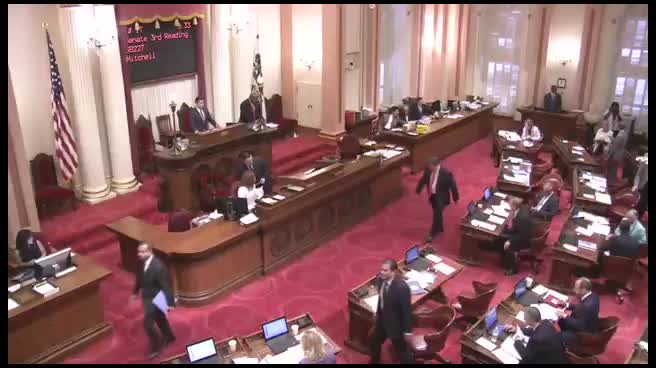 1MIN
Senate Floor
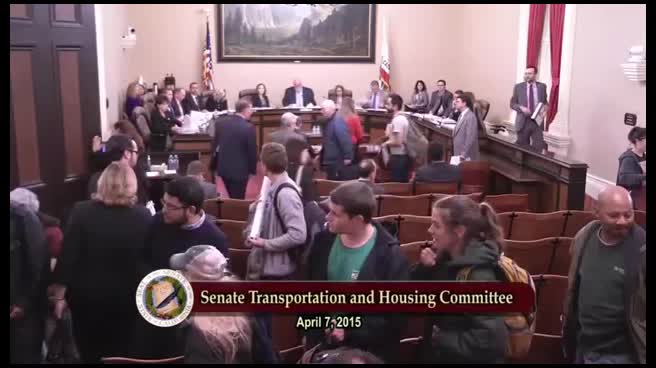 1MIN