SB 654: Unlawful employment practice: parental leave.
- Session Year: 2015-2016
- House: Senate
- Latest Version Date: 2016-09-06
Existing law prohibits an employer from refusing to allow a female employee disabled by pregnancy, childbirth, or a related medical condition to take a leave for a reasonable time of up to 4 months before returning to work. Existing law also prohibits an employer from refusing to maintain and pay for coverage under a group health plan for an employee who takes that leave, as specified.
This bill would prohibit an employer, as defined, from refusing, as specified, to allow an employee with more than 12 months of service with the employer, and who has at least 1,250 hours of service with the employer during the previous 12-month period, to take up to 6 weeks of parental leave to bond with a new child within one year of the childs birth, adoption, or foster care placement. The bill would also prohibit an employer from refusing to maintain and pay for coverage under a group health plan for an employee who takes this leave.
The provisions of the bill would become operative on January 1, 2018.
Existing law prohibits an employer from refusing to allow a female employee disabled by pregnancy, childbirth, or a related medical condition to take a leave for a reasonable time of up to 4 months before returning to work. Existing law also prohibits an employer from refusing to maintain and pay for coverage under a group health plan for an employee who takes that leave, as specified.
This bill would prohibit an employer, as defined, from refusing, as specified, to allow an employee with more than 12 months of service with the employer, and who has at least 1,250 hours of service with the employer during the previous 12-month period, to take up to 12 6 weeks of parental leave to bond with a new child within one year of the childs birth, adoption, or foster care placement. The bill would also prohibit an employer from refusing to maintain and pay for coverage under a group health plan for an employee who takes this leave.
The provisions of the bill would become operative on January 1, 2018.
Existing law prohibits an employer from refusing to allow a female employee disabled by pregnancy, childbirth, or a related medical condition to take a leave for a reasonable time of up to 4 months before returning to work. Existing law also prohibits an employer from refusing to maintain and pay for coverage under a group health plan for an employee who takes that leave, as specified.
This bill would prohibit an employer, as defined, from refusing, as specified, to allow an employee with more than 12 months of service with the employer, and who has at least 1,250 hours of service with the employer during the previous 12-month period, to take up to 12 weeks of parental leave to bond with a new child within one year of the childs birth, adoption, or foster care placement. The bill would also prohibit an employer from refusing to maintain and pay for coverage under a group health plan for an employee who takes this leave.
(1)Existing law, as part of the hazardous waste control law, requires facilities handling hazardous waste to obtain a permit from the Department of Toxic Substances Control. Existing law requires an owner or operator of a facility intending to renew the facilitys permit to submit a complete Part A application for a permit renewal prior to the expiration of the permit. Existing law requires the owner or operator to submit a complete Part B application when requested by the department. Existing law requires the department to issue a permit if the facility meets specified requirements. A violation of the hazardous waste control law is a crime.
This bill would instead require the owner or operator of a facility to submit complete Part A and Part B applications for a permit renewal at least 2 years prior to the expiration date of the permit. The bill would provide that, when a complete renewal application has been submitted before the end of a permits fixed term, the permit shall be deemed extended for a period not to exceed 36 months until the renewal application is approved or denied and the owner or operator has exhausted all applicable rights of appeal. The bill would specify alternative timelines and rules relating to renewal for permits that expire before January 1, 2019. Because a violation of these requirements would be a crime, the bill would impose a state-mandated local program.
(2)The California Constitution requires the state to reimburse local agencies and school districts for certain costs mandated by the state. Statutory provisions establish procedures for making that reimbursement.
This bill would provide that no reimbursement is required by this act for a specified reason.
(1)Existing law, as part of the hazardous waste control law, requires facilities handling hazardous waste to obtain a permit from the Department of Toxic Substances Control. Existing law requires an owner or operator of a facility intending to renew the facilitys permit to submit a complete Part A application for a permit renewal prior to the expiration of the permit. Existing law requires the owner or operator to submit a complete Part B application when requested by the department. Existing law requires the department to issue a permit if the facility meets specified requirements. A violation of the hazardous waste control law is a crime.
This bill would instead require the owner or operator of a facility to submit complete Part A and Part B applications for a permit renewal at least 2 years prior to the expiration date of the permit. The bill would require the department to issue a final permit decision for an application for permit renewal within 36 months of the expiration of the facilitys permit. The bill would provide that a facility that has not been issued a final permit within 36 months following the expiration of the permits fixed term shall be deemed in violation of the hazardous waste control law. Since that, when a complete renewal application has been submitted before the end of a permits fixed term, the permit shall be deemed extended for a period not to exceed 36 months until the renewal application is approved or denied and the owner or operator has exhausted all applicable rights of appeal. The bill would specify alternative timelines and rules relating to renewal for permits that expire before January 1, 2019. Because a violation of the hazardous waste control law is these requirements would be a crime, the bill would impose a state-mandated local program.
(2)The California Constitution requires the state to reimburse local agencies and school districts for certain costs mandated by the state. Statutory provisions establish procedures for making that reimbursement.
This bill would provide that no reimbursement is required by this act for a specified reason.
(1)Existing law, as part of the hazardous waste control law, requires the Department of Toxic Substances Control to adopt, and revise when appropriate, standards and regulations to, among other things, specify the financial assurances to be provided by an owner or operator of a hazardous waste facility that are necessary to provide for the cost of closure and subsequent maintenance of the facility. A violation of a regulation adopted pursuant to the hazardous waste control law is a crime.
This bill would additionally require the standards and regulations to specify the financial assurances to be provided to respond to the cost of closure, cleanup, and subsequent maintenance of the facility. Since a violation of a regulation adopted pursuant to the hazardous waste control law would be a crime, the bill would impose a state-mandated local program.
(2)The California Constitution requires the state to reimburse local agencies and school districts for certain costs mandated by the state. Statutory provisions establish procedures for making that reimbursement.
This bill would provide that no reimbursement is required by this act for a specified reason.
This act shall be known, and may be referred to, as the New Parent Leave Act.
SEC. 2.Section 12945.6 is added to the Government Code, to read:12945.6.(a)It shall be an unlawful employment practice for an employer to do either of the following:
(1)Refuse to allow an employee with more than 12 months of service with the employer, and who has at least 1,250 hours of service with the employer during the previous 12-month period, upon request, to take up to six weeks of parental leave to bond with a new child within one year of the childs birth, adoption, or foster care placement. If, on or before the commencement of this parental leave, the employer does not provide a guarantee of employment in the same or a comparable position upon the termination of the leave, the employer shall be deemed to have refused to allow the leave. The employee shall be entitled to utilize accrued vacation pay, paid sick time, other accrued paid time off, or other paid or unpaid time off negotiated with the employer, during the period of parental leave.
(2)Refuse to maintain and pay for coverage for an eligible employee who takes parental leave pursuant to this section under a group health plan, as defined in Section 5000(b)(1) of the Internal Revenue Code of 1986, for the duration of the leave, not to exceed six weeks over the course of a 12-month period, commencing on the date that the parental leave commences, at the level and under the conditions that coverage would have been provided if the employee had continued to work in his or her position for the duration of the leave.
(b)An employee is entitled to take, in addition to the leave provided pursuant to this section, leave provided pursuant to Section 12945 if the employee is otherwise qualified for that leave.
(c)This section does not apply to an employee subject to both Section 12945.2 and the federal Family and Medical Leave Act of 1993.
(d)In any case in which two employees who are entitled to leave under this section for the same birth, adoption, or foster care placement are employed by the same employer, the employer is not required, but may elect, to grant simultaneous leave to both employees.
(e)The basic minimum duration of the leave shall be two weeks. However, an employer may grant requests for additional occasions of leave lasting less than two weeks.
(f)Parental leave taken pursuant to this section shall run concurrently to parental leave taken as described in Section 44977.5 of the Education Code.
(g)For purposes of this section, employer means either of the following:
(1)A person who directly employs, within 75 miles of the worksite where an employee is employed, 20 or more persons to perform services for a wage or salary.
(2)The state, and any political or civil subdivision of the state, and cities, except for a school district, county office of education, or a community college district.
(h)This section shall become operative on January 1, 2018.
This act shall be known, and may be referred to, as the New Parent Leave Act.
SEC. 2.Section 12945.6 is added to the Government Code, to read:12945.6.(a)It shall be an unlawful employment practice for an employer to do either of the following:
(1)Refuse to allow an employee with more than 12 months of service with the employer, and who has at least 1,250 hours of service with the employer during the previous 12-month period, upon request, to take up to 12 six weeks of parental leave to bond with a new child within one year of the childs birth, adoption, or foster care placement. If, on or before the commencement of this parental leave, the employer does not provide a guarantee of employment in the same or a comparable position upon the termination of the leave, the employer shall be deemed to have refused to allow the leave. The employee shall be entitled to utilize accrued vacation pay, paid sick time, other accrued paid time off, or other paid or unpaid time off negotiated with the employer, during the period of parental leave.
(2)Refuse to maintain and pay for coverage for an eligible employee who takes parental leave pursuant to this section under a group health plan, as defined in Section 5000(b)(1) of the Internal Revenue Code of 1986, for the duration of the leave, not to exceed 12 six weeks over the course of a 12-month period, commencing on the date that the parental leave commences, at the level and under the conditions that coverage would have been provided if the employee had continued to work in his or her position for the duration of the leave.
(b)Parental leave pursuant to this section shall run concurrently with leave taken pursuant to Section 12945.2 and the federal Family and Medical Leave Act of 1993 (Public Law 103-3), except for leave taken for a disability on account of pregnancy, childbirth, or related medical condition. The aggregate amount of leave taken pursuant to this section, Section 12945.2, or the federal Family and Medical Leave Act of 1993, or any combination of these laws, except for leave taken for a disability on account of pregnancy, childbirth, or related medical conditions, shall not exceed 12 workweeks in a 12-month period.
(c)
(b)An employee is entitled to take, in addition to the leave provided pursuant to this section, Section 12945.2, and the federal Family and Medical Leave Act of 1993, leave provided pursuant to Section 12945 if the employee is otherwise qualified for that leave.
(c)This section does not apply to an employee subject to both Section 12945.2 and the federal Family and Medical Leave Act of 1993.
(d)In any case in which two employees who are entitled to leave under this section for the same birth, adoption, or foster care placement are employed by the same employer, the employer is not required, but may elect, to grant simultaneous leave to both employees.
(e)The basic minimum duration of the leave shall be two weeks. However, an employer may grant requests for additional occasions of leave lasting less than two weeks.
(f)Parental leave taken pursuant to this section shall run concurrently to parental leave taken as described in Section 44977.5 of the Education Code.
(d)
(g)For purposes of this section, employer means either of the following:
(1)A person who directly employs 10 employs, within 75 miles of the worksite where an employee is employed, 20 or more persons to perform services for a wage or salary.
(2)The state, and any political or civil subdivision of the state, and cities, except for a school district, county office of education, or a community college district.
(h)This section shall become operative on January 1, 2018.
This act shall be known, and may be referred to, as the New Parent Leave Act.
SEC. 2.Section 12945.6 is added to the Government Code, to read:12945.6.(a)It shall be an unlawful employment practice for an employer to do either of the following:
(1)Refuse to allow an employee with more than 12 months of service with the employer, and who has at least 1,250 hours of service with the employer during the previous 12-month period, upon request, to take up to 12 weeks of parental leave to bond with a new child within one year of the childs birth, adoption, or foster care placement. If, on or before the commencement of this parental leave, the employer does not provide a guarantee of employment in the same or a comparable position upon the termination of the leave, the employer shall be deemed to have refused to allow the leave. The employee shall be entitled to utilize accrued vacation pay, paid sick time, other accrued paid time off, or other paid or unpaid time off negotiated with the employer, during the period of parental leave.
(2)Refuse to maintain and pay for coverage for an eligible employee who takes parental leave pursuant to this section under a group health plan, as defined in Section 5000(b)(1) of the Internal Revenue Code of 1986, for the duration of the leave, not to exceed 12 weeks over the course of a 12-month period, commencing on the date that the parental leave commences, at the level and under the conditions that coverage would have been provided if the employee had continued to work in his or her position for the duration of the leave.
(b)Parental leave pursuant to this section shall run concurrently with leave taken pursuant to Section 12945.2 and the federal Family and Medical Leave Act of 1993 (Public Law 103-3), except for leave taken for a disability on account of pregnancy, childbirth, or related medical condition. The aggregate amount of leave taken pursuant to this section, Section 12945.2, or the federal Family and Medical Leave Act of 1993, or any combination of these laws, except for leave taken for a disability on account of pregnancy, childbirth, or related medical conditions, shall not exceed 12 workweeks in a 12-month period.
(c)An employee is entitled to take, in addition to the leave provided pursuant to this section, Section 12945.2, and the federal Family and Medical Leave Act of 1993, leave provided pursuant to Section 12945 if the employee is otherwise qualified for that leave.
(d)For purposes of this section, employer means either of the following:
(1)A person who directly employs 10 or more persons to perform services for a wage or salary.
(2)The state, and any political or civil subdivision of the state, and cities, except for a school district, county office of education, or a community college district.
SECTION 1.Section 25200 of the Health and Safety Code is amended to read:25200.(a)The department shall issue hazardous waste facilities permits to use and operate one or more hazardous waste management units at a facility that in the judgment of the department meet the building standards published in the State Building Standards Code relating to hazardous waste facilities and the other standards and requirements adopted pursuant to this chapter. The department shall impose conditions on each hazardous waste facilities permit specifying the types of hazardous wastes that may be accepted for transfer, storage, treatment, or disposal. The department may impose any other conditions on a hazardous waste facilities permit that are consistent with the intent of this chapter.
(b)The department may impose, as a condition of a hazardous waste facilities permit, a requirement that the owner or operator of a hazardous waste facility that receives hazardous waste from more than one producer comply with any order of the director that prohibits the facility operator from refusing to accept a hazardous waste based on geographical origin that is authorized to be accepted and may be accepted by the facility without extraordinary hazard.
(c)(1)(A)A hazardous waste facilities permit issued by the department shall be for a fixed term, which shall not exceed 10 years for any land disposal facility, storage facility, incinerator, or other treatment facility.
(B)(i)The owner or operator of a facility intending to extend the term of the facilitys permit shall submit complete Part A and Part B applications for a permit renewal at least two years prior to the expiration date of the permit. Any other relevant information shall be submitted as and when requested by the department. A copy of an application for a permit renewal shall also be submitted to the independent review panel established within the department pursuant to Section 57014.
(ii)Notwithstanding clause (i), the owner or operator of a facility intending to extend the term of a permit that expires before January 1, 2018, shall submit complete Part A and Part B applications for a permit renewal before January 1, 2018.
(C)(i)To the extent not inconsistent with the federal act, when an owner or operator satisfies clause (ii) of subparagraph (B), or a complete renewal application, and any other requested information, has been submitted before the end of a permits fixed term, the permit shall be deemed extended until the renewal application is approved or denied and the owner or operator has exhausted all applicable rights of appeal, except that this extension shall not exceed 36 months.
(ii)Notwithstanding clause (i), for a facility with a permit that expires before January 1, 2016, and for which an application for a permit renewal has been submitted before January 1, 2016, the permit shall be deemed extended until the renewal application is approved or denied and the owner or operator has exhausted all applicable rights of appeal, except that this extension shall not extend beyond December 31, 2018.
(D)This section does not limit or restrict the departments authority to impose any additional or different conditions on an extended permit that are necessary to protect human health and the environment.
(E)In adopting new conditions for an extended permit, the department shall follow the applicable permit modification procedures specified in this chapter and the regulations adopted pursuant to this chapter.
(F)When prioritizing pending renewal applications for processing and in determining the need for any new conditions on an extended permit, the department shall consider any input received from the public.
(2)The department shall review each hazardous waste facilities permit for a land disposal facility five years after the date of issuance or reissuance, and shall modify the permit, as necessary, to ensure that the facility continues to comply with the currently applicable requirements of this chapter and the regulations adopted pursuant to this chapter.
(3)This subdivision does not prohibit the department from reviewing, modifying, or revoking a permit at any time during its term.
(d)(1)When reviewing an application for a permit renewal, the department shall consider improvements in the state of control and measurement technology as well as changes in applicable regulations.
(2)Each permit issued or renewed under this section shall contain the terms and conditions that the department determines necessary to protect human health and the environment.
(e)A permit issued pursuant to the federal act by the Environmental Protection Agency in the state for which no state hazardous waste facilities permit has been issued shall be deemed to be a state permit enforceable by the department until a state permit is issued. In addition to complying with the terms and conditions specified in a federal permit deemed to be a state permit pursuant to this section, an owner or operator who holds that permit shall comply with the requirements of this chapter and the regulations adopted by the department to implement this chapter.
SEC. 2.No reimbursement is required by this act pursuant to Section 6 of Article XIIIB of the California Constitution because the only costs that may be incurred by a local agency or school district will be incurred because this act creates a new crime or infraction, eliminates a crime or infraction, or changes the penalty for a crime or infraction, within the meaning of Section 17556 of the Government Code, or changes the definition of a crime within the meaning of Section 6 of Article XIIIB of the California Constitution.
(a)The department shall issue hazardous waste facilities permits to use and operate one or more hazardous waste management units at a facility that in the judgment of the department meet the building standards published in the State Building Standards Code relating to hazardous waste facilities and the other standards and requirements adopted pursuant to this chapter. The department shall impose conditions on each hazardous waste facilities permit specifying the types of hazardous wastes that may be accepted for transfer, storage, treatment, or disposal. The department may impose any other conditions on a hazardous waste facilities permit that are consistent with the intent of this chapter.
(b)The department may impose, as a condition of a hazardous waste facilities permit, a requirement that the owner or operator of a hazardous waste facility that receives hazardous waste from more than one producer comply with any order of the director that prohibits the facility operator from refusing to accept a hazardous waste based on geographical origin that is authorized to be accepted and may be accepted by the facility without extraordinary hazard.
(c)(1)(A)A hazardous waste facilities permit issued by the department shall be for a fixed term, which shall not exceed 10 years for any land disposal facility, storage facility, incinerator, or other treatment facility.
(B)(i)The owner or operator of a facility intending to extend the term of the facilitys permit shall submit complete Part A and Part B applications for a permit renewal at least two years prior to the expiration date of the permit. Any other relevant information shall be submitted as and when requested by the department.
(ii)Notwithstanding clause (i), the owner or operator of a facility intending to extend the term of a permit that expires before January 1, 2018, shall submit complete Part A and Part B applications for a permit renewal before January 1, 2018.
(C)(i)To the extent not inconsistent with the federal act, for an owner or operator in compliance with subparagraph (B), when an owner or operator satisfies clause (ii) of subparagraph (B), or a complete renewal application, and any other requested information, has been submitted before the end of a permits fixed term, the permit shall be deemed extended until the renewal application is approved or denied and the owner or operator has exhausted all applicable rights of appeal have been exhausted. appeal, except that this extension shall not exceed 36 months.
(D)The department shall issue a final permit decision for permit renewal for a facility within 36 months following the expiration of the permits fixed term. A facility that has not been issued a final permit within 36 months following the expiration of the permits fixed term shall be deemed in violation of this chapter.
(ii)Notwithstanding clause (i), for a facility with a permit that expires before January 1, 2016, and for which an application for a permit renewal has been submitted before January 1, 2016, the permit shall be deemed extended until the renewal application is approved or denied and the owner or operator has exhausted all applicable rights of appeal, except that this extension shall not extend beyond December 31, 2018.
(E)
(D)This section does not limit or restrict the departments authority to impose any additional or different conditions on an extended permit that are necessary to protect human health and the environment.
(F)
(E)In adopting new conditions for an extended permit, the department shall follow the applicable permit modification procedures specified in this chapter and the regulations adopted pursuant to this chapter.
(G)
(F)When prioritizing pending renewal applications for processing and in determining the need for any new conditions on an extended permit, the department shall consider any input received from the public.
(2)The department shall review each hazardous waste facilities permit for a land disposal facility five years after the date of issuance or reissuance, and shall modify the permit, as necessary, to ensure that the facility continues to comply with the currently applicable requirements of this chapter and the regulations adopted pursuant to this chapter.
(3)This subdivision does not prohibit the department from reviewing, modifying, or revoking a permit at any time during its term.
(d)(1)When reviewing an application for a permit renewal, the department shall consider improvements in the state of control and measurement technology as well as changes in applicable regulations.
(2)Each permit issued or renewed under this section shall contain the terms and conditions that the department determines necessary to protect human health and the environment.
(e)A permit issued pursuant to the federal act by the Environmental Protection Agency in the state for which no state hazardous waste facilities permit has been issued shall be deemed to be a state permit enforceable by the department until a state permit is issued. In addition to complying with the terms and conditions specified in a federal permit deemed to be a state permit pursuant to this section, an owner or operator who holds that permit shall comply with the requirements of this chapter and the regulations adopted by the department to implement this chapter.
SEC. 2.No reimbursement is required by this act pursuant to Section 6 of Article XIIIB of the California Constitution because the only costs that may be incurred by a local agency or school district will be incurred because this act creates a new crime or infraction, eliminates a crime or infraction, or changes the penalty for a crime or infraction, within the meaning of Section 17556 of the Government Code, or changes the definition of a crime within the meaning of Section 6 of Article XIIIB of the California Constitution.
(a)The department shall adopt, and revise when appropriate, standards and regulations that shall do both of the following:
(1)Specify the financial assurances to be provided by the owner or operator of a hazardous waste facility that are necessary to respond adequately to damage claims arising out of the operation of that type of facility and to provide for the cost of closure, cleanup, and subsequent maintenance of the facility, including, but not limited to, the monitoring of groundwater and other aspects of the environment after closure. If the facility is required to obtain a permit under the federal act, the financial assurance shall be a trust fund, surety bond, letter of credit, insurance, or any other mechanism authorized under the federal act and the regulations adopted pursuant to the federal act. If the facility is not required to obtain a permit under the federal act, the financial assurance may include any other equivalent financial arrangement acceptable to the department.
(2)Provide that every hazardous waste facility can be closed and maintained for at least 30 years subsequent to its closure in a manner that protects human health and the environment and minimizes or eliminates the escape of hazardous waste constituents, leachate, contaminated rainfall, and waste decomposition products to ground and surface waters and to the atmosphere.
(b)In adopting regulations pursuant to subdivision (a), to carry out the purposes of this chapter, the department may specify policy or other contractual terms, conditions, or defenses that are necessary or are unacceptable in establishing evidence of financial responsibility.
(1)If an owner or operator is in bankruptcy pursuant to Title 11 of the United States Code, or where, with reasonable diligence, jurisdiction in any state or federal court cannot be obtained over an owner or operator likely to be solvent at the time of judgment, a claim arising from conduct for which this section requires evidence of financial responsibility may be asserted directly against the guarantor who provided the evidence of financial responsibility.
(2)The total liability of any guarantor is limited to the aggregate amount that the guarantor has provided as evidence of financial responsibility to the owner or operator under this chapter.
(3)This subdivision does not limit any other state or federal statutory, contractual, or common law liability of a guarantor to the owner or operator, including, but not limited to, the liability of the guarantor for bad faith in either negotiating or in failing to negotiate the settlement of a claim.
(4)This subdivision does not diminish the liability of any person under Section 107 or 111 of the federal Comprehensive Environmental Response, Compensation, and Liability Act of 1980 (42 U.S.C. Secs. 9607 and 9611).
(5)For purposes of this subdivision, guarantor means a person, other than the owner or operator, who provides evidence of financial responsibility for an owner or operator under this section.
SECTION 1.Section 25200 of the Health and Safety Code is amended to read:25200.(a)The department shall issue hazardous waste facilities permits to use and operate one or more hazardous waste management units at a facility that in the judgment of the department meet the building standards published in the State Building Standards Code relating to hazardous waste facilities and the other standards and requirements adopted pursuant to this chapter. The department shall impose conditions on each hazardous waste facilities permit specifying the types of hazardous wastes that may be accepted for transfer, storage, treatment, or disposal. The department may impose any other conditions on a hazardous waste facilities permit that are consistent with the intent of this chapter.
(b)The department may impose, as a condition of a hazardous waste facilities permit, a requirement that the owner or operator of a hazardous waste facility that receives hazardous waste from more than one producer comply with any order of the director that prohibits the facility operator from refusing to accept a hazardous waste based on geographical origin that is authorized to be accepted and may be accepted by the facility without extraordinary hazard.
(c)(1)(A)Any A hazardous waste facilities permit issued by the department shall be for a fixed term, which shall not exceed 10 years for any land disposal facility, storage facility, incinerator, or other treatment facility.
(B)Before the fixed term of a permit expires, the The owner or operator of a facility intending to extend the term of the facilitys permit shall submit a complete Part A application and Part B applications for a permit renewal. At any time following renewal at least two years prior to the submittal expiration date of the Part A application, the owner or operator of a facility shall submit a complete Part B application, or any portion thereof, as well as any permit. Any other relevant information, information shall be submitted as and when requested by the department. To the extent not inconsistent with the federal act, when a complete Part A renewal application, and any other requested information, has been submitted before the end of the permits fixed term, the permit is deemed extended until the renewal application is approved or denied and the owner or operator has exhausted all applicable rights of appeal.
(C)To the extent not inconsistent with the federal act, for an owner or operator in compliance with subparagraph (B), the permit shall be deemed extended until the renewal application is approved or denied and all applicable rights of appeal have been exhausted.
(D)The department shall issue a final permit decision for permit renewal for a facility within 36 months following the expiration of the permits fixed term. A facility that has not been issued a final permit within 36 months following the expiration of the permits fixed term shall be deemed in violation of this chapter.
(C)
(E)This section does not limit or restrict the departments authority to impose any additional or different conditions on an extended permit that are necessary to protect human health and the environment.
(D)
(F)In adopting new conditions for an extended permit, the department shall follow the applicable permit modification procedures specified in this chapter and the regulations adopted pursuant to this chapter.
(E)
(G)When prioritizing pending renewal applications for processing and in determining the need for any new conditions on an extended permit, the department shall consider any input received from the public.
(2)The department shall review each hazardous waste facilities permit for a land disposal facility five years after the date of issuance or reissuance, and shall modify the permit, as necessary, to assure ensure that the facility continues to comply with the currently applicable requirements of this chapter and the regulations adopted pursuant to this chapter.
(3)This subdivision does not prohibit the department from reviewing, modifying, or revoking a permit at any time during its term.
(d)(1)When reviewing any an application for a permit renewal, the department shall consider improvements in the state of control and measurement technology as well as changes in applicable regulations.
(2)Each permit issued or renewed under this section shall contain the terms and conditions that the department determines necessary to protect human health and the environment.
(e)A permit issued pursuant to the federal act by the Environmental Protection Agency in the state for which no state hazardous waste facilities permit has been issued shall be deemed to be a state permit enforceable by the department until a state permit is issued. In addition to complying with the terms and conditions specified in a federal permit deemed to be a state permit pursuant to this section, an owner or operator who holds that permit shall comply with the requirements of this chapter and the regulations adopted by the department to implement this chapter.
SEC. 2.No reimbursement is required by this act pursuant to Section 6 of Article XIIIB of the California Constitution because the only costs that may be incurred by a local agency or school district will be incurred because this act creates a new crime or infraction, eliminates a crime or infraction, or changes the penalty for a crime or infraction, within the meaning of Section 17556 of the Government Code, or changes the definition of a crime within the meaning of Section 6 of Article XIIIB of the California Constitution.
(a)The department shall adopt, and revise when appropriate, standards and regulations which that shall do both of the following:
(1)Specify the financial assurances to be provided by the owner or operator of a hazardous waste facility that are necessary to respond adequately to damage claims arising out of the operation of that type of facility and to provide for the cost of closure closure, cleanup, and subsequent maintenance of the facility, including, but not limited to, the monitoring of groundwater and other aspects of the environment after closure. If the facility is required to obtain a permit under the federal act, the financial assurance shall be a trust fund, surety bond, letter of credit, insurance, or any other mechanism authorized under the federal act and the regulations adopted pursuant to the federal act. If the facility is not required to obtain a permit under the federal act, the financial assurance may include any other equivalent financial arrangement acceptable to the department.
(2)Provide that every hazardous waste facility can be closed and maintained for at least 30 years subsequent to its closure in a manner that protects human health and the environment and minimizes or eliminates the escape of hazardous waste constituents, leachate, contaminated rainfall, and waste decomposition products to ground and surface waters and to the atmosphere.
(b)In adopting regulations pursuant to subdivision (a), to carry out the purposes of this chapter, the department may specify policy or other contractual terms, conditions, or defenses which that are necessary or are unacceptable in establishing evidence of financial responsibility.
(1)If an owner or operator is in bankruptcy pursuant to Title 11 of the United States Code, or where, with reasonable diligence, jurisdiction in any state or federal court cannot be obtained over an owner or operator likely to be solvent at the time of judgment, any a claim arising from conduct for which this section requires evidence of financial responsibility may be asserted directly against the guarantor who provided the evidence of financial responsibility.
(2)The total liability of any guarantor is limited to the aggregate amount which that the guarantor has provided as evidence of financial responsibility to the owner or operator under this chapter.
(3)This subdivision does not limit any other state or federal statutory, contractual, or common law liability of a guarantor to the owner or operator, including, but not limited to, the liability of the guarantor for bad faith in either negotiating or in failing to negotiate the settlement of any a claim.
(4)This subdivision does not diminish the liability of any person under Section 107 or 111 of the federal Comprehensive Environmental Response, Compensation, and Liability Act of 1980 (42 U.S.C. Secs. 9607 and 9611).
(5)For purposes of this subdivision, guarantor means any a person, other than the owner or operator, who provides evidence of financial responsibility for an owner or operator under this section.
SEC. 2.No reimbursement is required by this act pursuant to Section 6 of Article XIIIB of the California Constitution because the only costs that may be incurred by a local agency or school district will be incurred because this act creates a new crime or infraction, eliminates a crime or infraction, or changes the penalty for a crime or infraction, within the meaning of Section 17556 of the Government Code, or changes the definition of a crime within the meaning of Section 6 of Article XIIIB of the California Constitution.
|
Date
|
Status
|
|---|---|
| Aug 23, 2016 | From committee: Do pass and re-refer to Com. on APPR. (Ayes 4. Noes 2.) (August 22). Re-referred to Com. on APPR. |
| Sep 3, 2015 | Read second time. Ordered to third reading. |
| Sep 8, 2015 | Ordered to inactive file on request of Assembly Member Holden. |
| Aug 4, 2016 | Notice of intention to remove from inactive file given by Assembly Member Calderon. |
| Aug 8, 2016 | From inactive file. |
| Aug 8, 2016 | Ordered to third reading. |
| Aug 11, 2016 | Ordered to third reading. |
| Aug 11, 2016 | Re-referred to Coms. on L. & E. and APPR. pursuant to Assembly Rule 77.2. |
| Aug 11, 2016 | Read third time and amended. |
| Aug 11, 2016 | Read third time and amended. (Ayes 49. Noes 26. Page 5776.) |
| Aug 18, 2016 | From committee with author's amendments. Read second time and amended. Re-referred to Com. on L. & E. |
| Sep 2, 2015 | Read second time and amended. Ordered to second reading. |
| Aug 24, 2016 | Joint Rule 62(a) suspended. |
| Aug 25, 2016 | August 25 hearing postponed by committee. |
| Aug 29, 2016 | From committee: Do pass. (Ayes 12. Noes 5.) (August 29). |
| Aug 29, 2016 | Read second time. Ordered to third reading. |
| Aug 30, 2016 | In Senate. Concurrence in Assembly amendments pending. |
| Aug 30, 2016 | Read third time. Passed. Ordered to the Senate. |
| Aug 30, 2016 | Read third time. Passed. (Ayes 54. Noes 17. Page 6479.) Ordered to the Senate. |
| Aug 31, 2016 | Assembly amendments concurred in. (Ayes 24. Noes 12. Page 5556.) Ordered to engrossing and enrolling. |
| Aug 31, 2016 | Assembly amendments concurred in. (Ayes 24. Noes 12.) Ordered to engrossing and enrolling. |
| Sep 9, 2016 | Enrolled and presented to the Governor at 3:30 p.m. |
| Jun 1, 2015 | From committee: Do pass as amended. (Ayes 5. Noes 2. Page 1158.) (May 28). |
| Mar 2, 2015 | From printer. May be acted upon on or after April 1. |
| Mar 2, 2015 | Read first time. |
| Mar 12, 2015 | Referred to Com. on E.Q. |
| Apr 21, 2015 | From committee with author's amendments. Read second time and amended. Re-referred to Com. on E.Q. |
| Apr 22, 2015 | Set for hearing April 29. |
| Apr 30, 2015 | From committee: Do pass and re-refer to Com. on APPR. (Ayes 5. Noes 2. Page 858.) (April 29). Re-referred to Com. on APPR. |
| Apr 30, 2015 | From committee: Do pass and re-refer to Com. on APPR. (Ayes 5. Noes 2.) (April 29). Re-referred to Com. on APPR. |
| May 5, 2015 | Set for hearing May 11. |
| May 11, 2015 | May 11 hearing: Placed on APPR. suspense file. |
| May 23, 2015 | Set for hearing May 28. |
| Feb 27, 2015 | Introduced. To Com. on RLS. for assignment. To print. |
| Jun 1, 2015 | From committee: Do pass as amended. (Ayes 5. Noes 2.) (May 28). |
| Jun 2, 2015 | Read second time and amended. Ordered to third reading. |
| Jun 4, 2015 | In Assembly. Read first time. Held at Desk. |
| Jun 4, 2015 | Read third time. Passed. (Ayes 21. Noes 16. Page 1334.) Ordered to the Assembly. |
| Jun 4, 2015 | Read third time. Passed. (Ayes 21. Noes 16.) Ordered to the Assembly. |
| Jun 18, 2015 | Referred to Com. on E.S. & T.M. |
| Jul 15, 2015 | From committee: Do pass and re-refer to Com. on APPR. (Ayes 5. Noes 2.) (July 14). Re-referred to Com. on APPR. |
| Aug 19, 2015 | August 19 set for first hearing. Placed on APPR. suspense file. |
| Sep 1, 2015 | From committee: Do pass as amended. (Ayes 12. Noes 5.) (August 27). |
|
Date
|
Description
|
Location
|
Votes
|
|
|---|---|---|---|---|
| Aug 31, 2016 | Unfinished Business SB654 Jackson Concurrence | Senate Floor |
Passed |
|
| Aug 30, 2016 | SB 654 Jackson Senate Third Reading By GARCIA, C. | Assembly Floor |
Passed |
|
| Aug 29, 2016 | Do pass. | Assembly Standing Committee on Appropriations |
Passed |
|
| Aug 22, 2016 | Do pass and be re-referred to the Committee on [Appropriations] | Assembly Standing Committee on Labor and Employment |
Passed |
|
| Aug 11, 2016 | SB 654 De León Senate Third Reading By GARCIA, C. Amendment Set #1 | Assembly Floor |
Passed |
|
| Aug 27, 2015 | Do pass as amended. | Assembly Standing Committee on Appropriations |
Passed |
|
| Jul 14, 2015 | Do pass and be re-referred to the Committee on [Appropriations] | Assembly Standing Committee on Environmental Safety and Toxic Materials |
Passed |
|
| Jun 4, 2015 | Senate 3rd Reading SB654 De León | Senate Floor |
Passed |
|
| May 28, 2015 | Do pass as amended | Senate Standing Committee on Appropriations |
Passed |
|
| May 11, 2015 | Placed on suspense file | Senate Standing Committee on Appropriations |
Passed |
|
| Apr 29, 2015 | Do pass, but first be re-referred to the Committee on [Appropriations] | Senate Standing Committee on Environmental Quality |
Passed |
This list shows positions taken on this bill by organizations on the date displayed, which is linked to the original source.
Positions by individuals are not included.
|
Organization
|
Position
|
Date
|
|---|---|---|
| 9 to 5 | ** Support | Aug 30, 2016 |
| 9 to 5 California Chapter and National Association | ** Support | Aug 22, 2016 |
| Acclamation Insurance Management Services | ** Against | Aug 30, 2016 |
| Advanced Energy Economy | * Indeterminate | Apr 29, 2015 |
| Agricultural Council Of California | ** Against | Aug 30, 2016 |
| Alhambra Chamber of Commerce Automotive Specialty Products Alliance | ** Against | Aug 11, 2016 |
| Alliance Of Californians For Community Empowerment | ** Support | Aug 30, 2016 |
| Allied Managed Care | ** Against | Aug 30, 2016 |
| American Association of University Women | ** Support | Aug 30, 2016 |
| American Civil Liberties Union of California | ** Support | Aug 22, 2016 |
| American Petroleum and Convenience Store Association | ** Against | Aug 30, 2016 |
| Antelope Valley Hospital WIC Program | ** Support | Aug 22, 2016 |
| Associated Builders and Contractors - San Diego Chapter | ** Against | Aug 30, 2016 |
| Associated Builders And Contractors Of California | ** Against | Aug 30, 2016 |
| Auto Care Association | ** Against | Aug 30, 2016 |
| Automotive Specialty Products Alliance | ** Against | Jun 4, 2015 |
| Breastfeed LA | ** Support | Aug 22, 2016 |
| CalAsian Chamber of Commerce | ** Against | Aug 30, 2016 |
| California Ambulance Association | ** Against | Aug 30, 2016 |
| California Asian Pacific Chamber Of Commerce | * Against | Aug 22, 2016 |
| California Asset Building Coalition | ** Support | Aug 30, 2016 |
| California Association For Health Services At Home | ** Against | Aug 30, 2016 |
| California Association of Competitive Telecommunication Companies | ** Against | Aug 30, 2016 |
| California Association Of Joint Powers Authorities | ** Against | Aug 30, 2016 |
| California Association of Nursery and Garden Centers | ** Against | Aug 30, 2016 |
| California Association Of Winegrape Growers | ** Against | Aug 30, 2016 |
| California Bankers Association | ** Against | Aug 30, 2016 |
| California Black Health Network | ** Support | Aug 22, 2016 |
| California Business Properties Association | ** Against | Aug 30, 2016 |
| California Cement Manufacturers Environmental Coalition | ** Against | Aug 11, 2016 |
| California Chamber Of Commerce | ** Against | Aug 30, 2016 |
| California Child Care Resource & Referral Network | ** Support | Aug 30, 2016 |
| California Commission on the Status of Women and Girls | * Support | Aug 22, 2016 |
| California Domestic Workers Coalition | ** Support | Aug 30, 2016 |
| California EDGE Coalition | ** Support | Aug 22, 2016 |
| California Employment Lawyers Association | ** Support | Aug 30, 2016 |
| California Farm Bureau Federation | ** Against | Aug 30, 2016 |
| California Hotel and Lodging Association | ** Against | Aug 30, 2016 |
| California Hunger Action Coalition | ** Support | Aug 30, 2016 |
| California Immigrant Policy Center | ** Support | Aug 30, 2016 |
| California Labor Federation, Afl-Cio | * Support | Aug 22, 2016 |
| California Labor of Federation | * Support | Aug 22, 2016 |
| California Landscape Contractor'S Association | ** Against | Aug 30, 2016 |
| California Latinas for Reproductive Justice | ** Support | Aug 30, 2016 |
| California League of Food Processors | ** Against | Aug 30, 2016 |
| California Legislative Women's Caucus | ** Support | Aug 22, 2016 |
| California Manufacturers And Technology Association | ** Against | Aug 30, 2016 |
| California Partnership | ** Support | Aug 30, 2016 |
| California Partnership To End Domestic Violence | * Support | Aug 22, 2016 |
| California Professional Association Of Specialty Contractors | ** Against | Aug 30, 2016 |
| California Restaurant Association | ** Against | Aug 30, 2016 |
| California Retailers Association | ** Against | Aug 30, 2016 |
| California Rural Legal Assistance Foundation, Inc. | ** Support | Aug 22, 2016 |
| California State Association Of Counties | ** Against | Aug 30, 2016 |
| California Teachers Association | ** Support | Aug 22, 2016 |
| California Travel Association | ** Against | Aug 30, 2016 |
| California Women's Law Center | ** Support | Aug 30, 2016 |
| California Work and Family Coalition | ** Support | Aug 30, 2016 |
| Career Ladders Project | ** Support | Aug 30, 2016 |
| CAWA - Representing the Automotive Parts Industry | ** Against | Aug 30, 2016 |
| Center for Popular Democracy | ** Support | Aug 30, 2016 |
| Center for WorkLife Law at UC Hastings | ** Support | Aug 22, 2016 |
| Center on Race, Poverty & the Environment | ** Support | Aug 11, 2016 |
| Chemical Industry Council Of California | ** Against | Aug 11, 2016 |
| Child Care Law Center | ** Support | Aug 30, 2016 |
| Child Family Guidance Center | ** Support | Aug 22, 2016 |
| Childrens Hospital Los Angeles | ** Support | Aug 22, 2016 |
| Civil Justice Association Of California | * Against | Aug 29, 2016 |
| Clean Harbors Environmental Services, Inc. | ** Against | Aug 11, 2016 |
| Common Sense Kids Action | ** Support | Aug 22, 2016 |
| Consumer Attorneys Of California | ** Support | Aug 22, 2016 |
| Consumer Specialty Products Association | ** Against | Jun 4, 2015 |
| Courage Campaign | ** Support | Aug 30, 2016 |
| Environmental Working Group | * Indeterminate | Apr 29, 2015 |
| Equal Rights Advocates | ** Support | Aug 30, 2016 |
| Family Wine Makers of California | * Against | Aug 22, 2016 |
| First 5 Alameda County | ** Support | Aug 30, 2016 |
| First 5 Association Of California | ** Support | Aug 30, 2016 |
| First 5 Humboldt | ** Support | Aug 30, 2016 |
| First 5 Kings County | ** Support | Aug 30, 2016 |
| First 5 Marin | ** Support | Aug 30, 2016 |
| First 5 Monterey County | ** Support | Aug 30, 2016 |
| First 5 Santa Cruz County | ** Support | Aug 30, 2016 |
| Healthy Communities, Inc. | ** Support | Aug 22, 2016 |
| Industrial Environmental Association | ** Against | Jun 4, 2015 |
| Institute of Scrap Recycling Industries | ** Against | Jun 4, 2015 |
| Legal Aid Society-Employment Law Center | ** Support | Aug 30, 2016 |
| Los Angeles County Professional Peace Officers Association | ** Support | Aug 22, 2016 |
| Maternal and Child Health Access | ** Support | Aug 22, 2016 |
| Metals Finishing Association of Northern California | ** Against | Jun 4, 2015 |
| Metals Finishing Association of Southern California | ** Against | Jun 4, 2015 |
| Mexican American Legal Defense and Education Fund | ** Support | Aug 30, 2016 |
| Mujeres Unidas Y Activas | ** Support | Aug 30, 2016 |
| National Association Of Social Workers, California Chapter | ** Support | Aug 22, 2016 |
| National Council of Jewish Women | ** Support | Aug 30, 2016 |
| Newton Center for Affect Regulation | ** Support | Aug 30, 2016 |
| Organization Of Smud Employees | ** Support | Aug 22, 2016 |
| Our Family Coalition | ** Support | Aug 22, 2016 |
| Parent Voices | ** Support | Aug 30, 2016 |
| Pediatrician | * Support | Aug 22, 2016 |
| Plumbing Heating Cooling Contractors Of California | * Against | Aug 22, 2016 |
| Raising California Together | ** Support | Aug 30, 2016 |
| San Diego Court Employees Association | ** Support | Aug 22, 2016 |
| San Luis Obispo County Employees Association | ** Support | Aug 22, 2016 |
| Santa Clara County Wage Theft Coalition | ** Support | Aug 30, 2016 |
| Simi Valley Chamber of Commerce | ** Against | Jun 4, 2015 |
| South LA Health Projects | ** Support | Aug 22, 2016 |
| Stronger California Advocates Network | ** Support | Aug 22, 2016 |
| UFCW Western States Council | ** Support | Aug 30, 2016 |
| Voices for Progress | ** Support | Aug 30, 2016 |
| Western Car Wash Association | * Against | Aug 22, 2016 |
| Western Center On Law And Poverty Inc. | ** Support | Aug 30, 2016 |
| Western Cities Petroleum Association | * Indeterminate | Apr 29, 2015 |
| Western Electrical Contractors Association | * Against | Aug 22, 2016 |
| Western Placer Waste Management Authority | ** Against | Apr 29, 2015 |
| Western Plant Health Association | ** Against | Jun 4, 2015 |
| Western States Petroleum Association | ** Against | Jun 4, 2015 |
| Widerman Group | * Support | Aug 29, 2016 |
| YWCA San Francisco & Marin | ** Support | Aug 30, 2016 |
Office of Senate Floor Analyses (916) 651-1520 Fax: (916) 327-4478 | SB |
VETO
Bill No: SB 654
:
PRIOR VOTES NOT RELEVANT
SENATE FLOOR: 24-12, 8/31/16
AYES: Allen, Beall, Block, De León, Galgiani, Hall, Hancock, Hernandez, Hertzberg, Hill, Hueso, Jackson, Lara, Leno, Leyva, Liu, McGuire, Mendoza, Mitchell, Monning, Pan, Pavley, Wieckowski, Wolk
NOES: Anderson, Berryhill, Cannella, Fuller, Gaines, Glazer, Huff, Moorlach, Morrell, Nielsen, Stone, Vidak
NO VOTE RECORDED: Bates, Nguyen, Roth
ASSEMBLY FLOOR: 54-17, 8/30/16 - See last page for vote
SOURCE: California Employment Lawyers Association
Equal Rights Advocates
Legal Aid Society – Employment Law Center
DIGEST: This bill makes it an unlawful employment practice for an employer, of 20 or more employees, to refuse to allow an eligible employee to take up to six weeks of job protected parental leave to bond with a new child within one year of the child’s birth, adoption or foster care placement. This bill also prohibits an employer from refusing to maintain and pay for the employee’s continued group health coverage during the duration of the leave.
Existing law:
- Entitles, under the California Family Rights Act (CFRA) and the federal Family and Medical Leave Act (FMLA), required to be taken concurrently, eligible workers of employers with 50 or more employees to:
- Take up to 12 workweeks of unpaid, job-protected leave during a 12-month period for specified family and medical reasons, including time to bond with a new child through birth, adoption or foster care placement, among others.
- Guaranteed reinstatement to the same or comparable position.
- Continued group health coverage during the duration of the leave under the same terms and conditions.
- Establishes the Paid Family Leave (PFL) program, within the State Disability Insurance program, as a partial wage-replacement plan funded through employee payroll deductions. Among other things:
- PFL provides eligible employees with up to six weeks of wage replacement benefits (approximately 60 percent of lost wages) to care for a seriously ill child, spouse or registered domestic partner, parent, siblings, grandparents, grandchildren, and parents-in-laws or to bond with a minor child within one year of the birth or placement of the child in connection with foster care or adoption.
- Employers may require that employees take up to two weeks of earned but unused vacation time when using PFL. The law does not allow employers to require employees to use sick leave.
- PFL does not provide job protection or return to work rights.
- PFL does not require continued group health coverage during leave.
- Requires, pursuant to Pregnancy Disability Leave (PDL), under the Fair Employment and Housing Act, private employers with five or more employees and public employers to provide up to four months of unpaid, job-protected leave for disability due to pregnancy, childbirth or related conditions.
- Employees may use accrued vacation and paid sick leave during PDL.
- Employees are entitled to reasonable accommodations and reinstatement to the job held before PDL began.
- Employers are required to continue health coverage during PDL.
This bill establishes a new parental leave right to bond with a new child either through birth, adoption or foster care placement. Specifically, this bill:
- Enacts the “New Parent Leave Act” making it an unlawful employment practice for an employer to refuse to allow an employee, with more than 12 months and at least 1,250 hours of service with the employer, to take up to six weeks of parental leave to bond with a new child within one year of the child's birth, adoption or foster care placement.
- Defines “employer” to mean either of the following:
- A person who directly employs, within 75 miles of the worksite, 20 or more persons to perform services for a wage or salary.
- The state, and any political subdivision of the state, and cities, except for a school district, county office of education, or a community college district.
- Requires employers to provide a guarantee of employment in the same or comparable position upon return, as specified.
- Provides that the employee can utilize accrued vacation pay, paid sick time, other accrued paid time off, or other paid or unpaid time off negotiated with the employer, during the period of parental leave.
- Makes it an unlawful employment practice for an employer to refuse to maintain and pay for continued group health coverage at the same level and under the same conditions that would have been provided had the employee continued to work during the duration of the leave.
- Specifies that an employee is entitled to take PDL, in addition to the leave provided in this bill, if the employee is otherwise qualified for that leave.
- Provides that the provisions of this bill do not apply to an employee subject to both CFRA and FMLA.
- Provides that in cases in which two employees entitled to leave for the same birth, adoption or foster care placement are employed by the same employer, the employer is not required, but may elect, to grant simultaneous leaves to both.
- Provides that the basic minimum duration of the leave shall be two weeks. However, an employer may grant requests for additional occasions of leave lasting less than two weeks.
- Provides that leave under this bill shall run concurrently with parental leave taken pursuant to a specified provision of existing law applicable to certain certificated school employees.
- Provides that this bill shall become operative on January 1, 2018.
Background
Below is a brief summary of some of California’s leaves and their requirements.
|
Please see the policy committee analysis for more information on leaves in other states as well as information on the San Francisco Paid Parental Leave for Bonding with New Child Ordinance.
FISCAL EFFECT: Appropriation: Fiscal Com.: Local:
According to the Assembly Appropriations Committee, this bill is estimated to incur General Fund administrative costs to the Department of Fair Employment and Housing (DFEH) of approximately $190,000 in the first year and $170,000 on going, to process complaints annually. Using CFRA complaints as a point of reference, DFEH estimates they could receive 300-400 complaints and would need two consultants to process these complaints.
California Employment Lawyers Association (co-source)
Equal Rights Advocates (co-source)
Legal Aid Society-Employment Law Center (co-source)
9 to 5
Alliance of Californians for Community Empowerment
American Association of University Women
American Civil Liberties Union
California Asset Building Coalition
California Child Care Resource & Referral Network
California Domestic Workers Coalition
California Hunger Action Coalition
California Immigrant Policy Center
California Latinas for Reproductive Justice
California Partnership
California Women’s Law Center
California Work and Family Coalition
Career Ladders Project
Center for Popular Democracy
Child Care Law Center
Courage Campaign
First 5 Alameda County
First 5 Association of California
First 5 Humboldt
First 5 Kings County
First 5 Marin
First 5 Monterey County
First 5 Santa Cruz County
Mexican American Legal Defense and Education Fund
Mujeres Unidas y Activas
National Council of Jewish Women
Newton Center for Affect Regulation
Parent Voices
Raising California Together
Santa Clara County Wage Theft Coalition
Service Employees International Union
The Opportunity Institute
Tradeswomen, Inc.
UFCW Western States Council
Voices for Progress
Western Center on Law and Poverty
Women’s Foundation of California
YWCA San Francisco & Marin
OPPOSITION: (Verified 8/30/16)
Acclamation Insurance Management Services
Agricultural Council of California
Allied Managed Care
American Petroleum and Convenience Store Association
Associated Builders and Contractors - San Diego Chapter
Associated Builders and Contractors of California
Auto Care Association
CalAsian Chamber of Commerce
California Ambulance Association
California Association for Health Services at Home
California Association of Competitive Telecommunication Companies
California Association of Joint Powers Authorities
California Association of Nursery and Garden Centers
California Association of Winegrape Growers
California Bankers Association
California Business Properties Association
California Chamber of Commerce
California Farm Bureau Federation
California Hotel and Lodging Association
California Landscape Contractors Association
California League of Food Processors
California Manufacturers and Technology Association
California Professional Association of Specialty Contractors
California Restaurant Association
California Retailers Association
California State Association of Counties
California Travel Association
CAWA – Representing the Automotive Parts Industry
Chambers of Commerce Alliance of Ventura and Santa Barbara County
Civil Justice Association of California
Coalition of Small and Disabled Veteran Businesses
Culver City Chamber of Commerce
El Centro Chamber of Commerce
Family Winemakers of California
Flasher Barricade Association
Greater Bakersfield Chamber of Commerce
Greater Fresno Area Chamber of Commerce
Greater Merced Chamber of Commerce
International Franchise Association
Lake County Chamber of Commerce
League of California Cities
National Federation of Independent Business
North Orange County Chamber of Commerce
Oxnard Chamber of Commerce
Palm Desert Area Chamber of Commerce
Plumbing-Heating-Cooling Contractors Association of California
Rancho Cordova Chamber of Commerce
Redondo Beach Chamber of Commerce
San Francisco Chamber of Commerce
Santa Maria Chamber of Commerce Visitor & Convention Bureau
Small Business California
South Bay Alliance of Chambers of Commerce
The Greater Conejo Valley Chamber of Commerce
Western Carwash Association
Western Electrical Contractors Association
Western Growers Association
Yuba-Sutter Chamber of Commerce
ARGUMENTS IN SUPPORT: Proponents argue that while California is one of only four states to offer paid family leave for new parents, it remains impossibly out of reach for most low-wage earners and those who work for small employers. They believe that this bill will drastically improve access to parental leave by addressing one of its biggest barriers — job protection. According to the author, a field poll found that almost two out of five employees who were eligible to use PFL, but did not apply, chose not to because they feared losing their job or other negative consequences at work.
Proponents further argue that the existing CFRA and FMLA only cover employees who work for larger companies with 50 or more employees, leaving over 40% of California’s workforce ineligible for job protected leave because their employer is too small. This bill ensures that workers who have been paying into the PFL program are able to use this benefit without fear of losing their job.
ARGUMENTS IN OPPOSITION: According to opponents, this bill has been identified as a job killer arguing that it will overwhelm small businesses with as few as 20 employees by requiring them to provide six-weeks of protected parental leave with the threat of costly litigation for violations. Among other things opponents state the following of this bill:
- Creates an unreasonable to accommodate over five-month protected leave of absence for an employee who suffers a medical disability because of pregnancy (up to four months under pregnancy disability leave plus six weeks).
- Imposes a mandatory leave, with no employer discretion, arguing that the leave must be given regardless of whether the employer has other employees out on other required leaves creating challenges for employer’s operations.
- Imposes additional costs on small businesses that are struggling with the increased minimum wage. Even though this leave is not paid, employers will have to maintain medical benefits, pay a temporary employee or overtime.
- Exposes small employers to costly litigation under the Fair Employment and Housing Act for failure to provide the leave. They argue that it costs a small to mid-size employer approximately $125,000 to defend and settle a single claim – a cost they believe reflects the financial risk small employer’s face.
GOVERNOR'S VETO MESSAGE:
I am returning Senate Bill 654 without my signature.
This bill establishes an unpaid, job protected parental leave requirement that applies to businesses with 20 or more employees and allows workers to take up to 6 weeks of parental leave to bond with a new child.
It goes without saying that allowing new parents to bond with a child is very important and the state has a number of paid and unpaid benefit programs to provide for that leave. I am concerned, however, about the impact of this leave particularly on small businesses and the potential liability that could result. As I understand, an amendment was offered that would allow an employee and employer to pursue mediation prior to a lawsuit being brought. I believe this is a viable option that should be explored by the author.
ASSEMBLY FLOOR: 54-17, 8/30/16
AYES: Achadjian, Alejo, Arambula, Atkins, Baker, Bloom, Bonilla, Bonta, Brown, Burke, Calderon, Campos, Chau, Chávez, Chiu, Chu, Cooley, Dababneh, Dodd, Eggman, Frazier, Cristina Garcia, Eduardo Garcia, Gatto, Gomez, Gonzalez, Gordon, Hadley, Roger Hernández, Holden, Jones-Sawyer, Levine, Linder, Lopez, Low, Maienschein, McCarty, Medina, Melendez, Mullin, Nazarian, Olsen, Quirk, Ridley-Thomas, Rodriguez, Santiago, Mark Stone, Thurmond, Ting, Waldron, Weber, Williams, Wood, Rendon
NOES: Bigelow, Brough, Dahle, Beth Gaines, Gallagher, Grove, Harper, Jones, Lackey, Mathis, Mayes, Obernolte, Patterson, Salas, Steinorth, Wagner, Wilk
NO VOTE RECORDED: Travis Allen, Chang, Cooper, Daly, Gipson, Gray, Irwin, Kim, O'Donnell
10/21/16 15:45:43
**** END ****
Office of Senate Floor Analyses (916) 651-1520 Fax: (916) 327-4478 | SB |
UNFINISHED BUSINESS
Bill No: SB 654
:
PRIOR VOTES NOT RELEVANT
ASSEMBLY FLOOR: 54-17, 8/30/16 - See last page for vote
SOURCE: California Employment Lawyers Association
Equal Rights Advocates
Legal Aid Society – Employment Law Center
DIGEST: This bill makes it an unlawful employment practice for an employer, of 20 or more employees, to refuse to allow an eligible employee to take up to six weeks of job protected parental leave to bond with a new child within one year of the child’s birth, adoption or foster care placement. This bill also prohibits an employer from refusing to maintain and pay for the employee’s continued group health coverage during the duration of the leave.
Assembly Amendments gut and amend the contents of this bill related to hazardous waste to instead include the contents of SB 1166 (Jackson) on parental leave which died in Assembly Labor and Employment Committee earlier this year. The following are the differences between SB 1166 and this bill: 1) reduce the parental leave time from 12 weeks to six weeks; 2) increase the employer threshold from those employing 10 or more employees to 20 or more; 3) specify that the provisions do not apply to a school district, county office of education, or a community college district; 4) specify that the provisions do not apply to an employee subject to both California Family Rights Act and the federal Family and Medical Leave Act (both applicable to employers of 50 or more employees); 5) specify that in cases where two employees are entitled to leave for the same child, the employer is not required to grant simultaneous leaves to both; and 6) specify that the provisions shall become operative on January 1, 2018.
Existing law:
- Entitles, under the California Family Rights Act (CFRA) and the federal Family and Medical Leave Act (FMLA), required to be taken concurrently, eligible workers of employers with 50 or more employees to:
- Take up to 12 workweeks of unpaid, job-protected leave during a 12-month period for specified family and medical reasons, including time to bond with a new child through birth, adoption or foster care placement, among others.
- Guaranteed reinstatement to the same or comparable position.
- Continued group health coverage during the duration of the leave under the same terms and conditions.
- Establishes the Paid Family Leave (PFL) program, within the State Disability Insurance program, as a partial wage-replacement plan funded through employee payroll deductions. Among other things:
- PFL provides eligible employees with up to six weeks of wage replacement benefits (approximately 60 percent of lost wages) to care for a seriously ill child, spouse or registered domestic partner, parent, siblings, grandparents, grandchildren, and parents-in-laws or to bond with a minor child within one year of the birth or placement of the child in connection with foster care or adoption.
- Employers may require that employees take up to two weeks of earned but unused vacation time when using PFL. The law does not allow employers to require employees to use sick leave.
- PFL does not provide job protection or return to work rights.
- PFL does not require continued group health coverage during leave.
- Requires, pursuant to Pregnancy Disability Leave (PDL), under the Fair Employment and Housing Act, private employers with five or more employees and public employers to provide up to four months of unpaid, job-protected leave for disability due to pregnancy, childbirth or related conditions.
- Employees may use accrued vacation and paid sick leave during PDL.
- Employees are entitled to reasonable accommodations and reinstatement to the job held before PDL began.
- Employers are required to continue health coverage during PDL.
This bill establishes a new parental leave right to bond with a new child either through birth, adoption or foster care placement. Specifically, this bill:
- Enacts the “New Parent Leave Act” making it an unlawful employment practice for an employer to refuse to allow an employee, with more than 12 months and at least 1,250 hours of service with the employer, to take up to six weeks of parental leave to bond with a new child within one year of the child's birth, adoption or foster care placement.
- Defines “employer” to mean either of the following:
- A person who directly employs, within 75 miles of the worksite, 20 or more persons to perform services for a wage or salary.
- The state, and any political subdivision of the state, and cities, except for a school district, county office of education, or a community college district.
- Requires employers to provide a guarantee of employment in the same or comparable position upon return, as specified.
- Provides that the employee can utilize accrued vacation pay, paid sick time, other accrued paid time off, or other paid or unpaid time off negotiated with the employer, during the period of parental leave.
- Makes it an unlawful employment practice for an employer to refuse to maintain and pay for continued group health coverage at the same level and under the same conditions that would have been provided had the employee continued to work during the duration of the leave.
- Specifies that an employee is entitled to take PDL, in addition to the leave provided in this bill, if the employee is otherwise qualified for that leave.
- Provides that the provisions of this bill do not apply to an employee subject to both CFRA and FMLA.
- Provides that in cases in which two employees entitled to leave for the same birth, adoption or foster care placement are employed by the same employer, the employer is not required, but may elect, to grant simultaneous leaves to both.
- Provides that the basic minimum duration of the leave shall be two weeks. However, an employer may grant requests for additional occasions of leave lasting less than two weeks.
- Provides that leave under this bill shall run concurrently with parental leave taken pursuant to a specified provision of existing law applicable to certain certificated school employees.
- Provides that this bill shall become operative on January 1, 2018.
Background
Below is a brief summary of some of California’s leaves and their requirements.
|
Please see the policy committee analysis for more information on leaves in otherstates as well as information on the San Francisco Paid Parental Leave for Bonding with New Child Ordinance.
FISCAL EFFECT: Appropriation: Fiscal Com.: Local:
According to the Assembly Appropriations Committee, this bill is estimated to incur General Fund administrative costs to the Department of Fair Employment and Housing (DFEH) of approximately $190,000 in the first year and $170,000 on going, to process complaints annually. Using CFRA complaints as a point of reference, DFEH estimates they could receive 300-400 complaints and would need two consultants to process these complaints.
California Employment Lawyers Association (co-source)
Equal Rights Advocates (co-source)
Legal Aid Society-Employment Law Center (co-source)
9 to 5
Alliance of Californians for Community Empowerment
American Association of University Women
American Civil Liberties Union
California Asset Building Coalition
California Child Care Resource & Referral Network
California Domestic Workers Coalition
California Hunger Action Coalition
California Immigrant Policy Center
California Latinas for Reproductive Justice
California Partnership
California Women’s Law Center
California Work and Family Coalition
Career Ladders Project
Center for Popular Democracy
Child Care Law Center
Courage Campaign
First 5 Alameda County
First 5 Association of California
First 5 Humboldt
First 5 Kings County
First 5 Marin
First 5 Monterey County
First 5 Santa Cruz County
Mexican American Legal Defense and Education Fund
Mujeres Unidas y Activas
National Council of Jewish Women
Newton Center for Affect Regulation
Parent Voices
Raising California Together
Santa Clara County Wage Theft Coalition
Service Employees International Union
The Opportunity Institute
Tradeswomen, Inc.
UFCW Western States Council
Voices for Progress
Western Center on Law and Poverty
Women’s Foundation of California
YWCA San Francisco & Marin
OPPOSITION: (Verified 8/30/16)
Acclamation Insurance Management Services
Agricultural Council of California
Allied Managed Care
American Petroleum and Convenience Store Association
Associated Builders and Contractors - San Diego Chapter
Associated Builders and Contractors of California
Auto Care Association
CalAsian Chamber of Commerce
California Ambulance Association
California Association for Health Services at Home
California Association of Competitive Telecommunication Companies
California Association of Joint Powers Authorities
California Association of Nursery and Garden Centers
California Association of Winegrape Growers
California Bankers Association
California Business Properties Association
California Chamber of Commerce
California Farm Bureau Federation
California Hotel and Lodging Association
California Landscape Contractors Association
California League of Food Processors
California Manufacturers and Technology Association
California Professional Association of Specialty Contractors
California Restaurant Association
California Retailers Association
California State Association of Counties
California Travel Association
CAWA – Representing the Automotive Parts Industry
Chambers of Commerce Alliance of Ventura and Santa Barbara County
Civil Justice Association of California
Coalition of Small and Disabled Veteran Businesses
Culver City Chamber of Commerce
El Centro Chamber of Commerce
Family Winemakers of California
Flasher Barricade Association
Greater Bakersfield Chamber of Commerce
Greater Fresno Area Chamber of Commerce
Greater Merced Chamber of Commerce
International Franchise Association
Lake County Chamber of Commerce
League of California Cities
National Federation of Independent Business
North Orange County Chamber of Commerce
Oxnard Chamber of Commerce
Palm Desert Area Chamber of Commerce
Plumbing-Heating-Cooling Contractors Association of California
Rancho Cordova Chamber of Commerce
Redondo Beach Chamber of Commerce
San Francisco Chamber of Commerce
Santa Maria Chamber of Commerce Visitor & Convention Bureau
Small Business California
South Bay Alliance of Chambers of Commerce
The Greater Conejo Valley Chamber of Commerce
Western Carwash Association
Western Electrical Contractors Association
Western Growers Association
Yuba-Sutter Chamber of Commerce
ARGUMENTS IN SUPPORT: Proponents argue that while California is one of only four states to offer paid family leave for new parents, it remains impossibly out of reach for most low-wage earners and those who work for small employers. They believe that this bill will drastically improve access to parental leave by addressing one of its biggest barriers — job protection. According to the author, a field poll found that almost two out of five employees who were eligible to use PFL, but did not apply, chose not to because they feared losing their job or other negative consequences at work.
Proponents further argue that the existing CFRA and FMLA only cover employees who work for larger companies with 50 or more employees, leaving over 40% of California’s workforce ineligible for job protected leave because their employer is too small. This bill ensures that workers who have been paying into the PFL program are able to use this benefit without fear of losing their job.
ARGUMENTS IN OPPOSITION: According to opponents, this bill has been identified as a job killer arguing that it will overwhelm small businesses with as few as 20 employees by requiring them to provide six-weeks of protected parental leave with the threat of costly litigation for violations. Among other things opponents state the following of this bill:
- Creates an unreasonable to accommodate over five-month protected leave of absence for an employee who suffers a medical disability because of pregnancy (up to four months under pregnancy disability leave plus six weeks).
- Imposes a mandatory leave, with no employer discretion, arguing that the leave must be given regardless of whether the employer has other employees out on other required leaves creating challenges for employer’s operations.
- Imposes additional costs on small businesses that are struggling with the increased minimum wage. Even though this leave is not paid, employers will have to maintain medical benefits, pay a temporary employee or overtime.
- Exposes small employers to costly litigation under the Fair Employment and Housing Act for failure to provide the leave. They argue that it costs a small to mid-size employer approximately $125,000 to defend and settle a single claim – a cost they believe reflects the financial risk small employer’s face.
ASSEMBLY FLOOR: 54-17, 8/30/16
AYES: Achadjian, Alejo, Arambula, Atkins, Baker, Bloom, Bonilla, Bonta, Brown, Burke, Calderon, Campos, Chau, Chávez, Chiu, Chu, Cooley, Dababneh, Dodd, Eggman, Frazier, Cristina Garcia, Eduardo Garcia, Gatto, Gomez, Gonzalez, Gordon, Hadley, Roger Hernández, Holden, Jones-Sawyer, Levine, Linder, Lopez, Low, Maienschein, McCarty, Medina, Melendez, Mullin, Nazarian, Olsen, Quirk, Ridley-Thomas, Rodriguez, Santiago, Mark Stone, Thurmond, Ting, Waldron, Weber, Williams, Wood, Rendon
NOES: Bigelow, Brough, Dahle, Beth Gaines, Gallagher, Grove, Harper, Jones, Lackey, Mathis, Mayes, Obernolte, Patterson, Salas, Steinorth, Wagner, Wilk
NO VOTE RECORDED: Travis Allen, Chang, Cooper, Daly, Gipson, Gray, Irwin, Kim, O'Donnell
8/30/16 20:11:46
**** END ****
SENATE THIRD READING
STR Bill Id:SB 654
Author:(Jackson)
As Amended Ver:August 18, 2016
Majority vote
SENATE VOTE: (vote not relevant)
Committee | Votes | Ayes | Noes |
Labor | 4-2 | Thurmond, Chu, Lopez, McCarty | Patterson, O'Donnell |
Appropriations | 12-5 | Gonzalez, Bloom, Bonilla, Bonta, Calderon, Eggman, Eduardo Garcia, Holden, Quirk, Santiago, Wood, Chau | Bigelow, Gallagher, Jones, Obernolte, Wagner |
SUMMARY: Enacts the "New Parent Leave Act" to, among other things, require an employer of 20 or more employees to allow eligible employees to take up to six weeks of job-protected parental leave to bond with a new child. Specifically, this bill:
- Defines "employer" to mean either of the following:
- A person who directly employs (within 75 miles of the worksite) 20 or more persons to perform services for a wage or salary.
- The state and any political subdivision of the state and cities.
- Makes it an unlawful employment practice for an employer to refuse to allow an employee, with more than 12 months and at least 1,250 hours of service with the employer, to take up to six weeks of parental leave to bond with a new child within one year of the child's birth, adoption or foster care placement.
- Requires the employer to provide a guarantee of employment in the same or comparable position upon return, as specified.
- Provides that the employee may utilize accrued vacation pay, paid sick time, other accrued paid time off, or other paid or unpaid time off negotiated with the employer, during the period of parental leave.
- Makes it an unlawful employment practice for an employer to refuse to maintain and pay for continued group health coverage for eligible employees who take parental leave at the same level and under the same conditions that would have been provided of the employee had continued to work during the duration of the leave.
- Specifies that an employee is entitled to take Pregnancy Disability Leave, in addition to the leave provided in this bill, if the employee is otherwise qualified for that leave.
- Provides that this bill does not apply to an employee subject to both the California Family Rights Act (CFRA) and the federal Family Medical Leave Act (FMLA).
- Provides that in any case in which two employees who are entitled to leave for the same birth, adoption or foster care placement are employed by the same employer, the employer is not required, but may elect, to grant simultaneous leave to both employees.
- Provides that the basic minimum duration of the leave shall be two weeks. However, an employer may grant requests for additional occasions of leave lasting less than two weeks.
- Provides that leave under this bill shall run concurrently with parental leave taken pursuant to a specified provision of existing law applicable to certain certificated school employees.
- Provides that this bill shall become operative on January 1, 2018.
FISCAL EFFECT: According to the Assembly Appropriations Committee, this bill would result in General Fund administrative costs to the Department of Fair Employment and Housing (DFEH) of approximately $190,000 in the first year and $170,000 on going, to process complaints annually. Using CFRA complaints as a point of reference, DFEH estimates they could receive 300-400 complaints and would need two consultants to process these complaints.
COMMENTS: This bill would establish the New Parent Leave Act under the California Fair Employment and Housing Act (FEHA) and make it an unlawful employment practice for an employer, as defined, to refuse to allow an employee to take up to six weeks of parental leave to bond with a new child within one year of the child's birth, adoption, or foster care placement. This bill would also prohibit an employer from refusing to maintain and pay for coverage under a group health plan for an employee who takes this leave.
According to the author, under current law, only those who work for an employer of 50 or more are eligible for job protected parental leave under California law. That leaves many new parents with an impossible choice between the wellbeing of his or her new child and his or her family's financial security.
Opponents argue that this bill will overwhelm small employers, and insist that California already imposes a list of family-friendly leaves of absences on employers. They assert that imposing another six week leave of absence, targeted specifically at small employers, is simply too much for employers to bear. Finally, opponents assert that this bill exposes employers to costly litigation.
Analysis Prepared by: Ben Ebbink / L. & E. / (916) 319-2091 FN: 0004923
Date of Hearing: August 29, 2016
ASSEMBLY COMMITTEE ON APPROPRIATIONS
Lorena Gonzalez, Chair
SBPCA Bill Id:SB 654
Author:(Jackson) – As Amended Ver:August 18, 2016
Policy Committee: | Labor | Vote: | 4-2 |
Urgency: No State Mandated Local Program: No Reimbursable: No
SUMMARY: This bill enacts the New Parent Leave Act, effective January 1, 2018, to require an employer of 20 or more employees to allow an eligible employee to take up to six weeks of job protected parental leave to bond with a new child within one year of the child’s birth, adoption or foster care placement. This bill also prohibits an employer from refusing to maintain and pay for the employee’s continued group health coverage during the duration of the leave. Specifically, this bill:
- Defines "employer" to mean either a person who directly employs (within 75 miles of the worksite) 20 or more persons to perform services for a wage or salary or the state and any political subdivision of the state and cities.
- Authorizes an employee to utilize accrued vacation pay, paid sick time, other accrued paid time off, or other paid or unpaid time off negotiated with the employer, during the period of parental leave.
- Specifies that an employee is entitled to take Pregnancy Disability Leave, in addition to the leave provided in this bill, if the employee is otherwise qualified for that leave.
- Provides that this bill does not apply to an employee subject to both the California Family Rights Act (CFRA) and the federal Family Medical Leave Act (FMLA).
- Specifies if two employees are employed by the same employer and entitled to leave for the same birth, adoption or foster care placement, the employer may elect to grant simultaneous leave to both employees.
- Provides that the basic minimum duration of the leave shall be two weeks. However, an employer may grant requests for additional occasions of leave lasting less than two weeks.
- Provides that leave under this bill must run concurrently with parental leave taken pursuant to a specified provision of existing law applicable to certain certificated school employees.
FISCAL EFFECT:
General Fund administrative costs to the Department of Fair Employment and Housing (DFEH) of approximately $190,000 in the first year and $170,000 on going, to process complaints annually. Using CFRA complaints as a point of reference, DFEH estimates they could receive 300-400 complaints and would need two consultants to process these complaints.
COMMENTS:
- Background. The California Family Rights Act (CFRA) and the federal Family and Medical Leave Act (FMLA), required to be taken concurrently, entitles eligible workers of employers with 50 or more employees to take up to 12 workweeks of unpaid, job-protected leave during a 12-month period for specified family and medical reasons, including time to bond with a new child through birth, adoption or foster care placement, among others. CFRA and FMLA also guarantee reinstatement to the same or comparable position and provide continued group health coverage during the duration of the leave under the same terms and conditions.
The Paid Family Leave (PFL) program is a partial wage-replacement plan funded through employee payroll deductions. PFL provides eligible employees with up to six weeks of wage replacement benefits (approximately 60 percent of lost wages) a minor child within one year of the birth or placement of the child in connection with foster care or adoption. Employers may require that employees take up to two weeks of earned but unused vacation when using PFL. The law does not allow employers to require employees to use sick leave. Unlike CFRA and FMLA, the PFL does not provide job protection or return to work rights and does not require continued group health coverage during leave.
Current law also authorizes Pregnancy Disability Leave (PDL). PDL requires employers with five or more employees to provide up to four months of unpaid, job-protected leave for pregnancy, childbirth or related conditions. Employees may use accrued vacation and paid sick leave during PDL. Employees are entitled to reasonable accommodations and reinstatement to the job held before PDL began. Employers are required to continue health coverage during PDL.
- Purpose. This bill makes it an unlawful employment practice for an employer, as defined, to refuse to allow an employee to take up to six (6) weeks of parental leave to bond with a new child within one year of the child’s birth, adoption, or foster care placement. This bill does not apply to an employee subject to both the California Family Rights Act (CFRA) and the federal Family Medical Leave Act (FMLA).
This bill is co-sponsored by the California Employment Lawyers Association, Equal Rights Advocates and Legal Aid Society Employment Law Center. Co-sponsors state that although new birth mothers who work for a small employer (5-49 employees) are able to take six to eight weeks of job protected leave to recover from the birth of their child under PDL, new birth fathers and new adoptive parents working for an employer of the same small size have no right to job protected leave when a new baby comes into their lives. Supporters also state that this bill will allow more workers to access California’s worker funded Paid Family Leave program without fear of losing their job.
- Opposition. Opponents, including the California Chamber of Commerce, are concerned the bill will overwhelm small employers. Even though the leave under this bill is not “paid” by the employer, the employer will have to maintain medical benefits while the employee is on leave; pay for a temporary employee to cover the employee on leave, usually at a higher premium given the limited duration of employment; or pay overtime to other employees to cover the work of the employee on leave. Opponents also note California currently provides several family-friendly leaves of absences, including paid sick days, school activities leave, kin care, the paid family leave program, pregnancy disability leave, and the CFRA.
Analysis Prepared by: Misty Feusahrens / APPR. / (916) 319-2081
Date of Hearing: August 25, 2016
ASSEMBLY COMMITTEE ON APPROPRIATIONS
Lorena Gonzalez, Chair
SBPCA Bill Id:SB 654
Author:(Jackson) – As Amended Ver:August 18, 2016
Policy Committee: | Labor | Vote: | 4-2 |
Urgency: No State Mandated Local Program: No Reimbursable: No
SUMMARY: This bill enacts the New Parent Leave Act, effective January 1, 2018, to require an employer of 20 or more employees to allow an eligible employee to take up to six weeks of job protected parental leave to bond with a new child within one year of the child’s birth, adoption or foster care placement. This bill also prohibits an employer from refusing to maintain and pay for the employee’s continued group health coverage during the duration of the leave. Specifically, this bill:
- Defines "employer" to mean either a person who directly employs (within 75 miles of the worksite) 20 or more persons to perform services for a wage or salary or the state and any political subdivision of the state and cities.
- Authorizes an employee to utilize accrued vacation pay, paid sick time, other accrued paid time off, or other paid or unpaid time off negotiated with the employer, during the period of parental leave.
- Specifies that an employee is entitled to take Pregnancy Disability Leave, in addition to the leave provided in this bill, if the employee is otherwise qualified for that leave.
- Provides that this bill does not apply to an employee subject to both the California Family Rights Act (CFRA) and the federal Family Medical Leave Act (FMLA).
- Specifies if two employees are employed by the same employer and entitled to leave for the same birth, adoption or foster care placement, the employer may elect to grant simultaneous leave to both employees.
- Provides that the basic minimum duration of the leave shall be two weeks. However, an employer may grant requests for additional occasions of leave lasting less than two weeks.
- Provides that leave under this bill must run concurrently with parental leave taken pursuant to a specified provision of existing law applicable to certain certificated school employees.
FISCAL EFFECT:
General Fund administrative costs to the Department of Fair Employment and Housing (DFEH) of approximately $190,000 in the first year and $170,000 on going, to process complaints annually. Using CFRA complaints as a point of reference, DFEH estimates they could receive 300-400 complaints and would need two consultants to process these complaints.
COMMENTS:
- Background. The California Family Rights Act (CFRA) and the federal Family and Medical Leave Act (FMLA), required to be taken concurrently, entitles eligible workers of employers with 50 or more employees to take up to 12 workweeks of unpaid, job-protected leave during a 12-month period for specified family and medical reasons, including time to bond with a new child through birth, adoption or foster care placement, among others. CFRA and FMLA also guarantee reinstatement to the same or comparable position and provide continued group health coverage during the duration of the leave under the same terms and conditions.
The Paid Family Leave (PFL) program is a partial wage-replacement plan funded through employee payroll deductions. PFL provides eligible employees with up to six weeks of wage replacement benefits (approximately 60 percent of lost wages) a minor child within one year of the birth or placement of the child in connection with foster care or adoption. Employers may require that employees take up to two weeks of earned but unused vacation when using PFL. The law does not allow employers to require employees to use sick leave. Unlike CFRA and FMLA, the PFL does not provide job protection or return to work rights and does not require continued group health coverage during leave.
Current law also authorizes Pregnancy Disability Leave (PDL). PDL requires employers with five or more employees to provide up to four months of unpaid, job-protected leave for pregnancy, childbirth or related conditions. Employees may use accrued vacation and paid sick leave during PDL. Employees are entitled to reasonable accommodations and reinstatement to the job held before PDL began. Employers are required to continue health coverage during PDL.
- Purpose. This bill makes it an unlawful employment practice for an employer, as defined, to refuse to allow an employee to take up to six (6) weeks of parental leave to bond with a new child within one year of the child’s birth, adoption, or foster care placement. This bill does not apply to an employee subject to both the California Family Rights Act (CFRA) and the federal Family Medical Leave Act (FMLA).
This bill is co-sponsored by the California Employment Lawyers Association, Equal Rights Advocates and Legal Aid Society Employment Law Center. Co-sponsors state that although new birth mothers who work for a small employer (5-49 employees) are able to take six to eight weeks of job protected leave to recover from the birth of their child under PDL, new birth fathers and new adoptive parents working for an employer of the same small size have no right to job protected leave when a new baby comes into their lives. Supporters also state that this bill will allow more workers to access California’s worker funded Paid Family Leave program without fear of losing their job.
- Opposition. Opponents, including the California Chamber of Commerce, are concerned the bill will overwhelm small employers. Even though the leave under this bill is not “paid” by the employer, the employer will have to maintain medical benefits while the employee is on leave; pay for a temporary employee to cover the employee on leave, usually at a higher premium given the limited duration of employment; or pay overtime to other employees to cover the work of the employee on leave. Opponents also note California currently provides several family-friendly leaves of absences, including paid sick days, school activities leave, kin care, the paid family leave program, pregnancy disability leave, and the CFRA.
Analysis Prepared by: Misty Feusahrens / APPR. / (916) 319-2081
Date of Hearing: August 22, 2016
ASSEMBLY COMMITTEE ON LABOR AND EMPLOYMENT
Tony Thurmond, Chair
SBPCA Bill Id:SB 654
Author:(Jackson) – As Amended Ver:August 18, 2016
SENATE VOTE: 21-16
SUBJECT: Unlawful employment practice: parental leave
SUMMARY: Enacts the "New Parent Leave Act" to, among other things, require an employer of 20 or more employees to allow eligible employees to take up to six (6) weeks of job-protected parental leave to bond with a new child. Specifically, this bill:
- Defines "employer" to mean either of the following:
- A person who directly employs (within 75 miles of the worksite) 20 or more persons to perform services for a wage or salary.
- The state and any political subdivision of the state and cities.
- Makes it an unlawful employment practice for an employer to refuse to allow an employee, with more than 12 months and at least 1,250 hours of service with the employer, to take up to six (6) weeks of parental leave to bond with a new child within one year of the child's birth, adoption or foster care placement.
- Requires the employer to provide a guarantee of employment in the same or comparable position upon return, as specified.
- Provides that the employee may utilize accrued vacation pay, paid sick time, other accrued paid time off, or other paid or unpaid time off negotiated with the employer, during the period of parental leave.
- Makes is an unlawful employment practice for an employer to refuse to maintain and pay for continued group health coverage for eligible employees who take parental leave at the same level and under the same conditions that would have been provided of the employee had continued to work during the duration of the leave.
- Specifies that an employee is entitled to take Pregnancy Disability Leave, in addition to the leave provided in this bill, if the employee is otherwise qualified for that leave.
- Provides that this bill does not apply to an employee subject to both the California Family Rights Act (CFRA) and the federal Family Medical Leave Act (FMLA).
- Provides that in any case in which two employees who are entitled to leave for the same birth, adoption or foster care placement are employed by the same employer, the employer is not required, but may elect, to grant simultaneous leave to both employees.
- Provides that the basic minimum duration of the leave shall be two weeks. However, an employer may grant requests for additional occasions of leave lasting less than two weeks.
- Provides that leave under this bill shall run concurrently with parental leave taken pursuant to a specified provision of existing law applicable to certain certificated school employees.
- Provides that this bill shall become operative on January 1, 2018.
EXISTING LAW:
- Provides that the CFRA and the federal FMLA, required to be taken concurrently, entitles eligible workers of employers with 50 or more employees to:
- Take up to 12 workweeks of unpaid, job-protected leave during a 12-month period for specified family and medical reasons, including time to bond with a new child through birth, adoption or foster care placement, among others.
- Guaranteed reinstatement to the same or comparable position.
- Continued group health coverage during the duration of the leave under the same terms and conditions.
- Establishes the Paid Family Leave (PFL) program, within the State Disability Insurance program, as a partial wage-replacement plan funded through employee payroll deductions. Among other things:
- PFL provides eligible employees with up to six weeks of wage replacement benefits to care for a seriously ill child, spouse or registered domestic partner, parent, siblings, grandparents, grandchildren, and parents-in-laws or to bond with a minor child within one year of the birth or placement of the child in connection with foster care or adoption.
- Employers may require that employees take up to two weeks of earned but unused vacation when using PFL. The law does not allow employers to require employees to use sick leave.
- PFL does not provide job protection or return to work rights.
- PFL does not require continued group health coverage during leave.
- Establishes that Pregnancy Disability Leave (PDL), under the Fair Employment and Housing Act, requires private employers with five or more employees and public employers to provide up to four months of unpaid, job-protected leave for pregnancy, childbirth or related conditions.
- Employees may use accrued vacation and paid sick leave during PDL.
- Employees are entitled to reasonable accommodations and reinstatement to the job held before PDL began.
- Employers are required to continue health coverage during PDL.
FISCAL EFFECT: Unknown
COMMENTS: This bill would establish the New Parent Leave Act under FEHA and make it an unlawful employment practice for an employer, as defined, to refuse to allow an employee to take up to six (6) weeks of parental leave to bond with a new child within one year of the child’s birth, adoption, or foster care placement. This bill would also prohibit an employer from refusing to maintain and pay for coverage under a group health plan for an employee who takes this leave.
According to the author, under current law, only those who work for an employer of 50 or more are eligible for job protected parental leave under California law. That leaves many new parents with an impossible choice between the wellbeing of his or her new child and his or her family’s financial security.
Supporters argue that this bill would drastically improve access to parental leave by providing job protection to more California workers. Supporters assert that this bill would ensure that millions of California workers who have been paying into the PFL insurance program are able to use this benefit for parental leave without risk of losing their job. The need for expanded and equitable access to parental leave in the state cannot be understated. The co-sponsors note that the benefits of parental leave on the health and welfare of the economy and our state’s working families have been well-documented. Research shows that parental leave, particularly when there is job protection, increases new mothers’ wage growth and future employment rates. Fathers who take parental leave are more engaged with their newborns, promoting greater gender equity at home and at work. In addition, evidence strongly suggests that children enjoy many short- and long-term benefits from parental leave, including better health and higher high school graduation rates.
Opponents argue that this bill will overwhelm small employers. They assert that even though the leave under this bill is not “paid” by the employer, that does not mean the small employer will not suffer added costs. While on leave, the employer will have to: (1) maintain medical benefits while the employee is on leave; (2) pay for a temporary employee to cover for the employee on leave, usually at a higher premium given the limited duration of employment; or (3) pay overtime to other employees to cover the work of the employee on leave. The cost of overtime is higher given the increase of the minimum wage, which will add to the overall cost on small employers.
Opponents also contend that California already imposes a list of family-friendly leaves of absences on employers, including paid sick days, school activities leave, kin care, the paid family leave program, pregnancy disability leave, and the CFRA. This list is in addition to the leaves of absence required at the federal level. They assert that imposing another 6-week leave of absence, targeted specifically at small employers, is simply too much for employers to bear.
Finally, opponents assert that this bill exposes employers to costly litigation and cited to a study by an insurance provider that estimated the cost for a small to mid-size employer to defend and settle a single plaintiff discrimination claim was approximately $125,000. Opponents contend that this amount, especially for a small employer, reflects the financial risk associated with defending a lawsuit under FEHA, such as the litigation that would be created by this bill, and the ability to leverage an employer into resolving or settling the case regardless of merit.
Prior Related Legislation
This bill is similar to SB 1166 (Jackson), which failed passage in the Assembly Committee on Labor and Employment earlier this year. However, among other changes, this bill extends the employee threshold from 10 to 20 employees, and reduces the amount of job-protected leave from 12 weeks to six (6) weeks.
REGISTERED SUPPORT / OPPOSITION:
Support
9 to 5
9 to 5 California Chapter and National Association
Alliance for Community Empowerment
American Association of University Women
American Civil Liberties Union of California
Antelope Valley Hospital WIC Program
Breastfeed LA
California Asset Building Coalition
California Black Health Network
California Child Care Resource & Referral Network
California Commission on the Status of Women and Girls
California Domestic Workers Coalition
California Edge Coalition
California Employment Lawyers Association (co-sponsor)
California Hunger Action Coalition
California Immigrant Policy Center
California Labor Federation, AFL-CIO
California Latinas for Reproductive Justice
California Legislative Women's Caucus
California Partnership
California Rural Legal Assistance Foundation
California Teachers Association
California Women’s Law Center
California Work and Family Coalition
Career Ladders Project
Center for Popular Democracy
Center for WorkLife Law at UC Hastings
Child Care Law Center
Child Family Guidance Center
Children’s Hospital Los Angeles
Common Sense Kids Action
Consumer Attorneys of California
Courage Campaign
Employment Lawyers Association
Equal Rights Advocates (co-sponsor)
First 5 California
Healthy Communities, Inc.
Legal Aid Society – Employment Law Center (co-sponsor)
Los Angeles County Professional Peace Officers Association
Maternal and Child Health Access
Mexican American Legal Defense and Educational Fund
Mujeres Unidas y Activas
National Association of Social Workers, California Chapter
National Association of Working Women
National Council of Jewish Women California
Numerous Individuals
Organization of SMUD Employees
Our Family Coalition
Parent Voices
Raising California Together
San Diego Court Employees Association
San Luis Obispo County Employees Association
Service Employees International Union
South LA Health Projects
Stronger California Advocates Network
The Opportunity Institute
Tradeswomen, Inc.
UFCW Western State Council
Voices for Progress
Western Center on Law and Poverty
Women’s Foundation of California
Opposition
Acclamation Insurance Management Services
Agricultural Council of California
Allied Managed Care
American Petroleum and Convenience Store Association
Associated Builders and Contractors - San Diego Chapter
Associated Builders and Contractors of California
CalAsian Chamber of Commerce
California Ambulance Association
California Association for Health Services at Home
California Association of Joint Powers Authorities
California Association of Nursery and Garden Centers
California Bankers Association
California Business Properties Association
California Chamber of Commerce
California Farm Bureau Federation
California Hotel and Lodging Association
California Landscape Contractors Association
California League of Food Processors
California Manufacturers and Technology Association
California Professional Association of Specialty Contractors
California Restaurant Association
California Retailers Association
California State Association of Counties
California Travel Association
Chambers of Commerce Alliance of Ventura and Santa Barbara County
Civil Justice Association of California
Coalition of Small and Disabled Veteran Businesses
Culver City Chamber of Commerce
El Centro Chamber of Commerce
Family Winemakers of California
Flasher Barricade Association
Greater Bakersfield Chamber of Commerce
Greater Fresno Area Chamber of Commerce
Greater Merced Chamber of Commerce
International Franchise Association
Lake County Chamber of Commerce
League of California Cities
National Federation of Independent Business
North Orange County Chamber of Commerce
Oxnard Chamber of Commerce
Palm Desert Area Chamber of Commerce
Plumbing-Heating-Cooling Contractors Association of California
Rancho Cordova Chamber of Commerce
Redondo Beach Chamber of Commerce
Santa Maria Chamber of Commerce Visitor & Convention Bureau
South Bay Alliance of Chambers of Commerce
The Greater Coachella Valley Chamber of Commerce
The Greater Conejo Valley Chamber of Commerce
Western Carwash Association
Western Electrical Contractors Association
Western Growers Association
Yuba-Sutter Chamber of Commerce
Analysis Prepared by: Ben Ebbink / L. & E. / (916) 319-2091
SB 654
Page 2
SENATE THIRD READING
SB 654
(De León)
As Amended September 2, 2015
Majority vote
SENATE VOTE: 21-16
Committee |
Votes |
Ayes |
Noes |
Environmental Safety |
5-2 |
Alejo, Gonzalez, Gray, McCarty, Ting |
Dahle, Gallagher |
Appropriations |
12-5 |
Gomez, Bloom, Bonta, Calderon, Nazarian, Eggman, Eduardo Garcia, Holden, Quirk, Rendon, Weber, Wood |
Bigelow, Chang, Gallagher, Jones, Wagner |
SUMMARY: Modifies the permitting process for hazardous waste facilities permitted by the Department of Toxic Substances Control (DTSC). Specifically, this bill:
Requires the owner or operator of a facility to submit a complete application for a permit renewal at least 2 years prior to the expiration date of the permit.
Provides that when a complete renewal application has been submitted before the end of a permit's fixed term, the permit shall be deemed extended for a period not to exceed 36 months until the renewal application is approved or denied.
Requires the 36 month time period to include any applicable rights to appeal the DTSC action on a permit.
Provides that an alternative timeline would apply to renewal for permits that expire before January 1, 2019.
Provides that permits applications would be provided to the DTSC independent review panel.
FISCAL EFFECT: According to the Assembly Appropriations Committee, several fiscal effects from this bill including the following:
Increased ongoing DTSC costs of approximately $1.2 million (Hazardous Waste Control Account) for staffing necessary to make permit decisions within the required timeframes.
Increased ongoing DTSC costs of approximately $880,000 to extend one-time funding to address the current backlog and ensure all permits are up to date in the future (Hazardous Waste Control Account).
Increased one-time DTSC costs of approximately $65,000 (Hazardous Waste Control Account) to revise existing regulations.
COMMENTS:
Need for this bill: According to the author, DTSC has a long-standing failure to protect California's disadvantaged communities through its lack of oversight and enforcement of its hazardous waste facilities permitting process.
The author states that, "DTSC's consistent failure to complete the permitting renewal process prior to permit expiration has been a systemic problem with the program since its inception. DTSC's regulations require a submittal of a permit renewal application only six months prior to the permit expiration, yet the time it takes for DTSC to review and decide on that renewal is often two or more years. It doesn’t make sense to have a timeline that assumes that the permit will expire and then allow facilities to continue to operate without a current permit under the assumption that the facility’s permit renewal should or will be granted.
"The drawn out process has created de facto permitted operation of hazardous waste facilities without adequate review of the facilities permit and operation.
"SB 654 will correct this failure in permitting by requiring earlier submittal of permit renewal applications and states that if the process is not complete then the facility will be in violation with the Hazardous Waste Control Act."
Permitting hazardous waste storage, treatment, and disposal facilities: DTSC is responsible for the review of Resource Conservation and Recovery Act (RCRA) and non-RCRA hazardous waste permit applications to ensure safe design and operation; issuance/denial of operating permits; issuance of post closure permits; approval/denial of permit modifications; issuance/denial of emergency permits; review and approval of closure plans; provide closure oversight of approved closure plans; issuance/denial of variances; provide assistance to regulated industry on permitting matters; and provide for public involvement.
Hazardous waste facility permitting backlog: DTSC currently has a backlog of 24 permits operating as "continued permits" with pending permit renewal applications. The backlog is anticipated to grow to 34 pending applications by 2017. Facilities operating under continued permits are held to the standards in the original permit and do not have the advantage of the most recent technologies, practices, and safeguards to prevent releases of hazardous waste into the environment. In addition, assessments to identify releases of hazardous waste from the facility will not have been conducted, potentially allowing contaminants to migrate further, possibly causing increased environmental damage and public exposure.
DTSC Advisory Committee: Current law establishes an independent review panel to make recommendations regarding improvements to DTSC's permitting, enforcement, public outreach and fiscal management. SB 83 (Senate Budget Committee), Chapter 24, Statutes of 2015, established of an independent review panel at DTSC to make recommendations regarding improvements to the department's permitting, enforcement, public outreach, and fiscal management.
Analysis Prepared by: Bob Fredenburg / E.S. & T.M. / (916) 319-3965 FN: 0001943
Date of Hearing: August 19, 2015
ASSEMBLY COMMITTEE ON APPROPRIATIONS
Jimmy Gomez, Chair
SB 654
(De León) – As Amended June 2, 2015
Policy Committee: |
Environmental Safety and Toxic Materials |
Vote: |
5 - 2 |
|
|
|
|
|
|
|
|
Urgency: No State Mandated Local Program: Yes Reimbursable: No
SUMMARY:
This bill revises the permitting process for hazardous waste facilities permitted by the Department of Toxic Substance Control (DTSC). Specifically, this bill:
Requires the owner or operator of a facility to submit a complete application for a permit renewal at least 2 years prior to the expiration date of the permit.
Provides that when a complete renewal application has been submitted before the end of a permit’s fixed term, the permit is deemed extended for a period not to exceed 36 months, until the renewal application is approved or denied.
Requires the 36 month time period extension to include any applicable rights to appeal the DTSC action on a permit.
Provides an alternative timeline to apply to renew permits that expire before January 1, 2019.
FISCAL EFFECT:
Increased ongoing DTSC costs of approximately $1.2 million (Hazardous Waste Control Account) for staffing necessary to make permit decisions within the required timeframes.
Increased ongoing DTSC costs of approximately $880,000 to extend one-time funding to address the current backlog and ensure all permits are up to date in the future (Hazardous Waste Control Account).
Increased one-time DTSC costs of approximately $65,000 (Hazardous Waste Control Account) to revise existing regulations.
COMMENTS:
Purpose. According to the author, DTSC has a long-standing failure to protect California's disadvantaged communities through its lack of enforcement and oversight of its hazardous waste facilities permitting process. The drawn out process has created de facto permitted facilities without adequate review of the permits or operations.
This bill provides early submittal of permit renewal applications and provides that if the process is not complete, the facility will be in violation of the Hazardous Waste Control Act.
Background. Under the California Hazardous Waste Control Act, facilities that treat, store, handle, and/or dispose of hazardous waste are required to be permitted by the DTSC. The hazardous waste facility permit specifies specific requirements for the facility to ensure safe operation. There are currently 117 facilities permitted by DTSC. While these permits expire after 10-years, the facility is allowed to continue to operate past this date while DTSC considers their permit renewal application. These permits are referred to as “continued permits.”
DTSC currently has a backlog of 24 permits operating as "continued permits" with pending permit renewal applications. The backlog is anticipated to grow to 34 pending applications by 2017. Facilities operating under continued permits are held to the standards in the original permit and do not have the advantage of the most recent technologies, practices, and safeguards to prevent releases of hazardous waste into the environment. In addition, assessments to identify releases of hazardous waste from the facility will not have been conducted, potentially allowing contaminants to migrate further, possibly causing increased environmental damage and public exposure.
Permit Process Review and Analysis. DTSC entered into a contract with CPS HR Consulting to conduct a Permitting Process Review and Analysis. CPS HR was asked to review the existing permitting program and develop a recommended standardized process with clear decision criteria and corresponding standards of performance.
CPS HR was also asked to document the changes in the permitting process over the past five years based primarily on the records obtained from past internal review, and to obtain perspectives of designated subject matter experts, including representatives from the environmentalist, environmental justice, and industry communities.
The CPS review found that the overall average permitting process time, which was 5.0 years prior to 2003, improved to a 3.2 year average for the period from 2003 to 2007, before increasing to 4.3 years in the most recent time period. While there was an improvement from the oldest period studied to the most recent, the current trend is towards longer processing times again.
Related Legislation. SB 673 (Lara) revises DTSC permitting process and public participation requirements for hazardous waste facilities by creating the Community Oversight Committee and by revising the statutes related to permitting regulation. This measure is pending in this committee.
Analysis Prepared by: Jennifer Galehouse / APPR. / (916) 319-2081
SB 654
Page 6
Date of Hearing: July 14, 2015
ASSEMBLY COMMITTEE ON ENVIRONMENTAL SAFETY AND TOXIC MATERIALS
Luis Alejo, Chair
SB 654
(De León) – As Amended June 2, 2015
SENATE VOTE: 21-16
SUBJECT: Hazardous waste: facilities permitting.
SUMMARY: Modifies the permitting process for hazardous waste facilities permitted by the Department of Toxic Substances Control (DTSC). Specifically, this bill:
Requires the owner or operator of a facility to submit a complete application for a permit renewal at least 2 years prior to the expiration date of the permit.
Provides that when a complete renewal application has been submitted before the end of a permit’s fixed term, the permit shall be deemed extended for a period not to exceed 36 months until the renewal application is approved or denied.
Requires the 36 month time period including any applicable rights to appeal the DTSC action on a permit.
Provides that an alternative timeline would apply to renewal for permits that expire before January 1, 2019.
EXISTING LAW:
Pursuant to the federal Resource Conservation and Recovery Act (RCRA), requires owners and operators of facilities that treat, store, or dispose of hazardous waste to obtain an operating permit.
Provides, under RCRA, that DTSC is authorized by the United States Environmental Protection Agency to be the lead agency for enforcing the provisions of RCRA. Requires, as an authorized state, California's regulations be consistent with, and at least as strict as, the federal regulations.
Requires, pursuant to the Hazardous Waste Control Act, any person who stores, treats, or disposes of hazardous waste, to obtain a hazardous waste facility permit from the DTSC.
Requires DTSC to issue a hazardous waste facilities permit for a fixed term, which is prohibited from exceeding ten years, for any land disposal facility, storage facility, incinerator, or other treatment facility.
Provides that a hazardous waste facility which was in existence on November 19, 1980, pending the review and decision of DTSC on the permit application, may be granted interim status by DTSC if the person has made application for a permit.
Requires DTSC to take final action prior to December 31, 2015, on a permit renewal application for a hazardous waste treatment facility operating under an interim permit issued on or prior to January 1, 1986.
Provides that any interim permit status granted for a hazardous waste facility shall terminate five years from the date on which the status was granted.
FISCAL EFFECT: According to the Senate Appropriations committee the bill would result in ongoing costs of $1.466 million from the Hazardous Waste Control Account (special) to review hazardous waste facilities permits within three years of expiration. Further the bill sold result in unknown one-time costs, between minor and in the mid-hundreds of thousands, to process additional permits in 2016 and 2017.
COMMENTS:
Need for the bill: According to the author, DTSC has a long-standing failure to protect California’s disadvantaged communities through its lack of oversight and enforcement of its hazardous waste facilities permitting process.
The author states that, "DTSC’s consistent failure to complete the permitting renewal process prior to permit expiration has been a systemic problem with the program since its inception. DTSC’s regulations require a submittal of a permit renewal application only six months prior to the permit expiration, yet the time it takes for DTSC to review and decide on that renewal is often two or more years. It doesn’t make sense to have a timeline that assumes that the permit will expire and then allow facilities to continue to operate without a current permit under the assumption that the facility’s permit renewal should or will be granted.
"The drawn out process has created de facto permitted operation of hazardous waste facilities without adequate review of the facilities permit and operation.
“SB 654 will correct this failure in permitting by requiring earlier submittal of permit renewal applications and states that if the process is not complete then the facility will be in violation with the HWCA."
Permitting hazardous waste storage, treatment, and disposal facilities: DTSC is responsible for the review of RCRA and non-RCRA hazardous waste permit applications to ensure safe design and operation; issuance/denial of operating permits; issuance of post closure permits; approval/denial of permit modifications; issuance/denial of emergency permits; review and approval of closure plans; provide closure oversight of approved closure plans; issuance/denial of variances; provide assistance to regulated industry on permitting matters; and provide for public involvement.
There are currently 118 DTSC permitted hazardous waste facilities in California. These facilities include: 44 storage sites, 43 treatment facilities, 3 disposal sites, and 28 post-closure sites.
Hazardous waste facility permitting backlog: DTSC currently has a backlog of 24 permits operating as "continued permits" with pending permit renewal applications. The backlog is anticipated to grow to 34 pending applications by 2017. Facilities operating under continued permits are held to the standards in the original permit and do not have the advantage of the most recent technologies, practices, and safeguards to prevent releases of hazardous waste into the environment. In addition, assessments to identify releases of hazardous waste from the facility will not have been conducted, potentially allowing contaminants to migrate further, possibly causing increased environmental damage and public exposure.
DTSC entered into a contract with CPS HR Consulting to conduct a Permitting Process Review and Analysis. CPS HR was asked to review the existing permitting program and develop a recommended standardized process with clear decision criteria and corresponding standards of performance. CPS HR was also asked to document the changes in the permitting process over the past five years based primarily on the records obtained from past internal review, and to obtain perspectives of designated subject matter experts, including representatives from the environmentalist, environmental justice, and industry communities. The CPS review found that the overall average permitting process time, which was 5.0 years prior to 2003, improved to a 3.2 year average for the period from 2003 to 2007, before again increasing to 4.3 years in the most recent time period. While there was an improvement from the oldest period studied to the most recent, the current trend is again towards longer processing times.
Hazardous waste facilities operating with expired permits: According to DTSC, the following facilities are example of operations with the longest period of operation with expired permits. While many of these facilities, like the BKK site in West Covina, are currently closed, they are still required to maintain an active permit for the cleanup needed prior to completing the full closure of a facility. Many of these facilities are currently operating under these expired permits.
Hazardous Waste Facilities Operation on Expired DTSC Permits: March 2015

Facility Name Permit Expiration Date City
BKK Sanitary Landfill 06/24/1992 West Covina
Phibro-Tech 07/29/1996 Santa Fe Springs
Clean Harbors 05/02/2004 Westmorland
The Boeing Co-Canoga Park 05/11/2005 Simi Valley
Clean Harbors 04/06/2006 Buttonwillow
Evoqua Water Technologies 10/07/2006 Los Angeles
Wit Sales and Refining 09/12/2007 San Jose
Bayside Oil II 12/20/2007 Santa Cruz
Best Environmental 12/29/2007 Lancaster
Ramos Environmental Services 05/18/2009 West Sacramento
Lawrence Livermore National Laboratory 11/19/2009 Livermore
Lawrence Livermore National Laboratory 04/03/2013 Tracy
Augments in support: A coalition of environmental and public health organizations have stated, "DTSC allows companies who continually violate environmental laws to remain in business and allows hazardous waste facilities to operate on expired permits for years on end. In fact, about a third of California’s hazardous waste facilities are currently operating on expired permits. These abuses disparately affect low income communities and communities of color where most of California’s hazardous waste facilities are located. By limiting the time DTSC can allow the facility to operate once its permit has expired, SB 654 will ensure that DTSC regularly reviews the operations and compliance history of hazardous waste facilities and applies the most current standards and technologies for facilities seeking to extend their permits. By ensuring that hazardous waste facilities are operating pursuant to regularly updated permits, the agency will be better positioned to protect the health and safety of those living near hazardous waste facilities."
Augments in opposition: A number of business groups, including the California Chamber of Commerce, have opposed this bill. Specifically, they claim, "SB 654 requires the project applicant to submit a complete application two years prior to the expiration of the existing permit’s fixed term. The Part A application is relatively simple because it merely defines the processes to be used for treatment, storage, and disposal of hazardous wastes, the design capacity of such processes, and the specific hazardous wastes to be handled at a facility. The Part B application, however, typically takes much longer because it contains detailed, site-specific information, and requires the completion of highly technical studies that can take many months if not years to complete. This iterative process, as with any permitting process for complex land use projects subject to a myriad of local, state and federal requirements, is necessary and important because it allows the permit applicant to address any deficiencies in the application or conduct additional studies as may be required. By the end, the Part B application process equips DTSC with the relevant information so that it can make a well-informed and fact-based decision on the application. SB 654 would completely undermine this process by imposing an arbitrary deadline by when this iterative process must take its course."
Related/Prior Legislation:
SB 673 (Lara) Revises DTSC permitting process and public participation requirements for hazardous waste facilities by creating the Community Oversight Committee and by revising the statutes related to permitting regulation. This measure will be heard by the Assembly Environmental Safety and Toxic Materials Committee at its July 14th hearing.
SB 712 (Lara), Chapter 833, Statutes of 2014. Requires DTSC, before December 31, 2015, to issue a final permit decision on an application for a hazardous waste facilities permit that is submitted by a facility operating under a grant of interim status on or before January 1, 1986, by either issuing a final permit or a final denial of the application.
SB 812 (De León, 2014) would have required DTSC to adopt regulations by January 1, 2017, to specify conditions for new permits and the renewal of existing permits and establishes deadlines for the submission and processing of facility applications. SB 812 was vetoed by Governor Brown.
Outstanding policy issues:
Due process for permit decisions: The provisions of this bill have the potential to require the closure of facilities after the 36 moth time period without an option for an appeal of the effect of DTSC failing to take any action on a permit. While specific permit decisions include a due process for appeals, this new action would not include such a process. A model for an appeals board can be found within the local air quality districts, which appoint independent outside professionals to review air permit appeals. Similar independent appeals board could hear appeals of DTSC permit actions.
The role of the appeals process within the 3 year time deadline: The bill, as currently drafted, establishes a 36 month deadline for permit actions, including any appeals of those decisions. The Committee may wish to exclude the appeals time from the deadline.
Increased resources to meet enhanced deadlines: The accelerated review of permits by DTSC will require additional resources. The current fee system for a hazardous waste facility permit provides either a lump sum payment or a fee-for-service payment. The experience of lump sum payments has been that the full cost of permits review is not currently covered by that fee. The Committee may wish to consider providing a fee-for-service standard for permit applications rather than a lump sum payment.
Notice of deficiency in permit application: Among the many reasons for delay in permit processing and action is a reported cycle of data submittal and re-submittals. Since permits continue to be in effect, the delays may thwart the timely action on permits. The Committee may wish to consider a limit of the number of notices of deficiency that would be allowed and provide that DTSC may suspend permits if a second notice of deficiency is not adequately responded to by the applicant.
Streamline the permit process for closed facilities: Approximately 25% of facility permits are currently issued for closed facilities undergoing clean-up or remediation before the sites can be closed. Since these are not operating facilities, the prospect of revoking or not renewing a permit may not be a feasible alternative. The committee may wish to re-authorize the authority of DTSC to issue a post-closure enforcement order or enforcement agreement, thereby allowing DTSC to adopt a regulation to mirror the federal post-closure rule, which allows DTSC to utilize mechanisms for post-closure enforcement order or enforcement agreement other than a permit.
REGISTERED SUPPORT / OPPOSITION:
Support
Center on Race, Poverty & the Environment
Opposition
Alhambra Chamber of Commerce
Automotive Specialty Products Alliance
California Business Properties Association
California Cement Manufacturers Environmental Coalition
California Chamber of Commerce
California Council for Environmental and Economic Balance
California Manufacturers and Technology Association
Chemical Industry Council of California
Clean Harbors Environmental Services, Inc.
Consumer Specialty Products Association
Fullerton Chamber of Commerce
Greater Fresno Area Chamber of Commerce
Industrial Environmental Association
Institute of Scrap Recycling Industries
Metals Finishing Association of Northern California
Metals Finishing Association of Southern California
Oxnard Chamber of Commerce
Palm Desert Area Chamber of Commerce
Rancho Cordova Chamber of Commerce
Redondo Beach Chamber of Commerce & Visitors Bureau
San Diego Regional Chamber of Commerce
Simi Valley Chamber of Commerce
South Bay Alliance of Chambers of Commerce
Southwest California Legislative Council
Torrance Chamber of Commerce
U.S. Department of Defense, Region 9
Western Plant Health Association
Western States Petroleum Association
Analysis Prepared by: Bob Fredenburg / E.S. & T.M. / (916) 319-3965
SB 654
Page 7
|
Office of Senate Floor Analyses (916) 651-1520 Fax: (916) 327-4478 |
THIRD READING
Bill No: SB 654
Amended: 6/2/15
SENATE ENVIRONMENTAL QUALITY COMMITTEE: 5-2, 4/29/15
AYES: Wieckowski, Hill, Jackson, Leno, Pavley
NOES: Gaines, Bates
SENATE APPROPRIATIONS COMMITTEE: 5-2, 5/28/15
AYES: Lara, Beall, Hill, Leyva, Mendoza
NOES: Bates, Nielsen
SUBJECT: Hazardous waste: facilities permitting
DIGEST: This bill revises the Department of Toxic Substance Control’s (DTSC) permitting process.
ANALYSIS: Existing law, under the California Hazardous Waste Control Act (HWCA) of 1972:
Establishes the Hazardous Waste Control program.
Regulates the appropriate handling, processing and disposal of hazardous and extremely hazardous waste to protect the public, livestock and wildlife from hazards to health and safety.
Establishes a system of fees to cover the costs of operating the hazardous waste management program.
Requires DTSC to grant and review permits and enforce HWCA requirements for hazardous waste treatment, storage and disposal facilities.
This bill revises DTSC’s permitting process requirements for hazardous waste facilities by:
Requiring that a complete renewal application, containing both Part A and Part B of the application, be submitted by the facility at least two years prior to the expiration of the permit.
Requiring DTSC to approve or deny the permit renewal application within 36 months.
Providing that applications to renew permits that expire in 2016 and 2017 are due by January 1, 2018.
Providing that DTSC has until January 1, 2019 to deal with applications for renewals that are received before January 1, 2016.
Background
DTSC permitting renewal process. Title 22, California Code of Regulations, Section 66270.10(h) requires “[a]ny hazardous waste management facility with an effective permit shall submit a new application at least 180 days before the expiration date of the effective permit, unless permission for a later date has been granted by the Department. The Department shall not grant permission for applications to be submitted later than the expiration date of the existing permit.” To ensure completion of the permit renewal application at least 180 days before the expiration date of the effective permit, it is recommended that the renewal application be submitted at least one year before the expiration date of the permit. Current applicants who apply to renew the federal Resource Conservation and Recovery Act permits, where the renewal application contains significant changes in the facility’s operation (equal to a Class 3 Permit modification), must hold an informal preapplication meeting. Permit renewals must meet all of the land use and permitting requirements for obtaining a new permit.
DTSC permitting program backlog. The DTSC Office of Permitting is authorized to issue hazardous waste facilities permits, and to impose conditions specifying the types of hazardous waste that may be accepted for transfer, storage, treatment, or disposal in California. Currently there are 117 permitted Operating Facilities, including 28 Post Closure Facilities (closed and going through final remediation) in the state, that provide for the treatment, storage, or disposal of substances regulated as hazardous waste under federal and state law. A total of 1.82 billion pounds of California toxic waste were disposed of in these facilities in 2012, with 62% treated to the point where it no longer met toxic standards, and 38% placed in landfills. From a staffing standpoint, currently there are 29 authorized positions allocated to the Office of Permitting, located in Sacramento, Berkeley, and Chatsworth.
There has been significant dissatisfaction with the performance of the Office of Permitting, directed at the cost and length of time in completing the permit process and a perception that the Office does not deny or revoke permits as often as it should to address community concerns. The stakeholder interviews conducted as part of this study identified the following major concerns:
The need to create clear and objective criteria for making denial/revocation decisions that are based on valid standards of performance and risk;
A clear standard for violations that would lead to a denial or revocation; and
The need for DTSC to document and measure a “scorecard” of attributes that would be perceived as a “good result” for the permitting program;
DTSC entered into a contract with CPS HR Consulting on February 1, 2013, to conduct a Permitting Process Review and Analysis.
CPS HR was asked to review the existing permitting program and develop a recommended standardized process with clear decision criteria and corresponding standards of performance. CPS HR was also asked to document the changes in the permitting process over the past five years based primarily on the record obtained from past internal review, and to obtain perspectives of designated subject matter experts, including representatives from the environmentalist, environmental justice, and industry communities. This report provides findings in each defined area.
The study found that the overall average permitting process time, which was 5.0 years prior to FY2003, improved to a 3.2 year average for the period from FY2003 to FY2007, before again increasing to 4.3 years in the most recent time period (from FY2008 through part of FY2013). So while there was an improvement from the oldest period studied to the most recent, the current trend is again towards longer processing time.
The study notes several key findings regarding the recent increase in permit processing time, which is attributed to at least two major factors:
There was a reduction in staffing in the office. Permitting staffing has been reduced significantly from 95.8 personnel years utilized in FY 2007 to just 24.6 personnel years utilized in FY2009. The initial change was a response to the economic recession in 2009, and its required state budget reductions. However, less than 26.1 personnel years have been utilized in each year since that time.
The study found that the second primary reason for permitting delays is poor management practices. Between December 2009 and June 2013, the Permitting Program Office did not maintain consistent uniform management, supervisory structure or clear consistent organizational structure. This is demonstrated by the fact that program managers were either re‐assigned to other duties or vacant for a majority of the time period from July 2009 through July 2013, while program supervisor positions for all personnel in the unit were either not authorized or vacant for more than half of this period. In other words, there was a four‐year period in which direct supervision of personnel lapsed.
This study concludes that while many aspects of the work process required for a permit renewal are well defined and well known, most of the difficult or complex steps are not clear or well defined. This is one of the most likely reasons for prolonged delays, and for future process improvement.
The study further stated that much of the “process” knowledge within the Office of Permitting is in the individual professional knowledge of the DTSC staff which is interpretive and not documented. More importantly, a re-review of the Permit Renewal Team effort of 2007‐2009 has not found any structural changes or permanent process changes that have been implemented that could cause significantly improved permit renewals in the future. According to CPS HR the “lessons learned” from the Permit Renewal Team effort appear to have been misconstrued, and the actions taken after the team experience were damaging to management and supervision in the unit.
In 2014, DTSC released its Permitting Enhancement Work Plan as a comprehensive roadmap to guide efforts to improve DTSC’s ability to issue protective, timely and enforceable permits using more transparent standards and consistent procedures.
In the 2014-15 Budget Act DTSC requested and was granted eight limited-term positions and $1.2 million for reduction of backlogged permitting application review.
As part of the 2015-16 Budget Act DTSC has requested an additional $1.632 million and 16 limited term positions for two years to address the permitting backlog.
Exide Technologies, Vernon, California. The Exide facility in Vernon, California was one of two secondary lead smelting facilities in California which recovered lead from recycled automotive batteries. It has over 100 employees. It recycles 23,000 to 41,000 batteries daily and has an average production of 100,000 to 120,000 tons of lead per year.
The facility has been used for a variety of metal fabrication and metal recovery operations since 1922. Previous owners have included Morris P. Kirk & Sons, Inc., NL Industries, Gould Inc., and GNB Inc.
The facility in Vernon has been operating with an interim hazardous waste facility permit since 1981.
In recent years, the Exide facility has brought to light the failings of DTSC’s Permitting Program. Over the 30 years that the facility operated with an interim permit, there were many violations of the permit as well as other regulatory standards, such as those by the South Coast Air Quality Management District, which caused environmental damage and risk to public health.
In March, 2015 it was announced that an agreement was reached between the United States Department of Justice and Exide Technologies to permanently close the battery recycling facility in Vernon, CA, and in order to avoid criminal prosecution, Exide Technologies further agreed to a stipulation and order with DTSC to complete remediation activities as specified in the stipulation and order issued by DTSC.
This example of a failed process calls into question whether the statutory authorizations, requirements and direction to DTSC is adequate to ensure that the program runs correctly and is appropriately protective of public health and the environment, especially in the vulnerable communities where there are permitted facilities.
Additionally, it calls into question whether there are other facilities that may currently be similarly causing harm to the communities in which they are located.
Comments
Purpose of bill. According to the author, “DTSC has a long-standing failure to protect California’s disadvantaged communities through its lack of oversight and enforcement of its hazardous waste facilities permitting process.”
The author states that, “DTSC’s consistent failure to complete the permitting renewal process prior to permit expiration has been a systemic problem with the program since its inception. DTSC’s regulations require a submittal of a permit renewal application only six months prior to the permit expiration, yet the time it takes for DTSC to review and decide on that renewal is often two or more years. It doesn’t make sense to have a timeline that assumes that the permit will expire and then allow facilities to continue to operate without a current permit under the assumption that the facility’s permit renewal should or will be granted.”
The author further states, “that the drawn out process has created de facto permitted operation of hazardous waste facilities without adequate review of the facilities permit and operation.”
The author asserts “that this negligence in permitting review puts our most pollution vulnerable communities at risk.”
“SB 654 will correct this failure in permitting by requiring earlier submittal of permit renewal applications and states that if the process is not complete then the facility will be in violation with the HWCA.”
Related/Prior Legislation
SB 673 (Lara, 2015) revises DTSC’s permitting process and public participation requirements for hazardous waste facilities by creating the California Communities Committee and by revising the statutes related to permitting regulation.
SB 712 (Lara, Chapter 833, Statutes of 2014) requires DTSC, on or before December 31, 2015, to issue a final permit decision on an application for a hazardous waste facilities permit that is submitted by a facility operating under a grant of interim status on or before January 1, 1986, by either issuing a final permit or a final denial of the application.
SB 812 (De León, 2014) would have required DTSC to adopt regulations by January 1, 2017, to specify conditions for new permits and the renewal of existing permits, as specified, and establishes deadlines for the submission and processing of facility applications, as specified. SB 812 was vetoed by Governor Brown.
FISCAL EFFECT: Appropriation: No Fiscal Com.: Yes Local: Yes
According to the Senate Appropriations Committee:
Ongoing costs of $1.466 million from the HWCA (special) to review hazardous waste facilities permits within three years of expiration.
Unknown one-time costs, between minor and in the mid-hundreds of thousands, to process additional permits in 2016 and 2017.
Center on Race, Poverty & the Environment
Automotive Specialty Products Alliance
California Business Properties Association
California Cement Manufacturers Environmental Coalition
California Chamber of Commerce
California Manufacturers and Technology Association
Chemical Industry Council of California
Clean Harbors Environmental Services, Inc.
Consumer Specialty Products Association
Industrial Environmental Association
Institute of Scrap Recycling Industries
Metals Finishing Association of Northern California
Metals Finishing Association of Southern California
Simi Valley Chamber of Commerce
Western Plant Health Association
Western States Petroleum Association
Prepared by: Rachel Machi Wagoner / E.Q. / (916) 651-4108
6/4/15 9:29:12
SB 654 (De León) Page 2 of 2
SENATE COMMITTEE ON APPROPRIATIONS
Senator Ricardo Lara, Chair
2015 - 2016 Regular Session
SB 654 (De León) - Hazardous waste: facilities permitting.
|
|
Version: April 21, 2015 |
Policy Vote: E.Q. 5 - 2 |
Urgency: No |
Mandate: Yes |
Hearing Date: May 28, 2015 |
Consultant: Marie Liu |
SUSPENSE FILE. AS AMENDED.
Bill Summary:
SB 654 would revise the Department of Toxic Substance Control’s (DTSC) permitting process and public participation requirements for hazardous waste facilities.
Fiscal Impact (as approved on May 28, 2015):
Ongoing costs of $1.466 million from the Hazardous Waste Control Account (special) to review hazardous waste facilities permits within three years of expiration.
Unknown one-time costs, between minor and in the mid-hundreds of thousands, to process additional permits in 2016 and 2017.
Background:
Under the California Hazardous Waste Control Act, facilities that treat, store, handle, and/or dispose of hazardous waste are required to be permitted by the DTSC. The hazardous waste facility permit specifies specific requirements for the facility to ensure safe operation. There are currently 117 facilities permitted by DTSC. While these permits expire after 10-years, the facility is allowed to continue to operate past this date while DTSC considers their permit renewal application. These permits are referred to as “continued permits.”
Proposed Law:
This bill would require that a complete permit renewal application be submitted by a regulated facility at least two years prior to the expiration of the permit. DTSC would be required to approve or deny the permit renewal application within 36 months of the permit’s expiration or the facility would be deemed in violation of the California Hazardous Waste Control Act.
Related Legislation:
SB 812 (de Leon, 2014) would have required DTSC to adopt regulations by January 1, 2017, to specify conditions for new permits and the renewal of existing permits, as specified, and establishes deadlines for the submission and processing of facility applications, as specified. SB 812 was vetoed by the Governor.
Staff Comments: In order for DTSC to operate its facilities permitting activities within the timeframes established in this bill, it would need ten additional positions for an ongoing cost of $1.466 million annually.
In addition to these on-going cost, DTSC would have extra work in the first two years of implementation of this bill to review existing continued permits and permits set to expire before January 1, 2017. Should this bill become law, it would be effective January 1, 2016. There are 28 permits that expire in 2016 and 13 permits that expire in 2017. The owners of these permits would be unable to submit their permit renewal application two years prior to the permit expiration date. As such, DTSC would need approximately $1.026 million and $476,000 in additional staffing resources to deal with additional permit reviews in FY 2015-16 and in FY 2016-17, respectively.
Currently there are 17 facilities that have been operating on continued permits for over 36 months. And additional 8 facilities will have a continued permit over 36 months old as of January 1, 2017. DTSC would need approximately $623,000 and $298,000 in additional staffing resources to deal with additional continued permit reviews in FY 2015-16 and in FY 2016-17, respectively.
Staff notes that DTSC submitted a budget change proposal (BCP) in the Governor’s proposed 2015-16 budget for $1.632 million and 16 limited term positions for two years to address the permitting backlog. These positions would be on top of the 8 limited positions and $1.2 million approved for DTSC in the 2014-15 budget for its facility permitting. Should this BCP not be approved, this bill may have additional costs.
Staff notes that hazardous waste facilities are required to pay fees with their applications. However, applicants may pay a flat fee, which is established in statute (HSC §25153, 25205.7, 25205.18 and 25247(d)(3)) but only covers a small portion of DTSC’s actual regulatory costs. If the statute was amended to better cover DTSC’s regulatory costs, it is unclear whether such a change could be retroactively applied to the facilities that have renewal applications pending. Thus, a change to the fee structure would not eliminate the costs associated with dealing with the backlog of applications, but could allow greater recovery of DTSC’s permitting costs for future applications.
Author amendments (as adopted on May 28, 2015): Amend to specify that:
Applications to renew permits that expire in 2016 and 2017 are due by January 1, 2018.
DTSC has until January 1, 2019 to deal with applications for renewals that are received before January 1, 2016.
-- END --
SB 654 (De León) Page 2 of 2
SENATE COMMITTEE ON APPROPRIATIONS
Senator Ricardo Lara, Chair
2015 - 2016 Regular Session
SB 654 (De León) - Hazardous waste: facilities permitting.
|
|
Version: April 21, 2015 |
Policy Vote: E.Q. 5 - 2 |
Urgency: No |
Mandate: Yes |
Hearing Date: May 11, 2015 |
Consultant: Marie Liu |
This bill meets the criteria for referral to the Suspense File.
Bill Summary:
SB 654 would revise the Department of Toxic Substance Control’s (DTSC) permitting process and public participation requirements for hazardous waste facilities.
Fiscal Impact:
First year costs of $3.115 million, second year costs of $2.240, and ongoing costs of $1.466 million from the Hazardous Waste Control Account (special) to review hazardous waste facilities permits within three years of expiration beginning on J January 1, 2016.
Background:
Under the California Hazardous Waste Control Act, facilities that treat, store, handle, and/or dispose of hazardous waste are required to be permitted by the DTSC. The hazardous waste facility permit specifies specific requirements for the facility to ensure safe operation. There are currently 117 facilities permitted by DTSC. While these permits expire after 10-years, the facility is allowed to continue to operate past this date while DTSC considers their permit renewal application. These permits are referred to as “continued permits.”
Proposed Law:
This bill would require that a complete permit renewal application be submitted by a regulated facility at least two years prior to the expiration of the permit. DTSC would be required to approve or deny the permit renewal application within 36 months of the permit’s expiration or the facility would be deemed in violation of the California Hazardous Waste Control Act.
Related Legislation:
SB 812 (de Leon, 2014) would have required DTSC to adopt regulations by January 1, 2017, to specify conditions for new permits and the renewal of existing permits, as specified, and establishes deadlines for the submission and processing of facility applications, as specified. SB 812 was vetoed by the Governor.
Staff Comments: In order for DTSC to operate its facilities permitting activities within the timeframes established in this bill, it would need ten additional positions for an ongoing cost of $1.466 million annually.
In addition to these on-going cost, DTSC would have extra work in the first two years of implementation of this bill to review existing continued permits and permits set to expire before January 1, 2017. Should this bill become law, it would be effective January 1, 2016. There are 28 permits that expire in 2016 and 13 permits that expire in 2017. The owners of these permits would be unable to submit their permit renewal application two years prior to the permit expiration date. As such, DTSC would need approximately $1.026 million and $476,000 in additional staffing resources to deal with additional permit reviews in FY 2015-16 and in FY 2016-17, respectively.
Currently there are 17 facilities that have been operating on continued permits for over 36 months. And additional 8 facilities will have a continued permit over 36 months old as of January 1, 2017. DTSC would need approximately $623,000 and $298,000 in additional staffing resources to deal with additional continued permit reviews in FY 2015-16 and in FY 2016-17, respectively.
Staff notes that DTSC submitted a budget change proposal (BCP) in the Governor’s proposed 2015-16 budget for $1.632 million and 16 limited term positions for two years to address the permitting backlog. These positions would be on top of the 8 limited positions and $1.2 million approved for DTSC in the 2014-15 budget for its facility permitting. Should this BCP not be approved, this bill may have additional costs.
Staff notes that hazardous waste facilities are required to pay fees with their applications. However, applicants may pay a flat fee, which is established in statute (HSC §25153, 25205.7, 25205.18 and 25247(d)(3)) but only covers a small portion of DTSC’s actual regulatory costs. If the statute was amended to better cover DTSC’s regulatory costs, it is unclear whether such a change could be retroactively applied to the facilities that have renewal applications pending. Thus, a change to the fee structure would not eliminate the costs associated with dealing with the backlog of applications, but could allow greater recovery of DTSC’s permitting costs for future applications.
-- END --
SB 654 (de León) Page 7 of 7
SENATE COMMITTEE ON ENVIRONMENTAL QUALITY
Senator Wieckowski, Chair
2015 - 2016 Regular
Bill No: SB 654
Author: |
de León |
||
Version: |
4/21/2015 |
Hearing Date: |
4/29/2015 |
Urgency: |
No |
Fiscal: |
Yes |
Consultant: |
Rachel Machi Wagoner |
||
SUBJECT: Hazardous waste: facilities permitting
ANALYSIS:
Existing law:
Under the federal Resource Conservation and Recovery Act (RCRA) of 1976, governs the disposal of hazardous waste:
Through regulation, sets standards for the treatment, storage, transport, tracking and disposal of hazardous waste in the United States.
Authorizes states to carry out many of the functions of the federal law through their own hazardous waste laws if such programs have been approved by the United States Environmental Protection Agency (US EPA).
Under the California Hazardous Waste Control Act (HWCA) of 1972:
Establishes the Hazardous Waste Control program;
Regulates the appropriate handling, processing and disposal of hazardous and extremely hazardous waste to protect the public, livestock and wildlife from hazards to health and safety.
Implements federal tracking requirements for the handling and transportation of hazardous waste from the point of waste generation to the point of ultimate disposition.
Establishes a system of fees to cover the costs of operating the hazardous waste management program.
Authorizes the Department of Toxic Substances Control (DTSC) to enforce federal law and regulations under RCRA.
Requires DTSC to grant and review permits and enforce HWCA requirements for hazardous waste treatment, storage and disposal facilities.
Authorizes the Department of Toxic Substances Control to issue an order under the hazardous waste control laws requiring that a violation be corrected and imposing a civil penalty to specified persons, including a person who has violated various provisions regulating hazardous waste or provisions concerning removal and remedial actions for hazardous substance releases. A person who is issued that order is required to pay for oversight of the removal or remedial action.
This bill: Revises the Department of Toxic Substances Control's (DTSC) permitting process and public participation requirements for hazardous waste facilities. Specifically, this bill:
Changes the requirements pertaining to the renewal of hazardous waste facilities permits by:
Requiring that a complete renewal application, containing both Part A and Part B of the application, be submitted by the facility at least two years prior to the expiration of the permit.
Requires DTSC to approve or deny the permit renewal application within 36 months or the facility is deemed in violation of the HWCA.
Background
DTSC Permitting Renewal Process.
Title 22, California Code of Regulations, Section 66270.10(h) requires “[a]ny hazardous waste management facility with an effective permit shall submit a new application at least 180 days before the expiration date of the effective permit, unless permission for a later date has been granted by the Department. The Department shall not grant permission for applications to be submitted later than the expiration date of the existing permit.” To ensure completion of the permit renewal application at least 180 days before the expiration date of the effective permit, it is recommended that the renewal application be submitted at least one year before the expiration date of the permit. Current applicants who apply to renew RCRA permits, where the renewal application contains significant changes in the facility’s operation (equal to a Class 3 Permit modification), must hold an informal preapplication meeting. Permit renewals must meet all of the land use and permitting requirements for obtaining a new permit.
DTSC Permitting Program Backlog.
The DTSC Office of Permitting is authorized to issue hazardous waste facilities permits, and to impose conditions specifying the types of hazardous waste that may be accepted for transfer, storage, treatment, or disposal in California. Currently there are 117 permitted Operating Facilities, including 28 Post Closure Facilities (closed and going through final remediation) in the State, that provide for the treatment, storage, or disposal of substances regulated as hazardous waste under federal and state law. A total of 1.82 billion pounds of California toxic waste were disposed of in these facilities in 2012, with 62% treated to the point where it no longer met toxic standards, and 38% placed in landfills. From a staffing standpoint, currently there are 29 authorized positions allocated to the Office of Permitting, located in Sacramento, Berkeley, and Chatsworth.
There has been significant dissatisfaction with the performance of the Permitting Office, directed at the cost and length of time in completing the permit process and a perception that the Office does not deny or revoke permits as often as it should to address community concerns. The stakeholder interviews conducted as part of this study identified the following major concerns:
The need to create clear and objective criteria for making denial/revocation decisions that are based on valid standards of performance and risk;
A clear standard for violations that would lead to a denial or revocation;
The need for the Department to document and measure a “scorecard” of attributes that would be perceived as a “good result” for the permitting program;
DTSC entered into a contract with CPS HR Consulting on February 1, 2013, to conduct a Permitting Process Review and Analysis.
CPS HR was asked to review the existing permitting program and develop a recommended standardized process with clear decision criteria and corresponding standards of performance. CPS HR was also asked to document the changes in the permitting process over the past five years based primarily on the record obtained from past internal review, and to obtain perspectives of designated subject matter experts, including representatives from the environmentalist, environmental justice, and industry communities. This report provides findings in each defined area.
The study found that the overall average permitting process time, which was 5.0 years prior to FY2003, improved to a 3.2 year average for the period from FY2003 to FY2007, before again increasing to 4.3 years in the most recent time period (from FY2008 through part of FY2013). So while there was an improvement from the oldest period studied to the most recent, the current trend is again towards longer processing time.
The study notes several key findings regarding the recent increase in permit processing time, which is attributed to at least two major factors:
There was a reduction in staffing in the office. Permitting staffing has been reduced significantly from 95.8 personnel years utilized in FY 2007 to just 24.6 personnel years utilized in FY2009. The initial change was a response to the economic recession in 2009, and its required state budget reductions. However, less than 26.1 personnel years have been utilized in each year since that time.
The study found that the second primary reason for permitting delays is poor management practices. Between December 2009 and June 2013, the Permitting Program Office did not maintain consistent uniform management, supervisory structure or clear consistent organizational structure. This is demonstrated by the fact that program managers were either re‐assigned to other duties or vacant for a majority of the time period from July 2009 through July 2013, while program supervisor positions for all personnel in the unit were either not authorized or vacant for more than half of this period. In other words, there was a four‐year period in which direct supervision of personnel lapsed.
This study concludes that while many aspects of the work process required for a permit renewal are well defined and well known, most of the difficult or complex steps are not clear or well defined. This is one of the most likely reasons for prolonged delays, and for future process improvement.
The study further stated that much of the “process” knowledge within the Office of Permitting is in the individual professional knowledge of the DTSC staff which is interpretive and not documented. More importantly, a re-review of the Permit Renewal Team effort of 2007‐2009 has not found any structural changes or permanent process changes that have been implemented that could cause significantly improved permit renewals in the future. According to CPS HR the “lessons learned” from the Renewal team effort appear to have been misconstrued, and the actions taken after the team experience were damaging to management and supervision in the unit.
In 2014, DTSC released its Permitting Enhancement Work Plan as a comprehensive roadmap to guide efforts to improve DTSC’s ability to issue protective, timely and enforceable permits using more transparent standards and consistent procedures.
In the 2014-15 Budget Act DTSC requested and was granted 8 limited-term positions and $1.2 million for reduction of backlogged permitting application review.
As part of the 2015-16 Budget Act DTSC has requested an additional $1.632 million and 16 limited term positions for two years to address the permitting backlog.
Exide Technologies, Vernon, California.
The Exide facility in Vernon, California was one of two secondary lead smelting facilities in California which recovered lead from recycled automotive batteries. It has over 100 employees. It recycles 23,000 to 41,000 batteries daily and has an average production of 100,000 to 120,000 tons of lead per year.
The facility has been used for a variety of metal fabrication and metal recovery operations since 1922. Previous owners have included Morris P. Kirk & Sons, Inc., NL Industries, Gould Inc., and GNB Inc.
The facility in Vernon has been operating with an interim hazardous waste facility permit since 1981.
In recent years, the Exide facility has brought to light the failings of DTSC’s Permitting Program. Over the 30 years that the facility operated with an interim permit, there were many violations of the permit as well as other regulatory standards, such as those by the South Coast Air Quality Management District, which caused environmental damage and risk to public health.
In March, 2015 it was announced that an agreement was reached between the United States Department of Justice and Exide Technologies to permanently close the battery recycling facility in Vernon, CA, and in order to avoid criminal prosecution, Exide Technologies further agreed to a stipulation and order with DTSC to complete remediation activities as specified in the stipulation and order issued by DTSC.
This example of a failed process calls into question whether the statutory authorizations, requirements and direction to DTSC is adequate to ensure that the program runs correctly and is appropriately protective of public health and the environment, especially in the vulnerable communities where there are permitted facilities.
Additionally, it calls into question whether there are other facilities that may currently be similarly causing harm to the communities in which they are located.
Comments
Purpose of Bill. According to the author, DTSC has a long-standing failure to protect California’s disadvantaged communities through its lack of oversight and enforcement of its hazardous waste facilities permitting process.
The author states that DTSC’s consistent failure to complete the permitting renewal process prior to permit expiration has been a systemic problem with the program since its inception. DTSC’s regulations require a submittal of a permit renewal application only six months prior to the permit expiration, yet the time it takes for DTSC to review and decide on that renewal is often two or more years. It doesn’t make sense to have a timeline that assumes that the permit will expire and then allow facilities to continue to operate without a current permit under the assumption that the facility’s permit renewal should or will be granted.
The author further states, that the drawn out process has created de facto permitted operation of hazardous waste facilities without adequate review of the facilities permit and operation.
The author asserts that this negligence in permitting review puts our most pollution vulnerable communities at risk.
SB 654 will correct this failure in permitting by requiring earlier submittal of permit renewal applications and states that if the process is not complete then the facility will be in violation with the HWCA.
Related/Prior Legislation
SB 673 (Lara) revises the Department of Toxic Substances Control’s (DTSC) permitting process and public participation requirements for hazardous waste facilities by creating the Community Oversight Committee and by revising the statutes related to permitting regulation. This measure will be heard by the Senate Environmental Quality Committee on April 29, 2015.
SB 712 (Lara), Chapter 833, Statutes of 2014, requires the Department of Toxic Substances Control (DTSC), on or before December 31, 2015, to issue a final permit decision on an application for a hazardous waste facilities permit that is submitted by a facility operating under a grant of interim status on or before January 1, 1986, by either issuing a final permit or a final denial of the application.
SB 812 (De León, 2014) would have required DTSC to adopt regulations by January 1, 2017, to specify conditions for new permits and the renewal of existing permits, as specified, and establishes deadlines for the submission and processing of facility applications, as specified. SB 812 was vetoed by Governor Brown.
SOURCE:
Author
SUPPORT:
None on file
OPPOSITION:
Western Placer Waste Management Authority
-- END --
Discussed in Hearing
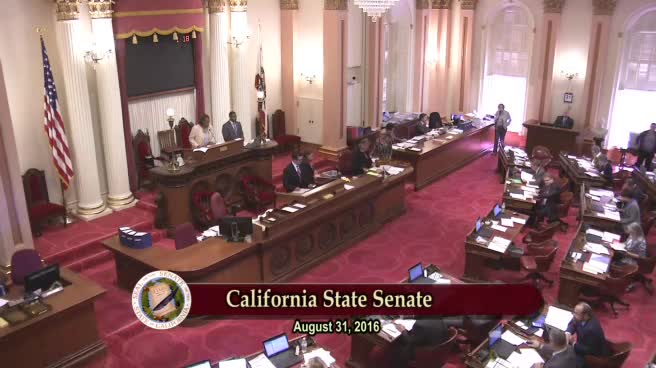 14MIN
Senate Floor
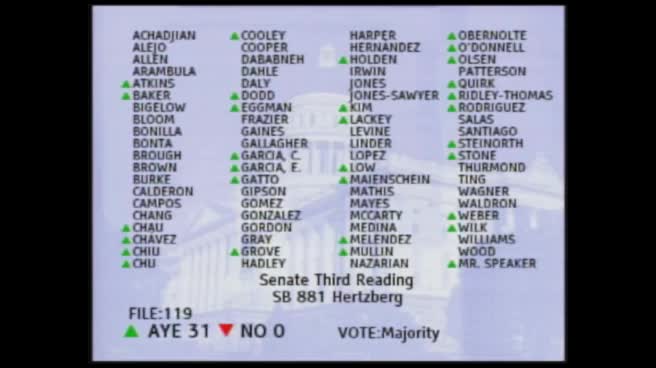 42MIN
Assembly Floor
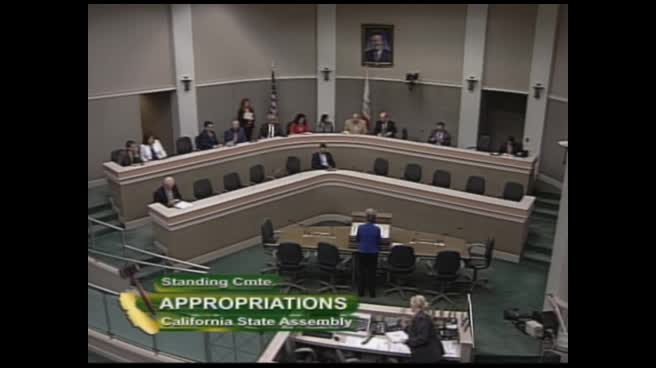 14MIN
Assembly Standing Committee on Appropriations
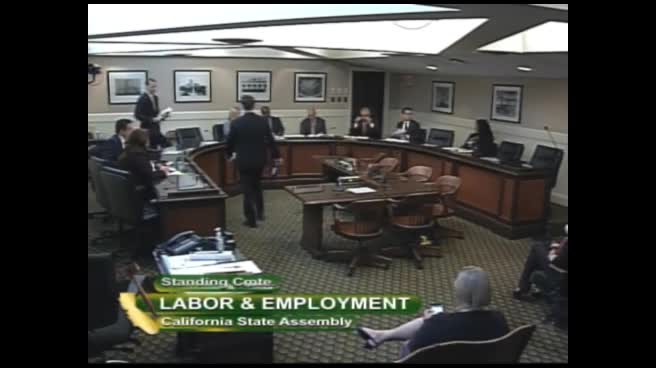 41MIN
Assembly Standing Committee on Labor and Employment
 14SEC
Assembly Floor
 2MIN
Senate Floor
 19MIN