SB 657: The California Residential Mortgage Lending Act: lenders: licensees.
- Session Year: 2015-2016
- House: Senate
- Latest Version Date: 2016-09-29
Existing law defines specified terms for purposes of the California Residential Mortgage Lending Act, which generally prohibits a person from engaging in the business of making residential mortgage loans or servicing residential mortgage loans without first obtaining a license from the Commissioner of Business Oversight in accordance with the act. Existing law defines a lender as a person who is an approved lender for the Federal Housing Administration, the Veterans Administration, the Farmers Home Administration, the Government National Mortgage Association, the Federal National Mortgage Association, or the Federal Home Loan Mortgage Corporation, who directly makes residential mortgage loans, and who makes the credit decision in the loan transactions. Existing law requires a licensee issued a license for purposes of making or servicing residential mortgage loans to continuously maintain a minimum tangible net worth of $250,000.
This bill would specify that the term lender includes a person, other than a natural person, and a natural person who is also an independent contractor, who engages in the activities of a loan processor or underwriter for residential mortgage loans, but does not solicit loan applicants, originate mortgage loans, or fund mortgage loans, as specified. The bill would authorize the commissioner to require a licensee who is engaged in the processing or underwriting of residential mortgage loans to continuously maintain a minimum tangible net worth in an amount that is greater than $250,000, but that does not exceed the net worth required of an approved lender under the Federal Housing Administration.
Existing law defines specified terms for purposes of the California Residential Mortgage Lending Act, which generally prohibits a person from engaging in the business of making residential mortgage loans or servicing residential mortgage loans without first obtaining a license from the Commissioner of Business Oversight in accordance with the act. Existing law defines a lender as a person who is an approved lender for the Federal Housing Administration, the Veterans Administration, the Farmers Home Administration, the Government National Mortgage Association, the Federal National Mortgage Association, or the Federal Home Loan Mortgage Corporation, who directly makes residential mortgage loans, and who makes the credit decision in the loan transactions. Existing law requires a licensee issued a license for purposes of making or servicing residential mortgage loans to continuously maintain a minimum tangible net worth of $250,000.
This bill would specify that the term lender includes a person, other than a natural person, and a natural person who is also an independent contractor, who engages in the activities of a loan processor or underwriter for residential mortgage loans, but does not solicit loan applicants, originate mortgage loans, or fund mortgage loans, as specified. The bill would authorize the commissioner to require a licensee who is engaged in the processing or underwriting of residential mortgage loans to continuously maintain a minimum tangible net worth in an amount that is greater than $250,000, but that does not exceed the net worth required of an approved lender under the Federal Housing Administration.
Existing law defines specified terms for purposes of the California Residential Mortgage Lending Act, which generally prohibits a person from engaging in the business of making residential mortgage loans or servicing residential mortgage loans without first obtaining a license from the Commissioner of Business Oversight in accordance with the act. Existing law defines a lender as a person who is an approved lender for the Federal Housing Administration, the Veterans Administration, the Farmers Home Administration, the Government National Mortgage Association, the Federal National Mortgage Association, or the Federal Home Loan Mortgage Corporation, who directly makes residential mortgage loans, and who makes the credit decision in the loan transactions. Existing law requires a licensee issued a license for purposes of making or servicing residential mortgage loans to continuously maintain a minimum tangible net worth of $250,000.
This bill would specify that the term lender includes a person, other than a natural person, and a natural person who is also an independent contractor, who engages in the activities of a loan processor or underwriter for residential mortgage loans. loans, but does not solicit loan applicants, originate mortgage loans, or fund mortgage loans, as specified. The bill would authorize the commissioner to require a licensee who is engaged in the processing or underwriting of residential mortgage loans to continuously maintain a minimum tangible net worth in an amount that is greater than $250,000, but that does not exceed the net worth required of an approved lender under the Federal Housing Administration.
Existing law defines specified terms for purposes of the California Residential Mortgage Lending Act, which generally prohibits a person from engaging in the business of making residential mortgage loans or servicing residential mortgage loans without first obtaining a license from the Commissioner of Business Oversight in accordance with the act. Existing law defines a lender as a person who is an approved lender for the Federal Housing Administration, the Veterans Administration, the Farmers Home Administration, the Government National Mortgage Association, the Federal National Mortgage Association, or the Federal Home Loan Mortgage Corporation, who directly makes residential mortgage loans, and who makes the credit decision in the loan transactions. Existing law requires a licensee issued a license for purposes of making or servicing residential mortgage loans to continuously maintain a minimum tangible net worth of $250,000.
This bill would specify that the term lender includes a person, other than a natural person, and a natural person who is also an independent contractor, who engages in the activities of a loan processor or underwriter for residential mortgage loans. The bill would authorize the commissioner to require a licensee who is engaged in the processing or underwriting of residential mortgage loans to continuously maintain a minimum tangible net worth in an amount that is greater than $250,000, but that does not exceed the net worth required of an approved lender under the Federal Housing Administration.
Under existing law, the Public Utilities Commission has regulatory authority over public utilities, including electrical corporations. Existing law authorizes the commission to fix the rates and charges for every public utility, and requires that those rates and charges be just and reasonable. Existing law requires the commission, for purposes of establishing rates for any electrical corporation, to disallow expenses reflecting the direct or indirect costs resulting from any unreasonable error or omission relating to the planning, construction, or operation of any portion of the corporations plant which cost, or is estimated to have cost, more than $50,000,000, including any expenses resulting from delays caused by any unreasonable error or omission. For these purposes, planning includes activities related to the initial and subsequent assessments of the need for a plant construction project and includes investigation and interpretation of environmental factors such as seismic conditions.
This bill would require the commission to convene, or continue, until August 26, 2025, an independent peer review panel to conduct an independent review of enhanced seismic studies and surveys of the Diablo Canyon Units 1 and 2 powerplant, including the surrounding areas of the facility and areas of nuclear waste storage.
This bill would declare that it is to take effect immediately as an urgency statute.
Under existing law, the Public Utilities Commission has regulatory authority over public utilities, including electrical corporations. Existing law authorizes the commission to fix the rates and charges for every public utility, and requires that those rates and charges be just and reasonable. Existing law requires the commission, for purposes of establishing rates for any electrical corporation, to disallow expenses reflecting the direct or indirect costs resulting from any unreasonable error or omission relating to the planning, construction, or operation of any portion of the corporations plant which cost, or is estimated to have cost, more than $50,000,000, including any expenses resulting from delays caused by any unreasonable error or omission. For these purposes, planning includes activities related to the initial and subsequent assessments of the need for a plant construction project and includes investigation and interpretation of environmental factors such as seismic conditions.
This bill would require the commission to convene, or continue, until January 1, August 26, 2025, an independent peer review panel to conduct an independent review of enhanced seismic studies and surveys of the Diablo Canyon Units 1 and 2 powerplant, including the surrounding areas of the facility and areas of nuclear waste storage.
This bill would declare that it is to take effect immediately as an urgency statute.
Under existing law, the Public Utilities Commission has regulatory authority over public utilities, including electrical corporations. Existing law authorizes the commission to fix the rates and charges for every public utility, and requires that those rates and charges be just and reasonable. Existing law requires the commission, for purposes of establishing rates for any electrical corporation, to disallow expenses reflecting the direct or indirect costs resulting from any unreasonable error or omission relating to the planning, construction, or operation of any portion of the corporations plant which cost, or is estimated to have cost, more than $50,000,000, including any expenses resulting from delays caused by any unreasonable error or omission. For these purposes, planning includes activities related to the initial and subsequent assessments of the need for a plant construction project and includes investigation and interpretation of environmental factors such as seismic conditions.
This bill would require the commission to convene, or continue, until January 1, 2025, an independent peer review panel to conduct an independent review of enhanced seismic studies and surveys of the Diablo Canyon Units 1 and 2 powerplant, including the surrounding areas of the facility and areas of nuclear waste storage.
This bill would declare that it is to take effect immediately as an urgency statute.
Existing law, the Knox-Keene Health Care Service Plan Act of 1975, provides for the licensure and regulation of health care service plans by the Department of Managed Health Care and makes a willful violation of the act a crime. Existing law also provides for the regulation of health insurers by the Department of Insurance. Existing law regulates the manner in which a plan or insurer makes premium or coverage changes to a contract, including requiring prescribed notice to enrollees and insureds within a specified time period.
This bill would make technical, nonsubstantive changes to these provisions.
Existing law, the Knox-Keene Health Care Service Plan Act of 1975, provides for the licensure and regulation of health care service plans by the Department of Managed Health Care and makes a willful violation of the act a crime. Existing law also provides for the regulation of health insurers by the Department of Insurance. Existing law regulates the manner in which a plan or insurer makes premium or coverage changes to a contract, including requiring prescribed notice to enrollees and insureds within a specified time period.
This bill would make technical, nonsubstantive changes to these provisions.
(a)Annual audit means a certified audit of the licensees books, records, and systems of internal control performed by an independent certified public accountant in accordance with generally accepted accounting principles and generally accepted auditing standards.
(b)Borrower means the loan applicant.
(c)Buy includes exchange, offer to buy, or solicitation to buy.
(d)Commissioner means the Commissioner of Business Oversight.
(e)Control means the possession, directly or indirectly, of the power to direct, or cause the direction of, the management and policies of a licensee under this division, whether through voting or through the ownership of voting power of an entity that possesses voting power of the licensee, or otherwise. Control is presumed to exist if a person, directly or indirectly, owns, controls, or holds 10 percent or more of the voting power of a licensee or of an entity that owns, controls, or holds, with power to vote, 10 percent or more of the voting power of a licensee. No person shall be deemed to control a licensee solely by reason of his or her status as an officer or director of the licensee.
(f)Depository institution has the same meaning as in Section 3 of the Federal Deposit Insurance Act, and includes any credit union.
(g)Engage in the business means the dissemination to the public, or any part of the public, by means of written, printed, or electronic communication or any communication by means of recorded telephone messages or spoken on radio, television, or similar communications media, of any information relating to the making of residential mortgage loans, the servicing of residential mortgage loans, or both. Engage in the business also means, without limitation, making residential mortgage loans or servicing residential mortgage loans, or both.
(h)Federal banking agencies means the Board of Governors of the Federal Reserve System, the Comptroller of the Currency, the National Credit Union Administration, and the Federal Deposit Insurance Corporation.
(i)In this state includes any activity of a person relating to making or servicing a residential mortgage loan that originates from this state and is directed to persons outside this state, or that originates from outside this state and is directed to persons inside this state, or that originates inside this state and is directed to persons inside this state, or that leads to the formation of a contract and the offer or acceptance thereof is directed to a person in this state (whether from inside or outside this state and whether the offer was made inside or outside the state).
(j)Institutional investor means the following:
(1)The United States or any state, district, territory, or commonwealth thereof, or any city, county, city and county, public district, public authority, public corporation, public entity, or political subdivision of a state, district, territory, or commonwealth of the United States, or any agency or other instrumentality of any one or more of the foregoing, including, by way of example, the Federal National Mortgage Association and the Federal Home Loan Mortgage Corporation.
(2)Any bank, trust company, savings bank or savings and loan association, credit union, industrial bank or industrial loan company, personal property broker, consumer finance lender, commercial finance lender, or insurance company, or subsidiary or affiliate of one of the preceding entities, doing business under the authority of or in accordance with a license, certificate, or charter issued by the United States or any state, district, territory, or commonwealth of the United States.
(3)Trustees of pension, profit-sharing, or welfare funds, if the pension, profit-sharing, or welfare fund has a net worth of not less than fifteen million dollars ($15,000,000), except pension, profit-sharing, or welfare funds of a licensee or its affiliate, self-employed individual retirement plans, or individual retirement accounts.
(4)A corporation or other entity with outstanding securities registered under Section 12 of the federal Securities Exchange Act of 1934 or a wholly owned subsidiary of that corporation or entity, provided that the purchaser represents either of the following:
(A)That it is purchasing for its own account for investment and not with a view to, or for sale in connection with, any distribution of a promissory note.
(B)That it is purchasing for resale pursuant to an exemption under Rule 144A (17 C.F.R. 230.144A) of the Securities and Exchange Commission.
(5)An investment company registered under the Investment Company Act of 1940; or a wholly owned and controlled subsidiary of that company, provided that the purchaser makes either of the representations provided in paragraph (4).
(6)A residential mortgage lender or servicer licensed to make residential mortgage loans under this law or an affiliate or subsidiary of that person.
(7)Any person who is licensed as a securities broker or securities dealer under any law of this state, or of the United States, or any employee, officer, or agent of that person, if that person is acting within the scope of authority granted by that license or an affiliate or subsidiary controlled by that broker or dealer, in connection with a transaction involving the offer, sale, purchase, or exchange of one or more promissory notes secured directly or indirectly by liens on real property or a security representing an ownership interest in a pool of promissory notes secured directly or indirectly by liens on real property, and the offer and sale of those securities is qualified under the California Corporate Securities Law of 1968 or registered under federal securities laws, or exempt from qualification or registration.
(8)A licensed real estate broker selling the loan to an institutional investor specified in paragraphs (1) to (7), inclusive, or paragraph (9) or (10).
(9)A business development company as defined in Section 2(a)(48) of the Investment Company Act of 1940 or a small business investment company licensed by the United States Small Business Administration under Section 301(c) or (d) of the Small Business Investment Act of 1958.
(10)A syndication or other combination of any of the foregoing entities that is organized to purchase a promissory note.
(11)A trust or other business entity established by an institutional investor for the purpose of issuing or facilitating the issuance of securities representing undivided interests in, or rights to receive payments from or to receive payments primarily from, a pool of financial assets held by the trust or business entity, provided that all of the following apply:
(A)The business entity is not a sole proprietorship.
(B)The pool of assets consists of one or more of the following:
(i)Interest-bearing obligations.
(ii)Other contractual obligations representing the right to receive payments from the assets.
(iii)Surety bonds, insurance policies, letters of credit, or other instruments providing credit enhancement for the assets.
(C)The securities will be either one of the following:
(i)Rated as investment grade by Standard and Poors Corporation or Moodys Investors Service, Inc. Investment grade means that the securities will be rated by Standard and Poors Corporation as AAA, AA, A, or BBB or by Moodys Investors Service, Inc. as Aaa, Aa, A, or Baa, including any of those ratings with + or designation or other variations that occur within those ratings.
(ii)Sold to an institutional investor.
(D)The offer and sale of the securities is qualified under the California Corporate Securities Law of 1968 or registered under federal securities laws, or exempt from qualification or registration.
(k)Institutional lender means the following:
(1)The United States or any state, district, territory, or commonwealth thereof, or any city, county, city and county, public district, public authority, public corporation, public entity, or political subdivision of a state, district, territory, or commonwealth of the United States, or any agency or other instrumentality of any one or more of the foregoing, including, by way of example, the Federal National Mortgage Association and the Federal Home Loan Mortgage Corporation.
(2)Any bank, trust company, savings bank or savings and loan association, credit union, industrial loan company, or insurance company, or service or investment company that is wholly owned and controlled by one of the preceding entities, doing business under the authority of and in accordance with a license, certificate, or charter issued by the United States or any state, district, territory, or commonwealth of the United States.
(3)Any corporation with outstanding securities registered under Section 12 of the Securities Exchange Act of 1934 or any wholly owned subsidiary of that corporation.
(4)A residential mortgage lender or servicer licensed to make residential mortgage loans under this law.
(l)Law means the California Residential Mortgage Lending Act.
(m)Lender means a person that satisfies either of the following:
(1)The person is or does all of the following:
(A)The person is an approved lender for the Federal Housing Administration, Veterans Administration, Farmers Home Administration, Government National Mortgage Association, Federal National Mortgage Association, or Federal Home Loan Mortgage Corporation.
(B)The person directly makes residential mortgage loans.
(C)The person makes the credit decision in the loan transactions.
(2)The person is either of the following:
(A)Is not a natural person and engages in the activities of a loan processor or underwriter for a residential mortgage loan but does not solicit loan applicants, originate mortgage loans, or fund mortgage loans unless the person is also a lender under paragraph (1).
(B)Is a natural person and an independent contractor who engages in the activities of a loan processor or underwriter for a residential mortgage loan as described in subdivision (c) of Section 50003.6 but does not solicit loan applicants, originate mortgage loans, or fund mortgage loans unless the person is also a lender under paragraph (1).
(n)Licensee means, depending on the context, a person licensed under Chapter 2 (commencing with Section 50120), Chapter 3 (commencing with Section 50130), or Chapter 3.5 (commencing with Section 50140).
(o)Makes or making residential mortgage loans or mortgage lending means processing, underwriting, or as a lender using or advancing ones own funds, or making a commitment to advance ones own funds, to a loan applicant for a residential mortgage loan.
(p)Mortgage loan, residential mortgage loan, or home mortgage loan means a federally related mortgage loan as defined in Section 1024.2 of Title 12 of the Code of Federal Regulations, or a loan made to finance construction of a one-to-four family dwelling.
(q)Mortgage servicer or residential mortgage loan servicer means a person that (1) is an approved servicer for the Federal Housing Administration, Veterans Administration, Farmers Home Administration, Government National Mortgage Association, Federal National Mortgage Association, or Federal Home Loan Mortgage Corporation, and (2) directly services or offers to service mortgage loans.
(r)Nationwide Mortgage Licensing System and Registry means a mortgage licensing system developed and maintained by the Conference of State Bank Supervisors and the American Association of Residential Mortgage Regulators for the licensing and registration of licensed mortgage loan originators.
(s)Net worth has the meaning set forth in Section 50201.
(t)Own funds means (1) cash, corporate capital, or warehouse credit lines at commercial banks, savings banks, savings and loan associations, industrial loan companies, or other sources that are liability items on a lenders financial statements, whether secured or unsecured, or (2) a lenders affiliates cash, corporate capital, or warehouse credit lines at commercial banks or other sources that are liability items on the affiliates financial statements, whether secured or unsecured. Own funds does not include funds provided by a third party to fund a loan on condition that the third party will subsequently purchase or accept an assignment of that loan.
(u)Person means a natural person, a sole proprietorship, a corporation, a partnership, a limited liability company, an association, a trust, a joint venture, an unincorporated organization, a joint stock company, a government or a political subdivision of a government, and any other entity.
(v)Residential real property or residential real estate means real property located in this state that is improved by a one-to-four family dwelling.
(w)SAFE Act means the federal Secure and Fair Enforcement for Mortgage Licensing Act of 2008 (Public Law 110-289).
(x)Service or servicing means receiving more than three installment payments of principal, interest, or other amounts placed in escrow, pursuant to the terms of a mortgage loan and performing services by a licensee relating to that receipt or the enforcement of its receipt, on behalf of the holder of the note evidencing that loan.
(y)Sell includes exchange, offer to sell, or solicitation to sell.
(z)Unique identifier means a number or other identifier assigned by protocols established by the Nationwide Mortgage Licensing System and Registry.
(aa)For purposes of Sections 50142, 50143, and 50145, nontraditional mortgage product means any mortgage product other than a 30-year fixed rate mortgage.
(ab)For purposes of Section 50141, expungement means the subsequent order under the provisions of Section 1203.4 of the Penal Code allowing such individual to withdraw his or her plea of guilty and to enter a plea of not guilty, or setting aside the verdict of guilty or dismissing the accusation, information, or indictment. With respect to criminal convictions in another state, that states definition of expungement will apply.
SEC. 2.Section 50201 of the Financial Code is amended to read:50201.(a)A licensee issued a license for purposes of making or servicing residential mortgage loans, including a licensee employing one or more mortgage loan originators, shall continuously maintain a minimum tangible net worth at all times of two hundred fifty thousand dollars ($250,000). The commissioner, in his or her discretion, may require a lender who engages in the activities described in paragraph (2) of subdivision (m) of Section 50003 to continuously maintain a minimum tangible net worth of an amount that is greater than two hundred fifty thousand dollars ($250,000), but that does not exceed the net worth required of an approved lender under the Federal Housing Administration.
(b)Tangible net worth shall be computed in accordance with generally accepted accounting principles.
(c)The commissioner may promulgate rules or regulations with respect to the requirements for minimum net worth, as are necessary to accomplish the purposes of this division and comply with the SAFE Act.
(a)Annual audit means a certified audit of the licensees books, records, and systems of internal control performed by an independent certified public accountant in accordance with generally accepted accounting principles and generally accepted auditing standards.
(b)Borrower means the loan applicant.
(c)Buy includes exchange, offer to buy, or solicitation to buy.
(d)Commissioner means the Commissioner of Business Oversight.
(e)Control means the possession, directly or indirectly, of the power to direct, or cause the direction of, the management and policies of a licensee under this division, whether through voting or through the ownership of voting power of an entity that possesses voting power of the licensee, or otherwise. Control is presumed to exist if a person, directly or indirectly, owns, controls, or holds 10 percent or more of the voting power of a licensee or of an entity that owns, controls, or holds, with power to vote, 10 percent or more of the voting power of a licensee. No person shall be deemed to control a licensee solely by reason of his or her status as an officer or director of the licensee.
(f)Depository institution has the same meaning as in Section 3 of the Federal Deposit Insurance Act, and includes any credit union.
(g)Engage in the business means the dissemination to the public, or any part of the public, by means of written, printed, or electronic communication or any communication by means of recorded telephone messages or spoken on radio, television, or similar communications media, of any information relating to the making of residential mortgage loans, the servicing of residential mortgage loans, or both. Engage in the business also means, without limitation, making residential mortgage loans or servicing residential mortgage loans, or both.
(h)Federal banking agencies means the Board of Governors of the Federal Reserve System, the Comptroller of the Currency, the National Credit Union Administration, and the Federal Deposit Insurance Corporation.
(i)In this state includes any activity of a person relating to making or servicing a residential mortgage loan that originates from this state and is directed to persons outside this state, or that originates from outside this state and is directed to persons inside this state, or that originates inside this state and is directed to persons inside this state, or that leads to the formation of a contract and the offer or acceptance thereof is directed to a person in this state (whether from inside or outside this state and whether the offer was made inside or outside the state).
(j)Institutional investor means the following:
(1)The United States or any state, district, territory, or commonwealth thereof, or any city, county, city and county, public district, public authority, public corporation, public entity, or political subdivision of a state, district, territory, or commonwealth of the United States, or any agency or other instrumentality of any one or more of the foregoing, including, by way of example, the Federal National Mortgage Association and the Federal Home Loan Mortgage Corporation.
(2)Any bank, trust company, savings bank or savings and loan association, credit union, industrial bank or industrial loan company, personal property broker, consumer finance lender, commercial finance lender, or insurance company, or subsidiary or affiliate of one of the preceding entities, doing business under the authority of or in accordance with a license, certificate, or charter issued by the United States or any state, district, territory, or commonwealth of the United States.
(3)Trustees of pension, profit-sharing, or welfare funds, if the pension, profit-sharing, or welfare fund has a net worth of not less than fifteen million dollars ($15,000,000), except pension, profit-sharing, or welfare funds of a licensee or its affiliate, self-employed individual retirement plans, or individual retirement accounts.
(4)A corporation or other entity with outstanding securities registered under Section 12 of the federal Securities Exchange Act of 1934 or a wholly owned subsidiary of that corporation or entity, provided that the purchaser represents either of the following:
(A)That it is purchasing for its own account for investment and not with a view to, or for sale in connection with, any distribution of a promissory note.
(B)That it is purchasing for resale pursuant to an exemption under Rule 144A (17 C.F.R. 230.144A) of the Securities and Exchange Commission.
(5)An investment company registered under the Investment Company Act of 1940; or a wholly owned and controlled subsidiary of that company, provided that the purchaser makes either of the representations provided in paragraph (4).
(6)A residential mortgage lender or servicer licensed to make residential mortgage loans under this law or an affiliate or subsidiary of that person.
(7)Any person who is licensed as a securities broker or securities dealer under any law of this state, or of the United States, or any employee, officer, or agent of that person, if that person is acting within the scope of authority granted by that license or an affiliate or subsidiary controlled by that broker or dealer, in connection with a transaction involving the offer, sale, purchase, or exchange of one or more promissory notes secured directly or indirectly by liens on real property or a security representing an ownership interest in a pool of promissory notes secured directly or indirectly by liens on real property, and the offer and sale of those securities is qualified under the California Corporate Securities Law of 1968 or registered under federal securities laws, or exempt from qualification or registration.
(8)A licensed real estate broker selling the loan to an institutional investor specified in paragraphs (1) to (7), inclusive, or paragraph (9) or (10).
(9)A business development company as defined in Section 2(a)(48) of the Investment Company Act of 1940 or a small business investment company licensed by the United States Small Business Administration under Section 301(c) or (d) of the Small Business Investment Act of 1958.
(10)A syndication or other combination of any of the foregoing entities that is organized to purchase a promissory note.
(11)A trust or other business entity established by an institutional investor for the purpose of issuing or facilitating the issuance of securities representing undivided interests in, or rights to receive payments from or to receive payments primarily from, a pool of financial assets held by the trust or business entity, provided that all of the following apply:
(A)The business entity is not a sole proprietorship.
(B)The pool of assets consists of one or more of the following:
(i)Interest-bearing obligations.
(ii)Other contractual obligations representing the right to receive payments from the assets.
(iii)Surety bonds, insurance policies, letters of credit, or other instruments providing credit enhancement for the assets.
(C)The securities will be either one of the following:
(i)Rated as investment grade by Standard and Poors Corporation or Moodys Investors Service, Inc. Investment grade means that the securities will be rated by Standard and Poors Corporation as AAA, AA, A, or BBB or by Moodys Investors Service, Inc. as Aaa, Aa, A, or Baa, including any of those ratings with + or designation or other variations that occur within those ratings.
(ii)Sold to an institutional investor.
(D)The offer and sale of the securities is qualified under the California Corporate Securities Law of 1968 or registered under federal securities laws, or exempt from qualification or registration.
(k)Institutional lender means the following:
(1)The United States or any state, district, territory, or commonwealth thereof, or any city, county, city and county, public district, public authority, public corporation, public entity, or political subdivision of a state, district, territory, or commonwealth of the United States, or any agency or other instrumentality of any one or more of the foregoing, including, by way of example, the Federal National Mortgage Association and the Federal Home Loan Mortgage Corporation.
(2)Any bank, trust company, savings bank or savings and loan association, credit union, industrial loan company, or insurance company, or service or investment company that is wholly owned and controlled by one of the preceding entities, doing business under the authority of and in accordance with a license, certificate, or charter issued by the United States or any state, district, territory, or commonwealth of the United States.
(3)Any corporation with outstanding securities registered under Section 12 of the Securities Exchange Act of 1934 or any wholly owned subsidiary of that corporation.
(4)A residential mortgage lender or servicer licensed to make residential mortgage loans under this law.
(l)Law means the California Residential Mortgage Lending Act.
(m)Lender means a person that satisfies either of the following:
(1)The person is or does all of the following:
(A)The person is an approved lender for the Federal Housing Administration, Veterans Administration, Farmers Home Administration, Government National Mortgage Association, Federal National Mortgage Association, or Federal Home Loan Mortgage Corporation.
(B)The person directly makes residential mortgage loans.
(C)The person makes the credit decision in the loan transactions.
(2)The person is either of the following:
(A)Is not a natural person and engages in the activities of a loan processor or underwriter for a residential mortgage loan but does not solicit loan applicants, originate mortgage loans, or fund mortgage loans unless the person is also a lender under paragraph (1).
(B)Is a natural person and an independent contractor who engages in the activities of a loan processor or underwriter for a residential mortgage loan as described in subdivision (c) of Section 50003.6 but does not solicit loan applicants, originate mortgage loans, or fund mortgage loans unless the person is also a lender under paragraph (1).
(n)Licensee means, depending on the context, a person licensed under Chapter 2 (commencing with Section 50120), Chapter 3 (commencing with Section 50130), or Chapter 3.5 (commencing with Section 50140).
(o)Makes or making residential mortgage loans or mortgage lending means processing, underwriting, or as a lender using or advancing ones own funds, or making a commitment to advance ones own funds, to a loan applicant for a residential mortgage loan.
(p)Mortgage loan, residential mortgage loan, or home mortgage loan means a federally related mortgage loan as defined in Section 1024.2 of Title 12 of the Code of Federal Regulations, or a loan made to finance construction of a one-to-four family dwelling.
(q)Mortgage servicer or residential mortgage loan servicer means a person that (1) is an approved servicer for the Federal Housing Administration, Veterans Administration, Farmers Home Administration, Government National Mortgage Association, Federal National Mortgage Association, or Federal Home Loan Mortgage Corporation, and (2) directly services or offers to service mortgage loans.
(r)Nationwide Mortgage Licensing System and Registry means a mortgage licensing system developed and maintained by the Conference of State Bank Supervisors and the American Association of Residential Mortgage Regulators for the licensing and registration of licensed mortgage loan originators.
(s)Net worth has the meaning set forth in Section 50201.
(t)Own funds means (1) cash, corporate capital, or warehouse credit lines at commercial banks, savings banks, savings and loan associations, industrial loan companies, or other sources that are liability items on a lenders financial statements, whether secured or unsecured, or (2) a lenders affiliates cash, corporate capital, or warehouse credit lines at commercial banks or other sources that are liability items on the affiliates financial statements, whether secured or unsecured. Own funds does not include funds provided by a third party to fund a loan on condition that the third party will subsequently purchase or accept an assignment of that loan.
(u)Person means a natural person, a sole proprietorship, a corporation, a partnership, a limited liability company, an association, a trust, a joint venture, an unincorporated organization, a joint stock company, a government or a political subdivision of a government, and any other entity.
(v)Residential real property or residential real estate means real property located in this state that is improved by a one-to-four family dwelling.
(w)SAFE Act means the federal Secure and Fair Enforcement for Mortgage Licensing Act of 2008 (Public Law 110-289).
(x)Service or servicing means receiving more than three installment payments of principal, interest, or other amounts placed in escrow, pursuant to the terms of a mortgage loan and performing services by a licensee relating to that receipt or the enforcement of its receipt, on behalf of the holder of the note evidencing that loan.
(y)Sell includes exchange, offer to sell, or solicitation to sell.
(z)Unique identifier means a number or other identifier assigned by protocols established by the Nationwide Mortgage Licensing System and Registry.
(aa)For purposes of Sections 50142, 50143, and 50145, nontraditional mortgage product means any mortgage product other than a 30-year fixed rate mortgage.
(ab)For purposes of Section 50141, expungement means the subsequent order under the provisions of Section 1203.4 of the Penal Code allowing such individual to withdraw his or her plea of guilty and to enter a plea of not guilty, or setting aside the verdict of guilty or dismissing the accusation, information, or indictment. With respect to criminal convictions in another state, that states definition of expungement will apply.
SEC. 2.Section 50201 of the Financial Code is amended to read:50201.(a)A licensee issued a license for purposes of making or servicing residential mortgage loans, including a licensee employing one or more mortgage loan originators, shall continuously maintain a minimum tangible net worth at all times of two hundred fifty thousand dollars ($250,000). The commissioner, in his or her discretion, may require a lender who engages in the activities described in paragraph (2) of subdivision (m) of Section 50003 to continuously maintain a minimum tangible net worth of an amount that is greater than two hundred fifty thousand dollars ($250,000), but that does not exceed the net worth required of an approved lender under the Federal Housing Administration.
(b)Tangible net worth shall be computed in accordance with generally accepted accounting principles.
(c)The commissioner may promulgate rules or regulations with respect to the requirements for minimum net worth, as are necessary to accomplish the purposes of this division and comply with the SAFE Act.
(a)Annual audit means a certified audit of the licensees books, records, and systems of internal control performed by an independent certified public accountant in accordance with generally accepted accounting principles and generally accepted auditing standards.
(b)Borrower means the loan applicant.
(c)Buy includes exchange, offer to buy, or solicitation to buy.
(d)Commissioner means the Commissioner of Business Oversight.
(e)Control means the possession, directly or indirectly, of the power to direct, or cause the direction of, the management and policies of a licensee under this division, whether through voting or through the ownership of voting power of an entity that possesses voting power of the licensee, or otherwise. Control is presumed to exist if a person, directly or indirectly, owns, controls, or holds 10 percent or more of the voting power of a licensee or of an entity that owns, controls, or holds, with power to vote, 10 percent or more of the voting power of a licensee. No person shall be deemed to control a licensee solely by reason of his or her status as an officer or director of the licensee.
(f)Depository institution has the same meaning as in Section 3 of the Federal Deposit Insurance Act, and includes any credit union.
(g)Engage in the business means the dissemination to the public, or any part of the public, by means of written, printed, or electronic communication or any communication by means of recorded telephone messages or spoken on radio, television, or similar communications media, of any information relating to the making of residential mortgage loans, the servicing of residential mortgage loans, or both. Engage in the business also means, without limitation, making residential mortgage loans or servicing residential mortgage loans, or both.
(h)Federal banking agencies means the Board of Governors of the Federal Reserve System, the Comptroller of the Currency, the National Credit Union Administration, and the Federal Deposit Insurance Corporation.
(i)In this state includes any activity of a person relating to making or servicing a residential mortgage loan that originates from this state and is directed to persons outside this state, or that originates from outside this state and is directed to persons inside this state, or that originates inside this state and is directed to persons inside this state, or that leads to the formation of a contract and the offer or acceptance thereof is directed to a person in this state (whether from inside or outside this state and whether the offer was made inside or outside the state).
(j)Institutional investor means the following:
(1)The United States or any state, district, territory, or commonwealth thereof, or any city, county, city and county, public district, public authority, public corporation, public entity, or political subdivision of a state, district, territory, or commonwealth of the United States, or any agency or other instrumentality of any one or more of the foregoing, including, by way of example, the Federal National Mortgage Association and the Federal Home Loan Mortgage Corporation.
(2)Any bank, trust company, savings bank or savings and loan association, credit union, industrial bank or industrial loan company, personal property broker, consumer finance lender, commercial finance lender, or insurance company, or subsidiary or affiliate of one of the preceding entities, doing business under the authority of or in accordance with a license, certificate, or charter issued by the United States or any state, district, territory, or commonwealth of the United States.
(3)Trustees of pension, profit-sharing, or welfare funds, if the pension, profit-sharing, or welfare fund has a net worth of not less than fifteen million dollars ($15,000,000), except pension, profit-sharing, or welfare funds of a licensee or its affiliate, self-employed individual retirement plans, or individual retirement accounts.
(4)A corporation or other entity with outstanding securities registered under Section 12 of the federal Securities Exchange Act of 1934 or a wholly owned subsidiary of that corporation or entity, provided that the purchaser represents either of the following:
(A)That it is purchasing for its own account for investment and not with a view to, or for sale in connection with, any distribution of a promissory note.
(B)That it is purchasing for resale pursuant to an exemption under Rule 144A (17 C.F.R. 230.144A) of the Securities and Exchange Commission.
(5)An investment company registered under the Investment Company Act of 1940; or a wholly owned and controlled subsidiary of that company, provided that the purchaser makes either of the representations provided in paragraph (4).
(6)A residential mortgage lender or servicer licensed to make residential mortgage loans under this law or an affiliate or subsidiary of that person.
(7)Any person who is licensed as a securities broker or securities dealer under any law of this state, or of the United States, or any employee, officer, or agent of that person, if that person is acting within the scope of authority granted by that license or an affiliate or subsidiary controlled by that broker or dealer, in connection with a transaction involving the offer, sale, purchase, or exchange of one or more promissory notes secured directly or indirectly by liens on real property or a security representing an ownership interest in a pool of promissory notes secured directly or indirectly by liens on real property, and the offer and sale of those securities is qualified under the California Corporate Securities Law of 1968 or registered under federal securities laws, or exempt from qualification or registration.
(8)A licensed real estate broker selling the loan to an institutional investor specified in paragraphs (1) to (7), inclusive, or paragraph (9) or (10).
(9)A business development company as defined in Section 2(a)(48) of the Investment Company Act of 1940 or a small business investment company licensed by the United States Small Business Administration under Section 301(c) or (d) of the Small Business Investment Act of 1958.
(10)A syndication or other combination of any of the foregoing entities that is organized to purchase a promissory note.
(11)A trust or other business entity established by an institutional investor for the purpose of issuing or facilitating the issuance of securities representing undivided interests in, or rights to receive payments from or to receive payments primarily from, a pool of financial assets held by the trust or business entity, provided that all of the following apply:
(A)The business entity is not a sole proprietorship.
(B)The pool of assets consists of one or more of the following:
(i)Interest-bearing obligations.
(ii)Other contractual obligations representing the right to receive payments from the assets.
(iii)Surety bonds, insurance policies, letters of credit, or other instruments providing credit enhancement for the assets.
(C)The securities will be either one of the following:
(i)Rated as investment grade by Standard and Poors Corporation or Moodys Investors Service, Inc. Investment grade means that the securities will be rated by Standard and Poors Corporation as AAA, AA, A, or BBB or by Moodys Investors Service, Inc. as Aaa, Aa, A, or Baa, including any of those ratings with + or designation or other variations that occur within those ratings.
(ii)Sold to an institutional investor.
(D)The offer and sale of the securities is qualified under the California Corporate Securities Law of 1968 or registered under federal securities laws, or exempt from qualification or registration.
(k)Institutional lender means the following:
(1)The United States or any state, district, territory, or commonwealth thereof, or any city, county, city and county, public district, public authority, public corporation, public entity, or political subdivision of a state, district, territory, or commonwealth of the United States, or any agency or other instrumentality of any one or more of the foregoing, including, by way of example, the Federal National Mortgage Association and the Federal Home Loan Mortgage Corporation.
(2)Any bank, trust company, savings bank or savings and loan association, credit union, industrial loan company, or insurance company, or service or investment company that is wholly owned and controlled by one of the preceding entities, doing business under the authority of and in accordance with a license, certificate, or charter issued by the United States or any state, district, territory, or commonwealth of the United States.
(3)Any corporation with outstanding securities registered under Section 12 of the Securities Exchange Act of 1934 or any wholly owned subsidiary of that corporation.
(4)A residential mortgage lender or servicer licensed to make residential mortgage loans under this law.
(l)Law means the California Residential Mortgage Lending Act.
(m)Lender means a person that satisfies either of the following:
(1)The person is or does all of the following:
(A)The person is an approved lender for the Federal Housing Administration, Veterans Administration, Farmers Home Administration, Government National Mortgage Association, Federal National Mortgage Association, or Federal Home Loan Mortgage Corporation.
(B)The person directly makes residential mortgage loans.
(C)The person makes the credit decision in the loan transactions.
(2)The person is either of the following:
(A)Is not a natural person and engages in the activities of a loan processor or underwriter for a residential mortgage loan. loan but does not solicit loan applicants, originate mortgage loans, or fund mortgage loans unless the person is also a lender under paragraph (1).
(B)Is a natural person and an independent contractor who engages in the activities of a loan processor or underwriter for a residential mortgage loan as described in subdivision (c) of Section 50003.6. 50003.6 but does not solicit loan applicants, originate mortgage loans, or fund mortgage loans unless the person is also a lender under paragraph (1).
(n)Licensee means, depending on the context, a person licensed under Chapter 2 (commencing with Section 50120), Chapter 3 (commencing with Section 50130), or Chapter 3.5 (commencing with Section 50140).
(o)Makes or making residential mortgage loans or mortgage lending means processing, underwriting, or as a lender using or advancing ones own funds, or making a commitment to advance ones own funds, to a loan applicant for a residential mortgage loan.
(p)Mortgage loan, residential mortgage loan, or home mortgage loan means a federally related mortgage loan as defined in Section 1024.2 of Title 12 of the Code of Federal Regulations, or a loan made to finance construction of a one-to-four family dwelling.
(q)Mortgage servicer or residential mortgage loan servicer means a person that (1) is an approved servicer for the Federal Housing Administration, Veterans Administration, Farmers Home Administration, Government National Mortgage Association, Federal National Mortgage Association, or Federal Home Loan Mortgage Corporation, and (2) directly services or offers to service mortgage loans.
(r)Nationwide Mortgage Licensing System and Registry means a mortgage licensing system developed and maintained by the Conference of State Bank Supervisors and the American Association of Residential Mortgage Regulators for the licensing and registration of licensed mortgage loan originators.
(s)Net worth has the meaning set forth in Section 50201.
(t)Own funds means (1) cash, corporate capital, or warehouse credit lines at commercial banks, savings banks, savings and loan associations, industrial loan companies, or other sources that are liability items on a lenders financial statements, whether secured or unsecured, or (2) a lenders affiliates cash, corporate capital, or warehouse credit lines at commercial banks or other sources that are liability items on the affiliates financial statements, whether secured or unsecured. Own funds does not include funds provided by a third party to fund a loan on condition that the third party will subsequently purchase or accept an assignment of that loan.
(u)Person means a natural person, a sole proprietorship, a corporation, a partnership, a limited liability company, an association, a trust, a joint venture, an unincorporated organization, a joint stock company, a government or a political subdivision of a government, and any other entity.
(v)Residential real property or residential real estate means real property located in this state that is improved by a one-to-four family dwelling.
(w)SAFE Act means the federal Secure and Fair Enforcement for Mortgage Licensing Act of 2008 (Public Law 110-289).
(x)Service or servicing means receiving more than three installment payments of principal, interest, or other amounts placed in escrow, pursuant to the terms of a mortgage loan and performing services by a licensee relating to that receipt or the enforcement of its receipt, on behalf of the holder of the note evidencing that loan.
(y)Sell includes exchange, offer to sell, or solicitation to sell.
(z)Unique identifier means a number or other identifier assigned by protocols established by the Nationwide Mortgage Licensing System and Registry.
(aa)For purposes of Sections 50142, 50143, and 50145, nontraditional mortgage product means any mortgage product other than a 30-year fixed rate mortgage.
(ab)For purposes of Section 50141, expungement means the subsequent order under the provisions of Section 1203.4 of the Penal Code allowing such individual to withdraw his or her plea of guilty and to enter a plea of not guilty, or setting aside the verdict of guilty or dismissing the accusation, information, or indictment. With respect to criminal convictions in another state, that states definition of expungement will apply.
SEC. 2.Section 50201 of the Financial Code is amended to read:50201.(a)A licensee issued a license for purposes of making or servicing residential mortgage loans, including a licensee employing one or more mortgage loan originators, shall continuously maintain a minimum tangible net worth at all times of two hundred fifty thousand dollars ($250,000). The commissioner, in his or her discretion, may require a lender who engages in the activities described in paragraph (2) of subdivision (m) of Section 50003 to continuously maintain a minimum tangible net worth of an amount that is greater than two hundred fifty thousand dollars ($250,000), but that does not exceed the net worth required of an approved lender under the Federal Housing Administration.
(b)Tangible net worth shall be computed in accordance with generally accepted accounting principles.
(c)The commissioner may promulgate rules or regulations with respect to the requirements for minimum net worth, as are necessary to accomplish the purposes of this division and comply with the SAFE Act.
(a)Annual audit means a certified audit of the licensees books, records, and systems of internal control performed by an independent certified public accountant in accordance with generally accepted accounting principles and generally accepted auditing standards.
(b)Borrower means the loan applicant.
(c)Buy includes exchange, offer to buy, or solicitation to buy.
(d)Commissioner means the Commissioner of Business Oversight.
(e)Control means the possession, directly or indirectly, of the power to direct, or cause the direction of, the management and policies of a licensee under this division, whether through voting or through the ownership of voting power of an entity that possesses voting power of the licensee, or otherwise. Control is presumed to exist if a person, directly or indirectly, owns, controls, or holds 10 percent or more of the voting power of a licensee or of an entity that owns, controls, or holds, with power to vote, 10 percent or more of the voting power of a licensee. No person shall be deemed to control a licensee solely by reason of his or her status as an officer or director of the licensee.
(f)Depository institution has the same meaning as in Section 3 of the Federal Deposit Insurance Act, and includes any credit union.
(g)Engage in the business means the dissemination to the public, or any part of the public, by means of written, printed, or electronic communication or any communication by means of recorded telephone messages or spoken on radio, television, or similar communications media, of any information relating to the making of residential mortgage loans, the servicing of residential mortgage loans, or both. Engage in the business also means, without limitation, making residential mortgage loans or servicing residential mortgage loans, or both.
(h)Federal banking agencies means the Board of Governors of the Federal Reserve System, the Comptroller of the Currency, the National Credit Union Administration, and the Federal Deposit Insurance Corporation.
(i)In this state includes any activity of a person relating to making or servicing a residential mortgage loan that originates from this state and is directed to persons outside this state, or that originates from outside this state and is directed to persons inside this state, or that originates inside this state and is directed to persons inside this state, or that leads to the formation of a contract and the offer or acceptance thereof is directed to a person in this state (whether from inside or outside this state and whether the offer was made inside or outside the state).
(j)Institutional investor means the following:
(1)The United States or any state, district, territory, or commonwealth thereof, or any city, county, city and county, public district, public authority, public corporation, public entity, or political subdivision of a state, district, territory, or commonwealth of the United States, or any agency or other instrumentality of any one or more of the foregoing, including, by way of example, the Federal National Mortgage Association and the Federal Home Loan Mortgage Corporation.
(2)Any bank, trust company, savings bank or savings and loan association, credit union, industrial bank or industrial loan company, personal property broker, consumer finance lender, commercial finance lender, or insurance company, or subsidiary or affiliate of one of the preceding entities, doing business under the authority of or in accordance with a license, certificate, or charter issued by the United States or any state, district, territory, or commonwealth of the United States.
(3)Trustees of pension, profit-sharing, or welfare funds, if the pension, profit-sharing, or welfare fund has a net worth of not less than fifteen million dollars ($15,000,000), except pension, profit-sharing, or welfare funds of a licensee or its affiliate, self-employed individual retirement plans, or individual retirement accounts.
(4)A corporation or other entity with outstanding securities registered under Section 12 of the federal Securities Exchange Act of 1934 or a wholly owned subsidiary of that corporation or entity, provided that the purchaser represents either of the following:
(A)That it is purchasing for its own account for investment and not with a view to, or for sale in connection with, any distribution of a promissory note.
(B)That it is purchasing for resale pursuant to an exemption under Rule 144A (17 C.F.R. 230.144A) of the Securities and Exchange Commission.
(5)An investment company registered under the Investment Company Act of 1940; or a wholly owned and controlled subsidiary of that company, provided that the purchaser makes either of the representations provided in paragraph (4).
(6)A residential mortgage lender or servicer licensed to make residential mortgage loans under this law or an affiliate or subsidiary of that person.
(7)Any person who is licensed as a securities broker or securities dealer under any law of this state, or of the United States, or any employee, officer, or agent of that person, if that person is acting within the scope of authority granted by that license or an affiliate or subsidiary controlled by that broker or dealer, in connection with a transaction involving the offer, sale, purchase, or exchange of one or more promissory notes secured directly or indirectly by liens on real property or a security representing an ownership interest in a pool of promissory notes secured directly or indirectly by liens on real property, and the offer and sale of those securities is qualified under the California Corporate Securities Law of 1968 or registered under federal securities laws, or exempt from qualification or registration.
(8)A licensed real estate broker selling the loan to an institutional investor specified in paragraphs (1) to (7), inclusive, or paragraph (9) or (10).
(9)A business development company as defined in Section 2(a)(48) of the Investment Company Act of 1940 or a small business investment company licensed by the United States Small Business Administration under Section 301(c) or (d) of the Small Business Investment Act of 1958.
(10)A syndication or other combination of any of the foregoing entities that is organized to purchase a promissory note.
(11)A trust or other business entity established by an institutional investor for the purpose of issuing or facilitating the issuance of securities representing undivided interests in, or rights to receive payments from or to receive payments primarily from, a pool of financial assets held by the trust or business entity, provided that all of the following apply:
(A)The business entity is not a sole proprietorship.
(B)The pool of assets consists of one or more of the following:
(i)Interest-bearing obligations.
(ii)Other contractual obligations representing the right to receive payments from the assets.
(iii)Surety bonds, insurance policies, letters of credit, or other instruments providing credit enhancement for the assets.
(C)The securities will be either one of the following:
(i)Rated as investment grade by Standard and Poors Corporation or Moodys Investors Service, Inc. Investment grade means that the securities will be rated by Standard and Poors Corporation as AAA, AA, A, or BBB or by Moodys Investors Service, Inc. as Aaa, Aa, A, or Baa, including any of those ratings with + or designation or other variations that occur within those ratings.
(ii)Sold to an institutional investor.
(D)The offer and sale of the securities is qualified under the California Corporate Securities Law of 1968 or registered under federal securities laws, or exempt from qualification or registration.
(k)Institutional lender means the following:
(1)The United States or any state, district, territory, or commonwealth thereof, or any city, county, city and county, public district, public authority, public corporation, public entity, or political subdivision of a state, district, territory, or commonwealth of the United States, or any agency or other instrumentality of any one or more of the foregoing, including, by way of example, the Federal National Mortgage Association and the Federal Home Loan Mortgage Corporation.
(2)Any bank, trust company, savings bank or savings and loan association, credit union, industrial loan company, or insurance company, or service or investment company that is wholly owned and controlled by one of the preceding entities, doing business under the authority of and in accordance with a license, certificate, or charter issued by the United States or any state, district, territory, or commonwealth of the United States.
(3)Any corporation with outstanding securities registered under Section 12 of the Securities Exchange Act of 1934 or any wholly owned subsidiary of that corporation.
(4)A residential mortgage lender or servicer licensed to make residential mortgage loans under this law.
(l)Law means the California Residential Mortgage Lending Act.
(m)Lender means a person that (1)is an satisfies either of the following:
(1)The person is or does all of the following:
(A)The person is an approved lender for the Federal Housing Administration, Veterans Administration, Farmers Home Administration, Government National Mortgage Association, Federal National Mortgage Association, or Federal Home Loan Mortgage Corporation, (2) directly Corporation.
(B)The person directly makes residential mortgage loans, and (3) makes loans.
(C)The person makes the credit decision in the loan transactions. transactions.
(2)The person is either of the following:
(A)Is not a natural person and engages in the activities of a loan processor or underwriter for a residential mortgage loan.
(B)Is a natural person and an independent contractor who engages in the activities of a loan processor or underwriter for a residential mortgage loan as described in subdivision (c) of Section 50003.6.
(n)Licensee means, depending on the context, a person licensed under Chapter 2 (commencing with Section 50120), Chapter 3 (commencing with Section 50130), or Chapter 3.5 (commencing with Section 50140).
(o)Makes or making residential mortgage loans or mortgage lending means processing, underwriting, or as a lender using or advancing ones own funds, or making a commitment to advance ones own funds, to a loan applicant for a residential mortgage loan.
(p)Mortgage loan, residential mortgage loan, or home mortgage loan means a federally related mortgage loan as defined in Section 1024.2 of Title 12 of the Code of Federal Regulations, or a loan made to finance construction of a one-to-four family dwelling.
(q)Mortgage servicer or residential mortgage loan servicer means a person that (1) is an approved servicer for the Federal Housing Administration, Veterans Administration, Farmers Home Administration, Government National Mortgage Association, Federal National Mortgage Association, or Federal Home Loan Mortgage Corporation, and (2) directly services or offers to service mortgage loans.
(r)Nationwide Mortgage Licensing System and Registry means a mortgage licensing system developed and maintained by the Conference of State Bank Supervisors and the American Association of Residential Mortgage Regulators for the licensing and registration of licensed mortgage loan originators.
(s)Net worth has the meaning set forth in Section 50201.
(t)Own funds means (1) cash, corporate capital, or warehouse credit lines at commercial banks, savings banks, savings and loan associations, industrial loan companies, or other sources that are liability items on a lenders financial statements, whether secured or unsecured, or (2) a lenders affiliates cash, corporate capital, or warehouse credit lines at commercial banks or other sources that are liability items on the affiliates financial statements, whether secured or unsecured. Own funds does not include funds provided by a third party to fund a loan on condition that the third party will subsequently purchase or accept an assignment of that loan.
(u)Person means a natural person, a sole proprietorship, a corporation, a partnership, a limited liability company, an association, a trust, a joint venture, an unincorporated organization, a joint stock company, a government or a political subdivision of a government, and any other entity.
(v)Residential real property or residential real estate means real property located in this state that is improved by a one-to-four family dwelling.
(w)SAFE Act means the federal Secure and Fair Enforcement for Mortgage Licensing Act of 2008 (Public Law 110-289).
(x)Service or servicing means receiving more than three installment payments of principal, interest, or other amounts placed in escrow, pursuant to the terms of a mortgage loan and performing services by a licensee relating to that receipt or the enforcement of its receipt, on behalf of the holder of the note evidencing that loan.
(y)Sell includes exchange, offer to sell, or solicitation to sell.
(z)Unique identifier means a number or other identifier assigned by protocols established by the Nationwide Mortgage Licensing System and Registry.
(aa)For purposes of Sections 50142, 50143, and 50145, nontraditional mortgage product means any mortgage product other than a 30-year fixed rate mortgage.
(ab)For purposes of Section 50141, expungement means the subsequent order under the provisions of Section 1203.4 of the Penal Code allowing such individual to withdraw his or her plea of guilty and to enter a plea of not guilty, or setting aside the verdict of guilty or dismissing the accusation, information, or indictment. With respect to criminal convictions in another state, that states definition of expungement will apply.
SEC. 2.Section 50201 of the Financial Code is amended to read:50201.(a)A licensee issued a license for purposes of making or servicing residential mortgage loans, including a licensee employing one or more mortgage loan originators, shall continuously maintain a minimum tangible net worth at all times of two hundred fifty thousand dollars ($250,000). The commissioner, in his or her discretion, may require a lender who engages in the activities described in paragraph (2) of subdivision (m) of Section 50003 to continuously maintain a minimum tangible net worth of an amount that is greater than two hundred fifty thousand dollars ($250,000), but that does not exceed the net worth required of an approved lender under the Federal Housing Administration.
(b)Tangible net worth shall be computed in accordance with generally accepted accounting principles.
(c)The commissioner may promulgate rules or regulations with respect to the requirements for minimum net worth, as are necessary to accomplish the purposes of this division and comply with the SAFE Act.
SECTION 1.Section 712 is added to the Public Utilities Code, to read:712.(a)The commission shall convene, or continue, until August 26, 2025, an independent peer review panel to conduct an independent review of enhanced seismic studies and surveys of the Diablo Canyon Units 1 and 2 powerplant, including the surrounding areas of the facility and areas of nuclear waste storage.
(b)The independent peer review panel shall contract with the Energy Commission, the California Geological Survey of the Department of Conservation, the California Coastal Commission, the Alfred E. Alquist Seismic Safety Commission, the Office of Emergency Services, and the County of San Luis Obispo to participate on the panel and provide expertise.
(c)The independent peer review panel shall review the seismic studies and hold public meetings.
(d)The commission shall make reports by the independent peer review panel publicly available on the Internet Web site maintained by the commission.
SEC. 2.This act is an urgency statute necessary for the immediate preservation of the public peace, health, or safety within the meaning of Article IV of the Constitution and shall go into immediate effect. The facts constituting the necessity are:
The Public Utilities Commission in Decision 10-08-003 (August 12, 2010) convened an independent peer review panel to review the seismic studies conducted on behalf of Pacific Gas and Electric Company relative to the Diablo Canyon Units 1 and 2 powerplant. The independent peer review panel, in addition to providing valuable expertise to the commission in evaluating the seismic studies, also operates to assure the public that the seismic studies are being performed in an appropriate manner. Because the commissions current contracts for the independent peer review panel are set to expire on November 30, 2015, the Diablo Canyon Units 1 and 2 powerplant is authorized to operate until August 26, 2025, by the federal Nuclear Regulatory Commission, and there continues to be enhanced seismic studies and surveys conducted that warrant review by the independent peer review panel to ensure the safety of the public, it is necessary that this act take effect immediately.
(a)The commission shall convene, or continue, until January 1, August 26, 2025, an independent peer review panel to conduct an independent review of enhanced seismic studies and surveys of the Diablo Canyon Units 1 and 2 powerplant, including the surrounding areas of the facility and areas of nuclear waste storage.
(b)The independent peer review panel shall contract with the Energy Commission, the California Geological Survey of the Department of Conservation, the California Coastal Commission, the Alfred E. Alquist Seismic Safety Commission, the Office of Emergency Services, and the County of San Luis Obispo to participate on the panel and provide expertise.
(c)The independent peer review panel shall review the seismic studies and hold public meetings.
(d)The commission shall make reports by the independent peer review panel publicly available on the Internet Web site maintained by the commission.
SEC. 2.This act is an urgency statute necessary for the immediate preservation of the public peace, health, or safety within the meaning of Article IV of the Constitution and shall go into immediate effect. The facts constituting the necessity are:
The Public Utilities Commission in Decision 10-08-003 (August 12, 2010) convened an independent peer review panel to review the seismic studies conducted on behalf of Pacific Gas and Electric Company relative to the Diablo Canyon Units 1 and 2 powerplant. The independent peer review panel, in addition to providing valuable expertise to the commission in evaluating the seismic studies, also operates to assure the public that the seismic studies are being performed in an appropriate manner. Because the commissions current contracts for the independent peer review panel are set to expire on November 30, 2015, the Diablo Canyon Units 1 and 2 powerplant is authorized to operate until January 1, August 26, 2025, by the federal Nuclear Regulatory Commission, and there continues to be enhanced seismic studies and surveys conducted that warrant review by the independent peer review panel to ensure the safety of the public, it is necessary that this act take effect immediately.
(a)The commission shall convene, or continue, until January 1, 2025, an independent peer review panel to conduct an independent review of enhanced seismic studies and surveys of the Diablo Canyon Units 1 and 2 powerplant, including the surrounding areas of the facility and areas of nuclear waste storage.
(b)The independent peer review panel shall contract with the Energy Commission, the California Geological Survey of the Department of Conservation, the California Coastal Commission, the Alfred E. Alquist Seismic Safety Commission, the Office of Emergency Services, and the County of San Luis Obispo to participate on the panel and provide expertise.
(c)The independent peer review panel shall review the seismic studies and hold public meetings.
(d)The commission shall make reports by the independent peer review panel publicly available on the Internet Web site maintained by the commission.
SEC. 2.This act is an urgency statute necessary for the immediate preservation of the public peace, health, or safety within the meaning of Article IV of the Constitution and shall go into immediate effect. The facts constituting the necessity are:
The Public Utilities Commission in Decision 10-08-003 (August 12, 2010) convened an independent peer review panel to review the seismic studies conducted on behalf of Pacific Gas and Electric Company relative to the Diablo Canyon Units 1 and 2 powerplant. The independent peer review panel, in addition to providing valuable expertise to the commission in evaluating the seismic studies, also operates to assure the public that the seismic studies are being performed in an appropriate manner. Because the commissions current contracts for the independent peer review panel are set to expire on November 30, 2015, the Diablo Canyon Units 1 and 2 powerplant is authorized to operate until January 1, 2025, by the federal Nuclear Regulatory Commission, and there continues to be enhanced seismic studies and surveys conducted that warrant review by the independent peer review panel to ensure the safety of the public, it is necessary that this act take effect immediately.
SECTION 1.Section 1374.21 of the Health and Safety Code is amended to read:1374.21.(a)A change in premium rates or changes in coverage stated in a group health care service plan contract shall not become effective unless the plan has delivered in writing a notice indicating the change or changes at least 60 days prior to the contract renewal effective date.
(b)A health care service plan that declines to offer coverage to or denies enrollment for a large group applying for coverage shall, at the time of the denial of coverage, provide the applicant with the specific reason or reasons for the decision in writing, in clear, easily understandable language.
SEC. 2.Section 10199.1 of the Insurance Code is amended to read:10199.1.(a)An insurer or nonprofit hospital service plan or administrator acting on its behalf shall not terminate a group master policy or contract providing hospital, medical, or surgical benefits, increase premiums or charges therefor, reduce or eliminate benefits thereunder, or restrict eligibility for coverage thereunder without providing prior notice of that action. The action shall not become effective unless written notice of the action was delivered by mail to the last known address of the appropriate insurance producer and the appropriate administrator, if any, at least 45 days prior to the effective date of the action and to the last known address of the group policyholder or group contractholder at least 60 days prior to the effective date of the action. If nonemployee certificate holders or employees of more than one employer are covered under the policy or contract, written notice shall also be delivered by mail to the last known address of each nonemployee certificate holder or affected employer or, if the action does not affect all employees and dependents of one or more employers, to the last known address of each affected employee certificate holder, at least 60 days prior to the effective date of the action.
(b)A holder of a master group policy or a master group nonprofit hospital service plan contract or administrator acting on its behalf shall not terminate the coverage of, increase premiums or charges for, or reduce or eliminate benefits available to, or restrict eligibility for coverage of a covered person, employer unit, or class of certificate holders covered under the policy or contract for hospital, medical, or surgical benefits without first providing prior notice of the action. The action shall not become effective unless written notice was delivered by mail to the last known address of each affected nonemployee certificate holder or employer, or if the action does not affect all employees and dependents of one or more employers, to the last known address of each affected employee certificate holder, at least 60 days prior to the effective date of the action.
(c)A health insurer that declines to offer coverage to or denies enrollment for a large group applying for coverage shall, at the time of the denial of coverage, provide the applicant with the specific reason or reasons for the decision in writing, in clear, easily understandable language.
(a)No A change in premium rates or changes in coverage stated in a group health care service plan contract shall not become effective unless the plan has delivered in writing a notice indicating the change or changes at least 60 days prior to the contract renewal effective date.
(b)A health care service plan that declines to offer coverage to or denies enrollment for a large group applying for coverage shall, at the time of the denial of coverage, provide the applicant with the specific reason or reasons for the decision in writing, in clear, easily understandable language.
SEC. 2.Section 10199.1 of the Insurance Code is amended to read:10199.1.(a)No An insurer or nonprofit hospital service plan or administrator acting on its behalf shall not terminate a group master policy or contract providing hospital, medical, or surgical benefits, increase premiums or charges therefor, reduce or eliminate benefits thereunder, or restrict eligibility for coverage thereunder without providing prior notice of that action. No such The action shall not become effective unless written notice of the action was delivered by mail to the last known address of the appropriate insurance producer and the appropriate administrator, if any, at least 45 days prior to the effective date of the action and to the last known address of the group policyholder or group contractholder at least 60 days prior to the effective date of the action. If nonemployee certificate holders or employees of more than one employer are covered under the policy or contract, written notice shall also be delivered by mail to the last known address of each nonemployee certificate holder or affected employer or, if the action does not affect all employees and dependents of one or more employers, to the last known address of each affected employee certificate holder, at least 60 days prior to the effective date of the action.
(b)No A holder of a master group policy or a master group nonprofit hospital service plan contract or administrator acting on its behalf shall not terminate the coverage of, increase premiums or charges for, or reduce or eliminate benefits available to, or restrict eligibility for coverage of a covered person, employer unit, or class of certificate holders covered under the policy or contract for hospital, medical, or surgical benefits without first providing prior notice of the action. No such The action shall not become effective unless written notice was delivered by mail to the last known address of each affected nonemployee certificate holder or employer, or if the action does not affect all employees and dependents of one or more employers, to the last known address of each affected employee certificate holder, at least 60 days prior to the effective date of the action.
(c)A health insurer that declines to offer coverage to or denies enrollment for a large group applying for coverage shall, at the time of the denial of coverage, provide the applicant with the specific reason or reasons for the decision in writing, in clear, easily understandable language.
|
Date
|
Status
|
|---|---|
| Aug 15, 2016 | From committee: Be re-referred to Com. on B. & F.I. pursuant to Senate Rule 29.10(d). (Ayes 4. Noes 0. Page 4954.) Re-referred to Com. on B. & F.I. |
| Jun 13, 2016 | From committee with author's amendments. Read second time and amended. Re-referred to Com. on B. & F. |
| Jun 13, 2016 | Referred to Com. on B. & F. |
| Jun 28, 2016 | From committee: Do pass and re-refer to Com. on APPR. (Ayes 12. Noes 0.) (June 27). Re-referred to Com. on APPR. |
| Aug 1, 2016 | From committee with author's amendments. Read second time and amended. Re-referred to Com. on APPR. |
| Aug 3, 2016 | From committee: Do pass. Ordered to consent calendar. (Ayes 20. Noes 0.) (August 3). |
| Aug 4, 2016 | Read second time. Ordered to consent calendar. |
| Aug 11, 2016 | In Senate. Concurrence in Assembly amendments pending. |
| Aug 11, 2016 | Read third time. Passed. Ordered to the Senate. |
| Aug 11, 2016 | Read third time. Passed. (Ayes 78. Noes 0. Page 5778.) Ordered to the Senate. |
| Aug 31, 2015 | Unanimous consent granted to take up without reference to file. |
| Aug 15, 2016 | From committee: Be re-referred to Com. on B. & F.I. pursuant to Senate Rule 29.10(d). (Ayes 4. Noes 0.) Re-referred to Com. on B. & F.I. |
| Aug 15, 2016 | Re-referred to Com. on RLS. pursuant to Senate Rule 29.10(d). |
| Aug 16, 2016 | Set for hearing August 17. |
| Aug 17, 2016 | From committee: That the Assembly amendments be concurred in. (Ayes 7. Noes 0. Page 5077.) |
| Aug 17, 2016 | From committee: That the Assembly amendments be concurred in. (Ayes 7. Noes 0.) |
| Aug 23, 2016 | Ordered to special consent calendar. |
| Aug 25, 2016 | Assembly amendments concurred in. (Ayes 39. Noes 0. Page 5427.) Ordered to engrossing and enrolling. |
| Aug 25, 2016 | Assembly amendments concurred in. (Ayes 39. Noes 0.) Ordered to engrossing and enrolling. |
| Aug 30, 2016 | Enrolled and presented to the Governor at 1:30 p.m. |
| Jun 23, 2015 | Read second time and amended. Re-referred to Com. on APPR. |
| Mar 2, 2015 | From printer. May be acted upon on or after April 1. |
| Mar 2, 2015 | Read first time. |
| Mar 12, 2015 | Referred to Com. on RLS. |
| Apr 21, 2015 | From committee with author's amendments. Read second time and amended. Re-referred to Com. on RLS. |
| Apr 22, 2015 | Re-referred to Com. on E., U., & C. |
| Apr 23, 2015 | Set for hearing April 27. |
| Apr 27, 2015 | April 27 hearing postponed by committee. |
| Jun 5, 2015 | Set for hearing June 16. |
| Jun 22, 2015 | From committee: Do pass as amended and re-refer to Com. on APPR. (Ayes 10. Noes 0. Page 1452.) (June 16). |
| Feb 27, 2015 | Introduced. To Com. on RLS. for assignment. To print. |
| Jun 26, 2015 | Set for hearing July 6. |
| Jul 6, 2015 | July 6 hearing: Placed on APPR. suspense file. |
| Aug 21, 2015 | Set for hearing August 27. |
| Aug 27, 2015 | From committee: Do pass. (Ayes 7. Noes 0. Page 2216.) (August 27). |
| Aug 27, 2015 | From committee: Do pass. (Ayes 7. Noes 0.) (August 27). |
| Aug 31, 2015 | In Assembly. Read first time. Held at Desk. |
| Aug 31, 2015 | Read third time. Urgency clause adopted. Passed. (Ayes 38. Noes 0. Page 2246.) Ordered to the Assembly. |
| Aug 31, 2015 | Read third time. Urgency clause adopted. Passed. (Ayes 38. Noes 0.) Ordered to the Assembly. |
|
Date
|
Description
|
Location
|
Votes
|
|
|---|---|---|---|---|
| Aug 25, 2016 | Special Consent SB657 Berryhill | Senate Floor |
Passed |
|
| Aug 17, 2016 | That the Assembly amendments be concurred in | Senate Standing Committee on Banking and Financial Institutions |
Passed |
|
| Aug 11, 2016 | SB 657 Berryhill, T. Consent Calendar Second Day Regular Session | Assembly Floor |
Passed |
|
| Aug 3, 2016 | Do pass. To Consent Calendar. | Assembly Standing Committee on Appropriations |
Passed |
|
| Jun 27, 2016 | Do pass and be re-referred to the Committee on [Appropriations] | Assembly 1st Extraordinary Session on Finance |
Passed |
|
| Aug 31, 2015 | Senate 2nd Reading SB657 Monning Urgency Clause | Senate Floor |
Passed |
|
| Aug 27, 2015 | Do pass | Senate Standing Committee on Appropriations |
Passed |
|
| Jul 6, 2015 | Placed on suspense file | Senate Standing Committee on Appropriations |
Passed |
|
| Jun 16, 2015 | Do pass as amended, but first amend, and re-refer to the Committee on [Appropriations] | Senate Standing Committee on Energy, Utilities and Communications |
Passed |
This list shows positions taken on this bill by organizations on the date displayed, which is linked to the original source.
Positions by individuals are not included.
|
Organization
|
Position
|
Date
|
|---|---|---|
| Alliance for Nuclear Responsibility | ** Support | Aug 31, 2015 |
| California Coastal Commission | ** Support | Aug 31, 2015 |
| California Public Utilities Commission | ** Support | Aug 31, 2015 |
| County of San Luis Obispo | ** Support | Aug 31, 2015 |
| County of Santa Barbara | ** Support | Aug 31, 2015 |
| Finance | * Indeterminate | Jul 6, 2015 |
| Pacific Gas & Electric Company | * For If Amend | Jun 16, 2015 |
| Pacific Gas and Electric Company, if amended | * Support | Jun 16, 2015 |
| Physicians for Responsibility-Los Angeles | ** Support | Jun 16, 2015 |
| Physicians for Social Responsibility-Los Angeles | ** Support | Aug 31, 2015 |
| Physicians for Social Responsibility-San Francisco Area Chapter | ** Support | Aug 31, 2015 |
| San Luis Obispo Mothers of Peace | ** Support | Aug 31, 2015 |
| Sierra Club California | ** Support | Aug 31, 2015 |
| Sierra Club-Santa Lucia Chapter | ** Support | Aug 31, 2015 |
| Utilities Commission | * Support | Jun 16, 2015 |
Office of Senate Floor Analyses (916) 651-1520 Fax: (916) 327-4478 | SB 657 |
UNFINISHED BUSINESS
Bill No: SB 657
Author: Berryhill (R) and Pan (D), et al.
Amended: 8/1/16
PRIOR VOTES NOT RELEVANT
SENATE BANKING & F.I. COMMITTEE: 7-0, 8/17/16 (pursuant to Senate Rule 29.10)
AYES: Glazer, Galgiani, Hall, Hueso, Lara, Morrell, Vidak
ASSEMBLY FLOOR: 78-0, 8/11/16 (Consent) - See last page for vote
SUBJECT: The California Residential Mortgage Lending Act: lenders: licensees
DIGEST: This bill revises the definition of a lender under the California Residential Mortgage Lending Act (CRMLA) to include persons who act as loan processors or underwriters for residential mortgage loans, as specified.
Assembly Amendments delete the prior version of the bill and replace it with the current language.
Existing law:
- Authorizes the CRMLA (Financial Code Section 50000 et seq.), administered by the Department of Business Oversight (DBO), to regulate the activities of residential mortgage lending and servicing in California. Provides that no person may engage in the business of making or servicing residential mortgage loans in California without first obtaining a license as a mortgage lender or mortgage servicer under the CRMLA, unless that person or transaction is exempt from licensure (Financial Code Section 50002).
- Defines “makes or making residential mortgage loans” or “mortgage lending,” pursuant to the CRMLA, as processing, underwriting, or advancing one’s own funds to a loan applicant for a residential mortgage loan (Financial Code Section 50003).
- Defines a “lender,” pursuant to the CRMLA, as a person that meets all of the following criteria:
- Is an approved lender for the Federal Housing Administration (FHA), Veterans Administration, Farmers Home Administration, Government National Mortgage Association, Federal National Mortgage Association, or Federal Home Loan Mortgage Corporation;
- Directly makes residential mortgage loans; and
- Makes the credit decision in the loan transactions.
- Prohibits an independent contractor from engaging in the activities of a loan processor or underwriter for a residential mortgage loan, unless that independent contractor obtains and maintains both a license under the CRMLA and a mortgage loan originator license (Financial Code Section 50003.6).
- Requires all CRMLA licensees to maintain a minimum tangible net worth at all times of $250,000, computed in accordance with generally accepted accounting principles.
This bill:
- Adds the following persons to the definition of a lender under the CRMLA:
- An entity that is a natural person and an independent contractor, who engages in the activities of a loan processor or underwriter for a residential mortgage loan, as specified.
- An entity that is not a natural person, who engages in the activities of a loan processor or underwriter for a residential mortgage loan, as specified.
- Authorizes the Commissioner of Business Oversight to require a lender who is a loan processor or underwriter to maintain a minimum tangible net worth in excess of $250,000, but that does not exceed the net worth required of an approved lender under the FHA.
Comments
This bill is sponsored by the author to mitigate the unintended negative consequences in California of a policy change adopted by the federal Department of Housing and Urban Development (HUD) in September, 2015. By changing the definition of lender under the CRMLA, this bill allows certain entities that are currently licensed under the CRMLA and currently doing business in California to continue doing business as licensed CRMLA lenders in this state.
This bill is focused on entities that process and underwrite residential mortgage loans in California. Its intent is to maintain the status quo under the CRMLA, by allowing loan processors and underwriters that are currently licensed under the CRMLA to remain licensed under that law.
As explained by the California Bankers Association and California Mortgage Bankers Association in their letter of support for this bill, companies that specialize in providing mortgage loan processing, underwriting, and compliance services to lenders represent an important component of mortgage loan origination in California. These third parties facilitate the flow of loans to consumers and provide much-needed capacity and technical expertise to lenders of all sizes, allowing those lenders to more efficiently serve their borrowers.
The CRMLA requires these third party specialists to hold licenses in California, because the CRMLA’s definition of “making a residential mortgage loan” includes the activities of loan processing and loan underwriting. Until September 2015, several of these third parties also met the definition of “lender” under the CRMLA, because these third parties were approved as “non-supervised mortgagees” by the FHA, and the CRMLA definition of a lender includes entities that are approved by one or more specified federal housing agencies or government-sponsored enterprises.
However, in September 2015, HUD (which oversees the FHA), changed the definition of non-supervised lenders and mortgagees in its Mortgagee Handbook; instead of referring to these entities as “financial entities,” the FHA began referring to them as “lending institutions.” This change had the effect of excluding third party processors and underwriters from the definition of non-supervised lenders and mortgagees, because these third parties do not originate or fund loans (i.e., they do not lend). The change to HUD’s Mortgagee Handbook created a Catch-22 in California, by creating a category of entities that require CRMLA licenses, but that no longer meet the CRMLA definition of entities that are eligible to obtain those licenses. This bill modifies the definition of “lender” under the CRMLA, to ensure that these loan processors and underwriters are eligible to obtain and maintain CRMLA licenses.
FISCAL EFFECT: Appropriation: No Fiscal Com.: Yes Local: No
According the Assembly Appropriations Committee, there would be no additional state costs.
California Bankers Association
California Mortgage Bankers Association
OPPOSITION: (Verified 8/15/16)
None received
ARGUMENTS IN SUPPORT: The California Bankers Association and California Mortgage Bankers Association write, “SB 657 will make a small, but necessary technical adjustment to the CRMLA to address a change in FHA classifications that negatively impacts the license approval process for certain licensees. We believe SB 657 achieves two important public policy objectives; first, it prevents a potential disruption in services critical to the flow of mortgage capital into the California marketplace; and second, prevents potential loss of jobs to Californians if there was a disruption in the ability of a small but important set of current RML licensed companies to operate under the CRMLA.” SB 657 maintains the status quo for loan processors and underwriters, and ensures that these companies can continue to do business in California.
ASSEMBLY FLOOR: 78-0, 8/11/16
AYES: Achadjian, Alejo, Travis Allen, Arambula, Atkins, Baker, Bigelow, Bloom, Bonilla, Bonta, Brough, Brown, Burke, Calderon, Campos, Chang, Chau, Chávez, Chiu, Chu, Cooley, Cooper, Dababneh, Dahle, Daly, Dodd, Eggman, Frazier, Beth Gaines, Gallagher, Cristina Garcia, Eduardo Garcia, Gatto, Gipson, Gomez, Gonzalez, Gordon, Gray, Grove, Hadley, Harper, Holden, Irwin, Jones, Jones-Sawyer, Kim, Lackey, Levine, Linder, Lopez, Maienschein, Mathis, Mayes, McCarty, Medina, Melendez, Mullin, Nazarian, Obernolte, O'Donnell, Olsen, Patterson, Quirk, Ridley-Thomas, Rodriguez, Salas, Santiago, Steinorth, Mark Stone, Thurmond, Ting, Wagner, Waldron, Weber, Wilk, Williams, Wood, Rendon
NO VOTE RECORDED: Roger Hernández, Low
Prepared by: Eileen Newhall / B. & F.I. / (916) 651-4102
8/17/16 16:41:02
**** END ****
SENATE COMMITTEE ON
BANKING AND FINANCIAL INSTITUTIONS
Senator Steven Glazer, Chair
2015 - 2016 Regular
Bill No: SB 657 Hearing Date: August 17, 2016
Author: | Berryhill and Pan | ||
Version: | August 1, 2016 Amended | ||
Urgency: | No | Fiscal: | Yes |
Consultant: | Eileen Newhall | ||
Subject: The California Residential Mortgage Lending Act: lenders: licensees
SUMMARY
This bill revises the definition of a lender under the California Residential Mortgage Lending Act (CRMLA) to include persons who act as loan processors or underwriters for residential mortgage loans, as specified.
DESCRIPTION
- Adds the following persons to the definition of a lender under the CRMLA:
- An entity that is a natural person and an independent contractor, who engages in the activities of a loan processor or underwriter for a residential mortgage loan, as specified.
- An entity that is not a natural person, who engages in the activities of a loan processor or underwriter for a residential mortgage loan, as specified.
- An entity that is a natural person and an independent contractor, who engages in the activities of a loan processor or underwriter for a residential mortgage loan, as specified.
- Authorizes the commissioner to require a CRMLA licensee who is a loan processor or underwriter to maintain a minimum tangible net worth in excess of $250,000, but that does not exceed the net worth required of an approved lender under the Federal Housing Administration (FHA).
EXISTING LAW
- Authorizes the CRMLA (Financial Code Section 50000 et seq.), administered by the Department of Business Oversight (DBO), to regulate the activities of residential mortgage lending and servicing in California. Provides that no person may engage in the business of making or servicing residential mortgage loans in California without first obtaining a license as a mortgage lender or mortgage servicer under the CRMLA, unless that person or transaction is exempt from licensure (Financial Code Section 50002).
- Defines “makes or making residential mortgage loans” or “mortgage lending,” pursuant to the CRMLA, as processing, underwriting, or advancing one’s own funds to a loan applicant for a residential mortgage loan (Financial Code Section 50003).
- Defines a “lender,” pursuant to the CRMLA, as a person that meets all of the following criteria:
- Is an approved lender for the FHA, Veterans Administration, Farmers Home Administration, Government National Mortgage Association, Federal National Mortgage Association, or Federal Home Loan Mortgage Corporation;
- Directly makes residential mortgage loans;
- Makes the credit decision in the loan transactions.
- Is an approved lender for the FHA, Veterans Administration, Farmers Home Administration, Government National Mortgage Association, Federal National Mortgage Association, or Federal Home Loan Mortgage Corporation;
- Prohibits an independent contractor from engaging in the activities of a loan processor or underwriter for a residential mortgage loan, unless that independent contractor obtains and maintains both a license under the CRMLA and a mortgage loan originator license (Financial Code Section 50003.6).
- Requires all CRMLA licensees to maintain a minimum tangible net worth at all times of $250,000, computed in accordance with generally accepted accounting principles.
COMMENTS
- Purpose: This bill is sponsored by the author to mitigate the unintended negative consequences in California of a policy change adopted by the federal Department of Housing and Urban Development (HUD) in September, 2015. By changing the definition of lender under the CRMLA, this bill allows certain entities that are currently licensed under the CRMLA and currently doing business in California to continue doing business as licensed CRMLA lenders in this state.
- Senate Rule 29.10(d): The current contents of SB 657 were amended into the bill in the Assembly. Because this bill has not previously been heard in the Senate in its current form, it is back before this Committee pursuant to Senate Rule 29.10(d). Pursuant to Senate Rule 29.10(d), this Committee has two options when it considers SB 657: a) concur in the Assembly amendments, and return the bill to the Senate Floor; or b) hold the bill in Committee. The bill cannot be amended.
- Background and Discussion: This bill is focused on entities that process and underwrite residential mortgage loans in California. Its intent is to maintain the status quo under the CRMLA, by allowing loan processors and underwriters that are currently licensed under the CRMLA to remain licensed under that law.
As explained by the California Bankers Association and California Mortgage Bankers Association in their letter of support for this bill, companies that specialize in providing mortgage loan processing, underwriting, and compliance services to lenders represent an important component of mortgage loan origination in California. These third parties facilitate the flow of loans to consumers and provide much-needed capacity and technical expertise to lenders of all sizes, allowing those lenders to more efficiently serve their borrowers.
The CRMLA requires these third party specialists to hold licenses in California, because the CRMLA’s definition of “making a residential mortgage loan” includes the activities of loan processing and loan underwriting. Until September, 2015, several of these third parties also met the definition of “lender” under the CRMLA, because these third parties were approved as “non-supervised mortgagees” by the FHA, and the CRMLA definition of a lender includes entities that are approved by one or more specified federal housing agencies or government-sponsored enterprises.
However, in September, 2015, HUD (which oversees the FHA), changed the definition of non-supervised lenders and mortgagees in its Mortgagee Handbook; instead of referring to these entities as “financial entities,” the FHA began referring to them as “lending institutions.” This change had the effect of excluding third party processors and underwriters from the definition of non-supervised lenders and mortgagees, because these third parties do not originate or fund loans (i.e., they do not lend). The change to HUD’s Mortgagee Handbook created a Catch-22 in California, by creating a category of entities that require CRMLA licenses, but that no longer meet the CRMLA definition of entities that are eligible to obtain those licenses. This bill modifies the definition of “lender” under the CRMLA, to ensure that these loan processors and underwriters are eligible to obtain and maintain CRMLA licenses. - Net Worth Requirement: The CRMLA requires its licensees to maintain a minimum tangible net worth of $250,000. This bill authorizes DBO to require loan processors and underwriters licensed under the CRMLA to maintain net worths higher than $250,000, but caps the net worth requirement that may be imposed on loan processors and underwriters at the amount that is required of FHA-approved lenders. This provision is intended to ensure that loan processors and underwriters, who are no longer FHA-approved lenders due to the Mortgagee Handbook change, can still be required to maintain the net worth required of FHA-approved lenders.
- Summary of Arguments in Support:
- This bill’s authors state, “In 2015, FHA said that its federal lender approval should and would no longer be granted or allowed to third party processors and underwriters who did not themselves actually lend. Consequently, because of this policy change, these individuals will have to surrender their current FHA lender approval. The ultimate effect of this change in HUD policy means that current California licensees that rely on the FHA approval to satisfy the California requirement will have a challenge in technically meeting the definition of ‘lender’ in the CRMLA. So although they have been active and in good standing in California, through no action or fault of their own making and based on a policy shift by a federal entity, some California independent contractors may no longer be able to do business in California under the CRMLA.”
This bill would make it clear that this category of CRMLA mortgage lender licensees, which engage solely in mortgage loan processing and underwriting and can no longer be FHA/HUD approved lenders, can still be licensed in California and remain subject to DBO jurisdiction and oversight, just as they are now. - The California Bankers Association and California Mortgage Bankers Association wrote a joint letter of support for this bill, stating, ”SB 657 will make a small, but necessary technical adjustment to the CRMLA to address a change in FHA classifications that negatively impacts the license approval process for certain licensees. We believe SB 657 achieves two important public policy objectives; first, it prevents a potential disruption in services critical to the flow of mortgage capital into the California marketplace; and second, it prevents potential loss of jobs to Californians if there was a disruption in the ability of a small but important set of current RML licensed companies to operate under the CRMLA.” SB 657 maintains the status quo for loan processors and underwriters, and ensures that these companies can continue to do business in California.
- This bill’s authors state, “In 2015, FHA said that its federal lender approval should and would no longer be granted or allowed to third party processors and underwriters who did not themselves actually lend. Consequently, because of this policy change, these individuals will have to surrender their current FHA lender approval. The ultimate effect of this change in HUD policy means that current California licensees that rely on the FHA approval to satisfy the California requirement will have a challenge in technically meeting the definition of ‘lender’ in the CRMLA. So although they have been active and in good standing in California, through no action or fault of their own making and based on a policy shift by a federal entity, some California independent contractors may no longer be able to do business in California under the CRMLA.”
- Summary of Arguments in Opposition: None received.
LIST OF REGISTERED SUPPORT/OPPOSITION
Support
California Bankers Association
California Mortgage Bankers Association
Opposition
None received
-- END --
Date of Hearing: August 3, 2016
ASSEMBLY COMMITTEE ON APPROPRIATIONS
Lorena Gonzalez, Chair
SBPCA Bill Id:SB 657
Author:(Berryhill) – As Amended Ver:August 1, 2016
Policy Committee: | Banking and Finance | Vote: | 12 - 0 |
|
| ||
|
|
Urgency: No State Mandated Local Program: No Reimbursable: No
SUMMARY:
This bill revises the definition of "lender" under the California Residential Mortgage Lending Act (CRMLA) to clarify the inclusion of loan processors and underwriters under specified circumstances. This bill allows the Commissioner of the Department of Business Oversight (DBO) to require a lender that engages in the activities of a loan processor or underwriter to maintain a minimum tangible net worth of an amount that is greater than $250,000, but does not exceed the net worth required by an approved lender under the Federal Housing Administration (FHA).
FISCAL EFFECT:
No additional state costs.
COMMENTS:
- Purpose. According to supporters, SB 657 is a necessary technical adjustment to the CRMLA to address a change in FHA classifications that undermines the current license approval process for current licensees.
- Background. Under the CRMLA a "lender" directly makes residential mortgage loans and makes credit decisions in the loan transaction. Moreover, in order to be qualified for a license, the lender must be an approved lender for certain federal entities, such as FHA.
In September of 2015, the US Department of Housing and Urban Development (HUD) modified its Mortgagee Handbook to change the definition of entities that are eligible for HUD lender license or government approval. Specifically, HUD changed one definition from “financial entity” to “lending institutions.” As a result, entities that engage in mortgage loan processing or underwriting and compliance services in California are no longer endorsed as lenders by HUD. Supporters of SB 657 note that this has created a situation where several CRMLA licensees no longer meet the required definition of "lender" in order to remain licensed and are at risk of not being able to renew their licenses with DBO.
- Net worth requirement. Under current state law, a licensee issued a license to make or service residential mortgage loans must maintain a minimum net worth of $250,000. SB 657 authorizes DBO to ensure that a similar requirement applies to loan processers and underwriters as well.
Analysis Prepared by: Luke Reidenbach / APPR. / (916) 319-2081
Date of Hearing: June 27, 2016
ASSEMBLY COMMITTEE ON BANKING AND FINANCE
Matthew Dababneh, Chair
SBPCA Bill Id:SB 657
Author:(Berryhill) – As Amended Ver:June 13, 2016
SENATE VOTE: Vote not relevant
SUBJECT: The California Residential Mortgage Lending Act: lenders: licensees
SUMMARY: Revises the definition of "lender" under the California Residential Mortgage Lending Act (CRMLA) to clarify the inclusion of loan processors and underwriters under specified circumstances. Specifically, this bill:
- Provides that a "lender" under the CRMLA is a person that is either of the following:
- Not a natural person and engages in the activities of a loan processor or underwriter for a residential mortgage loan; or,
- A natural person and an independent contractor who engages in the activities of a loan processor or underwriter for a residential mortgage loan.
- Allows the Commissioner of the Department of Business Oversight (DBO), at his or her discretion, to require a lender that engages in the activities of a loan processor or underwriter to maintain a minimum tangible net worth of an amount that is greater than two hundred fifty thousand dollars ($250,000), but does not exceed the net worth required by an approved lender under the Federal Housing Administration (FHA).
EXISTING LAW:
- Provides that the CRMLA is specifically designed to authorize and regulate mortgage banking activities. An applicant under the CRMLA may obtain a license as a lender, a servicer, or both. The CRMLA authorizes licensees to make federally related mortgage loans, to make loans to finance the construction of a home, to sell the loans to institutional investors, and to service such loans. Licensees are authorized to purchase and sell federally related mortgage loans and to provide contract underwriting services for institutional lenders. Licensees are authorized to service any federally related mortgage loan regardless of whether they make the loan or purchase a servicing portfolio. A licensed CRMLA lender is also authorized to provide brokerage services to a borrower, by attempting to obtain a mortgage loan on behalf of the borrower from an institutional lender. Employees who engage in brokering activities on behalf of the CCRMLA licensee must be licensed mortgage loan originators employed by the licensee. (Financial Code, Section 50000 et seq.)
- Defines “lender” under the CRMLA as a person that (1) is an approved lender for the FHA, Veterans Administration, Farmers Home Administration, Government National Mortgage Association, Federal National Mortgage Association, or Federal Home Loan Mortgage Corporation, (2) directly makes residential mortgage loans, and (3) makes the credit decision in the loan transactions. (Financial Code, Section 50003(m))
- Defines “mortgage servicer” or “residential mortgage loan servicer” under the CRMLA as a person that (1) is an approved servicer for the FHA, Veterans Administration, Farmers Home Administration, Government National Mortgage Association, Federal National Mortgage Association, or Federal Home Loan Mortgage Corporation, and (2) directly services or offers to service mortgage loans. (Financial Code, Section 50003(q)).
- Specifies that an independent contractor may not engage in the activities of a loan processor or underwriter for a residential mortgage loan unless the independent contractor loan processor or underwriter obtains and maintains a residential mortgage lender or residential mortgage servicer license and a mortgage loan originator license. (Financial Code, Section 50003.6(c)).
FISCAL EFFECT: Unknown
COMMENTS:
Need for the bill.
According to the author:
In 2015, FHA said that its federal lender approval should and would no longer be granted or allowed to third party processors and underwriters who did not themselves actually lend. Consequently, because of this policy change, these individuals will have to surrender their current FHA lender approval. The ultimate effect of this change in HUD policy means that current California licensees that rely on the FHA approval to satisfy the California requirement will have challenges in technically meeting the definition of “lender” in the CRMLA. So although they have been active and in good standing in California, through no action or fault of its own making and based on a policy shift by a federal entity, some California independent contractors may no longer be able to do business in CA under the CRMLA.
This bill is intended to modify the technical definition of lender in the statute. It would make clear that this category of CRMLA mortgage lender licensees who engage solely in mortgage loan processing and underwriting, which can no longer be FHA/HUD approved lenders, still can be licensed in California and remain subject to DBO jurisdiction and oversight, just as they are now.
Background.
SB 657 seeks to resolve an issue concerning the overlap of the requirements to be licensed under the CRMLA, the definition of a "lender" under the CRMLA and recent changes to the Department of Housing and Urban Development (HUD) Mortgagee Handbook.
Under the CRMLA a "lender" directly makes residential mortgage loans and makes credit decisions in the loan transaction. The final qualifier to be licensed as a lender under the CRMLA is that the lender must be an approved lender for the FHA, Veterans Administration, Farmers Home Administration, Government National Mortgage Association, Federal National Mortgage Association, or Federal Home Loan Mortgage Corporation. These licensing requirements allowed mortgage underwriters and processors to be licensed under the CRMLA with the full set of responsibilities and requirements as those actually making or arranging the mortgage loans.
In September of 2015 HUD modified its Mortgagee Handbook to change the definition of entities that are eligible for HUD lender or government approval. HUD previously described entities as "financial entity" considered to be a broader definition than the revision which changed to "lending institutions." This narrower definition suggests that loan processors and underwriters are not considered "lending institutions" and therefor are no longer endorsed as lenders by HUD or other government entities. This has created a situation where several CRMLA licensees no longer meet the required definition of "lender" in order to remain licensed and are at risk of not being able to renew their licenses with DBO.
The revisions proposed in SB 657 are intended to maintain the status quo where entities that are independent contractors and that do loan processing and underwriting remain licensed under the CRMLA in the State of California.
REGISTERED SUPPORT / OPPOSITION:
Support
California Bankers Association
California Mortgage Bankers Association
Opposition
None on file.
Analysis Prepared by: Mark Farouk / B. & F. / (916) 319-3081
SB 657
Page 4
|
Office of Senate Floor Analyses (916) 651-1520 Fax: (916) 327-4478 |
THIRD READING
Bill No: SB 657
Amended: 6/23/15
SENATE ENERGY, U. & C. COMMITTEE: 10-0, 6/16/15
AYES: Hueso, Fuller, Cannella, Hertzberg, Hill, Lara, Leyva, McGuire, Morrell, Wolk
NO VOTE RECORDED: Pavley
SENATE APPROPRIATIONS COMMITTEE: 7-0, 8/27/15
AYES: Lara, Bates, Beall, Hill, Leyva, Mendoza, Nielsen
SUBJECT: Diablo Canyon Units 1 and 2: enhanced seismic studies and review: independent peer review panel
DIGEST: This bill requires the California Public Utilities Commission (CPUC) to convene, or continue, until August 25, 2025, the independent peer review panel (IPRP) to review Pacific Gas and Electric’s (PG&E) seismic studies of PG&E’s Diablo Canyon Power Plant, a nuclear facility on the Central Coast.
Existing law:
Requires the California Energy Commission (CEC) to compile and assess scientific studies to determine the potential vulnerability of the state's largest generating plants due to aging or a major seismic event, assess the potential state and local costs associated with accumulating waste at California's nuclear power plants, and adopt the assessment by November 1, 2008. (Public Resources Code §25303)
Requires all charges demanded or received by any public utility for any product or commodity furnished or any service rendered be just and reasonable, and further requires every public utility to furnish and maintain such adequate, efficient, just, and reasonable service, instrumentalities, equipment, and facilities as are necessary to promote the safety, health, comfort, and convenience of its patrons, employees, and the public. (Public Utilities Code §451)
This bill:
Requires the CPUC to convene, or continue, until August 25, 2025, the IPRP to conduct an independent review of PG&E’s Diablo Canyon Units 1 and 2 powerplant, including the surrounding areas of the facility and areas of nuclear waste storage.
Requires the IPRP to contract with CEC, the California Geological Survey, the Coastal Commission, the Alfred E. Alquist Seismic Safety Commission, the Office of Emergency Services, and the County of San Luis Obispo to participate on the panel.
Background
Diablo Canyon – nuclear power on the seismically active Central Coast. Diablo Canyon Power Plant is a two-unit nuclear powerplant located in San Luis Obispo County. The power production facility and support operations sit on approximately 900 acres adjacent to the Pacific Ocean between Avila Beach and Montano del Oro State Park. According to PG&E, the plant produces approximately 10 percent of California’s energy load and about 20 percent of PG&E’s overall electricity production. The powerplant is licensed by the federal Nuclear Regulatory Commission (NRC) to operate until 2024 and 2025, respectively, for units 1 and 2.
Since the initial siting of Diablo Canyon, PG&E and the state have been aware that the plant lies within a seismically active zone. Recently, seismologists have become aware of the possibility of an earthquake directly beneath the powerplant.
In 2008, in response to statutory direction, the CEC released its assessment of the potential vulnerability of Diablo Canyon to a major disruption due to a seismic event [http://www.energy.ca.gov/2008publications/CEC-100-2008-008/CEC-100-2008-008-CMF.PDF]. As part of that assessment, the CEC recommended that PG&E use three-dimensional geophysical seismic reflection mapping and other advanced techniques to supplement ongoing seismic research programs; and that CEC and other appropriate state agencies evaluate whether these studies should be required as part of the Diablo Canyon license renewal feasibility studies for the CPUC. Soon after, the CPUC directed PG&E to incorporate the recommendations from the CEC report into its feasibility study to extend the operating licenses of Diablo Canyon.
In 2009, PG&E filed an application with NRC to extend Diablo Canyon’s operation by 20 years. The licensing decision rests wholly with the NRC. However, the CPUC will decide the reasonableness of PG&E’s request to recover the costs for continued operation of the powerplant.
In 2010, the CPUC formally decided to convene, via contract, its IPRP, composed of itself, the CEC, the California Geological Survey, the California Coastal Commission, and the California Seismic Safety Commission. The IPRP would conduct an independent review of PG&E’s seismic studies to enhance CPUC’s ability to assess the reasonableness of Diablo Canyon’s proposed license renewal.
The IPRP has conducted several reports assessing PG&E’s seismic studies of Diablo Canyon. Following the 2011 earthquake in Japan that severely damaged the Fukushima Daiichi nuclear power plant, NRC required PG&E to conduct additional, advanced seismic studies of the area around and underneath Diablo Canyon. PG&E requested that NRC delay its decision on PG&E’s relicensing request so that PG&E could conduct the seismic studies. The NRC agreed. The contract for the IPRP expires on November 30, 2015. PG&E’s advanced seismic studies are ongoing. They will likely continue past 2015.
Related Legislation
AB 361 (Achadjian, 2015) extends, until July 1, 2024, the method for funding state and local costs for emergency service activities associated with a nuclear powerplant, with respect to a utility operating a nuclear powerplant with a generating capacity of 50 megawatts or more, thereby extending an amount, as specified, available for disbursement for local costs for the Diablo Canyon site. The bill is currently under consideration by the Senate Floor.
FISCAL EFFECT: Appropriation: No Fiscal Com.: Yes Local: No
According to the Senate Appropriations Committee, approximate annual costs of $200,000 until FY 2025-26 to the Public Utilities Reimbursement Account (special) for IPRP contract costs. All costs are anticipated to be reimbursed by PG&E.
Alliance for Nuclear Responsibility
California Coastal Commission
California Public Utilities Commission
County of San Luis Obispo
County of Santa Barbara
Pacific Gas and Electric Company
Physicians for Social Responsibility-Los Angeles
Physicians for Social Responsibility-San Francisco Area Chapter
San Luis Obispo Mothers of Peace
Sierra Club California
Sierra Club-Santa Lucia Chapter
Several individuals
OPPOSITION: (Verified 8/28/15)
None received
ARGUMENTS IN SUPPORT: The author contends the Legislature needs to act to ensure the IPRP exists throughout Diablo Canyon’s licensure so that it may continue its independent, impartial, expert review of PG&E’s seismic studies.
Prepared by: Jay Dickenson / E., U., & C. / (916) 651-4107
8/30/15 19:48:50
**** END ****
SB 657 (Monning) Page 2 of 2
SENATE COMMITTEE ON APPROPRIATIONS
Senator Ricardo Lara, Chair
2015 - 2016 Regular Session
SB 657 (Monning) - Diablo Canyon Units 1 and 2: enhanced seismic studies and review: independent peer review panel.
|
|
Version: June 23, 2015 |
Policy Vote: E., U., & C. 10 - 0 |
Urgency: Yes |
Mandate: No |
Hearing Date: July 6, 2015 |
Consultant: Marie Liu |
This bill meets the criteria for referral to the Suspense File.
Bill Summary:
AB 657 would require the California Public Utilities Commission (CPUC) to continue to convene an independent peer review panel (IPRP) to review enhanced seismic studies and surveys of the Diablo Canyon Units 1 and 2 powerplant until August 26, 2025.
Fiscal Impact:
Approximate annual costs of $200,000 until FY 2025-26 to the Public Utilities Reimbursement Account (special) for IPRP contract costs. All costs are anticipated to be reimbursed by PG&E.
Background:
Diablo Canyon Power Plant is a two-unit nuclear powerplant located in San Luis Obispo County. According to PG&E, the plant produces approximately 10 percent of California’s energy load and about 20 percent of PG&E’s overall electricity production. The powerplant is licensed by the federal Nuclear Regulatory Commission (NRC) to operate until 2024 and 2025, respectively, for units 1 and 2.
Since the initial siting of Diablo Canyon, PG&E and the state have been aware that the plant lies within a seismically active zone. Recently, seismologists have become aware of the possibility of an earthquake directly beneath the powerplant.
In 2009, PG&E filed an application with NRC to extend Diablo Canyon’s operation by 20 years. The licensing decision rests wholly with the NRC. However, the CPUC will decide the reasonableness of PG&E’s request to recover the costs for continued operation of the powerplant.
In 2010, the CPUC formally decided to convene, via contract, its IPRP, composed of itself, the CEC, the California Geological Survey, the California Coastal Commission, and the California Seismic Safety Commission. The IPRP was charged with conducting an independent review of PG&E’s seismic studies to enhance CPUC’s ability to assess the reasonableness of Diablo Canyon’s proposed license renewal.
The IPRP has conducted several reports assessing PG&E’s seismic studies of Diablo Canyon. Following the 2011 earthquake in Japan that severely damaged the Fukushima Daiichi nuclear power plant, NRC required PG&E to conduct additional, advanced seismic studies of the area around and underneath Diablo Canyon. PG&E requested that NRC delay its decision on PG&E’s relicensing request so that PG&E could conduct the seismic studies. The NRC agreed.
The current contract for the IPRP expires on November 30, 2015. PG&E’s advanced seismic studies are ongoing and will likely continue past 2015. However, the existing IPRP contract only convenes the body until 2015.
Proposed Law:
This bill would require that the CPUC continue to convene the IPRP until at least August 26, 2015, which is the date which the license for Diablo Canyon unit 2 expires.
The IPRP would be required to contract with the California Energy Commission, the California Geological Survey of the Department of Conservation, the California Coastal Commission, the Seismic Safety Commission, the Office of Emergency Services, and the county of San Luis Obispo to participate with the IPRP.
This bill is an urgency measure.
Staff Comments:
The contract required by this bill will necessitate an extension of the existing IPRP contract. Assuming that the extended contract costs will be similar to the current contract, this bill would require the CPUC to incur $200,000 of costs annually for a total of $1.9 million through 2025.
Under the current contract, state agencies submit invoices to the CPUC for their participation in IPRP activities. The CPUC pays for approved costs from the Public Utilities Reimbursement Account and seeks reimbursement from PG&E, who then recovers the costs from its ratepayers.
Because the CPUC is the signatory to the IPRP contract with the other state agencies, it is the party contractually responsible for the other agencies’ costs, not PG&E. Therefore this bill technically has state costs. That said, staff anticipates that all state costs will be reimbursed by PG&E.
-- END --
SB 657 (Monning) Page 4 of 4
SENATE COMMITTEE ON ENERGY, UTILITIES AND COMMUNICATIONS
Senator Ben Hueso, Chair
2015 - 2016 Regular
Bill No: SB 657 Hearing Date: 6/16/2015
Author: |
Monning |
||
Version: |
4/21/2015 As Amended |
||
Urgency: |
Yes |
Fiscal: |
Yes |
Consultant: |
Jay Dickenson |
||
SUBJECT: Diablo Canyon Units 1 and 2: enhanced seismic studies and review: independent peer review panel
DIGEST: This bill requires the California Public Utilities Commission (CPUC) to convene, or continue, until January 1, 2025, the independent peer review panel (IPRP) to review Pacific Gas and Electric’s (PG&E) seismic studies of PG&E’s Diablo Canyon Power Plant, a nuclear facility on the Central Coast.
ANALYSIS:
Existing law:
Requires the California Energy Commission (CEC) to compile and assess scientific studies to determine the potential vulnerability of the state's largest generating plants due to aging or a major seismic event, assess the potential state and local costs associated with accumulating waste at California's nuclear power plants, and adopt the assessment by November 1, 2008. (Public Resources Code §25303)
Requires all charges demanded or received by any public utility for any product or commodity furnished or any service rendered be just and reasonable, and further requires every public utility to furnish and maintain such adequate, efficient, just, and reasonable service, instrumentalities, equipment, and facilities as are necessary to promote the safety, health, comfort, and convenience of its patrons, employees, and the public. (Public Utilities Code §451)
This bill:
Requires the CPUC to convene, or continue, until January 1, 2025, the IPRP to conduct an independent review of PG&E’s Diablo Canyon Units 1 and 2 powerplant, including the surrounding areas of the facility and areas of nuclear waste storage.
Requires the IPRP to contract with CEC, the California Geological Survey, the Coastal Commission, the Alfred E. Alquist Seismic Safety Commission, the Office of Emergency Services, and the County of San Luis Obispo to participate on the panel.
Background
Diablo Canyon – nuclear power on the seismically active Central Coast. Diablo Canyon Power Plant is a two-unit nuclear powerplant located in San Luis Obispo County. The power production facility and support operations sit on approximately 900 acres adjacent to the Pacific Ocean between Avila Beach and Montano del Oro State Park. According to PG&E, the plant produces approximately 10 percent of California’s energy load and about 20 percent of PG&E’s overall electricity production. The powerplant is licensed by the federal Nuclear Regulatory Commission (NRC) to operate until 2024 and 2025, respectively, for units 1 and 2.
Since the initial siting of Diablo Canyon, PG&E and the state have been aware that the plant lies within a seismically active zone. Recently, seismologists have become aware of the possibility of an earthquake directly beneath the powerplant.
In 2008, in response to statutory direction, the CEC released its assessment of the potential vulnerability of Diablo Canyon to a major disruption due to a seismic event.1 As part of that assessment, the CEC recommended that PG&E use three-dimensional geophysical seismic reflection mapping and other advanced techniques to supplement ongoing seismic research programs; and that CEC and other appropriate state agencies evaluate whether these studies should be required as part of the Diablo Canyon license renewal feasibility studies for the CPUC. Soon after, the CPUC directed PG&E to incorporate the recommendations from the CEC report into its feasibility study to extend the operating licenses of Diablo Canyon.
In 2009, PG&E filed an application with NRC to extend Diablo Canyon’s operation by 20 years. The licensing decision rests wholly with the NRC. However, the CPUC will decide the reasonableness of PG&E’s request to recover the costs for continued operation of the powerplant.
In 2010, the CPUC formally decided to convene, via contract, its IPRP, composed of itself, the CEC, the California Geological Survey, the California Coastal Commission, and the California Seismic Safety Commission. The IPRP would conduct an independent review of PG&E’s seismic studies to enhance CPUC’s ability to assess the reasonableness of Diablo Canyon’s proposed license renewal.
The IPRP has conducted several reports assessing PG&E’s seismic studies of Diablo Canyon. Following the 2011 earthquake in Japan that severely damaged the Fukushima Daiichi nuclear power plant, NRC required PG&E to conduct additional, advanced seismic studies of the area around and underneath Diablo Canyon. PG&E requested that NRC delay its decision on PG&E’s relicensing request so that PG&E could conduct the seismic studies. The NRC agreed. The contract for the IPRP expires on November 30, 2015. PG&E’s advanced seismic studies are ongoing. They will likely continue past 2015.
Forced dating. The author and supporters contend the IPRP needs to exist beyond 2015 so that it may continue to provide an independent, impartial review of PG&E’s seismic studies. The IPRP exists, however, not because of statutory requirement. Rather, its existence is the result of a CPUC decision. Presumably, the CPUC, which supports this bill, could act, on its own, to extend or renew the contract of the IPRP.
In any case, the author contends statute is needed to ensure the work of the IPRP continues through the end of Diablo Canyon’s current operating license. For that reason, the author seeks to mandate the existence of the IPRP till January 1, 2025. Diablo Canyon unit 2, however, is licensed to operate till August 26, 2025. The author and committee may wish to amend the bill to require the existence of the IPRP till August 26, 2025, to coincide with the expiration of unit 2’s license.
Prior/Related Legislation
AB 361 (Achadjian, 2015) extends, until July 1, 2024, the method for funding state and local costs for emergency service activities associated with a nuclear powerplant, with respect to a utility operating a nuclear powerplant with a generating capacity of 50 megawatts or more, thereby extending an amount, as specified, available for disbursement for local costs for the Diablo Canyon site.
FISCAL EFFECT: Appropriation: No Fiscal Com.: Yes Local: No
SUPPORT:
Alliance for Nuclear Responsibility
California Coastal Commission
California Public Utilities Commission
County of San Luis Obispo
Pacific Gas and Electric Company, if amended
Physicians for Responsibility-Los Angeles
Physicians for Social Responsibility-San Francisco Area Chapter
Sierra Club California
Sierra Club-Santa Lucia Chapter
Several Individuals
OPPOSITION:
None received
ARGUMENTS IN SUPPORT: The author contends the Legislature needs to act to ensure the IPRP exists throughout Diablo Canyon’s licensure so that it may continue its independent, impartial, expert review of PG&E’s seismic studies.
-- END --
1 http://www.energy.ca.gov/2008publications/CEC-100-2008-008/CEC-100-2008-008-CMF.PDF
Discussed in Hearing
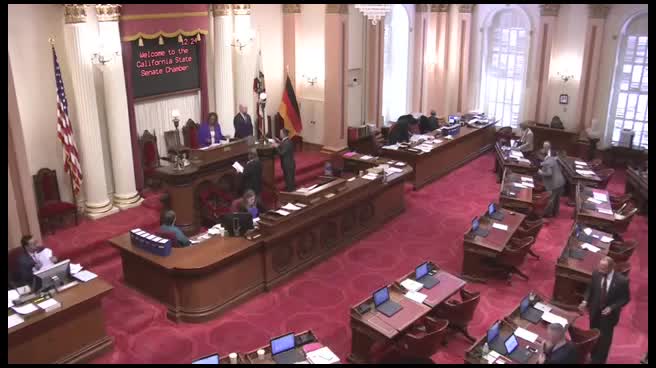 2MIN
Senate Floor
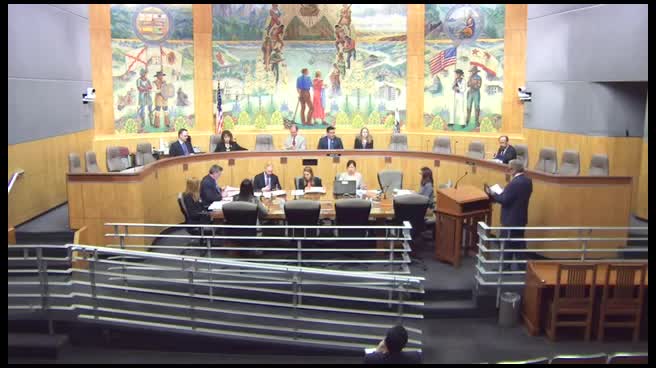 3MIN
Senate Standing Committee on Appropriations
 6MIN