SB 726: Corporate securities: unlawful conduct: regulations.
- Session Year: 2015-2016
- House: Senate
- Latest Version Date: 2016-06-30
(1)The
The Corporate Securities Law of 1968 generally regulates the offer and sale of corporate securities within the state, and specifically makes specified conduct with regard to the offer and sale of corporate securities unlawful. That law requires the Commissioner of Business Oversight to perform specific oversight duties regarding the offer and sale of securities and provides that any willful violation of that law is a crime.
This bill would make it unlawful for any person, directly or indirectly, in this state to knowingly or recklessly make
Existing law prohibits any person from selling a security in this state by means of a communication that includes an untrue statement of material fact or omit to state that omits a material fact necessary in order to make the statements made, in light of the circumstances under which the statements are made, not misleading, to any California state government official with the intention of inducing an investigation of a publicly traded company for the purpose of manipulating the value of a security of that publicly traded company for financial gain. The bill would prohibit these provisions from being deemed to require the commissioner to affirmatively track or investigate anonymous complaints he or she receives, or to publicly disclose the substance of a confidential investigation, relating to this unlawful practice. misleading.
This bill would require the commissioner to adopt regulations to prohibit fraudulent and manipulative practices by persons undertaking short sales in the securities market.
By expanding the scope of a crime, this bill would impose a state-mandated local program.(2)The California Constitution requires the state to reimburse local agencies and school districts for certain costs mandated by the state. Statutory provisions establish procedures for making that reimbursement.This bill would provide that no reimbursement is required by this act for a specified reason.(1)The Corporate Securities Law of 1968 generally regulates the offer and sale of corporate securities within the state, and specifically makes specified conduct with regard to the offer and sale of corporate securities unlawful. That law requires the Commissioner of Business Oversight to perform specific oversight duties regarding the offer and sale of securities and provides that any willful violation of that law is a crime.
This bill would make it unlawful for any person, directly or indirectly, in this state to knowingly or recklessly make an untrue statement of material fact or omit to state a material fact necessary in order to make the statements made, in light of the circumstances under which the statements are made, not misleading, to any California state government official with the intention of inducing an investigation of a publicly traded company for the purpose of manipulating the value of a security of that publicly traded company for financial gain. The bill would prohibit these provisions from being deemed to require the commissioner to affirmatively track or investigate anonymous complaints he or she receives, or to publicly disclose the substance of a confidential investigation, relating to this unlawful practice.
By expanding the scope of a crime, this bill would impose a state-mandated local program.
(2)The California Constitution requires the state to reimburse local agencies and school districts for certain costs mandated by the state. Statutory provisions establish procedures for making that reimbursement.
This bill would provide that no reimbursement is required by this act for a specified reason.
(1)The Corporate Securities Law of 1968 generally regulates the offer and sale of corporate securities within the state, and specifically makes specified conduct with regard to the offer and sale of corporate securities unlawful. That law provides that any willful violation of that law is a crime.
This bill would make it unlawful for any person, directly or indirectly, in this state, for a consideration, received directly or indirectly from a broker-dealer or other person selling or offering for sale or purchasing or offering to purchase the security, to employ, hire, or pay any 3rd party to induce action by any state government official and prohibiting that 3rd party from disclosing on whose behalf the 3rd party is acting. The bill would also make it unlawful for any person, in connection with the offer, sale, or purchase of a security, directly or indirectly, to make a false or misleading statement to any state government official in order to cause an investigation of a public company. state to knowingly make an untrue statement of material fact or omit to state a material fact necessary in order to make the statements made, in light of the circumstances under which the statements are made, not misleading, to any state government official with the intention of inducing an investigation of a publicly traded company for the purpose of manipulating the value of a security of that publicly traded company for financial gain.
By expanding the scope of a crime, this bill would impose a state-mandated local program.
(2)The California Constitution requires the state to reimburse local agencies and school districts for certain costs mandated by the state. Statutory provisions establish procedures for making that reimbursement.
This bill would provide that no reimbursement is required by this act for a specified reason.
(1)The Corporate Securities Law of 1968 generally regulates the offer and sale of corporate securities within the state, and specifically makes specified conduct with regard to the offer and sale of corporate securities unlawful.
This bill would make it unlawful for any person, directly or indirectly, in this state, for a consideration, received directly or indirectly from a broker-dealer or other person selling or offering for sale or purchasing or offering to purchase the security, to employ, hire, or pay any 3rd party to induce action by any state government official and prohibiting that 3rd party from disclosing on whose behalf the 3rd party is acting. The bill would also make it unlawful for any person, in connection with the offer, sale, or purchase of a security, directly or indirectly, to make a false or misleading statement to any state government official in order to cause an investigation of a public company.
(2)The California Constitution requires the state to reimburse local agencies and school districts for certain costs mandated by the state. Statutory provisions establish procedures for making that reimbursement.
This bill would provide that no reimbursement is required by this act for a specified reason.
The Energy Conservation Assistance Act of 1979 authorizes any eligible institution to submit an application to the State Energy Resources Conservation and Development Commission for an allocation for the purpose of financing all or a portion of the costs incurred in implementing a project relating to energy audits, energy conservation and operating procedures, and energy conservation measures in existing and planned buildings and facilities, energy conservation projects, and technical assistance programs. Existing law requires the commission to take steps to solicit loan applications to do certain things, including awarding loans in regions with high summer peak loads.
This bill would instead require the commission to take steps to solicit loan applications that award loans in regions with high peak loads.
The commissioner shall adopt regulations to prohibit fraudulent and manipulative practices by persons undertaking short sales in the securities market.
SECTION 1.Section 25401.2 is added to the Corporations Code, to read:25401.2.(a)It is unlawful for any person, directly or indirectly, in this state to knowingly or recklessly make an untrue statement of material fact or omit to state a material fact necessary in order to make the statements made, in light of the circumstances under which the statements are made, not misleading, to any California state government official with the intention of inducing an investigation of a publicly traded company for the purpose of manipulating the value of a security of that publicly traded company for financial gain.
(b)This section shall not be deemed to require the commissioner to affirmatively track or investigate anonymous complaints he or she receives, or to publicly disclose the substance of a confidential investigation, relating to a violation of this section.
SEC. 2.No reimbursement is required by this act pursuant to Section 6 of Article XIIIB of the California Constitution because the only costs that may be incurred by a local agency or school district will be incurred because this act creates a new crime or infraction, eliminates a crime or infraction, or changes the penalty for a crime or infraction, within the meaning of Section 17556 of the Government Code, or changes the definition of a crime within the meaning of Section 6 of Article XIIIB of the California Constitution.(a)It is unlawful for any person, directly or indirectly, in this state to knowingly or recklessly make an untrue statement of material fact or omit to state a material fact necessary in order to make the statements made, in light of the circumstances under which the statements are made, not misleading, to any California state government official with the intention of inducing an investigation of a publicly traded company for the purpose of manipulating the value of a security of that publicly traded company for financial gain.
(b)This section shall not be deemed to require the commissioner to affirmatively track or investigate anonymous complaints he or she receives, or to publicly disclose the substance of a confidential investigation, relating to a violation of this section.
SEC. 2.No reimbursement is required by this act pursuant to Section 6 of Article XIIIB of the California Constitution because the only costs that may be incurred by a local agency or school district will be incurred because this act creates a new crime or infraction, eliminates a crime or infraction, or changes the penalty for a crime or infraction, within the meaning of Section 17556 of the Government Code, or changes the definition of a crime within the meaning of Section 6 of Article XIIIB of the California Constitution.
It is unlawful for any person, directly or indirectly, in this state to knowingly make an untrue statement of material fact or omit to state a material fact necessary in order to make the statements made, in light of the circumstances under which the statements are made, not misleading, to any state government official with the intention of inducing an investigation of a publicly traded company for the purpose of manipulating the value of a security of that publicly traded company for financial gain.
SECTION 1.Section 25400 of the Corporations Code is amended to read:25400.It is unlawful for any person, directly or indirectly, in this state:
(a)For the purpose of creating a false or misleading appearance of active trading in any security or a false or misleading appearance with respect to the market for any security, (1) to effect any transaction in a security which involves no change in the beneficial ownership thereof, or (2) to enter an order or orders for the purchase of any security with the knowledge that an order or orders of substantially the same size, at substantially the same time and at substantially the same price, for the sale of any such security, has been or will be entered by or for the same or different parties, or (3) to enter an order or orders for the sale of any security with the knowledge that an order or orders of substantially the same size, at substantially the same time and at substantially the same price, for the purchase of any such security, has been or will be entered by or for the same or different parties.
(b)To effect, alone or with one or more other persons, a series of transactions in any security creating actual or apparent active trading in such security or raising or depressing the price of such security, for the purpose of inducing the purchase or sale of such security by others.
(c)If such person is a broker-dealer or other person selling or offering for sale or purchasing or offering to purchase the security, to induce the purchase or sale of any security by the circulation or dissemination of information to the effect that the price of any such security will or is likely to rise or fall because of market operations of any one or more persons conducted for the purpose of raising or depressing the price of such security.
(d)If such person is a broker-dealer or other person selling or offering for sale or purchasing or offering to purchase the security, to make, for the purpose of inducing the purchase or sale of such security by others, any statement which was, at the time and in the light of the circumstances under which it was made, false or misleading with respect to any material fact, or which omitted to state any material fact necessary in order to make the statements made, in the light of the circumstances under which they were made, not misleading, and which he knew or had reasonable ground to believe was so false or misleading.
(e)For a consideration, received directly or indirectly from a broker-dealer or other person selling or offering for sale or purchasing or offering to purchase the security, to do either of the following:
(1)To induce the purchase or sale of any security by the circulation or dissemination of information to the effect that the price of such security will or is likely to rise or fall because of the market operations of any one or more persons conducted for the purpose of raising or depressing the price of such security.
(2)To employ, hire, or pay any third party to induce action by any state government official and prohibiting that third party from disclosing on whose behalf the third party is acting.
SEC. 2.Section 25401.2 is added to the Corporations Code, to read:25401.2.It is unlawful for any person, in connection with the offer, sale, or purchase of a security, directly or indirectly, to make a false or misleading statement to any state government official in order to cause an investigation of a public company.
SEC. 3.SEC. 2.No reimbursement is required by this act pursuant to Section 6 of Article XIIIB of the California Constitution because the only costs that may be incurred by a local agency or school district will be incurred because this act creates a new crime or infraction, eliminates a crime or infraction, or changes the penalty for a crime or infraction, within the meaning of Section 17556 of the Government Code, or changes the definition of a crime within the meaning of Section 6 of Article XIIIB of the California Constitution.
It is unlawful for any person, directly or indirectly, in this state:
(a)For the purpose of creating a false or misleading appearance of active trading in any security or a false or misleading appearance with respect to the market for any security, (1) to effect any transaction in a security which involves no change in the beneficial ownership thereof, or (2) to enter an order or orders for the purchase of any security with the knowledge that an order or orders of substantially the same size, at substantially the same time and at substantially the same price, for the sale of any such security, has been or will be entered by or for the same or different parties, or (3) to enter an order or orders for the sale of any security with the knowledge that an order or orders of substantially the same size, at substantially the same time and at substantially the same price, for the purchase of any such security, has been or will be entered by or for the same or different parties.
(b)To effect, alone or with one or more other persons, a series of transactions in any security creating actual or apparent active trading in such security or raising or depressing the price of such security, for the purpose of inducing the purchase or sale of such security by others.
(c)If such person is a broker-dealer or other person selling or offering for sale or purchasing or offering to purchase the security, to induce the purchase or sale of any security by the circulation or dissemination of information to the effect that the price of any such security will or is likely to rise or fall because of market operations of any one or more persons conducted for the purpose of raising or depressing the price of such security.
(d)If such person is a broker-dealer or other person selling or offering for sale or purchasing or offering to purchase the security, to make, for the purpose of inducing the purchase or sale of such security by others, any statement which was, at the time and in the light of the circumstances under which it was made, false or misleading with respect to any material fact, or which omitted to state any material fact necessary in order to make the statements made, in the light of the circumstances under which they were made, not misleading, and which he knew or had reasonable ground to believe was so false or misleading.
(e)For a consideration, received directly or indirectly from a broker-dealer or other person selling or offering for sale or purchasing or offering to purchase the security, to induce do either of the following:
(1)To induce the purchase or sale of any security by the circulation or dissemination of information to the effect that the price of such security will or is likely to rise or fall because of the market operations of any one or more persons conducted for the purpose of raising or depressing the price of such security.
(2)To employ, hire, or pay any third party to induce action by any state government official and prohibiting that third party from disclosing on whose behalf the third party is acting.
SEC. 2.Section 25401.2 is added to the Corporations Code, to read:25401.2.It is unlawful for any person, in connection with the offer, sale, or purchase of a security, directly or indirectly, to make a false or misleading statement to any state government official in order to cause an investigation of a public company.
SEC. 3.No reimbursement is required by this act pursuant to Section 6 of Article XIIIB of the California Constitution because the only costs that may be incurred by a local agency or school district will be incurred because this act creates a new crime or infraction, eliminates a crime or infraction, or changes the penalty for a crime or infraction, within the meaning of Section 17556 of the Government Code, or changes the definition of a crime within the meaning of Section 6 of Article XIIIB of the California Constitution.
SECTION 1.Section 25412.5 of the Public Resources Code is amended to read:25412.5.The commission shall take steps to solicit loan applications to do all of the following:
(a)Encourage an equitable distribution of loans statewide.
(b)Award loans in regions with high peak loads, with high heating costs, or that have electrical or natural gas system distribution constraints.
(c)Place an emphasis on offering these loans in disadvantaged communities.
The commission shall take steps to solicit loan applications to do all of the following:
(a)Encourage an equitable distribution of loans statewide.
(b)Award loans in regions with high summer peak loads, with high heating costs, or that have electrical or natural gas system distribution constraints.
(c)Place an emphasis on offering these loans in disadvantaged communities.
|
Date
|
Status
|
|---|---|
| Aug 11, 2016 | August 11 hearing. Held in committee and under submission. |
| Aug 3, 2016 | August 3 set for first hearing. Placed on APPR. suspense file. |
| Jun 30, 2016 | Read second time and amended. Re-referred to Com. on APPR. |
| Jun 29, 2016 | From committee: Do pass as amended and re-refer to Com. on APPR. (Ayes 9. Noes 1.) (June 27). |
| Jun 8, 2016 | From committee with author's amendments. Read second time and amended. Re-referred to Com. on B. & F. |
| May 12, 2016 | From committee: Be re-referred to Com. on B. & F. (Ayes 10. Noes 0.) (May 12). Re-referred to Com. on B. & F. |
| Mar 31, 2016 | From committee with author's amendments. Read second time and amended. Re-referred to Com. on RLS. |
| Sep 8, 2015 | Re-referred to Com. on RLS. pursuant to Assembly Rule 96. |
| Sep 3, 2015 | From committee with author's amendments. Read second time and amended. Re-referred to Com. on U. & C. |
| May 18, 2015 | Referred to Coms. on U. & C. and NAT. RES. |
| Apr 27, 2015 | In Assembly. Read first time. Held at Desk. |
| Apr 27, 2015 | Read third time. Passed. (Ayes 35. Noes 0. Page 774.) Ordered to the Assembly. |
| Apr 27, 2015 | Read third time. Passed. (Ayes 35. Noes 0.) Ordered to the Assembly. |
| Apr 21, 2015 | Read second time. Ordered to third reading. |
| Apr 20, 2015 | From committee: Be ordered to second reading pursuant to Senate Rule 28.8. |
| Apr 10, 2015 | Set for hearing April 20. |
| Apr 7, 2015 | From committee: Do pass and re-refer to Com. on APPR. (Ayes 11. Noes 0. Page 509.) (April 7). Re-referred to Com. on APPR. |
| Mar 24, 2015 | Set for hearing April 7. |
| Mar 19, 2015 | Referred to Com. on E., U., & C. |
| Mar 2, 2015 | Read first time. |
| Mar 2, 2015 | From printer. May be acted upon on or after April 1. |
| Feb 27, 2015 | Introduced. To Com. on RLS. for assignment. To print. |
|
Date
|
Description
|
Location
|
Votes
|
|
|---|---|---|---|---|
| Jun 27, 2016 | Do pass as amended and be re-referred to the Committee on [Appropriations] | Assembly 1st Extraordinary Session on Finance |
Passed |
|
| May 12, 2016 | Be re-referred to the Committee on [Banking and Finance] | Assembly Standing Committee on Rules |
Passed |
|
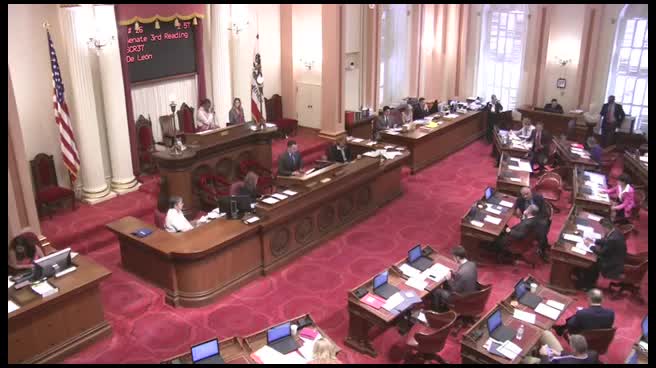
| Apr 27, 2015 | Senate 3rd Reading SB726 Hueso | Senate Floor |
Passed |
|
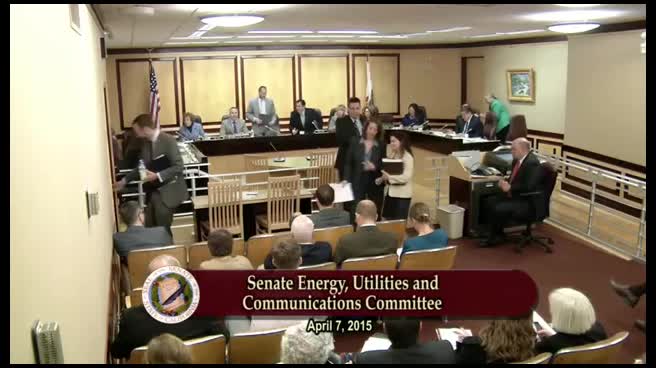
| Apr 7, 2015 | Do pass, but first be re-referred to the Committee on [Appropriations] | Senate Standing Committee on Energy, Utilities and Communications |
Passed |
This list shows positions taken on this bill by organizations on the date displayed, which is linked to the original source.
Positions by individuals are not included.
Date of Hearing: August 3, 2016
ASSEMBLY COMMITTEE ON APPROPRIATIONS
Lorena Gonzalez, Chair
SBPCA Bill Id:SB 726
Author:(Hueso) – As Amended Ver:June 30, 2016
Policy Committee: | Banking and Finance | Vote: | 9 - 1 |
Urgency: No State Mandated Local Program: Yes Reimbursable: No
SUMMARY:
This bill requires the Commissioner of the Department of Business Oversight (DBO) to adopt regulations that prohibit fraudulent and manipulative practices by persons undertaking short sales in the securities market.
FISCAL EFFECT:
- Significant one-time costs in excess of $1 million for DBO to research and develop the scope of regulations related to short sales in the securities market. This research will include a preliminary analysis identifying the core problems in the securities market that should be addressed by state regulation. (State Corporations Fund)
- Ongoing costs to DBO of approximately $700,000 to regulate the short sales market. (State Corporations Fund)
COMMENTS:
- Purpose. According to the author, SB 726 will put in motion a process to modernize the California Corporate Securities Law. The author’s office notes that when that law was enacted in 1968, it did not envision the aggressive trading practices, including short sales in certain conditions, and the complexities that currently characterize modern financial markets.
- Recent amendments. The bill was amended in the Assembly Committee on Banking and Finance to give DBO prerogative in how it crafts a statewide policy related to short selling and market manipulation. The prior version of this bill set up a framework to prevent investors from knowingly or recklessly making untrue statements to any California state government official with the intention of inducing an investigation of a publicly-traded company in order to manipulate the value of that company’s stock.
- Short sales. A short sale is the sale of a stock that an investor does not own. Short sellers typically borrow the stock, sell the stock, and then buy back the stock to return it to the lender. If the price of the stock drops, short sellers buy the stock at the lower price and make a profit.
The vast majority of short sales are legal. The Securities and Exchange Commission (SEC) notes that abusive short sales are illegal and that it is against the law for anyone to engage in a series of transactions in order to depress the price of a stock for the purpose of inducing the purchase or sale of the securities by others. Therefore, short sales that are done to manipulate the price of a stock are prohibited.
- Herbalife. The case of Herbalife is one of the most widely publicized cases of a dispute between a company and a short seller. In that case, investor William Ackman accused Herbalife of predatory hiring practices while entering a $1 billion short against Herbalife’s shares in 2012. The Federal Trade Commission (FTC), in investigating both claims about Herbalife’s business practices as well as Ackman’s actions, failed to find enough evidence to bring criminal charges against either the company or the investor.
- The role of DBO. As amended in policy committee, SB 726 requires DBO to adopt regulations related to market manipulation by short sellers in the securities market. However, it is unclear what type market manipulation DBO should address that is not already against the law. As a result, DBO would need to undergo extensive research and analysis to identify core problems and the type of regulations and oversight required to address those problems.
Analysis Prepared by: Luke Reidenbach / APPR. / (916) 319-2081
Date of Hearing: June 27, 2016
ASSEMBLY COMMITTEE ON BANKING AND FINANCE
Matthew Dababneh, Chair
SBPCA Bill Id:SB 726
Author:(Hueso) – As Amended Ver:June 8, 2016
AS PROPOSED TO BE AMENDED
SENATE VOTE: 35-0 (vote not relevant)
SUBJECT: Corporate securities: unlawful conduct
SUMMARY: Requires the Commissioner of the Department of Business Oversight (DBO) to adopt regulations that prohibit fraudulent and manipulative practices by persons undertaking short sales in the securities market.
EXISTING LAW:
- Provides that it is unlawful for any person to offer or sell a security in this state, or to buy or offer to buy a security in this state, by means of any written or oral communication that includes an untrue statement of a material fact or omits to state a material fact necessary to make the statements made, in the light of the circumstances under which the statements were made, not misleading. [Corporations Code, Section 25401]
- Provides that it is unlawful for any person to knowingly alter, destroy, mutilate, conceal, cover up, falsify, or make a false entry in any record, document, or tangible object with the intent to impede, obstruct, or influence the administration or enforcement of this division. [Corporations Code, 25404 (a)]
- Provides that it is unlawful for any person to knowingly make an untrue statement to the commissioner during the course of licensing, investigation, or examination, with the intent to impede, obstruct, or influence the administration or enforcement of any provision of this division. [Corporations Code, Section 25404 (b)]
- States that every person who with knowledge directly or indirectly controls and induces any person to violate any provision of this division or any rule or order thereunder shall be deemed to be in violation of that provision, rule, or order to the same extent as the controlled and induced person. [Corporations Code, Section 25403 (a)]
- Any person that knowingly provides substantial assistance to another person in violation of any provision of this division or any rule or order thereunder shall be deemed to be in violation of that provision, rule, or order to the same extent as the person to whom the assistance was provided. [Corporations Code, Section 25403 (b)]
- It shall be unlawful for any person directly or indirectly to do any act or thing which would be unlawful for that person to do under any provision of this division or any rule or order thereunder through or by any other person. [Corporations Code, Section 25403 (c)]
- Provides that nothing in this section shall be construed to limit the power of the state to punish any person for any conduct which constitutes a crime under any other statute. [Corporations Code, Section 25403 (d)]
FISCAL EFFECT: Unknown.
COMMENTS:
SB 726, as proposed to be amended, will require the Commissioner of DBO to establish regulations to prohibit fraudulent and manipulative practices by persons undertaking short sales in the securities market. While the suggested amendments are an improvement from the previous version of the bill, a number of questions and concerns remain.
Short-Selling
According to the Securities and Exchange Commission (SEC):
"A short sale is generally the sale of a stock you do not own (or that you will borrow for delivery). Short sellers believe the price of the stock will fall, or are seeking to hedge against potential price volatility in securities that they own.
If the price of the stock drops, short sellers buy the stock at the lower price and make a profit. If the price of the stock rises, short sellers will incur a loss. Short selling is used for many purposes, including to profit from an expected downward price movement, to provide liquidity in response to unanticipated buyer demand, or to hedge the risk of a long position in the same security or a related security."
Are short-sales legal? According to the SEC,
"Although the vast majority of short sales are legal, abusive short sale practices are illegal. For example, it is prohibited for any person to engage in a series of transactions in order to create actual or apparent active trading in a security or to depress the price of a security for the purpose of inducing the purchase or sale of the security by others. Thus, short sales effected to manipulate the price of a stock are prohibited."
Herbalife vs. Ackman
This measure is a response to "short-selling" activities that occurred surrounding the company Herbalife and an investor. For more information on this please read this article: http://www.wsj.com/articles/probes-of-ackman-and-herbalife-fizzle-1454111460
Questions & Concerns:
- It is unclear what "short sales" means as it is not defined in the bill or existing law.
- It is unclear what "securities market" means as it is not defined in the bill or existing law.
- It is unclear what problem exists in California that the bill is trying to address. Is this a statewide issue or an issue that should be addressed nationally?
REGISTERED SUPPORT / OPPOSITION:
Support
Bell Gardens Chamber of Commerce
California – Nevada Conference of Operating Engineers
California Legislative Conference of the Plumbing, Heating and Piping Industry
California State Council of Laborers
Herbalife Nutrition
International Brotherhood of Electrical Workers Local Union 569 San Diego
Los Angeles Area Chamber of Commerce
National Electrical Contractors Association
Regional Hispanic Chamber of Commerce
Regional Hispanic Institute
Reinforcing Ironworkers Local #416
San Gabriel Valley Economic Partnership
San Gabriel Valley Regional Chamber of Commerce
South Gate Chamber of Commerce
State Building and Construction Trades Council, AFL-CIO
The Greater Huntington Park Area Chamber of Commerce
The Latino Coalition (TLC)
Opposition
California Teamsters Public Affairs Council
Consumer Watchdog
UNITE-HERE
Analysis Prepared by: Kathleen O'Malley / B. & F. / (916) 319-3081
SB 726
Page 3
|
Office of Senate Floor Analyses (916) 651-1520 Fax: (916) 327-4478 |
THIRD READING
Bill No: SB 726
Introduced: 2/27/15
SENATE ENERGY, U. & C. COMMITTEE: 11-0, 4/7/15
AYES: Hueso, Fuller, Cannella, Hertzberg, Hill, Lara, Leyva, McGuire, Morrell, Pavley, Wolk
SENATE APPROPRIATIONS COMMITTEE: Senate Rule 28.8
SUBJECT: Energy conservation assistance
DIGEST: This bill enables the California Energy Commission (CEC) to make loans to public agencies for energy efficiency projects to address peak electrical load, whenever that load occurs.
ANALYSIS: Existing law establishes the Energy Conservation Assistance Act (ECAA) program, administered by the CEC. Statute authorizes the CEC to make low- or zero-interest loans to certain public agencies – schools, hospitals, public care institutions, and local governments – for cost-effective building energy efficiency projects, as determined by the CEC. Loans made by the CEC through the ECAA program may not exceed 20 years. Statute requires the CEC to take steps to solicit loan applications to, among other things, award loans in regions with high summer peak loads, with high heating costs, or that have electrical or natural gas system distribution constraints. (Public Resources Code § 25410 et seq.)
This bill removes the season-specific restriction on the CEC’s ability to take steps to solicit loan applications to awards loans in regions with high peak loads.
Background
The ECCA program was established more than 30 years ago and is one of the oldest of California's many programs designed to reduce statewide energy consumption through energy efficiency measures. The program makes low-interest loans to cover up to 100 percent of a project’s costs. Repayment may span up to 20 years. Currently, interest rates vary – zero percent for K-12 schools, and one percent for other eligible public entities. A loan repayment amount cannot exceed the estimated energy savings from a funded project. Funding for ECAA loans has been from a variety of sources over the years, including the General Fund, the Petroleum Violation Escrow Account, the American Recovery and Reinvestment Act, tax-exempt revenue bonds, and Proposition 39 – The California Clean Energy Jobs Act of 2012.
Current law requires the CEC to take certain actions to encourage receipt of ECAA loan applications to do all of the following:
Encourage an equitable distribution of loans statewide.
Award loans in regions with high summer peak loads, with high heating costs, or that have electrical or natural gas system distribution constraints.
Place an emphasis on offering these loans in disadvantaged communities.
This bill modifies the ECAA goals described in the preceding bullets by removing the word “summer” as an adjective to describe “peak loads.” In doing so, the bill broadens the goals of the ECAA loans to cover any period of peak load, regardless of the season in which the peak load occurs.
Such a modification of the ECAA program may make sense in the context of a changing climate. Traditionally, the state’s electrical system has experienced peak load on hot summer days when high residential and commercial air conditioning use add to electricity demand. It made sense to focus the efforts of the ECAA program on summer peak load, given the traditional dynamic of high summer demand.
However, generation and demand patterns are changing, as is the climate, and in ways that are difficult to predict. It is likely that some public areas of the state will experience peak loads in seasons other than summer. Yet, the imperative of energy efficiency remains. In such an atmosphere of change, it makes sense to allow the CEC the flexibility to take actions to encourage receipt of ECAA loans that address peak load, regardless of the season in which that peak load occurs.
FISCAL EFFECT: Appropriation: No Fiscal Com.: Yes Local: No
None received
OPPOSITION: (Verified 4/21/15)
None received
ARGUMENTS IN SUPPORT: The author contends that, given the changing patterns of electricity generation and demand, as well as the changing climate, the CEC should be given the flexibility to encourage solicitation of ECAA loans that reduce peak demand, whenever that demand occurs.
Prepared by: Jay Dickenson / E., U., & C. / (916) 651-4107
4/22/15 16:20:12
**** END ****
SB 726 (Hueso) Page 3 of 3
SENATE COMMITTEE ON ENERGY, UTILITIES AND COMMUNICATIONS
Senator Ben Hueso, Chair
2015 - 2016 Regular
Bill No: SB 726 Hearing Date: 4/7/2015
Author: |
Hueso |
||
Version: |
2/27/2015 As Introduced |
||
Urgency: |
No |
Fiscal: |
Yes |
Consultant: |
Jay Dickenson |
||
SUBJECT: Energy conservation assistance.
DIGEST: This bill enables the California Energy Commission (CEC) to make loans to public agencies for energy efficiency projects to address peak electrical load, whenever that load occurs.
ANALYSIS:
Current law establishes the Energy Conservation Assistance Act (ECAA) program, administered by the CEC. Statute authorizes the CEC to low- or zero-interest loans to certain public agencies – schools, hospitals, public care institutions, and local governments – for cost-effective building energy efficiency projects, as determined by the CEC. Loans made by the CEC through the ECAA program may not exceed 20 years. Statute requires the CEC to take steps to solicit loan applications to, among other things, award loans in regions with high summer peak loads, with high heating costs, or that have electrical or natural gas system distribution constraints. (Public Resources Code §25410 et seq.)
This bill removes the season-specific restriction on the CEC’s ability to take steps to solicit loan applications to awards loans in regions with high peak loads.
Background
The ECCA program was established more than 30 years ago and is one of the oldest of California's many programs designed to reduce statewide energy consumption through energy efficiency measures. The program makes low-interest loans to cover up to 100 percent of a project’s costs. Repayment may span up to 20 years. Currently, interest rates vary – 0 percent for K-12 schools, and 1 percent for other eligible public entities. A loan repayment amount cannot exceed the estimated energy savings from a funded project. Funding for ECAA loans has been from a variety of sources over the years, including the General Fund, the Petroleum Violation Escrow Account, the American Recovery and Reinvestment Act, tax-exempt revenue bonds, and Proposition 39 – The California Clean Energy Jobs Act of 2012.
Current law requires the CEC to take certain actions to encourage receipt of ECAA loan applications to do all of the following:
Encourage an equitable distribution of loans statewide.
Award loans in regions with high summer peak loads, with high heating costs, or that have electrical or natural gas system distribution constraints.
Place an emphasis on offering these loans in disadvantaged communities.
This bill modifies the ECAA goals described in the preceding bullets by removing the word “summer” as an adjective to describe “peak loads.” In doing so, the bill broadens the goals of the ECAA loans to cover any period of peak load, regardless of the season in which the peak load occurs.
Such a modification of the ECAA program may make sense in the context of a changing climate. Traditionally, the state’s electrical system has experienced peak load on hot summer days when high residential and commercial air conditioning use add to electricity demand. It made sense to focus the efforts of the ECAA program on summer peak load, given the traditional dynamic of high summer demand.
However, generation and demand patterns are changing, as is the climate, and in ways that are difficult to predict. It is likely that some public areas of the state will experience peak loads in seasons other than summer. Yet, the imperative of energy efficiency remains. In such an atmosphere of change, it makes sense to allow the CEC the flexibility to take actions to encourage receipt of ECAA loans that address peak load, regardless of the season in which that peak load occurs.
Prior/Related Legislation
None.
FISCAL EFFECT: Appropriation: No Fiscal Com.: Yes Local: No
SUPPORT:
None on file.
OPPOSITION:
None on file.
ARGUMENTS IN SUPPORT: The author contends that, given the changing patterns of electricity generation and demand, as well as the changing climate, the CEC should be given the flexibility to encourage solicitation of ECAA loans that reduce peak demand, whenever that demand occurs.
-- END --
Discussed in Hearing
 1MIN
Senate Floor
 2MIN
Senate Standing Committee on Energy, Utilities and Communications
Bill Author