SB 984: Pilot Program for Increased Access to Responsible Small Dollar Loans: extension.
- Session Year: 2015-2016
- House: Senate
- Latest Version Date: 2016-09-22
(1)Existing law, the California Finance Lenders Law, generally provides for the licensure and regulation of finance lenders and brokers by the Commissioner of Business Oversight and makes a willful violation of its provisions a crime. That law, until January 1, 2018, establishes the Pilot Program for Increased Access to Responsible Small Dollar Loans, which requires licensees and other entities to file an application and pay a specified fee to the commissioner to participate in the program. The program authorizes a licensee approved by the commissioner to participate in the program to impose specified alternative interest rates and charges, including an administrative fee and delinquency fees, on unsecured loans of at least $300 and less than $2,500, subject to certain requirements. The program requires the commissioner, on or before January 1, 2017, to post a report on his or her Internet Web site summarizing utilization of the program, a recommendation whether the pilot program should be continued after January 1, 2018, and the results of a random sample survey of borrowers.
This bill would extend the Pilot Program for Increased Access to Responsible Small Dollar Loans until January 1, 2023, make a conforming change to the requirement for the commissioner to report a recommendation for further continuation of the program, and require additional annual reporting, as specified. The bill would remove the requirement for the commissioner to conduct and report the results of a random sample survey of borrowers. The bill would also make a technical change to a cross-reference within the program provisions.
Because a willful violation of these extended provisions would be a crime, this bill would impose a state-mandated local program.
(2)The California Constitution requires the state to reimburse local agencies and school districts for certain costs mandated by the state. Statutory provisions establish procedures for making that reimbursement.
This bill would provide that no reimbursement is required by this act for a specified reason.
(1)Existing law, the California Finance Lenders Law, generally provides for the licensure and regulation of finance lenders and brokers by the Commissioner of Business Oversight and makes a willful violation of its provisions a crime. Existing That law, until January 1, 2018, establishes the Pilot Program for Increased Access to Responsible Small Dollar Loans for the purpose of allowing greater access for responsible installment loans in principal amounts of at least $300 and less than $2,500. Existing law Loans, which requires licensees and other entities to file an application and pay a specified fee to the commissioner to participate in the program. Existing law The program authorizes a licensee approved by the commissioner to participate in the program to impose specified alternative interest rates and charges, including an administrative fee and delinquency fees, on unsecured loans of at least $300 and less than $2,500, subject to certain requirements. Existing law, The program requires the commissioner, on or before January 1, 2017, requires the commissioner to post a report on his or her Internet Web site containing specified information including summarizing utilization of the program, a recommendation whether the pilot program should be continued after January 1, 2018. 2018, and the results of a random sample survey of borrowers.
This bill would extend the Pilot Program for Increased Access to Responsible Small Dollar Loans until January 1, 2023, require an additional report on or before July 1, 2020, and make a conforming change to the requirement that the report include the above-referenced recommendation. for the commissioner to report a recommendation for further continuation of the program, and require additional annual reporting, as specified. The bill would remove the requirement for the commissioner to conduct and report the results of a random sample survey of borrowers. The bill would also make a technical change to a cross-reference within the program provisions.
Because a willful violation of these extended provisions would be a crime, this bill would impose a state-mandated local program.
(2)The California Constitution requires the state to reimburse local agencies and school districts for certain costs mandated by the state. Statutory provisions establish procedures for making that reimbursement.
This bill would provide that no reimbursement is required by this act for a specified reason.
(1)Existing law, the California Finance Lenders Law, provides for the licensure and regulation of finance lenders and brokers by the Commissioner of Business Oversight and makes a willful violation of its provisions a crime. Existing law, until January 1, 2018, establishes the Pilot Program for Increased Access to Responsible Small Dollar Loans for the purpose of allowing greater access for responsible installment loans in principal amounts of at least $300 and less than $2,500. Existing law requires licensees and other entities to file an application and pay a specified fee to the commissioner to participate in the program. Existing law authorizes a licensee approved by the commissioner to participate in the program to impose specified alternative interest rates and charges, including an administrative fee and delinquency fees, on loans of at least $300 and less than $2,500, subject to certain requirements. Existing law, on or before January 1, 2017, requires the commissioner to post a report on his or her Internet Web site containing specified information including a recommendation whether the pilot program should be continued after January 1, 2018.
This bill would extend the Pilot Program for Increased Access to Responsible Small Dollar Loans until January 1, 2023, require an additional report on or before July 1, 2020, and make a conforming change to the requirement that the report include the above-referenced recommendation.
Because a willful violation of these extended provisions would be a crime, this bill would impose a state-mandated local program.
(2)The California Constitution requires the state to reimburse local agencies and school districts for certain costs mandated by the state. Statutory provisions establish procedures for making that reimbursement.
This bill would provide that no reimbursement is required by this act for a specified reason.
Existing
(1)Existing law, the California Finance Lenders Law, provides for the licensure and regulation of finance lenders and brokers by the Commissioner of Business Oversight and makes a willful violation of its provisions a crime. Existing law, until January 1, 2018, establishes the Pilot Program for Increased Access to Responsible Small Dollar Loans for the purpose of allowing greater access for responsible installment loans in principal amounts of at least $300 and less than $2,500. Existing law requires licensees and other entities to file an application and pay a specified fee to the commissioner to participate in the program. Existing law authorizes a licensee approved by the commissioner to participate in the program to impose specified alternative interest rates and charges, including an administrative fee and delinquency fees, on loans of at least $300 and less than $2,500, subject to certain requirements. Existing law, on or before January 1, 2017, requires the commissioner to post a report on his or her Internet Web site containing specified information including a recommendation whether the pilot program should be continued after January 1, 2018.
This bill would delete the January 1, 2018, repeal date for extend the Pilot Program for Increased Access to Responsible Small Dollar Loans thereby extending these provisions indefinitely, and would make related conforming changes. The bill would also delete until January 1, 2023, and make a conforming change to the requirement that the report include the above-referenced recommendation.
Because a willful violation of these extended provisions would be a crime, this bill would impose a state-mandated local program.
(2)The California Constitution requires the state to reimburse local agencies and school districts for certain costs mandated by the state. Statutory provisions establish procedures for making that reimbursement.
This bill would provide that no reimbursement is required by this act for a specified reason.
Existing law, the California Finance Lenders Law, provides for the licensure and regulation of finance lenders and brokers by the Commissioner of Business Oversight and makes a willful violation of its provisions a crime. Existing law, until January 1, 2018, establishes the Pilot Program for Increased Access to Responsible Small Dollar Loans for the purpose of allowing greater access for responsible installment loans in principal amounts of at least $300 and less than $2,500. Existing law requires licensees and other entities to file an application and pay a specified fee to the commissioner to participate in the program. Existing law authorizes a licensee approved by the commissioner to participate in the program to impose specified alternative interest rates and charges, including an administrative fee and delinquency fees, on loans of at least $300 and less than $2,500, subject to certain requirements. Existing law, on or before January 1, 2017, requires the commissioner to post a report on his or her Internet Web site containing specified information including a recommendation whether the program should be continued after January 1, 2018.
This bill would delete the January 1, 2018, repeal date for the Pilot Program for Increased Access to Responsible Small Dollar Loans thereby extending these provisions indefinitely, and would make related conforming changes. The bill would also delete the requirement that the report include the above-referenced recommendation.
Because a willful violation of these provisions would be a crime, this bill would impose a state-mandated local program.
The California Constitution requires the state to reimburse local agencies and school districts for certain costs mandated by the state. Statutory provisions establish procedures for making that reimbursement.
This bill would provide that no reimbursement is required by this act for a specified reason.
(a)Any loan made pursuant to this section shall comply with the following requirements:
(1)The loan shall be unsecured.
(2)Interest on the loan shall accrue on a simple-interest basis, through the application of a daily periodic rate to the actual unpaid principal balance each day.
(3)The licensee shall disclose the following to the consumer in writing, in a typeface no smaller than 12-point type, at the time of application:
(A)The amount borrowed; the total dollar cost of the loan to the consumer if the loan is paid back on time, including the sum of the administrative fee, principal amount borrowed, and interest payments; the corresponding annual percentage rate, calculated in accordance with Federal Reserve Board Regulation Z (12 C.F.R. 226); the periodic payment amount; the delinquency fee schedule; and the following statement: Repaying your loan early will lower your borrowing costs by reducing the amount of interest you will pay. This loan has no prepayment penalty.
(B)A statement that the consumer has the right to rescind the loan by notifying the licensee of the consumers intent to rescind the loan and returning the principal advanced by the end of the business day following the date the loan is consummated.
(4)A licensee may provide the borrower with the disclosures required by paragraph (3) in a mobile or other electronic application, on which the size of the typeface of the disclosure can be manually modified by a prospective borrower, if the prospective borrower is given the option to print the disclosure in a typeface of at least 12-point size or is provided by the licensee with a hardcopy of the disclosure in a typeface of at least 12-point size before the loan is consummated.
(5)The loan shall have a minimum principal amount upon origination of three hundred dollars ($300) and a term of not less than the following:
(A)Ninety days for loans whose principal balance upon origination is less than five hundred dollars ($500).
(B)One hundred twenty days for loans whose principal balance upon origination is at least five hundred dollars ($500), but is less than one thousand five hundred dollars ($1,500).
(C)One hundred eighty days for loans whose principal balance upon origination is at least one thousand five hundred dollars ($1,500).
(b)As an alternative to the charges authorized by Section 22303 or 22304, a licensee approved by the commissioner to participate in the program may contract for and receive charges for a loan made pursuant to this section at an annual simple interest rate not to exceed the following:
(1)The lesser of 36 percent or the sum of 32.75 percent plus the United States prime lending rate, as of the date of loan origination, on that portion of the unpaid principal balance of the loan up to and including, but not in excess of, one thousand dollars ($1,000). The interest rate calculated as of the date of loan origination shall be fixed for the life of the loan.
(2)The lesser of 35 percent or the sum of 28.75 percent plus the United States prime lending rate, as of the date of loan origination, on that portion of the unpaid principal balance of the loan in excess of one thousand dollars ($1,000), but less than two thousand five hundred dollars ($2,500). The interest rate calculated as of the date of loan origination shall be fixed for the life of the loan.
(c)(1)As to any loan made under this section, a licensee approved by the commissioner to participate in the program may contract for and receive an administrative fee, which shall be fully earned immediately upon making the loan, in an amount not to exceed the applicable of the following:
(A)Seven percent of the principal amount, exclusive of the administrative fee, or ninety dollars ($90), whichever is less, on the first loan made to a borrower.
(B)Six percent of the principal amount, exclusive of the administrative fee, or seventy-five dollars ($75), whichever is less, on the second and subsequent loans made to that borrower.
(2)A licensee shall not charge the same borrower an administrative fee more than once in any four-month period.
(3)For purposes of this section, refinance means the replacement or revision of an existing loan contract with a borrower that results in an extension of additional principal to that borrower. A licensee shall not refinance a loan made under this section, unless all of the following conditions are met at the time the borrower submits an application to refinance:
(A)The borrower has repaid at least 60 percent of the outstanding principal remaining on his or her loan.
(B)The borrower is current on his or her outstanding loan.
(C)The licensee underwrites the new loan in accordance with paragraph (4) of subdivision (g).
(D)If the loan proceeds of both the original loan and the refinance loan are to be used for personal, family, or household purposes, the borrower has not previously refinanced the outstanding loan more than once.
(4)Notwithstanding paragraph (3), an administrative fee shall not be contracted for or received in connection with the refinancing of a loan unless at least eight months have elapsed since the receipt of a previous administrative fee paid by the borrower. With the exception of a loan that is refinanced, only one administrative fee may be contracted for or received until the loan has been repaid in full. Section 22305 shall not apply to any loan made under this section.
(d)Notwithstanding subdivision (a) of Section 22320.5, a licensee approved by the commissioner to participate in the program may require reimbursement from a borrower for the actual insufficient funds fees incurred by that licensee due to actions of the borrower, and may contract for and receive a delinquency fee that is one of the following amounts:
(1)For a period of delinquency of not less than seven days, an amount not in excess of fourteen dollars ($14).
(2)For a period of delinquency of not less than 14 days, an amount not in excess of twenty dollars ($20).
(e)If a licensee opts to impose a delinquency fee, it shall use the delinquency fee schedule described in subdivision (d), subject to all of the following:
(1)No more than one delinquency fee may be imposed per delinquent payment.
(2)No more than two delinquency fees may be imposed during any period of 30 consecutive days.
(3)No delinquency fee may be imposed on a borrower who is 180 days or more past due if that fee would result in the sum of the borrowers remaining unpaid principal balance, accrued interest, and delinquency fees exceeding 180 percent of the original principal amount of the borrowers loan.
(4)The licensee or any of its wholly owned subsidiaries shall attempt to collect a delinquent payment for a period of at least 30 days following the start of the delinquency before selling or assigning that unpaid debt to an independent party for collection.
(f)The licensee shall develop and implement policies and procedures designed to respond to questions raised by applicants and borrowers regarding their loans, including those involving finders, and to address customer complaints as soon as reasonably practicable.
(g)The following shall apply to a loan made by a licensee pursuant to this section:
(1)Prior to disbursement of loan proceeds, the licensee shall either (A) offer a credit education program or seminar to the borrower that has been previously reviewed and approved by the commissioner for use in complying with this section; or (B) invite the borrower to a credit education program or seminar offered by an independent third party that has been previously reviewed and approved by the commissioner for use in complying with this section. The borrower shall not be required to participate in either of these education programs or seminars. A credit education program or seminar offered pursuant to this paragraph shall be provided at no cost to the borrower.
(2)The licensee shall report each borrowers payment performance to at least one consumer reporting agency that compiles and maintains files on consumers on a nationwide basis, upon acceptance as a data furnisher by that consumer reporting agency. For purposes of this section, a consumer reporting agency that compiles and maintains files on consumers on a nationwide basis is one that meets the definition in Section 603(p) of the federal Fair Credit Reporting Act (15 U.S.C. Sec. 1681a(p)). Any licensee that is accepted as a data furnisher after admittance into the program must report all borrower payment performance since its inception of lending under the program, as soon as practicable after its acceptance into the program, but in no event more than six months after its acceptance into the program.
(A)The commissioner may approve a licensee for the program, before that licensee has been accepted as a data furnisher by a consumer reporting agency, if the commissioner has a reasonable expectation, based on information supplied by the licensee, of both of the following:
(i)The licensee will be accepted as a data furnisher, once it achieves a lending volume required of data furnishers of its type by a consumer reporting agency.
(ii)That lending volume will be achieved within the first six months of the licensee commencing lending.
(B)Notwithstanding subparagraph (A), the commissioner shall withdraw approval for pilot program participation from any licensee that fails to become accepted as a data furnisher by a consumer reporting agency within six months of commencing lending under the pilot program.
(3)The licensee shall provide each borrower with the name of the consumer reporting agency or agencies to which it will report the borrowers payment history. A licensee that is accepted as a data furnisher after admittance into the program shall notify its borrowers, as soon as practicable following acceptance as a data furnisher, regarding the name of the consumer reporting agency or agencies to which it will report that borrowers payment history.
(4)(A)The licensee shall underwrite each loan to determine a borrowers ability and willingness to repay the loan pursuant to the loan terms, and shall not make a loan if it determines, through its underwriting, that the borrowers total monthly debt service payments, at the time of origination, including the loan for which the borrower is being considered, and across all outstanding forms of credit that can be independently verified by the licensee, exceed 50 percent of the borrowers gross monthly income.
(B)(i)The licensee shall seek information and documentation pertaining to all of a borrowers outstanding debt obligations during the loan application and underwriting process, including loans that are self-reported by the borrower but not available through independent verification. The licensee shall verify that information using a credit report from at least one consumer reporting agency that compiles and maintains files on consumers on a nationwide basis or through other available electronic debt verification services that provide reliable evidence of a borrowers outstanding debt obligations.
(ii)Notwithstanding the verification requirement in subparagraph (A), the licensee shall request from the borrower and include all information obtained from the borrower regarding outstanding deferred deposit transactions in the calculation of the borrowers outstanding debt obligations.
(iii)The licensee shall not be required to consider, for purposes of debt-to-income ratio evaluation, loans from friends or family.
(C)The licensee shall also verify the borrowers income that the licensee relies on to determine the borrowers debt-to-income ratio using information from either of the following:
(i)Electronic means or services that provide reliable evidence of the borrowers actual income.
(ii)Internal Revenue Service Form W-2, tax returns, payroll receipts, bank statements, or other third-party documents that provide reasonably reliable evidence of the borrowers actual income.
(5)The licensee shall notify each borrower, at least two days prior to each payment due date, informing the borrower of the amount due, and the payment due date. Notification may be provided by any means mutually acceptable to the borrower and the licensee. A borrower shall have the right to opt out of this notification at any time, upon electronic or written request to the licensee. The licensee shall notify each borrower of this right prior to disbursing loan proceeds.
(h)(1)Notwithstanding Sections 22311 to 22315, inclusive, no person, in connection with, or incidental to, the making of any loan made pursuant to this article, may offer, sell, or require the borrower to contract for credit insurance as defined in paragraph (1) of subdivision (a) of Section 22314 or insurance on tangible personal or real property of the type specified in Section 22313.
(2)Notwithstanding Sections 22311 to 22315, inclusive, no licensee, finder, or any other person that participates in the origination of a loan under this article shall refer a borrower to any other person for the purchase of credit insurance as defined in paragraph (1) of subdivision (a) of Section 22314 or insurance on tangible personal or real property of the type specified in Section 22313.
(i)(1)No licensee shall require, as a condition of providing the loan, that the borrower waive any right, penalty, remedy, forum, or procedure provided for in any law applicable to the loan, including the right to file and pursue a civil action or file a complaint with or otherwise communicate with the commissioner or any court or other public entity, or that the borrower agree to resolve disputes in a jurisdiction outside of California or to the application of laws other than those of California, as provided by law. Any waiver by a borrower must be knowing, voluntary, and in writing, and expressly not made a condition of doing business with the licensee. Any waiver that is required as a condition of doing business with the licensee shall be presumed involuntary, unconscionable, against public policy, and unenforceable. The licensee has the burden of proving that a waiver of any rights, penalties, forums, or procedures was knowing, voluntary, and not made a condition of the contract with the borrower.
(2)No licensee shall refuse to do business with or discriminate against a borrower or applicant on the basis that the borrower or applicant refuses to waive any right, penalty, remedy, forum, or procedure, including the right to file and pursue a civil action or complaint with, or otherwise notify, the commissioner or any court or other public entity. The exercise of a persons right to refuse to waive any right, penalty, remedy, forum, or procedure, including a rejection of a contract requiring a waiver, shall not affect any otherwise legal terms of a contract or an agreement.
(3)This subdivision shall not apply to any agreement to waive any right, penalty, remedy, forum, or procedure, including any agreement to arbitrate a claim or dispute, after a claim or dispute has arisen. Nothing in this subdivision shall affect the enforceability or validity of any other provision of the contract.
(j)This section shall not apply to any loan of a bona fide principal amount of two thousand five hundred dollars ($2,500) or more as determined in accordance with Section 22251. For purposes of this subdivision, bona fide principal amount shall be determined in accordance with Section 22251.
SEC. 2.Section 22380 of the Financial Code is amended to read:22380.(a)On or before July 1, 2015, and annually on or before July 1, 2017, to July 1, 2021, inclusive, the commissioner shall post a report on his or her Internet Web site summarizing utilization of the Pilot Program for Increased Access to Responsible Small Dollar Loans. The report required to be submitted on or before July 1, 2015, shall additionally include the information required by former Section 22361, summarizing utilization of the Pilot Program for Affordable Credit-Building Opportunities, which was created by Chapter 640 of the Statutes of 2010.
(b)The information disclosed to the commissioner for the commissioners use in preparing the reports described in this section is exempted from any requirement of public disclosure by paragraph (2) of subdivision (d) of Section 6254 of the Government Code.
(c)If there is more than one licensee approved to participate in the program under this article, the reports required pursuant to subdivision (a) shall state information in aggregate so as not to identify data by specific licensee.
(d)Each report required pursuant to this section shall specify the time period to which the report corresponds, and shall include, but not be limited to, the following for that time period:
(1)The number of entities that applied to participate in the program.
(2)The number of entities accepted to participate in the program.
(3)The reason or reasons for rejecting applications for participation, if applicable. This information shall be provided in a manner that does not identify the entity or entities rejected.
(4)The number of program loan applications received by lenders participating in the program, the number of loans made pursuant to the program, the total amount loaned, the distribution of loan lengths upon origination, and the distribution of interest rates and principal amounts upon origination among those loans.
(5)The number of borrowers who obtained more than one program loan and the distribution of the number of loans per borrower.
(6)Of the number of borrowers who obtained more than one program loan, the percentage of those borrowers whose credit scores increased between successive loans, based on information from at least one major credit bureau, and the average size of the increase.
(7)The income distribution of borrowers upon loan origination, including the number of borrowers who obtained at least one program loan and who resided in a low-to-moderate-income census tract at the time of their loan application.
(8)The number of borrowers who obtained loans for the following purposes, based on borrower responses at the time of their loan applications indicating the primary purpose for which the loan was obtained:
(A)Medical.
(B)Other emergency.
(C)Vehicle repair.
(D)Vehicle purchase.
(E)To pay bills.
(F)To consolidate debt.
(G)To build or repair credit history.
(H)To finance a purchase of goods or services other than a vehicle.
(I)For other than personal, family, or household purposes.
(J)Other.
(9)The number of borrowers who self-report that they had a bank account at the time of their loan application, the number of borrowers who self-report that they had a bank account and used check-cashing services, and the number of borrowers who self-report that they did not have a bank account at the time of their loan application.
(10)With respect to refinance loans, each report shall specifically include the following information:
(A)The number and percentage of borrowers who applied for a refinance loan.
(B)Of those borrowers who applied for a refinance loan, the number and percentage of borrowers who obtained a refinance loan.
(C)Of those borrowers who obtained a refinance loan:
(i)The percentage of borrowers who refinanced once.
(ii)The percentage of borrowers who refinanced twice.
(iii)The percentage of borrowers who refinanced more than twice.
(D)Of those borrowers who obtained a refinance loan, the average percentage of principal paid down before obtaining a refinance loan.
(E)Of those borrowers who obtained a refinance loan, the average amount of additional principal extended.
(F)Of those borrowers who obtained a refinance loan, the average number of late payments made on the loan that was refinanced.
(11)The number and type of finders used by licensees and the relative performance of loans consummated by finders compared to the performance of loans consummated without a finder.
(12)The number and percentage of borrowers who obtained one or more program loans on which late fees were assessed, the total amount of late fees assessed, and the average late fee assessed by dollar amount and as a percentage of the principal amount loaned.
(13)(A)The performance of loans under this article, as reflected by all of the following:
(i)The number and percentage of program borrowers who experienced at least one delinquency lasting between 7 and 29 days, and the distribution of principal loan amounts corresponding to those delinquencies.
(ii)The number and percentage of program borrowers who experienced at least one delinquency lasting between 30 and 59 days, and the distribution of principal loan amounts corresponding to those delinquencies.
(iii)The number and percentage of program borrowers who experienced at least one delinquency lasting 60 days or more, and the distribution of principal loan amounts corresponding to those delinquencies.
(iv)The number and percentage of program borrowers who experienced at least one delinquency of greater than 7 days and who did not subsequently bring their loan current.
(v)Among loans that were ever delinquent for 7 days or more, the average number of times borrowers experienced a delinquency of 7 days or more.
(B)To the extent data are readily available to the commissioner, the commissioner shall include in each report comparable delinquency data for unsecured loans made by persons licensed under Chapter 2 (commencing with Section 22365) of Division 9 in principal amounts between two thousand five hundred dollars ($2,500) and four thousand nine hundred ninety-nine dollars ($4,999), and in principal amounts between five thousand dollars ($5,000) and nine thousand nine hundred ninety-nine dollars ($9,999), and for unsecured extensions of credit made by state-chartered banks and credit unions under the commissioners jurisdiction, in principal amounts between two thousand five hundred dollars ($2,500) and four thousand nine hundred ninety-nine dollars ($4,999), and in principal amounts between five thousand dollars ($5,000) and nine thousand nine hundred ninety-nine dollars ($9,999).
(14)The number and types of violations of this article by finders, which were documented by the commissioner.
(15)The number and types of violations of this article by licensees, which were documented by the commissioner.
(16)The number of times that the commissioner disqualified a finder from performing services, barred a finder from performing services at one or more specific locations of the finder, terminated a written agreement between a finder and a licensee, or imposed an administrative penalty.
(17)The number of complaints received by the commissioner about a licensee or a finder, and the nature of those complaints.
(18)Recommendations for improving the program.
(19)Recommendations regarding whether the program should be continued after January 1, 2023.
SEC. 3.Section 22381 of the Financial Code is amended to read:22381.This article shall remain in effect only until January 1, 2023, and as of that date is repealed.
SEC. 4.No reimbursement is required by this act pursuant to Section 6 of Article XIIIB of the California Constitution because the only costs that may be incurred by a local agency or school district will be incurred because this act creates a new crime or infraction, eliminates a crime or infraction, or changes the penalty for a crime or infraction, within the meaning of Section 17556 of the Government Code, or changes the definition of a crime within the meaning of Section 6 of Article XIIIB of the California Constitution.
(a)Any loan made pursuant to this section shall comply with the following requirements:
(1)The loan shall be unsecured.
(2)Interest on the loan shall accrue on a simple-interest basis, through the application of a daily periodic rate to the actual unpaid principal balance each day.
(3)The licensee shall disclose the following to the consumer in writing, in a typeface no smaller than 12-point type, at the time of application:
(A)The amount borrowed; the total dollar cost of the loan to the consumer if the loan is paid back on time, including the sum of the administrative fee, principal amount borrowed, and interest payments; the corresponding annual percentage rate, calculated in accordance with Federal Reserve Board Regulation Z (12 C.F.R. 226); the periodic payment amount; the delinquency fee schedule; and the following statement: Repaying your loan early will lower your borrowing costs by reducing the amount of interest you will pay. This loan has no prepayment penalty.
(B)A statement that the consumer has the right to rescind the loan by notifying the licensee of the consumers intent to rescind the loan and returning the principal advanced by the end of the business day following the date the loan is consummated.
(4)A licensee may provide the borrower with the disclosures required by paragraph (3) in a mobile or other electronic application, on which the size of the typeface of the disclosure can be manually modified by a prospective borrower, if the prospective borrower is given the option to print the disclosure in a typeface of at least 12-point size or is provided by the licensee with a hardcopy of the disclosure in a typeface of at least 12-point size before the loan is consummated.
(5)The loan shall have a minimum principal amount upon origination of three hundred dollars ($300) and a term of not less than the following:
(A)Ninety days for loans whose principal balance upon origination is less than five hundred dollars ($500).
(B)One hundred twenty days for loans whose principal balance upon origination is at least five hundred dollars ($500), but is less than one thousand five hundred dollars ($1,500).
(C)One hundred eighty days for loans whose principal balance upon origination is at least one thousand five hundred dollars ($1,500).
(b)As an alternative to the charges authorized by Section 22303 or 22304, a licensee approved by the commissioner to participate in the program may contract for and receive charges for a loan made pursuant to this section at an annual simple interest rate not to exceed the following:
(1)The lesser of 36 percent or the sum of 32.75 percent plus the United States prime lending rate, as of the date of loan origination, on that portion of the unpaid principal balance of the loan up to and including, but not in excess of, one thousand dollars ($1,000). The interest rate calculated as of the date of loan origination shall be fixed for the life of the loan.
(2)The lesser of 35 percent or the sum of 28.75 percent plus the United States prime lending rate, as of the date of loan origination, on that portion of the unpaid principal balance of the loan in excess of one thousand dollars ($1,000), but less than two thousand five hundred dollars ($2,500). The interest rate calculated as of the date of loan origination shall be fixed for the life of the loan.
(c)(1)As to any loan made under this section, a licensee approved by the commissioner to participate in the program may contract for and receive an administrative fee, which shall be fully earned immediately upon making the loan, in an amount not to exceed the applicable of the following:
(A)Seven percent of the principal amount, exclusive of the administrative fee, or ninety dollars ($90), whichever is less, on the first loan made to a borrower.
(B)Six percent of the principal amount, exclusive of the administrative fee, or seventy-five dollars ($75), whichever is less, on the second and subsequent loans made to that borrower.
(2)A licensee shall not charge the same borrower an administrative fee more than once in any four-month period.
(3)For purposes of this section, refinance means the replacement or revision of an existing loan contract with a borrower that results in an extension of additional principal to that borrower. A licensee shall not refinance a loan made under this section, unless all of the following conditions are met at the time the borrower submits an application to refinance:
(A)The borrower has repaid at least 60 percent of the outstanding principal remaining on his or her loan.
(B)The borrower is current on his or her outstanding loan.
(C)The licensee underwrites the new loan in accordance with paragraph (4) of subdivision (f). (g).
(D)If the loan proceeds of both the original loan and the refinance loan are to be used for personal, family, or household purposes, the borrower has not previously refinanced the outstanding loan more than once.
(4)Notwithstanding paragraph (3), an administrative fee shall not be contracted for or received in connection with the refinancing of a loan unless at least eight months have elapsed since the receipt of a previous administrative fee paid by the borrower. With the exception of a loan that is refinanced, only one administrative fee may be contracted for or received until the loan has been repaid in full. Section 22305 shall not apply to any loan made under this section.
(d)Notwithstanding subdivision (a) of Section 22320.5, a licensee approved by the commissioner to participate in the program may require reimbursement from a borrower for the actual insufficient funds fees incurred by that licensee due to actions of the borrower, and may contract for and receive a delinquency fee that is one of the following amounts:
(1)For a period of delinquency of not less than seven days, an amount not in excess of fourteen dollars ($14).
(2)For a period of delinquency of not less than 14 days, an amount not in excess of twenty dollars ($20).
(e)If a licensee opts to impose a delinquency fee, it shall use the delinquency fee schedule described in subdivision (d), subject to all of the following:
(1)No more than one delinquency fee may be imposed per delinquent payment.
(2)No more than two delinquency fees may be imposed during any period of 30 consecutive days.
(3)No delinquency fee may be imposed on a borrower who is 180 days or more past due if that fee would result in the sum of the borrowers remaining unpaid principal balance, accrued interest, and delinquency fees exceeding 180 percent of the original principal amount of the borrowers loan.
(4)The licensee or any of its wholly owned subsidiaries shall attempt to collect a delinquent payment for a period of at least 30 days following the start of the delinquency before selling or assigning that unpaid debt to an independent party for collection.
(f)The licensee shall develop and implement policies and procedures designed to respond to questions raised by applicants and borrowers regarding their loans, including those involving finders, and to address customer complaints as soon as reasonably practicable.
(g)The following shall apply to a loan made by a licensee pursuant to this section:
(1)Prior to disbursement of loan proceeds, the licensee shall either (A) offer a credit education program or seminar to the borrower that has been previously reviewed and approved by the commissioner for use in complying with this section; or (B) invite the borrower to a credit education program or seminar offered by an independent third party that has been previously reviewed and approved by the commissioner for use in complying with this section. The borrower shall not be required to participate in either of these education programs or seminars. A credit education program or seminar offered pursuant to this paragraph shall be provided at no cost to the borrower.
(2)The licensee shall report each borrowers payment performance to at least one consumer reporting agency that compiles and maintains files on consumers on a nationwide basis, upon acceptance as a data furnisher by that consumer reporting agency. For purposes of this section, a consumer reporting agency that compiles and maintains files on consumers on a nationwide basis is one that meets the definition in Section 603(p) of the federal Fair Credit Reporting Act (15 U.S.C. Sec. 1681a(p)). Any licensee that is accepted as a data furnisher after admittance into the program must report all borrower payment performance since its inception of lending under the program, as soon as practicable after its acceptance into the program, but in no event more than six months after its acceptance into the program.
(A)The commissioner may approve a licensee for the program, before that licensee has been accepted as a data furnisher by a consumer reporting agency, if the commissioner has a reasonable expectation, based on information supplied by the licensee, of both of the following:
(i)The licensee will be accepted as a data furnisher, once it achieves a lending volume required of data furnishers of its type by a consumer reporting agency.
(ii)That lending volume will be achieved within the first six months of the licensee commencing lending.
(B)Notwithstanding subparagraph (A), the commissioner shall withdraw approval for pilot program participation from any licensee that fails to become accepted as a data furnisher by a consumer reporting agency within six months of commencing lending under the pilot program.
(3)The licensee shall provide each borrower with the name of the consumer reporting agency or agencies to which it will report the borrowers payment history. A licensee that is accepted as a data furnisher after admittance into the program shall notify its borrowers, as soon as practicable following acceptance as a data furnisher, regarding the name of the consumer reporting agency or agencies to which it will report that borrowers payment history.
(4)(A)The licensee shall underwrite each loan to determine a borrowers ability and willingness to repay the loan pursuant to the loan terms, and shall not make a loan if it determines, through its underwriting, that the borrowers total monthly debt service payments, at the time of origination, including the loan for which the borrower is being considered, and across all outstanding forms of credit that can be independently verified by the licensee, exceed 50 percent of the borrowers gross monthly income.
(B)(i)The licensee shall seek information and documentation pertaining to all of a borrowers outstanding debt obligations during the loan application and underwriting process, including loans that are self-reported by the borrower but not available through independent verification. The licensee shall verify that information using a credit report from at least one consumer reporting agency that compiles and maintains files on consumers on a nationwide basis or through other available electronic debt verification services that provide reliable evidence of a borrowers outstanding debt obligations.
(ii)Notwithstanding the verification requirement in subparagraph (A), the licensee shall request from the borrower and include all information obtained from the borrower regarding outstanding deferred deposit transactions in the calculation of the borrowers outstanding debt obligations.
(iii)The licensee shall not be required to consider, for purposes of debt-to-income ratio evaluation, loans from friends or family.
(C)The licensee shall also verify the borrowers income that the licensee relies on to determine the borrowers debt-to-income ratio using information from either of the following:
(i)Electronic means or services that provide reliable evidence of the borrowers actual income.
(ii)Internal Revenue Service Form W-2, tax returns, payroll receipts, bank statements, or other third-party documents that provide reasonably reliable evidence of the borrowers actual income.
(5)The licensee shall notify each borrower, at least two days prior to each payment due date, informing the borrower of the amount due, and the payment due date. Notification may be provided by any means mutually acceptable to the borrower and the licensee. A borrower shall have the right to opt out of this notification at any time, upon electronic or written request to the licensee. The licensee shall notify each borrower of this right prior to disbursing loan proceeds.
(h)(1)Notwithstanding Sections 22311 to 22315, inclusive, no person, in connection with, or incidental to, the making of any loan made pursuant to this article, may offer, sell, or require the borrower to contract for credit insurance as defined in paragraph (1) of subdivision (a) of Section 22314 or insurance on tangible personal or real property of the type specified in Section 22313.
(2)Notwithstanding Sections 22311 to 22315, inclusive, no licensee, finder, or any other person that participates in the origination of a loan under this article shall refer a borrower to any other person for the purchase of credit insurance as defined in paragraph (1) of subdivision (a) of Section 22314 or insurance on tangible personal or real property of the type specified in Section 22313.
(i)(1)No licensee shall require, as a condition of providing the loan, that the borrower waive any right, penalty, remedy, forum, or procedure provided for in any law applicable to the loan, including the right to file and pursue a civil action or file a complaint with or otherwise communicate with the commissioner or any court or other public entity, or that the borrower agree to resolve disputes in a jurisdiction outside of California or to the application of laws other than those of California, as provided by law. Any waiver by a borrower must be knowing, voluntary, and in writing, and expressly not made a condition of doing business with the licensee. Any waiver that is required as a condition of doing business with the licensee shall be presumed involuntary, unconscionable, against public policy, and unenforceable. The licensee has the burden of proving that a waiver of any rights, penalties, forums, or procedures was knowing, voluntary, and not made a condition of the contract with the borrower.
(2)No licensee shall refuse to do business with or discriminate against a borrower or applicant on the basis that the borrower or applicant refuses to waive any right, penalty, remedy, forum, or procedure, including the right to file and pursue a civil action or complaint with, or otherwise notify, the commissioner or any court or other public entity. The exercise of a persons right to refuse to waive any right, penalty, remedy, forum, or procedure, including a rejection of a contract requiring a waiver, shall not affect any otherwise legal terms of a contract or an agreement.
(3)This subdivision shall not apply to any agreement to waive any right, penalty, remedy, forum, or procedure, including any agreement to arbitrate a claim or dispute, after a claim or dispute has arisen. Nothing in this subdivision shall affect the enforceability or validity of any other provision of the contract.
(j)This section shall not apply to any loan of a bona fide principal amount of two thousand five hundred dollars ($2,500) or more as determined in accordance with Section 22251. For purposes of this subdivision, bona fide principal amount shall be determined in accordance with Section 22251.
SECTION 1.SEC. 2.Section 22380 of the Financial Code is amended to read:22380.(a)On or before July 1, 2015, again, on or before January 1, 2017, and again, on or before July 1, 2020, and annually on or before July 1, 2017, to July 1, 2021, inclusive, the commissioner shall post a report on his or her Internet Web site summarizing utilization of the Pilot Program for Increased Access to Responsible Small Dollar Loans. The report required to be submitted on or before July 1, 2015, shall additionally include the information required by former Section 22361, summarizing utilization of the Pilot Program for Affordable Credit-Building Opportunities, which was created by Chapter 640 of the Statutes of 2010.
(b)The information disclosed to the commissioner for the commissioners use in preparing the report reports described in this section is exempted from any requirement of public disclosure by paragraph (2) of subdivision (d) of Section 6254 of the Government Code.
(c)If there is more than one licensee approved to participate in the program under this article, the report reports required pursuant to subdivision (a) shall state information in aggregate so as not to identify data by specific licensee.
(d)The Each report required pursuant to this section shall specify the time period to which the report corresponds, and shall include, but not be limited to, the following for that time period:
(1)The number of entities that applied to participate in the program.
(2)The number of entities accepted to participate in the program.
(3)The reason or reasons for rejecting applications for participation, if applicable. This information shall be provided in a manner that does not identify the entity or entities rejected.
(4)The number of program loan applications received by lenders participating in the program, the number of loans made pursuant to the program, the total amount loaned, the distribution of loan lengths upon origination, and the distribution of interest rates and principal amounts upon origination among those loans.
(5)The number of borrowers who obtained more than one program loan and the distribution of the number of loans per borrower.
(6)Of the number of borrowers who obtained more than one program loan, the percentage of those borrowers whose credit scores increased between successive loans, based on information from at least one major credit bureau, and the average size of the increase.
(7)The income distribution of borrowers upon loan origination, including the number of borrowers who obtained at least one program loan and who resided in a low-to-moderate-income census tract at the time of their loan application.
(8)The number of borrowers who obtained loans for the following purposes, based on borrower responses at the time of their loan applications indicating the primary purpose for which the loan was obtained:
(A)Medical.
(B)Other emergency.
(C)Vehicle repair.
(D)Vehicle purchase.
(E)To pay bills.
(F)To consolidate debt.
(G)To build or repair credit history.
(H)To finance a purchase of goods or services other than a vehicle.
(I)For other than personal, family, or household purposes.
(J)Other.
(9)The number of borrowers who self-report that they had a bank account at the time of their loan application, the number of borrowers who self-report that they had a bank account and used check-cashing services, and the number of borrowers who self-report that they did not have a bank account at the time of their loan application.
(10)With respect to refinance loans, the each report shall specifically include the following information:
(A)The number and percentage of borrowers who applied for a refinance loan.
(B)Of those borrowers who applied for a refinance loan, the number and percentage of borrowers who obtained a refinance loan.
(C)Of those borrowers who obtained a refinance loan:
(i)The percentage of borrowers who refinanced once.
(ii)The percentage of borrowers who refinanced twice.
(iii)The percentage of borrowers who refinanced more than twice.
(D)Of those borrowers who obtained a refinance loan, the average percentage of principal paid down before obtaining a refinance loan.
(E)Of those borrowers who obtained a refinance loan, the average amount of additional principal extended.
(F)Of those borrowers who obtained a refinance loan, the average number of late payments made on the loan that was refinanced.
(11)The number and type of finders used by licensees and the relative performance of loans consummated by finders compared to the performance of loans consummated without a finder.
(12)The number and percentage of borrowers who obtained one or more program loans on which late fees were assessed, the total amount of late fees assessed, and the average late fee assessed by dollar amount and as a percentage of the principal amount loaned.
(13)(A)The performance of loans under this article, as reflected by all of the following:
(i)The number and percentage of program borrowers who experienced at least one delinquency lasting between 7 and 29 days, and the distribution of principal loan amounts corresponding to those delinquencies.
(ii)The number and percentage of program borrowers who experienced at least one delinquency lasting between 30 and 59 days, and the distribution of principal loan amounts corresponding to those delinquencies.
(iii)The number and percentage of program borrowers who experienced at least one delinquency lasting 60 days or more, and the distribution of principal loan amounts corresponding to those delinquencies.
(iv)The number and percentage of program borrowers who experienced at least one delinquency of greater than 7 days and who did not subsequently bring their loan current.
(v)Among loans that were ever delinquent for 7 days or more, the average number of times borrowers experienced a delinquency of 7 days or more.
(B)To the extent data are readily available to the commissioner, the commissioner shall include in his or her each report comparable delinquency data for unsecured loans made by persons licensed under Chapter 2 (commencing with Section 22365) of Division 9 in principal amounts between two thousand five hundred dollars ($2,500) and four thousand nine hundred ninety-nine dollars ($4,999), and in principal amounts between five thousand dollars ($5,000) and nine thousand nine hundred ninety-nine dollars ($9,999), and for unsecured extensions of credit made by state-chartered banks and credit unions under the commissioners jurisdiction, in principal amounts between two thousand five hundred dollars ($2,500) and four thousand nine hundred ninety-nine dollars ($4,999), and in principal amounts between five thousand dollars ($5,000) and nine thousand nine hundred ninety-nine dollars ($9,999).
(14)The number and types of violations of this article by finders, which were documented by the commissioner.
(15)The number and types of violations of this article by licensees, which were documented by the commissioner.
(16)The number of times that the commissioner disqualified a finder from performing services, barred a finder from performing services at one or more specific locations of the finder, terminated a written agreement between a finder and a licensee, or imposed an administrative penalty.
(17)The number of complaints received by the commissioner about a licensee or a finder, and the nature of those complaints.
(18)Recommendations for improving the program.
(19)Recommendations regarding whether the program should be continued after January 1, 2023.
(e)The commissioner shall conduct a random sample survey of borrowers who have participated in the program to obtain information regarding the borrowers experience and licensees compliance with this article. The results of this survey shall be included in the report required by this section.
SEC. 2.SEC. 3.Section 22381 of the Financial Code is amended to read:22381.This article shall remain in effect only until January 1, 2023, and as of that date is repealed.
SEC. 3.SEC. 4.No reimbursement is required by this act pursuant to Section 6 of Article XIIIB of the California Constitution because the only costs that may be incurred by a local agency or school district will be incurred because this act creates a new crime or infraction, eliminates a crime or infraction, or changes the penalty for a crime or infraction, within the meaning of Section 17556 of the Government Code, or changes the definition of a crime within the meaning of Section 6 of Article XIIIB of the California Constitution.
(a)On or before July 1, 2015, and again, on or before January 1, 2017, and again, on or before July 1, 2020, the commissioner shall post a report on his or her Internet Web site summarizing utilization of the Pilot Program for Increased Access to Responsible Small Dollar Loans. The report required to be submitted on or before July 1, 2015, shall additionally include the information required by former Section 22361, summarizing utilization of the Pilot Program for Affordable Credit-Building Opportunities, which was created by Chapter 640 of the Statutes of 2010.
(b)The information disclosed to the commissioner for the commissioners use in preparing the report described in this section is exempted from any requirement of public disclosure by paragraph (2) of subdivision (d) of Section 6254 of the Government Code.
(c)If there is more than one licensee approved to participate in the program under this article, the report required pursuant to subdivision (a) shall state information in aggregate so as not to identify data by specific licensee.
(d)The report required pursuant to this section shall specify the time period to which the report corresponds, and shall include, but not be limited to, the following for that time period:
(1)The number of entities that applied to participate in the program.
(2)The number of entities accepted to participate in the program.
(3)The reason or reasons for rejecting applications for participation, if applicable. This information shall be provided in a manner that does not identify the entity or entities rejected.
(4)The number of program loan applications received by lenders participating in the program, the number of loans made pursuant to the program, the total amount loaned, the distribution of loan lengths upon origination, and the distribution of interest rates and principal amounts upon origination among those loans.
(5)The number of borrowers who obtained more than one program loan and the distribution of the number of loans per borrower.
(6)Of the number of borrowers who obtained more than one program loan, the percentage of those borrowers whose credit scores increased between successive loans, based on information from at least one major credit bureau, and the average size of the increase.
(7)The income distribution of borrowers upon loan origination, including the number of borrowers who obtained at least one program loan and who resided in a low-to-moderate-income census tract at the time of their loan application.
(8)The number of borrowers who obtained loans for the following purposes, based on borrower responses at the time of their loan applications indicating the primary purpose for which the loan was obtained:
(A)Medical.
(B)Other emergency.
(C)Vehicle repair.
(D)Vehicle purchase.
(E)To pay bills.
(F)To consolidate debt.
(G)To build or repair credit history.
(H)To finance a purchase of goods or services other than a vehicle.
(I)For other than personal, family, or household purposes.
(J)Other.
(9)The number of borrowers who self-report that they had a bank account at the time of their loan application, the number of borrowers who self-report that they had a bank account and used check-cashing services, and the number of borrowers who self-report that they did not have a bank account at the time of their loan application.
(10)With respect to refinance loans, the report shall specifically include the following information:
(A)The number and percentage of borrowers who applied for a refinance loan.
(B)Of those borrowers who applied for a refinance loan, the number and percentage of borrowers who obtained a refinance loan.
(C)Of those borrowers who obtained a refinance loan:
(i)The percentage of borrowers who refinanced once.
(ii)The percentage of borrowers who refinanced twice.
(iii)The percentage of borrowers who refinanced more than twice.
(D)Of those borrowers who obtained a refinance loan, the average percentage of principal paid down before obtaining a refinance loan.
(E)Of those borrowers who obtained a refinance loan, the average amount of additional principal extended.
(F)Of those borrowers who obtained a refinance loan, the average number of late payments made on the loan that was refinanced.
(11)The number and type of finders used by licensees and the relative performance of loans consummated by finders compared to the performance of loans consummated without a finder.
(12)The number and percentage of borrowers who obtained one or more program loans on which late fees were assessed, the total amount of late fees assessed, and the average late fee assessed by dollar amount and as a percentage of the principal amount loaned.
(13)(A)The performance of loans under this article, as reflected by all of the following:
(i)The number and percentage of program borrowers who experienced at least one delinquency lasting between 7 and 29 days, and the distribution of principal loan amounts corresponding to those delinquencies.
(ii)The number and percentage of program borrowers who experienced at least one delinquency lasting between 30 and 59 days, and the distribution of principal loan amounts corresponding to those delinquencies.
(iii)The number and percentage of program borrowers who experienced at least one delinquency lasting 60 days or more, and the distribution of principal loan amounts corresponding to those delinquencies.
(iv)The number and percentage of program borrowers who experienced at least one delinquency of greater than 7 days and who did not subsequently bring their loan current.
(v)Among loans that were ever delinquent for 7 days or more, the average number of times borrowers experienced a delinquency of 7 days or more.
(B)To the extent data are readily available to the commissioner, the commissioner shall include in his or her report comparable delinquency data for unsecured loans made by persons licensed under Chapter 2 (commencing with Section 22365) of Division 9 in principal amounts between two thousand five hundred dollars ($2,500) and four thousand nine hundred ninety-nine dollars ($4,999), and in principal amounts between five thousand dollars ($5,000) and nine thousand nine hundred ninety-nine dollars ($9,999), and for unsecured extensions of credit made by state-chartered banks and credit unions under the commissioners jurisdiction, in principal amounts between two thousand five hundred dollars ($2,500) and four thousand nine hundred ninety-nine dollars ($4,999), and in principal amounts between five thousand dollars ($5,000) and nine thousand nine hundred ninety-nine dollars ($9,999).
(14)The number and types of violations of this article by finders, which were documented by the commissioner.
(15)The number and types of violations of this article by licensees, which were documented by the commissioner.
(16)The number of times that the commissioner disqualified a finder from performing services, barred a finder from performing services at one or more specific locations of the finder, terminated a written agreement between a finder and a licensee, or imposed an administrative penalty.
(17)The number of complaints received by the commissioner about a licensee or a finder, and the nature of those complaints.
(18)Recommendations for improving the program.
(19)Recommendations regarding whether the program should be continued after January 1, 2023.
(e)The commissioner shall conduct a random sample survey of borrowers who have participated in the program to obtain information regarding the borrowers experience and licensees compliance with this article. The results of this survey shall be included in the report required by this section.
SEC. 2.Section 22381 of the Financial Code is amended to read:22381.This article shall remain in effect only until January 1, 2023, and as of that date is repealed.
SEC. 3.No reimbursement is required by this act pursuant to Section 6 of Article XIIIB of the California Constitution because the only costs that may be incurred by a local agency or school district will be incurred because this act creates a new crime or infraction, eliminates a crime or infraction, or changes the penalty for a crime or infraction, within the meaning of Section 17556 of the Government Code, or changes the definition of a crime within the meaning of Section 6 of Article XIIIB of the California Constitution.
(a)The Program for Increased Access to Responsible Small Dollar Loans is hereby established.
(b)The Legislature finds and declares that consumer demand for responsible installment loans in principal amounts of at least three hundred dollars ($300) but less than two thousand five hundred dollars ($2,500) exceeds the supply of these loans. In 2010, the Legislature enacted the Pilot Program for Affordable Credit-Building Opportunities, as a first step toward addressing this gap. Californias experience to date with that pilot program has identified several improvements that could be made, which would allow more Californians to access responsible installment loans of at least three hundred dollars ($300) but less than two thousand five hundred dollars ($2,500). The Program for Increased Access to Responsible Small Dollar Loans is intended to implement those improvements.
(c)For purposes of this article:
(1)Commissioner means the Commissioner of Business Oversight.
(2)Program means the Program for Increased Access to Responsible Small Dollar Loans.
(3)Pursuant to Section 22380.5, licensee also includes a licensee approved to participate in the former Pilot Program for Affordable Credit-Building Opportunities as described in the former Article 3.5 (commencing with Section 22348).
SEC. 3.Section 22370 of the Financial Code is amended to read:22370.(a)Any loan made pursuant to this section shall comply with the following requirements:
(1)The loan shall be unsecured.
(2)Interest on the loan shall accrue on a simple-interest basis, through the application of a daily periodic rate to the actual unpaid principal balance each day.
(3)The licensee shall disclose the following to the consumer in writing, in a typeface no smaller than 12-point type, at the time of application:
(A)The amount borrowed; the total dollar cost of the loan to the consumer if the loan is paid back on time, including the sum of the administrative fee, principal amount borrowed, and interest payments; the corresponding annual percentage rate, calculated in accordance with Federal Reserve Board Regulation Z (12 C.F.R. 226); the periodic payment amount; the delinquency fee schedule; and the following statement: Repaying your loan early will lower your borrowing costs by reducing the amount of interest you will pay. This loan has no prepayment penalty.
(B)A statement that the consumer has the right to rescind the loan by notifying the licensee of the consumers intent to rescind the loan and returning the principal advanced by the end of the business day following the date the loan is consummated.
(4)A licensee may provide the borrower with the disclosures required by paragraph (3) in a mobile or other electronic application, on which the size of the typeface of the disclosure can be manually modified by a prospective borrower, if the prospective borrower is given the option to print the disclosure in a typeface of at least 12-point size or is provided by the licensee with a hardcopy of the disclosure in a typeface of at least 12-point size before the loan is consummated.
(5)The loan shall have a minimum principal amount upon origination of three hundred dollars ($300) and a term of not less than the following:
(A)Ninety days for loans whose principal balance upon origination is less than five hundred dollars ($500).
(B)One hundred twenty days for loans whose principal balance upon origination is at least five hundred dollars ($500), but is less than one thousand five hundred dollars ($1,500).
(C)One hundred eighty days for loans whose principal balance upon origination is at least one thousand five hundred dollars ($1,500).
(b)As an alternative to the charges authorized by Section 22303 or 22304, a licensee approved by the commissioner to participate in the program may contract for and receive charges for a loan made pursuant to this section at an annual simple interest rate not to exceed the following:
(1)The lesser of 36 percent or the sum of 32.75 percent plus the United States prime lending rate, as of the date of loan origination, on that portion of the unpaid principal balance of the loan up to and including, but not in excess of, one thousand dollars ($1,000). The interest rate calculated as of the date of loan origination shall be fixed for the life of the loan.
(2)The lesser of 35 percent or the sum of 28.75 percent plus the United States prime lending rate, as of the date of loan origination, on that portion of the unpaid principal balance of the loan in excess of one thousand dollars ($1,000), but less than two thousand five hundred dollars ($2,500). The interest rate calculated as of the date of loan origination shall be fixed for the life of the loan.
(c)(1)As to any loan made under this section, a licensee approved by the commissioner to participate in the program may contract for and receive an administrative fee, which shall be fully earned immediately upon making the loan, in an amount not to exceed the applicable of the following:
(A)Seven percent of the principal amount, exclusive of the administrative fee, or ninety dollars ($90), whichever is less, on the first loan made to a borrower.
(B)Six percent of the principal amount, exclusive of the administrative fee, or seventy-five dollars ($75), whichever is less, on the second and subsequent loans made to that borrower.
(2)A licensee shall not charge the same borrower an administrative fee more than once in any four-month period.
(3)For purposes of this section, refinance means the replacement or revision of an existing loan contract with a borrower that results in an extension of additional principal to that borrower. A licensee shall not refinance a loan made under this section, unless all of the following conditions are met at the time the borrower submits an application to refinance:
(A)The borrower has repaid at least 60 percent of the outstanding principal remaining on his or her loan.
(B)The borrower is current on his or her outstanding loan.
(C)The licensee underwrites the new loan in accordance with paragraph (4) of subdivision (f).
(D)If the loan proceeds of both the original loan and the refinance loan are to be used for personal, family, or household purposes, the borrower has not previously refinanced the outstanding loan more than once.
(4)Notwithstanding paragraph (3), an administrative fee shall not be contracted for or received in connection with the refinancing of a loan unless at least eight months have elapsed since the receipt of a previous administrative fee paid by the borrower. With the exception of a loan that is refinanced, only one administrative fee may be contracted for or received until the loan has been repaid in full. Section 22305 shall not apply to any loan made under this section.
(d)Notwithstanding subdivision (a) of Section 22320.5, a licensee approved by the commissioner to participate in the program may require reimbursement from a borrower for the actual insufficient funds fees incurred by that licensee due to actions of the borrower, and may contract for and receive a delinquency fee that is one of the following amounts:
(1)For a period of delinquency of not less than seven days, an amount not in excess of fourteen dollars ($14).
(2)For a period of delinquency of not less than 14 days, an amount not in excess of twenty dollars ($20).
(e)If a licensee opts to impose a delinquency fee, it shall use the delinquency fee schedule described in subdivision (d), subject to all of the following:
(1)No more than one delinquency fee may be imposed per delinquent payment.
(2)No more than two delinquency fees may be imposed during any period of 30 consecutive days.
(3)No delinquency fee may be imposed on a borrower who is 180 days or more past due if that fee would result in the sum of the borrowers remaining unpaid principal balance, accrued interest, and delinquency fees exceeding 180 percent of the original principal amount of the borrowers loan.
(4)The licensee or any of its wholly owned subsidiaries shall attempt to collect a delinquent payment for a period of at least 30 days following the start of the delinquency before selling or assigning that unpaid debt to an independent party for collection.
(f)The licensee shall develop and implement policies and procedures designed to respond to questions raised by applicants and borrowers regarding their loans, including those involving finders, and to address customer complaints as soon as reasonably practicable.
(g)The following shall apply to a loan made by a licensee pursuant to this section:
(1)Prior to disbursement of loan proceeds, the licensee shall either (A) offer a credit education program or seminar to the borrower that has been previously reviewed and approved by the commissioner for use in complying with this section; or (B) invite the borrower to a credit education program or seminar offered by an independent third party that has been previously reviewed and approved by the commissioner for use in complying with this section. The borrower shall not be required to participate in either of these education programs or seminars. A credit education program or seminar offered pursuant to this paragraph shall be provided at no cost to the borrower.
(2)The licensee shall report each borrowers payment performance to at least one consumer reporting agency that compiles and maintains files on consumers on a nationwide basis, upon acceptance as a data furnisher by that consumer reporting agency. For purposes of this section, a consumer reporting agency that compiles and maintains files on consumers on a nationwide basis is one that meets the definition in Section 603(p) of the federal Fair Credit Reporting Act (15 U.S.C. Sec. 1681a(p)). Any licensee that is accepted as a data furnisher after admittance into the program must report all borrower payment performance since its inception of lending under the program, as soon as practicable after its acceptance into the program, but in no event more than six months after its acceptance into the program.
(A)The commissioner may approve a licensee for the program, before that licensee has been accepted as a data furnisher by a consumer reporting agency, if the commissioner has a reasonable expectation, based on information supplied by the licensee, of both of the following:
(i)The licensee will be accepted as a data furnisher, once it achieves a lending volume required of data furnishers of its type by a consumer reporting agency.
(ii)That lending volume will be achieved within the first six months of the licensee commencing lending.
(B)Notwithstanding subparagraph (A), the commissioner shall withdraw approval for program participation from any licensee that fails to become accepted as a data furnisher by a consumer reporting agency within six months of commencing lending under the pilot program.
(3)The licensee shall provide each borrower with the name of the consumer reporting agency or agencies to which it will report the borrowers payment history. A licensee that is accepted as a data furnisher after admittance into the program shall notify its borrowers, as soon as practicable following acceptance as a data furnisher, regarding the name of the consumer reporting agency or agencies to which it will report that borrowers payment history.
(4)(A)The licensee shall underwrite each loan to determine a borrowers ability and willingness to repay the loan pursuant to the loan terms, and shall not make a loan if it determines, through its underwriting, that the borrowers total monthly debt service payments, at the time of origination, including the loan for which the borrower is being considered, and across all outstanding forms of credit that can be independently verified by the licensee, exceed 50 percent of the borrowers gross monthly income.
(B)(i)The licensee shall seek information and documentation pertaining to all of a borrowers outstanding debt obligations during the loan application and underwriting process, including loans that are self-reported by the borrower but not available through independent verification. The licensee shall verify that information using a credit report from at least one consumer reporting agency that compiles and maintains files on consumers on a nationwide basis or through other available electronic debt verification services that provide reliable evidence of a borrowers outstanding debt obligations.
(ii)Notwithstanding the verification requirement in subparagraph (A), the licensee shall request from the borrower and include all information obtained from the borrower regarding outstanding deferred deposit transactions in the calculation of the borrowers outstanding debt obligations.
(iii)The licensee shall not be required to consider, for purposes of debt-to-income ratio evaluation, loans from friends or family.
(C)The licensee shall also verify the borrowers income that the licensee relies on to determine the borrowers debt-to-income ratio using information from either of the following:
(i)Electronic means or services that provide reliable evidence of the borrowers actual income.
(ii)Internal Revenue Service Form W-2, tax returns, payroll receipts, bank statements, or other third-party documents that provide reasonably reliable evidence of the borrowers actual income.
(5)The licensee shall notify each borrower, at least two days prior to each payment due date, informing the borrower of the amount due, and the payment due date. Notification may be provided by any means mutually acceptable to the borrower and the licensee. A borrower shall have the right to opt out of this notification at any time, upon electronic or written request to the licensee. The licensee shall notify each borrower of this right prior to disbursing loan proceeds.
(h)(1)Notwithstanding Sections 22311 to 22315, inclusive, no person, in connection with, or incidental to, the making of any loan made pursuant to this article, may offer, sell, or require the borrower to contract for credit insurance as defined in paragraph (1) of subdivision (a) of Section 22314 or insurance on tangible personal or real property of the type specified in Section 22313.
(2)Notwithstanding Sections 22311 to 22315, inclusive, no licensee, finder, or any other person that participates in the origination of a loan under this article shall refer a borrower to any other person for the purchase of credit insurance as defined in paragraph (1) of subdivision (a) of Section 22314 or insurance on tangible personal or real property of the type specified in Section 22313.
(i)(1)No licensee shall require, as a condition of providing the loan, that the borrower waive any right, penalty, remedy, forum, or procedure provided for in any law applicable to the loan, including the right to file and pursue a civil action or file a complaint with or otherwise communicate with the commissioner or any court or other public entity, or that the borrower agree to resolve disputes in a jurisdiction outside of California or to the application of laws other than those of California, as provided by law. Any waiver by a borrower must be knowing, voluntary, and in writing, and expressly not made a condition of doing business with the licensee. Any waiver that is required as a condition of doing business with the licensee shall be presumed involuntary, unconscionable, against public policy, and unenforceable. The licensee has the burden of proving that a waiver of any rights, penalties, forums, or procedures was knowing, voluntary, and not made a condition of the contract with the borrower.
(2)No licensee shall refuse to do business with or discriminate against a borrower or applicant on the basis that the borrower or applicant refuses to waive any right, penalty, remedy, forum, or procedure, including the right to file and pursue a civil action or complaint with, or otherwise notify, the commissioner or any court or other public entity. The exercise of a persons right to refuse to waive any right, penalty, remedy, forum, or procedure, including a rejection of a contract requiring a waiver, shall not affect any otherwise legal terms of a contract or an agreement.
(3)This subdivision shall not apply to any agreement to waive any right, penalty, remedy, forum, or procedure, including any agreement to arbitrate a claim or dispute, after a claim or dispute has arisen. Nothing in this subdivision shall affect the enforceability or validity of any other provision of the contract.
(j)This section shall not apply to any loan of a bona fide principal amount of two thousand five hundred dollars ($2,500) or more as determined in accordance with Section 22251. For purposes of this subdivision, bona fide principal amount shall be determined in accordance with Section 22251.
SEC. 4.Section 22377 of the Financial Code is amended to read:22377.(a)The commissioner may examine the operations of each licensee and each finder to ensure that the activities of the licensee and the finder are in compliance with this article. The costs of the commissioners examination of each finder shall be attributed to the commissioners examination of the licensee. Any violation of this article by a finder or a finders employee shall be attributed to the finance lender with whom it has entered into an agreement for purposes of determining the licensees compliance with this division.
(b)Upon a determination that a finder has acted in violation of this article, or any implementing regulation, or upon a determination that it would be warranted by the data reported to the commissioner pursuant to subdivision (c) of Section 22375 for any finder, the commissioner may disqualify a finder from performing services under this article, bar a finder from performing services at one or more specific locations of that finder, terminate a written agreement between a finder and a licensee, and, if the commissioner deems that action in the public interest, prohibit the use of that finder by all licensees accepted to participate in the program.
(c)In addition to any other penalty allowed by law, the commissioner may impose an administrative penalty up to two thousand five hundred dollars ($2,500) for violations of this article committed by a finder.
SEC. 5.SECTION 1.Section 22380 of the Financial Code is amended to read:22380.(a)On or before July 1, 2015, and again, on or before January 1, 2017, the commissioner shall post a report on his or her Internet Web site summarizing utilization of the Pilot Program for Increased Access to Responsible Small Dollar Loans. The report required to be submitted on or before July 1, 2015, shall additionally include the information required by former Section 22361, summarizing utilization of the Pilot Program for Affordable Credit-Building Opportunities, which was created by Chapter 640 of the Statutes of 2010.
(b)The information disclosed to the commissioner for the commissioners use in preparing the report described in this section is exempted from any requirement of public disclosure by paragraph (2) of subdivision (d) of Section 6254 of the Government Code.
(c)If there is more than one licensee approved to participate in the program under this article, the report required pursuant to subdivision (a) shall state information in aggregate so as not to identify data by specific licensee.
(d)The report required pursuant to this section shall specify the time period to which the report corresponds, and shall include, but not be limited to, the following for that time period:
(1)The number of entities that applied to participate in the program.
(2)The number of entities accepted to participate in the program.
(3)The reason or reasons for rejecting applications for participation, if applicable. This information shall be provided in a manner that does not identify the entity or entities rejected.
(4)The number of program loan applications received by lenders participating in the program, the number of loans made pursuant to the program, the total amount loaned, the distribution of loan lengths upon origination, and the distribution of interest rates and principal amounts upon origination among those loans.
(5)The number of borrowers who obtained more than one program loan and the distribution of the number of loans per borrower.
(6)Of the number of borrowers who obtained more than one program loan, the percentage of those borrowers whose credit scores increased between successive loans, based on information from at least one major credit bureau, and the average size of the increase.
(7)The income distribution of borrowers upon loan origination, including the number of borrowers who obtained at least one program loan and who resided in a low-to-moderate-income census tract at the time of their loan application.
(8)The number of borrowers who obtained loans for the following purposes, based on borrower responses at the time of their loan applications indicating the primary purpose for which the loan was obtained:
(A)Medical.
(B)Other emergency.
(C)Vehicle repair.
(D)Vehicle purchase.
(E)To pay bills.
(F)To consolidate debt.
(G)To build or repair credit history.
(H)To finance a purchase of goods or services other than a vehicle.
(I)For other than personal, family, or household purposes.
(J)Other.
(9)The number of borrowers who self-report that they had a bank account at the time of their loan application, the number of borrowers who self-report that they had a bank account and used check-cashing services, and the number of borrowers who self-report that they did not have a bank account at the time of their loan application.
(10)With respect to refinance loans, the report shall specifically include the following information:
(A)The number and percentage of borrowers who applied for a refinance loan.
(B)Of those borrowers who applied for a refinance loan, the number and percentage of borrowers who obtained a refinance loan.
(C)Of those borrowers who obtained a refinance loan:
(i)The percentage of borrowers who refinanced once.
(ii)The percentage of borrowers who refinanced twice.
(iii)The percentage of borrowers who refinanced more than twice.
(D)Of those borrowers who obtained a refinance loan, the average percentage of principal paid down before obtaining a refinance loan.
(E)Of those borrowers who obtained a refinance loan, the average amount of additional principal extended.
(F)Of those borrowers who obtained a refinance loan, the average number of late payments made on the loan that was refinanced.
(11)The number and type of finders used by licensees and the relative performance of loans consummated by finders compared to the performance of loans consummated without a finder.
(12)The number and percentage of borrowers who obtained one or more program loans on which late fees were assessed, the total amount of late fees assessed, and the average late fee assessed by dollar amount and as a percentage of the principal amount loaned.
(13)(A)The performance of loans under this article, as reflected by all of the following:
(i)The number and percentage of program borrowers who experienced at least one delinquency lasting between 7 and 29 days, and the distribution of principal loan amounts corresponding to those delinquencies.
(ii)The number and percentage of program borrowers who experienced at least one delinquency lasting between 30 and 59 days, and the distribution of principal loan amounts corresponding to those delinquencies.
(iii)The number and percentage of program borrowers who experienced at least one delinquency lasting 60 days or more, and the distribution of principal loan amounts corresponding to those delinquencies.
(iv)The number and percentage of program borrowers who experienced at least one delinquency of greater than 7 days and who did not subsequently bring their loan current.
(v)Among loans that were ever delinquent for 7 days or more, the average number of times borrowers experienced a delinquency of 7 days or more.
(B)To the extent data are readily available to the commissioner, the commissioner shall include in his or her report comparable delinquency data for unsecured loans made by persons licensed under Chapter 2 (commencing with Section 22365) of Division 9 in principal amounts between two thousand five hundred dollars ($2,500) and four thousand nine hundred ninety-nine dollars ($4,999), and in principal amounts between five thousand dollars ($5,000) and nine thousand nine hundred ninety-nine dollars ($9,999), and for unsecured extensions of credit made by state-chartered banks and credit unions under the commissioners jurisdiction, in principal amounts between two thousand five hundred dollars ($2,500) and four thousand nine hundred ninety-nine dollars ($4,999), and in principal amounts between five thousand dollars ($5,000) and nine thousand nine hundred ninety-nine dollars ($9,999).
(14)The number and types of violations of this article by finders, which were documented by the commissioner.
(15)The number and types of violations of this article by licensees, which were documented by the commissioner.
(16)The number of times that the commissioner disqualified a finder from performing services, barred a finder from performing services at one or more specific locations of the finder, terminated a written agreement between a finder and a licensee, or imposed an administrative penalty.
(17)The number of complaints received by the commissioner about a licensee or a finder, and the nature of those complaints.
(18)Recommendations for improving the program.
(19)Recommendations regarding whether the program should be continued after January 1, 2023.
(e)The commissioner shall conduct a random sample survey of borrowers who have participated in the program to obtain information regarding the borrowers experience and licensees compliance with this article. The results of this survey shall be included in the report required by this section.
SEC. 6.Section 22381 of the Financial Code is repealed.SEC. 2.Section 22381 of the Financial Code is amended to read:22381.This article shall remain in effect only until January 1, 2018, 2023, and as of that date is repealed, unless a later enacted statute, that is enacted before January 1, 2018, deletes or extends that date. repealed.
SEC. 7.SEC. 3.No reimbursement is required by this act pursuant to Section 6 of Article XIIIB of the California Constitution because the only costs that may be incurred by a local agency or school district will be incurred because this act creates a new crime or infraction, eliminates a crime or infraction, or changes the penalty for a crime or infraction, within the meaning of Section 17556 of the Government Code, or changes the definition of a crime within the meaning of Section 6 of Article XIIIB of the California Constitution.
(a)The Pilot Program for Increased Access to Responsible Small Dollar Loans is hereby established.
(b)The Legislature finds and declares that consumer demand for responsible installment loans in principal amounts of at least three hundred dollars ($300) but less than two thousand five hundred dollars ($2,500) exceeds the supply of these loans. In 2010, the Legislature enacted the Pilot Program for Affordable Credit-Building Opportunities, as a first step toward addressing this gap. Californias experience to date with that pilot program has identified several improvements that could be made, which would allow more Californians to access responsible installment loans of at least three hundred dollars ($300) but less than two thousand five hundred dollars ($2,500). This new Pilot The Program for Increased Access to Responsible Small Dollar Loans is intended to implement those improvements.
(c)For purposes of this article:
(1)Commissioner means the Commissioner of Business Oversight.
(2)Program means the Pilot Program for Increased Access to Responsible Small Dollar Loans.
(3)Pursuant to Section 22380.5, licensee also includes a licensee approved to participate in the former Pilot Program for Affordable Credit-Building Opportunities as described in the former Article 3.5 (commencing with Section 22348).
SEC. 3.Section 22370 of the Financial Code is amended to read:22370.(a)Any loan made pursuant to this section shall comply with the following requirements:
(1)The loan shall be unsecured.
(2)Interest on the loan shall accrue on a simple-interest basis, through the application of a daily periodic rate to the actual unpaid principal balance each day.
(3)The licensee shall disclose the following to the consumer in writing, in a typeface no smaller than 12-point type, at the time of application:
(A)The amount borrowed; the total dollar cost of the loan to the consumer if the loan is paid back on time, including the sum of the administrative fee, principal amount borrowed, and interest payments; the corresponding annual percentage rate, calculated in accordance with Federal Reserve Board Regulation Z (12 C.F.R. 226); the periodic payment amount; the delinquency fee schedule; and the following statement: Repaying your loan early will lower your borrowing costs by reducing the amount of interest you will pay. This loan has no prepayment penalty.
(B)A statement that the consumer has the right to rescind the loan by notifying the licensee of the consumers intent to rescind the loan and returning the principal advanced by the end of the business day following the date the loan is consummated.
(4)A licensee may provide the borrower with the disclosures required by paragraph (3) in a mobile or other electronic application, on which the size of the typeface of the disclosure can be manually modified by a prospective borrower, if the prospective borrower is given the option to print the disclosure in a typeface of at least 12-point size or is provided by the licensee with a hardcopy of the disclosure in a typeface of at least 12-point size before the loan is consummated.
(5)The loan shall have a minimum principal amount upon origination of three hundred dollars ($300) and a term of not less than the following:
(A)Ninety days for loans whose principal balance upon origination is less than five hundred dollars ($500).
(B)One hundred twenty days for loans whose principal balance upon origination is at least five hundred dollars ($500), but is less than one thousand five hundred dollars ($1,500).
(C)One hundred eighty days for loans whose principal balance upon origination is at least one thousand five hundred dollars ($1,500).
(b)As an alternative to the charges authorized by Section 22303 or 22304, a licensee approved by the commissioner to participate in the program may contract for and receive charges for a loan made pursuant to this section at an annual simple interest rate not to exceed the following:
(1)The lesser of 36 percent or the sum of 32.75 percent plus the United States prime lending rate, as of the date of loan origination, on that portion of the unpaid principal balance of the loan up to and including, but not in excess of, one thousand dollars ($1,000). The interest rate calculated as of the date of loan origination shall be fixed for the life of the loan.
(2)The lesser of 35 percent or the sum of 28.75 percent plus the United States prime lending rate, as of the date of loan origination, on that portion of the unpaid principal balance of the loan in excess of one thousand dollars ($1,000), but less than two thousand five hundred dollars ($2,500). The interest rate calculated as of the date of loan origination shall be fixed for the life of the loan.
(c)(1)As to any loan made under this section, a licensee approved by the commissioner to participate in the program may contract for and receive an administrative fee, which shall be fully earned immediately upon making the loan, in an amount not to exceed the applicable of the following:
(A)Seven percent of the principal amount, exclusive of the administrative fee, or ninety dollars ($90), whichever is less, on the first loan made to a borrower.
(B)Six percent of the principal amount, exclusive of the administrative fee, or seventy-five dollars ($75), whichever is less, on the second and subsequent loans made to that borrower.
(2)A licensee shall not charge the same borrower an administrative fee more than once in any four-month period.
(3)For purposes of this section, refinance means the replacement or revision of an existing loan contract with a borrower that results in an extension of additional principal to that borrower. A licensee shall not refinance a loan made under this section, unless all of the following conditions are met at the time the borrower submits an application to refinance:
(A)The borrower has repaid at least 60 percent of the outstanding principal remaining on his or her loan.
(B)The borrower is current on his or her outstanding loan.
(C)The licensee underwrites the new loan in accordance with paragraph (4) of subdivision (f).
(D)If the loan proceeds of both the original loan and the refinance loan are to be used for personal, family, or household purposes, the borrower has not previously refinanced the outstanding loan more than once.
(4)Notwithstanding paragraph (3), an administrative fee shall not be contracted for or received in connection with the refinancing of a loan unless at least eight months have elapsed since the receipt of a previous administrative fee paid by the borrower. With the exception of a loan that is refinanced, only one administrative fee may be contracted for or received until the loan has been repaid in full. Section 22305 shall not apply to any loan made under this section.
(d)Notwithstanding subdivision (a) of Section 22320.5, a licensee approved by the commissioner to participate in the program may require reimbursement from a borrower for the actual insufficient funds fees incurred by that licensee due to actions of the borrower, and may contract for and receive a delinquency fee that is one of the following amounts:
(1)For a period of delinquency of not less than seven days, an amount not in excess of fourteen dollars ($14).
(2)For a period of delinquency of not less than 14 days, an amount not in excess of twenty dollars ($20).
(e)If a licensee opts to impose a delinquency fee, it shall use the delinquency fee schedule described in subdivision (d), subject to all of the following:
(1)No more than one delinquency fee may be imposed per delinquent payment.
(2)No more than two delinquency fees may be imposed during any period of 30 consecutive days.
(3)No delinquency fee may be imposed on a borrower who is 180 days or more past due if that fee would result in the sum of the borrowers remaining unpaid principal balance, accrued interest, and delinquency fees exceeding 180 percent of the original principal amount of the borrowers loan.
(4)The licensee or any of its wholly owned subsidiaries shall attempt to collect a delinquent payment for a period of at least 30 days following the start of the delinquency before selling or assigning that unpaid debt to an independent party for collection.
(f)The licensee shall develop and implement policies and procedures designed to respond to questions raised by applicants and borrowers regarding their loans, including those involving finders, and to address customer complaints as soon as reasonably practicable.
(g)The following shall apply to a loan made by a licensee pursuant to this section:
(1)Prior to disbursement of loan proceeds, the licensee shall either (A) offer a credit education program or seminar to the borrower that has been previously reviewed and approved by the commissioner for use in complying with this section; or (B) invite the borrower to a credit education program or seminar offered by an independent third party that has been previously reviewed and approved by the commissioner for use in complying with this section. The borrower shall not be required to participate in either of these education programs or seminars. A credit education program or seminar offered pursuant to this paragraph shall be provided at no cost to the borrower.
(2)The licensee shall report each borrowers payment performance to at least one consumer reporting agency that compiles and maintains files on consumers on a nationwide basis, upon acceptance as a data furnisher by that consumer reporting agency. For purposes of this section, a consumer reporting agency that compiles and maintains files on consumers on a nationwide basis is one that meets the definition in Section 603(p) of the federal Fair Credit Reporting Act (15 U.S.C. Sec. 1681a(p)). Any licensee that is accepted as a data furnisher after admittance into the program must report all borrower payment performance since its inception of lending under the program, as soon as practicable after its acceptance into the program, but in no event more than six months after its acceptance into the program.
(A)The commissioner may approve a licensee for the program, before that licensee has been accepted as a data furnisher by a consumer reporting agency, if the commissioner has a reasonable expectation, based on information supplied by the licensee, of both of the following:
(i)The licensee will be accepted as a data furnisher, once it achieves a lending volume required of data furnishers of its type by a consumer reporting agency.
(ii)That lending volume will be achieved within the first six months of the licensee commencing lending.
(B)Notwithstanding subparagraph (A), the commissioner shall withdraw approval for pilot program participation from any licensee that fails to become accepted as a data furnisher by a consumer reporting agency within six months of commencing lending under the pilot program.
(3)The licensee shall provide each borrower with the name of the consumer reporting agency or agencies to which it will report the borrowers payment history. A licensee that is accepted as a data furnisher after admittance into the program shall notify its borrowers, as soon as practicable following acceptance as a data furnisher, regarding the name of the consumer reporting agency or agencies to which it will report that borrowers payment history.
(4)(A)The licensee shall underwrite each loan to determine a borrowers ability and willingness to repay the loan pursuant to the loan terms, and shall not make a loan if it determines, through its underwriting, that the borrowers total monthly debt service payments, at the time of origination, including the loan for which the borrower is being considered, and across all outstanding forms of credit that can be independently verified by the licensee, exceed 50 percent of the borrowers gross monthly income.
(B)(i)The licensee shall seek information and documentation pertaining to all of a borrowers outstanding debt obligations during the loan application and underwriting process, including loans that are self-reported by the borrower but not available through independent verification. The licensee shall verify that information using a credit report from at least one consumer reporting agency that compiles and maintains files on consumers on a nationwide basis or through other available electronic debt verification services that provide reliable evidence of a borrowers outstanding debt obligations.
(ii)Notwithstanding the verification requirement in subparagraph (A), the licensee shall request from the borrower and include all information obtained from the borrower regarding outstanding deferred deposit transactions in the calculation of the borrowers outstanding debt obligations.
(iii)The licensee shall not be required to consider, for purposes of debt-to-income ratio evaluation, loans from friends or family.
(C)The licensee shall also verify the borrowers income that the licensee relies on to determine the borrowers debt-to-income ratio using information from either of the following:
(i)Electronic means or services that provide reliable evidence of the borrowers actual income.
(ii)Internal Revenue Service Form W-2, tax returns, payroll receipts, bank statements, or other third-party documents that provide reasonably reliable evidence of the borrowers actual income.
(5)The licensee shall notify each borrower, at least two days prior to each payment due date, informing the borrower of the amount due, and the payment due date. Notification may be provided by any means mutually acceptable to the borrower and the licensee. A borrower shall have the right to opt out of this notification at any time, upon electronic or written request to the licensee. The licensee shall notify each borrower of this right prior to disbursing loan proceeds.
(h)(1)Notwithstanding Sections 22311 to 22315, inclusive, no person, in connection with, or incidental to, the making of any loan made pursuant to this article, may offer, sell, or require the borrower to contract for credit insurance as defined in paragraph (1) of subdivision (a) of Section 22314 or insurance on tangible personal or real property of the type specified in Section 22313.
(2)Notwithstanding Sections 22311 to 22315, inclusive, no licensee, finder, or any other person that participates in the origination of a loan under this article shall refer a borrower to any other person for the purchase of credit insurance as defined in paragraph (1) of subdivision (a) of Section 22314 or insurance on tangible personal or real property of the type specified in Section 22313.
(i)(1)No licensee shall require, as a condition of providing the loan, that the borrower waive any right, penalty, remedy, forum, or procedure provided for in any law applicable to the loan, including the right to file and pursue a civil action or file a complaint with or otherwise communicate with the commissioner or any court or other public entity, or that the borrower agree to resolve disputes in a jurisdiction outside of California or to the application of laws other than those of California, as provided by law. Any waiver by a borrower must be knowing, voluntary, and in writing, and expressly not made a condition of doing business with the licensee. Any waiver that is required as a condition of doing business with the licensee shall be presumed involuntary, unconscionable, against public policy, and unenforceable. The licensee has the burden of proving that a waiver of any rights, penalties, forums, or procedures was knowing, voluntary, and not made a condition of the contract with the borrower.
(2)No licensee shall refuse to do business with or discriminate against a borrower or applicant on the basis that the borrower or applicant refuses to waive any right, penalty, remedy, forum, or procedure, including the right to file and pursue a civil action or complaint with, or otherwise notify, the commissioner or any court or other public entity. The exercise of a persons right to refuse to waive any right, penalty, remedy, forum, or procedure, including a rejection of a contract requiring a waiver, shall not affect any otherwise legal terms of a contract or an agreement.
(3)This subdivision shall not apply to any agreement to waive any right, penalty, remedy, forum, or procedure, including any agreement to arbitrate a claim or dispute, after a claim or dispute has arisen. Nothing in this subdivision shall affect the enforceability or validity of any other provision of the contract.
(j)This section shall not apply to any loan of a bona fide principal amount of two thousand five hundred dollars ($2,500) or more as determined in accordance with Section 22251. For purposes of this subdivision, bona fide principal amount shall be determined in accordance with Section 22251.
SEC. 4.Section 22377 of the Financial Code is amended to read:22377.(a)The commissioner may examine the operations of each licensee and each finder to ensure that the activities of the licensee and the finder are in compliance with this article. The costs of the commissioners examination of each finder shall be attributed to the commissioners examination of the licensee. Any violation of this article by a finder or a finders employee shall be attributed to the finance lender with whom it has entered into an agreement for purposes of determining the licensees compliance with this division.
(b)Upon a determination that a finder has acted in violation of this article, or any implementing regulation, or upon a determination that it would be warranted by the data reported to the commissioner pursuant to subdivision (c) of Section 22375 for any finder, the commissioner may disqualify a finder from performing services under this article, bar a finder from performing services at one or more specific locations of that finder, terminate a written agreement between a finder and a licensee, and, if the commissioner deems that action in the public interest, prohibit the use of that finder by all licensees accepted to participate in the pilot program.
(c)In addition to any other penalty allowed by law, the commissioner may impose an administrative penalty up to two thousand five hundred dollars ($2,500) for violations of this article committed by a finder.
SEC. 5.Section 22380 of the Financial Code is amended to read:22380.(a)On or before July 1, 2015, and again, on or before January 1, 2017, the commissioner shall post a report on his or her Internet Web site summarizing utilization of the Pilot Program for Increased Access to Responsible Small Dollar Loans. The report required to be submitted on or before July 1, 2015, shall additionally include the information required by former Section 22361, summarizing utilization of the Pilot Program for Affordable Credit-Building Opportunities, which was created by Chapter 640 of the Statutes of 2010.
(b)The information disclosed to the commissioner for the commissioners use in preparing the report described in this section is exempted from any requirement of public disclosure by paragraph (2) of subdivision (d) of Section 6254 of the Government Code.
(c)If there is more than one licensee approved to participate in the program under this article, the report required pursuant to subdivision (a) shall state information in aggregate so as not to identify data by specific licensee.
(d)The report required pursuant to this section shall specify the time period to which the report corresponds, and shall include, but not be limited to, the following for that time period:
(1)The number of entities that applied to participate in the program.
(2)The number of entities accepted to participate in the program.
(3)The reason or reasons for rejecting applications for participation, if applicable. This information shall be provided in a manner that does not identify the entity or entities rejected.
(4)The number of program loan applications received by lenders participating in the program, the number of loans made pursuant to the program, the total amount loaned, the distribution of loan lengths upon origination, and the distribution of interest rates and principal amounts upon origination among those loans.
(5)The number of borrowers who obtained more than one program loan and the distribution of the number of loans per borrower.
(6)Of the number of borrowers who obtained more than one program loan, the percentage of those borrowers whose credit scores increased between successive loans, based on information from at least one major credit bureau, and the average size of the increase.
(7)The income distribution of borrowers upon loan origination, including the number of borrowers who obtained at least one program loan and who resided in a low-to-moderate-income census tract at the time of their loan application.
(8)The number of borrowers who obtained loans for the following purposes, based on borrower responses at the time of their loan applications indicating the primary purpose for which the loan was obtained:
(A)Medical.
(B)Other emergency.
(C)Vehicle repair.
(D)Vehicle purchase.
(E)To pay bills.
(F)To consolidate debt.
(G)To build or repair credit history.
(H)To finance a purchase of goods or services other than a vehicle.
(I)For other than personal, family, or household purposes.
(J)Other.
(9)The number of borrowers who self-report that they had a bank account at the time of their loan application, the number of borrowers who self-report that they had a bank account and used check-cashing services, and the number of borrowers who self-report that they did not have a bank account at the time of their loan application.
(10)With respect to refinance loans, the report shall specifically include the following information:
(A)The number and percentage of borrowers who applied for a refinance loan.
(B)Of those borrowers who applied for a refinance loan, the number and percentage of borrowers who obtained a refinance loan.
(C)Of those borrowers who obtained a refinance loan:
(i)The percentage of borrowers who refinanced once.
(ii)The percentage of borrowers who refinanced twice.
(iii)The percentage of borrowers who refinanced more than twice.
(D)Of those borrowers who obtained a refinance loan, the average percentage of principal paid down before obtaining a refinance loan.
(E)Of those borrowers who obtained a refinance loan, the average amount of additional principal extended.
(F)Of those borrowers who obtained a refinance loan, the average number of late payments made on the loan that was refinanced.
(11)The number and type of finders used by licensees and the relative performance of loans consummated by finders compared to the performance of loans consummated without a finder.
(12)The number and percentage of borrowers who obtained one or more program loans on which late fees were assessed, the total amount of late fees assessed, and the average late fee assessed by dollar amount and as a percentage of the principal amount loaned.
(13)(A)The performance of loans under this article, as reflected by all of the following:
(i)The number and percentage of pilot program borrowers who experienced at least one delinquency lasting between 7 and 29 days, and the distribution of principal loan amounts corresponding to those delinquencies.
(ii)The number and percentage of pilot program borrowers who experienced at least one delinquency lasting between 30 and 59 days, and the distribution of principal loan amounts corresponding to those delinquencies.
(iii)The number and percentage of pilot program borrowers who experienced at least one delinquency lasting 60 days or more, and the distribution of principal loan amounts corresponding to those delinquencies.
(iv)The number and percentage of pilot program borrowers who experienced at least one delinquency of greater than 7 days and who did not subsequently bring their loan current.
(v)Among loans that were ever delinquent for 7 days or more, the average number of times borrowers experienced a delinquency of 7 days or more.
(B)To the extent data are readily available to the commissioner, the commissioner shall include in his or her report comparable delinquency data for unsecured loans made by persons licensed under Chapter 2 (commencing with Section 22365) of Division 9 in principal amounts between two thousand five hundred dollars ($2,500) and four thousand nine hundred ninety-nine dollars ($4,999), and in principal amounts between five thousand dollars ($5,000) and nine thousand nine hundred ninety-nine dollars ($9,999), and for unsecured extensions of credit made by state-chartered banks and credit unions under the commissioners jurisdiction, in principal amounts between two thousand five hundred dollars ($2,500) and four thousand nine hundred ninety-nine dollars ($4,999), and in principal amounts between five thousand dollars ($5,000) and nine thousand nine hundred ninety-nine dollars ($9,999).
(14)The number and types of violations of this article by finders, which were documented by the commissioner.
(15)The number and types of violations of this article by licensees, which were documented by the commissioner.
(16)The number of times that the commissioner disqualified a finder from performing services, barred a finder from performing services at one or more specific locations of the finder, terminated a written agreement between a finder and a licensee, or imposed an administrative penalty.
(17)The number of complaints received by the commissioner about a licensee or a finder, and the nature of those complaints.
(18)Recommendations for improving the program.
(19)Recommendations regarding whether the program should be continued after January 1, 2018.
(e)The commissioner shall conduct a random sample survey of borrowers who have participated in the program to obtain information regarding the borrowers experience and licensees compliance with this article. The results of this survey shall be included in the report required by this section.
SEC. 6.Section 22381 of the Financial Code is repealed.22381.This article shall remain in effect only until January 1, 2018, and as of that date is repealed, unless a later enacted statute, that is enacted before January 1, 2018, deletes or extends that date.
SEC. 7.No reimbursement is required by this act pursuant to Section 6 of Article XIIIB of the California Constitution because the only costs that may be incurred by a local agency or school district will be incurred because this act creates a new crime or infraction, eliminates a crime or infraction, or changes the penalty for a crime or infraction, within the meaning of Section 17556 of the Government Code, or changes the definition of a crime within the meaning of Section 6 of Article XIIIB of the California Constitution.
|
Date
|
Status
|
|---|---|
| Jun 1, 2016 | Read third time. Passed. (Ayes 39. Noes 0.) Ordered to the Assembly. |
| Aug 30, 2016 | Enrolled and presented to the Governor at 1:30 p.m. |
| Aug 25, 2016 | Assembly amendments concurred in. (Ayes 39. Noes 0.) Ordered to engrossing and enrolling. |
| Aug 25, 2016 | Assembly amendments concurred in. (Ayes 39. Noes 0. Page 5429.) Ordered to engrossing and enrolling. |
| Aug 23, 2016 | Ordered to special consent calendar. |
| Aug 19, 2016 | In Senate. Concurrence in Assembly amendments pending. |
| Aug 18, 2016 | Read third time. Passed. (Ayes 77. Noes 0. Page 5919.) Ordered to the Senate. |
| Aug 18, 2016 | Read third time. Passed. Ordered to the Senate. |
| Aug 16, 2016 | Read second time. Ordered to third reading. |
| Aug 15, 2016 | Read second time and amended. Ordered to second reading. |
| Aug 12, 2016 | From committee: Do pass as amended. (Ayes 20. Noes 0.) (August 11). |
| Aug 3, 2016 | August 3 set for first hearing. Placed on APPR. suspense file. |
| Jun 30, 2016 | Read second time and amended. Re-referred to Com. on APPR. |
| Jun 29, 2016 | From committee: Do pass as amended and re-refer to Com. on APPR. (Ayes 12. Noes 0.) (June 27). |
| Jun 9, 2016 | Referred to Com. on B. & F. |
| Jun 2, 2016 | In Assembly. Read first time. Held at Desk. |
| Feb 10, 2016 | Introduced. Read first time. To Com. on RLS. for assignment. To print. |
| Jun 1, 2016 | Read third time. Passed. (Ayes 39. Noes 0. Page 4096.) Ordered to the Assembly. |
| May 31, 2016 | Read second time and amended. Ordered to third reading. |
| May 27, 2016 | From committee: Do pass as amended. (Ayes 7. Noes 0.) (May 27). |
| May 27, 2016 | From committee: Do pass as amended. (Ayes 7. Noes 0. Page 4001.) (May 27). |
| May 20, 2016 | Set for hearing May 27. |
| May 2, 2016 | May 2 hearing: Placed on APPR. suspense file. |
| Apr 22, 2016 | Set for hearing May 2. |
| Apr 20, 2016 | From committee: Do pass and re-refer to Com. on APPR. (Ayes 7. Noes 0.) (April 19). Re-referred to Com. on APPR. |
| Apr 20, 2016 | From committee: Do pass and re-refer to Com. on APPR. (Ayes 7. Noes 0. Page 3610.) (April 19). Re-referred to Com. on APPR. |
| Apr 8, 2016 | Set for hearing April 19. |
| Apr 6, 2016 | From committee: Do pass and re-refer to Com. on JUD. (Ayes 6. Noes 1.) (April 6). Re-referred to Com. on JUD. |
| Apr 6, 2016 | From committee: Do pass and re-refer to Com. on JUD. (Ayes 6. Noes 1. Page 3417.) (April 6). Re-referred to Com. on JUD. |
| Mar 4, 2016 | Set for hearing April 6. |
| Feb 18, 2016 | Referred to Coms. on B. & F.I. and JUD. |
| Feb 11, 2016 | From printer. May be acted upon on or after March 12. |
|
Date
|
Description
|
Location
|
Votes
|
|
|---|---|---|---|---|
| Aug 25, 2016 | Special Consent SB984 Hueso | Senate Floor |
Passed |
|
| Aug 18, 2016 | SB 984 Hueso Senate Third Reading By ALEJO | Assembly Floor |
Passed |
|
| Aug 11, 2016 | Do pass as amended. | Assembly Standing Committee on Appropriations |
Passed |
|
| Jun 27, 2016 | Do pass as amended and be re-referred to the Committee on [Appropriations] | Assembly 1st Extraordinary Session on Finance |
Passed |
|
| Jun 1, 2016 | Senate 3rd Reading SB984 Hueso | Senate Floor |
Passed |
|
| May 27, 2016 | Do pass as amended | Senate Standing Committee on Appropriations |
Passed |
|
| May 2, 2016 | Placed on suspense file | Senate Standing Committee on Appropriations |
Passed |
|
| Apr 19, 2016 | Do pass, but first be re-referred to the Committee on [Appropriations] | Senate Standing Committee on Judiciary |
Passed |
|
| Apr 6, 2016 | Do pass, but first be re-referred to the Committee on [Judiciary] | Senate Standing Committee on Banking and Financial Institutions |
Passed |
This list shows positions taken on this bill by organizations on the date displayed, which is linked to the original source.
Positions by individuals are not included.
|
Organization
|
Position
|
Date
|
|---|---|---|
| African-American Farmers of California | ** Support | Aug 18, 2016 |
| AFSCME Local 3930 | ** Support | Aug 18, 2016 |
| Brightline Defense Project | ** Support | Aug 18, 2016 |
| California Teamsters Public Affairs Council | ** Support | Aug 18, 2016 |
| California Urban Partnership | ** Support | Aug 18, 2016 |
| Campaign For College Opportunity | * Support | Jun 28, 2018 |
| Capital Good Fund | ** Support | Jun 1, 2016 |
| Capitol Good Fund | ** Support | Aug 18, 2016 |
| Casa Familiar | ** Support | Aug 18, 2016 |
| Center For Financial Services Innovation | ** Support | Aug 18, 2016 |
| Credit Shop | ** Support | Aug 18, 2016 |
| Equal Rights Advocates | * Support | Jun 28, 2018 |
| Equality California | * Support | Jun 28, 2018 |
| Fathers & Families of San Joaquin | ** Support | Aug 18, 2016 |
| Fresno Area Hispanic Foundation | ** Support | Jun 1, 2016 |
| Hispanic 100 | ** Support | Aug 18, 2016 |
| Insikt | ** Support | Aug 18, 2016 |
| Latin Business Association | ** Support | Aug 18, 2016 |
| National City Chamber of Commerce | ** Support | Aug 18, 2016 |
| National Federation of Filipino American Association | ** Support | Aug 18, 2016 |
| National Hmong American Farmers | ** Support | Aug 18, 2016 |
| Nisei Farmers League | ** Support | Aug 18, 2016 |
| Northern California Community Loan Fund | ** Support | Aug 18, 2016 |
| Oportun Inc. | ** Support | Aug 18, 2016 |
| Opportune | * Support | Apr 19, 2016 |
| Otay Mesa Chamber of Commerce | ** Support | Aug 18, 2016 |
| Pacoima Beautiful | ** Support | Aug 18, 2016 |
| Page M | ** Support | Aug 18, 2016 |
| Page N | ** Support | Aug 18, 2016 |
| Pew Charitable Trusts; The | ** Support | Aug 18, 2016 |
| Policy Link | * Support | Apr 19, 2016 |
| Salvadoran American Leadership and Educational Fund | ** Support | Aug 18, 2016 |
| Silicon Valley Community Foundation | ** Support | Aug 18, 2016 |
| Silicon Valley Leadership Group | ** Support | Aug 18, 2016 |
| United Domestic Workers Of America | ** Support | Aug 18, 2016 |
Office of Senate Floor Analyses (916) 651-1520 Fax: (916) 327-4478 | SB |
UNFINISHED BUSINESS
Bill No: SB 984
:
SENATE BANKING & F.I. COMMITTEE: 6-1, 4/6/16
AYES: Vidak, Galgiani, Hall, Hueso, Lara, Morrell
NOES: Glazer
SENATE JUDICIARY COMMITTEE: 7-0, 4/19/16
AYES: Jackson, Moorlach, Anderson, Hertzberg, Leno, Monning, Wieckowski
SENATE APPROPRIATIONS COMMITTEE: 7-0, 5/27/16
AYES: Lara, Bates, Beall, Hill, McGuire, Mendoza, Nielsen
SENATE FLOOR: 39-0, 6/1/16
AYES: Allen, Anderson, Bates, Beall, Berryhill, Block, Cannella, De León, Fuller, Gaines, Galgiani, Glazer, Hall, Hancock, Hernandez, Hertzberg, Hill, Hueso, Huff, Jackson, Lara, Leno, Leyva, Liu, McGuire, Mendoza, Mitchell, Monning, Moorlach, Morrell, Nguyen, Nielsen, Pan, Pavley, Roth, Stone, Vidak, Wieckowski, Wolk
NO VOTE RECORDED: Runner
ASSEMBLY FLOOR: 77-0, 8/18/16 - See last page for vote
DIGEST: This bill extends the sunset date on the Pilot Program for Increased Access to Responsible Small Dollar Loans (pilot program) by five years, to January 1, 2023, and requires the Department of Business Oversight (DBO) to issue annual reports, by July 1 of each year from 2017 through 2021, inclusive, summarizing utilization of the pilot program, as specified.
Assembly Amendments modify the content, due dates, and number of reports required to be submitted by DBO regarding utilization of the pilot program.
Existing law:
- Authorizes the pilot program, until January 1, 2018, within the California Finance Lenders Law (CFLL Financial Code Sections 22365 et seq.). The pilot program authorizes lenders that have been vetted by DBO to charge somewhat higher interest rates and fees on loans of principal amounts up to $2,500 than are otherwise allowed under the CFLL. The pilot program also authorizes approved lenders to use finders, as specified. Pilot program lenders must perform rigorous underwriting, provide extensive borrower disclosures, offer borrowers credit education prior to the disbursement of loan funds, and report borrower payment history to at least one major credit bureau – requirements that do not apply to CFLL licensees which are not pilot program lenders.
- Requires DBO to issue a report by January 1, 2017, summarizing utilization of the pilot program and including recommendations for whether the program should be continued beyond January 1, 2018.
- Requires DBO to conduct a random sample survey of borrowers who have participated in the pilot program to obtain information regarding the borrowers’ experience and licensees’ compliance with the pilot program. DBO is required to include the results of this survey in the reports it issues summarizing utilization of the pilot program.
This bill:
- Extends the sunset date on the pilot program by five years, to January 1, 2023.
- Changes the content, due dates, and number of reports required to be issued by DBO summarizing utilization of the pilot program, as follows:
- The report required to be issued in 2017 is now due by July 1, 2017, instead of January 1, 2017.
- DBO is required to issue reports annually, summarizing utilization of the pilot program, from July 2017, through July 2021, inclusive.
- DBO is no longer required to include the results of a random sample survey of borrowers who participated in the program in its pilot program summary reports.
Background
Relatively few installment loans are made in California with principal amounts under $2,500. This represents a challenge to the significant population of people in California who are unable to access affordable credit through banks and credit unions. Californians who lack credit scores, or have very thin credit files or damaged credit, currently have very few affordable options when they need to borrow money. Credit cards are often unavailable to this population, or, if available, bear very high interest rates and fees. When their spending needs outpace their incomes, these Californians commonly turn to payday loans, auto title loans, or high-interest rate, unsecured installment loans. All three of these options come with high costs, and none rewards timely loan repayment with a credit score increase.
In 2010, in an attempt to increase the availability of affordable, credit-building installment loans made in California in amounts below $2,500, the California Legislature first authorized the pilot program (SB 1146, Florez, Chapter 640, Statutes of 2010). The Legislature modified the pilot program in 2013 and again in 2015, with the aim of attracting more lenders to join the program and increasing the availability of pilot program loans across the state (SB 318, Hill, Chapter 467, Statutes of 2013 and SB 235, Block, Chapter 505, Statutes of 2015).
Comments
According to DBO, nine lenders have been approved to participate in the pilot program through 2015, relative to a CFLL licensee population of just under 2,600. Of these nine, only three pilot program lenders actually lent under the program during 2015. The vast majority of loans made under the pilot program are made by a single lender (Oportun, the sponsor of this bill). In 2015, Oportun made over 190,000 pilot program loans; Lendify made approximately 4,000 loans, while International Rescue Committee made fewer than 200 loans.
By increasing the frequency with which detailed reports are issued regarding utilization of the pilot program, this bill is expected to provide information that can be used to inform discussions around possible, future changes to the program. The information contained in these reports should also help the Legislature decide whether the pilot program should be made permanent.
Removal of the borrower survey. Eliminating the requirement that DBO conduct a random sample survey of borrowers every time it prepares a pilot program summary report is expected to save DBO at least $50,000 per year, without reducing the value of information contained in DBO’s summary reports. In 2013 and 2014, surveys were returned by less than 1% of all pilot program borrowers, too small a sample to be representative of borrower experiences.
FISCAL EFFECT: Appropriation: Fiscal Com.: Local:
According to the Assembly Appropriations Committee, this bill will result in annual costs, potentially in excess of $150,000 through 2022, for DBO to continue administering the pilot program. These costs are recoverable through DBO’s authority to charge fees.
Oportun (source)
African-American Farmers of California
Avanza Inc.
Brightline Defense Project
California Teamsters Public Affairs Council
California Urban Partnership
Capitol Good Fund
Casa Familiar
Center for Financial Services Innovation
Credit Shop
Fathers & Families of San Joaquin
Greenlining Institute
Hispanic 100
INSIKT
Latin Business Association
National City Chamber of Commerce
National Federation of Filipino American Association
National Hmong American Farmers
Nisei Farmers League
Northern California Community Loan Fund
Otay Mesa Chamber of Commerce
Pacoima Beautiful
Pew Charitable Trusts
Salvadoran American Leadership and Educational Fund
Service Employees International Union
Silicon Valley Community Foundation
Silicon Valley Leadership Group
United Domestic Workers of America/AFSCME Local 3930
Western Center on Law & Poverty
OPPOSITION: (Verified 8/16/16)
None received
ASSEMBLY FLOOR: 77-0, 8/18/16
AYES: Achadjian, Alejo, Travis Allen, Arambula, Atkins, Baker, Bigelow, Bloom, Bonilla, Bonta, Brough, Brown, Burke, Calderon, Campos, Chang, Chau, Chávez, Chiu, Chu, Cooley, Cooper, Dababneh, Dahle, Daly, Dodd, Eggman, Frazier, Beth Gaines, Gallagher, Cristina Garcia, Eduardo Garcia, Gatto, Gipson, Gomez, Gonzalez, Gordon, Gray, Grove, Hadley, Holden, Irwin, Jones, Jones-Sawyer, Lackey, Levine, Linder, Lopez, Low, Maienschein, Mathis, Mayes, McCarty, Medina, Melendez, Mullin, Nazarian, Obernolte, O'Donnell, Olsen, Patterson, Quirk, Ridley-Thomas, Rodriguez, Salas, Santiago, Steinorth, Mark Stone, Thurmond, Ting, Wagner, Waldron, Weber, Wilk, Williams, Wood, Rendon
NO VOTE RECORDED: Harper, Roger Hernández, Kim
8/19/16 19:29:29
**** END ****
SENATE THIRD READING
STR Bill Id:SB 984
Author:(Hueso)
As Amended Ver:August 15, 2016
Majority vote
SENATE VOTE: 39-0
Committee | Votes | Ayes | Noes |
Banking | 12-0 | Dababneh, Travis Allen, Achadjian, Bonilla, Brown, Chau, Gatto, Hadley, Kim, Low, Ridley-Thomas, Mark Stone | |
Appropriations | 20-0 | Gonzalez, Bigelow, Bloom, Bonilla, Bonta, Calderon, Chang, Daly, Eggman, Gallagher, Eduardo Garcia, Holden, Jones, Obernolte, Quirk, Santiago, Wagner, Weber, Wood, McCarty |
|
SUMMARY: Extends the Pilot Program for Increased Access to Responsible Small Dollar Loans (Pilot) until January 1, 2023.
- Eliminates a requirement, due to poor response rate, that the Department of Business Oversight (DBO) conduct a survey of consumers who utilize the Pilot.
- Requires DBO to post a on their Internet Web site a report, annually on or before July 1, 2017 to July 1, 2021, inclusive summarizing utilization of the Pilot.
EXISTING LAW:
- Provides under the California Finance Lenders Law (CFLL), the licensure of finance lenders, who may make secured and unsecured consumer and commercial loans. (Financial Code Section (FIN) 22000 et seq.)
- Caps interest rates that may be charged by CFLL licensees who make consumer loans under $2,500. Those caps range from 12% to 30% per year, depending on the unpaid balance of the loan. (FIN 22303, 22304.)
- Caps administrative (origination) fees that may be charged for such loans at the lesser of 5% of the principal amount of the loan or $50. Existing law also caps the amount of delinquency fees that CFLL lenders who make consumer loans under $5,000 may impose. Those fees are capped at a maximum of $10 on loans that are more than 10 days delinquent and $15 on loans 15 days or more delinquent. Existing law requires CFLL lenders to prominently display their schedule of charges to borrowers. (FIN 22305, 22320.5, and 22325.)
- Provides that until January 1, 2018, authorizes the Pilot within the CFLL. (FIN 22365 et seq.) CFLL licensees that are approved by the Commissioner of Business Oversight (commissioner) to participate in the Pilot are allowed to receive charges for a loan subject to an annual simple interest rate not to exceed: 1) the lesser of 36% or the sum of 32.75% plus the United States prime lending rate on the portion of the balance, including, but not in excess of, $1,000; and 2) the lesser of 35% or the sum of 28.75% plus the United States prime lending rate on the portion of balance in excess of $1,000, but less than $2,500. (FIN 22370.)
- States that loans under the Pilot must have a minimum principal amount of $300 upon origination and a term not less than: 1) 90 days for loans whose principal balance is less than $500; 2) 120 days for loans whose principal balance is at least $500 but less than $1,500; and 3) 180 days for loans whose principal balance is at least $1,500. (FIN 22370 (a).)
- Provides that a licensee may charge an administrative fee in an amount not to exceed 7% of the principal amount, or $90, whichever is less, on a first loan, and 6% of the principal amount, or $75, whichever is less, on a second or subsequent loan. A licensee may not charge an underwriting fee more than once in any four-month period, and no administrative or underwriting fee may be charged in connection with a loan refinance unless at least eight months have elapsed, as specified. (FIN 22370 (c).)
- Provides that a licensee may require reimbursement for the actual insufficient fund fees incurred due to actions of the borrower, and, may contract for and receive a delinquency fee that is: 1) for a period of delinquency not less than 7 days, $14; 2) for a period not less than 14 days, $20. No more than one delinquency fee may be imposed per delinquent payment; no more than two delinquency fees may be imposed during any period of 30 consecutive days. (FIN 22370 (d), (e).)
- States that prior to disbursement of loan proceeds, a licensee must either offer a credit education program or seminar, or invite the borrower to a credit education program or seminar offered by an independent third party, as specified. (FIN 22370 (g).)
- Requires a licensee to report each borrower's payment performance to at least one consumer credit reporting agency, upon acceptance as a data furnisher by that consumer reporting agency. A licensee that is accepted as a data furnisher after admittance into the Pilot must report all borrower payment performance since its inception of lending under the Pilot, as specified. (FIN 22370 (g).)
- Requires a licensee to underwrite each loan and states that the licensee shall not make the loan if it determines that the borrower's total monthly debt service payments exceed 50% of the borrower's gross monthly income, as specified. (FIN 22370 (h).)
- Authorizes a licensee who participates in the Pilot to use the services of one or more finders, as specified, and defines a "finder" as an entity that, at the finder's physical location for business, brings a licensee and a prospective borrower together for the purpose of negotiating a loan contract. (FIN 22371.)
- Authorizes a finder to perform one or more of the following services for a licensee at the finder's physical location for business: 1) distributing written materials; 2) providing written factual information about the loan; 3) notifying a prospective borrower of the information needed to complete an application; 4) entering information from a prospective borrower into a database; 5) assembling credit applications and other materials; 6) contacting the licensee to determine the status of a loan application; 7) communicating a response regarding underwriting; and 8) obtaining the borrower's signature on documents. (FIN 22372.)
- States that a finder may be compensated by the licensee pursuant to a written agreement between the licensee and the finder, and that the total compensation paid by a licensee to a finder may not exceed $65 per loan, plus $2 per payment received by the finder on behalf of the licensee for the duration of the loan, when the finder receives borrower loan payments on the licensee's behalf. (FIN 22374.)
- Provides that a licensee shall develop and implement policies and procedures designed to respond to questions raised by applicants and borrowers regarding their loans, including those involving finders, and to address customer complaints as soon as reasonably practicable. (FIN 22370 (f).)
- States that the Commissioner may examine the operations of each licensee and each finder to ensure that the activities of the licensee and the finder are in compliance with the requirements of the Pilot, and specifies that in addition to any other penalty, the Commissioner may impose an administrative penalty up to $2,500 for violations of the Pilot's requirements committed by a finder. (FIN 22377.)
- Requires the Commissioner to examine each licensee that is accepted into the Pilot at least once every 24 months. (FIN 22379.)
- Requires the Commissioner to file reports summarizing the utilization of the Pilot, and specifies information to be contained within the reports. (FIN 22380.)
- Provides that the Pilot shall remain in effect only until January 1, 2018, and as of that date is repealed. (FIN 22381.)
FISCAL EFFECT: According to the Assembly Appropriations Committee, moderate costs of approximately $150,000 annually through 2022 for DBO to continue administrative, evaluation and enforcement activities related to the Pilot Program, to be recovered through the authority to charge fees. (State Corporations Fund)
COMMENTS:
This bill extends the sunset date for the Pilot to January 1, 2023.
Need for the bill.
According to the author,
Low income communities in California with low or now credit histories often struggle to gain access to traditional forms of credit. The few options available to them are often at a significant cost. In 2010 the legislature passed SB 1146 [(Florez), Chapter 640] to establish a pilot program that would allow for slightly higher interest rates than currently allowed under the CFLL in exchange for consumer protections. That pilot was updated in SB 318 [(Hill), Chapter 467] in 2013 and again with SB 235 [(Block), Chapter 505] in 2015. Last year the Department of Business Oversight released a report on the status of the Pilot that has shown its tremendous success in lending money to communities in need. Pilot lending increased 83 % from 2011 to 2014. Nearly half a million loans were made, and over 60% of them were made to individuals of low to moderate income. Most importantly, the DBO has reported that 60% of customers of the pilot saw their credit scores increase, and on average they have increased 355 points. This type of lending has been substantially beneficial to consumers and the lenders operating under the pilot should be allowed to continue to offer these loans to consumers.
Background.
DBO recently released a report, Report of Activity Under Small Dollar Loan Programs, on the performance of the Access to Credit Building Opportunities program and the Pilot covering January 1, 2011 to December 31, 2014. The data presented in the report includes loans arranged without a finder as finder activity was very limited and not reported until 2014. The following are highlights from the report:
- Loan applications – Borrower applications increased by 58.5% over the period, from 207,092 in 2011 to 328,198 in 2014. The loan approval rate increased from 39% in 2011 to 50% in 2014.
- Aggregate principal – The annual total principal of loans made increased by 83.8% over the period, from $97.9 million in 2011 to $179.9 million in 2014.
- Dollar amounts – Loans made in the $300-$499 range fell by 42.3% over the period, from 1,518 in 2011 to 876 in 2014. Loans made in the highest range, from $1,500 to $2,499, increased by 106%, from 21,349 to 43,975.
- Interest rates – Of the 6,560 loans made in the $300-$499 range over the period, 73.9% carried an annual percentage rate (APR) of 40% to 49.99%. In the $500-$999 range, 43.4% carried APRs of 40% to 49.99%, while 25.2% had APRs of 35% to 39.99%. In the $1,500-$2,499 range, the APR distribution was more even. In that category, 42.8% of the loans had APRs of 35% to 39.99%, while 19.6% had APRs of 30% to 39.99%, 18.2% had APRs of 40% to 49.99%, and 15.6% had APRs of 25% to 29.99%.
- Delinquencies – Of the 164,300 loans made in 2014, 22.5% were delinquent for seven days to 29 days, 7.3% were delinquent for 30 days to 59 days, and 3.9% were delinquent for 60 days or more.
- Multiple loans – The number of borrowers who took out more than one loan jumped dramatically from 2011 to 2012. Since then, however, the upward trajectory has been less steep. The number went from 2,189 in 2011 to 10,804 in 2012. From 2012 through 2014, the number rose by 21.6%, to 13,136. Of the 13,136 multiple-loan borrowers in 2014, 12,999 took out two loans.
- Credit scores – The share of multiple-loan borrowers who obtained higher credit scores on subsequent loans averaged 61% annually over the four-year period. The average size of the increase for those borrowers jumped from 34 points in 2011 to 355 points in 2014.
- Loan term – In 2014, of the 164,300 loans made, 50.9% were for 360 days or more. The ratios for other terms: 120 days to 179 days, essentially 0% (only two loans); 180 days to 269 days, 20.2%; and 270 days to 359 days, 28.8%.
- Borrower income – Of the 486,287 loans from 2011-2014, 18.4% were made in low-income neighborhoods. The ratios for other neighborhood income levels: moderate-income, 45.4%; middle-income, 21.1%; and upper-income, 4.4%. The annual low-income ratio increased from 16.6% in 2011 to 19.5% in 2014.
- Loan purpose – Of the 164,300 loans made in 2014, borrowers took out 45% (74,026) to build or repair credit. Ratios for other purposes: medical or other emergency, 18.4%; pay bills, 12.7%; consolidate debt, 5.7%; non-vehicle purchase, 5.3%; vehicle purchase, 2.7%; vehicle repair, 2.6%; other, 6.4%.
Survey & Study
Existing law requires DBO to conduct a random sample survey of borrowers who have participated in the program to obtain information regarding the borrowers' experience and licensees' compliance with this article. According to information received from DBO, over 60,000 surveys have been sent out to borrowers under the pilot program with less than a hundred responses received. This dismal response rate does not provide enough data to be statistical significant and the mailing, preparation and review of the limited survey data costs upwards of one hundred thousand dollars. For these reasons, this bill would eliminate the survey requirement.
While the survey requirement is proposed for elimination, this bill would expand the number of summary reports required on the Pilot program from one more report in 2017 to an annual report every year from 2017 to 2022.
Analysis Prepared by: Mark Farouk / B. & F. / (916) 319-3081 FN: 0004019
Date of Hearing: August 3, 2016
ASSEMBLY COMMITTEE ON APPROPRIATIONS
Lorena Gonzalez, Chair
SBPCA Bill Id:SB 984
Author:(Hueso) – As Amended Ver:June 30, 2016
Policy Committee: | Banking and Finance | Vote: | 12 - 0 |
Urgency: No State Mandated Local Program: Yes Reimbursable: No
SUMMARY:
This bill extends the Pilot Program for Increased Access to Responsible Small Dollar Loans (Pilot Program) for five years, until January 1, 2023, and requires the Department of Business Oversight (DBO) to post a report on the Pilot Program’s utilization by July 1, 2020.
FISCAL EFFECT:
Annual costs potentially in excess of $150,000 through 2022 to DBO to continue administrative and enforcement activities over the Pilot Program, to be recovered through the authority to charge fees. (State Corporations Fund)
COMMENTS:
- Purpose. According to the author, SB 984 will extend a program that promotes the type of lending that has been substantially beneficial to consumers. The author’s office notes that low-income communities in California with low or new credit histories often struggle to gain access to traditional forms of credit, and the few options to them, such as payday lending, are often at a significant cost.
- Background. Existing law establishes, until January 1, 2018, the Pilot Program for the purpose of increasing consumer access to small dollar loans. The loan amounts can be of at least $300 and less than $2,500. The Pilot Program was created by SB 318 (Hill), Chapter 467, Statutes of 2013, which replaced the underperforming Affordable Credit Building Opportunities Pilot Program (ACBO).
The Pilot Program, administered by the Commissioner of Business Oversight, imposes specified limits on the interest rates, charges, and fees that a licensee may impose, as well as other program requirements. Lenders may charge marginally higher interest rates than otherwise permitted under state law, and the Pilot Program also allows the use of “finders” to connect borrowers with lenders, though their fees are capped.
- 2015 DBO Report. In 2015, DBO issued a report detailing the utilization of small dollar loan programs. However, because that report contained data for years 2011 through 2014, and the current version of the Pilot Program was only operational starting in 2014, the report has limited value in assessing its success. DBO’s preliminary data does show that the new program increased the number of lenders participating in the program, but it did not significantly affect the amount of lending activity conducted by individual companies. However, DBO also recommends that “policymakers give the program more time to work before making changes.”
Analysis Prepared by: Luke Reidenbach / APPR. / (916) 319-2081
Date of Hearing: June 27, 2016
ASSEMBLY COMMITTEE ON BANKING AND FINANCE
Matthew Dababneh, Chair
SBPCA Bill Id:SB 984
Author:(Hueso) – As Amended Ver:May 31, 2016
SENATE VOTE: 39-0
SUBJECT: Pilot Program for Increased Access to Responsible Small Dollar Loans: extension
SUMMARY: Extends the Pilot Program for Increased Access to Responsible Small Dollar Loans (Pilot) until January 1, 2023.
EXISTING LAW:
- Provides under the California Finance Lenders Law (CFLL), the licensure of finance lenders, who may make secured and unsecured consumer and commercial loans. (Fin. Code Sec. 22000 et seq.)
- Caps interest rates that may be charged by CFLL licensees who make consumer loans under $2,500. Those caps range from 12 % to 30 % per year, depending on the unpaid balance of the loan. (Fin. Code Secs. 22303, 22304.)
- Caps administrative (origination) fees that may be charged for such loans at the lesser of 5% of the principal amount of the loan or $50. Existing law also caps the amount of delinquency fees that CFLL lenders who make consumer loans under $5,000 may impose. Those fees are capped at a maximum of $10 on loans that are more than 10 days delinquent and $15 on loans 15 days or more delinquent. Existing law requires CFLL lenders to prominently display their schedule of charges to borrowers. (Fin. Code Secs. 22305, 22320.5, and 22325.)
- Provides that until January 1, 2018, authorizes the Pilot within the CFLL. (Fin. Code Sec. 22365 et seq.) CFLL licensees that are approved by the Commissioner of Business Oversight (commissioner) to participate in the Pilot are allowed to receive charges for a loan subject to an annual simple interest rate not to exceed: (1) the lesser of 36 % or the sum of 32.75 % plus the United States prime lending rate on the portion of the balance, including, but not in excess of, $1,000; and (2) the lesser of 35 % or the sum of 28.75 % plus the United States prime lending rate on the portion of balance in excess of $1,000, but less than $2,500. (Fin. Code. Sec. 22370.)
- States that loans under the Pilot must have a minimum principal amount of $300 upon origination and a term not less than: (1) 90 days for loans whose principal balance is less than $500; (2) 120 days for loans whose principal balance is at least $500 but less than $1,500; and (3) 180 days for loans whose principal balance is at least $1,500. (Fin. Code. Sec. 22370 (a).)
- Provides that a licensee may charge an administrative fee in an amount not to exceed 7% of the principal amount, or $90, whichever is less, on a first loan, and 6% of the principal amount, or $75, whichever is less, on a second or subsequent loan. A licensee may not charge an underwriting fee more than once in any four-month period, and no administrative or underwriting fee may be charged in connection with a loan refinance unless at least eight months have elapsed, as specified. (Fin. Code. Sec. 22370 (c).)
- Provides that a licensee may require reimbursement for the actual insufficient fund fees incurred due to actions of the borrower, and, may contract for and receive a delinquency fee that is: (1) for a period of delinquency not less than 7 days, $14; (2) for a period not less than 14 days, $20. No more than one delinquency fee may be imposed per delinquent payment; no more than two delinquency fees may be imposed during any period of 30 consecutive days. (Fin. Code. Sec. 22370 (d), (e).)
- States that prior to disbursement of loan proceeds, a licensee must either offer a credit education program or seminar, or invite the borrower to a credit education program or seminar offered by an independent third party, as specified. (Fin. Code. Sec. 22370 (g).)
- Requires a licensee to report each borrower’s payment performance to at least one consumer credit reporting agency, upon acceptance as a data furnisher by that consumer reporting agency. A licensee that is accepted as a data furnisher after admittance into the Pilot must report all borrower payment performance since its inception of lending under the Pilot, as specified. (Fin. Code. Sec. 22370 (g).)
- Requires a licensee to underwrite each loan and states that the licensee shall not make the loan if it determines that the borrower’s total monthly debt service payments exceed 50% of the borrower’s gross monthly income, as specified. (Fin. Code. Sec. 22370 (h).)
- Authorizes a licensee who participates in the Pilot to use the services of one or more finders, as specified, and defines a “finder” as an entity that, at the finder’s physical location for business, brings a licensee and a prospective borrower together for the purpose of negotiating a loan contract. (Fin. Code. Sec. 22371.)
- Authorizes a finder to perform one or more of the following services for a licensee at the finder’s physical location for business: (1) distributing written materials; (2) providing written factual information about the loan; (3) notifying a prospective borrower of the information needed to complete an application; (4) entering information from a prospective borrower into a database; (5) assembling credit applications and other materials; (6) contacting the licensee to determine the status of a loan application; (7) communicating a response regarding underwriting; and (8) obtaining the borrower’s signature on documents. (Fin. Code. Sec. 22372.)
- States that a finder may be compensated by the licensee pursuant to a written agreement between the licensee and the finder, and that the total compensation paid by a licensee to a finder may not exceed $65 per loan, plus $2 per payment received by the finder on behalf of the licensee for the duration of the loan, when the finder receives borrower loan payments on the licensee’s behalf. (Fin. Code. Sec. 22374.)
- Provides that a licensee shall develop and implement policies and procedures designed to respond to questions raised by applicants and borrowers regarding their loans, including those involving finders, and to address customer complaints as soon as reasonably practicable. (Fin. Code. Sec. 22370 (f).)
- States that the Commissioner may examine the operations of each licensee and each finder to ensure that the activities of the licensee and the finder are in compliance with the requirements of the Pilot, and specifies that in addition to any other penalty, the Commissioner may impose an administrative penalty up to $2,500 for violations of the Pilot's requirements committed by a finder. (Fin. Code. Sec. 22377.)
- Requires the Commissioner to examine each licensee that is accepted into the Pilot at least once every 24 months. (Fin. Code. Sec. 22379.)
- Requires the Commissioner to file reports summarizing the utilization of the Pilot, and specifies information to be contained within the reports. (Fin. Code. Sec. 22380.)
- Provides that the Pilot shall remain in effect only until January 1, 2018, and as of that date is repealed. (Fin. Code. Sec. 22381.)
FISCAL EFFECT: According to the Senate Appropriations analysis, annual costs potentially in excess of $150,000 through 2022 to the DBO to continue administrative and enforcement activities over the Pilot, to be recovered through the authority to charge fees. To the extent the removal of the sunset date fosters growth and greater participation in the Pilot, the future costs of the Pilot could potentially increase.
COMMENTS:
This bill extends the sunset date for the Pilot to January 1, 2023.
Need for the bill.
According to the author,
Low income communities in California with low or now credit histories often struggle to gain access to traditional forms of credit. The few options available to them are often at a significant cost. In 2010 the legislature passed SB 1146 to establish a pilot program that would allow for slightly higher interest rates than currently allowed under the CFLL in exchange for consumer protections. That pilot was updated in SB 318 in 2013 and again with SB 235 in 2015. Last year the Department of Business Oversight released a report on the status of the Pilot that has shown its tremendous success in lending money to communities in need. Pilot lending increased 83 % from 2011 to 2014. Nearly half a million loans were made, and over 60% of them were made to individuals of low to moderate income. Most importantly, the DBO has reported that 60% of customers of the pilot saw their credit scores increase, and on average they have increased 355 points. This type of lending has been substantially beneficial to consumers and the lenders operating under the pilot should be allowed to continue to offer these loans to consumers.
Background.
A little over 55% of Californians have subprime credit, meaning they have credit scores below 700.[1] The Consumer Financial Protection Bureau (CFPB) has found that due to no credit files or very thin credit files one in five Americans have no traditional credit score. Couple these factors together and you have a large group of consumers that may have difficulty in getting a personal loan at a bank or credit union or attaining a low interest credit card. This is not to say that everyone in these categories will have the same level of difficulty or need. Some consumers will not need to borrow money, or may have access to credit cards though only 27% of consumers that use small-dollar credit have a credit card, compared to 61% of consumers who do not use small dollar credit.[2] In other surveys, 29% (majority of those surveyed) of payday loan borrowers believe, often correctly that they would not qualify for a loan from a bank or a credit card.[3] Overall American consumers spent $138 billion in fees and in interest across 26 financial products in 2014 with overdraft representing the single largest revenue category of $23.4 billion.[4]
DBO recently released a report, Report of Activity Under Small Dollar Loan Programs, on the performance of the Access to Credit Building Opportunities program and the Pilot covering January 1, 2011 to December 31, 2014. The data presented in the report includes loans arranged without a finder as finder activity was very limited and not reported until 2014. The following are highlights from the report:
- Loan applications – Borrower applications increased by 58.5% over the period, from 207,092 in 2011 to 328,198 in 2014. The loan approval rate increased from 39% in 2011 to 50% in 2014.
- Aggregate principal – The annual total principal of loans made increased by 83.8% over the period, from $97.9 million in 2011 to $179.9 million in 2014.
- Dollar amounts – Loans made in the $300-$499 range fell by 42.3% over the period, from 1,518 in 2011 to 876 in 2014. Loans made in the highest range, from $1,500 to $2,499, increased by 106%, from 21,349 to 43,975.
- Interest rates – Of the 6,560 loans made in the $300-$499 range over the period, 73.9% carried an APR of 40% to 49.99 %. In the $500-$999 range, 43.4% carried APRs of 40% to 49.99%, while 25.2% had APRs of 35% to 39.99%. In the $1,500-$2,499 range, the APR distribution was more even. In that category, 42.8% of the loans had APRs of 35% to 39.99%, while 19.6% had APRs of 30% to 39.99%, 18.2 % had APRs of 40% to 49.99%, and 15.6% had APRs of 25% to 29.99%.
- Delinquencies – Of the 164,300 loans made in 2014, 22.5% were delinquent for seven days to 29 days, 7.3% were delinquent for 30 days to 59 days, and 3.9% were delinquent for 60 days or more.
- Multiple loans – The number of borrowers who took out more than one loan jumped dramatically from 2011 to 2012. Since then, however, the upward trajectory has been less steep. The number went from 2,189 in 2011 to 10,804 in 2012. From 2012 through 2014, the number rose by 21.6%, to 13,136. Of the 13,136 multiple-loan borrowers in 2014, 12,999 took out two loans.
- Credit scores – The share of multiple-loan borrowers who obtained higher credit scores on subsequent loans averaged 61% annually over the four-year period. The average size of the increase for those borrowers jumped from 34 points in 2011 to 355 points in 2014.
- Loan term – In 2014, of the 164,300 loans made, 50.9% were for 360 days or more. The ratios for other terms: 120 days to 179 days, essentially 0% (only two loans); 180 days to 269 days, 20.2%; and 270 days to 359 days, 28.8 %.
- Borrower income – Of the 486,287 loans from 2011-2014, 18.4% were made in low-income neighborhoods. The ratios for other neighborhood income levels: moderate-income, 45.4%; middle-income, 21.1%; and upper-income, 4.4%. The annual low-income ratio increased from 16.6% in 2011 to 19.5% in 2014.
- Loan purpose – Of the 164,300 loans made in 2014, borrowers took out 45% (74,026) to build or repair credit. Ratios for other purposes: medical or other emergency, 18.4%; pay bills, 12.7%; consolidate debt, 5.7%; non-vehicle purchase, 5.3%; vehicle purchase, 2.7%; vehicle repair, 2.6%; other, 6.4%.
Prior and Related Legislation:
- SB 1146 (Florez), Chapter 640, Statutes of 2010: Authorized California’s original small-dollar loan pilot program within the CFLL, named the Pilot Program for Affordable Credit-Building Opportunities. Allowed lenders approved to participate in the pilot program to charge higher interest rates and fees on loans of up to $2,500 than those authorized under CFLL. Required pilot program lenders to rigorously underwrite their loans, offer credit education at no cost to their borrowers, and report borrower payment history to at least one major credit bureau. Required detailed reporting of loan outcomes to DBO. Originally scheduled to sunset on January 1, 2015, but was replaced by the Pilot Program for Increased Access to Responsible Small Dollar Loans, as described immediately below.
- SB 318 (Hill), Chapter 467, Statutes of 2013: Replaced the Pilot Program for Affordable, Credit-Building Opportunities with the Pilot Program for Increased Access to Responsible Small Dollar Loans. Retained several aspects of the original pilot, including the underwriting requirements, offers of free credit education, reports to at least one major credit bureau, and detailed reporting of program loan outcomes, but modified other aspects of the original pilot program. These modifications increased the maximum interest rates and fees that pilot lenders could charge, allowed pilot lenders to originate new loans and to refinance loans more frequently than under the original pilot, and eliminated several administrative and licensing rules that were serving as bureaucratic barriers to the success of the original pilot. Scheduled to sunset on January 1, 2018.
- SB 235 (Block), Chapter 505, Statutes of 2015: Expanded the activities in which Program finders could engage on behalf of Program lenders. Authorized finders to disburse loan proceeds to borrowers, receive loan payments from borrowers, and provide notices and disclosures to borrowers, as specified, and provided Program lenders with greater flexibility in the ways in which they may compensate their finders.
Suggested amendment.
Existing law requires DBO to post a report on their website, on or before January 1, 2017 summarizing the utilization of the Pilot and a recommendation on whether the Pilot should continue beyond January 1, 2023. The January 1, 2017 date was in statute based on the existing sunset date of January 1, 2018 which this bill now proposes to extend. If it is appropriate to extend the Pilot for five more years beyond 2018 it would also be suitable to be able to collect as much data as possible so that policy makers can make a determination in the future whether to extend or make permanent the pilot beyond 2023. Therefore, staff recommends that that in addition to the January 1, 2017 report, that an additional report be added for July 1, 2020. This will give policy makers additional data and provide DBO sufficient time to compile the data for the report.
- Page 10, line 36 after "2017" insert "and again, on or before July 1, 2020."
REGISTERED SUPPORT / OPPOSITION:
Support
Oportun (Sponsor)
African-American Farmers of California
Avanza Inc. (Listo!)
Brightline Defense Project
California Teamsters Public Affairs Council
California Urban Partnership
Capitol Good Fund
Casa Familiar
Center for Financial Services Innovation (CFSI)
Credit Shop
Fathers & Families of San Joaquin (FFSJ)
Greenlining Institute
Hispanic 100
INSIKT
Latin Business Association (LBA)
National City Chamber of Commerce
National Federation of Filipino American Association (NaFFAA)
National Hmong American Farmers
Nisei Farmers League (NFL)
Northern California Community Loan Fund
Otay Mesa Chamber of Commerce
Pacoima Beautiful
Pew Charitable Trusts
Salvadoran American Leadership and Educational Fund (SALEF)
Service Employees International Union (SEIU)
Silicon Valley Community Foundation (SVCF)
Silicon Valley Leadership Group
United Domestic Workers of America/AFSCME Local 3930
Western Center on Law & Poverty
Opposition
None on file.
Analysis Prepared by: Mark Farouk / B. & F. / (916) 319-3081
Corporations for Enterprise Development (CFED), Asset and Opportunity Scorecard, http://scorecard.assetsandopportunity.org/latest/state/ca ↑
Rob Levy and Joshua Sledge. A complex Portrait: An Examination of Small-Dollar Credit Consumers. Center for Financial Services Innovation. August 2012 ↑
Consumers and Mobile Finance Services 2014. Federal Reserve Board, March 2014. Pg 9 ↑
2014 Underserved Market Size, Center for Financial Services Innovation, CORE Innovation Capitol, Morgan Stanley. http://www.cfsinnovation.com/CMSPages/GetFile.aspx?guid=ac5235a9-a42a-434c-a26a-66a1b148b712 ↑
Office of Senate Floor Analyses (916) 651-1520 Fax: (916) 327-4478 | SB |
THIRD READING
Bill No: SB 984
Amended: 5/31/16
SENATE BANKING & F.I. COMMITTEE: 6-1, 4/6/16
AYES: Vidak, Galgiani, Hall, Hueso, Lara, Morrell
NOES: Glazer
SENATE JUDICIARY COMMITTEE: 7-0, 4/19/16
AYES: Jackson, Moorlach, Anderson, Hertzberg, Leno, Monning, Wieckowski
SENATE APPROPRIATIONS COMMITTEE: 7-0, 5/27/16
AYES: Lara, Bates, Beall, Hill, McGuire, Mendoza, Nielsen
DIGEST: This bill extends the January 1, 2018 sunset date on the Pilot Program for Increased Access to Responsible Small Dollar Loans (Program) to January 1, 2023.
ANALYSIS: Existing law, until January 1, 2018, authorizes the Program within the California Finance Lenders Law (CFLL), administered by the Department of Business Oversight (DBO; Financial Code Sections 22365 et seq.). The Program authorizes lenders who have been vetted by DBO to charge somewhat higher interest rates and fees on loans of principal amounts up to $2,500 than are allowed under the CFLL, and authorizes Program lenders to use finders, as specified. The Program requires its lenders to perform rigorous underwriting, provide extensive borrower disclosures, offer borrowers credit education prior to the disbursement of loan funds, and report borrower payment history to at least one major credit bureau, requirements that do not apply to CFLL licensees which are not Program lenders.
This bill extends the sunset date on the Program by five years, to January 1, 2023.
Background
Relatively few installment loans are made in California with principal amounts under $2,500. This represents a challenge to the significant population of people in California who are unable to access affordable credit through banks and credit unions. Californians who lack credit scores, or have very thin credit files or damaged credit, currently have very few affordable options when they need to borrow money. Credit cards are often unavailable to this population, or, if available, bear very high interest rates and fees. When their spending needs outpace their incomes, these Californians commonly turn to payday loans, auto title loans, or high-interest rate, unsecured installment loans. All three of these options come with high costs, and none rewards timely loan repayment with a credit score increase.
In an attempt to increase the availability of affordable, credit-building installment loans made in California in amounts below $2,500, the California Legislature authorized a small-dollar loan pilot program in 2010 (Program; SB 1146, Florez, Chapter 640, Statutes of 2010). The Legislature modified the Program in 2013 and again in 2015, with the aim of attracting more lenders to join the Program and increasing the availability of Program loans across the state (SB 318, Hill, Chapter 467, Statutes of 2013 and SB 235, Block, Chapter 505, Statutes of 2015).
Existing law requires the Commissioner of DBO to issue periodic reports regarding the Program, to give the Legislature and interested parties information regarding the Program usage and informing efforts to improve the Program’s effectiveness. The first such report was issued in June 2015, and covered the period January 1, 2011 through December 31, 2014. The second such report is due by January 1, 2017.
The first report, summarized below, contains information that can be used to study the impact of SB 1146 and SB 318 on utilization of the Program. The second report, due by January 1, 2017, is expected to include information regarding the impact of SB 235 on the Program.
Comments
To date, nine lenders have been approved to participate in the Program, relative to a CFLL licensee population of just over 2,600. Through 2014, only one lender (Oportun) made the vast majority of Program loans. For example, Oportun made 164,300 Program loans during 2014, while all of the other Program lenders combined made 44 Program loans. Thus, the findings summarized below, although they refer to the Program, should be understood as reflecting the performance of Oportun’s loans.
According to DBO’s June 2015 report, the dollar volume of loans made under the Program has risen each year of the Program’s existence, from $98 million in 2011 (82,000 loans) to $180 million in 2014 (164,000 loans). Approximately half of all applicants for Program loans are approved, a rate that has remained fairly constant during the past two years. Over 60% of Program loans are made to persons who live in low- and moderate-income census tracts. The vast majority of Program loans are negotiated in Spanish.
Nearly half of all borrowers who obtain Program loans do so to build or repair their credit, and available evidence suggests that they are successful in this regard. Although DBO’s report only tracks credit score changes among borrowers who obtain more than one Program loan (and is thus a small subset of all borrowers), approximately 60% of the borrowers studied saw their credit scores increase significantly (by between 320 and 380 points, depending on the year). Even when borrowers whose scores did not increase between loans are factored in, the results are striking; borrowers’ credit scores increased on average between 185 and 235 points after obtaining a Program loan.
Short-term delinquencies among Program borrowers are relatively common, but long-term delinquencies are relatively rare. In 2014, 22% of all program loans were delinquent for between one week and one month, but only 4% were delinquent for 60 days or more.
The number of complaints about Program lenders is quite low. Over the four years covered by DBO’s report, reflecting over 485,000 loans, DBO received only eight complaints.
Recent Amendments On May 31st, the Senate Appropriations Committee amended this bill to extend the Program’s sunset date by five years. Arguments in favor of and opposed to this bill are based on the “as introduced” version of the bill, which deleted the Program’s sunset date. Because no revised letters reflecting the amended version of this bill were received before this analysis was finalized, supporters’ and opponents’ arguments are omitted.
Prior Legislation
SB 1146 (Florez, Chapter 640, Statutes of 2010) authorized California’s original small-dollar loan pilot program within the CFLL, named the Pilot Program for Affordable Credit-Building Opportunities. Allowed lenders approved to participate in the pilot program to charge higher interest rates and fees on loans of up to $2,500 than those authorized under CFLL. Required pilot program lenders to rigorously underwrite their loans, offer credit education at no cost to their borrowers, and report borrower payment history to at least one major credit bureau. Required detailed reporting of loan outcomes to DBO. Originally scheduled to sunset on January 1, 2015, but was replaced by the Pilot Program for Increased Access to Responsible Small Dollar Loans, as described immediately below.
SB 318 (Hill, Chapter 467, Statutes of 2013) replaced the Pilot Program for Affordable, Credit-Building Opportunities with the Pilot Program for Increased Access to Responsible Small Dollar Loans. Retained several aspects of the original pilot, including the underwriting requirements, offers of free credit education, reports to at least one major credit bureau, and detailed reporting of program loan outcomes, but modified other aspects of the original pilot program. These modifications increased the maximum interest rates and fees that pilot lenders could charge, allowed pilot lenders to originate new loans and to refinance loans more frequently than under the original pilot, and eliminated several administrative and licensing rules that were serving as bureaucratic barriers to the success of the original pilot. Scheduled to sunset on January 1, 2018.
SB 235 (Block, Chapter 505, Statutes of 2015) expanded the activities in which Program finders could engage on behalf of Program lenders. Authorized finders to disburse loan proceeds to borrowers, receive loan payments from borrowers, and provide notices and disclosures to borrowers, as specified, and provided Program lenders with greater flexibility in the ways in which they may compensate their finders.
FISCAL EFFECT: Appropriation: Fiscal Com.: Local:
According to the Senate Appropriations Committee, this bill will result in ongoing annual costs potentially in excess of $150,000 (State Corporations Fund) to DBO to continue administrative and enforcement activities over the Program, which will be recoverable through DBO’s authority to charge fees. To the extent removal of the sunset date fosters growth and greater participation in the Program, the future costs of the Program could potentially increase.
Oportun (source)
African-American Farmers of California
Brightline Defense Project
California Teamsters
California Urban Partnership
Capital Good Fund
Casa Familiar
Center For Financial Services Innovation
Credit Shop
Fathers & Families of San Joaquin
Fresno Area Hispanic Foundation
Greenlining Institute
Hispanic 100
Latin Business Association
National City Chamber of Commerce
National Federation of Filipino American Associations
National Hmong American Farmers
Nisei Farmers League
Northern California Community Loan Fund
Pacoima Beautiful
Pew Charitable Trusts
Salvadoran American Leadership and Educational Fund
SEIU California
Silicon Valley Community Foundation
Silicon Valley Leadership Group
Western Center on Law & Poverty
OPPOSITION: (Verified 5/25/16)
Insikt
Avanza Inc. (dba Listo!)
5/31/16 21:31:45
SENATE COMMITTEE ON
Senator Ricardo Lara, Chair
2015 - 2016 Regular Session
SB 984 (Hueso) - Pilot Program for Increased Access to Responsible Small Dollar Loans: extension
Version: | Policy Vote: |
Urgency: | Mandate: |
Hearing Date: | Consultant: |
Bill Summary:
SB 984 would repeal the January 1, 2018, sunset date for the Pilot Program for Increased Access to Responsible Small Dollar Loans, thereby making its provisions operative indefinitely, as the Program for Increased Access to Responsible Small Dollar Loans (Program).
*********** ANALYSIS ADDENDUM – SUSPENSE FILE ***********
The following information is revised to reflect amendments
adopted by the committee on May 27, 2016
Fiscal Impact:
Annual costs potentially in excess of $150,000 (Special Fund*) through 2022 to the Department of Business Oversight (DBO) to continue administrative and enforcement activities over the Program, to be recovered through the authority to charge fees. To the extent the removal of the sunset date fosters growth and greater participation in the Program, the future costs of the Program could potentially increase.
*State Corporations Fund
Committee Amendments:
Strike the repeal of the sunset date and instead extend the sunset on the Program for five years to January 1, 2023, and reinsert the requirement on DBO to include a recommendation in its report on whether the Program should continue after the sunset date.
-- END --
SENATE COMMITTEE ON APPROPRIATIONS
Senator Ricardo Lara, Chair
2015 - 2016 Regular Session
SB 984 (Hueso) - Pilot Program for Increased Access to Responsible Small Dollar Loans: extension
Version: February 10, 2016 | Policy Vote: B & F.I. 6 - 1, JUD. 7 - 0 |
Urgency: No | Mandate: Yes |
Hearing Date: May 2, 2016 | Consultant: Jolie Onodera |
This bill meets the criteria for referral to the Suspense File.
Bill Summary:
SB 984 would repeal the January 1, 2018, sunset date for the Pilot Program for Increased Access to Responsible Small Dollar Loans, thereby making its provisions operative indefinitely, as the Program for Increased Access to Responsible Small Dollar Loans (Program).
Fiscal Impact:
Ongoing annual costs potentially in excess of $150,000 (Special Fund*) to the Department of Business Oversight (DBO) to continue administrative and enforcement activities over the Program, to be recovered through the authority to charge fees. To the extent the removal of the sunset date fosters growth and greater participation in the Program, the future costs of the Program could potentially increase.
*State Corporations Fund
Background:
Existing law establishes, until January 1, 2018, the Pilot Program for Increased Access to Responsible Small Dollar Loans (Pilot Program) for the purpose of allowing greater access to affordable installment loans in principal amounts of at least $300 and less than $2,500. The Pilot Program, administered by the Commissioner of Business Oversight, imposes specified limits on the interest rates, charges, and fees that a licensee may impose, as well as other program requirements.
In its statutorily mandated report entitled “Report of Activity Under Small Dollar Loan Pilot Programs – Affordable Credit Building Opportunities Pilot Program and Pilot Program for Responsible Small Dollar Loans, January 1, 2011 through December 31, 2014, (June 2015)” the DBO issued the following recommendations:
The current version of the small dollar pilot program has been operational for just one year. The DBO recommends policymakers give the program more time to work before making changes. Recommendations for improvements, at this time, would be premature. The changes brought by the new program did double the number of lenders participating in the program, but the total remains less than 10. Additionally, the revisions did not significantly affect the amount of lending activity conducted by the individual companies. The DBO will consult with licensees, consumer advocates and policymakers to explore ways to increase participation in the pilot program by both lenders and borrowers.
Proposed Law: This bill would repeal the January 1, 2018, sunset date on the Pilot Program for Increased Access to Responsible Small Dollar Loans, thereby making its provisions operative indefinitely. Additionally, this bill:
- Strikes the word “pilot” from the Program’s name.
- Deletes the requirement that the commissioner include recommendations regarding whether the Program should be continued after January 1, 2018, in the report on Program utilization that is required to be submitted to the Legislature by January 1, 2017.
Related Legislation:
SB 235 (Block) Chapter 505/2015 authorizes finders under the Pilot Program to disburse loan proceeds to borrowers, receive loan payments from borrowers, and provide notices and disclosures to borrowers, as specified; increases allowable finder compensation; and provides pilot program lenders greater flexibility in the way(s) in which they compensate their finders.
SB 318 (Hill) Chapter 467/2013 abolished the Pilot Program for Affordable Credit-Building Opportunities, and, until January 1, 2018, established the Pilot Program for Increased Access to Responsible Small Dollar Loans under the California Finance Lenders Law.
SB 1146 (Florez) Chapter 640/2010 established the Pilot Program for Affordable Credit Building Opportunities that allowed licensees under the California Finance Lender Law to participate in the pilot program involving unsecured consumer loans of less than $2,500 until January 1, 2015.
-- END --
Senator Hannah-Beth Jackson, Chair
2015-2016 Regular Session
Bill No: SB 984 (Author:Hueso)
Version: February 10, 2016
Hearing Date: April 19, 2016
Fiscal: Yes
Urgency: No
Consultant: TH
SUBJECT
Pilot Program for Increased Access to Responsible Small Dollar Loans: Extension
DESCRIPTION
Existing law establishes, until January 1, 2018, the Pilot Program for Increased Access to Responsible Small Dollar Loans for the purpose of allowing greater access to affordable installment loans in principal amounts of at least $300 and less than $2,500. This Pilot Program, administered by the Commissioner of Business Oversight, requires participating licensees to pay a fee to participate in the program, and imposes specified limits on the interest rates, charges, and fees that a licensee may impose, as well as other program requirements.
This bill repeals the January 1, 2018, terminal date for the Pilot Program, and extends the Pilot Program indefinitely as the Program for Increased Access to Responsible Small Dollar Loans.
BACKGROUND
The Department of Business Oversight administers the California Finance Lenders Law (CFLL) and licenses finance lenders who make secured and unsecured consumer and commercial loans for less than $2,500 under that law. In 2008, the former Department of Corporations (DOC) produced a report indicating that CFLL licensees made 96,665 consumer loans under $2,500. Of this amount, 81,790 were unsecured loans. In contrast, during that same time period, payday lenders made over 11 million payday loans under the California Deferred Deposit Transaction Law. (DOC, “2008 Annual Report on the Operation of Deferred Deposit Originators under the California Deferred Deposit Transaction Law.”)
In response to concerns that the CFLL’s restrictions constrained access to small-dollar lending, the Legislature passed SB 1146 (Florez, Chapter 640, Statutes of 2010) to create the Pilot Program for Affordable Credit-Building Opportunities. The Pilot Program was intended to provide an alternative to higher interest payday loans and would, until January 1, 2015, allow participating CFLL licensees statewide to offer a new type of small-dollar consumer loan that met specified requirements. Under the Pilot Program, a lender would be permitted to charge higher interest rates (between 26 and 30 percent), origination fees, and delinquency fees than are permitted under the CFLL. The loans, which could be originated in an amount from $250 to $2,500, would have to be underwritten by the licensee and the licensee would have to report the borrower’s payment performance to at least one of the three major credit bureaus. The Pilot Program sought to increase the availability of credit-building opportunities and to expand financial education for individuals, particularly unbanked or under-banked persons. SB 1146’s four-year pilot project began on January 1, 2011, and was scheduled to end on January 1, 2015.
SB 318 (Hill and Steinberg, Chapter 467, Statutes of 2013) subsequently modified the Pilot Program, renamed as the Pilot Program for Increased Access to Responsible Small Dollar Loans, and extended it to January 1, 2018. In response to feedback received from participants in the Pilot Program established under SB 1146, SB 318 was intended to expand the number of lenders offering loans between $300 and $2,500 by, among other things, authorizing an underwriting fee, increasing the origination fee, interest rates, late fees, and the frequency with which underwriting and origination fees could be assessed. This new Pilot Program authorized lenders to offer installment loans at an interest rate of up to 36 percent on principal amounts up to $1,000, and 35 percent on principal amounts between $1,001 and $2,499. It authorized the collection of origination fees at 7 percent, late fees at $20 per occurrence, and set loan lengths between 90 and 180 days depending on the principal amount lent at origination.
Under the current Pilot Program, participating lenders are able to enlist “finders” to work on behalf of the lender to connect potential borrowers with the lender, but the program restricts both the activities and the rates of compensation of finders operating under the pilot. SB 253 (Block, Chapter 505, Statutes of 2015) sought to improve participation in the Pilot Program by expanding the services that a finder is authorized to perform. This bill authorized finders to offer new services, including disbursing loan proceeds and receiving loan payments from a borrower, and also increased the cap on compensation that could be paid to finders participating in the pilot.
In order to allow the Legislature to evaluate the effectiveness of these programs, both the original and modified pilot programs required the Commissioner of Business Oversight (formerly the Commissioner of the Department of Corporations) to report on the utilization of the programs and to make recommendations regarding whether the programs ought to be continued after their terminal date. The last such report due from the Commissioner is to be delivered to the Legislature on or before January 1, 2017.
This bill would remove the January 1, 2018, repeal date for the Pilot Program for Increased Access to Responsible Small Dollar Loans, thereby extending the program indefinitely. This bill was approved by the Senate Committee on Banking & Financial Institutions on April 6, 2016, by a vote of 6-1.
CHANGES TO EXISTING LAW
Existing law, the California Finance Lenders Law (CFLL), administered by the Department of Business Oversight (DBO), authorizes the licensure of finance lenders, who may make secured and unsecured consumer and commercial loans. (Fin. Code Sec. 22000 et seq.)
Existing law caps interest rates that may be charged by CFLL licensees who make consumer loans under $2,500. Those caps range from 12 percent to 30 percent per year, depending on the unpaid balance of the loan. (Fin. Code Secs. 22303, 22304.)
Existing law caps administrative (origination) fees that may be charged for such loans at the lesser of five percent of the principal amount of the loan or $50. Existing law also caps the amount of delinquency fees that CFLL lenders who make consumer loans under $5,000 may impose. Those fees are capped at a maximum of $10 on loans that are more than 10 days delinquent and $15 on loans 15 days or more delinquent. Existing law requires CFLL lenders to prominently display their schedule of charges to borrowers. (Fin. Code Secs. 22305, 22320.5, and 22325.)
Existing law, until January 1, 2018, authorizes the Pilot Program for Increased Access to Responsible Small Dollar Loans within the CFLL. (Fin. Code Sec. 22365 et seq.) CFLL licensees that are approved by the Commissioner of Business Oversight (commissioner) to participate in the pilot program are allowed to receive charges for a loan subject to an annual simple interest rate not to exceed: (1) the lesser of 36 percent or the sum of 32.75 percent plus the United States prime lending rate on the portion of the balance, including, but not in excess of, $1,000; and (2) the lesser of 35 percent or the sum of 28.75 percent plus the United States prime lending rate on the portion of balance in excess of $1,000, but less than $2,500. (Fin. Code. Sec. 22370.)
Existing law states that loans under the Pilot Program must have a minimum principal amount of $300 upon origination and a term not less than: (1) 90 days for loans whose principal balance is less than $500; (2) 120 days for loans whose principal balance is at least $500 but less than $1,500; and (3) 180 days for loans whose principal balance is at least $1,500. (Fin. Code. Sec. 22370 (a).)
Existing law provides that a licensee may charge an administrative fee in an amount not to exceed seven percent of the principal amount, or $90, whichever is less, on a first loan, and six percent of the principal amount, or $75, whichever is less, on a second or subsequent loan. A licensee may not charge an underwriting fee more than once in any four-month period, and no administrative or underwriting fee may be charged in connection with a loan refinance unless at least eight months have elapsed, as specified. (Fin. Code. Sec. 22370 (c).)
Existing law provides that a licensee may require reimbursement for the actual insufficient fund fees incurred due to actions of the borrower, and, may contract for and receive a delinquency fee that is: (1) for a period of delinquency not less than 7 days, $14; (2) for a period not less than 14 days, $20. No more than one delinquency fee may be imposed per delinquent payment; no more than two delinquency fees may be imposed during any period of 30 consecutive days. (Fin. Code. Sec. 22370 (d), (e).)
Existing law states that prior to disbursement of loan proceeds, a licensee must either offer a credit education program or seminar, or invite the borrower to a credit education program or seminar offered by an independent third party, as specified. (Fin. Code. Sec. 22370 (g).)
Existing law requires a licensee to report each borrower’s payment performance to at least one consumer credit reporting agency, upon acceptance as a data furnisher by that consumer reporting agency. A licensee that is accepted as a data furnisher after admittance into the Pilot Program must report all borrower payment performance since its inception of lending under the Pilot Program, as specified. (Fin. Code. Sec. 22370 (g).)
Existing law requires a licensee to underwrite each loan and states that the licensee shall not make the loan if it determines that the borrower’s total monthly debt service payments exceed 50 percent of the borrower’s gross monthly income, as specified. (Fin. Code. Sec. 22370 (h).)
Existing law authorizes a licensee who participates in the pilot program to use the services of one or more finders, as specified, and defines a “finder” as an entity that, at the finder’s physical location for business, brings a licensee and a prospective borrower together for the purpose of negotiating a loan contract. (Fin. Code. Sec. 22371.)
Existing law authorizes a finder to perform one or more of the following services for a licensee at the finder’s physical location for business: (1) distributing written materials; (2) providing written factual information about the loan; (3) notifying a prospective borrower of the information needed to complete an application; (4) entering information from a prospective borrower into a database; (5) assembling credit applications and other materials; (6) contacting the licensee to determine the status of a loan application; (7) communicating a response regarding underwriting; and (8) obtaining the borrower’s signature on documents. (Fin. Code. Sec. 22372.)
Existing law states that a finder may be compensated by the licensee pursuant to a written agreement between the licensee and the finder, and that the total compensation paid by a licensee to a finder may not exceed $65 per loan, plus $2 per payment received by the finder on behalf of the licensee for the duration of the loan, when the finder receives borrower loan payments on the licensee’s behalf. (Fin. Code. Sec. 22374.)
Existing law provides that a licensee shall develop and implement policies and procedures designed to respond to questions raised by applicants and borrowers regarding their loans, including those involving finders, and to address customer complaints as soon as reasonably practicable. (Fin. Code. Sec. 22370 (f).)
Existing law states that the commissioner may examine the operations of each licensee and each finder to ensure that the activities of the licensee and the finder are in compliance with the requirements of the pilot program, and specifies that in addition to any other penalty, the commissioner may impose an administrative penalty up to $2,500 for violations of the pilot program’s requirements committed by a finder. (Fin. Code. Sec. 22377.)
Existing law requires the commissioner to examine each licensee that is accepted into the program at least once every 24 months. (Fin. Code. Sec. 22379.)
Existing law requires the commissioner to file reports summarizing the utilization of the Pilot Program for Increased Access to Responsible Small Dollar Loans, and specifies information to be contained within the reports. (Fin. Code. Sec. 22380.)
Existing law provides that the pilot program shall remain in effect only until January 1, 2018, and as of that date is repealed. (Fin. Code. Sec. 22381.)
This bill deletes the January 1, 2018, repeal date for the pilot program, thereby extending the pilot program indefinitely.
COMMENT
- Stated need for the bill
According to the author:
California’s historical regulatory approach has dramatically restricted the availability of unsecured installment loans of less than $2500 dollars for low income borrowers from underserved communities [with] low or no credit history. . . . The legislature passed SB 1146 (Florez, 2010), creating a pilot program that allowed marginally higher interest rates and slight increases to certain fees (than were currently allowed in statute) but required the loans made pursuant to this program to contain significant, specified consumer protections and responsible lending features that enabled borrowers to pay back the loans over a reasonable time based on their ability to repay the loan and allowed them to establish or improve their credit. This forward thinking approach provided borrowers with previously unavailable, much more affordable loan options. In the five years since the creation of the pilot program, over a half a billion dollars has been provided to thousands of California families. Many consumers using the product have been able to establish credit for the first time and/or have seen dramatic increases in their credit scores.
The pilot program is set to expire at the end of 2017. The author and the supporters of the bill believe that this would be very detrimental to the consumers who have been helped by this program as well as those who would have been helped had the program not been allowed to sunset. They believe that it should be made permanent and that California should send an immediate, clear signal that it wants [pilot] lending to continue and remove the sunset.
Just as the pilot is beginning to take on some noticeable momentum and strength, the looming sunset date creates uncertainty for the pilot, pilot consumers and for those lenders in the pilot. The current sunset is also an impediment to any lender that would like to apply to be a pilot lender and lend under the pilot. The Center for Responsible Lending in a report last year concluded that “[a] sunset would likely end a large portion of the recent growth in the under $2,500 market that has occurred in recent years, and the presence of a sunset could be having an impact on new lenders’ decisions to participate in the program.”
The pilot is a product of several bills that were heavily negotiated with all interested parties. It is a success. With over half a billion dollars loaned in four years of the pilot program’s existence, it provides a very attractive alternative in the market that should be celebrated and encouraged. The author believes that the pilot can only achieve its full potential and the goals of the Legislature when it created the pilot by removing the sunset now and letting it continue to grow and fulfill its purpose of helping and providing positive loans for underserved borrowers that need small loans and have limited options.
- Consumer protection
The Legislature has long considered consumer protection to be a matter of high importance. State law is replete with statutes aimed at protecting California consumers from unfair, dishonest, or harmful market practices. For example, the Consumer Legal Remedies Act was enacted “to protect the statute’s beneficiaries from deceptive and unfair business practices,” and to provide aggrieved consumers with “strong remedial provisions for violations of the statute.” (Am. Online, Inc. v. Superior Court (2001) 90 Cal.App.4th 1, 11.) Similarly, for over 70 years, California’s Unfair Practices Act (Bus. & Prof. Code Sec. 17000, et seq.) has protected California consumers from “unlawful, unfair or fraudulent business act[s] or practice[s].” (Bus. & Prof. Code Sec. 17200.)
Consumer protection in the banking and finance sector is no less a matter of fundamental public policy. The California Finance Lenders Law (Fin. Code Sec. 22000 et seq.) declares that it “shall be liberally construed and applied to promote its underlying purposes and policies,” which is, among other things, “[t]o protect borrowers against unfair practices by some lenders, having due regard for the interests of legitimate and scrupulous lenders.” (Fin. Code Sec. 22001.) In the past, this Committee has viewed an annualized interest rate cap of 36 percent on small dollar installment loan products as an appropriate consumer safeguard. The benchmark 36 percent rate cap for small dollar lending emerged in the first half of the twentieth century as a mechanism to control the then-extant “black market for illegal usurious small loans[] run by loan sharks.” (Saunders, Why 36 [Percent]?: The History, Use, and Purpose of the 36 [Percent] Interest Rate Cap (April 2013) <https://www.nclc.org/images/ pdf/pr-reports/why36pct.pdf> (as of April 12, 2016).) As of 2013, “over 35 jurisdictions – 70 [percent] of states – still provide for annual interest rate caps at the 36 [percent] benchmark or less within their statutory schemes governing small-dollar installment loans by nonbank lenders.” (Id.) The 36 percent rate cap has endured because it “works on a practical level.” A 36 percent interest rate cap results in payments that “borrowers are more likely to be able to make while actually paying off the loan,” and also “forces lenders to offer longer term loans with a more affordable structure and to more carefully consider ability to pay to avoid write offs” prior to lending. (Id.)
The Pilot Program for Increased Access to Responsible Small Dollar Loans incorporates elements of the 36 percent interest rate benchmark. While not inclusive of other allowable fees and costs, the pilot program limits the interest rate participating lenders can charge for a loan to, at most, 36 percent. Writing neither in support or opposition, the Center for Responsible Lending (CRL) states:
While we support the general goal of expanding access to credit, it is crucial that such expansions be both affordable and responsible – so that they help, not hurt consumers in need. In past efforts to enact and then modify the pilot program, the Center has actively worked to strengthen the pilot’s consumer protections. . . . The pilot program is not perfect. The costs for these loans remains higher than we would like to see. CRL has long endorsed an all-in 36 percent APR [Annual Percentage Rate] cap on small dollar loans – including interest and origination fees. The pilot allows APRs on the smallest and shortest loans of more than twice that rate.
Despite an effective interest rate over 36 percent (when all other costs and fees are factored in), CRL has identified the pilot program as one of California’s emerging, less expensive small dollar loan products. In a December 2015 policy brief entitled “Predatory Payday and Larger Installment Loans Overshadow Emerging Market for Smaller, Less Expensive Installment Loans in California,” CRL wrote:
Despite the continued prominence of high-cost debt-trap lending, some new small-dollar loan providers have begun to make loans to borrowers with thin or no credit files. These loans have APRs that are just a fraction of those levied by payday, car title and high-cost installment lenders. Much of this lending is happening under California’s Small Dollar Loan Pilot Program, which requires some underwriting to establish that borrowers have the ability to repay their loans, some refinancing limits and requires lenders to report repayment activity to a major credit bureau.
Opportun, Inc., the sponsor of this bill, has described the difficulty in constructing small dollar loan products with affordable total loan costs, writing:
At the time the Pilot was being considered, there were relatively few unsecured, small dollar, credit-building installment loans available to low income Californians with little or no credit history. Small dollar lending is high-cost and challenging; lenders incur many of the same expenses with small dollar loans as they would with larger loans, but with much less opportunity for profit and much more risk. Despite these daunting challenges, there is an extraordinary and growing demand for such small loans. This imbalance between supply and demand drives individuals and families, particularly those from low income, minority communities, to rely on expensive, potentially dangerous financial options that can be harmful to their financial well-being. . . . The Pilot was predicated on the belief that the best way to combat predatory and harmful lending is to encourage and allow more socially responsible lending like that enabled by the Pilot Program. . . . To incentivize lenders’ participation, it allows Pilot lenders to charge marginally higher interest rates and fees than those permitted for consumer loans of that size made outside the program under the Consumer Finance Lenders Law.
Aside from requiring marginally lower interest rates, the pilot program includes several other important consumer protections, including statutory limitations on fees and costs such as origination and late fees, minimum loan lengths, income verification and underwriting requirements, restrictions on refinancing, and mandatory reporting on loan repayment performance to credit bureaus. While not ideal, the pilot program offers small dollar loans to consumers on far better terms than other small dollar loan products offered in California.
- Comparison with payday loans
The Pilot Program for Increased Access to Responsible Small Dollar Loans was created for the purpose of allowing greater access to affordable installment loans in principal amounts between $300 and $2,500. Under the program, interest rates are capped at 36 percent for principal balances up to $1,000, and 35 percent for principal balances between $1,000 and $2,500. In contrast, payday loans – a competing small dollar loan product -- can have exorbitant interest rates. The Department of Corporations’ 2008 annual report on the California Deferred Deposit Transaction Law found that the average annual percentage rate (APR) for payday loans was 416 percent.
Although the comparison with payday loans is appropriate, it is not quite a strict one-to-one comparison for two reasons. First, the pilot program permits licensees to offer a small-dollar loan of $300 to $2,500. Payday loans, on the other hand, are capped at $300 for the face value of the check (minus a $45 fee, leaving the borrower with $255). As a result, a borrower who needs a $200 loan cannot access the Pilot Program and may turn to a payday lender for assistance. On the other hand, if the borrower could take out a more responsible longer-term loan for $900 under the pilot program, he or she is arguably less likely to need to turn to a payday loan. Second, payday loan borrowers must have bank accounts. The pilot program does not require that a prospective borrower have a bank account and, in fact, contemplates that a number of borrowers who are able to obtain loans under the program are unbanked, that is, they do not have bank accounts.
The pilot program has two critical elements that further distinguish its consumer loans from payday loan products. First, pilot program loans require licensees to report borrowers to at least one of the three major credit bureaus, thereby helping borrowers to gain a credit history, unlike payday loans which are not reported. Second, unlike payday loans, pilot program loans require licensees to underwrite the loan and ensure that the loan is affordable to the borrower.
- Experience under the pilot program
Supporters of this bill widely credit the pilot program with providing affordable small dollar loans to underserved populations in California. The Center for Financial Services Innovation, in support, writes:
The Pilot Program was designed to increase the number of responsibly-structured, credit-building small dollar loans to those with limited access to credit. Prior to the Pilot, consumers with thin or no credit histories had limited options when it came to safe, responsible loans. Widely available options could put borrowers in a worse financial situation: predatory lending forces many working families into a vicious cycle of debt, preventing them from ever building assets and denying them the opportunity to build or repair their credit histories. . . . The California Small Dollar Loan Pilot has enabled many thin-file or no-file borrowers to obtain credit and build their credit score. It has also enabled many families to access smaller amounts of credit – between $250 and $2,499 – and it has encouraged more lenders to offer these loans.
Similarly, the Pew Charitable Trusts, in support, writes:
[L]oans offered under [the pilot program] cost far less than others available, offer borrowers substantial time to repay, carry small installment payments, and create a clear pathway out of debt. In 2014, fewer than 200,000 loans were issued under the pilot, while more than 12 million were issued under the harmful Deferred Deposit statute in California. Consumers would be far better off and save hundreds of millions of dollars annually if lending under the small‐loan pilot replaced the payday loans issued to 1.8 million Californians in the most recent year.
Lender participants in the program also note its positive benefits. Credit Shop, Inc., which makes loans through the pilot program, writes:
Credit Shop was approved to begin lending under the California Pilot Program for Increased Access to Responsible Small Dollar Loans in 4th quarter 2015, and we just started marketing to consumers and making loans in California under this program in February 2016. Our first marketing campaign yielded favorable results with a 1.42 [percent] gross response rate. The median income of our CA applicants is $32,500. 42 [percent] of our applicants have income below $30,000 per year and 16 [percent] are under $20,000 per year. 60 [percent] of our borrowers in California make 2 times or less the state minimum wage. Making loans under this pilot program in California is a core part of our company strategy as we believe that there is a great need for more affordable financial products for [low to moderate income] consumers in California. Based on U.S. Census bureau data (2010 – 2014), around 16.4 [percent] of California consumers are living at or below the poverty level. That equates to nearly 6.5 million consumers who may have limited income and options for loans when they need them.
While the Department of Business Oversight (DBO) has yet to release its final report on the utilization of the pilot program, an initial report issued in June 2015 suggests that loan activity under the pilot is experiencing double-digit growth, and that charge-off or default rates for pilot participants at about 8 percent are significantly below that of other installment lenders. (See DBO, Report of Activity Under Small Dollar Loan Pilot Programs, June 2015 <http://www.dbo.ca.gov/Licensees/Finance_Lenders/pdf/ Pilot%20Program%20Report%202015%20Final.pdf> [as of Apr. 12, 2016].)
- Removal of sunset
Opportun, Inc., the sponsor of this bill, argues that removal of the sunset provision from the pilot program would incentivize additional lenders to become participants in the program and expand the program’s reach. They write:
The Pilot and the loans made under it are a creation of statute. If the statute expires, much of the lending currently done under the Pilot goes away or evolves into something that is much less beneficial to the hundreds of thousands of borrowers who have benefitted from the program and the even greater number that could benefit in the future. Just as the Pilot is beginning to take on some noticeable and encouraging momentum and strength, the looming sunset date creates uncertainty for the Pilot . . . The current sunset is also an impediment to any lender that would like to apply to be a Pilot lender and lend under the Pilot. . . . Businesses, particularly those that are contemplating substantial investment like what is required to successfully make Pilot loans in any meaningful volume need certainty and reassurance that the program will continue. At this point with the Sunset, the Pilot doesn't have or provide certainty. Few businesses are willing to gather the capital necessary, hire employees, obtain locations and incur the many additional business expenses for the chance to perhaps lend for a period of slightly over a year or even 2 years. . . . Current Pilot lenders, prospective Pilot lenders and the hundreds of thousands of borrowers that benefit from the Pilot need the Legislature to signal as soon as possible with passage of SB 984 that the Sunset will be removed, thus providing the reassurance needed to enable future growth in responsible Pilot lending.
Insikt, Inc., another small dollar lender participating in the pilot program, argues in contrast that removal of the sunset date is premature, and suggests instead that the pilot program be reauthorized until January 1, 2020. They write:
We fully support making the pilot program permanent at an appropriate time. However, we believe it is premature to do so until more data is available to demonstrate the program has met its original goal – to increase consumers’ access to capital by encouraging multiple lenders and finders to develop a robust small dollar loan marketplace in California.
Insikt, Inc., notes how the Department of Business Oversight (DBO) has only published its first report on the pilot program, and that an updated report is expected at the beginning of 2017. They note how, in that report, the Department states:
The current version of the small dollar pilot program has been operational for just one year. The DBO recommends policymakers give the program more time to work before making changes. Recommendations for improvements, at this time, would be premature. (DBO, Report of Activity Under Small Dollar Loan Pilot Programs, June 2015 <http://www.dbo.ca.gov/Licensees/Finance_Lenders/pdf/ Pilot%20Program%20Report%202015%20Final.pdf> [as of Apr. 12, 2016].)
Insikt, Inc., further notes how expected rules on payday loans from the Consumer Financial Protection Bureau may increase consumer demand for alternative small dollar loan products and may require that changes be made to provisions of the pilot program. Listo, Inc., an additional pilot program lender opposed to this bill, raises similar concerns and argues that more experience and data with the pilot program would allow the Legislature to improve upon it and possibly diversify the range of loan products offered under the program. While additional data may indeed show the need for changes to the pilot program, removal of the sunset provision would not deprive the Legislature of the ability to make such changes via future legislation.
Support: African-American Farmers of California; Brightline Defense; California State Council of Laborers; California Teamsters Public Affairs Council; California Urban Partnership; Capital Good Fund; Center for Financial Services Innovation; Credit Shop, Inc.; Fathers and Families of San Joaquin; Fresno Area Hispanic Foundation; Greenlining Institute; Hispanic 100; Latin Business Association; National Federation of Filipino American Associations; National Hmong American Farmers; Nisei Farmers League; Otay Mesa Chamber of Commerce; Pacoima Beautiful; Pew Charitable Trusts; Salvadoran American Leadership and Educational Fund; Silicon Valley Community Foundation; Silicon Valley Leadership Group; Western Center on Law and Poverty
Opposition: Insikt, Inc.; Listo, Inc.
HISTORY
Source: Opportun, Inc.
Related Pending Legislation: None Known
Prior Legislation:
SB 253 (Block, Ch. 505, Stats. 2015) See Background.
SB 318 (Hill and Steinberg, Ch. 467, Stats. 2013) See Background.
SB 1146 (Florez, Ch. 640, Stats. 2010) See Background.
Prior Vote: Senate Banking and Financial Institutions Committee (Ayes 6, Noes 1)
**************
SENATE COMMITTEE ON
BANKING AND FINANCIAL INSTITUTIONS
Senator Steven Glazer, Chair
2015 - 2016 Regular
Bill No: SB 984 Hearing Date: April 6, 2016
Author: | Hueso | ||
Version: | February 10, 2016 | ||
Urgency: | No | Fiscal: | Yes |
Consultant: | Eileen Newhall | ||
Subject: Pilot Program for Increased Access to Responsible Small Dollar Loans: extension
SUMMARY
Deletes the January 1, 2018 sunset date on the Pilot Program for Increased Access to Responsible Small Dollar Loans (Program), strikes the word “pilot” from the Program’s name, and deletes the requirement that the Commissioner of Business Oversight (commissioner) weigh in on whether the Program should be continued after January 1, 2018 in her January 1, 2017 report on Program utilization.
DESCRIPTION
- Deletes the Program’s January 1, 2018 sunset date.
- Strikes the word “pilot” from the Program’s name.
- Deletes the requirement that the commissioner include recommendations regarding whether the Program should be continued after January 1, 2018 in the report on Program utilization she is required to submit to the Legislature by January 1, 2017.
EXISTING LAW
- Until January 1, 2018, authorizes the Program within the California Finance Lenders Law (CFLL), administered by the Department of Business Oversight (DBO; Financial Code Sections 22365 et seq.). Generally speaking, the Program authorizes lenders who have been vetted by DBO to charge somewhat higher interest rates and fees on loans of principal amounts up to $2,500 than are allowed under the CFLL. The Program also authorizes Program lenders to use finders, as specified. Program lenders must perform rigorous underwriting, provide extensive borrower disclosures, offer borrowers credit education prior to the disbursement of loan funds, and report borrower payment history to at least one major credit bureau – requirements that do not apply to CFLL licensees which are not Program lenders.
COMMENTS
- Purpose: This bill is sponsored by Oportun, Inc. (formerly Progreso Financiero) to provide Program participants and prospective Program participants with more regulatory certainty. This bill’s author states, “The Pilot has proven itself. It is time to remove the temporary status of the Pilot and make it a permanent option for Californians that need this particular loan. California should send an immediate, clear signal that it wants Pilot lending to continue and remove the sunset.”
- Background: Relatively few installment loans are made in California with principal amounts under $2,500. This represents a challenge to the significant population of people in California who are unable to access affordable credit through banks and credit unions. Californians who lack credit scores, or have very thin credit files or damaged credit, currently have very few affordable options when they need to borrow money. Credit cards are often unavailable to this population, or, if available, bear very high interest rates and fees. When their spending needs outpace their incomes, these Californians commonly turn to payday loans, auto title loans, or high-interest rate, unsecured installment loans. All three of these options come with high costs, and none rewards timely loan repayment with a credit score increase.
In an attempt to increase the availability of affordable, credit-building installment loans made in California in amounts below $2,500, the California Legislature authorized a small-dollar loan pilot program in 2010 (Program; SB 1146, Florez, Chapter 640, Statutes of 2010). The Legislature modified the Program in 2013 and again in 2015, with the aim of attracting more lenders to join the Program and increasing the availability of Program loans across the state (SB 318, Hill, Chapter 467, Statutes of 2013 and SB 235, Block, Chapter 505, Statutes of 2015).
Existing law requires the commissioner to issue periodic reports regarding the Program, to give the Legislature and interested parties information regarding Program usage and informing efforts to improve the Program’s effectiveness. The first such report was issued in June 2015, and covered the period January 1, 2011 through December 31, 2014. The second such report is due by January 1, 2017.
As summarized below, the first report contains information that can be used to study the impact of SB 1146 and SB 318 on utilization of the Program. The second report, due by January 1, 2017, is expected to include information regarding the impact of SB 235 on the Program. - Highlights of DBO’s First Report on the Program: Full text of DBO’s first “Report of Activity Under Small Dollar Loan Pilot Programs,” dated June 2015, is available at http://www.dbo.ca.gov/Licensees/Finance_Lenders/pdf/Pilot%20Program%20Report%202015%20Final.pdf.
To date (see table immediately below), nine lenders have been approved to participate in the Program, relative to a CFLL licensee population of just over 5,000.
2011 | 2012 | 2013 | 2014 | 2015 | Total | |
Beginning number of applications | 0 | 0 | 0 | 1 | 5 | |
Applications received | 3 | 2 | 1 | 7 | 1 | 14 |
Applications approved | 1 | 2 | 0 | 3 | 3 | 9 |
Applications rejected | 0 | 0 | 0 | 0 | 0 | 0 |
Applications voluntarily withdrawn | 2 | 0 | 0 | 0 | 0 | 2 |
Year-end applications pending | 0 | 0 | 1 | 5 | 3 | |
CFL license surrendered | 0 | 0 | 0 | 0 | 1 | 1 |
Total participants at year-end | 1 | 3 | 3 | 6 | 8 |
Through 2014, only one lender (Oportun) made the vast majority of Program loans. For example, Oportun made 164,300 Program loans during 2014, while all of the other Program lenders combined made 44 Program loans.
Thus, the findings summarized below, although they refer to the Program, should be understood as reflecting the performance of Oportun’s loans. The report due by January 1, 2017, which is expected to include data for 2015 and a portion of 2016, should reflect greater lending activity by other Program participants and should, therefore, provide a more comprehensive window into the performance of the Program and the need, if any, for changes to it.
According to DBO’s June 2015 report, the dollar volume of loans made under the Program has risen each year of the Program’s existence, from $98 million in 2011 (82,000 loans) to $180 million in 2014 (164,000 loans). Approximately half of all applicants for Program loans are approved, a rate that has remained fairly constant during the past two years. Over 60% of Program loans are made to persons who live in low- and moderate-income census tracts. The vast majority of Program loans are negotiated in Spanish.
Nearly half of all borrowers who obtain Program loans do so to build or repair their credit, and available evidence suggests that they are successful in this regard. Although DBO’s report only tracks credit score changes among borrowers who obtain more than one Program loan (and is thus a small subset of all borrowers), approximately 60% of the borrowers studied saw their credit scores increase significantly (by between 320 and 380 points, depending on the year). Even when borrowers whose scores did not increase between loans are factored in, the results are striking; borrowers’ credit scores increased on average between 185 and 235 points after obtaining a Program loan.
The second and third most popular reasons borrowers obtained Program loans were to pay for emergencies and to pay bills.
Over 70% of Program loans are for amounts between $500 and $1,500. Only 1% are for amounts below $500. Virtually all loans are at least six months in length; about half are for loan terms of over one year.
Short-term delinquencies among Program borrowers are relatively common, but long-term delinquencies are relatively rare. In 2014, 22% of all program loans were delinquent for between one week and one month, but only 4% were delinquent for 60 days or more.
The number of complaints about Program lenders is quite low. Over the four years covered by DBO’s report, reflecting over 485,000 loans, DBO received only eight complaints.
- Program Loans Comprise Forty-Eight Percent Of All Unsecured CFLL Consumer Loans Under $2500: Although the number of Program loans has increased each year the Program has been in existence (from 82,000 loans in 2011 to 164,000 in 2014), the Program still represents less than half of all unsecured consumer loans made under the CFLL in amounts under $2,500.
2011 | 2012 | 2013 | 2014 | |
Number of Program loans | 81,781 | 115,387 | 124,819 | 164,300 |
Program loans as a percentage of all unsecured consumer loans made under the CFLL in amounts <$2,500 | 32% | 44% | 44% | 48% |
Program loans as a percentage of all consumer loans made under the CFLL | 13% | 15% | 14% | 15% |
At the present time, it appears too early to tell whether the Program will grow in size relative to the CFLL without further changes, either to the Program or the CFLL.
- Summary of Arguments in Support:
- Oportun is sponsoring this bill for three primary reasons. First, “the [Program] is doing good work and helping people. If the [Program] is allowed to sunset, much of the lending currently done under the Program goes away or evolves into something that is much less beneficial to the hundreds of thousands of borrowers who have benefitted from the Program and the even greater number that could benefit in the future...With a total of over three quarters of a billion dollars loaned since the Program’s existence, it provides a very attractive alternative in the market that should be celebrated and encouraged.”
Second, the sunset date discourages new entrants to the Program. “Businesses, particularly those that are contemplating substantial investment like what is required to successfully make [Program] loans in any meaningful volume need certainty and reassurance that the program will continue. At this point with the sunset, the Program doesn’t have or provide certainty. Few businesses are willing to gather the capital necessary, hire employees, obtain locations and incur the many additional business expenses for the chance to perhaps lend for a period of slightly over a year or even two years.”
Third, the sunset date discourages current Program participants from investing and growing. “For Program participants that need to make decisions about how and in which states to grow, the Program has a prominent and clear expiration date that is now less than two years away. This is a very real impediment to current Program lenders that wish to and intend to grow...Does one continue to expand here in California or more prudently look at other states where the ability to lend is more certain and reliable?”
In conclusion, Oportun observes, “During its establishment and later revisions, the Program has been reviewed, revised, negotiated, and improved. The Program...is simply the best lending for consumers available in its space, by almost any measure. And if allowed to continue, will likely be the most socially positive lending in the foreseeable future...the Program has matured and developed very positive momentum and growth. This momentum and the lending that is taking place is now at risk because of the coming sunset.” - The Center for Financial Services Innovation, Silicon Valley Leadership Group, Silicon Valley Community Foundation, Brightline Defense Project, Nisei Farmers League, and others sent very similar letters of support for the bill. Their key arguments in support of the measure: “The California Small Dollar Loan Pilot has enabled many thin-file or no-file borrowers to obtain credit and build their credit score. It has also enabled many families to access smaller amounts of credit – between $250 and $2,499 – and it has encouraged more lenders to offer these loans. However, with fewer than 10 lenders offering these loans, the presence of a sunset could be having an impact on new lenders’ decisions to participate in the program. Removing the sunset is an important response to the plight of those who need small loans as a way to build or repair their credit history, cover short term emergencies, or invest in a business. We know that access to capital is a key ingredient of financial health, and financially underserved people should have healthy options.”
The Greenlining Institute and Pacoima Beautiful write, “the Pilot Program was designed to increase the number of responsibly-constructed credit-building small dollar loans to those with limited access. Prior to the Pilot, consumers with thin or no credit histories had limited options when it came to safe, responsible loans. Widely available options could put borrowers in a worse financial situation: predatory lending forces many working families into a vicious cycle of debt, preventing them from ever building assets and denying them the opportunity to build or repair their credit histories...The Pilot Program puts into place much needed consumer protections, APR and fee caps that lending businesses support and that incentivize businesses to make small-dollar loans...The plight of those who desperately need small loans as a way to build or repair their credit history and cover short-term emergencies or invest in a business make removal of the sunset vital. We know that access to capital is a key ingredient of California’s financial health, and financially underserved people should have healthy options.”
- Capital Good Fund, a nonprofit Community Development Financial Institution based in Providence, Rhode Island, has not applied to participate in California’s small dollar loan pilot program, because of the program’s sunset date. “Our interest in SB 984 stems from our plan to expand our products services – small dollar personal loans and one-on-one financial and health coaching – to low-income Californians. As we consider this expansion, one of the factors is the regulatory environment, and uncertainty about the status of the Pilot Program makes it difficult for us to make a final decision. Even though we are a nonprofit, we still need to charge rates that can cover our costs, and absent the Pilot we may struggle to do so...SB 984 would make it more likely that we begin making loans in California and, more importantly, that hundreds of thousands of Californians have access to equitable credit.”
- Oportun is sponsoring this bill for three primary reasons. First, “the [Program] is doing good work and helping people. If the [Program] is allowed to sunset, much of the lending currently done under the Program goes away or evolves into something that is much less beneficial to the hundreds of thousands of borrowers who have benefitted from the Program and the even greater number that could benefit in the future...With a total of over three quarters of a billion dollars loaned since the Program’s existence, it provides a very attractive alternative in the market that should be celebrated and encouraged.”
- Summary of Arguments in Opposition:
- Insikt, a lender that joined the Program in 2014, opposes SB 984, unless the bill is amended to extend the Program’s sunset date, rather than delete the sunset, and to require DBO to issue an additional report on the performance of the Program. Insikt recommends extending the sunset to January 1, 2021 and requiring DBO’s additional report to be issued by January 1, 2019.
Insikt observes that definitive conclusions are hard to make using DBO’s June 2015 report, because that report contained information primarily from a single lender. “A second report is required by statute on or before January 1, 2017, and that report will include data from more lenders and finders. We encourage the Legislature to give DBO adequate time to collect additional data and make recommendations before it makes the pilot a permanent part of California law.”
Insikt also believes that broader changes in the small dollar lending landscape should be considered before the Legislature makes the Program permanent. Rules expected to be released later this year by the federal Consumer Financial Protection Bureau (CFPB) may require adjustments to the Program, particularly around its ability-to-repay provisions. It is also widely expected that the CFPB rules, once finalized, will result in a substantial decline in payday lending, which, in turn, will lead to an increase in consumer demand for payday alternatives. “We believe the Legislature would be wise to consider the impact of the CFPB rules on California consumers and on small dollar lending in California before making the pilot program permanent.”
In addition, the CFPB is strongly encouraging banks and credit unions to offer responsible small-dollar loans to consumers. Bank and credit union regulators are taking a more cautious view about the extent to which depository institutions should expose themselves to non-prime consumer credit. “We believe the Pilot Program’s finder provisions provide an excellent mechanism to achieve both the CFPB’s objectives and safety and soundness objectives, by allowing banks and credit unions to partner with Pilot Program lenders to meet the needs of their communities while managing the bank/credit union’s overall risk. We believe the Legislature would benefit from seeing whether the finder provisions provide such a path forward, and whether it [the Program] can be further optimized to increase its reach and effectiveness.”
Finally, Insikt believes that it would be inappropriate to lock the Program in its current form into law, while it is still dominated by one company. “The founding objective of the Pilot Program was to create a marketplace where lenders can compete to benefit the consumer. This promise can only be delivered through an increase in participation in the Pilot Program by growing the number of lenders and finders.”
Although not the basis for its “oppose unless amended” position, Insikt also encourages the Legislature to consider making two changes to the Program. First, the Program should be amended to require a single, uniform rule governing the way in which Program lenders must measure a borrower’s increase in credit score from one loan to the next. The lack of guidance on this issue in the current Program has led to different Program lenders calculating credit score increases in different ways, which makes the data very difficult to evaluate. Second, Insikt believes that the Program should be amended to replace the word “finder” with the term “referral partner,” to more accurately reflect the broad range of activities these entities can perform following passage of last year’s SB 235.
- Insikt, a lender that joined the Program in 2014, opposes SB 984, unless the bill is amended to extend the Program’s sunset date, rather than delete the sunset, and to require DBO to issue an additional report on the performance of the Program. Insikt recommends extending the sunset to January 1, 2021 and requiring DBO’s additional report to be issued by January 1, 2019.
- Prior and Related Legislation:
- SB 1146 (Florez), Chapter 640, Statutes of 2010: Authorized California’s original small-dollar loan pilot program within the CFLL, named the Pilot Program for Affordable Credit-Building Opportunities. Allowed lenders approved to participate in the pilot program to charge higher interest rates and fees on loans of up to $2,500 than those authorized under CFLL. Required pilot program lenders to rigorously underwrite their loans, offer credit education at no cost to their borrowers, and report borrower payment history to at least one major credit bureau. Required detailed reporting of loan outcomes to DBO. Originally scheduled to sunset on January 1, 2015, but was replaced by the Pilot Program for Increased Access to Responsible Small Dollar Loans, as described immediately below.
- SB 318 (Hill), Chapter 467, Statutes of 2013: Replaced the Pilot Program for Affordable, Credit-Building Opportunities with the Pilot Program for Increased Access to Responsible Small Dollar Loans. Retained several aspects of the original pilot, including the underwriting requirements, offers of free credit education, reports to at least one major credit bureau, and detailed reporting of program loan outcomes, but modified other aspects of the original pilot program. These modifications increased the maximum interest rates and fees that pilot lenders could charge, allowed pilot lenders to originate new loans and to refinance loans more frequently than under the original pilot, and eliminated several administrative and licensing rules that were serving as bureaucratic barriers to the success of the original pilot. Scheduled to sunset on January 1, 2018.
- SB 235 (Block), Chapter 505, Statutes of 2015: Expanded the activities in which Program finders could engage on behalf of Program lenders. Authorized finders to disburse loan proceeds to borrowers, receive loan payments from borrowers, and provide notices and disclosures to borrowers, as specified, and provided Program lenders with greater flexibility in the ways in which they may compensate their finders.
- SB 1146 (Florez), Chapter 640, Statutes of 2010: Authorized California’s original small-dollar loan pilot program within the CFLL, named the Pilot Program for Affordable Credit-Building Opportunities. Allowed lenders approved to participate in the pilot program to charge higher interest rates and fees on loans of up to $2,500 than those authorized under CFLL. Required pilot program lenders to rigorously underwrite their loans, offer credit education at no cost to their borrowers, and report borrower payment history to at least one major credit bureau. Required detailed reporting of loan outcomes to DBO. Originally scheduled to sunset on January 1, 2015, but was replaced by the Pilot Program for Increased Access to Responsible Small Dollar Loans, as described immediately below.
LIST OF REGISTERED SUPPORT/OPPOSITION
Support
Oportun (sponsor)
Brightline Defense Project
Capital Good Fund
Center For Financial Services Innovation
Credit Shop
Fathers & Families of San Joaquin
Fresno Area Hispanic Foundation
Greenlining Institute
Hispanic 100
Latin Business Association
National Federation of Filipino American Associations
Nisei Farmers League
Pacoima Beautiful
Pew Charitable Trusts
Salvadoran American Leadership and Educational Fund
Silicon Valley Community Foundation
Silicon Valley Leadership Group
Western Center on Law & Poverty
Opposition
Insikt
Avanza Inc. (dba Listo!)
-- END --
Discussed in Hearing
 4MIN
Assembly Standing Committee on Judiciary
 2MIN
Assembly Floor
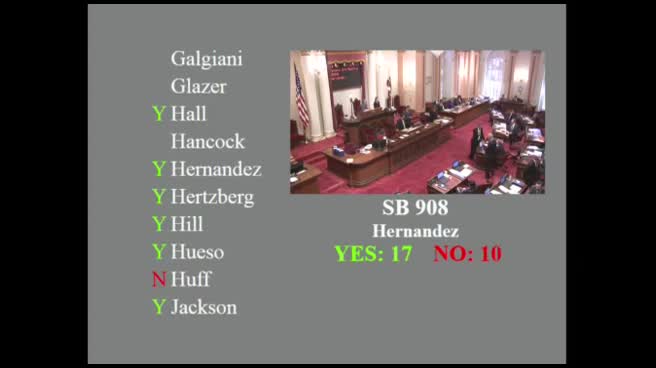 2MIN
Senate Floor
 30MIN
Senate Standing Committee on Judiciary
Bill Author