SBX2 6: Smoking in the workplace.
- Session Year: 2015-2016
- House: Senate
- Latest Version Date: 2015-08-25
Existing law prohibits smoking of tobacco products inside an enclosed space, as defined, at a place of employment. The violation of the prohibition against smoking in enclosed spaces of places of employment is an infraction punishable by a specified fine.
This bill would expand the prohibition on smoking in a place of employment to include an owner-operated business, as defined.
This bill would also eliminate most of the specified exemptions that permit smoking in certain work environments, such as hotel lobbies, bars and taverns, tobacco shops, banquet rooms, warehouse facilities, and employee break rooms.
By expanding the scope of an infraction, this bill would impose a state-mandated local program.
The California Constitution requires the state to reimburse local agencies and school districts for certain costs mandated by the state. Statutory provisions establish procedures for making that reimbursement.
This bill would provide that no reimbursement is required by this act for a specified reason.
(a)The Legislature finds and declares that regulation of smoking in the workplace is a matter of statewide interest and concern. It is the intent of the Legislature in enacting this section to prohibit the smoking of tobacco products in all (100 percent of) enclosed places of employment in this state, as covered by this section, thereby eliminating the need of local governments to enact workplace smoking restrictions within their respective jurisdictions. It is further the intent of the Legislature to create a uniform statewide standard to restrict and prohibit the smoking of tobacco products in enclosed places of employment, as specified in this section, in order to reduce employee exposure to environmental tobacco smoke to a level that will prevent anything other than insignificantly harmful effects to exposed employees, and also to eliminate the confusion and hardship that can result from enactment or enforcement of disparate local workplace smoking restrictions. Notwithstanding any other provision of this section, it is the intent of the Legislature that any area not defined as a place of employment pursuant to subdivision (e) shall be subject to local regulation of smoking of tobacco products.
(b)For purposes of this section, an owner-operated business shall mean a business having no employees, independent contractors, or volunteers, in which the owner-operator of the business is the only worker. Enclosed space includes covered parking lots, lobbies, lounges, waiting areas, elevators, stairwells, and restrooms that are a structural part of the building and not specifically defined in subdivision (e).
(c)No An employer or owner-operated business shall not knowingly or intentionally permit, and no a person shall not engage in, the smoking of tobacco products at a place of employment or in an enclosed space.
(d)For purposes of this section, an employer or owner-operator of an owner-operated business who permits any nonemployee access to his or her place of employment or owner-operated business on a regular basis has not acted knowingly or intentionally in violation of this section if he or she has taken the following reasonable steps to prevent smoking by a nonemployee:
(1)Posted clear and prominent signs, as follows:
(A)Where smoking is prohibited throughout the building or structure, a sign stating No smoking shall be posted at each entrance to the building or structure.
(B)Where smoking is permitted in designated areas of the building or structure, a sign stating Smoking is prohibited except in designated areas shall be posted at each entrance to the building or structure.
(2)Has requested, when appropriate, that a nonemployee who is smoking refrain from smoking in the enclosed workplace or owner-operated business.
For purposes of this subdivision, reasonable steps does not include (A) the physical ejection of a nonemployee from the place of employment or owner-operated business or (B) any requirement for making a request to a nonemployee to refrain from smoking, under circumstances involving a risk of physical harm to the employer or any employee or owner-operator.
(e)For purposes of this section, place of employment does not include any of the following:
(1)Twenty percent of the guestroom accommodations in a hotel, motel, or similar transient lodging establishment.
(2)Retail or wholesale tobacco shops and private smokers lounges. For purposes of this paragraph:
(A)Private smokers lounge means any enclosed area in or attached to a retail or wholesale tobacco shop that is dedicated to the use of tobacco products, including, but not limited to, cigars and pipes.
(B)Retail or wholesale tobacco shop means any business establishment the main purpose of which is the sale of tobacco products, including, but not limited to, cigars, pipe tobacco, and smoking accessories.
(2)
(3)Cabs of motortrucks, as defined in Section 410 of the Vehicle Code, or truck tractors, as defined in Section 655 of the Vehicle Code, if no nonsmoking employees are present.
(3)
(4)Theatrical production sites, if smoking is an integral part of the story in the theatrical production.
(4)
(5)Medical research or treatment sites, if smoking is integral to the research and treatment being conducted.
(5)
(6)Private residences, except for private residences licensed as family day care homes, where smoking is prohibited pursuant to Section 1596.795 of the Health and Safety Code.
(6)
(7)Patient smoking areas in long-term health care facilities, as defined in Section 1418 of the Health and Safety Code.
(f)The smoking prohibition set forth in this section shall constitute a uniform statewide standard for regulating the smoking of tobacco products in enclosed places of employment and owner-operated businesses and shall supersede and render unnecessary the local enactment or enforcement of local ordinances regulating the smoking of tobacco products in enclosed places of employment and owner-operated businesses. Insofar as the smoking prohibition set forth in this section is applicable to all (100-percent) places of employment and owner-operated businesses within this state and, therefore, provides the maximum degree of coverage, the practical effect of this section is to eliminate the need of local governments to enact enclosed workplace smoking restrictions within their respective jurisdictions.
(g)Nothing in this section shall prohibit an employer or owner-operator of an owner-operated business from prohibiting smoking in an enclosed place of employment or owner-operated business for any reason.
(h)The enactment of local regulation of smoking of tobacco products in enclosed places of employment or owner-operated businesses by local governments shall be suspended only for as long as, and to the extent that, the (100-percent) smoking prohibition provided for in this section remains in effect. In the event this section is repealed or modified by subsequent legislative or judicial action so that the (100-percent) smoking prohibition is no longer applicable to all enclosed places of employment and owner-operated businesses in California, local governments shall have the full right and authority to enforce previously enacted, and to enact and enforce new, restrictions on the smoking of tobacco products in enclosed places of employment and owner-operated businesses within their jurisdictions, including a complete prohibition of smoking. Notwithstanding any other provision of this section, any area not defined as a place of employment or in which smoking is not regulated pursuant to subdivision (e), shall be subject to local regulation of smoking of tobacco products.
(i)Any violation of the prohibition set forth in subdivision (c) is an infraction, punishable by a fine not to exceed one hundred dollars ($100) for a first violation, two hundred dollars ($200) for a second violation within one year, and five hundred dollars ($500) for a third and for each subsequent violation within one year. This subdivision shall be enforced by local law enforcement agencies, including, but not limited to, local health departments, as determined by the local governing body.
(j)Notwithstanding Section 6309, the division is not required to respond to any complaint regarding the smoking of tobacco products in an enclosed space at a place of employment, unless the employer has been found guilty pursuant to subdivision (i) of a third violation of subdivision (c) within the previous year.
(k)If any provision of this section or the application thereof to any person or circumstances is held invalid, that invalidity shall not affect other provisions or applications of the section that can be given effect without the invalid provision or application, and to this end the provisions of this section are severable.
SEC. 2.No reimbursement is required by this act pursuant to Section 6 of Article XIIIB of the California Constitution because the only costs that may be incurred by a local agency or school district will be incurred because this act creates a new crime or infraction, eliminates a crime or infraction, or changes the penalty for a crime or infraction, within the meaning of Section 17556 of the Government Code, or changes the definition of a crime within the meaning of Section 6 of Article XIIIB of the California Constitution.
(a)The Legislature finds and declares that regulation of smoking in the workplace is a matter of statewide interest and concern. It is the intent of the Legislature in enacting this section to prohibit the smoking of tobacco products in all (100 percent of) enclosed places of employment in this state, as covered by this section, thereby eliminating the need of local governments to enact workplace smoking restrictions within their respective jurisdictions. It is further the intent of the Legislature to create a uniform statewide standard to restrict and prohibit the smoking of tobacco products in enclosed places of employment, as specified in this section, in order to reduce employee exposure to environmental tobacco smoke to a level that will prevent anything other than insignificantly harmful effects to exposed employees, and also to eliminate the confusion and hardship that can result from enactment or enforcement of disparate local workplace smoking restrictions. Notwithstanding any other provision of this section, it is the intent of the Legislature that any area not defined as a place of employment pursuant to subdivision (d) or in which the smoking of tobacco products is not regulated pursuant to subdivision (e) shall be subject to local regulation of smoking of tobacco products.
(b)For purposes of this section, an owner-operated business shall mean a business having no employees, independent contractors, or volunteers, in which the owner-operator of the business is the only worker. Enclosed space includes covered parking lots, lobbies, lounges, waiting areas, elevators, stairwells, and restrooms that are a structural part of the building and not specifically defined in subdivision (e).
(b)
(c)No employer or owner-operated business shall knowingly or intentionally permit, and no person shall engage in, the smoking of tobacco products in an enclosed space at a place of employment or in an enclosed space. Enclosed space includes lobbies, lounges, waiting areas, elevators, stairwells, and restrooms that are a structural part of the building and not specifically defined in subdivision (d).
(c)
(d)For purposes of this section, an employer or owner-operated business who permits any nonemployee access to his or her place of employment or owner-operated business on a regular basis has not acted knowingly or intentionally in violation of this section if he or she has taken the following reasonable steps to prevent smoking by a nonemployee:
(1)Posted clear and prominent signs, as follows:
(A)Where smoking is prohibited throughout the building or structure, a sign stating No smoking shall be posted at each entrance to the building or structure.
(B)Where smoking is permitted in designated areas of the building or structure, a sign stating Smoking is prohibited except in designated areas shall be posted at each entrance to the building or structure.
(2)Has requested, when appropriate, that a nonemployee who is smoking refrain from smoking in the enclosed workplace. workplace or owner-operated business.
For purposes of this subdivision, reasonable steps does not include (A) the physical ejection of a nonemployee from the place of employment or (B) any requirement for making a request to a nonemployee to refrain from smoking, under circumstances involving a risk of physical harm to the employer or any employee. employee or owner-operator.
(d)
(e)For purposes of this section, place of employment does not include any of the following:
(1)Sixty-five Twenty percent of the guestroom accommodations in a hotel, motel, or similar transient lodging establishment.
(2)Areas of the lobby in a hotel, motel, or other similar transient lodging establishment designated for smoking by the establishment. An establishment may permit smoking in a designated lobby area that does not exceed 25 percent of the total floor area of the lobby or, if the total area of the lobby is 2,000 square feet or less, that does not exceed 50 percent of the total floor area of the lobby. For purposes of this paragraph, lobby means the common public area of an establishment in which registration and other similar or related transactions, or both, are conducted and in which the establishments guests and members of the public typically congregate.
(3)Meeting and banquet rooms in a hotel, motel, other transient lodging establishment similar to a hotel or motel, restaurant, or public convention center, except while food or beverage functions are taking place, including setup, service, and cleanup activities, or when the room is being used for exhibit purposes. At times when smoking is not permitted in a meeting or banquet room pursuant to this paragraph, the establishment may permit smoking in corridors and prefunction areas adjacent to and serving the meeting or banquet room if no employee is stationed in that corridor or area on other than a passing basis.
(4)Retail or wholesale tobacco shops and private smokers lounges. For purposes of this paragraph:
(A)Private smokers lounge means any enclosed area in or attached to a retail or wholesale tobacco shop that is dedicated to the use of tobacco products, including, but not limited to, cigars and pipes.
(B)Retail or wholesale tobacco shop means any business establishment the main purpose of which is the sale of tobacco products, including, but not limited to, cigars, pipe tobacco, and smoking accessories.
(5)
(2)Cabs of motortrucks, as defined in Section 410 of the Vehicle Code, or truck tractors, as defined in Section 655 of the Vehicle Code, if no nonsmoking employees are present.
(6)Warehouse facilities. For purposes of this paragraph, warehouse facility means a warehouse facility with more than 100,000 square feet of total floorspace, and 20 or fewer full-time employees working at the facility, but does not include any area within a facility that is utilized as office space.
(7)Gaming clubs, in which smoking is permitted by subdivision (f). For purposes of this paragraph, gaming club means any gaming club, as defined in Section 19802 of the Business and Professions Code, or bingo facility, as defined in Section 326.5 of the Penal Code, that restricts access to minors under 18 years of age.
(8)Bars and taverns, in which smoking is permitted by subdivision (f). For purposes of this paragraph, bar or tavern means a facility primarily devoted to the serving of alcoholic beverages for consumption by guests on the premises, in which the serving of food is incidental. Bar or tavern includes those facilities located within a hotel, motel, or other similar transient occupancy establishment. However, when located within a building in conjunction with another use, including a restaurant, bar or tavern includes only those areas used primarily for the sale and service of alcoholic beverages. Bar or tavern does not include the dining areas of a restaurant, regardless of whether alcoholic beverages are served therein.
(9)
(3)Theatrical production sites, if smoking is an integral part of the story in the theatrical production.
(10)
(4)Medical research or treatment sites, if smoking is integral to the research and treatment being conducted.
(11)
(5)Private residences, except for private residences licensed as family day care homes, where smoking is prohibited pursuant to Section 1596.795 of the Health and Safety Code.
(12)
(6)Patient smoking areas in long-term health care facilities, as defined in Section 1418 of the Health and Safety Code.
(13)Breakrooms designated by employers for smoking, provided that all of the following conditions are met:
(A)Air from the smoking room shall be exhausted directly to the outside by an exhaust fan. Air from the smoking room shall not be recirculated to other parts of the building.
(B)The employer shall comply with any ventilation standard or other standard utilizing appropriate technology, including, but not limited to, mechanical, electronic, and biotechnical systems, adopted by the Occupational Safety and Health Standards Board or the federal Environmental Protection Agency. If both adopt inconsistent standards, the ventilation standards of the Occupational Safety and Health Standards Board shall be no less stringent than the standards adopted by the federal Environmental Protection Agency.
(C)The smoking room shall be located in a nonwork area where no one, as part of his or her work responsibilities, is required to enter. For purposes of this subparagraph, work responsibilities does not include any custodial or maintenance work carried out in the breakroom when it is unoccupied.
(D)There are sufficient nonsmoking breakrooms to accommodate nonsmokers.
(14)Employers with a total of five or fewer employees, either full time or part time, may permit smoking where all of the following conditions are met:
(A)The smoking area is not accessible to minors.
(B)All employees who enter the smoking area consent to permit smoking. No one, as part of his or her work responsibilities, shall be required to work in an area where smoking is permitted. An employer who is determined by the division to have used coercion to obtain consent or who has required an employee to work in the smoking area shall be subject to the penalty provisions of Section 6427.
(C)Air from the smoking area shall be exhausted directly to the outside by an exhaust fan. Air from the smoking area shall not be recirculated to other parts of the building.
(D)The employer shall comply with any ventilation standard or other standard utilizing appropriate technology, including, but not limited to, mechanical, electronic, and biotechnical systems, adopted by the Occupational Safety and Health Standards Board or the federal Environmental Protection Agency. If both adopt inconsistent standards, the ventilation standards of the Occupational Safety and Health Standards Board shall be no less stringent than the standards adopted by the federal Environmental Protection Agency.
This paragraph shall not be construed to (i) supersede or render inapplicable any condition or limitation on smoking areas made applicable to specific types of business establishments by any other paragraph of this subdivision or (ii) apply in lieu of any otherwise applicable paragraph of this subdivision that has become inoperative.
(e)Paragraphs (13) and (14) of subdivision (d) shall not be construed to require employers to provide reasonable accommodation to smokers, or to provide breakrooms for smokers or nonsmokers.
(f)(1)Except as otherwise provided in this subdivision, smoking may be permitted in gaming clubs, as defined in paragraph (7) of subdivision (d), and in bars and taverns, as defined in paragraph (8) of subdivision (d), until the earlier of the following:
(A)January 1, 1998.
(B)The date of adoption of a regulation (i) by the Occupational Safety and Health Standards Board reducing the permissible employee exposure level to environmental tobacco smoke to a level that will prevent anything other than insignificantly harmful effects to exposed employees or (ii) by the federal Environmental Protection Agency establishing a standard for reduction of permissible exposure to environmental tobacco smoke to an exposure level that will prevent anything other than insignificantly harmful effects to exposed persons.
(2)If a regulation specified in subparagraph (B) of paragraph (1) is adopted on or before January 1, 1998, smoking may thereafter be permitted in gaming clubs and in bars and taverns, subject to full compliance with, or conformity to, the standard in the regulation within two years following the date of adoption of the regulation. An employer failing to achieve compliance with, or conformity to, the regulation within this two-year period shall prohibit smoking in the gaming club, bar, or tavern until compliance or conformity is achieved. If the Occupational Safety and Health Standards Board and the federal Environmental Protection Agency both adopt regulations specified in subparagraph (B) of paragraph (1) that are inconsistent, the regulations of the Occupational Safety and Health Standards Board shall be no less stringent than the regulations of the federal Environmental Protection Agency.
(3)If a regulation specified in subparagraph (B) of paragraph (1) is not adopted on or before January 1, 1998, the exemptions specified in paragraphs (7) and (8) of subdivision (d) shall become inoperative on and after January 1, 1998, until a regulation is adopted. Upon adoption of such a regulation on or after January 1, 1998, smoking may thereafter be permitted in gaming clubs and in bars and taverns, subject to full compliance with, or conformity to, the standard in the regulation within two years following the date of adoption of the regulation. An employer failing to achieve compliance with, or conformity to, the regulation within this two-year period shall prohibit smoking in the gaming club, bar, or tavern until compliance or conformity is achieved. If the Occupational Safety and Health Standards Board and the federal Environmental Protection Agency both adopt regulations specified in subparagraph (B) of paragraph (1) that are inconsistent, the regulations of the Occupational Safety and Health Standards Board shall be no less stringent than the regulations of the federal Environmental Protection Agency.
(4)From January 1, 1997, to December 31, 1997, inclusive, smoking may be permitted in gaming clubs, as defined in paragraph (7) of subdivision (d), and in bars and taverns, as defined in paragraph (8) of subdivision (d), subject to both of the following conditions:
(A)If practicable, the gaming club or bar or tavern shall establish a designated nonsmoking area.
(B)If feasible, no employee shall be required, in the performance of ordinary work responsibilities, to enter any area in which smoking is permitted.
(g)
(f)The smoking prohibition set forth in this section shall constitute a uniform statewide standard for regulating the smoking of tobacco products in enclosed places of employment and owner-operated businesses and shall supersede and render unnecessary the local enactment or enforcement of local ordinances regulating the smoking of tobacco products in enclosed places of employment. employment and owner-operated businesses. Insofar as the smoking prohibition set forth in this section is applicable to all (100-percent) places of employment and owner-operated businesses within this state and, therefore, provides the maximum degree of coverage, the practical effect of this section is to eliminate the need of local governments to enact enclosed workplace smoking restrictions within their respective jurisdictions.
(h)
(g)Nothing in this section shall prohibit an employer or owner-operated business from prohibiting smoking in an enclosed place of employment or owner-operated business for any reason.
(i)
(h)The enactment of local regulation of smoking of tobacco products in enclosed places of employment or owner-operated businesses by local governments shall be suspended only for as long as, and to the extent that, the (100-percent) smoking prohibition provided for in this section remains in effect. In the event this section is repealed or modified by subsequent legislative or judicial action so that the (100-percent) smoking prohibition is no longer applicable to all enclosed places of employment and owner-operated businesses in California, local governments shall have the full right and authority to enforce previously enacted, and to enact and enforce new, restrictions on the smoking of tobacco products in enclosed places of employment and owner-operated businesses within their jurisdictions, including a complete prohibition of smoking. Notwithstanding any other provision of this section, any area not defined as a place of employment or in which smoking is not regulated pursuant to subdivision (d) or (e), shall be subject to local regulation of smoking of tobacco products.
(j)
(i)Any violation of the prohibition set forth in subdivision (b) (c) is an infraction, punishable by a fine not to exceed one hundred dollars ($100) for a first violation, two hundred dollars ($200) for a second violation within one year, and five hundred dollars ($500) for a third and for each subsequent violation within one year. This subdivision shall be enforced by local law enforcement agencies, including, but not limited to, local health departments, as determined by the local governing body.
(k)
(j)Notwithstanding Section 6309, the division shall not be is not required to respond to any complaint regarding the smoking of tobacco products in an enclosed space at a place of employment, unless the employer has been found guilty pursuant to subdivision (j) (i) of a third violation of subdivision (b) (c) within the previous year.
(l)
(k)If any provision of this act section or the application thereof to any person or circumstances is held invalid, that invalidity shall not affect other provisions or applications of the act section that can be given effect without the invalid provision or application, and to this end the provisions of this act section are severable.
SEC. 2.No reimbursement is required by this act pursuant to Section 6 of Article XIIIB of the California Constitution because the only costs that may be incurred by a local agency or school district will be incurred because this act creates a new crime or infraction, eliminates a crime or infraction, or changes the penalty for a crime or infraction, within the meaning of Section 17556 of the Government Code, or changes the definition of a crime within the meaning of Section 6 of Article XIIIB of the California Constitution.
|
Date
|
Status
|
|---|---|
| Jul 16, 2015 | Introduced. Read first time. Referred to Com. on P.H. & D.S. |
| Jul 16, 2015 | To print. |
| Jul 17, 2015 | From printer. |
| Aug 13, 2015 | Set for hearing August 19. |
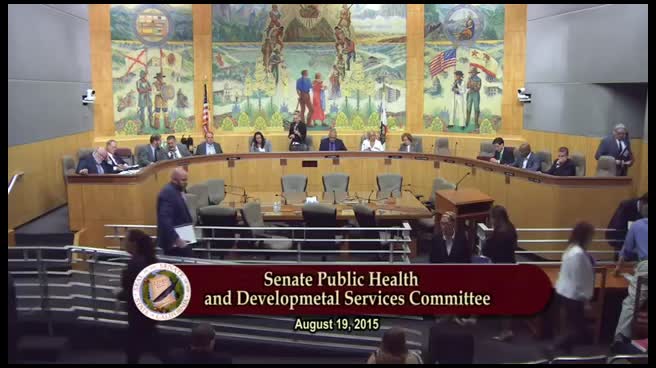
| Aug 19, 2015 | From committee: Do pass and re-refer to Com. on APPR. (Ayes 9. Noes 2. Page 28.) (August 19). Re-referred to Com. on APPR. |
| Aug 19, 2015 | From committee: Do pass and re-refer to Com. on APPR. (Ayes 9. Noes 2.) (August 19). Re-referred to Com. on APPR. |
| Aug 21, 2015 | Set for hearing August 24. |
| Aug 24, 2015 | From committee: Be ordered to second reading pursuant to Senate Rule 28.8 and be amended. |
| Aug 25, 2015 | Read second time and amended. Ordered to third reading. |
| Aug 27, 2015 | In Assembly. Read first time. Held at Desk. |
| Aug 27, 2015 | Read third time. Passed. (Ayes 24. Noes 13. Page 48.) Ordered to the Assembly. |
| Aug 27, 2015 | Read third time. Passed. (Ayes 24. Noes 13.) Ordered to the Assembly. |
| Mar 15, 2016 | From Assembly without further action. |
|
Date
|
Description
|
Location
|
Votes
|
|
|---|---|---|---|---|
| Aug 27, 2015 | Senate 3rd Reading SB6 Monning | Senate Floor |
Passed |
|
| Aug 19, 2015 | Do pass, but first be re-referred to the Committee on [Appropriations] | Senate 2nd Extraordinary Session on Public Health and Developmental Services |
Passed |
This list shows positions taken on this bill by organizations on the date displayed, which is linked to the original source.
Positions by individuals are not included.
|
Organization
|
Position
|
Date
|
|---|---|---|
| American Academy of Pediatrics | ** Support | Aug 27, 2015 |
| American Cancer Society - Cancer Action Network | ** Support | Aug 27, 2015 |
| American College of Emergency Physicians | ** Support | Aug 27, 2015 |
| American Heart Association | ** Support | Aug 27, 2015 |
| American Lung Association in California | ** Support | Aug 27, 2015 |
| American Stroke Association | ** Support | Aug 27, 2015 |
| Americans for Nonsmokers' Rights | ** Support | Aug 27, 2015 |
| Association Of Northern California Oncologists | ** Support | Aug 27, 2015 |
| California Academy Of Family Physicians | ** Support | Aug 27, 2015 |
| California Black Health Network | ** Support | Aug 27, 2015 |
| California Chronic Care Coalition | ** Support | Aug 27, 2015 |
| California Dental Association | ** Support | Aug 27, 2015 |
| California Medical Association, Inc. | ** Support | Aug 27, 2015 |
| California Optometric Association | ** Support | Aug 27, 2015 |
| California Pan-Ethnic Health Network | ** Support | Aug 27, 2015 |
| California Primary Care Association | ** Support | Aug 27, 2015 |
| California Society Of Addiction Medicine | ** Support | Aug 27, 2015 |
| County Health Executives Association Of California | ** Support | Aug 27, 2015 |
| First 5 Association Of California | ** Support | Aug 27, 2015 |
| Health Access | ** Support | Aug 27, 2015 |
| Health Officers Association Of California | ** Support | Aug 27, 2015 |
| March of Dimes, California Chapter | ** Support | Aug 27, 2015 |
| Planned Parenthood Advocacy Project Los Angeles | ** Support | Aug 27, 2015 |
| Planned Parenthood Affiliates Of California | ** Support | Aug 27, 2015 |
| Planned Parenthood Mar Monte | ** Support | Aug 27, 2015 |
| Planned Parenthood Northern California Action Fund | ** Support | Aug 27, 2015 |
| Planned Parenthood of the Pacific Southwest | ** Support | Aug 27, 2015 |
SBX2 6
Page 8
|
Office of Senate Floor Analyses (916) 651-1520 Fax: (916) 327-4478 |
THIRD READING
Bill No: SBX2 6
Amended: 8/25/15
SENATE PUBLIC HEALTH AND DEVELOPMENTAL SERVICES COMMITTEE: 9-2, 8/19/15
AYES: Hernandez, Beall, Hall, Leno, McGuire, Mitchell, Monning, Pan, Wolk
NOES: Moorlach, Nielsen
NO VOTE RECORDED: Morrell, Anderson
SENATE APPROPRIATIONS COMMITTEE: Senate Rule 28.8
SUBJECT: Smoking in the workplace
DIGEST: This bill prohibits smoking in owner-operated businesses and removes specified exemptions in existing law that allow tobacco smoking in certain workplaces.
Existing law:
Establishes “smoke-free laws,” which prohibit the smoking of tobacco products in various places, including, but not limited to, school campuses, public buildings, places of employment, apartment buildings, day care facilities, retail food facilities, health facilities, and vehicles when minors are present, and makes a violation of some of the prohibitions punishable by an infraction.
Prohibits employers from knowingly or intentionally permitting the smoking of tobacco products in an enclosed space at a place of employment.
Defines “enclosed space” as including lobbies, lounges, waiting areas, elevators, stairwells, and restrooms that are a structural part of the building and not specifically exempt.
Exempts the following from the workplace smoking prohibition:
Sixty-five percent of guestrooms in a hotel, motel, or similar lodging establishment.
Hotel or motel lobbies that meet certain size requirements;
Meeting and banquet rooms in hotels or motels, except as specified;
Retail or wholesale tobacco shops and private smokers’ lounges, as defined;
Warehouse facilities, as defined;
Gaming clubs, bars and taverns;
Private residences, except for those licensed as family day care homes;
Patient smoking areas in long-term health care facilities;
Break rooms designated for smoking by an employer; and
Employers with five or fewer employees.
Imposes an infraction, punishable by a fine not to exceed $100 for a first violation, $200 for a second violation within one year, and $500 for a third and each subsequent violation within one year, for any violation of the indoor smoking prohibition.
Requires local law enforcement agencies to enforce these provisions, including local health departments, unless an employer has been found guilty of three or more violations which will require an investigation by the Division of Occupational Safety and Health.
Sets forth a uniform statewide standard for regulating the smoking of tobacco products in enclosed places of employment and shall supersede and render unnecessary the local enactment or enforcement of local ordinances regulating the smoking of tobacco products in enclosed places of employment.
Authorizes employers to prohibit smoking in enclosed places of employment for any reason.
This bill:
Expands on the workplace smoking prohibition by including owner-operated businesses defined as a business having no employees, independent contractors, or volunteers, in which the owner-operator of the business is the only worker.
Expands on the definition of “enclosed space” where smoking is prohibited to include covered parking lots.
Modifies the exemption that currently allows smoking in 65% of the guestroom accommodations in a hotel, motel, or similar transient lodging establishment by reducing that amount to 20%.
Eliminates several exemptions in law which currently allows the smoking of tobacco products in certain work environments, thereby prohibiting the smoking of tobacco products indoors at the following locations:
Hotel or motel lobbies;
Meeting and banquet rooms in a hotel or motel;
Warehouse facilities;
Gaming clubs;
Bars and taverns;
Employee break rooms; and,
Businesses of employers with a total of five or fewer employees.
Deletes obsolete references to regulations that would have permitted smoking at gaming clubs, bars and taverns had these been adopted before January 1, 1998 by the Occupational Safety and Health Standards Board if a safe level of exposure to secondhand smoke were found that prevents anything other than insignificant harmful effects to exposed employees. No such regulations were ever adopted, this language is therefore obsolete.
Comments
Author’s statement. According to the author, the evidence is clear and undeniable that exposure to secondhand smoke in a workplace puts employees at risk of severe health effects. The US Centers for Disease Control and Prevention (CDC) reports that secondhand smoke can cause severe health conditions in adults, such as coronary heart disease, stroke, lung cancer, and serious respiratory diseases. California was one of the first states to enact a landmark employee-protection law that addressed exposure to the harmful effects of secondhand smoke by prohibiting the smoking of tobacco products in a place of employment. While most Californians enjoy the benefits of this important workplace protection, many employees are still subjected to secondhand smoke exposure through the numerous exemptions written into the original 1994 law. The patrons who visit, and the employees who work in these unsafe work environments, are receiving unequal protection under the law, so as long as these egregious exemptions remain.
This bill will eliminate the loopholes in California’s smoke-free workplace law, by prohibiting smoking in owner-operated businesses, and eliminating the exemptions that allow the smoking of tobacco products in hotel lobbies, tobacco shops, warehouse facilities, and employee break rooms, and banquet and meeting rooms in hotels.
Health impacts of secondhand smoke. According to the U.S. Department of Health and Human Services and the U.S. Surgeon General, secondhand smoke exposure can cause harmful health effects that include stroke, heart disease, heart attacks, lung cancer, asthma and chronic respiratory problems, among others. The U.S. Environmental Protection Agency classifies secondhand smoke as a Class “A” human carcinogen (cancer causing agent), the same class as asbestos. The California Air Resources Board has declared secondhand smoke to be a toxic air contaminant, in the same category as diesel exhaust. According to the Department of Public Health, (DPH) nonsmokers who are frequently exposed to high levels of secondhand smoke increase their risk of developing heart disease by 25-30%, and lung cancer by 20-30%. The U.S. Surgeon General has concluded that there is no risk-free level of exposure to secondhand smoke, ventilation cannot eliminate exposure of nonsmokers to secondhand smoke, and establishing smoke-free environments is the only proven way to prevent exposure. (The Health Consequences of Involuntary Exposure to Tobacco Smoke: A Report of the Surgeon General, 2006). According to a 2014 report by the U.S. Surgeon General, if smoking persists at the current rate among young adults, 5.6 million of today’s Americans younger than 18 years of age are projected to die prematurely from a smoking-related illness. (The Health Consequences of Smoking – 50 Years of Progress, 2014). The 2014 report also finds that the value of lost productivity due to premature deaths caused by exposure to secondhand smoke is estimated to be $5.6 billion per year ($150 billion productivity loss for smoking deaths).
History of smoking in the workplace in California. For years California had been the leader in the effort to fight the smoking epidemic and was often referred to as “America’s Non-Smoking Section,” a reputation that came about when California became the first state in the country to ban smoking in nearly every workplace; effectively banning smoking in indoor public spaces. California's workplace smoking prohibition was enacted by AB 13 (Friedman, Chapter 310, Statutes of 1994), Restaurants were included in the ban, and bars, taverns, and gaming clubs were phased in by 1998. The law covers all “enclosed” places of employment; therefore, patio or outdoor dining facilities may allow smoking.
While California's law is restrictive, a number of exemptions are allowed which have prevented our state from being considered a 100% smoke-free state by the CDC, 25 other states are currently considered 100% indoor workplace smoke-free. Many local jurisdictions have closed the loop on these exemptions through the enactment of local ordinances. In addition, gaming facilities not under the jurisdiction of the state (tribal casinos) are not required to comply, although some have done so voluntarily for the health of their employees and patrons.
Unfortunately, these efforts have not been enough to protect people from the harmful effects of secondhand smoke as evidenced by the high number of casualties. DPH estimates that the loopholes in California’s smoke free workplace law currently allow one in seven employees to work in an employment setting where they could be exposed to secondhand smoke. The patrons who visit, and the employees who work in these unsafe environments, are receiving unequal protection under the law as long as these exemptions are in place.
Related Legislation
SBX2 5 (Leno)/ABX2 6 (Cooper) recast and broaden the definition of “tobacco product” in existing law to include electronic cigarettes as specified; extend current restrictions and prohibitions against the use of tobacco products to electronic cigarettes; extend current licensing requirements for manufacturers, importers, distributors, wholesalers, and retailers of tobacco products to electronic cigarettes; and, require electronic cigarette cartridges to be child-resistant. SBX2 5 is pending on the Senate Floor and ABX2 6 will be heard on August 25, 2015 in the Assembly Public Health and Developmental Services Committee.
ABX2 7 (Stone) prohibits smoking in owner-operated businesses and removes specified exemptions in existing law that allow tobacco smoking in certain workplaces. ABX2 7 will be heard on August 25, 2015 in the Assembly Public Health and Developmental Services Committee.
SBX2 7 (Hernandez)/ABX2 8 (Wood) increase the minimum legal age to purchase or consume tobacco from 18 to 21. SBX2 7 is pending on the Senate Floor and ABX2 8 will be heard on August 25, 2015 in the Assembly Public Health and Developmental Services Committee.
SBX2 8 (Liu)/ABX2 9 (Thurmond and Nazarian) extend current tobacco use prevention funding eligibility and requirements to charter schools; broaden the definition of products containing tobacco and nicotine, as specified, and prohibit their use in specified areas of schools and school districts, regardless of funding; and require specified signs to be prominently displayed at all entrances to school property. SBX2 8 is pending on the Senate Floor and ABX2 9 will be heard on August 25, 2015 in the Assembly Public Health and Developmental Services Committee.
SBX2 9 (McGuire)/ABX2 10 (Bloom) allow counties to impose a tax on the privilege of distributing cigarettes and tobacco products. SBX2 9 is pending on the Senate Floor and ABX2 10 will be heard on August 25, 2015 in the Assembly Public Health and Developmental Services Committee.
SBX2-10 (Beall)/ABX2-11 (Nazarian) revise the Cigarette and Tobacco Products Licensing Act of 2003 to change the retailer license fee from a $100 one-time fee to a $265 annual fee, and increase the distributor and wholesaler license fee from $1,000 to $1,200. SBX2 10 is pending on the Senate Floor and ABX2 11 will be heard on August 25, 2015 in the Assembly Public Health and Developmental Services Committee.
Prior Legislation
SB 575 (DeSaulnier, 2011) and AB 1467 (DeSaulnier, 2007) were almost identical to this bill and would have eliminated most of the exemptions in code which permit smoking in certain work environments. SB 575 died in the Assembly Governmental Organization Committee, and AB 1467 was vetoed by the Governor.
AB 217 (Carter, 2011) would have restricted smoking in long-term health care facilities by only allowing smoking in a designated patient smoking area that is outdoors, as specified. AB 217 was vetoed by the Governor.
AB 2067 (Oropeza, Chapter 736, Statutes of 2006) prohibits smoking in covered parking lots and adds to the definition of “enclosed spaces” lobbies, lounges, waiting areas, elevators, stairwells and restrooms that are a structural part of the building, thereby prohibiting smoking in those areas.
AB 846 (Vargas, Chapter 342, Statutes of 2003) prohibits smoking inside a public building and within 20 feet of a main exit, entrance, or operable window of a public building.
FISCAL EFFECT: Appropriation: No Fiscal Com.: Yes Local: Yes
American Academy of Pediatrics
American Cancer Society - Cancer Action Network
American College of Emergency Physicians
American Heart Association/American Stroke Association
American Lung Association in California
Americans for Nonsmokers’ Rights
Association of Northern California Oncologists
California Academy of Family Physicians
California Black Health Network
California Chronic Care Coalition
California Dental Association
California Labor Federation
California Medical Association
California Optometric Association
California Pan-Ethnic Health Network
California Primary Care Association
California Society of Addiction Medicine
Community Action Fund of Planned Parenthood Orange and San Bernadino Counties
County Health Executives Association of California
First 5 Association of California
Health Access
Health Officers Association of California
March of Dimes, California Chapter
Medical Oncology Association of Southern California, Inc.
Planned Parenthood Advocacy Project Los Angeles
Planned Parenthood Affiliates of California
Planned Parenthood Mar Monte
Planned Parenthood Northern California Action Fund
Planned Parenthood of the Pacific Southwest
Service Employees International Union
OPPOSITION: (Verified 8/25/15)
None received
ARGUMENTS IN SUPPORT: Proponents argue that tobacco use is the single most preventable cause of death and disease, nearly 40,000 Californians lost their lives to tobacco related illnesses last year. There is overwhelming scientific evidence that secondhand tobacco smoke is a direct cause of heart disease, the number one killer of both men and women in California. According to the American Lung Association in California, smoking costs the state of California $23 billion a year in both health costs and lost productivity with $3.5 billion directly linked to Medi-Cal. Proponents argue that every Californian deserves to work in a healthy environment and should not have to make a choice between a good job and good health. Given the human cost and the economic burden of smoking, proponents believe it is time for California to catch up to the rest of the nation and become a 100% smoke-free state.
Prepared by: Alma Perez / PUBLIC HEALTH AND DEVELOPMENTAL SERVICES /
8/25/15 16:10:20
**** END ****
Discussed in Hearing
View Older Hearings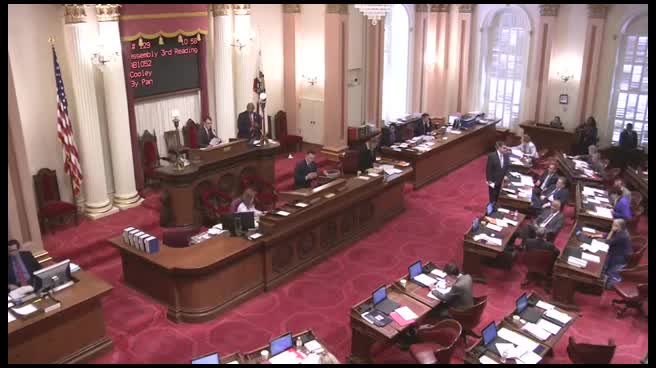
Bill Author

Bill Co-Author(s):