AB 1199: Peace officer training: dogs.
- Session Year: 2017-2018
- House: Assembly
- Latest Version Date: 2017-02-17
Existing law requires specified categories of law enforcement officers to meet training standards pursuant to courses of training certified by the Commission on Peace Officer Standards and Training (POST).
This bill would require POST to develop and implement training for peace officers regarding encounters with dogs. This bill would also require specified law enforcement officers, including municipal police officers and county sheriffs deputies, to receive that training. By requiring these officers to perform this training, this bill would create a state-mandated local program.
The California Constitution requires the state to reimburse local agencies and school districts for certain costs mandated by the state. Statutory provisions establish procedures for making that reimbursement.
This bill would provide that, if the Commission on State Mandates determines that the bill contains costs mandated by the state, reimbursement for those costs shall be made pursuant to the statutory provisions noted above.
(a)The commission shall establish and keep updated a course of instruction for the training of law enforcement officers in safe encounters with dogs.
(b)The course described in subdivision (a) shall include, but not be limited to:
(1)Understanding the behavior of dogs.
(2)Tactical considerations and best practices during encounters involving dogs.
(3)Safe handling of, and appropriate use of force against dogs.
(c)The commission shall include this training in the basic course on or before January 1, 2019.
(d)Law enforcement officers who complete the basic course before January 1, 2019, shall participate in supplementary training on this topic. This supplementary training shall be completed on or before January 1, 2021.
(e)Further training courses to update this instruction shall be established, as deemed necessary by the commission.
(f)As used in this section, law enforcement officer means any peace officer of the California Highway Patrol, the Department of Parks and Recreation, the University of California Police Department, or the California State University Police Departments, any deputy sheriff of a county, or any police officer of a city or of a district authorized by law to maintain a police department.
SEC. 2.If the Commission on State Mandates determines that this act contains costs mandated by the state, reimbursement to local agencies and school districts for those costs shall be made pursuant to Part 7 (commencing with Section 17500) of Division 4 of Title 2 of the Government Code.
|
Date
|
Status
|
|---|---|
| Feb 1, 2018 | From committee: Filed with the Chief Clerk pursuant to Joint Rule 56. |
| Jan 31, 2018 | Died pursuant to Art. IV, Sec. 10(c) of the Constitution. |
| May 26, 2017 | In committee: Held under submission. |
| May 10, 2017 | In committee: Set, first hearing. Referred to APPR. suspense file. |
| Apr 19, 2017 | From committee: Do pass and re-refer to Com. on APPR. (Ayes 6. Noes 1.) (April 18). Re-referred to Com. on APPR. |
| Mar 9, 2017 | Referred to Com. on PUB. S. |
| Feb 19, 2017 | From printer. May be heard in committee March 21. |
| Feb 17, 2017 | Read first time. To print. |
|
Date
|
Description
|
Location
|
Votes
|
|
|---|---|---|---|---|
| Apr 18, 2017 | Do pass and be re-referred to the Committee on [Appropriations] | Assembly Standing Committee on Public Safety |
Passed |
This list shows positions taken on this bill by organizations on the date displayed, which is linked to the original source.
Positions by individuals are not included.
|
Organization
|
Position
|
Date
|
|---|---|---|
| AGWC Rockin Rescue | ** Support | Apr 17, 2017 |
| agwc rockin' rescue | ** Support | Apr 17, 2017 |
| All About the Animals | ** Support | Apr 17, 2017 |
| Animal Legal Defense Fund | ** Support | Apr 17, 2017 |
| ASPCA | ** Support | Apr 17, 2017 |
| Association For Los Angeles Deputy Sheriffs | ** Support | Apr 17, 2017 |
| Best Friends Animal Society | ** Support | Apr 17, 2017 |
| California Animal Control Directors Association | ** Support | Apr 17, 2017 |
| California State Sheriffs Association | ** Against | Apr 17, 2017 |
| California State Sheriffs' Association | ** Against | Apr 17, 2017 |
| davey's voice | ** Support | Apr 17, 2017 |
| Daveys Voice | ** Support | Apr 17, 2017 |
| Eastwood Ranch Foundation | ** Support | Apr 17, 2017 |
| Greysave Rescue | ** Support | Apr 17, 2017 |
| Humane Society Of The United States | ** Support | Apr 17, 2017 |
| Los Angeles Police Protective League | ** Support | Apr 17, 2017 |
| Peace Officers Research Association Of California | ** Against | Apr 17, 2017 |
| People for the Ethical Treatment of Animals | ** Support | Apr 17, 2017 |
| Riverside Sheriffs Association | ** Support | Apr 17, 2017 |
| San Diego Humane Society | ** Support | Apr 17, 2017 |
| San Francisco Spca | ** Support | Apr 17, 2017 |
| Social Compassion In Legislation | ** Support | Apr 17, 2017 |
| START Rescue | ** Support | Apr 17, 2017 |
| Take Me Home Rescue | ** Support | Apr 17, 2017 |
Date of Hearing: May 10, 2017
ASSEMBLY COMMITTEE ON APPROPRIATIONS
Lorena Gonzalez Fletcher, Chair
ABPCA Bill Id:AB 1199
Author:(Nazarian) – As Introduced Ver:February 17, 2017
Policy Committee: | Public Safety | Vote: | 6 - 1 |
|
|
Urgency: No State Mandated Local Program: Yes Reimbursable: Yes
SUMMARY:
This bill requires the Commission on Peace Officer Standards and Training (POST) to establish and keep updated a course for law enforcement officers, as defined, in safe encounters with dogs, and include this training in the basic course by January 1, 2019. Any law enforcement officer who receives the basic course by January 1, 2019, must receive supplementary training by January 1, 2021.
FISCAL EFFECT:
- Moderate additional costs (GF) to POST. Adding one hour of mandated training in the basic academy costs approximately $650,000 (not including curriculum development and implementation) across the 40 academies in the state. If POST were mandated to add two-hours of dog encounter training, for example to add the training in the regular basic academy, the cost would be approximately $1.3 million. However, if POST merely developed an “on-the-field” training module, the cost POST would be reduced to $150,000 (GF) for an hour of training, but it would result in a reimbursable state mandate to local law enforcement agencies in the hundreds of thousands of dollars to cover the training costs of local law enforcement personnel.
The State Penalty Fund (SPF) is the sole revenue source for the Peace Officers’ Training Fund (POTF -which is used to fund POST), and this revenue has decreased significantly over the last seven years. The SPF was created as a depository for assessments on specified fines, penalties, and forfeitures imposed and collected by the courts for criminal offenses. To compensate for the declining revenue, POST, in conjunction with the Department of Finance, implemented an 18-month budget reduction beginning in January 1, 2014, which was followed by an ongoing reduction of $5.2 million included in the 2015 Budget Act. The continued decline of SPF revenues was mitigated by a one-time GF backfill of $16.5 million in 2016-17. Unfortunately, the revenue decline has continued and POST continues to reduce its expenditures by reducing the services provided.
- Unknown costs (GF and Special Funds) to state law enforcement agencies impacted by this bill, which include the California Highway Patrol, the Department of Parks and Recreation, and the police departments of the University of California and the California State University.
COMMENTS:
- Background. Current law provides that POST is required to develop, and may update, guidelines and minimum standards, for local law enforcement officers in order to raise the level of competency among officers. Current law requires POST to establish a certification program for peace officers, which are considered professional certificates. Under current mandatory training standards, officers receive training regarding unusual occurrences, and this includes some information related to animal control problems in general. In addition, POST provides voluntary training materials for police encounters with dogs.
- Purpose. The author believes the current voluntary POST training regarding dog encounters is not enough to ensure the safety of California’s cherished pets. Requiring mandatory police officer training will help educate all officers to understand the behavior and body language of dogs. AB 1199 establishes more thorough training by requiring POST to meet certain requirements while developing a mandatory training program for encounters with dogs. By establishing mandatory training for safe encounters with dogs, AB 1199 will provide officers with additional tools and knowledge to avoid dangerous encounters while simultaneously addressing the concerns of California pet owners.
- Support. According to People for the Ethical Treatment of Animals (PETA), “Peace officers encounter dogs in almost every type of interaction with the public, from traffic stops to interviewing witnesses to pursuing suspects. It is vital that they receive the proper training to protect themselves, the dogs, and the public from undue harm.”
- Opposition. The Peace Officers Research Association of California (PORAC), is generally opposed to additional mandatory training. PORAC believes law enforcement managers should send their peace officers to training based on that community’s needs and agency’s budget. In the long run, new training requirements generally replace specialized optional training modules.
- Prior Legislation: SB 1321 (Calderon), of the 2013-2014 Legislative Session, would have stated the intent of the Legislature to enact legislation to require the commission to develop training requirements for peace officers in the humane treatment of canines when encountering canine behavior. SB 1321 died in the Rules Committee.
Analysis Prepared by: Pedro Reyes / APPR. / (916) 319-2081
Date of Hearing: April 18, 2017
Consultant: Adam Smith
ASSEMBLY COMMITTEE ON
Reginald Byron Jones-Sawyer, Sr., Chair
ABPCA Bill Id:
Author:() – As Ver:February 17, 2017
SUMMARY:
Requires the Commission on Peace Officer Standards and Training (POST) to develop and implement training for peace officers regarding encounters with dogs. Specifically, this bill:
- Requires POST to establish and keep updated a course of instruction for the training of law enforcement officers in safe encounters with dogs.
- Provides that the course shall include, but not be limited to the following:
- Understanding the behavior of dogs;
- Tactical considerations and best practices during encounters involving dogs; and
- Safe handling of and appropriate use of force against dogs.
- Understanding the behavior of dogs;
- Requires POST to include this training in the basic course on or before January1, 2019.
- Requires law enforcement officers who complete the basic course before January 1, 2019, to participate in supplementary training regarding safe encounters with dogs and complete this training on or before January 1, 2021.
- States that further training courses shall be established by POST, as the commission deems necessary, to update the training instruction.
- Defines “law enforcement officer” as “any peace officer of the California Highway Patrol, the Department of Parks and Recreation, the University of California Police Department, or the California State University Police Departments, any deputy sheriff of a county, or any police officer of a city or of a district authorized by law to maintain a police department.”
EXISTING LAW:
- Establishes the Commission on Peace Officer Training and Standards. (Pen. Code, § 13500.)
- Provides that POST shall develop, and may update, guidelines and minimum standards, for local law enforcement officers in order to raise the level of competency among officers. (Pen. Code, § 13510, subd. (a).)
- Requires POST to conduct research concerning job-related educational standards and job-related selection standards to include vision, hearing, physical ability, and emotional stability and adopt standards supported by this research. (Pen. Code, § 13510, subd. (b).)
- Empowers POST to develop and implement programs to increase the effectiveness of law enforcement. (Pen. Code, §13503.)
- Requires all peace officers to complete an introductory course of training prescribed by POST, demonstrated by passage of an appropriate examination developed by POST. (Pen. Code, § 832, subd. (a).)
- Requires POST to establish a certification program for peace officers, which shall be considered professional certificates. (Pen. Code, § 13510.1, subd. (a).)
- Requires specified categories of law enforcement officers to meet additional training standards pursuant to courses of training certified by POST. (Pen. Code, §§ 13515, subd. (a), 13515.28, 13515.55, 13518, 13518.5.)
FISCAL EFFECT:
Unknown
COMMENTS:
- Author's Statement: According to the author, "Current voluntary POST training regarding dog encounters is not enough to ensure the safety of California’s cherished pets. Requiring mandatory police officer training will help educate all officers to understand the behavior and body language of dogs. Receiving this specialized training will help curb the epidemic of preventable dog shootings and equip officers with the tools and techniques necessary for safe handling of, and appropriate use of force against dogs. Being able to quickly discern between dangerous situations and salvageable ones will help diffuse these encounters so that officers can simultaneously protect citizens, beloved family pets, and themselves.”
- Mandatory Training for Police Encounters with Dogs: In a report titled "The Problem of Dog-Related Incidents and Encounters" by Community Oriented Policing Services, a component of the United States Department of Justice, data showed that in most police departments, the majority of intentional firearm discharges involve animals, and of those shootings, most frequently dogs. The report cites two primary causes for the frequency of these shootings: reckless dog ownership and insufficient training for law enforcement. <https://ric-zai-inc.com/Publications/cops-p206-pub.pdf> (as of April 4, 2017.) Due to the significant attachment that pet owners have to their animals, the fatal use of force against animals often has significant repercussions, including expensive litigation and negative media coverage related to the incidents. The lack of sufficient law enforcement training for dog encounters not only affects pet owners, but also jeopardizes the safety of law enforcement officers since they may be unable to recognize warning signs from pets and may accidentally escalate a situation.
Under current mandatory training standards, officers receive training regarding unusual occurrences, and this includes some information related to animal control problems in general. In addition, POST provides voluntary training materials for police encounters with dogs. AB 1199 would establish more thorough training by requiring POST to meet certain requirements while developing a mandatory training program for encounters with dogs. By establishing mandatory training for safe encounters with dogs, AB 1199 will provide officers with additional tools and knowledge to avoid dangerous encounters while simultaneously addressing the concerns of California pet owners. - Argument in Support: According to People for the Ethical Treatment of Animals (PETA), “Law-enforcement agencies across the country struggle to achieve balance when handling calls in which animals are present. Dogs, who The Police Chief magazine reports are likely to be encountered in 39 percent of residential locations, often are not a threat but are nevertheless shot because of fear and apprehension on the part of officers who have not received adequate training in the assessment of canine behavior. According to the U.S. Department of Justice, proactively creating tactical-response strategies ensures the safety of both dogs and the public, including bystanders and peace officers. Such training provides the tools necessary for officers to assess dogs’ behavior quickly in order to determine whether they pose a threat to the officer. It is crucial that officers, especially in situations in which they are entering private homes, understand that dogs protect their homes and will warn intruders by barking and growling. In most instances, the dogs are not attacking but simply warning, and officers should be trained to identify and defuse such situations, just as they try to do with humans who start shouting during a neighborhood altercation.
“Peace officers encounter dogs in almost every type of interaction with the public, from traffic stops to interviewing witnesses to pursuing suspects. It is vital that they receive the proper training to protect themselves, the dogs, and the public from undue harm.”
- Argument in Opposition: According to the Peace Officers Research Association of California (PORAC), “PORAC generally opposes additional mandatory training, as training and which training modules law enforcement manager sends their peace officers to should be based on that community’s needs and agency’s budget. Each time a statute is changed to require mandatory training, that new training mandate will generally replace a specialized optional training module desired by that local agency.
“Finally, peace officers in California have been dealing with animals in our communities for over a century and PORAC is unclear as to why we now need mandatory training to deal with this issue.” - Prior Legislation: SB 1321 (Calderon), of the 2013-2014 Legislative Session, would have stated the intent of the Legislature to enact legislation to require the commission to develop training requirements for peace officers in the humane treatment of canines when encountering canine behavior. SB 1321 died in the Rules Committee.
REGISTERED SUPPORT / OPPOSITION:
Support
Social Compassion in Legislation (Sponsor)
AGWC Rockin’ Rescue
All About the Animals
Animal Legal Defense Fund (ALDF)
Association for Los Angeles Deputy Sheriffs
ASPCA
Best Friends Animal Society
California Animal Control Directors Association
Davey’s Voice
Eastwood Ranch Foundation
Greysave Rescue
Humane Society of the United States
Los Angeles Police Protective League
People for the Ethical Treatment of Animals (PETA)
Riverside Sheriffs Association
San Diego Humane Society
San Francisco SPCA
START Rescue
Take Me Home Rescue
Opposition
California State Sheriffs’ Association
Peace Officers Research Association of California (PORAC)
Analysis Prepared by:
Discussed in Hearing
 1H
Assembly Standing Committee on Appropriations
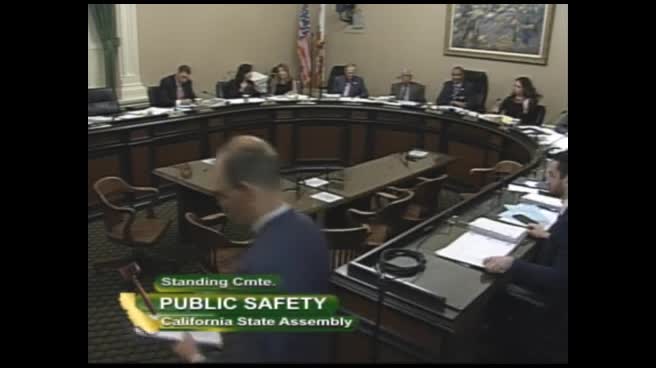 15MIN
Assembly Standing Committee on Public Safety
Bill Author

Bill Co-Author(s):