AB 1308: Youth offender parole hearings.
- Session Year: 2017-2018
- House: Assembly
- Latest Version Date: 2017-10-11
Existing law generally requires the Board of Parole Hearings to conduct youth offender parole hearings to consider the release of offenders who committed specified crimes when they were under 23 years of age and who were sentenced to state prison.
This bill would instead require the Board of Parole Hearings to conduct youth offender parole hearings for offenders sentenced to state prison who committed those specified crimes when they were 25 years of age or younger. The bill would require the board to complete, by January 1, 2020, all youth offender parole hearings for individuals who were sentenced to indeterminate life terms who become entitled to have their parole suitability considered at a youth offender parole hearing on the effective date of the bill. The bill would require the board to complete all youth offender parole hearings for individuals who were sentenced to determinate terms who become entitled to have their parole suitability considered at a youth offender parole hearing on the effective date of the bill by January 1, 2022, and would require the board, for these individuals, to conduct a specified consultation before January 1, 2019.
Existing law, the Family Law Facilitator Act, requires each superior court to maintain an office of the family law facilitator. Under existing law, the family law facilitator is responsible for providing, at no cost, specified assistance to family law litigants, including providing certain educational materials to parents, distributing necessary court forms and voluntary declarations of paternity, and providing assistance in completing forms.This bill would make technical, nonsubstantive changes to these provisions.Existing law, the Family Law Facilitator Act, requires each superior court to maintain an office of the family law facilitator. Under existing law, the family law facilitator is responsible for providing, at no cost, specified assistance to family law litigants, including providing certain educational materials to parents, distributing necessary court forms and voluntary declarations of paternity, and providing assistance in completing forms.
This bill would make technical, nonsubstantive changes to these provisions.
(a)(1)A youth offender parole hearing is a hearing by the Board of Parole Hearings for the purpose of reviewing the parole suitability of any prisoner who was 25 years of age or younger at the time of his or her controlling offense.
(2)For the purposes of this section, the following definitions shall apply:
(A)Incarceration means detention in a city or county jail, a local juvenile facility, a mental health facility, a Division of Juvenile Justice facility, or a Department of Corrections and Rehabilitation facility.
(B)Controlling offense means the offense or enhancement for which any sentencing court imposed the longest term of imprisonment.
(b)(1)A person who was convicted of a controlling offense that was committed when the person was 25 years of age or younger and for which the sentence is a determinate sentence shall be eligible for release on parole at a youth offender parole hearing by the board during his or her 15th year of incarceration, unless previously released pursuant to other statutory provisions.
(2)A person who was convicted of a controlling offense that was committed when the person was 25 years of age or younger and for which the sentence is a life term of less than 25 years to life shall be eligible for release on parole by the board during his or her 20th year of incarceration at a youth offender parole hearing, unless previously released or entitled to an earlier parole consideration hearing pursuant to other statutory provisions.
(3)A person who was convicted of a controlling offense that was committed when the person was 25 years of age or younger and for which the sentence is a life term of 25 years to life shall be eligible for release on parole by the board during his or her 25th year of incarceration at a youth offender parole hearing, unless previously released or entitled to an earlier parole consideration hearing pursuant to other statutory provisions.
(c)An individual subject to this section shall meet with the board pursuant to subdivision (a) of Section 3041.
(d)The board shall conduct a youth offender parole hearing to consider release. At the youth offender parole hearing, the board shall release the individual on parole as provided in Section 3041, except that the board shall act in accordance with subdivision (c) of Section 4801.
(e)The youth offender parole hearing to consider release shall provide for a meaningful opportunity to obtain release. The board shall review and, as necessary, revise existing regulations and adopt new regulations regarding determinations of suitability made pursuant to this section, subdivision (c) of Section 4801, and other related topics, consistent with relevant case law, in order to provide that meaningful opportunity for release.
(f)(1)In assessing growth and maturity, psychological evaluations and risk assessment instruments, if used by the board, shall be administered by licensed psychologists employed by the board and shall take into consideration the diminished culpability of juveniles as compared to that of adults, the hallmark features of youth, and any subsequent growth and increased maturity of the individual.
(2)Family members, friends, school personnel, faith leaders, and representatives from community-based organizations with knowledge about the individual before the crime or his or her growth and maturity since the time of the crime may submit statements for review by the board.
(3)This section is not intended to alter the rights of victims at parole hearings.
(g)If parole is not granted, the board shall set the time for a subsequent youth offender parole hearing in accordance with paragraph (3) of subdivision (b) of Section 3041.5. In exercising its discretion pursuant to paragraph (4) of subdivision (b) and subdivision (d) of Section 3041.5, the board shall consider the factors in subdivision (c) of Section 4801. No subsequent youth offender parole hearing shall be necessary if the offender is released pursuant to other statutory provisions prior to the date of the subsequent hearing.
(h)This section shall not apply to cases in which sentencing occurs pursuant to Section 1170.12, subdivisions (b) to (i), inclusive, of Section 667, or Section 667.61, or in which an individual was sentenced to life in prison without the possibility of parole. This section shall not apply to an individual to whom this section would otherwise apply, but who, subsequent to attaining 26 years of age, commits an additional crime for which malice aforethought is a necessary element of the crime or for which the individual is sentenced to life in prison.
(i)(1)The board shall complete all youth offender parole hearings for individuals who became entitled to have their parole suitability considered at a youth offender parole hearing prior to the effective date of the act that added paragraph (2) by July 1, 2015.
(2)(A)The board shall complete all youth offender parole hearings for individuals who were sentenced to indeterminate life terms and who become entitled to have their parole suitability considered at a youth offender parole hearing on the effective date of the act that added this paragraph by July 1, 2017.
(B)The board shall complete all youth offender parole hearings for individuals who were sentenced to determinate terms and who become entitled to have their parole suitability considered at a youth offender parole hearing on the effective date of the act that added this paragraph by July 1, 2021. The board shall, for all individuals described in this subparagraph, conduct the consultation described in subdivision (a) of Section 3041 before July 1, 2017.
(3)(A)The board shall complete all youth offender parole hearings for individuals who were sentenced to indeterminate life terms and who become entitled to have their parole suitability considered at a youth offender parole hearing on the effective date of the act that added this paragraph by January 1, 2020.
(B)The board shall complete all youth offender parole hearings for individuals who were sentenced to determinate terms and who become entitled to have their parole suitability considered at a youth offender parole hearing on the effective date of the act that added this paragraph by January 1, 2022. The board shall, for all individuals described in this subparagraph, conduct the consultation described in subdivision (a) of Section 3041 before January 1, 2019.
SEC. 2.Section 4801 of the Penal Code is amended to read:4801.(a)The Board of Parole Hearings may report to the Governor, from time to time, the names of any and all persons imprisoned in any state prison who, in its judgment, ought to have a commutation of sentence or be pardoned and set at liberty on account of good conduct, or unusual term of sentence, or any other cause, including evidence of intimate partner battering and its effects. For purposes of this section, intimate partner battering and its effects may include evidence of the nature and effects of physical, emotional, or mental abuse upon the beliefs, perceptions, or behavior of victims of domestic violence if it appears the criminal behavior was the result of that victimization.
(b)(1)The board, in reviewing a prisoners suitability for parole pursuant to Section 3041.5, shall give great weight to any information or evidence that, at the time of the commission of the crime, the prisoner had experienced intimate partner battering, but was convicted of an offense that occurred prior to August 29, 1996. The board shall state on the record the information or evidence that it considered pursuant to this subdivision, and the reasons for the parole decision. The board shall annually report to the Legislature and the Governor on the cases the board considered pursuant to this subdivision during the previous year, including the boards decisions and the specific and detailed findings of its investigations of these cases.
(2)The report for the Legislature to be submitted pursuant to paragraph (1) shall be submitted pursuant to Section 9795 of the Government Code.
(3)The fact that a prisoner has presented evidence of intimate partner battering cannot be used to support a finding that the prisoner lacks insight into his or her crime and its causes.
(c)When a prisoner committed his or her controlling offense, as defined in subdivision (a) of Section 3051, when he or she was 25 years of age or younger, the board, in reviewing a prisoners suitability for parole pursuant to Section 3041.5, shall give great weight to the diminished culpability of juveniles as compared to adults, the hallmark features of youth, and any subsequent growth and increased maturity of the prisoner in accordance with relevant case law.
(a)(1)A youth offender parole hearing is a hearing by the Board of Parole Hearings for the purpose of reviewing the parole suitability of any prisoner who was under 23 years of age 25 years of age or younger at the time of his or her controlling offense.
(2)For the purposes of this section, the following definitions shall apply:
(A)Incarceration means detention in a city or county jail, a local juvenile facility, a mental health facility, a Division of Juvenile Justice facility, or a Department of Corrections and Rehabilitation facility.
(B)Controlling offense means the offense or enhancement for which any sentencing court imposed the longest term of imprisonment.
(b)(1)A person who was convicted of a controlling offense that was committed before the person had attained 23 years of age when the person was 25 years of age or younger and for which the sentence is a determinate sentence shall be eligible for release on parole at a youth offender parole hearing by the board during his or her 15th year of incarceration, unless previously released pursuant to other statutory provisions.
(2)A person who was convicted of a controlling offense that was committed before the person had attained 23 years of age when the person was 25 years of age or younger and for which the sentence is a life term of less than 25 years to life shall be eligible for release on parole by the board during his or her 20th year of incarceration at a youth offender parole hearing, unless previously released or entitled to an earlier parole consideration hearing pursuant to other statutory provisions.
(3)A person who was convicted of a controlling offense that was committed before the person had attained 23 years of age when the person was 25 years of age or younger and for which the sentence is a life term of 25 years to life shall be eligible for release on parole by the board during his or her 25th year of incarceration at a youth offender parole hearing, unless previously released or entitled to an earlier parole consideration hearing pursuant to other statutory provisions.
(c)An individual subject to this section shall meet with the board pursuant to subdivision (a) of Section 3041.
(d)The board shall conduct a youth offender parole hearing to consider release. At the youth offender parole hearing, the board shall release the individual on parole as provided in Section 3041, except that the board shall act in accordance with subdivision (c) of Section 4801.
(e)The youth offender parole hearing to consider release shall provide for a meaningful opportunity to obtain release. The board shall review and, as necessary, revise existing regulations and adopt new regulations regarding determinations of suitability made pursuant to this section, subdivision (c) of Section 4801, and other related topics, consistent with relevant case law, in order to provide that meaningful opportunity for release.
(f)(1)In assessing growth and maturity, psychological evaluations and risk assessment instruments, if used by the board, shall be administered by licensed psychologists employed by the board and shall take into consideration the diminished culpability of juveniles as compared to that of adults, the hallmark features of youth, and any subsequent growth and increased maturity of the individual.
(2)Family members, friends, school personnel, faith leaders, and representatives from community-based organizations with knowledge about the individual before the crime or his or her growth and maturity since the time of the crime may submit statements for review by the board.
(3)Nothing in this section is This section is not intended to alter the rights of victims at parole hearings.
(g)If parole is not granted, the board shall set the time for a subsequent youth offender parole hearing in accordance with paragraph (3) of subdivision (b) of Section 3041.5. In exercising its discretion pursuant to paragraph (4) of subdivision (b) and subdivision (d) of Section 3041.5, the board shall consider the factors in subdivision (c) of Section 4801. No subsequent youth offender parole hearing shall be necessary if the offender is released pursuant to other statutory provisions prior to the date of the subsequent hearing.
(h)This section shall not apply to cases in which sentencing occurs pursuant to Section 1170.12, subdivisions (b) to (i), inclusive, of Section 667, or Section 667.61, or in which an individual was sentenced to life in prison without the possibility of parole. This section shall not apply to an individual to whom this section would otherwise apply, but who, subsequent to attaining 23 26 years of age, commits an additional crime for which malice aforethought is a necessary element of the crime or for which the individual is sentenced to life in prison.
(i)(1)The board shall complete all youth offender parole hearings for individuals who became entitled to have their parole suitability considered at a youth offender parole hearing prior to the effective date of the act that added paragraph (2) by July 1, 2015.
(2)(A)The board shall complete all youth offender parole hearings for individuals who were sentenced to indeterminate life terms and who become entitled to have their parole suitability considered at a youth offender parole hearing on the effective date of the act that added this paragraph by July 1, 2017.
(B)The board shall complete all youth offender parole hearings for individuals who were sentenced to determinate terms and who become entitled to have their parole suitability considered at a youth offender parole hearing on the effective date of the act that added this paragraph by July 1, 2021. The board shall, for all individuals described in this subparagraph, conduct the consultation described in subdivision (a) of Section 3041 before July 1, 2017.
(3)(A)The board shall complete all youth offender parole hearings for individuals who were sentenced to indeterminate life terms and who become entitled to have their parole suitability considered at a youth offender parole hearing on the effective date of the act that added this paragraph by January 1, 2020.
(B)The board shall complete all youth offender parole hearings for individuals who were sentenced to determinate terms and who become entitled to have their parole suitability considered at a youth offender parole hearing on the effective date of the act that added this paragraph by January 1, 2022. The board shall, for all individuals described in this subparagraph, conduct the consultation described in subdivision (a) of Section 3041 before January 1, 2019.
SEC. 2.Section 4801 of the Penal Code is amended to read:4801.(a)The Board of Parole Hearings may report to the Governor, from time to time, the names of any and all persons imprisoned in any state prison who, in its judgment, ought to have a commutation of sentence or be pardoned and set at liberty on account of good conduct, or unusual term of sentence, or any other cause, including evidence of intimate partner battering and its effects. For purposes of this section, intimate partner battering and its effects may include evidence of the nature and effects of physical, emotional, or mental abuse upon the beliefs, perceptions, or behavior of victims of domestic violence if it appears the criminal behavior was the result of that victimization.
(b)(1)The board, in reviewing a prisoners suitability for parole pursuant to Section 3041.5, shall give great weight to any information or evidence that, at the time of the commission of the crime, the prisoner had experienced intimate partner battering, but was convicted of an offense that occurred prior to August 29, 1996. The board shall state on the record the information or evidence that it considered pursuant to this subdivision, and the reasons for the parole decision. The board shall annually report to the Legislature and the Governor on the cases the board considered pursuant to this subdivision during the previous year, including the boards decisions and the specific and detailed findings of its investigations of these cases.
(2)The report for the Legislature to be submitted pursuant to paragraph (1) shall be submitted pursuant to Section 9795 of the Government Code.
(3)The fact that a prisoner has presented evidence of intimate partner battering cannot be used to support a finding that the prisoner lacks insight into his or her crime and its causes.
(c)When a prisoner committed his or her controlling offense, as defined in subdivision (a) of Section 3051, prior to attaining 23 years of age, 3051, when he or she was 25 years of age or younger, the board, in reviewing a prisoners suitability for parole pursuant to Section 3041.5, shall give great weight to the diminished culpability of juveniles as compared to adults, the hallmark features of youth, and any subsequent growth and increased maturity of the prisoner in accordance with relevant case law.
SECTION 1.Section 10007 of the Family Code is amended to read:10007.The court shall provide the family law facilitator to the at no cost.The court shall provide the family law facilitator at no cost to the parties. at no cost.
|
Date
|
Status
|
|---|---|
| Oct 11, 2017 | Chaptered by Secretary of State - Chapter 675, Statutes of 2017. |
| Oct 11, 2017 | Approved by the Governor. |
| Sep 21, 2017 | Enrolled and presented to the Governor at 3:30 p.m. |
| Sep 13, 2017 | In Assembly. Ordered to Engrossing and Enrolling. |
| Sep 12, 2017 | Read third time. Passed. Ordered to the Assembly. |
| Sep 5, 2017 | Read second time. Ordered to third reading. |
| Sep 1, 2017 | From committee: Do pass. (Ayes 5. Noes 2.) (September 1). |
| Jul 17, 2017 | In committee: Referred to APPR. suspense file. |
| Jun 27, 2017 | From committee: Do pass and re-refer to Com. on APPR. (Ayes 6. Noes 1.) (June 27). Re-referred to Com. on APPR. |
| Jun 14, 2017 | Referred to Com. on PUB. S. |
| Jun 5, 2017 | In Senate. Read first time. To Com. on RLS. for assignment. |
| Jun 1, 2017 | Read third time. Passed. Ordered to the Senate. (Ayes 41. Noes 36. Page 2078.) |
| May 11, 2017 | Read second time. Ordered to third reading. |
| May 10, 2017 | From committee: Do pass. (Ayes 9. Noes 7.) (May 10). |
| Apr 25, 2017 | From committee: Do pass and re-refer to Com. on APPR. (Ayes 5. Noes 2.) (April 25). Re-referred to Com. on APPR. |
| Apr 18, 2017 | In committee: Set, first hearing. Hearing canceled at the request of author. |
| Apr 3, 2017 | Re-referred to Com. on PUB. S. |
| Mar 30, 2017 | Referred to Com. on PUB. S. |
| Feb 19, 2017 | From printer. May be heard in committee March 21. |
| Feb 17, 2017 | Read first time. To print. |
|
Date
|
Description
|
Location
|
Votes
|
|
|---|---|---|---|---|
| Sep 12, 2017 | Assembly 3rd Reading AB1308 Mark Stone By Bradford | Senate Floor |
Passed |
|
| Sep 1, 2017 | Do pass | Senate Standing Committee on Appropriations |
Passed |
|
| Jul 17, 2017 | Placed on suspense file | Senate Standing Committee on Appropriations |
Passed |
|
| Jun 27, 2017 | Do pass, but first be re-referred to the Committee on [Appropriations] | Senate Standing Committee on Public Safety |
Passed |
|
| Jun 1, 2017 | AB 1308 STONE Assembly Third Reading | Assembly Floor |
Passed |
|
| May 10, 2017 | Do pass. | Assembly Standing Committee on Appropriations |
Passed |
|
| Apr 25, 2017 | Do pass and be re-referred to the Committee on [Appropriations] | Assembly Standing Committee on Public Safety |
Passed |
This list shows positions taken on this bill by organizations on the date displayed, which is linked to the original source.
Positions by individuals are not included.
|
Organization
|
Position
|
Date
|
|---|---|---|
| #Cut 50 | ** Support | Sep 4, 2017 |
| Alliance for Boys and Men of Color | ** Support | Sep 4, 2017 |
| American Civil Liberties Union | ** Support | Sep 4, 2017 |
| Anti-Recidivism Coalition | ** Support | Sep 4, 2017 |
| Asian Law Alliance | ** Support | Sep 4, 2017 |
| Assembly Floor Vote: 41 - 36 | ** Against | Jun 26, 2017 |
| Association For Los Angeles Deputy Sheriffs | ** Against | Sep 4, 2017 |
| California Association Of Code Enforcement Officers | ** Against | Sep 4, 2017 |
| California Attorneys For Criminal Justice | ** Support | Sep 4, 2017 |
| California Catholic Conference Institute | ** Support | Sep 4, 2017 |
| California Coalition For Youth | ** Support | Sep 4, 2017 |
| California Correctional Supervisors Organization | ** Against | Sep 4, 2017 |
| California District Attorneys Association | ** Against | Sep 4, 2017 |
| California Narcotic Officers Association | ** Against | Sep 4, 2017 |
| California Public Defenders Association | ** Support | Sep 4, 2017 |
| Center on Juvenile and Criminal Justice | ** Support | Sep 4, 2017 |
| Children's Defense Fund-California | ** Support | Sep 4, 2017 |
| Crime Victims Action Alliance | ** Against | Sep 4, 2017 |
| Cut 50 | * Support | May 10, 2017 |
| Ella Baker Center For Human Rights | ** Support | Sep 4, 2017 |
| Equal Justice Society | ** Support | Sep 4, 2017 |
| Fair Chance Project | ** Support | Sep 4, 2017 |
| Felony Murder Elimination Project | ** Support | Sep 4, 2017 |
| Friends Committee Of California | ** Support | Sep 4, 2017 |
| Healing Dialogue and Action | ** Support | Sep 4, 2017 |
| hinton's small family home | ** Support | Sep 4, 2017 |
| Human Dialogue and Action | ** Support | Apr 24, 2017 |
| Human Dialogue and Action | ** Support | Apr 24, 2017 |
| Human Rights Watch | ** Support | Sep 4, 2017 |
| Initiate Justice | ** Support | Apr 24, 2017 |
| Initiate Justice | ** Support | Apr 24, 2017 |
| Initiate Justice; Justice Now | ** Support | Sep 4, 2017 |
| Justice Now | ** Support | Apr 24, 2017 |
| Justice Now | ** Support | Apr 24, 2017 |
| Los Angeles County Professional Peace Officers Association | ** Against | Sep 4, 2017 |
| Los Angeles Police Protective League | ** Against | Sep 4, 2017 |
| Lutheran Office of Public Policy-California | ** Support | Sep 4, 2017 |
| March and Rally Los Angeles | ** Support | Sep 4, 2017 |
| Motivating Individual Leadership for Public Advancement | ** Support | Sep 4, 2017 |
| National Center for Youth Law | ** Support | Sep 4, 2017 |
| National Juvenile Justice Network | ** Support | Apr 24, 2017 |
| National Juvenile Justice Network | ** Support | Apr 24, 2017 |
| Pacific Juvenile Defender Center | ** Support | Sep 4, 2017 |
| Pasatiempo Pictures | ** Support | Sep 4, 2017 |
| Prison Law Office | ** Support | Sep 4, 2017 |
| PURPOSE | ** Against | Jun 26, 2017 |
| San Diego County District Attorney | ** Against | Sep 4, 2017 |
| Santa Clara University | ** Support | Sep 4, 2017 |
| Several individuals | ** Support | Sep 4, 2017 |
| Sigma Beta Xi, Inc., Youth and Family Services | ** Support | Apr 24, 2017 |
| Sigma Beta Xi, Inc., Youth and Family Services | ** Support | Apr 24, 2017 |
| Silicon Valley De-Bug | ** Support | Sep 4, 2017 |
| Soros Justice Fellow | * Support | May 10, 2017 |
| The Sentencing Project | ** Support | Sep 4, 2017 |
| The W Haywood Burns Institute | ** Support | Sep 4, 2017 |
| women's leadership project | ** Support | Sep 4, 2017 |
| Young Women Freedom Center | ** Support | Apr 24, 2017 |
| Young Women Freedom Center | ** Support | Apr 24, 2017 |
| Youth Justice Coalition | ** Support | Sep 4, 2017 |
| Youth Law Center | ** Support | Sep 4, 2017 |
Office of Senate Floor Analyses (916) 651-1520 Fax: (916) 327-4478 | AB |
THIRD READING
Bill No: AB 1308
:
SENATE PUBLIC SAFETY COMMITTEE: 6-1, 6/27/17
AYES: Skinner, Anderson, Bradford, Jackson, Mitchell, Wiener
NOES: Stone
SENATE APPROPRIATIONS COMMITTEE: 5-2, 9/1/17
AYES: Lara, Beall, Bradford, Hill, Wiener
NOES: Bates, Nielsen
ASSEMBLY FLOOR: 41-36, 6/1/17 - See last page for vote
Human Rights Watch
Pacific Juvenile Defender Center
Post-Conviction Justice Project of the University of Southern California’s Gould School of Law
Youth Justice Coalition
DIGEST:
This bill expands the youth offender parole process, a parole process for persons sentenced to lengthy prison terms for crimes committed before attaining 23 years of age, to include those who have committed their crimes before attaining the age of 25.
Existing law:
- Creates the youth offender parole hearing which is a hearing by the Board of Parole Hearings (BPH) for the purpose of reviewing the parole suitability of any prisoner who was under 23 years of age at the time of his or her controlling offense. (Pen. Code § 3051)
- Provides that the timing for the youth offender parole hearing depends on the sentence: if the controlling offense was a determinate sentence the offender shall be eligible for release after 15 years; if the controlling offense was a life term less than 25 years then the person is eligible for release after 20 years; and, if the controlling offense was 25 years or more then the person is eligible for release after 25 years. (Pen. Code § 3051 (b).)
- Provides that if the youth offender is found suitable for parole at the youthful offender parole hearing then the youth offender shall be released on parole. (Pen. Code § 3051 (e).)
- Provides that in reviewing a prisoner’s suitability for parole in a youthful offender parole hearing, BPH shall give great weight to the diminished culpability of juveniles as compared to adults, the hallmark features of youth, and any subsequent growth and maturity of the prisoner in accordance with relevant case law. (Pen. Code § 4801 (c).)
This bill:
- Expands those eligible for a youthful parole hearing to those whose committing offense occurred before they reached the age of 25.
- Provides that those eligible for a youthful offender parole hearing on the effective date of this bill who were sentenced to an indeterminate life sentence shall have their hearings by January 1, 2020.
- Provides that those eligible for a youthful offender parole hearing on the effective date of this bill who were sentenced to determinate terms shall have their hearings by January 1, 2022, and their parole eligibility consultation shall occur before January 1, 2019.
Background
In 2010, the United States Supreme Court ruled that it is unconstitutional to sentence a youth who did not commit homicide to a sentence of life without the possibility of parole (LWOP). (Graham v. Florida (2010) 540 U.S. 48 [130 S.Ct. 2011] (Graham).) The Court discussed the fundamental differences between a juvenile and adult offender and reasserted its earlier findings from Roper v. Simmons (2005) 543 U.S. 551, that juveniles have lessened culpability than adults due to those differences. The Court stated that “life without parole is an especially harsh punishment for a juvenile,” noting that a juvenile offender “will on average serve more years and a greater percentage of his life in prison than an adult offender.” (Graham v. Florida, supra, 540 U.S. at pp. 48-51.) However, the Court stressed that “while the Eighth Amendment forbids a State from imposing a life without parole sentence on a juvenile non-homicide offender, it does not require the State to release that offender during his natural life. Those who commit truly horrifying crimes as juveniles may turn out to be irredeemable, and thus deserving of incarceration for the duration of their lives. The Eighth Amendment does not foreclose the possibility that persons convicted of non-homicide crimes committed before adulthood will remain behind bars for life. It does forbid States from making the judgment at the outset that those offenders never will be fit to reenter society.” (Id. at pp. 51-52.)
In Miller v. Alabama (2012) 567 U.S. 460 [132 S.Ct. 2455] (Miller), the Court further decided that mandatory LWOP sentences for minors under age 18 at the time of a homicide violate the prohibition against cruel and unusual punishment.
In People v. Caballero (2012) 55 Cal.4th 262, 268 (Caballero), the California Supreme Court ruled that sentencing a juvenile offender for a non-homicide offense to a term of years with a parole eligibility date that falls outside the juvenile offender’s natural life expectancy constitutes cruel and unusual punishment in violation of the Eighth Amendment. (People v. Caballero (2012) 55 Cal.4th 262, 268 (Caballero).) The Court stated that “the state may not deprive [juveniles] at sentencing of a meaningful opportunity to demonstrate their rehabilitation and fitness to reenter society in the future.” (Ibid.) Citing Graham the Court stated “the sentencing court must consider all mitigating circumstances attendant in the juvenile’s crime and life, including but not limited to his or her chronological age at the time of the crime, whether the juvenile offender was a direct perpetrator or an aider and abettor, and his or her physical and mental development, so that it can impose a time when the juvenile offender will be able to seek parole from the parole board.” (Id. at pp. 268-269.) In Caballero, the defendant was convicted of three counts of attempted murder and received a sentence of 110-years-to-life. Relying on the reasoning in the Graham case, the Court found that while the juvenile did not receive a sentence of LWOP, trial court’s sentence effectively deprives the defendant of any “realistic opportunity to obtain release” from prison during his or her expected lifetime, thus the sentence is a de facto LWOP sentence and violates the Eighth Amendment’s prohibition against cruel and unusual punishment. (Id. at p. 268.)
The court in Caballero advised that “[d]efendants who were sentenced for crimes they committed as juveniles who seek to modify life without parole or equivalent de facto sentences already imposed may file petitions for writs of habeas corpus in the trial court in order to allow the court to weigh the mitigating evidence in determining the extent of incarceration required before parole hearings.” (People v. Caballero, supra, 55 Cal.4th at p. 269.) The Court did not provide a precise timeframe for setting these future parole hearings, but stressed that “the sentence must not violate the defendant’s Eighth Amendment rights and must provide [the defendant with] a ‘meaningful opportunity to obtain release based on demonstrated maturity and rehabilitation’ under Graham's mandate.” (Ibid.)
While the court in Caballero pointed out that these inmates may file petitions for writs of habeas corpus in the trial court, the court also urged the Legislature to establish a parole eligibility mechanism for an individual sentenced to a de facto life term for crimes committed as a juvenile. SB 260 (Hancock, Chapter 312, Statutes of 2013) established a parole process for inmates who were sentenced to lengthy prison terms for crimes committed when they were under the age of 18, rather than requiring the inmate to file a writ of habeas corpus and appear before the trial court for resentencing. (Penal Code, § 3051.) SB 261 (Hancock, Chapter 471, Statutes of 2015) expanded those eligible for a youth offender parole hearing to those whose committing offense occurred before they reached the age of 23. (Penal Code, § 3051.) In People v. Franklin (2016) 63 Cal.4th 261, the Supreme Court held the enactment of Penal Code Section 3051 satisfies the requirement of Miller-Caballero that a defendant who was a minor at the time of an offense have a reasonable opportunity to gain release during his or her natural lifetime, because it requires that the defendant receive a parole hearing during his 25th year of incarceration.
This bill further expands those eligible for a youth offender parole hearing under Penal Code Section 3051 to those whose committing offense occurred when they were 25 years of age or younger. The rationale, as expressed by the author and supporters of this bill, is that research shows that cognitive brain development continues into the early 20s or later. The parts of the brain that are still developing during this process affect judgment and decision-making, and are highly relevant to criminal behavior and culpability. (See Johnson, et al., Adolescent Maturity and the Brain: The Promise and Pitfalls of Neuroscience Research in Adolescent Health Policy, Journal of Adolescent Health (Sept. 2009); National Institute of Mental Health, The Teen Brain: Still Under Construction (2011).) “The development and maturation of the prefrontal cortex occurs primarily during adolescence and is fully accomplished at the age of 25 years. The development of the prefrontal cortex is very important for complex behavioral performance, as this region of the brain helps accomplish executive brain functions.” (https://www.ncbi.nlm.nih.gov/pmc/articles/PMC3621648/ [as of April 20,2017].)
FISCAL EFFECT: Appropriation: Fiscal Com.: Local:
According to the Senate Appropriations Committee:
- BPH: Annual costs in the low hundreds of thousands of dollars (General Fund) for resources to conduct an additional estimated 170 hearings, on average, per year. BPH also may require an additional deputy commissioner or administrative law judge, whose salary and benefits would be a General Fund cost, to complete approximately 1,300 consultations by January 1, 2019. The Department of Corrections and Rehabilitation (CDCR) indicates that the additional workload costs resulting from this bill to conduct hearings and complete risk assessments are absorbable.
- Courts: Potential unknown costs to state trial courts to adjudicate any new filing of habeas corpus writ petitions for denial of parole made possible by this bill. These possible costs could be offset to an unknown degree as a result of an accompanying reduction in habeas petitions by inmates who become eligible for parole.
- Future incarceration savings: Potential cost savings in the hundreds of thousands of dollars annually (General Fund) to CDCR for inmates released. Savings would grow as the years they otherwise would have served compound. Over 10 years, the savings could increase to in the millions of dollars presuming that the inmates would have served 10 additional years. Savings would be offset, in part, to do increases in parole supervision costs.
#cut 50 (co-source)
Human Rights Watch (co-source)
Pacific Juvenile Defender Center (co-source)
Post-Conviction Justice Project of the University of Southern California’s Gould School of Law (co-source)
Youth Justice Coalition (co-source)
Alliance for Boys and Men of Color
American Civil Liberties Union
Anti-Recidivism Coalition
Asian Law Alliance
California Attorneys for Criminal Justice
California Catholic Conference Institute
California Coalition for Youth
California Public Defenders Association
Center on Juvenile and Criminal Justice
Children’s Defense Fund-California
Ella Baker Center for Human Rights
Equal Justice Society
Fair Chance Project
Felony Murder Elimination Project
Friends Committee of California
Healing Dialogue and Action
Hinton’s Small Family Home
Initiate Justice; Justice Now
Lutheran Office of Public Policy–California
March and Rally Los Angeles
Motivating Individual Leadership for Public Advancement
National Center for Youth Law
Pasatiempo Pictures
Prison Law Office
Riverside County Alliance for Boys and Men of Color
Santa Clara University
Silicon Valley De-Bug
The Sentencing Project
The W Haywood Burns Institute
Women’s Leadership Project
Youth Law Center
Several individuals
Association for Deputy District Attorneys
Association for Los Angeles Deputy Sheriffs
California Association of Code Enforcement Officers
California College and University and University Police Chiefs Association
California Correctional Supervisors Organization
California District Attorneys Association
California Narcotic Officers Association
Crime Victims Action Alliance
Los Angeles County Probation Officers Union AFSCME Local 685
Los Angeles County Professional Peace Officers Association
Los Angeles Police Protective League
San Diego County District Attorney
ARGUMENTS IN SUPPORT: According to Human Rights Watch:
The Youth Offender Parole law was originally passed by the legislature in 2012, and applied only to persons under the age of 18 at the time of a crime. As a result, the state has more than four years of concrete information about how the law works. The most recent account shows that 74% of Youth Offender Parole hearings have resulted in denials. With a grant rate of 26%, Youth Offender Parole has proven thus far to be a cautious and moderate adjustment to the parole process.
The Youth Offender Parole law is based on developmental and neurological evidence about adolescents and young adults. Neuroscientific research finds that the process of cognitive brain development continues into early adulthood. For boys and young men especially, this development process continues into the mid-20s. The still-developing areas of the brain, particularly those that affect judgment and decision making, are highly relevant to criminal behavior and culpability.
California law recognizes the need to protect and provide special opportunities to young adults. Among other things, state law extends foster care services to age 21; sets Division of Juvenile Justice jurisdiction at age 23; and the Department of Corrections and Rehabilitation provides special opportunities and protections for young adults in prison up to age 25.
People who commit crimes should be held accountable. However, when a young person who is still neurologically and socially developing is sentenced to a lengthy prison term, California disregards the human capacity for rehabilitation and ignores the very real physical and psychological differences between young people and older adults. Punishment should reflect the capacity of a young person to change and mature. Assembly Bill 1308 would ensure that young adults face punishment for their crimes, but also have a meaningful chance for parole.
ARGUMENTS IN OPPOSITION: According to the San Diego County District Attorney:
We challenge the sweeping generalization embedded in the bill that holds all persons under the age of 25 to a lower standard of culpability just as we did in 2015 when Senate Bill 261 was introduced. The Governor signed Senate Bill 261 which raised the youth offenders from 18 to 23 years of age and it became effective January 1, 2016. Now, barely one year later, AB 1308 seeks to change the age of the ‘youthful offender’ to 25 years and younger….
We understand the need for providing incentives to youthful offenders who have received very long sentences. However, AB 1308 simply allows for those 25 and younger to be entitled to parole hearings after serving a certain amount of time. AB 1308 does not require these men and women to complete programming milestones. There are no incentives in AB 1308 for these adult offenders to pursue education, vocational training or to attend AA meetings to be eligible, they just have to do their time. Further, in many of these cases, the crimes committed by these ‘youthful offenders’ are horrendous, families have been shattered, and many victims have been given a life sentence of their own from which there is no early release.
The impact and consequences of early release for “youthful offenders” is still being calculated because the law has barely been in effect for a year. We believe it is far too soon to take a second bite of the “youthful offender” parole program by raising the age to 25 years and younger.
ASSEMBLY FLOOR: 41-36, 6/1/17
AYES: Aguiar-Curry, Berman, Bloom, Bocanegra, Bonta, Burke, Chau, Chiu, Chu, Daly, Eggman, Friedman, Cristina Garcia, Eduardo Garcia, Gipson, Gloria, Gomez, Gonzalez Fletcher, Grayson, Holden, Jones-Sawyer, Kalra, Levine, Limón, McCarty, Medina, Mullin, Nazarian, O'Donnell, Quirk, Reyes, Ridley-Thomas, Rodriguez, Rubio, Santiago, Mark Stone, Thurmond, Ting, Weber, Wood, Rendon
NOES: Acosta, Travis Allen, Arambula, Baker, Bigelow, Brough, Caballero, Cervantes, Chávez, Chen, Cooley, Cooper, Cunningham, Dababneh, Dahle, Flora, Fong, Frazier, Gallagher, Gray, Harper, Irwin, Kiley, Lackey, Maienschein, Mathis, Mayes, Melendez, Muratsuchi, Obernolte, Patterson, Quirk-Silva, Salas, Steinorth, Voepel, Waldron
NO VOTE RECORDED: Calderon, Choi, Low
9/4/17 12:53:34
**** END ****
SENATE COMMITTEE ON
Senator Ricardo Lara, Chair
2017 - 2018 Regular Session
AB 1308 (Mark Stone) - Youth offender parole hearings
Version: | Policy Vote: |
Urgency: | Mandate: |
Hearing Date: | Consultant: |
This bill meets the criteria for referral to the Suspense File.
Bill Summary:
AB 1308 would expand the youth offender parole process to include those who committed their crimes before turning 26 years old.
Fiscal Impact:
- Board of Parole Hearings (BPH): Annual costs in the low hundreds of thousands of dollars (General Fund) for resources to conduct an additional estimated 170 hearings, on average, per year. The board also may require an additional deputy commissioner or administrative law judge, whose salary and benefits would be a General Fund cost, to complete approximately 1,300 consultations by January 1, 2019. The Department of Corrections and Rehabilitation (CDCR) indicates that the additional workload costs resulting from this bill to conduct hearings and complete risk assessments are absorbable.
- Courts: Potential unknown costs to state trial courts to adjudicate any new filing of habeas corpus writ petitions for denial of parole made possible by this bill. These possible costs could be offset to an unknown degree as a result of an accompanying reduction in habeas petitions by inmates who become eligible for parole.
- Future incarceration savings: Potential cost savings in the hundreds of thousands of dollars annually (General Fund) to CDCR for inmates released. Savings would grow as the years they otherwise would have served compound. Over ten years, the savings could increase to in the millions of dollars presuming that the inmates would have served ten additional years. Savings would be offset, in part, to do increases in parole supervision costs.
Background:
Current law provides for a youth offender parole hearing. The hearing, conducted by BPH, is for the purpose of reviewing the parole suitability of any prisoner who was under 23 years of age at the time of his or her controlling offense. If the youth offender is found suitable for parole at the youthful offender parole hearing then the youth offender must be released on parole. Some offenders are not eligible based on the crime that was committed or because of actions taken by the inmate after the age of 23.
Existing law provides that the timing for the youth offender parole hearing is dependent on the sentence: if the controlling offense resulted in a determinate sentence, the offender becomes eligible for release on parole after 15 years; if the controlling offense resulted in a sentence of less than 25 years to life, the person becomes eligible for release on parole after 20 years; and, if the controlling offense resulted in a sentence of 25 years to life, the person is eligible for release on parole after 25 years.
From January 1, 2014, the effective date of the legislation that enacted youth offender parole (SB 260 (Hancock, Ch. 312, Stats. 2013)), through May 31, 2017, BPH held 3,028 youth offender parole hearings. The hearings resulted in 780 grants of parole (a grant rate of 25.8 percent), 1,850 denials, and 398 stipulations to parole unsuitability. An additional 1,683 hearings were scheduled during this time period but were either waived, postponed, continued, or cancelled.
Proposed Law:
This bill would require BPH to conduct youth offender parole hearings for offenders sentenced to state prison who committed specified crimes when they were under 26 years of age. The board would be required to complete, by January 1, 2020, all youth offender parole hearings for individuals who were sentenced to indeterminate life terms who become entitled to have their parole suitability considered at a youth offender parole hearing on the effective date of this bill.
All youth offender parole hearings for individuals who were sentenced to determinate terms who become entitled to have their parole suitability considered at a youth offender parole hearing on the effective date of this bill are required to be completed by January 1, 2022. For these individuals, BPH would be required to conduct a consultation, as specified, before January 1, 2019.
Related Legislation:
AB 1448 (Weber, 2017) would codify the Elderly Parole Program. AB 1448 is pending in this Committee.
SB 394 (Lara, 2017) would make a person sentenced to prison for life without the possibility of parole for an offense he or she committed before the person was 18 years of age eligible for parole after his or her 25th year of incarceration. SB 394 is pending in the Assembly Committee on Appropriations.
Staff Comments:
The Department of Corrections and Rehabilitation estimates that there are approximately 1,500 determinately-sentenced inmates and approximately 1,900 indeterminately-sentenced inmates who committed their crimes before turning 26 years of age. Under this bill, the department would need to screen all potentially-eligible inmates whose controlling offense occurred between the ages of 23 and 25. Some of these individuals would be excluded immediately, as they were sentenced for a crime that is not eligible for youth offender parole. Ultimately, BPH anticipates scheduling approximately 190 additional hearings per year because of this bill. The Department of Corrections and Rehabilitation indicates that this workload is absorbable. Additionally, the department estimates a 20 percent parole suitability rate, using the average grant rate for parole. If these estimates hold true, approximately 28 inmates would be paroled each year. Cost savings resulting from releasing these inmates would be offset, in part, by higher parole costs to supervise these individuals in the community.
While CDCR indicates that the costs imposed by this bill are largely absorbable, there are certain costs that accompany each parole suitability hearing, such as language interpretation (not applicable to every hearing), transcription, and legal services. Using hearing cost figures from 2015 and the board’s estimate of 190 additional hearings annually resulting from AB 1308, with an assumption that ten percent of the cases will be postponed or continued, these hearing-specific costs could range in the low hundreds of thousands of dollars.
In 2015, an interpreter costs BPH $355 per hearing. With an average of fifteen percent of cases needing interpretation services, these costs would be around $10,000 with this bill. All of BPH’s parole consideration hearings are audio recorded and transcribed. With a budget of $6 per page (in 2015), and an average of ninety-five pages per hearing, the total average transcription costs for a hearing is $570. For the purposes of this bill, it would amount to roughly $100,000 annually. Additionally, the board is required to provide each inmate eligible for parole with legal counsel. In 2015, a state-appointed attorney received $400 per case. Using these figures, inmate attorney costs would be approximately $76,000 annually. Staff notes that these estimates use costs derived from 2015 and that interpretation, transcription, and legal services fees may have increased since that time, which would increase the costs associated with this bill.
-- END --
SENATE COMMITTEE ON PUBLIC SAFETY
Senator Nancy Skinner, Chair
2017 - 2018 Regular
Bill No: AB 1308 Hearing Date: June 27, 2017
Author: | Mark Stone | ||
Version: | March 30, 2017 | ||
Urgency: | No | Fiscal: | Yes |
Consultant: | MK | ||
Subject: Youth Offender Parole Hearings
HISTORY
Source: Human Rights Watch
#cut 50
Pacific Juvenile Defender Center
Post-Conviction Justice Project of the University of Southern California’s Gould School of Law
Youth Justice Coalition
Prior Legislation: SB 261 (Hancock) Chapter 471, Stats. 2015
SB 260 (Hancock) Chapter 312, Stats. 2013
SB 9 (Yee) Chapter 828, Stats. 2012
SB 399 (Yee) Failed Assembly Floor 2010
SB 999 (Yee) Failed Assembly Floor 2008
SB 1223 (Kuehl) Failed Assembly Appropriations 2004
Support: Anti-Recidivism Coalition; American Civil Liberties Union; Asian Law Alliance; Alliance for Boys and Men of Color; California Catholic Conference Institute; California Attorneys for Criminal Justice; California Coalition for Youth; California Public Defenders Association; Center on Juvenile and Criminal Justice; Children’s Defense Fund-California; Ella Baker Center for Human Rights; Equal Justice Society; Fair Chance Project; Felony Murder Elimination Project; Friends Committee of California; Healing Dialogue and Action; Hinton’s Small Family Home; Initiate Justice; Justice Now; Lutheran Office of Public Policy–California; March and Rally Los Angeles; Motivating Individual Leadership for Public Advancement; National Center for Youth Law; Pasatiempo Pictures; Prison Law Office; Riverside County Alliance for Boys and Men of Color; Santa Clara University; the Sentencing Project; Silicon Valley De-Bug; The W Haywood Burns Institute; Women’s Leadership Project; Youth Law Center; a number of individuals
Opposition: Association for Los Angeles Deputy Sheriffs; Association for Deputy District Attorneys; California Association of Code Enforcement Officers; California College and University and University Police Chiefs Association; California Correctional Supervisors Organization; California District Attorneys Association; California Narcotic Officers Association; Crime Victims Action Alliance; the Los Angeles County Probation Officers Union AFSCME Local 685; the Los Angeles County Professional Peace Officers Association; the Los Angeles Police Protective League; San Diego County District Attorney
Assembly Floor Vote: 41 - 36
PURPOSE
The purpose of this bill is to expand the youth offender parole process, a parole process for persons sentenced to lengthy prison terms for crimes committed before attaining 23 years of age, to include those who have committed their crimes before attaining the age of 25.
Existing law creates the youth offender parole hearing which is a hearing by the Board of Parole Hearings for the purpose of reviewing the parole suitability of any prisoner who was under 23years of age at the time of his or her controlling offense. (Penal Code § 3051)
Existing law provides that the timing for the youth offender parole hearing depends on the sentence: if the controlling offense was a determinate sentence the offender shall be eligible for release after 15 years; if the controlling offense was a life term less than 25 years then the person is eligible for release after 20 years; and, if the controlling offense was 25 years or more then the person is eligible for release after 25 years. (Penal Code § 3051 (b).)
Existing law provides that if the youth offender is found suitable for parole at the youthful offender parole hearing then the youth offender shall be released on parole. (Penal Code § 3051 (e).)
Existing law provides that in reviewing a prisoner’s suitability for parole in a youthful offender parole hearing, the Board of Parole Hearings shall give great weight to the diminished culpability of juveniles as compared to adults, the hallmark features of youth, and any subsequent growth and increased maturity of the prisoner in accordance with relevant case law. (Penal Code § 4801 (c).)
This bill expands those eligible for a youthful parole hearing to those whose committing offense occurred before they reached the age of 25.
This bill provides that those eligible for a youthful offender parole hearing on the effective date of this bill who were sentenced to an indeterminate life sentence shall have their hearings by January 1, 2020.
This bill provides that those eligible for a youthful offender parole hearing on the effective date of this bill who were sentenced to determinate terms shall have their hearings by January 1, 2022 and their parole eligibility consultation shall occur before January 1, 2019.
COMMENTS
1. Need for This Bill
According to the author:
Under current law, certain inmates-who were under the age of 23 when committed a crime for which they received a lengthy or life sentence-are eligible for a youth offender parole hearing after serving a lengthy prison sentence. AB 1308 would align public policy with scientific research. This measure would expand eligibility of the youth parole hearing process to certain individuals who were 25 or under when they committed a crime for which they received a lengthy
or life sentence for a youth offender parole hearing. Scientific evidence on adolescence and young adult development and neuroscience shows that certain areas of the brain, particularly those affecting judgment and decision-making, do not develop until the early-to mid-20s. Research has shown that the prefrontal cortex doesn’t have nearly the functional capacity at age 18 as it does at 25. The prefrontal cortex is responsible for a variety of important functions of the brain including: attention, complex planning, decision making, impulse control, logical thinking, organized thinking, personality development, risk management, and short-term memory. These functions are highly relevant to criminal behavior and culpability.
Since the passage of SB 260 and 261 motivation to focus on rehabilitation has increased. An offender is more likely to enroll in school, drop out of a gang, or participate in positive programs if they can sit before a parole board sooner, it at all, and have a chance of being released.
2. Case law on Juvenile Offenders
In 2010, the United States Supreme Court ruled that it is unconstitutional to sentence a youth who did not commit homicide to a sentence of life without the possibility of parole (LWOP). (Graham v. Florida (2010) 540 U.S. 48 [130 S.Ct. 2011] (Graham).) The Court discussed the fundamental differences between a juvenile and adult offender and reasserted its earlier findings from Roper v. Simmons (2005) 543 U.S. 551, that juveniles have lessened culpability than adults due to those differences. The Court stated that “life without parole is an especially harsh punishment for a juvenile,” noting that a juvenile offender “will on average serve more years and a greater percentage of his life in prison than an adult offender.” (Graham v. Florida, supra, 540 U.S. at pp. 48-51.) However, the Court stressed that “while the Eighth Amendment forbids a State from imposing a life without parole sentence on a juvenile non-homicide offender, it does not require the State to release that offender during his natural life. Those who commit truly horrifying crimes as juveniles may turn out to be irredeemable, and thus deserving of incarceration for the duration of their lives. The Eighth Amendment does not foreclose the possibility that persons convicted of non-homicide crimes committed before adulthood will remain behind bars for life. It does forbid States from making the judgment at the outset that those offenders never will be fit to reenter society.” (Id. at pp. 51-52.)
In Miller v. Alabama (2012) 567 U.S. 460 [132 S.Ct. 2455] (Miller), the Court further decided that mandatory LWOP sentences for minors under age 18 at the time of a homicide violate the prohibition against cruel and unusual punishment.
In People v. Caballero (2012) 55 Cal.4th 262, 268 (Caballero), the California Supreme Court ruled that sentencing a juvenile offender for a non-homicide offense to a term of years with a parole eligibility date that falls outside the juvenile offender’s natural life expectancy constitutes cruel and unusual punishment in violation of the Eighth Amendment. (People v. Caballero (2012) 55 Cal.4th 262, 268 (Caballero).) The Court stated that “the state may not deprive [juveniles] at sentencing of a meaningful opportunity to demonstrate their rehabilitation and fitness to reenter society in the future.” (Ibid.) Citing Graham the Court stated “the sentencing court must consider all mitigating circumstances attendant in the juvenile’s crime and life, including but not limited to his or her chronological age at the time of the crime, whether the juvenile offender was a direct perpetrator or an aider and abettor, and his or her physical and mental development, so that it can impose a time when the juvenile offender will be able to seek
parole from the parole board.” (Id. at pp. 268-269.) In Caballero, the defendant was convicted of three counts of attempted murder and received a sentence of 110-years-to-life. Relying on the reasoning in the Graham case, the Court found that while the juvenile did not receive a sentence of LWOP, trial court’s sentence effectively deprives the defendant of any “realistic opportunity to obtain release” from prison during his or her expected lifetime, thus the sentence is a de facto LWOP sentence and violates the Eighth Amendment’s prohibition against cruel and unusual punishment. (Id. at p. 268.)
The court in Caballero advised that “[d]efendants who were sentenced for crimes they committed as juveniles who seek to modify life without parole or equivalent de facto sentences already imposed may file petitions for writs of habeas corpus in the trial court in order to allow the court to weigh the mitigating evidence in determining the extent of incarceration required before parole hearings.” (People v. Caballero, supra, 55 Cal.4th at p. 269.) The Court did not provide a precise timeframe for setting these future parole hearings, but stressed that “the sentence must not violate the defendant’s Eighth Amendment rights and must provide [the defendant with] a ‘meaningful opportunity to obtain release based on demonstrated maturity and rehabilitation’ under Graham's mandate.” (Ibid.)
While the court in Caballero pointed out that these inmates may file petitions for writs of habeas corpus in the trial court, the court also urged the Legislature to establish a parole eligibility mechanism for an individual sentenced to a de facto life term for crimes committed as a juvenile. SB 260 (Hancock), Chapter 312, Statutes of 2013, established a parole process for inmates who were sentenced to lengthy prison terms for crimes committed when they were under the age of 18, rather than requiring the inmate to file a writ of habeas corpus and appear before the trial court for resentencing. (Penal Code, § 3051.) SB 261 (Hancock), Chapter 471, Statutes of 2015, expanded those eligible for a youth offender parole hearing to those whose committing offense occurred before they reached the age of 23. (Penal Code, § 3051.) In People v. Franklin (2016) 63 Cal.4th 261, the Supreme Court held the enactment of Penal Code section 3051 satisfies the requirement of Miller-Caballero that a defendant who was a minor at the time of an offense have a reasonable opportunity to gain release during his or her natural lifetime, because it requires that the defendant receive a parole hearing during his 25th year of incarceration.
This bill further expands those eligible for a youth offender parole hearing under Penal Code section 3051 to those whose committing offense occurred when they were 25 years of age or younger. The rationale, as expressed by the author and supporters of this bill, is that research shows that cognitive brain development continues into the early 20s or later. The parts of the brain that are still developing during this process affect judgment and decision-making, and are highly relevant to criminal behavior and culpability. (See Johnson, et al., Adolescent Maturity and the Brain: The Promise and Pitfalls of Neuroscience Research in Adolescent Health Policy, Journal of Adolescent Health (Sept. 2009); National Institute of Mental Health, The Teen Brain: Still Under Construction (2011).) “The development and maturation of the prefrontal cortex occurs primarily during adolescence and is fully accomplished at the age of 25 years. The development of the prefrontal cortex is very important for complex behavioral performance, as this region of the brain helps accomplish executive brain functions.” (<https://www.ncbi.nlm.nih.gov/pmc/articles/PMC3621648/> [as of April 20,2017].)
3. Youth Offender Parole Hearings Status
According to the State’s March 2017 status report on measures being taken to reduce the prison population pursuant to the three-judge panel’s February 10, 2014 order:
The State continues to implement Senate Bill 260 (2013) and Senate Bill 261 (2015), which allows inmates whose crimes were committed before the age of 23 to appear before the Board of Parole Hearings (the Board) to demonstrate their suitability for release after serving at least fifteen years of their sentence. From January 1, 2014 through February 28, 2017, the Board held 2,519 youth offender hearings, resulting in 659 grants, 1,547denials, 313 stipulations to unsuitability, and there are currently no split votes that require referral to the full Board for further consideration. An additional 1,467 hearings were scheduled during this time period, but were waived, postponed, continued, or cancelled. (Defendants’ March 2017 Status Report In Response to February 10, 2014 Order, 2:90-cv-00520 KJM DAD PC, 3-Judge Court, Coleman v. Brown, Plata v. Brown.)
4. Argument in Support
According to Human Rights Watch:
The Youth Offender Parole law was originally passed by the legislature in 2012, and applied only to persons under the age of 18 at the time of a crime. As a result, the state has more than four years of concrete information about how the law works. The most recent account shows that 74% of Youth Offender Parole hearings have resulted in denials. With a grant rate of 26%, Youth Offender Parole has proven thus far to be a cautious and moderate adjustment to the parole process.
The Youth Offender Parole law is based on developmental and neurological evidence about adolescents and young adults. Neuroscientific research finds that the process of cognitive brain development continues into early adulthood. For boys and young men especially, this development process continues into the mid-20s. The still-developing areas of the brain, particularly those that affect judgment and decision making, are highly relevant to criminal behavior and culpability.
California law recognizes the need to protect and provide special opportunities to young adults. Among other things, state law extends foster care services to age 21; sets Division of Juvenile Justice jurisdiction at age 23; and the Department of Corrections and Rehabilitation provides special opportunities and protections for young adults in prison up to age 25.
People who commit crimes should be held accountable. However, when a young person who is still neurologically and socially developing is sentenced to a lengthy prison term, California disregards the human capacity for rehabilitation and ignores the very real physical and psychological differences between young people and older adults. Punishment should reflect the capacity of a young person to change and mature. Assembly Bill 1308 would ensure that young adults face punishment for their crimes, but also have a meaningful chance for parole.
5. Argument in Opposition
According to the San Diego County District Attorney:
We challenge the sweeping generalization embedded in the bill that holds all persons under the age of 25 to a lower standard of culpability just as we did in 2015 when Senate Bill 261 was introduced. The Governor signed Senate Bill 261 which raised the youth offenders from 18 to 23 years of age and it became effective January 1, 2016. Now, barely one year later, AB 1308 seeks to change the age of the ‘youthful offender’ to 25 years and younger.
…
We understand the need for providing incentives to youthful offenders who have received very long sentences. However, AB 1308 simply allows for those 25 and younger to be entitled to parole hearings after serving a certain amount of time. AB 1308 does not require these men and women to complete programming milestones. There are no incentives in AB 1308 for these adult offenders to pursue education, vocational training or to attend AA meetings to be eligible, they just have to do their time. Further, in many of these cases, the crimes committed by these ‘youthful offenders’ are horrendous, families have been shattered, and many victims have been given a life sentence of their own from which there is no early release.
The impact and consequences of early release for “youthful offenders” is still being calculated because the law has barely been in effect for a year. We believe it is far too soon to take a second bite of the “youthful offender” parole program by raising the age to 25 years and younger.
-- END –
ASSEMBLY THIRD READING
ATR Bill Id:AB 1308
Author:(Mark Stone)
As Amended Ver:March 30, 2017
Majority vote
Committee | Votes | Ayes | Noes |
Public Safety | 5-2 | Jones-Sawyer, Gonzalez Fletcher, Quirk, Rubio, Santiago | Lackey, Flora |
Appropriations | 9-7 | Gonzalez Fletcher, Bloom, Bocanegra, Bonta, Chau, Eggman, Friedman, Eduardo Garcia, Reyes | Bigelow, Brough, Fong, Gallagher, Gray, Muratsuchi, Obernolte |
SUMMARY: Expands the youth offender parole process, a parole process for persons sentenced to lengthy prison terms for crimes committed before attaining 23 years of age, to include those who committed their crimes when they were 25 years of age or younger. Specifically, this bill:
- Expands those eligible for a youthful parole hearing to those whose committing offense occurred when they were 25 years of age or younger.
- Excludes from the youthful offender parole provisions an individual to whom this section would otherwise apply, but who, subsequent to attaining 26 years of age, commits an additional crime for which malice aforethought is a necessary element of the crime or for which the individual is sentenced to life in prison.
- Requires the Board of Parole Hearings (BPH) to complete, by January 1, 2020, all youth offender parole hearings for individuals who were sentenced to indeterminate life terms who become entitled to have their parole suitability considered at a youth offender parole hearing on the effective date of this bill.
- Requires BPH to complete all youth offender parole hearings for individuals who were sentenced to determinate terms who become entitled to have their parole suitability considered at a youth offender parole hearing on the effective date of this bill by January 1, 2022, and requires BPH, for these individuals, to conduct a specified consultation before January 1, 2019.
EXISTING LAW:
- Provides for a youth offender parole hearing which is a hearing by the board for the purpose of reviewing the parole suitability of any prisoner who was under 23 years of age at the time of his or her controlling offense.
- Provides the following parole mechanism for a person who was convicted of a controlling offense that was committed before the person had attained 23 years of age:
- If the controlling offense was a determinate sentence the offender is eligible for release during his or 15th year of incarceration;
- If the controlling offense was a life term less than 25 years to life then the person is eligible for release during his or her 20th year of incarceration; and,
- If the controlling offense was a life term of 25 years to life then the person is eligible for release during his or her 25th year of incarceration.
- Provides that if the youth offender is found suitable for parole at the youthful offender parole hearing then the youth offender shall be released on parole.
- Provides that in reviewing a prisoner's suitability for parole in a youthful offender parole hearing, the board shall give great weight to the diminished culpability of juveniles as compared to adults, the hallmark features of youth, and any subsequent growth and increased maturity of the prisoner in accordance with relevant case law.
- Excludes from the youthful offender parole provisions an individual to whom this section would otherwise apply, but who, subsequent to attaining 23 years of age, commits an additional crime for which malice aforethought is a necessary element of the crime or for which the individual is sentenced to life in prison. (Penal Code Section 3051, subdivision (h).) The youth offender parole provisions also do not apply to life inmates who were sentenced under the three strikes law or were sentenced to life without the possibility of parole. (Ibid.)
- Sets a deadline of July 1, 2015, for BPH to complete all youth offender parole hearings for individuals who become entitled to have their parole suitability considered at a youth offender parole hearing prior to the effective date of the statute that established youth offender parole hearings.
- Provides that those with indeterminate sentences who are eligible for a youth offender parole hearing on the effective date of the statute that raised the eligibility cut off from 18 to 23 years or age shall have their hearing by July 1, 2017.
- Provides that those with determinate sentences who are eligible for a youth offender parole hearing on the effective date of the statute that raised the eligibility cut off from 18 to 23 years or age shall have their hearing by July 1, 2021, and shall have their consultation, as specified, with BPH before July 1, 2017.
FISCAL EFFECT: According to the Assembly Appropriations Committee, in the short term, there will be minimal fiscal impact on the California Department of Corrections and Rehabilitation (CDCR) for the BHP to alter the current youthful offender parole program and meet the deadlines established. These costs will be more than offset by the savings associated with the early release of youthful offenders found suitable for parole.
From January 1, 2014 through March 31, 2017, BPH held 2,716 youth offender hearings, resulting in 710 grants, 1,668 denials, 338 stipulations to unsuitability. An additional 1,556 hearings were scheduled during this time period, but were waived, postponed, continued, or cancelled. The per capita costs for housing these inmates for fiscal year (FY) 2015/16 was $69,488; the projected per capita costs for FY 2016/17 is $72,830; the projected per capita costs for FY 2017/18 is $75,560.
CDCR estimates that there are approximately 1,500 determinately sentenced inmates and 1,900 indeterminately sentenced inmates who committed their crimes before turning 26. Some of the potentially eligible will be excluded based on the crime committed. Further, not all of these inmates will be immediately eligible for a hearing. Ultimately, BPH anticipates scheduling approximately 190 additional hearings per year. This workload is absorbable.
BPH estimates it will need to complete approximately 1,300 consultations by January 1, 2019. Because BPH's workload fluctuates from year to year based on the projected number of hearings, it is possible that BPH may need one additional deputy commissioner/administrative law judge at some point in the future. These costs will be offset if youthful offenders are released early.
COMMENTS: According to the author, "AB 1308 would align public policy with scientific research. This measure would expand eligibility of the youth parole hearing process to certain individuals who were 25 or under when they committed a crime for which they received a lengthy or life sentence for a youth offender parole hearing. Scientific evidence on adolescence and young adult development and neuroscience shows that certain areas of the brain, particularly those affecting judgement and decision-making, do not develop until the early-to-mid-20s. Research has shown that the prefrontal cortex doesn't have nearly the functional capacity at age 18 as it does at 25. The prefrontal cortex is responsible for a variety of important functions of the brain including: attention, complex planning, decision making, impulse control, logical thinking, organized thinking, personality development, risk management, and short-term memory. These functions are highly relevant to criminal behavior and culpability.
"Since the passage of SB 260 and SB 261 motivation to focus on rehabilitation has increased. An offender is more likely to enroll in school, drop out of a gang, or participate in positive programs if they can sit before a parole board sooner, if at all, and have a chance of being released."
Analysis Prepared by: Cheryl Anderson / PUB. S. / (916) 319-3744 FN: 0000311
Date of Hearing: May 10, 2017
ASSEMBLY COMMITTEE ON APPROPRIATIONS
Lorena Gonzalez Fletcher, Chair
ABPCA Bill Id:AB 1308
Author:(Mark Stone) – As Amended Ver:March 30, 2017
Policy Committee: | Public Safety | Vote: | 5 - 2 |
|
|
Urgency: No State Mandated Local Program: No Reimbursable: No
SUMMARY:
This bill expands the youth offender parole process, a parole process for persons sentenced to lengthy prison terms for crimes committed before attaining 23 years of age, to include those who committed their crimes when they were 25 years of age or younger. This bill also requires the Board of Parole Hearings (BPH) to complete the following parole hearings:
- By January 1, 2020, all youth offender parole hearings for individuals who were sentenced to indeterminate life terms who become entitled to have their parole suitability considered at a youth offender parole hearing on the effective date of this bill.
- By January 1, 2022, all youth offender parole hearings for individuals who were sentenced to determinate terms who become entitled to have their parole suitability considered at a youth offender parole hearing on the effective date of this bill. And for these individuals, BPH is required to conduct a specified consultation before January 1, 2019.
FISCAL EFFECT:
In the short term, there will be minimal fiscal impact on the California Department of Corrections and Rehabilitation (CDCR) for the BHP to alter the current youthful offender parole program and meet the deadlines established. These costs will be more than offset by the savings associated with the early release of youthful offenders found suitable for parole.
From January 1, 2014 through March 31, 2017, BPH held 2,716 youth offender hearings, resulting in 710 grants, 1,668 denials, 338 stipulations to unsuitability. An additional 1,556 hearings were scheduled during this time period, but were waived, postponed, continued, or cancelled. The per capita costs for housing these inmates for fiscal year (FY) 2015/16 was $69,488; the projected per capita costs for FY 2016/17 is $72,830; the projected per capita costs for FY 2017/18 is $75,560.
CDCR estimates that there are approximately 1,500 determinately sentenced inmates and 1,900 indeterminately sentenced inmates who committed their crimes before turning 26. Some of the potentially eligible will be excluded based on the crime committed. Further, not all of these inmates will be immediately eligible for a hearing. Ultimately, BPH anticipates scheduling approximately 190 additional hearings per year. This workload is absorbable.
BPH estimates it will need to complete approximately 1,300 consultations by January 1, 2019. Because BPH’s workload fluctuates from year to year based on the projected number of hearings, it is possible that BPH may need one additional deputy commissioner/administrative law judge at some point in the future. These costs will be offset if youthful offenders are released early.
COMMENTS:
- Background and Purpose. Current law provides for a youth offender parole hearing which is a hearing by the board for the purpose of reviewing the parole suitability of any prisoner who was under 23 years of age at the time of his or her controlling offense. If the youth offender is found suitable for parole at the youthful offender parole hearing then the youth offender must be released on parole. Some offenders are not eligible based on the crime that was committed, or actions taken by the inmate after the age of 23.
This bill seeks to further expand those eligible for a youth offender parole hearing under Penal Code section 3051 to those whose committing offense occurred when they were 25 years of age or younger. The rationale, as expressed by the author and supporters of this bill, is that research shows that cognitive brain development continues into the early 20s or later. The parts of the brain that are still developing during this process affect judgment and decision-making, and are highly relevant to criminal behavior and culpability.
- Support. Supporters, California Attorneys for Criminal Justice, point out this bill will align public policy with scientific research by expanding the eligibility of the youth parole process to individuals who meet certain criteria. Supporters believe this will help provide and incentivize youth with the opportunity, after serving a lengthy sentence, to work towards rehabilitation.”
- Opposition. In opposition, the San Diego County District Attorney (SDDA) challenges the generalization embedded in the bill that holds all persons under the age of 25 to a lower standard of culpability. The SDDA states, “The impact and consequences of early release for ‘youthful offenders’ is still being calculated because the law has barely been in effect for a year. We believe it is far too soon to take a second bite of the ‘youthful offender’ parole program by raising the age to 25 years and younger.
- Related Legislation. SB 394 (Lara) makes a person convicted of an offense before he or she was 18 years of age and for which a life sentence without the possibility of parole had been imposed eligible for parole under a youth parole hearing during his or her 25th year of incarceration. SB 394 is pending on the Senate Committee on Appropriations suspense file.
- Prior Legislation. SB 1070 (Hancock), of the 2015-2016 Legislative Session, would have provided that youth offender parole hearings are not required for inmates serving a determinate sentence who will be released by operation of law pursuant to his or her determinate term less than 180 days from his or her scheduled hearing date. SB 1070 was returned to the Senate desk from the Assembly without further action.
SB 261 (Hancock), Chapter 471, Statutes of 2015, expanded the youth offender parole process, a parole process for persons sentenced to lengthy prison terms for crimes committed before attaining 18 years of age, to include those who have committed their crimes before attaining the age of 23.
SB 260 (Hancock), Chapter 312, Statutes of 2013, established a youth offender parole hearing which is a hearing by BPH for the purpose of reviewing the parole suitability of any prisoner who was under 18 years of age at the time of his/her controlling offense.
Analysis Prepared by: Pedro Reyes / APPR. / (916) 319-2081
Date of Hearing:
Counsel: Cheryl Anderson
ASSEMBLY COMMITTEE ON PUBLIC SAFETY
Reginald Byron Jones-Sawyer, Sr., Chair
ABPCA Bill Id:AB 1308
Author:(Mark Stone) – As Amended Ver:March 30, 2017
SUMMARY:
Expands the youth offender parole process, a parole process for persons sentenced to lengthy prison terms for crimes committed before attaining 23 years of age, to include those who committed their crimes when they were 25 years of age or younger. Specifically, this bill:
- Expands those eligible for a youthful parole hearing to those whose committing offense occurred when they were 25 years of age or younger.
- Excludes from the youthful offender parole provisions an individual to whom this section would otherwise apply, but who, subsequent to attaining 26 years of age, commits an additional crime for which malice aforethought is a necessary element of the crime or for which the individual is sentenced to life in prison.
- Requires the Board of Parole Hearings (BPH) to complete, by January 1, 2020, all youth offender parole hearings for individuals who were sentenced to indeterminate life terms who become entitled to have their parole suitability considered at a youth offender parole hearing on the effective date of this bill.
- Requires BPH to complete all youth offender parole hearings for individuals who were sentenced to determinate terms who become entitled to have their parole suitability considered at a youth offender parole hearing on the effective date of this bill by January 1, 2022, and requires BPH, for these individuals, to conduct a specified consultation before January 1, 2019.
EXISTING LAW:
- Provides for a youth offender parole hearing which is a hearing by the board for the purpose of reviewing the parole suitability of any prisoner who was under 23 years of age at the time of his or her controlling offense. (Pen. Code, § 3051.)
- Provides the following parole mechanism for a person who was convicted of a controlling offense that was committed before the person had attained 23 years of age:
- If the controlling offense was a determinate sentence the offender is eligible for release during his or 15th year of incarceration;
- If the controlling offense was a life term less than 25 years to life then the person is eligible for release during his or her 20th year of incarceration; and,
- If the controlling offense was a life term of 25 years to life then the person is eligible for release during his or her 25th year of incarceration. (Pen. Code, § 3051, subd. (b).)
- Provides that if the youth offender is found suitable for parole at the youthful offender parole hearing then the youth offender shall be released on parole. (Pen. Code, § 3051, subd. (d).)
- Provides that in reviewing a prisoner’s suitability for parole in a youthful offender parole hearing, the board shall give great weight to the diminished culpability of juveniles as compared to adults, the hallmark features of youth, and any subsequent growth and increased maturity of the prisoner in accordance with relevant case law. (Pen. Code, §§ 3051, subd. (d) & 4801, subd. (c).)
- Excludes from the youthful offender parole provisions an individual to whom this section would otherwise apply, but who, subsequent to attaining 23 years of age, commits an additional crime for which malice aforethought is a necessary element of the crime or for which the individual is sentenced to life in prison. (Pen. Code § 3051, subd. (h).) The youth offender parole provisions also do not apply to life inmates who were sentenced under the three strikes law or were sentenced to life without the possibility of parole. (Ibid.)
- Sets a deadline of July 1, 2015, for BPH to complete all youth offender parole hearings for individuals who become entitled to have their parole suitability considered at a youth offender parole hearing prior to the effective date of the statute that established youth offender parole hearings. (Pen. Code, § 3051, subd. (i)(1).)
- Provides that those with indeterminate sentences who are eligible for a youth offender parole hearing on the effective date of the statute that raised the eligibility cut off from 18 to 23 years or age shall have their hearing by July 1, 2017. (Pen. Code § 3051, subd. (i)(2).)
- Provides that those with determinate sentences who are eligible for a youth offender parole hearing on the effective date of the statute that raised the eligibility cut off from 18 to 23 years or age shall have their hearing by July 1, 2021, and shall have their consultation, as specified, with BPH before July 1, 2017. (Pen. Code § 3051, subd. (i)(3).)
FISCAL EFFECT:
Unknown
COMMENTS:
- Author's Statement: According to the author, “AB 1308 would align public policy with scientific research. This measure would expand eligibility of the youth parole hearing process to certain individuals who were 25 or under when they committed a crime for which they received a lengthy or life sentence for a youth offender parole hearing. Scientific evidence on adolescence and young adult development and neuroscience shows that certain areas of the brain, particularly those affecting judgement and decision-making, do not develop until the early-to-mid-20s. Research has shown that the prefrontal cortex doesn’t have nearly the functional capacity at age 18 as it does at 25. The prefrontal cortex is responsible for a variety of important functions of the brain including: attention, complex planning, decision making, impulse control, logical thinking, organized thinking, personality development, risk management, and short-term memory. These functions are highly relevant to criminal behavior and culpability.
“Since the passage of SB 260 and SB 261 motivation to focus on rehabilitation has increased. An offender is more likely to enroll in school, drop out of a gang, or participate in positive programs if they can sit before a parole board sooner, if at all, and have a chance of being released.”
- Review of Case Law: Juvenile Sentencing: In 2010, the United States Supreme Court ruled that it is unconstitutional to sentence a youth who did not commit homicide to a sentence of life without the possibility of parole (LWOP). (Graham v. Florida (2010) 540 U.S. 48 [130 S.Ct. 2011] (Graham).) The Court discussed the fundamental differences between a juvenile and adult offender and reasserted its earlier findings from Roper v. Simmons (2005) 543 U.S. 551, that juveniles have lessened culpability than adults due to those differences. The Court stated that “life without parole is an especially harsh punishment for a juvenile,” noting that a juvenile offender “will on average serve more years and a greater percentage of his life in prison than an adult offender.” (Graham v. Florida, supra, 540 U.S. at pp. 48-51.) However, the Court stressed that “while the Eighth Amendment forbids a State from imposing a life without parole sentence on a juvenile nonhomicide offender, it does not require the State to release that offender during his natural life. Those who commit truly horrifying crimes as juveniles may turn out to be irredeemable, and thus deserving of incarceration for the duration of their lives. The Eighth Amendment does not foreclose the possibility that persons convicted of nonhomicide crimes committed before adulthood will remain behind bars for life. It does forbid States from making the judgment at the outset that those offenders never will be fit to reenter society.” (Id. at pp. 51-52.)
In Miller v. Alabama (2012) 567 U.S. 460 [132 S.Ct. 2455] (Miller), the Court further decided that mandatory LWOP sentences for minors under age 18 at the time of a homicide violate the prohibition against cruel and unusual punishment.
In People v. Caballero (2012) 55 Cal.4th 262, 268 (Caballero), the California Supreme Court ruled that sentencing a juvenile offender for a non-homicide offense to a term of years with a parole eligibility date that falls outside the juvenile offender’s natural life expectancy constitutes cruel and unusual punishment in violation of the Eighth Amendment. (People v. Caballero (2012) 55 Cal.4th 262, 268 (Caballero).) The Court stated that “the state may not deprive [juveniles] at sentencing of a meaningful opportunity to demonstrate their rehabilitation and fitness to reenter society in the future.” (Ibid.) Citing Graham the Court stated “the sentencing court must consider all mitigating circumstances attendant in the juvenile’s crime and life, including but not limited to his or her chronological age at the time of the crime, whether the juvenile offender was a direct perpetrator or an aider and abettor, and his or her physical and mental development, so that it can impose a time when the juvenile offender will be able to seek parole from the parole board.” (Id. at pp. 268-269.) In Caballero, the defendant was convicted of three counts of attempted murder and received a sentence of 110-years-to-life. Relying on the reasoning in the Graham case, the Court found that while the juvenile did not receive a sentence of LWOP, trial court’s sentence effectively deprives the defendant of any “realistic opportunity to obtain release” from prison during his or her expected lifetime, thus the sentence is a de facto LWOP sentence and violates the Eighth Amendment’s prohibition against cruel and unusual punishment. (Id. at p. 268.)
The court in Caballero advised that “[d]efendants who were sentenced for crimes they committed as juveniles who seek to modify life without parole or equivalent de facto sentences already imposed may file petitions for writs of habeas corpus in the trial court in order to allow the court to weigh the mitigating evidence in determining the extent of incarceration required before parole hearings.” (People v. Caballero, supra, 55 Cal.4th at p. 269.) The Court did not provide a precise timeframe for setting these future parole hearings, but stressed that “the sentence must not violate the defendant’s Eighth Amendment rights and must provide [the defendant with] a ‘meaningful opportunity to obtain release based on demonstrated maturity and rehabilitation’ under Graham's mandate.” (Ibid.)
While the court in Caballero pointed out that these inmates may file petitions for writs of habeas corpus in the trial court, the court also urged the Legislature to establish a parole eligibility mechanism for an individual sentenced to a de facto life term for crimes committed as a juvenile. SB 260 (Hancock), Chapter 312, Statutes of 2013, established a parole process for inmates who were sentenced to lengthy prison terms for crimes committed when they were under the age of 18, rather than requiring the inmate to file a writ of habeas corpus and appear before the trial court for resentencing. (Pen. Code, § 3051.) SB 261 (Hancock), Chapter 471, Statutes of 2015, expanded those eligible for a youth offender parole hearing to those whose committing offense occurred before they reached the age of 23. (Pen. Code, § 3051.) In People v. Franklin (2016) 63 Cal.4th 261, the Supreme Court held the enactment of Penal Code section 3051 satisfies the requirement of Miller-Caballero that a
defendant who was a minor at the time of an offense have a reasonable opportunity to
gain release during his or her natural lifetime, because it requires that the defendant
receive a parole hearing during his 25th year of incarceration.
This bill seeks to further expand those eligible for a youth offender parole hearing under Penal Code section 3051 to those whose committing offense occurred when they were 25 years of age or younger. The rationale, as expressed by the author and supporters of this bill, is that research shows that cognitive brain development continues into the early 20s or later. The parts of the brain that are still developing during this process affect judgment and decision-making, and are highly relevant to criminal behavior and culpability. (See Johnson, et al., Adolescent Maturity and the Brain: The Promise and Pitfalls of Neuroscience Research in Adolescent Health Policy, Journal of Adolescent Health (Sept. 2009); National Institute of Mental Health, The Teen Brain: Still Under Construction (2011).) “The development and maturation of the prefrontal cortex occurs primarily during adolescence and is fully accomplished at the age of 25 years. The development of the prefrontal cortex is very important for complex behavioral performance, as this region of the brain helps accomplish executive brain functions.” (<https://www.ncbi.nlm.nih.gov/pmc/articles/PMC3621648/> [as of April 20,2017].)
- Youth Offender Parole Hearings Status Update: According to the State’s March 2017 status report on measures being taken to reduce the prison population pursuant to the three-judge panel’s February 10, 2014 order:
“The State continues to implement Senate Bill 260 (2013) and Senate Bill 261 (2015), which allows inmates whose crimes were committed before the age of 23 to appear before the Board of Parole Hearings (the Board) to demonstrate their suitability for release after serving at least fifteen years of their sentence. From January 1, 2014 through February 28, 2017, the Board held 2,519 youth offender hearings, resulting in 659 grants, 1,547denials, 313 stipulations to unsuitability, and there are currently no split votes that require referral to the full Board for further consideration. An additional 1,467 hearings were scheduled during this time period, but were waived, postponed, continued, or cancelled. (Defendants’ March 2017 Status Report In Response to February 10, 2014 Order, 2:90-cv-00520 KJM DAD PC, 3-Judge Court, Coleman v. Brown, Plata v. Brown.) - Argument in Support: According to the California Attorneys for Criminal Justice, “Scientific evidence and several studies from Universities all confirm that brain development of youth continues well beyond 18 years of age. Young adult brain development and neuroscience shows that certain areas of the brain, specifically the parts affecting judgment and decision-making, do not fully develop until the early to mid-20s. Recently passed legislation, SB 260 and SB 261 (Hancock), demonstrates the desire for rehabilitation over incarceration, specifically for juvenile offenders.
“Current law allows a person who committed a crime when they were 23 years old or younger to be eligible for a youth offender parole hearing. SB 1308 will align public policy with scientific research by expanding the eligibility of the youth parole process to individuals who meet certain criteria. This will help provide and incentivize youth with the opportunity, after serving a lengthy sentence, to work towards rehabilitation.” - Argument in Opposition: According to the San Diego County District Attorney, “We challenge the sweeping generalization embedded in the bill that holds all persons under the age of 25 to a lower standard of culpability just as we did in 2015 when Senate Bill 261 was introduced. The Governor signed Senate Bill 261 which raised the youth offenders from 18 to 23 years of age and it became effective January 1, 2016. Now, barely one year later, AB 1308 seeks to change the age of the ‘youthful offender’ to 25 years and younger.
…
“We understand the need for providing incentives to youthful offenders who have received very long sentences. However, AB 1308 simply allows for those 25 and younger to be entitled to parole hearings after serving a certain amount of time. AB 1308 does not require these men and women to complete programming milestones. There are no incentives in AB 1308 for these adult offenders to pursue education, vocational training or to attend AA meetings to be eligible, they just have to do their time. Further, in many of these cases, the crimes committed by these ‘youthful offenders’ are horrendous, families have been shattered, and many victims have been given a life sentence of their own from which there is no early release.
“The impact and consequences of early release for ‘youthful offenders’ is still being calculated because the law has barely been in effect for a year. We believe it is far too soon to take a second bite of the ‘youthful offender’ parole program by raising the age to 25 years and younger.”
- Related Legislation: SB 394 (Lara) would make a person convicted of an offense before he or she was 18 years of age and for which a life sentence without the possibility of parole had been imposed eligible for parole under a youth parole hearing during his or her 25th year of incarceration. SB 394 was placed on the Senate Committee on Appropriations suspense file.
- Prior Legislation:
- SB 1070 (Hancock), of the 2015-2016 Legislative Session, would have provided that youth offender parole hearings are not required for inmates serving a determinate sentence who will be released by operation of law pursuant to his or her determinate term less than 180 days from his or her scheduled hearing date. SB 1070 was returned to the Senate desk from the Assembly without further action.
- SB 261 (Hancock), Chapter 471, Statutes of 2015, expanded the youth offender parole process, a parole process for persons sentenced to lengthy prison terms for crimes committed before attaining 18 years of age, to include those who have committed their crimes before attaining the age of 23
- SB 260 (Hancock), Chapter 312, Statutes of 2013, established a youth offender parole hearing which is a hearing by BPH for the purpose of reviewing the parole suitability of any prisoner who was under 18 years of age at the time of his/her controlling offense.
- SB 9 (Yee), Chapter 828, Statutes of 2012, authorized a prisoner who was under 18 years of age at the time of committing an offense for which the prisoner was sentenced to LWOP to submit a petition for recall and resentencing to the sentencing court, and to the prosecuting agency, as specified.
- SB 399 (Yee), of the 2009-2010 Legislative Session, would have authorized a prisoner who was under 18 years of age at the time of committing an offense for which the prisoner was sentenced to LWOP to submit a petition for recall and resentencing to the sentencing court, and to the prosecuting agency, as specified. SB 399 failed passage in the Assembly.
- SB 999 (Yee), of the 2007-08 Legislative Session, would have eliminated the LWOP sentence thus making the sentence for first-degree murder with special circumstances by a defendant under 18 years of age 25-years-to-life. SB 999 failed passage in the Senate.
- SB 1223 (Kuehl), of the 2003-2004 Legislative Session, would have authorized a court to review the sentence of a person convicted as a minor in adult criminal court and sentenced to state prison after the person has either served 10 years or attained the age of 25. SB 1223 was held in the Assembly Appropriation Committee.
- SB 1070 (Hancock), of the 2015-2016 Legislative Session, would have provided that youth offender parole hearings are not required for inmates serving a determinate sentence who will be released by operation of law pursuant to his or her determinate term less than 180 days from his or her scheduled hearing date. SB 1070 was returned to the Senate desk from the Assembly without further action.
REGISTERED SUPPORT / OPPOSITION:
Support
Human Rights Watch (Co-sponsor)
Pacific Juvenile Defender Center (Co-sponsor)
Post-Conviction Justice Project, University of Southern California Gould School of Law (Co-sponsor)
Prison Law Office (Co-sponsor)
Youth Justice Coalition (Co-sponsor)
Alliance for Boys and Men of Color
American Civil Liberties Union
Anti-Recidivism Coalition
Asian Law Alliance
California Attorneys for Criminal Justice
California Coalition for Youth
California Public Defenders Association
Center on Juvenile and Criminal Justice
Children’s Defense Fund – California
Equal Justice Society
Fair Chance Project
Felony Murder Elimination Project
Healing Dialogue and Action
Hinton’s Small Family Home
Human Dialogue and Action
Initiate Justice
Justice Now
Lutheran Office of Public Policy – California
March and Rally Los Angeles
Motivating Individual Leadership for Public Advancement
National Center for Youth Law
National Juvenile Justice Network
Pacific Juvenile Defender Center
Pasatiempo Pictures
Santa Clara University
Sigma Beta Xi, Inc., Youth and Family Services
Silicon Valley De-Bug
W. Haywood Burns Institute
Women’s Leadership Project
Youth Law Center
Young Women Freedom Center
Five Private Individuals
Opposition
California District Attorneys Association
San Diego County District Attorney
Analysis Prepared by:
Cheryl Anderson / PUB. S. /

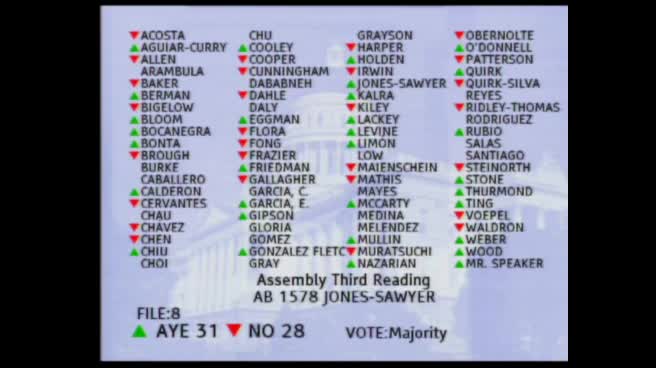
Bill Author

Bill Co-Author(s):