AB 1406: School facilities: leases of real property.
- Session Year: 2017-2018
- House: Assembly
- Latest Version Date: 2018-08-27
Existing law authorizes a school district to enter into leases and agreements relating to real property and buildings to be used by the school district pursuant to specified provisions of law, and provides that the term of any lease or agreement entered into pursuant to those provisions shall not exceed 40 years.
This bill would increase the maximum term of a lease or agreement entered into pursuant to these provisions to 99 years.
Existing law authorizes a school district to enter into leases and agreements relating to real property and buildings to be used jointly by the school district and a private person, firm, local governmental agency as defined, or corporation. Existing law requires that the term of any lease or agreement entered into by a school district under these provisions not exceed 66 years.
This bill would increase the maximum term of a lease or agreement entered into pursuant to these provisions to 99 years.
Existing law establishes various housing assistance programs directed by the Department of Housing and Community Development.This bill would establish the Homeless Youth Housing Program to, upon appropriation of funds by the Legislature, award grants to up to 10 recipients, as defined, that demonstrate the ability to contract with service providers capable of providing housing assistance and supportive services to homeless youth with the goal of transitioning youth towards self-sufficiency. The bill would require the Department of Housing and Community Development and the Office of Emergency Services to work collaboratively to carry out the duties and functions of the program and to, among other things, enter into an interagency agreement to address the respective and shared responsibilities of the Department of Housing and Community Development and the Office of Emergency Services in implementing, overseeing, and evaluating the program. The bill would also require the Department of Housing and Community Development and the Office of Emergency Services to establish standards for recipients consistent with the requirements of program and to limit administrative costs.The bill would require recipients to use funds to establish or expand programs that provide specified housing assistance and supportive services to homeless youth, as defined. The bill would require the Department of Housing and Community Development and the Office of Emergency Services to award grants under the program to recipients that meet specified requirements, including that the recipient provide at least a 25% match for grant funds received under the program and that the recipient develop and submit a local plan to reduce homelessness among youth that includes, among other specified information, a comprehensive outreach strategy to identify and assist homeless youth. The bill would require each recipient to annually report to the Department of Housing and Community Development and the Office of Emergency Services regarding the use of grant moneys, as specified. The bill would require the Department of Housing and Community Development and the Office of Emergency Services by October 1, 2019, to report to the Legislature regarding the implementation of the program, as specified.Existing law establishes various housing assistance programs directed by the Department of Housing and Community Development.
This bill would establish the Homeless Youth Housing Program to, upon appropriation of funds by the Legislature, award grants to up to 10 recipients, as defined, that demonstrate the ability to contract with service providers capable of providing housing assistance and supportive services to homeless youth with the goal of transitioning youth towards self-sufficiency. The bill would require the Department of Housing and Community Development and the Office of Emergency Services to work collaboratively to carry out the duties and functions of the program and to, among other things, enter into an interagency agreement to address the respective and shared responsibilities of the Department of Housing and Community Development and the Office of Emergency Services in implementing, overseeing, and evaluating the program. The bill would also require the Department of Housing and Community Development and the Office of Emergency Services to establish standards for recipients consistent with the requirements of program and to limit administrative costs.
The bill would require grantees recipients to use funds to establish or expand programs that provide specified housing assistance and supportive services to homeless youth, as defined. The bill would require the Department of Housing and Community Development and the Office of Emergency Services to award grants under the program to recipients that meet specified requirements, including that the grantee match all grant funds on a dollar-by-dollar basis recipient provide at least a 25% match for grant funds received under the program and that the grantee recipient develop and submit a local plan to reduce homelessness among youth that includes, among other specified information, a comprehensive outreach strategy to identify and assist homeless youth. The bill would require each grantee recipient to annually report to the Department of Housing and Community Development and the Office of Emergency Services regarding the use of grant moneys, as specified. The bill would require the Department of Housing and Community Development and the Office of Emergency Services by October 1, 2019, to report to the Legislature regarding the implementation of the program, as specified.
Existing law establishes various housing assistance programs directed by the Department of Housing and Community Development.
This bill would establish the Homeless Youth Advocacy and Housing Program to be administered by the department to to, upon appropriation of funds by the Legislature, award grants to up to 10 local continuums of care, recipients, as defined, that demonstrate the ability to contract with service provider providers capable of providing housing assistance and supportive services to homeless youth with the goal of transitioning youth towards self-sufficiency, and would self-sufficiency. The bill would require the Department of Housing and Community Development and the Office of Emergency Services to work collaboratively to carry out the duties and functions of the program and to, among other things, enter into an interagency agreement to address the respective and shared responsibilities of the Department of Housing and Community Development and the Office of Emergency Services in implementing, overseeing, and evaluating the program. The bill would also require the Department of Housing and Community Development and the Office of Emergency Services to establish standards for recipients consistent with the requirements of program and to limit administrative costs.
The bill would require grantees to use funds to establish or expand programs that provide specified housing assistance and supportive services to homeless youth, as defined, under 25 years of age. The bill would require the department, in consultation with specified stakeholders, to establish minimum standards and procedures for awarding grants under the program. defined. The bill would require the department Department of Housing and Community Development and the Office of Emergency Services to award grants under the program to local continuums of care recipients that meet specified requirements, including that the grantee match all grant funds on a dollar-by-dollar basis and that the grantee develop and submit a local plan to reduce homelessness among youth, 16 to 24, inclusive, years of age which shall include specified youth that includes, among other specified information, including a comprehensive outreach strategy to identify and assist homeless youth. The bill would require each grantee to annually report to the department Department of Housing and Community Development and the Office of Emergency Services regarding the use of grant moneys, as specified. The bill would require the department to periodically inform the Legislature of the progress in implemending of the program and make related data available on its Internet Web site. The bill would require the department, Department of Housing and Community Development and the Office of Emergency Services by October 1, 2019, to report to the Legislature regarding the implementation of the program, as specified. The bill would continuously appropriate $15,000,000 annually from the General Fund to the Department of Housing and Community Development for the purpose of awarding grants under the program.
Existing law establishes various housing assistance programs directed by the Department of Housing and Community Development.
This bill would establish the Homeless Youth Advocacy and Housing Program to be administered by the department to award grants to up to 10 local continuums of care, as defined, that demonstrate the ability to contract with service provider capable of providing housing assistance and supportive services to homeless youth with the goal of transitioning youth towards self-sufficiency, and would require grantees to use funds to establish or expand programs that provide specified housing assistance and supportive services to homeless youth, as defined, under 25 years of age. The bill would require the department, in consultation with specified stakeholders, to establish minimum standards and procedures for awarding grants under the program. The bill would require the department to award grants under the program to local continuums of care that meet specified requirements, including that the grantee match all grant funds on a dollar-by-dollar basis and that the grantee develop and submit a local plan to reduce homelessness among youth, 16 to 24, inclusive, years of age which shall include specified information, including a comprehensive outreach strategy to identify and assist homeless youth. The bill would require each grantee to annually report to the department regarding the use of grant moneys, as specified. The bill would require the department to periodically inform the Legislature of the progress in implemending of the program and make related data available on its Internet Web site. The bill would require the department, by October 1, 2019, to report to the Legislature regarding the implementation of the program, as specified. The bill would continuously appropriate $15,000,000 annually from the General Fund to the Department of Housing and Community Development for the purpose of awarding grants under the program.
The term of a lease or agreement entered into by a school district pursuant to this article shall not exceed 99 years.
SEC. 2.Section 17517 of the Education Code is amended to read:17517.The term of a lease or agreement entered into by a school district pursuant to this article shall not exceed 99 years.
The term of any a lease or agreement entered into by a school district pursuant to this article shall not exceed 40 99 years.
SEC. 2.Section 17517 of the Education Code is amended to read:17517.The term of any a lease or agreement entered into by a school district pursuant to this article shall not exceed 66 99 years.
All matter omitted in this version of the bill appears in the bill as amended in the Senate, June 19, 2017. (JR11)This chapter shall be known and may be cited as the Homeless Youth Housing Program.
50897.1.(a)The Homeless Youth Housing Program is established in the Department of Housing and Community Development to award grants to up to 10 recipients that demonstrate the ability to provide housing assistance and supportive services to homeless youth with the goal of transitioning youth towards self-sufficiency.
(b)The Department of Housing and Community Development and the Office of Emergency Services shall work collaboratively to carry out the duties and functions imposed by this chapter. The departments shall do all of the following:
(1)No later than March 31, 2018, enter into an interagency agreement to address the respective and shared responsibilities of the Department of Housing and Community Development and the Office of Emergency Services in implementing, overseeing, and evaluating this chapter.
(2)Convene a process to inform the development of guidelines for the implementation of the program, which shall include input from stakeholders. Stakeholders providing input shall include, but not be limited to, organizations with experience serving homeless youth, organizations with experience providing housing or homeless services, youth advocates, and homeless advocates.
(3)Establish standards for recipients consistent with the requirements of this chapter and to limit administrative costs.
(4)Establish an evaluation process for the program.
(5)No later than December 31, 2018, finalize guidelines and requests for proposal. release notice of funding availability.
(6)Review and approve proposals for funding.
(c)Of the total amount of funds appropriated for the program, the departments may use no more than 5 percent for the purpose of administering the program.
(d)Funds provided through the Homeless Youth Advocacy andHousing Program shall be awarded in a three-year grant cycle.
50897.2.For purposes of this chapter, the following definitions shall apply:
(a)Benefits advocacy means individual assistance provided to homeless youth to access benefits to which those homeless youth may be entitled, including, but not limited to, the county child welfare system, the CalWORKs program (Chapter 2 (commencing with Section 11200) of Part 3 of Division 9 of the Welfare and Institutions Code), the CalFresh program (Chapter 10 (commencing with Section 18900) of Part 6 of Division 9 of the Welfare and Institutions Code), the Medi-Cal program (Chapter 7 (commencing with Section 14000) of Part 3 of Division 9 of the Welfare and Institutions Code), and Supplemental Security Income, as well as advocacy to create medical-legal partnerships.
(b)Child welfare services has the same meaning as that term is defined in Section 16501 of the Welfare and Institutions Code.
(c)Continuum of care has the same meaning as that term is defined Section 578.3 of Title 24 of the Code of Federal Regulations.
(d)Departments means the Department of Housing and Community Development and the Office of Emergency Services.
(e)Family finding means a set of strategies to locate and engage relatives of children living in out-of-home care or at risk of living in out-of-home care, with the goal to connect each child with a family.
(f)Homeless youth means an unaccompanied youth 24 years of age or younger who is a homeless child or youth, as defined in Section 11434a of Title 42 of the United States Code, as that section read on January 1, 2017.
(g)Housing navigation services means housing identification, application assistance, landlord negotiation, and move-in assistance necessary to assist homeless individuals or families, or both, move as quickly as possible into housing.
(h)Housing stabilization services means services promoting housing stability, such as engagement, case management, public systems assistance, legal assistance, credit repair assistance, life skills training, and conflict mediation.
(i)Interim housing means a safe, decent residential setting that incorporates core components of Housing First, as provided in Section 8255 of the Welfare and Institutions Code, and in which homeless youth wait to secure permanent or transitional housing.
(j)Program means the Homeless Youth Advocacy and Housing Program developed under this chapter.
(k)Rapid rehousing assistance has the same meaning as that term is described in Section 576.104 of Title 24 of the Code of Federal Regulations.
(l)Recipients includes all of the following:
(1)A city, county, or city and county that works with community-based organizations to provide all of the housing options and services identified in subdivision (b) of Section 50897.3.
(2)A homeless continuum of care.
(3)A community-based organization that meets all of the following requirements:
(A)Collaborates with other local agencies to provide the housing options and services identified in subdivision (b) of Section 50897.3.
(B)Has agreed to work together with other entities to develop a local plan to reduce homelessness among homeless youth consistent with paragraph (1) of subdivision (c) of Section 50897.3.
(C)Has received approval of the homeless continuum of care in the region in which the organization is operating.(C)Has received a letter from the homeless continuum of care in the region in which the organization is operating indicating that the proposed program is consistent with the goals of the continuum of care and integrated into the coordinated entry process of the continuum of care.
(m)Street outreach has the same meaning as that term is described in Section 576.101 of Title 24 Code of Federal Regulations.
(n)Supplemental security income has the same meaning as that term is defined in Section 416.120 of Title 20 of the Code of Federal Regulations.
(o)Supportive housing has the same meaning as that term is defined in subdivision (b) of Section 50675.14.
(p)Time-limited housing assistance includes rapid rehousing and transitional housing, and shall conform to the requirements of subparagraph (B) of paragraph (2) of subdivision (d) of Section 8255 of the Welfare and Institutions Code.
(q)Transitional housing has the same meaning as specified in Section 8255 of the Welfare and Institutions Code. defined in subdivision (j) of Section 65582 of the Government Code.
50897.3.(a)The program shall, upon appropriation of funds by the Legislature, award grants to recipients that demonstrate the ability to contract with service providers capable of providing to provide housing assistance and supportive services to homeless youth with the goal of transitioning youth towards self-sufficiency.
(b)A recipient shall use grant funds to establish or expand programs that assess the housing and services needs of homeless youth, establish a plan to meet those needs in collaboration with the participant, and provide evidence-based housing and services models to participants. In coordination with other relevant agencies, including a countys child welfare and disability services agencies, the recipient shall provide all of the following:
(1)(A)Based on each homeless youths assessed need for housing assistance, recipients shall offer a range of housing options that meet the need of homeless youth, which shall include two or more of the following:
(i)Rapid rehousing.
(ii)Rental assistance to access affordable housing.
(iii)Transitional housing, for a period not to exceed 36 months.
(iv)Supportive housing.
(B)For purposes of this section, housing assistance does not include publicly or privately operated shelters and housing programs terminating less than six months after placement. Housing assistance may include interim housing of up to nine months so long as the housing provider offers intensive housing navigation services to relocate the homeless youth in permanent housing as quickly as possible.
(2)Based on each participants assessed need for supportive services, recipients shall offer all of the following, using evidence-based, voluntary, and noncompulsory evidence-based services models:
(A)Benefits advocacy.
(B)Housing stabilization services.
(C)Provision of, or linkage to, care coordination to help participants access any medical, mental health, and substance use treatment the participant needs to attain health stability.
(D)Employment training, acquisition support, and retention services.
(E)Education supports related to receiving a high school diploma or a California High School Equivalency Certificate and access to higher education, including vocational colleges, the California Community Colleges, the California State University, the University of California, and other postsecondary educational institutions.
(F)Housing navigation.
(G)Family finding.
(H)Street outreach.
(3)The recipient shall offer high-quality youth informed services in conjunction with the housing programs provided for in paragraph (1). The service provider shall proactively engage homeless youth to offer a wide array of supportive services that are designed to meet the needs of each participant including, but not limited to, those listed in paragraph (2). The service provider shall not prevent a youth from entering housing, or discharge or evict a youth from a housing program, on the basis of lack of participation in supportive services.
(c)The departments shall award program funds to recipients subject to the following requirements:
(1)A recipient that receives state funds under this program shall develop and submit a local plan to reduce homelessness among homeless youth. The plan shall include all of the following information:
(A)The current number of homeless youth within the jurisdiction of their local continuum of care and the expected level of reduction based on receipt of grant funds from the program, based on data aggregated from the annual Point-in-Time count conducted by, and the Homeless Management Information System of, the United States Department of Housing and Urban Development, the Homeless Children and Youths Program of the United States Department of Education, and any other reliable source of data on the number of homeless youth within the area served by the recipient.
(B)The protocol to be used to ensure that homeless youth, 16 to 18, inclusive, years of age, are screened for maltreatment and assisted in their efforts to enter foster care.
(C)The protocol to be used to ensure that homeless youth are screened for eligibility for benefits and receive benefits advocacy.
(D)The protocol to be used to incorporate homeless youth into the local homeless services coordinated entry and assessment system.
(E)The comprehensive outreach strategy to identify and assist homeless youth.
(F)The protocol to be used to reduce disparities in access to housing and services for homeless youth.
(2)Regardless of housing type, a homeless service provider offering services shall demonstrate the ability to provide comprehensive, culturally competent, and trauma-informed services to meet the needs of homeless youth, including the specific needs of lesbian, gay, bisexual, and transgender youth, commercially sexually exploited children and youth, youth of color, and survivors of domestic violence.
(3)A recipient that receives state funds under this program shall match that funding on a dollar-by-dollar basis. provide at least a 25-percent match. Funds used for this purpose shall supplement, not supplant, recipient funding intended for these purposes. In-kind matches shall be allowable for the recipient matching requirement and may include reasonably calculable services, the fair market value of housing vouchers set aside for the program population, or the value of affordable apartments set aside for the program population.
50897.4.(a)Each recipient shall annually report to the departments regarding the use of state funding provided under this chapter, including all the following information:
(1)The number and demographics of youth served.
(2)The types of housing assistance provided by the recipient and the number, age, and gender identity of youth who have resided in the housing.
(3)The supportive services provided by the recipient and the number, age, and gender identity of youth who received these supportive services.
(4)The number of youth served who are currently in stable housing and how long each has resided in stable housing.
(5)The number of youth served who are engaged in employment training, the nature of the training, and length of time enrolled in employment training.
(6)The number of youth served who completed high school or high school equivalency and the number of youth enrolled in educational programs, the type of programs, and the length of enrollment in educational programs.
(7)The number of youth served who received benefits advocacy related to accessing child welfare, Supplemental Security Income, and other services to which the youth are entitled, as well as the number of youth receiving child welfare and Supplemental Security Income.
(b)The departments shall report to the Legislature by October 1, 2019, regarding implementation of the program, including the information reported by each recipient pursuant to subdivision (a).
(c)(1)A report to be submitted pursuant to subdivision (b) shall be submitted in compliance with Section 9795 of the Government Code.
(2)The requirement for submitting a report imposed under subdivision (b) is inoperative on October 1, 2023, pursuant to Section 10231.5 of the Government Code.
This chapter shall be known and may be cited as the Homeless Youth Advocacy and Housing Program.
50897.1.(a)The Homeless Youth Advocacy and Housing Program is established in the Department of Housing and Community Development to award grants to up to 10 local continuums of care recipients that demonstrate the ability to provide housing assistance and supportive services to homeless youth with the goal of transitioning youth towards self-sufficiency.
(b)The Homeless Youth Advocacy and Housing Program shall be administered by the Department of Housing and Community Development.(b)The Department of Housing and Community Development and the Office of Emergency Services shall work collaboratively to carry out the duties and functions imposed by this chapter. The departments shall do all of the following:
(1)No later than March 31, 2018, enter into an interagency agreement to address the respective and shared responsibilities of the Department of Housing and Community Development and the Office of Emergency Services in implementing, overseeing, and evaluating this chapter.
(2)Convene a process to inform the development of guidelines for the implementation of the program, which shall include input from stakeholders. Stakeholders providing input shall include, but not be limited to, organizations with experience serving homeless youth, organizations with experience providing housing or homeless services, youth advocates, and homeless advocates.
(3)Establish standards for recipients consistent with the requirements of this chapter and to limit administrative costs.
(4)Establish an evaluation process for the program.
(5)No later than December 31, 2018, finalize guidelines and requests for proposal.
(6)Review and approve proposals for funding.
(c)Of the total amount of funds appropriated for the program, the departments may use no more than 5 percent for the purpose of administering the program.
(c)(d)Funds provided through the Homeless Youth Advocacy and Housing Program shall be awarded in a three-year grant cycle.
50897.2.For purposes of this chapter, the following definitions shall apply:
(a)Benefits advocacy means individual assistance provided to homeless youth to access benefits to which those homeless youth may be entitled, including, but not limited to, the county child welfare system system, the CalWORKs program (Chapter 2 (commencing with Section 11200) of Part 3 of Division 9 of the Welfare and Institutions Code), the CalFresh program (Chapter 10 (commencing with Section 18900) of Part 6 of Division 9 of the Welfare and Institutions Code), the Medi-Cal program (Chapter 7 (commencing with Section 14000) of Part 3 of Division 9 of the Welfare and Institutions Code), and Supplemental Security Income. Income, as well as advocacy to create medical-legal partnerships.
(b)Child welfare services has the same meaning as that term is defined in Section 16501 of the Welfare and Institutions Code.
(c)Continuum of care has the same meaning as that term is defined Section 578.3 of Title 24 of the Code of Federal Regulations.
(d)Department means the Department of Housing and Community Development.(d)Departments means the Department of Housing and Community Development and the Office of Emergency Services.
(e)Family finding means a set of strategies to locate and engage relatives of children living in out-of-home care or at risk of living in out-of-home care, with the goal to connect each child with a family.
(f)Homeless youth means a person an unaccompanied youth 24 years of age or younger who is a homeless child or youth, as defined in Part 91 of Title 24 of the Code of Federal Regulations. Section 11434a of Title 42 of the United States Code, as that section read on January 1, 2017.
(g)Housing navigation services means housing identification, application assistance, landlord negotiation, and move-in assistance necessary to assist homeless individuals or families, or both, move as quickly as possible into housing.
(h)Housing stabilization services means services promoting housing stability, such as engagement, case management, public systems assistance, legal assistance, credit repair assistance, life skills training, and conflict mediation.
(i)Interim housing means a safe, decent residential setting that incorporates core components of Housing First, as provided in Section 8255 of the Welfare and Institutions Code, and in which homeless youth wait to secure permanent or transitional housing.
(h)(j)Program means the Homeless Youth Advocacy and Housing Program developed under this chapter.
(i)(k)Rapid rehousing assistance has the same meaning as that term is described in Section 576.104 of Title 24 of the Code of Federal Regulations.
(l)Recipients includes all of the following:
(1)A city, county, or city and county that works with community-based organizations to provide all of the housing options and services identified in subdivision (b) of Section 50897.3.
(2)A homeless continuum of care.
(3)A community-based organization that meets all of the following requirements:
(A)Collaborates with other local agencies to provide the housing options and services identified in subdivision (b) of Section 50897.3.
(B)Has agreed to work together with other entities to develop a local plan to reduce homelessness among homeless youth consistent with paragraph (1) of subdivision (c) of Section 50897.3.
(C)Has received approval of the homeless continuum of care in the region in which the organization is operating.
(j)(m)Street outreach has the same meaning as that term is described in Section 576.101 of Title 24 Code of Federal Regulations.
(k)(n)Supplemental security income has the same meaning as that term is defined in Section 416.120 of Title 20 of the Code of Federal Regulations.
(l)(o)Supportive housing has the same meaning as that term is defined in subdivision (b) of Section 50675.14.
(m)(p)Time-limited housing assistance includes rapid rehousing and transitional housing, and shall conform to the requirements of subparagraph (B) of paragraph (2) of subdivision (d) of Section 8255 of the Welfare and Institutions Code.
(q)Transitional housing has the same meaning as specified in Section 8255 of the Welfare and Institutions Code.
50897.3.(a)The program shall shall, upon appropriation of funds by the Legislature, award grants to local continuums of care recipients that demonstrate the ability to contract with service providers capable of providing housing assistance and supportive services to homeless youth with the goal of transitioning youth towards self-sufficiency.
(b)A participating continuum of care recipient shall use grant funds to establish or expand programs that assess the housing and services needs of homeless youth, establish a plan to meet those needs in collaboration with the participant, and provide evidence-based housing and services models to participants. In coordination with other relevant county agencies, including a countys child welfare and disability services agencies, the participating continuum of care recipient shall provide all of the following:
(1)(A)Based on each participants homeless youths assessed need for housing assistance, participating continuums of care recipients shall offer a range of housing options that meet the need of homeless youth, which shall include two or more of the following:
(i)Rapid rehousing assistance. rehousing.
(ii)Rental assistance to access affordable housing.
(ii)(iii)Transitional housing, for a period not to exceed 36 months.
(iii)Supportive housing.(iv)Supportive housing.
(iv)Housing navigation services.(v)Family finding.(vi)Street outreach.(B)For purposes of this section, housing assistance does not include publicly or privately operated shelters and housing programs terminating less than six months after placement and nonpermanent living arrangements with family members or other acquaintances. placement. Housing assistance may include interim housing of up to nine months so long as the housing provider offers intensive housing navigation services to relocate the homeless youth in permanent housing as quickly as possible.
(2)Based on each participants assessed need for supportive services, participating continuums of care recipients shall offer all of the following, using evidence-based evidence-based, voluntary, and noncompulsory services models, such as motivational interviewing, positive youth development models, harm reduction, cognitive behavioral therapy, and trauma-informed care: models:
(A)Benefits advocacy, including assistance accessing the county child welfare and foster care system and Supplemental Security Income. advocacy.
(B)Housing stabilization services, including engagement, case management, public systems assistance, legal services, credit repair assistance, life skills training, and conflict mediation. services.
(C)Provision of, or linkage to, care coordination to help participants access any medical, mental health, and substance use treatment the participant needs to attain health stability.
(D)Employment training, acquisition support, and retention services.
(E)Education supports related to receiving a high school diploma or a California High School Equivalency Certificate and access to higher education, including vocational colleges, the California Community Colleges, the California State University, the University of California, and other postsecondary educational institutions.
(F)Housing navigation.
(G)Family finding.
(H)Street outreach.
(c)The department departments shall award program funds to local continuums of care recipients subject to the following requirements:
(1)A continuum of care recipient that receives state funds under this program shall develop and submit a local plan to reduce homelessness among youth 16 to 24, inclusive, years of age. homeless youth. The plan shall include all of the following information:
(A)The current number of homeless youth within the jurisdiction of their local continuum of care and the expected level of reduction based on receipt of grant funds from the program. program, based on data aggregated from the annual Point-in-Time count conducted by, and the Homeless Management Information System of, the United States Department of Housing and Urban Development, the Homeless Children and Youths Program of the United States Department of Education, and any other reliable source of data on the number of homeless youth within the area served by the recipient.
(B)The housing services and supportive services currently available to homeless youth.(C)The housing services and supportive services to be provided to homeless youth.(D)(B)The protocol to be used to ensure that homeless youth, 16 to 18, inclusive, years of age, are screened for maltreatment and assisted in their efforts to enter foster care.
(E)(C)The protocol to be used to ensure that homeless youth are screened for eligibility for Supplemental Security Income and assisted in their efforts to receive Supplemental Security Income benefits. benefits and receive benefits advocacy.
(F)The protocol to be used to ensure that homeless youth are screened for eligibility for CalWORKs and assisted in their efforts to receive CalWORKs.(G)(D)The protocol to be used to incorporate homeless youth into the local homeless services coordinated entry and assessment system.
(H)(E)The comprehensive outreach strategy to identify and assist homeless youth.
(F)The protocol to be used to reduce disparities in access to housing and services for youth.
(2)A Regardless of housing type, a homeless service provider offering services funded by the program shall demonstrate the ability to provide comprehensive, culturally competent advocacy and housing competent, and trauma-informed services to meet the needs of homeless youth, including the specific needs of lesbian, gay, bisexual, and transgender youth. youth, commercially sexually exploited children and youth, and survivors of domestic violence.
(3)A continuum of care recipient that receives state funds under this program shall match that funding on a dollar-by-dollar basis. Funds used for this purpose shall supplement, not supplant, continuum of care recipient funding intended for these purposes. In-kind matches shall be allowable for the recipient matching requirement and may include reasonably calculable services, the fair market value of housing vouchers set aside for the program population, or the value of affordable apartments set aside for the program population.
(d)The department, in consultation with current and former homeless youth, John Burton Advocates for Youth, Housing California, the Corporation for Supportive Housing, and other groups serving homeless and at-risk youth shall establish all of the following:(1)Minimum standards and procedures for the awarding of grants and the determination of grant amounts under the program.(2)The proportion of program funding to be expended on reasonable and appropriate administrative activities to minimize overhead and maximize services.(3)Eligible sources of funds for a continuum of cares matching contribution described under paragraph (3) of subdivision (b).(4)Tracking and reporting procedures for the program.(5)A process for evaluating program data.50897.4.(a)Each participating continuum of care recipient shall annually report to the department departments regarding the use of state funding provided under this chapter, including all the following information:
(1)The number and demographics of youth served.
(2)The demographics of the youth served, including race or ethnicity, age, gender, parenting status, and sexual orientation.(3)(2)The types of housing assistance provided by the continuum of care recipient and the number, age, and gender of youth who have resided in the housing.
(4)(3)The supportive services provided by the continuum of care recipient and the number, age, and gender of youth who received these supportive services.
(5)The percentage of homeless youth who retained permanent housing 6, 12, 24, and 36 months, respectively, after initial placement.(4)The number of youth served who are currently in stable housing and how long each has resided in stable housing.
(6)(5)The number of youth served who are engaged in employment training, the nature of the training, and length of time enrolled in employment training.
(7)(6)The number of youth that served who completed high school or high school equivalency and the number of youth enrolled in educational programs, the type of programs, and the length of enrollment in educational programs.
(8)(7)The number of youth receiving served who received benefits advocacy related to accessing child welfare services and the number who successfully receive child welfare services. welfare, Supplemental Security Income, and other services to which the youth are entitled, as well as the number of youth receiving child welfare and Supplemental Security Income.
(9)The number of youth receiving benefits advocacy related to accessing Supplemental Security Income and the number who successfully receive Supplemental Security Income.(b)The department shall periodically inform the Legislature of the progress in implementing the program and make related data available on its Internet Web site. The department departments shall also report to the Legislature by October 1, 2019, regarding implementation of the program, including the information reported by each participating continuum of care recipient pursuant to subdivision (a).
(c)(1)A report to be submitted pursuant to subdivision (b) shall be submitted in compliance with Section 9795 of the Government Code.
(2)The requirement for submitting a report imposed under subdivision (b) is inoperative on October 1, 2023, pursuant to Section 10231.5 of the Government Code.
(d)Notwithstanding the rulemaking provisions of the Administrative Procedure Act (Chapter 3.5 (commencing with Section 11340) of Part 1 of Division 3 of Title 2 of the Government Code), the department may implement, interpret, or make specific this chapter through letters without taking any regulatory action.SEC. 2.Notwithstanding Section 13340 of the Government Code, fifteen million dollars ($15,000,000) from the General Fund is hereby continuously appropriated to the Department of Housing and Community Development in each fiscal year for the purpose of awarding grants under the Homeless Youth Advocacy and Housing Program established pursuant to Chapter 17 (commencing with Section 50897) of Part 2 of Division 31 of the Health and Safety Code. REVISIONS: HeadingLine 2.This chapter shall be known and may be cited as the Homeless Youth Advocacy and Housing Program.
50897.1.(a)The Homeless Youth Advocacy and Housing Program is established in the Department of Housing and Community Development to award grants to up to 10 local continuums of care that demonstrate the ability to provide housing assistance and supportive services to homeless youth with the goal of transitioning youth towards self-sufficiency.
(b)The Homeless Youth Advocacy and Housing Program shall be administered by the Department of Housing and Community Development.
(c)Funds provided through the Homeless Youth Advocacy and Housing Program shall be awarded in a three-year grant cycle.
50897.2.For purposes of this chapter, the following definitions shall apply:
(a)Benefits advocacy means individual assistance provided to homeless youth to access the county child welfare system and Supplemental Security Income.
(b)Child welfare services has the same meaning as that term is defined in Section 16501 of the Welfare and Institutions Code.
(c)Continuum of care has the same meaning as that term is defined Section 578.3 of Title 24 of the Code of Federal Regulations.
(d)Department means the Department of Housing and Community Development.
(e)Family finding means a set of strategies to locate and engage relatives of children living in out-of-home care or at risk of living in out-of-home care, with the goal to connect each child with a family.
(f)Homeless youth means a person 24 years of age or younger who is a homeless child or youth, as defined in Part 91 of Title 24 of the Code of Federal Regulations.
(g)Housing navigation services means housing identification, application assistance, landlord negotiation, and move-in assistance necessary to assist homeless individuals or families, or both, move as quickly as possible into housing.
(h)Program means the Homeless Youth Advocacy and Housing Program developed under this chapter.
(i)Rapid rehousing assistance has the same meaning as that term is described in Section 576.104 of Title 24 of the Code of Federal Regulations.
(j)Street outreach has the same meaning as that term is described in Section 576.101 of Title 24 Code of Federal Regulations.
(k)Supplemental security income has the same meaning as that term is defined in Section 416.120 of Title 20 of the Code of Federal Regulations.
(l)Supportive housing has the same meaning as that term is defined in subdivision (b) of Section 50675.14.
(m)Time-limited housing assistance includes rapid rehousing and transitional housing, and shall conform to the requirements of subparagraph (B) of paragraph (2) of subdivision (d) of Section 8255 of the Welfare and Institutions Code.
50897.3.(a)The program shall award grants to local continuums of care that demonstrate the ability to contract with service providers capable of providing housing assistance and supportive services to homeless youth with the goal of transitioning youth towards self-sufficiency.
(b)A participating continuum of care shall use grant funds to establish or expand programs that assess the housing and services needs of homeless youth, establish a plan to meet those needs in collaboration with the participant, and provide evidence-based housing and services models to participants. In coordination with other relevant county agencies, including a countys child welfare and disability services agencies, the participating continuum of care shall provide all of the following:
(1)(A)Based on each participants assessed need for housing assistance, participating continuums of care shall offer the following:
(i)Rapid rehousing assistance.
(ii)Transitional housing, for a period not to exceed 36 months.
(iii)Supportive housing.
(iv)Housing navigation services.
(v)Family finding.
(vi)Street outreach.
(B)For purposes of this section, housing assistance does not include publicly or privately operated shelters and housing programs terminating less than six months after placement and nonpermanent living arrangements with family members or other acquaintances.
(2)Based on each participants assessed need for supportive services, participating continuums of care shall offer all of the following, using evidence-based services models, such as motivational interviewing, positive youth development models, harm reduction, cognitive behavioral therapy, and trauma-informed care:
(A)Benefits advocacy, including assistance accessing the county child welfare and foster care system and Supplemental Security Income.
(B)Housing stabilization services, including engagement, case management, public systems assistance, legal services, credit repair assistance, life skills training, and conflict mediation.
(C)Provision of, or linkage to, care coordination to help participants access any medical, mental health, and substance use treatment the participant needs to attain health stability.
(D)Employment training, acquisition support, and retention services.
(E)Education supports related to receiving a high school diploma or a California High School Equivalency Certificate and access to higher education, including vocational colleges, the California Community Colleges, the California State University, the University of California, and other postsecondary educational institutions.
(c)The department shall award program funds to local continuums of care subject to the following requirements:
(1)A continuum of care that receives state funds under this program shall develop and submit a local plan to reduce homelessness among youth 16 to 24, inclusive, years of age. The plan shall include all of the following information:
(A)The current number of homeless youth within the jurisdiction of their local continuum of care and the expected level of reduction based on receipt of grant funds from the program.
(B)The housing services and supportive services currently available to homeless youth.
(C)The housing services and supportive services to be provided to homeless youth.
(D)The protocol to be used to ensure that homeless youth, 16 to 18, inclusive, years of age, are screened for maltreatment and assisted in their efforts to enter foster care.
(E)The protocol to be used to ensure that homeless youth are screened for eligibility for Supplemental Security Income and assisted in their efforts to receive Supplemental Security Income benefits.
(F)The protocol to be used to ensure that homeless youth are screened for eligibility for CalWORKs and assisted in their efforts to receive CalWORKs.
(G)The protocol to be used to incorporate homeless youth into the local homeless services coordinated entry and assessment system.
(H)The comprehensive outreach strategy to identify and assist homeless youth.
(2)A homeless service provider offering services funded by the program shall demonstrate the ability to provide comprehensive, culturally competent advocacy and housing services to meet the needs of homeless youth, including the specific needs of lesbian, gay, bisexual, and transgender youth.
(3)A continuum of care that receives state funds under this program shall match that funding on a dollar-by-dollar basis. Funds used for this purpose shall supplement, not supplant, continuum of care funding intended for these purposes.
(d)The department, in consultation with current and former homeless youth, John Burton Advocates for Youth, Housing California, the Corporation for Supportive Housing, and other groups serving homeless and at-risk youth shall establish all of the following:
(1)Minimum standards and procedures for the awarding of grants and the determination of grant amounts under the program.
(2)The proportion of program funding to be expended on reasonable and appropriate administrative activities to minimize overhead and maximize services.
(3)Eligible sources of funds for a continuum of cares matching contribution described under paragraph (3) of subdivision (b).
(4)Tracking and reporting procedures for the program.
(5)A process for evaluating program data.
50897.4.(a)Each participating continuum of care shall annually report to the department regarding the use of state funding provided under this chapter, including all the following information:
(1)The number of youth served.
(2)The demographics of the youth served, including race or ethnicity, age, gender, parenting status, and sexual orientation.
(3)The types of housing assistance provided by the continuum of care and the number, age, and gender of youth in the housing.
(4)The supportive services provided by the continuum of care and the number, age, and gender of youth who received these supportive services.
(5)The percentage of homeless youth who retained permanent housing 6, 12, 24, and 36 months, respectively, after initial placement.
(6)The number of youth engaged in employment training, the nature of the training, and length of time enrolled in employment training.
(7)The number of youth that completed high school or high school equivalency and the number of youth enrolled in educational programs, the type of programs, and the length of enrollment in educational programs.
(8)The number of youth receiving benefits advocacy related to accessing child welfare services and the number who successfully receive child welfare services.
(9)The number of youth receiving benefits advocacy related to accessing Supplemental Security Income and the number who successfully receive Supplemental Security Income.
(b)The department shall periodically inform the Legislature of the progress in implementing the program and make related data available on its Internet Web site. The department shall also report to the Legislature by October 1, 2019, regarding implementation of the program, including the information reported by each participating continuum of care pursuant to subdivision (a).
(c)(1)A report to be submitted pursuant to subdivision (b) shall be submitted in compliance with Section 9795 of the Government Code.
(2)The requirement for submitting a report imposed under subdivision (b) is inoperative on October 1, 2023, pursuant to Section 10231.5 of the Government Code.
(d)Notwithstanding the rulemaking provisions of the Administrative Procedure Act (Chapter 3.5 (commencing with Section 11340) of Part 1 of Division 3 of Title 2 of the Government Code), the department may implement, interpret, or make specific this chapter through letters without taking any regulatory action.
SEC. 2.Notwithstanding Section 13340 of the Government Code, fifteen million dollars ($15,000,000) from the General Fund is hereby continuously appropriated to the Department of Housing and Community Development in each fiscal year for the purpose of awarding grants under the Homeless Youth Advocacy and Housing Program established pursuant to Chapter 17 (commencing with Section 50897) of Part 2 of Division 31 of the Health and Safety Code.
|
Date
|
Status
|
|---|---|
| Aug 27, 2018 | Chaptered by Secretary of State - Chapter 204, Statutes of 2018. |
| Aug 27, 2018 | Approved by the Governor. |
| Aug 14, 2018 | Enrolled and presented to the Governor at 4 p.m. |
| Aug 9, 2018 | Senate amendments concurred in. To Engrossing and Enrolling. |
| Jun 28, 2018 | From committee: That the Senate amendments be concurred in. (Ayes 7. Noes 0.) (June 27). |
| Jun 18, 2018 | Re-referred to Com. on ED. pursuant to Assembly Rule 77.2. |
| Jun 14, 2018 | In Assembly. Concurrence in Senate amendments pending. May be considered on or after June 16 pursuant to Assembly Rule 77. |
| Jun 14, 2018 | Read third time. Passed. Ordered to the Assembly. |
| Jun 7, 2018 | Read second time. Ordered to Consent Calendar. |
| Jun 6, 2018 | From committee: Do pass. To Consent Calendar. (Ayes 6. Noes 0.) (June 6). |
| May 24, 2018 | Re-referred to Com. on ED. |
| May 14, 2018 | Withdrawn from committee. |
| May 7, 2018 | From committee chair, with author's amendments: Amend, and re-refer to committee. Read second time, amended, and re-referred to Com. on T. & H. |
| Jul 6, 2017 | In committee: Set, first hearing. Hearing canceled at the request of author. |
| Jun 19, 2017 | From committee chair, with author's amendments: Amend, and re-refer to committee. Read second time, amended, and re-referred to Com. on T. & H. |
| Jun 14, 2017 | Referred to Com. on T. & H. |
| Jun 1, 2017 | In Senate. Read first time. To Com. on RLS. for assignment. |
| May 31, 2017 | Read third time. Passed. Ordered to the Senate. (Ayes 59. Noes 17. Page 1919.) |
| May 30, 2017 | Read second time. Ordered to third reading. |
| May 26, 2017 | From committee: Do pass. (Ayes 12. Noes 5.) (May 26). |
| May 17, 2017 | In committee: Set, first hearing. Referred to APPR. suspense file. |
| Apr 27, 2017 | From committee: Do pass and re-refer to Com. on APPR. (Ayes 6. Noes 1.) (April 26). Re-referred to Com. on APPR. |
| Apr 19, 2017 | Re-referred to Com. on H. & C.D. |
| Apr 18, 2017 | From committee chair, with author's amendments: Amend, and re-refer to Com. on H. & C.D. Read second time and amended. |
| Mar 16, 2017 | Referred to Com. on H. & C.D. |
| Feb 19, 2017 | From printer. May be heard in committee March 21. |
| Feb 17, 2017 | Read first time. To print. |
|
Date
|
Description
|
Location
|
Votes
|
|
|---|---|---|---|---|
| Aug 9, 2018 | AB 1406 GLORIA Concurrence in Senate Amendments | Assembly Floor |
Passed |
|
| Jun 27, 2018 | With recommendation: That Senate amendments be concurred in. | Assembly Standing Committee on Education |
Passed |
|
| Jun 14, 2018 | Consent Calendar AB1406 | Senate Floor |
Passed |
|
| Jun 6, 2018 | Do pass and be ordered to the Consent Calendar | Senate Standing Committee on Education |
Passed |
|
| May 31, 2017 | AB 1406 GLORIA Assembly Third Reading | Assembly Floor |
Passed |
|
| May 26, 2017 | Do pass. | Assembly Standing Committee on Appropriations |
Passed |
|
| Apr 26, 2017 | Do pass and be re-referred to the Committee on [Appropriations] | Assembly Standing Committee on Housing and Community Development |
Passed |
This list shows positions taken on this bill by organizations on the date displayed, which is linked to the original source.
Positions by individuals are not included.
|
Organization
|
Position
|
Date
|
|---|---|---|
| Berkeley Youth Alternatives | ** Support | Apr 24, 2017 |
| California Academy of Child & Adolescent Psychiatry | * Support | Apr 26, 2017 |
| California Alliance Of Child And Family Services | * Support | Apr 26, 2017 |
| California Coalition For Youth | * Indeterminate | Apr 26, 2017 |
| Center for Human Services | ** Support | Apr 24, 2017 |
| Community Housing Partnership | ** Support | Apr 24, 2017 |
| Corporation For Supportive Housing | * Support | Apr 26, 2017 |
| County Behavioral Health Directors Association of California | ** Support | Apr 24, 2017 |
| Equality California' | ** Support | Apr 24, 2017 |
| EveryOneHome | ** Support | Apr 24, 2017 |
| Family Care Network, Inc. | ** Support | Apr 24, 2017 |
| First Place for Youth | ** Support | Apr 24, 2017 |
| Hillsides | ** Support | Apr 24, 2017 |
| Housing California | * Support | Apr 26, 2017 |
| Individual | ** Support | Apr 24, 2017 |
| John Burton Advocates for Youth | * Support | Apr 26, 2017 |
| Kings | ** Support | Apr 24, 2017 |
| National Association of Social Workers | ** Support | Apr 24, 2017 |
| PATH Ventures | ** Support | Apr 24, 2017 |
| Residents United Network | ** Support | Apr 24, 2017 |
| Sacramento Housing Alliance | ** Support | Apr 24, 2017 |
| Shelter Partnership | ** Support | Apr 24, 2017 |
| Tulare Homeless Alliance | ** Support | Apr 24, 2017 |
CONCURRENCE IN SENATE AMENDMENTS
CSA2 Bill Id:AB 1406
Author:(Gloria)
As Amended Ver:May 7, 2018
Majority vote
ASSEMBLY: |
| (May 31, 2017) | SENATE: | 37-0 | (June 14, 2018) |
(vote not relevant)
COMMITTEE VOTE: | 7-0 | (June 27, 2018) | RECOMMENDATION: | Concur |
(ED.)
Original Committee Reference: H. & C.D.
SUMMARY: Extends the maximum allowable terms of specified lease agreements that a school district may enter into.
The Senate amendments strike the Assembly version of this bill, and instead:
- Extend the maximum allowable term of lease-leaseback and lease-to-own agreements from 40 years to 99 years.
- Extend the maximum allowable term of joint occupancy agreements from 66 years to 99 years.
FISCAL EFFECT: None. This bill is keyed non-fiscal by the Legislative Counsel.
COMMENTS: There are several types of lease agreements in the Education Code. The maximum terms of the leases vary, from 40 years to 99 years. This bill extends the terms of the following leases to 99 years:
- Lease-leaseback: Lease-leaseback is a process whereby a governing board of a school district may, through a competitive bidding process, rent district property for a minimum of $1 a year to any person, firm, or corporation. The person, firm, or corporation constructs the school building and rents the facility back to the school district. At the end of the lease, the district resumes title to the building and site. The current maximum term of lease-leaseback leases is no more than 40 years.
- Lease-to-own: In a lease-to-own agreement, the governing board of a school district, through a bidding process, may enter into a contract with a person, firm, or corporation with the lowest bid, under which that entity that receives the contract will construct the building on a designated site and lease the property to the school district. The school district gets the title at the end of the lease. The current maximum term of a lease-to-own agreement is no more than 40 years.
- Joint occupancy: A school district may enter into long term leases for the use of district-owned real property and buildings to be jointly used by the school district and a private person, firm, or local governmental agency. A district may allow a private entity to build on or make alterations of existing property. If the school district will be using the facilities, the buildings must comply with the Field Act (seismic safety). A joint-occupancy agreement must be approved by the State Board of Education. The maximum term of a joint occupancy lease is no more than 66 years.
According to the author, "Current law authorizes any school district to enter into leases and agreements relating to real property and buildings to be used jointly by the district and another entity. Current law limits the term of such a lease or agreement to no more than 66 years; however, leases and agreements in the Civil Code allow terms of no more than 99 years. This shorter time cap limits the ability to develop workforce housing on available and unoccupied sites for teachers, nurses, and other school district staff, while also limiting school districts from establishing sustainable income streams.
The lack of workforce housing near employment opportunities forces Californians to live in overcrowded housing near their jobs or in housing far away with longer commute times. This situation leads to decreased quality of life, increased income inequality, and lack of progress towards the state's climate change goals. The production of affordable workforce housing must increase in order to keep up with California's robust job growth and housing demand.
AB 1406 aligns the Education Code with the Civil Code to authorize school boards to enter in joint-occupancy leases for up to 99 years. This will increase the feasibility of additional workforce housing projects on unused land, create a steady income stream, and diversify the projects that school districts can obtain by entering into joint-occupancy agreements."
According to the author's office, developers are reluctant to initiate housing projects due to challenges in obtaining financing when leases are short term. The ability to secure financing increases if the term of a lease is at least 99 years.
Analysis Prepared by: Sophia Kwong Kim / ED. / (916) 319-2087 FN: 0003653
CONCURRENCE IN SENATE AMENDMENTS
CSA1 Bill Id:AB 1406
Author:(Gloria)
As Amended Ver:May 7, 2018
Majority vote
ASSEMBLY: | 59-17 | (May 31, 2018) | SENATE: | 37-0 | (June 14, 2018) |
Original Committee Reference: H. & C.D.
SUMMARY: Extends the maximum allowable terms of specified lease agreements that a school district may enter into.
The Senate amendments strike the Assembly version of this bill, and instead:
- Extend the maximum allowable term of lease-leaseback and lease-to-own agreements from 40 years to 99 years.
- Extend the maximum allowable term of joint occupancy agreements from 66 years to 99 years.
FISCAL EFFECT: None. This bill is keyed non-fiscal by the Legislative Counsel.
COMMENTS: There are several types of lease agreements in the Education Code. The maximum terms of the leases vary, from 40 years to 99 years. This bill extends the terms of the following leases to 99 years:
- Lease-leaseback: Lease-leaseback is a process whereby a governing board of a school district may, through a competitive bidding process, rent district property for a minimum of $1 a year to any person, firm, or corporation. The person, firm, or corporation constructs the school building and rents the facility back to the school district. At the end of the lease, the district resumes title to the building and site. The current maximum term of lease-leaseback leases is no more than 40 years.
- Lease-to-own: In a lease-to-own agreement, the governing board of a school district, through a bidding process, may enter into a contract with a person, firm, or corporation with the lowest bid, under which that entity that receives the contract will construct the building on a designated site and lease the property to the school district. The school district gets the title at the end of the lease. The current maximum term of a lease-to-own agreement is no more than 40 years.
- Joint occupancy: A school district may enter into long term leases for the use of district-owned real property and buildings to be jointly used by the school district and a private person, firm, or local governmental agency. A district may allow a private entity to build on or make alterations of existing property. If the school district will be using the facilities, the buildings must comply with the Field Act (seismic safety). A joint-occupancy agreement must be approved by the State Board of Education. The maximum term of a joint occupancy lease is no more than 66 years.
According to the author, "Current law authorizes any school district to enter into leases and agreements relating to real property and buildings to be used jointly by the district and another entity. Current law limits the term of such a lease or agreement to no more than 66 years; however, leases and agreements in the Civil Code allow terms of no more than 99 years. This shorter time cap limits the ability to develop workforce housing on available and unoccupied sites for teachers, nurses, and other school district staff, while also limiting school districts from establishing sustainable income streams.
The lack of workforce housing near employment opportunities forces Californians to live in overcrowded housing near their jobs or in housing far away with longer commute times. This situation leads to decreased quality of life, increased income inequality, and lack of progress towards the state's climate change goals. The production of affordable workforce housing must increase in order to keep up with California's robust job growth and housing demand.
AB 1406 aligns the Education Code with the Civil Code to authorize school boards to enter in joint-occupancy leases for up to 99 years. This will increase the feasibility of additional workforce housing projects on unused land, create a steady income stream, and diversify the projects that school districts can obtain by entering into joint-occupancy agreements."
According to the author's office, developers are reluctant to initiate housing projects due to challenges in obtaining financing when leases are short term. The ability to secure financing increases if the term of a lease is at least 99 years.
Analysis Prepared by: Sophia Kwong Kim / ED. / (916) 319-2087 FN: 0003597
Office of Senate Floor Analyses (916) 651-1520 Fax: (916) 327-4478 | AB |
CONSENT
Bill No: AB 1406
:
SENATE EDUCATION COMMITTEE: 6-0, 6/6/18
AYES: Allen, Wilk, Galgiani, Leyva, Pan, Vidak
ASSEMBLY FLOOR: 59-17, 5/31/17 - See last page for vote
DIGEST:
This bill extends the maximum allowable term that a school district may enter for lease-leaseback and joint occupancy agreements to 99 years.
Existing law:
- Limits, generally, the term of any lease or agreement entered into by a school district to no more than 40 years.
- Specifies that the lease of any real property by the governing board of a school district shall not exceed a term of 99 years, and is exempt from various statutory requirements, if all of the following conditions are met:
- The property is leased to another local governmental agency, or to a nonprofit corporation that is organized for the purpose of assisting one or more local governmental agencies in obtaining financing.
- As part of that same lease transaction, the school district simultaneously leases back, for a term that is not substantially less than the term of that lease, the same property that is the subject of the transaction.
- The financing proceeds obtained by the school district are expended solely for capital outlay purposes, including the acquisition of real property for intended use as a schoolsite and the construction, reconstruction, and renovation of school facilities.
- Allows any school district to enter into leases and agreements relating to real property and buildings to be used jointly by the district and any private person, firm, local governmental agency, or corporation for a term not to exceed 66 years.
This bill extends the maximum allowable term that a school district may enter for lease-leaseback and joint occupancy agreements to 99 years.
Comments
- Need for the bill. According to the author, “Current law authorizes any school district to enter into leases and agreements relating to real property and buildings to be used jointly by the district and another entity. Current law limits the term of such a lease or agreement to no more than 66 years; however, leases and agreements in the Civil Code allow terms of no more than 99 years. This shorter time cap limits the ability to develop workforce housing on available and unoccupied sites for teachers, nurses, and other school district staff, while also limiting school districts from establishing sustainable income streams.
“The lack of workforce housing near employment opportunities forces Californians to live in overcrowded housing near their jobs or in housing far away with longer commute times. This situation leads to decreased quality of life, increased income inequality, and lack of progress towards the state’s climate change goals. The production of affordable workforce housing must increase in order to keep up with California’s robust job growth and housing demand.
“AB 1406 aligns the Education Code with the Civil Code to authorize school boards to enter in joint-occupancy leases for up to 99 years. This will increase the feasibility of additional workforce housing projects on unused land, create a steady income stream, and diversify the projects that school districts can obtain by entering into joint-occupancy agreements.”
- Lease-leaseback and lease-to-own. Lease-leaseback is a process whereby a governing board of a school district may, through a competitive bidding process, rent district property for a minimum of $1 a year to any person, firm, or corporation. The person, firm, or corporation constructs the school building and rents the facility back to the school district. At the end of the lease, the district resumes title to the building and site.
In a lease-to-own agreement, the governing board of a school district may, through a competitive bidding process, enter into a contract with a person, firm, or corporation to construct the building on a designated site and lease the property to the school district. The school district gets the title at the end of the lease.
- Joint occupancy and joint use. Existing law contains two sections that authorize joint occupancy. Under the joint occupancy law, a district may enter into long-term leases (up to 66 years) for the use of district-owned real property and buildings by a private person, firm, or local governmental agency. A district may allow a private entity to build on or make alterations of existing property. If the school district will be using the facilities, the buildings must comply with the Field Act. Under the joint-use sections of the law, a district may rent or lease vacant classrooms or other space in school buildings to other school districts, educational agencies, except private educational institutions, governmental units, nonprofit organizations, community agencies, professional agencies, commercial and non-commercial firms, corporations, partnerships, businesses, and individuals for no more than five years.
FISCAL EFFECT: Appropriation: Fiscal Com.: Local:
None received
None received
ASSEMBLY FLOOR: 59-17, 5/31/17
AYES: Aguiar-Curry, Arambula, Berman, Bloom, Bocanegra, Bonta, Burke, Caballero, Calderon, Cervantes, Chau, Chiu, Chu, Cooley, Cooper, Cunningham, Dababneh, Daly, Frazier, Friedman, Cristina Garcia, Eduardo Garcia, Gipson, Gloria, Gomez, Gonzalez Fletcher, Gray, Grayson, Holden, Irwin, Jones-Sawyer, Kalra, Lackey, Levine, Limón, Low, Maienschein, McCarty, Medina, Mullin, Muratsuchi, Nazarian, O'Donnell, Quirk, Quirk-Silva, Reyes, Ridley-Thomas, Rodriguez, Rubio, Salas, Santiago, Steinorth, Mark Stone, Thurmond, Ting, Waldron, Weber, Wood, Rendon
NOES: Acosta, Travis Allen, Baker, Bigelow, Brough, Chávez, Dahle, Flora, Fong, Gallagher, Harper, Kiley, Mathis, Mayes, Obernolte, Patterson, Voepel
NO VOTE RECORDED: Chen, Choi, Eggman, Melendez
6/7/18 15:12:44
**** END ****
SENATE COMMITTEE ON EDUCATION
Senator Benjamin Allen, Chair
2017 - 2018 Regular
Bill No: AB 1406 Hearing Date: June 6, 2018
Author: | |||
Version: | May 7, 2018 | ||
Urgency: | No | Fiscal: | No |
Consultant: | Ian Johnson | ||
Subject: School facilities: leases of real property.
SUMMARY
This bill extends the maximum allowable term that a school district may enter for lease-leaseback and joint occupancy agreements to 99 years.
BACKGROUND
Existing law:
- Generally limits the term of any lease or agreement entered into by a school district to no more than 40 years.
- Specifies that the lease of any real property by the governing board of a school district shall not exceed a term of 99 years, and is exempt from various statutory requirements, if all of the following conditions are met:
- The property is leased to another local governmental agency, or to a nonprofit corporation that is organized for the purpose of assisting one or more local governmental agencies in obtaining financing.
- As part of that same lease transaction, the school district simultaneously leases back, for a term that is not substantially less than the term of that lease, the same property that is the subject of the transaction.
- The financing proceeds obtained by the school district are expended solely for capital outlay purposes, including the acquisition of real property for intended use as a schoolsite and the construction, reconstruction, and renovation of school facilities.
- Allows any school district to enter into leases and agreements relating to real property and buildings to be used jointly by the district and any private person, firm, local governmental agency, or corporation for a term not to exceed 66 years.
ANALYSIS
This bill extends the maximum allowable term that a school district may enter for lease-leaseback and joint occupancy agreements to 99 years.
STAFF COMMENTS
- Need for the bill. According to the author, “Current law authorizes any school district to enter into leases and agreements relating to real property and buildings to be used jointly by the district and another entity. Current law limits the term of such a lease or agreement to no more than 66 years; however, leases and agreements in the Civil Code allow terms of no more than 99 years. This shorter time cap limits the ability to develop workforce housing on available and unoccupied sites for teachers, nurses, and other school district staff, while also limiting school districts from establishing sustainable income streams.
The lack of workforce housing near employment opportunities forces Californians to live in overcrowded housing near their jobs or in housing far away with longer commute times. This situation leads to decreased quality of life, increased income inequality, and lack of progress towards the state’s climate change goals. The production of affordable workforce housing must increase in order to keep up with California’s robust job growth and housing demand.
AB 1406 aligns the Education Code with the Civil Code to authorize school boards to enter in joint-occupancy leases for up to 99 years. This will increase the feasibility of additional workforce housing projects on unused land, create a steady income stream, and diversify the projects that school districts can obtain by entering into joint-occupancy agreements.”
- Lease-leaseback and lease-to-own. Lease-leaseback is a process whereby a governing board of a school district may, through a competitive bidding process, rent district property for a minimum of $1 a year to any person, firm, or corporation. The person, firm, or corporation constructs the school building and rents the facility back to the school district. At the end of the lease, the district resumes title to the building and site.
In a lease-to-own agreement, the governing board of a school district may, through a competitive bidding process, enter into a contract with a person, firm, or corporation to construct the building on a designated site and lease the property to the school district. The school district gets the title at the end of the lease.
- Joint occupancy and joint use. Existing law contains two sections that authorize joint occupancy. Under the joint occupancy law, a district may enter into long-term leases (up to 66 years) for the use of district-owned real property and buildings by a private person, firm, or local governmental agency. A district may allow a private entity to build on or make alterations of existing property. If the school district will be using the facilities, the buildings must comply with the Field Act. Under the joint-use sections of the law, a district may rent or lease vacant classrooms or other space in school buildings to other school districts, educational agencies, except private educational institutions, governmental units, nonprofit organizations, community agencies, professional agencies, commercial and non-commercial firms, corporations, partnerships, businesses, and individuals for no more than five years.
SUPPORT
None received
OPPOSITION
None received
-- END --
ASSEMBLY THIRD READING
ATR Bill Id:AB 1406
Author:(Gloria and Chiu)
As Amended Ver:
Majority vote
Committee | Votes | Ayes | Noes |
Housing | 6-1 | Chiu, Bocanegra, Chau, Choi, Kalra, Limón | Steinorth |
Appropriations | 12-5 | Gonzalez Fletcher, Bloom, Bocanegra, Bonta, Calderon, McCarty, Quirk, Friedman, Eduardo Garcia, Gray, Muratsuchi, Reyes | Bigelow, Brough, Fong, Gallagher, Obernolte |
SUMMARY: Establishes the Homeless Youth Housing Program Specifically, this bill:
- Establishes the Homeless Youth Housing Program to be administered by the Department of Housing and Community Development (HCD) and Office of Emergency Services (OES).
- Requires HCD and OES to work collaboratively to carry out the duties and functions imposed by this chapter and do the following:
- Enter into an interagency agreement to address the respective and shared responsibilities of this chapter no later than March 31, 2018;
- Convene a process to inform the development of guidelines for the implementation of the program, which shall include input from stakeholders including organizations with experience serving homeless youth, organizations with experience providing housing or homeless services, youth advocates, and homeless advocates;
- Establish standards for recipients consistent with the requirements of this chapter and to limit administrative costs;
- Establish an evaluation process for the program;
- Finalize guidelines and requests for proposals no later than December 31, 2018; and
- Review and approve proposals for funding.
- Requires that no more than 5% of the total amount of funds appropriated for the program can be used for the purpose of administering the program.
- Award grants to recipients, upon appropriation of funds by the Legislature, that demonstrate the ability to contract with service providers capable of providing housing assistance and supportive services to homeless youth with the goal of transitioning youth towards self-sufficiency.
- Requires a recipient to use grant funds to establish or expand programs that assess the housing and services needs of homeless youth, establish a plan to meet those needs in collaboration with the participant, and provide evidence based housing and services models to participants in coordination with other relevant agencies, including the county's child welfare and disability services agencies.
- Provides funds from this program in a three-year grant cycle.
- Requires recipients to offer a range of housing options that meet the need of homeless youth which shall include two or more of the following:
- Rapid re-housing;
- Rental assistance to access affordable housing;
- Transitional housing, for a period not to exceed 36 months; and
- Supportive housing.
- Excludes publicly or privately operated shelters and housing programs terminating less than six months after placement.
- Allows housing assistance to include interim housing up to nine months so long as the housing provider offers intensive housing navigation services to relocate the homeless youth in permanent housing as quickly as possible.
- Requires the use of evidence based voluntary and noncompulsory services models such as:
- Benefits advocacy;
- Housing stabilization services;
- Provision or linkage to care coordination to help participants access any medical, mental health, and substance use treatment the participant needs to attain health stability;
- Employment training, acquisition support, and retention services;
- Education supports related to receiving a high school diploma or a California High School Equivalency Certificate and access to higher education, including vocational colleges, the California Community Colleges, the California State University, the University of California, and other postsecondary educational institutions.
- Housing navigation;
- Family finding; and
- Street outreach.
- Requires the departments to award program funds to recipients subject to the following requirements:
- Requires the recipient develop and submit a local plan to reduce homelessness among homeless youth and include the following information:
- The current number of homeless youth within the jurisdiction and the expected level of reduction based on receipt of grant funds from the program, based on data aggregated from the annual Point-in-Time count conducted by, and the Homeless Management Information System of the United States Department of Housing and Urban Development, the Homeless Children and Youths Program of the United States Department of Education, and any other reliable source of data on the number of homeless youth within the area served by the recipient;
- The protocol to be used to ensure that homeless youth, 16 to 18, inclusive, years of age, are screened for maltreatment and assisted in their efforts to enter foster care;
- The protocol to be used to ensure that homeless youth are screened for eligibility benefits and receive benefits advocacy;
- The protocol to be used to incorporate homeless youth into the local homeless services coordinated entry and assessment system;
- A comprehensive outreach strategy to identify and assist homeless youth; and
- The protocol to be used to reduce disparities in access to housing and services for youth.
- Requires the recipient develop and submit a local plan to reduce homelessness among homeless youth and include the following information:
- Requires, regardless of housing type, a homeless service provider to demonstrate the ability to provide comprehensive, culturally competent, and trauma-informed services to meet the needs of homeless youth, including the specific needs of lesbian, gay, bisexual, and transgender youth, commercially sexually exploited children and youth, and survivors of domestic violence.
- Requires that funding received under this program shall be matched on a dollar-by-dollar basis. Funds used for this purpose shall supplement, not supplant, recipient funding intended for these purposes. In-kind matches shall be allowable for the recipient matching requirement and may include reasonably calculable services, the fair market value of housing vouchers set aside for the program population, or value of affordable apartments set aside for the program population.
- Requires participants to annually report the following information to departments regarding the use of state funding provided under this chapter:
- The number and demographics of youth served.
- The types of housing assistance provided by the recipient and the number, age, and gender of youth who have resided in the housing.
- The supportive services provided by the recipient and the number, age, and gender of youth who received these supportive services.
- The number of youth served who are currently in stable housing and how long each has resided in stable housing.
- The number of youth served who are engaged in employment training, the nature of the training, and length of time enrolled in employment training.
- The number of youth served who completed high school or high school equivalency and the number of youth enrolled in educational programs, the type of programs, and the length of enrollment in educational programs.
- The number of youth served who received benefits advocacy related to assessing child welfare, Supplemental Security Income, and other services to which the youth are entitled, as well as the number of youth receiving child welfare and Supplemental Security Income.
- Requires the departments to report to the Legislature by October 1, 2019, regarding implementation of the program, including the information reported by each recipient.
- Defines "benefits advocacy" as individual assistance provided to homeless youth to access benefits to which those homeless youth may be entitled, including, but not limited to, the county child welfare system, the CalWORKs program, the CalFresh program, the Medi-Cal program, and Supplemental Security Income, as well as advocacy to create medical-legal partnerships.
- Defines "departments" as the Department of Housing and Community Development and the Office of Emergency Services.
- Defines "family finding" as a set of strategies to locate and engage relatives of children living in out-of-home care or at risk of living in out-of-home care, with the goal to connect each child with a family.
- Defines "homeless youth" as an unaccompanied youth 24 years of age or younger who is a homeless child or youth.
- Defines "housing navigation services" as housing identification, application assistance, landlord negotiation, and move-in assistance necessary to assist homeless individuals or families, or both, move as quickly as possible into housing.
- Defines "housing stabilization services" as a service promoting housing stability such as engagement, case management, public systems assistance, legal assistance, credit repair assistance, life skills training, and conflict mediation.
- Defines "interim housing" as a safe, decent residential setting that incorporates core components of Housing First as provided in the Welfare and Institutions Code, and in which homeless youth wait to secure permanent or transitional housing.
- Defines "program" as the Homeless Youth Housing Program developed under this chapter.
- Defines "recipients" as all of the following
- A city, county, or city and county that works with community-based organizations to provide housing options and services.
- A homeless continuum of care.
- A community-based organization that meets all of the following requirements:
- Collaborates with other local agencies to provide housing options and services
- Has agreed to work together with other entities to develop a local plan to reduce homelessness among homeless youth.
- Has received approval of the homeless continuum of care in the region in which the organization is operating.
FISCAL EFFECT:
- Funding for the program is contingent upon appropriation of the Legislature. Staff notes that a $15 million one-time and $5 million ongoing GF appropriation for this program is also being requested in the Budget process as a Legislative augmentation. The Assembly Budget Subcommittee on Public Safety (Sub 5) considered the proposal on May 8, 2017.
- Ongoing costs to HCD to administer and operate the program in the range of $500,000 to $800,000 (GF). The bill allows up to 5% of the funds appropriated to be used for administration. For example, if the program received $15 million in the first year, up to $750,000 would be covered by the appropriation. In subsequent years, up to $250,000 would be covered by the ongoing $5 million appropriation.
- Ongoing annual costs to OES estimated at $118,000 (GF) for administrative costs of the new program. This could potentially be covered by the 5% administration allowance, but this allowance would be shared with HCD and it is not clear it would be adequate to cover the entire administrative costs of both agencies.
COMMENTS:
Background: California has the largest population of unaccompanied youth experiencing homelessness; in fact the state saw a 7% increase from 2015-2016 in homelessness among unaccompanied children and youth adults, aged 16 to 24. The state spends $4 billion in child welfare services every year and some funding to assist homeless youth but the state does not coordinate these systems. The only state program dedicated to homeless youth is the Homeless Youth and Exploitation Program. Historically, funding for this program has come from a variety of sources but, last year, as part of the No Place Like Home legislation, the Homeless Youth and Exploitation Program received one-time $10 million budget appropriation. Previously, to be eligible to receive funding for the Homeless Youth and Exploitation Program, the Applicant had to be one of the four agencies: San Diego Youth Services; Children's Hospital Los Angeles; Larkin Street Youth Services in San Francisco and the Bill Wilson Center in Santa Clara. AB 1622 (Assembly Committee on Budget), Chapter 44, Statutes of 2016, carved out $10 million from funds previously appropriated for the California Emergency Solutions Grants Program and redirected these monies to the Homeless Youth and Exploitation Program to fund additional pilot projects in Orange, El Dorado, Fresno, and San Bernardino counties over five years.
California's homeless population is expected to rise under the current federal administration. The president's budget proposal included cutting $6 billion to Department of Housing and Urban Development (HUD). Affordable Housing Online estimates a cut that high would reduce HUD funding to California by $720,268,656 and impact up to 37,592 households per year.
This bill would create the Homeless Youth Housing Program to provide communities with the tools they need to address homelessness among unaccompanied children and youth including:
- Competitive funding to local jurisdictions to provide housing and services to young people experiencing homelessness;
- A flexible approach that offers whatever the young person needs to access and maintain housing stability, including rapid re-housing, transitional housing, supportive housing, family finding, street outreach, and housing navigation;
- Services that help unaccompanied children access child-welfare services to which they are entitled;
- Services tailored to support transition to economic independence and self-sufficiency, using evidence-based case management services, employment services, and care coordination; and
- Support in developing local plans to end youth homelessness.
Purpose of the bill: According to the author, "this bill is needed because there is a void of services for homeless youth in California. A 2011 report by the California Homeless Youth Project found that two-thirds of California's counties had no programs specifically designed to meet the needs of homeless youth. California public schools counted 300,000 homeless students at some point during the 2014-15 school year, more than any other state in the country."
Analysis Prepared by: Lisa Engel / H. & C.D. / (916) 319-2085 FN: 0000749
Date of Hearing: May 17, 2017
ASSEMBLY COMMITTEE ON APPROPRIATIONS
Lorena Gonzalez Fletcher, Chair
ABPCA Bill Id:AB 1406
Author:(Gloria) – As Amended Ver:April 18, 2017
Policy Committee: | Housing and Community Development | Vote: | 6 - 1 |
|
| ||
|
|
Urgency: No State Mandated Local Program: No Reimbursable: No
SUMMARY:
This bill establishes the Homeless Youth Housing Program to be administered by the Department of Housing and Community Development (HCD) and Office of Emergency Services (OES). Specifically, this bill:
- Requires HCD and OES to enter into an interagency agreement to address the respective and shared responsibilities of this chapter no later than March 31, 2018, and to finalize guidelines and requests for proposals no later than December 31, 2018, among other duties.
- Awards grants to up to 10 recipients, upon appropriation of funds by the Legislature, that demonstrate the ability to contract with service providers capable of providing housing assistance and supportive services to homeless youth.
- Requires a recipient to use grant funds to establish or expand programs that assess the housing and services needs of homeless youth and establish a plan to meet those needs in collaboration with the participant.
- Requires recipients to offer a range of housing options, including two or more of the following: a) rapid re-housing; b) rental assistance to access affordable housing; c) transitional housing, for a period not to exceed 36 months; and d) supportive housing.
- Requires a recipient to match state funds received under this program on a dollar-by-dollar basis. Requires funds used for this purpose to supplement, not supplant, recipient funding intended for these purposes.
- Requires participants to annually report information to HCD and OES as specified.
- Requires HCD and OES to report to the Legislature by October 1, 2019, regarding implementation of the program, as specified.
FISCAL EFFECT:
- Funding for the program is contingent upon appropriation of the Legislature. Staff notes that a $15 million one-time and $5 million ongoing GF appropriation for this program is also being requested in the Budget process as a Legislative augmentation. The Assembly Budget Subcommittee on Public Safety (Sub 5) considered the proposal on May 8, 2017.
- Total ongoing costs to HCD to administer and operate the program are estimated in the range of $500,000 to $800,000 (GF). The bill allows up to 5% of the funds appropriated to be used for administration. For example, if the program received $15 million in the first year, up to $750,000 would be covered by the appropriation. In subsequent years, up to $250,000 would be covered by the ongoing $5 million appropriation.
- Ongoing annual costs to OES estimated at $118,000 (GF) for administrative costs of the new program. This could potentially be covered by the 5% administration allowance, but this allowance would be shared with HCD and it is not clear it would be adequate to cover the entire administrative costs of both agencies.
COMMENTS:
- Purpose. According to the author, "this bill is needed because there is a void of services for homeless youth in California. A 2011 report by the California Homeless Youth Project found that two-thirds of California’s counties had no programs specifically designed to meet the needs of homeless youth. California public schools counted 300,000 homeless students at some point during the 2014-15 school year, more than any other state in the country.”
- Background. California has the largest population of unaccompanied youth experiencing homelessness, and saw a 7% increase from 2015-16 in homelessness among unaccompanied children and youth adults, aged 16 to 24. The state spends $4 billion in child welfare services every year and some funding to assist homeless youth, but the state does not coordinate these systems. The only state program dedicated to homeless youth is the Homeless Youth and Exploitation Program. Historically, funding for this program has come from a variety of sources, and to be eligible to receive funding, the applicant had to be one of the four agencies: San Diego Youth Services; Children's Hospital Los Angeles; Larkin Street Youth Services in San Francisco, and the Bill Wilson Center in Santa Clara.
However, last year, as part of the No Place Like Home legislation, AB 1622 (Assembly Committee on Budget), Chapter 44, Statutes of 2016, carved out $10 million from funds previously appropriated for the California Emergency Solutions Grants Program and redirected these monies to the Homeless Youth and Exploitation Program to fund additional pilot projects in Orange, El Dorado, Fresno, and San Bernardino counties over five years.
California’s homeless population is expected to rise under the current federal administration. The president’s budget proposal included cutting $6 billion to Department of Housing and Urban Development (HUD). Affordable Housing Online estimates a cut that high would reduce HUD funding to California by $720,268,656 and impact up to 37,592 households per year.
AB 1406, subject to a budget appropriation, creates the Homeless Youth Housing Program to provide communities with the tools they need to address homelessness among unaccompanied children and youth.
- Related legislation. AB 824 (Lackey), creates the Transitional Housing for Homeless Youth Grant Program in the Office of Emergency Services (OES) to award grants to nonprofit entities providing residential, referral, life skills and counseling, and outreach services to homeless youth ages 18 to 24. That bill appropriates $15 million to the program. That bill is pending in this Committee on Suspense.
- Prior Legislation. In addition to AB 1622 mentioned above, AB 1699 (Kim), of the 2015-16 Legislative Session, would have expanded homeless youth emergency service projects to additional counties and required these projects to provide transitional living services. That bill was held on Suspense in this Committee.
Analysis Prepared by: Jennifer Swenson / APPR. / (916) 319-2081
Date of Hearing: April 26, 2017
ASSEMBLY COMMITTEE ON HOUSING AND COMMUNITY DEVELOPMENT
David Chiu, Chair
ABPCA Bill Id:AB 1406 (
Author:Gloria) – As Amended Ver:April 18, 2017
SUBJECT: Homeless Youth Housing Program
SUMMARY: Establishes the Homeless Youth Housing Program Specifically, this bill:
- Establishes the Homeless Youth Housing Program to be administered by the Department of Housing and Community Development (HCD) and Office of Emergency Services (OES).
- Requires HCD and OES to work collaboratively to carry out the duties and functions imposed by this chapter and do the following:
- Enter into an interagency agreement to address the respective and shared responsibilities of this chapter no later than March 31, 2018;
- Convene a process to inform the development of guidelines for the implementation of the program, which shall include input from stakeholders including organizations with experience serving homeless youth, organizations with experience providing housing or homeless services, youth advocates, and homeless advocates;
- Establish standards for recipients consistent with the requirements of this chapter and to limit administrative costs;
- Establish an evaluation process for the program;
- Finalize guidelines and requests for proposals no later than December 31, 2018; and
- Review and approve proposals for funding.
- Requires that no more than 5% of the total amount of funds appropriated for the program can be used for the purpose of administering the program.
- Award grants to recipients, upon appropriation of funds by the Legislature, that demonstrate the ability to contract with service providers capable of providing housing assistance and supportive services to homeless youth with the goal of transitioning youth towards self-sufficiency.
- Requires a recipient to use grant funds to establish or expand programs that assess the housing and services needs of homeless youth, establish a plan to meet those needs in collaboration with the participant, and provide evidence based housing and services models to participants in coordination with other relevant agencies, including the county’s child welfare and disability services agencies.
- Provides funds from this program in a three-year grant cycle.
- Requires recipients to offer a range of housing options that meet the need of homeless youth which shall include two or more of the following:
- Rapid re-housing;
- Rental assistance to access affordable housing;
- Transitional housing, for a period not to exceed 36 months; and
- Supportive housing.
- Excludes publicly or privately operated shelters and housing programs terminating less than six months after placement.
- Allows housing assistance to include interim housing up to nine months so long as the housing provider offers intensive housing navigation services to relocate the homeless youth in permanent housing as quickly as possible.
- Requires the use of evidence based voluntary and noncompulsory services models such as:
- Benefits advocacy;
- Housing stabilization services;
- Provision or linkage to care coordination to help participants access any medical, mental health, and substance use treatment the participant needs to attain health stability;
- Employment training, acquisition support, and retention services;
- Education supports related to receiving a high school diploma or a California High School Equivalency Certificate and access to higher education, including vocational colleges, the California Community Colleges, the California State University, the University of California, and other postsecondary educational institutions.
- Housing navigation;
- Family finding; and
- Street outreach.
- Requires the departments to award program funds to recipients subject to the following requirements:
- Requires the recipient develop and submit a local plan to reduce homelessness among homeless youth and include the following information:
- The current number of homeless youth within the jurisdiction and the expected level of reduction based on receipt of grant funds from the program, based on data aggregated from the annual Point-in-Time count conducted by, and the Homeless Management Information System of the United States Department of Housing and Urban Development, the Homeless Children and Youths Program of the United States Department of Education, and any other reliable source of data on the number of homeless youth within the area served by the recipient;
- The protocol to be used to ensure that homeless youth, 16 to 18, inclusive, years of age, are screened for maltreatment and assisted in their efforts to enter foster care;
- The protocol to be used to ensure that homeless youth are screened for eligibility benefits and receive benefits advocacy;
- The protocol to be used to incorporate homeless youth into the local homeless services coordinated entry and assessment system;
- A comprehensive outreach strategy to identify and assist homeless youth; and
- The protocol to be used to reduce disparities in access to housing and services for youth.
- Requires the recipient develop and submit a local plan to reduce homelessness among homeless youth and include the following information:
- Requires, regardless of housing type, a homeless service provider to demonstrate the ability to provide comprehensive, culturally competent, and trauma-informed services to meet the needs of homeless youth, including the specific needs of lesbian, gay, bisexual, and transgender youth, commercially sexually exploited children and youth, and survivors of domestic violence.
- Requires that funding received under this program shall be matched on a dollar-by-dollar basis. Funds used for this purpose shall supplement, not supplant, recipient funding intended for these purposes. In-kind matches shall be allowable for the recipient matching requirement and may include reasonably calculable services, the fair market value of housing vouchers set aside for the program population, or value of affordable apartments set aside for the program population.
- Requires participants to annually report the following information to departments regarding the use of state funding provided under this chapter:
- The number and demographics of youth served.
- The types of housing assistance provided by the recipient and the number, age, and gender of youth who have resided in the housing.
- The supportive services provided by the recipient and the number, age, and gender of youth who received these supportive services.
- The number of youth served who are currently in stable housing and how long each has resided in stable housing.
- The number of youth served who are engaged in employment training, the nature of the training, and length of time enrolled in employment training.
- The number of youth served who completed high school or high school equivalency and the number of youth enrolled in educational programs, the type of programs, and the length of enrollment in educational programs.
- The number of youth served who received benefits advocacy related to assessing child welfare, Supplemental Security Income, and other services to which the youth are entitled, as well as the number of youth receiving child welfare and Supplemental Security Income.
- Requires the departments to report to the Legislature by October 1, 2019, regarding implementation of the program, including the information reported by each recipient.
- Defines “benefits advocacy” as individual assistance provided to homeless youth to access benefits to which those homeless youth may be entitled, including, but not limited to, the county child welfare system, the CalWORKs program, the CalFresh program, the Medi-Cal program, and Supplemental Security Income, as well as advocacy to create medical-legal partnerships.
- Defines “departments” as the Department of Housing and Community Development and the Office of Emergency Services.
- Defines “family finding” as a set of strategies to locate and engage relatives of children living in out-of-home care or at risk of living in out-of-home care, with the goal to connect each child with a family.
- Defines “homeless youth” as an unaccompanied youth 24 years of age or younger who is a homeless child or youth.
- Defines “housing navigation services” as housing identification, application assistance, landlord negotiation, and move-in assistance necessary to assist homeless individuals or families, or both, move as quickly as possible into housing.
- Defines “housing stabilization services” as a service promoting housing stability such as engagement, case management, public systems assistance, legal assistance, credit repair assistance, life skills training, and conflict mediation.
- Defines “interim housing” as a safe, decent residential setting that incorporates core components of Housing First as provided in the Welfare and Institutions Code, and in which homeless youth wait to secure permanent or transitional housing.
- Defines “program” as the Homeless Youth Housing Program developed under this chapter.
- Defines “recipients” as all of the following
- A city, county, or city and county that works with community-based organizations to provide housing options and services.
- A homeless continuum of care.
- A community-based organization that meets all of the following requirements:
- Collaborates with other local agencies to provide housing options and services
- Has agreed to work together with other entities to develop a local plan to reduce homelessness among homeless youth.
- Has received approval of the homeless continuum of care in the region in which the organization is operating.
EXISTING LAW:
- Establishes various housing and homeless assistance programs directed by HCD and OES
- Defines “child welfare services” as public social services that are directed toward the accomplishment of any or all of the following purposes: protecting and promoting the welfare of all children, including disabled, homeless, dependent, or neglected children; preventing or remedying, or assisting in the solution of problems which may result in, the neglect, abuse, exploitation, or delinquency of children; preventing the unnecessary separation of children from their families by identifying family problems, assisting families in resolving their problems, and preventing breakup of the family where the prevention of child removal is desirable and possible; restoring to their families children who have been removed, by the provision of services to the child and the families; identifying children to be placed in suitable adoptive homes, in cases where restoration to the biological family is not possible or appropriate; and ensuring adequate care of children away from their homes, in cases where the child cannot be returned home or cannot be placed for adoption. (Welfare and Institutions Code Section 16501(a)(1))
- Continues the definition of “child welfare services” to include services provided on behalf of children alleged to be the victims of child abuse, neglect, or exploitation. The child welfare services provided on behalf of each child represent a continuum of services, including emergency response services, family preservation services, family maintenance services, family reunification services, and permanent placement services, including supportive transition services. The individual child’s case plan is the guiding principle in the provision of these services. The case plan shall be developed within a maximum of 60 days of the initial removal of the child or of the in-person response if the child has not been removed from his or her home, or by the date of the dispositional hearing, whichever comes first. (Welfare and Institutions Code Section 16501(a)(2))
- Defines “continuum of care” as the group organized to carry out the responsibilities required under this part and that is composed of representatives of organizations, including nonprofit homeless providers, victim service providers, faith-based organizations, governments, businesses, advocates, public housing agencies, school districts, social service providers, mental health agencies, hospitals, universities, affordable housing developers, law enforcement, organizations that serve homeless and formerly homeless veterans, and homeless and formerly homeless persons to the extent these groups are represented within the geographic area and are available to participate.(Code of Federal Regulations Section 578.3 of Title 24)
- Defines “homeless” as an individual or family who lacks a fixed, regular, and adequate nighttime residence. (Code of Federal Regulations, Part 91, Title 24)
- Defines “rapid rehousing assistance” as housing relocation and stabilization services and short- and/or medium-term rental assistance as necessary to help a homeless individual or family move as quickly as possible into permanent housing and achieve stability in that housing. This assistance, referred to as rapid re-housing assistance, may be provided to program participants who meet the criteria under paragraph of the “homeless” definition or who meet the criteria of the “homeless” definition and live in an emergency shelter or other place described in the “homeless” definition. (Code of Federal Regulations Title 24, Section 576.104)
- Defines “street outreach” as providing essential services necessary to reach out to unsheltered homeless people; connect them with emergency shelter, housing, or critical services; and provide urgent, nonfacility-based care to unsheltered homeless people who are unwilling or unable to access emergency shelter, housing, or an appropriate health facility. ( Code of federal Regulations Title 24, Section 576.101)
- Defines “supplemental security income” as the amount to be paid to an eligible individual under the Social Security Act. (Code of Federal Regulations Title 20 Section 416.120)
- Defines “supportive housing” as housing with no limit on length of stay, that is occupied by the target population, and that is linked to onsite or offsite services that assist the supportive housing resident in retaining the housing, improving his or her health status, and maximizing his or her ability to live and, when possible, work in the community. (Health and Safety Code Section 50675.14(b)(2))
- Defines “time-limited housing assistance” as rapid rehousing and transitional housing, and shall conform to the following requirements:
- For time-limited, supportive services programs serving homeless youth, programs should use a positive youth development model and be culturally competent to serve unaccompanied youth under 25 years of age. Providers should work with the youth to engage in family reunification efforts, where appropriate and when in the best interest of the youth. In the event of an eviction, programs shall make every effort, which shall be documented, to link tenants to other stable, safe, decent housing options. Exit to homelessness should be extremely rare, and only after a tenant refuses assistance with housing search, location, and move-in assistance. (Welfare and Institutions Code Section 8255(d)(2)(B))
FISCAL EFFECT: Unknown
COMMENTS:
Background: California has the largest population of unaccompanied youth experiencing homelessness; in fact the state saw a 7% increase from 2015-2016 in homelessness among unaccompanied children and youth adults, aged 16 to 24. The state spends $4 billion in child welfare services every year and some funding to assist homeless youth but the state does not coordinate these systems. The only state program dedicated to homeless youth is the Homeless Youth and Exploitation Program. Historically, funding for this program has come from a variety of sources but, last year, as part of the No Place Like Home legislation, the Homeless Youth and Exploitation Program received one-time $10 million budget appropriation. Previously, to be eligible to receive funding for the Homeless Youth and Exploitation Program, the Applicant had to be one of the four agencies: San Diego Youth Services; Children's Hospital Los Angeles; Larkin Street Youth Services in San Francisco and the Bill Wilson Center in Santa Clara. AB 1622 (Assembly Committee on Budget), Chapter 44, Statutes of 2016, carved out $10 million from funds previously appropriated for the California Emergency Solutions Grants Program and redirected these monies to the Homeless Youth and Exploitation Program to fund additional pilot projects in Orange, El Dorado, Fresno, and San Bernardino counties over five years.
California’s homeless population is expected to rise under the current federal administration. The president’s budget proposal included cutting $6 billion to Department of Housing and Urban Development (HUD). Affordable Housing Online estimates a cut that high would reduce HUD funding to California by $720,268,656 and impact up to 37,592 households per year.
AB 1406 would create the Homeless Youth Housing Program to provide communities with the tools they need to address homelessness among unaccompanied children and youth including:
- Competitive funding to local jurisdictions to provide housing and services to young people experiencing homelessness;
- A flexible approach that offers whatever the young person needs to access and maintain housing stability, including rapid re-housing, transitional housing, supportive housing, family finding, street outreach, and housing navigation;
- Services that help unaccompanied children access child-welfare services to which they are entitled;
- Services tailored to support transition to economic independence and self-sufficiency, using evidence-based case management services, employment services, and care coordination; and
- Support in developing local plans to end youth homelessness.
Purpose of the bill: According to the author, "this bill is needed because there is a void of services for homeless youth in California. A 2011 report by the California Homeless Youth Project found that two-thirds of California’s counties had no programs specifically designed to meet the needs of homeless youth. California public schools counted 300,000 homeless students at some point during the 2014-15 school year, more than any other state in the country.”
Related legislation:
AB 824 (Lackey) –Creates the Transitional Housing for Homeless Youth Grant Program in the Office of Emergency Services (OES) to award grants to nonprofit entities providing residential, referral, life skills and counseling, and outreach services to homeless youth ages 18 to 24. The bill appropriates $15 million to the program. The bill is pending hearing in the Assembly Appropriations Committee.
REGISTERED SUPPORT / OPPOSITION:
Support
Housing California (Sponsor)
Corporation for Supportive Housing (Sponsor)
Housing California (co-sponsor)
The John Burton Advocates for Youth (co-sponsor)
Corporation for Supportive Housing (co-sponsor)
Berkeley Youth Alternatives
California Alliance of Child and Family
Center for Human Services
Community Housing Partnership
County Behavioral Health Directors Association of California
Equality California'
EveryOneHome
Family Care Network, Inc.
First Place for Youth
Hillsides
Kings/Tulare Homeless Alliance
National Association of Social Workers
PATH Ventures
Residents United Network
Sacramento Housing Alliance
Shelter Partnership
Individual (1)
Opposition
None on file
Analysis Prepared by: Lisa Engel / H. & C.D. / (916) 319-2085
Discussed in Hearing
 59SEC
Assembly Floor
 1MIN
Assembly Floor
 1H
Assembly Standing Committee on Appropriations
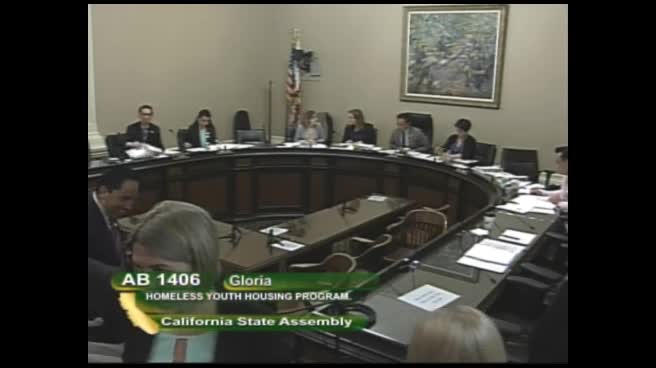 10MIN
Assembly Standing Committee on Housing and Community Development


Bill Co-Author(s):
