AB 1432: Minimum franchise tax: annual tax: businesses.
- Session Year: 2017-2018
- House: Assembly
- Latest Version Date: 2017-04-06
Existing law generally imposes a minimum franchise tax of $800, except as provided, on every corporation incorporated in this state, qualified to transact intrastate business in this state, or doing business in this state, and an annual tax in an amount equal to the minimum franchise tax on every limited partnership, limited liability partnership, and limited liability company registered, qualified to transact business, or doing business in this state, as specified.
This bill would require the California State Universitys Center for California Studies to conduct research on the impact of the minimum franchise tax and annual tax on businesses.
Existing law generally imposes a minimum franchise tax of $800, except as provided, on every corporation incorporated in this state, qualified to transact intrastate business in this state, or doing business in this state, and an annual tax in an amount equal to the minimum franchise tax on every limited partnership, limited liability partnership, and limited liability company registered, qualified to transact business, or doing business in this state, as specified. Existing law exempts a corporation from payment of minimum franchise tax in its first taxable year. This bill would exempt from the minimum franchise tax every qualified new corporation incorporated or qualified to do business in this state on or after January 1, 2018, for its first 5 consecutive taxable years. This bill would also exempt from the annual tax every foreign or domestic limited partnership, limited liability partnership, and limited liability company that files its organizing document, or if a foreign entity its registration document, with the Secretary of State on or after January 1, 2018, as specified, for its first 5 consecutive taxable years. This bill would take effect immediately as a tax levy.Existing law generally imposes a minimum franchise tax of $800, except as provided, on every corporation incorporated in this state, qualified to transact intrastate business in this state, or doing business in this state, and an annual tax in an amount equal to the minimum franchise tax on every limited partnership, limited liability partnership, and limited liability company registered, qualified to transact business, or doing business in this state, as specified. Existing law exempts a corporation from payment of minimum franchise tax in its first taxable year.
This bill would exempt from the minimum franchise tax every qualified new corporation incorporated or qualified to do business in this state on or after January 1, 2018, for its first 5 consecutive taxable years. This bill would also exempt from the annual tax every foreign or domestic limited partnership, limited liability partnership, and limited liability company that files its organizing document, or if a foreign entity its registration document, with the Secretary of State on or after January 1, 2018, as specified, for its first 5 consecutive taxable years.
This bill would take effect immediately as a tax levy.
The California State Universitys Center for California Studies shall conduct research on the impact of the minimum franchise tax and annual tax on business.
SECTION 1.Section 17935 of the Revenue and Taxation Code is amended to read:17935.(a)For each taxable year beginning on or after January 1, 1997, every limited partnership doing business in this state, as defined by Section 23101, and required to file a return under Section 18633 shall pay annually to this state a tax for the privilege of doing business in this state in an amount equal to the applicable amount specified in paragraph (1) of subdivision (d) of Section 23153.(b)(1)In addition to any limited partnership that is doing business in this state and therefore is subject to the tax imposed by subdivision (a), for each taxable year beginning on or after January 1, 1997, every limited partnership that has executed, acknowledged, and filed a certificate of limited partnership with the Secretary of State pursuant to Section 15621 or 15902.01 of the Corporations Code, and every foreign limited partnership that has registered with the Secretary of State pursuant to Section 15692 or 15909.01 of the Corporations Code, shall pay annually the tax prescribed in subdivision (a). The tax shall be paid for each taxable year, or part thereof, until a certificate of cancellation is filed on behalf of the limited partnership with the office of the Secretary of State pursuant to Section 15902.03 or 15909.07 of the Corporations Code.(2)If a taxpayer files a return with the Franchise Tax Board that is designated its final return, that board shall notify the taxpayer that the tax imposed by this chapter is due annually until a certificate of cancellation is filed with the Secretary of State pursuant to Section 15902.03 or 15909.07 of the Corporations Code.(c)The tax imposed by this chapter shall be due and payable on the date the return is required to be filed under former Section 18432 or 18633.(d)For purposes of this section, limited partnership means any partnership formed by two or more persons under the laws of this state or any other jurisdiction and having one or more general partners and one or more limited partners.(e)Notwithstanding subdivision (b), any limited partnership that ceased doing business prior to January 1, 1997, filed a final return with the Franchise Tax Board for a taxable year ending before January 1, 1997, and filed a certificate of dissolution with the Secretary of State pursuant to Section 15623 of the Corporations Code prior to January 1, 1997, shall not be subject to the tax imposed by this chapter for any period following the date the certificate of dissolution was filed with the Secretary of State, but only if the limited partnership files a certificate of cancellation with the Secretary of State pursuant to Section 15623 of the Corporations Code. In the case where a notice of proposed deficiency assessment of tax or a notice of tax due (whichever is applicable) is mailed after January 1, 2001, the first sentence of this subdivision shall not apply unless the certificate of cancellation is filed with the Secretary of State not later than 60 days after the date of the mailing of the notice.(f)Notwithstanding subdivisions (a) and (b), every limited partnership that files a certificate of limited partnership or an application for registration with the Secretary of State on or after January 1, 2018, shall not be subject to the tax imposed by this chapter for its first five consecutive taxable years. This subdivision shall not apply to any limited partnership that reorganizes solely for the purpose of avoiding payment of its annual tax. SEC. 2.Section 17941 of the Revenue and Taxation Code is amended to read:17941.(a)For each taxable year beginning on or after January 1, 1997, a limited liability company doing business in this state, as defined in Section 23101, shall pay annually to this state a tax for the privilege of doing business in this state in an amount equal to the applicable amount specified in paragraph (1) of subdivision (d) of Section 23153 for the taxable year.(b)(1)In addition to any limited liability company that is doing business in this state and is therefore subject to the tax imposed by subdivision (a), for each taxable year beginning on or after January 1, 1997, a limited liability company shall pay annually the tax prescribed in subdivision (a) if articles of organization have been accepted, or a certificate of registration has been issued, by the office of the Secretary of State. The tax shall be paid for each taxable year, or part thereof, until a certificate of cancellation of registration or of articles of organization is filed on behalf of the limited liability company with the office of the Secretary of State.(2)If a taxpayer files a return with the Franchise Tax Board that is designated as its final return, the Franchise Tax Board shall notify the taxpayer that the annual tax shall continue to be due annually until a certificate of dissolution is filed with the Secretary of State pursuant to Section 17707.08 of the Corporations Code or a certificate of cancellation is filed with the Secretary of State pursuant to Section 17708.06 of the Corporations Code.(c)The tax assessed under this section shall be due and payable on or before the 15th day of the fourth month of the taxable year.(d)For purposes of this section, limited liability company means an organization, other than a limited liability company that is exempt from the tax and fees imposed under this chapter pursuant to Section 23701h or Section 23701x, that is formed by one or more persons under the law of this state, any other country, or any other state, as a limited liability company and that is not taxable as a corporation for California tax purposes.(e)Notwithstanding anything in this section to the contrary, if the office of the Secretary of State files a certificate of cancellation pursuant to Section 17707.02 of the Corporations Code for any limited liability company, then paragraph (1) of subdivision (f) of Section 23153 shall apply to that limited liability company as if the limited liability company were properly treated as a corporation for that limited purpose only, and paragraph (2) of subdivision (f) of Section 23153 shall not apply. Nothing in this subdivision entitles a limited liability company to receive a reimbursement for any annual taxes or fees already paid.(f)(1)Notwithstanding any provision of this section to the contrary, a limited liability company that is a small business solely owned by a deployed member of the United States Armed Forces shall not be subject to the tax imposed under this section for any taxable year the owner is deployed and the limited liability company operates at a loss or ceases operation.(2)The Franchise Tax Board may promulgate regulations as necessary or appropriate to carry out the purposes of this subdivision, including a definition for ceases operation.(3)For the purposes of this subdivision, all of the following definitions apply:(A)Deployed means being called to active duty or active service during a period when a Presidential Executive order specifies that the United States is engaged in combat or homeland defense. Deployed does not include either of the following:(i)Temporary duty for the sole purpose of training or processing.(ii)A permanent change of station.(B)Operates at a loss means a limited liability companys expenses exceed its receipts.(C)Small business means a limited liability company with total income from all sources derived from, or attributable, to the state of two hundred fifty thousand dollars ($250,000) or less.(4)This subdivision shall become inoperative for taxable years beginning on or after January 1, 2018.(g)Notwithstanding any provision of this section to the contrary, a limited liability company that files articles of organization or a certificate of registration with the Secretary of State on or after January 1, 2018, shall not be subject to the tax imposed under this section for its first five consecutive taxable years. This subdivision shall not apply to any limited liability company that reorganizes solely for the purpose of avoiding payment of its annual tax. SEC. 3.Section 17948 of the Revenue and Taxation Code is amended to read:17948.(a)For each taxable year beginning on or after January 1, 1997, every limited liability partnership doing business in this state, as defined in Section 23101, and required to file a return under Section 18633 shall pay annually to the Franchise Tax Board a tax for the privilege of doing business in this state in an amount equal to the applicable amount specified in paragraph (1) of subdivision (d) of Section 23153 for the taxable year.(b)In addition to any limited liability partnership that is doing business in this state and therefore is subject to the tax imposed by subdivision (a), for each taxable year beginning on or after January 1, 1997, every registered limited liability partnership that has registered with the Secretary of State pursuant to Section 16953 of the Corporations Code and every foreign limited liability partnership that has registered with the Secretary of State pursuant to Section 16959 of the Corporations Code shall pay annually the tax prescribed in subdivision (a). The tax shall be paid for each taxable year, or part thereof, until any of the following occurs:(1)A notice of cessation is filed with the Secretary of State pursuant to subdivision (b) of Section 16954 or 16960 of the Corporations Code.(2)A foreign limited liability partnership withdraws its registration pursuant to subdivision (a) of Section 16960 of the Corporations Code.(3)The registered limited liability partnership or foreign limited liability partnership has been dissolved and finally wound up.(c)The tax assessed under this section shall be due and payable on the date the return is required to be filed under Section 18633.(d)If a taxpayer files a return with the Franchise Tax Board that is designated as its final return, the Franchise Tax Board shall notify the taxpayer that the annual tax shall continue to be due annually until a certificate of cancellation is filed with the Secretary of State pursuant to Section 16954 or 16960 of the Corporations Code.(e)Notwithstanding subdivisions (a) and (b), a limited liability partnership that registers as a limited liability partnership with the Secretary of State on or after January 1, 2018, shall not be subject to the tax imposed under this section for its first five consecutive taxable years. This subdivision shall not apply to any limited liability partnership that reorganizes solely for the purpose of avoiding payment of its annual tax. SEC. 4.Section 23153 of the Revenue and Taxation Code is amended to read:23153.(a)Every corporation described in subdivision (b) shall be subject to the minimum franchise tax specified in subdivision (d) from the earlier of the date of incorporation, qualification, or commencing to do business within this state, until the effective date of dissolution or withdrawal as provided in Section 23331 or, if later, the date the corporation ceases to do business within the limits of this state.(b)Unless expressly exempted by this part or the California Constitution, subdivision (a) shall apply to each of the following:(1)Every corporation that is incorporated under the laws of this state.(2)Every corporation that is qualified to transact intrastate business in this state pursuant to Chapter 21 (commencing with Section 2100) of Division 1 of Title 1 of the Corporations Code.(3)Every corporation that is doing business in this state.(c)The following entities are not subject to the minimum franchise tax specified in this section:(1)Credit unions.(2)Nonprofit cooperative associations organized pursuant to Chapter 1 (commencing with Section 54001) of Division 20 of the Food and Agricultural Code that have been issued the certificate of the board of supervisors prepared pursuant to Section 54042 of the Food and Agricultural Code. The association shall be exempt from the minimum franchise tax for five consecutive taxable years, commencing with the first taxable year for which the certificate is issued pursuant to subdivision (b) of Section 54042 of the Food and Agricultural Code. This paragraph only applies to nonprofit cooperative associations organized on or after January 1, 1994.(d)(1)Except as provided in paragraph (2), paragraph (1) of subdivision (f) of Section 23151, paragraph (1) of subdivision (f) of Section 23181, and paragraph (1) of subdivision (c) of Section 23183, corporations subject to the minimum franchise tax shall pay annually to the state a minimum franchise tax of eight hundred dollars ($800).(2)The minimum franchise tax shall be twenty-five dollars ($25) for each of the following:(A)A corporation formed under the laws of this state whose principal business when formed was gold mining, which is inactive and has not done business within the limits of the state since 1950.(B)A corporation formed under the laws of this state whose principal business when formed was quicksilver mining, which is inactive and has not done business within the limits of the state since 1971, or has been inactive for a period of 24 consecutive months or more.(3)For purposes of paragraph (2), a corporation shall not be considered to have done business if it engages in business other than mining.(e)(1)(A)Notwithstanding subdivision (a), every corporation that incorporates or qualifies to do business in this state on or after January 1, 2000, shall not be subject to the minimum franchise tax for its first taxable year.(B)(i)Notwithstanding subdivision (a), for taxable years beginning on or after January 1, 2018, every corporation that is a qualified new corporation shall not be subject to the minimum franchise tax for its first five consecutive taxable years. (ii)For purposes of this subparagraph, a qualified new corporation means a corporation that is incorporated under the laws of this state or has qualified to transact business in this state on or after January 1, 2018, and that begins business operations at or after the time of its incorporation. Qualified new corporation does not include any corporation that began business operations as a sole proprietorship, a partnership, or any other form of business entity prior to its incorporation. (2)This subdivision shall not apply to limited partnerships, as defined in Section 17935, limited liability companies, as defined in Section 17941, limited liability partnerships, as described in Section 17948, charitable organizations, as described in Section 23703, regulated investment companies, as defined in Section 851 of the Internal Revenue Code, real estate investment trusts, as defined in Section 856 of the Internal Revenue Code, real estate mortgage investment conduits, as defined in Section 860D of the Internal Revenue Code, and qualified Subchapter S subsidiaries, as defined in Section 1361(b)(3) of the Internal Revenue Code, to the extent applicable.(3)This subdivision shall not apply to any corporation that reorganizes solely for the purpose of avoiding payment of its minimum franchise tax.(f)Notwithstanding subdivision (a), a domestic corporation, as defined in Section 167 of the Corporations Code, that files a certificate of dissolution in the office of the Secretary of State pursuant to subdivision (b) of Section 1905 of the Corporations Code, prior to its amendment by the act amending this subdivision, and that does not thereafter do business shall not be subject to the minimum franchise tax for taxable years beginning on or after the date of that filing.(g)The minimum franchise tax imposed by paragraph (1) of subdivision (d) shall not be increased by the Legislature by more than 10 percent during any calendar year.(h)(1)Notwithstanding subdivision (a), a corporation that is a small business solely owned by a deployed member of the United States Armed Forces shall not be subject to the minimum franchise tax for any taxable year the owner is deployed and the corporation operates at a loss or ceases operation.(2)The Franchise Tax Board may promulgate regulations as necessary or appropriate to carry out the purposes of this subdivision, including a definition for ceases operation.(3)For the purposes of this subdivision, all of the following definitions apply:(A)Deployed means being called to active duty or active service during a period when a Presidential Executive order specifies that the United States is engaged in combat or homeland defense. Deployed does not include either of the following:(i)Temporary duty for the sole purpose of training or processing.(ii)A permanent change of station.(B)Operates at a loss means negative net income as defined in Section 24341.(C)Small business means a corporation with total income from all sources derived from, or attributable, to the state of two hundred fifty thousand dollars ($250,000) or less.(4)This subdivision shall become inoperative for taxable years beginning on or after January 1, 2018.SEC. 5.This act provides for a tax levy within the meaning of Article IV of the California Constitution and shall go into immediate effect.(a)For each taxable year beginning on or after January 1, 1997, every limited partnership doing business in this state (as state, as defined by Section 23101) 23101, and required to file a return under Section 18633 shall pay annually to this state a tax for the privilege of doing business in this state in an amount equal to the applicable amount specified in paragraph (1) of subdivision (d) of Section 23153.
(b)(1)In addition to any limited partnership that is doing business in this state and therefore is subject to the tax imposed by subdivision (a), for each taxable year beginning on or after January 1, 1997, every limited partnership that has executed, acknowledged, and filed a certificate of limited partnership with the Secretary of State pursuant to Section 15621 or 15902.01 of the Corporations Code, and every foreign limited partnership that has registered with the Secretary of State pursuant to Section 15692 or 15909.01 of the Corporations Code, shall pay annually the tax prescribed in subdivision (a). The tax shall be paid for each taxable year, or part thereof, until a certificate of cancellation is filed on behalf of the limited partnership with the office of the Secretary of State pursuant to Section 15623, 15696, 15902.03, or 15902.03 or 15909.07 of the Corporations Code.
(2)If a taxpayer files a return with the Franchise Tax Board that is designated its final return, that board shall notify the taxpayer that the tax imposed by this chapter is due annually until a certificate of cancellation is filed with the Secretary of State pursuant to Section 15623, 15696, 15902.03, or 15902.03 or 15909.07 of the Corporations Code.
(c)The tax imposed by this chapter shall be due and payable on the date the return is required to be filed under former Section 18432 or 18633.
(d)For purposes of this section, limited partnership means any partnership formed by two or more persons under the laws of this state or any other jurisdiction and having one or more general partners and one or more limited partners.
(e)Notwithstanding subdivision (b), any limited partnership that ceased doing business prior to January 1, 1997, filed a final return with the Franchise Tax Board for a taxable year ending before January 1, 1997, and filed a certificate of dissolution with the Secretary of State pursuant to Section 15623 of the Corporations Code prior to January 1, 1997, shall not be subject to the tax imposed by this chapter for any period following the date the certificate of dissolution was filed with the Secretary of State, but only if the limited partnership files a certificate of cancellation with the Secretary of State pursuant to Section 15623 of the Corporations Code. In the case where a notice of proposed deficiency assessment of tax or a notice of tax due (whichever is applicable) is mailed after January 1, 2001, the first sentence of this subdivision shall not apply unless the certificate of cancellation is filed with the Secretary of State not later than 60 days after the date of the mailing of the notice.
(f)Notwithstanding subdivisions (a) and (b), every limited partnership that files a certificate of limited partnership or an application for registration with the Secretary of State on or after January 1, 2018, shall not be subject to the tax imposed by this chapter for its first five consecutive taxable years. This subdivision shall not apply to any limited partnership that reorganizes solely for the purpose of avoiding payment of its annual tax.
SEC. 2.Section 17941 of the Revenue and Taxation Code is amended to read:17941.(a)For each taxable year beginning on or after January 1, 1997, a limited liability company doing business in this state (as state, as defined in Section 23101) 23101, shall pay annually to this state a tax for the privilege of doing business in this state in an amount equal to the applicable amount specified in paragraph (1) of subdivision (d) of Section 23153 for the taxable year.
(b)(1)In addition to any limited liability company that is doing business in this state and is therefore subject to the tax imposed by subdivision (a), for each taxable year beginning on or after January 1, 1997, a limited liability company shall pay annually the tax prescribed in subdivision (a) if articles of organization have been accepted, or a certificate of registration has been issued, by the office of the Secretary of State. The tax shall be paid for each taxable year, or part thereof, until a certificate of cancellation of registration or of articles of organization is filed on behalf of the limited liability company with the office of the Secretary of State.
(2)If a taxpayer files a return with the Franchise Tax Board that is designated as its final return, the Franchise Tax Board shall notify the taxpayer that the annual tax shall continue to be due annually until a certificate of dissolution is filed with the Secretary of State pursuant to Section 17707.08 of the Corporations Code or a certificate of cancellation is filed with the Secretary of State pursuant to Section 17708.06 of the Corporations Code.
(c)The tax assessed under this section shall be due and payable on or before the 15th day of the fourth month of the taxable year.
(d)For purposes of this section, limited liability company means an organization, other than a limited liability company that is exempt from the tax and fees imposed under this chapter pursuant to Section 23701h or Section 23701x, that is formed by one or more persons under the law of this state, any other country, or any other state, as a limited liability company and that is not taxable as a corporation for California tax purposes.
(e)Notwithstanding anything in this section to the contrary, if the office of the Secretary of State files a certificate of cancellation pursuant to Section 17707.02 of the Corporations Code for any limited liability company, then paragraph (1) of subdivision (f) of Section 23153 shall apply to that limited liability company as if the limited liability company were properly treated as a corporation for that limited purpose only, and paragraph (2) of subdivision (f) of Section 23153 shall not apply. Nothing in this subdivision entitles a limited liability company to receive a reimbursement for any annual taxes or fees already paid.
(f)(1)Notwithstanding any provision of this section to the contrary, a limited liability company that is a small business solely owned by a deployed member of the United States Armed Forces shall not be subject to the tax imposed under this section for any taxable year the owner is deployed and the limited liability company operates at a loss or ceases operation.
(2)The Franchise Tax Board may promulgate regulations as necessary or appropriate to carry out the purposes of this subdivision, including a definition for ceases operation.
(3)For the purposes of this subdivision, all of the following definitions apply:
(A)Deployed means being called to active duty or active service during a period when a Presidential Executive order specifies that the United States is engaged in combat or homeland defense. Deployed does not include either of the following:
(i)Temporary duty for the sole purpose of training or processing.
(ii)A permanent change of station.
(B)Operates at a loss means a limited liability companys expenses exceed its receipts.
(C)Small business means a limited liability company with total income from all sources derived from, or attributable, to the state of two hundred fifty thousand dollars ($250,000) or less.
(4)This subdivision shall become inoperative for taxable years beginning on or after January 1, 2018.
(g)Notwithstanding any provision of this section to the contrary, a limited liability company that files articles of organization or a certificate of registration with the Secretary of State on or after January 1, 2018, shall not be subject to the tax imposed under this section for its first five consecutive taxable years. This subdivision shall not apply to any limited liability company that reorganizes solely for the purpose of avoiding payment of its annual tax.
SEC. 3.Section 17948 of the Revenue and Taxation Code is amended to read:17948.(a)For each taxable year beginning on or after January 1, 1997, every limited liability partnership doing business in this state (as state, as defined in Section 23101) 23101, and required to file a return under Section 18633 shall pay annually to the Franchise Tax Board a tax for the privilege of doing business in this state in an amount equal to the applicable amount specified in paragraph (1) of subdivision (d) of Section 23153 for the taxable year.
(b)In addition to any limited liability partnership that is doing business in this state and therefore is subject to the tax imposed by subdivision (a), for each taxable year beginning on or after January 1, 1997, every registered limited liability partnership that has registered with the Secretary of State pursuant to Section 16953 of the Corporations Code and every foreign limited liability partnership that has registered with the Secretary of State pursuant to Section 16959 of the Corporations Code shall pay annually the tax prescribed in subdivision (a). The tax shall be paid for each taxable year, or part thereof, until any of the following occurs:
(1)A notice of cessation is filed with the Secretary of State pursuant to subdivision (b) of Section 16954 or 16960 of the Corporations Code.
(2)A foreign limited liability partnership withdraws its registration pursuant to subdivision (a) of Section 16960 of the Corporations Code.
(3)The registered limited liability partnership or foreign limited liability partnership has been dissolved and finally wound up.
(c)The tax assessed under this section shall be due and payable on the date the return is required to be filed under Section 18633.
(d)If a taxpayer files a return with the Franchise Tax Board that is designated as its final return, the Franchise Tax Board shall notify the taxpayer that the annual tax shall continue to be due annually until a certificate of cancellation is filed with the Secretary of State pursuant to Section 16954 or 16960 of the Corporations Code.
(e)Notwithstanding subdivisions (a) and (b), a limited liability partnership that registers as a limited liability partnership with the Secretary of State on or after January 1, 2018, shall not be subject to the tax imposed under this section for its first five consecutive taxable years. This subdivision shall not apply to any limited liability partnership that reorganizes solely for the purpose of avoiding payment of its annual tax.
SEC. 4.Section 23153 of the Revenue and Taxation Code is amended to read:23153.(a)Every corporation described in subdivision (b) shall be subject to the minimum franchise tax specified in subdivision (d) from the earlier of the date of incorporation, qualification, or commencing to do business within this state, until the effective date of dissolution or withdrawal as provided in Section 23331 or, if later, the date the corporation ceases to do business within the limits of this state.
(b)Unless expressly exempted by this part or the California Constitution, subdivision (a) shall apply to each of the following:
(1)Every corporation that is incorporated under the laws of this state.
(2)Every corporation that is qualified to transact intrastate business in this state pursuant to Chapter 21 (commencing with Section 2100) of Division 1 of Title 1 of the Corporations Code.
(3)Every corporation that is doing business in this state.
(c)The following entities are not subject to the minimum franchise tax specified in this section:
(1)Credit unions.
(2)Nonprofit cooperative associations organized pursuant to Chapter 1 (commencing with Section 54001) of Division 20 of the Food and Agricultural Code that have been issued the certificate of the board of supervisors prepared pursuant to Section 54042 of the Food and Agricultural Code. The association shall be exempt from the minimum franchise tax for five consecutive taxable years, commencing with the first taxable year for which the certificate is issued pursuant to subdivision (b) of Section 54042 of the Food and Agricultural Code. This paragraph only applies to nonprofit cooperative associations organized on or after January 1, 1994.
(d)(1)Except as provided in paragraph (2), paragraph (1) of subdivision (f) of Section 23151, paragraph (1) of subdivision (f) of Section 23181, and paragraph (1) of subdivision (c) of Section 23183, corporations subject to the minimum franchise tax shall pay annually to the state a minimum franchise tax of eight hundred dollars ($800).
(2)The minimum franchise tax shall be twenty-five dollars ($25) for each of the following:
(A)A corporation formed under the laws of this state whose principal business when formed was gold mining, which is inactive and has not done business within the limits of the state since 1950.
(B)A corporation formed under the laws of this state whose principal business when formed was quicksilver mining, which is inactive and has not done business within the limits of the state since 1971, or has been inactive for a period of 24 consecutive months or more.
(3)For purposes of paragraph (2), a corporation shall not be considered to have done business if it engages in business other than mining.
(e)Notwithstanding subdivision (a), for taxable years beginning on or after January 1, 1999, and before January 1, 2000, every qualified new corporation shall pay annually to the state a minimum franchise tax of five hundred dollars ($500) for the second taxable year. This subdivision shall apply to any corporation that is a qualified new corporation and is incorporated on or after January 1, 1999, and before January 1, 2000.(1)The determination of the gross receipts of a corporation, for purposes of this subdivision, shall be made by including the gross receipts of each member of the commonly controlled group, as defined in Section 25105, of which the corporation is a member.(2)Gross receipts, less returns and allowances reportable to this state, means the sum of the gross receipts from the production of business income, as defined in subdivision (a) of Section 25120, and the gross receipts from the production of nonbusiness income, as defined in subdivision (d) of Section 25120.(3)Qualified new corporation means a corporation that is incorporated under the laws of this state or has qualified to transact intrastate business in this state, that begins business operations at or after the time of its incorporation and that reasonably estimates that it will have gross receipts, less returns and allowances, reportable to this state for the taxable year of one million dollars ($1,000,000) or less. Qualified new corporation does not include any corporation that began business operations as a sole proprietorship, a partnership, or any other form of business entity prior to its incorporation. This subdivision shall not apply to any corporation that reorganizes solely for the purpose of reducing its minimum franchise tax.(4)This subdivision shall not apply to limited partnerships, as defined in Section 17935, limited liability companies, as defined in Section 17941, limited liability partnerships, as described in Section 17948, charitable organizations, as described in Section 23703, regulated investment companies, as defined in Section 851 of the Internal Revenue Code, real estate investment trusts, as defined in Section 856 of the Internal Revenue Code, real estate mortgage investment conduits, as defined in Section 860D of the Internal Revenue Code, qualified Subchapter S subsidiaries, as defined in Section 1361(b)(3) of the Internal Revenue Code, or to the formation of any subsidiary corporation, to the extent applicable.(5)For any taxable year beginning on or after January 1, 1999, and before January 1, 2000, if a corporation has qualified to pay five hundred dollars ($500) for the second taxable year under this subdivision, but in its second taxable year, the corporations gross receipts, as determined under paragraphs (1) and (2), exceed one million dollars ($1,000,000), an additional tax in the amount equal to three hundred dollars ($300) for the second taxable year shall be due and payable by the corporation on the due date of its return, without regard to extension, for that year.(f)(e)(1)(A)Notwithstanding subdivision (a), every corporation that incorporates or qualifies to do business in this state on or after January 1, 2000, shall not be subject to the minimum franchise tax for its first taxable year.
(B)(i)Notwithstanding subdivision (a), for taxable years beginning on or after January 1, 2018, every corporation that is a qualified new corporation shall not be subject to the minimum franchise tax for its first five consecutive taxable years.
(ii)For purposes of this subparagraph, a qualified new corporation means a corporation that is incorporated under the laws of this state or has qualified to transact business in this state on or after January 1, 2018, and that begins business operations at or after the time of its incorporation. Qualified new corporation does not include any corporation that began business operations as a sole proprietorship, a partnership, or any other form of business entity prior to its incorporation.
(2)This subdivision shall not apply to limited partnerships, as defined in Section 17935, limited liability companies, as defined in Section 17941, limited liability partnerships, as described in Section 17948, charitable organizations, as described in Section 23703, regulated investment companies, as defined in Section 851 of the Internal Revenue Code, real estate investment trusts, as defined in Section 856 of the Internal Revenue Code, real estate mortgage investment conduits, as defined in Section 860D of the Internal Revenue Code, and qualified Subchapter S subsidiaries, as defined in Section 1361(b)(3) of the Internal Revenue Code, to the extent applicable.
(3)This subdivision shall not apply to any corporation that reorganizes solely for the purpose of avoiding payment of its minimum franchise tax.
(g)(f)Notwithstanding subdivision (a), a domestic corporation, as defined in Section 167 of the Corporations Code, that files a certificate of dissolution in the office of the Secretary of State pursuant to subdivision (b) of Section 1905 of the Corporations Code, prior to its amendment by the act amending this subdivision, and that does not thereafter do business shall not be subject to the minimum franchise tax for taxable years beginning on or after the date of that filing.
(h)(g)The minimum franchise tax imposed by paragraph (1) of subdivision (d) shall not be increased by the Legislature by more than 10 percent during any calendar year.
(i)(h)(1)Notwithstanding subdivision (a), a corporation that is a small business solely owned by a deployed member of the United States Armed Forces shall not be subject to the minimum franchise tax for any taxable year the owner is deployed and the corporation operates at a loss or ceases operation.
(2)The Franchise Tax Board may promulgate regulations as necessary or appropriate to carry out the purposes of this subdivision, including a definition for ceases operation.
(3)For the purposes of this subdivision, all of the following definitions apply:
(A)Deployed means being called to active duty or active service during a period when a Presidential Executive order specifies that the United States is engaged in combat or homeland defense. Deployed does not include either of the following:
(i)Temporary duty for the sole purpose of training or processing.
(ii)A permanent change of station.
(B)Operates at a loss means negative net income as defined in Section 24341.
(C)Small business means a corporation with total income from all sources derived from, or attributable, to the state of two hundred fifty thousand dollars ($250,000) or less.
(4)This subdivision shall become inoperative for taxable years beginning on or after January 1, 2018.
SEC. 5.This act provides for a tax levy within the meaning of Article IV of the California Constitution and shall go into immediate effect.
|
Date
|
Status
|
|---|---|
| Feb 1, 2018 | From committee: Filed with the Chief Clerk pursuant to Joint Rule 56. |
| Jan 31, 2018 | Died pursuant to Art. IV, Sec. 10(c) of the Constitution. |
| May 26, 2017 | In committee: Held under submission. |
| Apr 26, 2017 | In committee: Set, first hearing. Referred to APPR. suspense file. |
| Apr 17, 2017 | Re-referred to Com. on APPR. |
| Apr 6, 2017 | Read second time and amended. |
| Apr 5, 2017 | From committee: Amend, and do pass as amended and re-refer to Com. on APPR. with recommendation: To Consent Calendar. (Ayes 10. Noes 0.) (April 3). |
| Mar 13, 2017 | Referred to Com. on REV. & TAX. |
| Feb 19, 2017 | From printer. May be heard in committee March 21. |
| Feb 17, 2017 | Read first time. To print. |
|
Date
|
Description
|
Location
|
Votes
|
|
|---|---|---|---|---|
| Apr 3, 2017 | Do pass as amended, and be re-referred to the Committee on [Appropriations] with recommendation: To Consent Calendar | Assembly Standing Committee on Revenue and Taxation |
Passed |
This list shows positions taken on this bill by organizations on the date displayed, which is linked to the original source.
Positions by individuals are not included.
Date of Hearing: April 26, 2017
ASSEMBLY COMMITTEE ON APPROPRIATIONS
Lorena Gonzalez Fletcher, Chair
ABPCA Bill Id:AB 1432
Author:(Melendez) – As Amended Ver:April 6, 2017
Policy Committee: | Revenue and Taxation | Vote: | 10 - 0 |
|
| ||
|
|
Urgency: No State Mandated Local Program: No Reimbursable: No
SUMMARY:
This bill requires the California State University’s Center for California Studies (Center) to conduct research on the business impact of California’s Minimum Franchise Tax (MFT) and the annual tax equal to the MFT.
FISCAL EFFECT:
One-time costs of up to $40,000 for the Center to develop and release the proposed study. This study would be paid for through existing funds in the Center’s Faculty Research Fellows Program budget.
COMMENTS:
- Purpose. As originally introduced, AB 1432 would have exempted newly organized businesses or registered business entities from the MFT and the annual tax equal to the MFT in their first five taxable years. However, recent policy committee amendments to this bill replaced the bill’s contents with a proposed research study on the business impact of these taxes. This study is being proposed given the significant amount of legislation addressing concerns about the negative business consequences of these taxes.
- Background on the MFT and the annual tax. Existing law imposes a franchise tax on all corporations doing business in California equal to 8.84% of its taxable income. The minimum franchise tax is $800, no matter what the taxable income is. Existing law also requires a limited partnership (LP), a limited liability partnership (LLP), or a limited liability company (LLC) to pay an annual tax equal to the minimum franchise tax for the privilege of doing business in California. These entities (known as “pass-through entities”) are not subject to any tax based on taxable income because income is passed through to the owners.
The MFT and the annual tax were enacted to ensure that all corporations, LPs, LLPs, and LLCs pay at least a minimum amount of tax for the privilege of conducting business in California, regardless of the business’s income or losses. Thus, these taxes are not an income tax but rather a tax on the right to exercise the powers granted to those conducting business in California. Even when a business earns no income, it still receives the benefits of its corporate status, including limited liability protection under this state.
- Recent legislation. Since the 2009-10 Legislative Session, there have been a significant number of bills that aimed to reduce the MFT, and therefore the annual tax, or to create an exception for certain kinds of businesses. Specifically:
- In the 2015-16 Legislative Session, AB 612 (Patterson), which would have reduced the MFT to $400 for certain businesses, and SB 328 (Grove), which would have exempted certain businesses from the MFT, both died in the Assembly Committee on Revenue and Taxation.
- In the 2013-14 Legislative Session, AB 2428 (Patterson), which would have exempted businesses from the MFT for the first five years, AB 2495 (Melendez), which also would have exempted businesses from the MFT for the first five years, and AB 1769 (Debabneh), which would have exempted some businesses from the MFT for the first two years, all died in the Assembly Committee on Revenue and Taxation. Moreover, AB 2466 (Nestande), which would have exempted certain types of businesses from the MFT, was held on this committee’s Suspense File, and SB 641 (Anderson), which would have eliminated the MFT for certain new corporations, was held on the Suspense File of the Senate Appropriations Committee. Finally, AB 1889 (Hagman), Chapter 700, Statutes of 2014, exempts certain small businesses entities from the MFT for up to the first two taxable years.
- In the 2011-12 Legislative Session, AB 166 (Cook), which would have eliminated the MFT altogether, AB 368 (Morrell), which would have reduced the MFT to $400 for certain businesses, AB 821 (Garrick), which would have reduced the MFT to $100 for small business in the first ten years of operation, and AB 1605 (Garrick), which would have reduced the MFT for some business to $99, all died in the Assembly Committee on Revenue and Taxation.
- In the 2009-10 Legislative Session, AB 327 (Garrick) which would have reduced the MFT to $100, and AB 2126 (Garrick), which would have also reduced the MFT to $100, both died in the Assembly Committee on Revenue and Taxation.
Analysis Prepared by: Luke Reidenbach / APPR. / (916) 319-2081
Date of Hearing: April 3, 2017
ASSEMBLY COMMITTEE ON REVENUE AND TAXATION
Sebastian Ridley-Thomas, Chair
ABPCA Bill Id:AB 1432 (
Author:Melendez) – As Introduced Ver:February 17, 2017
Majority vote. Tax levy. Fiscal committee.
SUBJECT: Minimum franchise tax: annual tax: exemption
SUMMARY: Eliminates the annual tax on limited partnerships (LPs), limited liability partnerships (LLPs), and limited liability companies (LLCs), and eliminates the minimum franchise tax on corporations for the first five consecutive taxable years. Specifically, this bill:
- Eliminates the annual tax on LPs, LLPs, and LLCs that file certifications, articles of organization, or an application for registration with the Secretary of State (SOS) beginning on or after January 1, 2018, for the first five consecutive taxable years.
- Eliminates the minimum franchise tax on “qualified new corporations” beginning on or after January 1, 2018, for the first five consecutive taxable years.
- Defines a “qualified new corporation” as a corporation that is incorporated under the laws of this state or has qualified to transact business in this state on or after January 1, 2018, and that begins business operations at or after the time of its incorporation. A “qualified new corporation” does not include any corporation that began business operations as a sole proprietorship, a partnership, or any other form of business entity prior to its incorporation.
- Provides that the reduction in annual tax shall not apply to any LP, LLP, or LLC that reorganizes solely for the purpose of reducing its annual tax.
- Takes effect immediately as a tax levy.
EXISTING LAW:
- Imposes franchise tax on all corporations doing business in California equal to 8.84% of the taxable income attributable to California. A minimum franchise tax of $800 is imposed on all corporations that are incorporated under the laws of California, qualified to transact intrastate business in California, or are doing business in California. Taxpayers must pay the minimum franchise tax only if it is more than their regular franchise tax liability.[1]
- Provides exceptions with respect to imposition of the minimum franchise tax. For instance, credit unions and nonprofit organizations are not subject to the minimum franchise tax and a corporation is not subject to the minimum franchise tax for its first taxable year. However, even though a corporation is not subject to the minimum franchise tax in its first taxable year, it will be subject to franchise tax in its first taxable year based on its taxable income.
- Provides that LPs, LLPs, and LLCs that are doing business in California, registered or qualified to do business in California, or formed in this state, are subject to annual tax in an amount equal to the minimum franchise tax, currently set at $800. These entities (known as 'pass-through entities') are not subject to any tax based on taxable income. Rather, the items of income, gain, loss, deduction and credit are passed-through to the owners and reported on their respective income or franchise tax returns.
- Provides that LLCs and certain small corporations, solely owned by a deployed member of the United States (U.S.) Armed Forces, are exempted until January 1, 2018 from the $800 annual tax and minimum franchise tax.
FISCAL EFFECT: The FTB estimates General Fund revenue losses of $22 million in fiscal year (FY) 2017-18, $90 million in FY 2018-19, and $190 million in FY 2019-20.
COMMENTS:
- The author has provided the following statement in support of this bill:
California annually ranks near the bottom of business friendly states due to over-regulation and high tax rates. Small businesses continue to leave the state in search of greener pastures. California currently has the highest Minimum Franchise Tax in the nation. This creates a disincentive for entrepreneurs who are contemplating opening a new business or relocating their business to California. The State Legislature should be doing everything in its power to improve our business climate and help get Californians back to work. Eliminating the franchise tax for more than one year of a business’ operation under AB 1432 will ensure small businesses will survive in California and will incentivize them to continue growing in the state.
- Committee Staff Comments:
- One does not have to pay $800: Despite the laudable goal of the author to eliminate the burdens for new businesses, it is unclear if the $800 minimum franchise tax or annual tax serves as a barrier to conducting business. California allows individuals to open a business as a sole proprietor. A sole proprietorship is an unincorporated business that is owned by one person and is the simplest form of business organization to start and maintain. The business has no existence apart from the owner; its liabilities are the owner’s personal liabilities; and the owner undertakes the risks of the business for all assets owned, whether used in the business or personally owned. The owner includes the income and expenses of the business on the owner’s tax return. Formation documents are not required to be filed with the California Secretary of State’s (SOS) office, but other state filings may be required depending on the type of business. General partnerships are treated very similarly but are required to file a statement of partnership authority with the SOS. Although the structure and liabilities are different from other business entities, sole proprietorships and general partnerships can engage in business without having to pay the minimum franchise tax or the annual tax.
- Minimum tax: The minimum franchise tax, the annual tax, and annual fee, were enacted to ensure that all corporations and LLCs pay at least a minimum amount of tax for the privilege of doing business in California, regardless of the business’s income or losses. Thus, the minimum tax is not an "income tax", but rather a tax on the right to exercise the powers granted to a corporation doing business in California. Even when a business earns no income, it still receives the benefits of its corporate status, including the limited liability protection under California law.
- $800 for limited liability: By providing limited liability to certain entities, (e.g., LLCs, LLPs, and corporations), California is essentially allowing a business owner to transfer part of the cost of conducting business onto creditors and tort victims. (Jonathan Macey, The Limited Liability Company: Lessons for Corporate Law, Washington University Law Review, Vol. 73, Issue 2, 1995.) As an example, if an owner of a construction company, having limited liability, injures an individual during the course of business, the victim’s redress is limited to the assets of the company. If the company is insolvent, part of the cost of the injury is borne by the victim. Before the advent of LLCs and LLPs, that small business owner would have likely started the company as a sole proprietor or general partnership, allowing the victim to go after the personal assets of the owner.
As a public policy, California has decided that the risk borne by creditors and potential tort victims is outweighed by the need to encourage investment. Providing limited liability to small businesses, presumably with few or no assets, may cause owners of the business to only consider those marginal costs and benefits associated with the investments that they will internalize. In other words, “limited liability allows investors to pursue extremely risky projects and to profit from the pursuit of a ‘heads I win; tails you lose’ strategy of project finance.” (Id.) The idea that people will take on greater risk because someone else will pay for the costs is known as “moral hazard.” (Id.) This tends to occur when businesses are shielded from liability, but also when businesses lack financial resources to provide adequate compensation to creditors. (Id.) It may be argued that creditors, knowing that LLCs have limited liability, will require higher borrowing costs or ask for personal guarantees from the individual owners. However, the person hit by a taxi cab or the victim of a toxic spill did not assume the potential risk of the company’s insolvency and owner's limited liability. (David Millon, Piercing the Corporate Veil, Financial Responsibility, and the Limits of Limited Liability, Emory Law Journal, Vol. 65, Number 5, 2007.) The goal of providing limited liability appears to be the state’s need to promote investment by transferring risk from investors to creditors. (Id.) Therefore, LLCs and other limited liability structures provide a substantial benefit to entrepreneurs at a nominal cost of $800 per year, even when insolvent or operating at a loss.
- Cash-flow problems: Both startups and established companies may, at some point, face cash-flow problems. A number of things can put a strain on a business' cash flow: customers can choose not to pay or pay late, cost of materials can skyrocket, unforeseen acts of God can delay production, and changes in interest rates can increase the costs of capital. Additionally, once a business realizes that it is unable to pay current debts, it may be difficult, if not impossible, to secure additional funding. This bill attempts to aid new businesses as they struggle to become profitable. However, it is unclear to Committee staff if eliminating the minimum franchise tax or the annual tax will help struggling businesses succeed.
REGISTERED SUPPORT / OPPOSITION:
Support
National Federation of Independent Business
Opposition
None on file
Analysis Prepared by: Carlos Anguiano / REV. & TAX. / (916) 319-2098
According to the Franchise Tax Board (FTB), for taxable years beginning on or after January 1, 1997, only taxpayers with net incomes of less than approximately $9,040 pay the minimum franchise tax because the amount of measured tax owed would be less than $800 ($9,039 x 8.84% = $799). ↑
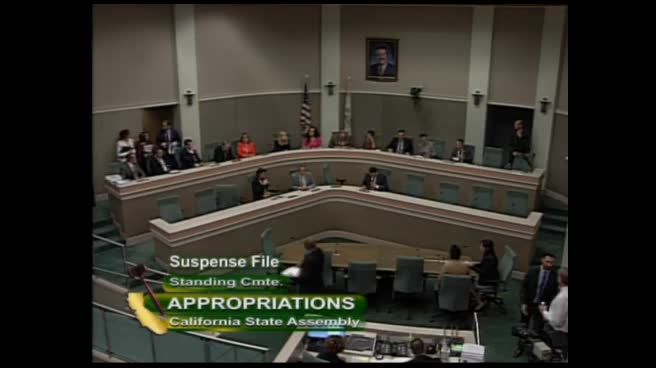
Discussed in Hearing
 1H
Assembly Standing Committee on Appropriations
Bill Author

Bill Co-Author(s):