AB 1578: Cannabis programs: cooperation with federal authorities.
- Session Year: 2017-2018
- House: Assembly
- Latest Version Date: 2017-08-28
Existing law, the Medical Cannabis Regulation and Safety Act (MCRSA) Medicinal and Adult-Use Cannabis Regulation and Safety Act, provides for the licensure and regulation of medical cannabis, commercial cannabis activity, which responsibility is generally divided between the Bureau of Marijuana Cannabis Control within the Department of Consumer Affairs, the Department of Food and Agriculture, and the State Department of Public Health. The Control, Regulate and Tax Adult Use of Marijuana Act (AUMA), an initiative measure enacted by the approval of Proposition 64 at the November 8, 2016, statewide general election, provides for the licensure and regulation of commercial nonmedical marijuana activities, which responsibility is also generally divided between those same state entities. Existing law requires the State Department of Public Health to establish and maintain a voluntary program for the issuance of identification cards to qualified patients who have a physicians recommendation for medical marijuana. cannabis. Existing law requires the counties to process applications and maintain records for the identification card program.
This bill would prohibit a state or local agency, as defined, from taking certain actions without a federal agent obtaining a court order signed by a judge, judge and presenting that order to the state or local agency, including using agency money, facilities, property, equipment, or personnel to assist a federal agency to investigate, detain, detect, report, obtain information, or arrest a person for commercial or noncommercial marijuana or medical cannabis activity that is authorized or allowed under state or and local law in the State of California and from transferring an individual to federal law enforcement or detaining an individual at the request of federal law enforcement or federal authorities for marijuana- or cannabis-related conduct activity that is legal under state or and applicable local law.
Existing law, the Medical Cannabis Regulation and Safety Act (MCRSA) provides for the licensure and regulation of medical cannabis, which responsibility is generally divided between the Bureau of Marijuana Control within the Department of Consumer Affairs, the Department of Food and Agriculture, and the State Department of Public Health. The Control, Regulate and Tax Adult Use of Marijuana Act (AUMA), an initiative measure enacted by the approval of Proposition 64 at the November 8, 2016, statewide general election, provides for the licensure and regulation of commercial nonmedical marijuana activities, which responsibility is also generally divided between those same state entities. Existing law requires the State Department of Public Health to establish and maintain a voluntary program for the issuance of identification cards to qualified patients who have a physicians recommendation for medical marijuana. Existing law requires the counties to process applications and maintain records for the identification card program.
This bill would prohibit a state or local agency, as defined, from taking certain actions without a court order signed by a judge, including using agency money, facilities, property, equipment, or personnel to assist a federal agency to investigate, detain, detect, report, or arrest a person for commercial or noncommercial marijuana or medical cannabis activity that is authorized by or allowed under state or local law in the State of California and from transferring an individual to federal law enforcement authorities for purposes of marijuana enforcement. or detaining an individual at the request of federal law enforcement or federal authorities for marijuana- or cannabis-related conduct that is legal under state or local law.
Existing law, the Medical Cannabis Regulation and Safety Act (MCRSA) provides for the licensure and regulation of medical marijuana, cannabis, which responsibility is generally divided between the Bureau of Marijuana Control within the Department of Consumer Affairs, the Department of Food and Agriculture, and the State Department of Public Health. The Control, Regulate and Tax Adult Use of Marijuana Act (AUMA), an initiative measure enacted by the approval of Proposition 64 at the November 8, 2016, statewide general election, provides for the licensure and regulation of commercial nonmedical marijuana activities, which responsibility is also generally divided between those same state entities. Existing law requires the State Department of Public Health to establish and maintain a voluntary program for the issuance of identification cards to qualified patients who have a physicians recommendation for medical marijuana. Existing law requires the counties to process applications and maintain records for the identification card program.
This bill would prohibit a state or local agency, as defined, from taking certain actions without a court order signed by a judge, including using agency money, facilities, property, equipment, or personnel to assist a federal agency to investigate, detain, detect, report, or arrest a person for commercial or noncommercial marijuana or medical cannabis activity that is authorized by law in the State of California and transferring an individual to federal law enforcement authorities for purposes of marijuana enforcement.
Existing law, the Medical Cannabis Regulation and Safety Act (MCRSA) provides for the licensure and regulation of medical marijuana, which responsibility is generally divided between the Bureau of Marijuana Control within the Department of Consumer Affairs, the Department of Food and Agriculture, and the State Department of Public Health. The Control, Regulate and Tax Adult Use of Marijuana Act (AUMA), an initiative measure enacted by the approval of Proposition 64 at the November 8, 2016, statewide general election, provides for the licensure and regulation of commercial nonmedical marijuana activities, which responsibility is also generally divided between those same state entities. Existing law requires the State Department of Public Health to establish and maintain a voluntary program for the issuance of identification cards to qualified patients who have a physicians recommendation for medical marijuana. Existing law requires the counties to process applications and maintain records for the identification card program.
This bill would prohibit a state or local agency, as defined, from taking certain actions without a court order signed by a judge, including using agency money, facilities, property, equipment, or personnel to assist a federal agency to investigate, detain, detect, report, or arrest a person for commercial or noncommercial marijuana or medical cannabis activity that is authorized by law in the State of California and transferring an individual to federal law enforcement authorities for purposes of marijuana enforcement.
(a)A state or local agency shall not do any of the following without a federal agent first obtaining a court order signed by a judge: judge and presenting that order to the state or local agency:
(1)Use agency money, facilities, property, equipment, or personnel to assist a federal agency to investigate, detain, detect, report, obtain information, or arrest a person for commercial or noncommercial marijuana or medical cannabis activity that is authorized or allowed under state or and local law in the State of California.
(2)Respond Provide confidential information in response to a request made by a federal agency or federal entity for information about an individual a person who is licensed pursuant to Division 10 (commencing with Section 26000) of the Business and Professions Code and who is authorized or allowed under state or and local law to possess, cultivate, transport, manufacture, sell, or possess for sale marijuana or marijuana products or medical cannabis or medical cannabis products, if that request is made for the purpose of investigating or enforcing the federal Controlled Substances Act related to marijuana or cannabis or other federal marijuana or cannabis law. federal laws related to commercial cannabis activity that is legal under state and local laws.
(3)Provide confidential information about a person who has applied for or received a license or conditional license to engage in commercial marijuana or commercial medical cannabis activity pursuant to MCRSA or AUMA, Division 10 (commencing with Section 26000) of the Business and Professions Code, if that request is made for the purpose of investigating or enforcing the federal Controlled Substances Act related to marijuana or cannabis or other federal marijuana or cannabis law. federal laws related to commercial cannabis activity that is legal under state and local law.
(4)Transfer an individual to federal law enforcement for marijuana- or cannabis-related conduct activity that is legal under state or and applicable local law or detain an individual at the request of federal law enforcement or federal authorities for marijuana- or cannabis-related conduct activity that is legal under state or and applicable local law.
(5)Share confidential information about a person licensed pursuant to Division 10 (commencing with Section 26000) of the Business and Professions Code for the purpose of investigating or enforcing federal laws related to commercial or noncommercial cannabis activity that is legal under state and local law.
(b)Notwithstanding subdivision (a), a state or local agency shall release information related to an individual or entity upon the written request of the individual or entity to release that information. The release of information pursuant to this subdivision shall be limited to the specific request and shall not extend beyond the circumstances requested by the individual or entity.
(c)This section does not prohibit a state or local agency from cooperating with or participating in a task force with a federal agency to investigate conduct that is illegal under state and local law, including, but not limited to, trafficking in cannabis across state lines.
(d)A state or local agency shall enforce state and local laws concerning cannabis-related activity, including state and local laws that do any of the following:
(1)Prevent access to cannabis by persons under 21 years of age.
(2)Take cannabis out of the illegal market.
(3)Prevent the illegal diversion of cannabis from California to other states.
(4)Prevent the illegal production or distribution of cannabis.
(5)Preserve scarce law enforcement resources to prevent and prosecute violent crimes.
(6)Prevent the operation of a car or other vehicle used for transportation while the driver is impaired by cannabis.
(7)Prohibit the cultivation of cannabis on public lands.
(c)(e)For purposes of this section, the following definitions shall apply:
(1)AUMA means the Control, Regulate and Tax Adult Use Marijuana Act, enacted by the approval of Proposition 64 at the November 8, 2016, statewide general election and generally codified in Division 10 (commencing with Section 26000) of the Business and Professions Code.(2)MCRSA means the Medical Cannabis Regulation and Safety Act, generally codified in Chapter 3.5 (commencing with Section 19300) of Division 8 of the Business and Professions Code, and other provisions regarding licensing of cultivators, manufacturers, testing laboratories, distributors, and dispensaries of medical cannabis and medical cannabis products located in this article and in Article 2.5 (commencing with Section 11362.7).(1)Confidential information means information that is exempted from disclosure pursuant to the California Public Records Act (Chapter 3.5 (commencing with Section 6250) of Division 7 of Title 1 of the Government Code).
(2)Cooperation means using state or local agency money, facilities, property, equipment, or personnel to assist a federal agency to investigate, detain, detect, report, or arrest a person.
(3)State or local agency means all of the following:
(A)A law enforcement agency, including, but not limited to, police, sheriffs, university police, and other campus police agencies.
(B)A licensing authority under AUMA or MCRSA. as defined in Section 26001 of the Business and Professions Code.
(C)Any other state or local agency with information that identifies licensees under AUMA or MCRSA. a person licensed pursuant to Division 10 (commencing with Section 26000) of the Business and Professions Code.
(D)A city, county, city and county, or state agency with information regarding individuals who have obtained medical marijuana cannabis program cards pursuant to Article 2.5 (commencing with Section 11362.7).
(4)Task force means at least one state or local law enforcement agency collaborating, engaging, or partnering with at least one federal law enforcement agency in investigating federal or state crimes, so long as the primary purpose is not enforcement of federal laws related to cannabis-related activity that is legal under state and local law.
(a)A state or local agency shall not do any of the following without a court order signed by a judge:
(1)Use agency money, facilities, property, equipment, or personnel to assist a federal agency to investigate, detain, detect, report, or arrest a person for commercial or noncommercial marijuana or medical cannabis activity that is authorized by or allowed under state or local law in the State of California.
(2)Respond to a request made by a federal agency for personal or federal entity for information about an individual who is authorized pursuant to state or allowed under state or local law to possess, cultivate, transport, manufacture, sell, or possess for sale marijuana or marijuana products or medical cannabis or medical cannabis products, if that request is made for the purpose of investigating or enforcing federal marijuana law. the federal Controlled Substances Act related to marijuana or cannabis or other federal marijuana or cannabis law.
(3)Provide information about a person who has applied for or received a license to engage in commercial marijuana or commercial medical cannabis activity pursuant to MCRSA or AUMA, if that request is made for the purpose of investigating or enforcing federal marijuana law. the federal Controlled Substances Act related to marijuana or cannabis or other federal marijuana or cannabis law.
(4)Transfer an individual to federal law enforcement authorities for purposes of marijuana enforcement for marijuana- or cannabis-related conduct that is legal under state or local law or detain an individual at the request of federal law enforcement for or federal authorities for marijuana- or cannabis-related conduct that is legal under state or local law.
(b)Notwithstanding subdivision (a), a state or local agency shall release information related to an individual or entity upon the written request of the individual or entity to release that information. The release of information pursuant to this subdivision shall be limited to the specific request and shall not extend beyond the circumstances requested by the individual or entity.
(b)(c)For purposes of this section, the following definitions shall apply:
(1)AUMA means the Control, Regulate and Tax Adult Use Marijuana Act, enacted by the approval of Proposition 64 at the November 8, 2016, statewide general election and generally codified in Division 10 (commencing with Section 26000) of the Business and Professions Code.
(2)MCRSA means the Medical Cannabis Regulation and Safety Act, generally codified in Chapter 3.5 (commencing with Section 19300) of Division 8 of the Business and Professions Code, and other provisions regarding licensing of cultivators, manufacturers, testing laboratories, distributors, and dispensaries of medical cannabis and medical cannabis products located in this article and in Article 2.5 (commencing with Section 11362.7).
(3)State or local agency means all of the following:
(A)A law enforcement agency, including, but not limited to, police, sheriffs, university police, and other campus police agencies.
(B)A licensing authority under AUMA or MCRSA.
(C)Any other state or local agency with information that identifies licensees under AUMA or MCRSA.
(D)A city, county, city and county, or state agency with information regarding individuals who have obtained medical marijuana program cards pursuant to Article 2.5 (commencing with Section 11362.7).
(a)A state or local agency shall not do any of the following without a court order signed by a judge:
(1)Use agency money, facilities, property, equipment, or personnel to assist a federal agency to investigate, detain, detect, report, or arrest a person for commercial or noncommercial marijuana or medical cannabis activity that is authorized by law in the State of California.
(2)Respond to a request made by a federal agency for personal information about an individual who is authorized pursuant to state law to possess, cultivate, transport, manufacture, sell, or possess for sale marijuana or marijuana products or medical cannabis or medical cannabis products, if that request is made for the purpose of investigating or enforcing federal marijuana law.
(3)Provide information about a person who has applied for or received a license to engage in commercial marijuana or commercial medical cannabis activity pursuant to MCRSA or AUMA. AUMA, if that request is made for the purpose of investigating or enforcing federal marijuana law.
(4)Transfer an individual to federal law enforcement authorities for purposes of marijuana enforcement or detain an individual at the request of federal law enforcement for conduct that is legal under state law.
(b)For purposes of this section, the following definitions shall apply:
(1)AUMA means the Control, Regulate and Tax Adult Use Marijuana Act, enacted by the approval of Proposition 64 at the November 8, 2016, statewide general election and generally codified in Division 10 (commencing with Section 26000) of the Business and Professions Code.
(2)MCRSA means the Medical Cannabis Regulation and Safety Act, generally codified in Chapter 3.5 (commencing with Section 19300) of Division 8 of the Business and Professions Code, and other provisions regarding licensing of cultivators, manufacturers, testing laboratories, distributors, and dispensaries of medical cannabis and medical cannabis products located in this article and in Article 2.5 (commencing with Section 11362.7).
(3)State or local agency means all of the following:
(A)A law enforcement agency, including, but not limited to, police, sheriffs, university police, and other campus police agencies.
(B)A licensing authority under AUMA or MCRSA.
(C)Any other state or local agency with information that identifies licensees under AUMA or MCRSA.
(D)A city, county, city and county, or state agency with information regarding individuals who have obtained medical marijuana program cards pursuant to Article 2.5 (commencing with Section 11362.7).
REVISIONS: HeadingLine 2.(a)A state or local agency shall not do any of the following without a court order signed by a judge:
(1)Use agency money, facilities, property, equipment, or personnel to assist a federal agency to investigate, detain, detect, report, or arrest a person for commercial or noncommercial marijuana or medical cannabis activity that is authorized by law in the State of California.
(2)Respond to a request made by a federal agency for personal information about an individual who is authorized to possess, cultivate, transport, manufacture, sell, or possess for sale marijuana or marijuana products or medical cannabis or medical cannabis products, if that request is made for the purpose of investigating or enforcing federal marijuana law.
(3)Provide information about a person who has applied for or received a license to engage in commercial marijuana or commercial medical cannabis activity pursuant to MCRSA or AUMA.
(4)Transfer an individual to federal law enforcement authorities for purposes of marijuana enforcement or detain an individual at the request of federal law enforcement for conduct that is legal under state law.
(b)For purposes of this section, the following definitions shall apply:
(1)AUMA means the Control, Regulate and Tax Adult Use Marijuana Act, enacted by the approval of Proposition 64 at the November 8, 2016, statewide general election and generally codified in Division 10 (commencing with Section 26000) of the Business and Professions Code.
(2)MCRSA means the Medical Cannabis Regulation and Safety Act, generally codified in Chapter 3.5 (commencing with Section 19300) of Division 8 of the Business and Professions Code, and other provisions regarding licensing of cultivators, manufacturers, testing laboratories, distributors, and dispensaries of medical cannabis and medical cannabis products located in this article and in Article 2.5 (commencing with Section 11362.7).
(3)State or local agency means all of the following:
(A)A law enforcement agency, including, but not limited to, police, sheriffs, university police, and other campus police agencies.
(B)A licensing authority under AUMA or MCRSA.
(C)Any other state or local agency with information that identifies licensees under AUMA or MCRSA.
(D)A city, county, city and county, or state agency with information regarding individuals who have obtained medical marijuana program cards pursuant to Article 2.5 (commencing with Section 11362.7).
|
Date
|
Status
|
|---|---|
| Sep 11, 2017 | Ordered to inactive file at the request of Senator Wiener. |
| Aug 29, 2017 | Read second time. Ordered to third reading. |
| Aug 28, 2017 | Read third time and amended. Ordered to second reading. |
| Jun 28, 2017 | Read second time. Ordered to third reading. |
| Jun 27, 2017 | From committee: Do pass. (Ayes 5. Noes 2.) (June 27). |
| Jun 14, 2017 | Referred to Com. on PUB. S. |
| Jun 5, 2017 | In Senate. Read first time. To Com. on RLS. for assignment. |
| Jun 1, 2017 | Read third time. Passed. Ordered to the Senate. (Ayes 41. Noes 33. Page 2086.) |
| May 8, 2017 | Read third time and amended. Ordered to third reading. (Page 1418.) |
| Apr 20, 2017 | Read second time. Ordered to third reading. |
| Apr 19, 2017 | Coauthors revised. |
| Apr 18, 2017 | Re-referred to Com. on PUB. S. |
| Apr 17, 2017 | From committee chair, with author's amendments: Amend, and re-refer to Com. on PUB. S. Read second time and amended. |
| Mar 27, 2017 | Referred to Com. on PUB. S. |
| Feb 19, 2017 | From printer. May be heard in committee March 21. |
| Feb 17, 2017 | Read first time. To print. |
|
Date
|
Description
|
Location
|
Votes
|
|
|---|---|---|---|---|
| Jun 27, 2017 | Do pass | Senate Standing Committee on Public Safety |
Passed |
|
| Jun 1, 2017 | AB 1578 JONES-SAWYER Assembly Third Reading | Assembly Floor |
Passed |
|
| Apr 18, 2017 | Do pass. | Assembly Standing Committee on Public Safety |
Passed |
This list shows positions taken on this bill by organizations on the date displayed, which is linked to the original source.
Positions by individuals are not included.
|
Organization
|
Position
|
Date
|
|---|---|---|
| A New Way of Life Re-Entry Project | ** Support | Apr 17, 2017 |
| American Civil Liberties Union of California | ** Support | Aug 29, 2017 |
| Americans for Safe Access | ** Support | Aug 29, 2017 |
| Amity Foundation | ** Support | Aug 29, 2017 |
| Angeles Emeralds | ** Support | Aug 29, 2017 |
| Association For Los Angeles Deputy Sheriffs | ** Against | Jun 28, 2017 |
| Association of Deputy District Attorneys | ** Against | Apr 17, 2017 |
| Berkeley Patients Group | * Support | Apr 18, 2017 |
| bradco companies | ** Support | Aug 29, 2017 |
| Broken No More | ** Support | Aug 29, 2017 |
| Brownie Mary Democrats of California | ** Support | Aug 29, 2017 |
| Buchalter, A Professional Corporation | ** Support | Apr 17, 2017 |
| Cage-Free Cannabis | ** Support | Aug 29, 2017 |
| California Association Of Code Enforcement Officers | ** Against | Apr 17, 2017 |
| California Cannabis Courier Association | * Indeterminate | Apr 18, 2017 |
| California Cannabis Manufacturers Association | ** Support | Aug 29, 2017 |
| California Church Impact | ** Support | Apr 17, 2017 |
| California College And University Police Chiefs Association | ** Against | Apr 17, 2017 |
| California Minority Alliance | ** Support | Aug 29, 2017 |
| California Narcotic Officers Association | ** Against | Apr 17, 2017 |
| California NORML | ** Support | Aug 29, 2017 |
| California Police Chiefs Association | * Against | Apr 18, 2017 |
| California Public Defenders Association | ** Support | Apr 17, 2017 |
| California Society Of Addiction Medicine | ** Support | Aug 29, 2017 |
| California State Conference of the NAACP | ** Support | Aug 29, 2017 |
| California State Sheriffs' Association | * Against | Apr 18, 2017 |
| California Youth Empowerment Network | ** Support | Aug 29, 2017 |
| center for living and learning, pastor | ** Support | Aug 29, 2017 |
| City Of Oakland | ** Support | Aug 29, 2017 |
| City of Refuge, Bishop Noel Jones, Pastor | ** Support | Apr 17, 2017 |
| City of West Hollywood | ** Support | Aug 29, 2017 |
| Consortium Management Group | ** Support | Aug 29, 2017 |
| Courage Campaign | ** Support | Aug 29, 2017 |
| Drug Policy Alliance | ** Support | Aug 29, 2017 |
| El Grupo | ** Support | Apr 17, 2017 |
| Ella Baker Center For Human Rights | * Support | Apr 18, 2017 |
| Fewlas Entertainment | ** Support | Apr 17, 2017 |
| Fralin Commercial | ** Support | Apr 17, 2017 |
| Green Party of California | * Indeterminate | Apr 18, 2017 |
| Homeless Health Care Los Angeles | ** Support | Aug 29, 2017 |
| Humboldt Cannabis Tours | ** Support | Aug 29, 2017 |
| Immigrant Legal Resource Center | ** Support | Aug 29, 2017 |
| Immigrant Youth Coalition | ** Support | Aug 29, 2017 |
| Institution of the Black World 21st Century | ** Support | Apr 17, 2017 |
| International Cannabis Farmers Association | ** Support | Aug 29, 2017 |
| LA Reintegration Council | ** Support | Apr 17, 2017 |
| Law Enforcement Action Partnership | ** Support | Aug 29, 2017 |
| League Of California Cities | * Against | Apr 18, 2017 |
| Los Angeles Cannabis Task Force | ** Support | Aug 29, 2017 |
| Los Angeles County Professional Peace Officers Association | ** Against | Apr 17, 2017 |
| Los Angeles Police Protective League | ** Against | Apr 17, 2017 |
| Los Angeles Regional Reentry Project | ** Support | Aug 29, 2017 |
| los angeles reintegration council | ** Support | Aug 29, 2017 |
| Margro Advisors | ** Support | Jun 28, 2017 |
| Marijuana Policy Project | ** Support | Jun 28, 2017 |
| Marijuana Policy Project; Margro Advisors | ** Support | Aug 29, 2017 |
| Mental Health America of California | ** Support | Aug 29, 2017 |
| National Latino Evangelical Coalition | ** Support | Aug 29, 2017 |
| Needle Exchange Emergency Distribution | ** Support | Apr 17, 2017 |
| New Way of Life Re-Entry Project | ** Support | Aug 29, 2017 |
| NYS BUILDING & CONSTRUCTION TRADES INC | * Support | Apr 18, 2017 |
| Prison Law Office | ** Support | Aug 29, 2017 |
| Riverside Sheriffs Association | ** Against | Apr 17, 2017 |
| Riverside Sheriffs' Association | ** Against | Apr 17, 2017 |
| SEIU | ** Support | Aug 29, 2017 |
| southern california coalition | ** Support | Aug 29, 2017 |
| Starting Over | ** Support | Apr 17, 2017 |
| Tarzana Treatment Center | ** Support | Jun 28, 2017 |
| Tarzana Treatment Centeunited Food And Commercial Workers Union | ** Support | Aug 29, 2017 |
| The Bradco Companies | ** Support | Apr 17, 2017 |
| The Southern California Coalition | ** Support | Apr 17, 2017 |
| United Food and Commercial Workers Union | ** Support | Aug 29, 2017 |
| Vallejo Patients Coalition | * Support | Apr 18, 2017 |
| Watershed Resources Consulting | ** Support | Aug 29, 2017 |
| William C. Velasquez Institute | ** Support | Aug 29, 2017 |
Office of Senate Floor Analyses (916) 651-1520 Fax: (916) 327-4478 | AB |
THIRD READING
Bill No: AB 1578
: in Senate
SENATE PUBLIC SAFETY COMMITTEE: 5-2, 6/27/17
AYES: Skinner, Bradford, Jackson, Mitchell, Wiener
NOES: Anderson, Stone
ASSEMBLY FLOOR: 41-33, 6/1/17 - See last page for vote
DIGEST:
This bill prohibits a state or local agency, as defined, from using agency resources to assist a federal agency to investigate, detain, detect, report, or arrest a person for marijuana activity that is authorized by law in the State of California and transferring an individual to federal law enforcement authorities for purposes of marijuana enforcement, unless directed to do so by a court order.
Senate Floor Amendments of 8/28/17 clarify that law enforcement is not prohibited from cooperating with federal agencies to investigate conduct that is illegal under state or local laws. Additionally the amendments clarify that state and local agencies shall enforce state and local laws related to illegal cannabis-related activities.
Existing law:
- States that it shall not be a violation of state or local law, for persons 21 years of age or older to: (Health and Saf., § 11362.1, subd. (a)(1)-(5).
- Possess, process, transport, purchase, obtain, or give away to persons 21 years of age or older without any compensation whatsoever, not more than 28.5 grams of marijuana not in the form of concentrated cannabis;
- Possess, process, transport, purchase, obtain, or give away to persons 21 years of age or older without any compensation whatsoever, not more than eight grams of marijuana in the form of concentrated cannabis, including as contained in marijuana products;
- Possess, plant, cultivate, harvest, dry, or process not more than six living marijuana plants and possess the marijuana produced by the plants;
- Smoke or ingest marijuana or marijuana products; and
- Possess, transport, purchase, obtain, use, manufacture, or give away marijuana accessories to persons 21 years of age or older without any compensation whatsoever.
- Specifies that no physician shall be punished, or denied any right or privilege, for having recommended marijuana to a patient for medical purposes. (Health and Saf., § 11362.5, subd. (c).)
- States that laws prohibiting possession or cultivation of marijuana shall not apply to a patient, or to a patient's primary caregiver, who possesses or cultivates marijuana for the personal medical purposes of the patient upon the written or oral recommendation or approval of a physician. (Health and Saf., § 11362.5, subd. (d).)
- Defines "primary caregiver," for purposes of medical marijuana, as the individual designated by the person exempted under this section who has consistently assumed responsibility for the housing, health, or safety of that person. (Health and Saf., § 11362.5, subd. (e).)
- Establishes a joint state-local agency licensing and regulatory framework for medical cannabis under the Medical Cannabis Regulation and Control Act, and establishes the Office of Medical Cannabis Regulation within the Office of the Governor, the Division of Medical Cannabis Regulation within the State Board of Equalization, the Division of Medical Cannabis Manufacturing and Testing within the Department of Public Health, and the Division of Medical Cannabis Cultivation within the Department of Food and Agriculture, and sets forth the duties of the respective regulatory authorities. (Business and Prof. Code, §§ 19300-19355.)
- Prohibits a peace officer from detaining a person who is a witness or victim to a hate crime exclusively for any actual or suspected immigration violation when that person is not charged with committing any crime under state law. (Pen. Code, § 422.93, subd. (b).)
- Prohibits a law enforcement official from detaining an individual on the basis of a United States Immigration and Customs Enforcement (ICE) hold after that individual becomes eligible for release, unless any of the following apply:
- The individual has been convicted of a serious or violent felony, as specified;
- The individual has been convicted of any felony which is punishable by imprisonment in state prison;
- The individual has been convicted within the last five years of a misdemeanor for a crime that is punishable as a felony or misdemeanor;
- The individual has been convicted at any time for any one of a list of specified felonies;
- The individual is a current registrant on the California Sex and Arson Registry;
- The individual has been arrested for any specified felony, and a magistrate has made a finding that there is probable cause to hold the person to answer for that charge; or,
- The individual has been convicted of a federal crime that meets the definition of an aggravated felony as specified in the federal Immigration and Nationality Act or is identified by ICE as the subject of an outstanding federal felony arrest warrant. (Gov. Code, § 7282.5.)
This bill:
- States that a state or local agency shall not do any of the following without a court order signed by a judge:
- Use agency money, facilities, property, equipment, or personnel to assist a federal agency to investigate, detain, detect, report, obtain information, or arrest a person for commercial or noncommercial marijuana or medical cannabis activity that is authorized or allowed under state and local law in the State of California;
- Provide confidential information in response to a request made by a federal agency or federal entity for information about an individual who is authorized or allowed under state or local law to possess, cultivate, transport, manufacture, sell, or possess for sale marijuana or marijuana products or medical cannabis or medical cannabis products, if that request is made for the purpose of investigating or enforcing federal laws related to commercial cannabis activity that is legal under state and local laws;
- Provide confidential information about a person who has applied for or received a license or conditional license to engage in commercial cannabis activity if that request is made for the purpose of investigating or enforcing federal laws related to commercial cannabis activity that is legal under state and local law; and
- Transfer an individual to federal law enforcement authorities for purposes of marijuana enforcement or detain an individual at the request of federal law enforcement or federal authorities for marijuana or cannabis related conduct that is legal under state or local law.
- Share confidential information about a person licensed for the purpose of investigating or enforcing federal laws related to commercial or noncommercial cannabis activity that is legal under state and local law.
- Specifies that this section does not prohibit a state or local agency from cooperating with or participating in a task force with a federal agency to investigate conduct that is illegal under state and local law, including, but not limited to, trafficking in cannabis across state lines.
- Provides that a state or local agency shall enforce state and local laws concerning cannabis-related activity, including state and local laws that do any of the following:
- Prevent access to cannabis by persons under 21 years of age.
- Take cannabis out of the illegal market.
- Prevent the illegal diversion of cannabis from California to other states.
- Prevent the illegal production or distribution of cannabis.
- Preserve scarce law enforcement resources to prevent and prosecute violent crimes.
- Prevent the operation of a car or other vehicle used for transportation while the driver is impaired by cannabis.
- Prohibit the cultivation of cannabis on public lands.
- Specifies that “confidential information” means information that is exempted from disclosure pursuant to the California Public Records Act (Chapter 3.5 (commencing with Section 6250) of Division 7 of Title 1 of the Government Code).
- Specifies that “cooperation” means using state or local agency money, facilities, property, equipment, or personnel to assist a federal agency to investigate, detain, detect, report, or arrest a person.
- Defines "state or local agency," for purposes of this bill as, including all of the following:
- A law enforcement agency, including, but not limited to, police, sheriffs, university police, and other campus police agencies;
- A licensing authority;
- Any other state or local agency with information that identifies licensees; and
- A city, county, city and county, or state agency with information regarding individuals who have obtained medical cannabis program cards, as specified.
- Specifies that “task force” means at least one state or local law enforcement agency collaborating, engaging, or partnering with at least one federal law enforcement agency in investigating federal or state crimes, so long as the primary purpose is not enforcement of federal laws related to cannabis-related activity that is legal under state and local law.
Background
The fact that California law allows possession and use of marijuana in specified manners, does not change the fact that marijuana continues to be illegal under federal law. Federal law criminalizes the possession and cultivation of marijuana. (21 U.S.C., §§ 841 and 844.) State authorization does not provide immunity from federal criminal proceedings, if federal law enforcement was inclined to pursue them.
Under federal law marijuana is a Schedule I controlled substance. The fact the marijuana is on Schedule I means that the federal government views cannabis as highly addictive and having no medical value. Although marijuana is criminalized on the federal level, federal Department of Justice is currently prohibited from spending funds from specific appropriations acts for prosecutions of those individuals who complied with their state’s marijuana law. In 2014 and 2015, Congress approved a budget amendment that prohibits Justice Department funds from being used to prevent states from implementing medical cannabis laws. These restrictions on federal enforcement are part of the 2016 funding bill for the Commerce-Justice-Science (CJS) budgets and expired at the end of the fiscal year, September 30, 2016.
Known as the Rohrabacher-Farr or CJS amendment, it first signed into law on December 16, 2014 and then again on December 18, 2015. The Rohrabacher-Farr amendment doesn’t just prevent direct interference with state implementation; it should also end federal medical cannabis raids, arrests, criminal prosecutions, and civil asset forfeiture lawsuits, as well as providing current medical cannabis prisoners with a way to petition for their release.
The most important case involving the Rohrabacher-Farr amendment took place in the federal 9th Circuit Court. In the August 2016 decision of U.S. vs. McIntosh, the court held that the Rohrabacher-Farr Amendment prohibits the federal prosecution of conduct that is allowed by the state's medical cannabis law. In the opinion, Judge Diarmuid O’Scannlain wrote, “We therefore conclude that, at a minimum, § 542 prohibits DOJ from spending funds from relevant appropriations acts for the prosecution of individuals who engaged in conduct permitted by the State Medical Marijuana Laws and who fully complied with such laws.” U.S. v. McIntosh (2016), 833 F.3d 1163, 1177.
The most recent extension of Rohrabacher-Farr expires on April 28, 2017. But that provision must be re-approved annually, and if it’s allowed to expire, the federal authorities could aggressively pursue criminal sanctions of marijuana related actions which continue to be illegal under federal law.
FISCAL EFFECT: Appropriation: Fiscal Com.: Local:
American Civil Liberties Union of California
Americans for Safe Access
Amity Foundation
Angeles Emeralds
Black American Political Association of California – Sacramento Chapter
Bradco Companies
Broken No More
Brownie Mary Democrats of California
Cage-Free Cannabis
California Cannabis Manufacturers Association
California Minority Alliance
California NORML
California Society of Addiction Medicine
California State Conference of the NAACP
California Youth Empowerment Network
Center for Living and Learning, Pastor
City of Oakland
City of West Hollywood
Consortium Management Group
Courage Campaign
Drug Policy Alliance
Homeless Health Care Los Angeles
Humboldt Cannabis Tours
Immigrant Legal Resource Center
Immigrant Youth Coalition
International Cannabis Farmers Association
Law Enforcement Action Partnership
Los Angeles Cannabis Task Force
Los Angeles Reintegration Council
Los Angeles Regional Reentry Project
Marijuana Policy Project; Margro Advisors
Mental Health America of California
National Latino Evangelical Coalition
New Way of Life Re-entry Project
Prison Law Office
SEIU
Southern California Coalition
Tarzana Treatment CenteUnited Food and Commercial Workers Union
United Food and Commercial Workers Union
Watershed Resources Consulting
William C. Velasquez Institute
OPPOSITION: (Verified 8/29/17)
Association for Los Angeles Deputy Sheriffs
Association of Deputy District Attorneys
California Association of Code Enforcement Officers
California College and University Police Chiefs Association
California Narcotic Officers Association
League of California Cities
Los Angeles County Professional Peace Officers Association
Los Angeles Police Protective League
Riverside Sheriffs’ Association
ARGUMENTS IN SUPPORT: According to Drug Police Alliance: “The presidential administration of Barack Obama provided assurances that if California developed a robust regulatory and enforcement system for medical or adult use of marijuana, California residents who complied with state laws and regulations would have a reasonable expectation that they would not be subject to harassment, arrest or incarceration by the federal government…However, given the election of Donald Trump, the record of US Attorney General Sessions as a dyed-in-the-wool drug warrior and proponent of mass incarceration, and the recent statement by the President’s press secretary that we should expect attacks on legal adult use marijuana, it is prudent to pass state legislation to prevent the misuse of our own state and local resources. We cannot allow our own law enforcement and regulatory agencies to thwart the will of the California voter, and the intent of legislation passed by our State Legislature and signed by our Governor.”
ARGUMENTS IN OPPOSITION: According to the Association for Los Angeles Deputy Sheriffs: “This bill will have the impact of hamstringing law enforcement investigations. Ironically, its ultimate consequence would be to vitiate Proposition 64 in its entirety by resulting in the outright intervention by federal authorities in order to enforce federal marijuana laws across the board in California. In 2013, Deputy Attorney General James Cole issued guidance with respect to the federal government’s position on marijuana enforcement in states that had legalized marijuana in their jurisdictions. The Cole Memo, as it has come to be known, outlines eight federal enforcement priorities for issues relating to marijuana. Implicit in the Cole Memo is the proposition that there will be open communication between the state and federal government to assure that the state is in compliance with the federal priorities. Under AB 1578, however, the state would be prohibited from interaction with the federal government to ascertain compliance with the Cole Memo. For example, among the priorities of the Cole Memo are the prevention of distribution of marijuana to minors. Inasmuch as Proposition 64 permits audiences that receive marijuana advertising to be up to 28.4% children, this will be an issue of significance. Under AB 1578, however, the state would seem to be precluded from sharing any information about the percentage of children receiving marijuana advertising. Similarly, although Proposition 64 provides that conviction of a controlled substance trafficking felony may not be the sole reason for denying a marijuana license, the state could be precluded from even reaching out to the federal government to determine if there were any other factors in connection with that felony trafficking conviction. In like manner, a federal law enforcement discovery of California marijuana being illegally sold in another state could be impossible to trace to the California based trafficker under the provisions of AB 1578. In other words, AB 1578 could have the unintended consequence of placing California in direct violation of the Cole Memo and inviting precisely the type of federal intervention the bill is intended to prevent.”
ASSEMBLY FLOOR: 41-33, 6/1/17
AYES: Aguiar-Curry, Berman, Bloom, Bocanegra, Bonta, Burke, Calderon, Chiu, Cooley, Dababneh, Daly, Eggman, Friedman, Cristina Garcia, Eduardo Garcia, Gipson, Gloria, Gomez, Gonzalez Fletcher, Gray, Holden, Jones-Sawyer, Kalra, Lackey, Levine, Limón, Low, McCarty, Mullin, Nazarian, O'Donnell, Quirk, Reyes, Rubio, Santiago, Mark Stone, Thurmond, Ting, Weber, Wood, Rendon
NOES: Acosta, Travis Allen, Arambula, Baker, Bigelow, Brough, Caballero, Cervantes, Chávez, Chen, Cooper, Cunningham, Dahle, Flora, Fong, Frazier, Gallagher, Grayson, Harper, Irwin, Kiley, Maienschein, Mathis, Melendez, Muratsuchi, Obernolte, Patterson, Quirk-Silva, Ridley-Thomas, Salas, Steinorth, Voepel, Waldron
NO VOTE RECORDED: Chau, Choi, Chu, Mayes, Medina, Rodriguez
8/29/17 14:58:31
Office of Senate Floor Analyses (916) 651-1520 Fax: (916) 327-4478 | AB |
THIRD READING
Bill No: AB 1578
:
SENATE PUBLIC SAFETY COMMITTEE: 5-2, 6/27/17
AYES: Skinner, Bradford, Jackson, Mitchell, Wiener
NOES: Anderson, Stone
ASSEMBLY FLOOR: 41-33, 6/1/17 - See last page for vote
DIGEST:
This bill prohibits a state or local agency, as defined, from using agency resources to assist a federal agency to investigate, detain, detect, report, or arrest a person for marijuana activity that is authorized by law in the State of California and transferring an individual to federal law enforcement authorities for purposes of marijuana enforcement, unless directed to do so by a court order.
Existing law:
- States that it shall not be a violation of state or local law, for persons 21 years of age or older to: (Health and Saf., § 11362.1, subd. (a)(1)-(5).
- Possess, process, transport, purchase, obtain, or give away to persons 21 years of age or older without any compensation whatsoever, not more than 28.5 grams of marijuana not in the form of concentrated cannabis;
- Possess, process, transport, purchase, obtain, or give away to persons 21 years of age or older without any compensation whatsoever, not more than eight grams of marijuana in the form of concentrated cannabis, including as contained in marijuana products;
- Possess, plant, cultivate, harvest, dry, or process not more than six living marijuana plants and possess the marijuana produced by the plants;
- Smoke or ingest marijuana or marijuana products; and
- Possess, transport, purchase, obtain, use, manufacture, or give away marijuana accessories to persons 21 years of age or older without any compensation whatsoever.
- Specifies that no physician shall be punished, or denied any right or privilege, for having recommended marijuana to a patient for medical purposes. (Health and Saf., § 11362.5, subd. (c).)
- States that laws prohibiting possession or cultivation of marijuana shall not apply to a patient, or to a patient's primary caregiver, who possesses or cultivates marijuana for the personal medical purposes of the patient upon the written or oral recommendation or approval of a physician. (Health and Saf., § 11362.5, subd. (d).)
- Defines "primary caregiver," for purposes of medical marijuana, as the individual designated by the person exempted under this section who has consistently assumed responsibility for the housing, health, or safety of that person. (Health and Saf., § 11362.5, subd. (e).)
- Establishes a joint state-local agency licensing and regulatory framework for medical cannabis under the Medical Cannabis Regulation and Control Act (MCRCA), and establishes the Office of Medical Cannabis Regulation within the Office of the Governor, the Division of Medical Cannabis Regulation within the State Board of Equalization, the Division of Medical Cannabis Manufacturing and Testing within the Department of Public Health, and the Division of Medical Cannabis Cultivation within the Department of Food and Agriculture, and sets forth the duties of the respective regulatory authorities. (Business and Prof. Code, §§ 19300-19355.)
- Prohibits a peace officer from detaining a person who is a witness or victim to a hate crime exclusively for any actual or suspected immigration violation when that person is not charged with committing any crime under state law. (Pen. Code, § 422.93, subd. (b).)
- Prohibits a law enforcement official from detaining an individual on the basis of a United States Immigration and Customs Enforcement (ICE) hold after that individual becomes eligible for release, unless any of the following apply:
- The individual has been convicted of a serious or violent felony, as specified;
- The individual has been convicted of any felony which is punishable by imprisonment in state prison;
- The individual has been convicted within the last five years of a misdemeanor for a crime that is punishable as a felony or misdemeanor;
- The individual has been convicted at any time for any one of a list of specified felonies;
- The individual is a current registrant on the California Sex and Arson Registry;
- The individual has been arrested for any specified felony, and a magistrate has made a finding that there is probable cause to hold the person to answer for that charge; or,
- The individual has been convicted of a federal crime that meets the definition of an aggravated felony as specified in the federal Immigration and Nationality Act or is identified by ICE as the subject of an outstanding federal felony arrest warrant. (Gov. Code, § 7282.5.)
This bill:
- States that a state or local agency shall not do any of the following without a court order signed by a judge:
- Use agency money, facilities, property, equipment, or personnel to assist a federal agency to investigate, detain, detect, report, or arrest a person for commercial or noncommercial marijuana or medical cannabis activity that is authorized or allowed under state or local law in the State of California;\
- Respond to a request made by a federal agency or federal entity for information about an individual who is authorized or allowed under state or local law to possess, cultivate, transport, manufacture, sell, or possess for sale marijuana or marijuana products or medical cannabis or medical cannabis products, if that request is made for the purpose of investigating or enforcing the federal Controlled Substances Act Related to marijuana or cannabis or other federal marijuana or cannabis law;
- Provide information about a person who has applied for or received a license to engage in commercial marijuana or commercial medical cannabis activity pursuant to the Medical Cannabis Regulation and Safety Act or the Control, Regulate and Tax Adult Use Marijuana Act (AUMA), if that request is made for the purpose of investigating or enforcing the federal Controlled Substances Act Related to marijuana or cannabis or other federal marijuana or cannabis law; and
- Transfer an individual to federal law enforcement authorities for purposes of marijuana enforcement or detain an individual at the request of federal law enforcement or federal authorities for marijuana or cannabis related conduct that is legal under state or local law.
- Defines "AUMA," for purposes of this bill, as the Control, Regulate and Tax Adult Use Marijuana Act, enacted by the approval of Proposition 64 at the November 8, 2016, statewide general election.
- Defines "MCRSA," for purposes of this bill, as the Medical Cannabis Regulation and Safety Act, regarding licensing of cultivators, manufacturers, testing laboratories, distributors, and dispensaries of medical cannabis and medical cannabis products.
- Defines "state or local agency," for purposes of this bill as, including all of the following:
- A law enforcement agency, including, but not limited to, police, sheriffs, university police, and other campus police agencies;
- A licensing authority under AUMA or MCRSA;
- Any other state or local agency with information that identifies licensees under AUMA or MCRSA; and
- A city, county, city and county, or state agency with information regarding individuals who have obtained medical marijuana program cards, as specified.
Background
The fact that California law allows possession and use of marijuana in specified manners, does not change the fact that marijuana continues to be illegal under federal law. Federal law criminalizes the possession and cultivation of marijuana. (21 U.S.C., §§ 841 and 844.) State authorization does not provide immunity from federal criminal proceedings, if federal law enforcement was inclined to pursue them.
Under federal law marijuana is a Schedule I controlled substance. The fact the marijuana is on Schedule I means that the federal government views cannabis as highly addictive and having no medical value.
Although Marijuana is criminalized on the federal level, federal Department of Justice is currently prohibited from spending funds from specific appropriations acts for prosecutions of those individuals who complied with their state’s marijuana law. In 2014 and 2015, Congress approved a budget amendment that prohibits Justice Department funds from being used to prevent states from implementing medical cannabis laws. These restrictions on federal enforcement are part of the 2016 funding bill for the Commerce-Justice-Science (CJS) budgets and expired at the end of the fiscal year, September 30, 2016.
Known as the Rohrabacher-Farr or CJS amendment, it first signed into law on December 16, 2014 and then again on December 18, 2015. The Rohrabacher-Farr amendment doesn’t just prevent direct interference with state implementation; it should also end federal medical cannabis raids, arrests, criminal prosecutions, and civil asset forfeiture lawsuits, as well as providing current medical cannabis prisoners with a way to petition for their release.[1]
The most important case involving the Rohrabacher-Farr amendment took place in the federal 9th Circuit Court. In the August 2016 decision of U.S. vs. McIntosh, the court held that the Rohrabacher-Farr Amendment prohibits the federal prosecution of conduct that is allowed by the state's medical cannabis law. In the opinion, Judge Diarmuid O’Scannlain wrote, “We therefore conclude that, at a minimum, § 542 prohibits DOJ from spending funds from relevant appropriations acts for the prosecution of individuals who engaged in conduct permitted by the State Medical Marijuana Laws and who fully complied with such laws.” U.S. v. McIntosh (2016), 833 F.3d 1163, 1177.
The most recent extension of Rohrabacher-Farr expires on April 28, 2017. But that provision must be re-approved annually, and if it’s allowed to expire, the federal authorities could aggressively pursue criminal sanctions of marijuana related actions which continue to be illegal under federal law.
FISCAL EFFECT: Appropriation: Fiscal Com.: Local:
American Civil Liberties Union of California
Americans for Safe Access
Amity Foundation
Angeles Emeralds
Black American Political Association of California – Sacramento Chapter
Bradco Companies
Broken No More
Brownie Mary Democrats of California
Cage-Free Cannabis
California Cannabis Manufacturers Association
California Minority Alliance
California NORML
California Society of Addiction Medicine
California State Conference of the NAACP
California Youth Empowerment Network
Center for Living and Learning, Pastor
City of Oakland
City of West Hollywood
Consortium Management Group
Courage Campaign
Homeless Health Care Los Angeles
Humboldt Cannabis Tours
Immigrant Legal Resource Center
Immigrant Youth Coalition
International Cannabis Farmers Association
Law Enforcement Action Partnership
Los Angeles Cannabis Task Force
Los Angeles Reintegration Council
Los Angeles Regional Reentry Project
Marijuana Policy Project
Margro Advisors
Mental Health America of California
National Latino Evangelical Coalition
New Way of Life Re-entry Project
Prison Law Office
SEIU
Southern California Coalition
Tarzana Treatment Center
United Food and Commercial Workers Union
Watershed Resources Consulting
William C. Velasquez Institute
OPPOSITION: (Verified 6/27/17)
Association for Los Angeles Deputy Sheriffs
Association of Deputy District Attorneys
California Association of Code Enforcement Officers
California College and University Police Chiefs Association
California Narcotic Officers Association
League of California Cities
Los Angeles County Professional Peace Officers Association
Los Angeles Police Protective League
Riverside Sheriffs’ Association
ARGUMENTS IN SUPPORT: According to Drug Police Alliance: “The presidential administration of Barack Obama provided assurances that if California developed a robust regulatory and enforcement system for medical or adult use of marijuana, California residents who complied with state laws and regulations would have a reasonable expectation that they would not be subject to harassment, arrest or incarceration by the federal government…However, given the election of Donald Trump, the record of US Attorney General Sessions as a dyed-in-the-wool drug warrior and proponent of mass incarceration, and the recent statement by the President’s press secretary that we should expect attacks on legal adult use marijuana, it is prudent to pass state legislation to prevent the misuse of our own state and local resources. We cannot allow our own law enforcement and regulatory agencies to thwart the will of the California voter, and the intent of legislation passed by our State Legislature and signed by our Governor.”
ARGUMENTS IN OPPOSITION: According to the Association for Los Angeles Deputy Sheriffs: “This bill will have the impact of hamstringing law enforcement investigations. Ironically, its ultimate consequence would be to vitiate Proposition 64 in its entirety by resulting in the outright intervention by federal authorities in order to enforce federal marijuana laws across the board in California. In 2013, Deputy Attorney General James Cole issued guidance with respect to the federal government’s position on marijuana enforcement in states that had legalized marijuana in their jurisdictions. The Cole Memo, as it has come to be known, outlines eight federal enforcement priorities for issues relating to marijuana. Implicit in the Cole Memo is the proposition that there will be open communication between the state and federal government to assure that the state is in compliance with the federal priorities. Under AB 1578, however, the state would be prohibited from interaction with the federal government to ascertain compliance with the Cole Memo. For example, among the priorities of the Cole Memo are the prevention of distribution of marijuana to minors. Inasmuch as Proposition 64 permits audiences that receive marijuana advertising to be up to 28.4% children, this will be an issue of significance. Under AB 1578, however, the state would seem to be precluded from sharing any information about the percentage of children receiving marijuana advertising. Similarly, although Proposition 64 provides that conviction of a controlled substance trafficking felony may not be the sole reason for denying a marijuana license, the state could be precluded from even reaching out to the federal government to determine if there were any other factors in connection with that felony trafficking conviction. In like manner, a federal law enforcement discovery of California marijuana being illegally sold in another state could be impossible to trace to the California based trafficker under the provisions of AB 1578. In other words, AB 1578 could have the unintended consequence of placing California in direct violation of the Cole Memo and inviting precisely the type of federal intervention the bill is intended to prevent.”
ASSEMBLY FLOOR: 41-33, 6/1/17
AYES: Aguiar-Curry, Berman, Bloom, Bocanegra, Bonta, Burke, Calderon, Chiu, Cooley, Dababneh, Daly, Eggman, Friedman, Cristina Garcia, Eduardo Garcia, Gipson, Gloria, Gomez, Gonzalez Fletcher, Gray, Holden, Jones-Sawyer, Kalra, Lackey, Levine, Limón, Low, McCarty, Mullin, Nazarian, O'Donnell, Quirk, Reyes, Rubio, Santiago, Mark Stone, Thurmond, Ting, Weber, Wood, Rendon
NOES: Acosta, Travis Allen, Arambula, Baker, Bigelow, Brough, Caballero, Cervantes, Chávez, Chen, Cooper, Cunningham, Dahle, Flora, Fong, Frazier, Gallagher, Grayson, Harper, Irwin, Kiley, Maienschein, Mathis, Melendez, Muratsuchi, Obernolte, Patterson, Quirk-Silva, Ridley-Thomas, Salas, Steinorth, Voepel, Waldron
NO VOTE RECORDED: Chau, Choi, Chu, Mayes, Medina, Rodriguez
Prepared by: Gabe Caswell / PUB. S. /
6/28/17 14:51:02
http://www.safeaccessnow.org/federal_marijuana_law ↑
SENATE COMMITTEE ON PUBLIC SAFETY
Senator Nancy Skinner, Chair
2017 - 2018 Regular
Bill No: AB 1578 Hearing Date: June 27, 2017
Author: | Jones-Sawyer | ||
Version: | May 8, 2017 | ||
Urgency: | No | Fiscal: | No |
Consultant: | GC | ||
Subject: Marijuana and Cannabis Programs: Cooperation with Federal Authorities
HISTORY
Source: Drug Policy Alliance
Prior Legislation: AB 4 (Ammiano), Ch. 570, Stats. of 2013
AB 351 (Donnelly), Ch. 450, Stats. of 2013
Support: American Civil Liberties Union of California; Americans for Safe Access;
Amity Foundation; Angeles Emeralds; Black American Political Association of California – Sacramento Chapter; Bradco Companies; Broken No More; Brownie Mary Democrats of California; Cage-Free Cannabis; California Cannabis Manufacturers Association; California Minority Alliance; California NORML; California Public Defenders Association; California Society of Addiction Medicine; California State Conference of the National Association for the Advancement of Colored People; California Youth Empowerment Network; Center for Living and Learning; City of Oakland; City of West Hollywood; Courage Campaign; Homeless Health Care Los Angeles; Humboldt Cannabis Tours; Immigrant Legal Resource Center; Immigrant Youth Coalition; International Cannabis Farmers Association; Law Enforcement Action Partnership; Los Angeles Cannabis Task Force; Los Angeles Reintegration Council; Los Angeles Regional Reentry Project; Marijuana Policy Project; Margro Advisors; Mental Health America of California; National Latino Evangelical Coalition; New Way of Life Re-entry Project; Prison Law Office; SEIU; Southern California Coalition; Tarzana Treatment Center; Watershed Resources Consulting; William C. Velasquez Institute
Opposition: Association for Los Angeles Deputy Sheriffs; Association of Deputy District Attorneys; California Association of Code Enforcement Officers; California College and University Police Chiefs Association; California Narcotic Officers Association; California State Sheriffs’ Association; League of California Cities; Los Angeles County Professional Peace Officers Association; Los Angeles Police Protective League; Riverside Sheriffs’ Association
Assembly Floor Vote: 41 - 33
PURPOSE
The purpose of this bill is to prohibit a state or local agency, as defined, from using agency resources to assist a federal agency to investigate, detain, detect, report, or arrest a person for marijuana activity that is authorized by law in the State of California and transferring an individual to federal law enforcement authorities for purposes of marijuana enforcement, unless directed to do so by a court order.
Existing law states that it shall not be a violation of state or local law, for persons 21 years of age or older to: (Health and Saf., § 11362.1, subd. (a)(1)-(5).)
- Possess, process, transport, purchase, obtain, or give away to persons 21 years of age or older without any compensation whatsoever, not more than 28.5 grams of marijuana not in the form of concentrated cannabis;
- Possess, process, transport, purchase, obtain, or give away to persons 21 years of age or older without any compensation whatsoever, not more than eight grams of marijuana in the form of concentrated cannabis, including as contained in marijuana products;
- Possess, plant, cultivate, harvest, dry, or process not more than six living marijuana plants and possess the marijuana produced by the plants;
- Smoke or ingest marijuana or marijuana products; and
- Possess, transport, purchase, obtain, use, manufacture, or give away marijuana accessories to persons 21 years of age or older without any compensation whatsoever.
Existing law specifies that no physician shall be punished, or denied any right or privilege, for having recommended marijuana to a patient for medical purposes. (Health and Saf., § 11362.5, subd. (c).)
Existing law states that laws prohibiting possession or cultivation of marijuana shall not apply to a patient, or to a patient's primary caregiver, who possesses or cultivates marijuana for the personal medical purposes of the patient upon the written or oral recommendation or approval of a physician. (Health and Saf., § 11362.5, subd. (d).)
Existing law defines "primary caregiver," for purposes of medical marijuana, as the individual designated by the person exempted under this section who has consistently assumed responsibility for the housing, health, or safety of that person. (Health and Saf., § 11362.5, subd. (e).)
Existing law established a joint state-local agency licensing and regulatory framework for medical cannabis under the Medical Cannabis Regulation and Control Act, and establishes the Office of Medical Cannabis Regulation within the Office of the Governor, the Division of Medical Cannabis Regulation within the State Board of Equalization, the Division of Medical Cannabis Manufacturing and Testing within the Department of Public Health, and the Division of Medical Cannabis Cultivation within the Department of Food and Agriculture, and sets forth the duties of the respective regulatory authorities. (Business and Prof. Code, §§ 19300-19355.)
Existing law prohibits a peace officer from detaining a person who is a witness or victim to a hate crime exclusively for any actual or suspected immigration violation when that person is not charged with committing any crime under state law. (Pen. Code, § 422.93, subd. (b).)
Existing law prohibits a law enforcement official from detaining an individual on the basis of a United States Immigration and Customs Enforcement (ICE) hold after that individual becomes eligible for release, unless any of the following apply:
- The individual has been convicted of a serious or violent felony, as specified;
- The individual has been convicted of any felony which is punishable by imprisonment in state prison;
- The individual has been convicted within the last five years of a misdemeanor for a crime that is punishable as a felony or misdemeanor;
- The individual has been convicted at any time for any one of a list of specified felonies;
- The individual is a current registrant on the California Sex and Arson Registry;
- The individual has been arrested for any specified felony, and a magistrate has made a finding that there is probable cause to hold the person to answer for that charge; or,
- The individual has been convicted of a federal crime that meets the definition of an aggravated felony as specified in the federal Immigration and Nationality Act or is identified by ICE as the subject of an outstanding federal felony arrest warrant. (Gov. Code, § 7282.5.)
This bill states that a state or local agency shall not do any of the following without a court order signed by a judge:
- Use agency money, facilities, property, equipment, or personnel to assist a federal agency to investigate, detain, detect, report, or arrest a person for commercial or noncommercial marijuana or medical cannabis activity that is authorized or allowed under state or local law in the State of California;
- Respond to a request made by a federal agency or federal entity for information about an individual who is authorized or allowed under state or local law to possess, cultivate, transport, manufacture, sell, or possess for sale marijuana or marijuana products or medical cannabis or medical cannabis products, if that request is made for the purpose of investigating or enforcing the federal Controlled Substances Act Related to marijuana or cannabis or other federal marijuana or cannabis law;
- Provide information about a person who has applied for or received a license to engage in commercial marijuana or commercial medical cannabis activity pursuant to the Medical Cannabis Regulation and Safety Act or the Control, Regulate and Tax Adult Use Marijuana Act, if that request is made for the purpose of investigating or enforcing the federal Controlled Substances Act Related to marijuana or cannabis or other federal marijuana or cannabis law; and
- Transfer an individual to federal law enforcement authorities for purposes of marijuana enforcement or detain an individual at the request of federal law enforcement or federal authorities for marijuana or cannabis related conduct that is legal under state or local law.
This bill defines "AUMA," for purposes of this bill, as the Control, Regulate and Tax Adult Use Marijuana Act, enacted by the approval of Proposition 64 at the November 8, 2016, statewide general election.
This bill defines "MCRSA," for purposes of this bill, as the Medical Cannabis Regulation and Safety Act, regarding licensing of cultivators, manufacturers, testing laboratories, distributors, and dispensaries of medical cannabis and medical cannabis products.
This bill defines "State or local agency," for purposes of this bill as, including all of the following:
- A law enforcement agency, including, but not limited to, police, sheriffs, university police, and other campus police agencies;
- A licensing authority under AUMA or MCRSA;
- Any other state or local agency with information that identifies licensees under AUMA or MCRSA; and
- A city, county, city and county, or state agency with information regarding individuals who have obtained medical marijuana program cards, as specified.
COMMENTS
1. Need for This Bill
According to the author:
The prior presidential administration provided assurances that if California developed a robust regulatory and enforcement system for medical or personal marijuana use by adults, California residents who complied with state laws and regulations would have a reasonable expectation that they would not be subject to harassment, arrest or incarceration by the federal government.
However, given the current President and new Federal Attorney General’s suggested crackdown on the recreational use of marijuana, using state and local resources for the administration’s agenda is an overreach that would completely undermine both the will of California voters and the laws approved by our State Legislature. As such, AB 1578 will prevent the misuse of resources, which are funded by our state and local taxes.
2. Proposition 64 was passed by the voters on November 8, 2016
As a result of the passage of Proposition 64 (the Adult Use of Marijuana Act), adults, aged 21 years or older, are allowed to possess and use marijuana for recreational purposes. The measure created two new taxes, one levied on cultivation and the other on retail price. Revenue from the taxes will be spent on drug research, treatment, and enforcement, health and safety grants addressing marijuana, youth programs, and preventing environmental damage resulting from illegal marijuana production.
Proposition 64 allows adults to possess up to an ounce of marijuana. Adults are also allowed to cultivate up to six marijuana plants inside their homes. Marijuana packaging is now required to provide the net weight, origin, age, and type of the product, as well as the milligram amount per serving of tetrahydrocannabinol and other cannabinoids.
3. Proposition 215, Medical Marijuana: Proposition 215
The California Compassionate Use Act, was enacted by the voters and took effect on Nov. 6, 1996 as California Health & Safety Code 11362.5. The law makes it legal for patients and their designated primary caregivers to possess and cultivate marijuana for their personal medical use if they have the recommendation or approval of a California-licensed physician.
SB 420, a legislative statute, went into effect on January 1, 2004 as California H&SC 11362.7-.83. This law broadens Prop. 215 to transportation and other offenses in certain circumstances; allows patients to form medical cultivation “collectives” or “cooperatives”; and establishes a voluntary state ID card system run through county health departments.
In 2015, the California Legislature passed the Medical Marijuana Regulation and Safety Act (MMRSA or MCRSA), establishing permitting for marijuana cultivation and dispensaries, etc. at the state level (with local approval). The law went into effect on January 1, 2016; however, the state has said it will need until January 2018 to set up the necessary agencies, information systems, and regulations to actually begin issuing licenses. In the interim, local governments may choose to adopt new ordinances to permit or license local businesses in preparation for state licensing. Facilities currently operating in accordance with state and local laws may continue to do so until such time as their license applications are approved or denied. In the meantime, prospective applicants are strongly advised to apply to the state Board of Equalization for a Resale Permit, and to prepare for seeking approval from their local governments.[1]
4. Federal Law Criminalizes the Possession, Use, and Cultivation of Marijuana
The fact that California law allows possession and use of marijuana in specified manners, does not change the fact that marijuana continues to be illegal under federal law. Federal law criminalizes the possession and cultivation of marijuana. (21 U.S.C., §§ 841 and 844.) State authorization does not provide immunity from federal criminal proceedings, if federal law enforcement was inclined to pursue them.
Under Federal Law Marijuana is a Schedule I controlled substance. The fact the marijuana is on Schedule I means that the federal government views cannabis as highly addictive and having no medical value.
Although Marijuana is criminalized on the federal level, federal Department of Justice is currently prohibited from spending funds from specific appropriations acts for prosecutions of those individuals who complied with their state’s marijuana law. In 2014 and 2015, Congress approved a budget amendment that prohibits Justice Department funds from being used to prevent states from implementing medical cannabis laws. These restrictions on federal enforcement are part of the 2016 funding bill for the Commerce-Justice-Science (CJS) budgets and expired at the end of the fiscal year, September 30, 2016.
Known as the Rohrabacher-Farr or CJS amendment, it first signed into law on December 16, 2014 and then again on December 18, 2015. The Rohrabacher-Farr amendment doesn’t just prevent direct interference with state implementation; it should also end federal medical cannabis raids, arrests, criminal prosecutions, and civil asset forfeiture lawsuits, as well as providing current medical cannabis prisoners with a way to petition for their release.[2]
The most important case involving the Rohrabacher-Farr amendment took place in the federal 9th Circuit Court. In the August 2016 decision of U.S. vs. McIntosh, the court held that the Rohrabacher-Farr Amendment prohibits the federal prosecution of conduct that is allowed by the state's medical cannabis law. In the opinion, Judge Diarmuid O’Scannlain wrote, “We therefore conclude that, at a minimum, § 542 prohibits DOJ from spending funds from relevant appropriations acts for the prosecution of individuals who engaged in conduct permitted by the State Medical Marijuana Laws and who fully complied with such laws.” U.S. v. McIntosh (2016), 833 F.3d 1163, 1177.
The most recent extension of Rohrabacher-Farr expires on April 28, 2017. But that provision must be re-approved annually, and if it’s allowed to expire, the federal authorities could aggressively pursue criminal sanctions of marijuana related actions which continue to be illegal under federal law.
5. Possibility of Increased Federal Enforcement of Marijuana Laws
As the court in McIntosh noted, “DOJ [Federal Department of Justice] is currently prohibited from spending funds from specific appropriations acts for prosecutions of those who complied with state law. But Congress could appropriate funds for such prosecutions tomorrow.”(McIntosh, at 1179.) There has recently been a change in the executive branch, and White House press secretary Sean Spicer said on February 23, 2017, that he expects states to be subject to “greater enforcement” of federal laws against marijuana use, a move that could undercut the growing number of jurisdictions moving to legalize the drug for recreational purposes.[3]
The current Attorney General, Jeff Session has also made statements indicating his concern with states that have liberalized laws surrounding marijuana use. On February 27, 2017, Attorney General Jeff Sessions restated his opposition to marijuana use and offered an warning about state-level marijuana legalization efforts, suggesting that such policies would open states to “violence,” as well as potential repercussions from the federal government.[4] Such statements have raised concerns that the Attorney General could use the FBI to crack down on marijuana operations nationwide, or direct the Drug Enforcement Administration to enforce federal prohibition outside of the jurisdiction of the U.S. Court of Appeals for the 9th Circuit. If Rohrabacher-Farr’s amendment was allowed to expire, the Attorney General could then order the DEA to enforce federal law nationally.
6. Argument in Support
According to Drug Police Alliance:
The presidential administration of Barack Obama provided assurances that if California developed a robust regulatory and enforcement system for medical or adult use of marijuana, California residents who complied with state laws and regulations would have a reasonable expectation that they would not be subject to harassment, arrest or incarceration by the federal government…
However, given the election of Donald Trump, the record of US Attorney General Sessions as a dyed-in-the-wool drug warrior and proponent of mass incarceration, and the recent statement by the President’s press secretary that we should expect attacks on legal adult use marijuana, it is prudent to pass state legislation to prevent the misuse of our own state and local resources. We cannot allow our own law enforcement and regulatory agencies to thwart the will of the California voter, and the intent of legislation passed by our State Legislature and signed by our Governor.
7. Argument in Opposition
According to the Association for Los Angeles Deputy Sheriffs:
This bill will have the impact of hamstringing law enforcement investigations. Ironically, its ultimate consequence would be to vitiate Proposition 64 in its entirety by resulting in the outright intervention by federal authorities in order to enforce federal marijuana laws across the board in California.
In 2013, Deputy Attorney General James Cole issued guidance with respect to the federal government’s position on marijuana enforcement in states that had legalized marijuana in their jurisdictions. The Cole Memo, as it has come to be known, outlines eight federal enforcement priorities for issues relating to marijuana. Implicit in the Cole Memo is the proposition that there will be open communication between the state and federal government to assure that the state is in compliance with the federal priorities. Under AB 1578, however, the state would be prohibited from interaction with the federal government to ascertain compliance with the Cole Memo. For example, among the priorities of the Cole Memo are the prevention of distribution of marijuana to minors. Inasmuch as Proposition 64 permits audiences that receive marijuana advertising to be up to 28.4% children, this will be an issue of significance. Under AB 1578, however, the state would seem to be precluded from sharing any information about the percentage of children receiving marijuana advertising. Similarly, although Proposition 64 provides that conviction of a controlled substance trafficking felony may not be the sole reason for denying a marijuana license, the state could be precluded from even reaching out to the federal government to determine if there were any other factors in connection with that felony trafficking conviction. In like manner, a federal law enforcement discovery of California marijuana being illegally sold in another state could be impossible to trace to the California based trafficker under the provisions of AB 1578.
In other words, AB 1578 could have the unintended consequence of placing California in direct violation of the Cole Memo and inviting precisely the type of federal intervention the bill is intended to prevent.
-- END –
http://www.canorml.org/medical-marijuana/patients-guide-to-california-law ↑
http://www.safeaccessnow.org/federal_marijuana_law ↑
www.washingtonpost.com/news/post-politics/wp/2017/02/23/spicer-feds-could-step-up-anti-pot-enforcement-in-states-where-recreational-marijuana-is-legal/?utm_term=.5261641fe41e ↑
http://www.huffingtonpost.com/entry/jeff-sessions-marijuana-comments_us_58b4b189e4b0780bac2c9fd8 ↑
ASSEMBLY THIRD READING
ATR Bill Id:AB 1578
Author:(Jones-Sawyer)
As Amended Ver:May 8, 2017
Majority vote
Committee | Votes | Ayes | Noes |
Public Safety | 5-2 | Jones-Sawyer, Gonzalez Fletcher, Quirk, Rubio, Santiago | Lackey, Flora |
SUMMARY: Prohibits a state or local agency, as defined, from using agency resources to assist a federal agency to investigate, detain, detect, report, or arrest a person for marijuana activity that is authorized by law in the State of California and transferring an individual to federal law enforcement authorities for purposes of marijuana enforcement, unless directed to do so by a court order. Specifically, this bill:
- States that a state or local agency shall not do any of the following without a court order signed by a judge:
- Use agency money, facilities, property, equipment, or personnel to assist a federal agency to investigate, detain, detect, report, or arrest a person for commercial or noncommercial marijuana or medical cannabis activity that is authorized or allowed under state or local law in the State of California;
- Respond to a request made by a federal agency or federal entity for information about an individual who is authorized or allowed under state or local law to possess, cultivate, transport, manufacture, sell, or possess for sale marijuana or marijuana products or medical cannabis or medical cannabis products, if that request is made for the purpose of investigating or enforcing the federal Controlled Substances Act Related to marijuana or cannabis or other federal marijuana or cannabis law;
- Provide information about a person who has applied for or received a license to engage in commercial marijuana or commercial medical cannabis activity pursuant to the Medical Cannabis Regulation and Safety Act or the Control, Regulate and Tax Adult Use Marijuana Act, if that request is made for the purpose of investigating or enforcing the federal Controlled Substances Act Related to marijuana or cannabis or other federal marijuana or cannabis law; and
- Transfer an individual to federal law enforcement authorities for purposes of marijuana enforcement or detain an individual at the request of federal law enforcement or federal authorities for marijuana or cannabis related conduct that is legal under state or local law.
- Defines "AUMA," for purposes of this bill, as the Control, Regulate and Tax Adult Use Marijuana Act, enacted by the approval of Proposition 64 at the November 8, 2016, statewide general election.
- Defines "MCRSA," for purposes of this bill, as the Medical Cannabis Regulation and Safety Act, regarding licensing of cultivators, manufacturers, testing laboratories, distributors, and dispensaries of medical cannabis and medical cannabis products.
- Defines "State or local agency," for purposes of this bill as, including all of the following:
- A law enforcement agency, including, but not limited to, police, sheriffs, university police, and other campus police agencies;
- A licensing authority under AUMA or MCRSA;
- Any other state or local agency with information that identifies licensees under AUMA or MCRSA; and
- A city, county, city and county, or state agency with information regarding individuals who have obtained medical marijuana program cards, as specified.
EXISTING LAW:
- States that it shall not be a violation of state or local law, for persons 21 years of age or older to:
- Possess, process, transport, purchase, obtain, or give away to persons 21 years of age or older without any compensation whatsoever, not more than 28.5 grams of marijuana not in the form of concentrated cannabis;
- Possess, process, transport, purchase, obtain, or give away to persons 21 years of age or older without any compensation whatsoever, not more than eight grams of marijuana in the form of concentrated cannabis, including as contained in marijuana products;
- Possess, plant, cultivate, harvest, dry, or process not more than six living marijuana plants and possess the marijuana produced by the plants;
- Smoke or ingest marijuana or marijuana products; and
- Possess, transport, purchase, obtain, use, manufacture, or give away marijuana accessories to persons 21 years of age or older without any compensation whatsoever.
- Specifies that no physician shall be punished, or denied any right or privilege, for having recommended marijuana to a patient for medical purposes.
- States that laws prohibiting possession or cultivation of marijuana shall not apply to a patient, or to a patient's primary caregiver, who possesses or cultivates marijuana for the personal medical purposes of the patient upon the written or oral recommendation or approval of a physician.
- Established a joint state-local agency licensing and regulatory framework for medical cannabis under the Medical Cannabis Regulation and Control Act, and establishes the Office of Medical Cannabis Regulation within the Office of the Governor, the Division of Medical Cannabis Regulation within the State Board of Equalization, the Division of Medical Cannabis Manufacturing and Testing within the Department of Public Health, and the Division of Medical Cannabis Cultivation within the Department of Food and Agriculture, and sets forth the duties of the respective regulatory authorities.
- Prohibits a peace officer from detaining a person who is a witness or victim to a hate crime exclusively for any actual or suspected immigration violation when that person is not charged with committing any crime under state law.
- Prohibits a law enforcement official from detaining an individual on the basis of a United States Immigration and Customs Enforcement (ICE) hold after that individual becomes eligible for release, unless any of the following apply:
- The individual has been convicted of a serious or violent felony, as specified;
- The individual has been convicted of any felony which is punishable by imprisonment in state prison;
- The individual has been convicted within the last five years of a misdemeanor for a crime that is punishable as a felony or misdemeanor;
- The individual has been convicted at any time for any one of a list of specified felonies;
- The individual is a current registrant on the California Sex and Arson Registry;
- The individual has been arrested for any specified felony, and a magistrate has made a finding that there is probable cause to hold the person to answer for that charge; or,
- The individual has been convicted of a federal crime that meets the definition of an aggravated felony as specified in the federal Immigration and Nationality Act or is identified by ICE as the subject of an outstanding federal felony arrest warrant.
FISCAL EFFECT: Unknown. This bill is keyed non-fiscal by the Legislative Counsel
COMMENTS: According to the author, "The prior presidential administration provided assurances that if California developed a robust regulatory and enforcement system for medical or personal marijuana use by adults, California residents who complied with state laws and regulations would have a reasonable expectation that they would not be subject to harassment, arrest or incarceration by the federal government.
"However, given the current President and new Federal Attorney General's suggested crackdown on the recreational use of marijuana, using state and local resources for the administration's agenda is an overreach that would completely undermine both the will of California voters and the laws approved by our State Legislature. As such, AB 1578 will prevent the misuse of resources, which are funded by our state and local taxes."
Analysis Prepared by: David Billingsley / PUB. S. / (916) 319-3744 FN: 0000277
ASSEMBLY THIRD READING
ATR Bill Id:AB 1578
Author:(Jones-Sawyer)
As Amended Ver:April 17, 2017
Majority vote
Committee | Votes | Ayes | Noes |
Public Safety | 5-2 | Jones-Sawyer, Gonzalez Fletcher, Quirk, Rubio, Santiago | Lackey, Flora |
SUMMARY: Prohibits a state or local agency, as defined, from using agency resources to assist a federal agency to investigate, detain, detect, report, or arrest a person for marijuana activity that is authorized by law in the State of California and transferring an individual to federal law enforcement authorities for purposes of marijuana enforcement, unless directed to do so by a court order. Specifically, this bill:
- States that a state or local agency shall not do any of the following without a court order signed by a judge:
- Use agency money, facilities, property, equipment, or personnel to assist a federal agency to investigate, detain, detect, report, or arrest a person for commercial or noncommercial marijuana or medical cannabis activity that is authorized by law in the State of California;
- Respond to a request made by a federal agency for personal information about an individual who is authorized under state law to possess, cultivate, transport, manufacture, sell, or possess for sale marijuana or marijuana products or medical cannabis or medical cannabis products, if that request is made for the purpose of investigating or enforcing federal marijuana law;
- Provide information about a person who has applied for or received a license to engage in commercial marijuana or commercial medical cannabis activity pursuant to the Medical Cannabis Regulation and Safety Act or the Control, Regulate and Tax Adult Use Marijuana Act, if that request is made for the purpose of investigating or enforcing federal marijuana law; and
- Transfer an individual to federal law enforcement authorities for purposes of marijuana enforcement or detain an individual at the request of federal law enforcement for conduct that is legal under state law.
- Defines "AUMA," for purposes of this bill, as the Control, Regulate and Tax Adult Use Marijuana Act, enacted by the approval of Proposition 64 at the November 8, 2016, statewide general election.
- Defines "MCRSA," for purposes of this bill, as the Medical Cannabis Regulation and Safety Act, regarding licensing of cultivators, manufacturers, testing laboratories, distributors, and dispensaries of medical cannabis and medical cannabis products.
- Defines "State or local agency," for purposes of this bill as, including all of the following:
- A law enforcement agency, including, but not limited to, police, sheriffs, university police, and other campus police agencies;
- A licensing authority under AUMA or MCRSA;
- Any other state or local agency with information that identifies licensees under AUMA or MCRSA; and
- A city, county, city and county, or state agency with information regarding individuals who have obtained medical marijuana program cards, as specified.
EXISTING LAW:
- States that it shall not be a violation of state or local law, for persons 21 years of age or older to:
- Possess, process, transport, purchase, obtain, or give away to persons 21 years of age or older without any compensation whatsoever, not more than 28.5 grams of marijuana not in the form of concentrated cannabis;
- Possess, process, transport, purchase, obtain, or give away to persons 21 years of age or older without any compensation whatsoever, not more than eight grams of marijuana in the form of concentrated cannabis, including as contained in marijuana products;
- Possess, plant, cultivate, harvest, dry, or process not more than six living marijuana plants and possess the marijuana produced by the plants;
- Smoke or ingest marijuana or marijuana products; and
- Possess, transport, purchase, obtain, use, manufacture, or give away marijuana accessories to persons 21 years of age or older without any compensation whatsoever.
- Specifies that no physician shall be punished, or denied any right or privilege, for having recommended marijuana to a patient for medical purposes.
- States that laws prohibiting possession or cultivation of marijuana shall not apply to a patient, or to a patient's primary caregiver, who possesses or cultivates marijuana for the personal medical purposes of the patient upon the written or oral recommendation or approval of a physician.
- Established a joint state-local agency licensing and regulatory framework for medical cannabis under the Medical Cannabis Regulation and Control Act, and establishes the Office of Medical Cannabis Regulation within the Office of the Governor, the Division of Medical Cannabis Regulation within the State Board of Equalization, the Division of Medical Cannabis Manufacturing and Testing within the Department of Public Health, and the Division of Medical Cannabis Cultivation within the Department of Food and Agriculture, and sets forth the duties of the respective regulatory authorities.
- Prohibits a peace officer from detaining a person who is a witness or victim to a hate crime exclusively for any actual or suspected immigration violation when that person is not charged with committing any crime under state law.
- Prohibits a law enforcement official from detaining an individual on the basis of a United States Immigration and Customs Enforcement (ICE) hold after that individual becomes eligible for release, unless any of the following apply:
- The individual has been convicted of a serious or violent felony, as specified;
- The individual has been convicted of any felony which is punishable by imprisonment in state prison;
- The individual has been convicted within the last five years of a misdemeanor for a crime that is punishable as a felony or misdemeanor;
- The individual has been convicted at any time for any one of a list of specified felonies;
- The individual is a current registrant on the California Sex and Arson Registry;
- The individual has been arrested for any specified felony, and a magistrate has made a finding that there is probable cause to hold the person to answer for that charge; or,
- The individual has been convicted of a federal crime that meets the definition of an aggravated felony as specified in the federal Immigration and Nationality Act or is identified by ICE as the subject of an outstanding federal felony arrest warrant.
FISCAL EFFECT: Unknown. This bill is keyed non-fiscal by the Legislative Counsel
COMMENTS: According to the author, "The prior presidential administration provided assurances that if California developed a robust regulatory and enforcement system for medical or personal marijuana use by adults, California residents who complied with state laws and regulations would have a reasonable expectation that they would not be subject to harassment, arrest or incarceration by the federal government.
"However, given the current President and new Federal Attorney General's suggested crackdown on the recreational use of marijuana, using state and local resources for the administration's agenda is an overreach that would completely undermine both the will of California voters and the laws approved by our State Legislature. As such, AB 1578 will prevent the misuse of resources, which are funded by our state and local taxes."
Analysis Prepared by: David Billingsley / PUB. S. / (916) 319-3744 FN: 0000135
Date of Hearing: April 18, 2017
Counsel: David Billingsley
ASSEMBLY COMMITTEE ON
Reginald Byron Jones-Sawyer, Sr., Chair
ABPCA Bill Id:
Author:() – As Ver:
SUMMARY:
Prohibits a state or local agency, as defined, from using agency resources to assist a federal agency to investigate, detain, detect, report, or arrest a person for marijuana activity that is authorized by law in the State of California and transferring an individual to federal law enforcement authorities for purposes of marijuana enforcement, unless directed to do so by a court order. Specifically, this bill:
- States that a state or local agency shall not do any of the following without a court order signed by a judge:
- Use agency money, facilities, property, equipment, or personnel to assist a federal agency to investigate, detain, detect, report, or arrest a person for commercial or noncommercial marijuana or medical cannabis activity that is authorized by law in the State of California;
- Respond to a request made by a federal agency for personal information about an individual who is authorized under state law to possess, cultivate, transport, manufacture, sell, or possess for sale marijuana or marijuana products or medical cannabis or medical cannabis products, if that request is made for the purpose of investigating or enforcing federal marijuana law;
- Provide information about a person who has applied for or received a license to engage in commercial marijuana or commercial medical cannabis activity pursuant to the Medical Cannabis Regulation and Safety Act or the Control, Regulate and Tax Adult Use Marijuana Act, if that request is made for the purpose of investigating or enforcing federal marijuana law; and
- Transfer an individual to federal law enforcement authorities for purposes of marijuana enforcement or detain an individual at the request of federal law enforcement for conduct that is legal under state law.
- Use agency money, facilities, property, equipment, or personnel to assist a federal agency to investigate, detain, detect, report, or arrest a person for commercial or noncommercial marijuana or medical cannabis activity that is authorized by law in the State of California;
- Defines “AUMA,” for purposes of this bill, as the Control, Regulate and Tax Adult Use Marijuana Act, enacted by the approval of Proposition 64 at the November 8, 2016, statewide general election.
- Defines “MCRSA,” for purposes of this bill, as the Medical Cannabis Regulation and Safety Act, regarding licensing of cultivators, manufacturers, testing laboratories, distributors, and dispensaries of medical cannabis and medical cannabis products.
- Defines “State or local agency,” for purposes of this bill as, including all of the following:
- A law enforcement agency, including, but not limited to, police, sheriffs, university police, and other campus police agencies;
- A licensing authority under AUMA or MCRSA;
- Any other state or local agency with information that identifies licensees under AUMA or MCRSA; and
- A city, county, city and county, or state agency with information regarding individuals who have obtained medical marijuana program cards, as specified.
- A law enforcement agency, including, but not limited to, police, sheriffs, university police, and other campus police agencies;
EXISTING LAW:
- States that it shall not be a violation of state or local law, for persons 21 years of age or older to: (Health and Saf., § 11362.1, subd. (a)(1)-(5).)
- Possess, process, transport, purchase, obtain, or give away to persons 21 years of age or older without any compensation whatsoever, not more than 28.5 grams of marijuana not in the form of concentrated cannabis;
- Possess, process, transport, purchase, obtain, or give away to persons 21 years of age or older without any compensation whatsoever, not more than eight grams of marijuana in the form of concentrated cannabis, including as contained in marijuana products;
- Possess, plant, cultivate, harvest, dry, or process not more than six living marijuana plants and possess the marijuana produced by the plants;
- Smoke or ingest marijuana or marijuana products; and
- Possess, transport, purchase, obtain, use, manufacture, or give away marijuana accessories to persons 21 years of age or older without any compensation whatsoever.
- Possess, process, transport, purchase, obtain, or give away to persons 21 years of age or older without any compensation whatsoever, not more than 28.5 grams of marijuana not in the form of concentrated cannabis;
- Specifies that no physician shall be punished, or denied any right or privilege, for having recommended marijuana to a patient for medical purposes. (Health and Saf., § 11362.5, subd. (c).)
- States that laws prohibiting possession or cultivation of marijuana shall not apply to a patient, or to a patient's primary caregiver, who possesses or cultivates marijuana for the personal medical purposes of the patient upon the written or oral recommendation or approval of a physician. (Health and Saf., § 11362.5, subd. (d).)
- Defines "primary caregiver," for purposes of medical marijuana, as the individual designated by the person exempted under this section who has consistently assumed responsibility for the housing, health, or safety of that person. (Health and Saf., § 11362.5, subd. (e).)
- Established a joint state-local agency licensing and regulatory framework for medical cannabis under the Medical Cannabis Regulation and Control Act, and establishes the Office of Medical Cannabis Regulation within the Office of the Governor, the Division of Medical Cannabis Regulation within the State Board of Equalization, the Division of Medical Cannabis Manufacturing and Testing within the Department of Public Health, and the Division of Medical Cannabis Cultivation within the Department of Food and Agriculture, and sets forth the duties of the respective regulatory authorities. (Business and Prof. Code, §§ 19300-19355.)
- Prohibits a peace officer from detaining a person who is a witness or victim to a hate crime exclusively for any actual or suspected immigration violation when that person is not charged with committing any crime under state law. (Pen. Code, § 422.93, subd. (b).)
- Prohibits a law enforcement official from detaining an individual on the basis of a United States Immigration and Customs Enforcement (ICE) hold after that individual becomes eligible for release, unless any of the following apply:
- The individual has been convicted of a serious or violent felony, as specified;
- The individual has been convicted of any felony which is punishable by imprisonment in state prison;
- The individual has been convicted within the last five years of a misdemeanor for a crime that is punishable as a felony or misdemeanor;
- The individual has been convicted at any time for any one of a list of specified felonies;
- The individual is a current registrant on the California Sex and Arson Registry;
- The individual has been arrested for any specified felony, and a magistrate has made a finding that there is probable cause to hold the person to answer for that charge; or,
- The individual has been convicted of a serious or violent felony, as specified;
- The individual has been convicted of a federal crime that meets the definition of an aggravated felony as specified in the federal Immigration and Nationality Act or is identified by ICE as the subject of an outstanding federal felony arrest warrant. (Gov. Code, § 7282.5.)
FISCAL EFFECT:
Unknown
COMMENTS:
- Author's Statement: According to the author, "The prior presidential administration provided assurances that if California developed a robust regulatory and enforcement system for medical or personal marijuana use by adults, California residents who complied with state laws and regulations would have a reasonable expectation that they would not be subject to harassment, arrest or incarceration by the federal government.
However, given the current President and new Federal Attorney General’s suggested crackdown on the recreational use of marijuana, using state and local resources for the administration’s agenda is an overreach that would completely undermine both the will of California voters and the laws approved by our State Legislature. As such, AB 1578 will prevent the misuse of resources, which are funded by our state and local taxes.
- Proposition 64 (Adult Use of Marijuana Act) was passed by the voters on November 8, 2016: As a result of the passage of Proposition 64, adults, aged 21 years or older, are allowed to possess and use marijuana for recreational purposes. The measure created two new taxes, one levied on cultivation and the other on retail price. Revenue from the taxes will be spent on drug research, treatment, and enforcement, health and safety grants addressing marijuana, youth programs, and preventing environmental damage resulting from illegal marijuana production.
Proposition 64 allows adults to possess up to an ounce of marijuana. Adults are also allowed to cultivate up to six marijuana plants inside their homes. Marijuana packaging is now required to provide the net weight, origin, age, and type of the product, as well as the milligram amount per serving of tetrahydrocannabinol and other cannabinoids. - Proposition 215, Medical Marijuana: Proposition 215, the California Compassionate Use Act, was enacted by the voters and took effect on Nov. 6, 1996 as California Health & Safety Code 11362.5. The law makes it legal for patients and their designated primary caregivers to possess and cultivate marijuana for their personal medical use if they have the recommendation or approval of a California-licensed physician.
SB 420, a legislative statute, went into effect on January 1, 2004 as California H&SC 11362.7-.83. This law broadens Prop. 215 to transportation and other offenses in certain circumstances; allows patients to form medical cultivation “collectives” or “cooperatives”; and establishes a voluntary state ID card system run through county health departments.
In 2015, the California Legislature passed the Medical Marijuana Regulation and Safety Act (MMRSA or MCRSA), establishing permitting for marijuana cultivation and dispensaries, etc. at the state level (with local approval). The law went into effect on January 1, 2016; however, the state has said it will need until January 2018 to set up the necessary agencies, information systems, and regulations to actually begin issuing licenses. In the interim, local governments may choose to adopt new ordinances to permit or license local businesses in preparation for state licensing. Facilities currently operating in accordance with state and local laws may continue to do so until such time as their license applications are approved or denied. In the meantime, prospective applicants are strongly advised to apply to the state Board of Equalization for a Resale Permit, and to prepare for seeking approval from their local governments. (http://www.canorml.org/medical-marijuana/patients-guide-to-california-law)
- Federal Law Criminalizes the Possession, Use, and Cultivation of Marijuana: The fact that California law allows possession and use of marijuana in specified manners, does not change the fact that marijuana continues to be illegal under federal law. Federal law criminalizes the possession and cultivation of marijuana. (21 U.S.C., §§ 841 and 844.) State authorization does not provide immunity from federal criminal proceedings, if federal law enforcement was inclined to pursue them.
Under Federal Law Marijuana is a Schedule I controlled substance. The fact the marijuana is on Schedule I means that the federal government views cannabis as highly addictive and having no medical value.
Although Marijuana is criminalized on the federal level, federal Department of Justice is currently prohibited from spending funds from specific appropriations acts for prosecutions of those individuals who complied with their state’s marijuana law. In 2014 and 2015, Congress approved a budget amendment that prohibits Justice Department funds from being used to prevent states from implementing medical cannabis laws. These restrictions on federal enforcement are part of the 2016 funding bill for the Commerce-Justice-Science (CJS) budgets and expired at the end of the fiscal year, September 30, 2016.
Known as the Rohrabacher-Farr or CJS amendment, it first signed into law on December 16, 2014 and then again on December 18, 2015. The Rohrabacher-Farr amendment doesn’t just prevent direct interference with state implementation; it should also end federal medical cannabis raids, arrests, criminal prosecutions, and civil asset forfeiture lawsuits, as well as providing current medical cannabis prisoners with a way to petition for their release. (http://www.safeaccessnow.org/federal_marijuana_law)
The most important case involving the Rohrabacher-Farr amendment took place in the federal 9th Circuit Court. In the August 2016 decision of U.S. vs. McIntosh, the court held that the Rohrabacher-Farr Amendment prohibits the federal prosecution of conduct that is allowed by the state's medical cannabis law. In the opinion, Judge Diarmuid O’Scannlain wrote, “We therefore conclude that, at a minimum, § 542 prohibits DOJ from spending funds from relevant appropriations acts for the prosecution of individuals who engaged in conduct permitted by the State Medical Marijuana Laws and who fully complied with such laws.” U.S. v. McIntosh (2016), 833 F.3d 1163, 1177.
The most recent extension of Rohrabacher-Farr expires on April 28, 2017. But that provision must be re-approved annually, and if it’s allowed to expire, the federal authorities could aggressively pursue criminal sanctions of marijuana related actions which continue to be illegal under federal law.
- Possibility of Increased Federal Enforcement of Marijuana Laws:
As the court in McIntosh noted, “DOJ [Federal Department of Justice] is currently prohibited from spending funds from specific appropriations acts for prosecutions of those who complied with state law. But Congress could appropriate funds for such prosecutions tomorrow.”(McIntosh, at 1179.) There has recently been a change in the executive branch, and White House press secretary Sean Spicer said on February 23, 2017, that he expects states to be subject to “greater enforcement” of federal laws against marijuana use, a move that could undercut the growing number of jurisdictions moving to legalize the drug for recreational purposes. (www.washingtonpost.com/news/post-politics/wp/2017/02/23/spicer-feds-could-step-up-anti-pot-enforcement-in-states-where-recreational-marijuana-is-legal/?utm_term=.5261641fe41e)
The current Attorney General, Jeff Session has also made statements indicating his concern with states that have liberalized laws surrounding marijuana use. On February 27, 2017, Attorney General Jeff Sessions restated his opposition to marijuana use and offered an warning about state-level marijuana legalization efforts, suggesting that such policies would open states to “violence,” as well as potential repercussions from the federal government. (http://www.huffingtonpost.com/entry/jeff-sessions-marijuana-comments_us_58b4b189e4b0780bac2c9fd8) Such statements have raised concerns that the Attorney General could use the FBI to crack down on marijuana operations nationwide, or direct the Drug Enforcement Administration to enforce federal prohibition outside of the jurisdiction of the U.S. Court of Appeals for the 9th Circuit. If Rohrabacher-Farr S amendment was allowed to expire, the Attorney General could then order the DEA to enforce federal law nationally. (Id.) - Argument in Support: According to Drug Police Alliance, “The presidential administration of Barack Obama provided assurances that if California developed a robust regulatory and enforcement system for medical or adult use of marijuana, California residents who complied with state laws and regulations would have a reasonable expectation that they would not be subject to harassment, arrest or incarceration by the federal government.
“However, given the election of Donald Trump, the record of US Attorney General Sessions as a dyed-in-the-wool drug warrior and proponent of mass incarceration, and the recent statement by the President’s press secretary that we should expect attacks on legal adult use marijuana, it is prudent to pass state legislation to prevent the misuse of our own state and local resources. We cannot allow our own law enforcement and regulatory agencies to thwart the will of the California voter, and the intent of legislation passed by our State Legislature and signed by our Governor.” - Argument in Opposition: According to the Association for Los Angeles Deputy Sheriffs, “This bill will have the impact of hamstringing law enforcement investigations. Ironically, its ultimate consequence would be to vitiate Proposition 64 in its entirety by resulting in the outright intervention by federal authorities in order to enforce federal marijuana laws across the board in California.
“In 2013, Deputy Attorney General James Cole issued guidance with respect to the federal government’s position on marijuana enforcement in states that had legalized marijuana in their jurisdictions. The Cole Memo, as it has come to be known, outlines eight federal enforcement priorities for issues relating to marijuana. Implicit in the Cole Memo is the proposition that there will be open communication between the state and federal government to assure that the state is in compliance with the federal priorities. Under AB 1578, however, the state would be prohibited from interaction with the federal government to ascertain compliance with the Cole Memo. For example, among the priorities of the Cole Memo are the prevention of distribution of marijuana to minors. Inasmuch as Proposition 64 permits audiences that receive marijuana advertising to be up to 28.4% children, this will be an issue of significance. Under AB 1578, however, the state would seem to be precluded from sharing any information about the percentage of children receiving marijuana advertising. Similarly, although Proposition 64 provides that conviction of a controlled substance trafficking felony may not be the sole reason for denying a marijuana license, the state could be precluded from even reaching out to the federal government to determine if there were any other factors in connection with that felony trafficking conviction. In like manner, a federal law enforcement discovery of California marijuana being illegally sold in another state could be impossible to trace to the California based trafficker under the provisions of AB 1578.
“In other words, AB 1578 could have the unintended consequence of placing California in direct violation of the Cole Memo and inviting precisely the type of federal intervention the bill is intended to prevent.” - Related Legislation
- AB 493 (Jones-Sawyer), would prevent a peace officer from detaining a victim or witness to crime solely for any actual or suspected immigration violation or report or turn the individual over to federal immigration authorities. AB 493 is awaiting committee referral in the Senate.
- SB 54 (De León), would prohibit state and local law enforcement agencies and school police and security departments from using resources to investigate, interrogate, detain, detect, or arrest persons for immigration enforcement purposes. SB 54 is awaiting hearing in the Senate Appropriations Committee.
- SB 31 (Lara), would prohibit a state or local agency or a public employee from providing or disclosing to the federal government personally identifiable information regarding a person’s religious beliefs, practices, or affiliation, as specified, when the information is sought for compiling a database of individuals based on religious belief, practice or affiliation, national origin, or ethnicity for law enforcement or immigration purposes. SB 31 is awaiting hearing in the Senate Appropriations Committee.
- AB 493 (Jones-Sawyer), would prevent a peace officer from detaining a victim or witness to crime solely for any actual or suspected immigration violation or report or turn the individual over to federal immigration authorities. AB 493 is awaiting committee referral in the Senate.
- Prior Legislation:
- AB 4 (Ammiano), Chapter 570, Statutes of 2013, prohibits a law enforcement official, as defined, from detaining an individual on the basis of a United States Immigration and Customs Enforcement hold after that individual becomes eligible for release from custody, unless, at the time that the individual becomes eligible for release from custody, certain conditions are met, including, among other things, that the individual has been convicted of specified crimes.
- AB 351 (Donnelly), Chapter 450, Statutes of 2013, enacted the California Liberty Preservation Act, which prohibits state cooperation with federal officials regarding the indefinite detention of persons in California.
- AB 4 (Ammiano), Chapter 570, Statutes of 2013, prohibits a law enforcement official, as defined, from detaining an individual on the basis of a United States Immigration and Customs Enforcement hold after that individual becomes eligible for release from custody, unless, at the time that the individual becomes eligible for release from custody, certain conditions are met, including, among other things, that the individual has been convicted of specified crimes.
REGISTERED SUPPORT / OPPOSITION:
Support
Drug Policy Alliance (Sponsor)
American Civil Liberties Union of California
Americans for Safe Access
Amity Foundation
A New Way of Life Re-Entry Project
Angeles Emeralds
Black American Political Association of California – Sacramento Chapter
Broken No More
Brownie Mary Democrats of California
Buchalter, A Professional Corporation
Cage-Free Cannabis
California Association of Alcohol and Drug Program Executives, Inc.
California Cannabis Manufacturers Association
California Church IMPACT
California Minority Alliance
California NORML
California Public Defenders Association
California Society of Addiction Medicine
California State Conference of the National Association for the Advancement of Colored People
California Youth Empowerment Network
Center for Living and Learning
City of Refuge, Bishop Noel Jones, Pastor
Courage Campaign
El Grupo
Fewlas Entertainment
Fralin Commercial
Homeless Health Care Los Angeles
Humboldt Cannabis Tours
Immigrant Legal Resource Center
Immigrant Youth Coalition
Institution of the Black World 21st Century
International Cannabis Farmers Association
LA Reintegration Council
Law Enforcement Action Partnership
Los Angeles Cannabis Task Force
Los Angeles Regional Reentry Project
Marijuana Policy Project
Margro Advisors
Mental Health America of California
National Latino Evangelical Coalition
Needle Exchange Emergency Distribution
Starting Over
Tarzana Treatment Center
The Bradco Companies
The Southern California Coalition
Watershed Resources Consulting
William C. Velasquez Institute
Opposition
Association for Los Angeles Deputy Sheriffs
Association of Deputy District Attorneys
California Association of Code Enforcement Officers
California College and University Police Chiefs Association
California Narcotic Officers Association
California Police Chiefs Association
California State Sheriffs’ Association
League of California Cities
Los Angeles County Professional Peace Officers Association
Los Angeles Police Protective League
Riverside Sheriffs’ Association
Analysis Prepared by:
Discussed in Hearing
 8MIN
Assembly Floor
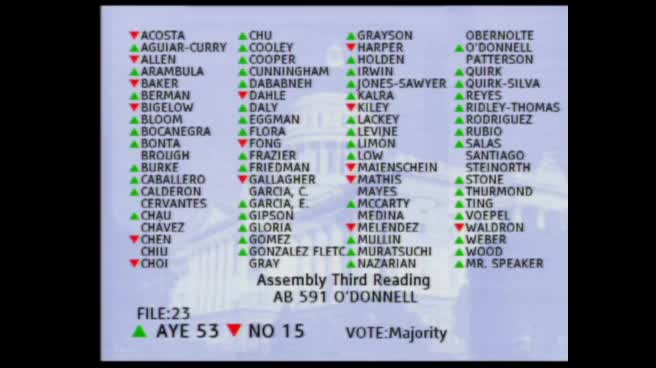 43SEC
Assembly Floor
 21MIN
Assembly Standing Committee on Public Safety
Bill Author

Bill Co-Author(s):






