AB 1678: Elections: voter registration information: security: campaign literature and communications.
- Session Year: 2017-2018
- House: Assembly
- Latest Version Date: 2018-07-16
Existing law makes an affidavit of voter registration confidential, and prohibits the use of an affidavit for a personal, private, or commercial purpose, except as specified. Existing law requires that an affidavit of voter registration with respect to a voter be provided to a candidate for federal, state, or local office, to a committee for or against an initiative or referendum measure for which publication is made, and to a person for election, scholarly, journalistic, or political purposes, or for governmental purposes, as determined by the Secretary of State. Existing law requires the release of the home address or signature of a voter whenever the persons vote is challenged, as specified.
This bill would require the Secretary of State to adopt regulations describing best practices for storage and security of voter registration information received by an applicant. The bill would require a person or entity who has received voter registration information pursuant to an application to disclose a breach in the security of the storage of the information to the Secretary of State, as specified.
Existing law makes it a misdemeanor for a person to knowingly cause to be mailed or distributed, or knowingly mail or distribute, literature to a voter that includes a designation of the voters precinct polling place other than the precinct polling place listed for that voter in an official precinct polling list.
This bill would make it a misdemeanor for a person, with actual knowledge and intent to deceive, to cause to be distributed or to distribute literature or any other form of communication to a voter that the person knows to include voting information that is incorrect, false, or misleading, as specified. This bill would specify that distribution for this purposes includes distribution by mail, radio or television broadcast, telephone call, text message, email, or any other electronic means, including over the Internet.
By creating a new crime, this bill would create a state-mandated local program.
The California Constitution requires the state to reimburse local agencies and school districts for certain costs mandated by the state. Statutory provisions establish procedures for making that reimbursement.
This bill would provide that no reimbursement is required by this act for a specified reason.
This bill would declare that it is to take effect immediately as an urgency statute.
Existing law makes an affidavit of voter registration confidential, and prohibits the use of an affidavit for a personal, private, or commercial purpose, except as specified. Existing law requires that an affidavit of voter registration with respect to a voter be provided to a candidate for federal, state, or local office, to a committee for or against an initiative or referendum measure for which publication is made, and to a person for election, scholarly, journalistic, or political purposes, or for governmental purposes, as determined by the Secretary of State. Existing law requires the release of the home address or signature of a voter whenever the persons vote is challenged, as specified.
This bill would require the Secretary of State to adopt regulations describing best practices for storage and security of voter registration information received by an applicant. The bill would require a person or entity who has received voter registration information pursuant to an application to disclose a breach in the security of the storage of the information to the Secretary of State, as specified.
Existing law makes it a misdemeanor for a person to knowingly cause to be mailed or distributed, or knowingly mail or distribute, literature to a voter that includes a designation of the voters precinct polling place other than the precinct polling place listed for that voter in an official precinct polling list.
This bill would make it a misdemeanor for a person, with actual knowledge and intent to deceive, causes to cause to be distributed or distributes to distribute literature or any other form of communication to a voter that the person knows to include voting information that is incorrect, false, or misleading, as specified. This bill would specify that distribution for this purposes includes distribution by mail, radio or television broadcast, telephone call, text message, email, or any other electronic means, including over the Internet.
By creating a new crime, this bill would create a state-mandated local program.
The California Constitution requires the state to reimburse local agencies and school districts for certain costs mandated by the state. Statutory provisions establish procedures for making that reimbursement.
This bill would provide that no reimbursement is required by this act for a specified reason.
This bill would declare that it is to take effect immediately as an urgency statute.
Existing law makes an affidavit of voter registration confidential, and prohibits the use of an affidavit for a personal, private, or commercial purpose, except as specified. Existing law requires that an affidavit of voter registration with respect to a voter be provided to a candidate for federal, state, or local office, to a committee for or against an initiative or referendum measure for which publication is made, and to a person for election, scholarly, journalistic, or political purposes, or for governmental purposes, as determined by the Secretary of State. Existing law requires the release of the home address or signature of a voter whenever the persons vote is challenged, as specified.
This bill would require the Secretary of State to adopt regulations describing best practices for storage and security of voter registration information received by an applicant. The bill would require a person or entity who has received voter registration information pursuant to an application to disclose a breach in the security of the storage of the information to the Secretary of State, as specified.
Existing law makes it a misdemeanor for a person to knowingly cause to be mailed or distributed, or knowingly mail or distribute, literature to a voter that includes a designation of the voters precinct polling place other than the precinct polling place listed for that voter in an official precinct polling list.
This bill would make it a misdemeanor for a person, with actual knowledge and intent to deceive, causes to be distributed or distributes literature or any other form of communication to a voter that the person knows to include voting information that is incorrect, false, or misleading, as specified. This bill would specify that distribution for this purposes includes distribution by mail, radio or television broadcast, telephone call, text message, email, or any other electronic means, including over the Internet.
By creating a new crime, this bill would create a state-mandated local program.
The California Constitution requires the state to reimburse local agencies and school districts for certain costs mandated by the state. Statutory provisions establish procedures for making that reimbursement.
This bill would provide that no reimbursement is required by this act for a specified reason.
This bill would declare that it is to take effect immediately as an urgency statute.
Existing law makes an affidavit of voter registration confidential, and prohibits the use of an affidavit for a personal, private, or commercial purpose, except as specified. Existing requires that an affidavit of voter registration with respect to a voter be provided to a candidate for federal, state, or local office, to a committee for or against an initiative or referendum measure for which publication is made, and to a person for election, scholarly, journalistic, or political purposes, or for governmental purposes, as determined by the Secretary of State. Existing law requires the release of the home address or signature of a voter whenever the persons vote is challenged, as specified.
This bill would require the Secretary of State to adopt regulations describing best practices for storage and security of voter registration information received by an applicant. The bill would require a person or entity who has received voter registration information pursuant to an application to disclose a breach in the security of the storage of the information to the Secretary of State, as specified.
This bill would declare that it is to take effect immediately as an urgency statute.
The Political Reform Act of 1974 prohibits a public officer from expending and a candidate from accepting any public moneys for the purpose of seeking elective office, except that a public officer or candidate may expend or accept public moneys for the purpose of seeking elective office if the state or a local governmental entity establishes a dedicated fund, as specified in statute, and certain conditions are satisfied. A violation of those provisions is a misdemeanor.Existing law prohibits the use of school district or community college district funds, services, supplies, or equipment to support or defeat a ballot measure or candidate, and makes a violation of those provisions a crime. This bill would specify that those provisions do not prohibit a school district or community college district from establishing and implementing a dedicated fund as specified in statute for the funding of candidates for elective office. By expanding the scope of a crime, the bill would impose a state-mandated local program.Existing law prohibits an elected state or local officer, including any state or local appointee, employee, or consultant, from using or permitting others to use public resources for a campaign activity, as defined.This bill would specify that those provisions do not prohibit a local agency from establishing and implementing a dedicated fund as specified in statute for the funding of candidates for elective office.Existing law specifically provides that an officer, employee, or consultant of a local agency, as defined, may not expend or authorize the expenditure of any of the funds of the local agency to support or oppose the approval or rejection of a ballot measure, or the election or defeat of a candidate, by the voters. Membership dues paid by a local agency to a professional association are not included as a prohibited expenditure.This bill would specify that those provisions do not prohibit a local agency from establishing and implementing a dedicated fund as specified in statute for the funding of candidates for elective office.The California Constitution requires the state to reimburse local agencies and school districts for certain costs mandated by the state. Statutory provisions establish procedures for making that reimbursement.This bill would provide that no reimbursement is required by this act for a specified reason.The Political Reform Act of 1974 prohibits a public officer from expending and a candidate from accepting any public moneys for the purpose of seeking elective office, except that a public officer or candidate may expend or accept public moneys for the purpose of seeking elective office if the state or a local governmental entity establishes a dedicated fund, as specified in statute, and certain conditions are satisfied. A violation of those provisions is a misdemeanor.
Existing law prohibits the use of school district or community college district funds, services, supplies, or equipment to support or defeat a ballot measure or candidate, and makes a violation of those provisions a crime.
This bill would specify that those provisions do not prohibit a school district or community college district from establishing and implementing a dedicated fund as specified in statute for the funding of candidates for elective office. By expanding the scope of a crime, the bill would impose a state-mandated local program.
Existing law prohibits an elected state or local officer, including any state or local appointee, employee, or consultant, from using or permitting others to use public resources for a campaign activity, as defined.
This bill would specify that those provisions do not prohibit a local agency from establishing and implementing a dedicated fund as specified in statute for the funding of candidates for elective office.
Existing law specifically provides that an officer, employee, or consultant of a local agency, as defined, may not expend or authorize the expenditure of any of the funds of the local agency to support or oppose the approval or rejection of a ballot measure, or the election or defeat of a candidate, by the voters. Membership dues paid by a local agency to a professional association are not included as a prohibited expenditure.
This bill would specify that those provisions do not prohibit a local agency from establishing and implementing a dedicated fund as specified in statute for the funding of candidates for elective office.
The California Constitution requires the state to reimburse local agencies and school districts for certain costs mandated by the state. Statutory provisions establish procedures for making that reimbursement.
This bill would provide that no reimbursement is required by this act for a specified reason.
The Political Reform Act of 1974 prohibits a public officer from expending and a candidate from accepting any public moneys for the purpose of seeking elective office, except that a public officer or candidate may expend or accept public moneys for the purpose of seeking elective office if the state or a local governmental entity establishes a dedicated fund, as specified, specified in statute, and certain conditions are satisfied. A violation of those provisions is a misdemeanor.
Existing law prohibits the use of school district or community college district funds, services, supplies, or equipment to support or defeat a ballot measure or candidate, and makes a violation of those provisions a crime.
This bill would specify that those provisions do not prohibit a school district or community college district from establishing and implementing a dedicated fund. fund as specified in statute for the funding of candidates for elective office. By expanding the scope of a crime, the bill would impose a state-mandated local program.
Existing law specifically provides that an officer, employee, or consultant of a local agency, as defined, may not expend or authorize the expenditure of any of the funds of the local agency to support or oppose the approval or rejection of a ballot measure, or the election or defeat of a candidate, by the voters. Membership dues paid by a local agency to a professional association are not included as a prohibited expenditure.
This bill would specify that those provisions do not prohibit a local agency from establishing and implementing a dedicated fund as specified in statute for the funding of candidates for elective office.
The California Constitution requires the state to reimburse local agencies and school districts for certain costs mandated by the state. Statutory provisions establish procedures for making that reimbursement.
This bill would provide that no reimbursement is required by this act for a specified reason.
The Political Reform Act of 1974 prohibits a public officer from expending and a candidate from accepting any public moneys for the purpose of seeking elective office, except that a public officer or candidate may expend or accept public moneys for the purpose of seeking elective office if the state or a local governmental entity establishes a dedicated fund, as specified, and certain conditions are satisfied. A violation of those provisions is a misdemeanor.
Existing law prohibits the use of school district or community college district funds, services, supplies, or equipment to support or defeat a ballot measure or candidate, and makes a violation of those provisions a crime.
This bill would specify that those provisions do not prohibit a school district or community college district from establishing and implementing a dedicated fund. By expanding the scope of a crime, the bill would impose a state-mandated local program.
The California Constitution requires the state to reimburse local agencies and school districts for certain costs mandated by the state. Statutory provisions establish procedures for making that reimbursement.
This bill would provide that no reimbursement is required by this act for a specified reason.
Existing law establishes the public elementary and secondary school system in this state. Under this system, school districts throughout the state provide instruction to pupils in kindergarten and grades 1 to 12, inclusive, at the public elementary and secondary schools.This bill would state the intent of the Legislature to enact legislation related to art education in public schools.Existing law establishes the public elementary and secondary school system in this state. Under this system, school districts throughout the state provide instruction to pupils in kindergarten and grades 1 to 12, inclusive, at the public elementary and secondary schools.
This bill would state the intent of the Legislature to enact legislation related to art education in public schools.
The Secretary of State shall adopt regulations that describe the best practices for storage and security of voter registration information received by an applicant pursuant to Section 2188.
SEC. 2.Section 2188.3 is added to the Elections Code, to read:2188.3.A person or entity who has received voter registration information pursuant to an application made under Section 2188 shall, following discovery or notification of a breach in the security of the storage of the information, disclose the breach in security to the Secretary of State. The disclosure shall be made in the most expedient time possible and without unreasonable delay.
SEC. 3.Section 18302 of the Elections Code is amended to read:18302.(a)A person is guilty of a misdemeanor who knowingly causes to be mailed or distributed, or knowingly mails or distributes, literature to a voter that includes a designation of the voters precinct polling place other than a precinct polling place listed for that voter in an official precinct polling list that constituted the latest official precinct polling list at sometime not more than 30 days prior to the mailing or distribution.
(b)A person is guilty of a misdemeanor who, with actual knowledge and intent to deceive, causes to be distributed or distributes, including distribution by mail, radio or television broadcast, telephone call, text message, email, or any other electronic means, including over the Internet, literature or any other form of communication to a voter that includes any of the following:
(1)The incorrect location of a vote center, office of an elections official, satellite office of an elections official where voting is permitted, vote by mail ballot drop box, or vote by mail ballot drop-off location.
(2)False or misleading information regarding the qualifications to vote or to register to vote.
(3)False or misleading information regarding the date of an election or the days, dates, or times voting may occur at a place described in paragraph (1).
SEC. 4.No reimbursement is required by this act pursuant to Section 6 of Article XIIIB of the California Constitution because the only costs that may be incurred by a local agency or school district will be incurred because this act creates a new crime or infraction, eliminates a crime or infraction, or changes the penalty for a crime or infraction, within the meaning of Section 17556 of the Government Code, or changes the definition of a crime within the meaning of Section 6 of Article XIIIB of the California Constitution.
SEC. 5.This act is an urgency statute necessary for the immediate preservation of the public peace, health, or safety within the meaning of Article IV of the California Constitution and shall go into immediate effect. The facts constituting the necessity are:
In order to ensure that voters personal information is protected, to ensure that a breach in the security of voter registration information is promptly reported, and to prohibit the intentional distribution of false information related to the time, place, and manner of voting before the November 6, 2018, statewide general election, it is necessary that this bill take effect immediately.
The Secretary of State shall adopt regulations that describe the best practices for storage and security of voter registration information received by an applicant pursuant to Section 2188.
SEC. 2.Section 2188.3 is added to the Elections Code, to read:2188.3.A person or entity who has received voter registration information pursuant to an application made under Section 2188 shall, following discovery or notification of a breach in the security of the storage of the information, disclose the breach in security to the Secretary of State. The disclosure shall be made in the most expedient time possible and without unreasonable delay.
SEC. 3.Section 18302 of the Elections Code is amended to read:18302.(a)A person is guilty of a misdemeanor who knowingly causes to be mailed or distributed, or knowingly mails or distributes, literature to any a voter that includes a designation of the voters precinct polling place other than a precinct polling place listed for that voter in an official precinct polling list that constituted the latest official precinct polling list at sometime not more than 30 days prior to the mailing or distribution.
(b)A person is guilty of a misdemeanor who, with actual knowledge and intent to deceive, causes to be distributed or distributes, including distribution by mail, radio or television broadcast, telephone call, text message, email, or any other electronic means, including over the Internet, literature or any other form of communication to a voter that includes any of the following:
(1)The incorrect location of a vote center, office of an elections official, satellite office of an elections official where voting is permitted, vote by mail ballot drop box, or vote by mail ballot drop-off location.
(2)False or misleading information regarding the qualifications to vote or to register to vote.
(3)False or misleading information regarding the date of an election or the days, dates, or times voting may occur at a place described in paragraph (1).
SEC. 4.No reimbursement is required by this act pursuant to Section 6 of Article XIIIB of the California Constitution because the only costs that may be incurred by a local agency or school district will be incurred because this act creates a new crime or infraction, eliminates a crime or infraction, or changes the penalty for a crime or infraction, within the meaning of Section 17556 of the Government Code, or changes the definition of a crime within the meaning of Section 6 of Article XIIIB of the California Constitution.
SEC. 5.This act is an urgency statute necessary for the immediate preservation of the public peace, health, or safety within the meaning of Article IV of the California Constitution and shall go into immediate effect. The facts constituting the necessity are:
In order to ensure that voters personal information is protected, to ensure that a breach in the security of voter registration information is promptly reported, and to prohibit the intentional distribution of false information related to the time, place, and manner of voting before the November 6, 2018, statewide general election, it is necessary that this bill take effect immediately.
The Secretary of State shall adopt regulations that describe the best practices for storage and security of voter registration information received by an applicant pursuant to Section 2188.
SEC. 2.Section 2188.3 is added to the Elections Code, to read:2188.3.A person or entity who has received voter registration information pursuant to an application made under Section 2188 shall, following discovery or notification of a breach in the security of the storage of the information, disclose the breach in security to the Secretary of State. The disclosure shall be made in the most expedient time possible and without unreasonable delay.
SEC. 3.Section 18302 of the Elections Code is amended to read:18302.Every (a)A person is guilty of a misdemeanor who knowingly causes to be mailed or distributed, or knowingly mails or distributes, literature to any voter that includes a designation of the voters precinct polling place other than a precinct polling place listed for that voter in an official precinct polling list that constituted the latest official precinct polling list at sometime not more than 30 days prior to the mailing or distribution.
(b)A person is guilty of a misdemeanor who, with actual knowledge and intent to deceive, causes to be distributed or distributes, including distribution by mail, radio or television broadcast, telephone call, text message, email, or any other electronic means, including over the Internet, literature or any other form of communication to a voter that includes any of the following:
(1)The incorrect location of a vote center, office of an elections official, satellite office of an elections official where voting is permitted, vote by mail ballot drop box, or vote by mail ballot drop-off location.
(2)False or misleading information regarding the qualifications to vote or to register to vote.
(3)False or misleading information regarding the date of an election or the days, dates, or times voting may occur at a place described in paragraph (1).
SEC. 4.No reimbursement is required by this act pursuant to Section 6 of Article XIIIB of the California Constitution because the only costs that may be incurred by a local agency or school district will be incurred because this act creates a new crime or infraction, eliminates a crime or infraction, or changes the penalty for a crime or infraction, within the meaning of Section 17556 of the Government Code, or changes the definition of a crime within the meaning of Section 6 of Article XIIIB of the California Constitution.
SEC. 3.SEC. 5.This act is an urgency statute necessary for the immediate preservation of the public peace, health, or safety within the meaning of Article IV of the California Constitution and shall go into immediate effect. The facts constituting the necessity are:
In order to ensure that voters personal information is protected, and to ensure that a breach in the security of voter registration information is promptly reported, and to prohibit the intentional distribution of false information related to the time, place, and manner of voting before the November 6, 2018, statewide general election, it is necessary that this bill take effect immediately.
The Secretary of State shall adopt regulations that describe the best practices for storage and security of voter registration information received by an applicant pursuant to Section 2188.
SEC. 2.Section 2188.3 is added to the Elections Code, to read:2188.3.A person or entity who has received voter registration information pursuant to an application made under Section 2188 shall, following discovery or notification of a breach in the security of the storage of the information, disclose the breach in security to the Secretary of State. The disclosure shall be made in the most expedient time possible and without unreasonable delay.
SEC. 3.This act is an urgency statute necessary for the immediate preservation of the public peace, health, or safety within the meaning of Article IV of the California Constitution and shall go into immediate effect. The facts constituting the necessity are:
In order to ensure that voters personal information is protected, and to ensure that a breach in the security of voter registration information is promptly reported, it is necessary that this bill take effect immediately.
SECTION 1.Section 7054 of the Education Code is amended to read:7054.(a)No school district or community college district funds, services, supplies, or equipment shall be used for the purpose of urging the support or defeat of any ballot measure or candidate, including, but not limited to, any candidate for election to the governing board of the district.(b)Nothing in this section shall prohibit the use of any of the public resources described in subdivision (a) to provide information to the public about the possible effects of any bond issue or other ballot measure if both of the following conditions are met:(1)The informational activities are otherwise authorized by the Constitution or laws of this state.(2)The information provided constitutes a fair and impartial presentation of relevant facts to aid the electorate in reaching an informed judgment regarding the bond issue or ballot measure.(c)Nothing in this section shall prohibit a school district or community college district from establishing and implementing a dedicated fund pursuant to Section 85300 of the Government Code. (d)A violation of this section shall be a misdemeanor or felony punishable by imprisonment in a county jail not exceeding one year or by a fine not exceeding one thousand dollars ($1,000), or by both, or imprisonment pursuant to subdivision (h) of Section 1170 of the Penal Code for 16 months, or two or three years.SEC. 2.Section 8314 of the Government Code is amended to read:8314.(a)It is unlawful for any elected state or local officer, including any state or local appointee, employee, or consultant, to use or permit others to use public resources for a campaign activity, or personal or other purposes which are not authorized by law.(b)For purposes of this section:(1)Personal purpose means those activities the purpose of which is for personal enjoyment, private gain or advantage, or an outside endeavor not related to state business. Personal purpose does not include the incidental and minimal use of public resources, such as equipment or office space, for personal purposes, including an occasional telephone call.(2)Campaign activity means an activity constituting a contribution as defined in Section 82015 or an expenditure as defined in Section 82025. Campaign activity does not include the incidental and minimal use of public resources, such as equipment or office space, for campaign purposes, including the referral of unsolicited political mail, telephone calls, and visitors to private political entities.(3)Public resources means any property or asset owned by the state or any local agency, including, but not limited to, land, buildings, facilities, funds, equipment, supplies, telephones, computers, vehicles, travel, and state-compensated time.(4)Use means a use of public resources which is substantial enough to result in a gain or advantage to the user or a loss to the state or any local agency for which a monetary value may be estimated.(c)(1)Any person who intentionally or negligently violates this section is liable for a civil penalty not to exceed one thousand dollars ($1,000) for each day on which a violation occurs, plus three times the value of the unlawful use of public resources. The penalty shall be assessed and recovered in a civil action brought in the name of the people of the State of California by the Attorney General or by any district attorney or any city attorney of a city having a population in excess of 750,000. If two or more persons are responsible for any violation, they shall be jointly and severally liable for the penalty.(2)If the action is brought by the Attorney General, the moneys recovered shall be paid into the General Fund. If the action is brought by a district attorney, the moneys recovered shall be paid to the treasurer of the county in which the judgment was entered. If the action is brought by a city attorney, the moneys recovered shall be paid to the treasurer of that city.(3)No civil action alleging a violation of this section may be commenced more than four years after the date the alleged violation occurred.(d)Nothing in this section shall prohibit the use of public resources for providing information to the public about the possible effects of any bond issue or other ballot measure on state activities, operations, or policies, provided that (1) the informational activities are otherwise authorized by the constitution or laws of this state, and (2) the information provided constitutes a fair and impartial presentation of relevant facts to aid the electorate in reaching an informed judgment regarding the bond issue or ballot measure.(e)The incidental and minimal use of public resources by an elected state or local officer, including any state or local appointee, employee, or consultant, pursuant to this section shall not be subject to prosecution under Section 424 of the Penal Code.(f)Nothing in this section shall prohibit a public agency from establishing and implementing a dedicated fund pursuant to Section 85300.SEC. 3.Section 54964 of the Government Code is amended to read:54964.(a)An officer, employee, or consultant of a local agency may not expend or authorize the expenditure of any of the funds of the local agency to support or oppose the approval or rejection of a ballot measure, or the election or defeat of a candidate, by the voters.(b)As used in this section, the following terms have the following meanings:(1)Ballot measure means an initiative, referendum, or recall measure certified to appear on a regular or special election ballot of the local agency, or other measure submitted to the voters by the governing body at a regular or special election of the local agency.(2)Candidate means an individual who has qualified to have his or her name listed on the ballot, or who has qualified to have write-in votes on his or her behalf counted by elections officials, for nomination or election to an elective office at any regular or special primary or general election of the local agency, and includes any officeholder who is the subject of a recall election.(3)Expenditure means a payment of local agency funds that is used for communications that expressly advocate the approval or rejection of a clearly identified ballot measure, or the election or defeat of a clearly identified candidate, by the voters. Expenditure shall not include membership dues paid by the local agency to a professional association.(4)Local agency has the same meaning as defined in Section 54951, but does not include a county superintendent of schools, an elementary, high, or unified school district, or a community college district.(c)This section does not prohibit the expenditure of local agency funds to provide information to the public about the possible effects of a ballot measure on the activities, operations, or policies of the local agency, if both of the following conditions are met:(1)The informational activities are not otherwise prohibited by the Constitution or laws of this state.(2)The information provided constitutes an accurate, fair, and impartial presentation of relevant facts to aid the voters in reaching an informed judgment regarding the ballot measure.(d)This section does not apply to the political activities of school officers and employees of a county superintendent of schools, an elementary, high, or unified school district, or a community college district that are regulated by Article 2 (commencing with Section 7050) of Chapter 1 of Part 5 of the Education Code.(e)Nothing in this section shall prohibit a local agency from establishing and implementing a dedicated fund pursuant to Section 85300.SEC. 4. No reimbursement is required by this act pursuant to Section 6 of Article XIIIB of the California Constitution because the only costs that may be incurred by a local agency or school district will be incurred because this act creates a new crime or infraction, eliminates a crime or infraction, or changes the penalty for a crime or infraction, within the meaning of Section 17556 of the Government Code, or changes the definition of a crime within the meaning of Section 6 of Article XIIIB of the California Constitution.(a)No school district or community college district funds, services, supplies, or equipment shall be used for the purpose of urging the support or defeat of any ballot measure or candidate, including, but not limited to, any candidate for election to the governing board of the district.
(b)Nothing in this section shall prohibit the use of any of the public resources described in subdivision (a) to provide information to the public about the possible effects of any bond issue or other ballot measure if both of the following conditions are met:
(1)The informational activities are otherwise authorized by the Constitution or laws of this state.
(2)The information provided constitutes a fair and impartial presentation of relevant facts to aid the electorate in reaching an informed judgment regarding the bond issue or ballot measure.
(c)Nothing in this section shall prohibit a school district or community college district from establishing and implementing a dedicated fund pursuant to Section 85300 of the Government Code.
(d)A violation of this section shall be a misdemeanor or felony punishable by imprisonment in a county jail not exceeding one year or by a fine not exceeding one thousand dollars ($1,000), or by both, or imprisonment pursuant to subdivision (h) of Section 1170 of the Penal Code for 16 months, or two or three years.
SEC. 2.Section 8314 of the Government Code is amended to read:8314.(a)It is unlawful for any elected state or local officer, including any state or local appointee, employee, or consultant, to use or permit others to use public resources for a campaign activity, or personal or other purposes which are not authorized by law.
(b)For purposes of this section:
(1)Personal purpose means those activities the purpose of which is for personal enjoyment, private gain or advantage, or an outside endeavor not related to state business. Personal purpose does not include the incidental and minimal use of public resources, such as equipment or office space, for personal purposes, including an occasional telephone call.
(2)Campaign activity means an activity constituting a contribution as defined in Section 82015 or an expenditure as defined in Section 82025. Campaign activity does not include the incidental and minimal use of public resources, such as equipment or office space, for campaign purposes, including the referral of unsolicited political mail, telephone calls, and visitors to private political entities.
(3)Public resources means any property or asset owned by the state or any local agency, including, but not limited to, land, buildings, facilities, funds, equipment, supplies, telephones, computers, vehicles, travel, and state-compensated time.
(4)Use means a use of public resources which is substantial enough to result in a gain or advantage to the user or a loss to the state or any local agency for which a monetary value may be estimated.
(c)(1)Any person who intentionally or negligently violates this section is liable for a civil penalty not to exceed one thousand dollars ($1,000) for each day on which a violation occurs, plus three times the value of the unlawful use of public resources. The penalty shall be assessed and recovered in a civil action brought in the name of the people of the State of California by the Attorney General or by any district attorney or any city attorney of a city having a population in excess of 750,000. If two or more persons are responsible for any violation, they shall be jointly and severally liable for the penalty.
(2)If the action is brought by the Attorney General, the moneys recovered shall be paid into the General Fund. If the action is brought by a district attorney, the moneys recovered shall be paid to the treasurer of the county in which the judgment was entered. If the action is brought by a city attorney, the moneys recovered shall be paid to the treasurer of that city.
(3)No civil action alleging a violation of this section may be commenced more than four years after the date the alleged violation occurred.
(d)Nothing in this section shall prohibit the use of public resources for providing information to the public about the possible effects of any bond issue or other ballot measure on state activities, operations, or policies, provided that (1) the informational activities are otherwise authorized by the constitution or laws of this state, and (2) the information provided constitutes a fair and impartial presentation of relevant facts to aid the electorate in reaching an informed judgment regarding the bond issue or ballot measure.
(e)The incidental and minimal use of public resources by an elected state or local officer, including any state or local appointee, employee, or consultant, pursuant to this section shall not be subject to prosecution under Section 424 of the Penal Code.
(f)Nothing in this section shall prohibit a public agency from establishing and implementing a dedicated fund pursuant to Section 85300.
SEC. 2.SEC. 3.Section 54964 of the Government Code is amended to read:54964.(a)An officer, employee, or consultant of a local agency may not expend or authorize the expenditure of any of the funds of the local agency to support or oppose the approval or rejection of a ballot measure, or the election or defeat of a candidate, by the voters.
(b)As used in this section, the following terms have the following meanings:
(1)Ballot measure means an initiative, referendum, or recall measure certified to appear on a regular or special election ballot of the local agency, or other measure submitted to the voters by the governing body at a regular or special election of the local agency.
(2)Candidate means an individual who has qualified to have his or her name listed on the ballot, or who has qualified to have write-in votes on his or her behalf counted by elections officials, for nomination or election to an elective office at any regular or special primary or general election of the local agency, and includes any officeholder who is the subject of a recall election.
(3)Expenditure means a payment of local agency funds that is used for communications that expressly advocate the approval or rejection of a clearly identified ballot measure, or the election or defeat of a clearly identified candidate, by the voters. Expenditure shall not include membership dues paid by the local agency to a professional association.
(4)Local agency has the same meaning as defined in Section 54951, but does not include a county superintendent of schools, an elementary, high, or unified school district, or a community college district.
(c)This section does not prohibit the expenditure of local agency funds to provide information to the public about the possible effects of a ballot measure on the activities, operations, or policies of the local agency, if both of the following conditions are met:
(1)The informational activities are not otherwise prohibited by the Constitution or laws of this state.
(2)The information provided constitutes an accurate, fair, and impartial presentation of relevant facts to aid the voters in reaching an informed judgment regarding the ballot measure.
(d)This section does not apply to the political activities of school officers and employees of a county superintendent of schools, an elementary, high, or unified school district, or a community college district that are regulated by Article 2 (commencing with Section 7050) of Chapter 1 of Part 5 of the Education Code.
(e)Nothing in this section shall prohibit a local agency from establishing and implementing a dedicated fund pursuant to Section 85300.
SEC. 3.SEC. 4.No reimbursement is required by this act pursuant to Section 6 of Article XIIIB of the California Constitution because the only costs that may be incurred by a local agency or school district will be incurred because this act creates a new crime or infraction, eliminates a crime or infraction, or changes the penalty for a crime or infraction, within the meaning of Section 17556 of the Government Code, or changes the definition of a crime within the meaning of Section 6 of Article XIIIB of the California Constitution.
(a)No school district or community college district funds, services, supplies, or equipment shall be used for the purpose of urging the support or defeat of any ballot measure or candidate, including, but not limited to, any candidate for election to the governing board of the district.
(b)Nothing in this section shall prohibit the use of any of the public resources described in subdivision (a) to provide information to the public about the possible effects of any bond issue or other ballot measure if both of the following conditions are met:
(1)The informational activities are otherwise authorized by the Constitution or laws of this state.
(2)The information provided constitutes a fair and impartial presentation of relevant facts to aid the electorate in reaching an informed judgment regarding the bond issue or ballot measure.
(c)Nothing in this section shall prohibit a school district or community college district from establishing and implementing a dedicated fund pursuant to Section 85300 of the Government Code.
(d)A violation of this section shall be a misdemeanor or felony punishable by imprisonment in a county jail not exceeding one year or by a fine not exceeding one thousand dollars ($1,000), or by both, or imprisonment pursuant to subdivision (h) of Section 1170 of the Penal Code for 16 months, or two or three years.
SEC. 2.Section 54964 of the Government Code is amended to read:54964.(a)An officer, employee, or consultant of a local agency may not expend or authorize the expenditure of any of the funds of the local agency to support or oppose the approval or rejection of a ballot measure, or the election or defeat of a candidate, by the voters.
(b)As used in this section section, the following terms have the following meanings:
(1)Ballot measure means an initiative, referendum, or recall measure certified to appear on a regular or special election ballot of the local agency, or other measure submitted to the voters by the governing body at a regular or special election of the local agency.
(2)Candidate means an individual who has qualified to have his or her name listed on the ballot, or who has qualified to have write-in votes on his or her behalf counted by elections officials, for nomination or election to an elective office at any regular or special primary or general election of the local agency, and includes any officeholder who is the subject of a recall election.
(3)Expenditure means a payment of local agency funds that is used for communications that expressly advocate the approval or rejection of a clearly identified ballot measure, or the election or defeat of a clearly identified candidate, by the voters. Expenditure shall not include membership dues paid by the local agency to a professional association.
(4)Local agency has the same meaning as defined in Section 54951, but does not include a county superintendent of schools, an elementary, high, or unified school district, or a community college district.
(c)This section does not prohibit the expenditure of local agency funds to provide information to the public about the possible effects of a ballot measure on the activities, operations, or policies of the local agency, if both of the following conditions are met:
(1)The informational activities are not otherwise prohibited by the Constitution or laws of this state.
(2)The information provided constitutes an accurate, fair, and impartial presentation of relevant facts to aid the voters in reaching an informed judgment regarding the ballot measure.
(d)This section does not apply to the political activities of school officers and employees of a county superintendent of schools, an elementary, high, or unified school district, or a community college district that are regulated by Article 2 (commencing with Section 7050) of Chapter 1 of Part 5 of the Education Code.
(e)Nothing in this section shall prohibit a local agency from establishing and implementing a dedicated fund pursuant to Section 85300.
SEC. 2. SEC. 3.No reimbursement is required by this act pursuant to Section 6 of Article XIIIB of the California Constitution because the only costs that may be incurred by a local agency or school district will be incurred because this act creates a new crime or infraction, eliminates a crime or infraction, or changes the penalty for a crime or infraction, within the meaning of Section 17556 of the Government Code, or changes the definition of a crime within the meaning of Section 6 of Article XIIIB of the California Constitution.
(a)No school district or community college district funds, services, supplies, or equipment shall be used for the purpose of urging the support or defeat of any ballot measure or candidate, including, but not limited to, any candidate for election to the governing board of the district.
(b)Nothing in this section shall prohibit the use of any of the public resources described in subdivision (a) to provide information to the public about the possible effects of any bond issue or other ballot measure if both of the following conditions are met:
(1)The informational activities are otherwise authorized by the Constitution or laws of this state.
(2)The information provided constitutes a fair and impartial presentation of relevant facts to aid the electorate in reaching an informed judgment regarding the bond issue or ballot measure.
(c)Nothing in this section shall prohibit a school district or community college district from establishing and implementing a dedicated fund pursuant to Section 85300 of the Government Code.
(c)(d)A violation of this section shall be a misdemeanor or felony punishable by imprisonment in a county jail not exceeding one year or by a fine not exceeding one thousand dollars ($1,000), or by both, or imprisonment pursuant to subdivision (h) of Section 1170 of the Penal Code for 16 months, or two or three years.
SEC. 2.No reimbursement is required by this act pursuant to Section 6 of Article XIIIB of the California Constitution because the only costs that may be incurred by a local agency or school district will be incurred because this act creates a new crime or infraction, eliminates a crime or infraction, or changes the penalty for a crime or infraction, within the meaning of Section 17556 of the Government Code, or changes the definition of a crime within the meaning of Section 6 of Article XIIIB of the California Constitution.
SECTION 1.It is the intent of the Legislature to enact legislation related to art education in public schools.It is the intent of the Legislature to enact legislation related to art education in public schools.
|
Date
|
Status
|
|---|---|
| Jul 16, 2018 | Chaptered by Secretary of State - Chapter 96, Statutes of 2018. |
| Jul 16, 2018 | Approved by the Governor. |
| Jul 6, 2018 | Enrolled and presented to the Governor at 10:15 a.m. |
| Jul 2, 2018 | Urgency clause adopted. Senate amendments concurred in. To Engrossing and Enrolling. |
| Jun 27, 2018 | From committee: That the Senate amendments be concurred in. (Ayes 6. Noes 1.) (June 27). |
| Jun 18, 2018 | Re-referred to Com. on E. & R. pursuant to Assembly Rule 77.2. |
| Jun 14, 2018 | In Assembly. Concurrence in Senate amendments pending. May be considered on or after June 16 pursuant to Assembly Rule 77. |
| Jun 14, 2018 | Read third time. Urgency clause adopted. Passed. Ordered to the Assembly. |
| May 31, 2018 | Read second time. Ordered to third reading. |
| May 30, 2018 | Read third time and amended. Ordered to second reading. |
| May 29, 2018 | Read second time. Ordered to third reading. |
| May 25, 2018 | From committee: Do pass. (Ayes 7. Noes 0.) (May 25). |
| May 7, 2018 | In committee: Referred to APPR. suspense file. |
| Apr 17, 2018 | From committee: Do pass and re-refer to Com. on APPR. (Ayes 5. Noes 0.) (April 17). Re-referred to Com. on APPR. |
| Apr 11, 2018 | From committee chair, with author's amendments: Amend, and re-refer to committee. Read second time, amended, and re-referred to Com. on E. & C.A. |
| Apr 4, 2018 | Re-referred to Com. on E. & C.A. |
| Apr 2, 2018 | Re-referred to Com. on RLS. pursuant to Senate Rule 29.10(c). |
| Mar 22, 2018 | Read second time. Ordered to third reading. |
| Mar 21, 2018 | From inactive file. |
| Sep 11, 2017 | Ordered to inactive file at the request of Senator Allen. |
| Aug 22, 2017 | Read second time. Ordered to third reading. |
| Aug 21, 2017 | From committee: Be ordered to second reading pursuant to Senate Rule 28.8. |
| Jul 13, 2017 | From committee: Do pass and re-refer to Com. on APPR. (Ayes 4. Noes 1.) (July 12). Re-referred to Com. on APPR. |
| Jun 8, 2017 | Referred to Com. on E. & C.A. |
| May 30, 2017 | In Senate. Read first time. To Com. on RLS. for assignment. |
| May 30, 2017 | Read third time. Passed. Ordered to the Senate. (Ayes 53. Noes 23. Page 1791.) |
| May 11, 2017 | Read second time. Ordered to third reading. |
| May 10, 2017 | From committee: Do pass. (Ayes 12. Noes 5.) (May 10). |
| May 3, 2017 | Re-referred to Com. on APPR. |
| May 2, 2017 | Read second time and amended. |
| May 1, 2017 | From committee: Amend, and do pass as amended and re-refer to Com. on APPR. (Ayes 5. Noes 2.) (April 26). |
| Apr 18, 2017 | Re-referred to Com. on E. & R. |
| Apr 17, 2017 | From committee chair, with author's amendments: Amend, and re-refer to Com. on E. & R. Read second time and amended. |
| Mar 29, 2017 | Re-referred to Com. on E. & R. |
| Mar 28, 2017 | From committee chair, with author's amendments: Amend, and re-refer to Com. on E. & R. Read second time and amended. |
| Mar 27, 2017 | Referred to Com. on E. & R. |
| Feb 19, 2017 | From printer. May be heard in committee March 21. |
| Feb 17, 2017 | Read first time. To print. |
|
Date
|
Description
|
Location
|
Votes
|
|
|---|---|---|---|---|
| Jul 2, 2018 | AB 1678 BERMAN Concurrence - Urgency Added | Assembly Floor |
Passed |
|
| Jun 27, 2018 | With recommendation: That Senate amendments be concurred in. | Assembly Standing Committee on Elections and Redistricting |
Passed |
|
| Jun 14, 2018 | Assembly 3rd Reading AB1678 Berman et al. By Stern Urgency Clause | Senate Floor |
Passed |
|
| May 25, 2018 | Do pass | Senate Standing Committee on Appropriations |
Passed |
|
| May 7, 2018 | Placed on suspense file | Senate Standing Committee on Appropriations |
Passed |
|
| Apr 17, 2018 | Do pass, but first be re-referred to the Committee on [Appropriations] | Senate Standing Committee on Elections and Constitutional Amendments |
Passed |
|
| Jul 12, 2017 | Do pass, but first be re-referred to the Committee on [Appropriations] | Senate Standing Committee on Elections and Constitutional Amendments |
Passed |
|
| May 30, 2017 | AB 1678 BERMAN Assembly Third Reading | Assembly Floor |
Passed |
|
| May 10, 2017 | Do pass. | Assembly Standing Committee on Appropriations |
Passed |
|
| Apr 26, 2017 | Do pass as amended and be re-referred to the Committee on [Appropriations] | Assembly Standing Committee on Elections and Redistricting |
Passed |
This list shows positions taken on this bill by organizations on the date displayed, which is linked to the original source.
Positions by individuals are not included.
|
Organization
|
Position
|
Date
|
|---|---|---|
| California Common Cause | ** Support | Aug 22, 2017 |
| California Taxpayers Association | ** Against | Aug 22, 2017 |
| CALPIRG | ** Support | Aug 22, 2017 |
| Howard Jarvis Taxpayers Association | ** Against | Aug 22, 2017 |
| League Of Women Voters Of California | ** Support | Jun 25, 2018 |
| National Federation Of Independent Business | ** Against | Aug 22, 2017 |
| Secretary of State Alex Padilla | ** Support | Jun 25, 2018 |
CONCURRENCE IN SENATE AMENDMENTS
CSA2 Bill Id:AB 1678
Author:(Berman)
As Amended Ver:May 30, 2018
2/3 vote. Urgency
ASSEMBLY: |
| (May 30, 2017) | SENATE: | 37-0 | (June 14, 2018) |
(vote not relevant)
COMMITTEE VOTE: | 6-1 | (June 27, 2018) | RECOMMENDATION: | concur |
(E. & R.)
Original Committee Reference: E. & R.
SUMMARY: Requires the Secretary of State (SOS) to adopt regulations that describe the best practices for storage and security of voter registration information. Requires a person who has received voter registration information, as specified, to disclose breaches in the security of the storage of that information. Makes it a misdemeanor to distribute specified false or misleading information regarding elections and voting with actual knowledge and intent to deceive.
The Senate amendments delete the Assembly version of this bill, and instead:
- Require the SOS to adopt regulations describing the best practices for storage and security of voter registration information that is requested and received by a candidate or committee, as specified, or by a person for election, scholarly, journalistic, political, or governmental purposes, as specified.
- Require a person or entity who has received voter registration information, as specified, to disclose any breach in the security of the storage of the information to the SOS. Require that disclosure to occur in the most expedient time possible and without unreasonable delay following discovery or notification of the breach.
- Make it a misdemeanor for a person, with actual knowledge and intent to deceive, to distribute or cause to be distributed, as specified, any form of communication to a voter that includes any of the following:
- The incorrect location of a vote center, office of an elections official, satellite office of an elections official where voting is permitted, vote by mail (VBM) drop box, or VBM ballot drop-off location.
- False or misleading information regarding the qualifications to vote or to register to vote.
- False or misleading information regarding the date of an election or the days, dates, or times voting may occur, as specified.
- Add an urgency clause, allowing this bill to take effect immediately upon enactment.
AS PASSED BY THE ASSEMBLY, this bill clarified that local agencies, school districts, and community college districts may establish public campaign financing programs in accordance with certain provisions of existing law. (Those provisions were found to be invalid by the Sacramento County Superior Court in Howard Jarvis Taxpayers Association v. Brown (2016), Case Number 34-2016-80002512, and an appeal is pending in the Third District Court of Appeals.)
FISCAL EFFECT: According to the Senate Appropriations Committee:
- SOS: SOS would incur a one-time cost of $50,000 to promulgate the regulations specified by this bill. (General Fund)
- Courts: Unknown, potentially-significant cost pressures to the court to adjudicate charges brought against defendants who disseminate false or misleading elections-related information as proscribed by this bill. While the superior courts are not funded on a workload basis, an increase in workload could result in delayed court services and would put pressure on the General Fund to fund additional staff and resources. (General Fund/Trial Court Trust Fund)
- Prosecution and Incarceration: Unknown potential increase in non-reimbursable local enforcement and incarceration costs to prosecute and incarcerate those charged with and found guilty of conduct proscribed by this bill. Costs would be offset, to a degree, by fee and assessment revenue. (Local funds)
COMMENTS: According to the author, "This bill will make two distinct modernizations to the law in order to protect information about voters, as well as information disseminated to voters. First, this bill would direct the Secretary of State to adopt regulations that describe the best practices for storage and security of voter registration information and would require a person or entity who has received access to voter information to disclose any data breach to the Secretary of State. Recent data breaches, including an alleged hack of the voter file reported by the San Diego Union Tribune and a ransomware attack on the Sacramento Bee, demonstrate the urgent need for stronger data security protections.
"In addition to the threat posed by cyber-attacks, social media and other technologies have resulted in an expansion in the intentional distribution of misinformation about voting times, locations, and qualifications, which presents a threat to the integrity of our elections. AB 1678 would expand current laws on voter misinformation to encompass the intentional distribution of incorrect information regarding voting times, locations, and qualifications. It would also modernize the law to address the intentional distribution of such misinformation via the Internet or other electronic means."
On March 7, the Assembly Elections and Redistricting Committee held a Joint Informational Hearing with the Senate Committee on Elections & Constitutional Amendments on the topic of Cybersecurity and California Elections. In light of the increased focus on election security since the 2016 elections, the purpose of the hearing was to explore California's policies for protecting the security of elections systems in an environment where the number and sophistication of threats to election infrastructure continues to increase. Strategies designed to mitigate the spread of election-related misinformation intended to confuse voters, suppress turnout, or cause other disruptions were also discussed among panelists and committee members.
In the past year, there have been media reports of various instances in which the security of California voter registration information that was held by third parties was compromised. Last December, the San Diego Union-Tribune reported that cyber criminals accessed a voter registration database that contained the registration information of more than 19 million California registered voters, and held that information for ransom. While it is not known who compiled that database, it appears to have included voter registration information that was obtained from California election officials in accordance with state law. Similarly, a February 7, 2018, article in the Sacramento Bee reported that two of their databases on a third-party computer server were seized by an anonymous hacker who demanded the Bee pay a ransom in Bitcoin to get the data back. One of the databases contained the voter registration database legally obtained from the SOS pursuant to existing law.
Numerous incidents of false or misleading information regarding elections distributed via the Internet or other means have surfaced in recent years throughout the United States. Such instances include false or misleading information related to the time, place, and manner of voting as well as the legal qualifications to vote or to register to vote. While existing California law prohibits dissemination of false information regarding a voter’s precinct polling place, the dissemination of other false or misleading information regarding elections can similarly interfere with the rights of voters. Examples of these types of offending communications provided to the committee include informing voters that members of differing political parties must vote on different election days, that votes for certain candidates can be cast via cell phone texts or through social media posts, that traffic violations disqualify persons from voting, and that persons may only vote in one election per year, among others.
Please see the policy committee analysis for a full discussion of this bill.
Analysis Prepared by: Ethan Jones / E. & R. / (916) 319-2094 FN: 0003619
Date of Hearing: June 27, 2018
ASSEMBLY COMMITTEE ON ELECTIONS AND REDISTRICTING
Marc Berman, Chair
ABPCA Bill Id:AB 1678 (
Author:Berman) – As Amended Ver:May 30, 2018
CONCURRENCE IN SENATE AMENDMENTS
ASSEMBLY: |
| (May 30, 2017) | SENATE: | 37-0 | (June 14, 2018) |
(vote not relevant)
SUBJECT: Elections: voter registration information: security: campaign literature and communications.
SUMMARY: Requires the Secretary of State (SOS) to adopt regulations that describe the best practices for storage and security of voter registration information. Requires a person who has received voter registration information, as specified, to disclose breaches in the security of the storage of that information. Makes it a misdemeanor to distribute specified false or misleading information regarding elections and voting with actual knowledge and intent to deceive.
The Senate amendments delete the Assembly version of this bill, and instead:
- Require the SOS to adopt regulations that describe the best practices for storage and security of voter registration information that is requested and received by a candidate or committee, as specified, or by a person for election, scholarly, journalistic, political, or governmental purposes, as specified.
- Require a person or entity who has received voter registration information, as specified, to disclose any breach in the security of the storage of the information to the SOS. Require that disclosure to occur in the most expedient time possible and without unreasonable delay following discovery or notification of the breach.
- Make it a misdemeanor for a person, with actual knowledge and intent to deceive, to distribute or cause to be distributed, as specified, any form of communication to a voter that includes any of the following:
- The incorrect location of a vote center, office of an elections official, satellite office of an elections official where voting is permitted, vote by mail (VBM) drop box, or VBM ballot drop-off location.
- False or misleading information regarding the qualifications to vote or to register to vote.
- False or misleading information regarding the date of an election or the days, dates, or times voting may occur, as specified.
- Add an urgency clause, allowing this bill to take effect immediately upon enactment.
EXISTING LAW:
- Provides, except as specified, that voter registration information shall be confidential and shall not appear on any computer terminal, list, affidavit, duplicate affidavit, or other medium routinely available to the public at the county elections official’s office.
- Provides that specified voter registration information shall be provided to any candidate or committee, or to any person for election, scholarly, journalistic, political, or governmental purposes, as determined by the SOS. Requires a person who seeks this information to complete an application and submit it to the SOS or to the county elections official.
- Provides that the California driver’s license number, the California identification card number, the social security number, and any other unique identifier used by the State of California for purposes of voter identification shown on the affidavit of voter registration of a registered voter are confidential and shall not be disclosed to any person, including candidates, ballot measure committees, and persons for election, scholarly, journalistic, or political purposes.
- Provides that the signature of a voter shown on the affidavit of voter registration is confidential and shall not be disclosed to any person, including candidates, ballot measure committees, and persons for election, scholarly, journalistic, or political purposes, except as specified.
- Provides that voter registration information shall not be used for any personal, private, or commercial purpose, including, but not limited to any of the following:
- The harassment of any voter or voter’s household;
- The advertising, solicitation, sale, or marketing of products or services to any voter or voter’s household; or,
- Reproduction in print, broadcast visual or audio, or display on the Internet or any computer terminal unless pursuant to specified permissible uses.
- Makes it a misdemeanor for a person in possession of specified voter registration information to knowingly use or permit the use of that information for any purpose other than as permitted by law.
- Makes it a misdemeanor for a person to knowingly cause literature to be mailed or distributed to any voter if it includes a designation of the voter's polling place other than the polling place listed for that voter in an official polling place list, as specified.
AS PASSED BY THE ASSEMBLY, this bill clarified that local agencies, school districts, and community college districts may establish public campaign financing programs in accordance with certain provisions of existing law. (Those provisions were found to be invalid by the Sacramento County Superior Court in Howard Jarvis Taxpayers Association v. Brown (2016), Case Number 34-2016-80002512, and an appeal is pending in the Third District Court of Appeals.)
FISCAL EFFECT: According to the Senate Appropriations Committee:
- SOS: SOS would incur a one-time cost of $50,000 to promulgate the regulations specified by this bill. (General Fund)
- Courts: Unknown, potentially-significant cost pressures to the court to adjudicate charges brought against defendants who disseminate false or misleading elections-related information as proscribed by this bill. While the superior courts are not funded on a workload basis, an increase in workload could result in delayed court services and would put pressure on the General Fund to fund additional staff and resources. (General Fund/Trial Court Trust Fund)
- Prosecution & Incarceration: Unknown potential increase in non-reimbursable local enforcement and incarceration costs to prosecute and incarcerate those charged with and found guilty of conduct proscribed by this bill. Costs would be offset, to a degree, by fee and assessment revenue. (Local funds)
COMMENTS:
- Prior Assembly Consideration of this Bill: As approved by the Assembly last year, this bill would have clarified that local agencies, school districts, and community college districts may establish public campaign financing programs in accordance with existing provisions of law. Subsequent to the Assembly's approval of this measure, it was amended in the Senate to delete the Assembly-approved provisions of the bill, and to add the current provisions. As a result, this bill has been re-referred to this committee for further consideration pursuant to Assembly Rule 77.2.
- Purpose of the Bill: According to the author:
Earlier this year, the Assembly Elections & Redistricting Committee and the Senate Elections & Constitutional Amendments Committee held a joint informational hearing on Cybersecurity and California Elections. At that hearing, the committees heard from federal, state, and county elections officials and other experts regarding the extent of the threat to the security of our elections.
This bill will make two distinct modernizations to the law in order to protect information about voters, as well as information disseminated to voters. First, this bill would direct the Secretary of State to adopt regulations that describe the best practices for storage and security of voter registration information and would require a person or entity who has received access to voter information to disclose any data breach to the Secretary of State. Recent data breaches, including an alleged hack of the voter file reported by the San Diego Union Tribune and a ransomware attack on the Sacramento Bee, demonstrate the urgent need for stronger data security protections.
In addition to the threat posed by cyber-attacks, social media and other technologies have resulted in an expansion in the intentional distribution of misinformation about voting times, locations, and qualifications, which presents a threat to the integrity of our elections. AB 1678 would expand current laws on voter misinformation to encompass the intentional distribution of incorrect information regarding voting times, locations, and qualifications. It would also modernize the law to address the intentional distribution of such misinformation via the Internet or other electronic means.
Given the ongoing and increasingly sophisticated threats to our elections systems, California cannot afford to be complacent about the security of our elections.
- Joint Informational Hearing on Election Cybersecurity: As indicated in the author's statement above, on March 7, this committee held a Joint Informational Hearing with the Senate Committee on Elections & Constitutional Amendments on the topic of Cybersecurity and California Elections. In light of the increased focus on election security since the 2016 elections, the purpose of the hearing was to explore California's policies for protecting the security of elections systems in an environment where the number and sophistication of threats to election infrastructure continues to increase. Strategies designed to mitigate the spread of election-related misinformation intended to confuse voters, suppress turnout, or cause other disruptions were also discussed among panelists and committee members.
Witnesses that participated in the hearing included the SOS, a member of the United States Election Assistance Commission, three California county elections officials, the former Senior Director for Cybersecurity Policy at The White House, and a Senior Advisor and Past President to a nonprofit organization that advocates for legislation and regulation that promotes accuracy, transparency and verifiability of elections.
Witnesses at the hearing generally agreed that there was no evidence to suggest that voting machines or vote tallying in California were compromised during the 2016 election. Nonetheless, all of the witnesses stressed the importance of continuing to evaluate cyber and other security threats to election infrastructure and to regularly evaluate processes and procedures to protect against those threats and to promote voter confidence in the accuracy of election results. - Access to Voter Registration Information: As detailed above, the voter registration information for every voter is confidential under existing law, though specified information from a voter's registration records are available for election, scholarly, journalistic, political, or governmental purposes. When information is provided to individuals and organizations pursuant to these provisions, a voter's driver's license number, identification number, social security number, and signature are not disclosed. Individuals or entities who wish to receive voter registration information for one of those permissible purposes must submit an application that includes a description of the intended use of the voter registration information.
In the past year, there have been media reports of various instances in which the security of California voter registration information that was held by third parties was compromised. Last December, the San Diego Union-Tribune reported that cyber criminals accessed a voter registration database that contained the registration information of more than 19 million California registered voters, and held that information for ransom. While it is not known who compiled that database, it appears to have included voter registration information that was obtained from California election officials in accordance with state law. Similarly, a February 7, 2018 article in the Sacramento Bee reported that two of their databases on a third-party computer server were seized by an anonymous hacker who demanded the Bee pay a ransom in Bitcoin to get the data back. One of the databases contained the voter registration database legally obtained from the SOS pursuant to existing law.
While misuse of voter registration information obtained from California elections officials is punishable by potential criminal or monetary penalties, the laws that provide for these penalties generally were designed to deter entities who obtained the information from elections officials from using that information for purposes that are not permitted by law (e.g., for commercial purposes). State law generally does not set standards for how individuals and entities must secure voter registration information that they obtain, nor does it detail steps that must be taken to protect it against inadvertent disclosure. - False or Misleading Election Information: Numerous incidents of false or misleading information regarding elections distributed via the Internet or other means have surfaced in recent years throughout the United States. Such instances include false or misleading information related to the time, place, and manner of voting as well as the legal qualifications to vote or to register to vote. While existing California law prohibits dissemination of false information regarding a voter’s precinct polling place, the dissemination of other false or misleading information regarding elections can similarly interfere with the rights of voters. Examples of these types of offending communications provided to the committee include informing voters that members of differing political parties must vote on different election days, that votes for certain candidates can be cast via cell phone texts or through social media posts, that traffic violations disqualify persons from voting, and that persons may only vote in one election per year, among others.
- Arguments in Support: The sponsor of this bill, Secretary of State Alex Padilla, writes in support:
Recent incidents where unauthorized users accessed voter data indicate that voter data may have been stored inadequately. California currently provides limited voter data to campaigns, journalists, and academic researchers for authorized purposes. The format of how the voter data is provided has evolved from paper copies to electronic data. Guidance for how to secure this data has not been clarified.
Similarly, current law provides criminal penalties for distributing false information about polling place locations. When these penalties were written, polling places were the only place a voter could cast a ballot. In the past few years, voters now can cast their ballots at Vote Centers and drop boxes. The law has not been updated to deter misinformation about where to cast a ballot.
- Related Legislation: AB 3075 (Berman), which was pending in the Senate Appropriations Committee at the time this analysis was prepared, creates the Office of Elections Cybersecurity within the Office of the SOS, and charges it with coordinating efforts to reduce the likelihood and severity of cyber incidents that interfere with election security or integrity. AB 3075 was approved by this committee on a 6-0 vote, and was approved by the Assembly on a 71-0 vote.
AB 2748 (Chau), which was pending in the Senate Governmental Organization Committee at the time this analysis was prepared, establishes a pilot program until 2023 under which up to five participating counties would have an independent security assessment of their election infrastructure conducted by specified state government entities. AB 2748 was approved by this committee on a 7-0 vote, and was approved by the Assembly on a 78-0 vote.
REGISTERED SUPPORT / OPPOSITION:
Support
Secretary of State Alex Padilla (sponsor) (prior version)
League of Women Voters of California (prior version)
Opposition
None on file.
Analysis Prepared by: Ethan Jones / E. & R. / (916) 319-2094
CONCURRENCE IN SENATE AMENDMENTS
CSA1 Bill Id:AB 1678
Author:(Berman)
As Amended Ver:May 30, 2018
2/3 vote. Urgency
ASSEMBLY: |
| (May 30, 2017) | SENATE: | 37-0 | (June 14, 2018) |
(vote not relevant)
Original Committee Reference: E. & R.
SUMMARY: Requires the Secretary of State (SOS) to adopt regulations that describe the best practices for storage and security of voter registration information. Requires a person who has received voter registration information, as specified, to disclose breaches in the security of the storage of that information. Makes it a misdemeanor to distribute specified false or misleading information regarding elections and voting with actual knowledge and intent to deceive.
The Senate amendments delete the Assembly version of this bill, and instead:
- Require the SOS to adopt regulations that describe the best practices for storage and security of voter registration information that is requested and received by a candidate or committee, as specified, or by a person for election, scholarly, journalistic, political, or governmental purposes, as specified.
- Requires a person or entity who has received voter registration information, as specified, to disclose any breach in the security of the storage of the information to the SOS. Requires that disclosure to occur in the most expedient time possible and without unreasonable delay following discovery or notification of the breach.
- Makes it a misdemeanor for a person, with actual knowledge and intent to deceive, to distribute or cause to be distributed, as specified, any form of communication to a voter that includes any of the following:
- The incorrect location of a vote center, office of an elections official, satellite office of an elections official where voting is permitted, vote by mail (VBM) drop box, or VBM ballot drop-off location.
- False or misleading information regarding the qualifications to vote or to register to vote.
- False or misleading information regarding the date of an election or the days, dates, or times voting may occur, as specified.
- Add an urgency clause, allowing this bill to take effect immediately upon enactment.
EXISTING LAW:
- Provides that specified voter registration information shall be provided to any candidate or committee, or to any person for election, scholarly, journalistic, political, or governmental purposes, as determined by the SOS. Requires a person who seeks this information to complete an application and submit it to the SOS or to the county elections official.
- Makes it a misdemeanor for a person in possession of specified voter registration information to knowingly use or permit the use of that information for any purpose other than as permitted by law.
- Makes it a misdemeanor for a person to knowingly cause to be mailed or distributed literature to any voter that includes a designation of the voter's polling place other than the polling place listed for that voter in an official polling place list, as specified.
AS PASSED BY THE ASSEMBLY, this bill clarified that local agencies, school districts, and community college districts may establish public campaign financing programs in accordance with certain provisions of existing law. (Those provisions were found to be invalid by the Sacramento County Superior Court in Howard Jarvis Taxpayers Association v. Brown (2016), Case Number 34-2016-80002512, and an appeal is pending in the Third District Court of Appeals.)
FISCAL EFFECT: According to the Senate Appropriations Committee:
- SOS: SOS would incur a one-time cost of $50,000 to promulgate the regulations specified by the bill (General Fund).
- Courts: Unknown, potentially-significant cost pressures to the court to adjudicate charges brought against defendants who disseminate false or misleading elections-related information as proscribed by this measure. While the superior courts are not funded on a workload basis, an increase in workload could result in delayed court services and would put pressure on the General Fund to fund additional staff and resources. (General Fund/Trial Court Trust Fund)
- Prosecution & Incarceration: Unknown potential increase in non-reimbursable local enforcement and incarceration costs to prosecute and incarcerate those charged with and found guilty of conduct proscribed by this bill. Costs would be offset, to a degree, by fee and assessment revenue. (Local funds)
COMMENTS: This bill was substantially amended in the Senate and the Assembly-approved provisions of this bill were deleted. This bill, as amended in the Senate, is inconsistent with Assembly actions.
Analysis Prepared by: Ethan Jones / E. & R. / (916) 319-2094 FN: 0003057
Office of Senate Floor Analyses (916) 651-1520 Fax: (916) 327-4478 | AB |
THIRD READING
Bill No: AB 1678
:
PRIOR VOTES NOT RELEVANT
SENATE ELECTIONS & C.A. COMMITTEE: 5-0, 4/17/18
AYES: Stern, Anderson, Allen, Hertzberg, Leyva
SENATE APPROPRIATIONS COMMITTEE: 7-0, 5/25/18
AYES: Lara, Bates, Beall, Bradford, Hill, Nielsen, Wiener
SUBJECT: Elections: voter registration information: security: campaign literature and communications
SOURCE: Secretary of State Alex Padilla
DIGEST:
This bill (1) requires the Secretary of State (SOS) to adopt regulations that describe the best practices for storage and security of voter registration information; (2) requires disclosure of breaches in the security of the storage of that information; and (3) makes it a crime to distribute specified false information regarding elections and voting.
Senate Floor Amendments of 5/30/18 add coauthors.
Existing law:
- Provides that specified information contained on affidavits of voter registration, commonly referred to as the voter roll, be provided to a candidate for federal, state, or local office, to a committee for or against an initiative or referendum measure for which publication is made, and to a person for election, scholarly, journalistic, or political purposes, or for governmental purposes, as determined by the SOS.
- Provides, except as specified, that voter registration information shall be confidential and shall not appear on any computer terminal, list, affidavit, duplicate affidavit, or other medium routinely available to the public at the county elections official’s office.
- Provides that voter registration information shall not be used for any personal, private, or commercial purpose, including, but not limited to:
- The harassment of any voter or voter’s household.
- The advertising, solicitation, sale, or marketing of products or services to any voter or voter’s household.
- Reproduction in print, broadcast visual or audio, or display on the Internet or any computer terminal unless pursuant specified permissible uses.
- Provides that the California driver’s license number, the California identification card number, the social security number, and any other unique identifier used by the State of California for purposes of voter identification shown on the affidavit of voter registration of a registered voter are confidential and shall not be disclosed to any person, including candidates, ballot measure committees, and persons for election, scholarly, journalistic, or political purposes.
- Provides that every person is guilty of a misdemeanor who knowingly causes to be mailed or distributed, or knowingly mails or distributes, literature to any voter that includes a designation of the voter’s precinct polling place other than a precinct polling place listed for that voter in an official precinct polling list that constituted the latest official precinct polling list at some time not more than 30 days prior to the mailing or distribution.
This bill:
- Requires the SOS to adopt regulations that describe the best practices for storage and security of voter registration information received by an applicant pursuant to existing law.
- Provides that a person or entity who has received voter registration information pursuant to existing law shall, following discovery or notification of a breach in the security of the storage of the information, disclose the breach in security to the SOS. The disclosure shall be made in the most expedient time possible and without unreasonable delay.
- Provides that a person is guilty of a misdemeanor who, with actual knowledge and intent to deceive, causes to be distributed or distributes, including distribution by mail, radio or television broadcast, telephone call, text message, email, or any other electronic means, including over the Internet, literature or any other form of communication to a voter that includes any of the following:
- The incorrect location of a vote center, office of an elections official, satellite office of an elections official where voting is permitted, vote by mail ballot drop box, or vote by mail ballot drop-off location.
- False or misleading information regarding the qualifications to vote or to register to vote.
- False or misleading information regarding the date of an election or the days, dates, or times voting may occur.
- Contains an urgency clause in order to ensure that voters’ personal information is protected, to ensure that a breach in the security of voter registration information is promptly reported, and to prohibit the intentional distribution of false information related to the time, place, and manner of voting before the November 6, 2018 statewide general election.
Background
Joint Informational Hearing on Election Cybersecurity. On March 7, the Senate Elections and Constitutional Amendments Committee held a Joint Informational Hearing with the Assembly Elections and Redistricting Committee on the topic of Cybersecurity and California Elections. In light of the increased focus on election security since the 2016 elections, the purpose of the hearing was to explore California's policies for protecting the security of our elections systems in an environment where the number and sophistication of threats to our election infrastructure continues to increase.
Strategies designed to mitigate the spread of election-related misinformation intended to confuse voters, suppress turnout, or cause other disruptions was also discussed among panelists and committee members.
Witnesses that participated in the hearing included the SOS, a member of the United States Election Assistance Commission, three California county elections officials, the former Senior Director for Cybersecurity Policy at The White House, and a Senior Advisor and Past President to a nonprofit organization that advocates for legislation and regulation that promotes accuracy, transparency, and verifiability of elections.
Witnesses at the hearing generally agreed that there was no evidence to suggest that voting machines or vote tallying in California were compromised during the 2016 election. Nonetheless, all of the witnesses stressed the importance of continuing to evaluate cyber and other security threats to election infrastructure, to regularly evaluate processes and procedures to protect against those threats, and to promote voter confidence in the accuracy of election results.
Recent voter data incursions. In the past year, there have been media reports of various incursions on voter databases held by third parties including a February 7, 2018 Sacramento Bee article reporting that two of their databases on a third-party computer server were seized by an anonymous hacker who demanded the Bee pay a ransom in Bitcoin to get the data back. One of the databases contained the voter registration database legally obtained from the SOS pursuant to existing law.
False or misleading election information. Numerous incidents of false or misleading information regarding elections distributed via the Internet or other means have surfaced in recent years throughout the United States. Such instances include false or misleading information related to the time, place, and manner of voting as well as the legal qualifications to vote or to register to vote. While existing California law only prohibits dissemination of false information regarding a voter’s precinct polling place examples of these types offending communications provided to the committee include informing voters that members of differing political parties must vote on different election days, that votes for certain candidates can be cast via cell phone texts or through social media posts, that traffic violations disqualify persons from voting, and that persons may only vote in one election per year, among others.
Comments
- According to the author, earlier this year, the Assembly Elections and Redistricting Committee and the Senate Elections and Constitutional Amendments Committee held a joint informational hearing on the topic of Cybersecurity and California Elections. At that hearing, the Committees heard from federal, state, and county elections officials and other experts regarding the extent of the threat to the security of our elections and options for additional steps that California can take to protect the integrity of our elections and to bolster public confidence in the election results.
AB 1678 improves voter file security by directing the SOS to adopt regulations that describe the best practices for storage and security of voter registration information, and by requiring a person or entity who has received access to voter registration information to disclose the breach to the SOS. Recent data breaches, including an alleged hack of the voter file reported by the San Diego Union Tribune and a ransomware attack on the Sacramento Bee, demonstrate the urgent need for stronger data security protections.
In addition, the intentional distribution of misinformation about voting times, locations, and qualifications present a threat to the integrity of our elections. AB 1678 combats dangerous misinformation tactics by strengthening current laws on false or misleading information about voting, providing law enforcement with a tool to address these harmful tactics. Given the ongoing and increasingly sophisticated threats posed to our elections systems, California cannot afford to be complacent about the security of our elections.
- Rewrite. This bill was rewritten while pending on the Senate Inactive File and re-referred to the Senate Elections and Constitutional Amendments Committee pursuant to Senate Rule 29.10. The prior version clarified that local agencies, school districts, and community college districts may establish public campaign financing programs in accordance with existing law.
Related/Prior Legislation
AB 3075 (Berman, 2018) creates the Office of Elections Cybersecurity within the Office of the SOS, and charges it with coordinating efforts to reduce the likelihood and severity of cyber incidents that interfere with election security or integrity. AB 3075 is currently pending in the Senate Elections and Constitutional Amendments Committee.
FISCAL EFFECT: Appropriation: Fiscal Com.: Local:
According to the Senate Appropriations Committee:
- SOS: SOS would incur a one-time cost of $50,000 to promulgate the regulations specified by this bill (General Fund).
- Courts: Unknown, potentially-significant cost pressures to the court to adjudicate charges brought against defendants who disseminates false or misleading elections-related information as proscribed by this bill. While the superior courts are not funded on a workload basis, an increase in workload could result in delayed court services and would put pressure on the General Fund to fund additional staff and resources. (General Fund/Trial Court Trust Fund)
- Prosecution & Incarceration: Unknown potential increase in non-reimbursable local enforcement and incarceration costs to prosecute and incarcerate those charged with and found guilty of conduct proscribed by this bill. Costs would be offset, to a degree, by fee and assessment revenue. (Local funds)
SUPPORT: (Verified 5/30/18)
Secretary of State Alex Padilla (source)
League of Women Voters of California
OPPOSITION: (Verified 5/30/18)
None received
ARGUMENTS IN SUPPORT: In an April 11, 2018 letter, Secretary of State Alex Padilla stated the following:
I am pleased to sponsor Assembly Bill 1678, which improves the integrity of elections by increasing voter roll security and combatting misinformation about election procedures. The legislation modernizes procedures for secure storage of voter data, protocols for notifying authorities of data breaches, and penalties for distributing misinformation about polling places.
Recent incidents where unauthorized users accessed voter data indicate that voter data may have been stored inadequately. California currently provides limited voter data to campaigns, journalists, and academic researchers for authorized purposes. The format of how the voter data is provided has evolved from paper copies to electronic data. Guidance for how to secure this data has not been clarified.
Similarly, current law provides criminal penalties for distributing false information about polling place locations. When these penalties were written, polling places were the only place a voter could cast a ballot. In the past few years, voters now can cast their ballots at Vote Centers and drop boxes. The law has not been updated to deter misinformation about where to cast a ballot.
AB 1678 updates and modernizes the law to accurate information about and ensures secure storage procedures for voter data, notification protocols for data breaches, and criminal penalties for false election information.
5/31/18 15:45:35
**** END ****
Office of Senate Floor Analyses (916) 651-1520 Fax: (916) 327-4478 | AB |
THIRD READING
Bill No: AB 1678
:
PRIOR VOTES NOT RELEVANT
SENATE ELECTIONS & C.A. COMMITTEE: 5-0, 4/17/18
AYES: Stern, Anderson, Allen, Hertzberg, Leyva
SENATE APPROPRIATIONS COMMITTEE: 7-0, 5/25/18
AYES: Lara, Bates, Beall, Bradford, Hill, Nielsen, Wiener
SUBJECT: Elections: voter registration information: security: campaign literature and communications
SOURCE: Secretary of State, Alex Padilla
DIGEST:
This bill (1) requires the Secretary of State (SOS) to adopt regulations that describe the best practices for storage and security of voter registration information; (2) requires disclosure of breaches in the security of the storage of that information; and (3) makes it a crime to distribute specified false information regarding elections and voting.
Existing law:
- Provides that specified information contained on affidavits of voter registration, commonly referred to as the voter roll, be provided to a candidate for federal, state, or local office, to a committee for or against an initiative or referendum measure for which publication is made, and to a person for election, scholarly, journalistic, or political purposes, or for governmental purposes, as determined by the SOS.
- Provides, except as specified, that voter registration information shall be confidential and shall not appear on any computer terminal, list, affidavit, duplicate affidavit, or other medium routinely available to the public at the county elections official’s office.
- Provides that voter registration information shall not be used for any personal, private, or commercial purpose, including, but not limited to:
- The harassment of any voter or voter’s household.
- The advertising, solicitation, sale, or marketing of products or services to any voter or voter’s household.
- Reproduction in print, broadcast visual or audio, or display on the Internet or any computer terminal unless pursuant specified permissible uses.
- Provides that the California driver’s license number, the California identification card number, the social security number, and any other unique identifier used by the State of California for purposes of voter identification shown on the affidavit of voter registration of a registered voter are confidential and shall not be disclosed to any person, including candidates, ballot measure committees, and persons for election, scholarly, journalistic, or political purposes
- Provides that every person is guilty of a misdemeanor who knowingly causes to be mailed or distributed, or knowingly mails or distributes, literature to any voter that includes a designation of the voter’s precinct polling place other than a precinct polling place listed for that voter in an official precinct polling list that constituted the latest official precinct polling list at some time not more than 30 days prior to the mailing or distribution.
This bill:
- Requires the SOS to adopt regulations that describe the best practices for storage and security of voter registration information received by an applicant pursuant to existing law.
- Provides that a person or entity who has received voter registration information pursuant to existing law shall, following discovery or notification of a breach in the security of the storage of the information, disclose the breach in security to the SOS. The disclosure shall be made in the most expedient time possible and without unreasonable delay.
- Provides that a person is guilty of a misdemeanor who, with actual knowledge and intent to deceive, causes to be distributed or distributes, including distribution by mail, radio or television broadcast, telephone call, text message, email, or any other electronic means, including over the Internet, literature or any other form of communication to a voter that includes any of the following:
- The incorrect location of a vote center, office of an elections official, satellite office of an elections official where voting is permitted, vote by mail ballot drop box, or vote by mail ballot drop-off location.
- False or misleading information regarding the qualifications to vote or to register to vote.
- False or misleading information regarding the date of an election or the days, dates, or times voting may occur.
- Contains an urgency clause in order to ensure that voters’ personal information is protected, to ensure that a breach in the security of voter registration information is promptly reported, and to prohibit the intentional distribution of false information related to the time, place, and manner of voting before the November 6, 2018, statewide general election.
Background
Joint Informational Hearing on Election Cybersecurity. On March 7, the Senate Elections and Constitutional Amendments Committee held a Joint Informational Hearing with the Assembly Elections and Redistricting Committee on the topic of Cybersecurity and California Elections. In light of the increased focus on election security since the 2016 elections, the purpose of the hearing was to explore California's policies for protecting the security of our elections systems in an environment where the number and sophistication of threats to our election infrastructure continues to increase.
Strategies designed to mitigate the spread of election-related misinformation intended to confuse voters, suppress turnout, or cause other disruptions was also discussed among panelists and committee members.
Witnesses that participated in the hearing included the SOS, a member of the United States Election Assistance Commission, three California county elections officials, the former Senior Director for Cybersecurity Policy at The White House, and a Senior Advisor and Past President to a nonprofit organization that advocates for legislation and regulation that promotes accuracy, transparency, and verifiability of elections.
Witnesses at the hearing generally agreed that there was no evidence to suggest that voting machines or vote tallying in California were compromised during the 2016 election. Nonetheless, all of the witnesses stressed the importance of continuing to evaluate cyber and other security threats to election infrastructure, to regularly evaluate processes and procedures to protect against those threats, and to promote voter confidence in the accuracy of election results.
Recent voter data incursions. In the past year, there have been media reports of various incursions on voter databases held by third parties including a February 7, 2018 Sacramento Bee article reporting that two of their databases on a third-party computer server were seized by an anonymous hacker who demanded the Bee pay a ransom in Bitcoin to get the data back. One of the databases contained the voter registration database legally obtained from the SOS pursuant to existing law.
False or misleading election information. Numerous incidents of false or misleading information regarding elections distributed via the Internet or other means have surfaced in recent years throughout the United States. Such instances include false or misleading information related to the time, place, and manner of voting as well as the legal qualifications to vote or to register to vote. While existing California law only prohibits dissemination of false information regarding a voter’s precinct polling place examples of these types offending communications provided to the committee include informing voters that members of differing political parties must vote on different election days, that votes for certain candidates can be cast via cell phone texts or through social media posts, that traffic violations disqualify persons from voting, and that persons may only vote in one election per year, among others.
Comments
- According to the author, earlier this year, the Assembly Elections and Redistricting Committee and the Senate Elections and Constitutional Amendments Committee held a joint informational hearing on the topic of Cybersecurity and California Elections. At that hearing, the Committees heard from federal, state, and county elections officials and other experts regarding the extent of the threat to the security of our elections and options for additional steps that California can take to protect the integrity of our elections and to bolster public confidence in the election results.
AB 1678 improves voter file security by directing the SOS to adopt regulations that describe the best practices for storage and security of voter registration information, and by requiring a person or entity who has received access to voter registration information to disclose the breach to the SOS. Recent data breaches, including an alleged hack of the voter file reported by the San Diego Union Tribune and a ransomware attack on the Sacramento Bee, demonstrate the urgent need for stronger data security protections.
In addition, the intentional distribution of misinformation about voting times, locations, and qualifications present a threat to the integrity of our elections. AB 1678 combats dangerous misinformation tactics by strengthening current laws on false or misleading information about voting, providing law enforcement with a tool to address these harmful tactics. Given the ongoing and increasingly sophisticated threats posed to our elections systems, California cannot afford to be complacent about the security of our elections.
- Rewrite. This bill was rewritten while pending on the Senate Inactive File and re-referred to the Senate Elections and Constitutional Amendments Committee pursuant to Senate Rule 29.10. The prior version clarified that local agencies, school districts, and community college districts may establish public campaign financing programs in accordance with existing law.
Related/Prior Legislation
AB 3075 (Berman, 2018) creates the Office of Elections Cybersecurity within the Office of the SOS, and charges it with coordinating efforts to reduce the likelihood and severity of cyber incidents that interfere with election security or integrity. AB 3075 is currently pending in the Senate Elections and Constitutional Amendments Committee.
FISCAL EFFECT: Appropriation: Fiscal Com.: Local:
According to the Senate Appropriations Committee:
- SOS: SOS would incur a one-time cost of $50,000 to promulgate the regulations specified by the bill (General Fund).
- Courts: Unknown, potentially-significant cost pressures to the court to adjudicate charges brought against defendants who disseminates false or misleading elections-related information as proscribed by this measure. While the superior courts are not funded on a workload basis, an increase in workload could result in delayed court services and would put pressure on the General Fund to fund additional staff and resources. (General Fund/Trial Court Trust Fund)
- Prosecution & Incarceration: Unknown potential increase in non-reimbursable local enforcement and incarceration costs to prosecute and incarcerate those charged with and found guilty of conduct proscribed by this bill. Costs would be offset, to a degree, by fee and assessment revenue. (Local funds)
Secretary of State Alex Padilla (source)
League of Women Voters of California
OPPOSITION: (Verified 5/23/18)
None received
ARGUMENTS IN SUPPORT: In an April 11, 2018 letter, Secretary of State Alex Padilla stated the following:
I am pleased to sponsor Assembly Bill 1678, which improves the integrity of elections by increasing voter roll security and combatting misinformation about election procedures. The legislation modernizes procedures for secure storage of voter data, protocols for notifying authorities of data breaches, and penalties for distributing misinformation about polling places.
Recent incidents where unauthorized users accessed voter data indicate that voter data may have been stored inadequately. California currently provides limited voter data to campaigns, journalists, and academic researchers for authorized purposes. The format of how the voter data is provided has evolved from paper copies to electronic data. Guidance for how to secure this data has not been clarified.
Similarly, current law provides criminal penalties for distributing false information about polling place locations. When these penalties were written, polling places were the only place a voter could cast a ballot. In the past few years, voters now can cast their ballots at Vote Centers and drop boxes. The law has not been updated to deter misinformation about where to cast a ballot.
AB 1678 updates and modernizes the law to accurate information about and ensures secure storage procedures for voter data, notification
protocols for data breaches, and criminal penalties for false election information.
5/29/18 10:44:13
**** END ****
SENATE COMMITTEE ON
Senator Ricardo Lara, Chair
2017 - 2018 Regular Session
AB 1678 (Berman) - Public agencies: political activities: dedicated fund
Version: | Policy Vote: |
Urgency: | Mandate: |
Hearing Date: | Consultant: |
This bill meets the criteria for referral to the Suspense File.
Bill Summary:
AB 1678 would (1) require the Secretary of State (SOS) to adopt regulations that describe the best practices for storage and security of voter registration information, (2) require disclosure of breaches in the security of the storage of that information, and (3) and makes it a crime to distribute specified false information regarding elections and voting.
Fiscal Impact:
- SOS: SOS would incur a one-time cost of $50,000 to promulgate the regulations specified by the bill (General Fund).
- Courts: Unknown, potentially-significant cost pressures to the court to adjudicate charges brought against defendants who disseminates false or misleading elections-related information as proscribed by this measure. While the superior courts are not funded on a workload basis, an increase in workload could result in delayed court services and would put pressure on the General Fund to fund additional staff and resources. (General Fund/Trial Court Trust Fund)
- Prosecution & Incarceration: Unknown potential increase in non-reimbursable local enforcement and incarceration costs to prosecute and incarcerate those charged with and found guilty of conduct proscribed by this bill. Costs would be offset, to a degree, by fee and assessment revenue. (Local funds)
Background:
In March, 2018, the Legislature’s two elections-related policy committees held a joint informational hearing on the topic of Cybersecurity and California Elections. At that hearing, testimony was provided regarding the extent of the threat to the security of the California’s elections, and options for additional steps the State can take (1) to protect election integrity, and (2) to ensure public confidence in the election results.
Proposed Law:
This bill, an urgency measure, would do all of the following:
- Require SOS to adopt regulations that describe the best practices for storage and security of voter registration information received by an applicant pursuant to existing law.
- Provide that a person or entity who has received voter registration information pursuant to existing law shall, following discovery or notification of a breach in the security of the storage of the information, disclose the breach in security to SOS, as specified.
- Provide that a person is guilty of a misdemeanor who, with actual knowledge and intent to deceive, causes to be distributed or distributes, including distribution by mail, radio or television broadcast, telephone call, text message, email, or any other electronic means, including over the Internet, literature or any other form of communication to a voter that includes any of the following:
- The incorrect location of a vote center, office of an elections official, satellite office of an elections official where voting is permitted, vote-by- mail ballot drop box, or vote by mail ballot drop-off location.
- False or misleading information regarding the qualifications to vote or to register to vote.
- False or misleading information regarding the date of an election or the days, dates, or times voting may occur.
Related Legislation:
- AB 3075 (Berman) would create the Office of Elections Cybersecurity within SOS, to coordinate efforts to reduce the likelihood and severity of cyber incidents that interfere with election security or integrity. The bill is currently pending in the Assembly Appropriations Committee.
- AB 2748 (Chau) would require the Office of Information Security in the Department of Technology, the Office of Emergency Services, and the California Military Department to establish a pilot program to conduct independent security assessments of election infrastructure in participating counties. The bill is currently pending in the Assembly Appropriations Committee.
- SB 1001 (Hertzberg) would (1) prohibit any person from using an automated account, or bot, to mislead a natural person online, and (2) require bots to be clearly identified. The bill would require online platforms to allow users to report bots violating those provisions, investigate potential bots that are reported, and provide details of violations and investigations to the Attorney General. The bill is currently pending in this Committee.
Staff Comments:
This bill would improve voter file security by (1) directing SOS to adopt regulations that describe the best practices for storage and security of voter registration information, and (2) requiring a person or entity who has received access to voter registration information to disclose the breach to SOS. Recent data breaches, including those related to news organizations can include voter registration information legally obtained from SOS pursuant to current law.
In addition, the intentional distribution of misinformation about voting times, locations, and qualifications can threaten election integrity. The bill would strengthen current laws on false or misleading information about voting, providing law enforcement with a tool to address these tactics. The fiscal impact of this provision of the bill cannot be known with certainty, as the actual impact will be dependent on numerous factors, including, but not limited to, judicial and prosecutorial discretion, the criminal history of a defendant, and the factors unique to each case. As the crime created by this bill is punishable as a misdemeanor with the potential for incarceration, certain rights to the defendants are attached to the proceedings, including the right to a jury trial and the right to counsel (at public expense if the defendants are unable to afford the costs of representation) which could lead to lengthier and more complex court proceedings. Consequently, to the extent that the court adjudicates, on average, a dozen or more of these new crimes that otherwise would not have been filed or resulted in a criminal action, court costs of this bill would surpass the Suspense File threshold.
Any local government costs resulting from the mandate in this measure are not state-reimbursable because the mandate only involves the definition of a crime or the penalty for conviction of a crime.
-- END --
SENATE COMMITTEE ON
ELECTIONS AND CONSTITUTIONAL AMENDMENTS
Senator Henry Stern, Chair
2017 - 2018 Regular
Bill No: AB Hearing Date: 4/17/18
Author: | |||
Version: | 4/11/18 | ||
Urgency: | Yes | Fiscal: | Yes |
Consultant: | Darren Chesin | ||
Subject: Elections: voter registration information: security: campaign literature and communications
DIGEST
This bill requires the Secretary of State (SOS) to adopt regulations that describe the best practices for storage and security of voter registration information; requires disclosure of breaches in the security of the storage of that information; and makes it a crime to distribute specified false information regarding elections and voting.
ANALYSIS
Existing law:
- Provides that specified information contained on affidavits of voter registration, commonly referred to as the voter roll, be provided to a candidate for federal, state, or local office, to a committee for or against an initiative or referendum measure for which publication is made, and to a person for election, scholarly, journalistic, or political purposes, or for governmental purposes, as determined by the SOS.
- Provides, except as specified, that voter registration information shall be confidential and shall not appear on any computer terminal, list, affidavit, duplicate affidavit, or other medium routinely available to the public at the county elections official’s office.
- Provides that voter registration information shall not be used for any personal, private, or commercial purpose, including, but not limited to:
- The harassment of any voter or voter’s household.
- The advertising, solicitation, sale, or marketing of products or services to any voter or voter’s household.
- Reproduction in print, broadcast visual or audio, or display on the Internet or any computer terminal unless pursuant specified permissible uses.
- Provides that the California driver’s license number, the California identification card number, the social security number, and any other unique identifier used by the State of California for purposes of voter identification shown on the affidavit of voter registration of a registered voter are confidential and shall not be disclosed to any person, including candidates, ballot measure committees, and persons for election, scholarly, journalistic, or political purposes
- Provides that every person is guilty of a misdemeanor who knowingly causes to be mailed or distributed, or knowingly mails or distributes, literature to any voter that includes a designation of the voter’s precinct polling place other than a precinct polling place listed for that voter in an official precinct polling list that constituted the latest official precinct polling list at some time not more than 30 days prior to the mailing or distribution.
This bill:
- Requires the SOS to adopt regulations that describe the best practices for storage and security of voter registration information received by an applicant pursuant to existing law.
- Provides that a person or entity who has received voter registration information pursuant to existing law shall, following discovery or notification of a breach in the security of the storage of the information, disclose the breach in security to the SOS. The disclosure shall be made in the most expedient time possible and without unreasonable delay.
- Provides that a person is guilty of a misdemeanor who, with actual knowledge and intent to deceive, causes to be distributed or distributes, including distribution by mail, radio or television broadcast, telephone call, text message, email, or any other electronic means, including over the Internet, literature or any other form of communication to a voter that includes any of the following:
- The incorrect location of a vote center, office of an elections official, satellite office of an elections official where voting is permitted, vote by mail ballot drop box, or vote by mail ballot drop-off location.
- False or misleading information regarding the qualifications to vote or to register to vote.
- False or misleading information regarding the date of an election or the days, dates, or times voting may occur.
- Contains an urgency clause in order to ensure that voters’ personal information is protected, to ensure that a breach in the security of voter registration information is promptly reported, and to prohibit the intentional distribution of false information related to the time, place, and manner of voting before the November 6, 2018, statewide general election.
BACKGROUND
Joint Informational Hearing on Election Cybersecurity. On March 7, this committee held a Joint Informational Hearing with the Assembly Committee on Elections & Redistricting on the topic of Cybersecurity and California Elections. In light of the increased focus on election security since the 2016 elections, the purpose of the hearing was to explore California's policies for protecting the security of our elections systems in an environment where the number and sophistication of threats to our election infrastructure continues to increase.
Strategies designed to mitigate the spread of election-related misinformation intended to confuse voters, suppress turnout, or cause other disruptions was also discussed among panelists and committee members.
Witnesses that participated in the hearing included the SOS, a member of the United States Election Assistance Commission, three California county elections officials, the former Senior Director for Cybersecurity Policy at The White House, and a Senior Advisor and Past President to a nonprofit organization that advocates for legislation and regulation that promotes accuracy, transparency, and verifiability of elections.
Witnesses at the hearing generally agreed that there was no evidence to suggest that voting machines or vote tallying in California were compromised during the 2016 election. Nonetheless, all of the witnesses stressed the importance of continuing to evaluate cyber and other security threats to election infrastructure, to regularly evaluate processes and procedures to protect against those threats, and to promote voter confidence in the accuracy of election results.
Recent Voter Data Incursions. In the past year, there have been media reports of various incursions on voter databases held by third parties including a February 7, 2018 Sacramento Bee article reporting that two of their databases on a third-party computer server were seized by an anonymous hacker who demanded the Bee pay a ransom in Bitcoin to get the data back. One of the databases contained the voter registration database legally obtained from the SOS pursuant to existing law.
False or Misleading Election Information. Numerous incidents of false or misleading information regarding elections distributed via the Internet or other means have surfaced in recent years throughout the United States. Such instances include false or misleading information related to the time, place, and manner of voting as well as the legal qualifications to vote or to register to vote. While existing California law only prohibits dissemination of false information regarding a voter’s precinct polling place examples of these types offending communications provided to the committee include informing voters that members of differing political parties must vote on different election days, that votes for certain candidates can be cast via cell phone texts or through social media posts, that traffic violations disqualify persons from voting, and that persons may only vote in one election per year, among others.
COMMENTS
- According to the author: Earlier this year, the Assembly Elections & Redistricting Committee and the Senate Elections & Constitutional Amendments Committee held a joint informational hearing on the topic of Cybersecurity and California Elections. At that hearing, the committees heard from federal, state, and county elections officials and other experts regarding the extent of the threat to the security of our elections and options for additional steps that California can take to protect the integrity of our elections and to bolster public confidence in the election results.
AB 1678 would improve voter file security by directing the Secretary of State to adopt regulations that describe the best practices for storage and security of voter registration information, and by requiring a person or entity who has received access to voter registration information to disclose the breach to the Secretary of State. Recent data breaches, including an alleged hack of the voter file reported by the San Diego Union Tribune and a ransomware attack on the Sacramento Bee, demonstrate the urgent need for stronger data security protections.
In addition, the intentional distribution of misinformation about voting times, locations, and qualifications present a threat to the integrity of our elections. AB 1678 would combat dangerous misinformation tactics by strengthening current laws on false or misleading information about voting, providing law enforcement with a tool to address these harmful tactics. Given the ongoing and increasingly sophisticated threats posed to our elections systems, California cannot afford to be complacent about the security of our elections. - Argument in Support. In an April 11, 2018 letter, Secretary of State Alex Padilla stated the following:
I am pleased to sponsor Assembly Bill 1678, which improves the integrity of elections by increasing voter roll security and combatting misinformation about election procedures. The legislation modernizes procedures for secure storage of voter data, protocols for notifying authorities of data breaches, and penalties for distributing misinformation about polling places.
Recent incidents where unauthorized users accessed voter data indicate that voter data may have been stored inadequately. California currently provides limited voter data to campaigns, journalists, and academic researchers for authorized purposes. The format of how the voter data is provided has evolved from paper copies to electronic data. Guidance for how to secure this data has not been clarified.
Similarly, current law provides criminal penalties for distributing false information about polling place locations. When these penalties were written, polling places were the only place a voter could cast a ballot. In the past few years, voters now can cast their ballots at Vote Centers and drop boxes. The law has not been updated to deter misinformation about where to cast a ballot.
AB 1678 updates and modernizes the law to accurate information about and ensures secure storage procedures for voter data, notification protocols for data breaches, and criminal penalties for false election information.
- Hello Again. This bill was rewritten while pending on the Senate inactive file and re-referred to this committee pursuant to Senate Rule 29.10. The prior version clarified that local agencies, school districts, and community college districts may establish public campaign financing programs in accordance with existing law.
RELATED/PRIOR LEGISLATION
AB 3075 (Berman) creates the Office of Elections Cybersecurity within the Office of the SOS, and charges it with coordinating efforts to reduce the likelihood and severity of cyber incidents that interfere with election security or integrity. AB 3075 is currently pending in the Assembly Appropriations Committee.
AB 2748 (Chau) requires the Office of Information Security in the Department of Technology, the Office of Emergency Services, and the California Military Department to establish a pilot program to conduct independent security assessments of election infrastructure in participating counties. AB 2748 is currently pending in the Assembly Privacy & Consumer Protection Committee.
SB 1001 (Hertzberg) prohibits any person from using an automated account, or bot, to mislead a natural person online and requires bots to be clearly identified. Requires online platforms to allow users to report bots violating those provisions, investigate potential bots that are reported, and provide details of violations and investigations to the Attorney General. At the time this analysis was released SB 1001 was scheduled to be heard on April 16, 2018 in the Senate Committee on Business, Professions and Economic Development.
PRIOR ACTION
Senate Elections and Constitutional Amendments: Assembly Floor: | 4 -1 |
Assembly Appropriations Committee: | |
Assembly Elections and Redistricting Committee: |
|
Note: This bill was rewritten while pending on the Senate inactive file. These votes were taken on the prior version of this bill.
POSITIONS
Sponsor: Secretary of State, Alex Padilla
Support: League of Women Voters of California
Oppose: None received
-- END --
Office of Senate Floor Analyses (916) 651-1520 Fax: (916) 327-4478 | AB |
THIRD READING
Bill No: AB 1678
:
SENATE ELECTIONS & C.A. COMMITTEE: 4-1, 7/12/17
AYES: Stern, Allen, Hertzberg, Leyva
NOES: Anderson
SENATE APPROPRIATIONS COMMITTEE: Senate Rule 28.8
ASSEMBLY FLOOR: 53-23, 5/30/17 - See last page for vote
SOURCE: League of Women Voters of California
DIGEST:
This bill clarifies that local agencies, school districts, and community college districts may establish public campaign financing programs in accordance with existing law.
Existing law:
- Prohibits any elected state or local officer from using or permitting others to use public resources for a campaign activity, or personal or other purposes not authorized by law, as specified.
- Prohibits school district or community college district funds, services, supplies, or equipment from being used for the purpose of urging the support or defeat of any ballot measure or candidate, including, but not limited to, any candidate for election to the governing board of the district.
- Prohibits an officer, employee, or consultant of a local agency from expending or authorizing the expenditure of local agency funds to support or oppose the approval or rejection of a ballot measure, or the election or defeat of a candidate, by the voters, as specified.
- Prohibits a public officer from expending, and a candidate from accepting, any public moneys for the purpose of seeking elective office, except in a situation where a state or local governmental entity establishes a dedicated fund for that purpose by statute, ordinance, resolution, or charter, and both of the following are true:
- Public moneys in the fund are available to all qualified, voluntarily participating candidates for the same office without regard to incumbency or political party preference; and,
- The state or local governmental entity has established criteria for determining a candidate's qualification by statute, ordinance, resolution, or charter.
This bill clarifies that local agencies, school districts, and community college districts may establish public campaign financing programs in accordance with existing law. Specifically, this bill:
- Provides that an existing prohibition against the use of school or community college district funds for the purpose of urging the support or defeat of any ballot measure or candidate shall not prohibit a school or community college district from establishing and implementing a dedicated fund for a public campaign financing program in accordance with existing law.
- Provides that an existing law that prohibits a state or local officer from using or permitting others to use public resources for a campaign activity, or personal or other purposes not authorized by law, shall not prohibit a public agency from establishing and implementing a dedicated fund for a public campaign financing program in accordance with existing law.
- Provides that an existing prohibition against the use of local agency funds to support or oppose the approval or rejection of a ballot measure, or the election or defeat of a candidate, by the voters, shall not prohibit a local agency from establishing and implementing a dedicated fund for a public campaign financing program in accordance with existing law.
Background
Public financing programs and previous legislation. In 1988, voters approved Proposition 73, which amended the Political Reform Act (PRA) to prohibit public funding of campaigns and set contribution limits for state and local elections, among other provisions. In 1990, all state and local elections were conducted under the provisions of Proposition 73. However, many of the provisions of Proposition 73 were ultimately ruled unconstitutional by the federal courts. The only provisions of Proposition 73 to survive legal challenge were contribution limits for special elections, restrictions on certain mass mailings by officeholders, and the prohibition on the use of public money for campaign purposes. The contribution limits for special elections that were included in Proposition 73 subsequently were repealed and replaced in another ballot measure.
Because of the public funding ban contained in Proposition 73, until this year, the state and most local government agencies did not have the option to create public financing programs for electoral campaigns. In Johnson v. Bradley (1992) 4 Cal. 4th 389, the California Supreme Court ruled that Proposition 73's public financing ban did not apply to charter cities, and at least six charter cities established public financing programs. Last year, however, the Legislature approved and Governor Brown signed SB 1107 (Allen, Chapter 837, Statutes of 2016), which permitted state and local governmental entities to establish programs that provide for public campaign financing for candidates for elective office, if certain conditions are met. SB 1107 did not create any public financing programs itself, but instead authorized the creation of such programs by state or local governmental entities through separate actions by those entities.
While SB 1107 modified the PRA's prohibition against public campaign financing programs for electoral campaigns, state law includes other restrictions on the use of public funds for campaign purposes that were not affected by SB 1107. Specifically, there are provisions of the Education Code and of the Government Code, as detailed above (see "Existing law"), that prohibit the expenditure of public funds for the purpose of supporting the election or defeat of candidates. Notwithstanding the fact that the expressed legislative intent of SB 1107 was to allow public campaign financing programs, the existence of these other laws that were unaffected by SB 1107 could create ambiguity about the legality of public campaign financing programs in the state. By clarifying that these existing laws do not prohibit the types of public campaign financing programs that were authorized by SB 1107, this bill helps avoid any such ambiguity or confusion.
Pending litigation. Last December, former Senator Quentin Kopp, who was one of the proponents of Proposition 73, and the Howard Jarvis Taxpayers Association, filed a lawsuit in the Sacramento Superior Court challenging the provisions of SB 1107 (Howard Jarvis Taxpayers Association v. Brown (2016), Case Number 34-2016-80002512). That lawsuit alleges that SB 1107 was improperly adopted by the Legislature because it was not submitted to the voters for their consideration. The case is pending.
The California Constitution generally provides that statutes that are enacted by an initiative measure can only be directly amended or repealed by the Legislature if the initiative measure allows for such changes. In the absence of language allowing the Legislature to make changes to a statutory initiative, the only method for amending a previously enacted statutory initiative is through another statute that becomes effective only when approved by the voters. However, the PRA, which was an initiative measure, permitted the Legislature to amend its provisions without submitting those changes to the voters if the Legislature's proposed amendments furthered the purposes of the PRA, and if certain other requirements were met.
Proposition 73, which also was an initiative, included a provision that allowed the Legislature to amend that measure in accordance with the procedures that applied to amendments to the PRA. Because amendments to the PRA that are not submitted to the voters must further the purposes of the PRA, amendments to Proposition 73 that are not submitted to the voters presumably also are required to further the purposes of the PRA. The language outlining the procedures for amending Proposition 73 was repealed by a subsequent ballot measure.
The lawsuit challenging SB 1107 alleges that Proposition 73 "made the prohibition of public financing of election campaigns one of the purposes of the [PRA]." But Proposition 73 did not expressly amend or add to the purposes of the PRA, nor did the text of the measure contain its own enumerated purposes. Furthermore, Proposition 73 did not specify that legislative amendments to the measure had to further the purposes of Proposition 73; rather, it required that amendments to Proposition 73 follow the procedure for amendments to the PRA generally. While none of the enumerated purposes of the PRA directly address the issue of public campaign financing programs, the following is one of the enumerated purposes: “Laws and practices unfairly favoring incumbents should be abolished in order that elections may be conducted more fairly.” Clearly, a prohibition on establishment of public campaign financing programs can and should be viewed as a law that unfairly favors incumbents.
On August 11, 2016, after SB 1107, the Office of the Legislative Counsel sent a letter addressed to Assemblymember Chad Mayes in which it provided written confirmation of an oral opinion it reached in which it concluded that "the amendments proposed to Government Code Section 85300 by [SB 1107] would require voter approval in order to become effective." In response to that letter, and in light of the facts detailed above, various supporters of that bill submitted a letter to the Legislature in which they concluded that SB 1107 could be adopted by the Legislature without being submitted to the voters. That letter correctly pointed out that the purposes of the PRA include preventing political corruption and unfair advantages of incumbency, and concluded that permitting the establishment of public financing programs furthered those purposes.
Related/Prior Legislation
SB 1107 (Allen, Chapter 837, Statutes of 2016) permitted the establishment of programs providing for the public financing of campaigns if a state or local governmental entity establishes a dedicated fund for that purpose by statute, ordinance, resolution, or charter, as specified.
FISCAL EFFECT: Appropriation: Fiscal Com.: Local:
League of Women Voters of California (source)
California Common Cause
CALPIRG
OPPOSITION: (Verified 8/22/17)
California Taxpayers Association
Howard Jarvis Taxpayers Association
National Federation of Independent Business
ARGUMENTS IN SUPPORT: According to the author, in 2016, the Legislature passed and Governor Brown signed SB 1107, which permitted governmental entities, including schools and community college districts, with the option to establish public campaign financing programs. Subsequent to SB 1107, three provisions of existing law were identified that provide a limitation on how school and community college districts, as well as local governments may engage in elections. The limitations in these sections, when read in tandem with Section 85300 of the Government Code, could lead to confusion. AB 1678, a conformity measure, addresses this potential confusion by clarifying that nothing in those three sections shall prohibit a school district, community college district, or local government from establishing a public financing fund, as allowed under SB 1107.
ARGUMENTS IN OPPOSITION: In a letter opposing AB 1678, the California Taxpayers Association stated that this bill interferes with ongoing litigation by changing existing law that claims to allow state and local agencies to use public funds to finance candidates for elected office as well as ballot measure campaigns.
ASSEMBLY FLOOR: 53-23, 5/30/17
AYES: Aguiar-Curry, Arambula, Baker, Berman, Bloom, Bocanegra, Bonta, Burke, Caballero, Calderon, Cervantes, Chiu, Chu, Cooley, Cooper, Dababneh, Daly, Frazier, Friedman, Cristina Garcia, Eduardo Garcia, Gipson, Gloria, Gomez, Gonzalez Fletcher, Gray, Grayson, Holden, Irwin, Jones-Sawyer, Kalra, Levine, Limón, Low, McCarty, Medina, Mullin, Muratsuchi, Nazarian, O'Donnell, Quirk, Reyes, Ridley-Thomas, Rodriguez, Rubio, Salas, Santiago, Mark Stone, Thurmond, Ting, Weber, Wood, Rendon
NOES: Acosta, Travis Allen, Bigelow, Brough, Chávez, Cunningham, Dahle, Flora, Fong, Gallagher, Harper, Kiley, Lackey, Maienschein, Mathis, Mayes, Melendez, Obernolte, Patterson, Quirk-Silva, Steinorth, Voepel, Waldron
NO VOTE RECORDED: Chau, Chen, Choi, Eggman
8/22/17 16:31:51
**** END ****
SENATE COMMITTEE ON
ELECTIONS AND CONSTITUTIONAL AMENDMENTS
Senator Henry Stern, Chair
2017 - 2018 Regular
Bill No: 1678 Hearing Date: 7/12/17
Author: | Berman | ||
Version: |
| ||
Urgency: | Fiscal: | ||
Consultant: | |||
Subject:
DIGEST
This bill clarifies that local agencies, school districts, and community college districts may establish public campaign financing programs in accordance with existing law.
ANALYSIS
Existing law:
- Prohibits any elected state or local officer from using or permitting others to use public resources for a campaign activity, or personal or other purposes not authorized by law, as specified.
- Prohibits school district or community college district funds, services, supplies, or equipment from being used for the purpose of urging the support or defeat of any ballot measure or candidate, including, but not limited to, any candidate for election to the governing board of the district.
- Prohibits an officer, employee, or consultant of a local agency from expending or authorizing the expenditure of local agency funds to support or oppose the approval or rejection of a ballot measure, or the election or defeat of a candidate, by the voters, as specified.
- Prohibits a public officer from expending, and a candidate from accepting, any public moneys for the purpose of seeking elective office, except in a situation where a state or local governmental entity establishes a dedicated fund for that purpose by statute, ordinance, resolution, or charter, and both of the following are true:
- Public moneys in the fund are available to all qualified, voluntarily participating candidates for the same office without regard to incumbency or political party preference; and,
- The state or local governmental entity has established criteria for determining a candidate's qualification by statute, ordinance, resolution, or charter.
This bill:
- Clarifies that local agencies, school districts, and community college districts may establish public campaign financing programs in accordance with existing law. Specifically, this bill:
- Provides that an existing prohibition against the use of school or community college district funds for the purpose of urging the support or defeat of any ballot measure or candidate shall not prohibit a school or community college district from establishing and implementing a dedicated fund for a public campaign financing program in accordance with existing law.
- Provides that an existing law that prohibits a state or local officer from using or permitting others to use public resources for a campaign activity, or personal or other purposes not authorized by law, shall not prohibit a public agency from establishing and implementing a dedicated fund for a public campaign financing program in accordance with existing law.
- Provides that an existing prohibition against the use of local agency funds to support or oppose the approval or rejection of a ballot measure, or the election or defeat of a candidate, by the voters, shall not prohibit a local agency from establishing and implementing a dedicated fund for a public campaign financing program in accordance with existing law.
BACKGROUND
Public Financing Programs and Previous Legislation. In 1988, voters approved Proposition 73, which amended the Political Reform Act (PRA) to prohibit public funding of campaigns and set contribution limits for state and local elections, among other provisions. In 1990, all state and local elections were conducted under the provisions of Proposition 73. However, many of the provisions of Proposition 73 were ultimately ruled unconstitutional by the federal courts. The only provisions of Proposition 73 to survive legal challenge were contribution limits for special elections, restrictions on certain mass mailings by officeholders, and the prohibition on the use of public money for campaign purposes. The contribution limits for special elections that were included in Proposition 73 subsequently were repealed and replaced in another ballot measure.
Because of the public funding ban contained in Proposition 73, until this year, the state and most local government agencies did not have the option to create public financing programs for electoral campaigns. In Johnson v. Bradley (1992) 4 Cal. 4th 389, the California Supreme Court ruled that Proposition 73's public financing ban did not apply to charter cities, and at least six charter cities established public financing programs. Last year, however, the Legislature approved and Governor Brown signed SB 1107 (Allen, Ch. 837, Statutes of 2016), which permitted state and local governmental entities to establish programs that provide for public campaign financing for candidates for elective office, if certain conditions are met. SB 1107 did not create any public financing programs itself, but instead authorized the creation of such programs by state or local governmental entities through separate actions by those entities.
While SB 1107 modified the PRA's prohibition against public campaign financing programs for electoral campaigns, state law includes other restrictions on the use of public funds for campaign purposes that were not affected by SB 1107. Specifically, there are provisions of the Education Code and of the Government Code, as detailed above (see "Existing Law"), that prohibit the expenditure of public funds for the purpose of supporting the election or defeat of candidates. Notwithstanding the fact that the expressed Legislative intent of SB 1107 was to allow public campaign financing programs, the existence of these other laws that were unaffected by SB 1107 could create ambiguity about the legality of public campaign financing programs in the state. By clarifying that these existing laws do not prohibit the types of public campaign financing programs that were authorized by SB 1107, this bill would help avoid any such ambiguity or confusion.
Pending Litigation: Last December, former Senator Quentin Kopp, who was one of the proponents of Proposition 73, and the Howard Jarvis Taxpayers Association, filed a lawsuit in the Sacramento Superior Court challenging the provisions of SB 1107 (Howard Jarvis Taxpayers Association v. Brown (2016), Case Number 34-2016-80002512). That lawsuit alleges that SB 1107 was improperly adopted by the Legislature because it was not submitted to the voters for their consideration. The case is pending.
The California Constitution generally provides that statutes that are enacted by an initiative measure can only be directly amended or repealed by the Legislature if the initiative measure allows for such changes. In the absence of language allowing the Legislature to make changes to a statutory initiative, the only method for amending a previously enacted statutory initiative is through another statute that becomes effective only when approved by the voters. However, the PRA, which was an initiative measure, permitted the Legislature to amend its provisions without submitting those changes to the voters if the Legislature's proposed amendments furthered the purposes of the PRA, and if certain other requirements were met.
Proposition 73, which also was an initiative, included a provision that allowed the Legislature to amend that measure in accordance with the procedures that applied to amendments to the PRA. Because amendments to the PRA that are not submitted to the voters must further the purposes of the PRA, amendments to Proposition 73 that are not submitted to the voters presumably also are required to further the purposes of the PRA. The language outlining the procedures for amending Proposition 73 was repealed by a subsequent ballot measure.
The lawsuit challenging SB 1107 alleges that Proposition 73 "made the prohibition of public financing of election campaigns one of the purposes of the [PRA]." But Proposition 73 did not expressly amend or add to the purposes of the PRA, nor did the text of the measure contain its own enumerated purposes. Furthermore, Proposition 73 did not specify that Legislative amendments to the measure had to further the purposes of Proposition 73; rather, it required that amendments to Proposition 73 follow the procedure for amendments to the PRA generally. While none of the enumerated purposes of the PRA directly address the issue of public campaign financing programs, the following is one of the enumerated purposes: “Laws and practices unfairly favoring incumbents should be abolished in order that elections may be conducted more fairly.” Clearly, a prohibition on establishment of public campaign financing programs can and should be viewed as a law that unfairly favors incumbents.
On August 11, 2016, after SB 1107, the Office of the Legislative Counsel sent a letter addressed to Assemblymember Chad Mayes in which it provided written confirmation of an oral opinion it reached in which it concluded that "the amendments proposed to Government Code Section 85300 by [SB 1107] would require voter approval in order to become effective." In response to that letter, and in light of the facts detailed above, various supporters of that bill submitted a letter to the Legislature in which they concluded that SB 1107 could be adopted by the Legislature without being submitted to the voters. That letter correctly pointed out that the purposes of the PRA include preventing political corruption and unfair advantages of incumbency, and concluded that permitting the establishment of public financing programs furthered those purposes.
COMMENTS
- According to the author: In 2016, the Legislature passed and Governor Brown signed SB 1107, which permitted governmental entities, including schools and community college districts, with the option to establish public campaign financing programs. Subsequent to SB 1107, three provisions of existing law were identified that provide a limitation on how school and community college districts, as well as local governments may engage in elections. The limitations in these sections, when read in tandem with section 85300 of the Government Code, could lead to confusion. AB 1678, a conformity measure, would address this potential confusion by clarifying that nothing in those three sections shall prohibit a school district, community college district, or local government from establishing a public financing fund, as allowed under SB 1107.
- Argument in Opposition. In a letter opposing AB 1678, the California Taxpayers Association stated that the bill interferes with ongoing litigation by changing existing law that claims to allow state and local agencies to use public funds to finance candidates for elected office as well as ballot measure campaigns.
RELATED/PRIOR LEGISLATION
SB 1107 (Allen Ch. 837, Statutes of 2016), permitted the establishment of programs providing for the public financing of campaigns if a state or local governmental entity establishes a dedicated fund for that purpose by statute, ordinance, resolution, or charter, as specified.
PRIOR ACTION
Assembly Floor: | 53 - 23 |
Assembly Appropriations Committee: | 12 - 5 |
Assembly Committee: | 5 - 2 |
POSITIONS
Sponsor: League of Women Voters of California
Support: California Common Cause
CALPIRG
Oppose: California Taxpayers Association
Howard Jarvis Taxpayers Association
National Federation of Independent Business
-- END --
ASSEMBLY THIRD READING
ATR Bill Id:AB 1678
Author:(Berman)
As Amended Ver:May 2, 2017
Majority vote
Committee | Votes | Ayes | Noes |
Elections | 5-2 | Berman, Santiago, Low, Mullin, Weber | Harper, Cunningham |
Appropriations | 12-5 | Gonzalez Fletcher, Bloom, Bocanegra, Bonta, Calderon, Chau, Eggman, Friedman, Eduardo Garcia, Gray, Muratsuchi, Reyes | Bigelow, Brough, Fong, Gallagher, Obernolte |
SUMMARY: Clarifies that local agencies, school districts, and community college districts may establish public campaign financing programs in accordance with existing law. Specifically, this bill:
- Provides that an existing prohibition against the use of school or community college district funds for the purpose of urging the support or defeat of any ballot measure or candidate shall not prohibit a school or community college district from establishing and implementing a dedicated fund for a public campaign financing program in accordance with existing law.
- Provides that an existing law that prohibits a state or local officer from using or permitting others to use public resources for a campaign activity, or personal or other purposes not authorized by law, shall not prohibit a public agency from establishing and implementing a dedicated fund for a public campaign financing program in accordance with existing law.
- Provides that an existing prohibition against the use of local agency funds to support or oppose the approval or rejection of a ballot measure, or the election or defeat of a candidate, by the voters, shall not prohibit a local agency from establishing and implementing a dedicated fund for a public campaign financing program in accordance with existing law.
EXISTING LAW permits a public officer or candidate to expend or accept public moneys for the purpose of seeking elective office if the state or a local governmental entity establishes a dedicated fund for that purpose, and both of the following are true:
- Public moneys in the fund are available to all qualified, voluntarily participating candidates for the same office without regard to incumbency or political party preference; and,
- The state or local governmental entity has established criteria for determining a candidate's qualification by statute, ordinance, resolution, or charter.
FISCAL EFFECT: According to the Assembly Appropriations Committee, negligible fiscal effect as this bill is only clarifying prior legislation.
COMMENTS: According to the author, "Last year, the Legislature passed and Governor Brown signed SB 1107, which permitted, but did not require, public campaign financing programs, as long as they meet specified requirements for fairness and accountability. However, [provisions of the Education Code and Government Code] provide a limitation on how school and community college districts, as well as local government may engage in elections. The limitations in these sections, when read in tandem with section 85300 of the Government Code, could lead to confusion as to what is allowed for school board, community college board, and local candidates. AB 1678 would address this potential confusion by clarifying that nothing in [those sections] shall prohibit a school district, community college district, or local government from establishing a public financing fund, as allowed under SB 1107."
In 1988, voters approved Proposition 73, which amended the Political Reform Act (PRA) to prohibit public funding of campaigns and set contribution limits for state and local elections, among other provisions. Last year, the Legislature approved and Governor Brown signed SB 1107 (Allen), Chapter 837, Statutes of 2016, which permitted state and local governmental entities to establish programs that provide for public campaign financing for candidates for elective office, if certain conditions are met. SB 1107 did not create any public financing programs itself, but instead authorized the creation of such programs by state or local governmental entities through separate actions by those entities.
While SB 1107 modified the PRA's prohibition against public campaign financing programs for electoral campaigns, state law includes other restrictions on the use of public funds for campaign purposes that were not affected by SB 1107. By clarifying that these existing laws do not prohibit the types of public campaign financing programs that were authorized by SB 1107, this bill should help avoid ambiguity or confusion.
Last December, former-Senator Quentin Kopp, who was one of the proponents of Proposition 73, and the Howard Jarvis Taxpayers Association, filed a lawsuit in the Sacramento Superior Court challenging the provisions of SB 1107 (Howard Jarvis Taxpayers Association v. Brown (2016), Case Number 34-2016-80002512). That lawsuit alleges that SB 1107 was improperly adopted by the Legislature because it was not submitted to the voters for their consideration. The case is pending.
Please see the policy committee analysis for a full discussion of this bill.
Analysis Prepared by: Ethan Jones / E. & R. / (916) 319-2094 FN: 0000315
Date of Hearing: May 10, 2017
ASSEMBLY COMMITTEE ON APPROPRIATIONS
Lorena Gonzalez Fletcher, Chair
ABPCA Bill Id:AB 1678
Author:(Berman) – As Amended Ver:May 2, 2017
Policy Committee: | Elections and Redistricting | Vote: | 5 - 2 |
|
|
Urgency: No State Mandated Local Program: Yes Reimbursable: No
SUMMARY:
This bill clarifies that local agencies may establish public campaign financing programs in accordance with existing law. Specifically, this bill, provides that an existing prohibition against the use of local agency funds to support or oppose the approval or rejection of a ballot measure, or the election or defeat of a candidate, by the voters, may not prohibit a local agency from establishing and implementing a dedicated fund for a public campaign financing program in accordance with existing law.
FISCAL EFFECT:
Negligible fiscal effect as this bill is only clarifying prior legislation.
COMMENTS:
- Background and Purpose. SB 1107 (Allen), Chapter 837, Statutes of 2016, permits public campaign financing programs, as long as they meet specified requirements for fairness and accountability. However, Sections of the Education Code and the Government Code provide a limitation on how school and community college districts, as well as local government may engage in elections. The limitations in these sections, when read in tandem with SB 1107, could lead to confusion as to what is allowed for school board, community college board, and local candidates. AB 1678 addresses this potential confusion by clarifying that nothing prohibits a school district, community college district, or local government from establishing a public financing fund, as allowed under SB 1107.
- Ongoing Litigation. In December 2016, former-Senator Quentin Kopp and the Howard Jarvis Taxpayers Association filed a lawsuit in the Sacramento Superior Court challenging the provisions of SB 1107. That lawsuit alleges that SB 1107 was improperly adopted by the Legislature because it was not submitted to the voters for their consideration. The case is pending. AB 1678 is unlikely to impact the ongoing litigation, although the extent to which this bill can be implemented will depend on the outcomes of that case.
Analysis Prepared by: Jessica Peters / APPR. / (916) 319-2081
Date of Hearing: April 26, 2017
ASSEMBLY COMMITTEE ON ELECTIONS AND REDISTRICTING
Marc Berman, Chair
ABPCA Bill Id:AB 1678 (
Author:Berman) – As Amended Ver:April 17, 2017
SUBJECT: School districts and community college districts: political activities: dedicated fund.
SUMMARY: Clarifies that local agencies, school districts, and community college districts may establish public campaign financing programs in accordance with existing law. Specifically, this bill:
- Provides that an existing prohibition against the use of school or community college district funds for the purpose of urging the support or defeat of any ballot measure or candidate shall not prohibit a school or community college district from establishing and implementing a dedicated fund for a public campaign financing program in accordance with existing law.
- Provides that an existing prohibition against the use of local agency funds to support or oppose the approval or rejection of a ballot measure, or the election or defeat of a candidate, by the voters, shall not prohibit a local agency from establishing and implementing a dedicated fund for a public campaign financing program in accordance with existing law.
EXISTING LAW:
- Prohibits any elected state or local officer from using or permitting others to use public resources for a campaign activity, or personal or other purposes not authorized by law, as specified.
- Prohibits school district or community college district funds, services, supplies, or equipment from being used for the purpose of urging the support or defeat of any ballot measure or candidate, including, but not limited to, any candidate for election to the governing board of the district.
- Prohibits an officer, employee, or consultant of a local agency from expending or authorizing the expenditure of local agency funds to support or oppose the approval or rejection of a ballot measure, or the election or defeat of a candidate, by the voters, as specified.
- Prohibits a public officer from expending, and a candidate from accepting, any public moneys for the purpose of seeking elective office, except in a situation where a state or local governmental entity establishes a dedicated fund for that purpose by statute, ordinance, resolution, or charter, and both of the following are true:
- Public moneys in the fund are available to all qualified, voluntarily participating candidates for the same office without regard to incumbency or political party preference; and,
- The state or local governmental entity has established criteria for determining a candidate's qualification by statute, ordinance, resolution, or charter.
FISCAL EFFECT: Unknown. State-mandated local program; contains a crimes and infractions disclaimer.
COMMENTS:
- Purpose of the Bill: According to the author:
Last year, the Legislature passed and Governor Brown signed SB 1107, which permitted, but did not require, public campaign financing programs, as long as they meet specified requirements for fairness and accountability. However, section 7054 of the Education Code and section 54964 of the Government Code provide a limitation on how school and community college districts, as well as local government may engage in elections. The limitations in these sections, when read in tandem with section 85300 of the Government Code, could lead to confusion as to what is allowed for school board, community college board, and local candidates. AB 1678 would address this potential confusion by clarifying that nothing in section 7054 or section 54964 shall prohibit a school district, community college district, or local government from establishing a public financing fund, as allowed under SB 1107.
- Public Financing Programs and Previous Legislation: In 1988, voters approved Proposition 73, which amended the Political Reform Act (PRA) to prohibit public funding of campaigns and set contribution limits for state and local elections, among other provisions. In 1990, all state and local elections were conducted under the provisions of Proposition 73. Many of the provisions of Proposition 73 were ultimately ruled unconstitutional by the federal courts. The only provisions of Proposition 73 to survive legal challenge were contribution limits for special elections, restrictions on certain mass mailings by officeholders, and the prohibition on the use of public money for campaign purposes. The contribution limits for special elections that were included in Proposition 73 subsequently were repealed and replaced in another ballot measure.
Because of the public funding ban contained in Proposition 73, until this year, the state and most local government agencies did not have the option to create public financing programs for electoral campaigns. (In Johnson v. Bradley (1992) 4 Cal. 4th 389, the California Supreme Court ruled that Proposition 73's public financing ban did not apply to charter cities, and at least six charter cities established public financing programs.) Last year, however, the Legislature approved and Governor Brown signed SB 1107 (Allen), Chapter 837, Statutes of 2016, which permitted state and local governmental entities to establish programs that provide for public campaign financing for candidates for elective office, if certain conditions are met. SB 1107 did not create any public financing programs itself, but instead authorized the creation of such programs by state or local governmental entities through separate actions by those entities.
While SB 1107 modified the PRA's prohibition against public campaign financing programs for electoral campaigns, state law includes other restrictions on the use of public funds for campaign purposes that were not affected by SB 1107. Specifically, there are provisions of the Education Code and of the Government Code, as detailed above (see "Existing Law"), that prohibit the expenditure of public funds for the purpose of supporting the election or defeat of candidates. Notwithstanding the fact that the expressed Legislative intent of SB 1107 was to allow public campaign financing programs, the existence of these other laws that were unaffected by SB 1107 could create ambiguity about the legality of public campaign financing programs in the state. By clarifying that these existing laws do not prohibit the types of public campaign financing programs that were authorized by SB 1107, this bill should help avoid any such ambiguity or confusion. - Pending Litigation: Last December, former-Senator Quentin Kopp, who was one of the proponents of Proposition 73, and the Howard Jarvis Taxpayers Association, filed a lawsuit in the Sacramento Superior Court challenging the provisions of SB 1107 (Howard Jarvis Taxpayers Association v. Brown (2016), Case Number 34-2016-80002512). That lawsuit alleges that SB 1107 was improperly adopted by the Legislature because it was not submitted to the voters for their consideration. The case is pending.
The California Constitution generally provides that statutes that are enacted by an initiative measure can only be directly amended or repealed by the Legislature if the initiative measure allows for such changes. In the absence of language allowing the Legislature to make changes to a statutory initiative, the only method for amending a previously-enacted statutory initiative is through another statute that becomes effective only when approved by the voters. The PRA, which was an initiative measure, allowed the Legislature to amend its provisions without submitting those amendments to the voters if the Legislature's proposed amendments furthered the purposes of the PRA, and if certain other requirements were met.
Proposition 73, which also was an initiative, included a provision that allowed the Legislature to amend that measure in accordance with the procedures that applied to amendments to the PRA. Because amendments to the PRA that are not submitted to the voters must further the purposes of the PRA, amendments to Proposition 73 that are not submitted to the voters presumably also are required to further the purposes of the PRA. The language outlining the procedures for amending Proposition 73 was repealed by a subsequent ballot measure.
The lawsuit challenging SB 1107 alleges that Proposition 73 "made the prohibition of public financing of election campaigns one of the purposes of the [PRA]." The extent to which that allegation is correct, however, is unclear. Proposition 73 did not expressly amend or add to the purposes of the PRA, nor did the text of the measure contain its own enumerated purposes. Furthermore, Proposition 73 did not specify that Legislative amendments to the measure had to further the purposes of Proposition 73; rather, it required that amendments to Proposition 73 follow the procedure for amendments to the PRA generally. Finally, none of the enumerated purposes of the PRA directly address the issue of public campaign financing programs.
On August 11, 2016, after SB 1107 had already been approved by this committee, the Office of the Legislative Counsel sent a letter addressed to Assemblymember Chad Mayes in which it provided written confirmation of an oral opinion it reached in which it concluded that "the amendments proposed to Government Code Section 85300 by [SB 1107] would require voter approval in order to become effective." In response to that letter, and in light of the facts detailed above, various supporters of that bill submitted a letter to the Legislature in which they concluded that SB 1107 could be adopted by the Legislature without being submitted to the voters. That letter stated that the purposes of the PRA include preventing political corruption and unfair advantages of incumbency, and concluded that public financing programs furthered those purposes. - Suggested Amendment: This bill amends two provisions of law that arguably could be interpreted to prohibit public agencies from adopting a public financing program in accordance with the conditions of SB 1107. There is a third provision of law, however, that similarly could be interpreted to prohibit public agencies from creating public financing programs, notwithstanding the provisions of SB 1107. Section 8314 of the Government Code makes it unlawful for any elected state or local officer to use or permit others to use public resources for a campaign activity, or personal or other purposes which are not authorized by law.
In order to make it abundantly clear that the provisions of SB 1107 authorized the creation of public campaign financing programs notwithstanding Section 8314 of the Government Code, committee staff recommends that this bill be amended to amend Section 8314 in a manner that is consistent with the amendments to the other two code sections affected by this bill. - Arguments in Support: The sponsor of this bill, the League of Women Voters of California, writes in support:
SB 1107 amended the Political Reform Act (Government Code Section 85300) to allow government agencies to adopt voluntary citizen-funded election programs like those previously permitted only in charter cities…
As part of the PRA, those provisions of SB 1107 control over any other acts of the Legislature (Government Code Sec. 81013). However, to ensure there is no confusion for local agencies, AB 1678 conforms two other provisions in law, Government Code Sec. 54964 and Education Code Sec. 7054, to Government Code Sec. 85300. SB 1107 did not spend any money or establish any particular campaign financing program. It simply opened the door to local governments that may want to consider new approaches like those that voters around the country have enacted. Such programs can enable candidates to compete more equitably for public office, amplify the voices of everyday Californians who donate small amounts, encourage more diverse participation in the political process, and give candidates an alternative to relying on large contributions.
AB 1678 promotes local control by making it clear that all California government agencies have the authority to establish a public financing fund as allowed under SB 1107.
REGISTERED SUPPORT / OPPOSITION:
Support
League of Women Voters of California (sponsor)
California Common Cause
Opposition
None on file.
Analysis Prepared by: Ethan Jones / E. & R. / (916) 319-2094
Discussed in Hearing
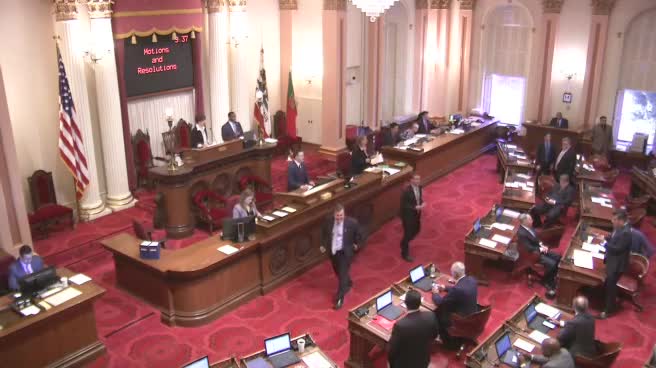 2MIN
Senate Floor
 6MIN
Senate Standing Committee on Elections and Constitutional Amendments
 11MIN
Senate Standing Committee on Elections and Constitutional Amendments
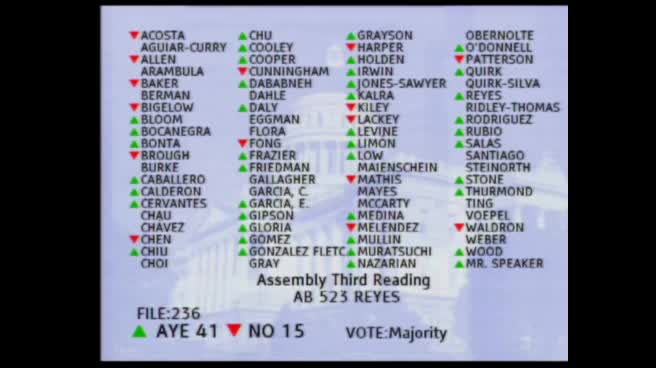 2MIN
Assembly Floor
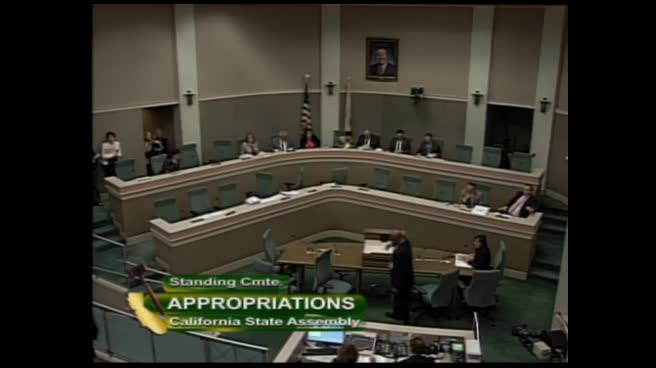 1MIN
Assembly Standing Committee on Appropriations
Bill Author

Bill Co-Author(s):





