AB 1710: Prohibited discrimination against service members.
- Session Year: 2017-2018
- House: Assembly
- Latest Version Date: 2017-10-08
(1)Existing law prohibits various types of discrimination against an officer, warrant officer, or enlisted member of the military or naval forces of the state or of the United States because of his or her membership or service, including, among others, discrimination with respect to his or her employment. Existing law provides criminal penalties and civil remedies for violations of these prohibitions.
This bill would include, within these prohibitions, discrimination in terms, conditions, or privileges of employment, as specified. By expanding the scope of these prohibitions, this bill would expand the scope of a crime, and thus impose a state-mandated local program.
(2)This bill would incorporate additional changes to Section 394 of the Military and Veterans Code proposed by SB 266 to be operative only if this bill and SB 266 are enacted and this bill is enacted last.
(3)The California Constitution requires the state to reimburse local agencies and school districts for certain costs mandated by the state. Statutory provisions establish procedures for making that reimbursement.
This bill would provide that no reimbursement is required by this act for a specified reason.
(1)Existing law prohibits various types of discrimination against an officer, warrant officer, or enlisted member of the military or naval forces of the state or of the United States because of his or her membership or service, including, among others, discrimination with respect to his or her employment. Existing law provides criminal penalties and civil remedies for violations of these prohibitions.
This bill would include, within these prohibitions, discrimination in terms, conditions, or privileges of employment, as specified. By expanding the scope of these prohibitions, this bill would expand the scope of a crime, and thus impose a state-mandated local program.
(2)This bill would incorporate additional changes to Section 394 of the Military and Veterans Code proposed by SB 266 to be operative only if this bill and SB 266 are enacted and this bill is enacted last.
(2)(3)The California Constitution requires the state to reimburse local agencies and school districts for certain costs mandated by the state. Statutory provisions establish procedures for making that reimbursement.
This bill would provide that no reimbursement is required by this act for a specified reason.
(1)Existing law prohibits various types of discrimination against an officer, warrant officer, or enlisted member of the military or naval forces of the state or of the United States because of his or her membership or service, including, among others, discrimination with respect to his or her employment. Existing law provides criminal penalties and civil remedies for violations of these prohibitions.
This bill would include, within these prohibitions, discrimination in terms, conditions, or privileges of employment, as specified. By expanding the scope of these prohibitions, this bill would expand the scope of a crime, and thus impose a state-mandated local program.
(2)The California Constitution requires the state to reimburse local agencies and school districts for certain costs mandated by the state. Statutory provisions establish procedures for making that reimbursement.
This bill would provide that no reimbursement is required by this act for a specified reason.
(a)A person shall not discriminate against an officer, warrant officer, or enlisted member of the military or naval forces of the state or of the United States because of that membership. A member of the military forces shall not be prejudiced or injured by a person, employer, or officer or agent of a corporation, company, or firm in terms, conditions, or privileges with respect to that members employment, position or status or be denied or disqualified for employment by virtue of membership or service in the military forces of this state or of the United States.
(b)An officer or employee of the state, or of any county, city and county, municipal corporation, or district shall not discriminate against an officer, warrant officer, or enlisted member of the military or naval forces of the state or of the United States because of that membership. A member of the military forces shall not be prejudiced or injured by an officer or employee of the state, or of any county, city and county, municipal corporation, or district in terms, conditions, or privileges with respect to that members employment, appointment, position, or status or be denied or disqualified for or discharged from that employment or position by virtue of membership or service in the military forces of this state or of the United States.
(c)A person shall not prohibit or refuse entrance to an officer or enlisted member of the Army or Navy of the United States or of the military or naval forces of this state into any public entertainment or place of amusement or into any of the places described in Sections 51 and 52 of the Civil Code because that member wears the uniform of the organization to which he or she belongs.
(d)An employer or officer or agent of a corporation, company, or firm, or other person, shall not discharge a person from employment because of the performance of any ordered military duty or training or by reason of being an officer, warrant officer, or enlisted member of the military or naval forces of this state, or hinder or prevent that person from performing any military service or from attending any military encampment or place of drill or instruction he or she may be called upon to perform or attend by proper authority; prejudice or harm him or her in any manner in his or her terms, conditions, or privileges of employment, position, or status by reason of performance of military service or duty or attendance at military encampments or places of drill or instruction; or dissuade, prevent, or stop any person from enlistment or accepting a warrant or commission in the California National Guard or Naval Militia by threat or injury to him or her in respect to his or her terms, conditions, or privileges of employment, position, status, trade, or business because of enlistment or acceptance of a warrant or commission.
(e)(1)A private employer or officer or agent of a corporation, company, or firm, or other person, shall not restrict or terminate any collateral benefit for employees by reason of an employees temporary incapacitation incident to duty in the National Guard or Naval Militia. As used in this subdivision, temporary incapacitation means any period of incapacitation of 52 weeks or less.
(2)As used in this subdivision, benefit includes, but is not limited to, health care which may be continued at the employees expense, life insurance, disability insurance, and seniority status.
(f)A person who provides lending or financing shall not discriminate against a person with respect to the terms of a loan or financing, including, but not limited to, the finance charge, based on that persons membership in the military or naval forces of this state or of the United States. With respect to a loan or credit transaction covered by Section 670 of Public Law 109-364 and Section 232 of Title 32 of the Code of Federal Regulations, as published on August 31, 2007, in Volume 72 of the Federal Register, a person that does not market or extend those transactions to covered borrowers shall not be in violation of this section. For purposes of this section, a covered borrower has the same meaning as provided for in Section 232 of Title 32 of the Code of Federal Regulations, as published on August 31, 2007, in Volume 72 of the Federal Register.
(g)A person violating this section is guilty of a misdemeanor. In addition, a person violating any of the provisions of this section shall be liable for actual damages and reasonable attorneys fees incurred by the injured party.
(h)The remedies provided for in this section are not intended to be exclusive but are in addition to the remedies provided for in other laws, including Sections 51 and 52 of the Civil Code.
SEC. 1.5.Section 394 of the Military and Veterans Code is amended to read:394.(a)A person shall not discriminate against an officer, warrant officer, or enlisted member of the military or naval forces of the state or of the United States because of that membership. A member of the military forces shall not be prejudiced or injured by a person, employer, or officer or agent of a corporation, company, or firm in terms, conditions, or privileges with respect to that members employment, position or status or be denied or disqualified for employment by virtue of membership or service in the military forces of this state or of the United States.
(b)An officer or employee of the state, or of any county, city and county, municipal corporation, or district shall not discriminate against an officer, warrant officer, or enlisted member of the military or naval forces of the state or of the United States because of that membership. A member of the military forces shall not be prejudiced or injured by an officer or employee of the state, or of any county, city and county, municipal corporation, or district in terms, conditions, or privileges with respect to that members employment, appointment, position, or status or be denied or disqualified for or discharged from that employment or position by virtue of membership or service in the military forces of this state or of the United States.
(c)A person shall not prohibit or refuse entrance to an officer or enlisted member of the Army or Navy of the United States or of the military or naval forces of this state into any public entertainment or place of amusement or into any of the places described in Sections 51 and 52 of the Civil Code because that member wears the uniform of the organization to which he or she belongs.
(d)An employer or officer or agent of a corporation, company, or firm, or other person, shall not discharge a person from employment because of the performance of any ordered military duty or training or by reason of being an officer, warrant officer, or enlisted member of the military or naval forces of this state, or hinder or prevent that person from performing any military service or from attending any military encampment or place of drill or instruction he or she may be called upon to perform or attend by proper authority; prejudice or harm him or her in any manner in his or her terms, conditions, or privileges of employment, position, or status by reason of performance of military service or duty or attendance at military encampments or places of drill or instruction; or dissuade, prevent, or stop any person from enlistment or accepting a warrant or commission in the California National Guard or Naval Militia by threat or injury to him or her in respect to his or her terms, conditions, or privileges of employment, position, status, trade, or business because of enlistment or acceptance of a warrant or commission.
(e)(1)A private employer or officer or agent of a corporation, company, or firm, or other person, shall not restrict or terminate any collateral benefit for employees by reason of an employees temporary incapacitation incident to duty in the National Guard or Naval Militia. As used in this subdivision, temporary incapacitation means any period of incapacitation of 52 weeks or less.
(2)As used in this subdivision, benefit includes, but is not limited to, health care which may be continued at the employees expense, life insurance, disability insurance, and seniority status.
(f)A person who provides lending or financing shall not discriminate against a person with respect to the terms of a loan or financing, including, but not limited to, the finance charge, based on that persons membership in the military or naval forces of this state or of the United States. With respect to a loan or credit transaction covered by Section 987 of Title 10 of the United States Code, as amended by 126 Stat. 1785 (Public Law 112-239), and Part 232 (commencing with Section 232.1) of Subchapter M of Chapter I of Subtitle A of Title 32 of the Code of Federal Regulations, as amended as published on July 22, 2015, on Page 43560 in Number 140 of Volume 80 of the Federal Register, a person that does not market or extend those transactions to covered borrowers shall not be in violation of this section. For purposes of this section, a covered borrower has the same meaning as provided for in Part 232 (commencing with Section 232.1) of Subchapter M of Chapter I of Subtitle A of Title 32 of the Code of Federal Regulations, as amended on the date described in this subdivision.
(g)A person violating this section is guilty of a misdemeanor. In addition, a person violating any of the provisions of this section shall be liable for actual damages and reasonable attorneys fees incurred by the injured party.
(h)The remedies provided for in this section are not intended to be exclusive but are in addition to the remedies provided for in other laws, including Sections 51 and 52 of the Civil Code.
SEC. 2.Section 1.5 of this bill incorporates amendments to Section 394 of the Military and Veterans Code proposed by both this bill and Senate Bill 266. That section shall only become operative if (1) both bills are enacted and become effective on or before January 1, 2018, (2) each bill amends Section 394 of the Military and Veterans Code, and (3) this bill is enacted after Senate Bill 266, in which case Section 1 of this bill shall not become operative.
SEC. 3.No reimbursement is required by this act pursuant to Section 6 of Article XIIIB of the California Constitution because the only costs that may be incurred by a local agency or school district will be incurred because this act creates a new crime or infraction, eliminates a crime or infraction, or changes the penalty for a crime or infraction, within the meaning of Section 17556 of the Government Code, or changes the definition of a crime within the meaning of Section 6 of Article XIIIB of the California Constitution.
(a)No A person shall not discriminate against any an officer, warrant officer, or enlisted member of the military or naval forces of the state or of the United States because of that membership. No A member of the military forces shall not be prejudiced or injured by any a person, employer, or officer or agent of any a corporation, company, or firm in terms, conditions, or privileges with respect to that members employment, position or status or be denied or disqualified for employment by virtue of membership or service in the military forces of this state or of the United States.
(b)No An officer or employee of the state, or of any county, city and county, municipal corporation, or district shall not discriminate against any an officer, warrant officer, or enlisted member of the military or naval forces of the state or of the United States because of that membership. No A member of the military forces shall not be prejudiced or injured by any an officer or employee of the state, or of any county, city and county, municipal corporation, or district in terms, conditions, or privileges with respect to that members employment, appointment, position position, or status or be denied or disqualified for or discharged from that employment or position by virtue of membership or service in the military forces of this state or of the United States.
(c)No A person shall not prohibit or refuse entrance to any an officer or enlisted member of the Army or Navy of the United States or of the military or naval forces of this state into any public entertainment or place of amusement or into any of the places described in Sections 51 and 52 of the Civil Code because that member wears the uniform of the organization to which he or she belongs.
(d)No An employer or officer or agent of any a corporation, company, or firm, or other person, shall not discharge any a person from employment because of the performance of any ordered military duty or training or by reason of being an officer, warrant officer, or enlisted member of the military or naval forces of this state, or hinder or prevent that person from performing any military service or from attending any military encampment or place of drill or instruction he or she may be called upon to perform or attend by proper authority; prejudice or harm him or her in any manner in his or her terms, conditions, or privileges of employment, position, or status by reason of performance of military service or duty or attendance at military encampments or places of drill or instruction; or dissuade, prevent, or stop any person from enlistment or accepting a warrant or commission in the California National Guard or Naval Militia by threat or injury to him or her in respect to his or her terms, conditions, or privileges of employment, position, status, trade, or business because of enlistment or acceptance of a warrant or commission.
(e)(1)No A private employer or officer or agent of any a corporation, company, or firm, or other person, shall not restrict or terminate any collateral benefit for employees by reason of an employees temporary incapacitation incident to duty in the National Guard or Naval Militia. As used in this subdivision, temporary incapacitation means any period of incapacitation of 52 weeks or less.
(2)As used in this subdivision, benefit includes, but is not limited to, health care which may be continued at the employees expense, life insurance, disability insurance, and seniority status.
(f)No A person who provides lending or financing shall not discriminate against any a person with respect to the terms of a loan or financing, including, but not limited to, the finance charge, based on that persons membership in the military or naval forces of this state or of the United States. With respect to any a loan or credit transaction covered by Section 670 of Public Law 109-364 and Section 232 of Title 32 of the Code of Federal Regulations, as published on August 31, 2007, in Volume 72 of the Federal Register, a person that does not market or extend those transactions to covered borrowers shall not be in violation of this section. For purposes of this section, a covered borrower has the same meaning as provided for in Section 232 of Title 32 of the Code of Federal Regulations, as published on August 31, 2007, in Volume 72 of the Federal Register.
(g)Any A person violating this section is guilty of a misdemeanor. In addition, any a person violating any of the provisions of this section shall be liable for actual damages and reasonable attorneys fees incurred by the injured party.
(h)The remedies provided for in this section are not intended to be exclusive but are in addition to the remedies provided for in other laws, including Sections 51 and 52 of the Civil Code.
SEC. 1.5.Section 394 of the Military and Veterans Code is amended to read:394.(a)No A person shall not discriminate against any an officer, warrant officer officer, or enlisted member of the military or naval forces of the state or of the United States because of that membership. No A member of the military forces shall not be prejudiced or injured by any a person, employer, or officer or agent of any a corporation, company, or firm in terms, conditions, or privileges with respect to that members employment, position or status or be denied or disqualified for employment by virtue of membership or service in the military forces of this state or of the United States.
(b)No An officer or employee of the state, or of any county, city and county, municipal corporation, or district shall not discriminate against any an officer, warrant officer officer, or enlisted member of the military or naval forces of the state or of the United States because of that membership. No A member of the military forces shall not be prejudiced or injured by any an officer or employee of the state, or of any county, city and county, municipal corporation, or district in terms, conditions, or privileges with respect to that members employment, appointment, position position, or status or be denied or disqualified for or discharged from that employment or position by virtue of membership or service in the military forces of this state or of the United States.
(c)No A person shall not prohibit or refuse entrance to any an officer or enlisted member of the Army or Navy of the United States or of the military or naval forces of this state into any public entertainment or place of amusement or into any of the places described in Sections 51 and 52 of the Civil Code because that member wears the uniform of the organization to which he or she belongs.
(d)No An employer or officer or agent of any a corporation, company, or firm, or other person, shall not discharge any a person from employment because of the performance of any ordered military duty or training or by reason of being an officer, warrant officer, or enlisted member of the military or naval forces of this state, or hinder or prevent that person from performing any military service or from attending any military encampment or place of drill or instruction he or she may be called upon to perform or attend by proper authority; prejudice or harm him or her in any manner in his or her terms, conditions, or privileges of employment, position, or status by reason of performance of military service or duty or attendance at military encampments or places of drill or instruction; or dissuade, prevent, or stop any person from enlistment or accepting a warrant or commission in the California National Guard or Naval Militia by threat or injury to him or her in respect to his or her terms, conditions, or privileges of employment, position, status, trade, or business because of enlistment or acceptance of a warrant or commission.
(e)(1)No A private employer or officer or agent of any a corporation, company, or firm, or other person, shall not restrict or terminate any collateral benefit for employees by reason of an employees temporary incapacitation incident to duty in the National Guard or Naval Militia. As used in this subdivision, temporary incapacitation means any period of incapacitation of 52 weeks or less.
(2)As used in this subdivision, benefit includes, but is not limited to, health care which may be continued at the employees expense, life insurance, disability insurance, and seniority status.
(f)No A person who provides lending or financing shall not discriminate against any a person with respect to the terms of a loan or financing, including, but not limited to, the finance charge, based on that persons membership in the military or naval forces of this state or of the United States. With respect to any a loan or credit transaction covered by Section 670 of Public Law 109-364 and Section 232 of Title 32 of the Code of Federal Regulations, as published on August 31, 2007, in Volume 72 987 of Title 10 of the United States Code, as amended by 126 Stat. 1785 (Public Law 112-239), and Part 232 (commencing with Section 232.1) of Subchapter M of Chapter I of Subtitle A of Title 32 of the Code of Federal Regulations, as amended as published on July 22, 2015, on Page 43560 in Number 140 of Volume 80 of the Federal Register, a person that does not market or extend those transactions to covered borrowers shall not be in violation of this section. For purposes of this section, a covered borrower has the same meaning as provided for in Section 232 of Title 32 of the Code of Federal Regulations, as published on August 31, 2007, in Volume 72 of the Federal Register. Part 232 (commencing with Section 232.1) of Subchapter M of Chapter I of Subtitle A of Title 32 of the Code of Federal Regulations, as amended on the date described in this subdivision.
(g)Any A person violating this section is guilty of a misdemeanor. In addition, any a person violating any of the provisions of this section shall be liable for actual damages and reasonable attorneys fees incurred by the injured party.
(h)The remedies provided for in this section are not intended to be exclusive but are in addition to the remedies provided for in other laws, including Sections 51 and 52 of the Civil Code.
SEC. 2.Section 1.5 of this bill incorporates amendments to Section 394 of the Military and Veterans Code proposed by both this bill and Senate Bill 266. That section shall only become operative if (1) both bills are enacted and become effective on or before January 1, 2018, (2) each bill amends Section 394 of the Military and Veterans Code, and (3) this bill is enacted after Senate Bill 266, in which case Section 1 of this bill shall not become operative.
SEC. 2.SEC. 3.No reimbursement is required by this act pursuant to Section 6 of Article XIIIB of the California Constitution because the only costs that may be incurred by a local agency or school district will be incurred because this act creates a new crime or infraction, eliminates a crime or infraction, or changes the penalty for a crime or infraction, within the meaning of Section 17556 of the Government Code, or changes the definition of a crime within the meaning of Section 6 of Article XIIIB of the California Constitution.
(a)No person shall discriminate against any officer, warrant officer officer, or enlisted member of the military or naval forces of the state or of the United States because of that membership. No member of the military forces shall be prejudiced or injured by any person, employer, or officer or agent of any corporation, company, or firm in terms, conditions, or privileges with respect to that members employment, position or status or be denied or disqualified for employment by virtue of membership or service in the military forces of this state or of the United States.
(b)No officer or employee of the state, or of any county, city and county, municipal corporation, or district shall discriminate against any officer, warrant officer officer, or enlisted member of the military or naval forces of the state or of the United States because of that membership. No member of the military forces shall be prejudiced or injured by any officer or employee of the state, or of any county, city and county, municipal corporation, or district in terms, conditions, or privileges with respect to that members employment, appointment, position or status or be denied or disqualified for or discharged from that employment or position by virtue of membership or service in the military forces of this state or of the United States.
(c)No person shall prohibit or refuse entrance to any officer or enlisted member of the Army or Navy of the United States or of the military or naval forces of this state into any public entertainment or place of amusement or into any of the places described in Sections 51 and 52 of the Civil Code because that member wears the uniform of the organization to which he or she belongs.
(d)No employer or officer or agent of any corporation, company, or firm, or other person, shall discharge any person from employment because of the performance of any ordered military duty or training or by reason of being an officer, warrant officer, or enlisted member of the military or naval forces of this state, or hinder or prevent that person from performing any military service or from attending any military encampment or place of drill or instruction he or she may be called upon to perform or attend by proper authority; prejudice or harm him or her in any manner in his or her terms, conditions, or privileges of employment, position, or status by reason of performance of military service or duty or attendance at military encampments or places of drill or instruction; or dissuade, prevent, or stop any person from enlistment or accepting a warrant or commission in the California National Guard or Naval Militia by threat or injury to him or her in respect to his or her terms, conditions, or privileges of employment, position, status, trade, or business because of enlistment or acceptance of a warrant or commission.
(e)(1)No private employer or officer or agent of any corporation, company, or firm, or other person, shall restrict or terminate any collateral benefit for employees by reason of an employees temporary incapacitation incident to duty in the National Guard or Naval Militia. As used in this subdivision, temporary incapacitation means any period of incapacitation of 52 weeks or less.
(2)As used in this subdivision, benefit includes, but is not limited to, health care which may be continued at the employees expense, life insurance, disability insurance, and seniority status.
(f)No person who provides lending or financing shall discriminate against any person with respect to the terms of a loan or financing, including, but not limited to, the finance charge, based on that persons membership in the military or naval forces of this state or of the United States. With respect to any loan or credit transaction covered by Section 670 of Public Law 109-364 and Section 232 of Title 32 of the Code of Federal Regulations, as published on August 31, 2007, in Volume 72 of the Federal Register, a person that does not market or extend those transactions to covered borrowers shall not be in violation of this section. For purposes of this section, a covered borrower has the same meaning as provided for in Section 232 of Title 32 of the Code of Federal Regulations, as published on August 31, 2007, in Volume 72 of the Federal Register.
(g)Any person violating this section is guilty of a misdemeanor. In addition, any person violating any of the provisions of this section shall be liable for actual damages and reasonable attorneys fees incurred by the injured party.
(h)The remedies provided for in this section are not intended to be exclusive but are in addition to the remedies provided for in other laws, including Sections 51 and 52 of the Civil Code.
SEC. 2.No reimbursement is required by this act pursuant to Section 6 of Article XIIIB of the California Constitution because the only costs that may be incurred by a local agency or school district will be incurred because this act creates a new crime or infraction, eliminates a crime or infraction, or changes the penalty for a crime or infraction, within the meaning of Section 17556 of the Government Code, or changes the definition of a crime within the meaning of Section 6 of Article XIIIB of the California Constitution.
|
Date
|
Status
|
|---|---|
| Oct 8, 2017 | Chaptered by Secretary of State - Chapter 591, Statutes of 2017. |
| Oct 8, 2017 | Approved by the Governor. |
| Sep 25, 2017 | Enrolled and presented to the Governor at 12 p.m. |
| Sep 14, 2017 | Senate amendments concurred in. To Engrossing and Enrolling. |
| Sep 14, 2017 | Senate amendments concurred in. To Engrossing and Enrolling. (Ayes 79. Noes 0. Page 3362.). |
| Sep 13, 2017 | Assembly Rule 77(a) suspended. |
| Sep 13, 2017 | In Assembly. Concurrence in Senate amendments pending. May be considered on or after September 15 pursuant to Assembly Rule 77. |
| Sep 12, 2017 | Read third time. Passed. Ordered to the Assembly. |
| Sep 11, 2017 | Read second time. Ordered to third reading. |
| Sep 7, 2017 | Action rescinded whereby the bill was read third time, passed, and to Assembly. |
| Aug 28, 2017 | In Senate. Held at Desk. |
| Aug 28, 2017 | Withdrawn from Engrossing and Enrolling. |
| Aug 24, 2017 | In Assembly. Ordered to Engrossing and Enrolling. |
| Aug 24, 2017 | Read third time. Passed. Ordered to the Assembly. |
| Aug 22, 2017 | Read second time. Ordered to Consent Calendar. |
| Aug 21, 2017 | From committee: Be placed on second reading file pursuant to Senate Rule 28.8 and ordered to consent calendar. |
| Jul 12, 2017 | From committee: Do pass and re-refer to Com. on APPR. with recommendation: To Consent Calendar. (Ayes 7. Noes 0.) (July 11). Re-referred to Com. on APPR. |
| Jun 13, 2017 | From committee: Do pass and re-refer to Com. on JUD. (Ayes 7. Noes 0.) (June 13). Re-referred to Com. on JUD. |
| Jun 1, 2017 | Referred to Coms. on V.A. and JUD. |
| May 18, 2017 | In Senate. Read first time. To Com. on RLS. for assignment. |
| May 18, 2017 | Read third time. Passed. Ordered to the Senate. (Ayes 69. Noes 0. Page 1620.) |
| May 11, 2017 | Read second time. Ordered to Consent Calendar. |
| May 10, 2017 | From committee: Do pass. To Consent Calendar. (Ayes 17. Noes 0.) (May 10). |
| Apr 26, 2017 | From committee: Do pass and re-refer to Com. on APPR. (Ayes 9. Noes 0.) (April 25). Re-referred to Com. on APPR. |
| Apr 18, 2017 | From committee: Do pass and re-refer to Com. on V.A. (Ayes 11. Noes 0.) (April 18). Re-referred to Com. on V.A. |
| Apr 6, 2017 | Re-referred to Coms. on JUD. and V.A. pursuant to Assembly Rule 96. |
| Mar 20, 2017 | Referred to Coms. on V.A. and JUD. |
| Mar 7, 2017 | From printer. May be heard in committee April 6. |
| Mar 6, 2017 | Read first time. To print. |
|
Date
|
Description
|
Location
|
Votes
|
|
|---|---|---|---|---|
| Sep 14, 2017 | AB 1710 V. A. Concurrence in Senate Amendments | Assembly Floor |
Passed |
|
| Sep 12, 2017 | Assembly 3rd Reading AB1710 V.A. (Irwin) By Newman | Senate Floor |
Passed |
|
| Aug 24, 2017 | Consent Calendar 2nd AB1710 V.A. | Senate Floor |
Passed |
|
| Jul 11, 2017 | Do pass, but first be re-referred to the Committee on [Appropriations] with the recommendation: To Consent Calendar | Senate Standing Committee on Judiciary |
Passed |
|
| Jun 13, 2017 | Do pass, but first be re-referred to the Committee on [Judiciary] | Senate Standing Committee on Veterans Affairs |
Passed |
|
| May 18, 2017 | AB 1710 V. A. Consent Calendar Second Day Regular Session | Assembly Floor |
Passed |
|
| May 10, 2017 | Do pass. To Consent Calendar. | Assembly Standing Committee on Appropriations |
Passed |
|
| Apr 25, 2017 | Do pass and be re-referred to the Committee on [Appropriations] | Assembly Standing Committee on Veterans Affairs |
Passed |
|
| Apr 18, 2017 | Do pass and be re-referred to the Committee on [Veterans Affairs] | Assembly Standing Committee on Judiciary |
Passed |
This list shows positions taken on this bill by organizations on the date displayed, which is linked to the original source.
Positions by individuals are not included.
|
Organization
|
Position
|
Date
|
|---|---|---|
| American G.I. Forum of California | ** Support | Jun 9, 2017 |
| AMVETS-Department of California | ** Support | Jun 9, 2017 |
| California Association Of County Veterans Service Officers | ** Support | Jun 9, 2017 |
| California Military Department | * Support | Apr 18, 2017 |
| Military Officers Association of America-California Council of Chapters | ** Support | Jun 9, 2017 |
| National Guard Association Of California | ** Support | Jun 9, 2017 |
CONCURRENCE IN SENATE AMENDMENTS
CSA1 Bill Id:AB 1710
Author:(Committee on Veterans Affairs)
As Amended Ver:September 7, 2017
Majority vote
ASSEMBLY: | 69-0 | (May 18, 2017) | SENATE: | 40-0 | (September 12, 2017) |
Original Committee Reference: V.A.
SUMMARY: Conforms state law to the federal Uniformed Services Employment and Reemployment Rights Act (USERRA) by protecting service members from hostile work environments in their civilian jobs.
The Senate amendments add chaptering out language to avoid potential conflicts with provisions in SB 266 (Dodd) of the current legislative session.
EXISTING LAW:
- Prohibits discrimination against any officer or enlisted member of the military or naval forces of the State or of the United States because of that membership. Further provides that no military service member shall be prejudiced or injured by any person or employer with respect to that member's employment, position, or status, or be denied or disqualified for employment by virtue of membership or service in the military. (Military and Veterans Code Section 394(a). All further references are to this code unless otherwise stated.)
- Provides that the above provision also applies to prohibit discrimination by any officer or employee of the State, or of any county, city and county, municipal corporation, or district against a service member. (Section 394(b).)
- Prohibits an employer or other person from discharging any person from employment, or from retaliating against that person because of the performance of any ordered military duty or training or by reason of being a service member. Further prohibits an employer or other person from hindering or preventing that service member from performing any military service or from attending any military encampment or place of drill or instruction he or she may be called upon to perform or attend by proper authority. (Section 394(d).)
- Provides that it is an unlawful employment practice for an employer, because of a person's military or veterans status, a) to refuse to hire or employ the person; b) to refuse to select the person for a training program leading to employment; c) to bar or to discharge the person from employment or from a training program leading to employment; or d) to discriminate against the person in compensation or in terms, conditions, or privileges of employment. (Government Code Section 12940(a).)
- Provides that it is an unlawful employment practice for an employer to make any nonjob-related inquiry of an employee or applicant that expresses, directly or indirectly, any limitation, specification, or discrimination as to military and veteran status. (Government Code Section 12940(d).)
FISCAL EFFECT: Negligible fiscal effect according to the Assembly Appropriations Committee.
COMMENTS: The federal Uniformed Services Employment and Reemployment Rights Act of 1994 (USERRA), protects the job rights of individuals who voluntarily or involuntarily leave civilian employment to serve on military active duty or certain types of service in the National Disaster Medical System. This federal law also prohibits employers from discriminating against past and present military members. It should be noted that USERRA does not apply to members of the National Guard when they are called to state service by the Governor to respond to state emergencies.
California Military Veterans Code (MVC) Section 394 extends the core principles of USERRA by prohibiting discrimination against members of the military or naval forces of the state or of the United States (this includes the California National Guard, State Military Reserve, and Naval Militia) and ensures that protections consistent with USERRA are extended to Service members if they are additionally called to state military service.
The federal USERRA was updated in 2011 to ensure Service members who experienced hostile work environments due to their federal military service were protected under the act. California's incorporation of this law through MVC Section 394 has not been updated to reflect instances where Service members experience blatant hostilities in regard to their military commitment/service at their place of employment.
Analysis Prepared by: Jenny Callison / V.A. / (916) 319-3550 FN: 0002317
Office of Senate Floor Analyses (916) 651-1520 Fax: (916) 327-4478 | AB |
THIRD READING
Bill No: AB 1710
Amended: in Senate
SENATE VETERANS AFFAIRS COMMITTEE: 7-0, 6/13/17
AYES: Newman, Nielsen, Dodd, Hueso, Nguyen, Roth, Wilk
SENATE JUDICIARY COMMITTEE: 7-0, 7/11/17
AYES: Jackson, Moorlach, Anderson, Hertzberg, Monning, Stern, Wieckowski
SENATE APPROPRIATIONS COMMITTEE: Senate Rule 28.8
ASSEMBLY FLOOR: 69-0, 5/18/17 (Consent) - See last page for vote
DIGEST:
This bill expands existing protections for military servicemembers in their civilian workplaces to include protection against hostile work environments.
Senate Floor Amendments of 9/7/17 insert double-jointing language to prevent a chaptering conflict with SB 266 (Dodd).
Existing law:
- Prohibits discrimination against any member of the military of the State or of the United States because of that membership. Further provides that no military service member shall be prejudiced or injured by any person or employer with respect to that member’s employment, position, or status, or be denied or disqualified for employment by virtue of membership or service in the military.
- Provides that the above provision also applies to prohibit discrimination by any officer or employee of the State, or of any county, city and county, municipal corporation, or district against a service member.
- Prohibits an employer or other person from discharging any person from employment, or from retaliating against that person because of the performance of any ordered military duty or training or by reason of being a service member. Further prohibits an employer or other person from hindering or preventing that service member from performing any military service or from attending any military encampment or place of drill or instruction he or she may be called upon to perform or attend by proper authority.
- Provides that it is an unlawful employment practice for an employer, because of a person's military or veteran status, (a) to refuse to hire or employ the person; (b) to refuse to select the person for a training program leading to employment; (c) to bar or to discharge the person from employment or from a training program leading to employment; or (d) to discriminate against the person in compensation or in terms, conditions, or privileges of employment.
- Provides that it is unlawful for an employer to make any non-job-related inquiry of an employee or applicant that expresses, directly or indirectly, any limitation, specification, or discrimination as to military and veteran status.
This bill:
- Provides that no military service member shall be prejudiced or injured by any person or employer in terms, conditions, or privileges with respect to that member’s employment, position, or status, or be denied or disqualified for employment by virtue of membership or service in the military.
- Provides that no member of the military forces shall be prejudiced or injured by any officer or employee of the state, or of any county, city and county, municipal corporation, or district in terms, conditions, or privileges with respect to that member’s employment, appointment, position or status or be denied or disqualified for or discharged from that employment or position by virtue of membership or service in the military.
- Provides that no employer or officer or agent of any corporation, company, or firm, or other person, shall prejudice or harm a person in any manner in his or her terms, conditions, or privileges of employment, position, or status by reason of performance of military service or duty or attendance at military encampments or places of drill or instruction.
- Provides that no employer or officer or agent of any corporation, company, or firm, or other person shall dissuade, prevent, or stop any person from enlistment or accepting a warrant or commission in the National Guard (NG) or Naval Militia by threat or injury to him or her in respect to his or her terms, conditions, or privileges of employment, position, status, trade, or business because of enlistment or acceptance of a warrant or commission.
Background
Federal Employment Protections. The federal Uniformed Services Employment and Reemployment Rights Act (USERRA) law protects employees who serve in the U.S. Army, Navy, Marine Corps, Air Force, and Coast Guard. This includes members of the Army or Air National Guard, when they are away from their civilian jobs for federal active service under either Title 10 or Title 32; however, USERRA does not apply when NG members leave their civilian jobs when called to state active duty by a Governor. For these situations, protections must be provided by state law.
As is true in many areas of employment law, California provides additional protections beyond those contained in federal law. Members of the NG who are called to active duty are entitled to unlimited paid leave and reinstatement to their former position or a position of similar seniority, pay, and status, without loss of retirement or other benefits. Employees must apply for reinstatement within 40 days after discharge, and cannot be terminated without cause for one year.
Employees who are in the NG, reserves, or Naval Militia are entitled to up to 17 days of unpaid leave per year for military training, drills, encampment, naval cruises, special exercises, or similar activities. Employers may not terminate employees or limit their benefits or seniority because an employee has a temporary disability resulting from duty in the NG or Naval Militia (for up to 52 weeks). And, employers may not discriminate against employees because of their membership in any branch of the state or federal armed services.
State Employment Protections. Military and Veterans (MVC) Code Section 394.5 provides military personnel with the right to take temporary leaves of absence without pay to perform military duties, as is stated below:
Any employee of any corporation, company, or firm, or other person, who is a member of the reserve corps of the armed forces of the United States or of the CNG or the Naval Militia shall be entitled to a temporary leave of absence without pay while engaged in military duty ordered for purposes of military training, drills, encampment, naval cruises, special exercises, or like activity as such member, providing that the period of ordered duty does not exceed 17 calendar days annually including time involved in going to and returning from such duty.
According to the Assembly Judiciary Committee analysis of AB 1710:
In 2012, a member of the California Army National Guard brought a hostile work environment claim against his former employer in Schuyler v. Nek Advanced Securities Group, Inc. (2012) U.S. Dist. LEXIS 192045, under USERRA and Section 394. Illustrating the discrepancies between the two laws, the court denied the Defendant’s motion for summary judgment on the plaintiff servicemember’s hostile work environment claim under USERRA, but approved the Defendant’s motion for summary judgment for the same claim under Section 394 (i.e. effectively finding that the plaintiff could not state a claim for hostile work environment under Section 394.)
The Court reasoned that while USERRA had been amended to explicitly apply to claims of hostile work environments through the inclusion of the phrase “terms, conditions, or privileges of employment", Section 394 did not include similar language, so the Court could not reasonably conclude that it covered such claims. The Court additionally noted that the Legislature had incorporated the phrase “terms, conditions, or privileges of employment" in the California Fair Employment and Housing Act (FEHA) to prohibit harassment on the basis of an employee’s protected status, yet had not included the same language in Section 394. The Court stated that “the driving force of §394….was to address situations in which an employer demotes or refuses to rehire an employee due to his military service, as opposed to situations in which an employee experiences on-the-job harassment. As such, both the language and legislative history suggest the same result: §394 does not encompass a hostile work environment claim.
In addition, MVC § 395.06 provides military members with a general right to employment reinstatement.
Related/Prior Legislation
AB 2879 (Stone, 2016) would have prohibited employers from requiring an active or reserve duty service member, as a condition of employment, to waive any legal right, penalty, remedy, forum, or procedure for violations of Section 394 —including the right to file and pursue a civil action or complaint with an appropriate court, law enforcement, or other governmental entity. The bill would have permitted such waivers of employment rights under Section 394 as long as the waiver was knowing and voluntary, in writing, and expressly not made as a condition of employment. (Died on Assembly inactive file)
AB 583 (Chávez, Chapter 183, Statutes of 2015) extended existing employment and reemployment protections to members of NGs of other states, when they must leave positions of private employment within California, due to having been called onto active state service by other states’ Governors or onto active federal service by the President of the United States.
FISCAL EFFECT: Appropriation: No Fiscal Com.: Yes Local: Yes
None received
None received
ASSEMBLY FLOOR: 69-0, 5/18/17
AYES: Acosta, Travis Allen, Arambula, Baker, Berman, Bigelow, Bloom, Bocanegra, Bonta, Brough, Burke, Caballero, Cervantes, Chávez, Chen, Chiu, Choi, Chu, Cooley, Cooper, Cunningham, Dababneh, Dahle, Daly, Eggman, Flora, Fong, Gallagher, Cristina Garcia, Eduardo Garcia, Gomez, Gonzalez Fletcher, Gray, Grayson, Harper, Irwin, Jones-Sawyer, Kalra, Kiley, Lackey, Levine, Limón, Low, Maienschein, Mathis, Mayes, McCarty, Medina, Melendez, Muratsuchi, Nazarian, Obernolte, O'Donnell, Patterson, Quirk, Quirk-Silva, Reyes, Ridley-Thomas, Rodriguez, Rubio, Salas, Steinorth, Mark Stone, Thurmond, Ting, Voepel, Waldron, Weber, Wood
NO VOTE RECORDED: Aguiar-Curry, Calderon, Chau, Frazier, Friedman, Gipson, Gloria, Holden, Mullin, Santiago, Rendon
9/9/17 16:13:43
Office of Senate Floor Analyses (916) 651-1520 Fax: (916) 327-4478 | AB |
CONSENT
Bill No: AB 1710
:
SENATE VETERANS AFFAIRS COMMITTEE: 7-0, 6/13/17
AYES: Newman, Nielsen, Dodd, Hueso, Nguyen, Roth, Wilk
SENATE JUDICIARY COMMITTEE: 7-0, 7/11/17
AYES: Jackson, Moorlach, Anderson, Hertzberg, Monning, Stern, Wieckowski
SENATE APPROPRIATIONS COMMITTEE: Senate Rule 28.8
ASSEMBLY FLOOR: 69-0, 5/18/17 (Consent) - See last page for vote
DIGEST:
This bill expands existing protections for military service members in their civilian workplaces to include protection against hostile work environments.
Existing law:
- Prohibits discrimination against any member of the military of the State or of the United States because of that membership. Further provides that no military service member shall be prejudiced or injured by any person or employer with respect to that member’s employment, position, or status, or be denied or disqualified for employment by virtue of membership or service in the military.
- Provides that the above provision also applies to prohibit discrimination by any officer or employee of the State, or of any county, city and county, municipal corporation, or district against a service member.
- Prohibits an employer or other person from discharging any person from employment, or from retaliating against that person because of the performance of any ordered military duty or training or by reason of being a service member. Further prohibits an employer or other person from hindering or preventing that service member from performing any military service or from attending any military encampment or place of drill or instruction he or she may be called upon to perform or attend by proper authority.
- Provides that it is an unlawful employment practice for an employer, because of a person's military or veteran status, (a) to refuse to hire or employ the person; (b) to refuse to select the person for a training program leading to employment; (c) to bar or to discharge the person from employment or from a training program leading to employment; or (d) to discriminate against the person in compensation or in terms, conditions, or privileges of employment.
- Provides that it is unlawful for an employer to make any non-job-related inquiry of an employee or applicant that expresses, directly or indirectly, any limitation, specification, or discrimination as to military and veteran status.
This bill:
- Provides that no military service member shall be prejudiced or injured by any person or employer in terms, conditions, or privileges with respect to that member’s employment, position, or status, or be denied or disqualified for employment by virtue of membership or service in the military.
- Provides that no member of the military forces shall be prejudiced or injured by any officer or employee of the state, or of any county, city and county, municipal corporation, or district in terms, conditions, or privileges with respect to that member’s employment, appointment, position or status or be denied or disqualified for or discharged from that employment or position by virtue of membership or service in the military.
- Provides that no employer or officer or agent of any corporation, company, or firm, or other person, shall prejudice or harm a person in any manner in his or her terms, conditions, or privileges of employment, position, or status by reason of performance of military service or duty or attendance at military encampments or places of drill or instruction.
- Provides that no employer or officer or agent of any corporation, company, or firm, or other person shall dissuade, prevent, or stop any person from enlistment or accepting a warrant or commission in the National Guard (NG) or Naval Militia by threat or injury to him or her in respect to his or her terms, conditions, or privileges of employment, position, status, trade, or business because of enlistment or acceptance of a warrant or commission.
Background
Federal Employment Protections. The federal Uniformed Services Employment and Reemployment Rights Act (USERRA) law protects employees who serve in the U.S. Army, Navy, Marine Corps, Air Force, and Coast Guard. This includes members of the Army or Air National Guard, when they are away from their civilian jobs for federal active service under either Title 10 or Title 32; however, USERRA does not apply when NG members leave their civilian jobs when called to state active duty by a Governor. For these situations, protections must be provided by state law.
As is true in many areas of employment law, California provides additional protections beyond those contained in federal law. Members of the NG who are called to active duty are entitled to unlimited paid leave and reinstatement to their former position or a position of similar seniority, pay, and status, without loss of retirement or other benefits. Employees must apply for reinstatement within 40 days after discharge, and cannot be terminated without cause for one year.
Employees who are in the NG, reserves, or Naval Militia are entitled to up to 17 days of unpaid leave per year for military training, drills, encampment, naval cruises, special exercises, or similar activities. Employers may not terminate employees or limit their benefits or seniority because an employee has a temporary disability resulting from duty in the NG or Naval Militia (for up to 52 weeks). And, employers may not discriminate against employees because of their membership in any branch of the state or federal armed services.
State Employment Protections. Military and Veterans (MVC) Code Section 394.5 provides military personnel with the right to take temporary leaves of absence without pay to perform military duties, as is stated below:
Any employee of any corporation, company, or firm, or other person, who is a member of the reserve corps of the armed forces of the United States or of the CNG or the Naval Militia shall be entitled to a temporary leave of absence without pay while engaged in military duty ordered for purposes of military training, drills, encampment, naval cruises, special exercises, or like activity as such member, providing that the period of ordered duty does not exceed 17 calendar days annually including time involved in going to and returning from such duty.
According to the Assembly Judiciary Committee analysis of AB 1710:
In 2012, a member of the California Army National Guard brought a hostile work environment claim against his former employer in Schuyler v. Nek Advanced Securities Group, Inc. (2012) U.S. Dist. LEXIS 192045, under USERRA and Section 394. Illustrating the discrepancies between the two laws, the court denied the Defendant’s motion for summary judgment on the plaintiff servicemember’s hostile work environment claim under USERRA, but approved the Defendant’s motion for summary judgment for the same claim under Section 394 (i.e. effectively finding that the plaintiff could not state a claim for hostile work environment under Section 394.)
The Court reasoned that while USERRA had been amended to explicitly apply to claims of hostile work environments through the inclusion of the phrase “terms, conditions, or privileges of employment", Section 394 did not include similar language, so the Court could not reasonably conclude that it covered such claims. The Court additionally noted that the Legislature had incorporated the phrase “terms, conditions, or privileges of employment" in the California Fair Employment and Housing Act (FEHA) to prohibit harassment on the basis of an employee’s protected status, yet had not included the same language in Section 394. The Court stated that “the driving force of §394….was to address situations in which an employer demotes or refuses to rehire an employee due to his military service, as opposed to situations in which an employee experiences on-the-job harassment. As such, both the language and legislative history suggest the same result: §394 does not encompass a hostile work environment claim.
In addition, MVC § 395.06 provides military members with a general right to employment reinstatement.
Related/Prior Legislation
AB 2879 (Stone, 2016) would have prohibited employers from requiring an active or reserve duty service member, as a condition of employment, to waive any legal right, penalty, remedy, forum, or procedure for violations of Section 394 —including the right to file and pursue a civil action or complaint with an appropriate court, law enforcement, or other governmental entity. The bill would have permitted such waivers of employment rights under Section 394 as long as the waiver was knowing and voluntary, in writing, and expressly not made as a condition of employment. (Died on Assembly inactive file)
AB 583 (Chávez, Chapter 183, Statutes of 2015) extended existing employment and reemployment protections to members of NGs of other states, when they must leave positions of private employment within California, due to having been called onto active state service by other states’ Governors or onto active federal service by the President of the United States.
FISCAL EFFECT: Appropriation: No Fiscal Com.: Yes Local: Yes
None received
OPPOSITION: (Verified 8/22/17)
None received
ASSEMBLY FLOOR: 69-0, 5/18/17
AYES: Acosta, Travis Allen, Arambula, Baker, Berman, Bigelow, Bloom, Bocanegra, Bonta, Brough, Burke, Caballero, Cervantes, Chávez, Chen, Chiu, Choi, Chu, Cooley, Cooper, Cunningham, Dababneh, Dahle, Daly, Eggman, Flora, Fong, Gallagher, Cristina Garcia, Eduardo Garcia, Gomez, Gonzalez Fletcher, Gray, Grayson, Harper, Irwin, Jones-Sawyer, Kalra, Kiley, Lackey, Levine, Limón, Low, Maienschein, Mathis, Mayes, McCarty, Medina, Melendez, Muratsuchi, Nazarian, Obernolte, O'Donnell, Patterson, Quirk, Quirk-Silva, Reyes, Ridley-Thomas, Rodriguez, Rubio, Salas, Steinorth, Mark Stone, Thurmond, Ting, Voepel, Waldron, Weber, Wood
NO VOTE RECORDED: Aguiar-Curry, Calderon, Chau, Frazier, Friedman, Gipson, Gloria, Holden, Mullin, Santiago, Rendon
8/23/17 11:02:34
**** END ****
Senator Hannah-Beth Jackson, Chair
2017-2018 Regular Session
Bill No: AB 1710 (Author:Committee on Veterans Affairs)
Version: March 6, 2017
Hearing Date: July 11, 2017
Fiscal: Yes
Urgency: No
Consultant: MEC
SUBJECT
Prohibited discrimination against service members
DESCRIPTION
This bill would conform state law to the federal Uniformed Services Employment Reemployment Rights Act (USERRA) by expanding the protections for service members who experience a hostile work environment in their civilian jobs due to their military service. This bill would specify that protections against discrimination of service members include protecting them from discrimination related to the terms, conditions, or privileges of the member’s employment.
BACKGROUND
This bill would conform state law to the federal USERRA to ensure that service members can pursue actions if they are subjected to hostile work environments. In order for a service member to bring an action for hostile work environment, the statute must explicitly protect service members with regard to the “terms, conditions, or privileges of employment.” (Carder v. Continental Airlines, Inc. (2011) 636 F.3d 172; Meritor Savings Bank, FSB v. Vinson et. al. (1986) 477 U.S. 57.) USERRA, the federal statute that prohibits employment discrimination against a person on the basis of past military service, current military obligations, or intent to serve, was updated in response to the Carder decision that held that service members could not state a claim against their employer for creating a hostile work environment under USERRA because it did not contain language that explicitly prohibited harassment, nor did the law use the phrase “terms, conditions, or privileges of employment, a phrase the U.S. Supreme Court relied upon to recognize a hostile work environment claim against an employer. Under USERRA, an employer may not deny initial employment, reemployment, retention in employment, promotion, or any benefit of employment to a person on the basis of a past, present, or future service obligation. In 2011, Congress passed the VOW to Hire Veterans Act of 2011 to update USERRA by adding the phrase “terms, conditions, or privileges of employment” to the definition of “benefit of employment.” This bill would update California state law to make it clear that our service members are protected from hostile work environments.
CHANGES TO EXISTING LAW
Existing federal law, the Uniformed Services Employment Reemployment Rights Act (USERRA), prohibits employment discrimination against a person on the basis of past military service, current military obligations, or intent to serve. Employers are prohibited from denying initial employment, reemployment, retention in employment, promotion, or any benefit of employment to a person on the basis of a past, present, or future service obligation. (38 U.S.C. Secs. 4301-4333.)
Existing law prohibits discrimination against any officer or enlisted member of the military or naval forces of the State or of the United States because of that membership. Existing law provides that no military service member shall be prejudiced or injured by any person or employer with respect to that member’s employment, position, or status, or be denied or disqualified for employment by virtue of membership or service in the military. (Mil. & Vet. Code Sec. 394(a).) This provision also applies to prohibit discrimination by any officer or employee of the State, or of any county, city and county, municipal corporation, or district against a service member. (Mil. & Vet. Code Sec. 394(b).)
Existing law prohibits an employer or other person from discharging any person from employment, or from retaliating against that person because of the performance of any ordered military duty or training or by reason of being a service member. Existing law further prohibits an employer or other person from hindering or preventing that service member from performing any military service or from attending any military encampment or place of drill or instruction he or she may be called upon to perform or attend by proper authority. (Mil. & Vet. Code Sec. 394(d).)
Existing law provides that it is an unlawful employment practice for an employer, because of a person’s military or veterans status: to refuse to hire or employ the person; to refuse to select the person for a training program leading to employment; to bar or to discharge the person from employment or from a training program leading to employment; or to discriminate against the person in compensation or in terms, conditions, or privileges of employment. (Gov. Code Sec. 12940(a).)
Existing law provides that it is an unlawful employment practice for an employer to make any inquiry that is not job related of an employee or applicant that expresses, directly or indirectly, any limitation, specification, or discrimination as to military and veteran status. (Gov. Code Sec. 12940(d).)
This bill would conform state law to the USERRA by protecting service members from hostile work environments in their civilian jobs by providing that no military service member shall be prejudiced or injured by any person or employer in terms, conditions, or privileges with respect to that member’s employment, position, or status, or be denied or disqualified for employment by virtue of membership or service in the military.
This bill would provide that no member of the military forces shall be prejudiced or injured by any officer or employee of the State, or of any county, city and county, municipal corporation, or district in terms, conditions, or privileges with respect to that member’s employment, appointment, position or status, or be denied or disqualified for or discharged from that employment or position by virtue of membership or service in the military.
This bill would provide that no employer or officer or agent of any corporation, company, or firm, or other person, shall prejudice or harm a person in any manner in his or her terms, conditions, or privileges of employment, position, or status by reason of performance of military service or duty or attendance at military encampments or places of drill or instruction.
This bill would provide that no employer or officer or agent of any corporation, company, or firm, or other person shall dissuade, prevent, or stop any person from enlistment or accepting a warrant or commission in the California National Guard or Naval Militia by threat or injury to him or her in respect to his or her terms, conditions, or privileges of employment, position, status, trade, or business because of enlistment or acceptance of a warrant or commission.
COMMENT
1. Stated need for the bill
The author writes:
The federal Uniformed Services Employment and Reemployment Rights Act of 1994 (USERRA) provides various employment protections to military servicemembers who leave their regular civilian employment to perform active duty military service, then return to civilian employment. The typical situation is a reserve servicemember or National Guard member who is deployed or otherwise serving on federal active duty for more than a short period and thus unable to continue civilian employment.
USERRA protects servicemembers against various kinds of civilian workplace discrimination based on their federal military service. Because the law was not clear enough about hostile work environment discrimination, Congress updated USERRA in 2011 to clarify that servicemembers who experience hostile work environment discrimination due to their federal military service are protected under USERRA from that particular type of workplace discrimination.
California has for many years had parallel state-law “USERRA-type” protection in California Military and Veterans Code section 394. However, Military and Veterans Code section 394 has not been updated since the change in USERRA in 2011. AB 1710 fixes this and conforms the California law to reflect the updates to the federal USERRA.
In support, the National Guard Association of California writes:
The federal USERRA was updated in 2011 to ensure Service members who experienced hostile work environments due to their federal military service were protected under the act. California’s incorporation of this law has not been updated to reflect instances where Service members experience blatant hostilities in regard to their military commitment/service at their place of employment.
Staff notes that the intent of this bill is simply to conform state law to the federal USERRA and ensure that service members can pursue actions if they are subjected to hostile work environments. Congress updated USERRA due to the Carder v. Continental Airlines, Inc., decision, which made it clear that in order for a service member to pursue an action for hostile work environment, a statute must explicitly protect the service member with regard to the “terms, conditions, or privileges of employment.” However, California has yet to update its service member employment protection statute. This bill would simply update California state law to make it clear that our service members are protected from hostile work environments.
Support: American G.I. Forum of California; AMVETS-Department of California; California Association of County Veterans Service Officers; Military Officers Association of America-California Council of Chapters; National Guard Association of California
Opposition: None Known
HISTORY
Source: Author
Related Pending Legislation: None Known
Prior Legislation:
AB 583 (Chavez, Ch. 183, Stats. 2015) extended employment protections to service members who work in California but are affiliated with another state’s National Guard when they are called to active service by their respective governor.
AB 556 (Salas, Ch. 691, Stats. 2013) added “military and veteran status” to the list of categories that are protected from discrimination under the state’s Fair Employment and Housing Act. The bill also defined “military and veteran status” as “a member or veteran of the United States Armed Forces, United States Armed Forces Reserve, the United States National Guard, and the California National Guard.”
AB 2449 (Davis, Ch. 243, Stats. 2008) allows a city prosecutor, along with a district attorney, to represent and act as the attorney on behalf of a California National Guard or Reserve service member whose civilian employer may have violated provisions of state law.
AB 2641 (Cook, Ch. 642, Stats. 2008) authorizes the Governor and each state agency or department to appoint a mediator within their organization to assist with complaints from state employees that can arise as a result of the employees’ military duties and service requirements as California National Guard members or reservists.
AB 120 (Havice, Ch. 299, Stats., 2001) prohibits lending and financial institutions from discrimination against any person based on their membership in the military or naval forces of the State of California or the United States. This bill also created a state-mandate against discrimination by financial institutions by expanding the definition of a crime under Military and Veterans Code Section 394.
Prior Vote:
Senate Veterans Affairs Committee (Ayes 7, Noes 0)
Assembly Floor (Ayes 69, Noes 0)
Assembly Appropriations Committee (Ayes 17, Noes 0)
Assembly Veterans Affairs Committee (Ayes 9, Noes 0)
Assembly Judiciary Committee (Ayes 11, Noes 0)
**************
SENATE COMMITTEE ON
Senator Josh Newman, Chair
2017 - 2018 Regular
Bill No: Hearing Date: 6/13/17
Author: | Committee on Veterans Affairs | ||
Version: | Introduced | ||
Urgency: | Fiscal: | ||
Consultant: | |||
Subject:
DESCRIPTION
Summary: This bill expands existing protections for military servicemembers in their civilian workplaces to include protection against hostile work environments.
Existing law:
- Prohibits discrimination against any member of the military of the State or of the United States because of that membership. Further provides that no military service member shall be prejudiced or injured by any person or employer with respect to that member’s employment, position, or status, or be denied or disqualified for employment by virtue of membership or service in the military.
- Provides that the above provision also applies to prohibit discrimination by any officer or employee of the State, or of any county, city and county, municipal corporation, or district against a service member.
- Prohibits an employer or other person from discharging any person from employment, or from retaliating against that person because of the performance of any ordered military duty or training or by reason of being a service member. Further prohibits an employer or other person from hindering or preventing that service member from performing any military service or from attending any military encampment or place of drill or instruction he or she may be called upon to perform or attend by proper authority.
- Provides that it is an unlawful employment practice for an employer, because of a person's military or veteran status, (a) to refuse to hire or employ the person; (b) to refuse to select the person for a training program leading to employment; (c) to bar or to discharge the person from employment or from a training program leading to employment; or (d) to discriminate against the person in compensation or in terms, conditions, or privileges of employment.
- Provides that it is an unlawful employment practice for an employer to make any non-job-related inquiry of an employee or applicant that expresses, directly or indirectly, any limitation, specification, or discrimination as to military and veteran status.
This bill:
- Provides that no military service member shall be prejudiced or injured by any person or employer in terms, conditions, or privileges with respect to that member’s employment, position, or status, or be denied or disqualified for employment by virtue of membership or service in the military.
- Provides that no member of the military forces shall be prejudiced or injured by any officer or employee of the state, or of any county, city and county, municipal corporation, or district in terms, conditions, or privileges with respect to that member’s employment, appointment, position or status or be denied or disqualified for or discharged from that employment or position by virtue of membership or service in the military.
- Provides that no employer or officer or agent of any corporation, company, or firm, or other person, shall prejudice or harm a person in any manner in his or her terms, conditions, or privileges of employment, position, or status by reason of performance of military service or duty or attendance at military encampments or places of drill or instruction.
- Provides that no employer or officer or agent of any corporation, company, or firm, or other person shall dissuade, prevent, or stop any person from enlistment or accepting a warrant or commission in the National Guard or Naval Militia by threat or injury to him or her in respect to his or her terms, conditions, or privileges of employment, position, status, trade, or business because of enlistment or acceptance of a warrant or commission.
BACKGROUND
Federal Employment Protections. The federal Uniformed Services Employment and Reemployment Rights Act (USERRA) law protects employees who serve in the U.S. Army, Navy, Marine Corps, Air Force, and Coast Guard. This includes members of the Army or Air National Guard, when they are away from their civilian jobs for federal active service under either Title 10 or Title 32; however, USERRA does not apply when National Guard (NG) members leave their civilian jobs when called to state active duty by a Governor. For these situations, protections must be provided by state law.
As is true in many areas of employment law, California provides additional protections beyond those contained in federal law. Members of the NG who are called to active duty are entitled to unlimited paid leave and reinstatement to their former position or a position of similar seniority, pay, and status, without loss of retirement or other benefits. Employees must apply for reinstatement within 40 days after discharge, and cannot be terminated without cause for one year.
Employees who are in the national guard, reserves, or Naval Militia are entitled to up to 17 days of unpaid leave per year for military training, drills, encampment, naval cruises, special exercises, or similar activities. Employers may not terminate employees or limit their benefits or seniority because an employee has a temporary disability resulting from duty in the NG or Naval Militia (for up to 52 weeks). And, employers may not discriminate against employees because of their membership in any branch of the state or federal armed services.
State Employment Protections. Military and Veterans (MVC) Code Section 394.5 provides military personnel with the right to take temporary leaves of absence without pay to perform military duties, as is stated below:
Any employee of any corporation, company, or firm, or other person, who is a member of the reserve corps of the armed forces of the United States or of the CNG or the Naval Militia shall be entitled to a temporary leave of absence without pay while engaged in military duty ordered for purposes of military training, drills, encampment, naval cruises, special exercises, or like activity as such member, providing that the period of ordered duty does not exceed 17 calendar days annually including time involved in going to and returning from such duty.
According to the Assembly Judiciary Committee analysis of AB 1710:
In 2012, a member of the California Army National Guard brought a hostile work environment claim against his former employer in Schuyler v. Nek Advanced Securities Group, Inc. (2012) U.S. Dist. LEXIS 192045, under USERRA and Section 394. Illustrating the discrepancies between the two laws, the court denied the Defendant’s motion for summary judgment on the plaintiff servicemember’s hostile work environment claim under USERRA, but approved the Defendant’s motion for summary judgment for the same claim under Section 394 (i.e. effectively finding that the plaintiff could not state a claim for hostile work environment under Section 394.)
The Court reasoned that while USERRA had been amended to explicitly apply to claims of hostile work environments through the inclusion of the phrase “terms, conditions, or privileges of employment", Section 394 did not include similar language, so the Court could not reasonably conclude that it covered such claims. The Court additionally noted that the Legislature had incorporated the phrase “terms, conditions, or privileges of employment" in the California Fair Employment and Housing Act (FEHA) to prohibit harassment on the basis of an employee’s protected status, yet had not included the same language in Section 394. The Court stated that “the driving force of §394….was to address situations in which an employer demotes or refuses to rehire an employee due to his military service, as opposed to situations in which an employee experiences on-the-job harassment. As such, both the language and legislative history suggest the same result: §394 does not encompass a hostile work environment claim.”
In addition, MVC § 395.06 provides military members with a general right to employment reinstatement.
COMMENT
Committee Comments:
- The federal USERRA was updated in 2011 to ensure servicemembers who experienced hostile work environments due to their federal military service were protected under the act. California’s incorporation of this law through MVC §394 has not been updated to reflect instances where servicemembers experience blatant hostilities in regard to their military commitment/service at their place of employment.
This bill simply would update MVC Section 394 with language (“terms, conditions, or privileges of employment") in order to conform with the federal USERRA, and allow California servicemembers to enforce their right to be free of a hostile work environment by bringing a claim under Section 394.
- This bill will be heard next in Senate Judiciary Committee.
Prior/Related Legislation:
AB 2879 (Stone, 2016) would have prohibited employers from requiring an active or reserve duty service member, as a condition of employment, to waive any legal right, penalty, remedy, forum, or procedure for violations of Section 394—including the right to file and pursue a civil action or complaint with an appropriate court, law enforcement, or other governmental entity. The bill would have permitted such waivers of employment rights under Section 394 as long as the waiver was knowing and voluntary, in writing, and expressly not made as a condition of employment. (Died on inactive file, Assembly Third Reading)
AB 583 (Chávez, Chapter 183, Statutes of 2015) extends existing employment and reemployment protections to members of national guards of other states, when they must leave positions of private employment within California, due to having been called onto active state service by other states’ Governors or onto active federal service by the President of the United States.
POSITIONS
Sponsor: Author.
Support:
American G.I. Forum of California
AMVETS-Department of California
California Association of County Veterans Service Officers
Military Officers Association of America-California Council of Chapters
National Guard Association of California
Oppose: None received.
-- END --
Date of Hearing: May 10, 2017
ASSEMBLY COMMITTEE ON APPROPRIATIONS
Lorena Gonzalez Fletcher, Chair
ABPCA Bill Id:AB 1710
Author:(Committee on Veterans Affairs) – As Introduced Ver:March 6, 2017
Policy Committee: | Judiciary | Vote: | 11 - 0 |
Veterans Affairs | 9 - 0 | ||
|
|
Urgency: No State Mandated Local Program: Yes Reimbursable: No
SUMMARY:
This bill conforms state law to the federal Uniformed Services Employment and Reemployment Rights Act (USERRA) by expanding the protections for service members in their civilian jobs. Specifically, this bill specifies that protections against discrimination of service members include protecting them from discrimination related to the “terms, conditions, or privileges” of the member’s employment.
FISCAL EFFECT:
Negligible fiscal effect.
COMMENTS:
Background and Purpose. The federal USERRA was updated in 2011 to ensure Service members who experienced hostile work environments due to their federal military service were protected under the Act. California’s incorporation of this law has not been updated to reflect instances where service members experience blatant hostilities in regard to their military commitment/service at their place of employment.
Analysis Prepared by: Jessica Peters / APPR. / (916) 319-2081
Date of Hearing: April 25, 2017
ASSEMBLY COMMITTEE ON VETERANS AFFAIRS
Jacqui Irwin, Chair
ABPCA Bill Id:AB 1710 (
Author:Committee on Veterans Affairs) – As Introduced Ver:March 6, 2017
SUBJECT: Prohibited discrimination against service members
Conforms state law to the federal Uniformed Services Employment and Reemployment Rights Act (USERRA) by protecting service members from hostile work environments in their civilian jobs. Specifically, this bill:
- Provides that no military service member shall be prejudiced or injured by any person or employer in terms, conditions, or privileges with respect to that member’s employment, position, or status, or be denied or disqualified for employment by virtue of membership or service in the military.
- Provides that no member of the military forces shall be prejudiced or injured by any officer or employee of the state, or of any county, city and county, municipal corporation, or district in terms, conditions, or privileges with respect to that member’s employment, appointment, position or status or be denied or disqualified for or discharged from that employment or position by virtue of membership or service in the military.
- Provides that no employer or officer or agent of any corporation, company, or firm, or other person, shall prejudice or harm a person in any manner in his or her terms, conditions, or privileges of employment, position, or status by reason of performance of military service or duty or attendance at military encampments or places of drill or instruction.
- Provides that no employer or officer or agent of any corporation, company, or firm, or other person shall dissuade, prevent, or stop any person from enlistment or accepting a warrant or commission in the California National Guard or Naval Militia by threat or injury to him or her in respect to his or her terms, conditions, or privileges of employment, position, status, trade, or business because of enlistment or acceptance of a warrant or commission.
EXISTING LAW:
- Prohibits discrimination against any officer or enlisted member of the military or naval forces of the State or of the United States because of that membership. Further provides that no military service member shall be prejudiced or injured by any person or employer with respect to that member’s employment, position, or status, or be denied or disqualified for employment by virtue of membership or service in the military. (Military and Veterans Code Section 394 (a). All further references are to this code unless otherwise stated.)
- Provides that the above provision also applies to prohibit discrimination by any officer or employee of the State, or of any county, city and county, municipal corporation, or district against a service member. (Section 394 (b).)
- Prohibits an employer or other person from discharging any person from employment, or from retaliating against that person because of the performance of any ordered military duty or training or by reason of being a service member. Further prohibits an employer or other person from hindering or preventing that service member from performing any military service or from attending any military encampment or place of drill or instruction he or she may be called upon to perform or attend by proper authority. (Section 394 (d).)
- Provides that it is an unlawful employment practice for an employer, because of a person's military or veterans status, (a) to refuse to hire or employ the person; (b) to refuse to select the person for a training program leading to employment; (c) to bar or to discharge the person from employment or from a training program leading to employment; or (d) to discriminate against the person in compensation or in terms, conditions, or privileges of employment. (Government Code Section 12940 (a).)
- Provides that it is an unlawful employment practice for an employer to make any nonjob-related inquiry of an employee or applicant that expresses, directly or indirectly, any limitation, specification, or discrimination as to military and veteran status. (Government Code Section 12940 (d).)
FISCAL EFFECT: Unknown at this time.
COMMENTS:
The federal Uniformed Services Employment and Reemployment Rights Act of 1994 (USERRA), protects the job rights of individuals who voluntarily or involuntarily leave civilian employment to serve on military active duty or certain types of service in the National Disaster Medical System. This federal law also prohibits employers from discriminating against past and present military members. It should be noted that USERRA does not apply to members of the National Guard when they are called to state service by the Governor to respond to state emergencies.
California MVC §394 extends the core principles of USERRA by prohibiting discrimination against members of the military or naval forces of the state or of the United States (this includes the California National Guard, State Military Reserve, and Naval Militia) and ensures that protections consistent with USERRA are extended to Service members if they are additionally called to state military service.
The federal USERRA was updated in 2011 to ensure Service members who experienced hostile work environments due to their federal military service were protected under the act. California’s incorporation of this law through MVC §394 has not been updated to reflect instances where Service members experience blatant hostilities in regard to their military commitment/service at their place of employment.
REGISTERED SUPPORT / OPPOSITION:
Support
National Guard Association of California
Opposition
None on File
Analysis Prepared by: Jenny Callison / V.A. / (916) 319-3550
Date of Hearing: April 18, 2017
ASSEMBLY COMMITTEE ON JUDICIARY
Mark Stone, Chair
ABPCA Bill Id:AB 1710
Author:(Committee on Veterans Affairs) – As Introduced Ver:March 6, 2017
SUBJECT: PROHIBITED DISCRIMINATION AGAINST SERVICE MEMBERS
KEY ISSUE: SHOULD STATE LAW BE UPDATED TO CONFORM WITH RECENT CHANGES TO FEDERAL LAW THAT EXTENDs employment PROTECTIONS TO SERVICE MEMBERS WHO EXPERIENCE A HOSTILE WORK ENVIRONMENT IN THEIR PLACE OF WORK DUE TO THEIR MILITARY SERVICE?
SYNOPSIS
Federal law, the Uniformed Services Employment and Reemployment Rights Act (USERRA), prohibits employment discrimination against a person on the basis of past military service, current military obligations, or intent to serve. (38 U.S.C. Secs. 4301-4333.) Among other things, USERRA protects the civilian job rights and benefits of veterans and members of the active and reserve components of the U.S. armed forces. In response to court decisions that have barred service members from bringing claims regarding a hostile work environment under USERRA, Congress in 2011 amended the Act to specifically incorporate claims for hostile work environment by adding the phrase “terms, conditions, or privileges of employment” to the definition of “benefit of employment.” This phrase is widely recognized by the Supreme Court and all lower courts as enabling a cause of action for hostile work environment.
Since this change to USERRA in 2011, California has not updated its equivalent state law, Section 394 of the Military and Veterans Code (MVC), to include claims for hostile work environment. This bill simply seeks to update MVC Section 394 with language (“terms, conditions, or privileges of employment") in order to conform with USERRA, and allow California servicemembers to enforce their right to be free of a hostile work environment by bringing a claim under Section 394. The bill is supported by the National Guard Association of California and has no known opposition. Should this bill pass this Committee, it will then be referred to the Assembly Veterans Affairs Committee.
SUMMARY: Conforms state law to the federal Uniformed Services Employment and Reemployment Rights Act (USERRA) by protecting service members from hostile work environments in their civilian jobs. Specifically, this bill:
- Provides that no military service member shall be prejudiced or injured by any person or employer in terms, conditions, or privileges with respect to that member’s employment, position, or status, or be denied or disqualified for employment by virtue of membership or service in the military.
- Provides that no member of the military forces shall be prejudiced or injured by any officer or employee of the state, or of any county, city and county, municipal corporation, or district in terms, conditions, or privileges with respect to that member’s employment, appointment, position or status or be denied or disqualified for or discharged from that employment or position by virtue of membership or service in the military.
- Provides that no employer or officer or agent of any corporation, company, or firm, or other person, shall prejudice or harm a person in any manner in his or her terms, conditions, or privileges of employment, position, or status by reason of performance of military service or duty or attendance at military encampments or places of drill or instruction.
- Provides that no employer or officer or agent of any corporation, company, or firm, or other person shall dissuade, prevent, or stop any person from enlistment or accepting a warrant or commission in the California National Guard or Naval Militia by threat or injury to him or her in respect to his or her terms, conditions, or privileges of employment, position, status, trade, or business because of enlistment or acceptance of a warrant or commission.
EXISTING LAW:
- Prohibits discrimination against any officer or enlisted member of the military or naval forces of the State or of the United States because of that membership. Further provides that no military service member shall be prejudiced or injured by any person or employer with respect to that member’s employment, position, or status, or be denied or disqualified for employment by virtue of membership or service in the military. (Military and Veterans Code Section 394 (a). All further references are to this code unless otherwise stated.)
- Provides that the above provision also applies to prohibit discrimination by any officer or employee of the State, or of any county, city and county, municipal corporation, or district against a service member. (Section 394 (b).)
- Prohibits an employer or other person from discharging any person from employment, or from retaliating against that person because of the performance of any ordered military duty or training or by reason of being a service member. Further prohibits an employer or other person from hindering or preventing that service member from performing any military service or from attending any military encampment or place of drill or instruction he or she may be called upon to perform or attend by proper authority. (Section 394 (d).)
- Provides that it is an unlawful employment practice for an employer, because of a person's military or veterans status, (a) to refuse to hire or employ the person; (b) to refuse to select the person for a training program leading to employment; (c) to bar or to discharge the person from employment or from a training program leading to employment; or (d) to discriminate against the person in compensation or in terms, conditions, or privileges of employment. (Government Code Section 12940 (a).)
- Provides that it is an unlawful employment practice for an employer to make any nonjob-related inquiry of an employee or applicant that expresses, directly or indirectly, any limitation, specification, or discrimination as to military and veteran status. (Government Code Section 12940 (d).)
FISCAL EFFECT: As currently in print this bill is keyed fiscal.
COMMENTS: This noncontroversial bill seeks to make a handful of technical changes to California Military and Veterans Code Section 394 (Section 394) in order to conform that section with 2011 amendments to the federal Uniformed Services Employment and Reemployment Rights Act (USERRA). The conforming amendments ensure that, like USERRA, Section 394 provides important workplace protections to California service members who experience a hostile work environment due to their military service.
Background on job protections provided by federal USERRA law and its state counterpart, MVC Section 394, for the benefit of military service members. USERRA prohibits employment discrimination against a person on the basis of past military service, current military obligations, or intent to serve. (38 U.S.C. Secs. 4301-4333.) Among other things, USERRA protects the civilian job rights and benefits of veterans and members of the active and reserve components of the U.S. armed forces. USERRA provides that returning service-members must be promptly reemployed in the same position that they would have attained if they had not been absent for military service, with the same seniority, status and pay, as well as other rights and benefits determined by seniority. Under USERRA, an employer may not deny initial employment, reemployment, retention in employment, promotion, or any benefit of employment to a person on the basis of a past, present, or future service obligation. In addition, an employer must not retaliate against a person because of an action taken to enforce or exercise any USERRA right or for assisting in an USERRA investigation. (U.S. Dept. of Labor website; available at http://www.dol.gov/vets/programs/userra/aboutuserra.htm.)
In addition to USERRA, service members are provided with further employment protections under Section 394. Among other things, Section 394 prohibits discrimination against any enlisted member of the military or naval forces of the United States because of that membership, and also provides that no employer or person shall discharge any person from employment because of the performance of any ordered military duty, or prejudice or harm him or her in any manner in his or her employment, position, or status by reason of performance of military service or duty. In short, Section 394 establishes important job protections for California service members and reserve members because of the crucial role they play in defending our country and the sacrifices they make to carry out their military duties and training, including deployment overseas or being away from work and family for extended periods of time.
USERRA was amended by Congress to cover hostile work environment claims in 2011, but California has yet to update its statute to do likewise. In Carder v. Continental Airlines, Inc. (2011) 636 F.3d 172, the Fifth Circuit of the United States Court of Appeals held that appellant servicemembers could not state a claim against Continental Airlines for creating a hostile work environment because USERRA did not provide such a claim. The court found that USERRA did not contain language that explicitly prohibited harassment, nor did the law use language—specifically, the phrase “terms, conditions, or privileges of employment”--that was readily relied upon by the U.S. Supreme Court in Meritor Savings Bank, FSB v. Vinson (1986) 477 U.S. 57, to recognize a hostile work environment claim against an employer. As the Carder court explained:
Hostile work environment claims were first recognized in discrimination cases decided under Title VII of the Civil Rights Act of 1964, 42 U.S.C. § 2000e et seq. (“Title VII”). In originally permitting a plaintiff to assert a hostile work environment claim in a Title VII case, the Supreme Court relied heavily on Title VII’s language prohibiting discrimination with respect to the “terms, conditions, or privileges of employment.” Meritor Sav. Bank, FSB v. Vinson, 477 U.S. 57, 63-66, 106 S. Ct. 2399, 2404-05 (1986). The Court stated that “‘[t]he phrase terms, conditions, or privileges of employment in Title VII is an expansive concept which sweeps within its protective ambit the practice of creating a working environment heavily charged with ethnic or racial discrimination.’” Id. at 66 (quoting Rogers v. EEOC, 454 F.2d 234, 238 (5th Cir. 1971)) . . . The Meritor opinion makes clear it is the word “conditions,” in particular, that the Court relied on in inferring a claim for hostile work environment under Title VII.
Within a year of the Carder decision, Congress enacted the VOW to Hire Veterans Act of 2011 which amended USERRA to specifically incorporate claims for hostile work environment by adding the phrase “terms, conditions, or privileges of employment” to the definition of “benefit of employment.” (38 U.S.C. Section 4303, paragraph 2.)
In 2012, a member of the California Army National Guard brought a hostile work environment claim against his former employer in Schuyler v. Nek Advanced Securities Group, Inc. (2012) U.S. Dist. LEXIS 192045, under USERRA and Section 394. Illustrating the discrepancies between the two laws, the court denied the Defendant’s motion for summary judgment on the plaintiff servicemember’s hostile work environment claim under USERRA, but approved the Defendant’s motion for summary judgment for the same claim under Section 394 (i.e. effectively finding that the plaintiff could not state a claim for hostile work environment under Section 394.)
The Court reasoned that while USERRA had been amended to explicitly apply to claims of hostile work environments through the inclusion of the phrase “terms, conditions, or privileges of employment", Section 394 did not include similar language, so the Court could not reasonably conclude that it covered such claims. The Court additionally noted that the Legislature had incorporated the phrase “terms, conditions, or privileges of employment" in the California Fair Employment and Housing Act (FEHA) to prohibit harassment on the basis of an employee’s protected status, yet had not included the same language in Section 394. The Court stated that “the driving force of §394….was to address situations in which an employer demotes or refuses to rehire an employee due to his military service, as opposed to situations in which an employee experiences on-the-job harassment. As such, both the language and legislative history suggest the same result: §394 does not encompass a hostile work environment claim.” (Id. at p.16.)
This bill would allow servicemembers, including reserve guard members, to enforce their right to be free from a hostile work environment. This bill seeks to update Section 394 with language (“terms, conditions, or privileges of employment") that would conforms it to USERRA and will therefore allow service members to enforce their right to be free of a hostile work environment by bringing a claim under Section 394. Without such a conforming amendment, Section 394 will continue to inadequately address the problem of hostile work environments for servicemembers, and more outcomes like the successful summary judgment to dismiss such claims in Schuyler would seem likely.
In addition to achieving conformity, this bill helps service members in at least two ways that may not be immediately apparent. First, it should be noted that at the time FEHA was updated by the Legislature to include language covering hostile work environments, it did not yet include "military and veteran status" as a protected class. Although that protected class was added to FEHA later, according to the author the current FEHA definition of "military and veteran status" does not include members of the active militia (i.e. State Military Reserve). Therefore, by amending Section 394, this bill will provide reserve guard members in California, who are not protected by FEHA, with employment protections under Section 394. Secondly, it should be noted that a person seeking a remedy under FEHA must first initiate the administrative process provided by the California Department of Fair Employment and Housing before litigation may be pursued. In contrast, Section 394 enables servicemembers to immediately file an action to enforce any of their rights, including a lawsuit based on a claim of hostile workplace environment.
Enforcement of rights under USERRA and Section 394 are often limited, however, by mandatory arbitration clauses in employment contracts. Although the bill in principle enables California servicemembers to bring a cause of action for hostile workplace environment under Section 394, it should be noted that in practice, many employers effectively limit their employees' right to enforce their rights under USERRA and Section 394 by requiring disputes, as a condition of employment, to go to arbitration rather than being litigated in court. Employers accomplish this by including mandatory arbitration clauses in their employment contracts, meaning that any individual who wants to work for that employer effectively has to agree to resolve disputes in arbitration as part of the job contract.
It is fine and good to say that employees will have a new protection against a hostile work environment under Section 394, but all rights under Section 394 are meaningless if they are not legally enforceable by the employee. Unfortunately, existing law governing arbitration does not safeguard USERRA and Section 394 job protections by requiring actions to enforce the rights provided under those provisions to go before a court, rather than allowing them to be compelled into arbitration. As a result, the employment rights of servicemembers—under existing law and as existing law is proposed to be expanded by this bill—may not be adequately protected. This is because, among other reasons, the California Code of Civil Procedure (CCP) allows arbitrators to conduct arbitrations without allowing for discovery, complying with the rules of evidence, or explaining their decisions in written opinions. (CCP Sections 1283.1, 1282.2, 1283.4.) What evidence is presented may, in fact, be incomplete because parties in arbitration have no legal right to obtain evidence in support of their claims or defenses, or the claims or defenses of the other party, contrary to the longstanding discovery practice in public courts. Unlike judges, arbitrators need not explain or defend the rationale for their decisions. Furthermore, existing case law permits arbitrators to disregard the law (including USERRA and Section 394) and/or the evidence in rendering their decisions, and allows awards to be enforced by the court, even if they are legally and factually erroneous. (Moncharsh v. Heily & Blase et al (1992) 3 Cal.4th 1.) Existing case law also allows private arbitrators to issue binding decisions that are legally enforceable but essentially not reviewable by a court; and prohibits appeal of an arbitrator's decision to a public court unless the arbitration agreement expressly provides for judicial review. (Crowell v. Downey Community Hospital Foundation (2002) 95 Cal. App. 4th 730; Cable Connection, Inc. v. DIRECTV, Inc. (2008) 44 Cal. 4th 1334.) Recent legislation, AB 2879 (Stone), which sought to safeguard employment protections under Section 394 of the Military and Veterans Code by prohibiting the waiver of certain legal rights as a condition of employment—including the right to go to court to resolve disputes, rather than arbitration—was introduced last year but was not successful.
Last year, this Committee heard testimony from servicemembers in support of AB 2879, which sought to protect their rights under USERRA and Section 394 by ensuring that employment discrimination claims brought pursuant to those laws were actionable in a court of law. The servicemembers reported, however, that their claims were compelled into arbitration because of mandatory arbitration clauses in their employment contracts, and unfortunately were ultimately not enforced by arbitrators. Accordingly, while this bill strengthens the scope of protections available under Section 394, it does not change the fact that, as a practical matter, many (if not most) claims of hostile workplace environment will similarly be compelled into arbitration by employers. Therefore, like the claims to enforce current rights of service members under USERRA and Section 394, described above, any new claim of hostile workplace environment will not necessarily be enforced to protect servicemembers, as intended by the author of this bill and the Legislature as a whole.
ARGUMENTS IN SUPPORT: The National Guard Association of California (NGAC) supports this bill, stating: "The federal USERRA was updated in 2011 to ensure Service members who experienced hostile work environments due to their federal military service were protected under the act. California’s incorporation of this law has not been updated to reflect instances where Service members experience blatant hostilities in regard to their military commitment/service at their place of employment."
Previous related legislation. AB 2879 (Stone) of 2016 would have prohibited employers from requiring an active or reserve duty service member, as a condition of employment, to waive any legal right, penalty, remedy, forum, or procedure for violations of Section 394—including the right to file and pursue a civil action or complaint with an appropriate court, law enforcement, or other governmental entity. The bill would have permitted such waivers of employment rights under Section 394 as long as the waiver was knowing and voluntary, in writing, and expressly not made as a condition of employment.
REGISTERED SUPPORT / OPPOSITION:
Support
National Guard Association of California (NGAC)
Opposition
None on file
Analysis Prepared by: Anthony Lew / JUD. / (916) 319-2334
Discussed in Hearing
 1MIN
Assembly Floor
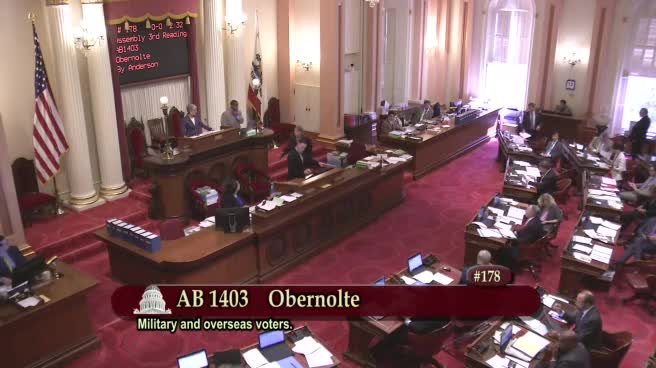 1MIN
Senate Floor
 3MIN
Assembly Standing Committee on Judiciary
Bill Author
Bill Co-Author(s):