AB 182: Heroin and Opioid Public Education (HOPE) Act.
- Session Year: 2017-2018
- House: Assembly
- Latest Version Date: 2017-05-26
Existing law tasks the State Department of Public Health with certain specified duties related to health information and strategic planning, including opioid misuse and overdose prevention. Among other duties, existing law directs the department, upon appropriation by the Legislature, to award naloxone grant funding to local health departments, local government agencies, or other entities, as specified, in order to reduce the rate of fatal overdose from opioid drugs including heroin and prescription opioids.
This bill would require the department, in consultation with stakeholders, to develop, coordinate, implement, and oversee a comprehensive multicultural public awareness campaign, to be known as Heroin and Opioid Public Education (HOPE). (HOPE), upon appropriation by the Legislature or receipt of state or federal grant funding, until January 1, 2023. The bill would require the HOPE program to provide for the coordinated and widespread public dissemination of individual case stories and other generalized information that is designed to, focuses on, among other things, describe describing the effects and warning signs of heroin use and opioid medication abuse, so as to better enable members of the public to determine when help is needed and identify the and identifying available pathways that are available for individuals to seek seeking help. The bill would require the HOPE program to effectuate the dissemination of information by using appropriate types of media, as specified, employing a variety of complementary educational themes and messages that are tailored to appeal to different target audiences, and using culturally and linguistically appropriate means.
The bill would require the department to submit a report to the Governor and Legislature on at least an annual basis, that summarizes the actions that have been undertaken by the department to implement the bill and includes an assessment of the effectiveness of the HOPE program, as specified.
Existing law vests the State Department of Health Care Services with duties, powers, purposes, functions, responsibilities, and jurisdiction of alcohol and drug programs in the state, including narcotic treatment programs that use narcotic replacement therapy for maintenance or detoxification of opioid medication dependence. Existing law requires the department to develop and implement a statewide prevention campaign designed to deter the abuse of methamphetamine in California, and authorizes the department to develop and implement a mass media alcohol and other drug education program in order to provide community education, develop public awareness, and motivate community action in alcohol and other drug abuse prevention, treatment, and rehabilitation.
This bill would require the department, in consultation with specified entities, stakeholders, to develop, coordinate, implement, and oversee a comprehensive multicultural public awareness campaign, to be known as Heroin and Opioid Public Education (HOPE). The bill would require the HOPE program to provide for the coordinated and widespread public dissemination of individual case stories and other generalized information that is designed to, among other things, describe the effects and warning signs of heroin use and opioid medication abuse, so as to better enable members of the public to determine when help is needed and identify the pathways that are available for individuals to seek help. The bill would require the HOPE program to effectuate the dissemination of information by using appropriate types of media, as specified, employing a variety of complementary educational themes and messages that are tailored to appeal to different target audiences, and using culturally and linguistically appropriate means.
The bill would require the department to submit a report to the Governor and Legislature on at least an annual basis, that summarizes the actions that have been undertaken by the department to implement the bill and includes an assessment of the effectiveness of the HOPE program, as specified.
Existing law vests the State Department of Health Care Services with duties, powers, purposes, functions, responsibilities, and jurisdiction of alcohol and drug programs in the state, including narcotic treatment programs that use narcotic replacement therapy for maintenance or detoxification of opioid medication dependence. Existing law requires the department to develop and implement a statewide prevention campaign designed to deter the abuse of methamphetamine in California, and authorizes the department to develop and implement a mass media alcohol and other drug education program in order to provide community education, develop public awareness, and motivate community action in alcohol and other drug abuse prevention, treatment, and rehabilitation.
This bill would require the department, in consultation with specified entities, to develop, coordinate, implement, and oversee a comprehensive multicultural public awareness campaign, to be known as the Heroin and Opioid Public Education (HOPE) Initiative. (HOPE). The bill would require the initiative HOPE program to provide for the coordinated and widespread public dissemination of individual case stories and other generalized information that is designed to, among other things, describe the effects and warning signs of heroin use and opioid medication abuse, so as to better enable members of the public to determine when help is needed and identify the pathways that are available for individuals to seek help. The bill would require the initiative HOPE program to effectuate the dissemination of information by using every available type appropriate types of media, as specified, employing a variety of complementary educational themes and messages that shall be are tailored to appeal to different target audiences, and by using culturally and linguistically appropriate means.
The bill would require the department to regularly monitor the impact of the initiative, and, on at least an annual basis, to convene at least one focus group and conduct a survey of households in the state in order to gauge the effectiveness of the initiative. The bill would also require the department to, within 180 days after the completion of the annual focus group meeting and household survey, to submit a report to the Governor and Legislature that, among other things, shows the findings from the focus group meeting and household survey. on at least an annual basis, that summarizes the actions that have been undertaken by the department to implement the bill and includes an assessment of the effectiveness of the HOPE program, as specified.
Existing law vests the State Department of Health Care Services with duties, powers, purposes, functions, responsibilities, and jurisdiction of alcohol and drug programs in the state, including narcotic treatment programs that use narcotic replacement therapy for maintenance or detoxification of opioid medication dependence. Existing law requires the department to develop and implement a statewide prevention campaign designed to deter the abuse of methamphetamine in California, and authorizes the department to develop and implement a mass media alcohol and other drug education program in order to provide community education, develop public awareness, and motivate community action in alcohol and other drug abuse prevention, treatment, and rehabilitation.
This bill would require the department, in consultation with specified entities, to develop, coordinate, implement, and oversee a comprehensive multicultural public awareness campaign, to be known as the Heroin and Opioid Public Education (HOPE) Initiative. The bill would require the initiative to provide for the coordinated and widespread public dissemination of individual case stories and other generalized information that is designed to, among other things, describe the effects and warning signs of heroin use and opioid medication abuse, so as to better enable members of the public to determine when help is needed and identify the pathways that are available for individuals to seek help. The bill would require the initiative to effectuate the dissemination of information by using every available type of media, as specified, employing a variety of complementary educational themes and messages that shall be tailored to appeal to different target audiences, and by using culturally and linguistically appropriate means.
The bill would require the department to regularly monitor the impact of the initiative, and, on at least an annual basis, to convene at least one focus group and conduct a survey of households in the state in order to gauge the effectiveness of the initiative. The bill would also require the department to, within 180 days after the completion of the annual focus group meeting and household survey, to submit a report to the Governor and Legislature that, among other things, shows the findings from the focus group meeting and household survey.
This act shall be known, and may be cited, as the HOPE Act.
SEC. 2.Article 5 (commencing with Section 11774) is added to Chapter 1 of Part 2 of Division 10.5 of the Health and Safety Code, to read:5.Heroin and Opioid Public Education (HOPE)11774.The Legislature finds and declares all of the following:
(a)There is an epidemic in this state stemming from the use of heroin and the abuse of opioid medications.
(b)Prescription drug overdoses now kill more people than car accidents.
(c)Every day, 2,500 children 12 to 17, inclusive, years of age abuse a prescription painkiller for the first time, and more people are becoming addicted to prescription drugs.
(d)Data from the federal Centers for Disease Control and Prevention suggests that the nonmedical use of prescription painkillers costs public and private health insurers seventy-two billion eight hundred million dollars ($72,800,000,000) annually.
(b)(e)In order for the state to combat this epidemic, citizens in all walks of life shall be alerted to the problem, and shall be armed with information that will allow them to recognize, and undertake appropriate actions, when they or their loved ones are at risk of, or are succumbing to, a heroin or opioid medication addiction.
(c)(f)The widespread dissemination of information necessary to combat the states heroin and opioid medication epidemic could be successfully achieved through the institution and maintenance of a multicultural statewide public awareness campaign, which would be carefully coordinated through all available multimedia channels to reach a wide variety of audiences, including drug users, their family members and friends, medical practitioners and nurses, emergency personnel, and employers.
(d)Prescription drug overdoses now kill more people than car accidents.(e)Every day, 2,500 children 12 to 17 years of age abuse a prescription painkiller for the first time, and more people are becoming addicted to prescription drugs.(f)Data from the federal Centers for Disease Control and Prevention suggests that the nonmedical use of prescription painkillers costs public and private health insurers seventy-two billion eight hundred million dollars ($72,800,000,000) annually.(g)As abuse rates have risen, the functions of the State Department of Alcohol and Drug Programs have been transferred to the State Department of Health Care Services.(h)In order to be more successful in combating drug abuse, while addressing the current opioid and heroin epidemic, the departments current public awareness campaign is being used to combat the states growing heroin and opioid medication epidemic shall be designed to do all of the following:(1)Educate the public as to the reasons why ordinary people may engage in the abuse of opioid medications and the associated use of heroin.(2)Rebut the commonly accepted myths and stereotypes associated with heroin use and opioid medication abuse.(3)Stigmatize and condemn the abuse and diversion of opioid medication, while still recognizing the legitimate use of those opioid drugs as medications.11774.1.(a)The department, The State Department of Public Health, upon appropriation by the Legislature or receipt of adequate state or federal grant funding, and in consultation with stakeholders, as appropriate, shall develop, coordinate, implement, and oversee a comprehensive multicultural public awareness campaign, to be known as Heroin and Opioid Public Education (HOPE), which shall allow for the coordinated and widespread dissemination of information designed to combat the growing heroin and opioid medication epidemic in the state.
(b)Using the means described in subdivision (c), HOPE shall provide for the coordinated and widespread public dissemination of individual case stories and other generalized information that is designed to do all focuses on any of the following:
(1)Identify Identifying the pathways that can lead to opioid medication abuse and heroin use, and the reasons why opioid medication abuse may evolve into heroin use.
(2)Show Showing the many faces of heroin and opioid medication addiction, and rebut rebutting the commonly accepted myths and stereotypes about heroin users and opioid medication abusers.
(3)Condemn and stigmatize Educating the public on the negative impact of abuse and diversion of opioid medication, while recognizing the legitimate use of those same opioid drugs as medications.
(4)Describe Describing the effects and warning signs of heroin use and opioid medication abuse, so as to better enable members of the public to determine when help is needed.
(5)Show Showing the link that exists between heroin and opioid medication addiction and suicidal behavior.
(6)Identify Identifying the pathways that are available for individuals to seek help in association with their own, or another persons, heroin or opioid medication addiction, and indicate indicating the various telephone hotline systems that exist in the state for persons who wish to report a case of drug abuse or engage in substance abuse treatment.
(7)Highlight Highlighting the availability of naloxone hydrochloride as a means to avert death from a heroin or opioid medication overdose, identify identifying pathways for members of the public to obtain a prescription for naloxone hydrochloride and training in the emergency administration of naloxone hydrochloride, and promote promoting the proper use of naloxone hydrochloride in crisis situations.
(8)Highlight Highlighting the benefits of substance abuse treatment and the potential for treatment to allow for the reclaiming of lives that have been upset by addiction, and underscore underscoring the fact that relapses occur not because treatment is ineffective, but because of the nature of addiction, which is a recurring and relapsing disorder.
(9)Highlight Highlighting the benefits of medication-assisted therapy using medications approved by the federal Food and Drug Administration, such as methadone, buprenorphine, extended-release injectable naltrexone, or other similar drugs, and destigmatize destigmatizing the use of that medication-assisted therapy.
(10)Identify Identifying the methods that can be used by an individual to help finance the costs of substance abuse treatment.
(11)Identify Identifying the steps that individuals can take to prevent and deter family members, friends, students, patients, coworkers, and others from first experimenting with inappropriately obtained opioid medications, and from misusing or mismanaging lawful opioid medications.
(12)Identify Identifying the proper methods for safeguarding, and for safely disposing of, legitimate opioid medications.
(13)Address Addressing any other issues that the department may deem appropriate and necessary to proactively educate the public about the states heroin and opioid medication epidemic and the actions that can be taken by members of the public to reduce the likelihood of heroin or opioid medication addiction, or to otherwise respond to, or mitigate the effects of, heroin or opioid medication addiction in cases in which it is present.
(c)(1)The HOPE program shall effectuate the dissemination of information described in subdivision (b) by using appropriate types of media to achieve the goal efficiently and effectively, including new technologies in media, print media, television and radio, and Internet and social media.
(2)In disseminating the information described in subdivision (b), the HOPE program shall employ a variety of complementary educational themes and messages that shall be tailored to appeal to different target audiences in the state. At a minimum, the HOPE program shall incorporate all of the following:
(A)At least one message that is directed at, and is tailored to influence and resonate with, individuals who are personally at risk of heroin use or opioid medication abuse or who have already started down a pathway to addiction.
(B)At least one message that is directed at, and is tailored to influence and resonate with, the family members and friends of addicted persons, teachers, school nurses, medical practitioners, and employers.
(C)At least one message that is directed at the dangers of teen drug pilfering from the household medicine cabinet and how this could be avoided through the use of safe storage products.
(3)Information under the HOPE program shall be disseminated using culturally and linguistically appropriate means, in a manner that demonstrates respect for individual dignity and cultural differences. Where feasible and appropriate, the information shall be made available in a variety of languages.
(4)The department may enter into public-private partnerships with pharmaceutical or health care insurance companies, nonprofit social services organizations, mental health services providers and clinics, law enforcement, health care agencies, and school districts, that provide services in the state in order to facilitate the dissemination of information under the HOPE program.
11774.2.(a)The department shall submit to the Governor and the Legislature on at least an annual basis, a report that summarizes the actions that have been undertaken by the department to implement this article and includes an assessment of the effectiveness of the program, including, but not limited to, effects on the rate of new opioid and heroin addictions by populations, mitigation of the effects of opioid or heroin addiction, crime rates, hospitalization rates, death rates, and other calculable results as determined by the department. The report shall provide any recommendations for legislative or executive action that may be necessary to facilitate the ongoing success of the program.
(b)A report to be submitted to the Legislature pursuant to this section shall be submitted in compliance with Section 9795 of the Government Code.
11774.3.The department may adopt regulations in accordance with the rulemaking provisions of the Administrative Procedure Act (Chapter 3.5 (commencing with Section 11340) of Part 1 of Division 3 of Title 2 of the Government Code) as necessary to implement this article.
11774.4.This article shall remain in effect only until January 1, 2023, and as of that date is repealed, unless a later enacted statute, that is enacted before January 1, 2023, deletes or extends that date.
This act shall be known, and may be cited, as the HOPE Act.
SEC. 2.Article 5 (commencing with Section 11774) is added to Chapter 1 of Part 2 of Division 10.5 of the Health and Safety Code, to read:5.Heroin and Opioid Public Education (HOPE)11774.The Legislature finds and declares all of the following:
(a)There is an epidemic in this state stemming from the use of heroin and the abuse of opioid medications.
(b)In order for the state to combat this epidemic, citizens in all walks of life shall be alerted to the problem, and shall be armed with information that will allow them to recognize, and undertake appropriate actions, when they or their loved ones are at risk of, or are succumbing to, a heroin or opioid medication addiction.
(c)The widespread dissemination of information necessary to combat the states heroin and opioid medication epidemic could be successfully achieved through the institution and maintenance of a multicultural statewide public awareness campaign, which would be carefully coordinated through all available multimedia channels to reach a wide variety of audiences, including drug users, their family members and friends, medical practitioners and nurses, emergency personnel, and employers.
(d)Prescription drug overdoses now kill more people than car accidents.
(e)Every day, 2,500 children 12 to 17 years of age abuse a prescription painkiller for the first time, and more people are becoming addicted to prescription drugs.
(f)Data from the federal Centers for Disease Control and Prevention suggests that the nonmedical use of prescription painkillers costs public and private health insurers seventy-two billion eight hundred million dollars ($72,800,000,000) annually.
(g)As abuse rates have risen, the functions of the State Department of Alcohol and Drug Programs have been transferred to the State Department of Health Care Services.
(h)In order to be more successful in combating drug abuse, while addressing the current opioid and heroin epidemic, the departments current public awareness campaign is being used to combat the states growing heroin and opioid medication epidemic shall be designed to do all of the following:
(1)Educate the public as to the reasons why ordinary people may engage in the abuse of opioid medications and the associated use of heroin.
(2)Rebut the commonly accepted myths and stereotypes associated with heroin use and opioid medication abuse.
(3)Stigmatize and condemn the abuse and diversion of opioid medication, while still recognizing the legitimate use of those opioid drugs as medications.
11774.1.(a)The department, in consultation with the Coalition for a Drug Free California and, as appropriate, the federal Drug Enforcement Administration, stakeholders, as appropriate, shall develop, coordinate, implement, and oversee a comprehensive multicultural public awareness campaign, to be known as Heroin and Opioid Public Education (HOPE), which shall allow for the coordinated and widespread dissemination of information designed to combat the growing heroin and opioid medication epidemic in the state.
(b)Using the means described in subdivision (c), HOPE shall provide for the coordinated and widespread public dissemination of individual case stories and other generalized information that is designed to do all of the following:
(1)Identify the pathways that can lead to opioid medication abuse and heroin use, and the reasons why opioid medication abuse may evolve into heroin use.
(2)Show the many faces of heroin and opioid medication addiction, and rebut the commonly accepted myths and stereotypes about heroin users and opioid medication abusers.
(3)Condemn and stigmatize the abuse and diversion of opioid medication, while recognizing the legitimate use of those same opioid drugs as medications.
(4)Describe the effects and warning signs of heroin use and opioid medication abuse, so as to better enable members of the public to determine when help is needed.
(5)Show the link that exists between heroin and opioid medication addiction and suicidal behavior.
(6)Identify the pathways that are available for individuals to seek help in association with their own, or another persons, heroin or opioid medication addiction, and indicate the various telephone hotline systems that exist in the state for persons who wish to report a case of drug abuse or engage in substance abuse treatment.
(7)Highlight the availability of naloxone hydrochloride as a means to avert death from a heroin or opioid medication overdose, identify pathways for members of the public to obtain a prescription for naloxone hydrochloride and training in the emergency administration of naloxone hydrochloride, and promote the proper use of naloxone hydrochloride in crisis situations.
(8)Highlight the benefits of substance abuse treatment and the potential for treatment to allow for the reclaiming of lives that have been upset by addiction, and underscore the fact that relapses occur not because treatment is ineffective, but because of the nature of addiction, which is a recurring and relapsing disorder.
(9)Highlight the benefits of medication-assisted therapy using medications approved by the federal Food and Drug Administration, such as methadone, buprenorphine, extended-release injectable naltrexone, or other similar drugs, and destigmatize the use of that medication-assisted therapy.
(10)Identify the methods that can be used by an individual to help finance the costs of substance abuse treatment.
(11)Identify the steps that individuals can take to prevent and deter family members, friends, students, patients, coworkers, and others from first experimenting with inappropriately obtained opioid medications, and from misusing or mismanaging lawful opioid medications.
(12)Identify the proper methods for safeguarding, and for safely disposing of, legitimate opioid medications.
(13)Address any other issues that the department may deem appropriate and necessary to proactively educate the public about the states heroin and opioid medication epidemic and the actions that can be taken by members of the public to reduce the likelihood of heroin or opioid medication addiction, or to otherwise respond to, or mitigate the effects of, heroin or opioid medication addiction in cases in which it is present.
(c)(1)The HOPE program shall effectuate the dissemination of information described in subdivision (b) by using appropriate types of media to achieve the goal efficiently and effectively, including new technologies in media, print media, television and radio, Internet and social media.
(2)In disseminating the information described in subdivision (b), the HOPE program shall employ a variety of complementary educational themes and messages that shall be tailored to appeal to different target audiences in the state. At a minimum, the HOPE program shall incorporate all of the following:
(A)At least one message that is directed at, and is tailored to influence and resonate with, individuals who are personally at risk of heroin use or opioid medication abuse or who have already started down a pathway to addiction.
(B)At least one message that is directed at, and is tailored to influence and resonate with, the family members and friends of addicted persons, teachers, school nurses, medical practitioners, and employers.
(C)At least one message that is directed at the dangers of teen drug pilfering from the household medicine cabinet and how this could be avoided through the use of safe storage products.
(3)Information under the HOPE program shall be disseminated using culturally and linguistically appropriate means, in a manner that demonstrates respect for individual dignity and cultural differences. Where feasible and appropriate, the information shall be made available in a variety of languages.
(4)The department may enter into public-private partnerships with pharmaceutical or health care insurance companies, nonprofit social services organizations, mental health services providers and clinics, law enforcement, health care agencies, and school districts, that provide services in the state in order to facilitate the dissemination of information under the HOPE program.
11774.2.(a)The department shall submit to the Governor and the Legislature on at least an annual basis, a report that summarizes the actions that have been undertaken by the department to implement this article and includes an assessment of the effectiveness of the program, including, but not limited to, effects on the rate of new opioid and heroin addictions by populations, mitigation of the effects of opioid or heroin addiction, crime rates, hospitalization rates, death rates, and other calculable results as determined by the department. The report shall provide any recommendations for legislative or executive action that may be necessary to facilitate the ongoing success of the program.
(b)A report to be submitted to the Legislature pursuant to this section shall be submitted in compliance with Section 9795 of the Government Code.
11774.3.The department may adopt regulations in accordance with the rulemaking provisions of the Administrative Procedure Act (Chapter 3.5 (commencing with Section 11340) of Part 1 of Division 3 of Title 2 of the Government Code) as necessary to implement this article.
This act shall be known, and may be cited, as the HOPE Initiative Act.
SEC. 2.Article 5 (commencing with Section 11774) is added to Chapter 1 of Part 2 of Division 10.5 of the Health and Safety Code, to read:5.Heroin and Opioid Public Education (HOPE) Initiative11774.The Legislature finds and declares all of the following:
(a)There is an epidemic in this state stemming from the use of heroin and the abuse of opioid medications.
(b)In order for the state to combat this epidemic, citizens in all walks of life shall be alerted to the problem, and shall be armed with information that will allow them to recognize, and undertake appropriate actions, when they or their loved ones are at risk of, or are succumbing to, a heroin or opioid medication addiction.
(c)The widespread dissemination of information necessary to combat the states heroin and opioid medication epidemic could be successfully achieved through the institution and maintenance of a multicultural statewide public awareness campaign, which would be carefully coordinated through all available multimedia channels to reach a wide variety of audiences, including drug users, their family members and friends, medical practitioners and nurses, emergency personnel, and employers.
(d)Prescription drug overdoses now kill more people than car accidents.
(e)Every day, 2,500 children 12 to 17 years of age abuse a prescription painkiller for the first time, and more people are becoming addicted to prescription drugs.
(f)Data from the federal Centers for Disease Control and Prevention suggests that the nonmedical use of prescription painkillers costs public and private health insurers seventy-two billion eight hundred million dollars ($72,800,000,000) annually.
(g)As abuse rates have risen, the functions of the State Department of Alcohol and Drug Programs have been transferred to the State Department of Health Care Services.
(d)(h)In order to be successful, the more successful in combating drug abuse, while addressing the current opioid and heroin epidemic, the departments current public awareness campaign that is being used to combat the states growing heroin and opioid medication epidemic shall be designed to do all of the following:
(1)Educate the public as to the reasons why ordinary people may engage in the abuse of opioid medications and the associated use of heroin.
(2)Rebut the commonly accepted myths and stereotypes associated with heroin use and opioid medication abuse.
(3)Stigmatize and condemn the abuse and diversion of opioid medication, while still recognizing the legitimate use of those opioid drugs as medications.
11774.1.(a)The department department, in consultation with the Coalition for a Drug Free California and, as appropriate, the federal Drug Enforcement Administration, shall develop, coordinate, implement, and oversee a comprehensive multicultural public awareness campaign, to be known as the Heroin and Opioid Public Education (HOPE) Initiative, (HOPE), which shall allow for the coordinated and widespread dissemination of information designed to combat the growing heroin and opioid medication epidemic in the state.
(b)Using the means described in subdivision (c), the HOPE Initiative HOPE shall provide for the coordinated and widespread public dissemination of individual case stories and other generalized information that is designed to do all of the following:
(1)Identify the pathways that can lead to opioid medication abuse and heroin use, and the reasons why opioid medication abuse may evolve into heroin use.
(2)Show the new face many faces of heroin and opioid medication addiction, and rebut the commonly accepted myths and stereotypes about heroin users and opioid medication abusers, including the myth that all heroin users are back-alley denizens. abusers.
(3)Condemn and stigmatize the abuse and diversion of opioid medication, while recognizing the legitimate use of those same opioid drugs as medications.
(4)Describe the effects and warning signs of heroin use and opioid medication abuse, so as to better enable members of the public to determine when help is needed.
(5)Show the link that exists between heroin and opioid medication addiction and suicidal behavior.
(6)Identify the pathways that are available for individuals to seek help in association with their own, or another persons, heroin or opioid medication addiction, and indicate the various telephone hotline systems that exist in the state for persons who wish to report a case of drug abuse or engage in substance abuse treatment.
(7)Provide for the application of civil and criminal immunity to persons who seek medical assistance for a drug overdose.(8)(7)Highlight the availability of naloxone hydrochloride as a means to avert death from a heroin or opioid medication overdose, identify pathways for members of the public to obtain a prescription for naloxone hydrochloride and training in the emergency administration of naloxone hydrochloride, and promote the proper use of naloxone hydrochloride in crisis situations.
(9)(8)Highlight the benefits of substance abuse treatment and the potential for treatment to allow for the reclaiming of lives that have been upset by addiction, and underscore the fact that relapses occur not because treatment is ineffective, but because of the nature of addiction, which is a recurring and relapsing disorder.
(10)(9)Highlight the benefits of medication-assisted therapy using medications approved by the federal Food and Drug Administration, such as methadone, buprenorphine, extended-release injectable naltrexone, or other similar drugs, and destigmatize the use of that medication-assisted therapy.
(11)(10)Identify the methods that can be used by an individual to help finance the costs of substance abuse treatment.
(12)(11)Identify the steps that individuals can take to prevent and deter family members, friends, students, patients, coworkers, and others from first experimenting with inappropriately obtained opioid medications, and from misusing or mismanaging lawful opioid medications.
(13)(12)Identify the proper methods for safeguarding, and for safely disposing of, legitimate opioid medications.
(14)(13)Address any other issues that the department may deem appropriate and necessary to proactively educate the public about the states heroin and opioid medication epidemic and the actions that can be taken by members of the public to reduce the likelihood of heroin or opioid medication addiction, or to otherwise respond to, or mitigate the effects of, heroin or opioid medication addiction in cases in which it is present.
(c)(1)The HOPE Initiative program shall effectuate the dissemination of information described in subdivision (b) by using every available type of media, including appropriate types of media to achieve the goal efficiently and effectively, including new technologies in media, print media, television and radio, Internet and social media, billboards, and nontraditional media, such as milk cartons and water bottles. media.
(2)In disseminating the information described in subdivision (b), the HOPE Initiative program shall employ a variety of complementary educational themes and messages that shall be tailored to appeal to different target audiences in the state. At a minimum, the initiative HOPE program shall incorporate both all of the following:
(A)At least one message that is directed at, and is tailored to influence and resonate with, individuals who are personally at risk of heroin use or opioid medication abuse or who have already started down a pathway to addiction.
(B)At least one message that is directed at, and is tailored to influence and resonate with, the family members and friends of addicted persons, teachers, school nurses, medical practitioners, and employers.
(C)At least one message that is directed at the dangers of teen drug pilfering from the medicine cabinet and how this could be avoided through the use of safe storage products.
(3)Information under the HOPE Initiative program shall be disseminated using culturally and linguistically appropriate means, in a manner that demonstrates respect for individual dignity and cultural differences. Where feasible and appropriate, the information shall be made available in a variety of languages.
(4)The department may enter into public-private partnerships with pharmaceutical or health care insurance companies companies, nonprofit social services organizations, mental health services providers and clinics, law enforcement, health care agencies, and school districts, that provide services in the state in order to facilitate the dissemination of information under the HOPE Initiative. program.
11774.2.(a)The department shall regularly monitor the impact of the HOPE Initiative, and, on at least an annual basis, shall convene at least one focus group and conduct a survey of households in the state in order to gauge the effectiveness of the initiative.(b)Within 120 days after the completion of the annual focus group meeting and household survey required by subdivision (a), the department shall take appropriate action, as needed, to refine or improve the HOPE Initiative, including revising the educational themes and messages that are employed, in order to ensure that the initiative has the greatest positive impact on each target audience in the state.(c)(1)Within 180 days after the completion of the annual focus group meeting and household survey required by subdivision (a), the department shall submit a report to the Governor and Legislature that shows the findings from the focus group meeting and household survey, provides a summary of the actions that have been undertaken by the department to improve the HOPE Initiative in response to that focus group meeting and household survey, and provides any recommendations for legislative or executive action that may be necessary to facilitate the ongoing success of the initiative.(2)A report to be submitted to the Legislature pursuant to paragraph (1) shall be submitted in compliance with Section 9795 of the Government Code.11774.2.(a)The department shall submit to the Governor and Legislature on at least an annual basis, a report that summarizes the actions that have been undertaken by the department to implement this article and includes an assessment of the effectiveness of the program, including, but not limited to, effects on the rate of new opioid and heroin addictions by populations, mitigation of the effects of opioid or heroin addiction, crime rates, hospitalization rates, death rates, and other calculable results as determined by the department. The report shall provide any recommendations for legislative or executive action that may be necessary to facilitate the ongoing success of the program.
(b)A report to be submitted to the Legislature pursuant to this section shall be submitted in compliance with Section 9795 of the Government Code.
11774.3.The department may adopt regulations in accordance with the rulemaking provisions of the Administrative Procedure Act (Chapter 3.5 (commencing with Section 11340) of Part 1 of Division 3 of Title 2 of the Government Code) as necessary to implement this article.
This act shall be known, and may be cited, as the HOPE Initiative Act.
SEC. 2.Article 5 (commencing with Section 11774) is added to Chapter 1 of Part 2 of Division 10.5 of the Health and Safety Code, to read:5.Heroin and Opioid Public Education (HOPE) Initiative11774.The Legislature finds and declares all of the following:
(a)There is an epidemic in this state stemming from the use of heroin and the abuse of opioid medications.
(b)In order for the state to combat this epidemic, citizens in all walks of life shall be alerted to the problem, and shall be armed with information that will allow them to recognize, and undertake appropriate actions, when they or their loved ones are at risk of, or are succumbing to, a heroin or opioid medication addiction.
(c)The widespread dissemination of information necessary to combat the states heroin and opioid medication epidemic could be successfully achieved through the institution and maintenance of a multicultural statewide public awareness campaign, which would be carefully coordinated through all available multimedia channels to reach a wide variety of audiences, including drug users, their family members and friends, medical practitioners and nurses, emergency personnel, and employers.
(d)In order to be successful, the public awareness campaign that is used to combat the states growing heroin and opioid medication epidemic shall be designed to do all of the following:
(1)Educate the public as to the reasons why ordinary people may engage in the abuse of opioid medications and the associated use of heroin.
(2)Rebut the commonly accepted myths and stereotypes associated with heroin use and opioid medication abuse.
(3)Stigmatize and condemn the abuse and diversion of opioid medication, while still recognizing the legitimate use of those opioid drugs as medications.
11774.1.(a)The department in consultation with the Coalition for a Drug Free California and, as appropriate, the federal Drug Enforcement Administration, shall develop, coordinate, implement, and oversee a comprehensive multicultural public awareness campaign, to be known as the Heroin and Opioid Public Education (HOPE) Initiative, which shall allow for the coordinated and widespread dissemination of information designed to combat the growing heroin and opioid medication epidemic in the state.
(b)Using the means described in subdivision (c), the HOPE Initiative shall provide for the coordinated and widespread public dissemination of individual case stories and other generalized information that is designed to do all of the following:
(1)Identify the pathways that can lead to opioid medication abuse and heroin use, and the reasons why opioid medication abuse may evolve into heroin use.
(2)Show the new face of heroin and opioid medication addiction, and rebut the commonly accepted myths and stereotypes about heroin users and opioid medication abusers, including the myth that all heroin users are back-alley denizens.
(3)Condemn and stigmatize the abuse and diversion of opioid medication, while recognizing the legitimate use of those same opioid drugs as medications.
(4)Describe the effects and warning signs of heroin use and opioid medication abuse, so as to better enable members of the public to determine when help is needed.
(5)Show the link that exists between heroin and opioid medication addiction and suicidal behavior.
(6)Identify the pathways that are available for individuals to seek help in association with their own, or another persons, heroin or opioid medication addiction, and indicate the various telephone hotline systems that exist in the state for persons who wish to report a case of drug abuse or engage in substance abuse treatment.
(7)Provide for the application of civil and criminal immunity to persons who seek medical assistance for a drug overdose.
(8)Highlight the availability of naloxone hydrochloride as a means to avert death from a heroin or opioid medication overdose, identify pathways for members of the public to obtain a prescription for naloxone hydrochloride and training in the emergency administration of naloxone hydrochloride, and promote the proper use of naloxone hydrochloride in crisis situations.
(9)Highlight the benefits of substance abuse treatment and the potential for treatment to allow for the reclaiming of lives that have been upset by addiction, and underscore the fact that relapses occur not because treatment is ineffective, but because of the nature of addiction, which is a recurring and relapsing disorder.
(10)Highlight the benefits of medication-assisted therapy using methadone, buprenorphine, or other similar drugs, and destigmatize the use of that medication-assisted therapy.
(11)Identify the methods that can be used by an individual to help finance the costs of substance abuse treatment.
(12)Identify the steps that individuals can take to prevent and deter family members, friends, students, patients, coworkers, and others from first experimenting with inappropriately obtained opioid medications, and from misusing or mismanaging lawful opioid medications.
(13)Identify the proper methods for safeguarding, and for safely disposing of, legitimate opioid medications.
(14)Address any other issues that the department may deem appropriate and necessary to proactively educate the public about the states heroin and opioid medication epidemic and the actions that can be taken by members of the public to reduce the likelihood of heroin or opioid medication addiction, or to otherwise respond to, or mitigate the effects of, heroin or opioid medication addiction in cases in which it is present.
(c)(1)The HOPE Initiative shall effectuate the dissemination of information described in subdivision (b) by using every available type of media, including print media, television and radio, Internet and social media, billboards, and nontraditional media, such as milk cartons and water bottles.
(2)In disseminating the information described in subdivision (b), the HOPE Initiative shall employ a variety of complementary educational themes and messages that shall be tailored to appeal to different target audiences in the state. At a minimum, the initiative shall incorporate both of the following:
(A)At least one message that is directed at, and is tailored to influence and resonate with, individuals who are personally at risk of heroin use or opioid medication abuse or who have already started down a pathway to addiction.
(B)At least one message that is directed at, and is tailored to influence and resonate with, the family members and friends of addicted persons, teachers, school nurses, medical practitioners, and employers.
(3)Information under the HOPE Initiative shall be disseminated using culturally and linguistically appropriate means, in a manner that demonstrates respect for individual dignity and cultural differences. Where feasible and appropriate, the information shall be made available in a variety of languages.
(4)The department may enter into public-private partnerships with pharmaceutical or health care insurance companies that provide services in the state in order to facilitate the dissemination of information under the HOPE Initiative.
11774.2.(a)The department shall regularly monitor the impact of the HOPE Initiative, and, on at least an annual basis, shall convene at least one focus group and conduct a survey of households in the state in order to gauge the effectiveness of the initiative.
(b)Within 120 days after the completion of the annual focus group meeting and household survey required by subdivision (a), the department shall take appropriate action, as needed, to refine or improve the HOPE Initiative, including revising the educational themes and messages that are employed, in order to ensure that the initiative has the greatest positive impact on each target audience in the state.
(c)(1)Within 180 days after the completion of the annual focus group meeting and household survey required by subdivision (a), the department shall submit a report to the Governor and Legislature that shows the findings from the focus group meeting and household survey, provides a summary of the actions that have been undertaken by the department to improve the HOPE Initiative in response to that focus group meeting and household survey, and provides any recommendations for legislative or executive action that may be necessary to facilitate the ongoing success of the initiative.
(2)A report to be submitted to the Legislature pursuant to paragraph (1) shall be submitted in compliance with Section 9795 of the Government Code.
11774.3.The department may adopt regulations in accordance with the rulemaking provisions of the Administrative Procedure Act (Chapter 3.5 (commencing with Section 11340) of Part 1 of Division 3 of Title 2 of the Government Code) as necessary to implement this article.
|
Date
|
Status
|
|---|---|
| Sep 1, 2017 | In committee: Held under submission. |
| Jul 17, 2017 | In committee: Referred to APPR. suspense file. |
| Jun 29, 2017 | From committee: Do pass and re-refer to Com. on APPR. (Ayes 7. Noes 0.) (June 28). Re-referred to Com. on APPR. |
| Jun 14, 2017 | Referred to Com. on HEALTH. |
| Jun 1, 2017 | In Senate. Read first time. To Com. on RLS. for assignment. |
| May 31, 2017 | Read third time. Passed. Ordered to the Senate. (Ayes 77. Noes 0. Page 1923.) |
| May 30, 2017 | Read second time. Ordered to third reading. |
| May 26, 2017 | From committee: Amend, and do pass as amended. (Ayes 16. Noes 0.) (May 26). |
| Apr 5, 2017 | In committee: Set, first hearing. Referred to APPR. suspense file. |
| Mar 27, 2017 | Re-referred to Com. on APPR. |
| Mar 23, 2017 | Read second time and amended. |
| Mar 22, 2017 | From committee: Amend, and do pass as amended and re-refer to Com. on APPR. (Ayes 15. Noes 0.) (March 21). |
| Mar 13, 2017 | Re-referred to Com. on HEALTH. |
| Mar 9, 2017 | From committee chair, with author's amendments: Amend, and re-refer to Com. on HEALTH. Read second time and amended. |
| Jan 30, 2017 | Referred to Com. on HEALTH. |
| Jan 20, 2017 | From printer. May be heard in committee February 19. |
| Jan 19, 2017 | Read first time. To print. |
|
Date
|
Description
|
Location
|
Votes
|
|
|---|---|---|---|---|
| Jul 17, 2017 | Placed on suspense file | Senate Standing Committee on Appropriations |
Passed |
|
| Jun 28, 2017 | Do pass, but first be re-referred to the Committee on [Appropriations] | Senate Standing Committee on Health |
Passed |
|
| May 31, 2017 | AB 182 WALDRON Assembly Third Reading | Assembly Floor |
Passed |
|
| May 26, 2017 | Do pass as amended. | Assembly Standing Committee on Appropriations |
Passed |
|
| Mar 21, 2017 | Do pass as amended and be re-referred to the Committee on [Appropriations] | Assembly Standing Committee on Health |
Passed |
This list shows positions taken on this bill by organizations on the date displayed, which is linked to the original source.
Positions by individuals are not included.
|
Organization
|
Position
|
Date
|
|---|---|---|
| Alkermes | ** Support | Jun 26, 2017 |
| American Academy of Pediatrics | ** Support | Jun 26, 2017 |
| American Alliance Drug Testing | ** Support | Jun 26, 2017 |
| American Cancer Society Cancer Action Network Inc. | * Support | Jun 28, 2017 |
| Association of California Healthcare Districts | ** Support | Jun 26, 2017 |
| Biocom | ** Support | Jun 26, 2017 |
| California Access Coalition | ** Support | Jun 26, 2017 |
| California Association Of Joint Powers Authorities | ** Support | Jun 26, 2017 |
| California Chronic Care Coalition | * Support | Jun 28, 2017 |
| California Consortium of Addiction Programs and Professionals | * Support | Jun 28, 2017 |
| California Council Of Community Behavioral Health Agencies | ** Support | Jun 26, 2017 |
| California Life Sciences Association | * Support | Mar 21, 2017 |
| California Police Chiefs Association | ** Support | Jun 26, 2017 |
| California Special Districts Association | ** Support | Jun 26, 2017 |
| California State Board of Pharmacy | ** Support | Jun 26, 2017 |
| California State Parent Teacher Association | ** Support | Mar 17, 2017 |
| California State PTA | * Support | Jun 28, 2017 |
| CaliforniaHealth+ Advocates | ** Support | Jun 26, 2017 |
| Gatekeeper Innovation | ** Support | Jun 26, 2017 |
| Medical Board of California | ** Support | Jun 26, 2017 |
| National Association Of Social Workers, California Chapter | * Support | Jun 28, 2017 |
| Several individuals | ** Support | Jun 26, 2017 |
| sheriff william d. gore, san diego county | ** Support | Jun 26, 2017 |
| Southwest California Legislative Council | ** Support | Jun 26, 2017 |
SENATE COMMITTEE ON
Senator Ricardo Lara, Chair
2017 - 2018 Regular Session
AB 182 (Waldron) - Heroin and Opioid Public Education (HOPE) Act
Version: | Policy Vote: |
Urgency: | Mandate: |
Hearing Date: | Consultant: |
This bill meets the criteria for referral to the Suspense File.
Bill Summary:
AB 182 would require the Department of Public Health to implement a public awareness campaign to educate the public about issues related to opioid abuse.
Fiscal Impact:
- Ongoing costs of $570,000 per year for the Department of Public Health to design the public awareness campaign, oversee contracts with outside vendors, and provide ongoing program oversight (General Fund).
- Likely ongoing costs of $10 million to $20 million per year to implement the public awareness campaign (General Fund). Based on the ongoing efforts to conduct public awareness campaigns related to tobacco use and nutrition education, the Department of Public Health indicates that the cost to conduct a statewide media campaign would be about $12 million per year. The actual amount of the media campaign would depend on future legislative appropriations.
Background:
Over the last two decades, the rate at which physicians have prescribed opioid pain relievers has increased dramatically. Due to the much higher utilization of these highly addictive prescription drugs, there has been an epidemic of abuse of both prescription opioids and heroin. According to the federal Centers for Disease Control and Prevention, opioid-involved deaths have increased fourfold since 1999 and 60% of drug overdose deaths involve an opioid. In 2015, there were almost 2,000 opioid-related overdose deaths in the state.
Beginning in 2014, the Department of Public Health convened a workgroup including other state agencies, federal agencies, and local health departments, to coordinate efforts to address the epidemic of opioid use and overdose. In 2017, the Department sent a letter to health care providers to offer resources for providers to use when prescribing opioid pain relievers, particularly for patients at high risk of opioid abuse.
Proposed Law:
AB 182 would require the Department of Public Health to implement a public awareness campaign to educate the public about issues related to opioid abuse.
Specific provisions of the bill would:
- Require the Department of Public Health to develop and implement a comprehensive multicultural public awareness campaign designed to combat the heroin and opioid epidemic in the state;
- Make implementation of the campaign subject to appropriation by the Legislature or receipt of adequate state or federal funding;
- Specify areas that the campaign should focus on;
- Specify subpopulations of the state that should be targeted by the campaign;
- Require information to be disseminated in culturally and linguistically appropriate means;
- Authorize the Department to enter into partnerships with outside entities;
- Require the Department to report annually to the Legislature;
- Sunset the provisions of the bill on January 1, 2023.
Related Legislation:
AB 715 (Wood) would require the Department of Public Health to convene a workgroup to develop a recommended statewide guidelines for prescribing opioid pain relievers for short-term pain. That bill is on this committee’s Suspense File.
Staff Comments:
The bill references the use of federal funds to pay for some or all of the costs of implementing the bill. Staff is not aware of any significant federal funds that would be available to fund the requirements of the bill. The state has received a $45 million grant from the federal government related to opioid abuse prevention. However, the Department of Health Care Services, the grant recipient, is planning to use those funds to increase access to medication assisted treatment of opioid addiction in underserved populations. It does not appear that the Department of Health Care Services intends to use the current grant for any broad public awareness campaign.
-- END --
SENATE COMMITTEE ON HEALTH
Senator Ed Hernandez, O.D., Chair
BILL NO: AB 182
AUTHOR: | Waldron | ||
VERSION: | May 26, 2017 | ||
HEARING DATE: | June 28, 2017 | ||
CONSULTANT: | Reyes Diaz | ||
SUBJECT: Heroin and Opioid Public Education (HOPE) Act
SUMMARY:
Requires the Department of Public Health to develop, coordinate, implement, and oversee a public awareness campaign, as specified, upon appropriation or receipt of adequate state or federal funds, to educate targeted audiences about the growing heroin use and opioid medication abuse epidemic, as well as the importance and availability of services to avert addiction and to treat substance use disorders.
Existing law: Establishes the Department of Public Health (DPH) to protect and improve the health of communities through education, promotion of healthy lifestyles, and research for disease and injury prevention. Authorizes DPH to perform activities that protect, preserve, and advance public health, including studies and dissemination of information.
This bill:
- Requires DPH, upon appropriation or receipt of adequate state or federal funds, as specified, and in consultation with stakeholders, to develop, coordinate, implement, and oversee a comprehensive multicultural public awareness campaign, known as the Heroin and Opioid Public Education (HOPE) Act.
- Requires the HOPE Act to be a coordinated and widespread dissemination of information effort designed to combat the growing heroin and opioid epidemic, and to contain individual stories and generalized information that focuses on strategies that include, at a minimum, any of the following:
- Identifying pathways that can lead to opioid medication abuse and heroin use, and reasons why opioid abuse may lead to heroin abuse;
- Showing the many faces of heroin and opioid addiction, and rebutting commonly accepted myths and stereotypes, as specified;
- Educating the public on the negative impact of abuse and diversion of opioid medication, as specified;
- Describing the effects and warning signs of heroin use and opioid abuse to assist the public to determine when to seek help;
- Showing the link between heroin and opioid addiction and suicidal behavior;
- Identifying available pathways for people to seek help, including available telephone hotlines, as specified;
- Highlighting the availability of naloxone hydrochloride to avert death from overdose, and to highlight benefits of substance abuse treatment and medication-assisted treatment using federally approved medications, as specified; and,
- Identifying financial help for people for substance abuse treatment, and identifying ways people can prevent and deter family members and others from misusing opioid medication.
- Requires the HOPE program to effectuate the dissemination of information by using appropriate types of media, including new technologies, print media, television, radio, and the Internet and social media. Requires the information to employ educational themes and messages targeting audiences that include, at a minimum:
- One message directed at and tailored to influence and resonate with those at risk of heroin use or opioid abuse, or who have started on the path of addiction;
- One message directed at family members and friends of those who are addicted, teachers, school nurses, medical practitioners, and employers; and,
- One message directed at the dangers of teen drug pilfering from medicine cabinets and how to avoid it by storing medications safely.
- Requires information to be disseminated using culturally and linguistically appropriate means, as specified, and, where feasible and appropriate, to be made in a variety of languages.
- Permits DPH to enter into public-private partnerships with specified entities, including health care insurance companies, nonprofit social services organizations, mental health service providers and clinics, and school districts, that provide services in the state in order to disseminate the information.
- Requires DPH to submit a report to the Governor and the Legislature, at least annually, that summarizes actions undertaken by DPH to implement the HOPE Act, including, but not limited to, effects on the rate of new opioid and heroin addictions by populations; mitigation of the effects of addiction; crime, hospitalization, and death rates, and any recommendations for legislative or executive action necessary to facilitate the ongoing success of the HOPE program. Permits DPH to adopt regulations to implement this bill.
- Sunsets this bill on January 1, 2023, unless a later enacted statute extends or repeals that date.
- Makes finding and declarations about the growing heroin and opioid epidemic in the state, costs of nonmedical use of prescription painkillers, and the importance of making the public aware of the problems related to heroin use and opioid medication abuse.
FISCAL EFFECT:
According to the Assembly Appropriations Committee, uncertain significant costs to conduct an effective statewide public awareness campaign, easily in the millions of dollars ongoing. The costs would depend on the robustness of the effort. For comparison’s sake, since fiscal year 2011-12, DPH has allocated between $10 and $15 million per year for a coordinated statewide anti-tobacco media campaign. This bill requires at least twelve distinct types of messages, including highlighting the benefits of specific Food and Drug Administration approved medications to treat opioid addiction, and requires use of new technologies in media, print media, television and radio, Internet and social media.
Some federal grant funding has been made available to address the opioid crisis. However, it is unclear whether activities required by this bill would be an allowable use of current or future federal grant dollars. Each grant generally has its own specific requirements for allowable expenditures. For example, the Substance Abuse and Mental Health Services Administration released a funding opportunity this year whereby California could be eligible to receive $45 million per year for two years to address the opioid crisis. But the expenditures would be based on a comprehensive state strategic plan to address gaps in prevention, treatment, and recovery identified in a needs assessment, which may not align with the bill's requirements. If federal funds were made available, however, and the activities required by this bill were an allowable use of such funds, federal funds could potentially offset some General Fund spending. It is also worth noting that unlike federal grant dollars, however, this bill’s requirements are ongoing, not time-limited.
PRIOR VOTES:
Assembly Floor: | 77 - 0 |
Assembly Appropriations Committee: | 16 - 0 |
Assembly Health Committee: | 15 - 0 |
COMMENTS:
- Author’s statement. According to the author, currently there is no initiative to combat heroin and opioid addiction within the state. Between 2001 and 2014, the rate of overdose related deaths involving such drugs increased 200%. By implementing a public information and multimedia campaign, the state can educate the public on the dangers of abusing prescription opioids and heroin and the warning signs for individuals who have become addicted.
- Opioids and consequences of abuse. Opioids are a class of narcotic drugs that include medications such as hydrocodone, oxycodone, morphine, codeine, and methadone. Taken as prescribed, opioids can be used to manage pain safely and effectively. However, opioids may also produce other effects, and according to the National Institute on Drug Abuse (NIDA), some individuals experience a euphoric response to opioid medications since these drugs affect the regions of the brain involving reward response. NIDA states that those who abuse opioids may seek to intensify their experience by taking the drug in ways other than those prescribed. For example, OxyContin is an oral medication used to treat moderate to severe pain through a slow, steady release of the opioid. However, NIDA states people may crush or dissolve the drug in order to snort or inject it, thereby increasing their risk for serious medical complications, including overdose. Prescription opioid misuse can lead to long-term health consequences, including limitations in daily activity, impaired driving, mental health problems, trouble breathing, overdose, and death. According to the Centers for Disease Control and Prevention’s (CDC) Web site, drug overdose deaths and opioid-involved deaths from prescription opioids have more than quadrupled since 1999. The majority of drug overdose deaths (more than six out of 10) involve an opioid. In 2015, there were over 22,000 deaths involving prescription opioids, equivalent to about 62 deaths per day. This is an increase from approximately 19,000 in 2014. A significant portion of the increase in deaths was due to deaths involving synthetic opioids other than methadone, which includes fentanyl. The CDC states that overdoses from prescription opioids are a driving factor in the 15-year increase in opioid overdose deaths. Since 1999, the amount of prescription opioids sold in the U.S. nearly quadrupled, yet there has not been an overall change in the amount of pain that individuals report. According to DPH, in the past, opioids were prescribed to relieve acute, short-term pain. Today, they are increasingly being used for long-term, chronic pain management. According to DPH, in 2015, there were 1,966 opioid-related overdose deaths in the state. Some of the counties most affected are northern and large urban counties, including Lake, Shasta, San Francisco, Orange, and San Diego. For example, Lake and Shasta counties have prescription opioid-related death rates that are two to three times higher than the national average while San Francisco, Orange, and San Diego counties have higher than state average rates, accounting for a greater total number of deaths.
- Heroin use and abuse. According to Office of Statewide Health and Planning Development (OSHPD) data, emergency department (ED) encounters for individuals with heroin poisoning have increased dramatically since 2005. Overall, ED visits among heroin users of all ages increased, but the sharpest was among the state’s young adults aged 20 to 29. About 1,300 ED visits by that population poisoned by heroin were logged in 2015 compared with fewer than 1,000 in 2012. For individuals aged 30 to 39, ED encounter rates rose from approximately 400 in 2012 to 600 in 2014. All other age groups experienced a small increase in encounter rates.
- DPH’s efforts. DPH and several state partners convened the Prescription Opioid Misuse and Overdose Prevention (POMOP) Workgroup in the spring of 2014. This workgroup has since expanded and is currently exploring opportunities to improve collaboration and expand joint efforts among state entities and other partners working to address the overdose epidemic. Initial workgroup discussions have focused on information sharing about existing efforts and roles, identification of challenges, and potential opportunities for partnership. Participants in the workgroup include: DPH, CHHSA, Department of Education, California Conference of Local Health Officers, California HealthCare Foundation, County Health Executives Association of California, Department of Health Care Services (DHCS), Emergency Medical Services Authority, Department of Motor Vehicles, Department of Corrections and Rehabilitation, Covered California, Department of Justice, Department of Managed Health Care, Division of Workers Compensation, CalPERS, the Office of Statewide Health Planning and Development, UC Davis Medical Center, United States Health and Human Services Agency, Drug Enforcement Administration, California Board of Nursing, Board of Pharmacy, Dental Board of California, and the MBC.
In March 2017, DPH sent a letter to health care providers/prescribers to offer resources in addressing the issue with patients, including strategies for assisting high-risk patients, local addiction recovery resources, and opioid prescribing guidelines. DPH recommended that providers work with patients who may already be showing signs of addiction. Some recommendations included weaning patients off higher opioid doses and maintaining communication with them. DPH also recommended referring patients to treatment programs and considering treatment options other than opioids for pain. These recommendations are similar to guidelines recommended by the CDC and the MBC, which participates in the POMOP workgroup.
- Related legislation. SB 614 (Lara) would prohibit the release of data obtained from the Controlled Substance Utilization Review and Evaluation System (CURES) to a law enforcement agency except pursuant to a warrant based on probable cause, as specified. SB 641 is pending in the Assembly Public Safety Committee.
AB 715 (Wood) requires DPH to convene a workgroup for the purpose of reviewing existing guidelines and developing a recommended statewide guideline regarding the prescribing of opioid pain relievers for instances of acute, short-term pain, as specified. Requires DPH to report to the Legislature on or before March 1, 2019, as specified, and requires the provisions in this bill to remain in effect only until January 1, 2020. AB 715 passed out of this committee by a vote of 9-0 on June 21, 2017.
- Prior legislation. SB 482 (Lara, Chapter 708, Statutes of 2016) requires, among other things, prescribers to check CURES prior to prescribing Schedule II through IV controlled substances.
AB 2592 (Cooper of 2016) would have created within DPH a pilot program that would award grants to eligible pharmacies for the purpose of supplying medicine locking closure packages to patients with prescriptions for opioids. AB 2592 was held on the Assembly Appropriations Committee suspense file.
AB 1977 (Wood of 2016) would have established the Opioid Abuse Task Force to develop recommendations to the Legislature regarding the abuse and misuse of opioids in California. AB 1977 passed out of this Committee by a vote of 8-0 on June 29, 2016. These provisions were amended out of AB 1977.
AB 623 (Wood of 2015) would have prohibited health care service plans or health insurers from requiring the use of opioids that have no abuse-deterrent properties; required pharmacists to provide patients who receive an opioid product information about proper storage and disposal; and authorized providers to prescribe less than 30-day supplies of opioids. AB 623 was held on the Assembly Appropriations Committee suspense file.
SB 500 (Lieu of 2014) would have required the MBC to update prescriber standards for controlled substances once every five years and add the American Cancer Society, specialists in pharmacology, and specialists in addiction medicine to the entities the MBC may consult with in developing the standards. These provisions were amended out of SB 500.
SB 1258 (DeSaulnier of 2014) would have made several changes to the ways that controlled substances are prescribed and tracked in CURES and would have required medical providers to use electronic prescribing systems, would have required additional reporting of controlled substance prescribing, and would have placed additional restrictions on the prescribing of controlled substances. SB 1258 was held on the Senate Appropriations Committee suspense file.
SB 809 (DeSaulnier, Chapter 400, Statutes of 2013) established a funding mechanism to update and maintain CURES, required all prescribing health care practitioners to apply to access CURES information, and established processes and procedures for regulating prescribing licensees through CURES and securing private information.
AB 831 (Bloom of 2013) would have required the CHHSA to convene a temporary working group to develop a state plan to reduce the rate of fatal drug overdoses and would have appropriated $500,000 from the General Fund to CHHSA to provide grants to local agencies to implement drug overdose prevention and response programs. AB 831 was held on the Assembly Appropriations Committee suspense file.
SB 616 (DeSaulnier of 2012) would have increased fees, up to $10 per licensee authorized to prescribe or dispense controlled substances, to fund CURES. SB 616 failed passage in the Assembly Business, Professions and Consumer Protection Committee.
SB 360 (DeSaulnier, Chapter 418, Statutes of 2011) updated CURES to reflect the new prescription drug monitoring program and authorized the California Department of Justice to initiate administrative enforcement actions to prevent the misuse of confidential information collected through CURES.
SB 1071 (DeSaulnier of 2010) would have imposed a tax, at the rate of $0.0025 per pill, on manufacturers or importers of Schedule II, III, and IV controlled substances, as specified, to pay for ongoing costs of the CURES program. SB 1071 was not heard in this committee.
- Support. Supporters, largely representing the health care field, argue that the heroin and opioid epidemic has been on the rise in California, with overdose quickly becoming the leading cause of injury death in the country. Supporters state that this bill will help to provide education to the public about the dangers of heroin use and opioid abuse, particularly in the areas of recognizing the signs of abuse and informing the public about avenues to treatment when addiction occurs.
- Support if amended. The County Behavioral Health Directors Association of California (CBHDAC) writes that this bill was amended to eliminate references to DHCS and now gives the responsibility for administering the HOPE Act to DPH. CBHDAC states it would like to see an amendment requiring DPH to coordinate with DHCS on the public awareness campaign, otherwise there will be missed opportunities, as many counties already have prescription drug abuse plans/education strategies in place via prevention funding through DHCS.
SUPPORT AND OPPOSITION:
Support: Alkermes
American Academy of Pediatrics
American Alliance Drug Testing
American Cancer Society Cancer Action Network
Association of California Healthcare Districts
Biocom
California Access Coalition
California Association of Joint Powers Authorities
California Chronic Care Coalition
California Consortium Addiction Programs and Professionals
California Council of Community Behavioral Health Agencies
CaliforniaHealth+ Advocates
California Police Chiefs Association
California Special Districts Association
California State Board of Pharmacy
California State PTA
Gatekeeper Innovation
Medical Board of California
Sheriff William D. Gore, San Diego County
Southwest California Legislative Council
Several individuals
Oppose: None received
-- END --
ASSEMBLY THIRD READING
ATR Bill Id:AB 182
Author:(Waldron)
As Amended Ver:May 26, 2017
Majority vote
Committee | Votes | Ayes | Noes |
Health | 15-0 | Wood, Maienschein, Bonta, Burke, Gallagher, Limón, McCarty, Nazarian, Patterson, Quirk-Silva, Chiu, Rodriguez, Santiago, Thurmond, Waldron | |
Appropriations | 16-0 | Gonzalez Fletcher, Bigelow, Bloom, Bocanegra, Bonta, Brough, Calderon, McCarty, Quirk, Fong, Friedman, Gallagher, Eduardo Garcia, Gray, Muratsuchi, Reyes |
|
SUMMARY: Requires the Department of Public Health (DPH), upon appropriation by the Legislature or receipt of adequate state or federal grant funding, to develop, coordinate, to implement and oversee a comprehensive multicultural public awareness campaign, known as the Heroin and Opioid Public Education (HOPE) Program, to combat the growing heroin and opioid medication epidemic in the state. Specifically, this bill:
- States that there is an epidemic in the State of California of heroin and opioid medication use and enumerates related findings and declarations.
- Establishes the "HOPE Program," which allows for the coordinated and widespread dissemination of information designed to combat the growing heroin and opioid medication epidemic in the state.
- Requires that the HOPE Program provide for dissemination of individual case stories and other information focused on educating the public on the negative impact of abuse, demonstrating the impact of abuse, identifying services available to individuals for treatment, and other information, as specified,
- Requires the HOPE Program to disseminate information by using appropriate types of media to achieve the goal efficiently and effectively, including new technologies in media, print media, television and radio, and Internet and social media.
- Requires that the HOPE Program to employ a variety of complementary educational themes and messages that are tailored to appeal to different target audiences in the state, as specified,
- Requires information disseminated to use culturally and linguistically appropriate means, in a manner that demonstrates respect for individual dignity and cultural differences.
- Permits DPH to enter into public-private partnerships with pharmaceutical or health care insurance companies, nonprofit social services organizations, mental health services providers and clinics, law enforcement, health care agencies, and school districts that provide services in order to facilitate the dissemination of information.
- Requires DPH to submit a report to the Governor and Legislature, on an annual basis, that summarizes the actions that have been undertaken and assess the effectiveness of the HOPE Program, including, but not limited to, effects on the rate of new opioid and heroin addictions by populations, mitigation of the effects of opioid or heroin addiction, crime rates, hospitalization rates, death rates, and other calculable results. Requires the report to include recommendations for legislative or executive action that may be necessary to facilitate the ongoing success of the program.
- Permits DPH to adopt regulations in accordance with the rulemaking provisions of the Administrative Procedure Act, as specified.
- Sunsets the HOPE Program on January 1, 2023.
FISCAL EFFECT: According to the Assembly Appropriations Committee, uncertain significant costs to conduct an effective statewide public awareness campaign, easily in the millions of dollars ongoing. The costs would depend on the robustness of the effort. For comparison's sake, since fiscal year 2011-12 DPH has allocated between $10 and $15 million per year for a coordinated statewide anti-tobacco media campaign. This bill requires at least twelve distinct types of messages, including highlighting the benefits of specific Food and Drug Administration approved medications to treat opioid addiction, and requires use of new technologies in media, print media, television and radio, Internet and social media.
Some federal grant funding has been made available to address the opioid crisis. However, it is unclear whether activities required by this bill would be an allowable use of current or future federal grant dollars. Each grant generally has its own specific requirements for allowable expenditures. For example, the Substance Abuse and Mental Health Services Administration released a funding opportunity this year whereby California could be eligible to receive $45 million per year for two years to address the opioid crisis. But the expenditures would be based on a comprehensive state strategic plan to address gaps in prevention, treatment, and recovery identified in a needs assessment, which may not align with the bill's requirements. If federal funds were made available, however, and the activities required by this bill were an allowable use of such funds, federal funds could potentially offset some GF spending noted above. It is also worth noting that unlike federal grant dollars, however, this bill's requirements are ongoing, not time-limited.
COMMENTS: According to the author, there is an epidemic in California of heroin use stemming from the abuse of opioid medications. Every 19 minutes, a person dies from the cycle of opioid addiction. The author states that drug overdose is now the leading cause of accidental death in America. With so many lives at stake, this epidemic demands our attention. In order for the state to combat this epidemic, citizens must be armed with information that will allow them to recognize, and undertake appropriate actions, when they or their loved ones are at risk of succumbing to a heroin or opioid medication addiction.
The American Academy of Pediatrics, California (AAP) states that approximately 4,500 Californians died as a result of drug overdoses in 2014, up 50% from only 10 years prior. Today, heroin and opioid abuse accounts for three out of five drug overdose deaths in the U.S. AAP states that this bill would help reduce the spread of this epidemic by initiating a multicultural public awareness campaign that would enable friends and family of those who abuse heroin and opioids to recognize and intervene before it is too late. AAP concludes that thousands of Californians, including many children and adolescents, would benefit.
The California Police Chiefs Association notes that a 2016 article in the Sacramento Bee reported that, "As prescription opioids and illegal heroin rise further in popularity, the number of drug overdoses in the state hit a new high in 2014, according to new estimates from the U.S. Centers for Disease Control and Prevention. About 4,500 Californians died following drug poisoning in 2014, up by 1,500 or 50%, from 2002. The age adjusted rate of drug overdose deaths rose almost 30% during the same period." The California Police Chiefs Association concludes that this bill is a smart approach to combatting these rising numbers and saving the lives of Californians.
There is no known opposition to this bill.
Analysis Prepared by: Paula Villescaz / HEALTH / (916) 319-2097 FN: 0000664
Date of Hearing: April 5, 2017
ASSEMBLY COMMITTEE ON APPROPRIATIONS
Lorena Gonzalez Fletcher, Chair
ABPCA Bill Id:AB 182
Author:(Waldron) – As Amended Ver:March 23, 2017
Policy Committee: | Health | Vote: | 15 - 0 |
|
|
Urgency: No State Mandated Local Program: No Reimbursable: No
SUMMARY:
This bill requires the Department of Health Care Services to develop, coordinate, implement, and oversee a comprehensive, multicultural public awareness campaign designed to combat opioid abuse, and requires an annual program report.
FISCAL EFFECT:
Uncertain, significant costs to conduct an effective statewide public awareness campaign, easily in the millions of dollars ongoing. The costs would depend on the robustness of the effort. For comparison's sake, since fiscal year 2011-12 the California Department of Public Health (CDPH) has allocated between $10 and $15 million per year for a coordinated statewide anti-tobacco media campaign. This bill requires at least twelve distinct types of messages, including highlighting the benefits of specific Food and Drug Administration (FDA)-approved medications to treat opioid addiction, and requires use of new technologies in media, print media, television and radio, Internet and social media.
Some federal grant funding has been made available to address the opioid crisis. However, it is unclear whether activities required by this bill would be an allowable use of current or future federal grant dollars. Each grant generally has its own specific requirements for allowable expenditures. For example, the Substance Abuse and Mental Health Services Administration (SAMHSA) released a funding opportunity this year whereby California could be eligible to receive $45 million per year for two years to address the opioid crisis. But the expenditures would be based on a comprehensive state strategic plan to address gaps in prevention, treatment, and recovery identified in a needs assessment— which may not align with the bill's requirements. If federal funds were made available, however, and the activities required by this bill were an allowable use of such funds, federal funds could potentially offset some GF spending noted above. It is also worth noting that unlike federal grant dollars, however, this bill's requirements are ongoing, not time-limited.
COMMENTS:
- Purpose. This bill creates a campaign to increase public awareness of numerous aspects of opioid use, abuse, addiction, and treatment. The author contends the opioid epidemic demands our attention, given there are so many lives at stake.
- Background. Rising rates of opioid abuse – both prescription opiates and heroin – have been noted nationally and in the state. In their July 2016 report, " State of California Strategies to Address Prescription Drug (Opioid) Misuse, Abuse, and Overdose Epidemic in California,” the CDPH notes opioid-related deaths increased by 34% from 2006 to 2009 from an age-adjusted rate of 3.3 to 4.4 per 100,000. By 2013, there were 1,934 opioid-related deaths in California (4.2 per 100,000). CDPH has been convening a multi-departmental and stakeholder workgroup since 2014 to develop collaborative strategies to decrease levels of opioid misuse, overdose and death. CDPH cites some success in addressing opioid abuse based on multi-sector collaboration, and also notes one of the opportunities for future focus is "increasing public awareness about the potential dangers of opioid medications and [creating] better understanding and expectations around pain treatment, proper prescribing, use, storage and disposal of pain medications." They also note public education to remove stigma is important in order to stem the epidemic.
- Related Legislation. AB 715 (Wood) requires CDPH to convene a workgroup to review existing prescription guidelines and develop a recommended statewide guideline addressing best practices for prescribing opioid pain relievers, as specified. AB 715 is pending in the Assembly Health Committee.
Analysis Prepared by: Lisa Murawski / APPR. / (916) 319-2081
Date of Hearing: March 21, 2017
ASSEMBLY COMMITTEE ON HEALTH
Jim Wood, Chair
ABPCA Bill Id:AB 182
Author:(Waldron) – As Amended Ver:March 9, 2017
SUBJECT: Heroin and Opioid Public Education (HOPE) Act.
SUMMARY: Requires the Department of Health Care Services (DHCS), in consultation with the Coalition for a Drug Free California (CDFC) and the federal Drug Enforcement Administration (DEA), to develop, coordinate, implement, and oversee a comprehensive multicultural public awareness campaign, known as the Heroin and Opioid Public Education (HOPE) Program, to combat the growing heroin and opioid medication epidemic in the state, as specified. Specifically, this bill:
- States that there is an epidemic in the State of California of heroin and opioid medication use and enumerates related findings and declarations.
- Establishes the “HOPE Program,” which allows for the coordinated and widespread dissemination of information designed to combat the growing heroin and opioid medication epidemic in the state.
- Requires that the HOPE Program provide for dissemination of individual case stories and other information designed to do the following:
- Identify the pathways that can lead to opioid medication abuse and heroin use, and the reasons why opioid medication abuse may evolve into heroin use;
- Show the many faces of heroin and opioid medication addiction, and rebut the commonly accepted myths and stereotypes about heroin users and opioid medication abusers;
- Condemn and stigmatize the abuse and diversion of opioid medication, while recognizing the legitimate use of those same opioid drugs as medications;
- Describe the effects and warning signs of heroin use and opioid medication abuse, so as to better enable members of the public to determine when help is needed;
- Show the link that exists between heroin and opioid medication addiction and suicidal behavior;
- Identify the pathways that are available for individuals to seek help in association with their own, or another person’s, heroin or opioid medication addiction, and indicate the various telephone hotline systems that exist in the state for persons who wish to report a case of drug abuse or engage in substance abuse treatment;
- Highlight the availability of naloxone hydrochloride as a means to avert death from a heroin or opioid medication overdose, identify pathways for members of the public to obtain a prescription for naloxone hydrochloride and training in the emergency administration of naloxone hydrochloride, and promote the proper use of naloxone hydrochloride in crisis situations;
- Highlight the benefits of substance abuse treatment and the potential for treatment to allow for the reclaiming of lives that have been upset by addiction, and underscore the fact that relapses occur not because treatment is ineffective, but because of the nature of addiction, which is a recurring and relapsing disorder;
- Highlight the benefits of medication-assisted therapy using medications approved by the federal Food and Drug Administration, such as methadone, buprenorphine, extended-release injectable naltrexone, or other similar drugs, and destigmatize the use of that medication-assisted therapy;
- Identify the methods that can be used by an individual to help finance the costs of substance abuse treatment;
- Identify the steps that individuals can take to prevent and deter family members, friends, students, patients, coworkers, and others from first experimenting with inappropriately obtained opioid medications, and from misusing or mismanaging lawful opioid medications;
- Identify the proper methods for safeguarding, and for safely disposing of, legitimate opioid medications; and,
- Address any other issues that DHCS may deem appropriate and necessary to proactively educate the public about the state’s heroin and opioid medication epidemic and the actions that can be taken by members of the public to reduce the likelihood of heroin or opioid medication addiction, or to otherwise respond to, or mitigate the effects of, heroin or opioid medication addiction in cases in which it is present.
- Requires the HOPE Program to disseminate information by using appropriate types of media to achieve the goal efficiently and effectively, including new technologies in media, print media, television and radio, and Internet and social media.
- Requires that the HOPE Program to employ a variety of complementary educational themes and messages that are tailored to appeal to different target audiences in the state. Requires the HOPE Program to, at a minimum, incorporate all of the following:
- At least one message that is directed at, and is tailored to influence and resonate with, individuals who are personally at risk of heroin use or opioid medication abuse or who have already started down a pathway to addiction;
- At least one message that is directed at, and is tailored to influence and resonate with, the family members and friends of addicted persons, teachers, school nurses, medical practitioners, and employers; and,
- At least one message that is directed at the dangers of teen drug pilfering from medicine cabinets and how this could be avoided through use of safe storage products.
- Requires information disseminated to use culturally and linguistically appropriate means, in a manner that demonstrates respect for individual dignity and cultural differences.
- Permits DHCS to enter into public-private partnerships with pharmaceutical or health care insurance companies, nonprofit social services organizations, mental health services providers and clinics, law enforcement, health care agencies, and school districts that provide services in order to facilitate the dissemination of information.
- Requires DHCS to submit a report to the Governor and Legislature, on an annual basis, that summarizes the actions that have been undertaken and assess the effectiveness of the HOPE Program, including, but not limited to, effects on the rate of new opioid and heroin addictions by populations, mitigation of the effects of opioid or heroin addiction, crime rates, hospitalization rates, death rates, and other calculable results. Requires the report to include recommendations for legislative or executive action that may be necessary to facilitate the ongoing success of the program.
- Permits DHCS to adopt regulations in accordance with the rulemaking provisions of the Administrative Procedure Act, as specified.
EXISTING LAW:
- Establishes the Department of Public Health (DPH) to protect and improve the health of communities through education, promotion of healthy lifestyles, and research for disease and injury prevention. Provides DPH with the authority to perform activities that protect, preserve, and advance public health, including studies and dissemination of information.
- Establishes DHCS, which administers the Medi-Cal program and licenses adult alcohol or drug abuse recovery or treatment facilities.
FISCAL EFFECT: This bill has not yet been analyzed by a fiscal committee.
COMMENTS:
- PURPOSE OF THIS BILL. According to the author, there is an epidemic in California of heroin use stemming from the abuse of opioid medications. Every 19 minutes, a person dies from the cycle of opioid addiction. The author states that drug overdose is now the leading cause of accidental death in America. With so many lives at stake, this epidemic demands our attention. In order for the state to combat this epidemic, citizens must be armed with information that will allow them to recognize, and undertake appropriate actions, when they or their loved ones are at risk of succumbing to a heroin or opioid medication addiction.
- BACKGROUND.
- Federal Efforts. The U.S. Congress took key steps in 2016 to expand access to substance use disorder treatments. The 21st Century Cures Act, which passed with overwhelming bipartisan support in December of 2016, allocated an additional $1 billion over two years to the federal Substance Abuse and Mental Health Services Administration for state prevention and treatment efforts. Congress also passed the Comprehensive Addiction and Recovery Act, signed into law in July of 2016, which aimed to expand prevention and education efforts while also promoting treatment and recovery. The implementation status of both of these initiatives is uncertain.
- Opioids and opioid abuse. Opioids are a class of narcotic drugs that include medications such as hydrocodone (e.g. Vicodin), oxycodone (e.g., OxyContin, Percocet), morphine (e.g., Kadian, Avinza) codeine, and other related drugs. Taken as prescribed, opioids can be used to manage pain safely and effectively. However, opioids may also produce other effects, and according to the National Institute on Drug Abuse (NIDA), some individuals experience a euphoric response to opioid medications since these drugs affect the regions of the brain involving reward response.
NIDA states that those who abuse opioids may seek to intensify their experience by taking the drug in ways other than those prescribed. For example, Oxycontin is an oral medication used to treat moderate to severe pain through a slow, steady release of the opioid. However, NIDA states that people who abuse the drug may crush or dissolve the drug in order to snort or inject it, thereby increasing their risk for serious medical complications, including overdose. NIDA states that when abused, even a single large dose of opioids can cause severe respiratory depression and death.
According to DPH, in the past, prescription opioids were prescribed for relieving short-term, acute pain. However, today, they are increasingly being used for long-term (chronic) pain management. As a result, sales of opioid pain relievers quadrupled in the past 10 years. By 2010, enough opioid pain relievers were sold to medicate every American adult (about 240 million people) every four hours for an entire month. DPH states that in California, deaths involving opioid prescription medications have increased 16.5% since 2006. In 2012, there were more than 1,800 deaths from all types of opioids – 72% involved prescription opioids. - DPH Workgroup. In 2014, the Director of DPH launched a state agency Prescription Opioid Misuse and Overdose Prevention Workgroup (Workgroup) to share information and develop collaborative strategies to curb prescription drug misuse, abuse, and overdose deaths in California. The Workgroup started as a multi-sector group consisting of more than 10 state agencies, including DPH, Department of Justice, DHCS, Department of Managed Health Care, Department of Education, Department of Industrial Relations, Department of Corrections and Rehabilitation, Department of Consumer Affairs (including the Medical Board of California (MBC), Dental Board of California, Pharmacy Board of California, and Board of Registered Nursing), Emergency Medical Services Authority, and others. The Workgroup initially commenced a multi-phase plan involving enhancement of the state’s Prescription Drug Monitoring Program (PDMP), promoting the release and adoption of the MBC revised Guidelines for Prescribing Controlled Substances for Pain, and development of a comprehensive public education campaign to increase public awareness about the potential dangers of opioid medications and to create better understanding and expectations among the public regarding their proper prescribing, use, storage and disposal.
- 2016 DPH Report. In June of 2016, DPH released a report entitled, “the State of California Strategies to Address Prescription Drug (Opioid) Misuse, Abuse, and Overdose Epidemic in California” (DPH Report). According to the DPH Report, in California, all opioid-related deaths increased by 34% from 2006 to 2009 from an age-adjusted rate of 3.3 to 4.4 per 100,000. By 2013, there were 1,934 opioid-related deaths in California (4.2/100,000). Opioid pharmaceutical-related deaths also showed a peak of 1,616 deaths in 2009 and represented 82% of the total opioid-related deaths. In 2013, the rate was 3.1 per 100,000 but pharmaceutical opioids accounted for only 73% of all opioid-related deaths. As also seen nationally, heroin-related deaths in California have increased by 67% since 2006, with a 2013 age-adjusted rate of 1.1 per 100,000. By 2013, heroin-related deaths in California accounted for 25% of all opioid-related deaths.
The DPH Report notes that although California’s overall drug poisoning and opioid-related death rates (9.7 and 4.2 respectively in 2013) are lower than the national average, as the most populous state in the country (38.8 million residents as of 2015), the raw number of individuals affected by improper prescribing and misuse is substantial. In addition, the rates vary significantly across counties and even within counties. The highest rates are found in several northern California rural counties. For example, Plumas and Lake Counties have drug poisoning rates two to three times higher than the national average drug poisoning death rate.
California data mirror the increasing national trends in opioid-related deaths through 2009 but have leveled off over the past five years. The exception to this trend is heroin, which appears to have spiked in 2013.
- Heroin use and abuse. According to Office of Statewide Health and Planning Development (OSHPD) data, emergency department (ED) encounters for individuals with heroin poisoning have increased dramatically since 2005. Overall, ED visits among heroin users of all ages increased, but the sharpest was among the state’s young adults aged 20 to 29. About 1,300 ED visits by California’s millennials poisoned by heroin were logged in 2015 compared with fewer than 1,000 in 2012. For individuals aged 30 – 39, ED encounter rates rose from approximately 400 in 2012 to 600 in 2014. All other age groups experienced a small increase in encounter rates.
- SUPPORT. The American Academy of Pediatrics, California (AAP) states that approximately 4,500 Californians died as a result of drug overdoses in 2014, up 50% from only 10 years prior. Today, heroin and opioid abuse accounts for three out of five drug overdose deaths in the U.S. AAP states that this bill would help reduce the spread of this epidemic by initiating a multicultural public awareness campaign that would enable friends and family of those who abuse heroin and opioids to recognize and intervene before it is too late. AAP concludes that thousands of Californians, including many children and adolescents, would benefit.
The California Police Chiefs Association notes that a 2016 article in the Sacramento Bee reported that, "As prescription opioids and illegal heroin rise further in popularity, the number of drug overdoses in the state hit a new high in 2014, according to new estimates from the U.S. Centers for Disease Control and Prevention. About 4,500 Californians died following drug poisoning in 2014, up by 1,500 or 50 percent, from 2002. The age adjusted rate of drug overdose deaths rose almost 30 percent during the same period." The California Police Chiefs Association concludes that this bill is a smart approach to combatting these rising numbers and saving the lives of Californians.
- RELATED LEGISLATION. AB 715 (Wood) requires DPH to convene a workgroup, comprised of members selected by the DPH, to review existing prescription guidelines and develop a recommended statewide guideline addressing best practices for prescribing opioid pain relievers, as specified. AB 715 is pending in the Assembly Health Committee.
- PREVIOUS LEGISLATION. AB 623 (Wood) of 2015 would have prohibited a health care service plan or health insurer from requiring the use of opioid drug products that have no abuse-deterrent properties in order to access abuse-deterrent opioid drug products; required pharmacists to provide a patient receiving an opioid drug product information about proper storage and disposal of the drug; and, authorized a provider to prescribe a less than 30-day supply of opioids analgesic drugs. AB 623 was held in the Assembly Appropriations Committee.
- SUGGESTED AMENDMENTS.
- Appropriate Agency Implementation. The stated mission of DHCS is to provide Californians with access to affordable, integrated, high-quality health care, including medical, dental, mental health, substance use treatment services and long-term care. The stated mission of DPH is to optimize the health and well-being of the people in California. Additionally, DPH core activities include the following: promoting healthy lifestyles for individuals and families in their communities and workplaces, preventing disease, disability, and premature death and reducing or eliminating health disparities, protecting the public from unhealthy and unsafe environments, providing or ensuring access to quality, population-based health services, preparing for and responding to public health emergencies, and producing and disseminating data to inform and evaluate public health status, strategies and programs. Because the HOPE Program's focus is on public health awareness, and not on providing direct health care services, the Committee may wish to consider placing the provisions of the HOPE Program under DPH instead of DHCS.
- Stakeholder Clarification. This bill as drafted directs DHCS to work with the CDFC and the federal DEA. According to the CDFC's Website, its goal is to bring together existing anti-drug coalitions from around the state to work together to prevent the early onset of alcohol, tobacco, and drug use by young people. While the overall mission of CDFC is in keeping with the proposed work of the HOPE Program, their stated mission of focusing just on young people may not be in keeping with the HOPE Program. Additionally, it is unclear what, if any, role would be appropriate for the federal DEA. For those reasons, the Committee may wish to consider broader language directing the overseeing department to work with a variety of stakeholders, as appropriate.
- Technical Amendments. The Committee recommends technical and clarifying amendments correcting a code reference.
REGISTERED SUPPORT / OPPOSITION:
Support
American Academy of Pediatrics, California
Biocom
California Police Chiefs Association
California State Parent Teacher Association
California Special Districts Association
Gatekeeper Innovation
Opposition
None on file.
Analysis Prepared by: Paula Villescaz / HEALTH /
Discussed in Hearing
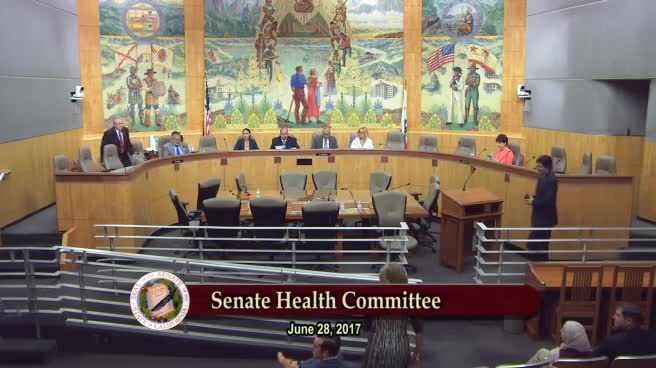 17MIN
Senate Standing Committee on Health
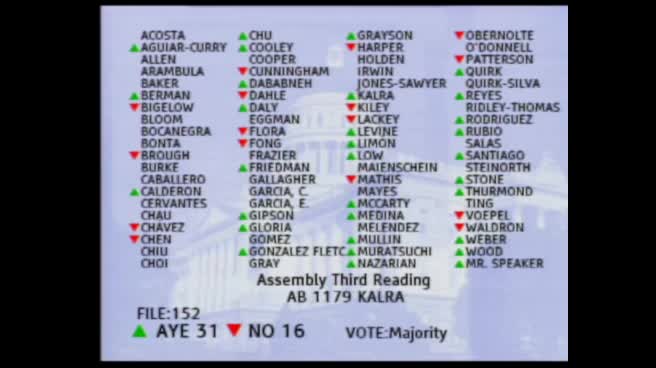 1MIN
Assembly Floor
 1H
Assembly Standing Committee on Appropriations
 8MIN
Assembly Standing Committee on Health
Bill Author