AB 1879: Gas corporation: service connections.
- Session Year: 2017-2018
- House: Assembly
- Latest Version Date: 2018-09-18
Under existing law the Public Utilities Commission has regulatory authority over public utilities, including gas corporations.
This bill would require the Public Utilities Commission, if it determines that a moratorium on new natural gas service connections is necessary to prevent substantial and imminent harm or to ensure gas system reliability, to provide a report to specified policy committees of the Legislature and the affected gas corporation stating the necessity for the action. The bill would require the report to the policy committees to contain certain information. The bill would require a gas corporation, upon receiving a report from the commission that an action is pending to suspend new gas service connections, to immediately notify potential or current customers that may experience a service impact as a result of the proposed suspension. The bill would require the commission to present to the policy committees, at specified yearly information hearings, the status of the natural gas service connections and efforts to provide natural gas supply.
This bill would declare that it is to take effect immediately as an urgency statute.
Under existing law the Public Utilities Commission has regulatory authority over public utilities, including gas corporations.
This bill would prohibit the commission from prohibiting a gas corporation from providing require the Public Utilities Commission, if it determines that a moratorium on new natural gas service connections. connections is necessary to prevent substantial and imminent harm or to ensure gas system reliability, to provide a report to specified policy committees of the Legislature and the affected gas corporation stating the necessity for the action. The bill would require the report to the policy committees to contain certain information. The bill would require a gas corporation, upon receiving a report from the commission that an action is pending to suspend new gas service connections, to immediately notify potential or current customers that may experience a service impact as a result of the proposed suspension. The bill would require the commission to present to the policy committees, at specified yearly information hearings, the status of the natural gas service connections and efforts to provide natural gas supply.
This bill would declare that it is to take effect immediately as an urgency statute.
Under existing law the Public Utilities Commission has regulatory authority over public utilities, including gas corporations.
This bill would prohibit the commission from prohibiting a gas corporation from providing new natural gas service connections.
This bill would declare that it is to take effect immediately as an urgency statute.
(a)(1)If the commission determines that a moratorium on new natural gas service connections is necessary to prevent substantial and imminent harm or to ensure gas system reliability, the commission shall state the necessity for the action in a report provided to all of the following entities:
(A)The Assembly Committee on Utilities and Energy.
(B)The Senate Committee on Energy, Utilities and Communications.
(C)All affected gas corporations.
(2)The commission shall include in the report to the policy committees of the Legislature specified in paragraph (1) factual findings supporting the need to propose a moratorium on new natural gas service connections. The report shall include, but is not limited to, all of the following:
(A)The number of pending gas service connection applications with each affected gas corporation.
(B)The estimated gas load deferred under the proposed moratorium.
(C)The system constraints that led to the proposed moratorium.
(D)Alternative actions considered to address the proposed need for a moratorium, including increasing or restoring natural gas transmission and storage infrastructure, and the reason those actions were not taken or were insufficient.
(E)The process for a customer to request an exemption from the moratorium.
(b)When a gas corporation receives notification from the commission that an action is pending to suspend new gas service connections, the gas corporation shall immediately notify any known potential or current customers that may experience a service impact as a result of the proposed suspension.
(c)The commission shall, at the yearly informational hearings pursuant to Section 321.6, present to the Assembly Committee on Utilities and Energy and the Senate Committee on Energy, Utilities and Communications the status of natural gas service connections and efforts to provide natural gas supply.
SEC. 2.This act is an urgency statute necessary for the immediate preservation of the public peace, health, or safety within the meaning of Article IV of the California Constitution and shall go into immediate effect. The facts constituting the necessity are:
To ensure that proper legislative oversight is provided for decisions by the Public Utilities Commission to impose a moratorium on new natural gas service connections, it is necessary for this measure to take effect immediately.
(a)(1)If the commission determines that a moratorium on new natural gas service connections is necessary to prevent substantial and imminent harm or to ensure gas system reliability, the commission shall state the necessity for the action in a report provided to all of the following entities:
(A)The Assembly Committee on Utilities and Energy.
(B)The Senate Committee on Energy, Utilities and Communications.
(C)All affected gas corporations.
(2)The commission shall include in the report to the policy committees of the Legislature specified in paragraph (1) factual findings supporting the need to propose a moratorium on new natural gas service connections. The report shall include, but is not limited to, all of the following:
(A)The number of pending gas service connection applications with each affected gas corporation.
(B)The estimated gas load deferred under the proposed moratorium.
(C)The system constraints that led to the proposed moratorium.
(D)Alternative actions considered to address the proposed need for a moratorium, including increasing or restoring natural gas transmission and storage infrastructure, and the reason those actions were not taken or were insufficient.
(E)The process for a customer to request an exemption from the moratorium.
(b)When a gas corporation receives notification from the commission that an action is pending to suspend new gas service connections, the gas corporation shall immediately notify any known potential or current customers that may experience a service impact as a result of the proposed suspension.
(c)The commission shall, at the yearly informational hearings pursuant to Section 321.6, present to the Assembly Committee on Utilities and Energy and the Senate Committee on Energy, Utilities and Communications the status of natural gas service connections and efforts to provide natural gas supply.
SEC. 2.This act is an urgency statute necessary for the immediate preservation of the public peace, health, or safety within the meaning of Article IV of the California Constitution and shall go into immediate effect. The facts constituting the necessity are:
To ensure that requests for new natural gas connections are met in an expeditious manner, proper legislative oversight is provided for decisions by the Public Utilities Commission to impose a moratorium on new natural gas service connections, it is necessary for this measure to take effect immediately.
The commission shall not prohibit a gas corporation from providing new natural gas service connections within the gas corporations service territory.
SEC. 2.This act is an urgency statute necessary for the immediate preservation of the public peace, health, or safety within the meaning of Article IV of the California Constitution and shall go into immediate effect. The facts constituting the necessity are:
To ensure that requests for new natural gas connections are met in an expeditious manner, it is necessary for this measure to take effect immediately.
|
Date
|
Status
|
|---|---|
| Sep 18, 2018 | Chaptered by Secretary of State - Chapter 481, Statutes of 2018. |
| Sep 18, 2018 | Approved by the Governor. |
| Sep 11, 2018 | Enrolled and presented to the Governor at 4:30 p.m. |
| Aug 31, 2018 | In Assembly. Ordered to Engrossing and Enrolling. |
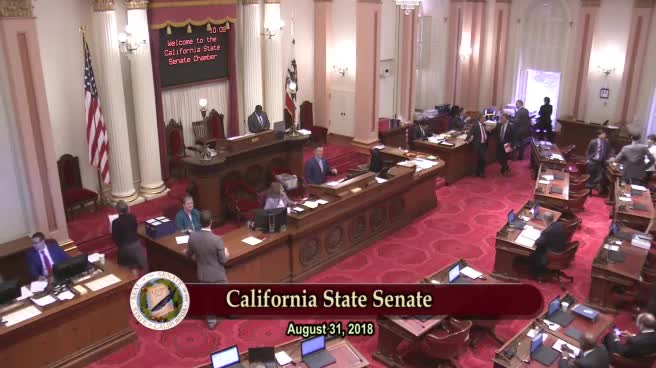
| Aug 31, 2018 | Read third time. Urgency clause adopted. Passed. Ordered to the Assembly. |
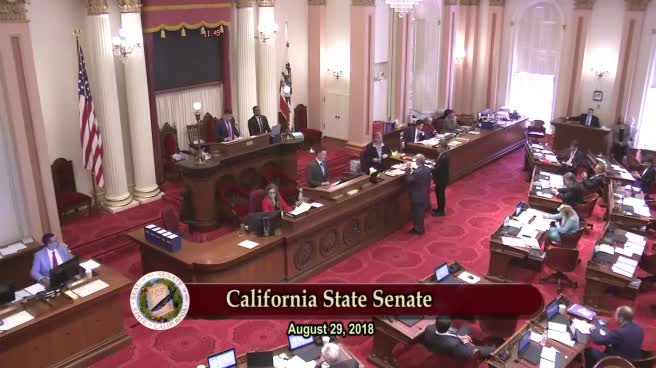
| Aug 29, 2018 | Read third time. Urgency clause refused adoption. |
| Aug 7, 2018 | Read second time. Ordered to third reading. |
| Aug 6, 2018 | From committee: Be ordered to second reading pursuant to Senate Rule 28.8. |
| Jun 19, 2018 | From committee: Do pass and re-refer to Com. on APPR. (Ayes 10. Noes 1.) (June 19). Re-referred to Com. on APPR. |
| Jun 7, 2018 | Referred to Com. on E., U. & C. |
| May 25, 2018 | In Senate. Read first time. To Com. on RLS. for assignment. |
| May 25, 2018 | Read third time. Urgency clause adopted. Passed. Ordered to the Senate. |
| May 17, 2018 | Read second time. Ordered to Consent Calendar. |
| May 16, 2018 | From committee: Do pass. To Consent Calendar. (Ayes 17. Noes 0.) (May 16). |
| May 2, 2018 | Re-referred to Com. on APPR. pursuant to Joint Rule 10.5. |
| May 2, 2018 | Read second time. Ordered to third reading. |
| May 1, 2018 | Read second time and amended. Ordered returned to second reading. |
| Apr 30, 2018 | From committee: Amend, and do pass as amended. (Ayes 14. Noes 0.) (April 25). |
| Apr 4, 2018 | In committee: Set, first hearing. Hearing canceled at the request of author. |
| Jan 29, 2018 | Referred to Com. on U. & E. |
| Jan 18, 2018 | From printer. May be heard in committee February 17. |
| Jan 17, 2018 | Read first time. To print. |
|
Date
|
Description
|
Location
|
Votes
|
|
|---|---|---|---|---|
| Aug 31, 2018 | Assembly 3rd Reading AB1879 Santiago et al. By Bradford Urgency Clause | Senate Floor |
Passed |
|
| Aug 29, 2018 | Assembly 3rd Reading AB1879 Santiago et al. By Bradford Reconsider | Senate Floor |
Passed |
|
| Aug 29, 2018 | Assembly 3rd Reading AB1879 Santiago et al. By Bradford Urgency Clause | Senate Floor |
Passed |
|
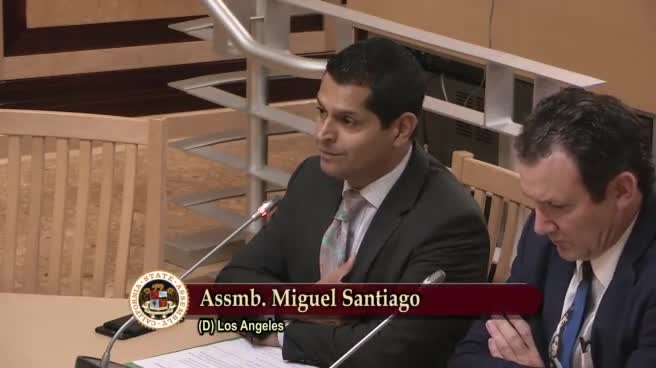
| Jun 19, 2018 | Do pass, but first be re-referred to the Committee on [Appropriations] | Senate Standing Committee on Energy, Utilities and Communications |
Passed |
|
| May 25, 2018 | AB 1879 SANTIAGO Consent Calendar Second Day Regular Session | Assembly Floor |
Passed |
|
| May 16, 2018 | Do pass. To Consent Calendar. | Assembly Standing Committee on Appropriations |
Passed |
|
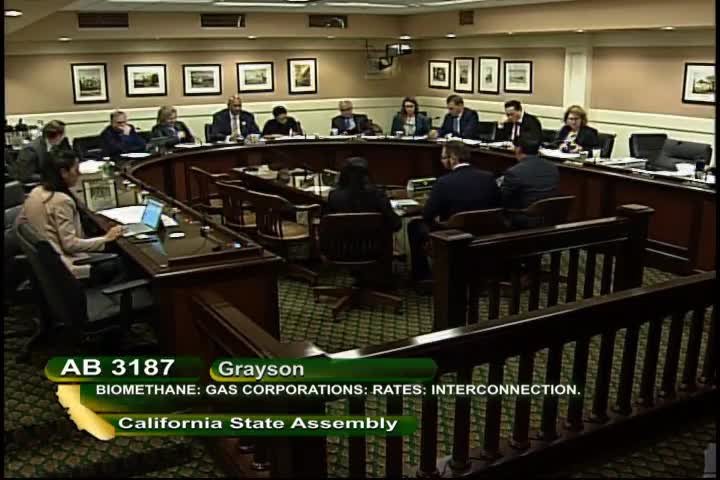
| Apr 25, 2018 | Do pass as amended. | Assembly Standing Committee on Utilities and Energy |
Passed |
This list shows positions taken on this bill by organizations on the date displayed, which is linked to the original source.
Positions by individuals are not included.
|
Organization
|
Position
|
Date
|
|---|---|---|
| American Chemistry Council | ** Support | Aug 30, 2018 |
| California Building Industry Association | ** Support | Aug 30, 2018 |
| California Business Properties Association | ** Support | Aug 30, 2018 |
| California Business Roundtable | ** Support | Aug 30, 2018 |
| California Chamber Of Commerce | ** Support | Aug 30, 2018 |
| California Independent Petroleum Association | ** Support | Aug 30, 2018 |
| California Manufacturers & Technology Association | ** Support | Aug 30, 2018 |
| California Natural Gas Producers Association | ** Support | Aug 30, 2018 |
| California Restaurant Association | ** Support | Aug 30, 2018 |
| California Retailers Association | ** Support | Aug 30, 2018 |
| California State Association Of Electrical Workers | ** Support | Aug 30, 2018 |
| California State Pipe Trades Council | ** Support | Aug 30, 2018 |
| City Of Vernon | ** Support | Jun 15, 2018 |
| Clean Energy | ** Support | Aug 30, 2018 |
| Coalition For Renewable Natural Gas | * Support | Apr 25, 2018 |
| Coalition of California Utility Employees | ** Support | Aug 30, 2018 |
| Energy Users Forum | ** Support | Aug 30, 2018 |
| San Diego Gas and Electric | ** Support | Aug 30, 2018 |
| San Gabriel Valley Economic Partnership | ** Support | Apr 24, 2018 |
| Sempra Energy Utilities | ** Support | Aug 30, 2018 |
| Sierra Club California | * Against Unless Amend | Apr 25, 2018 |
| Southern California Gas Company | ** Support | Aug 30, 2018 |
| The Association Of California Cities, Orange County | ** Support | Apr 24, 2018 |
| VALLEY INDUSTRY AND COMMERCE ASSOCIATION | ** Support | Aug 30, 2018 |
| Vernon Public Utilities | ** Support | Aug 30, 2018 |
| Western States Petroleum Association | ** Support | Aug 30, 2018 |
Office of Senate Floor Analyses (916) 651-1520 Fax: (916) 327-4478 | AB |
THIRD READING
Bill No: AB 1879
:
SENATE ENERGY, U. & C. COMMITTEE: 10-1, 6/19/18
AYES: Hueso, Morrell, Bradford, Cannella, Hertzberg, Hill, McGuire, Skinner, Vidak, Wiener
NOES: Stern
SENATE APPROPRIATIONS COMMITTEE: Senate Rule 28.8
SENATE FLOOR: 25-1, 8/29/18 (FAIL)
AYES: Allen, Atkins, Beall, Bradford, De León, Delgado, Dodd, Galgiani, Glazer, Hernandez, Hertzberg, Hill, Hueso, Jackson, Lara, Leyva, McGuire, Mitchell, Monning, Pan, Portantino, Roth, Skinner, Wieckowski, Wiener
NOES: Stern
NO VOTE RECORDED: Anderson, Bates, Berryhill, Cannella, Chang, Fuller, Gaines, Moorlach, Morrell, Nguyen, Nielsen, Stone, Vidak, Wilk
ASSEMBLY FLOOR: 70-0, 5/25/18 (Consent) - See last page for vote
DIGEST:
This bill requires specified notification actions if the California Public Utilities Commission (CPUC) determines that a moratorium on new natural gas service connections is necessary to prevent substantial and imminent harm or to ensure gas system reliability, including requiring a report to the Legislature and the affected gas corporation stating the necessity for the action and requiring a gas corporation to immediately notify potential or current customers that may experience a service impact as a result of the proposed suspension. This bill declares that it is to take effect immediately as an urgency statute.
Existing law:
- Establishes the CPUC with jurisdiction over all public utilities and grants the CPUC certain general powers over all public utilities and common carriers, subject to control by the Legislature. (California Constitution, Article 12)
- Requires every public utility to furnish and maintain such adequate, efficient, just, and reasonable service, instrumentalities, equipment, and facilities, as are necessary to promote the safety, health, comfort, and convenience of its patrons, employees, and the public and requires all rules made by a public utility affecting or pertaining to its charges or service to be just and reasonable. (Public Utilities Code §451)
- Authorizes the CPUC to supervise and regulate every public utility in the state and do all things necessary and convenient in the exercise of its power and jurisdiction. (Public Utilities Code §701)
- Requires that a proposed decision by the CPUC must allow for 30 days public review and comment, except the CPUC may reduce the comment period if warranted by an emergency situation. (Public Utilities Code §311(g))
- Establishes a moratorium on injecting natural gas into the Aliso Canyon gas storage facility and establishes requirements for resuming natural gas injections at the facility. (Public Resources Code §3217, Public Utilities Code §§714,715)
This bill:
- Requires the CPUC, if it determines that a moratorium on new natural gas service connections is necessary to prevent substantial and imminent harm or to ensure gas system reliability, to state the necessity for the action in a report provided to the energy policy committees of the Assembly and Senate and all affected gas corporations.
- Requires the CPUC to include specified information in the report, including factual findings supporting the need to propose a moratorium on new natural gas service connections, as well as, the number of pending gas service connections affected, the system constraints, the alternative actions considered, the process for a customer to request an exemption from the moratorium.
- Requires a gas corporation, when it receives notification from the CPUC that an action is pending to suspend new gas service connections, to immediately notify any known potential or current customers that may experience a service impact.
- Requires the CPUC to annually report to the energy policy committees of the Assembly and Senate the status of natural gas service connections and efforts to provide natural gas supply.
- States this is an urgency statute necessary for the immediate preservation of the public peace, health, or safety and shall go effect immediately.
Background
Aliso Canyon gas leak. In October 2015, a significant uncontrolled natural gas leak from an underground storage well was discovered within the Southern California Gas Company’s (SoCalGas) Aliso Canyon natural gas underground storage facility. The Aliso Canyon natural gas storage facility is the largest natural gas storage facility in the western United States. A moratorium was imposed on use of the facility. It resumed limited operation in July 2017. The CPUC took a series of steps to address energy reliability while the viability of the facility was assessed, along with energy conservation efforts by residents. Most significantly the CPUC and the California Energy Commission closely monitored the gas supplies and continue to regularly evaluate the reliability challenges of delivering energy to Southern California. The evaluations focus on reliability during the peak gas use winter months and high demand electricity months in the summer since gas is used to power natural gas powerplants.
Winter 2017-18 gas reliability assessment. For the 2017-2018 winter period the agencies discovered significant new reliability challenges on the SoCalGas system due to a series of major unplanned outages and maintenance issues on pipelines delivering gas to the region. The agencies reported that the Los Angeles region faced greater uncertainty than the winter of 2016-2017 with respect to the ability of SoCalGas to meet customer demand through the winter. The 2017-18 Winter Technical Report found that the unplanned outages of three critical natural gas pipelines raised significant concerns as to whether SoCalGas would be unable to meet natural gas demand during peak winter conditions. Three pipelines that provide almost half of all import capacity into the Los Angeles region were out of service and two of those pipelines were unlikely to return to service before spring 2018, further constraining gas service to the region during peak winter months.
CPUC proposes emergency moratorium on new commercial and industrial gas service connections. The CPUC reported that although several mitigation measures were implemented, including authorizing the limited use of gas from the Aliso Canyon storage field when necessary and expanding programs to deploy more smart thermostats that reduce demand, it remained unclear that those mitigation actions would be sufficient to prevent gas service disruption to noncore gas customers (including electric generators and other industrial customers) in Southern California in the event of a colder than normal series of days winter. The CPUC urged local government to limit or prohibit connection of new natural gas service in the affected area. Local government took no such action. In response, on December 15, 2017, under its authority to regulate SoCalGas, the CPUC proposed a resolution (G-3536) implementing an emergency moratorium on new commercial and industrial natural gas service connections served by Aliso Canyon. The CPUC’s proposed a moratorium in an effort to avoid increased demand for natural gas from new service connections and, thereby, avoid further curtailments to existing core and non-core customers. The CPUC exercised statutorily authorized ability to reduce the normal 30-day comment period for emergency situations and proposed to close public comments on January 4th, and placed the resolution on the CPUC’s January 11, 2018 business meeting agenda. If adopted the resolution would have ordered SoCalGas to suspend new service connections for commercial and industrial customers through March 31st. The CPUC held the item with no action on the resolution but carried it over to successive meetings in the event that conditions in the Los Angeles region dictated adoption. The winter months proved to be warmer than expected salvaging gas supply. However, colder weather starting in mid-February resulted in high gas demand and in a severe drop in gas inventory of non-Aliso storage facilities. In response, the CPUC authorized SoCalGas to utilize Aliso to maintain or restore storage levels. The CPUC did not act on the original proposed gas moratorium resolution. It is now out of date and off calendar.
Business backlash. The potential delay in new gas connections for commercial and industrial customers resulted in some backlash from the business community in the Los Angeles Region. While the moratorium was limited to only affect new service connections for commercial and industrial customers, the effect of the delay for the individual business customers could be a severe impact to their business operations. Citing an analysis by the Los Angeles County Economic Development Corporation, [“Natural Gas Moratorium: Los Angeles County.” Los Angeles County Economic Development Corporation Report, January 2018. https://laedc.org/wp-content/uploads/2018/01/Gas-Moratorium-Review_20180109.pdf] the author of this bill reported that “California communities rely on businesses that are currently being built, modernized, or expanded. If the CPUC’s moratorium had been implemented, it would have had the following estimated economic and job impacts in Los Angeles County over the course of the moratorium (January 11, 2018 through March 31, 2018):
- 5,160 fewer total jobs would be created;
- $879.5 million lost in future economic output;
- $323.9 million lost in future labor earnings; and
- $119.7 million lost in future federal, state and local tax revenues, of which $13.3 million and $5.8 million would be lost in tax revenues to Los Angeles County and local cities, respectively.
This bill requires notification to Legislature and to affected customers. The two most critical responsibilities of the CPUC are to ensure a safe and reliable utility service to customers. While the previous version of this bill would have restricted the authority of the CPUC to suspend or restrict gas service connections, this bill now focuses on the notification requirements of such a proposed moratorium on new service connections. As such, this bill appropriately does not limit the CPUC’s ability to ensure safety and reliability of the gas system or its effects on the electric system. The CPUC also preserves all its emergency authority, should conditions warrant emergency action. It’s important to note that in the case of new service connections, these generally take time to connect the service. A new service connection requires an application by the businesses to the gas corporation who then reviews the application and assesses the ability to connect the service, including potential necessary upgrades to the distribution system.
FISCAL EFFECT: Appropriation: Fiscal Com.: Local:
American Chemistry Council
California Building Industry Association
California Business Properties Association
California Business Roundtable
California Chamber of Commerce
California Independent Petroleum Association
California Manufacturers & Technology Association
California Natural Gas Producers Association
California Retailers Association
California Restaurant Association
California State Association of Electrical Workers
California State Pipe Trades Council
Clean Energy
Coalition of California Utility Employees
Energy Users Forum
San Diego Gas and Electric
Sempra Energy utilities
Southern California Gas Company
Valley Industry and Commerce Association
Vernon Public Utilities
Western States Petroleum Association
None received
ARGUMENTS IN SUPPORT: According to the author, “As many as 700 new businesses in Los Angeles, several of which are located in my district, would have been forced to wait until spring to operate, leaving thousands of people out of work for nearly three months. It would have been an economic blow to the region for relatively little gain. I have heard loud and clear from my constituents and people across California that the proposed moratorium by the CPUC would have had real life-changing ramifications. There are small businesses that would have not been able to proceed with development and homes that would have had construction halted – in the middle of an established housing crisis in our state. AB 1879 sends a clear message that we need to pause for a moment on imposing future moratoriums on new natural gas service connections, and be deliberate and thoughtful about how we proceed with California’s energy resources and infrastructure.”
ASSEMBLY FLOOR: 70-0, 5/25/18
AYES: Acosta, Aguiar-Curry, Baker, Berman, Bigelow, Bloom, Burke, Caballero, Calderon, Carrillo, Cervantes, Chau, Chávez, Chen, Chiu, Choi, Chu, Cooley, Cooper, Cunningham, Dahle, Daly, Eggman, Flora, Fong, Frazier, Friedman, Gallagher, Cristina Garcia, Eduardo Garcia, Gipson, Gloria, Gonzalez Fletcher, Gray, Grayson, Harper, Holden, Irwin, Jones-Sawyer, Kalra, Kamlager-Dove, Kiley, Lackey, Limón, Low, Maienschein, Mathis, Mayes, McCarty, Medina, Melendez, Muratsuchi, Nazarian, Obernolte, O'Donnell, Patterson, Quirk, Quirk-Silva, Reyes, Rodriguez, Rubio, Salas, Santiago, Mark Stone, Thurmond, Ting, Voepel, Weber, Wood, Rendon
NO VOTE RECORDED: Travis Allen, Arambula, Bonta, Brough, Levine, Mullin, Steinorth, Waldron
8/30/18 9:56:14
SENATE COMMITTEE ON ENERGY, UTILITIES AND COMMUNICATIONS
Senator Ben Hueso, Chair
2017 - 2018 Regular
Bill No: Hearing Date: 6/19/18
Author: | |||
Version: | As Amended | ||
Urgency: | Fiscal: | ||
Consultant: | |||
SUBJECT:
DIGEST: This bill would require specified notification actions if the California Public Utilities Commission (CPUC) determines that a moratorium on new natural gas service connections is necessary to prevent substantial and imminent harm or to ensure gas system reliability, including requiring a report to the Legislature and the affected gas corporation stating the necessity for the action and require a gas corporation to immediately notify potential or current customers that may experience a service impact as a result of the proposed suspension. This bill would declare that it is to take effect immediately as an urgency statute.
ANALYSIS:
Existing law:
- Establishes the CPUC with jurisdiction over all public utilities and grants the CPUC certain general powers over all public utilities and common carriers, subject to control by the Legislature. (California Constitution, Article 12)
- Requires every public utility to furnish and maintain such adequate, efficient, just, and reasonable service, instrumentalities, equipment, and facilities, as are necessary to promote the safety, health, comfort, and convenience of its patrons, employees, and the public and requires all rules made by a public utility affecting or pertaining to its charges or service to be just and reasonable. (Public Utilities Code §451)
- Authorizes the CPUC to supervise and regulate every public utility in the state and do all things necessary and convenient in the exercise of its power and jurisdiction. (Public Utilities Code §701)
- Requires that a proposed decision by the CPUC must allow for 30 days public review and comment, except the CPUC may reduce the comment period if warranted by an emergency situation. (Public Utilities Code § 311(g))
- Establishes a moratorium on injecting natural gas into the Aliso Canyon gas storage facility and establishes requirements for resuming natural gas injections at the facility. (Public Resources Code § 3217, Public Utilities Code §§ 714,715)
This bill:
- Requires the CPUC, if it determines that a moratorium on new natural gas service connections is necessary to prevent substantial and imminent harm or to ensure gas system reliability, to state the necessity for the action in a report provided to the energy policy committees of the Assembly and Senate and all affected gas corporations.
- Requires the CPUC to include specified information in the report, including factual findings supporting the need to propose a moratorium on new natural gas service connections, as well as, the number of pending gas service connections affected, the system constraints, the alternative actions considered, the process for a customer to request an exemption from the moratorium.
- Requires a gas corporation, when it receives notification from the CPUC that an action is pending to suspend new gas service connections, to immediately notify any known potential or current customers that may experience a service impact.
- Requires the CPUC to annually report to the energy policy committees of the Assembly and Senate the status of natural gas service connections and efforts to provide natural gas supply.
- States this is an urgency statute necessary for the immediate preservation of the public peace, health, or safety and shall go effect immediately.
Background
Aliso Canyon gas leak. In October 2015, a significant uncontrolled natural gas leak from a well was discovered within the Southern California Gas Company’s (SoCalGas) Aliso Canyon natural gas underground storage facility. The Aliso Canyon natural gas storage facility is the largest natural gas storage facility in the western United States. A moratorium was imposed on use of the facility. It resumed limited operation in July 2017. The CPUC took a series of steps to address reliability while the viability of the facility was assessed along with energy conservation efforts by residents. Most significantly the CPUC and the California Energy Commission maintained a close watch on the gas supplies and continue to regularly evaluate the reliability challenges of delivering energy to Southern California with a particular focus on peak winter and summer seasons.
Winter 2017-18 gas reliability assessment. For the 2017-2018 winter period the agencies discovered significant new reliability challenges on the SoCalGas system due to a series of major unplanned outages and maintenance issues on pipelines delivering gas to the region. They reported that the Los Angeles region faced greater uncertainty than the winter of 2016-2017 with respect to the ability of SoCalGas to meet customer demand through the winter. The 2017-18 Winter Technical Report found that the unplanned outages of three critical natural gas pipelines raised significant concerns SoCalGas would be unable to meet natural gas demand during peak winter conditions. Three pipelines that provide almost half of all import capacity into the Los Angeles region were out of service and two of those pipelines were unlikely to return to service before spring 2018, further constraining gas service to the region during peak winter months.
CPUC proposes emergency moratorium on new commercial and industrial service connections. The CPUC reported that although several mitigation measures were implemented, including authorizing the limited use of gas from the Aliso Canyon storage field when necessary, expanding programs to deploy more smart thermostats that reduce demand, and other measures, it remained unclear that the actions to date would be sufficient to avoid gas service disruption to noncore customers in Southern California in the event of a colder than normal series of days this winter. The CPUC urged local government to limit or prohibit connection of new natural gas service in the affected area. Local government took no such action. In response, on December 15, 2017, the CPUC proposed a resolution (G-3536) implementing an emergency moratorium on new commercial and industrial natural gas service connections by SoCalGas, which the CPUC regulates, served by Aliso Canyon. The moratorium was thought to avoid increased demand for natural gas as a result of new service connections would avoid further curtailments to existing core and non-core customers. The CPUC exercised statutorily authorized ability to reduce the normal 30-day comment period for emergency situations and proposed to close public comments on January 4th, and placed the resolution on the CPUC’s January 11, 2018 business meeting agenda. If adopted the resolution would have ordered SoCalGas to suspend new service connections for commercial and industrial customers through March 31st. The CPUC held action on the resolution but carried it over to successive meetings in the event that conditions in the LA region dictated adoption. The winter months proved to be warmer than expected salvaging gas supply. However, colder weather starting in mid-February resulted in high gas demand and in a severe drop in gas inventory of non-Aliso storage facilities. In response the CPUC authorized SoCalGas to utilize Aliso to maintain or restore storage levels. The CPUC did not act on the original proposed gas moratorium resolution. It is now out of date and off calendar.
Business backlash. The potential delay in new gas connections for commercial and industrial customers resulted in some backlash from the business community in the LA Region. While the moratorium was narrow to only affect new service connections for commercial and industrial customers, for the customer affected by the lack of connection or experiencing a delay in the connection could affect the opening of their business operation and the costs associated with the delay. Citing an analysis by the Los Angeles County Economic Development Corporation,[1] the author of this bill reported that “California communities rely on businesses that are currently being built, modernized, or expanded. If the CPUC’s moratorium had been implemented, it would have had the following estimated economic and job impacts in Los Angeles County over the course of the moratorium (January 11, 2018 through March 31, 2018):
- 5,160 fewer total jobs would be created;
- $879.5 million lost in future economic output;
- $323.9 million lost in future labor earnings; and
- $119.7 million lost in future federal, state and local tax revenues, of which $13.3 million and $5.8 million would be lost in tax revenues to Los Angeles County and local cities, respectively.
This bill requires notification to Legislature and to affected customers. The two most critical responsibilities of the CPUC are to ensure a safe and reliable gas system to serve customers. While the previous version of this bill would have restricted the authority of the CPUC to suspend or restrict gas service connections, this bill now focuses on the notification requirements of such a proposed moratorium on new service connections. As such, this bill appropriately does not limit the CPUC’s ability to ensure safety and reliability of the gas system or its effects on the electric system. The CPUC also preserves all its emergency authority, if conditions warrant emergency action. It’s important to note that in the case of new service connections, these generally take time to connect the service and require applications by the entities to the gas corporation who then reviews the application and assess the ability to connect the service, including potential upgrades to the distribution system.
FISCAL EFFECT: Appropriation: Fiscal Com.: Local:
SUPPORT:
American Chemistry Council
California Building Industry Association
California Business Properties Association
California Business Roundtable
California Chamber of Commerce
California Independent Petroleum Association
California Manufacturers & Technology Association
California Natural Gas Producers Association
California Retailers Association
California Restaurant Association
California State Association of Electrical Workers
California State Pipe Trades Council
Clean Energy
City of Vernon
Coalition of California Utility Employees
Energy Users Forum
San Diego Gas and Electric
Sempra Energy utilities
Southern California Gas Company
Valley Industry and Commerce Association
Western States Petroleum Association
OPPOSITION:
None received
ARGUMENTS IN SUPPORT: According to the author:
“As many as 700 new businesses in Los Angeles, several of which are located in my district, would have been forced to wait until spring to operate, leaving thousands of people out of work for nearly three months. It would have been an economic blow to the region for relatively little gain. I have heard loud and clear from my constituents and people across California that the proposed moratorium by the CPUC would have had real life-changing ramifications. There are small businesses that would have not been able to proceed with development and homes that would have had construction halted – in the middle of an established housing crisis in our state. AB 1879 sends a clear message that we need to pause for a moment on imposing future moratoriums on new natural gas service connections, and be deliberate and thoughtful about how we proceed with California’s energy resources and infrastructure.”
-- END --
“Natural Gas Moratorium: Los Angeles County.” Los Angeles County Economic Development Corporation Report, January 2018. https://laedc.org/wp-content/uploads/2018/01/Gas-Moratorium-Review_20180109.pdf ↑
Date of Hearing: May 16, 2018
ASSEMBLY COMMITTEE ON APPROPRIATIONS
Lorena Gonzalez Fletcher, Chair
ABPCA Bill Id:AB 1879
Author:(Santiago) – As Amended Ver:May 1, 2018
Policy Committee: | Utilities and Energy | Vote: | 14 - 0 |
|
| ||
|
|
Urgency: Yes State Mandated Local Program: No Reimbursable: No
SUMMARY:
This bill makes several requirements regarding any potential moratorium on new natural gas service connections. Specifically, this bill requires:
- The California Public Utilities Commission (CPUC), if ever it determines a moratorium on new natural gas service connections necessary to prevent substantial and imminent harm or to ensure natural gas system reliability, to provide specific, substantiating information to the Legislature and to affected natural gas corporations (gas IOUs).
- Any gas IOU that receives such information to immediately notify any known or potential customer whose service might be affected by the moratorium.
- The CPUC, as part of its statutorily required annual report to the Legislature, to present the status of natural gas service connections and efforts to provide natural gas supply.
FISCAL EFFECT:
Minor, absorbable costs to CPUC to provide information.
COMMENTS:
Background and Purpose. This winter, the CPUC identified the possibility of a natural gas shortage in the Southern California region. The CPUC urged local government to limit or prohibit connection of new natural gas service in the affected area. Local government took no such action. In response, the CPUC proposed implementing a moratorium on new natural gas service connections by Southern California Gas and Electric (SDG&E), which the CPUC regulates. Ultimately, the CPUC did not implement the moratorium. However, the possibility of the moratorium led to widespread complaints and concerns among entities that would have been affected.
The author is concerned about the effects such a moratorium would have on economic activity in Southern California. The author intends this bill, which was significantly paired back in the Assembly Committee on Utilities and Energy, to ensure the CPUC is thoughtful in its consideration of any future moratorium and that its decision to propose such a moratorium is well founded.
Analysis Prepared by: Jay Dickenson / APPR. / (916) 319-2081
Date of Hearing: April 25, 2018
ASSEMBLY COMMITTEE ON UTILITIES AND ENERGY
Chris Holden, Chair
ABPCA Bill Id:AB 1879 (
Author:Santiago) – As Introduced Ver:January 17, 2018
SUBJECT: Gas corporation: service connections
SUMMARY: Prohibits the California Public Utilities Commission (CPUC) from restricting new service connections for natural gas within a gas corporation’s service territory.
EXISTING LAW:
- Requires every public utility to furnish and maintain such adequate, efficient, just, and reasonable service, instrumentalities, equipment, and facilities, as are necessary to promote the safety, health, comfort, and convenience of its patrons, employees, and the public and requires all rules made by a public utility affecting or pertaining to its charges or service to be just and reasonable. (Public Utilities Code § 451)
- Authorizes the CPUC to supervise and regulate every public utility in the state and do all things necessary and convenient in the exercise of its power and jurisdiction. (Public Utilities Code § 701)
- Establishes a moratorium on injecting natural gas into the Aliso Canyon gas storage facility and establishes requirements for resuming natural gas injections at the facility. (Public Resources Code § 3217, Public Utilities Code §§ 714,715)
FISCAL EFFECT: This bill is not keyed fiscal.
BACKGROUND:
In October 2015, a significant uncontrolled natural gas leak from a gas storage well was discovered within the Southern California Gas Company’s (SoCalGas) Aliso Canyon natural gas storage facility. The Aliso Canyon natural gas storage facility is the largest natural gas storage facility in the western United States. A moratorium was imposed on use of the facility. It resumed limited operation in July 2017.
The CPUC took a series of steps to address reliability while the viability of the facility was assessed along with energy conservation efforts by residents. Most significantly the CPUC and the California Energy Commission (CEC) maintained a close watch on the gas supplies and continue to regularly evaluate the reliability challenges of delivering energy to Southern California.
For the 2017-2018 winter period the agencies discovered significant new reliability challenges on the SoCalGas system due to a series of major unplanned outages and maintenance issues on three pipelines delivering gas to the region which collectively represent 42 percent of the natural gas import capacity. The agencies reported that the Los Angeles region faced greater uncertainty than the winter of 2016-2017 with respect to the ability of SoCalGas to meet customer demand through the winter.
The 2017-18 Winter Technical Report found that the unplanned outages of three critical natural gas pipelines raised significant concerns SoCalGas would be unable to meet natural gas demand during peak winter conditions. Three pipelines that provide almost half of all import capacity into the Los Angeles region were out of service and two of those pipelines were unlikely to return to service before spring 2018, further constraining gas service to the region during peak winter months.
The CPUC reported that although several mitigation measures were implemented, including authorizing the limited use of gas from the Aliso Canyon storage field when necessary, expanding programs to deploy more smart thermostats that reduce demand, and other measures, it remained unclear that the actions to date would be sufficient to avoid gas service disruption to noncore customers in Southern California in the event of a colder than normal series of days this winter.
A moratorium on new commercial and industrial natural gas service connections in both the incorporated and unincorporated areas of Los Angeles County served by Aliso Canyon was identified in the Winter Technical Report as a measure to avoid increased gas demand. The moratorium was thought to avoid increased demand for natural gas as a result of new service connections would avoid further curtailments to existing customers.
In December, the CPUC followed mandated public notice requirements and placed a resolution on the Commission’s January 11, 2018 business meeting agenda. If adopted the resolution would have ordered SoCalGas to suspend new service connections for commercial and industrial customers through March 31st. The Commission held action on the resolution but carried it over to successive meetings in the event that conditions in the LA region dictated adoption.
The winter months proved to be warmer than expected salvaging gas supply. However, colder weather starting in mid-February resulted in high gas demand and in a severe drop in gas inventory of non-Aliso storage facilities. In response the CPUC authorized SoCalGas to utilize Aliso to maintain or restore storage levels.
The CPUC did not act on the original proposed gas moratorium resolution. Its provisions would have suspended connections until March. It is now out of date and off calendar.
COMMENTS:
- Author’s Statement. The author reports that as many as 700 new businesses in Los Angeles, several of which are located in his district, would have been forced to wait until spring to operate, leaving thousands of people out of work for nearly three months had the moratorium on gas connections been adopted by the CPUC. He opines that it would have been an economic blow to the region for relatively little gain. He heard loud and clear from his constituents and people across California that the proposed moratorium by the CPUC would have had real life-changing ramifications. There are small businesses that would have not been able to proceed with development and homes that would have had construction halted – in the middle of an established housing crisis in the state. His intent with AB 1879 is to send a clear message that we need to pause for a moment on imposing future moratoriums on new natural gas service connections, and be deliberate and thoughtful about how we proceed with California’s energy resources and infrastructure.
- Business Backlash. The potential delay in gas connections for new commercial and industrial customers sent a winter chill through the business community in the LA Region. Citing an analysis by the Los Angeles County Economic Development Corporation,[1] the author reported that “California communities rely on businesses that are currently being built, modernized, or expanded. If the CPUC’s moratorium had been implemented, it would have had the following estimated economic and job impacts in Los Angeles County over the course of the moratorium (January 11, 2018 through March 31, 2018):
- 5,160 fewer total jobs would be created;
- $879.5 million lost in future economic output;
- $323.9 million lost in future labor earnings; and
- $119.7 million lost in future federal, state and local tax revenues, of which $13.3 million and $5.8 million would be lost in tax revenues to Los Angeles County and local cities, respectively.
The proposed moratorium would have been temporary if adopted. The resolution proposed that it end March 31, 2018.
- Safety & Reliability. The two most critical responsibilities of the CPUC are to ensure a safe and reliable gas system to serve customers. This bill restricts the authority of the CPUC to suspend or restrict gas service connections, for any reason, including safety and reliability. The potential disruption of new service connections this past winter is tantamount to the lights going out for an extended period on the electric side and is of significant concern. However, if the CPUC is made aware of the potential for shortages in supply, or that the safety could be affected by new gas service connections, it is critical that they have the authority to take the necessary actions to ensure safety and reliability of the system. Consequently, the committee may wish to consider amending this bill to strike the current language, but elevate the discussion and notice required before the CPUC takes action to suspend or terminate gas service connections as follows:
a) The Commission shall notify the Assembly Utilities and Energy Committee, the Senate Energy, Utilities, and Communications Committee and affected gas corporations before suspending new natural gas service connections for the purpose of ensuring the safety or reliability of natural gas service.
b) When a gas corporation receives notification from the commission that an action is pending that may suspend new gas service connections, the gas corporation shall immediately notify any known potential or current customers that may experience a service impact as a result of the proposed suspension.
c) The Commission may take action to implement a moratorium on new natural gas service connections after it has exhausted all other feasible alternatives to ensure natural gas reliability but no sooner than 90 days after the notice required in subdivision (a) unless exigent circumstances require earlier action to ensure safety or reliability.
d) The Commission shall include in the notification to the Legislature required in subdivision (a) factual findings supporting the need to propose a moratorium on new natural gas service connections. The report shall include, but is not limited to, the number of pending gas service connection applications with the gas corporation, the estimated gas load deferred under the proposed moratorium, the system constraints that led to the proposed moratorium, and a process for a customer to request an exemption from the moratorium.
- Prior Legislation. SB 380 (Pavley) continued the moratorium on injection of natural gas at the Aliso Canyon gas storage facility until specified criteria, including testing, are met. Required the feasibility of the storage facility to be addressed and required the CPUC to determine the amount of gas necessary at the facility for safety, regional reliability and to ensure just and reasonable rates. (Chapter 14, Statutes of 2016)
REGISTERED SUPPORT / OPPOSITION:
Support
American Chemistry Council
California Building Industry Association
California Business Roundtable
California Chamber of Commerce
California Independent Petroleum Association (CIPA)
California Manufacturers and Technology Association
California Natural Gas Producers Association
California Restaurant Association
City of Vernon
Clean Energy
Energy Users Forum
San Diego Gas and Electric
San Gabriel Valley Economic Partnership
Southern California Gas Company
The Association of California Cities, Orange County
Valley Industry and Commerce Association
Western States Petroleum Association
Opposition
Sierra Club California
Analysis Prepared by: Kellie Smith / U. & E. /
“Natural Gas Moratorium: Los Angeles County.” Los Angeles County Economic Development Corporation Report, January 2018. https://laedc.org/wp-content/uploads/2018/01/Gas-Moratorium-Review_20180109.pdf ↑
Date of Hearing: April 4, 2018
ASSEMBLY COMMITTEE ON UTILITIES AND ENERGY
Chris Holden, Chair
ABPCA Bill Id:AB 1879 (
Author:Santiago) – As Introduced Ver:January 17, 2018
SUBJECT: Gas corporation: service connections
SUMMARY: Prohibits the California Public Utilities Commission (CPUC) from restricting new service connections for natural gas within a gas corporation’s service territory.
EXISTING LAW:
- Requires every public utility to furnish and maintain such adequate, efficient, just, and reasonable service, instrumentalities, equipment, and facilities, as are necessary to promote the safety, health, comfort, and convenience of its patrons, employees, and the public and requires all rules made by a public utility affecting or pertaining to its charges or service to be just and reasonable. (Public Utilities Code §451)
- Authorizes the CPUC to supervise and regulate every public utility in the state and do all things necessary and convenient in the exercise of its power and jurisdiction. (Public Utilities Code §701)
- Establishes a moratorium on injecting natural gas into the Aliso Canyon gas storage facility and establishes requirements for resuming natural gas injections at the facility. (Public Resources Code § 3217, Public Utilities Code §§ 714,715)
FISCAL EFFECT: This bill is not keyed fiscal.
BACKGROUND
In October 2015, a significant uncontrolled natural gas leak from a gas storage well was discovered within the Southern California Gas Company’s Aliso Canyon natural gas storage facility. The Aliso Canyon natural gas storage facility is the largest natural gas storage facility in the western United States. A moratorium was imposed on use of the facility. It resumed limited operation in July 2017.
The CPUC took a series of steps to address reliability while the viability of the facility was assessed along with energy conservation efforts by residents. Most significantly the CPUC and the California Energy Commission (CEC) maintained a close watch on the gas supplies and continue to regularly evaluate the reliability challenges of delivering energy to Southern California.
For the 2017-2018 winter period the agencies discovered significant new reliability challenges on the SoCalGas system due to a series of major unplanned outages and maintenance issues on pipelines delivering gas to the region. They reported that the Los Angeles region faced greater uncertainty than the winter of 2016-2017 with respect to the ability of SoCalGas to meet customer demand through the winter.
The 2017-18 Winter Technical Report found that the unplanned outages of three critical natural gas pipelines raised significant concerns SoCalGas would be unable to meet natural gas demand during peak winter conditions. Three pipelines that provide almost half of all import capacity into the Los Angeles region were out of service and two of those pipelines were unlikely to return to service before spring 2018, further constraining gas service to the region during peak winter months.
The CPUC reported that although several mitigation measures were implemented, including authorizing the limited use of gas from the Aliso Canyon storage field when necessary, expanding programs to deploy more smart thermostats that reduce demand, and other measures, it remained unclear that the actions to date would be sufficient to avoid gas service disruption to noncore customers in Southern California in the event of a colder than normal series of days this winter.
A moratorium on new commercial and industrial natural gas service connections in both the incorporated and unincorporated areas of Los Angeles County served by Aliso Canyon was identified in the Winter Technical Report as a measure to avoid increased gas demand. The moratorium was thought to avoid increased demand for natural gas as a result of new service connections would avoid further curtailments to existing customers.
In December the CPUC followed mandated public notice requirements and placed a resolution on the Commission’s January 11, 2018 business meeting agenda. If adopted the resolution would have ordered SoCalGas to suspend new service connections for commercial and industrial customers through March 31st. The Commission held action on the resolution but carried it over to successive meetings in the event that conditions in the LA region dictated adoption.
The winter months proved to be warmer than expected salvaging gas supply. However, colder weather starting in mid-February resulted in high gas demand and in a severe drop in gas inventory of non-Aliso storage facilities. In response the CPUC authorized SoCalGas to utilize Aliso to maintain or restore storage levels.
The CPUC did not act on the original proposed gas moratorium resolution. Its provisions would have suspended connections until March. It is now out of date and off calendar.
COMMENTS:
- Author’s Statement. The author reports that as many as 700 new businesses in Los Angeles, several of which are located in his district, would have been forced to wait until spring to operate, leaving thousands of people out of work for nearly three months had the moratorium on gas connections been adopted by the CPUC. He opines that it would have been an economic blow to the region for relatively little gain. He heard loud and clear from his constituents and people across California that the proposed moratorium by the CPUC would have had real life-changing ramifications. There are small businesses that would have not been able to proceed with development and homes that would have had construction halted – in the middle of an established housing crisis in the state. His intent with AB 1879 is to send a clear message that we need to pause for a moment on imposing future moratoriums on new natural gas service connections, and be deliberate and thoughtful about how we proceed with California’s energy resources and infrastructure.
- Business Backlash. The potential delay in gas connections for new commercial and industrial customers sent a winter chill through the business community in the LA Region. Citing an analysis by the Los Angeles County Economic Development Corporation,[1] the author reported that “California communities rely on businesses that are currently being built, modernized, or expanded. If the CPUC’s moratorium had been implemented, it would have had the following estimated economic and job impacts in Los Angeles County over the course of the moratorium (January 11, 2018 through March 31, 2018):
- 5,160 fewer total jobs would be created;
- $879.5 million lost in future economic output;
- $323.9 million lost in future labor earnings; and
- $119.7 million lost in future federal, state and local tax revenues, of which $13.3 million and $5.8 million would be lost in tax revenues to Los Angeles County and local cities, respectively.
The proposed moratorium would have been temporary if adopted. The resolution proposed that it end March 31, 2018.
- Safety & Reliability. The two most critical responsibilities of the CPUC are to ensure a safe and reliable gas system to serve customers. This bill restricts the authority of the CPUC to suspend or restrict gas service connections, for any reason, including safety and reliability. The potential disruption of new service connections this past winter is tantamount to the lights going out for an extended period on the electric side and is of significant concern. However, if the CPUC is made aware of the potential for shortages in supply, or that the safety could be affected by new gas service connections, it is critical that they have the authority to take the necessary actions to ensure safety and reliability of the system. Consequently, the committee may wish to consider amending this bill to strike the current language, but elevate the discussion and notice required before the CPUC takes action to suspend or terminate gas service connections as follows:
The commission shall require a gas corporation to notify all potentially affected customers when the commission is considering a prohibition on new natural gas service connections for the purpose of ensuring natural gas service reliability.
- Prior Legislation. SB 380 (Pavley) continued the moratorium on injection of natural gas at the Aliso Canyon gas storage facility until specified criteria, including testing, are met. Required the feasibility of the storage facility to be addressed and required the CPUC to determine the amount of gas necessary at the facility for safety, regional reliability and to ensure just and reasonable rates. (Chapter 14, Statutes of 2016)
REGISTERED SUPPORT / OPPOSITION:
Support
American Chemistry Council
California Building Industry Association
California Business Roundtable
California Chamber of Commerce
California Independent Petroleum Association (CIPA)
California Manufacturers and Technology Association
California Natural Gas Producers Association
California Restaurant Association
City of Vernon
Clean Energy
Energy Users Forum
San Diego Gas & Electric
Southern California Gas Company
Valley Industry and Commerce Association
Western States Petroleum Association
Opposition
None on file.
Analysis Prepared by: Kellie Smith / U. & E. /
“Natural Gas Moratorium: Los Angeles County.” Los Angeles County Economic Development Corporation Report, January 2018. https://laedc.org/wp-content/uploads/2018/01/Gas-Moratorium-Review_20180109.pdf ↑
Discussed in Hearing
 4MIN
Senate Floor
 2MIN
Senate Floor
 9MIN
Senate Standing Committee on Energy, Utilities and Communications
 4MIN
Assembly Standing Committee on Utilities and Energy
Bill Author



