AB 1929: Inspector General: rehabilitation programs.
- Session Year: 2017-2018
- House: Assembly
- Latest Version Date: 2018-04-04
Existing law creates the Office of the Inspector General that is responsible for contemporaneous oversight of internal affairs investigations and the disciplinary process of the Department of Corrections and Rehabilitation. Existing law requires the Inspector General, when requested by the Governor, the Senate Committee on Rules, or the Speaker of the Assembly, to review policies, practices, and procedures of the department. Upon completion of the review, the Inspector General is required to prepare a public written report, as described, to be posted on its Internet Web site and a complete written report to be disclosed in confidence, along with all underlying materials the Inspector General deems appropriate, to the above-described entities who requested the review, as specified, and the appropriate law enforcement agency.
This bill would require the Inspector General, commencing July 1, 2019, to develop and implement a monitoring program that evaluates all rehabilitation programs operated by the Department of Corrections and Rehabilitation for adult inmates and parolees, as specified. The bill would require the evaluation report to include an analysis of whether the programs are evidence based, as specified. The bill would require the Inspector General to report to the Joint Legislative Budget Committee, the Assembly and Senate Committees on Public Safety, and the Governor biannually, on or before March 15 and September 15 of each year, beginning in 2020 and concluding in 2029. The bill would require the department to contract with one or more outside independent researchers or research organizations, as described, to conduct cost-effectiveness evaluations relating to reductions in recidivism, as specified, of rehabilitation programs operated by the department and funded by the state for adult inmates and parolees. The bill would require the Inspector General to monitor the contracting process, as specified. The bill would require the department, in consultation with the Inspector General, General and the California Rehabilitation Oversight Board, to issue requests for proposals on or before July 1, 2019, for the cost-effectiveness evaluation studies and would express the intent of the Legislature that the studies be completed and reported on or before January 1, 2024.
Existing law creates the Office of the Inspector General, General that is responsible for contemporaneous oversight of internal affairs investigations and the disciplinary process of the Department of Corrections and Rehabilitation. Existing law requires the Inspector General, when requested by the Governor, the Senate Committee on Rules, or the Speaker of the Assembly, to review policies, practices, and procedures of the department. Upon completion of the review, the Inspector General is required to prepare a public written report, as described, to be posted on its Internet Web site and a complete written report to be disclosed in confidence, along with all underlying materials the Inspector General deems appropriate, to the above-described entities who requested the review, as specified, and the appropriate law enforcement agency.
This bill would require the Inspector General, commencing July 1, 2019, to evaluate develop and implement a monitoring program that evaluates all rehabilitation programs operated by the Department of Corrections and Rehabilitation for adult inmates and parolees, as specified. The bill would require the evaluation report to include an analysis of whether the programs are evidence based, as specified. The bill would require the Inspector General to report to the Joint Legislative Budget Committee, the Assembly and Senate Committees on Public Safety, and the Governor biannually, on or before March 15 and September 15 of each year, beginning in 2020 and concluding in 2029. The bill would require the Inspector General department to contract with one or more outside independent researchers or research organizations, as described, to conduct cost-effectiveness evaluations relating to reductions in recidivism, as specified, of rehabilitation programs operated by the department and funded by the state for adult inmates and parolees. The bill would require the Inspector General to monitor the contracting process, as specified. The bill would require the Inspector General department, in consultation with the Inspector General, to issue requests for proposals on or before July 1, 2019, for the cost-effectiveness evaluation studies and would express the intent of the Legislature that the studies be completed and reported on or before January 1, 2024.
Existing law creates the Office of the Inspector General, that is responsible for contemporaneous oversight of internal affairs investigations and the disciplinary process of the Department of Corrections and Rehabilitation. Existing law requires the Inspector General, when requested by the Governor, the Senate Committee on Rules, or the Speaker of the Assembly, to review policies, practices, and procedures of the department. Upon completion of the review, the Inspector General is required to prepare a public written report, as described, to be posted on its Internet Web site and a complete written report to be disclosed in confidence, along with all underlying materials the Inspector General deems appropriate, to the above-described entities who requested the review, as specified, and the appropriate law enforcement agency.
This bill would require the Inspector General, commencing July 1, 2019, to evaluate all rehabilitation programs operated by the Department of Corrections and Rehabilitation for adult inmates and parolees, as specified. The bill would require the evaluation report to include an analysis of whether the programs are evidence based, as specified. The bill would require the Inspector General to report to the Joint Legislative Budget Committee, the Assembly and Senate Committees on Public Safety, and the Governor biannually, on or before March 15 and September 15 of each year, beginning in 2020 and concluding in 2029. The bill would require the Inspector General to contract with one or more outside independent researchers or research organizations, as described, to conduct cost-effectiveness evaluations relating to reductions in recidivism, as specified, of rehabilitation programs operated by the department and funded by the state for adult inmates and parolees. The bill would require the Inspector General to issue requests for proposals on or before July 1, 2019, for the cost-effectiveness evaluation studies and would express the intent of the Legislature that the studies be completed and reported on or before January 1, 2024.
(a)The Inspector General shall, commencing July 1, 2019, develop and implement a monitoring program that evaluates all rehabilitation programs operated by the Department of Corrections and Rehabilitation for adult inmates and parolees. The Inspector General shall report, in accordance with Section 9795 of the Government Code, to the Joint Legislative Budget Committee, the Assembly and Senate Committees on Public Safety, and the Governor biannually, on or before March 15 and September 15 of each year, beginning in 2020 and concluding in 2029. It is the intent of the Legislature that the Inspector General evaluate an average of one-tenth of the rehabilitation programs each year and complete the evaluations on or before September 15, 2029. It is the intent of the Legislature that the Inspector General prioritize the evaluation of rehabilitation programs which are funded with state funds and which serve the largest number of inmates.
(b)Each evaluation report shall include an analysis of whether the program or programs being evaluated are evidence based. Specifically, the evaluation shall determine whether programs are (1) research based, meaning they are designed to be similar to programs that have undergone rigorous evaluations showing that the programs reduce recidivism, and (2) implemented with fidelity to a proven program, meaning programs are actually operating in the same manner as the proven program. The evaluation shall identify which programs are not evidence based, are not being implemented with fidelity to proven programs, or both. The evaluation report may include recommendations for changes to improve program performance or effectiveness. If a program is not evidence based, but represents a new or promising type of program, the program evaluation shall identify metrics that may be used to determine whether the program is cost effective and shall submit that information to the Department of Corrections and Rehabilitation. The Inspector General may make recommendations for the expansion, elimination, reduction, or modification of programs based upon its findings. The Inspector General may include updates on whether previously evaluated programs continue to operate or not operate with fidelity to a proven program in subsequent reports.
(c)The Inspector General may conduct the evaluations required pursuant to subdivision (a) or may enter into contracts with outside evaluators to perform that task. SEC. 2.Section 6143 is added to the Penal Code, to read:6143.(a)(1)The Department of Corrections and Rehabilitation shall contract with one or more outside independent researchers or research organizations to conduct cost-effectiveness evaluations of rehabilitation programs operated by the department and funded by the state for adult inmates and parolees. This section does not require that each rehabilitation program operated by the department and funded by the state be subject to a cost-effectiveness analysis.
(2)The contracts shall ensure that there is a representative sample of rehabilitation programs across the departments prisons and that each of the following types of programs are evaluated:
(A)Employment preparation programs.
(B)Academic education programs.
(C)Career technical education programs.
(D)Substance abuse treatment programs.
(E)Cognitive behavioral therapy programs.
(b)(1)At a minimum, each cost-effectiveness evaluation shall determine the extent to which the program evaluated reduces or has reduced recidivism by inmates who participate in the program and are released from custody compared to inmates who did not participate in the program and are released from custody. Evaluations of certain programs shall make additional determinations, as follows:
(A)For career technical education-related and employment preparation-related rehabilitation programs, the extent to which the program evaluated increased employment outcomes by inmates who participate in the program and are released from custody compared to inmates who do not participate in the program and are released from custody.
(B)For substance abuse-related rehabilitation programs, the extent to which inmates who participate in the program have reduced or ceased drug or alcohol use.
(C)For academic education-related rehabilitation programs, the extent to which inmates who participate in the program have obtained a diploma, degree, or educational certificate, attained literacy, or obtained a GED, as appropriate for the goal of the program.
(2)A cost-effectiveness evaluation of a program may include additional criteria that are deemed appropriate by the independent researcher or research organization in order to determine whether the program is cost effective.
(c)When determining the benefits of the rehabilitation program, the evaluation may include, but is not limited to, a consideration of the following, as applicable:
(1)Reduced cost of incarceration.
(2)Reduced use of government social services.
(3)Reduced cost of criminal activity to victims of crime.
(4)Increased payment of court-ordered child support if participants owe child support.
(5)Increased court-authorized access and visitation to the participants children.
(6)The extent to which participants have increased access to stable housing.
(d)The Inspector General shall monitor the contracting process to ensure the Department of Corrections and Rehabilitation implements the contracts in accordance with this section. The Inspector General shall include a summary of the departments progress implementing this section in the biannual reports the Inspector General issues pursuant to Section 6142.
(e)The Department of Corrections and Rehabilitation, in consultation with the Inspector General, General and the California Rehabilitation Oversight Board, shall issue requests for proposals on or before July 1, 2019, for the cost-effectiveness evaluation studies required pursuant to this section. It is the intent of the Legislature that the studies shall be completed and reported to the Joint Legislative Budget Committee, the Assembly and Senate Committees on Public Safety, and the Governor on or before January 1, 2024. If the department and the Inspector General cannot agree on the content or scope of the request for proposals, the Inspector General shall notify the Joint Legislative Budget Committee, the Assembly and Senate Committees on Public Safety, and the Governor of the impasse.
(f)As used in this section, the term outside independent researcher or research organization includes, but is not limited to, a public or private university-based researcher, think tank, or an expert in the field of correctional rehabilitation program evaluation.
(g)(1)As used in this section, the term recidivism means a measure of each of the following:
(A)The percentage of former inmates returned to the custody of the department within three years after release.
(B)The percentage of former inmates convicted of a misdemeanor or a felony within three years after release.
(C)The percentage of former inmates arrested for a crime or who have had their parole, probation, or post-release community supervision revoked within three years after release.
(2)Each cost-effectiveness evaluation produced pursuant to the requirements of this section shall calculate the reduction in recidivism using each of the three measures described in paragraph (1) and provide separate measures of the cost effectiveness of the program being evaluated according to each of those measures.
(h)As used in this section, the term released from custody includes inmates previously incarcerated in the Department of Corrections and Rehabilitation who are on parole, postrelease supervision, or probation, as well as former inmates who have been released from all forms of correctional supervision.
(a)The Inspector General shall, commencing July 1, 2019, evaluate develop and implement a monitoring program that evaluates all rehabilitation programs operated by the Department of Corrections and Rehabilitation for adult inmates and parolees. The Inspector General shall report, in accordance with Section 9795 of the Government Code, to the Joint Legislative Budget Committee, the Assembly and Senate Committees on Public Safety, and the Governor biannually, on or before March 15 and September 15 of each year, beginning in 2020 and concluding in 2029. It is the intent of the Legislature that the Inspector General evaluate an average of one-tenth of the rehabilitation programs each year and complete the evaluations on or before September 15, 2029. It is the intent of the Legislature that the Inspector General prioritize the evaluation of rehabilitation programs which are funded with state funds and which serve the largest number of inmates.
(b)Each evaluation report shall include an analysis of whether the program or programs being evaluated are evidence based. Specifically, the evaluation shall determine whether programs are: are (1) research based, meaning they are designed to be similar to programs that have undergone rigorous evaluations showing that the programs reduce recidivism recidivism, and (2) implemented with fidelity to a proven program, meaning programs are actually operating in the same manner as the proven program. The evaluation shall identify which programs are not evidence based, are not being implemented with fidelity to proven programs, or both. The evaluation report may include recommendations for changes to improve program performance or effectiveness. If a program is not evidence based, but represents a new or promising type of program, the program evaluation shall identify metrics that may be used to determine whether the program is cost effective and shall submit that information to the Department of Corrections and Rehabilitation. The Inspector General may make recommendations for the expansion, elimination, reduction, or modification of programs based upon its findings. The Inspector General may include updates on whether previously evaluated programs continue to operate or not operate with fidelity to a proven program in subsequent reports.
(c)The Inspector General may conduct the evaluations required pursuant to subdivision (a) or may enter into contracts with outside evaluators to perform that task.
SEC. 2.Section 6143 is added to the Penal Code, to read:6143.(a)(1) The Inspector General Department of Corrections and Rehabilitation shall contract with one or more outside independent researchers or research organizations to conduct cost-effectiveness evaluations of rehabilitation programs operated by the department and funded by the state for adult inmates and parolees. This section does not require that each rehabilitation program operated by the Department of Corrections and Rehabilitation department and funded by the state be subject to a cost-effectiveness analysis.
(2)The contracts shall ensure that there is a representative sample of rehabilitation programs across the departments prisons and that each of the following types of programs are evaluated:
(A)Employment preparation programs.
(B)Academic education programs.
(C)Career technical education programs.
(D)Substance abuse treatment programs.
(E)Cognitive behavioral therapy programs.
(b)(1)At a minimum, each cost-effectiveness evaluation shall determine the extent to which the program evaluated reduces or has reduced recidivism by inmates who participate in the program and are released from custody compared to inmates who did not participate in the program and are released from custody. Evaluations of certain programs shall make additional determinations, as follows:
(A)For career technical education-related and employment preparation-related rehabilitation programs, the extent to which the program evaluated increased employment outcomes by inmates who participate in the program and are released from custody compared to inmates who do not participate in the program and are released from custody.
(B)For substance abuse-related rehabilitation programs, the extent to which inmates who participate in the program have reduced or ceased drug or alcohol use.
(C)For academic education-related rehabilitation programs, the extent to which inmates who participate in the program have obtained a diploma, degree, or educational certificate, attained literacy, or obtained a GED, as appropriate for the goal of the program.
(2)A cost-effectiveness evaluation of a program may include additional criteria that are deemed appropriate by the independent researcher or research organization in order to determine whether the program is cost effective.
(c)When determining the benefits of the rehabilitation program, the evaluation may include, but is not limited to, a consideration of, of the following, as applicable:
(1)Reduced cost of incarceration.
(2)Reduced use of government social services.
(3)Reduced cost of criminal activity to victims of crime.
(4)Increased payment of court-ordered child support, support if participants owe child support.
(5)Increased court-authorized access and visitation to the participants children.
(6)The extent to which participants have increased access to stable housing.
(d)The Inspector General shall monitor the contracting process to ensure the Department of Corrections and Rehabilitation implements the contracts in accordance with this section. The Inspector General shall include a summary of the departments progress implementing this section in the biannual reports the Inspector General issues pursuant to Section 6142.
(d)(e)The Inspector General Department of Corrections and Rehabilitation, in consultation with the Inspector General, shall issue requests for proposals on or before July 1, 2019, for the cost-effectiveness evaluation studies required pursuant to this section. It is the intent of the Legislature that the studies shall be completed and reported to the Joint Legislative Budget Committee, the Assembly and Senate Committees on Public Safety Safety, and the Governor on or before January 1, 2024. If the department and the Inspector General cannot agree on the content or scope of the request for proposals, the Inspector General shall notify the Joint Legislative Budget Committee, the Assembly and Senate Committees on Public Safety, and the Governor of the impasse.
(e)(f)As used in this section, the term outside independent researcher or research organization includes, but is not limited to, a public or private university-based researcher, think tank, or an expert in the field of correctional rehabilitation program evaluation.
(f)(g)(1)As used in this section, the term recidivism means a measure of each of the following:
(A)The percentage of former inmates returned to the custody of the department within three years after release.
(B)The percentage of former inmates convicted of a misdemeanor or a felony within three years after release.
(C)The percentage of former inmates arrested for a crime or who have had their parole, probation, or post-release community supervision revoked within three years after release.
(2)Each cost-effectiveness evaluation produced pursuant to the requirements of this section shall calculate the reduction in recidivism using each of the three measures described in paragraph (1) and provide separate measures of the cost effectiveness of the program being evaluated according to each of those measures.
(g)(h)As used in this section, the term released from custody includes inmates previously incarcerated in the Department of Corrections and Rehabilitation who are on parole, postrelease supervision, or probation, as well as former inmates who have been released from all forms of correctional supervision.
(a)The Inspector General shall, commencing July 1, 2019, evaluate all rehabilitation programs operated by the Department of Corrections and Rehabilitation for adult inmates and parolees. The Inspector General shall report, in accordance with Section 9795 of the Government Code, to the Joint Legislative Budget Committee, the Assembly and Senate Committees on Public Safety, and the Governor biannually, on or before March 15 and September 15 of each year, beginning in 2020 and concluding in 2029. It is the intent of the Legislature that the Inspector General evaluate an average of one-tenth of the rehabilitation programs each year and complete the evaluations on or before September 15, 2029. It is the intent of the Legislature that the Inspector General prioritize the evaluation of rehabilitation programs which are funded with state funds and which serve the largest number of inmates.
(b)Each evaluation report shall include an analysis of whether the program or programs being evaluated are evidence based. Specifically, the evaluation shall determine whether programs are: (1) research based, meaning they are designed to be similar to programs that have undergone rigorous evaluations showing that the programs reduce recidivism and (2) implemented with fidelity to a proven program, meaning programs are actually operating in the same manner as the proven program. The evaluation shall identify which programs are not evidence based, are not being implemented with fidelity to proven programs, or both. The evaluation report may include recommendations for changes to improve program performance or effectiveness. If a program is not evidence based, but represents a new or promising type of program, the program evaluation shall identify metrics that may be used to determine whether the program is cost effective and shall submit that information to the Department of Corrections and Rehabilitation. The Inspector General may make recommendations for the expansion, elimination, reduction, or modification of programs based upon its findings. The Inspector General may include updates on whether previously evaluated programs continue to operate or not operate with fidelity to a proven program in subsequent reports.
(c)The Inspector General may conduct the evaluations required pursuant to subdivision (a) or may enter into contracts with outside evaluators to perform that task.
SEC. 2.Section 6143 is added to the Penal Code, to read:6143.(a)(1) The Inspector General shall contract with one or more outside independent researchers or research organizations to conduct cost-effectiveness evaluations of rehabilitation programs operated by the department and funded by the state for adult inmates and parolees. This section does not require that each rehabilitation program operated by the Department of Corrections and Rehabilitation and funded by the state be subject to cost-effectiveness analysis.
(2)The contracts shall ensure that a representative sample of rehabilitation programs across the departments prisons and that each of the following types of programs are evaluated:
(A)Employment preparation programs.
(B)Academic education programs.
(C)Career technical education programs.
(D)Substance abuse treatment programs.
(E)Cognitive behavioral therapy programs.
(b)(1)At a minimum, each cost-effectiveness evaluation shall determine the extent to which the program evaluated reduces or has reduced recidivism by inmates who participate in the program and are released from custody compared to inmates who did not participate in the program and are released from custody. Evaluations of certain programs shall make additional determinations, as follows:
(A)For career technical education-related and employment preparation-related rehabilitation programs, the extent to which the program evaluated increased employment outcomes by inmates who participate in the program and are released from custody compared to inmates who do not participate in the program and are released from custody.
(B)For substance abuse-related rehabilitation programs, the extent to which inmates who participate in the program have reduced or ceased drug or alcohol use.
(C)For academic education-related rehabilitation programs, the extent to which inmates who participate in the program have obtained a diploma, degree, or educational certificate, attained literacy, or obtained a GED, as appropriate for the goal of the program.
(2)A cost-effectiveness evaluation of a program may include additional criteria that are deemed appropriate by the independent researcher or research organization in order to determine whether the program is cost effective.
(c)When determining the benefits of the rehabilitation program, the evaluation may include, but is not limited to, a consideration of, the following, as applicable:
(1)Reduced cost of incarceration.
(2)Reduced use of government social services.
(3)Reduced cost of criminal activity to victims of crime.
(4)Increased payment of court-ordered child support, if participants owe child support.
(5)Increased court-authorized access and visitation to the participants children.
(6)The extent to which participants have increased access to stable housing.
(d)The Inspector General shall issue requests for proposals on or before July 1, 2019, for the cost-effectiveness evaluation studies required pursuant to this section. It is the intent of the Legislature that the studies shall be completed and reported to the Joint Legislative Budget Committee, the Assembly and Senate Committees on Public Safety and the Governor on or before January 1, 2024.
(e)As used in this section, the term outside independent researcher or research organization includes, but is not limited to, a public or private university-based researcher, think tank, or an expert in the field of correctional rehabilitation program evaluation.
(f)(1)As used in this section, the term recidivism means a measure of each of the following:
(A)The percentage of former inmates returned to the custody of the department within three years after release.
(B)The percentage of former inmates convicted of a misdemeanor or a felony within three years after release.
(C)The percentage of former inmates arrested for a crime or who have had their parole, probation, or post-release community supervision revoked within three years after release.
(2)Each cost-effectiveness evaluation produced pursuant to the requirements of this section shall calculate the reduction in recidivism using each of the three measures described in paragraph (1) and provide separate measures of the cost effectiveness of the program being evaluated according to each of those measures.
(g)As used in this section, the term released from custody includes inmates previously incarcerated in the Department of Corrections and Rehabilitation who are on parole, postrelease supervision, or probation, as well as former inmates who have been released from all forms of correctional supervision.
|
Date
|
Status
|
|---|---|
| May 25, 2018 | In committee: Held under submission. |
| May 9, 2018 | In committee: Set, first hearing. Referred to APPR. suspense file. |
| Apr 25, 2018 | From committee: Do pass and re-refer to Com. on APPR. (Ayes 4. Noes 0.) (April 24). Re-referred to Com. on APPR. |
| Apr 5, 2018 | Re-referred to Com. on PUB. S. |
| Apr 4, 2018 | From committee chair, with author's amendments: Amend, and re-refer to Com. on PUB. S. Read second time and amended. |
| Apr 3, 2018 | In committee: Set, second hearing. Hearing canceled at the request of author. |
| Mar 6, 2018 | In committee: Set, first hearing. Hearing canceled at the request of author. |
| Mar 1, 2018 | Re-referred to Com. on PUB. S. |
| Feb 28, 2018 | From committee chair, with author's amendments: Amend, and re-refer to Com. on PUB. S. Read second time and amended. |
| Feb 5, 2018 | Referred to Com. on PUB. S. |
| Jan 25, 2018 | From printer. May be heard in committee February 24. |
| Jan 24, 2018 | Read first time. To print. |
|
Date
|
Description
|
Location
|
Votes
|
|
|---|---|---|---|---|
| Apr 24, 2018 | Do pass and be re-referred to the Committee on [Appropriations] | Assembly Standing Committee on Public Safety |
Passed |
This list shows positions taken on this bill by organizations on the date displayed, which is linked to the original source.
Positions by individuals are not included.
|
Organization
|
Position
|
Date
|
|---|---|---|
| AFSCME Local 206 | * Against | Apr 24, 2018 |
| California Access Coalition | ** Support | Apr 23, 2018 |
| California Association Of Code Enforcement Officers | ** Support | Apr 23, 2018 |
| California College And University Police Chiefs Association | ** Support | Apr 23, 2018 |
| California Council Of Community Behavioral Health Agencies | ** Support | Apr 23, 2018 |
| California District Attorneys Association | * Support | Apr 24, 2018 |
| California Narcotic Officers Association | ** Support | Apr 23, 2018 |
| Depression And Bipolar Support Alliance | ** Support | Apr 23, 2018 |
| Los Angeles County Professional Peace Officers Association | ** Support | Apr 23, 2018 |
| SEIU California | * Against | Apr 24, 2018 |
| SEIU Local 1000 | * Against | Apr 24, 2018 |
| Union Of American Physicians And Dentists | * Against | Apr 24, 2018 |
Date of Hearing: May 9, 2018
ASSEMBLY COMMITTEE ON APPROPRIATIONS
Lorena Gonzalez Fletcher, Chair
ABPCA Bill Id:AB 1929
Author:(Lackey) – As Amended Ver:April 4, 2018
Policy Committee: | Public Safety | Vote: | 4 - 0 |
|
| ||
|
|
Urgency: No State Mandated Local Program: No Reimbursable: No
SUMMARY:
This bill requires the Office of the Inspector General (OIG) and California Department of Corrections and Rehabilitation (CDCR) to evaluate adult inmate and parolee rehabilitation programs. Specifically, this bill:
- Requires the OIG to develop and implement a program to evaluate all of the rehabilitation programs operated by CDCR by September 15, 2029, to determine whether the programs are evidence based.
- Requires the OIG to report the evaluations to the Joint Legislative Budget Committee, the Assembly and Senate Committees on Public Safety, and the governor, twice annually on or before March 15th and September 15th each year, beginning in 2020.
- Requires CDCR to enter into contracts with one or more outside independent researchers to conduct evaluations of a representative sample of state funded employment preparation, academic education, career technical education, substance abuse treatment, and cognitive behavioral therapy programs that are operated by CDCR, to determine whether the programs are cost effective. Requires the cost-effectiveness evaluations to be completed and reported to the Joint Legislative Budget Committees, the Assembly and Senate Committees on Public Safety, and the governor on or before January 1, 2024.
FISCAL EFFECT:
- GF costs of $3.1 million annually for the ten-year period for the OIG to hire 28 staff positions to evaluate CDCR programs.
- Unknown, significant GF costs, likely in the millions of dollars annually for the ten-year period, for the OIG to lease office space for the 28 new staff positions.
- GF costs of $676,000 annually for the ten-year period for CDCR to hire five staff positions to coordinate evaluations with the OIG.
- Onetime GF costs of at least $5 million for CDCR to contract with independent researchers to evaluate the cost-effectiveness of a representative sample of rehabilitation programs.
COMMENTS:
Background and purpose. CDCR’s Division of Rehabilitative Programs provides in-prison rehabilitative services to inmates. The division is tasked with helping offenders leave prison with better job or career skills, education, life skills, and confidence. According to the author:
The Budget includes $454.4 million, for in-prison rehabilitation programs, compared to approximately $300 million in 2012-13. While I support increased spending on prison and parole-based rehabilitation programs, it is important for the Legislature to determine which programs are most effective and to target our resources in a way that will maximize positive outcomes for participating offenders. The goal of this analysis is not only to maximize state dollars but more importantly to ensure everything is being done to improve the quality of life for those who have served their sentence and are re-entering their communities.
Analysis Prepared by: Jessica Peters / APPR. / (916) 319-2081
Date of Hearing:
Counsel: Liah Burnley
ASSEMBLY COMMITTEE ON PUBLIC SAFETY
Reginald Byron Jones-Sawyer, Sr., Chair
ABPCA Bill Id:AB 1929
Author:(Lackey) – As Amended Ver:April 4, 2018
SUMMARY: Requires the Office of the Inspector General (OIG) and California Department of Corrections and Rehabilitation (CDCR) to evaluate adult inmate and parolee rehabilitation programs. Specifically, this bill:
- Requires the OIG to develop and implement a monitoring program that will evaluate all of the rehabilitation programs operated by CDCR, within 10 years, to determine whether the programs are evidence based.
- Requires the OIG to evaluate on average of one-tenth of the rehabilitation programs operated by CDCR each year, to be completed on or before September 15, 2029. The evidence-based evaluations must prioritize rehabilitation programs that are state funded and serve the largest number of inmates.
- Requires the OIG to report the evaluations to the Joint Legislative Budget Committees, the Assembly and Senate Committees on Public Safety, and the Governor, biannually, on or before March 15th and September 15th each year, beginning in 2020.
- States that the report must include an analysis of whether the rehabilitation programs are evidence based and may include recommendations for changes to improve program performance or effectiveness.
- Defines “evidence based” as “research based and implemented with fidelity to a proven program.”
- States that if a rehabilitation program is not evidence based but represents a new or promising type of program, the OIG shall identify metrics that may be used to determine whether the program is cost effective, and submit the information to CDCR.
- Provides that the OIG may make recommendations for the expansion, elimination, reduction, or modification of programs based on its findings.
- Requires CDCR to enter into contracts with one or more outside independent researchers to conduct evaluations of a representative sample of state funded employment preparation, academic education, career technical education, substance abuse treatment, and cognitive behavioral therapy programs that are operated by CDCR, to determine whether the programs are cost effective.
- Requires the OIG to monitor CDCR’s contracting process.
- States that the contracts must ensure that a representative sample of rehabilitation programs across CDCR’s prisons are evaluated, but does not require that each rehabilitation program be subject to the cost-effective analysis.
- Requires CDCR, in consultation with the OIG and the California Rehabilitation Oversight Board (C-ROB), to issue requests for proposals to outside independent researchers or research organizations to conduct the cost-effective evaluations on or before July 1, 2019.
- Requires the OIG to notify the Joint Legislative Budget Committees, the Assembly and Senate Committees on Public Safety, and the Governor if the OIG and CDCR cannot agree on the content or scope of the request for proposals.
- Defines “outside independent researcher or research organization” as including, but not limited to, a public or private university-based researcher, think tank, or an expert in the field of correctional rehabilitation program evaluation.
- Requires the OIG to include a summary of CDCR’s progress in conducting the cost-effective evaluations in the OIG’s biannual reports to the legislature.
- Requires the cost-effective evaluations to be completed and reported to the Joint Legislative Budget Committees, the Assembly and Senate Committees on Public Safety, and the Governor on or before January 1, 2024.
- Provides that the cost-effective evaluations shall determine the extent to which the program reduces recidivism by inmates who participated in the program and are released from custody compared to inmates who did not participate in the program and are released from custody.
- Defines “released from custody” as inmates previously incarcerated in CDCR who are on parole, post release supervision, and probation, and former inmates who have been released from all forms of correctional supervision.
- Defines “recidivism” as the percentage of former inmates returned to CDCR within three years of release, convicted of a misdemeanor or felony within three years of release, or arrested for a crime, had parole, probation, or post-release community supervision revoked within three years of release.
- Requires the cost-effective evaluations to include separate measures of cost effectiveness for the three definitions of recidivism.
EXISTING LAW:
- States that programs should be available for inmates, including but not limited to, educational, rehabilitative, and restorative justice programs that are designed to promote behavior change and to prepare all eligible offenders for successful reentry. (Pen. Code, § 1170 subd. (a)(2).)
- Requires CDCR to implement academic programing throughout an inmate’s incarceration and offer college programs thorough voluntary education programs. (Pen. Code, § 2053.1.)
- Requires CDCR to implement a system of incentives to increase inmate participation in, and completion of, academic and vocational education. (Pen. Code, § 2054.2.)
- Requires CDCR to annually report to the Legislature information on outcomes of the departments operations and activities to allow the Legislature to better assess the performance of the department, evaluate the effectiveness of the department’s programs and activities, and assess how efficiently the department is using state resources. (Pen. Code, § 2064.)
- States that CDCR has the authority to award credits earned for good behavior and approved rehabilitative or educational achievements. (Cal. Const. sec. 32, art. I.)
- States that CDCR has the authority to reduce an inmate’s prescribed term of imprisonment for good behavior and program participation. (Pen. Code, § 2931.)
- Establishes the OIG and states that the OIG shall not be a subdivision of any other governmental entity. (Pen. Code, § 6125.)
- States that the OIG is responsible for contemporaneous oversight of internal affairs investigations and the disciplinary process of CDCR. Among other duties, the OIG shall conduct an objective oversight and inspection program to review whether CDCR has increased the percentage of inmates served in rehabilitative programs to 70 percent of the departments target population prior to their release. (Pen. Code, § 6126.)
- Requires the OIG to annually report a summary of significant problems discovered by the office, and whether the recommendations the OIG made have been implemented, to the Legislature and Governor. (Pen. Code, § 6132.)
- Establishes the California Rehabilitation Oversight Board (C-ROB) within the OIG, which consist of 11 members including the Inspector General, Secretary of CDCR, and designees from the Superintendent of Public Instruction, Chancellor of the California Community Colleges, Director of Health Care Services, Director of State Hospitals, a faculty member of the University of California who has expertise in rehabilitation, a county Sheriff appointed by the Governor, a county chief probation officer appointed by the Senate Committee on Rules, and a local government official who provides services to criminal offenders appointed by the Speaker of the Assembly. (Pen. Code, § 6140.)
- States that the C-ROB shall meet at least twice annually, and shall regularly examine the various mental health, substance abuse, educational, and employment programs for inmates and parolees operated by CDCR. C-ROB annually reports to the Governor and the Legislature its findings on the effectiveness of treatment efforts, rehabilitation needs of offenders, gaps in rehabilitation services in the department, and levels of offender participation and success in the programs, and makes recommendations about modifications, additions, and eliminations of rehabilitation and treatment programs. (Pen. Code, § 6141.)
FISCAL EFFECT:
Unknown
COMMENTS:
- Author’s Statement: According to the author, “The Budget includes $454.4 million, for in-prison rehabilitation programs, compared to approximately $300 million in 2012-13. While I support increased spending on prison and parole-based rehabilitation programs, it is important for the Legislature to determine which programs are most effective and to target our resources in a way that will maximize positive outcomes for participating offenders. The goal of this analysis is not only to maximize state dollars but more importantly to ensure everything is being done to improve the quality of life for those who have served their sentence and are re-entering their communities.”
- CDCR Rehabilitation Programs: CDCR’s Division of Rehabilitative Programs provides in-prison rehabilitative services to inmates. The division is tasked with helping offenders leave prison with better job or career skills, education, life skills, and confidence. (https://www.cdcr.ca.gov/rehabilitation/.) CDCR provides a multitude of programing, including: Adult Basic Education, Arts in Corrections, the California Identification Card Program, Career Technical Education, a Cognitive Behavioral Interventions for Sex Offenders Pilot Program, Cognitive Behavioral Treatment, General Education Development, High School Diploma, Library Services, a Long-term Offender Program, an Offender Mentor Certification Program, a Recreation Program, a Step-Down Program, a Transitions Program, and a Voluntary Education Program. (Id.) Upon admission to prison, CDCR assesses an inmate’s needs and assigns the inmate to appropriate programs.
- Prison Population Reduction and Proposition 57 Credits: In 2009, a three-judge panel ruled that CDCR must reduce its overcrowded population. (https://www.cdcr.ca.gov/News/docs/2011-05-23-Three-Judge-Panel-Background.pdf) This decision was upheld by the Supreme Court. To comply with this population cap, the state took several actions to reduce the inmate population. However, with prisons still overcrowded, in 2014, the three judge panel ordered CDCR to develop and implement additional population reduction measures, including expanded credit earning for inmates. (Id.)
On November 8, 2016, California voters overwhelmingly passed Proposition 57, which gives inmates in the custody of CDCR the ability to earn additional credits for good behavior and approved rehabilitative or educational achievements. Proposition 57 aims to encourage inmates to take responsibility for their own rehabilitation, promote public safety by encouraging inmates to pursue educational, vocational, and self-improvement activities, and reduce recidivism by increasing the likelihood that inmates will successfully transition back into our communities.
Under Proposition 57, inmates who participate in approved rehabilitative and educational programs are eligible to earn Milestone Completion Credits, Rehabilitative Achievement Credits, and Educational Merit Credits. Credits earned for rehabilitative and educational achievements can advance an inmate’s release date if sentenced to a determinate term, or advance an inmate’s initial parole hearing date if sentenced to an indeterminate term with the possibility of parole. Inmates who violate prison rules will forfeit these credits.
As part the January budget proposal for 2017-2018, Governor Brown outlined his plan to implement Proposition 57, which includes expanding credits for participation in rehabilitation programs. The Legislative Analyst Office’s (LAO) assessment of the proposal states that the population impact of expanding credits will depend on inmate access to the programs that yield the credits. If there is enough capacity, the changes to credit earning could reduce the prison population. However, the changes could reduce the inmate population by less than expected if there is not enough capacity in rehabilitative and educational programs to allow inmates to earn credits. Thus, the Governor’s increased spending on prison rehabilitative programs could help reduce the prison population, as required under court order, while simultaneously promoting public safety and reducing state spending on future incarceration. (LAO, The 2017-18 Budget: Implementation of Proposition 57, available at: http://www.lao.ca.gov/reports/2017/3648/prop57-budget-implementation-0417.pdf.)
Cost effective evaluations of in-prison programing should include an analysis of whether investment in credit-yielding programs will save state dollars by reducing the prison population. Recently, the Legislative Analyst Office (LAO) made the following recommendations: “that the Legislature direct CDCR to report at budget hearings on the number and type of programs through which inmates would receive credits, the current capacity and attendance rates for these programs, and the corresponding effect they may have on the inmate population” and “that the Legislature direct CDCR to contract with independent researchers (such as a university) to evaluate the effectiveness of its rehabilitation programs and that it prioritize credit-yielding programs for evaluation.” (LAO, Improving In-Prison Rehabilitation Programs, available at http://www.lao.ca.gov/reports/2017/3720/In-Prison-Rehabilitation-120617.pdf.) The LAO also asked the legislature to direct CDCR report this information in order to determine the corresponding effect that programs may have on the inmate population post-Proposition 57. (Id.)
Notably, this bill would not direct CDCR to prioritize credit-yielding programing in its evaluations, nor would it direct CDCR to assess program capacity, inmate attendance, or the number and types of programs though which inmates can receive credits.
- The Evaluations Will Paint an Incomplete Picture: This bill would require the OIG and CDCR to produce two evaluations of CDCR’s rehabilitation programs. The first evaluation is to determine whether programs are evidence based. To do so, the OIG has ten years to evaluate all of CDCR’s rehabilitation programs and to report biannually to the Legislature whether programs are evidence based, beginning in 2020 and ending in 2029. The second evaluation requires independent researchers to evaluate a representative sample of CDCR’s rehabilitative programs for cost-effectiveness. For the cost-effective evaluation, CDCR, in consultation with the OIG and C-ROB, must issue request for proposals for independent researchers on or before July 1, 2019. The cost-effective evaluation must be completed and reported to the Legislature before January 1, 2024. There are several concerns about whether the evidence-based and cost-effective evaluations will provide adequate information about CDCR’s rehabilitation programs.
According the author, the goal of this bill is to ensure everything is being done to improve the quality of life for those who have served their sentence and are re-entering their communities. As such, this would bill require the cost-effective evaluation to determine “the extent to which a program evaluated reduces or has reduced recidivism by inmates who participate in the program and are released from custody compared to inmates who did not participate in the program and are released from custody.” Though the primary goal of rehabilitation programing is to reduce recidivism, measuring cost effectiveness based only on recidivism misses other important goals of rehabilitative programing such as fostering safe prison environments and promoting inmate wellbeing. For example, researchers have demonstrated the power of the prison environment to shape behavior, often to the detriment of both prisoners and prison workers. (Tomar Shavani, The Psychological effects of Incarceration on Inmates: Can we Promote Positive Emotion in Inmates (April 2013) available at: http://medind.nic.in/daa/t13/i1/daat13i1p66.pdf.) Prisoners develop healthy habits and positive attitudes, learn to control their thoughts, and life satisfaction and workforce output increased when they have access to programing. (Id.) Indeed, minimizing the costs of security and promoting institutional safety may justify state spending on rehabilitative programing. Furthermore, in-prison rehabilitation programs are just one of many factors affecting recidivism rates.
This bill permits researchers to consider outcomes other than recidivism when evaluating the cost effectiveness of rehabilitation programs, including: reduced costs of incarceration, reduced reliance on government social services, reduced costs to victims of crime, increased payment of court-ordered child support, increased court-authorized visitations to the participants’ children, and increased access to stable housing. However, similar to recidivism, there are a variety of variables, unrelated to rehabilitation programs, that contribute to these outcomes, like whether a person has a support system in their community upon release, the extent to which a person’s criminal record is barrier to obtaining education, employment, and housing, and the specific commitment offense. Otherwise put, a cost-effective evaluation based on these particular outcomes may not be reliable because there are so many factors that contribute to each individual inmate’s opportunity to be enrolled in and complete a program and their success upon reentry to the community. Any conclusion about the cost effectiveness of in-prison rehabilitation based on these outcomes, without consideration of the many variables affecting an inmate’s reentry, would be a hasty generalization.
In addition to the issues related to the cost-effective evaluation, the bill overemphasizes the importance of the evidence-based evaluations. While programs should be evaluated to determine if they are evidence based, as the LAO points out, “it is possible that an evidence-based program could reduce recidivism less (or even have no effect at all) in California even if it has reduced recidivism elsewhere.” (LAO, Improving In-Prison Rehabilitation Programs, available at: http://www.lao.ca.gov/reports/2017/3720/In-Prison-Rehabilitation-120617.pdf.)This bill mandates the OIG to review each and every single rehabilitative program over a ten-year period to determine whether or not it is evidence based, yet the bill only requires a sample of programs to be evaluated for cost-effectiveness, and does not require any evaluation regarding whether the programs meet the needs of high-risk/high-need inmates.
The evidence-based evaluations, as outlined in this bill, are problematic for several additional reasons. First, they are to be conducted over span of a decade. In such a large window of time, the programs will be modified, standards and research on rehabilitation will progress, program implementation, administration, and staff will change, the inmate population will evolve, and the state budget will be different. Second, this bill states that a program is evidence based if it is “research based,” which the bill defines as a program “designed to be similar to programs that have undergone rigorous evaluations showing that the programs reduce recidivism.” As discussed above, whether a program is research based does not provide adequate insight about whether a program actually works at a particular institution. Third, this bill would require the evidence-based evaluations include whether a programs is applied with fidelity. This bill defines “applied with fidelity” as “operating in the same manner as the proven program.” Many programs may not be applied with fidelity for reasons outside of CDCR’s control, but that does not mean the program is a waste of state resources. For example, a program may not be applied with fidelity because inmates did not attend programing during a hunger strike, or because an expert staff member modified the program to fit the particular needs of the participants, or an appropriate staff member was not available to instruct the program. Consequentially, otherwise effective programs may not be found to be evidence-based during the OIG’s review, simply because it was not implemented with fidelity. The evidence-based evaluation fails to account for unpredictable circumstances, which is insufficient for the Legislature, dehumanizing to the programs participants, and belittles the work of program administrators and staff. Is requiring the OIG to evaluate each and every program (many of which are likely to change), for the next ten years, and report to the Legislature whether the program evidence-based, actually useful to the Legislature? Do the benefits of the evidence-based evaluations, as provided in this bill, justify the time, costs and resources?
Yet another cause for concern is that the bill fails require CDCR to evaluate whether its programs target high-risk/high-need inmates. The LAO recommended that the program evaluations be based on three key principals, including: the extent that the programs are evidence-based, cost-effective, and meet the needs of high-risk and high need inmates. (Id.) Research shows that generally rehabilitation programs are more cost effective if targeted at highest-risk highest-needs offenders. (Id.) As LAO points out, an assessment should be conducted to determine the level of resources needed to meet the rehabilitative needs of high-risk high-need inmates and the percentage of inmates released with unmet needs, because these inmates are the most likely to recidivate upon release from incarceration. (Id.) “[B]y providing effective rehabilitation programs to its highest-risk, highest-need inmates, CDCR could avoid the greatest number of future crimes and provide the greatest fiscal benefit to state and local governments.” (Id.) Though this bill mandates the OIG and CDCR to evaluate programs to determine whether they are evidence based and cost effective, the bill omits arguably the most important metric—whether the programs are meeting the needs of inmates who need it the most. The Legislature would not be fully informed about the value of rehabilitative programing and simply cannot make well-informed policy and budget decisions without knowing this essential information.
In sum, both the cost effective and evidence based evaluations required by this bill would not reveal accurate or complete information. They fail to take into account all of the above mentioned factors, do not prioritize credit-yielding programs, and do not include an evaluation of whether programing is available for and tailored to high-risk and high-need inmates. Information that could be gleaned from the reports required by this bill would be insufficient for the Legislature to make sound policy decisions, and would come at a high price. Ultimately, this bill will paint a skewed, or at best, incomplete picture of CDCR’s rehabilitation programs.
- Scope and Purpose of Office of the Inspector General: The OIG is responsible for contemporaneous oversight of the internal affairs investigations and the disciplinary process of CDCR, for conducting reviews of the delivery of medical care at each State institution, and for determining the qualifications of candidates submitted by the Governor for the position of warden. (https://www.oig.ca.gov) The OIG reports its reviews of policies, practices, and procedures of CDCR when requested by the Governor, the Senate, or the Assembly. Specifically, the duties of the OIG include:
- Provide contemporaneous oversight of internal affairs investigations and the disciplinary process of the CDCR. Monitor use-of-force reviews conducted by CDCR and CDCR response to critical incidents within the institutions. Report the results of these activities on a semi-annual basis;
- When authorized by the Governor, State Assembly, or State Senate, conduct reviews of CDCR policies, practices, and procedures and, upon completion, report back to the authorizing entity on the findings and recommendations resulting from the review;
- Review the qualifications and backgrounds of the Governor’s candidates for appointment to serve as wardens in prisons and as superintendents in juvenile facilities. Upon completion of the review, provide the Governor with a recommendation as to the qualifications of the candidate;
- Conduct an objective, clinically appropriate, and metric-oriented medical inspection program to periodically review delivery of medical care at each State prison;
- Maintain a statewide intake process, including a toll-free public telephone number, to receive communications from any individual regarding allegations of improper activity within the CDCR. Initiate a review of any alleged improper activity;
- Conduct assessments of retaliation complaints submitted by CDCR employees against a member of CDCR management. If the complaints state a prima facie case, review the complaint to determine the merits;
- Chair and direct the California Rehabilitation Oversight Board (C-ROB) within the OIG. Conduct biannual C-ROB meetings to examine CDCR’s various mental health, substance abuse, educational, and employment programs for inmates and parolees. Report annually to the Governor and Legislature on C-ROB’s findings;
- Review the mishandling of sexual abuse incidents within correctional institutions, maintain the confidentiality of sexual abuse victims, and ensure impartial resolution of inmate and ward sexual abuse complaints through the Sexual Abuse in Detention Elimination Ombudsperson; and
- Annually report a summary of the OIG’s reports and CDCR’s responses to OIG recommendations. (https://www.oig.ca.gov/pages/about-us/responsibilities.php)
This bill would additionally require the OIG to develop and implement a program to evaluate each and every rehabilitative program at CDCR and determine whether each rehabilitative program is evidence-based. If a program is not evidence based, the OIG would have to first determine whether the program represents a new or promising type of program and then identify metrics to determine whether the program is cost effective. This may exceed the scope and purpose of the OIG, which is to provide contemporaneous monitoring and objective oversight of CDCR—the OIG is not an evaluative agency. Indeed, the OIG already examines CDCR’s rehabilitation programs as the chair of C-ROB, which reports annually to the Governor and Legislature.
This bill would also entangle the OIG with the CDCR, by requiring CDCR to consult with the OIG to issue request for proposals for the cost-effective evaluations, thereby diminishing the OIG’s value as an independent and objective oversight agency. The OIG watches over CDCR, it does not consult with CDCR.
- Need for the Bill: In 2011, the Legislature created an authorized review process within the OIG. Upon request of the Governor, Speaker of the Assembly, or Senate Committee on Rules, the OIG must conduct a review of CDCR’s policies, practices, or procedures, as set forth in the request. Upon completion of the review, the OIG reports its findings and recommendations to the requesting entity. (Pen. Code, § 6126.) Thus, this committee may ask the Speaker of the Assembly to request the OIG to review of CDCR’s policies, practices, and procedures relating to rehabilitate programing upon the request of his committee, without need for legislation. The committee could determine the appropriate factors it needs to understand the costs and effectiveness of the rehabilitation programs and request information that would be more helpful in guiding the Legislatures policy and budget decisions.
- Arguments in Support: The California District Attorneys Association states, “Considering the amount of taxpayer dollars that are spent on programs aimed at rehabilitating state prison inmates, it makes perfect sense that we would want to find out whether they are working and identify areas and outcomes that can be improved.”
- Arguments in Opposition: Writing in opposition, SEIU Local 1000 states, “As this bill is construed, we believe this will lead to misinformation that could ultimately jeopardize the state’s rehabilitation goals.
“AB 1929 attempts to apply a one-size fits all process to evaluating programs without a thoughtful approach to the collection information. As written, the bill would evaluate the programs based on general data-pulls from within each facility. Unfortunately, this information could be skewed for numerous reasons that would never be identified from the report. Protests, riots, and changes in lock-down polices can directly impact the rehabilitative programs and their success, but this evaluation would not identify those external factors. Instead, this report would make it appear that some educational programs are ineffective at reducing recidivism due to extraneous factors.
“There are many programs within CDCR that are highly effective and yet do not fit the traditional evidence-based model. Programs like Pups on Parole are not inherently evidence-based, but they have led to hundreds of pets being rescued and the increased responsibility for inmates has been beneficial for their personal growth. Alternatively, administrative decisions, which can vary at each individual facility, impact an inmate’s process and could lead to a finding, under this bill, that the program is not actually evidence-based.”
- Prior Legislation:
- AB 1468 (Committee on Budget), Chapter 26, Statutes of 2014, requires C-ROB to meet twice annually, and to report to the Governor and the Legislature annually, on September 15 findings on the effectiveness of treatment efforts, rehabilitation needs of offenders, gaps in rehabilitation services in the department, and levels of offender participation and success in the programs and make recommendations to the Governor and Legislature with respect to modifications, additions, and eliminations of rehabilitation and treatment programs.
- AB 900 (Solorio), The Public Safety and Offender Rehabilitation Services Act of 2007, Chapter 7, Statutes of 2007, required CDCR to determine and implement a system to increase inmate participation in, and completion of, academic and vocational education, consistent with the inmate’s educational needs, as specified; implement a plan to obtain additional rehabilitation and treatment services for prison inmates and parolees, as specified; expand substance abuse treatment services in prisons to accommodate at least 4,000 additional inmates who have histories of substance abuse, as specified, and; conduct assessments of all inmates that include, but are not limited to, data regarding the inmate’s history of substance abuse, medical and mental health, education, family background, criminal activity, and social functioning to be used to place inmates in programs that will aid in their reentry to society and that will most likely reduce the inmate’s chances of reoffending.
- SB 92 (Committee on Budget and Fiscal Review), The Budget Act of 2011, Chapter 36, Statutes of 2011, removed the mandate that the OIG conduct audits and investigations of CDCR and replaced it with the requirement that the OIG instead conduct policy and performance reviews of CDCR, at the request of the Governor, the Senate Rules Committee, or the Speaker of the Assembly.
REGISTERED SUPPORT / OPPOSITION:
Support
California Access Coalition
California Association of Code Enforcement Officers
California College and University Police Chiefs Association
California Council of Community Behavioral Health Agencies
California District Attorneys Association
California Narcotic Officers Association
Depression and Bipolar Support Alliance
Los Angeles County Professional Peace Officers Association
Opposition
Service Employees International Union (SEIU) California
Service Employees International Union (SEIU) Local 1000
Analysis Prepared by:
Liah Burnley / PUB. S. / (916) 319-3744
Discussed in Hearing
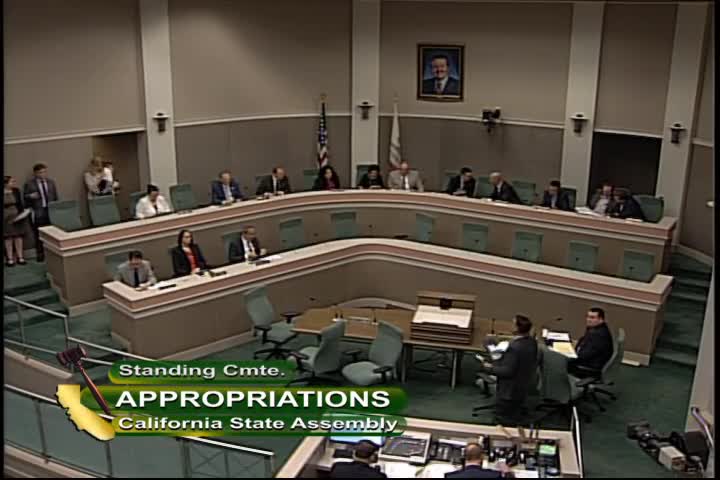 2MIN
Assembly Standing Committee on Appropriations
 8MIN
Assembly Standing Committee on Public Safety
Bill Author

Bill Co-Author(s):