AB 1955: Alzheimer’s disease and dementia: public awareness campaign.
- Session Year: 2017-2018
- House: Assembly
- Latest Version Date: 2018-04-10
Existing law requires the California Department of Aging to designate various private nonprofit or public agencies as area agencies on aging to work for the interests of older Californians within a planning and service area and provide a broad array of social and nutritional services. Existing law also requires the department to adopt policies and guidelines to carry out the purposes of the Alzheimers Day Care-Resource Center program, which provides access to specialized day care resource centers for individuals with Alzheimers disease and other dementia-related disorders and support to their families and caregivers.
Existing law requires the department to make efforts to increase public awareness about areas of importance to Californias older individuals, their families, and other caregivers. Existing law requires the department to establish an Aging Information and Education Fund, from funds made available pursuant to the annual Budget Act, to implement public awareness of various issues, including at least medication management, elder abuse prevention, and a toll-free line for linkage to local service networks.
This bill would require the department to develop and implement a public awareness campaign, as specified, to reduce stigma and raise public awareness of the warning signs of Alzheimers disease and dementia in order to promote early detection and accurate diagnosis. The bill would also make related legislative findings and declarations.
The Legislature finds and declares all of the following:
(a)Californias State Plan for Alzheimers Disease: An Action Plan for 20112021 established as its first goal the elimination of stigma, recommending that California heighten public awareness through culturally appropriate public education campaigns.
(b)With 2.2 million Californians directly impacted by Alzheimers disease, the third leading cause of death in California, there is significant need to educate the population at risk of the disease in order to promote early detection and diagnosis.
(c)Recent data indicates that less than 50 percent of all persons affected have been informed of their diagnosis, indicate that there is a significant disparity in detection and diagnosis of Alzheimers disease, resulting in misinformation and lack of information, which contribute to poor health outcomes, increased hospitalization and institutionalization, and higher public and private health care costs.
(d)Californias area agencies on aging are a critical network for Alzheimers disease and dementia patients, caregivers, and providers, offering assistance, information, referral, and support.
(e)Consumers, caregivers, and providers identify stigma as a barrier to accessing early detection and accurate diagnosis of Alzheimers disease. Overcoming stigma is key to reducing the 50-percent disparity in detection and diagnosis. Rates of detection and diagnosis are even worse among populations at greater risk, with higher rates of prevalence for African Americans, Latinos, and women.
(f)Early detection and diagnosis of Alzheimers disease are critical for improving health outcomes, lowering health care costs, and ensuring access to beneficial interventions, including, but not limited to, care plans, education, and support, that are set forth in the latest edition of the California Alzheimers Clinical Care Guideline that is published by the State Department of Public Health.
SEC. 2.Section 9632 is added to the Welfare and Institutions Code, to read:9632.(a)The department shall develop and implement a public awareness campaign to reduce stigma and raise public awareness of the warning signs of Alzheimers disease and dementia in order to promote early detection and accurate diagnosis.
(b)In developing and implementing the public awareness campaign described in subdivision (a), the department shall utilize be informed by the latest edition of the California Alzheimers Clinical Care Guideline that is published by the State Department of Public Health.
REVISIONS: HeadingLine 2.The Legislature finds and declares all of the following:
(a)Californias State Plan for Alzheimers Disease: An Action Plan for 20112021 established as its first goal the elimination of stigma, recommending that California heighten public awareness through culturally appropriate public education campaigns.
(b)With 2.2 million Californians directly impacted by Alzheimers disease, the third leading cause of death in California, there is significant need to educate the population at risk of the disease in order to promote early detection and diagnosis.
(c)Recent data indicates that less than 50 percent of all persons affected have been informed of their diagnosis, resulting in misinformation and lack of information, which contribute to poor health outcomes, increased hospitalization and institutionalization, and higher public and private health care costs.
(d)Californias area agencies on aging are a critical network for Alzheimers disease and dementia patients, caregivers, and providers, offering assistance, information, referral, and support.
(e)Consumers, caregivers, and providers identify stigma as a barrier to accessing early detection and accurate diagnosis of Alzheimers disease. Overcoming stigma is key to reducing the 50-percent disparity in detection and diagnosis. Rates of detection and diagnosis are even worse among populations at greater risk, with higher rates of prevalence for African Americans, Latinos, and women.
(f)Early detection and diagnosis of Alzheimers disease are critical for improving health outcomes, lowering health care costs, and ensuring access to beneficial interventions, including, but not limited to, care plans, education, and support, that are set forth in the latest edition of the California Alzheimers Clinical Care Guideline that is published by the State Department of Public Health.
SEC. 2.Section 9632 is added to the Welfare and Institutions Code, to read:9632.(a)The department shall develop and implement a public awareness campaign to reduce stigma and raise public awareness of the warning signs of Alzheimers disease and dementia in order to promote early detection and accurate diagnosis.
(b)In developing and implementing the public awareness campaign described in subdivision (a), the department shall utilize the latest edition of the California Alzheimers Clinical Care Guideline that is published by the State Department of Public Health.
|
Date
|
Status
|
|---|---|
| May 25, 2018 | In committee: Held under submission. |
| May 2, 2018 | In committee: Set, first hearing. Referred to APPR. suspense file. |
| Apr 18, 2018 | Coauthors revised. |
| Apr 11, 2018 | Re-referred to Com. on AGING & L.T.C. |
| Apr 10, 2018 | From committee chair, with author's amendments: Amend, and re-refer to Com. on AGING & L.T.C. Read second time and amended. |
| Feb 8, 2018 | Referred to Com. on AGING & L.T.C. |
| Jan 30, 2018 | From printer. May be heard in committee March 1. |
| Jan 29, 2018 | Read first time. To print. |
|
Date
|
Description
|
Location
|
Votes
|
|
|---|---|---|---|---|
| Apr 17, 2018 | Do pass and be re-referred to the Committee on [Appropriations] | Assembly Standing Committee on Aging and Long-Term Care |
Passed |
This list shows positions taken on this bill by organizations on the date displayed, which is linked to the original source.
Positions by individuals are not included.
|
Organization
|
Position
|
Date
|
|---|---|---|
| AARP | ** Support | Apr 16, 2018 |
| Alzheimer's Association | * Support | Apr 17, 2018 |
| Association of California Healthcare Districts | * Support | Apr 17, 2018 |
| California Assisted Living Association | * Support | Apr 17, 2018 |
| California Association Of Area Agencies On Aging | * Support | Apr 17, 2018 |
| California Commission on Aging | ** Support | Apr 16, 2018 |
| California Long-Term Care Ombudsman Association | * Support | Apr 17, 2018 |
| California Senior Legislature | * Support | Apr 17, 2018 |
| Calpace | * Support | Apr 17, 2018 |
| Congress of California Seniors | ** Support | Apr 16, 2018 |
| Disability Rights California | ** Support | Apr 16, 2018 |
| Ventura County Board of Supervisors | ** Support | Apr 16, 2018 |
Date of Hearing: May 2, 2018
ASSEMBLY COMMITTEE ON APPROPRIATIONS
Lorena Gonzalez Fletcher, Chair
ABPCA Bill Id:AB 1955
Author:(Limón) – As Amended Ver:April 10, 2018
Policy Committee: | Aging and Long Term Care | Vote: | 6 - 0 |
Urgency: No State Mandated Local Program: No Reimbursable: No
SUMMARY:
This bill requires the Department of Aging to develop and implement a campaign to raise public awareness of the warning signs of Alzheimer’s disease and dementia in order to promote early detection and accurate diagnosis
FISCAL EFFECT:
One-time costs to the Department of Aging, likely in the millions of dollars GF at a minimum, to develop and implement a public awareness campaign. The scope of the campaign would scale to the resources available.
COMMENTS:
- Purpose. This bill is intended to raise awareness of Alzheimer's disease and dementia. According to the author, early detection and diagnosis is a critical step towards improving health outcomes, lowering healthcare costs and ensuring access to beneficial interventions.
- Background. Currently, there are nearly 600,000 Californians 55 and older living with Alzheimer’s disease. Alzheimer's is the most common form of dementia, a general term for memory loss and other cognitive abilities serious enough to interfere with daily life. Although there is no treatment that changes the course of the disease, early detection improves access to medical and support services and can allow individuals to better plan for the future.
Analysis Prepared by: Lisa Murawski / APPR. / (916) 319-2081
Date of Hearing: April 17, 2018
ASSEMBLY COMMITTEE ON AGING AND LONG-TERM CARE
Ash Kalra, Chair
ABPCA Bill Id:AB 1955 (
Author:Limón) – As Amended Ver:April 10, 2018
SUBJECT: Alzheimer’s disease and dementia: public awareness campaign.
SUMMARY: This bill would require the Department of Aging (CDA) to develop and implement a public awareness campaign to raise public awareness of the warning signs of Alzheimer’s disease and dementia in order to promote early detection and accurate diagnosis. In implementing the public awareness campaign described in subdivision (a), the CDA shall be informed by the latest edition of the California “Alzheimer’s Clinical Care Guideline” that is published by the State Department of Public Health.
EXISTING LAW:
- Existing law requires the California Department of Aging to designate various private nonprofit or public agencies as area agencies on aging to work for the interests of older Californians within a planning and service area and provide a broad array of social and nutritional services.
- Existing law also requires the department to adopt policies and guidelines to carry out the purposes of the Alzheimer’s Day Care-Resource Center program, which provides access to specialized day care resource centers for individuals with Alzheimer’s disease and other dementia-related disorders and support to their families and caregivers.
- Existing law requires the department to make efforts to increase public awareness about areas of importance to California’s older individuals, their families, and other caregivers.
- Existing law requires the department to establish an Aging Information and Education Fund, from funds made available pursuant to the annual California Budget Act, to implement public awareness of various issues, including at least medication management, elder abuse prevention, and a toll-free line for linkage to local service networks.
FISCAL EFFECT: This bill has not yet been analyzed by a fiscal committee.
COMMENTS:
Author’s Statement: “Alzheimer’s disease is the 3rd leading cause of death in California, and the only disease in the top ten causes of death without a proven cause, preventative action or cure. Although the onset of Alzheimer’s disease cannot yet be stopped or reversed, an early diagnosis allows people with dementia and their families a better chance of benefitting from treatment and research, an opportunity to participate in care and other end of life decisions, time to develop relationships with doctors and care partners and better management of co-occurring medical conditions. AB 1955 would implement a public awareness campaign to reduce stigma and raise public awareness of the warning signs of Alzheimer’s disease and dementia in order to promote early detection and accurate diagnosis. Early detection and diagnosis is a critical step towards improving health outcomes, lowering healthcare costs and ensuring access to beneficial interventions.”
BACKGROUND:
Alzheimer’s disease is the third leading cause of death in California, and the only disease in the top ten causes of death without a proven cause, preventative action or cure. Alzheimer’s is not a normal part of aging - up to 5% of people with the disease show early signs of the disease when they are in their 40s or 50s. With age, the prevalence of Alzheimer’s increases - at 65, 1 in 10 are impacted; by age 85, 1 in 3 are impacted. According to the Alzheimer’s Association, the number of cases is growing rapidly across the entire United States population, and could nearly triple by 2050 to 13.8 million. In California today, 630,000 individuals are living with the disease.
There is a major disparity in detection and diagnosis. Evidence suggests that only 45 percent of patients have been diagnosed. Of those diagnosed patients, half were not informed of their diagnosis, and the diagnosis was not documented in their medical record. More than 15 million Americans provide unpaid care for people living with Alzheimer’s or other dementias. Alzheimer’s and dementias will cost the nation $259 billion, making it the most costly disease in the United States. By 2050, these costs could rise as high as $1.1 trillion.
Early detection and diagnosis is a critical step towards improving health outcomes, lowering healthcare costs and ensuring access to beneficial interventions. Early detection can also help health care providers deliver better care. Early detection can help physicians better manage a patient’s comorbid conditions and avoid prescribing medications that may worsen cognition or function. And because early warning signs such as memory problems, confusion, personality changes and trouble with judgment, may be attributable to other sources, early detection of cognitive changes allows physicians to identify and treat reversible conditions that mimic cognitive impairment and dementia such as depression or vitamin deficiency. Furthermore, early detection and diagnosis of Alzheimer’s and other dementias may help to reduce unmet needs of affected individuals who are more likely to experience disability.
REGISTERED SUPPORT / OPPOSITION:
Support
Alzheimer’s Association – Sponsor
AARP
Association of California Healthcare Districts (ACHD)
California Assisted Living Association (CALA)
California Association of Area Agencies on Aging
California Commission on Aging
California Long-Term Care Ombudsman Association
Congress of California Seniors
Disability Rights California
Ventura County Board of Supervisors
Opposition
None on file.
Analysis Prepared by: Barry Brewer / AGING & L.T.C. / (916) 319-3990
Discussed in Hearing
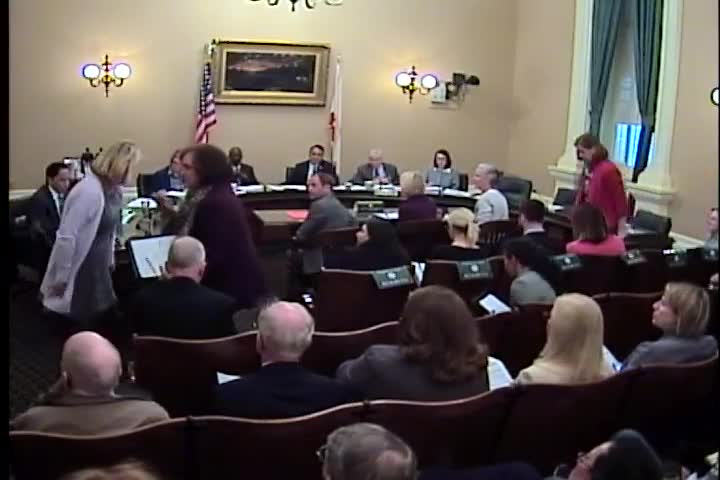 11MIN
Assembly Standing Committee on Aging and Long-Term Care
Bill Author




