AB 2268: Local government finance: property tax revenue allocations: vehicle license fee adjustments.
- Session Year: 2017-2018
- House: Assembly
- Latest Version Date: 2018-04-16
Existing property tax law requires the county auditor, in each fiscal year, to allocate property tax revenue to local jurisdictions in accordance with specified formulas and procedures, and generally provides that each jurisdiction be allocated an amount equal to the total of the amount of revenue allocated to that jurisdiction in the prior fiscal year, subject to certain modifications, and that jurisdictions portion of the annual tax increment, as defined.
Existing property tax law also requires that, for purposes of determining property tax revenue allocations in each county for the 199293 and 199394 fiscal years, the amounts of property tax revenue deemed allocated in the prior fiscal year to the county, cities, and special districts be reduced in accordance with certain formulas. It requires that the revenues not allocated to the county, cities, and special districts as a result of these reductions be transferred to the Educational Revenue Augmentation Fund in that county for allocation to school districts, community college districts, and the county office of education.
Beginning with the 200405 fiscal year and for each fiscal year thereafter, existing law requires that each city, county, and city and county receive additional property tax revenues in the form of a vehicle license fee adjustment amount, as defined, from a Vehicle License Fee Property Tax Compensation Fund that exists in each county treasury. Existing law requires that these additional allocations be funded from ad valorem property tax revenues otherwise required to be allocated to educational entities. Existing law, for the 200607 fiscal year, and for each fiscal year thereafter, requires the vehicle license fee adjustment amount to be the sum of the vehicle license fee adjustment amount for the prior fiscal year, if specified provisions did not apply, and the product of that sum and the percentage change from the prior fiscal year in the gross taxable valuation within the jurisdiction of the entity. Existing law establishes a separate vehicle license fee adjustment amount for a city that was incorporated after January 1, 2014, 2004, or on or before January 1, 2012.
This bill, for the 201819 fiscal year, would instead require the vehicle license fee adjustment amount to be the sum of the vehicle license fee adjustment amount in the 201718 fiscal year, the product of that sum and the percentage change in gross taxable assessed valuation within the jurisdiction of that entity between the 201718 fiscal year to the 201819 fiscal year, and the product of the amount of specified motor vehicle license fee revenues that the Controller allocated to the applicable city in July 2010 and 1.17. This bill, for the 201920 fiscal year, and for each fiscal year thereafter, would require the vehicle license fee adjustment amount to be the sum of the vehicle license fee adjustment amount for the prior fiscal year and the product of the amount as so described and the percentage change from the prior fiscal year in gross taxable assessed valuation within the jurisdiction of the entity.
By imposing additional duties upon local tax officials with respect to the allocation of ad valorem property tax revenues, this bill would impose a state-mandated local program.
The California Constitution requires the state to reimburse local agencies and school districts for certain costs mandated by the state. Statutory provisions establish procedures for making that reimbursement.
This bill would provide that, if the Commission on State Mandates determines that the bill contains costs mandated by the state, reimbursement for those costs shall be made pursuant to the statutory provisions noted above.
Existing property tax law requires the county auditor, in each fiscal year, to allocate property tax revenue to local jurisdictions in accordance with specified formulas and procedures, and generally provides that each jurisdiction be allocated an amount equal to the total of the amount of revenue allocated to that jurisdiction in the prior fiscal year, subject to certain modifications, and that jurisdictions portion of the annual tax increment, as defined.
Existing property tax law also requires that, for purposes of determining property tax revenue allocations in each county for the 199293 and 199394 fiscal years, the amounts of property tax revenue deemed allocated in the prior fiscal year to the county, cities, and special districts be reduced in accordance with certain formulas. It requires that the revenues not allocated to the county, cities, and special districts as a result of these reductions be transferred to the Educational Revenue Augmentation Fund in that county for allocation to school districts, community college districts, and the county office of education.
Beginning with the 200405 fiscal year and for each fiscal year thereafter, existing law requires that each city, county, and city and county receive additional property tax revenues in the form of a vehicle license fee adjustment amount, as defined, from a Vehicle License Fee Property Tax Compensation Fund that exists in each county treasury. Existing law requires that these additional allocations be funded from ad valorem property tax revenues otherwise required to be allocated to educational entities. Existing law, for the 200607 fiscal year, and for each fiscal year thereafter, requires the vehicle license fee adjustment amount to be the sum of the vehicle license fee adjustment amount for the prior fiscal year, if specified provisions did not apply, and the product of the amount as so described that sum and the percentage change from the prior fiscal year in the gross taxable valuation within the jurisdiction of the entity. Existing law establishes a separate vehicle license fee adjustment amount for a city that was incorporated after January 1, 2014, and or on or before January 1, 2012.
This bill, for the 201819 fiscal year, would instead require the vehicle license fee adjustment amount to be the sum of the vehicle license fee adjustment amount in the 200405 201718 fiscal year, if a specified provision did not apply, and the product of the amount as so described that sum and the percentage change in gross taxable assessed valuation within the jurisdiction of that entity between the 200405 fiscal year to the 201819 fiscal year. 201718 fiscal year to the 201819 fiscal year, and the product of the amount of specified motor vehicle license fee revenues that the Controller allocated to the applicable city in July 2010 and 1.17. This bill, for the 201920 fiscal year, and for each fiscal year thereafter, would require the vehicle license fee adjustment amount to be the sum of the vehicle license fee adjustment amount for the prior fiscal year and the product of the amount as so described and the percentage change from the prior fiscal year in gross taxable assessed valuation within the jurisdiction of the entity.
By imposing additional duties upon local tax officials with respect to the allocation of ad valorem property tax revenues, this bill would impose a state-mandated local program.
The California Constitution requires the state to reimburse local agencies and school districts for certain costs mandated by the state. Statutory provisions establish procedures for making that reimbursement.
This bill would provide that, if the Commission on State Mandates determines that the bill contains costs mandated by the state, reimbursement for those costs shall be made pursuant to the statutory provisions noted above.
Existing property tax law requires the county auditor, in each fiscal year, to allocate property tax revenue to local jurisdictions in accordance with specified formulas and procedures, and generally provides that each jurisdiction be allocated an amount equal to the total of the amount of revenue allocated to that jurisdiction in the prior fiscal year, subject to certain modifications, and that jurisdictions portion of the annual tax increment, as defined.
Existing property tax law also requires that, for purposes of determining property tax revenue allocations in each county for the 199293 and 199394 fiscal years, the amounts of property tax revenue deemed allocated in the prior fiscal year to the county, cities, and special districts be reduced in accordance with certain formulas. It requires that the revenues not allocated to the county, cities, and special districts as a result of these reductions be transferred to the Educational Revenue Augmentation Fund in that county for allocation to school districts, community college districts, and the county office of education.
Beginning with the 200405 fiscal year and for each fiscal year thereafter, existing law requires that each city, county, and city and county receive additional property tax revenues in the form of a vehicle license fee adjustment amount, as defined, from a Vehicle License Fee Property Tax Compensation Fund that exists in each county treasury. Existing law requires that these additional allocations be funded from ad valorem property tax revenues otherwise required to be allocated to educational entities. Existing law, for the 200607 fiscal year, and for each fiscal year thereafter, requires the vehicle license fee adjustment amount to be the sum of the vehicle license fee adjustment amount for the prior fiscal year, if specified provisions did not apply, and the product of the amount as so described and the percentage change from the prior fiscal year in the gross taxable valuation within the jurisdiction of the entity. Existing law establishes a separate vehicle license fee adjustment amount for a city that was incorporated after January 1, 2014, and on or before January 1, 2012.
This bill, for the 201819 fiscal year, would instead require the vehicle license fee adjustment amount to be the sum of the vehicle license fee adjustment amount in the 200405 fiscal year, if a specified provision did not apply, and the product of the amount as so described and the percentage change in gross taxable assessed valuation within the jurisdiction of that entity between the 200405 fiscal year to the 201819 fiscal year. This bill, for the 201920 fiscal year, and for each fiscal year thereafter, would require the vehicle license fee adjustment amount to be the sum of the vehicle license fee adjustment amount for the prior fiscal year and the product of the amount as so described and the percentage change from the prior fiscal year in gross taxable assessed valuation within the jurisdiction of the entity.
By imposing additional duties upon local tax officials with respect to the allocation of ad valorem property tax revenues, this bill would impose a state-mandated local program.
The California Constitution requires the state to reimburse local agencies and school districts for certain costs mandated by the state. Statutory provisions establish procedures for making that reimbursement.
This bill would provide that, if the Commission on State Mandates determines that the bill contains costs mandated by the state, reimbursement for those costs shall be made pursuant to the statutory provisions noted above.
Notwithstanding any other law, for the 200405 fiscal year and for each fiscal year thereafter, all of the following apply:
(a)(1)(A)The auditor shall reduce the total amount of ad valorem property tax revenue that is otherwise required to be allocated to a countys Educational Revenue Augmentation Fund by the countywide vehicle license fee adjustment amount.
(B)If, for the fiscal year, after complying with Section 97.68 there is not enough ad valorem property tax revenue that is otherwise required to be allocated to a county Educational Revenue Augmentation Fund for the auditor to complete the allocation reduction required by subparagraph (A), the auditor shall additionally reduce the total amount of ad valorem property tax revenue that is otherwise required to be allocated to all school districts and community college districts in the county for that fiscal year by an amount equal to the difference between the countywide vehicle license fee adjustment amount and the amount of ad valorem property tax revenue that is otherwise required to be allocated to the county Educational Revenue Augmentation Fund for that fiscal year. This reduction for each school district and community college district in the county shall be the percentage share of the total reduction that is equal to the proportion that the total amount of ad valorem property tax revenue that is otherwise required to be allocated to the school district or community college district bears to the total amount of ad valorem property tax revenue that is otherwise required to be allocated to all school districts and community college districts in a county. For purposes of this subparagraph, school districts and community college districts do not include any districts that are excess tax school entities, as defined in Section 95.
(2)The countywide vehicle license fee adjustment amount shall be allocated to the Vehicle License Fee Property Tax Compensation Fund that shall be established in the treasury of each county.
(b)(1)The auditor shall allocate moneys in the Vehicle License Fee Property Tax Compensation Fund according to the following:
(A)Each city in the county shall receive its vehicle license fee adjustment amount.
(B)Each county and city and county shall receive its vehicle license fee adjustment amount.
(2)The auditor shall allocate one-half of the amount specified in paragraph (1) on or before January 31 of each fiscal year, and the other one-half on or before May 31 of each fiscal year.
(c)For purposes of this section, all of the following apply:
(1)Vehicle license fee adjustment amount for a particular city, county, or a city and county means, subject to an adjustment under paragraph (2) and Section 97.71, all of the following:
(A)For the 200405 fiscal year, an amount equal to the difference between the following two amounts:
(i)The estimated total amount of revenue that would have been deposited to the credit of the Motor Vehicle License Fee Account in the Transportation Tax Fund, including any amounts that would have been certified to the Controller by the auditor of the County of Ventura under subdivision (j) of Section 98.02, as that section read on January 1, 2004, for distribution under the law as it read on January 1, 2004, to the county, city and county, or city for the 200405 fiscal year if the fee otherwise due under the Vehicle License Fee Law (Part 5 (commencing with Section 10701) of Division 2) was 2 percent of the market value of a vehicle, as specified in Sections 10752 and 10752.1 as those sections read on January 1, 2004.
(ii)The estimated total amount of revenue that is required to be distributed from the Motor Vehicle License Fee Account in the Transportation Tax Fund to the county, city and county, and each city in the county for the 200405 fiscal year under Section 11005, as that section read on the operative date of the act that amended this clause.
(B)(i)Subject to an adjustment under clause (ii), for the 200506 fiscal year, the sum of the following two amounts:
(I)The difference between the following two amounts:
(ia)The actual total amount of revenue that would have been deposited to the credit of the Motor Vehicle License Fee Account in the Transportation Tax Fund, including any amounts that would have been certified to the Controller by the auditor of the County of Ventura under subdivision (j) of Section 98.02, as that section read on January 1, 2004, for distribution under the law as it read on January 1, 2004, to the county, city and county, or city for the 200405 fiscal year if the fee otherwise due under the Vehicle License Fee Law (Part 5 (commencing with Section 10701) of Division 2) was 2 percent of the market value of a vehicle, as specified in Sections 10752 and 10752.1 as those sections read on January 1, 2004.
(ib)The actual total amount of revenue that was distributed from the Motor Vehicle License Fee Account in the Transportation Tax Fund to the county, city and county, and each city in the county for the 200405 fiscal year under Section 11005, as that section read on the operative date of the act that amended this subsubclause.
(II)The product of the following two amounts:
(ia)The amount described in subclause (I).
(ib)The percentage change from the prior fiscal year to the current fiscal year in gross taxable assessed valuation within the jurisdiction of the entity, as reflected in the equalized assessment roll for those fiscal years. For the first fiscal year for which a change in a citys jurisdictional boundaries first applies, the percentage change in gross taxable assessed valuation from the prior fiscal year to the current fiscal year shall be calculated solely on the basis of the citys previous jurisdictional boundaries, without regard to the change in that citys jurisdictional boundaries. For each following fiscal year, the percentage change in gross taxable assessed valuation from the prior fiscal year to the current fiscal year shall be calculated on the basis of the citys current jurisdictional boundaries.
(ii)The amount described in clause (i) shall be adjusted as follows:
(I)If the amount described in subclause (I) of clause (i) for a particular city, county, or city and county is greater than the amount described in subparagraph (A) for that city, county, or city and county, the amount described in clause (i) shall be increased by an amount equal to this difference.
(II)If the amount described in subclause (I) of clause (i) for a particular city, county, or city and county is less than the amount described in subparagraph (A) for that city, county, or city and county, the amount described in clause (i) shall be decreased by an amount equal to this difference.
(C)For the 200607 fiscal year and until the 201718 fiscal year, inclusive, the sum of the following two amounts:
(i)The vehicle license fee adjustment amount for the prior fiscal year, if Section 97.71 and clause (ii) of subparagraph (B) did not apply for that fiscal year, for that city, county, and city and county.
(ii)The product of the following two amounts:
(I)The amount described in clause (i).
(II)The percentage change from the prior fiscal year to the current fiscal year in gross taxable assessed valuation within the jurisdiction of the entity, as reflected in the equalized assessment roll for those fiscal years. For the first fiscal year for which a change in a citys jurisdictional boundaries first applies, the percentage change in gross taxable assessed valuation from the prior fiscal year to the current fiscal year shall be calculated solely on the basis of the citys previous jurisdictional boundaries, without regard to the change in that citys jurisdictional boundaries. For each following fiscal year, the percentage change in gross taxable assessed valuation from the prior fiscal year to the current fiscal year shall be calculated on the basis of the citys current jurisdictional boundaries.
(D)For the 201819 fiscal year, the sum of the following three amounts:
(i)The vehicle license fee adjustment amount for the 201718 fiscal year.
(ii)The product of the following two amounts:
(I)The amount described in clause (i).
(II)The percentage change from the 201718 fiscal year to the 201819 fiscal year in gross taxable assessed valuation within the jurisdiction of the entity, as reflected in the equalized assessment roll for those fiscal years.
(iii)The product of the following two amounts:
(I)The amount that was allocated in July 2010 by the Controller to the city pursuant to subdivision (c) or (d) of Section 11005, as applicable, as that section read on July 1, 2010.
(II)1.17.
(E)The for the 201920 fiscal year, and for each fiscal year thereafter, the sum of the following two amounts:
(i)The vehicle license fee adjustment amount for the prior fiscal year.
(ii)The product of the following two amounts:
(I)The vehicle license fee adjustment amount for the prior fiscal year.
(II)The percentage change from the prior fiscal year to the current fiscal year in gross taxable assessed valuation within the jurisdiction of the entity, as reflected in the equalized assessment role for those fiscal years.
(2)Notwithstanding paragraph (1), vehicle license fee adjustment amount, for a city incorporating after January 1, 2004, and on or before January 1, 2012, means the following:
(A)For the 201718 fiscal year, the quotient derived from the following fraction:
(i)The numerator is the product of the following two amounts:
(I)The sum of the most recent vehicle license fee adjustment amounts determined for all cities in the county.
(II)The population of the incorporating city.
(ii)The denominator is the sum of the populations of all cities in the county.
(B)For the 201819 fiscal year, and for each fiscal year thereafter, the sum of the following two amounts:
(i)The vehicle license fee adjustment amount for the prior fiscal year.
(ii)The product of the following two amounts:
(I)The amount described in clause (i).
(II)The percentage change from the prior fiscal year to the current fiscal year in gross taxable assessed valuation within the jurisdiction of the entity, as reflected in the equalized assessment roll for those fiscal years.
(3)For the 201314 fiscal year, the vehicle license fee adjustment amount that is determined under subparagraph (C) of paragraph (1) for the County of Orange shall be increased by fifty-three million dollars ($53,000,000). For the 201415 fiscal year and each fiscal year thereafter, the calculation of the vehicle license fee adjustment amount for the County of Orange under subparagraphs (C), (D), and (E) of paragraph (1) shall be based on a prior fiscal year amount that reflects the full amount of this one-time increase of fifty-three million dollars ($53,000,000).
(4)Countywide vehicle license fee adjustment amount means, for any fiscal year, the total sum of the amounts described in paragraphs (1), (2), and (3) for a county or city and county, and each city in the county.
(5)On or before June 30 of each fiscal year, the auditor shall report to the Controller the vehicle license fee adjustment amount for the county and each city in the county for that fiscal year.
(d)For the 200506 fiscal year and each fiscal year thereafter, the amounts determined under subdivision (a) of Section 96.1, or any successor to that provision, shall not reflect, for a preceding fiscal year, any portion of any allocation required by this section.
(e)For purposes of Section 15 of Article XI of the California Constitution, the allocations from a Vehicle License Fee Property Tax Compensation Fund constitute successor taxes that are otherwise required to be allocated to counties and cities, and as successor taxes, the obligation to make those transfers as required by this section shall not be extinguished nor disregarded in any manner that adversely affects the security of, or the ability of, a county or city to pay the principal and interest on any debts or obligations that were funded or secured by that citys or countys allocated share of motor vehicle license fee revenues.
(f)This section shall not be construed to do any of the following:
(1)Reduce any allocations of excess, additional, or remaining funds that would otherwise have been allocated to county superintendents of schools, cities, counties, and cities and counties pursuant to clause (i) of subparagraph (B) of paragraph (4) of subdivision (d) of Sections 97.2 and 97.3 or Article 4 (commencing with Section 98) had this section not been enacted. The allocations required by this section shall be adjusted to comply with this paragraph.
(2)Require an increased ad valorem property tax revenue allocation or increased tax increment allocation to a community redevelopment agency.
(3)Alter the manner in which ad valorem property tax revenue growth from fiscal year to fiscal year is otherwise determined or allocated in a county.
(4)Reduce ad valorem property tax revenue allocations required under Article 4 (commencing with Section 98).
(g)Tax exchange or revenue sharing agreements, entered into prior to the operative date of this section, between local agencies or between local agencies and nonlocal agencies are deemed to be modified to account for the reduced vehicle license fee revenues resulting from the act that added this section. These agreements are modified in that these reduced revenues are, in kind and in lieu thereof, replaced with ad valorem property tax revenue from a Vehicle License Fee Property Tax Compensation Fund or an Educational Revenue Augmentation Fund.
SEC. 2.If the Commission on State Mandates determines that this act contains costs mandated by the state, reimbursement to local agencies and school districts for those costs shall be made pursuant to Part 7 (commencing with Section 17500) of Division 4 of Title 2 of the Government Code.
Notwithstanding any other law, for the 200405 fiscal year and for each fiscal year thereafter, all of the following apply:
(a)(1)(A)The auditor shall reduce the total amount of ad valorem property tax revenue that is otherwise required to be allocated to a countys Educational Revenue Augmentation Fund by the countywide vehicle license fee adjustment amount.
(B)If, for the fiscal year, after complying with Section 97.68 there is not enough ad valorem property tax revenue that is otherwise required to be allocated to a county Educational Revenue Augmentation Fund for the auditor to complete the allocation reduction required by subparagraph (A), the auditor shall additionally reduce the total amount of ad valorem property tax revenue that is otherwise required to be allocated to all school districts and community college districts in the county for that fiscal year by an amount equal to the difference between the countywide vehicle license fee adjustment amount and the amount of ad valorem property tax revenue that is otherwise required to be allocated to the county Educational Revenue Augmentation Fund for that fiscal year. This reduction for each school district and community college district in the county shall be the percentage share of the total reduction that is equal to the proportion that the total amount of ad valorem property tax revenue that is otherwise required to be allocated to the school district or community college district bears to the total amount of ad valorem property tax revenue that is otherwise required to be allocated to all school districts and community college districts in a county. For purposes of this subparagraph, school districts and community college districts do not include any districts that are excess tax school entities, as defined in Section 95.
(2)The countywide vehicle license fee adjustment amount shall be allocated to the Vehicle License Fee Property Tax Compensation Fund that shall be established in the treasury of each county.
(b)(1)The auditor shall allocate moneys in the Vehicle License Fee Property Tax Compensation Fund according to the following:
(A)Each city in the county shall receive its vehicle license fee adjustment amount.
(B)Each county and city and county shall receive its vehicle license fee adjustment amount.
(2)The auditor shall allocate one-half of the amount specified in paragraph (1) on or before January 31 of each fiscal year, and the other one-half on or before May 31 of each fiscal year.
(c)For purposes of this section, all of the following apply:
(1)Vehicle license fee adjustment amount for a particular city, county, or a city and county means, subject to an adjustment under paragraph (2) and Section 97.71, all of the following:
(A)For the 200405 fiscal year, an amount equal to the difference between the following two amounts:
(i)The estimated total amount of revenue that would have been deposited to the credit of the Motor Vehicle License Fee Account in the Transportation Tax Fund, including any amounts that would have been certified to the Controller by the auditor of the County of Ventura under subdivision (j) of Section 98.02, as that section read on January 1, 2004, for distribution under the law as it read on January 1, 2004, to the county, city and county, or city for the 200405 fiscal year if the fee otherwise due under the Vehicle License Fee Law (Part 5 (commencing with Section 10701) of Division 2) was 2 percent of the market value of a vehicle, as specified in Sections 10752 and 10752.1 as those sections read on January 1, 2004.
(ii)The estimated total amount of revenue that is required to be distributed from the Motor Vehicle License Fee Account in the Transportation Tax Fund to the county, city and county, and each city in the county for the 200405 fiscal year under Section 11005, as that section read on the operative date of the act that amended this clause.
(B)(i)Subject to an adjustment under clause (ii), for the 200506 fiscal year, the sum of the following two amounts:
(I)The difference between the following two amounts:
(ia)The actual total amount of revenue that would have been deposited to the credit of the Motor Vehicle License Fee Account in the Transportation Tax Fund, including any amounts that would have been certified to the Controller by the auditor of the County of Ventura under subdivision (j) of Section 98.02, as that section read on January 1, 2004, for distribution under the law as it read on January 1, 2004, to the county, city and county, or city for the 200405 fiscal year if the fee otherwise due under the Vehicle License Fee Law (Part 5 (commencing with Section 10701) of Division 2) was 2 percent of the market value of a vehicle, as specified in Sections 10752 and 10752.1 as those sections read on January 1, 2004.
(ib)The actual total amount of revenue that was distributed from the Motor Vehicle License Fee Account in the Transportation Tax Fund to the county, city and county, and each city in the county for the 200405 fiscal year under Section 11005, as that section read on the operative date of the act that amended this subsubclause.
(II)The product of the following two amounts:
(ia)The amount described in subclause (I).
(ib)The percentage change from the prior fiscal year to the current fiscal year in gross taxable assessed valuation within the jurisdiction of the entity, as reflected in the equalized assessment roll for those fiscal years. For the first fiscal year for which a change in a citys jurisdictional boundaries first applies, the percentage change in gross taxable assessed valuation from the prior fiscal year to the current fiscal year shall be calculated solely on the basis of the citys previous jurisdictional boundaries, without regard to the change in that citys jurisdictional boundaries. For each following fiscal year, the percentage change in gross taxable assessed valuation from the prior fiscal year to the current fiscal year shall be calculated on the basis of the citys current jurisdictional boundaries.
(ii)The amount described in clause (i) shall be adjusted as follows:
(I)If the amount described in subclause (I) of clause (i) for a particular city, county, or city and county is greater than the amount described in subparagraph (A) for that city, county, or city and county, the amount described in clause (i) shall be increased by an amount equal to this difference.
(II)If the amount described in subclause (I) of clause (i) for a particular city, county, or city and county is less than the amount described in subparagraph (A) for that city, county, or city and county, the amount described in clause (i) shall be decreased by an amount equal to this difference.
(C)For the 200607 fiscal year and until the 201718 fiscal year, inclusive, the sum of the following two amounts:
(i)The vehicle license fee adjustment amount for the prior fiscal year, if Section 97.71 and clause (ii) of subparagraph (B) did not apply for that fiscal year, for that city, county, and city and county.
(ii)The product of the following two amounts:
(I)The amount described in clause (i).
(II)The percentage change from the prior fiscal year to the current fiscal year in gross taxable assessed valuation within the jurisdiction of the entity, as reflected in the equalized assessment roll for those fiscal years. For the first fiscal year for which a change in a citys jurisdictional boundaries first applies, the percentage change in gross taxable assessed valuation from the prior fiscal year to the current fiscal year shall be calculated solely on the basis of the citys previous jurisdictional boundaries, without regard to the change in that citys jurisdictional boundaries. For each following fiscal year, the percentage change in gross taxable assessed valuation from the prior fiscal year to the current fiscal year shall be calculated on the basis of the citys current jurisdictional boundaries.
(D)For the 201819 fiscal year, the sum of the following two three amounts:
(i)The vehicle license fee adjustment amount calculated in the 200405 fiscal year pursuant to subparagraph (A), if Section 97.71 did not apply for that fiscal year. for the 201718 fiscal year.
(ii)The product of the following two amounts:
(I)The amount described in clause (i).
(II)The percentage change from the 200405 fiscal year to the 20182019 fiscal year, inclusive, 201718 fiscal year to the 201819 fiscal year in gross taxable assessed valuation within the jurisdiction of the entity, as reflected in the equalized assessment roll for those fiscal years.
(iii)The product of the following two amounts:
(I)The amount that was allocated in July 2010 by the Controller to the city pursuant to subdivision (c) or (d) of Section 11005, as applicable, as that section read on July 1, 2010.
(II)1.17.
(E)The for the 201920 fiscal year, and for each fiscal year thereafter, the sum of the following two amounts:
(i)The vehicle license fee adjustment amount for the prior fiscal year.
(ii)The product of the following two amounts:
(I)The vehicle license fee adjustment amount for the prior fiscal year.
(II)The percentage change from the prior fiscal year to the current fiscal year in gross taxable assessed valuation within the jurisdiction of the entity, as reflected in the equalized assessment role for those fiscal years.
(2)Notwithstanding paragraph (1), vehicle license fee adjustment amount, for a city incorporating after January 1, 2004, and on or before January 1, 2012, means the following:
(A)For the 201718 fiscal year, the quotient derived from the following fraction:
(i)The numerator is the product of the following two amounts:
(I)The sum of the most recent vehicle license fee adjustment amounts determined for all cities in the county.
(II)The population of the incorporating city.
(ii)The denominator is the sum of the populations of all cities in the county.
(B)For the 201819 fiscal year, and for each fiscal year thereafter, the sum of the following two amounts:
(i)The vehicle license fee adjustment amount for the prior fiscal year.
(ii)The product of the following two amounts:
(I)The amount described in clause (i).
(II)The percentage change from the prior fiscal year to the current fiscal year in gross taxable assessed valuation within the jurisdiction of the entity, as reflected in the equalized assessment roll for those fiscal years.
(3)For the 201314 fiscal year, the vehicle license fee adjustment amount that is determined under subparagraph (C) of paragraph (1) for the County of Orange shall be increased by fifty-three million dollars ($53,000,000). For the 201415 fiscal year and each fiscal year thereafter, the calculation of the vehicle license fee adjustment amount for the County of Orange under subparagraph (C) subparagraphs (C), (D), and (E) of paragraph (1) shall be based on a prior fiscal year amount that reflects the full amount of this one-time increase of fifty-three million dollars ($53,000,000).
(4)Countywide vehicle license fee adjustment amount means, for any fiscal year, the total sum of the amounts described in paragraphs (1), (2), and (3) for a county or city and county, and each city in the county.
(5)On or before June 30 of each fiscal year, the auditor shall report to the Controller the vehicle license fee adjustment amount for the county and each city in the county for that fiscal year.
(d)For the 200506 fiscal year and each fiscal year thereafter, the amounts determined under subdivision (a) of Section 96.1, or any successor to that provision, shall not reflect, for a preceding fiscal year, any portion of any allocation required by this section.
(e)For purposes of Section 15 of Article XI of the California Constitution, the allocations from a Vehicle License Fee Property Tax Compensation Fund constitute successor taxes that are otherwise required to be allocated to counties and cities, and as successor taxes, the obligation to make those transfers as required by this section shall not be extinguished nor disregarded in any manner that adversely affects the security of, or the ability of, a county or city to pay the principal and interest on any debts or obligations that were funded or secured by that citys or countys allocated share of motor vehicle license fee revenues.
(f)This section shall not be construed to do any of the following:
(1)Reduce any allocations of excess, additional, or remaining funds that would otherwise have been allocated to county superintendents of schools, cities, counties, and cities and counties pursuant to clause (i) of subparagraph (B) of paragraph (4) of subdivision (d) of Sections 97.2 and 97.3 or Article 4 (commencing with Section 98) had this section not been enacted. The allocations required by this section shall be adjusted to comply with this paragraph.
(2)Require an increased ad valorem property tax revenue allocation or increased tax increment allocation to a community redevelopment agency.
(3)Alter the manner in which ad valorem property tax revenue growth from fiscal year to fiscal year is otherwise determined or allocated in a county.
(4)Reduce ad valorem property tax revenue allocations required under Article 4 (commencing with Section 98).
(g)Tax exchange or revenue sharing agreements, entered into prior to the operative date of this section, between local agencies or between local agencies and nonlocal agencies are deemed to be modified to account for the reduced vehicle license fee revenues resulting from the act that added this section. These agreements are modified in that these reduced revenues are, in kind and in lieu thereof, replaced with ad valorem property tax revenue from a Vehicle License Fee Property Tax Compensation Fund or an Educational Revenue Augmentation Fund.
SEC. 2.If the Commission on State Mandates determines that this act contains costs mandated by the state, reimbursement to local agencies and school districts for those costs shall be made pursuant to Part 7 (commencing with Section 17500) of Division 4 of Title 2 of the Government Code.
Notwithstanding any other law, for the 200405 fiscal year and for each fiscal year thereafter, all of the following apply:
(a)(1)(A)The auditor shall reduce the total amount of ad valorem property tax revenue that is otherwise required to be allocated to a countys Educational Revenue Augmentation Fund by the countywide vehicle license fee adjustment amount.
(B)If, for the fiscal year, after complying with Section 97.68 there is not enough ad valorem property tax revenue that is otherwise required to be allocated to a county Educational Revenue Augmentation Fund for the auditor to complete the allocation reduction required by subparagraph (A), the auditor shall additionally reduce the total amount of ad valorem property tax revenue that is otherwise required to be allocated to all school districts and community college districts in the county for that fiscal year by an amount equal to the difference between the countywide vehicle license fee adjustment amount and the amount of ad valorem property tax revenue that is otherwise required to be allocated to the county Educational Revenue Augmentation Fund for that fiscal year. This reduction for each school district and community college district in the county shall be the percentage share of the total reduction that is equal to the proportion that the total amount of ad valorem property tax revenue that is otherwise required to be allocated to the school district or community college district bears to the total amount of ad valorem property tax revenue that is otherwise required to be allocated to all school districts and community college districts in a county. For purposes of this subparagraph, school districts and community college districts do not include any districts that are excess tax school entities, as defined in Section 95.
(2)The countywide vehicle license fee adjustment amount shall be allocated to the Vehicle License Fee Property Tax Compensation Fund that shall be established in the treasury of each county.
(b)(1)The auditor shall allocate moneys in the Vehicle License Fee Property Tax Compensation Fund according to the following:
(A)Each city in the county shall receive its vehicle license fee adjustment amount.
(B)Each county and city and county shall receive its vehicle license fee adjustment amount.
(2)The auditor shall allocate one-half of the amount specified in paragraph (1) on or before January 31 of each fiscal year, and the other one-half on or before May 31 of each fiscal year.
(c)For purposes of this section, all of the following apply:
(1)Vehicle license fee adjustment amount for a particular city, county, or a city and county means, subject to an adjustment under paragraph (2) and Section 97.71, all of the following:
(A)For the 200405 fiscal year, an amount equal to the difference between the following two amounts:
(i)The estimated total amount of revenue that would have been deposited to the credit of the Motor Vehicle License Fee Account in the Transportation Tax Fund, including any amounts that would have been certified to the Controller by the auditor of the County of Ventura under subdivision (j) of Section 98.02, as that section read on January 1, 2004, for distribution under the law as it read on January 1, 2004, to the county, city and county, or city for the 200405 fiscal year if the fee otherwise due under the Vehicle License Fee Law (Part 5 (commencing with Section 10701) of Division 2) was 2 percent of the market value of a vehicle, as specified in Sections 10752 and 10752.1 as those sections read on January 1, 2004.
(ii)The estimated total amount of revenue that is required to be distributed from the Motor Vehicle License Fee Account in the Transportation Tax Fund to the county, city and county, and each city in the county for the 200405 fiscal year under Section 11005, as that section read on the operative date of the act that amended this clause.
(B)(i)Subject to an adjustment under clause (ii), for the 200506 fiscal year, the sum of the following two amounts:
(I)The difference between the following two amounts:
(ia)The actual total amount of revenue that would have been deposited to the credit of the Motor Vehicle License Fee Account in the Transportation Tax Fund, including any amounts that would have been certified to the Controller by the auditor of the County of Ventura under subdivision (j) of Section 98.02, as that section read on January 1, 2004, for distribution under the law as it read on January 1, 2004, to the county, city and county, or city for the 200405 fiscal year if the fee otherwise due under the Vehicle License Fee Law (Part 5 (commencing with Section 10701) of Division 2) was 2 percent of the market value of a vehicle, as specified in Sections 10752 and 10752.1 as those sections read on January 1, 2004.
(ib)The actual total amount of revenue that was distributed from the Motor Vehicle License Fee Account in the Transportation Tax Fund to the county, city and county, and each city in the county for the 200405 fiscal year under Section 11005, as that section read on the operative date of the act that amended this subsubclause.
(II)The product of the following two amounts:
(ia)The amount described in subclause (I).
(ib)The percentage change from the prior fiscal year to the current fiscal year in gross taxable assessed valuation within the jurisdiction of the entity, as reflected in the equalized assessment roll for those fiscal years. For the first fiscal year for which a change in a citys jurisdictional boundaries first applies, the percentage change in gross taxable assessed valuation from the prior fiscal year to the current fiscal year shall be calculated solely on the basis of the citys previous jurisdictional boundaries, without regard to the change in that citys jurisdictional boundaries. For each following fiscal year, the percentage change in gross taxable assessed valuation from the prior fiscal year to the current fiscal year shall be calculated on the basis of the citys current jurisdictional boundaries.
(ii)The amount described in clause (i) shall be adjusted as follows:
(I)If the amount described in subclause (I) of clause (i) for a particular city, county, or city and county is greater than the amount described in subparagraph (A) for that city, county, or city and county, the amount described in clause (i) shall be increased by an amount equal to this difference.
(II)If the amount described in subclause (I) of clause (i) for a particular city, county, or city and county is less than the amount described in subparagraph (A) for that city, county, or city and county, the amount described in clause (i) shall be decreased by an amount equal to this difference.
(C)For the 200607 fiscal year and for each fiscal year thereafter, until the 201718 fiscal year, inclusive, the sum of the following two amounts:
(i)The vehicle license fee adjustment amount for the prior fiscal year, if Section 97.71 and clause (ii) of subparagraph (B) did not apply for that fiscal year, for that city, county, and city and county.
(ii)The product of the following two amounts:
(I)The amount described in clause (i).
(II)The percentage change from the prior fiscal year to the current fiscal year in gross taxable assessed valuation within the jurisdiction of the entity, as reflected in the equalized assessment roll for those fiscal years. For the first fiscal year for which a change in a citys jurisdictional boundaries first applies, the percentage change in gross taxable assessed valuation from the prior fiscal year to the current fiscal year shall be calculated solely on the basis of the citys previous jurisdictional boundaries, without regard to the change in that citys jurisdictional boundaries. For each following fiscal year, the percentage change in gross taxable assessed valuation from the prior fiscal year to the current fiscal year shall be calculated on the basis of the citys current jurisdictional boundaries.
(D)For the 201819 fiscal year, the sum of the following two amounts:
(i)The vehicle license fee adjustment amount calculated in the 200405 fiscal year pursuant to subparagraph (A), if Section 97.71 did not apply for that fiscal year.
(ii)The product of the following two amounts:
(I)The amount described in clause (i).
(II)The percentage change from the 200405 fiscal year to the 20182019 fiscal year, inclusive, in gross taxable assessed valuation within the jurisdiction of the entity, as reflected in the equalized assessment roll for those fiscal years.
(E)The for the 201920 fiscal year, and for each fiscal year thereafter, the sum of the following two amounts:
(i)The vehicle license fee adjustment amount for the prior fiscal year.
(ii)The product of the following two amounts:
(I)The vehicle license fee adjustment amount for the prior fiscal year.
(II)The percentage change from the prior fiscal year to the current fiscal year in gross taxable assessed valuation within the jurisdiction of the entity, as reflected in the equalized assessment role for those fiscal years.
(2)Notwithstanding paragraph (1), vehicle license fee adjustment amount, for a city incorporating after January 1, 2004, and on or before January 1, 2012, means the following:
(A)For the 201718 fiscal year, the quotient derived from the following fraction:
(i)The numerator is the product of the following two amounts:
(I)The sum of the most recent vehicle license fee adjustment amounts determined for all cities in the county.
(II)The population of the incorporating city.
(ii)The denominator is the sum of the populations of all cities in the county.
(B)For the 201819 fiscal year, and for each fiscal year thereafter, the sum of the following two amounts:
(i)The vehicle license fee adjustment amount for the prior fiscal year.
(ii)The product of the following two amounts:
(I)The amount described in clause (i).
(II)The percentage change from the prior fiscal year to the current fiscal year in gross taxable assessed valuation within the jurisdiction of the entity, as reflected in the equalized assessment roll for those fiscal years.
(3)For the 201314 fiscal year, the vehicle license fee adjustment amount that is determined under subparagraph (C) of paragraph (1) for the County of Orange shall be increased by fifty-three million dollars ($53,000,000). For the 201415 fiscal year and each fiscal year thereafter, the calculation of the vehicle license fee adjustment amount for the County of Orange under subparagraph (C) of paragraph (1) shall be based on a prior fiscal year amount that reflects the full amount of this one-time increase of fifty-three million dollars ($53,000,000).
(4)Countywide vehicle license fee adjustment amount means, for any fiscal year, the total sum of the amounts described in paragraphs (1), (2), and (3) for a county or city and county, and each city in the county.
(5)On or before June 30 of each fiscal year, the auditor shall report to the Controller the vehicle license fee adjustment amount for the county and each city in the county for that fiscal year.
(d)For the 200506 fiscal year and each fiscal year thereafter, the amounts determined under subdivision (a) of Section 96.1, or any successor to that provision, shall not reflect, for a preceding fiscal year, any portion of any allocation required by this section.
(e)For purposes of Section 15 of Article XI of the California Constitution, the allocations from a Vehicle License Fee Property Tax Compensation Fund constitute successor taxes that are otherwise required to be allocated to counties and cities, and as successor taxes, the obligation to make those transfers as required by this section shall not be extinguished nor disregarded in any manner that adversely affects the security of, or the ability of, a county or city to pay the principal and interest on any debts or obligations that were funded or secured by that citys or countys allocated share of motor vehicle license fee revenues.
(f)This section shall not be construed to do any of the following:
(1)Reduce any allocations of excess, additional, or remaining funds that would otherwise have been allocated to county superintendents of schools, cities, counties, and cities and counties pursuant to clause (i) of subparagraph (B) of paragraph (4) of subdivision (d) of Sections 97.2 and 97.3 or Article 4 (commencing with Section 98) had this section not been enacted. The allocations required by this section shall be adjusted to comply with this paragraph.
(2)Require an increased ad valorem property tax revenue allocation or increased tax increment allocation to a community redevelopment agency.
(3)Alter the manner in which ad valorem property tax revenue growth from fiscal year to fiscal year is otherwise determined or allocated in a county.
(4)Reduce ad valorem property tax revenue allocations required under Article 4 (commencing with Section 98).
(g)Tax exchange or revenue sharing agreements, entered into prior to the operative date of this section, between local agencies or between local agencies and nonlocal agencies are deemed to be modified to account for the reduced vehicle license fee revenues resulting from the act that added this section. These agreements are modified in that these reduced revenues are, in kind and in lieu thereof, replaced with ad valorem property tax revenue from a Vehicle License Fee Property Tax Compensation Fund or an Educational Revenue Augmentation Fund.
SEC. 2.If the Commission on State Mandates determines that this act contains costs mandated by the state, reimbursement to local agencies and school districts for those costs shall be made pursuant to Part 7 (commencing with Section 17500) of Division 4 of Title 2 of the Government Code.
|
Date
|
Status
|
|---|---|
| May 25, 2018 | In committee: Held under submission. |
| May 2, 2018 | In committee: Set, first hearing. Referred to APPR. suspense file. |
| Apr 17, 2018 | Re-referred to Com. on APPR. |
| Apr 16, 2018 | Read second time and amended. |
| Apr 12, 2018 | From committee: Amend, and do pass as amended and re-refer to Com. on APPR. (Ayes 9. Noes 0.) (April 11). |
| Apr 3, 2018 | Re-referred to Com. on L. GOV. |
| Apr 2, 2018 | From committee chair, with author's amendments: Amend, and re-refer to Com. on L. GOV. Read second time and amended. |
| Mar 1, 2018 | Referred to Com. on L. GOV. |
| Feb 14, 2018 | From printer. May be heard in committee March 16. |
| Feb 13, 2018 | Read first time. To print. |
|
Date
|
Description
|
Location
|
Votes
|
|
|---|---|---|---|---|
| Apr 11, 2018 | Do pass as amended and be re-referred to the Committee on [Appropriations] | Assembly Standing Committee on Local Government |
Passed |
This list shows positions taken on this bill by organizations on the date displayed, which is linked to the original source.
Positions by individuals are not included.
|
Organization
|
Position
|
Date
|
|---|---|---|
| California State Association Counties | * Indeterminate | Apr 11, 2018 |
| Cities Of Chico, Fontana, And Thousand Oaks | ** Support | Apr 10, 2018 |
| City of Chico | * Support | Apr 11, 2018 |
| City of Fontana | * Support | Apr 11, 2018 |
| City of Fontana | * Support | Apr 11, 2018 |
| City of Fontana | * Support | Apr 11, 2018 |
| City of Fontana | * Support | Apr 11, 2018 |
| League Of California Cities | * Support | Apr 11, 2018 |
| Marin County Council of Mayors and Council Members | * Support | Apr 11, 2018 |
| Riverside Sheriff's Association | * Support | Apr 11, 2018 |
| San Ramon | * Support | Apr 11, 2018 |
| Thousand Oaks, City Of | * Support | Apr 11, 2018 |
Date of Hearing: May 2, 2018
ASSEMBLY COMMITTEE ON APPROPRIATIONS
Lorena Gonzalez Fletcher, Chair
ABPCA Bill Id:AB 2268
Author:(Reyes) – As Amended Ver:April 16, 2018
Policy Committee: | Local Government | Vote: | 9 - 0 |
|
| ||
|
|
Urgency: No State Mandated Local Program: Yes Reimbursable: Yes
SUMMARY:
This bill revises the formulas for allocating annual “vehicle license fee (VLF) adjustment amounts” to restore revenues to 143 cities that annexed inhabited territory after 2004, but prior to the passage of SB 89 in 2011. The bill also restores fiscal incentives for future annexations of inhabited areas.
FISCAL EFFECT:
- Ongoing annual costs of approximately $5 million (GF) to backfill property tax reductions in counties with cities that have annexed inhabited areas since 2004. This amount would increase each year thereafter at the property tax growth rate. The GF would generally backfill the reductions from Educational Revenue Augmentation Fund (ERAF) to replace funding that would otherwise go to schools pursuant to Proposition 98 minimum funding guarantees.
- To the extent revisions to the formulas for allocating VLF adjustment amounts remove a disincentive for other cities to annex inhabited territory, the GF impacts could increase in the future.
- Unknown state reimbursable costs to county officials to adjust property tax allocation formulas to account for city annexations (GF). It is unlikely a county would file a claim for reimbursement for these minor one-time costs.
COMMENTS:
- Purpose. This bill intends to provide ongoing property tax revenue to 143 cities that annexed inhabited territory since 2004 in reliance on previous financial incentives that were removed by the passage of SB 89 in 2011. The bill also provides revenue for future annexations of inhabited territory using the same rules applied to other cities. The funding formula used in AB 2268 is similar to the formula approved by the Legislature last year to restore funding to the four most-recently incorporated cities. According to the author:
AB 2268 restores revenue for inhabited areas annexed into cities. Given recent policy changes regarding the vehicle license fee, it is critical that we prioritize making cities whole. This bill will ensure that localities have the resources to provide vital services to their residents.
- Background. The state collects an annual VLF in lieu of a property tax on motor vehicles and allocates the revenues to cities and counties. In 1998, the state reduced the VLF rate from 2% to 0.65% of a vehicle's value. As a result, cities and counties lost revenue they otherwise would have received from the higher VLF. In response, the state used GF revenue to “backfill” revenue to the cities and counties.
Traditionally, prior to 2004, the state allocated VLF to cities and counties on a per-capita basis, meaning new cities that incorporated, or existing cities that annexed inhabited areas, received larger shares of the VLF than they would under current statutory formulas. As part of the 2004-05 budget agreement, the Legislature enacted the VLF-property tax swap, which replaced the VLF backfill from the state General Fund with property tax revenues. Absent the swap, the property tax revenues would have gone to schools through the Educational Revenue Augmentation Fund (ERAF). The state’s General Fund backfilled schools for lost ERAF money to meet the Proposition 98 funding guarantee.
Prior to the VLF-property tax swap in 2004, a newly incorporated city received additional VLF revenues from the state generally for the first seven years following incorporation, based on a calculation of three times the number of registered voters in the city at the time of incorporation. However, a city that incorporated after 2004 (the year of the VLF-property tax swap) receives less VLF funding than if the city had incorporated prior to the swap.
AB 1602 (Laird), Chapter 556, Statutes of 2006, restored to cities that incorporated after 2004, the VLF revenues that were lost under the 2004 swap. Subsequently, SB 89 (Committee on Budget and Fiscal Review), Chapter 35, Statutes of 2011, implemented portions of the governor’s public safety realignment proposal. SB 89 reversed the restoration provisions of AB 1602 and shifted the newly available funds to state public safety programs assigned to local governments under realignment.
SB 89 had the effect of diverting over $4 million in VLF revenues in 2011-12 from cities that annexed inhabited areas after 2004. These cities based their decisions to annex an inhabited area, at least in part, on the expectation of receiving those VLF revenues.
After nine failed legislative attempts to address the incorporation and annexation funding issues created by SB 89, SB 107 (Senate Committee on Budget and Fiscal Review), Chapter 325, Statutes of 2015, provided nearly $24 million in one-time fiscal relief to the four recently incorporated cities that lost funding under SB 89’s reallocation of VLF revenues.
Last year, SB 130 (Committee on Budget and Fiscal Review), Chapter 9, Statutes of 2017, changed the formulas for calculating annual VLF adjustment amounts for the four cities (identified as cities that incorporated after 2004 but before 2012) to address their ongoing funding needs. This bill takes an approach similar to that of SB 130 to prospectively restore funding to the cities that lost funding for annexations.
- Related Legislation. AB 2491 (Cooley), of this Legislative Session, provides a VLF adjustment amount for a city incorporating after January 1, 2012, to replicate funds that existed for new cities prior to 2004. AB 2491 is pending on this committee’s Suspense File.
- Prior Legislation. In addition to the bills mentioned above:
Five bills--SB 37 (Roth), of the 2017-18 Legislative Session, SB 817 (Roth), AB 2277 (Melendez), and SB 25 (Roth), all of 2015-16 Legislative Session, and SB 69 (Roth), of 2013-14 Legislative Session, all similar to this session’s AB 2491--would have changed the formulas for calculating annual VLF adjustment amounts for the four cities that incorporated after 2004 but before 2012. SB 37 was held on the Senate Appropriations Committee suspense file. SB 817, SB 25, and SB 69 were vetoed by the governor, and AB 2777 was held on this committee’s suspense file. The veto messages cited long term costs to the General Fund.
AB 1521 (Fox) and AB 448 (Brown), of the 2013-14 Legislative Session, both similar to this bill, would have modified VLF amounts allocated to counties and cities to include changes in the assessed valuation within annexed areas. AB 448 was held on the Senate Appropriations Committee's suspense file. AB 1521 was vetoed by the governor. His veto message was similar to those above, citing long-term costs to the General Fund.
SB 56 (Roth) and AB 677 (Fox), both of 2013-14 Legislative Session, contained VLF adjustments amounts for both annexations and city incorporations, similar to the provisions of AB 1521 for annexations and SB 69 in 2014. SB 56 was held on the Senate Appropriations Committee's suspense file. AB 677 was referred to, but never heard by, the Assembly Local Government Committee.
SB 1566 (Negrete McLeod) and AB 1098 (Carter), of the 2011-12 Legislative Session, also would have reallocated VLF revenues to newly incorporated cities and to cities that annexed inhabited territory. SB 1566 was held on the Senate Appropriations Committee's suspense file. AB 1098 was amended during the last two days of the 2011-12 Legislative Session to contain SB 1566's provisions and was vetoed by the governor.
Analysis Prepared by: Jennifer Swenson / APPR. / (916) 319-2081
Date of Hearing: April 11, 2018
ASSEMBLY COMMITTEE ON LOCAL GOVERNMENT
Cecilia Aguiar-Curry, Chair
ABPCA Bill Id:AB 2268 (
Author:Reyes) – As Amended Ver:April 2, 2018
SUBJECT: Local government finance: property tax revenue allocations: vehicle license fee adjustments.
SUMMARY: Modifies the formulas for calculating annual vehicle license fee (VLF) adjustment amounts to include the assessed property valuation within inhabited territory annexed to cities. Specifically, this bill:
- Provides that the VLF adjustment amount formula in existing law, which excludes the assessed property valuation in an area upon annexation, for the fiscal year (FY) 2006-07 and thereafter, applies until FY 2017-18.
- Establishes a formula to calculate the VLF adjustment amount for FY 2018-19, that includes the percentage change from FY 2017-18 to FY 2018-19, in the assessed property valuation within the jurisdiction, which includes the assessed property valuation of annexed territory.
- Establishes a formula to calculate the VLF adjustment amount for FY 2019-20 and each FY thereafter that includes the percentage change from the immediately preceding FY to the current FY in assessed property valuation.
- Provides that, if the Commission on State Mandates determines that this bill contains costs mandated by the state, reimbursement to local agencies and school districts for those costs shall be made pursuant to current law governing state mandated local costs.
FISCAL EFFECT: This bill is keyed fiscal and contains a state-mandated local program.
COMMENTS:
- VLF. VLF is a tax on the ownership of a registered vehicle in place of taxing vehicles as personal property. Prior to 1935, vehicles in California were subject to property tax, but the Legislature decided to create a statewide system of vehicle taxation. The taxable value of a vehicle is established by the purchase price of the vehicle, depreciated annually according to a statutory schedule. Prior to recent budget actions, the state collected and allocated VLF revenues, minus administrative costs, to cities and counties. The VLF tax rate is currently 0.65% of the value of a vehicle, but historically (from 1948-2004), it was 2%. In 1998, the Legislature cut the VLF rate from 2% to 0.65 % of a vehicle's value. The state General Fund backfilled the lost revenues to cities and counties with revenues equivalent to the full 2% VLF tax rate.
- VLF-Property Tax Swap (2004-05 Budget) and Subsequent Legislation. Prior to the 2004 budget agreement, the total VLF revenue, including the backfill from the state General Fund, was allocated in proportion to population. As part of the 2004-05 budget agreement, the Legislature enacted the "VLF-property tax swap," which replaced the backfill from the state General Fund with property tax revenues (dollar-for-dollar) that otherwise would have
gone to schools through ERAF. This replacement funding is known as the "VLF adjustment amount.” The state General Fund then backfilled schools for the lost ERAF money. After the dollar-for-dollar swap in FY 2004-05, property tax in lieu of VLF payments (VLF adjustment amount) to cities and counties is allocated in proportion to each jurisdiction's annual change in gross assessed valuation (property tax revenues).
The 2004-05 budget agreement did not provide compensating property-tax-in-lieu-of-VLF for future new cities or for annexations to cities where there was pre-existing development. Prior to the 2004-05 budget agreement, a newly incorporated city received additional VLF revenues based on three times the number of registered voters in the city at the time of incorporation. For most cities, this increased allocation continued for the first seven years. Following the 2004-05 budget agreement, no cities received this VLF revenue bump upon incorporation. Cities that had not incorporated by FY 2004-05 receive no property tax in lieu of VLF, and therefore, do not have a VLF adjustment amount.
The temporary remedy to address the lack of property-tax-in-lieu-of-VLF for annexations and incorporations after the budget agreement on August 5, 2004, came in the form of
AB 1602 (Laird), Chapter 556, Statutes of 2006. AB 1602 specified that a city that annexes, or an unincorporated area that incorporates after August 5, 2004, but prior to July 1, 2009, will receive special allocations from a portion of the remaining VLF revenues. The funding formula contained in AB 1602 incorporated an artificially inflated population factor during the first five years for start-up costs, which roughly replicated the broad fiscal incentive for city incorporations that existed before the VLF-property tax swap in 2004. Similarly, for annexations that had pre-existing residential development, AB 1602 increased the per capita VLF allocation, based on each person residing in an annexed area at the time of annexation, in addition to the allocation of VLF revenues, to levels comparable to pre-2004 allocations. AB 1602 expired on July 1, 2009, and gave communities five years to complete annexations or incorporations that were initiated under the assumption that VLF funding would be available. SB 301 (Romero), Chapter 375, Statutes of 2008, eliminated the deadline that communities had to incorporate and eliminated the sunset date for city annexations to receive additional VLF.
SB 89 (Budget and Fiscal Review Committee), Chapter 35, Statutes of 2011, redirected VLF revenues away from newly incorporated cities, annexations, and diverted funds to the Local Law Enforcement Account to help fund public safety realignment. SB 89 also allocated
$25 million to the Department of Motor Vehicles (DMV) in FY 2011-12 for administrative costs and increased the basic vehicle registration fee from $31 to $43.
According to the Senate Appropriations Committee, SB 89 had the effect of eliminating over $15 million in the Motor Vehicle License Fee (MVLFA) revenues in 2011-12 from four newly incorporated cities (Menifee [October 1, 2008], Eastvale [October 1, 2010], Wildomar [July 1, 2008], and Jurupa Valley [July 1, 2011]), as well as over $4 million from cities that have annexed inhabited areas. By abruptly cutting the allocation of VLF funds to newly incorporated cities and for inhabited city annexations, the realignment shift in 2011 disproportionally endangered the fiscal viability of communities that rely on VLF revenues. For example, the City of Jurupa Valley, which incorporated within days of the passage of
SB 89, anticipated VLF revenues representing 47% of its General Fund budget.
- Bill Summary. This measure would provide ongoing property tax revenue to approximately 140 cities that had annexed inhabited territory in reliance on previous financial incentives that were removed by the passage of SB 89 in 2011. The bill also provides revenue for future annexations of inhabited territory. The funding formula used in AB 2268 is similar to the formula approved by the Legislature to restore funding to the four most recent incorporated cities in last year’s SB 130 (Committee on Budget and Fiscal Review). Additionally, in future years, the amount of revenue will be adjusted according to the same rules applied to other cities.
- Author's Statement. According to the author, “AB 2268 restores revenue for inhabited areas annexed into cities. Given recent policy changes regarding the vehicle license fee, it is critical that we prioritize making cities whole. This bill will ensure that localities have the resources to provide vital services to their residents.”
- Previous Legislative Attempts to Address the Impacts of SB 89. SB 1566 (Negrete McLeod) of 2012 and AB 1098 (Carter) of 2012 sought to remedy the loss of ongoing revenues to new cities and annexations after the 2004 VLF property tax swap, a fix that was achieved by AB 1602. SB 89 did not remove the formulas to calculate the VLF revenue to incorporated or annexed cities in statute. SB 1566 and AB 1098 would have restored the funding allocations in AB 1602. SB 1566 was held on the Senate Appropriations Committee's suspense file, and AB 1098 was vetoed by the Governor.
SB 56 (Roth) of 2013 was returned to the Secretary of Senate without further action, pursuant to Joint Rule 56. AB 677 (Fox) of 2013 was filed with the Chief Clerk without further action, pursuant to Joint Rule 56. These measures would have established VLF adjustment amounts for annexations, and also included a formula for cities that incorporated after 2004 to receive a VLF adjustment amount similar to the formulas established in this bill.
AB 1521 (Fox) of 2014, vetoed by the Governor, and AB 448 (Brown) of 2015, held on the Senate Appropriations Committee's suspense file, would have modified the amount of VLF allocated to counties and cities to include changes in the assessed valuation within annexed areas.
SB 69 (Roth) of 2014 and SB 25 (Roth) of 2015, which were vetoed by the Governor, would have provided a city incorporating after January 1, 2004, and on or before January 1, 2012, with property tax in lieu of VLF, and are nearly identical to the provisions in this bill. Last year, SB 37 (Roth) would have changed the formulas for calculating annual VLF adjustment amounts for four cities that incorporated after 2004 but before 2012. SB 37 was held on the Senate Appropriations Committee suspense file.
AB 2277 (Melendez) of 2016, held on the Assembly Appropriations Committee's suspense file, would have changed the formulas for calculating the VLF adjustment amounts for the four cities.
- Budget Appropriation. There have been several budget appropriations in the last few years to address the General Fund shortfalls of the four newly incorporated cities in Riverside County; however, the appropriation does not address ongoing funding needs. SB 107 (Committee on Budget and Fiscal Review), Chapter 325, Statutes of 2015, appropriated
nearly $24 million from the General Fund to the Department of Forestry and Fire Protection in order to forgive monies owed by the newly incorporated cities for services rendered by the County of Riverside. The fiscal relief authorized by SB 107 has been used to forgive more than $1 million in debt owed by the City of Menifee, $1 million in debt owed by the City of Wildomar, and $21 million in debt owed by the City of Jurupa Valley for services that Riverside County provided to those cities following their incorporation. The City of Eastvale received no money following the passage of SB 107 and unsuccessfully sought to challenge the County's decision in the courts to allocate the fiscal relief to the other three newly formed cities.
Last year, SB 130 (Committee on Budget and Fiscal Review), Chapter 9, Statutes of 2017, changed the formulas for calculating annual VLF adjustment amounts for four cities that incorporated after 2004 but before 2012.
- Zero-Sum Game. Allocating property tax revenues is a zero-sum game; every reallocation creates winners and losers. AB 2268 makes a winner out of cities that annex inhabited territory moving forward. The higher VLF adjustment amounts they receive under AB 2268’s formula will reduce the amounts of property tax revenues they contribute to ERAF. In some years, the fiscal loser will be the state General Fund, which must backfill the property tax revenues that schools won't get from ERAF. The annual loss to the state General Fund will grow in the future in accordance with property tax revenues.
- Technical Amendment. This bill intends to provide additional property tax revenue to cities that annex inhabited territory. However, clause (I) of subsection (D) cross-references subdivision (c) of Revenue and Taxation Code (RTC) Section 11005, which is specific to city incorporations. The Committee may wish to adopt a technical, conforming amendment by striking the reference to RTC Section 11005(c).
- Arguments in Support. Supporters argue that this bill would restore funding stability to cities that annex inhabited territory, and reestablish a foundation that supports sustainable and compact growth policies.
- Arguments in Opposition. None on file.
REGISTERED SUPPORT / OPPOSITION:
Support
League of California Cities [SPONSOR]
Cities of Chico, Fontana, and Thousand Oaks
Marin County Council of Mayors and Councilmembers
Opposition
None on file
Analysis Prepared by: Jimmy MacDonald / L. GOV. / (916) 319-3958
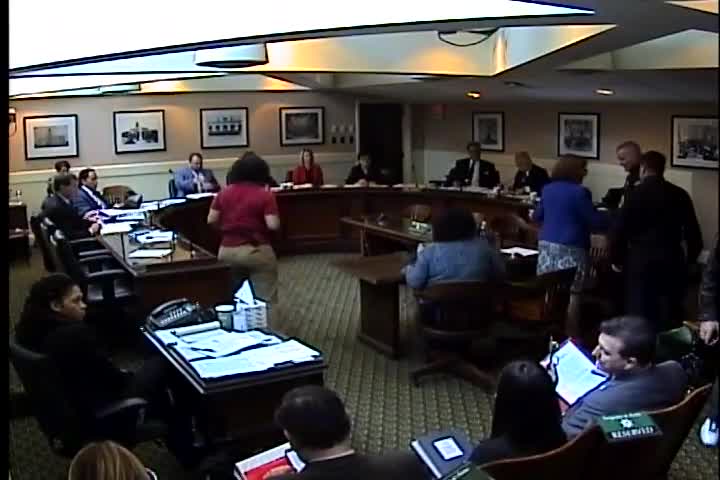
Discussed in Hearing
 9MIN
Assembly Standing Committee on Local Government
Bill Author

Bill Co-Author(s):