AB 2281: Clinical laboratories: licensed medical laboratory technicians.
- Session Year: 2017-2018
- House: Assembly
- Latest Version Date: 2018-08-28
Existing law provides for the licensure, registration, and regulation of clinical laboratories and various clinical laboratory personnel by the State Department of Public Health. Existing law requires a medical laboratory technician to be licensed by the department, sets forth the duties that a licensed medical laboratory technician is authorized to perform, and prohibits a licensed medical laboratory technician from performing microscopic analysis or immunohematology procedures.
This bill would exempt from that prohibition blood smear reviews other than manual leukocyte differentials, microscopic urinalysis, and blood typing of moderate complexity such as automated ABO/Rh testing and antibody screen testing. The bill would also repeal an obsolete provision.
Existing law provides for the licensure, registration, and regulation of clinical laboratories and various clinical laboratory personnel by the State Department of Public Health. Existing law requires a medical laboratory technician to be licensed by the department, sets forth the duties that a licensed medical laboratory technician is authorized to perform, and prohibits a licensed medical laboratory technician from performing microscopic analysis or immunohematology procedures.
This bill would exempt from that prohibition blood smear reviews, reviews other than manual leukocyte differentials, microscopic urinalysis, and blood typing of moderate complexity. complexity such as automated ABO/Rh testing and antibody screen testing. The bill would also repeal an obsolete provision.
Existing law provides for the licensure, registration, and regulation of clinical laboratories and various clinical laboratory personnel by the State Department of Public Health. Existing law requires a medical laboratory technician to be licensed by the department, sets forth the duties that a licensed medical laboratory technician is authorized to perform, and prohibits a licensed medical laboratory technician from performing microscopic analysis or immunohematology procedures.
This bill would exempt from that prohibition blood smear reviews, microscopic urinalysis, and blood typing of moderate complexity.
(a)The department shall issue a medical laboratory technician license to each person who meets the following requirements:
(1)Has met the requirements of this chapter and any reasonable qualifications established by regulations of the department, including, but not limited to, any of the following:
(A)Lawfully holds an associate degree or an equivalent or higher degree in chemical, physical, biological, or clinical laboratory science, which includes a minimum of 36 semester units of physical or biological sciences.
(B)The completion of 60 semester (90 quarter) units from an accredited college or university, with 36 semester units in physical or biological sciences.
(C)Graduation from a medical laboratory technician training program accredited by the National Accrediting Agency for Clinical Laboratory Sciences or other recognized accrediting program approved by the department.
(D)Graduation from an advanced military medical laboratory specialist program approved by the department.
(2)Has applied for the license on forms provided by the department.
(3)Has paid a license fee established in regulations of the department in accordance with subdivision (q) of Section 1300.
(b)A licensed medical laboratory technician may perform clinical laboratory tests or examinations classified as waived or of moderate complexity under CLIA, but not high complexity, and may report the test results. However, a licensed medical laboratory technician shall not perform microscopic analysis or immunohematology procedures, except for blood smear reviews other than manual leukocyte differentials, microscopic urinalysis, and blood typing of moderate complexity such as automated ABO/Rh testing and antibody screen testing. The medical laboratory technician shall work under the supervision of a licensed physician and surgeon or a baccalaureate, masters, or doctoral level person licensed pursuant to this chapter. The supervision shall be required during the entire time a medical laboratory technician performs clinical laboratory tests or examinations.
(a)The department shall issue a medical laboratory technician license to each person who meets the following requirements:
(1)Has met the requirements of this chapter and any reasonable qualifications established by regulations of the department, including, but not limited to, any of the following:
(A)Lawfully holds an associate degree or an equivalent or higher degree in chemical, physical, biological, or clinical laboratory science, which includes a minimum of 36 semester units of physical or biological sciences.
(B)The completion of 60 semester (90 quarter) units from an accredited college or university, with 36 semester units in physical or biological sciences.
(C)Graduation from a medical laboratory technician training program accredited by the National Accrediting Agency for Clinical Laboratory Sciences or other recognized accrediting program approved by the department.
(D)Graduation from an advanced military medical laboratory specialist program approved by the department.
(2)Has applied for the license on forms provided by the department.
(3)Has paid a license fee established in regulations of the department in accordance with subdivision (q) of Section 1300.
(b)A licensed medical laboratory technician may perform clinical laboratory tests or examinations classified as waived or of moderate complexity under CLIA, but not high complexity, and may report the test results. However, a licensed medical laboratory technician shall not perform microscopic analysis or immunohematology procedures, except for blood smear reviews, reviews other than manual leukocyte differentials, microscopic urinalysis, and blood typing of moderate complexity such as automated ABO/Rh testing and antibody screen testing. The medical laboratory technician shall work under the supervision of a licensed physician and surgeon or a baccalaureate, masters, or doctoral level person licensed pursuant to this chapter. The supervision shall be required during the entire time a medical laboratory technician performs clinical laboratory tests or examinations.
(c)The department shall adopt emergency regulations to implement this section as soon as possible.(a)The department shall issue a medical laboratory technician license to each person who meets the following requirements:
(1)Has met the requirements of this chapter and any reasonable qualifications established by regulations of the department, including, but not limited to, any of the following:
(A)Lawfully holds an associate degree or an equivalent or higher degree in chemical, physical, biological, or clinical laboratory science, which includes a minimum of 36 semester units of physical or biological sciences.
(B)The completion of 60 semester (90 quarter) units from an accredited college or university, with 36 semester units in physical or biological sciences.
(C)Graduation from a medical laboratory technician training program accredited by the National Accrediting Agency for Clinical Laboratory Sciences or other recognized accrediting program approved by the department.
(D)Graduation from an advanced military medical laboratory specialist program approved by the department.
(2)Has applied for the license on forms provided by the department.
(3)Has paid a license fee established in regulations of the department in accordance with subdivision (q) of Section 1300.
(b)A licensed medical laboratory technician may perform clinical laboratory tests or examinations classified as waived or of moderate complexity under CLIA, and may report the test results. However, a licensed medical laboratory technician shall not perform microscopic analysis or immunohematology procedures, except for blood smear reviews, microscopic urinalysis, and blood typing of moderate complexity such as ABO/Rh testing and antibody screen testing. The medical laboratory technician shall work under the supervision of a licensed physician and surgeon or a baccalaureate, masters, or doctoral level person licensed pursuant to this chapter. The supervision shall be required during the entire time a medical laboratory technician performs clinical laboratory tests or examinations.
(c)The department shall adopt emergency regulations to implement this section as soon as possible.
(a)The department shall issue a medical laboratory technician license to each person who meets the following requirements:
(1)Has met the requirements of this chapter and any reasonable qualifications established by regulations of the department, including, but not limited to, any of the following:
(A)Lawfully holds an associate degree or an equivalent or higher degree in chemical, physical, biological, or clinical laboratory science, which includes a minimum of 36 semester units of physical or biological sciences.
(B)The completion of 60 semester (90 quarter) units from an accredited college or university, with 36 semester units in physical or biological sciences.
(C)Graduation from a medical laboratory technician training program accredited by the National Accrediting Agency for Clinical Laboratory Sciences or other recognized accrediting program approved by the department.
(D)Graduation from an advanced military medical laboratory specialist program approved by the department.
(2)Has applied for the license on forms provided by the department.
(3)Has paid a license fee established in regulations of the department in accordance with subdivision (v) (q) of Section 1300.
(b)A licensed medical laboratory technician may perform clinical laboratory tests or examinations classified as waived or of moderate complexity under CLIA, and may report the test results. However, a licensed medical laboratory technician shall not perform microscopic analysis or immunohematology procedures. procedures, except for blood smear reviews, microscopic urinalysis, and blood typing of moderate complexity such as ABO/Rh testing. The medical laboratory technician shall work under the supervision of a licensed physician and surgeon or a baccalaureate, masters, or doctoral level person licensed pursuant to this chapter. The supervision shall be required during the entire time a medical laboratory technician performs clinical laboratory tests or examinations.
(c)The department shall adopt emergency regulations to implement this section as soon as possible.
|
Date
|
Status
|
|---|---|
| Aug 28, 2018 | Chaptered by Secretary of State - Chapter 235, Statutes of 2018. |
| Aug 28, 2018 | Approved by the Governor. |
| Aug 16, 2018 | Enrolled and presented to the Governor at 4 p.m. |
| Aug 13, 2018 | Senate amendments concurred in. To Engrossing and Enrolling. |
| Aug 9, 2018 | In Assembly. Concurrence in Senate amendments pending. May be considered on or after August 11 pursuant to Assembly Rule 77. |
| Aug 9, 2018 | Read third time. Passed. Ordered to the Assembly. |
| Jul 3, 2018 | Read second time. Ordered to third reading. |
| Jul 2, 2018 | From committee: Be ordered to second reading pursuant to Senate Rule 28.8. |
| Jun 21, 2018 | In committee: Hearing postponed by committee. |
| Jun 12, 2018 | Read second time and amended. Re-referred to Com. on APPR. |
| Jun 11, 2018 | From committee: Amend, and do pass as amended and re-refer to Com. on APPR. (Ayes 6. Noes 0.) (June 11). |
| May 15, 2018 | From committee chair, with author's amendments: Amend, and re-refer to committee. Read second time, amended, and re-referred to Com. on B., P. & E.D. |
| May 10, 2018 | Referred to Com. on B., P. & E.D. |
| Apr 26, 2018 | In Senate. Read first time. To Com. on RLS. for assignment. |
| Apr 26, 2018 | Read third time. Passed. Ordered to the Senate. |
| Apr 19, 2018 | Read second time. Ordered to Consent Calendar. |
| Apr 18, 2018 | From committee: Do pass. To Consent Calendar. (Ayes 15. Noes 0.) (April 18). |
| Apr 3, 2018 | From committee: Do pass and re-refer to Com. on APPR. (Ayes 16. Noes 0.) (April 3). Re-referred to Com. on APPR. |
| Mar 1, 2018 | Referred to Com. on B. & P. |
| Feb 14, 2018 | From printer. May be heard in committee March 16. |
| Feb 13, 2018 | Read first time. To print. |
|
Date
|
Description
|
Location
|
Votes
|
|
|---|---|---|---|---|
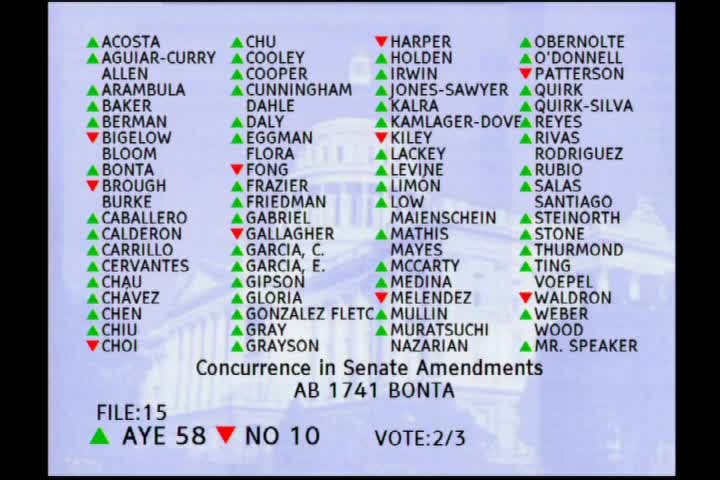
| Aug 13, 2018 | AB 2281 IRWIN Concurrence in Senate Amendments | Assembly Floor |
Passed |
|
| Aug 9, 2018 | Assembly 3rd Reading AB2281 Irwin By Hill | Senate Floor |
Passed |
|
| Jun 11, 2018 | Do pass as amended, but first amend, and re-refer to the Committee on [Appropriations] | Senate Standing Committee on Business, Professions and Economic Development |
Passed |
|
| Apr 26, 2018 | AB 2281 IRWIN Consent Calendar Second Day Regular Session | Assembly Floor |
Passed |
|
| Apr 18, 2018 | Do pass. To Consent Calendar. | Assembly Standing Committee on Appropriations |
Passed |
|
| Apr 3, 2018 | Do pass and be re-referred to the Committee on [Appropriations] | Assembly Standing Committee on Business and Professions |
Passed |
This list shows positions taken on this bill by organizations on the date displayed, which is linked to the original source.
Positions by individuals are not included.
|
Organization
|
Position
|
Date
|
|---|---|---|
| 319-2081 | ** Against | Apr 16, 2018 |
| Appr. | ** Against | Apr 16, 2018 |
| Blood Centers Of California | ** Support | Jul 3, 2018 |
| Broad and Gusman | * Against | Apr 3, 2018 |
| California Clinical Laboratory Association | ** Support | Jul 3, 2018 |
| California Hospital Association | ** Support | Jul 3, 2018 |
| California Labor Federation | ** Against | Jul 3, 2018 |
| California Society Of Pathologists | ** Support | Jul 3, 2018 |
| California Teamsters | ** Against | Jul 3, 2018 |
| Engineers and Scientists of California | ** Against | Jul 3, 2018 |
| Herself | * Against | Apr 3, 2018 |
| Kaiser Permanente | ** Support | Jul 3, 2018 |
| Numerous individuals | ** Against | Jul 3, 2018 |
| Quest Diagnostics | ** Support | Jul 3, 2018 |
| Several individuals | ** Support | Jul 3, 2018 |
| Southwest California Legislative Council | ** Support | Jul 3, 2018 |
| UCSF Medical Center | * Support | Apr 3, 2018 |
| United Food And Commercial Workers, Western States Council | ** Against | Jul 3, 2018 |
| Western States Council, | ** Support | Apr 16, 2018 |
CONCURRENCE IN SENATE AMENDMENTS
CSA1 Bill Id:AB 2281
Author:(Irwin)
As Amended Ver:June 12, 2018
Majority vote
ASSEMBLY: | 74-0 | (April 26, 2018) | SENATE: | 27-1 | (August 9, 2018) |
Original Committee Reference: B. & P.
SUMMARY: Expands the scope of practice of licensed medical laboratory technicians (MLTs) to include blood smear reviews other than manual leukocyte differentials, microscopic urinalysis, and moderate complexity blood typing such as automated ABO/Rhesus (Rh) testing and antibody screen testing.
The Senate amendments:
- Clarified that an MLT may not perform high complexity tests.
- Removed manual leukocyte differentials from the types of blood smear reviews that an MLT may perform.
- Changed the examples of moderate complexity blood typing an MLT may perform from ABO/Rh testing to automated ABO/Rh testing and antibody screen testing.
FISCAL EFFECT: According to the Senate Appropriations Committee, pursuant to Senate Rule 28.8, no significant state costs anticipated.
COMMENTS:
Purpose. This bill is sponsored by the California Society of Pathologists. According to the author, "California is currently experiencing a shortage of laboratory personnel that has been worsened by the growing demand for health care services. Clinical Laboratory Scientists (CLS) are individuals with bachelor's degrees who are licensed to perform the most complex tests in a laboratory. Considering that 42% of current CLSs are quickly nearing retirement, our state can anticipate a drastic shortage in clinical laboratory personnel. We must prepare for this reality while ensuring that we can continue to provide quality health care services. This bill will alleviate the workforce shortage by allowing [MLTs], or individuals with associate degrees and extensive training, to assist CLSs with three moderately complex tests."
Background. MLTs are licensed professionals that perform clinical laboratory tests. Clinical laboratory tests are healthcare services that involve the examination and analysis of human tissue and fluid, such as blood tests and biopsies. Clinical laboratories are regulated under the federal law known as the Clinical Laboratory Improvement Amendments (CLIA).
CLIA establishes the minimum federal standards for laboratory testing and personnel to ensure accuracy, reliability, and timeliness of laboratory tests. States may require laboratory and personnel standards that exceed CLIA standards. All laboratories that perform tests on human specimens for diagnostic or assessment purposes must be certified under CLIA and comply with state-specific requirements.
The laboratory and personnel requirements for CLIA certification vary depending on the complexity of the laboratory tests performed. Clinical laboratory tests are categorized as waived, moderate, or high complexity. In general, the more complicated the test, the more stringent the education, training, supervision requirements for laboratory personnel. At a minimum, all laboratories must have a licensed laboratory director who supervises and trains personnel and is responsible for their work product.
Under both CLIA and California law, anyone may perform a waived test in a licensed laboratory. However, California law imposes additional requirements for moderate complexity testing. The minimum requirements under federal law require that personnel have (1) at least a high school diploma or equivalent and (2) documentation of training appropriate for the testing performed prior to analyzing patient specimens. In California, only specific categories of licensed or certified individuals may perform moderate complexity tests.
Medical Laboratory Technicians. MLTs are one of the licensees that may perform moderate complexity tests. MLTs generally have two years of education in a community college setting (Associate Degree). In California, MLTs work under the close supervision of CLSs and other licensed laboratory personnel.
Under CLIA and in states that license MLTs (other than California), MLTs are authorized to perform up to high complexity tests. California only authorizes MLTs to perform moderate complexity tests except for microscopic analysis or immunohematology procedures. This bill would authorize MLTs to perform two immunohematology procedures (blood smear reviews and moderate complexity blood typing) and one microscopic analysis procedure (microscopic urinalysis).
Blood Smear Reviews. A blood smear or film is a drop of blood that is spread onto a glass slide and is stained so it can be examined under a microscope. It is a snapshot of the cells that are present in the fluid portion of the blood (plasma) at the time the sample is obtained. The blood smear allows for the evaluation of blood cells.
The observer can compare their size, shape, and general appearance to the established appearance of "normal" cells. Abnormal numbers or appears can suggest a variety of diseases and conditions. Examination of a blood smear can also be used to support findings from other tests.
Microscopic Urinalysis. Urinalysis is the analysis of urine. A microscopic examination of urine is typically done when there are abnormal findings on the physical or chemical examination. A microscopic exam is performed on urine sediment—urine that has been centrifuged to concentrate the substances in it at the bottom of a tube. The fluid at the top of the tube is then discarded and the drops of fluid remaining are examined under a microscope.
Blood Typing. Blood typing is a procedure to determine blood type. It can also show whether there is a substance called Rh factor on the surface of red blood cells. Blood typing is done to determine whether it is safe to donate blood or receive a blood transfusion. Incompatible blood types can result in an adverse immune response called hemolytic reaction. Rh incompatibility may cause complications for newborns.
Analysis Prepared by: Vincent Chee / B. & P. / (916) 319-3301 FN: 0003717
Office of Senate Floor Analyses (916) 651-1520 Fax: (916) 327-4478 | AB |
THIRD READING
Bill No: AB 2281
:
SENATE BUS., PROF. & ECON. DEV. COMMITTEE: 6-0, 6/11/18
AYES: Hill, Fuller, Dodd, Galgiani, Glazer, Wilk
NO VOTE RECORDED: Hernandez, Newman, Pan
SENATE APPROPRIATIONS COMMITTEE: Senate Rule 28.8
ASSEMBLY FLOOR: 74-0, 4/26/18 (Consent) - See last page for vote
SOURCE: California Society of Pathologists
DIGEST:
This bill authorizes a licensed medical laboratory technician (MLT) to perform specified microscopic analysis and immunohematology procedures, as specified.
Existing federal law:
- Establishes Clinical Laboratory Improvement Amendments of 1988 (CLIA), an amendment to the Public Health Services Act, in which Congress revised the federal program for the certification and oversight of clinical laboratory testing. Two subsequent amendments were made after 1988. (Title 42, Code of Federal Regulations (CFR) § 263a)
- Classifies laboratory tests using three categories of complexity: “waived,” “moderate,” or “high.” The federal Food and Drug Administration evaluates each new commercial test system during the premarket approval process by scoring seven criteria, and the final score is used to determine whether the test system is classified as moderate or high complexity (42 CFR § 493.5)
- Requires an individual performing moderate complexity testing to have a current license issued by the state in which the laboratory is located, if such licensing is required; and meets one of the following requirements:
- Is a physician licensed to practice medicine in the state in which the laboratory is located or have earned a doctoral, master's, or bachelor's degree in a chemical, physical, biological or clinical laboratory science, or medical technology from an accredited institution.
- Has earned an associate degree in a chemical, physical or biological science or medical laboratory technology from an accredited institution.
- Is a high school graduate or equivalent and have successfully completed an official military medical laboratory procedures course of at least 50 weeks duration and have held the military enlisted occupational specialty of Medical Laboratory Specialist (Laboratory Technician).
- Has earned a high school diploma or equivalent and documentation of training appropriate for the testing performed prior to analyzing patient specimens. (42 CFR § 493.1423)
Existing state law:
- Provides for the licensure, registration, and regulation of clinical laboratories and various clinical laboratory personnel, including MLTs, by the California Department of Public Health. (Business and Professions Code (BPC) §§ 1200-1327)
- Defines “CLIA” as the Clinical Laboratory Improvement Amendments of 1988 (42 United States Code Section 263a; Public Law 100-578) and the regulations adopted thereunder by the federal Health Care Financing Administration and effective on January 1, 1994, or any later date, when adopted in California. (BPC § 1202.5 (a))
- Establishes requirements for licensure as a MLT, including that an applicant holds an associate, associate equivalent, or higher degree in chemical, physical, biological, or clinical laboratory science, which includes a minimum of
36 semester units of physical or biological sciences. (BPC § 1260.3 (a)) - Authorizes a MLT to perform and report the results of clinical laboratory tests or examinations classified as waived or of moderate complexity under CLIA. However, a MLT shall not perform microscopic analysis or immunohematology procedures. (BPC § 1260.3 (b))
- Requires a MLT to work under the supervision of a licensed physician and surgeon or a licensed baccalaureate-, masters-, or doctoral-level person. Supervision shall be required during the entire time a MLT performs clinical laboratory tests or examinations. (BPC § 1260.3 (b))
- Requires a laboratory director to be responsible for the proper performance of all laboratory work of all subordinates and employ a sufficient number of laboratory personnel with the appropriate education and either experience or training to provide appropriate consultation, properly supervise and accurately perform tests, and report test results in accordance with the personnel qualifications, duties, and responsibilities described in statute. (BPC § 1209 (d)(1))
This bill:
- Authorizes a MLT to perform the following moderate complexity procedures: blood smear reviews other than manual leukocyte differentials, microscopic urinalysis, and blood typing of moderate complexity such as automated ABO/Rh testing and antibody screen testing.
- Clarifies that a MLT may not perform high complexity tests.
- Makes technical changes.
Background
MLTs. MLTs are associate degree-trained laboratory professionals who perform waived or moderate complexity clinical laboratory tests (with certain exceptions), report the test results, and perform phlebotomy. California has been licensing MLTs since 2007, and there are currently 640 licensees.
There are four MLT training programs in California. The Bureau of Labor Statistics indicates that demand for MLTs is projected to grow 14 percent from 2016 to 2026, faster than the average for all occupations, primarily due to an aging population.
Tests. Current law prohibits a MLT from performing microscopic analyses, which are those tests that use microscopes to view samples and objects that are not within the resolution range of the normal eye, and immunohematology procedures, which are those tests concerned with immune, or antigen and antibody reactions and with related changes in the blood. This bill allows a MLT to perform the following procedures classified as moderately complex (from MedLine Plus, U.S. National Library of Medicine):
A blood smear review requires a sample of blood to be placed on a specially treated slide, which is examined under a microscope to look at the size, shape, and number of different types of blood cells.
A microscopic urinalysis is an examination of urine cells under a microscope to search for different substances.
Blood typing of moderate complexity (such as ABO/Rh testing and antibody screen testing) is the process of determining a patient’s blood type. It is frequently done either to safely donate or receive a blood transfusion, or test for the presence of a substance called Rh factor on the surface of red blood cells. ABO tests determine to which blood group an individual’s blood belongs by mixing it with antibodies.
UCSF MLT report. A 2017 study sponsored by the California Hospital Association and conducted by the Healthforce Center at the University of California, San Francisco, “The State of the California Medical Laboratory Technician Workforce,” (UCSF Study), analyzed California’s MLT laws and practices. The UCSF study focused on the tests identified in this bill for MLT scope expansion because they are high volume tests that would have a measurable impact on laboratory efficiency and the current workforce shortage, are categorized as moderately complex, and are performed using moderately complex instrumentation.
According to the UCSF Study, Washington DC and 38 states do not license or regulate MLTs at the state level -- they instead default to federal CLIA regulations. California and eleven other states regulate MLT practice. However, all states except California permit MLTs to perform the tests at issue in this bill.
The UCSF Study interviewed laboratory personnel in states that regulate MLTs, and reported that “Respondents were nearly unanimous in support of training MLTs and allowing them to perform microscopic urinalysis testing. Microscopic urinalysis is ‘not so complex. It is fairly easy to train someone to do urinalysis slide reviews.” Support was not as strong for allowing MLTs to perform blood smear reviews and blood typing.
State and federal laboratory personnel laws. The federal CLIA laws set the regulatory floor for laboratory testing, but states are free to develop higher standards, and laboratories must follow whichever law is more stringent. While California defers to the federal authority to establish testing complexity, the state has determined which licensed personnel may perform, interpret, and report the tests. In nearly all instances, California has stricter personnel standards than federal law.
Senate Business, Professions and Economic Development Committee staff is unaware of any studies that indicate any adverse consequences of MLTs performing these additional procedures in other states. Under both CLIA and California law, there are systemic checks to ensure that all staff perform their duties safely: not only are laboratory directors responsible for ensuring that all levels of staff are sufficiently educated and trained to perform their assigned duties, the laboratories themselves are subject to periodic state-approved proficiency testing and staff competency, and performance must be routinely evaluated and documented.
FISCAL EFFECT: Appropriation: Fiscal Com.: Local:
California Society of Pathologists (source)
Blood Centers of California
California Clinical Laboratory Association
California Hospital Association
Kaiser Permanente
Quest Diagnostics
Southwest California Legislative Council
Several individuals
California Labor Federation
California Teamsters
Engineers and Scientists of California
United Food and Commercial Workers, Western States Council
Numerous individuals
ARGUMENTS IN SUPPORT: Supporters generally argue that California is facing clinical laboratory personnel shortages, and MLTs are capable of performing the tasks in this bill. The California Society of Pathologists write, “Pathologists are physicians who specialize in laboratory medicine and under California law are directors of hospital clinical labs and many freestanding labs. They are acutely aware of the shortage of qualified clinical laboratory personnel and the need to allow the greater utilization of existing personnel to staff clinical laboratories. AB 2281 would help allow the appropriate use of MLTs who are already trained to perform these three lab procedures.”
ARGUMENTS IN OPPOSITION: Opponents generally argue that MLTs are not qualified to perform the duties in this bill and such tasks should remain the domain of Clinical Lab Scientists (CLS), bachelor-degree trained laboratory personnel. “The California Teamsters represent CLSs in a variety of clinical and public health labs across Northern California. Our members fear that by allowing MLTs to perform clinical lab tests normally performed by a CLS, AB 2281 will steer hospitals and laboratories towards the ‘cheaper’ option with little regard to potential patient safety risks. Put simply, this is a ‘deskilling of labor’ bill.”
ASSEMBLY FLOOR: 74-0, 4/26/18
AYES: Acosta, Aguiar-Curry, Arambula, Baker, Berman, Bigelow, Bloom, Bonta, Brough, Burke, Caballero, Calderon, Carrillo, Cervantes, Chau, Chávez, Chen, Chiu, Choi, Chu, Cooley, Cooper, Cunningham, Dahle, Daly, Eggman, Flora, Frazier, Friedman, Gallagher, Eduardo Garcia, Gipson, Gloria, Gonzalez Fletcher, Gray, Grayson, Harper, Holden, Irwin, Jones-Sawyer, Kalra, Kamlager-Dove, Kiley, Lackey, Levine, Limón, Low, Maienschein, Mathis, Mayes, McCarty, Medina, Melendez, Mullin, Muratsuchi, Nazarian, Obernolte, O'Donnell, Patterson, Quirk, Quirk-Silva, Reyes, Rubio, Salas, Santiago, Steinorth, Mark Stone, Thurmond, Ting, Voepel, Waldron, Weber, Wood, Rendon
NO VOTE RECORDED: Travis Allen, Fong, Cristina Garcia, Rodriguez
7/3/18 15:47:02
**** END ****
SENATE COMMITTEE ON
BUSINESS, PROFESSIONS AND ECONOMIC DEVELOPMENT
Senator Jerry Hill, Chair
2017 - 2018 Regular
Bill No: AB 2281 Hearing Date: June 11, 2018
Author: | Irwin | ||
Version: |
| ||
Urgency: | Fiscal: | ||
Consultant: | |||
Subject: Clinical laboratories: licensed medical laboratory technicians
SUMMARY:
Authorizes a licensed medical laboratory technician (MLT) to perform specified microscopic analysis and immunohematology procedures, as specified.
Existing state law:
- Provides for the licensure, registration, and regulation of clinical laboratories and various clinical laboratory personnel, including MLTs, by the California Department of Public Health (DPH). (Business and Professions Code (BPC) §§ 1200-1327)
- Defines “CLIA” as the Clinical Laboratory Improvement Amendments of 1988 (42 United States Code Section 263a; Public Law 100-578) and the regulations adopted thereunder by the federal Health Care Financing Administration and effective on January 1, 1994, or any later date, when adopted in California. (BPC § 1202.5 (a))
- Establishes the following requirements for licensure as a MLT:
- Holds an associate, associate equivalent, or higher degree in chemical, physical, biological, or clinical laboratory science, which includes a minimum of
36 semester units of physical or biological sciences. - Completion of 60 semester (90 quarter) units from an accredited college or university, with 36 semester units in physical or biological sciences.
- Graduation from a MLT training program accredited by the National Accrediting Agency for Clinical Laboratory Sciences or other recognized accrediting program approved by DPH.
- Graduation from an advanced military medical laboratory specialist program approved by DPH.
- Has applied for the license on forms provided by the DPH and paid a fee.
(BPC § 1260.3 (a))
- Holds an associate, associate equivalent, or higher degree in chemical, physical, biological, or clinical laboratory science, which includes a minimum of
- Authorizes a MLT to perform and report the results of clinical laboratory tests or examinations classified as waived or of moderate complexity under CLIA. However, a MLT shall not perform microscopic analysis or immunohematology procedures. (BPC § 1260.3 (b))
- Requires a MLT to work under the supervision of a licensed physician and surgeon or a licensed baccalaureate-, masters-, or doctoral- level person. Supervision shall be required during the entire time a MLT performs clinical laboratory tests or examinations. (BPC § 1260.3 (b))
- Requires a laboratory director to be responsible for the proper performance of all laboratory work of all subordinates and employ a sufficient number of laboratory personnel with the appropriate education and either experience or training to provide appropriate consultation, properly supervise and accurately perform tests, and report test results in accordance with the personnel qualifications, duties, and responsibilities described in statute. (BPC § 1209 (d)(1))
- Requires a laboratory director to ensure that all personnel, prior to testing biological specimens, have the appropriate education and experience, receive the appropriate training for the type and complexity of the services offered, and have demonstrated that they can perform all testing operations reliably to provide and report accurate results. (BPC § 1209 (f)(1))
- Requires the competency and performance of licensed laboratory staff to be evaluated and documented by either the laboratory director or other staff, as specified. (BPC § 1209 (g))
- Requires a clinical laboratory to participate in a state-approved proficiency testing program and demonstrate satisfactory performance in all tests performed in the laboratory. Requires immunohematology proficiency to be tested. (BPC § 1272)
Existing federal law:
- Establishes CLIA, an amendment to the Public Health Services Act, in which Congress revised the federal program for the certification and oversight of clinical laboratory testing. Two subsequent amendments were made after 1988.
(Title 42, Code of Federal Regulations (CFR) § 263a) - Classifies laboratory tests using three categories of complexity: “waived,” “moderate,” or “high.” The federal Food and Drug Administration (FDA) evaluates each new commercial test system during the premarket approval process by scoring seven criteria, and the final score is used to determine whether the test system is classified as moderate or high complexity (42 CFR § 493.5)
- Defines waived tests as simple laboratory examinations and procedures which are:
(42 CFR 493.15) - Requires an individual performing moderate complexity testing to have a current license issued by the state in which the laboratory is located, if such licensing is required; and meets one of the following requirements:
- Is a physician licensed to practice medicine in the state in which the laboratory is located or have earned a doctoral, master's, or bachelor's degree in a chemical, physical, biological or clinical laboratory science, or medical technology from an accredited institution.
- Has earned an associate degree in a chemical, physical or biological science or medical laboratory technology from an accredited institution.
- Is a high school graduate or equivalent and have successfully completed an official military medical laboratory procedures course of at least 50 weeks duration and have held the military enlisted occupational specialty of Medical Laboratory Specialist (Laboratory Technician).
- Has earned a high school diploma or equivalent and documentation of training appropriate for the testing performed prior to analyzing patient specimens. (42 CFR § 493.1423)
This bill:
- Authorizes a MLT to perform the following moderate complexity procedures: blood smear reviews, microscopic urinalysis, and blood typing of moderate complexity such as ABO/Rh testing and antibody screen testing.
- Makes a technical change.
FISCAL EFFECT:
According to the Assembly Appropriations Committee analysis dated April 18, 2018, to the extent this scope expansion encourages more individuals to become MLTs, there could be eventually be minor and absorbable cost pressure on DPH to process the additional licenses (Clinical Laboratory Improvement Fund).
COMMENTS:
- Purpose. This bill is sponsored by the California Society of Pathologists. According to the Author’s office, “Under current state law, MLTs are prohibited from performing certain moderately complex tests, such as microscopic analysis, although they have been trained in these procedures as part of their education. According to a 2015 survey of hospitals, more than 42% of the [clinical laboratory scientist (CLS), bachelor-degree trained laboratory personnel] CLS workforce is over the age of 55. MLTs will be needed to help support laboratories as large numbers of CLSs begin to retire. Allowing MLTs to perform moderately complex tasks would ease the current and future CLS workforce shortage by freeing up the CLSs for high complexity testing. In addition, the current limitations on MLTs in California are the most restrictive in the nation. In fact, some states only require a high school diploma to be licensed as an MLT. California MLTs are trained to perform the moderately complex tasks that they are currently prohibited from performing. This bill will amend the BPC to allow MLTs to perform 3 additional tests: blood smear reviews, urinalysis, and ABO/Rh tests.”
- MLTs. MLTs are associate degree-trained laboratory professionals who perform waived or moderate complexity clinical laboratory tests (with certain exceptions), report the test results, and perform phlebotomy. California has been licensing MLTs since 2007, and there are currently 640 licensees.
There are four MLT training programs in California. The Bureau of Labor Statistics indicates that demand for MLTs is projected to grow 14 percent from 2016 to 2026, faster than the average for all occupations, primarily due to an aging population.
- Tests. Current law prohibits a MLT from performing microscopic analyses, which are those tests that use microscopes to view samples and objects that are not within the resolution range of the normal eye, and immunohematology procedures, which are those tests concerned with immune, or antigen- and antibody reactions and with related changes in the blood. This bill would allow a MLT to perform the following procedures classified as moderately complex (from MedLine Plus, U.S. National Library of Medicine):
A blood smear review requires a sample of blood to be placed on a specially treated slide, which is examined under a microscope to look at the size, shape, and number of different types of blood cells.
A microscopic urinalysis is an examination of urine cells under a microscope to search for different substances.
Blood typing of moderate complexity (such as ABO/Rh testing and antibody screen testing) is the process of determining a patient’s blood type. It is frequently done either to safely donate or receive a blood transfusion, or test for the presence of a substance called Rh factor on the surface of red blood cells. ABO tests determine to which blood group an individual’s blood belongs by mixing it with antibodies.
- UCSF MLT Report. A 2017 study sponsored by the California Hospital Association and conducted by the Healthforce Center at the University of California, San Francisco, “The State of the California Medical Laboratory Technician Workforce,” (UCSF Study), analyzed California’s MLT laws and practices. The UCSF study focused on the tests identified in this bill for MLT scope expansion because they are high volume tests that would have a measurable impact on laboratory efficiency and the current workforce shortage, are categorized as moderately complex, and are performed using moderately complex instrumentation.
According to the UCSF Study, Washington DC and 38 states do not license or regulate MLTs at the state level -- they instead default to federal CLIA regulations. California and eleven other states regulate MLT practice. However, all states except California permit MLTs to perform the tests at issue in this bill.
The UCSF Study interviewed laboratory personnel in states that regulate MLTs, and reported that “Respondents were nearly unanimous in support of training MLTs and allowing them to perform microscopic urinalysis testing. Microscopic urinalysis is ‘not so complex. It is fairly easy to train someone to do urinalysis slide reviews.” Support was not as strong for allowing MLTs to perform blood smear reviews and
blood typing.
- State and Federal Laboratory Personnel Laws. The federal CLIA laws set the regulatory floor for laboratory testing, but states are free to develop higher standards, and laboratories must follow whichever law is more stringent. While California defers to the federal authority to establish testing complexity, the state has determined which licensed personnel may perform, interpret, and report the tests. In nearly all instances, California has stricter personnel standards than federal law.
Committee staff is unaware of any studies that indicate any adverse consequences of MLTs performing these additional procedures in other states. Under both CLIA and California law, there are systemic checks to ensure that all staff perform their duties safely: not only are laboratory directors responsible for ensuring that all levels of staff are sufficiently educated and trained to perform their assigned duties, the laboratories themselves are subject to periodic state-approved proficiency testing and staff competency, and performance must be routinely evaluated and documented.
- Proposed Author’s Amendments. The Author wishes to clarify the type of tests authorized by this bill to satisfy the concerns of stakeholders:
On page 2, line 26, after “CLIA” add, “but not high complexity,”
On page 2, line 29, after “reviews” add “other than manual leukocycte differentials,”
On page 2, line 30, after “such as” add “automated”
These clarify that a MLT may not perform any high complexity tests or procedures, may only do blood smear reviews other than manual leukocycte differentials, and the blood typing tests must be automated.
The Author would also like to delete existing law mandating that the DPH adopt emergency regulations as soon as possible because no regulations are necessary to implement this bill, and the regulations necessary for the existing laws were adopted in 2007.
On page 2, delete lines 37 and 38.
- Previous Related Legislation. AB 613 (Nazarian) of 2017 would have authorized an unlicensed individual who meets specified education and training requirements to perform a total protein test using a digital refractometer in a licensed plasma collection facility until January 1, 2020. (Status: This bill is on the Senate inactive file.)
AB 757 (Gomez) of 2015 was nearly identical to AB 613 (Nazarian) of 2017, but was vetoed by the Governor, who stated:
“Failure to perform and report this test accurately could lead to serious health consequences for the donor.
“The California Department of Public Health does not believe that the standards outlined in the bill for persons to perform this test ensure the health and safety of plasma donors.”
AB 940 (Ridley-Thomas, Waldron, Chapter 341, Statutes of 2015) allowed a master’s level clinical laboratory bioanalyst who is not the CLIA laboratory director to be a laboratory director for a high-complexity laboratory, allows a bioanalyst to gain experience in a clinical laboratory certified by CLIA, and makes other modifications to existing law.
- Arguments in Support. Supporters generally argue that California is facing clinical laboratory personnel shortages, and MLTs are capable of performing the tasks in this bill. The California Society of Pathologists write, “Pathologists are physicians who specialize in laboratory medicine and under California law are directors of hospital clinical labs and many freestanding labs. They are acutely aware of the shortage of qualified clinical laboratory personnel and the need to allow the greater utilization of existing personnel to staff clinical laboratories. AB 2281 would help allow the appropriate use of MLTs who are already trained to perform these three lab procedures.”
- Arguments in Opposition. Opponents generally argue that MLTs are not qualified to perform the duties in this bill and such tasks should remain the domain of Clinical Lab Scientists, bachelor-degree trained laboratory personnel. “The California Teamsters represent CLSs in a variety of clinical and public health labs across Northern California. Our members fear that by allowing MLTs to perform clinical lab tests normally performed by a CLS, AB 2281 will steer hospitals and laboratories towards the ‘cheaper’ option with little regard to potential patient safety risks. Put simply, this is a ‘deskilling of labor’ bill.”
SUPPORT AND OPPOSITION:
Support:
California Society of Pathologists (Sponsor)
Blood Centers of California
California Clinical Laboratory Association
California Hospital Association
Kaiser Permanente
Quest Diagnostics
Southwest California Legislative Council
Several individuals
Opposition:
California Labor Federation
California Teamsters
Engineers and Scientists of California
United Food and Commercial Workers, Western States Council
Numerous individuals
-- END --
Date of Hearing: April 18, 2018
ASSEMBLY COMMITTEE ON APPROPRIATIONS
Lorena Gonzalez Fletcher, Chair
ABPCA Bill Id:AB 2281
Author:(Irwin) – As Introduced Ver:February 13, 2018
Policy Committee: | Business and Professions | Vote: | 16 - 0 |
Urgency: No State Mandated Local Program: No Reimbursable: No
SUMMARY:
This bill expands the scope of practice for medical laboratory technicians (MLTs) by allowing them to perform three additional tests of moderate complexity: blood smear reviews, microscopic urinalysis, and blood typing of moderate complexity.
FISCAL EFFECT:
To the extent this scope expansion encourages more individuals to become licensed MLTs, there could be eventually be minor and absorbable cost pressure on the California Department of Public Health (CDPH) to process the additional licenses (Clinical Laboratory Improvement Fund).
COMMENTS:
- Purpose. This bill is intended to allow MLTs to perform moderate complexity tests they are trained to perform. A January 2017 study by the Healthforce Center at UCSF examining the California MLT workforce notes California's laws are the most restrictive in the nation and suggests considering expanding the scope of MLTs to perform these three specific high-volume moderate-complexity tests.
- Background. Federal law, the Clinical Laboratory Improvement Amendments (CLIA), sets minimum standards for laboratory testing, but allows the state to set more stringent standards. Not all states license MLTs; some leave scope of lower-level laboratory personnel to the discretion of the supervisor. In California, clinical laboratory personnel, including MLTs, are licensed by CDPH. MLTs have an associate's degree and either specified clinical training or on-the-job experience from a state or setting that does not require licensure. Clinical laboratory scientists (CLSs), who currently perform higher-complexity tests with less supervision, must obtain a bachelor's degree, generally undergo a year of training, and pass a certification examination.
- Support and Opposition. The sponsor, the California Society of Pathologists, argues the bill will improve efficiency at laboratories and alleviate workforce shortages of clinical laboratory personnel. The bill is also supported by hospitals and clinical laboratories, among others. Labor organizations representing clinical laboratory scientists, including the Engineers and Scientists of California and United Food and Commercial Workers Union (UFCW)/Western States Council, oppose this bill, noting the tests require discretionary judgement. Opponents note the high level of risk associated with erroneous laboratory results and assert these tests should be performed by CLSs.
Analysis Prepared by: Lisa Murawski / APPR. / (916) 319-2081
Date of Hearing:
ASSEMBLY COMMITTEE ON BUSINESS AND PROFESSIONS
Evan Low, Chair
ABPCA Bill Id:AB 2281
Author:(Irwin) – As Introduced Ver:February 13, 2018
SUBJECT: Clinical laboratories: licensed medical laboratory technicians.
SUMMARY: Expands the scope of practice of licensed medical laboratory technicians (MLTs) to include blood smear reviews, microscopic urinalysis, and moderate complexity blood typing.
EXISTING FEDERAL LAW:
- Provides for the regulation of human medical laboratory testing by the Centers for Medicare & Medicaid Services (CMS). (Clinical Laboratory Improvement Amendments (CLIA), Title 42 United States Code (USC) § 263a; Title 42 Code of Federal Regulations (CFR) §§ 493.1-493.2001)
- Defines “laboratory” or “clinical laboratory” as a facility for the biological, microbiological, serological, chemical, immune-hematological, hematological, biophysical, cytological, pathological, or other examination of materials derived from the human body for the purpose of providing information for the diagnosis, prevention, or treatment of any disease or impairment of, or the assessment of the health of, human beings. (42 USC § 263a(a); 42 CFR § 493.2)
- Classifies laboratory tests into three categories: waived, moderate complexity, and high complexity and prohibits a clinical laboratory from soliciting or accepting materials derived from the human body for laboratory examination or other procedure unless certified to perform the category of testing that includes the examinations or procedures. (42 USC § 263a(b); 42 CFR §§ 493.5, 493.1351)
- Requires laboratories that perform moderate complexity testing to have a laboratory director who is qualified to manage and direct the laboratory personnel and the performance of moderate complexity tests. (42 CFR §§ 493.1403, 493.1405)
- Requires laboratories that perform moderate complexity testing to ensure that personnel performing moderate complexity tests possess a current license issued by the state where the laboratory is located, if a license is required, and meet one of the following requirements: (42 CFR § 493.1423)
- Be a doctor of medicine or doctor of osteopathy licensed to practice medicine or osteopathy in the State in which the laboratory is located or have earned a doctoral, master's, or bachelor's degree in a chemical, physical, biological or clinical laboratory science, or medical technology from an accredited institution.
- Have earned an associate degree in a chemical, physical or biological science or medical laboratory technology from an accredited institution.
- Be a high school graduate or equivalent and have successfully completed an official military medical laboratory procedures course of at least 50 weeks duration and have held the military enlisted occupational specialty of Medical Laboratory Specialist (Laboratory Technician).
- Have earned a high school diploma or equivalent, and have documentation of training appropriate for the testing performed prior to analyzing patient specimens.
EXISTING STATE LAW:
- Provides for the licensure, registration, and regulation of clinical laboratories and clinical laboratory personnel by the California Department of Public Health (CDPH). (BPC § 1200-1327)
- Defines, for purposes of state regulation of clinical laboratories, the following:
- “CLIA” means the federal Clinical Laboratory Improvement Amendments of 1988 and the adopted regulations. (BPC § 1202.5(a))
- “Clinical laboratory” means any place used, or any establishment or institution organized or operated, for the performance of clinical laboratory tests or examinations or the practical application of the clinical laboratory sciences. That application may include any means that applies the clinical laboratory sciences. (BPC § 1206(a)(8))
- Requires a clinical laboratory performing laboratory tests or examinations classified as moderate or high complexity under CLIA to obtain a state clinical laboratory license from the CDPH. Licensed laboratories must ensure that laboratory personnel meet CLIA requirements for moderate or high complexity, or both. (BPC § 1265(a)(1))
- Prohibits a person from performing a test classified as of moderate complexity test under CLIA unless the test is performed under a laboratory director, as specified, the laboratory director provides documentation of the adequacy of the qualifications and competency of the personnel, and the test is performed by one the following individuals: (BPC § 1206.5)
- A licensed physician and surgeon;
- A licensed podiatrist or a licensed dentist;
- A person licensed to engage in clinical laboratory practice or to direct a clinical laboratory;
- A certified local health officer.
- A licensed physician assistant if authorized by a supervising physician and surgeon.
- A registered nurse.
- A perfusionist if authorized under BPC § 2590.
- A respiratory care practitioner.
- A person certified to perform nuclear medicine technology under CDPH if authorized.
- Any person if performing blood gas analysis in compliance with BPC § 1245.
- A certified or licensed emergency medical technician II or paramedic while providing prehospital medical care.
- A person licensed as a psychiatric technician, as a vocational nurse, or as a licensed midwife, or certified by the CDPH as a nurse assistant or a home health aide, who provides direct patient care, if the person meets the following:
- Is performing the test as an adjunct to the provision of direct patient care by the person.
- Is utilizing a point-of-care laboratory testing device at a site for which a laboratory license or registration has been issued.
- Meets the minimum clinical laboratory education, training, and experience requirements set forth in regulations adopted by the CDPH.
- Has demonstrated to the satisfaction of the laboratory director that the person is competent in the operation of the point-of-care laboratory testing device for each analyte to be reported.
- Has participated in a preceptor program until they are able to perform the clinical laboratory tests or examinations with results that are deemed accurate and skills that are deemed competent by the preceptor. For the purposes of this section, a “preceptor program” means an organized system that meets regulatory requirements in which a preceptor provides and documents personal observation and critical evaluation, including review of accuracy, reliability, and validity, of laboratory testing performed.
- Any person within a physician office laboratory if the test is performed under the supervision of the patient’s physician and surgeon or podiatrist who is accessible to the laboratory to provide onsite, telephone, or electronic consultation as needed, as specified.
- A pharmacist, if ordering drug therapy-related laboratory.
- Provides for the licensure of medical laboratory technicians by the CDPH. (BPC § 1260.3)
- Requires applicants for a medical laboratory technician license to do the following:
- Meet state law requirements for clinical laboratories and any reasonable qualifications established by regulations of the CDPH, including, but not limited to, any of the following:
- Holds an associate degree or an equivalent or higher degree in chemical, physical, biological, or clinical laboratory science, which includes a minimum of 36 semester units of physical or biological sciences. (BPC § 1260.3(a)(1)(A))
- Completed 60 semester (90 quarter) units from an accredited college or university, with 36 semester units in physical or biological sciences. (BPC § 1260.3(a)(1)(B))
- Graduated from an MLT training program accredited by the National Accrediting Agency for Clinical Laboratory Sciences or other recognized accrediting program approved by the CDPH. (BPC § 1260.3(a)(1)(C))
- Graduation from an advanced military medical laboratory specialist program approved by the department. (BPC § 1260.3(a)(1)(D))
- Apply for the license on forms provided by the CDPH. (BPC § 1260.3(a)(2))
- Pay the license fee established by the CDPH. (BPC § 1260.3(a)(3))
- Meet state law requirements for clinical laboratories and any reasonable qualifications established by regulations of the CDPH, including, but not limited to, any of the following:
- Authorizes a licensed MLT to perform clinical laboratory tests or examinations classified as waived or of moderate complexity under CLIA and report the test results, but provides that: (1) the licensed MLT may not perform microscopic analysis or immunohematology procedures; (2) the MLT must work under the supervision of a licensed physician and surgeon or a baccalaureate, masters, or doctoral-level clinical laboratory license; and (3) the MLT is supervised the entire time the MLT performs clinical laboratory tests or examinations. (BPC § 1260.3(b))
THIS BILL:
- Authorizes an MLT to perform three microscopic analysis and immunohematology procedures: (1) blood smear reviews, (2) microscopic urinalysis, and (3) blood typing of moderate complexity, such as ABO/Rh testing.
FISCAL EFFECT: Unknown. This bill is keyed fiscal by the Legislative Counsel.
COMMENTS:
Purpose. This bill is sponsored by the California Society of Pathologists. According to the author, “California is currently experiencing a shortage of laboratory personnel that has been worsened by the growing demand for health care services. Clinical Laboratory Scientists (CLS) are individuals with bachelor’s degrees who are licensed to perform the most complex tests in a laboratory. Considering that 42% of current CLSs are quickly nearing retirement, our state can anticipate a drastic shortage in clinical laboratory personnel. We must prepare for this reality while ensuring that we can continue to provide quality health care services. This bill will alleviate the workforce shortage by allowing [MLTs], or individuals with associate degrees and extensive training, to assist CLSs with three moderately complex tests.”
Background. MLTs are licensed professionals that perform clinical laboratory tests. Clinical laboratory tests are healthcare services that involve the examination and analysis of human tissue and fluid, such as blood tests and biopsies. Clinical laboratories are regulated under the federal law known as CLIA.
CLIA establishes the minimum federal standards for laboratory testing and personnel to ensure accuracy, reliability, and timeliness of laboratory tests. States may require laboratory and personnel standards that exceed CLIA standards. All laboratories that perform tests on human specimens for diagnostic or assessment purposes must be certified under CLIA and comply with state-specific requirements.
The laboratory and personnel requirements for CLIA certification vary depending on the complexity of the laboratory tests performed. Clinical laboratory tests are categorized as waived, moderate, or high complexity. The federal Food and Drug Administration (FDA) determines the complexity of laboratory tests under CLIA. Waived tests are simple tests with a low risk for an incorrect result. They include tests listed in the CLIA regulations, tests cleared by the FDA for home use, and tests approved for waiver by the FDA using the CLIA criteria. Tests not classified as waived are assigned a moderate or high complexity category based on seven criteria given in the CLIA regulations, including ease of use, knowledge required, and materials being tested.
In general, the more complicated the test, the more stringent the education, training, supervision requirements for laboratory personnel. At a minimum, all laboratories must have a licensed laboratory director who supervises and trains personnel.
Under both CLIA and California law, anyone may perform a waived test in a licensed laboratory. However, California law imposes additional requirements for moderate complexity testing. The minimum requirements under federal law require that personnel have (1) at least a high school diploma or equivalent and (2) documentation of training appropriate for the testing performed prior to analyzing patient specimens. In California, only specific categories of licensed or certified individuals may perform moderate complexity tests.
Medical Laboratory Technicians. MLTs are one of the licensees that may perform moderate complexity tests. MLTs generally have two years of education in a community college setting (Associate Degree). In California, MLTs work under the close supervision of CLSs and other licensed laboratory personnel.
Under CLIA and in states that license MLTs (other than California), MLTs are authorized to perform up to high complexity tests. California only authorizes MLTs to perform moderate complexity tests except for microscopic analysis or immunohematology procedures. This bill would authorize MLTs to perform two immunohematology procedures (blood smear reviews and moderate complexity blood typing) and one microscopic analysis procedure (microscopic urinalysis).
Blood Smear Reviews. A blood smear or film is a drop of blood that is spread onto a glass slide and is stained so it can be examined under a microscope. It is a snapshot of the cells that are present in the fluid portion of the blood (plasma) at the time the sample is obtained. The blood smear allows for the evaluation of blood cells.
The observer can compare their size, shape, and general appearance to the established appearance of "normal" cells. Abnormal numbers or appears can suggest a variety of diseases and conditions. Examination of a blood smear can also be used to support findings from other tests.
Microscopic Urinalysis. Urinalysis is the analysis of urine. A microscopic examination of urine is typically done when there are abnormal findings on the physical or chemical examination. A microscopic exam is performed on urine sediment — urine that has been centrifuged to concentrate the substances in it at the bottom of a tube. The fluid at the top of the tube is then discarded and the drops of fluid remaining are examined under a microscope.
Blood Typing. Blood typing is a procedure to determine blood type. It can also show whether there is a substance called Rh factor on the surface of red blood cells. Blood typing is done to determine whether it is safe to donate blood or receive a blood transfusion. Incompatible blood types can result in an adverse immune response called hemolytic reaction. Rh incompatibility may cause complications for newborns.
Prior Related Legislation. SB 1809 (Machado), Chapter 356, Statutes of 2002 established the MLT license category, authorizing licensed MLTs to perform waived and moderate complexity clinical laboratory tests except for microscopic analysis or immunohematology procedures.
ARGUMENTS IN SUPPORT:
The California Society of Pathologists (sponsor) writes in support, “[p]athologists are physicians who specialize in laboratory medicine and under California law are directors of hospital clinical labs and many freestanding labs. They are acutely aware of the shortage of qualified clinical laboratory personnel and the need to allow the greater utilization of existing personnel to staff clinical laboratories. [This bill] would help allow the appropriate use of MLTs who are already trained to perform these three lab procedures.”
The California Clinical Laboratory Association writes in support, “[e]very clinical laboratory operating in California and various clinical laboratory personnel are licensed and regulated by the [CDPH]. Existing law requires an MLT to be licensed by the [CDPH] and sets for the duties that a licensed MLT is authorized to perform.
[This bill] expands the law to allow MLTs to preform 3 additional moderately complex tests. This will greatly help with the difficulty California health care employers have faced over the last decade in confronting the workforce shortage.”
The California Hospital Association (CHA) writes in support, “[i]n 2015, the CHA-sponsored Healthcare Laboratory Workforce Initiative collaborated with the University of California, San Francisco Healthforce Center to conduct a national study comparing California's MLT workforce supply and scope of practice to the rest of the country's. The study found that:
- The scope of practice limitations on MLTs in California are the most restrictive in the nation when compared to other states that license MLTs.
- In California, MLTs are trained to perform moderately complex tests.
- In other states that license MLTs, laboratory personnel support MLTs practicing to their highest level of training.
- In other states that regulate MLTs, laboratory directors perceive MLTs as beneficial to productivity and quality.
- Many states do not license MLTs; instead, state statute allows the lab director to determine the MLT's competence to perform moderately complex testing. In fact, some states only require a high school diploma.
In addition, according to a 2016 survey of 223 hospitals, more than 39 percent of the CLS workforce is over the age of 55; 10 percent of that group is over the age of 65. MLTs will be vital in helping support the laboratory as CLSs begin to retire in large numbers. However, their current scope presents a challenged when fitting them into the workforce mix.
If MLTs can perform the high-volume tests specified in [this bill], for which they have received training, clinical laboratory efficiencies will improve. Labs will be able to more quickly provide patients with test results, and will improve their capacity to meet the increased demands for services. Furthermore, allowing MLTs to perform the tests specified in the bill reserves the CLS for highly complex testing, thereby mitigating the impact of the CLS shortage.”
The Folsom Lake College Medical Laboratory Technician Program writes in support, “[this bill] does not grant high complexity testing to MLTs, however it does away with several of the items preventing MLTs from having a meaningful impact in hospital laboratories. It is a good compromise amongst all the stakeholders, and it will ensure MLTs have value in California. Several MLT training programs have closed down recently, and this is because hospitals are not willing to train MLTs if they cannot utilize them effectively. Hospitals have limited resources and are not willing to train an MLT if they can only be utilized in one area due to scope limitations set by current California law. Without hospital participation, programs will continue to close, and the laboratory staffing crisis will worsen.”
Quest Diagnostics writes in support, “[this bill] authorizes an MLT to perform blood smear reviews, urinalysis, and blood type tests. These are tests that all MLTs are trained to perform and they do so in other states. However, California law and regulation has not kept pace with the training requirements of MLTs and does not currently allow MLTs to perform these moderately complex tests.
[This bill] will improve the efficiency and flow of laboratory operations with no sacrifice in test accuracy. In doing so, this bill will also free the higher trained and educated CLS to perform the higher complexity tests for which only they are trained and educated to perform.”
ARGUMENTS IN OPPOSITION:
The Engineers and Scientists of California write in opposition, “[w]e fear that by allowing MLTs to perform clinical lab tests normally performed by a CLS, [this bill] will steer hospitals toward picking the “cheaper” option without regard to patient safety. Indeed, in the 2010 Biochemia Medica report “Overview on patient safety in healthcare and laboratory diagnostics” authors noted that, “Owing to the volume and complexity of testing, a large number of errors still occur in laboratory diagnostics, especially in the extra-analystical phases of testing.” Lab tests such as blood smear reviews, microscopic urinalysis and blood typing require a certain amount of discretionary judgment. We believe that these tests are best performed by licensed professionals who are properly educated, trained, and experienced. In our biew, it’s the CLS that best serves the patient here.”
REGISTERED SUPPORT:
California Society of Pathologists (sponsor)
California Clinical Laboratory Association
California Hospital Association
Folsom Lake College Medical Laboratory Technician Program
Quest Diagnostics
13 Individual MLTs
REGISTERED OPPOSITION:
Engineers and Scientists of California
3 Individual CLSs
Analysis Prepared by: Vincent Chee / B. & P. / (916) 319-3301
Discussed in Hearing
 1MIN
Assembly Floor
 3MIN
Senate Floor
 27MIN
Senate Standing Committee on Business, Professions and Economic Development
 18MIN
Assembly Standing Committee on Business and Professions
Bill Author

Bill Co-Author(s):