AB 2326: CalWORKs: welfare-to-work: exemption.
- Session Year: 2017-2018
- House: Assembly
- Latest Version Date: 2018-04-18
Existing federal law provides for allocation of federal funds through the federal Temporary Assistance for Needy Families (TANF) block grant program to eligible states. Existing law provides for the California Work Opportunity and Responsibility to Kids (CalWORKs) program, under which, through a combination of state and county funds and federal funds received through the TANF program, each county provides cash assistance and other benefits to qualified low-income families.
As part of the CalWORKs program, participants, unless specifically exempted, are required to participate in welfare-to-work activities. Existing law provides a one-time exemption from the welfare-to-work requirements to a parent or other relative who has primary responsibility for personally providing care to a child 6 months of age or under, as specified. Under existing law, an individual receiving that exemption is exempt for a period of 12 weeks, upon the birth or adoption of any subsequent children, which may be extended on a case-by-case basis to 6 months, based on criteria developed by the county. Existing law also provide a one-time exemption to a parent or other relative who has primary responsibility for personally providing care to one child from birth to 23 months, inclusive.
This bill would replace the above-described exemptions with an exemption that is offered to a parent or other relative who has primary responsibility for personally providing care to a child 24 months of age or under, without limiting the exemption to one child or one instance. By
Existing law provides an exemption to a woman who is pregnant and for whom it has been medically verified that the pregnancy impairs her ability to be regularly employed or participate in welfare-to-work activities or the county has determined that, at that time, participation will not readily lead to employment or that a training activity is not appropriate.
This bill would also provide an exemption to a pregnant woman who is the sole member of her assistance unit. The bill would make conforming changes to related provisions.
By expanding the scope of the exemption, exemptions to include the above-described individuals, the bill would increase the duties of county employees, thereby imposing a state-mandated local program.
The bill would require the county to provide that exempt individual with a notice of action human services agency, upon a determination that an individual is exempt from welfare-to-work activities, to provide that individual with a notice informing him or her of the exemption and that he or she has the right to volunteer to participate in welfare-to-work activities of his or her choice. The bill would require that the notice include specified contact information and a volunteer form for a welfare-to-work plan activity assignment, as specified, and would provide that the plan is deemed approved if the county fails to act on the plan within 30 days. be accompanied by a form for the written welfare-to-work plan, with specified requirements on the county human services agency to assist the individual in participating in the activities and to approve the plan within 30 days of the individual indicating his or her wish to volunteer. By increasing the duties of county employees, the bill would impose a state-mandated local program.
Under existing law, a parent or caretaker relative is not eligible for CalWORKs aid when he or she has received aid for a cumulative total of 48 months. Existing law further provides that any month in which specified conditions exist is not counted toward that 48-month time limit. limit, including when a recipient is exempt from participation in welfare-to-work activities because he or she has primary responsibility for personally providing care to a child 24 months of age or younger.
This bill would make conforming changes to that provision to prohibit the counting of a month for an individual who has the above-described exemption. condition and would limit application of the condition to an eligible individual for a cumulative total of 24 months.
The bill would authorize the State Department of Social Services to implement these provisions through an all-county letter or similar instruction, to be issued no later than April 1, 2019.
Existing law continuously appropriates moneys from the General Fund to defray a portion of county costs under the CalWORKs program.
This bill would provide that the continuous appropriation would not be made for purposes of implementing the bill.
The California Constitution requires the state to reimburse local agencies and school districts for certain costs mandated by the state. Statutory provisions establish procedures for making that reimbursement.
This bill would provide that, if the Commission on State Mandates determines that the bill contains costs mandated by the state, reimbursement for those costs shall be made pursuant to the statutory provisions noted above.
Existing federal law provides for allocation of federal funds through the federal Temporary Assistance for Needy Families (TANF) block grant program to eligible states. Existing law provides for the California Work Opportunity and Responsibility to Kids (CalWORKs) program, under which, through a combination of state and county funds and federal funds received through the TANF program, each county provides cash assistance and other benefits to qualified low-income families.
As part of the CalWORKs program, participants, unless specifically exempted, are required to participate in welfare-to-work activities. Existing law provides a one-time exemption from the welfare-to-work requirements to a parent or other relative who has primary responsibility for personally providing care to a child 6 months of age or under, as specified. Under existing law, an individual receiving that exemption is exempt for a period of 12 weeks, upon the birth or adoption of any subsequent children, which may be extended on a case-by-case basis to 6 months, based on criteria developed by the county. Existing law also provide a one-time exemption to a parent or other relative who has primary responsibility for personally providing care to one child from birth to 23 months, inclusive.
This bill would replace the above-described exemptions with an exemption that is offered to a parent or other relative who has primary responsibility for personally providing care to a child 24 months of age or under, without limiting the exemption to one child or one instance. By expanding the scope of the exemption, the bill would increase the duties of county employees, thereby imposing a state-mandated local program.
The bill would require the county to provide that exempt individual with a notice of action informing him or her of the exemption and that he or she has the right to volunteer to participate in welfare-to-work activities of his or her choice. The bill would require that the notice include specified contact information and a volunteer form for a welfare-to-work plan activity assignment, as specified, and would provide that the plan is deemed approved if the county fails to act on the plan within 30 days. By increasing the duties of county employees, the bill would impose a state-mandated local program.
Under existing law, a parent or caretaker relative is not eligible for CalWORKs aid when he or she has received aid for a cumulative total of 48 months. Existing law further provides that any month in which specified conditions exist is not counted toward that 48-month time limit.
This bill would make conforming changes to that provision to prohibit the counting of a month for an individual who has the above-described exemption.
The bill would authorize the State Department of Social Services to implement these provisions through an all-county letter or similar instruction, to be issued no later than April 1, 2019.
Existing law continuously appropriates moneys from the General Fund to defray a portion of county costs under the CalWORKs program.
This bill would provide that the continuous appropriation would not be made for purposes of implementing the bill.
The California Constitution requires the state to reimburse local agencies and school districts for certain costs mandated by the state. Statutory provisions establish procedures for making that reimbursement.
This bill would provide that, if the Commission on State Mandates determines that the bill contains costs mandated by the state, reimbursement for those costs shall be made pursuant to the statutory provisions noted above.
(a)(1)Except as provided in subdivision (b) or if otherwise exempt, every individual, as a condition of eligibility for aid under this chapter, shall participate in welfare-to-work activities under this article.
(2)Individuals eligible under Section 11331.5 shall be required to participate in the Cal-Learn Program under Article 3.5 (commencing with Section 11331) during the time that article is operative, in lieu of the welfare-to-work requirements, and subdivision (b) shall not apply to that individual.
(b)The following individuals shall not be required to participate for so long as the condition continues to exist:
(1)An individual under 16 years of age.
(2)(A)A child attending an elementary, secondary, vocational, or technical school on a full-time basis.
(B)A person who is 16 or 17 years of age, or a person described in subdivision (d) who loses this exemption, shall not requalify for the exemption by attending school as a required activity under this article.
(C)Notwithstanding subparagraph (B), a person who is 16 or 17 years of age who has obtained a high school diploma or its equivalent and is enrolled or is planning to enroll in a postsecondary education, vocational, or technical school training program shall also not be required to participate for so long as the condition continues to exist.
(D)For purposes of subparagraph (C), a person shall be deemed to be planning to enroll in a postsecondary education, vocational, or technical school training program if he or she, or his or her parent, acting on his or her behalf, submits a written statement expressing his or her intent to enroll in such a program for the following term. The exemption from participation shall not continue beyond the beginning of the term, unless verification of enrollment is provided or obtained by the county.
(3)An individual who meets either of the following conditions:
(A)The individual is disabled as determined by a doctors verification that the disability is expected to last at least 30 days and that it significantly impairs the recipients ability to be regularly employed or participate in welfare-to-work activities, provided that the individual is actively seeking appropriate medical treatment.
(B)The individual is of advanced age.
(4)A nonparent caretaker relative who has primary responsibility for providing care for a child and is either caring for a child who is a dependent or ward of the court or caring for a child in a case in which a county determines the child is at risk of placement in foster care, and the county determines that the caretaking responsibilities are beyond those considered normal day-to-day parenting responsibilities such that they impair the caretaker relatives ability to be regularly employed or to participate in welfare-to-work activities.
(5)An individual whose presence in the home is required because of illness or incapacity of another member of the household and whose caretaking responsibilities impair the recipients ability to be regularly employed or to participate in welfare-to-work activities.
(6)A parent or other relative who has primary responsibility for personally providing care to a child 24 months of age or under.
(7)A parent or other relative who has primary responsibility for personally providing care to one child who is from 12 to 23 months of age, inclusive, or two or more children who are under six years of age.
(8)A woman who is pregnant and for whom it has been medically verified that the pregnancy impairs her ability to be regularly employed or participate in welfare-to-work activities or the county has determined that, at that time, participation will not readily lead to employment or that a training activity is not appropriate. If a pregnant woman is unable to secure this medical verification, but is otherwise eligible for an exemption from welfare-to-work requirements under this section, including good cause for temporary illness related to the pregnancy, she shall be exempt from participation.
(9)A pregnant woman who is the sole member of her assistance unit.
(c)Any individual not required to participate may choose to participate voluntarily under this article, and end that participation at any time without loss of eligibility for aid under this chapter, if his or her status has not changed in a way that would require participation.
(d)(1)Notwithstanding subdivision (a), a custodial parent who is under 20 years of age and who has not earned a high school diploma or its equivalent, and who is not exempt or whose only basis for exemption is paragraph (1), (2), (5), (6), (7), or (8) (8), or (9) of subdivision (b), shall be required to participate solely for the purpose of earning a high school diploma or its equivalent. During the time that Article 3.5 (commencing with Section 11331) is operative, this subdivision shall only apply to a custodial parent who is 19 years of age.
(2)Section 11325.25 shall apply to a custodial parent who is 18 or 19 years of age and who is required to participate under this article.
(e)Notwithstanding paragraph (1) of subdivision (d), the county may determine that participation in education activities for the purpose of earning a high school diploma or equivalent is inappropriate for an 18 or 19 year old a custodial parent 18 or 19 years of age only if that parent is reassigned pursuant to an evaluation under Section 11325.25, or, at appraisal is already in an educational or vocational training program that is approvable as a self-initiated program as specified in Section 11325.23. If that determination is made, the parent shall be allowed to continue participation in the self-initiated program subject to Section 11325.23. During the time that Article 3.5 (commencing with Section 11331) is operative, this subdivision shall only apply to a custodial parent who is 19 years of age.
(f)A recipient shall be excused from participation for good cause when the county has determined there is a condition or other circumstance that temporarily prevents or significantly impairs the recipients ability to be regularly employed or to participate in welfare-to-work activities. The county welfare department shall review the good cause determination for its continuing appropriateness in accordance with the projected length of the condition, or circumstance, but not less than every three months. The recipient shall cooperate with the county welfare department and provide information, including written documentation, as required to complete the review. Conditions that may be considered good cause include, but are not limited to, the following:
(1)Lack of necessary supportive services.
(2)In accordance with Article 7.5 (commencing with Section 11495), the applicant or recipient is a victim of domestic violence, but only if participation under this article is detrimental to or unfairly penalizes that individual or his or her family.
(3)Licensed or license-exempt child care for a child 10 years of age or younger is not reasonably available during the individuals hours of training or employment including commuting time, or arrangements for child care have broken down or have been interrupted, or child care is needed for a child who meets the criteria of subparagraph (C) of paragraph (1) of subdivision (a) of Section 11323.2, but who is not included in the assistance unit. For purposes of this paragraph, reasonable availability means child care that is commonly available in the recipients community to a person who is not receiving aid and that is in conformity with the requirements of Public Law 104-193. The choices of child care shall meet either licensing requirements or the requirements of Section 11324. This good cause criterion shall include the unavailability of suitable special needs child care for children with identified special needs, including, but not limited to, disabilities or chronic illnesses.
(g)(1)Paragraph (7) of subdivision (b) shall be implemented notwithstanding Sections 11322.4, 11322.7, 11325.6, and 11327, and shall become inoperative on January 1, 2013.
(2)The State Department of Social Services, in consultation with the County Welfare Directors Association of California, and advocates, shall develop a process to assist clients with reengagement in welfare-to-work activities, pursuant to subdivision (h). Reengagement activities may include notifying clients of the expiration of exemptions, reassessments, and identifying necessary supportive services.
(h)(1) A recipient who was not required to participate in welfare-to-work activities on December 31, 2012, because, in accordance with paragraph (7) of subdivision (b), he or she is a parent or other relative who has primary responsibility for personally providing care to one child who is from 12 to 23 months of age, inclusive, or two or more children who are under six years of age shall not be required to participate until the county welfare department reengages the recipient in welfare-to-work activities.
(2)For purposes of this subdivision, reengagement in welfare-to-work activities shall include the development of a welfare-to-work plan in accordance with Section 11325.21 and the provision of necessary supportive services pursuant to Section 11323.2.
(3)County welfare departments shall reengage all recipients described in paragraph (1) by January 1, 2015, unless the recipient is otherwise eligible for an exemption under subdivision (b).
(4)A recipient reengaged in accordance with this subdivision who has received assistance under this chapter, or from any state pursuant to the Temporary Assistance for Needy Families program (Part A (commencing with Section 401) of Title IV of the federal Social Security Act (42 U.S.C. Sec. 601 et seq.)), may continue in a welfare-to-work plan that meets the requirements of Section 11322.6 for a cumulative period of 24 months commencing the first day of the first month after he or she is reengaged, unless or until he or she exceeds the 48-month time limitation described in Section 11454.
(5)All months of assistance described in paragraph (4) prior to the reengagement of the recipient shall not be applied to the 24-month limitation described in paragraph (1) of subdivision (a) of Section 11322.85.
The(i)(l)The county shall provide an individual exempt from participation in welfare-to-work activities pursuant to paragraph (6) of subdivision (b) with a notice of action human services agency shall, upon a determination that an individual is exempt from welfare-to-work activities in accordance with subdivision (b), provide that individual with a notice informing the individual of the exemption under paragraph (6) of subdivision (b) and that the individual has the right to volunteer to participate in welfare-to-work activities of his or her choice.
The notice of action shall include a volunteer form for a welfare-to-work plan activity assignment with instructions on how to complete the form, if the individual chooses to volunteer, including the activities in which the individual wants to participate and the supportive services necessary to participate. The plan shall be deemed approved if the county fails to act on the plan within 30 days.The notice of action shall include the name, address, and phone number of a local legal aid office and of the Coalition of California Welfare Rights Organizations.(2)The notice shall be accompanied by a form for the written welfare-to-work plan described in Section 11325.21, along with instructions on how to complete the form. The county human services agency shall, upon request, assist any individual choosing to volunteer in selecting and participating in the activities in which the individual chooses to participate, and the county human services agency shall assist the individual in accessing the supportive services necessary to participate. The county human services agency shall assist the individual in completing the plan, if requested, and shall approve the plan within 30 days of the individual indicating that he or she wishes to volunteer for welfare-to-work activities.
SEC. 2.Section 11454.5 of the Welfare and Institutions Code is amended to read:11454.5.(a)Any month in which the following conditions exist shall not be counted as a month of receipt of aid for the purposes of subdivision (a) of, and paragraph (1) of subdivision (b) of, Section 11454:
(1)The recipient is exempt from participation under Article 3.2 (commencing with Section 11320) due to disability, or advanced age in accordance with paragraph (3) of subdivision (b) of Section 11320.3, or due to caretaking responsibilities that impair the recipients ability to be regularly employed, in accordance with paragraph (5) of subdivision (b) of Section 11320.3.
(2)The recipient is eligible for, participating in, or exempt from, the Cal-Learn Program provided for pursuant to Article 3.5 (commencing with Section 11331), for any period during which the Cal-Learn Program is operative, is participating in another teen parent program approved by the department, or, on or after January 1, 2012, is a nonminor dependent under the supervision of the county welfare or probation department who is placed in an approved relatives home and is eligible for aid under this section because he or she satisfies the conditions described in Section 11403.
(3)The cost of the cash aid provided to the recipient for the month is fully reimbursed by child support, whether collected in that month or any subsequent month.
(4)The family is a former recipient of cash aid under this chapter and currently receives only child care, case management, or supportive services pursuant to Section 11323.2 or Article 15.5 (commencing with Section 8350) of Chapter 2 of Part 6 of the Education Code.
(5)To the extent provided by federal law, the recipient lived in Indian country, as defined by federal law, or an Alaskan native village in which at least 50 percent of the adults living in the Indian country or in the village are not employed.
(6)The recipient was exempt from participation under paragraph (7) of subdivision (b) of Section 11320.3 and has not been reengaged in accordance with subdivision (h) of Section 11320.3.
(7)(A)The recipient is exempt from participating in welfare-to-work activities because he or she has primary responsibility for personally providing care to a child 24 months of age or under pursuant to paragraph (6) of subdivision (b) of Section 11320.3.
(B)Subparagraph (A) applies to an eligible individual only for a cumulative total of 24 months.
(b)When a lump-sum diversion payment is provided in lieu of cash aid under Section 11266.5, the month in which the payment is made or the months calculated pursuant to subdivision (f) of Section 11266.5 shall count against the limits specified in Section 11454.
(c)This section shall become operative on January 1, 2013.
SEC. 3.Notwithstanding the rulemaking provisions of the Administrative Procedure Act (Chapter 3.5 (commencing with Section 11340) of Part 1 of Division 3 of Title 2 of the Government Code), the State Department of Social Services may implement this act through an all-county letter or similar instruction from the Director of Social Services. The all-county letter or similar instruction shall be issued no later than April 1, 2019.
SEC. 4.No appropriation pursuant to Section 15200 of the Welfare and Institutions Code shall be made for purposes of implementing this act.
SEC. 5.If the Commission on State Mandates determines that this act contains costs mandated by the state, reimbursement to local agencies and school districts for those costs shall be made pursuant to Part 7 (commencing with Section 17500) of Division 4 of Title 2 of the Government Code.
(a)(1)Except as provided in subdivision (b) or if otherwise exempt, every individual, as a condition of eligibility for aid under this chapter, shall participate in welfare-to-work activities under this article.
(2)Individuals eligible under Section 11331.5 shall be required to participate in the Cal-Learn Program under Article 3.5 (commencing with Section 11331) during the time that article is operative, in lieu of the welfare-to-work requirements, and subdivision (b) shall not apply to that individual.
(b)The following individuals shall not be required to participate for so long as the condition continues to exist:
(1)An individual under 16 years of age.
(2)(A)A child attending an elementary, secondary, vocational, or technical school on a full-time basis.
(B)A person who is 16 or 17 years of age, or a person described in subdivision (d) who loses this exemption, shall not requalify for the exemption by attending school as a required activity under this article.
(C)Notwithstanding subparagraph (B), a person who is 16 or 17 years of age who has obtained a high school diploma or its equivalent and is enrolled or is planning to enroll in a postsecondary education, vocational, or technical school training program shall also not be required to participate for so long as the condition continues to exist.
(D)For purposes of subparagraph (C), a person shall be deemed to be planning to enroll in a postsecondary education, vocational, or technical school training program if he or she, or his or her parent, acting on his or her behalf, submits a written statement expressing his or her intent to enroll in such a program for the following term. The exemption from participation shall not continue beyond the beginning of the term, unless verification of enrollment is provided or obtained by the county.
(3)An individual who meets either of the following conditions:
(A)The individual is disabled as determined by a doctors verification that the disability is expected to last at least 30 days and that it significantly impairs the recipients ability to be regularly employed or participate in welfare-to-work activities, provided that the individual is actively seeking appropriate medical treatment.
(B)The individual is of advanced age.
(4)A nonparent caretaker relative who has primary responsibility for providing care for a child and is either caring for a child who is a dependent or ward of the court or caring for a child in a case in which a county determines the child is at risk of placement in foster care, and the county determines that the caretaking responsibilities are beyond those considered normal day-to-day parenting responsibilities such that they impair the caretaker relatives ability to be regularly employed or to participate in welfare-to-work activities.
(5)An individual whose presence in the home is required because of illness or incapacity of another member of the household and whose caretaking responsibilities impair the recipients ability to be regularly employed or to participate in welfare-to-work activities.
(6)A parent or other relative who meets the criteria in subparagraph (A) or (B).(A)(i)The parent or other relative has primary responsibility for personally providing care to a child six months of age or under, except that, on a case-by-case basis, and based on criteria developed by the county, this period may be reduced to the first 12 weeks after the birth or adoption of the child, or increased to the first 12 months after the birth or adoption of the child. An individual may be exempt only once under this clause.(ii)An individual who received an exemption pursuant to clause (i) shall be exempt for a period of 12 weeks, upon the birth or adoption of any subsequent children, except that this period may be extended on a case-by-case basis to six months, based on criteria developed by the county.(iii)In making the determination to extend the period of exception under clause (i) or (ii), the following may be considered:(I)The availability of child care.(II)Local labor market conditions.(III)Other factors determined by the county.(iv)Effective January 1, 2013, the parent or other relative has primary responsibility for personally providing care to one child from birth to 23 months, inclusive. The exemption provided for under this clause shall be available in addition to any other exemption provided for under this subparagraph. An individual may be exempt only once under this clause.(B)In a family eligible for aid under this chapter due to the unemployment of the principal wage earner, the exemption criteria contained in subparagraph (A) shall be applied to only one parent.(6)A parent or other relative who has primary responsibility for personally providing care to a child 24 months of age or under.
(7)A parent or other relative who has primary responsibility for personally providing care to one child who is from 12 to 23 months of age, inclusive, or two or more children who are under six years of age.
(8)A woman who is pregnant and for whom it has been medically verified that the pregnancy impairs her ability to be regularly employed or participate in welfare-to-work activities or the county has determined that, at that time, participation will not readily lead to employment or that a training activity is not appropriate. If a pregnant woman is unable to secure this medical verification, but is otherwise eligible for an exemption from welfare-to-work requirements under this section, including good cause for temporary illness related to the pregnancy, she shall be exempt from participation.
(c)Any individual not required to participate may choose to participate voluntarily under this article, and end that participation at any time without loss of eligibility for aid under this chapter, if his or her status has not changed in a way that would require participation.
(d)(1)Notwithstanding subdivision (a), a custodial parent who is under 20 years of age and who has not earned a high school diploma or its equivalent, and who is not exempt or whose only basis for exemption is paragraph (1), (2), (5), (6), (7), or (8) of subdivision (b), shall be required to participate solely for the purpose of earning a high school diploma or its equivalent. During the time that Article 3.5 (commencing with Section 11331) is operative, this subdivision shall only apply to a custodial parent who is 19 years of age.
(2)Section 11325.25 shall apply to a custodial parent who is 18 or 19 years of age and who is required to participate under this article.
(e)Notwithstanding paragraph (1) of subdivision (d), the county may determine that participation in education activities for the purpose of earning a high school diploma or equivalent is inappropriate for an 18 or 19 year old custodial parent only if that parent is reassigned pursuant to an evaluation under Section 11325.25, or, at appraisal is already in an educational or vocational training program that is approvable as a self-initiated program as specified in Section 11325.23. If that determination is made, the parent shall be allowed to continue participation in the self-initiated program subject to Section 11325.23. During the time that Article 3.5 (commencing with Section 11331) is operative, this subdivision shall only apply to a custodial parent who is 19 years of age.
(f)A recipient shall be excused from participation for good cause when the county has determined there is a condition or other circumstance that temporarily prevents or significantly impairs the recipients ability to be regularly employed or to participate in welfare-to-work activities. The county welfare department shall review the good cause determination for its continuing appropriateness in accordance with the projected length of the condition, or circumstance, but not less than every three months. The recipient shall cooperate with the county welfare department and provide information, including written documentation, as required to complete the review. Conditions that may be considered good cause include, but are not limited to, the following:
(1)Lack of necessary supportive services.
(2)In accordance with Article 7.5 (commencing with Section 11495), the applicant or recipient is a victim of domestic violence, but only if participation under this article is detrimental to or unfairly penalizes that individual or his or her family.
(3)Licensed or license-exempt child care for a child 10 years of age or younger is not reasonably available during the individuals hours of training or employment including commuting time, or arrangements for child care have broken down or have been interrupted, or child care is needed for a child who meets the criteria of subparagraph (C) of paragraph (1) of subdivision (a) of Section 11323.2, but who is not included in the assistance unit. For purposes of this paragraph, reasonable availability means child care that is commonly available in the recipients community to a person who is not receiving aid and that is in conformity with the requirements of Public Law 104-193. The choices of child care shall meet either licensing requirements or the requirements of Section 11324. This good cause criterion shall include the unavailability of suitable special needs child care for children with identified special needs, including, but not limited to, disabilities or chronic illnesses.
(g)(1)Paragraph (7) of subdivision (b) shall be implemented notwithstanding Sections 11322.4, 11322.7, 11325.6, and 11327, and shall become inoperative on January 1, 2013.
(2)The State Department of Social Services, in consultation with the County Welfare Directors Association of California, and advocates, shall develop a process to assist clients with reengagement in welfare-to-work activities, pursuant to subdivision (h). Reengagement activities may include notifying clients of the expiration of exemptions, reassessments, and identifying necessary supportive services.
(h)(1) A recipient who was not required to participate in welfare-to-work activities on December 31, 2012, because, in accordance with paragraph (7) of subdivision (b), he or she is a parent or other relative who has primary responsibility for personally providing care to one child who is from 12 to 23 months of age, inclusive, or two or more children who are under six years of age shall not be required to participate until the county welfare department reengages the recipient in welfare-to-work activities.
(2)For purposes of this subdivision, reengagement in welfare-to-work activities shall include the development of a welfare-to-work plan in accordance with Section 11325.21 and the provision of necessary supportive services pursuant to Section 11323.2.
(3)County welfare departments shall reengage all recipients described in paragraph (1) by January 1, 2015, unless the recipient is otherwise eligible for an exemption under subdivision (b).
(4)A recipient reengaged in accordance with this subdivision who has received assistance under this chapter, or from any state pursuant to the Temporary Assistance for Needy Families program (Part A (commencing with Section 401) of Title IV of the federal Social Security Act (42 U.S.C. Sec. 601 et seq.)), may continue in a welfare-to-work plan that meets the requirements of Section 11322.6 for a cumulative period of 24 months commencing the first day of the first month after he or she is reengaged, unless or until he or she exceeds the 48-month time limitation described in Section 11454.
(5)All months of assistance described in paragraph (4) prior to the reengagement of the recipient shall not be applied to the 24-month limitation described in paragraph (1) of subdivision (a) of Section 11322.85.
The county shall provide an individual exempt from participation in welfare-to-work activities pursuant to paragraph (6) of subdivision (b) with a notice of action informing the individual of the exemption under paragraph (6) of subdivision (b) and that the individual has the right to volunteer to participate in welfare-to-work activities of his or her choice.
The notice of action shall include a volunteer form for a welfare-to-work plan activity assignment with instructions on how to complete the form, if the individual chooses to volunteer, including the activities in which the individual wants to participate and the supportive services necessary to participate. The plan shall be deemed approved if the county fails to act on the plan within 30 days.
The notice of action shall include the name, address, and phone number of a local legal aid office and of the Coalition of California Welfare Rights Organizations.
SEC. 2.Section 11454.5 of the Welfare and Institutions Code is amended to read:11454.5.(a)Any month in which the following conditions exist shall not be counted as a month of receipt of aid for the purposes of subdivision (a) of, and paragraph (1) of subdivision (b) of, Section 11454:
(1)The recipient is exempt from participation under Article 3.2 (commencing with Section 11320) due to disability, or advanced age in accordance with paragraph (3) of subdivision (b) of Section 11320.3, or due to caretaking responsibilities that impair the recipients ability to be regularly employed, in accordance with paragraph (5) of subdivision (b) of Section 11320.3.
(2)The recipient is eligible for, participating in, or exempt from, the Cal-Learn Program provided for pursuant to Article 3.5 (commencing with Section 11331), for any period during which the Cal-Learn Program is operative, is participating in another teen parent program approved by the department, or, on or after January 1, 2012, is a nonminor dependent under the supervision of the county welfare or probation department who is placed in an approved relatives home and is eligible for aid under this section because he or she satisfies the conditions described in Section 11403.
(3)The cost of the cash aid provided to the recipient for the month is fully reimbursed by child support, whether collected in that month or any subsequent month.
(4)The family is a former recipient of cash aid under this chapter and currently receives only child care, case management, or supportive services pursuant to Section 11323.2 or Article 15.5 (commencing with Section 8350) of Chapter 2 of Part 6 of the Education Code.
(5)To the extent provided by federal law, the recipient lived in Indian country, as defined by federal law, or an Alaskan native village in which at least 50 percent of the adults living in the Indian country or in the village are not employed.
(6)The recipient was exempt from participation under paragraph (7) of subdivision (b) of Section 11320.3 and has not been reengaged in accordance with subdivision (h) of Section 11320.3.
(7)The recipient is exempt from participating in welfare-to-work activities because he or she has primary responsibility for personally providing care to a child 24 months of age or younger, pursuant to clause (iv) of subparagraph (A) of under pursuant to paragraph (6) of subdivision (b) of Section 11320.3.
(b)In cases where When a lump-sum diversion payment is provided in lieu of cash aid under Section 11266.5, the month in which the payment is made or the months calculated pursuant to subdivision (f) of Section 11266.5 shall count against the limits specified in Section 11454.
(c)This section shall become operative on January 1, 2013.
SEC. 3.Notwithstanding the rulemaking provisions of the Administrative Procedure Act (Chapter 3.5 (commencing with Section 11340) of Part 1 of Division 3 of Title 2 of the Government Code), the State Department of Social Services may implement this act through an all-county letter or similar instruction from the Director of Social Services. The all-county letter or similar instruction shall be issued no later than April 1, 2019.
SEC. 4.No appropriation pursuant to Section 15200 of the Welfare and Institutions Code shall be made for purposes of implementing this act.
SEC. 5.If the Commission on State Mandates determines that this act contains costs mandated by the state, reimbursement to local agencies and school districts for those costs shall be made pursuant to Part 7 (commencing with Section 17500) of Division 4 of Title 2 of the Government Code.
|
Date
|
Status
|
|---|---|
| Aug 16, 2018 | In committee: Held under submission. |
| Aug 6, 2018 | In committee: Referred to APPR. suspense file. |
| Jun 27, 2018 | From committee: Do pass and re-refer to Com. on APPR. (Ayes 6. Noes 0.) (June 26). Re-referred to Com. on APPR. |
| Jun 13, 2018 | Referred to Com. on HUMAN S. |
| Jun 4, 2018 | In Senate. Read first time. To Com. on RLS. for assignment. |
| May 25, 2018 | From committee: Do pass. (Ayes 12. Noes 4.) (May 25). |
| May 31, 2018 | Read third time. Passed. Ordered to the Senate. |
| May 25, 2018 | Joint Rule 62(a), file notice suspended. |
| May 23, 2018 | In committee: Set, first hearing. Referred to APPR. suspense file. |
| Apr 25, 2018 | From committee: Do pass and re-refer to Com. on APPR. (Ayes 7. Noes 0.) (April 24). Re-referred to Com. on APPR. |
| Apr 19, 2018 | Re-referred to Com. on HUM. S. |
| Apr 18, 2018 | From committee chair, with author's amendments: Amend, and re-refer to Com. on HUM. S. Read second time and amended. |
| Apr 10, 2018 | In committee: Hearing postponed by committee. |
| Mar 1, 2018 | Referred to Com. on HUM. S. |
| Feb 14, 2018 | From printer. May be heard in committee March 16. |
| Feb 13, 2018 | Read first time. To print. |
|
Date
|
Description
|
Location
|
Votes
|
|
|---|---|---|---|---|
| Aug 6, 2018 | Placed on suspense file | Senate Standing Committee on Appropriations |
Passed |
|
| Jun 26, 2018 | Do pass, but first be re-referred to the Committee on [Appropriations] | Senate Standing Committee on Human Services |
Passed |
|
| May 31, 2018 | AB 2326 RUBIO Assembly Third Reading | Assembly Floor |
Passed |
|
| May 25, 2018 | Do pass. | Assembly Standing Committee on Appropriations |
Passed |
|
| Apr 24, 2018 | Do pass and be re-referred to the Committee on [Appropriations] | Assembly Standing Committee on Human Services |
Passed |
This list shows positions taken on this bill by organizations on the date displayed, which is linked to the original source.
Positions by individuals are not included.
|
Organization
|
Position
|
Date
|
|---|---|---|
| Alliance for Children's Rights | ** Support | Jun 22, 2018 |
| American Academy of Pediatrics | * Support | Jun 26, 2018 |
| Asian Law Alliance | ** Support | Apr 20, 2018 |
| California Catholic Conference | ** Support | Jun 22, 2018 |
| California Food Policy Advocates | ** Support | Jun 22, 2018 |
| California State PTA | * Support | Jun 26, 2018 |
| Childrens Defense Fund CA | * Support | Apr 24, 2018 |
| First 5 Association | * Support | Jun 26, 2018 |
| Hunger Action Los Angeles | ** Support | Apr 20, 2018 |
| Kidango | * Support | Jun 26, 2018 |
| Los Angeles County Office Of Education | * Support | Jun 26, 2018 |
| National Association of Social Workers | * Support | Jun 26, 2018 |
| San Diego Hunger Advocacy Network | ** Support | Jun 22, 2018 |
| The Coalition Of California Welfare Rights Organizations, Inc. | ** Support | Jun 22, 2018 |
| western center on law and poverty | ** Support | Jun 22, 2018 |
SENATE COMMITTEE ON
Senator Anthony Portantino, Chair
2017 - 2018 Regular Session
AB 2326 (Rubio) - CalWORKs: welfare-to-work: exemption
Version: | Policy Vote: |
Urgency: | Mandate: |
Hearing Date: | Consultant: |
This bill meets the criteria for referral to the Suspense File.
Bill Summary:
AB 2326 would recast and expand California Work Opportunity and Responsibility to Kids (CalWORKs) welfare-to-work (WTW) exemptions that apply to parents or caregivers who have a child 24 months of age or younger and pregnant women who are the sole member of their assistance unit and would adopt notification and assistance requirements related to exempt individuals’ ability to volunteer for WTW activities.
Fiscal Impact:
- Ongoing costs to the Department of Social Services (CDSS) in the low millions to tens of millions of dollars to fund additional grants for cases that use the new exemption. This would include cases that were previously sanctioned for noncompliance but would now be exempt. See Staff Comments. (GF/federal)
- One-time costs for automation and administrative costs to CDSS and counties to update their systems to reflect the new exemption and to meet the noticing requirements. These costs are unknown, but are likely in the mid hundreds of thousands of dollars. The county costs are potentially reimbursable by the state. (GF/federal funds/county funds)
Background:
The CalWORKs program, which implements the federal Temporary Assistance for Needy Families (TANF) program, is a welfare program that gives cash aid and employment-related services to eligible California families to move them out of poverty and help families meet basic needs. In order to be eligible for CalWORKs, families must meet income and asset tests. In addition, children must be deprived of parental support and care due to the incapacity, death, or absence of a parent or unemployment of the principal wage-earner. CalWORKs provides cash assistance to more than 450,000 families and 860,000 children. According to a February 2019 CalWORKs Annual Summary, the average monthly cash grant FY 2017-18 was estimated at $564 and the maximum monthly grant amount for a family of three is $714.
CalWORKs rules require recipients to perform certain activities as a condition of receiving benefits and limits the time period adults may receive benefits. These activities are outlined in a WTW plan and can include public or private sector, subsidized or unsubsidized employment, on-the-job training, community service, secondary school, adult basic education, vocational education and training, and a number of other activities necessary to assist a recipient in obtaining unsubsidized employment. Adults may not receive CalWORKs benefits for more than 48 months throughout the entirety of their life. During those 48 months, adults may receive a total of 24 months of WTW services and activities if they meet program requirements.
CalWORKs recipients may be exempted from participating in WTW for a variety of reasons, some of which do not count against the 48-month time limit for aid. Under current law, CalWORKs recipients who are pregnant or who have infants at home may obtain exemptions from WTW activities; these exemptions are issued on a case-by-case basis. A family that does not obtain an exemption can be subject to sanctions and reductions in cash aid.
CalWORKs recipients who are exempted from WTW may choose to participate voluntarily and to end that participation at any time without loss of eligibility for CalWORKs aid, provided the recipient’s status has not changed in a way that would require participation.
Proposed Law:
This bill would recast and expand specified CalWORKs WTW exemptions. Specifically, this bill would:
- Delete language establishing a one-time exemption for 12 weeks, six months, or 12 months after the birth or adoption of a child, as specified; an exemption for 12 weeks or six months upon the birth or adoption of any subsequent children; and a one-time exemption for having primary responsibility for personally providing care for one child under the age of 24 months;
- Establish as exempt from CalWORKs WTW a parent or other relative who has primary responsibility for personally providing care to a child 24 months of age or under and a pregnant woman who is the sole member of her CalWORKs assistance unit;
- Require a county human services agency to, upon determining that an individual is exempt from WTW activities, provide that individual with a notice that contains information about the exemption and the individual's right to volunteer to participate in WTW activities of the individual's choice and is accompanied by a form for the written WTW plan, as specified, and instructions regarding how to complete the form;
- Require the county human services agency to, upon request, assist any individual choosing to volunteer in selecting and participating in that individual's chosen activities, accessing the supportive services necessary to participate, and completing the plan;
- Require the county human services agency to approve the WTW plan within 30 days of the individual indicating that he or she wishes to volunteer for WTW activities;
- Provide that a recipient who is exempt from WTW activities because they have a child 24 months of age or under may be exempted for a cumulative total of 24 months, which shall not be counted against the 48-month clock, as specified;
- Authorize CDSS to implement the provisions of this bill through an all-county letter or similar instruction by April 1, 2019;
- Specify that no appropriation be made in order to implement the provisions of this bill.
Related Legislation:
SB 1041 (Committee on Budget and Fiscal Review, Chapter 47, Statutes of 2012) among other things, exempted from WTW activities a parent or other relative that has primary responsibility for personally providing care to one child from birth to 23 months as of January 1, 2012, on a one-time basis.
AB X4 4 (Evans, Chapter 4, Statutes of 2009) among other things, exempted parents or caretakers providing primary care to a child age 12 months through 23 months, or two or more children under the age of 6, from participating in WTW activities. This exemption expired on July 1, 2011.
Staff Comments:
Staff notes that this bill would result in fewer CalWORKs recipients being sanctioned and therefore more cash benefit being distributed (which otherwise would have been retained if recipients were sanctioned). There are approximately 400,000 CalWORKs recipients, about half of which are WTW participants, including those with exemptions or sanctions. About 30% of participants have a child under 24 months of age and would be eligible for the new exemption.
There is also a potential for cost savings for a reduction in payment for WTW services for those CalWORKs participants that choose not to participate in WTW activities. These costs savings, however, would likely benefit federal TANF funds rather than state funds.
-- END --
SENATE COMMITTEE ON HUMAN SERVICES
Senator Wiener, Chair
2017 - 2018 Regular
Bill No: AB 2326
Author: | Rubio | ||
Version: | April 18, 2018 | Hearing Date: | June 26, 2018 |
Urgency: | No | Fiscal: | Yes |
Consultant: | Taryn Smith | ||
Subject: CalWORKs: welfare-to-work: exemption.
SUMMARY
This bill recasts and expands California Work Opportunity and Responsibility to Kids (CalWORKs) welfare-to-work (WTW) exemptions that apply to parents or caregivers who have a child 24 months of age or younger and pregnant women who are the sole member of their assistance units, and adopts notification and assistance requirements related to exempt individuals' ability to volunteer for WTW activities.
ABSTRACT
Existing law:
- Establishes under federal law the Temporary Assistance for Needy Families (TANF) program to provide cash aid and welfare-to-work services to eligible families and, in California, provides that TANF funds for welfare-to-work services are administered through the CalWORKs program. (42 USC 601 et seq., WIC 11200 et seq.)
- Establishes income, asset, and real property limits used to determine eligibility for the CalWORKs program, including net income below the Maximum Aid Payment (MAP), based on family size and county of residence, which is around 40 percent of the Federal Poverty Level. (WIC 11150 to 11160, 11450 et seq.)
- Requires all individuals 16 years of age or older, unless they are otherwise exempt, to participate in welfare-to-work (WTW) activities as a condition of eligibility for CalWORKs. (WIC 11320.3, 11322.6)
- Establishes exemptions to CalWORKs WTW requirements, including, but not limited to, when individual is of under 16 years of age, of advanced age, determined by a doctor to have a disability that significantly impairs the individual's ability to work regularly or participate in WTW activities, is pregnant and has met medical verification requirements, or is providing care for a young child, as specified. (WIC 11320.3 (b))
- Establishes the number of weekly hours of WTW participation necessary to remain eligible for aid, as specified. (WIC 11322.8)
- Establishes a 48-month lifetime limit on CalWORKs benefits for eligible adults, including a period beyond the "24-month time clock" during which a recipient must meet federal work requirements in order to retain eligibility. (WIC 11454, 11322.85)
- Establishes conditions under which a month of receipt of CalWORKs aid shall not be counted against a recipient’s 48-month limit on aid, including, among other conditions, disability, advanced age, or providing care for a young child, as specified. (WIC 11454.5 (a)(7))
- Stipulates that any individual not required to participate in WTW activities may choose to participate voluntarily and to end that participation at any time without loss of eligibility for CalWORKs aid, if his or her status has not changed in a way that would require participation. (WIC 11320.3 (c))
This bill:
- Deletes language establishing the following CalWORKs WTW exemptions for parents and relative caregivers of young children, as specified:
- A one-time exemption for 12 weeks, six months, or 12 months after the birth or adoption of a child, with the length depending on circumstances and county discretion;
- An exemption for 12 weeks or six months, depending on circumstances and county discretion, upon the birth or adoption of any subsequent children; and
- A one-time exemption for having primary responsibility for personally providing care for one child under the age of 24 months.
- Establishes as exempt from CalWORKs WTW requirements the following:
- A parent or other relative who has primary responsibility for personally providing care to a child 24 months of age or under; and
- A pregnant woman who is the sole member of her CalWORKs assistance unit.
- Requires a county human services agency to, upon determining that an individual is exempt from WTW activities, provide that individual with a notice that:
- Contains information about the exemption and the individual's right to volunteer to participate in WTW activities of the individual's choice; and
- Is accompanied by a form for the written WTW plan, as specified, and instructions regarding how to complete the form.
- Requires the county human services agency to, upon request, assist any individual choosing to volunteer in selecting and participating in that individual's chosen activities, accessing the supportive services necessary to participate, and completing the plan.
- Requires the county human services agency to approve the WTW plan within 30 days of the individual indicating that he or she wishes to volunteer for WTW activities.
- Provides that a recipient who is exempt from WTW activities because they have a child 24 months of age or under may be exempted for a cumulative total of 24 months, which shall not be counted against the 48-month clock, as specified.
- Authorizes the California Department of Social Services (CDSS) to implement the provisions of this bill through an all-county letter or similar instruction by April 1, 2019, as specified.
- Stipulates that no continuous appropriation shall be made in order to implement the provisions of this bill, as specified.
- Makes technical changes.
FISCAL IMPACT
According to the Assembly Committee on Appropriations on May 23, 2018, this bill may result in the following:
- Costs to CDSS of approximately $8 million (General Fund/federal funds) in Fiscal Year 2018-19 and approximately $20 million (General Fund/federal funds) annually ongoing to fund additional grants for cases that use the new exemption. This includes cases that were previously sanctioned for noncompliance and would now be exempt. There are approximately 400,000 CalWORKs recipients, about half of which are WTW participants, including those with exemptions or sanctions. About 30 percent of participants have a child under 24 months of age and would be eligible for the new exemption; and
- Onetime automation and administrative costs to CDSS and counties to update their systems to reflect the new exemption and to meet the noticing requirements. These costs are unknown, but are likely in the mid hundreds of thousands of dollars (General Fund/federal funds/county funds). The county costs are potentially reimbursable by the state subject to a determination by the Commission on State Mandates.
BACKGROUND AND DISCUSSION
Under current law, CalWORKs recipients who are pregnant or who have infants at home must obtain exemptions from WTW activities. These exemptions are issued on a case-by-case basis. It has been observed that some families have difficulties obtaining exemptions, which can lead to sanctions and reduction of cash aid. This bill provides exemptions for all CalWORKs families with children who are under two years of age and instead allows families to volunteer for those activities, if they choose to do so. “We are empowering families with the ability to choose what is best for their own special circumstance and for the needs of their families,” states the author.
CalWORKs
Federal welfare reform of the mid-1990s created the TANF program at the federal level and led to the establishment of CalWORKs in California. When creating CalWORKs, the Legislature declared its intent that CalWORKs would reduce child poverty in the state, achieve TANF goals, and meet requirements of federal law. As one of California’s largest anti-poverty programs, CalWORKs provides cash assistance to more than 450,000 families and 860,000 children. CalWORKs is funded with a mix of federal TANF money, state, and county funds. CDSS is the designated state agency responsible for program supervision at the state level. The counties are responsible for administering the program at the local level.
In order to be eligible for CalWORKs, families must meet income and asset tests. For example, a family of three living in a higher cost-of-living region could qualify to receive CalWORKs benefits if their monthly adjusted income is no more than $1,342. The same family living in a lower cost-of-living region would qualify if their monthly adjusted income is no more than $1,274. According to the CalWORKs Annual Summary dated February 2018, the average CalWORKs grant in Fiscal Year 2017-18 is projected to be $564 per month. The maximum monthly grant is $714.
In addition to cash assistance, CalWORKs recipients may receive employment-related services aimed at moving children out of poverty and helping families meet basic needs. These services are typically outlined in a WTW plan.
Welfare-to-Work (WTW) Requirements
CalWORKs rules require recipients to perform certain activities as a condition of receiving benefits and limit the time period adults may receive benefits. These activities are outlined in a WTW plan. WTW activities can include public or private sector subsidized or unsubsidized employment; on-the-job training; community service; secondary school, adult basic education and vocational education and training when the education is needed for the recipient to become employed; specific mental health, substance abuse, or domestic violence services if they are necessary to obtain or retain employment; and a number of other activities necessary to assist a recipient in obtaining unsubsidized employment.
Adults may not receive CalWORKs benefits for more than 48 months throughout the entirety of their life. During those 48 months, adults may receive a total of 24 months of WTW services and activities, if they meet program requirements. These activities are designed to promote job readiness and self-sufficiency. After receiving 24 months of WTW services, adult recipients may continue to receive assistance but are required to meet federal weekly requirements in “core activities.” These federal requirements are less flexible and generally have a heavier emphasis on employment, as opposed to education, training, and other activities intended to remove barriers to employment that are permitted during the first 24 months.
WTW Exemptions
CalWORKs recipients may be exempted from participating in WTW for a variety of reasons. Some of these exemptions do not count against the 48-month time limit for aid. The following are some conditions under which a participant may receive an exemption:
- Pregnancy if it has been medically verified that the pregnancy impairs ability to be regularly employed or participate in WTW activities or if the county has determined that participation will not readily lead to employment or that a training activity is not appropriate, as specified;
- domestic violence, but only if participation is detrimental to or unfairly penalizes that individual or his or her family;
- a disability that will last 30 days or more and significantly impair WTW participation;
- providing foster care;
- being less than 16 years of age (or less than 19 years of age and attending school)
- being of advanced age; and
- caring for an infant or young child, as specified.
WTW exemptions that are granted due to a recipient caring for a young child fall into multiple categories, and in some cases, are dependent on county policy and determination. Following are circumstances in which a CalWORKs recipient who is caring for a young child may be exempted from WTW and the time limits for those exemptions:
- A parent or other relative has primary responsibility for personally caring for a child for the first 12 weeks, six months, or 12 months after birth. The duration of the exemption depends on criteria set, and a determination made by the county. A CalWORKs recipient may receive this exemption only once.
- Upon the birth or adoption of a subsequent child, a parent shall be exempt for an additional 12 weeks or six months, depending on the county’s criteria and determination.
- A parent or other relative has primary responsibility for personally caring for a child from birth through 23 months of age (inclusive). A CalWORKs recipient may receive this exemption only once.
CalWORKs recipients who are exempted from WTW may choose to participate voluntarily and to end that participation at any time without loss of eligibility for CalWORKs aid, provided the recipient's status has not changed in a way that would require participation.
Related legislation:
SB 1041 (Senate Committee on Budget and Fiscal Review, Chapter 47, Statutes of 2012) among other things, exempted from WTW activities a parent or other relative that has primary responsibility for personally providing care to one child from birth to 23 months as of January 1, 2013, on a one-time basis.
AB X4 4 (Evans, Chapter 4, Statutes of 2009) among other things, exempted parents or caretakers providing primary care to a child age 12 months through 23 months, or two or more children under the age of 6, from participating in WTW activities. This exemption expired on July 1, 2011.
PRIOR VOTES
Assembly Floor: | 54 - 21 |
Assembly Appropriations Committee: | 12 - 4 |
Assembly Human Services Committee: | 7 - 0 |
POSITIONS
Support:
Western Center on Law and Poverty (Sponsor)
Alliance for Children’s Rights
California Catholic Conference
California Food Policy Advocates
San Diego Hunger Advocacy Network
The Coalition of California Welfare Rights Organizations, Inc.
The National Association of Social Workers
Oppose:
None received
-- END --
ASSEMBLY THIRD READING
ATR Bill Id:AB 2326
Author:(Rubio)
As Amended Ver:April 18, 2018
Majority vote
Committee | Votes | Ayes | Noes |
Human Services | 7-0 | Rubio, Choi, Arambula, Maienschein, Reyes, Mark Stone, Thurmond | |
Appropriations | 12-4 | Gonzalez Fletcher, Bloom, Bonta, Calderon, Carrillo, Chau, Eggman, Friedman, Eduardo Garcia, Nazarian, Quirk, Reyes | Bigelow, Fong, Gallagher, Obernolte |
SUMMARY: Recasts and expands California Work Opportunity and Responsibility to Kids (CalWORKs) welfare-to-work exemptions to apply to parents or caregivers who have a child 24 months of age or younger and to pregnant women who are the sole member of their assistance units, and adopts notification and assistance requirements related to exempt individuals' ability to volunteer for welfare-to-work activities.
Specifically, this bill:
- Deletes language establishing the following CalWORKs welfare-to-work exemptions for parents and certain relative caregivers of young children, as specified:
- A one-time exemption for up to12 weeks, six months, or 12 months after the birth or adoption of a child, with the length depending on circumstances and county discretion;
- An exemption for up to 12 weeks or six months, depending on circumstances and county discretion, upon the birth or adoption of any subsequent children; and
- A one-time exemption for having one child under the age of 24 months.
- Establishes as exempt from CalWORKs welfare-to-work requirements the following:
- A parent or other relative who has primary responsibility for personally providing care to a child 24 months of age or younger; and
- A pregnant woman who is the sole member of her assistance unit.
- Clarifies that an individual who is exempt from welfare-to-work activities for having a child 24 months of age or younger, pursuant to provisions of this bill, shall be limited to having a cumulative total of 24 months not be counted against the 48-month clock, as specified.
- Requires a county human services agency to, upon determining that an individual is exempt from welfare-to-work activities, provide that individual with a notice that:
- Contains information about the exemption and the individual's right to volunteer to participate in welfare-to-work activities of the individual's choice; and
- Is accompanied by a form for the written welfare-to-work plan, as specified, and instructions regarding how to complete the form.
- Requires the county human services agency to, upon request, assist any individual choosing to volunteer in selecting and participating in that individual's chosen activities, accessing the supportive services necessary to participate, and completing the plan.
- Requires the county human services agency to approve the welfare-to-work plan within 30 days of the individual indicating that he or she wishes to volunteer for welfare-to-work activities.
- Authorizes the Department of Social Services (DSS) to implement the provisions of this bill through all-county letter or similar instruction, as specified, and requires the all-county letter or similar instruction to be issued by April 1, 2019.
- Stipulates that no continuous appropriation, as specified, shall be made in order to implement the provisions of this bill.
- Makes technical changes.
EXISTING LAW:
- Establishes under federal law the Temporary Assistance for Needy Families (TANF) program to provide aid and welfare-to-work services to eligible families and, in California, provides that TANF funds for welfare-to-work services are administered through the CalWORKs program. (42 United States Code Section (U.S.C.) 601 et seq., Welfare and Institutions Code Section (WIC) 11200 et seq.)
- Establishes income, asset, and real property limits used to determine eligibility for the CalWORKs program, including net income below the Maximum Aid Payment (MAP), based on family size and county of residence, which is around 40% of the Federal Poverty Level. (WIC 11150 to 11160, 11450 et seq.)
- Establishes a 48-month lifetime limit on CalWORKs benefits for eligible adults, including a period beyond the "24-month time clock" during which a recipient must meet federal work requirements in order to retain eligibility. (WIC 11454, 11322.85)
- Requires all individuals 16 years of age or older, unless they are otherwise exempt, to participate in welfare-to-work activities as a condition of eligibility for CalWORKs. (WIC 11320.3, 11322.6)
- Establishes the number of weekly hours of welfare-to-work participation necessary to remain eligible for aid, including requirements for an unemployed parent in a two-parent assistance unit, as specified. (WIC 11322.8)
- Establishes a number of exemptions to CalWORKs welfare-to-work requirements, including, among others, if an individual is of advanced age, determined by a doctor to have a disability that significantly impairs the individual's ability to work regularly or participate in welfare-to-work activities, or is providing care for a young child, as specified. (WIC 11320.3 (b))
- Delineates conditions under which a month of receipt of CalWORKs aid shall not be counted against an individual's 48-month limit on aid, including, among other conditions, disability, advanced age, or providing care for a young child, as specified. (WIC 11454.5 (a)(7))
- Stipulates that any individual not required to participate in welfare-to-work activities may choose to participate voluntarily and to end that participation at any time without loss of eligibility for CalWORKs aid under this chapter, if his or her status has not changed in a way that would require participation. (WIC 11320.3 (c))
FISCAL EFFECT: According to the Assembly Appropriations Committee on May 23, 2018, this bill may result in the following costs:
- Costs to the DSS of approximately $8 million (General Fund/federal funds) in fiscal year 2018-19 and approximately $20 million (General Fund/federal funds) annually ongoing to fund additional grants for cases that use the new exemption. This includes cases that were previously sanctioned for noncompliance and would now be exempt. There are approximately 400,000 CalWORKs recipients, about half of which are welfare-to-work participants, including those with exemptions or sanctions. About 30% of participants have a child under 24 months of age and would be eligible for the new exemption; and
- Onetime automation and administrative costs to DSS and counties to update their systems to reflect the new exemption and to meet the noticing requirements. These costs are unknown, but are likely in the mid hundreds of thousands of dollars (General Fund/federal funds/county funds). The county costs are potentially reimbursable by the state subject to a determination by the Commission on State Mandates.
COMMENTS:
CalWORKs: CalWORKs is a county-administered public assistance program that is funded in part by the federal TANF block grant and that aims to help children and families meet basic needs and move out of poverty. Families receive cash assistance and have access to a variety of services, including, where applicable, child care, as well as services aimed at addressing mental health needs, substance use disorders, instances of domestic violence, and learning disabilities, among other issues. Parents must develop and participate in a welfare-to-work plan, unless exempted or otherwise not required to participate. The maximum CalWORKs grant for a family of three living in a high cost county, if the family has no other income, is $714 per month. For Fiscal Year 2017-18, the average monthly CalWORKs cash grant is $564 per household. In Fiscal Year 2016-17, the average monthly CalWORKs caseload was 452,770 households, of which 154,005 were single-parent households and 234,766 were households where only the child or children received aid.
The CalWORKs program typically requires recipients to participate in welfare-to-work requirements, which can include public or private sector subsidized or unsubsidized employment; on-the-job training; community service; secondary school, adult basic education and vocational education and training when the education is needed for the recipient to become employed; specific mental health, substance abuse, or domestic violence services if they are necessary to obtain or retain employment; and a number of other activities necessary to assist a recipient in obtaining unsubsidized employment.
SB 1041 (Senate Committee on Budget and Fiscal Review), Chapter 47, Statutes of 2012, adopted a number of changes to the CalWORKs program, including the establishment of the 24-month time clock. While most adult recipients are expected to participate in welfare-to-work activities during the up to 48 months for which they may receive assistance, those participation requirements can include a broad range of activities for 24 of those 48 months, such as employment, training, education, and mental health, domestic violence, and substance abuse services. Typically, after this 24-month time clock "runs out," recipients are expected to meet the less-flexible federal TANF requirements in order to remain eligible for aid. A CalWORKs recipient who does not meet his or her welfare-to-work requirements and is not exempt from them is subject to sanction, which results in that individual's portion of the family's grant being subtracted from the total grant amount provided to the family to meet basic needs.
Young child and pregnancy exemptions: CalWORKs participants may be granted exemptions which excuse them from welfare-to-work requirements for a variety of reasons; a number of these exemptions also do not count against the 48-month time limit for aid. A participant may receive an exemption due to: pregnancy; domestic violence; a disability that will last 30 days or more and significantly impair welfare-to-work participation; lack of CalWORKs funds for support services necessary to facilitate participation in work; being a full-time Volunteers in Service to America (VISTA) volunteer; providing foster care; being less than 16 years of age (or less than 19 years of age and attending school) or more than 60 years of age; living on tribal land; having limited access to services and training opportunities; and caring for an infant or young child.
Regarding young-child exemptions, current law exempts from participation in welfare-to-work activities a parent or other relative who has primary responsibility for personally caring for a child for the first 12 weeks, six months, or 12 months after birth, with the length of time of the exemption depending on criteria set, and a determination made, by the county. An individual may receive this exemption only once, but shall, upon the birth or adoption of a subsequent child, be exempt for an additional 12 weeks (or six months, based on a county’s criteria and determination). Additionally, as of January 1, 2013, and in addition to other available exemptions, a parent or other relative who has primary responsibility for personally caring for a child from birth through 23 months of age may be exempted on a one-time basis from participation in welfare-to-work activities. Current law also exempts from participation in welfare-to-work activities a woman who is pregnant and who has had it medically verified that her pregnancy may impede participation, or for whom the county has determined that participation will not readily lead to employment or that a training activity is not appropriate. (The 2009 Human Services Budget Trailer Bill (AB X4 4 (Evans), Chapter 4, Statutes of 2009) also adopted an exemption for a parent or other relative who had primary responsibility for personally providing care to one child between 12 to 23 months of age, or two or more children who under six years of age; this exemption was ended as of January 1, 2013.)
Despite being exempted from welfare-to-work activities, CalWORKs recipients may choose to participate voluntarily and to end that participation at any time without loss of eligibility for CalWORKs aid, provided the recipient's status has not changed in a way that would require participation.
Need for this bill: According to the author, "As the chair of the Human Services Committee, I am proud to be the champion for [this bill]. As numerous studies have demonstrated, infancy is an important time for brain development. Thus this bill comes in acknowledgement of the important role we know early bonding time can have on a child’s long-term health. By exempting CalWORKs families with children under two from welfare-to-work activities and instead providing them with the option of volunteering, we are empowering families with the ability to choose what is best for their own special circumstance and for the needs of their families."
Analysis Prepared by: Daphne Hunt / HUM. S. / (916) 319-2089 FN: 0003212
Date of Hearing: May 23, 2018
ASSEMBLY COMMITTEE ON APPROPRIATIONS
Lorena Gonzalez Fletcher, Chair
ABPCA Bill Id:AB 2326
Author:(Rubio) – As Amended Ver:April 18, 2018
Policy Committee: | Human Services | Vote: | 7 - 0 |
|
| ||
|
|
Urgency: No State Mandated Local Program: Yes Reimbursable: Yes
SUMMARY:
This bill recasts and expands California Work Opportunity and Responsibility to Kids (CalWORKs) welfare-to-work exemptions to apply to parents or caregivers who have a child 24 months of age or younger and to pregnant women who are the sole member of their assistance units. Specifically, this bill:
- Deletes language establishing the following CalWORKs welfare-to-work exemptions for parents and certain relative caregivers of young children:
- A one-time exemption for up to12 weeks, six months, or 12 months after the birth or adoption of a child, with the length depending on circumstances and county discretion.
- An exemption for up to 12 weeks or six months, depending on circumstances and county discretion, upon the birth or adoption of any subsequent children.
- A one-time exemption for having one child under the age of 24 months.
- Establishes as exempt from CalWORKs welfare-to-work requirements the following:
- A parent or other relative who has primary responsibility for personally providing care to a child 24 months of age or younger.
- A pregnant woman who is the sole member of her assistance unit.
- Clarifies that an individual who is exempt from welfare-to-work activities for having a child 24 months of age or younger, pursuant to provisions of this bill, is limited to having a cumulative total of 24 months not be counted against the 48-month clock, as specified.
- Requires a county human services agency to, upon determining that an individual is exempt from welfare-to-work activities, provide that individual with information about the exemption, including the option to volunteer for welfare-to-work activities, and a form for the written welfare-to-work plan.
FISCAL EFFECT:
- Costs to the Department of Social Services (DSS) of approximately $8 million (GF/federal funds) in FY 2018-19 and approximately $20 million (GF/federal funds) annually ongoing to fund additional grants for cases that use the new exemption. This includes cases that were previously sanctioned for noncompliance and would now be exempt. There are approximately 400,000 CalWORKs recipients, about half of which are welfare-to-work participants, including those with exemptions or sanctions. About 30% of participants have a child under 24 months of age and would be eligible for the new exemption.
- Onetime automation and administrative costs to DSS and counties to update their systems to reflect the new exemption and to meet the noticing requirements. These costs are unknown, but are likely in the mid hundreds of thousands of dollars (GF/federal funds/county funds). The county costs are potentially reimbursable by the state subject to a determination by the Commission on State Mandates.
COMMENTS:
- Purpose. This bill seeks to improve a child’s long-term health by providing very young children on CalWORKs early bonding time with their parents or caregivers. According to the author:
By exempting CalWORKs families with children under two from welfare-to-work activities and instead providing them with the option of volunteering, we are empowering families with the ability to choose what is best for their own circumstance and for the needs of their families.
- Background. CalWORKs is a county-administered public assistance program that aims to help children and families meet basic needs and move out of poverty. Families receive cash assistance for up to 48 months and have access to a variety of services, including child care. Parents must develop and participate in a welfare-to-work plan, unless exempted or otherwise not required to participate. Welfare-to-work requirements can include public or private sector subsidized or unsubsidized employment; on-the-job training; community service; and secondary school, adult basic education and vocational education and training, among other options.
Most adult recipients are expected to participate in welfare-to-work activities during the up to 48 months for which they may receive assistance. A CalWORKs recipient who does not meet their welfare-to-work requirements and is not exempt from them is subject to sanction, which results in a family’s grant being reduced by that individual’s amount of the grant.
CalWORKs participants may be granted exemptions which excuse them from welfare-to-work requirements for a variety of reasons. Current law exempts from participation a parent or other relative who has primary responsibility for personally caring for a child for the first 12 weeks, six months, or 12 months after birth, with the length of time depending on criteria set, and a determination made, by the county. An individual may receive this exemption only once, but can, upon the birth or adoption of a subsequent child, be exempt for an additional 12 weeks (or six months, based on a county’s criteria and determination). As of January 1, 2013, and in addition to other available exemptions, a parent or other relative who has primary responsibility for personally caring for a child from birth through 23 months of age may be exempted on a one-time basis from participation in welfare-to-work activities. Current law also exempts a woman who is pregnant and who has medical verification that her pregnancy may impede participation, or for whom the county has determined that participation is not appropriate.
This bill deletes these exemption criteria and replaces them with criteria that more easily exempt parents and caregivers of very young children from welfare-to-work requirements.
- Prior Legislation.
SB 1041, (Senate Committee on Budget and Fiscal Review), Chapter 47, Statutes of 2012, among a number of other things, as of January 1, 2013, exempted from welfare-to-work activities, on a one-time basis, a parent or other relative that has primary responsibility for personally providing care to one child from birth to 23 months.
AB X4 4 (Evans), Chapter 4, Statutes of 2009, among a number of other things, exempted parents or caretakers providing primary care to a child age 12 months through 23 months, or two or more children under the age of 6, from participating in welfare-to-work activities.
Analysis Prepared by: Jennifer Swenson / APPR. / (916) 319-2081
Date of Hearing: April 24, 2018
ASSEMBLY COMMITTEE ON HUMAN SERVICES
Blanca Rubio, Chair
ABPCA Bill Id:AB 2326 (
Author:Rubio) – As Amended Ver:April 18, 2018
SUBJECT: CalWORKs: welfare-to-work: exemption
SUMMARY: Recasts and expands California Work Opportunity and Responsibility to Kids (CalWORKs) welfare-to-work exemptions to apply to parents or caregivers who have a child 24 months of age or younger and to pregnant women who are the sole member of their assistance units, and adopts notification and assistance requirements related to exempt individuals’ ability to volunteer for welfare-to-work activities.
Specifically, this bill:
- Deletes language establishing the following CalWORKs welfare-to-work exemptions for parents and certain relative caregivers of young children, as specified:
- A one-time exemption for up to12 weeks, six months, or 12 months after the birth or adoption of a child, with the length depending on circumstances and county discretion;
- An exemption for up to 12 weeks or six months, depending on circumstances and county discretion, upon the birth or adoption of any subsequent children; and
- A one-time exemption for having one child under the age of 24 months.
- Establishes as exempt from CalWORKs welfare-to-work requirements the following:
- A parent or other relative who has primary responsibility for personally providing care to a child 24 months of age or younger; and
- A pregnant woman who is the sole member of her assistance unit.
- Clarifies that an individual who is exempt from welfare-to-work activities for having a child 24 months of age or younger, pursuant to provisions of this bill, shall be limited to having a cumulative total of 24 months not be counted against the 48-month clock, as specified.
- Requires a county human services agency to, upon determining that an individual is exempt from welfare-to-work activities, provide that individual with a notice that:
- Contains information about the exemption and the individual’s right to volunteer to participate in welfare-to-work activities of the individual’s choice; and
- Is accompanied by a form for the written welfare-to-work plan, as specified, and instructions regarding how to complete the form.
- Requires the county human services agency to, upon request, assist any individual choosing to volunteer in selecting and participating in that individual’s chosen activities, accessing the supportive services necessary to participate, and completing the plan.
- Requires the county human services agency to approve the welfare-to-work plan within 30 days of the individual indicating that he or she wishes to volunteer for welfare-to-work activities.
- Authorizes DSS to implement the provisions of this bill through all-county letter or similar instruction, as specified, and requires the all-county letter or similar instruction to be issued by April 1, 2019.
- Stipulates that no continuous appropriation, as specified, shall be made in order to implement the provisions of this bill.
- Makes technical changes.
EXISTING LAW:
- Establishes under federal law the Temporary Assistance for Needy Families (TANF) program to provide aid and welfare-to-work services to eligible families and, in California, provides that TANF funds for welfare-to-work services are administered through the CalWORKs program. (42 U.S.C. 601 et seq., WIC 11200 et seq.)
- Establishes income, asset, and real property limits used to determine eligibility for the CalWORKs program, including net income below the Maximum Aid Payment (MAP), based on family size and county of residence, which is around 40% of the Federal Poverty Level. (WIC 11150 to 11160, 11450 et seq.)
- Establishes a 48-month lifetime limit on CalWORKs benefits for eligible adults, including a period beyond the “24-month time clock” during which a recipient must meet federal work requirements in order to retain eligibility. (WIC 11454, 11322.85)
- Requires all individuals 16 years of age or older, unless they are otherwise exempt, to participate in welfare-to-work activities as a condition of eligibility for CalWORKs.
(WIC 11320.3, 11322.6)
- Establishes the number of weekly hours of welfare-to-work participation necessary to remain eligible for aid, including requirements for an unemployed parent in a two-parent assistance unit, as specified. (WIC 11322.8)
- Establishes a number of exemptions to CalWORKs welfare-to-work requirements, including, among others, if an individual is of advanced age, determined by a doctor to have a disability that significantly impairs the individual’s ability to work regularly or participate in welfare-to-work activities, or is providing care for a young child, as specified. (WIC 11320.3 (b))
- Delineates conditions under which a month of receipt of CalWORKs aid shall not be counted against an individual’s 48-month limit on aid, including, among other conditions, disability, advanced age, or providing care for a young child, as specified. (WIC 11454.5 (a)(7))
- Stipulates that any individual not required to participate in welfare-to-work activities may choose to participate voluntarily and to end that participation at any time without loss of eligibility for CalWORKs aid under this chapter, if his or her status has not changed in a way that would require participation. (WIC 11320.3 (c))
FISCAL EFFECT: Unknown.
COMMENTS:
CalWORKs: CalWORKs is a county-administered public assistance program that is funded in part by the federal TANF block grant and that aims to help children and families meet basic needs and move out of poverty. Families receive cash assistance and have access to a variety of services, including, where applicable, child care, as well as services aimed at addressing mental health needs, substance use disorders, instances of domestic violence, and learning disabilities, among other issues. Parents must develop and participate in a welfare-to-work plan, unless exempted or otherwise not required to participate. The maximum CalWORKs grant for a family of three living in a high cost county, if the family has no other income, is $714 per month. For Fiscal Year 2017-18, the average monthly CalWORKs cash grant is $564 per household. In Fiscal Year 2016-17, the average monthly CalWORKs caseload was 452,770 households, of which 154,005 were single-parent households and 234,766 were households where only the child or children received aid.
The CalWORKs program typically requires recipients to participate in welfare-to-work requirements, which can include public or private sector subsidized or unsubsidized employment; on-the-job training; community service; secondary school, adult basic education and vocational education and training when the education is needed for the recipient to become employed; specific mental health, substance abuse, or domestic violence services if they are necessary to obtain or retain employment; and a number of other activities necessary to assist a recipient in obtaining unsubsidized employment.
SB 1041 (Senate Committee on Budget and Fiscal Review), Chapter 47, Statutes of 2012, adopted a number of changes to the CalWORKs program, including the establishment of the 24-month time clock. While most adult recipients are expected to participate in welfare-to-work activities during the up to 48 months for which they may receive assistance, those participation requirements can include a broad range of activities for 24 of those 48 months, such as employment, training, education, and mental health, domestic violence, and substance abuse services. Typically, after this 24-month time clock “runs out,” recipients are expected to meet the less-flexible federal TANF requirements in order to remain eligible for aid. A CalWORKs recipient who does not meet his or her welfare-to-work requirements and is not exempt from them is subject to sanction, which results in that individual’s portion of the family’s grant being subtracted from the total grant amount provided to the family to meet basic needs.
Young child and pregnancy exemptions: CalWORKs participants may be granted exemptions which excuse them from welfare-to-work requirements for a variety of reasons; a number of these exemptions also do not count against the 48-month time limit for aid. A participant may receive an exemption due to: pregnancy; domestic violence; a disability that will last 30 days or more and significantly impair welfare-to-work participation; lack of CalWORKs funds for support services necessary to facilitate participation in work; being a full-time Volunteers in Service to America (VISTA) volunteer; providing foster care; being less than 16 years of age (or less than 19 years of age and attending school) or more than 60 years of age; living on tribal land; having limited access to services and training opportunities; and caring for an infant or young child.
Regarding young-child exemptions, current law exempts from participation in welfare-to-work activities a parent or other relative who has primary responsibility for personally caring for a child for the first 12 weeks, six months, or 12 months after birth, with the length of time of the exemption depending on criteria set, and a determination made, by the county. An individual may receive this exemption only once, but shall, upon the birth or adoption of a subsequent child, be exempt for an additional 12 weeks (or six months, based on a county’s criteria and determination). Additionally, as of January 1, 2013, and in addition to other available exemptions, a parent or other relative who has primary responsibility for personally caring for a child from birth through 23 months of age may be exempted on a one-time basis from participation in welfare-to-work activities. Current law also exempts from participation in welfare-to-work activities a woman who is pregnant and who has had it medically verified that her pregnancy may impede participation, or for whom the county has determined that participation will not readily lead to employment or that a training activity is not appropriate. (The 2009 Human Services Budget Trailer Bill (AB X4 4 (Evans), Chapter 4, Statutes of 2009) also adopted an exemption for a parent or other relative who had primary responsibility for personally providing care to one child between 12 to 23 months of age, or two or more children who under six years of age; this exemption was ended as of January 1, 2013.)
Despite being exempted from welfare-to-work activities, CalWORKs recipients may choose to participate voluntarily and to end that participation at any time without loss of eligibility for CalWORKs aid, provided the recipient’s status has not changed in a way that would require participation.
Need for this bill: According to the author, “As the chair of the Human Services Committee, I am proud to be the champion for [this bill]. As numerous studies have demonstrated, infancy is an important time for brain development. Thus this bill comes in acknowledgement of the important role we know early bonding time can have on a child’s long-term health. By exempting CalWORKs families with children under two from welfare-to-work activities and instead providing them with the option of volunteering, we are empowering families with the ability to choose what is best for their own special circumstance and for the needs of their families.”
PRIOR LEGISLATION:
SB 1041, (Senate Committee on Budget and Fiscal Review), Chapter 47, Statutes of 2012, among a number of other things, as of January 1, 2013, exempted from welfare-to-work activities, on a one-time basis, a parent or other relative that has primary responsibility for personally providing care to one child from birth to 23 months.
AB X4 4 (Evans), Chapter 4, Statutes of 2009, among a number of other things, exempted parents or caretakers providing primary care to a child age 12 months through 23 months, or two or more children under the age of 6, from participating in welfare-to-work activities.
REGISTERED SUPPORT / OPPOSITION:
Support
Alliance for Children’s Rights
Asian Law Alliance
California Catholic Conference
California Food Policy Advocates
Child Care Law Center
Children’s Defense Fund – California
Coalition of California Welfare Rights Organizations, sponsor
Food for People, the Food Bank for Humboldt County
Hunger Action Los Angeles
National Association of Social Workers, CA Chapter
Orange County Food Access Coalition
San Diego Hunger Advocacy Network
Opposition
None on file.
Analysis Prepared by: Daphne Hunt / HUM. S. / (916) 319-2089
Discussed in Hearing
 1H
Senate Standing Committee on Appropriations
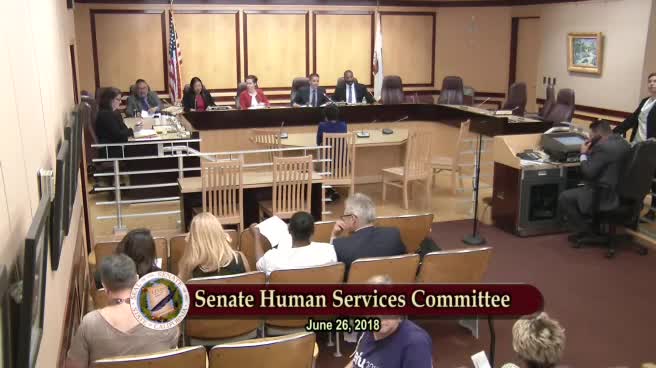 4MIN
Senate Standing Committee on Human Services
 2MIN
Assembly Floor
 7MIN
Assembly Standing Committee on Human Services
Bill Author

Bill Co-Author(s):