AB 2339: Water utility service: sale of water utility property by a city.
- Session Year: 2017-2018
- House: Assembly
- Latest Version Date: 2018-09-28
Existing law authorizes the furnishing of utility services by publicly owned public utilities, including municipal corporations, which are subject to control by their governing bodies. Existing law authorizes any municipal corporation to acquire, construct, own, operate, or lease any public utility, as defined, and authorizes a municipal corporation to sell or dispose of any public utility it owns. Existing law establishes an alternative procedure whereby a municipal corporation can lease, sell, or transfer that portion of a water utility used for furnishing water service outside or inside the boundaries of the municipal corporation, including the determination that the public utility is not necessary for supplying water to its own inhabitants or that its inhabitants will be provided with equal or better service by the acquiring entity, the sale or transfer is approved by a majority of all voters voting on this issue in an election, and that the acquiring entity disclose specified information before the election.
This bill would authorize the City of El Monte, the City of Montebello, and the City of Willows, until January 1, 2022, to sell its public utility for furnishing water service for the purpose of consolidating its public water system with another public water system pursuant to the specified procedures, only if the potentially subsumed water system is wholly within the boundaries of the city, if the city determines that it is uneconomical and not in the public interest to own and operate the public utility, and if certain requirements are met. The bill would prohibit the city from selling the public utility for one year if 50% of interested persons, as defined, protest the sale.
This bill would make legislative findings and declarations as to the necessity of a special statute for the Cities of El Monte, Montebello, and Willows.
This bill would incorporate additional changes to Section 10061 of the Public Utilities Code proposed by AB 2179 to be operative only if this bill and AB 2179 are enacted and this bill is enacted last.
Existing law authorizes the furnishing of utility services by publicly owned public utilities, including municipal corporations, which are subject to control by their governing bodies. Existing law authorizes any municipal corporation to acquire, construct, own, operate, or lease any public utility, as defined, and authorizes a municipal corporation to sell or dispose of any public utility it owns. Existing law establishes an alternative procedure whereby a municipal corporation can lease, sell, or transfer that portion of a water utility used for furnishing water service outside or inside the boundaries of the municipal corporation, including the determination that the public utility is not necessary for supplying water to its own inhabitants or that its inhabitants will be provided with equal or better service by the acquiring entity, the sale or transfer is approved by a majority of all voters voting on this issue in an election, and that the acquiring entity disclose specified information before the election.
This bill would permit a city that owns and operates a authorize the City of El Monte, the City of Montebello, and the City of Willows, until January 1, 2022, to sell its public utility for furnishing water service to sell the public utility for the purpose of consolidating its public water system with another public water system pursuant to the specified procedures, only if the potentially subsumed water system is wholly within the boundaries of the city, if the city determines that it is uneconomical and not in the public interest to own and operate the public utility, and if certain requirements are met. The bill would prohibit the city from selling the public utility for one year if 50% of interested persons, as defined, protest the sale.
This bill would make legislative findings and declarations as to the necessity of a special statute for the Cities of El Monte, Montebello, and Willows.
Existing law authorizes the furnishing of utility services by publicly owned public utilities, including municipal corporations, which are subject to control by their governing bodies. Existing law authorizes any municipal corporation to acquire, construct, own, operate, or lease any public utility, as defined, and authorizes a municipal corporation to sell or dispose of any public utility it owns. Existing law establishes an alternative procedure whereby a municipal corporation can lease, sell, or transfer that portion of a water utility used for furnishing water service outside or inside the boundaries of the municipal corporation, including the determination that the public utility is not necessary for supplying water to its own inhabitants or that its inhabitants will be provided with equal or better service by the acquiring entity, the sale or transfer is approved by a majority of all voters voting on this issue in an election, and that the acquiring entity disclose specified information before the election.
This bill would permit a city that owns and operates a public utility for furnishing water service to sell the public utility for the purpose of consolidating its public water system with another public water system pursuant to the procedures that are generally applicable to the sale of real property by a city, specified procedures, only if the potentially subsumed water system is wholly within the boundaries of the city, if the city determines that it is uneconomical and not in the public interest to own and operate the public utility utility, and if certain requirements are met. The bill would prohibit the city from selling the public utility for one year if 50% of interested persons, as defined, protest the sale.
Existing law authorizes the furnishing of utility services by publicly owned public utilities, including municipal corporations, which are subject to control by their governing bodies. Existing law authorizes any municipal corporation to acquire, construct, own, operate, or lease any public utility, as defined, and authorizes a municipal corporation to sell or dispose of any public utility it owns. Existing law establishes an alternative procedure whereby a municipal corporation can lease, sell, or transfer that portion of a water utility used for furnishing water service outside or inside the boundaries of the municipal corporation, including the determination that the public utility is not necessary for supplying water to its own inhabitants or that its inhabitants will be provided with equal or better service by the acquiring entity, the sale or transfer is approved by a majority of all voters voting on this issue in an election, and that the acquiring entity disclose specified information before the election.
This bill would permit a city that owns and operates a public utility for furnishing water service to sell the public utility for the purpose of consolidating its public water system with another public water system pursuant to the procedures that are generally applicable to the sale of real property by a city, only if the potentially subsumed water system is wholly within the boundaries of the city, if the city determines that it is uneconomical and not in the public interest to own and operate the public utility and if certain requirements are met. The bill would prohibit the city from selling the public utility for one year if 50% of interested persons, as defined, protest the sale.
The Legislature finds and declares all of the following:
(a)It is the policy of the State of California that every human being has the right to safe, clean, affordable, and accessible water adequate for human consumption, cooking, and sanitary purposes.
(b)Many communities in the State of California receive their drinking water from a multitude of public water systems, including municipalities, public utility corporations, state special districts, small public water systems, and mutual water companies. Communities with fragmented public water systems typically have vastly different costs of service, aging and failing infrastructure, and conflicting drought mitigation and conservation policies. Small fragmented water service providers are often unable to achieve efficiencies and economies of scale that are available to consolidated water systems with a broader customer base.
(c)Small water systems often lack adequate resources or expertise to operate in compliance with increasingly stringent and complex safe drinking water quality standards, which are required to protect public health and safety, and are unable to bear the cost of replacing and upgrading aging and failing water service infrastructure. As a result, many small water suppliers are too small to be viable, raising questions as to whether they will be able to provide safe and reliable water service to the public now or in the future. Many small water suppliers are in such precarious financial condition that basic infrastructure maintenance is infeasible, and in many cases, maintenance and replacement of failing infrastructure is deferred. These water suppliers also have such small customer bases that additional investment is not affordable.
(d)Drinking water supply facilities require ongoing routine maintenance and repair to ensure that the public receives safe and reliable water service at affordable rates. When routine repairs to water supply infrastructure components are deferred, facilities fail, necessitating costly emergency repairs when water mains break or pumping and water treatment equipment fails. Thus, while deferring routine maintenance might lower costs in the short term, doing so results in substantial increases in costs to small water suppliers and their customers in the long term.
(e)Therefore, it is the policy of the State of California to consolidate small public water systems when (1) the water supplier cannot feasibly provide or ensure access to affordable water services to a community, (2) multiple suppliers exist in a single community, and (3) water systems have deferred maintenance on their aging or failing water supply infrastructure.
SEC. 2.Section 37420.5 is added to the Government Code, to read:37420.5.(a)Notwithstanding Article 2 (commencing with Section 10051) of Chapter 1 of Division 5 of the Public Utilities Code, the City of El Monte, the City of Montebello, and the City of Willows may sell its public utility for furnishing water service pursuant to this article for the purpose of consolidating its public water system with another public water system only if the potentially subsumed public water system is wholly within the boundaries of the city and if the city determines that it is uneconomical and not in the public interest to own and operate the public utility for furnishing water service, subject to all of the following requirements:
(1)The legislative body of the city shall not sell the water utility property for less than its fair market value, as defined in Section 1263.320 of the Code of Civil Procedure.
(2)The legislative body of the city shall not sell the water utility property without a four-fifths vote of the citys legislative body.
(3)There are at least two water suppliers that provide drinking water to residents in the city prior to the sale.
(4)The city has deferred necessary maintenance for aging or failing water infrastructure of public water systems operated by the public utility. The necessity of the maintenance shall be demonstrated by a study conducted by an independent third party that evaluates performance of the system applying American Water Works Association standards or other equivalent standards.
(5)The receiving water systems service area borders the service area of the subsumed water system.
(6)The subsumed water systems customers shall not pay water rates different from customers already receiving service from the receiving water system. Consolidation of the water systems shall be economically feasible for the ratepayers of the subsumed water system. Ratepayers of the subsumed water system shall be notified of the applicable rate that will be in effect during the first year after consolidation has been completed. Any rate increases following the sale of a public utility for furnishing water service shall be phased in over time.
(7)Consolidation of the water systems is technically and economically feasible.
(8)(A)The legislative body of the city shall not sell its public utility for furnishing water service unless it considers oral and written protests at its second regularly scheduled meeting following the adoption of a resolution pursuant to Sections 37422 and publication pursuant to subparagraph (B). In addition to the requirements of Section 37422, the resolution shall allow 45 days for hearing protests to the sale and shall state the citys intended use of the sale proceeds. Notice of the sale may be given by including notice in the agencys regular billing statement. One written protest per parcel, filed by an owner or tenant of the parcel, shall be counted in calculating a protest. The city shall maintain all written protests for a minimum of two years following the date of the hearing to consider written protests.
(B)Notwithstanding Section 37423, the resolution shall be published at least once in a daily newspaper published and circulated in the city or, if there is none, the legislative body shall designate a newspaper published in the county. It shall also be posted for not less than 10 days in at least three conspicuous places in the city.
(C)(i)Notwithstanding Section 37425, if the legislative body of the city finds that protests have been filed by at least 10 percent of interested persons, the legislative body of the city shall call an election pursuant to Section 37427. If an election is called pursuant to this paragraph, the legislative body of the city shall not sell the public utility for furnishing water service unless the sale is approved by a majority of the citys registered voters voting on the issue.
(ii)If 50 percent or more of interested persons protest the sale of the public utility, the city shall not take further steps for the sale of the public utility. The city, after one year has passed, may sell the public utility if the requirements of this section are met, including adoption of a new resolution pursuant to subparagraph (A).
(iii)For purposes of this paragraph, interested person means a person who is a resident of the city proposing to sell its public utility pursuant to this section.
(9)The legislative body of the city has adopted a resolution, at a regularly scheduled meeting, that paragraphs (1) to (8), inclusive, have been met.
(b)This section shall remain in effect only until January 1, 2022, and as of that date is repealed, unless a later enacted statute that is enacted before January 1, 2022, deletes or extends that date.
SEC. 3.Section 10061 of the Public Utilities Code is amended to read:10061.(a)Notwithstanding Article 1 (commencing with Section 10001) and this article, and except as provided in Section 37420.5 of the Government Code, a municipal corporation, by following the provisions of this section, may lease, sell, or transfer all or part of a public utility owned and operated by it for furnishing water service. As used in this section, municipal corporation means a city or a city and county.
(b)Any municipal corporation owning and operating a public utility for furnishing water service, a part of which or all of which public utility is operated and used for furnishing water service outside the boundaries of the municipal corporation, may lease, sell, or transfer, for just compensation, all or any part of the portion of the public utility located outside the boundaries of the municipal corporation to any other municipal corporation, public agency, or public utility water corporation upon the terms and conditions agreed upon by the selling municipal corporation if, by resolution adopted by a majority of its legislative body, it has determined that the public utility, or portion thereof, is not necessary for supplying water to its own inhabitants and if the acquiring entity by resolution adopted by a majority of the members of its legislative body or board of directors has concurred in the lease, sale, or transfer and the terms and conditions thereof and if the acquiring entity will be bound to render water service to the persons formerly served through the system being sold on terms and conditions which are just and reasonable and which do not unreasonably discriminate against the customers of the acquired entity.
(c)Any municipal corporation owning and operating a public utility for furnishing water service may sell or transfer, for just compensation, all or any part of the public utility located inside its municipal boundaries to any other municipal corporation, public agency, or public utility water corporation upon the terms and conditions agreed upon by the selling municipal corporation, if the sale or transfer is approved as follows:
(1)The municipal corporation, by resolution adopted by a majority of its legislative body, has determined that the public utility, or portion thereof, is not necessary for supplying water to its own inhabitants, or that its inhabitants will be provided with equal or better service by the acquiring entity on terms that are just and reasonable and do not discriminate against the customers of the acquired entity, and orders the issue submitted to the qualified voters of the municipality at a special or general election held for that purpose.
(2)The acquiring entity by resolution adopted by a majority of its legislative body or board of directors has concurred in the sale or transfer and in the terms and conditions thereof.
(3)The sale or transfer is approved by a majority of all voters voting on the issue in the election held for that purpose.
(4)The municipal corporation, public agency, or public utility water corporation proposing to acquire a municipal corporation public utility for furnishing water service shall disclose to the customers of the public water system to be acquired, not less than 30 days prior to the date of election for formal approval of the acquisition, a written statement which includes all of the following:
(A)A summary of the price and terms of the proposed acquisition.
(B)A comparison of the applicable water charges before and after the proposed acquisition.
(C)The estimated savings to be achieved or additional costs expected to result, or both, from the proposed acquisition.
(d)Subject to subdivision (e), a municipal corporation may lease a public utility furnishing water service by a resolution adopted by a majority of its legislative body and without lease term or other restrictions stated in any other provision of law.
(e)A municipal corporation acting pursuant to subdivision (c) shall specify the manner of soliciting and filing, and the method of evaluating, proposals for the acquisition of the public utility. Upon receipt and staff evaluation of a proposal or proposals the municipal corporation, if it determines that the proposal or proposals are responsive, shall schedule a public hearing, and notice thereof shall be published in accordance with Section 6066 of the Government Code. At the hearing, the municipal corporation shall examine proposals received and staff recommendations, and without lease term or other restrictions, may lease, sell, or transfer, for just compensation, the public utility to the entity that the municipal corporation finds best qualified to continue to provide equal or better service to the customers of the system. If the resolution proposes a sale, the resolution shall place the question on the ballot at the next regularly scheduled election or at a special election called for that purpose. The municipal corporation may, in its sole discretion, reject all proposals.
(f)Any agreement entered into before September 17, 1965, between municipal corporations for the lease, sale, or transfer of all or any part of a public utility owned and operated by one of the municipal corporations and furnishing water service to the inhabitants of the municipal corporation to which the lease, sale, or transfer is made is hereby validated.
SEC. 3.5.Section 10061 of the Public Utilities Code is amended to read:10061.(a)Notwithstanding Article 1 (commencing with Section 10001) and this article, and except as provided in Section 37420.5 of the Government Code, a municipal corporation, by following the provisions of this section, may lease, sell, or transfer all or part of a public utility owned and operated by it for furnishing water or sewer service. As used in this section, municipal corporation means a city or a city and county.
(b)Any municipal corporation owning and operating a public utility for furnishing water or sewer service, a part of which or all of which public utility is operated and used for furnishing water or sewer service outside the boundaries of the municipal corporation, may lease, sell, or transfer, for just compensation, all or any part of the portion of the public utility located outside the boundaries of the municipal corporation to any other municipal corporation, public agency, water corporation, or sewer system corporation upon the terms and conditions agreed upon by the selling municipal corporation if, by resolution adopted by a majority of its legislative body, it has determined that the public utility, or portion thereof, is not necessary for supplying water or sewer service to its own inhabitants and if the acquiring entity by resolution adopted by a majority of the members of its legislative body or board of directors has concurred in the lease, sale, or transfer and the terms and conditions thereof and if the acquiring entity will be bound to render water or sewer service to the persons formerly served through the system being sold on terms and conditions that are just and reasonable and do not unreasonably discriminate against the customers of the acquired entity.
(c)Any municipal corporation owning and operating a public utility for furnishing water or sewer service may sell or transfer, for just compensation, all or any part of the public utility located inside its municipal boundaries to any other municipal corporation, public agency, water corporation, or sewer system corporation upon the terms and conditions agreed upon by the selling municipal corporation, if the sale or transfer is approved as follows:
(1)The municipal corporation, by resolution adopted by a majority of its legislative body, has determined that the public utility, or portion thereof, is not necessary for supplying water or sewer services to its own inhabitants, or that its inhabitants will be provided with equal or better service by the acquiring entity on terms that are just and reasonable and do not discriminate against the customers of the acquired entity, and orders the issue submitted to the qualified voters of the municipality at a special or general election held for that purpose.
(2)The acquiring entity by resolution adopted by a majority of its legislative body or board of directors has concurred in the sale or transfer and in the terms and conditions thereof.
(3)The sale or transfer is approved by a majority of all voters voting on the issue in the election held for that purpose.
(4)The municipal corporation, public agency, water corporation, or sewer system corporation proposing to acquire a municipal corporation public utility for furnishing water or sewer service shall disclose to the customers of the public water or sewer system to be acquired, not less than 30 days prior to the date of election for formal approval of the acquisition, a written statement which includes all of the following:
(A)A summary of the price and terms of the proposed acquisition.
(B)A comparison of the applicable water or sewer charges before and after the proposed acquisition.
(C)The estimated savings to be achieved or additional costs expected to result, or both, from the proposed acquisition.
(d)Subject to subdivision (e), a municipal corporation may lease a public utility furnishing water or sewer service by a resolution adopted by a majority of its legislative body and without lease term or other restrictions stated in any other law.
(e)A municipal corporation acting pursuant to subdivision (c) shall specify the manner of soliciting and filing, and the method of evaluating, proposals for the acquisition of the public utility. Upon receipt and staff evaluation of a proposal or proposals the municipal corporation, if it determines that the proposal or proposals are responsive, shall schedule a public hearing, and notice thereof shall be published in accordance with Section 6066 of the Government Code. At the hearing, the municipal corporation shall examine proposals received and staff recommendations, and without lease term or other restrictions, may lease, sell, or transfer, for just compensation, the public utility to the entity that the municipal corporation finds best qualified to continue to provide equal or better service to the customers of the system. If the resolution proposes a sale, the resolution shall place the question on the ballot at the next regularly scheduled election or at a special election called for that purpose. The municipal corporation may, in its sole discretion, reject all proposals.
(f)Any agreement entered into before September 17, 1965, between municipal corporations for the lease, sale, or transfer of all or any part of a public utility owned and operated by one of the municipal corporations and furnishing water service to the inhabitants of the municipal corporation to which the lease, sale, or transfer is made is hereby validated.
SEC. 4.The Legislature finds and declares that a special statute is necessary and that a general statute cannot be made applicable within the meaning of Section 16 of Article IV of the California Constitution because of the unique circumstances in the Cities of El Monte, Montebello, and Willows.
SEC. 5.Section 3.5 of this bill incorporates amendments to Section 10061 of the Public Utilities Code proposed by both this bill and Assembly Bill 2179. That section shall only become operative if (1) both bills are enacted and become effective on or before January 1, 2019, (2) each bill amends Section 10061 of the Public Utilities Code, and (3) this bill is enacted after Assembly Bill 2179, in which case Section 3 of this bill shall not become operative.
The Legislature finds and declares all of the following:
(a)It is the policy of the State of California that every human being has the right to safe, clean, affordable, and accessible water adequate for human consumption, cooking, and sanitary purposes.
(b)Many communities in the State of California receive their drinking water from a multitude of public water systems, including municipalities, public utility corporations, state special districts, small public water systems, and mutual water companies. Communities with fragmented public water systems typically have vastly different costs of service, aging and failing infrastructure, and conflicting drought mitigation and conservation policies. Small fragmented water service providers are often unable to achieve efficiencies and economies of scale that are available to consolidated water systems with a broader customer base.
(c)Small water systems often lack adequate resources or expertise to operate in compliance with increasingly stringent and complex safe drinking water quality standards, which are required to protect public health and safety, and are unable to bear the cost of replacing and upgrading aging and failing water service infrastructure. As a result, many small water suppliers are too small to be viable, raising questions as to whether they will be able to provide safe and reliable water service to the public now or in the future. Many small water suppliers are in such precarious financial condition that basic infrastructure maintenance is infeasible, and in many cases, maintenance and replacement of failing infrastructure is deferred. These water suppliers also have such small customer bases that additional investment is not affordable.
(d)Drinking water supply facilities require ongoing routine maintenance and repair to ensure that the public receives safe and reliable water service at affordable rates. When routine repairs to water supply infrastructure components are deferred, facilities fail, necessitating costly emergency repairs when water mains break or pumping and water treatment equipment fails. Thus, while deferring routine maintenance might lower costs in the short term, doing so results in substantial increases in costs to small water suppliers and their customers in the long term.
(e)Therefore, it is the policy of the State of California to consolidate small public water systems when (1) the water supplier cannot feasibly provide or ensure access to affordable water services to a community, (2) multiple suppliers exist in a single community, and (3) water systems have deferred maintenance on their aging or failing water supply infrastructure.
SEC. 2.Section 37420.5 is added to the Government Code, to read:37420.5.(a)Notwithstanding Article 2 (commencing with Section 10051) of Chapter 1 of Division 5 of the Public Utilities Code, the City of El Monte, the City of Montebello, and the City of Willows may sell its public utility for furnishing water service pursuant to this article for the purpose of consolidating its public water system with another public water system only if the potentially subsumed public water system is wholly within the boundaries of the city and if the city determines that it is uneconomical and not in the public interest to own and operate the public utility for furnishing water service, subject to all of the following requirements:
(1)The legislative body of the city shall not sell the water utility property for less than its fair market value, as defined in Section 1263.320 of the Code of Civil Procedure.
(2)The legislative body of the city shall not sell the water utility property without a four-fifths vote of the citys legislative body.
(3)There are at least two water suppliers that provide drinking water to residents in the city prior to the sale.
(4)The city has deferred necessary maintenance for aging or failing water infrastructure of public water systems operated by the public utility. The necessity of the maintenance shall be demonstrated by a study conducted by an independent third party that evaluates performance of the system applying American Water Works Association standards or other equivalent standards.
(5)The receiving water systems service area borders the service area of the subsumed water system.
(6)The subsumed water system is a small community water system, as defined in Section 116275 of the Health and Safety Code.(7)(6)The subsumed water systems customers shall not pay water rates different from customers already receiving service from the receiving water system. Consolidation of the water systems shall be economically feasible for the ratepayers of the subsumed water system. Ratepayers of the subsumed water system shall be notified of the applicable rate that will be in effect during the first year after consolidation has been completed. Any rate increases following the sale of a public utility for furnishing water service shall be phased in over time.
(8)(7)Consolidation of the water systems is technically and economically feasible.
(9)(8)(A)The legislative body of the city shall not sell its public utility for furnishing water service unless it considers oral and written protests at its second regularly scheduled meeting following the adoption of a resolution pursuant to Sections 37422 and publication pursuant to subparagraph (B). In addition to the requirements of Section 37422, the resolution shall allow 45 days for hearing protests to the sale and shall state the citys intended use of the sale proceeds. Notice of the sale may be given by including notice in the agencys regular billing statement. One written protest per parcel, filed by an owner or tenant of the parcel, shall be counted in calculating a protest. The city shall maintain all written protests for a minimum of two years following the date of the hearing to consider written protests.
(B)Notwithstanding Section 37423, the resolution shall be published at least once in a daily newspaper published and circulated in the city or, if there is none, the legislative body shall designate a newspaper published in the county. It shall also be posted for not less than 10 days in at least three conspicuous places in the city.
(C)(i)Notwithstanding Section 37425, if the legislative body of the city finds that protests have been filed by at least 10 percent of interested persons, the legislative body of the city shall call an election pursuant to Section 37427. If an election is called pursuant to this paragraph, the legislative body of the city shall not sell the public utility for furnishing water service unless the sale is approved by a majority of the citys registered voters voting on the issue.
(ii)If 50 percent or more of interested persons protest the sale of the public utility, the city shall not take further steps for the sale of the public utility. The city, after one year has passed, may sell the public utility if the requirements of this section are met, including adoption of a new resolution pursuant to subparagraph (A).
(iii)For purposes of this paragraph, interested person means a person who is a resident of the city proposing to sell its public utility pursuant to this section.
(10)(9)The legislative body of the city has adopted a resolution, at a regularly scheduled meeting, that paragraphs (1) to (9), (8), inclusive, have been met.
(b)This section shall remain in effect only until January 1, 2022, and as of that date is repealed, unless a later enacted statute that is enacted before January 1, 2022, deletes or extends that date.
SEC. 3.Section 10061 of the Public Utilities Code is amended to read:10061.(a)Notwithstanding Article 1 (commencing with Section 10001) and this article, and except as provided in Section 37420.5 of the Government Code, a municipal corporation, by following the provisions of this section, may lease, sell, or transfer all or part of a public utility owned and operated by it for furnishing water service. As used in this section, municipal corporation means a city or a city and county.
(b)Any municipal corporation owning and operating a public utility for furnishing water service, a part of which or all of which public utility is operated and used for furnishing water service outside the boundaries of the municipal corporation, may lease, sell, or transfer, for just compensation, all or any part of the portion of the public utility located outside the boundaries of the municipal corporation to any other municipal corporation, public agency, or public utility water corporation upon the terms and conditions agreed upon by the selling municipal corporation if, by resolution adopted by a majority of its legislative body, it has determined that the public utility, or portion thereof, is not necessary for supplying water to its own inhabitants and if the acquiring entity by resolution adopted by a majority of the members of its legislative body or board of directors has concurred in the lease, sale, or transfer and the terms and conditions thereof and if the acquiring entity will be bound to render water service to the persons formerly served through the system being sold on terms and conditions which are just and reasonable and which do not unreasonably discriminate against the customers of the acquired entity.
(c)Any municipal corporation owning and operating a public utility for furnishing water service may sell or transfer, for just compensation, all or any part of the public utility located inside its municipal boundaries to any other municipal corporation, public agency, or public utility water corporation upon the terms and conditions agreed upon by the selling municipal corporation, if the sale or transfer is approved as follows:
(1)The municipal corporation, by resolution adopted by a majority of its legislative body, has determined that the public utility, or portion thereof, is not necessary for supplying water to its own inhabitants, or that its inhabitants will be provided with equal or better service by the acquiring entity on terms that are just and reasonable and do not discriminate against the customers of the acquired entity, and orders the issue submitted to the qualified voters of the municipality at a special or general election held for that purpose.
(2)The acquiring entity by resolution adopted by a majority of its legislative body or board of directors has concurred in the sale or transfer and in the terms and conditions thereof.
(3)The sale or transfer is approved by a majority of all voters voting on the issue in the election held for that purpose.
(4)The municipal corporation, public agency, or public utility water corporation proposing to acquire a municipal corporation public utility for furnishing water service shall disclose to the customers of the public water system to be acquired, not less than 30 days prior to the date of election for formal approval of the acquisition, a written statement which includes all of the following:
(A)A summary of the price and terms of the proposed acquisition.
(B)A comparison of the applicable water charges before and after the proposed acquisition.
(C)The estimated savings to be achieved or additional costs expected to result, or both, from the proposed acquisition.
(d)Subject to subdivision (e), a municipal corporation may lease a public utility furnishing water service by a resolution adopted by a majority of its legislative body and without lease term or other restrictions stated in any other provision of law.
(e)A municipal corporation acting pursuant to subdivision (c) shall specify the manner of soliciting and filing, and the method of evaluating, proposals for the acquisition of the public utility. Upon receipt and staff evaluation of a proposal or proposals the municipal corporation, if it determines that the proposal or proposals are responsive, shall schedule a public hearing, and notice thereof shall be published in accordance with Section 6066 of the Government Code. At the hearing, the municipal corporation shall examine proposals received and staff recommendations, and without lease term or other restrictions, may lease, sell, or transfer, for just compensation, the public utility to the entity that the municipal corporation finds best qualified to continue to provide equal or better service to the customers of the system. If the resolution proposes a sale, the resolution shall place the question on the ballot at the next regularly scheduled election or at a special election called for that purpose. The municipal corporation may, in its sole discretion, reject all proposals.
(f)Any agreement entered into before September 17, 1965, between municipal corporations for the lease, sale, or transfer of all or any part of a public utility owned and operated by one of the municipal corporations and furnishing water service to the inhabitants of the municipal corporation to which the lease, sale, or transfer is made is hereby validated.
SEC. 3.5.Section 10061 of the Public Utilities Code is amended to read:10061.(a)Notwithstanding Article 1 (commencing with Section 10001) and this article, and except as provided in Section 37420.5 of the Government Code, a municipal corporation, by following the provisions of this section, may lease, sell sell, or transfer all or part of a public utility owned and operated by it for furnishing water or sewer service. As used in this section, municipal corporation, corporation means a city or a city and county.
(b)Any municipal corporation owning and operating a public utility for furnishing water or sewer service, a part of which or all of which public utility is operated and used for furnishing water or sewer service outside the boundaries of the municipal corporation, may lease, sell sell, or transfer, for just compensation compensation, all or any part of the portion of the public utility located outside the boundaries of the municipal corporation to any other municipal corporation, public agency or public utility water agency, water corporation, or sewer system corporation upon the terms and conditions agreed upon by the selling municipal corporation if, by resolution adopted by a majority of its legislative body, it has determined that the public utility, or portion thereof, is not necessary for supplying water or sewer service to its own inhabitants and if the acquiring entity by resolution adopted by a majority of the members of its legislative body or board of directors has concurred in the lease, sale, or transfer and the terms and conditions thereof and if the acquiring entity will be bound to render water or sewer service to the persons formerly served through the system being sold on terms and conditions which that are just and reasonable and which do not unreasonably discriminate against the customers of the acquired entity.
(c)Any municipal corporation owning and operating a public utility for furnishing water or sewer service may sell or transfer, for just compensation, all or any part of the public utility located inside its municipal boundaries to any other municipal corporation, public agency, or public utility water water corporation, or sewer system corporation upon the terms and conditions agreed upon by the selling municipal corporation, if the sale or transfer is approved as follows:
(1)The municipal corporation, by resolution adopted by a majority of its legislative body, has determined that the public utility, or portion thereof, is not necessary for supplying water or sewer services to its own inhabitants, or that its inhabitants will be provided with equal or better service by the acquiring entity on terms that are just and reasonable and do not discriminate against the customers of the acquired entity; entity, and orders the issue submitted to the qualified voters of the municipality at a special or general election held for that purpose.
(2)The acquiring entity by resolution adopted by a majority of its legislative body or board of directors has concurred in the sale or transfer and in the terms and conditions thereof.
(3)The sale or transfer is approved by a majority of all voters voting on the issue in the election held for that purpose.
(4)The municipal corporation, public agency, or public utility water water corporation, or sewer system corporation proposing to acquire a municipal corporation public utility for furnishing water or sewer service shall disclose to the customers of the public water or sewer system to be acquired, not less than 30 days prior to the date of election for formal approval of the acquisition, a written statement which includes all of the following:
(A)A summary of the price and terms of the proposed acquisition.
(B)A comparison of the applicable water or sewer charges before and after the proposed acquisition.
(C)The estimated savings to be achieved or additional costs expected to result, or both, from the proposed acquisition.
(d)Subject to subdivision (e), a municipal corporation may lease a public utility furnishing water or sewer service by a resolution adopted by a majority of its legislative body and without lease term or other restrictions stated in any other provision of law.
(e)A municipal corporation acting pursuant to subdivision (c) shall specify the manner of soliciting and filing, and the method of evaluating, proposals for the acquisition of the public utility. Upon receipt and staff evaluation of a proposal or proposals the municipal corporation, if it determines that the proposal or proposals are responsive, shall schedule a public hearing, and notice thereof shall be published in accordance with Section 6066 of the Government Code. At the hearing, the municipal corporation shall examine proposals received and staff recommendations, and without lease term or other restrictions, may lease, sell, or transfer, for just compensation, the public utility to the entity that the municipal corporation finds best qualified to continue to provide equal or better service to the customers of the system. If the resolution proposes a sale, the resolution shall place the question on the ballot at the next regularly scheduled election or at a special election called for that purpose. The municipal corporation may, in its sole discretion, reject all proposals.
(f)Any agreement entered into before September 17, 1965, between municipal corporations for the lease, sale sale, or transfer of all or any part of a public utility owned and operated by one of the municipal corporations and furnishing water service to the inhabitants of the municipal corporation to which the lease, sale sale, or transfer is made is hereby validated.
SEC. 4.The Legislature finds and declares that a special statute is necessary and that a general statute cannot be made applicable within the meaning of Section 16 of Article IV of the California Constitution because of the unique circumstances in the Cities of El Monte, Montebello, and Willows.
SEC. 5.Section 3.5 of this bill incorporates amendments to Section 10061 of the Public Utilities Code proposed by both this bill and Assembly Bill 2179. That section shall only become operative if (1) both bills are enacted and become effective on or before January 1, 2019, (2) each bill amends Section 10061 of the Public Utilities Code, and (3) this bill is enacted after Assembly Bill 2179, in which case Section 3 of this bill shall not become operative.
The Legislature finds and declares all of the following:
(a)It is the policy of the State of California that every human being has the right to safe, clean, affordable, and accessible water adequate for human consumption, cooking, and sanitary purposes.
(b)Many communities in the State of California receive their drinking water from a multitude of public water systems, including municipalities, public utility corporations, state special districts, small public water systems, and mutual water companies. Communities with fragmented public water systems typically have vastly different costs of service, aging and failing infrastructure, and conflicting drought mitigation and conservation policies. Small fragmented water service providers are often unable to achieve efficiencies and economies of scale that are available to consolidated water systems with a broader customer base.
(c)Small water systems often lack adequate resources or expertise to operate in compliance with increasingly stringent and complex safe drinking water quality standards, which are required to protect public health and safety, and are unable to bear the cost of replacing and upgrading aging and failing water service infrastructure. As a result, many small water suppliers are too small to be viable, raising questions as to whether they will be able to provide safe and reliable water service to the public now or in the future. Many small water suppliers are in such precarious financial condition that basic infrastructure maintenance is infeasible, and in many cases, maintenance and replacement of failing infrastructure is deferred. These water suppliers also have such small customer bases that additional investment is not affordable.
(d)Drinking water supply facilities require ongoing routine maintenance and repair to ensure that the public receives safe and reliable water service at affordable rates. When routine repairs to water supply infrastructure components are deferred, facilities fail, necessitating costly emergency repairs when water mains break or pumping and water treatment equipment fails. Thus, while deferring routine maintenance might lower costs in the short term, doing so results in substantial increases in costs to small water suppliers and their customers in the long term.
(e)Therefore, it is the policy of the State of California to consolidate small public water systems when (1) the water supplier cannot feasibly provide or ensure access to affordable water services to a community, (2) multiple suppliers exist in a single community, and (3) water systems have deferred maintenance on their aging or failing water supply infrastructure.
SEC. 2.Section 37420.5 is added to the Government Code, to read:37420.5.(a)Notwithstanding Article 2 (commencing with Section 10051) of Chapter 1 of Division 5 of the Public Utilities Code, a city owning and operating a the City of El Monte, the City of Montebello, and the City of Willows may sell its public utility for furnishing water service may sell the public utility pursuant to this article for the purpose of consolidating its public water system with another public water system only if the potentially subsumed public water system is wholly within the boundaries of the city and if the city determines that it is uneconomical and not in the public interest to own and operate the public utility for furnishing water service, subject to all of the following requirements:
(a)(1)The legislative body of the city shall not sell the water utility property for less than its fair market value, as defined in Section 1263.320 of the Code of Civil Procedure.
(b)(2)The legislative body of the city shall not sell the water utility property without a four-fifths vote of the citys legislative body.
(c)(3)There are at least two water suppliers that provide drinking water to residents in the city prior to the sale.
(d)(4)The city has deferred necessary maintenance for aging or failing water infrastructure of public water systems operated by the public utility. The necessity of the maintenance shall be demonstrated by a study conducted by an independent third party that evaluates performance of the system applying American Water Works Association standards or other equivalent standards.
(e)(5)The receiving water systems service area borders the service area of the subsumed water system.
(f)(6)The subsumed water system is a small community water system, as defined in Section 116275 of the Health and Safety Code.
(g)(7)The subsumed water systems customers shall not pay water rates different from customers already receiving service from the receiving water system. Consolidation of the water systems shall be economically feasible for the ratepayers of the subsumed water system. Ratepayers of the subsumed water system shall be notified of the applicable rate that will be in effect during the first year after consolidation has been completed. Any rate increases following the sale of a public utility for furnishing water service shall be phased in over time.
(h)(8)Consolidation of the water systems is technically and economically feasible.
(i)(1)The(9)(A)The legislative body of the city shall not sell its public utility for furnishing water service unless it considers oral and written protests at its second regularly scheduled meeting following the adoption of a resolution pursuant to Sections 37422 and publication pursuant to paragraph (2). subparagraph (B). In addition to the requirements of Section 37422, the resolution shall allow 45 days for hearing protests to the sale and shall state the citys intended use of the sale proceeds. Notice of the sale may be given by including notice in the agencys regular billing statement. One written protest per parcel, filed by an owner or tenant of the parcel, shall be counted in calculating a protest. The city shall maintain all written protests for a minimum of two years following the date of the hearing to consider written protests.
(2)(B)Notwithstanding Section 37423, the resolution shall be published at least once in a daily newspaper published and circulated in the city or, if there is none, the legislative body shall designate a newspaper published in the county. It shall also be posted for not less than 10 days in at least three conspicuous places in the city.
(3)(A)Notwithstanding(C)(i)Notwithstanding Section 37425, if the legislative body of the city finds that protests have been filed by at least 25 10 percent of interested persons, the legislative body of the city shall call an election pursuant to Section 37427. If an election is called pursuant to this paragraph, the legislative body of the city shall not sell the public utility for furnishing water service unless the sale is approved by a majority of the citys registered voters voting on the issue.
(B)(ii)If 50 percent or more of interested persons protest the sale of the public utility, the city shall not take further steps for the sale of the public utility. The city, after one year has passed, may sell the public utility if the requirements of this section are met, including adoption of a new resolution pursuant to paragraph (1). subparagraph (A).
(C)(iii)For purposes of this paragraph, interested person means a person who is a resident of the city proposing to sell its public utility pursuant to this section.
(j)(10)The legislative body of the city has adopted a resolution, at a regularly scheduled meeting, that subdivisions (a) to (i), paragraphs (1) to (9), inclusive, have been met.
(b)This section shall remain in effect only until January 1, 2022, and as of that date is repealed, unless a later enacted statute that is enacted before January 1, 2022, deletes or extends that date.
SEC. 3.Section 10061 of the Public Utilities Code is amended to read:10061.(a)Notwithstanding Article 1 (commencing with Section 10001) and this article, and except as provided in Section 37420.5 of the Government Code, a municipal corporation, by following the provisions of this section, may lease, sell, or transfer all or part of a public utility owned and operated by it for furnishing water service. As used in this section, municipal corporation, corporation means a city or a city and county.
(b)Any municipal corporation owning and operating a public utility for furnishing water service, a part of which or all of which public utility is operated and used for furnishing water service outside the boundaries of the municipal corporation, may lease, sell, or transfer, for just compensation, all or any part of the portion of the public utility located outside the boundaries of the municipal corporation to any other municipal corporation, public agency, or public utility water corporation upon the terms and conditions agreed upon by the selling municipal corporation if, by resolution adopted by a majority of its legislative body, it has determined that the public utility, or portion thereof, is not necessary for supplying water to its own inhabitants and if the acquiring entity by resolution adopted by a majority of the members of its legislative body or board of directors has concurred in the lease, sale, or transfer and the terms and conditions thereof and if the acquiring entity will be bound to render water service to the persons formerly served through the system being sold on terms and conditions which are just and reasonable and which do not unreasonably discriminate against the customers of the acquired entity.
(c)Any municipal corporation owning and operating a public utility for furnishing water service may sell or transfer, for just compensation, all or any part of the public utility located inside its municipal boundaries to any other municipal corporation, public agency, or public utility water corporation upon the terms and conditions agreed upon by the selling municipal corporation, if the sale or transfer is approved as follows:
(1)The municipal corporation, by resolution adopted by a majority of its legislative body, has determined that the public utility, or portion thereof, is not necessary for supplying water to its own inhabitants, or that its inhabitants will be provided with equal or better service by the acquiring entity on terms that are just and reasonable and do not discriminate against the customers of the acquired entity, and orders the issue submitted to the qualified voters of the municipality at a special or general election held for that purpose.
(2)The acquiring entity by resolution adopted by a majority of its legislative body or board of directors has concurred in the sale or transfer and in the terms and conditions thereof.
(3)The sale or transfer is approved by a majority of all voters voting on the issue in the election held for that purpose.
(4)The municipal corporation, public agency, or public utility water corporation proposing to acquire a municipal corporation public utility for furnishing water service shall disclose to the customers of the public water system to be acquired, not less than 30 days prior to the date of election for formal approval of the acquisition, a written statement which includes all of the following:
(A)A summary of the price and terms of the proposed acquisition.
(B)A comparison of the applicable water charges before and after the proposed acquisition.
(C)The estimated savings to be achieved or additional costs expected to result, or both, from the proposed acquisition.
(d)Subject to subdivision (e), a municipal corporation may lease a public utility furnishing water service by a resolution adopted by a majority of its legislative body and without lease term or other restrictions stated in any other provision of law.
(e)A municipal corporation acting pursuant to subdivision (c) shall specify the manner of soliciting and filing, and the method of evaluating, proposals for the acquisition of the public utility. Upon receipt and staff evaluation of a proposal or proposals the municipal corporation, if it determines that the proposal or proposals are responsive, shall schedule a public hearing, and notice thereof shall be published in accordance with Section 6066 of the Government Code. At the hearing, the municipal corporation shall examine proposals received and staff recommendations, and without lease term or other restrictions, may lease, sell, or transfer, for just compensation, the public utility to the entity that the municipal corporation finds best qualified to continue to provide equal or better service to the customers of the system. If the resolution proposes a sale, the resolution shall place the question on the ballot at the next regularly scheduled election or at a special election called for that purpose. The municipal corporation may, in its sole discretion, reject all proposals.
(f)Any agreement entered into before September 17, 1965, between municipal corporations for the lease, sale, or transfer of all or any part of a public utility owned and operated by one of the municipal corporations and furnishing water service to the inhabitants of the municipal corporation to which the lease, sale, or transfer is made is hereby validated.
SEC. 4.The Legislature finds and declares that a special statute is necessary and that a general statute cannot be made applicable within the meaning of Section 16 of Article IV of the California Constitution because of the unique circumstances in the Cities of El Monte, Montebello, and Willows.
The Legislature finds and declares all of the following:
(a)It is the policy of the State of California that every human being has the right to safe, clean, affordable, and accessible water adequate for human consumption, cooking, and sanitary purposes.
(b)Many communities in the State of California receive their drinking water from a multitude of public water systems, including municipalities, public utility corporations, state special districts, small public water systems, and mutual water companies. Communities with fragmented public water systems typically have vastly different costs of service, aging and failing infrastructure, and conflicting drought mitigation and conservation policies. Small fragmented water service providers are often unable to achieve efficiencies and economies of scale that are available to consolidated water systems with a broader customer base.
(c)Small water systems often lack adequate resources or expertise to operate in compliance with increasingly stringent and complex safe drinking water quality standards, which are required to protect public health and safety, and are unable to bear the cost of replacing and upgrading aging and failing water service infrastructure. As a result, many small water suppliers are too small to be viable, raising questions as to whether they will be able to provide safe and reliable water service to the public now or in the future. Many small water suppliers are in such precarious financial condition that basic infrastructure maintenance is infeasible, and in many cases, maintenance and replacement of failing infrastructure is deferred. These water suppliers also have such small customer bases that additional investment is not affordable.
(d)Drinking water supply facilities require ongoing routine maintenance and repair to ensure that the public receives safe and reliable water service at affordable rates. When routine repairs to water supply infrastructure components are deferred, facilities fail, necessitating costly emergency repairs when water mains break or pumping and water treatment equipment fails. Thus, while deferring routine maintenance might lower costs in the short term, doing so results in substantial increases in costs to small water suppliers and their customers in the long term.
(e)Therefore, it is the policy of the State of California to consolidate small public water systems when (1) the water supplier cannot feasibly provide or ensure access to affordable water services to a community, (2) multiple suppliers exist in a single community, and (3) water systems have deferred maintenance on their aging or failing water supply infrastructure.
SEC. 2.Section 37420.5 is added to the Government Code, to read:37420.5.Notwithstanding Article 2 (commencing with Section 10051) of Chapter 1 of Division 5 of the Public Utilities Code, a city owning and operating a public utility for furnishing water service may sell the public utility pursuant to this article for the purpose of consolidating its public water system with another public water system only if the potentially subsumed public water system is wholly within the boundaries of the city and if the city determines that it is uneconomical and not in the public interest to own and operate the public utility for furnishing water service, subject to all of the following requirements:
(a)The legislative body of the city shall not sell the water utility property for less than its fair market value, as defined in Section 1263.320 of the Code of Civil Procedure.
(b)The legislative body of the city shall not sell the water utility property without a majority four-fifths vote of the citys legislative body.
(c)There are at least two water suppliers that provide drinking water to residents in the city prior to the sale.
(d)The city has deferred necessary maintenance for aging or failing water infrastructure of public water systems operated by the public utility. The necessity of the maintenance shall be demonstrated by a study conducted by an independent third party that evaluates performance of the system applying American Water Works Association standards or other equivalent standards.
(e)The receiving water systems service area borders the service area of the subsumed water system.
(f)The subsumed water system is a small community water system, as defined in Section 116275 of the Health and Safety Code.
(g)The subsumed water systems customers shall not pay water rates different from customers already receiving service from the receiving water system. Consolidation of the water systems shall be economically feasible for the ratepayers of the subsumed water system. Ratepayers of the subsumed water system shall be notified of the applicable rate that will be in effect during the first year after consolidation has been completed. Any rate increases following the sale of a public utility for furnishing water service shall be phased in over time.
(h)Consolidation of the water systems is technically and economically feasible.
(i)(1)The legislative body of the city shall not sell its public utility for furnishing water service unless it considers oral and written protests at its second regularly scheduled meeting following the adoption of a resolution pursuant to Sections 37422 and publication pursuant to paragraph (2). In addition to the requirements of Section 37422, the resolution shall allow 45 days for hearing protests to the sale and shall state the citys intended use of the sale proceeds. Notice of the sale may be given by including notice in the agencys regular billing statement. One written protest per parcel, filed by an owner or tenant of the parcel, shall be counted in calculating a protest. The city shall maintain all written protests for a minimum of two years following the date of the hearing to consider written protests.
(2)Notwithstanding Section 37423, the resolution shall be published at least once in a daily newspaper published and circulated in the city or, if there is none, the legislative body shall designate a newspaper published in the county. It shall also be posted for not less than 10 days in at least three conspicuous places in the city.
(3)(A)Notwithstanding Section 37425, if the legislative body of the city finds that protests have been filed by at least 25 percent of interested persons, the legislative body of the city shall call an election pursuant to Section 37427. If an election is called pursuant to this paragraph, the legislative body of the city shall not sell the public utility for furnishing water service unless the sale is approved by a majority of the citys registered voters voting on the issue.
(B)If 50 percent or more of interested persons protest the sale of the public utility, the city shall not take further steps for the sale of the public utility. The city, after one year has passed, may sell the public utility if the requirements of this section are met, including adoption of a new resolution pursuant to paragraph (1).
(C)For purposes of this paragraph, interested person means a person who is a resident of the city proposing to sell its public utility pursuant to this section.
(j)The legislative body of the city has adopted a resolution, at a regularly scheduled meeting, that subdivisions (a) to (i), inclusive, have been met.
SEC. 3.Section 10061 of the Public Utilities Code is amended to read:10061.(a)Notwithstanding Article 1 (commencing with Section 10001) and this article, and except as provided in Section 37420.5 of the Government Code, a municipal corporation, by following the provisions of this section, may lease, sell, or transfer all or part of a public utility owned and operated by it for furnishing water service. As used in this section, municipal corporation, means a city or a city and county.
(b)Any municipal corporation owning and operating a public utility for furnishing water service, a part of which or all of which public utility is operated and used for furnishing water service outside the boundaries of the municipal corporation, may lease, sell, or transfer, for just compensation, all or any part of the portion of the public utility located outside the boundaries of the municipal corporation to any other municipal corporation, public agency, or public utility water corporation upon the terms and conditions agreed upon by the selling municipal corporation if, by resolution adopted by a majority of its legislative body, it has determined that the public utility, or portion thereof, is not necessary for supplying water to its own inhabitants and if the acquiring entity by resolution adopted by a majority of the members of its legislative body or board of directors has concurred in the lease, sale, or transfer and the terms and conditions thereof and if the acquiring entity will be bound to render water service to the persons formerly served through the system being sold on terms and conditions which are just and reasonable and which do not unreasonably discriminate against the customers of the acquired entity.
(c)Any municipal corporation owning and operating a public utility for furnishing water service may sell or transfer, for just compensation, all or any part of the public utility located inside its municipal boundaries to any other municipal corporation, public agency, or public utility water corporation upon the terms and conditions agreed upon by the selling municipal corporation, if the sale or transfer is approved as follows:
(1)The municipal corporation, by resolution adopted by a majority of its legislative body, has determined that the public utility, or portion thereof, is not necessary for supplying water to its own inhabitants, or that its inhabitants will be provided with equal or better service by the acquiring entity on terms that are just and reasonable and do not discriminate against the customers of the acquired entity, and orders the issue submitted to the qualified voters of the municipality at a special or general election held for that purpose.
(2)The acquiring entity by resolution adopted by a majority of its legislative body or board of directors has concurred in the sale or transfer and in the terms and conditions thereof.
(3)The sale or transfer is approved by a majority of all voters voting on the issue in the election held for that purpose.
(4)The municipal corporation, public agency, or public utility water corporation proposing to acquire a municipal corporation public utility for furnishing water service shall disclose to the customers of the public water system to be acquired, not less than 30 days prior to the date of election for formal approval of the acquisition, a written statement which includes all of the following:
(A)A summary of the price and terms of the proposed acquisition.
(B)A comparison of the applicable water charges before and after the proposed acquisition.
(C)The estimated savings to be achieved or additional costs expected to result, or both, from the proposed acquisition.
(d)Subject to subdivision (e), a municipal corporation may lease a public utility furnishing water service by a resolution adopted by a majority of its legislative body and without lease term or other restrictions stated in any other provision of law.
(e)A municipal corporation acting pursuant to subdivision (c) shall specify the manner of soliciting and filing, and the method of evaluating, proposals for the acquisition of the public utility. Upon receipt and staff evaluation of a proposal or proposals the municipal corporation, if it determines that the proposal or proposals are responsive, shall schedule a public hearing, and notice thereof shall be published in accordance with Section 6066 of the Government Code. At the hearing, the municipal corporation shall examine proposals received and staff recommendations, and without lease term or other restrictions, may lease, sell, or transfer, for just compensation, the public utility to the entity that the municipal corporation finds best qualified to continue to provide equal or better service to the customers of the system. If the resolution proposes a sale, the resolution shall place the question on the ballot at the next regularly scheduled election or at a special election called for that purpose. The municipal corporation may, in its sole discretion, reject all proposals.
(f)Any agreement entered into before September 17, 1965, between municipal corporations for the lease, sale, or transfer of all or any part of a public utility owned and operated by one of the municipal corporations and furnishing water service to the inhabitants of the municipal corporation to which the lease, sale, or transfer is made is hereby validated.
The Legislature finds and declares all of the following:
(a)It is the policy of the State of California that every human being has the right to safe, clean, affordable, and accessible water adequate for human consumption, cooking, and sanitary purposes.
(b)Many communities in the State of California receive their drinking water from a multitude of public water systems, including municipalities, public utility corporations, state special districts, small public water systems, and mutual water companies. Communities with fragmented public water systems typically have vastly different costs of service, aging and failing infrastructure, and conflicting drought mitigation and conservation policies. Small fragmented water service providers are often unable to achieve efficiencies and economies of scale that are available to consolidated water systems with a broader customer base.
(c)Small water systems often lack adequate resources or expertise to operate in compliance with increasingly stringent and complex safe drinking water quality standards, which are required to protect public health and safety, and are unable to bear the cost of replacing and upgrading aging and failing water service infrastructure. As a result, many small water suppliers are too small to be viable, raising questions as to whether they will be able to provide safe and reliable water service to the public now or in the future. Many small water suppliers are in such precarious financial condition that basic infrastructure maintenance is infeasible, and in many cases, maintenance and replacement of failing infrastructure is deferred. These water suppliers also have such small customer bases that additional investment is not affordable.
(d)Drinking water supply facilities require ongoing routine maintenance and repair to ensure that the public receives safe and reliable water service at affordable rates. When routine repairs to water supply infrastructure components are deferred, facilities fail, necessitating costly emergency repairs when water mains break or pumping and water treatment equipment fails. Thus, while deferring routine maintenance might lower costs in the short term, doing so results in substantial increases in costs to small water suppliers and their customers in the long term.
(e)Therefore, it is the policy of the State of California to consolidate small public water systems when (1) the water supplier cannot feasibly provide or ensure access to affordable water services to a community, (2) multiple suppliers exist in a single community, and (3) water systems have deferred maintenance on their aging or failing water supply infrastructure.
SEC. 2.Section 37420.5 is added to the Government Code, to read:37420.5.Notwithstanding Article 2 (commencing with Section 10051) of Chapter 1 of Division 5 of the Public Utilities Code, a city owning and operating a public utility for furnishing water service may sell the public utility pursuant to this article for the purpose of consolidating its public water system with another public water system only if the potentially subsumed public water system is wholly within the boundaries of the city and if the city determines that it is uneconomical and not in the public interest to own and operate the public utility for furnishing water service, subject to all of the following requirements:
(a)The legislative body of the city shall not sell the water utility property for less than its fair market value, as defined in Section 1263.320 of the Code of Civil Procedure.
(b)The legislative body of the city shall not sell the water utility property without a majority vote of the citys legislative body.
(c)There are at least two water suppliers that provide drinking water to residents in the city prior to the sale.
(d)The city has deferred necessary maintenance for aging or failing water infrastructure of public water systems operated by the public utility. The necessity of the maintenance shall be demonstrated by a study conducted by an independent third party that evaluates performance of the system applying American Water Works Association standards or other equivalent standards.
(e)The receiving water systems service area borders the service area of the subsumed water system.
(f)The subsumed water system is a small community water system, as defined in Section 116275 of the Health and Safety Code.
(g)The subsumed water systems customers shall not pay water rates different from customers already receiving service from the receiving water system. Consolidation of the water systems shall be economically feasible for the ratepayers of the subsumed water system. Ratepayers of the subsumed water system shall be notified of the applicable rate that will be in effect during the first year after consolidation has been completed. Any rate increases following the sale of a public utility for furnishing water service shall be phased in over time.
(h)Consolidation of the water systems is technically and economically feasible.
(i)(1)The legislative body of the city shall not sell its public utility for furnishing water service unless it considers oral and written protests at its second regularly scheduled meeting following the adoption of a resolution pursuant to Sections 37422 and publication pursuant to paragraph (2). In addition to the requirements of Section 37422, the resolution shall allow 45 days for hearing protests to the sale and shall state the citys intended use of the sale proceeds.
(2)Notwithstanding Section 37423, the resolution shall be published at least once in a daily newspaper published and circulated in the city or, if there is none, the legislative body shall designate a newspaper published in the county. It shall also be posted for not less than 10 days in at least three conspicuous places in the city.
(3)(A)Notwithstanding Section 37425, if the legislative body of the city finds that protests have been filed by at least 25 percent of interested persons, the legislative body of the city shall call an election pursuant to Section 37427. If an election is called pursuant to this paragraph, the legislative body of the city shall not sell the public utility for furnishing water service unless the sale is approved by a majority of the citys registered voters voting on the issue.
(B)If 50 percent or more of interested persons protest the sale of the public utility, the city shall not take further steps for the sale of the public utility. The city, after one year has passed, may sell the public utility if the requirements of this section are met, including adoption of a new resolution pursuant to paragraph (1).
(C)For purposes of this paragraph, interested person means a person who is a resident of the city proposing to sell its public utility pursuant to this section.
(j)The legislative body of the city has adopted a resolution, at a regularly scheduled meeting, that subdivisions (a) to (i), inclusive, have been met.
SEC. 3.Section 10061 of the Public Utilities Code is amended to read:10061.(a)Notwithstanding Article 1 (commencing with Section 10001) and this article, and except as provided in Section 37420.5 of the Government Code, a municipal corporation, by following the provisions of this section, may lease, sell sell, or transfer all or part of a public utility owned and operated by it for furnishing water service. As used in this section, municipal corporation, means a city or a city and county.
(b)Any municipal corporation owning and operating a public utility for furnishing water service, a part of which or all of which public utility is operated and used for furnishing water service outside the boundaries of the municipal corporation, may lease, sell sell, or transfer, for just compensation compensation, all or any part of the portion of the public utility located outside the boundaries of the municipal corporation to any other municipal corporation, public agency agency, or public utility water corporation upon the terms and conditions agreed upon by the selling municipal corporation if, by resolution adopted by a majority of its legislative body, it has determined that the public utility, or portion thereof, is not necessary for supplying water to its own inhabitants and if the acquiring entity by resolution adopted by a majority of the members of its legislative body or board of directors has concurred in the lease, sale, or transfer and the terms and conditions thereof and if the acquiring entity will be bound to render water service to the persons formerly served through the system being sold on terms and conditions which are just and reasonable and which do not unreasonably discriminate against the customers of the acquired entity.
(c)Any municipal corporation owning and operating a public utility for furnishing water service may sell or transfer, for just compensation, all or any part of the public utility located inside its municipal boundaries to any other municipal corporation, public agency, or public utility water corporation upon the terms and conditions agreed upon by the selling municipal corporation, if the sale or transfer is approved as follows:
(1)The municipal corporation, by resolution adopted by a majority of its legislative body, has determined that the public utility, or portion thereof, is not necessary for supplying water to its own inhabitants, or that its inhabitants will be provided with equal or better service by the acquiring entity on terms that are just and reasonable and do not discriminate against the customers of the acquired entity; entity, and orders the issue submitted to the qualified voters of the municipality at a special or general election held for that purpose.
(2)The acquiring entity by resolution adopted by a majority of its legislative body or board of directors has concurred in the sale or transfer and in the terms and conditions thereof.
(3)The sale or transfer is approved by a majority of all voters voting on the issue in the election held for that purpose.
(4)The municipal corporation, public agency, or public utility water corporation proposing to acquire a municipal corporation public utility for furnishing water service shall disclose to the customers of the public water system to be acquired, not less than 30 days prior to the date of election for formal approval of the acquisition, a written statement which includes all of the following:
(A)A summary of the price and terms of the proposed acquisition.
(B)A comparison of the applicable water charges before and after the proposed acquisition.
(C)The estimated savings to be achieved or additional costs expected to result, or both, from the proposed acquisition.
(d)Subject to subdivision (e), a municipal corporation may lease a public utility furnishing water service by a resolution adopted by a majority of its legislative body and without lease term or other restrictions stated in any other provision of law.
(e)A municipal corporation acting pursuant to subdivision (c) shall specify the manner of soliciting and filing, and the method of evaluating, proposals for the acquisition of the public utility. Upon receipt and staff evaluation of a proposal or proposals the municipal corporation, if it determines that the proposal or proposals are responsive, shall schedule a public hearing, and notice thereof shall be published in accordance with Section 6066 of the Government Code. At the hearing, the municipal corporation shall examine proposals received and staff recommendations, and without lease term or other restrictions, may lease, sell, or transfer, for just compensation, the public utility to the entity that the municipal corporation finds best qualified to continue to provide equal or better service to the customers of the system. If the resolution proposes a sale, the resolution shall place the question on the ballot at the next regularly scheduled election or at a special election called for that purpose. The municipal corporation may, in its sole discretion, reject all proposals.
(f)Any agreement entered into before September 17, 1965, between municipal corporations for the lease, sale sale, or transfer of all or any part of a public utility owned and operated by one of the municipal corporations and furnishing water service to the inhabitants of the municipal corporation to which the lease, sale sale, or transfer is made is hereby validated.
|
Date
|
Status
|
|---|---|
| Sep 28, 2018 | Chaptered by Secretary of State - Chapter 866, Statutes of 2018. |
| Sep 28, 2018 | Approved by the Governor. |
| Sep 6, 2018 | Enrolled and presented to the Governor at 3 p.m. |
| Aug 28, 2018 | Senate amendments concurred in. To Engrossing and Enrolling. |
| Aug 22, 2018 | In Assembly. Concurrence in Senate amendments pending. May be considered on or after August 24 pursuant to Assembly Rule 77. |
| Aug 22, 2018 | Read third time. Passed. Ordered to the Assembly. |
| Aug 16, 2018 | Read second time. Ordered to third reading. |
| Aug 15, 2018 | Read third time and amended. Ordered to second reading. |
| Aug 7, 2018 | Read second time. Ordered to third reading. |
| Aug 6, 2018 | From committee: Be ordered to second reading pursuant to Senate Rule 28.8. |
| Jul 5, 2018 | Re-referred to Com. on APPR. |
| Jul 5, 2018 | Read second time and amended. Ordered to third reading. |
| Jul 3, 2018 | From committee: Amend, and do pass as amended. (Ayes 7. Noes 0.) (June 27). |
| Jun 13, 2018 | Referred to Com. on GOV. & F. |
| Jun 4, 2018 | In Senate. Read first time. To Com. on RLS. for assignment. |
| May 31, 2018 | Read third time. Passed. Ordered to the Senate. |
| May 25, 2018 | From committee: Do pass. (Ayes 13. Noes 2.) (May 25). |
| Apr 25, 2018 | In committee: Set, first hearing. Referred to APPR. suspense file. |
| Apr 12, 2018 | From committee: Do pass and re-refer to Com. on APPR. (Ayes 7. Noes 0.) (April 11). Re-referred to Com. on APPR. |
| Apr 4, 2018 | Re-referred to Com. on L. GOV. |
| Apr 3, 2018 | From committee chair, with author's amendments: Amend, and re-refer to Com. on L. GOV. Read second time and amended. |
| Mar 20, 2018 | From committee: Do pass and re-refer to Com. on L. GOV. (Ayes 12. Noes 1.) (March 20). Re-referred to Com. on L. GOV. |
| Mar 1, 2018 | Referred to Coms. on W.,P., & W. and L. GOV. |
| Feb 14, 2018 | From printer. May be heard in committee March 16. |
| Feb 13, 2018 | Read first time. To print. |
|
Date
|
Description
|
Location
|
Votes
|
|
|---|---|---|---|---|
| Aug 28, 2018 | AB 2339 GIPSON Concurrence in Senate Amendments | Assembly Floor |
Passed |
|
| Aug 22, 2018 | Assembly 3rd Reading AB2339 Gipson et al. By Delgado | Senate Floor |
Passed |
|
| Jun 27, 2018 | Do pass as amended | Senate Standing Committee on Governance and Finance |
Passed |
|
| May 31, 2018 | AB 2339 GIPSON Assembly Third Reading | Assembly Floor |
Passed |
|
| May 25, 2018 | Do pass. | Assembly Standing Committee on Appropriations |
Passed |
|
| Apr 11, 2018 | Do pass and be re-referred to the Committee on [Appropriations] | Assembly Standing Committee on Local Government |
Passed |
|
| Mar 20, 2018 | Do pass and be re-referred to the Committee on [Local Government] | Assembly Standing Committee on Water, Parks, and Wildlife |
Passed |
This list shows positions taken on this bill by organizations on the date displayed, which is linked to the original source.
Positions by individuals are not included.
|
Organization
|
Position
|
Date
|
|---|---|---|
| Cal Water | ** Support | Aug 18, 2018 |
| California Water Association | ** Support | Aug 18, 2018 |
| Cities Of El Monte, Montebello And Willows | ** Support | Apr 10, 2018 |
| City of El Monte | ** Support | Aug 18, 2018 |
| City of Montebello | ** Support | Aug 18, 2018 |
| City Of Willows | ** Support | Aug 18, 2018 |
| Great Oaks Water Company | ** Support | Aug 18, 2018 |
| San Gabriel Valley Water Company | ** Support | Apr 10, 2018 |
| Unknown. | ** Against | Jun 25, 2018 |
CONCURRENCE IN SENATE AMENDMENTS
CSA1 Bill Id:AB 2339
Author:(Gipson)
As Amended Ver:August 15, 2018
Majority vote
ASSEMBLY: | 59-13 | (May 31, 2018) | SENATE: | 38-1 | (August 22, 2018) |
Original Committee Reference: W., P., & W.
SUMMARY: Authorizes the Cities of El Monte, Montebello, and Willows, until January 1, 2022, to sell their water systems for the purpose of consolidating with another public water system without obtaining voter approval. Specifically, this bill:
- Requires an eligible city to determine that it is uneconomical and not in the public interest to own and operate the public water utility and allows the sale if fourth-fifths of the city's legislative body adopts a resolution at a regularly scheduled meeting and all the following requirements have been met:
- The sale is not for less than fair market value;
- There are at least two water suppliers that provide drinking water to residents in the city prior to the sale;
- The city has deferred maintenance for the public water system as demonstrated by a study conducted by an independent third party, as specified;
- The potentially subsumed public water system is wholly within the boundaries of the city;
- The receiving water system's service area borders the service area of the subsumed public water system;
- The subsumed water systems' customers will pay the same rates as customers of the receiving water system. The consolidation shall be economically feasible for the rate payers in the subsumed system, the ratepayers will be notified of the applicable rate that will be in effect during the first year after consolidation has been completed, and any rate increases will be phased in;
- Consolidation of the water systems is technically and economically feasible;
- The city has considered oral and written protest at its second regularly scheduled meeting following adoption of a resolution, as specified, to sell the public utility, and has allowed 45 days for hearing protests. The city must state its intended use of the sale proceeds;
- The resolution has been published at least once in a daily newspaper published and circulated in the city, or if there is none, the city council shall choose a newspaper published in the county. The resolution must also be posted for not less than 10 days in at least three conspicuous places within the city;
- The sale is subject to a majority vote of voters voting on the issue if at least 10% of residents of the city protest the sale at a regularly scheduled meeting. If 50% or more protest the sale, the city shall not sell the utility until one year has passed. If the sale fails, the city must wait at least one year before attempting another sale; and,
- The legislative body has adopted a resolution that all of the above provisions have been met.
- Exempts the changes made by the bill to the sale of a city owned and operated public utility furnishing water service to the general provisions governing the lease, sale, or transfer of all or part of a public utility owned and operated by a city or city and county for furnishing water service.
- Finds and declares that it is that policy of the state to consolidate small public water systems under certain conditions. Supports that policy declaration by characterizing the challenges of small water systems with meeting the state human right to water policy.
The Senate amendments:
- Limit the scope of the bill to only the cities of El Monte, Montebello, and Willows.
- Reduce the protest threshold from 25% to 10% of interested persons.
- Sunset and repeal the provisions of the bill January 1, 2022.
- Find and declare that a special statute is necessary because of the unique circumstances in the Cities of El Monte, Montebello, and Willows.
- Remove the specification that the systems in El Monte, Montebello, and Willows which could be subsumed are a small community water system.
- Address chaptering out provisions with AB 2179 of the current legislative session.
- Make other technical changes.
EXISTING LAW:
- Allows a city to purchase, lease, receive, hold and enjoy real and personal property, and control and dispose of it for the common benefit. Allows a city or a city and county to own and sell any public utility that it owns, generally by a two-thirds vote of its legislative body and subsequently by a two-thirds vote of all voters voting at an election, to authorize the sale. Allows a city or a city and county owing a public utility for furnishing water service to sell the public utility with a majority vote of its legislative body and a majority vote of the electorate.
- Defines a small community water system to mean a community water system that serves no more than 3,300 service connections or a yearlong population of no more than 10,000 persons.
- Establishes a policy of the state that every human being has the right to safe, clean, affordable, and accessible water adequate for human consumption, cooking, and sanitary purposes.
- Establishes a policy of the state should be affected by the logical formation, consolidation, and operation of water systems.
- Encourages consolidation of, and gives funding priority to, the consolidation of small community water systems that serve disadvantaged communities under specified conditions.
- Under specified conditions allows the State Water Resources Control Board to order the consolidation of a public water system or a state small water system within a disadvantaged community.
- Limits the liability of any agency in the chain of distribution that delivers water to a consolidated water system.
FISCAL EFFECT: According to the Senate Appropriations Committee, pursuant to Senate Rule 28.8, negligible state costs. According to the Assembly Appropriations Committee:
Unknown increased California Public Utilities Commission (CPUC) staffing costs, likely exceeding $150,000 (special fund), resulting from additional filings by the Investor Owned Utilities (IOUs) for the acquisition of small community water systems.
COMMENTS: There are 3,300 community water systems in the state. A community water system is a public water system that serves at least 15 service connections used by yearlong residents, or regularly serves at least 25 yearlong residents. Small community water systems serving populations of 25-500 people make up 80% of all drinking water standard violations. The disproportionate number of violations occurring in small systems is due to small systems having a small rate base. A small rate base is more likely to cause struggles to pay for asset management necessary to maintain the system.
It is the policy of the state to encourage the consolidation of small water systems. In 2015, the State Water Resources Control Board (SWRCB) was given the authority to order consolidation of a public water system within a disadvantaged community under specified conditions. In 2016, the SWRCB was given the authority to evaluate of the ability of a proposed new public water system’s ability to meet drinking water standards for the foreseeable future and to deny a permit if it is determined that the new public water system will not be sustainable into the future. In 1997, the Public Utilities Commission (PUC) was required to use fair market value when setting rates creating a greater incentive for the PUC-regulated water providers to consolidate.
This bill would allow the cities of El Monte, Montebello, and Willows to sell their water system without first going to an election. This bill restricts the sale without a vote on the issue to: when the city has met requirements to sell for not less than fair market value, there is at least one other water supplier in the city, the system has deferred maintenance, the rate impacts on the existing water system customers will be limited, and there is a protest process that could trigger an election.
Analysis Prepared by: Ryan Ojakian / W., P., & W. / (916) 319-2096 FN: 0004593
Office of Senate Floor Analyses (916) 651-1520 Fax: (916) 327-4478 | AB |
THIRD READING
Bill No: AB 2339
:
SENATE GOVERNANCE & FIN. COMMITTEE: 7-0, 6/27/18
AYES: McGuire, Nguyen, Beall, Hernandez, Hertzberg, Lara, Moorlach
SENATE APPROPRIATIONS COMMITTEE: Senate Rule 28.8
ASSEMBLY FLOOR: 59-13, 5/31/18 - See last page for vote
DIGEST:
This bill allows the Cities of El Monte, Montebello, and Willows to sell its public water utilities within its boundaries without voter approval for purposes of consolidating with another system.
Senate Floor Amendments of 8/15/18 (1) delete the requirement that the water system meet the Health and Safety Code’s definition for a small community water system, which is one that serves no more than 3,300 service connections or a yearlong population of no more than 10,000 persons, and (2) resolve conflicts with AB 2179 (Gipson).
Existing law:
- Permits cities to purchase, lease, receive, hold and enjoy real and personal property, and control and dispose of it for the common benefit.
- Provides that a city can sell property it owns when its governing board finds the public interest and convenience requires the sale of any public building and site dedicated to a public use, and approves a resolution authorizing the sale with specified contents.
- Allows anybody to protest the sale in writing or orally, which the city can override with 4/5 vote of its governing board. If no protests are received, the city can proceed with the sale with majority approval of its governing board. If a protest is received, and the city does not override it, the sale must be approved by a majority of voters.
- Allows cities to own and operate public utilities.
- Requires 2/3 governing board and voter approval for a city to sell its public utility when the public interest and necessity demand with 2/3 vote of the governing board and voters when it provides any authorized service.
- Enacts an exception from the 2/3 governing board and voter approval requirement that allows cities to lease, sell, or transfer their water utilities to another public entity or utility with majority governing board and voter approval instead (SB 2111, Beverly, Chapter 169, Statutes of 1996), while maintaining the 2/3 supermajority requirement for sales of other types of public utilities such as power, sewage, drainage, and transportation. For the exemption to apply:
- The city must determine that the utility is not necessary for supplying water to its own inhabitants, or that its inhabitants will be provided with equal or better service by the acquiring entity on terms that are just and reasonable and do not discriminate against the customers of the acquired entity.
- The agency acquiring the utility concurs.
- The acquiring agency discloses to the customers they are seeking to acquire within 30 days of the election a summary of the price and terms of the proposed acquisition, a comparison of the applicable water charges, and the estimated costs or savings resulting from the acquisition.
- Authorized, temporarily, the following cities to sell their public utilities without voter approval under specified terms and conditions:
- Montebello (SB 248, Montoya, Chapter 60, Statutes of 1987),
- Fontana (AB 2867, Brulte, Chapter 588, Statutes of 1996), and
- West Covina (AB 1128, Miller, Chapter 521, Statutes of 1997).
- Provides that voter approval does not apply to the lease, sale, or transfer of public utilities by a municipal corporation to another local agency when completing the Local Agency Formation Commission process under the Cortese-Knox-Hertzberg Act (SB 558, Cogdill, Chapter 209, Statutes of 2007).
This bill:
- Allows the Cities of El Monte, Montebello, and Willows to sell its public water utilities within its boundaries without voter approval when consolidating with another system, if the City determines that it is uneconomical and not in the public interest to own and operate the public utility for furnishing water service, and when:
- The sale is not for less than fair market value, as defined,
- The legislative body of the city approves the sale by four-fifths vote,
- At least two water suppliers that provide drinking water to residents in the city exist prior to the sale,
- The city has deferred necessary maintenance for its aging or failing water infrastructure, demonstrated by a study conducted by an independent third party that evaluates performance of the system applying American Water Works Association standards or its equivalent,
- The receiving water system’s service area borders the service area of the subsumed water system,
- The subsumed water system’s customers do not pay water rates different from customers already receiving service from the receiving water system,
- Consolidation of the water systems is economically feasible for the ratepayers of the subsumed water system,
- Ratepayers of the subsumed water system are notified of the applicable rate that will be in effect during the first year after consolidation has been completed. Any rate increases following the sale of a public utility for furnishing water service must be phased in over time, and
- Consolidation of the water systems is technically and economically feasible.
- Requires, to proceed with the sale, the Cities of El Monte, Montebello, and Willows to consider oral and written protests at its second regularly scheduled meeting following adopting the resolution authorizing the sale.
- Provides that:
- The resolution authorizing the sale must allow 45 days for hearing protests to the sale and states the city’s intended use of the sale proceeds.
- The city must maintain all written protests for a minimum of two years following the date of the hearing to consider written protests.
- The resolution must be published at least once in a daily newspaper published and circulated in the city or, if there is none, the legislative body designates a newspaper published in the county.
- The resolution must be posted for not less than 10 days in at least three conspicuous places in the city.
- Provides that if the legislative body of the specified cities finds that protests have been filed by at least 10% of interested persons, it must call an election, and precludes the legislative body of the city from selling the public utility unless the sale is approved by a majority of the city’s registered voters voting on the issue.
- Prohibits the city shall not take further steps for the sale of the public utility if 50% or more of interested persons protest the sale of the public utility. However, the city can reinitiate the sale after one year has passed under the bill’s provisions.
- Makes legislative findings and declarations supporting its purposes.
- Enacts technical and conforming changes.
FISCAL EFFECT: Appropriation: Fiscal Com.: Local:
Cal Water
California Water Association
City of El Monte
City of Montebello
City of Willows
Great Oaks Water Company
OPPOSITION: (Verified 8/17/18)
None received
ARGUMENTS IN SUPPORT: According to the author, “Small municipal public water systems provide water for human consumption. California has thousands of these systems that vary considerably in size and quality. Providing safe, clean, and affordable drinking water can be particularly challenging for small public water systems (less than 3,300 customers) that lack the resources to fund basic capital costs, let alone the ongoing costs of maintenance, energy, treatment, and personnel needed to operate what are sometimes very complex systems. Small public water systems can overcome these challenges by consolidating with other systems to achieve economies of scale in providing water service. Consolidated water systems can share costs such as billing and operational personnel, the cost of new water sources, and can purchase time-saving equipment that neither system could afford to purchase alone because they can spread costs over a larger customer base. Although some cities may want to voluntarily consolidate their small water systems, there are barriers to consolidation. One of those barriers is existing law which requires a city-wide election to consolidate a municipal public water system. The cost of an election is prohibitive for many communities. This bill will therefore modify the election requirement and allow the City of El Monte, the City of Montebello, and the City of Willows to sell and consolidate their small public water systems if it is determined that it is uneconomical and not in the public interest to own and operate the water systems.”
ASSEMBLY FLOOR: 59-13, 5/31/18
AYES: Aguiar-Curry, Arambula, Baker, Berman, Bigelow, Bloom, Bonta, Burke, Caballero, Calderon, Carrillo, Cervantes, Chau, Chiu, Chu, Cooley, Cooper, Daly, Eggman, Frazier, Friedman, Gallagher, Cristina Garcia, Eduardo Garcia, Gipson, Gloria, Gonzalez Fletcher, Gray, Grayson, Holden, Irwin, Jones-Sawyer, Kalra, Kamlager-Dove, Kiley, Levine, Limón, Low, Maienschein, McCarty, Medina, Mullin, Muratsuchi, Nazarian, O'Donnell, Quirk, Quirk-Silva, Reyes, Rodriguez, Rubio, Salas, Santiago, Mark Stone, Thurmond, Ting, Voepel, Weber, Wood, Rendon
NOES: Acosta, Travis Allen, Brough, Chávez, Cunningham, Fong, Harper, Lackey, Melendez, Obernolte, Patterson, Steinorth, Waldron
NO VOTE RECORDED: Chen, Choi, Dahle, Flora, Mathis, Mayes
8/18/18 14:06:24
**** END ****
Office of Senate Floor Analyses (916) 651-1520 Fax: (916) 327-4478 | AB |
THIRD READING
Bill No: AB 2339
:
SENATE GOVERNANCE & FIN. COMMITTEE: 7-0, 6/27/18
AYES: McGuire, Nguyen, Beall, Hernandez, Hertzberg, Lara, Moorlach
SENATE APPROPRIATIONS COMMITTEE: Senate Rule 28.8
ASSEMBLY FLOOR: 59-13, 5/31/18 - See last page for vote
DIGEST:
This bill allows the Cities of El Monte, Montebello, and Willows to sell its public water utilities within its boundaries without voter approval for purposes of consolidating with another system.
Existing law:
- Permits cities to purchase, lease, receive, hold and enjoy real and personal property, and control and dispose of it for the common benefit.
- Provides that a city can sell property it owns when its governing board finds the public interest and convenience requires the sale of any public building and site dedicated to a public use, and approves a resolution authorizing the sale with specified contents.
- Allows anybody to protest the sale in writing or orally, which the city can override with 4/5 vote of its governing board. If no protests are received, the city can proceed with the sale with majority approval of its governing board. If a protest is received, and the city does not override it, the sale must be approved by a majority of voters.
- Allows cities to own and operate public utilities.
- Requires 2/3 governing board and voter approval for a city to sell its public utility when the public interest and necessity demand with 2/3 vote of the governing board and voters when it provides any authorized service.
- Enacts an exception from the 2/3 governing board and voter approval requirement that allows cities to lease, sell, or transfer their water utilities to another public entity or utility with majority governing board and voter approval instead (SB 2111, Beverly, Chapter 169, Statutes of 1996), while maintaining the 2/3 supermajority requirement for sales of other types of public utilities such as power, sewage, drainage, and transportation. For the exemption to apply:
- The city must determine that the utility is not necessary for supplying water to its own inhabitants, or that its inhabitants will be provided with equal or better service by the acquiring entity on terms that are just and reasonable and do not discriminate against the customers of the acquired entity.
- The agency acquiring the utility concurs.
- The acquiring agency discloses to the customers they are seeking to acquire within 30 days of the election a summary of the price and terms of the proposed acquisition, a comparison of the applicable water charges, and the estimated costs or savings resulting from the acquisition.
- Authorized, temporarily, the following cities to sell their public utilities without voter approval under specified terms and conditions:
- Montebello (SB 248, Montoya, Chapter 60, Statutes of 1987),
- Fontana (AB 2867, Brulte, Chapter 588, Statutes of 1996), and
- West Covina (AB 1128, Miller, Chapter 521, Statutes of 1997).
- Provides that voter approval does not apply to the lease, sale, or transfer of public utilities by a municipal corporation to another local agency when completing the Local Agency Formation Commission process under the Cortese-Knox-Hertzberg Act (SB 558, Cogdill, Chapter 209, Statutes of 2007).
This bill:
- Allows the Cities of El Monte, Montebello, and Willows to sell its public water utilities within its boundaries without voter approval when consolidating with another system, if the City determines that it is uneconomical and not in the public interest to own and operate the public utility for furnishing water service, and when:
- The sale is not for less than fair market value, as defined,
- The legislative body of the city approves the sale by four-fifths vote,
- At least two water suppliers that provide drinking water to residents in the city exist prior to the sale,
- The city has deferred necessary maintenance for its aging or failing water infrastructure, demonstrated by a study conducted by an independent third party that evaluates performance of the system applying American Water Works Association standards or its equivalent,
- The receiving water system’s service area borders the service area of the subsumed water system, which must be a small community water system, defined as one that serves no more than 3,300 service connections or a yearlong population of no more than 10,000 persons,
- The subsumed water system’s customers do not pay water rates different from customers already receiving service from the receiving water system,
- Consolidation of the water systems is economically feasible for the ratepayers of the subsumed water system,
- Ratepayers of the subsumed water system are notified of the applicable rate that will be in effect during the first year after consolidation has been completed. Any rate increases following the sale of a public utility for furnishing water service must be phased in over time, and
- Consolidation of the water systems is technically and economically feasible.
- Requires, to proceed with the sale, the Cities of El Monte, Montebello, and Willows to consider oral and written protests at its second regularly scheduled meeting following adopting the resolution authorizing the sale.
- Provides that:
- The resolution authorizing the sale must allow 45 days for hearing protests to the sale and states the city’s intended use of the sale proceeds.
- The city must maintain all written protests for a minimum of two years following the date of the hearing to consider written protests.
- The resolution must be published at least once in a daily newspaper published and circulated in the city or, if there is none, the legislative body designates a newspaper published in the county.
- The resolution must be posted for not less than 10 days in at least three conspicuous places in the city.
- Provides that if the legislative body of the specified cities finds that protests have been filed by at least 10% of interested persons, it must call an election, and precludes the legislative body of the city from selling the public utility unless the sale is approved by a majority of the city’s registered voters voting on the issue.
- Prohibits the city shall not take further steps for the sale of the public utility if 50% or more of interested persons protest the sale of the public utility. However, the city can reinitiate the sale after one year has passed under the bill’s provisions.
- Makes legislative findings and declarations supporting its purposes.
- Enacts technical and conforming changes.
FISCAL EFFECT: Appropriation: Fiscal Com.: Local:
Cal Water
California Water Association
City of El Monte
City of Montebello
City of Willows
Great Oaks Water Company
None received
ARGUMENTS IN SUPPORT: According to the author, “Small municipal public water systems provide water for human consumption. California has thousands of these systems that vary considerably in size and quality. Providing safe, clean, and affordable drinking water can be particularly challenging for small public water systems (less than 3,300 customers) that lack the resources to fund basic capital costs, let alone the ongoing costs of maintenance, energy, treatment, and personnel needed to operate what are sometimes very complex systems. Small public water systems can overcome these challenges by consolidating with other systems to achieve economies of scale in providing water service. Consolidated water systems can share costs such as billing and operational personnel, the cost of new water sources, and can purchase time-saving equipment that neither system could afford to purchase alone because they can spread costs over a larger customer base. Although some cities may want to voluntarily consolidate their small water systems, there are barriers to consolidation. One of those barriers is existing law which requires a city-wide election to consolidate a municipal public water system. The cost of an election is prohibitive for many communities. This bill will therefore modify the election requirement and allow the City of El Monte, the City of Montebello, and the City of Willows to sell and consolidate their small public water systems if it is determined that it is uneconomical and not in the public interest to own and operate the water systems.”
ASSEMBLY FLOOR: 59-13, 5/31/18
AYES: Aguiar-Curry, Arambula, Baker, Berman, Bigelow, Bloom, Bonta, Burke, Caballero, Calderon, Carrillo, Cervantes, Chau, Chiu, Chu, Cooley, Cooper, Daly, Eggman, Frazier, Friedman, Gallagher, Cristina Garcia, Eduardo Garcia, Gipson, Gloria, Gonzalez Fletcher, Gray, Grayson, Holden, Irwin, Jones-Sawyer, Kalra, Kamlager-Dove, Kiley, Levine, Limón, Low, Maienschein, McCarty, Medina, Mullin, Muratsuchi, Nazarian, O'Donnell, Quirk, Quirk-Silva, Reyes, Rodriguez, Rubio, Salas, Santiago, Mark Stone, Thurmond, Ting, Voepel, Weber, Wood, Rendon
NOES: Acosta, Travis Allen, Brough, Chávez, Cunningham, Fong, Harper, Lackey, Melendez, Obernolte, Patterson, Steinorth, Waldron
NO VOTE RECORDED: Chen, Choi, Dahle, Flora, Mathis, Mayes
8/8/18 9:47:32
**** END ****
SENATE COMMITTEE ON GOVERNANCE AND FINANCE
Senator Mike McGuire, Chair
2017 - 2018 Regular
Bill No: | AB 2339 | Hearing Date: | 6/27/18 |
Author: | Gipson | Tax Levy: | No |
Version: | 4/3/18 | Fiscal: | Yes |
Consultant: | Grinnell | ||
Water utility service: sale of water utility property by a city
Allows a city to sell a public water system without voter approval for purposes of consolidation under specified circumstances.
Background
Cities can purchase, lease, receive, hold and enjoy real and personal property, and control and dispose of it for the common benefit. A city can sell property it owns when its governing board finds the public interest and convenience requires the sale of any public building and site dedicated to a public use, and approves a resolution authorizing the sale with specified contents. Anybody can protest the sale in writing or orally, which the city can override with 4/5 vote of its governing board. If no protests are received, the city can proceed with the sale with majority approval of its governing board. If a protest is received, and the city does not override it, the sale must be approved by a majority of voters.
Sales of water utilities. Cities can own and operate public utilities. The city can sell its public utility when the public interest and necessity demand with 2/3 vote of the governing board and voters when it provides any authorized service. However, the Legislature provided that cities can lease, sell, or transfer their water utilities with majority governing board and voter approval instead (SB 2111, Beverly, 1996). The supermajority vote continues to apply to sales of other types of public utilities such as power, sewage, drainage, and transportation.
Under SB 2111, a city can sell all or any portion of a utility within its jurisdiction to another public entity or utility upon a majority vote of the board, if the City:
- Determines that the utility is not necessary for supplying water to its own inhabitants, or that its inhabitants will be provided with equal or better service by the acquiring entity on terms that are just and reasonable and do not discriminate against the customers of the acquired entity.
- The City submits the issue to the qualified voters of the municipality at a special or general election, and a majority of voters approve it,
- The acquiring agency concurs,
- The acquiring agency discloses to the customers they are seeking to acquire within 30 days of the election a summary of the price and terms of the proposed acquisition, a comparison of the applicable water charges, and the estimated costs or savings resulting from the acquisition.
Proposition 218. Proposition 218 (1996) generally prohibits taxes, assessments, fees, and charges “assessed by any agency upon any parcel of property or upon any person as an incident of property ownership.” The initiative sets forth a specific notice, hearing, and protest process, which agencies must comply with to impose a new fee or increase an existing one. After the agency provides written notification to all property owners subject to the fee, the agency must hold a meeting within 45 days on the new or increased fee. The agency cannot impose or increase the fee if a majority of the affected property owners file written protests opposing the rates before the end of the public hearing.
Arguing that elections are a costly and cumbersome barrier to small water system consolidation, the author wants to substitute voter approval for a Proposition 218 protest process when a city seeks to sell its water utility.
Proposed Law
Assembly Bill 2339 allows a city to sell a public water system within its boundaries for purposes of consolidating with another system if the City determines that it is uneconomical and not in the public interest to own and operate the public utility for furnishing water service. To sell the water utility, the bill requires that:
- The sale is not for less than fair market value, as defined,
- The legislative body of the city approves the sale by four-fifths vote,
- At least two water suppliers that provide drinking water to residents in the city exist prior to the sale,
- The city has deferred necessary maintenance for its aging or failing water infrastructure, demonstrated by a study conducted by an independent third party that evaluates performance of the system applying American Water Works Association standards or its equivalent,
- The receiving water system’s service area borders the service area of the subsumed water system, which must be a small community water system, defined as one that serves no more than 3,300 service connections or a yearlong population of no more than 10,000 persons,
- The subsumed water system’s customers shall not pay water rates different from customers already receiving service from the receiving water system,
- Consolidation of the water systems is economically feasible for the ratepayers of the subsumed water system,
- Ratepayers of the subsumed water system are notified of the applicable rate that will be in effect during the first year after consolidation has been completed. Any rate increases following the sale of a public utility for furnishing water service must be phased in over time, and
- Consolidation of the water systems is technically and economically feasible.
AB 2339 replaces the election with a Proposition 218 protest process. To sell the system, the legislative body of the city must consider oral and written protests at its second regularly scheduled meeting following adopting the resolution authorizing the sale. Additionally, the bill provides that:
- The resolution authorizing the sale allows 45 days for hearing protests to the sale and states the city’s intended use of the sale proceeds.
- The city maintains all written protests for a minimum of two years following the date of the hearing to consider written protests.
- The resolution is published at least once in a daily newspaper published and circulated in the city or, if there is none, the legislative body designates a newspaper published in the county.
- The resolution is posted for not less than 10 days in at least three conspicuous places in the city.
The measure provides that if the legislative body of the city finds that protests have been filed by at least 25% of interested persons, the legislative body of the city shall call an election. If an election is called, the legislative body of the city cannot sell the public utility for furnishing water service unless the sale is approved by a majority of the city’s registered voters voting on the issue. If 50% or more of interested persons protest the sale of the public utility, the city shall not take further steps for the sale of the public utility. However, the city can reinitiate the sale after one year has passed under the bill’s provisions.
The bill makes legislative findings and declarations supporting its purposes, and makes technical and conforming changes.
State Revenue Impact
No estimate.
Comments
1. Purpose of the bill. According to the author, “Small municipal public water systems provide water for human consumption. California has thousands of these systems that vary considerably in size and quality. Providing safe, clean, and affordable drinking water can be particularly challenging for small public water systems (less than 3,300 customers) that lack the resources to fund basic capital costs, let alone the ongoing costs of maintenance, energy, treatment, and personnel needed to operate what are sometimes very complex systems. Small public water systems can overcome these challenges by consolidating with other systems to achieve economies of scale in providing water service. Consolidated water systems can share costs such as billing and operational personnel, the cost of new water sources, and can purchase time-saving equipment that neither system could afford to purchase alone because they can spread costs over a larger customer base. Although some cities may want to voluntarily consolidate their small water systems, there are barriers to consolidation. One of those barriers is existing law which requires a city-wide election to consolidate a municipal public water system. The cost of an election is prohibitive for many communities. This bill will therefore modify the election requirement and allow cities to sell and consolidate their public water system if the city determines that it is uneconomical and not in the public interest to own and operate the water system.”
2. Public participation. Cities form municipal utilities to control the provision of vital public services, such as water. Instead of distant private corporations owned by shareholders, municipal ownership of utilities provides public control and accountability: voters know who to call when service is substandard, infrastructure improvements are needed, or rates are too high. State law has required 2/3 governing board and voter approval to allow a sale from the 1920s until the Legislature reduced the thresholds to majorities only for water systems in 1996. Instead, this bill would discard voter approval to allow cities to sell its public water system to private parties, substituting a protest process commonly used for other local agency decisions such as Proposition 218’s rate setting process, or local agency formation commissions’ changes in organization. However, is a protest process good enough when city residents will lose all control over their municipal water utility? Opponents of consolidation will likely face higher hurdles, as elections require a minimum of 50% plus one of those that vote, but if only 15% of 5,000 people vote, it takes 376 people to defeat the sale. However, a protest process requires 25% of the entire residency to provide an oral or written protest sufficient to trigger an election. In such a case, opponents would have to file 1,250 protests to block the sale. If the protest is completed, the sale to a private water company can be completed. After that, citizens lose public control over their water. If the sale is to a private water utility ostensibly regulated by the California Public Utilities Commission, residents may have to travel hundreds of miles to San Francisco for Commission proceedings, and navigate the Commission’s complex intervenor process to have their voice be heard. With a municipal utility, citizens know who to call, and where to go to weigh-in on community issues. The Committee may wish to consider whether a protest process is an adequate substitute for voter approval when a city wants to sell its municipal utility.
3. Scaling up. This bill would allow for city-owned water systems serving less than 10,000 people to sell the system without first going to an election. Proponents estimate roughly 262 such systems in the state, with AB 2339 applying to approximately 15-20 systems because of its other qualifiers, such as when the city has met requirements to sell for not less than fair market value, there are at least two other water suppliers in the city, the system has deferred maintenance, and the city completes a protest process that could trigger an election. The Committee may wish to consider whether AB 2339 is a valuable tool for helping consolidate water systems.
4. Options. The Legislature has previously approved a series of specific exemptions to the majority voter requirement subject to varying requirements, including the Cities of Montebello (SB 248, Montoya, 1987) Fontana (AB 2867, Brulte, 1995) and West Covina (AB 1128, Miller, 1997). In 2005, Governor Schwarzenegger vetoed a bill that would have allowed the City of Palm Springs to sell its wastewater utility to the Desert Water Agency (SB 557, Battin, 2005). However, in 2007, the Legislature provided that voter approval did not apply to the lease, sale, or transfer of public utilities by a municipal corporation to another local agency when completing the Local Agency Formation Commission process under the Cortese-Knox-Hertzberg Act (SB 558, Cogdill, 2007). Should the Committee not want to extend AB 2339’s provisions statewide, it could instead provide authorization for a specific city to sell its utility under specified terms and conditions, or cities could instead seek other public agencies willing to purchase its water systems. The Committee could also narrow the bill to apply more specifically to communities that lack the resources to adequately maintain their utilities.
5. With or without you. As mentioned above, the requirements for a city to sell or transfer a municipal water utility, or a part thereof, depend on whether the utility or part is wholly within or without the city’s boundaries. A city with a utility wholly without its borders need only obtain governing board approval to sell; however, if any part of the utility serves citizens inside the city’s boundaries, those individuals must vote to approve the sale. This treatment creates an interesting situation when a city that seeks to sell its utility with connections both inside and outside the city. In that case, those within the city can vote, but those outside do not; instead, the governing body vote is sufficient to sell the asset.
6. Related legislation. In recent years, the Legislature has enacted two key bills to encourage water agency consolidation, including:
- Authorizing SWRCB to require water systems that are serving disadvantaged communities with unreliable and unsafe drinking water to consolidate with or receive service from public water systems with safe, reliable, and adequate drinking water (SB 88, Committee on Budget and Fiscal Review, 2016), and
- Authorizing SWRCB to contract with an administrator to provide administrative and managerial services to a designated public water system, as defined, to assist with the provision of an adequate and affordable supply of safe drinking water (SB 552, Wolk, 2016).
Additionally, the Committee will also consider at its 6/22 hearing, AB 2050, which enacts the Small System Water Authority Act of 2018, which authorizes the creation of a small system water authority (authority) and requires consolidation of failing water systems into an authority.
Assembly Actions
Assembly Water, Parks, and Wildlife Committee: 7-0
Assembly Local Government Committee: 12-1
Assembly Appropriations Committee: 13-2
Assembly Floor: 59-13
Support and Opposition
(6/25/18)
Support: Cal Water, California Water Association, City of El Monte, City of Montebello, City of Willows, Great Oaks Water Company
Opposition: Unknown.
-- END --
ASSEMBLY THIRD READING
ATR Bill Id:AB 2339
Author:(Gipson)
As Amended Ver:April 3, 2018
Majority vote
Committee | Votes | Ayes | Noes |
Water | 12-1 | Eduardo Garcia, Gallagher, Carrillo, Choi, Chu, Friedman, Gloria, Kalra, Levine, Rubio, Salas, Wood | Harper |
Local Government | 7-0 | Aguiar-Curry, Bloom, Caballero, Cooley, Grayson, Voepel, Gloria | |
Appropriations | 13-2 | Gonzalez Fletcher, Bloom, Bonta, Calderon, Carrillo, Chau, Eggman, Friedman, Gallagher, Eduardo Garcia, Nazarian, Quirk, Reyes | Fong, Obernolte |
SUMMARY: Allows a city to sell its small community water system for the purpose of consolidating with another public water system without obtaining voter approval. Specifically, this bill:
- Requires the city to determine that it is uneconomical and not in the public interest to own and operate the public water utility and allows the sale if fourth-fifths of the city's legislative body adopts a resolution at a regularly scheduled meeting and all the following requirements have been met:
- The sale is not for less than fair market value.
- There are at least two water suppliers that provide drinking water to residents in the city prior to the sale.
- The city has deferred maintenance for the public water system as demonstrated by a study conducted by an independent third party, as specified.
- The potentially subsumed public water system is wholly within the boundaries of the city and is a small community water system (one that serves no more than 3,300 connections or a yearlong population of no more than 10,000 people).
- The receiving water system's service area borders the service area of the subsumed public water system.
- The subsumed water systems' customers will pay the same rates as customers of the receiving water system. The consolidation shall be economically feasible for the rate payers in the subsumed system, the ratepayers will be notified of the applicable rate that will be in effect during the first year after consolidation has been completed, and any rate increases will be phased in.
- Consolidation of the water systems is technically and economically feasible.
- The city has considered oral and written protest at its second regularly scheduled meeting following adoption of a resolution, as specified, to sell the public utility, and has allowed 45 days for hearing protests. The city must state its intended use of the sale proceeds.
- The resolution has been published at least once in a daily newspaper published and circulated in the city, or if there is none, the city council shall choose a newspaper published in the county. The resolution must also be posted for not less than 10 days in at least three conspicuous places within the city.
- The sale is subject to a majority vote of voters voting on the issue if at least 25% of residents of the city protest the sale at a regularly scheduled meeting. If 50% or more protest the sale, the city shall not sell the utility until one year has passed. If the sale fails, the city must wait at least one year before attempting another sale; and,
- The legislative body has adopted a resolution that all of the above provisions have been met.
- Exempts the changes made by the bill to the sale of a city owned and operated public utility furnishing water service to the general provisions governing the lease, sale, or transfer of all or part of a public utility owned and operated by a city or city and county for furnishing water service.
- Finds and declares that it is that policy of the state to consolidate small public water systems under certain conditions. Supports that policy declaration by characterizing the challenges of small water systems with meeting the state human right to water policy.
FISCAL EFFECT: According to the Assembly Appropriations Committee:
Unknown increased California Public Utilities Commission (CPUC) staffing costs, likely exceeding $150,000 (special fund), resulting from additional filings by the Investor Owned Utilities (IOUs) for the acquisition of small community water systems.
COMMENTS: State Water Resources Control Board (SWRCB) data indicate that there are approximately 90 city-owned systems that are small enough to be eligible for the option this bill would provide. Of the 90 systems it is likely that only a small percentage would qualify for and then utilize the option to sell without an election. It is relevant to note that 11 of the systems are currently out of compliance with drinking water standards.
It is the policy of the state to encourage the consolidation of small water systems. In 2015, the SWRCB was given the authority to order consolidation of a public water system within a disadvantaged community under specified conditions. In 2016, the SWRCB was given the authority to evaluate the ability of a proposed new public water system's ability to meet drinking water standards for the foreseeable future and to deny a permit if it is determined that the new public water system will not be sustainable into the future. In 1997, the CPUC was required to use fair market value when setting rates creating a greater incentive for CPUC regulated water providers to consolidate.
At a November 2017 joint workshop between the CPUC and the SWRCB, the SWRCB reported that they sent out approximately 250 letters to small public water systems from September through November recommending consolidation.
There are approximately 7,500 public water systems in the state, of which 3,300 are community water systems. A community water system is a public water system that serves at least 15 service connections used by yearlong residents, or regularly serves at least 25 yearlong residents. These water systems primarily serve cities, neighborhoods, schools and businesses. The SWRCB data primarily captures community water systems. Of systems in the SWRCB data, 61% are very small systems serving populations of 25-500 people. Those very small systems represent 80% of all drinking water standard violations. The disproportionate number of violations occurring in small systems is due to small systems having a small rate base. The small rate base is more likely to struggle to pay for asset management necessary to maintain the system.
This bill would allow for city-owned water systems serving less than 10,000 people to sell the system without first going to an election. This bill restricts the sale without a vote on the issue to when the city has met requirements to sell for not less than fair market value, there are at least two other water suppliers in the city, the system has deferred maintenance, the rate impacts on the existing water system customers will be limited, and there is a protest process that could trigger an election. It is likely that the proposed protest process in this bill makes it more difficult for opponents to stop the sale.
Analysis Prepared by: Ryan Ojakian / W., P., & W. / (916) 319-2096 FN: 0003148
Date of Hearing: April 25, 2018
ASSEMBLY COMMITTEE ON APPROPRIATIONS
Lorena Gonzalez Fletcher, Chair
ABPCA Bill Id:AB 2339
Author:(Gipson) – As Amended Ver:April 3, 2018
Policy Committee: | Water, Parks and Wildlife | Vote: | 12 - 1 |
Local Government | 7 - 0 | ||
|
|
Urgency: No State Mandated Local Program: No Reimbursable: No
SUMMARY:
This bill allows a city to sell its small community water system for the purpose of consolidating with another public water system without obtaining voter approval.
Specifically, this bill requires the city to determine that it is uneconomical and not in the public interest to own and operate the public water utility and allows the sale if 4/5th of the city’s legislative body adopts a resolution at a regularly scheduled meeting and all the following requirements have been met:
- The sale is not for less than fair market value.
- There are at least two water suppliers that provide drinking water to residents in the city prior to the sale.
- The city has deferred maintenance for the public water system as demonstrated by a study conducted by an independent third party, as specified.
- The potentially subsumed public water system is wholly within the boundaries of the city and is a small community water system (one that serves no more than 3,300 connections or a yearlong population of no more than 10,000 people).
- The receiving water system’s service area borders the service area of the subsumed public water system.
- The subsumed water systems' customers will pay the same rates as customers of the receiving water system. The consolidation shall be economically feasible for the rate payers in the subsumed system, the ratepayers will be notified of the applicable rate that will be in effect during the first year after consolidation has been completed, and any rate increases will be phased in.
- Consolidation of the water systems is technically and economically feasible.
- The city has considered oral and written protest at its second regularly scheduled meeting following adoption of a resolution, as specified, to sell the public utility, and has allowed 45 days for hearing protests. The city must state its intended use of the sale proceeds.
- The resolution has been published at least once in a daily newspaper published and circulated in the city, or if there is none, the city council shall choose a newspaper published in the county. The resolution must also be posted for not less than 10 days in at least three conspicuous places within the city.
The sale is subject to a majority vote of voters voting on the issue if at least 25% of residents of the city protest the sale at a regularly scheduled meeting. If 50% or more protest the sale, the city shall not sell the utility until one year has passed. If the sale fails, the city must wait at least one year before attempting another sale.
FISCAL EFFECT:
Unknown increased California Public Utilities Commission (CPUC) staffing costs, likely exceeding $150,000 (special fund), resulting from additional filings by the Investor Owned Utilities (IOUs) for the acquisition of small community water systems.
COMMENTS:
- Purpose. According to the author, “This bill will modify the election requirement and allow cities to sell and consolidate their water system if the city determines that it is uneconomical and not in the public interest to own and operate the water system.”
This bill allows city-owned water systems serving less than 10,000 people to sell the system without first going to an election. The bill restricts the sale without a vote on the issue to when the city has met requirements to sell for not less than fair market value, there are at least two other water suppliers in the city, the system has deferred maintenance, the rate impacts on the existing water system customers will be limited, and there is a protest process that could trigger an election.
State Water Resources Control Board (State Water Board) data indicate that there are approximately 90 city-owned systems that are small enough to be eligible for the option this bill would provide. Of the 90 systems it is likely that only a small percentage would qualify for and then utilize the option to sell without an election. It is relevant to note that 11 of the systems are currently out of compliance with drinking water standards.
- Background. It is the policy of the state to encourage the consolidation of small water systems. In 2015, the State Water Board was given the authority to order consolidation of a public water system within a disadvantaged community under specified conditions. In 2016, the State Water Board was given the authority to evaluate the ability of a proposed new public water system’s ability to meet drinking water standards for the foreseeable future and to deny a permit if it is determined that the new public water system will not be sustainable into the future. In 1997, the CPUC was required to use fair market value when setting rates creating a greater incentive for CPUC regulated water providers to consolidate.
At a November 2017 joint workshop between the CPUC and the State Water Board, the State Water Board reported that they sent out approximately 250 letters to small public water systems from September through November recommending consolidation.
- Community Water Systems and Drinking Water Quality. There are approximately 7,500 public water systems in the state, of which 3,300 are community water systems. A community water system is a public water system that serves at least 15 service connections used by yearlong residents, or regularly serves at least 25 yearlong residents. These water systems primarily serve cities, neighborhoods, schools and businesses. The State Water Board data primarily captures community water systems. Of systems in the State Water Board data, 61% are very small systems serving populations of 25-500 people. Those very small systems represent 80% of all drinking water standard violations. The disproportionate number of violations occurring in small systems is due to small systems having a small rate base. The small rate base is more likely to struggle to pay for asset management necessary to maintain the system.
- Prior Legislation. AB 272 (Gipson), of the current Legislative Session, is substantially similar to this bill, but requires a majority vote of the city’s legislative body. AB 272 was held in on suspense in this committee in January, 2018.
Analysis Prepared by: Jennifer Galehouse / APPR. / (916) 319-2081
Date of Hearing: April 11, 2018
ASSEMBLY COMMITTEE ON LOCAL GOVERNMENT
Cecilia Aguiar-Curry, Chair
ABPCA Bill Id:AB 2339 (
Author:Gipson) – As Amended Ver:April 3, 2018
SUBJECT: Water utility service: sale of water utility property by a city.
SUMMARY: Allows, in limited circumstances, a city to sell its drinking water property without a majority election. Specifically, this bill:
- Requires the city to determine that it is uneconomical and not in the public interest to own and operate the public utility, and requires all of the following requirements to be met:
- The sale is not for less than fair market value;
- The sale is approved by a four-fifths vote of the city’s legislative body;
- There are at least two water suppliers that provide drinking water to residents in the city prior to the sale;
- The city has deferred maintenance for the public water system as determined based on industry standards and by an independent third party;
- The receiving (purchasing) water system’s service area borders the service area of the subsumed (selling public water system) water system;
- The subsumed water system is a small community water system;
- The subsumed water system’s customers shall pay the same rates as customers of the receiving water system. The consolidation shall be economically feasible for the rate payers in the subsumed system, the rate payers notified of the first year rates, and any rate increases that will be phased in;
- Consolidation of the water systems is technically and economically feasible;
- The city shall not sell unless it considers oral and written protest at its second regularly scheduled meeting following adoption of a resolution, as specified, to sell the public utility, and shall allow 45 days for hearing protests. The city must state its intended use of the sale proceeds;
- Notice of the sale may be given by including it in the agency’s regular billing statement. Only one protest per parcel, filed by the owner or tenant can be counted as a protest. The city must maintain all written protests for a minimum of two years following the date of the hearing where written protests are considered;
- The resolution must be published at least once in a daily newspaper published and circulated in the city, or if there is none, the city council shall choose a newspaper published in the county. The resolution must also be posted for not less than 10 days
in at least three conspicuous places within the city; - The sale is subject to a majority vote of voters voting on the issue if at least 25% of residents of the city protest the sale at a regularly scheduled meeting. If 50% or more protest the sale, the city shall not sell the utility until one year has passed. If the sale fails, the city must wait at least one year before attempting another sale; and,
- The legislative body has adopted a resolution that all of the above provisions have been met.
- Finds and declares that it is that policy of the state to consolidate small public water systems under certain conditions. Supports that policy declaration by characterizing the challenges of small water systems with meeting the state human right to water policy.
EXISTING LAW:
- Allows a city to purchase, lease, receive, hold and enjoy real and personal property, and control and dispose of it for the common benefit. Allows a city or a city and county to own and sell any public utility that it owns, generally by a two-thirds vote of its legislative body and subsequently by a two-thirds vote of all voters voting at an election, to authorize the sale. Allows a city or a city and county owning a public utility for furnishing water service to sell the public utility with a majority vote of its legislative body and a majority vote of the electorate.
- Defines a small community water system to mean a community water system that serves
no more than 3,300 service connections or a yearlong population of no more than 10,000 persons. - Establishes a policy of the state that every human being has the right to safe, clean, affordable, and accessible water adequate for human consumption, cooking, and sanitary purposes.
- Establishes a policy of the state that should be affected by the logical formation, consolidation, and operation of water systems.
- Encourages consolidation of, and gives funding priority to, the consolidation of small community water systems that serve disadvantaged communities, under specified conditions.
- Under specified conditions allows the State Water Resources Control Board to order the consolidation of a public water system or a state small water system within a disadvantaged community.
- Limits the liability of any agency in the chain of distribution that delivers water to a consolidated water system.
FISCAL EFFECT: This bill is keyed fiscal.
COMMENTS:
- Compliance with Drinking Water Standards. According to the State Water Resources Control Board (SWRCB), as of November 20, 2017, there are 329 water systems serving just under 500,000 people that are out of compliance with drinking water standards. The
SWRCB data is not inclusive of all drinking water systems that are out of compliance with drinking water standards in the state, but likely captures the majority of violations. The SWRCB’s data does not include information on many of the systems that serve very small populations. This would indicate that the SWRCB data is a conservative estimate of all drinking water systems that are out of compliance with drinking water standards. - Characterization of Systems that are Out of Compliance. There are approximately
7,500 public water systems in the state, of which 3,300 are community water systems.
A community water system is a public water system that serves at least 15 service connections used by yearlong residents, or regularly serves at least 25 yearlong residents. These water systems primarily serve cities, neighborhoods, schools and businesses. The SWRCB data primarily captures community water systems; of systems in the SWRCB data, 61% are very small systems serving populations of 25-500 people. Those very small systems represent 80% of all drinking water standard violations. The disproportionate number of violations occurring in small systems is due to small systems having a small rate base. The small rate base is more likely to cause struggles to pay for asset management necessary to maintain the system. - Consolidation. It is the policy of the state to encourage the consolidation of small water systems. In 2015, the SWRCB was given the authority to order consolidation of a public water system within a disadvantaged community, under specified conditions. In 2016, the SWRCB was given the authority to evaluate the ability of a proposed new public water system’s ability to meet drinking water standards for the foreseeable future and to deny a permit if it is determined that the new public water system will not be sustainable into the future. In 1997, the Public Utilities Commission (PUC) was required to use fair market value when setting rates creating a greater incentive for PUC regulated water providers to consolidate. At a November 2017 joint workshop between the PUC and the SWRCB, the SWRCB reported that they sent out approximately 250 letters to small public water systems from September through November recommending consolidation.
- Bill Summary. Current law requires a city to obtain a majority vote of its electorate before property owned by its public utility before it can be sold. This bill instead allows, in limited circumstances, a city to sell its drinking water property without an election. However, the city must first conduct protest proceedings similar to the method required by Proposition 218 (1996). A majority vote election is required if 25% of residents file a written or oral protest. This bill requires all property to be sold for fair market value and the city must declare for which the proceeds from the sale must be used. This bill is sponsored by the author.
- Author’s Statement. “Small municipal public water systems provide water for human consumption. California has thousands of these systems that vary considerably in size and quality. Providing safe, clean, and affordable drinking water can be particularly challenging for small public water systems (less than 3,300 customers) that lack the resources to fund basic capital costs, let alone the ongoing costs of maintenance, energy, treatment, and personnel needed to operate what are sometimes very complex systems.
“Small public water systems can overcome these challenges by consolidating with other systems to achieve economies of scale in providing water service. Consolidated water systems can share costs such as billing and operational personnel, the cost of new water sources, and can purchase time-saving equipment that neither system could afford to purchase alone because they can spread costs over a larger customer base.
“Although some cities may want to voluntarily consolidate their small water systems, there are barriers to consolidation. One of those barriers is existing law which requires a city-wide election to consolidate a municipal public water system. The cost of an election is prohibitive for many communities. This bill will therefore modify the election requirement and allow cities to sell and consolidate their public water system if the city determines that it is uneconomical and not in the public interest to own and operate the water system.”
- Role of this Bill in Consolidation. This bill would allow for city-owned water systems serving less than 10,000 people to sell the system without first going to an election. The bill restricts the sale without a vote on the issue to when the city has met requirements to sell for not less than fair market value, there are at least two other water suppliers in the city, the system has deferred maintenance, the rate impacts on the existing water system customers will be limited, and there is a protest process that could trigger an election.
The SWRCB data indicates that there are approximately 90 city-owned systems that are small enough to be eligible for the option this bill would provide. Those systems would also have to meet all of the other requirements that the bill would put in place for the sale without a vote. Of the 90 systems, it is likely that only a small percentage would qualify for and then utilize the option to sell without an election that this bill would provide. Eleven of the systems are currently out of compliance with drinking water standards and would be the strongest candidates to use the option this legislation would provide, as well as systems that are likely to fall out of compliance.
- Protest Process vs. Election. Both protest processes and elections are common practices
for the general public to become involved in the local agency decision-making process. While elections are more common, protest proceedings are used in a number of ways to gauge a community’s support or opposition to a proposed local agency action. For instance, agencies are required to conduct protest proceedings when following Proposition 218’s rate setting process, and local agency formation commissions (LAFCOs) must hold a public protest hearing when making a change of organization, such as an annexation or agency consolidation. Nonetheless, there are some key differences between elections and protest. In this instance, elections require a minimum of 50% plus one of those that vote to approve the sale of public utility property. For example, if only 15% of 5,000 people vote, 376 people need to vote “no” in order to successfully oppose the sale of property. A protest process, on the other hand, requires 25% of the entire residency (one per parcel) to provide an oral or written protest to trigger an election and for the protest to be successful. Continuing this example, out of the same 5,000 people, in order to reach a protest of 25%, opponents would have to file 1,250 protests. While circumstances may differ in each property sale, there is likelihood that the proposed protest process in this bill makes it more difficult for opponents to stop the sale. - Prior and Related Legislation. SB 2111 (Beverly), Chapter 169, Statutes of 1996, allowed municipal corporations owning and operating a public utility for furnishing water to sell or transfer all or any part of the utility located inside its municipal boundaries to another public entity or utility, with a majority vote of the legislative board of the municipal corporation and a majority vote of the qualified voters of the municipality.
SB 1268 (Kelley), Chapter 675, Statutes of 1997, required the PUC, when establishing the rate base value for the distribution system of a public water system acquired by a water corporation, to use the standard of fair market value for rate setting purposes.
SB 88 (Committee on Budget), Chapter 27, Statutes of 2015, allowed for the SWRCB to order consolidation of a public water system or a small water system within a disadvantaged community, under specified conditions. Additionally, SB 88 limited the liability of any agency in the chain of distribution that delivers water to a consolidated water system.
AB 685 (Eng), Chapter 524, Statutes of 2012, established the human right to water policy that every human being has the right to safe, clean, affordable, and accessible water adequate for human consumption, cooking, and sanitary purposes.
SB 1263 (Wieckowski), Chapter 843, Statutes of 2016, required a person submitting an application for a permit for a proposed new public water system to first submit a preliminary technical report, with specified information, to the SWRCB at least six months before initiating construction of any water-related development. The bill also authorized the SWRCB to direct the applicant to engage in negotiations to receive services from existing water systems.
AB 272 (Gipson) of 2017 was substantially similar to this bill. AB 272 was held in Assembly Appropriations Committee.
- Arguments in Support. Supporters argue that this bill will encourage the voluntary consolidation of small city systems into larger systems that have a higher technical, managerial, and financial capacity, ultimately improving water services for many Californians. Small systems often lack economies-of-scale and the necessary resources to finance improvements and the ongoing costs of operations, maintenance, treatment, and compliance. This bill removes a significant barrier to consolidation by eliminating the requirements for cost prohibitive elections.
- Arguments in Opposition. None on file.
- Double-Referral. This bill was heard by the Water, Parks, and Wildlife Committee on March 20, 2017, and passed with a 12-1 vote.
REGISTERED SUPPORT / OPPOSITION:
Support
California Water Association
California Water Service
Cities of El Monte, Montebello and Willows
San Gabriel Valley Water Company
Opposition
None on file
Analysis Prepared by: Jimmy MacDonald / L. GOV. / (916) 319-3958
Date of Hearing: March 20, 2018
ASSEMBLY COMMITTEE ON WATER, PARKS, AND WILDLIFE
Eduardo Garcia, Chair
ABPCA Bill Id:AB 2339 (
Author:Gipson) – As Introduced Ver:February 13, 2018
SUBJECT: Water utility service: sale of water utility property by a city
SUMMARY: Allows a city that owns and operates a small community water system public utility, to sell the public utility, without a majority vote of voters voting on the issue, for the purpose of consolidating its small community water system with another public water system under specified conditions. Specifically, this bill:
- Requires the city to determine that it is uneconomical and not in the public interest to own and operate the public utility, and requires all of the following requirements to be met:
- The sale is not for less than fair market value.
- The sale is approved by a majority of the city’s legislative body.
- There are at least two water suppliers that provide drinking water to residents in the city prior to the sale.
- The city has deferred maintenance for the public water system as determined based on industry standards and by an independent third party.
- The receiving (purchasing) water system’s service area borders the service area of the subsumed (selling public water system) water system.
- The subsumed water system is a small community water system.
- The subsumed water system’s, customers shall pay the same rates as customers of the receiving water system. The consolidation shall be economically feasible for the rate payers in the subsumed system, the rate payers notified of the first year rates, and any rate increases will be phased in.
- Consolidation of the water systems is technically and economically feasible.
- The city shall not sell unless it considers protest at its second regularly scheduled meeting following adoption of a resolution, as specified, to sell the public utility, and shall allow 45 days for hearing protests. The sale is subject to a majority vote of voters voting on the issue if at least 25% of residents of the city protest the sale at a regularly scheduled meeting. If 50% or more protest the sale, the city shall not sell the utility until one year has passed.
- The legislative body has adopted a resolution, that all of the above provisions have been met.
- Exempts the changes made by the bill to the sale of a city owned and operated public utility furnishing water service to the general provisions governing the lease, sale, or transfer of all or part of a public utility owned and operated by a city or city and county for furnishing water service.
- Finds and declares that it is that policy of the state to consolidate small public water systems under certain conditions. Supports that policy declaration by characterizing the challenges of small water systems with meeting the state human right to water policy.
EXISTING LAW:
- Allows a city to purchase, lease, receive, hold and enjoy real and personal property, and control and dispose of it for the common benefit. Allows a city or a city and county to own and sell any public utility that it owns, generally by a two-thirds vote of its legislative body and subsequently by a two-thirds vote of all voters voting at an election, to authorize the sale. Allows a city or a city and county owing a public utility for furnishing water service to sell the public utility with a majority vote of its legislative body and a majority vote of the electorate.
- Defines a small community water system to mean a community water system that serves no more than 3,300 service connections or a yearlong population of no more than 10,000 persons.
- Establishes a policy of the state that every human being has the right to safe, clean, affordable, and accessible water adequate for human consumption, cooking, and sanitary purposes.
- Establishes a policy of the state should be affected by the logical formation, consolidation, and operation of water systems.
- Encourages consolidation of, and gives funding priority to, the consolidation of small community water systems that serve disadvantaged communities under specified conditions.
- Under specified conditions allows the State Water Resources Control Board to order the consolidation of a public water system or a state small water system within a disadvantaged community.
- Limits the liability of any agency in the chain of distribution that delivers water to a consolidated water system.
FISCAL EFFECT: Unknown.
COMMENTS: Allows a city that owns and operates a small community water system public utility, to sell the public utility, without a majority vote of voters voting on the issue, for the purpose of consolidating its small community water system with another public water system under specified conditions.
Author’s Statement:
Small municipal public water systems provide water for human consumption. California has thousands of these systems that vary considerably in size and quality. Providing safe, clean, and affordable drinking water can be particularly challenging for small public water systems (less than 3,300 customers) that lack the resources to fund basic capital costs, let alone the ongoing costs of maintenance, energy, treatment, and personnel needed to operate what are sometimes very complex systems.
Small public water systems can overcome these challenges by consolidating with other systems to achieve economies of scale in providing water service. Consolidated water systems can share costs such as billing and operational personnel, the cost of new water sources, and can purchase time-saving equipment that neither system could afford to purchase alone because they can spread costs over a larger customer base.
Although some cities may want to voluntarily consolidate their small water systems, there are barriers to consolidation. One of those barriers is existing law which requires a city-wide election to consolidate a municipal public water system. The cost of an election is prohibitive for many communities. This bill will therefore modify the election requirement and allow cities to sell and consolidate their public water system if the city determines that it is uneconomical and not in the public interest to own and operate the water system.
Background: Compliance with drinking water standards. According to the State Water Resources Control Board (SWRCB) as of November 20, 2017, there are 329 water systems serving just under 500,000 people that are out of compliance with drinking water standards. The SWRCB data is not all inclusive of all drinking water systems that are out of compliance with drinking water standards in the state, but likely captures the majority of violations. The portion of systems that the SWRCB data does not include information on largely serve very small populations. This would indicate that the SWRCB data is a conservative estimate of all drinking water systems that are out of compliance with drinking water standards.
Characterization of systems that are out of compliance. There are approximately 7,500 public water systems in the state, of which 3,300 are community water systems. A community water system is a public water system that serves at least 15 service connections used by yearlong residents, or regularly serves at least 25 yearlong residents. These water systems primarily serve cities, neighborhoods, schools and businesses. The SWRCB data primarily captures community water systems; of systems in the SWRCB data, 61% are very small systems serving populations of 25-500 people. Those very small systems represent 80% of all drinking water standard violations. The disproportionate number of violations occurring in small systems is due to small systems having a small rate base. The small rate base is more likely to cause struggles to pay for asset management necessary to maintain the system.
Consolidation. It is the policy of the state to encourage the consolidation of small water systems. In 2015, the SWRCB was given the authority to order consolidation of a public water system within a disadvantaged community under specified conditions. In 2016, the SWRCB was given the authority to evaluate of the ability of a proposed new public water system’s ability to meet drinking water standards for the foreseeable future and to deny a permit if it is determined that the new public water system will not be sustainable into the future. In 1997, the Public Utilities Commission (PUC) was required to use fair market value when setting rates creating a greater incentive for PUC regulated water providers to consolidate.
At a November 2017 joint workshop between the PUC and the SWRCB, the SWRCB reported that they sent out approximately 250 letters to small public water systems from September through November recommending consolidation.
Role of This Bill in Consolidation. This bill would allow for city owned water systems serving less than 10,000 people to sell the system without first going to an election. The bill restricts the sale without a vote on the issue to: when the city has met requirements to sell for not less than fair market value, there are at least two other water suppliers in the city, the system has deferred maintenance, the rate impacts on the existing water system customers will be limited, and there is a protest process that could trigger an election.
The SWRCB data indicate that there are approximately 90 city owned systems that are small enough to be eligible for the option this bill would provide. Those systems would also have to meet all of the other requirements that the bill would put in place for the sale without a vote. Of the 90 systems it is likely that only a small percentage would qualify for and then utilize the option to sell without an election that this bill would provide. It is relevant to note that 11 of the systems are currently out of compliance with drinking water standards and that those systems and some additional systems that are likely to fall out of compliance would be the strongest candidates to use the option this legislation would provide.
Prior and Related Legislation:
- SB 88 (Committee on Budget), Chapter 27, Statues of 2015, allowed for the State Water Resources Control Board to order consolidation of a public water system or a small water system within a disadvantaged community under specified conditions. Additionally, limits the liability of any agency in the chain of distribution that delivers water to a consolidated water system.
- AB 685 (Eng), Chapter 524, Statutes of 2012, established the human right to water policy that every human being has the right to safe, clean, affordable, and accessible water adequate for human consumption, cooking, and sanitary purposes.
- SB 1263 (Wieckowski) Chapter 843, Statutes of 2016, requires a person submitting an application for a permit for a proposed new public water system to first submit a preliminary technical report, with specified information, to the SWRCB at least six months before initiating construction of any water-related development. Authorizes the SWRCB to direct the applicant to engage in negotiations to receive services from existing water systems.
- AB 272 (Gipson), 2017, was substantially similar to this bill. AB 272 was held in Assembly Appropriations Committee.
REGISTERED SUPPORT / OPPOSITION:
Support
None on file
Opposition
None on file
Analysis Prepared by: Ryan Ojakian / W., P., & W. / (916) 319-2096
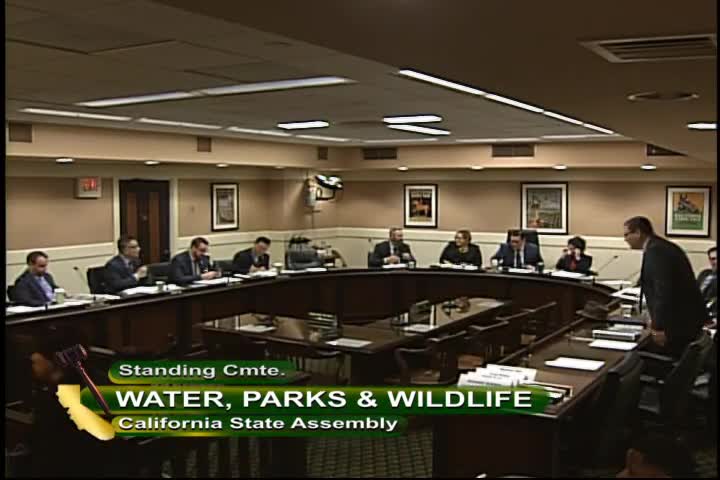
Bill Author

Bill Co-Author(s):
