AB 2394: Personal income taxes: exclusion: uniformed services: retirement pay.
- Session Year: 2017-2018
- House: Assembly
- Latest Version Date: 2018-04-24
The Personal Income Tax Law imposes a tax on individual taxpayers measured by the taxpayers taxable income for the taxable year, but excludes certain items of income from the computation of tax, including an exclusion for combat-related special compensation.
This bill, for taxable years beginning on or after January 1, 2018, and before January 1, 2028, would exclude from gross income retirement pay received by a taxpayer from the federal government for military service performed in the Armed Forces of the United States, the reserve component of the Armed Forces of the United States, or the National Guard. service performed in the uniformed services, as defined.
This bill would take effect immediately as a tax levy.
The Personal Income Tax Law imposes a tax on individual taxpayers measured by the taxpayers taxable income for the taxable year, but excludes certain items of income from the computation of tax, including an exclusion for combat-related special compensation.
This bill, for taxable years beginning on or after January 1, 2018, would exclude from gross income retirement pay received by a taxpayer from the federal government for military service performed in the Armed Forces of the United States, the reserve component of the Armed Forces of the United States, or the National Guard.
This bill would take effect immediately as a tax levy.
Existing law authorizes the Department of Veterans Affairs to assist every veteran of the United States, and the dependent or survivor of every veteran of the United States, in presenting and pursuing specified claims, including claims for disability compensation benefits and burial benefits, as the veteran, dependent, or survivor may have against the United States arising out of military service, and in establishing any rights to any privilege, preference, care, or compensation provided for by the laws of the United States or of this state.This bill would make technical, nonsubstantive changes to that provision.Existing law authorizes the Department of Veterans Affairs to assist every veteran of the United States, and the dependent or survivor of every veteran of the United States, in presenting and pursuing specified claims, including claims for disability compensation benefits and burial benefits, as the veteran, dependent, or survivor may have against the United States arising out of military service, and in establishing any rights to any privilege, preference, care, or compensation provided for by the laws of the United States or of this state.
This bill would make technical, nonsubstantive changes to that provision.
Gross (a)For taxable years beginning on or after January 1, 2018, and before January 1, 2028, gross income shall not include retirement pay received by a taxpayer from the federal government for military service performed in the Armed Forces of the United States, the reserve component of the Armed Forces of the United States, or the National Guard. service in the uniformed services.
(b)For purposes of this section, uniformed services means Armed Forces of the United States of America, the Army National Guard and the Air National Guard when engaged in active duty for training, inactive duty training, or full-time National Guard duty, and the commissioned corps of the United States Public Health Service.
SEC. 2.This act provides for a tax levy within the meaning of Article IV of the California Constitution and shall go into immediate effect.
Gross income shall not include retirement pay received by a taxpayer from the federal government for military service performed in the Armed Forces of the United States, the reserve component of the Armed Forces of the United States, or the National Guard.
SEC. 2.This act provides for a tax levy within the meaning of Article IV of the California Constitution and shall go into immediate effect.
SECTION 1.Section 699.5 of the Military and Veterans Code is amended to read:699.5.(a)(1)The department may assist every veteran of the United States, and the dependent or survivor of every veteran of the United States, in presenting and pursuing any claim as the veteran, dependent, or survivor may have against the United States arising out of military service, and in establishing the veterans, dependents, or survivors right to any privilege, preference, care, or compensation provided for by the laws of the United States or of this state.(2)The department may cooperate and, with the approval of the Department of Finance, contract with any veterans service organization, and pursuant to the contract may compensate the organization for services within the scope of this section rendered by it to any veteran or dependent or survivor of a veteran.(3)The contract shall not be made unless the department determines that, owing to the confidential relationships involved and the necessity of operating through agencies that the veterans, dependents, or survivors involved will feel to be sympathetic toward their problems, the services cannot satisfactorily be rendered otherwise than through the agency of the veterans organization and that the best interests of the veterans, dependents, or survivors involved will be served if the contract is made.(b)(1)The Legislature finds and declares that services provided by veterans service organizations play an important role in the departments responsibilities to assist veterans and their dependents and survivors in presenting and pursuing claims against the United States, and that it is an efficient and reasonable use of state funds to provide compensation to veterans service organizations for these services.(2)The Legislature further finds and declares that paragraph (1) shall not be implemented by using the General Fund until the annual budget for county veterans service officers reaches a minimum of five million dollars ($5,000,000). This subdivision does not preclude the use of federal funding in implementing these provisions.(c)Veterans service organizations that elect to contract with the department in accordance with this section shall document the claims processed each year by the veterans service officers employed by the veterans service organization at offices located in the state. The documentation shall be in accordance with procedures established by the department.(d)The department shall determine annually the amount of monetary benefits paid to eligible veterans and their dependents and survivors in the state as a result of the work of the veterans service officers of the contracting organizations. Beginning on January 1, 2006, the department shall, on or before January 1 of each year, prepare and transmit its determination for the preceding fiscal year to the Department of Finance and the Legislature. The department shall also identify federal sources to support the efforts of veterans service organizations pursuant to this section. The Department of Finance shall review the departments determination in time to use the information in the annual Budget Act for the budget of the department for the next fiscal year.(e)For purposes of this section, the following definitions apply:(1)Survivor means any relation of a deceased veteran who may be entitled to make a claim for any privilege, preference, care, or compensation under the laws of the United States or this state based upon the veterans war service.(2)Veterans service officer means an individual employed by a veterans service organization and accredited by the United States Department of Veterans Affairs to process and adjudicate claims and other benefits for veterans and their dependents and survivors.(3)Veterans service organization means an organization that meets all of the following criteria:(A)Is formed by and for United States military veterans.(B)Is chartered by the United States Congress.(C)Has regularly maintained an established committee or agency in a regional office of the United States Department of Veterans Affairs in the state rendering services to veterans and their dependents and survivors. REVISIONS: HeadingLine 2.(a)(1)The department may assist every veteran of the United States States, and the dependent or survivor of every veteran of the United States States, in presenting and pursuing the any claim as the veteran, dependent, or survivor may have against the United States arising out of military service service, and in establishing the veterans, dependents, or survivors right to any privilege, preference, care, or compensation provided for by the laws of the United States or of this state. The
(2)The department may cooperate and, with the approval of the Department of Finance, contract with any veterans service organization, and pursuant to the contract may compensate the organization for services within the scope of this section rendered by it to any veteran or dependent or survivor of a veteran. The
(3)The contract shall not be made unless the department determines that, owing to the confidential relationships involved and the necessity of operating through agencies that the veterans, dependents, or survivors involved will feel to be sympathetic toward their problems, the services cannot satisfactorily be rendered otherwise than through the agency of the veterans organization and that the best interests of the veterans, dependents, or survivors involved will be served if the contract is made.
(b)(1)The Legislature finds and declares that services provided by veterans service organizations play an important role in the departments responsibilities to assist veterans and their dependents and survivors in presenting and pursuing claims against the United States, and that it is an efficient and reasonable use of state funds to provide compensation to veterans service organizations for these services.
(2)The Legislature further finds and declares that paragraph (1) shall not be implemented by using the General Fund until the annual budget for county veterans service officers reaches a minimum of five million dollars ($5,000,000). This subdivision shall not be construed to does not preclude the use of federal funding in implementing these provisions.
(c)Veterans service organizations that elect to contract with the department in accordance with this section shall document the claims processed each year by the veterans service officers employed by the veterans service organization at offices located in California. the state. The documentation shall be in accordance with procedures established by the department.
(d)The department shall determine annually the amount of monetary benefits paid to eligible veterans and their dependents and survivors in the state as a result of the work of the veterans service officers of the contracting organizations. Beginning on January 1, 2006, the department shall, on or before January 1 of each year, prepare and transmit its determination for the preceding fiscal year to the Department of Finance and the Legislature. The department shall also identify federal sources to support the efforts of veterans service organizations pursuant to this section. The Department of Finance shall review the departments determination in time to use the information in the annual Budget Act for the budget of the department for the next fiscal year.
(e)For purposes of this section: section, the following definitions apply:
(1)Survivor means any relation of a deceased veteran who may be entitled to make a claim for any privilege, preference, care, or compensation under the laws of the United States or this state based upon the veterans war service.
(2)Veterans service officer means an individual employed by a veterans service organization and accredited by the United States Department of Veterans Affairs to process and adjudicate claims and other benefits for veterans and their dependents and survivors.
(3)Veterans service organization means an organization that meets all of the following criteria:
(A)Is formed by and for United States military veterans.
(B)Is chartered by the United States Congress.
(C)Has regularly maintained an established committee or agency in a regional office of the United States Department of Veterans Affairs in California the state rendering services to veterans and their dependents and survivors.
|
Date
|
Status
|
|---|---|
| May 25, 2018 | In committee: Held under submission. |
| May 9, 2018 | In committee: Set, first hearing. Referred to APPR. suspense file. |
| May 1, 2018 | From committee: Do pass and re-refer to Com. on APPR. (Ayes 9. Noes 0.) (April 30). Re-referred to Com. on APPR. |
| Apr 25, 2018 | Re-referred to Com. on REV. & TAX. |
| Apr 24, 2018 | From committee chair, with author's amendments: Amend, and re-refer to Com. on REV. & TAX. Read second time and amended. |
| Apr 23, 2018 | Coauthors revised. |
| Mar 20, 2018 | Re-referred to Com. on REV. & TAX. |
| Mar 19, 2018 | From committee chair, with author's amendments: Amend, and re-refer to Com. on REV. & TAX. Read second time and amended. |
| Mar 15, 2018 | Referred to Com. on REV. & TAX. |
| Feb 15, 2018 | From printer. May be heard in committee March 17. |
| Feb 14, 2018 | Read first time. To print. |
|
Date
|
Description
|
Location
|
Votes
|
|
|---|---|---|---|---|
| Apr 30, 2018 | Do pass and be re-referred to the Committee on [Appropriations] | Assembly Standing Committee on Revenue and Taxation |
Passed |
This list shows positions taken on this bill by organizations on the date displayed, which is linked to the original source.
Positions by individuals are not included.
|
Organization
|
Position
|
Date
|
|---|---|---|
| American GI Forum of California | ** Support | May 9, 2018 |
| American Legion Department Of California | ** Support | May 9, 2018 |
| AMVETS Department of California | * Support | Apr 30, 2018 |
| California Association of County Veteran Service Officers | ** Support | May 9, 2018 |
| California Military Officer Association of America | * Support | Apr 30, 2018 |
| California State Commanders Veteran Council | ** Support | May 9, 2018 |
| California State Council | ** Support | May 9, 2018 |
| Military Officers Association Of America California Council Of Chapters | * Support | May 9, 2018 |
| National Guard Association Of California | * Support | Apr 30, 2018 |
| Reeb Government Relations | * Support | Apr 30, 2018 |
| Vietnam Veterans of America | ** Support | May 9, 2018 |
| Vietnam Veterans of America - California State Council | ** Support | Apr 27, 2018 |
Date of Hearing: May 9, 2018
ASSEMBLY COMMITTEE ON APPROPRIATIONS
Lorena Gonzalez Fletcher, Chair
ABPCA Bill Id:AB 2394
Author:(Brough) – As Amended Ver:April 24, 2018
Policy Committee: | Revenue and Taxation | Vote: | 9 - 0 |
|
| ||
|
|
Urgency: No State Mandated Local Program: No Reimbursable: No
SUMMARY:
This bill excludes, for taxable years 2018 through 2027, retirement pay received from the federal government for services in “uniformed services,” as defined, from gross income.
FISCAL EFFECT:
Annual General Fund revenue loss of $130 million in 2018-19, $80 million in 2019-20, and $85 million in 2020-21.
COMMENTS:
- Purpose. According to the author, AB 2394 will encourage retired veterans to come to California to start their next career after the military. The author points out that 16 other states provide a similar benefit.
- Background. Under federal and state tax law, some income tax benefits are extended to military personnel or their families. Military death benefits paid to qualified survivors, military pay for service in combat zones, and the premium paid into a survivor annuity account are all excluded from the calculation of gross income.
- Recent legislation. A number of bills in recent years proposed excluding military retirement pay, or a portion of it, from gross income. Those bills include:
AB 1791 (Lopez), of the 2015-16 Legislative Session, would have excluded from gross income military retirement pay received by a taxpayer and survivor benefits received by a beneficiary of a taxpayer for a period of three taxable years, but only if funds were appropriated for this purpose. AB 1791 was held on this committee’s Suspense File.
AB 1275 (Gray), of the 2015-16 Legislative Session, would have excluded from gross income military retirement pay received by a taxpayer and survivor benefits received by a beneficiary of a taxpayer, if that taxpayer was a Purple Heart or Medal of Honor recipient. AB 1275 was held on this committee’s Suspense File.
AB 505 (Melendez) of the 2015-16 Legislative Session, would have excluded from gross income the additional retired pay to military retirees, known as concurrent retirement and disability pay (CRDP) payments. AB 505 was held on this committee’s Suspense File.
AB 2329 (Melendez), of the 2013-14 Legislative Session, would have excluded from gross income the additional retired pay to military retirees, known as CRDP. AB 2329 was held on this committee’s Suspense File.
Analysis Prepared by: Luke Reidenbach / APPR. / (916) 319-2081
Date of Hearing: April 30, 2018
ASSEMBLY COMMITTEE ON REVENUE AND TAXATION
Autumn Burke, Chairwoman
ABPCA Bill Id:AB 2394 (
Author:Brough) – As Amended Ver:April 24, 2018
Majority vote. Tax levy. Fiscal committee.
SUBJECT: Personal income taxes: exclusion: uniformed services: retirement pay
SUMMARY: Excludes from the Personal Income Tax (PIT) Law military retirement pay. Specifically, this bill:
- Excludes from gross income, retirement pay a taxpayer receives from the federal government for service in the uniformed services.
- Defines "uniformed services" as:
- The Armed Forces of the United States of America;
- The Army National Guard and the Air National Guard when engaged in active duty for training, inactive duty training, or full-time National Guard duty; and,
- The commissioned corps of the United States Public Health Service.
- Applies for each taxable year beginning on and after January 1, 2018, and before January 1, 2028.
- Takes effect immediately as a tax levy.
EXISTING LAW:
- Provides that "gross income" includes all income from whatever source derived unless specifically excluded. (Internal Revenue Code (IRC) Section 61 and Revenue and Taxation Code (R&TC) Section 17071.))
- Excludes from gross income, under state and federal law, certain types of income for an individual's active service in the Armed Forces, such as military pay for time served in combat zones, disability compensation, and death benefits paid to qualified survivors. Military retirement pay, however, is generally taxable under state and federal law.
- Defines "Armed Forces of the United States" to include all regular and reserve components of the uniformed services that are subject to the jurisdiction of the Secretary of Defense, the Secretary of the Army, the Secretary of the Navy, or the Secretary of the Air Force, and the Coast Guard. The members of these forces include commissioned officers and personnel below the grade of commissioned officers. (R&TC Section 17022.)
FISCAL EFFECT: The FTB estimates General Fund revenue losses of $130 million in fiscal year (FY) 2018-19, $80 million in FY 2019-20, and $85 million in FY 2020-21.
COMMENTS:
- The author has provided the following statement in support of this bill:
Veterans bring excellent qualities to California's workforce, such as, leadership, teamwork, and a high aptitude for technology. For California to continue advancing as the 5th largest economy in the world, we need to continue to attract high quality talent. This bill works towards that goal by incentivizing retired veterans to come to California and start their next career after the military.
By exempting military retirement pay from state income tax, California will join 16 other states like Hawaii, New York, and Massachusetts that have a state income tax but provide these benefits. Veterans are a vital part of our workforce. California should do its part to not only give back to our veterans, but to attract future veterans to keep their skills here in the Golden State.
- The supporters of this bill note the following:
California was once home to many military bases and as such has many military retirees. California still has a sizeable military presence and it behooves the state to retain and attract these retirees. Many servicemembers retire after 20 years which puts them in their early 40's. This allows them to work for many more years, often at skilled technical jobs utilizing the expertise they gained in the military. These retirees often have their own federal medical benefits, thereby lessening the burden on state and local programs. These retirees often bring new federal monies into the local economies via local and other state taxes. AB 2394 will help California retain these skilled and self-sufficient members of society.
- The Governor's Military Council June 2015 "Report and Recommendations" to Governor Brown, among other recommendations, suggests state action to pursue appropriate ways to encourage veterans to stay in California. Specifically, the Report's Recommendation #14 on page 70 states:
Improve California's attractiveness to discharging service members and veterans.
California is home to 1.8 million military veterans, representing 8% of the total population of American veterans. Each year, thousands of service men and women discharging from activity duty military service choose to stay in California. In fact, due to the large military presence in the state, it is expected to receive an additional 30,000 discharged service members each year for the next several years, more than any other state.
At the same time, many veterans and discharging service members choose to move to other states. While some portion of these individuals are simply returning to their home state, others leave California based on concerns about our state's cost of living or because they are attracted to incentives provided by other states for veterans. State leaders should explore appropriate ways to incentivize veterans to stay in California.
- The FTB identifies the following implementation and policy concerns in its analysis of this bill:
- "This bill would establish an exclusion from gross income for which federal law has no counterpart, thus increasing nonconformity."
- "If this bill is enacted in late September or October of 2018, the department would have developed the forms and instructions for the 2018 taxable year. Thus, the department may incur additional costs to develop alternative forms and instructions in the short time frame necessary to ensure they are available for taxpayers to comply with the reporting requirement."
- Committee Staff Comments:
- What does this bill do? This bill allows an exclusion from gross income for one type of military retiree compensation – retirement pay received by a taxpayer for uniformed services performed in the U.S. Armed Forces, the National Guard, certain Army National Guard and Air National Guard service, and the commissioned corps of the United States Public Health Service.
- Who gets a military pension? Nationally, about 2.1 million military retirees receive military pensions. Service members can retire from active duty at any age with at least 20 years of service. Persons who meet retirement requirements partially or entirely through reserve or natural guard service receive retirement pay after age 59. Persons with 20 years of active-duty service account for 80% of retirees, while the remaining 20% are age-based qualified.
- California previously offered military-specific income exclusions and later a targeted tax credit: For taxable years beginning December 22, 1972 through January 1, 1986, California law provided taxpayers an annual $1,000 income exclusion for compensation received during active duty in the Armed Forces or State Military Reserve. State law also provided taxpayers an exclusion of up to $500 per month for any compensation received during active duty in the National Guard in connection with an emergency. Additionally, an income exclusion applied to pensions or retirement pay received by an individual for his or her service in the Armed Forces, the State Military Reserve, or the National Guard. (See former R&TC Section 17146.)
For taxable years beginning on or after January 1, 1987 and before January 1, 1992, a member of the Armed Forces was allowed a credit, rather than an exclusion from gross income, in an amount equal to 4% of the eligible income received by an individual whose adjusted gross income was less than $27,000. Eligible income included salary, wages, bonuses, allowances, pensions, retirement pay, and other compensation received by an individual for his or her services on extended active duty as a member of the Armed Forces, including the California National Guard, or the State Military Reserve. This law remained in effect until January 1, 1992 and was repealed by its own terms as of that date. (See former R&TC Section 17053.13.)
- Restoring a military-related income exclusion limited to retirees: This bill would restore an income tax exclusion for military personnel, but limited in scope to military retirees. Providing this benefit to military retirees is a way to honor their service and incentivize them to stay in or move to California. Arguments against providing a military-retiree benefit center on the point many retirees would choose California as their home regardless of any incentive and that the benefit is extended to all military retirees without regard to financial need. Another opposing argument is that one group of taxpayer-retirees is favored over another. For example, other occupations may also deserve commendation, such as first responders, police, firefighters, or teachers. The Committee may wish to weigh whether re-establishing a military retiree income exclusion is appropriate, and if so, at what level.
- The federal government does not exclude military retirement pay from federal income tax: California typically conforms to federal law for gross income exclusions for ease of administration. This bill would create a state gross income exclusion for which federal law has no counterpart, thus increasing nonconformity.
- But many states do offer a benefit: States compete for military retirees and offer military-specific, income tax-related incentives. Specifically:
- Nine states,[1] including California, fully tax military retirement pay;
- Twelve states[2] and Washington, D.C. offer either a partial exclusion or some other preferential treatment. (Exclusions are generally a flat amount, from $2,000 up to $24,000. Also, some states offer a flat amount that increases after a specific age, from 60 to 67.);
- Twenty states[3] do not tax military retirement pay; and,
- Nine states have no state income tax.[4]
- Three state economic analysis studies: Three states have funded economic analyses of the fiscal implications of military retirement pay state income tax exemptions: a 2017 study from Utah,[5] a 2016 study from South Carolina,[6] and a 2009 study from New Mexico.[7] Most studies conclude that while taxes do influence the decision on where to retire, taxes are not the only determinant. Many elements factor into an attractive location for military retirees, such as a significant number of military installations, access to medical care, job availability, environmental and recreational amenities, a pleasant climate, a compatible lifestyle, and family nearby.
- What is a "tax expenditure"? Existing law provides various credits, deductions, exclusions, and exemptions for particular taxpayer groups. In the late 1960s, U.S. Treasury officials began arguing that these features of the tax law should be referred to as "expenditures" since they are generally enacted to accomplish some governmental purpose and there is a determinable cost associated with each (in the form of foregone revenues). This bill creates a new tax expenditure program, in the form of a gross income exclusion, for military retirees.
- How is a tax expenditure different from a direct expenditure? As the Department of Finance notes in its annual Tax Expenditure Report, there are several key differences between tax expenditures and direct expenditures. First, tax expenditures are reviewed less frequently than direct expenditures once they are put in place. This can offer taxpayers greater economic certainty, but it can also result in tax expenditures remaining a part of the tax code without demonstrating any public benefit. Second, there is generally no control over the amount of revenue losses associated with any given tax expenditure. Finally, it should also be noted that, once enacted, it takes a two-thirds vote to rescind an existing tax expenditure absent a sunset date. This effectively results in a "one-way ratchet" whereby tax expenditures can be conferred by majority vote, but cannot be rescinded, irrespective of their efficacy, without a supermajority vote.
- 10-year sunset: This bill's proposed gross income exclusion includes an automatic sunset date. This Committee has a longstanding policy favoring the inclusion of sunset dates to allow the Legislature to review tax expenditure programs. In the case of military-related provisions, this Committee recommends a 10-year sunset provision, such as this bill provides.
- Related legislation:
- SB 924 (Morrell) would exclude from gross income any servicemember-derived income from National Guard active duty in California. SB 924 passed the Senate Committee on Governance and Finance (6-0) on April 11, 2018 and the Senate Committee on Veterans Affairs (7-0) on April 24, 2018. SB 924 is pending hearing in the Senate Appropriations Committee.
- AB 528 (Gray) would have excluded from gross income a percentage of qualified retirement pay received by a taxpayer from the federal government for military service performed in the Armed Forces of the United States, the reserve component of the Armed Forces of the United States, or the National Guard if AGI, excluding military retiree pay, did not exceed $50,000. AB 528 was held on the Assembly Committee on Appropriations' Suspense File.
- Prior legislation:
- AB 1791 (Lopez), of the 2015-16 Legislative Session, would have excluded from gross income military retirement pay received by a taxpayer and survivor benefits received by a beneficiary of a taxpayer for a period of three taxable years, but only if funds were appropriated for this purpose. AB 1791 was held on the Assembly Committee on Appropriations' Suspense File.
- AB 1275 (Gray), of the 2015-16 Legislative Session, would have excluded from gross income military retirement pay received by a taxpayer and survivor benefits received by a beneficiary of a taxpayer, if that taxpayer was a Purple Heart or Medal of Honor recipient. AB 1275 was held on the Assembly Committee on Appropriations' Suspense File.
- AB 505 (Melendez) of the 2015-16 Legislative Session, would have excluded from gross income the additional retired pay to military retirees, known as concurrent retirement and disability pay payments (CRDP). AB 505 was held on the Assembly Committee on Appropriations' Suspense File.
- AB 2329 (Melendez) of the 2013-14 Legislative Session, would have excluded from gross income the additional retired pay to military retirees, known as CRDP. AB 2329 was held on the Assembly Committee on Appropriations' Suspense File.
- AB 1077 (Anderson), of the 2009-10 Legislative Session, would have allowed an individual to exclude retirement pay and survivor annuities received as a result of active service in the military from gross income. AB 1077 was held in this Committee's Suspense File.
- AB 53 (Klehs), Chapter 1138, Statutes of 1987, repealed the pension and retirement pay exclusions as a result of active duty in the Armed Forces. AB 53 was the state PIT Law conformity bill following the federal Tax Reform Act of 1986 (HR 3838).
REGISTERED SUPPORT / OPPOSITION:
Support
American G.I. Forum of California
AMVETS – Department of California
American Legion – Department of California
California Association of County Veterans Service Officers
California Council of the Military Officers Association of America
California State Commanders Veterans Council
Military Officers Association of America, California Council of Chapters
National Guard Association of California
Vietnam Veterans of America – California State Council
12 private individuals
Opposition
None on file
Analysis Prepared by: Rose Marie Kinnee / REV. & TAX. / (916) 319-2098
California, Georgia, Montana, New Mexico, North Dakota, Rhode Island, Utah, Vermont, and Virginia. ↑
Generally: Arizona (up to $2,500); Colorado (age variable up to $24,000); Delaware (up to $2,000, 60 or older up to $12,500); Idaho (variable benefit); Indiana (up to $5,000 with conditions); Kentucky (variable benefit based pre/post1997-retirement); Maryland (up to $5,000; 65 or older variable); Nebraska (Options: 7-year 40% exemption or a 15% lifetime exemption starting at age 67); North Carolina (variable, up to $4,000/single return and $8,000/joint return); Oklahoma (up to 75% or $10,000, whichever is greater, but cannot exceed federal AGI); Oregon (variable: "federal pension subtraction" but "special-case" Oregon residents taxable); South Carolina (with 20 years-service up to $3,000, 65 or older up to $10,000); and Washington, D.C. (up to $3,000 62 or older). ↑
Alabama, Arkansas, Connecticut, Hawaii, Illinois, Iowa, Kansas, Louisiana, Maine, Massachusetts, Michigan, Minnesota, Mississippi, Missouri, New Jersey, New York, Ohio, Pennsylvania, West Virginia, and Wisconsin. ↑
Alaska, Florida, Nevada, New Hampshire, South Dakota, Tennessee, Texas, Washington, and Wyoming. ↑
Pace, L., Analysis of Military Retirees in Utah: Impacts, Demographics and Tax Policy, January 2017, Kem C. Gardner Policy Institute, The University of Utah. ↑
Von Nessen, J., Analysis of the Economic Impact of the Exemption of Military Pension Income from South Carolina Income Tax, 2015, Moore School of Business, University of South Carolina. ↑
Popp and Starbuck, The Economic Impact of Exempting Retired Military Service Payments from New Mexico Personal Income Tax, January 25, 2009, Arrowhead Center, Office of Policy Analysis New Mexico State University. ↑
Discussed in Hearing
 6MIN
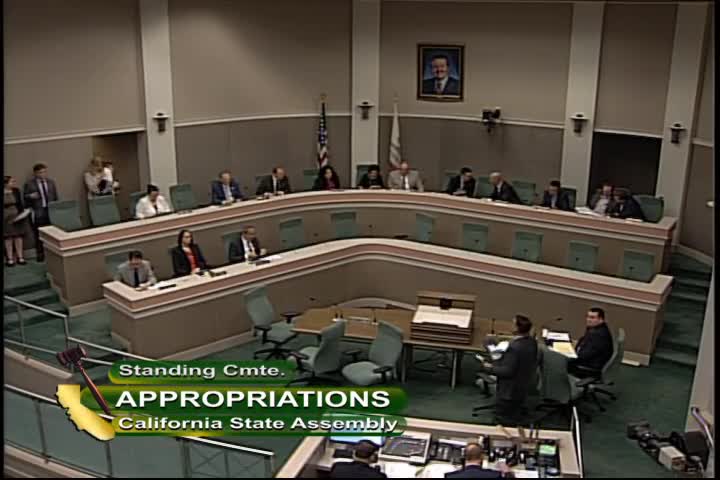
Assembly Standing Committee on Appropriations
 9MIN
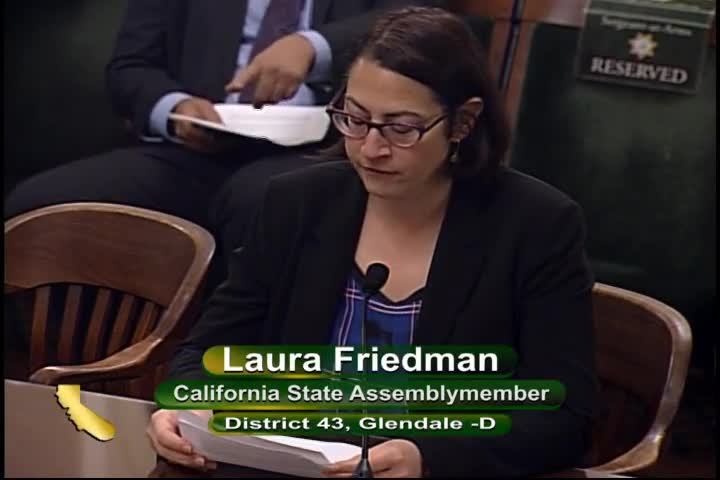
Assembly Standing Committee on Revenue and Taxation
Bill Author