AB 241: Personal information: privacy: state and local agency breach.
- Session Year: 2017-2018
- House: Assembly
- Latest Version Date: 2017-01-30
Existing law requires a person or business conducting business in California and any state or local agency, as defined, that owns or licenses computerized data that includes personal information, as defined, to disclose a breach in the security of the data to a resident of California whose unencrypted personal information was, or is reasonably believed to have been, acquired by an unauthorized person in the most expedient time possible and without unreasonable delay, as specified. Existing law requires a person or business, if it was the source of the breach, to offer to provide appropriate identity theft prevention and mitigation services at no cost to the person whose information was or may have been breached if the breach exposed or may have exposed the persons social security number, drivers license number, or California identification card number.
This bill also would require a state or local agency, if it was the source of the breach, to offer to provide appropriate identity theft prevention and mitigation services at no cost to a person whose information was or may have been breached if the breach exposed or may have exposed the persons social security number, drivers license number, or California identification card number.
The bill would make other clarifying and nonsubstantive changes.
(a)Any An agency that owns or licenses computerized data that includes personal information shall disclose any a breach of the security of the system following discovery or notification of the breach in the security of the data to any a resident of California (1) whose unencrypted personal information was, or is reasonably believed to have been, acquired by an unauthorized person, or, (2) whose encrypted personal information was, or is reasonably believed to have been, acquired by an unauthorized person and the encryption key or security credential was, or is reasonably believed to have been, acquired by an unauthorized person and the agency that owns or licenses the encrypted information has a reasonable belief that the encryption key or security credential could render that personal information readable or useable. The disclosure shall be made in the most expedient time possible and without unreasonable delay, consistent with the legitimate needs of law enforcement, as provided in subdivision (c), or any measures necessary to determine the scope of the breach and restore the reasonable integrity of the data system.
(b)Any Anagency that maintains computerized data that includes personal information that the agency does not own shall notify the owner or licensee of the information of any the breach of the security of the data immediately following discovery, if the personal information was, or is reasonably believed to have been, acquired by an unauthorized person.
(c)The notification required by this section may be delayed if a law enforcement agency determines that the notification will impede a criminal investigation. The notification required by this section shall be made promptly after the law enforcement agency determines that it will not compromise the investigation.
(d)Any An agency that is required to issue a security breach notification pursuant to this section shall meet all of the following requirements:
(1)The security breach notification shall be written in plain language, shall be titled Notice of Data Breach, and shall present the information described in paragraph (2) under the following headings: What Happened, What Information Was Involved, What We Are Doing, What You Can Do, and For More Information. Additional information may be provided as a supplement to the notice.
(A)The format of the notice shall be designed to call attention to the nature and significance of the information it contains.
(B)The title and headings in the notice shall be clearly and conspicuously displayed.
(C)The text of the notice and any other notice provided pursuant to this section shall be no smaller than 10-point type.
(D)For a written notice described in paragraph (1) of subdivision (i), use of the model security breach notification form prescribed below or use of the headings described in this paragraph with the information described in paragraph (2), written in plain language, shall be deemed to be in compliance with this subdivision.
[NAME OF INSTITUTION / LOGO] Date: [insert date] | ||
NOTICE OF DATA BREACH | ||
What Happened? | ||
What Information Was Involved? | ||
What We Are Doing. | ||
What You Can Do. | ||
Other Important Information. [insert other important information] | ||
For More Information. | Call [telephone number] or go to [Internet Web site] | |
(E)For an electronic notice described in paragraph (2) of subdivision (i), use of the headings described in this paragraph with the information described in paragraph (2), written in plain language, shall be deemed to be in compliance with this subdivision.
(2)The security breach notification described in paragraph (1) shall include, at a minimum, the following information:
(A)The name and contact information of the reporting agency subject to this section.
(B)A list of the types of personal information that were or are reasonably believed to have been the subject of a breach.
(C)If the information is possible to determine at the time the notice is provided, then any of the following: (i) the date of the breach, (ii) the estimated date of the breach, or (iii) the date range within which the breach occurred. The notification shall also include the date of the notice.
(D)Whether the notification was delayed as a result of a law enforcement investigation, if that information is possible to determine at the time the notice is provided.
(E)A general description of the breach incident, if that information is possible to determine at the time the notice is provided.
(F)The toll-free telephone numbers and addresses of the major credit reporting agencies, if the breach exposed a social security number or a drivers license or California identification card number.
(G)If the agency providing the notification was the source of the breach, an offer to provide appropriate identity theft prevention and mitigation services, if any, shall be provided at no cost to the affected person for not less than 12 months, along with all information necessary to take advantage of the offer to a person whose information was or may have been breached if the breach exposed or may have exposed personal information defined in subparagraphs (A) and (B) of paragraph (1) of subdivision (g).
(3)At the discretion of the agency, the security breach notification may also include any of the following:
(A)Information about what the agency has done to protect individuals whose information has been breached.
(B)Advice on steps that the person whose information has been breached may take to protect himself or herself.
(e)Any An agency that is required to issue a security breach notification pursuant to this section to more than 500 California residents as a result of a single breach of the security system shall electronically submit a single sample copy of that security breach notification, excluding any personally identifiable information, to the Attorney General. A single sample copy of a security breach notification shall not be deemed to be within subdivision (f) of Section 6254 of the Government Code.
(f)For purposes of this section, breach of the security of the system means unauthorized acquisition of computerized data that compromises the security, confidentiality, or integrity of personal information maintained by the agency. Good faith acquisition of personal information by an employee or agent of the agency for the purposes of the agency is not a breach of the security of the system, provided that the personal information is not used or subject to further unauthorized disclosure.
(g)For purposes of this section, personal information means either of the following:
(1)An individuals first name or first initial and last name in combination with any one or more of the following data elements, when either the name or the data elements are not encrypted:
(A)Social security number.
(B)Drivers license number or California identification card number.
(C)Account number or credit or debit card number, in combination with any required security code, access code, or password that would permit access to an individuals financial account.
(D)Medical information.
(E)Health insurance information.
(F)Information or data collected through the use or operation of an automated license plate recognition system, as defined in Section 1798.90.5.
(2)A user name or email address, in combination with a password or security question and answer that would permit access to an online account.
(h)(1)For purposes of this section, personal information does not include publicly available information that is lawfully made available to the general public from federal, state, or local government records.
(2)For purposes of this section, medical information means any information regarding an individuals medical history, mental or physical condition, or medical treatment or diagnosis by a health care professional.
(3)For purposes of this section, health insurance information means an individuals health insurance policy number or subscriber identification number, any unique identifier used by a health insurer to identify the individual, or any information in an individuals application and claims history, including any appeals records.
(4)For purposes of this section, encrypted means rendered unusable, unreadable, or indecipherable to an unauthorized person through a security technology or methodology generally accepted in the field of information security.
(i)For purposes of this section, notice may be provided by one of the following methods:
(1)Written notice.
(2)Electronic notice, if the notice provided is consistent with the provisions regarding electronic records and signatures set forth in Section 7001 of Title 15 of the United States Code.
(3)Substitute notice, if the agency demonstrates that the cost of providing notice would exceed two hundred fifty thousand dollars ($250,000), or that the affected class of subject persons to be notified exceeds 500,000, or the agency does not have sufficient contact information. Substitute notice shall consist of all of the following:
(A)Email notice when the agency has an email address for the subject persons.
(B)Conspicuous posting, for a minimum of 30 days, of the notice on the agencys Internet Web site page, if the agency maintains one. For purposes of this subparagraph, conspicuous posting on the agencys Internet Web site means providing a link to the notice on the home page or first significant page after entering the Internet Web site that is in larger type than the surrounding text, or in contrasting type, font, or color to the surrounding text of the same size, or set off from the surrounding text of the same size by symbols or other marks that call attention to the link.
(C)Notification to major statewide media and the Office of Information Security within the Department of Technology.
(4)In the case of a breach of the security of the system involving personal information defined in paragraph (2) of subdivision (g) for an online account, and no other personal information defined in paragraph (1) of subdivision (g), the agency may comply with this section by providing the security breach notification in electronic or other form that directs the person whose personal information has been breached to promptly change his or her password and security question or answer, as applicable, or to take other steps appropriate to protect the online account with the agency and all other online accounts for which the person uses the same user name or email address and password or security question or answer.
(5)In the case of a breach of the security of the system involving personal information defined in paragraph (2) of subdivision (g) for login credentials of an email account furnished by the agency, the agency shall not comply with this section by providing the security breach notification to that email address, but may, instead, comply with this section by providing notice by another method described in this subdivision or by clear and conspicuous notice delivered to the resident online when the resident is connected to the online account from an Internet Protocol address or online location from which the agency knows the resident customarily accesses the account.
(j)Notwithstanding subdivision (i), an agency that maintains its own notification procedures as part of an information security policy for the treatment of personal information and is otherwise consistent with the timing requirements of this part shall be deemed to be in compliance with the notification requirements of this section if it notifies subject persons in accordance with its policies in the event of a breach of security of the system.
(k)Notwithstanding the exception specified in paragraph (4) of subdivision (b) of Section 1798.3, for purposes of this section, agency includes a local agency, as defined in subdivision (a) of Section 6252 of the Government Code.
(l)For purposes of this section, encryption key and security credential mean the confidential key or process designed to render the data useable, readable, and decipherable.
|
Date
|
Status
|
|---|---|
| Feb 1, 2018 | From committee: Filed with the Chief Clerk pursuant to Joint Rule 56. |
| Jan 31, 2018 | Died pursuant to Art. IV, Sec. 10(c) of the Constitution. |
| May 26, 2017 | In committee: Held under submission. |
| Apr 5, 2017 | In committee: Set, first hearing. Referred to APPR. suspense file. |
| Mar 15, 2017 | From committee: Do pass and re-refer to Com. on APPR. (Ayes 10. Noes 0.) (March 14). Re-referred to Com. on APPR. |
| Feb 6, 2017 | Referred to Com. on P. & C.P. |
| Jan 31, 2017 | From printer. May be heard in committee March 2. |
| Jan 30, 2017 | Read first time. To print. |
|
Date
|
Description
|
Location
|
Votes
|
|
|---|---|---|---|---|
| Mar 14, 2017 | Do pass and be re-referred to the Committee on [Appropriations] | Assembly Standing Committee on Privacy and Consumer Protection |
Passed |
This list shows positions taken on this bill by organizations on the date displayed, which is linked to the original source.
Positions by individuals are not included.
|
Organization
|
Position
|
Date
|
|---|---|---|
| Association Of California Life & Health Insurance Companies | ** Support | Mar 10, 2017 |
| California Bankers Association | ** Support | Mar 10, 2017 |
| California Business Properties Association | ** Support | Mar 10, 2017 |
| California Cable and Telecommunications Association | ** Support | Mar 10, 2017 |
| California Chamber Of Commerce | * Support | Mar 14, 2017 |
| California Grocers Association | ** Support | Mar 10, 2017 |
| California State Association Of Counties | ** Against | Mar 10, 2017 |
| Computing Technology Industry Association CompTIA | ** Support | Mar 10, 2017 |
| Computing Technology Industry Association - CompTIA | ** Support | Mar 10, 2017 |
| League Of California Cities | ** Against | Mar 10, 2017 |
| Los Angeles County Professional Peace Officers Association | ** Support | Mar 10, 2017 |
| Organization Of Smud Employees | ** Support | Mar 10, 2017 |
| Personal Insurance Federation Of California | ** Support | Mar 10, 2017 |
| Political Solutions Inc. | * Support | Mar 14, 2017 |
| San Diego Court Employees | ** Support | Mar 10, 2017 |
| San Luis Obispo County Employees | ** Support | Mar 10, 2017 |
| Urban Counties of California | ** Against | Mar 10, 2017 |
Date of Hearing: April 5, 2017
ASSEMBLY COMMITTEE ON APPROPRIATIONS
Lorena Gonzalez Fletcher, Chair
ABPCA Bill Id:AB 241
Author:(Dababneh) – As Introduced Ver:January 30, 2017
Policy Committee: | Privacy and Consumer Protection | Vote: | 10 - 0 |
Urgency: No State Mandated Local Program: No Reimbursable: No
SUMMARY:
This bill requires a public agency that is the source of a data breach to offer affected customers at least 12 months of identity theft prevention and mitigation services at no cost. Specifically, this bill:
- Requires a public agency that is the source of a data breach, where a person’s name and Social Security number or driver license number are exposed, to provide affected persons with notice of the breach and at least 12 months of appropriate identity theft prevention and mitigation services at no cost.
- Requires a public agency to give affected persons all information necessary to take advantage of the offer for identity theft prevention and mitigation services.
- Requires a public agency that delays the specified notification at the direction of law enforcement to make the notification promptly after a law enforcement agency determines that notification will not compromise any criminal investigation.
FISCAL EFFECT:
- Unknown potential GF and/or special fund costs, in the hundreds of millions to billions of dollars range for a major security breach at an agency that holds substantial personal data. Unknown potential GF and/or special fund costs in the hundreds of thousands to low millions of dollars for a relatively minor data breach.
For example, if the Department of Motor Vehicles were to have a breach of one-quarter of its 26 million driver license records, the cost for providing identity theft prevention and mitigation services to the affected individuals for one year would be over $1 billion, assuming a cost of $15 monthly per person. If a breach were to occur and require that 6,000 individuals receive identity theft protection at cost of $15 per month, the cost for one year would be about $1 million.
- Unknown potentially significant nonreimbursable local costs, depending of the scope of a data breach.
COMMENTS:
- Background. Existing law requires a public agency, person, or business that owns or licenses computerized data that includes personal information to notify any California resident whose unencrypted personal information was acquired, or reasonably believed to have been acquired, by an unauthorized person. The notice must be made in the most expedient time possible and without unreasonable delay, consistent with the legitimate needs of law enforcement, as specified. This requirement does not apply to the Judiciary, the Legislature, or the University of California. Existing law also requires a person or business that is the source of a breach of Social Security numbers or driver license numbers, and is required to provide notice of the breach, to offer an identity theft protection or mitigation service to affected individuals at no cost, for no less than 12 months. However, public agencies are not subject to the requirement to provide identity theft protection or mitigation services.
- Purpose. According to the author, this bill “will protect consumers in the event of a data breach at public agencies by requiring identity theft prevention or mitigation services.” This bill would require public agencies to provide identity theft protection or mitigation services to affected individuals at no cost, for no less than 12 months. By doing so, this bill would place the same requirements on public agencies that existing law places on a person or business that is the source of a breach of a person’s name and Social Security number or driver license number.
- Prior Legislation. This bill is almost identical to AB 259 (Dababneh) of 2015 that sought to require public agencies to provide identity theft protection and mitigation services for data breaches where a person’s name and Social Security number or driver license number are exposed. AB 259 was held on Suspense in Senate Appropriations.
- Implementation Issues and Associated Costs. The bill in its current form raises a few questions about how the provisions would be implemented. First, the bill does not specify whether a single state agency, such as the California Department of Technology or the Department of General Services would have responsibility for coordinating the provision of identity theft prevention or mitigation services in the event of a data breach. A coordinated approach would ensure that services provided by various state agencies are consistent and could also potentially achieve some economies of scale, thereby reducing costs.
Second, the bill does not require state agencies to have a contract for identity theft prevention and mitigation services in place prior to a data breach occurring. This means that a state agency could have to go through the state’s procurement process to hire a vendor to provide the services required under this bill after a data breach has occurred, which would likely delay the provision of the intended services to individuals affected by the data breach. Requiring the procurement of a contract in advance of a data breach that allows state agencies to access the services in an “on-call” manner would expedite the provision of identity theft prevention and mitigation services and better achieve the intended goals of this bill. This approach would likely increase costs in the short-term because the state would pay to procure a contract and maintain it on an on-call basis even if no data breaches occur. However, in the event of a data breach, having a contract already in place could reduce costs because identity theft prevention services would likely be more effective and limit the need for extensive and potentially costly identity theft mitigation that could be required if there is a delay in providing services. Such a procurement approach would also likely require a single state agency to coordinate the provisions of this bill as discussed above.
Lastly, in the event of a major data breach the potential costs would be extremely high under an approach where the state contracts for identity theft prevention and mitigation services. Additionally, it is unlikely that any single vendor who provides identity theft prevention and mitigation services could handle the volume of cases that would be generated in the event of a breach of tens of millions of records. Thus, in the event of a major breach, it might be necessary and potentially more cost effective for the state to evaluate alternatives to providing identity theft protection and mitigation services, however, such potential alternatives are not identified in the bill and might not be allowed under the provisions of the bill in its current form.
Analysis Prepared by: Jessica Peters / APPR. / 916 319-2081
Date of Hearing: March 14, 2017
ASSEMBLY COMMITTEE ON PRIVACY AND CONSUMER PROTECTION
Ed Chau, Chair
ABPCA Bill Id:AB 241 (
Author:Dababneh) – As Introduced Ver:January 30, 2017
SUBJECT: Personal information: privacy: state and local agency breach
SUMMARY: Requires a public agency that is the source of a data breach to offer at least 12 months of identity theft prevention and mitigation services at no cost to affected consumers. Specifically, this bill:
- Requires a public agency that is the source of a data breach, and is required to provide affected persons with notice of the breach, to provide at least 12 months of appropriate identity theft prevention and mitigation services at no cost to the affected persons.
- Requires a public agency to give affected persons all information necessary to take advantage of the offer for identity theft prevention and mitigation services.
- Requires a public agency to offer identity theft prevention and mitigation services only if the breach exposed, or may have exposed, a person’s name in combination with a Social Security number or a driver's license number.
- Requires a public agency that delays the specified notification at the direction of law enforcement to make the notification promptly after a law enforcement agency determines that notification will not compromise any criminal investigation.
- Makes other technical and nonsubstantive amendments.
EXISTING LAW:
- Requires a public agency, person, or business that owns or licenses computerized data that includes personal information to notify any California resident whose unencrypted personal information was acquired, or reasonably believed to have been acquired, by an unauthorized person. The notice must be made in the most expedient time possible and without unreasonable delay, consistent with the legitimate needs of law enforcement, as specified. Note that this requirement does not apply to the Judiciary, the Legislature, or the University of California. (Civil Code (Civ. Code) Sections 1798.29(a), (c); 1798.82(a), (c))
- Requires a person or business that is the source of a breach of Social Security numbers or driver’s license numbers, and is required to provide notice of the breach, to offer an identity theft protection or mitigation service to affected individuals at no cost, for no less than 12 months. (Civ. Code 1798.82 (d)(2)(G))
- Requires a public agency, person, or business that maintains computerized data that includes personal information that the agency, person, or business does not own to notify the owner or licensee of the information of any security breach immediately following discovery if the personal information was, or is reasonably believed to have been, acquired by an unauthorized person. (Civ. Code 1798.29(b), 1798.82(b))
- Defines “personal information,” for purposes of the breach notification statute, to include the individual’s first name or first initial and last name in combination with one or more of the following data elements, when either the name or the data elements are not encrypted: Social Security number; driver’s license number or California Identification Card number; account number, credit or debit card number, in combination with any required security code, access code, or password that would permit access to an individual’s financial account; medical information; or health insurance information. “Personal information” does not include publicly available information that is lawfully made available to the general public from federal, state, or local government records. (Civ. Code 1798.29(g), (h), 1798.82(h), (i))
FISCAL EFFECT: Unknown
COMMENTS:
- Purpose of this bill: This bill is intended to provide individuals affected by a state or local agency data breach with at least 12 months of identity theft protection for free. While existing law already requires any private business responsible for a significant breach to offer at least 12 months of identity theft prevention mitigation services, no such requirement exists for public agencies. This bill would extend these protections to include state and local agencies. This measure is author-sponsored.
- Author’s statement: According to the author's office, “Whether it comes from the private or the public sector, a data breach can have serious detrimental effects for California’s consumers. It is important that state agencies are held to the same standard as private entities when these incidents occur. Californians must feel confident that state agencies and departments are protecting their sensitive information. This bill enhances consumer protections and ensures that the state is taking necessary steps to prevent fraud and identity theft.”
- Recent data breaches: According to the California Department of Justice’s most recent “California Data Breach Report,” from 2012 to 2015, the Attorney General received 657 reports of data breaches, which compromised the information of over 49 million Californians. In 2015 alone, nearly three in five Californians were victims of a data breach when 24 million records were put at risk. Social Security numbers made up nearly half (48 %) of all breaches from 2012 to 2015. The potential costs to consumers of having their SSNs stolen are very high as thieves can open new credit accounts, take out loans, and apply for government benefits among other fraudulent activities. In addition to the variety of abuses, SSNs are difficult to change, which makes SSN fraud extremely challenging to detect, prevent, and recover from.
Unfortunately, state and local agencies are not immune to data breaches. The following California public agencies have reported breaches in recent years: California State University, Department of Corrections and Rehabilitation, Department of Public Health, Department of State Hospitals, Correctional Health Care Services, Department of Social Services, Department of Justice, Department of Child Support Services, Employment Development Department, and the Department of Motor Vehicles. - California's Data Breach Notification Law: In 2003, California became the first state in the nation to require businesses and government agencies to notify California residents of security breaches if unencrypted personal information was, or was reasonably believed to have been, stolen. (SB 1386 (Peace), Chapter 915, Statutes of 2002)
The notification law does not apply to "encrypted" information, which creates an incentive for businesses and government agencies to encrypt personal data and thereby avoid the notice requirement. Also, notice is not required unless the data breach involved "personal information" relating to a California resident. "Personal information" means a person’s first name or first initial and last name in combination with one or more of the following data elements:
- Social Security number;
- Driver’s license number or California identification card number;
- Account number, credit or debit card number, in combination with any required security code, access code, or password;
- Medical information; health insurance information; or
- A user name or email address in combination with a password or security question and answer that would permit access to an online account.
"Personal information" does not include publicly available information that is lawfully made available to the general public from federal, state, or local government records.
The Data Breach Notification Law has two distinct parts: one part that applies to state and local agencies, which is located in the Information Practices Act of 1977 (Civ Code 1798.29), and one part that applies to businesses (Civ. Code 1798.82). Both parts began as mirror images of each other. Over the years, however, as the Legislature has refined and updated the Data Breach Notification Law, the language of the two parts has not always been kept consistent.
In 2014, the Legislature passed and Governor Brown signed AB 1710 (Dickinson), which required an affected business to offer appropriate identity theft prevention and mitigation services for at least 12 months at no cost to people affected by the breach, in cases where a breach involved Social Security or driver’s license numbers. This bill would extend these same protections to persons affected by a state or local agency data breach.
- The benefits of identity theft prevention and mitigation services: According to the author, the term “identity theft prevention and mitigation services” includes credit report monitoring services, which help prevent fraud and identity theft by giving consumers ongoing information about credit card account balance increases and new loans and credit cards opened in the consumer’s name. Identity theft prevention and mitigation services may also include security freeze services offered by credit reporting agencies, which stop identity thieves from opening up new accounts in a victim’s name by “freezing” the victim’s credit report, so that lending institutions cannot check a credit report or credit score to approve new loans or credit cards.
- Questions about the “if any” clause: There has been some discussion within the legal community as to whether or not the phrasing of the existing statute as it applies to businesses – which is mirrored in this bill for public agencies – is open to more than one interpretation. As passed by the Legislature and signed by Governor Brown, AB 1710 (Dickinson), requires a business that issues a breach notification to offer “appropriate identity theft prevention and mitigation services, if any” to affected individuals at no cost. However, the question has been raised as to whether or not the offer of services itself is required or discretionary.
Read plainly, the “if any” clause (Civ Code 1798.29 (d)(2)(G)) would presumably modify the preceding phrase “appropriate identity theft prevention and mitigation services” – i.e., if there are no prevention or mitigation services that are appropriate for a consumer after a particular breach, then the business is not required to offer services. For example, a retail breach involving the theft of credit card numbers might be appropriately mitigated by re-issuing cards with new card numbers rather than setting up credit reporting monitoring services for a year, since theft of a credit card number is not enough information for criminals to open up new accounts in the cardholder’s name. However, the presumption is in favor of the provision of services unless there is no service that would help a consumer prevent or mitigate identity theft.
Conversely, the law firm Morrison & Foerster suggested in an online Client Alert on October 9, 2014, that the “if any” clause could be interpreted to modify the “offer” of services itself to make it voluntary. Under this reading, a business would simply be permitted by statute – not required – to offer identity theft prevention and mitigation services after a breach.
The question is pertinent to this bill because this bill’s language mirrors the existing language in question from AB 1710 (Dickinson) in applying the requirement to public agencies. While perhaps it would be ideal to clarify the matter in statute, the author's office has previously stated to Committee staff that it is the intent of this bill to require – not simply authorize – public agencies to provide affected consumers with identity theft prevention and mitigation services for a minimum of 12 months.
The author's stated intent would appear to be in line with the intent of AB 1710 as well. The June 24, 2014, Senate Judiciary Committee analysis of AB 1710 describes that bill as imposing a requirement, not a discretionary authorization: “This bill would also require the person or business providing notification that was the source of the breach to provide to affected consumers with identity theft prevention and mitigation services for a minimum of 12 months.”
As such, it is the understanding of Committee staff that the language of this bill requires an offer of identity theft prevention and mitigation services, except in those cases where there is clearly no appropriate service applicable to a particular consumer's situation.
- Arguments in support: According to the Los Angeles County Professional Peace Officers Association, “This is a simple bill to ensure public agencies are held to the same standard as private entities when data breaches occur in order to build confidence in our public institutions to handle personal information in the 21st century.” A coalition of business groups, including the California Chamber of Commerce and Computing Technology Industry Association – CompTIA states, “The level of protection an affected individual receives should not be dependent on the type of entity breached. AB 241 ensures all entities maintaining personal information offer theft prevention and mitigation services.”
- Arguments in opposition: The California State Association of Counties, League of California Cities, and Urban Counties of California state in opposition to this bill, “Our coalition is troubled that a lack of specificity [regarding what are “appropriate” remedial services] could lead to an expansive opinion of what measures must be taken by local governments to remedy a data breach. […] The additional requirement to provide the free services outlined in AB 241 could pose crippling costs to our agencies.”
- Prior Legislation: AB 259 (Dababneh) of 2016 was identical to this bill. AB 259 passed this committee unanimously, but was later held on the Senate Appropriations suspense file.
AB 1710 (Dickinson), Chapter 855, Statutes of 2014, required a person or business that is the source of a breach of Social Security numbers or driver’s license numbers to offer an identity theft protection or mitigation service to affected individuals at no cost, for no less than 12 months. It expands the information security law to require businesses that maintain, own or license the personal information of California residents to use reasonable and appropriate security measures to protect the information. It also prohibits the sale or marketing of Social Security numbers, with certain exceptions.
SB 1386 (Peace), Chapter 915, Statutes of 2002, enacted California’s Data Breach Notification Law and required a public agency, or a person or business that conducts business in California, that owns or licenses computerized data that includes personal information to disclose any breach of the security of the data to California’s residents whose unencrypted personal information was, or is reasonably believed to have been, acquired by an unauthorized person. SB 1386 permitted notifications to be delayed if a law enforcement agency determines that it would impede a criminal investigation, and required an agency, person, or business that maintains computerized data that includes personal information owned by another to notify the owner or licensee of the information of any breach of security of the data.
REGISTERED SUPPORT / OPPOSITION:
Support
Association of California Life & Health Insurance Companies
California Bankers Association
California Business Properties Association
California Cable and Telecommunications Association
California Chamber of Commerce
California Grocers Association
Computing Technology Industry Association – CompTIA
Los Angeles County Professional Peace Officers Association
Organization of SMUD Employees
Personal Insurance Federation of California
San Diego Court Employees
San Luis Obispo County Employees
Opposition
California State Association of Counties
League of California Cities
Urban Counties of California
Analysis Prepared by: Jennie Bretschneider / P. & C.P. /
Discussed in Hearing
 1H
Assembly Standing Committee on Appropriations
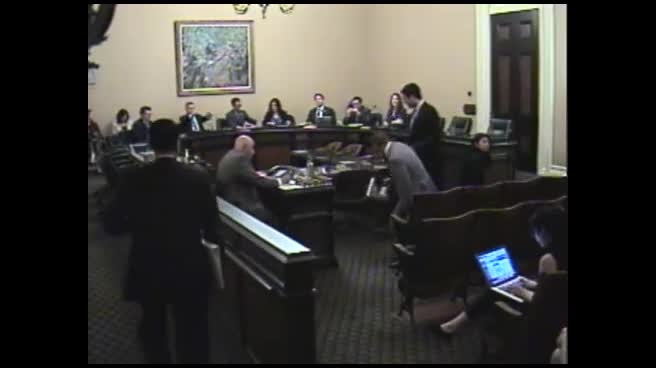 25MIN
Assembly Standing Committee on Privacy and Consumer Protection
Bill Author

Bill Co-Author(s):
