AB 2513: Controlled substances: narcotics registry.
- Session Year: 2017-2018
- House: Assembly
- Latest Version Date: 2018-02-14
(1)Existing law requires a person who is convicted in this state, or in another state under certain circumstances, of specified offenses involving controlled substances to register with the chief of police of the city in which he or she resides, or the sheriff of the county if he or she resides in an unincorporated area, as specified. The registration consists of a statement in writing signed by the person, giving information required by the Department of Justice, and the fingerprints and photograph of the person. Existing law requires, within 3 days after registering, the law enforcement agency to forward the statement, fingerprints, and photograph to the Department of Justice. A person who knowingly violates the registration requirement and related requirements is guilty of a misdemeanor.
This bill would delete that registration requirement and make conforming changes. The bill would require that the statements, photographs, and fingerprints obtained pursuant to these provisions as they read on January 1, 2018, be destroyed not later than January 1, 2021. By imposing new duties on local law enforcement agencies, the bill would impose a state-mandated local program.
(2)Existing law requires every sheriff, chief of police, or the Commissioner of the California Highway Patrol, upon the arrest for any of specified controlled substance offenses of any public school employee, to immediately notify by telephone the superintendent of schools of the school district employing the employee, and, if the person arrested is a teacher, to immediately give written notice of the arrest to the Commission on Teacher Credentialing and to the superintendent of schools in the county where the person is employed. Existing law imposes similar notification requirements on those law enforcement personnel if the person arrested is a teacher employed by a private school, or a teacher or instructor employed by a community college.
This bill would make those provisions applicable upon the conviction, rather than the arrest, of the employee. By imposing new duties on local law enforcement agencies, the bill would impose a state-mandated local program.
(3)The California Constitution requires the state to reimburse local agencies and school districts for certain costs mandated by the state. Statutory provisions establish procedures for making that reimbursement.
This bill would provide that, if the Commission on State Mandates determines that the bill contains costs mandated by the state, reimbursement for those costs shall be made pursuant to the statutory provisions noted above.
Every sheriff, chief of police, or the Commissioner of the California Highway Patrol, upon the arrest conviction for any of the controlled substance offenses enumerated in Section 11590, described in Section 11350, 11351, 11351.5, 11352, 11353, 11353.5, 11353.7, 11354, 11355, 11358, 11359, 11360, 11361, 11363, 11366, 11366.5, 11366.6, 11368, 11370.1, 11378, 11378.5, 11379, 11379.5, 11379.6, 11380, 11383, or 11550, or subdivision (a) of Section 11377, or Section 11364, insofar as that section relates to paragraph (12) of subdivision (d) of Section 11054, of any school employee, shall, provided that he or she knows that the arrestee convicted person is a school employee, do one of the following:
(a)If the school employee is a teacher in any of the public schools of this state, the sheriff, chief of police, or Commissioner of the California Highway Patrol shall immediately notify by telephone the superintendent of schools of the school district employing the teacher and shall immediately give written notice of the arrest conviction to the Commission on Teacher Credentialing and to the superintendent of schools in the county where the person is employed. Upon receipt of the notice, the county superintendent of schools and the Commission on Teacher Credentialing shall immediately notify the governing board of the school district employing the person.
(b)If the school employee is a nonteacher in any of the public schools of this state, the sheriff, chief of police, or Commissioner of the California Highway Patrol shall immediately notify by telephone the superintendent of schools of the school district employing the nonteacher and shall immediately give written notice of the arrest conviction to the governing board of the school district employing the person.
(c)If the school employee is a teacher in any private school of this state, the sheriff, chief of police, or Commissioner of the California Highway Patrol shall immediately notify by telephone the private school authority employing the teacher and shall immediately give written notice of the arrest conviction to the private school authority employing the teacher.
(d)(1)If a person described in subdivision (a) was convicted of an offense defined in Section 11378, 11379, or 11380, this section shall only apply to offenses involving controlled substances specified in paragraph (12) of subdivision (d) of Section 11054 and paragraph (2) of subdivision (d) of Section 11055, and to analogs of these substances, as defined in Section 11401. If a person described in subdivision (a) was convicted of an offense defined in Section 11379 or 11379.5, this section does not apply if the conviction was for transporting, offering to transport, or attempting to transport a controlled substance. This section does not apply to a person who was convicted of a misdemeanor under Section 11360.
SEC. 4.Section 11591.5 of the Health and Safety Code is amended to read:11591.5.(a)Every sheriff or chief of police, upon the arrest conviction for any of the controlled substance offenses enumerated in Section 11590, described in Section 11350, 11351, 11351.5, 11352, 11353, 11353.5, 11353.7, 11354, 11355, 11358, 11359, 11360, 11361, 11363, 11366, 11366.5, 11366.6, 11368, 11370.1, 11378, 11378.5, 11379, 11379.5, 11379.6, 11380, 11383, or 11550, or subdivision (a) of Section 11377, or Section 11364, insofar as that section relates to paragraph (9) of subdivision (d) of Section 11054, of any teacher or instructor employed in any community college district shall immediately notify by telephone the superintendent of the community college district employing the teacher or instructor and shall immediately give written notice of the arrest conviction to the Office of the Chancellor of the California Community Colleges. Upon receipt of such that notice, the district superintendent shall immediately notify the governing board of the community college district employing the person.
(b)(1)If a person described in subdivision (a) was convicted of an offense defined in Section 11378, 11379, or 11380, this section shall only apply to offenses involving controlled substances specified in paragraph (12) of subdivision (d) of Section 11054 and paragraph (2) of subdivision (d) of Section 11055, and to analogs of these substances, as defined in Section 11401. If a person described in subdivision (a) was convicted of an offense defined in Section 11379 or 11379.5, this section does not apply if the conviction was for transporting, offering to transport, or attempting to transport a controlled substance. This section does not apply to a person who was convicted of a misdemeanor under Section 11360.
SEC. 5.Section 11592 of the Health and Safety Code is repealed.11592.Any person who, on or after the effective date of this section is discharged or paroled from a jail, prison, school, road camp, or other institution where he or she was confined because of the commission or attempt to commit one of the offenses described in Section 11590 shall, prior to such discharge, parole, or release, be informed of his or her duty to register under that section by the official in charge of the place of confinement and the official shall require the person to read and sign such form as may be required by the Department of Justice, stating that the duty of the person to register under this section has been explained to him or her. The official in charge of the place of confinement shall obtain the address where the person expects to reside upon his or her discharge, parole, or release and shall report that address to the Department of Justice. The official in charge of the place of confinement shall give one copy of the form to the person, and shall send two copies to the Department of Justice, which, in turn, shall forward one copy to the appropriate law enforcement agency having local jurisdiction where the person expects to reside upon his or her discharge, parole, or release.SEC. 6.Section 11593 of the Health and Safety Code is repealed.11593.Any person who, on or after the effective date of this section is convicted in the State of California of the commission or attempt to commit any of the above-mentioned offenses and who is released on probation or discharged upon payment of a fine shall, prior to such release or discharge, be informed of his duty to register under Section 11590 by the court in which he has been convicted and the court shall require the person to read and sign such form as may be required by the Department of Justice, stating that the duty of the person to register under this section has been explained to him. The court shall obtain the address where the person expects to reside upon his release or discharge and shall report within three days such address to the Department of Justice. The court shall give one copy of the form to the person, and shall send two copies to the Department of Justice, which, in turn, shall forward one copy to the appropriate law enforcement agency having local jurisdiction where the person expects to reside upon his discharge, parole, or release.SEC. 7.Section 11594 of the Health and Safety Code is repealed.11594.The registration required by Section 11590 shall consist of (a) a statement in writing signed by such person, giving such information as may be required by the Department of Justice, and (b) the fingerprints and photograph of such person. Within three days thereafter the registering law enforcement agency shall forward such statement, fingerprints and photograph to the Department of Justice.If any person required to register hereunder changes his residence address he shall inform, in writing within 10 days, the law enforcement agency with whom he last registered of his new address. The law enforcement agency shall, within three days after receipt of such information, forward it to the Department of Justice. The Department of Justice shall forward appropriate registration data to the law enforcement agency having local jurisdiction of the new place of residence.All registration requirements set forth in this article shall terminate five years after the discharge from prison, release from jail or termination of probation or parole of the person convicted. Nothing in this section shall be construed to conflict with the provisions of Section 1203.4 of the Penal Code concerning termination of probation and release from penalties and disabilities of probation.Any person required to register under the provisions of this section who shall knowingly violate any of the provisions thereof is guilty of a misdemeanor.The statements, photographs and fingerprints herein required shall not be open to inspection by the public or by any person other than a regularly employed peace or other law enforcement officer.SEC. 8.Section 11594 is added to the Health and Safety Code, to read:11594.All registration requirements set forth in this article, as it read on January 1, 2018, are terminated immediately. The statements, photographs, and fingerprints obtained pursuant to this section, as it read on January 1, 2018, are not open to inspection by the public or by any person other than a regularly employed peace or other law enforcement officer. The statements, photographs, and fingerprints obtained pursuant to this section as it read on January 1, 2018, shall be destroyed not later than January 1, 2021.
SEC. 9.Section 11595 of the Health and Safety Code is repealed.11595.The provisions of former Article 6 (commencing with Section 1850) of Chapter 7 of Division 10 of this code, which is repealed by the act that adds this article, including Section 11850 as amended by Chapter 796 of the Statutes of 1972, shall remain in effect as to any person who comes within such provisions.Notwithstanding Section 9605 of the Government Code, the changes which are made in former Section 11850 by Chapter 796 of the Statutes of 1972 shall be effective and operative for the purposes of this section.SEC. 10.If the Commission on State Mandates determines that this act contains costs mandated by the state, reimbursement to local agencies and school districts for those costs shall be made pursuant to Part 7 (commencing with Section 17500) of Division 4 of Title 2 of the Government Code.
|
Date
|
Status
|
|---|---|
| May 25, 2018 | In committee: Held under submission. |
| Apr 18, 2018 | In committee: Set, first hearing. Referred to APPR. suspense file. |
| Apr 4, 2018 | From committee: Do pass and re-refer to Com. on APPR. (Ayes 5. Noes 0.) (April 3). Re-referred to Com. on APPR. |
| Mar 5, 2018 | Referred to Com. on PUB. S. |
| Feb 15, 2018 | From printer. May be heard in committee March 17. |
| Feb 14, 2018 | Read first time. To print. |
|
Date
|
Description
|
Location
|
Votes
|
|
|---|---|---|---|---|
| Apr 3, 2018 | Do pass and be re-referred to the Committee on [Appropriations] | Assembly Standing Committee on Public Safety |
Passed |
This list shows positions taken on this bill by organizations on the date displayed, which is linked to the original source.
Positions by individuals are not included.
|
Organization
|
Position
|
Date
|
|---|---|---|
| ACLU of California | * Support | Apr 3, 2018 |
| California Attorneys For Criminal Justice | ** Support | Apr 2, 2018 |
| California Chapter National Association of Social Workers | * Support | Apr 3, 2018 |
| California Civil Liberties Advocacy | * Support | Apr 3, 2018 |
| California NORML | ** Support | Apr 2, 2018 |
| California Public Defenders Association | ** Support | Apr 2, 2018 |
| Conference of California Bar Associations | * Support | Apr 3, 2018 |
Date of Hearing: April 18, 2018
ASSEMBLY COMMITTEE ON APPROPRIATIONS
Lorena Gonzalez Fletcher, Chair
ABPCA Bill Id:AB 2513
Author:(Jones-Sawyer) – As Introduced Ver:February 14, 2018
Policy Committee: | Public Safety | Vote: | 5 - 0 |
Urgency: No State Mandated Local Program: Yes Reimbursable: Yes
SUMMARY:
This bill changes the requirements around registration and notification for individuals convicted of, or arrested for, specified drug offenses. Specifically, this bill:
- Repeals the requirement for individuals convicted of controlled substance offenses to register with local law enforcement and repeals the requirement that such registration information be forwarded to the Department of Justice (DOJ).
- Requires the statements, photographs, and fingerprints obtained pursuant to the provisions requiring registration to be destroyed no later than January 1, 2021.
- Removes the requirement that sheriffs, police departments, and the California Highway Patrol (CHP) immediately notify the employer of a school employee arrested for a controlled substance offense and, instead, requires these agencies to provide such notice when a school employee is convicted of a control substance offense.
FISCAL EFFECT:
- One-time GF costs in the hundreds of thousands of dollars for DOJ to remove information (such as fingerprints and photographs) from DOJ databases, handle increased record challenges for people who are not removed from DOJ databases for other reasons, and other implementation workload. Specifically, DOJ reports costs of $491,000 in 2018-19, $879,000 in 2019-20, $378,000 in 2020-21, and no ongoing costs.
- Unknown, significant costs (Motor Vehicle Account) for CHP to track the prosecution of cases where a CHP officer arrested a school employee for a specified controlled substance offense. CHP costs include one-time costs, likely in the hundreds of thousands to low millions of dollars, to establish a database or other system for tracking cases. In addition, CHP will have ongoing costs for additional staff and resources to track the cases of all controlled substance arrests of school employees.
- Unknown, likely significant reimbursable state mandate (potentially in the hundreds of thousands to millions of dollars) for sheriffs and police departments to track the outcome of cases where a school employee is arrested for a controlled substance offense.
COMMENTS:
- Background and purpose. Under current law, an individual convicted of specified drug offenses must register with his or her local police department or sheriff and have specified information forwarded to DOJ. According to the author:
As Chair of Public Safety, I have a strong interest in reforming the justice system. The Narcotics Registry imposes an additional step for offenders, which can be costly for law enforcement to administer and burdensome for both the former offender and law enforcement. Law enforcement already has access to one’s criminal history, which includes drug offenses. It is time to recognize that the Narcotics Registry is unnecessary and costly.
- Staff comments. As written, this bill requires every sheriff and police department, and the CHP to notify the district superintendent of a school and the Commission on Teacher Credentialing, if applicable, or the school administrator for a private school, of the conviction of a school employee for specified drug offenses. Currently, sheriffs, police departments, and the CHP are required to provide this notice upon arrest of a school employee.
Waiting until a person is convicted to report information to a school about a possible drug offense for a school employee will eliminate reporting of arrests that do not lead to conviction. However, sheriffs, police departments, and the CHP do not have the information readily available to know if, or when, a person is convicted for an arrest made by that agency. The administrative process for changing the notification requirement is therefore costly and could be difficult for law enforcement agencies to implement. In addition, there could be situations where parents or students learn of a school employee’s arrest before the school has this information. Not providing this information to schools could hamper a school’s ability to respond to a situation or prepare for questions or concerns of students or parents. The author may wish to consider removing this provision from the bill, or identifying a less administratively-burdensome way of implementing this change.
Analysis Prepared by: Jessica Peters / APPR. / (916) 319-2081
Date of Hearing:
Counsel: Liah Burnley
ASSEMBLY COMMITTEE ON PUBLIC SAFETY
Reginald Byron Jones-Sawyer, Sr., Chair
ABPCA Bill Id:AB 2513
Author:(Jones-Sawyer) – As Introduced Ver:February 14, 2018
SUMMARY:
Deletes the requirement that persons convicted of specified drug offenses register with local law enforcement. Specifically, this bill:
- Repeals provisions requiring persons convicted of controlled substance offenses to register with local law enforcement.
- Requires the statements, photographs, and fingerprints obtained pursuant to the provisions requiring registration to be destroyed no later than January 1, 2021.
- Removes the requirement that local law enforcement immediately notify the employer of a teacher, instructor, or non-teacher school employee arrested for a controlled substance offense, and instead requires law enforcement to provide such notice when a school employee is convicted of a control substance offense.
EXISTING LAW:
- Requires a person who is convicted of a specified controlled substance offense to register with the chief of police in the city in which they reside or with the sheriff of the county if the person resides in an unincorporated area. (Health & Safety Code § 11590 subd. (a).)
- Requires a person who is convicted in federal court or any out-of-state court, for the commission of an offense that if committed in California would have been punishable as one of the controlled substance offenses requiring registration, to register in the city or county in which he or she resides. (Health & Safety Code § 11590 subd. (a)-(b).)
- Specifies that registration includes a written statement signed by the registrant, the registrant’s fingerprints, and the registrant’s photograph. (Health & Safety Code § 11594.)
- Requires the law enforcement agency, after receipt of the registrant’s statement, fingerprints, and photograph, to forward the information to the Department of Justice (DOJ). (Health & Safety Code § 11594.)
- Prohibits the public and persons other than a regularly employed peace or law enforcement officer from inspecting the statements, photographs, and fingerprints. (Health & Safety Code § 11594.)
- Requires registrants who change their place of residence to inform the law enforcement agency with whom they last registered of their new address, requires the law enforcement agency to forward the registrant’s new address and information to the DOJ, and requires the DOJ to forward the registrant’s information to the law enforcement agency with local jurisdiction of the new registrants new place of residence. (Health & Safety Code § 11594.)
- States that the registration requirements terminate five years after the registrant is discharged from prison, released from jail, or the termination of probation or parole. (Health & Safety Code § 11594.)
- Requires a person convicted of an offense requiring registration to be informed of their obligation to register prior to discharge, parole, or release from jail, prison, school, road camp, or other institution, by an official at the institution. (Health & Safety Code § 11592.)
- Requires a person convicted of an offense requiring registration to be informed of their obligation to register prior to release on probation or discharge upon payment of a fine by the court in which the person was convicted. (Health & Safety Code § 11593.)
- States that any person required to register who knowingly violates any of the provisions relating to registration is guilty of a misdemeanor. (Health & Safety Code § 11594.)
- Clarifies that persons convicted of a controlled substance offense are not required to register if the conviction was for transporting, offering to transport, or attempting to transport a controlled substance. (Health & Safety Code § 11590 subd. (a).)
- States that the provisions requiring registration do not apply to misdemeanor convictions for possessing non-narcotic substances, cannabis, hallucinogenic stimulants, and depressants, as specified. (Health & Safety Code § 11590 subd. (c).)
- Clarifies that persons convicted of possession, possession for sale, transport, and furnishing to a minor a non-narcotic Schedule III, IV, or V substance, are only required to register for offenses involving LSD, methamphetamine, and their analogs. (Health & Safety Code § 11590 subd. (a).)
- Defines “controlled substance” as “a drug or substance listed in Schedules I, II, III, IV, and V.” (Health & Safety Code § 11007.)
- States that Schedule I substances are opiates, opium derivatives, hallucinogenics, and depressants, as specified (Health & Safety Code § 11054.)
- States that Schedule II substances are opiates, opium, stimulants, and depressants, as specified. (Health & Safety Code § 11055.)
- States that Schedule III substances are stimulants, depressants, naloprphine, narcotic drugs, and anabolic steroids, as specified. (Health & Safety Code § 11056.)
- States that Schedule IV substances are narcotic drugs, depressants, fenfluramine, stimulants, and pentazocine, as specified. (Health & Safety Code § 11057.)
- States that Schedule V substances are narcotic drugs, as specified. (Health & Safety Code § 11058.)
- Defines “narcotic drug” as “a substance produced by extraction of a vegetable including opium, opiates, opium poppy, coca leaves, cocaine, ecgonine, and acetylfentanly, and their salts, compounds, isomers, and derivatives.” (Health & Safety Code § 11019.)
- Defines “opiate” as “any substance habit and addiction-forming or addiction-sustaining liability.” (Health & Safety Code § 11020.)
- Requires the DOJ to maintain the Controlled Substance Utilization Review and Evaluation System (CURES) database in which pharmacies, clinics, and other dispensers of Schedule II through IV controlled substances provide specified dispensing information on a weekly basis. (Health & Safety Code § 11165, et seq.)
- Requires every sheriff, chief of police, or the Commissioner of the California Highway Patrol, upon the arrest of any school employee for a controlled substance offense, to do one of the following:
- If the school employee is a teacher in a public school, immediately notify by telephone the superintendent of the school district employing the teacher and immediately give written notice of the arrest to the Commission on Teacher Credentialing in the county where the person is employed. Upon receiving notice of the arrest, the county superintendent of schools and the Commission on Teacher Credentialing shall immediately notify the governing board of the school district employing the person;
- If the school employee is a non-teacher in a public school, immediately notify by telephone and give written notice of the arrest to the superintendent of school district employing the non-teacher; or,
- If the school employee is a teacher in a private school, immediately notify by telephone and give written notice of the arrest to the private school authority employing the teacher. (Health & Safety Code § 11591 subd. (a)-(c).)
- Requires every sheriff or chief of police, upon the arrest of any teacher or instructor employed by a community college district for a controlled substance offense, to immediately notify the superintendent of the community college district by telephone and immediately give written notice to the Office of the Chancellor of the California Community Colleges. Upon receiving notice of the arrest, the superintendent of the community college district shall immediately notify the governing board of the community college district employing the person. (Health & Safety Code § 11591.5 subd. (a).)
FISCAL EFFECT:
Unknown
COMMENTS:
- Author’s Statement: According to the author, “As Chair of Public Safety, I have a strong interest in reforming the justice system. The Narcotics Registry imposes an additional step for offenders, which can be costly for law enforcement to administer and burdensome for both the former offender and law enforcement. Law enforcement already has access to one’s criminal history, which includes drug offenses. It is time to recognize that the Narcotics Registry is unnecessary and costly.”
- Narcotics Registry: Individuals convicted of any of the following controlled substance offenses are required to register with local law enforcement:
HS 11350 | Possess for personal use of opiates, synthetic cannabis, peyote, or any narcotic drug listed in Schedule III, IV, or V. |
HS 11351 | Possess for sale of opiates, synthetic cannabis, peyote, or any narcotic drug listed in Schedule III, IV, or V. |
HS 11351.5 | Possess for sale or purchase for sale of cocaine base. |
HS 11352 | Transport, import into this state, or sale of opiates, synthetic cannabis, peyote, or any narcotic drug listed in Schedule III, IV, or V. |
HS 11353 | Use of a minor with to violate any controlled substance offense. |
HS 11353.5 | Prepare for sale a controlled substance on school grounds or a public playground, a child day care facility, a church, or a synagogue; sale of a controlled substance to a minor at a school, child day care facility, public playground, church, or synagogue. |
HS 11353.7 | Prepare for sale a controlled substance in a public park; sale of a controlled substance to a minor under the age of 14 years in a public park. |
HS 11354 | Sale of a controlled substance by a minor to a minor; use of a minor, by a minor, to violate any controlled substance offense. |
HS 11355 | Agree, consent, or offer to unlawfully sell, furnish, transport, administer, or give away opiates, cannabis, synthetic cannabis, peyote, any narcotic drug listed in Schedule III, IV, or V, or any other liquid, substance, or material in lieu of any such controlled substance. |
HS 11357 | Possess more than 28.5 grams of cannabis or more than eight grams of concentrated cannabis. [Does not apply to convictions of a misdemeanor.] |
HS 11358 | Plant, cultivate, harvest, dry, or processes cannabis plants. |
HS 11359 | Possess cannabis for sale. |
HS 11360 | Transport, import into this state, or sell cannabis. [Does not apply to convictions of a misdemeanor.] |
HS 11361 | Hire, employ, or use a minor to transport cannabis; sell of cannabis to a minor. |
HS 11363 | Plant, cultivate, harvest, or dry peyote. |
HS 11366 | Open or maintain a place for the purpose of unlawfully selling, giving away, or using opiates, cannabis, synthetic cannabis, peyote, or any narcotic drug listed in Schedule III, IV, or V. |
HS 11366.5 | Manage or control a building, room, space, or enclosure, either as an owner, lessee, agent, employee, or mortgagee for the purpose of unlawfully manufacturing, storing, or distributing any controlled substance for sale. |
HS 11366.6 | Use a building, room, space, or enclosure specifically designed to suppress law enforcement entry in order to sell, manufacture, or possess for sale any amount of cocaine base, cocaine, heroin, phencyclidine, amphetamine, methamphetamine, or LSD. |
HS 11368 | Forge or alter a prescription; issue an altered prescription; possess any narcotic drug secured by a forged, fictitious, or altered prescription. |
HS 11377 | Possess any non-narcotic substance listed in Schedule III, IV, or V, hallucinogenic substances, except cannabis, mescaline, peyote, and synthetic cannabis, GHB, fenethylline, n-ethylamphetamine, stimulants, and depressants. [Does not apply to convictions of a misdemeanor.] |
HS 11378 | Possess for sale any substance that is an opiate or a non-narcotic substance listed in Schedule III, IV, or V. |
HS 11378.5 | Possess for sale PCP or its analogs or precursors. |
HS 11379 | Transport, import into the state, sale, furnish, administer, or give away opiates and any non-narcotic substance listed in Schedule III, IV, or V. |
HS 11379.5 | Transport, import into the state, sale, furnish, administer, or give away PCP or any of its analogs or precursors. |
HS 11379.6 | Manufacture, compound, convert, produce, derive, process, or prepare a controlled substance. |
HS 11380 | Use of a minor to violate any provision involving opiates and non-narcotic substances listed in Schedule III, IV, or V. |
HS 11383 | Possess, at the same time specified chemicals, and any compound or mixture containing specified chemicals, with the intent to manufacture PCP or its analogs. |
HS 11550 | Use or be under the influence of opiates and a narcotic substances listed in Schedule III, IV, or V. |
Additionally, individuals who reside in California and have been convicted of a similar offense in a different state or in federal court, must register with their local law enforcement agency within 30 days of moving into the state. It is questionable whether these individuals are informed of their obligation to register, which is a constitutional requirement. Individuals convicted of controlled substance offenses in California state courts are informed of their obligation to register upon release from custody or discharge of supervision, or by the court if custody is not imposed.
Individuals are required to register for five years after release from custody, discharge of supervision, or payment of a court ordered fine if supervision or custody is not imposed. To comply with registration requirements, individuals must give personal information to their local law enforcement official, including a signed written statement, conviction information, fingerprints, a picture, address, driver’s license number, registered vehicles, and occupation and employment information. Notably, the information collected by law enforcement is not open for inspection to the public, but it is maintained by and shared among local law enforcement agencies and the DOJ. The registry assists law enforcement in monitoring the whereabouts of those convicted of drug offenses and to help law enforcement prevent further crimes. A law enforcement officer may arrest someone that they have cause to believe has not registered, and which is a misdemeanor offense. (People v. Ramirez (1967) 253 Cal. App. 2d 910.)
After the five year registration obligation ends, the individual’s name and personal information is not removed from the list of registered drug offenders and there is no method of which an individual can get their name and information removed from the list. The registry permits law enforcement to keep track of the identity of individuals with records of drug convictions indefinitely, which could permanently brand people as drug abusers. Criminal record expungement and termination of probation does not have any effect on an individual’s obligation to register. This creates a significant privacy concern for rehabilitated individuals with old records of drug convictions. Particularly concerning is the fact that most marijuana offenses no longer require registration, but the DOJ and local law enforcement may still catalogue personal information of individuals convicted of marijuana offenses prior to decriminalization. Though state law requires agencies to purge records of marijuana convictions contained in statewide databases, it is unclear to what extent law enforcement officials are removing records of marijuana convictions collected in their narcotics registries, if at all. (Health and Safety Code, § 11361.5)
This bill would repeal the provisions requiring people convicted of drug offenses to register with their local law enforcement official, and requires the DOJ and local law enforcement to destroy the statements, photographs, and fingerprints obtained pursuant to controlled substance offender registration no later than January 1, 2021.
- California’s Move Away from Punishment towards Treatment for Substance Abuse:
- Treatment over Punishment: In 2014, a study by the pew research center found overwhelmingly increasing bipartisan support for treating drug offenses as a public health issue, outside of the criminal justice system. Two-thirds of Americans want the government to focus more on providing treatment for people who use drugs like cocaine and heroin. Just 26% think the focus should be more on prosecuting people who use such drugs. (http://www.people-press.org/2014/04/02/americas-new-drug-policy-landscape/)
This sentiment is reflected in California by recent efforts to slash the criminal penalties for drug offenses. In 2000, voters approved Proposition 36, which allows courts to divert non-violent defendants, probationers, and parolees charged with simple drug possession or drug use “from incarceration into community-based substance abuse treatment programs.” (Prop. 36, § 3; People v. Davis (2003) 104 Cal.App.4th 1443, 1448.) If diversion is successfully completed, the charges are dismissed and the defendant is spared “the stigma of a criminal record.” (People v. Ormiston 105 Cal.App.4th 676, 690.) In 2014, voters approved Proposition 47, which reduced possession of heroin, methamphetamine, and other drugs to a misdemeanor. In 2016, a majority of California voters supported Proposition 64, which reduced the penalties for over a dozen marijuana-related offenses. Under Proposition 64, most felony marijuana offenses were reduced to misdemeanors.
The judiciary branch has also moved towards treatment over punishment, marked by the proliferation of drug courts throughout the state. Most drug courts include initial intensive treatment services and ongoing monitoring and continuing care for a year or more. (http://www.courts.ca.gov/5979.htm.) Similarly, the Legislature has also begun to reduce punishments for substance abuse. In 2017, the Legislature passed legislation that eliminated the three-year sentence enhancement for people convicted of specified drug crimes and legislation that allowed the overdose antidote naloxone to be sold without a prescription. This year, legislation is pending in this committee that would automatically expunge convictions of certain marijuana convictions.
According to the California Department of Public Health, 70 percent of the deaths involved prescription opioids. (https://publicpolicy.stanford.edu/news/california-confronts-opioid-addiction-%E2%80%98epidemic-despair%E2%80%99). In addition, street heroin use is often a cheaper alternative for those whose addiction begins with expensive pills. (Id.) The DOJ maintains the CURES database, which contains patient and prescription information, and provides prescribers with alerts about patients who have received higher doses of painkillers or prescriptions from multiple providers. (https://oag.ca.gov/cures/) Local law enforcement agents can access CURES records. Public health officials say CURES is key to preventing opioid-related deaths in California and has had success. (https://publicpolicy.stanford.edu/news/california-confronts-opioid-addiction-‘epidemic-despair’) However, the Sacramento Bee reported that, according the Attorney General’s Office, the CURES information “was half of what is needed in order to be certified” in 2016 and is now being tested to ensure it can handle more users. (http://www.sacbee.com/news/politics-government/capitol-alert/article199444229.html .)
Despite California’s shifting approach on substance abuse, a person must register and be monitored by their local police or sheriff if they are convicted of one of the many controlled substance offenses, including using, or being under the influence of, an addictive opiate or narcotic drug. (Health & Safety Code, § 11590.) The narcotics registry is a continuation of policies that prioritize policing substance abusers over facilitating treatment. The Legislature should consider whether such resources could be better allocated to substance abuse treatment and prevention, such as managing the CURES database. - The Narcotics Registry is based on an Outdated Understanding of Drug Crime: In People v. Kun, the court considered whether the registration requirement is grossly disproportionate to the defendant’s individual culpability. (People v. Kun (1987) 195 Cal. App. 3d 370, 375.) The court denied constitutional challenges to the Narcotics Registry of a defendant, who was honorably discharged from the military, had been steadily employed, had no history of prior arrests, and was convicted of a felony possession of 18 pounds of marijuana after admitting to working on a marijuana farm. (Id.) The court stated that the defendant could not “be compared with the minor sexual transgressions” in two cases where misdemeanor sex offenders were not required to register on the sex offender registry. (Id.) The court determined that the registration requirements are constitutional form of punishment, because the Legislature “determined that cultivation of marijuana is a serious offense.” (Id.) Similarity, in People v. Hove, the court held that even though the registration requirement intrudes on defendants privacy rights, it is not an unconstitutional intrusion of privacy because there is a rational legislative basis for collecting and managing information concerning the whereabouts of drug offenders convicted of more serious drug offenses such a possessing marijuana for sale. (People v. Hove (1992) 7 Cal. App. 4th 1003.) The court further stated that the defendant, who was convicted for possession of six pounds of marijuana, presented a significant danger to society. (Id.)
Courts have upheld the drug offender registration requirements on the grounds that there is a rational basis for tracking dangerous offenders. However, these decisions hark back to the failed war on drugs. Taking into account the recent efforts of California voters to decriminalize marijuana and reduce the penalties for other drug offenses, and the public’s evolving views on how to treat substance abuse, the bases for the courts’ decisions upholding the narcotics registry—that drug offenders present a significant danger to society—should be examined. Indeed, in enacting Proposition 47, voters specifically chose to “ensure that prison spending is focused on violent and serious offenses, maximize alternatives for nonserious, nonviolent crime, and invest the savings generated from [Prop 47] into prevention and support programs in K-12 schools, victim services, and mental health and drug treatment.” Today, the public may even consider the defendants in Hove and Kun or entrepreneurs rather than dangerous offenders.
The rational for continuing drug offender registration is further called into question by law enforcements existing tools to police drug offenders, including their access to conviction and arrest histories of drug offenders—even records that have been expunged or sealed, capability to conduct warrantless searches of individuals under correctional supervision, including drug testing, access to information in the DOJ’s CURES database about prescription drugs, and ability to collaborate with drug courts that can monitor substance abusers. In sum, the Legislature should consider whether it is reasonable to require local law enforcement to dedicate time and resources to registering drug offenders registrants, in light of other available means to police controlled substance offenses.
- Treatment over Punishment: In 2014, a study by the pew research center found overwhelmingly increasing bipartisan support for treating drug offenses as a public health issue, outside of the criminal justice system. Two-thirds of Americans want the government to focus more on providing treatment for people who use drugs like cocaine and heroin. Just 26% think the focus should be more on prosecuting people who use such drugs. (http://www.people-press.org/2014/04/02/americas-new-drug-policy-landscape/)
- Reporting Drug Arrests: Current law requires law enforcement to immediately notify the school districts when a school employee is arrested for a controlled substance offense. This bill instead requires law enforcement to submit notification when the school employee is convicted of a controlled substance offense. This bill also specifies that the notification requirement does not apply to misdemeanor cannabis convictions.
The fact that a person is arrested is not definitive proof that the person is guilty of the criminal offense or that the person engaged in the alleged conduct. On the other hand, a record of conviction is generally sufficient proof to demonstrate that the person engaged in the criminal conduct. Many individuals who are arrested are never charged, sometimes the charges are dropped or dismissed, or the individual is acquitted by a jury.
In the employment context, employers are prohibited from asking an applicant about prior arrests that did not lead to convictions. (Labor Code, § 432.7.) The Senate Labor and Industrial Relations Committee analyses for AB 1008 points out that, “African Americans and Latinos face deep and persistent levels of discrimination at all phases of the criminal justice system which means a disproportionate amount of arrests and convictions for members of these groups. As a result, they will have least access to jobs and economic security.” (Sen. Labor & Indust. Relations Com. Analyses, Assem. Bill 1008 (2017-2018 Reg. Sess.) as amended June 20, 2017.) Requiring law enforcement to immediately report school employees merely arrested for a controlled substance offense further contributes to employment disparities and stigmatizes the employee, even if that individual is never actually convicted of the crime. - Argument in Support:
- The Conference of California Bar Associations, the bill’s sponsor, states: “Unlike other criminal registries, such as the sex offender registry, which are made available online for public protection purposes, the narcotics registry is not so promoted – nor is there any move afoot to do so. There is no need; the information included in the registry is readily available to law enforcement through a person’s criminal history and arrest record so requiring law enforcement personnel to duplicate the information by creating and maintaining a narcotic offender registry is redundant and wastes valuable law enforcement time and resources on an exercise of little, if any, value.
“The narcotics registry hearkens back to the not-too-distant time of the War on Drugs, when stiff punishment was meted out for non-violent and often victim-less crimes. The voters of California have fundamentally rejected this approach through their approval of initiatives like Proposition 47 of 2014 and Proposition 64 of 2016, which recognize drug use as a condition or illness warranting treatment, not a revolving door of incarceration. AB 2513 reflects this change in public attitude.
“Similarly, under existing law, law enforcement is required to inform the Commission on Teacher Credentialing and the county superintendent of schools when a teacher is arrested of a drug offense – or the local school district if a non-credentialed employee is arrested, even though the charges may be unfounded and eventually dropped. AB 2513 would revise these statutes to require reporting upon conviction rather than arrest, consistent with due process rights.
“AB 2513 is a reasonable bill that removes an outdated requirement that creates far more work and waste than value, and which makes a reasonable modification in the law relating to the reporting of drug offenses by teachers and other school employees by tying it to an actual conviction for the offense, not merely arrest. These are positive changes worthy of enactment.” - California Attorneys for Criminal Justice state, “For many years now there has been a significant shift in paradigm for responding to drug use and addiction. Public health experts have successfully brought to light the efficacy of providing treatment, counseling and rehabilitative services to those battling drug use instead of the overly simplistic notion that punishment and public shame are the pathways to reduced drug use. Those addicted to drugs are more likely to respond to drug treatment, counseling and rehabilitative services than the outdated paradigm of punishment. The registry was premised on the principle that individuals on the registry are dangers to the community that require constant over-sight and monitoring. California's resources are better spent providing public health services to combat drug addiction.”
- The Conference of California Bar Associations, the bill’s sponsor, states: “Unlike other criminal registries, such as the sex offender registry, which are made available online for public protection purposes, the narcotics registry is not so promoted – nor is there any move afoot to do so. There is no need; the information included in the registry is readily available to law enforcement through a person’s criminal history and arrest record so requiring law enforcement personnel to duplicate the information by creating and maintaining a narcotic offender registry is redundant and wastes valuable law enforcement time and resources on an exercise of little, if any, value.
- Related Legislation: AB 1752 (Low), of the 2017-2018 Legislative Session, would add Schedule V controlled substances to the CURES database, and requires date of sale information. AB 1752 is pending in Assembly Business and Professions Committee.
REGISTERED SUPPORT / OPPOSITION:
Support
Conference of California Bar Associations (Sponsor)
American Civil Liberties Union of California
California Attorneys for Criminal Justice
California Public Defenders Association
California NORML
Opposition
None
Analysis Prepared by:
Liah Burnley / PUB. S. / (916) 319-3744
Discussed in Hearing
 6MIN
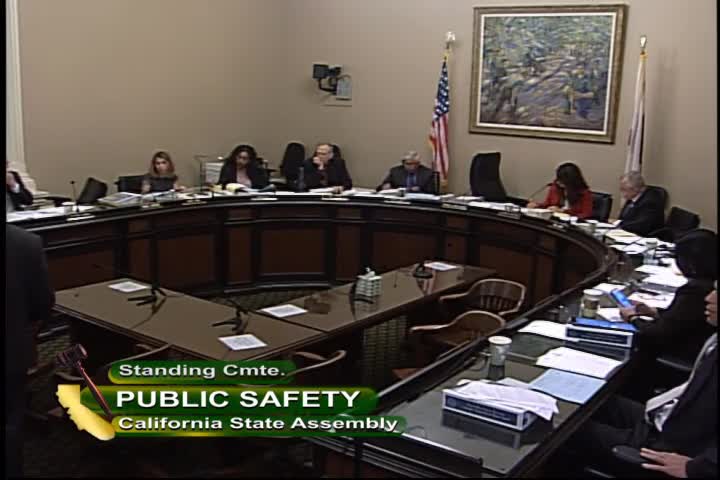
Assembly Standing Committee on Public Safety
Bill Author

Bill Co-Author(s):