AB 2532: Infractions: community service.
- Session Year: 2017-2018
- House: Assembly
- Latest Version Date: 2018-09-06
Existing law authorizes a court to sentence a person convicted of an infraction to perform community service in lieu of the total fine, as defined, that would otherwise be imposed, upon a showing that payment of the total fine would pose a hardship on the defendant or his or her family. Existing law requires the defendant to perform community service at the hourly rate applicable to community service work performed by criminal defendants.
This bill would instead require the court to permit the person to elect to perform community service in lieu of the total fine upon making the above-described showing of hardship to the court. To the extent that the bill would expand the scope of persons performing community service and would increase the duties of county officials, the bill would impose a state-mandated local program.
The bill would also value the hourly rate applicable to the community service performed instead at double the minimum wage set for the applicable calendar year, based on the schedule for an employer who employs 25 or fewer employees, as specified. The bill would authorize a court by local rule to increase the amount that is credited for each hour of community service performed, to exceed that hourly rate. The bill would also make clarifying changes to the definition of total fine and would make other technical, nonsubstantive changes.
The California Constitution requires the state to reimburse local agencies and school districts for certain costs mandated by the state. Statutory provisions establish procedures for making that reimbursement.
This bill would provide that, if the Commission on State Mandates determines that the bill contains costs mandated by the state, reimbursement for those costs shall be made pursuant to the statutory provisions noted above.
(a)Notwithstanding any other law, the court shall permit a person convicted of an infraction, upon a showing that payment of the total fine would pose a hardship on the defendant or his or her family, to elect to perform community service in lieu of the total fine that would otherwise be imposed.
(b)For purposes of this section, the term total fine means the total bail, including the base fine and all assessments, penalties, and additional moneys to be paid by the defendant.
(c)(1)For purposes of this section, the hourly rate applicable to community service performed pursuant to this section shall be double the minimum wage set for the applicable calendar year, based on the schedule for an employer who employs 25 or fewer employees, as established in paragraph (2) of subdivision (b) of Section 1182.12 of the Labor Code.
(2)Notwithstanding paragraph (1), a court may by local rule increase the amount that is credited for each hour of community service performed pursuant to this section, to exceed the hourly rate described in paragraph (1).
SEC. 2.If the Commission on State Mandates determines that this act contains costs mandated by the state, reimbursement to local agencies and school districts for those costs shall be made pursuant to Part 7 (commencing with Section 17500) of Division 4 of Title 2 of the Government Code.
(a)Notwithstanding any other provision of law, any law, the court shall permit a person convicted of an infraction may, infraction, upon a showing that payment of the total fine would pose a hardship on the defendant or his or her family, be sentenced to elect to perform community service in lieu of the total fine that would otherwise be imposed. The defendant shall perform community service at the hourly rate applicable to community service work performed by criminal defendants. For
(b)For purposes of this section, the term total fine means the total bail, including the base fine and all assessments, penalties, and additional moneys to be paid by the defendant. For
(c)(1)For purposes of this section, the hourly rate applicable to community service work by criminal defendants shall be determined by dividing the total fine by the number of hours of community service ordered by the court to be performed in lieu of the total fine. performed pursuant to this section shall be double the minimum wage set for the applicable calendar year, based on the schedule for an employer who employs 25 or fewer employees, as established in paragraph (2) of subdivision (b) of Section 1182.12 of the Labor Code.
(2)Notwithstanding paragraph (1), a court may by local rule increase the amount that is credited for each hour of community service performed pursuant to this section, to exceed the hourly rate described in paragraph (1).
SEC. 2.If the Commission on State Mandates determines that this act contains costs mandated by the state, reimbursement to local agencies and school districts for those costs shall be made pursuant to Part 7 (commencing with Section 17500) of Division 4 of Title 2 of the Government Code.
|
Date
|
Status
|
|---|---|
| Sep 6, 2018 | Chaptered by Secretary of State - Chapter 280, Statutes of 2018. |
| Sep 6, 2018 | Approved by the Governor. |
| Aug 24, 2018 | Enrolled and presented to the Governor at 4:30 p.m. |
| Aug 20, 2018 | In Assembly. Ordered to Engrossing and Enrolling. |
| Aug 20, 2018 | Read third time. Passed. Ordered to the Assembly. |
| Jul 3, 2018 | Read second time. Ordered to third reading. |
| Jul 2, 2018 | From committee: Be ordered to second reading pursuant to Senate Rule 28.8. |
| Jun 13, 2018 | From committee: Do pass and re-refer to Com. on APPR. (Ayes 7. Noes 0.) (June 12). Re-referred to Com. on APPR. |
| May 10, 2018 | Referred to Com. on PUB. S. |
| Apr 26, 2018 | In Senate. Read first time. To Com. on RLS. for assignment. |
| Apr 26, 2018 | Read third time. Passed. Ordered to the Senate. |
| Apr 19, 2018 | Read second time. Ordered to Consent Calendar. |
| Apr 18, 2018 | From committee: Do pass. To Consent Calendar. (Ayes 15. Noes 0.) (April 18). |
| Apr 4, 2018 | From committee: Do pass and re-refer to Com. on APPR. (Ayes 5. Noes 0.) (April 3). Re-referred to Com. on APPR. |
| Mar 5, 2018 | Referred to Com. on PUB. S. |
| Feb 15, 2018 | From printer. May be heard in committee March 17. |
| Feb 14, 2018 | Read first time. To print. |
|
Date
|
Description
|
Location
|
Votes
|
|
|---|---|---|---|---|
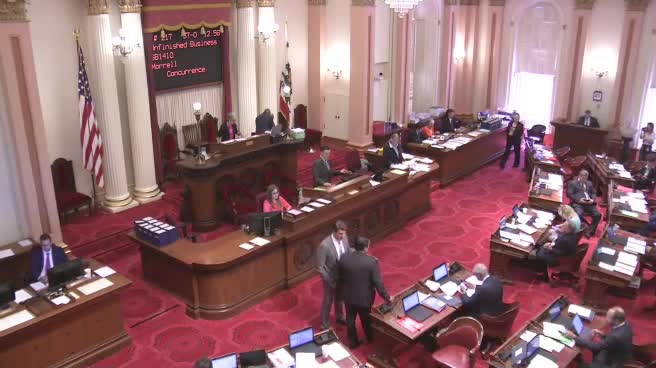
| Aug 20, 2018 | Assembly 3rd Reading AB2532 Jones-Sawyer By McGuire | Senate Floor |
Passed |
|
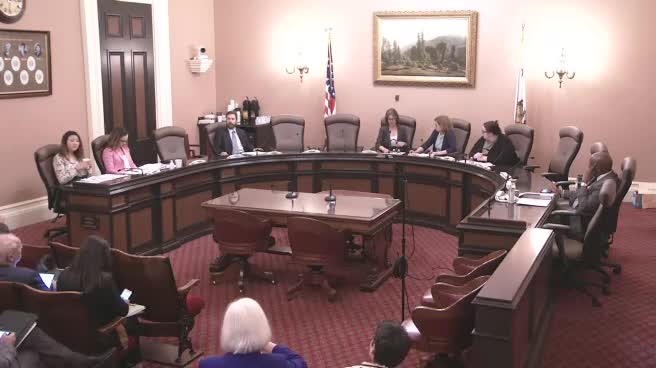
| Jun 12, 2018 | Do pass, but first be re-referred to the Committee on [Appropriations] | Senate Standing Committee on Public Safety |
Passed |
|
| Apr 26, 2018 | AB 2532 JONES-SAWYER Consent Calendar Second Day Regular Session | Assembly Floor |
Passed |
|
| Apr 18, 2018 | Do pass. To Consent Calendar. | Assembly Standing Committee on Appropriations |
Passed |
|
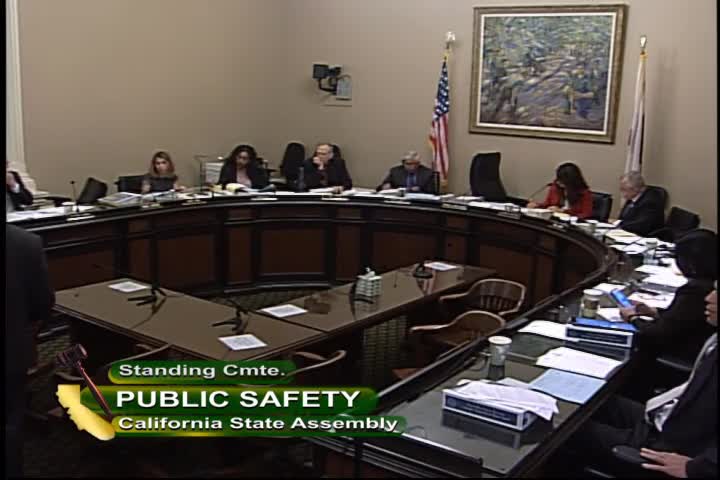
| Apr 3, 2018 | Do pass and be re-referred to the Committee on [Appropriations] | Assembly Standing Committee on Public Safety |
Passed |
This list shows positions taken on this bill by organizations on the date displayed, which is linked to the original source.
Positions by individuals are not included.
|
Organization
|
Position
|
Date
|
|---|---|---|
| Assembly Floor Vote: 74 - 0 | ** Against | Jun 11, 2018 |
| California Police Chiefs Association | ** Against | Jul 3, 2018 |
| California Public Defenders Association | ** Support | Jul 3, 2018 |
| Ella Baker Center For Human Rights | ** Support | Jul 3, 2018 |
| Judicial Council | ** Support | Jul 3, 2018 |
| National Association of Social Workers | * Support | Jun 12, 2018 |
| National Association Of Social Workers, California Chapter | ** Support | Jul 3, 2018 |
| PURPOSE | ** Against | Jun 11, 2018 |
Office of Senate Floor Analyses (916) 651-1520 Fax: (916) 327-4478 | AB |
THIRD READING
Bill No: AB 2532
:
SENATE PUBLIC SAFETY COMMITTEE: 7-0, 6/12/18
AYES: Skinner, Anderson, Bradford, Jackson, Mitchell, Stone, Wiener
SENATE APPROPRIATIONS COMMITTEE: Senate Rule 28.8
ASSEMBLY FLOOR: 74-0, 4/26/18 (Consent) - See last page for vote
DIGEST:
This bill requires a court to permit a person convicted of an infraction to perform community service in lieu of paying a fine upon demonstrated financial hardship, and sets an hourly rate for community service.
Existing law:
- Specifies that an infraction is not punishable by imprisonment. A person charged with an infraction is not entitled to a trial by jury and is not entitled to a public defender or other counsel paid for at public expense unless he or she was arrested and not released on written promise to appear, own recognizance, or deposit of bail. (Penal Code § 19.6.)
- Mandates that, except as otherwise provided by law, all laws relating to misdemeanors apply to infractions including, but not limited to, peace officer powers, court jurisdiction, periods for commencing action and for bringing a case to trial, and burden of proof. (Penal Code § 19.7.)
- States that a violation of any code section listed, as specified, is an infraction, when:
- The prosecutor files the offense as an infraction unless the defendant elects, after having been arraigned and informed of rights, to have the case proceed as a misdemeanor; or
- The defendant allows the court to determine that the offense is an infraction. (Penal Code, § 17 (d).)
- States that, except in cases where a different punishment is prescribed, a fine for an infraction shall not exceed two hundred fifty dollars. (Penal Code § 19.8.)
- States that a person convicted of an infraction may, upon demonstrating that paying a fine would result in financial hardship, be sentenced to perform community service instead of paying the total fine which would otherwise be imposed. (Penal Code § 1209.5.)
- Sets the hourly rate applicable to community service work performed by dividing the total fine by the number of hours of community service ordered by the court. (Penal Code, § 1209.5.)
- Requires the minimum wage for any employer who employs 25 or fewer employees to be:
- $10.50 per hour from January 1, 2018, to December 31, 2018;
- $11 per hour from January 1, 2019, to December 31, 2019;
- $12 per hour from January 1, 2020, to December 31, 2020;
- $13 per hour from January 1, 2021, to December 31, 2021;
- $14 per hour from January 1, 2022, to December 31, 2022; and,
- $15 per hour from January 1, 2023 until adjusted as specified. (Labor Code § 1182.12 (b)(2).)
This bill:
- Requires the court to permit a person convicted of an infraction to perform community service in lieu of paying a fine upon the defendant demonstrating financial hardship.
- Clarifies the definition of “total fine.”
- Sets the hourly applicable rate for community service at double the minimum wage set for the applicable calendar year, as specified.
- Allows courts to adopt a local rule increasing the hourly rate set above.
Under existing law the court may permit a person to perform community service instead of paying a fine for an infraction when he or she shows that paying the fine would cause a hardship.
This bill requires the court to allow community service when the hardship is shown. This bill further defines the applicable hourly rate for community service as double the minimum wage set for that calendar year unless a court by local rule increases that amount.
FISCAL EFFECT: Appropriation: Fiscal Com.: Local:
Judicial Council (source)
California Public Defenders Association
Ella Baker Center for Human Rights
National Association of Social Workers, California Chapter
California Police Chiefs Association
ARGUMENTS IN SUPPORT: Judicial Council, the sponsor of this bill notes:
Currently, each court determines its own hourly rate for defendants who perform community service, resulting in different rates throughout the state. This bill is needed to provide a uniform and equitable statewide minimum hourly rate for community service in lieu of payment of infraction fines. By doing so it would promote access to justice.
ASSEMBLY FLOOR: 74-0, 4/26/18
AYES: Acosta, Aguiar-Curry, Arambula, Baker, Berman, Bigelow, Bloom, Bonta, Brough, Burke, Caballero, Calderon, Carrillo, Cervantes, Chau, Chávez, Chen, Chiu, Choi, Chu, Cooley, Cooper, Cunningham, Dahle, Daly, Eggman, Flora, Frazier, Friedman, Gallagher, Eduardo Garcia, Gipson, Gloria, Gonzalez Fletcher, Gray, Grayson, Harper, Holden, Irwin, Jones-Sawyer, Kalra, Kamlager-Dove, Kiley, Lackey, Levine, Limón, Low, Maienschein, Mathis, Mayes, McCarty, Medina, Melendez, Mullin, Muratsuchi, Nazarian, Obernolte, O'Donnell, Patterson, Quirk, Quirk-Silva, Reyes, Rubio, Salas, Santiago, Steinorth, Mark Stone, Thurmond, Ting, Voepel, Waldron, Weber, Wood, Rendon
NO VOTE RECORDED: Travis Allen, Fong, Cristina Garcia, Rodriguez
Prepared by: Mary Kennedy / PUB. S. /
7/3/18 16:05:18
**** END ****
SENATE COMMITTEE ON PUBLIC SAFETY
Senator Nancy Skinner, Chair
2017 - 2018 Regular
Bill No: AB 2532 Hearing Date: June 12, 2018
Author: | Jones-Sawyer | ||
Version: | February 14, 2018 | ||
Urgency: | No | Fiscal: | Yes |
Consultant: | MK | ||
Subject: Infractions: Community Service
HISTORY
Source: Judicial Council
Prior Legislation: AB 2197 (Washington) Chapter 1061, Stats. 1998
Support: California Public Defenders Association; Disability Rights California (if amended) Ella Baker Center for Human Rights; National Association of Social Workers, California Chapter (NASW-CA)
Opposition: California Police Chiefs Association
Assembly Floor Vote: 74 - 0
PURPOSE
The purpose of this bill is to require a court to permit a person convicted of an infraction to perform community service in lieu of paying a fine upon demonstrated financial hardship, and sets an hourly rate for community service.
Existing law specifies that an infraction is not punishable by imprisonment. A person charged with an infraction is not entitled to a trial by jury and is not entitled to a public defender or other counsel paid for at public expense unless he or she was arrested and not released on written promise to appear, own recognizance, or deposit of bail. (Penal Code § 19.6.)
Existing law mandates that, except as otherwise provided by law, all laws relating to misdemeanors apply to infractions including, but not limited to, peace officer powers, court jurisdiction, periods for commencing action and for bringing a case to trial, and burden of proof. (Penal Code § 19.7.)
Existing law states that a violation of any code section listed, as specified, is an infraction, when:
- The prosecutor files the offense as an infraction unless the defendant elects, after having been arraigned and informed of rights, to have the case proceed as a misdemeanor; or
- The defendant allows the court to determine that the offense is an infraction. (Penal Code, § 17 (d).)
Existing law states that, except in cases where a different punishment is prescribed, a fine for an infraction shall not exceed two hundred fifty dollars. (Penal Code § 19.8.)
Existing law states that a person convicted of an infraction may, upon demonstrating that paying a fine would result in financial hardship, be sentenced to perform community service instead of paying the total fine which would otherwise be imposed. (Penal Code § 1209.5.)
Existing law sets the hourly rate applicable to community service work performed by dividing the total fine by the number of hours of community service ordered by the court. (Penal Code, § 1209.5.)
Existing law requires the minimum wage for any employer who employs 25 or fewer employees to be:
- $10.50 per hour from January 1, 2018, to December 31, 2018;
- $11 per hour from January 1, 2019, to December 31, 2019;
- $12 per hour from January 1, 2020, to December 31, 2020;
- $13 per hour from January 1, 2021, to December 31, 2021;
- $14 per hour from January 1, 2022, to December 31, 2022; and,
- $15 per hour from January 1, 2023 until adjusted as specified. (Labor Code § 1182.12 (b)(2).)
This bill requires the court to permit a person convicted of an infraction to perform community service in lieu of paying a fine upon the defendant demonstrating financial hardship.
This bill clarifies the definition of “total fine.”
This bill sets the hourly applicable rate for community service at double the minimum wage set for the applicable calendar year, as specified.
This bill allows courts to adopt a local rule increasing the hourly rate set above.
COMMENTS
1. Need for This Bill
According to the author:
When a trial court convicts an individual of an infraction they begin with a base fine and then add state mandated penalties and assessments, leading to higher total fine amounts. For example, the base fine for a red light violation is $100, but after mandatory penalties and assessments, the total amount due is $490.
Current law (Section 1209.5 of the California Penal Code) gives courts the discretion to sentence an individual to community service if the court determines that the total fine amount would cause a financial hardship. While allowing individuals to pay infraction fines through community service hours can help reduce the financial burden, there is not a consistent rate for converting community service hours in California. This results in an unequal system where an hour of community service can be valued at $10 in one court, and only $6.50 in another.
A Legislative Analyst Office (LAO) report, Improving California’s Criminal Fine and Fee System, found that California’s fine and fee system results in some of the highest amounts of court ordered debt in the country. The LAO report raised concerns about proportional punishment noting that “the determination of whether the fines and fees for a particular offense are proportional and reasonable is subjective; it can be guided by information on how the requirement to pay affects offenders”. Additionally, the Futures Commission of the Judicial Council of California issued a report in April 2017 noted, in recommendation number 2.4, that California lacks a uniform hourly rate for converting infraction fines into community service hours.
AB 2532 would, at the recommendation of the Judicial Council of California, result in a uniform rate for converting infraction fines into community service hours. Specifically, this bill would make an hour of community service equal to no less than double the minimum wage rate for businesses with fewer than 25 employees.
The minimum wage rate for businesses with less than 25 employees will be $11 starting in 2019, and is scheduled to increase by $1 through 2023, to $15. Additionally, this bill would allow courts to increase the conversion rate at their discretion.
AB 2532 would ensure that the community service of individuals who cannot afford to pay their infraction violation fines is converted into work hours at a fair and equitable rate. Creating a conversion rate of no less than double the minimum wage allows individuals to pay off their fines in a more reasonable timeframe, which, in turn, allows them more time to focus on existing responsibilities including increased time with their families.
2. Community Service in Lieu of Fine
Under existing law the court may permit a person to perform community service instead of paying a fine for an infraction when he or she shows that paying the fine would cause a hardship.
This bill would require the court to allow community service when the hardship is shown. This bill further defines the applicable hourly rate for community service as double the minimum wage set for that calendar year unless a court by local rule increases that amount.
Judicial Council, the sponsor of this bill notes:
Currently, each court determines its own hourly rate for defendants who perform community service, resulting in different rates throughout the state. This bill is needed to provide a uniform and equitable statewide minimum hourly rate for community service in lieu of payment of infraction fines. By doing so it would promote access to justice.
-- END –
Date of Hearing: April 18, 2018
ASSEMBLY COMMITTEE ON APPROPRIATIONS
Lorena Gonzalez Fletcher, Chair
ABPCA Bill Id:AB 2532
Author:(Jones-Sawyer) – As Introduced Ver:February 14, 2018
Policy Committee: | Public Safety | Vote: | 5 - 0 |
|
| ||
|
|
Urgency: No State Mandated Local Program: Yes Reimbursable: No
SUMMARY:
This bill changes the requirements for an individual who is convicted of an infraction to perform community service in lieu of paying a fine. Specifically, this bill:
- Establishes a minimum hourly rate of double the state minimum wage for valuing community service performed in lieu of paying a fine for an infraction. This bill allows a court to adopt a higher hourly rate.
- Recasts provisions about allowing community service in lieu of fines for infractions. Specifically, this bill requires a defendant to elect to perform community service, rather than allowing a court to sentence a person to community service, if the defendant shows that paying a fine poses a financial hardship.
FISCAL EFFECT:
Negligible fiscal effect because courts can already allow a defendant to perform community service in lieu of paying a fine.
COMMENTS:
- Background and purpose. Current law allows a court to sentence an individual to community service if the person can demonstrate that paying the fine for the infraction they committed would pose a financial hardship. However, currently there is not uniformity among how community service is valued and disparities exist from one court to another. According to the Judicial Council of California:
Currently, each court determines its own hourly rate for defendants who perform community service, resulting in different rates throughout the state. This bill is needed to provide a uniform and equitable statewide minimum hourly rate for community service in lieu of payment of infraction fines. By doing so, it would promote access to justice.
Analysis Prepared by: Jessica Peters / APPR. / (916) 319-2081
Date of Hearing:
Consultant: Mureed Rasool
ASSEMBLY COMMITTEE ON PUBLIC SAFETY
Reginald Byron Jones-Sawyer, Sr., Chair
ABPCA Bill Id:AB 2532
Author:(Jones-Sawyer) – As Introduced Ver:
SUMMARY:
Requires a court to permit a person convicted of an infraction to perform community service in lieu of paying a fine upon demonstrated financial hardship, and sets an hourly rate for community service. Specifically, this bill:
- Requires the court to permit a person convicted of an infraction to perform community service in lieu of paying a fine upon the defendant demonstrating financial hardship.
- Clarifies the definition of “total fine.”
- Sets the hourly applicable rate for community service at double the minimum wage set for the applicable calendar year, as specified.
- Allows courts to adopt a local rule increasing the hourly rate set above.
EXISTING LAW:
- Separates crimes and public offenses into felonies, misdemeanors, and infractions. (Pen. Code, § 16.)
- Specifies that an infraction is not punishable by imprisonment. A person charged with an infraction is not entitled to a trial by jury and is not entitled to a public defender or other counsel paid for at public expense unless he or she was arrested and not released on written promise to appear, own recognizance, or deposit of bail. (Pen. Code, § 19.6.)
- Mandates that, except as otherwise provided by law, all laws relating to misdemeanors apply to infractions including, but not limited to, peace officer powers, court jurisdiction, periods for commencing action and for bringing a case to trial, and burden of proof. (Pen. Code, § 19.7.)
- States that a violation of any code section listed, as specified, is an infraction, when:
- The prosecutor files the offense as an infraction unless the defendant elects, after having been arraigned and informed of rights, to have the case proceed as a misdemeanor; or
- The defendant allows the court to determine that the offense is an infraction. (Pen. Code, § 17, subd. (d).)
- The prosecutor files the offense as an infraction unless the defendant elects, after having been arraigned and informed of rights, to have the case proceed as a misdemeanor; or
- States that, except in cases where a different punishment is prescribed, a fine for an infraction shall not exceed two hundred fifty dollars. (Pen. Code, § 19.8.)
- States that a person convicted of an infraction may, upon demonstrating that paying a fine would result in financial hardship, be sentenced to perform community service instead of paying the total fine which would otherwise be imposed. (Pen. Code, § 1209.5.)
- Sets the hourly rate applicable to community service work performed by dividing the total fine by the number of hours of community service ordered by the court. (Pen. Code, § 1209.5.)
- Requires the minimum wage for any employer who employs 25 or fewer employees to be:
- $10.50 per hour from January 1, 2018, to December 31, 2018;
- $11 per hour from January 1, 2019, to December 31, 2019;
- $12 per hour from January 1, 2020, to December 31, 2020;
- $13 per hour from January 1, 2021, to December 31, 2021;
- $14 per hour from January 1, 2022, to December 31, 2022; and,
- $15 per hour from January 1, 2023 until adjusted as specified. (Lab. Code, § 1182.12 subd. (b)(2).)
- $10.50 per hour from January 1, 2018, to December 31, 2018;
FISCAL EFFECT:
Unknown
COMMENTS:
- Author's Statement: According to the author, "Low-income individuals of African American, Latin, Asian, and Native American descent are disproportionately represented in our criminal justice system, and they are also disproportionately burdened by high levels of court ordered debt related to traffic infractions. The court does provide people an opportunity to use community service if paying the court ordered debt is a financial burden, but the current conversion rate for community service is inequitable. AB 2532 addresses this by providing a minimum conversion rate for community service hours equal to double the minimum wage for small businesses.
“The California court system has made progress in recent years by implementing reforms to address issues in both criminal court and traffic courts. Recent changes by the Legislature have also resulted in a more equitable system of payments through the use of payment plans, and AB 2532 continues these efforts to ensure that our court system is fairer for everyone.”
- Background: Before sponsoring AB 2532, the Judicial Council disseminated a proposed draft for public comment. (Judicial Council of California. (2017). Judicial Council-Sponsored Legislation: Uniform Hourly Rate for Community Service in Lieu of Infraction Fine.) According to information provided by the Judicial Council of California, “Penal Code section 1209.5 governs the imposition of community service in lieu of fines for infraction convictions. Section 1209.5 provides that a court may sentence a defendant to perform community service if payment of the total fine would pose a hardship on the defendant or his or her family. Currently, each court determines its own hourly rate for defendants who perform community service, resulting in different rates throughout the state.” (Id.)
This bill would designate a uniform minimum hourly rate for infraction fines paid off through community service. This would lessen the inequitable results in cases where defendants face similar fines but are sentenced to markedly differing community service hours. - Judicial Council’s Public Comment Considerations: During the circulation period for public comment, the Judicial Council took several notable comments into consideration. (Judicial Council of California. (2017). Judicial Council-Sponsored Legislation: Uniform Hourly Rate for Community Service in Lieu of Infraction Fine.)
“Two commenters requested the proposal specify that the rate apply to the base fine rather than the total fine. [One commenter had pointed out that AB 2839 (Thurmond), Chapter 769, Statutes of 2016, changed custody credits under Penal Code sections 1205 and 2900.5 to reduce penalties and assessments imposed on base fines in an amount proportional to the base fine reduction due to community service.]
“The committee considered the requested change but determined the existing proposal would allow defendants to perform fewer hours of community service without creating inequality among infraction defendants. For example, if a defendant committed a violation of speeding less than 15 miles per hour over the speed limit (Veh. Code, § 22349(a)), the base fine would be $35 and the total bail would be approximately $238. If the committee changed the proposal to apply only to the base fine, a defendant could complete one hour of community service to satisfy the base fine, whereas a defendant who paid the fine would owe $238; a defendant working at a minimum wage job might have to work more than 21 hours to pay off the total bail.
“One commenter requested the rate be tied to minimum wage but not doubled, as doubling the minimum wage will put it out of line with the monetary credit defendants receive for each day in custody. As with the previous comment, this commenter is concerned the proposal is out of line with the amount defendants are credited for each day in custody, which is $125.
“The Traffic Advisory Committee initially considered recommending the minimum wage in developing this proposal, but instead elected to propose double the lowest schedule for the state minimum wage to provide defendants with a greater benefit. Also a defendant in jail remains in custody 24 hours a day, whereas a day of labor is based on only eight hours of work. The committee reconsidered its position in light of this comment, but declined to change the proposal.” (Id.) - Argument in Support: According to the Judicial Council of California, “The Judicial Council is pleased to sponsor and support AB 2532, which would require the court to permit a person to perform community service in lieu of the total fine upon making a specified showing of hardship to the court. This bill would also value the hourly rate for community service at double the minimum wage, based on the schedule for an employer who employs 25 or fewer employees, as specified. The bill would further authorize a court by local rule to increase the amount that is credited for each hour of community service performed.
“Currently, each court determines its own hourly rate for defendants who perform community service, resulting in different rates throughout the state. This bill is needed to provide a uniform and equitable statewide minimum hourly rate for community service in lieu of payment of infraction fines. By doing so, it would promote access to justice.” - Argument in Opposition: According to the California Police Chiefs Association, “The California Police Chiefs Association regrets to inform you of our opposition to AB 2532, which would require the court to permit an individual to elect to perform community service in lieu of the total fine upon showing that payment of the total fine would pose a hardship on the defendant or his or her family.
“By eliminating the fine(s) and only requiring community service, this bill would eliminate a revenue source used by the courts to fund their day to day operations. It would also affect the Commission on Peace Officers Standards and Training (POST) by reducing the funds used to provide access to specified training courses to peace officers. Without this source of revenue, POST will not be able to provide the training needed to maintain the level of service the public demands from their local law enforcement.” - Prior Legislation:
- AB 2839 (Thurmond), Chapter 769, Statutes of 2016, changed custody credits under Penal Code sections 1205 and 2900.5 to reduce penalties and assessments imposed on base fines in an amount proportional to the base fine reduction caused by community service.
- AB 2197 (Washington), Chapter 1061, Statutes of 1998, authorized persons convicted of infractions to perform community service in lieu of the total fine otherwise imposed. Stated that the hourly rate applicable to community service work was to be determined by dividing the total fine by the number of hours of community service ordered by the court.
- AB 2839 (Thurmond), Chapter 769, Statutes of 2016, changed custody credits under Penal Code sections 1205 and 2900.5 to reduce penalties and assessments imposed on base fines in an amount proportional to the base fine reduction caused by community service.
REGISTERED SUPPORT / OPPOSITION:
Support
Judicial Council of California (Sponsor)
California Public Defenders Association
Opposition
California Police Chiefs Association
Analysis Prepared by:
Mureed Rasool / PUB. S. / (916) 319-3744
Discussed in Hearing
 2MIN
Senate Floor
 5MIN
Senate Standing Committee on Public Safety
 3MIN
Assembly Standing Committee on Public Safety
Bill Author

Bill Co-Author(s):