AB 259: Medical cannabis and nonmedical marijuana: California residency requirement for licensing.
- Session Year: 2017-2018
- House: Assembly
- Latest Version Date: 2017-03-28
Existing law, the Control, Regulate and Tax Adult Use of Marijuana Act (AUMA), added by Proposition 64 at the November 8, 2016, statewide general election, authorizes a person 21 years of age or older to possess and use specified amounts of marijuana. AUMA provides for the licensing and regulation of cultivation, manufacture, distribution, testing, and retail sale of nonmedical marijuana and nonmedical marijuana products. Until December 31, 2019, AUMA requires a person to demonstrate continuous California residency from or before January 1, 2015, in order to be issued a license for commercial nonmedical marijuana activity. AUMA authorizes legislative amendment of its provisions with a 2/3 vote of both houses, without submission to the voters, to further its purposes and intent.
Existing law, the Medical Cannabis Regulation and Safety Act (MCRSA), authorizes a person who obtains both a state license under the MCRSA and the relevant local license to engage in commercial medical cannabis activity pursuant to those licenses, as specified. Existing law prescribes requirements for a licensing authority to issue a license, including submission of an application and payment of a fee.
This bill would require a person to demonstrate 3 years of continuous California residency prior to the date of application before being issued a license under either AUMA or MCRSA.
This bill would declare that its provisions further the purposes and intent of the Control, Regulate and Tax Adult Use of Marijuana Act.
Existing law requires a health facility maintaining or operating an emergency department to provide emergency services and care to any person requesting those services and care for any condition in which the person is in danger of loss of life, or serious injury or illness. Existing law prohibits a health facility or its employees or health care providers from refusing to provide emergency services to a patient based upon their ability to pay or upon certain specified characteristics.This bill would make a technical, nonsubstantive change to those provisions.Existing law requires a health facility maintaining or operating an emergency department to provide emergency services and care to any person requesting those services and care for any condition in which the person is in danger of loss of life, or serious injury or illness. Existing law prohibits a health facility or its employees or health care providers from refusing to provide emergency services to a patient based upon their ability to pay or upon certain specified characteristics.
This bill would make a technical, nonsubstantive change to those provisions.
(a)A person shall not submit an application for a state license issued by a licensing authority pursuant to this chapter unless that person has received a license, permit, or authorization from the local jurisdiction. An applicant for any type of state license issued pursuant to this chapter shall do all of the following:
(1)Electronically submit to the Department of Justice fingerprint images and related information required by the Department of Justice for the purpose of obtaining information as to the existence and content of a record of state or federal convictions and arrests, and information as to the existence and content of a record of state or federal convictions and arrests for which the Department of Justice establishes that the person is free on bail or on his or her own recognizance, pending trial or appeal.
(A)The Department of Justice shall provide a response to the licensing authority pursuant to paragraph (1) of subdivision (p) of Section 11105 of the Penal Code.
(B)The licensing authority shall request from the Department of Justice subsequent notification service, as provided pursuant to Section 11105.2 of the Penal Code, for applicants.
(C)The Department of Justice shall charge the applicant a fee sufficient to cover the reasonable cost of processing the requests described in this paragraph.
(2)Provide documentation issued by the local jurisdiction in which the proposed business is operating certifying that the applicant is or will be in compliance with all local ordinances and regulations.
(3)Provide evidence of the legal right to occupy and use the proposed location. For an applicant seeking a cultivator, distributor, manufacturing, testing, transporter, or dispensary license, provide a statement from the owner of real property or their agent where the cultivation, distribution, manufacturing, testing, transport, or dispensing of commercial medical cannabis activities will occur, as proof to demonstrate the landowner has acknowledged and consented to permit cultivation, distribution, manufacturing, testing, transport, or dispensary activities to be conducted on the property by the tenant applicant.
(4)If the application is for a cultivator or a dispensary, provide evidence that the proposed location is located beyond at least a 600-foot radius from a school, as required by Section 11362.768 of the Health and Safety Code.
(5)Provide a statement, signed by the applicant under penalty of perjury, that the information provided is complete, true, and accurate.
(6)(A)For an applicant with 20 or more employees, provide a statement that the applicant will enter into, or demonstrate that it has already entered into, and abide by the terms of a labor peace agreement.
(B)For the purposes of this paragraph, employee does not include a supervisor.
(C)For purposes of this paragraph, supervisor means an individual having authority, in the interest of the licensee, to hire, transfer, suspend, lay off, recall, promote, discharge, assign, reward, or discipline other employees, or responsibility to direct them or to adjust their grievances, or effectively to recommend such action, if, in connection with the foregoing, the exercise of that authority is not of a merely routine or clerical nature, but requires the use of independent judgment.
(7)Provide the applicants valid sellers permit number issued pursuant to Part 1 (commencing with Section 6001) of Division 2 of the Revenue and Taxation Code or indicate that the applicant is currently applying for a sellers permit.
(8)Demonstrate three years of continuous California residency prior to the date of application.
(8)(9)Provide any other information required by the licensing authority.
(9)(10)For an applicant seeking a cultivation license, provide a statement declaring the applicant is an agricultural employer, as defined in the Alatorre-Zenovich-Dunlap-Berman Agricultural Labor Relations Act of 1975 (Part 3.5 (commencing with Section 1140) of Division 2 of the Labor Code), to the extent not prohibited by law.
(10)(11)Pay all applicable fees required for licensure by the licensing authority.
(11)(12)Provide proof of a bond to cover the costs of destruction of medical cannabis or medical cannabis products if necessitated by a violation of licensing requirements.
(b)For applicants seeking licensure to cultivate, distribute, manufacture, test, or dispense medical cannabis or medical cannabis products, the application shall also include a detailed description of the applicants operating procedures for all of the following, as required by the licensing authority:
(1)Cultivation.
(2)Extraction and infusion methods.
(3)The transportation process.
(4)Inventory procedures.
(5)Quality control procedures.
(6)Security protocols.
SEC. 2.Section 26054.1 of the Business and Professions Code is amended to read:26054.1.(a)No A licensing authority shall not issue or renew a license to any a person that cannot demonstrate continuous California residency from or before January 1, 2015. for three years prior to the date of application. In the case of an applicant or licensee that is an entity, the entity shall not be considered a resident if any person controlling the entity cannot demonstrate continuous California residency from and before January 1, 2015. for three years prior to the date of application.
(b)Subdivision (a) shall cease to be operative on December 31, 2019, unless reenacted prior thereto by the Legislature. 2023.
SEC. 3.The Legislature finds and declares that this act furthers the purposes and intent of the Control, Regulate and Tax Adult Use of Marijuana Act.
SECTION 1.Section 1317 of the Health and Safety Code is amended to read:1317.(a)Emergency services and care shall be provided to any person requesting the services or care, or for whom services or care is requested, for any condition in which the person is in danger of loss of life, or serious injury or illness, at any health facility licensed under this chapter that maintains and operates an emergency department to provide emergency services to the public when the health facility has appropriate facilities and qualified personnel available to provide the services or care.(b)In no event shall the provision of emergency services and care be based upon, or affected by, the persons ethnicity, citizenship, age, preexisting medical condition, insurance status, economic status, ability to pay for medical services, or any other characteristic listed or defined in subdivision (b) or (e) of Section 51 of the Civil Code, except to the extent that a circumstance such as age, sex, preexisting medical condition, or physical or mental disability is medically significant to the provision of appropriate medical care to the patient.(c)Neither the health facility, its employees, nor any physician and surgeon, dentist, clinical psychologist, or podiatrist shall be liable in any action arising out of a refusal to render emergency services or care if the refusal is based on the determination, exercising reasonable care, that the person is not suffering from an emergency medical condition, or that the health facility does not have the appropriate facilities or qualified personnel available to render those services.(d)Emergency services and care shall be rendered without first questioning the patient or any other person as to his or her ability to pay. However, the patient or his or her legally responsible relative or guardian shall execute an agreement to pay therefor or otherwise supply insurance or credit information promptly after the services are rendered.(e)If a health facility subject to this chapter does not maintain an emergency department, its employees shall nevertheless exercise reasonable care to determine whether an emergency exists and shall direct the persons seeking emergency care to a nearby facility that can render the needed services, and shall assist the persons seeking emergency care in obtaining the services, including transportation services, in every way reasonable under the circumstances.(f)No act or omission of any rescue team established by any health facility licensed under this chapter, or operated by the federal or state government, a county, or by the Regents of the University of California, done or omitted while attempting to resuscitate any person who is in immediate danger of loss of life shall impose any liability upon the health facility, the officers, members of the staff, nurses, or employees of the health facility, including, but not limited to, the members of the rescue team, or upon the federal or state government or a county, if good faith is exercised.(g)Rescue team, as used in this section, means a special group of physicians and surgeons, nurses, and employees of a health facility who have been trained in cardiopulmonary resuscitation and have been designated by the health facility to attempt, in cases of emergency, to resuscitate persons who are in immediate danger of loss of life.(h)This section shall not relieve a health facility of any duty otherwise imposed by law upon the health facility for the designation and training of members of a rescue team or for the provision or maintenance of equipment to be used by a rescue team.(a)Emergency services and care shall be provided to any person requesting the services or care, or for whom services or care is requested, for any condition in which the person is in danger of loss of life, or serious injury or illness, at any health facility licensed under this chapter that maintains and operates an emergency department to provide emergency services to the public when the health facility has appropriate facilities and qualified personnel available to provide the services or care.
(b)In no event shall the provision of emergency services and care be based upon, or affected by, the persons ethnicity, citizenship, age, preexisting medical condition, insurance status, economic status, ability to pay for medical services, or any other characteristic listed or defined in subdivision (b) or (e) of Section 51 of the Civil Code, except to the extent that a circumstance such as age, sex, preexisting medical condition, or physical or mental disability is medically significant to the provision of appropriate medical care to the patient.
(c)Neither the health facility, its employees, nor any physician and surgeon, dentist, clinical psychologist, or podiatrist shall be liable in any action arising out of a refusal to render emergency services or care if the refusal is based on the determination, exercising reasonable care, that the person is not suffering from an emergency medical condition, or that the health facility does not have the appropriate facilities or qualified personnel available to render those services.
(d)Emergency services and care shall be rendered without first questioning the patient or any other person as to his or her ability to pay therefor. pay. However, the patient or his or her legally responsible relative or guardian shall execute an agreement to pay therefor or otherwise supply insurance or credit information promptly after the services are rendered.
(e)If a health facility subject to this chapter does not maintain an emergency department, its employees shall nevertheless exercise reasonable care to determine whether an emergency exists and shall direct the persons seeking emergency care to a nearby facility that can render the needed services, and shall assist the persons seeking emergency care in obtaining the services, including transportation services, in every way reasonable under the circumstances.
(f)No act or omission of any rescue team established by any health facility licensed under this chapter, or operated by the federal or state government, a county, or by the Regents of the University of California, done or omitted while attempting to resuscitate any person who is in immediate danger of loss of life shall impose any liability upon the health facility, the officers, members of the staff, nurses, or employees of the health facility, including, but not limited to, the members of the rescue team, or upon the federal or state government or a county, if good faith is exercised.
(g)Rescue team, as used in this section, means a special group of physicians and surgeons, nurses, and employees of a health facility who have been trained in cardiopulmonary resuscitation and have been designated by the health facility to attempt, in cases of emergency, to resuscitate persons who are in immediate danger of loss of life.
(h)This section shall not relieve a health facility of any duty otherwise imposed by law upon the health facility for the designation and training of members of a rescue team or for the provision or maintenance of equipment to be used by a rescue team.
|
Date
|
Status
|
|---|---|
| Feb 1, 2018 | Died on inactive file. |
| Jun 5, 2017 | Ordered to inactive file at the request of Assembly Member Gipson. |
| May 11, 2017 | Read second time. Ordered to third reading. |
| May 10, 2017 | From committee: Do pass. (Ayes 11. Noes 5.) (May 10). |
| Apr 26, 2017 | From committee: Do pass and re-refer to Com. on APPR. (Ayes 14. Noes 2.) (April 25). Re-referred to Com. on APPR. |
| Mar 29, 2017 | Re-referred to Com. on B. & P. |
| Mar 28, 2017 | From committee chair, with author's amendments: Amend, and re-refer to Com. on B. & P. Read second time and amended. |
| Mar 27, 2017 | Referred to Com. on B. & P. |
| Feb 1, 2017 | From printer. May be heard in committee March 3. |
| Jan 31, 2017 | Read first time. To print. |
|
Date
|
Description
|
Location
|
Votes
|
|
|---|---|---|---|---|
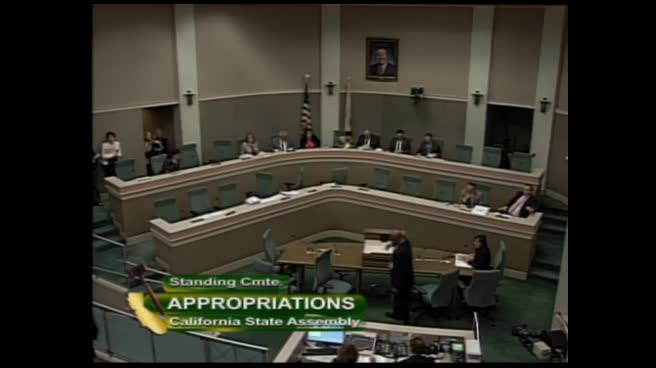
| May 10, 2017 | Do pass. | Assembly Standing Committee on Appropriations |
Passed |
|
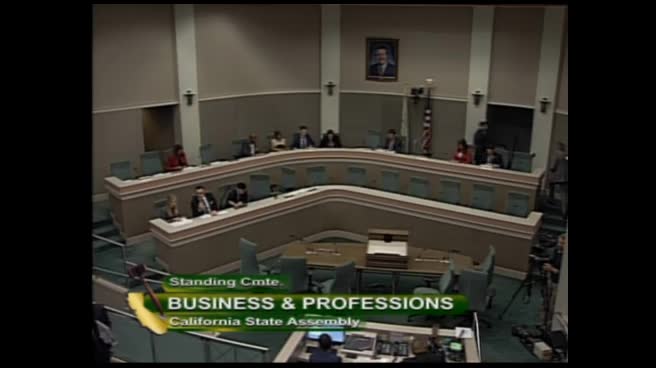
| Apr 25, 2017 | Do pass and be re-referred to the Committee on [Appropriations] | Assembly Standing Committee on Business and Professions |
Passed |
This list shows positions taken on this bill by organizations on the date displayed, which is linked to the original source.
Positions by individuals are not included.
|
Organization
|
Position
|
Date
|
|---|---|---|
| California Growers Association | * Support | May 10, 2017 |
| California Teamsters Public Affairs Council | * Support | May 10, 2017 |
ASSEMBLY THIRD READING
ATR Bill Id:AB 259
Author:(Gipson)
As Amended Ver:March 28, 2017
2/3 vote
Committee | Votes | Ayes | Noes |
Business & Professions | 14-2 | Low, Arambula, Bloom, Chiu, Cunningham, Dahle, Eggman, Gipson, Grayson, Holden, Irwin, Mullin, Steinorth, Ting | Brough, Baker |
Appropriations | 11-5 | Gonzalez Fletcher, Bloom, Bocanegra, Bonta, Calderon, Chau, Eggman, Friedman, Eduardo Garcia, Gray, Reyes | Bigelow, Brough, Fong, Gallagher, Obernolte |
SUMMARY: Requires a person to demonstrate three years of continuous California residency prior to the date of application before being issued a license to engage in cannabis business. Specifically, this bill:
- Adds to the requirements for state licensure a demonstration of three years of continuous California residency prior to the date of application.
- Specifies that a licensing authority shall not issue or renew a license to a person that cannot demonstrate continuous California residency for three years prior to the date of application. In the case of an applicant or licensee that is an entity, the entity shall not be considered a resident if any person controlling the entity cannot demonstrate continuous California residency for three years prior to the date of application and specifies that this provision becomes inoperative as of December 31, 2023.
FISCAL EFFECT: According to the May 10, 2017 Assembly Appropriations Committee analysis, this bill will result in minor and absorbable costs to the Bureau, the Department of Public Health, and the California Department of Food and Agriculture to promulgate regulations, and minor one-time information technology costs for the configuration of an applicant attestation regarding the applicant's residency. In addition, ongoing costs for verification are expected to be fairly minor to the same departments.
COMMENTS:
Purpose. This bill is sponsored by the California Growers Association. According to the author, "When the voters of the State of California passed Proposition 64, they explicitly declared their interest in protecting California's cannabis industry by ensuring that state residents were made a priority. Prop 64 effectively established a three year residency requirement…licenses are only available for applicants that can prove continuous residency from or before January 1, 2015 in order to receive a license for any purpose as it relates to cultivation, distribution, or retail sales of marijuana; however, this provision is set to end in 2019.
"Many states have passed similar measures to protect local business and make their local economy a priority. This bill seeks to build on that precedent, as well as the prior residency requirement in Prop 64, to extend California's residency requirement to the year 2023, and clarify that the requirement is for three years of residency, and not continuous residency from on or before 2015."
Background. In California, current law is conflicted. The Medical Cannabis Regulation and Safety Act does not have a residency requirement but the Adult Use of Marijuana Act (Proposition 64) does. This residency requirement will expire on December 31, 2019, unless the California State Legislature renews it.
Other States. The following states have residency requirements:
- Oregon- requires each marijuana business to be controlled by a two-year Oregon resident and be at least 51% Oregon owned.
- Colorado- requires any owner of a licensed cannabis medical or recreational business to have been a Colorado resident for at least two years prior to applying for a permit.
- Washington- requires all investors in the marijuana business to have established residency in Washington for at least six months.
- Ohio — When awarding cultivator licenses, uses proof that the company is headquartered in Ohio, owned by Ohioans and plans to hire in-state workers, to factor into the review but is not required.
Analysis Prepared by: Le Ondra Clark Harvey Ph.D. / B. & P. / (916) 319-3301 FN: 0000358
Date of Hearing: May 10, 2017
ASSEMBLY COMMITTEE ON APPROPRIATIONS
Lorena Gonzalez Fletcher, Chair
ABPCA Bill Id:AB 259
Author:(Gipson) – As Amended Ver:March 28, 2017
Policy Committee: | Business and Professions | Vote: | 14 - 2 |
|
|
Urgency: No State Mandated Local Program: No Reimbursable: No
SUMMARY:
This bill establishes a three-year continuous California residency requirement for cannabis-related licensees to be eligible for licenses issued by the Bureau of Marijuana Control.
FISCAL EFFECT:
- Minor and absorbable costs to the Bureau, the Department of Public Health, and the California Department of Food and Agriculture to promulgate regulations (Marijuana Control Fund), and minor one-time information technology (IT) costs for the configuration of an applicant attestation regarding the applicant’s residency (Marijuana Control Fund).
- Ongoing costs for verification are expected to be fairly minor to the same departments (Marijuana Control Fund).
COMMENTS:
- Purpose. According to the author, this bill will prioritize the development of California businesses and the state economy by limiting licenses to persons who have lived in California for three years prior to issuance of a license. Some other states have passed similar measures. This bill is sponsored by the California Growers Association.
- Background. Pursuant to voter propositions, medical and non-medical use of cannabis (also called marijuana) is now legal in the state. Beginning on January 1, 2018, the state is to issue licenses for cultivation, manufacturing, retail sale, transportation, storage, delivery and testing of both medical and non-medical cannabis.
The Adult Use of Marijuana Act (Proposition 64), a measure passed by the voters in November 2016 that legalized the non-medical use of cannabis, contains a residency requirement for licensees pursuant to the Act. Specifically, it prohibits licensing authorities from issuing or renewing a license to any person that cannot demonstrate continuous California residency from or before January 1, 2015 (a minimum of three years from the time of license issuance in calendar year 2018 or 2019). The proposition specifically states this residency requirement will expire on December 31, 2019, unless the Legislature reenacts it. This bill changes the residency requirement to "three years prior to the date of application" and extends the requirement to 2023.
Medical cannabis has been legal in California for two decades, although state licensure will also begin on January 1, 2018. Under current law, there is no residency requirement for medical cannabis state licenses. This bill would apply the residency requirement consistently to medical and non-medical licensees.
Analysis Prepared by: Lisa Murawski / APPR. / (916) 319-2081
Date of Hearing: April 25, 2017
ASSEMBLY COMMITTEE ON BUSINESS AND PROFESSIONS
Evan Low, Chair
ABPCA Bill Id:AB 259
Author:(Gipson) – As Amended Ver:March 28, 2017
SUBJECT: Medical cannabis and nonmedical marijuana: California residency requirement for licensing.
SUMMARY: Requires a person to demonstrate 3 years of continuous California residency prior to the date of application before being issued a license to engage in cannabis business.
EXISTING LAW:
- Establishes the Bureau of Marijuana Control, also referred to as the Bureau of Medical Cannabis Regulation (Bureau), under the Department of Consumer Affairs (DCA), to establish a comprehensive system to control and regulate the cultivation, distribution, transport, storage, manufacturing, processing, and sale of cannabis products. (Business and Professions Code (BPC) § 26000 et seq.; BPC § 19302)
- Outlines the requirements for a person to submit an application for a state license issued by a licensing authority after that person has received a license, permit, or authorization from the local jurisdiction. (BPC § 19322)
- Sets forth residency requirements for individuals to obtain licenses including a requirement that the individual must demonstrate continuous California residency on or before January 1, 2015. (BPC § 26054.1)
THIS BILL:
- Adds to the requirements for state licensure a demonstration of three years of continuous California residency prior to the date of application.
- Specifies that a licensing authority shall not issue or renew a license to a person that cannot demonstrate continuous California residency for three years prior to the date of application. In the case of an applicant or licensee that is an entity, the entity shall not be considered a resident if any person controlling the entity cannot demonstrate continuous California residency for three years prior to the date of application and specifies that this provision becomes inoperative as of December 31, 2023.
FISCAL EFFECT: Unknown. This bill has been keyed fiscal by the Legislative Counsel.
COMMENTS:
Purpose. This bill is sponsored by the California Growers Association. According to the author, “When the voters of the State of California passed Proposition 64, they explicitly declared their interest in protecting California’s cannabis industry by ensuring that state residents were made a priority. Prop 64 effectively established a 3 year residency requirement…licenses are only available for applicants that can prove continuous residency from or before January 1, 2015 in order to receive a license for any purpose as it relates to cultivation, distribution, or retail sales of marijuana; however, this provision is set to end in 2019.”
Many states have passed similar measures to protect local business and make their local economy a priority. This bill seeks to build on that precedent, as well as the prior residency requirement in Prop 64, to extend California’s residency requirement to the year 2023, and clarify that the requirement is for 3-years of residency, and not continuous residency from on or before 2015.”
Background. In California, current law is conflicted. The Medical Cannabis Regulation and Safety Act does not have a residency requirement but the Adult Use of Marijuana Act (Proposition 64) does. This residency requirement will expire on December 31, 2019, unless the California State Legislature renews it.
Other States. The following states have residency requirements:
- Oregon- requires each marijuana business to be controlled by a two-year Oregon resident and be at least 51% Oregon owned.
- Colorado- requires any owner of a licensed cannabis medical or recreational business to have been a Colorado resident for at least two years prior to applying for a permit.
- Washington- requires all investors in the marijuana business to have established residency in Washington for at least six months.
- Ohio- When awarding cultivator licenses, uses proof that the company is headquartered in Ohio, owned by Ohioans and plans to hire in-state workers, to factor into the review but is not required.
ARGUMENTS IN SUPPORT:
The California Cannabis Industry Association writes in support, “A bill to put our communities first in cannabis, AB 259 would strengthen the residency requirements in Prop 64 and ensure that medical cannabis business owners enjoy the same protections as adult use businesses. By providing priority licensing for California businesses, we believe AB 259 will increase rates of participation. Not only will this legislation result in more people participating in the regulated marketplace, it will also increase their rates of success.”
We believe these impacts will be focused on small and cottage businesses who are racing against time to raise capital and meet the regulatory requirements.”
REGISTERED SUPPORT:
California Cannabis Industry Association
REGISTERED OPPOSITION:
None on file.
Analysis Prepared by: Le Ondra Clark Harvey, Ph.D. / B. & P. / 916-319-3301
Discussed in Hearing
 2MIN
Assembly Standing Committee on Appropriations
 3MIN
Assembly Standing Committee on Business and Professions
Bill Author

Bill Co-Author(s):