AB 2686: Early identification of pupil mental health issues: in-service training for certificated employees and classified staff.
- Session Year: 2017-2018
- House: Assembly
- Latest Version Date: 2018-04-16
Existing law requires the governing board of any school district to give diligent care to the health and physical development of pupils and authorizes the governing board of a school district to employ properly certified persons for the work.
This bill would require the governing board or body of a local educational agency, defined to mean a county office of education, school district, state special school, or charter school, that serves pupils in kindergarten or any of grades 1 to 12, inclusive, to, before the beginning of the 201920 school year, adopt a training policy on pupil mental health for its school administrators and staff, as specified. By imposing additional duties on county offices of education, school districts, and charter schools, the bill would impose a state-mandated local program.This bill would require each school district, county office of education, and charter school to provide in-service training to certificated employees and classified staff on the early identification of pupil mental health issues, as provided. By imposing additional duties on school districts, county offices of education, and charter schools, the bill would impose a state-mandated local program.
The California Constitution requires the state to reimburse local agencies and school districts for certain costs mandated by the state. Statutory provisions establish procedures for making that reimbursement.
This bill would provide that, if the Commission on State Mandates determines that the bill contains costs mandated by the state, reimbursement for those costs shall be made pursuant to the statutory provisions noted above.
Existing law requires the governing board of any school district to give diligent care to the health and physical development of pupils and authorizes the governing board of a school district to employ properly certified persons for the work.
This bill would require the governing board or body of a local educational agency, defined to mean a county office of education, school district, state special school, or charter school, that serves pupils in kindergarten or any of grades 1 to 12, inclusive, to, before the beginning of the 201920 school year, adopt a training policy on pupil mental health for its school administrators and staff, as specified. By imposing additional duties on county offices of education, school districts, and charter schools, the bill would impose a state-mandated local program.
The California Constitution requires the state to reimburse local agencies and school districts for certain costs mandated by the state. Statutory provisions establish procedures for making that reimbursement.
This bill would provide that, if the Commission on State Mandates determines that the bill contains costs mandated by the state, reimbursement for those costs shall be made pursuant to the statutory provisions noted above.
Existing law establishes the Student Aid Commission as the primary state agency for the administration of state-authorized student financial aid programs available to students attending all segments of postsecondary education in this state.This bill would state the intent of the Legislature to enact legislation relating to state-authorized student financial aid programs and the Free Application for Federal Student Aid (FAFSA).Existing law establishes the Student Aid Commission as the primary state agency for the administration of state-authorized student financial aid programs available to students attending all segments of postsecondary education in this state.
This bill would state the intent of the Legislature to enact legislation relating to state-authorized student financial aid programs and the Free Application for Federal Student Aid (FAFSA).
The Legislature finds and declares all of the following:
(a)The mental health needs of thousands of pupils go unnoticed. These are the pupils who suffer in silence, often dropping out of school and falling victim to addiction, homelessness, suicide, or other tragic outcomes due to unaddressed mental health issues.
(b)In 2012, the Superintendent of Public Instruction, Tom Torlakson, convened the Student Mental Health Policy Workgroup to develop policy recommendations that promote early identification, referral, coordination, and access to quality mental health services for pupils.
(c)While some of the states vulnerable youth are in specialized programs, most of the pupils with mental health challenges are in regular classrooms. In both situations, many of the educators and staff for these programs lack training to identify pupils in need, make referrals, and, as appropriate, to help pupils overcome or manage the mental health barriers they face every day of their lives. Adding to the problem, educators and staff may become stressed and overwhelmed by the mental health challenges of pupils.
(d)Statewide action is needed to expand training throughout California so that all school administrators and staff can become gatekeepers and first responders who help address the significant pupil mental health needs in all regions. School-based, family-oriented services should be emphasized in order to reduce stigma and increase follow through with referrals to improve pupil mental health.
(e)While some parts of the state have benefited from mental health training on a small scale, limited budgets have restricted the reach of training that is critically needed in all districts. Federal grant funds are now available for pilot programs in school districts and county offices of education to help disseminate mental health training throughout the state.
SEC. 2.Section 49419 is added to the Education Code, to read:49419.(a)The governing board or body of a local educational agency, as defined in subdivision (e), that serves pupils in kindergarten or any of grades 1 to 12, inclusive, shall, before the beginning of the 201920 school year, adopt a training policy on pupil mental health for its school administrators and staff. The policy shall be developed in consultation with school and community stakeholders and school-employed mental health professionals.(b)A training policy on pupil mental health shall address the training to be provided to school administrators and staff, that shall, at a minimum, identify mental health issues in pupils as the mental health issues arise, especially during adolescence, to provide professional development relating to pupil mental health to educators, and to provide information resources relating to pupil mental health to community members.(c)(1)Materials approved by a local educational agency as part of a training policy on pupil mental health for school administrators and staff shall include how to identify appropriate mental health services, both at the schoolsite and within the larger community, and when and how to refer youth and their families to those services.(2)Materials approved for training as described in paragraph (1) may include programs that can be completed through self-review.(d)A training policy on pupil mental health shall be written to ensure that a school administrator or staff member acts only within the authorization and scope of his or her credential or license. Nothing in this section shall be construed as authorizing or encouraging a school administrator or staff member to diagnose or treat mental illness unless he or she is specifically licensed and employed to do so.(e)For purposes of this section, local educational agency means a county office of education, school district, state special school, or charter school.SEC. 2.Chapter 3.3 (commencing with Section 44700) is added to Part 25 of Division 3 of Title 2 of the Education Code, to read:3.3.In-Service Training: Early Identification of Pupil Mental Health Issues44700.(a)(1)Within the first six weeks of each school year, as part of a regularly scheduled staff meeting or meetings, each school district, county office of education, and charter school shall provide in-service training to certificated employees who provide instruction to pupils in kindergarten or any of grades 1 to 12, inclusive, on the early identification of pupil mental health issues.
(2)Within the first six weeks of each school year, each school district, county office of education, and charter school shall provide during regular work hours in-service training to classified staff who have regular personal contact with pupils in kindergarten or any of grades 1 to 12, inclusive, on the early identification of pupil mental health issues.
(3)The in-service training described in paragraphs (1) and (2) shall include training on protocols for referring pupils to appropriate mental health services.
(4)A school district, county office of education, or charter school may provide the training described in this subdivision in an online format outside of a staff meeting. Training provided pursuant to this paragraph shall be provided during regular work hours.
(b)The Legislature encourages school districts, county offices of education, and charter schools to provide the training described in subdivision (a) as part of a larger initiative aimed at improving mental health outcomes for pupils.
(c)The Legislature encourages school districts, county offices of education, and charter schools to use existing funds from state and federal sources, as appropriate, to provide the training described in subdivision (a).
44701.Nothing in this chapter shall be construed as doing either of the following:
(a)Requiring school personnel to assess, diagnose, or treat pupil mental health issues.
(b)Authorizing or encouraging school personnel to act outside of the authority granted by their credential or license.
SEC. 3.If the Commission on State Mandates determines that this act contains costs mandated by the state, reimbursement to local agencies and school districts for those costs shall be made pursuant to Part 7 (commencing with Section 17500) of Division 4 of Title 2 of the Government Code.
The Legislature finds and declares all of the following:
(a)The mental health needs of thousands of pupils go unnoticed. These are the pupils who suffer in silence, often dropping out of school and falling victim to addiction, homelessness, suicide, or other tragic outcomes due to unaddressed mental health issues.
(b)In 2012, the Superintendent of Public Instruction, Tom Torlakson, convened the Student Mental Health Policy Workgroup to develop policy recommendations that promote early identification, referral, coordination, and access to quality mental health services for pupils.
(c)While some of the states vulnerable youth are in specialized programs, most of the pupils with mental health challenges are in regular classrooms. In both situations, many of the educators and staff for these programs lack training to identify pupils in need, make referrals, and, as appropriate, to help pupils overcome or manage the mental health barriers they face every day of their lives. Adding to the problem, educators and staff may become stressed and overwhelmed by the mental health challenges of pupils.
(d)Statewide action is needed to expand training throughout California so that all school administrators and staff can become gatekeepers and first responders who help address the significant pupil mental health needs in all regions. School-based, family-oriented services should be emphasized in order to reduce stigma and increase follow through with referrals to improve pupil mental health.
(e)While some parts of the state have benefited from mental health training on a small scale, limited budgets have restricted the reach of training that is critically needed in all districts. Federal grant funds are now available for pilot programs in school districts and county offices of education to help disseminate mental health training throughout the state.
SEC. 2.Section 49419 is added to the Education Code, to read:49419.(a)The governing board or body of a local educational agency, as defined in subdivision (e), that serves pupils in kindergarten or any of grades 1 to 12, inclusive, shall, before the beginning of the 201920 school year, adopt a training policy on pupil mental health for its school administrators and staff. The policy shall be developed in consultation with school and community stakeholders and school-employed mental health professionals.
(b)A training policy on pupil mental health shall address the training to be provided to school administrators and staff, that shall, at a minimum, identify mental health issues in pupils as the mental health issues arise, especially during adolescence, to provide professional development relating to pupil mental health to educators, and to provide information resources relating to pupil mental health to community members.
(c)(1)Materials approved by a local educational agency as part of a training policy on pupil mental health for school administrators and staff shall include how to identify appropriate mental health services, both at the schoolsite and within the larger community, and when and how to refer youth and their families to those services.
(2)Materials approved for training as described in paragraph (1) may include programs that can be completed through self-review.
(d)A training policy on pupil mental health shall be written to ensure that a school administrator or staff member acts only within the authorization and scope of his or her credential or license. Nothing in this section shall be construed as authorizing or encouraging a school administrator or staff member to diagnose or treat mental illness unless he or she is specifically licensed and employed to do so.
(e)For purposes of this section, local educational agency means a county office of education, school district, state special school, or charter school.
SEC. 3.If the Commission on State Mandates determines that this act contains costs mandated by the state, reimbursement to local agencies and school districts for those costs shall be made pursuant to Part 7 (commencing with Section 17500) of Division 4 of Title 2 of the Government Code.
SECTION 1.It is the intent of the Legislature to enact legislation relating to state-authorized student financial aid programs and the Free Application for Federal Student Aid (FAFSA).It is the intent of the Legislature to enact legislation relating to state-authorized student financial aid programs and the Free Application for Federal Student Aid (FAFSA).
|
Date
|
Status
|
|---|---|
| May 25, 2018 | In committee: Held under submission. |
| May 9, 2018 | In committee: Set, first hearing. Referred to APPR. suspense file. |
| Apr 25, 2018 | From committee: Do pass and re-refer to Com. on APPR. with recommendation: To Consent Calendar. (Ayes 15. Noes 0.) (April 24). Re-referred to Com. on APPR. |
| Apr 17, 2018 | Re-referred to Com. on HEALTH. |
| Apr 16, 2018 | Read second time and amended. |
| Apr 12, 2018 | From committee: Amend, and do pass as amended and re-refer to Com. on HEALTH. (Ayes 6. Noes 0.) (April 11). |
| Mar 21, 2018 | Re-referred to Com. on ED. |
| Mar 20, 2018 | From committee chair, with author's amendments: Amend, and re-refer to Com. on ED. Read second time and amended. |
| Mar 19, 2018 | Referred to Coms. on ED. and HEALTH. |
| Feb 16, 2018 | From printer. May be heard in committee March 18. |
| Feb 15, 2018 | Read first time. To print. |
|
Date
|
Description
|
Location
|
Votes
|
|
|---|---|---|---|---|
| Apr 24, 2018 | Do pass and be re-referred to the Committee on [Appropriations] with recommendation: To Consent Calendar | Assembly Standing Committee on Health |
Passed |
|
| Apr 11, 2018 | Do pass as amended and be re-referred to the Committee on [Health] | Assembly Standing Committee on Education |
Passed |
This list shows positions taken on this bill by organizations on the date displayed, which is linked to the original source.
Positions by individuals are not included.
|
Organization
|
Position
|
Date
|
|---|---|---|
| 33rd District PTA | * Support | Apr 11, 2018 |
| 9th District PTA | * Support | Apr 11, 2018 |
| California Academy of Child and Adolescent Psychiatry | * Support | Apr 11, 2018 |
| California State Parent Teacher Association | ** Support | Apr 20, 2018 |
| California State PTA | * Support | Apr 11, 2018 |
| Disability Rights California | * Support | Apr 11, 2018 |
| National Association Of Social Workers, California Chapter | * Support | Apr 11, 2018 |
| San Francisco Second District PTA | * Support | Apr 11, 2018 |
| SIATech | * Support | Apr 11, 2018 |
Date of Hearing: May 9, 2018
ASSEMBLY COMMITTEE ON APPROPRIATIONS
Lorena Gonzalez Fletcher, Chair
ABPCA Bill Id:AB 2686
Author:(Jones-Sawyer) – As Amended Ver:April 16, 2018
Policy Committee: | Education | Vote: | 6 - 0 |
Health | 15 - 0 | ||
|
|
Urgency: No State Mandated Local Program: Yes Reimbursable: Yes
SUMMARY: This bill requires every local education agency (LEA) to provide in-service training to certificated employees who provide instruction to, and classified staff who have regular personal contact with, pupils in kindergarten or any of grades one to 12, inclusive, on the early identification of pupil mental health issues within the first six weeks of each school year.
FISCAL EFFECT:
Potential ongoing Proposition 98 General Fund costs, in the range of the tens of thousands to low millions of dollars, for LEAs to provide in-service training to certificated employees who provide instruction to, and classified staff who have regular personal contact with, pupils in kindergarten or any of grades one to 12 on the early identification of pupil mental health issues. Costs would vary based on the type of training an LEA provided. For example, some programs are available for low or no cost to school districts, while other programs could cost hundreds of dollars to send staff to. If the Commission on State Mandates determines the bill’s requirements to be a reimbursable state mandate, the state would need to reimburse these costs to LEAs or provide funding through the K-12 Mandate Block Grant, described in more detail below.
COMMENTS:
- Student Mental Health Policy Workgroup. In 2012, the Superintendent of Public Instruction and Mental Health Services Oversight and Accountability Commission convened a Student Mental Health Policy Workgroup to develop policy recommendations that promote early identification, referral, coordination, and access to quality mental health services for students. The Workgroup found that “most educators and staff lack training to identify pupils who may be in need of support, make referrals, and, as appropriate, to help pupils overcome or manage mental health barriers and succeed in school.”
- Purpose. According to the author, “All certificated school staff must be better equipped to recognize key signs of mental health conditions and to understand possible actions available to them in addressing student and family needs.”
- K-12 Mandate Block Grant. To address various concerns with the traditional mandate claims process, such as the disincentive for LEAs to perform mandated tasks efficiently, the state created the K-12 Mandate Block Grant in the 2012-13 budget. The amount of funding available in the block grant annually is tied to the number of mandates the CSM has found to be reimbursable and the mandate’s statewide cost. (Typically, when the CSM has determined a claim filed by an LEA to be reimbursable, it has developed a statewide cost estimate for performing the mandate and the state has added the estimated amount or a portion of the estimated amount to the block grant as part of its annual budget process.) School districts that choose to participate in the block grant program receive per-student funding to cover the cost of state-mandated activities in lieu of submitting ongoing mandate claims for reimbursement. Charter schools also may participate in the block grant, but they may not submit mandate claims or receive reimbursement for mandate costs.
School districts receive from the block grant a per-student funding rate for K-8 students of about $30, with about $60 provided for high school students. Charter schools receive half the K‑8 per-student funding rate of school districts, because about half of K-8 mandates apply to them. Similarly, about half of high school mandates apply to charter schools, but their grades nine through 12 rate is more than half the district rate, or about $40, because of the treatment of certain mandates.
- Related Legislation. AB 2022 (Chu) requires schools to have at least one mental health professional per 600 pupils by December 31, 2021. The bill is pending before this committee.
AB 2691 (Jones-Sawyer) establishes the Trauma-Informed Schools Initiative to address the impact of adverse childhood experiences on the educational outcomes of California pupils. The bill is pending before this committee.
AB 2315 (Quirk-Silva) establishes a telehealth pilot program in three school districts, allocates funding from the Mental Health Services Fund for the purchase of telehealth equipment and technology, and specifies that providers would qualify for Medi-Cal reimbursement for mental and behavioral health services provided to a pupil via telehealth. The bill is pending before this committee.
AB 2471 (Thurmond) requires the transfer of funds from the Youth, Education, Prevention, Early Intervention and Treatment Account established through the passage of the Control, Regulate, and Tax Adult Use of Marijuana Act to the CDE to establish a grant program to allow schools to provide in-school support services to pupils. The bill is pending before this committee.
Analysis Prepared by: Natasha Collins / APPR. / (916) 319-2081
Date of Hearing: April 24, 2018
ASSEMBLY COMMITTEE ON HEALTH
Jim Wood, Chair
ABPCA Bill Id:AB 2686
Author:(Jones-Sawyer) – As Amended Ver:April 16, 2018
SUBJECT: Early identification of pupil mental health issues: in-service training for certificated employees and classified staff.
SUMMARY: Requires each school district, county office of education, and charter school to provide in-service training to certificated employees who provide instruction to and classified staff who have regular personal contact with pupils in kindergarten or any of grades one to 12, inclusive, on the early identification of pupil mental health issues. Specifically, this bill:
- Requires the in-service training to occur within the first six weeks of each school year, as part of a regularly scheduled staff meeting or meetings.
- Requires the in-service training to include training on protocols for referring pupils to appropriate mental health services.
- Permits a school district, county office of education, or charter school to provide the training in an online format outside of a staff meeting, but requires that it be provided during regular work hours.
- Encourages school districts, county offices of education, and charter schools to provide the training as part of a larger initiative aimed at improving mental health outcomes for pupils and to use existing funds from state and federal sources, as appropriate, to provide the training.
- Specifies that nothing in this bill be construed as requiring school personnel to assess, diagnose, or treat pupil mental health issues or authorize or encourage school personnel to act outside of the authority granted by their credential or license.
- Makes Legislative findings and declarations related to pupil mental health.
EXISTING FEDERAL LAW:
- Establishes the Individuals with Disabilities Education Act (IDEA) which requires that students with disabilities have access to a free and appropriate public education based on their individual needs, and establishes procedures for implementing these requirements.
- Establishes the Medi-Cal Early Periodic Screening, Diagnostic, and Treatment (EPSDT) program for eligible people under 21 years of age, requiring screening, vision, dental, hearing, and other necessary services to correct or ameliorate defects and physical and mental illnesses and conditions discovered by the screening services, whether or not the services are covered under the Medicaid State Plan.
EXISTING STATE LAW:
- Establishes the Medi-Cal program, administered by the Department of Health Care Services (DHCS) DHCS, under which qualified low-income persons receive health care benefits.
- Defines a local education agency (LEA) as the governing body of any school district or community college district, the county office of education, a state special school, a California State University campus, or a University of California campus and allows LEAs to provide and bill for Medi-Cal services provided to students receiving special education services on Medi-Cal (generally, special education students).
- Defines the scope of covered services that an LEA may provide for children with an Individualized Education Program (IEP) or an Individualized Family Services Plan (IFSP).
- Requires that specified services provided by a LEA are Medi-Cal benefits, to the extent federal financial participation (FFP) is available, subject to utilization controls and standards adopted by DHCS, and are consistent with Medi-Cal requirements for physician prescription, order, and supervision.
- Requires county mental health plans to provide specialty mental health services to eligible Medi-Cal beneficiaries, including both adults and children. Includes EPSDT within the scope of specialty mental health services for eligible Medi-Cal beneficiaries under the age of 21 pursuant to federal Medicaid law.
- Establishes the Mental Health Services Oversight and Accountability Commission (MHSOAC) to oversee the implementation of the Mental Health Services Act, enacted by voters in 2004 as Proposition 63, which provides funds to counties to expand services, and develop innovative programs and integrated service plans, for mentally ill children, adults, and seniors through a one percent income tax on personal income above $1 million.
- Requires DHCS, in collaboration with the California Health and Human Services Agency, and in consultation with the MHSOAC, to create a plan for a performance outcome system for EPSDT mental health services provided to eligible Medi-Cal beneficiaries under the age of 21.
FISCAL EFFECT: This bill has not yet been analyzed by a fiscal committee.
COMMENTS:
- PURPOSE OF THIS BILL. According to the author, all certificated school staff must be better equipped to recognize key signs of mental health conditions and to understand possible actions available to them in addressing student and family needs. Revising these standards is especially critical to disadvantaged student populations. Mental health challenges appear to disproportionately impact students who face stressors such as violence, trauma, and poverty. Academic interventions training for teachers and school administrators alone will not succeed in helping all students achieve. California’s dropout rate is unacceptably high—especially in these subgroups—and one of the most frequently neglected issues in educator training is the social and emotional health of vulnerable children. Research demonstrates that early detection and treatment of mental illness helps students reduce the symptoms of their illness and improves attendance, behavior, and ultimately academic achievement. According to the author, the time is right to move ahead to empower educators—especially new educators—with more knowledge and training in student mental health. This is especially critical in the schools with the greatest need, frequently staffed with the least experienced and least trained teachers and administrators.
- BACKGROUND.
- Student Mental Health Policy Workgroup (Workgroup). In 2012, the Superintendent of Public Instruction and MHSOAC convened a Student Mental Health Policy Workgroup to develop policy recommendations that promote early identification, referral, coordination, and access to quality mental health services for students. The Workgroup is comprised of teachers, school counselors, school social workers, school psychologists, school nurses, and school administrators, as well as state and county mental health professionals.
The Workgroup has noted the connection between mental wellness and academic achievement, attendance, and behavior. It has also noted that California’s educators acknowledge their lack of preparedness in addressing pupil mental health challenges as a major barrier to instruction. The Workgroup found that “most educators and staff lack training to identify pupils who may be in need of support, make referrals, and, as appropriate, to help pupils overcome or manage mental health barriers and succeed in school.”
- ESPDT. EPSDT is a Medi-Cal benefit for individuals under the age of 21 who have full-scope Medi-Cal eligibility. This benefit allows for periodic screenings to determine health care needs and based upon the identified health care need and diagnosis, treatment services are provided. EPSDT services include all services otherwise covered by Medi-Cal and EPSDT beneficiaries can receive additional medically necessary services. EPSDT mental health services are Medi-Cal services that correct or improve mental health problems that have been determined by a physician, psychologist, counselor, social worker, or other health or social services provider. EPSDT provides eligible children with access to a range of mental health services that include, but are not limited to:
- Mental health assessment;
- Collateral contracts;
- Therapy;
- Rehabilitation;
- Mental health services;
- Medication support services;
- Day rehabilitation; day treatment intensive;
- Crisis intervention/stabilization;
- Targeted case management; and,
- Therapeutic behavioral services.
- ESPDT. EPSDT is a Medi-Cal benefit for individuals under the age of 21 who have full-scope Medi-Cal eligibility. This benefit allows for periodic screenings to determine health care needs and based upon the identified health care need and diagnosis, treatment services are provided. EPSDT services include all services otherwise covered by Medi-Cal and EPSDT beneficiaries can receive additional medically necessary services. EPSDT mental health services are Medi-Cal services that correct or improve mental health problems that have been determined by a physician, psychologist, counselor, social worker, or other health or social services provider. EPSDT provides eligible children with access to a range of mental health services that include, but are not limited to:
LEAs are responsible for educationally necessary mental health services that are identified in a student’s IEP, but are prohibited from directly providing or billing for EPSDT services unless the county mental health department chooses to contract with the LEA for those services (EPSDT is considered specialty mental health). LEAs are required to ensure services identified in a student’s IEP are provided, regardless of whether the county directly provides services, denies services, or reimburses the school for any costs if the LEA provides services (in cases where the LEA provides services covered under general Medi-Cal that overlap with EPSDT services).
- IEPs. Pursuant to the federal IDEA, children with disabilities are guaranteed the right to a free, appropriate public education, including necessary services for a child to benefit from his or her education. Between 1976 and 1984, to meet this federal mandate, California schools provided mental health services to special education students who needed the services pursuant to an IEP. An IEP is a legally binding document that determines what special education services a child will receive and why. IEPs include a child's classification, placement, specialized services, academic and behavioral goals, a behavior plan if needed, percentage of time in regular education, and progress reports from teachers and therapists. A child may require any related services in order to benefit from special education, including, but not limited to: speech-language pathology and audiology services; early identification and assessment of disabilities in children; medical services; physical and occupational therapy; orientation and mobility services; and, psychological services. According to the California Department of Education (CDE), over 750,000, or approximately 11% of, California students received Special Education services in the 2016-17 academic year.
- SUPPORT. The California State Parent Teachers' Association states in support of the bill that in California, the mental health needs of many students go unnoticed. With training to recognized symptoms in these children, school staff and administrators can take steps to get students help, thus preventing suicide, addiction, and deepening depression, resulting in keeping these kids in school.
- RELATED LEGISLATION.
- AB 2022 (Chu) requires schools, as specified, to have at least one mental health professional per 600 pupils by December 31, 2021. AB 2022 is pending in the Assembly Health Committee and scheduled for a hearing on April 24, 2018.
- AB 2691 (Jones-Sawyer) establishes the Trauma-Informed Schools Initiative to address the impact of adverse childhood experiences on the educational outcomes of California pupils. AB 2691 is pending in the Assembly Health Committee and scheduled for a hearing on April 24, 2018.
- AB 2315 (Quirk-Silva) establishes a telehealth pilot program in three school districts, allocates funding from the Mental Health Services Fund for the purchase of telehealth equipment and technology and specifies that providers would qualify for Medi-Cal reimbursement for mental and behavioral health services provided to a pupil via telehealth. AB 2315 is pending in the Assembly Health Committee and scheduled for a hearing on April 24, 2018.
- AB 2471 (Thurmond) requires the transfer of funds from the Youth, Education, Prevention, Early Intervention and Treatment Account established through the passage of the Control, Regulate and Tax Adult Use of Marijuana Act to the CDE to establish a grant program which would allow schools to provide in-school support services to pupils. AB 24171 is pending in the Assembly Health Committee and scheduled for a hearing on April 24, 2018.
- PREVIOUS LEGISLATION.
- SB 191 (Beall) of 2017 would have authorized a local educational agency to enter into a contract with a county or qualified mental health service provider to create a partnership for providing mental health services to students. The bill would create a new special fund, from which funding could be provided to support such programs. This bill was held in the Senate Appropriations Committee.
- AB 1644 (Bonta) reestablishes and renames the EMHI as the Healing from Early Adversity to Level the Impact of Trauma in Schools Act, expands the program to serve preschool and transitional Kindergarten students, and establishes an initiative to encourage and support local decisions to provide funding for services offered in that program. This bill was held in the Senate Appropriations Committee.
- AB 1025 (Thurmond) of 2015 required the CDE to establish a three-year pilot program in school districts to encourage inclusive practices that integrate mental health, special education, and school climate interventions following a multi-tiered framework.
- SB 1396 (Hancock) of 2014 would have required CDE, to the extent one-time funding was available in the 2014-15 Budget Act, to designate funds to a county office of education to establish professional development activities to support the development and expansion of multi-tiered intervention and support programs, including but not limited to, schoolwide positive behavior intervention and support. SB 1396 was held on the Assembly Appropriations Committee’s suspense file.
REGISTERED SUPPORT / OPPOSITION:
Support
California State Parent Teacher Association
Opposition
None on file.
Analysis Prepared by: Paula Villescaz / HEALTH / (916) 319-2097
Date of Hearing: April 11, 2018
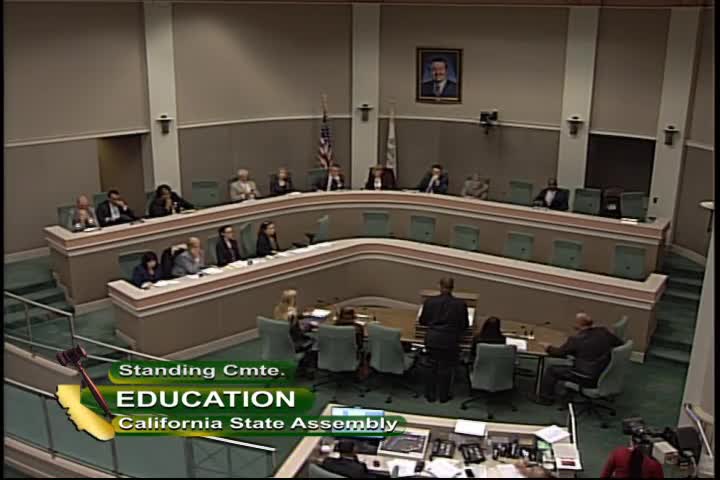
ASSEMBLY COMMITTEE ON EDUCATION
Patrick O'Donnell, Chair
ABPCA Bill Id:AB 2686 (
Author:Jones-Sawyer) – As Amended Ver:March 20, 2018
[Note: This bill is double referred to the Committee on Health and will be heard by that committee as it relates to issues under its jurisdiction.]
SUBJECT: Pupil mental health: school administrator and staff training policy
SUMMARY: Requires a county office of education, school district, state special school, or charter school, before the before the beginning of the 2019–20 school year, to adopt a training policy on pupil mental health for its school administrators and staff and requires the policy to be developed in consultation with school and community stakeholders and school-employed mental health professionals. Specifically, this bill:
- Makes Legislative findings and declarations regarding educators and staff for these programs and the lack of training to identify pupils in need, make referrals, and, as appropriate, to help pupils overcome or manage the mental health barriers they face every day of their lives.
- Requires a training policy on pupil mental health to address the training to be provided to school administrators and staff, that shall, at a minimum, identify mental health issues in pupils as the mental health issues arise, especially during adolescence, to provide professional development relating to pupil mental health to educators, and to provide information resources relating to pupil mental health to community members.
- Requires materials approved by a local educational agency as part of a training policy on pupil mental health for school administrators and staff to include how to identify appropriate mental health services, both at the schoolsite and within the larger community, and when and how to refer youth and their families to those services. These materials may include programs that can be completed through self-review.
- Requires a training policy on pupil mental health to be written to ensure that a school administrator or staff member acts only within the authorization and scope of his or her credential or license. Nothing in this section shall be construed as authorizing or encouraging a school administrator or staff member to diagnose or treat mental illness unless he or she is specifically licensed and employed to do so.
- Specifies for purposes of this measure, “local educational agency” means a county office of education, school district, state special school, or charter school.
EXISTING LAW:
- Makes AB 114 (Committee on Budget), Chapter 43, Statutes of 2011, school districts the “responsible agency” for mental health services for students with individualized education programs (IEPs).
- Establishes, through initiative statute in 2004 (Proposition 63), the California Mental Health Services Act (MHSA) which provides for local mental health services, including prevention and early intervention, innovative projects, Full Service Partnerships, peer support services, housing, and other mental health treatment services.
- Specifies, under federal law, that schools have the responsibility for educationally related mental health services. Requires local educational agencies (LEAs) to update the Individualized Education Plan of each child that will experience a change in services.
FISCAL EFFECT: Unknown
COMMENTS: Need for the bill. The author states, “All certificated school staff must be better equipped to recognize key signs of mental health conditions and to understand possible actions available to them in addressing student and family needs. Revising these standards is especially critical to disadvantaged student populations. Mental health challenges appear to disproportionately impact students who face stressors such as violence, trauma, and poverty.
Academic interventions training for teachers and school administrators alone will not succeed in helping all students achieve. California’s dropout rate is unacceptably high—especially in these subgroups—and one of the most frequently neglected issues in educator training is the social and emotional health of vulnerable children. Research demonstrates that early detection and treatment of mental illness helps students reduce the symptoms of their illness and improves attendance, behavior, and ultimately academic achievement.
The time is right to move ahead to empower educators—especially new educators—with more knowledge and training in student mental health. This is especially critical in the schools with the greatest need, frequently staffed with the least experienced and least trained teachers and administrators."
Adopting a Training Policy versus Providing Training: This bill requires a local education agency (LEA) to adopt a training policy for school staff on mental health signs and referrals. It is unclear whether the bill requires the staff to be provided training and how often such training should occur, or merely requires a training policy to be adopted. It is unclear whether adopting a training policy would then require an LEA to provide training to staff. The committee should consider clarifying the author's intent that training be provided to staff.
California Mental Health Services Agency (CalMHSA) K-12 programs. The California Mental
Health Services Authority (CalMHSA) is a California Joint Powers Authority, funded by Proposition 63 (Mental Health Services Act) dollars from 49 member counties. CalMHSA has funded twenty-six different projects that are grouped into three categories: Suicide Prevention; Stigma and Discrimination Reduction; and Student Mental Health. The CalMHSA programs in student mental health are described below.
Student Mental Health Policy Workgroup. In 2012, the Superintendent of Public Instruction and CalMHSA convened a Student Mental Health Policy Workgroup to develop policy recommendations that promote early identification, referral, coordination, and access to quality mental health services for students. The Student Mental Health Policy Workgroup is comprised of teachers, school counselors, school social workers, school psychologists, school nurses, and school administrators, as well as state and county mental health professionals.
The Workgroup has noted the connection between mental wellness and academic achievement, attendance, and behavior. It has also noted that California’s educators acknowledge their lack of preparedness in addressing pupil mental health challenges as a major barrier to instruction. The Workgroup found that “most educators and staff lack training to identify pupils who may be in need of support, make referrals, and, as appropriate, to help pupils overcome or manage mental health barriers and succeed in school.”
This year the Workgroup issued a recommendation calling for increased training of school personnel, in order to promote earlier identification and intervention to meet the needs of California’s pupils.
Regional K-12 Student Mental Health training through CCSESA. Since 2011, CalMHSA has funded a Student Mental Health Initiative through the California County Superintendents Educational Services Association (CCSESA). This project is designed to build capacity and cross-system collaboration to develop and sustain school-based mental health programs addressing prevention and early identification strategies.
One of the goals of this project is the training of school staff. Since 2011 this project has used a train-the-trainer model to provide educators with tools for the early identification and prevention of mental health problems. Two thousand trainings have been conducted, with over 140,000 thousand participants. The estimated total reach of this project is two million students, or one third of the state’s enrollment.
The major program topics were school climate and culture, bullying prevention, mental health and wellness, youth development. Participants included school staff, students, parents, mental health staff and providers, community organizations, and law enforcement. According to evaluation responses, these trainings have significantly increased educators’ awareness of mental health issues and knowledge of referral processes. CCSESA estimates that this program cost an average of $2.25 per student per year. Since 2014 this project has declined significantly in size as a result of decreased funding.
CDE TETRIS project. CalMHSA has also funded mental health training through the CDE Training Educators through Recognition and Identification Strategies (TETRIS) Eliminating Barriers to Learning (EBL) project. This statewide K-12 Mental Health Program promotes school and student wellness and academic achievement by increasing capacity for all school and administrative staff to identify students who are experiencing mental health issues early on. To accomplish this goal, the CDE subcontracted with the Placer County Office of Education to deliver eleven TETRIS EBL workshops annually through 2019. The curriculum used for the TETRIS EBL workshops is one developed by the U.S. Department of Health and Human Services’ Substance Abuse and Mental Health Services Administration (SAMHSA). Kognito Interactive Online Simulation Program is also used as an outside source to help support school staff in initiating difficult conversations with students around the subject of mental health and suicidal ideation.
SAMHSA "Now is the Time" pilot projects. Following the school shooting at Sandy Hook Elementary in Connecticut in December 2012, President Obama established a grant program to increase students' access to mental health services. California received $9.7 million from the "Now is the Time Project Advancing Wellness and Resilience in Education" (NITT AWARE) grant last fall. According to the CDE, the grant has two components. Three local educational agencies (LEAs), Garden Grove Unified School District, Santa Rosa City Schools, and the San Diego County Office of Education, were selected to participate in the first component of the grant. The LEAs will establish a process for referring and connecting children to mental health services. If successful, the models developed by these LEAs can be shared statewide. The second component utilizes a training program called Youth Mental Health First Aid. The training teaches school staff how to help youth experiencing mental health or addictions challenges, or are in crisis.
What kind of training would be used in these in-services? Several training programs are available for low or no cost to school districts. Youth Mental Health First Aid, used in the CCSESA and SAMHSA trainings, is a course which introduces common mental health challenges for youth, reviews typical adolescent development, and teaches a 5-step action plan for how to help young people in both crisis and non-crisis situations. Topics covered include anxiety, depression, substance use, disorders in which psychosis may occur, disruptive behavior disorders, and eating disorders.
In addition, as noted above, TETRIS EBL training is available at no charge from the CDE through 2019, and is offered in part in an online simulation format (At Risk in PK-12, Kognito). TETRIS EBL provides teachers and school staff with tools to identify, recognize, refer, and support students with mental health needs in a respectful and culturally responsive manner. Training focuses on the early identification of mental health issues and effective classroom and school wide strategies. Participants gain tools to break down barriers affecting behaviors that can interfere with academic performance and attendance.
Related legislation. AB 580 (O'Donnell), in an early version of the bill, would have required each school to provide annual training to teachers and classified staff on the early identification of student mental health problems, including protocols for referrals. The bill was later amended to require the California Department of Education (CDE) to develop model referral protocols for voluntary use by schools to address the appropriate and timely referral by school staff of students with mental health concerns and was vetoed by the Governor with the following veto message:
"California does not currently have specific model referral protocols for addressing student mental health as outlined by this bill. However, the California Department of Education recently received a grant from the federal Department of Health and Human Services, Substance Abuse and Mental Health Services Administration to identify and address critical student and family mental health needs. It's premature to impose an additional and overly prescriptive requirement until the current efforts are completed and we can strategically target resources to best address student mental health."
Committee Amendment: To clarify the author's intent, staff recommends the committee delete the contents of the bill and instead require school districts, county offices of education and charter schools to provide in-service training to certificated and classified employees at a regularly scheduled staff meeting during the first six weeks of every school year on the early identification of pupil mental health issues, including referral protocols.
REGISTERED SUPPORT / OPPOSITION:
Support
None on file
Opposition
None on file
Analysis Prepared by: Chelsea Kelley / ED. / (916) 319-2087
Bill Author

Bill Co-Author(s):