AB 2725: California Conservation Corps: job training: construction and related fields.
- Session Year: 2017-2018
- House: Assembly
- Latest Version Date: 2018-02-15
Existing law establishes the California Conservation Corps in the Natural Resources Agency, administered by the Director of the California Conservation Corps. Existing law requires that participants in the corps generally be engaged in certain kinds of projects, including projects that accomplish useful and needed public works projects in urban and rural areas.
This bill would specify that those projects include the construction of housing. The bill would require the director to establish a Construction Corps Program to provide corpsmembers with job training in construction-related fields, as specified. The bill would require the director, in developing and administering the program, to partner with local builders, apprenticeship programs, preapprenticeship programs, and community colleges to provide relevant training and experience to corpsmembers. The bill would authorize the director to determine the appropriate location or locations for the program based on factors the director determines are appropriate, including, among other things, the local need for housing or construction workers.
Existing law authorizes the director to execute contracts with any person, natural or corporate, for the purpose of implementing the objectives of the corps, as specified.
This bill would authorize the director to also execute agreements for the same purposes.
Young women and men participating in the corps program shall generally be engaged in projects which that do the following:
(a)Preserve, maintain, and enhance environmentally important lands and waters.
(b)Accomplish useful and needed public works projects projects, including the construction of housing, in both urban and rural areas.
(c)Conserve, maintain, improve, and develop natural resources in both urban and rural areas.
(d)Provide opportunities for public use of, or education in, the areas, projects, and resources described in subdivisions (a), (b), and (c).
(e)Assist in emergency operations, such as natural disaster relief and the rescue of lost and injured persons.
(f)Assist in fire prevention and suppression.
(g)Directly contribute to the conservation of energy.
(h)Contribute toward making public facilities accessible to persons with disabilities.
(i)Assist departments within the Natural Resources Agency in developing, rehabilitating, and restoring parklands, recreational facilities, and historical resources; restoring salmon and steelhead spawning, nursery, and rearing habitat; restoring and preserving wildlife habitat; and enhancing reforestation in both urban and rural areas.
SEC. 2.Section 14306 of the Public Resources Code is amended to read:14306.To implement this division, the director may do all of the following:
(a)Recruit and enroll corpsmembers and special corpsmembers.
(b)Adopt criteria for selecting applicants for enrollment in the corps program, including criteria for individuals convicted of a crime described in the California Uniform Controlled Substances Act (Division 10 (commencing with Section 11000) of the Health and Safety Code). The director shall take into account, when adopting this criteria, the health, safety, and welfare of the public and the corps program participants and staff.
(c)Execute contracts containing the terms and conditions that are deemed necessary and desirable for the enrollment of corpsmembers.
(d)Authorize utilization of the corps for emergency projects occasioned by natural disasters, fire prevention and suppression, rescue of lost or injured persons, and any other activity or project necessary or desirable to carry out the purposes of this division.
(e)Apply for and accept grants or contributions of funds from any public or private source.
(f)Purchase, rent, or otherwise acquire or obtain necessary property, supplies, instruments, tools, equipment, and conveniences.
(g)Execute contracts for furnishing the services of the corps to any federal, state, or local public agency; any local or statewide private organization concerned with the objectives of the corps program, as specified in Sections 14000 and 14300; and any person, firm, partnership, or corporation concerned with these objectives.
(h)Procure insurance.
(i)Be reimbursed by the federal government, any state or local public agency, or any private organization for actual expenses incurred by the corps for any project undertaken for any such entity pursuant to subdivision (d) or (g) or pursuant to Section 14307.
(j)To the extent permitted by Article VII of the California Constitution, execute contracts or agreements with any person, natural or corporate, for the purpose of implementing the objectives of the corps, as specified in Sections 14000 and 14300. 14000, 14300, and 14307.5.
(k)Utilize any services, material, or property of any agency of the state, and may make agreements with any agency of the state or take other actions that are reasonable and necessary.
(l)Contract with public or private nonprofit entities to provide services for the corps.
(m)Contract with the University of California, the California State University, the community college districts, and private institutions for the creation of special admission and tuition credit programs for corpsmembers.
SEC. 3.Section 14307.5 is added to the Public Resources Code, to read:14307.5.(a)The director shall establish the Construction Corps Program to provide corpsmembers with job training in construction-related fields, in order to meet the states demand for skilled workers, increase the states supply of housing, and help corpsmembers find construction-related jobs, including, but not limited to, jobs in carpentry, equipment operation, insulation installation, masonry, drywall installation and finishing, painting, and roofing.
(b)In developing and administering the Construction Corps Program, the director may partner with local builders, apprenticeship programs, preapprenticeship programs, and community colleges to provide relevant training and experience to corpsmembers.
(c)The director may determine the appropriate location or locations for the Construction Corps Program based on factors the director determines are appropriate, including the local need for housing or construction workers, the availability of existing training programs or builders, and other unique local circumstances that would facilitate the achievement of the programs objectives.
|
Date
|
Status
|
|---|---|
| May 23, 2018 | From committee: Without further action pursuant to Joint Rule 62(a). |
| Apr 23, 2018 | In committee: Set, first hearing. Failed passage. |
| Mar 8, 2018 | Referred to Com. on NAT. RES. |
| Feb 16, 2018 | From printer. May be heard in committee March 18. |
| Feb 15, 2018 | Read first time. To print. |
|
Date
|
Description
|
Location
|
Votes
|
|
|---|---|---|---|---|
| Apr 23, 2018 | Do pass as amended and be re-referred to the Committee on [Appropriations] | Assembly Standing Committee on Natural Resources |
Failed |
This list shows positions taken on this bill by organizations on the date displayed, which is linked to the original source.
Positions by individuals are not included.
|
Organization
|
Position
|
Date
|
|---|---|---|
| Associated Builders And Contractors Of Central California | ** Support | Apr 20, 2018 |
| Associated Builders And Contractors Of Northern California | ** Support | Apr 20, 2018 |
| Associated Builders and Contractors of San Diego | ** Support | Apr 20, 2018 |
| Associated Builders And Contractors Of Southern California | ** Support | Apr 20, 2018 |
| California Building Industry Assoc. | * Support | Apr 23, 2018 |
| California Labor Federation | * Against | Apr 23, 2018 |
| California State Council Of Laborers | * Indeterminate | Apr 23, 2018 |
| Conservation Corp | * Support | Apr 23, 2018 |
| District Council 16 International Union Of Painters And Allied Trades | * Against | Apr 23, 2018 |
Date of Hearing: April 23, 2018
ASSEMBLY COMMITTEE ON NATURAL RESOURCES
Al Muratsuchi, Acting Chair
ABPCA Bill Id:AB 2725 (
Author:Acosta) – As Introduced Ver:February 15, 2018
SUBJECT: California Conservation Corps: job training: construction and related fields
SUMMARY: Directs the California Conservation Corps (CCC) to create a Housing Corps program within the CCC.
EXISTING LAW:
- Establishes the CCC in the Natural Resources Agency and requires the CCC to implement and administer the conservation corps program.
- Directs CCC program activities, including the management of environmentally important lands and water, public works projects, facilitating public use of resources, assisting in emergency operations, assisting in fire prevention and suppression, energy conservation, and environmental restoration.
- Requires the Governor to appoint a director of the CCC, who shall act as the administrative officer of the CCC.
- Authorizes the CCC to distribute federal funds to other corps programs in the state.
- Requires the CCC to annually certify all Local Conservation Corps (LCCs).
- Authorizes the director to contract with public or private non-profit entities to provide services for the CCC.
- Authorizes the director to establish training programs for members of LCCs and contract with the LCC requesting the training.
THIS BILL:
- Adds “construction of housing” to the definition of public works projects that are part of the CCCs mission.
- Directs the director to establish a Construction Corps Program to provide members with training in fields including, but not limited to, carpentry, equipment operation, insulation installation, masonry, drywall installation and finishing, painting, and roofing.
- Authorizes the director to collaborate with local builders, apprenticeship programs, pre-apprenticeship programs, and community colleges to provide relevant training and experience to corps members.
- Authorizes the director to determine sites based on factors the director deems appropriate, including the local need for housing or construction workers, the availability of existing training programs or builders, and other unique local circumstances that would facilitate the achievement of the program’s objectives.
FISCAL EFFECT: Unknown
COMMENTS:
- Author’s Statement:
California is currently suffering from an undisputed housing shortage. The state needs about 180,000 new homes per year to keep pace with demands, but produces only around 80,000. Over 216,000 more construction workers are needed by 2024 to meet industry demands. Builders say that the labor shortage is worsening at the same time demand for construction is increasing. Roughly 70% of construction firms are having a difficult time filling hourly craft positions, resulting in many firms struggling to prevent laborers from walking off the job site mid-project to work for another company.
The CCC helps 18-25 year olds, many of whom are at-risk minorities, gain valuable experience rebuilding trails, preventing and fighting wildfires and floods, and installing energy efficient technologies. Corpsmembers earn minimum wage for their work and also complete high school and community college coursework. Many corpsmembers credit the program with helping them get their lives back on track and entering the workforce.
AB 2725 will establish the Construction Corps within the CCC to provide at-risk youth the opportunity to learn carpentry, masonry, dry wall, roofing and other construction-related skills to meet the increasing demand for skilled construction workers.
The bill will expand the demonstrably successful CCC model and help the state train more minority and lower-income Californians for jobs in a career field that pay an average of $59,000 annually. There is a clear need for more housing and the labor to support its construction. Establishing a Construction Corps increases certainty in the construction industry by reducing turnover of skilled employees and increasing diversity among laborers. Establishing the Construction Corps within the CCC enables the program to reach all regions of the state. With over two dozen residential and nonresidential centers located throughout the state, the Construction Corps can partner with local training, pre-apprenticeship programs, community colleges, and builders to provide the relevant training and experience.
- Current scope of Conservation Corps activities. The CCC, established by Governor Brown during his first term in 1976, is the oldest and largest state conservation corps program in the country. It is modeled after the federal Civilian Conservation Corps of the 1930’s. Although the CCC was originally conceived as a labor source for trail maintenance and restoration, it has since evolved into a workforce development program. Corps members now learn a variety of skills, such as forestry management, energy auditing and installation, emergency services management, and firefighting. Many corps members also receive their high school diplomas and industry certifications at the conclusion of their service. More than 120,000 young men and women have participated in the CCC, with approximately 3,000 hired each year across the state.
LCCs are non-profit organizations with similar missions to the CCC that operate at the local level. LCCs are required to obtain certification from the CCC to operate. There are currently 13 LCCs operating across the state involved with similar activities to the CCC. In addition to LCCs, there are also numerous federal Americorps programs operating across the state, many of which are involved with similar activities to the CCC and LCCs.
While similar efforts, like the Energy Corps, already exist in the CCC, the addition of a Construction Corps program may be a significant step away from the central mission of the corps. Currently, there is a high statewide need for forestry management, energy auditing and installation, environmental restoration, emergency services management, firefighting, and other skills that corps members are trained in. There is currently more need for these services than current staffing levels are able to provide. To ensure that efforts to incorporate construction training into the corps do not alter the fundamental mission of the CCC, this bill would benefit from removing language that adds the construction of housing into the CCC mission and adding language that specifies that programs involving construction in the CCC will not divert resources from the mission of the corps as currently defined.
- Need for housing and construction workers in California. California is in need of more housing for its growing population. A study published by the UC Berkeley Terner Center for Housing Innovation in January, 2018, identified the lack of qualified skilled workers as one of the factors contributing to the housing shortage, with delays in identifying skilled workers leading to delays in construction timelines. A recent report by Valley Vision and the Centers of Excellence at Los Rios Community College District indicates that the Sacramento region alone needs to add more than 7,000 workers annually in construction and related fields in the next four years to meet regional construction goals. The shortage of labor has driven up wages for skilled trades, which make this a potentially attractive career direction for the demographics served by the CCC.
- Existing programs in construction training. Throughout the state, a number of programs related to construction job training are already established and operational. Thirty-one YouthBuild partnerships operate across the state, from Redding to Chula Vista. YouthBuild partners with charter schools and LCCs to implement these programs, serving participants with similar demographic backgrounds to CCC participants. The state also operates seven Multi-Craft Core Curriculum Programs, which are pre-apprenticeship programs in partnership with the California Labor Federation (CLF) that allow low-income high school students to finish their high school diplomas and receive job training. The California Apprenticeship Program provides the opportunity for participants to receive training under a formal apprenticeship with union craftspeople across the building trades. According to the CLF, there are 53,000 people participating in trade apprenticeships across the state, which far outweighs the roughly 3,000 corps members hired each year. A program focused on construction in the CCC has the potential to help connect corps members to employment in the construction field, but given the shift in scope from the mission of the CCC that the creation of a new program would entail and the substantial existing opportunities that exist for training in the construction trades, this bill would benefit from shifting its focus to instead create a pilot program to explore partnerships and other opportunities for construction training in the CCC before creating a new program within the CCC.
- Suggested amendments. The author and the committee may wish to consider amendments to: 1) remove language that changes the corps mission; 2) change the scope of the construction program to create pilot program; and, 3) include a statement that funds for construction training activities may not be diverted from CCC activities related to the central mission of the CCC.
- Related Legislation:
AB 2126 (Eggman, 2018): Establishes forestry corps. Passed Assembly Natural Resources Committee on April 9, 2018 by a vote of 10-0.
AB 1111 (E. Garcia, Chapter 824, Statutes of 2017): Creates a grant program to provide individuals with barriers to employment the services they need to enter, participate in, and complete broader workforce preparation, training, and education programs aligned with regional labor market needs.
REGISTERED SUPPORT / OPPOSITION:
Support
Associated Builders and Contractors of Central California
Associated Builders and Contractors of Northern California
Associated Builders and Contractors of San Diego
Associated Builders and Contractors of Southern California
California Building Industry Association
Opposition
None on file
Analysis Prepared by: Dylan Chapple / NAT. RES. /
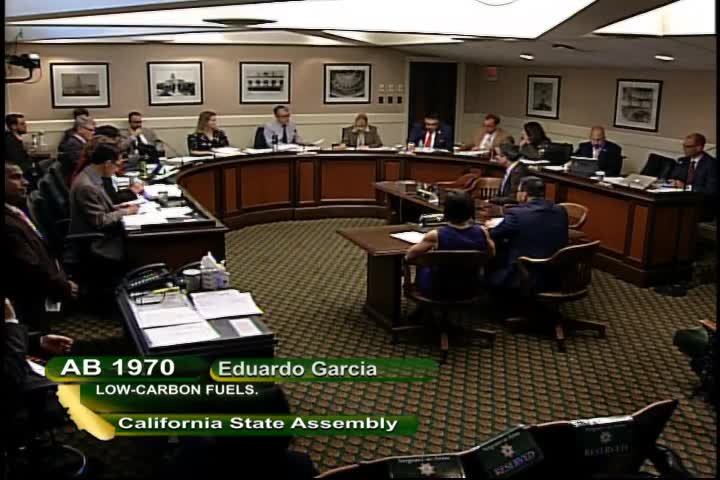
Discussed in Hearing
 25MIN
Assembly Standing Committee on Natural Resources
Bill Author



