AB 2731: Income taxes: investment management services interest: education funding.
- Session Year: 2017-2018
- House: Assembly
- Latest Version Date: 2018-05-25
The Personal Income Tax Law imposes taxes based upon taxable income of individuals, estates, and trusts at specified rates from 1% to 9.3%, as provided.
This bill would impose a tax of 17% on that portion of an individuals taxable income derived from an investment management services interest, as defined. The bill would require the Franchise Tax Board to report to the Legislature, no more than 30 days thereafter, if the United States Congress passes and the President of the United States signs legislation having an identical effect as the above-described tax applicable to that income earned in all of the states and territories, and would further require the Legislature to determine whether to repeal, make inoperative, or continue in effect the tax. The bill would also require the revenues derived from this tax to be deposited in the College, Career, and Community Ready Fund, which the bill would establish.
The bill would require the moneys deposited in the College, Career, and Community Ready Fund to be continuously appropriated to the State Department of Education for apportionment to local educational agencies for designated categories of programs, thereby making an appropriation. The bill would authorize the department to adopt regulations and procedures to implement these provisions of the bill relating to the distribution of the apportioned funds and to effectuate the intent of the Legislature as to the distribution of these funds among those categories. The bill would also authorize the Franchise Tax Board to prescribe rules, guidelines, or procedures necessary or appropriate to carry out the purposes of the bill, as specified.
The funds apportioned to local educational agencies pursuant to this bill for the specified purposes would be applied toward the minimum funding requirements for school districts and community college districts imposed by Section 8 of Article XVI of the California Constitution.
This bill would include a change in state statute that would result in a taxpayer paying a higher tax within the meaning of Section 3 of Article XIIIA of the California Constitution, and thus would require for passage the approval of 2/3 of the membership of each house of the Legislature.This bill would declare that it is to take effect immediately as an urgency statute.
The Personal Income Tax Law imposes taxes based upon taxable income of individuals, estates, and trusts at specified rates from 1% to 9.3%, as provided.
This bill would impose a tax of 17% on that portion of an individuals taxable income derived from an investment management services interest, as defined. The bill would require the Franchise Tax Board to report to the Legislature Legislature, no more than 30 days thereafter, if the United States Congress passes and the President of the United States signs legislation having an identical effect as the above-described tax applicable to that income earned in all of the states and territories territories, and would further require the Legislature to determine whether to make the repeal, make inoperative, or continue in effect the tax. The bill would also state the intent of the Legislature that the moneys derived from the imposition of the tax be used for education purposes. require the revenues derived from this tax to be deposited in the College, Career, and Community Ready Fund, which the bill would establish.
The bill would require the moneys deposited in the College, Career, and Community Ready Fund to be continuously appropriated to the State Department of Education for apportionment to local educational agencies for designated categories of programs, thereby making an appropriation. The bill would authorize the department to adopt regulations and procedures to implement these provisions of the bill relating to the distribution of the apportioned funds and to effectuate the intent of the Legislature as to the distribution of these funds among those categories. The bill would also authorize the Franchise Tax Board to prescribe rules, guidelines, or procedures necessary or appropriate to carry out the purposes of the bill, as specified.
The funds apportioned to local educational agencies pursuant to this bill for the specified purposes would be applied toward the minimum funding requirements for school districts and community college districts imposed by Section 8 of Article XVI of the California Constitution.
This bill would include a change in state statute that would result in a taxpayer paying a higher tax within the meaning of Section 3 of Article XIIIA of the California Constitution, and thus would require for passage the approval of 2/3 of the membership of each house of the Legislature.
This bill would take effect immediately as a tax levy.The Personal Income Tax Law imposes taxes based upon taxable income of individuals, estates, and trusts at specified rates from 1% to 9.3%, as provided.
This bill would impose a tax of 17% on that portion of an individuals taxable income derived from an investment management services interest, as defined. The bill would require the Franchise Tax Board to report to the Legislature if the United States Congress passes and the President of the United States signs legislation having an identical effect as the above-described tax applicable to that income earned in all of the states and territories and would further require the Legislature to determine whether to make the repeal, make inoperative, or continue in effect the tax. The bill would also state the intent of the Legislature that the moneys derived from the imposition of the tax be used for education purposes.
This bill would include a change in state statute that would result in a taxpayer paying a higher tax within the meaning of Section 3 of Article XIIIA of the California Constitution, and thus would require for passage the approval of 2/3 of the membership of each house of the Legislature.
This bill would take effect immediately as a tax levy.
(a)For each taxable year beginning on or after January 1, 2018, in addition to any other taxes imposed by this part, an additional tax shall be imposed at the rate of 17 percent on that portion of a taxpayers taxable income derived from an investment management services interest.
(b)For purposes of this section:
(1)Investment management services interest means any interest in a business which is held by any individual if that individual provides, directly or indirectly, in the active conduct of a trade or business, a substantial quantity of any of the following services to the business:
(A)Advising the business, including a partnership, S corporation, or any other business entity, as to the advisability of investing in, purchasing, or selling any specified asset.
(B)Managing, acquiring, or disposing of any specified asset.
(C)Arranging financing with respect to acquiring specified assets.
(D)Any activity in support of any service described in subparagraphs (A) to (C), inclusive.
(2)Specified asset means securities, as defined in Section 475(c)(2) of the Internal Revenue Code, relating to security defined, real estate held for rental or investment, interest in partnerships, commodities; or as defined in Section 475(e)(2) of the Internal Revenue Code, relating to commodity, or options or derivative contracts to any of these.
(c)A partner or shareholder shall not be deemed to hold an investment management services interest if at least 80 percent of the average fair market value of the specified assets of the business during the taxable year consists of real estate.
(d)(1)Revenues derived from the tax imposed by this section shall be deposited in the College, Career, and Community Ready Fund, which is hereby created. Notwithstanding Section 13340 of the Government Code, the moneys deposited in the College, Career, and Community Ready Fund shall be continuously appropriated without regard to fiscal year to the State Department of Education, for apportionment, on the basis of average daily attendance, to local educational agencies. The funds apportioned under this subdivision shall only be expended by local educational agencies to support programs relating to one or more of the following purposes:
(A)Career technical education.
(B)Early childhood education.
(C)Staffing to provide counseling in social-emotional, mental, physical, and academic health and positive behavior, and to provide counseling and support for pupils, teachers, and staff in trauma-informed and culturally responsive strategies.
(2)At least 5 percent of the moneys apportioned under this subdivision shall be used to supplement, and not supplant, the Agricultural Career Technical Education Incentive Program established pursuant to Article 7.5 (commencing with Section 52460) of Chapter 9 of Part 28 of Division 4 of Title 2 of the Education Code.
(3)It is the intent of the Legislature that each of the categories listed in subparagraphs (A) to (C), inclusive, of paragraph (1) shall be allocated at least 10 percent, but no more than 50 percent, of the moneys apportioned under this subdivision in each fiscal year.
(4)The State Department of Education is authorized to adopt regulations and procedures to implement this subdivision and to effectuate the intent of the Legislature as expressed in paragraph (3).
(e)(1)The Franchise Tax Board shall report to the Legislature, no more than 30 days thereafter, if the United States Congress passes and the President of the United States signs legislation having an identical effect as this section applicable to that income earned in all of the states and territories.
(2)Upon receipt of the report, the Legislature shall, in the same taxable year as in which the report is made, determine whether to repeal, make inoperative, or continue in effect the tax imposed by this section.
(3)A report to be submitted pursuant to paragraph (1) shall be submitted in compliance with Section 9795 of the Government Code.
(f)The Franchise Tax Board may prescribe rules, guidelines, or procedures necessary or appropriate to carry out the purposes of this section. Chapter 3.5 (commencing with Section 11340) of Part 1 of Division 3 of Title 2 of the Government Code shall not apply to any rule, guideline, or procedure prescribed by the Franchise Tax Board pursuant to this section.
SEC. 2.This act is an urgency statute necessary for the immediate preservation of the public peace, health, or safety within the meaning of Article IV of the California Constitution and shall go into immediate effect. The facts constituting the necessity are:
In order to facilitate the timely implementation of this act by allowing the Franchise Tax Board to begin implementing it immediately, it is necessary that this act take effect immediately.
(a)For each taxable year beginning on or after January 1, 2018, in addition to any other taxes imposed by this part, an additional tax shall be imposed at the rate of 17 percent on that portion of a taxpayers taxable income derived from an investment management services interest.
(b)For purposes of this section:
(1)Investment management services interest means any interest in a business which is held by any individual if that individual provides, directly or indirectly, in the active conduct of a trade or business, a substantial quantity of any of the following services to the business:
(A)Advising the business, including a partnership, S corporation, or any other business entity, as to the advisability of investing in, purchasing, or selling any specified asset.
(B)Managing, acquiring, or disposing of any specified asset.
(C)Arranging financing with respect to acquiring specified assets.
(D)Any activity in support of any service described in subparagraphs (A) to (C), inclusive.
(2)Specified asset means securities, as defined in Section 475(c)(2) of the Internal Revenue Code, relating to security defined, real estate held for rental or investment, interest in partnerships, commodities; or as defined in Section 475(e)(2) of the Internal Revenue Code, relating to commodity, or options or derivative contracts to any of these.
(c)A partner or shareholder shall not be deemed to hold an investment management services interest if at least 80 percent of the average fair market value of the specified assets of the business during the taxable year consists of real estate.
(d)(1)Revenues derived from the tax imposed by this section shall be deposited in the College, Career, and Community Ready Fund, which is hereby created. Notwithstanding Section 13340 of the Government Code, the moneys deposited in the College, Career, and Community Ready Fund shall be continuously appropriated without regard to fiscal year to the State Department of Education, for apportionment, on the basis of average daily attendance, to local educational agencies. The funds apportioned under this subdivision shall only be expended by local educational agencies to support programs relating to one or more of the following purposes:
(A)Career technical education.
(B)Early childhood education.
(C)Staffing to provide counseling in social-emotional, mental, physical, and academic health and positive behavior, and to provide counseling and support for pupils, teachers, and staff in trauma-informed and culturally responsive strategies.
(2)At least 5 percent of the moneys apportioned under this subdivision shall be used to supplement, and not supplant, the Agricultural Career Technical Education Incentive Program established pursuant to Article 7.5 (commencing with Section 52460) of Chapter 9 of Part 28 of Division 4 of Title 2 of the Education Code.
(3)It is the intent of the Legislature that each of the categories listed in subparagraphs (A) to (C), inclusive, of paragraph (1) shall be allocated at least 10 percent, but no more than 50 percent, of the moneys apportioned under this subdivision in each fiscal year.
(4)The State Department of Education is authorized to adopt regulations and procedures to implement this subdivision and to effectuate the intent of the Legislature as expressed in paragraph (3).
(d)(e)(1)The Franchise Tax Board shall report to the Legislature Legislature, no more than 30 days thereafter, if the United States Congress passes and the President of the United States signs legislation having an identical effect as this section applicable to that income earned in all of the states and territories.
(2)Upon receipt of the report, the Legislature shall, in the same taxable year as in which the report is made, determine whether to repeal, make inoperative, or continue in effect the tax imposed by this section.
(3)A report to be submitted pursuant to paragraph (1) shall be submitted in compliance with Section 9795 of the Government Code.
(f)The Franchise Tax Board may prescribe rules, guidelines, or procedures necessary or appropriate to carry out the purposes of this section. Chapter 3.5 (commencing with Section 11340) of Part 1 of Division 3 of Title 2 of the Government Code shall not apply to any rule, guideline, or procedure prescribed by the Franchise Tax Board pursuant to this section.
SEC. 2.It is the intent of the Legislature that the moneys derived from the tax imposed by Section 17044 of the Revenue and Taxation Code, as added by this act, will be used for education purposes.SEC. 3.This act provides for a tax levy within the meaning of Article IV of the California Constitution and shall go into immediate effect.(a)For each taxable year beginning on or after January 1, 2018, in addition to any other taxes imposed by this part, an additional tax shall be imposed at the rate of 17 percent on that portion of a taxpayers taxable income derived from an investment management services interest.
(b)For purposes of this section:
(1)Investment management services interest means any interest in a business which is held by any individual if that individual provides, directly or indirectly, in the active conduct of a trade or business, a substantial quantity of any of the following services to the business:
(A)Advising the business, including a partnership, S corporation, or any other business entity, as to the advisability of investing in, purchasing, or selling any specified asset.
(B)Managing, acquiring, or disposing of any specified asset.
(C)Arranging financing with respect to acquiring specified assets.
(D)Any activity in support of any service described in subparagraphs (A) to (C), inclusive.
(2)Specified asset means securities, as defined in Section 475(c)(2) of the Internal Revenue Code, relating to security defined, real estate held for rental or investment, interest in partnerships, commodities; or as defined in Section 475(e)(2) of the Internal Revenue Code, relating to commodity, or options or derivative contracts to any of these.
(c)A partner or shareholder shall not be deemed to hold an investment management services interest if at least 80 percent of the average fair market value of the specified assets of the business during the taxable year consists of real estate.
(d)(1)The Franchise Tax Board shall report to the Legislature if the United States Congress passes and the President of the United States signs legislation having an identical effect as this section applicable to that income earned in all of the states and territories.
(2)Upon receipt of the report, the Legislature shall, in the same taxable year as in which the report is made, determine whether to repeal, make inoperative, or continue in effect the tax imposed by this section.
(3)A report to be submitted pursuant to paragraph (1) shall be submitted in compliance with Section 9795 of the Government Code.
SEC. 2.It is the intent of the Legislature that the moneys derived from the tax imposed by Section 17044 of the Revenue and Taxation Code, as added by this act, will be used for education purposes.
SEC. 3.This act provides for a tax levy within the meaning of Article IV of the California Constitution and shall go into immediate effect.
|
Date
|
Status
|
|---|---|
| May 29, 2018 | Re-referred to Com. on RLS. |
| May 25, 2018 | From committee: Amend, and do pass as amended and re-refer to Com. on RLS. (Ayes 10. Noes 5.) (May 25). |
| May 9, 2018 | In committee: Set, first hearing. Referred to APPR. suspense file. |
| May 2, 2018 | Re-referred to Com. on APPR. |
| May 1, 2018 | Read second time and amended. |
| Apr 30, 2018 | From committee: Amend, and do pass as amended and re-refer to Com. on APPR. (Ayes 7. Noes 3.) (April 23). |
| Mar 8, 2018 | Referred to Com. on REV. & TAX. |
| Feb 16, 2018 | From printer. May be heard in committee March 18. |
| Feb 15, 2018 | Read first time. To print. |
|
Date
|
Description
|
Location
|
Votes
|
|
|---|---|---|---|---|
| May 25, 2018 | Do pass as amended and be re-referred to the Committee on [Rules] | Assembly Standing Committee on Appropriations |
Passed |
|
| Apr 23, 2018 | Do pass as amended and be re-referred to the Committee on [Appropriations] | Assembly Standing Committee on Revenue and Taxation |
Passed |
This list shows positions taken on this bill by organizations on the date displayed, which is linked to the original source.
Positions by individuals are not included.
|
Organization
|
Position
|
Date
|
|---|---|---|
| ACE | * Support | Apr 23, 2018 |
| American Federation of Teachers | * Support | Apr 23, 2018 |
| California Federation Of Teachers | * Support | Apr 23, 2018 |
| California Labor Federation | * Support | Apr 23, 2018 |
| California School Employees Association, AFL-CIO | ** Support | Apr 20, 2018 |
| California Teachers Association | * Support | Apr 23, 2018 |
| Central Valley Empowerment Alliance | * Support | Apr 23, 2018 |
| Communication Workers of America, District 9 | ** Support | Apr 20, 2018 |
| Consumer Action | ** Support | Apr 20, 2018 |
| Financial Services Institute | ** Against | Apr 20, 2018 |
| Public Advocates | ** Support | Apr 20, 2018 |
| Securities Industry And Financial Markets Association | * Against Unless Amend | Apr 23, 2018 |
| Service Employees International Union | ** Support | Apr 20, 2018 |
| United Food And Commercial Workers Western States Council | ** Support | Apr 20, 2018 |
| United Teachers Los Angeles | * Support | Apr 23, 2018 |
Date of Hearing: May 9, 2018
ASSEMBLY COMMITTEE ON APPROPRIATIONS
Lorena Gonzalez Fletcher, Chair
ABPCA Bill Id:AB 2731
Author:(Gipson) – As Amended Ver:May 1, 2018
Policy Committee: | Revenue and Taxation | Vote: | 7 - 3 |
|
| ||
|
|
Urgency: No State Mandated Local Program: No Reimbursable: No
SUMMARY:
This bill imposes an additional tax at the rate of 17% of the portion of a taxpayer’s taxable income derived from investment management services interest (carried interest), as defined, and requires tax revenue be deposited into the College, Career, and Community Ready Fund (Fund). Revenues from the Fund are to be continuously appropriated to the State Department of Education for apportionment to local education agencies to support specified programs.
FISCAL EFFECT:
- Increased Fund revenue of $700 million in 2018-19, $450 million in 2019-20, and $470 million in 2020-21.
- Significant administrative costs for the Franchise Tax Board (FTB) in excess of $150,000 annually to administer the proposed tax.
COMMENTS:
- Carried interest. Carried interest, often part of a private equity manager’s compensation package, is the right to receive a certain share of the profits earned by an investment fund without contributing a similar share of the fund’s financial capital. Under current law, these taxpayers who receive carried interest pay a federal tax rate on their carried interest income at the capital gains rate (20%) instead of at the income tax rate (37% for those in the top federal income tax bracket). Critics of this arrangement argue that this income should be taxed as if were income that managers earn for their services.
- Purpose. According to the author, AB 2731 seeks to close the “carried interest loophole” that allows hedge fund or private equity fund managers to pay a lower tax rate than most other working professionals.
- Recent amendments. Recent amendments to AB 2731 add details about how new revenues would be spent. Specifically, Fund revenues are to be continuously appropriated to the State Department of Education for apportionment, on the basis of average daily attendance, to local education agencies. Local education agencies must support career technical education, early childhood education, and staffing to provide counseling. An additional 5% of funds must be set aside to supplement funding to the Agricultural Career Technical Education Incentive Program.
Analysis Prepared by: Luke Reidenbach / APPR. / (916) 319-2081
Date of Hearing: May 9, 2018
ASSEMBLY COMMITTEE ON APPROPRIATIONS
Lorena Gonzalez Fletcher, Chair
ABPCA Bill Id:AB 2731
Author:(Gipson) – As Amended Ver:May 1, 2018
Policy Committee: | Revenue and Taxation | Vote: | 7 - 3 |
|
| ||
|
|
Urgency: No State Mandated Local Program: No Reimbursable: No
SUMMARY:
This bill imposes an additional tax at the rate of 17% of the portion of a taxpayer’s taxable income derived from investment management services interest (carried interest), as defined, and requires tax revenue be deposited into the College, Career, and Community Ready Fund (Fund). Revenues from the Fund are to be continuously appropriated to the State Department of Education for apportionment to local education agencies to support specified programs.
FISCAL EFFECT:
- Increased Fund revenue of $700 million in 2018-19, $450 million in 2019-20, and $470 million in 2020-21.
- Significant administrative costs for the Franchise Tax Board (FTB) in excess of $150,000 annually to administer the proposed tax.
COMMENTS:
- Carried interest. Carried interest, often part of a private equity manager’s compensation package, is the right to receive a certain share of the profits earned by an investment fund without contributing a similar share of the fund’s financial capital. Under current law, these taxpayers who receive carried interest pay a federal tax rate on their carried interest income at the capital gains rate (15%) instead of at the income tax rate (37% for those in the top federal income tax bracket). Critics of this arrangement argue that this income should be taxed as if were income that managers earn for their services.
- Purpose. According to the author, AB 2731 seeks to close the “carried interest loophole” that allows hedge fund or private equity fund managers to pay a lower tax rate than most other working professionals.
- Recent amendments. Recent amendments to AB 2731 add details about how new revenues would be spent. Specifically, Fund revenues are to be continuously appropriated to the State Department of Education for apportionment, on the basis of average daily attendance, to local education agencies. Local education agencies must support career technical education, early childhood education, and staffing to provide counseling. An additional 5% of funds must be set aside to supplement funding to the Agricultural Career Technical Education Incentive Program.
Analysis Prepared by: Luke Reidenbach / APPR. / (916) 319-2081
Date of Hearing: April 23, 2018
ASSEMBLY COMMITTEE ON REVENUE AND TAXATION
Autumn R. Burke, Chairwoman
ABPCA Bill Id:AB 2731 (
Author:Gipson) – As Introduced Ver:February 15, 2018
2/3 vote. Tax levy. Fiscal committee.
SUBJECT: Income taxes: investment management services interest
SUMMARY: Imposes, for each taxable year beginning on or after January 1, 2018, an additional tax at the rate of 17% on that portion of a taxpayer's taxable income derived from an "investment management services interest". Specifically, this bill:
- Defines an "investment management services interest" as any interest in a business which is held by any individual if that individual provides, directly or indirectly, in the active conduct of a trade or business, a substantial quantity of any of the following services to the business:
- Advising the business, including a partnership, "S" corporation, or any other business entity, as to the advisability of investing in, purchasing, or selling any "specified asset";
- Managing, acquiring, or disposing of any "specified asset";
- Arranging financing with respect to acquiring "specified assets"; and,
- Any activity in support of any service described above.
- Defines a "specified asset" to mean securities, as defined in Internal Revenue Code (IRC) Section 475(c)(2), relating to security defined, real estate held for rental or investment, interest in partnerships, commodities; or as defined in IRC Section 475(e)(2), relating to commodity, or options or derivative contracts to any of these.
- Specifies that a partner or shareholder shall not be deemed to hold an investment management services interest if at least 80% of the average fair market value of the specified assets of the business during the taxable year consists of real estate.
- Requires the Franchise Tax Board (FTB) to report to the Legislature if the United States Congress passes and the President signs legislation having an identical effect as this bill applicable to that income earned in all of the states and territories.
- Requires that, upon receipt of this report, the Legislature shall determine whether to repeal, make inoperative, or continue in effect the tax imposed by this bill.
- Requires the report to be submitted in compliance with Government Code Section 9795.
- Specifies the Legislature's intent that the moneys derived from this tax will be used for education purposes.
- Takes immediate effect as a tax levy.
EXISTING FEDERAL LAW:
- Imposes different income tax rates on individuals using a graduated scale. For taxable year 2018, the tax rates range from 10% to a top rate of 37%.
- Provides that in the case of partnership interests received in exchange for the performance of services related to raising capital or investments related to specified assets (i.e., carried interest), any long-term capital gain will only be recognized as a long-term capital gain if the underlying asset has been held for at least three years. (IRC Section 1061) These rules apply notwithstanding any election under IRC Section 83, relating to the receipt of property for the performance of services, and in the case of any capital gain resulting from the sale of an asset that does not meet the three-year holding period requirement, such gain will be treated as short-term capital gain.
- Differentiates between short-term and long-term capital gains. A short-term capital gain is the gain from an asset held one year or less, while long-term capital gain is the gain from an asset held for more than one year. In the case of net capital gain, the applicable tax rate may be less than the rate applied to ordinary income.
EXISTING STATE LAW:
- Imposes taxes under the Personal Income Tax (PIT) Law based upon taxable income at specified rates. Specifically, state law imposes different PIT rates ranging from 1% to 12.3%. Additionally, there is an additional tax of 1% on the portion of a taxpayer's taxable income that exceeds $1 million.
- Taxes capital gains as ordinary income.
FISCAL EFFECT: The FTB estimates that this bill would increase General Fund revenues by $700 million in fiscal year (FY) 2018-19, by $450 million in FY 2019-20, and by $470 million in FY 2020-21.
COMMENTS:
- The author notes the following in support of this bill:
Within the financial services industry, general partners (GP) at hedge funds and private equity firms operate on an incentive based structure that provides a financial reward for exceeding expected financial returns. In practice, when a GP manages funds for a client, the parties enter into an agreement and set an expected rate of return for the fund, also known as the hurdle rate, and use this as a benchmark. If the fund returns exceed the hurdle rate, the GP receives about 20% (industry standard) of the profits as a reward, which is known as 'carried interest.'
While incentive based compensation is not unique, the distinction lies in how carried interest is taxed. For most working professionals, when one receives a bonus, commission, or other incentive based reward, the income is taxed at the person's regular income tax rate. However, in the example of a hedge fund, carried interest is taxed as carried interest not income at the federal level.
Assembly Bill 2731 seeks to close the carried interest loophole at the state level until action is taken by the federal government to correct this long-standing injustice. This measure will close the gap by adding an additional 17% sur tax on top [of] the current tax for carried interest, and will use these funds to support educational programs across California.
- This bill is supported by the California Labor Federation, which notes the following:
Every year, California loses billions of dollars in revenue due to a tax law loophole that allows financial firms to pay lower tax rates on what should be considered earned income. Instead of paying a higher tax rate on income, like workers pay on their wages, these financial advisors pay the capital gains tax rate.
Republicans in Congress left the loophole in place when they passed Trump's corporate tax plan, allowing the highest income earners to keep their tax giveaway. California has an opportunity to deliver meaningful tax reform that will bring equity to the tax code and raise revenue for the state.
AB 2731 will close the carried interest loophole and generate new revenue for public schools while helping minimize the impact of looming federal budget cuts. It is profoundly unfair that hedge fund managers pay a lower federal tax rate than nurses, fire fighters, or kindergarten teachers.
- This bill is opposed by the Financial Services Institute, which notes the following:
Taxes on financial services directly increase the cost of financial advice and education for Main Street investors that need it most. Many of these investors are hardworking California citizens that have relatively small amounts to invest, do not have access to sophisticated financial advice, and would benefit the most from a relationship with a quality financial advisor. Further, placing a new and significant cost on this critical service will only further exacerbate the retirement savings crisis currently plaguing our country. As you may already know, recent studies indicate that an extraordinary number of Americans are woefully unprepared for retirement. Erecting additional barriers to saving for the future will impact the small business owners providing these critical services, the consumers who fail to prepare for the future, and also eventually impact California as those that fail to adequately prepare for the future will require increased public assistance as they age.
- The FTB notes the following implementation concerns in its staff analysis of this bill:
- "This bill uses terms that are undefined, i.e., 'any interest in a business,' 'active conduct,' 'substantial quantity,' and 'any activity in support of any service.' The absence of definitions to clarify these terms could lead to disputes with taxpayers and would complicate the administration of this bill. For clarity and ease of administration, it is recommended that the bill be amended."
- "The additional tax would apply to all taxpayers subject to the PITL, including, individuals, estates, or trusts. If this is contrary to the author's intent, the bill should be amended."
- "Because the bill fails to specify otherwise, the FTB would be subject to the rulemaking procedures required under the Administrative Procedures Act (APA). Following these procedures may delay the immediate implementation of this bill. To prevent any delay, it is recommended that the author add a provision exempting the FTB from the APA when the FTB is prescribing rules, guidelines, or procedures to carry out the bill's purpose."
- "The bill is silent on the timing of the FTB's submission of a required report to the Legislature. To ensure consistency with the author's intent this bill should be amended."
- "If this bill is enacted in late September or October of 2018, the department would have developed the forms and instructions for the 2018 taxable year. Thus, the department may incur additional costs to develop alternative forms and instructions in the short time frame necessary to ensure they are available for taxpayers to comply with the reporting requirement."
- The FTB also notes the following policy concerns in its analysis of this bill:
- "This bill would impose a tax on business entities subject to tax under the PITL (i.e. sole proprietorships, noncorporate partners of partnerships, limited partnerships, and limited liability companies not electing to be taxed as corporations, limited liability partnerships, and real estate mortgage investment conduits) that would not be imposed on other business entities such as corporations. Thus, this bill would provide differing treatment based solely on classification."
- "This bill would require the Legislature to re-evaluate this tax when the President signs legislation impacting all states and territories having the identical effect. If this measure goes into effect before the federal legislation is signed, long-term investment in California would be negatively impacted. States that have not signed similar legislation are likely to attract California providers of these services wishing to maintain their current income levels."
- Committee Staff Comments:
- What is carried interest? The topic of carried interest, and its treatment under federal tax law, has garnered significant attention in the last decade. "Carried interest" is a term of art that traces its origins to the shipping industry of the 12th century, when ship owners and captains were often given an interest in the goods they carried to increase the odds of the cargo's safe delivery.[1] Today, however, the term refers to a federal tax preference widely available to private equity and hedge fund managers. It bears noting, however, that the term "carried interest" is not defined in the IRC. Rather, it is a creature of the federal rules governing both partnerships and capital gains.
Private equity and hedge funds are often organized as partnerships. These partnerships typically have two types of partners: limited partners and general partners. The limited partners provide investment capital but do not participate in the fund's management. The general partner (i.e., fund manager) directs investment strategy, solicits capital contributions, manages assets, arranges financing, and provides administrative support.[2] While general partners can invest their own capital in the fund, such investments usually represent no more than 5% of total investment capital.[3]
General partners typically receive two forms of compensation for their management services. The first is generally structured as a fee tied to a percentage of the fund's assets. The second, generally referred to as "carried interest", is tied to the fund's profits. The general partner's profit interest is usually set at 20%, with the limited partners splitting the remaining 80%. So, for example, in the case of private equity funds, carried interest refers to the profit received by the managing partner upon the sale of the fund's portfolio companies.[4] Obviously, carried interest is designed to reward fund managers for successfully identifying and managing investments.
- So where's the tax break? Partnerships are "pass-through" entities for income tax purposes. While partnerships file tax returns, they do not pay income tax. Instead, the partners are taxed on their allocable share of the partnership's income. Thus, if a partnership recognizes a gain from the sale of a capital asset held for the requisite period, its partners are taxed on their share of this gain at the favorable federal rate set for long-term capital gains.[5] A partner's share of the partnership income is determined by the partnership agreement itself. While allocations must be consistent with the partners' economic interests in the partnership, there is generally no requirement that a partner's share of profits be equivalent to the partner's equity investment in, or capital ownership of, the partnership.[6] Thus, an individual fund manager who is allocated a share of the partnership's long-term capital gain will be taxed on that share at favorable rates, even if the fund manager provided none of the upfront capital for the partnership.[7] Thus, fund managers are able to enjoy favorable treatment for gains derived from their efforts, but not their capital. This, in turn, is the nub of the carried interest controversy.
- Therein lies the controversy: Critics of the carried interest "loophole" argue that there is no principled reason to provide wealthy fund managers favorable tax treatment for services akin to those performed by financial advisors whose salaries are taxed as ordinary income.[8] Proponents of the current treatment, however, contend that a general partner's tax treatment is little different from a taxpayer who buys a house, improves it with sweat equity, and sells it later. In such a case, the asset qualifies for capital gains treatment even though the taxpayer's labor likely contributed significantly to the asset's gain.[9]
- Legislative responses: Over the past decade, political leaders from both parties have advocated closing the "carried interest loophole" as a matter of tax fairness. Most of the federal proposals introduced have sought to re-characterize carried interest payments as ordinary income. For example, in 2015, Representative Sander Levin introduced the "Carried Interest Fairness Act of 2015”. This bill would have specified that the net capital gain allocated to holders of an "investment services partnership interest" shall be treated as ordinary income. So far, however, specific federal proposals have met with congressional inertia.
- What would this bill do? This bill attempts to close the carried interest "loophole" by imposing a 17% tax on that portion of a taxpayer's taxable income derived from an "investment management services interest." This bill defines an "investment management services interest" as any interest in a business held by an individual providing, either directly or indirectly, a substantial quantity of any of the following services to the business:
- Advising the business on the advisability of investing in, purchasing, or selling any "specified asset";
- Managing, acquiring, or disposing of any "specified asset";
- Arranging financing with respect to acquiring "specified assets"; and,
- Any activity in support of any service described above.
- The law of unintended consequences: While this bill is motivated by an understandable desire to promote tax fairness, it does raise certain issues. Because "carried interest" is not defined by federal law, any effort to "close" the perceived loophole cannot be accomplished by simply referring to one or more provisions of the IRC. Instead, the Legislature is left with the unenviable job of attempting to define, with sufficient precision, those types of hedge and equity fund payments that will be subject to an additional tax. One of the challenges of crafting such a definition is that it may end up being overly broad in its application. For example, what happens under this bill if a fund manager receives an allocation of capital gain tied directly to his or her equity investment in a partnership? Would that income still be subject to the surtax this bill imposes? Of course, any attempt to refine or tighten the definition of an "investment management services interest" presents its own challenges. The more precise the definition, the greater the ability of creative fund managers and attorneys to devise strategies to circumvent the new tax through creative workarounds. And even if the correct balance can be struck to apply the tax as intended, there is still the risk that fund managers will simply flee to other states in an effort to minimize the significant tax consequences involved.
- Earmarking revenues: This bill currently expresses the Legislature's intent to use the revenues derived from the new surtax to fund education. Tax laws should generally be crafted to promote, to the greatest degree possible, efficiency, equity, and simplicity. These principles tend to favor broad-based taxes, which minimize administrative and compliance costs, over narrowly targeted taxes like the one this bill proposes.
In addition, tax revenues generally flow into the General Fund where they can be appropriated in the annual Budget Act to reflect the state's funding priorities in a holistic fashion. Instead, this bill would earmark the revenues generated for education. When tax revenues are earmarked, and essentially taken out of the budgetary process, there is usually a link between the taxed activity and the expenditure of the funds. In this case, however, it is not clear what link exists between education and the profits earned by hedge and equity fund managers. That said, the author wishes to take amendments in Committee to further clarify the expenditure of the tax revenues. These amendments would:
- Deposit the tax revenues in a newly established fund for continuous appropriation to the State Department of Education, for apportionment, on the basis of average daily attendance, to local educational agencies;
- Require the funds apportioned to only be expended by local educational agencies to support programs relating to one or more of the following purposes:
- Career technical education;
- Early childhood education; and,
- Staffing to provide counseling in social-emotional, mental, physical, and academic health and positive behavior, and to provide counseling and support for pupils, teachers, and staff in trauma-informed and culturally responsive strategies; and,
- State legislative- intent that each of the categories listed above shall be allocated at least 10% and no more than 50% of the moneys apportioned.
REGISTERED SUPPORT / OPPOSITION:
Support
California Federation of Teachers
California Labor Federation
California School Employees Association, AFL-CIO
California Teachers Association
Communication Workers of America, District 9
Consumer Action
Public Advocates
Service Employees International Union
United Food and Commercial Workers Western States Council
Opposition
Financial Services Institute
Securities Industry and Financial Markets Association
Analysis Prepared by: M. David Ruff / REV. & TAX. / (916) 319-2098
Jeremy A. Mandell, The Carried Interest Controversy, Tax Analysts, September 18, 2017. ↑
Congressional Budget Office, Options for Reducing the Deficit: 2017 to 2026 – Option 12 – Tax Carried Interest as Ordinary Income, December 8, 2016. ↑
Id. ↑
Jeremy A. Mandell, The Carried Interest Controversy, Tax Analysts, September 18, 2017. ↑
Robert D. Starin, Taxation of Carried Interest, LexisNexis, April 12, 2017. ↑
Id. ↑
Id. ↑
Jeremy A. Mandell, The Carried Interest Controversy, Tax Analysts, September 18, 2017. ↑
Id. ↑
Discussed in Hearing
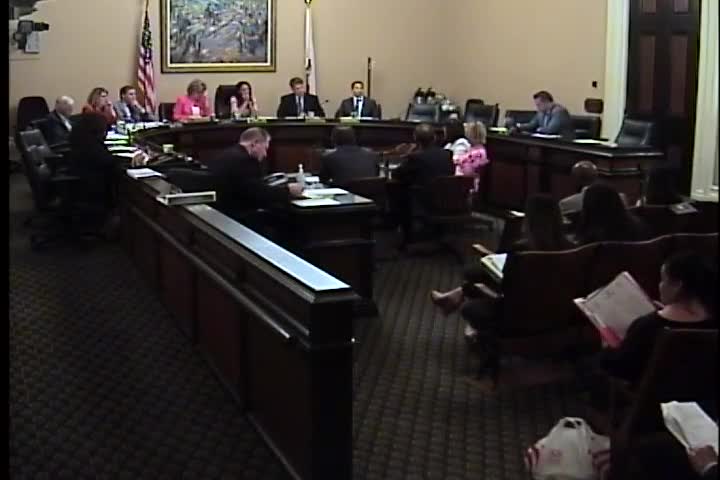 23MIN
Assembly Standing Committee on Revenue and Taxation


Bill Co-Author(s):