AB 2735: English learners: participation in standard instructional program.
- Session Year: 2017-2018
- House: Assembly
- Latest Version Date: 2018-09-07
Existing law requires each school district that has one or more pupils who are English learners, and, to the extent required by federal law, each county office of education and each charter school, to assess the English language development of each pupil in order to determine the pupils level of proficiency, as specified, and requires the Superintendent of Public Instruction to review existing assessments that assess the English language development of pupils whose primary language is a language other than English.
This bill, commencing with the 201920 school year, would prohibit a middle school or high school pupil, as defined, who is classified as an English learner, except as specified, from being denied participation in a schools standard instructional program, as defined, by being denied enrollment in specified courses, including, among others, courses required for graduation and college admission. By imposing additional duties on local educational agencies, the bill would impose a state-mandated local program.
The California Constitution requires the state to reimburse local agencies and school districts for certain costs mandated by the state. Statutory provisions establish procedures for making that reimbursement.
This bill would provide that, if the Commission on State Mandates determines that the bill contains costs mandated by the state, reimbursement for those costs shall be made pursuant to the statutory provisions noted above.
Existing law requires each school district that has one or more pupils who are English learners, and, to the extent required by federal law, each county office of education and each charter school, to assess the English language development of each pupil in order to determine the pupils level of proficiency, as specified, and requires the Superintendent of Public Instruction to review existing assessments that assess the English language development of pupils whose primary language is a language other than English.
This bill, consistent with federal law and commencing with the 201920 school year, would specify that, except as provided, prohibit a middle school or high school pupil, as defined, who is classified as an English learner shall not be learner, except as specified, from being denied participation in a schools standard instructional program, as defined, by being denied enrollment in specified courses, including, among others, courses required for graduation and college admission. By imposing additional duties on local educational agencies, the bill would impose a state-mandated local program.
The California Constitution requires the state to reimburse local agencies and school districts for certain costs mandated by the state. Statutory provisions establish procedures for making that reimbursement.
This bill would provide that, if the Commission on State Mandates determines that the bill contains costs mandated by the state, reimbursement for those costs shall be made pursuant to the statutory provisions noted above.
Existing law requires each school district that has one or more pupils who are English learners, and, to the extent required by federal law, each county office of education and each charter school, to assess the English language development of each pupil in order to determine the pupils level of proficiency, as specified, and requires the Superintendent of Public Instruction to review existing assessments that assess the English language development of pupils whose primary language is a language other than English.
This bill, consistent with federal law and commencing with the 201920 school year, would specify that, except as provided, a middle or high school pupil, as defined, who is classified as an English learner shall not be denied participation in a schools standard instructional program, as defined, by being denied enrollment in specified courses, including, among others, courses required for graduation and college admission. By imposing additional duties on local educational agencies, the bill would impose a state-mandated local program.
The California Constitution requires the state to reimburse local agencies and school districts for certain costs mandated by the state. Statutory provisions establish procedures for making that reimbursement.
This bill would provide that, if the Commission on State Mandates determines that the bill contains costs mandated by the state, reimbursement for those costs shall be made pursuant to the statutory provisions noted above.
Existing law requires each school district that has one or more pupils who are English learners, and, to the extent required by federal law, each county office of education and each charter school, to assess the English language development of each pupil in order to determine the pupils level of proficiency, as specified, and requires the Superintendent of Public Instruction to review existing assessments that assess the English language development of pupils whose primary language is a language other than English.
This bill, consistent with federal law and commencing with the 201920 school year, would specify that, except as provided, a middle or high school pupil, as defined, who is classified as an English learner and scores at any proficiency level on the assessment of English language development shall not be denied participation in a schools standard instructional program, as defined, by being denied enrollment in specified courses, including, among others, courses required for graduation and college admission. By imposing additional duties on local educational agencies, the bill would impose a state-mandated local program.
The California Constitution requires the state to reimburse local agencies and school districts for certain costs mandated by the state. Statutory provisions establish procedures for making that reimbursement.
This bill would provide that, if the Commission on State Mandates determines that the bill contains costs mandated by the state, reimbursement for those costs shall be made pursuant to the statutory provisions noted above.
Existing law requires each school district that has one or more pupils who are English learners, and, to the extent required by federal law, each county office of education and each charter school, to assess the English language development of each pupil in order to determine the pupils level of proficiency, as specified, and requires the Superintendent of Public Instruction to review existing assessments that assess the English language development of pupils whose primary language is a language other than English.
This bill bill, commencing with the 201920 school year, would specify that, except as provided, a middle or high school pupil pupil, as defined, who is classified as an English learner and scores at any proficiency level on the assessment of English language development shall not be denied participation in a schools standard instructional program, as defined, by being denied enrollment in specified courses, including, among others, courses required for graduation and college admission. By imposing additional duties on local educational agencies, the bill would impose a state-mandated local program.
The California Constitution requires the state to reimburse local agencies and school districts for certain costs mandated by the state. Statutory provisions establish procedures for making that reimbursement.
This bill would provide that, if the Commission on State Mandates determines that the bill contains costs mandated by the state, reimbursement for those costs shall be made pursuant to the statutory provisions noted above.
Existing law requires each school district that has one or more pupils who are English learners, and, to the extent required by federal law, each county office of education and each charter school, to assess the English language development of each pupil in order to determine the pupils level of proficiency, as specified, and requires the Superintendent of Public Instruction to review existing assessments that assess the English language development of pupils whose primary language is a language other than English.
This bill would specify that, except as provided, a middle or high school pupil who is classified as an English learner and scores at any proficiency level on the assessment of English language development shall not be denied participation in a schools standard instructional program, as defined, by being denied enrollment in specified courses, including, among others, courses required for graduation and college admission. By imposing additional duties on local educational agencies, the bill would impose a state-mandated local program.
The California Constitution requires the state to reimburse local agencies and school districts for certain costs mandated by the state. Statutory provisions establish procedures for making that reimbursement.
This bill would provide that, if the Commission on State Mandates determines that the bill contains costs mandated by the state, reimbursement for those costs shall be made pursuant to the statutory provisions noted above.
The Legislature finds and declares all of the following:
(a)California is home to the largest population of English learners in the country, and one in three English learners in the United States resides in California.
(b)There are approximately 1.4 million English learners in California public schools. About 2.7 million pupils speak a language other than English in their homes, representing about 43 percent of the states public school enrollment.
(c)Decades of research examining the course-taking patterns of English learners in California school districts and across the country have found that English learners can experience restricted access to the core curriculum and advanced coursework necessary to graduate from high school and meet higher education admissions requirements, even when controlling for prior achievement.
(d)(1)The federal Equal Educational Opportunities Act of 1974 (20 U.S.C. Sec. 1701 et seq.), as interpreted by the court in Castaneda v. Pickard (1981) 648 F.2d 989, prohibits the denial of English learners equal participation in the standard instructional programs of schools, and requires programs that are used in the early part of an English learners school career that first focus on the development of English language skills to be designed to remedy any academic deficits in other areas that may develop during participation in the program and to be reasonably calculated to enable pupils to attain parity of participation in the standard instructional program within a reasonable length of time after they enter the school system.
(2)It is the intent of the Legislature to clarify these requirements for California public schools.
SEC. 2.Section 60811.8 is added to the Education Code, to read:60811.8.(a)Commencing in the 201920 school year, a middle school or high school pupil who is classified as an English learner, except as specified in subdivision (d), shall not be denied participation in the standard instructional program of a school by being denied any of the following:
(1)Enrollment in courses that are part of the standard instructional program of the school that the pupil attends. For purposes of this section, standard instructional program means, at a minimum, core curriculum courses, as defined in clause (i) of subparagraph (B) of paragraph (6) of subdivision (b) of Section 33126, courses required to meet state and local graduation requirements, and courses required for middle school grade promotion.
(2)Enrollment in a full course load of courses that are part of the standard instructional program.
(3)Enrollment in courses that are not part of a schools standard instructional program that either meet the subject matter requirements for purposes of recognition for college admission pursuant to Section 66205.5 or are advanced courses, such as honors or advanced placement courses, on the sole basis of a pupils classification as an English learner.
(b)Nothing in this section shall be construed to require a school to create supplemental courses in languages other than English.
(c)For purposes of this section, pupil includes a pupil attending a school operated by a school district or a county office of education, a charter school, or the state special schools for the blind and the deaf.
(d)(1)Provided that, pursuant to federal law, the pupils course of study is designed to remedy any academic deficits incurred during participation and that the pupils course of study is reasonably calculated to enable that pupil to attain parity of participation in the standard instructional program within a reasonable length of time after he or she enters the school system, the following pupils may be denied access to enrollment in a course described in paragraph (1) of subdivision (a):
(A)A middle school or high school pupil who is classified as an English learner and who has recently arrived in the United States, as defined in Section 1111(b)(3)(A) of the federal Every Student Succeeds Act (Public Law 114-95).
(B)A middle school or high school pupil who is classified as an English learner and who is participating in a program designed to meet the academic and transitional needs of newly arrived immigrant pupils that has as a primary objective the development of English language proficiency.
(2)This section shall not be construed to prohibit, restrict, or discourage the enrollment of a pupil described in paragraph (1) in courses described in paragraph (1) of subdivision (a).
SEC. 3.If the Commission on State Mandates determines that this act contains costs mandated by the state, reimbursement to local agencies and school districts for those costs shall be made pursuant to Part 7 (commencing with Section 17500) of Division 4 of Title 2 of the Government Code.
The Legislature finds and declares all of the following:
(a)California is home to the largest population of English learners in the country, and one in three English learners in the United States resides in California.
(b)There are approximately 1.4 million English learners in California public schools. About 2.7 million pupils speak a language other than English in their homes, representing about 43 percent of the states public school enrollment.
(c)Decades of research examining the course-taking patterns of English learners in California school districts and across the country have found that English learners can experience restricted access to the core curriculum and advanced coursework necessary to graduate from high school and meet higher education admissions requirements, even when controlling for prior achievement.
(d)(1)The federal Equal Educational Opportunities Act of 1974 (20 U.S.C. Sec. 1701 et seq.), as interpreted by the court in Castaneda v. Pickard (1981) 648 F.2d 989, prohibits the denial of English learners equal participation in the standard instructional programs of schools, and requires programs that are used in the early part of an English learners school career that first focus on the development of English language skills to be designed to remedy any academic deficits in other areas that may develop during participation in the program and to be reasonably calculated to enable pupils to attain parity of participation in the standard instructional program within a reasonable length of time after they enter the school system.
(2)It is the intent of the Legislature to clarify these requirements for California public schools.
SEC. 2.Section 60811.8 is added to the Education Code, to read:60811.8.(a)Consistent with federal law and commencing Commencing in the 201920 school year, a middle school or high school pupil who is classified as an English learner learner, except as specified in subdivision (d), shall not be denied participation in the standard instructional program of a school by being denied any of the following:
(1)Enrollment in courses that are part of the standard instructional program of the school that the pupil attends. For purposes of this section, standard instructional program means, at a minimum, core curriculum courses, as defined in clause (i) of subparagraph (B) of paragraph (6) of subdivision (b) of Section 33126, courses required to meet state and local graduation requirements, and courses required for middle school grade promotion.
(2)Enrollment in a full course load of courses that are part of the standard instructional program.
(3)Enrollment in courses that are not part of a schools standard instructional program that either meet the subject matter requirements for purposes of recognition for college admission pursuant to Section 66205.5 or are advanced courses, such as honors or advanced placement courses, on the sole basis of a pupils classification as an English learner.
(b)Subdivision (a) shall not apply to a middle or high school pupil who is classified as an English learner and who has recently arrived in the United States, as defined in Section 1111(b)(3)(A) of the federal Elementary and Secondary Education Act of 1965 (20 U.S.C. Sec. 6301 et. seq.), or who is participating in a program designed to meet the academic and transitional needs of newly arrived immigrant pupils that has as a primary objective the development of English language proficiency, provided that, pursuant to federal law, the pupils course of study is designed to remedy any academic deficits incurred during participation and that the pupils course of study is reasonably calculated to enable these pupils to attain parity of participation in the standard instructional program within a reasonable length of time after they enter the school system.(c)(b)Nothing in this section shall be construed to require a school to create supplemental courses in languages other than English.
(d)(c)For purposes of this section, pupil includes a pupil attending a school operated by a school district or a county office of education, a charter school, or the state special schools for the blind and the deaf.
(d)(1)Provided that, pursuant to federal law, the pupils course of study is designed to remedy any academic deficits incurred during participation and that the pupils course of study is reasonably calculated to enable that pupil to attain parity of participation in the standard instructional program within a reasonable length of time after he or she enters the school system, the following pupils may be denied access to enrollment in a course described in paragraph (1) of subdivision (a):
(A)A middle school or high school pupil who is classified as an English learner and who has recently arrived in the United States, as defined in Section 1111(b)(3)(A) of the federal Every Student Succeeds Act (Public Law 114-95).
(B)A middle school or high school pupil who is classified as an English learner and who is participating in a program designed to meet the academic and transitional needs of newly arrived immigrant pupils that has as a primary objective the development of English language proficiency.
(2)This section shall not be construed to prohibit, restrict, or discourage the enrollment of a pupil described in paragraph (1) in courses described in paragraph (1) of subdivision (a).
SEC. 3.If the Commission on State Mandates determines that this act contains costs mandated by the state, reimbursement to local agencies and school districts for those costs shall be made pursuant to Part 7 (commencing with Section 17500) of Division 4 of Title 2 of the Government Code.
The Legislature finds and declares all of the following:
(a)California is home to the largest population of English learners in the country, and one in three English learners in the United States resides in California.
(b)There are approximately 1.4 million English learners in California public schools. About 2.7 million pupils speak a language other than English in their homes, representing about 43 percent of the states public school enrollment.
(c)Decades of research examining the course-taking patterns of English learners in California school districts and across the country have found that English learners can experience restricted access to the core curriculum and advanced coursework necessary to graduate from high school and meet higher education admissions requirements, even when controlling for prior achievement.
(d)(1)The federal Equal Educational Opportunities Act of 1974 (20 U.S.C. Sec. 1701 et seq.), as interpreted by the court in Castaneda v. Pickard (1981) 648 F.2d 989, prohibits the denial of English learners equal participation in the standard instructional programs of schools, and requires programs that are used in the early part of an English learners school career that first focus on the development of English language skills to be designed to remedy any academic deficits in other areas that may develop during participation in the program and to be reasonably calculated to enable pupils to attain parity of participation in the standard instructional program within a reasonable length of time after they enter the school system.
(2)It is the intent of the Legislature to clarify these requirements for California public schools.
SEC. 2.Section 60811.8 is added to the Education Code, to read:60811.8.(a)Consistent with federal law and commencing in the 201920 school year, a middle or high school pupil who is classified as an English learner shall not be denied participation in the standard instructional program of a school by being denied any of the following:
(1)Enrollment in courses that are part of the standard instructional program of the school that the pupil attends. For purposes of this section, standard instructional program means, at a minimum, core curriculum courses, as defined in clause (i) of subparagraph (B) of paragraph (6) of subdivision (b) of Section 33126, courses required to meet state and local graduation requirements, and courses required for middle school grade promotion.
(2)Enrollment in a full course load of courses that are part of the standard instructional program.
(3)Enrollment in courses that are not part of a schools standard instructional program that either meet the subject matter requirements for purposes of recognition for college admission pursuant to Section 66205.5 or are advanced courses, such as honors or advanced placement courses, on the sole basis of a pupils classification as an English learner.
(b)Subdivision (a) shall not apply to a middle or high school pupil who is classified as an English learner and who is has recently arrived in the United States, as defined in Section 1111(b)(3)(A) of the federal Elementary and Secondary Education Act of 1965 (20 U.S.C. Sec. 6301 et. seq.), or who is participating in a program designed to meet the academic and transitional needs of newly arrived immigrant pupils that has as a primary objective the development of English language proficiency, provided that, pursuant to federal law, the program pupils course of study is designed to remedy any academic deficits incurred during participation and that the programs design pupils course of study is reasonably calculated to enable these pupils to attain parity of participation in the standard instructional program within a reasonable length of time after they enter the school system.
(c)Nothing in this section shall be construed to require a school to create supplemental courses in languages other than English.
(d)For purposes of this section, pupil includes a pupil attending a school operated by a school district or a county office of education, a charter school, or the state special schools for the blind and the deaf.
SEC. 3.If the Commission on State Mandates determines that this act contains costs mandated by the state, reimbursement to local agencies and school districts for those costs shall be made pursuant to Part 7 (commencing with Section 17500) of Division 4 of Title 2 of the Government Code.
The Legislature finds and declares all of the following:
(a)California is home to the largest population of English learners in the country, and one in three English learners in the United States resides in California.
(b)There are approximately 1.4 million English learners in California public schools. About 2.7 million pupils speak a language other than English in their homes, representing about 43 percent of the states public school enrollment.
(c)Decades of research examining the course-taking patterns of English learners in California school districts and across the country have found that English learners can experience restricted access to the core curriculum and advanced coursework necessary to graduate from high school and meet higher education admissions requirements, even when controlling for prior achievement.
(d)(1)The federal Equal Educational Opportunities Act of 1974 (20 U.S.C. Sec. 1701 et seq.), as interpreted by the court in Castaneda v. Pickard (1981) 648 F.2d 989, prohibits the denial of English learners equal participation in the standard instructional programs of schools, and requires programs that are used in the early part of an English learners school career that first focus on the development of English language skills to be designed to remedy any academic deficits in other areas that may develop during participation in the program and to be reasonably calculated to enable pupils to attain parity of participation in the standard instructional program within a reasonable length of time after they enter the school system.
(2)It is the intent of the Legislature to clarify these requirements for California public schools.
SEC. 2.Section 60811.8 is added to the Education Code, to read:60811.8.(a)Consistent with federal law and commencing in the 201920 school year, a middle or high school pupil who is classified as an English learner and scores at any proficiency level on the assessment of English language development established pursuant to Section 60810 or any successor assessment shall not be denied participation in the standard instructional program of a school by being denied any of the following:
(1)Enrollment in courses that are part of the standard instructional program of the school that the pupil attends. For purposes of this section, standard instructional program means, at a minimum, core curriculum courses, as defined in clause (i) of subparagraph (B) of paragraph (6) of subdivision (b) of Section 33126, courses required to meet state and local graduation requirements, and courses required for middle school grade promotion.
(2)Enrollment in a full course load of courses that are part of the standard instructional program.
(3)Enrollment in courses that are not part of a schools standard instructional program that either meet the subject matter requirements for purposes of recognition for college admission pursuant to Section 66205.5 or are advanced courses, such as honors or advanced placement courses, on the sole basis of a pupils classification as an English learner.
(b)Subdivision (a) shall not apply to a middle or high school pupil who is classified as an English learner and who is participating in a program designed to meet the academic and transitional needs of newly arrived immigrant pupils that has as a primary objective the development of English language proficiency, provided that, pursuant to federal law, the program is designed to remedy any academic deficits incurred during participation and that the programs design is reasonably calculated to enable these pupils to attain parity of participation in the standard instructional program within a reasonable length of time after they enter the school system.
(c)Nothing in this section shall be construed to require a school to create supplemental courses in languages other than English.
(c)(d)For purposes of this section, pupil includes a pupil attending a school operated by a school district or a county office of education, a charter school, or the state special schools for the blind and the deaf.
SEC. 3.If the Commission on State Mandates determines that this act contains costs mandated by the state, reimbursement to local agencies and school districts for those costs shall be made pursuant to Part 7 (commencing with Section 17500) of Division 4 of Title 2 of the Government Code.
The Legislature finds and declares all of the following:
(a)California is home to the largest population of English learners in the country, and one in three English learners in the United States resides in California.
(b)There are approximately 1.4 million English learners in California public schools. About 2.7 million pupils speak a language other than English in their homes, representing about 43 percent of the states public school enrollment.
(c)Recent research examining course-taking patterns of English learners in multiple California school districts has found that English learners are less likely than non-English learners to be enrolled in core academic subject courses, including English language arts, mathematics, and science, and, as a result, earn fewer credits than non-English learner pupils. Research has further found that limited access to courses in English language arts is largely due to English language development classes being used as substitutes for, rather than complements to, English language arts, and due to the enrollment of elementary and secondary English learners in intervention classes for English language arts and math that are not designed for English learners language and academic needs.(c)Decades of research examining the course-taking patterns of English learners in California school districts and across the country have found that English learners can experience restricted access to the core curriculum and advanced coursework necessary to graduate from high school and meet higher education admissions requirements, even when controlling for prior achievement.
(d)(1)The federal Equal Educational Opportunities Act of 1974 (20 U.S.C. Sec. 1701 et seq.), as interpreted by the court in Castaneda v. Pickard (1981) 648 F.2d 989, prohibits the denial of English learners equal participation in the standard instructional programs of schools, and requires programs that are used in the early part of an English learners school career that first focus on the development of English language skills to be designed to remedy any academic deficits in other areas that may develop during participation in the program and to be reasonably calculated to enable pupils to attain parity of participation in the standard instructional program within a reasonable length of time after they enter the school system.
(2)It is the intent of the Legislature to clarify these requirements for California public schools.
SEC. 2.Section 60811.8 is added to the Education Code, to read:60811.8.(a)Consistent with federal law, law and commencing in the 201920 school year, a middle or high school pupil who is classified as an English learner and scores at any proficiency level on the assessment of English language development established pursuant to Section 60810 or any successor assessment shall not be denied participation in the standard instructional program of a school by being denied any of the following:
(1)Enrollment in courses that are part of the standard instructional program of the school that the pupil attends. For purposes of this section, standard instructional program means, at a minimum, core curriculum courses, as defined in clause (i) of subparagraph (B) of paragraph (6) of subdivision (b) of Section 33126, courses required to meet state and local graduation requirements, and courses required for middle school grade promotion.
(2)Enrollment in a full course load of courses that are part of the standard instructional program.
(3)Enrollment in courses that are not part of a schools standard instructional program that either meet the subject matter requirements for purposes of recognition for college admission pursuant to Section 66205.5 or are advanced courses, such as advanced placement courses, on the sole basis of a pupils classification as an English learner.
(b)Subdivision (a) shall not apply to a middle or high school pupil who is classified as an English learner and who is participating in a program designed to meet the academic and transitional needs of newly arrived immigrant pupils that has as a primary objective the development of English language proficiency, provided that, pursuant to federal law, the program is designed to remedy any academic deficits incurred during participation and that the programs design is reasonably calculated to enable these pupils to attain parity of participation in the standard instructional program within a reasonable length of time after they enter the school system.
(c)For purposes of this section, pupil includes a pupil attending a school operated by a school district or a county office of education, a charter school, or the state special schools for the blind and the deaf.
SEC. 3.If the Commission on State Mandates determines that this act contains costs mandated by the state, reimbursement to local agencies and school districts for those costs shall be made pursuant to Part 7 (commencing with Section 17500) of Division 4 of Title 2 of the Government Code.
REVISIONS: HeadingLine 1.The Legislature finds and declares all of the following:
(a)California is home to the largest population of English learners in the country, and one in three English learners in the United States resides in California.
(b)There are approximately 1.4 million English learners in California public schools. About 2.7 million pupils speak a language other than English in their homes, representing about 43 percent of the states public school enrollment.
(c)Recent research examining course-taking patterns of English learners in multiple California school districts has found that English learners are less likely than non-English learners to be enrolled in core academic subject courses, including English language arts, mathematics, and science, and, as a result, earn fewer credits than non-English learner pupils. Research has further found that limited access to courses in English language arts is largely due to English language development classes being used as substitutes for, rather than complements to, English language arts, and due to the enrollment of elementary and secondary English learners in intervention classes for English language arts and math that are not designed for English learners language and academic needs.
(d)(1)The federal Equal Educational Opportunities Act of 1974 (20 U.S.C. Sec. 1701 et seq.), as interpreted by the court in Castaneda v. Pickard (1981) 648 F.2d 989, prohibits the denial of English learners equal participation in the standard instructional programs of schools, and requires programs that are used in the early part of an English learners school career that first focus on the development of English language skills to be designed to remedy any academic deficits in other areas that may develop during participation in the program and to be reasonably calculated to enable pupils to attain parity of participation in the standard instructional program within a reasonable length of time after they enter the school system.
(2)It is the intent of the Legislature to clarify these requirements for California public schools.
SEC. 2.Section 60811.8 is added to the Education Code, to read:60811.8.(a)Consistent with federal law, a middle or high school pupil who is classified as an English learner and scores at any proficiency level on the assessment of English language development established pursuant to Section 60810 or any successor assessment shall not be denied participation in the standard instructional program of a school by being denied any of the following:
(1)Enrollment in courses that are part of the standard instructional program of the school that the pupil attends. For purposes of this section, standard instructional program means, at a minimum, core curriculum courses, as defined in clause (i) of subparagraph (B) of paragraph (6) of subdivision (b) of Section 33126, courses required to meet state and local graduation requirements, and courses required for middle school grade promotion.
(2)Enrollment in a full course load of courses that are part of the standard instructional program.
(3)Enrollment in courses that are not part of a schools standard instructional program that either meet the subject matter requirements for purposes of recognition for college admission pursuant to Section 66205.5 or are advanced courses, such as advanced placement courses, on the sole basis of a pupils classification as an English learner.
(b)Subdivision (a) shall not apply to a middle or high school pupil who is classified as an English learner and who is participating in a program designed to meet the academic and transitional needs of newly arrived immigrant pupils that has as a primary objective the development of English language proficiency, provided that, pursuant to federal law, the program is designed to remedy any academic deficits incurred during participation and that the programs design is reasonably calculated to enable these pupils to attain parity of participation in the standard instructional program within a reasonable length of time after they enter the school system.
SEC. 3.If the Commission on State Mandates determines that this act contains costs mandated by the state, reimbursement to local agencies and school districts for those costs shall be made pursuant to Part 7 (commencing with Section 17500) of Division 4 of Title 2 of the Government Code.
|
Date
|
Status
|
|---|---|
| Sep 7, 2018 | Chaptered by Secretary of State - Chapter 304, Statutes of 2018. |
| Sep 7, 2018 | Approved by the Governor. |
| Aug 29, 2018 | Enrolled and presented to the Governor at 4 p.m. |
| Aug 23, 2018 | Senate amendments concurred in. To Engrossing and Enrolling. |
| Aug 20, 2018 | In Assembly. Concurrence in Senate amendments pending. May be considered on or after August 22 pursuant to Assembly Rule 77. |
| Aug 20, 2018 | Read third time. Passed. Ordered to the Assembly. |
| Aug 14, 2018 | Read second time. Ordered to third reading. |
| Aug 13, 2018 | Read third time and amended. Ordered to second reading. |
| Jun 26, 2018 | Read second time. Ordered to third reading. |
| Jun 25, 2018 | From committee: Be ordered to second reading pursuant to Senate Rule 28.8. |
| Jun 20, 2018 | From committee chair, with author's amendments: Amend, and re-refer to committee. Read second time, amended, and re-referred to Com. on APPR. |
| Jun 13, 2018 | Read second time and amended. Re-referred to Com. on APPR. |
| Jun 12, 2018 | From committee: Amend, and do pass as amended and re-refer to Com. on APPR. (Ayes 6. Noes 0.) (June 6). |
| May 24, 2018 | Referred to Com. on ED. |
| May 10, 2018 | In Senate. Read first time. To Com. on RLS. for assignment. |
| May 10, 2018 | Read third time. Passed. Ordered to the Senate. |
| May 3, 2018 | Read second time. Ordered to Consent Calendar. |
| May 2, 2018 | Coauthors revised. |
| Apr 19, 2018 | Re-referred to Com. on APPR. |
| Apr 18, 2018 | Read second time and amended. |
| Apr 17, 2018 | From committee: Amend, and do pass as amended and re-refer to Com. on APPR. (Ayes 6. Noes 0.) (April 11). |
| Mar 8, 2018 | Referred to Com. on ED. |
| Feb 16, 2018 | From printer. May be heard in committee March 18. |
| Feb 15, 2018 | Read first time. To print. |
|
Date
|
Description
|
Location
|
Votes
|
|
|---|---|---|---|---|
| Aug 23, 2018 | AB 2735 O'DONNELL Concurrence in Senate Amendments | Assembly Floor |
Passed |
|
| Aug 20, 2018 | Assembly 3rd Reading AB2735 O'Donnell et al. By Hueso | Senate Floor |
Passed |
|
| Jun 6, 2018 | Do pass as amended, but first amend, and re-refer to the Committee on [Appropriations] | Senate Standing Committee on Education |
Passed |
|
| May 10, 2018 | AB 2735 O'DONNELL Consent Calendar Second Day Regular Session | Assembly Floor |
Passed |
|
| May 2, 2018 | Do pass. To Consent Calendar. | Assembly Standing Committee on Appropriations |
Passed |
|
| Apr 11, 2018 | Do pass as amended and be re-referred to the Committee on [Appropriations] | Assembly Standing Committee on Education |
Passed |
This list shows positions taken on this bill by organizations on the date displayed, which is linked to the original source.
Positions by individuals are not included.
|
Organization
|
Position
|
Date
|
|---|---|---|
| ACLU of California | * Support | Jun 6, 2018 |
| Asian Americans Advancing Justice | ** Support | Aug 14, 2018 |
| Association Of California School Administrators | ** Support | Aug 14, 2018 |
| Avid Center | ** Support | Aug 14, 2018 |
| California Association For Bilingual Education | ** Support | Aug 14, 2018 |
| California Association For The Gifted | ** Support | Aug 14, 2018 |
| California Association Of Latino Superintendents & Administrators | * Support | Apr 11, 2018 |
| California Catholic Conference | ** Support | Aug 14, 2018 |
| California Council For The Social Studies | ** Support | Aug 14, 2018 |
| California Immigrant Policy Center | ** Support | Aug 14, 2018 |
| California Language TeacherS Association | ** Support | Aug 14, 2018 |
| California School Boards Association | * Support | Jun 6, 2018 |
| California Science Teachers Association | ** Support | Aug 14, 2018 |
| California State PTA | ** Support | Aug 14, 2018 |
| California Teachers Association | ** Support | Aug 14, 2018 |
| Californians Together | ** Support | Aug 14, 2018 |
| Carlston Family Foundation | * Support | Jun 6, 2018 |
| Catesol | * Support | Jun 6, 2018 |
| Catesol | ** Support | Aug 14, 2018 |
| Education Trust-West | ** Support | Aug 14, 2018 |
| Grace Davis High School Language Institute | * Support | Jun 6, 2018 |
| Grace Davis High School Language Institute | * Support | Jun 6, 2018 |
| Hispanic Association Of Colleges And Universities (Hacu) | * Support | Jun 6, 2018 |
| Los Angeles Unified School District | ** Support | Aug 14, 2018 |
| Modest City Schools | * Support | Jun 6, 2018 |
| Public Advocates | ** Support | Aug 14, 2018 |
| Riverside County Superintendent of Schools | ** Support | Aug 14, 2018 |
| San Bernardino County District Advocates for Better Schools | ** Support | Aug 14, 2018 |
| San Francisco Unified School District | ** Support | Aug 14, 2018 |
| Santa Clara County Office Of Education | ** Support | Aug 14, 2018 |
| self | * Support | Jun 6, 2018 |
| State Superintendent of Public Instruction, Tom Torlakson | ** Support | Apr 16, 2018 |
| State Superintendent, Tom Torlakson Teach Plus | ** Support | Jun 5, 2018 |
| Teach Plus | ** Support | Aug 14, 2018 |
CONCURRENCE IN SENATE AMENDMENTS
CSA1 Bill Id:AB 2735
Author:(O'Donnell)
As Amended Ver:August 13, 2018
Majority vote
ASSEMBLY: | 73-0 | (May 10, 2018) | SENATE: | 39-0 | (August 20, 2018) |
Original Committee Reference: ED.
SUMMARY: Prohibits, commencing in the 2019-20 school year, an English learner (EL) student enrolled in middle or high school from being denied enrollment in core curriculum courses and courses required for high school graduation, except for English learners who are newcomers to the United States, as defined.
The Senate amendments:
- State that newly arrived English learner pupils, as defined in the federal Elementary and Secondary Education Act, may be denied enrollment in core curriculum courses, provided that, pursuant to federal law, the pupils’ course of study is designed to remedy any academic deficits incurred during participation and that pupil's course of study is reasonably calculated to enable these pupils to attain parity of participation in the standard instructional program within a reasonable length of time after they enter the school system.
- State that nothing in the act shall be construed to require a school to create supplemental courses in languages other than English.
- State that the act shall not be construed to prohibit, restrict, or discourage the enrollment of recently arrived English learners in core curriculum courses.
FISCAL EFFECT: According to the Senate Appropriations Committee, pursuant to Senate Rule 28.8, negligible state costs.
COMMENTS:
Need for the bill. The author states, "California educates one in three English learners in the United States. Each one deserves an education worthy of their potential.
But research over decades shows that, for some English learners, the opportunity to learn is out of reach. Research has found that English learners are less likely than non-English learners to be enrolled in core academic subject courses including English language arts, mathematics, and science. In some cases, this is due to the use of English language development courses being used as substitutes for English language arts courses. In other cases, English learners are placed in intervention courses which do not provide access to the full curriculum. Some students are trapped - prohibited from taking English language arts courses until they are reclassified, but unable to be reclassified due to lack of proficiency in English language arts.
This bill prohibits an English learner student from being denied enrollment in core curriculum courses and courses required for high school graduation. This act is a necessary step in ensuring that all of California's students have the opportunity to learn."
Research on denial of access to core curriculum for English learners. Multiple studies conducted over the last 25 years, including many conducted in California, point to a pattern of English learners' exclusion from the standard instructional programs of schools. Much of this research has found that, even with demographic and academic controls, English learners have markedly different course taking patterns, and that overall they experience significantly less academic exposure. The author cites 15 peer reviewed studies demonstrating the problem of core curriculum access for English learners.
"Before the deficits become irreparable:" The problem with sequential programs for English learners. In the Castaneda v. Pickard decision, which governs how districts comply with the Equal Educational Opportunities Act of 1974 regarding English learners' access to the core curriculum, the court ruled that students cannot be permitted to incur "irreparable academic deficits" while access to the core curriculum is withheld.
These statements recognize that at some point, withholding access to academic content results in deficits which simply cannot be made up. However, the Castaneda decision does allow schools to choose between a sequential and a simultaneous approach to English language development and core curriculum instruction.
Linquanti (2001) describes a sequential approach as one that initially focuses on intensive English language development, and in which access to grade-level academic curriculum is postponed until the student is considered to have attained a knowledge of English adequate for effectively participating in content learning. In contrast, a simultaneous approach is one in which the student is taught English while at the same time receiving access to grade-level (or near grade-level) academic content.
School districts must ensure that any academic deficits incurred in a sequential approach are remedied, but research shows that once ELs are tracked into less rigorous courses with little access to the core curriculum, it can be close to impossible for them to catch up. In one example (Kanno, 2014) reported, "ELL [English language learner] courses fed into non-ELL, remedial-level courses of the same subject matter… This course sequence would partially explain why even reclassified ELLs rarely reached high-track courses: They were ELLs at the beginning of high school and therefore started in ELL classes and proceeded on to remedial classes. In contrast, students who were slated to take Advanced Placement courses in 11th and 12th grade were groomed from the start of high school through placement in advanced- and honors-level classes."
In the most insidious form of tracking, a sequential approach coupled with local reclassification policy can also trap students in EL status and withhold access to the core curriculum indefinitely (Umansky, 2016; Estrada, 2017). In some districts, students who are excluded from core curriculum courses until they are reclassified as fully English proficient are unable to access the courses which would allow them to be reclassified as fully English proficient.
Analysis Prepared by: Tanya Lieberman / ED. / (916) 319-2087 FN: 0004064
Office of Senate Floor Analyses (916) 651-1520 Fax: (916) 327-4478 | AB |
THIRD READING
Bill No: AB 2735
:
SENATE EDUCATION COMMITTEE: 6-0, 6/6/18
AYES: Allen, Wilk, Galgiani, Leyva, Pan, Vidak
SENATE APPROPRIATIONS COMMITTEE: Senate Rule 28.8
ASSEMBLY FLOOR: 73-0, 5/10/18 (Consent) - See last page for vote
DIGEST:
This bill prohibits, commencing in the 2019-20 school year, an English learner student from being denied enrollment in core curriculum courses and courses required for high school graduation, except for English learners who are enrolled in newcomer programs.
Senate Floor Amendments of 8/13/18 restructure an existing section in the bill and add a statement to clarify the bill’s provisions relative to students who are classified as English learners and have recently arrived to the United States.
Existing law:
- Prohibits, under the federal Equal Educational Opportunity Act of 1974 (EEOA), the denial of equal educational opportunity by the failure of an educational agency to take appropriate action to overcome language barriers that impede equal participation by its students in its instructional programs. (20 U.S.C. Section 1701 et seq.)
- Establishes state high school graduation requirements, including three courses in English. Permits local educational agencies to adopt additional requirements for graduation which exceed those of the state.
- Defines “English learner” or “student of limited English proficiency,” and requires each school district to assess the English language development of each of those students within 30 days of initial enrollment and annually thereafter until the students are re-designated as fluent English proficient.
- Prohibits, pursuant to Title VI of the federal Civil Rights Act of 1964, recipients of federal financial assistance, including school districts, from discriminating on the basis of race, color, or national origin. Title VI’s prohibition on national origin discrimination requires school districts to take “affirmative steps” to address language barriers so that English learner students may participate meaningfully in schools’ educational programs.
Existing case law:
- Castaneda v. Pickard (1981, 648 F.2d 989). Interprets the EEOA to require schools to ensure English learners' participation in the "standard instructional program" of a school either by providing access to the standard instructional program along with English language support, or instead by providing a program for English learners, "during the early part of their school career, which has, as its primary objective the development of literacy in English," provided that the program is designed to help the student "overcome the academic deficits" incurred during participation in that program, and that it is "reasonably calculated to enable students to attain parity of participation in the standard instructional program within a reasonable length of time after they enter the school system."
- Lau v. Nichols (1974, 414 U.S. 563). Establishes that, under the Civil Rights Act of 1964, schools were required to provide equal opportunities, specifically support for language learning, to English learners.
This bill:
- Prohibits, commencing in the 2019-20 school year, a middle school or high school student who is classified as an English learner from being denied participation in the standard instructional program of a school by being denied any of the following:
- Enrollment in courses that are part of the standard instructional program of the school that the student attends.
- Enrollment in a full course load of courses that are part of the standard instructional program.
- Enrollment in courses that are not part of a school’s standard instructional program that either meet the subject matter requirements for purposes of recognition for college admission pursuant to Education Code Section 66205.5 or are advanced courses on the sole basis of a student’s classification as an English learner.
- Authorizes an exception to the requirements in 1) above provided that, pursuant to federal law, that the student’s course of study is designed to remedy any academic deficits incurred during participation and that it is reasonably calculated to enable that student to attain parity of participation in the standard instructional program within a reasonable length of time after he or she enters the school system for a student who is either of the following:
- A middle school or a high school student who is classified as an English learner and who has recently arrived in the United States, as defined under federal law.
- A middle school or high school student who is classified as an English learner and who is participating in a program designed to meet the academic and transitional needs of newly arrived immigrant students that has as a primary objective the development of English language proficiency.
- Provides that this bill’s provisions are not to be construed to prohibit, restrict, or discourage the enrollment of a student who is an English learner and who has recently arrived in the United States or who is participating in a program designed to meet the needs of newly arrived immigrant students as described in 2) above.
- Provides that for purposes of this bill, “pupil,” includes a pupil attending a school operated by a school district or a county office of education, a charter school or the state special schools for the blind and deaf.
- Specifies that nothing in this bill is to be construed to require a school to create supplemental courses in languages other than English.
- Defines for the purposes of this bill, “standard instruction program,” to mean, at a minimum, core curriculum courses, as defined under current law, courses required to meet graduation requirements, and courses required for middle school grade promotion.
- States legislative findings and declarations relative to existing research regarding the course-taking patterns of English learners in California and evidence of restricted access to core curriculum and advanced coursework necessary to graduate from high school experience for English learners.
Comments
- Need for the bill. The author states, “California educates one in three English learners in the United States. Each one deserves an education worthy of their potential.
“But research over decades shows that, for some English learners, the opportunity to learn is out of reach. Research has found that English learners are less likely than non-English learners to be enrolled in core academic subject courses including English language arts, mathematics, and science. In some cases, this is due to the use of English language development courses being used as substitutes for English language arts courses. In other cases, English learners are placed in intervention courses which do not provide access to the full curriculum. Some students are trapped - prohibited from taking English language arts courses until they are reclassified, but unable to be reclassified due to lack of proficiency in English language arts.
“Federal law prohibits the denial of English learners’ equal participation in the core curriculum of schools, but contains a broad exception which permits districts to exclude students from the core curriculum while first providing them a more intensive English program. Research indicates that this exception is sometimes used to exclude students from the core curriculum even when they are fully capable of participating in, and benefitting from, this coursework.
“This bill prohibits an English learner student from being denied enrollment in core curriculum courses and courses required for high school graduation. The bill does not apply to students enrolled in newcomer programs, provided that they can be ‘caught up’ after leaving the program. These clarifications of federal law are a necessary step in ensuring that all of California’s students have the opportunity to learn.”
- English learners in California. According to the California Department of Education, in the 2016-17 school year there were approximately 1.3 million English learners in California public schools, representing 21.4 percent of the total enrollment. The majority of English learners (72 percent) are enrolled in the elementary grades (K-6) with the remaining 28 percent enrolled in grades 7-12. The statewide average rate of annual reclassification of English learners to English proficient is approximately 11 percent. It is the state’s goal to ensure that English learners acquire full proficiency in English as rapidly and effectively as possible and attain parity with native English speakers and achieve the same rigorous grade-level academic standards that are expected of all students.
- English learner achievement gap. Research shows that English learner students score substantially lower on state assessments than non-English learner students. While there has been incremental growth in achievement among students in both the general population and English learners, the rate of growth in the general population has significantly outpaced that of English learners widening the achievement gap over time. According to the California Department of Education, the overall 2013-2014 four-year cohort graduation was 91 percent, while the rate for English learners was 65 percent, the lowest of any subgroup besides students in special education. The dropout rate for English learners, at 21 percent, was the highest of any subgroup.
- English learners less likely to be enrolled in core curriculum courses. In October 2015, the Policy Analysis for California Education's (PACE) issued, "Improving the Opportunities and Outcomes of California's Students Learning English," a report on research examining English learner needs, policies, practices, and outcomes. Among other things, researchers found that English learners are less likely than non-English learners to be enrolled in core academic subject courses and, as a result, earn fewer credits toward graduation than non-English Learner students. The research further found that limited access to English language arts (ELA) is largely due to (a) English Language Development (ELD) courses being used as a substitute, rather than a complement, for ELA courses, and (b) the enrollment of elementary and secondary English learners in intervention classes for language arts and math which were not designed for English learners' language and academic needs.
This research found that in one large urban school district, 30 percent of English learners were not enrolled in ELA courses, and 35 percent were not enrolled in a full course load. PACE concluded, "Research from the three partnerships suggests that English learners often suffer from restricted educational opportunity compared to that of non-English learners, particularly with regard to their academic learning needs."
The report also noted that the most common barrier to reclassification for middle and high school English learners was passage of the ELA content standards criterion. Given the findings that enrollment in ELD prohibits some students from taking ELA courses; it is unclear how students are expected to obtain the course content necessary to successfully meet criteria for reclassification.
This bill, in response to these concerns, (a) prohibits middle school and high school English learners from being denied enrollment in core curriculum course, and courses required for graduation or middle school grade promotion; (b) prohibits the exclusion of English learners from, meeting A-G requirements for college admission and advanced coursework, on the sole basis of their classification as English learners; and (c) provides an exception for newly arrived immigrant students who are enrolled in English course designed to meet their need to rapidly acquire basic English skills.
FISCAL EFFECT: Appropriation: Fiscal Com.: Local:
Superintendent of Public Instruction, Tom Torlakson
American Civil Liberties Union of California
Asian Americans Advancing Justice
Association of California School Administrators
AVID Center
California Association for Bilingual Education
California Association for Health, Physical Education, Recreation and Dance
California Association for the Gifted
California Catholic Conference
California Council for the Social Studies
California Immigrant Policy Center
California Language Teachers Association
California Science Teachers Association
California State PTA
California Teachers Association
Californians Together
CATESOL
Education Trust-West
Los Angeles Unified School District
Public Advocates
Riverside County Superintendent of Schools
San Bernardino County District Advocates for Better Schools
San Francisco Unified School District
Santa Clara County Office of Education
Teach Plus
OPPOSITION: (Verified 8/13/18)
None received
ASSEMBLY FLOOR: 73-0, 5/10/18
AYES: Acosta, Aguiar-Curry, Arambula, Baker, Berman, Bigelow, Bloom, Bonta, Brough, Burke, Caballero, Calderon, Carrillo, Cervantes, Chau, Chávez, Chen, Chiu, Choi, Chu, Cooper, Cunningham, Dahle, Daly, Eggman, Flora, Fong, Frazier, Gallagher, Eduardo Garcia, Gipson, Gloria, Gonzalez Fletcher, Gray, Grayson, Harper, Holden, Irwin, Jones-Sawyer, Kalra, Kamlager-Dove, Kiley, Lackey, Levine, Limón, Low, Maienschein, Mathis, Mayes, McCarty, Medina, Melendez, Mullin, Muratsuchi, Nazarian, O'Donnell, Patterson, Quirk, Quirk-Silva, Reyes, Rodriguez, Rubio, Salas, Santiago, Steinorth, Mark Stone, Thurmond, Ting, Voepel, Waldron, Weber, Wood, Rendon
NO VOTE RECORDED: Travis Allen, Cooley, Friedman, Cristina Garcia, Obernolte
8/14/18 15:23:14
**** END ****
Office of Senate Floor Analyses (916) 651-1520 Fax: (916) 327-4478 | AB |
THIRD READING
Bill No: AB 2735
:
SENATE EDUCATION COMMITTEE: 6-0, 6/6/18
AYES: Allen, Wilk, Galgiani, Leyva, Pan, Vidak
SENATE APPROPRIATIONS COMMITTEE: Senate Rule 28.8
ASSEMBLY FLOOR: 73-0, 5/10/18 (Consent) - See last page for vote
DIGEST:
This bill prohibits, commencing in the 2019-20 school year, an English learner student from being denied enrollment in core curriculum courses and courses required for high school graduation, except for English learners who are enrolled in newcomer programs.
Existing law:
- Prohibits, under the federal Equal Educational Opportunity Act of 1974 (EEOA), the denial of equal educational opportunity by the failure of an educational agency to take appropriate action to overcome language barriers that impede equal participation by its students in its instructional programs. (20 U.S.C. Section 1701 et seq.)
- Establishes state high school graduation requirements, including three courses in English. Permits local educational agencies to adopt additional requirements for graduation which exceed those of the state.
- Defines “English learner” or “student of limited English proficiency,” and requires each school district to assess the English language development of each of those students within 30 days of initial enrollment and annually thereafter until the students are re-designated as fluent English proficient.
- Prohibits, pursuant to Title VI of the federal Civil Rights Act of 1964, recipients of federal financial assistance, including school districts, from discriminating on the basis of race, color, or national origin. Title VI’s prohibition on national origin discrimination requires school districts to take “affirmative steps” to address language barriers so that English learner students may participate meaningfully in schools’ educational programs.
Existing case law:
- Castaneda v. Pickard (1981, 648 F.2d 989). Interprets the EEOA to require schools to ensure English learners' participation in the "standard instructional program" of a school either by providing access to the standard instructional program along with English language support, or instead by providing a program for English learners, "during the early part of their school career, which has, as its primary objective the development of literacy in English," provided that the program is designed to help the student "overcome the academic deficits" incurred during participation in that program, and that it is "reasonably calculated to enable students to attain parity of participation in the standard instructional program within a reasonable length of time after they enter the school system."
- Lau v. Nichols (1974, 414 U.S. 563). Establishes that, under the Civil Rights Act of 1964, schools were required to provide equal opportunities, specifically support for language learning, to English learners.
This bill:
- Prohibits, commencing in the 2019-20 school year, a middle or high school student who is classified as an English learner from being denied participation in the standard instructional program of a school by being denied any of the following:
- Enrollment in courses that are part of the standard instructional program of the school that the student attends.
- Enrollment in a full course load of courses that are part of the standard instructional program.
- Enrollment in courses that are not part of a school’s standard instructional program that either meet the subject matter requirements for purposes of recognition for college admission pursuant to Education Code Section 66205.5 or are advanced courses on the sole basis of a student’s classification as an English learner.
- Specifies that the requirements in 1) above are not applicable to a middle or a high school student who is classified as an English learner and who is participating in a program designed to meet the needs of newly arrived immigrant students that has as a primary objective the development of English language proficiency, provided that, pursuant to federal law, the course of study is designed to remedy any academic deficits incurred during participation and that the student’s course of study is reasonably calculated to enable these students to attain parity for participation in the standard instructional program within reasonable length of time after they enter the school system.
- Provides that for purposes of this bill, “pupil,” includes a pupil attending a school operated by a school district or a county office of education, a charter school or the state special schools for the blind and deaf.
- Specifies that nothing in this bill is to be construed to require a school to create supplemental courses in languages other than English.
- Defines for the purposes of this bill, “standard instruction program,” to mean, at a minimum, core curriculum courses, as defined under current law, courses required to meet graduation requirements, and courses required for middle school grade promotion.
- States legislative findings and declarations relative to existing research regarding the course-taking patterns of English learners in California and evidence of restricted access to core curriculum and advanced coursework necessary to graduate from high school experience for English learners.
Comments
- Need for the bill. The author states, “California educates one in three English learners in the United States. Each one deserves an education worthy of their potential.
“But research over decades shows that, for some English learners, the opportunity to learn is out of reach. Research has found that English learners are less likely than non-English learners to be enrolled in core academic subject courses including English language arts, mathematics, and science. In some cases, this is due to the use of English language development courses being used as substitutes for English language arts courses. In other cases, English learners are placed in intervention courses which do not provide access to the full curriculum. Some students are trapped - prohibited from taking English language arts courses until they are reclassified, but unable to be reclassified due to lack of proficiency in English language arts.
“Federal law prohibits the denial of English learners’ equal participation in the core curriculum of schools, but contains a broad exception which permits districts to exclude students from the core curriculum while first providing them a more intensive English program. Research indicates that this exception is sometimes used to exclude students from the core curriculum even when they are fully capable of participating in, and benefitting from, this coursework.
“This bill prohibits an English learner student from being denied enrollment in core curriculum courses and courses required for high school graduation. The bill does not apply to students enrolled in newcomer programs, provided that they can be ‘caught up’ after leaving the program. These clarifications of federal law are a necessary step in ensuring that all of California’s students have the opportunity to learn.”
- English learners in California. According to the California Department of Education, in the 2016-17 school year there were approximately 1.3 million English learners in California public schools, representing 21.4 percent of the total enrollment. The majority of English learners (72 percent) are enrolled in the elementary grades (K-6) with the remaining 28 percent enrolled in grades 7-12. The statewide average rate of annual reclassification of English learners to English proficient is approximately 11 percent. It is the state’s goal to ensure that English learners acquire full proficiency in English as rapidly and effectively as possible and attain parity with native English speakers and achieve the same rigorous grade-level academic standards that are expected of all students.
- English learner achievement gap. Research shows that English learner students score substantially lower on state assessments than non-English learner students. While there has been incremental growth in achievement among students in both the general population and English learners, the rate of growth in the general population has significantly outpaced that of English learners widening the achievement gap over time. According to the California Department of Education, the overall 2013-2014 four-year cohort graduation was 91 percent, while the rate for English learners was 65 percent, the lowest of any subgroup besides students in special education. The dropout rate for English learners, at 21 percent, was the highest of any subgroup.
- English learners less likely to be enrolled in core curriculum. In October 2015, the Policy Analysis for California Education's (PACE) issued, "Improving the Opportunities and Outcomes of California's Students Learning English," a report on research examining English learner needs, policies, practices, and outcomes. Among other things, researchers found that English learners are less likely than non-English learners to be enrolled in core academic subject courses and, as a result, earn fewer credits toward graduation than non-English Learner students. The research further found that limited access to English language arts (ELA) is largely due to (a) English Language Development (ELD) courses being used as a substitute, rather than a complement, for ELA courses, and (b) the enrollment of elementary and secondary English learners in intervention classes for language arts and math which were not designed for English learners' language and academic needs.
This research found that in one large urban school district, 30 percent of English learners were not enrolled in ELA courses, and 35 percent were not enrolled in a full course load. PACE concluded, "Research from the three partnerships suggests that English learners often suffer from restricted educational opportunity compared to that of non-English learners, particularly with regard to their academic learning needs."
The report also noted that the most common barrier to reclassification for middle and high school English learners was passage of the ELA content standards criterion. Given the findings that enrollment in ELD prohibits some students from taking ELA courses; it is unclear how students are expected to obtain the course content necessary to successfully meet criteria for reclassification.
This bill, in response to these concerns, (a) prohibits middle and high school English learners from being denied enrollment in core curriculum course, and courses required for graduation or middle school grade promotion; (b) prohibits the exclusion of English learners from, meeting A-G requirements for college admission and advanced coursework, on the sole basis of their classification as English learners and; (c) provides an exception for newly arrived immigrant students who are enrolled in English course designed to meet their need to rapidly acquire basic English skills.
FISCAL EFFECT: Appropriation: Fiscal Com.: Local:
Superintendent of Public Instruction, Tom Torlakson
American Civil Liberties Union of California
Asian Americans Advancing Justice
Association of California School Administrators
AVID Center
California Association for Bilingual Education
California Association for Health, Physical Education, Recreation and Dance
California Association for the Gifted
California Catholic Conference
California Council for the Social Studies
California Immigrant Policy Center
California Language Teachers Association
California Science Teachers Association
California State PTA
California Teachers Association
Californians Together
CATESOL
Education Trust-West
Los Angeles Unified School District
Public Advocates
Riverside County Superintendent of Schools
San Bernardino County District Advocates for Better Schools
San Francisco Unified School District
Santa Clara County Office of Education
Teach Plus
OPPOSITION: (Verified 6/26/18)
None received
ASSEMBLY FLOOR: 73-0, 5/10/18
AYES: Acosta, Aguiar-Curry, Arambula, Baker, Berman, Bigelow, Bloom, Bonta, Brough, Burke, Caballero, Calderon, Carrillo, Cervantes, Chau, Chávez, Chen, Chiu, Choi, Chu, Cooper, Cunningham, Dahle, Daly, Eggman, Flora, Fong, Frazier, Gallagher, Eduardo Garcia, Gipson, Gloria, Gonzalez Fletcher, Gray, Grayson, Harper, Holden, Irwin, Jones-Sawyer, Kalra, Kamlager-Dove, Kiley, Lackey, Levine, Limón, Low, Maienschein, Mathis, Mayes, McCarty, Medina, Melendez, Mullin, Muratsuchi, Nazarian, O'Donnell, Patterson, Quirk, Quirk-Silva, Reyes, Rodriguez, Rubio, Salas, Santiago, Steinorth, Mark Stone, Thurmond, Ting, Voepel, Waldron, Weber, Wood, Rendon
NO VOTE RECORDED: Travis Allen, Cooley, Friedman, Cristina Garcia, Obernolte
6/27/18 9:35:01
**** END ****
SENATE COMMITTEE ON EDUCATION
Senator Benjamin Allen, Chair
2017 - 2018 Regular
Bill No: AB 2735 Hearing Date: June 6, 2018
Author: | |||
Version: | April 18, 2018 | ||
Urgency: | No | Fiscal: | Yes |
Consultant: | Olgalilia Ramirez | ||
Subject: English learners: participation in standard instructional program.
SUMMARY
This bill prohibits, commencing in the 2019-20 school year, an English learner student from being denied enrollment in core curriculum courses and courses required for high school graduation, except for English learners who are enrolled in newcomer programs.
BACKGROUND
Existing law:
- The federal Equal Educational Opportunity Act of 1974 (EEOA) prohibits the denial of equal educational opportunity by the failure of an educational agency to take appropriate action to overcome language barriers that impede equal participation by its students in its instructional programs. (20 U.S.C. Section 1701 et seq.)
- Existing case law, Castaneda v. Pickard (1981, 648 F.2d 989), interprets the EEOA to require schools to ensure English learners' participation in the "standard instructional program" of a school either by providing access to the standard instructional program along with English language support, or instead by providing a program for English learners, "during the early part of their school career, which has, as its primary objective the development of literacy in English," provided that the program is designed to help the student "overcome the academic deficits" incurred during participation in that program, and that it is "reasonably calculated to enable students to attain parity of participation in the standard instructional program within a reasonable length of time after they enter the school system."
- Existing case law, Lau v. Nichols (1974, 414 U.S. 563), establishes that, under the Civil Rights Act of 1964, schools were required to provide equal opportunities, specifically support for language learning, to English learners.
- Establishes state high school graduation requirements, including three courses in English. Permits local educational agencies to adopt additional requirements for graduation which exceed those of the state.
- Defines “English learner” or “student of limited English proficiency,” and requires each school district to assess the English language development of each of those students within 30 days of initial enrollment and annually thereafter until the students are re-designated as fluent English proficient.
- Title VI of the federal Civil Rights Act of 1964 prohibits recipients of federal
financial assistance, including school districts, from discriminating on the basis of race, color, or national origin. Title VI’s prohibition on national origin discrimination requires school districts to take “affirmative steps” to address language barriers so that ENGLISH LEARNER students may participate meaningfully in schools’ educational programs.
ANALYSIS
This bill:
- Commencing in the 2019-20 school year, prohibits a middle or high school student who is classified as an English learner and scores at any proficiency level on the assessment of English language development from being denied participation in the standard instructional program of a school by being denied any of the following:
- Enrollment in courses that are part of the standard instructional program of
the school that the student attends.
- Enrollment in a full course load of courses that are part of the standard
instructional program.
- Enrollment in courses that are not part of a school’s standard instructional
program that either meet the subject matter requirements for purposes of recognition for college admission pursuant to Section 66205.5 or are advanced courses on the sole basis of a student’s classification as an English learner.
- Specifies that the requirements in 1) above are not applicable to a middle or a high school student who is classified as an English learner and who is participating in a program designed to meet the needs of newly arrived immigrant students that has as a primary objective the development of English language proficiency, provided that, pursuant to federal law, the program is designed to remedy any academic deficits incurred during participation and that the program’s design is reasonably calculated to enable these students to attain parity for participation in the standard instructional program within reasonable length of time after they enter the school system.
- Provides that for purposes of the bill, “pupil,” includes a pupil attending a school operated by a school district or a county office of education, a charter school or the state special schools for the blind and deaf.
- Defines for the purposes of the bill, “standard instruction program,” to mean, at a minimum, core curriculum courses, as defined under current law, courses required to meet graduation requirements, and courses required for middle school grade promotion.
- States legislative findings and declarations relative to existing research regarding the course-taking patterns of English learners in California and evidence of restricted access to core curriculum and advanced coursework necessary to graduate from high school experience for English learners.
STAFF COMMENTS
- Need for the bill. The author states, “California educates one in three English learners in the United States. Each one deserves an education worthy of their potential.
But research over decades shows that, for some English learners, the opportunity to learn is out of reach. Research has found that English learners are less likely than non-English learners to be enrolled in core academic subject courses including English language arts, mathematics, and science. In some cases, this is due to the use of English language development courses being used as substitutes for English language arts courses. In other cases, English learners are placed in intervention courses which do not provide access to the full curriculum. Some students are trapped - prohibited from taking English language arts courses until they are reclassified, but unable to be reclassified due to lack of proficiency in English language arts.
Federal law prohibits the denial of English learners’ equal participation in the core curriculum of schools, but contains a broad exception which permits districts to exclude students from the core curriculum while first providing them a more intensive English program. Research indicates that this exception is sometimes used to exclude students from the core curriculum even when they are fully capable of participating in, and benefitting from, this coursework.
This bill prohibits an English learner student from being denied enrollment in core curriculum courses and courses required for high school graduation. The bill does not apply to students enrolled in newcomer programs, provided that they can be “caught up” after leaving the program. These clarifications of federal law are a necessary step in ensuring that all of California’s students have the opportunity to learn.”
- English learners in California. According to the California Department of Education, in the 2016-17 school year there were approximately 1.3 million English learners in California public schools, representing 21.4 percent of the total enrollment. The majority of English learners (72 percent) are enrolled in the elementary grades (K-6) with the remaining 28 percent enrolled in grades 7-12. The statewide average rate of annual reclassification of English learners to English proficient is approximately 11 percent. It is the state’s goal to ensure that English learners acquire full proficiency in English as rapidly and effectively as possible and attain parity with native English speakers and achieve the same rigorous grade-level academic standards that are expected of all students.
- English learner achievement gap. Research shows that English learner students score substantially lower on state assessments than non-English learner students. While there has been incremental growth in achievement among students in both the general population and English learners, the rate of growth in the general population has significantly outpaced that of English learners widening the achievement gap over time. According to the California Department of Education, the overall 2013-2014 four-year cohort graduation was 91 percent, while the rate for English learners was 65 percent, the lowest of any subgroup besides students in special education. The dropout rate for English learners, at 21 percent, was the highest of any subgroup. Other notably gaps include the following:
- During the 2013 California Standards Tests of English language arts, 23 percent of English learners scored at the proficient or advanced levels, compared with 63 percent of English-only peers, and on the tests of mathematics 37 percent scored at those levels compared with 55 percent of their peers.
- During the 2015 administration of the California Assessment of Student Performance and Progress (CAASPP), 11 percent of English learners in all grades me or exceeded standard in English Language arts/literacy and 11 percent in math, compared with 69 percent and 55 percent for those subjects, respectively, for students proficient in English.
- In 2014, the pass rate of English learners on the California High School Exit Examination language arts test was half the rate of English only peers (17 percent vs 345percent), and was also lower on the mathematics portion (13 percent vs 20 percent)
- English learners less likely to be enrolled in core curriculum. In October 2015, the Policy Analysis for California Education's (PACE) issued, "Improving the Opportunities and Outcomes of California's Students Learning English," a report on research examining English learner needs, policies, practices, and outcomes. Among other things, researchers found that English learners are less likely than non-English learners to be enrolled in core academic subject courses and, as a result, earn fewer credits toward graduation than non-English Learner students. The research further found that limited access to English language arts (ELA) is largely due to 1) English Language Development (ELD) courses being used as a substitute, rather than a complement, for ELA courses, and 2) the enrollment of elementary and secondary English learners in intervention classes for language arts and math which were not designed for English learners' language and academic needs.
This research found that in one large urban school district, 30 percent of English learners were not enrolled in ELA courses, and 35 percent were not enrolled in a full course load. PACE concluded, "Research from the three partnerships suggests that English learners often suffer from restricted educational opportunity compared to that of non-English learners, particularly with regard to their academic learning needs."
The report also noted that the most common barrier to reclassification for middle and high school English learners was passage of the English Language Arts content standards criterion. Given the findings that enrollment in ELD prohibits some students from taking English language arts (ELA) courses; it is unclear how students are expected to obtain the course content necessary to successfully meet criteria for reclassification.
This bill, in response to these concerns, 1) prohibits middle and high school English learners from being denied enrollment in core curriculum course, and courses required for graduation or middle school grade promotion; 2) prohibits the exclusion of English learners from, meeting A-G requirements for college admission and advanced coursework, on the sole basis of their classification as English learners and; 3) provides an exception for newly arrived immigrant students who are enrolled in English course designed to meet their need to rapidly acquire basic English skills.
- Author’s amendments. The author requests that the bill be amended to add coauthors and make the following clarifying amendments:
- On page 3, in line 22, strike out “and scores at any proficiency level”, strike out line 23 and in line 24, strike out “pursuant to Section 60810 or any success assessment”
- On page 3, in line 40, after “as” insert “honors or”
- Specify that "Nothing in this act shall be construed to require schools to create supplemental courses in languages other than English."
- Prior legislation.
AB 2350 (2016, O’Donnell) similar to this bill, would have prohibited middle and high school English learner students from being denied enrollment in core curriculum courses, courses required for graduation, and courses required for middle school grade promotion, consistent with federal law. AB 2350 was held in the Assembly inactive file and subsequently died.
SUPPORT
American Civil Liberties Union of California
Asian Americans Advancing Justice
Association of California School Administrators
AVID Center
California Association for Bilingual Education
California Association for Health, Physical Education, Recreation and Dance
California Association for the Gifted
California Catholic Conference
California Council for the Social Studies
California Immigrant Policy Center
California Language Teachers Association
California Science Teachers Association
California State PTA
California Teachers Association
Californians Together
CATESOL
Education Trust-West
Los Angeles Unified School District
Public Advocates
Riverside County Superintendent of Schools
San Bernardino County District Advocates for Better Schools
San Francisco Unified School District
Santa Clara County Office of Education
State Superintendent, Tom Torlakson
Teach Plus
OPPOSITION
None received
-- END --
Date of Hearing: May 2, 2018
ASSEMBLY COMMITTEE ON APPROPRIATIONS
Lorena Gonzalez Fletcher, Chair
ABPCA Bill Id:AB 2735
Author:(O'Donnell) – As Amended Ver:April 18, 2018
Policy Committee: | Education | Vote: | 6 - 0 |
|
| ||
|
|
Urgency: No State Mandated Local Program: Yes Reimbursable: Yes
SUMMARY: This bill prohibits, beginning with the 2019-20 school year, any middle or high school student who is classified as an English learner and scores at any proficiency level on the state’s English language development assessment from being denied enrollment in core curriculum courses or courses required for high school graduation, except for any student who is enrolled in a newcomer program.
FISCAL EFFECT:
Likely cost neutral. Schools may experience costs to add additional core courses and courses required for high school graduation, but these costs would likely be offset by schools offering fewer courses that are not core courses or required for high school graduation.
COMMENTS:
- Purpose. According to the author, while federal law prohibits the denial of English learners’ equal participation in the core curriculum of schools, it permits districts to exclude students from the core curriculum while first providing them a more-intensive English program. The author cites a broad body of research that suggests schools sometimes use this exception to exclude English learners from coursework they are capable of successfully completing.
In addition, current law requires the California Department of Education (CDE) to conduct compliance monitoring of schools to ensure they are following laws with regard to the education of English learners. The CDE reports its most common compliance finding for English learners is “access to core subject matter,” which indicates that schools may not be providing English learners with sufficient access to core curriculum.
Analysis Prepared by: Natasha Collins / APPR. / (916) 319-2081
Date of Hearing: April 11, 2018
ASSEMBLY COMMITTEE ON EDUCATION
Patrick O'Donnell, Chair
ABPCA Bill Id:AB 2735 (
Author:O'Donnell) – As Introduced Ver:February 15, 2018
SUBJECT: English learners: participation in standard instructional program
SUMMARY: Prohibits an English learner student from being denied enrollment in core curriculum courses and courses required for high school graduation, except for English learners who are enrolled in newcomer programs. Specifically, this bill:
- Requires that, consistent with federal law, a middle or high school pupil who is classified as an English learner (EL) and scores at any proficiency level on the assessment of English language development not be denied participation in the standard instructional program of a school by being denied any of the following:
- Enrollment in courses that are part of the standard instructional program of the school that the pupil attends. Defines “standard instructional program” to mean, at a minimum:
- core curriculum courses in English language arts, mathematics, science, and history/social science
- courses required to meet state and local graduation requirements (this would include physical education, and either visual and performing arts, career technical education, or foreign language, and any course required locally for graduation)
- courses required for middle school grade promotion
- Enrollment in a full course load of courses that are part of the standard instructional program.
- Enrollment in courses that are not part of a school’s standard instructional program that either meet the subject matter requirements for purposes of recognition for college admission pursuant to Section 66205.5 or are advanced courses, such as advanced placement courses, on the sole basis of a pupil’s classification as an English learner.
- States that the above requirements shall not apply to a middle or high school pupil who is classified as an English learner and who is participating in a program designed to meet the academic and transitional needs of newly arrived immigrant pupils that has as a primary objective the development of English language proficiency, provided that, pursuant to federal law, the program is designed to remedy any academic deficits incurred during participation and that the program’s design is reasonably calculated to enable these pupils to attain parity of participation in the standard instructional program within a reasonable length of time after they enter the school system.
EXISTING LAW:
- The federal Equal Educational Opportunity Act of 1974 (EEOA) prohibits the denial of equal educational opportunity by the failure of an educational agency to take appropriate action to overcome language barriers that impede equal participation by its students in its instructional programs. (20 U.S.C. Section 1701 et seq.)
- Existing case law, Castaneda v. Pickard (1981, 648 F.2d 989), interprets the EEOA to require schools to ensure English learners' participation in the "standard instructional program" of a school either by providing access to the standard instructional program along with English language support, or instead by providing a program for English learners, "during the early part of their school career, which has, as its primary objective the development of literacy in English," provided that the program is designed to help the student "overcome the academic deficits" incurred during participation in that program, and that it is "reasonably calculated to enable students to attain parity of participation in the standard instructional program within a reasonable length of time after they enter the school system."
- Existing case law, Lau v. Nichols (1974, 414 U.S. 563), establishes that, under the Civil Rights Act of 1964, schools were required to provide equal opportunities, specifically support for language learning, to English learners.
- Establishes state high school graduation requirements, including three courses in English. Permits local educational agencies to adopt additional requirements for graduation which exceed those of the state.
- Defines “English learner” or “student of limited English proficiency,” and requires each school district to assess the English language development of each of those students within 30 days of initial enrollment and annually thereafter until the students are redesignated as fluent English proficient.
- Title VI of the federal Civil Rights Act of 1964 prohibits recipients of federal financial assistance, including school districts, from discriminating on the basis of race, color, or national origin. Title VI’s prohibition on national origin discrimination requires school districts to take “affirmative steps” to address language barriers so that EL students may participate meaningfully in schools’ educational programs.
FISCAL EFFECT: This bill has been keyed a state mandated local program by the Office of Legislative Counsel.
COMMENTS:
Need for the bill. The author states, “California educates one in three English learners in the United States. Each one deserves an education worthy of their potential.
But research over decades shows that, for some English learners, the opportunity to learn is out of reach. Research has found that English learners are less likely than non-English learners to be enrolled in core academic subject courses including English language arts, mathematics, and science. In some cases, this is due to the use of English language development courses being used as substitutes for English language arts courses. In other cases, English learners are placed in intervention courses which do not provide access to the full curriculum. Some students are trapped - prohibited from taking English language arts courses until they are reclassified, but unable to be reclassified due to lack of proficiency in English language arts.
Federal law prohibits the denial of English learners’ equal participation in the core curriculum of schools, but contains a broad exception which permits districts to exclude students from the core curriculum while first providing them a more intensive English program. Research indicates that this exception is sometimes used to exclude students from the core curriculum even when they are fully capable of participating in, and benefitting from, this coursework.
AB 2735 prohibits an English learner student from being denied enrollment in core curriculum courses and courses required for high school graduation. The bill does not apply to students enrolled in newcomer programs, provided that they can be “caught up” after leaving the program. These clarifications of federal law are a necessary step in ensuring that all of California’s students have the opportunity to learn.”
The backstory: English learners and the opportunity to learn in California. This bill addresses the rights of English learners to participate in the core curriculum of schools, an issue with roots in the long and complex history of language policy and segregation in California schools. Below is a brief history of this issue in California.
- In the 1860’s the California Legislature adopted a segregated schooling policy which explicitly excluded Chinese and other non-white students from public schools (and withheld state funds for allowing these students to enroll), but permitted the establishment of schools for non-white students. In the 1940’s, some school districts established “Mexican schools” which were segregated by language. While ostensibly intended to address English proficiency before students moved into mainstream environments, Mexican American children of any language proficiency were excluded from traditional schools and thus forced into these schools. This policy was overturned in Mendez v. Westminster (1947), in which the court found this practice to be unconstitutional.
- As English learners gained access to the public schools, some districts routinely placed them in special education programs (a practice common enough that in 1969 the federal government issued a report entitled “The Six Hour Retarded Child.”) In the 1970 Diana v. California State Board of Education case, brought on behalf of English learners who had been placed in special education after being assessed in English, the court required that English learners be tested in their primary language.
- In 1974 the U.S. Supreme Court found, in Lau v. Nichols, that the lack of supplemental language instruction in public school for English learners violated the Civil Rights Act of 1964, and required that districts provide appropriate relief.
- In the 1981 Castaneda v. Pickard case, brought by parents who argued that their Texas school district’s grouping system (which used English proficiency to determine academic placement) was racially discriminatory, the court interpreted the Equal Educational Opportunities Act of 1974 to require schools to provide for English learners' participation in the "standard instructional program" of a school. This could be achieved either by providing access to the standard instructional program along with English language support, or by providing a program for English learners, "during the early part of their school career, which has, as its primary objective the development of literacy in English," provided that the program is designed to help the student "overcome the academic deficits" incurred during participation in that program, and that it is "reasonably calculated to enable students to attain parity of participation in the standard instructional program within a reasonable length of time after they enter the school system."
- In 1998 the voters approved Proposition 227, which virtually eliminated bilingual education, and required that English learners be enrolled in a program of “structured English immersion,” to not normally last longer than one year, prior to moving into regular academic programs. Proposition 58, approved by the voters in 2016, reversed this policy, requiring that schools ensure that English learners become proficient in English, while allowing bilingual education and dual language immersion programs to be established without parental waivers. In 2017, the State Board of Education adopted the English Learner Roadmap, a non-binding policy statement expressing the state’s support for English learners’ “meaningful access to a full standards-based and relevant curriculum.”
Research on denial of access to core curriculum for English learners. Multiple studies conducted over the last 25 years, including many conducted in California, point to a pattern of English learners’ exclusion from the standard instructional programs of schools. Much of this research has found that, even with demographic and academic controls, English learners have markedly different course taking patterns, and that overall they experience significantly less academic exposure. This literature includes the following research:
- Umansky, 2016: In a large California school district, “47% of ELs were not enrolled in at least one core curriculum area, compared to 5% of non ELs. 42% of ELs were not enrolled in English language arts (ELA) courses (compared to 1-2% of non-ELs), 4% were not enrolled in math courses (compared to 1% of non-ELs), 10% of ELs were not enrolled in science courses (compared to 1% of non-ELs). In math and science, ELs with higher levels of English proficiency were just as likely as those with lower levels of English proficiency to not be enrolled. Some students were prohibited from taking ELA courses because they were enrolled in ELD courses, when the content area preventing ELs from being reclassified was generally ELA itself. This finding suggests that some English learners are stuck in a kind of trap - unable to access ELA courses until they are proficient in ELA.
- Callahan, 2016: Among a nationally representative sample, “Despite considerable linguistic, sociodemographic, and academic controls, marked disparities in high school course taking patterns remain, with EL students experiencing significantly less academic exposure.”
- Umansky, 2016: In a large California district, “Among language-minority students who enter kindergarten with relatively advanced English proficiency, EL classification results in a substantial negative net impact on math and English language arts test scores in Grades 2 through 10…Students at the cusp of EL-IFEP identification are the canary in the coalmine: with comparatively little to gain from EL programmatic services, they are a sensitive indicator of the effects of EL classification.”
- Estrada, 2014: In two California districts enrolling 1 in 5 English learners in the state, “The findings from all data sources, quantitative analysis of EL versus non-EL course credits earned, and EL concentration in classrooms, staff reports, and EL Curricular Streams indicate that remaining EL in secondary school restricts access to the academic core, the full curriculum, and non-EL students, and that reclassification acts as a gateway to these opportunities.”
- Kanno, 2014: In a Pennsylvania school district, “Regardless of their academic performance, the ELLs were largely confined to low-track courses. Our ELL participants together represented a large spectrum of academic performance. Yet, an analysis of their transcripts showed that regardless of academic levels, they were confined largely to ELL courses and low-track courses. As long as students had not exited the ELL program and still carried the institutional label ELL, it marked them as not possessing the requisite linguistic capital for taking high-track courses and justified placing them in low-track courses. The findings expose the way in which ELLs’ chances for rigorous academic preparation are systematically reduced and point to the importance of providing ELLs with high-level academic curriculum while also supplying linguistic scaffolding that makes such learning possible.”
- Estrada, 2014: In four urban California districts, “The results reveal local definitions of EL status and wide variation in EL Curricular Streams: One school emphasized English Language Proficiency (ELP) and remediation over access to the core. Another integrated ELs more quickly into mainstream courses, yet its remediation emphasis limited access to the core. The third provided more access, but isolated ELs. The fourth provided more access to the core, accelerated ELD, and eschewed interventions.”
- Estrada, 2013: In two California districts enrolling 1 in 5 English learners in the state, “At secondary level in both districts, EL access to the core, the full curriculum, and non-ELs was more restricted in numerous ways. First, EL placement, which was usually based on ELP and/or achievement, was often in in separate nonmainstream ELD or sheltered Curricular Streams where students remained isolated from the mainstream, honors, and magnet programs until reclassifying. Even high performing ELs who had met the CELDT and CST-ELA criteria at Proficient or above typically remained in sheltered classes. Second, Curricular Streams involving ELD or interventions, which were typically 2-hour blocks, reduced access to the academic core and full curriculum markedly. These courses and ELD, until at least advanced levels, were usually considered electives, which garnered neither high school nor 4-year college admission requirements credit. Third, core curricula use in sheltered classes was often decreased and alternative and noncore curricula use was increased. Fourth, appropriate curricular placement adjustment after reclassification could be delayed due to scheduling conflicts, class size limitations, concerns about the quality of the ‘new’ teachers, teacher reluctance to accept new students mid-year, ‘disruptions to the norm,’ and concerns about students’ adjustment outside of EL Curricular Streams.”
- Wang, 2010: In one large California district, “The marginal effect of being classified as LEP changes depending upon whether the student was enrolled in a minimum standards mathematics course or whether the student was enrolled in high-level coursework. The effect of English learner status was minimized among those students placed in high track classes.”
- Callahan, 2010: Among a nationally representative sample, “As long as students had not exited the ELL program and still carried the institutional label ELL, it marked them as not possessing the requisite linguistic capital for taking high-track courses and justified placing them in low-track courses. Specifically, language minority students placed in ESL are 49% less likely to enroll in college preparatory science coursework relative to language minority students not placed in ESL. In addition, those placed in ESL are 36% less likely and 56% less likely than their counterparts not placed in ESL to enroll in college preparatory math and social science coursework, respectively. These negative effects are found even after controlling for a variety of individual, family, and school background characteristics, including important covariates such as socioeconomic status, generational status, grade in school upon arrival to the U.S., English language ability, and native language usage.”
- Callahan, 2009: In nationally representative sample, “We find significant negative predicted effects of ESL placement for respondents matched on observed covariates predicting placement on math and science enrollment and overall college preparation. First-generation students placed in ESL were significantly less likely to enroll in Algebra II or Chemistry, while their mainstreamed matched counterparts with a similar propensity for ESL placement on average completed at least one of these college preparatory requirements. ESL students also demonstrated significantly lower rates of overall preparation for college, not quite completing even two of the five required categories, while their mainstreamed peers with a similar propensity for ESL placement completed on average two and a half.”
- Callahan, 2005: In a rural California district, “In the case of a variety of outcomes…results indicate that track placement is a better predictor of English learners’ academic performance than proficiency in English, highlighting the importance of quality instruction for English learners.”
- Zuniga, 2004: In a high school in Iowa, “The results indicate that track placement was inappropriate, as Latino/a students with demonstrated success on standardized tests written in English, and with high grade point averages, were placed in the lower‐level science course. Students placed in the lower‐level science course, regardless of academic ability, were unlikely to take subsequent courses required for college admission despite the fact that most had college aspirations. Conversely, low‐achieving White students were disproportionately placed in upper‐level science classes, a track associated with greater success in science for all.”
- Katz, 1999: In a California middle school “Students in the ESL program were in core curriculum classes for only two periods per day. English learners were isolated in bungalows set far apart from the rest of the school.”
- Harklau, 1994: At a California high school, identified “significant differences in the content and goals of the ESL versus mainstream curricula,” and the “isolated and marginalized position of the ESL program.” The author found that “English learners who negotiated entry into high track courses learned complex discourse skills, while those who remained in low track courses learned to repeat and respond at a very superficial level.”
- Olsen, 1992: In 27 California secondary schools, “Fewer than one-fourth of the schools surveyed were able to offer a full menu of core content courses to Limited English Proficient students.”
Perhaps the most extreme form of restriction of English learners’ access to the core curriculum was implemented in Arizona, where, beginning in 2008, all ELs were enrolled in a four-hour block of English language development each day. Rios-Aguilar (2012) found that “the 4-hour ELD block does not contribute to increase ELL students’ academic achievement; ELLs who participated in mainstream classrooms and in other instructional arrangements have higher academic achievement compared to ELLs who participated in the 4-hour ELD block.”
Isolation, stigmatization, and low expectations: lack of access to the core curriculum damages students’ motivation and self-concept. Qualitative research has also shed light on the experience of English learners who are excluded from the core curriculum. Numerous studies conducted in California and other states characterize separate courses for English learners as 1) having a low level of rigor or being remedial in nature, 2) conveying low expectations of students, 3) socially, linguistically, and physically isolating, and 4) have the effect of “crowding out” study of other subjects. In some cases these courses are not credit bearing toward graduation, and they are rarely if ever advanced or college preparatory in nature.
Multiple studies (Thompson, 2017; Dabach, 2014; Estrada, 2017; Dabach 2010) indicate that students enrolled in these programs can interpret their enrollment in courses outside of the mainstream to mean that they are not capable of learning, that they lack intelligence, and that they are inferior to other students. Dabach (2014) observed that these courses are “stigmatizing spaces where students made social distinctions and engaged in impression management to mitigate perceptions that they lacked intelligence because of their programmatic placements.” In another study (Dabach, 2010), teachers “recounted common experiences in which ELL students doubted their ability, talked about their inferiority to other students in the school, and, in cases where they were reclassified as English proficient, mocked students who remained in ESL classes.”
Estrada (2017) reported that teachers were “acutely aware of the isolation of ELs in the other streams and concerned about negative consequences. They expressed adamantly that mainstreaming and increasing learning opportunities was urgent, especially for high-performing ELs whom they considered held back by the EL label… Describing how ELs could internalize a sense of failure and stigmatization and give up, a staff shared, ‘I’m finding . . . their joy of learning is gone. I’ve always gotten kind of like a fail,’ . . . so they’ve checked out.’’’
The number one compliance issue for English learners? Access to the core curriculum. The CDE is required to conduct compliance monitoring of LEAs to ensure that the law is being followed with regard to English learners. CDE reviews one quarter of all LEAs each year. Half of these reviews are conducted in person, and half online. This year CDE will review about four hundred LEAs. CDE’s English learner monitoring instrument identifies access to core curriculum as an area of evaluation, and reflects the requirements of the Castaneda decision. LEAs are required to submit procedural guidelines and other evidence of their EL policies, student course placement information, EL instructional methods, and information on student progress. For on-site reviews the CDE visits classrooms to verify the information the district has provided.
The Committee may wish to consider that, to date this academic year, CDE reports that the most common compliance finding with regard to English learners was “Access to core subject matter.”
“Before the deficits become irreparable:” The problem with sequential programs for English learners. In the Castaneda v. Pickard decision, the court stated that students cannot be permitted to incur “irreparable academic deficits” while access to the core curriculum is withheld. This is reflected in CDE’s compliance monitoring instrument states that “Actions to overcome content academic barriers must be taken before the deficits become irreparable.”
These statements recognize that at some point, withholding access to academic content results in deficits which simply cannot be made up. However, the Castaneda decision does allow schools to choose between a sequential and a simultaneous approach to English language development.
Linquanti (2001) describes a sequential approach as one that initially focuses on intensive English language development, and in which access to grade-level academic curriculum is postponed until the student is considered to have attained a knowledge of English adequate for effectively participating in content learning. In contrast, a simultaneous approach is one in which the student is taught English while at the same time receiving access to grade-level (or near grade-level) academic content.
School districts must ensure that any academic deficits incurred in a sequential approach are remedied, but research shows that, once ELs are tracked into less rigorous courses with little access to the core curriculum, it can be close to impossible for them to catch up. In one example (Kanno, 2014) reported, “ELL courses fed into non-ELL, remedial-level courses of the same subject matter… This course sequence would partially explain why even reclassified ELLs rarely reached high-track courses: They were ELLs at the beginning of high school and therefore started in ELL classes and proceeded on to remedial classes. In contrast, students who were slated to take Advanced Placement courses in 11th and 12th grade were groomed from the start of high school through placement in advanced- and honors-level classes.”
Estrada (2017) had similar findings. Teachers expressed a common concern about English learners remaining in sheltered courses: “a staff member said, ‘The pacing is completely different, and the level of rigor seems to be completely different [than mainstream core courses].’ Consequently, according to staff, students fell increasingly behind ‘. . . even when they reclassify, they’ll enter a regular English ten classroom, and be behind . . .’”
In the most insidious form of tracking, a sequential approach coupled with local reclassification policy can also trap students in EL status and withhold access to the core curriculum indefinitely (Umansky, 2016; Estrada, 2017). In some districts, students who are excluded from core curriculum courses until they are reclassified as fully English proficient are unable to access the courses which would allow them to be reclassified as fully English proficient.
Research indicates that sequential programs are far less detrimental for newly arrived immigrant students (newcomers), who appear to benefit from more intensive English language development before they move into academic content study. Callahan (2010), for example, reports: “Findings indicate that [English learners] who most closely fit the EL profile (recent immigrant, relatively low English proficiency) experience positive math outcomes and null effects in other academic areas; however, [English learners] students who fit this profile less well experience negative effects.”
Does federal law fully address this issue? As noted above, the 1981 Castaneda v. Pickard case governs how districts comply with the Equal Educational Opportunities Act of 1974 regarding English learners’ access to the core curriculum.
The Castaneda case was brought by parents of Mexican American students enrolled in the Raymondville Independent School District (RISD) in Texas. They argued that the grouping system used by the schools was racially discriminatory. The court found that:
The primary ‘ability’ assessed by the district's ability grouping practices in the early grades is the English language proficiency of the students. Students entering RISD kindergarten classes are given a test to determine whether their dominant language is English or Spanish.
Predominantly Spanish speaking children are then placed in groups designated "low" and receive intensive bilingual instruction. "High" groups are those composed of students whose dominant language is English. "Ability groups" for first, second and third grade are determined by three basic factors: school grades, teacher recommendations and scores on standardized achievement tests. These tests are administered in English and cannot, of course, be expected to accurately assess the "ability" of a student who has limited English language skills and has been receiving a substantial part of his or her education in another language as part of a bilingual education program.
The court ruled that schools must provide for English learners' participation in the "standard instructional program" of a school. This could be achieved either by providing access to the standard instructional program along with English language support, or by providing a program for English learners, "during the early part of their school career, which has, as its primary objective the development of literacy in English," provided that the program is designed to help the student "overcome the academic deficits" incurred during participation in that program, and that it is "reasonably calculated to enable students to attain parity of participation in the standard instructional program within a reasonable length of time after they enter the school system."
As noted above, the use of a sequential approach for English learners in which access to the core curriculum is withheld, the use of intervention courses which do not provide full access to the curriculum, or time intensive blocks of instruction which “crowd out” other core subjects, makes “remedying academic deficits” extremely difficult and in many cases impossible once a student has been deemed proficient. Yet, based on the research cited above and CDE’s compliance findings, it appears to be a relatively common practice.
This bill is intended to clarify the circumstances under which withholding access to the core curriculum should be permitted in California by limiting it to students enrolled in newcomer programs. It also clarifies the meaning of "standard instructional program of a school" in this state (to mean core curriculum courses in English language arts, mathematics, and science, and courses needed for graduation and for middle school grade promotion). And it clarifies that ELs should not be prohibited from taking advanced and courses and courses required for admissions to the UC and CSU on the sole basis of classification as an EL.
English Learner Roadmap for California supports access to core curriculum for English learners. In July, 2017, the State Board of Education adopted the California English Learner Roadmap State Board of Education Policy. The Roadmap is intended to articulate a common vision and mission for educating English learners and to assist the CDE in providing guidance to LEAs in order to welcome, understand, and educate the diverse population of students who are English learners attending California public schools.
The vision of the Roadmap is: “English learners fully and meaningfully access and participate in a twenty-first century education from early childhood through grade twelve that results in their attaining high levels of English proficiency, mastery of grade level standards, and opportunities to develop proficiency in multiple languages.” The principles of the Roadmap are:
- Assets-Oriented and Needs-Responsive Schools
- Intellectual Quality of Instruction and Meaningful Access
- System Conditions that Support Effectiveness
- Alignment and Articulation Within and Across Systems
The second principle affirms the importance of English learners’ access to the core curriculum of schools. This principle is explained as follows: “English learners engage in intellectually rich, developmentally appropriate learning experiences that foster high levels of English proficiency. These experiences integrate language development, literacy, and content learning as well as provide access for comprehension and participation through native language instruction and scaffolding. English learners have meaningful access to a full standards-based and relevant curriculum and the opportunity to develop proficiency in English and other languages.”
English learners in California. There are approximately 1.4 million English learners in California public schools, representing 22% of the state’s enrollment. 2.7 million students speak a language other than English in their homes, representing about 43 percent of the state's public school enrollment. 73% of English learners are enrolled in the elementary grades, and 27% are enrolled in the secondary grades. One in three English learners in the U.S. resides in California.
Recommended amendments. Staff recommends that this bill be amended to 1) make the requirements of the bill effective in the 2019-20 school year, 2) clarify that the bill applies to pupils in all public schools, including charter schools, and 3) makes changes to the findings and declarations.
REGISTERED SUPPORT / OPPOSITION:
Support
Californians Together (sponsor)
California Association for Bilingual Education (sponsor)
Association of California School Administrators
American Civil Liberties Union of California
AVID Center
CATESOL
California Association for Health, Physical Education, Recreation and Dance
California Catholic Conference
California Council for the Social Studies
California Immigrant Policy Center
California Language Teachers Association
California Science Teachers Association
California State PTA
Education Trust-West
Public Advocates
Riverside County Superintendent of Schools
San Bernardino County District Advocates for Better Schools
San Francisco Unified School District
State Superintendent of Public Instruction, Tom Torlakson
Teach Plus
Opposition
None on file
Analysis Prepared by: Tanya Lieberman / ED. / (916) 319-2087
Discussed in Hearing
 49SEC
Assembly Floor
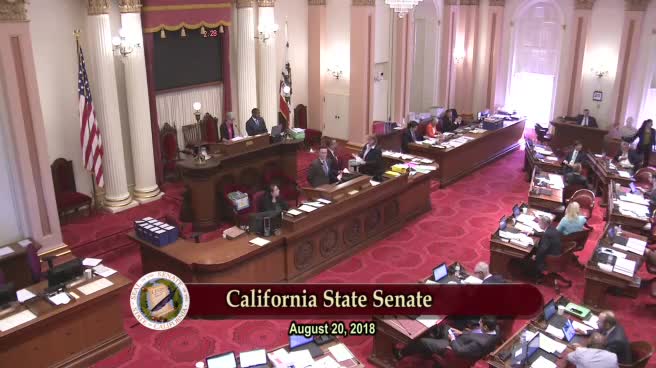 1MIN
Senate Floor
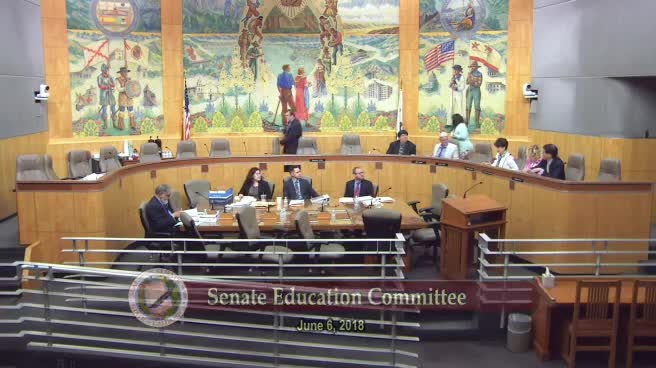 10MIN
Senate Standing Committee on Education
 7MIN