AB 2777: State employees: travel reimbursements.
- Session Year: 2017-2018
- House: Assembly
- Latest Version Date: 2018-09-23
Existing law, until January 1, 2019, requires a state agency to permit state employees traveling on official state business to use transportation provided by a transportation network company, as defined, or lodging in a short-term rental, as defined. Existing law requires a state agency to reimburse the actual and necessary expenses of a state employee in this context consistently with the agencys standard reimbursement policies. Existing law requests and encourages the University of California to adopt travel reimbursement policies in accordance with these provisions.
This bill would extend, until January 1, 2022, the requirement that a state agency permit state employees traveling on official state business to use transportation provided by a transportation network company or lodging in a short-term rental.
Existing law, until January 1, 2019, requires a state agency to permit state employees traveling on official state business to use transportation provided by a transportation network company, as defined, or lodging in a short-term rental, as defined. Existing law requires a state agency to reimburse the actual and necessary expenses of a state employee in this context consistently with the agencys standard reimbursement policies. Existing law requests and encourages the University of California to adopt travel reimbursement policies in accordance with these provisions.
This bill would delete the repeal of these provisions, thereby providing for their operation in perpetuity. extend, until January 1, 2022, the requirement that a state agency permit state employees traveling on official state business to use transportation provided by a transportation network company or lodging in a short-term rental.
Existing law, until January 1, 2019, requires a state agency to permit state employees traveling on official state business to use transportation provided by a transportation network company, as defined, or lodging in a short-term rental, as defined. Existing law requires a state agency to reimburse the actual and necessary expenses of a state employee in this context consistently with the agencys standard reimbursement policies. Existing law requests and encourages the University of California to adopt travel reimbursement policies in accordance with these provisions.
This bill would delete the repeal of these provisions, thereby providing for their operation in perpetuity.
(a)As used in this section:
(1)Short-term rental means a residential property that is rented to a visitor for fewer than 30 days through a centralized online platform whereby the rental is advertised and payments for the rental are securely processed. For purposes of travel reimbursement, a short-term rental shall be considered a commercial lodging establishment.
(2)Transportation network company has the same meaning as defined in Section 5431 of the Public Utilities Code.
(b)(1)A state agency shall not prohibit state employees traveling on official state business from using transportation provided by a transportation network company or lodging in a short-term rental.
(2)Reimbursement shall be provided for necessary and actual expenses, consistent with the agencys policies for reimbursement of other lodging establishments or other vehicles for hire.
(c)The Legislature requests and encourages the University of California to adopt travel reimbursement policies in accordance with this section.
(d)This section shall remain in effect only until January 1, 2022, and as of that date is repealed.
(a)As used in this section:
(1)Short-term rental means a residential property that is rented to a visitor for fewer than 30 days through a centralized online platform whereby the rental is advertised and payments for the rental are securely processed. For purposes of travel reimbursement, a short-term rental shall be considered a commercial lodging establishment.
(2)Transportation network company has the same meaning as defined in Section 5431 of the Public Utilities Code.
(b)(1)A state agency shall not prohibit state employees traveling on official state business from using transportation provided by a transportation network company or lodging in a short-term rental.
(2)Reimbursement shall be provided for necessary and actual expenses, consistent with the agencys policies for reimbursement of other lodging establishments or other vehicles for hire.
(c)The Legislature requests and encourages the University of California to adopt travel reimbursement policies in accordance with this section.
(d)This section shall remain in effect only until January 1, 2019, and as of that date is repealed, unless a later enacted statute, that is enacted before January 1, 2019, deletes or extends that date.|
Date
|
Status
|
|---|---|
| Sep 23, 2018 | Chaptered by Secretary of State - Chapter 719, Statutes of 2018. |
| Sep 23, 2018 | Approved by the Governor. |
| Aug 27, 2018 | Enrolled and presented to the Governor at 3 p.m. |
| Aug 22, 2018 | In Assembly. Ordered to Engrossing and Enrolling. |
| Aug 22, 2018 | Read third time. Passed. Ordered to the Assembly. |
| Aug 7, 2018 | Read second time. Ordered to third reading. |
| Aug 6, 2018 | From committee: Be ordered to second reading pursuant to Senate Rule 28.8. |
| Jun 26, 2018 | From committee: Do pass and re-refer to Com. on APPR. (Ayes 12. Noes 0.) (June 26). Re-referred to Com. on APPR. |
| Jun 7, 2018 | Referred to Com. on G.O. |
| May 30, 2018 | In Senate. Read first time. To Com. on RLS. for assignment. |
| May 29, 2018 | Read third time. Passed. Ordered to the Senate. |
| May 25, 2018 | Read second time. Ordered to third reading. |
| May 24, 2018 | Read second time and amended. Ordered returned to second reading. |
| May 23, 2018 | From committee: Amend, and do pass as amended. (Ayes 15. Noes 0.) (May 23). |
| Apr 25, 2018 | In committee: Hearing postponed by committee. |
| Apr 11, 2018 | From committee: Do pass and re-refer to Com. on APPR. (Ayes 6. Noes 0.) (April 11). Re-referred to Com. on APPR. |
| Mar 8, 2018 | Referred to Com. on A. & A.R. |
| Feb 17, 2018 | From printer. May be heard in committee March 19. |
| Feb 16, 2018 | Read first time. To print. |
|
Date
|
Description
|
Location
|
Votes
|
|
|---|---|---|---|---|
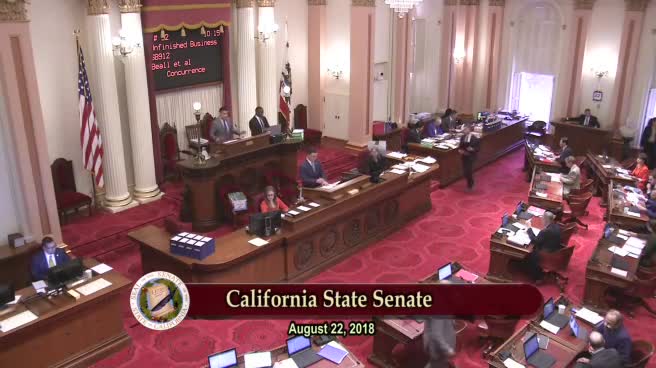
| Aug 22, 2018 | Assembly 3rd Reading AB2777 Daly By Portantino | Senate Floor |
Passed |
|
| Jun 26, 2018 | Do pass, but first be re-referred to the Committee on [Appropriations] | Senate Standing Committee on Governmental Organization |
Passed |
|
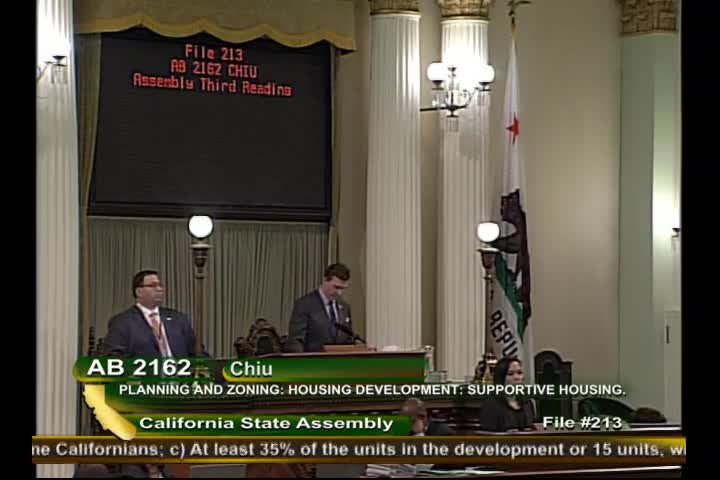
| May 29, 2018 | AB 2777 DALY Assembly Third Reading | Assembly Floor |
Passed |
|
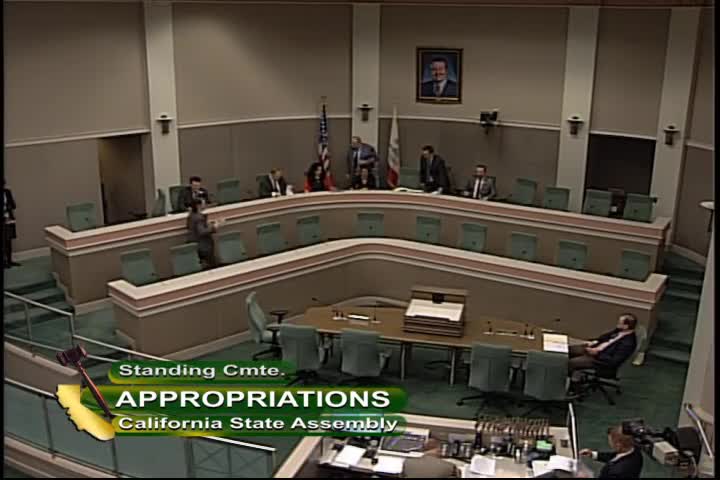
| May 23, 2018 | Do pass as amended. | Assembly Standing Committee on Appropriations |
Passed |
|
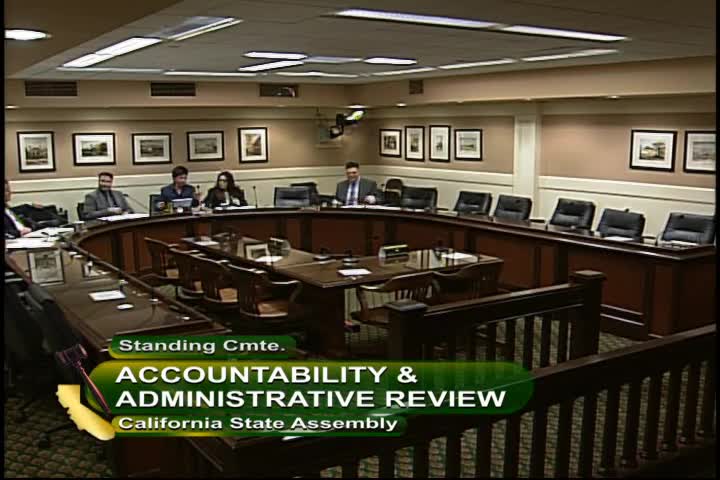
| Apr 11, 2018 | Do pass and be re-referred to the Committee on [Appropriations] | Assembly Standing Committee on Accountability and Administrative Review |
Passed |
This list shows positions taken on this bill by organizations on the date displayed, which is linked to the original source.
Positions by individuals are not included.
|
Organization
|
Position
|
Date
|
|---|---|---|
| Airbnb | ** Support | Aug 8, 2018 |
| Association Of California State Supervisors | ** Support | Aug 8, 2018 |
| California Hotel & Lodging Association | ** Against | Aug 8, 2018 |
| Internet Association | ** Support | Aug 8, 2018 |
| Lyft | ** Support | Aug 8, 2018 |
| Uber | ** Support | Aug 8, 2018 |
| UNITE HERE, AFL-CIO | ** Against | Aug 8, 2018 |
Office of Senate Floor Analyses (916) 651-1520 Fax: (916) 327-4478 | AB |
THIRD READING
Bill No: AB 2777
:
SENATE GOVERNMENTAL ORG. COMMITTEE: 12-0, 6/26/18
AYES: Dodd, Wilk, Bradford, Cannella, Gaines, Galgiani, Glazer, Hill, Lara, Portantino, Vidak, Wiener
NO VOTE RECORDED: Hueso
SENATE APPROPRIATIONS COMMITTEE: Senate Rule 28.8
ASSEMBLY FLOOR: 74-0, 5/29/18 - See last page for vote
DIGEST:
This bill extends, until January 1, 2022, the sunset date in existing law authorizing the use of transportation network companies (TNCs) or short-term rentals for state employees traveling on official state business.
Existing law:
- Reimburses employees for all necessary and actual expenses they incur when they travel on official state business.
- Requires the Director of the of the Department of Human Resources (CalHR) to adopt general rules and regulations that limit the amount, time, and place of expenses and allowances to be paid to officers, employees, experts, and agents of the state while traveling on official state business.
- Requires a state agency to permit state employees traveling on official state business to use transportation provided by a TNC, or lodging in a short term rental.
- Requires a state agency to reimburse the actual and necessary expenses of a state employee in this context consistent with the agency’s standard reimbursement policies.
- Defines “transportation network company” to mean any organization, including, but not limited to, a corporation, limited liability company, partnership, sole proprietor, or any other entity, operating in California that provides prearranged transportation services for compensation using an online-enabled application or platform to connect passengers with drivers using a personal vehicle.
- Defines “short-term rental” to mean a residential property that is rented to a visitor for fewer than 30 days through a centralized online platform whereby the rental is advertised and payments for the rental are securely processed. For purposes of travel reimbursement, a short-term rental shall be considered a commercial lodging establishment.
- Provides that the above section shall remain in effect only until January 1, 2019, and as of that date is repealed, unless a later enacted statute deletes or extends that date.
This bill extends, until January 1, 2022, the requirement that a state agency permit state employees traveling on official state business to use transportation provided by a TNC or lodging in a short-term rental.
Background
Purpose of the bill. According to the author, “more frequently, Californians are utilizing ride-sharing and home-sharing services. Consumers gravitate toward sharing services due to the easy process, reliability, and various economic and environmental benefits. For example, Uber reports an average ETA of less than 5 minutes, leading to reliable service for the 6.4 million California riders they serve. Customers traveling for business are able to easily track expenses using Uber, Lyft, and Airbnb functional platforms.”
State employee travel and lodging. Current law authorizing state employees traveling on official state business to be reimbursed for using a TNC or short-term lodging rental was established by AB 229 (Chang, Chapter 770, Statutes of 2015). This authorization is set to expire on January 1, 2019. This bill removes that sunset date and permanently ensures that a state agency cannot prohibit state employees traveling on official state business from being reimbursed for these types of “sharing economy services.”
According to information from the California Automated Travel Expense Reimbursement System maintained by the State Controller's Office (SCO), approximately 4,450 state employees requested travel reimbursement for TNC services and 3,800 requested reimbursement for short-term lodging for the 2016-2017 fiscal year. The SCO reports that there have been no implementation concerns raised since AB 229 took effect.
Current CalHR rules. Current law requires the Director of CalHR to adopt general rules and regulations that limit the amount, time, and place of expenses and allowances to be paid to employees of the state while traveling on official state business. Rules and memorandums of understanding set lodging reimbursement maximum rates by location and require travelers to submit itemized receipts when claiming reimbursements. Additionally, when state employees use taxis while traveling, depending on their employee group, they are either not required to submit taxi receipts or must only submit them when the ride exceeds $10.
Related/Prior Legislation
AB 229 (Chang, Chapter 770, Statutes of 2015) prevented state agencies from prohibiting state employees traveling on official state business from using TNCs or lodging in a short-term rental, and sunsets these provisions on January 1, 2019.
FISCAL EFFECT: Appropriation: Fiscal Com.: Local:
Internet Association (source)
Airbnb
Association of California State Supervisors
Lyft
Uber
California Hotel & Lodging Association
UNITE HERE, AFL-CIO
ARGUMENTS IN SUPPORT: In support of the bill, the Internet Association writes that, “AB 2777 recognizes the value of the growing sharing economy and how it could be used to reduce state cost relating to travel. Providing the ability to use and receive reimbursement for state travel utilizing sharing economy services increases the number of safe and reliable options to travelers. In addition, AB 2777 squarely aligns with state travel policies requiring employees to use the least costly travel methods.”
ARGUMENTS IN OPPOSITION: According to UNITE HERE, AFL-CIO, the “mandate created by AB 229 prevents the state from negotiating a ‘state rate’ for lodging prices, insuring that the lodging place is not owned by an employee’s relative, or is in safe operating condition. Indeed, the version on AB 229 Governor Brown signed into law didn’t require a short-term rental to have even a minimum level of insurance. This puts state workers in danger and the state on the hook financially should anything go wrong. Similarly, transportation network companies still have ‘surge’ pricing, which arbitrarily raises the price of services during peak demand and would subject the state to huge and unpredictable cost spikes.”
ASSEMBLY FLOOR: 74-0, 5/29/18
AYES: Acosta, Aguiar-Curry, Travis Allen, Arambula, Baker, Berman, Bigelow, Bloom, Bonta, Brough, Burke, Caballero, Calderon, Carrillo, Cervantes, Chau, Chávez, Chen, Chiu, Choi, Chu, Cooley, Cooper, Cunningham, Dahle, Daly, Eggman, Flora, Fong, Frazier, Friedman, Gallagher, Cristina Garcia, Eduardo Garcia, Gipson, Gloria, Gray, Grayson, Harper, Holden, Irwin, Jones-Sawyer, Kalra, Kamlager-Dove, Kiley, Lackey, Levine, Limón, Low, Maienschein, Mathis, Mayes, McCarty, Melendez, Mullin, Muratsuchi, Obernolte, O'Donnell, Patterson, Quirk, Quirk-Silva, Reyes, Rodriguez, Rubio, Salas, Santiago, Steinorth, Mark Stone, Ting, Voepel, Waldron, Weber, Wood, Rendon
NO VOTE RECORDED: Gonzalez Fletcher, Medina, Nazarian, Thurmond
8/8/18 10:34:43
**** END ****
SENATE COMMITTEE ON GOVERNMENTAL ORGANIZATION
Senator Bill Dodd
Chair
2017 - 2018 Regular
Bill No: AB Hearing Date: 6/26/2018
Author: | Daly | ||
Version: | Amended | ||
Urgency: | Fiscal: | ||
Consultant: | |||
SUBJECT:
DIGEST: This bill extends, until January 1, 2022, the sunset date in existing law authorizing the use of transportation network companies (TNCs) or short-term rentals for state employees traveling on official state business.
ANALYSIS:
Existing law:
- Reimburses employees for all necessary and actual expenses they incur when they travel on official state business.
- Requires the Director of the of the Department of Human Resources (CalHR) to adopt general rules and regulations that limit the amount, time, and place of expenses and allowances to be paid to officers, employees, experts, and agents of the state while traveling on official state business.
- Requires a state agency to permit state employees traveling on official state business to use transportation provided by a TNC, or lodging in a short term rental.
- Requires a state agency to reimburse the actual and necessary expenses of a state employee in this context consistent with the agency’s standard reimbursement policies.
- Requests and encourages the University of California to adopt travel reimbursement policies in accordance with these provisions.
- Defines “transportation network company” to mean any organization, including, but not limited to, a corporation, limited liability company, partnership, sole proprietor, or any other entity, operating in California that provides prearranged transportation services for compensation using an online-enabled application or platform to connect passengers with drivers using a personal vehicle.
- Defines “short-term rental” to mean a residential property that is rented to a visitor for fewer than 30 days through a centralized online platform whereby the rental is advertised and payments for the rental are securely processed. For purposes of travel reimbursement, a short-term rental shall be considered a commercial lodging establishment.
- Provides that the above section shall remain in effect only until January 1, 2019, and as of that date is repealed, unless a later enacted statute deletes or extends that date.
This bill extends, until January 1, 2022, the requirement that a state agency permit state employees traveling on official state business to use transportation provided by a TNC or lodging in a short-term rental.
Background
Purpose of the bill. According to the author, “more frequently, Californians are utilizing ride-sharing and home-sharing services. Consumers gravitate toward sharing services due to the easy process, reliability, and various economic and environmental benefits. For example, Uber reports an average ETA of less than 5 minutes, leading to reliable service for the 6.4 million California riders they serve. Customers traveling for business are able to easily track expenses using Uber, Lyft, and Airbnb functional platforms.”
Additionally, the author states that, “it is important that the state’s policies keep up with these innovative platforms. This bill will continue to allow state employees to be reimbursed if they choose to use ride-sharing and home-sharing services while traveling for work. This will ensure that state agencies continue to offer all travel options and treat ‘sharing economy’ services the same as traditional modes of transportation and lodging.”
State employee travel and lodging. Current law authorizing state employees traveling on official state business to be reimbursed for using a TNC or short-term lodging rental was established by AB 229 (Chang, Chapter 770, Statutes of 2015). This authorization is set to expire on January 1, 2019. This bill would remove that sunset date and permanently ensure that a state agency cannot prohibit state employees traveling on official state business from being reimbursed for these types of “sharing economy services.”
According to information from the California Automated Travel Expense Reimbursement System maintained by the State Controller's Office (SCO), approximately 4,450 state employees requested travel reimbursement for TNC services and 3,800 requested reimbursement for short-term lodging for the 2016-2017 fiscal year. The SCO reports that there have been no implementation concerns raised since AB 229 took effect.
Current CalHR rules. Current law requires the Director of CalHR to adopt general rules and regulations that limit the amount, time, and place of expenses and allowances to be paid to employees of the state while traveling on official state business. Rules and memorandums of understanding (MOUs) set lodging reimbursement maximum rates by location and require travelers to submit itemized receipts when claiming reimbursements. Additionally, when state employees use taxis while traveling, depending on their employee group, they are either not required to submit taxi receipts or must only submit them when the ride exceeds $10.
Prior/Related Legislation
AB 229 (Chang, Chapter 770, Statutes of 2015) prevented state agencies from prohibiting state employees traveling on official state business from using TNCs or lodging in a short-term rental, and sunsets these provisions on January 1, 2019.
AB 2293 (Bonilla, Chapter 389, Statutes of 2014) established guidelines for insurance coverage for TNCs to ensure personal and financial safety of consumers.
FISCAL EFFECT: Appropriation: No Fiscal Com.: Yes Local: No
SUPPORT:
Internet Association (Source)
Airbnb
Association of California State Supervisors
Lyft
Uber
OPPOSITION:
California Hotel & Lodging Association
UNITE HERE, AFL-CIO
ARGUMENTS IN SUPPORT: In support of the bill, the Internet Association writes that, “AB 2777 recognizes the value of the growing sharing economy and how it could be used to reduce state cost relating to travel. Providing the ability to use and receive reimbursement for state travel utilizing sharing economy services increases the number of safe and reliable options to travelers. In addition, AB 2777 squarely aligns with state travel policies requiring employees to use the least costly travel methods.”
ARGUMENTS IN OPPOSITION: According to UNITE HERE, the “mandate created by AB 229 prevents the state from negotiating a ‘state rate’ for lodging prices, insuring that the lodging place is not owned by an employee’s relative, or is in safe operating condition. Indeed, the version on AB 229 Governor Brown signed into law didn’t require a short-term rental to have even a minimum level of insurance. This puts state workers in danger and the state on the hook financially should anything go wrong. Similarly, transportation network companies still have ‘surge’ pricing, which arbitrarily raises the price of services during peak demand and would subject the state to huge and unpredictable cost spikes.”
Additionally, the California Hotel and Lodging Association “opposes AB 2777 unless it is amended to specify that state employees may only receive reimbursement for stays at short-term rentals that comply with all local ordinances, including but not limited to, payment of transient occupancy taxes and all other required taxes, fees, and assessments.”
ASSEMBLY THIRD READING
ATR Bill Id:AB 2777
Author:(Daly)
As Amended Ver:May 24, 2018
Majority vote
Committee | Votes | Ayes | Noes |
Accountability | 6-0 | Eggman, Burke, Frazier, Lackey, Medina, Quirk-Silva | |
Appropriations | 15-0 | Gonzalez Fletcher, Bigelow, Bloom, Mathis, Calderon, Carrillo, Chau, Eggman, Fong, Friedman, Gallagher, Eduardo Garcia, Obernolte, Quirk, Reyes |
|
SUMMARY: Extends, until January 1, 2022, the sunset date in existing law that prevents state agencies from prohibiting the use of transportation network companies (TNCs) or short-term rentals for employees traveling on official state business.
EXISTING LAW bans a state agency from prohibiting state employees traveling on official state business from using services provided by a TNC or short-term rentals until January 1, 2019.
FISCAL EFFECT: According to the Assembly Appropriations Committee, negligible state costs.
COMMENTS: Current law authorizing state employees traveling on official state business to be reimbursed for using a TNC or short-term lodging rental was established by AB 229 (Chang), Chapter 770, Statutes of 2015. This authorization is set to expire on January 1, 2019. This bill would extend the sunset date to January 1, 2022.
According to information from the California Automated Travel Expense Reimbursement System maintained by the State Controller's Office (SCO), approximately 4,450 state employees requested travel reimbursement for TNC services and 3,800 requested reimbursement for short-term lodging for the 2016-2017 fiscal year. The SCO reports that there have been no implementation concerns raised since AB 229 took effect.
The author states that this bill will "allow the state's travel policies to keep pace with innovative sharing economy technology platforms" and "ensure that state agencies continue to offer all travel options and treat ride-sharing and home-sharing services the same as traditional modes of transportation and lodging."
Analysis Prepared by: Cassie Royce / A. & A.R. / (916) 319-3600 FN: 0002999
Date of Hearing: May 23, 2018
ASSEMBLY COMMITTEE ON APPROPRIATIONS
Lorena Gonzalez Fletcher, Chair
ABPCA Bill Id:AB 2777
Author:(Daly) – As Introduced Ver:February 16, 2018
Policy Committee: | Accountability and Administrative Review | Vote: | 6 - 0 |
Urgency: No State Mandated Local Program: No Reimbursable: No
SUMMARY:
This bill removes the January 1, 2019, sunset date on statute that prevents state agencies from prohibiting state employees from using transportation network companies (TNCs) or short-term lodging rentals while traveling on official state business.
FISCAL EFFECT:
Negligible state costs.
COMMENTS:
- Purpose. This bill is intended to ensure that now-common and often economical options for ground travel and lodging will permanently be available to state employees traveling on state business. The author notes:
[This bill will] allow the state's travel policies to keep pace with innovative sharing economy technology platforms and ensure that state agencies continue to offer all travel options and treat ride-sharing and home-sharing services the same as traditional modes of transportation and lodging.
- Background. Prior to 2015, Department of Human Resources (CalHR) rules, as well as relevant memorandums of understanding (MOUs) with employee bargaining units were silent on the use of TNCs or short-term rentals and, therefore, did not prohibit the use of these types of services for state employees traveling on state business. As these options emerged and grew in popularity, reimbursement for their use by traveling state employees was inconsistent across state agencies. AB 229 (Chang), Chapter 770, Statutes of 2015, addressed this issue by preventing a state agency from prohibiting state employees from using, and thus being reimbursed for using, a TNC, such as Uber or Lyft or lodging in a short term rental.
This bill would remove that sunset date and permanently prevent a state agency from prohibiting state employees traveling on official state business from using these types of "sharing economy services."
According to information from the California Automated Travel Expense Reimbursement System maintained by the State Controller's Office (SCO), approximately 4,450 state employees requested travel reimbursement for TNC services and 3,800 requested reimbursement for short-term lodging for the 2016-2017 fiscal year. The SCO reports that there have been no implementation concerns raised since AB 229 took effect.
- Arguments in support. The sponsor, Internet Association, adds that permanently providing the ability to use and receive reimbursement for state travel using sharing economy services increases the number of safe, reliable, and economical options available to state employees.
- Arguments in opposition. UNITE-HERE, AFL-CIO opposes this bill and is concerned that it makes it impossible for the state to establish contractual conditions that ensure that taxpayers receive the best value and state employees travel safely and securely.
- Suggested Amendments. The committee may wish to consider extending the sunset date for three years, until January 1, 2022, to allow time for additional data and information to be generated, gathered, and analyzed prior to making the prohibition permanent.
Analysis Prepared by: Jennifer Swenson / APPR. / (916) 319-2081
Date of Hearing: April 25, 2018
ASSEMBLY COMMITTEE ON APPROPRIATIONS
Lorena Gonzalez Fletcher, Chair
ABPCA Bill Id:AB 2777
Author:(Daly) – As Introduced Ver:February 16, 2018
Policy Committee: | Accountability and Administrative Review | Vote: | 6 - 0 |
Urgency: No State Mandated Local Program: No Reimbursable: No
SUMMARY:
This bill removes the January 1, 2019, sunset date on statute that prevents state agencies from prohibiting state employees from using transportation network companies (TNCs) or short-term lodging rentals while traveling on official state business.
FISCAL EFFECT:
Negligible state costs.
COMMENTS:
- Purpose. This bill is intended to ensure that now-common and often economical options for ground travel and lodging will permanently be available to state employees traveling on state business. The author notes:
[This bill will] allow the state's travel policies to keep pace with innovative sharing economy technology platforms and ensure that state agencies continue to offer all travel options and treat ride-sharing and home-sharing services the same as traditional modes of transportation and lodging.
- Background. Prior to 2015, Department of Human Resources (CalHR) rules, as well as relevant memorandums of understanding (MOUs) with employee bargaining units were silent on the use of TNCs or short-term rentals and, therefore, did not prohibit the use of these types of services for state employees traveling on state business. As these options emerged and grew in popularity, reimbursement for their use by traveling state employees was inconsistent across state agencies. AB 229 (Chang), Chapter 770, Statutes of 2015, addressed this issue by preventing a state agency from prohibiting state employees from using, and thus being reimbursed for using, a TNC, such as Uber or Lyft or lodging in a short term rental.
This bill would remove that sunset date and permanently prevent a state agency from prohibiting state employees traveling on official state business from using these types of "sharing economy services."
According to information from the California Automated Travel Expense Reimbursement System maintained by the State Controller's Office (SCO), approximately 4,450 state employees requested travel reimbursement for TNC services and 3,800 requested reimbursement for short-term lodging for the 2016-2017 fiscal year. The SCO reports that there have been no implementation concerns raised since AB 229 took effect.
- Arguments in support. The sponsor, Internet Association, adds that permanently providing the ability to use and receive reimbursement for state travel using sharing economy services increases the number of safe, reliable, and economical options available to state employees.
- Arguments in opposition. UNITE-HERE, AFL-CIO opposes this bill and is concerned that it makes it impossible for the state to establish contractual conditions that ensure that taxpayers receive the best value and state employees travel safely and securely.
Analysis Prepared by: Jennifer Swenson / APPR. / (916) 319-2081
Date of Hearing: April 11, 2018
ASSEMBLY COMMITTEE ON ACCOUNTABILITY AND ADMINISTRATIVE REVIEW
Susan Talamantes Eggman, Chair
ABPCA Bill Id:AB 2777 (
Author:Daly) – As Introduced Ver:February 16, 2018
SUBJECT: State employees: travel reimbursements
SUMMARY: Removes the sunset date in existing law that prevents state agencies from prohibiting the use of transportation network companies (TNCs) or short-term rentals for employees traveling on official state business.
EXISTING LAW bans a state agency from prohibiting state employees traveling on official state business from using services provided by a TNC or short-term rentals until January 1, 2019.
FISCAL EFFECT: Unknown
COMMENTS: Current law authorizing state employees traveling on official state business to be reimbursed for using a TNC or short-term lodging rental was established by AB 229 (Chang), Chapter 770, Statutes of 2015. This authorization is set to expire on January 1, 2019. This bill would remove that sunset date and permanently ensure that a state agency cannot prohibit state employees traveling on official state business from being reimbursed for these types of "sharing economy services."
According to information from the California Automated Travel Expense Reimbursement System maintained by the State Controller's Office (SCO), approximately 4,450 state employees requested travel reimbursement for TNC services and 3,800 requested reimbursement for short-term lodging for the 2016-2017 fiscal year. The SCO reports that there have been no implementation concerns raised since AB 229 took effect.
The author states that this bill will "allow the state's travel policies to keep pace with innovative sharing economy technology platforms" and "ensure that state agencies continue to offer all travel options and treat ride-sharing and home-sharing services the same as traditional modes of transportation and lodging."
The sponsor, Internet Association, adds that permanently providing the ability to use and receive reimbursement for state travel using sharing economy services increases the number of safe, reliable, and economical options available to state employees.
UNITE-HERE, AFL-CIO opposes this bill and is concerned that it makes it impossible for the state to establish contractual conditions that ensure that taxpayers receive the best value and state employees travel safely and securely.
REGISTERED SUPPORT / OPPOSITION:
Support
Internet Association (sponsor)
Airbnb
Lyft
Uber Techologies, Inc.
Opposition
UNITE-HERE, AFL-CIO
Analysis Prepared by: Cassie Royce / A. & A.R. / (916) 319-3600
Discussed in Hearing
 2MIN
Senate Floor
 1MIN
Assembly Floor
 51SEC
Assembly Standing Committee on Appropriations
 3MIN
Assembly Standing Committee on Accountability and Administrative Review
Bill Author

Bill Co-Author(s):