AB 2943: Unlawful business practices: sexual orientation change efforts.
- Session Year: 2017-2018
- House: Assembly
- Latest Version Date: 2018-05-30
Existing law, the Consumer Legal Remedies Act, makes unlawful certain unfair methods of competition and unfair or deceptive acts or practices undertaken by any person in a transaction intended to result, or which results, in the sale or lease of goods or services to any consumer. Existing law authorizes any consumer who suffers damages as a result of these unlawful practices to bring an action against that person to recover damages, among other things.
Existing law prohibits mental health providers, as defined, from performing sexual orientation change efforts, as specified, with a patient under 18 years of age. Existing law requires a violation of this provision to be considered unprofessional conduct and subjects the provider to discipline by the providers licensing entity.
This bill would include, as an unlawful practice prohibited under the Consumer Legal Remedies Act, advertising, offering to engage in, or engaging in for sale, or selling services constituting sexual orientation change efforts with efforts, as defined, to an individual. The bill would also declare the intent of the Legislature in this regard.
Existing law, the Consumer Legal Remedies Act, makes unlawful certain unfair methods of competition and unfair or deceptive acts or practices undertaken by any person in a transaction intended to result result, or which results results, in the sale or lease of goods or services to any consumer. Existing law authorizes any consumer who suffers damages as a result of these unlawful practices to bring an action against that person to recover damages, among other things.
Existing law prohibits mental health providers, as defined, from performing sexual orientation change efforts, as specified, with a patient under 18 years of age. Existing law requires a violation of this provision to be considered unprofessional conduct and subjects the provider to discipline by the providers licensing entity.
This bill would include, as an unlawful practice prohibited under the Consumer Legal Remedies Act, advertising, offering to engage in, or engaging in sexual orientation change efforts with an individual. The bill would also declare the intent of the Legislature in this regard.
Existing law, the Consumer Legal Remedies Act, makes unlawful certain unfair methods of competition and unfair or deceptive acts or practices undertaken by any person in a transaction intended to result or which results in the sale or lease of goods or services to any consumer. Existing law authorizes any consumer who suffers damages as a result of these unlawful practices to bring an action against that person to recover damages, among other things.
Existing law prohibits mental health providers, as defined, from performing sexual orientation change efforts, as specified, with a patient under 18 years of age. Existing law requires a violation of this provision to be considered unprofessional conduct and subjects the provider to discipline by the providers licensing entity.
This bill would include, as an unlawful practice prohibited under the Consumer Legal Remedies Act, advertising, offering to engage in, or engaging in sexual orientation change efforts with an individual. The bill would also declare the intent of the Legislature in this regard.
The Legislature finds and declares the following:
(a)Contemporary science recognizes that being lesbian, gay, bisexual, or transgender is part of the natural spectrum of human identity and is not a disease, disorder, or illness.
(b)The American Psychological Association convened the Task Force on Appropriate Therapeutic Responses to Sexual Orientation. The task force conducted a systematic review of peer-reviewed journal literature on sexual orientation change efforts and issued a report in 2009. The task force concluded that sexual orientation change efforts can pose critical health risks to lesbian, gay, and bisexual people, including confusion, depression, guilt, helplessness, hopelessness, shame, social withdrawal, suicidality, substance abuse, stress, disappointment, self-blame, decreased self-esteem and authenticity to others, increased self-hatred, hostility and blame toward parents, feelings of anger and betrayal, loss of friends and potential romantic partners, problems in sexual and emotional intimacy, sexual dysfunction, high-risk sexual behaviors, a feeling of being dehumanized and untrue to self, a loss of faith, and a sense of having wasted time and resources.
(c)The American Psychological Association issued a resolution on Appropriate Affirmative Responses to Sexual Orientation Distress and Change Efforts in 2009, stating: [T]he [American Psychological Association] advises parents, guardians, young people, and their families to avoid sexual orientation change efforts that portray homosexuality as a mental illness or developmental disorder and to seek psychotherapy, social support, and educational services that provide accurate information on sexual orientation and sexuality, increase family and school support, and reduce rejection of sexual minority youth.
(d)The American Psychiatric Association published a position statement in March of 2000, stating:
Psychotherapeutic modalities to convert or repair homosexuality are based on developmental theories whose scientific validity is questionable. Furthermore, anecdotal reports of cures are counterbalanced by anecdotal claims of psychological harm. In the last four decades, reparative therapists have not produced any rigorous scientific research to substantiate their claims of cure. Until there is such research available, [the American Psychiatric Association] recommends that ethical practitioners refrain from attempts to change individuals sexual orientation, keeping in mind the medical dictum to first, do no harm.
The potential risks of reparative therapy are great, including depression, anxiety and self-destructive behavior, since therapist alignment with societal prejudices against homosexuality may reinforce self-hatred already experienced by the patient. Many patients who have undergone reparative therapy relate that they were inaccurately told that homosexuals are lonely, unhappy individuals who never achieve acceptance or satisfaction. The possibility that the person might achieve happiness and satisfying interpersonal relationships as a gay man or lesbian is not presented, nor are alternative approaches to dealing with the effects of societal stigmatization discussed.
Therefore, the American Psychiatric Association opposes any psychiatric treatment such as reparative or conversion therapy which is based upon the assumption that homosexuality per se is a mental disorder or based upon the a priori assumption that a patient should change his/her sexual homosexual orientation.
(e)The American Academy of Pediatrics published an article in 1993 in its journal, Pediatrics, stating: Therapy directed at specifically changing sexual orientation is contraindicated, since it can provoke guilt and anxiety while having little or no potential for achieving changes in orientation.
(f)The American Medical Association Council on Scientific Affairs prepared a report in 1994, stating: Aversion therapy (a behavioral or medical intervention which pairs unwanted behavior, in this case, homosexual behavior, with unpleasant sensations or aversive consequences) is no longer recommended for gay men and lesbians. Through psychotherapy, gay men and lesbians can become comfortable with their sexual orientation and understand the societal response to it.
(g)The National Association of Social Workers prepared a 1997 policy statement, stating: Social stigmatization of lesbian, gay and bisexual people is widespread and is a primary motivating factor in leading some people to seek sexual orientation changes. Sexual orientation conversion therapies assume that homosexual orientation is both pathological and freely chosen. No data demonstrates that reparative or conversion therapies are effective, and, in fact, they may be harmful.
(h)The American Counseling Association Governing Council issued a position statement in April of 1999, stating: We oppose the promotion of reparative therapy as a cure for individuals who are homosexual.
(i)The American School Counselor Association issued a position statement in 2014, stating: It is not the role of the professional school counselor to attempt to change a students sexual orientation or gender identity. Professional school counselors do not support efforts by licensed mental health professionals to change a students sexual orientation or gender as these practices have been proven ineffective and harmful.
(j)The American Psychoanalytic Association issued a position statement in June 2012 on attempts to change sexual orientation, gender, identity, or gender expression, stating: As with any societal prejudice, bias against individuals based on actual or perceived sexual orientation, gender identity or gender expression negatively affects mental health, contributing to an enduring sense of stigma and pervasive self-criticism through the internalization of such prejudice.
Psychoanalytic technique does not encompass purposeful attempts to convert, repair, change or shift an individuals sexual orientation, gender identity or gender expression. Such directed efforts are against fundamental principles of psychoanalytic treatment and often result in substantial psychological pain by reinforcing damaging internalized attitudes.
(k)The American Academy of Child and Adolescent Psychiatry published an article in 2012 in its journal, Journal of the American Academy of Child and Adolescent Psychiatry, stating: Clinicians should be aware that there is no evidence that sexual orientation can be altered through therapy, and that attempts to do so may be harmful. There is no empirical evidence adult homosexuality can be prevented if gender nonconforming children are influenced to be more gender conforming. Indeed, there is no medically valid basis for attempting to prevent homosexuality, which is not an illness. On the contrary, such efforts may encourage family rejection and undermine self-esteem, connectedness and caring, important protective factors against suicidal ideation and attempts. Given that there is no evidence that efforts to alter sexual orientation are effective, beneficial or necessary, and the possibility that they carry the risk of significant harm, such interventions are contraindicated.
(l)The Pan American Health Organization, a regional office of the World Health Organization, issued a statement in May of 2012, stating: These supposed conversion therapies constitute a violation of the ethical principles of health care and violate human rights that are protected by international and regional agreements. The organization also noted that reparative therapies lack medical justification and represent a serious threat to the health and well-being of affected people.
(m)The American Association of Sexuality Educators, Counselors and Therapists (AASECT) issued a statement in 2014, stating: [S]ame sex orientation is not a mental disorder and we oppose any reparative or conversion therapy that seeks to change or fix a persons sexual orientation. AASECT does not believe that sexual orientation is something that needs to be fixed or changed. The rationale behind this position is the following: Reparative therapy, for minors, in particular, is often forced or nonconsensual. Reparative therapy has been proven harmful to minors. There is no scientific evidence supporting the success of these interventions. Reparative therapy is grounded in the idea that nonheterosexual orientation is disordered. Reparative therapy has been shown to be a negative predictor of psychotherapeutic benefit.
(n)The American College of Physicians wrote a position paper in 2015, stating: The College opposes the use of conversion, reorientation, or reparative therapy for the treatment of LGBT persons. . . . Available research does not support the use of reparative therapy as an effective method in the treatment of LGBT persons. Evidence shows that the practice may actually cause emotional or physical harm to LGBT individuals, particularly adolescents or young persons.
(o)In October 2015, the Substance Abuse and Mental Health Services Administration of the United States Department of Health and Human Services issued a report titled Ending Conversion Therapy: Supporting and Affirming LGBTQ Youth. The report found that [i]nterventions aimed at a fixed outcome, such as gender conformity or heterosexual orientation, including those aimed at changing gender identity, gender expression, and sexual orientation are coercive, can be harmful, and should not be part of behavioral health treatment.
(p)Courts, including in California, have recognized the practice of sexual orientation change efforts as a commercial service. Therefore, claims that sexual orientation change efforts are effective in changing an individuals sexual orientation, may constitute unlawful, unfair, or fraudulent business practices under state consumer protection laws. This bill intends to make clear that sexual orientation change efforts are an unlawful practice under Californias Consumer Legal Remedies Act.
(q)California has a compelling interest in protecting the physical and psychological well-being of lesbian, gay, bisexual, and transgender individuals.
(r)California has a compelling interest in protecting consumers from false and deceptive practices that claim to change sexual orientation and in protecting consumers against exposure to serious harm caused by sexual orientation change efforts.
SEC. 2.Section 1761 of the Civil Code is amended to read:1761.As used in this title:
(a)Goods means tangible chattels bought or leased for use primarily for personal, family, or household purposes, including certificates or coupons exchangeable for these goods, and including goods that, at the time of the sale or subsequently, are to be so affixed to real property as to become a part of real property, whether or not they are severable from the real property.
(b)Services means work, labor, and services for other than a commercial or business use, including services furnished in connection with the sale or repair of goods.
(c)Person means an individual, partnership, corporation, limited liability company, association, or other group, however organized.
(d)Consumer means an individual who seeks or acquires, by purchase or lease, any goods or services for personal, family, or household purposes.
(e)Transaction means an agreement between a consumer and another person, whether or not the agreement is a contract enforceable by action, and includes the making of, and the performance pursuant to, that agreement.
(f)Senior citizen means a person who is 65 years of age or older.
(g)Disabled person means a person who has a physical or mental impairment that substantially limits one or more major life activities.
(1)As used in this subdivision, physical or mental impairment means any of the following:
(A)A physiological disorder or condition, cosmetic disfigurement, or anatomical loss substantially affecting one or more of the following body systems: neurological; musculoskeletal; special sense organs; respiratory, including speech organs; cardiovascular; reproductive; digestive; genitourinary; hemic and lymphatic; skin; or endocrine.
(B)A mental or psychological disorder, including intellectual disability, organic brain syndrome, emotional or mental illness, and specific learning disabilities. Physical or mental impairment includes, but is not limited to, diseases and conditions that include orthopedic, visual, speech, and hearing impairment, cerebral palsy, epilepsy, muscular dystrophy, multiple sclerosis, cancer, heart disease, diabetes, intellectual disability, and emotional illness.
(2)Major life activities means functions that include caring for ones self, performing manual tasks, walking, seeing, hearing, speaking, breathing, learning, and working.
(h)Home solicitation means a transaction made at the consumers primary residence, except those transactions initiated by the consumer. A consumer response to an advertisement is not a home solicitation.
(i)(1)Sexual orientation change efforts means any practices that seek to change an individuals sexual orientation. This includes efforts to change behaviors or gender expressions, or to eliminate or reduce sexual or romantic attractions or feelings toward individuals of the same sex.
(2)Sexual orientation change efforts does not include psychotherapies that: (A) provide acceptance, support, and understanding of clients or the facilitation of clients coping, social support, and identity exploration and development, including sexual orientation-neutral interventions to prevent or address unlawful conduct or unsafe sexual practices; practices or to otherwise promote healthy sexual and romantic relationships; and (B) do not seek to change sexual orientation.
SEC. 3.Section 1770 of the Civil Code is amended to read:1770.(a)The following unfair methods of competition and unfair or deceptive acts or practices undertaken by any person in a transaction intended to result or that results in the sale or lease of goods or services to any consumer are unlawful:
(1)Passing off goods or services as those of another.
(2)Misrepresenting the source, sponsorship, approval, or certification of goods or services.
(3)Misrepresenting the affiliation, connection, or association with, or certification by, another.
(4)Using deceptive representations or designations of geographic origin in connection with goods or services.
(5)Representing that goods or services have sponsorship, approval, characteristics, ingredients, uses, benefits, or quantities that they do not have or that a person has a sponsorship, approval, status, affiliation, or connection that he or she does not have.
(6)Representing that goods are original or new if they have deteriorated unreasonably or are altered, reconditioned, reclaimed, used, or secondhand.
(7)Representing that goods or services are of a particular standard, quality, or grade, or that goods are of a particular style or model, if they are of another.
(8)Disparaging the goods, services, or business of another by false or misleading representation of fact.
(9)Advertising goods or services with intent not to sell them as advertised.
(10)Advertising goods or services with intent not to supply reasonably expectable demand, unless the advertisement discloses a limitation of quantity.
(11)Advertising furniture without clearly indicating that it is unassembled if that is the case.
(12)Advertising the price of unassembled furniture without clearly indicating the assembled price of that furniture if the same furniture is available assembled from the seller.
(13)Making false or misleading statements of fact concerning reasons for, existence of, or amounts of, price reductions.
(14)Representing that a transaction confers or involves rights, remedies, or obligations that it does not have or involve, or that are prohibited by law.
(15)Representing that a part, replacement, or repair service is needed when it is not.
(16)Representing that the subject of a transaction has been supplied in accordance with a previous representation when it has not.
(17)Representing that the consumer will receive a rebate, discount, or other economic benefit, if the earning of the benefit is contingent on an event to occur subsequent to the consummation of the transaction.
(18)Misrepresenting the authority of a salesperson, representative, or agent to negotiate the final terms of a transaction with a consumer.
(19)Inserting an unconscionable provision in the contract.
(20)Advertising that a product is being offered at a specific price plus a specific percentage of that price unless (A) the total price is set forth in the advertisement, which may include, but is not limited to, shelf tags, displays, and media advertising, in a size larger than any other price in that advertisement, and (B) the specific price plus a specific percentage of that price represents a markup from the sellers costs or from the wholesale price of the product. This subdivision shall not apply to in-store advertising by businesses that are open only to members or cooperative organizations organized pursuant to Division 3 (commencing with Section 12000) of Title 1 of the Corporations Code where more than 50 percent of purchases are made at the specific price set forth in the advertisement.
(21)Selling or leasing goods in violation of Chapter 4 (commencing with Section 1797.8) of Title 1.7.
(22)(A)Disseminating an unsolicited prerecorded message by telephone without an unrecorded, natural voice first informing the person answering the telephone of the name of the caller or the organization being represented, and either the address or the telephone number of the caller, and without obtaining the consent of that person to listen to the prerecorded message.
(B)This subdivision does not apply to a message disseminated to a business associate, customer, or other person having an established relationship with the person or organization making the call, to a call for the purpose of collecting an existing obligation, or to any call generated at the request of the recipient.
(23)(A)The home solicitation, as defined in subdivision (h) of Section 1761, of a consumer who is a senior citizen where a loan is made encumbering the primary residence of that consumer for purposes of paying for home improvements and where the transaction is part of a pattern or practice in violation of either subsection (h) or (i) of Section 1639 of Title 15 of the United States Code or paragraphs (1), (2), and (4) of subdivision (a) of Section 226.34 of Title 12 of the Code of Federal Regulations.
(B)A third party shall not be liable under this subdivision unless (i) there was an agency relationship between the party who engaged in home solicitation and the third party, or (ii) the third party had actual knowledge of, or participated in, the unfair or deceptive transaction. A third party who is a holder in due course under a home solicitation transaction shall not be liable under this subdivision.
(24)(A)Charging or receiving an unreasonable fee to prepare, aid, or advise any prospective applicant, applicant, or recipient in the procurement, maintenance, or securing of public social services.
(B)For purposes of this paragraph, the following definitions shall apply:
(i)Public social services means those activities and functions of state and local government administered or supervised by the State Department of Health Care Services, the State Department of Public Health, or the State Department of Social Services, and involved in providing aid or services, or both, including health care services, and medical assistance, to those persons who, because of their economic circumstances or social condition, are in need of that aid or those services and may benefit from them.
(ii)Public social services also includes activities and functions administered or supervised by the United States Department of Veterans Affairs or the California Department of Veterans Affairs involved in providing aid or services, or both, to veterans, including pension benefits.
(iii)Unreasonable fee means a fee that is exorbitant and disproportionate to the services performed. Factors to be considered, if appropriate, in determining the reasonableness of a fee, are based on the circumstances existing at the time of the service and shall include, but not be limited to, all of the following:
(I)The time and effort required.
(II)The novelty and difficulty of the services.
(III)The skill required to perform the services.
(IV)The nature and length of the professional relationship.
(V)The experience, reputation, and ability of the person providing the services.
(C)This paragraph shall not apply to attorneys licensed to practice law in California, who are subject to the California Rules of Professional Conduct and to the mandatory fee arbitration provisions of Article 13 (commencing with Section 6200) of Chapter 4 of Division 3 of the Business and Professions Code, when the fees charged or received are for providing representation in administrative agency appeal proceedings or court proceedings for purposes of procuring, maintaining, or securing public social services on behalf of a person or group of persons.
(25)(A)Advertising or promoting any event, presentation, seminar, workshop, or other public gathering regarding veterans benefits or entitlements that does not include the following statement in the same type size and font as the term veteran or any variation of that term:
(i)I am not authorized to file an initial application for Veterans Aid and Attendance benefits on your behalf, or to represent you before the Board of Veterans Appeals within the United States Department of Veterans Affairs in any proceeding on any matter, including an application for such benefits. It would be illegal for me to accept a fee for preparing that application on your behalf. The requirements of this clause do not apply to a person licensed to act as an agent or attorney in proceedings before the Agency of Original Jurisdiction and the Board of Veterans Appeals within the United States Department of Veterans Affairs when that person is offering those services at the advertised event.
(ii)The statement in clause (i) shall also be disseminated, both orally and in writing, at the beginning of any event, presentation, seminar, workshop, or public gathering regarding veterans benefits or entitlements.
(B)Advertising or promoting any event, presentation, seminar, workshop, or other public gathering regarding veterans benefits or entitlements that is not sponsored by, or affiliated with, the United States Department of Veterans Affairs, the California Department of Veterans Affairs, or any other congressionally chartered or recognized organization of honorably discharged members of the Armed Forces of the United States, or any of their auxiliaries that does not include the following statement, in the same type size and font as the term veteran or the variation of that term:
This event is not sponsored by, or affiliated with, the United States Department of Veterans Affairs, the California Department of Veterans Affairs, or any other congressionally chartered or recognized organization of honorably discharged members of the Armed Forces of the United States, or any of their auxiliaries. None of the insurance products promoted at this sales event are endorsed by those organizations, all of which offer free advice to veterans about how to qualify and apply for benefits.
(i)The statement in this subparagraph shall be disseminated, both orally and in writing, at the beginning of any event, presentation, seminar, workshop, or public gathering regarding veterans benefits or entitlements.
(ii)The requirements of this subparagraph shall not apply in a case where the United States Department of Veterans Affairs, the California Department of Veterans Affairs, or other congressionally chartered or recognized organization of honorably discharged members of the Armed Forces of the United States, or any of their auxiliaries have granted written permission to the advertiser or promoter for the use of its name, symbol, or insignia to advertise or promote the event, presentation, seminar, workshop, or other public gathering.
(26)Advertising, offering for sale, or selling a financial product that is illegal under state or federal law, including any cash payment for the assignment to a third party of the consumers right to receive future pension or veterans benefits.
(27)Representing that a product is made in California by using a Made in California label created pursuant to Section 12098.10 of the Government Code, unless the product complies with Section 12098.10 of the Government Code.
(28)Advertising, offering to engage in, or engaging in for sale, or selling services constituting sexual orientation change efforts with to an individual.
(b)(1)It is an unfair or deceptive act or practice for a mortgage broker or lender, directly or indirectly, to use a home improvement contractor to negotiate the terms of any loan that is secured, whether in whole or in part, by the residence of the borrower and that is used to finance a home improvement contract or any portion of a home improvement contract. For purposes of this subdivision, mortgage broker or lender includes a finance lender licensed pursuant to the California Finance Lenders Law (Division 9 (commencing with Section 22000) of the Financial Code), a residential mortgage lender licensed pursuant to the California Residential Mortgage Lending Act (Division 20 (commencing with Section 50000) of the Financial Code), or a real estate broker licensed under the Real Estate Law (Division 4 (commencing with Section 10000) of the Business and Professions Code).
(2)This section shall not be construed to either authorize or prohibit a home improvement contractor from referring a consumer to a mortgage broker or lender by this subdivision. However, a home improvement contractor may refer a consumer to a mortgage lender or broker if that referral does not violate Section 7157 of the Business and Professions Code or any other law. A mortgage lender or broker may purchase an executed home improvement contract if that purchase does not violate Section 7157 of the Business and Professions Code or any other law. Nothing in this paragraph shall have any effect on the application of Chapter 1 (commencing with Section 1801) of Title 2 to a home improvement transaction or the financing of a home improvement transaction.
The Legislature finds and declares the following:
(a)Contemporary science recognizes that being lesbian, gay, bisexual, or transgender is part of the natural spectrum of human identity and is not a disease, disorder, or illness.
(b)The American Psychological Association convened the Task Force on Appropriate Therapeutic Responses to Sexual Orientation. The task force conducted a systematic review of peer-reviewed journal literature on sexual orientation change efforts and issued a report in 2009. The task force concluded that sexual orientation change efforts can pose critical health risks to lesbian, gay, and bisexual people, including confusion, depression, guilt, helplessness, hopelessness, shame, social withdrawal, suicidality, substance abuse, stress, disappointment, self-blame, decreased self-esteem and authenticity to others, increased self-hatred, hostility and blame toward parents, feelings of anger and betrayal, loss of friends and potential romantic partners, problems in sexual and emotional intimacy, sexual dysfunction, high-risk sexual behaviors, a feeling of being dehumanized and untrue to self, a loss of faith, and a sense of having wasted time and resources.
(c)The American Psychological Association issued a resolution on Appropriate Affirmative Responses to Sexual Orientation Distress and Change Efforts in 2009, stating: [T]he [American Psychological Association] advises parents, guardians, young people, and their families to avoid sexual orientation change efforts that portray homosexuality as a mental illness or developmental disorder and to seek psychotherapy, social support, and educational services that provide accurate information on sexual orientation and sexuality, increase family and school support, and reduce rejection of sexual minority youth.
(d)The American Psychiatric Association published a position statement in March of 2000, stating:
Psychotherapeutic modalities to convert or repair homosexuality are based on developmental theories whose scientific validity is questionable. Furthermore, anecdotal reports of cures are counterbalanced by anecdotal claims of psychological harm. In the last four decades, reparative therapists have not produced any rigorous scientific research to substantiate their claims of cure. Until there is such research available, [the American Psychiatric Association] recommends that ethical practitioners refrain from attempts to change individuals sexual orientation, keeping in mind the medical dictum to first, do no harm.
The potential risks of reparative therapy are great, including depression, anxiety and self-destructive behavior, since therapist alignment with societal prejudices against homosexuality may reinforce self-hatred already experienced by the patient. Many patients who have undergone reparative therapy relate that they were inaccurately told that homosexuals are lonely, unhappy individuals who never achieve acceptance or satisfaction. The possibility that the person might achieve happiness and satisfying interpersonal relationships as a gay man or lesbian is not presented, nor are alternative approaches to dealing with the effects of societal stigmatization discussed.
Therefore, the American Psychiatric Association opposes any psychiatric treatment such as reparative or conversion therapy which is based upon the assumption that homosexuality per se is a mental disorder or based upon the a priori assumption that a patient should change his/her sexual homosexual orientation.
(e)The American Academy of Pediatrics published an article in 1993 in its journal, Pediatrics, stating: Therapy directed at specifically changing sexual orientation is contraindicated, since it can provoke guilt and anxiety while having little or no potential for achieving changes in orientation.
(f)The American Medical Association Council on Scientific Affairs prepared a report in 1994 1994, stating: Aversion therapy (a behavioral or medical intervention which pairs unwanted behavior, in this case, homosexual behavior, with unpleasant sensations or aversive consequences) is no longer recommended for gay men and lesbians. Through psychotherapy, gay men and lesbians can become comfortable with their sexual orientation and understand the societal response to it.
(g)The National Association of Social Workers prepared a 1997 policy statement, stating: Social stigmatization of lesbian, gay and bisexual people is widespread and is a primary motivating factor in leading some people to seek sexual orientation changes. Sexual orientation conversion therapies assume that homosexual orientation is both pathological and freely chosen. No data demonstrates that reparative or conversion therapies are effective, and, in fact, they may be harmful.
(h)The American Counseling Association Governing Council issued a position statement in April of 1999, stating: We oppose the promotion of reparative therapy as a cure for individuals who are homosexual.
(i)The American School Counselor Association issued a position statement in 2014, stating: It is not the role of the professional school counselor to attempt to change a students sexual orientation or gender identity. Professional school counselors do not support efforts by licensed mental health professionals to change a students sexual orientation or gender as these practices have been proven ineffective and harmful.
(j)The American Psychoanalytic Association issued a position statement in June 2012 on attempts to change sexual orientation, gender, identity, or gender expression, stating: As with any societal prejudice, bias against individuals based on actual or perceived sexual orientation, gender identity or gender expression negatively affects mental health, contributing to an enduring sense of stigma and pervasive self-criticism through the internalization of such prejudice.
Psychoanalytic technique does not encompass purposeful attempts to convert, repair, change or shift an individuals sexual orientation, gender identity or gender expression. Such directed efforts are against fundamental principles of psychoanalytic treatment and often result in substantial psychological pain by reinforcing damaging internalized attitudes.
(k)The American Academy of Child and Adolescent Psychiatry published an article in 2012 in its journal, Journal of the American Academy of Child and Adolescent Psychiatry, stating: Clinicians should be aware that there is no evidence that sexual orientation can be altered through therapy, and that attempts to do so may be harmful. There is no empirical evidence adult homosexuality can be prevented if gender nonconforming children are influenced to be more gender conforming. Indeed, there is no medically valid basis for attempting to prevent homosexuality, which is not an illness. On the contrary, such efforts may encourage family rejection and undermine self-esteem, connectedness and caring, important protective factors against suicidal ideation and attempts. Given that there is no evidence that efforts to alter sexual orientation are effective, beneficial or necessary, and the possibility that they carry the risk of significant harm, such interventions are contraindicated.
(l)The Pan American Health Organization, a regional office of the World Health Organization, issued a statement in May of 2012, stating: These supposed conversion therapies constitute a violation of the ethical principles of health care and violate human rights that are protected by international and regional agreements. The organization also noted that reparative therapies lack medical justification and represent a serious threat to the health and well-being of affected people.
(m)The American Association of Sexuality Educators, Counselors and Therapists (AASECT) issued a statement in 2014 2014, stating: [S]ame sex orientation is not a mental disorder and we oppose any reparative or conversion therapy that seeks to change or fix a persons sexual orientation. AASECT does not believe that sexual orientation is something that needs to be fixed or changed. The rationale behind this position is the following: Reparative therapy, for minors, in particular, is often forced or nonconsensual. Reparative therapy has been proven harmful to minors. There is no scientific evidence supporting the success of these interventions. Reparative therapy is grounded in the idea that nonheterosexual orientation is disordered. Reparative therapy has been shown to be a negative predictor of psychotherapeutic benefit.
(n)The American College of Physicians wrote a position paper in 2015, stating: The College opposes the use of conversion, reorientation, or reparative therapy for the treatment of LGBT persons. . . . Available research does not support the use of reparative therapy as an effective method in the treatment of LGBT persons. Evidence shows that the practice may actually cause emotional or physical harm to LGBT individuals, particularly adolescents or young persons.
(o)In October 2015, the Substance Abuse and Mental Health Services Administration of the United States Department of Health and Human Services issued a report titled Ending Conversion Therapy: Supporting and Affirming LGBTQ Youth. The report found that [i]nterventions aimed at a fixed outcome, such as gender conformity or heterosexual orientation, including those aimed at changing gender identity, gender expression, and sexual orientation are coercive, can be harmful, and should not be part of behavioral health treatment.
(p)Courts Courts, including in California, have recognized the practice of sexual orientation change efforts as a commercial service, and service. Therefore, claims that sexual orientation change efforts are effective in changing an individuals sexual orientation, may constitute unlawful, unfair, or fraudulent business practices under state consumer protection laws. This bill intends to make clear that sexual orientation change efforts are an unlawful practice under Californias Consumer Legal Remedies Act.
(q)California has a compelling interest in protecting the physical and psychological well-being of lesbian, gay, bisexual, and transgender individuals.
(r)California has a compelling interest in protecting consumers from false and deceptive practices that claim to change sexual orientation and in protecting consumers against exposure to serious harm caused by sexual orientation change efforts.
SEC. 2.Section 1761 of the Civil Code is amended to read:1761.As used in this title:
(a)Goods means tangible chattels bought or leased for use primarily for personal, family, or household purposes, including certificates or coupons exchangeable for these goods, and including goods that, at the time of the sale or subsequently, are to be so affixed to real property as to become a part of real property, whether or not they are severable from the real property.
(b)Services means work, labor, and services for other than a commercial or business use, including services furnished in connection with the sale or repair of goods.
(c)Person means an individual, partnership, corporation, limited liability company, association, or other group, however organized.
(d)Consumer means an individual who seeks or acquires, by purchase or lease, any goods or services for personal, family, or household purposes.
(e)Transaction means an agreement between a consumer and another person, whether or not the agreement is a contract enforceable by action, and includes the making of, and the performance pursuant to, that agreement.
(f)Senior citizen means a person who is 65 years of age or older.
(g)Disabled person means a person who has a physical or mental impairment that substantially limits one or more major life activities.
(1)As used in this subdivision, physical or mental impairment means any of the following:
(A)A physiological disorder or condition, cosmetic disfigurement, or anatomical loss substantially affecting one or more of the following body systems: neurological; musculoskeletal; special sense organs; respiratory, including speech organs; cardiovascular; reproductive; digestive; genitourinary; hemic and lymphatic; skin; or endocrine.
(B)A mental or psychological disorder, including intellectual disability, organic brain syndrome, emotional or mental illness, and specific learning disabilities. Physical or mental impairment includes, but is not limited to, diseases and conditions that include orthopedic, visual, speech, and hearing impairment, cerebral palsy, epilepsy, muscular dystrophy, multiple sclerosis, cancer, heart disease, diabetes, intellectual disability, and emotional illness.
(2)Major life activities means functions that include caring for ones self, performing manual tasks, walking, seeing, hearing, speaking, breathing, learning, and working.
(h)Home solicitation means a transaction made at the consumers primary residence, except those transactions initiated by the consumer. A consumer response to an advertisement is not a home solicitation.
(i)(1)Sexual orientation change efforts means any practices that seek to change an individuals sexual orientation. This includes efforts to change behaviors or gender expressions, or to eliminate or reduce sexual or romantic attractions or feelings toward individuals of the same sex.
(2)Sexual orientation change efforts does not include psychotherapies that: (A) provide acceptance, support, and understanding of clients or the facilitation of clients coping, social support, and identity exploration and development, including sexual orientation-neutral interventions to prevent or address unlawful conduct or unsafe sexual practices; and (B) do not seek to change sexual orientation.
SEC. 3.Section 1770 of the Civil Code is amended to read:1770.(a)The following unfair methods of competition and unfair or deceptive acts or practices undertaken by any person in a transaction intended to result or that results in the sale or lease of goods or services to any consumer are unlawful:
(1)Passing off goods or services as those of another.
(2)Misrepresenting the source, sponsorship, approval, or certification of goods or services.
(3)Misrepresenting the affiliation, connection, or association with, or certification by, another.
(4)Using deceptive representations or designations of geographic origin in connection with goods or services.
(5)Representing that goods or services have sponsorship, approval, characteristics, ingredients, uses, benefits, or quantities that they do not have or that a person has a sponsorship, approval, status, affiliation, or connection that he or she does not have.
(6)Representing that goods are original or new if they have deteriorated unreasonably or are altered, reconditioned, reclaimed, used, or secondhand.
(7)Representing that goods or services are of a particular standard, quality, or grade, or that goods are of a particular style or model, if they are of another.
(8)Disparaging the goods, services, or business of another by false or misleading representation of fact.
(9)Advertising goods or services with intent not to sell them as advertised.
(10)Advertising goods or services with intent not to supply reasonably expectable demand, unless the advertisement discloses a limitation of quantity.
(11)Advertising furniture without clearly indicating that it is unassembled if that is the case.
(12)Advertising the price of unassembled furniture without clearly indicating the assembled price of that furniture if the same furniture is available assembled from the seller.
(13)Making false or misleading statements of fact concerning reasons for, existence of, or amounts of, price reductions.
(14)Representing that a transaction confers or involves rights, remedies, or obligations that it does not have or involve, or that are prohibited by law.
(15)Representing that a part, replacement, or repair service is needed when it is not.
(16)Representing that the subject of a transaction has been supplied in accordance with a previous representation when it has not.
(17)Representing that the consumer will receive a rebate, discount, or other economic benefit, if the earning of the benefit is contingent on an event to occur subsequent to the consummation of the transaction.
(18)Misrepresenting the authority of a salesperson, representative, or agent to negotiate the final terms of a transaction with a consumer.
(19)Inserting an unconscionable provision in the contract.
(20)Advertising that a product is being offered at a specific price plus a specific percentage of that price unless (A) the total price is set forth in the advertisement, which may include, but is not limited to, shelf tags, displays, and media advertising, in a size larger than any other price in that advertisement, and (B) the specific price plus a specific percentage of that price represents a markup from the sellers costs or from the wholesale price of the product. This subdivision shall not apply to in-store advertising by businesses that are open only to members or cooperative organizations organized pursuant to Division 3 (commencing with Section 12000) of Title 1 of the Corporations Code where more than 50 percent of purchases are made at the specific price set forth in the advertisement.
(21)Selling or leasing goods in violation of Chapter 4 (commencing with Section 1797.8) of Title 1.7.
(22)(A)Disseminating an unsolicited prerecorded message by telephone without an unrecorded, natural voice first informing the person answering the telephone of the name of the caller or the organization being represented, and either the address or the telephone number of the caller, and without obtaining the consent of that person to listen to the prerecorded message.
(B)This subdivision does not apply to a message disseminated to a business associate, customer, or other person having an established relationship with the person or organization making the call, to a call for the purpose of collecting an existing obligation, or to any call generated at the request of the recipient.
(23)(A)The home solicitation, as defined in subdivision (h) of Section 1761, of a consumer who is a senior citizen where a loan is made encumbering the primary residence of that consumer for purposes of paying for home improvements and where the transaction is part of a pattern or practice in violation of either subsection (h) or (i) of Section 1639 of Title 15 of the United States Code or paragraphs (1), (2), and (4) of subdivision (a) of Section 226.34 of Title 12 of the Code of Federal Regulations.
(B)A third party shall not be liable under this subdivision unless (i) there was an agency relationship between the party who engaged in home solicitation and the third party, or (ii) the third party had actual knowledge of, or participated in, the unfair or deceptive transaction. A third party who is a holder in due course under a home solicitation transaction shall not be liable under this subdivision.
(24)(A)Charging or receiving an unreasonable fee to prepare, aid, or advise any prospective applicant, applicant, or recipient in the procurement, maintenance, or securing of public social services.
(B)For purposes of this paragraph, the following definitions shall apply:
(i)Public social services means those activities and functions of state and local government administered or supervised by the State Department of Health Care Services, the State Department of Public Health, or the State Department of Social Services, and involved in providing aid or services, or both, including health care services, and medical assistance, to those persons who, because of their economic circumstances or social condition, are in need of that aid or those services and may benefit from them.
(ii)Public social services also includes activities and functions administered or supervised by the United States Department of Veterans Affairs or the California Department of Veterans Affairs involved in providing aid or services, or both, to veterans, including pension benefits.
(iii)Unreasonable fee means a fee that is exorbitant and disproportionate to the services performed. Factors to be considered, if appropriate, in determining the reasonableness of a fee, are based on the circumstances existing at the time of the service and shall include, but not be limited to, all of the following:
(I)The time and effort required.
(II)The novelty and difficulty of the services.
(III)The skill required to perform the services.
(IV)The nature and length of the professional relationship.
(V)The experience, reputation, and ability of the person providing the services.
(C)This paragraph shall not apply to attorneys licensed to practice law in California, who are subject to the California Rules of Professional Conduct and to the mandatory fee arbitration provisions of Article 13 (commencing with Section 6200) of Chapter 4 of Division 3 of the Business and Professions Code, when the fees charged or received are for providing representation in administrative agency appeal proceedings or court proceedings for purposes of procuring, maintaining, or securing public social services on behalf of a person or group of persons.
(25)(A)Advertising or promoting any event, presentation, seminar, workshop, or other public gathering regarding veterans benefits or entitlements that does not include the following statement in the same type size and font as the term veteran or any variation of that term:
(i)I am not authorized to file an initial application for Veterans Aid and Attendance benefits on your behalf, or to represent you before the Board of Veterans Appeals within the United States Department of Veterans Affairs in any proceeding on any matter, including an application for such benefits. It would be illegal for me to accept a fee for preparing that application on your behalf. The requirements of this clause do not apply to a person licensed to act as an agent or attorney in proceedings before the Agency of Original Jurisdiction and the Board of Veterans Appeals within the United States Department of Veterans Affairs when that person is offering those services at the advertised event.
(ii)The statement in clause (i) shall also be disseminated, both orally and in writing, at the beginning of any event, presentation, seminar, workshop, or public gathering regarding veterans benefits or entitlements.
(B)Advertising or promoting any event, presentation, seminar, workshop, or other public gathering regarding veterans benefits or entitlements that is not sponsored by, or affiliated with, the United States Department of Veterans Affairs, the California Department of Veterans Affairs, or any other congressionally chartered or recognized organization of honorably discharged members of the Armed Forces of the United States, or any of their auxiliaries that does not include the following statement, in the same type size and font as the term veteran or the variation of that term:
This event is not sponsored by, or affiliated with, the United States Department of Veterans Affairs, the California Department of Veterans Affairs, or any other congressionally chartered or recognized organization of honorably discharged members of the Armed Forces of the United States, or any of their auxiliaries. None of the insurance products promoted at this sales event are endorsed by those organizations, all of which offer free advice to veterans about how to qualify and apply for benefits.
(i)The statement in this subparagraph shall be disseminated, both orally and in writing, at the beginning of any event, presentation, seminar, workshop, or public gathering regarding veterans benefits or entitlements.
(ii)The requirements of this subparagraph shall not apply in a case where the United States Department of Veterans Affairs, the California Department of Veterans Affairs, or other congressionally chartered or recognized organization of honorably discharged members of the Armed Forces of the United States, or any of their auxiliaries have granted written permission to the advertiser or promoter for the use of its name, symbol, or insignia to advertise or promote the event, presentation, seminar, workshop, or other public gathering.
(26)Advertising, offering for sale, or selling a financial product that is illegal under state or federal law, including any cash payment for the assignment to a third party of the consumers right to receive future pension or veterans benefits.
(27)Representing that a product is made in California by using a Made in California label created pursuant to Section 12098.10 of the Government Code, unless the product complies with Section 12098.10 of the Government Code.
(28)Advertising, offering to engage in, or engaging in sexual orientation change efforts with an individual.
(b)(1)It is an unfair or deceptive act or practice for a mortgage broker or lender, directly or indirectly, to use a home improvement contractor to negotiate the terms of any loan that is secured, whether in whole or in part, by the residence of the borrower and that is used to finance a home improvement contract or any portion of a home improvement contract. For purposes of this subdivision, mortgage broker or lender includes a finance lender licensed pursuant to the California Finance Lenders Law (Division 9 (commencing with Section 22000) of the Financial Code), a residential mortgage lender licensed pursuant to the California Residential Mortgage Lending Act (Division 20 (commencing with Section 50000) of the Financial Code), or a real estate broker licensed under the Real Estate Law (Division 4 (commencing with Section 10000) of the Business and Professions Code).
(2)This section shall not be construed to either authorize or prohibit a home improvement contractor from referring a consumer to a mortgage broker or lender by this subdivision. However, a home improvement contractor may refer a consumer to a mortgage lender or broker if that referral does not violate Section 7157 of the Business and Professions Code or any other law. A mortgage lender or broker may purchase an executed home improvement contract if that purchase does not violate Section 7157 of the Business and Professions Code or any other law. Nothing in this paragraph shall have any effect on the application of Chapter 1 (commencing with Section 1801) of Title 2 to a home improvement transaction or the financing of a home improvement transaction.
The Legislature finds and declares the following:
(a)Contemporary science recognizes that being lesbian, gay, bisexual, or transgender is part of the natural spectrum of human identity and is not a disease, disorder, or illness.
(b)The American Psychological Association convened the Task Force on Appropriate Therapeutic Responses to Sexual Orientation. The task force conducted a systematic review of peer-reviewed journal literature on sexual orientation change efforts and issued a report in 2009. The task force concluded that sexual orientation change efforts can pose critical health risks to lesbian, gay, and bisexual people, including confusion, depression, guilt, helplessness, hopelessness, shame, social withdrawal, suicidality, substance abuse, stress, disappointment, self-blame, decreased self-esteem and authenticity to others, increased self-hatred, hostility and blame toward parents, feelings of anger and betrayal, loss of friends and potential romantic partners, problems in sexual and emotional intimacy, sexual dysfunction, high-risk sexual behaviors, a feeling of being dehumanized and untrue to self, a loss of faith, and a sense of having wasted time and resources.
(c)The American Psychological Association issued a resolution on Appropriate Affirmative Responses to Sexual Orientation Distress and Change Efforts in 2009, stating: [T]he [American Psychological Association] advises parents, guardians, young people, and their families to avoid sexual orientation change efforts that portray homosexuality as a mental illness or developmental disorder and to seek psychotherapy, social support, and educational services that provide accurate information on sexual orientation and sexuality, increase family and school support, and reduce rejection of sexual minority youth.
(d)The American Psychiatric Association published a position statement in March of 2000, stating:
Psychotherapeutic modalities to convert or repair homosexuality are based on developmental theories whose scientific validity is questionable. Furthermore, anecdotal reports of cures are counterbalanced by anecdotal claims of psychological harm. In the last four decades, reparative therapists have not produced any rigorous scientific research to substantiate their claims of cure. Until there is such research available, [the American Psychiatric Association] recommends that ethical practitioners refrain from attempts to change individuals sexual orientation, keeping in mind the medical dictum to first, do no harm.
The potential risks of reparative therapy are great, including depression, anxiety and self-destructive behavior, since therapist alignment with societal prejudices against homosexuality may reinforce self-hatred already experienced by the patient. Many patients who have undergone reparative therapy relate that they were inaccurately told that homosexuals are lonely, unhappy individuals who never achieve acceptance or satisfaction. The possibility that the person might achieve happiness and satisfying interpersonal relationships as a gay man or lesbian is not presented, nor are alternative approaches to dealing with the effects of societal stigmatization discussed.
Therefore, the American Psychiatric Association opposes any psychiatric treatment such as reparative or conversion therapy which is based upon the assumption that homosexuality per se is a mental disorder or based upon the a priori assumption that a patient should change his/her sexual homosexual orientation.
(e)The American Academy of Pediatrics published an article in 1993 in its journal, Pediatrics, stating: Therapy directed at specifically changing sexual orientation is contraindicated, since it can provoke guilt and anxiety while having little or no potential for achieving changes in orientation.
(f)The American Medical Association Council on Scientific Affairs prepared a report in 1994 stating: Aversion therapy (a behavioral or medical intervention which pairs unwanted behavior, in this case, homosexual behavior, with unpleasant sensations or aversive consequences) is no longer recommended for gay men and lesbians. Through psychotherapy, gay men and lesbians can become comfortable with their sexual orientation and understand the societal response to it.
(g)The National Association of Social Workers prepared a 1997 policy statement, stating: Social stigmatization of lesbian, gay and bisexual people is widespread and is a primary motivating factor in leading some people to seek sexual orientation changes. Sexual orientation conversion therapies assume that homosexual orientation is both pathological and freely chosen. No data demonstrates that reparative or conversion therapies are effective, and, in fact, they may be harmful.
(h)The American Counseling Association Governing Council issued a position statement in April of 1999, stating: We oppose the promotion of reparative therapy as a cure for individuals who are homosexual.
(i)The American School Counselor Association issued a position statement in 2014, stating: It is not the role of the professional school counselor to attempt to change a students sexual orientation or gender identity. Professional school counselors do not support efforts by licensed mental health professionals to change a students sexual orientation or gender as these practices have been proven ineffective and harmful.
(j)The American Psychoanalytic Association issued a position statement in June 2012 on attempts to change sexual orientation, gender, identity, or gender expression, stating: As with any societal prejudice, bias against individuals based on actual or perceived sexual orientation, gender identity or gender expression negatively affects mental health, contributing to an enduring sense of stigma and pervasive self-criticism through the internalization of such prejudice.
Psychoanalytic technique does not encompass purposeful attempts to convert, repair, change or shift an individuals sexual orientation, gender identity or gender expression. Such directed efforts are against fundamental principles of psychoanalytic treatment and often result in substantial psychological pain by reinforcing damaging internalized attitudes.
(k)The American Academy of Child and Adolescent Psychiatry published an article in 2012 in its journal, Journal of the American Academy of Child and Adolescent Psychiatry, stating: Clinicians should be aware that there is no evidence that sexual orientation can be altered through therapy, and that attempts to do so may be harmful. There is no empirical evidence adult homosexuality can be prevented if gender nonconforming children are influenced to be more gender conforming. Indeed, there is no medically valid basis for attempting to prevent homosexuality, which is not an illness. On the contrary, such efforts may encourage family rejection and undermine self-esteem, connectedness and caring, important protective factors against suicidal ideation and attempts. Given that there is no evidence that efforts to alter sexual orientation are effective, beneficial or necessary, and the possibility that they carry the risk of significant harm, such interventions are contraindicated.
(l)The Pan American Health Organization, a regional office of the World Health Organization, issued a statement in May of 2012, stating: These supposed conversion therapies constitute a violation of the ethical principles of health care and violate human rights that are protected by international and regional agreements. The organization also noted that reparative therapies lack medical justification and represent a serious threat to the health and well-being of affected people.
(m)The American Association of Sexuality Educators, Counselors and Therapists (AASECT) issued a statement in 2014 stating: [S]ame sex orientation is not a mental disorder and we oppose any reparative or conversion therapy that seeks to change or fix a persons sexual orientation. AASECT does not believe that sexual orientation is something that needs to be fixed or changed. The rationale behind this position is the following: Reparative therapy, for minors, in particular, is often forced or nonconsensual. Reparative therapy has been proven harmful to minors. There is no scientific evidence supporting the success of these interventions. Reparative therapy is grounded in the idea that nonheterosexual orientation is disordered. Reparative therapy has been shown to be a negative predictor of psychotherapeutic benefit.
(n)The American College of Physicians wrote a position paper in 2015, stating: The College opposes the use of conversion, reorientation, or reparative therapy for the treatment of LGBT persons. . . . Available research does not support the use of reparative therapy as an effective method in the treatment of LGBT persons. Evidence shows that the practice may actually cause emotional or physical harm to LGBT individuals, particularly adolescents or young persons.
(o)In October 2015, the Substance Abuse and Mental Health Services Administration of the United States Department of Health and Human Services issued a report titled Ending Conversion Therapy: Supporting and Affirming LGBTQ Youth. The report found that [i]nterventions aimed at a fixed outcome, such as gender conformity or heterosexual orientation, including those aimed at changing gender identity, gender expression, and sexual orientation are coercive, can be harmful, and should not be part of behavioral health treatment.
(p)Courts have recognized the practice of sexual orientation change efforts as a commercial service, and claims that sexual orientation change efforts are effective in changing an individuals sexual orientation, may constitute unlawful, unfair, or fraudulent business practices under state consumer protection laws.
(q)California has a compelling interest in protecting the physical and psychological well-being of lesbian, gay, bisexual, and transgender individuals.
(r)California has a compelling interest in protecting consumers from false and deceptive practices that claim to change sexual orientation and in protecting consumers against exposure to serious harm caused by sexual orientation change efforts.
SEC. 2.Section 1761 of the Civil Code is amended to read:1761.As used in this title:
(a)Goods means tangible chattels bought or leased for use primarily for personal, family, or household purposes, including certificates or coupons exchangeable for these goods, and including goods that, at the time of the sale or subsequently, are to be so affixed to real property as to become a part of real property, whether or not they are severable from the real property.
(b)Services means work, labor, and services for other than a commercial or business use, including services furnished in connection with the sale or repair of goods.
(c)Person means an individual, partnership, corporation, limited liability company, association, or other group, however organized.
(d)Consumer means an individual who seeks or acquires, by purchase or lease, any goods or services for personal, family, or household purposes.
(e)Transaction means an agreement between a consumer and another person, whether or not the agreement is a contract enforceable by action, and includes the making of, and the performance pursuant to, that agreement.
(f)Senior citizen means a person who is 65 years of age or older.
(g)Disabled person means a person who has a physical or mental impairment that substantially limits one or more major life activities.
(1)As used in this subdivision, physical or mental impairment means any of the following:
(A)A physiological disorder or condition, cosmetic disfigurement, or anatomical loss substantially affecting one or more of the following body systems: neurological; musculoskeletal; special sense organs; respiratory, including speech organs; cardiovascular; reproductive; digestive; genitourinary; hemic and lymphatic; skin; or endocrine.
(B)A mental or psychological disorder, including intellectual disability, organic brain syndrome, emotional or mental illness, and specific learning disabilities. Physical or mental impairment includes, but is not limited to, diseases and conditions that include orthopedic, visual, speech, and hearing impairment, cerebral palsy, epilepsy, muscular dystrophy, multiple sclerosis, cancer, heart disease, diabetes, intellectual disability, and emotional illness.
(2)Major life activities means functions that include caring for ones self, performing manual tasks, walking, seeing, hearing, speaking, breathing, learning, and working.
(h)Home solicitation means a transaction made at the consumers primary residence, except those transactions initiated by the consumer. A consumer response to an advertisement is not a home solicitation.
(i)(1)Sexual orientation change efforts means any practices that seek to change an individuals sexual orientation. This includes efforts to change behaviors or gender expressions, or to eliminate or reduce sexual or romantic attractions or feelings toward individuals of the same sex.
(2)Sexual orientation change efforts does not include psychotherapies that: (A) provide acceptance, support, and understanding of clients or the facilitation of clients coping, social support, and identity exploration and development, including sexual orientation-neutral interventions to prevent or address unlawful conduct or unsafe sexual practices; and (B) do not seek to change sexual orientation.
SEC. 3.Section 1770 of the Civil Code is amended to read:1770.(a)The following unfair methods of competition and unfair or deceptive acts or practices undertaken by any person in a transaction intended to result or that results in the sale or lease of goods or services to any consumer are unlawful:
(1)Passing off goods or services as those of another.
(2)Misrepresenting the source, sponsorship, approval, or certification of goods or services.
(3)Misrepresenting the affiliation, connection, or association with, or certification by, another.
(4)Using deceptive representations or designations of geographic origin in connection with goods or services.
(5)Representing that goods or services have sponsorship, approval, characteristics, ingredients, uses, benefits, or quantities that they do not have or that a person has a sponsorship, approval, status, affiliation, or connection that he or she does not have.
(6)Representing that goods are original or new if they have deteriorated unreasonably or are altered, reconditioned, reclaimed, used, or secondhand.
(7)Representing that goods or services are of a particular standard, quality, or grade, or that goods are of a particular style or model, if they are of another.
(8)Disparaging the goods, services, or business of another by false or misleading representation of fact.
(9)Advertising goods or services with intent not to sell them as advertised.
(10)Advertising goods or services with intent not to supply reasonably expectable demand, unless the advertisement discloses a limitation of quantity.
(11)Advertising furniture without clearly indicating that it is unassembled if that is the case.
(12)Advertising the price of unassembled furniture without clearly indicating the assembled price of that furniture if the same furniture is available assembled from the seller.
(13)Making false or misleading statements of fact concerning reasons for, existence of, or amounts of, price reductions.
(14)Representing that a transaction confers or involves rights, remedies, or obligations that it does not have or involve, or that are prohibited by law.
(15)Representing that a part, replacement, or repair service is needed when it is not.
(16)Representing that the subject of a transaction has been supplied in accordance with a previous representation when it has not.
(17)Representing that the consumer will receive a rebate, discount, or other economic benefit, if the earning of the benefit is contingent on an event to occur subsequent to the consummation of the transaction.
(18)Misrepresenting the authority of a salesperson, representative, or agent to negotiate the final terms of a transaction with a consumer.
(19)Inserting an unconscionable provision in the contract.
(20)Advertising that a product is being offered at a specific price plus a specific percentage of that price unless (A) the total price is set forth in the advertisement, which may include, but is not limited to, shelf tags, displays, and media advertising, in a size larger than any other price in that advertisement, and (B) the specific price plus a specific percentage of that price represents a markup from the sellers costs or from the wholesale price of the product. This subdivision shall not apply to in-store advertising by businesses that are open only to members or cooperative organizations organized pursuant to Division 3 (commencing with Section 12000) of Title 1 of the Corporations Code where more than 50 percent of purchases are made at the specific price set forth in the advertisement.
(21)Selling or leasing goods in violation of Chapter 4 (commencing with Section 1797.8) of Title 1.7.
(22)(A)Disseminating an unsolicited prerecorded message by telephone without an unrecorded, natural voice first informing the person answering the telephone of the name of the caller or the organization being represented, and either the address or the telephone number of the caller, and without obtaining the consent of that person to listen to the prerecorded message.
(B)This subdivision does not apply to a message disseminated to a business associate, customer, or other person having an established relationship with the person or organization making the call, to a call for the purpose of collecting an existing obligation, or to any call generated at the request of the recipient.
(23)(A)The home solicitation, as defined in subdivision (h) of Section 1761, of a consumer who is a senior citizen where a loan is made encumbering the primary residence of that consumer for purposes of paying for home improvements and where the transaction is part of a pattern or practice in violation of either subsection (h) or (i) of Section 1639 of Title 15 of the United States Code or paragraphs (1), (2), and (4) of subdivision (a) of Section 226.34 of Title 12 of the Code of Federal Regulations.
(B)A third party shall not be liable under this subdivision unless (i) there was an agency relationship between the party who engaged in home solicitation and the third party, or (ii) the third party had actual knowledge of, or participated in, the unfair or deceptive transaction. A third party who is a holder in due course under a home solicitation transaction shall not be liable under this subdivision.
(24)(A)Charging or receiving an unreasonable fee to prepare, aid, or advise any prospective applicant, applicant, or recipient in the procurement, maintenance, or securing of public social services.
(B)For purposes of this paragraph, the following definitions shall apply:
(i)Public social services means those activities and functions of state and local government administered or supervised by the State Department of Health Care Services, the State Department of Public Health, or the State Department of Social Services, and involved in providing aid or services, or both, including health care services, and medical assistance, to those persons who, because of their economic circumstances or social condition, are in need of that aid or those services and may benefit from them.
(ii)Public social services also includes activities and functions administered or supervised by the United States Department of Veterans Affairs or the California Department of Veterans Affairs involved in providing aid or services, or both, to veterans, including pension benefits.
(iii)Unreasonable fee means a fee that is exorbitant and disproportionate to the services performed. Factors to be considered, if appropriate, in determining the reasonableness of a fee, are based on the circumstances existing at the time of the service and shall include, but not be limited to, all of the following:
(I)The time and effort required.
(II)The novelty and difficulty of the services.
(III)The skill required to perform the services.
(IV)The nature and length of the professional relationship.
(V)The experience, reputation, and ability of the person providing the services.
(C)This paragraph shall not apply to attorneys licensed to practice law in California, who are subject to the California Rules of Professional Conduct and to the mandatory fee arbitration provisions of Article 13 (commencing with Section 6200) of Chapter 4 of Division 3 of the Business and Professions Code, when the fees charged or received are for providing representation in administrative agency appeal proceedings or court proceedings for purposes of procuring, maintaining, or securing public social services on behalf of a person or group of persons.
(25)(A)Advertising or promoting any event, presentation, seminar, workshop, or other public gathering regarding veterans benefits or entitlements that does not include the following statement in the same type size and font as the term veteran or any variation of that term:
(i)I am not authorized to file an initial application for Veterans Aid and Attendance benefits on your behalf, or to represent you before the Board of Veterans Appeals within the United States Department of Veterans Affairs in any proceeding on any matter, including an application for such benefits. It would be illegal for me to accept a fee for preparing that application on your behalf. The requirements of this clause do not apply to a person licensed to act as an agent or attorney in proceedings before the Agency of Original Jurisdiction and the Board of Veterans Appeals within the United States Department of Veterans Affairs when that person is offering those services at the advertised event.
(ii)The statement in clause (i) shall also be disseminated, both orally and in writing, at the beginning of any event, presentation, seminar, workshop, or public gathering regarding veterans benefits or entitlements.
(B)Advertising or promoting any event, presentation, seminar, workshop, or other public gathering regarding veterans benefits or entitlements that is not sponsored by, or affiliated with, the United States Department of Veterans Affairs, the California Department of Veterans Affairs, or any other congressionally chartered or recognized organization of honorably discharged members of the Armed Forces of the United States, or any of their auxiliaries that does not include the following statement, in the same type size and font as the term veteran or the variation of that term:
This event is not sponsored by, or affiliated with, the United States Department of Veterans Affairs, the California Department of Veterans Affairs, or any other congressionally chartered or recognized organization of honorably discharged members of the Armed Forces of the United States, or any of their auxiliaries. None of the insurance products promoted at this sales event are endorsed by those organizations, all of which offer free advice to veterans about how to qualify and apply for benefits.
(i)The statement in this subparagraph shall be disseminated, both orally and in writing, at the beginning of any event, presentation, seminar, workshop, or public gathering regarding veterans benefits or entitlements.
(ii)The requirements of this subparagraph shall not apply in a case where the United States Department of Veterans Affairs, the California Department of Veterans Affairs, or other congressionally chartered or recognized organization of honorably discharged members of the Armed Forces of the United States, or any of their auxiliaries have granted written permission to the advertiser or promoter for the use of its name, symbol, or insignia to advertise or promote the event, presentation, seminar, workshop, or other public gathering.
(26)Advertising, offering for sale, or selling a financial product that is illegal under state or federal law, including any cash payment for the assignment to a third party of the consumers right to receive future pension or veterans benefits.
(27)Representing that a product is made in California by using a Made in California label created pursuant to Section 12098.10 of the Government Code, unless the product complies with Section 12098.10 of the Government Code.
(28)Advertising, offering to engage in, or engaging in sexual orientation change efforts with an individual.
(b)(1)It is an unfair or deceptive act or practice for a mortgage broker or lender, directly or indirectly, to use a home improvement contractor to negotiate the terms of any loan that is secured, whether in whole or in part, by the residence of the borrower and that is used to finance a home improvement contract or any portion of a home improvement contract. For purposes of this subdivision, mortgage broker or lender includes a finance lender licensed pursuant to the California Finance Lenders Law (Division 9 (commencing with Section 22000) of the Financial Code), a residential mortgage lender licensed pursuant to the California Residential Mortgage Lending Act (Division 20 (commencing with Section 50000) of the Financial Code), or a real estate broker licensed under the Real Estate Law (Division 4 (commencing with Section 10000) of the Business and Professions Code).
(2)This section shall not be construed to either authorize or prohibit a home improvement contractor from referring a consumer to a mortgage broker or lender by this subdivision. However, a home improvement contractor may refer a consumer to a mortgage lender or broker if that referral does not violate Section 7157 of the Business and Professions Code or any other law. A mortgage lender or broker may purchase an executed home improvement contract if that purchase does not violate Section 7157 of the Business and Professions Code or any other law. Nothing in this paragraph shall have any effect on the application of Chapter 1 (commencing with Section 1801) of Title 2 to a home improvement transaction or the financing of a home improvement transaction.
|
Date
|
Status
|
|---|---|
| Aug 31, 2018 | Ordered to inactive file at the request of Assembly Member Low. |
| Aug 16, 2018 | In Assembly. Concurrence in Senate amendments pending. May be considered on or after August 18 pursuant to Assembly Rule 77. |
| Aug 16, 2018 | Read third time. Passed. Ordered to the Assembly. |
| Jul 3, 2018 | Read second time. Ordered to third reading. |
| Jul 2, 2018 | From committee: Be ordered to second reading pursuant to Senate Rule 28.8. |
| Jun 25, 2018 | In committee: Set, first hearing. Hearing canceled at the request of author. |
| Jun 13, 2018 | From committee: Do pass and re-refer to Com. on APPR. (Ayes 5. Noes 2.) (June 12). Re-referred to Com. on APPR. |
| May 30, 2018 | From committee chair, with author's amendments: Amend, and re-refer to committee. Read second time, amended, and re-referred to Com. on JUD. |
| May 3, 2018 | Referred to Coms. on JUD. and APPR. |
| Apr 19, 2018 | In Senate. Read first time. To Com. on RLS. for assignment. |
| Apr 19, 2018 | Read third time. Passed. Ordered to the Senate. (Ayes 50. Noes 18.) |
| Apr 11, 2018 | Read second time. Ordered to third reading. |
| Apr 10, 2018 | From committee: Do pass. (Ayes 8. Noes 1.) (April 10). |
| Apr 4, 2018 | From committee: Do pass and re-refer to Com. on JUD. (Ayes 8. Noes 2.) (April 3). Re-referred to Com. on JUD. |
| Apr 2, 2018 | Re-referred to Com. on P. & C.P. |
| Mar 23, 2018 | From committee chair, with author's amendments: Amend, and re-refer to Com. on P. & C.P. Read second time and amended. |
| Mar 15, 2018 | Referred to Coms. on P. & C.P. and JUD. |
| Feb 17, 2018 | From printer. May be heard in committee March 19. |
| Feb 16, 2018 | Read first time. To print. |
|
Date
|
Description
|
Location
|
Votes
|
|
|---|---|---|---|---|
| Aug 16, 2018 | Assembly 3rd Reading AB2943 Low et al. By Wiener | Senate Floor |
Passed |
|
| Jun 12, 2018 | Do pass, but first be re-referred to the Committee on [Appropriations] | Senate Standing Committee on Judiciary |
Passed |
|
| Apr 19, 2018 | AB 2943 LOW Assembly Third Reading | Assembly Floor |
Passed |
|
| Apr 10, 2018 | Do pass. | Assembly Standing Committee on Judiciary |
Passed |
|
| Apr 3, 2018 | Do pass and be re-referred to the Committee on [Judiciary] | Assembly Standing Committee on Privacy and Consumer Protection |
Passed |
This list shows positions taken on this bill by organizations on the date displayed, which is linked to the original source.
Positions by individuals are not included.
|
Organization
|
Position
|
Date
|
|---|---|---|
| Abouthope | ** Against | Jul 3, 2018 |
| Advocates For Faith And Freedom | ** Against | Jul 3, 2018 |
| Alice B. Toklas Democractic Club | * Support | Apr 10, 2018 |
| Alliance Defending Freedom | ** Against | Apr 7, 2018 |
| Alliance For Theapeutic Choice And Scientific Integrity | ** Against | Jul 3, 2018 |
| American Academy Of Medical Ethics | ** Against | Jul 3, 2018 |
| American Academy of Pediatrics | ** Support | Jul 3, 2018 |
| American Association Of Physicians And Surgeons | ** Against | Jul 3, 2018 |
| American College Of Pediatricians | ** Against | Jul 3, 2018 |
| American Psychoanalytic Association | ** Support | Jul 3, 2018 |
| An individual | ** Support | Mar 29, 2018 |
| API Equality-LA | ** Support | Jul 3, 2018 |
| Arcade Church | ** Against | Jul 3, 2018 |
| ARNOLD & PORTER | * Indeterminate | Apr 10, 2018 |
| Arnold and Porter | * Against | Jun 12, 2018 |
| Assemblies of God | * Against | Apr 10, 2018 |
| Bay Area Municipal Elections Committee | ** Support | Jul 3, 2018 |
| Bayside Church | * Against | Apr 10, 2018 |
| Berkeley School Board | * Support | Apr 10, 2018 |
| Bethel Church | ** Against | Jul 3, 2018 |
| Beyond Imagination | ** Against | Jul 3, 2018 |
| Bible Baptist Church | ** Against | Mar 29, 2018 |
| Bible Baptist Church And Ministries | ** Against | Jul 3, 2018 |
| Bible Fellowship Baptist Church | ** Against | Mar 29, 2018 |
| Bible Fellowship Baptist Church Of Sacramento | ** Against | Jul 3, 2018 |
| Biblical Counseling | ** Against | Jul 3, 2018 |
| Big Bear Christian Center | ** Against | Jul 3, 2018 |
| Board of Behavioral Sciences | ** Support | Jul 3, 2018 |
| By God'S Design - In His Time | ** Against | Jul 3, 2018 |
| CalAsian Chamber of Commerce | ** Support | Jul 3, 2018 |
| California Asian Pacific Chamber Of Commerce | ** Support | Apr 7, 2018 |
| California Board of Psychology | ** Support | Jul 3, 2018 |
| California Catholic Conference, Inc. | ** Against | Jul 3, 2018 |
| California Council Of Community Behavioral Health Agencies | ** Support | Jul 3, 2018 |
| California Family Council | ** Against | Jul 3, 2018 |
| California Federation Of Teachers | * Support | Jun 12, 2018 |
| California Latinas for Reproductive Justice | * Support | Jun 12, 2018 |
| California LGBT Health & Human Services Network | ** Support | Apr 7, 2018 |
| California Medical Association | ** Support | Jul 3, 2018 |
| California Psychological Association | ** Support | Jul 3, 2018 |
| Calvary Chapel Lompoc | ** Against | Jul 3, 2018 |
| Calvary Chapel San Bernardino | ** Against | Jul 3, 2018 |
| Capital Resource Institute | * Against | Apr 10, 2018 |
| Capital Resource Institute | * Against | Jun 12, 2018 |
| Capitol Resource Institute | ** Against | Jul 3, 2018 |
| Castor Valley Hope Group | * Against | Apr 10, 2018 |
| Castor Valley Hope Group | * Against | Apr 10, 2018 |
| Catholic Medical Association | ** Against | Jul 3, 2018 |
| catholics for the common good institute | ** Against | Jul 3, 2018 |
| Centerpoint Church | ** Against | Jul 3, 2018 |
| Christian Center | ** Against | Jul 3, 2018 |
| Christian Citizenship Council | ** Against | Jul 3, 2018 |
| Christian Medical And Dental Associations | ** Against | Jul 3, 2018 |
| Citrus Heights | * Against | Apr 10, 2018 |
| City Of Long Beach | * Support | Jun 12, 2018 |
| City of San Jose | * Against | Jun 12, 2018 |
| City of West Hollywood | ** Support | Jul 3, 2018 |
| Concerned Women For America For California | ** Against | Jul 3, 2018 |
| Consumer Attorneys Of California | ** Support | Jul 3, 2018 |
| County Behavioral Health Directors Association | ** Support | Jul 3, 2018 |
| Dbarr Ministries | ** Against | Jul 3, 2018 |
| Desert Stream Ministries | ** Against | Jul 3, 2018 |
| Eagle Forum of California | ** Against | Jul 3, 2018 |
| Equality California | ** Support | Jul 3, 2018 |
| Equipped to Love | ** Against | Jul 3, 2018 |
| Equipped to Love | * Against | Apr 3, 2018 |
| Equipped to Love | * Against | Jun 12, 2018 |
| Faith and Public Policy | ** Against | Jul 3, 2018 |
| Faith Baptist Tabernacle | ** Against | Jul 3, 2018 |
| Family Households, Friends & Ministries | ** Against | Mar 29, 2018 |
| Family Policy Alliance | ** Against | Jul 3, 2018 |
| Family Research Council | ** Against | Jul 3, 2018 |
| Family Watch International | ** Against | Jul 3, 2018 |
| First Fundamental Bible Church | ** Against | Jul 3, 2018 |
| First Stone Ministries | ** Against | Jul 3, 2018 |
| Five Fold Fellowship | ** Against | Mar 29, 2018 |
| Frederick Douglass Foundation of California | ** Against | Jul 3, 2018 |
| Free Indeed Ministries | ** Against | Jul 3, 2018 |
| Freedom Of Conscience Defense Fund | ** Against | Jul 3, 2018 |
| Fresno New Creation Ministries | ** Against | Jul 3, 2018 |
| Friends Committee On Legislation Of California | ** Support | Jul 3, 2018 |
| Genesis Biblical Solutions | ** Against | Jul 3, 2018 |
| Grace Baptist Church | ** Against | Jul 3, 2018 |
| Hamilton Square Baptist Church | * Against | Apr 10, 2018 |
| Hearts of Hope | ** Against | Jul 3, 2018 |
| His Wonderful Works, Inc. | ** Against | Jul 3, 2018 |
| Hope Group Ministry | ** Against | Jul 3, 2018 |
| Human Rights Campaign | ** Support | Jul 3, 2018 |
| Inglewood Southside Christian Church | ** Against | Jul 3, 2018 |
| Land Illegal | * Support | Apr 10, 2018 |
| Latino Coalition for a Healthy California | ** Support | Jul 3, 2018 |
| Liberty Counsel | ** Against | Jul 3, 2018 |
| Lifemor | ** Against | Jul 3, 2018 |
| Los Angeles LGBT Center | ** Support | Jul 3, 2018 |
| Los Angeles Lgbt Community Center | ** Support | Apr 7, 2018 |
| Love And Truth Network | ** Against | Jul 3, 2018 |
| Mastering Life Ministries | ** Against | Jul 3, 2018 |
| mayor robert garcia, city of long beach | ** Support | Jul 3, 2018 |
| Mission America | ** Against | Jul 3, 2018 |
| Moral Revolution | ** Against | Jul 3, 2018 |
| National Associate of Social Workers California Chapter | * Support | Apr 10, 2018 |
| National Association Of Social Workers, California Chapter | ** Support | Jul 3, 2018 |
| National Center For Law And Policy | ** Against | Jul 3, 2018 |
| National Center for Lesbian Rights | ** Support | Jul 3, 2018 |
| National Center for Youth Law | * For If Amend | Jun 12, 2018 |
| National Organization for Women, Hollywood Chapter | ** Support | Jul 3, 2018 |
| National Task Force for Therapy Equality | ** Against | Jul 3, 2018 |
| National Taskforce For Therapy Equality | ** Against | Mar 29, 2018 |
| New Family Christian Counseling | ** Against | Jul 3, 2018 |
| North Hills Church | ** Against | Jul 3, 2018 |
| Numerous individuals | ** Against | Apr 7, 2018 |
| Numerous individuals | ** Support | Apr 7, 2018 |
| Olive Branch Calvary Chapel | ** Against | Jul 3, 2018 |
| Over 1,000 Individuals | ** Against | Jul 3, 2018 |
| pacific justice institute - center for public policy | ** Against | Jul 3, 2018 |
| Policy Link | * Support | Apr 10, 2018 |
| Professionals For Fact Based Public Policy | ** Against | Jul 3, 2018 |
| Restored Hope Network | ** Against | Jul 3, 2018 |
| Restoring Wholeness | ** Against | Jul 3, 2018 |
| Sacramento LGBT Community Center | ** Support | Jul 3, 2018 |
| Sacramento Presbyterian Moderator | * Support | Apr 10, 2018 |
| San Diego Strategic Forum | ** Against | Jul 3, 2018 |
| San Francisco Aids Foundation | ** Support | Jul 3, 2018 |
| Stonewall Democratic Club | ** Support | Jul 3, 2018 |
| Supporting, Mentoring, And Restoring Teens | ** Against | Jul 3, 2018 |
| Ted Ministries | * Against | Apr 10, 2018 |
| The House Modesto | ** Against | Jul 3, 2018 |
| The Salt & Light Council | ** Against | Mar 29, 2018 |
| The Salt And Light Council | ** Against | Jul 3, 2018 |
| The Trevor Project | ** Support | Jul 3, 2018 |
| Thrive Church | ** Against | Jul 3, 2018 |
| Two individuals | ** Support | Jul 3, 2018 |
| Victory Baptist Church | ** Against | Jul 3, 2018 |
| Virginia Caps Ministries | * Against | Apr 10, 2018 |
| Voice Of The Voiceless | ** Against | Jul 3, 2018 |
| William Jessup University | ** Against | Jul 3, 2018 |
CONCURRENCE IN SENATE AMENDMENTS
CSA1 Bill Id:AB 2943
Author:(Low)
As Amended Ver:May 30, 2018
Majority vote
ASSEMBLY: | 50-18 | (April 19, 2018) | SENATE: | 25-11 | (August 16, 2018) |
Original Committee Reference: P. & C.P.
SUMMARY: Declares under the state's Consumer Legal Remedies Act (CLRA) that the advertisement, offer for sale, or sale of services constituting sexual orientation change efforts, as specified, is an unlawful business practice in any transaction intended to result or that results in the sale or lease of goods or services to any consumer. As defined, sexual orientation change efforts do not include psychotherapies that: 1) provide acceptance, support, and understanding of clients or the facilitation of clients' coping, social support, and identity exploration and development, including sexual orientation-neutral interventions to prevent or address unlawful conduct or unsafe sexual practices or to otherwise promote healthy sexual and romantic relationships; and 2) do not seek to change sexual orientation.
The Senate amendments:
- Clarify that the act of "offering to sell, or selling services constituting" sexual orientation change efforts is a violation of the CLRA (instead of "offering to engage in, or engaging in" sexual orientation change efforts), in addition to advertising such services;
- Refine the definition of sexual orientation change efforts to clarify that it also does not include sexual orientation-neutral interventions to otherwise promote healthy sexual and romantic relationships that do not seek to change sexual orientation; and
- Add a co-author.
EXISTING LAW:
- Declares unlawful, under the CLRA, certain unfair methods of competition and unfair or deceptive acts or practices undertaken by any person in a transaction intended to result or which results in the sale or lease of goods or services to any consumer. These include, among other things:
- Representing that goods or services have sponsorship, approval, characteristics, ingredients, uses, benefits, or quantities that they do not have, or that a person has a sponsorship, approval, status, affiliation or connection that he or she does not have.
- Representing that goods or services are of a particular standard, quality, or grade, or that goods are of a particular style or mode, if they are of another. (Civil Code Section (CIV) 1770(a)(5) and (a)(7); emphases added in relevant part.)
- Prohibits a mental health provider, as defined, from engaging in "sexual orientation change efforts" with a patient under 18 years of age under any circumstances. Further provides that any sexual orientation change efforts attempted on a patient under 18 years of age by a mental health provider shall be considered unprofessional conduct and shall subject a mental health provider to discipline by the licensing entity for that mental health provider. (Business and Professions Code Sections (BPC). 865(a), 865.1, and 865.2.)
- Defines sexual orientation change efforts, for the above purposes, to mean any practices by mental health providers that seek to change an individual's sexual orientation. This includes efforts to change behaviors or gender expressions, or to eliminate or reduce sexual or romantic attractions or feelings toward individuals of the same sex. "Sexual orientation change efforts" does not include psychotherapies that both: (A) provide acceptance, support, and understanding of clients or the facilitation of clients' coping, social support, and identity exploration and development, including sexual orientation-neutral interventions to prevent or address unlawful conduct or unsafe sexual practices; and (B) do not seek to change sexual orientation. (BPC 865(b).)
FISCAL EFFECT: None. This bill has been keyed non-fiscal by the Legislative Counsel.
COMMENTS:
- General purpose of the bill within the CLRA: The CLRA is a consumer protection statute intended "to protect consumers against unfair and deceptive business practices and to provide efficient and economical procedures to secure such protection." Passed by the Legislature in 1970, the CLRA is intended to be "liberally construed" by the courts and "applied to promote its underlying purposes." (CIV 1760.) Among other things, it prohibits merchants from representing that goods or services have "characteristics, ingredients, uses, benefits, or quantities which they do not have," or representing that goods or services "are of a particular standard, quality, or grade" when they are of another. (CIV 1770.) Consumers who are harmed by unlawful practices specified in the act have a right of action under the CLRA to recover damages and other remedies.
This bill, as amended by the Senate, seeks to expressly specify within the CLRA, that the advertising, offering of sale, and selling of "conversion therapy" services is unlawful under California law. As reflected in the bill's findings and declarations, this is based on the premise that such services are fraudulent and deceive consumers given the vast majority of scientific authority concluding that homosexuality is not a disorder, disease, abnormality, or illness that can be "changed," "repaired," "reoriented," "cured" or "converted" into heterosexuality, and that claims otherwise can lead to significant harms to those in the LGBT community exposed to such practices regardless of age. According to the author:
AB 2943 would make clear in California statute that conversion therapy is a fraudulent practice under the Consumer Legal Remedies Act. Doing so would cement consumer protections for individuals damaged by conversion therapy efforts. AB 2943 is needed to ensure accountability for those who claim to provide therapy but are in fact peddling an unfounded and destructive practice. AB 2943 would make clear in California statutory law that claiming to be able to change a person's sexual orientation by advertising or engaging in sexual orientation change or gender identity is a fraudulent business practice that misleads consumers and exposes lesbian, gay, bisexual and transgender (LGBT) people to damaging psychological abuse. [Notably,] AB 2943 only applies in cases where a consumer transaction takes place, i.e. a consumer makes a payment to a provider. In part because of its application to consumer transactions, this bill does not violate freedom of speech or religious freedom."
This measure is co-sponsored by Equality California, the National Center for Lesbian Rights (NCLR), and the Trevor Project.
- What are, and are not, considered to be "sexual orientation change efforts" captured under this bill? Under this bill, "sexual orientation change efforts" are defined as any practices that seek to change an individual's sexual orientation. This includes efforts to change behaviors or gender expressions, or to eliminate or reduce sexual or romantic attractions or feelings toward individuals of the same sex. This definition includes any such practices engaged in by mental health providers, and non-mental health providers alike. Previously, in 2012, SB 1172 ((Lieu), Chapter 835, Statutes of 2012) banned the same practice of conversion therapy for minors but, in doing so, limited its definition to "any practices by mental health providers that seek to change an individual's sexual orientation."
Like SB 1172, this bill makes it expressly clear that "sexual orientation change efforts" do not include psychotherapies that both: 1) provide acceptance, support, and understanding of clients or the facilitation of clients' coping, social support, and identity exploration and development, including sexual orientation-neutral interventions to prevent or address unlawful conduct or unsafe sexual practices; and 2) do not seek to change sexual orientation. Further, as amended in the Senate, the bill also provides that sexual orientation change efforts do not include providing sexual orientation-neutral interventions that otherwise promote healthy sexual and romantic relationships that do not seek to change sexual orientation. In other words, psychotherapy efforts that seek to help a person struggling with their sexual identity would continue to be permitted under this bill if the efforts are to help support a person to better understand his or her own sexual orientation and, critically, do not seek to change that person's sexual orientation.
Notably, as recognized by the author, for conversion therapy efforts to be covered under the bill, the services must be rendered in cases where a "transaction" is intended to result in or results in the "sale or lease of goods or services." "Transaction" under the CLRA is defined to mean "an agreement between a consumer and another person, whether or not the agreement is a contract enforceable by action, and includes the making of, and the performance pursuant to, that agreement." Moreover, the transaction must result in or be intended to result in the sale of services. (See Comment 3 for more.) Thus, generally, religious counseling provided by clergy for which the clergy does not accept payment or charge a fee are not types of consumer transactions covered under the CLRA or this bill; neither are services by mental health practitioners that are to be provided free of charge to adults. In contrast, while SB 1172 did not prohibit unlicensed providers, such as religious leaders, from administering sexual orientation change efforts to children (or adults), SB 1172 banned all conversion therapy by mental health providers for minors – whether for a fee or free of charge.
Stated another way, SB 1172 aside with respect to the practice of conversion therapy between mental health practitioners and minors which is a matter of existing law, this bill neither prevents any person from engaging in sexual orientation change efforts outside of consumer transactions, nor does this bill prevent the advocacy of sexual orientation change efforts generally if the person engaging in those actions or advocacy does not seek to change an individual's sexual orientation. Effectively, this bill declares as a matter of law that the sale of specific services constituting sexual orientation change efforts, or the advertisement or offering of such services, is an unfair and deceptive act or practice, on its face.
- Senate Amendments clarify focus of bill is on sale of services only, and not goods: As noted above, this bill was recently amended in the Senate to clarify that it is an unlawful practice under the CLRA to advertise, offer for sale, or sell services constituting sexual orientation change efforts in a consumer transaction, as specified. This, in response to some opposition concerns, makes it clear that the bill does not prohibit the sale of the bible or other books or goods that raise First Amendment concerns, as had been previously argued by the opposition when last heard in the Assembly.
Analysis Prepared by: Ronak Daylami / P. & C.P. / (916) 319-2200 FN: 0003773
Office of Senate Floor Analyses (916) 651-1520 Fax: (916) 327-4478 | AB |
THIRD READING
Bill No: AB 2943
:
SENATE JUDICIARY COMMITTEE: 5-2, 6/12/18
AYES: Jackson, Hertzberg, Monning, Stern, Wieckowski
NOES: Moorlach, Anderson
SENATE APPROPRIATIONS COMMITTEE: Senate Rule 28.8
ASSEMBLY FLOOR: 50-18, 4/19/18 - See last page for vote
The Trevor Project
DIGEST:
This bill makes it unlawful for any individual to advertise, offer for sale, or sell services constituting sexual orientation change efforts (SOCE) with an individual in a transaction intended to result or that results in the sale or lease of goods or services to any consumer. This bill applies the same definition of “sexual orientation change efforts” as used in existing law.
Existing law:
- Makes unlawful, through the Consumer Legal Remedies Act (CLRA), certain unfair methods of competition and unfair or deceptive acts or practices undertaken by any person in a transaction that are intended to result or that result in the sale or lease of goods or services to any consumer. It enumerates several methods of unfair competition, acts, or practices, including representing that goods or services have sponsorship, approval, characteristics, ingredients, uses, benefits, or quantities that they do not have; and representing that goods or services are of a particular standard, quality, or grade, or that goods are of a particular style or model, if they are of another. (Civ. Code Sec. 1770.)
- Provides that any consumer who suffers any damage as a result of the use or employment by any person of a method, act, or practice declared to be unlawful by Section 1770 of the Civil Code may bring an action against that person to recover or obtain specific damages and other relief. (Civ. Code Sec. 1780(a).)
- Requires courts to award court costs and attorney’s fees to a prevailing plaintiff in CLRA actions. Reasonable attorney’s fees may be awarded to a prevailing defendant upon a finding by the court that the plaintiff’s prosecution of the action was not in good faith. (Civ. Code Sec. 1780(d)-(e).)
- Provides that any consumer entitled to bring a CLRA action may, if the unlawful method, act, or practice has caused damage to other consumers similarly situated, bring an action on behalf of the consumer and such other similarly situated consumers to recover damages or obtain other relief as provided. (Civ. Code Sec. 1781.)
- Provides that the CLRA shall be liberally construed and applied to promote its underlying purposes, which are to protect consumers against unfair and deceptive business practices and to provide efficient and economical procedures to secure such protection. (Civ. Code Sec. 1760.)
- Defines “unfair competition” to mean and include any unlawful, unfair or fraudulent business act or practice and unfair, deceptive, untrue, or misleading advertising and any act prohibited by Chapter 1 (commencing with Section 17500) of Part 3 of Division 7 of the Business and Professions Code (False Advertising Law). (Bus. & Prof. Code Sec. 17200 (Unfair Competition Law).)
- Makes unlawful, through the False Advertising Law, engaging in false or misleading advertising and requires certain disclosures. (Bus. & Prof. Code Sec. 17500 et seq.)
- Provides that any person who engages, has engaged, or proposes to engage in unfair competition may be enjoined in any court of competent jurisdiction. The court may make such orders or judgments as may be necessary to prevent the use or employment by any person of any practice which constitutes unfair competition or as may be necessary to restore to any person in interest any money or property, real or personal, which may have been acquired by means of such unfair competition. (Bus. & Prof. Code Sec. 17203.)
- Prohibits a mental health provider, as defined, from engaging in SOCE with a patient under 18 years of age. (Bus. & Prof. Code Sec. 865.1.) “Sexual orientation change efforts” means any practices by mental health providers that seek to change an individual’s sexual orientation. This includes efforts to change behaviors or gender expressions, or to eliminate or reduce sexual or romantic attractions or feelings toward individuals of the same sex. The phrase does not include psychotherapies that: (a) provide acceptance, support, and understanding of clients or the facilitation of clients’ coping, social support, and identity exploration and development, including sexual orientation-neutral interventions to prevent or address unlawful conduct or unsafe sexual practices; and (b) do not seek to change sexual orientation. (Bus. & Prof. Code Sec. 865.)
- Provides that any SOCE attempted on a patient under 18 years of age by a mental health provider shall be considered unprofessional conduct and shall subject a mental health provider to discipline by the licensing entity for that mental health provider. (Bus. & Prof. Code Sec. 865.2.)
This bill:
- Provides that advertising, offering for sale, or selling services constituting SOCE to an individual, undertaken by any person in a transaction intended to result or that results in the sale or lease of goods or services to any consumer is unlawful.
- Defines “sexual orientation change efforts” as any practices that seek to change an individual’s sexual orientation. It includes efforts to change behaviors or gender expressions, or to eliminate or reduce sexual or romantic attractions or feelings toward individuals of the same sex. It does not include psychotherapies that provide acceptance, support, and understanding of clients or the facilitation of clients’ coping, social support, and identity exploration and development, including sexual orientation-neutral interventions to prevent or address unlawful conduct or unsafe sexual practices, or to otherwise promote sexual and romantic relationships; and that do not seek to change sexual orientation.
- Provides findings and declarations supporting the need for this bill.
Background
SOCE attempts to change an individual’s sexual orientation. SOCE is sometimes referred to as reparative therapy or conversion therapy. The American Academy of Pediatrics, the American Counseling Association, the American Psychiatric Association, the American Psychological Association, the National Association of School Psychologists, and the National Association of Social Workers have all taken the position that “the idea that homosexuality is a mental disorder or that the emergence of same-sex attraction and orientation among some adolescents is in any way abnormal or mentally unhealthy has no support among any mainstream health and mental health professional organizations. (Just the Facts Coalition, Just the Facts About Sexual Orientation and Youth: A Primer for Principals, Educators, and School Personnel, (2008) <http://www.apa.org/pi/lgbt/resources/just-the-facts.pdf [as of May 20, 2018].) They have therefore made clear that sexual orientation is not “something that needs to or can be ‘cured.’”
In October 2015, the Substance Abuse and Mental Health Services Administration within the United States Department of Health and Human Services published a report “to provide mental health professionals and families with accurate information about effective and ineffective therapeutic practices related to children’s and adolescent’s sexual orientation and gender identity.” (Substance Abuse and Mental Health Services Administration, Ending Conversion Therapy: Supporting and Affirming LGBTQ Youth (Oct. 2015) <https://store.samhsa.gov/ shin/content//SMA15-4928/ SMA15-4928.pdf [as of June 10, 2018].) The report’s conclusions were based on “professional consensus statements arrived at by experts in the field” and included: “Interventions aimed at a fixed outcome, such as gender conformity or heterosexual orientation, including those aimed at changing gender identity, gender expression, and sexual orientation are coercive, can be harmful, and should not be part of behavioral health treatment.”
Despite lack of support from leading medical and mental health associations and evidence of its harm, SOCE continues to be practiced and advocated for.
In 2012, SB 1172 (Lieu, Chapter 835, Statutes of 2012) was signed into law. It prohibited a mental health provider, as defined, from engaging in SOCE with a patient under 18 years of age. It classified such activities as unprofessional conduct and subjected such providers to discipline for attempting such efforts. Since then, many other states have passed laws, or have legislation pending, that would similarly restrict SOCE involving minors.
This bill expands this attempt to protect Californians from the harmful practice of SOCE by making it a violation of the Consumer Legal Remedies Act for any individual to advertise, offer for sale, or sell services constituting SOCE to an individual in a transaction intended to result or that results in the sale or lease of goods or services to any consumer. This bill applies the same definition of “sexual orientation change efforts” as used in SB 1172.
Comments
The author states:
AB 2943 does one thing, and one thing only: it codifies existing court decisions and clarifies that California’s consumer fraud laws bar the long-discredited and harmful practice of conversion therapy, which falsely promises to be able to change an individual’s sexual orientation or gender identity. The bill by its express terms is limited to the practice of conversion therapy as a commercial service in exchange for monetary compensation. It does not apply to the sale of books or any other kind of goods, and it does not prevent anyone from speaking or writing on the subject of conversion therapy in any forum. People spend years of their lives and thousands of dollars on these programs, only to find that they have wasted their time and money on false promises.
NOTE: For a more thorough analysis of this bill, please see the Senate Judiciary Committee analysis.
FISCAL EFFECT: Appropriation: Fiscal Com.: Local:
Equality California (co-source)
The Trevor Project (co-source)
American Academy of Pediatrics
American Association for Marriage and Family Therapy, California Division
American Psychoanalytic Association
API Equality-LA
Bay Area Municipal Elections Committee
Board of Behavioral Sciences
CALASIAN Chamber of Commerce
California Board of Psychology
California Council of Community Behavioral Health Agencies
California Medical Association
California Psychological Association
City of West Hollywood
Consumer Attorneys of California
County Behavioral Health Directors Association
Friends Committee on Legislation of California
Human Rights Campaign
Latino Coalition for a Healthy California
Los Angeles LGBT Center
Mayor Robert Garcia, City of Long Beach
National Association of Social Workers, California Chapter
National Center for Lesbian Rights
National Organization for Women, Hollywood Chapter
Sacramento LGBT Community Center
San Francisco AIDS Foundation
Stonewall Democratic Club
Two individuals
AboutHOPE
Advocates for Faith and Freedom
Alliance for Theapeutic Choice and Scientific Integrity
American Academy of Medical Ethics
American Association of Physicians and Surgeons
American College of Pediatricians
Arcade Church
Bethel Church
Beyond imagination
Bible Baptist Church and Ministries
Bible Fellowship Baptist Church of Sacramento
Biblical Counseling
Big Bear Christian Center
By God’s Design – In His Time
California Catholic Conference, Inc.
California Family Council
Calvary Baptist Church
Calvary Chapel Lompoc
Calvary Chapel San Bernardino
Capitol Resource Institute
Catholic Medical Association
Catholics for the Common Good Institute
Centerpoint Church
Christian Center
Christian Citizenship Council
Christian Medical and Dental Associations
Concerned Women for America for California
DBarr Ministries
Desert Stream Ministries
Eagle Forum of California
Equipped to Love
Faith and Public Policy
Faith Baptist Tabernacle
Family Policy Alliance
Family Research Council
Family Watch International
First Fundamental Bible Church
First Stone Ministries
Frederick Douglass Foundation of California
Free Indeed Ministries
Freedom of Conscience Defense Fund
Fresno New Creation Ministries
Genesis Biblical Solutions
Grace Baptist Church
Hearts of Hope
His Wonderful Works, Inc.
HOPE Group Ministry
Inglewood Southside Christian Church
Liberty Counsel
LifeMor
Love and Truth Network
Mastering Life Ministries
Mission America
Moral Revolution
National Center for Law and Policy
National Task Force for Therapy Equality
New Family Christian Counseling
North Hills Church
Olive Branch Calvary Chapel
Pacific Justice Institute – Center for Public Policy
Professionals for Fact Based Public Policy
Restored Hope Network
Restoring Wholeness
San Diego Strategic Forum
Supporting, Mentoring, and Restoring Teens
The House Modesto
The Salt and Light Council
Thrive Church
Victory Baptist Church
Voice of the Voiceless
William Jessup University
Over 1,000 individuals
ARGUMENTS IN SUPPORT: Equality California, a co-sponsor of this bill, writes: “LGBTQ people have suffered psychological abuse by those who are entrusted to care for their emotional and psychological well-being. The dangerous practices of so-called ‘conversion therapy’ or ‘reparative therapy’ have no sound scientific basis and can cause lifelong damage. Courts in California and elsewhere have already recognized that the practice of conversion therapy is a deceptive practice that violates existing consumer fraud laws. This bill would codify that established law to provide even clearer notice to clinicians and make explicit in the statute that conversion therapy in particular is a fraudulent business practice that misleads consumers and exposes LGBTQ people to damaging psychological abuse.”
ARGUMENTS IN OPPOSITION: The Christian Center argues in opposition that this bill “unconstitutionally interferes with the rights of individuals to set their own course on matters of sexual behavior.” Grace Baptist Church opposes the bill based on its belief that the bill “unfairly censors and punishes those who continue a tradition (thousands of years old) of holding to the moral and ethical truths of the Bible and desiring to express those truths in a public way.”
ASSEMBLY FLOOR: 50-18, 4/19/18
AYES: Aguiar-Curry, Arambula, Baker, Berman, Bloom, Bonta, Burke, Caballero, Carrillo, Cervantes, Chau, Chiu, Chu, Cooley, Cooper, Daly, Eggman, Frazier, Friedman, Eduardo Garcia, Gipson, Gloria, Gonzalez Fletcher, Grayson, Holden, Irwin, Jones-Sawyer, Kalra, Kamlager-Dove, Levine, Limón, Low, Maienschein, McCarty, Medina, Muratsuchi, Nazarian, O'Donnell, Quirk-Silva, Reyes, Rodriguez, Rubio, Salas, Santiago, Mark Stone, Thurmond, Ting, Weber, Wood, Rendon
NOES: Travis Allen, Bigelow, Brough, Chávez, Chen, Choi, Dahle, Fong, Gallagher, Harper, Kiley, Lackey, Mathis, Mayes, Obernolte, Patterson, Steinorth, Waldron
NO VOTE RECORDED: Acosta, Calderon, Cunningham, Flora, Cristina Garcia, Gray, Melendez, Mullin, Quirk, Voepel
7/3/18 15:27:14
**** END ****
Senator Hannah-Beth Jackson, Chair
2017-2018 Regular Session
Bill No: AB 2943 (Author:Low)
Version: May 30, 2018
Hearing Date: June 12, 2018
Fiscal: No
Urgency: No
Consultant: CK
SUBJECT
Unlawful business practices: sexual orientation change efforts
DESCRIPTION
This bill would make it unlawful for any individual to advertise, offer for sale, or sell services constituting sexual orientation change efforts with an individual in a transaction intended to result or that results in the sale or lease of goods or services to any consumer. This bill would apply the same definition of “sexual orientation change efforts” as used in existing law.
BACKGROUND
Sexual orientation change efforts (SOCE) attempt to change an individual’s sexual orientation. SOCE is sometimes referred to as reparative therapy or conversion therapy. The American Academy of Pediatrics, the American Counseling Association, the American Psychiatric Association, the American Psychological Association, the National Association of School Psychologists, and the National Association of Social Workers have all taken the position that “the idea that homosexuality is a mental disorder or that the emergence of same-sex attraction and orientation among some adolescents is in any way abnormal or mentally unhealthy has no support among any mainstream health and mental health professional organizations. (Just the Facts Coalition, Just the Facts About Sexual Orientation and Youth: A Primer for Principals, Educators, and School Personnel, (2008) <http://www.apa.org/pi/lgbt/resources/just-the-facts.pdf> [as of May 20, 2018].) They have therefore made clear that sexual orientation is not “something that needs to or can be ‘cured.’”
In 2009, the American Psychological Association conducted a systematic review of the peer-reviewed journal literature on SOCE. (American Psychological Association, Task Force on Appropriate Therapeutic Responses to Sexual Orientation, Report of the American Psychological Association Task Force on Appropriate Therapeutic Responses to Sexual Orientation (2009) <http://www.apa.org/pi/lgbt/resources/therapeutic-response.pdf> [as of May 20, 2018].) The report concluded that “efforts to change sexual orientation are unlikely to be successful and involve some risk of harm, contrary to the claims of SOCE practitioners and advocates.” The report found evidence that the “negative side effects included loss of sexual feeling, depression, suicidality, and anxiety.” Judith M. Glassgold (PsyD), the chair of the task force behind the resolution, claimed that “[c]ontrary to claims of sexual orientation change advocates and practitioners, there is insufficient evidence to support the use of psychological interventions to change sexual orientation.” On the issue of harm, Glassgold commented that, “psychologists cannot predict the impact of these treatments and need to be very cautious given that some qualitative research suggests the potential for harm.” These concerns are not new. Twenty years ago, the American Psychiatric Association found the potential risks of SOCE “are great and include depression, anxiety, and self-destructive behavior.”
More recently, in October 2015, the Substance Abuse and Mental Health Services Administration within the United States Department of Health and Human Services published a report “to provide mental health professionals and families with accurate information about effective and ineffective therapeutic practices related to children’s and adolescent’s sexual orientation and gender identity.” (Substance Abuse and Mental Health Services Administration, Ending Conversion Therapy: Supporting and Affirming LGBTQ Youth (Oct. 2015) <https://store.samhsa.gov/shin/content//SMA15-4928/ SMA15-4928.pdf> [as of June 10, 2018].) The report’s conclusions were based on “professional consensus statements arrived at by experts in the field,” among which is the following: “Interventions aimed at a fixed outcome, such as gender conformity or heterosexual orientation, including those aimed at changing gender identity, gender expression, and sexual orientation are coercive, can be harmful, and should not be part of behavioral health treatment.”
Despite lack of support from leading medical and mental health associations and evidence of its harm, SOCE continues to be practiced and advocated for.
In 2012, SB 1172 (Lieu, Ch. 835, Stats. 2012) was signed into law. It prohibited a mental health provider, as defined, from engaging in sexual orientation change efforts with a patient under 18 years of age. It classified such activities as unprofessional conduct and subjected such providers to discipline for attempting such efforts. Since then, many other states have passed laws, or have legislation pending, that would similarly restrict SOCE involving minors.
This bill would expand this attempt to protect Californians from the harmful practice of SOCE by making it a violation of the Consumer Legal Remedies Act for any individual to advertise, offer for sale, or sell services constituting SOCE to an individual in a transaction intended to result or that results in the sale or lease of goods or services to any consumer. This bill would apply the same definition of “sexual orientation change efforts” as used in SB 1172.
CHANGES TO EXISTING LAW
Existing law, the Consumer Legal Remedies Act (CLRA), makes unlawful certain unfair methods of competition and unfair or deceptive acts or practices undertaken by any person in a transaction that are intended to result or that result in the sale or lease of goods or services to any consumer. It enumerates several methods of unfair competition, acts, or practices, including:
- representing that goods or services have sponsorship, approval, characteristics, ingredients, uses, benefits, or quantities that they do not have; and
- representing that goods or services are of a particular standard, quality, or grade, or that goods are of a particular style or model, if they are of another. (Civ. Code Sec. 1770.)
Existing law provides that any consumer who suffers any damage as a result of the use or employment by any person of a method, act, or practice declared to be unlawful by Section 1770 of the Civil Code may bring an action against that person to recover or obtain any of the following:
- actual damages, but in no case shall the total award of damages in a class action be less than one thousand dollars ($1,000);
- an order enjoining the methods, acts, or practices;
- restitution of property;
- punitive damages; and
- any other relief that the court deems proper. (Civ. Code Sec. 1780(a).)
Existing law requires courts to award court costs and attorney’s fees to a prevailing plaintiff in CLRA actions. Reasonable attorney’s fees may be awarded to a prevailing defendant upon a finding by the court that the plaintiff’s prosecution of the action was not in good faith. (Civ. Code Sec. 1780(d)-(e).)
Existing law provides that any consumer entitled to bring a CLRA action may, if the unlawful method, act, or practice has caused damage to other consumers similarly situated, bring an action on behalf of the consumer and such other similarly situated consumers to recover damages or obtain other relief as provided. (Civ. Code Sec. 1781.)
Existing law provides that the CLRA shall be liberally construed and applied to promote its underlying purposes, which are to protect consumers against unfair and deceptive business practices and to provide efficient and economical procedures to secure such protection. (Civ. Code Sec. 1760.)
Existing law defines “unfair competition” to mean and include any unlawful, unfair or fraudulent business act or practice and unfair, deceptive, untrue, or misleading advertising and any act prohibited by Chapter 1 (commencing with Section 17500) of Part 3 of Division 7 of the Business and Professions Code (False Advertising Law). (Bus. & Prof. Code Sec. 17200 (Unfair Competition Law).)
Existing law, the False Advertising Law, makes it unlawful to engage in false or misleading advertising and requires certain disclosures. (Bus. & Prof. Code Sec. 17500 et seq.)
Existing law provides that any person who engages, has engaged, or proposes to engage in unfair competition may be enjoined in any court of competent jurisdiction. The court may make such orders or judgments as may be necessary to prevent the use or employment by any person of any practice which constitutes unfair competition or as may be necessary to restore to any person in interest any money or property, real or personal, which may have been acquired by means of such unfair competition. (Bus. & Prof. Code Sec. 17203.)
Existing law prohibits a mental health provider from engaging in sexual orientation change efforts with a patient under 18 years of age. (Bus. & Prof. Code Sec. 865.1.) As used therein, “mental health provider” means a physician and surgeon specializing in the practice of psychiatry, a psychologist, a psychological assistant, intern, or trainee, a licensed marriage and family therapist, a registered marriage and family therapist, intern, or trainee, a licensed educational psychologist, a credentialed school psychologist, a licensed clinical social worker, an associate clinical social worker, a licensed professional clinical counselor, a registered clinical counselor, intern, or trainee, or any other person designated as a mental health professional under California law or regulation. “Sexual orientation change efforts” means any practices by mental health providers that seek to change an individual’s sexual orientation. This includes efforts to change behaviors or gender expressions, or to eliminate or reduce sexual or romantic attractions or feelings toward individuals of the same sex. The phrase does not include psychotherapies that: (A) provide acceptance, support, and understanding of clients or the facilitation of clients’ coping, social support, and identity exploration and development, including sexual orientation-neutral interventions to prevent or address unlawful conduct or unsafe sexual practices; and (B) do not seek to change sexual orientation. (Bus. & Prof. Code Sec. 865.)
Existing law provides that any sexual orientation change efforts attempted on a patient under 18 years of age by a mental health provider shall be considered unprofessional conduct and shall subject a mental health provider to discipline by the licensing entity for that mental health provider. (Bus. & Prof. Code Sec. 865.2.)
This bill would provide that advertising, offering for sale, or selling services constituting sexual orientation change efforts to an individual, undertaken by any person in a transaction intended to result or that results in the sale or lease of goods or services to any consumer is unlawful.
This bill would define “sexual orientation change efforts” as any practices that seek to change an individual’s sexual orientation. It would include efforts to change behaviors or gender expressions, or to eliminate or reduce sexual or romantic attractions or feelings toward individuals of the same sex. It would not include psychotherapies that provide acceptance, support, and understanding of clients or the facilitation of clients’ coping, social support, and identity exploration and development, including sexual orientation-neutral interventions to prevent or address unlawful conduct or unsafe sexual practices, or to otherwise promote sexual and romantic relationships; and that do not seek to change sexual orientation.
This bill would provide findings and declarations supporting the need for this bill.
COMMENT
1. Stated need for the bill
According to the author:
AB 2943 does one thing, and one thing only: it codifies existing court decisions and clarifies that California’s consumer fraud laws bar the long-discredited and harmful practice of conversion therapy, which falsely promises to be able to change an individual’s sexual orientation or gender identity. The bill by its express terms is limited to the practice of conversion therapy as a commercial service in exchange for monetary compensation. It does not apply to the sale of books or any other kind of goods, and it does not prevent anyone from speaking or writing on the subject of conversion therapy in any forum. People spend years of their lives and thousands of dollars on these programs, only to find that they have wasted their time and money on false promises.
2. Utilizing the legal remedies of the CLRA to combat SOCE
The Legislature has long considered consumer protection to be a matter of high importance. State law is replete with statutes aimed at protecting California consumers from unfair, dishonest, or harmful market practices. For example, California’s Unfair Practices Act has protected California consumers from “unlawful, unfair or fraudulent business act[s] or practice[s]” for over 70 years. (Bus. & Prof. Code Sec. 17200.) The Consumer Legal Remedies Act (CLRA), similarly, was enacted “to protect the statute’s beneficiaries from deceptive and unfair business practices,” and to provide aggrieved consumers with “strong remedial provisions for violations of the statute.” (Am. Online, Inc. v. Superior Court (2001) 90 Cal.App.4th 1, 11.)
By adding SOCE to the list of acts prohibited by the CLRA, this bill upholds the Legislature’s longstanding policy of providing strong consumer remedies for victims of unfair and deceptive business practices. Generally speaking, the CLRA is intended “to protect consumers against unfair and deceptive business practices and to provide efficient and economical procedures to secure such protection.” (Civ. Code Sec. 1760.) Among other things, it prohibits merchants from “representing that a transaction confers or involves rights, remedies, or obligations which it does not have or involve, or which are prohibited by law,” or representing that goods “are of a particular standard, quality, or grade” when they are of another. (Civ. Code Sec. 1770.) Consumers who are harmed by unlawful practices specified in the Act have a right of action under the CLRA to recover damages and other remedies, including actual damages; an order to enjoin the unlawful act; restitution; punitive damages; or any other relief that the court deems proper. (Civ. Code Sec. 1780.) Additionally, the statute authorizes courts to award attorney’s fees to prevailing plaintiffs, and contains mechanisms for securing remedies on a class wide basis. (Civ. Code Secs. 1780, 1781.)
Arguably, SOCE may already be unlawful under existing consumer protection laws. The evidence makes clear that SOCE does not serve legitimate purposes and can cause serious harm. As stated by the American Psychoanalytic Association: “Psychoanalytic technique does not encompass purposeful attempts to ‘convert,’ ‘repair,’ change or shift an individual’s sexual orientation, gender identity or gender expression. Such directed efforts are against fundamental principles of psychoanalytic treatment and often result in substantial psychological pain by reinforcing damaging internalized attitudes.” There is no verifiable and reliable scientific evidence that SOCE have the ability to change one’s sexual orientation. Therefore, businesses selling services constituting SOCE, and misrepresenting their effects, may be subject to actions pursuant to both the CLRA and the Unfair Competition Law.
3. Constitutional issues: the First Amendment
As discussed, SB 1172 (Lieu, Ch. 835, Stats. 2012) prohibited specified practitioners from engaging in SOCE with minors. The law was quickly challenged by various groups in lawsuits that contended the law impermissibly violated various constitutional rights. Two dueling, federal district court opinions were appealed to the Ninth Circuit Court of Appeals. In a joint opinion, the court found that “SB 1172, as a regulation of professional conduct, does not violate the free speech rights of SOCE practitioners or minor patients, is neither vague nor overbroad, and does not violate parents’ fundamental rights.” (Pickup v. Brown (9th Cir. 2014) 740 F.3d 1208, 1222.)
The First Amendment provides that “Congress shall make no law respecting an establishment of religion, or prohibiting the free exercise thereof; or abridging the freedom of speech, or of the press; or the right of the people peaceably to assemble, and to petition the Government for a redress of grievances.” (U.S. Const., Amend. I.) Crucially, the Pickup court held that Senate Bill 1172 did not regulate speech, but professional treatment, and therefore was subject only to a rational basis review. (Pickup at 1230-1231.) Rational basis review simply requires a law to bear “a rational relationship to a legitimate state interest.” (Id.)
This bill would go farther than SB 1172, however, raising questions about whether it crosses into territory the courts could find cross the line into unconstitutionality. One critical point the court relied on in affirming the validity of SB 1172, was what the law did not do:
Importantly, SB 1172 does not do any of the following:
- Prevent mental health providers from communicating with the public about SOCE
- Prevent mental health providers from expressing their views to patients, whether children or adults, about SOCE, homosexuality, or any other topic
- Prevent mental health providers from recommending SOCE to patients, whether children or adults
- Prevent mental health providers from administering SOCE to any person who is 18 years of age or older
- Prevent mental health providers from referring minors to unlicensed counselors, such as religious leaders
- Prevent unlicensed providers, such as religious leaders, from administering SOCE to children or adults
- Prevent minors from seeking SOCE from mental health providers in other states
(Pickup at 1223.) Unlike SB 1172, this bill would certainly do some of these things, including preventing providers from administering SOCE to adults, preventing unlicensed providers from administering SOCE to anyone, and possibly preventing persons from expressing their view of SOCE or referring persons to others for SOCE, depending on their intent. Given these differences, it is likely that this bill will be challenged on First Amendment grounds if enacted. Such arguments have already been widely raised in the letters of opposition.
Ultimately, the court in Pickup found that the Legislature relied on “the well-documented, prevailing opinion of the medical and psychological community that SOCE has not been shown to be effective and that it creates a potential risk of serious harm to those who experience it.” (Id.) This speaks to the important governmental interests at stake in regulating SOCE. The United States Supreme Court has held that “when ‘speech’ and ‘nonspeech’ elements are combined in the same course of conduct, a sufficiently important governmental interest in regulating the nonspeech element can justify incidental limitations on First Amendment freedoms.” (United States v. O'Brien (1968) 391 U.S. 367, 376.)
There has been evidence put forward by the proponents of this bill, only some of which has been cited herein, that justify further restricting the practice of SOCE in California. Despite some of the arguments in opposition, the scope of the bill is not overly broad. It specifically addresses SOCE “practices” that are intended to “change an individual’s sexual orientation.” Recent amendments make it abundantly clear this bill would not outlaw the bible or other goods.
Just as the Pickup court found with SB 1172, this bill “does not prohibit [persons] from ‘communicating a message.’” (Pickup at 1230.) The court emphasized this basis for its holding. It further stressed that the law allows individuals to “express their views to anyone, including minor patients and their parents, about any subject, including SOCE.” (Id.) The only thing the law prohibited was “practicing SOCE on a minor patient.” (Id., emphasis in original.) Similarly, this bill would not restrict individuals from expressing their views on SOCE generally. It would simply make it unlawful to sell these discredited and dangerous services to consumers. Courts could find that because this bill would only regulate a commercial practice that “is not inherently expressive, it does not implicate the First Amendment.” (Id.)
This bill would not prevent anyone from engaging in SOCE outside of consumer transactions and would not prevent the advocacy of SOCE generally, if the person does not seek to change an individual’s sexual orientation. It would simply deem selling services constituting SOCE, or the advertisement or offering of those services, a per se unfair and deceptive act or practice. Given there is no scientific support for the efficacy of SOCE, but clear indication that serious harms are very real concerns, this bill is arguably advancing compelling governmental interests that justify any incidental restrictions on speech. The First Amendment “does not insulate the verbal charlatan from responsibility for his conduct; nor does it impede the State in the proper exercise of its regulatory functions.” (Shea v. Board of Medical Examiners (1978) 81 Cal.App.3d 564, 577.)
This bill arguably would regulate consumer transactions in which services that have no proven effectiveness are sold. There is an inherent representation in advertising, offering, or performing services that constitute SOCE that the services have the ability to successfully change an individual’s sexual orientation. If the services cannot achieve this stated goal, they are inherently deceptive and defective. Although proponents of SOCE point to examples of successful “conversions,” there is no reliable scientific evidence that one’s sexual orientation can be changed. The American Psychiatric Association has addressed the bulk of the evidence purportedly in favor of SOCE:
Psychotherapeutic modalities to convert or “repair” homosexuality are based on developmental theories whose scientific validity is questionable. Furthermore, anecdotal reports of “cures” are counterbalanced by anecdotal claims of psychological harm. In the last four decades, “reparative” therapists have not produced any rigorous scientific research to substantiate their claims of cure. (Emphasis added.)
The State has the right to regulate false and deceptive advertising and consumer transactions. The United States Supreme Court has held that in order for “commercial speech” to come within the protections of the First Amendment, it “at least must concern lawful activity and not be misleading.” (Cent. Hudson Gas & Elec. Corp. v. Public Serv. Comm'n (1980) 447 U.S. 557, 566.) The California Supreme Court has held: “Actually or inherently misleading commercial speech is treated the same as false commercial speech, which the state may prohibit entirely.” (Kasky v. Nike, Inc. (2002) 27 Cal.4th 939, 954.) Based on the clear scientific evidence that SOCE practices are ineffective and can lead to harm and the lack of any “rigorous scientific research” to support such practices, advertising, offering for sale, and selling services constituting SOCE are arguably inherently misleading commercial speech.
Many of the letters in opposition have expressed concern that this bill will prevent people struggling with their sexual orientation from seeking help. This overstates the effect of this bill, which simply makes unlawful efforts to “change an individual’s sexual orientation.” Many letters also point to language in the definition of SOCE that provides: “This includes efforts to change behaviors or gender expressions, or to eliminate or reduce sexual or romantic attractions or feelings toward individuals of the same sex.” However, this sentence must be read in conjunction with the preceding sentence, which limits the practices considered to be SOCE to those that “seek to change an individual’s sexual orientation.” Therefore, the only practices that are made unlawful by the bill are those that “seek to change an individual’s sexual orientation.”
After outlining the harms that can result from SOCE, the APA’s 2009 report outlines exactly how practitioners can support those struggling with their sexual orientation: “the appropriate application of affirmative therapeutic interventions for those who seek SOCE involves therapist acceptance, support, and understanding of clients and the facilitation of clients’ active coping, social support, and identity exploration and development, without imposing a specific sexual orientation identity outcome.” The report details these practices:
Acceptance and support include unconditional acceptance of and support for the various aspects of the client; respect for the client’s values, beliefs, and needs; and a reduction in internalized sexual stigma. Comprehensive assessment involves an awareness of the complete person, including mental health concerns that could impact distress about sexual orientation. Active coping includes both cognitive and emotional strategies to manage stigma and conflicts, including the development of alternative cognitive frames to resolve cognitive dissonance and the facilitation of affective expression and resolution of losses. Social support, which can mitigate distress caused by isolation, rejection, and lack of role models, includes psychotherapy, self-help groups, or welcoming communities (e.g., ethnic communities, social groups, religious denominations). Identity exploration and development include offering permission and opportunity to explore a wide range of options and reducing the conflicts caused by dichotomous or conflicting conceptions of self and identity without prioritizing a particular outcome.
This bill would not affect these positive responses and interventions for those that seek help and guidance regarding their sexual orientation, and specifically indicates that such practices are not considered SOCE. This bill would address the fact that sexual orientation cannot be changed, it is inherently deceptive to provide services that are not effective, and efforts to do so are harmful. But the bill also recognizes that many still struggle with their sexual orientation and need help to explore it.
However, to this purpose, additional clarification may help narrow the application of this bill and fortify it against inevitable legal challenges. For instance, the bill specifically states that SOCE does not include psychotherapies that provide acceptance, support, and understanding of clients or the facilitation of clients’ coping, social support, and identity exploration and development, including sexual orientation-neutral interventions to prevent or address unlawful conduct or unsafe sexual practices, or to otherwise promote sexual and romantic relationships; and that do not seek to change sexual orientation. However, this provision only applies to psychotherapies. It would not apply if any other person were to sell services with the intent to provide support to a client and to explore their sexuality. This could be clarified by replacing “psychotherapies” with “services.”
In addition, the bill may be interpreted to mean that practitioners and others cannot even broach the topic of changing one’s sexual orientation. To this point, several stakeholders have encouraged the author to amend the bill to make clear that “exploring a client’s interest in or desire to change sexual orientation” alone would not constitute SOCE. An amendment could also be taken that makes clear that the services targeted by this bill are those aimed at changing the sexual orientation of a specific individual involved in the transaction. This would eliminate any confusion, however reasonable, about this bill’s applicability to speech that generally advocates for SOCE. The author may wish to consider these amendments or others serving the same end.
4. Support and Opposition
Equality California, a co-sponsor of this bill, writes:
For far too long, LGBTQ people have suffered psychological abuse by those who are entrusted to care for their emotional and psychological well-being. The dangerous practices of so-called “conversion therapy” or “reparative therapy” have no sound scientific basis and can cause lifelong damage. Courts in California and elsewhere have already recognized that the practice of conversion therapy is a deceptive practice that violates existing consumer fraud laws. This bill would codify that established law to provide even clearer notice to clinicians and make explicit in the statute that conversion therapy in particular is a fraudulent business practice that misleads consumers and exposes LGBTQ people to damaging psychological abuse.
Writing in support, the National Association of Social Workers states:
For far too long, lesbian, gay, bisexual, transgender and queer (LGBTQ) people have suffered psychological abuse by those who are entrusted to care for their emotional and psychological well-being. The dangerous practices of sexual orientation change efforts, also frequently called “conversion therapy” or “reparative therapy,” have no sound scientific basis and can cause lifelong damage. Courts in California and elsewhere have already recognized that the practice of conversion therapy is a deceptive practice that violates existing consumer fraud laws. This bill would codify that established law to provide even clearer notice to clinicians and make explicit in the statute that conversion therapy in particular is a fraudulent business practice that misleads consumers and exposes LGBTQ people to damaging psychological abuse.
The California Medical Association writes in support that “the American Medical Association (AMA) and the American Psychiatric Association (APA), along with numerous other national healthcare provider organizations have established policies opposing the use of ‘conversion therapy’ due to its detrimental effects on patients.”
The California Psychological Association supports the bill stating that “LGBTQ identity cannot and does not need to be changed.” It points out that “all of the nation’s leading professional medical and mental health associations have rejected conversion therapy as unnecessary, ineffective, and dangerous.”
The Human Rights Campaign (HRC) states in support that there is “no credible evidence that conversion therapy can change a person’s sexual orientation or gender identity or expression, and points to the “devastating health risks” involved in SOCE, including “depression, decreased self-esteem, substance abuse, homelessness, and even suicidal behavior.” HRC argues: “Individuals who engage in conversion therapy in exchange for compensation are defrauding consumers and inflicting significant harm in the process.”
In opposition, the Concerned Women for America of California writes:
AB 2943 will prohibit individuals from seeking the help they desire for unwanted attractions, known as sexual orientation change efforts, and punish the professionals who could assist them. The state would be inappropriately intruding in private counseling situations – counseling that has helped thousands achieve the goals the patient is seeking. Denying this therapy, which has had well-documented success, is not the role of government.
The Christian Center argues in opposition that this bill “unconstitutionally interferes with the rights of individuals to set their own course on matters of sexual behavior.” Grace Baptist Church opposes the bill based on its belief that the bill “unfairly censors and punishes those who continue a tradition (thousands of years old) of holding to the moral and ethical truths of the Bible and desiring to express those truths in a public way.
Support: American Academy of Pediatrics; American Association for Marriage and Family Therapy, California Division; American Psychoanalytic Association; API Equality-LA; Bay Area Municipal Elections Committee; Board of Behavioral Sciences; CALASIAN Chamber of Commerce; California Board of Psychology; California Council of Community Behavioral Health Agencies; California Medical Association; California Psychological Association; City of West Hollywood; Consumer Attorneys of California; County Behavioral Health Directors Association; Friends Committee on Legislation of California; Mayor Robert Garcia, City of Long Beach; Human Rights Campaign; Latino Coalition for a Healthy California; Los Angeles LGBT Center; National Association of Social Workers, California Chapter; National Center for Lesbian Rights; National Organization for Women, Hollywood Chapter; Sacramento LGBT Community Center; San Francisco AIDS Foundation; Stonewall Democratic Club; Two individuals
Opposition: AboutHOPE; Advocates for Faith and Freedom; Alliance for Theapeutic Choice and Scientific Integrity; American Academy of Medical Ethics; American College of Pediatricians; American Association of Physicians and Surgeons; Arcade Church; Bethel Church; Beyond imagination; Bible Baptist Church and Ministries; Bible Fellowship Baptist Church of Sacramento; Biblical Counseling; Big Bear Christian Center; By God’s Design – In His Time; California Catholic Conference, Inc.; California Family Council; Calvary Baptist Church; Calvary Chapel Lompoc; Calvary Chapel San Bernardino; Capitol Resource Institute; Catholic Medical Association; Catholics for the Common Good Institute; Centerpoint Church; Christian Center; Christian Citizenship Council; Christian Medical and Dental Associations; Concerned Women for America for California; DBarr Ministries; Desert Stream Ministries; Eagle Forum of California; Equipped to Love; Faith and Public Policy; Faith Baptist Tabernacle; Family Policy Alliance; Family Research Council; Family Watch International; First Fundamental Bible Church; First Stone Ministries; Frederick Douglass Foundation of California; Free Indeed Ministries; Freedom of Conscience Defense Fund; Fresno New Creation Ministries; Genesis Biblical Solutions; Grace Baptist Church; Hearts of Hope; His Wonderful Works, Inc.; HOPE Group Ministry; The House Modesto; Inglewood Southside Christian Church; Liberty Counsel; LifeMor; Love and Truth Network; Mastering Life Ministries; Mission America; Moral Revolution; National Center for Law and Policy; National Task Force for Therapy Equality; New Family Christian Counseling; North Hills Church; Olive Branch Calvary Chapel; Pacific Justice Institute – Center for Public Policy; Professionals for Fact Based Public Policy; Restored Hope Network; Restoring Wholeness; The Salt and Light Council; San Diego Strategic Forum; Supporting, Mentoring, and Restoring Teens; Thrive Church; Victory Baptist Church; Voice of the Voiceless; William Jessup University; Over 1,000 individuals
HISTORY
Source: Equality California; The Trevor Project
Related Pending Legislation: AB 1779 (Nazarian, 2018) would have prohibited a mental health provider from engaging in sexual orientation change efforts with a patient, regardless of age, under a conservatorship or a guardianship and made such efforts unprofessional conduct, subjecting practitioners to discipline. This bill died in the Assembly Business and Professions Committee.
Prior Legislation:
SB 1172 (Lieu, Ch. 835, Stats. 2012) See Background.
AB 292 (Hayes, Ch. 1550, Stats. 1970) enacted the Consumer Legal Remedies Act, which authorizes a consumer who suffers damage from the use of specified unfair methods of competition and unfair or deceptive acts to bring an action to recover damages or other relief.
Prior Vote:
Assembly Floor (Ayes 50, Noes 18)
Assembly Judiciary Committee (Ayes 8, Noes 1)
Assembly Privacy and Consumer Protection Committee (Ayes 8, Noes 2)
**************
Date of Hearing: April 10, 2018
ASSEMBLY COMMITTEE ON JUDICIARY
Mark Stone, Chair
ABPCA Bill Id:AB 2943
Author:(Low) – As Amended Ver:March 23, 2018
SUBJECT: UNLAWFUL BUSINESS PRACTICES: SEXUAL ORIENTATION EFFORTS
KEY ISSUE: SHOULD ADVERTISING, OFFERING TO ENGAGE IN, OR ENGAGING IN SEXUAL ORIENTATION CHANGE EFFORTS BE CONSIDERED AN UNLAWFUL BUSINESS PRACTICE IN CALIFORNIA?
SYNOPSIS
According to information provided by the author’s office and reflected in the uncodified findings and declarations of this bill, the American Psychiatric Association, American Psychological Association, American Counseling Association, National Association of Social Workers, and American Medical Association, among other professional medical and mental health organizations and professional associations, oppose the practice of sexual orientation change efforts (SOCE) on the basis that it is not evidence-based and is potentially harmful to a patient’s mental health. Current California law defines “sexual orientation change efforts,” commonly known as conversion therapy, as “any practices by mental health providers that seek to change an individual’s sexual orientation, including efforts to change behaviors or gender expressions, or to eliminate or reduce sexual or romantic attractions or feelings toward individuals of the same sex.” California first banned sexual orientation change efforts with SB 1172 (Lieu, Ch. 835, Stats. 2012, which prohibited a “mental health provider” from conducting any “sexual orientation change efforts” with any patient under 18 years of age.
The Ninth Circuit Court of Appeals upheld SB 1172 against a variety of constitutional challenges made by practitioners of SOCE, organizations that advocate for SOCE, as well as children who were undergoing SOCE and their parents in two separate cases that were consolidated in one published decision. Pickup v. Brown (9th Cir. 2014) 740 F.3d. 1208 held that, “as a regulation of professional conduct, [SB 1172] does not violate the free speech rights of SOCE practitioners or minor patients, is neither vague nor overbroad, and does not violate parents' fundamental rights.” The analysis concludes that, in light of the court's holding in in Pickup, the provisions of this bill would also pass constitutional muster.
This bill seeks to extend SB 1172’s prohibition on sexual orientation change efforts beyond those provided by mental health providers to minors. First, it seeks to apply the prohibition on the performance of SOCE to all persons, regardless of age. Second, it seeks to make SB 1172’s prohibition applicable to all persons who engage in transactions resulting in or intended to result in a sale or lease of goods or services. Finally, it seeks to restrict advertising and offering of SOCE. However, as the analysis explains, it is arguably somewhat unclear whether the bill does, in fact, prohibit the act of performing SOCE on all persons, as the author intends. The analysis suggests that the author may wish to clarify, perhaps in one or more other code sections, that SOCE itself is unlawful. If that were the case, then the bill’s proposed amendments to prohibit advertising or offering SOCE, would be even more closely tailored to the bill’s goals and there would be an even stronger argument that the bill does not restrict commercial speech in an unconstitutional manner.
The bill is co-sponsored by Equality California, the National Center for Lesbian Rights, and The Trevor Project and is supported by a large number of LGBTQ advocacy organizations, professional medical and psychological associations, and civil liberty advocates. It is opposed by a large number of providers of SOCE. The bill was recently approved by the Assembly Privacy and Consumer Protection Committee, where it passed by a vote of 8-2.
SUMMARY: Makes sexual orientation change efforts, as defined by the bill, an unlawful business practice under the state’s Consumer Legal Remedies Act (CLRA). Specifically, this bill:
- Defines “Sexual orientation change efforts” to mean any practices that seek to change an individual’s sexual orientation. This includes efforts to change behaviors or gender expressions, or to eliminate or reduce sexual or romantic attractions or feelings toward individuals of the same sex.
- Clarifies that “Sexual orientation change efforts” does not include psychotherapies that: (A) provide acceptance, support, and understanding of clients or the facilitation of clients’ coping, social support, and identity exploration and development, including sexual orientation-neutral interventions to prevent or address unlawful conduct or unsafe sexual practices; and (B) do not seek to change sexual orientation.
- States that the following, undertaken by any person in a transaction intended to result or that results in the sale or lease of goods or services to any consumer, is an unfair method of competition and an unfair or deceptive act or practice that is unlawful pursuant to the Consumer Legal Remedies Act (CLRA): Advertising, offering to engage in, or engaging in sexual orientation change efforts with an individual.
EXISTING LAW:
- Defines “Mental health provider” to mean a physician and surgeon specializing in the practice of psychiatry, a psychologist, a psychological assistant, intern, or trainee, a licensed marriage and family therapist, a registered marriage and family therapist, intern, or trainee, a licensed educational psychologist, a credentialed school psychologist, a licensed clinical social worker, an associate clinical social worker, a licensed professional clinical counselor, a registered clinical counselor, intern, or trainee, or any other person designated as a mental health professional under California law or regulation. (Business and Professions Code (BPC) Section 865 (a).)
- Defines “sexual orientation change efforts” to mean any practices by mental health providers that seek to change an individual’s sexual orientation. This includes efforts to change behaviors or gender expressions, or to eliminate or reduce sexual or romantic attractions or feelings toward individuals of the same sex. (Id., at (b)(1).)
- Exempts from the definition of “Sexual orientation change efforts” psychotherapies that: (A) provide acceptance, support, and understanding of clients or the facilitation of clients’ coping, social support, and identity exploration and development, including sexual orientation-neutral interventions to prevent or address unlawful conduct or unsafe sexual practices; and (B) do not seek to change sexual orientation. (Id., at (b)(2).)
- Provides that under no circumstances shall a mental health provider engage in sexual orientation change efforts with a patient under 18 years of age. (BPC Section 865.1.)
- Provides that any sexual orientation change efforts attempted on a patient under 18 years of age by a mental health provider shall be considered unprofessional conduct and shall subject a mental health provider to discipline by the licensing entity for that mental health provider. (BPC Section 865.2.)
- Prohibits, under the CLRA, any unfair methods of competition, acts or practices by any person which either results in or is intended to result in the sale or lease of goods or services to any consumer. (Civil Code Section 1770. All further statutory references are to this code, unless otherwise indicated.)
- Provides, under the CLRA, that any consumer who suffers damage as a result of a practice declared to be unlawful under the CLRA may bring an action against that person to recover damages, as specified, and allows for a class action suit to be filed on behalf of a class of consumers adversely affected by an unfair method of competition, act or practice. (Sections 1780, 1781.)
- Requires, under the CLRA, thirty days or more prior to the commencement of an action for damages, the consumer to do the following:
- Notify the person alleged to have employed or committed methods, acts, or practices that are alleged to be violations of the CLRA in writing (sent by certified or registered mail, return receipt requested, to the place where the transaction occurred or to the person’s principal place of business within California). (Section 1782 (a).)
- Demand that the person correct, repair, replace, or otherwise rectify the goods or services alleged to be in violation of the CLRA. (Section 1782 (a).)
- Prohibits, under the CLRA, any action for damages if an appropriate correction, repair, replacement, or other remedy is given, or agreed to be given within a reasonable time, to the consumer within 30 days after receipt of the notice. (Section 1782 (b).)
- Prohibits, under the CLRA, any action for damages upon a showing by a person alleged to have employed or committed methods, acts, or practices declared unlawful by the CLRA that all of the following exist:
- All consumers similarly situated have been identified, or a reasonable effort to identify such other consumers has been made.
- All consumers so identified have been notified that upon their request the person shall make the appropriate correction, repair, replacement, or other remedy of the goods and services.
- The correction, repair, replacement, or other remedy requested by the consumers has been, or, in a reasonable time, shall be, given.
- The person has ceased from engaging, or if immediate cessation is impossible or unreasonably expensive under the circumstances, the person will, within a reasonable time, cease to engage, in the methods, act, or practices. (Section 1782 (c).)
- Allows, under the CLRA, an action for injunctive relief to be commenced without compliance with 8), above, and allows a consumer to amend his or her complaint without leave of court to include a request for damages 30 days after the commencement of an action for injunctive relief after compliance with 8), above. (Section 1782 (d).)
- Specifies that attempts to comply with the CLRA by a person receiving a demand shall be construed to be an offer to compromise and shall be inadmissible as evidence pursuant to Section 1152 of the Evidence Code, but that such attempts to comply with a demand shall not be considered an admission of engaging in an act or practice declared unlawful by the CLRA and that evidence of compliance or attempts to comply with this section may be introduced by a defendant for the purpose of establishing good faith or to show compliance with the CLRA. (Section 1782 (d).)
- Makes numerous legislative findings and declarations, based upon contemporary scientific research and policy positions of mainstream professional medical and psychological associations, about the adverse consequences—including severe impact to physical and mental health--caused when mental health professionals attempt to change a person’s sexual orientation by treating the person as if they had a mental illness or psychological condition that could and should be changed in the therapeutic process.
FISCAL EFFECT: As currently in print this bill is keyed non-fiscal.
COMMENTS: This bill seeks to ban both the practice of sexual orientation change efforts (SOCE, also commonly called conversion therapy), and the advertising or offering of SOCE services. As the American College of Physicians has explained, “The core basis for “conversion,” “reorientation,” or “reparative” therapy, which is generally defined as therapy aimed at changing the sexual orientation of lesbian women and gay men, is mostly based on religious or moral objections to homosexuality or the belief that a homosexual person can be “cured” of their presumed illness. According to the author, SOCE is ineffective and harmful:
Study after study has shown that conversion therapy is ineffective, damaging, and counterproductive. It is our duty to protect Californians from such deceptive practices that will expose them to physical and emotional harm. AB 2943 would make clear that claiming to be able to change a person’s sexual orientation by advertising or engaging in sexual orientation change efforts is a fraudulent business practice that misleads consumers and exposes LGBT people to damaging psychological abuse.
Conversion Therapy - Background. According to information provided by the author’s office and reflected in the uncodified findings and declarations of this bill, the American Psychiatric Association, American Psychological Association, American Counseling Association, National Association of Social Workers, and American Medical Association, among other professional medical and mental health organizations and professional associations, oppose the practice of SOCE on the basis that it is not evidence-based and is potentially harmful to a patient’s mental health. For example, the American College of Physicians in 2015 explained the College’s opposition to the use of SOCE for the treatment of LGBT persons as follows:
In 2007, the American Psychological Association conducted a literature review of 83 studies on the efficacy of efforts to change sexual orientation. It found serious flaws in the research methods of most of the studies and identified only [one] study that met research standards for establishing safety or efficacy of conversion therapy and also compared persons who received a treatment with those who did not. In that study, intervention had no effect on the rates of same-sex behavior, so it is widely believed that there is no scientific evidence to support the use of reparative therapy. [ … ]
Available research does not support the use of reparative therapy as an effective method in the treatment of LGBT persons. Evidence shows that the practice may actually cause emotional or physical harm to LGBT individuals, particularly adolescents or young persons. Research done at San Francisco State University on the effect of familial attitudes and acceptance found that LGBT youth who were rejected by their families because of their identity were more likely than their LGBT peers who were not rejected or only mildly rejected by their families to attempt suicide, report high levels of depression, use illegal drugs, or be at risk for HIV and sexually transmitted illnesses. The American Psychological Association literature review found that reparative therapy is associated with the loss of sexual feeling, depression, anxiety, and suicidality. (American College of Physicians, Lesbian, Gay, Bisexual, and Transgender Health Disparities: Executive Summary of a Policy Position Paper From the American College of Physicians, Ann Intern Med. (2015) [internal citations omitted], found at http://annals.org/aim/fullarticle/2292051/lesbian-gay-bisexual-transgender-health-disparities-executive-summary-policy-position.)
California was the first state in the nation to prohibit SOCE by mental health professionals with minors. Since then, 21 states and the District of Columbia have passed laws that prohibit or regulate SOCE. According to the National Conference of State Legislatures, legislation that, similar to SB 1172, prohibits or limits SOCE by mental health care professionals with minors, is pending in 11 states.
Existing law (SB 1172)—Upheld on Constitutional Grounds. Existing California law defines “sexual orientation change efforts” as “any practices by mental health providers that seek to change an individual’s sexual orientation, including efforts to change behaviors or gender expressions, or to eliminate or reduce sexual or romantic attractions or feelings toward individuals of the same sex.” (BPC Section 865 (b)(1).) California banned sexual orientation change efforts by some persons with some other persons in 2012, when SB 1172 (Lieu, Ch. 835, Stats. 2012) became law, the first such law in the nation. Specifically, SB 1172 prohibits a “mental health provider” (defined as a physician and surgeon specializing in the practice of psychiatry, a psychologist, a psychological assistant, intern, or trainee, a licensed marriage and family therapist, a registered marriage and family therapist, intern, or trainee, a licensed educational psychologist, a credentialed school psychologist, a licensed clinical social worker, an associate clinical social worker, a licensed professional clinical counselor, a registered clinical counselor, intern, or trainee, or any other person designated as a mental health professional under California law or regulation) from conducting any “sexual orientation change efforts” with any patient under 18 years of age. SB 1172 also provides that any such sexual orientation change efforts by a mental health provider involving a patient under 18 years of age is unprofessional conduct and subjects the provider to discipline by the provider’s licensing entity. (BPC Section 865-865.2.)
The Ninth Circuit Court of Appeals upheld SB 1172 against a variety of constitutional challenges made by practitioners of SOCE, organizations that advocate for SOCE, as well as children who were undergoing SOCE and their parents in two separate cases—Pickup v. Brown and Welch v. Brown—in one published decision: Pickup v. Brown (9th Cir. 2014) 740 F.3d. 1208. It held that, “as a regulation of professional conduct, [SB 1172] does not violate the free speech rights of SOCE practitioners or minor patients, is neither vague nor overbroad, and does not violate parents' fundamental rights.” (Id., at p. 1222.)
First Amendment—Freedom of Speech. The First Amendment provides that “Congress shall make no law respecting an establishment of religion, or prohibiting the free exercise thereof; or abridging the freedom of speech, or of the press; or the right of the people peaceably to assemble, and to petition the Government for a redress of grievances.” (U.S. Const., amend. I.) The Pickup decision found that SB 1172 regulates conduct, rather than speech, because SB 1172 was fundamentally concerned with the inherently private advice given by practitioners to patients, and the Legislature’s determination—based upon the judgement of numerous well-respected professional organizations and scientific studies that specific advice, namely being sexually attracted to a person of the same sex is a sign of a mental disorder that can and should be treated—rather than the regulation of a medical professional’s communication to the public on a matter of public concern for which the First Amendment offers the greatest protection. (Id., at p. 1229.) The court also noted that “doctors are routinely held liable for giving negligent medical advice to their patients, without serious suggestion that the First Amendment protects their right to give advice that is not consistent with the accepted standard of care” and are subject to loss of their licenses for doing so. (Id., at p. 1228.) The court also pointed out that many forms of speech are not affected by SB 1172: “the law allows discussions about treatment, recommendations to obtain treatment, and expressions of opinions about SOCE and homosexuality.” (Ibid [emphasis in original].) At the same time, the court seemed to focus on the fact that SB 1172, unlike other laws deemed to violate the First Amendment, did not regulate “(1) political speech (2) by ordinary citizens.” (Id., at p. 1230.) It concluded that, “Because SB 1172 regulates only treatment, while leaving mental health providers free to discuss and recommend, or recommend against” SOCE, and “any effect it may have on free speech interests is merely incidental” that “SB 1172 is subject to only rational basis review and must be upheld if it bears a rational relationship to a legitimate state interest.” (Id., at p. 1231.) Applying that standard to SB 1172, “[w]e ask only whether there are plausible reasons for [the legislature's] action, and if there are, our inquiry is at an end. Therefore, we hold that SB 1172 is rationally related to the legitimate government interest of protecting the well-being of minors.” (Id., at p. 1232.)
First Amendment—Freedom of Association. The First Amendment protects “intimate human relationships, which are implicated in personal decisions about marriage, childbirth, raising children, cohabiting with relatives, and the like” which “receives protection as a fundamental element of personal liberty.” (Pickup v. Brown, supra, 740 F.3d. at p. 1233.) While the Plaintiffs in Pickup claimed that infringement, the Ninth Circuit observed that partly because the therapist-client relationship “lasts only as long as the client is willing to pay the fee,” the First Amendment’s protection of the freedom of association does not encompass the therapist-patient relationship. (Ibid.)
First Amendment—Free Exercise of Religion. According to the United States Supreme Court, the “protections of the Free Exercise Clause pertain if the law at issue discriminates against some or all religious beliefs or regulates or prohibits conduct because it is undertaken for religious reasons.” (Church of Lukumi Babalu Aye v. City of Hialeah (1993) 508 U.S. 520, 532.) When Pickup was remanded to the California Eastern District Court, that court dismissed the plaintiffs’ claims that SB 1172 infringed on the free exercise of their religion, finding that “the policy is generally applicable, neutral, and does not regulate plaintiffs' beliefs as such. Under that level of scrutiny, plaintiffs' free exercise claim must fail because, for the all of the reasons articulated in the context of the free speech claim, the policy is rationally related to a legitimate governmental interest.” (Pickup v. Brown 2015 U.S.Dist.LEXIS 123881, at p. 18.)
Vagueness. “It is a basic principle of due process that an enactment is void for vagueness if its prohibitions are not clearly defined.” (Grayned v. City of Rockford (1972) 408 U.S. 104, 108.) Nevertheless, “perfect clarity and precise guidance have never been required even of regulations that restrict expressive activity.” (Ward v. Rock Against Racism (1989) 491 U.S. 781, 794.) The plaintiffs in Pickup argued that they could “ascertain where the line is between what is prohibited and what is permitted—for example, they wonder whether the mere dissemination of information about SOCE would subject them to discipline” but the Ninth Circuit held that “the text of SB 1172 is clear to a reasonable person.” (Pickup v. Brown, supra, 740 F.3d at p. 1234 [citations omitted].)
Discipline attaches only to “practices” that “seek to change” a minor “patient['s]” sexual orientation. Cal. Bus. & Prof. Code §§ 865-865.1. A reasonable person would understand the statute to regulate only mental health treatment, including psychotherapy, that aims to alter a minor patient's sexual orientation. Although Plaintiffs present various hypothetical situations to support their vagueness challenge, the Supreme Court has held that “speculation about possible vagueness in hypothetical situations not before the Court will not support a facial attack on a statute when it is surely valid in the vast majority of its intended applications. (Ibid.)
The Ninth Circuit also reasoned that because “SB 1172 regulates licensed mental health providers, who constitute ‘a select group of persons having specialized knowledge, the standard for clarity is lower. . . . Indeed, it is hard to understand how therapists who identify themselves as SOCE practitioners can credibly argue that they do not understand what practices qualify as SOCE.” (Ibid.)
Parents’ Fundamental Rights. Parents have a constitutionally protected right to make decisions regarding the care, custody, and control of their children, but that right is limited. (Fields v. Palmdale Sch. Dist. (9th Cir. 2005) 427 F.3d 1197, 1204.) Whether setting curfew times, requiring school uniforms, mandating vaccinations, or mandating medical care to which the parent of the child objects for religious or philosophical reasons, states may enact laws that limit parental rights when the physical or mental health of the child is jeopardized. (Pickup v. Brown, supra, 740 F.3d at p. 1235.) The Ninth Circuit found that SB 1172 was just such a law and that “the fundamental rights of parents do not include the right to choose a specific type of provider for a specific medical or mental health treatment that the state has reasonably deemed harmful.” (Id., at p. 1236.)
Ongoing Conflicts and Controversy About SOCE. In February 2016, the Human Rights Campaign, National Center for Lesbian Rights, and Southern Poverty Law Center filed a consumer fraud complaint with the Federal Trade Commission against People Can Change, a major provider of conversion therapy. The complaint alleges that People Can Change’s advertisements and business practices—which expressly and implicitly claim that they can change a person’s sexual orientation or gender identity—constitute deceptive, false, and misleading practices and can cause serious harm to consumers, in violation of Section 5 of the Federal Trade Commission Act.
In apparent response, The National Task Force for Therapy Equality, which describes itself as “a coalition of licensed psychotherapists, psychiatrists, physicians, public policy organizations, and psychotherapy clients/patients from across the United States of America,” filed its own complaint with the FCC in order to “secure therapy equality for clients that experience distress over unwanted same-sex attractions and gender identity conflicts.” The counter-complaint alleges that the three organizations who filed the February 2016 FTC complaint “have been actively working together for at least five years in a deceptive and fraudulent hate campaign with the goal of deceiving law makers on the state, federal, and international level to enact legislation to ban licensed psychotherapy for clients (minors) that experience unwanted same-sex attractions and gender identity conflicts.” (National Task Force for Therapy Equality, “In Their Own Words
Lies, Deception and Fraud” (May 2, 2017), Report to the FTC, accessed April 5, 2018: https://www.voiceofthevoiceless.info/wp-content/uploads/2017/05/In-Their-Own-Words-Lies-Deception-and-Fraud-National-Task-Force-Complaint-to-the-Federal-Trade-Commission.pdf.) Although the complainants allege that the three organizations have engaged in “libelous, slanderous, deceptive, and misleading actions against the complainants and other SOCE proponents, they apparently have never sued the three organizations and sought an injunction or damages for such allegedly tortious and illegal conduct.
This bill seeks to extend SB 1172’s prohibition on sexual orientation change efforts. While existing state law makes it illegal for licensed mental health providers to engage in SOCE with minors, the practice is lawful for mental health providers (and all other lay and professional practitioners) to conduct with consenting adults. This bill seeks to extend the prohibition of SB 1172 in several ways. First, it seeks to apply the prohibition on the performance of SOCE to all persons, regardless of age. Second, it seeks to extend SB 1172’s prohibition—limited to therapy efforts by mental health providers and with minors—to all persons who engage in SOCE. Finally, this bill seeks to prohibit the “advertising or offering” of SOCE, as well as SOCE itself.
Thus, unlike the SB 1172, this bill would apply to all persons, including but not limited to mental health providers, who engage in SOCE on a commercial basis, as well as the advertising and offering of such services. As explained in more detail below, the bill is unusual in that it seeks to amend the state’s Consumer Legal Remedies Act (CLRA) by prohibiting the advertising of an act while also seeking to prohibit the act itself. Existing provisions of the CLRA regulate commercial activities, including the advertising and offering of products and services for sale, but the underlying products and services themselves are legal; they just cannot be advertised in a deceptive or misleading manner.
SB 1172 Compared to This Bill—Constitutional Similarities and Differences. The reasoning of the Pickup court is likely applicable, at least to some extent, to the analysis of this bill and whether it would also withstand similar constitutional challenges from those who advocate for the ability of licensed and unlicensed practitioners to provide SOCE to the public at large.
First Amendment—Freedom of Speech. The Pickup decision found that SB 1172 regulates conduct, rather than speech, for several reasons, including the facts that SB 1172 was fundamentally concerned with the inherently private advice given by practitioners to patients, rather than the regulation of a medical professional’s communication to the public on a matter of public concern for which the First Amendment offers the greatest protection; doctors are routinely held liable for giving negligent medical advice and are subject to loss of licensure for giving advice that is not consistent with the accepted standard of care; and many forms of speech are not affected by SB 1172, which allows discussions about treatment, recommendations to obtain treatment, and expressions of opinions about SOCE and homosexuality. Virtually all of these facts are also true about this bill: SOCE, by its nature, is focused on one individual’s sexual orientation rather than being communicated to the public at large; the conduct of purveyors of goods and services, like the conduct of licensed health care professionals, are routinely subject to regulation; and this bill also allows discussion about SOCE (other than advertising and offering such services), as long as SOCE itself is not attempted.
By making the acts of “advertising” or “offering to engage in . . . sexual orientation change efforts” this bill potentially raises First amendment concerns by restricting commercial speech and advertising rights. While commercial speech is a type of content-based restriction, and content-based restrictions ordinarily receive strict scrutiny analysis under the First Amendment jurisprudence of the U.S. Supreme Court, the Supreme Court has held that the First Amendment accords commercial speech lesser protection than other constitutionally guaranteed expression. This is in part because, unlike other varieties of speech, speech proposing a commercial transaction occurs in an area traditionally subject to governmental regulation. (Central Hudson Gas & Elec. Corp. v. Public Service Commission (1980) 447 U.S. 557, 562-63.) Ultimately, the First Amendment prohibits commercial speech against “unwarranted” governmental regulation. However, only truthful, non-misleading speech is protected by the First Amendment as commercial speech.
The U.S. Supreme Court has articulated a four-prong test by which commercial speech regulations are evaluated for constitutionality. This test asks: (1) whether the expression concerns lawful activity and is not misleading; (2) whether the asserted governmental interest is substantial; (3) whether the regulation directly advances the governmental interest asserted; and (4) whether it is not more extensive than is necessary to achieve that interest. (Central Hudson Gas & Elec. Corp., supra, 447 U.S. at p. 351.)
Here, on the first prong, given the information memorialized in the legislative findings and declarations of the bill it is arguably misleading to advertise SOCE for all individuals because claims that homosexuality is a trait that can be “converted” or “repaired” in an individual have been overwhelmingly discredited by the mainstream scientific community. On the second prong, the important government interests of this bill are reflected in the bill’s findings and declarations: California not only has an important interest in protecting the physical and psychological well-being of LGBT individuals, but also in protecting consumers from false and deceptive practices that claim to change sexual orientation and in protecting consumers against exposure to serious harm caused by sexual orientation change efforts. On the third prong, by ensuring that sexual orientation change efforts are expressly listed as an unlawful business practice under the state’s CLRA, discouraging the advertisements of these paid services in their first instance, and giving defrauded consumers legal recourse against those who violate the law, this bill would directly advance its two stated governmental interests.
As with most commercial speech regulations, the ultimate determination of constitutionality may hinge upon the fourth prong. Recent Supreme Court jurisprudence suggests that while the regulation chosen does not have to be the least restrictive alterative, it must use a means that is substantially related to the desired objective. (See e.g. Greater New Orleans Broadcasting Assn. v. U.S. (1999) 527 U.S. 173 and Thompson v. Western States Med. Center (2002) 535 U.S. 357.) Here, the bill does not apply to non-commercial activities, and therefore would seem to exempt religious and moral counselors who are unpaid. Furthermore, it specifically excludes certain activities from the definition of “sexual orientation change efforts, ” making it clear that “sexual orientation change efforts” do not include psychotherapies that both: (1) provide acceptance, support, and understanding of clients or the facilitation of clients’ coping, social support, and identity exploration and development, including sexual orientation-neutral interventions to prevent or address unlawful conduct or unsafe sexual practices; and (2) do not seek to change sexual orientation. In other words, psychotherapy efforts that seek to help a person struggling with their sexual identity would continue to be permitted under this bill if the efforts are to help support a person to better understand his or her own sexual orientation and, critically, do not seek to change that person’s sexual orientation. For these reasons, the bill appears to be no more extensive than necessary to achieve its desired objectives.
First Amendment—Free Exercise of Religion. The policy of this bill may be objectionable to some on the basis of religion or morality. However, the bill itself “is generally applicable, neutral, and does not regulate plaintiffs' beliefs as such.” (Pickup v. Brown 2015 U.S.Dist.LEXIS 123881, at p.18.) It does not discriminate “against some or all religious beliefs or regulates or prohibits conduct because it is undertaken for religious reasons” and would not trigger the type of strict scrutiny described by the U.S. Supreme Court in Church of Lukumi Babalu Aye v. City of Hialeah, described above. Therefore, using the Ninth Circuit’s deferential standard of rational review that it applied to SB 1172, this bill would certainly seem to meet the test of advancing a policy that is rationally related to a legitimate governmental interest and would therefore survive a challenge on the basis that it violates the First Amendment’s protection for the free exercise of religion.
Furthermore, the bill should have no impact on the ability of unpaid would-be counselors, including religious or spiritual advisors and anyone else who attempts to counsel other persons to change their sexual orientation, as long as such efforts are conducted on an unpaid basis. Assuming that counseling services are not offered as part of a transaction intended to result in, or that results in, the sale or services for SOCE, those services could lawfully continue to be provided, advertised, and offered under the provisions of the bill.
Vagueness. The bill uses very general terms to describe SOCE. It defines SOCE as follows:
[A]ny practices that seek to change an individual’s sexual orientation. This includes efforts to change behaviors or gender expressions, or to eliminate or reduce sexual or romantic attractions or feelings toward individuals of the same sex.
SB 1172 used similarly general terms when it defined SOCE:
[A]ny practices by mental health providers that seek to change an individual’s sexual orientation. This includes efforts to change behaviors or gender expressions, or to eliminate or reduce sexual or romantic attractions or feelings toward individuals of the same sex. (BPC Section 865 (b)(1).)
The only difference between the two definitions is that SB 1172 includes a description of who provides the SOCE and this bill does not. Otherwise, the definitions are identical. So if SB 1172 were not unconstitutionally vague, this bill is also likely to withstand a vagueness challenge.
It should be noted that the Ninth Circuit pointed out in Pickup that “SB 1172 regulates licensed mental health providers, who constitute ‘a select group of persons having specialized knowledge, the standard for clarity is lower” (Pickup v. Brown, supra, 740 F.3d at p. 1234), which is not the case in this bill, given that it applies to a much more broad group of practitioners, including those who are not licensed and may not be highly educated or regulated. However, it would still be true that persons “who identify themselves as SOCE practitioners” including those who are not licensed or highly educated, could not “credibly argue that they do not understand what practices qualify as SOCE.” (Ibid.) The Ninth Circuit seems to imply that everyone knows what SOCE is. The fact that so many organizations and individuals have weighed in on the merits of this bill—both positively and negatively—seems to indicate that they all know exactly what conduct this bill intends to prohibit.
The CLRA - Possible Issues With Amending it to Prohibit SOCE Conduct. The Legislature has long considered consumer protection to be a matter of high public importance. State law is replete with statutes aimed at protecting California consumers from unfair, dishonest, or harmful market practices. The CLRA (Civ. Code Sec. 1750 et seq.), for example, was enacted “to protect the statute’s beneficiaries from deceptive and unfair business practices,” and to provide aggrieved consumers with “strong remedial provisions for violations of the statute.” (Am. Online, Inc. v. Superior Court (2001) 90 Cal.App.4th 1, 11.) The CLRA defines a number of generic acts of advertising or promoting goods and services as “unfair methods of competition and unfair or deceptive acts or practices,” such as “[m]isrepresenting the source, sponsorship, approval, or certification of goods or services” (Civil Code Section 1770(a)(2).) It also lists a number of specific ways that goods can be falsely advertised or represented, such as by violating the Made in California labeling law. (Id., at (a)(27)). Therefore, the CLRA therefore already prohibits many forms of deception or misleading advertising, which is one type of conduct related to SOCE that this bill seeks to prohibit. However, the CLRA does not make any underlying conduct (i.e. manufacturing a good that is advertised as being “Made in California” in a State outside California) illegal, as this bill intends to do.
Civil Code 1770, the CLRA, starts with the following language (which applies to all the acts of advertising and representation listed below):
(a) The following unfair methods of competition and unfair or deceptive acts or practices undertaken by any person in a transaction intended to result or that results in the sale or lease of goods or services to any consumer are unlawful . . .
While Section 1170 (a) includes “acts and practices” in the first half of its introductory statement, the second half of that statement clarifies that only those “acts or practices” which are “intend to result or that results in the sale of goods or services to any consumer” (in other words, the acts or practices of advertising) are prohibited. It may be somewhat confusing, therefore, to attempt to ban the act of engaging in SOCE by including SOCE itself within the CLRA; the “act or practice” of SOCE is not “intended to result . . . in the sale of good or services to any consumer.” Rather, the reverse is true. The advertising of SOCE is intended to result in the sale of SOCE services to the consumer. So it may not be logical (or effective) to attempt to prohibit the act of engaging in SOCE by amending the CLRA.
Furthermore, supporters of the bill argue that it may already be a violation of the CLRA for a licensed therapist to promote or recommend SOCE. According to supporters of the bill, consumers have already successfully brought civil actions about SOCE providers under the CLRA. For example, the National Center for Lesbian Rights writes in support of the bill as follows:
Last year, our client Katherine McCobb filed suit in California state court against her former psychotherapist due to the therapist’s fraudulent and dangerous misrepresentations during paid counseling sessions that Ms. McCobb’s sexual orientation as a lesbian was pathological, and that counseling from the therapist and participation in the group therapy sessions he administered would enable her to become heterosexual. . . Ms. McCobb brought the case under the California Consumers Legal Remedies Act, Unfair Competition Law, and common law, all of which prohibit unfair, fraudulent, and deceptive business practices. Cal. Bus. & Prof. Code § 17200 et seq.; Cal. Civ. Code § 1770(a). The Court overruled the therapist’s demurrer to the complaint, determining that Ms. McCobb alleged sufficient facts to support these causes of action.
Without knowing details of Ms. McCobb’s complaint, it is impossible to say with certainty how she formulated her claim under the CLRA, but it would be possible to argue that a licensed psychotherapist violated the CLRA in several ways by recommending SOCE, its efficacy, or its benefits (even to a consenting adult, which would not violate SB 1172):
- Misrepresenting the source, sponsorship, approval, or certification of goods or services (i.e. misrepresenting that SOCE was approved by a specific professional association) in violation of Section 1770 (a)(2)
- Misrepresenting the affiliation, connection, or association with, or certification by, another (i.e. misrepresenting that the psychologist was certified by a specific professional association to conduct SOCE) in violation of Section 1770 (a)(3)
- Representing that goods or services have sponsorship, approval, characteristics, ingredients, uses, benefits, or quantities that they do not have or that a person has a sponsorship, approval, status, affiliation, or connection that he or she does not have (i.e. misrepresenting that a patient’s sexual orientation as a lesbian is pathological and that SOCE can “cure” it) in violation of Section 1770 (a)(5)
In order to eliminate questions about the effect of the bill’s proposed amendments to the CLRA, and achieve the author’s and sponsors’ goal of banning the commercial activity of SOCE by all persons with all persons, the author may wish to consider amending one or more other sections of existing law (perhaps by amending the language of SB 1172 itself to prohibit licensed mental health providers from conducting SOCE with all persons), or adding a new provision to the law, outside the CLRA, that clearly prohibits such conduct. In that case, it would still be appropriate to retain the bill’s advertising and offering provisions within the CLRA.
ARGUMENTS IN SUPPORT: The National Center for Lesbian Rights observes, in support of the bill, that AB 2943 merely clarifies existing law that the advertising of SOCE is a deceptive or misleading act: “This bill would codify existing California laws that already protect consumers from false and deceptive practices such as conversion therapy. Doing so is important so that consumers know upfront, before they are defrauded, that these practices are fraudulent and also so that those who have already been defrauded are aware they have a remedy.”
The Trevor Project and numerous other LGBTQ advocacy organizations focus on the harmful and ineffective impact of SOCE: “Conversion therapy does not have a scientific standing. Every major medical and mental health organization has stated that the treatment of conversion therapy is ineffective and potentially harmful. Conversion therapists are stealing from hard working American families who have their best interest of their children at heart. This is consumer fraud and California courts and the highest courts in the land have agreed on this point time and time again.”
ARGUMENTS IN OPPOSITION: Many opponents allege that the bill violates the First Amendment, among other constitutional rights. For example, Concerned Women for America of California (CWAC) writes that it is opposed to AB 2943 because it “prohibits speech, a serious First Amendment infringement, between counselors and their clients seeking help with unwanted sexual orientation and gender identity issues. Further, it, at the least, puts in question the sale of books, participation in events, and related activities.”
Opponents also observe that the bill interferes with the ability of some persons who wish to undergo SOCE to do so. The American College of Pediatricians (ACP) likewise points out that “Everyone should be free to find therapy and support to help them achieve their desired goals and outcomes, including those who want to explore all options regarding feelings of same-sex attraction and gender identity confusion.” Similarly, CWAC points out that some individuals may want to participate in SOCE and AB 2493 takes that option away from them: “The state would be inappropriately intruding in private counseling situations – counseling that has helped thousands achieve the goals the patient is seeking. Denying this therapy, which has had well-documented success, is not the role of government.”
Contrary to many of the larger professional medical and mental health associations that support the bill and are mentioned in the bill’s findings and declarations, ACP writes that, “There is no evidence of harm from sexual orientation change therapy provided by licensed professionals. . . Decades of supportive studies exist. . . The “torture” stories have not involved trained therapists and generally are unsubstantiated . . .[and] homosexuality is changeable.”
Similar Pending California And Federal Legislation: AB 1779 (Nazarian) would prohibit a mental health provider from engaging in sexual orientation change efforts with a patient under a conservatorship or a guardianship, regardless of that patient’s age. AB 1779 has been referred to the Assembly Business and Professions Committee.
Congress - H.R. 2119; S. 928, The Therapeutic Fraud Prevention Act, was introduced in the House of Representatives by Rep. Ted Lieu (D-CA) and in the Senate by Sens. Patty Murray (D-WA) and Cory Booker (D-NJ) on April 25, 2017. These bills prohibit sexual orientation or gender identity conversion therapy from being provided in exchange for compensation. They also bar advertisements for such therapy that claim to: (1) change an individual's sexual orientation or gender identity, (2) eliminate or reduce sexual or romantic attractions or feelings toward individuals of the same gender, or (3) be harmless or without risk.
REGISTERED SUPPORT / OPPOSITION:
Support
Equality California (co-sponsor)
National Center for Lesbian Rights (co-sponsor)
The Trevor Project (co-sponsor)
American Academy of Pediatrics
California Asian Pacific Chamber of Commerce
California Council of Community Behavioral Health Agencies
California LGBT Health & Human Services Network
California Psychological Association
Consumer Attorneys of California
Equality California
Human Rights Campaign
Los Angeles LGBT Community Center
Sacramento LGBT Community Center
San Francisco AIDS Foundation
Numerous individuals
Opposition
Alliance Defending Freedom
American College of Pediatricians
Bethel Church
California Family Council
Concerned Women for America of California
Equipped to Love
Moral Revolution
National Task Force for Therapy Equality
Pacific Justice Institute
The Salt and Light Council
William Jessup University
Numerous individuals
Analysis Prepared by: Alison Merrilees / JUD. / (916) 319-2334
Date of Hearing: April 3, 2018
ASSEMBLY COMMITTEE ON PRIVACY AND CONSUMER PROTECTION
Ed Chau, Chair
ABPCA Bill Id:AB 2943 (
Author:Low) – As Amended Ver:March 23, 2018
SUBJECT: Unlawful business practices: sexual orientation change efforts
SUMMARY: This bill would declare sexual orientation change efforts, as specified, an unlawful business practice under the state’s Consumer Legal Remedies Act (CLRA). Specifically, this bill would:
- Add “advertising, offering to engage in, or engaging in sexual orientation change efforts with an individual” to the existing list of unfair methods of competition and unfair or deceptive acts or practices undertaken by any person in a transaction intended to result or that results in the sale or lease of goods or services to any consumer which are declared unlawful under the CLRA.
- Define “sexual orientation change efforts” for these purposes to mean any practices that seek to change an individual’s sexual orientation, as specified. “Sexual orientation change efforts” would not include psychotherapies that:
- provide acceptance, support, and understanding of clients or the facilitation of clients’ coping, social support, and identity exploration and development, including sexual orientation-neutral interventions to prevent or address unlawful conduct or unsafe sexual practices; and
- do not seek to change sexual orientation.
- Include various findings and declarations that substantiate how contemporary science recognizes that being lesbian, gay, bisexual, or transgender (LGBT) is not a disease, disorder, or illness and that sexual orientation change efforts can pose critical health risks to LGBT people. The findings and declarations would also set forth that:
- Courts, including in California, have recognized the practice of sexual orientation change efforts as a commercial service and, therefore, claims that sexual orientation change efforts are effective in changing an individual’s sexual orientation, may constitute unlawful, unfair, or fraudulent business practices under state consumer protection laws.
- The intent to make clear that sexual orientation change efforts are an unlawful practice under California’s CLRA.
- California has a compelling interest in protecting the physical and psychological well-being of LGBT individuals.
- California has a compelling interest in protecting consumers from false and deceptive practices that claim to change sexual orientation and in protecting consumers against exposure to serious harm caused by sexual orientation change efforts.
EXISTING LAW:
- Provides under the U.S. Constitution that Congress shall make no law . . . abridging the freedom of speech, or of the press, or the right of the people peaceably to assemble, and to petition the government for a redress of grievances. (U.S. Const., 1st Amend., as applied to the states through the 14th Amendment’s Due Process Clause; see Gitlow v. New York (1925) 268 U.S. 652; see also Cal. Const. art. I, Sec. 2, which states a law may not restrain or abridge liberty of speech or press.)
- Provides under existing federal case law a four prong test by which to determine whether a regulation of commercial speech is consistent with the First Amendment as follows: (1) the speech must be about a lawful activity and cannot be false or misleading; (2) the government must have a substantial interest; (3) the law must directly advance that interest; and (4) the law must be no more extensive than necessary to serve that interest. (Central Hudson Gas & Elec. Corp. v. Public Service Commission (1980) 447 U.S. 559, 566.)
- Declares unlawful, under the CLRA, certain unfair methods of competition and unfair or deceptive acts or practices undertaken by any person in a transaction intended to result or which results in the sale or lease of goods or services to any consumer. (Civ. Code Sec. 1770.) These include, among other things:
- Representing that goods or services have sponsorship, approval, characteristics, ingredients, uses, benefits, or quantities that they do not have, or that a person has a sponsorship, approval, status, affiliation or connection that he or she does not have. (Civ. Code Sec. 1770(a)(5); emphasis added in relevant part.)
- Representing that goods or services are of a particular standard, quality, or grade, or that goods are of a particular style or mode, if they are of another. (Civ. Code Sec. 1770(a)(7); emphasis added in relevant part.)
- Defines “services” as work, labor, and services for other than a commercial or business use, including services furnished in connection with the sale or repair of goods. (Civ. Code Sec. 1761(b).)
FISCAL EFFECT: None. This bill has been keyed nonfiscal by the Legislative Counsel.
COMMENTS:
- Purpose of this bill: This bill seeks to expand California law, the CLRA, to expressly make the advertising of “conversion therapy” services unlawful based on the premise that such services are fraudulent and deceive consumers given the vast majority of scientific authority concluding that homosexuality is not a disorder, disease, abnormality, or illness that can be “changed,” “repaired,” “reoriented,” “cured” or “converted” into heterosexuality, and that claims otherwise can lead to significant harms to those in the LGBT community exposed to such practices regardless of age. This measure is co-sponsored by Equality California and the Trevor Project.
- Author’s statement: According to the author, “AB 2943 would make clear in California statute that conversion therapy is a fraudulent practice under the Consumer Legal Remedies Act. Doing so would cement consumer protections for individuals damaged by conversion therapy efforts. AB 2943 is needed to ensure accountability for those who claim to provide therapy but are in fact peddling an unfounded and destructive practice. AB 2943 would make clear in California statutory law that claiming to be able to change a person’s sexual orientation by advertising or engaging in sexual orientation change or gender identity is a fraudulent business practice that misleads consumers and exposes LGBT people to damaging psychological abuse. [Notably,] AB 2943 only applies in cases where a consumer transaction takes place, i.e. a consumer makes a payment to a provider. In part because of its application to consumer transactions, this bill does not violate freedom of speech or religious freedom.”
- Conversion therapy is a widely discredited therapy and banned under California law for children: According to information provided by the author’s office, and as reflected in the uncodified findings and declarations of this bill, the American Psychiatric Association, American Psychological Association, American Counseling Association, National Association of Social Workers, and American Medical Association all oppose the practice of sexual orientation change efforts on the basis that it is not evidence-based and is potentially harmful to a patient’s mental health.
Of note, the American College of Physicians, as recently as 2015, issued a position paper wherein it, among other things, stated the College’s opposition to the use of “conversion,” “reorientation,” or “reparative” therapy for the treatment of LGBT persons. (American College of Physicians, Lesbian, Gay, Bisexual, and Transgender Health Disparities: Executive Summary of a Policy Position Paper From the American College of Physicians, Ann Intern Med. (2015) <http://annals.org/aim/fullarticle/2292051/lesbian-gay-bisexual-transgender-health-disparities-executive-summary-policy-position> (as of Mar. 19, 2018).) According to that paper:
The core basis for “conversion,” “reorientation,” or “reparative” therapy, which is generally defined as therapy aiming at changing the sexual orientation of lesbian women and gay men, is mostly based on religious or moral objections to homosexuality or the belief that a homosexual person can be “cured” of their presumed illness.
In 2007, the American Psychological Association conducted a literature review of 83 studies on the efficacy of efforts to change sexual orientation. It found serious flaws in the research methods of most of the studies and identified only [one] study that met research standards for establishing safety or efficacy of conversion therapy and also compared persons who received a treatment with those who did not. In that study, intervention had no effect on the rates of same-sex behavior, so it is widely believed that there is no scientific evidence to support the use of reparative therapy. [ … ]
Available research does not support the use of reparative therapy as an effective method in the treatment of LGBT persons. Evidence shows that the practice may actually cause emotional or physical harm to LGBT individuals, particularly adolescents or young persons. Research done at San Francisco State University on the effect of familial attitudes and acceptance found that LGBT youth who were rejected by their families because of their identity were more likely than their LGBT peers who were not rejected or only mildly rejected by their families to attempt suicide, report high levels of depression, use illegal drugs, or be at risk for HIV and sexually transmitted illnesses. The American Psychological Association literature review found that reparative therapy is associated with the loss of sexual feeling, depression, anxiety, and suicidality.” [Id. (internal citations omitted).]
In 2012, California banned conversion therapy for minors. Specifically, that bill, SB 1172 (Lieu, Ch. 835, Stats. 2012) prohibited a mental health provider, as defined, from engaging in specified sexual orientation change efforts with a patient under 18 years of age, and provided that any such sexual orientation change efforts attempted on a patient under 18 years of age by a mental health provider shall be considered unprofessional conduct and shall subject the provider to discipline by the provider’s licensing entity. (See Bus. & Prof. Code Sec. 865-865.2.) In passing that legislation, the Legislature declared in similar fashion to this bill: “Being lesbian, gay, or bisexual is not a disease, disorder, illness, deficiency, or shortcoming. The major professional associations of mental health practitioners and researchers in the United States have recognized this fact for nearly 40 years.”
- CLRA seeks to protect California consumers against deceptive acts or practices in the sale or lease of goods or services: This bill seeks to now expressly declare specified sexual orientation change efforts as a fraudulent practice for purposes of this state’s CLRA in order to extend existing consumer protections under that law to individuals who are offered and/or provided these services and that the proponents claim are deceptive in that they cannot deliver what has been promised. Specifically, this bill would add “advertising, offering to engage in, or engaging in sexual orientation change efforts with an individual” to the list of unfair methods of competition and unfair or deceptive acts or practices declared unlawful under the CLRA when undertaken by any person in a transaction intended to result or that results in the sale or lease of goods or services to a consumer.
The CLRA is a consumer protection statute intended “to protect consumers against unfair and deceptive business practices and to provide efficient and economical procedures to secure such protection.” Passed by the Legislature in 1970, the CLRA is intended to be “liberally construed” by the courts and “applied to promote its underlying purposes.” (Civ. Code Sec. 1760.) Among other things, it prohibits merchants from representing that goods or services have “characteristics, ingredients, uses, benefits, or quantities which they do not have,” or representing that goods or services “are of a particular standard, quality, or grade” when they are of another. (Civ. Code Sec. 1770.) Consumers who are harmed by unlawful practices specified in the act have a right of action under the CLRA to recover damages and other remedies. Arguably, under such existing provisions, as noted under this bill’s findings and declarations, conversion therapy is a commercial practice that may constitute unlawful, unfair, or fraudulent business practices, though such facts would have to be proven at trial. Under the CLRA, an injured consumer is entitled to recover actual damages, injunctive relief (an order enjoining the methods, acts, or practices), restitution of property, punitive damages, and any other relief that the court deems proper. (Civ. Code Sec. 1780(a).)
Notably, unlike SB 1172, which banned the practice of conversion therapy for minors, this bill does not limit its application to certain age groups despite the fact that this service remains, as a technical matter, a legal service in California for adult-aged individuals. The proponents’ reasoning here appears to be that the services promise an end result (conversion from homosexual orientation to heterosexual orientation) which is unsupported by the overwhelming majority of experts and science, and the service is therefore fraudulent, and destructive regardless of age. Presumably, as discussed further below, under this bill, so long as these services are not offered as part of a transaction intended to result in, or that results in, the sale or services for conversion therapy, those services could continue to be provided, and advertised to be provided, free of charge.
- What are, and are not, considered to be “sexual orientation change efforts” captured under this bill? Under this bill, “sexual orientation change efforts” are defined as any practices that seek to change an individual’s sexual orientation. This includes efforts to change behaviors or gender expressions, or to eliminate or reduce sexual or romantic attractions or feelings toward individuals of the same sex. Staff notes that this definition includes any such practices engaged in by mental health providers, and non-mental health providers alike – unlike SB 1172 which limited its definition to “any practices by mental health providers that seek to change an individual’s sexual orientation” when banning the practice as applied to minors.
Like SB 1172, this bill makes it expressly clear that “sexual orientation change efforts” do not include psychotherapies that both: (1) provide acceptance, support, and understanding of clients or the facilitation of clients’ coping, social support, and identity exploration and development, including sexual orientation-neutral interventions to prevent or address unlawful conduct or unsafe sexual practices; and (2) do not seek to change sexual orientation. In other words, psychotherapy efforts that seek to help a person struggling with their sexual identity would continue to be permitted under this bill if the efforts are to help support a person to better understand his or her own sexual orientation and, critically, do not seek to change that person’s sexual orientation.
Notably, for conversion therapy efforts to be covered under the bill, as recognized by the author, the services must be rendered in cases where a “transaction” is intended to result in or results in the “sale or lease of goods or services.” “Transaction” under the CLRA is defined to mean “an agreement between a consumer and another person, whether or not the agreement is a contract enforceable by action, and includes the making of, and the performance pursuant to, that agreement.” Moreover, they must result in or be intended to result in the “sale” of services. Thus, generally, religious counseling provided by clergy for which the clergy does not accept payment or charge a fee are arguably not the types of transactions for services covered under the CLRA or this bill; neither are services advertised by mental health practitioners to be provided free of charge. SB 1172, in contrast, banned all conversion therapy by mental health providers for minors.
- U.S. Supreme Court has declined review of California’s conversion therapy ban law and supports that this conduct may be regulated as a fraudulent business practice under state consumer protection laws: The United States Supreme Court has declined review of California’s SB 1172 law banning conversion therapy for minors on two separate occasions: once when facing a challenge to the law asserting that it violated free speech rights in 2014 (see U.S. Supreme Court writ of certiorari denied by Pickup v. Brown (2014) 134 S. Ct. 2871; see also U.S. Supreme Court writ of certiorari denied by Welch. v. Brown (2014) 134 S. Ct. 2881), and a second time facing a challenge to the law asserting that it violated religious rights in 2017 (see U.S. Supreme Court writ of certiorari denied by Welch v. Brown (2017) 137 S. Ct. 2093). As such, California Ninth Circuit opinions on both those matters continue to uphold SB 1172.
On the issue of free speech, having first determined that a lower level of scrutiny applies due to the bill regulating conduct and not speech, the Ninth Circuit court has held that “SB 1172 advances California’s interest in protecting the physical and psychological well-being of minors, including lesbian, gay, bisexual and transgender youth, and in protecting its minors against exposure to serious harms caused by sexual orientation change efforts [SOCE]. [. . . ] Without a doubt, protecting the well-being of minors is a legitimate state interest. And the court need not decide whether SOCE actually causes ‘serious harms’; it is enough that it could reasonably be conceived to be true by the governmental decisionmaker.” (Pickup v. Brown (2014) 740 F.3d. 1208, 1231 (internal citations omitted).) There the court noted that SB 1172 does not prevent mental health providers and clients from entering into and maintaining therapeutic relationships. It prohibits only practices that seek to change a minor individual’s sexual orientation. Therapists are free, but not obligated, to provide therapeutic services, as long as they do not seek to change the sexual orientation of minor clients. (Id. at 1232.)
On the issue of freedom of religion, the Ninth Circuit court has held that the “operative provisions of SB 1172 are fully consistent with that secular purpose. The law regulates the conduct of state-licensed mental health providers only; the conduct of all other persons, such as religious leaders not acting as state-licensed mental health providers, is unaffected. Even the conduct of state-licensed mental health providers is regulated only within the confines of the counselor-client relationship; in all other areas of life, such as religious practices, the law simply does not apply.” (Welch v. Brown (2016) 2016 U.S. App. LEXIS 17867 at pp. 8-9, U.S. Supreme Court writ of certiorari denied (May 2017) 137 S. Ct. 2093.)
Again, both of the Ninth Circuit cases above examining the constitutionality of SB 1172 treated the existing ban as a regulation of conduct that is subject to reasonable governmental regulations, and not as a regulation of speech or religion. In doing so, they support this bill’s declaration that conversion therapy can form the basis of a commercial service and that California may now further regulate that same conduct. Taking that one step further, this bill posits that such commercial service may already constitute unlawful, unfair, or fraudulent business practices under state consumer protection laws and that this bill intends to make clear that sexual orientation change efforts are, indeed, an unlawful practice under California’s CLRA.
While, notably, conversion therapy has not been banned in California for consenting adults, as indicated above, the harms of this therapy, while possibly magnified for minors and adolescents, have been found to apply to all LGBT individuals. As argued by the Human Rights Campaign in support of this bill, “[t]here is no credible evidence that conversion therapy can change a person’s sexual orientation or gender identity or expression, and it is abundantly clear that conversion therapy poses devastating health risks. These practices can lead to depression, decreased self-esteem, substance abuse, homelessness, and even suicidal behavior, and for this reason the nation’s leading mental health organizations have roundly decried them.” And while this activity is otherwise still legal for adults, at least one other state court has found the advertising of this commercial activity may in fact rise to a violation of the state’s consumer protection laws as a fraudulent business practice, and this practice arguably may be a violation California’s existing CLRA. (See Comment 4.)
Interestingly, in 2014, a New Jersey superior court rejected a defendant’s claim for summary judgment with respect to the plaintiffs claim under that state’s Consumer Fraud Act (CFA). “Without addressing the veracity or science of conversion therapy” itself, the court reasoned that the “underlying transaction in this case involved reducing or eliminating same-sex attractions through emotional and mental health counseling” and thus, just like a home purchaser is a consumer of a product, the recipient of conversion therapy is a consumer of services. As such, assuming the facts in the light most favorable to the plaintiffs, the court determined, because “JONAH’s conversion therapy damaged the individual’s it was meant ‘to cure,’ any subsequent costs of repairing plaintiffs’ mental or emotional health [become] the direct and proximate result of JONAH’s actions and, hence, should be borne by JONAH, provided of course that plaintiffs tender evidence both competent and sufficient to establish such damages.” (Ferguson v. JONAH (2014) 136 A.3d 447, 452, 454, internal citation omitted.)
Similarly, claims could be brought under California’s CLRA and have been brought according to proponents of this bill. As recently as 2017, the National Center for Lesbian Rights (NCLR) has filed a lawsuit in California under the existing statute in an active case (which is unaffected by this prospective-only bill). (See NCLR Press Release: NCLR files consumer fraud lawsuit against Berkeley therapist for conversion therapy (Jul. 13, 2017) <http://www.nclrights.org/press-room/press-release/nclr-files-consumer-fraud-lawsuit-against-berkeley-therapist-for-conversion-therapy/> [as of Mar. 26, 2018], citing Civ. Code Secs. 1770(a), (a)(5) in their complaint.)
By expressly listing this type of advertising and practice into California’s CLRA, this bill seeks to protect California consumers against such fraudulent services and provide them an explicit avenue for recourse. In support, the Consumer Attorneys of California writes that “[c]onsumers who undergo conversion therapy invest significant amounts of time and money on a practice that is widely accepted as deceptive and dangerous. In addition to being ineffective and counterproductive for mental health, the practice of conversion therapy stigmatizes homosexuality as a mental illness even though this view has been discredited by mental health practitioners for decades. AB 2943 would help to protect consumers by recognizing the fraudulent nature of conversion therapy and encouraging safe and effective forms of mental health support.”
- Commercial speech: Again, as noted in Comment 6, above, the Ninth Circuit has previously ruled that conversion therapy is a form of conduct that the government may reasonably regulate in a neutral way. That being said, this bill potentially raises commercial speech implications by addressing advertising rights. The protection granted to commercial speech is based on the recognition that the free flow of information is important so that people can make informed decisions; that implicit in the right of speech, is a right to listen. While commercial speech is a type of content-based restriction, and content-based restrictions ordinarily receive strict scrutiny analysis under the First Amendment jurisprudence of the U.S. Supreme Court, the Supreme Court has held that the First Amendment accords commercial speech lesser protection than other constitutionally guaranteed expression. This is in part because, unlike other varieties of speech, speech proposing a commercial transaction occurs in an area traditionally subject to governmental regulation. (Central Hudson Gas & Elec. Corp. v. Public Service Commission (1980) 447 U.S. 557, 562, 563.) Ultimately, the First Amendment prohibits commercial speech against “unwarranted” governmental regulation, such that only truthful, non-misleading speech is protected by the First Amendment as commercial speech.
In Central Hudson Gas & Elec. Corp. v. Public Service Commission, the U.S. Supreme Court articulated a four-prong test by which commercial speech regulations are evaluated for constitutionality. This test asks: (1) whether the expression concerns lawful activity and is not misleading; (2) whether the asserted governmental interest is substantial; (3) whether the regulation directly advances the governmental interest asserted; and (4) whether it is not more extensive than is necessary to achieve that interest.
Here, on the first prong, the activity is unlawful regarding minors, but lawful for consenting adults. That being said, it is arguably misleading for all individuals because claims that homosexuality is a trait that can be “converted” or “repaired” in an individual have been overwhelmingly discredited by the scientific community, based on information provided by proponents. On the second prong, the stated compelling interests of this bill are reflected in the findings and declarations as follows: first California has a compelling interest in protecting the physical and psychological well-being of LGBT individuals. Second, California has a compelling interest in protecting consumers from false and deceptive practices that claim to change sexual orientation and in protecting consumers against exposure to serious harm caused by sexual orientation change efforts.
On the third prong, by ensuring that sexual orientation change efforts are expressly listed as an unlawful business practice under the state’s CLRA, discouraging the advertisements of these paid services in their first instance, and giving defrauded consumers legal recourse against those who violate the law, this bill would directly advance its two stated governmental interests: (1) protecting the physical and psychological well-being of LGBT individuals; and (2) protecting consumers from false and deceptive practices that claim to change sexual orientation and in protecting consumers against exposure to serious harm caused by sexual orientation change efforts.
As with most commercial speech regulations, the ultimate determination of constitutionality may hinge upon the final prong, which over the years has evolved from an intermediate-scrutiny (is it a reasonable fit) analysis to a more strict scrutiny-like (is it narrowly tailored) analysis. Recent Supreme Court jurisprudence suggests that while the regulation chosen does not have to be the least restrictive alterative, it must use a means that is narrowly tailored to achieve the desired objective. (See e.g. Greater New Orleans Broadcasting Assn. v. U.S. (1999) 527 U.S. 173 and Thompson v. Western States Med. Center (2002) 535 U.S. 357, compared to Board of Trustees of Southern University of New York v. Fox (1989) 492 U.S. 469.) Here, as to the fourth and final prong, regarding whether the bill is narrowly tailored, the bill does exclude certain activities from what is considered impermissible “sexual orientation change efforts” for CLRA purposes. (See Comment 5, above.)
- Unintended consequences: The author may wish to consider whether this bill could inadvertently make it harder for consumers to identify therapists who offer this therapy when trying to steer clear of such therapists or mental health care providers. That being said, consumers who know of and are concerned about this issue should, regardless of advertisements or publicly available information on websites, carefully vet their providers by asking if this is a therapy that their potential provider subscribes to before engaging in their services. One way to combat this would be to separately require anyone who engages in such activities for consenting adults to disclose those activities among their list of offered “therapies” (in a manner that would not trigger violation of this proposed law) so that consumers could avoid those service providers if they so choose.
- Other arguments in support: According to co-sponsor, Equality California:
The dangerous practices of so-called “conversion therapy” or “reparative therapy” have no sound scientific basis and can cause lifelong damage. Courts in California and elsewhere have already recognized that the practice of conversion therapy is a deceptive practice that violates existing consumer fraud laws. This bill would codify that established law to provide even clearer notice to clinicians and make explicit in the statute that conversion therapy in particular is a fraudulent business practice that misleads consumers and exposes LGBTQ people to damaging psychological abuse.
LGBTQ identity cannot and does not need to be changed. In fact, all of the nation’s leading professional medical and mental health associations have rejected conversion therapy as unnecessary, ineffective, and dangerous. [ . . . ] This bill will put clinicians on express notice that conversion therapy violates California’s consumer protection laws. So-called “conversion therapy” misleads consumers and exposes LGBTQ people to psychological abuse that can cause lifelong damage. The consumer protections in this bill are needed to codify existing California case law and prevent these abusive practices from continuing to harm LGBTQ Californians of all ages.
The California Psychological Association also writes in support:
Consistent with the overwhelming weight of research available, we believe that “conversion therapy” where the therapist’s intent is to direct, redirect, or influence an individual’s sexual orientation, is harmful and has no place as a part of legitimate psychological practice. The consumer protections in this bill are needed to codify existing California case law and prevent these abusive practices from continuing to harm LGBTQ Californians of all ages.
We concur that LGBTQ identity cannot and does not need to be changed. In fact, all of the nation’s leading professional medical and mental health associations have rejected conversion therapy as unnecessary, ineffective, and dangerous. CPA joins national mental health advocacy organization colleagues, such as the American Psychiatric Association, American Psychological Association, the American Counseling Association, the National Association of Social Workers, and the American Medical Association in their opposition to these practices that are not evidence-based and can seriously harm patients’ mental health.
The American Psychological Association convened the Task Force on Appropriate Therapeutic Responses to Sexual Orientation, which conducted a systematic review of peer-reviewed journal literature on sexual orientation change efforts and issued a report in 2009. The task force concluded that sexual orientation change efforts can pose critical health risks to LGBTQ people, including depression, suicidality, substance abuse, high-risk sexual behaviors, loss of friends and potential romantic partners, social withdrawal, a feeling of being dehumanized, and a loss of faith, to name a few.
- Arguments in opposition: Many individuals and several organizations have written in opposition to this bill. A great majority of them include concerns that this bill would violate First Amendment rights of freedom of speech and religion. As stated by one pastor, he is concerned that the bill “provides for a serious overreach into the freedoms and liberties we enjoy as Americans”:
The First Amendment provides the protection for the free exercise of religion. If an individual comes to believe that his or her behavior or desires is running contrary to their deeply held religious conviction, and they find themselves needing help in changing that unwanted behavior or desire, they should be able to obtain that help without interference from the government.
Were those unwanted behaviors compulsive gambling or the compulsive consumption of alcoholic beverages or of some addictive narcotic, there would be no opposition from the government for that individual to receive help, even if the motivation for seeking help originated from a religious conviction. The same would be true for one addicted to pornography. AB 2943 punishes well-intended professionals who merely seek to help those who want to rid themselves of unwanted behaviors or desires.
For some opponents, the language limiting this bill to transactions resulting in or intended to result in a sale or lease of goods or services is insufficient to limit concerns. The Bethel Church writes in opposition that the bill “prohibits access to communication, counseling, and materials for those who are asking for help with unwanted sexual attraction or gender dysphoria even if they themselves desire such resources. [ . . . ] Our desire is not to force our ideology upon individuals, but to give individual the right to choose the type of support that they receive. This bill fundamentally restricts the counsel options available to individuals.” (Emphasis in original.) Faith and Public Policy, a ministry of a non-denominational church in Chino Hills, California, writes in opposition that the bill “outlaws freedom of speech. A minister, religious leader, licensed counselor, or best-selling author would be prohibited from addressing the issue of unwanted same-sex attraction or gender identity confusion if a monetary exchange takes place. Under AB 2943:
- A church or religious organization could not hold a conference on sexual purity if the conference encourages those in attendance to avoid homosexual behavior.
- Bookstores could not sell any recently published books challenging gender identity ideology and advocating that these beliefs should be looked at through a biblical perspective.
- A pastor or conference speaker could not encourage attendees to prevail over same-sex desires or feelings that they were born the wrong sex.”
Staff notes that nothing in this bill prohibits clergy from counseling their parish. This bill merely addresses advertising, offering to engage in, or engaging in sexual orientation change efforts with an individual “in transactions intended to result or that results in the sale or lease of goods or services to any consumer.” Furthermore, this issue has arguably been addressed by the courts when they reviewed SB 1172’s ban of conversion therapy and found that conversion therapy is a type of conduct subject to reasonable government regulations with a secular purpose (i.e., neutral laws of general applicability). Staff does note, however, that the court found it important that the law applied only to the conduct of state-licensed health care providers, and not religious leaders. This bill presumably has the same outcome, given the element of “transactions” involved.
Other individuals and organizations such as the National Taskforce for Therapy Equality, raise similar concerns to those above, among others. The National Taskforce for Therapy Equality, for example raises the argument that the term “conversion therapy” is “ill defined” and “runs together unlicensed with licensed practitioners.” They, and others, such as the American College of Pediatricians (not to be confused with the American Academy of Pediatrics cited by this bill) further contest the claims of harms from sexual orientation change therapy provided by licensed professionals. Again, numerous individuals write in opposition to this bill, echoing similar concerns about their free speech and religious rights, some relaying personal experiences. As noted below, if passed by this Committee, this bill is to be heard next in the Assembly Judiciary Committee.
- Pending Legislation: AB 1779 (Nazarian) would prohibit a mental health provider from engaging in engaging in sexual orientation change efforts with a patient under a conservatorship or a guardianship, regardless of that patient’s age.
- Prior legislation: SB 1172 (Lieu, Chapter 835, Statutes 2012) see Comments 3 and 5.
- Double-referral: This bill is double-referred to the Assembly Judiciary Committee, where it will be heard if passed by this Committee.
REGISTERED SUPPORT / OPPOSITION:
Support
Equality California (sponsor)
American Academy of Pediatrics
California Psychological Association
Consumer Attorneys of California
Human Rights Campaign
Los Angeles LGBT Center
National Center for Lesbian Rights
An individual
Opposition
American College of Pediatricians
Bethel Church
Bible Baptist Church
Bible Fellowship Baptist Church
California Catholic Conference
Calvary Baptist Church
Centerpoint Church
Concerned Women for America
Equipped to Love
Faith and Public Policy
Faith Baptist Tabernacle
Family Households, Friends & Ministries
Family Research Council
Five Fold Fellowship
Grace Baptist Church
Hearts of Hope
HOPE Group Ministry
Moral Revolution
National Taskforce for Therapy Equality
Pacific Justice Institute – Center for Public Policy
Restored Hope Network
The Salt & Light Council
Victory Baptist Church
William Jessup University
Approximately 2500 individuals
Analysis Prepared by: Ronak Daylami / P. & C.P. / (916) 319-2200
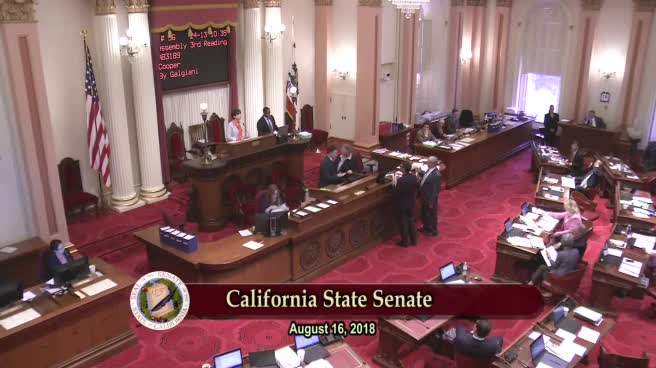
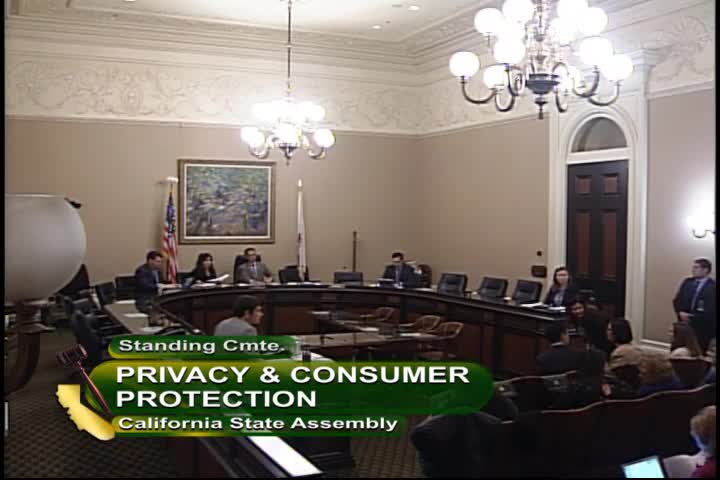
Bill Author








