AB 2944: Personal income taxes: voluntary contributions: Schools Not Prisons Voluntary Tax Contribution Fund.
- Session Year: 2017-2018
- House: Assembly
- Latest Version Date: 2018-09-17
Existing law authorizes an individual to contribute amounts in excess of his or her personal income tax liability for the support of specified funds. Under existing law, there are general administrative provisions applicable to these voluntary contributions, which, among other things, provide for the disbursement of contributions following the repeal of the funds provisions and require undesignated funds to be transferred to the General Fund.
Existing law requires any new or extended voluntary contribution to include the words voluntary tax contribution in the name of the fund, to require the administering agency to include specified information about the fund on its Internet Web site, to continuously appropriate from the fund the contributions made to the administering agency, to set a minimum contribution amount for the continuation of any voluntary tax contribution on the tax return form, and to include a generally applicable repeal date for a voluntary tax contribution.
This bill would allow an individual to designate on his or her tax return that a specified amount in excess of his or her personal income tax liability be transferred to the Schools Not Prisons California Voluntary Tax Contribution Fund, which would be created by this bill. The bill would conform with those aforementioned administrative requirements by continuously appropriating those funds to the Franchise Tax Board, the Controller, and the State Department of Education for administrative costs and to the State Department of Education for the distribution of grants to nonprofit public charities in California to fund academic and career readiness programs that seek to break the school-to-prison pipeline, as specified. The bill would also conform by requiring the State Department of Education to comply with certain Internet Web site reporting requirements and by repealing the provisions as of December 1 of the year that the minimum contribution amount of $250,000 is not met or by the specified repeal date. By continuously appropriating these funds, the bill would make an appropriation.
Existing law authorizes an individual to contribute amounts in excess of his or her personal income tax liability for the support of specified funds. Under existing law, there are general administrative provisions applicable to these voluntary contributions, which, among other things, provide for the disbursement of contributions following the repeal of the funds provisions and require undesignated funds to be transferred to the General Fund.
Existing law requires any new or extended voluntary contribution to include the words voluntary tax contribution in the name of the fund, to require the administering agency to include specified information about the fund on its Internet Web site, to continuously appropriate from the fund the contributions made to the administering agency, and to set a minimum contribution amount for the continuation of any voluntary tax contribution on the tax return form and a form, and to include a generally applicable repeal date for a voluntary tax contribution.
This bill would allow an individual to designate on his or her tax return that a specified amount in excess of his or her personal income tax liability be transferred to the Schools Not Prisons California Voluntary Tax Contribution Fund, which would be created by this bill. The bill would conform with those aforementioned administrative requirements by continuously appropriating those funds to the Franchise Tax Board and the Controller Board, the Controller, and the State Department of Education for administrative costs. The bill would require remaining funds in the Schools Not Prisons Voluntary Tax Contribution Fund to be transferred costs and to the State Department of Education for the distribution of grants to nonprofit public charities in California to fund academic and career readiness programs that seek to break the school-to-prison pipeline, as specified. The bill would also conform by requiring the State Department of Education to comply with certain Internet Web site reporting requirements and by repealing the provisions as of December 1 of the year that the minimum contribution amount of $250,000 is not met or by the specified repeal date. By continuously appropriating these funds, the bill would make an appropriation.
Existing law authorizes an individual to contribute amounts in excess of his or her personal income tax liability for the support of specified funds. Under existing law, there are general administrative provisions applicable to these voluntary contributions, which, among other things, provide for the disbursement of contributions following the repeal of the funds provisions and require undesignated funds to be transferred to the General Fund.
Existing law requires any new or extended voluntary contribution to include the words voluntary tax contribution in the name of the fund, to require the administering agency to include specified information about the fund on its Internet Web site, to continuously appropriate from the fund the contributions made to the administering agency, and to set a minimum contribution amount for the continuation of any voluntary tax contribution on the tax return form and a generally applicable repeal date for a voluntary tax contribution.
This bill would allow an individual to designate on his or her tax return that a specified amount in excess of his or her personal income tax liability be transferred to the Schools Not Prisons California Voluntary Tax Contribution Fund, which would be created by this bill. The bill would conform with those aforementioned administrative requirements by continuously appropriating those funds to the Franchise Tax Board and the Controller for administrative costs. The bill would require remaining funds in the Schools Not Prisons Voluntary Tax Contribution Fund to be transferred to the State Department of Education for distribution of grants to nonprofit public charities in California to fund academic and career readiness programs that seek to break the school-to-prison pipeline, as specified. The bill would also conform by repealing the provisions as of December 1 of the year that the minimum contribution amount of $250,000 is not met or by the specified repeal date. By continuously appropriating these funds, the bill would make an appropriation.
Existing law authorizes an individual to contribute amounts in excess of his or her personal income tax liability for the support of specified funds. Under existing law, there are general administrative provisions applicable to these voluntary contributions, which, among other things, provide for the disbursement of contributions following the repeal of the funds provisions and require undesignated funds to be transferred to the General Fund.
Existing law requires any new or extended voluntary contribution to include the words voluntary tax contribution in the name of the fund, to require the administering agency to include specified information about the fund on its Internet Web site, to continuously appropriate from the fund the contributions made to the administering agency, and to set a minimum contribution amount for the continuation of any voluntary tax contribution on the tax return form and a generally applicable repeal date for a voluntary tax contribution.
This bill would allow an individual to designate on his or her tax return that a specified amount in excess of his or her personal income tax liability be transferred to the Schools Not Prisons California Voluntary Tax Contribution Fund, which would be created by this bill. The bill would conform with those aforementioned administrative requirements by continuously appropriating those funds to the Franchise Tax Board and the Controller for administrative costs. The bill would require remaining funds in the Schools Not Prisons Voluntary Tax Contribution Fund to be transferred to the State Department of Education for distribution of grants to nonprofit public charities in California to fund academic and career readiness programs to increase the number of young men of color who attend and graduate from colleges and universities, that seek to break the school-to-prison pipeline, as specified. The bill would also conform by repealing the provisions as of December 1 of the year that the minimum contribution amount of $250,000 is not met or by the specified repeal date. By continuously appropriating these funds, the bill would make an appropriation.
Existing law authorizes an individual to contribute amounts in excess of his or her personal income tax liability for the support of specified funds. Under existing law, there are general administrative provisions applicable to these voluntary contributions, which, among other things, provide for the disbursement of contributions following the repeal of the funds provisions and require undesignated funds to be transferred to the General Fund.
Existing law requires any new or extended voluntary contribution to include the words voluntary tax contribution in the name of the fund, to require the administering agency to include specified information about the fund on its Internet Web site, to continuously appropriate from the fund the contributions made to the administering agency, and to set a minimum contribution amount for the continuation of any voluntary tax contribution on the tax return form and a generally applicable repeal date for a voluntary tax contribution.
This bill would allow an individual to designate on his or her tax return that a specified amount in excess of his or her personal income tax liability be transferred to the Schools Not Prisons California Voluntary Tax Contribution Fund, which would be created by this bill. The bill would conform with those aforementioned administrative requirements by continuously appropriating those funds to the Franchise Tax Board and the Controller for administrative costs. The bill would require remaining funds in the Schools Not Prisons Voluntary Tax Contribution Fund to be transferred to the State Department of Education for distribution of grants to nonprofit public charities in California to fund academic and career readiness programs to increase the number of young men of color who attend and graduate from colleges and universities, as specified. The bill would also conform by repealing the provisions as of December 1 of the year that the minimum contribution amount of $250,000 is not met or by the specified repeal date. By continuously appropriating these funds, the bill would make an appropriation.
(a)An individual may designate on the personal income tax return that a contribution in excess of the tax liability, if any, be made to the Schools Not Prisons Voluntary Tax Contribution Fund, which is established by Section 18911. That designation is to be used as a voluntary contribution on the tax return.
(b)The contributions shall be in full dollar amounts and may be made individually by each signatory on a joint return.
(c)A designation shall be made for any taxable year on the original return for that taxable year and once made is irrevocable. If payments and credits reported on the return, together with any other credits associated with the taxpayers account, do not exceed the taxpayers tax liability, the return shall be treated as though no designation has been made.
(d)The Franchise Tax Board shall revise the form of the return to include a space labeled the Schools Not Prisons Voluntary Tax Contribution Fund to allow for the designation permitted. The form shall also include in the instructions information that the contribution may be in the amount of one dollar ($1) or more and that the contribution shall be used to fund academic and career readiness programs that seek to break the school-to-prison pipeline. For purposes of this section, the school-to-prison pipeline is the process through which pupils are pushed out of schools and into prisons.
(e)A deduction shall be allowed under Article 6 (commencing with Section 17201) of Chapter 3 of Part 10 for any contribution made pursuant to subdivision (a).
(f)Notwithstanding any other law, a voluntary contribution designation for the Schools Not Prisons Voluntary Tax Contribution Fund shall not be added on the personal tax return until another voluntary contribution designation is removed or space is available, whichever occurs first.
18911.There is hereby established in the State Treasury the Schools Not Prisons Voluntary Tax Contribution Fund to receive contributions made pursuant to Section 18910. The Franchise Tax Board shall notify the Controller of both the amount of money paid by taxpayers in excess of their tax liability and the amount of refund money that taxpayers have designated pursuant to Section 18910 to be transferred to the Schools Not Prisons Voluntary Tax Contribution Fund. The Controller shall transfer from the Personal Income Tax Fund to the Schools Not Prisons Voluntary Tax Contribution Fund an amount not in excess of the sum of the amounts designated by individuals pursuant to Section 18910 for payment into that fund.
18912.(a)Notwithstanding Section 13340 of the Government Code, all money transferred to the Schools Not Prisons Voluntary Tax Contribution Fund shall be continuously appropriated and allocated as follows:
(1)To the Franchise Tax Board, the Controller, and the State Department of Education for reimbursement of all costs incurred by the Franchise Tax Board, the Controller, and the State Department of Education in connection with their administrative duties under this article.
(2)To the State Department of Education for distribution of grants to nonprofit public charities in California that are in active status, as listed on the Secretary of States Internet Web site and, except as provided in subparagraph (B) of paragraph (1) of subdivision (b), are exempt from federal income taxation as an organization pursuant to Section 501(c)(3) of the Internal Revenue Code for the purpose of funding academic and career readiness programs that seek to break the school-to-prison pipeline. For purposes of this section, school-to-prison pipeline is the process through which pupils are pushed out of schools and into prisons. The State Department of Education shall award grants through a competitive, project-specific grant process and shall be responsible for overseeing the grant program. A nonprofit public charity awarded a grant under this section shall not use more than 10 percent of the grant for administrative expenses.
(b)The State Department of Education shall award the grants described in paragraph (2) of subdivision (a) pursuant to all of the following:
(1)(A)Except as provided in subparagraph (B), an eligible applicant shall be a nonprofit public charity with current 501(c)(3) status.
(B)A nonprofit public charity that does not have current 501(c)(3) status may apply with a nonprofit public charity sponsor that has current 501(c)(3) status.
(C)Each applicant shall submit an Internal Revenue Service statement certifying the charitys nonprofit status.
(D)For purposes of this section, current 501(c)(3) status means exempt from federal income taxation as an organization pursuant to Section 501(c)(3) of the Internal Revenue Code.
(2)Projects that are eligible for grants shall serve one or more of the following target populations:
(A)Youth who are, or have been within the last five years, wards of the court.
(B)Youth who are considered opportunity youth. For purposes of this section, opportunity youth means youth between the ages of 16 to 24, inclusive, who are out of school and unemployed.
(C)Youth who attend, or within the last two years have graduated from, a school that has been given a red or orange performance designation on any one of the state or local indicators on the California School Dashboard for the most recent academic year reported.
(D)Youth who currently participate in, or within the last two years have completed, a continuation education program.
(E)Youth who are any of the following types of targeted disadvantaged pupils pursuant to the local control funding formula supplemental funding guidelines:
(i)Youth who are English learners.
(ii)Youth who are foster youth.
(iii)Youth who meet income requirements to receive a free or reduced-price meal.
(3)The State Department of Education shall provide funding for grant awards to applicants with proposals that satisfy paragraph (4) and demonstrate advancement of the following objectives:
(A)Youth leadership development.
(B)Youth or community organizing.
(C)Pupil enrichment.
(D)Youth life skills development.
(E)Youth workforce readiness development.
(F)Youth mentorship.
(4)The State Department of Education shall evaluate and prioritize all of the following in selecting an applicant to receive a grant:
(A)The applicants development of clearly articulated outcomes.
(B)The applicants capacity to operate culturally competent, high-quality, and cost-effective programs for the target population or populations identified pursuant to paragraph (2).
(C)The extent to which the applicants proposal advances the identified funding objectives listed in paragraph (3) for the identified target population or populations identified pursuant to paragraph (2).
(D)The applicants demonstration of viability of its proposed program beyond the life cycle of the grant program, including, but not limited to, a plan to pursue other forms of funding, to leverage existing resources, and to collaborate with local, state, or federal partners. Each applicants proposal shall include, and be evaluated by the State Department of Education based on, the demonstrated need of the community to be served, alignment of projected outcomes with grant program goals, and evidence of effectiveness in serving the target population or populations identified pursuant to paragraph (2).
(5)A grant award shall be in the amount of ten thousand dollars ($10,000), at minimum, and may not exceed seventy-five thousand dollars ($75,000), as determined by the State Department of Education.
(6)Each recipient shall use grant moneys to provide direct community-based services to the target population or populations identified pursuant to paragraph (2).
(7)Grant moneys shall not be used for any purpose outside of this state.
(c)The State Department of Education shall comply with the Internet Web site reporting requirements described in Section 18873.
18913.(a)Except as otherwise provided in subdivision (b), this article shall remain in effect only until January 1 of the seventh calendar year following the first appearance of the Schools Not Prisons Voluntary Tax Contribution Fund on the personal income tax return, and is repealed as of December 1 of that year.
(b)(1)By September 1 of the second calendar year and each subsequent calendar year that the Schools Not Prisons Voluntary Tax Contribution Fund appears on the tax return, the Franchise Tax Board shall determine whether the amount of contributions estimated to be received during the calendar year will equal or exceed the minimum contribution amount for the calendar year. The Franchise Tax Board shall estimate the amount of contributions to be received by using the actual amounts received and an estimate of the contributions that will be received by the end of that calendar year.
(2)If the Franchise Tax Board determines that the amount of contributions estimated to be received during a calendar year will not at least equal the minimum contribution amount for the calendar year, this article shall be inoperative with respect to taxable years beginning on or after January 1 of that calendar year, and shall be repealed on December 1 of that year.
(3)For purposes of this section, the minimum contribution amount for a calendar year means two hundred fifty thousand dollars ($250,000).
(a)An individual may designate on the personal income tax return that a contribution in excess of the tax liability, if any, be made to the Schools Not Prisons Voluntary Tax Contribution Fund, which is established by Section 18911. That designation is to be used as a voluntary contribution on the tax return.
(b)The contributions shall be in full dollar amounts and may be made individually by each signatory on a joint return.
(c)A designation shall be made for any taxable year on the original return for that taxable year and once made is irrevocable. If payments and credits reported on the return, together with any other credits associated with the taxpayers account, do not exceed the taxpayers tax liability, the return shall be treated as though no designation has been made.
(d)The Franchise Tax Board shall revise the form of the return to include a space labeled the Schools Not Prisons Voluntary Tax Contribution Fund to allow for the designation permitted. The form shall also include in the instructions information that the contribution may be in the amount of one dollar ($1) or more and that the contribution shall be used to fund academic and career readiness programs that seek to break the school-to-prison pipeline. For purposes of this section, the school-to-prison pipeline is the process through which pupils are pushed out of schools and into prisons.
(e)A deduction shall be allowed under Article 6 (commencing with Section 17201) of Chapter 3 of Part 10 for any contribution made pursuant to subdivision (a).
(f)Notwithstanding any other law, a voluntary contribution designation for the Schools Not Prisons Voluntary Tax Contribution Fund shall not be added on the tax return until another voluntary contribution designation is removed or space is available, whichever occurs first.18911.There is hereby established in the State Treasury the Schools Not Prisons Voluntary Tax Contribution Fund to receive contributions made pursuant to Section 18910. The Franchise Tax Board shall notify the Controller of both the amount of money paid by taxpayers in excess of their tax liability and the amount of refund money that taxpayers have designated pursuant to Section 18910 to be transferred to the Schools Not Prisons Voluntary Tax Contribution Fund. The Controller shall transfer from the Personal Income Tax Fund to the Schools Not Prisons Voluntary Tax Contribution Fund an amount not in excess of the sum of the amounts designated by individuals pursuant to Section 18910 for payment into that fund.
18912.(a)Notwithstanding Section 13340 of the Government Code, all money transferred to the Schools Not Prisons Voluntary Tax Contribution Fund shall be continuously appropriated and allocated as follows:
(1)To the Franchise Tax Board and the Controller Board, the Controller, and the State Department of Education for reimbursement of all costs incurred by the Franchise Tax Board and the Controller Board, the Controller, and the State Department of Education in connection with their administrative duties under this article.
(2)To the State Department of Education for distribution of grants to nonprofit public charities in California that are in active status, as listed on the Secretary of States Internet Web site and, except as provided in subparagraph (B) of paragraph (1) of subdivision (b), are exempt from federal income taxation as an organization pursuant to Section 501(c)(3) of the Internal Revenue Code for the purpose of funding academic and career readiness programs that seek to break the school-to-prison pipeline. For purposes of this section, school-to-prison pipeline is the process through which pupils are pushed out of schools and into prisons. The State Department of Education shall award grants through a competitive, project-specific grant process and shall be responsible for overseeing the grant program. A nonprofit public charity awarded a grant under this section shall not use more than 10 percent of the grant for administrative expenses or for any purpose outside of California. expenses.
(b)The State Department of Education shall award the grants described in paragraph (2) of subdivision (a) pursuant to all of the following:
(1)(A)Except as provided in subparagraph (B), an eligible applicant shall be a nonprofit public charity with current 501(c)(3) status.
(B)A nonprofit public charity that does not have current 501(c)(3) status may apply with a nonprofit public charity sponsor that has current 501(c)(3) status.
(C)Each applicant shall submit an Internal Revenue Service statement certifying the charitys nonprofit status.
(D)For purposes of this section, current 501(c)(3) status means exempt from federal income taxation as an organization pursuant to Section 501(c)(3) of the Internal Revenue Code.
(2)Projects that are eligible for grants shall serve one or more of the following target populations:
(A)Youth who are, or have been within the last five years, wards of the court.
(B)Youth who are considered opportunity youth. For purposes of this section, opportunity youth means youth between the ages of 16 to 24, inclusive, who are out of school and unemployed.
(C)Youth who attend, or within the last two years have graduated from, a school that has been given a red or orange performance designation on any one of the state or local indicators on the California School Dashboard for the most recent academic year reported.
(D)Youth who currently participate in, or within the last two years have completed, a continuation education program.
(E)Youth who are any of the following types of targeted disadvantaged pupils pursuant to the local control funding formula supplemental funding guidelines:
(i)Youth who are English learners.
(ii)Youth who are foster youth.
(iii)Youth who meet income requirements to receive a free or reduced-price meal.
(3)The State Department of Education shall provide funding for grant awards to applicants with proposals that satisfy paragraph (4) and demonstrate advancement of the following objectives:
(A)Youth leadership development.
(B)Youth or community organizing.
(C)Pupil enrichment.
(D)Youth life skills development.
(E)Youth workforce readiness development.
(F)Youth mentorship.
(4)The State Department of Education shall evaluate and prioritize all of the following in selecting an applicant to receive a grant:
(A)The applicants development of clearly articulated outcomes.
(B)The applicants capacity to operate culturally competent, high-quality, and cost-effective programs for the target population or populations identified pursuant to paragraph (2).
(C)The extent to which the applicants proposal advances the identified funding objectives listed in paragraph (3) for the identified target population or populations identified pursuant to paragraph (2).
(D)The applicants demonstration of viability of its proposed program beyond the life cycle of the grant program, including, but not limited to, a plan to pursue other forms of funding, to leverage existing resources, and to collaborate with local, state, or federal partners. Each applicants proposal shall include, and be evaluated by the State Department of Education based on, the demonstrated need of the community to be served, alignment of projected outcomes with grant program goals, and evidence of effectiveness in serving the target population or populations identified pursuant to paragraph (2).
(5)A grant award shall be in the amount of ten thousand dollars ($10,000), at minimum, and may not exceed seventy-five thousand dollars ($75,000), as determined by the State Department of Education.
(6)Each recipient shall use grant moneys to provide direct community-based services to the target population or populations identified pursuant to paragraph (2).
(7)Grant moneys shall not be used for any purpose outside of this state.
(c)The State Department of Education shall comply with the Internet Web site reporting requirements described in Section 18873.
18913.(a)Except as otherwise provided in subdivision (b), this article shall remain in effect only until January 1 of the seventh calendar year following the first appearance of the Schools Not Prisons Voluntary Tax Contribution Fund on the personal income tax return, and is repealed as of December 1 of that year.
(b)(1)By September 1 of the second calendar year and each subsequent calendar year that the Schools Not Prisons Voluntary Tax Contribution Fund appears on the tax return, the Franchise Tax Board shall determine whether the amount of contributions estimated to be received during the calendar year will equal or exceed the minimum contribution amount for the calendar year. The Franchise Tax Board shall estimate the amount of contributions to be received by using the actual amounts received and an estimate of the contributions that will be received by the end of that calendar year.
(2)If the Franchise Tax Board determines that the amount of contributions estimated to be received during a calendar year will not at least equal the minimum contribution amount for the calendar year, this article shall be inoperative with respect to taxable years beginning on or after January 1 of that calendar year, and shall be repealed on December 1 of that year.
(3)For purposes of this section, the minimum contribution amount for a calendar year means two hundred fifty thousand dollars ($250,000).
(a)An individual may designate on the personal tax return that a contribution in excess of the tax liability, if any, be made to the Schools Not Prisons Voluntary Tax Contribution Fund, which is established by Section 18911. That designation is to be used as a voluntary contribution on the tax return.
(b)The contributions shall be in full dollar amounts and may be made individually by each signatory on a joint return.
(c)A designation shall be made for any taxable year on the original return for that taxable year and once made is irrevocable. If payments and credits reported on the return, together with any other credits associated with the taxpayers account, do not exceed the taxpayers tax liability, the return shall be treated as though no designation has been made.
(d)The Franchise Tax Board shall revise the form of the return to include a space labeled the Schools Not Prison Prisons Voluntary Tax Contribution Fund to allow for the designation permitted. The form shall also include in the instructions information that the contribution may be in the amount of one dollar ($1) or more and that the contribution shall be used to fund academic and career readiness programs that seek to break the school-to-prison pipeline. For purposes of this section, the school-to-prison pipeline is the process through which pupils are pushed out of schools and into prisons.
(e)A deduction shall be allowed under Article 6 (commencing with Section 17201) of Chapter 3 of Part 10 for any contribution made pursuant to subdivision (a).
(f)Notwithstanding any other law, a voluntary contribution designation for the Schools Not Prisons Voluntary Tax Contribution Fund shall not be added on the tax return until another voluntary contribution designation is removed or space is available, whichever occurs first.
18911.There is hereby established in the State Treasury the Schools Not Prisons Voluntary Tax Contribution Fund to receive contributions made pursuant to Section 18910. The Franchise Tax Board shall notify the Controller of both the amount of money paid by taxpayers in excess of their tax liability and the amount of refund money that taxpayers have designated pursuant to Section 18910 to be transferred to the Schools Not Prisons Voluntary Tax Contribution Fund. The Controller shall transfer from the Personal Income Tax Fund to the Schools Not Prisons Voluntary Tax Contribution Fund an amount not in excess of the sum of the amounts designated by individuals pursuant to Section 18910 for payment into that fund.
18912.(a)Notwithstanding Section 13340 of the Government Code, all money transferred to the Schools Not Prisons Voluntary Tax Contribution Fund shall be continuously appropriated and allocated as follows:
(1)To the Franchise Tax Board and the Controller for reimbursement of all costs incurred by the Franchise Tax Board and the Controller in connection with their duties under this article.
(2)To the State Department of Education for distribution of grants to nonprofit public charities in California that are in active status, as listed on the Secretary of States Internet Web site and, except as provided in subparagraph (B) or of paragraph (1) of subdivision (b), are exempt from federal income taxation as an organization pursuant to Section 501(c)(3) of the Internal Revenue Code for the purpose of funding academic and career readiness programs that seek to break the school-to-prison pipeline. For purposes of this section, school-to-prison pipeline is the process through which pupils are pushed out of schools and into prisons. The State Department of Education shall award grants through a competitive, project-specific grant process and shall be responsible for overseeing the grant program. A nonprofit public charity awarded a grant under this section shall not use more than 10 percent of the grant for administrative expenses or for any purpose outside of California.
(b)The State Department of Education shall award the grants described in paragraph (2) of subdivision (a) pursuant to all of the following:
(1)(A)Except as provided in subparagraph (B), an eligible applicant shall be a nonprofit public charity with current 501(c)(3) status.
(B)A nonprofit public charity that does not have current 501(c)(3) status may apply with a nonprofit public charity sponsor that has current 501(c)(3) status.
(C)Each applicant shall submit an Internal Revenue Service statement certifying the charitys nonprofit status.
(D)For purposes of this section, current 501(c)(3) status means exempt from federal income taxation as an organization pursuant to Section 501(c)(3) of the Internal Revenue Code.
(2)Projects that are eligible for grants shall serve one or more of the following target populations:
(A)Youth who are, or have been within the last five years, wards of the court.
(B)Youth who are considered opportunity youth. For purposes of this section, opportunity youth means youth between the ages of 16 to 24, inclusive, who are out of school and unemployed.
(C)Youth who attend, or within the last two years have graduated from, a school that has been given a red or orange performance designation on any one of the state or local indicators on the California School Dashboard for the most recent academic year reported.
(D)Youth who currently participate in, or within the last two years have completed, a continuation education program.
(E)Youth who are any of the following types of targeted disadvantaged pupils pursuant to the local control funding formula supplemental funding guidelines:
(i)Youth who are English learners.
(ii)Youth who are foster youth.
(iii)Youth who meet income requirements to receive a free or reduced-price meal.
(3)The State Department of Education shall provide funding for grant awards to applicants with proposals that satisfy paragraph (4) and demonstrate advancement of the following objectives:
(A)Youth leadership development.
(B)Youth or community organizing.
(C)Pupil enrichment.
(D)Youth life skills development.
(E)Youth workforce readiness development.
(F)Youth mentorship.
(4)The State Department of Education shall evaluate and prioritize all of the following in selecting an applicant to receive a grant:
(A)The applicants development of clearly articulated outcomes.
(B)The applicants capacity to operate culturally competent, high-quality, and cost-effective programs for the target population or populations identified pursuant to paragraph (2).
(C)The extent to which the applicants proposal advances the identified funding objectives listed in paragraph (3) for the identified target population or populations identified pursuant to paragraph (2).
(D)The applicants demonstration of viability of its proposed program beyond the life cycle of the grant program, including, but not limited to, a plan to pursue other forms of funding, to leverage existing resources, and to collaborate with local, state, or federal partners. Each applicants proposal shall include, and be evaluated by the State Department of Education based on, the demonstrated need of the community to be served, alignment of projected outcomes with grant program goals, and evidence of effectiveness in serving the target population or populations identified pursuant to paragraph (2).
(5)A grant award shall be in the amount of ten thousand dollars ($10,000), at minimum, and may not exceed seventy-five thousand dollars ($75,000), as determined by the State Department of Education.
(6)Each recipient shall used use grant moneys to provide direct community-based services to the target population or populations identified pursuant to paragraph (2).
(7)Grant moneys shall not be used for any purpose outside of this state.
(c)The State Department of Education shall comply with the Internet Web site reporting requirements described in Section 18873.
18913.(a)Except as otherwise provided in subdivision (b), this article shall remain in effect only until January 1 of the seventh taxable calendar year following the first appearance of the Schools Not Prisons Voluntary Tax Contribution Fund on the personal income tax return, and is repealed as of December 1 of that year.
(b)(1)By September 1 of the second calendar year and each subsequent calendar year that the Schools Not Prisons Voluntary Tax Contribution Fund appears on the tax return, the Franchise Tax Board shall determine whether the amount of contributions estimated to be received during the calendar year will equal or exceed the minimum contribution amount for the calendar year. The Franchise Tax Board shall estimate the amount of contributions to be received by using the actual amounts received and an estimate of the contributions that will be received by the end of that calendar year.
(2)If the Franchise Tax Board determines that the amount of contributions estimated to be received during a calendar year will not at least equal the minimum contribution amount for the calendar year, this article shall be inoperative with respect to taxable years beginning on or after January 1 of that calendar year, and shall be repealed on December 1 of that year.
(3)For purposes of this section, the minimum contribution amount for a calendar year means two hundred fifty thousand dollars ($250,000).
(a)An individual may designate on the personal tax return that a contribution in excess of the tax liability, if any, be made to the Schools Not Prisons Voluntary Tax Contribution Fund, which is established by Section 18911. That designation is to be used as a voluntary contribution on the tax return.
(b)The contributions shall be in full dollar amounts and may be made individually by each signatory on a joint return.
(c)A designation shall be made for any taxable year on the initial original return for that taxable year and once made is irrevocable. If payments and credits reported on the return, together with any other credits associated with the taxpayers account, do not exceed the taxpayers tax liability, the return shall be treated as though no designation has been made.
(d)The Franchise Tax Board shall revise the form of the return to include a space labeled the Schools Not Prison Voluntary Tax Contribution Fund to allow for the designation permitted. The form shall also include in the instructions information that the contribution may be in the amount of one dollar ($1) or more and that the contribution shall be used to fund academic and career readiness programs to increase the number of young men of color who attend and graduate from colleges and universities. that seek to break the school-to-prison pipeline. For purposes of this section, the school-to-prison pipeline is the process through which pupils are pushed out of schools and into prisons.
(e)A deduction shall be allowed under Article 6 (commencing with Section 17201) of Chapter 3 of Part 10 for any contribution made pursuant to subdivision (a).
(f)Notwithstanding any other law, a voluntary contribution designation for the Schools Not Prisons Voluntary Tax Contribution Fund shall not be added on the tax return until another voluntary contribution designation is removed or space is available, whichever occurs first.
18911.There is hereby established in the State Treasury the Schools Not Prisons Voluntary Tax Contribution Fund to receive contributions made pursuant to Section 18910. The Franchise Tax Board shall notify the Controller of both the amount of money paid by taxpayers in excess of their tax liability and the amount of refund money that taxpayers have designated pursuant to Section 18910 to be transferred to the Schools Not Prisons Voluntary Tax Contribution Fund. The Controller shall transfer from the Personal Income Tax Fund to the Schools Not Prisons Voluntary Tax Contribution Fund an amount not in excess of the sum of the amounts designated by individuals pursuant to Section 18910 for payment into that fund.
18912.(a)Notwithstanding Section 13340 of the Government Code, all money transferred to the Schools Not Prisons Voluntary Tax Contribution Fund shall be continuously appropriated and allocated as follows:
(1)To the Franchise Tax Board and the Controller for reimbursement of all costs incurred by the Franchise Tax Board and the Controller in connection with their duties under this article.
(2)To the State Department of Education for distribution of grants to nonprofit public charities in California that are in active status, as listed on the Secretary of States Internet Web site, and site and, except as provided in subparagraph (B) or paragraph (1) of subdivision (b), are exempt from federal income taxation as an organization pursuant to Section 501(c)(3) of the Internal Revenue Code for the purpose of funding academic and career readiness programs to increase the number of young men of color who attend and graduate from colleges and universities. that seek to break the school-to-prison pipeline. For purposes of this section, school-to-prison pipeline is the process through which pupils are pushed out of schools and into prisons. The State Department of Education shall award grants through a competitive, project-specific grant process and shall be responsible for overseeing the grant program. A nonprofit public charity awarded a grant under this section shall not use more than 10 percent of the grant, or any portion thereof, grant for administrative expenses or for any purpose outside of California.
(b)The State Department of Education shall award the grants described in paragraph (2) of subdivision (a) pursuant to all of the following:
(1)(A)Except as provided in subparagraph (B), an eligible applicant shall be a nonprofit public charity with current 501(c)(3) status.
(B)A nonprofit public charity that does not have current 501(c)(3) status may apply with a nonprofit public charity sponsor that has current 501(c)(3) status.
(C)Each applicant shall submit an Internal Revenue Service statement certifying the charitys nonprofit status.
(D)For purposes of this section, current 501(c)(3) status means exempt from federal income taxation as an organization pursuant to Section 501(c)(3) of the Internal Revenue Code.
(2)Projects that are eligible for grants shall serve one or more of the following target populations:
(A)Youth who are, or have been within the last five years, wards of the court.
(B)Youth who are considered opportunity youth. For purposes of this section, opportunity youth means youth between the ages of 16 to 24, inclusive, who are out of school and unemployed.
(C)Youth who attend, or within the last two years have graduated from, a school that has been given a red or orange performance designation on any one of the state or local indicators on the California School Dashboard for the most recent academic year reported.
(D)Youth who currently participate in, or within the last two years have completed, a continuation education program.
(E)Youth who are any of the following types of targeted disadvantaged pupils pursuant to the local control funding formula supplemental funding guidelines:
(i)Youth who are English learners.
(ii)Youth who are foster youth.
(iii)Youth who meet income requirements to receive a free or reduced-price meal.
(3)The State Department of Education shall provide funding for grant awards to applicants with proposals that satisfy paragraph (4) and demonstrate advancement of the following objectives:
(A)Youth leadership development.
(B)Youth or community organizing.
(C)Pupil enrichment.
(D)Youth life skills development.
(E)Youth workforce readiness development.
(F)Youth mentorship.
(4)The State Department of Education shall evaluate and prioritize all of the following in selecting an applicant to receive a grant:
(A)The applicants development of clearly articulated outcomes.
(B)The applicants capacity to operate culturally competent, high-quality, and cost-effective programs for the target population or populations identified pursuant to paragraph (2).
(C)The extent to which the applicants proposal advances the identified funding objectives listed in paragraph (3) for the identified target population or populations identified pursuant to paragraph (2).
(D)The applicants demonstration of viability of its proposed program beyond the life cycle of the grant program, including, but not limited to, a plan to pursue other forms of funding, to leverage existing resources, and to collaborate with local, state, or federal partners. Each applicants proposal shall include, and be evaluated by the State Department of Education based on, the demonstrated need of the community to be served, alignment of projected outcomes with grant program goals, and evidence of effectiveness in serving the target population or populations identified pursuant to paragraph (2).
(5)A grant award shall be in the amount of ten thousand dollars ($10,000), at minimum, and may not exceed seventy-five thousand dollars ($75,000), as determined by the State Department of Education.
(6)Each recipient shall used grant moneys to provide direct community-based services to the target population or populations identified pursuant to paragraph (2).
(b)(c)The State Department of Education shall comply with the Internet Web site reporting requirements described in Section 18873.
18913.(a)Except as otherwise provided in subdivision (b), this article shall remain in effect only until January 1 of the seventh taxable year following the first appearance of the Schools Not Prisons Voluntary Tax Contribution Fund on the personal income tax return, and is repealed as of December 1 of that year.
(b)(1)By September 1 of the second calendar year and each subsequent calendar year that the Schools Not Prisons Voluntary Tax Contribution Fund appears on the tax return, the Franchise Tax Board shall determine whether the amount of contributions estimated to be received during the calendar year will equal or exceed the minimum contribution amount for the calendar year. The Franchise Tax Board shall estimate the amount of contributions to be received by using the actual amounts received and an estimate of the contributions that will be received by the end of that calendar year.
(2)If the Franchise Tax Board determines that the amount of contributions estimated to be received during a calendar year will not at least equal the minimum contribution amount for the calendar year, this article shall be inoperative with respect to taxable years beginning on or after January 1 of that calendar year, and shall be repealed on December 1 of that year.
(3)For purposes of this section, the minimum contribution amount for a calendar year means two hundred fifty thousand dollars ($250,000).
(a)An individual may designate on the tax return that a contribution in excess of the tax liability, if any, be made to the Schools Not Prisons Voluntary Tax Contribution Fund, which is established by Section 18911. That designation is to be used as a voluntary contribution on the tax return.
(b)The contributions shall be in full dollar amounts and may be made individually by each signatory on a joint return.
(c)A designation shall be made for any taxable year on the initial return for that taxable year and once made is irrevocable. If payments and credits reported on the return, together with any other credits associated with the taxpayers account, do not exceed the taxpayers liability, the return shall be treated as though no designation has been made.
(d)The Franchise Tax Board shall revise the form of the return to include a space labeled the Schools Not Prison Voluntary Tax Contribution Fund to allow for the designation permitted. The form shall also include in the instructions information that the contribution may be in the amount of one dollar ($1) or more and that the contribution shall be used to fund academic and career readiness programs to increase the number of young men of color who attend and graduate from colleges and universities.
(e)A deduction shall be allowed under Article 6 (commencing with Section 17201) of Chapter 3 of Part 10 for any contribution made pursuant to subdivision (a).
(f)Notwithstanding any other law, a voluntary contribution designation for the Schools Not Prisons Voluntary Tax Contribution Fund shall not be added on the tax return until another voluntary contribution designation is removed or space is available, whichever occurs first.
18911.There is hereby established in the State Treasury the Schools Not Prisons Voluntary Tax Contribution Fund to receive contributions made pursuant to Section 18910. The Franchise Tax Board shall notify the Controller of both the amount of money paid by taxpayers in excess of their tax liability and the amount of refund money that taxpayers have designated pursuant to Section 18910 to be transferred to the Schools Not Prisons Voluntary Tax Contribution Fund. The Controller shall transfer from the Personal Income Tax Fund to the Schools Not Prisons Voluntary Tax Contribution Fund an amount not in excess of the sum of the amounts designated by individuals pursuant to Section 18910 for payment into that fund.
18912.(a)Notwithstanding Section 13340 of the Government Code, all money transferred to the Schools Not Prisons Voluntary Tax Contribution Fund shall be continuously appropriated and allocated as follows:
(1)To the Franchise Tax Board and the Controller for reimbursement of all costs incurred by the Franchise Tax Board and the Controller in connection with their duties under this article.
(2)To the State Department of Education for distribution of grants to nonprofit public charities in California that are in active status, as listed on the Secretary of States Internet Web site, and are exempt from federal income taxation as an organization pursuant to Section 501(c)(3) of the Internal Revenue Code for the purpose of funding academic and career readiness programs to increase the number of young men of color who attend and graduate from colleges and universities. The State Department of Education shall award grants through a competitive, project-specific grant process and shall be responsible for overseeing the grant program. A nonprofit public charity awarded a grant under this section shall not use the grant, or any portion thereof, for administrative expenses or for any purpose outside of California.
(b)The State Department of Education shall comply with the Internet Web site reporting requirements described in Section 18873.
18913.(a)Except as otherwise provided in subdivision (b), this article shall remain in effect only until January 1 of the seventh taxable year following the first appearance of the Schools Not Prisons Voluntary Tax Contribution Fund on the personal income tax return, and is repealed as of December 1 of that year.
(b)(1)By September 1 of the second calendar year and each subsequent calendar year that the Schools Not Prisons Voluntary Tax Contribution Fund appears on the tax return, the Franchise Tax Board shall determine whether the amount of contributions estimated to be received during the calendar year will equal or exceed the minimum contribution amount for the calendar year. The Franchise Tax Board shall estimate the amount of contributions to be received by using the actual amounts received and an estimate of the contributions that will be received by the end of that calendar year.
(2)If the Franchise Tax Board determines that the amount of contributions estimated to be received during a calendar year will not at least equal the minimum contribution amount for the calendar year, this article shall be inoperative with respect to taxable years beginning on or after January 1 of that calendar year, and shall be repealed on December 1 of that year.
(3)For purposes of this section, the minimum contribution amount for a calendar year means two hundred fifty thousand dollars ($250,000).
|
Date
|
Status
|
|---|---|
| Sep 17, 2018 | Chaptered by Secretary of State - Chapter 441, Statutes of 2018. |
| Sep 17, 2018 | Approved by the Governor. |
| Aug 27, 2018 | Enrolled and presented to the Governor at 3 p.m. |
| Aug 20, 2018 | Senate amendments concurred in. To Engrossing and Enrolling. |
| Aug 14, 2018 | In Assembly. Concurrence in Senate amendments pending. May be considered on or after August 16 pursuant to Assembly Rule 77. |
| Aug 13, 2018 | Read third time. Passed. Ordered to the Assembly. |
| Aug 1, 2018 | Ordered to special consent calendar. |
| Jul 3, 2018 | Read second time. Ordered to third reading. |
| Jul 2, 2018 | From committee: Do pass. (Ayes 7. Noes 0.) (July 2). |
| Jun 14, 2018 | Read second time and amended. Re-referred to Com. on APPR. |
| Jun 13, 2018 | From committee: Amend, and do pass as amended and re-refer to Com. on APPR. (Ayes 7. Noes 0.) (June 13). |
| May 31, 2018 | From committee chair, with author's amendments: Amend, and re-refer to committee. Read second time, amended, and re-referred to Com. on GOV. & F. |
| May 17, 2018 | Referred to Com. on GOV. & F. |
| May 3, 2018 | In Senate. Read first time. To Com. on RLS. for assignment. |
| May 3, 2018 | Read third time. Passed. Ordered to the Senate. |
| Apr 26, 2018 | Read second time. Ordered to Consent Calendar. |
| Apr 25, 2018 | From committee: Do pass. To Consent Calendar. (Ayes 17. Noes 0.) (April 25). |
| Apr 17, 2018 | Re-referred to Com. on APPR. |
| Apr 16, 2018 | Read second time and amended. |
| Apr 12, 2018 | From committee: Amend, and do pass as amended and re-refer to Com. on APPR. (Ayes 8. Noes 0.) (April 9). |
| Apr 3, 2018 | Re-referred to Com. on REV. & TAX. |
| Apr 2, 2018 | From committee chair, with author's amendments: Amend, and re-refer to Com. on REV. & TAX. Read second time and amended. |
| Mar 8, 2018 | Referred to Com. on REV. & TAX. |
| Feb 17, 2018 | From printer. May be heard in committee March 19. |
| Feb 16, 2018 | Read first time. To print. |
|
Date
|
Description
|
Location
|
Votes
|
|
|---|---|---|---|---|
| Aug 20, 2018 | AB 2944 JONES-SAWYER Concurrence in Senate Amendments | Assembly Floor |
Passed |
|
| Aug 13, 2018 | Special Consent AB2944 | Senate Floor |
Passed |
|
| Jul 2, 2018 | Do pass | Senate Standing Committee on Appropriations |
Passed |
|
| Jun 13, 2018 | Do pass as amended, but first amend, and re-refer to the Committee on [Appropriations] | Senate Standing Committee on Governance and Finance |
Passed |
|
| May 3, 2018 | AB 2944 JONES-SAWYER Consent Calendar Second Day Regular Session | Assembly Floor |
Passed |
|
| Apr 25, 2018 | Do pass. To Consent Calendar. | Assembly Standing Committee on Appropriations |
Passed |
|
| Apr 9, 2018 | Do pass as amended and be re-referred to the Committee on [Appropriations] | Assembly Standing Committee on Revenue and Taxation |
Passed |
This list shows positions taken on this bill by organizations on the date displayed, which is linked to the original source.
Positions by individuals are not included.
|
Organization
|
Position
|
Date
|
|---|---|---|
| Alliance for Boys and Men of Color | ** Support | Jul 3, 2018 |
| American Academy Of Pediatrics, California | ** Support | Jul 3, 2018 |
| California Federation Of Teachers | ** Support | Jul 3, 2018 |
| Communities United for Restorative Youth Justice | ** Support | Jul 3, 2018 |
| Empowering Pacific Islander Communities | ** Support | Jul 3, 2018 |
| Immigrant Legal Resource Center | ** Support | Apr 6, 2018 |
| improve your tomorrow | ** Support | Jul 3, 2018 |
| Improve Your Tomorrow | * Support | Apr 9, 2018 |
| Improve Your Tomorrow | * Support | Jun 13, 2018 |
| Milpa Collective | ** Support | Jul 3, 2018 |
| NextGen California | * Support | Jul 2, 2018 |
| Ryse Center | ** Support | Jul 3, 2018 |
| San Francisco Unified School District | ** Support | Jul 3, 2018 |
| Social Justice Learning Institute | ** Support | Jul 3, 2018 |
| The Weideman Group | * Indeterminate | Jun 13, 2018 |
| Unknown. | ** Against | Jun 8, 2018 |
CONCURRENCE IN SENATE AMENDMENTS
CSA1 Bill Id:AB 2944
Author:(Jones-Sawyer)
As Amended Ver:June 14, 2018
Majority vote
ASSEMBLY: | 71-0 | (May 3, 2018) | SENATE: | 37-0 | (August 13, 2018) |
Original Committee Reference: REV. & TAX.
SUMMARY: Authorizes the addition of the Schools Not Prisons Voluntary Tax Contribution Fund (Fund) as a voluntary contribution fund (VCF) on the personal income tax (PIT) return.
The Senate amendments:
- Add the State Department of Education (CDE) to the list of entities reimbursed for their VCF-related administrative expenses.
- Make other technical amendments.
EXISTING LAW:
- Allows taxpayers to contribute to one or more of 24 VCFs on the 2017 PIT return.
- Provides a specific sunset date for each VCF, except for the California Seniors Special Fund and the State Parks Protection Fund.
- Requires each VCF to meet an annual minimum contribution amount to remain in effect, except for the California Firefighters' Memorial Fund, the California Peace Officer Memorial Foundation Fund, and the California Seniors Special Fund.
AS PASSED BY THE ASSEMBLY, this bill:
- Established the Fund in the State Treasury.
- Allowed a deduction for any contribution made to the Fund.
- Provided that all money transferred to the Fund shall be continuously appropriated and allocated to the:
- Franchise Tax Board (FTB) and State Controller for reimbursement of all costs incurred in administering the VCF; and,
- CDE for distribution of grants to nonprofit public charities in California, as specified, for the purpose of funding academic and career readiness programs that seek to break the school-to-prison pipeline. For purposes of this bill, the "school-to-prison pipeline" is the process through which pupils are pushed out of schools and into prisons.
- Required the CDE to award grants through a competitive, project-specific grant process.
- Charged the CDE with responsibility for overseeing the grant program.
- Prohibited a nonprofit public charity awarded a grant from using more than 10% of the grant for administrative expenses or for any purpose outside of California.
- Required the CDE to award grants pursuant to all of the following:
- Except as otherwise provided, an eligible applicant shall be a nonprofit public charity with current 501(c)(3) status. A nonprofit public charity that does not have current 501(c)(3) status may apply with a nonprofit public charity sponsor that has current 501(c)(3) status. In addition, each applicant shall submit an Internal Revenue Service statement certifying the charity's nonprofit status.
- Projects that are eligible for grants shall serve one or more of the following target populations:
- Youth who are, or have been within the last five years, wards of the court;
- Youth who are considered "opportunity youth", defined as youth between the ages of 16 to 24, who are out of school and unemployed;
- Youth who attend, or within the last two years have graduated from, a school that has been given a "red" or "orange" performance designation on any one of the state or local indicators on the California School Dashboard for the most recent academic year reported;
- Youth who currently participate in, or within the last two years have completed, a continuation education program; and,
- Youth who are any of the following types of "targeted disadvantaged pupils" pursuant to the local control funding formula supplemental funding guidelines:
- Youth who are English learners;
- Youth who are foster youth; or,
- Youth who meet income requirements to receive a free or reduced-price meal.
- The CDE shall provide funding for grant awards to applicants with proposals that demonstrate advancement of the following objectives:
- Youth leadership development;
- Youth or community organizing;
- Pupil enrichment;
- Youth life skills development;
- Youth workforce readiness development; and,
- Youth mentorship.
- The CDE shall evaluate and prioritize all of the following in selecting an applicant to receive a grant:
- The applicant's development of clearly articulated outcomes;
- The applicant's capacity to operate culturally competent, high-quality, and cost-effective programs for the target population(s) identified;
- The extent to which the applicant's proposal advances the identified funding objectives for the identified target population(s); and,
- The applicant's demonstration of viability of its proposed program beyond the life cycle of the grant program, including, but not limited to, a plan to pursue other forms of funding, to leverage existing resources, and to collaborate with local, state, or federal partners. Each applicant's proposal shall include, and be evaluated by the CDE based on, the demonstrated need of the community to be served, alignment of projected outcomes with grant program goals, and evidence of effectiveness in serving the target population(s) identified.
- A grant award shall be in the amount of $10,000, at minimum, and may not exceed $75,000, as determined by the CDE.
- Each recipient shall use grant moneys to provide direct community-based services to the target population(s) identified.
- Required the CDE to comply with the Web site reporting requirements described in Revenue and Taxation Code Section 18873.
- Provided that the Fund's statutory provisions shall remain in effect only until January 1 of the seventh calendar year following the first appearance of the Fund on the PIT return.
- Required the Fund to meet a minimum contribution amount of $250,000.
FISCAL EFFECT: According to the Senate Appropriations Committee:
- The FTB estimates that, beginning in fiscal year 2019-20, this bill would result in an annual revenue loss of $8,000 (General Fund).
- The State Controller's Office, CDE, and FTB would be reimbursed for related administrative costs.
COMMENTS:
- Author's Statement: The author has provided the following statement in support of this bill:
AB 2944 (Jones-Sawyer) would allow individuals to donate a portion of their tax return to the "Schools Not Prisons" voluntary tax contribution fund. These contributions will be used to break the school to prison pipeline, through which young men of color are pushed out of schools and into prisons. As the Chair of the Assembly Select Committee on Boys and Men of Color, I have spent countless hours working to identify ways to improve the outcomes of young men of color. The reality is that the state is not investing enough in black and brown young males and without sufficient funding this group will continue to lag behind their female and white counterparts. AB 2944 will create a donation based stream of funding to improve outcomes and uplift communities of color.
- Committee Staff Comments: There are countless worthy causes that would benefit from the inclusion of a VCF on the state's PIT return. At the same time, space on the PIT return is limited. Thus, it could be argued that the current system for adding or extending VCFs on the form is subjective and essentially rewards organizations and causes that can convince the Legislature to promote their fund on the form. Additionally, expanding the list of qualifying VCFs may have the unintended consequence of reducing the individual contributions that existing VCFs receive since they have to compete against a broader group of worthy causes, which could make it more difficult for existing VCFs to meet the $250,000 minimum contribution requirement and cause them to fall off the tax return.
Analysis Prepared by: M. David Ruff / REV. & TAX. / (916) 319-2098 FN: 0003804
Office of Senate Floor Analyses (916) 651-1520 Fax: (916) 327-4478 | AB |
THIRD READING
Bill No: AB 2944
:
SENATE GOVERNANCE & FIN. COMMITTEE: 7-0, 6/13/18
AYES: McGuire, Nguyen, Beall, Hernandez, Hertzberg, Lara, Moorlach
SENATE APPROPRIATIONS COMMITTEE: 7-0, 7/2/18
AYES: Portantino, Bates, Beall, Bradford, Hill, Nielsen, Wiener
ASSEMBLY FLOOR: 71-0, 5/3/18 (Consent) - See last page for vote
SOURCE: Alliance for Boys and Men of Color
Improve Your Tomorrow
MILPA Collective
Social Justice Learning Institute
DIGEST:
This bill establishes the Schools Not Prisons Voluntary Contribution Fund (Fund) on the Personal Income Tax Return.
Existing law:
- Allows taxpayers to contribute money to voluntary contribution funds (VCFs) by checking a box on their personal income tax returns. There were 24 VCFs listed on the 2017 Personal Income Tax Return.
- Requires contributions made through so-called “check-offs” to be made from taxpayers’ own resources and not from their tax liability, as is possible on federal tax returns.
- Allows contribution amounts to be claimed as charitable contributions on taxpayers’ tax returns in the subsequent year.
- Requires that each VCF is individually added to the tax return by legislation. With a few exceptions, VCFs remain on the return until they are repealed by a sunset date or fail to generate a minimum contribution amount. In general, the minimum contribution amounts are adjusted annually for inflation. For most VCFs, the minimum contribution amount is $250,000, beginning in the fund’s second year. The following check-offs do not have a minimum contribution requirement:
- California Firefighters’ Memorial Foundation Fund,
- California Peace Officer Memorial Foundation Fund, and
- California Seniors Special Fund.
This bill:
- Establishes the Fund in the State Treasury.
- Allows a deduction for any contribution made to the Fund.
- Provides that all money transferred to the Fund shall be continuously appropriated and allocated to the:
- Franchise Tax Board (FTB) and Controller for reimbursement of all costs incurred in administering the VCF; and,
- California Department of Education (CDE) for distribution of grants to nonprofit public charities in California, as specified, for the purpose of funding academic and career readiness programs that seek to break the school-to-prison pipeline.
- Requires CDE to award grants through a competitive, project-specific grant process.
- Charges CDE with responsibility for overseeing the grant program.
- Prohibits a nonprofit public charity awarded a grant from using more than 10% of the grant for administrative expenses or for any purpose outside of California.
- Requires CDE to award grants pursuant to all of the following:
- Except as otherwise provided, an eligible applicant shall be a nonprofit public charity with current 501(c)(3) status. A nonprofit public charity that does not have current 501(c)(3) status may apply with a nonprofit public charity sponsor that has current 501(c)(3) status.
- Makes projects eligible for grants that serve one or more of the following target populations:
- Youth who are, or have been within the last five years, wards of the court;
- Youth who are considered "opportunity youth", defined as youth between the ages of 16 to 24, who are out of school and unemployed;
- Youth who attend, or within the last two years have graduated from, a school that has been given a "red" or "orange" performance designation on any one of the state or local indicators on the California School Dashboard for the most recent academic year reported;
- Youth who currently participate in, or within the last two years have completed, a continuation education program; and,
- Youth who are any of the following types of "targeted disadvantaged pupils" pursuant to the local control funding formula supplemental funding guidelines:
- Youth who are English learners;
- Youth who are foster youth; or,
- Youth who meet income requirements to receive a free or reduced-price meal.
- Directs CDE to fund grant awards to applicants with proposals that demonstrate advancement of the following objectives: youth leadership development; youth or community organizing; pupil enrichment; youth life skills development; youth workforce readiness development; and, youth mentorship.
- Requires CDE to evaluate and prioritize all of the following in selecting an applicant to receive a grant:
- The applicant's development of clearly articulated outcomes;
- The applicant's capacity to operate culturally competent, high-quality, and cost-effective programs for the target population(s) identified;
- The extent to which the applicant's proposal advances the identified funding objectives for the identified target population(s); and,
- The applicant's demonstration of viability of its proposed program beyond the life cycle of the grant program, including, but not limited to, a plan to pursue other forms of funding, to leverage existing resources, and to collaborate with local, state, or federal partners.
- Sets the grant award between $10,000 and $75,000, as determined by CDE.
- Directs recipients to use grant moneys to provide direct community-based services to the target population(s) identified.
- Requires CDE to comply with VCF Web site reporting requirements.
- Provides that the Fund's statutory provisions shall remain in effect only until January 1 of the seventh taxable year following the first appearance of the Fund on the PIT return.
- Requires the Fund to meet a minimum contribution amount of $250,000.
FISCAL EFFECT: Appropriation: Fiscal Com.: Local:
According to the Senate Appropriations Committee:
- The FTB estimates that, beginning in 2019-20, this bill would result in an annual revenue loss of $8,000 (General Fund).
- The State Controller’s Office (SCO), the CDE, and FTB would be reimbursed for related administrative costs.
Alliance for Boys and Men of Color (co-source)
Improve Your Tomorrow (co-source)
MILPA Collective (co-source)
Social Justice Learning Institute (co-source)
American Academy of Pediatrics, California
California Federation of Teachers
Communities United for Restorative Youth Justice
Empowering Pacific Islander Communities
RYSE Center
San Francisco Unified School District
None received
ARGUMENTS IN SUPPORT: According to the author, “AB 2944 (Jones-Sawyer) would allow individuals to donate a portion of their tax return to the ‘Schools Not Prisons’ voluntary tax contribution fund. These contributions will be used to break the school to prison pipeline, through which young men of color are pushed out of schools and into prisons. As the Chair of the Assembly Select Committee on Boys and Men of Color, I have spent countless hours working to identify ways to improve the outcomes of young men of color. The reality is that the state is not investing enough in black and brown young males and without sufficient funding this group will continue to lag behind their female and white counterparts. AB 2944 will create a donation based stream of funding to improve outcomes and uplift communities of color.”
ASSEMBLY FLOOR: 71-0, 5/3/18
AYES: Acosta, Aguiar-Curry, Arambula, Baker, Berman, Bigelow, Bloom, Bonta, Brough, Burke, Calderon, Carrillo, Cervantes, Chau, Chávez, Chen, Chiu, Chu, Cooley, Cooper, Cunningham, Dahle, Daly, Eggman, Flora, Fong, Frazier, Friedman, Gallagher, Eduardo Garcia, Gipson, Gloria, Gonzalez Fletcher, Gray, Harper, Holden, Irwin, Jones-Sawyer, Kalra, Kamlager-Dove, Kiley, Lackey, Levine, Limón, Low, Maienschein, Mathis, Mayes, McCarty, Medina, Melendez, Mullin, Muratsuchi, Nazarian, Obernolte, O'Donnell, Patterson, Quirk, Reyes, Rodriguez, Rubio, Salas, Santiago, Steinorth, Mark Stone, Thurmond, Ting, Waldron, Weber, Wood, Rendon
NO VOTE RECORDED: Travis Allen, Caballero, Choi, Cristina Garcia, Grayson, Quirk-Silva, Voepel
7/3/18 16:00:06
**** END ****
SENATE COMMITTEE ON APPROPRIATIONS
Senator Anthony Portantino, Chair
2017 - 2018 Regular Session
AB 2944 (Jones-Sawyer) - Personal income taxes: voluntary contributions: Schools Not Prisons Voluntary Tax Contribution Fund
Version: June 14, 2018 | Policy Vote: GOV. & F. 7 - 0 |
Urgency: No | Mandate: No |
Hearing Date: July 2, 2018 | Consultant: Robert Ingenito |
This bill does not meet the criteria for referral to the Suspense File.
Bill Summary:
AB 2944 would establish the Schools Not Prisons Voluntary Contribution Fund, and allow taxpayers to make contributions to it on the state personal income tax (PIT) return.
Fiscal Impact:
- The Franchise Tax Board (FTB) estimates that, beginning in 2019-20, this bill would result in an annual revenue loss of $8,000 (General Fund).
- The State Controller’s Office (SCO), the California Department of Education (CDE), and FTB would be reimbursed for related administrative costs.
Background:
Current law allows taxpayers to contribute money to one or more of 24 voluntary contribution funds (VCF) during the process of filing their state income tax return. These contributions are made from taxpayers' own resources, not from their tax liability, as is the case with federal tax returns. Check-off amounts are deductible as charitable contributions on taxpayers' returns during the subsequent tax year. With some exceptions, each VCF (1) has a sunset date, and (2) is required to meet a minimum contribution amount of $250,000, adjusted annually for inflation.
When a taxpayer contributes to a VCF, FTB deposits the total of all contributions, less an administrative fee, into the fund created as part of its legislative authorization. For some VCFs, taxpayers’ contributions are allocated to a state agency for use in a state-administered grant program. Other VCFs’ authorizing statutes direct administrative agencies to allocate donations to a private organization, such as the American Red Cross. Still other VCFs require SCO to send the funds directly to private organizations, such as the California Fire Foundation, without passing through an administrative agency. Like FTB, SCO, and administrative agencies may deduct administration fees from the amount of donations each VCF receives.
In 2016, SB 1476 (Committee on Governance and Finance) established general provisions for all VCFs established or extended after January 2, 2017. Specifically, the bill: (1) set a minimum contribution amount of $250,000 beginning the second calendar year after the fund’s first appearance on the income tax return, with no inflation adjustment in subsequent years, (2) increased the current standard five-year sunset to seven years, (3) required administering agencies to post online the process for awarding money, the amount of money spent on administration, and an itemization of how program funds were awarded, including, but not limited to, information regarding recipients of funds, (4) provided that funds shall be continuously appropriated to the administering agency to be spent as prescribed in the bill that enacts the voluntary contribution, and (5) required “voluntary tax contribution” in the name of the fund.
Proposed Law:
This bill would establish the Schools Not Prisons Voluntary Contribution Fund (Fund) on the PIT Return. The Fund would provide grants to eligible programs that seek to break the school-to-prison pipeline, as defined. Grant money cannot be used for any purpose outside of California. Taxpayers are authorized a deduction for the donation in the subsequent year.
The Fund would be established in the State Treasury, and continuously appropriate contributions as follows: (1) to FTB, SCO, and CDE for reimbursement of costs incurred in administering the Fund, and (2) to CDE for disbursement of grants to nonprofit public charities for the purpose of funding academic and career readiness programs that seek to break the school-to-prison pipeline.
Eligible programs include those that target the following populations: (1) youth who are, or have been within five years, wards of the court, (2) Opportunity Youth defined as youth between 16 and 24 who are both out of school and unemployed, (3) youth who attend, or have graduated in the past two years from, a school that has been given a “red” or “orange” performance designation, (4) youth who currently participate in, or have completed within the last two years, a continuation education program, and (5) youth who are English learners, foster youth, or meet the income requirements to receive a free or reduced-price meal. CDE shall evaluate and prioritize specified criteria when selecting an eligible program to receive a grant.
The Fund would remain on the PIT return until it either (1) doesn’t meet the $250,000 minimum contribution amount, or (2) has made seven appearances on the return, whichever comes first. CDE must post on its Internet site the process and the administrative costs of awarding the contributions, as well as the itemization of funds awarded.
Related Legislation:
SB 1476 (Committee on Governance and Finance, Chapter 597, Statutes of 2016) added general requirements applicable to VCFs added or extended on or after January 2, 2017.
Staff Comments:
FTB notes that about 56 percent of taxpayers who contribute to VCFs itemize their deductions. Assuming an average tax rate of six percent, FTB estimates the annual revenue loss would be $8,000; FTB assumes that the Fund would receive $250,000 in contributions annually.
Contributions related to the extension of the fund will be in made 2019 when 2018 returns are filed. The deduction for such contributions would be claimed on the 2019 return filed by April 15, 2020; consequently, revenue impact from the bill would not begin until 2019-20.
-- END --
SENATE COMMITTEE ON GOVERNANCE AND FINANCE
Senator Mike McGuire, Chair
2017 - 2018 Regular
Bill No: | AB 2944 | Hearing Date: | 6/13/18 |
Author: | Jones-Sawyer | Tax Levy: | No |
Version: | 5/31/18 Amended | Fiscal: | Yes |
Consultant: | Brown | ||
Personal income taxes: voluntary contributions: Schools Not Prisons Voluntary Tax Contribution Fund
Establishes the Schools Not Prisons Voluntary Contribution Fund on the Personal Income Tax Return.
Background
Existing state law allows a taxpayer to contribute money to voluntary contribution funds (VCFs), by checking a box on his or her State Personal Income Tax Return. California law requires contributions made through VCFs — or tax check-offs — to be made from a taxpayer’s own resources. The contributions cannot come from the taxpayer’s tax liability. Check-off amounts may be claimed as charitable contributions on the taxpayer’s tax return in the subsequent year.
Each VCF is individually added to the return by legislation. With a few exceptions, VCFs remain on the return until they are repealed by a sunset date or they fail to generate a minimum contribution amount. In general, the minimum contribution amount is $250,000. The check-offs listed below do not have a minimum contribution requirement:
- California Firefighters’ Memorial Foundation Fund;
- California Peace Officer Memorial Foundation Fund; and
- California Seniors Special Fund.
When a taxpayer contributes to a VCF, the Franchise Tax Board (FTB) deposits the total of all contributions, less an administrative fee, into the organization’s fund. For some VCFs, the taxpayer’s contributions are allocated directly to a private organization by an administrative agency. For example, the Office of Emergency Services passes the taxpayer’s contributions to the American Red Cross. For other VCFs, the taxpayer’s contributions are allocated directly to the private organization through the State Controller’s office, without passing through an administrative agency. For example, the State Controller’s office passes the taxpayer’s contributions to the California Fire Foundation.
In 2016, SB 1476 (Committee on Governance and Finance) established general provisions for all VCFs established on or extended after January 2, 2017. Specifically, the bill:
- Set a minimum contribution amount of $250,000 beginning the second calendar year the fund made an appearance on the Tax Return;
- Eliminated the inflation adjustment in subsequent years for the minimum contribution amount;
- Lengthened the current standard sunset provision from five years to seven years;
- Required the administering agency to post online the process and the administrative costs of awarding the money, as well as the itemization of funds awarded (including, but not limited to, information regarding recipients of funds);
- Provided that funds shall be continuously appropriated to the administering agency to be spent as prescribed in the bill that enacted the voluntary contribution; and
- Required “voluntary tax contribution” to be in the name of the fund.
There are currently 24 check-offs listed on the tax return. In the 2016 taxable year, VCFs received roughly $4 million in contributions, collectively.
The author would like to create a new VCF to help break the school-to-prison pipeline and to improve outcomes for communities of color.
Proposed Law
Assembly Bill 2944 establishes the Schools Not Prisons Voluntary Contribution Fund (Fund) on the Personal Income Tax Return. The Fund will provide grants to eligible programs that seek to break the school-to-prison pipeline, as defined. Grant money cannot be used for any purpose outside of California. Taxpayers are authorized a deduction for the donation in the subsequent year.
The Fund is established in the State Treasury which continuously appropriates contributions as follows:
- To FTB, the State Controller, and the California Department of Education (CDE) for reimbursement of costs incurred in administering the Fund; and
- To CDE for disbursement of grants to nonprofit public charities for the purpose of funding academic and career readiness programs that seek to break the school-to-prison pipeline.
Eligible programs include those that target the following populations:
- Youth who are, or have been within five years, wards of the court;
- Opportunity Youth defined as youth between 16 and 24 who are both out of school and unemployed;
- Youth who attend, or have graduated in the past two years from, a school that has been given a “red” or “orange” performance designation;
- Youth who currently participate in, or have completed within the last two years, a continuation education program; and
- Youth who are English learners, foster youth, or meet the income requirements to receive a free or reduced-price meal.
CDE shall evaluate and prioritize all of the following when selecting an eligible program to receive a grant:
- The program has clearly articulated outcomes;
- The program is high-quality and cost-effective for the target population identified;
- The program has a plan to pursue other forms of funding; and
- The program advances the identified objectives for the identified target population.
The Fund remains on the return until it either doesn’t meet the $250,000 minimum contribution amount, or has made seven appearances on the return, whichever comes first. CDE must post on its Internet Web site the process and the administrative costs of awarding the contributions as well as the itemization of funds awarded.
State Revenue Impact
FTB estimates no revenue loss in 2018-19, and revenue losses of $8,000 in both 2019-20 and 2020-21.
Comments
1. Purpose of the bill. According to the author, “AB 2944 (Jones-Sawyer) would allow individuals to donate a portion of their tax return to the ‘Schools Not Prisons’ voluntary tax contribution fund. These contributions will be used to break the school to prison pipeline, through which young men of color are pushed out of schools and into prisons. As the Chair of the Assembly Select Committee on Boys and Men of Color, I have spent countless hours working to identify ways to improve the outcomes of young men of color. The reality is that the state is not investing enough in black and brown young males and without sufficient funding this group will continue to lag behind their female and white counterparts. AB 2944 will create a donation based stream of funding to improve outcomes and uplift communities of color.”
2. Bills, bills, bills. Currently, VCFs must be added by the Legislature. In 2008, 11 VCFs appeared on the Personal Income Tax Return. Today, the return contains 24 VCFs. With legislation introduced every year to add new VCFs, there is little reason to expect this number to stop growing. However, space on the return is limited. FTB estimates the system can handle only a few more VCFs before an additional page is added to the return. Furthermore, there are numerous causes that would both be worthy of and benefit from a VCF. Critics argue the current system for adding or extending VCFs on the tax return is unstable, inefficient, subjective, and doesn’t include other worthy causes. The Committee may wish to consider the length of the return as well as the process by which VCFs get Legislative approval.
3. SB 1476. In December 2015, this Committee held an oversight hearing on VCFs. The Committee identified best practices and reforms needed to ensure that taxpayer contributions were being put toward charitable purposes in both a transparent and timely fashion. The best practices identified at the oversight hearing — outlined in SB 1476 — were chaptered in state law in September 2016. AB 2944 meets the best practices outlined in SB 1476.
4. Diminishing returns. Expanding the list of VCFs that appear on the return may have unintended consequences for the funds currently listed. FTB states that over time, as the list of VCFs expands, the increased competition causes some funds to receive less money from year to year. As a result, VCFs may have a difficult time meeting the $250,000 minimum contribution requirement needed to remain on the return. The Committee may wish to consider the effects AB 2944 may have on the 24 VCFs currently listed on the tax return.
5. Technical amendments. Committee staff suggests the following technical amendment:
- Insert Section 18910 (f) to state “Notwithstanding any other law, a voluntary contribution designation for the Schools Not Prisons Voluntary Tax Contribution Fund shall not be added on the tax return until another voluntary contribution designation is removed or space is available, whichever occurs first.”
Assembly Actions
Assembly Revenue and Taxation 8-0
Assembly Appropriations 17-0
Assembly Floor 71-0
Support and Opposition
(2/7/18)
Support: Alliance for Boys and Men of Color (Co-Sponsor); Improve Your Tomorrow (Co-Sponsor); MILPA Collective (Co-Sponsor); Social Justice Learning Institute (Co-Sponsor); California Federation of Teachers; Communities United for Restorative Youth Justice; Empowering Pacific Islander Communities; RYSE Center; American Academy of Pediatrics, California; and San Francisco Unified School District.
Opposition: Unknown.
-- END --
Date of Hearing: April 25, 2018
ASSEMBLY COMMITTEE ON APPROPRIATIONS
Lorena Gonzalez Fletcher, Chair
ABPCA Bill Id:AB 2944
Author:(Jones-Sawyer) – As Amended Ver:April 16, 2018
Policy Committee: | Revenue and Taxation | Vote: | 8 - 0 |
|
| ||
|
|
Urgency: No State Mandated Local Program: No Reimbursable: No
SUMMARY:
This bill adds the Schools Not Prisons Voluntary Tax Contribution Fund (Fund) as a voluntary contribution fund (VCF) on the personal income tax return. Specifically, this bill:
- Specifies that money transferred to the Fund is continuously appropriated to the Franchise Tax Board (FTB) and State Controller for reimbursement of relevant expenses and to the California Department of Education (CDE) to support eligible programs that break the “school-to-prison” pipeline, as defined.
- Requires CDE to award grants in excess of $10,000, but not more than $75,000, to nonprofit public charity projects that serve specified youth populations.
- Requires the Fund to meet a minimum contribution of $250,000 and sunsets the Fund on January 1 of the seventh taxable year following the first appearance on the PIT return.
FISCAL EFFECT:
- Annual General Fund (GF) revenue loss in the range of $8,000 beginning in 2019-20.
- Minor administrative costs to FTB, the State Controller, and CDE.
COMMENTS:
- Background and purpose. Taxpayers can make contributions to 24 VCFs listed on the state personal income tax return. These VCFs support a range of causes or organizations, such as funding school arts programs or cancer research.
According to the author, AB 2944 will create a donation-based stream of funding to improve outcomes and uplift communities of color. The author argues that California is not investing enough in young men of color and without sufficient funding this group will continue to lag behind their female and white counterparts.
- Recent changes to VCF policy. The proliferation of VCFs and their lack of consistency resulted in SB 1476 (Senate Committee on Government and Finance), Chapter 597, Statutes of 2016, which established various administrative guidelines for all future or renewed VCFs. AB 2944 creates a new VCF that complies with the guidelines established by SB 1476.
Analysis Prepared by: Luke Reidenbach / APPR. / (916) 319-2081
Date of Hearing: April 9, 2018
ASSEMBLY COMMITTEE ON REVENUE AND TAXATION
Autumn R. Burke, Chairwoman
ABPCA Bill Id:AB 2944 (
Author:Jones-Sawyer) – As Amended Ver:April 2, 2018
Majority vote. Fiscal committee.
SUBJECT: Personal income taxes: voluntary contributions: Schools Not Prisons Voluntary Tax Contribution Fund
SUMMARY: Authorizes the addition of the Schools Not Prisons Voluntary Tax Contribution Fund (Fund) as a voluntary contribution fund (VCF) on the personal income tax (PIT) return. Specifically, this bill:
- Establishes the Fund in the State Treasury.
- Allows a deduction for any contribution made to the Fund.
- Provides that all money transferred to the Fund shall be continuously appropriated and allocated to the:
- Franchise Tax Board (FTB) and Controller for reimbursement of all costs incurred in administering the VCF; and,
- State Department of Education (CDE) for distribution of grants to nonprofit public charities in California, as specified, for the purpose of funding academic and career readiness programs that seek to break the school-to-prison pipeline. For purposes of this bill, the "school-to-prison pipeline" is the process through which pupils are pushed out of schools and into prisons.
- Requires the CDE to award grants through a competitive, project-specific grant process.
- Charges the CDE with responsibility for overseeing the grant program.
- Prohibits a nonprofit public charity awarded a grant from using more than 10% of the grant for administrative expenses or for any purpose outside of California.
- Requires the CDE to award grants pursuant to all of the following:
- Except as otherwise provided, an eligible applicant shall be a nonprofit public charity with current 501(c)(3) status. A nonprofit public charity that does not have current 501(c)(3) status may apply with a nonprofit public charity sponsor that has current 501(c)(3) status. In addition, each applicant shall submit an Internal Revenue Service statement certifying the charity's nonprofit status.
- Projects that are eligible for grants shall serve one or more of the following target populations:
- Youth who are, or have been within the last five years, wards of the court;
- Youth who are considered "opportunity youth", defined as youth between the ages of 16 to 24, who are out of school and unemployed;
- Youth who attend, or within the last two years have graduated from, a school that has been given a "red" or "orange" performance designation on any one of the state or local indicators on the California School Dashboard for the most recent academic year reported;
- Youth who currently participate in, or within the last two years have completed, a continuation education program; and,
- Youth who are any of the following types of "targeted disadvantaged pupils" pursuant to the local control funding formula supplemental funding guidelines:
- Youth who are English learners;
- Youth who are foster youth; or,
- Youth who meet income requirements to receive a free or reduced-price meal.
- The CDE shall provide funding for grant awards to applicants with proposals that demonstrate advancement of the following objectives:
- Youth leadership development;
- Youth or community organizing;
- Pupil enrichment;
- Youth life skills development;
- Youth workforce readiness development; and,
- Youth mentorship.
- The CDE shall evaluate and prioritize all of the following in selecting an applicant to receive a grant:
- The applicant's development of clearly articulated outcomes;
- The applicant's capacity to operate culturally competent, high-quality, and cost-effective programs for the target population(s) identified;
- The extent to which the applicant's proposal advances the identified funding objectives for the identified target population(s); and,
- The applicant's demonstration of viability of its proposed program beyond the life cycle of the grant program, including, but not limited to, a plan to pursue other forms of funding, to leverage existing resources, and to collaborate with local, state, or federal partners. Each applicant's proposal shall include, and be evaluated by the CDE based on, the demonstrated need of the community to be served, alignment of projected outcomes with grant program goals, and evidence of effectiveness in serving the target population(s) identified.
- A grant award shall be in the amount of $10,000, at minimum, and may not exceed $75,000, as determined by the CDE.
- Each recipient shall use grant moneys to provide direct community-based services to the target population(s) identified.
- Requires the CDE to comply with the Web site reporting requirements described in Revenue and Taxation Code (R&TC) Section 18873.
- Provides that the Fund's statutory provisions shall remain in effect only until January 1 of the seventh taxable year following the first appearance of the Fund on the PIT return.
- Requires the Fund to meet a minimum contribution amount of $250,000.
EXISTING LAW:
- Allows taxpayers to contribute to one or more of 24 VCFs on the 2017 PIT return.
- Provides a specific sunset date for each VCF, except for the California Seniors Special Fund and the State Parks Protection Fund.
- Requires each VCF to meet an annual minimum contribution amount to remain in effect, except for the California Firefighters' Memorial Fund, the California Peace Officer Memorial Foundation Fund, and the California Seniors Special Fund.
FISCAL EFFECT: The FTB estimates that this bill would reduce General Fund revenues by $8,000 beginning in fiscal year 2019-20.
COMMENTS:
- The author has provided the following statement in support of this bill:
AB 2944 (Jones-Sawyer) would allow individuals to donate a portion of their tax return to the "Schools Not Prisons" voluntary tax contribution fund. These contributions will be used to break the school to prison pipeline, through which young men of color are pushed out of schools and into prisons. As the Chair of the Assembly Select Committee on Boys and Men of Color, I have spent countless hours working to identify ways to improve the outcomes of young men of color. The reality is that the state is not investing enough in black and brown young males and without sufficient funding this group will continue to lag behind their female and white counterparts. AB 2944 will create a donation based stream of funding to improve outcomes and uplift communities of color.
- This bill is co-sponsored by Improve Your Tomorrow, which notes the following:
Over the past four decades, the proportion of our California's general fund dollars allocated to corrections and rehabilitation has more than doubled from 4 to 9 percent, and the number of individuals in the California Department of Corrections and Rehabilitation's custody increased by 555 percent before prison realignment in 2011. Comparatively, in that same time period the state's general fund allocation on higher education has declined from 18 to 12 percent. Citing this data in a 2016 article, the Public Policy Institute California stated 'California spends more on corrections and less on higher education today, in relative terms, than at nearly any point in the past thirty years.'
- This bill is supported by the California Federation of Teachers, which notes the following:
Over the past several decades, African American and Latina women have far surpassed their male counterparts in several areas of academic achievement, including high school graduation, college attendance and college completion. This phenomenon, in conjunction with public policies that have drastically increased the incarceration rates for African American and Latino males, has helped contribute to generational cycles of poverty, imprisonment and low educational attainment primarily among young men of color.
- Committee Staff Comments:
- So many causes, so little space: There are countless worthy causes that would benefit from the inclusion of a VCF on the state's PIT return. At the same time, space on the PIT return is limited. Thus, it could be argued that the current system for adding or extending VCFs on the form is subjective and essentially rewards organizations and causes that can convince the Legislature to promote their fund on the form. Additionally, expanding the list of qualifying VCFs may have the unintended consequence of reducing the individual contributions that existing VCFs receive since they have to compete against a broader group of worthy causes, which could make it more difficult for existing VCFs to meet the $250,000 minimum contribution requirement and cause them to fall off the tax return.
- Complying with best practices: This bill complies with the VCF "best practices" set forth in R&TC Section 18873. Section 18873 was added by SB 1476 (Committee on Governance and Finance), Chapter 597, Statutes of 2016, to bring a degree of uniformity and improvement to the disparate VCF statutes. Among other things, Section 18873 provides the following guidelines for new and extended VCFs:
- The words "voluntary tax contribution" shall be included as part of the name of the fund;
- The Web site of the fund's administering agency shall report the process for awarding money, the amount of money spent on administration, and an itemization of how program funds were awarded, as specified;
- The minimum contribution amount that must be received for the fund to continue appearing on the tax return is $250,000, without subsequent inflation adjustments; and,
- Contributions shall be continuously appropriated from the fund to the administering agency.
This bill, in turn, incorporates each of these provisions into the statutory regime governing the Fund.
- The 10% limit: Under this bill, a nonprofit public charity awarded a grant is prohibited from using "more than [10%] of the grant for administrative expenses or for any purpose outside of California." Clearly, this language prevents a grant recipient from using more than 10% of a grant for administrative expenses. It is not clear to Committee staff, however, whether a recipient could use up to 10% of grant funds for purposes outside of California or whether the prohibition on using funds outside of the state is intended to be absolute. The author may wish to take amendments clarifying this issue.
- Should the CDE's administrative expenses be capped? Most VCFs are administered by a state agency responsible for distributing funds as intended. Some of these state agencies, in turn, are prohibited from using more than a specified percentage of fund moneys to cover their own administrative expenses. On one hand, placing a cap on administrative expenses helps ensure that funds are spent as intended by contributing taxpayers. On the other hand, this bill charges the CDE with a significant number of detailed administrative responsibilities in overseeing the grant program, which may be expensive and exceed an admittedly arbitrary cap provision. The Committee may wish to consider whether to cap the CDE's administrative expenses in this context.
- Technical amendments: Committee staff suggests adoption of the following technical amendments to this bill:
- On page 3, in line 4, strike "Prison" and insert "Prisons";
- On page 4, in line 4, strike "or" and insert "of";
- On page 6, in line 10, strike "used" and insert "use"; and,
- On page 6, in line 19, strike "taxable" and insert "calendar".
REGISTERED SUPPORT / OPPOSITION:
Support
Alliance for Boys and Men of Color (Co-Sponsor)
Improve Your Tomorrow (Co-Sponsor)
California Federation of Teachers
Communities United for Restorative Justice
Immigrant Legal Resource Center
San Francisco Unified School District
Opposition
None on file
Analysis Prepared by: M. David Ruff / REV. & TAX. / (916) 319-2098
Discussed in Hearing
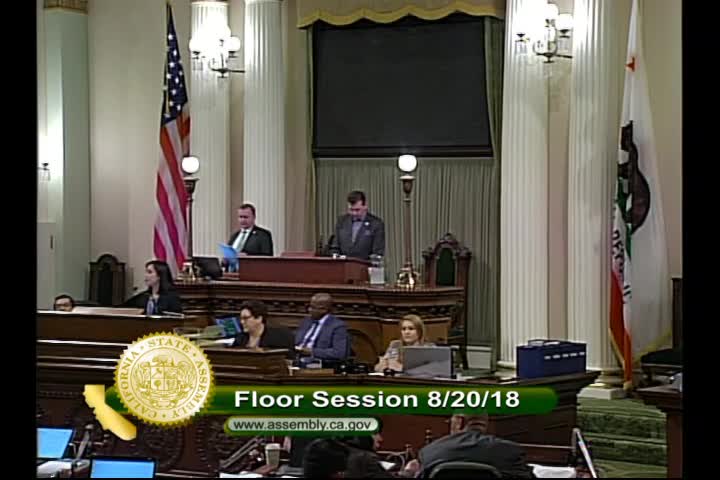 56SEC
Assembly Floor
 2MIN
Senate Standing Committee on Appropriations
 3MIN
Senate Standing Committee on Governance and Finance
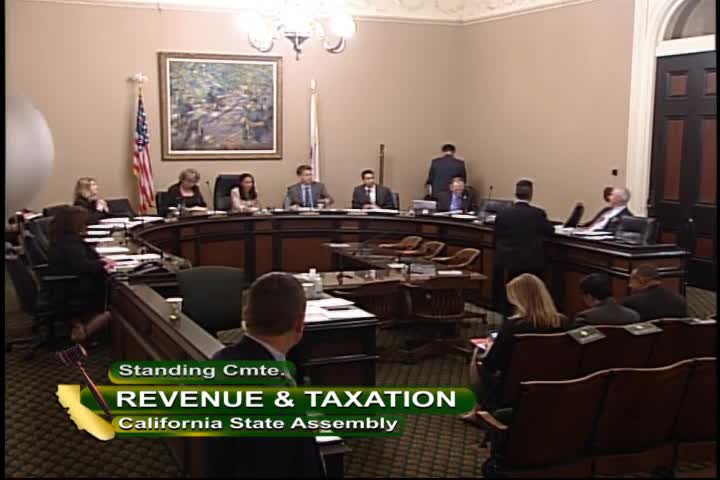 4MIN
Assembly Standing Committee on Revenue and Taxation
Bill Author

Bill Co-Author(s):