AB 296: Task force: health of women veterans.
- Session Year: 2017-2018
- House: Assembly
- Latest Version Date: 2017-09-13
Existing law establishes the Department of Veterans Affairs and requires the department to develop a transition assistance program to assist veterans successfully transition from military to civilian life and complement the transition program offered by the United States Department of Defense.
This bill would, until July 1, 2023, require the department to create a task force to study the health of California women veterans comprised of members with specified qualifications. The bill would prohibit task force members from receiving compensation or reimbursement of expenses for their service. The bill would require the task force to study the health care needs of women veterans in the state, as specified. The bill would also require the task force to submit 2 reports to the Governor and the appropriate policy committees of the Legislature that includes the task forces findings and recommendations. The bill would require the task force, when conducting its study and preparing its reports, to consult with the United States Department of Veterans Affairs, the State Department of Public Health, the Department of Managed Health Care, and representatives of county veterans service offices.
Existing law establishes the Department of Veterans Affairs and requires the department to develop a transition assistance program to assist veterans successfully transition from military to civilian life and complement the transition program offered by the United States Department of Defense.
This bill would, until July 1, 2023, establish the Task Force on California Women Veterans Health Care, within the department, comprised of 9 voting members appointed by the Secretary of Veteran Affairs. require the department to create a task force to study the health of California women veterans comprised of members with specified qualifications. The bill would prohibit task force members from receiving compensation or reimbursement of expenses for their service. The bill would require the secretary to designate an employee of the department to serve as a nonvoting representative of the department to the task force and would require the department to provide staff support to the task force. The bill would require the task force to study the health care needs of women veterans in the state, as specified. The bill would also require the task force to submit an annual report, commencing on or before January 1, 2021, and until January 1, 2023, inclusive, 2 reports to the Governor and the appropriate policy committees of the Legislature that includes the task forces findings and recommendations. The bill would require the task force, when conducting its study and preparing its annual report, reports, to consult with the United States Department of Veterans Affairs, the State Department of Public Health, the Department of Managed Health Care, and representatives of county veterans service offices.
Existing law establishes the Department of Veterans Affairs and requires the department to develop a transition assistance program to assist veterans successfully transition from military to civilian life and complement the transition program offered by the United States Department of Defense.
This bill would, until July 1, 2023, establish the Task Force on California Women Veterans Health Care, within the department, comprised of 9 voting members appointed by the Secretary of Veteran Affairs. The bill would prohibit task force members from receiving compensation or reimbursement of expenses for their service. The bill would require the secretary to designate an employee of the department to serve as a nonvoting representative of the department to the task force and would require the department to provide staff support to the task force. The bill would require the task force to study the health care needs of women veterans in the state, as specified. The bill would also require the task force to submit an annual report, commencing on or before January 1, 2021, and until January 1, 2023, inclusive, to the Governor and the appropriate policy committees of the Legislature that includes the task forces findings and recommendations. The bill would require the task force, when conducting its study and preparing its annual report, to consult with the United States Department of Veterans Affairs, the State Department of Public Health, the Department of Managed Health Care, and representatives of county veterans service offices.
Existing law establishes a statewide system of courts with a superior court of one or more judges in each county. Existing law authorizes the Judicial Council to prescribe the methods, means, and standards for electronic collection of data related to court administration, practice, and procedure.This bill would require the Judicial Council to report to the Legislature on a study of veterans and veterans treatment courts that includes a statewide assessment, as specified, of veterans treatment courts currently in operation and a survey of counties that do not operate veterans treatment courts that identifies barriers to program implementation and assesses the need for veterans treatment courts in those counties, if funds are received for that purpose. The bill would require the Judicial Council to report to the Legislature on the results of the study, as specified, on or before June 1, 2019. The bill would create the Veterans Court Assessment Fund in the State Treasury, administered by the Judicial Council, and would authorize the fund to accept private donations, as specified. The bill would appropriate specified sums from the Veterans Court Assessment Fund and from the General Fund for the purpose of conducting the study and report.Existing law establishes a statewide system of courts with a superior court of one or more judges in each county. Existing law authorizes the Judicial Council to prescribe the methods, means, and standards for electronic collection of data related to court administration, practice, and procedure.
This bill would require the Judicial Council to report to the Legislature on a study of veterans and veterans treatment courts that includes a statewide assessment, as specified, of veterans treatment courts currently in operation and a survey of counties that do not operate veterans treatment courts that identifies barriers to program implementation and assesses the need for veterans treatment courts in those counties, if funds are received for that purpose. The bill would require the Judicial Council to report to the Legislature on the results of the study, as specified, on or before June 1, 2019. The bill would create the Veterans Court Assessment Fund in the State Treasury, administered by the Judicial Council, and would authorize the fund to accept private donations, as specified. The bill would appropriate specified sums from the Veterans Court Assessment Fund and from the General Fund for the purpose of conducting the study and report.
The Legislature finds and declares all of the following:
(a)Recently, each branch of the Armed Forces of the United States has opened to women combat positions that were previously closed to women.
(b)According to the United States Department of Veterans Affairs, the projected veterans population nationwide is approximately 23,000,000, with women making up an estimated 10 percent of that population.
(c)The United States Department of Veterans Affairs estimates the percentage of female veterans will increase from approximately 9 percent in 2010 to approximately 18 percent in 2040.
(d)Females comprise approximately 80,000 of the wartime veterans.
(e)The number of women veterans will continue to increase due to ongoing combat operations in the Middle East and Afghanistan.
(f)Women veterans often face unique challenges when transitioning from active duty to civilian life.
(g)The challenging needs facing women veterans can often be overlooked when providing services to the very large veteran population.
(h)Ensuring the availability of specialized services for physical and mental health, including treatment of post-traumatic stress disorder, traumatic brain injury, military sexual trauma, and alcohol and substance abuse tailored to the specific needs of women veterans is essential if California is to ensure that our returning veterans receive proper care.
(i)Establishing a task force to study the health issues facing women veterans and making recommendations to the Governor and the Legislature will provide much needed information and insight.
SEC. 2.Section 73.2 is added to the Military and Veterans Code, to read:73.2.(a)(1)The department shall create a task force to study the health of California women veterans.
(2)Each member of the task force shall be a veteran, have experience in providing treatment to veterans, or be a subject matter expert in health care or mental health care. Task force members shall be volunteers and shall not receive compensation or reimbursement of expenses for their services, including travel or other expenses incurred to participate in task force meetings or per diem.
(b)The task force shall study the health care needs of women veterans in the state, including, but not limited to, all of the following:
(1)The quality of, and access to, mental health services, including services and treatment for post-traumatic stress disorder and traumatic brain injury.
(2)Inpatient treatment availability.
(3)The adequacy and availability of appropriate health care for women veterans within the federal health care system and within the state.
(4)The adequacy and quality of, and access to, services providing for the identification and treatment of military sexual trauma, including sexual harassment or abuse.
(c)The task force shall submit a report, on or before January 1, 2021, and on or within six months before January 1, 2023, to the Governor and the appropriate policy committees of the Legislature that have jurisdiction over the department, including the findings of the task forces study and recommendations to improve provision of health care services to women veterans in the state.
(d)The task force, when conducting its study and preparing its reports, shall consult with the United States Department of Veterans Affairs, the State Department of Public Health, the Department of Managed Health Care, and representatives of county veterans service offices.
(e)This section shall become inoperative on July 1, 2023, and, as of January 1, 2024, is repealed, unless a later enacted statute, that becomes operative on or before January 1, 2024, deletes or extends the dates on which it becomes inoperative and is repealed.
The Legislature hereby makes the following findings and declarations: finds and declares all of the following:
(a)Recently, each branch of the Armed Forces of the United States has opened to women combat positions that were previously closed to women.
(b)According to the United States Department of Veterans Affairs, the projected veterans population nationwide is approximately 23,000,000, with women making up an estimated 10 percent of that population.
(c)The United States Department of Veterans Affairs estimates the percentage of female veterans will increase from approximately 9 percent in 2010 to approximately 18 percent in 2040.
(d)Females comprise approximately 80,000 of the wartime veterans.
(e)The number of women veterans will continue to increase due to ongoing combat operations in the Middle East and Afghanistan.
(f)Women veterans often face unique challenges when transitioning from active duty to civilian life.
(g)The challenging needs facing women veterans can often be overlooked when providing services to the very large veteran population.
(h)Ensuring the availability of specialized services for physical and mental health, including treatment of post-traumatic stress disorder, traumatic brain injury, military sexual trauma, and alcohol and substance abuse tailored to the specific needs of women veterans is essential if California is to ensure that our returning veterans receive proper care.
(i)Establishing a task force to study the health issues facing women veterans and making recommendations to the Governor and the Legislature will provide much needed information and insight.
SEC. 2.Section 73.2 is added to the Military and Veterans Code, to read:73.2.(a)(1)The department shall create a task force to study the health of California women veterans.
(2)Each member of the task force shall be a veteran, have experience in providing treatment to veterans, or be a subject matter expert in health care or mental health care. Task force members shall be volunteers and shall not receive compensation or reimbursement of expenses for their service, services, including travel or other expenses incurred to participate in task force meetings or per diem.
(b)The task force shall study the health care needs of women veterans in the state, including, but not limited to, all of the following:
(1)The quality of, and access to, mental health services, including services and treatment for post-traumatic stress disorder and traumatic brain injury.
(2)Inpatient treatment availability.
(3)The adequacy and availability of appropriate health care for women veterans within the federal health care system and within the state.
(4)The adequacy and quality of, and access to, services providing for the identification and treatment of military sexual trauma, including sexual harassment or abuse.
(c)The task force shall submit a report, on or before January 1, 2021, and on or within six months before January 1, 2023, to the Governor and the appropriate policy committees of the Legislature that have jurisdiction over the department, including the findings of the task forces study and recommendations to improve provision of health care services to women veterans in the state.
(d)The task force, when conducting its study and preparing its reports, shall consult with the United States Department of Veterans Affairs, the State Department of Public Health, the Department of Managed Health Care, and representatives of county veterans service offices.
(e)This section shall become inoperative on July 1, 2023, and, as of January 1, 2024, is repealed, unless a later enacted statute, that becomes operative on or before January 1, 2024, deletes or extends the dates on which it becomes inoperative and is repealed.
The Legislature hereby makes the following findings and declarations:
(a)Recently, each branch of the Armed Forces of the United States has opened to women combat positions that were previously closed to women.
(b)According to the United States Department of Veterans Affairs, the projected veterans population nationwide is approximately 23,000,000, with women making up an estimated 10 percent of that population.
(c)The United States Department of Veterans Affairs estimates the percentage of female veterans will increase from approximately 9 percent in 2010 to approximately 18 percent in 2040.
(d)Females comprise approximately 80,000 of the wartime veterans.
(e)The number of women veterans will continue to increase due to ongoing combat operations in the Middle East and Afghanistan.
(f)Women veterans often face unique challenges when transitioning from active duty to civilian life.
(g)The challenging needs facing women veterans can often be overlooked when providing services to the very large veteran population.
(h)Ensuring the availability of specialized services for physical and mental health, including treatment of post-traumatic stress disorder, traumatic brain injury, military sexual trauma, and alcohol and substance abuse tailored to the specific needs of women veterans is essential if California is to ensure that our returning veterans receive proper care.
(i)Establishing a task force to study the health issues facing women veterans and making recommendations to the Governor and the Legislature will provide much needed information and insight.
SEC. 2.Section 73.2 is added to the Military and Veterans Code, to read:73.2.(a)(1)There is hereby created within the department the Task Force on California Women Veterans Health Care. The department shall create a task force to study the health of California women veterans.
(2)The task force shall be comprised of nine voting members appointed by the secretary.(3)Task(2)Each member of the task force shall be a veteran, have experience in providing treatment to veterans, or be a subject matter expert in health care or mental health care. Task force members shall be volunteers and shall not receive compensation or reimbursement of expenses for their service, including travel or other expenses incurred to participate in task force meetings or per diem.
(b)The secretary shall designate an employee of the department to serve as a nonvoting representative of the department to the task force. The department shall provide staff support to the task force.(c)(b)The task force shall study the health care needs of women veterans in the state, including, but not limited to, all of the following:
(1)The quality of, and access to, mental health services, including services and treatment for post-traumatic stress disorder and traumatic brain injury.
(2)Inpatient treatment availability.
(3)The adequacy and availability of appropriate health care for women veterans within the federal health care system and within the state.
(4)The adequacy and quality of, and access to, services providing for the identification and treatment of military sexual trauma, including sexual harassment or abuse.
(d)(c)The task force shall submit an annual a report, commencing on or before January 1, 2021, and until on or within six months before January 1, 2023, inclusive, to the Governor and the appropriate policy committees of the Legislature that have jurisdiction over the department, including the findings of the task forces study and recommendations to improve provision of health care services to women veterans in the state.
(e)(d)The task force, when conducting its study and preparing its annual report, reports, shall consult with the United States Department of Veterans Affairs, the State Department of Public Health, the Department of Managed Health Care, and representatives of county veterans service offices.
(f)(e)This section shall become inoperative on July 1, 2023, and, as of January 1, 2024, is repealed, unless a later enacted statute, that becomes operative on or before January 1, 2024, deletes or extends the dates on which it becomes inoperative and is repealed.
The Legislature hereby makes the following findings and declarations:
(a)Recently, each branch of the Armed Forces of the United States has opened to women combat positions that were previously closed to women.
(b)According to the United States Department of Veterans Affairs, the projected veterans population nationwide is approximately 23,000,000, with women making up an estimated 10 percent of that population.
(c)The United States Department of Veterans Affairs estimates the percentage of female veterans will increase from approximately 9 percent in 2010 to approximately 18 percent in 2040.
(d)Females comprise approximately 80,000 of the wartime veterans.
(e)The number of women veterans will continue to increase due to ongoing combat operations in the Middle East and Afghanistan.
(f)Women veterans often face unique challenges when transitioning from active duty to civilian life.
(g)The challenging needs facing women veterans can often be overlooked when providing services to the very large veteran population.
(h)Ensuring the availability of specialized services for physical and mental health, including treatment of post-traumatic stress disorder, traumatic brain injury, military sexual trauma, and alcohol and substance abuse tailored to the specific needs of women veterans is essential if California is to ensure that our returning veterans receive proper care.
(i)Establishing a task force to study the health issues facing women veterans and making recommendations to the Governor and the Legislature will provide much needed information and insight.
SEC. 2.Section 73.2 is added to the Military and Veterans Code, to read:73.2.(a)(1)There is hereby created within the department the Task Force on California Women Veterans Health Care.
(2)The task force shall be comprised of nine voting members appointed by the secretary.
(3)Task force members shall not receive compensation or reimbursement of expenses for their service, including travel or other expenses incurred to participate in task force meetings or per diem.
(b)The secretary shall designate an employee of the department to serve as a nonvoting representative of the department to the task force. The department shall provide staff support to the task force.
(c)The task force shall study the health care needs of women veterans in the state, including, but not limited to, all of the following:
(1)The quality of, and access to, mental health services, including services and treatment for post-traumatic stress disorder and traumatic brain injury.
(2)Inpatient treatment availability.
(3)The adequacy and availability of appropriate health care for women veterans within the federal health care system and within the state.
(4)The adequacy and quality of, and access to, services providing for the identification and treatment of military sexual trauma, including sexual harassment or abuse.
(d)The task force shall submit an annual report, commencing on or before January 1, 2021, and until January 1, 2023, inclusive, to the Governor and the appropriate policy committees of the Legislature that have jurisdiction over the department, including the findings of the task forces study and recommendations to improve provision of health care services to women veterans in the state.
(e)The task force, when conducting its study and preparing its annual report, shall consult with the United States Department of Veterans Affairs, the State Department of Public Health, the Department of Managed Health Care, and representatives of county veterans service offices.
(f) This section shall become inoperative on July 1, 2023, and, as of January 1, 2024, is repealed, unless a later enacted statute, that becomes operative on or before January 1, 2024, deletes or extends the dates on which it becomes inoperative and is repealed.
SECTION 1.Section 68530 is added to the Government Code, to read:68530.(a)If the Judicial Council receives funds for the purpose of implementing this section, the Judicial Council shall report to the Legislature on a study of veterans and veterans treatment courts that includes the following:(1)A statewide assessment of the veterans treatment courts currently in operation that includes the number of veteran participants in the program, services available, and program outcomes, including successful completion or program terminations. The assessment shall evaluate the impact of a sample of veterans treatment courts on participant outcomes, including, but not limited to, program recidivism, mental health, homelessness, employment, social stability, and substance abuse.(2)A survey of counties that do not operate veterans treatment courts that identifies barriers to program implementation and assesses the need for veterans treatment courts in those jurisdictions based on the veterans services available and the estimated number of veterans involved in the local criminal justice system. The survey shall identify alternative resources that may be available to veterans, such as community courts or other collaborative justice courts.(b)On or before June 1, 2019, the Judicial Council shall report to the Legislature on the results of the study described in subdivision (a). The report shall include recommendations regarding the expansion of veterans treatment courts or services to counties without veterans treatment courts and shall explore the feasibility of designing regional model veterans treatment courts through the use of service coordination or technological resources. The report shall be submitted in compliance with Section 9795.(c)Fifty percent of the funds required for the study and report described in this section shall be funded by private sources, and 50 percent of the funds shall be funded by the state, upon appropriation by the Legislature.(d)The Veterans Court Assessment Fund is hereby created in the State Treasury. The fund shall be administered by the Judicial Council. The fund may accept private donations from entities and individuals. The Judicial Council shall deposit the donations into the fund.(e)This section shall remain in effect only until January 1, 2020, and as of that date is repealed, unless a later enacted statute, that is enacted before January 1, 2020, deletes or extends that date.SEC. 2.The sum of one hundred thousand dollars ($100,000) is hereby appropriated from the Veterans Court Assessment Fund to the Judicial Council for the purpose of conducting the study and report described in Section 68530 of the Government Code.SEC. 3.The sum of one hundred thousand dollars ($100,000) is hereby appropriated from the General Fund to the Judicial Council for the purpose of conducting the study and report described in Section 68530 of the Government Code.(a)If the Judicial Council receives funds for the purpose of implementing this section, the Judicial Council shall report to the Legislature on a study of veterans and veterans treatment courts that includes the following:
(1)A statewide assessment of the veterans treatment courts currently in operation that includes the number of veteran participants in the program, services available, and program outcomes, including successful completion or program terminations. The assessment shall evaluate the impact of a sample of veterans treatment courts on participant outcomes, including, but not limited to, program recidivism, mental health, homelessness, employment, social stability, and substance abuse.
(2)A survey of counties that do not operate veterans treatment courts that identifies barriers to program implementation and assesses the need for veterans treatment courts in those jurisdictions based on the veterans services available and the estimated number of veterans involved in the local criminal justice system. The survey shall identify alternative resources that may be available to veterans, such as community courts or other collaborative justice courts.
(b)On or before June 1, 2019, the Judicial Council shall report to the Legislature on the results of the study described in subdivision (a). The report shall include recommendations regarding the expansion of veterans treatment courts or services to counties without veterans treatment courts and shall explore the feasibility of designing regional model veterans treatment courts through the use of service coordination or technological resources. The report shall be submitted in compliance with Section 9795.
(c)Fifty percent of the funds required for the study and report described in this section shall be funded by private sources, and 50 percent of the funds shall be funded by the state, upon appropriation by the Legislature.
(d)The Veterans Court Assessment Fund is hereby created in the State Treasury. The fund shall be administered by the Judicial Council. The fund may accept private donations from entities and individuals. The Judicial Council shall deposit the donations into the fund.
(e)This section shall remain in effect only until January 1, 2020, and as of that date is repealed, unless a later enacted statute, that is enacted before January 1, 2020, deletes or extends that date.
SEC. 2.The sum of one hundred thousand dollars ($100,000) is hereby appropriated from the Veterans Court Assessment Fund to the Judicial Council for the purpose of conducting the study and report described in Section 68530 of the Government Code.
SEC. 3.The sum of one hundred thousand dollars ($100,000) is hereby appropriated from the General Fund to the Judicial Council for the purpose of conducting the study and report described in Section 68530 of the Government Code.
|
Date
|
Status
|
|---|---|
| Jan 12, 2018 | Stricken from file. |
| Jan 3, 2018 | Consideration of Governor's veto pending. |
| Oct 13, 2017 | Vetoed by Governor. |
| Sep 18, 2017 | Enrolled and presented to the Governor at 4 p.m. |
| Sep 11, 2017 | Senate amendments concurred in. To Engrossing and Enrolling. |
| Sep 7, 2017 | In Assembly. Concurrence in Senate amendments pending. May be considered on or after September 9 pursuant to Assembly Rule 77. |
| Sep 7, 2017 | Read third time. Passed. Ordered to the Assembly. |
| Sep 5, 2017 | Read second time. Ordered to third reading. |
| Sep 1, 2017 | From committee: Do pass. (Ayes 7. Noes 0.) (September 1). |
| Aug 21, 2017 | In committee: Referred to APPR. suspense file. |
| Jul 11, 2017 | From committee: Do pass and re-refer to Com. on APPR. (Ayes 6. Noes 0.) (July 11). Re-referred to Com. on APPR. |
| Jun 28, 2017 | From committee chair, with author's amendments: Amend, and re-refer to committee. Read second time, amended, and re-referred to Com. on V.A. |
| Jun 14, 2017 | Referred to Com. on V.A. |
| Jun 1, 2017 | In Senate. Read first time. To Com. on RLS. for assignment. |
| May 31, 2017 | Read third time. Passed. Ordered to the Senate. (Ayes 77. Noes 0. Page 1925.) |
| May 30, 2017 | Read second time. Ordered to third reading. |
| May 26, 2017 | From committee: Amend, and do pass as amended. (Ayes 16. Noes 0.) (May 26). |
| May 10, 2017 | In committee: Set, first hearing. Referred to APPR. suspense file. |
| Apr 26, 2017 | From committee: Do pass and re-refer to Com. on APPR. (Ayes 10. Noes 0.) (April 25). Re-referred to Com. on APPR. |
| Mar 30, 2017 | From committee: Be re-referred to Com. on V.A. Re-referred. (Ayes 10. Noes 0.) (March 30). Re-referred to Com. on V.A. |
| Mar 16, 2017 | Re-referred to Com. on RLS. pursuant to Assembly Rule 96. |
| Mar 14, 2017 | Re-referred to Com. on PUB. S. |
| Mar 13, 2017 | From committee chair, with author's amendments: Amend, and re-refer to Com. on PUB. S. Read second time and amended. |
| Feb 13, 2017 | Referred to Coms. on PUB. S. and V.A. |
| Feb 7, 2017 | From printer. May be heard in committee March 9. |
| Feb 6, 2017 | Read first time. To print. |
|
Date
|
Description
|
Location
|
Votes
|
|
|---|---|---|---|---|
| Sep 11, 2017 | AB 296 CERVANTES Concurrence in Senate Amendments | Assembly Floor |
Passed |
|
| Sep 7, 2017 | Assembly 3rd Reading AB296 Cervantes et al. By Jackson | Senate Floor |
Passed |
|
| Sep 1, 2017 | Do pass | Senate Standing Committee on Appropriations |
Passed |
|
| Aug 21, 2017 | Placed on suspense file | Senate Standing Committee on Appropriations |
Passed |
|
| Jul 11, 2017 | Do pass, but first be re-referred to the Committee on [Appropriations] | Senate Standing Committee on Veterans Affairs |
Passed |
|
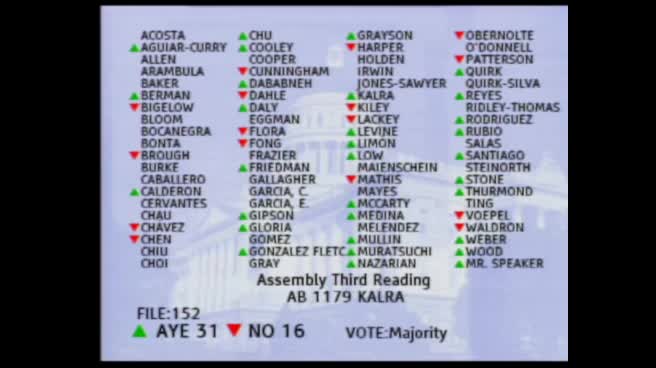
| May 31, 2017 | AB 296 CERVANTES Assembly Third Reading | Assembly Floor |
Passed |
|
| May 26, 2017 | Do pass as amended. | Assembly Standing Committee on Appropriations |
Passed |
|
| Apr 25, 2017 | Do pass and be re-referred to the Committee on [Appropriations] | Assembly Standing Committee on Veterans Affairs |
Passed |
|
| Mar 30, 2017 | Be re-referred to the Committee on [Veterans Affairs] | Assembly Standing Committee on Rules |
Passed |
This list shows positions taken on this bill by organizations on the date displayed, which is linked to the original source.
Positions by individuals are not included.
|
Organization
|
Position
|
Date
|
|---|---|---|
| American G.I. Forum of California | ** Support | Sep 3, 2017 |
| American Legion- Department of California | ** Support | Sep 3, 2017 |
| AMVETS- Department of California | ** Support | Sep 3, 2017 |
| California Access Coalition | ** Support | Sep 3, 2017 |
| California Association of County Veteran Service Officers | ** Support | Sep 3, 2017 |
| California Council Of Community Behavioral Health Agencies | ** Support | Sep 3, 2017 |
| California State Commanders Service Council | ** Support | Sep 3, 2017 |
| Depression And Bipolar Support Alliance | ** Support | Sep 3, 2017 |
| Military Officers Association- California Council of Chapters | ** Support | Sep 3, 2017 |
| Veterans Accredited Council | * Support | Apr 25, 2017 |
| Vietnam Veterans Of America, California State Council | ** Support | Sep 3, 2017 |
GOVERNOR'S VETO
GV Bill Id:AB 296
Author:(Cervantes and Mathis)
As Enrolled Ver:September 13, 2017
2/3 vote
ASSEMBLY: | 77-0 | (May 31, 2017) | SENATE: | 40-0 | (September 7, 2017) |
ASSEMBLY: | 79-0 | (September 11, 2017) |
Original Committee Reference: V.A.
SUMMARY: This bill requires the California Department of Veterans Affairs (CalVet) to establish a task force to study the health of California women veterans.
The Senate amendments make non-substantive stylistic changes.
EXISTING LAW: Establishes the California Department of Veterans Affairs.
FISCAL EFFECT: According to the Senate Appropriations Committee, potentially significant costs to CalVet, likely in the low hundreds of thousands of dollars, for staffing to support the task force and to prepare the reports to the Governor and Legislature, as well as potentially significant cost pressure to CalVet to implement any recommendations developed by the task force.
COMMENTS: There are approximately 2.3 million women veterans in the United States, or 10% of the total number of veterans, and many women have already served in combat zones. The proportion of women veterans is expected to rise to 18% by 2040. It is important that the state seek to ensure the availability of specialized services, tailored to the specific needs of women, for physical and mental health.
This bill requires the task force study the health care needs of veteran women, including:
- Post-Traumatic Stress Disorder (PTSD) and Traumatic Brain Injury (TBI)
- Military Sexual Trauma, including sexual harassment or abuse
- Alcohol and substance abuse
- The quality and access to health services
According to the author:
Women now bravely serve in combat roles in all branches of the U.S. [United States] Military. By 2040, 18% of all veterans in the United States are projected be women. Now, more than ever, the unique challenges and distinct needs of women veterans need to be considered and understood. AB 296 will create a task force within CalVet to study the mental health and health needs of our women veterans. It will better equip our state and relevant stakeholders with needed information on how to best serve this quickly-growing and vital veteran population.
This bill requires the California Department of Veterans Affairs to create a task force to study the health of California's women veterans.
While I understand the author's intent, the department is already a member of an existing task force that has been studying women veteran health issues for more than a year. This bill is duplicative of this current effort.
Analysis Prepared by: Christian Burkin / V.A. / (916) 319-3550 FN: 0002492
CONCURRENCE IN SENATE AMENDMENTS
CSA1 Bill Id:AB 296
Author:(Cervantes and Mathis)
As Amended Ver:June 28, 2017
Majority vote
ASSEMBLY: | 77-0 | (May 31, 2017) | SENATE: | 40-0 | (September 7, 2017) |
Original Committee Reference: V.A.
SUMMARY: This bill requires the California Department of Veterans Affairs (CalVet) to establish a task force to study the health of California women veterans.
The Senate amendments make non-substantive stylistic changes.
EXISTING LAW: Establishes the California Department of Veterans Affairs.
FISCAL EFFECT: According to the Senate Committee on Appropriations, potentially significant costs to CalVet, likely in the low hundreds of thousands of dollars, for staffing to support the task force and to prepare the reports to the Governor and Legislature, as well as potentially significant cost pressure to CalVet to implement any recommendations developed by the task force.
COMMENTS: There are approximately 2.3 million women veterans in the United States, or 10% of the total number of veterans, and many women have already served in combat zones. The proportion of women veterans is expected to rise to 18% by 2040. It is important that the state seek to ensure the availability of specialized services, tailored to the specific needs of women, for physical and mental health.
This bill requires the task force study the health care needs of veteran women, including:
- Post-Traumatic Stress Disorder (PTSD) and Traumatic Brain Injury (TBI)
- Military Sexual Trauma, including sexual harassment or abuse
- Alcohol and substance abuse
- The quality and access to health services
According to the author:
Women now bravely serve in combat roles in all branches of the U.S. [United States] Military. By 2040, 18% of all veterans in the United States are projected be women. Now, more than ever, the unique challenges and distinct needs of women veterans need to be considered and understood. AB 296 will create a task force within CalVet to study the mental health and health needs of our women veterans. It will better equip our state and relevant stakeholders with needed information on how to best serve this quickly-growing and vital veteran population.
Analysis Prepared by: Christian Burkin / V.A. / (916) 319-3550 FN: 0001953
Office of Senate Floor Analyses (916) 651-1520 Fax: (916) 327-4478 | AB |
THIRD READING
Bill No: AB 296
:
SENATE VETERANS AFFAIRS COMMITTEE: 6-0, 7/11/17
AYES: Newman, Dodd, Hueso, Nguyen, Roth, Wilk
NO VOTE RECORDED: Nielsen
SENATE APPROPRIATIONS COMMITTEE: 7-0, 9/1/17
AYES: Lara, Bates, Beall, Bradford, Hill, Nielsen, Wiener
ASSEMBLY FLOOR: 77-0, 5/31/17 - See last page for vote
DIGEST:
This bill establishes the Task Force on California Women Veterans Health Care and provides for its mission, reporting responsibilities, and timelines.
ANALYSIS: Existing law establishes the California Department of Veterans Affairs (CalVet).
This bill requires – until July 1, 2023 – CalVet to create and manage a task force intended to study the health of California women veterans and comprised of members with specified qualifications. Specifically this bill:
- Requires each member of the task force to be a veteran, have experience treating veterans, or be a subject matter expert in health or mental health care.
- Requires task force members to be volunteers and prohibits them from receiving compensation or reimbursement for expenses for their service.
- Requires the task force to study the health care needs of women veterans in the state, including:
- Post-traumatic stress disorder (PTSD) and traumatic brain injury.
- Military sexual trauma (MST), including sexual harassment or abuse.
- Alcohol and substance abuse.
- The quality and access to health services.
- Requires the task force to submit a report, on or before January 1, 2021, and on or within six months before January 1, 2023, to the Governor and the appropriate policy committees of the Legislature that include the task force's findings and recommendations.
- Requires the task force, when conducting its study and preparing its reports, to consult with the United States Department of Veterans Affairs (USDVA), California Department of Public Health, California Department of Managed Health Care, and representatives of county veterans service offices.
Background
California is home to approximately 1.8 million veterans. (170,000 females.)
For various reasons, women veterans are less inclined to seek needed veterans benefits than are their male counterparts. In 2016 and in partnership with Army OneSource, CalVet, and the Women Veterans Alliance, women veterans formed the California Women Veterans Leadership Council. The Council’s mission is to improve the quality of life of California’s women Veterans, including aspects of their education, career success, physical health, and mental well-being.
The USDVA reports that women are the fastest growing veteran demographic cohort. As of 2011, about 1.8 million (eight percent) of the nation’s 22.2 million veterans were women. The male veteran population is projected to decrease from 20.2 million men in 2010 to 16.7 million by 2020. In contrast, the number of women veterans will increase from 1.8 million in 2011 to two million in 2020, at which time women will constitute 10.7 percent of the total veteran population.
State and federal veterans service providers still do not address the comprehensive needs of women veterans nor do they provide certain services and benefits for which women veterans have a greater need relative to their male counterparts.
USDVA’s Web site provides the following information regarding women veterans:
- Higher physical and mental health needs. According to USDVA, a higher proportion of female veterans (22 percent) are diagnosed with mental health problems than male veterans. The most common diagnoses among women veterans seeking care are PTSD, hypertension, depression, high cholesterol, low back pain, gynecologic problems, and diabetes. Studies show that 31 percent of women veterans have both medical and mental health conditions compared with 24 percent of male veterans.
- Higher incidence of MST. One in five women Veterans who use VA for health care screen positive for MST. Women who enter the military at younger ages and those of enlisted rank appear to be at increased risk for MST. In addition, women who have had sexual assaults prior to military service report higher incidences of MST. MST has been associated with increased risk of depression, PTSD, and substance abuse. Females experiencing MST are more than four times more likely to have PTSD and are at six-fold increased risk for having three or more mental health conditions. The rate of suicide among female vets is higher than among female non-veterans: 18.9 per 100,000 compared to 7.2 per 100,000 among female civilians. Women veterans with PTSD who are pregnant are at higher risk for adverse maternal and infant outcomes, such as increased risk of lower birth weight and preterm delivery.
- Gender-based disparities in healthcare quality. Health care quality scores in many areas, including in preventive care services, are significantly worse for women veterans compared to male veterans.
- Higher rates of homelessness. While the overall number of homeless veterans is declining, the number of homeless women veterans is increasing. Women Veterans are the fastest growing segment of the homeless population and are at higher risk of homelessness than their male counterparts.
FISCAL EFFECT: Appropriation: No Fiscal Com.: Yes Local: No
According to the Senate Appropriations Committee:
- Potentially significant costs to CalVet, likely in the low hundreds of thousands of dollars, for staffing to support the task force and to prepare the reports to the Governor and Legislature. (GF)
- Potentially significant cost pressure to CalVet to implement any recommendations developed by the task force. (GF)
American G.I. Forum of California
American Legion- Department of California
AMVETS- Department of California
California Association of County Veteran Service Officers
California Access Coalition
California Council of Community Behavioral Health Agencies
California State Commanders Service Council
Depression and Bipolar Support Alliance
Military Officers Association- California Council of Chapters
Vietnam Veterans of America, California State Council
None received
ASSEMBLY FLOOR: 77-0, 5/31/17
AYES: Acosta, Aguiar-Curry, Travis Allen, Arambula, Baker, Berman, Bigelow, Bloom, Bocanegra, Bonta, Brough, Burke, Caballero, Calderon, Cervantes, Chau, Chávez, Chen, Chiu, Chu, Cooley, Cooper, Cunningham, Dababneh, Dahle, Daly, Flora, Fong, Frazier, Friedman, Gallagher, Cristina Garcia, Eduardo Garcia, Gipson, Gloria, Gomez, Gonzalez Fletcher, Gray, Grayson, Harper, Holden, Irwin, Jones-Sawyer, Kalra, Kiley, Lackey, Levine, Limón, Low, Maienschein, Mathis, Mayes, McCarty, Medina, Mullin, Muratsuchi, Nazarian, Obernolte, O'Donnell, Patterson, Quirk, Quirk-Silva, Reyes, Ridley-Thomas, Rodriguez, Rubio, Salas, Santiago, Steinorth, Mark Stone, Thurmond, Ting, Voepel, Waldron, Weber, Wood, Rendon
NO VOTE RECORDED: Choi, Eggman, Melendez
9/3/17 18:22:44
**** END ****
SENATE COMMITTEE ON APPROPRIATIONS
Senator Ricardo Lara, Chair
2017 - 2018 Regular Session
AB 296 (Cervantes) - Task force: health of women veterans
Version: June 28, 2017 | Policy Vote: V.A. 6 - 0 |
Urgency: No | Mandate: No |
Hearing Date: August 21, 2017 | Consultant: Debra Cooper |
This bill meets the criteria for referral to the Suspense File.
Bill Summary:
AB 296 would require the California Department of Veterans Affairs (CalVet) to establish a task force to study the health of California women veterans.
Fiscal Impact:
- Potentially significant costs to CalVet, likely in the low hundreds of thousands of dollars, for staffing to support the task force and to prepare the reports to the Governor and Legislature. (GF)
- Potentially significant cost pressure to CalVet to implement any recommendations developed by the task force. (GF)
Background:
California is home to nearly 180,000 women veterans, making up almost 10% of the veteran population in the state.
According to a report released by the California Research Bureau in July 2012, many women veterans identified a need for help in transitioning from military service to civilian life. Specifically, amongst other issues, women veterans cited need for assistance in finding gender-specific care in health and mental health services and military sexual trauma treatment. In 2014, a Women Veterans Outreach Toolkit was released to provide information about resources and services specifically for women veterans and to encourage women veterans to register on MyCalVet, the Women Veterans Roster and other services.
In 2016, women veterans, in partnership with Army OneSource, CalVet, and the Women Veterans Alliance, formed a California Women Veterans Leadership Council to improve the quality of life of California’s women veterans, including aspects of their education, career success, physical health, and mental well-being. The Council’s first year goal was to educate themselves on the issues that currently affect women veterans such as increased suicide rates, military sexual trauma, access to female- designated primary care providers, affordable family housing, and employment opportunities. CalVet advises the California Women Veterans Leadership Council.
Proposed Law:
This bill would require CalVet to establish a task force to study the health of California women veterans. Specifically, this bill would:
- Require each member of the task force to be a veteran, have experience in providing treatment to veterans, or be a subject matter expert in health care or mental health care;
- Prohibit task force members from receiving compensation or reimbursement of expenses for their services while volunteering on the task force;
- Require the task force to study the health care needs of women veterans in the state, including, but not limited to the quality of and access to mental health services and services providing for the identification and treatment of military sexual trauma, inpatient treatment availability; and the adequacy and availability of appropriate health care for women veterans within the federal health care system and within the state;
- Require the task force to submit a report, on or before January 1, 2021, and on or within six months before January 1, 2023, to the Governor and the appropriate policy committees of the Legislature, including the findings of the task force’s study and recommendations to improve provision of health care services to women veterans in the state;
- Require the task force to consult with the United States Department of Veterans Affairs, the State Department of Public Health, the Department of Managed Health Care, and representatives of county veterans service offices when conducting its study and preparing its reports;
- Sunset these provisions on July 1, 2023.
Staff Comments:
CalVet advises the recently formed California Women Veterans Leadership Council. The department may be able to build off of, or work in concert with the efforts already under way by the Council. If efforts are aligned, it is possible that some costs for gathering the necessary information and compiling and submitting a report could be lessened.
-- END --
SENATE COMMITTEE ON VETERANS AFFAIRS
Senator Josh Newman, Chair
2017 - 2018 Regular
Bill No: AB 296 Hearing Date: 7/11/17
Author: | |||
Version: | 6/28/17 Amended | ||
Urgency: | No | Fiscal: | Yes |
Consultant: | Wade Cooper Teasdale | ||
Subject: Task force: health of women veterans
DESCRIPTION
Summary:
This bill establishes the Task Force on California Women Veterans Health Care and provides for its mission, reporting responsibilities, and timelines.
Existing law:
Establishes the California Department of Veterans Affairs (CalVet).
This bill:
Requires – until July 1, 2023 – CalVet to create and manage a task force intended to study the health of California women veterans and comprised of members with specified qualifications. Specifically this bill:
- Requires each member of the task force to be a veteran, have experience treating veterans, or be a subject matter expert in health care or mental health care.
- Requires task force members to be volunteers and prohibits them from receiving compensation or reimbursement for expenses for their service.
- Requires the task force to study the health care needs of women veterans in the state, including:
- Post-traumatic stress disorder (PTSD) and traumatic brain injury (TBI).
- Military sexual trauma (MST), including sexual harassment or abuse.
- Alcohol and substance abuse.
- The quality and access to health services.
- Requires the task force to submit a report, on or before January 1, 2021, and on or within six months before January 1, 2023, to the Governor and the appropriate policy committees of the Legislature that include the task force's findings and recommendations.
- Requires the task force, when conducting its study and preparing its reports, to consult with the United States Department of Veterans Affairs (USDVA), California Department of Public Health, California Department of Managed Health Care, and representatives of county veterans service offices.
BACKGROUND
California is home to approximately 1.8 million veterans of which 170,000 are female.
For various reasons, women veterans are less inclined to seek needed veterans benefits than are their male counterparts. In 2016 and in partnership with Army OneSource, CalVet, and the Women Veterans Alliance, women veterans formed the California Women Veterans Leadership Council. The Council’s mission is to improve the quality of life of California’s women Veterans, including aspects of their education, career success, physical health, and mental well-being.
The USDVA reports that women are now the fastest growing demographic cohort within the veteran community. As of 2011, about 1.8 million (eight percent) of the nation’s 22.2 million veterans were women. The male veteran population is projected to decrease from 20.2 million men in 2010 to 16.7 million by 2020. In contrast, the number of women veterans will increase from 1.8 million in 2011 to 2 million in 2020, at which time women are projected to make up 10.7 percent of the total veteran population.
State and federal veterans service providers still do not address the comprehensive needs of women veterans nor do they provide certain services and benefits for which women veterans have a greater need relative to their male counterparts.
USDVA’s web site provides the following information regarding women veterans:
- Higher physical and mental health needs. According to USDVA, a higher proportion of female veterans (22 percent) are diagnosed with mental health problems than male veterans. The most common diagnoses among women veterans seeking care are PTSD, hypertension, depression, high cholesterol, low back pain, gynecologic problems, and diabetes. Studies show that 31 percent of women veterans have both medical and mental health conditions compared with 24 percent of male veterans.
- Higher incidence of MST. One in five women Veterans who use VA for health care screen positive for MST. Women who enter the military at younger ages and those of enlisted rank appear to be at increased risk for MST. In addition, women who have had sexual assaults prior to military service report higher incidences of MST. MST has been associated with increased risk of depression, PTSD, and substance abuse. Females experiencing MST are more than four times more likely to have PTSD and are at six-fold increased risk for having three or more mental health conditions. The rate of suicide among female vets is higher than among female non-veterans: 18.9 per 100,000 compared to 7.2 per 100,000 among female civilians. Women veterans with PTSD who are pregnant are at higher risk for adverse maternal and infant outcomes, such as increased risk of lower birth weight and preterm delivery.
- Gender-based disparities in healthcare quality. Health care quality scores in many areas, including in preventive care services, are significantly worse for women veterans compared to male veterans.
- Higher rates of homelessness. While the overall number of homeless veterans is declining, the number of homeless women veterans is increasing. Women Veterans are the fastest growing segment of the homeless population and are at higher risk of homelessness than their male counterparts.
COMMENT
Author Comment:
“Women now bravely serve in combat roles in all branches of the U.S. Military. By 2040, 18 percent of all veterans in the United States are projected be women. Now, more than ever, the unique challenges and distinct needs of women veterans need to be considered and understood. AB 296 will create a task force within CalVet to study the mental health and health needs of our women veterans. It will better equip our state and relevant stakeholders with needed information on how to best serve this quickly-growing and vital veteran population.”
Committee Comments:
CalVet advises the recently formed California Women Veterans Leadership Council, which already has established a task force on women veterans’ health. Is there redundancy here? If not, will collaboration between the two task forces be expected?
POSITIONS
Sponsor: Author.
Support:
American G.I. Forum of California
American Legion- Department of California
AMVETS- Department of California
California Association of County Veteran Service Officers
California Access Coalition
California Council of Community Behavioral Health Agencies
California State Commanders Service Council
Depression and Bipolar Support Alliance
Military Officers Association- California Council of Chapters
Vietnam Veterans of America, California State Council
Oppose: None received.
-- END --
ASSEMBLY THIRD READING
ATR Bill Id:AB 296
Author:(Cervantes and Mathis)
As Amended Ver:May 26, 2017
Majority vote
Committee | Votes | Ayes | Noes |
Veterans Affairs | 10-0 | Irwin, Brough, Daly, Frazier, Gloria, Mathis, Muratsuchi, Quirk-Silva, Salas, Voepel | |
Appropriations | 16-0 | Gonzalez Fletcher, Bigelow, Bloom, Bocanegra, Bonta, Brough, Calderon, McCarty, Quirk, Fong, Friedman, Gallagher, Eduardo Garcia, Gray, Muratsuchi, Reyes |
SUMMARY: Establishes the Task Force on California Women Veterans Health Care. Specifically, this bill:
Requires, until July 1, 2023, the California Department of Veterans Affairs (CalVet) to create a task force to study the health of California women veterans comprised of members with specified qualifications. Specifically this bill:
- Requires each member of the task force to be a veteran, have experience treating veterans, or to be a subject matter expert in health care or mental health care.
- Requires task force members to be volunteers and prohibits task force members from receiving compensation or reimbursement of expenses for their service.
- Requires the task force to study the health care needs of women veterans in the state, including:
- Post-Traumatic Stress Disorder (PTSD) and Traumatic Brain Injury (TBI).
- Military Sexual Trauma, including sexual harassment or abuse.
- Alcohol and substance abuse.
- The quality and access to health services.
- Requires the task force to submit a report, on or before January 1, 2021, and on or within six months before January 1, 2023, to the Governor and the appropriate policy committees of the Legislature that include the task force's findings and recommendations.
- Requires the task force, when conducting its study and preparing its reports, to consult with the United States Department of Veterans Affairs, the State Department of Public Health, the Department of Managed Health Care, and representatives of county veterans service offices.
EXISTING LAW: Establishes the California Department of Veterans Affairs (CalVet).
FISCAL EFFECT: According to the Assembly Appropriations Committee:
- One-time costs to CalVet of approximately $150,000 (General Fund) in the first year to establish the taskforce.
- Minor costs ongoing until July 1, 2023 to for the operations of the task force to research and write the reports.
COMMENTS:
There are approximately 2.3 million women veterans in the United States, or 10% of the total number of veterans, and many women have already served in combat zones. The proportion of women veterans is expected to rise to 18% by 2040. It is important that the state seek to ensure the availability of specialized services, tailored to the specific needs of women, for physical and mental health.
This bill requires the task force study the health care needs of veteran women, including:
- Post-Traumatic Stress Disorder (PTSD) and Traumatic Brain Injury (TBI)
- Military Sexual Trauma, including sexual harassment or abuse
- Alcohol and substance abuse
- The quality and access to health services
Author's Statement:
Women now bravely serve in combat roles in all branches of the U.S. [United States] Military. By 2040, 18 percent of all veterans in the United States are projected be women. Now, more than ever, the unique challenges and distinct needs of women veterans need to be considered and understood. AB 296 will create a task force within CalVet to study the mental health and health needs of our women veterans. It will better equip our state and relevant stakeholders with needed information on how to best serve this quickly-growing and vital veteran population.
Analysis Prepared by: Jenny Callison / V.A. / (916) 319-3550 FN: 0000878
Date of Hearing: May 10, 2017
ASSEMBLY COMMITTEE ON APPROPRIATIONS
Lorena Gonzalez Fletcher, Chair
ABPCA Bill Id:AB 296
Author:(Cervantes) – As Amended Ver:March 13, 2017
Policy Committee: | Rules | Vote: | 10 - 0 |
Veterans Affairs | 10 - 0 | ||
|
|
Urgency: No State Mandated Local Program: No Reimbursable: No
SUMMARY: This bill establishes, until July 1, 2023, the Task Force on California Women Veterans Health Care (Task Force). Specifically, this bill:
- Establishes the Task Force within the California Department of Veterans Affairs (CalVet), comprised of nine voting members appointed by the Secretary of CalVet.
- Prohibits Task Force members from receiving compensation or reimbursement of expenses for their service, and requires CalVet to provide staff support to the task force.
- Requires the Task Force to study the health care needs of women veterans in the state, including:
- Post-Traumatic Stress Disorder (PTSD) and Traumatic Brain Injury (TBI)
- Military Sexual Trauma, including sexual harassment or abuse
- Alcohol and substance abuse
- The quality and access to health services
- Requires the Task Force to submit an annual report, on or before January 1, 2021, and until January 1, 2023, to the Governor and the appropriate policy committees of the Legislature that includes the task force’s findings and recommendations.
- Requires the Task Force, when conducting its study and preparing its annual report, to consult with the United States Department of Veterans Affairs, the State Department of Public Health, the Department of Managed Health Care, and representatives of county veterans service offices.
FISCAL EFFECT:
Annual costs to CalVet of approximately $227,000 (GF) in the first year and $216,000 (GF) ongoing until July 1, 2023 to administer the operations of the Task Force and to research and write the annual reports.
COMMENTS:
Purpose and Background. According to the author, "Women now bravely serve in combat roles in all branches of the U.S. Military. By 2040, 18 percent of all veterans in the United States are projected be women. Now, more than ever, the unique challenges and distinct needs of women veterans need to be considered and understood. AB 296 will create a task force within CalVet to study the mental health and health needs of our women veterans. It will better equip our state and relevant stakeholders with needed information on how to best serve this quickly-growing and vital veteran population."
There are approximately 2.3 million women veterans in the United States, or 10% of the total number of veterans, and many women have served in combat zones. This bill seeks to ensure the availability of specialized services, tailored to the specific needs of women, for physical and mental health.
Analysis Prepared by: Jennifer Swenson / APPR. / (916) 319-2081
Date of Hearing: April 25, 2017
ASSEMBLY COMMITTEE ON VETERANS AFFAIRS
Jacqui Irwin, Chair
ABPCA Bill Id:AB 296 (
Author:Cervantes) – As Amended Ver:March 13, 2017
SUBJECT: Task Force on California Women Veterans Health
SUMMARY: Establishes the Task Force on California Women Veterans Health Care. Specifically, this bill:
- Establishes the Task Force on California Women Veterans Health Care within the California Department of Veterans Affairs (CalVet), comprised of 9 voting members appointed by the Secretary of CalVet.
- Prohibits task force members from receiving compensation or reimbursement of expenses for their service.
- Requires the secretary to designate an employee of the department to serve as a nonvoting representative of the department to the task force and would require the department to provide staff support to the task force.
- Requires the task force to study the health care needs of women veterans in the state, as specified.
- Requires the task force to submit an annual report, commencing on or before January 1, 2021, and until January 1, 2023, inclusive, to the Governor and the appropriate policy committees of the Legislature that includes the task force’s findings and recommendations.
- Requires the task force, when conducting its study and preparing its annual report, to consult with the United States Department of Veterans Affairs, the State Department of Public Health, the Department of Managed Health Care, and representatives of county veterans service offices.
EXISTING LAW: Establishes the California Department of Veterans Affairs (CalVet).
FISCAL EFFECT: Unknown at this time.
COMMENTS:
There are approximately 2.3 million women veterans in the United States, or 10% of the total number of veterans, and many women have already served in combat zones. The proportion of women veterans is expected to rise to 18 percent by 2040. It is important that the state seek to ensure the availability of specialized services, tailored to the specific needs of women, for physical and mental health.
AB 296 requires the task force study the health care needs of veteran women, including:
- Post-Traumatic Stress Disorder (PTSD) and Traumatic Brain Injury (TBI)
- Military Sexual Trauma, including sexual harassment or abuse
- Alcohol and substance abuse
- The quality and access to health services
Author’s Statement:
Women now bravely serve in combat roles in all branches of the U.S. Military. By 2040, 18 percent of all veterans in the United States are projected be women. Now, more than ever, the unique challenges and distinct needs of women veterans need to be considered and understood. AB 296 will create a task force within CalVet to study the mental health and health needs of our women veterans. It will better equip our state and relevant stakeholders with needed information on how to best serve this quickly-growing and vital veteran population.
Policy Questions for Members:
- CalVet advises the California Women Veterans Leadership Council. The Council already has a task force on women veterans health. Is it possible that those can collaborate, or other task forces can also study this?
- This bill requires 3 annual reports in 3 years. These reports can be extensive and costly. Is this requiring too much from unpaid volunteers? Can funds be appropriated to compensate for the task force’s time, travel and related expenses? And could the frequency of reporting be reduced? Will the frequency give sufficient time to implement and measure the report’s recommendations? Are nine members necessary?
- Is the Secretary an appropriate appointing entity? Most appointing authority is retained by the Governor.
REGISTERED SUPPORT / OPPOSITION:
Support
American G.I. Forum of California
American Legion- Department of California
AMVETS- Department of California
California Association of County Veteran Service Officers
California Council of Community Behavioral Health Agencies
California State Commanders Service Council
Military Officers Association- California Council of Chapters
Vietnam Veterans of America, California State Council
Opposition
None on File
Analysis Prepared by: Jenny Callison / V.A. / (916) 319-3550
Discussed in Hearing
 1MIN
Assembly Floor
 4MIN
Senate Floor
 1H
Senate Standing Committee on Appropriations
 1MIN
Assembly Floor
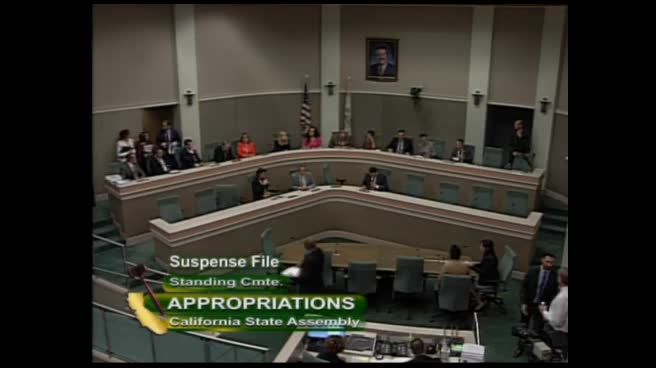 1H
Assembly Standing Committee on Appropriations
 6MIN
Assembly Standing Committee on Veterans Affairs


Bill Co-Author(s):
