AB 3066: Mobilehome Residency Law Protection Act.
- Session Year: 2017-2018
- House: Assembly
- Latest Version Date: 2018-09-26
The Mobilehome Residency Law governs the terms and conditions of residency in mobilehome parks. That law, among other things, requires the rental agreement between the management of a mobilehome park and the homeowner to be in writing and to contain specified terms and provisions, requires the management to meet and consult with homeowners, either individually, collectively, or with representatives of a group of homeowners, on specified matters within 30 days of a written request to do so, and prohibits management from terminating or refusing to renew tenancy within a park, except for specified reasons and upon giving written notice to the homeowner.
This bill would enact the Mobilehome Residency Law Protection Act. Beginning July 1, 2020, the bill would establish the Mobilehome Residency Law Protection Program within the Department of Housing and Community Development, pursuant to which the bill would require the department to provide assistance in resolving and coordinating the resolution of complaints from homeowners relating to the Mobilehome Residency Law, as provided. The bill would require the department to refer matters within its jurisdiction to its Division of Codes and Standards and authorize it to refer matters not within its jurisdiction to the appropriate enforcement agency. The bill would require the department to select complaints for evaluation under the program, as provided. The bill would require the department to contract with one or more qualified and experienced nonprofit legal services providers and, if a complaint submitted to the program is not resolved during a 25-day period for negotiation between management and the complaining party, the bill would require the referral of complaints selected for evaluation to an appropriate enforcement agency or one of those nonprofit legal services providers, as provided. The bill would require management to provide specified information to the department within 15 business days from the postmark date or electronic transmission of a request for that information and require the imposition of a noncompliance citation of $250 for each failure to comply.
Beginning January 1, 2019, the bill would require the department to assess upon, and collect from, the management of a mobilehome park subject to the Mobilehome Residency Law an annual registration fee of $10 for each permitted mobilehome lot located within the mobilehome park, to be paid at the time of payment of the annual operating fee imposed under the Mobilehome Parks Act. The bill would authorize management to pass this fee on to the homeowners within the mobilehome park. The bill would require that all moneys collected pursuant to its provisions be deposited into the Mobilehome Dispute Resolution Fund, which this bill would establish, and make those moneys available, upon appropriation by the Legislature, for purposes of implementing the Mobilehome Residency Law Protection Act, as provided.
The bill, on January 1, 2023, would require the department to submit a written report to the Legislature outlining data collected from the program and make that report available on its Internet Web site. The bill would require that the data collected include specified information. The bill would also require the department to additionally report certain information to a task force convened pursuant to specified law to provide input to the department on the conduct and operation of a certain mobilehome park maintenance inspection program.
The bill would repeal the Mobilehome Residency Law Protection Act as of January 1, 2024.
This bill would incorporate additional changes to Section 18502 of the Health and Safety Code proposed by SB 46 to be operative only if this bill and SB 46 are enacted and this bill is enacted last.
The Mobilehome Residency Law governs the terms and conditions of residency in mobilehome parks. That law, among other things, requires the rental agreement between the management of a mobilehome park and the homeowner to be in writing and to contain specified terms and provisions, requires the management to meet and consult with homeowners, either individually, collectively, or with representatives of a group of homeowners, on specified matters within 30 days of a written request to do so, and prohibits management from terminating or refusing to renew tenancy within a park, except for specified reasons and upon giving written notice to the homeowner.
This bill would enact the Mobilehome Residency Law Protection Act. Beginning July 1, 2020, the bill would establish the Mobilehome Residency Law Protection Program within the Department of Housing and Community Development, pursuant to which the bill would require the department to provide assistance in resolving and coordinating the resolution of complaints from homeowners relating to the Mobilehome Residency Law, as provided. The bill would require the department to refer matters within its jurisdiction to its Division of Codes and Standards and authorize it to refer matters not within its jurisdiction to the appropriate enforcement agency. The bill would require the department to select complaints for evaluation under the program, as provided. The bill would require the department to contract with one or more qualified and experienced nonprofit legal services providers and refer and, if a complaint submitted to the program is not resolved during a 25-day period for negotiation between management and the complaining party, the bill would require the referral of complaints selected for evaluation to an appropriate enforcement agency or one of those nonprofit legal services providers for possible enforcement action, providers, as provided. The bill would require management to provide specified information to the department within 15 business days from the postmark date or electronic transmission of a request for that information and require the imposition of a noncompliance fine citation of $250 for each failure to comply.
Beginning January 1, 2019, the bill would require the department to assess upon, and collect from, the management of a mobilehome park subject to the Mobilehome Residency Law an annual registration fee of $10 for each permitted mobilehome lot located within the mobilehome park. park, to be paid at the time of payment of the annual operating fee imposed under the Mobilehome Parks Act. The bill would authorize management to pass this fee on to the homeowners within the mobilehome park. The bill would require that all moneys collected pursuant to its provisions be deposited into the Mobilehome Dispute Resolution Fund, which this bill would establish, and make those moneys available, upon appropriation by the Legislature, for purposes of implementing the Mobilehome Residency Law Protection Act, as provided.
The bill, on January 1, 2023, would require the department to submit a written report to the Legislature outlining data collected from the program and make that report available on its Internet Web site. The bill would require that the data collected include specified information. The bill would also require the department to additionally report certain information to a task force convened pursuant to specified law to provide input to the department on the conduct and operation of a certain mobilehome park maintenance inspection program.
The bill would repeal the Mobilehome Residency Law Protection Act as of January 1, 2024.
This bill would incorporate additional changes to Section 18502 of the Health and Safety Code proposed by SB 46 to be operative only if this bill and SB 46 are enacted and this bill is enacted last.
The Mobilehome Residency Law governs the terms and conditions of residency in mobilehome parks. That law, among other things, requires the rental agreement between the management of a mobilehome park and the homeowner to be in writing and to contain specified terms and provisions, requires the management to meet and consult with homeowners, either individually, collectively, or with representatives of a group of homeowners, on specified matters within 30 days of a written request to do so, and prohibits management from terminating or refusing to renew tenancy within a park, except for specified reasons and upon giving written notice to the homeowner.
This bill would enact the Mobilehome Residency Law Protection Act. Beginning July 1, 2020, the bill would establish the Mobilehome Residency Law Protection Program within the Department of Housing and Community Development, pursuant to which the bill would require the department to provide assistance in resolving and coordinating the resolution of complaints from homeowners relating to the Mobilehome Residency Law, as provided. The bill would require the department to refer matters within its jurisdiction to its Division of Codes and Standards and authorize it to refer matters not within its jurisdiction to the appropriate enforcement agency. The bill would require the department to select complaints for evaluation under the program, as provided. The bill would require the department to contract with one or more qualified and experienced nonprofit legal services providers and refer complaints selected for evaluation to one of those nonprofit legal services providers for possible enforcement action, as provided. The bill would require management to provide specified information to the department within 15 days of a request for that information and require the imposition of a noncompliance fine of $250 for each failure to comply.
Beginning January 1, 2019, the bill would require the department to assess upon upon, and collect from, the management of a mobilehome park subject to the Mobilehome Residency Law and collect an annual registration fee of $10 for each permitted mobilehome lot located within the mobilehome park. The bill would authorize management to pass this fee on to the homeowners within the mobilehome park. The bill would require that all moneys collected pursuant to its provisions be deposited into the Mobilehome Dispute Resolution Fund, which this bill would establish, and make those moneys available, upon appropriation by the Legislature, for purposes of implementing the Mobilehome Residency Law Protection Act, as provided.
The bill, on January 1, 2023, would require the department to submit a written report to the Legislature outlining data collected from the program and make that report available on its Internet Web site. The bill would require that the data collected include specified information. The bill would also require the department to additionally report certain information to a task force convened pursuant to specified law to provide input to the department on the conduct and operation of a certain mobilehome park maintenance inspection program.
The bill would repeal the Mobilehome Residency Law Protection Act as of January 1, 2024.
The Mobilehome Residency Law governs the terms and conditions of residency in mobilehome parks. That law, among other things, requires the rental agreement between the management of a mobilehome park and the homeowner to be in writing and to contain specified terms and provisions, requires the management to meet and consult with homeowners, either individually, collectively, or with representatives of a group of homeowners, on specified matters within 30 days of a written request to do so, and prohibits management from terminating or refusing to renew tenancy within a park, except for specified reasons and upon giving written notice to the homeowner.
This bill would enact the Mobilehome Residency Law Protection Act. Beginning July 1, 2020, the bill would establish the Mobilehome Residency Law Protection Program within the Department of Housing and Community Development, pursuant to which the bill would require the department to provide assistance in resolving and coordinating the resolution of complaints from homeowners relating to the Mobilehome Residency Law, as provided. The bill would require the department to refer matters within its jurisdiction to its Division of Codes and Standards and authorize it to refer matters not within its jurisdiction to the appropriate enforcement agency. The bill would require the department to select complaints for evaluation under the program, as provided. The bill would require the department to contract with one or more qualified and experienced nonprofit legal services providers and refer complaints selected for evaluation to one of those nonprofit legal services providers for possible enforcement action, as provided. The bill would require management to provide specified information to the department within 15 days of a request for that information and require the imposition of a noncompliance fine of $250 for each failure to comply.
Beginning January 1, 2019, the bill would require the department to assess upon the management of a mobilehome park subject to the Mobilehome Residency Law and collect an annual registration fee of $10 for each mobilehome lot located within the mobilehome park. The bill would authorize management to pass this fee on to the homeowners within the mobilehome park. The bill would require that all moneys collected pursuant to its provisions be deposited into the Mobilehome Dispute Resolution Fund, which this bill would establish, and make those moneys available, upon appropriation by the Legislature, for purposes of implementing the Mobilehome Residency Law Protection Act, as provided.
The bill, on January 1, 2023, would require the department to submit a written report to the Legislature outlining data collected from the program and make that report available on its Internet Web site. The bill would require that the data collected include specified information. The bill would also require the department to additionally report certain information to a task force convened pursuant to specified law to provide input to the department on the conduct and operation of a certain mobilehome park maintenance inspection program.
The bill would repeal the Mobilehome Residency Law Protection Act as of January 1, 2024.
Under existing law, if a party or witness in a civil or criminal action is an individual who is deaf or hard of hearing, the proceeding is required to be interpreted in a language that the individual who is deaf or hard of hearing understands by a qualified interpreter appointed by the court or other appointing authority, as agreed upon. Existing law defines qualified interpreter to mean an interpreter who has been certified as competent to interpret court proceedings by a testing organization, agency, or educational institution approved by the Judicial Council. Existing law requires the Judicial Council, before July 1, 1992, to conduct a study to establish the guidelines pursuant to which it shall determine which testing organizations, agencies, or educational institutions will be approved to administer tests for certification of court interpreters for individuals who are deaf or hard of hearing. This bill would delete the provisions relating to the past requirements of the Judicial Council to conduct the study to establish these guidelines before July 1, 1992, and to approve one or more entities to administer testing by January 1, 1997.Under existing law, if a party or witness in a civil or criminal action is an individual who is deaf or hard of hearing, the proceeding is required to be interpreted in a language that the individual who is deaf or hard of hearing understands by a qualified interpreter appointed by the court or other appointing authority, as agreed upon. Existing law defines qualified interpreter to mean an interpreter who has been certified as competent to interpret court proceedings by a testing organization, agency, or educational institution approved by the Judicial Council. Existing law requires the Judicial Council, before July 1, 1992, to conduct a study to establish the guidelines pursuant to which it shall determine which testing organizations, agencies, or educational institutions will be approved to administer tests for certification of court interpreters for individuals who are deaf or hard of hearing. Existing law also requires the Judicial Council, by January 1, 1997, to approve one or more entities to administer testing for court interprets for individuals who are deaf or hard of hearing.
This bill would delete the provisions relating to the past requirements of the Judicial Council to conduct the study to establish these guidelines before July 1, 1992, and to approve one or more entities to administer testing by January 1, 1997.
Under existing law, if a party or witness in a civil or criminal action is an individual who is deaf or hard of hearing, the proceeding is required to be interpreted in a language that the individual who is deaf or hard of hearing understands by a qualified interpreter appointed by the court or other appointing authority, as agreed upon. Existing law defines qualified interpreter to mean an interpreter who has been certified as competent to interpret court proceedings by a testing organization, agency, or educational institution approved by the Judicial Council. Existing law requires the Judicial Council, before July 1, 1992, to conduct a study to establish the guidelines pursuant to which it shall determine which testing organizations, agencies, or educational institutions will be approved to administer tests for certification of court interpreters for individuals who are deaf or hard of hearing. Existing law also requires the Judicial Council, by January 1, 1997, to approve one or more entities to administer testing for court interprets for individuals who are deaf or hard of hearing.
This bill would delete the provisions relating to the past requirements of the Judicial Council to conduct the study to establish these guidelines before July 1, 1992, and to approve one or more entities to administer testing by January 1, 1997.
Existing law, Savings Association Law, authorizes various officers, fiduciaries, and public officials to invest funds held by them in savings accounts. Existing law prohibits a savings association from having funds of the state and its political subdivisions, as specified, on deposit at one time that exceed in amount 400% of its statutory net worth.This bill would make nonsubstantive changes to these provisions.Existing law, Savings Association Law, authorizes various officers, fiduciaries, and public officials to invest funds held by them in savings accounts. Existing law prohibits a savings association from having funds of the state and its political subdivisions, as specified, on deposit at one time that exceed in amount 400% of its statutory net worth.
This bill would make nonsubstantive changes to these provisions.
(a)(1)In addition to other remedies provided in this part, the Director of Housing and Community Development or his or her designee may issue a citation that assesses a civil penalty payable to the department to any licensee who violates subdivision (d) of Section 18020, Section 18021.5, 18026, 18029.6, or 18030, subdivision (b) of Section 18032, Section 18035, 18035.1, 18035.2, 18035.3, 18036, 18039, 18045, 18045.5, 18045.6, 18046, or 18058, subdivision (a) of Section 18059, subdivision (b) of Section 18059.5, subdivision (c) of Section 18060, subdivision (c) of Section 18060.5, Section 18061, subdivision (d), (i), or (j) of Section 18061.5, subdivision (a) or (b) of Section 18062, subdivision (a), (b), (d), (e), (f), (g), or (h) of Section 18062.2, subdivision (c) of Section 18063, Section 18080.5, or paragraph (2) of subdivision (f) of Section 18802.
(2)A violation of subdivision (d) of Section 18060.5 is also cause for citation if both the dealer and the manufacturer receive written notice of a warranty complaint from the complainant, from the department, or another source of information, and, at a minimum, the 90-day period provided for correction of substantial defects pursuant to Section 1797.7 of the Civil Code has expired.
(3)Each citation and related civil penalty assessment shall be issued no later than one year after discovery of the violation.
(4)A violation of paragraph (2) of subdivision (f) of Section 18802 shall result in a civil penalty in the amount of two hundred fifty dollars ($250) for each violation.
(b)(1)Except as provided in paragraph (2), the amount of any civil penalty assessed pursuant to subdivision (a) shall be one hundred dollars ($100) for each violation, but shall be increased to two hundred fifty dollars ($250) for each subsequent violation of the same prohibition for which a citation for the subsequent violation is issued within one year of the citation for the previous violation. The violation or violations giving cause for the citation shall be corrected if applicable, and payment of the civil penalty shall be remitted to the department within 45 days of the date of issuance of the citation. Civil penalties received by the department pursuant to this section shall be deposited in the Mobilehome-Manufactured Home Revolving Fund.
(2)(A)For violations of subdivision (d) of Section 18020, or Section 18026, the department shall assess the civil penalties in a range between two hundred fifty dollars ($250) and two thousand dollars ($2,000). When determining the amount of the assessed civil penalty, the department shall take into consideration whether one or more of the following or similar circumstances apply:
(i)The citation includes multiple violations.
(ii)The cited person has a history of violations of the same or similar provisions of this division and the regulations promulgated under this division.
(iii)In the judgment of the department, the person has exhibited bad faith or a conflict of interest.
(iv)In the judgment of the department, the violation is serious or harmful.
(v)The citation involves a violation perpetrated against a senior citizen, veteran, or person with disabilities.
(B)If a citation lists more than one violation and each of the violations relates to the same manufacturing facility or client, the total penalty assessment in each citation shall not exceed ten thousand dollars ($10,000).
(C)If a citation lists more than one violation, the amount of assessed civil penalty shall be stated separately for each section violated.
(c)Any person or entity served a citation pursuant to this section may petition for, and shall be granted, an informal hearing before the director or his or her designee. The petition shall be a written request briefly stating the grounds for the request. Any petition to be considered shall be received by the department within 30 days of the date of issuance of the citation.
(d)Upon receipt of a timely and complying petition, the department shall suspend enforcement of the citation and set a time and place for the informal hearing and shall give the licensee written notice thereof. The hearing shall commence no later than 30 days following receipt of the petition or at another time scheduled by the department pursuant to a request by the licensee or department if good and sufficient cause exists. If the licensee fails to appear at the time and place scheduled for the hearing, the department may notify the licensee in writing that the petition is dismissed and that compliance with terms of the citation shall occur within 10 days after receipt of the notification.
(e)The department shall notify the petitioner in writing of its decision and the reasons therefor within 30 days following conclusion of the informal hearing held pursuant to this section. If the decision upholds the citation, in whole or in part, the licensee shall comply with the citation in accordance with the decision within 30 days after the decision is mailed by the department.
(f)Nothing in this section shall be construed to preclude remedies available under other provisions of law.
SEC. 2.Section 18502 of the Health and Safety Code, as amended by Section 4 of Chapter 314 of the Statutes of 2010, is amended to read:18502.Fees as applicable shall be submitted for permits, as follows:
(a)Fees for a permit to conduct any construction subject to this part as determined by the schedule of fees adopted by the department.
(b)Plan checking fees equal to one-half of the construction, plumbing, mechanical, and electrical permit fees, except that the minimum fee shall be ten dollars ($10).
(c)(1)An annual operating permit fee of one hundred forty dollars ($140) and an additional seven dollars ($7) per lot.
(2)(A)An additional annual fee of four dollars ($4) per lot shall be paid to the department or the local enforcement agency, as appropriate, at the time of payment of the annual operating fee. All revenues derived from this fee shall be used exclusively for the inspection of mobilehome parks and mobilehomes to determine compliance with the Mobilehome Parks Act (Part 2.1 (commencing with Section 18200)) and any regulations adopted pursuant to the act.
(B)The Legislature hereby finds and declares that the health and safety of mobilehome park occupants are matters of public interest and concern and that the fee paid pursuant to subparagraph (A) shall be used exclusively for the inspection of mobilehome parks and mobilehomes to ensure that the living conditions of mobilehome park occupants meet the health and safety standards of this part and the regulations adopted pursuant thereto. Therefore, notwithstanding any other law or local ordinance, rule, regulation, or initiative measure to the contrary, the holder of the permit to operate the mobilehome park shall be entitled to directly charge one-half of the per lot additional annual fee specified herein to each homeowner, as defined in Section 798.9 of the Civil Code. In that event, the holder of the permit to operate the mobilehome park shall be entitled to directly charge each homeowner for one-half of the per lot additional annual fee at the next billing for the rent and other charges immediately following the payment of the additional fee to the department or local enforcement agency.
(3)The additional annual fee authorized by subdivision (b) of Section 18804 shall be paid to the department at the time of payment of the annual operating fee to the department or local enforcement agency, as appropriate.
(d)Change in name fee or transfer of ownership or possession fee of ten dollars ($10).
(e)Duplicate permit fee or amended permit fee of ten dollars ($10).
(f)This section shall remain in effect only until January 1, 2019, and as of that date is repealed, unless a later enacted statute, that is enacted before January 1, 2019, deletes or extends that date.
SEC. 2.5.Section 18502 of the Health and Safety Code, as amended by Section 4 of Chapter 314 of the Statutes of 2010, is amended to read:18502.Fees as applicable shall be submitted for permits, as follows:
(a)Fees for a permit to conduct any construction subject to this part as determined by the schedule of fees adopted by the department.
(b)Plan checking fees equal to one-half of the construction, plumbing, mechanical, and electrical permit fees, except that the minimum fee shall be ten dollars ($10).
(c)(1)An annual operating permit fee of one hundred forty dollars ($140) and an additional seven dollars ($7) per lot.
(2)(A)An additional annual fee of four dollars ($4) per lot shall be paid to the department or the local enforcement agency, as appropriate, at the time of payment of the annual operating fee. All revenues derived from this fee shall be used exclusively for the inspection of mobilehome parks and mobilehomes to determine compliance with the Mobilehome Parks Act (Part 2.1 (commencing with Section 18200)) and any regulations adopted pursuant to the act.
(B)The Legislature hereby finds and declares that the health and safety of mobilehome park occupants are matters of public interest and concern and that the fee paid pursuant to subparagraph (A) shall be used exclusively for the inspection of mobilehome parks and mobilehomes to ensure that the living conditions of mobilehome park occupants meet the health and safety standards of this part and the regulations adopted pursuant thereto. Therefore, notwithstanding any other law or local ordinance, rule, regulation, or initiative measure to the contrary, the holder of the permit to operate the mobilehome park shall be entitled to directly charge one-half of the per lot additional annual fee specified herein to each homeowner, as defined in Section 798.9 of the Civil Code. In that event, the holder of the permit to operate the mobilehome park shall be entitled to directly charge each homeowner for one-half of the per lot additional annual fee at the next billing for the rent and other charges immediately following the payment of the additional fee to the department or local enforcement agency.
(3)The additional annual fee authorized by subdivision (b) of Section 18804 shall be paid to the department at the time of payment of the annual operating fee to the department or local enforcement agency, as appropriate.
(d)Change in name fee or transfer of ownership or possession fee of ten dollars ($10).
(e)Duplicate permit fee or amended permit fee of ten dollars ($10).
(f)This section shall remain in effect only until January 1, 2024, and as of that date is repealed.
SEC. 3.Part 2.2 (commencing with Section 18800) is added to Division 13 of the Health and Safety Code, to read:2.2.Mobilehome Residency Law Protection Program18800.(a)This part shall be known, and may be cited, as the Mobilehome Residency Law Protection Act.
(b)It is the intent of the Legislature in enacting this part to protect and safeguard the most vulnerable mobilehome homeowners by affording them an additional avenue to enforce violations of the Mobilehome Residency Law (Chapter 2.5 (commencing with Section 798) of Title 2 of Part 2 of Division 2 of the Civil Code).
18801.As used in this part, and for the sole purpose of investigation or pursuit of conciliation or remedy arising from a complaint alleging a violation of the Mobilehome Residency Law (Chapter 2.5 (commencing with Section 798) of Title 2 of Part 2 of Division 2 of the Civil Code), the following definitions shall apply:
(a)Department means the Department of Housing and Community Development.
(b)Homeowner has the same meaning as specified in Section 798.9 of the Civil Code.
(c)Management has the same meaning as specified in Section 798.2 of the Civil Code.
(d)Mobilehome has the same meaning as specified in Section 798.3 of the Civil Code.
(e)Mobilehome park has the same meaning as specified in Section 798.4 of the Civil Code.
(f)Mobilehome Residency Law means the Mobilehome Residency Law (Chapter 2.5 (commencing with Section 798) of Title 2 of Part 2 of Division 2 of the Civil Code).
(g)Program means the Mobilehome Residency Law Protection Program established pursuant to this part.
(h)Rental agreement has the same meaning as specified in Section 798.8 of the Civil Code.
18802.(a)The Mobilehome Residency Law Protection Program is hereby established within the department.
(b)Except as provided in subdivision (c), the department shall provide assistance in taking complaints, and helping to resolve and coordinate the resolution of those complaints, from homeowners relating to the Mobilehome Residency Law.
(c)The department shall not arbitrate, mediate, negotiate, or provide legal advice in connection with mobilehome park rent disputes, lease or rental agreements, or disputes arising from lease or rental agreements, but may provide information on these issues to the complaining party, management, or other responsible party.
(d)(1)The department shall refer any alleged violations of law or regulations within the departments jurisdiction to the Division of Codes and Standards within the department.
(2)The department may refer any alleged violations of law or regulations that are not within the jurisdiction of the department, including, but not limited to, rent disputes, criminal activity, or alleged discrimination, to the appropriate enforcement agency.
(e)(1)Upon receipt of a complaint, the department shall send the complaining party a letter confirming receipt and referencing those provisions of the Mobilehome Residency Law, if applicable, that may pertain to the complaint. If the department refers the complaint to an appropriate enforcement agency, pursuant to paragraph (2) of subdivision (d), the letter shall communicate that referral.
(2)A letter issued pursuant to this subdivision shall be in the same medium as the complaint to which the letter is in response.
(f)(1)The department shall use good faith efforts to select the most severe, deleterious, and materially and economically impactful alleged violations of the Mobilehome Residency Law. The department shall select a sample of these complaints that satisfy geographic representation of the state for evaluation.
(2)In evaluating a complaint, the department may request a copy of the lease, park rules, or any other relevant written documents applicable to a complaint from management. Management shall provide the information requested pursuant to this paragraph within 15 business days from the postmark date or the electronic transmission of the request. The department shall establish a mechanism for management to provide the documents electronically. Failure to comply with this requirement shall result in a noncompliance citation of two hundred fifty dollars ($250) for each failure to comply. The department shall not provide the documents it receives pursuant to this paragraph to any person or entity other than the nonprofit legal services provider, an appropriate enforcement agency, or the complainant.
(g)If the department selects a complaint for referral to and evaluation by a nonprofit legal services provider pursuant to Section 18803, it shall send a notice to the complaining party and the management or mobilehome park owner. The notice shall advise the parties that they are required to negotiate the matter in good faith to resolve the matter in 25 days. If after 25 days either party responds to a department inquiry that the matter is not resolved, the department may refer the complaint to an appropriate enforcement agency or a nonprofit legal services provider. The department may combine this notice with the letter described in paragraph (e).
(h)The department may aggregate multiple complaints submitted to the program into a single investigation. Multiple complaints may be aggregated within a single mobilehome park, or within multiple mobilehome parks where there is either:
(1)A common mobilehome park owner or mobilehome park owner entity, or common principals, partners, shareholders, members, or legal ownership amongst the multiple mobilehome parks.
(2)A common third-party or off-site management entity which manages the multiple mobilehome parks.
(i)Participation in the administrative procedures authorized by this part shall not be deemed to be grounds to authorize a delay in the prosecution of an unlawful detainer action. However, this section shall not be construed as preventing a court from exercising any power to delay based upon any other grounds.
(j)This section shall become operative on July 1, 2020.
18803.(a)In administering the program, the department shall contract with one or more qualified and experienced nonprofit legal services providers and refer complaints selected for evaluation pursuant to subdivision (f) of Section 18802, and which are not resolved pursuant to subdivision (g) of Section 18802, to those nonprofit legal services providers for possible enforcement action.
(b)The department shall only contract with a nonprofit legal services provider that meets all of the following requirements:
(1)The nonprofit legal services provider has experience in handling complaints, disputes, or matters arising from the provisions of the Mobilehome Residency Law or matters related to general landlord-tenant law.
(2)The nonprofit legal services provider has experience in representing individuals in dispute resolution processes, state court proceedings, and appeals.
(3)The nonprofit legal services provider has sufficient staff and financial ability to provide for legal services to homeowners.
(c)A nonprofit legal services provider contracted with pursuant to this section shall maintain adequate legal malpractice insurance and shall agree to indemnify and hold harmless the state from any claims arising from the legal services provided pursuant to this part.
(d)(1)A nonprofit legal services provider contracted with pursuant to this section shall have the sole authority to determine which referred complaints will be addressed or pursued, based on the resources provided to it pursuant to the contract with the department.
(2)The nonprofit legal services provider shall inform the department of any complaints not handled due to a shortage of resources.
(e)A nonprofit legal services provider contracted with pursuant to this section shall not charge any fees to a homeowner for any services performed in connection with a complaint referred to it by the department.
(f)This section shall become operative on July 1, 2020.
18804.(a)There is hereby established in the State Treasury the Mobilehome Dispute Resolution Fund. The fund shall receive all moneys derived pursuant to this part. Moneys in the fund shall be available, upon appropriation by the Legislature, for purposes of implementing this part.
(b)(1)Beginning January 1, 2019, and each subsequent year thereafter, the department shall assess upon, and collect from, the management of a mobilehome park subject to the Mobilehome Residency Law an annual registration fee of ten dollars ($10) for each permitted mobilehome lot within the mobilehome park. The department shall collect the registration fee at the same time as the annual operating permit fee imposed under the Mobilehome Parks Act (Part 2.1 (commencing with Section 18200)).
(2)The Legislature finds and declares that the purpose of the fee imposed by this section is to cover the costs of the department incident to the investigation of mobilehome parks for purposes of enforcing the Mobilehome Residency Law.
(c)Notwithstanding any other law or local ordinance, rule, regulation, or initiative measure to the contrary, within 90 days from payment of the registration fee to the department, management may pass on all or a portion of the amount of the annual registration fee assessed under this section to the homeowners within the mobilehome park and may collect the amount or portion thereof from the homeowner with the rent payment and other charges due, except that management shall not aggregate or include the fee in the rent nor shall the amount exceed ten dollars ($10) per mobilehome space annually. The annual registration fee shall appear as a separate line item in the bill and shall be accompanied by a clear written description of the purpose of the charge to homeowners, along with contact information for the department.
18805.(a)On January 1, 2023, the department shall submit a written report to the Legislature outlining data collected from the program and make that report available on its Internet Web site. The data collected shall include, but not be limited to, all of the following:
(1)The amount of registration fees collected pursuant to Section 18804 and the amount expended on the program.
(2)The total number of complaint allegations received, the total number of complaint allegations processed, and the total number of complaint allegations referred to another enforcement agency or to a nonprofit legal services provider.
(3)The type of complaint allegations received.
(4)To the extent possible, the outcome of each complaint received by the program.
(5)Activities completed by a nonprofit legal services provider contracted with pursuant to the program.
(6)The most common complaint allegations.
(7)Recommendations for any statutory or administrative changes to the program.
(b)The report required to be submitted to the Legislature by this section shall be submitted in compliance with Section 9795 of the Government Code.
(c)The department shall additionally report the information required pursuant to paragraphs (1) to (3), inclusive, of subdivision (a) to the task force convened pursuant to Section 18400.3.
18806.This part shall remain in effect only until January 1, 2024, and as of that date is repealed.
SEC. 4.Section 2.5 of this bill incorporates amendments to Section 18502 of the Health and Safety Code, as amended by Section 4 of Chapter 314 of the Statutes of 2010, proposed by both this bill and Senate Bill 46. That section of this bill shall only become operative if (1) both bills are enacted and become effective on or before January 1, 2019, (2) each bill amends Section 18502 of the Health and Safety Code, as amended by Section 4 of Chapter 314 of the Statutes of 2010, and (3) this bill is enacted after Senate Bill 46, in which case Section 2 of this bill shall not become operative.
(a)(1)In addition to other remedies provided in this part, the Director of Housing and Community Development or his or her designee may issue a citation that assesses a civil penalty payable to the department to any licensee who violates subdivision (d) of Section 18020, Section 18021.5, 18026, 18029.6, or 18030, subdivision (b) of Section 18032, Section 18035, 18035.1, 18035.2, 18035.3, 18036, 18039, 18045, 18045.5, 18045.6, 18046, or 18058, subdivision (a) of Section 18059, subdivision (b) of Section 18059.5, subdivision (c) of Section 18060, subdivision (c) of Section 18060.5, Section 18061, subdivision (d), (i), or (j) of Section 18061.5, subdivision (a) or (b) of Section 18062, subdivision (a), (b), (d), (e), (f), (g), or (h) of Section 18062.2, subdivision (c) of Section 18063, or Section 18080.5. Section 18080.5, or paragraph (2) of subdivision (f) of Section 18802.
(2)A violation of subdivision (d) of Section 18060.5 is also cause for citation if both the dealer and the manufacturer receive written notice of a warranty complaint from the complainant, from the department, or another source of information, and, at a minimum, the 90-day period provided for correction of substantial defects pursuant to Section 1797.7 of the Civil Code has expired.
(3)Each citation and related civil penalty assessment shall be issued no later than one year after discovery of the violation.
(4)A violation of paragraph (2) of subdivision (f) of Section 18802 shall result in a civil penalty in the amount of two hundred fifty dollars ($250) for each violation.
(b)(1)Except as provided in paragraph (2), the amount of any civil penalty assessed pursuant to subdivision (a) shall be one hundred dollars ($100) for each violation, but shall be increased to two hundred fifty dollars ($250) for each subsequent violation of the same prohibition for which a citation for the subsequent violation is issued within one year of the citation for the previous violation. The violation or violations giving cause for the citation shall be corrected if applicable, and payment of the civil penalty shall be remitted to the department within 45 days of the date of issuance of the citation. Civil penalties received by the department pursuant to this section shall be deposited in the Mobilehome-Manufactured Home Revolving Fund.
(2)(A)For violations of subdivision (d) of Section 18020, or Section 18026, the department shall assess the civil penalties in a range between two hundred fifty dollars ($250) and two thousand dollars ($2,000). When determining the amount of the assessed civil penalty, the department shall take into consideration whether one or more of the following or similar circumstances apply:
(i)The citation includes multiple violations.
(ii)The cited person has a history of violations of the same or similar provisions of this division and the regulations promulgated under this division.
(iii)In the judgment of the department, the person has exhibited bad faith or a conflict of interest.
(iv)In the judgment of the department, the violation is serious or harmful.
(v)The citation involves a violation perpetrated against a senior citizen, veteran, or person with disabilities.
(B)If a citation lists more than one violation and each of the violations relates to the same manufacturing facility or client, the total penalty assessment in each citation shall not exceed ten thousand dollars ($10,000).
(C)If a citation lists more than one violation, the amount of assessed civil penalty shall be stated separately for each section violated.
(c)Any person or entity served a citation pursuant to this section may petition for, and shall be granted, an informal hearing before the director or his or her designee. The petition shall be a written request briefly stating the grounds for the request. Any petition to be considered shall be received by the department within 30 days of the date of issuance of the citation.
(d)Upon receipt of a timely and complying petition, the department shall suspend enforcement of the citation and set a time and place for the informal hearing and shall give the licensee written notice thereof. The hearing shall commence no later than 30 days following receipt of the petition or at another time scheduled by the department pursuant to a request by the licensee or department if good and sufficient cause exists. If the licensee fails to appear at the time and place scheduled for the hearing, the department may notify the licensee in writing that the petition is dismissed and that compliance with terms of the citation shall occur within 10 days after receipt of the notification.
(e)The department shall notify the petitioner in writing of its decision and the reasons therefor within 30 days following conclusion of the informal hearing held pursuant to this section. If the decision upholds the citation, in whole or in part, the licensee shall comply with the citation in accordance with the decision within 30 days after the decision is mailed by the department.
(f)Nothing in this section shall be construed to preclude remedies available under other provisions of law.
SEC. 2.Section 18502 of the Health and Safety Code, as amended by Section 4 of Chapter 314 of the Statutes of 2010, is amended to read:18502.Fees as applicable shall be submitted for permits, as follows:
(a)Fees for a permit to conduct any construction subject to this part as determined by the schedule of fees adopted by the department.
(b)Plan checking fees equal to one-half of the construction, plumbing, mechanical, and electrical permit fees, except that the minimum fee shall be ten dollars ($10).
(c)(1)An annual operating permit fee of one hundred forty dollars ($140) and an additional seven dollars ($7) per lot.
(2)(A)An additional annual fee of four dollars ($4) per lot shall be paid to the department or the local enforcement agency, as appropriate, at the time of payment of the annual operating fee. All revenues derived from this fee shall be used exclusively for the inspection of mobilehome parks and mobilehomes to determine compliance with the Mobilehome Parks Act (Part 2.1 (commencing with Section 18200)) and any regulations adopted pursuant to the act.
(3)(B)The Legislature hereby finds and declares that the health and safety of mobilehome park occupants are matters of public interest and concern and that the fee paid pursuant to paragraph (2) subparagraph (A) shall be used exclusively for the inspection of mobilehome parks and mobilehomes to ensure that the living conditions of mobilehome park occupants meet the health and safety standards of this part and the regulations adopted pursuant thereto. Therefore, notwithstanding any other law or local ordinance, rule, regulation, or initiative measure to the contrary, the holder of the permit to operate the mobilehome park shall be entitled to directly charge one-half of the per lot additional annual fee specified herein to each homeowner, as defined in Section 798.9 of the Civil Code. In that event, the holder of the permit to operate the mobilehome park shall be entitled to directly charge each homeowner for one-half of the per lot additional annual fee at the next billing for the rent and other charges immediately following the payment of the additional fee to the department or local enforcement agency.
(3)The additional annual fee authorized by subdivision (b) of Section 18804 shall be paid to the department at the time of payment of the annual operating fee to the department or local enforcement agency, as appropriate.
(d)Change in name fee or transfer of ownership or possession fee of ten dollars ($10).
(e)Duplicate permit fee or amended permit fee of ten dollars ($10).
(f)This section shall remain in effect only until January 1, 2019, and as of that date is repealed, unless a later enacted statute, that is enacted before January 1, 2019, deletes or extends that date.
SEC. 2.5.Section 18502 of the Health and Safety Code, as amended by Section 4 of Chapter 314 of the Statutes of 2010, is amended to read:18502.Fees as applicable shall be submitted for permits, as follows:
(a)Fees for a permit to conduct any construction subject to this part as determined by the schedule of fees adopted by the department.
(b)Plan checking fees equal to one-half of the construction, plumbing, mechanical, and electrical permit fees, except that the minimum fee shall be ten dollars ($10).
(c)(1)An annual operating permit fee of one hundred forty dollars ($140) and an additional seven dollars ($7) per lot.
(2)(A)An additional annual fee of four dollars ($4) per lot shall be paid to the department or the local enforcement agency, as appropriate, at the time of payment of the annual operating fee. All revenues derived from this fee shall be used exclusively for the inspection of mobilehome parks and mobilehomes to determine compliance with the Mobilehome Parks Act (Part 2.1 (commencing with Section 18200)) and any regulations adopted pursuant to the act.
(3)(B)The Legislature hereby finds and declares that the health and safety of mobilehome park occupants are matters of public interest and concern and that the fee paid pursuant to paragraph (2) subparagraph (A) shall be used exclusively for the inspection of mobilehome parks and mobilehomes to ensure that the living conditions of mobilehome park occupants meet the health and safety standards of this part and the regulations adopted pursuant thereto. Therefore, notwithstanding any other law or local ordinance, rule, regulation, or initiative measure to the contrary, the holder of the permit to operate the mobilehome park shall be entitled to directly charge one-half of the per lot additional annual fee specified herein to each homeowner, as defined in Section 798.9 of the Civil Code. In that event, the holder of the permit to operate the mobilehome park shall be entitled to directly charge each homeowner for one-half of the per lot additional annual fee at the next billing for the rent and other charges immediately following the payment of the additional fee to the department or local enforcement agency.
(3)The additional annual fee authorized by subdivision (b) of Section 18804 shall be paid to the department at the time of payment of the annual operating fee to the department or local enforcement agency, as appropriate.
(d)Change in name fee or transfer of ownership or possession fee of ten dollars ($10).
(e)Duplicate permit fee or amended permit fee of ten dollars ($10).
(f)This section shall remain in effect only until January 1, 2019, 2024, and as of that date is repealed, unless a later enacted statute, that is enacted before January 1, 2019, deletes or extends that date. repealed.
SECTION 1.SEC. 3.Part 2.2 (commencing with Section 18800) is added to Division 13 of the Health and Safety Code, to read:2.2.Mobilehome Residency Law Protection Program18800.(a)This part shall be known, and may be cited, as the Mobilehome Residency Law Protection Act.
(b)It is the intent of the Legislature in enacting this part to protect and safeguard the most vulnerable mobilehome homeowners by affording them an additional avenue to enforce violations of the Mobilehome Residency Law (Chapter 2.5 (commencing with Section 798) of Title 2 of Part 2 of Division 2 of the Civil Code).
18801.As used in this part, and for the sole purpose of investigation or pursuit of conciliation or remedy arising from a complaint alleging a violation of the Mobilehome Residency Law (Chapter 2.5 (commencing with Section 798) of Title 2 of Part 2 of Division 2 of the Civil Code), the following definitions shall apply:
(a)Department means the Department of Housing and Community Development.
(b)Homeowner has the same meaning as specified in Section 798.9 of the Civil Code.
(c)Management has the same meaning as specified in Section 798.2 of the Civil Code.
(d)Mobilehome has the same meaning as specified in Section 798.3 of the Civil Code.
(e)Mobilehome park has the same meaning as specified in Section 798.4 of the Civil Code.
(f)Mobilehome Residency Law means the Mobilehome Residency Law (Chapter 2.5 (commencing with Section 798) of Title 2 of Part 2 of Division 2 of the Civil Code).
(g)Program means the Mobilehome Residency Law Protection Program established pursuant to this part.
(h)Rental agreement has the same meaning as specified in Section 798.8 of the Civil Code.
18802.(a)The Mobilehome Residency Law Protection Program is hereby established within the department.
(b)Except as provided in subdivision (c), the department shall provide assistance in taking complaints, and helping to resolve and coordinate the resolution of those complaints, from homeowners relating to the Mobilehome Residency Law.
(c)The department shall not arbitrate, mediate, negotiate, or provide legal advice in connection with mobilehome park rent disputes, lease or rental agreements, or disputes arising from lease or rental agreements, but may provide information on these issues to the complaining party, management, or other responsible party.
(d)(1)The department shall refer any alleged violations of law or regulations within the departments jurisdiction to the Division of Codes and Standards within the department.
(2)The department may refer any alleged violations of law or regulations that are not within the jurisdiction of the department, including, but not limited to, rent disputes, criminal activity, or alleged discrimination, to the appropriate enforcement agency.
(e)(1)Upon receipt of a complaint, the department shall send the complaining party a letter confirming receipt and referencing those provisions of the Mobilehome Residency Law, if applicable, that may pertain to the complaint. If the department refers the complaint to an appropriate enforcement agency, pursuant to paragraph (2) of subdivision (d), the letter shall communicate that referral.
(2)A letter issued pursuant to this subdivision shall be in the same medium as the complaint to which the letter is in response.
(f)(1)The department shall use good faith efforts to select the most severe, deleterious, and materially and economically impactful alleged violations of the Mobilehome Residency Law. The department shall select a sample of these complaints that satisfy geographic representation of the state for evaluation.
(2)In evaluating a complaint, the department may request a copy of the lease, park rules, or any other relevant written documents applicable to a complaint from management. Management shall provide the information requested pursuant to this paragraph within 15 business days from the postmark date or the electronic transmission of the request. The department shall establish a mechanism for management to provide the documents electronically. Failure to comply with this requirement shall result in a noncompliance fine citation of two hundred fifty dollars ($250) for each failure to comply. The department shall not provide the documents it receives pursuant to this paragraph to any person or entity other than the nonprofit legal services provider, an appropriate enforcement agency, or the complainant.
(g)If the department selects a complaint for referral to and evaluation by a nonprofit legal services provider pursuant to Section 18803, it shall send a notice to the complaining party and the management or mobilehome park owner. The notice shall advise the parties that they are required to negotiate the matter in good faith to resolve the matter in 25 days. If after 25 days either party responds to a department inquiry that the matter is not resolved, the department may refer the complaint to an appropriate enforcement agency or a nonprofit legal services provider. The department may combine this notice with the letter described in paragraph (e).
(g)(h)The department may aggregate multiple complaints submitted to the program into a single investigation. Multiple complaints may be aggregated within a single mobilehome park, or within multiple mobilehome parks where there is either:
(1)A common mobilehome park owner or mobilehome park owner entity, or common principals, partners, shareholders, members, or legal ownership amongst the multiple mobilehome parks.
(2)A common third-party or off-site management entity which manages the multiple mobilehome parks.
(i)Participation in the administrative procedures authorized by this part shall not be deemed to be grounds to authorize a delay in the prosecution of an unlawful detainer action. However, this section shall not be construed as preventing a court from exercising any power to delay based upon any other grounds.
(h)(j)This section shall become operative on July 1, 2020.
18803.(a)In administering the program, the department shall contract with one or more qualified and experienced nonprofit legal services providers and refer complaints selected for evaluation pursuant to subdivision (f) of Section 18802 18802, and which are not resolved pursuant to subdivision (g) of Section 18802, to those nonprofit legal services providers for possible enforcement action.
(b)The department shall only contract with a nonprofit legal services provider that meets all of the following requirements:
(1)The nonprofit legal services provider has experience in handling complaints, disputes, or matters arising from the provisions of the Mobilehome Residency Law or matters related to general landlord-tenant law.
(2)The nonprofit legal services provider has experience in representing individuals in dispute resolution processes, state court proceedings, and appeals.
(3)The nonprofit legal services provider has sufficient staff and financial ability to provide for legal services to homeowners.
(c)A nonprofit legal services provider contracted with pursuant to this section shall maintain adequate legal malpractice insurance and shall agree to indemnify and hold harmless the state from any claims arising from the legal services provided pursuant to this part.
(d)(1)A nonprofit legal services provider contracted with pursuant to this section shall have the sole authority to determine which referred complaints will be addressed or pursued, based on the resources provided to it pursuant to the contract with the department.
(2)The nonprofit legal services provider shall inform the department of any complaints not handled due to a shortage of resources.
(e)A nonprofit legal services provider contracted with pursuant to this section shall not charge any fees to a homeowner for any services performed in connection with a complaint referred to it by the department.
(f)This section shall become operative on July 1, 2020.
18804.(a)There is hereby established in the State Treasury the Mobilehome Dispute Resolution Fund. The fund shall receive all moneys derived pursuant to this part. Moneys in the fund shall be available, upon appropriation by the Legislature, for purposes of implementing this part.
(b)(1)Beginning January 1, 2019, and each subsequent year thereafter, the department shall assess upon, and collect from, the management of a mobilehome park subject to the Mobilehome Residency Law an annual registration fee of ten dollars ($10) for each permitted mobilehome lot within the mobilehome park. The department shall collect the registration fee at the same time as the annual operating permit fee imposed under the Mobilehome Parks Act (Part 2.1 (commencing with Section 18200)).
(2)The Legislature finds and declares that the purpose of the fee imposed by this section is to cover the costs of the department incident to the investigation of mobilehome parks for purposes of enforcing the Mobilehome Residency Law.
(c)Management may pass on all or a portion of the amount of the annual registration fee assessed under this section to the homeowners within the mobilehome park and may collect the amount or portion thereof when rent is due, except that management shall not pass on the fee in the form of an increase in rent nor shall the amount exceed ten dollars ($10) per mobilehome space annually. Management shall provide a written description of the purpose of the charge to homeowners, along with contact information for the department, and any amount that is passed through to a homeowner pursuant to this subdivision shall be separately stated on any monthly or other periodic billing to the homeowner or resident.(c)Notwithstanding any other law or local ordinance, rule, regulation, or initiative measure to the contrary, within 90 days from payment of the registration fee to the department, management may pass on all or a portion of the amount of the annual registration fee assessed under this section to the homeowners within the mobilehome park and may collect the amount or portion thereof from the homeowner with the rent payment and other charges due, except that management shall not aggregate or include the fee in the rent nor shall the amount exceed ten dollars ($10) per mobilehome space annually. The annual registration fee shall appear as a separate line item in the bill and shall be accompanied by a clear written description of the purpose of the charge to homeowners, along with contact information for the department.
18805.(a)On January 1, 2023, the department shall submit a written report to the Legislature outlining data collected from the program and make that report available on its Internet Web site. The data collected shall include, but not be limited to, all of the following:
(1)The amount of registration fees collected pursuant to Section 18804 and the amount expended on the program.
(2)The total number of complaint allegations received, the total number of complaint allegations processed, and the total number of complaint allegations referred to another enforcement agency or to a nonprofit legal services provider.
(3)The type of complaint allegations received.
(4)To the extent possible, the outcome of each complaint received by the program.
(5)Activities completed by a nonprofit legal services provider contracted with pursuant to the program.
(6)The most common complaint allegations.
(7)Recommendations for any statutory or administrative changes to the program.
(b)The report required to be submitted to the Legislature by this section shall be submitted in compliance with Section 9795 of the Government Code.
(c)The department shall additionally report the information required pursuant to paragraphs (1) to (3), inclusive, of subdivision (a) to the task force convened pursuant to Section 18400.3.
18806.This part shall remain in effect only until January 1, 2024, and as of that date is repealed.
SEC. 4.Section 2.5 of this bill incorporates amendments to Section 18502 of the Health and Safety Code, as amended by Section 4 of Chapter 314 of the Statutes of 2010, proposed by both this bill and Senate Bill 46. That section of this bill shall only become operative if (1) both bills are enacted and become effective on or before January 1, 2019, (2) each bill amends Section 18502 of the Health and Safety Code, as amended by Section 4 of Chapter 314 of the Statutes of 2010, and (3) this bill is enacted after Senate Bill 46, in which case Section 2 of this bill shall not become operative.
(a)This part shall be known, and may be cited, as the Mobilehome Residency Law Protection Act.
(b)It is the intent of the Legislature in enacting this part to protect and safeguard the most vulnerable mobilehome homeowners by affording them an additional avenue to enforce violations of the Mobilehome Residency Law (Chapter 2.5 (commencing with Section 798) of Title 2 of Part 2 of Division 2 of the Civil Code).
18801.As used in this part, and for the sole purpose of investigation or pursuit of conciliation or remedy arising from a complaint alleging a violation of the Mobilehome Residency Law (Chapter 2.5 (commencing with Section 798) of Title 2 of Part 2 of Division 2 of the Civil Code), the following definitions shall apply:
(a)Department means the Department of Housing and Community Development.
(b)Homeowner has the same meaning as specified in Section 798.9 of the Civil Code.
(c)Management has the same meaning as specified in Section 798.2 of the Civil Code.
(d)Mobilehome has the same meaning as specified in Section 798.3 of the Civil Code.
(e)Mobilehome park has the same meaning as specified in Section 798.4 of the Civil Code.
(f)Mobilehome Residency Law means the Mobilehome Residency Law (Chapter 2.5 (commencing with Section 798) of Title 2 of Part 2 of Division 2 of the Civil Code).
(g)Program means the Mobilehome Residency Law Protection Program established pursuant to this part.
(h)Rental agreement has the same meaning as specified in Section 798.8 of the Civil Code.
18802.(a)The Mobilehome Residency Law Protection Program is hereby established within the department.
(b)Except as provided in subdivision (c), the department shall provide assistance in taking complaints, and helping to resolve and coordinate the resolution of those complaints, from homeowners relating to the Mobilehome Residency Law.
(c)The department shall not arbitrate, mediate, negotiate, or provide legal advice in connection with mobilehome park rent disputes, lease or rental agreements, or disputes arising from lease or rental agreements, but may provide information on these issues to the complaining party, management, or other responsible party.
(d)(1)The department shall refer any alleged violations of law or regulations within the departments jurisdiction to the Division of Codes and Standards within the department.
(2)The department may refer any alleged violations of law or regulations that are not within the jurisdiction of the department, including, but not limited to, rent disputes, criminal activity, or alleged discrimination, to the appropriate enforcement agency.
(e)(1)Upon receipt of a complaint, the department shall send the complaining party a letter confirming receipt and referencing those provisions of the Mobilehome Residency Law, if applicable, that may pertain to the complaint. If the department refers the complaint to an appropriate enforcement agency, pursuant to paragraph (2) of subdivision (d), the letter shall communicate that referral.
(2)A letter issued pursuant to this subdivision shall be in the same medium as the complaint to which the letter is in response.
(f)(1)The department shall use good faith efforts to select the most severe, deleterious, and materially and economically impactful alleged violations of the Mobilehome Residency Law. The department shall select a sample of these complaints that satisfy geographic representation of the state for evaluation.
(2)In evaluating a complaint, the department may request a copy of the lease, park rules, or any other relevant written documents applicable to a complaint from management. Management shall provide the information requested pursuant to this paragraph within 15 days of the request. Failure to comply with this requirement shall result in a noncompliance fine of two hundred fifty dollars ($250) for each failure to comply.
(g)The department may aggregate multiple complaints submitted to the program into a single investigation.
(h)This section shall become operative on July 1, 2020.
18803.(a)In administering the program, the department shall contract with one or more qualified and experienced nonprofit legal services providers and refer complaints selected for evaluation pursuant to subdivision (f) of Section 18802 to those nonprofit legal services providers for possible enforcement action.
(b)The department shall only contract with a nonprofit legal services provider that meets all of the following requirements:
(1)The nonprofit legal services provider has experience in handling complaints, disputes, or matters arising from the provisions of the Mobilehome Residency Law or matters related to general landlord-tenant law.
(2)The nonprofit legal services provider has experience in representing individuals in dispute resolution processes, state court proceedings, and appeals.
(3)The nonprofit legal services provider has sufficient staff and financial ability to provide for legal services to homeowners.
(c)A nonprofit legal services provider contracted with pursuant to this section shall maintain adequate legal malpractice insurance and shall agree to indemnify and hold harmless the state from any claims arising from the legal services provided pursuant to this part.
(d)(1)A nonprofit legal services provider contracted with pursuant to this section shall have the sole authority to determine which referred complaints will be addressed or pursued, based on the resources provided to it pursuant to the contract with the department.
(2)The nonprofit legal services provider shall inform the department of any complaints not handled due to a shortage of resources.
(e)A nonprofit legal services provider contracted with pursuant to this section shall not charge any fees to a homeowner for any services performed in connection with a complaint referred to it by the department.
(f)This section shall become operative on July 1, 2020.
18804.(a)There is hereby established in the State Treasury the Mobilehome Dispute Resolution Fund. The fund shall receive all moneys derived pursuant to this part. Moneys in the fund shall be available, upon appropriation by the Legislature, for purposes of implementing this part.
(b)(1)Beginning January 1, 2019, and each subsequent year, year thereafter, the department shall assess upon upon, and collect from, management and collect of a mobilehome park subject to the Mobilehome Residency Law an annual registration fee of ten dollars ($10) for each permitted mobilehome lot within a the mobilehome park that is subject to the Mobilehome Residency Law. park. The department shall collect the registration fee at the same time as the annual operating permit fee imposed under the Mobilehome Parks Act (Part. (Part 2.1 (commencing with Section 18200)).
(2)The Legislature finds and declares that the purpose of the fee imposed by this section is to cover the costs of the department incident to the investigation of mobilehome parks for purposes of enforcing the Mobilehome Residency Law.
(c)Management may pass on all or a portion of the amount of the annual registration fee assessed under this section to the homeowners within the mobilehome park and may collect the amount or portion thereof when rent is due, except that management shall not pass on the fee in the form of an increase in rent nor shall the amount exceed ten dollars ($10) per mobilehome space annually. Management shall provide a written description of the purpose of the charge to homeowners, along with contact information for the department, and any amount that is passed through to a homeowner pursuant to this subdivision shall be separately stated on any monthly or other periodic billing to the homeowner or resident.
18805.(a)On January 1, 2023, the department shall submit a written report to the Legislature outlining data collected from the program and make that report available on its Internet Web site. The data collected shall include, but not be limited to, all of the following:
(1)The amount of registration fees collected pursuant to Section 18804 and the amount expended on the program.
(2)The total number of complaint allegations received, the total number of complaint allegations processed, and the total number of complaint allegations referred to another enforcement agency or to a nonprofit legal services provider.
(3)The type of complaint allegations received.
(4)To the extent possible, the outcome of each complaint received by the program.
(5)Activities completed by a nonprofit legal services provider contracted with pursuant to the program.
(6)The most common complaint allegations.
(7)Recommendations for any statutory or administrative changes to the program.
(b)The report required to be submitted to the Legislature by this section shall be submitted in compliance with Section 9795 of the Government Code.
(c)The department shall additionally report the information required pursuant to paragraphs (1) to (3), inclusive, of subdivision (a) to the task force convened pursuant to Section 18400.3.
18806.This part shall remain in effect only until January 1, 2024, and as of that date is repealed.
(a)This part shall be known, and may be cited, as the Mobilehome Residency Law Protection Act.
(b)It is the intent of the Legislature in enacting this part to protect and safeguard the most vulnerable mobilehome homeowners by affording them an additional avenue to enforce violations of the Mobilehome Residency Law (Chapter 2.5 (commencing with Section 798) of Title 2 of Part 2 of Division 2 of the Civil Code).
18801.As used in this part, and for the sole purpose of investigation or pursuit of conciliation or remedy arising from a complaint alleging a violation of the Mobilehome Residency Law (Chapter 2.5 (commencing with Section 798) of Title 2 of Part 2 of Division 2 of the Civil Code), the following definitions shall apply:
(a)Department means the Department of Housing and Community Development.
(b)Homeowner has the same meaning as specified in Section 798.9 of the Civil Code.
(c)Management has the same meaning as specified in Section 798.2 of the Civil Code.
(d)Mobilehome has the same meaning as specified in Section 798.3 of the Civil Code.
(e)Mobilehome park has the same meaning as specified in Section 798.4 of the Civil Code.
(f)Mobilehome Residency Law means the Mobilehome Residency Law (Chapter 2.5 (commencing with Section 798) of Title 2 of Part 2 of Division 2 of the Civil Code).
(g)Program means the Mobilehome Residency Law Protection Program established pursuant to this part.
(h)Rental agreement has the same meaning as specified in Section 798.8 of the Civil Code.
18802.(a)The Mobilehome Residency Law Protection Program is hereby established within the department.
(b)Except as provided in subdivision (c), the department shall provide assistance in taking complaints, and helping to resolve and coordinate the resolution of those complaints, from homeowners relating to the Mobilehome Residency Law.
(c)The department shall not arbitrate, mediate, negotiate, or provide legal advice in connection with mobilehome park rent disputes, lease or rental agreements, or disputes arising from lease or rental agreements, but may provide information on these issues to the complaining party, management, or other responsible party.
(d)(1)The department shall refer any alleged violations of law or regulations within the departments jurisdiction to the Division of Codes and Standards within the department.
(2)The department may refer any alleged violations of law or regulations that are not within the jurisdiction of the department, including, but not limited to, rent disputes, criminal activity, or alleged discrimination, to the appropriate enforcement agency.
(e)(1)Upon receipt of a complaint, the department shall send the complaining party a letter confirming receipt and referencing those provisions of the Mobilehome Residency Law, if applicable, that may pertain to the complaint. If the department refers the complaint to an appropriate enforcement agency, pursuant to paragraph (2) of subdivision (d), the letter shall communicate that referral.
(2)A letter issued pursuant to this subdivision shall be in the same medium as the complaint to which the letter is in response.
(f)(1)The department shall use good faith efforts to select the most severe, deleterious, and materially and economically impactful alleged violations of the Mobilehome Residency Law. The department shall select a sample of these complaints that satisfy geographic representation of the state for evaluation.
(2)In evaluating a complaint, the department may request a copy of the lease, park rules, or any other relevant written documents applicable to a complaint from management. Management shall provide the information requested pursuant to this paragraph within 15 days of the request. Failure to comply with this requirement shall result in a noncompliance fine of two hundred fifty dollars ($250) for each failure to comply.
(g)The department may aggregate multiple complaints submitted to the program into a single investigation.
(h)This section shall become operative on July 1, 2020.
18803.(a)In administering the program, the department shall contract with one or more qualified and experienced nonprofit legal services providers and refer complaints selected for evaluation pursuant to subdivision (f) of Section 18802 to those nonprofit legal services providers for possible enforcement action.
(b)The department shall only contract with a nonprofit legal services provider that meets all of the following requirements:
(1)The nonprofit legal services provider has experience in handling complaints, disputes, or matters arising from the provisions of the Mobilehome Residency Law or matters related to general landlord-tenant law.
(2)The nonprofit legal services provider has experience in representing individuals in dispute resolution processes, state court proceedings, and appeals.
(3)The nonprofit legal services provider has sufficient staff and financial ability to provide for legal services to homeowners.
(c)A nonprofit legal services provider contracted with pursuant to this section shall maintain adequate legal malpractice insurance and shall agree to indemnify and hold harmless the state from any claims arising from the legal services provided pursuant to this part.
(d)(1)A nonprofit legal services provider contracted with pursuant to this section shall have the sole authority to determine which referred complaints will be addressed or pursued, based on the resources provided to it pursuant to the contract with the department.
(2)The nonprofit legal services provider shall inform the department of any complaints not handled due to a shortage of resources.
(e)A nonprofit legal services provider contracted with pursuant to this section shall not charge any fees to a homeowner for any services performed in connection with a complaint referred to it by the department.
(f)This section shall become operative on July 1, 2020.
18804.(a)There is hereby established in the State Treasury the Mobilehome Dispute Resolution Fund. The fund shall receive all moneys derived pursuant to this part. Moneys in the fund shall be available, upon appropriation by the Legislature, for purposes of implementing this part.
(b)(1)Beginning January 1, 2019, and each subsequent year, the department shall assess upon management and collect an annual registration fee of ten dollars ($10) for each lot within a mobilehome park that is subject to the Mobilehome Residency Law. The department shall collect the registration fee at the same time as the annual operating permit fee imposed under the Mobilehome Parks Act (Part. 2.1 (commencing with Section 18200)).
(2)The Legislature finds and declares that the purpose of the fee imposed by this section is to cover the costs of the department incident to the investigation of mobilehome parks for purposes of enforcing the Mobilehome Residency Law.
(c)Management may pass on all or a portion of the amount of the annual registration fee assessed under this section to the homeowners within the mobilehome park and may collect the amount or portion thereof when rent is due, except that management shall not pass on the fee in the form of an increase in rent nor shall the amount exceed ten dollars ($10) per mobilehome space annually. Management shall provide a written description of the purpose of the charge to homeowners, along with contact information for the department, and any amount that is passed through to a homeowner pursuant to this subdivision shall be separately stated on any monthly or other periodic billing to the homeowner or resident.
18805.(a)On January 1, 2023, the department shall submit a written report to the Legislature outlining data collected from the program and make that report available on its Internet Web site. The data collected shall include, but not be limited to, all of the following:
(1)The amount of registration fees collected pursuant to Section 18804 and the amount expended on the program.
(2)The total number of complaint allegations received, the total number of complaint allegations processed, and the total number of complaint allegations referred to another enforcement agency or to a nonprofit legal services provider.
(3)The type of complaint allegations received.
(4)To the extent possible, the outcome of each complaint received by the program.
(5)Activities completed by a nonprofit legal services provider contracted with pursuant to the program.
(6)The most common complaint allegations.
(7)Recommendations for any statutory or administrative changes to the program.
(b)The report required to be submitted to the Legislature by this section shall be submitted in compliance with Section 9795 of the Government Code.
(c)The department shall additionally report the information required pursuant to paragraphs (1) to (3), inclusive, of subdivision (a) to the task force convened pursuant to Section 18400.3.
18806.This part shall remain in effect only until January 1, 2024, and as of that date is repealed.
SECTION 1.Section 754 of the Evidence Code is amended to read:754.(a)As used in this section, individual who is deaf or hard of hearing means an individual with a hearing loss so great as to prevent his or her understanding language spoken in a normal tone, but does not include an individual who is hard of hearing provided with, and able to fully participate in the proceedings through the use of, an assistive listening system or computer-aided transcription equipment provided pursuant to Section 54.8 of the Civil Code.(b)In a civil or criminal action, including an action involving a traffic or other infraction, a small claims court proceeding, a juvenile court proceeding, a family court proceeding or service, or a proceeding to determine the mental competency of a person, in a court-ordered or court-provided alternative dispute resolution, including mediation and arbitration, or in an administrative hearing, where a party or witness is an individual who is deaf or hard of hearing and the individual who is deaf or hard of hearing is present and participating, the proceeding shall be interpreted in a language that the individual who is deaf or hard of hearing understands by a qualified interpreter appointed by the court or other appointing authority, or as agreed upon.(c)For purposes of this section, appointing authority means a court, department, board, commission, agency, licensing or legislative body, or other body for proceedings requiring a qualified interpreter.(d)For purposes of this section, interpreter includes an oral interpreter, a sign language interpreter, or a deaf-blind interpreter, depending upon the needs of the individual who is deaf or hard of hearing.(e)For purposes of this section, intermediary interpreter means an individual who is deaf or hard of hearing, or a hearing individual who is able to assist in providing an accurate interpretation between spoken English and sign language or between variants of sign language or between American Sign Language and other foreign languages by acting as an intermediary between the individual who is deaf or hard of hearing and the qualified interpreter.(f)For purposes of this section, qualified interpreter means an interpreter who has been certified as competent to interpret court proceedings by a testing organization, agency, or educational institution approved by the Judicial Council as qualified to administer tests to court interpreters for individuals who are deaf or hard of hearing.(g)If the appointed interpreter is not familiar with the use of particular signs by the individual who is deaf or hard of hearing or his or her particular variant of sign language, the court or other appointing authority shall, in consultation with the individual who is deaf or hard of hearing or his or her representative, appoint an intermediary interpreter.(h)(1)The Judicial Council shall approve one or more entities to administer testing for certification of court interpreters for individuals who are deaf or hard of hearing. Testing entities may include educational institutions, testing organizations, joint powers agencies, and public agencies.(2)Court interpreters for individuals who are deaf or hard of hearing shall meet the qualifications specified in subdivision (f).(i)Persons appointed to serve as interpreters under this section shall be paid, in addition to actual travel costs, the prevailing rate paid to persons employed by the court to provide other interpreter services unless such service is considered to be a part of the persons regular duties as an employee of the state, county, or other political subdivision of the state. Except as provided in subdivision (j), payment of the interpreters fee shall be a charge against the court. Payment of the interpreters fee in administrative proceedings shall be a charge against the appointing board or authority.(j)Whenever a peace officer or any other person having a law enforcement or prosecutorial function in a criminal or quasi-criminal investigation or non-court proceeding questions or otherwise interviews an alleged victim or witness who demonstrates or alleges deafness or hearing loss, a good faith effort to secure the services of an interpreter shall be made without any unnecessary delay, unless either the individual who is deaf or hard of hearing affirmatively indicates that he or she does not need or cannot use an interpreter, or an interpreter is not otherwise required by Title II of the federal Americans with Disabilities Act of 1990 (Public Law 101-336) and federal regulations adopted thereunder. Payment of the interpreters fee shall be a charge against the county, or other political subdivision of the state, in which the action is pending.(k)A statement, written or oral, made by an individual who the court finds is deaf or hard of hearing in reply to a question of a peace officer, or any other person having a law enforcement or prosecutorial function in a criminal or quasi-criminal investigation or proceeding, shall not be used against that individual who is deaf or hard of hearing unless the question was accurately interpreted and the statement was made knowingly, voluntarily, and intelligently and was accurately interpreted, or the court finds that either the individual could not have used an interpreter or an interpreter was not otherwise required by Title II of the federal Americans with Disabilities Act of 1990 (Public Law 101-336) and federal regulations adopted thereunder and that the statement was made knowingly, voluntarily, and intelligently.(l)In obtaining services of an interpreter for purposes of subdivision (j) or (k), priority shall be given to first obtaining a qualified interpreter.(m)Subdivisions (j) and (k) shall not be deemed to supersede the requirement of subdivision (b) for use of a qualified interpreter for an individual who is deaf or hard of hearing participating as a party or witness in a trial or hearing.(n)In an action or proceeding in which an individual who is deaf or hard of hearing is a participant, the appointing authority shall not commence the action or proceeding until the appointed interpreter is in full view of and spatially situated to assure proper communication with the participating individual who is deaf or hard of hearing.(o)Each superior court shall maintain a current roster of qualified interpreters certified pursuant to subdivision (f).(a)As used in this section, individual who is deaf or hard of hearing means an individual with a hearing loss so great as to prevent his or her understanding language spoken in a normal tone, but does not include an individual who is hard of hearing provided with, and able to fully participate in the proceedings through the use of, an assistive listening system or computer-aided transcription equipment provided pursuant to Section 54.8 of the Civil Code.
(b)In a civil or criminal action, including an action involving a traffic or other infraction, a small claims court proceeding, a juvenile court proceeding, a family court proceeding or service, or a proceeding to determine the mental competency of a person, in a court-ordered or court-provided alternative dispute resolution, including mediation and arbitration, or in an administrative hearing, where a party or witness is an individual who is deaf or hard of hearing and the individual who is deaf or hard of hearing is present and participating, the proceeding shall be interpreted in a language that the individual who is deaf or hard of hearing understands by a qualified interpreter appointed by the court or other appointing authority, or as agreed upon.
(c)For purposes of this section, appointing authority means a court, department, board, commission, agency, licensing or legislative body, or other body for proceedings requiring a qualified interpreter.
(d)For purposes of this section, interpreter includes an oral interpreter, a sign language interpreter, or a deaf-blind interpreter, depending upon the needs of the individual who is deaf or hard of hearing.
(e)For purposes of this section, intermediary interpreter means an individual who is deaf or hard of hearing, or a hearing individual who is able to assist in providing an accurate interpretation between spoken English and sign language or between variants of sign language or between American Sign Language and other foreign languages by acting as an intermediary between the individual who is deaf or hard of hearing and the qualified interpreter.
(f)For purposes of this section, qualified interpreter means an interpreter who has been certified as competent to interpret court proceedings by a testing organization, agency, or educational institution approved by the Judicial Council as qualified to administer tests to court interpreters for individuals who are deaf or hard of hearing.
(g)If the appointed interpreter is not familiar with the use of particular signs by the individual who is deaf or hard of hearing or his or her particular variant of sign language, the court or other appointing authority shall, in consultation with the individual who is deaf or hard of hearing or his or her representative, appoint an intermediary interpreter.
(h)(1)The Judicial Council shall approve one or more entities to administer testing for certification of court interpreters for individuals who are deaf or hard of hearing. Testing entities may include educational institutions, testing organizations, joint powers agencies, and public agencies.
(h)Commencing July 1, 1997, court(2)Court interpreters for individuals who are deaf or hard of hearing shall meet the qualifications specified in subdivision (f).
(i)Persons appointed to serve as interpreters under this section shall be paid, in addition to actual travel costs, the prevailing rate paid to persons employed by the court to provide other interpreter services unless such service is considered to be a part of the persons regular duties as an employee of the state, county, or other political subdivision of the state. Except as provided in subdivision (j), payment of the interpreters fee shall be a charge against the court. Payment of the interpreters fee in administrative proceedings shall be a charge against the appointing board or authority.
(j)Whenever a peace officer or any other person having a law enforcement or prosecutorial function in a criminal or quasi-criminal investigation or non-court proceeding questions or otherwise interviews an alleged victim or witness who demonstrates or alleges deafness or hearing loss, a good faith effort to secure the services of an interpreter shall be made without any unnecessary delay, unless either the individual who is deaf or hard of hearing affirmatively indicates that he or she does not need or cannot use an interpreter, or an interpreter is not otherwise required by Title II of the federal Americans with Disabilities Act of 1990 (Public Law 101-336) and federal regulations adopted thereunder. Payment of the interpreters fee shall be a charge against the county, or other political subdivision of the state, in which the action is pending.
(k)A statement, written or oral, made by an individual who the court finds is deaf or hard of hearing in reply to a question of a peace officer, or any other person having a law enforcement or prosecutorial function in a criminal or quasi-criminal investigation or proceeding, shall not be used against that individual who is deaf or hard of hearing unless the question was accurately interpreted and the statement was made knowingly, voluntarily, and intelligently and was accurately interpreted, or the court finds that either the individual could not have used an interpreter or an interpreter was not otherwise required by Title II of the federal Americans with Disabilities Act of 1990 (Public Law 101-336) and federal regulations adopted thereunder and that the statement was made knowingly, voluntarily, and intelligently.
(l)In obtaining services of an interpreter for purposes of subdivision (j) or (k), priority shall be given to first obtaining a qualified interpreter.
(m)Subdivisions (j) and (k) shall not be deemed to supersede the requirement of subdivision (b) for use of a qualified interpreter for an individual who is deaf or hard of hearing participating as a party or witness in a trial or hearing.
(n)In an action or proceeding in which an individual who is deaf or hard of hearing is a participant, the appointing authority shall not commence the action or proceeding until the appointed interpreter is in full view of and spatially situated to assure proper communication with the participating individual who is deaf or hard of hearing.
(o)Each superior court shall maintain a current roster of qualified interpreters certified pursuant to subdivision (f).
(a)As used in this section, individual who is deaf or hard of hearing means an individual with a hearing loss so great as to prevent his or her understanding language spoken in a normal tone, but does not include an individual who is hard of hearing provided with, and able to fully participate in the proceedings through the use of, an assistive listening system or computer-aided transcription equipment provided pursuant to Section 54.8 of the Civil Code.
(b)In a civil or criminal action, including an action involving a traffic or other infraction, a small claims court proceeding, a juvenile court proceeding, a family court proceeding or service, or a proceeding to determine the mental competency of a person, in a court-ordered or court-provided alternative dispute resolution, including mediation and arbitration, or in an administrative hearing, where a party or witness is an individual who is deaf or hard of hearing and the individual who is deaf or hard of hearing is present and participating, the proceeding shall be interpreted in a language that the individual who is deaf or hard of hearing understands by a qualified interpreter appointed by the court or other appointing authority, or as agreed upon.
(c)For purposes of this section, appointing authority means a court, department, board, commission, agency, licensing or legislative body, or other body for proceedings requiring a qualified interpreter.
(d)For purposes of this section, interpreter includes an oral interpreter, a sign language interpreter, or a deaf-blind interpreter, depending upon the needs of the individual who is deaf or hard of hearing.
(e)For purposes of this section, intermediary interpreter means an individual who is deaf or hard of hearing, or a hearing individual who is able to assist in providing an accurate interpretation between spoken English and sign language or between variants of sign language or between American Sign Language and other foreign languages by acting as an intermediary between the individual who is deaf or hard of hearing and the qualified interpreter.
(f)For purposes of this section, qualified interpreter means an interpreter who has been certified as competent to interpret court proceedings by a testing organization, agency, or educational institution approved by the Judicial Council as qualified to administer tests to court interpreters for individuals who are deaf or hard of hearing.
(g)If the appointed interpreter is not familiar with the use of particular signs by the individual who is deaf or hard of hearing or his or her particular variant of sign language, the court or other appointing authority shall, in consultation with the individual who is deaf or hard of hearing or his or her representative, appoint an intermediary interpreter.
(h)(1)Before July 1, 1992, the Judicial Council shall conduct a study to establish the guidelines pursuant to which it shall determine which testing organizations, agencies, or educational institutions will be approved to administer tests for certification of court interpreters for individuals who are deaf or hard of hearing. It is the intent of the Legislature that the study obtain the widest possible input from the public, including, but not limited to, educational institutions, the judiciary, linguists, members of the State Bar of California, court interpreters, members of professional interpreting organizations, and members of the deaf and hard of hearing communities. After obtaining public comment and completing its study, the Judicial Council shall publish these guidelines. By January 1, 1997, the Judicial Council shall approve one or more entities to administer testing for court interpreters for individuals who are deaf or hard of hearing. Testing entities may include educational institutions, testing organizations, joint powers agencies, or public agencies.(2)(h)Commencing July 1, 1997, court interpreters for individuals who are deaf or hard of hearing shall meet the qualifications specified in subdivision (f).
(i)Persons appointed to serve as interpreters under this section shall be paid, in addition to actual travel costs, the prevailing rate paid to persons employed by the court to provide other interpreter services unless such service is considered to be a part of the persons regular duties as an employee of the state, county, or other political subdivision of the state. Except as provided in subdivision (j), payment of the interpreters fee shall be a charge against the court. Payment of the interpreters fee in administrative proceedings shall be a charge against the appointing board or authority.
(j)Whenever a peace officer or any other person having a law enforcement or prosecutorial function in a criminal or quasi-criminal investigation or non-court proceeding questions or otherwise interviews an alleged victim or witness who demonstrates or alleges deafness or hearing loss, a good faith effort to secure the services of an interpreter shall be made without any unnecessary delay, unless either the individual who is deaf or hard of hearing affirmatively indicates that he or she does not need or cannot use an interpreter, or an interpreter is not otherwise required by Title II of the federal Americans with Disabilities Act of 1990 (Public Law 101-336) and federal regulations adopted thereunder. Payment of the interpreters fee shall be a charge against the county, or other political subdivision of the state, in which the action is pending.
(k)A statement, written or oral, made by an individual who the court finds is deaf or hard of hearing in reply to a question of a peace officer, or any other person having a law enforcement or prosecutorial function in a criminal or quasi-criminal investigation or proceeding, shall not be used against that individual who is deaf or hard of hearing unless the question was accurately interpreted and the statement was made knowingly, voluntarily, and intelligently and was accurately interpreted, or the court finds that either the individual could not have used an interpreter or an interpreter was not otherwise required by Title II of the federal Americans with Disabilities Act of 1990 (Public Law 101-336) and federal regulations adopted thereunder and that the statement was made knowingly, voluntarily, and intelligently.
(l)In obtaining services of an interpreter for purposes of subdivision (j) or (k), priority shall be given to first obtaining a qualified interpreter.
(m)Subdivisions (j) and (k) shall not be deemed to supersede the requirement of subdivision (b) for use of a qualified interpreter for an individual who is deaf or hard of hearing participating as a party or witness in a trial or hearing.
(n)In an action or proceeding in which an individual who is deaf or hard of hearing is a participant, the appointing authority shall not commence the action or proceeding until the appointed interpreter is in full view of and spatially situated to assure proper communication with the participating individual who is deaf or hard of hearing.
(o)Each superior court shall maintain a current roster of qualified interpreters certified pursuant to subdivision (f).
SECTION 1.Section 7000 of the Financial Code is amended to read:7000.(a)Administrators, executors, custodians, conservators, guardians, trustees, and other fiduciaries, insurance companies, business and manufacturing companies, banks, trust companies, credit unions, and other types of similar financial organizations, charitable, educational, eleemosynary and public corporations, funds and organizations, and municipalities and other public corporations and bodies, and public officials are specifically authorized and empowered to invest funds held by them, without any order of any court, in savings accounts of associations and federal associations and the investments are legal investments for those funds.(b)An association shall not have on deposit at any one time funds of the State of California, of the cities, counties, and other political subdivisions of the state, and of the public corporations and districts of the state, that, in the aggregate, exceed in amount 400 percent of its statutory net worth. The amount of funds on deposit secured by surety bonds shall not at any time, in the aggregate, exceed 100 percent of statutory net worth. The limitations of this subdivision as to the amount of funds which may be on deposit at any one time shall not apply to negotiable certificates of deposit.(c)An association or federal association may act as a depositary or fiscal agent for the holding or handling of public funds notwithstanding the fact that a member of the legislative body or an officer or employee of the depositor is an officer, employee, or stockholder of the association or federal association, or of a savings and loan holding company or service corporation of the association or federal association.(d)Under this section a member of a legislative body, or an officer or employee shall not be deemed interested in any contract as that phrase is used in Section 1090 of the Government Code, if that persons sole interest is the fact that the person is an officer, employee, or stockholder of the association or federal association selected to act as depositary, paying agent, or fiscal agent or of its savings and loan holding company or service corporation.(e)An officer or employee of a local public agency shall be deemed to have only a remote interest in a contract, as that term is used in Section 1091 of the Government Code, where the contract is entered into without competitive bidding under a procedure established by law, if the sole interest is that of an officer, director, or employee, of an association or federal association or savings and loan holding company or service corporation of the association or federal association with which a party to the contract has the relationship of borrower or depositor, debtor, or creditor, and if the conditions of subdivision (a) of Section 1091 of the Government Code are met.(a)Administrators, executors, custodians, conservators, guardians, trustees, and other fiduciaries, insurance companies, business and manufacturing companies, banks, trust companies, credit unions, and other types of similar financial organizations, charitable, educational, eleemosynary and public corporations, funds and organizations, and municipalities and other public corporations and bodies, and public officials are specifically authorized and empowered to invest funds held by them, without any order of any court, in savings accounts of associations and federal associations and the investments are legal investments for those funds.
(b)No An association shall not have on deposit at any one time funds of the State of California, of the cities, counties, and other political subdivisions of the state, and of the public corporations and districts of the state, that, in the aggregate, exceed in amount 400 percent of its statutory net worth. The amount of funds on deposit secured by surety bonds shall not at any time, in the aggregate, exceed 100 percent of statutory net worth. The limitations of this subdivision as to the amount of funds which may be on deposit at any one time shall not apply to negotiable certificates of deposit.
(c)An association or federal association may act as a depositary or fiscal agent for the holding or handling of public funds notwithstanding the fact that a member of the legislative body or an officer or employee of the depositor is an officer, employee, or stockholder of the association or federal association, or of a savings and loan holding company or service corporation of the association or federal association.
(d)Under this section a member of a legislative body, or an officer or employee shall not be deemed interested in any contract as that phrase is used in Section 1090 of the Government Code, if that persons sole interest is the fact that the person is an officer, employee, or stockholder of the association or federal association selected to act as depositary, paying agent, or fiscal agent or of its savings and loan holding company or service corporation.
(e)An officer or employee of a local public agency shall be deemed to have only a remote interest in a contract, as that term is used in Section 1091 of the Government Code, where the contract is entered into without competitive bidding under a procedure established by law, if the sole interest is that of an officer, director, or employee, of an association or federal association or savings and loan holding company or service corporation of the association or federal association with which a party to the contract has the relationship of borrower or depositor, debtor, or creditor, and if the conditions of subdivision (a) of Section 1091 of the Government Code are met.
|
Date
|
Status
|
|---|---|
| Sep 26, 2018 | Chaptered by Secretary of State - Chapter 774, Statutes of 2018. |
| Sep 26, 2018 | Approved by the Governor. |
| Sep 12, 2018 | Enrolled and presented to the Governor at 12 p.m. |
| Aug 31, 2018 | Senate amendments concurred in. To Engrossing and Enrolling. |
| Aug 30, 2018 | Re-referred to Com. on H. & C.D. pursuant to Assembly Rule 77.2. |
| Aug 29, 2018 | In Assembly. Concurrence in Senate amendments pending. |
| Aug 29, 2018 | Read third time. Passed. Ordered to the Assembly. |
| Aug 27, 2018 | Read second time. Ordered to third reading. |
| Aug 24, 2018 | Read third time and amended. Ordered to second reading. |
| Aug 20, 2018 | Read second time. Ordered to third reading. |
| Aug 17, 2018 | From committee: Amend, and do pass as amended. (Ayes 5. Noes 2.) (August 16). |
| Aug 6, 2018 | In committee: Referred to APPR. suspense file. |
| Jun 27, 2018 | From committee: Do pass and re-refer to Com. on APPR. (Ayes 5. Noes 2.) (June 26). Re-referred to Com. on APPR. |
| Jun 18, 2018 | From committee chair, with author's amendments: Amend, and re-refer to committee. Read second time, amended, and re-referred to Com. on JUD. |
| Jun 14, 2018 | In committee: Hearing postponed by committee. |
| May 17, 2018 | Referred to Com. on JUD. |
| May 7, 2018 | In Senate. Read first time. To Com. on RLS. for assignment. |
| May 7, 2018 | Read third time. Passed. Ordered to the Senate. |
| May 2, 2018 | Read second time. Ordered to Consent Calendar. |
| May 1, 2018 | From committee: Do pass. To Consent Calendar. (Ayes 10. Noes 0.) (May 1). |
| Apr 30, 2018 | Re-referred to Com. on APPR. |
| Apr 26, 2018 | From committee chair, with author's amendments: Amend, and re-refer to Com. on JUD. Read second time and amended. |
| Mar 20, 2018 | Re-referred to Com. on JUD. |
| Mar 19, 2018 | From committee chair, with author's amendments: Amend, and re-refer to Com. on JUD. Read second time and amended. |
| Mar 19, 2018 | Referred to Com. on JUD. |
| Feb 17, 2018 | From printer. May be heard in committee March 19. |
| Feb 16, 2018 | Read first time. To print. |
|
Date
|
Description
|
Location
|
Votes
|
|
|---|---|---|---|---|
| Aug 31, 2018 | AB 3066 STONE Concurrence in Senate Amendments | Assembly Floor |
Passed |
|
| Aug 30, 2018 | With recommendation: That Senate amendments be concurred in. | Assembly Standing Committee on Housing and Community Development |
Passed |
|
| Aug 29, 2018 | Assembly 3rd Reading AB3066 Mark Stone et al. By Jackson | Senate Floor |
Passed |
|
| Aug 16, 2018 | Do pass as amended | Senate Standing Committee on Appropriations |
Passed |
|
| Aug 6, 2018 | Placed on suspense file | Senate Standing Committee on Appropriations |
Passed |
|
| Jun 26, 2018 | Do pass, but first be re-referred to the Committee on [Appropriations] | Senate Standing Committee on Judiciary |
Passed |
|
| May 7, 2018 | AB 3066 STONE Consent Calendar Second Day Regular Session | Assembly Floor |
Passed |
|
| May 1, 2018 | Do pass. To Consent Calendar. | Assembly Standing Committee on Judiciary |
Passed |
This list shows positions taken on this bill by organizations on the date displayed, which is linked to the original source.
Positions by individuals are not included.
|
Organization
|
Position
|
Date
|
|---|---|---|
| Golden State Manufactured Home Owners League | * Support | Aug 30, 2018 |
| HOA | * Support | Jun 26, 2018 |
| HOA | * Support | Jun 26, 2018 |
| Western Manufactured Housing Communities Association | * Against | Aug 30, 2018 |
| Western Manufactured Housing Communities Association | * Against Unless Amend | Aug 30, 2018 |
Date of Hearing: August 30, 2018
ASSEMBLY COMMITTEE ON HOUSING AND COMMUNITY DEVELOPMENT
David Chiu, Chair
ABPCA Bill Id:AB 3066 (
Author:Mark Stone) – As Amended Ver:August 24, 2018
SUBJECT: Mobilehome Residency Law Protection Act
SUMMARY: Establishes the Mobilehome Residency Law Protection Program (MRLP), beginning July 1, 2020, within the Department of Housing and Community Development (HCD) to help coordinate the resolution of complaints from homeowners relating to the Mobilehome Residency Law (MRL). Specifically, this bill:
- States the intent of the Legislature to enact the MRLP to protect and safeguard the most vulnerable mobilehome homeowners by affording them an additional avenue to enforce violations of the Mobilehome Residency Law (MRL).
- Provides that HCD shall not arbitrate, mediate, negotiate, or provide legal advice in connection with mobilehome park rent disputes, lease or rental agreements, or disputes arising from lease or regnal agreements but may provide information to the complaining party, management, or other responsible party.
- Requires alleged violations of law or regulations to be referred to the department's Division of Codes and Standards.
- Provides that HCD may refer any alleged violation of law not within its jurisdiction to the appropriate enforcement agency.
- Requires HCD after receiving a complaint, to provide a letter confirming receipt of the complaint and the provisions of the MRL that may relate to the complaint to the complainant. The letter shall also indicate if HCD is referring the complaint to an appropriate enforcement agency.
- Requires HCD to select the most severe, deleterious, materially, and economically impacted alleged violations of the MRL for state evaluation.
- Allows HCD to request various documents from park management when evaluating a complaint and authorizes a $250 penalty for failure to comply. Provides that HCD shall not provide the documents to any other entity other than the nonprofit legal services provider, an appropriate enforcement agency, or the complainant.
- Requires HCD to notify a complaining party and park owner if the complaint is referred to a nonprofit legal services provider. Gives the homeowner and park owner 25 days to resolve the complaint after which it will be referred to an appropriate enforcement agency or nonprofit legal services provider.
- Allows HCD to aggregate multiple complaints into a single investigation if the complaints involve a common park owner or a common third-party or off-site management entity that manages multiple parks.
- Provides that participation in the administrative procedures authorized by the MRLP is not grounds to authorize a delay in the prosecution of an unlawful detainer action. A court shall not be prevented from exercising any power to delay an unlawful detainer action based upon any other grounds.
- Authorizes HCD to contract with one or more qualified and experienced nonprofit legal service providers and refer complaints that are not resolved for possible enforcement action.
- Requires HCD to contract with a nonprofit legal service provider that meets all of the following requirements:
- Has experience handling complaints, disputes, or matters arising from the provisions of the MRL or matters related to general landlord-tenant law;
- Has experience representing individuals in dispute resolution processes, state court proceedings, and appeals; and
- Has sufficient staff and financial ability to provide legal services to homeowners.
- Requires a nonprofit legal services provider to maintain adequate legal malpractice insurance and agrees to indemnify and hold the state harmless from any claims arising from the legal services provided.
- Provides that a nonprofit legal services provider has sole authority to determine which referred complaints will be addressed or pursued based on the resources provided to it by HCD.
- Requires the non-profit legal services provider to inform HCD of any complaints not handled due to a shortage of resources.
- Prohibits a nonprofit legal services provider from charging a homeowner any fees for any services performed in connection with a complaint referred to it by HCD.
- Authorizes a $10 fee per on all permitted lots in mobilehome parks to fund the MRLP program. HCD shall collect the fee at the same time it collects the annual operating permit fee imposed by the Mobilehome Park Act.
- Requires HCD, on January 1, 2023, to submit a written report to the Legislature outlining data collected on the MRLP program. The report shall include:
- The amount of fees collected for and expended on the program;
- The total number of complaints received, processed, and referred to an enforcement agency or to a nonprofit legal services provider;
- The types of complaint allegations received;
- The outcome of each complaint received by the program;
- Activities completed by a nonprofit legal services provider;
- The most common complaint allegations; and
- Recommendations for any statutory or administrative changes to the program.
- Sunsets the program on January 1, 2024.
- Includes the following definitions:
- "Homeowner" means a person who has tenancy in a mobilehome park subject to a rental agreement.
- "Management" means an owner of a mobilehome park or his agent that is authorized to act on his or her behalf on matters of tenancy.
- "Mobilehome" means a structure designed for human habitation that may be moved on a street or highway under a permit and a manufactured home as defined in Health and Safety Code Section 18007.
- "Mobilehome park" means an area of land where two or more homes are rented out, or held out for rent, to accommodate mobilehomes for human habitation.
- "Rental agreement" means an agreement between the management and a homeowner establishing the terms and conditions of a park tenancy. This includes a rental agreement.
EXISTING LAW: Regulates, pursuant to the MRL, the rights, responsibilities, obligations, and relationships between mobilehome park management and park residents. (Civil Code Section 798, et seq.) (Chapter 2.5 (commencing with Section 798) of Title 2 of Part 2 of Division 2 of the Civil Code).
FISCAL EFFECT: According to the Senate Appropriations Committee:
- HCD estimates first-year costs of $994,000 and annual costs thereafter of $889,000 in large part for 2.0 Associate Governmental Program Analysts, 3.0 Program Technician II, 1.0 Staff Services Analyst (General), and 1.0 District Representative II to implement the program proposed by this bill. (Fee)
- Contract(s) between HCD and one or more nonprofit legal services of approximately $3 million annually to evaluate referrals and provide legal assistance to mobilehome owners alleging violations of the MRL. Contract costs would be offset through the collection of a $10 annual registration fee assessed to mobilehome park management for each lot within a park that is subject to the MRL. (Fee)
COMMENTS:
Background: More than 700,000 people live in California's approximately 4,700 mobilehome parks. Mobilehomes are not truly mobile, in that it is often cost prohibitive to relocate them. The cost to move a mobilehome ranges from $2,000 to upwards of $20,000 depending on the size of the home and the distance traveled. A mobilehome owner whose home is located in a mobilehome park does not own the land the unit sits on, and he or she must pay rent and fees for the land and any community spaces.
The MRL extensively regulates the relationship between landlords and homeowners who occupy a mobilehome park. A limited number of provisions also apply to residents who rent, as opposed to own, their mobilehome. The MRL has two parts: Articles 1 through 8 apply to most mobilehome parks and Article 9 applies to resident-owned parks or parks which are established as a subdivision, cooperative or condominium. The provisions cover many issues including but not limited to the following: 1) the rental and lease contract terms and specific conditions of receipt and delivery of written leases, park rules and regulations, and other mandatory notices; 2) mandatory notice and amendment procedures for mobilehome park rules and regulations; 3) mandatory notice of fees and charges, and increases or changes in them; and 4) specified conditions governing mobilehome park evictions. A dispute that arises pursuant to the application of the MRL generally must be resolved in a civil court of competent jurisdiction.
The Department of Housing and Community Development (HCD): HCD oversees several areas of mobilehome law, including health and safety standards, registration and titling of mobilehomes and parks, and, through the Mobilehome Ombudsman, assists the public with questions or problems associated with various aspects of mobilehome law. The Mobilehome Ombudsman provides assistance by taking complaints and helping to resolve and coordinate the resolution of those complaints. However, the Ombudsman does not have enforcement authority for the MRL, and cannot arbitrate, mediate, negotiate, or provide legal advice on mobilehome park rent disputes, lease or rental agreements, but may provide general information on these issues.
HCD also inspects parks and mobilehomes for health and safety issues. Under the Mobilehome Park Maintenance (MPM) program, HCD annually inspects 5% of parks for compliance with health and safety requirements under the Health and Safety Code (Mobilehome Parks Act) and Title 25. The program is funded through a $4 fee that the property owner may charge half ($2) to the homeowners. In addition to the MPM program, HCD also responds to health and safety complaints under the Mobilehome Parks Act.
Washington Manufactured Housing Dispute Resolution Program: Washington State has approximately 1,357 registered mobilehome communities and 61,545 rented mobile home lots throughout the state. In 2007, the Washington State Legislature recognized that there are factors unique to the relationship between a mobilehome tenant and their landlord, as well as the difficulty and expense of moving and relocating a mobilehome. In response, the State Legislature passed a law to authorize the Attorney General's (AG) Office to administer the Manufactured Housing Dispute Resolution Program (MHDRP). It also authorizes the Department of Revenue (DOR) to register mobilehome communities and collect registration fees to fund the program. Landlords are required to register each pad in their park with the department and pay $10 per year for each space that is rented to a person who owns their home. Landlords may charge each homeowner a maximum of $5 per year of this assessment. The fee is then used to fund the MHDRP and cover the DOR registration and licensing costs. Both homeowners and landlords may file a request for dispute resolution under this program, and the AG's Office may negotiate with opposing parties, determine whether further investigation is needed, decide whether a violation has occurred, and issue fines and other penalties when appropriate in order to bring compliance with the law.
The MHDRP is required to provide an annual report of its activities to the Washington State Legislature, as well as statistical reports for review on its website. The 2016 Annual Report provides that, during 2016, the program received complaints from 228 mobilehome residents and four landlords. The top three types of complaints filed by residents were about rental agreements, utility issues, and park rules and enforcement. The AG initiated formal investigations in 15% of complaints.
Purpose of the bill: This bill, which will be known as the Mobilehome Residency Law Protection Act, creates a five-year pilot program, housed within the Department of Housing and Community Development and charged with receiving, reviewing, and referring allegations of violations of the MRL to appropriate resources, including legal aid attorneys contracted with the program. To fund the program, at least partially, the bill also imposes a $10 annual fee on every permitted mobilehome space in the state.
Related legislation: AB 1269 (Stone) would have established the Mobilehome Residents and Senior Protection Act (Act), a dispute resolution and enforcement program within the Department of Fair Employment and Housing (DFEH) to resolve disputes related to the Mobilehome Residency Law (MRL), until January 1, 2023. The bill was vetoed, below is the veto message:
I am returning Assembly Bill 1269 without my signature.
Beginning July 1, 2020, this bill would require the Department of Fair Employment and Housing to enforce the Mobilehome Residency Law and conduct mandatory dispute resolution between mobilehome residents and park owners.
While well-intentioned, this bill would significantly expand the operations and duties of the Department of Fair Employment and Housing without an adequate fee structure that supports the additional workload.
I believe increased education and enforcement are needed to protect mobilehome owners and residents. For this reason, I am directing the Department of Housing and Community Development to work with the author to make changes to the Mobilehome Assistance Center to address the concerns raised by the sponsors.
REGISTERED SUPPORT / OPPOSITION:
Support
Golden State Manufactured Home Owners League
Opposition
Western Manufactured Housing Communities Association (WMA) (oppose unless amended)
Analysis Prepared by: Lisa Engel / H. & C.D. / (916) 319-2085
CONCURRENCE IN SENATE AMENDMENTS
CSA1 Bill Id:AB 3066
Author:(Mark Stone)
As Amended Ver:August 24, 2018
Majority vote
ASSEMBLY: | 72-0 | (May 7, 2018) | SENATE: | 24-14 | (August 29, 2018) |
Original Committee Reference: JUD.
SUMMARY: Establishes the Mobilehome Residency Law Protection Program (MRLP), beginning July 1, 2020, within the Department of Housing and Community Development (HCD) to help coordinate the resolution of complaints from homeowners relating to the Mobilehome Residency Law (MRL). Specifically, this bill:
- States the intent of the Legislature to enact the MRLP to protect and safeguard the most vulnerable mobilehome homeowners by affording them and additional avenue to enforce violations of the Mobilehome Residency Law (MRL).
- Provides that HCD shall not arbitrate, mediate, negotiate, or provide legal advice in connection with mobilehome park rent disputes, lease or rental agreements, or disputes arising from lease or regnal agreements but may provide information to the complaining party, management, or other responsible party.
- Requires alleged violations of law or regulations to be referred to the department's Division of Codes and Standards.
- Provides that HCD may refer any alleged violation of law not within its jurisdiction to the appropriate enforcement agency.
- Requires HCD after receiving a complaint, to provide a letter confirming receipt of the complaint and the provisions of the MRL that may relate to the complaint to the complainant. The letter shall also include if HCD is referring the complaint to an appropriate enforcement agency.
- Requires HCD to select the most severe, deleterious, materially, and economically impacted alleged violations of the MRL for state evaluation.
- Allows HCD to request various documents from park management when evaluating a complaint and authorizes a $250 penalty for failure to comply. Provides that HCD shall not provide the documents to any other entity other than the nonprofit legal services provider, an appropriate enforcement agency, or the complainant.
- Requires HCD to notify a complaining party and park owner if the complaint is referred to a nonprofit legal services provider. Gives the homeowner and park owner 25 days to resolve the complaint after which it will be referred to an appropriate enforcement agency or nonprofit legal services provider.
- Allows HCD to aggregate multiple complaints into a single investigation if the complaints involve a common park owner or a common third-party or off-site management entity that manages multiple parks.
- Provides that participation in the administrative procedures authorized by the MRLP is not grounds to authorize a delay in the prosecution of an unlawful detainer action. A court shall not be prevented from exercising any power to delay an unlawful detainer action based upon any other grounds.
- Authorizes HCD to contract with one or more qualified and experienced nonprofit legal service providers and refer complaints that are not resolved for possible enforcement action.
- Requires HCD to contract with a nonprofit legal service provider that meets all of the following requirements:
- Experience handling complaints, disputes, or matters arising from the provisions of the MRL or matters related to general landlord-tenant law;
- Experience representing individuals in dispute resolution processes, state court proceedings, and appeals; and
- Has sufficient staff and financial ability to provide legal services to homeowners.
- Requires a nonprofit legal services provider to maintain adequate legal malpractice insurance and agrees to indemnify and hold the state harmless from any claims arising from the legal services provided.
- Provides that a nonprofit legal services provider has sole authority to determine which referred complains will be addressed or pursued based on the resources provided to it by HCD.
- Requires the non-profit legal services provider to inform HCD of any complaints not handled due to a shortage of resources.
- Prohibits a nonprofit legal services provider from charging a homeowner any fees for any services performed in connection with a complaint referred to it by HCD.
- Authorizes a $10 fee per permitted lot in a mobilehome park to fund the MRLP program. The fee will be collected fee at the same time it collects the annual operating permit fee imposed by the Mobilehome Park Act.
- Requires HCD to on January 1, 2023, to submit a written report to the Legislature outlining data collected on the MRLP program. The report shall include:
- The amount of fees collected for and expended on the program;
- The total number of complaints received, processed, and referred to an enforcement agency or to a nonprofit legal services provider;
- The types of complaint allegations received;
- The outcome of each complaint received by the program;
- Activities completed by a nonprofit legal services provider;
- The most common complaint allegations; and
- Recommendations for any statutory or administrative changes to the program.
- Sunsets the program on January 2014.
- Includes the following definitions:
- "Homeowner" means a person who has tenancy in a mobilehome park subject to a rental agreement.
- "Management" means an owner of a mobilehome park or his agent that is authorized to act on his or her behalf on matters of tenancy.
- "Mobilehome" means a structure designed for human habitation and for being moved on a street or highway under a permit and a manufactured home as defined in Health and Safety Code Section 18007.
- "Mobilehome park" means an area of land where two or more homes are rented out, or held out for rent, to accommodate mobilehomes for human habitation.
- "Rental agreement" means an agreement between the management and a homeowner establishing the terms and conditions of a park tenancy. This includes a rental agreement.
The Senate amendments delete the contents of the bill and establish the MRLP, beginning July 1, 2020, within the HCD to help coordinate the resolution of complaints from homeowners relating to the MRL.
FISCAL EFFECT: According to the Senate Appropriations Committee:
- HCD estimates first-year costs of $994,000 and annual costs thereafter of $889,000 in large part for 2.0 Associate Governmental Program Analysts, 3.0 Program Technician II, 1.0 Staff Services Analyst (General), and 1.0 District Representative II to implement the program proposed by this bill. (Fee)
- Contract(s) between HCD and one or more nonprofit legal services of approximately $3 million annually to evaluate referrals and provide legal assistance to mobilehome owners alleging violations of the MRL. Contract costs would be offset through the collection of a $10 annual registration fee assessed to mobilehome park management for each lot within a park that is subject to the MRL. (Fee)
COMMENTS: More than 700,000 people are estimated to occupy the roughly 393,000 mobilehome spaces in California's more than 4,700 mobilehome parks. In most of those parks, residents own their home but lease the land upon which their home sits. Although they have historically been called "mobilehomes," it is in fact very difficult and quite expensive to actually move a mobilehome once it has been installed in a park. The cost to move a mobilehome ranges from $2,000 to upwards of $20,000 depending on the size of the home and the distance traveled.
Given the unique nature of mobilehomes, California has enacted a series of measures that apply in the mobilehome context only. In 1978, the Legislature brought the main body of these rules together in one central statutory location: the MRL. The MRL governs many aspects of the relationship between mobilehome owners and the parks in which the mobilehomes are situated. For example the MRL covers: the required content of mobilehome leases; permissible park rules and regulations; access to common areas of the park; and the legal grounds upon which a mobilehome and its owner can be evicted from a park.
Under current law, there is no administrative agency charged with investigation and enforcement of the MRL. Mobilehome parks are subject to health and safety inspections by HCD, HCD has a mobilehome omsbudsperson, and the Department of Fair Employment and Housing receives and responds to complaints related to discrimination in housing of all kinds, including mobilehomes. However, for the majority of landlord-tenant matters arising under the MRL specifically, if the dispute cannot be resolved informally, the homeowner's only option is to pursue the matter in civil court. Finding an attorney with the willingness and expertise to take on lawsuits under the MRL is difficult, and absent a contingency fee agreement, quite expensive.
This bill, which will be known as the Mobilehome Residency Law Protection Act, creates a five-year pilot program, housed within the Department of Housing and Community Development and charged with receiving, reviewing, and referring allegations of violations of the MRL to appropriate resources, including legal aid attorneys contracted with the program. To fund the program, at least partially, the bill also imposes a $10 annual fee on every permitted mobilehome space in the state.
Analysis Prepared by: Lisa Engel / H. & C.D. / (916) 319-2085 FN: 0005183
CONCURRENCE IN SENATE AMENDMENTS
CSA2 Bill Id:AB 3066
Author:(Mark Stone)
As Amended Ver:August 24, 2018
Majority vote
ASSEMBLY: |
| (May 7, 2018) | SENATE: | 24-14 | (August 29, 2018) |
(vote not relevant)
COMMITTEE VOTE: | 5-2 | (August 30, 2018) | RECOMMENDATION: | concur |
(H. & C.D.)
Original Committee Reference: JUD.
SUMMARY: Establishes the Mobilehome Residency Law Protection Program (MRLP), beginning July 1, 2020, within the Department of Housing and Community Development (HCD) to help coordinate the resolution of complaints from homeowners relating to the Mobilehome Residency Law (MRL). Specifically, this bill:
- States the intent of the Legislature to enact the MRLP to protect and safeguard the most vulnerable mobilehome homeowners by affording them an additional avenue to enforce violations of the Mobilehome Residency Law (MRL).
- Provides that HCD shall not arbitrate, mediate, negotiate, or provide legal advice in connection with mobilehome park rent disputes, lease or rental agreements, or disputes arising from lease or regnal agreements but may provide information to the complaining party, management, or other responsible party.
- Requires alleged violations of law or regulations to be referred to the department's Division of Codes and Standards.
- Provides that HCD may refer any alleged violation of law not within its jurisdiction to the appropriate enforcement agency.
- Requires HCD after receiving a complaint, to provide a letter confirming receipt of the complaint and the provisions of the MRL that may relate to the complaint to the complainant. The letter shall also indicate if HCD is referring the complaint to an appropriate enforcement agency.
- Requires HCD to select the most severe, deleterious, materially, and economically impacted alleged violations of the MRL for state evaluation.
- Allows HCD to request various documents from park management when evaluating a complaint and authorizes a $250 penalty for failure to comply. Provides that HCD shall not provide the documents to any other entity other than the nonprofit legal services provider, an appropriate enforcement agency, or the complainant.
- Requires HCD to notify a complaining party and park owner if the complaint is referred to a nonprofit legal services provider. Gives the homeowner and park owner 25 days to resolve the complaint after which it will be referred to an appropriate enforcement agency or nonprofit legal services provider.
- Allows HCD to aggregate multiple complaints into a single investigation if the complaints involve a common park owner or a common third-party or off-site management entity that manages multiple parks.
- Provides that participation in the administrative procedures authorized by the MRLP is not grounds to authorize a delay in the prosecution of an unlawful detainer action. A court shall not be prevented from exercising any power to delay an unlawful detainer action based upon any other grounds.
- Authorizes HCD to contract with one or more qualified and experienced nonprofit legal service providers and refer complaints that are not resolved for possible enforcement action.
- Requires HCD to contract with a nonprofit legal service provider that meets all of the following requirements:
- Has experience handling complaints, disputes, or matters arising from the provisions of the MRL or matters related to general landlord-tenant law;
- Has experience representing individuals in dispute resolution processes, state court proceedings, and appeals; and
- Has sufficient staff and financial ability to provide legal services to homeowners.
- Requires a nonprofit legal services provider to maintain adequate legal malpractice insurance and agrees to indemnify and hold the state harmless from any claims arising from the legal services provided.
- Provides that a nonprofit legal services provider has sole authority to determine which referred complaints will be addressed or pursued based on the resources provided to it by HCD.
- Requires the non-profit legal services provider to inform HCD of any complaints not handled due to a shortage of resources.
- Prohibits a nonprofit legal services provider from charging a homeowner any fees for any services performed in connection with a complaint referred to it by HCD.
- Authorizes a $10 fee per on all permitted lots in mobilehome parks to fund the MRLP program. HCD shall collect the fee at the same time it collects the annual operating permit fee imposed by the Mobilehome Park Act.
- Requires HCD, on January 1, 2023, to submit a written report to the Legislature outlining data collected on the MRLP program. The report shall include:
- The amount of fees collected for and expended on the program;
- The total number of complaints received, processed, and referred to an enforcement agency or to a nonprofit legal services provider;
- The types of complaint allegations received;
- The outcome of each complaint received by the program;
- Activities completed by a nonprofit legal services provider;
- The most common complaint allegations; and
- Recommendations for any statutory or administrative changes to the program.
- Sunsets the program on January 1, 2024.
- Includes the following definitions:
- "Homeowner" means a person who has tenancy in a mobilehome park subject to a rental agreement.
- "Management" means an owner of a mobilehome park or his agent that is authorized to act on his or her behalf on matters of tenancy.
- "Mobilehome" means a structure designed for human habitation that may be moved on a street or highway under a permit and a manufactured home as defined in Health and Safety Code Section 18007.
- "Mobilehome park" means an area of land where two or more homes are rented out, or held out for rent, to accommodate mobilehomes for human habitation.
- "Rental agreement" means an agreement between the management and a homeowner establishing the terms and conditions of a park tenancy. This includes a rental agreement.
EXISTING LAW: Regulates, pursuant to the MRL, the rights, responsibilities, obligations, and relationships between mobilehome park management and park residents. (Civil Code Section 798, et seq.) (Chapter 2.5 (commencing with Section 798) of Title 2 of Part 2 of Division 2 of the Civil Code).
FISCAL EFFECT: According to the Senate Appropriations Committee:
- HCD estimates first-year costs of $994,000 and annual costs thereafter of $889,000 in large part for 2.0 Associate Governmental Program Analysts, 3.0 Program Technician II, 1.0 Staff Services Analyst (General), and 1.0 District Representative II to implement the program proposed by this bill. (Fee)
- Contract(s) between HCD and one or more nonprofit legal services of approximately $3 million annually to evaluate referrals and provide legal assistance to mobilehome owners alleging violations of the MRL. Contract costs would be offset through the collection of a $10 annual registration fee assessed to mobilehome park management for each lot within a park that is subject to the MRL. (Fee)
COMMENTS:
Background: More than 700,000 people live in California's approximately 4,700 mobilehome parks. Mobilehomes are not truly mobile, in that it is often cost prohibitive to relocate them. The cost to move a mobilehome ranges from $2,000 to upwards of $20,000 depending on the size of the home and the distance traveled. A mobilehome owner whose home is located in a mobilehome park does not own the land the unit sits on, and he or she must pay rent and fees for the land and any community spaces.
The MRL extensively regulates the relationship between landlords and homeowners who occupy a mobilehome park. A limited number of provisions also apply to residents who rent, as opposed to own, their mobilehome. The MRL has two parts: Articles 1 through 8 apply to most mobilehome parks and Article 9 applies to resident-owned parks or parks which are established as a subdivision, cooperative or condominium. The provisions cover many issues including but not limited to the following: 1) the rental and lease contract terms and specific conditions of receipt and delivery of written leases, park rules and regulations, and other mandatory notices; 2) mandatory notice and amendment procedures for mobilehome park rules and regulations; 3) mandatory notice of fees and charges, and increases or changes in them; and 4) specified conditions governing mobilehome park evictions. A dispute that arises pursuant to the application of the MRL generally must be resolved in a civil court of competent jurisdiction.
The Department of Housing and Community Development (HCD): HCD oversees several areas of mobilehome law, including health and safety standards, registration and titling of mobilehomes and parks, and, through the Mobilehome Ombudsman, assists the public with questions or problems associated with various aspects of mobilehome law. The Mobilehome Ombudsman provides assistance by taking complaints and helping to resolve and coordinate the resolution of those complaints. However, the Ombudsman does not have enforcement authority for the MRL, and cannot arbitrate, mediate, negotiate, or provide legal advice on mobilehome park rent disputes, lease or rental agreements, but may provide general information on these issues.
HCD also inspects parks and mobilehomes for health and safety issues. Under the Mobilehome Park Maintenance (MPM) program, HCD annually inspects 5% of parks for compliance with health and safety requirements under the Health and Safety Code (Mobilehome Parks Act) and Title 25. The program is funded through a $4 fee that the property owner may charge half ($2) to the homeowners. In addition to the MPM program, HCD also responds to health and safety complaints under the Mobilehome Parks Act.
Washington Manufactured Housing Dispute Resolution Program: Washington State has approximately 1,357 registered mobilehome communities and 61,545 rented mobile home lots throughout the state. In 2007, the Washington State Legislature recognized that there are factors unique to the relationship between a mobilehome tenant and their landlord, as well as the difficulty and expense of moving and relocating a mobilehome. In response, the State Legislature passed a law to authorize the Attorney General's (AG) Office to administer the Manufactured Housing Dispute Resolution Program (MHDRP). It also authorizes the Department of Revenue (DOR) to register mobilehome communities and collect registration fees to fund the program. Landlords are required to register each pad in their park with the department and pay $10 per year for each space that is rented to a person who owns their home. Landlords may charge each homeowner a maximum of $5 per year of this assessment. The fee is then used to fund the MHDRP and cover the DOR registration and licensing costs. Both homeowners and landlords may file a request for dispute resolution under this program, and the AG's Office may negotiate with opposing parties, determine whether further investigation is needed, decide whether a violation has occurred, and issue fines and other penalties when appropriate in order to bring compliance with the law.
The MHDRP is required to provide an annual report of its activities to the Washington State Legislature, as well as statistical reports for review on its website. The 2016 Annual Report provides that, during 2016, the program received complaints from 228 mobilehome residents and four landlords. The top three types of complaints filed by residents were about rental agreements, utility issues, and park rules and enforcement. The AG initiated formal investigations in 15% of complaints.
Purpose of this bill: This bill, which will be known as the Mobilehome Residency Law Protection Act, creates a five-year pilot program, housed within the Department of Housing and Community Development and charged with receiving, reviewing, and referring allegations of violations of the MRL to appropriate resources, including legal aid attorneys contracted with the program. To fund the program, at least partially, this bill also imposes a $10 annual fee on every permitted mobilehome space in the state.
Related legislation: AB 1269 (Mark Stone) of 2017 would have established the Mobilehome Residents and Senior Protection Act (Act), a dispute resolution and enforcement program within the Department of Fair Employment and Housing (DFEH) to resolve disputes related to the Mobilehome Residency Law (MRL), until January 1, 2023. The bill was vetoed, below is the veto message:
I am returning Assembly Bill 1269 without my signature.
Beginning July 1, 2020, this bill would require the Department of Fair Employment and Housing to enforce the Mobilehome Residency Law and conduct mandatory dispute resolution between mobilehome residents and park owners.
While well-intentioned, this bill would significantly expand the operations and duties of the Department of Fair Employment and Housing without an adequate fee structure that supports the additional workload.
I believe increased education and enforcement are needed to protect mobilehome owners and residents. For this reason, I am directing the Department of Housing and Community Development to work with the author to make changes to the Mobilehome Assistance Center to address the concerns raised by the sponsors.
Analysis Prepared by: Lisa Engel / H. & C.D. / (916) 319-2085 FN: 0005199
Office of Senate Floor Analyses (916) 651-1520 Fax: (916) 327-4478 | AB |
THIRD READING
Bill No: AB 3066
:
SENATE JUDICIARY COMMITTEE: 5-2, 6/26/18
AYES: Jackson, Hertzberg, Monning, Stern, Wieckowski
NOES: Moorlach, Anderson
SENATE APPROPRIATIONS COMMITTEE: 5-2, 8/16/18
AYES: Portantino, Beall, Bradford, Hill, Wiener
NOES: Bates, Nielsen
ASSEMBLY FLOOR: Not relevant
SOURCE: Golden State Manufactured Home Owners League
DIGEST:
This bill establishes a five-year pilot program under the auspices of the Department of Housing and Community Development (HCD) for the administrative review and referral of complaints alleging violations of the Mobilehome Residency Law (MRL). Specifies that the program would be funded by a dedicated fee of $10 on every permitted mobilehome lot statewide.
Senate Floor Amendments of 8/24/18 (1) insert conforming language regarding the Department’s authority to issue citations under the bill; (2) specify when the annual fee authorized by the bill must be paid; (3) ensure that the all components of the bill reflect that the program will sunset as of January 1, 2024; (4) specify that written requests for documentation relating to a complaint may be made and responded to electronically; (5) mandate a 25 day opportunity for informal dispute resolution prior to referral of a complaint to an enforcement agency or nonprofit legal services provider; (6) establish the grounds on which multiple complaints may be aggregated; (7) specify that participation in the administration enforcement program is not, by itself, grounds for the delay of an eviction action; (8) specify the timeframe and rules under which mobilehome parks can pass through the program fee to homeowners; and (9) insert chaptering out provisions for SB 46 (Leyva).
ANALYSIS: Existing law regulates, pursuant to the MRL, the rights, responsibilities, obligations, and relationships between mobilehome park management and park residents. (Civ. Code Sec. 798, et seq.)
This bill:
- Expresses that it is the intent of the Legislature in enacting this bill to protect and safeguard the most vulnerable mobilehome homeowners.
- Establishes, beginning July 1, 2020, the “Mobilehome Residency Law Protection Program” within HCD.
- Directs the program to provide assistance in accepting complaints relating to the MRL from homeowners, and helping to resolve and coordinate the resolution of those complaints through referrals to appropriate enforcement agencies.
- Directs the program to respond to all complaints with a letter confirming receipt, referencing the applicable provisions of the MRL, if any, and inform the complainant of any referrals made by the program.
- Prohibits the program from adjudicating, arbitrating, mediating, negotiating, or providing legal advice in connection with mobilehome park rent disputes, lease or rental agreements, or disputes arising from lease or rental agreements, but may provide information on these issues to the complaining party, management, or other responsible party.
- Directs the program to select the most severe, deleterious, and materially and economically impactful alleged violations for referral, after a 25 day period for good faith negotiations, to non-profit legal aid providers contracted for that purpose. To assist in its evaluation of a complaint, the program would be authorized to request written documents from the relevant park management, which would be required to respond within 15 days with an option to do so electronically, subject to a penalty of $250 for non-compliance. Provides that the department may aggregate refers on specified grounds.
- Establishes that the non-profit legal aid service provider contracted to receive referrals from the program would have discretion as to which complaints to pursue, but shall not charge fees to any complainant.
- Requires HCD to collect the following information at a minimum and to provide a written report on it on January 1, 2023: (a) the amount of registration fees received and expended on the program; (b) the number of complaints received; (c) the type of complaint received; (d) the outcome of each complaint; (e) activities completed by the non-profit legal services providers contracted with the program; and (f) recommendations for statutory or administrative changes.
- Requires HCD to report this information to the mobilehome task force.
- Establishes in the State Treasury the Mobilehome Dispute Resolution Fund into which funds collected pursuant to the Act shall be deposited and from which funds shall only be used for expenditures associated with the duties of administering the pilot program.
- Authorizes HCD annually to assess upon the management of a mobilehome park and collect a registration fee of $10 for each permitted mobilehome in the park.
- Provides that mobilehome parks may charge all of this assessment to homeowners. The purpose of this charge would have to be described in writing to each homeowner and resident charged and could not be passed through to any homeowner or resident in the form of rent. The registration assessment for each mobilehome would have to be deposited in the Mobilehome Residency Law Protection Fund.
- Remains in effect until January 1, 2024, only.
Background
More than 700,000 people are estimated to occupy the roughly 393,000 mobilehome spaces in California’s more than 4,700 mobilehome parks. In most of those parks, residents own their home but lease the land upon which their home sits. Although they have historically been called “mobilehomes,” it is in fact very difficult and quite expensive to actually move a mobilehome once it has been installed in a park. The cost to move a mobilehome ranges from $2,000 to upwards of $20,000 depending on the size of the home and the distance traveled.
Given the unique nature of mobilehomes, California has enacted a series of measures that apply in the mobilehome context only. In 1978, the Legislature brought the main body of these rules together in one central statutory location: the MRL. The MRL governs many aspects of the relationship between mobilehome owners and the parks in which the mobilehomes are situated. For example the MRL covers: the required content of mobilehome leases; permissible park rules and regulations; access to common areas of the park; and the legal grounds upon which a mobilehome and its owner can be evicted from a park.
Under current law, there is no administrative agency charged with investigation and enforcement of the MRL. Mobilehome parks are subject to health and safety inspections by HCD, HCD has a mobilehome omsbudsperson, and the Department of Fair Employment and Housing receives and responds to complaints related to discrimination in housing of all kinds, including mobilehomes. However, for the majority of landlord-tenant matters arising under the MRL specifically, if the dispute cannot be resolved informally, the homeowner’s only option is to pursue the matter in civil court. Finding an attorney with the willingness and expertise to take on lawsuits under the MRL is difficult, and absent a contingency fee agreement, quite expensive.
This bill, which will be known as the Mobilehome Residency Law Protection Act, creates a five-year pilot program, housed within the Department of Housing and Community Development and charged with receiving, reviewing, and referring allegations of violations of the MRL to appropriate resources, including legal aid attorneys contracted with the program. To fund the program, at least partially, the bill also imposes a $10 annual fee on every permitted mobilehome space in the state.
Comments
There is no existing MRL investigation and enforcement system
Under existing law, HCD conducts some inspections of parks and mobilehomes for health and safety issues. Specifically, through the Mobilehome Park Maintenance program, HCD responds to health and safety complaints and is supposed to inspect five percent of parks for compliance with the Health and Safety Code each year. The program is funded through a $4 per mobilehome space fee assessed to each park, of which the park owner may pass on half ($2) to the homeowners in the form of additional rent. HCD also operates the Office of the Mobilehome Omsbudsperson, which will accept complaints.
Notably, however, none of these programs conducts investigation or enforcement of matters arising out of the MRL itself. As the Frequently Asked Questions part of the Office of the Mobilehome Omsbudperson’s Web site literally underlines:
A dispute that arises pursuant to the application of the MRL is civil in nature and generally must be resolved in a civil court of competent jurisdiction. Neither law enforcement nor the California Department of Housing and Community Development (HCD) has jurisdiction to enforce the MRL. [1] [Emphasis in the original.]
Prior legislation, Governor’s veto, and the origin of this bill
This bill enacts a program very similar to the one envisioned by AB 1269 (Stone, 2017). Governor Brown vetoed AB 1269 after it passed both houses of the Legislature. In his veto message, the Governor wrote:
While well-intentioned, this bill would significantly expand the operations and duties of the Department of Fair Employment and Housing without an adequate fee structure that supports the additional workload.
I believe increased education and enforcement are needed to protect mobilehome owners and residents. For this reason, I am directing the Department of Housing and Community Development to work with the author to make changes to the Mobilehome Assistance Center to address the concerns raised by the sponsors.
This bill is the product of those discussions ordered by the Governor.
The funding mechanism
According to the author and to the text of the bill itself, the pilot program is intended to be self-funding, through the annual assessment of a $10 fee on each permitted mobilehome unit in the state. In order to help ensure that the funding is sufficient to cover the programs expenses, the pilot has a staggered start: the fee assessment begins as of January 1, 2019, while the programmatic elements of the pilot would not get underway until July 1, 2020. That should allow for the accumulation of seed funding to initiate the program, while at the same time providing HCD with a reasonable sense of what annual revenue for the program will be. On the expense side, the program is designed to be flexible. Aside from the requirement that the program respond to the complainant with a letter acknowledging receipt and making reference to any applicable MRL provisions, the program is not required to provide any specific service, thus greatly reducing the risk of cost overruns.
FISCAL EFFECT: Appropriation: Fiscal Com.: Local:
According to the Senate Appropriations Committee:
- HCD estimates first-year costs of $994,000 and annual costs thereafter of $889,000 in large part for 2.0 Associate Governmental Program Analysts, 3.0 Program Technician II, 1.0 Staff Services Analyst (General), and 1.0 District Representative II to implement the program proposed by this bill. (Fee)
- Contract(s) between HCD and one or more nonprofit legal services of approximately $3 million annually to evaluate referrals and provide legal assistance to mobilehome owners alleging violations of the MRL. Contract costs would be offset through the collection of a $10 annual registration fee assessed to mobilehome park management for each lot within a park that is subject to the MRL. (Fee)
Golden State Manufactured Home Owners League (source)
OPPOSITION: (Verified 8/17/18)
Western Manufactured Housing Communities Association
ARGUMENTS IN SUPPORT: According to the author:
Last year the Legislature passed AB 1269, a bill that would help balance the relationship between mobilehome owners and mobilehome park owners by establishing a mediation process for the Mobilehome Residency Law (MRL) at the Department of Fair Employment and Housing (DFEH). However, this bill was vetoed by the governor citing that while well-intentioned, the placement of the program within DFEH would not be adequately supported by the fee structure. The veto message went a step further and instructed the Department of Housing and Community Development (HCD) to work with me to find a better way to protect mobilehome owners.
AB 3066 responds to this veto message and reflects lengthy conversations involving HCD and the homeowners. This bill will create the Mobilehome Residency Law Protection Act, a 5 year pilot program within HCD set to expire in December 2023. The program will give homeowners the opportunity to file a MRL complaint; while the department will have the authority to assess such complaints, collect data regarding the complaints, and refer the substantiated claims to a contracted nonprofit legal services organization.
For homeowners, many of them low income or fixed income seniors, the ability to submit a claim rather than pursue litigation is momentous. Not only is litigation typically out of the price range or homeowners, mobilehome owners are at an even greater disadvantage since it can cost even more money to move their home and leave the park.
Funded through willing homeowners, this pilot program creates a process in which California can alleviate a power imbalance between mobilehome owners and mobilehome park owners.
As sponsor of the bill, the Golden State Manufactured Home Owners League writes:
When Governor Brown signed California’s Mobilehome Residency Law (MRL) in 1978, it was the strongest in the nation. However, the only recourse for enforcement was to hire a lawyer and take the complaint through the court system – an inaccessible recourse for the overwhelming majority of mobilehome and manufactured homeowners. […]
AB 3066 reflects the consensus found among the Administration and the state’s mobilehome and manufactured homeowners for a common sense, well-written and thought out proposal.
ARGUMENTS IN OPPOSITION: In opposition to the bill, the Western Manufactured Housing Communities Association writes:
The legislation provides absolutely no due-process for park operators to resolve alleged complaints prior to referral to legal aid organizations. Legal aid organizations would be directly funded by monies from the State of California.
WMA believes there should be more due-process for park operators to correct any alleged violations prior to legal action in the courts.
8/27/18 19:50:35
**** END ****
The Mobilehome Residency Law: Rights and Obligations of the Mobilehome Park Homeowners, Tenants and Management, Department of Housing and Community Development Mobilehome Assistance Center <http://www.hcd.ca.gov/manufactured-mobile-home/mobile-home-ombudsman/docs/Mobilehome-Assistance-Center-FAQS.pdf> (as of June 23, 2017)(underlining in original). ↑
Office of Senate Floor Analyses (916) 651-1520 Fax: (916) 327-4478 | AB |
THIRD READING
Bill No: AB 3066
:
SENATE JUDICIARY COMMITTEE: 5-2, 6/26/18
AYES: Jackson, Hertzberg, Monning, Stern, Wieckowski
NOES: Moorlach, Anderson
SENATE APPROPRIATIONS COMMITTEE: 5-2, 8/16/18
AYES: Portantino, Beall, Bradford, Hill, Wiener
NOES: Bates, Nielsen
ASSEMBLY FLOOR: 72-0, 5/7/18 (Consent) - See last page for vote
SOURCE: Golden State Manufactured Home Owners League
DIGEST:
This bill establishes a five-year pilot program under the auspices of the Department of Housing and Community Development (HCD) for the administrative review and referral of complaints alleging violations of the Mobilehome Residency Law (MRL). Specifies that the program would be funded by a dedicated fee of $10 on every permitted mobilehome lot statewide.
ANALYSIS: Existing law regulates, pursuant to the MRL, the rights, responsibilities, obligations, and relationships between mobilehome park management and park residents. (Civ. Code Sec. 798, et seq.)
This bill:
- Expresses that it is the intent of the Legislature in enacting this bill to protect and safeguard the most vulnerable mobilehome owners and residents.
- Establishes, beginning July 1, 2020, the “Mobilehome Residency Law Protection Program” within HCD.
- Directs the program to provide assistance in accepting complaints relating to the MRL from homeowners, and helping to resolve and coordinate the resolution of those complaints through referrals to appropriate enforcement agencies.
- Directs the program to respond to all complaints with a letter confirming receipt, referencing the applicable provisions of the MRL, if any, and inform the complainant of any referrals made by the program.
- Prohibits the program from adjudicating, arbitrating, mediating, negotiating, or providing legal advice in connection with mobilehome park rent disputes, lease or rental agreements, or disputes arising from lease or rental agreements, but may provide information on these issues to the complaining party, management, or other responsible party.
- Directs the program to select the most severe, deleterious, and materially and economically impactful alleged violations for referral to non-profit legal aid providers contracted for that purpose. To assist in its evaluation of a complaint, the program would be authorized to request written documents from the relevant park management, which would be required to respond within 15 days, subject to a penalty of $250 for non-compliance.
- Establishes that the non-profit legal aid service provider contracted to receive referrals from the program would have discretion as to which complaints to pursue, but shall not charge fees to any complainant.
- Requires HCD to collect the following information at a minimum and to provide a written report on it on January 1, 2023: (a) the amount of registration fees received and expended on the program; (b) the number of complaints received; (c) the type of complaint received; (d) the outcome of each complaint; (e) activities completed by the non-profit legal services providers contracted with the program; and (f) recommendations for statutory or administrative changes.
- Requires HCD to report this information to the mobilehome task force.
- Establishes in the State Treasury the Mobilehome Dispute Resolution Fund into which funds collected pursuant to the Act shall be deposited and from which funds shall only be used for expenditures associated with the duties of administering the pilot program.
- Authorizes HCD annually to assess upon the management of a mobilehome park and collect a registration fee of $10 for each permitted mobilehome in the park.
- Provides that mobilehome parks may charge all of this assessment to homeowners and residents. The purpose of this charge would have to be described in writing to each homeowner and resident charged and could not be passed through to any homeowner or resident in the form of any rent increase. The registration assessment for each mobilehome would have to be deposited in the Mobilehome Residency Law Protection Fund.
- Remains in effect until January 1, 2024, only.
Background
More than 700,000 people are estimated to occupy the roughly 393,000 mobilehome spaces in California’s more than 4,700 mobilehome parks. In most of those parks, residents own their home but lease the land upon which their home sits. Although they have historically been called “mobilehomes,” it is in fact very difficult and quite expensive to actually move a mobilehome once it has been installed in a park. The cost to move a mobilehome ranges from $2,000 to upwards of $20,000 depending on the size of the home and the distance traveled.
Given the unique nature of mobilehomes, California has enacted a series of measures that apply in the mobilehome context only. In 1978, the Legislature brought the main body of these rules together in one central statutory location: the MRL. The MRL governs many aspects of the relationship between mobilehome owners and the parks in which the mobilehomes are situated. For example the MRL covers: the required content of mobilehome leases; permissible park rules and regulations; access to common areas of the park; and the legal grounds upon which a mobilehome and its owner can be evicted from a park.
Under current law, there is no administrative agency charged with investigation and enforcement of the MRL. Mobilehome parks are subject to health and safety inspections by HCD, HCD has a mobilehome omsbudsperson, and the Department of Fair Employment and Housing receives and responds to complaints related to discrimination in housing of all kinds, including mobilehomes. However, for the majority of landlord-tenant matters arising under the MRL specifically, if the dispute cannot be resolved informally, the homeowner’s only option is to pursue the matter in civil court. Finding an attorney with the willingness and expertise to take on lawsuits under the MRL is difficult, and absent a contingency fee agreement, quite expensive.
This bill, which will be known as the Mobilehome Residency Law Protection Act, creates a five-year pilot program, housed within the Department of Housing and Community Development and charged with receiving, reviewing, and referring allegations of violations of the MRL to appropriate resources, including legal aid attorneys contracted with the program. To fund the program, at least partially, the bill also imposes a $10 annual fee on every permitted mobilehome space in the state.
Comments
There is no existing MRL investigation and enforcement system
Under existing law, HCD conducts some inspections of parks and mobilehomes for health and safety issues. Specifically, through the Mobilehome Park Maintenance program, HCD responds to health and safety complaints and is supposed to inspect five percent of parks for compliance with the Health and Safety Code each year. The program is funded through a $4 per mobilehome space fee assessed to each park, of which the park owner may pass on half ($2) to the homeowners in the form of additional rent. HCD also operates the Office of the Mobilehome Omsbudsperson, which will accept complaints.
Notably, however, none of these programs conducts investigation or enforcement of matters arising out of the MRL itself. As the Frequently Asked Questions part of the Office of the Mobilehome Omsbudperson’s Web site literally underlines:
A dispute that arises pursuant to the application of the MRL is civil in nature and generally must be resolved in a civil court of competent jurisdiction. Neither law enforcement nor the California Department of Housing and Community Development (HCD) has jurisdiction to enforce the MRL. [1] [Emphasis in the original.]
Prior legislation, Governor’s veto, and the origin of this bill
This bill enacts a program very similar to the one envisioned by AB 1269 (Stone, 2017). Governor Brown vetoed AB 1269 after it passed both houses of the Legislature. In his veto message, the Governor wrote:
While well-intentioned, this bill would significantly expand the operations and duties of the Department of Fair Employment and Housing without an adequate fee structure that supports the additional workload.
I believe increased education and enforcement are needed to protect mobilehome owners and residents. For this reason, I am directing the Department of Housing and Community Development to work with the author to make changes to the Mobilehome Assistance Center to address the concerns raised by the sponsors.
This bill is the product of those discussions ordered by the Governor.
The funding mechanism
According to the author and to the text of the bill itself, the pilot program is intended to be self-funding, through the annual assessment of a $10 fee on each permitted mobilehome unit in the state. In order to help ensure that the funding is sufficient to cover the programs expenses, the pilot has a staggered start: the fee assessment begins as of January 1, 2019, while the programmatic elements of the pilot would not get underway until July 1, 2020. That should allow for the accumulation of seed funding to initiate the program, while at the same time providing HCD with a reasonable sense of what annual revenue for the program will be. On the expense side, the program is designed to be flexible. Aside from the requirement that the program respond to the complainant with a letter acknowledging receipt and making reference to any applicable MRL provisions, the program is not required to provide any specific service, thus greatly reducing the risk of cost overruns.
FISCAL EFFECT: Appropriation: Fiscal Com.: Local:
According to the Senate Appropriations Committee:
- HCD estimates first-year costs of $994,000 and annual costs thereafter of $889,000 in large part for 2.0 Associate Governmental Program Analysts, 3.0 Program Technician II, 1.0 Staff Services Analyst (General), and 1.0 District Representative II to implement the program proposed by this bill. (Fee)
- Contract(s) between HCD and one or more nonprofit legal services of approximately $3 million annually to evaluate referrals and provide legal assistance to mobilehome owners alleging violations of the MRL. Contract costs would be offset through the collection of a $10 annual registration fee assessed to mobilehome park management for each lot within a park that is subject to the MRL. (Fee)
Golden State Manufactured Home Owners League (source)
OPPOSITION: (Verified 8/17/18)
Western Manufactured Housing Communities Association
ARGUMENTS IN SUPPORT: According to the author:
Last year the Legislature passed AB 1269, a bill that would help balance the relationship between mobilehome owners and mobilehome park owners by establishing a mediation process for the Mobilehome Residency Law (MRL) at the Department of Fair Employment and Housing (DFEH). However, this bill was vetoed by the governor citing that while well-intentioned, the placement of the program within DFEH would not be adequately supported by the fee structure. The veto message went a step further and instructed the Department of Housing and Community Development (HCD) to work with me to find a better way to protect mobilehome owners.
AB 3066 responds to this veto message and reflects lengthy conversations involving HCD and the homeowners. This bill will create the Mobilehome Residency Law Protection Act, a 5 year pilot program within HCD set to expire in December 2023. The program will give homeowners the opportunity to file a MRL complaint; while the department will have the authority to assess such complaints, collect data regarding the complaints, and refer the substantiated claims to a contracted nonprofit legal services organization.
For homeowners, many of them low income or fixed income seniors, the ability to submit a claim rather than pursue litigation is momentous. Not only is litigation typically out of the price range or homeowners, mobilehome owners are at an even greater disadvantage since it can cost even more money to move their home and leave the park.
Funded through willing homeowners, this pilot program creates a process in which California can alleviate a power imbalance between mobilehome owners and mobilehome park owners.
As sponsor of the bill, the Golden State Manufactured Home Owners League writes:
When Governor Brown signed California’s Mobilehome Residency Law (MRL) in 1978, it was the strongest in the nation. However, the only recourse for enforcement was to hire a lawyer and take the complaint through the court system – an inaccessible recourse for the overwhelming majority of mobilehome and manufactured homeowners. […]
AB 3066 reflects the consensus found among the Administration and the state’s mobilehome and manufactured homeowners for a common sense, well-written and thought out proposal.
ARGUMENTS IN OPPOSITION: In opposition to the bill, the Western Manufactured Housing Communities Association writes:
The legislation provides absolutely no due-process for park operators to resolve alleged complaints prior to referral to legal aid organizations. Legal aid organizations would be directly funded by monies from the State of California.
WMA believes there should be more due-process for park operators to correct any alleged violations prior to legal action in the courts.
ASSEMBLY FLOOR: 72-0, 5/7/18
AYES: Acosta, Aguiar-Curry, Travis Allen, Arambula, Baker, Berman, Bigelow, Bloom, Brough, Burke, Caballero, Calderon, Carrillo, Cervantes, Chau, Chávez, Chiu, Choi, Chu, Cooley, Cooper, Dahle, Daly, Flora, Fong, Frazier, Friedman, Gallagher, Eduardo Garcia, Gipson, Gloria, Gonzalez Fletcher, Gray, Grayson, Harper, Holden, Irwin, Jones-Sawyer, Kalra, Kamlager-Dove, Kiley, Lackey, Levine, Limón, Low, Maienschein, Mathis, Mayes, Medina, Melendez, Mullin, Muratsuchi, Nazarian, Obernolte, O'Donnell, Patterson, Quirk, Quirk-Silva, Reyes, Rodriguez, Rubio, Salas, Santiago, Steinorth, Mark Stone, Thurmond, Ting, Voepel, Waldron, Weber, Wood, Rendon
NO VOTE RECORDED: Bonta, Chen, Cunningham, Eggman, Cristina Garcia, McCarty
Prepared by: Timothy Griffiths / JUD. / (916) 651-4113
8/19/18 13:34:23
**** END ****
The Mobilehome Residency Law: Rights and Obligations of the Mobilehome Park Homeowners, Tenants and Management, Department of Housing and Community Development Mobilehome Assistance Center <http://www.hcd.ca.gov/manufactured-mobile-home/mobile-home-ombudsman/docs/Mobilehome-Assistance-Center-FAQS.pdf> (as of June 23, 2017)(underlining in original). ↑
SENATE COMMITTEE ON APPROPRIATIONS
Senator Anthony Portantino, Chair
2017 - 2018 Regular Session
AB 3066 (Mark Stone) - Mobilehome Residency Law Protection Act
Version: June 18, 2018 | Policy Vote: JUD. 5 - 2 |
Urgency: No | Mandate: No |
Hearing Date: August 16, 2018 | Consultant: Shaun Naidu |
Bill Summary:
AB 3066 would establish a five year pilot program within the Department of Housing and Community Development (HCD) for the administrative review and referral of complaints alleging violations of the Mobilehome Residency Law (MRL).
*********** ANALYSIS ADDENDUM – SUSPENSE FILE ***********
The following information is revised to reflect amendments
adopted by the committee on August 16, 2018
Fiscal Impact:
- The department estimates first-year costs of $994,000 and annual costs thereafter of $889,000 in large part for 2.0 Associate Governmental Program Analysts, 3.0 Program Technician II, 1.0 Staff Services Analyst (General), and 1.0 District Representative II to implement the program proposed by this bill. (Fee)
- Contract(s) between HCD and one or more nonprofit legal services of approximately $3 million annually to evaluate referrals and provide legal assistance to mobilehome owners alleging violations of the MRL. Contract costs would be offset through the collection of a $10 annual registration fee assessed to mobilehome park management for each lot within a park that is subject to the MRL. (Fee)
Author Amendments:
Add coauthors.
Committee Amendments:
Specify that the fee would apply to each permitted mobilehome lot within a mobilehome park that is subject to the MRL.
-- END --
SENATE COMMITTEE ON
Senator Anthony Portantino, Chair
2017 - 2018 Regular Session
AB 3066 (Mark Stone) - Mobilehome Residency Law Protection Act
Version: | Policy Vote: |
Urgency: | Mandate: |
Hearing Date: | Consultant: |
This bill meets the criteria for referral to the Suspense File.
Bill Summary:
AB 3066 would establish a five year pilot program within the Department of Housing and Community Development (HCD) for the administrative review and referral of complaints alleging violations of the Mobilehome Residency Law (MRL).
Fiscal Impact:
- The department estimates first-year costs of $994,000 and annual costs thereafter of $889,000 in large part for 2.0 Associate Governmental Program Analysts, 3.0 Program Technician II, 1.0 Staff Services Analyst (General), and 1.0 District Representative II to implement the program proposed by this bill. (General Fund, fee)
- Contract(s) between HCD and one or more nonprofit legal services of approximately $3 million annually to evaluate referrals and provide legal assistance to mobilehome owners alleging violations of the MRL. (General Fund, fee)
- Annual revenue of an unknown amount in the form of a $10 annual registration fee assessed to mobilehome park management for each lot within a park that is subject to the MRL.
Background:
The Mobilehome Residency Law governs the terms and conditions of residency in mobilehome parks. Among other things, it requires the rental agreement between the management of a mobilehome park and the homeowner to be in writing and to contain specified terms and provisions, requires the management to meet and consult with homeowners, either individually, collectively, or with representatives of a group of homeowners, on specified matters within thirty days of a written request to do so, and prohibits management from terminating or refusing to renew tenancy within a park, except for specified reasons and upon giving written notice to the homeowner. There is no administrative agency charged with investigation violations of or enforcing the MRL. The Office of the Mobilehome Ombudsman provides assistance but does not have enforcement authority for the MRL and cannot arbitrate, mediate, negotiate, or provide legal advice on mobilehome park rent disputes, lease or rental agreements, but it may provide general information on these issues. Parties to disputes arising under the MRL may seek recourse in civil court.
Allegations of health and safety violations at mobilehome parks are inspected by HCD. Under the Mobilehome Park Maintenance program, HCD annually inspects 5 percent of parks for compliance with health and safety requirements. The program is funded through a $4 fee on property owners who may recover half ($2) from the homeowners.
Proposed Law:
This bill would enact the Mobilehome Residency Law Protection Act. Specifically, it would:
- Establish the Mobilehome Residency Law Protection Program within HCD, beginning July 1, 2020.
- Require HCD to provide assistance in resolving and coordinating the resolution of complaints from homeowners relating to the MRL, as provided.
- Require HCD to refer matters within its jurisdiction to its Division of Codes and Standards and allow it to refer matters not within its jurisdiction to the appropriate enforcement agency.
- Require HCD to select complaints for evaluation under the program, as provided.
- Require HCD to contract with one or more qualified and experienced nonprofit legal services providers and refer complaints selected for evaluation to one of those nonprofit legal services providers for possible enforcement action, as provided.
- Require management to provide a copy of the lease, park rules, or any other relevant written document applicable to a complaint from management to HCD, upon request in evaluating a complaint, or be assessed a noncompliance fine of $250 for each failure to comply.
- Require HCD, beginning January 1, 2019, to assess upon the management of a mobilehome park and collect an annual registration fee of $10 for each mobilehome lot located within the mobilehome park that is subject to the MRL.
- Allow management to pass this fee on to the homeowners within the mobilehome park and may collect the amount or portion thereof when rent is due, except that management shall not pass on the fee in the form of an increase in rent or exceed $10 per lot annually.
- Require that all moneys collected pursuant to the provisions of this bill be deposited into the Mobilehome Dispute Resolution Fund, which this bill would establish, and make those moneys available, upon appropriation by the Legislature, for purposes of implementing the Mobilehome Residency Law Protection Act, as provided.
- Require HCD, on January 1, 2023, to submit a written report to the Legislature outlining data collected from the program and make that report available on its website.
- Require that the data collected include specified information.
- Require HCD to report certain information to a task force convened pursuant to specified law to provide input to the department on the conduct and operation of a certain mobilehome park maintenance inspection program.
- Repeal the provisions of this bill on January 1, 2024.
Related Legislation:
AB 1269 (Stone, 2017) would have extended investigation authority and complaint resolution procedures at the Department of Fair Employment and Housing (DFEH) to MRL violations, as specified. AB 1269 was vetoed by the governor, who stated that the bill would expand significantly DFEH’s operations and duties “without an adequate fee structure that supports the additional workload.” He stated that he “direct[ed HCD] to work with the author to make changes to the Mobilehome Assistance Center to address the concerns raised by the sponsor.”
AB 1803 (Nava, 2010) would have created the Mobilehome Residency Law Mediation Act, a dispute resolution program within the Attorney General’s Office to resolve disputes related to the MRL. AB 1803 failed passage in the Assembly Committee on Housing and Community Development.
Staff Comments:
Costs to operate the program that would be established by this measure amount to almost $4 million in the first year and $3.9 million yearly thereafter. This bill would require HCD to asses an annual registration fee to mobilehome park management of $10 for each lot within a park that is subject to the MRL. The fee is intended to offset fully the department’s costs in operating the pilot program. It remains unclear, however, how much revenue the fee will raise, as it is unknown how many lots statewide are subject to the MRL.
There are roughly 393,000 mobilehome lots in California. It appears that within this figure are mobilehomes that are owned by park management who lease the home to park residents and, therefore, are not subject to the MRL or the annual fee. If the $10 fee is assessed on all lots, it would generate a little over $3.9 million annually, which would fully cover total annual program costs. If, for example, 15 percent of the lots statewide are not subject to the MRL, the fee would generate only $3.3 million annually. While it is unclear how many lots are subject to the MRL, it appears that not all of them fall under the purview of the law and, therefore, are not subject to the annual registration fee. If the fee does not offset the full long-term costs of operating the program that AB 3066 seeks to establish, this bill would result in cost pressures to the General Fund to backfill HCD for any deficiencies from the fee in covering operation costs.
-- END --
Senator Hannah-Beth Jackson, Chair
2017-2018 Regular Session
Bill No: AB 3066 (Author:Mark Stone)
Version: June 18, 2018
Hearing Date: June 26, 2018
Fiscal: Yes
Urgency: No
Consultant: TSG
SUBJECT
Mobilehome Residents and Senior Protection Act
DESCRIPTION
This bill would establish a five year pilot program under the auspices of the Department of Housing and Community Development for the administrative review and referral of complaints alleging violations of the Mobilehome Residency Law. The program would be funded by a dedicated fee of ten dollars ($10) per mobilehome statewide.
BACKGROUND
More than 700,000 people are estimated to occupy the roughly 393,000 mobilehome spaces in California’s more than 4,700 mobilehome parks. In most of those parks, residents own their home but lease the land upon which their home sits. Although they have historically been called “mobilehomes,” it is in fact very difficult and quite expensive to actually move a mobilehome once it has been installed in a park. The cost to move a mobilehome ranges from $2,000 to upwards of $20,000 depending on the size of the home and the distance traveled.
Given the unique nature of mobilehomes, California has enacted a series of measures that apply in the mobilehome context only. In 1978, the Legislature brought the main body of these rules together in one central statutory location: the Mobilehome Residency Law (MRL). The MRL governs many aspects of the relationship between mobilehome owners and the parks in which the mobilehomes are situated. For example the MRL covers: the required content of mobilehome leases; permissible park rules and regulations; access to common areas of the park; and the legal grounds upon which a mobilehome and its owner can be evicted from a park.
Under current law, there is no administrative agency charged with investigation and enforcement of the MRL. Mobilehome parks are subject to health and safety inspections by the Department of Housing and Community Development (HCD), HCD has a mobilehome omsbudsperson, and the Department of Fair Employment and Housing receives and responds to complaints related to discrimination in housing of all kinds, including mobilehomes. However, for the majority of landlord-tenant matters arising under the MRL specifically, if the dispute cannot be resolved informally, the homeowner’s only option is to pursue the matter in civil court. Finding an attorney with the willingness and expertise to take on lawsuits under the MRL is difficult, and absent a contingency fee agreement, quite expensive.
This bill, which would be known as the Mobilehome Residency Law Protection Act, would create a five year pilot program, housed within the Department of Housing and Community Development and charged with receiving, reviewing, and referring allegations of violations of the MRL to appropriate resources, including legal aid attorneys contracted with the program. To fund the program, at least partially, the bill would also impose a ten dollar ($10) annual fee on every mobilehome space in the state.
CHANGES TO EXISTING LAW
Existing law regulates, pursuant to the MRL, the rights, responsibilities, obligations, and relationships between mobilehome park management and park residents. (Civ. Code Sec. 798, et seq.)
This bill would express that it is the intent of the Legislature in enacting this bill to protect and safeguard the most vulnerable mobilehome owners and residents.
This bill would, beginning July 1, 2020, establish the “Mobilehome Residency Law Protection Program” within the Department of Housing and Community Development (HCD).
This bill would direct the program to provide assistance in accepting complaints relating to the Mobilehome Residency Law from homeowners, and helping to resolve and coordinate the resolution of those complaints through referrals to appropriate enforcement agencies.
This bill would direct the program to respond to all complaints with a letter confirming receipt, referencing the applicable provisions of the Mobilehome Residency Law, if any, and inform the complainant of any referrals made by the program.
This bill would prohibit the program from adjudicating, arbitrating, mediating, negotiating, or providing legal advice in connection with mobilehome park rent disputes, lease or rental agreements, or disputes arising from lease or rental agreements, but may provide information on these issues to the complaining party, management, or other responsible party.
This bill would direct the program to select the most severe, deleterious, and materially and economically impactful alleged violations for referral to non-profit legal aid providers contracted for that purpose. To assist in its evaluation of a complaint, the program would be authorized to request written documents from the relevant park management, which would be required to respond within 15 days, subject to a penalty of $250 for non-compliance.
This bill would establish that the non-profit legal aid service provider contracted to receive referrals from the program would have discretion as to which complaints to pursue, but shall not charge fees to any complainant.
This bill would require HCD to collect the following information at a minimum and to provide a written report on it on January 1, 2023: (a) the amount of registration fees received and expended on the program; (b) the number of complaints received; (c) the type of complaint received; (d) the outcome of each complaint; (e) activities completed by the non-profit legal services providers contracted with the program; and (f) recommendations for statutory or administrative changes.
This bill would require HCD to report this information to the mobilehome task force.
This bill would establish in the State Treasury the Mobilehome Dispute Resolution Fund into which funds collected pursuant to the Act shall be deposited and from which funds shall only be used for expenditures associated with the duties of administering the pilot program.
This bill would authorize HCD annually to assess upon the management of a mobilehome park a registration fee of ten dollars ($10) for each mobilehome in the park that is subject to the MRL.
This bill would provide that mobilehome parks may charge all of this assessment to homeowners and residents. The purpose of this charge would have to be described in writing to each homeowner and resident charged and could not be passed through to any homeowner or resident in the form of any rent increase. The registration assessment for each mobilehome would have to be deposited in the Mobilehome Residency Law Protection Fund.
This bill would remain in effect until January 1, 2024, only.
COMMENT
1. Stated need for the bill
According to the author:
Last year the Legislature passed AB 1269, a bill that would help balance the relationship between mobilehome owners and mobilehome park owners by establishing a mediation process for the Mobilehome Residency Law (MRL) at the Department of Fair Employment and Housing (DFEH). However, this bill was vetoed by the governor citing that while well-intentioned, the placement of the program within DFEH would not be adequately supported by the fee structure. The veto message went a step further and instructed the Department of Housing and Community Development (HCD) to work with me to find a better way to protect mobilehome owners.
AB 3066 responds to this veto message and reflects lengthy conversations involving HCD and the homeowners. This bill will create the Mobilehome Residency Law Protection Act, a 5 year pilot program within HCD set to expire in December 2023. The program will give homeowners the opportunity to file a MRL complaint; while the department will have the authority to assess such complaints, collect data regarding the complaints, and refer the substantiated claims to a contracted nonprofit legal services organization.
For homeowners, many of them low income or fixed income seniors, the ability to submit a claim rather than pursue litigation is momentous. Not only is litigation typically out of the price range or homeowners, mobilehome owners are at an even greater disadvantage since it can cost even more money to move their home and leave the park.
Funded through willing homeowners, this pilot program creates a process in which California can alleviate a power imbalance between mobilehome owners and mobilehome park owners.
As sponsor of the bill, the Golden State Manufactured Homeowners League writes:
When Governor Brown signed California’s Mobilehome Residency Law (MRL) in 1978, it was the strongest in the nation. However, the only recourse for enforcement was to hire a lawyer and take the complaint through the court system – an inaccessible recourse for the overwhelming majority of mobilehome and manufactured homeowners. […]
AB 3066 reflects the consensus found among the Administration and the state’s mobilehome and manufactured homeowners for a common sense, well-written and thought out proposal.
2. Concerns expressed about the bill
In opposition to the bill, the Western Manufactured Housing Communities Association writes:
The legislation provides absolutely no due-process for park operators to resolve alleged complaints prior to referral to legal aid organizations. Legal aid organizations would be directly funded by monies from the State of California.
WMA believes there should be more due-process for park operators to correct any alleged violations prior to legal action in the courts.
3. Due process considerations
Both the U.S. and California Constitutions mandate that the government provide due process of law before depriving people of life, liberty, or property. (U.S. Const., amend. V; Cal. Const., art. I, Sec. 7.) This bill proposes to provide California mobilehome occupants with a mechanism through which to submit complaints alleging violations of the Mobilehome Residency Law. These complaints would then be referred to the appropriate agency, including contracted legal aid agencies, for follow up. Nothing in that arrangement involves depriving anyone of life, liberty, or property, so constitutional due process concerns do not appear to be implicated.
Referrals from the program could eventually result in a deprivation of property, in the form of a fine or other financial consequence for a mobilehome park owner, but if that happened, it would take place through an existing enforcement mechanism, such as HCD’s administrative adjudication procedures or the courts. Mobilehome occupants can already use those mechanisms; this bill simply facilitates access to them.
It could be argued that the program violates due process as to that subset of complaints that would get referred to legal aid agencies, by providing legal counsel to mobilehome occupants alleging violations of the Mobilehome Residency Law without doing so for mobilehome park owners. In that regard, however, the courts have ruled that there is no constitutional right to counsel in civil matters. (Turner v. Rogers (2011) 564 U.S. 431; Lassiter v. Dep’t of Social Services (1981) 452 U.S. 18.) Moreover, to the degree to which benefiting from or lacking legal counsel in a civil dispute could be seen as a due process issue, this bill would arguably promote due process, rather than undermine it. As things stand without the program proposed by this bill, mobilehome park owners can often afford access to legal counsel, while mobilehome occupants frequently cannot.
4. There is no existing MRL investigation and enforcement system
Under existing law, HCD conducts some inspections of parks and mobilehomes for health and safety issues. Specifically, through the Mobilehome Park Maintenance (MPM) program, HCD responds to health and safety complaints and is supposed to inspect five percent of parks for compliance with the Health and Safety Code each year. The program is funded through a four dollar ($4) per mobilehome space fee assessed to each park, of which the park owner may pass on half ($2) to the homeowners in the form of additional rent. HCD also operates the Office of the Mobilehome Omsbudsperson, which will accept complaints.
Notably, however, none of these programs conducts investigation or enforcement of matters arising out of the MRL itself. As the Frequently Asked Questions part of the Office of the Mobilehome Omsbudperson’s Web site literally underlines:
A dispute that arises pursuant to the application of the MRL is civil in nature and generally must be resolved in a civil court of competent jurisdiction. Neither law enforcement nor the California Department of Housing and Community Development (HCD) has jurisdiction to enforce the MRL. [1] [Emphasis in the original.]
5. Prior legislation, Governor’s veto, and the origin of this bill
This bill would enact a program very similar to the one envisioned by AB 1269 (Stone, 2017). Governor Brown vetoed AB 1269 after it passed both houses of the Legislature. In his veto message, the Governor wrote:
While well-intentioned, this bill would significantly expand the operations and duties of the Department of Fair Employment and Housing without an adequate fee structure that supports the additional workload.
I believe increased education and enforcement are needed to protect mobilehome owners and residents. For this reason, I am directing the Department of Housing and Community Development to work with the author to make changes to the Mobilehome Assistance Center to address the concerns raised by the sponsors.
This bill is the product of those discussions ordered by the Governor.
6. The Washington State model
As evidence that the program envisioned by this bill would be effective, the author points to Washington State’s experience with its Manufactured Housing Dispute Resolution Program, which it enacted in 2007.
Washington State’s program differs quite substantially from the one proposed by this bill. First, the Washington State program takes complaints from both park management and from homeowners. This pilot program proposed by this bill would only respond to complaints from homeowners. Second, the Washington State program is housed within that state’s Attorney General’s Office. Third, the funding mechanism for the Washington State program is a little bit different: Washington also pays for its program by charging each mobilehome park in the state 10 dollars ($10) per space it rents out, but the parks may only pass on five dollars ($5) of this fee to the homeowner, whereas this bill permits pass-through of the entire fee.
In terms of program substance, the Washington State program is more extensive than the program proposed by this bill. In Washington State, upon receipt of such a request for dispute resolution, the Attorney General’s office may negotiate with opposing parties, determine whether further investigation is warranted, decide whether a violation has occurred, and, when appropriate, impose fines or other penalties. By contrast, this bill proposes something more akin to a clearinghouse for complaints. HCD would receive complaints and review them, but in most instances, it would not conduct any further investigation and the pilot program itself would not have any powers of enforcement. Rather, any follow up or enforcement would happen as a result of referrals made by the program to other entities.
Still, in terms of the volume of complaints received, the Washington State program may be instructive. In its 2016 annual report, the Washington State program announced that it had received complaints from 228 mobilehome residents and 4 landlords that year. Residents’ top three complaints were about rental agreements, utility issues, and park rules and enforcement. The program initiated formal investigations in 15 percent of these complaints. Extrapolating from these statistics, which may or may not be truly comparable, the HCD could expect to receive about 1,500 complaints annually under the program proposed by this bill.[2]
7. The funding mechanism
According to the author and to the text of the bill itself, the pilot program is intended to be self-funding, through the annual assessment of a $10 fee on each mobilehome unit in the state. In order to help ensure that the funding is sufficient to cover the programs expenses, the pilot has a staggered start: the fee assessment begins as of January 1, 2019, while the programmatic elements of the pilot would not get underway until July 1, 2020. That should allow for the accumulation of seed funding to initiate the program, while at the same time providing HCD with a reasonable sense of what annual revenue for the program will be. On the expense side, the program is designed to be flexible. Aside from the requirement that the program respond to the complainant with a letter acknowledging receipt and making reference to any applicable Mobilehome Residency Law provisions, the program is not required to provide any specific service, thus greatly reducing the risk of cost overruns.
Support: None known
Opposition: Western Manufactured Housing Communities Association
HISTORY
Source: Golden State Manufactured Home Owners League
Related Pending Legislation: SB 1078 (Committee on Transportation and Housing, 2018) would rename the mobilehome ombudsman as the Mobilehome Assistance Center, require the Governor to designate a deputy director in the department for the Mobilehome Assistance Center, and make conforming changes. SB 1078 is currently pending consideration in the Assembly Committee on Housing and Community Development.
Prior Legislation:
AB 1269 (Stone, 2017) would have created an administrative program within the Department of Fair Employment and Housing, to pursue investigations and enforcement related to violations of the Mobilehome Residency Law. The program would have been paid for through a ten dollar ($10) assessment on each mobilehome space in the state. AB 1269 was vetoed by the Governor based on concerns that it would add to the Department of Fair Employment and Housing’s workload without providing the necessary corresponding funds.
AB 1803 (Nava, 2010) would have created the Mobilehome Residency Law Mediation Act, a dispute resolution program within the Attorney General’s Office to resolve disputes related to the MRL. AB 1803 failed passage in the Assembly Committee on Housing and Community Development.
Prior Vote:
This bill was gutted and amended into its present form after it was considered in prior committees. All prior votes are therefore irrelevant to the present version of the bill.
**************
The Mobilehome Residency Law: Rights and Obligations of the Mobilehome Park Homeowners, Tenants and Management, Department of Housing and Community Development Mobilehome Assistance Center <http://www.hcd.ca.gov/manufactured-mobile-home/mobile-home-ombudsman/docs/Mobilehome-Assistance-Center-FAQS.pdf> (as of June 23, 2017)(underlining in original). ↑
Washington State has about 61,545 rented mobilehome lots throughout the state, contrasted with the 393,000 spaces estimated to exist in California. ↑
Date of Hearing: May 1, 2018
ASSEMBLY COMMITTEE ON JUDICIARY
Mark Stone, Chair
ABPCA Bill Id:AB 3066
Author:(Mark Stone) – As Amended Ver:April 26, 2018
PROPOSED CONSENT
SUBJECT: Court interpreters: STUDY
KEY ISSUE: SHOULD A 1992 REQUIREMENT THAT THE JUDICIAL COUNCIL CONDUCT A STUDY ON TESTING FOR CERTIFICATION OF DEAF AND HARD OF HEARING COURT INTERPRETERS, THAT HAS LONG BEEN COMPLETED, BE REMOVED FROM THE EVIDENCE CODE?
SYNOPSIS
This non-controversial bill eliminates an obsolete statutory requirement that Judicial Council (1) conduct a study, due in 1992, to establish guidelines to determine which testing organizations should administer tests for certification of court interpreters for individuals who are deaf or hard of hearing; (2) seek comments on the study; and (3) then publish the final guidelines. The study has been completed and the guidelines have been published. Therefore, this bill cleans-up the code by removing these outdated and now-extraneous provisions. There is no known opposition to this bill.
SUMMARY: Eliminates an obsolete study. Specifically, this bill eliminates a Judicial Council study, required before January 1, 1992, to establish guidelines pursuant to which it shall determine which testing organizations, agencies, or educational institutions will be approved to administer tests for certification of court interpreters for individuals who are deaf or hard of hearing, and eliminates the Judicial Council’s requirement to obtain public comments and then publish, by January 1, 1997, the resulting guidelines.
EXISTING LAW:
- Requires, in any criminal or civil action, including traffic infractions or small claims court, or any juvenile or family court proceeding, or any court-ordered or court-provided alternative dispute resolution, including mediation and arbitration, where a witness or party who is deaf or hard of hearing is present and participating, that the proceedings be interpreted by a qualified interpreter in a language that the deaf or hard of hearing person understands. Defines terms, including “deaf or hard of hearing” and “qualified interpreter.” (Evidence Code Section 754.)
- Requires Judicial Council, before January 1, 1992, to conduct a study to establish the guidelines pursuant to which it shall determine which testing organizations, agencies, or educational institutions will be approved to administer tests for certification of court interpreters for individuals who are deaf or hard of hearing. After obtaining public comment and completing its study, requires the Judicial Council to publish these guidelines. Requires Judicial Council, by January 1, 1997, to approve one or more entities to administer testing for court interpreters for individuals who are deaf or hard of hearing. (Evidence Code Section 754 (h).)
FISCAL EFFECT: As currently in print this bill is keyed non-fiscal.
COMMENTS: Current law provides that in any criminal or civil court proceeding, including any court-ordered or court-provided alternative dispute resolution, where a deaf or hard of hearing party or witness is present and participating, the proceeding must be interpreted by a qualified interpreter in a language that the party or witness understands. A "qualified interpreter" is defined as someone certified as competent to interpret for the deaf or hard of hearing by an organization approved by the Judicial Council. This bill does not change those requirements. It simply deletes the requirement that the Judicial Council conduct a study that was due in 1992, and which has long since been completed, and publish guidelines based on that study, also long-since completed.
In support of the bill, the author states that this bill "is a simple clean-up bill that aims to delete long obsolete provisions of California law. California code is already long and confusing without the inclusion of useless code sections that have no impact on current law. This bill will merely delete past requirements for Judicial Council with a deadline of over two decades ago. This code section is no longer relevant and AB 3066 will start to clean up [California's] cluttered law books."
The requirement that Judicial Council conduct the study to establish guidelines for determining testing entities to administer tests for certification of court interpreters for individuals who are deaf or hard of hearing, and, after obtaining public comment and completing its study, publish these guidelines on the issue was established by SB 2046 (Lockyer), Chap. 1450, Stats. 1990. As required, the guidelines have been published by Judicial Council in Guidelines for Approval of Certification Programs for Interpreters for Deaf and Hard of-Hearing Persons (2009), which can found at http://www.courts.ca.gov/documents/CIP-Guidelines-to-Approve-ASL-Certification-Programs.pdf.
Given the completion of the study and publication of guidelines required by Evidence Code Section 754, this bill deletes the now obsolete provisions of that section, while maintaining Judicial Council's ongoing duty to approve entities to administer testing for court interpreters for individuals who are deaf or hard of hearing.
REGISTERED SUPPORT / OPPOSITION:
Support
None on file
Opposition
None on file
Analysis Prepared by: Leora Gershenzon / JUD. / (916) 319-2334
Discussed in Hearing
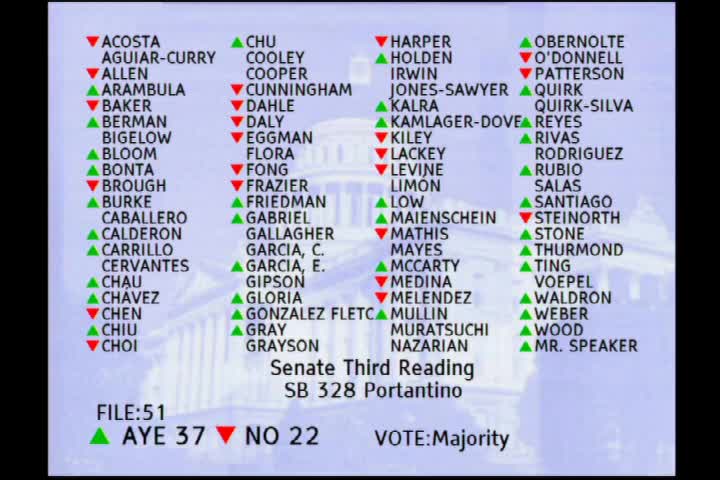 59SEC
Assembly Floor
 8MIN
Assembly Standing Committee on Housing and Community Development
 6MIN
Senate Floor
 1H
Senate Standing Committee on Appropriations
 13MIN
Senate Standing Committee on Judiciary
Bill Author




