AB 3067: Internet: marketing: minors: cannabis.
- Session Year: 2017-2018
- House: Assembly
- Latest Version Date: 2018-09-11
Existing law, the Control, Regulate and Tax Adult Use of Marijuana Act (AUMA), approved by the voters at the November 8, 2016, statewide general election, regulates the cultivation, distribution, transport, storage, manufacturing, testing, processing, sale, and use of marijuana for nonmedical purposes by people 21 years of age and older. The Medicinal and Adult-Use Cannabis Regulation and Safety Act (MAUCRSA), among other things, consolidates the licensure and regulation of commercial medicinal and adult-use cannabis activities. MAUCRSA prohibits any advertising or marketing placed in broadcast, cable, radio, print, and digital communications from being displayed unless at least 71.6% of the audience is reasonably expected to be 21 years of age or older.
Existing law prohibits an operator of an Internet Web site, online service, online application, or mobile application directed to minors from marketing or advertising certain products or services, including any instrument or paraphernalia that is designed for the smoking or ingestion of tobacco or any controlled substance and also makes this prohibition applicable to an advertising service that is notified by an operator that the site, service, or application is directed to minors. Existing law also prohibits an operator from knowingly using, disclosing, or compiling, or allowing a 3rd party to use, disclose, or compile, the personal information of a minor for the purpose of marketing or advertising specified types of products or services.
This bill would prohibit an operator of an Internet Web site, online service, online application, or mobile application directed to minors, or an advertising service that is notified by an operator that the site, service, or application is directed to minors, from marketing or advertising any cannabis, cannabis product, cannabis business, or cannabis-related instrument or paraphernalia on the Internet Web site, online service, online application, or mobile application. The bill would also prohibit an operator from knowingly using, disclosing, or compiling, the personal information of a minor for the purpose of marketing or advertising any cannabis, cannabis product, cannabis business, or cannabis-related instrument or paraphernalia.
The AUMA authorizes the Legislature to amend the act to further the purposes and intent of the act with a 2/3 vote of the membership of both houses of the Legislature, except as provided.
This bill would declare that its provisions further specified purposes and intent of AUMA.
(a)An operator of an Internet Web site, online service, online application, or mobile application directed to minors shall not market or advertise a product or a service described in subdivision (i) on its Internet Web site, online service, online application, or mobile application directed to minors.
(b)An operator of an Internet Web site, online service, online application, or mobile application:
(1)Shall not market or advertise a product or service described in subdivision (i) to a minor who the operator has actual knowledge is using its Internet Web site, online service, online application, or mobile application and is a minor, if the marketing or advertising is specifically directed to that minor based upon information specific to that minor, including, but not limited to, the minors profile, activity, address, or location sufficient to establish contact with a minor, and excluding Internet Protocol (IP) address and product identification numbers for the operation of a service.
(2)Shall be deemed to be in compliance with paragraph (1) if the operator takes reasonable actions in good faith designed to avoid marketing or advertising under circumstances prohibited under paragraph (1).
(c)An operator of an Internet Web site, online service, online application, or mobile application directed to minors or who has actual knowledge that a minor is using its Internet Web site, online service, online application, or mobile application, shall not knowingly use, disclose, compile, or allow a third party to use, disclose, or compile, the personal information of a minor with actual knowledge that the use, disclosure, or compilation is for the purpose of marketing or advertising products or services to that minor for a product described in subdivision (i).
(d)Minor means a natural person under 18 years of age who resides in this state.
(e)Internet Web site, online service, online application, or mobile application directed to minors mean an Internet Web site, online service, online application, or mobile application, or a portion thereof, that is created for the purpose of reaching an audience that is predominately comprised of minors, and is not intended for a more general audience comprised of adults. Provided, however, that an Internet Web site, online service, online application, or mobile application, or a portion thereof, shall not be deemed to be directed at minors solely because it refers or links to an Internet Web site, online service, online application, or mobile application directed to minors by using information location tools, including a directory, index, reference, pointer, or hypertext link.
(f)Operator means any person or entity that owns an Internet Web site, online service, online application, or mobile application. It does not include any third party that operates, hosts, or manages, but does not own, an Internet Web site, online service, online application, or mobile application on the owners behalf or processes information on the owners behalf.
(g)This section shall not be construed to require an operator of an Internet Web site, online service, online application, or mobile application to collect or retain age information about users.
(h)(1)With respect to marketing or advertising provided by an advertising service, the operator of an Internet Web site, online service, online application, or mobile application directed to minors shall be deemed to be in compliance with subdivision (a) if the operator notifies the advertising service, in the manner required by the advertising service, that the site, service, or application is directed to minors.
(2)If an advertising service is notified, in the manner required by the advertising service, that an Internet Web site, online service, online application, or mobile application is directed to minors pursuant to paragraph (1), the advertising service shall not market or advertise a product or service on the operators Internet Web site, online service, online application, or mobile application that is described in subdivision (i).
(i)The marketing and advertising restrictions described in subdivisions (a) and (b) shall apply to the following products and services as they are defined under state law:
(1)Alcoholic beverages, as referenced in Sections 23003 to 23007, inclusive, and Section 25658.
(2)Firearms or handguns, as referenced in Sections 16520, 16640, and 27505 of the Penal Code.
(3)Ammunition or reloaded ammunition, as referenced in Sections 16150 and 30300 of the Penal Code.
(4)Handgun safety certificates, as referenced in Sections 31625 and 31655 of the Penal Code.
(5)Aerosol container of paint that is capable of defacing property, as referenced in Section 594.1 of the Penal Code.
(6)Etching cream that is capable of defacing property, as referenced in Section 594.1 of the Penal Code.
(7)Any tobacco, cigarette, or cigarette papers, or blunt wraps, or any other preparation of tobacco, or any other instrument or paraphernalia that is designed for the smoking or ingestion of tobacco, products prepared from tobacco, or any controlled substance, as referenced in Division 8.5 (commencing with Section 22950) and Sections 308, 308.1, 308.2, and 308.3 of the Penal Code.
(8)Notwithstanding subdivision (b) of Section 26151, any cannabis, cannabis product, cannabis business, or any instrument or paraphernalia that is designed for the smoking or ingestion of cannabis or cannabis products.
(9)BB device, as referenced in Sections 16250 and 19910 of the Penal Code.
(10)Dangerous fireworks, as referenced in Sections 12505 and 12689 of the Health and Safety Code.
(11)Tanning in an ultraviolet tanning device, as referenced in Sections 22702 and 22706.
(12)Dietary supplement products containing ephedrine group alkaloids, as referenced in Section 110423.2 of the Health and Safety Code.
(13)Tickets or shares in a lottery game, as referenced in Sections 8880.12 and 8880.52 of the Government Code.
(14)Salvia divinorum or Salvinorin A, or any substance or material containing Salvia divinorum or Salvinorin A, as referenced in Section 379 of the Penal Code.
(15)Body branding, as referenced in Sections 119301 and 119302 of the Health and Safety Code.
(16)Permanent tattoo, as referenced in Sections 119301 and 119302 of the Health and Safety Code and Section 653 of the Penal Code.
(17)Drug paraphernalia, as referenced in Section 11364.5 of the Health and Safety Code.
(18)Electronic cigarette, as referenced in Section 119406 of the Health and Safety Code.
(19)Obscene matter, as referenced in Section 311 of the Penal Code.
(20)A less lethal weapon, as referenced in Sections 16780 and 19405 of the Penal Code.
(j)The marketing and advertising restrictions described in subdivisions (a), (b), and (c) shall not apply to the incidental placement of products or services embedded in content if the content is not distributed by or at the direction of the operator primarily for the purposes of marketing and advertising of the products or services described in subdivision (i).
(k)Marketing or advertising means, in exchange for monetary compensation, to make a communication to one or more individuals, or to arrange for the dissemination to the public of a communication, about a product or service the primary purpose of which is to encourage recipients of the communication to purchase or use the product or service.
SEC. 2.The Legislature finds and declares that this act furthers the purposes and intent of the Control, Regulate and Tax Adult Use of Marijuana Act for the following reason:
(a)The Privacy Rights for California Minors in the Digital World (Section 22580 of the Business and Professions Code) prohibits an operator of an Internet Web site, online service, online application, or mobile application directed to minors from marketing specified types of products or services to a minor, including any instrument or paraphernalia that is designed for the smoking or ingestion of any controlled substance.
(b)Under both the federal Controlled Substances Act (21 U.S.C. Sec. 801 et seq.) and the California Uniform Controlled Substances Act (Division 10 (commencing with Section 11000) of the Health and Safety Code), cannabis is classified as a Schedule I controlled substance.
(c)While subdivision (b) of Section 26151 of the Business and Professions Code, a provision of Proposition 64, allows for the display of any advertising or marketing of cannabis products in various ways, including digital communications, where at least 71.6 percent of the audience is reasonably expected to be 21 years of age or older, as determined by reliable, up-to-date audience composition data, subdivision (j) of Section 3 of Proposition 64 states that it was the intent of the people in approving AUMA to prohibit the marketing and advertising of nonmedical marijuana to persons younger than 21 years of age or near schools or other places where children are present.
(d)Legislation is needed to ensure that minors are not exposed to marketing and advertising of cannabis, cannabis products, and cannabis businesses either online or on mobile applications.
(e)Therefore, this act would further the purpose and intent of both the Privacy Rights for California Minors in the Digital World and the AUMA by protecting minors from being exposed to advertising and marketing of cannabis, cannabis products, and cannabis businesses.
(a)An operator of an Internet Web site, online service, online application, or mobile application directed to minors shall not market or advertise a product or a service described in subdivision (i) on its Internet Web site, online service, online application, or mobile application directed to minors.
(b)An operator of an Internet Web site, online service, online application, or mobile application:
(1)Shall not market or advertise a product or service described in subdivision (i) to a minor who the operator has actual knowledge is using its Internet Web site, online service, online application, or mobile application and is a minor, if the marketing or advertising is specifically directed to that minor based upon information specific to that minor, including, but not limited to, the minors profile, activity, address, or location sufficient to establish contact with a minor, and excluding Internet Protocol (IP) address and product identification numbers for the operation of a service.
(2)Shall be deemed to be in compliance with paragraph (1) if the operator takes reasonable actions in good faith designed to avoid marketing or advertising under circumstances prohibited under paragraph (1).
(c)An operator of an Internet Web site, online service, online application, or mobile application directed to minors or who has actual knowledge that a minor is using its Internet Web site, online service, online application, or mobile application, shall not knowingly use, disclose, compile, or allow a third party to use, disclose, or compile, the personal information of a minor with actual knowledge that the use, disclosure, or compilation is for the purpose of marketing or advertising products or services to that minor for a product described in subdivision (i).
(d)Minor means a natural person under 18 years of age who resides in the this state.
(e)Internet Web site, online service, online application, or mobile application directed to minors mean an Internet Web site, online service, online application, or mobile application, or a portion thereof, that is created for the purpose of reaching an audience that is predominately comprised of minors, and is not intended for a more general audience comprised of adults. Provided, however, that an Internet Web site, online service, online application, or mobile application, or a portion thereof, shall not be deemed to be directed at minors solely because it refers or links to an Internet Web site, online service, online application, or mobile application directed to minors by using information location tools, including a directory, index, reference, pointer, or hypertext link.
(f)Operator means any person or entity that owns an Internet Web site, online service, online application, or mobile application. It does not include any third party that operates, hosts, or manages, but does not own, an Internet Web site, online service, online application, or mobile application on the owners behalf or processes information on the owners behalf.
(g)This section shall not be construed to require an operator of an Internet Web site, online service, online application, or mobile application to collect or retain age information about users.
(h)(1)With respect to marketing or advertising provided by an advertising service, the operator of an Internet Web site, online service, online application, or mobile application directed to minors shall be deemed to be in compliance with subdivision (a) if the operator notifies the advertising service, in the manner required by the advertising service, that the site, service, or application is directed to minors.
(2)If an advertising service is notified, in the manner required by the advertising service, that an Internet Web site, online service, online application, or mobile application is directed to minors pursuant to paragraph (1), the advertising service shall not market or advertise a product or service on the operators Internet Web site, online service, online application, or mobile application that is described in subdivision (i).
(i)The marketing and advertising restrictions described in subdivisions (a) and (b) shall apply to the following products and services as they are defined under state law:
(1)Alcoholic beverages, as referenced in Sections 23003 to 23009, 23007, inclusive, and Section 25658.
(2)Firearms or handguns, as referenced in Sections 16520, 16640, and 27505 of the Penal Code.
(3)Ammunition or reloaded ammunition, as referenced in Sections 16150 and 30300 of the Penal Code.
(4)Handgun safety certificates, as referenced in Sections 31625 and 31655 of the Penal Code.
(5)Aerosol container of paint that is capable of defacing property, as referenced in Section 594.1 of the Penal Code.
(6)Etching cream that is capable of defacing property, as referenced in Section 594.1 of the Penal Code.
(7)Any tobacco, cigarette, or cigarette papers, or blunt wraps, or any other preparation of tobacco, or any other instrument or paraphernalia that is designed for the smoking or ingestion of tobacco, products prepared from tobacco, or any controlled substance, as referenced in Division 8.5 (commencing with Section 22950) and Sections 308, 308.1, 308.2, and 308.3 of the Penal Code.
(8)Notwithstanding subdivision (b) of Section 26151, any cannabis, cannabis product, cannabis business, or any instrument or paraphernalia that is designed for the smoking or ingestion of cannabis or cannabis products.
(8)(9)BB device, as referenced in Sections 16250 and 19910 of the Penal Code.
(9)(10)Dangerous fireworks, as referenced in Sections 12505 and 12689 of the Health and Safety Code.
(10)(11)Tanning in an ultraviolet tanning device, as referenced in Sections 22702 and 22706.
(11)(12)Dietary supplement products containing ephedrine group alkaloids, as referenced in Section 110423.2 of the Health and Safety Code.
(12)(13)Tickets or shares in a lottery game, as referenced in Sections 8880.12 and 8880.52 of the Government Code.
(13)(14)Salvia divinorum or Salvinorin A, or any substance or material containing Salvia divinorum or Salvinorin A, as referenced in Section 379 of the Penal Code.
(14)(15)Body branding, as referenced in Sections 119301 and 119302 of the Health and Safety Code.
(15)(16)Permanent tattoo, as referenced in Sections 119301 and 119302 of the Health and Safety Code and Section 653 of the Penal Code.
(16)(17)Drug paraphernalia, as referenced in Section 11364.5 of the Health and Safety Code.
(17)(18)Electronic cigarette, as referenced in Section 119405 119406 of the Health and Safety Code.
(18)(19)Obscene matter, as referenced in Section 311 of the Penal Code.
(19)(20)A less lethal weapon, as referenced in Sections 16780 and 19405 of the Penal Code.
(j)The marketing and advertising restrictions described in subdivisions (a), (b), and (c) shall not apply to the incidental placement of products or services embedded in content if the content is not distributed by or at the direction of the operator primarily for the purposes of marketing and advertising of the products or services described in subdivision (i).
(k)Marketing or advertising means, in exchange for monetary compensation, to make a communication to one or more individuals, or to arrange for the dissemination to the public of a communication, about a product or service the primary purpose of which is to encourage recipients of the communication to purchase or use the product or service.
SEC. 2.The Legislature finds and declares that this act furthers the purposes and intent of the Control, Regulate and Tax Adult Use of Marijuana Act for the following reason:
(a)The Privacy Rights for California Minors in the Digital World (Section 22580 of the Business and Professions Code) prohibits an operator of an Internet Web site, online service, online application, or mobile application directed to minors from marketing specified types of products or services to a minor, including any instrument or paraphernalia that is designed for the smoking or ingestion of any controlled substance.
(b)Under both the federal Controlled Substances Act (21 U.S.C. Sec. 801 et seq.) and the California Uniform Controlled Substances Act (Division 10 (commencing with Section 11000) of the Health and Safety Code), cannabis is classified as a Schedule I controlled substance.
(c)While subdivision (b) of Section 26151 of the Business and Professions Code, a provision of Proposition 64, allows for the display of any advertising or marketing of cannabis products in various ways, including digital communications, where at least 71.6 percent of the audience is reasonably expected to be 21 years of age or older, as determined by reliable, up-to-date audience composition data, subdivision (j) of Section 3 of Proposition 64 states that it was the intent of the people in approving AUMA to prohibit the marketing and advertising of nonmedical marijuana to persons younger than 21 years of age or near schools or other places where children are present.
(d)Legislation is needed to ensure that minors are not exposed to marketing and advertising of cannabis, cannabis products, and cannabis businesses either online or on mobile applications.
(e)Therefore, this act would further the purpose and intent of both the Privacy Rights for California Minors in the Digital World and the AUMA by protecting minors from being exposed to advertising and marketing of cannabis, cannabis products, and cannabis businesses.
|
Date
|
Status
|
|---|---|
| Sep 11, 2018 | Chaptered by Secretary of State - Chapter 347, Statutes of 2018. |
| Sep 11, 2018 | Approved by the Governor. |
| Aug 20, 2018 | Enrolled and presented to the Governor at 3 p.m. |
| Aug 14, 2018 | In Assembly. Ordered to Engrossing and Enrolling. |
| Aug 13, 2018 | Read third time. Passed. Ordered to the Assembly. |
| Jul 5, 2018 | Read second time. Ordered to Consent Calendar. |
| Jul 3, 2018 | From committee: Do pass. To Consent Calendar. (Ayes 7. Noes 0.) (July 3). |
| Jun 11, 2018 | From committee: Do pass and re-refer to Com. on JUD. (Ayes 8. Noes 0.) (June 11). Re-referred to Com. on JUD. |
| May 24, 2018 | Referred to Coms. on B., P. & E.D. and JUD. |
| May 10, 2018 | In Senate. Read first time. To Com. on RLS. for assignment. |
| May 10, 2018 | Read third time. Passed. Ordered to the Senate. |
| May 3, 2018 | Read second time. Ordered to Consent Calendar. |
| May 2, 2018 | From committee: Do pass. To Consent Calendar. (Ayes 10. Noes 0.) (May 1). |
| Apr 26, 2018 | Assembly Rule 96 suspended. |
| Apr 24, 2018 | From committee: Do pass and re-refer to Com. on APPR. (Ayes 15. Noes 0.) (April 24). Re-referred to Com. on APPR. |
| Mar 22, 2018 | Referred to Coms. on B. & P. and P. & C.P. |
| Feb 17, 2018 | From printer. May be heard in committee March 19. |
| Feb 16, 2018 | Read first time. To print. |
|
Date
|
Description
|
Location
|
Votes
|
|
|---|---|---|---|---|
| Aug 13, 2018 | Consent Calendar AB3067 | Senate Floor |
Passed |
|
| Jul 3, 2018 | Do pass and be ordered to the Consent Calendar | Senate Standing Committee on Judiciary |
Passed |
|
| Jun 11, 2018 | Do pass, but first be re-referred to the Committee on [Judiciary] | Senate Standing Committee on Business, Professions and Economic Development |
Passed |
|
| May 10, 2018 | AB 3067 CHAU Consent Calendar Second Day | Assembly Floor |
Passed |
|
| May 1, 2018 | Do pass. To Consent Calendar. | Assembly Standing Committee on Privacy and Consumer Protection |
Passed |
|
| Apr 24, 2018 | Do pass and be re-referred to the Committee on [Appropriations] | Assembly Standing Committee on Business and Professions |
Passed |
This list shows positions taken on this bill by organizations on the date displayed, which is linked to the original source.
Positions by individuals are not included.
|
Organization
|
Position
|
Date
|
|---|---|---|
| American Academy of Pediatrics | * Support | Jun 11, 2018 |
| California Academy of Child and Adolescent Psychiatry | ** Support | Aug 1, 2018 |
| California Children'S Hospital Association | ** Support | Aug 1, 2018 |
| California Police Chiefs Association | ** Support | Aug 1, 2018 |
| California State PTA | ** Support | Aug 1, 2018 |
| CMG Caliva | * Support | Apr 24, 2018 |
| Common Sense Kids Action | ** Support | Aug 1, 2018 |
| County Behavioral Health Directors Association of California | ** Support | Aug 1, 2018 |
| County Behavorial Health Directors Association | * Support | Jun 11, 2018 |
| County Health Executives Association Of California | ** Support | Aug 1, 2018 |
| Youth Forward | ** Support | Aug 1, 2018 |
Office of Senate Floor Analyses (916) 651-1520 Fax: (916) 327-4478 | AB |
CONSENT
Bill No: AB 3067
:
SENATE BUS., PROF. & ECON. DEV. COMMITTEE: 8-0, 6/11/18
AYES: Hill, Fuller, Dodd, Galgiani, Glazer, Hernandez, Pan, Wilk
NO VOTE RECORDED: Newman
SENATE JUDICIARY COMMITTEE: 7-0, 7/3/18
AYES: Jackson, Moorlach, Anderson, Hertzberg, Monning, Stern, Wieckowski
ASSEMBLY FLOOR: 73-0, 5/10/18 (Consent) - See last page for vote
DIGEST:
This bill adds any cannabis, cannabis product, cannabis business, or any instrument or paraphernalia that is designed for the smoking or ingestion of cannabis or cannabis products to the list of products or services subject to the Privacy Rights for California Minors in the digital World (PRCMDC).
Existing law:
- Provides that, among other rights, all people have an inalienable right to pursue and obtain privacy. (Cal. Const., Art. I, Sec. 1.)
- Requires an operator of an Internet Web site or online service directed to a child, as defined, or an operator of an Internet Web site or online service that has actual knowledge that it is collecting personal information from a child to provide notice of what information is being collected and how that information is being used, and to give the parents of the child the opportunity to refuse to permit the operator’s further collection of information from the child. (15 U.S.C. Sec. 6502.)
- Prohibits an operator of an Internet Web site, online service, online application, or mobile application directed to minors from marketing or advertising a number of products or services to a minor that include, alcoholic beverages, tobacco products, drug paraphernalia, electronic cigarettes, and others. (Bus. & Prof. Code Sec. 22580.)
- Prohibits an operator of an Internet Web site, online service, online application, or mobile application from marketing or advertising certain products or services to a minor who the operator has actual knowledge is using its Internet Web site, online service, online application, or mobile application, if the marketing or advertising is specifically directed to that minor based on information specific to that minor. (Bus. & Prof. Code Secs. 22580(b)(1) and (i).)
- Provides that an operator of an Internet Web site, online service, online application, or mobile application is deemed to be in compliance with advertising and marketing restrictions related to minors if the operator takes reasonable actions in good faith designed to avoid marketing or advertising under the prohibited circumstances. (Bus. & Prof. Code Sec. 22580(b)(2).)
- Prohibits an operator of an Internet Web site, online service, online application, or mobile application directed to minors who has actual knowledge that a minor is using its Internet Web site, online service, online application, or mobile application, from knowingly using, disclosing, compiling, or allowing a third party to use, disclose, or compile, the personal information of a minor with actual knowledge that the use, disclosure, or compilation is for the purpose of marketing or advertising products or services to that minor for prohibited products. (Bus. & Prof. Code Sec. 22580(b)(2).)
- Defines a “minor” as a natural person under 18 years of age who resides in this state. (Bus. & Prof. Code Sec. 22580(d).)
- Exempts any incidental placement of products or services embedded in content from the marketing and advertising restrictions on the condition that the content is not distributed by or at the direction of the operator primarily for the purposes of marketing and advertising of the specified products and services. (Bus. & Prof. Code Sec. 22580(j).)
- Deems the operator of an Internet Web site, online service, online application, or mobile application directed to minors to be in compliance with the law protecting minors if the operator notifies an advertising service, in the manner required by the advertising service, that the site, service, or application is directed to minors. (Bus. & Prof. Code Sec. 22580(h)(1).)
- Prohibits an advertising service from marketing or advertising a prohibited product or service on the operator’s Internet Web site, online service, online application, or mobile application if it is notified, in the manner required by the advertising service, that an Internet Web site, online service, online application, or mobile application is directed to minors. (Bus. & Prof. Code Sec. 22580(h)(2).)
- Requires any advertising or marketing placed in broadcast, cable, radio, print and digital communications to only be displayed where at least 71.6 percent of the audience is reasonably expected to be 21 years of age or older, as determined by reliable, up-to-date audience composition data. (Bus. & Prof. Code Sec. 26151(b).)
- Establishes the Bureau of Cannabis Control under the Department of Consumer Affairs to regulate the medical and recreational cannabis industry. (Bus. & Prof. Code Sec. 26010.)
- Provides that the Legislature may amend or repeal an initiative statute by another statute that becomes effective only when approved by the electors unless the initiative statute permits amendment or repeal without their approval. (Cal. Const., Art. II, Sec. 10.) Proposition 64, the Control, Regulate and Tax Adult Use of Marijuana Act (AUMA) from the November 2016 election provides that it may be amended by statute to further its purposes if passed in each house by a two-thirds vote.
This bill:
- Adds “any cannabis, cannabis product, cannabis business, or any instrument or paraphernalia that is designed for the smoking or ingestion of cannabis or cannabis products” to the list of products and services prohibited from being marketed to minors on an Internet Web site, online service, online application, or mobile application directed to minors.
- Makes findings and declarations that this legislation furthers the purposes and intent of both the PRCMDC and AUMA, and would make other technical and conforming amendments.
Background
The Legislature passed SB 568 (Steinberg, Chapter 336, Statutes of 2013) to protect minors online by: requiring that operators of Internet Web sites, online services, online applications, or mobile applications (Operators) permit minors to remove information they personally posted on the Operator’s site, service or application; and prohibiting Operators from displaying advertisements for products or services, that state law expressly prohibit minors from purchasing, on the Operator’s site, service or application directed to minors or when the Operator has actual knowledge that a minor is visiting the site at the time the advertisement is displayed.
The author of SB 568 argued that “because of their still developing capacity for self-regulation, still developing critical thinking skills, still developing ability to use sound judgment, and susceptibility to peer pressure, children and adolescents are at greater risk than adults as they navigate through the digital world and experiment with social media.” He further argued that “children are more susceptible to online marketing of harmful products” and that “it is the state’s responsibility to ensure that children are not bombarded with inappropriate advertisements while they are navigating sites directed towards children or served advertisements for products public policy deem are harmful for minors.” Senator Steinberg reasoned that “it is especially inappropriate for operators to subject children to advertisements for products those children are legally barred from purchasing when the operator knows the person visiting the site at the time the advertisement is displayed is a minor.” The Legislature unanimously approved SB 568.
When SB 568 was passed, the recreational use of marijuana was unlawful under state law. This bill, AB 3067, builds upon the PRCMDC by adding any cannabis, cannabis product, cannabis business, or any instrument or paraphernalia that is designed for the smoking or ingestion of cannabis or cannabis products to the list of products or services prohibited by the PRCMDC. This addition is arguably appropriate since the AUMA legalized the recreational use of marijuana for persons 21 years of age or older.
Comments
The author writes:
In an effort to ensure that children aren’t exposed to the marketing of cannabis businesses and products, AB 3067 expands the Privacy Rights for California Minors in the Digital World and the Adult Use of Marijuana Act by prohibiting an operator of an Internet website, online service, online application, or mobile application from marketing cannabis products or cannabis businesses on online platforms directed to children, or on any online platform when the operator has knowledge that a child is using their online service. By prohibiting the targeted marketing of children, we can spare our most vulnerable citizens from being exposed to a product they can’t legally consume.
In support, the California Academy of Child and Adolescent Psychiatry writes:
When California voters approved Proposition 64, the Adult Use of Marijuana Act (AUMA), various provisions were included to protect youth under 21 years of age from the marketing of recreational marijuana and related paraphernalia. Specifically, the AUMA restricts broadcast, cable, radio, print and digital advertising of marijuana to audiences where at least 71.6% of the audience is reasonably expected to be 21 years of age or older. While this threshold was an important step, the potential still exists for underage exposure to marijuana advertisements.
The potential arises from the fact that online protections for minors established by SB 568 (Steinberg, 2003) did not include cannabis in the list of products and services that minors cannot legally purchase. It was not included because at the time recreational cannabis was not legal for anyone to purchase in California. By treating cannabis products and cannabis businesses in the same fashion as alcohol and tobacco, AB 3067 (Chau) will protect California’s children from being exposed to the potentially harmful advertising and marketing of cannabis and cannabis-related products and businesses.
Expanding PRCMDC
The people of the State of California have determined under their state right to protect the health, safety, and welfare of Californians and the minors of our state (10th Amendment to our U.S. Constitution), that it is illegal to sell certain items and services to minors under the age of 18. For example, it is illegal to sell alcohol to a minor (Bus. & Prof. Code Sec. 25658), it is illegal to sell guns to minors (Penal Code Sec. 27505(a), (b)), it is illegal to sell ammunition to minors (Penal Code Sec. 30300), it is illegal to sell handgun safety certificates to minors (Penal Code Sec. 31625), and it is illegal to sell tobacco and tobacco paraphernalia to minors (Penal Code Sec. 308, Bus. & Prof. Code Secs. 22950-22963).
Prior to SB 568, (Steinberg, Chapter 336, Statutes of 2013) state law did nothing to prevent online operators from drawing minors into their Web Sites that were directed towards children, misleading parents into thinking that their children are on sites that are safe for the children to search, and then serving up advertisements to those children from advertisers of products and services that our state has determined are inappropriate and harmful for those children to consume. SB 568 enacted the PRCMDC which prohibits operators of Internet Web sites, online services, online applications, and mobile applications that are directed to minors, from marketing certain products or services, such as tobacco and alcohol to minors. The PRCMDC also prohibits operators of the same services that are not directed towards minors, from marketing such products to a minor, if the operator has actual knowledge that a minor in using the Web site or online service. This bill adds any cannabis, cannabis product, cannabis business, or any instrument or paraphernalia that is designed for the smoking or ingestion of cannabis or cannabis products to the list of products or services prohibited by the PRCMDC. This addition is arguably appropriate since the AUMA has legalized the recreational use of marijuana for persons 21 years of age or older and the recreational use of cannabis was not legal when the PRCMDC was originally enacted.
AB 76 (Chau, 2017) would have added any marijuana, marijuana product, marijuana business, or any instrument or paraphernalia that is designed for the smoking or ingestion of marijuana or marijuana products to the list of products or services subject to the PRCMDC and change the prohibitory age to 21 with regard to the marijuana advertisements. The bill was held under submission in the Senate Committee on Appropriations.
AB 2799 (Chau, Chapter 620, Statutes of 2016) created the Early Learning Privacy Information Protection Act (ELPIPA) to extend all of the protections offered by the Student Online Personal Information Protection Act (SOPIPA) to pupils enrolled in preschools and pre-kindergarten. Provides that ELPIPA imposes requirements directly on Web sites, online services, and mobile applications that are designed, marketed and used primarily by children enrolled in a preschool or prekindergarten course of instruction.
SB 1177 (Steinberg, Chapter 839, Statutes of 2014) established the SOPIPA to restrict the use and disclosure of information about K-12 students.
SB 568 (Steinberg, Chapter 336, Statutes of 2013) established the PRCMDC which prohibits operators of Internet Web sites, online service, online applications, and mobile applications that are directed to minors, from marketing certain products or services, such as tobacco and alcohol to minors. The bill also prohibits operators of the same services that are not directed towards minors, from marketing such products to a minor, if the operator has actual knowledge that a minor is using the Web site or online service.
FISCAL EFFECT: Appropriation: Fiscal Com.: Local:
California Academy of Child and Adolescent Psychiatry
California Children’s Hospital Association
California Police Chiefs Association
California State PTA
Common Sense Kids Action
County Behavioral Health Directors Association of California
County Health Executives Association of California
Youth Forward
None received
ASSEMBLY FLOOR: 73-0, 5/10/18
AYES: Acosta, Aguiar-Curry, Arambula, Baker, Berman, Bigelow, Bloom, Bonta, Brough, Burke, Caballero, Calderon, Carrillo, Cervantes, Chau, Chávez, Chen, Chiu, Choi, Chu, Cooper, Cunningham, Dahle, Daly, Eggman, Flora, Fong, Frazier, Gallagher, Eduardo Garcia, Gipson, Gloria, Gonzalez Fletcher, Gray, Grayson, Harper, Holden, Irwin, Jones-Sawyer, Kalra, Kamlager-Dove, Kiley, Lackey, Levine, Limón, Low, Maienschein, Mathis, Mayes, McCarty, Medina, Melendez, Mullin, Muratsuchi, Nazarian, O'Donnell, Patterson, Quirk, Quirk-Silva, Reyes, Rodriguez, Rubio, Salas, Santiago, Steinorth, Mark Stone, Thurmond, Ting, Voepel, Waldron, Weber, Wood, Rendon
NO VOTE RECORDED: Travis Allen, Cooley, Friedman, Cristina Garcia, Obernolte
Prepared by: Margie Estrada / JUD. / (916) 651-4113
8/1/18 14:11:58
**** END ****
Senator Hannah-Beth Jackson, Chair
2017-2018 Regular Session
Bill No: AB 3067 (Author:Chau)
Version: February 16, 2018
Hearing Date: July 3, 2018
Fiscal: No
Urgency: No
Consultant: MEC
SUBJECT
Internet: marketing: minors: cannabis
DESCRIPTION
Current law, the Privacy Rights for California Minors in the Digital World (PRCMDC), prohibits operators of Internet Web sites, online services, online applications, and mobile applications (Operators) that are directed to minors, from marketing certain products or services, such as tobacco and alcohol, to minors. The PRCMDC also prohibits Operators of the same services that are not directed towards minors, from marketing such products or services to a minor, if the Operator has actual knowledge that a minor is using the Web site or online service. This bill would add any cannabis, cannabis product, cannabis business, or any instrument or paraphernalia that is designed for the smoking or ingestion of cannabis or cannabis products to the list of products or services subject to the PRCMDC.
BACKGROUND
The Legislature passed SB 568 (Steinberg, Ch. 336, Stats. of 2013) to protect minors online by: requiring that operators of Internet Web sites, online services, online applications, or mobile applications (Operators) permit minors to remove information they personally posted on the Operator’s site, service or application; and prohibiting Operators from displaying advertisements for products or services, that state law expressly prohibit minors from purchasing, on the Operator’s site, service or application directed to minors or when the Operator has actual knowledge that a minor is visiting the site at the time the advertisement is displayed.
The author of SB 568 argued that “because of their still developing capacity for self-regulation, still developing critical thinking skills, still developing ability to use sound judgment, and susceptibility to peer pressure, children and adolescents are at greater risk than adults as they navigate through the digital world and experiment with social media.” He further argued that “children are more susceptible to online marketing of harmful products” and that “it is the state’s responsibility to ensure that children are not bombarded with inappropriate advertisements while they are navigating sites directed towards children or served advertisements for products public policy deem are harmful for minors.” Senator Steinberg reasoned that “it is especially inappropriate for operators to subject children to advertisements for products those children are legally barred from purchasing when the operator knows the person visiting the site at the time the advertisement is displayed is a minor.” The Legislature unanimously approved SB 568.
When SB 568 was passed, the recreational use of marijuana was unlawful under state law. This bill, AB 3067, would build upon the PRCMDC by adding any cannabis, cannabis product, cannabis business, or any instrument or paraphernalia that is designed for the smoking or ingestion of cannabis or cannabis products to the list of products or services prohibited by the PRCMDC. This addition is arguably appropriate since the Adult Use of Marijuana Act (AUMA) legalized the recreational use of marijuana for persons 21 years of age or older.
This bill was heard in the Senate Committee on Business and Professions and passed with an 8 to 0 vote.
CHANGES TO EXISTING LAW
Existing law provides that, among other rights, all people have an inalienable right to pursue and obtain privacy. (Cal. Const., art. I, Sec. 1.)
Existing federal law requires an operator of an Internet Web site or online service directed to a child, as defined, or an operator of an Internet Web site or online service that has actual knowledge that it is collecting personal information from a child to provide notice of what information is being collected and how that information is being used, and to give the parents of the child the opportunity to refuse to permit the operator’s further collection of information from the child. (15 U.S.C. Sec. 6502.)
Existing law prohibits an operator of an Internet Web site, online service, online application, or mobile application directed to minors from marketing or advertising a number of products or services to a minor that include, alcoholic beverages, tobacco products, drug paraphernalia, electronic cigarettes, and others. (Bus. & Prof. Code Sec. 22580.)
Existing law prohibits an operator of an Internet Web site, online service, online application, or mobile application from marketing or advertising certain products or services to a minor who the operator has actual knowledge is using its Internet Web site, online service, online application, or mobile application, if the marketing or advertising is specifically directed to that minor based on information specific to that minor. (Bus. & Prof. Code Secs. 22580(b)(1) and (i).)
Existing law provides that an operator of an Internet Web site, online service, online application, or mobile application is deemed to be in compliance with advertising and marketing restrictions related to minors if the operator takes reasonable actions in good faith designed to avoid marketing or advertising under the prohibited circumstances. (Bus. & Prof. Code Sec. 22580(b)(2).)
Existing law prohibits an operator of an Internet Web site, online service, online application, or mobile application directed to minors who has actual knowledge that a minor is using its Internet Web site, online service, online application, or mobile application, from knowingly using, disclosing, compiling, or allowing a third party to use, disclose, or compile, the personal information of a minor with actual knowledge that the use, disclosure, or compilation is for the purpose of marketing or advertising products or services to that minor for prohibited products. (Bus. & Prof. Code Sec. 22580(b)(2).)
Existing law defines a “minor” as a natural person under 18 years of age who resides in this state. (Bus. & Prof. Code Sec. 22580(d).)
Existing law exempts any incidental placement of products or services embedded in content from the marketing and advertising restrictions on the condition that the content is not distributed by or at the direction of the operator primarily for the purposes of marketing and advertising of the specified products and services.
(Bus. & Prof. Code Sec. 22580(j).)
Existing law deems the operator of an Internet Web site, online service, online application, or mobile application directed to minors to be in compliance with the law protecting minors if the operator notifies an advertising service, in the manner required by the advertising service, that the site, service, or application is directed to minors.
(Bus. & Prof. Code Sec. 22580(h)(1).)
Existing law prohibits an advertising service from marketing or advertising a prohibited product or service on the operator’s Internet Web site, online service, online application, or mobile application if it is notified, in the manner required by the advertising service, that an Internet Web site, online service, online application, or mobile application is directed to minors. (Bus. & Prof. Code Sec. 22580(h)(2).)
Existing law requires any advertising or marketing placed in broadcast, cable, radio, print and digital communications to only be displayed where at least 71.6 percent of the audience is reasonably expected to be 21 years of age or older, as determined by reliable, up-to-date audience composition data. (Bus. & Prof. Code Sec. 26151(b).)
Existing law establishes the Bureau of Cannabis Control under the Department of Consumer Affairs to regulate the medical and recreational cannabis industry. (Bus. & Prof. Code Sec. 26010.)
This bill would add “any cannabis, cannabis product, cannabis business, or any instrument or paraphernalia that is designed for the smoking or ingestion of cannabis or cannabis products” to the list of products and services prohibited from being marketed to minors on an Internet Web site, online service, online application, or mobile application directed to minors.
Existing law, the California Constitution, provides that the Legislature may amend or repeal an initiative statute by another statute that becomes effective only when approved by the electors unless the initiative statute permits amendment or repeal without their approval. (Cal. Const., art. II, Sec. 10.) Proposition 64, the Control, Regulate and Tax Adult Use of Marijuana Act (AUMA) from the November 2016 election provides that it may be amended by statute to further its purposes if passed in each house by a two-thirds vote.
This bill would make findings and declarations that this legislation furthers the purposes and intent of both the PRCMDC and AUMA, and would make other technical and conforming amendments.
COMMENT
1. Stated need for the bill
According to the author:
In an effort to ensure that children aren’t exposed to the marketing of cannabis businesses and products, AB 3067 expands the Privacy Rights for California Minors in the Digital World and the Adult Use of Marijuana Act by prohibiting an operator of an Internet website, online service, online application, or mobile application from marketing cannabis products or cannabis businesses on online platforms directed to children, or on any online platform when the operator has knowledge that a child is using their online service. By prohibiting the targeted marketing of children, we can spare our most vulnerable citizens from being exposed to a product they can’t legally consume.
In support, California Academy of Child & Adolescent Psychiatry writes:
When California voters approved Proposition 64, the Adult Use of Marijuana Act (AUMA), various provisions were included to protect youth under 21 years of age from the marketing of recreational marijuana and related paraphernalia. Specifically, the AUMA restricts broadcast, cable, radio, print and digital advertising of marijuana to audiences where at least 71.6% of the audience is reasonably expected to be 21 years of age or older. While this threshold was an important step, the potential still exists for underage exposure to marijuana advertisements.
The potential arises from the fact that online protections for minors established by SB 568 (Steinberg, 2003) did not include cannabis in the list of products and services that minors cannot legally purchase. It was not included because at the time recreational cannabis was not legal for anyone to purchase in California. By treating cannabis products and cannabis businesses in the same fashion as alcohol and tobacco, AB 3067 (Chau) will protect California’s children from being exposed to the potentially harmful advertising and marketing of cannabis and cannabis-related products and businesses.
2. Expanding Privacy Rights for California Minors in the Digital World
The people of the State of California have determined under their state right to protect the health, safety, and welfare of Californians and the minors of our state (10th Amendment to our U.S. Constitution), that it is illegal to sell certain items and services to minors under the age of 18. For example, it is illegal to sell alcohol to a minor (Bus. & Prof. Code Sec. 25658), it is illegal to sell guns to minors (Penal Code Sec. 27505(a), (b)), it is illegal to sell ammunition to minors (Penal Code Sec. 30300), it is illegal to sell handgun safety certificates to minors (Penal Code Sec. 31625), and it is illegal to sell tobacco and tobacco paraphernalia to minors (Penal Code Sec. 308, Bus. & Prof. Code Secs. 22950-22963).
Prior to SB 568, (Steinberg, Ch. 336, Stats. 2013) state law did nothing to prevent online operators from drawing minors into their Web Sites that were directed towards children, misleading parents into thinking that their children are on sites that are safe for the children to search, and then serving up advertisements to those children from advertisers of products and services that our state has determined are inappropriate and harmful for those children to consume. SB 568 enacted the Privacy Rights for California Minors in the Digital World (PRCMDC) which prohibits operators of Internet Web sites, online services, online applications, and mobile applications that are directed to minors, from marketing certain products or services, such as tobacco and alcohol to minors. The PRCMDC also prohibits operators of the same services that are not directed towards minors, from marketing such products to a minor, if the operator has actual knowledge that a minor in using the Web site or online service. This bill would add any cannabis, cannabis product, cannabis business, or any instrument or paraphernalia that is designed for the smoking or ingestion of cannabis or cannabis products to the list of products or services prohibited by the PRCMDC. This addition is arguably appropriate since the AUMA has legalized the recreational use of marijuana for persons 21 years of age or older and the recreational use of cannabis was not legal when the PRCMDC was originally enacted.
Support: California Academy of Child and Adolescent Psychiatry; California Children’s Hospital Association; California Police Chiefs Association; California State PTA; Common Sense Kids Action; County Behavioral Health Directors Association of California; County Health Executives Association of California; Youth Forward
Opposition: None Known
HISTORY
Source: Author
Related Pending Legislation: AB 76 (Chau, 2017) would add any marijuana, marijuana product, marijuana business, or any instrument or paraphernalia that is designed for the smoking or ingestion of marijuana or marijuana products to the list of products or services subject to the Privacy Rights for California Minors in the Digital World and change the prohibitory age to 21 with regard to the marijuana advertisements. This bill was held under submission in the Senate Committee on Appropriations.
Prior Legislation:
AB 2799 (Chau, Ch. 620, Stats. 2016) created the Early Learning Privacy Information Protection Act (ELPIPA) to extend all of the protections offered by the Student Online Personal Information Protection Act (SOPIPA) to pupils enrolled in preschools and pre-kindergarten. Provides that ELPIPA imposes requirements directly on Web sites, online services, and mobile applications that are designed, marketed and used primarily by children enrolled in a preschool or prekindergarten course of instruction.
SB 1177 (Steinberg, Ch. 839, Stats. 2014) established the Student Online Personal Information Protection Act to restrict the use and disclosure of information about K-12 students.
SB 568 (Steinberg, Ch. 336, Stats. 2013) established the Privacy Rights for California Minors in the Digital World which prohibits operators of Internet Web sites, online service, online applications, and mobile applications that are directed to minors, from marketing certain products or services, such as tobacco and alcohol to minors. The bill also prohibits operators of the same services that are not directed towards minors, from marketing such products to a minor, if the operator has actual knowledge that a minor is using the Web site or online service.
Prior Vote:
Senate Business, Professions & Economic Development Committee (Ayes 8, Noes 0)
Assembly Floor (Ayes 73, Noes 0)
Assembly Privacy and Consumer Protection Committee (Ayes 10, Noes 0)
Assembly Business and Professions Committee (Ayes 15, Noes 0)
**************
SENATE COMMITTEE ON
BUSINESS, PROFESSIONS AND ECONOMIC DEVELOPMENT
Senator Jerry Hill, Chair
2017 - 2018 Regular
Bill No: AB 3067 Hearing Date: June 11, 2018
Author: | Chau | ||
Version: |
| ||
Urgency: | Fiscal: | ||
Consultant: | |||
Subject: Internet: marketing: minors: cannabis
SUMMARY:
Adds cannabis, cannabis products, cannabis businesses, and cannabis paraphernalia to the list of products subject to advertising restrictions in the Privacy Rights for the California Minors in the Digital World (Rights).
Existing law:
- Establishes the Bureau of Cannabis Control (Bureau) under the Department of Consumer Affairs to regulate the medical and adult-use cannabis industry. (Business and Professions Code (BPC) § 26010)
- Establishes the Medicinal and Adult-Use Cannabis Regulation and Safety Act (AUMA) to regulate the cultivation, distribution, transport, storage, manufacturing, processing, and sale of both medicinal cannabis and adult-use cannabis.
(BPC § 26000) - Requires any advertising or marketing placed in broadcast, cable, radio, print, and digital communications to only be displayed where at least 71.6 percent of the audience is reasonably expected to be 21 years of age or older, as determined by reliable, up-to-date audience composition data. (BPC § 26151 (b))
- Prohibits a cannabis licensee from:
- Advertising or marketing cannabis or cannabis products in a manner intended to encourage persons under 21 years of age to consume cannabis or cannabis products.
- Publish or disseminate advertising or marketing that is attractive to children.
- Advertise or market cannabis or cannabis products on an advertising sign within 1,000 feet of a day care center, school providing instruction in kindergarten or any grades 1 through 12, playground, or youth center. (BPC § 26152 (e))
- Prohibits an operator of an Internet Web site, online service, online application, or mobile application directed to minors from marketing or advertising the following list products or services to a minor: (BPC §§ 22580 (a) and (i))
- Alcoholic beverages.
- Firearms or handguns.
- Ammunition or reloaded ammunition.
- Handgun safety certificates.
- Aerosol paint containers and etching creams capable of defacing property.
- Any tobacco product.
- BB device.
- Dangerous fireworks.
- Tanning in an ultraviolet tanning device.
- Dietary supplement products containing ephedrine group alkaloids.
- Tickets or shares in a lottery game.
- Salvia divinorum (a psychoactive plant) or Salvinorin A (the main active psychotropic molecule in Salvia divinorum).
- Body branding.
- Permanent tattoo.
- Drug paraphernalia.
- Electronic cigarette.
- Obscene matter.
- A less lethal weapon, as specified.
- Prohibits an operator of an Internet Web site, online service, online application, or mobile application from marketing or advertising a product or service described in
5) to a minor who the operator has actual knowledge is using its Internet Web site, online service, online application, or mobile application, if the marketing or advertising is specifically directed to that minor based on information specific to that minor. (BPC §§ 22580 (b)(1) and (i)) - Declares that an operator of an Internet Web site, online service, online application, or mobile application is deemed to be in compliance with advertising and marketing restrictions related to minors if the operator takes reasonable actions in good faith designed to avoid marketing or advertising under the prohibited circumstances. (BPC § 22580 (b)(2))
- Prohibits an operator of an Internet Web site, online service, online application, or mobile application directed to minors who has actual knowledge that a minor is using its Internet Web site, online service, online application, or mobile application, from knowingly using, disclosing, compiling, or allowing a third party to use, disclose, or compile, the personal information of a minor with actual knowledge that the use, disclosure, or compilation is for the purpose of marketing or advertising products or services to that minor for a prohibited products. (BPC § 22580 (b)(2))
- Defines a “minor” as a natural person under 18 years of age who resides in California. (BPC § 22580 (d))
- Deems the operator of an Internet Web site, online service, online application, or mobile application directed to minors to be in compliance with the law protecting minors if the operator notifies an advertising service, in the manner required by the advertising service, that the site, service, or application is directed to minors.
(BPC § 22580 (h)(1))
This bill:
- Adds any cannabis, cannabis product, cannabis business, or any instrument or paraphernalia designed for the smoking or ingestion of cannabis or cannabis products to the list of items subject to advertising restrictions in the Rights.
- Supersedes advertising restrictions in AUMA.
- Makes the following Legislative findings and declarations in support of this bill furthering the purposes and intent of AUMA:
- The Rights prohibits an operator of an Internet Web site, online service, online application, or mobile application directed to minors from marketing specified types of products or services to a minor, including any instrument or paraphernalia that is designed for the smoking or ingestion of any controlled substance.
- Under both the federal Controlled Substances Act and the California Uniform Controlled Substances Act, cannabis is classified as a Schedule I controlled substance.
- While AUMA allows for the display of any advertising or marketing of cannabis products in various ways, including digital communications, where at least 71.6 percent of the audience is reasonably expected to be 21 years of age or older, as determined by reliable, up-to-date audience composition data, Proposition 64 states that it was the intent of the people in approving AUMA to prohibit the marketing and advertising of nonmedical marijuana to persons younger than 21 years of age or near schools or other places where children are present.
- Legislation is needed to ensure that minors are not exposed to marketing and advertising of cannabis, cannabis products, and cannabis businesses either online or on mobile applications.
- Therefore, this act would further the purpose and intent of both the Rights and AUMA by protecting minors from being exposed to advertising and marketing of cannabis, cannabis products, and cannabis businesses.
FISCAL EFFECT:
This bill is not keyed “fiscal” by the Legislative Counsel.
COMMENTS:
- Purpose. This bill is Author sponsored. According to the Author’s office, “AB 3067 expands California’s Privacy Rights for California Minors in the Digital World and the AUMA by prohibiting an operator of an Internet website, online service, online application, or mobile application from marketing cannabis products or cannabis businesses to minors.
“Specifically, this bill would prohibit all internet websites, online services, online applications, or mobile applications from marketing cannabis products or services, when the operator has actual knowledge that a child is using their online service.”
- Privacy Rights for California Minors in the Digital World. The Rights prohibit operators of Internet Web sites, online services, online applications, and mobile applications that are directed to minors from marketing certain types of products or services that minors cannot legally purchase. This law also prohibits all Internet Web sites, online services, online applications, and mobile applications, from marketing such products to a minor if the operator has actual knowledge that a minor is using the website or online service. An operator of an Internet Web site, online service, online application, or mobile application is deemed to be in compliance with the Rights if the operator takes reasonable actions in good faith designed to avoid marketing or advertising under the prohibited circumstances.
AUMA legalized the adult use of cannabis and includes provisions intended to protect children from the marketing of cannabis products. However, the Rights’ protections of children from advertising and marketing of certain goods are stronger.
- Related Legislation. AB 2899 (Rubio and Cooper) of 2018 clarifies that the license number that must be provided in all advertisements and marketing for cannabis-related businesses is the “active” license number, defined as the number of a state-issued A-license or M-license that is not suspended or revoked. (Status: This bill is pending in the Senate Business, Professions, and Economic Development Committee.)
SB 1451 (Fuller) of 2018 establishes minimum penalties for cannabis licensees who furnish cannabis or cannabis products to unauthorized individuals. (Status: This bill is pending at the Assembly Desk.)
- Previous Related Legislation. AB 76 (Chau) of 2017 was nearly identical to AB 3067 (Chau) of 2018, except that it also amended AUMA to prohibit targeted individuals under 21. (Status: This bill was held in the Senate Appropriations Committee.)
SB 568 (Steinberg, Chapter 336, Statutes of 2013), established the Rights to prohibit operators of Internet Web sites, online services, online applications, and mobile applications that are directed to minors from marketing certain types of products or services.
- Arguments in Support. The California Children’s Hospital Association writes, “There is a growing body of research showing that our brains continue to develop well into our twenties, and there is some evidence that marijuana use in young adults may permanently impact the physical development of the brain. Adolescence is also a critical time for social and emotional development, which can also be hindered by marijuana use. Furthermore, teenagers are far more likely to engage in risky behaviors like experimenting with drugs, alcohol, and tobacco, which is one of the reasons most substance abuse problems start during adolescence. …
“While [AUMA’s] provisions are a good start, more can and should be done to ensure adolescents and young adults are not inappropriately targeted with advertisements for these products.”
NOTE:
Double-referral to Senate Committee on Judiciary, second.
SUPPORT AND OPPOSITION:
Support:
California Academy of Child and Adolescent Psychiatry
County Behavioral Health Directors Association of California
California Children’s Hospital Association
California State PTA
Common Sense Kids Action
County Health Executives Association of California
Youth Forward
Opposition:
None on file as of June 5, 2018.
-- END --
Date of Hearing: May 1, 2018
ASSEMBLY COMMITTEE ON PRIVACY AND CONSUMER PROTECTION
Ed Chau, Chair
ABPCA Bill Id:AB 3067 (
Author:Chau) – As Introduced Ver:February 16, 2018
SUBJECT: Internet: marketing: minors: cannabis
SUMMARY: This bill would ban the marketing of cannabis products or businesses to minors via the internet under California’s Privacy Rights for California Minors in the Digital World. Specifically, this bill would:
- Add cannabis, cannabis paraphernalia, and cannabis products on the existing list of products and services that are prohibited from being advertised to individuals 18 years of age or younger.
- Make various declarations and findings related to the marketing of cannabis to minors. Among other things, would set forth that:
- Legislation is needed to ensure that minors are not exposed to marketing and advertising of cannabis, cannabis products, and cannabis businesses either online or on mobile applications.
- This act would further the purpose and intent of both the Privacy Rights for California Minors in the Digital World and the Adult Use of Marijuana Act by protecting minors from being exposed to advertising and marketing of cannabis, cannabis products, and cannabis businesses.
EXISTING LAW:
- Provides that, among other rights, all people have an inalienable right to pursue and obtain privacy. (Cal. Const., art., Sec. 1.)
- Provides that the Legislature may amend or repeal an initiative statute by another statute that becomes effective only when approved by the electors unless the initiative statute permits amendment or repeal without their approval. (Cal. Const., art. II, Sec. 10.) Proposition 64, the Control, Regulate and Tax Adult Use of Marijuana Act from the November 2016 election provides that it may be amended by statute to further its purposes if passed in each house by a two-thirds vote.
- Sets restrictions for an operator of an internet website, online service, online application, or mobile application on marketing and advertising to minors on websites, online services, applications, or mobile applications on the products and services such as alcoholic beverages; firearms, handguns, handgun safety certificates, BB devices, less lethal weapons, and ammunition; aerosol paint containers and etching cream capable of defacing property; tobacco, cigarettes, cigarette papers, blunt wraps, or any other tobacco product; fireworks; tanning beds; dietary supplements; tickets or shares in lottery games; salvia divinorum or Salvinorin A; body branding or tattoos; drug paraphernalia or electronic cigarettes; or obscene matter. (Bus. & Prof. Code Sec. 22580.)
- States the provisions in number 1) above do not apply to incidental placement of products or services embedded in content not distributed by the operator of the website, as specified. (Bus. & Prof. Code Sec. 22580(j).)
- Defines “minor” for these purposes to mean a natural person under 18 years of age who resides in the state. Defines “marketing or advertising” to mean in exchange for monetary compensation, to make a communication to one or more individuals, or to arrange for the dissemination to the public of a communication, about a product or service the primary purpose of which is to encourage recipients of the communication to purchase or use the product or service. (Bus. & Prof. Code Sec. 22580(d), (k).)
- Limits lawful advertising or marketing placed in broadcast, cable, radio, print, and digital communications to those that are placed where at least 71.6 percent of the audience is reasonably expected to be 21 years of age or older, as determined by reliable, up-to-date audience composition data. (Bus. & Prof. Code Sec. 26151(b).)
FISCAL EFFECT: None. This bill has been keyed nonfiscal by the Legislative Counsel.
COMMENTS:
- Purpose of this bill: This bill is intended to protect minors from receiving online advertisements for cannabis and cannabis products, because although these products are now legal in California under Proposition 64, no one under 21 is allowed to purchase or use these products. This is an author-sponsored bill.
- Author’s statement: According to the author, “[t]his bill is needed to ensure that children aren’t exposed to the marketing of cannabis businesses and products. The Privacy Rights for California Minors in the Digital World (Section 22580 et seq. of the Business and Professions Code [B&P Code]), which became effective January 1, 2014, prohibits operators of Internet Web sites, online services, online applications, and mobile applications that are directed to minors from marketing certain types of products or services, such as tobacco and alcohol, that minors cannot legally purchase. The law also prohibits all Internet Web sites, online services, online applications, and mobile applications, from marketing such products to a minor, if the operator has actual knowledge that a minor is using the website or online service.
While the Privacy Rights for California Minors in the Digital World prohibited drug paraphernalia, from being advertised to minors, it did not specifically prohibit the advertising of cannabis, because at the time, recreational use of cannabis was not legal in California. Legislation is needed to close this gap.”
- History of legal cannabis in California: In 1996, California voters passed Proposition 215, legalizing the use of medical cannabis in the state. In October 2015, nearly 20 years after the authorization of the use of medical cannabis, Governor Jerry Brown signed into law a package of bills: AB 243 (Wood, Ch. 688, Stats. 2015); AB 266 (Bonta et al., Ch. 689, Stats. 2015); and SB 643 (McGuire, Ch. 719, Stats. 2015); collectively known as the Medical Cannabis Regulation and Safety Act (MCRSA). MCRSA established the California’s first regulatory framework for medical cannabis.
Most recently, SB 94 (Committee on Budget and Fiscal Review, Ch. 27, Stats. 2017) repealed MCRSA and included certain provisions of MCRSA in the licensing provisions of the Adult Use of Marijuana Act (AUMA) which was passed by California voters under Proposition 64 in 2016. The consolidated provisions are now within a single regulatory framework known as the Medicinal and Adult-Use Cannabis Regulation and Safety Act (MAUCRSA).
- Medical cannabis other states: As of 2016, 28 states, the District of Columbia, and Guam allow medical cannabis programs. Though California was the first to authorize the medical use of cannabis, it was the only state that allowed cannabis use without a robust state regulatory framework until passage of MCRSA. States with medical cannabis laws generally have a form of patient registry, which may provide some protection against arrest for possession up to a certain amount of cannabis for personal medicinal use. A limited number of states restrict medical cannabis usage to products with low to zero THC (tetrahydrocannabinol, the chemical compound that produces a euphoric high) and high CBD (cannabidiol, a chemical with numerous medical applications) concentrations, in an effort to more strictly limit the use of THC due to its known psychoactive effects.
- Recreational cannabis in California and other states: In November 2016, California voters California passed Proposition 64, the Adult Use of Marijuana Act (AUMA), to legalize the recreational use of cannabis in the state by 2018. To date, eight states (Alaska, Colorado, Oregon, Washington, California, Nevada, Massachusetts, and Maine, as well as the District of Columbia) have legalized recreational cannabis.
In California, the authors of AUMA sought to make use of much of the regulatory structure and authorities set out by MCRSA while making a few notable changes to the structure being implemented. The AUMA set a January 1, 2018, deadline for state implementation of recreational cannabis in addition to the regulations required in MCRSA that are scheduled to take effect on the same date. The same agencies responsible for regulation under MCRSA remain responsible for implementing regulations for adult recreational use.
The AUMA included provisions intended to protect children from television and radio marketing of marijuana products, but those protections do not clearly address online marketing to people under 21 years of age, and specifically, minors under 18 years of age. Consistent with the AUMA’s prohibitions on television and radio advertisements to minors, the bill would add cannabis, cannabis paraphernalia, and cannabis products on the existing list of products and services that are prohibited from being advertised to individuals 18 years of age or younger, online.
Though it does so in a narrower way (by applying only to those under 18 years of age, as opposed to those under 21 years of age), this bill is largely consistent with the original intent of the AUMA: to avoid advertising minors who cannot legally purchase cannabis products. Notably, it does not amend AUMA itself. In support of the bill, the California Children’s Hospital’s Association writes that while AUMA’s provisions “are a good start, more can and should be done to ensure adolescents and young adults are not inappropriately targeted with advertisements for these products. For example, online and mobile platform operators and advertisers already use technology to tailor their marketing materials to appeal to specific users, and can direct their messages to users that are more likely to want their products. This technology also allows them to predict the age of particular users with a high degree of accuracy. Because of this, California law already prohibits operators of websites, online services, online applications, and mobile applications from knowingly marketing or advertising certain products and services like alcohol, tobacco, guns, tanning and body branding to users under age 18. AB 3067 would add [cannabis], [cannabis] products, and [cannabis] businesses to the list of products and services covered by the prohibition, better ensuring that adolescents are not inappropriately encouraged to use marijuana or marijuana products.”
- Closing the gap in the Privacy Rights for Minors in the Digital World: As recognized by the U.S. Supreme Court as early as 1905, the police power of a state must be held to embrace, at least, such reasonable regulations established directly by legislative enactment as will protect the public health and safety. (U.S. v. Jacobson (1905) 197 U.S. 11.) Exercising that police power, California has, for example, made it illegal to sell various items and services to minors under the age of 18, including alcohol, guns, ammunition, tobacco or tobacco paraphernalia, tanning or tanning beds, among other things. (See e.g., Bus. & Prof. Code Secs. 25658, 22950-22963, 22706, 2241.3, and Pen. Code Secs. 27505, 30300, 308.) Justified by that same police power to regulate public health, safety and welfare, California law was eventually expanded to address how online operators might draw minors onto their websites and advertise products and services that the state has determined to be inappropriate or harmful for children to consume. Specifically, in 2013, the Legislature passed SB 568 (Steinberg, Ch. 336, Stats. 2013), known as the Privacy Rights for California Minors in the Digital World, to prohibit the advertising of certain categories of goods and services to minors through websites, applications, online services, and mobile applications. While the resulting act prohibited drug paraphernalia from being advertised to minors, it did not specifically prohibit the advertising of marijuana (or cannabis), because at the time, recreational use of marijuana was not legal in California.
This bill closes that gap by adding cannabis, cannabis products, businesses, and paraphernalia to the list of prohibited advertisements in California’s Privacy Rights for California Minors in the Digital World to ensure that operators of internet websites, online services, online applications, and mobile applications that are directed to minors cannot market marijuana products or services, because while these products and services are now legal in California under Proposition 64, minors cannot legally purchase them. Staff notes that, as a matter of public policy, it is important that minors (who may be impressionable) are not targeted by advertisers seeking to sell products or services that the minor cannot legally purchase. Those advertisements arguably only serve the purpose of encouraging a minor to purchase a product or service that has already been determined to be inappropriate for a person of that age.
- Commercial speech considerations: This bill would expressly prohibit the marketing or advertising of a product or service to a minor, if the minor cannot legally purchase the product or participate in the service in the State of California. In doing so, the prohibition technically restricts the commercial speech of the operator of the website or other online service by prohibiting the operator from delivering the message (even though the underlying product cannot lawfully be purchased). That being said, the mere fact that it restricts speech does not mean that such a restriction would violate the First Amendment of the United States Constitution or Article I of the California Constitution.
Generally speaking, the First Amendment, and Article I of the California Constitution, act to protect the freedom of expression of the citizens of California. Commercial speech, which is done on behalf of a company or individual for purpose of making a profit, has not been afforded full protection under the First Amendment by the United States Supreme Court. In order to be upheld as a valid restriction on commercial speech, the proposed law must meet the following four-part test: (1) the speech must be about a lawful activity and cannot be false or misleading; (2) the government must have a substantial interest; (3) the law must directly advance the governmental interest asserted; and (4) the law must be no more extensive than necessary. (Central Hudson Gas v. Public Service Commission (1980) 447 U.S. 559.)
In this case, the proposed restriction would appear to be a valid restriction on commercial speech since, as a threshold matter, one may argue that it is not lawful to advertise products to a minor that the minor cannot purchase. Even if the speech is lawful, the State of California arguably has a strong interest in taking steps to prevent products from being illegally sold to minors, and, the proposed law would advance that interest in a manner that does not cover products which are legal for minors to purchase in California. Although a determination regarding the First Amendment is ultimately for the courts, it would appear that the proposed restriction on marketing and advertising could survive such a challenge.
- Bill is narrower than AB 76 from last year: This bill is substantially similar to AB 76 (Chau, 2017) from last year, which was ultimately held in the Senate Appropriations Committee but passed this Committee unanimously. This bill is narrower than the author’s prior attempt to protect minors and young adults from the sale of cannabis and cannabis product advertisements, in that it applies only to advertisements aimed at minors under 18 years of age, as opposed to advertisements aimed at anyone under 21 years of age.
- Related legislation: AB 2899 (Rubio and Cooper, 2018) would clarify that the license number that must be provided in all advertisements and marketing for cannabis-related businesses is the “active” license number, defined as the number of a state-issued A-license or M-license that is not suspended or revoked. This bill is pending in the Assembly Appropriations Committee.
SB 1451 (Fuller, 2018) would establish minimum penalties for cannabis licensees who furnish cannabis or cannabis products to unauthorized individuals, and specifically persons under the legal age. This bill is pending in the Senate Appropriations Committee.
SB 1127 (Hill, 2018) would authorize the governing board of a school district, a county board of education, or the governing body of a charter school maintaining kindergarten or any of grades 1 to 12, inclusive, to adopt a policy that allows a parent or guardian to possess and administer non-smokeable and non-vapeable medicinal cannabis to an authorized pupil at a schoolsite. This bill is pending in the Senate Judiciary Committee.
- Prior legislation: AB 76 (Chau, 2017) was substantially similar to this bill. That bill was held in the Senate Appropriations Committee.
SB 94 (Committee on Budget and Fiscal Review, Ch. 27, Stats. 2017) see Comment 3.
SB 568 (Steinberg, Ch. 336, Stats. 2013) see Comment 6.
- Other arguments in support: Youth Forward states in support of this bill that “there is a vast amount of research that shows the negative health effects of adolescent use of cannabise, particularly frequent use, and the danger posed to children of intoxication and poisoning due to accidental consumption. We support AB 3067 because it will restrict online marketing to youth and children. We are especially concerned about the future impact on children as the cannabis industry becomes more corporatized and relies on mass marketing methods to build its user base.”
- Double-referral: This bill was double-referred to the Assembly Business and Professions Committee where it was heard on April 24, 2018, and passed out on a 15-0 vote.
REGISTERED SUPPORT / OPPOSITION:
Support
California Children’s Hospital Association
California Academy of Child and Adolescent Psychiatry
Youth Forward
Opposition
None on file
Analysis Prepared by: Ronak Daylami / P. & C.P. / (916) 319-2200
Date of Hearing:
ASSEMBLY COMMITTEE ON BUSINESS AND PROFESSIONS
Evan Low, Chair
ABPCA Bill Id:AB 3067
Author:(Chau) – As Introduced Ver:February 16, 2018
NOTE: This bill is double referred, and if passed by this Committee, it will be referred to the Assembly Committee on Privacy and Consumer Protection
SUBJECT: Internet: marketing: minors: cannabis.
SUMMARY: Bans the marketing of cannabis products or businesses to minors via the Internet; prohibits website operators from knowingly collecting, using, or selling data from minors for the purpose of marketing or advertising cannabis products or businesses; and, prohibits advertising cannabis products, paraphernalia, or businesses on websites or mobile applications directed at minors.
EXISTING LAW:
- Sets restrictions for an operator of an Internet website, online service, online application, or mobile application on marketing and advertising to minors on websites, online services, applications, or mobile applications on the following products and services:
- Alcoholic beverages (BPC Section 22580 (i)(1));
- Firearms, handguns, handgun safety certificates, BB devices, less lethal weapons, and ammunition (BPC Section 22580 (i)(2-4, 8));
- Aerosol paint containers and etching cream capable of defacing property (BPC Section 22580 (i)(5-6));
- Tobacco, cigarettes, cigarette papers, blunt wraps, or any other tobacco product (BPC Section 22580 (i)(7));
- Fireworks (BPC Section 22580 (i)(9));
- Tanning beds (BPC Section 22580 (i)(10));
- Dietary supplements containing ephedrine group alkaloids (BPC Section 22580 (i)(11));
- Tickets or shares in lottery games (BPC Section 22580 (i)(12));
- Salvia divinorum or Salvinorin A, or any substance containing salvia. (BPC Section 22580 (i)(13));
- Body branding or tattoos (BPC Section 22580 (i)(14-15));
- Drug paraphernalia or electronic cigarettes (BPC Section 22580 (i)(16-17)); and,
- Obscene matter (Penal Code Section 311) (BPC Section 22580 (i)(18)).
- States the provisions in number 1) above do not apply to incidental placement of products or services embedded in content not distributed by the operator of the website, as specified. (BPC Section 22580 (j))
- Prohibits the advertising of cannabis products or services to audiences composed of more than 28.9 percent minors. (BPC Section 26151 (b))
THIS BILL:
- Adds cannabis, cannabis paraphernalia, and cannabis products on the list of products and services that are prohibited from being advertised to individuals 20 years of age or younger.
- Prohibits the advertising and marketing of cannabis, cannabis products or businesses on any website, online service, online application, or mobile application that caters to largely under-21 audience and is specifically targeted to a person based on identifying information.
- Deems an operator to be in compliance with number 2) above if they have made reasonable actions in good faith to comply with the provisions.
- Prohibits the knowing collection and dissemination of personal information of a person less than 21 years of age with actual knowledge that the use of said data is for the purpose of marketing or advertising cannabis.
- Defines an "operator" to mean any person or entity that owns an internet website, online service, online application, or mobile application and does not include any third party that operates, hosts, or manages but does not own an Internet website, online service, online application, or mobile application on the owner's behalf or processes information on the owner's behalf.
- Specifies that the provisions of this bill do not require an operator of an Internet website, online service, online application, or mobile application to collect or retain age information about users.
- Makes declarations and findings related to the marketing of cannabis to persons under 21 years old.
FISCAL EFFECT: Unknown. This bill is keyed fiscal by Legislative Counsel.
COMMENTS:
Purpose. This bill is sponsored by the author. According to the author, “In an effort to ensure that children aren’t exposed to the marketing of cannabis businesses and products, AB 3067 expands the Privacy Rights for California Minors in the Digital World and the Adult Use of Marijuana Act by prohibiting an operator of an Internet website, online service, online application, or mobile application from marketing cannabis products or cannabis businesses on online platforms directed to children, or on any online platform when the operator has knowledge that a child is using their online service. By prohibiting the targeted marketing of children, we can spare our most vulnerable citizens from being exposed to a product they can’t legally consume.”
Background. This bill extends existing prohibitions on marketing and advertising dangerous or harmful products to minors. Under the provisions of this bill, cannabis and cannabis products are included on a list of other harmful and dangerous products, including, tobacco, salvia, spray paint, firearms, and fireworks.
The bill also places strict prohibitions on the collection and use of data from underage users, explicitly stating that personally identifiable information may not be collected in the course of advertising or seeking to advertise cannabis or related products and services.
History of Legal Cannabis in California. In 1996, California voters passed Proposition 215, legalizing the use of medical cannabis (MC) in the state. In October 2015, nearly 20 years after the authorization of the use of MC, Governor Jerry Brown signed into law a trio of bills [AB 243 (Wood), Chapter 688, Statutes of 2015, AB 266 (Bonta, Cooley, Jones-Sawyer, Lackey, and Wood), Chapter 689, Statutes of 2015, and SB 643 (McGuire), Chapter 719, Statutes of 2015] collectively known as the Medical Cannabis Regulation and Safety Act (MCRSA). MCRSA established the state’s first comprehensive regulatory framework for MC.
In 2016, the voters of California passed Proposition 64, the Adult Use of Marijuana Act (AUMA) to legalize the recreational use of cannabis in the state by 2018. In June 2017, AUMA and MCRSA were combined via the budget process to form one system for the regulation of cannabis, MAUCRSA.
Privacy Rights for California Minors in the Digital World - In 2014, the enactment of SB 568 (Steinberg), Chapter 336, Statutes of 2013, prohibited advertising certain categories of goods and services to minors through websites, applications, online services, and mobile applications. This bill would include cannabis, cannabis products, businesses, and paraphernalia in the existing statute and extend protections against data collection currently offered to minors, to the cannabis industry and its digital peripherals.
Prior Related Legislation.
AB 76 (Chau) was substantively similar to this bill. STATUS: that bill was held in the Senate Appropriations Committee under submission.
SB 94 (Committee on Budget and Fiscal Review, Chapter 27, Statutes of 2017) of the current legislative session combined AUMA and MCRSA into one system for the regulation of cannabis, resulting in MAUCRSA.
AB 64 (Bonta, Cooley, Jones-Sawyer, Lackey, Wood) of the current legislative session seeks to reconcile a number of differences between MCRSA and AUMA to provide clarity in regulation and enforcement of both medical and recreational cannabis. STATUS: This bill was passed by the Assembly Committee on Business and Professions on April 18, 2017 and was held in the Assembly Committee on Appropriations.
SB 568 (Steinberg), Chapter 336, Statutes of 2013, prohibited the operator of a website, online service, application, or mobile application, from marketing or advertising specified types of products or services to a minor. This bill prohibits an operator from knowingly using, disclosing, compiling, or allowing a 3rd party to use, disclose, or compile, the personal information of a minor for the purpose of marketing or advertising specified types of products or services. This bill also made this prohibition applicable to an advertising service that is notified by an operator of an Internet Web site, online service, online application, or mobile application that the site, service, or application is directed to a minor.
ARGUMENTS IN SUPPORT:
“The California Children’s Hospital Association (CCHA) is pleased to SUPPORT AB 3067 (Chau), which would expand existing restrictions on the use of web-based and app-based marketing and advertising of specific products and services to minors so that they also apply to marijuana, marijuana products, and marijuana businesses.”
The California Academy of Child and Adolescent Psychiatry writes, “CALACAP has supported similar efforts to prohibit marketing and advertising of marijuana programs to youth, including last year’s AB 76 (Chau).”
ARGUMENTS IN OPPOSITION:
None on file
REGISTERED SUPPORT:
California Children’s Hospital Association
California Academy of Child and Adolescent Psychiatry
REGISTERED OPPOSITION:
None on file
Analysis Prepared by: Jimmy Fremgen / B. & P. / (916) 319-3301
Discussed in Hearing
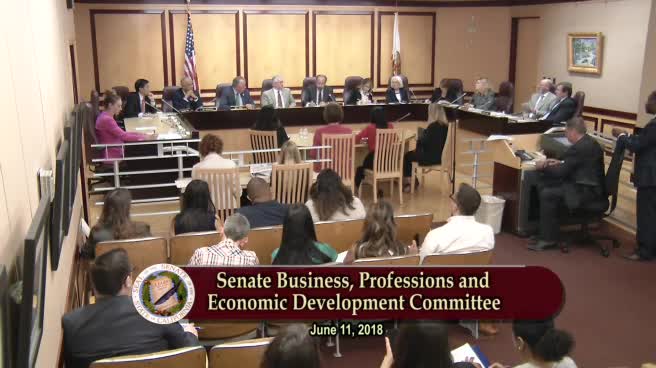 4MIN
Senate Standing Committee on Business, Professions and Economic Development
 3MIN
Assembly Standing Committee on Business and Professions
Bill Author





