AB 3126: Contractors’ State License Law: cash deposit in lieu of a bond.
- Session Year: 2017-2018
- House: Assembly
- Latest Version Date: 2018-09-29
Existing law, the Contractors State License Law, provides for licensing and regulation of contractors by the Contractors State License Board, which is within the Department of Consumer Affairs. Existing law requires an applicant for licensure or a licensee to file or have on file certain bonds, including a contractors bond in the sum of $15,000. Existing law authorizes an applicant or licensee to instead post a cash deposit in lieu of a required bond.
This bill would revise the authorization to post a cash deposit in lieu of a bond to prohibit, among other things, certificates of deposit, and instead would require the contractor to deposit the appropriate amount of lawful money or a cashiers check with the registrar pursuant to specified statutes on and after January 1, 2019, and would require each person licensed under that law and subject to any bond requirement to maintain the required bond as executed by an admitted surety insurer or the money deposited with the registrar in the appropriate amount, except as specified. The bill would require all existing alternatives in lieu of a bond or the specified deposit with the registrar, currently filed with the board, to be replaced for a surety bond or the specified deposit with the registrar by January 1, 2020. The bill would provide that the information required from the contractor to obtain the surety requirements be consistent with the information required to obtain a contractors license. The bill would require that any deposits of money or cashiers checks to the registrar under these provisions be deposited in an interest-bearing or share account, as specified.
The bill would also require a contractor who deposits money or a cashiers check with the registrar to submit a $100 fee to the registrar to, upon appropriation by the Legislature, be used to cover the expenses incurred in processing the deposits and paying claims made against the deposits. The bill would create the Contractors Deposit Fund in the State Treasury for these purposes.
Existing law, the Contractors State License Law, provides for licensing and regulation of contractors by the Contractors State License Board, which is within the Department of Consumer Affairs. Existing law requires an applicant for licensure or a licensee to file or have on file certain bonds, including a contractors bond in the sum of $15,000. Existing law authorizes an applicant or licensee to instead post a cash deposit in lieu of a required bond.
This bill would revise the authorization to post a cash deposit in lieu of a bond to prohibit, among other things, certificates of deposit, and instead would require the contractor to deposit the appropriate amount of lawful money or a cashiers check with the registrar pursuant to specified statutes on and after January 1, 2019, and would require each person licensed under that law and subject to any bond requirement to maintain the required bond as executed by an admitted surety insurer or the money deposited with the registrar in the appropriate amount, except as specified. The bill would require all existing alternatives in lieu of a bond or the specified deposit with the registrar, currently filed with the board, to be replaced for a surety bond or the specified deposit with the registrar by January 1, 2020. The bill would provide that the information required from the contractor to obtain the surety requirements be consistent with the information required to obtain a contractors license. The bill would require that any deposits of money or cashiers checks to the registrar under these provisions be deposited in an interest-bearing or share account, as specified.
The bill would also require a contractor who deposits money or a cashiers check with the registrar to submit a $100 fee to the registrar to, upon appropriation by the Legislature, be used to cover the expenses incurred in processing the deposits and paying claims made against the deposits. The bill would create the Contractors Deposit Fund in the state treasury for these purposes.
Existing law, the Contractors State License Law, provides for licensing and regulation of contractors by the Contractors State License Board, which is within the Department of Consumer Affairs. Existing law requires an applicant for licensure or a licensee to file or have on file certain bonds, including a contractors bond in the sum of $15,000. Existing law authorizes an applicant or licensee to instead post a cash deposit in lieu of a required bond.
This bill would delete revise the authorization to post a cash deposit in lieu of a bond, would prohibit the board from accepting an alternative in lieu of the bond bond to prohibit, among other things, certificates of deposit, and instead would require the contractor to deposit the appropriate amount of lawful money or a cashiers check with the registrar pursuant to specified statutes on and after January 1, 2019, and would require each person licensed under that law and subject to any bond requirement to maintain the required bond as executed by an admitted surety insurer or the money deposited with the registrar in the appropriate amount, except as specified. The bill would require all existing alternatives in lieu of a bond or the specified deposit with the registrar, currently filed with the board board, to be replaced for a surety bond or the specified deposit with the registrar by January 1, 2020. The bill would provide that the information required from the contractor to obtain the surety requirements be consistent with the information required to obtain a contractors license. The bill would require that any deposits of money or cashiers checks to the registrar under these provisions be deposited in an interest-bearing or share account, as specified.
The bill would also require a contractor who deposits money or a cashiers check with the registrar to submit a $100 fee to the registrar to, upon appropriation by the Legislature, be used to cover the expenses incurred in processing the deposits and paying claims made against the deposits. The bill would create the Contractors Deposit Fund in the state treasury for these purposes.
Existing law, the Contractors State License Law, provides for licensing and regulation of contractors by the Contractors State License Board, which is within the Department of Consumer Affairs. Existing law requires an applicant for licensure or a licensee to file or have on file certain bonds, including a contractors bond in the sum of $15,000. Existing law authorizes an applicant or licensee to instead post a cash deposit in lieu of a required bond.
This bill would delete the authorization to post a cash deposit in lieu of a bond, would prohibit the board from accepting an alternative in lieu of the bond, bond on and after January 1, 2019, and would require each person licensed under that law and subject to any bond requirement to maintain the required bond as executed by an admitted surety insurer in the appropriate amount, except as specified. The bill would prohibit the board from accepting an alternative in lieu of a bond on and after January 1, 2019, and would require all existing alternatives in lieu of a bond currently filed with the board to be replaced for a surety bond by January 1, 2020.
Existing law, the Contractors State License Law, provides for licensing and regulation of contractors by the Contractors State License Board, which is within the Department of Consumer Affairs. Existing law requires an applicant for licensure or a licensee to file or have on file certain bonds, including a contractors bond in the sum of $15,000. Existing law authorizes an applicant or licensee to instead post a cash deposit in lieu of a required bond.
This bill would delete the authorization to post a cash deposit in lieu of a bond, would prohibit the board from accepting an alternative in lieu of the bond, and would require each person licensed under that law and subject to any bond requirement to maintain the required bond as executed by an admitted surety insurer in the appropriate amount, except as specified. The bill would prohibit the board from accepting an alternative in lieu of a bond on and after January 1, 2019, and would require all existing alternatives in lieu of a bond currently filed with the board to be replaced for a surety bond by January 1, 2020.
Existing law establishes the Board for Professional Engineers, Land Surveyors, and Geologists, which is responsible for the licensure, registration, and regulation of the practice of professional engineering, the practice of professional geologists and geophysicists, and the practice of professional land surveyors. Existing law requires 5 members of the board to be registered under the Professional Engineers Act, one member to be licensed under the Professional Land Surveyors Act, and one member to be licensed under the Geologist and Geophysicist Act.This bill would make nonsubstantive changes to that provision.Existing law establishes the Board for Professional Engineers, Land Surveyors, and Geologists, which is responsible for the licensure, registration, and regulation of the practice of professional engineering, the practice of professional geologists and geophysicists, and the practice of professional land surveyors. Existing law requires 5 members of the board to be registered under the Professional Engineers Act, one member to be licensed under the Professional Land Surveyors Act, and one member to be licensed under the Geologist and Geophysicist Act.
This bill would make nonsubstantive changes to that provision.
(a)Each person licensed under the provisions of this chapter and subject to any of the bonding provisions of this article shall maintain the requisite bond as executed by an admitted surety insurer or as deposited with the registrar pursuant to paragraph (1) of subdivision (a) of Section 995.710 of the Code of Civil Procedure in the appropriate amount. Notwithstanding Article 7 (commencing with Section 995.710) of Chapter 2 of Title 14 of Part 2 of the Code of Civil Procedure, no other method of deposit, including, but not limited to, a certificate of deposit, shall satisfy a bond requirement under this article.
(b)All existing alternatives in lieu of a bond currently filed with the board shall be replaced for a surety bond or the deposit prescribed by paragraph (1) of subdivision (a) of Section 995.710 of the Code of Civil Procedure by January 1, 2020.
(c)Notwithstanding subdivision (a), this section shall not apply to the bond equivalents described in Section 7159.5 of this chapter.
(d)(1)This section shall be operative on and after January 1, 2019, upon which date the board shall thereafter no longer accept alternatives in lieu of a bond, other than as provided in this section.
(2)Notwithstanding any other law, in order to comply with the bonding provisions of this article, a person shall only be required to provide information consistent with the requirements for an applicant under Section 30.
(e)All alternatives in lieu of a bond filed with the board before January 1, 2019, and any lawful money or cashiers check deposited pursuant to paragraph (1) of subdivision (a) of Section 995.710 of the Code of Civil Procedure after January 1, 2019, shall be subject to the following limitations periods:
(1)Any action, other than an action to recover wages or fringe benefits, against a deposit given in lieu of a contractors bond or bond of a qualifying individual filed by an active licensee shall be brought within three years after the expiration of the license period during which the act or omission occurred, or within three years of the date the license of the active licensee was inactivated, canceled, or revoked by the board, whichever occurs first.
(2)Any action, other than an action to recover wages or fringe benefits, against a deposit given in lieu of a disciplinary bond filed by an active licensee pursuant to Section 7071.8 shall be brought within three years after the expiration of the license period during which the act or omission occurred, or within three years of the date the license of the active licensee was inactivated, canceled, or revoked by the board, or within three years after the last date for which a deposit given in lieu of a disciplinary bond filed pursuant to Section 7071.8 was required, whichever date is first.
(3)A claim to recover wages or fringe benefits shall be brought within six months from the date that the wage or fringe benefit delinquencies were discovered, but in no event shall a civil action thereon be brought later than two years from the date the wage or fringe benefit contributions were due.
(f)In any case in which a claim is filed against an alternative given in lieu of a bond filed with the board before January 1, 2019, by any employee or by an employee organization on behalf of an employee, concerning wages or fringe benefits based upon the employees employment, claims for the nonpayment shall be filed with the Labor Commissioner. The Labor Commissioner shall, pursuant to the authority vested by Section 96.5 of the Labor Code, conduct hearings to determine whether or not the wages or fringe benefits should be paid to the complainant. Upon a finding by the commissioner that the wages or fringe benefits should be paid to the complainant, the commissioner shall notify the registrar of the findings. The registrar shall not make payment from the deposit on the basis of findings by the commissioner for a period of 10 days following determination of the findings. If, within the period, the complainant or the contractor files written notice with the registrar and the commissioner of an intention to seek judicial review of the findings pursuant to Section 11523 of the Government Code, the registrar shall not make payment if an action is actually filed, except as determined by the court. If, thereafter, no action is filed within 60 days following determination of findings by the commissioner, the registrar shall make payment from the deposit to the complainant.
(g)Legal fees may not be charged by the board against any alternative given in lieu of a bond filed with the board before January 1, 2019.
SEC. 2.Section 7071.12 of the Business and Professions Code is repealed.SEC. 3.Section 7071.17 of the Business and Professions Code is amended to read:7071.17.(a)Notwithstanding any other provision of law, the board shall require, as a condition precedent to accepting an application for licensure, renewal, reinstatement, or to change officers or other personnel of record, that an applicant, previously found to have failed or refused to pay a contractor, subcontractor, consumer, materials supplier, or employee based on an unsatisfied final judgment, file or have on file with the board a bond sufficient to guarantee payment of an amount equal to the unsatisfied final judgment or judgments. The applicant shall have 90 days from the date of notification by the board to file the bond or the application shall become void and the applicant shall reapply for issuance, reinstatement, or reactivation of a license. The board may not issue, reinstate, or reactivate a license until the bond is filed with the board. The bond required by this section is in addition to the contractors bond. The bond shall be on file for a minimum of one year, after which the bond may be removed by submitting proof of satisfaction of all debts. The applicant may provide the board with a notarized copy of any accord, reached with any individual holding an unsatisfied final judgment, to satisfy a debt in lieu of filing the bond. The board shall include on the license application for issuance, reinstatement, or reactivation, a statement, to be made under penalty of perjury, as to whether there are any unsatisfied judgments against the applicant on behalf of contractors, subcontractors, consumers, materials suppliers, or the applicants employees. Notwithstanding any other provision of law, if it is found that the applicant falsified the statement then the license will be retroactively suspended to the date of issuance and the license will stay suspended until the bond, satisfaction of judgment, or notarized copy of any accord applicable under this section is filed.
(b)(1)Notwithstanding any other provision of law, all licensees shall notify the registrar in writing of any unsatisfied final judgment imposed on the licensee. If the licensee fails to notify the registrar in writing within 90 days, the license shall be automatically suspended on the date that the registrar is informed, or is made aware of the unsatisfied final judgment.
(2)The suspension shall not be removed until proof of satisfaction of the judgment, or in lieu thereof, a notarized copy of an accord is submitted to the registrar.
(3)If the licensee notifies the registrar in writing within 90 days of the imposition of any unsatisfied final judgment, the licensee shall, as a condition to the continual maintenance of the license, file or have on file with the board a bond sufficient to guarantee payment of an amount equal to all unsatisfied judgments applicable under this section.
(4)The licensee has 90 days from date of notification by the board to file the bond or at the end of the 90 days the license shall be automatically suspended. In lieu of filing the bond required by this section, the licensee may provide the board with a notarized copy of any accord reached with any individual holding an unsatisfied final judgment.
(c)By operation of law, failure to maintain the bond or failure to abide by the accord shall result in the automatic suspension of any license to which this section applies.
(d)A license that is suspended for failure to comply with the provisions of this section can only be reinstated when proof of satisfaction of all debts is made, or when a notarized copy of an accord has been filed as set forth under this section.
(e)This section applies only with respect to an unsatisfied final judgment that is substantially related to the construction activities of a licensee licensed under this chapter, or to the qualifications, functions, or duties of the license.
(f)Except as otherwise provided, this section shall not apply to an applicant or licensee when the financial obligation covered by this section has been discharged in a bankruptcy proceeding.
(g)Except as otherwise provided, the bond shall remain in full force in the amount posted until the entire debt is satisfied. If, at the time of renewal, the licensee submits proof of partial satisfaction of the financial obligations covered by this section, the board may authorize the bond to be reduced to the amount of the unsatisfied portion of the outstanding judgment. When the licensee submits proof of satisfaction of all debts, the bond requirement may be removed.
(h)The board shall take the actions required by this section upon notification by any party having knowledge of the outstanding judgment upon a showing of proof of the judgment.
(i)For the purposes of this section, the term judgment also includes any final arbitration award where the time to file a petition for a trial de novo or a petition to vacate or correct the arbitration award has expired, and no petition is pending.
(j)(1)If a judgment is entered against a licensee, then a qualifying person or personnel of record of the licensee at the time of the activities on which the judgment is based shall be automatically prohibited from serving as a qualifying individual or other personnel of record on another license until the judgment is satisfied.
(2)The prohibition described in paragraph (1) shall cause the license of any other existing renewable licensed entity with any of the same personnel of record as the judgment debtor licensee to be suspended until the license of the judgment debtor is reinstated or until those same personnel of record disassociate themselves from the renewable licensed entity.
(k)For purposes of this section, lawful money or cashiers check deposited pursuant to paragraph (1) of subdivision (a) of Section 995.710 of the Code of Civil Procedure, may be submitted in lieu of the bond.
(l)Notwithstanding subdivision (f), the failure of a licensee to notify the registrar of an unsatisfied final judgment in accordance with this section is cause for disciplinary action.
SEC. 4.Section 7074 of the Business and Professions Code is amended to read:7074.(a)Except as otherwise provided by this section, an application for an original license, for an additional classification, or for a change of qualifier shall become void when:
(1)The applicant or the examinee for the applicant has failed to achieve a passing grade in the qualifying examination within 18 months after the application has been deemed acceptable by the board.
(2)The applicant for an original license, after having been notified to do so, fails to pay the initial license fee within 90 days from the date of the notice.
(3)The applicant, after having been notified to do so, fails to file within 90 days from the date of the notice any bond or lawful money or cashiers check deposited pursuant to paragraph (1) of subdivision (a) of Section 995.710 of the Code of Civil Procedure or other documents that may be required for issuance or granting pursuant to this chapter.
(4)After filing, the applicant withdraws the application.
(5)The applicant fails to return the application rejected by the board for insufficiency or incompleteness within 90 days from the date of original notice or rejection.
(6)The application is denied after disciplinary proceedings conducted in accordance with the provisions of this code.
(b)The void date on an application may be extended up to 90 days or one examination may be rescheduled without a fee upon documented evidence by the applicant that the failure to complete the application process or to appear for an examination was due to a medical emergency or other circumstance beyond the control of the applicant.
(c)An application voided pursuant to this section shall remain in the possession of the registrar for the period as he or she deems necessary and shall not be returned to the applicant. Any reapplication for a license shall be accompanied by the fee fixed by this chapter.
SEC. 5.Section 7091 of the Business and Professions Code is amended to read:7091.(a)(1)A complaint against a licensee alleging commission of any patent acts or omissions that may be grounds for legal action shall be filed in writing with the registrar within four years after the act or omission alleged as the ground for the disciplinary action.
(2)A disciplinary action against a licensee relevant to this subdivision shall be filed or a referral to the arbitration program outlined in Section 7085 shall be referred within four years after the patent act or omission alleged as the ground for disciplinary action or arbitration or within 18 months from the date of the filing of the complaint with the registrar, whichever is later.
(b)(1)A complaint against a licensee alleging commission of any latent acts or omissions that may be grounds for legal action pursuant to subdivision (a) of Section 7109 regarding structural defects, as defined by regulation, shall be filed in writing with the registrar within 10 years after the act or omission alleged as the ground for the disciplinary action.
(2)A disciplinary action against a licensee relevant to this subdivision shall be filed within 10 years after the latent act or omission alleged as the ground for disciplinary action or within 18 months from the date of the filing of the complaint with the registrar, whichever is later. As used in this subdivision latent act or omission means an act or omission that is not apparent by reasonable inspection.
(c)A disciplinary action alleging a violation of Section 7112 shall be filed within two years after the discovery by the registrar or by the board of the alleged facts constituting the fraud or misrepresentation prohibited by the section.
(d)With respect to a licensee who has been convicted of a crime and, as a result of that conviction is subject to discipline under Section 7123, the disciplinary action shall be filed within two years after the discovery of the conviction by the registrar or by the board.
(e)A disciplinary action regarding an alleged breach of an express, written warranty issued by the contractor shall be filed not later than 18 months from the expiration of the warranty.
(f)The proceedings under this article shall be conducted in accordance with the provisions of Chapter 5 (commencing with Section 11500) of Part 1 of Division 3 of Title 2 of the Government Code, and the registrar shall have all the powers granted therein.
(g)Nothing in this section shall be construed to affect the liability of a surety or the period of limitations prescribed by law for the commencement of actions against a surety or lawful money or cashiers check deposited pursuant to paragraph (1) of subdivision (a) of Section 995.710 of the Code of Civil Procedure.
SEC. 6.Section 7137 of the Business and Professions Code is amended to read:7137.The board may set fees by regulation. These fees shall be set according to the following schedule:
(a)(1)The application fee for an original license in a single classification shall be three hundred thirty dollars ($330) and may be increased to not more than three hundred seventy-five dollars ($375).
(2)The application fee for each additional classification applied for in connection with an original license shall not be more than eighty-five dollars ($85).
(3)The application fee for each additional classification pursuant to Section 7059 shall be one hundred fifty dollars ($150) and may be increased to not more than one hundred seventy-five dollars ($175).
(4)The application fee to replace a responsible managing officer, responsible managing manager, responsible managing member, or responsible managing employee pursuant to Section 7068.2 shall be one hundred fifty dollars ($150) and may be increased to not more than one hundred seventy-five dollars ($175).
(5)The application fee to add personnel, other than a qualifying individual, to an existing license shall be one hundred dollars ($100) and may be increased to not more than one hundred fifteen dollars ($115).
(b)The fee for rescheduling an examination for an applicant who has applied for an original license, additional classification, a change of responsible managing officer, responsible managing manager, responsible managing member, or responsible managing employee, or for an asbestos certification or hazardous substance removal certification, shall not be more than seventy dollars ($70).
(c)The fee for scheduling or rescheduling an examination for a licensee who is required to take the examination as a condition of probation shall not be more than seventy dollars ($70).
(d)The initial license fee for an active or inactive license shall be two hundred dollars ($200) and may be increased to not more than two hundred twenty-five dollars ($225).
(e)(1)The renewal fee for an active license shall be four hundred dollars ($400) and may be increased to not more than four hundred fifty dollars ($450).
(2)The renewal fee for an inactive license shall be two hundred dollars ($200) and may be increased to not more than two hundred twenty-five dollars ($225).
(f)The delinquency fee is an amount equal to 50 percent of the renewal fee, if the license is renewed after its expiration.
(g)The registration fee for a home improvement salesperson shall be eighty-three dollars ($83) and may be increased to not more than ninety-five dollars ($95).
(h)The renewal fee for a home improvement salesperson registration shall be eighty-three dollars ($83) and may be increased to not more than ninety-five dollars ($95).
(i)The application fee for an asbestos certification examination shall be eighty-three dollars ($83) and may be increased to not more than ninety-five dollars ($95).
(j)The application fee for a hazardous substance removal or remedial action certification examination shall be eighty-three dollars ($83) and may be increased to not more than ninety-five dollars ($95).
(k)In addition to any other fees charged to C-10 and C-7 contractors, the board may charge a fee not to exceed twenty dollars ($20), which shall be used by the board to enforce provisions of the Labor Code related to electrician certification.
(l)The service fee to deposit with the registrar lawful money or cashiers check pursuant to paragraph (1) of subdivision (a) of Section 995.710 of the Code of Civil Procedure for purposes of compliance with any provision of Article 5 (commencing with Section 7065) shall be one hundred dollars ($100), which shall be used by the board only to process each deposit filed with the registrar, to cover the reasonable costs to the registrar for holding money or cashiers checks in trust in interest bearing deposit or share accounts, and to offset the costs of processing payment of lawful claims against a deposit in a civil action.
(m)The service fee collected under subdivision (l) shall be placed in the Contractors Deposit Fund, which is hereby created in the State Treasury, and shall, upon appropriation by the Legislature, be available only for the regulatory purposes contained in subdivision (l).
(n)The board shall, by regulation, establish criteria for the approval of expedited processing of applications. Approved expedited processing of applications for licensure or registration, as required by other provisions of law, shall not be subject to this subdivision.
(o)This section shall become operative on July 1, 2017.
(a)Each person licensed under the provisions of this chapter and subject to any of the bonding provisions of this article shall maintain the requisite bond as executed by an admitted surety insurer or as deposited with the registrar pursuant to paragraph (1) of subdivision (a) of Section 995.710 of the Code of Civil Procedure in the appropriate amount. Notwithstanding Article 7 (commencing with Section 995.710) of Chapter 2 of Title 14 of Part 2 of the Code of Civil Procedure, no other method of deposit, including, but not limited to, a certificate of deposit, shall satisfy a bond requirement under this article.
(b)All existing alternatives in lieu of a bond currently filed with the board shall be replaced for a surety bond or the deposit prescribed by paragraph (1) of subdivision (a) of Section 995.710 of the Code of Civil Procedure by January 1, 2020.
(c)Notwithstanding subdivision (a), this section shall not apply to the bond equivalents described in Section 7159.5 of this chapter.
(d)(1)This section shall be operative on and after January 1, 2019, upon which date the board shall thereafter no longer accept alternatives in lieu of a bond, other than as provided in this section.
(2)Notwithstanding any other law, in order to comply with the bonding provisions of this article, a person shall only be required to provide information consistent with the requirements for an applicant under Section 30.
(e)All alternatives in lieu of a bond filed with the board before January 1, 2019, and any lawful money or cashiers check deposited pursuant to paragraph (1) of subdivision (a) of Section 995.710 of the Code of Civil Procedure after January 1, 2019, shall be subject to the following limitations periods:
(1)Any action, other than an action to recover wages or fringe benefits, against a deposit given in lieu of a contractors bond or bond of a qualifying individual filed by an active licensee shall be brought within three years after the expiration of the license period during which the act or omission occurred, or within three years of the date the license of the active licensee was inactivated, canceled, or revoked by the board, whichever occurs first.
(2)Any action, other than an action to recover wages or fringe benefits, against a deposit given in lieu of a disciplinary bond filed by an active licensee pursuant to Section 7071.8 shall be brought within three years after the expiration of the license period during which the act or omission occurred, or within three years of the date the license of the active licensee was inactivated, canceled, or revoked by the board, or within three years after the last date for which a deposit given in lieu of a disciplinary bond filed pursuant to Section 7071.8 was required, whichever date is first.
(3)A claim to recover wages or fringe benefits shall be brought within six months from the date that the wage or fringe benefit delinquencies were discovered, but in no event shall a civil action thereon be brought later than two years from the date the wage or fringe benefit contributions were due.
(f)In any case in which a claim is filed against an alternative given in lieu of a bond filed with the board before January 1, 2019, by any employee or by an employee organization on behalf of an employee, concerning wages or fringe benefits based upon the employees employment, claims for the nonpayment shall be filed with the Labor Commissioner. The Labor Commissioner shall, pursuant to the authority vested by Section 96.5 of the Labor Code, conduct hearings to determine whether or not the wages or fringe benefits should be paid to the complainant. Upon a finding by the commissioner that the wages or fringe benefits should be paid to the complainant, the commissioner shall notify the registrar of the findings. The registrar shall not make payment from the deposit on the basis of findings by the commissioner for a period of 10 days following determination of the findings. If, within the period, the complainant or the contractor files written notice with the registrar and the commissioner of an intention to seek judicial review of the findings pursuant to Section 11523 of the Government Code, the registrar shall not make payment if an action is actually filed, except as determined by the court. If, thereafter, no action is filed within 60 days following determination of findings by the commissioner, the registrar shall make payment from the deposit to the complainant.
(g)Legal fees may not be charged by the board against any alternative given in lieu of a bond filed with the board before January 1, 2019.
SEC. 2.Section 7071.12 of the Business and Professions Code is repealed.SEC. 3.Section 7071.17 of the Business and Professions Code is amended to read:7071.17.(a)Notwithstanding any other provision of law, the board shall require, as a condition precedent to accepting an application for licensure, renewal, reinstatement, or to change officers or other personnel of record, that an applicant, previously found to have failed or refused to pay a contractor, subcontractor, consumer, materials supplier, or employee based on an unsatisfied final judgment, file or have on file with the board a bond sufficient to guarantee payment of an amount equal to the unsatisfied final judgment or judgments. The applicant shall have 90 days from the date of notification by the board to file the bond or the application shall become void and the applicant shall reapply for issuance, reinstatement, or reactivation of a license. The board may not issue, reinstate, or reactivate a license until the bond is filed with the board. The bond required by this section is in addition to the contractors bond. The bond shall be on file for a minimum of one year, after which the bond may be removed by submitting proof of satisfaction of all debts. The applicant may provide the board with a notarized copy of any accord, reached with any individual holding an unsatisfied final judgment, to satisfy a debt in lieu of filing the bond. The board shall include on the license application for issuance, reinstatement, or reactivation, a statement, to be made under penalty of perjury, as to whether there are any unsatisfied judgments against the applicant on behalf of contractors, subcontractors, consumers, materials suppliers, or the applicants employees. Notwithstanding any other provision of law, if it is found that the applicant falsified the statement then the license will be retroactively suspended to the date of issuance and the license will stay suspended until the bond, satisfaction of judgment, or notarized copy of any accord applicable under this section is filed.
(b)(1)Notwithstanding any other provision of law, all licensees shall notify the registrar in writing of any unsatisfied final judgment imposed on the licensee. If the licensee fails to notify the registrar in writing within 90 days, the license shall be automatically suspended on the date that the registrar is informed, or is made aware of the unsatisfied final judgment.
(2)The suspension shall not be removed until proof of satisfaction of the judgment, or in lieu thereof, a notarized copy of an accord is submitted to the registrar.
(3)If the licensee notifies the registrar in writing within 90 days of the imposition of any unsatisfied final judgment, the licensee shall, as a condition to the continual maintenance of the license, file or have on file with the board a bond sufficient to guarantee payment of an amount equal to all unsatisfied judgments applicable under this section.
(4)The licensee has 90 days from date of notification by the board to file the bond or at the end of the 90 days the license shall be automatically suspended. In lieu of filing the bond required by this section, the licensee may provide the board with a notarized copy of any accord reached with any individual holding an unsatisfied final judgment.
(c)By operation of law, failure to maintain the bond or failure to abide by the accord shall result in the automatic suspension of any license to which this section applies.
(d)A license that is suspended for failure to comply with the provisions of this section can only be reinstated when proof of satisfaction of all debts is made, or when a notarized copy of an accord has been filed as set forth under this section.
(e)This section applies only with respect to an unsatisfied final judgment that is substantially related to the construction activities of a licensee licensed under this chapter, or to the qualifications, functions, or duties of the license.
(f)Except as otherwise provided, this section shall not apply to an applicant or licensee when the financial obligation covered by this section has been discharged in a bankruptcy proceeding.
(g)Except as otherwise provided, the bond shall remain in full force in the amount posted until the entire debt is satisfied. If, at the time of renewal, the licensee submits proof of partial satisfaction of the financial obligations covered by this section, the board may authorize the bond to be reduced to the amount of the unsatisfied portion of the outstanding judgment. When the licensee submits proof of satisfaction of all debts, the bond requirement may be removed.
(h)The board shall take the actions required by this section upon notification by any party having knowledge of the outstanding judgment upon a showing of proof of the judgment.
(i)For the purposes of this section, the term judgment also includes any final arbitration award where the time to file a petition for a trial de novo or a petition to vacate or correct the arbitration award has expired, and no petition is pending.
(j)(1)If a judgment is entered against a licensee, then a qualifying person or personnel of record of the licensee at the time of the activities on which the judgment is based shall be automatically prohibited from serving as a qualifying individual or other personnel of record on another license until the judgment is satisfied.
(2)The prohibition described in paragraph (1) shall cause the license of any other existing renewable licensed entity with any of the same personnel of record as the judgment debtor licensee to be suspended until the license of the judgment debtor is reinstated or until those same personnel of record disassociate themselves from the renewable licensed entity.
(k)For purposes of this section, lawful money or cashiers check deposited pursuant to paragraph (1) of subdivision (a) of Section 995.710 of the Code of Civil Procedure, may be submitted in lieu of the bond.
(l)Notwithstanding subdivision (f), the failure of a licensee to notify the registrar of an unsatisfied final judgment in accordance with this section is cause for disciplinary action.
SEC. 4.Section 7074 of the Business and Professions Code is amended to read:7074.(a)Except as otherwise provided by this section, an application for an original license, for an additional classification, or for a change of qualifier shall become void when:
(1)The applicant or the examinee for the applicant has failed to achieve a passing grade in the qualifying examination within 18 months after the application has been deemed acceptable by the board.
(2)The applicant for an original license, after having been notified to do so, fails to pay the initial license fee within 90 days from the date of the notice.
(3)The applicant, after having been notified to do so, fails to file within 90 days from the date of the notice any bond or lawful money or cashiers check deposited pursuant to paragraph (1) of subdivision (a) of Section 995.710 of the Code of Civil Procedure or other documents that may be required for issuance or granting pursuant to this chapter.
(4)After filing, the applicant withdraws the application.
(5)The applicant fails to return the application rejected by the board for insufficiency or incompleteness within 90 days from the date of original notice or rejection.
(6)The application is denied after disciplinary proceedings conducted in accordance with the provisions of this code.
(b)The void date on an application may be extended up to 90 days or one examination may be rescheduled without a fee upon documented evidence by the applicant that the failure to complete the application process or to appear for an examination was due to a medical emergency or other circumstance beyond the control of the applicant.
(c)An application voided pursuant to this section shall remain in the possession of the registrar for the period as he or she deems necessary and shall not be returned to the applicant. Any reapplication for a license shall be accompanied by the fee fixed by this chapter.
SEC. 5.Section 7091 of the Business and Professions Code is amended to read:7091.(a)(1)A complaint against a licensee alleging commission of any patent acts or omissions that may be grounds for legal action shall be filed in writing with the registrar within four years after the act or omission alleged as the ground for the disciplinary action.
(2)A disciplinary action against a licensee relevant to this subdivision shall be filed or a referral to the arbitration program outlined in Section 7085 shall be referred within four years after the patent act or omission alleged as the ground for disciplinary action or arbitration or within 18 months from the date of the filing of the complaint with the registrar, whichever is later.
(b)(1)A complaint against a licensee alleging commission of any latent acts or omissions that may be grounds for legal action pursuant to subdivision (a) of Section 7109 regarding structural defects, as defined by regulation, shall be filed in writing with the registrar within 10 years after the act or omission alleged as the ground for the disciplinary action.
(2)A disciplinary action against a licensee relevant to this subdivision shall be filed within 10 years after the latent act or omission alleged as the ground for disciplinary action or within 18 months from the date of the filing of the complaint with the registrar, whichever is later. As used in this subdivision latent act or omission means an act or omission that is not apparent by reasonable inspection.
(c)A disciplinary action alleging a violation of Section 7112 shall be filed within two years after the discovery by the registrar or by the board of the alleged facts constituting the fraud or misrepresentation prohibited by the section.
(d)With respect to a licensee who has been convicted of a crime and, as a result of that conviction is subject to discipline under Section 7123, the disciplinary action shall be filed within two years after the discovery of the conviction by the registrar or by the board.
(e)A disciplinary action regarding an alleged breach of an express, written warranty issued by the contractor shall be filed not later than 18 months from the expiration of the warranty.
(f)The proceedings under this article shall be conducted in accordance with the provisions of Chapter 5 (commencing with Section 11500) of Part 1 of Division 3 of Title 2 of the Government Code, and the registrar shall have all the powers granted therein.
(g)Nothing in this section shall be construed to affect the liability of a surety or the period of limitations prescribed by law for the commencement of actions against a surety or lawful money or cashiers check deposited pursuant to paragraph (1) of subdivision (a) of Section 995.710 of the Code of Civil Procedure.
SEC. 6.Section 7137 of the Business and Professions Code is amended to read:7137.The board may set fees by regulation. These fees shall be set according to the following schedule:
(a)(1)The application fee for an original license in a single classification shall be three hundred thirty dollars ($330) and may be increased to not more than three hundred seventy-five dollars ($375).
(2)The application fee for each additional classification applied for in connection with an original license shall not be more than eighty-five dollars ($85).
(3)The application fee for each additional classification pursuant to Section 7059 shall be one hundred fifty dollars ($150) and may be increased to not more than one hundred seventy-five dollars ($175).
(4)The application fee to replace a responsible managing officer, responsible managing manager, responsible managing member, or responsible managing employee pursuant to Section 7068.2 shall be one hundred fifty dollars ($150) and may be increased to not more than one hundred seventy-five dollars ($175).
(5)The application fee to add personnel, other than a qualifying individual, to an existing license shall be one hundred dollars ($100) and may be increased to not more than one hundred fifteen dollars ($115).
(b)The fee for rescheduling an examination for an applicant who has applied for an original license, additional classification, a change of responsible managing officer, responsible managing manager, responsible managing member, or responsible managing employee, or for an asbestos certification or hazardous substance removal certification, shall not be more than seventy dollars ($70).
(c)The fee for scheduling or rescheduling an examination for a licensee who is required to take the examination as a condition of probation shall not be more than seventy dollars ($70).
(d)The initial license fee for an active or inactive license shall be two hundred dollars ($200) and may be increased to not more than two hundred twenty-five dollars ($225).
(e)(1)The renewal fee for an active license shall be four hundred dollars ($400) and may be increased to not more than four hundred fifty dollars ($450).
(2)The renewal fee for an inactive license shall be two hundred dollars ($200) and may be increased to not more than two hundred twenty-five dollars ($225).
(f)The delinquency fee is an amount equal to 50 percent of the renewal fee, if the license is renewed after its expiration.
(g)The registration fee for a home improvement salesperson shall be eighty-three dollars ($83) and may be increased to not more than ninety-five dollars ($95).
(h)The renewal fee for a home improvement salesperson registration shall be eighty-three dollars ($83) and may be increased to not more than ninety-five dollars ($95).
(i)The application fee for an asbestos certification examination shall be eighty-three dollars ($83) and may be increased to not more than ninety-five dollars ($95).
(j)The application fee for a hazardous substance removal or remedial action certification examination shall be eighty-three dollars ($83) and may be increased to not more than ninety-five dollars ($95).
(k)In addition to any other fees charged to C-10 and C-7 contractors, the board may charge a fee not to exceed twenty dollars ($20), which shall be used by the board to enforce provisions of the Labor Code related to electrician certification.
(l)The service fee to deposit with the registrar lawful money or cashiers check pursuant to paragraph (1) of subdivision (a) of Section 995.710 of the Code of Civil Procedure for purposes of compliance with any provision of Article 7 (commencing with Section 7090) Article 5 (commencing with Section 7065) shall be one hundred dollars ($100), which shall be used by the board only to process each deposit filed with the registrar, to cover the reasonable costs to the registrar for holding money or cashiers checks in trust in interest bearing deposit or share accounts, and to offset the costs of processing payment of lawful claims against a deposit in a civil action.
(m)The service fee collected under subdivision (l) shall be placed in the Contractors Deposit Fund, which is hereby created in the State Treasury, and shall, upon appropriation by the Legislature, be available only for the regulatory purposes contained in subdivision (l).
(n)The board shall, by regulation, establish criteria for the approval of expedited processing of applications. Approved expedited processing of applications for licensure or registration, as required by other provisions of law, shall not be subject to this subdivision.
(o)This section shall become operative on July 1, 2017.
(a)Notwithstanding Article 7 (commencing with Section 995.710) of Chapter 2 of Title 14 of Part 2 of the Code of Civil Procedure, each Each person licensed under the provisions of this chapter and subject to any of the bonding provisions of this article shall maintain the requisite bond as executed by an admitted surety insurer in the appropriate amount. Another method of deposit, including, but not limited to, a certificate of deposit or other undertaking, shall not or as deposited with the registrar pursuant to paragraph (1) of subdivision (a) of Section 995.710 of the Code of Civil Procedure in the appropriate amount. Notwithstanding Article 7 (commencing with Section 995.710) of Chapter 2 of Title 14 of Part 2 of the Code of Civil Procedure, no other method of deposit, including, but not limited to, a certificate of deposit, shall satisfy a bond requirement under this article.
(b)All existing alternatives in lieu of a bond currently filed with the board shall be replaced for a surety bond or the deposit prescribed by paragraph (1) of subdivision (a) of Section 995.710 of the Code of Civil Procedure by January 1, 2020.
(c)Notwithstanding subdivision (a), this section shall not apply to the bond equivalents described in Section 7159.5 of this chapter.
(d)(1)This section shall be operative on and after January 1, 2019, upon which date the board shall thereafter no longer accept alternatives in lieu of a bond. bond, other than as provided in this section.
(2)Notwithstanding any other law, in order to comply with the bonding provisions of this article, a person shall only be required to provide information consistent with the requirements for an applicant under Section 30.
(e)All alternatives in lieu of a bond filed with the board before January 1, 2019, and any lawful money or cashiers check deposited pursuant to paragraph (1) of subdivision (a) of Section 995.710 of the Code of Civil Procedure after January 1, 2019, shall be subject to the following limitations periods:
(1)Any action, other than an action to recover wages or fringe benefits, against a deposit given in lieu of a contractors bond or bond of a qualifying individual filed by an active licensee shall be brought within three years after the expiration of the license period during which the act or omission occurred, or within three years of the date the license of the active licensee was inactivated, canceled, or revoked by the board, whichever occurs first.
(2)Any action, other than an action to recover wages or fringe benefits, against a deposit given in lieu of a disciplinary bond filed by an active licensee pursuant to Section 7071.8 shall be brought within three years after the expiration of the license period during which the act or omission occurred, or within three years of the date the license of the active licensee was inactivated, canceled, or revoked by the board, or within three years after the last date for which a deposit given in lieu of a disciplinary bond filed pursuant to Section 7071.8 was required, whichever date is first.
(3)A claim to recover wages or fringe benefits shall be brought within six months from the date that the wage or fringe benefit delinquencies were discovered, but in no event shall a civil action thereon be brought later than two years from the date the wage or fringe benefit contributions were due.
(f)In any case in which a claim is filed against an alternative given in lieu of a bond filed with the board before January 1, 2019, by any employee or by an employee organization on behalf of an employee, concerning wages or fringe benefits based upon the employees employment, claims for the nonpayment shall be filed with the Labor Commissioner. The Labor Commissioner shall, pursuant to the authority vested by Section 96.5 of the Labor Code, conduct hearings to determine whether or not the wages or fringe benefits should be paid to the complainant. Upon a finding by the commissioner that the wages or fringe benefits should be paid to the complainant, the commissioner shall notify the registrar of the findings. The registrar shall not make payment from the deposit on the basis of findings by the commissioner for a period of 10 days following determination of the findings. If, within the period, the complainant or the contractor files written notice with the registrar and the commissioner of an intention to seek judicial review of the findings pursuant to Section 11523 of the Government Code, the registrar shall not make payment if an action is actually filed, except as determined by the court. If, thereafter, no action is filed within 60 days following determination of findings by the commissioner, the registrar shall make payment from the deposit to the complainant.
(g)Legal fees may not be charged by the board against any alternative given in lieu of a bond filed with the board before January 1, 2019.
SEC. 2.Section 7071.12 of the Business and Professions Code is repealed.SEC. 3.Section 7071.17 of the Business and Professions Code is amended to read:7071.17.(a)Notwithstanding any other provision of law, the board shall require, as a condition precedent to accepting an application for licensure, renewal, reinstatement, or to change officers or other personnel of record, that an applicant, previously found to have failed or refused to pay a contractor, subcontractor, consumer, materials supplier, or employee based on an unsatisfied final judgment, file or have on file with the board a bond sufficient to guarantee payment of an amount equal to the unsatisfied final judgment or judgments. The applicant shall have 90 days from the date of notification by the board to file the bond or the application shall become void and the applicant shall reapply for issuance, reinstatement, or reactivation of a license. The board may not issue, reinstate, or reactivate a license until the bond is filed with the board. The bond required by this section is in addition to the contractors bond. The bond shall be on file for a minimum of one year, after which the bond may be removed by submitting proof of satisfaction of all debts. The applicant may provide the board with a notarized copy of any accord, reached with any individual holding an unsatisfied final judgment, to satisfy a debt in lieu of filing the bond. The board shall include on the license application for issuance, reinstatement, or reactivation, a statement, to be made under penalty of perjury, as to whether there are any unsatisfied judgments against the applicant on behalf of contractors, subcontractors, consumers, materials suppliers, or the applicants employees. Notwithstanding any other provision of law, if it is found that the applicant falsified the statement then the license will be retroactively suspended to the date of issuance and the license will stay suspended until the bond, satisfaction of judgment, or notarized copy of any accord applicable under this section is filed.
(b)(1)Notwithstanding any other provision of law, all licensees shall notify the registrar in writing of any unsatisfied final judgment imposed on the licensee. If the licensee fails to notify the registrar in writing within 90 days, the license shall be automatically suspended on the date that the registrar is informed, or is made aware of the unsatisfied final judgment.
(2)The suspension shall not be removed until proof of satisfaction of the judgment, or in lieu thereof, a notarized copy of an accord is submitted to the registrar.
(3)If the licensee notifies the registrar in writing within 90 days of the imposition of any unsatisfied final judgment, the licensee shall, as a condition to the continual maintenance of the license, file or have on file with the board a bond sufficient to guarantee payment of an amount equal to all unsatisfied judgments applicable under this section.
(4)The licensee has 90 days from date of notification by the board to file the bond or at the end of the 90 days the license shall be automatically suspended. In lieu of filing the bond required by this section, the licensee may provide the board with a notarized copy of any accord reached with any individual holding an unsatisfied final judgment.
(c)By operation of law, failure to maintain the bond or failure to abide by the accord shall result in the automatic suspension of any license to which this section applies.
(d)A license that is suspended for failure to comply with the provisions of this section can only be reinstated when proof of satisfaction of all debts is made, or when a notarized copy of an accord has been filed as set forth under this section.
(e)This section applies only with respect to an unsatisfied final judgment that is substantially related to the construction activities of a licensee licensed under this chapter, or to the qualifications, functions, or duties of the license.
(f)Except as otherwise provided, this section shall not apply to an applicant or licensee when the financial obligation covered by this section has been discharged in a bankruptcy proceeding.
(g)Except as otherwise provided, the bond shall remain in full force in the amount posted until the entire debt is satisfied. If, at the time of renewal, the licensee submits proof of partial satisfaction of the financial obligations covered by this section, the board may authorize the bond to be reduced to the amount of the unsatisfied portion of the outstanding judgment. When the licensee submits proof of satisfaction of all debts, the bond requirement may be removed.
(h)The board shall take the actions required by this section upon notification by any party having knowledge of the outstanding judgment upon a showing of proof of the judgment.
(i)For the purposes of this section, the term judgment also includes any final arbitration award where the time to file a petition for a trial de novo or a petition to vacate or correct the arbitration award has expired, and no petition is pending.
(j)(1)If a judgment is entered against a licensee, then a qualifying person or personnel of record of the licensee at the time of the activities on which the judgment is based shall be automatically prohibited from serving as a qualifying individual or other personnel of record on another license until the judgment is satisfied.
(2)The prohibition described in paragraph (1) shall cause the license of any other existing renewable licensed entity with any of the same personnel of record as the judgment debtor licensee to be suspended until the license of the judgment debtor is reinstated or until those same personnel of record disassociate themselves from the renewable licensed entity.
(k)For purposes of this section, lawful money or cashiers check deposited pursuant to paragraph (1) of subdivision (a) of Section 995.710 of the Code of Civil Procedure, may be submitted in lieu of the bond.
(k)(l)Notwithstanding subdivision (f), the failure of a licensee to notify the registrar of an unsatisfied final judgment in accordance with this section is cause for disciplinary action.
SEC. 4.Section 7074 of the Business and Professions Code is amended to read:7074.(a)Except as otherwise provided by this section, an application for an original license, for an additional classification, or for a change of qualifier shall become void when:
(1)The applicant or the examinee for the applicant has failed to achieve a passing grade in the qualifying examination within 18 months after the application has been deemed acceptable by the board.
(2)The applicant for an original license, after having been notified to do so, fails to pay the initial license fee within 90 days from the date of the notice.
(3)The applicant, after having been notified to do so, fails to file within 90 days from the date of the notice any bond or lawful money or cashiers check deposited pursuant to paragraph (1) of subdivision (a) of Section 995.710 of the Code of Civil Procedure or other documents that may be required for issuance or granting pursuant to this chapter.
(4)After filing, the applicant withdraws the application.
(5)The applicant fails to return the application rejected by the board for insufficiency or incompleteness within 90 days from the date of original notice or rejection.
(6)The application is denied after disciplinary proceedings conducted in accordance with the provisions of this code.
(b)The void date on an application may be extended up to 90 days or one examination may be rescheduled without a fee upon documented evidence by the applicant that the failure to complete the application process or to appear for an examination was due to a medical emergency or other circumstance beyond the control of the applicant.
(c)An application voided pursuant to this section shall remain in the possession of the registrar for the period as he or she deems necessary and shall not be returned to the applicant. Any reapplication for a license shall be accompanied by the fee fixed by this chapter.
SEC. 5.Section 7091 of the Business and Professions Code is amended to read:7091.(a)(1)A complaint against a licensee alleging commission of any patent acts or omissions that may be grounds for legal action shall be filed in writing with the registrar within four years after the act or omission alleged as the ground for the disciplinary action.
(2)A disciplinary action against a licensee relevant to this subdivision shall be filed or a referral to the arbitration program outlined in Section 7085 shall be referred within four years after the patent act or omission alleged as the ground for disciplinary action or arbitration or within 18 months from the date of the filing of the complaint with the registrar, whichever is later.
(b)(1)A complaint against a licensee alleging commission of any latent acts or omissions that may be grounds for legal action pursuant to subdivision (a) of Section 7109 regarding structural defects, as defined by regulation, shall be filed in writing with the registrar within 10 years after the act or omission alleged as the ground for the disciplinary action.
(2)A disciplinary action against a licensee relevant to this subdivision shall be filed within 10 years after the latent act or omission alleged as the ground for disciplinary action or within 18 months from the date of the filing of the complaint with the registrar, whichever is later. As used in this subdivision latent act or omission means an act or omission that is not apparent by reasonable inspection.
(c)A disciplinary action alleging a violation of Section 7112 shall be filed within two years after the discovery by the registrar or by the board of the alleged facts constituting the fraud or misrepresentation prohibited by the section.
(d)With respect to a licensee who has been convicted of a crime and, as a result of that conviction is subject to discipline under Section 7123, the disciplinary action shall be filed within two years after the discovery of the conviction by the registrar or by the board.
(e)A disciplinary action regarding an alleged breach of an express, written warranty issued by the contractor shall be filed not later than 18 months from the expiration of the warranty.
(f)The proceedings under this article shall be conducted in accordance with the provisions of Chapter 5 (commencing with Section 11500) of Part 1 of Division 3 of Title 2 of the Government Code, and the registrar shall have all the powers granted therein.
(g)Nothing in this section shall be construed to affect the liability of a surety or the period of limitations prescribed by law for the commencement of actions against a surety. surety or lawful money or cashiers check deposited pursuant to paragraph (1) of subdivision (a) of Section 995.710 of the Code of Civil Procedure.
SEC. 6.Section 7137 of the Business and Professions Code is amended to read:7137.The board may set fees by regulation. These fees shall be set according to the following schedule:
(a)(1)The application fee for an original license in a single classification shall be three hundred thirty dollars ($330) and may be increased to not more than three hundred seventy-five dollars ($375).
(2)The application fee for each additional classification applied for in connection with an original license shall not be more than eighty-five dollars ($85).
(3)The application fee for each additional classification pursuant to Section 7059 shall be one hundred fifty dollars ($150) and may be increased to not more than one hundred seventy-five dollars ($175).
(4)The application fee to replace a responsible managing officer, responsible managing manager, responsible managing member, or responsible managing employee pursuant to Section 7068.2 shall be one hundred fifty dollars ($150) and may be increased to not more than one hundred seventy-five dollars ($175).
(5)The application fee to add personnel, other than a qualifying individual, to an existing license shall be one hundred dollars ($100) and may be increased to not more than one hundred fifteen dollars ($115).
(b)The fee for rescheduling an examination for an applicant who has applied for an original license, additional classification, a change of responsible managing officer, responsible managing manager, responsible managing member, or responsible managing employee, or for an asbestos certification or hazardous substance removal certification, shall not be more than seventy dollars ($70).
(c)The fee for scheduling or rescheduling an examination for a licensee who is required to take the examination as a condition of probation shall not be more than seventy dollars ($70).
(d)The initial license fee for an active or inactive license shall be two hundred dollars ($200) and may be increased to not more than two hundred twenty-five dollars ($225).
(e)(1)The renewal fee for an active license shall be four hundred dollars ($400) and may be increased to not more than four hundred fifty dollars ($450).
(2)The renewal fee for an inactive license shall be two hundred dollars ($200) and may be increased to not more than two hundred twenty-five dollars ($225).
(f)The delinquency fee is an amount equal to 50 percent of the renewal fee, if the license is renewed after its expiration.
(g)The registration fee for a home improvement salesperson shall be eighty-three dollars ($83) and may be increased to not more than ninety-five dollars ($95).
(h)The renewal fee for a home improvement salesperson registration shall be eighty-three dollars ($83) and may be increased to not more than ninety-five dollars ($95).
(i)The application fee for an asbestos certification examination shall be eighty-three dollars ($83) and may be increased to not more than ninety-five dollars ($95).
(j)The application fee for a hazardous substance removal or remedial action certification examination shall be eighty-three dollars ($83) and may be increased to not more than ninety-five dollars ($95).
(k)In addition to any other fees charged to C-10 and C-7 contractors, the board may charge a fee not to exceed twenty dollars ($20), which shall be used by the board to enforce provisions of the Labor Code related to electrician certification.
(l)The service fee to deposit with the registrar lawful money or cashiers check pursuant to paragraph (1) of subdivision (a) of Section 995.710 of the Code of Civil Procedure for purposes of compliance with any provision of Article 7 (commencing with Section 7090) shall be one hundred dollars ($100), which shall be used by the board only to process each deposit filed with the registrar, to cover the reasonable costs to the registrar for holding money or cashiers checks in trust in interest bearing deposit or share accounts, and to offset the costs of processing payment of lawful claims against a deposit in a civil action.
(m)The service fee collected under subdivision (l) shall be placed in the Contractors Deposit Fund, which is hereby created in the State Treasury, and shall, upon appropriation by the Legislature, be available only for the regulatory purposes contained in subdivision (l).
(l)(n)The board shall, by regulation, establish criteria for the approval of expedited processing of applications. Approved expedited processing of applications for licensure or registration, as required by other provisions of law, shall not be subject to this subdivision.
(m)(o)This section shall become operative on July 1, 2017.
(a)Notwithstanding Article 7 (commencing with Section 995.710) of Chapter 2 of Title 14 of Part 2 of the Code of Civil Procedure, each person licensed under the provisions of this chapter and subject to any of the bonding provisions of this article shall maintain the requisite bond as executed by an admitted surety insurer in the appropriate amount. Another method of deposit, including, but not limited to, a certificate of deposit or other undertaking, shall not satisfy a bond requirement under this article.
(b)All existing alternatives in lieu of a bond currently filed with the board shall be replaced for a surety bond by January 1, 2020.
(c)Notwithstanding subdivision (a), this section shall not apply to the bond equivalents described in Section 7159.5 of this chapter.
(d)This section shall be operative on and after January 1, 2019, upon which date the board shall thereafter no longer accept alternatives in lieu of a bond.
(e)All alternatives in lieu of a bond filed with the board before January 1, 2019, shall be subject to the following limitations periods:
(1)Any action, other than an action to recover wages or fringe benefits, against a deposit given in lieu of a contractors bond or bond of a qualifying individual filed by an active licensee shall be brought within three years after the expiration of the license period during which the act or omission occurred, or within three years of the date the license of the active licensee was inactivated, canceled, or revoked by the board, whichever occurs first.
(2)Any action, other than an action to recover wages or fringe benefits, against a deposit given in lieu of a disciplinary bond filed by an active licensee pursuant to Section 7071.8 shall be brought within three years after the expiration of the license period during which the act or omission occurred, or within three years of the date the license of the active licensee was inactivated, canceled, or revoked by the board, or within three years after the last date for which a deposit given in lieu of a disciplinary bond filed pursuant to Section 7071.8 was required, whichever date is first.
(3)A claim to recover wages or fringe benefits shall be brought within six months from the date that the wage or fringe benefit delinquencies were discovered, but in no event shall a civil action thereon be brought later than two years from the date the wage or fringe benefit contributions were due.
(f)In any case in which a claim is filed against an alternative given in lieu of a bond filed with the board before January 1, 2019, by any employee or by an employee organization on behalf of an employee, concerning wages or fringe benefits based upon the employees employment, claims for the nonpayment shall be filed with the Labor Commissioner. The Labor Commissioner shall, pursuant to the authority vested by Section 96.5 of the Labor Code, conduct hearings to determine whether or not the wages or fringe benefits should be paid to the complainant. Upon a finding by the commissioner that the wages or fringe benefits should be paid to the complainant, the commissioner shall notify the registrar of the findings. The registrar shall not make payment from the deposit on the basis of findings by the commissioner for a period of 10 days following determination of the findings. If, within the period, the complainant or the contractor files written notice with the registrar and the commissioner of an intention to seek judicial review of the findings pursuant to Section 11523 of the Government Code, the registrar shall not make payment if an action is actually filed, except as determined by the court. If, thereafter, no action is filed within 60 days following determination of findings by the commissioner, the registrar shall make payment from the deposit to the complainant.
(g)Legal fees may not be charged by the board against any alternative given in lieu of a bond filed with the board before January 1, 2019.
SEC. 2.Section 7071.12 of the Business and Professions Code is repealed.SEC. 3.Section 7071.17 of the Business and Professions Code is amended to read:7071.17.(a)Notwithstanding any other provision of law, the board shall require, as a condition precedent to accepting an application for licensure, renewal, reinstatement, or to change officers or other personnel of record, that an applicant, previously found to have failed or refused to pay a contractor, subcontractor, consumer, materials supplier, or employee based on an unsatisfied final judgment, file or have on file with the board a bond sufficient to guarantee payment of an amount equal to the unsatisfied final judgment or judgments. The applicant shall have 90 days from the date of notification by the board to file the bond or the application shall become void and the applicant shall reapply for issuance, reinstatement, or reactivation of a license. The board may not issue, reinstate, or reactivate a license until the bond is filed with the board. The bond required by this section is in addition to the contractors bond. The bond shall be on file for a minimum of one year, after which the bond may be removed by submitting proof of satisfaction of all debts. The applicant may provide the board with a notarized copy of any accord, reached with any individual holding an unsatisfied final judgment, to satisfy a debt in lieu of filing the bond. The board shall include on the license application for issuance, reinstatement, or reactivation, a statement, to be made under penalty of perjury, as to whether there are any unsatisfied judgments against the applicant on behalf of contractors, subcontractors, consumers, materials suppliers, or the applicants employees. Notwithstanding any other provision of law, if it is found that the applicant falsified the statement then the license will be retroactively suspended to the date of issuance and the license will stay suspended until the bond, satisfaction of judgment, or notarized copy of any accord applicable under this section is filed.
(b)(1)Notwithstanding any other provision of law, all licensees shall notify the registrar in writing of any unsatisfied final judgment imposed on the licensee. If the licensee fails to notify the registrar in writing within 90 days, the license shall be automatically suspended on the date that the registrar is informed, or is made aware of the unsatisfied final judgment.
(2)The suspension shall not be removed until proof of satisfaction of the judgment, or in lieu thereof, a notarized copy of an accord is submitted to the registrar.
(3)If the licensee notifies the registrar in writing within 90 days of the imposition of any unsatisfied final judgment, the licensee shall, as a condition to the continual maintenance of the license, file or have on file with the board a bond sufficient to guarantee payment of an amount equal to all unsatisfied judgments applicable under this section.
(4)The licensee has 90 days from date of notification by the board to file the bond or at the end of the 90 days the license shall be automatically suspended. In lieu of filing the bond required by this section, the licensee may provide the board with a notarized copy of any accord reached with any individual holding an unsatisfied final judgment.
(c)By operation of law, failure to maintain the bond or failure to abide by the accord shall result in the automatic suspension of any license to which this section applies.
(d)A license that is suspended for failure to comply with the provisions of this section can only be reinstated when proof of satisfaction of all debts is made, or when a notarized copy of an accord has been filed as set forth under this section.
(e)This section applies only with respect to an unsatisfied final judgment that is substantially related to the construction activities of a licensee licensed under this chapter, or to the qualifications, functions, or duties of the license.
(f)Except as otherwise provided, this section shall not apply to an applicant or licensee when the financial obligation covered by this section has been discharged in a bankruptcy proceeding.
(g)Except as otherwise provided, the bond shall remain in full force in the amount posted until the entire debt is satisfied. If, at the time of renewal, the licensee submits proof of partial satisfaction of the financial obligations covered by this section, the board may authorize the bond to be reduced to the amount of the unsatisfied portion of the outstanding judgment. When the licensee submits proof of satisfaction of all debts, the bond requirement may be removed.
(h)The board shall take the actions required by this section upon notification by any party having knowledge of the outstanding judgment upon a showing of proof of the judgment.
(i)For the purposes of this section, the term judgment also includes any final arbitration award where the time to file a petition for a trial de novo or a petition to vacate or correct the arbitration award has expired, and no petition is pending.
(j)(1)If a judgment is entered against a licensee, then a qualifying person or personnel of record of the licensee at the time of the activities on which the judgment is based shall be automatically prohibited from serving as a qualifying individual or other personnel of record on another license until the judgment is satisfied.
(2)The prohibition described in paragraph (1) shall cause the license of any other existing renewable licensed entity with any of the same personnel of record as the judgment debtor licensee to be suspended until the license of the judgment debtor is reinstated or until those same personnel of record disassociate themselves from the renewable licensed entity.
(k)Notwithstanding subdivision (f), the failure of a licensee to notify the registrar of an unsatisfied final judgment in accordance with this section is cause for disciplinary action.
SEC. 4.Section 7074 of the Business and Professions Code is amended to read:7074.(a)Except as otherwise provided by this section, an application for an original license, for an additional classification, or for a change of qualifier shall become void when:
(1)The applicant or the examinee for the applicant has failed to achieve a passing grade in the qualifying examination within 18 months after the application has been deemed acceptable by the board.
(2)The applicant for an original license, after having been notified to do so, fails to pay the initial license fee within 90 days from the date of the notice.
(3)The applicant, after having been notified to do so, fails to file within 90 days from the date of the notice any bond or other documents that may be required for issuance or granting pursuant to this chapter.
(4)After filing, the applicant withdraws the application.
(5)The applicant fails to return the application rejected by the board for insufficiency or incompleteness within 90 days from the date of original notice or rejection.
(6)The application is denied after disciplinary proceedings conducted in accordance with the provisions of this code.
(b)The void date on an application may be extended up to 90 days or one examination may be rescheduled without a fee upon documented evidence by the applicant that the failure to complete the application process or to appear for an examination was due to a medical emergency or other circumstance beyond the control of the applicant.
(c)An application voided pursuant to this section shall remain in the possession of the registrar for the period as he or she deems necessary and shall not be returned to the applicant. Any reapplication for a license shall be accompanied by the fee fixed by this chapter.
SEC. 5.Section 7091 of the Business and Professions Code is amended to read:7091.(a)(1)A complaint against a licensee alleging commission of any patent acts or omissions that may be grounds for legal action shall be filed in writing with the registrar within four years after the act or omission alleged as the ground for the disciplinary action.
(2)A disciplinary action against a licensee relevant to this subdivision shall be filed or a referral to the arbitration program outlined in Section 7085 shall be referred within four years after the patent act or omission alleged as the ground for disciplinary action or arbitration or within 18 months from the date of the filing of the complaint with the registrar, whichever is later.
(b)(1)A complaint against a licensee alleging commission of any latent acts or omissions that may be grounds for legal action pursuant to subdivision (a) of Section 7109 regarding structural defects, as defined by regulation, shall be filed in writing with the registrar within 10 years after the act or omission alleged as the ground for the disciplinary action.
(2)A disciplinary action against a licensee relevant to this subdivision shall be filed within 10 years after the latent act or omission alleged as the ground for disciplinary action or within 18 months from the date of the filing of the complaint with the registrar, whichever is later. As used in this subdivision latent act or omission means an act or omission that is not apparent by reasonable inspection.
(c)A disciplinary action alleging a violation of Section 7112 shall be filed within two years after the discovery by the registrar or by the board of the alleged facts constituting the fraud or misrepresentation prohibited by the section.
(d)With respect to a licensee who has been convicted of a crime and, as a result of that conviction is subject to discipline under Section 7123, the disciplinary action shall be filed within two years after the discovery of the conviction by the registrar or by the board.
(e)A disciplinary action regarding an alleged breach of an express, written warranty issued by the contractor shall be filed not later than 18 months from the expiration of the warranty.
(f)The proceedings under this article shall be conducted in accordance with the provisions of Chapter 5 (commencing with Section 11500) of Part 1 of Division 3 of Title 2 of the Government Code, and the registrar shall have all the powers granted therein.
(g)Nothing in this section shall be construed to affect the liability of a surety or the period of limitations prescribed by law for the commencement of actions against a surety.
(a)Notwithstanding Article 7 (commencing with Section 995.710) of Chapter 2 of Title 14 of Part 2 of the Code of Civil Procedure, each person licensed under the provisions of this chapter and subject to any of the bonding provisions of this article shall maintain the requisite bond as executed by an admitted surety insurer in the appropriate amount. Another method of deposit, including, but not limited to, a certificate of deposit or other undertaking, shall not satisfy a bond requirement under this article.
(b)All existing alternatives in lieu of a bond currently filed with the board shall be replaced for a surety bond by January 1, 2020.
(c)Notwithstanding subdivision (a), this section shall not apply to the bond equivalents described in Section 7159.5 of this chapter.
(d)This section shall be operative on and after January 1, 2019, upon which date the board shall thereafter no longer accept alternatives in lieu of a bond.
SEC. 2.Section 7071.12 of the Business and Professions Code is repealed.7071.12.(a)Instead of the bond provided by this article a deposit may be given pursuant to Article 7 (commencing with Section 995.710) of Chapter 2 of Title 14 of Part 2 of the Code of Civil Procedure.(b)If the board is notified, in writing, of a civil action against the deposit authorized under this section, the deposit or any portion thereof shall not be released for any purpose, except as determined by the court.(c)If any deposit authorized under this section is insufficient to pay, in full, all claims that have been adjudicated under any action filed in accordance with this section, the sum of the deposit shall be distributed to all claimants in proportion to the amount of their respective claims.(d)The following limitations periods apply to deposits in lieu of the bond required by this article:(1)Any action, other than an action to recover wages or fringe benefits, against a deposit given in lieu of a contractors bond or bond of a qualifying individual filed by an active licensee shall be brought within three years after the expiration of the license period during which the act or omission occurred, or within three years of the date the license of the active licensee was inactivated, canceled, or revoked by the board, whichever occurs first.(2)Any action, other than an action to recover wages or fringe benefits, against a deposit given in lieu of a disciplinary bond filed by an active licensee pursuant to Section 7071.8 shall be brought within three years after the expiration of the license period during which the act or omission occurred, or within three years of the date the license of the active licensee was inactivated, canceled, or revoked by the board, or within three years after the last date for which a deposit given in lieu of a disciplinary bond filed pursuant to Section 7071.8 was required, whichever date is first.(3)A claim to recover wages or fringe benefits shall be brought within six months from the date that the wage or fringe benefit delinquencies were discovered, but in no event shall a civil action thereon be brought later than two years from the date the wage or fringe benefit contributions were due.(e)In any case in which a claim is filed against a deposit given in lieu of a bond by any employee or by an employee organization on behalf of an employee, concerning wages or fringe benefits based upon the employees employment, claims for the nonpayment shall be filed with the Labor Commissioner. The Labor Commissioner shall, pursuant to the authority vested by Section 96.5 of the Labor Code, conduct hearings to determine whether or not the wages or fringe benefits should be paid to the complainant. Upon a finding by the commissioner that the wages or fringe benefits should be paid to the complainant, the commissioner shall notify the register of the findings. The registrar shall not make payment from the deposit on the basis of findings by the commissioner for a period of 10 days following determination of the findings. If, within the period, the complainant or the contractor files written notice with the registrar and the commissioner of an intention to seek judicial review of the findings pursuant to Section 11523 of the Government Code, the registrar shall not make payment if an action is actually filed, except as determined by the court. If, thereafter, no action is filed within 60 days following determination of findings by the commissioner, the registrar shall make payment from the deposit to the complainant.(f)Legal fees may not be charged by the board against any deposit posted pursuant to this section.SEC. 3.Section 7071.17 of the Business and Professions Code is amended to read:7071.17.(a)Notwithstanding any other provision of law, the board shall require, as a condition precedent to accepting an application for licensure, renewal, reinstatement, or to change officers or other personnel of record, that an applicant, previously found to have failed or refused to pay a contractor, subcontractor, consumer, materials supplier, or employee based on an unsatisfied final judgment, file or have on file with the board a bond sufficient to guarantee payment of an amount equal to the unsatisfied final judgment or judgments. The applicant shall have 90 days from the date of notification by the board to file the bond or the application shall become void and the applicant shall reapply for issuance, reinstatement, or reactivation of a license. The board may not issue, reinstate, or reactivate a license until the bond is filed with the board. The bond required by this section is in addition to the contractors bond. The bond shall be on file for a minimum of one year, after which the bond may be removed by submitting proof of satisfaction of all debts. The applicant may provide the board with a notarized copy of any accord, reached with any individual holding an unsatisfied final judgment, to satisfy a debt in lieu of filing the bond. The board shall include on the license application for issuance, reinstatement, or reactivation, a statement, to be made under penalty of perjury, as to whether there are any unsatisfied judgments against the applicant on behalf of contractors, subcontractors, consumers, materials suppliers, or the applicants employees. Notwithstanding any other provision of law, if it is found that the applicant falsified the statement then the license will be retroactively suspended to the date of issuance and the license will stay suspended until the bond, satisfaction of judgment, or notarized copy of any accord applicable under this section is filed.
(b)(1)Notwithstanding any other provision of law, all licensees shall notify the registrar in writing of any unsatisfied final judgment imposed on the licensee. If the licensee fails to notify the registrar in writing within 90 days, the license shall be automatically suspended on the date that the registrar is informed, or is made aware of the unsatisfied final judgment.
(2)The suspension shall not be removed until proof of satisfaction of the judgment, or in lieu thereof, a notarized copy of an accord is submitted to the registrar.
(3)If the licensee notifies the registrar in writing within 90 days of the imposition of any unsatisfied final judgment, the licensee shall, as a condition to the continual maintenance of the license, file or have on file with the board a bond sufficient to guarantee payment of an amount equal to all unsatisfied judgments applicable under this section.
(4)The licensee has 90 days from date of notification by the board to file the bond or at the end of the 90 days the license shall be automatically suspended. In lieu of filing the bond required by this section, the licensee may provide the board with a notarized copy of any accord reached with any individual holding an unsatisfied final judgment.
(c)By operation of law, failure to maintain the bond or failure to abide by the accord shall result in the automatic suspension of any license to which this section applies.
(d)A license that is suspended for failure to comply with the provisions of this section can only be reinstated when proof of satisfaction of all debts is made, or when a notarized copy of an accord has been filed as set forth under this section.
(e)This section applies only with respect to an unsatisfied final judgment that is substantially related to the construction activities of a licensee licensed under this chapter, or to the qualifications, functions, or duties of the license.
(f)Except as otherwise provided, this section shall not apply to an applicant or licensee when the financial obligation covered by this section has been discharged in a bankruptcy proceeding.
(g)Except as otherwise provided, the bond shall remain in full force in the amount posted until the entire debt is satisfied. If, at the time of renewal, the licensee submits proof of partial satisfaction of the financial obligations covered by this section, the board may authorize the bond to be reduced to the amount of the unsatisfied portion of the outstanding judgment. When the licensee submits proof of satisfaction of all debts, the bond requirement may be removed.
(h)The board shall take the actions required by this section upon notification by any party having knowledge of the outstanding judgment upon a showing of proof of the judgment.
(i)For the purposes of this section, the term judgment also includes any final arbitration award where the time to file a petition for a trial de novo or a petition to vacate or correct the arbitration award has expired, and no petition is pending.
(j)(1)If a judgment is entered against a licensee, then a qualifying person or personnel of record of the licensee at the time of the activities on which the judgment is based shall be automatically prohibited from serving as a qualifying individual or other personnel of record on another license until the judgment is satisfied.
(2)The prohibition described in paragraph (1) shall cause the license of any other existing renewable licensed entity with any of the same personnel of record as the judgment debtor licensee to be suspended until the license of the judgment debtor is reinstated or until those same personnel of record disassociate themselves from the renewable licensed entity.
(k)For purposes of this section, a cash deposit may be submitted in lieu of the bond. (l)(k)Notwithstanding subdivision (f), the failure of a licensee to notify the registrar of an unsatisfied final judgment in accordance with this section is cause for disciplinary action.
SEC. 4.Section 7074 of the Business and Professions Code is amended to read:7074.(a)Except as otherwise provided by this section, an application for an original license, for an additional classification, or for a change of qualifier shall become void when:
(1)The applicant or the examinee for the applicant has failed to achieve a passing grade in the qualifying examination within 18 months after the application has been deemed acceptable by the board.
(2)The applicant for an original license, after having been notified to do so, fails to pay the initial license fee within 90 days from the date of the notice.
(3)The applicant, after having been notified to do so, fails to file within 90 days from the date of the notice any bond or cash deposit or other documents that may be required for issuance or granting pursuant to this chapter.
(4)After filing, the applicant withdraws the application.
(5)The applicant fails to return the application rejected by the board for insufficiency or incompleteness within 90 days from the date of original notice or rejection.
(6)The application is denied after disciplinary proceedings conducted in accordance with the provisions of this code.
(b)The void date on an application may be extended up to 90 days or one examination may be rescheduled without a fee upon documented evidence by the applicant that the failure to complete the application process or to appear for an examination was due to a medical emergency or other circumstance beyond the control of the applicant.
(c)An application voided pursuant to this section shall remain in the possession of the registrar for the period as he or she deems necessary and shall not be returned to the applicant. Any reapplication for a license shall be accompanied by the fee fixed by this chapter.
SEC. 5.Section 7091 of the Business and Professions Code is amended to read:7091.(a)(1)A complaint against a licensee alleging commission of any patent acts or omissions that may be grounds for legal action shall be filed in writing with the registrar within four years after the act or omission alleged as the ground for the disciplinary action.
(2)A disciplinary action against a licensee relevant to this subdivision shall be filed or a referral to the arbitration program outlined in Section 7085 shall be referred within four years after the patent act or omission alleged as the ground for disciplinary action or arbitration or within 18 months from the date of the filing of the complaint with the registrar, whichever is later.
(b)(1)A complaint against a licensee alleging commission of any latent acts or omissions that may be grounds for legal action pursuant to subdivision (a) of Section 7109 regarding structural defects, as defined by regulation, shall be filed in writing with the registrar within 10 years after the act or omission alleged as the ground for the disciplinary action.
(2)A disciplinary action against a licensee relevant to this subdivision shall be filed within 10 years after the latent act or omission alleged as the ground for disciplinary action or within 18 months from the date of the filing of the complaint with the registrar, whichever is later. As used in this subdivision latent act or omission means an act or omission that is not apparent by reasonable inspection.
(c)A disciplinary action alleging a violation of Section 7112 shall be filed within two years after the discovery by the registrar or by the board of the alleged facts constituting the fraud or misrepresentation prohibited by the section.
(d)With respect to a licensee who has been convicted of a crime and, as a result of that conviction is subject to discipline under Section 7123, the disciplinary action shall be filed within two years after the discovery of the conviction by the registrar or by the board.
(e)A disciplinary action regarding an alleged breach of an express, written warranty issued by the contractor shall be filed not later than 18 months from the expiration of the warranty.
(f)The proceedings under this article shall be conducted in accordance with the provisions of Chapter 5 (commencing with Section 11500) of Part 1 of Division 3 of Title 2 of the Government Code, and the registrar shall have all the powers granted therein.
(g)Nothing in this section shall be construed to affect the liability of a surety or the period of limitations prescribed by law for the commencement of actions against a surety or cash deposit. surety.
SECTION 1.Section 6711 of the Business and Professions Code is amended to read:6711.Each member of the board shall be a citizen of the United States. Five members shall be registered under this chapter. One member shall be licensed under the Professional Land Surveyors Act contained in Chapter 15 (commencing with Section 8700), one member shall be licensed under the Geologist and Geophysicist Act contained in Chapter 12.5 (commencing with Section 7800), and eight shall be public members who are not registered under this act, licensed under the Geologist and Geophysicist Act, or licensed under the Professional Land Surveyors Act. Each member, except the public members, shall have at least 12 years active experience and shall be of good standing in his or her profession. Each member shall be at least 30 years of age, and shall have been a resident of this state for at least five years immediately preceding his or her appointment.Each member of the board shall be a citizen of the United States. Five members shall be registered under this chapter. One member shall be licensed under the Professional Land Surveyors Act, Act contained in Chapter 15 (commencing with Section 8700), one member shall be licensed under the Geologist and Geophysicist Act, Act contained in Chapter 12.5 (commencing with Section 7800), and eight shall be public members who are not registered under this act, licensed under the Geologist and Geophysicist Act, or licensed under the Professional Land Surveyors Act. Each member, except the public members, shall have at least 12 years active experience and shall be of good standing in his or her profession. Each member shall be at least 30 years of age, and shall have been a resident of this state for at least five years immediately preceding his or her appointment.
|
Date
|
Status
|
|---|---|
| Sep 29, 2018 | Chaptered by Secretary of State - Chapter 925, Statutes of 2018. |
| Sep 29, 2018 | Approved by the Governor. |
| Sep 10, 2018 | Enrolled and presented to the Governor at 3:30 p.m. |
| Aug 29, 2018 | Senate amendments concurred in. To Engrossing and Enrolling. |
| Aug 27, 2018 | In Assembly. Concurrence in Senate amendments pending. May be considered on or after August 29 pursuant to Assembly Rule 77. |
| Aug 27, 2018 | Read third time. Passed. Ordered to the Assembly. |
| Aug 21, 2018 | Read second time. Ordered to third reading. |
| Aug 20, 2018 | Read third time and amended. Ordered to second reading. |
| Aug 8, 2018 | Read second time. Ordered to third reading. |
| Aug 7, 2018 | From committee: Do pass. (Ayes 7. Noes 0.) (August 6). |
| Jun 21, 2018 | Read second time and amended. Re-referred to Com. on APPR. |
| Jun 20, 2018 | From committee: Amend, and do pass as amended and re-refer to Com. on APPR. with recommendation: To Consent Calendar. (Ayes 7. Noes 0.) (June 19). |
| Jun 11, 2018 | From committee: Do pass and re-refer to Com. on JUD. (Ayes 8. Noes 0.) (June 11). Re-referred to Com. on JUD. |
| May 30, 2018 | Referred to Coms. on B., P. & E.D. and JUD. |
| May 17, 2018 | In Senate. Read first time. To Com. on RLS. for assignment. |
| May 17, 2018 | Read third time. Passed. Ordered to the Senate. |
| May 10, 2018 | Read second time. Ordered to Consent Calendar. |
| May 9, 2018 | From committee: Do pass. To Consent Calendar. (Ayes 16. Noes 0.) (May 9). |
| Apr 24, 2018 | From committee: Do pass and re-refer to Com. on APPR. with recommendation: To Consent Calendar. (Ayes 10. Noes 0.) (April 24). Re-referred to Com. on APPR. |
| Apr 23, 2018 | Re-referred to Com. on JUD. |
| Apr 19, 2018 | From committee chair, with author's amendments: Amend, and re-refer to Com. on JUD. Read second time and amended. |
| Apr 17, 2018 | From committee: Do pass and re-refer to Com. on JUD. with recommendation: To Consent Calendar. (Ayes 16. Noes 0.) (April 17). Re-referred to Com. on JUD. |
| Apr 2, 2018 | Re-referred to Com. on B. & P. |
| Mar 23, 2018 | From committee chair, with author's amendments: Amend, and re-refer to Com. on B. & P. Read second time and amended. |
| Mar 22, 2018 | Referred to Coms. on B. & P. and JUD. |
| Feb 17, 2018 | From printer. May be heard in committee March 19. |
| Feb 16, 2018 | Read first time. To print. |
|
Date
|
Description
|
Location
|
Votes
|
|
|---|---|---|---|---|
| Aug 29, 2018 | AB 3126 BROUGH Concurrence in Senate Amendments | Assembly Floor |
Passed |
|
| Aug 27, 2018 | Assembly 3rd Reading AB3126 Brough By Cannella | Senate Floor |
Passed |
|
| Aug 6, 2018 | Do pass | Senate Standing Committee on Appropriations |
Passed |
|
| Jun 19, 2018 | Do pass as amended, but first amend, and re-refer to the Committee on [Appropriations] with the recommendation: To Consent Calendar | Senate Standing Committee on Judiciary |
Passed |
|
| Jun 11, 2018 | Do pass, but first be re-referred to the Committee on [Judiciary] | Senate Standing Committee on Business, Professions and Economic Development |
Passed |
|
| May 17, 2018 | AB 3126 BROUGH Consent Calendar Second Day Regular Session | Assembly Floor |
Passed |
|
| May 9, 2018 | Do pass. To Consent Calendar. | Assembly Standing Committee on Appropriations |
Passed |
|
| Apr 24, 2018 | Do pass and be re-referred to the Committee on [Appropriations] with recommendation: To Consent Calendar | Assembly Standing Committee on Judiciary |
Passed |
|
| Apr 17, 2018 | Do pass and be re-referred to the Committee on [Judiciary] with recommendation: To Consent Calendar | Assembly Standing Committee on Business and Professions |
Passed |
This list shows positions taken on this bill by organizations on the date displayed, which is linked to the original source.
Positions by individuals are not included.
|
Organization
|
Position
|
Date
|
|---|---|---|
| California Chapters of the American Fire Sprinkler Association | ** Support | Aug 21, 2018 |
| Contractors State License Board | ** Support | Aug 21, 2018 |
| Contractors' State License Board | ** Support | Apr 20, 2018 |
| Independent Roofing Contractors of California, Inc. | ** Support | Aug 21, 2018 |
| Pacific Advocacy Group | ** Support | Jun 18, 2018 |
| Plumbing-Heating-Cooling Contractors Association of California | ** Support | Aug 21, 2018 |
| Western Electrical Contractors Association | ** Support | Aug 21, 2018 |
CONCURRENCE IN SENATE AMENDMENTS
CSA1 Bill Id:AB 3126
Author:(Brough)
As Amended Ver:August 20, 2018
Majority vote
ASSEMBLY: | 73-0 | (May 17, 2018) | SENATE: | 39-0 | (August 27, 2018) |
Original Committee Reference: B. & P.
SUMMARY: Repeals the current authority for the Contractors State License Board (Board) to accept a deposit in lieu of a bond, beginning January 1, 2019, unless the deposit is cash or a cashier's check, as specified, and requires all other existing alternatives for a deposit in a lieu of a bond to be replaced with a surety bond or cash or a cashier's check deposit by January 1, 2020.
The Senate amendments retain the authority for a contractor to submit cash or a cashier's check to be held in trust by the Contractor's State License Board and make a technical correction.
EXISTING LAW:
- Establishes the Contractors' State License Board within the Department of Consumer Affairs. (Business and Professions Code Section (BPC) 7000.5)
- Requires the Contractors' State License Board to require, prior to issuing a license, that the applicant or licensee file or have on file a contractor's bond in the sum of $15,000. (BPC 7071.6)
- Requires a contractor's bond to be executed by an admitted surety in favor of the State of California. The Contractor's bond shall be for the benefit of 1) a homeowner contracting for home improvement upon a personal residence damaged as a result of a violation of the Contractors' State License Law, 2) a property owner contracting for the construction of a single-family dwelling who is damaged as a result of a violation of the Contractors' State License Law, 3) a person damaged as a result of a willful and deliberate violation of the Contractors' State License Law, 4) an employee of the licensee damaged by the licensee's failure to pay wages, or 5) a person or entity damaged as a result of the licensee's failure to pay fringe benefits for its employees. (BPC 7071.5)
- Authorizes an applicant or licensee to give an article of deposit instead of a contractor's bond, pursuant to the Code of Civil Procedure Section 995.710. (BPC 7071.12)
THIS BILL:
- Notwithstanding Code of Civil Procedure Section 995.710, would require each person licensed under the Contractors' State License Law and subject to bonding requirements, to maintain the requisite bond as executed by an admitted surety insurer in the appropriate amount or to deposit with the Contractor's State License Board cash or a cashier's check.
- Would prohibit other methods of deposit, including, but not limited to, a certificate of deposit or other undertaking, from satisfying a bond requirement.
- Would require all existing alternatives in lieu of a bond currently filed with the Contractors' State License Board to be replaced with a surety bond or cash deposit by January 1, 2020.
- Would specify that the bill's provisions do not apply to the bond equivalents authorized in BPC 7159.5.
- Would make the provisions of the bill operative on and after January 1, 2019.
- Would repeal existing BPC 7071.12, which authorizes deposits in lieu of a bond.
- Would authorize the Board to assess a $100 service fee to deposit cash or a cashier's check with the Board.
FISCAL EFFECT: According to the Senate Appropriations Committee:
- Less than $7,000 revenue annually, based on last year's estimate of the Board processing 66 deposits.
- The bill establishes a new $100 fee to be paid by licensees who post a cash or cashier's check deposit in lieu of a bond. Funds will be used to administer regulatory purposes and cover expenses in processing deposits and paying claims made against deposits.
COMMENTS:
Background. Under current law, applicants for licensure or licensees of the Contractors' State License Board are required to file or have on file a contractor's bond in the sum of $15,000. This bond can be accessed, under specified circumstances, to pay for damages caused by a licensed contractor to a client.
Current law, both in the Business and Professions Code and the Code of Civil Procedure, allows certain financial instruments to be used in lieu of a bond. Allowed alternatives to a bond include: 1) cashier's checks, 2) bearer bonds, 3) cash deposits, 4) savings accounts assigned to the Contractors' State License Board, 5) investment certificates, and 6) share certificates. In general, most of these alternatives are held by the Contractors' State License Board. If damages are caused by a licensee, the Board can release funds to the damaged party. However, cash deposits have proven to be problematic for the Board. A cash deposit is a deposit in a bank account that is payable to the Board. However, the Board is not a signatory to the bank account and cannot directly access the funds. Under current law, a client that wishes to be compensated for damages must make a claim in civil court to receive compensation from the cash deposit. This can lead to delays in consumers being compensated. In some cases, the contractor has removed the funds from the account or closed the account and the Board was not aware of that fact until a consumer made a claim. In contrast, if the licensee holds a typical surety bond, the consumer only needs to make a claim with the bond company.
According to the Contractors' State License Board, about 340 licensees are currently using a cash deposit in lieu of a surety bond, 450 are using a cashier's check, and less than 15 were using one of the other allowed alternatives. Overall, the Board currently has over 280,000 active licensees.
Under current law, the Board is prohibited from denying an application based on the applicant's citizenship status and applicants are authorized to use a tax payer identification number in lieu of a social security number when applying for licensure. However, companies issuing surety bonds often require the submission of a social security number before issuing a bond.
In order to prevent the bill from unintentionally excluding those without a social security number from be able to become licensed by the Board, the Senate amendments authorize an applicant to deposit cash or a cashier's check with the Board in lieu of a surety bond.
Analysis Prepared by: Brendan McCarthy / B. & P. / (916) 319-3301 FN: 0004933
Office of Senate Floor Analyses (916) 651-1520 Fax: (916) 327-4478 | AB |
THIRD READING
Bill No: AB 3126
:
SENATE BUS., PROF. & ECON. DEV. COMMITTEE: 8-0, 6/11/18
AYES: Hill, Fuller, Dodd, Galgiani, Glazer, Hernandez, Pan, Wilk
NO VOTE RECORDED: Newman
SENATE JUDICIARY COMMITTEE: 7-0, 6/19/18
AYES: Jackson, Moorlach, Anderson, Hertzberg, Monning, Stern, Wieckowski
SENATE APPROPRIATIONS COMMITTEE: 7-0, 8/6/18
AYES: Portantino, Bates, Beall, Bradford, Hill, Nielsen, Wiener
ASSEMBLY FLOOR: 73-0, 5/17/18 (Consent) - See last page for vote
SOURCE: Contractors State License Board
DIGEST:
This bill repeals the current authority for the Contractors State License Board (Board) to accept a deposit in lieu of a bond, beginning January 1, 2019, unless the deposit is cash or a cashier’s check, as specified, and requires all other existing alternatives for a deposit in a lieu of a bond to be replaced with a surety bond or cash or a cashier’s check deposit by January 1, 2020.
Senate Floor Amendments of 8/20/18 revise a cross reference to existing law.
Existing law:
- Requires an applicant, as a condition of licensure, renewal, reinstatement, reactivation or the continued maintenance of a license issued by the Board, to file or have on file a contractor’s bond in the sum of $15,000. (BPC § 7071.6)
- Requires a contractor’s bond to be executed by an admitted surety in favor of the State of California, in a form acceptable to the registrar and filed with the registrar by the licensee or applicant, as specified. (BPC § 7071.5)
- Requires an applicant or licensee to file or have on file a surety bond in the sum of $100,000, as specified. (BPC § 7071.6.5(a))
- Requires an applicant for licensure, renewal, reinstatement or change of officers or other personnel of records to file or have on file with the Board, a bond sufficient to guarantee payment of an amount equal to an unsatisfied final judgment where the applicant has failed or refused to pay specified individuals, as specified. (BPC § 7071.17a)
- Authorizes a deposit in lieu of the bond required in 1), 3), and 4) above, as specified, and specifies that if the Board is notified, in writing, of any civil action against the deposit, the deposit or any portion thereof may not be released for any purpose, except as determined by the court. (BPC § 7071.12(a)(b))
- Subjects a licensee to suspension or revocation for failure to maintain a bond, as specified. (BPC § 7071.15)
- Authorizes a principal, without prior court approval, to give a deposit in lieu of a bond unless the statute requiring the bond limits the use of such deposit, as specified. (Code of Civil Procedure (CCP) § 995.710(a))
- Provides for the methods by which a deposit can be made including, but not limited to, cashier’s checks, bonds or notes, certificate of deposits, or savings accounts, as specified. (CCP § 995.710(a))
This bill:
- Requires each licensee, subject to specified bonding provisions under the Contractors’ State License Law (Law) to maintain the requisite bond as executed by an admitted surety insurer or cash or a cashier’s check in the appropriate amount and prohibits another method of deposit, including, but not limited to a certificate of deposit from satisfying the bonding requirements, effective January 1, 2019.
- Requires all existing alternatives in lieu of a bond currently filed with the Board to be replaced with a surety bond or cash or a cashier’s check by January 1, 2020.
- Specifies that the provisions of this bill do not apply to a payment and performance bond or other bonds related to home improve contracts, as specified in BPC Section 7159.5.
- States that in order to comply with the bonding provisions of this bill, a person is only required to provide information consistent with the requirements under Section 30, as specified.
- Requires all alternatives in lieu of a bond filed with the Board, as specified, before January 1, 2019, to be subject to the specified limitation periods.
- Authorizes the Board to charge a fee for the deposit of cash or a cashier’s check as specified.
- Repeals existing law which authorizes the Board to accept a deposit in lieu of a bond.
Background
The Board licenses and regulates contractors in 44 licensing classifications that constitute the construction industry, in addition to the regulation of home improvement salespersons. Currently, there are approximately 300,000 licensed contractors in this state. A license issued by the Board is required for any person providing contractor services on a project of $500 or more including labor and materials. Additionally, each license must have a qualifying individual who satisfies both the experience and examination requirements for licensure and the law specifies that the qualifying individual must be an owner, responsible managing employee, responsible managing officer, or qualifying partner. As part of the Board’s authority, it is charged with enforcement of the law. The Board’s enforcement responsibilities include investigating complaints against licensed and unlicensed contractors; issuing citations and suspending or revoking licenses; seeking administrative, criminal, and civil sanctions against violators; and informing consumers, contractors, and the industry about Board-related enforcement actions.
Under existing law, the Board requires all applicants for initial licensure or renewal or for the continued maintenance of a license to have on file with the Board, a contractor’s bond in the sum of $15,000. Additionally, the Board requires various other bonds for Limited Liability Companies and other disciplinary related matters. The bonds required under the Law are for the benefit of consumers who may be harmed as a result of defective construction work or for other violations of the Law and for those employees who are due wages for work. While the majority of these bonds are executed through a surety bond, existing law allows for an applicant for licensure or renewal or a licensee to provide a cash deposit in lieu of the bond as long as specified criteria is met as provided in the CCP including: the cash deposit is in the form of a cashier's check, bank certified check, certificate of deposit, savings account passbook, savings and loan association investment certificate or share account, or credit union certificate for funds or share account, and must be filed with the Board.
Unlike a surety bond, the funds pledged in order to comply with the deposit requirements are not under the jurisdiction of the Board; therefore, when a consumer attempts to collect, those funds may or may not still be available, as the Board has no means to verify the continuous funding/holding of the deposit. Additionally, the Board notes that a person seeking remedies from the funds on deposit must file a civil lawsuit as opposed to receiving a payment directly from the surety company.
The Board’s licensing population is more than 280,000 licensees, and a little more than 900 licensees have an alternative deposit on file with the Board. As currently drafted, this bill allows those individuals to maintain the current deposit in lieu of a bond until January 1, 2020, at which time they must secure a surety bond.
FISCAL EFFECT: Appropriation: Fiscal Com.: Local:
According to the Senate Appropriations Committee:
- Generate less than $7,000 revenue annually, based on last year’s estimate of the Board processing 66 deposits.
- This bill establishes a new $100 fee to be paid by licensees who post a cash or cashier’s check deposit in lieu of a bond. Funds will be used to administer regulatory purposes and cover expenses in processing deposits and paying claims made against deposits.
Contractors State License Board (source)
California Chapters of the American Fire Sprinkler Association
Independent Roofing Contractors of California, Inc.
Plumbing-Heating-Cooling Contractors Association of California
San Diego, Southern California and Central California Chapters of Associated Builders
Western Electrical Contractors Association
OPPOSITION: (Verified 8/17/18)
None received
ARGUMENTS IN SUPPORT: The Contractors State License Board writes in support, “A contractor’s bond is a prerequisite to licensure, and it exists to protect homeowners and employees from harms caused by a contractor acting in the scope of its business. When a bond is secured by an admitted surety company, the steps for making a good faith claim against contractor’s bond is a simple process on which the [Board] can provide guidance to the consumer. When a bond is deposited in the form of cash and ‘pledged’ to the registrar, the process requires the consumer to sue in small claims court, joining the contractor and the registrar in the action to attempt to obtain a release of the funds.”
The San Diego, Southern California and Central California Chapters of Associated Builders, the Western Electrical Contractors Association, the Plumbing-Heating-Cooling Contractors Association of California, the California Chapters of the American Fire Sprinkler Association, and the Independent Roofing Contractors of California, Inc. write in support, “Bonds issued by reputable bonding companies affords members of the public the best available protection from monetary damage caused by contractors.”
ASSEMBLY FLOOR: 73-0, 5/17/18
AYES: Acosta, Aguiar-Curry, Travis Allen, Arambula, Baker, Berman, Bigelow, Bloom, Bonta, Brough, Burke, Caballero, Calderon, Carrillo, Cervantes, Chau, Chávez, Chen, Chiu, Choi, Chu, Cooley, Cooper, Cunningham, Dahle, Daly, Eggman, Flora, Fong, Frazier, Friedman, Gallagher, Eduardo Garcia, Gipson, Gloria, Gonzalez Fletcher, Gray, Grayson, Harper, Holden, Irwin, Jones-Sawyer, Kalra, Kamlager-Dove, Kiley, Lackey, Levine, Limón, Low, Maienschein, Mathis, Mayes, McCarty, Medina, Mullin, Nazarian, Obernolte, O'Donnell, Patterson, Quirk, Quirk-Silva, Reyes, Rodriguez, Rubio, Salas, Mark Stone, Thurmond, Ting, Voepel, Waldron, Weber, Wood, Rendon
NO VOTE RECORDED: Cristina Garcia, Melendez, Muratsuchi, Santiago, Steinorth
8/21/18 19:02:53
**** END ****
Office of Senate Floor Analyses (916) 651-1520 Fax: (916) 327-4478 | AB |
THIRD READING
Bill No: AB 3126
:
SENATE BUS., PROF. & ECON. DEV. COMMITTEE: 8-0, 6/11/18
AYES: Hill, Fuller, Dodd, Galgiani, Glazer, Hernandez, Pan, Wilk
NO VOTE RECORDED: Newman
SENATE JUDICIARY COMMITTEE: 7-0, 6/19/18
AYES: Jackson, Moorlach, Anderson, Hertzberg, Monning, Stern, Wieckowski
SENATE APPROPRIATIONS COMMITTEE: 7-0, 8/6/18
AYES: Portantino, Bates, Beall, Bradford, Hill, Nielsen, Wiener
ASSEMBLY FLOOR: 73-0, 5/17/18 (Consent) - See last page for vote
SOURCE: Contractors State License Board
DIGEST:
This bill repeals the current authority for the Contractors State License Board (Board) to accept a deposit in lieu of a bond, beginning January 1, 2019, unless the deposit is cash or a cashier’s check, as specified, and requires all other existing alternatives for a deposit in a lieu of a bond to be replaced with a surety bond or cash or a cashier’s check deposit by January 1, 2020.
Existing law:
- Requires an applicant, as a condition of licensure, renewal, reinstatement, reactivation or the continued maintenance of a license issued by the Board, to file or have on file a contractor’s bond in the sum of $15,000. (BPC § 7071.6)
- Requires a contractor’s bond to be executed by an admitted surety in favor of the State of California, in a form acceptable to the registrar and filed with the registrar by the licensee or applicant, as specified. (BPC § 7071.5)
- Requires an applicant or licensee to file or have on file a surety bond in the sum of $100,000, as specified. (BPC § 7071.6.5(a))
- Requires an applicant for licensure, renewal, reinstatement or change of officers or other personnel of records to file or have on file with the Board, a bond sufficient to guarantee payment of an amount equal to an unsatisfied final judgment where the applicant has failed or refused to pay specified individuals, as specified. (BPC § 7071.17a)
- Authorizes a deposit in lieu of the bond required in 1), 3), and 4) above, as specified, and specifies that if the Board is notified, in writing, of any civil action against the deposit, the deposit or any portion thereof may not be released for any purpose, except as determined by the court. (BPC § 7071.12(a)(b))
- Subjects a licensee to suspension or revocation for failure to maintain a bond, as specified. (BPC § 7071.15)
- Authorizes a principal, without prior court approval, to give a deposit in lieu of a bond unless the statute requiring the bond limits the use of such deposit, as specified. (Code of Civil Procedure (CCP) § 995.710(a))
- Provides for the methods by which a deposit can be made including, but not limited to, cashier’s checks, bonds or notes, certificate of deposits, or savings accounts, as specified. (CCP § 995.710(a))
This bill:
- Requires each licensee, subject to specified bonding provisions under the Contractors’ State License Law (Law) to maintain the requisite bond as executed by an admitted surety insurer or cash or a cashier’s check in the appropriate amount and prohibits another method of deposit, including, but not limited to a certificate of deposit from satisfying the bonding requirements, effective January 1, 2019.
- Requires all existing alternatives in lieu of a bond currently filed with the Board to be replaced with a surety bond or cash or a cashier’s check by January 1, 2020.
- Specifies that the provisions of this bill do not apply to a payment and performance bond or other bonds related to home improve contracts, as specified in BPC Section 7159.5.
- States that in order to comply with the bonding provisions of this bill, a person is only required to provide information consistent with the requirements under Section 30, as specified.
- Requires all alternatives in lieu of a bond filed with the Board, as specified, before January 1, 2019, to be subject to the specified limitation periods.
- Authorizes the Board to charge a fee for the deposit of cash or a cashier’s check as specified.
- Repeals existing law which authorizes the Board to accept a deposit in lieu of a bond.
Background
The Board licenses and regulates contractors in 44 licensing classifications that constitute the construction industry, in addition to the regulation of home improvement salespersons. Currently, there are approximately 300,000 licensed contractors in this state. A license issued by the Board is required for any person providing contractor services on a project of $500 or more including labor and materials. Additionally, each license must have a qualifying individual who satisfies both the experience and examination requirements for licensure and the law specifies that the qualifying individual must be an owner, responsible managing employee, responsible managing officer, or qualifying partner. As part of the Board’s authority, it is charged with enforcement of the law. The Board’s enforcement responsibilities include investigating complaints against licensed and unlicensed contractors; issuing citations and suspending or revoking licenses; seeking administrative, criminal, and civil sanctions against violators; and informing consumers, contractors, and the industry about Board-related enforcement actions.
Under existing law, the Board requires all applicants for initial licensure or renewal or for the continued maintenance of a license to have on file with the Board, a contractor’s bond in the sum of $15,000. Additionally, the Board requires various other bonds for Limited Liability Companies and other disciplinary related matters. The bonds required under the Law are for the benefit of consumers who may be harmed as a result of defective construction work or for other violations of the Law and for those employees who are due wages for work. While the majority of these bonds are executed through a surety bond, existing law allows for an applicant for licensure or renewal or a licensee to provide a cash deposit in lieu of the bond as long as specified criteria is met as provided in the CCP including: the cash deposit is in the form of a cashier's check, bank certified check, certificate of deposit, savings account passbook, savings and loan association investment certificate or share account, or credit union certificate for funds or share account, and must be filed with the Board.
Unlike a surety bond, the funds pledged in order to comply with the deposit requirements are not under the jurisdiction of the Board; therefore, when a consumer attempts to collect, those funds may or may not still be available, as the Board has no means to verify the continuous funding/holding of the deposit. Additionally, the Board notes that a person seeking remedies from the funds on deposit must file a civil lawsuit as opposed to receiving a payment directly from the surety company.
The Board’s licensing population is more than 280,000 licensees, and a little more than 900 licensees have an alternative deposit on file with the Board. As currently drafted, this bill allows those individuals to maintain the current deposit in lieu of a bond until January 1, 2020, at which time they must secure a surety bond.
FISCAL EFFECT: Appropriation: Fiscal Com.: Local:
According to the Senate Appropriations Committee:
- Generate less than $7,000 revenue annually, based on last year’s estimate of the Board processing 66 deposits.
- This bill establishes a new $100 fee to be paid by licensees who post a cash or cashier’s check deposit in lieu of a bond. Funds will be used to administer regulatory purposes and cover expenses in processing deposits and paying claims made against deposits.
Contractors State License Board (source)
California Chapters of the American Fire Sprinkler Association
Independent Roofing Contractors of California, Inc.
Plumbing-Heating-Cooling Contractors Association of California
San Diego, Southern California and Central California Chapters of Associated Builders
Western Electrical Contractors Association
None received
ARGUMENTS IN SUPPORT: The Contractors State License Board writes in support, “A contractor’s bond is a prerequisite to licensure, and it exists to protect homeowners and employees from harms caused by a contractor acting in the scope of its business. When a bond is secured by an admitted surety company, the steps for making a good faith claim against contractor’s bond is a simple process on which the [Board] can provide guidance to the consumer. When a bond is deposited in the form of cash and ‘pledged’ to the registrar, the process requires the consumer to sue in small claims court, joining the contractor and the registrar in the action to attempt to obtain a release of the funds.”
The San Diego, Southern California and Central California Chapters of Associated Builders, the Western Electrical Contractors Association, the Plumbing-Heating-Cooling Contractors Association of California, the California Chapters of the American Fire Sprinkler Association, and the Independent Roofing Contractors of California, Inc. write in support, “Bonds issued by reputable bonding companies affords members of the public the best available protection from monetary damage caused by contractors.”
ASSEMBLY FLOOR: 73-0, 5/17/18
AYES: Acosta, Aguiar-Curry, Travis Allen, Arambula, Baker, Berman, Bigelow, Bloom, Bonta, Brough, Burke, Caballero, Calderon, Carrillo, Cervantes, Chau, Chávez, Chen, Chiu, Choi, Chu, Cooley, Cooper, Cunningham, Dahle, Daly, Eggman, Flora, Fong, Frazier, Friedman, Gallagher, Eduardo Garcia, Gipson, Gloria, Gonzalez Fletcher, Gray, Grayson, Harper, Holden, Irwin, Jones-Sawyer, Kalra, Kamlager-Dove, Kiley, Lackey, Levine, Limón, Low, Maienschein, Mathis, Mayes, McCarty, Medina, Mullin, Nazarian, Obernolte, O'Donnell, Patterson, Quirk, Quirk-Silva, Reyes, Rodriguez, Rubio, Salas, Mark Stone, Thurmond, Ting, Voepel, Waldron, Weber, Wood, Rendon
NO VOTE RECORDED: Cristina Garcia, Melendez, Muratsuchi, Santiago, Steinorth
8/8/18 15:30:40
**** END ****
SENATE COMMITTEE ON APPROPRIATIONS
Senator Anthony Portantino, Chair
2017 - 2018 Regular Session
AB 3126 (Brough) - Contractors’ State License Law: cash deposit in lieu of a bond
Version: June 21, 2018 | Policy Vote: B., P. & E.D. 8 - 0, JUD. 7 - 0 |
Urgency: No | Mandate: No |
Hearing Date: August 6, 2018 | Consultant: Samantha Lui |
This bill does not meet the criteria for referral to the Suspense File.
Bill Summary:
Repeals current authority for the Contractors State License Board (CSLB) to accept a deposit in lieu of a bond, beginning January 1, 2019, and requires all existing alternatives for a deposit in lieu of a bond to be replaced with a surety bond by January 1, 2020.
Fiscal Impact:
- Generate less than $7,000 revenue annually, based on last year’s estimate of the Board processing 66 deposits.
- The bill establishes a new $100 fee to be paid by licensees who post a cash or cashier’s check deposit in lieu of a bond. Funds will be used to administer regulatory purposes and cover expenses in processing deposits and paying claims made against deposits.
Background:
- Existing law requires all contractors licensed to work in California to post a financial assurance mechanism of at least $15,000. Financial assurance mechanisms ensure that consumers are made whole should a contractor fail to perform their work, and employees can recover back wages should the contractor fail to pay. Existing law provides several alternative mechanisms for contractors to use to fulfill this obligation including a certificate of deposit, savings account, or cashier’s check. However, several of these mechanisms do not guarantee the state access to the funds should a consumer or employee suffer harm.
Although alternatives exist, the CLSB notes at the beginning of 2018, there were approximately 280,000 bonded contractors compared to 450 posting cashier’s checks, 340 posting certificates of deposit, and eight with savings and loan accounts.
Proposed Law:
This bill eliminates the authorization for an applicant for licensure by the CSLB to post a cash deposit in lieu of a surety bond. Specifically, this bill includes the following provisions, among others:
- Provides all contractors licensed by the CSLB must file a surety bond.
- Prohibits the CSLB from accepting a financial assurance other than a surety bond executed by an admitted surety insurer beginning on January 1, 2019.
- Provides that all existing articles or certificates of deposit posted in lieu of filing a surety bond with the CLSB must be converted to surety bonds no later than January 1, 2020.
- Provides that any actions taken against a contractor for claims that arose during a time period in which the contractor had posted cash deposit in lieu of a bond shall be adjudicated in accordance with then-existing law related to recovering claims against cash deposits.
Related Legislation:
SB 662 (Galgiani), Chapter 218, Statutes of 2013, amongst other provisions, prohibited Structural Pest Control Operators from using cash deposits in lieu of a bond requirement.
-- END --
Senator Hannah-Beth Jackson, Chair
2017-2018 Regular Session
Bill No: AB 3126 (Author:Brough)
Version: April 19, 2018
Hearing Date: June 19, 2018
Fiscal: Yes
Urgency: No
Consultant: JDT
SUBJECT
Contractors’ State License Law: cash deposit in lieu of a bond
DESCRIPTION
This bill would limit the kinds of financial assurance mechanisms that state contractors may use to surety bonds.
BACKGROUND
To protect consumers and employees, existing law requires licensed contractors to post a financial assurance mechanism of $15,000, which may be a surety bond or an alternative such as a certificate of deposit, savings account, or cashier’s check. If the contractor fails to complete a job or pay an employee, this financial assurance mechanism enables the consumer or employee to be made whole. However, while surety bonds, which are secured by a third party company approved by the Contractors State License Board (CSLB), the alternative financial assurances are in the contractors’ sole control. In some instances, unscrupulous contractors have absconded with their cash deposits, leaving consumers and employees without recourse.
This bill would prohibit the CSLB from accepting a financial assurance other than a surety bond executed by an admitted surety insurer beginning on January 1, 2019.
As of January 1, 2020, the bill would require all licensed contractors to post surety bonds.
CHANGES TO EXISTING LAW
Existing law requires the CSLB to investigate, classify, and qualify applicants for contractors’ licenses by written examination and issue licenses to qualified individual owners, partnerships, corporations, and limited liability companies. (Bus. & Prof. Code Sec. 7065.)
Existing law provides that it is a misdemeanor for a person to engage in the business of, or act in the capacity of, a contractor within the state if the person is not licensed as a contractor, or to perform acts subject to regulation under a license that is under suspension. (Bus. & Prof. Code Sec. 7028.)
Existing law provides that all contractor licenses expire two years from the last day of the month in which the license is issued, or two years from the date on which the renewed license last expired. (Bus. & Prof. Code Sec. 7140.)
Existing law requires the Contractors’ State License Board, before issuing a license, to require that the applicant or licensee file or have on file a contractor’s bond in the sum of $15,000. (Bus. & Prof. Code Sec. 7071.6.)
Existing law requires a contractor’s bond to be executed by an admitted surety in favor of the State of California, for the benefit of the following:
- a homeowner contracting for home improvement upon a personal residence damaged as a result of a violation of the Contractors’ State License Law;
- a property owner contracting for the construction of a single-family dwelling who is damaged as a result of a violation of the Contractors’ State License Law;
- a person damaged as a result of a willful and deliberate violation of the Contractors’ State License Law;
- an employee of the licensee damaged by the licensee’s failure to pay wages; or
- a person or entity damaged as a result of the licensee’s failure to pay fringe benefits for its employees. (Bus. & Prof. Code Sec. 7071.5.)
Existing law authorizes a contractor to give an article or certificate of deposit instead of a contractor’s surety bond, pursuant to the Code of Civil Procedure Section 995.710. (Bus. & Prof. Code Sec. 7071.12.)
Existing law provides that a civil action seeking to recover against a deposit given in lieu of a contractor’s bond must be filed within the following time periods:
- for actions not related to wages or fringe benefits, within three years after the expiration of the license period during which the act or omission occurred or within three years of the date the license of the active licensee was inactivated, canceled, or revoked by the board, whichever occurs first; or
- for actions related to wages and fringe benefits, within six months from the date that the wage or fringe benefit delinquencies were discovered, but in no event shall a civil action thereon be brought later than two years from the date the wage or fringe benefit contributions were due. (Bus. & Prof. Code Sec. 7071.12.)
Existing law generally requires, to the extent a statute providing for a bond precludes a deposit in lieu of bond or limits the form of deposit, a principal, without prior court approval, instead of giving a bond, to deposit with an officer the following:
- lawful money or a cashier’s check;
- bonds or notes of the United States or the State of California;
- certificates of deposit payable to the officer;
- savings accounts assigned to the officer together with evidence of the deposit in the accounts;
- investment certificates or share accounts assigned to the officer; or
- certificates payable to the officer. (Bus. & Prof. Code Sec. 995.710.)
This bill would provide that all contractors licensed by the CSLB must file a surety bond.
This bill would prohibit the CSLB from accepting a financial assurance other than a surety bond executed by an admitted surety insurer beginning on January 1, 2019.
This bill would provide that all existing articles or certificates of deposit posted in lieu of filing a surety bond with the CSLB must be converted to surety bonds no later than January 1, 2020.
COMMENT
1. Stated need for the bill
According to the author:
AB 3126 enhances consumer protection. The CSLB currently has no jurisdiction over a cash deposit in lieu of a bond. Consumers are required to file a legal suit in small claims court to attempt to obtain a release of the funds. However, the CSLB has discovered in repeated instances that cash deposits cannot be disbursed because the contractor has removed the funds, the account was closed, or the account no longer exists. When this occurs, the consumer is unable to receive the funds to which they were entitled. This bill also streamlines the claim process in that when a bond is secured by an admitted surety company, the steps for making a good faith claim against the contractor’s bond is a simple process where the CSLB can provide guidance to the consumer.
2. Surety bonds provide more security than alternative financial mechanisms
To protect consumers and employees, existing law requires licensed contractors to post a financial assurance mechanism of $15,000, which may be a surety bond or an alternative such as a certificate of deposit, savings account, or cashier’s check. If the contractor fails to complete a job or pay employees, this financial assurance mechanism enables the consumer or employee to be made whole. However, while surety bonds, which are secured by a third party company approved by the CSLB, the alternative financial assurances are in the contractors’ sole control. Consequently, these alternatives offer less assurance. The CSLB, sponsor of the bill, writes:
A contractor’s bond is a prerequisite to licensure, and it exists to protect homeowners and employees from harms caused by a contractor acting in the scope of its business. When a bond is secured by an admitted surety company, the steps for making a good faith claim against the contractor’s bond is a simple process on which the CSLB can provide guidance to the consumer. When a bond is deposited in the form of cash and “pledged” to the registrar, the process requires the consumer to sue in small claims court, joining the contractor and the registrar in the action to attempt to obtain a release of the funds.
Of additional concern, the CSLB has discovered on multiple occasions that the cash deposit cannot be disbursed because the contractor has removed the money, the account was closed, or no longer exists. When this occurs, not only is the consumer unable to receive their entitled funds, a contractor who has failed to maintain the requisite license bond is in violation of the license law. Because the CSLB has no jurisdiction over the bond alternatives, staff is unable to be made aware when cash funds are removed from the bank, and banks will often not provide account information to CSLB because it is not a signatory on the account.
By removing the authority of the registrar to accept a “bond alternative” in lieu of a surety bond, the CSLB can preserve the process of making a good faith claim against a bond on behalf of consumers, rather than direct parties to the civil court process.
This bill would prohibit such assurances from being used going forward, and would require all licensed contractors, by January 1, 2020, to post surety bonds. A vanishingly small subset of contractors would be affected by this change: according to CSLB, at the beginning of 2018, there were approximately 280,000 bonded contractors compared to less than 1,000 who posted alternative assurances. CSLB notes that many of the financial assurances posted in lieu of surety bonds were posted years ago, before bonds became the preferred method, and have simply been reposted upon license renewal as a matter of course.
3. Author’s amendment
SB 1159 (Lara, 2015) prohibited licensing boards under the Department of Consumer Affairs, including the CSLB, from denying licensure to an applicant based on his or her citizenship or immigration status, and required such boards to allow an applicant for a license or a renewal to submit a social security number or an individual taxpayer identification number, which can be acquired by persons who are not documented. However, because companies issuing surety bonds typically require a social security number, this bill could have the unintended effect of creating a barrier to licensure for undocumented licensees. To avoid this possibility, the author has agreed to amend the bill to retain an option that allows the licensee to submit a cash deposit or cashier’s check to be held in trust by the CSLB under existing provisions of law. Since the deposit would be under the control of the state, there would be no risk of the licensee surreptitiously depleting the funds. This amendment would be made by specifying that, in lieu of a bond, a deposit may be made with the registrar pursuant to subparagraph (1) of subdivision (a) of Section 995.710 of the Code of Civil Procedure, which provides as follows:
(a) Except as provided in subdivision (e) or to the extent the statute providing for a bond precludes a deposit in lieu of bond or limits the form of deposit, the principal may, without prior court approval, instead of giving a bond, deposit with the officer any of the following:
(1) Lawful money of the United States or a cashier’s check, made payable to the officer, issued by a bank, savings association, or credit union authorized to do business in this state. The money shall be held in trust by the officer in interest-bearing deposit or share accounts.
By enabling a licensee to use this method of providing financial assurance, the bill would satisfy the objective of enhancing consumer protection without running afoul of the intent of SB 1159. In order to offset the increased costs of administration, the amendments would authorize the CSLB to charge a one-time fee of $100 on licensees who use this option.
Support: Pacific Advocacy Group
Opposition: None Known
HISTORY
Source: Contractors State License Board
Related Pending Legislation: None Known
Prior Legislation: SB 662 (Galgiani, Ch. 218, Stats. 2013), amongst other provisions, prohibited Structural Pest Control Operators from using cash deposits in lieu of a bond requirement.
Prior Vote:
Assembly Floor (Ayes 73, Noes 0)
Assembly Appropriations Committee (Ayes 16, Noes 0)
Assembly Judiciary Committee (Ayes 10, Noes 0)
Assembly Business and Professions Committee (Ayes 16, Noes 0)
**************
SENATE COMMITTEE ON
BUSINESS, PROFESSIONS AND ECONOMIC DEVELOPMENT
Senator Jerry Hill, Chair
2017 - 2018 Regular
Bill No: Hearing Date: June 11, 2018
Author: | |||
Version: |
| ||
Urgency: | Fiscal: | ||
Consultant: | |||
Subject:
SUMMARY:
Repeals the current authority for the Contractors State License Board (Board) to accept a deposit in lieu of a bond, beginning January 1, 2019, and requires all existing alternatives for a deposit in a lieu of a bond to be replaced with a surety bond by January 1, 2020.
Existing law:
- Establishes the Board within the Department of Consumer Affairs (DCA) to enforce and administer the Contractors’ State License Law (Law). (Business and Professions Code (BPC) § 7000 et seq.)
- Requires an applicant, as a condition of licensure, renewal, reinstatement, reactivation or the continued maintenance of a license, to file or have on file a contractor’s bond in the sum of $15,000. (BPC § 7071.6)
- Requires a contractor’s bond to be executed by an admitted surety in favor of the State of California, in a form acceptable to the registrar and filed with the registrar by the licensee or applicant, as specified. (BPC § 7071.5)
- Requires an applicant or licensee to file or have on file a surety bond in the sum of $100,000, as specified. (BPC § 7071.6.5(a))
- Requires an applicant for licensure, renewal, reinstatement or change of officers or other personnel of records to file or have on file with the Board, a bond sufficient to guarantee payment of an amount equal to an unsatisfied final judgment where the applicant has failed or refused to pay specified individuals, as specified.
(BPC § 7071.17a) - Authorizes a deposit in lieu of the bond required in Items #4), #5), and #6) above, as specified, and specifies that if the Board is notified, in writing, of any civil action against the deposit, the deposit or any portion thereof may not be released for any purpose, except as determined by the court. (BPC § 7071.12(a)(b))
- Subjects a licensee to suspension or revocation for failure to maintain a bond, as specified. (BPC § 7071.15)
- Authorizes a principal, without prior court approval, to give a deposit in lieu of a bond unless the statute requiring the bond limits the use of such deposit, as specified. (Code of Civil Procedure (CCP) § 995.710(a))
- Provides for the methods by which a deposit can be made including, but not limited to, cashier’s checks, bonds or notes, certificate of deposits, or savings accounts, as specified. (CCP § 995.710(a))
This bill:
- Requires each licensee, subject to specified bonding provisions under the Law to maintain the requisite bond as executed by an admitted surety insurer in the appropriate amount and prohibits another method of deposit, including, but not limited to a certificate of deposit or other undertaking from satisfying the bonding requirements, effective January 1, 2019.
- Requires all existing alternatives in lieu of a bond currently filed with the Board to be replaced with a surety bond by January 1, 2020.
- Specifies that the provisions of this bill do not apply to a payment and performance bond or other bonds related to home improve contracts, as specified in BPC § 7159.5.
- Requires all alternatives in lieu of a bond filed with the Board before January 1, 2019 to be subject to the specified limitation periods:
- Repeals existing law which authorizes the Board to accept a deposit in lieu of a bond.
FISCAL EFFECT:
This bill is keyed “fiscal” by the Legislative Counsel. According to the Assembly Committee on Appropriations analysis dated May 9, 2018, this bill will result in minor and absorbable costs to the Board to identify and replace existing cash deposits with bonds by January 1, 2020.
COMMENTS:
- Purpose. This bill is sponsored the Contractors State License Board. According to the Author, “[BPC] section 7071.12 allows a contractor to submit a deposit in lieu of the various bonds required in the state’s license law…CSLB has no mechanism in which to ensure that the funds are pledges to CSLB; therefore, a contractor may remove the money from the bank. In addition, as CSLB is not signatory on the accounts for which certificates are issued, banks will not provide account information to CSLB. Consequently, CSLB and the bond claimant remain unaware that an account may no longer exist unless a civil action is filed. When this occurs, not only is the consumer unable to receive their entitled funds, a contractor who has failed to maintain the requisite license bond is in violation of the license law.”
- Background. The Board licenses and regulates contractors in 44 licensing classifications that constitute the construction industry, in addition to the regulation of home improvement salespersons. Currently, there are approximately 300,000 licensed contractors in this state. A license issued by the Board is required for any person providing contractor services on a project of $500 or more including labor and materials. Additionally, each license must have a qualifying individual who satisfies both the experience and examination requirements for licensure and the law specifies that the qualifying individual must be an owner, responsible managing employee, responsible managing officer, or qualifying partner. As part of the Board’s authority, it is charged with enforcement of the law. The Board’s enforcement responsibilities include investigating complaints against licensed and unlicensed contractors; issuing citations and suspending or revoking licenses; seeking administrative, criminal, and civil sanctions against violators; and informing consumers, contractors, and the industry about Board-related enforcement actions.
Under existing law, the Board requires all applicants for initial licensure or renewal or for the continued maintenance of a license to have on file with the Board, a contractor’s bond in the sum of $15,000. Additionally, the Board requires various other bonds for Limited Liability Companies and other disciplinary related matters. The bonds required under the Law are for the benefit of consumers who may be harmed as a result of defective construction work or for other violations of the Law and for those employees who are due wages for work. While the majority of these bonds are executed through a surety bond, existing law allows for an applicant for licensure or renewal or a licensee to provide a cash deposit in lieu of the bond as long as specified criteria is met as provided in the CCP including: the cash deposit is in the form of a cashier's check, bank certified check, certificate of deposit, savings account passbook, savings and loan association investment certificate or share account, or credit union certificate for funds or share account, and must be filed with the Board.
Unlike a surety bond, the funds pledged in order to comply with the deposit requirements are not under the jurisdiction of the Board; therefore, when a consumer attempts to collect, those funds may or may not still be available, as the Board has no means to verify the continuous funding/holding of the deposit. Additionally, the Board notes that a person seeking remedies from the funds on deposit must file a civil lawsuit as opposed to receiving a payment directly from the surety company.
The Board’s licensing population is more than 280,000 licensees, and a little more than 900 licensees have an alternative deposit on file with the Board. As currently drafted, this bill allows those individuals to maintain the current deposit in lieu of a bond until January 1, 2020, at which time they must secure a surety bond.
- Arguments in Support. The Contractors State License Board writes in support, “A contractor’s bond is a prerequisite to licensure, and it exists to protect homeowners and employees from harms caused by a contractor acting in the scope of its business. When a bond is secured by an admitted surety company, the steps for making a good faith claim against contractor’s bond is a simple process on which the [Board] can provide guidance to the consumer. When a bond is deposited in the form of cash and “pledged” to the registrar, the process requires the consumer to sue in small claims court, joining the contractor and the registrar in the action to attempt to obtain a release of the funds.”
The San Diego, Southern California and Central California Chapters of Associated Builders write in support, “Bonds issued by reputable bonding companies affords members of the public the best available protection from monetary damage caused by contractors.”
- Prior Related Legislation. SB 662 (Galgiani, Chapter 218, Statutes of 2013) increased the minimum liability insurance and bond coverage amounts that a registered pest control company must maintain to engage in the practice of structural pest control and prohibits any other type of financial deposit in lieu of those requirements.
NOTE:
Double-referral to Senate Committee on Judiciary, second.
SUPPORT AND OPPOSITION:
Support:
Contractors State License Board (sponsor)
San Diego, Southern California and Central California Chapters of Associated Builders
Opposition:
None on file as of June 5, 2018.
-- END --
Date of Hearing: May 9, 2018
ASSEMBLY COMMITTEE ON APPROPRIATIONS
Lorena Gonzalez Fletcher, Chair
ABPCA Bill Id:AB 3126
Author:(Brough) – As Amended Ver:April 19, 2018
Policy Committee: | Business and Professions | Vote: | 16 - 0 |
Judiciary | 10 - 0 | ||
|
|
Urgency: No State Mandated Local Program: No Reimbursable: No
SUMMARY:
This bill eliminates the authoriization for an applicant for licensure by the Contractors State Licensing Board (CSLB), within the Department of Consumer Affairs (DCA), to post a cash deposit in lieu of a surety bond. Specifically, this bill:
- Provides all contractors licensed by the CSLB must file a surety bond.
- Prohibits the CSLB from accepting a financial assurance other than a surety bond executed by an admitted surety insurer beginning on January 1, 2019.
- Provides that all existing articles or certificates of deposit posted in lieu of filing a surety bond with the CLSB must be converted to surety bonds no later than January 1, 2020.
- Provides that any actions taken against a contractor for claims that arose during a time period in which the contractor had posted cash deposit in lieu of a bond shall be adjudicated in accordance with then-existing law related to recovering claims against cash deposits.
FISCAL EFFECT:
Minor and absorbable costs to the CSLB to identify and replace existing cash deposits with bonds by January 1, 2020.
COMMENTS:
- Purpose. This bill, sponsored by CSLB, seeks to ensure that CSLB can properly regulate contractors in California and ensure that persons hiring contractors or working for contractors are made whole in the event a contractor does not perform their work or properly pay employees. The author notes:
Unlike cash deposits which may be accessed at any time by the contractor, surety bonds are legally required to be issued in favor of the State of California, thereby giving the state the ability to access the bond proceeds should a contractor default in an obligation and prevent the bond’s release without the state’s consent. The CSLB reports several instances in the past decade in which consumers were unable to recover damages as a result of the state’s inability to access funds in a cash account posted in lieu of a bond. To ensure that all consumers are able to recover, this bill would require all contractors to post surety bonds accessible by the state.
- Background. Existing law requires all contractors licensed to work in California to post a financial assurance mechanism of at least $15,000. Financial assurance mechanisms ensure that consumers are made whole should a contractor fail to perform their work, and employees can recover back wages should the contractor fail to pay. Existing law provides several alternative mechanisms for contractors to use to fulfill this obligation including a certificate of deposit, savings account, or cashier’s check. However, several of these mechanisms do not guarantee the state access to the funds should a consumer or employee suffer harm.
Although alternatives exist, CLSB notes that the overwhelming majority of California contractors provide surety bonds. According to CLSB, at the beginning of 2018, there were approximately 280,000 bonded contractors compared to 450 posting cashier’s checks, 340 posting certificates of deposit, and eight with savings and loan accounts. CLSB notes that many of the financial assurances posted in lieu of surety bonds were posted years ago, before bonds became the preferred method of posting financial assurances, and have simply been reposted upon license renewal as a matter of course.
- Prior Legislation. SB 662 (Galgiani), Chapter 218, Statutes of 2013, amongst other provisions, prohibited Structural Pest Control Operators from using cash deposits in lieu of a bond requirement.
Analysis Prepared by: Jennifer Swenson / APPR. / (916) 319-2081
Date of Hearing: April 24, 2018
ASSEMBLY COMMITTEE ON JUDICIARY
Mark Stone, Chair
ABPCA Bill Id:AB 3126
Author:(Brough) – As Amended Ver:April 19, 2018
PROPOSED CONSENT
SUBJECT: Contractors’ State License Law: cash deposit in lieu of a bond
KEY ISSUE: IN ORDER TO PROTECT CONSUMERS, SHOULD THE FINANCIAL ASSURANCE MECHANISMS REQUIRED BY THE CONTRACTOR STATE LICENSING BOARD BE EXCLUSIVELY LIMITED TO THE POSTING OF SURETY BONDS?
SYNOPSIS
This non-controversial consumer protection measure seeks to eliminate the ability for contractors to post articles or certificates of deposit in lieu of posting a surety bond with the Contractors State Licensing Board. Existing law requires all contractors licensed to work in the State of California to post a financial assurance mechanism of at least $15,000. These financial assurance mechanisms ensure that consumers are made whole for any act or omission on the part of a licensed contractor, and employees of the contractor can recover back wages should the contractor fail to pay employees. The existing law provides several alternative mechanisms for contractors to utilize when posting their financial assurances, and several of these mechanisms do not guarantee the state access to the funds should a consumer or employee suffer harm.
This bill, sponsored by the Contractors State Licensing Board, a regulatory board within the Department of Consumer Affairs, seeks to eliminate all financial assurance mechanisms except surety bonds. Unlike cash deposits which may be accessed at any time by the contractor, surety bonds are legally required to be issued in favor of the State of California, thereby giving the state the ability to access the bond proceeds should a contractor default in an obligation and prevent the bond’s release without the state’s consent. The Contractors State Licensing Board reports several instances in the past decade in which consumers were unable to recover damages as a result of the state’s inability to access funds in a cash account posted in lieu of a bond. To ensure that all consumers are able to recover, this bill would require all contractors to post surety bonds accessible by the state. This bill has no known opposition and previously passed the Assembly Business and Professions Committee by a 16-0 vote.
SUMMARY: Eliminates the authority for an applicant for licensure by the Contractors State Licensing Board to post a cash deposit in lieu of a surety bond. Specifically, this bill:
- Provides, notwithstanding existing law in the Code of Civil Procedure related to financial assurances, all contractors licensed by the Contractors State Licensing Board shall file a surety bond.
- Prohibits the Contractors State Licensing Board from accepting a financial assurance other than a surety bond executed by an admitted surety insurer on January 1, 2019.
- Provides that all existing articles or certificates of deposit posted in lieu of filing a surety bond with the Contractors State Licensing Board must be converted to surety bonds no later than January 1, 2020.
- Provides that any actions taken against a contractor for claims that arose during a time period in which the contractor had posted cash deposit in lieu of a bond shall be adjudicated in accordance with then-existing law related to recovering claims against cash deposits.
- Repeals existing law authorizing the use of articles or certificates of deposit in lieu of surety bonds.
EXISTING LAW:
- Provides that the Contractors State Licensing Board shall investigate, classify, and qualify applicants for contractors’ licenses by written examination and shall issue licenses to qualified individual owners, partnerships, corporations, and limited liability companies. (Business and Professions Code Section 7065.)
- Makes it a misdemeanor for a person to engage in the business of, or act in the capacity of, a contractor within the state if the person is not licensed as a contractor, or to perform acts subject to regulation under a license that is under suspension. (Business and Professions Code Section 7028.)
- Provides that all contractor licenses shall expire two years from the last day of the month in which the license is issued, or two years from the date on which the renewed license last expired. Provides that all active licenses may be renewed. (Business and Professions Code Section 7140.)
- Requires the Contractors’ State License Board, prior to issuing a license, to require that the applicant or licensee file or have on file a contractor’s bond in the sum of $15,000. (Business and Professions Code Section 7071.6.)
- Requires a contractor’s bond to be executed by an admitted surety in favor of the State of California. The Contractor’s bond shall be for the benefit of the following:
- A homeowner contracting for home improvement upon a personal residence damaged as a result of a violation of the Contractors’ State License Law;
- A property owner contracting for the construction of a single-family dwelling who is damaged as a result of a violation of the Contractors’ State License Law;
- A person damaged as a result of a willful and deliberate violation of the Contractors’ State License Law;
- An employee of the licensee damaged by the licensee’s failure to pay wages, or
- A person or entity damaged as a result of the licensee’s failure to pay fringe benefits for its employees. (Business and Professions Code Section 7071.5.)
- Authorizes a contractor to give an article or certificate of deposit instead of a contractor’s surety bond, pursuant to the Code of Civil Procedure Section 995.710. (Business and Professions Code Section 7071.12.)
- Provides that a civil action seeking to recover against a deposit given in lieu of a contractor’s bond must be filed within the following time periods:
- For actions not related to wages or fringe benefits, within three years after the expiration of the license period during which the act or omission occurred or within three years of the date the license of the active licensee was inactivated, canceled, or revoked by the board, whichever occurs first; or
- For actions related to wages and fringe benefits, within six months from the date that the wage or fringe benefit delinquencies were discovered, but in no event shall a civil action thereon be brought later than two years from the date the wage or fringe benefit contributions were due. (Business and Professions Code Section 7071.12.)
- Generally requires, to the extent a statute providing for a bond precludes a deposit in lieu of bond or limits the form of deposit, a principal, without prior court approval, instead of giving a bond, to deposit with an officer the following:
- Lawful money or a cashier’s check;
- Bonds or notes of the United States or the State of California;
- Certificates of deposit payable to the officer;
- Savings accounts assigned to the officer together with evidence of the deposit in the accounts;
- Investment certificates or share accounts assigned to the officer; or
- Certificates payable to the officer. (Code of Civil Procedure Section 995.710.)
FISCAL EFFECT: As currently in print this bill is keyed fiscal.
COMMENTS: This bill is sponsored by the Contractors State Licensing Board, the regulator of all contractors in the state, who note that the bill is necessary to ensure that the Board can properly regulate contractors in California and ensure that persons hiring contractors or working for contractors are made whole in the event a contractor does not perform their work or properly pay employees. In support of this measure, the author notes:
The Contractors State Licensing Board has discovered on multiple occasions that the cash deposit cannot be disbursed because the contractor has removed the money, the account was closed, or no longer exists. When this occurs, not only is the consumer unable to receive their entitled funds, a contractor who has failed to maintain the requisite license bond is in violation of the license law. Because the Contractors State Licensing Board has no jurisdiction over the bond alternatives, staff is unable to be made aware when cash funds are removed from the bank, and banks will often not provide account information to Contractors State Licensing Board because it is not a signatory on the account.
Existing financial assurances for contractors and the process to recovery against a financial assurance. In order to protect the public and employees of contractors, existing law provides that all contractors licensed by the State of California must provide a surety bond of $15,000, or a cash equivalent placed into a certificate of deposit, saving account, or cashier’s check. These financial assurances are designed to ensure that persons who hire contractors are made whole should the contractor fail to complete their work or complete the work improperly after having been paid by the person seeking their services. Additionally, the financial assurances provide for employees who perform work for contractors and may not be paid for their services.
Existing law provides that civil actions, unrelated to wage and benefit claims (i.e. a homeowner who contracted for work that was not performed), seeking to recover a deposit put forward in lieu of a bond, may be commenced up to three years after the expiration or revocation of the contractor’s license that was in effect at the time the act or omission by the contractor giving rise to the civil action occurred. Existing law provides that contractor’s licenses are valid for two years, thus some parties may have nearly five years to recover damages. In cases related to wages or benefits, the civil action to recover unpaid wages must be filed within six months of discovering the violation and within two years of the date the back wages were due. The limitation on wage recovery is not tied to the contractor’s license period. Once a claim succeeds in court, the successful plaintiff can seek the Contractors State Licensing Board assistance in effectuating recovery.
Although the alternatives exist, the Contractors State Licensing Board notes that the overwhelming majority of California contractors provide surety bonds. According to the Board, as of the beginning of 2018, there were approximately 280,000 bonded contractors compared with 450 posting cashier’s checks, 340 posting certificates of deposit, and eight with savings and loan accounts. The board notes that many of the financial assurances posted in lieu of surety bonds were posted years ago, before bonds became the preferred method of posting financial assurances, and have simply been reposted upon license renewal as a matter of course.
This bill. In order to protect consumers and employees, this bill would delete the cash in lieu of bonding provisions from the Business and Professions Code and require that all contractors post surety bonds. Unlike surety bonds, which existing law requires to be issued in favor of the State of California, the Contractors State Licensing Board notes that it has no legal authority over the accounts or certificates that are put forward by contractors. Without this legal authority, should the contractor seek to remove the funds from these accounts, especially if facing legal action, there is little the Contractors State Licensing Board can do to stop them in order to protect consumers and employees.
To ensure that consumers are protected, this bill would require all contractors seeking or renewing a license to post a $15,000 surety bond with the Contractors State Licensing Board. The bill would, additionally, require that all contractors convert existing financial assurances into surety bonds by 2020. This bill follows similar legislation that successfully eliminated non-bonded financial assurance mechanisms for other service providers regulated by boards under the oversight of the Department of Consumer Affairs. For example, in 2013, the Legislature required the exclusive use of surety bonds for all Structural Pest Inspectors regulated by the Structural Pest Control Board. (SB 662 (Galgiani) Chap. 218, Stats. 2013.) Finally, recent amendments to this bill ensure that existing provisions related to recovery of cash deposits remain preserved through the end of the statute of limitations for recovery against those funds.
Since 2010, the Contractors State Licensing Board reports several instances of consumers unable to recover against non-bonded contractors. The primary purpose of financial assurance mechanisms is to protect consumers from potential unreimbursed expenses as the result of a contractors act or omission. If contractors have posted a bond that is controlled by state, the Contractors State Licensing Board can access the bond and make the consumer whole. However, if the Board cannot access a bond, the consumer must file suit to recover against the contractor’s alternative financial mechanism.
The Contractors State Licensing Board provided the Committee several examples of consumers losing over $10,000 as a result of non-bonded contractors. In 2010 a court awarded damages to a consumer, after which the Contractors State Licensing Board was informed by the contractor’s bank that the certificate of deposit had previously been released to the contractor. When the bank ignored the Contractors State Licensing Board’s subsequent request that the cash deposit be reimbursed, the consumer could not recover. More recently a homeowner won a construction-related judgment of $10,175 for a defective backyard pool. When the homeowner and the Contractors State Licensing Board sought to collect on the contractor’s account, the bank informed them that only $2,500 of the $15,000 required by law remained in the account, and the homeowner was unable to recover the difference.
Providing a transition period that eases contractors into bonding. As noted above, the overwhelming majority of contractors already post surety bonds to satisfy the financial assurance requirement of existing law. This bill would only impact the small numbers of contractors that still post cash deposits, and provides that those contractors must convert those financial assurances into surety bonds upon their next license renewal or by January 1, 2020, whichever is earlier. This structure provides these contractors up to one-year of lag time to convert. This one-year lag time permits contractors a reasonable period of time to shop for affordable surety bonds. While the author and sponsors may wish to consider modifying the timeline to align more closely with license renewals, the need to enhance consumer protections certainly justifies the expedited timeline.
ARGUMENTS IN SUPPORT: In support of this measure, the bill’s sponsor, the Contractors State Licensing Board, argues that this bill:
Enhance[s] consumer protection by prohibiting licensed contractors from depositing cash into a bank account to secure their required contractor’s license bond with Contractors State Licensing Board, in lieu of securing that bond through an admitted surety.
By removing the authority of the registrar to accept a “bond alternative” in lieu of a surety bond, the Contractors State Licensing Board can preserve the process of making a good faith claim against a bond on behalf of consumers, rather than direct parties to the civil court process.
REGISTERED SUPPORT / OPPOSITION:
Support
Contractors’ State License Board (sponsor)
Opposition
None on file
Analysis Prepared by: Nicholas Liedtke / JUD. / (916) 319-2334
Date of Hearing: April 17, 2018
ASSEMBLY COMMITTEE ON BUSINESS AND PROFESSIONS
Evan Low, Chair
ABPCA Bill Id:AB 3126
Author:(Brough) – As Amended Ver:March 23, 2018
NOTE: This bill is double-referred and if passed out of this committee will be referred to the Assembly Committee on Judiciary.
SUBJECT: Contractors’ State License Law: cash deposit in lieu of a bond.
SUMMARY: This bill would delete the authority for an applicant for licensure as a contractor or a licensed contractor to post a cash deposit in lieu of a required bond.
EXISTING LAW:
- Establishes the Contractors’ State License Board within the Department of Consumer Affairs. (Business and Professions Code Section 7000.5)
- Makes it a misdemeanor for a person to engage in the business of, or act in the capacity of, a contractor within the state if the person is not licensed as a contractor or to perform acts subject to regulation under a license that is under suspension. (Business and Professions Code Section 7028)
- Requires the Contractors’ State License Board to require, prior to issuing a license, that the applicant or licensee file or have on file a contractor’s bond in the sum of $15,000. (Business and Professions Code Section 7071.6)
- Requires a contractor’s bond to be executed by an admitted surety in favor of the State of California. The Contractor’s bond shall be for the benefit of 1) a homeowner contracting for home improvement upon a personal residence damaged as a result of a violation of the Contractors’ State License Law, 2) a property owner contracting for the construction of a single-family dwelling who is damaged as a result of a violation of the Contractors’ State License Law, 3) a person damaged as a result of a willful and deliberate violation of the Contractors’ State License Law, 4) an employee of the licensee damaged by the licensee’s failure to pay wages, or 5) a person or entity damaged as a result of the licensee’s failure to pay fringe benefits for its employees. (Business and Professions Code Section 7071.5)
- Authorizes an applicant or licensee to give an article of deposit instead of a contractor’s bond, pursuant to the Code of Civil Procedure Section 995.710. (Business and Professions Code Section 7071.12)
- Provides that a contractor furnishing a performance and payment bond, lien and completion bond, or bond equivalent or joint control approved by the registrar, is exempt from certain regulatory requirements relating to down payments. (Business and Professions Code Section 7159.5)
- Authorizes a principal, without prior court approval, instead of giving a bond, to deposit with an officer the following: 1) lawful money or a cashier’s check, 2) bonds or notes of the United States or the State of California, 3) certificates of deposit payable to the officer, 4) savings accounts assigned to the officer together with evidence of the deposit in the accounts, 5) investment certificates or share accounts assigned to the officer, or 6) share certificates payable to the officer. (Code of Civil Procedure Section 995.710)
THIS BILL:
- Notwithstanding Section 995.710 of the Code of Civil Procedure, would require each person licensed under the Contractors’ State License Law and subject to bonding requirements, to maintain the requisite bond as executed by an admitted surety insurer in the appropriate amount.
- Would prohibit another method of deposit, including, but not limited to, a certificate of deposit or other undertaking, from satisfying a bond requirement.
- Would require all existing alternatives in lieu of a bond currently filed with the Contractors’ State License Board to be replaced with a surety bond by January 1, 2020.
- Would specify that the bill’s provisions do not apply to the bond equivalents authorized in Business and Professions Code section 7159.5.
- Would make the provisions of the bill operative on and after January 1, 2019.
- Would repeal existing Business and Professions Code Section 7071.12, which authorizes deposits in lieu of a bond.
FISCAL EFFECT: Unknown. This bill is keyed fiscal by Legislative Counsel.
COMMENTS:
Purpose. This bill is sponsored by the Contractors’ State License Board (CLSB).
According to the author, “The CSLB has discovered on multiple occasions that the cash deposit cannot be disbursed because the contractor has removed the money, the account was closed, or no longer exists. When this occurs, not only is the consumer unable to receive their entitled funds, a contractor who has failed to maintain the requisite license bond is in violation of the license law. Because the CSLB has no jurisdiction over the bond alternatives, staff is unable to be made aware when cash funds are removed from the bank, and banks will often not provide account information to CSLB because it is not a signatory on the account”.
Background. Under current law, applicants for licensure or licensees of the Contractors’ State License Board are required to file or have on file a contractor’s bond in the sum of $15,000. This bond can be accessed, under specified circumstances, to pay for damages caused by a licensed contractor to a client.
Current law, both in the Business and Professions Code and the Code of Civil Procedure, allows certain financial instruments to be used in lieu of a bond. Allowed alternatives to a bond include: 1) cashier’s checks, 2) bearer bonds, 3) cash deposits, 4) savings accounts assigned to the Contractors’ State License Board, 5) investment certificates, and 6) share certificates. In general, most of these alternatives are held by the Contractors’ State License Board. If damages are caused by a licensee, the Board can release funds to the damaged party. However, cash deposits have proven to be problematic for the Board. A cash deposit is a deposit in a bank account that is payable to the Board. However, the Board is not a signatory to the bank account and cannot directly access the funds. Under current law, a client that wishes to be compensated for damages must make a claim in civil court to receive compensation from the cash deposit. This can lead to delays in consumers being compensated. In some cases, the contractor has removed the funds from the account or closed the account and the Board was not aware of that fact until a consumer made a claim. (In contrast, if the licensee holds a typical surety bond, the consumer only needs to make a claim with the bond company.)
According to the Contractors’ State License Board, about 340 licensees are currently using a cash deposit in lieu of a surety bond, 450 are using a cashier’s check, and less than 15 were using one of the other allowed alternatives. Overall, the Board currently has over 280,000 active licensees.
Prior Related Legislation.
SB 662 (Galgiani), Chapter 218, Statutes of 2013, amongst other provisions, prohibited Structural Pest Control Operators from using cash deposits in lieu of a bond requirement.
ARGUMENTS IN SUPPORT:
The Contractors’ State License Board writes in support, “When a bond is deposited in the form of cash and “pledged” to the registrar, the process requires the consumer to sue in small claims court, joining the contractor and the registrar in the action to attempt to obtain a release of the funds….By removing the authority of the registrar to accept a “bond alternative” in lieu of a surety bond, the CSLB can preserve the process of making a good faith claim against a bond on behalf of consumers, rather than direct parties to the civil court process”.
ARGUMENTS IN OPPOSITION:
None on file.
REGISTERED SUPPORT:
Contractors’ State License Board (sponsor)
San Diego, Southern California and Central California Chapters of Associated Builders
REGISTERED OPPOSITION:
None on file.
Analysis Prepared by: Brendan McCarthy / B. & P. / (916) 319-3301
Discussed in Hearing
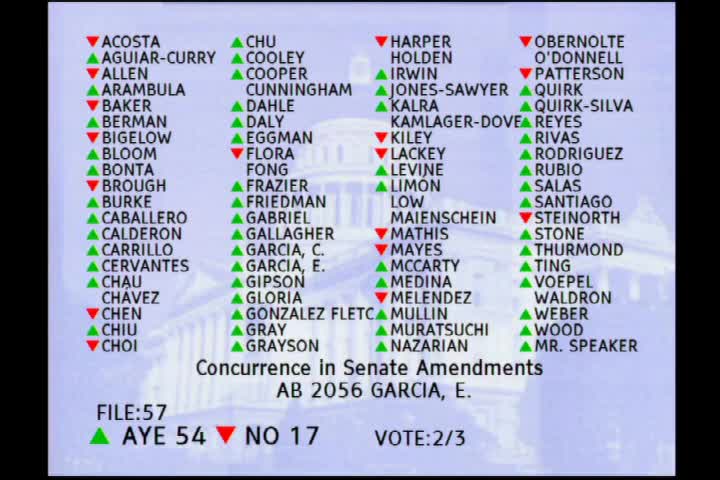 1MIN
Assembly Floor
 2MIN
Senate Floor
 3MIN
Senate Standing Committee on Business, Professions and Economic Development
Bill Author

Bill Co-Author(s):