AB 3163: Department of Motor Vehicles: private industry partners: electronic submission of documents.
- Session Year: 2017-2018
- House: Assembly
- Latest Version Date: 2018-09-14
Existing law authorizes the Department of Motor Vehicles to establish contracts for electronic programs that allow qualified private industry partners to join the department in providing services that include processing and payment programs for vehicle registration and titling transactions, and services related to reporting vehicle sales and producing temporary license plates. Existing law requires the department to charge a $3 transaction fee for the provision of the information and services, and to deposit the fees collected into the Motor Vehicle Account. Existing law authorizes the private industry partner to pass on the transaction fee to the customer, as specified. Existing law requires the department, for a specified period, to charge private industry partners an additional $1 transaction fee for the implementation of the private industry partners proportionate share of departmentwide system improvements. Existing law prohibits a private industry partner from passing on the $1 fee to the customer.
This bill would delete the prohibition against passing on the $1 transaction fee to the consumer. The bill would specify that the $1 is to be imposed both in addition to, and in accordance with, the $3 transaction fee.
Existing law authorizes the Department of Motor Vehicles to allow a person to submit any document required to be submitted to the department by using electronic media, as specified, instead of requiring the actual submittal of the original document. If a signature is required on a document in order to complete a transaction, the requirement may be satisfied for an electronically submitted document if the signature is also submitted electronically and the department retains information verifying the identity of the person submitting the electronic signature.
This bill would eliminate the requirement that the department retain information verifying the identity of the person submitting the electronic signature. The bill would make additional technical, nonsubstantive changes.
This bill would declare that it is to take effect immediately as an urgency statute.
Existing law authorizes the Department of Motor Vehicles to establish contracts for electronic programs that allow qualified private industry partners to join the department in providing services that include processing and payment programs for vehicle registration and titling transactions, and services related to reporting vehicle sales and producing temporary license plates. Existing law requires the department to charge a $3 transaction fee for the provision of the information and services, and to deposit the fees collected into the Motor Vehicle Account. Existing law authorizes the private industry partner to pass on the transaction fee to the customer, as specified. Existing law requires the department, for a specified period, to charge private industry partners an additional $1 transaction fee for the implementation of the private industry partners proportionate share of departmentwide system improvements. Existing law prohibits a private industry partner from passing on the $1 fee to the customer.
This bill would delete the prohibition against passing on the $1 transaction fee to the consumer. The bill would specify that the $1 is to be imposed both in addition to, and in accordance with, the $3 transaction fee.
Existing law authorizes the Department of Motor Vehicles to allow a person to submit any document required to be submitted to the department by using electronic media, as specified, instead of requiring the actual submittal of the original document. If a signature is required on a document in order to complete a transaction, the requirement may be satisfied for an electronically submitted document if the signature is also submitted electronically and the department retains information verifying the identity of the person submitting the electronic signature.
This bill would eliminate the requirement that the department retain information verifying the identity of the person submitting the electronic signature. The bill would make additional technical, nonsubstantive changes.
(a)In order to continue improving the quality of products and services it provides to its customers, the department, in conformance with Article 4 (commencing with Section 19130) of Chapter 5 of Part 2 of Division 5 of Title 2 of the Government Code, may establish contracts for electronic programs that allow qualified private industry partners to join the department in providing services that include processing and payment programs for vehicle registration and titling transactions, and services related to reporting vehicle sales and producing temporary license plates pursuant to Sections 4456 and 4456.2.
(b)(1)The department may enter into contractual agreements with qualified private industry partners. There are the following three types of private industry partnerships authorized under this section:
(A)First-line business partner is an industry partner that receives data directly from the department and uses it to complete registration and titling activities for that partners own business purposes.
(B)First-line service provider is an industry partner that receives information from the department and then transmits it to another authorized industry partner.
(C)Second-line business partner is a partner that receives information from a first-line service provider.
(2)The private industry partner contractual agreements shall include the following minimum requirements:
(A)Filing of an application and payment of an application fee, as established by the department.
(B)Submission of information, including, but not limited to, fingerprints and personal history statements, focusing on and concerning the applicants character, honesty, integrity, and reputation as the department may consider necessary.
(C)Posting a bond in an amount consistent with Section 1815.
(3)The department shall, through regulations, establish any additional requirements for the purpose of safeguarding privacy and protecting the information authorized for release under this section.
(c)The director may establish, through the adoption of regulations, the maximum amount that a qualified private industry partner may charge its customers in providing the services authorized under subdivision (a).
(d)The department shall charge a three-dollar ($3) transaction fee for the information and services provided pursuant to subdivision (a). The private industry partner may pass on the transaction fee to the customer, but the total charge to a customer may not exceed the amount established by the director under subdivision (c). The department may establish, through the adoption of regulations, exemptions from the transaction fee for transactions other than an original registration or transfer of ownership.
(e)All fees collected by the department pursuant to subdivision (d) shall be deposited in the Motor Vehicle Account. On January 1 of each year, the department shall adjust the fee in accordance with the California Consumer Price Index. The amount of the fee shall be rounded to the nearest whole dollar, with amounts equal to, or greater than, fifty cents ($0.50) rounded to the next highest whole dollar.
(f)The department shall adopt regulations and procedures that ensure adequate oversight and monitoring of qualified private industry partners to protect vehicle owners from the improper use of vehicle records. These regulations and procedures shall include provisions for qualified private industry partners to periodically submit records to the department, and the department shall review those records as necessary. The regulations shall also include provisions for the dedication of department resources to program monitoring and oversight; the protection of confidential records in the departments files and databases; and the duration and nature of the contracts with qualified private industry partners.
(g)The department shall, annually, by October 1, provide a report to the Legislature that shall include all of the following information gathered during the fiscal year immediately preceding the report date:
(1)Listing of all qualified private industry partners, including names and business addresses.
(2)Volume of transactions, by type, completed by business partners.
(3)Total amount of funds, by transaction type, collected by business partners.
(4)Total amount of funds received by the department.
(5)Description of any fraudulent activities identified by the department.
(6)Evaluation of the benefits of the program.
(7)Recommendations for any administrative or statutory changes that may be needed to improve the program.
(h)Nothing in this section impairs or limits the authority provided in Section 4610 or Section 12155 of the Insurance Code.
(i)(1)In addition to, and in accordance with, the transaction fee described in subdivision (d), the department shall charge private industry partners a one-dollar ($1) transaction fee for the implementation of the private industry partners proportionate share of departmentwide system improvements. All fees collected by the department pursuant to this subdivision shall be deposited in the Motor Vehicle Account.
(2)(A)The fee required by this subdivision shall be discontinued when the director determines that sufficient funds have been received to pay for the system improvements as described in paragraph (1), or on December 31, 2023, whichever occurs first. If sufficient funds are received first, the director shall execute a declaration making that determination, which shall be posted on the departments Internet Web site and retained by the director.
(B)This subdivision shall become inoperative when the declaration described in subparagraph (A) has been executed and posted, or on December 31, 2023, whichever occurs first.
SEC. 2.Section 1801.1 of the Vehicle Code is amended to read:1801.1.(a)Notwithstanding any other law, the department may allow a person to submit a document required to be submitted to the department by using electronic media deemed feasible by the department instead of requiring the actual submittal of the original document.
(b)If a signature on a document is required by law in order to complete a transaction, and the document is submitted electronically, that signature requirement may be met by an electronically submitted signature.
(c)The department may establish minimum transaction volume levels, audit and security standards, and technological requirements, or terms and conditions, including methods of authentication for electronically submitted signatures, it deems necessary for the approval of this process.
(d)An electronically submitted document, once accepted by the department, is deemed the same as an original document, and is admissible in all administrative, quasi-judicial, and judicial proceedings.
SEC. 3.This act is an urgency statute necessary for the immediate preservation of the public peace, health, or safety within the meaning of Article IV of the California Constitution and shall go into immediate effect. The facts constituting the necessity are:
In order to provide clarity to the Department of Motor Vehicles regarding implementation of the private industry partner program at the earliest possible time, it is necessary for this bill to take effect immediately.
(a)In order to continue improving the quality of products and services it provides to its customers, the department, in conformance with Article 4 (commencing with Section 19130) of Chapter 5 of Part 2 of Division 5 of Title 2 of the Government Code, may establish contracts for electronic programs that allow qualified private industry partners to join the department in providing services that include processing and payment programs for vehicle registration and titling transactions, and services related to reporting vehicle sales and producing temporary license plates pursuant to Sections 4456 and 4456.2.
(b)(1)The department may enter into contractual agreements with qualified private industry partners. There are the following three types of private industry partnerships authorized under this section:
(A)First-line business partner is an industry partner that receives data directly from the department and uses it to complete registration and titling activities for that partners own business purposes.
(B)First-line service provider is an industry partner that receives information from the department and then transmits it to another authorized industry partner.
(C)Second-line business partner is a partner that receives information from a first-line service provider.
(2)The private industry partner contractual agreements shall include the following minimum requirements:
(A)Filing of an application and payment of an application fee, as established by the department.
(B)Submission of information, including, but not limited to, fingerprints and personal history statements, focusing on and concerning the applicants character, honesty, integrity, and reputation as the department may consider necessary.
(C)Posting a bond in an amount consistent with Section 1815.
(3)The department shall, through regulations, establish any additional requirements for the purpose of safeguarding privacy and protecting the information authorized for release under this section.
(c)The director may establish, through the adoption of regulations, the maximum amount that a qualified private industry partner may charge its customers in providing the services authorized under subdivision (a).
(d)The department shall charge a three-dollar ($3) transaction fee for the information and services provided pursuant to subdivision (a). The private industry partner may pass on the transaction fee to the customer, but the total charge to a customer may not exceed the amount established by the director under subdivision (c). The department may establish, through the adoption of regulations, exemptions from the transaction fee for transactions other than an original registration or transfer of ownership.
(e)All fees collected by the department pursuant to subdivision (d) shall be deposited in the Motor Vehicle Account. On January 1 of each year, the department shall adjust the fee in accordance with the California Consumer Price Index. The amount of the fee shall be rounded to the nearest whole dollar, with amounts equal to, or greater than, fifty cents ($0.50) rounded to the next highest whole dollar.
(f)The department shall adopt regulations and procedures that ensure adequate oversight and monitoring of qualified private industry partners to protect vehicle owners from the improper use of vehicle records. These regulations and procedures shall include provisions for qualified private industry partners to periodically submit records to the department, and the department shall review those records as necessary. The regulations shall also include provisions for the dedication of department resources to program monitoring and oversight; the protection of confidential records in the departments files and databases; and the duration and nature of the contracts with qualified private industry partners.
(g)The department shall, annually, by October 1, provide a report to the Legislature that shall include all of the following information gathered during the fiscal year immediately preceding the report date:
(1)Listing of all qualified private industry partners, including names and business addresses.
(2)Volume of transactions, by type, completed by business partners.
(3)Total amount of funds, by transaction type, collected by business partners.
(4)Total amount of funds received by the department.
(5)Description of any fraudulent activities identified by the department.
(6)Evaluation of the benefits of the program.
(7)Recommendations for any administrative or statutory changes that may be needed to improve the program.
(h)Nothing in this section impairs or limits the authority provided in Section 4610 or Section 12155 of the Insurance Code.
(i)(1)In addition to to, and in accordance with, the transaction fee described in subdivision (d), the department shall charge private industry partners a one-dollar ($1) transaction fee for the implementation of the private industry partners proportionate share of departmentwide system improvements. A private industry partner shall not pass on this fee to the customer. All fees collected by the department pursuant to this subdivision shall be deposited in the Motor Vehicle Account.
(2)(A)The fee required by this subdivision shall be discontinued when the director determines that sufficient funds have been received to pay for the system improvements as described in paragraph (1), or on December 31, 2023, whichever occurs first. If sufficient funds are received first, the director shall execute a declaration making that determination, which shall be posted on the departments Internet Web site and retained by the director.
(B)This subdivision shall become inoperative when the declaration described in subparagraph (A) has been executed and posted, or on December 31, 2023, whichever occurs first.
SECTION 1.SEC. 2.Section 1801.1 of the Vehicle Code is amended to read:1801.1.(a)Notwithstanding any other law, the department may allow a person to submit a document required to be submitted to the department by using electronic media deemed feasible by the department instead of requiring the actual submittal of the original document.
(b)If a signature on a document is required by law in order to complete a transaction, and the document is submitted electronically, that signature requirement may be met by an electronically submitted signature.
(c)The department may establish minimum transaction volume levels, audit and security standards, and technological requirements, or terms and conditions, including methods of authentication for electronically submitted signatures, it deems necessary for the approval of this process.
(d)An electronically submitted document, once accepted by the department, is deemed the same as an original document, and is admissible in all administrative, quasi-judicial, and judicial proceedings.
(a)Notwithstanding any other provision of law, the department may allow a person to submit any a document required to be submitted to the department by using electronic media deemed feasible by the department instead of requiring the actual submittal of the original document.
(b)If a signature on a document is required by law in order to complete a transaction, and the document is submitted electronically, that signature requirement may be met by an electronically submitted signature, if the department retains information verifying the identity of the person submitting the electronic signature.
(c)The department may establish minimum transaction volume levels, audit and security standards, and technological requirements, or terms and conditions, including methods of authentication for electronically submitted signatures, it deems necessary for the approval of this process.
(d)An electronically submitted document, once accepted by the department, shall be is deemed the same as an original document, and shall be is admissible in all administrative, quasi-judicial, and judicial proceedings.
|
Date
|
Status
|
|---|---|
| Sep 14, 2018 | Chaptered by Secretary of State - Chapter 400, Statutes of 2018. |
| Sep 14, 2018 | Approved by the Governor. |
| Sep 5, 2018 | Enrolled and presented to the Governor at 3 p.m. |
| Aug 27, 2018 | Urgency clause adopted. Senate amendments concurred in. To Engrossing and Enrolling. |
| Aug 22, 2018 | In Assembly. Concurrence in Senate amendments pending. May be considered on or after August 24 pursuant to Assembly Rule 77. |
| Aug 21, 2018 | Read third time. Urgency clause adopted. Passed. Ordered to the Assembly. |
| Aug 20, 2018 | Read second time. Ordered to third reading. |
| Aug 16, 2018 | Read third time and amended. Ordered to second reading. |
| Aug 14, 2018 | From committee: That the measure be returned to Senate Floor for consideration. (Ayes 12. Noes 1.) (August 14) |
| Aug 13, 2018 | Read second time. Ordered to third reading. |
| Aug 9, 2018 | Read third time and amended. Ordered to second reading. |
| Aug 9, 2018 | From Consent Calendar. |
| Aug 7, 2018 | Read second time. Ordered to Consent Calendar. |
| Aug 6, 2018 | From committee: Be ordered to second reading file pursuant to Senate Rule 28.8 and ordered to Consent Calendar. |
| Jun 20, 2018 | From committee: Do pass and re-refer to Com. on APPR. with recommendation: To Consent Calendar. (Ayes 12. Noes 0.) (June 19). Re-referred to Com. on APPR. |
| May 10, 2018 | Referred to Com. on T. & H. |
| Apr 26, 2018 | In Senate. Read first time. To Com. on RLS. for assignment. |
| Apr 26, 2018 | Read third time. Passed. Ordered to the Senate. |
| Apr 19, 2018 | Read second time. Ordered to Consent Calendar. |
| Apr 18, 2018 | From committee: Do pass. To Consent Calendar. (Ayes 15. Noes 0.) (April 18). |
| Apr 3, 2018 | From committee: Do pass and re-refer to Com. on APPR. with recommendation: To Consent Calendar. (Ayes 14. Noes 0.) (April 2). Re-referred to Com. on APPR. |
| Mar 12, 2018 | Referred to Com. on TRANS. |
| Feb 17, 2018 | From printer. May be heard in committee March 19. |
| Feb 16, 2018 | Read first time. To print. |
|
Date
|
Description
|
Location
|
Votes
|
|
|---|---|---|---|---|
| Aug 27, 2018 | AB 3163 FRAZIER Concurrence - Urgency Added | Assembly Floor |
Passed |
|
| Aug 21, 2018 | Assembly 3rd Reading AB3163 Frazier et al. By Wieckowski Urgency Clause | Senate Floor |
Passed |
|
| Aug 14, 2018 | That the measure be returned to Senate Floor for consideration. Ordered to third reading. | Senate Standing Committee on Transportation and Housing |
Passed |
|
| Jun 19, 2018 | Do pass, but first be re-referred to the Committee on [Appropriations] with the recommendation: To Consent Calendar | Senate Standing Committee on Transportation and Housing |
Passed |
|
| Apr 26, 2018 | AB 3163 FRAZIER Consent Calendar Second Day Regular Session | Assembly Floor |
Passed |
|
| Apr 18, 2018 | Do pass. To Consent Calendar. | Assembly Standing Committee on Appropriations |
Passed |
|
| Apr 2, 2018 | Do pass and be re-referred to the Committee on [Appropriations] with recommendation: To Consent Calendar | Assembly Standing Committee on Transportation |
Passed |
This list shows positions taken on this bill by organizations on the date displayed, which is linked to the original source.
Positions by individuals are not included.
|
Organization
|
Position
|
Date
|
|---|---|---|
| Automated Vehicle Registration Services | ** Support | Aug 20, 2018 |
| California Credit Union League | ** Support | Aug 20, 2018 |
| California Motorcycle Dealers Association | ** Support | Mar 29, 2018 |
| California Trucking Association | ** Support | Mar 29, 2018 |
| Computerized Vehicle Registration | ** Support | Aug 20, 2018 |
| Cox Automotive | ** Support | Aug 20, 2018 |
| Dealertrack Registration And Tilting Soultions Inc | * Support | Aug 14, 2018 |
| Dealertrack Registration And Titling Solutions, Inc. | ** Support | Aug 20, 2018 |
| INSURANCE AUTO AUCTIONS | ** Support | Mar 29, 2018 |
| Motor Vehicle Software Corporation | ** Support | Aug 20, 2018 |
| Technet | ** Support | Aug 20, 2018 |
CONCURRENCE IN SENATE AMENDMENTS
CSA1 Bill Id:AB 3163
Author:(Frazier)
As Amended Ver:August 16, 2018
2/3 vote. Urgency
ASSEMBLY: | 74-0 | (April 26, 2018) | SENATE: | 33-4 | (August 21, 2018) |
Original Committee Reference: TRANS.
SUMMARY: Eliminates the requirement that the Department of Motor Vehicles (DMV) retain information verifying the identity of the person submitting an electronic signature and clarifies how DMV can administer a new fee for the purposes of upgrading its technology systems.
The Senate amendments:
- Clarify how DMV can administer a new $1 transaction fee authorized in a recent budget trailer for the purposes of upgrading DMV’s technology systems.
- Add an urgency clause.
EXISTING LAW:
- Establishes standards for conducting electronic transactions in California, permitting but not requiring a record or signature to be created, generated, sent, communicated, received, stored, or otherwise processed or used by electronic means or in electronic form.
- Defines an "electronic signature" as an electronic sound, symbol, or process attached to, or logically associated with, an electronic record and executed or adopted by a person with the intent to sign the electronic record.
- Authorizes DMV to allow a person to submit a document by using electronic media deemed feasible by DMV instead of requiring the actual submittal of the original document.
- Authorizes DMV to accept an electronic signature on a document required by law in order to complete a transaction as long as DMV retains information verifying the identity of the person submitting the electronic signature.
- Deems any electronic document accepted by DMV to be the same as an original document and is admissible in all administrative, quasi-judicial, and judicial proceedings.
- Authorizes DMV to charge private industry partners a $3 transaction fee, and allows private industry partners to pass on the $3 transaction fee to the customer, as long as the total amount charged to customers does not exceed the specified maximum amount.
- Authorizes DMV to charge an additional $1 transaction fee to private industry partners for the implementation of department wide system improvements, and prohibits private industry partners from passing on this $1 fee to the customer.
FISCAL EFFECT: According to the Senate Appropriations Committee, pursuant to Senate Rule 28.8, negligible state costs.
COMMENTS: In 1999, the Legislature passed and Governor Davis signed SB 820 (Sher), Chapter 428, Statutes of 1999, creating the comprehensive Uniform Electronic Transactions Act (UETA), which established uniform standards for conducting electronic transactions in California. UETA set out a voluntary system of rules and procedures for the sending and receiving of electronic records and signatures, the formation of contracts using electronic records, the making and retention of electronic records and signatures, and the procedures governing changes and errors in electronically transmitted records. It also established the validity of transactions formed, transmitted and recorded electronically, and it established the admissibility of electronic records in a legal proceeding.
DMV started the voluntary Business Partner Automation (BPA) Program in 2003 in order to accelerate the development of electronic DMV services, increasing efficiency in transaction processing, improving customer service and, ultimately, reducing DMV costs. Since that time, the BPA Program has proven highly successful. The DMV currently utilizes BPA partners to offer a variety of DMV digital and online services to the public and vehicle dealers, including processing and issuing validated registration cards, full year registration stickers, and vehicle license plates.
Although electronic signatures are currently permitted for electronically submitted documents, existing law requires DMV to retain information verifying the identity of the person submitting the electronic signature. This cumbersome administrative requirement is inconsistent with the manner in which electronic signatures are utilized by other agencies and with current industry standards.
In its original form, this bill updated existing law to allow DMV the flexibility to use its existing partnerships to deploy the best electronic signature technology available and improve efficiency and customer experience. The amendments further the aims of the bill by clarifying how DMV is to administer a recent fee increase that is funding improvements to the department's IT systems. This bill and these amendments are consistent with other recent efforts by the Legislature and the Administration to increase the efficiency, quality and convenience of DMV services offered to the public.
Analysis Prepared by: Eric Thronson / TRANS. / (916) 319-2093 FN: 0004537
Office of Senate Floor Analyses (916) 651-1520 Fax: (916) 327-4478 | AB |
THIRD READING
Bill No: AB 3163
:
SENATE TRANS. & HOUSING COMMITTEE: 12-0, 6/19/18
AYES: Beall, Cannella, Dodd, Gaines, Galgiani, McGuire, Morrell, Roth, Skinner, Vidak, Wieckowski, Wiener
NO VOTE RECORDED: Allen
SENATE APPROPRIATIONS COMMITTEE: Senate Rule 28.8
SENATE TRANS. & HOUSING COMMITTEE: 12-1, 8/14/18 (Pursuant to Senate Rule 29.10)
AYES: Beall, Cannella, Allen, Dodd, Gaines, Galgiani, McGuire, Roth, Skinner, Vidak, Wieckowski, Wiener
NOES: Morrell
ASSEMBLY FLOOR: 74-0, 4/26/18 (Consent) - See last page for vote
SUBJECT: Department of Motor Vehicles: private industry partners: electronic submission of documents
DIGEST:
This urgency bill removes the requirement that the Department of Motor Vehicles (DMV) retain information verifying the identity of the person submitting an electronic signature, and removes the prohibition that a $1 transaction fee charged by DMV to its private industry partners cannot be passed on to customers.
Senate Floor Amendments of 8/16/18 add an urgency clause to the bill.
Senate Floor Amendments of 8/9/18 remove the prohibition that a $1 transaction fee charged by DMV to private industry partners cannot be passed on to customers.
Existing law:
- Establishes standards for conducting electronic transactions in California, permitting but not requiring a record or signature to be created, generated, sent, communicated, received, stored, or otherwise processed or used by electronic means or in electronic form.
- Defines an "electronic signature" as an electronic sound, symbol, or process attached to, or logically associated with, an electronic record and executed or adopted by a person with the intent to sign the electronic record.
- Authorizes DMV to allow a person to submit a document by using electronic media deemed feasible by DMV instead of requiring the actual submittal of the original document.
- Authorizes DMV to accept an electronic signature on a document required by law in order to complete a transaction as long as DMV retains information verifying the identity of the person submitting the electronic signature.
- Deems any electronic document accepted by DMV to be the same as an original document and is admissible in all administrative, quasi-judicial, and judicial proceedings.
- Authorizes DMV to enter into contracts with private industry partners to help provide certain services, including processing and payment programs for vehicle registration and titling transactions, and services related to reporting vehicle sales and producing temporary license plates.
- Authorizes DMV to establish, through regulations, the maximum amount that a qualified private industry partner can charge its customers.
- Authorizes DMV to charge private industry partners a $3 transaction fee for providing the necessary information and services, and allows private industry partners to pass on the $3 transaction fee to the customer, as long as the total amount charged to customers does not exceed the specified maximum amount.
- Authorizes DMV to charge an additional $1 transaction fee to private industry partners for the implementation of department wide system improvements, and prohibits private industry partners from passing on this $1 fee to the customer.
- Sunsets the additional $1 transaction fee on December 31, 2023.
This bill:
- Removes the requirement that the DMV retain information verifying the identity of the person submitting an electronic signature.
- Removes the prohibition that a private industry partner shall not pass on the $1 transaction fee for the implementation of departmentwide system improvements to customers.
- Requires that the additional $1 transaction fee be in accordance with the existing $3 transaction fee.
Comments
- Purpose of the bill. In its original form, this bill updated existing law to allow DMV the flexibility to use its existing partnerships to deploy the best electronic signature technology available and improve efficiency and customer experience. The amendments further the aims of the bill by clarifying how DMV is to administer a recent fee increase that is funding improvements to the department’s information technology (IT) systems. This bill and these amendments are consistent with other recent efforts by the Legislature and the Administration to increase the efficiency, quality and convenience of DMV services offered to the public.
- Electronic Signatures. In 1999, the Legislature passed and Governor Davis signed SB 820 (Sher, Chapter 428, Statutes of 1999), creating the Uniform Electronic Transactions Act (UETA), which established the validity of transactions formed, transmitted and recorded electronically, and the admissibility of electronic records in a legal proceeding. UETA also set out a voluntary system of rules and procedures for the sending and receiving of electronic records and signatures, the formation of contracts using electronic records, the making and retention of electronic records and signatures, and the procedures governing changes and errors in electronically transmitted records.
UETA also authorizes a government agency to specify additional requirements for the retention of a record subject to the agency’s jurisdiction. Existing law authorizes the DMV to accept an electronic signature only if it retains information verifying the identity of the person submitting the electronic signature. This was intended to enable DMV to independently authenticate the electronic signature.
- Cumbersome Requirement for DMV. This bill removes the requirement that DMV retain information verifying the identity of the person submitting the electronic signature. This administrative requirement is outdated and inconsistent with the manner in which electronic signatures are utilized by other state agencies and with current industry standards. This bill allows DMV to proceed with digital signature pilot projects in order to improve DMV’s efficiency and customer experience.
- Floor Amendments. The original bill with regard to electronic signatures at the DMV passed unanimously from the Assembly, and from the Senate Transportation & Housing Committee. The bill has been amended on the Senate Floor to remove the prohibition that Business Partner Automation (BPA) Program partners shall not pass on a recently enacted $1 transaction fee charged to them by DMV to its customers, and to add an urgency clause.
- BPA Program. The DMV started the BPA Program in 2003 in order to partner with auto dealers, fleet companies, financial institutions, and other businesses to process a number of vehicle related transactions electronically at their remote locations. BPA partners are able to provide a variety of digital and online services to the public, such as processing and issuing validated registration cards, full year registration stickers, and license plates. This public-private partnership has accelerated the development of electronic DMV services, increased efficiency in transaction processing, improved customer service, and ultimately reduced DMV costs.
- BPA Fees. The DMV charges BPA partners a $3 transaction fee (now $4 after adjusting for inflation), which BPA partners are authorized to pass on to its customers. BPA partners are also authorized to charge a service fee to their customers, with some restrictions and exemptions. For example, licensed vehicle dealers and car dismantlers participating in the BPA program can only charge a service fee of up to $25 per transaction. Customers are not obligated to pay these extra fees to do DMV transactions electronically at these remote locations; however, many do for the ease and convenience of an electronic transaction and avoiding going to a DMV field office.
- New Fee. This year, SB 848 (Committee on Budget & Fiscal Review, Chapter 46, Statutes of 2018) imposed an additional $1 transaction fee on BPA partners to help pay for DMV’s IT system improvements. Unlike the existing transaction fee, SB 848 prohibited providers from passing this fee on to the customers. This bill would remove that prohibition to treat all transaction fees consistently, and allow providers to pass on this additional $1 fee to customers.
- Urgency. This bill is an urgency measure. This allows the BPA partners to pass on the recently-enacted $1 transaction fee to its customers as soon as possible.
Related/Prior Legislation
SB 848 (Committee on Budget & Fiscal Review, Chapter 46, Statutes of 2018) required the DMV to impose an additional $1 transaction fee for implementation of the private industry partners’ proportionate share of department wide system improvements, and prohibited a partner from passing on the additional fee to the customer.
SB 1055 (Committee on Budget & Fiscal Review, Chapter 719, Statutes of 2003) required the DMV to charge a $3 transaction fee to private industry partners, with all the proceeds to be deposited in the Motor Vehicle Account.
AB 461 (Horton, Chapter 61, Statutes of 2005) authorized that the signature requirement for an electronically submitted document to DMV can be satisfied if the signature is submitted electronically and the department retains information verifying the identity of the person submitting the electronic signature.
FISCAL EFFECT: Appropriation: Fiscal Com.: Local:
Automated Vehicle Registration Services
California Credit Union League
Computerized Vehicle Registration
Cox Automotive
Dealertrack Registration and Titling Solutions, Inc.
Motor Vehicle Software Corporation
TechNet
OPPOSITION: (Verified 8/20/18)
None received
ASSEMBLY FLOOR: 74-0, 4/26/18
AYES: Acosta, Aguiar-Curry, Arambula, Baker, Berman, Bigelow, Bloom, Bonta, Brough, Burke, Caballero, Calderon, Carrillo, Cervantes, Chau, Chávez, Chen, Chiu, Choi, Chu, Cooley, Cooper, Cunningham, Dahle, Daly, Eggman, Flora, Frazier, Friedman, Gallagher, Eduardo Garcia, Gipson, Gloria, Gonzalez Fletcher, Gray, Grayson, Harper, Holden, Irwin, Jones-Sawyer, Kalra, Kamlager-Dove, Kiley, Lackey, Levine, Limón, Low, Maienschein, Mathis, Mayes, McCarty, Medina, Melendez, Mullin, Muratsuchi, Nazarian, Obernolte, O'Donnell, Patterson, Quirk, Quirk-Silva, Reyes, Rubio, Salas, Santiago, Steinorth, Mark Stone, Thurmond, Ting, Voepel, Waldron, Weber, Wood, Rendon
NO VOTE RECORDED: Travis Allen, Fong, Cristina Garcia, Rodriguez
8/20/18 16:25:21
**** END ****
Office of Senate Floor Analyses (916) 651-1520 Fax: (916) 327-4478 | AB |
THIRD READING
Bill No: AB 3163
:
SENATE TRANS. & HOUSING COMMITTEE: 12-0, 6/19/18
AYES: Beall, Cannella, Dodd, Gaines, Galgiani, McGuire, Morrell, Roth, Skinner, Vidak, Wieckowski, Wiener
NO VOTE RECORDED: Allen
SENATE APPROPRIATIONS COMMITTEE: Senate Rule 28.8
SENATE TRANS. & HOUSING COMMITTEE: 12-1, 8/14/18 (Pursuant to Senate Rule 29.10)
AYES: Beall, Cannella, Allen, Dodd, Gaines, Galgiani, McGuire, Roth, Skinner, Vidak, Wieckowski, Wiener
NOES: Morrell
ASSEMBLY FLOOR: 74-0, 4/26/18 (Consent) - See last page for vote
DIGEST:
This bill removes the requirement that the Department of Motor Vehicles (DMV) retain information verifying the identity of the person submitting an electronic signature, and removes the prohibition that a $1 transaction fee charged by DMV to its private industry partners cannot be passed on to customers.
Senate Floor Amendments of 8/9/18 remove the prohibition that a $1 transaction fee charged by DMV to private industry partners cannot be passed on to customers.
Existing law:
- Establishes standards for conducting electronic transactions in California, permitting but not requiring a record or signature to be created, generated, sent, communicated, received, stored, or otherwise processed or used by electronic means or in electronic form.
- Defines an "electronic signature" as an electronic sound, symbol, or process attached to, or logically associated with, an electronic record and executed or adopted by a person with the intent to sign the electronic record.
- Authorizes DMV to allow a person to submit a document by using electronic media deemed feasible by DMV instead of requiring the actual submittal of the original document.
- Authorizes DMV to accept an electronic signature on a document required by law in order to complete a transaction as long as DMV retains information verifying the identity of the person submitting the electronic signature.
- Deems any electronic document accepted by DMV to be the same as an original document and is admissible in all administrative, quasi-judicial, and judicial proceedings.
- Authorizes DMV to enter into contracts with private industry partners to help provide certain services, including processing and payment programs for vehicle registration and titling transactions, and services related to reporting vehicle sales and producing temporary license plates.
- Authorizes DMV to establish, through regulations, the maximum amount that a qualified private industry partner can charge its customers.
- Authorizes DMV to charge private industry partners a $3 transaction fee for providing the necessary information and services, and allows private industry partners to pass on the $3 transaction fee to the customer, as long as the total amount charged to customers does not exceed the specified maximum amount.
- Authorizes DMV to charge an additional $1 transaction fee to private industry partners for the implementation of department wide system improvements, and prohibits private industry partners from passing on this $1 fee to the customer.
This bill:
- Removes the requirement that the DMV retain information verifying the identity of the person submitting an electronic signature.
- Removes the prohibition that a private industry partner shall not pass on the $1 transaction fee for the implementation of departmentwide system improvements to customers.
- Requires that the additional $1 transaction fee be in accordance with the existing $3 transaction fee.
Background
- Purpose of the bill. In its original form, this bill updated existing law to allow DMV the flexibility to use its existing partnerships to deploy the best electronic signature technology available and improve efficiency and customer experience. The amendments further the aims of the bill by clarifying how DMV is to administer a recent fee increase that is funding improvements to the department’s information technology (IT) systems. This bill and these amendments are consistent with other recent efforts by the Legislature and the Administration to increase the efficiency, quality and convenience of DMV services offered to the public.
- Electronic Signatures. In 1999, the Legislature passed and Governor Davis signed SB 820 (Sher, Chapter 428, Statutes of 1999), creating the Uniform Electronic Transactions Act (UETA), which established the validity of transactions formed, transmitted and recorded electronically, and the admissibility of electronic records in a legal proceeding. UETA also set out a voluntary system of rules and procedures for the sending and receiving of electronic records and signatures, the formation of contracts using electronic records, the making and retention of electronic records and signatures, and the procedures governing changes and errors in electronically transmitted records.
UETA also authorizes a government agency to specify additional requirements for the retention of a record subject to the agency’s jurisdiction. Existing law authorizes the DMV to accept an electronic signature only if it retains information verifying the identity of the person submitting the electronic signature. This is intended to enable DMV to independently authenticate the electronic signature.
- Cumbersome Requirement for DMV. This bill removes the requirement that DMV retain information verifying the identity of the person submitting the electronic signature. This administrative requirement is outdated and inconsistent with the manner in which electronic signatures are utilized by other state agencies and with current industry standards. This bill allows DMV to proceed with digital signature pilot projects in order to improve DMV’s efficiency and customer experience.
- Floor Amendment. The original bill with regard to electronic signatures at the DMV passed unanimously from the Assembly, and from the Senate Transportation & Housing Committee. The bill has been amended on the Senate Floor to remove the prohibition that Business Partner Automation (BPA) Program providers shall not pass on a recently enacted $1 transaction fee charged to them by DMV to its customers.
- BPA Program. The DMV started the BPA Program in 2003 in order to partner with auto dealers, fleet companies, financial institutions, and other businesses to process a number of vehicle related transactions electronically at their remote locations. BPA partners are able to provide a variety of digital and online services to the public, such as processing and issuing validated registration cards, full year registration stickers, and license plates. This public-private partnership has accelerated the development of electronic DMV services, increased efficiency in transaction processing, improved customer service, and ultimately reduced DMV costs.
- BPA Fees. BPA providers are authorized to charge a service fee of $25 per transaction to their customers. The DMV also charges BPA providers a $3 fee per transaction (currently $4 after adjusting for inflation), which the providers are authorized to pass on to their customers. Therefore, BPA providers currently charge their customers a combined $29 fee per transaction. Customers are not obligated to pay this extra fee to do DMV transactions; however, many do for the ease and convenience of an electronic transaction and avoiding going to a DMV field office.
- New Fee. This year, SB 848 (Committee on Budget & Fiscal Review, Chapter 46, Statutes of 2018) imposed an additional $1 transaction fee on BPA providers to help pay for DMV’s IT system improvements. Unlike the existing transaction fee, SB 848 prohibited providers from passing the fee along to the customers. This bill removes that prohibition to treat all transaction fees consistently, and allows providers to pass on this fee to its customers.
However, even with this bill, the DMV would have the final say on whether BPA providers can ultimately pass on this fee to customers. Currently, the DMV has set a maximum of $29 per transaction that BPA providers can charge their customers. In order for BPA providers to pass on the additional $1 fee, DMV would have to increase this maximum to $30.
Related/Prior Legislation
SB 848 (Committee on Budget & Fiscal Review, Chapter 46, Statutes of 2018) requires the DMV to impose an additional $1 transaction fee for implementation of the private industry partners’ proportionate share of department wide system improvements, and prohibited a partner from passing on the additional fee to the customer.
SB 1055 (Committee on Budget & Fiscal Review, Chapter 719, Statutes of 2003) required the DMV to charge a $3 transaction fee to private industry partners, with all the proceeds to be deposited in the Motor Vehicle Account.
AB 461 (Horton, Chapter 61, Statutes of 2005) authorized that the signature requirement for an electronically submitted document to DMV can be satisfied if the signature is submitted electronically and the department retains information verifying the identity of the person submitting the electronic signature.
FISCAL EFFECT: Appropriation: Fiscal Com.: Local:
Automated Vehicle Registration Services
California Credit Union League
Computerized Vehicle Registration
Cox Automotive
Dealertrack Registration and Titling Solutions, Inc.
Motor Vehicle Software Corporation
TechNet
OPPOSITION: (Verified 8/15/18)
None received
ASSEMBLY FLOOR: 74-0, 4/26/18
AYES: Acosta, Aguiar-Curry, Arambula, Baker, Berman, Bigelow, Bloom, Bonta, Brough, Burke, Caballero, Calderon, Carrillo, Cervantes, Chau, Chávez, Chen, Chiu, Choi, Chu, Cooley, Cooper, Cunningham, Dahle, Daly, Eggman, Flora, Frazier, Friedman, Gallagher, Eduardo Garcia, Gipson, Gloria, Gonzalez Fletcher, Gray, Grayson, Harper, Holden, Irwin, Jones-Sawyer, Kalra, Kamlager-Dove, Kiley, Lackey, Levine, Limón, Low, Maienschein, Mathis, Mayes, McCarty, Medina, Melendez, Mullin, Muratsuchi, Nazarian, Obernolte, O'Donnell, Patterson, Quirk, Quirk-Silva, Reyes, Rubio, Salas, Santiago, Steinorth, Mark Stone, Thurmond, Ting, Voepel, Waldron, Weber, Wood, Rendon
NO VOTE RECORDED: Travis Allen, Fong, Cristina Garcia, Rodriguez
8/15/18 15:59:15
**** END ****
SENATE COMMITTEE ON TRANSPORTATION AND HOUSING
Senator Jim Beall, Chair
2017 - 2018 Regular
Bill No: Hearing Date: 8/14/2018
Author: | Frazier | ||
Version: | 8/9/2018 Amended | ||
Urgency: | No | Fiscal: | Yes |
Consultant: | Jeffery Song | ||
SUBJECT:
DIGEST: This bill removes the requirement that the Department of Motor Vehicles (DMV) retain information verifying the identity of the person submitting an electronic signature, and removes the prohibition that a $1 transaction fee charged by DMV to private industry partners cannot be passed on to customers.
ANALYSIS:
Existing law:
- Establishes standards for conducting electronic transactions in California, permitting but not requiring a record or signature to be created, generated, sent, communicated, received, stored, or otherwise processed or used by electronic means or in electronic form.
- Defines an "electronic signature" as an electronic sound, symbol, or process attached to, or logically associated with, an electronic record and executed or adopted by a person with the intent to sign the electronic record.
- Authorizes DMV to allow a person to submit a document by using electronic media deemed feasible by DMV instead of requiring the actual submittal of the original document.
- Authorizes DMV to accept an electronic signature on a document required by law in order to complete a transaction as long as DMV retains information verifying the identity of the person submitting the electronic signature.
- Deems any electronic document accepted by DMV to be the same as an original document and is admissible in all administrative, quasi-judicial, and judicial proceedings.
- Authorizes DMV to enter into contracts with private industry partners to help provide certain services, including processing and payment programs for vehicle registration and titling transactions, and services related to reporting vehicle sales and producing temporary license plates.
- Authorizes DMV to establish, through regulations, the maximum amount that a qualified private industry partner can charge its customers.
- Authorizes DMV to charge private industry partners a $3 transaction fee, and allows private industry partners to pass on the $3 transaction fee to the customer, as long as the total amount charged to customers does not exceed the specified maximum amount.
- Authorizes DMV to charge an additional $1 transaction fee to private industry partners for the implementation of department wide system improvements, and prohibits private industry partners from passing on this $1 fee to the customer.
This bill:
- Removes the requirement that the DMV retain information verifying the identity of the person submitting an electronic signature.
- Removes the prohibition that a private industry partner shall not pass on the $1 transaction fee for the implementation of system improvements to customers.
- Requires that the additional $1 transaction fee be in accordance with the existing $3 transaction fee.
COMMENTS:
- Purpose. In its original form, this bill updated existing law to allow DMV the flexibility to use its existing partnerships to deploy the best electronic signature technology available and improve efficiency and customer experience. The amendments further the aims of the bill by clarifying how DMV is to administer a recent fee increase that is funding improvements to the department’s IT systems. This bill and these amendments are consistent with other recent efforts by the Legislature and the Administration to increase the efficiency, quality and convenience of DMV services offered to the public.
- Background on Electronic Signatures. In 1999, the Legislature passed and Governor Davis signed SB 820 (Sher, Chapter 428, Statutes of 1999), creating the Uniform Electronic Transactions Act (UETA), which established uniform standards for conducting electronic transactions in the state. UETA set out a voluntary system of rules and procedures for the sending and receiving of electronic records and signatures, the formation of contracts using electronic records, the making and retention of electronic records and signatures, and the procedures governing changes and errors in electronically transmitted records. It also established the validity of transactions formed, transmitted and recorded electronically, and it established the admissibility of electronic records in a legal proceeding.
- Cumbersome Requirement for DMV. This bill removes the requirement that DMV retain information verifying the identity of the person submitting the electronic signature. This administrative requirement is inconsistent with the manner in which electronic signatures are utilized by other state agencies and with current industry standards. This bill allows DMV to proceed with digital signature pilot projects in order to improve DMV’s efficiency and customer experience.
- 29.10 (B) re-referral. This bill has been re-referred to the committee, because of an amendment on the floor. The original bill with regard to electronic signatures at the DMV passed unanimously from this committee on consent. The new amendment removes the prohibition that Business Partner Automation (BPA) Program providers shall not pass on a recently enacted $1 transaction fee charged to them by DMV to its customers.
- Background on BPA Fees. The DMV started the BPA Program in 2003 in order to partner with auto dealers, fleet companies, financial institutions, and other businesses to provide DMV services electronically at their locations. The BPA Program has over 5,000 business partners, and has increased efficiency in transaction processing, improved customer service and, ultimately, reduced DMV costs. BPA providers offer a variety of digital and online services to the public, such as processing and issuing validated registration cards, full year registration stickers, and vehicle license plates.
BPA providers are authorized by the DMV to charge a service fee of $25 per transaction to their customers. The DMV also charges BPA providers a $3 fee per transaction ($4 after price adjustments) to help pay for DMV’s IT system maintenance and improvements. BPA providers are authorized to pass on this transaction fee to their customers. Therefore, BPA providers currently charge their customers a combined $29 fee per transaction. Customers are not obligated to pay this extra fee to do DMV transactions. They can go to a DMV field office, or another direct avenue to the DMV. However, many customers pay the fee for the ease and convenience of an electronic transaction.
- Additional Fee. This year, SB 848 (Committee on Budget & Fiscal Review, 2018) imposed an additional $1 transaction fee on BPA providers to help pay for DMV’s system improvements. However, unlike the existing transaction fee, SB 848 prohibited providers from passing the fee along to the customers. This bill would remove that prohibition to treat all transaction fees consistently, and allow providers to pass on this fee to customers.
However, even with this bill, the DMV would have the final say on whether BPA providers can ultimately pass on this fee to customers. Currently, BPA providers are authorized to charge a maximum of $29 per transaction to customers. In order for BPA providers to pass on the additional $1 fee, DMV would have to change their regulations and increase this maximum.
Related Legislation:
SB 848 (Committee on Budget & Fiscal Review, Chapter 46, Statutes of 2018) — requires the DMV to impose an additional $1 transaction fee for implementation of the private industry partners’ proportionate share of department wide system improvements, and prohibited a partner from passing on the additional fee to the customer.
SB 1055 (Committee on Budget & Fiscal Review, Chapter 719, Statutes of 2003) – requires the DMV to charge a $3 transaction fee to private industry partners, with all the proceeds to be deposited in the Motor Vehicle Account.
AB 461 (Horton, Chapter 61, Statutes of 2005) — authorizes that the signature requirement for an electronically submitted document to DMV can be satisfied if the signature is submitted electronically and the department retains information verifying the identity of the person submitting the electronic signature.
FISCAL EFFECT: Appropriation: No Fiscal Com.: Yes Local: No
POSITIONS: (Communicated to the committee before noon on Wednesday,
8/8/18.)
SUPPORT:
Automated Vehicle Registration Services
California Credit Union League
Computerized Vehicle Registration
Cox Automotive
Dealertrack Registration and Titling Solutions, Inc.
Motor Vehicle Software Corporation
TechNet
OPPOSITION:
None received.
-- END --
Office of Senate Floor Analyses (916) 651-1520 Fax: (916) 327-4478 | AB |
CONSENT
Bill No: AB 3163
:
SENATE TRANS. & HOUSING COMMITTEE: 12-0, 6/19/18
AYES: Beall, Cannella, Dodd, Gaines, Galgiani, McGuire, Morrell, Roth, Skinner, Vidak, Wieckowski, Wiener
NO VOTE RECORDED: Allen
SENATE APPROPRIATIONS COMMITTEE: Senate Rule 28.8
ASSEMBLY FLOOR: 74-0, 4/26/18 (Consent) - See last page for vote
DIGEST:
This bill eliminates the requirement that the Department of Motor Vehicles (DMV) retain information verifying the identity of the person submitting an electronic signature.
Existing law:
- Establishes standards for conducting electronic transactions in California, permitting but not requiring a record or signature to be created, generated, sent, communicated, received, stored, or otherwise processed or used by electronic means or in electronic form.
- Defines an "electronic signature" as an electronic sound, symbol, or process attached to, or logically associated with, an electronic record and executed or adopted by a person with the intent to sign the electronic record.
- Authorizes DMV to allow a person to submit a document by using electronic media deemed feasible by DMV instead of requiring the actual submittal of the original document.
- Authorizes DMV to accept an electronic signature on a document required by law in order to complete a transaction as long as DMV retains information verifying the identity of the person submitting the electronic signature.
- Deems any electronic document accepted by DMV to be the same as an original document and is admissible in all administrative, quasi-judicial, and judicial proceedings.
This bill eliminates the requirement that the DMV retain information verifying the identity of the person submitting an electronic signature.
Comments
- Purpose. The author states that this bill updates existing law to allow DMV the flexibility to use its existing partnerships to deploy the best electronic signature technology available. This bill allows DMV to proceed with digital signature pilot projects in order to improve efficiency and customer experience, while helping to bring more DMV services into the digital age. Further, this bill is consistent with other recent efforts by the Legislature and the Administration to increase the efficiency, quality, and convenience of DMV services offered to the public.
- Uniform Electronic Transactions Act (UETA). In 1999, the Legislature passed and Governor Davis signed SB 820 (Sher, Chapter 428, Statutes of 1999), creating the UETA, which established uniform standards for conducting electronic transactions in the state. UETA set out a voluntary system of rules and procedures for the sending and receiving of electronic records and signatures, the formation of contracts using electronic records, the making and retention of electronic records and signatures, and the procedures governing changes and errors in electronically transmitted records. It also established the validity of transactions formed, transmitted and recorded electronically, and it established the admissibility of electronic records in a legal proceeding.
- DMV Going Digital. DMV started the voluntary Business Partner Automation (BPA) program in 2003 in order to accelerate the development of electronic DMV services, increasing efficiency in transaction processing, improving customer service and, ultimately, reducing DMV costs. Since that time, the BPA Program has proven highly successful. The DMV currently utilizes BPA partners to offer a variety of DMV digital and online services to the public and vehicle dealers, including processing and issuing validated registration cards, full year registration stickers, and vehicle license plates. This bill allows DMV to proceed with digital signature pilot projects in order to improve DMV’s efficiency and customer experience.
- Cumbersome for DMV. Although electronic signatures are currently permitted for electronically submitted documents, existing law requires DMV to retain information verifying the identity of the person submitting the electronic signature. This administrative requirement is inconsistent with the manner in which electronic signatures are utilized by other state agencies and with current industry standards. This bill removes the requirement to retain information verifying e-signatures, which will help bring DMV’s services into the digital age.
Related/Prior Legislation
AB 461 (Horton, Chapter 61, Statutes of 2005) authorized that the signature requirement for an electronically submitted document to DMV can be satisfied if the signature is submitted electronically and the department retains information verifying the identity of the person submitting the electronic signature.
FISCAL EFFECT: Appropriation: Fiscal Com.: Local:
California Credit Union League
Dealertrack Registration and Titling Solutions, Inc.
None received
ASSEMBLY FLOOR: 74-0, 4/26/18
AYES: Acosta, Aguiar-Curry, Arambula, Baker, Berman, Bigelow, Bloom, Bonta, Brough, Burke, Caballero, Calderon, Carrillo, Cervantes, Chau, Chávez, Chen, Chiu, Choi, Chu, Cooley, Cooper, Cunningham, Dahle, Daly, Eggman, Flora, Frazier, Friedman, Gallagher, Eduardo Garcia, Gipson, Gloria, Gonzalez Fletcher, Gray, Grayson, Harper, Holden, Irwin, Jones-Sawyer, Kalra, Kamlager-Dove, Kiley, Lackey, Levine, Limón, Low, Maienschein, Mathis, Mayes, McCarty, Medina, Melendez, Mullin, Muratsuchi, Nazarian, Obernolte, O'Donnell, Patterson, Quirk, Quirk-Silva, Reyes, Rubio, Salas, Santiago, Steinorth, Mark Stone, Thurmond, Ting, Voepel, Waldron, Weber, Wood, Rendon
NO VOTE RECORDED: Travis Allen, Fong, Cristina Garcia, Rodriguez
8/8/18 10:42:11
**** END ****
SENATE COMMITTEE ON TRANSPORTATION AND HOUSING
Senator Jim Beall, Chair
2017 - 2018 Regular
Bill No: AB 3163 Hearing Date: 6/19/2018
Author: | Frazier | ||
Version: | 2/16/2018 | ||
Urgency: | No | Fiscal: | Yes |
Consultant: | Jeffery Song | ||
SUBJECT: Department of Motor Vehicles: electronic submission of documents
DIGEST: This bill eliminates the requirement that the Department of Motor Vehicles (DMV) retain information verifying the identity of the person submitting an electronic signature.
ANALYSIS:
Existing law:
- Establishes standards for conducting electronic transactions in California, permitting but not requiring a record or signature to be created, generated, sent, communicated, received, stored, or otherwise processed or used by electronic means or in electronic form.
- Defines an "electronic signature" as an electronic sound, symbol, or process attached to, or logically associated with, an electronic record and executed or adopted by a person with the intent to sign the electronic record.
- Authorizes DMV to allow a person to submit a document by using electronic media deemed feasible by DMV instead of requiring the actual submittal of the original document.
- Authorizes DMV to accept an electronic signature on a document required by law in order to complete a transaction as long as DMV retains information verifying the identity of the person submitting the electronic signature.
- Deems any electronic document accepted by DMV to be the same as an original document and is admissible in all administrative, quasi-judicial, and judicial proceedings.
This bill eliminates the requirement that the DMV retain information verifying the identity of the person submitting an electronic signature.
COMMENTS
- Purpose. The author states that this bill updates existing law to allow DMV the flexibility to use its existing partnerships to deploy the best electronic signature technology available. This bill allows DMV to proceed with digital signature pilot projects in order to improve efficiency and customer experience, while helping to bring more DMV services into the digital age. Further, this bill is consistent with other recent efforts by the Legislature and the Administration to increase the efficiency, quality, and convenience of DMV services offered to the public.
- Background. In 1999, the Legislature passed and Governor Davis signed SB 820 (Sher, Chapter 428, Statutes of 1999), creating the Uniform Electronic Transactions Act (UETA), which established uniform standards for conducting electronic transactions in the state. UETA set out a voluntary system of rules and procedures for the sending and receiving of electronic records and signatures, the formation of contracts using electronic records, the making and retention of electronic records and signatures, and the procedures governing changes and errors in electronically transmitted records. It also established the validity of transactions formed, transmitted and recorded electronically, and it established the admissibility of electronic records in a legal proceeding.
- DMV Going Digital. DMV started the voluntary Business Partner Automation (BPA) program in 2003 in order to accelerate the development of electronic DMV services, increasing efficiency in transaction processing, improving customer service and, ultimately, reducing DMV costs. Since that time, the BPA Program has proven highly successful. The DMV currently utilizes BPA partners to offer a variety of DMV digital and online services to the public and vehicle dealers, including processing and issuing validated registration cards, full year registration stickers, and vehicle license plates. This bill allows DMV to proceed with digital signature pilot projects in order to improve DMV’s efficiency and customer experience.
- Cumbersome for DMV. Although electronic signatures are currently permitted for electronically submitted documents, existing law requires DMV to retain information verifying the identity of the person submitting the electronic signature. This administrative requirement is inconsistent with the manner in which electronic signatures are utilized by other state agencies and with current industry standards. This bill removes the requirement to retain information verifying e-signatures, which will help bring DMV’s services into the digital age.
Related Legislation:
AB 461 (Horton, Chapter 61, Statutes of 2005) — authorized that the signature requirement for an electronically submitted document to DMV can be satisfied if the signature is submitted electronically and the department retains information verifying the identity of the person submitting the electronic signature.
Assembly Votes
Floor 74-0
Approps 15-0
Trans 14-0
FISCAL EFFECT: Appropriation: Fiscal Com.: Local:
POSITIONS: (Communicated to the committee before noon on Wednesday,
6/13/2018.)
SUPPORT:
California Credit Union League
Dealertrack Registration and Titling Solutions, Inc.
OPPOSITION:
None received.
-- END --
Date of Hearing: April 18, 2018
ASSEMBLY COMMITTEE ON APPROPRIATIONS
Lorena Gonzalez Fletcher, Chair
ABPCA Bill Id:AB 3163
Author:(Frazier) – As Introduced Ver:February 16, 2018
Policy Committee: | Transportation | Vote: | 14 - 0 |
|
| ||
|
|
Urgency: No State Mandated Local Program: No Reimbursable: No
SUMMARY:
This bill eliminates the requirement that the Department of Motor Vehicles (DMV) retain information verifying the identity of a person submitting an electronic signature.
FISCAL EFFECT:
Minor costs (Motor Vehicle Account) for DMV to promulgate regulations.
COMMENTS:
- Background and purpose. DMV allows electronic signatures for electronically submitted documents. However, existing law requires DMV to retain information verifying the identity of the person submitting the electronic signature. There are concerns that the requirement to retain identity information is administratively cumbersome and inconsistent with the manner in which electronic signatures are utilized by other agencies and with current industry standards. According to the author, this bill allows DMV additional flexibility and enables the implementation of digital signature pilot projects.
Analysis Prepared by: Jessica Peters / APPR. / (916) 319-2081
Date of Hearing:
ASSEMBLY COMMITTEE ON TRANSPORTATION
Jim Frazier, Chair
ABPCA Bill Id:AB 3163 (
Author:Frazier) – As Introduced Ver:February 16, 2018
SUBJECT: Department of Motor Vehicles: electronic submission of documents
SUMMARY: Eliminates the requirement that the Department of Motor Vehicles (DMV) retain information verifying the identity of the person submitting an electronic signature.
EXISTING LAW:
- Establishes standards for conducting electronic transactions in California, permitting but not requiring a record or signature to be created, generated, sent, communicated, received, stored, or otherwise processed or used by electronic means or in electronic form.
- Defines an "electronic signature" as an electronic sound, symbol, or process attached to, or logically associated with, an electronic record and executed or adopted by a person with the intent to sign the electronic record.
- Authorizes DMV to allow a person to submit a document by using electronic media deemed feasible by DMV instead of requiring the actual submittal of the original document.
- Authorizes DMV to accept an electronic signature on a document required by law in order to complete a transaction as long as DMV retains information verifying the identity of the person submitting the electronic signature.
- Deems any electronic document accepted by DMV to be the same as an original document and is admissible in all administrative, quasi-judicial, and judicial proceedings.
FISCAL EFFECT: Unknown
COMMENTS: In 1999, the Legislature passed and Governor Davis signed SB 820 (Sher), Chapter 428, Statutes of 1999, creating the comprehensive Uniform Electronic Transactions Act (UETA), which established uniform standards for conducting electronic transactions in California. UETA set out a voluntary system of rules and procedures for the sending and receiving of electronic records and signatures, the formation of contracts using electronic records, the making and retention of electronic records and signatures, and the procedures governing changes and errors in electronically transmitted records. It also established the validity of transactions formed, transmitted and recorded electronically, and it established the admissibility of electronic records in a legal proceeding.
DMV started the voluntary Business Partner Automation (BPA) Program in 2003 in order to accelerate the development of electronic DMV services, increasing efficiency in transaction processing, improving customer service and, ultimately, reducing DMV costs. Since that time, the BPA Program has proven highly successful. The DMV currently utilizes BPA partners to offer a variety of DMV digital and online services to the public and vehicle dealers, including processing and issuing validated registration cards, full year registration stickers, and vehicle license plates.
Although electronic signatures are currently permitted for electronically submitted documents, existing law requires DMV to retain information verifying the identity of the person submitting the electronic signature. This cumbersome administrative requirement is inconsistent with the manner in which electronic signatures are utilized by other agencies and with current industry standards.
According to the author, this bill updates existing law to allow DMV the flexibility to use its existing partnerships to deploy the best electronic signature technology available. This bill allows DMV to proceed with digital signature pilot projects in order to improve efficiency and customer experience, while helping to bring more DMV services into the digital age. Further, this bill is consistent with other recent efforts by the Legislature and the Administration to increase the efficiency, quality and convenience of DMV services offered to the public.
REGISTERED SUPPORT / OPPOSITION:
Support
California Motorcycle Dealers Association
California Trucking Association
Dealertrack Registration and Titling Solutions, Inc.
Insurance Auto Auctions
Motor Vehicle Software Corporation
Opposition
None on file
Analysis Prepared by: Eric Thronson / TRANS. / (916) 319-2093
Discussed in Hearing
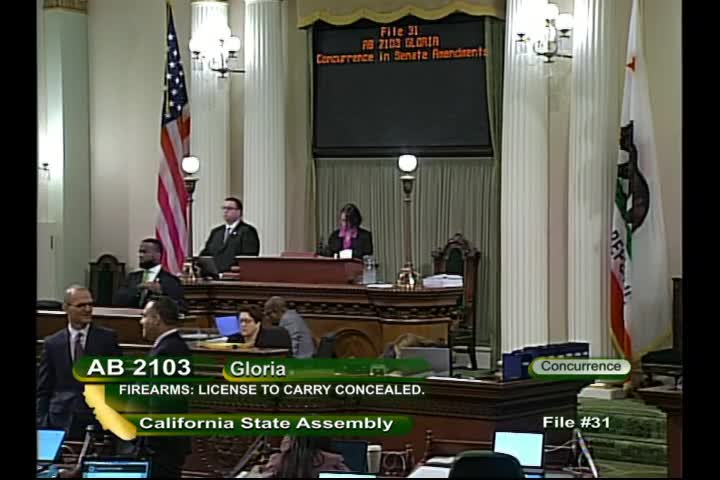 2MIN
Assembly Floor
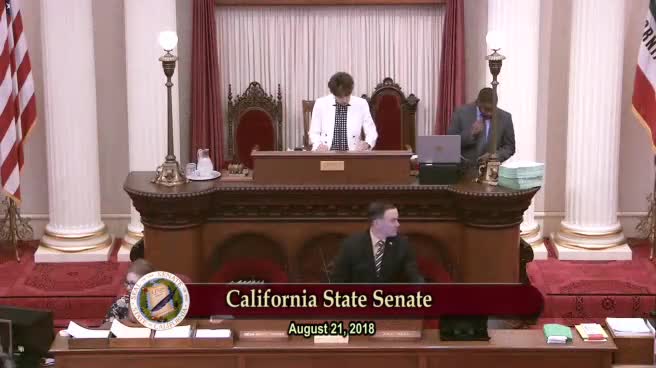 3MIN
Senate Floor
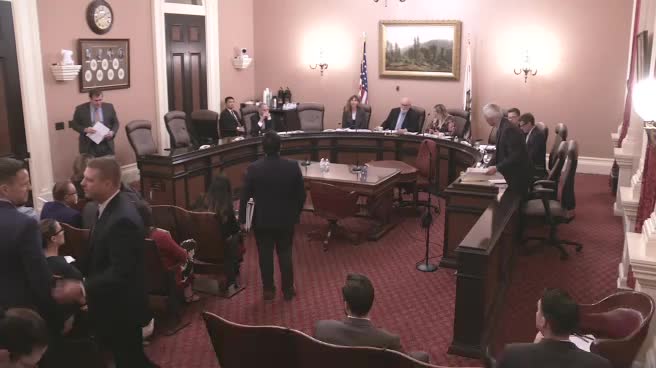 7MIN
Senate Standing Committee on Transportation and Housing
Bill Author




