AB 384: The Qualified ABLE Program: tax-advantaged savings accounts.
- Session Year: 2017-2018
- House: Assembly
- Latest Version Date: 2017-10-04
Existing federal law, the Stephen Beck, Jr., Achieving a Better Life Experience Act of 2014 (ABLE Act), encourages and assists individuals and families to save private funds in a tax-advantaged savings account for the purpose of supporting persons with disabilities to maintain their health, independence, and quality of life by excluding from gross income distributions used for qualified disability expenses by a beneficiary of a qualified ABLE program established and maintained by a state, as specified. Existing law establishes the Qualified ABLE Program, administered by the California ABLE Act Board, in this state for purposes of implementing the federal ABLE Act. Existing law requires the board to segregate the moneys coming into the ABLE program trust into 2 funds: the program fund, which is continuously appropriated, and the administrative fund, which is available upon appropriation by the Legislature. All moneys paid by designated beneficiaries or eligible individuals in connection with ABLE accounts are required to be deposited, as received, into the program fund, promptly invested, and accounted for separately.
Existing law requires that an ABLE account only be established for a designated beneficiary who is a resident of this state, and that the board market the program to residents of this state to the extent funds are available. Existing law also provides that moneys in, contributions to, and any distribution for qualified disability expenses from, an ABLE account, not to exceed $100,000, do not count toward determining eligibility for a state or local means-tested program.
This bill would expand the residency requirement for a designated beneficiary to being a resident of the United States, and as a result, would expand the purposes of a continuously appropriated fund, thereby making an appropriation. The bill would require the board to market the program to residents of the United States to the extent funds are available. The bill would clarify that specified existing provisions of law exempting the moneys in, and qualified distributions from, an ABLE account from being included as income for certain federal means-tested programs also apply.
This bill would incorporate additional changes to Section 4880 of the Welfare and Institutions Code proposed by AB 688 to be operative only if this bill and AB 688 are enacted and this bill is enacted last.
Existing federal law, the Stephen Beck, Jr., Achieving a Better Life Experience Act of 2014 (ABLE Act), encourages and assists individuals and families to save private funds in a tax-advantaged savings account for the purpose of supporting persons with disabilities to maintain their health, independence, and quality of life by excluding from gross income distributions used for qualified disability expenses by a beneficiary of a qualified ABLE program established and maintained by a state, as specified. Existing law establishes the Qualified ABLE Program, administered by the California ABLE Act Board, in this state for purposes of implementing the federal ABLE Act. Existing law requires the board to segregate the moneys coming into the ABLE program trust into 2 funds: the program fund, which is continuously appropriated, and the administrative fund, which is available upon appropriation by the Legislature. All moneys paid by designated beneficiaries or eligible individuals in connection with ABLE accounts are required to be deposited, as received, into the program fund, promptly invested, and accounted for separately.
Existing law requires that an ABLE account only be established for a designated beneficiary who is a resident of this state, and that the board market the program to residents of this state to the extent funds are available. Existing law also provides that moneys in, contributions to, and any distribution for qualified disability expenses from, an ABLE account, not to exceed $100,000, do not count toward determining eligibility for a state or local means-tested program.
This bill would expand the residency requirement for a designated beneficiary to being a resident of the United States, and as a result, would expand the purposes of a continuously appropriated fund, thereby making an appropriation. The bill would require the board to market the program to residents of the United States to the extent funds are available. The bill would clarify that specified existing provisions of law exempting the moneys in, and qualified distributions from, an ABLE account from being included as income for certain federal means-tested programs also apply.
This bill would incorporate additional changes to Section 4880 of the Welfare and Institutions Code proposed by AB 688 to be operative only if this bill and AB 688 are enacted and this bill is enacted last.
Existing federal law, the Stephen Beck, Jr., Achieving a Better Life Experience Act of 2014 (ABLE Act), encourages and assists individuals and families to save private funds in a tax-advantaged savings account for the purpose of supporting persons with disabilities to maintain their health, independence, and quality of life by excluding from gross income distributions used for qualified disability expenses by a beneficiary of a qualified ABLE program established and maintained by a state, as specified. Existing law establishes the Qualified ABLE Program, administered by the California ABLE Act Board, in this state for purposes of implementing the federal ABLE Act. Existing law requires the board to segregate the moneys coming into the ABLE program trust into 2 funds: the program fund, which is continuously appropriated, and the administrative fund, which is available upon appropriation by the Legislature. All moneys paid by designated beneficiaries or eligible individuals in connection with ABLE accounts are required to be deposited, as received, into the program fund, promptly invested, and accounted for separately.
Existing law requires that an ABLE account only be established for a designated beneficiary who is a resident of this state, and that the board market the program to residents of this state to the extent funds are available. Existing law also provides that moneys in, contributions to, and any distribution for qualified disability expenses from, an ABLE account, not to exceed $100,000, do not count toward determining eligibility for a state or local means-tested program.
This bill would expand the residency requirement for a designated beneficiary to being a resident of the United States, and as a result, would expand the purposes of a continuously appropriated fund, thereby making an appropriation. The bill would require the board to market the program to residents of the United States to the extent funds are available. The bill would clarify that specified existing provisions of law exempting the moneys in, and qualified distributions from, an ABLE account from being included as income for certain federal means-tested programs also apply.
This bill would incorporate additional changes to Section 4880 of the Welfare and Institutions Code proposed by AB 688 to be operative only if this bill and AB 688 are enacted and this bill is enacted last.
Existing federal law, the Stephen Beck, Jr., Achieving a Better Life Experience Act of 2014 (ABLE Act), encourages and assists individuals and families to save private funds in a tax-advantaged savings account for the purpose of supporting persons with disabilities to maintain their health, independence, and quality of life by excluding from gross income distributions used for qualified disability expenses by a beneficiary of a qualified ABLE program established and maintained by a state, as specified. Existing law establishes the Qualified ABLE Program, administered by the California ABLE Act Board, in this state for purposes of implementing the federal ABLE Act. Existing law requires the board to segregate the moneys coming into the ABLE program trust into 2 funds: the program fund, which is continuously appropriated, and the administrative fund, which is available upon appropriation by the Legislature. All moneys paid by designated beneficiaries or eligible individuals in connection with ABLE accounts are required to be deposited, as received, into the program fund, promptly invested, and accounted for separately.
Existing law requires that an ABLE account only be established for a designated beneficiary who is a resident of this state, and that the board market the program to residents of this state to the extent funds are available. Existing law also provides that moneys in, contributions to, and any distribution for qualified disability expenses from, an ABLE account, not to exceed $100,000, do not count toward determining eligibility for a state or local means-tested program.
This bill would expand the residency requirement for a designated beneficiary to being a resident of the United States, and as a result, would expand the purposes of a continuously appropriated fund, thereby making an appropriation. The bill would require the board to market the program to residents of the United States to the extent funds are available. The bill would also eliminate the above-described $100,000 exclusion cap for purposes of eligibility for a state or local means-tested program. The bill would clarify that specified existing provisions of law exempting the moneys in, and qualified distributions from, an ABLE account from being included as income for certain federal means-tested programs also apply.
Existing federal law, the Stephen Beck, Jr., Achieving a Better Life Experience Act of 2014 (ABLE Act), encourages and assists individuals and families to save private funds in a tax-advantaged savings account for the purpose of supporting persons with disabilities to maintain their health, independence, and quality of life by excluding from gross income distributions used for qualified disability expenses by a beneficiary of a qualified ABLE program established and maintained by a state, as specified. Existing law establishes in the Qualified ABLE Program, administered by the California ABLE Act Board, in this state for purposes of implementing the federal ABLE Act. Existing law requires the board to segregate the moneys coming into the ABLE program trust into 2 funds: the program fund, which is continuously appropriated, and the administrative fund, which is available upon appropriation by the Legislature. All moneys paid by designated beneficiaries or eligible individuals in connection with ABLE accounts are required to be deposited, as received, into the program fund, promptly invested, and accounted for separately.
Existing law requires that an ABLE account only be established for a designated beneficiary who is a resident of this state, and that the board market the program to residents of this state to the extent funds are available. Existing law also provides that moneys in, contributions to, and any distribution for qualified disability expenses from, an ABLE account, not to exceed $100,000, do not count toward determining eligibility for a state or local means-tested program.
This bill would expand the residency requirement for a designated beneficiary to being a resident of the United States, and as a result, would expand the purposes of a continuously appropriated fund, thereby making an appropriation. The bill would require the board to market the program to residents of the United States to the extent funds are available. The bill would also eliminate the above-described $100,000 exclusion cap for purposes of eligibility for a state or local means-tested program.
Existing federal law, the Stephen Beck, Jr., Achieving a Better Life Experience Act of 2014 (ABLE Act), encourages and assists individuals and families to save private funds in a tax-advantaged savings account for the purpose of supporting persons with disabilities to maintain their health, independence, and quality of life by excluding from gross income distributions used for qualified disability expenses by a beneficiary of a qualified ABLE program established and maintained by a state, as specified. Existing law establishes in the Qualified ABLE Program, administered by the California ABLE Act Board, in this state for purposes of implementing the federal ABLE Act. Existing law requires the board to segregate the moneys coming into the ABLE program trust into 2 funds: the program fund, which is continuously appropriated, and the administrative fund, which is available upon appropriation by the Legislature. All moneys paid by designated beneficiaries or eligible individuals in connection with ABLE accounts are required to be deposited, as received, into the program fund, promptly invested, and accounted for separately.
Existing law requires that an ABLE account only be established for a designated beneficiary who is a resident of this state, and that the board market the program to residents of this state to the extent funds are available. Existing law also provides that moneys in, contributions to, and any distribution for qualified disability expenses from, an ABLE account, not to exceed $100,000, do not count toward determining eligibility for a state or local means-tested program.
This bill would expand the residency requirement for a designated beneficiary to being a resident of the United States, and as a result, would expand the purposes of a continuously appropriated fund, thereby making an appropriation. The bill would require the board to market the program to residents of the United States to the extent funds are available. The bill would also provide that moneys in, contributions to, and any distribution for qualified disability expenses from, an ABLE account do not count toward determining eligibility for a state or local means-tested program that is funded, at least in part, by a federal means-tested program as described in the federal ABLE Act.
Existing federal law, the Stephen Beck, Jr., Achieving a Better Life Experience Act of 2014 (ABLE Act), encourages and assists individuals and families to save private funds in a tax-advantaged savings account for the purpose of supporting persons with disabilities to maintain their health, independence, and quality of life by excluding from gross income distributions used for qualified disability expenses by a beneficiary of a qualified ABLE program established and maintained by a state, as specified. Existing law establishes in the Qualified ABLE Program, administered by the California ABLE Act Board, in this state for purposes of implementing the federal ABLE Act. Existing law requires the board to segregate the moneys coming into the ABLE program trust into 2 funds: the program fund, which is continuously appropriated, and the administrative fund, which is available upon appropriation by the Legislature. All moneys paid by designated beneficiaries or eligible individuals in connection with ABLE accounts are required to be deposited, as received, into the program fund, promptly invested, and accounted for separately.
Existing law requires that an ABLE account only be established for a designated beneficiary who is a resident of this state, and that the board market the program to residents of this state to the extent funds are available. Existing law also provides that moneys in, contributions to, and any distribution for qualified disability expenses from, an ABLE account, not to exceed $100,000, do not count toward determining eligibility for a state or local means-tested program.
This bill would expand the residency requirement for a designated beneficiary to being a resident of the United States, and as a result, would expand the purposes of a continuously appropriated fund, thereby making an appropriation. The bill would require the board to market the program to residents of the United States to the extent funds are available. The bill would also provide that moneys in, contributions to, and any distribution for qualified disability expenses from, an ABLE account do not count toward determining eligibility for a state or local means-tested program that is funded, at least in part, by a federal means-tested program as described in the federal ABLE Act.
(a)Under the program, a person may make contributions for a taxable year, for the benefit of an individual who is an eligible individual for that taxable year, to an ABLE account that is established for the purpose of meeting the qualified disability expenses of the designated beneficiary of the account if both of the following criteria are met:
(1)The designated beneficiary is limited to one ABLE account for purposes of this chapter.
(2)The ABLE account is established only for a designated beneficiary who is a resident of the United States.
(b)A contribution shall not be accepted if either of the following occurs:
(1)The contribution is not in cash.
(2)Except in the case of contributions under Section 529A(c)(1)(C) of the Internal Revenue Code, relating to change in designated beneficiaries or programs, the contribution to an ABLE account would result in aggregate contributions from all contributors to the ABLE account for the taxable year exceeding the amount in effect under Section 2503(b) of the Internal Revenue Code, relating to exclusion from gifts, for the calendar year in which the taxable year begins.
(c)The designated beneficiary shall retain ownership of all contributions made to the designated beneficiarys ABLE account to the date of utilization for qualified disability expenses, and all interest derived from the investment of the contributions to the designated beneficiarys ABLE account shall be deemed to be held in the ABLE program trust for the benefit of the designated beneficiary. Neither the contributions, nor any interest derived therefrom, may be pledged as collateral for any loan.
(d)The board shall develop adequate safeguards to prevent aggregate contributions on behalf of a designated beneficiary in excess of the maximum contribution limits necessary to provide for the qualified disability expenses of the designated beneficiary. For purposes of this subdivision, aggregate contributions include contributions under any prior qualified ABLE program of any state or agency or instrumentality thereof.
SEC. 2.Section 4880 of the Welfare and Institutions Code is amended to read:4880.(a)Notwithstanding any other law, moneys in, contributions to, and any distribution for qualified disability expenses from, an ABLE account, not to exceed one hundred thousand dollars ($100,000), shall not count toward determining eligibility for a state or local means-tested program.
(b)Notwithstanding subdivision (a), Section 103 of Division B of Public Law 113-295 and Sections 17140.4 and 23711.4 of the Revenue and Taxation Code shall apply.
SEC. 2.5.Section 4880 of the Welfare and Institutions Code is amended to read:4880.(a)Notwithstanding any other law, moneys in, contributions to, and any distribution for qualified disability expenses from, an ABLE account, not to exceed one hundred thousand dollars ($100,000), shall not count toward determining eligibility for a state or local means-tested program.
(b)Notwithstanding subdivision (a), Section 103 of Division B of Public Law 113-295 and Sections 17140.4 and 23711.4 of the Revenue and Taxation Code shall apply.
(c)This section shall become inoperative on September 1, 2018, and, as of January 1, 2019, is repealed.
SEC. 2.7.Section 4880 is added to the Welfare and Institutions Code, to read:4880.(a)Notwithstanding any other law, moneys in, contributions to, and any distribution for qualified disability expenses from, an ABLE account, not to exceed one hundred thousand dollars ($100,000), shall not count toward determining eligibility for a state or local means-tested program.
(b)Notwithstanding subdivision (a), Section 103 of Division B of Public Law 113-295 and Sections 17140.4 and 23711.4 of the Revenue and Taxation Code shall apply.
(c)(1)Notwithstanding any other law, moneys in an ABLE account, not to exceed one hundred thousand dollars ($100,000), shall be exempt from enforcement of a money judgment without making a claim.
(2)A money judgment in favor of the State Department of Health Care Services shall not be subject to the exemption provided in paragraph (1) during any period of time in which federal law or guidance issued by the federal Centers for Medicare and Medicaid Services requires the department to recover funds from ABLE accounts for reimbursement of qualifying Medi-Cal expenditures.
(d)This section shall become operative on September 1, 2018.
SEC. 3.Section 4884 of the Welfare and Institutions Code is amended to read:4884.The board shall market this program to residents of the United States to the extent funds are available to do so.
SEC. 4.Sections 2.5 and 2.7 of this bill incorporate amendments to Section 4880 of the Welfare and Institutions Code proposed by both this bill and Assembly Bill 688. Those sections shall only become operative if (1) both bills are enacted and become effective on or before January 1, 2018, (2) each bill amends Section 4880 of the Welfare and Institutions Code, and (3) this bill is enacted after Assembly Bill 688, in which case Section 2 of this bill shall not become operative.
(a)Under the program, a person may make contributions for a taxable year, for the benefit of an individual who is an eligible individual for that taxable year, to an ABLE account that is established for the purpose of meeting the qualified disability expenses of the designated beneficiary of the account if both of the following criteria are met:
(1)The designated beneficiary is limited to one ABLE account for purposes of this chapter.
(2)The ABLE account is established only for a designated beneficiary who is a resident of the United States.
(b)A contribution shall not be accepted if either of the following occurs:
(1)The contribution is not in cash.
(2)Except in the case of contributions under Section 529A(c)(1)(C) of the Internal Revenue Code, relating to change in designated beneficiaries or programs, the contribution to an ABLE account would result in aggregate contributions from all contributors to the ABLE account for the taxable year exceeding the amount in effect under Section 2503(b) of the Internal Revenue Code, relating to exclusion from gifts, for the calendar year in which the taxable year begins.
(c)The designated beneficiary shall retain ownership of all contributions made to the designated beneficiarys ABLE account to the date of utilization for qualified disability expenses, and all interest derived from the investment of the contributions to the designated beneficiarys ABLE account shall be deemed to be held in the ABLE program trust for the benefit of the designated beneficiary. Neither the contributions, nor any interest derived therefrom, may be pledged as collateral for any loan.
(d)The board shall develop adequate safeguards to prevent aggregate contributions on behalf of a designated beneficiary in excess of the maximum contribution limits necessary to provide for the qualified disability expenses of the designated beneficiary. For purposes of this subdivision, aggregate contributions include contributions under any prior qualified ABLE program of any state or agency or instrumentality thereof.
SEC. 2.Section 4880 of the Welfare and Institutions Code is amended to read:4880.(a)Notwithstanding any other law, moneys in, contributions to, and any distribution for qualified disability expenses from, an ABLE account, not to exceed one hundred thousand dollars ($100,000), shall not count toward determining eligibility for a state or local means-tested program.
(b)Notwithstanding subdivision (a), Section 103 of Division B of Public Law 113-295 and Sections 17140.4 and 23711.4 of the Revenue and Taxation Code shall apply.
SEC. 2.5.Section 4880 of the Welfare and Institutions Code is amended to read:4880.(a)Notwithstanding any other law, moneys in, contributions to, and any distribution for qualified disability expenses from, an ABLE account, not to exceed one hundred thousand dollars ($100,000), shall not count toward determining eligibility for a state or local means-tested program.
(b)Notwithstanding subdivision (a), Section 103 of Division B of Public Law 113-295 and Sections 17140.4 and 23711.4 of the Revenue and Taxation Code shall apply.
(c)This section shall become inoperative on September 1, 2018, and, as of January 1, 2019, is repealed.
SEC. 2.7.Section 4880 is added to the Welfare and Institutions Code, to read:4880.(a)Notwithstanding any other law, moneys in, contributions to, and any distribution for qualified disability expenses from, an ABLE account, not to exceed one hundred thousand dollars ($100,000), shall not count toward determining eligibility for a state or local means-tested program.
(b)Notwithstanding subdivision (a), Section 103 of Division B of Public Law 113-295 and Sections 17140.4 and 23711.4 of the Revenue and Taxation Code shall apply.
(c)(1)Notwithstanding any other law, moneys in an ABLE account, not to exceed one hundred thousand dollars ($100,000), shall be exempt from enforcement of a money judgment without making a claim.
(2)A money judgment in favor of the State Department of Health Care Services shall not be subject to the exemption provided in paragraph (1) during any period of time in which federal law or guidance issued by the federal Centers for Medicare and Medicaid Services requires the department to recover funds from ABLE accounts for reimbursement of qualifying Medi-Cal expenditures.
(d)This section shall become operative on September 1, 2018.
SEC. 3.Section 4884 of the Welfare and Institutions Code is amended to read:4884.The board shall market this program to residents of the United States to the extent funds are available to do so.
SEC. 4.Sections 2.5 and 2.7 of this bill incorporate amendments to Section 4880 of the Welfare and Institutions Code proposed by both this bill and Assembly Bill 688. Those sections shall only become operative if (1) both bills are enacted and become effective on or before January 1, 2018, (2) each bill amends Section 4880 of the Welfare and Institutions Code, and (3) this bill is enacted after Assembly Bill 688, in which case Section 2 of this bill shall not become operative.
(a)Under the program, a person may make contributions for a taxable year, for the benefit of an individual who is an eligible individual for that taxable year, to an ABLE account that is established for the purpose of meeting the qualified disability expenses of the designated beneficiary of the account if both of the following criteria are met:
(1)The designated beneficiary is limited to one ABLE account for purposes of this chapter.
(2)The ABLE account is established only for a designated beneficiary who is a resident of the United States.
(b)A contribution shall not be accepted if either of the following occurs:
(1)The contribution is not in cash.
(2)Except in the case of contributions under Section 529A(c)(1)(C) of the Internal Revenue Code, relating to change in designated beneficiaries or programs, the contribution to an ABLE account would result in aggregate contributions from all contributors to the ABLE account for the taxable year exceeding the amount in effect under Section 2503(b) of the Internal Revenue Code, relating to exclusion from gifts, for the calendar year in which the taxable year begins.
(c)The designated beneficiary shall retain ownership of all contributions made to the designated beneficiarys ABLE account to the date of utilization for qualified disability expenses, and all interest derived from the investment of the contributions to the designated beneficiarys ABLE account shall be deemed to be held in the ABLE program trust for the benefit of the designated beneficiary. Neither the contributions, nor any interest derived therefrom, may be pledged as collateral for any loan.
(d)The board shall develop adequate safeguards to prevent aggregate contributions on behalf of a designated beneficiary in excess of the maximum contribution limits necessary to provide for the qualified disability expenses of the designated beneficiary. For purposes of this subdivision, aggregate contributions include contributions under any prior qualified ABLE program of any state or agency or instrumentality thereof.
SEC. 2.Section 4880 of the Welfare and Institutions Code is amended to read:4880.(a)Notwithstanding any other law, moneys in, contributions to, and any distribution for qualified disability expenses from, an ABLE account, not to exceed one hundred thousand dollars ($100,000), shall not count toward determining eligibility for a state or local means-tested program.
(b)Notwithstanding subdivision (a), Section 103 of Division B of Public Law 113-295 and Sections 17140.4 and 23711.4 of the Revenue and Taxation Code shall apply.
SEC. 2.5.Section 4880 of the Welfare and Institutions Code is amended to read:4880.(a)Notwithstanding any other law, moneys in, contributions to, and any distribution for qualified disability expenses from, an ABLE account, not to exceed one hundred thousand dollars ($100,000), shall not count toward determining eligibility for a state or local means-tested program.
(b)Notwithstanding subdivision (a), Section 103 of Division B of Public Law 113-295 and Sections 17140.4 and 23711.4 of the Revenue and Taxation Code shall apply.
(c)This section shall become inoperative on September 1, 2018, and, as of January 1, 2019, is repealed.
SEC. 2.7.Section 4880 is added to the Welfare and Institutions Code, to read:4880.(a)Notwithstanding any other law, moneys in, contributions to, and any distribution for qualified disability expenses from, an ABLE account, not to exceed one hundred thousand dollars ($100,000), shall not count toward determining eligibility for a state or local means-tested program.
(b)Notwithstanding subdivision (a), Section 103 of Division B of Public Law 113-295 and Sections 17140.4 and 23711.4 of the Revenue and Taxation Code shall apply.
(c)(1)Notwithstanding any other law, moneys in an ABLE account, not to exceed one hundred thousand dollars ($100,000), shall be exempt from enforcement of a money judgment without making a claim.
(2)A money judgment in favor of the State Department of Health Care Services shall not be subject to the exemption provided in paragraph (1) during any period of time in which federal law or guidance issued by the federal Centers for Medicare and Medicaid Services requires the department to recover funds from ABLE accounts for reimbursement of qualifying Medi-Cal expenditures.
(d)This section shall become operative on September 1, 2018.
SEC. 3.Section 4884 of the Welfare and Institutions Code is amended to read:4884.The board shall market this program to residents of the United States to the extent funds are available to do so.
SEC. 4.Sections 2.5 and 2.7 of this bill incorporate amendments to Section 4880 of the Welfare and Institutions Code proposed by both this bill and Assembly Bill 688. Those sections shall only become operative if (1) both bills are enacted and become effective on or before January 1, 2018, (2) each bill amends Section 4880 of the Welfare and Institutions Code, and (3) this bill is enacted after Assembly Bill 688, in which case Section 2 of this bill shall not become operative.
(a)Under the program, a person may make contributions for a taxable year, for the benefit of an individual who is an eligible individual for that taxable year, to an ABLE account that is established for the purpose of meeting the qualified disability expenses of the designated beneficiary of the account if both of the following criteria are met:
(1)The designated beneficiary is limited to one ABLE account for purposes of this chapter.
(2)The ABLE account is established only for a designated beneficiary who is a resident of the United States.
(b)A contribution shall not be accepted if either of the following occurs:
(1)The contribution is not in cash.
(2)Except in the case of contributions under Section 529A(c)(1)(C) of the Internal Revenue Code, relating to change in designated beneficiaries or programs, the contribution to an ABLE account would result in aggregate contributions from all contributors to the ABLE account for the taxable year exceeding the amount in effect under Section 2503(b) of the Internal Revenue Code, relating to exclusion from gifts, for the calendar year in which the taxable year begins.
(c)The designated beneficiary shall retain ownership of all contributions made to the designated beneficiarys ABLE account to the date of utilization for qualified disability expenses, and all interest derived from the investment of the contributions to the designated beneficiarys ABLE account shall be deemed to be held in the ABLE program trust for the benefit of the designated beneficiary. Neither the contributions, nor any interest derived therefrom, may be pledged as collateral for any loan.
(d)The board shall develop adequate safeguards to prevent aggregate contributions on behalf of a designated beneficiary in excess of the maximum contribution limits necessary to provide for the qualified disability expenses of the designated beneficiary. For purposes of this subdivision, aggregate contributions include contributions under any prior qualified ABLE program of any state or agency or instrumentality thereof.
SEC. 2.Section 4880 of the Welfare and Institutions Code is amended to read:4880.(a)Notwithstanding any other law, moneys in, contributions to, and any distribution for qualified disability expenses from, an ABLE account account, not to exceed one hundred thousand dollars ($100,000), shall not count toward determining eligibility for a state or local means-tested program.
(b)Notwithstanding subdivision (a), Section 103 of Division B of Public Law 113-295 and Sections 17140.4 and 23711.4 of the Revenue and Taxation Code shall apply.
SEC. 3.Section 4884 of the Welfare and Institutions Code is amended to read:4884.The board shall market this program to residents of the United States to the extent funds are available to do so.
(a)Under the program, a person may make contributions for a taxable year, for the benefit of an individual who is an eligible individual for that taxable year, to an ABLE account that is established for the purpose of meeting the qualified disability expenses of the designated beneficiary of the account if both of the following criteria are met:
(1)The designated beneficiary is limited to one ABLE account for purposes of this chapter.
(2)The ABLE account is established only for a designated beneficiary who is a resident of the United States.
(b)A contribution shall not be accepted if either of the following occurs:
(1)The contribution is not in cash.
(2)Except in the case of contributions under Section 529A(c)(1)(C) of the Internal Revenue Code, relating to change in designated beneficiaries or programs, the contribution to an ABLE account would result in aggregate contributions from all contributors to the ABLE account for the taxable year exceeding the amount in effect under Section 2503(b) of the Internal Revenue Code, relating to exclusion from gifts, for the calendar year in which the taxable year begins.
(c)The designated beneficiary shall retain ownership of all contributions made to the designated beneficiarys ABLE account to the date of utilization for qualified disability expenses, and all interest derived from the investment of the contributions to the designated beneficiarys ABLE account shall be deemed to be held in the ABLE program trust for the benefit of the designated beneficiary. Neither the contributions, nor any interest derived therefrom, may be pledged as collateral for any loan.
(d)The board shall develop adequate safeguards to prevent aggregate contributions on behalf of a designated beneficiary in excess of the maximum contribution limits necessary to provide for the qualified disability expenses of the designated beneficiary. For purposes of this subdivision, aggregate contributions include contributions under any prior qualified ABLE program of any state or agency or instrumentality thereof.
SEC. 2.Section 4880 of the Welfare and Institutions Code is amended to read:4880.Notwithstanding any other law, moneys in, contributions to, and any distribution for qualified disability expenses from, an ABLE account, not to exceed one hundred thousand dollars ($100,000), account shall not count toward determining eligibility for a state or local means-tested program.
SEC. 2.SEC. 3.Section 4884 of the Welfare and Institutions Code is amended to read:4884.The board shall market this program to residents of the United States to the extent funds are available to do so.
(a)Under the program, a person may make contributions for a taxable year, for the benefit of an individual who is an eligible individual for that taxable year, to an ABLE account that is established for the purpose of meeting the qualified disability expenses of the designated beneficiary of the account if both of the following criteria are met:
(1)The designated beneficiary is limited to one ABLE account for purposes of this chapter.
(2)The ABLE account is established only for a designated beneficiary who is a resident of the United States.
(b)A contribution shall not be accepted if either of the following occurs:
(1)The contribution is not in cash.
(2)Except in the case of contributions under Section 529A(c)(1)(C) of the Internal Revenue Code, relating to change in designated beneficiaries or programs, the contribution to an ABLE account would result in aggregate contributions from all contributors to the ABLE account for the taxable year exceeding the amount in effect under Section 2503(b) of the Internal Revenue Code, relating to exclusion from gifts, for the calendar year in which the taxable year begins.
(c)The designated beneficiary shall retain ownership of all contributions made to the designated beneficiarys ABLE account to the date of utilization for qualified disability expenses, and all interest derived from the investment of the contributions to the designated beneficiarys ABLE account shall be deemed to be held in the ABLE program trust for the benefit of the designated beneficiary. Neither the contributions, nor any interest derived therefrom, may be pledged as collateral for any loan.
(d)The board shall develop adequate safeguards to prevent aggregate contributions on behalf of a designated beneficiary in excess of the maximum contribution limits necessary to provide for the qualified disability expenses of the designated beneficiary. For purposes of this subdivision, aggregate contributions include contributions under any prior qualified ABLE program of any state or agency or instrumentality thereof.
SEC. 2.Section 4880 of the Welfare and Institutions Code is amended to read:4880.(a)Notwithstanding any other law, moneys in, contributions to, and any distribution for qualified disability expenses from, an ABLE account, not to exceed one hundred thousand dollars ($100,000), shall not count toward determining eligibility for a state or local means-tested program.(b)Notwithstanding any other law, moneys in, contributions to, and any distribution for qualified disability expenses from, an ABLE account shall not count toward determining eligibility for a state or local means-tested program that is funded, at least in part, by a federal means-tested program as described in Section 529A of the Internal Revenue Code.SEC. 3.SEC. 2.Section 4884 of the Welfare and Institutions Code is amended to read:4884.The board shall market this program to residents of the United States to the extent funds are available to do so.
(a)Under the program, a person may make contributions for a taxable year, for the benefit of an individual who is an eligible individual for that taxable year, to an ABLE account that is established for the purpose of meeting the qualified disability expenses of the designated beneficiary of the account if both of the following criteria are met:
(1)The designated beneficiary is limited to one ABLE account for purposes of this chapter.
(2)The ABLE account is established only for a designated beneficiary who is a resident of this state. the United States.
(b)A contribution shall not be accepted if either of the following occurs:
(1)The contribution is not in cash.
(2)Except in the case of contributions under Section 529A(c)(1)(C) of the Internal Revenue Code, relating to change in designated beneficiaries or programs, the contribution to an ABLE account would result in aggregate contributions from all contributors to the ABLE account for the taxable year exceeding the amount in effect under Section 2503(b) of the Internal Revenue Code, relating to exclusion from gifts, for the calendar year in which the taxable year begins.
(c)The designated beneficiary shall retain ownership of all contributions made to the designated beneficiarys ABLE account to the date of utilization for qualified disability expenses, and all interest derived from the investment of the contributions to the designated beneficiarys ABLE account shall be deemed to be held in the ABLE program trust for the benefit of the designated beneficiary. Neither the contributions, nor any interest derived therefrom, may be pledged as collateral for any loan.
(d)The board shall develop adequate safeguards to prevent aggregate contributions on behalf of a designated beneficiary in excess of the maximum contribution limits necessary to provide for the qualified disability expenses of the designated beneficiary. For purposes of this subdivision, aggregate contributions include contributions under any prior qualified ABLE program of any state or agency or instrumentality thereof.
SEC. 2.Section 4880 of the Welfare and Institutions Code is amended to read:4880.(a)Notwithstanding any other law, moneys in, contributions to, and any distribution for qualified disability expenses from, an ABLE account, not to exceed one hundred thousand dollars ($100,000), shall not count toward determining eligibility for a state or local means-tested program.
(b)Notwithstanding any other law, moneys in, contributions to, and any distribution for qualified disability expenses from, an ABLE account shall not count toward determining eligibility for a state or local means-tested program that is funded, at least in part, by a federal means-tested program as described in Section 529A of the Internal Revenue Code.
SEC. 3.Section 4884 of the Welfare and Institutions Code is amended to read:4884.The board shall market this program to residents of the State of California United States to the extent funds are available to do so.
|
Date
|
Status
|
|---|---|
| Oct 4, 2017 | Chaptered by Secretary of State - Chapter 470, Statutes of 2017. |
| Oct 4, 2017 | Approved by the Governor. |
| Sep 25, 2017 | Enrolled and presented to the Governor at 12 p.m. |
| Sep 14, 2017 | Senate amendments concurred in. To Engrossing and Enrolling. |
| Sep 14, 2017 | In Assembly. Concurrence in Senate amendments pending. |
| Sep 14, 2017 | Read third time. Passed. Ordered to the Assembly. |
| Sep 12, 2017 | Ordered to special consent calendar. |
| Sep 11, 2017 | Read second time. Ordered to third reading. |
| Sep 8, 2017 | Read third time and amended. Ordered to second reading. |
| Sep 5, 2017 | Read second time. Ordered to third reading. |
| Sep 1, 2017 | From committee: Do pass. (Ayes 7. Noes 0.) (September 1). |
| Aug 21, 2017 | In committee: Referred to APPR. suspense file. |
| Jul 12, 2017 | From committee: Do pass and re-refer to Com. on APPR. (Ayes 7. Noes 0.) (July 12). Re-referred to Com. on APPR. |
| Jul 3, 2017 | From committee chair, with author's amendments: Amend, and re-refer to committee. Read second time, amended, and re-referred to Com. on GOV. & F. |
| Jun 12, 2017 | In committee: Set, second hearing. Hearing canceled at the request of author. |
| Jun 6, 2017 | From committee chair, with author's amendments: Amend, and re-refer to committee. Read second time, amended, and re-referred to Com. on GOV. & F. |
| May 24, 2017 | Referred to Com. on GOV. & F. |
| May 11, 2017 | In Senate. Read first time. To Com. on RLS. for assignment. |
| May 11, 2017 | Read third time. Passed. Ordered to the Senate. (Ayes 77. Noes 0. Page 1486.) |
| May 4, 2017 | Read second time. Ordered to Consent Calendar. |
| May 3, 2017 | From committee: Do pass. To Consent Calendar. (Ayes 16. Noes 0.) (May 3). |
| Apr 26, 2017 | Re-referred to Com. on APPR. |
| Apr 25, 2017 | Read second time and amended. |
| Apr 24, 2017 | From committee: Amend, and do pass as amended and re-refer to Com. on APPR. with recommendation: To Consent Calendar. (Ayes 10. Noes 0.) (April 17). |
| Mar 13, 2017 | In committee: Hearing postponed by committee. |
| Feb 21, 2017 | Referred to Com. on REV. & TAX. |
| Feb 10, 2017 | From printer. May be heard in committee March 12. |
| Feb 9, 2017 | Read first time. To print. |
|
Date
|
Description
|
Location
|
Votes
|
|
|---|---|---|---|---|
| Sep 14, 2017 | AB 384 Irwin Special Consent Calendar 1st Day Regular Session | Assembly Floor |
Passed |
|
| Sep 14, 2017 | Special Consent Calendar # AB384 | Senate Floor |
Passed |
|
| Sep 1, 2017 | Do pass | Senate Standing Committee on Appropriations |
Passed |
|
| Aug 21, 2017 | Placed on suspense file | Senate Standing Committee on Appropriations |
Passed |
|
| Jul 12, 2017 | Do pass, but first be re-referred to the Committee on [Appropriations] | Senate Standing Committee on Governance and Finance |
Passed |
|
| May 11, 2017 | AB 384 IRWIN Consent Calendar Second Day Regular Session | Assembly Floor |
Passed |
|
| May 3, 2017 | Do pass. To Consent Calendar. | Assembly Standing Committee on Appropriations |
Passed |
|
| Apr 17, 2017 | Do pass as amended, and be re-referred to the Committee on [Appropriations] with recommendation: To Consent Calendar | Assembly Standing Committee on Revenue and Taxation |
Passed |
This list shows positions taken on this bill by organizations on the date displayed, which is linked to the original source.
Positions by individuals are not included.
|
Organization
|
Position
|
Date
|
|---|---|---|
| Association Of Regional Center Agencies | ** Support | Sep 9, 2017 |
| Autism Speaks | ** Support | Sep 9, 2017 |
| California Association For Health Services At Home | ** Support | Sep 9, 2017 |
| California Disability Services Association | ** Support | Apr 14, 2017 |
| california state treasurer's office | ** Support | Apr 14, 2017 |
| California State Treasurers Office | ** Support | Apr 14, 2017 |
| Center for Autism and Related Disorders | ** Support | Sep 9, 2017 |
| Disability Rights California, | ** Support | Sep 9, 2017 |
| north los angeles regional center | ** Support | Sep 9, 2017 |
| Professional Fiduciaries Association | ** Support | Sep 9, 2017 |
| State Council on Developmental Disabilities | ** Support | Sep 9, 2017 |
| State Treasurer John Chiang | ** Support | Sep 9, 2017 |
| The Arc and United Cerebral Palsy California Collaboration | ** Support | Sep 9, 2017 |
| The Arc of Ventura County | ** Support | Sep 9, 2017 |
| Unknown. | ** Against | Jul 7, 2017 |
CONCURRENCE IN SENATE AMENDMENTS
CSA1 Bill Id:AB 384
Author:(Irwin)
As Amended Ver:September 8, 2017
Majority vote
ASSEMBLY: | 77-0 | (May 11, 2017) | SENATE: | 40-0 | (September 14, 2017) |
Original Committee Reference: REV. & TAX.
SUMMARY: Expands the California Achieving a Better Life Experience (CalABLE) Act to non-California residents, and clarifies the application of existing provisions of law that exclude specified ABLE account funds from income when determining eligibility for certain federal means-tested programs (Medi-Cal).
The Senate amendments clarify that ABLE account funds in excess of $100,000 are not counted for means-testing purposes under Medi-Cal, given the application of existing provisions of law that exclude specified ABLE account funds from income when determining eligibility for certain federal means-tested programs, and add double-jointing language to avoid chaptering problems with AB 688 (Calderon) of the current legislative session.
EXISTING FEDERAL LAW:
- Enacts the Stephen Beck, Jr., Achieving a Better Life Experience Act of 2014 (ABLE Act), which assists individuals and families save private funds to support persons with disabilities, as specified, by excluding from gross income distributions used for qualified disability expenses by a beneficiary of a qualified ABLE program established and maintained by a state.
- Provides that contributions to an ABLE account are not deductible for federal income tax purposes, and aggregate contributions during a taxable year may not exceed the annual gift tax exclusion amount. For 2016, the annual gift tax exclusion amount is $14,000.
- Provides that distributions from an ABLE account are excludable from income to the extent the total distribution does not exceed the qualified disability expenses of the beneficiary during the taxable year.
- Provides that funds in an ABLE account, contributions to an ABLE account, and distributions from an ABLE account, shall be disregarded for certain federal means-tested programs. However, for Supplemental Security Income (SSI) purposes, an eligible individual cannot have more than $100,000 in their ABLE account. If funds exceed this amount, SSI benefits will be suspended but not terminated. Funds in excess of $100,000 have no impact on Medicaid eligibility.
- Defines "qualified disability expenses" as any expenses related to an individual's blindness or disability, including education, housing, transportation, employment training and support, assistive technology and personal support services, health, prevention and wellness, financial management and administrative services, legal fees, expenses for oversight and monitoring, funeral and burial expenses, and other approved expenses.
- Specifies that the qualified ABLE program must limit a designated beneficiary to one ABLE account.
- Defines an "eligible individual" as an individual who meets the requirements relating to blindness or disability under the SSI program. Generally, an individual must be blind or disabled prior to age 26.
EXISTING STATE LAW:
- Conforms to federal income tax law provisions relating to the ABLE Act under the Personal Income Tax (PIT) Law and the Corporation Tax (CT) Law, allowing the creation of ABLE accounts for beneficiaries in California and ensuring that ABLE account earnings and distributions for qualified disability expenses are not included in the eligible individual's income for state tax purposes.
- Provides that notwithstanding any other law, moneys in, contributions to, and any distribution for qualified disability expenses from, an ABLE account, not to exceed one hundred thousand dollars, shall not count toward determining eligibility for a state or local means-tested program.
- Requires the CalABLE Act Board (Board) to market the program to residents of California to the extent funds are available to do so.
- Establishes the California ABLE Program Trust to implement the federal ABLE Act.
- Establishes the Board, chaired by the Treasurer and consisting of the Director of Finance, the Controller, the Director of Developmental Services, the Chairperson of the State Council on Developmental Disabilities, the Director of Rehabilitation, and the Chair of the State Independent Living Council.
- Authorizes the Board, in exercising the purposes, powers, and duties of the Trust, amongst other duties, to do the following:
- Sue and be sued;
- Make and enter into contracts necessary for the administration of the Trust;
- Enter into agreements with designated beneficiaries or eligible individuals to establish and maintain an ABLE account;
- Set minimum and maximum investment levels;
- Carry out the duties and obligations of the ABLE program; and,
- Administer the funds of the Trust.
- Requires the Treasurer to appoint an executive director who may be authorized by the Board to enter into contracts on behalf of the Board or conduct any business necessary for the efficient operation of the Board.
- Requires the Board to segregate moneys received by the Trust into two funds, a program fund and an administrative fund.
- Specifies that administrative costs will be available to the Board upon appropriation and are capped at 3% of incoming funds each fiscal year for the first five fiscal years, and at 1% of incoming funds each fiscal year thereafter.
- Authorizes moneys in the program fund to be invested or reinvested by the Treasurer or under contract with an investment manager determined by the Board.
- Specifies that funding for startup and administrative costs for the Board will be loaned from the General Fund for the first two years, and will be repaid when revenues from the program are sufficient to cover the Board's ongoing costs.
AS PASSED BY THE ASSEMBLY, this bill:
- Allowed all United States (U.S.) residents to participate in the CalABLE program.
- Required the Board to market the program to residents of the U.S. to the extent funds are available to do so.
FISCAL EFFECT: According to the Senate Appropriations Committee, this bill would result in a cost pressure to market the CalABLE program to residents of other states. The magnitude is unknown, but likely over $50,000 annually. Funding for the Board for 2016-17 and 2017-18 comes from a General Fund loan. Thereafter, the Board's administration costs are expected to be covered by program revenues.
COMMENTS:
- CalABLE Act: CalABLE was created by the enactment of AB 449 (Irwin), Chapter 774, Statutes of 2015, and SB 324 (Pavley), Chapter 796, Statutes of 2015. The ABLE Act dramatically expands eligibility for federal and state welfare programs by excluding funds in an ABLE account from many of the means-tested welfare programs, allowing disabled individuals to save money for the future without jeopardizing SSI or Medicaid benefits. As an example, in order for an individual to obtain SSI, countable resources must be worth not more than $2,000 for an individual or $3,000 for a couple. The ABLE Act has increased countable assets for SSI benefits from $2,000 to $102,000 for disabled individuals seeking eligibility. When the balance of an SSI recipient's ABLE account exceeds $100,000 by an amount that causes the recipient to exceed the SSI resource limit, whether alone or with other resources, the individual's SSI is suspended. However, because funds in ABLE accounts are not counted for Medicaid eligibility purposes even if funds are in excess of $100,000, this individual will remain eligible for Medicaid (or Medi-Cal in California) despite suspension of SSI. This bill clarifies that ABLE account funds in excess of $100,000 are not counted for means-testing purposes under Medi-Cal.
- Non-California Residents: When the federal ABLE Act was first enacted, program participants were prohibited from participating in another state's ABLE program. The Federal Government removed the prohibition so that individuals can still open an ABLE account even if their state of residency has decided not to enact a local ABLE program. This bill would allow out-of-state residents to participate in CalABLE. In addition to providing out-of-state residents with a valuable tool to save for the future, increasing the number of program participants has the added benefit of reducing administrative costs. CalABLE operates very much like Scholarshare, which allows individuals to open accounts on behalf of future students to help pay for college. Scholarshare recently reached combined assets of $7 billion, and because of that, the Treasurer's Office was able to reduce administrative costs by 25%. The Treasurer's Office hopes to do the same by allowing residents all over the country to participate in CalABLE.
Analysis Prepared by: Carlos Anguiano / REV. & TAX. / (916) 319-2098 FN: 0002234
Office of Senate Floor Analyses (916) 651-1520 Fax: (916) 327-4478 | AB |
THIRD READING
Bill No: AB 384
Amended: 9/8/17 in Senate
SENATE GOVERNANCE & FIN. COMMITTEE: 7-0, 7/12/17
AYES: McGuire, Nguyen, Beall, Hernandez, Hertzberg, Lara, Moorlach
SENATE APPROPRIATIONS COMMITTEE: 7-0, 9/1/17
AYES: Lara, Bates, Beall, Bradford, Hill, Nielsen, Wiener
ASSEMBLY FLOOR: 77-0, 5/11/17 (Consent) - See last page for vote
SOURCE: State Treasurer John Chiang
DIGEST:
This bill allows CalABLE to administer ABLE accounts for beneficiaries in other states, and eliminates the $100,000 cap on the exclusion from countable resources for Medi-Cal eligibility purposes.
Senate Floor Amendments of 9/8/17 insert contingent enactment provisions to address conflicts with AB 688 (Calderon).
Existing law:
- Conforms to the Stephen Beck, Jr., Achieving a Better Life Experience Act of 2014, which allows tax-free savings accounts for eligible individuals who became blind or disabled before reaching age 26, and directs states to establish one ABLE account for each eligible individual who is a resident of the state.
- Creates the ABLE trust with specified powers, as well as an ABLE board with specified membership, within the State Treasurer’s Office to administer the program (SB 324, Pavley, Chapter 796, and AB 449, Irwin, Chapter 774, Statutes of 2015).
- Allows a person to make cash contributions to an ABLE account for the benefit of an eligible individual for the purposes of meeting his or her qualified disability expenses, so long as the person is a resident of this state.
- Allows the ABLE Act Trust to enter into contracts necessary for the administration of the ABLE program trust, and engage personnel, including consultants, actuaries, managers, counsel, and auditors, as necessary for the purpose of rendering professional, managerial, and technical assistance and advice.
- Provides that ABLE account balances up to a $100,000 are excluded from counting against limits on personal assets or income for individuals to qualify for SSI and state and local means-tested program. However, any ABLE account balances above that amount must be included when determining eligibility for these programs.
This bill:
- Allows persons to make contributions to CalABLE accounts for eligible individuals who are not residents of the state, thereby allowing CalABLE to administer accounts for non-California residents.
- Makes a conforming change to allow CalABLE to market the program to residents of other states.
- Clarifies that the current $100,000 cap on the exclusion from countable resources for purposes of determining whether the ABLE account’s beneficiary is eligible for means-tested programs administered by the state or local agencies does not apply to Medi-Cal eligibility.
- Contains contingent enactment provisions to address conflicts with AB 688 (Calderon.)
Background
The Legislature enacted AB 449 and SB 324 in 2015 to conform to the ABLE Act, and create the ABLE Act Trust and Board in the Treasurer’s Office to implement the program. While CalABLE contracted with a program consultant last year, they have yet to identify an investment manager to manage and invest account proceeds. In February, CalABLE sent out a request for proposals (RFP) for investment managers, but the proposals received were nonresponsive. CalABLE reissued the RFP in July. Given that an investment manager has not yet been identified, expanding the scope of the program to include residents of other states may not be merited. However, CalABLE argues that having more accounts to manage should increase potential interest, that California is the only state currently limited to serving only its residents, and other states operate their programs for non-residents.
FISCAL EFFECT: Appropriation: Fiscal Com.: Local:
According to the Senate Appropriations Committee, “AB 384 would result in a cost pressure to market the CalABLE program to residents of other states. The magnitude is unknown, but likely over $50,000 annually. Funding for the CalABLE Board for 2016-17 and 2017-18 comes from a General Fund loan. Thereafter, the Board’s administration costs are expected to be covered by program revenues.”
State Treasurer John Chiang (source)
The Arc and United Cerebral Palsy California Collaboration
The Arc of Ventura County
Association of Regional Center Agencies
Autism Speaks
California Association for Health Services at Home
California Disability Services
Center for Autism and Related Disorders
Disability Rights California,
North Los Angeles Regional Center
Professional Fiduciaries Association
State Council on Developmental Disabilities
None received
ARGUMENTS IN SUPPORT: According to the author, “The California ABLE Act was signed into law by Governor Brown in late 2015 and provides people with disabilities a critical service by allowing them to save money for the future without jeopardizing their disability benefits. The State Treasurer has requested clarification of existing law to ensure that any public disability benefits do not count toward the cap for ABLE savings accounts. Also, the State Treasurer has requested that the California ABLE Act eliminate the residency requirement for beneficiaries in order to conform state law to federal law, which may lower the cost of fees for beneficiaries in the future. AB 384 is clean-up language that will ensure the successful and effective implementation of the California ABLE Act.”
ASSEMBLY FLOOR: 77-0, 5/11/17
AYES: Acosta, Aguiar-Curry, Travis Allen, Arambula, Baker, Berman, Bigelow, Bloom, Bocanegra, Bonta, Brough, Burke, Caballero, Calderon, Cervantes, Chau, Chávez, Chen, Chiu, Choi, Chu, Cooley, Cooper, Cunningham, Dababneh, Daly, Eggman, Flora, Fong, Frazier, Friedman, Gallagher, Cristina Garcia, Eduardo Garcia, Gipson, Gloria, Gomez, Gonzalez Fletcher, Gray, Grayson, Harper, Holden, Irwin, Jones-Sawyer, Kalra, Kiley, Lackey, Levine, Limón, Low, Maienschein, Mathis, Mayes, McCarty, Medina, Melendez, Mullin, Muratsuchi, Nazarian, Obernolte, Quirk, Quirk-Silva, Reyes, Ridley-Thomas, Rodriguez, Rubio, Salas, Santiago, Steinorth, Mark Stone, Thurmond, Ting, Voepel, Waldron, Weber, Wood, Rendon
NO VOTE RECORDED: Dahle, O'Donnell, Patterson
9/9/17 15:15:07
**** END ****
Office of Senate Floor Analyses (916) 651-1520 Fax: (916) 327-4478 | AB |
THIRD READING
Bill No: AB 384
:
SENATE GOVERNANCE & FIN. COMMITTEE: 7-0, 7/12/17
AYES: McGuire, Nguyen, Beall, Hernandez, Hertzberg, Lara, Moorlach
SENATE APPROPRIATIONS COMMITTEE: 7-0, 9/1/17
AYES: Lara, Bates, Beall, Bradford, Hill, Nielsen, Wiener
ASSEMBLY FLOOR: 77-0, 5/11/17 (Consent) - See last page for vote
SOURCE: State Treasurer John Chiang
DIGEST:
This bill allows CalABLE to administer ABLE accounts for beneficiaries in other states, and eliminates the $100,000 cap on the exclusion from countable resources for Medi-Cal eligibility purposes.
Existing law:
- Conforms to the Stephen Beck, Jr., Achieving a Better Life Experience Act of 2014, which allows tax-free savings accounts for eligible individuals who became blind or disabled before reaching age 26, and directs states to establish one ABLE account for each eligible individual who is a resident of the state.
- Creates the ABLE trust with specified powers, as well as an ABLE board with specified membership, within the State Treasurer’s Office to administer the program (SB 324, Pavley, Chapter 796, and AB 449, Irwin, Chapter 774, Statutes of 2015).
- Allows a person to make cash contributions to an ABLE account for the benefit of an eligible individual for the purposes of meeting his or her qualified disability expenses, so long as the person is a resident of this state.
- Allows the ABLE Act Trust to enter into contracts necessary for the administration of the ABLE program trust, and engage personnel, including consultants, actuaries, managers, counsel, and auditors, as necessary for the purpose of rendering professional, managerial, and technical assistance and advice.
- Provides that ABLE account balances up to a $100,000 are excluded from counting against limits on personal assets or income for individuals to qualify for SSI and state and local means-tested program. However, any ABLE account balances above that amount must be included when determining eligibility for these programs.
This bill:
- Allows persons to make contributions to CalABLE accounts for eligible individuals who are not residents of the state, thereby allowing CalABLE to administer accounts for non-California residents.
- Makes a conforming change to allow CalABLE to market the program to residents of other states.
- Clarifies that the current $100,000 cap on the exclusion from countable resources for purposes of determining whether the ABLE account’s beneficiary is eligible for means-tested programs administered by the state or local agencies does not apply to Medi-Cal eligibility.
Background
The Legislature enacted AB 449 and SB 324 in 2015 to conform to the ABLE Act, and create the ABLE Act Trust and Board in the Treasurer’s Office to implement the program. While CalABLE contracted with a program consultant last year, they have yet to identify an investment manager to manage and invest account proceeds. In February, CalABLE sent out a request for proposals (RFP) for investment managers, but the proposals received were nonresponsive. CalABLE reissued the RFP in July. Given that an investment manager has not yet been identified, expanding the scope of the program to include residents of other states may not be merited. However, CalABLE argues that having more accounts to manage should increase potential interest, that California is the only state currently limited to serving only its residents, and other states operate their programs for non-residents.
FISCAL EFFECT: Appropriation: Fiscal Com.: Local:
According to the Senate Appropriations Committee, “AB 384 would result in a cost pressure to market the CalABLE program to residents of other states. The magnitude is unknown, but likely over $50,000 annually. Funding for the CalABLE Board for 2016-17 and 2017-18 comes from a General Fund loan. Thereafter, the Board’s administration costs are expected to be covered by program revenues.”
State Treasurer John Chiang (source)
The Arc and United Cerebral Palsy California Collaboration
The Arc of Ventura County
Association of Regional Center Agencies
Autism Speaks
California Association for Health Services at Home
California Disability Services
Center for Autism and Related Disorders
Disability Rights California,
North Los Angeles Regional Center
Professional Fiduciaries Association
State Council on Developmental Disabilities
None received
ARGUMENTS IN SUPPORT: According to the author, “The California ABLE Act was signed into law by Governor Brown in late 2015 and provides people with disabilities a critical service by allowing them to save money for the future without jeopardizing their disability benefits. The State Treasurer has requested clarification of existing law to ensure that any public disability benefits do not count toward the cap for ABLE savings accounts. Also, the State Treasurer has requested that the California ABLE Act eliminate the residency requirement for beneficiaries in order to conform state law to federal law, which may lower the cost of fees for beneficiaries in the future. AB 384 is clean-up language that will ensure the successful and effective implementation of the California ABLE Act.”
ASSEMBLY FLOOR: 77-0, 5/11/17
AYES: Acosta, Aguiar-Curry, Travis Allen, Arambula, Baker, Berman, Bigelow, Bloom, Bocanegra, Bonta, Brough, Burke, Caballero, Calderon, Cervantes, Chau, Chávez, Chen, Chiu, Choi, Chu, Cooley, Cooper, Cunningham, Dababneh, Daly, Eggman, Flora, Fong, Frazier, Friedman, Gallagher, Cristina Garcia, Eduardo Garcia, Gipson, Gloria, Gomez, Gonzalez Fletcher, Gray, Grayson, Harper, Holden, Irwin, Jones-Sawyer, Kalra, Kiley, Lackey, Levine, Limón, Low, Maienschein, Mathis, Mayes, McCarty, Medina, Melendez, Mullin, Muratsuchi, Nazarian, Obernolte, Quirk, Quirk-Silva, Reyes, Ridley-Thomas, Rodriguez, Rubio, Salas, Santiago, Steinorth, Mark Stone, Thurmond, Ting, Voepel, Waldron, Weber, Wood, Rendon
NO VOTE RECORDED: Dahle, O'Donnell, Patterson
9/3/17 17:49:01
**** END ****
SENATE COMMITTEE ON APPROPRIATIONS
Senator Ricardo Lara, Chair
2017 - 2018 Regular Session
AB 384 (Irwin) - The Qualified ABLE Program: tax-advantaged savings accounts
Version: July 3, 2017 | Policy Vote: GOV. & F. 7 - 0 |
Urgency: No | Mandate: No |
Hearing Date: August 21, 2017 | Consultant: Robert Ingenito |
This bill meets the criteria for referral to the Suspense File.
Bill Summary:
AB 384 would (1) allow CalABLE to administer ABLE accounts for beneficiaries in other states, and (2) clarify that that the current $100,000 cap does not apply to Medi-Cal eligibility.
Fiscal Impact:
This bill would result in a cost pressure to market the CalABLE program to residents of other states. The magnitude is unknown, but likely over $50,000 annually. Funding for the CalABLE Board for 2016-17 and 2017-18 comes from a General Fund loan. Thereafter, the Board’s administration costs are expected to be covered by program revenues.
Background:
The federal Achieving a Better Life (ABLE) Act of 2014 created a new type of tax-favored savings program beginning in taxable year 2015 for individuals who become blind or disabled before reaching age 26. ABLE accounts generally follow the same rules as education savings accounts allowed by Section 529 of the Internal Revenue Code (529s). Specifically, individuals can make nondeductible cash contributions to an ABLE account in the name of a specified beneficiary, and account’s earnings grow tax free. ABLE account distributions are also not included in the beneficiary’s income so long as they’re used for qualified services, and distributions don’t exceed the cost of the qualified services. The ABLE Act directed states to establish one ABLE account for each beneficiary who is a resident of the state.
In 2015, the Legislature enacted a pair of complementary bills (SB 324, Pavley, and AB 449, Irwin) to comprehensively implement ABLE accounts in California, which created the ABLE trust with specified powers, as well as an ABLE Board with specified membership within the State Treasurer’s Office to administer the program. According to the State Treasurer, California’s program, known as CalABLE, will likely begin accepting donations for participants this fall. The program is currently limited to eligible beneficiaries who are California residents.
Under federal law, an individual can only have countable resources under $2,000 for an individual or $3,000 for a couple to qualify for Supplemental Security Income (SSI). When the balance of an SSI recipient's ABLE account exceeds $100,000 by an amount that causes the recipient to exceed the SSI resource limit, whether alone or with other resources, the individual’s SSI is suspended, but they remain eligible for Medi-Cal. The individual’s SSI eligibility does not end, but is instead reinstated when the individual’s ABLE account balance no longer exceeds $100,000. Under California law, ABLE account balances up to a $100,000 are excluded from counting against limits on personal assets or income for individuals to qualify for SSI and state and local means-tested program. However, any ABLE account balances above that amount must be included when determining eligibility for these programs.
Proposed Law:
This bill would (1) remove the current restriction on CalABLE administering accounts solely for California residents, and instead allow accounts to be established in California for any designated beneficiary in the United States, and (2) clarify that the current $100,000 cap on the exclusion from countable resources for purposes of determining whether the ABLE account’s beneficiary is eligible for means-tested programs administered by the state or local agencies does not apply to Medi-Cal eligibility.
Staff Comments:
Pursuant to Welfare and Institution Code section 4878 (a) (3), a General Fund loan of $850,000 was provided to the CalABLE Board for administrative costs during its initial two years of operation. Revenues from the program will cover the Board’s ongoing costs after the loan is repaid. This bill would result in a cost pressure to market the CalABLE program outside of California. The magnitude associated with such a marketing effort is unknown, but likely over $50,000 annually.
-- END --
SENATE COMMITTEE ON GOVERNANCE AND FINANCE
Senator Mike McGuire, Chair
2017 - 2018 Regular
Bill No: | AB 384 | Hearing Date: | 7/12/17 |
Author: | Irwin | Tax Levy: | No |
Version: | 7/3/17 Amended | Fiscal: | Yes |
Consultant: | Grinnell | ||
The Qualified ABLE Program: tax-advantaged savings accounts
Allows CalABLE to administer ABLE accounts for beneficiaries in other states, and eliminates the $100,000 cap on the exclusion from countable resources for Medi-Cal eligibility purposes.
Background
California law does not automatically conform to changes to federal tax law, except for specific retirement provisions. Instead, the Legislature must affirmatively conform to federal changes. Conformity legislation is introduced either as individual tax bills to conform to specific federal changes, like the Mortgage Debt Forgiveness Relief Act (AB 1393, Perea, 2014), or as one omnibus bill that provides that state law conforms to federal law as of a specified date, currently January 1, 2015 (AB 154, Ting, 2010).
On December 19, 2014, President Obama signed the Stephen Beck, Jr., Achieving a Better Life Experience Act of 2014 (ABLE Act), which allows individuals who became blind or disabled before reaching age 26 to create a tax-preferred savings account. ABLE accounts generally follow the same rules as educations savings accounts allowed by Section 529 of the Internal Revenue Code (529s): individuals can make nondeductible cash contributions to an ABLE account in the name of a specified beneficiary, and earnings can grow tax free. ABLE account distributions are also not included in the beneficiary’s income so long as they’re used for qualified services for the beneficiary, and distributions don’t exceed the cost of the qualified services. The ABLE Act directed states to establish one ABLE account for each beneficiary who is a resident of the state. The ABLE Act additionally directed the Internal Revenue Service (IRS) to issue regulations to implement the program to guide states as they enact legislation creating ABLE accounts, which were finalized in November, 2015. Additionally, IRS issued Publication 907: Tax Highlights for Persons with Disabilities, which details ABLE accounts.
In 2015, the Legislature enacted two complementary bills (SB 324, Pavley, and AB 449, Irwin) to comprehensively implement ABLE accounts in California, which created the ABLE trust with specified powers, as well as an ABLE board with specified membership within the State Treasurer’s Office to administer the program, among other measures. According to the State Treasurer, California’s program, known as CalABLE, will likely begin accepting donations for participants this fall. The program is currently limited to eligible beneficiaries who are California residents.
Under federal law, an individual can only have countable resources under $2,000 for an individual or $3,000 for a couple to qualify for Supplemental Security Income (SSI). When the balance of an SSI recipient's ABLE account exceeds $100,000 by an amount that causes the recipient to exceed the SSI resource limit, whether alone or with other resources, the individual’s SSI is suspended, but they remain eligible for Medicaid (or Medi-Cal in California). The individual’s SSI eligibility does not end, but is instead reinstated when the individual’s ABLE account balance no longer exceeds $100,000. Under California law, ABLE account balances up to a $100,000 are excluded from counting against limits on personal assets or income for individuals to qualify for SSI and state and local means-tested program. However, any ABLE account balances above that amount must be included when determining eligibility for these programs.
State Treasurer John Chiang wants to make two changes to the CalABLE statute: first, to allow CalABLE to administer accounts for eligible beneficiaries in other states, and clarify that the $100,000 exclusion does not apply to Medi-Cal eligibility.
Proposed Law
Assembly Bill 384 removes the current restriction on CalABLE administering accounts solely for California residents, and instead allows accounts to be established in California for any designated beneficiary in the United States. The bill also makes a conforming change to allow CalABLE to market the program to residents of other states. Additionally, the measure clarifies that the current $100,000 cap on the exclusion from countable resources for purposes of determining whether the ABLE account’s beneficiary is eligible for means-tested programs administered by the state or local agencies does not apply to Medi-Cal eligibility.
State Revenue Impact
No estimate.
Comments
1. Purpose of the bill. According to the author, “The California ABLE Act was signed into law by Governor Brown in late 2015 and provides people with disabilities a critical service by allowing them to save money for the future without jeopardizing their disability benefits. The State Treasurer has requested clarification of existing law to ensure that any public disability benefits do not count toward the cap for ABLE savings accounts. Also, the State Treasurer has requested that the California ABLE Act eliminate the residency requirement for beneficiaries in order to conform state law to federal law, which may lower the cost of fees for beneficiaries in the future. AB 384 is clean-up language that will ensure the successful and effective implementation of the California ABLE Act.”
2. Onward and upward. The Legislature enacted AB 449 and SB 324 in 2015 to conform to the ABLE Act, and create the ABLE Act Trust and Board in the Treasurer’s Office to implement the program. While CalABLE contracted with a program consultant last year, they have yet to identify an investment manager to manage and invest account proceeds. In February, CalABLE sent out a request for proposals (RFP) for investment managers, but the proposals received were nonresponsive. CalABLE expects to send out a revised RFP soon. Given that an investment manager has not yet been identified, should the Legislature expand the scope of the program to include residents of other states, as AB 384 would allow? CalABLE argues that having more accounts to manage should increase potential interest, that California is the only state currently limited to serving only its residents, and other states operate their programs for non-residents. The Committee may wish to consider whether expanding the scope of the ABLE program to include non-California residents is merited before an investment manager is in place.
Assembly Actions
Assembly Revenue and Taxation Committee: 10-0
Assembly Appropriations Committee: 16-0
Assembly Floor: 77-0
Support and Opposition
(6/7/17)
Support: State Treasurer John Chiang, The Arc and United Cerebral Palsy California Collaboration, The Arc of Ventura County, Association of Regional Center Agencies, Autism Speaks, California Association for Health Services at Home, California Disability Services, Center for Autism and Related Disorders, Disability Rights California, North Los Angeles Regional Center, Professional Fiduciaries Association, State Council on Developmental Disabilities,
Opposition: Unknown.
-- END --
SENATE COMMITTEE ON GOVERNANCE AND FINANCE
Senator Mike McGuire, Chair
2017 - 2018 Regular
Bill No: | AB 384 | Hearing Date: | 6/14/17 |
Author: | Irwin | Tax Levy: | No |
Version: | 6/6/17 Amended | Fiscal: | Yes |
Consultant: | Grinnell | ||
The Qualified ABLE Program: tax-advantaged savings accounts
Allows CalABLE to administer ABLE accounts for beneficiaries in other states, and eliminates the $100,000 cap on the exclusion from countable resources for Medi-Cal eligibility purposes.
Background
California law does not automatically conform to changes to federal tax law, except for specific retirement provisions. Instead, the Legislature must affirmatively conform to federal changes. Conformity legislation is introduced either as individual tax bills to conform to specific federal changes, like the Mortgage Debt Forgiveness Relief Act (AB 1393, Perea, 2014), or as one omnibus bill that provides that state law conforms to federal law as of a specified date, currently January 1, 2015 (AB 154, Ting, 2010).
On December 19, 2014, President Obama signed the Stephen Beck, Jr., Achieving a Better Life Experience Act of 2014 (ABLE Act), which allows individuals who became blind or disabled before reaching age 26 to create a tax-preferred savings account. ABLE accounts generally follow the same rules as educations savings accounts allowed by Section 529 of the Internal Revenue Code (529s): individuals can make nondeductible cash contributions to an ABLE account in the name of a specified beneficiary, and earnings can grow tax free. ABLE account distributions are also not included in the beneficiary’s income so long as they’re used for qualified services for the beneficiary, and distributions don’t exceed the cost of the qualified services. The ABLE Act directed states to establish one ABLE account for each beneficiary who is a resident of the state. The ABLE Act additionally directed the Internal Revenue Service (IRS) to issue regulations to implement the program to guide states as they enact legislation creating ABLE accounts, which were finalized in November, 2015. Additionally, IRS issued Publication 907: Tax Highlights for Persons with Disabilities, which details ABLE accounts.
In 2015, the Legislature enacted two complementary bills (SB 324, Pavley, and AB 449, Irwin) to comprehensively implement ABLE accounts in California, which created the ABLE trust with specified powers, as well as an ABLE board with specified membership within the State Treasurer’s Office to administer the program, among other measures. According to the State Treasurer, California’s program, known as CalABLE, will likely begin accepting donations for participants this fall. The program is currently limited to eligible beneficiaries who are California residents.
Both federal and state law contain mechanisms that limit means-tested benefits for individuals with ABLE account balances that exceed $100,000. Under federal law, an individual can only have countable resources under $2,000 for an individual or $3,000 for a couple to qualify for Supplemental Security Income (SSI). When the balance of an SSI recipient's ABLE account exceeds $100,000 by an amount that causes the recipient to exceed the SSI resource limit, whether alone or with other resources, the individual’s SSI is suspended, but they remain eligible for Medicaid (or Medi-Cal in California). The individual’s SSI eligibility does not end, but is instead reinstated when the individual’s ABLE account balance no longer exceeds $100,000. Under California law, ABLE account balances up to a $100,000 are excluded from counting against limits on personal assets or income for individuals to qualify for state and local means-tested programs. Any ABLE account balances above that amount should be included when determining eligibility. However, it’s unclear whether Medi-Cal is considered a federal or a state and local means-tested program for these purposes. This restriction has not yet been tested because ABLE accounts have yet to be created, not to mention funded at amounts above $100,000.
State Treasurer John Chiang wants to make two changes to the CalABLE statute: first, to allow CalABLE to administer accounts for eligible beneficiaries in other states, and second, to eliminate the current $100,000 cap on the exclusion from countable resources.
Proposed Law
Assembly Bill 384 removes the current restriction on CalABLE administering accounts solely for California residents, and instead allows accounts to be established in California for any designated beneficiary in the United States. The bill also makes a conforming change to allow CalABLE to market the program to residents of other states. Additionally, the measure removes the current $100,000 cap on the exclusion from countable resources for purposes of determining whether the ABLE account’s beneficiary is eligible for means-tested programs administered by the state or local agencies.
State Revenue Impact
No estimate.
Comments
1. Purpose of the bill. According to the author, “The California ABLE Act was signed into law by Governor Brown in late 2015 and provides people with disabilities a critical service by allowing them to save money for the future without jeopardizing their disability benefits. The State Treasurer has requested clarification of existing law to ensure that any public disability benefits do not count toward the cap for ABLE savings accounts. Also, the State Treasurer has requested that the California ABLE Act eliminate the residency requirement for beneficiaries in order to conform state law to federal law, which may lower the cost of fees for beneficiaries in the future. AB 384 is clean-up language that will ensure the successful and effective implementation of the California ABLE Act.”
2. Onward and upward. The Legislature enacted AB 449 and SB 324 in 2015 to conform to the ABLE Act, and create the ABLE Act Trust and Board in the Treasurer’s Office to implement the program. While CalABLE contracted with a program consultant last year, they have yet to identify an investment manager to manage and invest account proceeds. In February, CalABLE sent out a request for proposals (RFP) for investment managers, but the proposals received were nonresponsive. CalABLE expects to send out a revised RFP this month. Given that an investment manager has not yet been identified, should the Legislature expand the scope of the program to include residents of other states, as AB 384 would allow? CalABLE argues that having more accounts to manage should increase potential investment manager interest, that California has the only state ABLE program that is currently limited to serving solely its own residents, and other states currently operate ABLE programs for residents of other states. The Committee may wish to consider whether expanding the scope of the ABLE program to include non-California residents is merited before an investment manager is in place.
3. Making it count. AB 384 provides that any ABLE account balances do not count for purposes of determining whether designated beneficiaries are eligible for state and local means-tested program. The Committee added a cap of $100,000 on this limitation when it approved SB 324, and the Assembly Revenue and Taxation Committee included similar language to AB 449. The state’s resources are finite, so the exclusion cap seeks to ensure that individuals who have the means to pay for necessary services on their own do so instead of the state. However, the cap could limit interest in CalABLE, and the law could be read to provide that beneficiaries lose Medi-Cal services when their ABLE account balances exceed $100,000. CalABLE adds that the capped exclusion amount poses a significant administrative burden, as the cap requires both CalABLE and any other agency that administers a means-tested assistance program to monitor account balances, communicate with other agencies, and stop and start services as appropriate. CalABLE adds that neither federal law nor any other state impose a similar cap that would limit Medi-Cal services. The author had removed the exclusion cap prior to the Assembly Revenue and Taxation Committee’s approval of the bill, but recently amended the bill to reinsert the provision. The Committee may wish to consider whether the current $100,000 cap on ABLE account balances for purposes of determining eligibility for state and local means-tested programs is necessary.
Assembly Actions
Assembly Revenue and Taxation Committee: 10-0
Assembly Appropriations Committee: 16-0
Assembly Floor: 77-0
Support and Opposition
(6/7/17)
Support: State Treasurer John Chiang, The Arc and United Cerebral Palsy California Collaboration, The Arc of Ventura County, Association of Regional Center Agencies, Autism Speaks, California Association for Health Services at Home, California Disability Services, Center for Autism and Related Disorders, Disability Rights California, North Los Angeles Regional Center, State Council on Developmental Disabilities.
Opposition: Unknown.
-- END --
Date of Hearing: May 3, 2017
ASSEMBLY COMMITTEE ON APPROPRIATIONS
Lorena Gonzalez Fletcher, Chair
ABPCA Bill Id:AB 384
Author:(Irwin) – As Amended Ver:April 25, 2017
Policy Committee: | Revenue and Taxation | Vote: | 10 - 0 |
|
| ||
|
|
Urgency: No State Mandated Local Program: No Reimbursable: No
SUMMARY:
This bill expands the California Achieving a Better Life Experience (ABLE) Act to non-California residents, and requires ABLE Act Board (Board) to market the program to residents of the US to the extent funds are available to do so.
FISCAL EFFECT:
Modest cost pressures for the Board to market the program to residents outside of California.
COMMENTS:
Background and Purpose. The federal ABLE Act creates tax-free savings accounts for individuals with disabilities. The ABLE Act aims to ease the financial stress faced by individuals with disabilities by allowing these individuals to save without those savings jeopardizing eligibility for programs like SSI or Medicaid. Initially, participants in the ABLE program were only allowed to open accounts in the states in which they lived. However, in 2016 that restriction was removed, which allows individuals to participate in programs in other states.
According to supporters, AB 384 will help increase participation in California’s ABLE Program (CalABLE) by aligning state law with existing federal law. This bill clarifies that out-of-state residents can now participate in CalABLE, and the State Treasurer’s Office notes that this could help reduce administrative costs.
Analysis Prepared by: Luke Reidenbach / APPR. / (916) 319-2081
Date of Hearing: April 17, 2017
ASSEMBLY COMMITTEE ON REVENUE AND TAXATION
Sebastian Ridley-Thomas, Chair
ABPCA Bill Id:AB 384 (
Author:Irwin) – As Introduced Ver:February 9, 2017
Majority vote. Fiscal committee.
SUBJECT: The Qualified ABLE Program: tax-advantaged savings accounts
SUMMARY: Expands the California Achieving a Better Life Experience (ABLE) Act to non-California residents and provides that funds in an ABLE account must be excluded when determining eligibility for a state or local means-tested program that is funded by a federal means-tested program. Specifically, this bill:
- Allows all United States (U.S.) residents to participate in the California ABLE (CalABLE) program.
- Provides that money in, contributions to, and any distribution for qualified disability expenses from an ABLE account shall not count toward determining eligibility for a state or local means-tested program that is funded, at least in part, by a federal means-tested program as described in Internal Revenue Code (IRC) Section 529A.
- Requires the CalABLE Act Board (Board) to market the program to residents of the U.S. to the extent funds are available to do so.
EXISTING FEDERAL LAW:
- Enacts the Stephen Beck, Jr., Achieving a Better Life Experience Act of 2014 (ABLE Act), which assists individuals and families save private funds to support persons with disabilities, as specified, by excluding from gross income distributions used for qualified disability expenses by a beneficiary of a qualified ABLE program established and maintained by a state.
- Provides that contributions to an ABLE account are not deductible for federal income tax purposes, and aggregate contributions during a taxable year may not exceed the annual gift tax exclusion amount. For 2016, the annual gift tax exclusion amount is $14,000.
- Provides that distributions from an ABLE account are excludable from income to the extent the total distribution does not exceed the qualified disability expenses of the beneficiary during the taxable year.
- Provides that funds in an ABLE account, contributions to an ABLE account, and distributions from an ABLE account, shall be disregarded for certain federal means-tested programs. However, for Supplemental Security Income (SSI) purposes, an eligible individual cannot have more than $100,000 in their ABLE account. If funds exceed this amount, SSI benefits will be suspended but not terminated. Funds in excess of $100,000 have no impact on Medicaid eligibility.
- Defines "qualified disability expenses" as any expenses related to an individual's blindness or disability, including education, housing, transportation, employment training and support, assistive technology and personal support services, health, prevention and wellness, financial management and administrative services, legal fees, expenses for oversight and monitoring, funeral and burial expenses, and other approved expenses.
- Specifies that the qualified ABLE program must limit a designated beneficiary to one ABLE account.
- Defines an "eligible individual" as an individual who meets the requirements relating to blindness or disability under the SSI program. Generally, an individual must be blind or disabled prior to age 26.
EXISTING STATE LAW:
- Conforms to federal income tax law provisions relating to the ABLE Act under the Personal Income Tax (PIT) Law and the Corporation Tax (CT) Law, allowing the creation of ABLE accounts for beneficiaries in California and ensuring that ABLE account earnings and distributions for qualified disability expenses are not included in the eligible individual's income for state tax purposes.
- Provides that notwithstanding any other law, moneys in, contributions to, and any distribution for qualified disability expenses from, an ABLE account, not to exceed one hundred thousand dollars, shall not count toward determining eligibility for a state or local means-tested program.
- Requires the Board to market the program to residents of California to the extent funds are available to do so.
- Establishes the California ABLE Program Trust to implement the federal ABLE Act.
- Establishes the Board, chaired by the Treasurer and consisting of the Director of Finance, the Controller, the Director of Developmental Services, the Chairperson of the State Council on Developmental Disabilities, the Director of Rehabilitation, and the Chair of the State Independent Living Council.
- Authorizes the Board, in exercising the purposes, powers, and duties of the Trust, amongst other duties, to do the following:
- Sue and be sued;
- Make and enter into contracts necessary for the administration of the Trust;
- Enter into agreements with designated beneficiaries or eligible individuals to establish and maintain an ABLE account;
- Set minimum and maximum investment levels;
- Carry out the duties and obligations of the ABLE program; and,
- Administer the funds of the Trust.
- Requires the Treasurer to appoint an executive director who may be authorized by the Board to enter into contracts on behalf of the Board or conduct any business necessary for the efficient operation of the Board.
- Requires the Board to segregate moneys received by the Trust into two funds, a program fund and an administrative fund.
- Specifies that administrative costs will be available to the Board upon appropriation and are capped at 3% of incoming funds each fiscal year for the first five fiscal years, and at 1% of incoming funds each fiscal year thereafter.
- Authorizes moneys in the program fund to be invested or reinvested by the Treasurer or under contract with an investment manager determined by the Board.
- Specifies that funding for startup and administrative costs for the Board will be loaned from the General Fund for the first two years, and will be repaid when revenues from the program are sufficient to cover the Board's ongoing costs.
FISCAL EFFECT: The Franchise Tax Board estimates General Fund revenue loss of $10,000 in fiscal year (FY) 2017-18, $40,000 in FY 2018-19, and $70,000 in FY 2019-20.
COMMENTS:
- Author’s Statement: The author has provided the following statement in support of the bill:
The California ABLE Act was signed into law by Governor Brown in late 2015 and provides people with disabilities a critical service by allowing them to save money for the future without jeopardizing their disability benefits. The State Treasurer has requested clarification of existing law to ensure that any public disability benefits do not count toward the cap for ABLE savings accounts. Also, the State Treasurer has requested that the California ABLE Act eliminate the residency requirement for beneficiaries in order to conform state law to federal law, which may lower the cost of fees for beneficiaries in the future. AB 384 is clean-up language that will ensure the successful and effective implementation of the California ABLE Act.
- Arguments in Support: The California Association for Health Services at Home supports any measures that will ease the financial burden for families faced with providing care to persons with disabilities. As such, the Association for Health Services at Home is in support of this bill because it expands CalABLE to every person in the U.S. and ensures that moneys in an ABLE account do not count towards determining eligibility for a state or local means-tested program.
- Committee Staff Comments:
- CalABLE Act: CalABLE was created by the enactment of AB 449 (Irwin), Chapter 774, Statutes of 2015, and SB 324 (Pavley), Chapter 796, Statutes of 2015. The ABLE Act dramatically expands eligibility for federal and state welfare programs by excluding funds in an ABLE account from many of the means-tested welfare programs, allowing disabled individuals to save money for the future without jeopardizing SSI or Medicaid benefits. As an example, in order for an individual to obtain SSI, countable resources must be worth not more than $2,000 for an individual or $3,000 for a couple. The ABLE Act has increased countable assets for SSI benefits from $2,000 to $102,000 for disabled individuals seeking eligibility. The $100,000 cap in an ABLE account only applies to SSI benefits. Funds in ABLE accounts will not be counted for Medicaid purposes even if funds are in excess of $100,000.
- Non-California Residents: When the federal ABLE Act was first enacted, program participants were prohibited from participating in another state’s ABLE program. The Federal Government removed the prohibition so that individuals can still open an ABLE account even if their state of residency has decided not to enact a local ABLE program. This bill would allow out-of-state residents to participate in CalABLE. In addition to providing out-of-state residents with a valuable tool to save for the future, increasing the number of program participants has the added benefit of reducing administrative costs. CalABLE operates very much like Scholarshare, which allows individuals to open accounts on behalf of future students to help pay for college. Scholarshare recently reached combined assets of $7 billion, and because of that, the Treasurer’s Office was able to reduce administrative costs by 25%. The Treasurer’s Office hopes to do the same by allowing residents all over the country to participate in CalABLE.
- Amendment: The author has submitted the following language to eliminate the provision of this bill requiring that funds in an ABLE account “shall not count toward determining eligibility for a state or local means-tested program that is funded, at least in part, by a federal means-tested program as described in Section 529A of the Internal Revenue Code.”
Amendment 1
In the title, in line 1, strike out “4879, 4880” and insert:
4879
Amendment 2
On Page 3, strike out lines 21 to 33, inclusive, in line 34, strike out “SEC. 3.” and insert:
SEC. 2.
REGISTERED SUPPORT / OPPOSITION:
Support
California State Treasurer’s Office (Sponsor)
California Association for Health Services at Home
California Disability Services Association
Disability Rights California
The Arc of Ventura County
Opposition
None on file
Analysis Prepared by: Carlos Anguiano / REV. & TAX. / (916) 319-2098
Date of Hearing: March 13, 2017
ASSEMBLY COMMITTEE ON REVENUE AND TAXATION
Sebastian Ridley-Thomas, Chair
ABPCA Bill Id:AB 384 (
Author:Irwin) – As Introduced Ver:February 9, 2017
Majority vote. Fiscal committee.
SUBJECT: The Qualified ABLE Program: tax-advantaged savings accounts
SUMMARY: Expands the California Achieving a Better Life Experience (ABLE) Act to non-California residents and provides that funds in an ABLE account must be excluded when determining eligibility for a state or local means-tested program that is funded by a federal means-tested program. Specifically, this bill:
- Allows all United States (U.S.) residents to participate in the California ABLE (CalABLE) program.
- Provides that money in, contributions to, and any distribution for qualified disability expenses from an ABLE account shall not count toward determining eligibility for a state or local means-tested program that is funded, at least in part, by a federal means-tested program as described in Internal Revenue Code (IRC) Section 529A.
- Requires the CalABLE Act Board (Board) to market the program to residents of the U.S. to the extent funds are available to do so.
EXISTING FEDERAL LAW:
- Enacts the Stephen Beck, Jr., Achieving a Better Life Experience Act of 2014 (ABLE Act), which assists individuals and families save private funds to support persons with disabilities, as specified, by excluding from gross income distributions used for qualified disability expenses by a beneficiary of a qualified ABLE program established and maintained by a state.
- Provides that contributions to an ABLE account are not deductible for federal income tax purposes, and aggregate contributions during a taxable year may not exceed the annual gift tax exclusion amount. For 2016, the annual gift tax exclusion amount is $14,000.
- Provides that distributions from an ABLE account are excludable from income to the extent the total distribution does not exceed the qualified disability expenses of the beneficiary during the taxable year.
- Provides that funds in an ABLE account, contributions to an ABLE account, and distributions from an ABLE account, shall be disregarded for certain federal means-tested programs. However, for Supplemental Security Income (SSI) purposes, an eligible individual cannot have more than $100,000 in their ABLE account. If funds exceed this amount, SSI benefits will be suspended but not terminated. Funds in excess of $100,000 have no impact on Medicaid eligibility.
- Defines "qualified disability expenses" as any expenses related to an individual's blindness or disability, including education, housing, transportation, employment training and support, assistive technology and personal support services, health, prevention and wellness, financial management and administrative services, legal fees, expenses for oversight and monitoring, funeral and burial expenses, and other approved expenses.
- Specifies that the qualified ABLE program must limit a designated beneficiary to one ABLE account.
- Defines an "eligible individual" as an individual who meets the requirements relating to blindness or disability under the SSI program. Generally, an individual must be blind or disabled prior to age 26.
EXISTING STATE LAW:
- Conforms to federal income tax law provisions relating to the ABLE Act under the Personal Income Tax (PIT) Law and the Corporation Tax (CT) Law, allowing the creation of ABLE accounts for beneficiaries in California and ensuring that ABLE account earnings and distributions for qualified disability expenses are not included in the eligible individual's income for state tax purposes.
- Provides that notwithstanding any other law, moneys in, contributions to, and any distribution for qualified disability expenses from, an ABLE account, not to exceed one hundred thousand dollars, shall not count toward determining eligibility for a state or local means-tested program.
- Requires the Board to market the program to residents of California to the extent funds are available to do so.
- Establishes the California ABLE Program Trust to implement the federal ABLE Act.
- Establishes the Board, chaired by the Treasurer and consisting of the Director of Finance, the Controller, the Director of Developmental Services, the Chairperson of the State Council on Developmental Disabilities, the Director of Rehabilitation, and the Chair of the State Independent Living Council.
- Authorizes the Board, in exercising the purposes, powers, and duties of the Trust, amongst other duties, to do the following:
- Sue and be sued;
- Make and enter into contracts necessary for the administration of the Trust;
- Enter into agreements with designated beneficiaries or eligible individuals to establish and maintain an ABLE account;
- Set minimum and maximum investment levels;
- Carry out the duties and obligations of the ABLE program; and,
- Administer the funds of the Trust.
- Requires the Treasurer to appoint an executive director who may be authorized by the Board to enter into contracts on behalf of the Board or conduct any business necessary for the efficient operation of the Board.
- Requires the Board to segregate moneys received by the Trust into two funds, a program fund and an administrative fund.
- Specifies that administrative costs will be available to the Board upon appropriation and are capped at 3% of incoming funds each fiscal year for the first five fiscal years, and at 1% of incoming funds each fiscal year thereafter.
- Authorizes moneys in the program fund to be invested or reinvested by the Treasurer or under contract with an investment manager determined by the Board.
- Specifies that funding for startup and administrative costs for the Board will be loaned from the General Fund for the first two years, and will be repaid when revenues from the program are sufficient to cover the Board's ongoing costs.
FISCAL EFFECT: The Franchise Tax Board estimates General Fund revenue loss of $10,000 in fiscal year (FY) 2017-18, $40,000 in FY 2018-19, and $70,000 in FY 2019-20.
COMMENTS:
- Author’s Statement: The author has provided the following statement in support of the bill:
The California ABLE Act was signed into law by Governor Brown in late 2015 and provides people with disabilities a critical service by allowing them to save money for the future without jeopardizing their disability benefits. The State Treasurer has requested clarification of existing law to ensure that any public disability benefits do not count toward the cap for ABLE savings accounts. Also, the State Treasurer has requested that the California ABLE Act eliminate the residency requirement for beneficiaries in order to conform state law to federal law, which may lower the cost of fees for beneficiaries in the future. AB 384 is clean-up language that will ensure the successful and effective implementation of the California ABLE Act.
- Arguments in Support: The California Association for Health Services at Home supports any measures that will ease the financial burden for families faced with providing care to persons with disabilities. As such, the Association for Health Services at Home is in support of this bill because it expands CalABLE to every person in the U.S. and ensures that moneys in an ABLE account do not count towards determining eligibility for a state or local means-tested program.
- Committee Staff Comments:
- CalABLE Act: CalABLE was created by the enactment of AB 449 (Irwin), Chapter 774, Statutes of 2015, and SB 324 (Pavley), Chapter 796, Statutes of 2015. The ABLE Act dramatically expands eligibility for federal and state welfare programs by excluding funds in an ABLE account from many of the means-tested welfare programs, allowing disabled individuals to save money for the future without jeopardizing SSI or Medicaid benefits. As an example, in order for an individual to obtain SSI, countable resources must be worth not more than $2,000 for an individual or $3,000 for a couple. The ABLE Act has increased countable assets for SSI benefits from $2,000 to $102,000 for disabled individuals seeking eligibility. The $100,000 cap in an ABLE account only applies to SSI benefits. Funds in ABLE accounts will not be counted for Medicaid purposes even if funds are in excess of $100,000.
- Non-California Residents: When the federal ABLE Act was first enacted, program participants were prohibited from participating in another state’s ABLE program. The Federal Government removed the prohibition so that individuals can still open an ABLE account even if their state of residency has decided not to enact a local ABLE program. This bill would allow out-of-state residents to participate in CalABLE. In addition to providing out-of-state residents with a valuable tool to save for the future, increasing the number of program participants has the added benefit of reducing administrative costs. CalABLE operates very much like Scholarshare, which allows individuals to open accounts on behalf of future students to help pay for college. Scholarshare recently reached combined assets of $7 billion, and because of that, the Treasurer’s Office was able to reduce administrative costs by 25%. The Treasurer’s Office hopes to do the same by allowing residents all over the country to participate in CalABLE.
- Excluding ABLE Accounts from Medicaid Means-Testing: The Treasurer’s Office is concerned that funds in excess of $100,000 will be counted for means-testing purposes under the California Medical Assistance Program (Medi-Cal), and believes that the language in this bill is needed to prevent many individuals from losing their Medi-Cal benefits. Despite the concern of the Treasurer’s Office, it is unclear if the $100,000 cap in existing state law will prevent individuals from obtaining Medi-Cal benefits. As noted above, federal law provides that funds in an ABLE account shall be excluded for Medicaid eligibility purposes, irrespective of how much money is in the account. The Treasurer’s Office has explained that Medi-Cal may be considered a state or local program because it is administered by both the California Department of Health Care Services and the Federal Centers for Medicare and Medicaid Services. Whether the existing cap in state law applies to Medi-Cal depends on how Medi-Cal is defined. According to the California Department of Health Care Services, Medi-Cal is California’s Medicaid program. Because Medi-Cal is California’s Medicaid program and because federal law excludes all funds in an ABLE account for purposes of Medicaid eligibility, funds in excess of $100,000 should be disregarded for Medi-Cal purposes. Even if a conflict exists between state and federal law, under the Supremacy Doctrine, federal law should prevail. The Committee may wish to consider whether this amendment is appropriate. If confusion exists with respect to how Medi-Cal is characterized, it may be better to simply clarify that funds in an ABLE account may not be counted for Medi-Cal eligibility purposes as required under IRC Section 529A.
REGISTERED SUPPORT / OPPOSITION:
Support
California State Treasurer’s Office (Sponsor)
California Association for Health Services at Home
Opposition
None on file
Analysis Prepared by: Carlos Anguiano / REV. & TAX. / (916) 319-2098
Discussed in Hearing
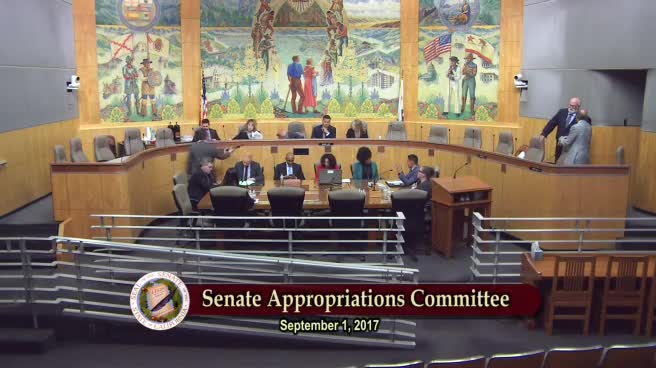 1H
Senate Standing Committee on Appropriations
 4MIN
Senate Standing Committee on Governance and Finance
Bill Author

Bill Co-Author(s):